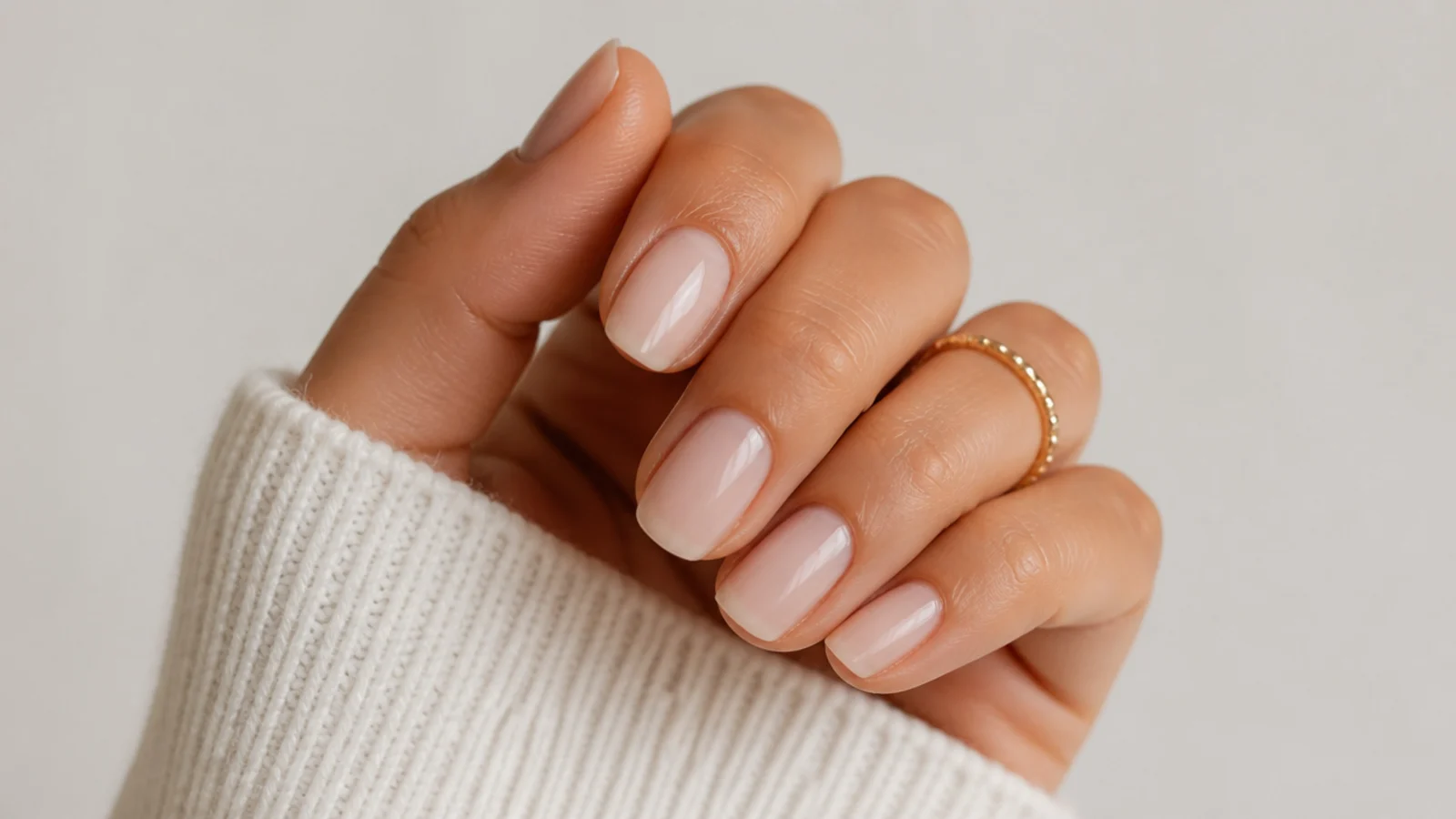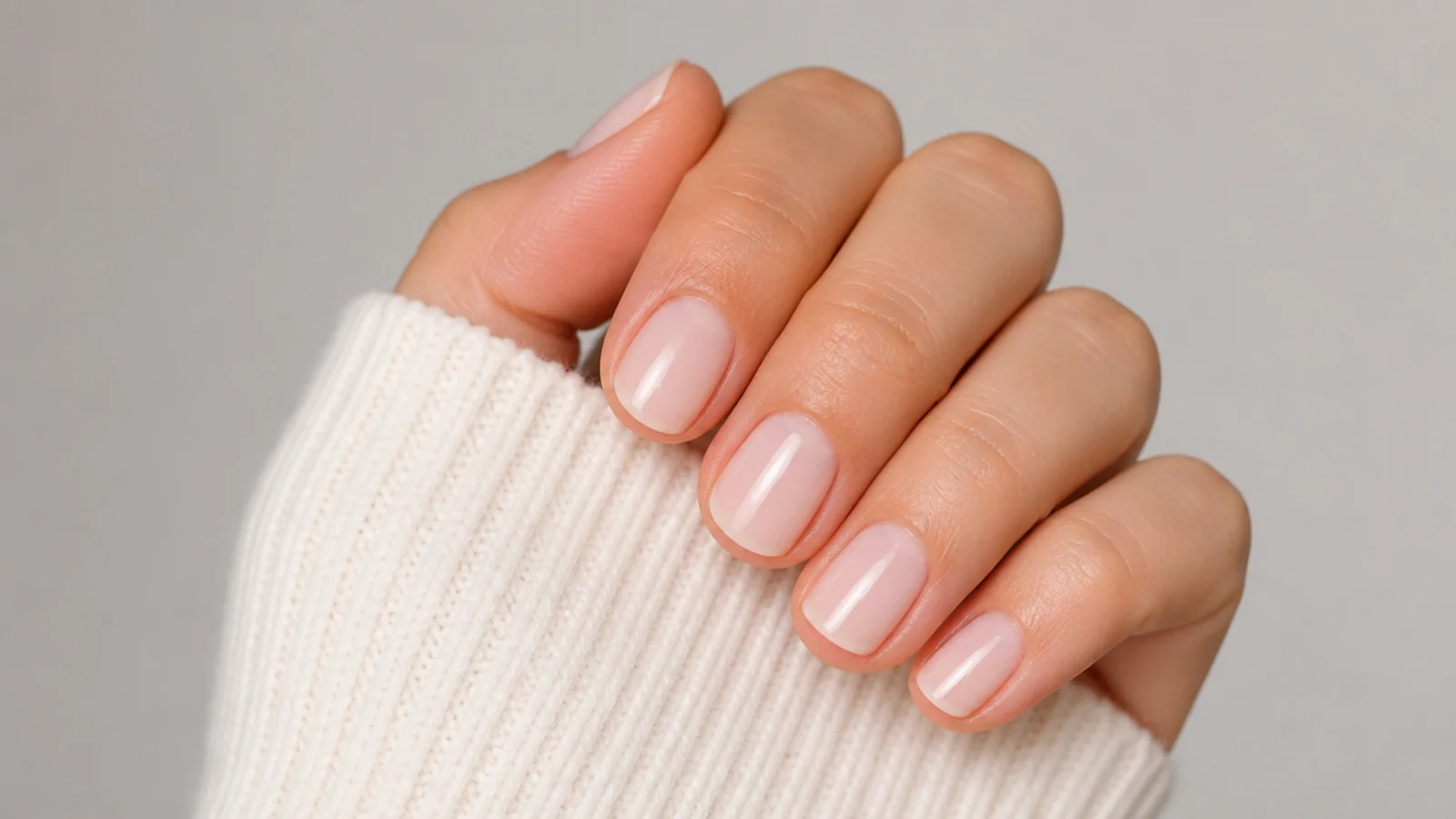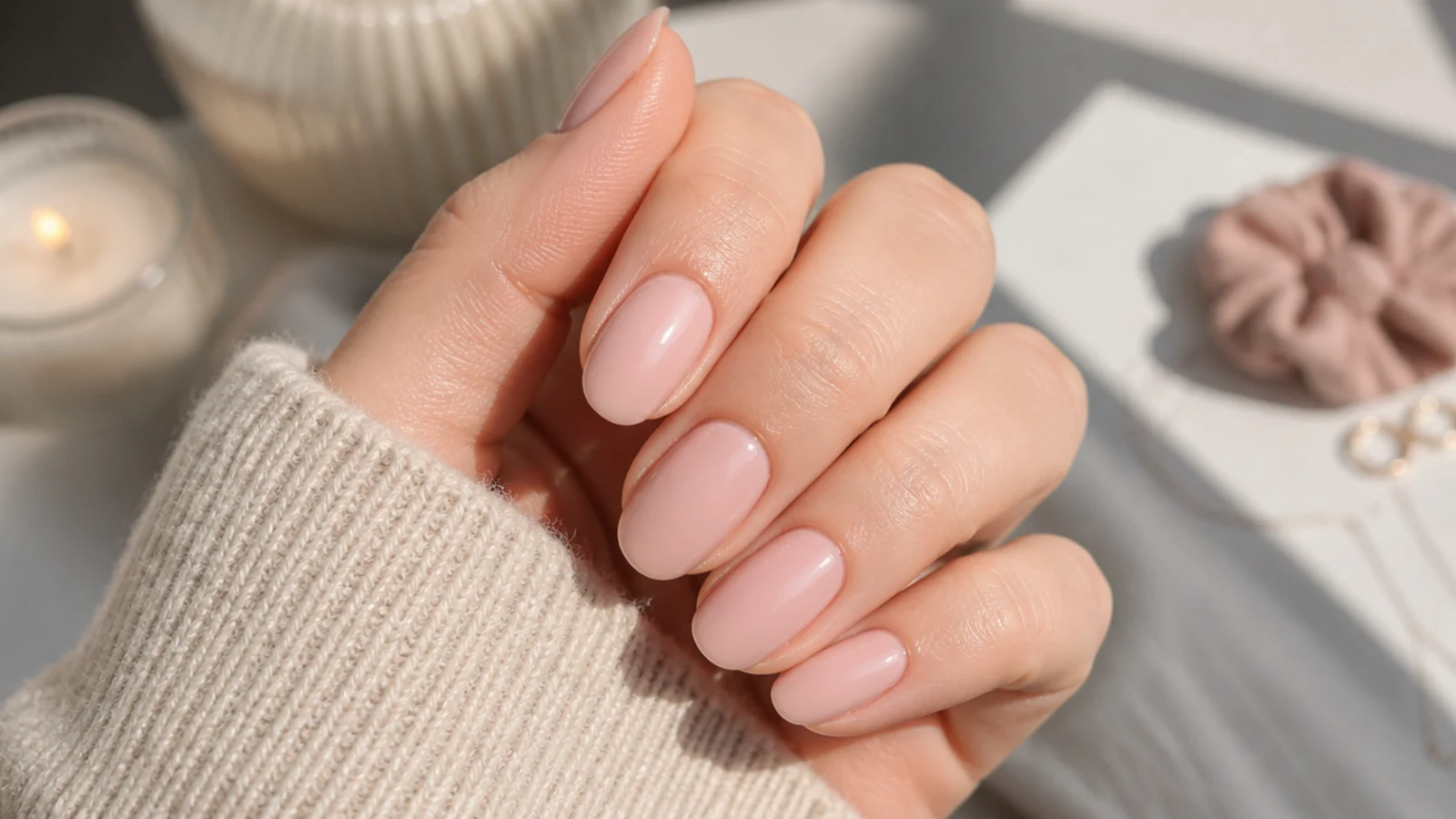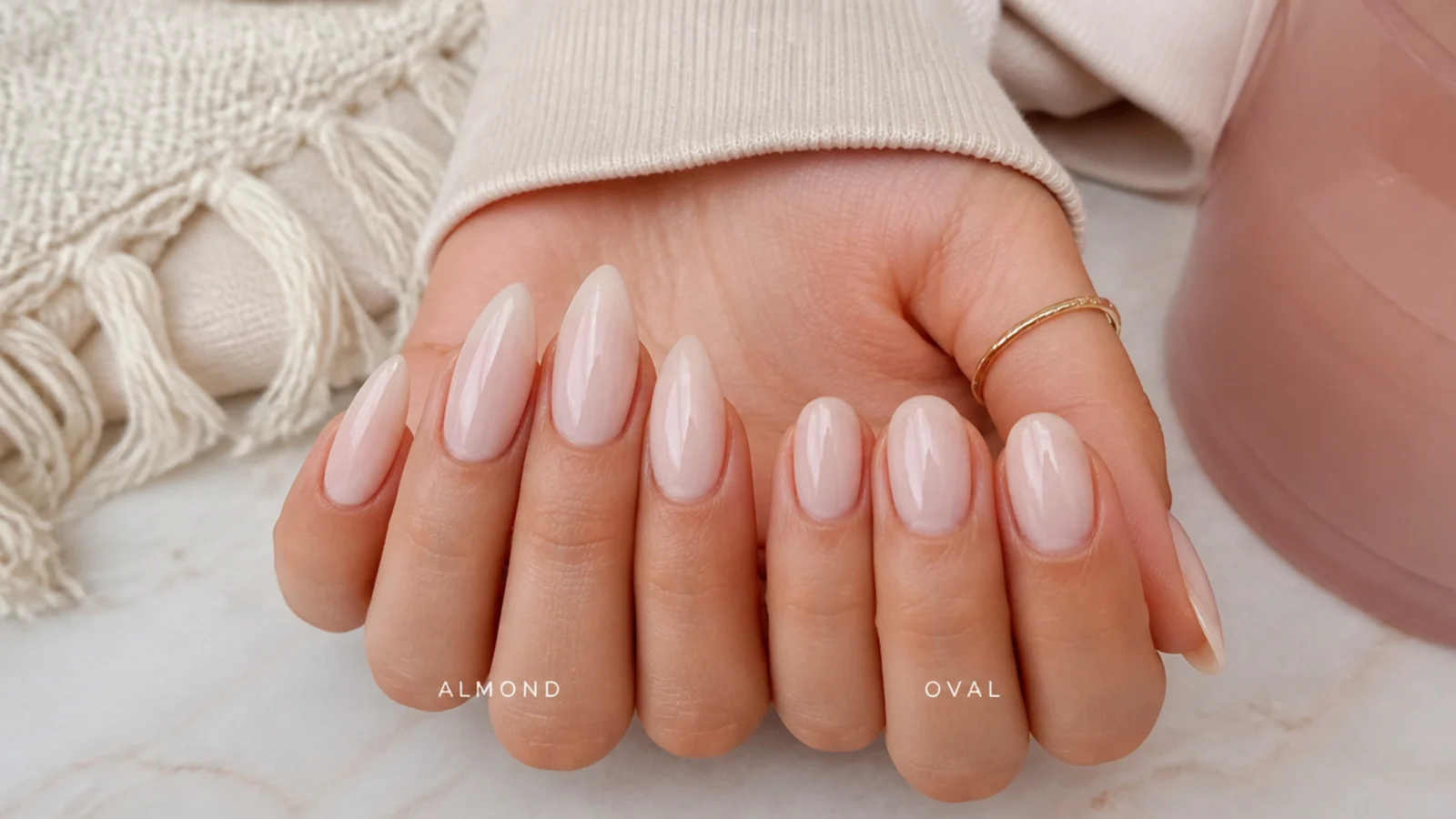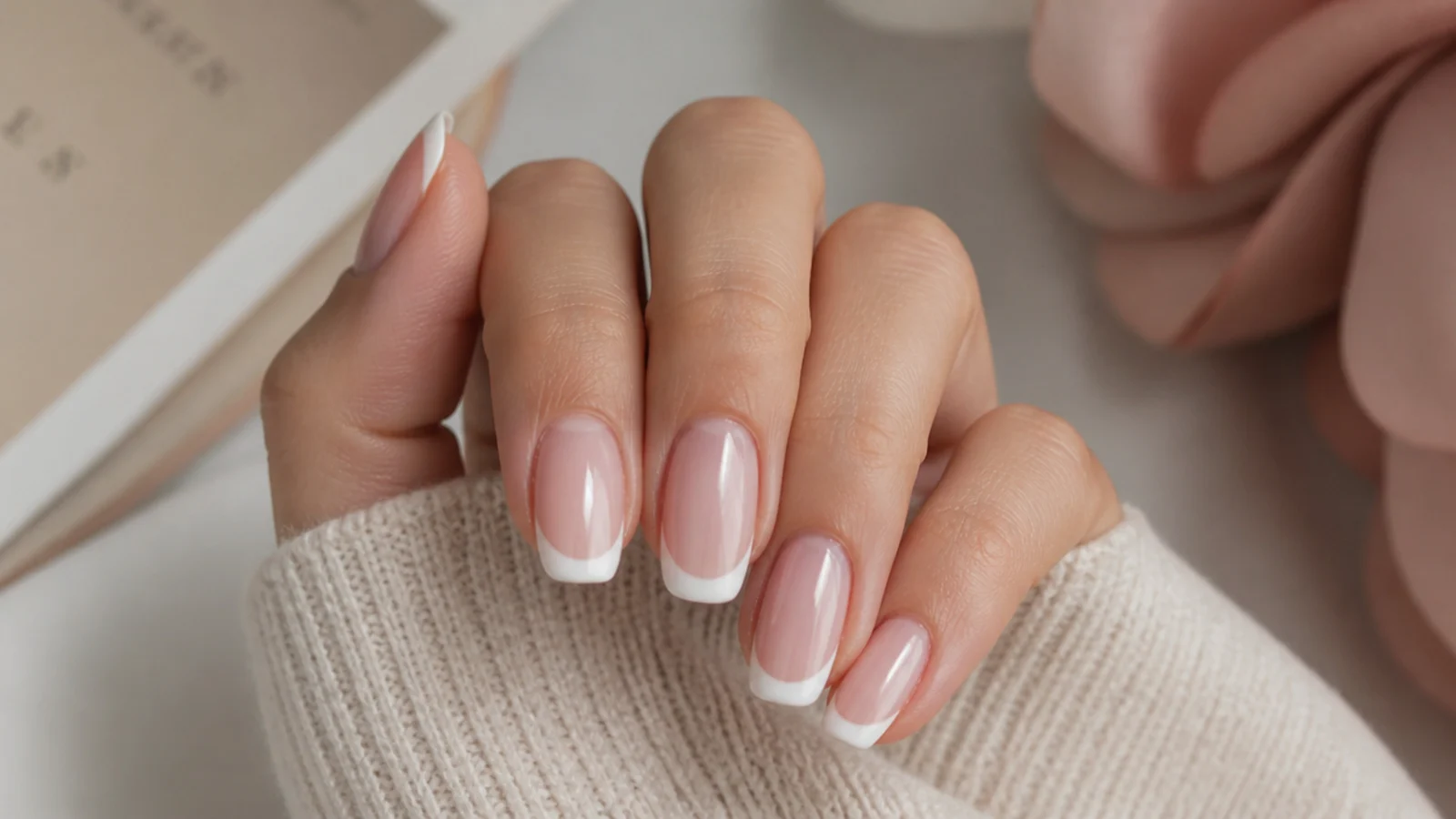
Quick Comparison
| Oval French Tip | Almond French Tip | |
|---|---|---|
| Smile line shape | One continuous arc, symmetrical left to right | A curve that bends inward toward the point |
| Where the line starts | At the sidewall, level with the widest point | Slightly above the sidewall, following the taper |
| Minimum free edge | About 2mm; works on short natural nails | About 3 to 4mm before it reads almond |
| Difficulty to paint at home | Easiest; the rounded edge guides the brush | Harder; both sides must taper at the same angle |
| How a wobble reads | Absorbed by the curve, barely visible | Shows immediately as an off-center point |
| Breakage risk | Low; the rounded tip spreads impact | Higher; the taper is the weak spot |
| Elongating effect | Moderate and natural looking | Strong; the point stretches the finger |
| Best band width | 1 to 2mm short, 3 to 4mm medium | 3 to 5mm; needs width to show the taper |
| Salon cost | Gel 40 to 65 dollars on natural nails | Gel 45 to 70 dollars, extensions often needed |
1. Classic White French Tip Oval Nails
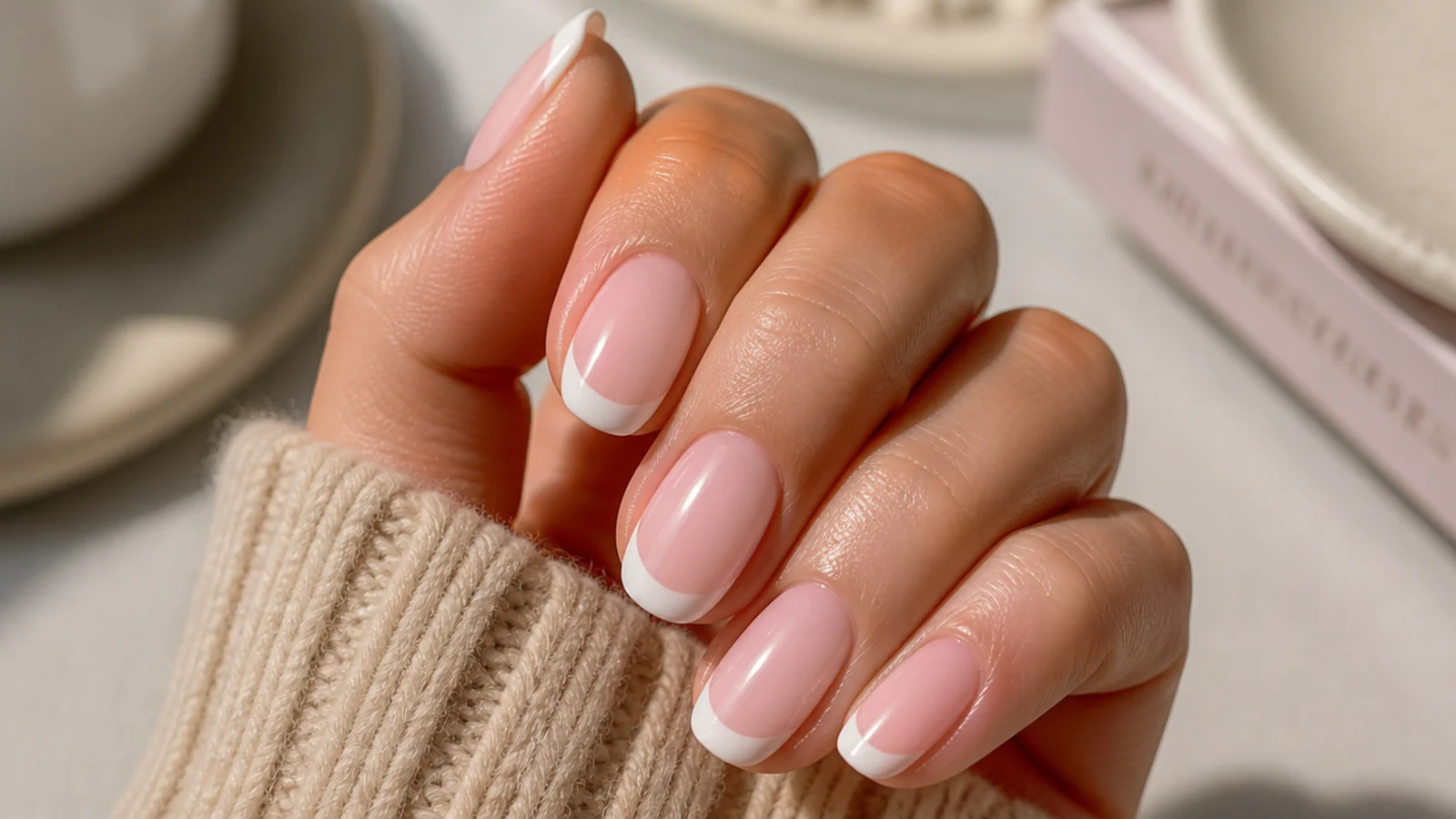
The reference version: a sheer pink base such as OPI Bubble Bath, then a 3mm soft white band that follows the oval curve from one sidewall to the other. Ask for soft white rather than optic white, because a chalky opaque white on a curved tip reads dated while a warm off-white reads expensive. The band should look like a crescent moon, thickest at the center of the tip and tapering as it meets each sidewall. Medium length, about 4 to 5mm of free edge. It is the safest formal set you can wear, and the sharper squared reading of the same idea sits in white cat eye french tip nails.
Who it suits: Weddings, interviews and anyone new to French.
Tip: Say soft white, curved smile line, matched band width on all ten so the thumbs do not go wider.
2. Micro French Tip Oval Nails
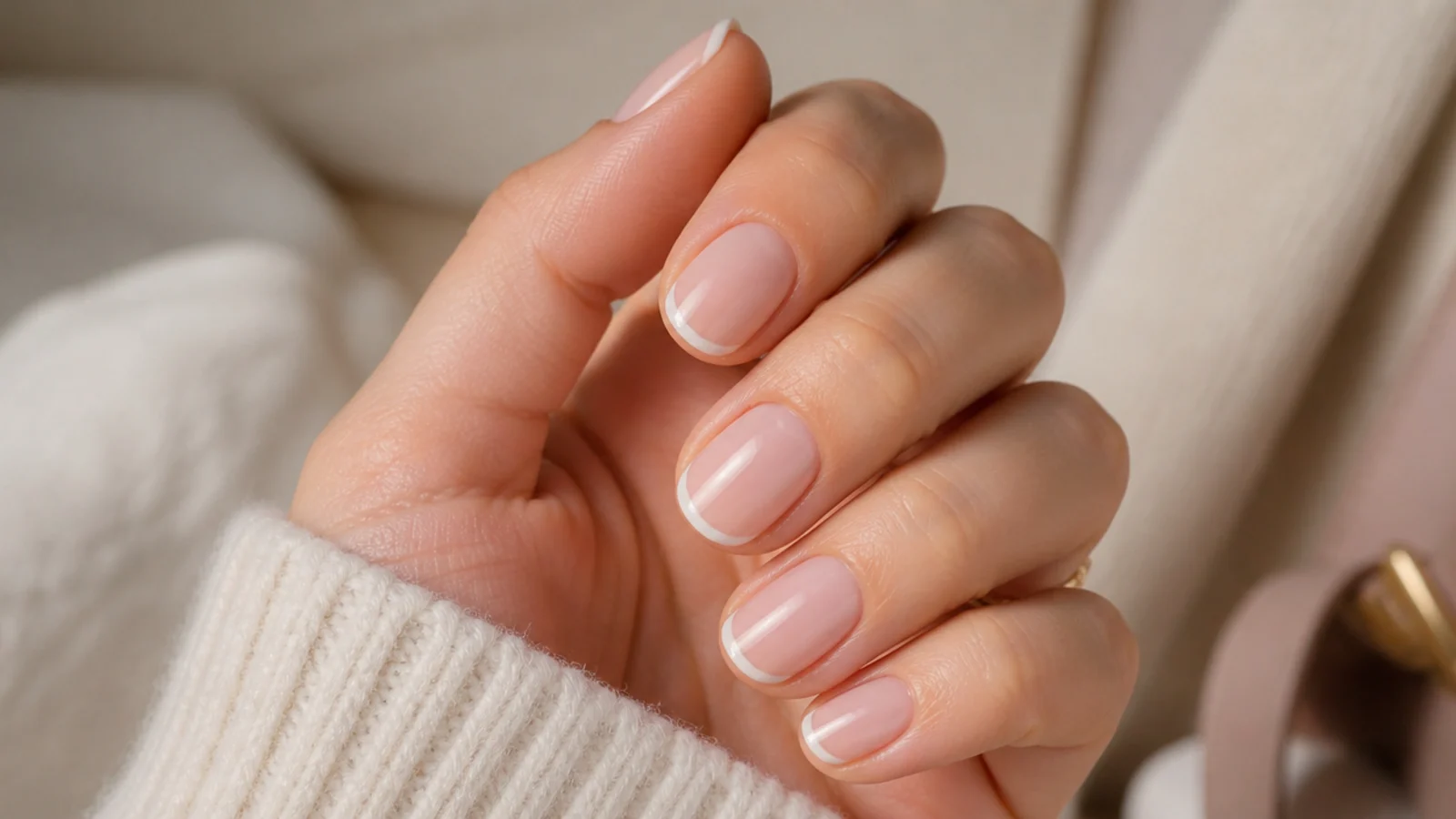
A hairline band, roughly 1mm wide, drawn right along the edge of the oval curve over a bare or barely tinted nail. This is the version that works on short nails, because the line hugs the free edge instead of eating into the nail plate. On oval it is easier than on any other shape: you rest the brush against the rounded edge and let the curve guide the stroke. Works at 2mm of free edge. Keep the base sheer so the line is the only thing happening, the same restraint that carries oval soap nails.
Who it suits: Short natural nails, typists and minimalists.
Tip: Use a 7mm liner brush, not the polish brush, or the band will thicken at the sidewalls.
3. Short Oval French Tip Nails
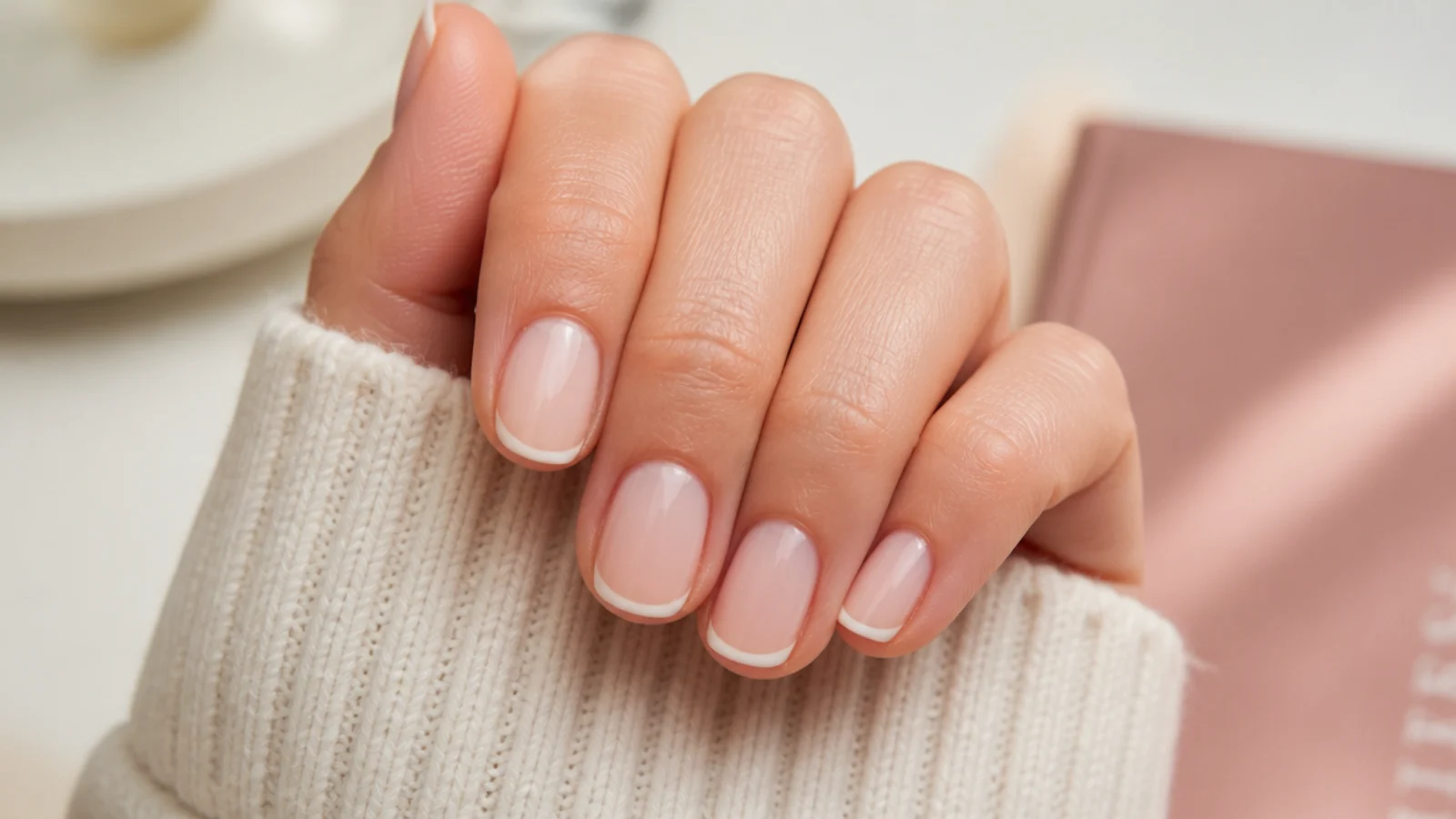
The everyday set: 2 to 3mm of free edge filed to a soft oval, a milky nude base and a 1.5mm cream tip. Short oval is the length most people actually keep, and French is what makes it look done rather than bare. The rule is proportion, so shrink the band as the nail shrinks. A 3mm white tip on a 2mm free edge covers the entire tip and reads as a white nail with a nude base. More at this length in short oval nails.
Who it suits: Nurses, parents and anyone who works with their hands.
Tip: File one direction only, edge toward center, so the short free edge does not peel at the sides.
4. Milky White French Tip Oval Nails
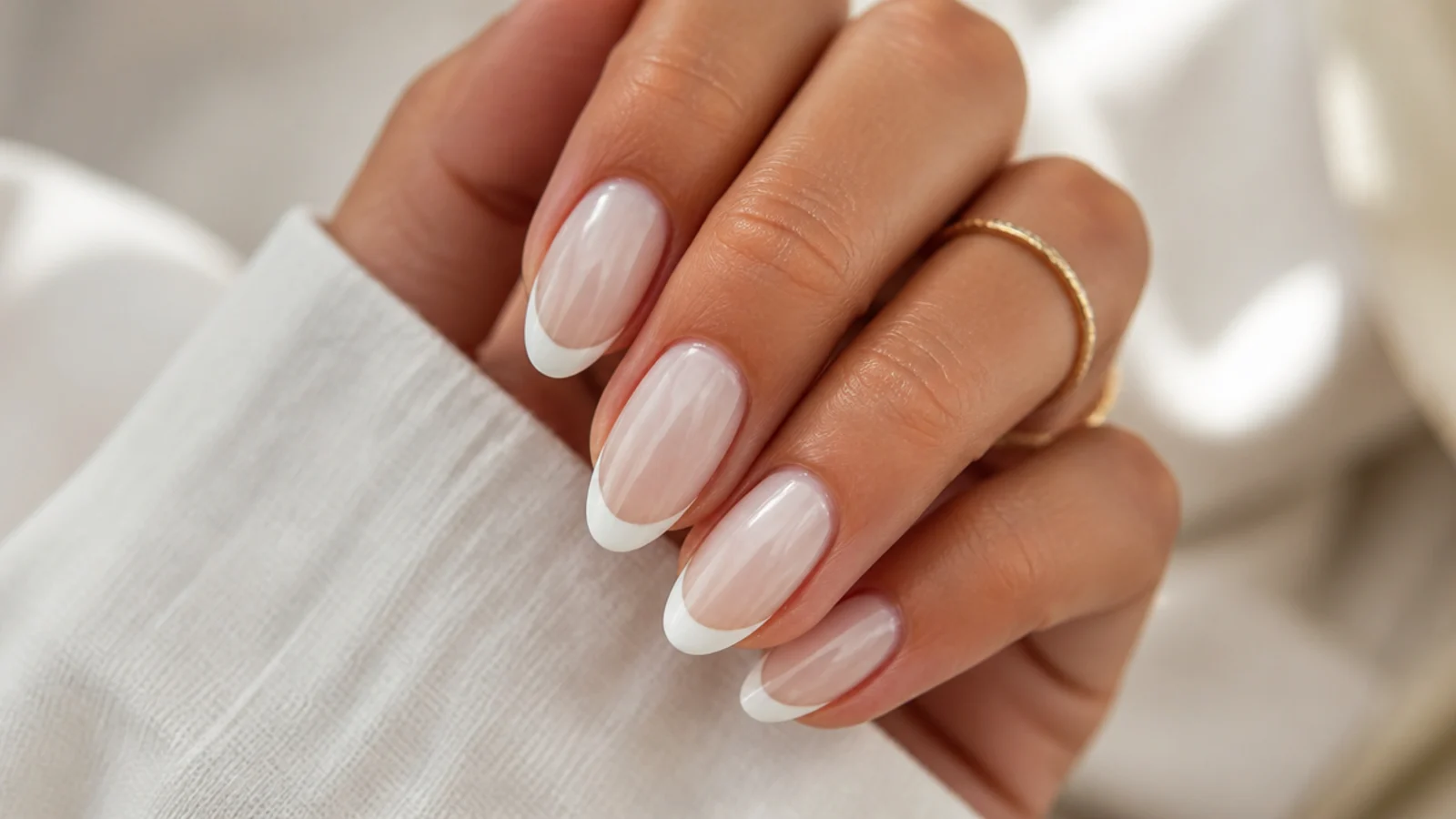
Two sheer coats of a milky white gel across the whole nail, then a slightly brighter white on the tip so the French shows as a tone shift rather than a hard contrast. This is the quiet-luxury reading of the trend and it grows out almost invisibly, which buys you an extra week between appointments. The oval curve is what sells it, since a soft edge on a soft color has nowhere to look sharp. Compare the pearl finish version in milky white chrome nails.
Who it suits: Anyone who wants French without the contrast.
Tip: Ask for three sheer coats of the milky base rather than two thick ones so it does not streak.
5. Baby Pink French Tip Oval Nails
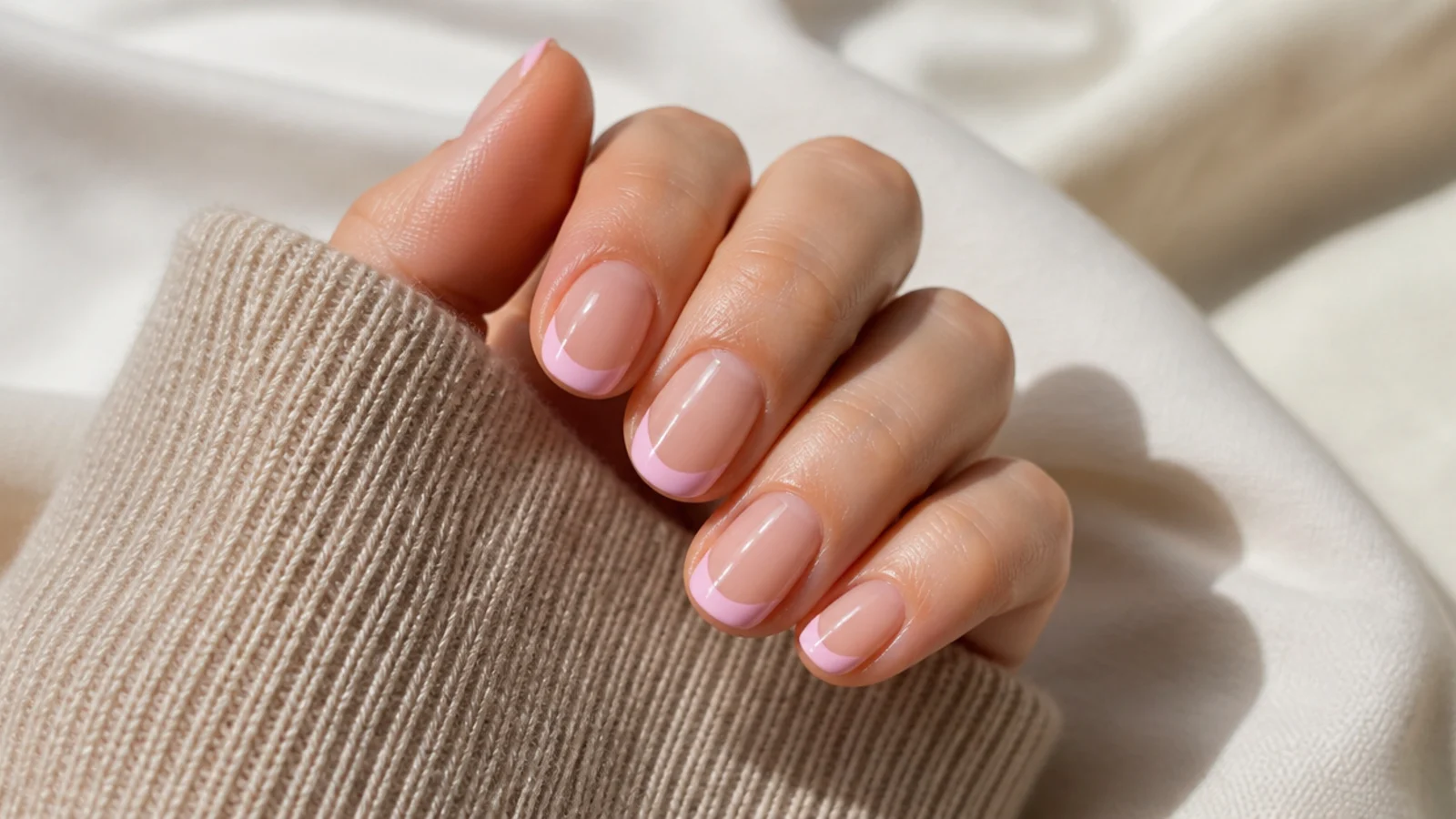
The tip band in a soft cool pink instead of white, painted over a clear or barely-there base. Pink on pink is the friendliest French there is, because there is no line to get wrong. It suits fair and cool-toned skin best; warm and olive tones look better in a peachy pink so the tip does not go gray against the hand. Keep the band at 2 to 3mm. If you want the color across the whole nail instead, see pink oval nails.
Who it suits: Cool undertones and anyone easing into color.
Tip: Hold the bottle against your inner wrist first; cool pinks turn ashy on warm skin.
6. Chocolate Brown French Tip Oval Nails
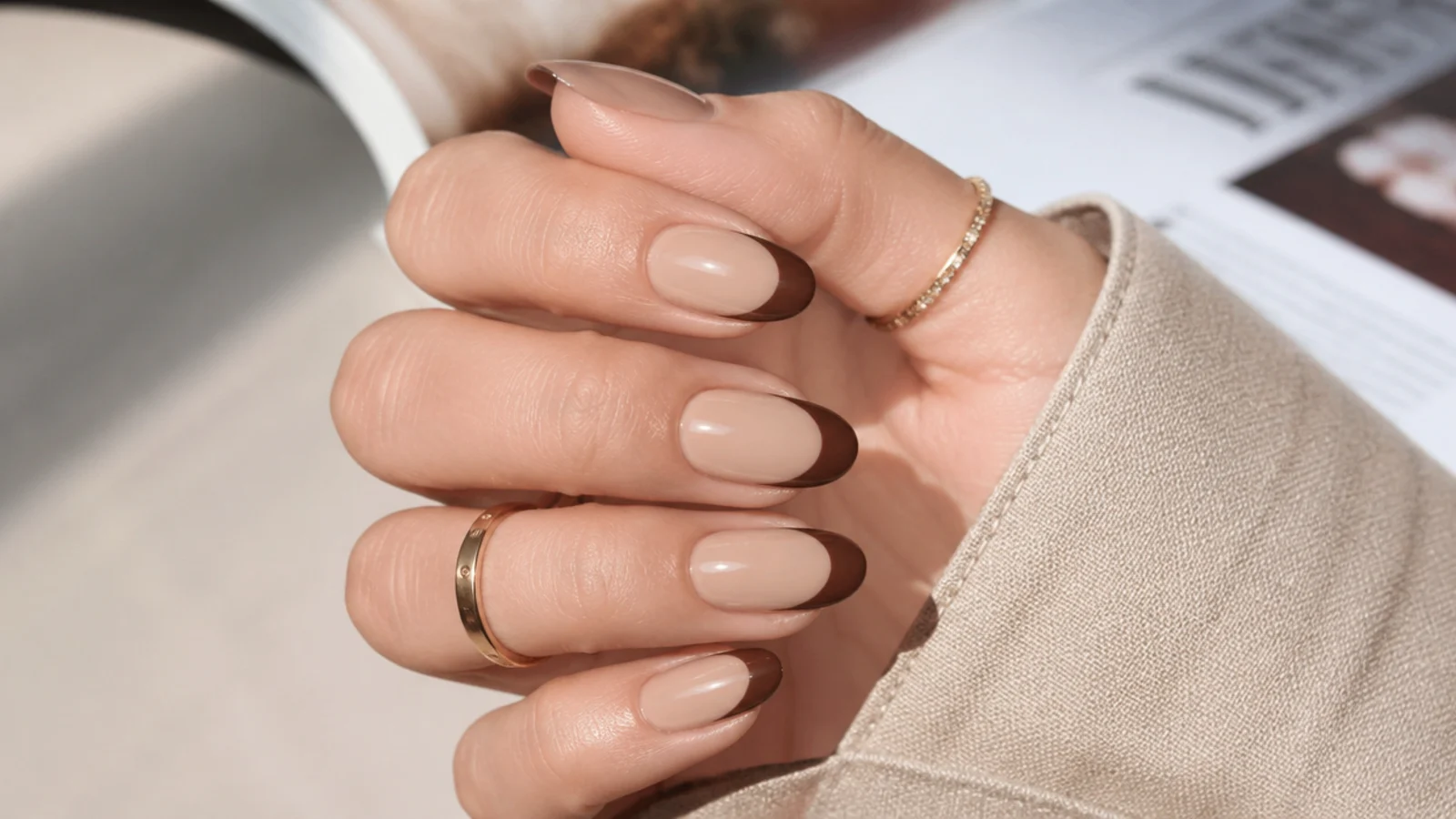
An espresso or chocolate band over a warm beige base, which is the variation that has quietly replaced white French for most of the year. Brown flatters deep, olive and tanned skin far better than stark white does, and on an oval tip the curve keeps the dark band from looking heavy the way it can on a square edge. Keep it to 3mm so it reads deliberate and not overgrown. Milk chocolate on fair skin, dark espresso on deeper tones.
Who it suits: Deep and olive undertones, fall and winter.
Tip: Ask for the brown one shade darker than your base, not five, so the smile line stays soft.
7. Black Micro French Tip Oval Nails
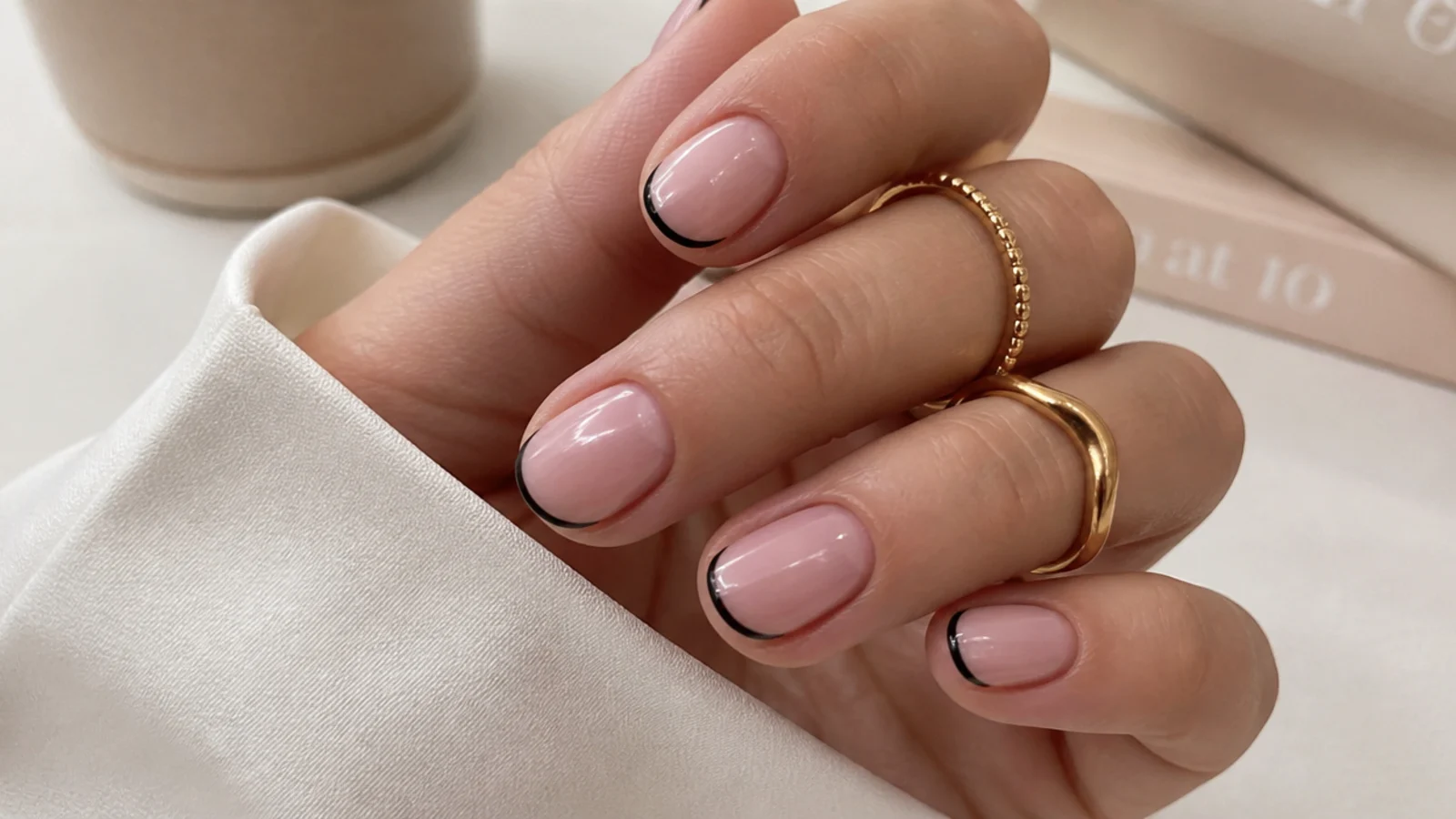
A 1mm black line along the oval edge over a completely bare nail. It is the sharpest thing on this list and it costs nothing but a steady hand. Black is unforgiving of a wobbly curve, so this is the one design where a stencil or a liner brush earns its place. The upside is that black micro French shows almost no regrowth, because the line lives on the free edge and moves out with the nail. Pair it with the moodier sets in dark feminine nails.
Who it suits: Minimalists who want edge without color.
Tip: Paint the line in gel, not polish, so it survives past day five without softening at the edges.
8. Colored French Tip Oval Nails
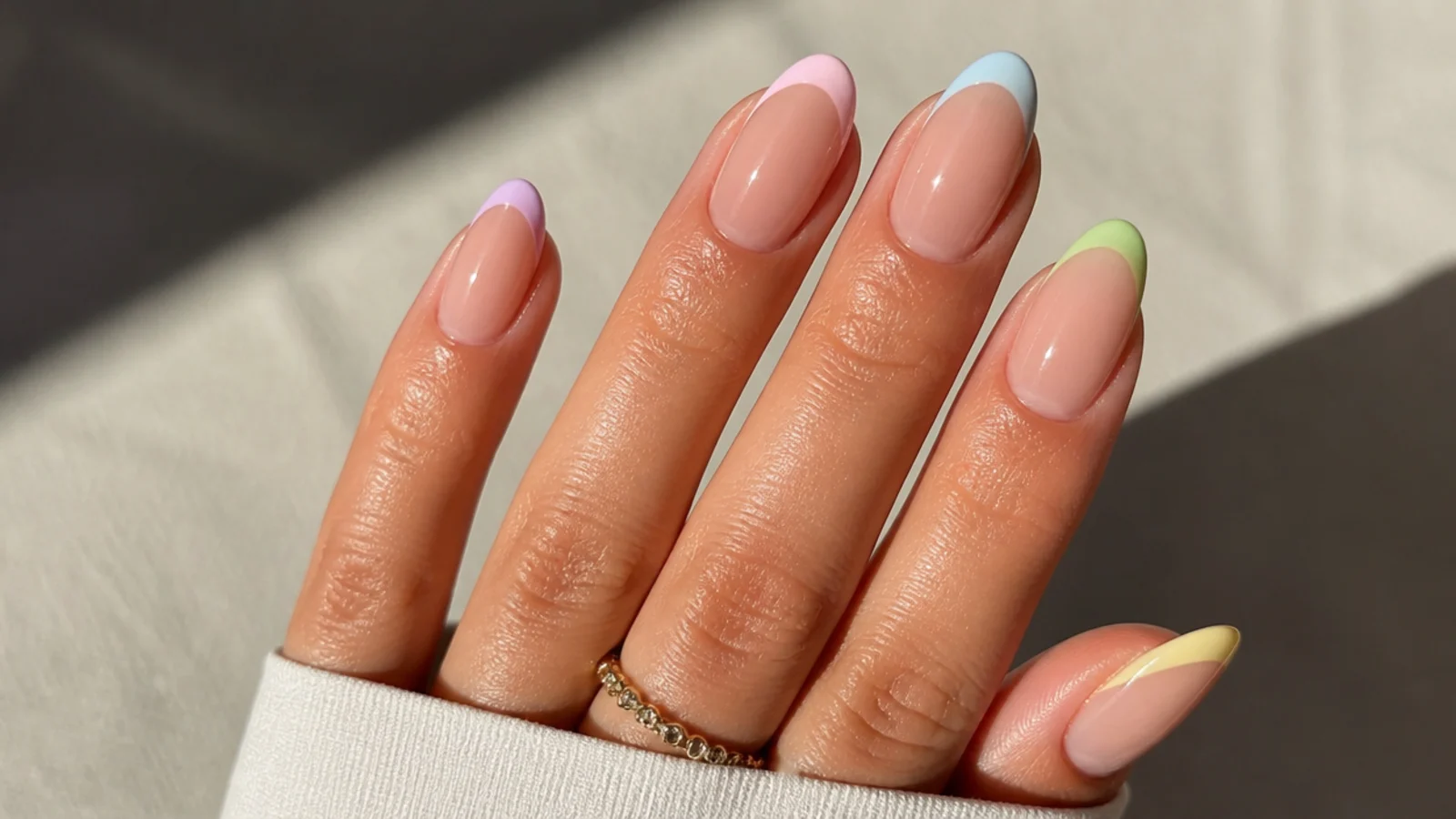
One shade per finger over a shared nude base: butter yellow, sage, sky blue, lilac and coral, in that order from thumb to pinky. The trick that makes it look styled rather than random is keeping all five in the same tone family, so all pastels or all jewel tones, never a mix. Oval suits multicolor French because the soft edges keep five different colors from competing. Ask for candy tips or rainbow French and bring a photo of the exact five shades. Browse more color-led sets in oval nail designs.
Who it suits: Summer, festivals and anyone bored of white.
Tip: Match the base coat across all ten nails; a shared base is what makes five colors look like one set.
9. Cherry Red French Tip Oval Nails
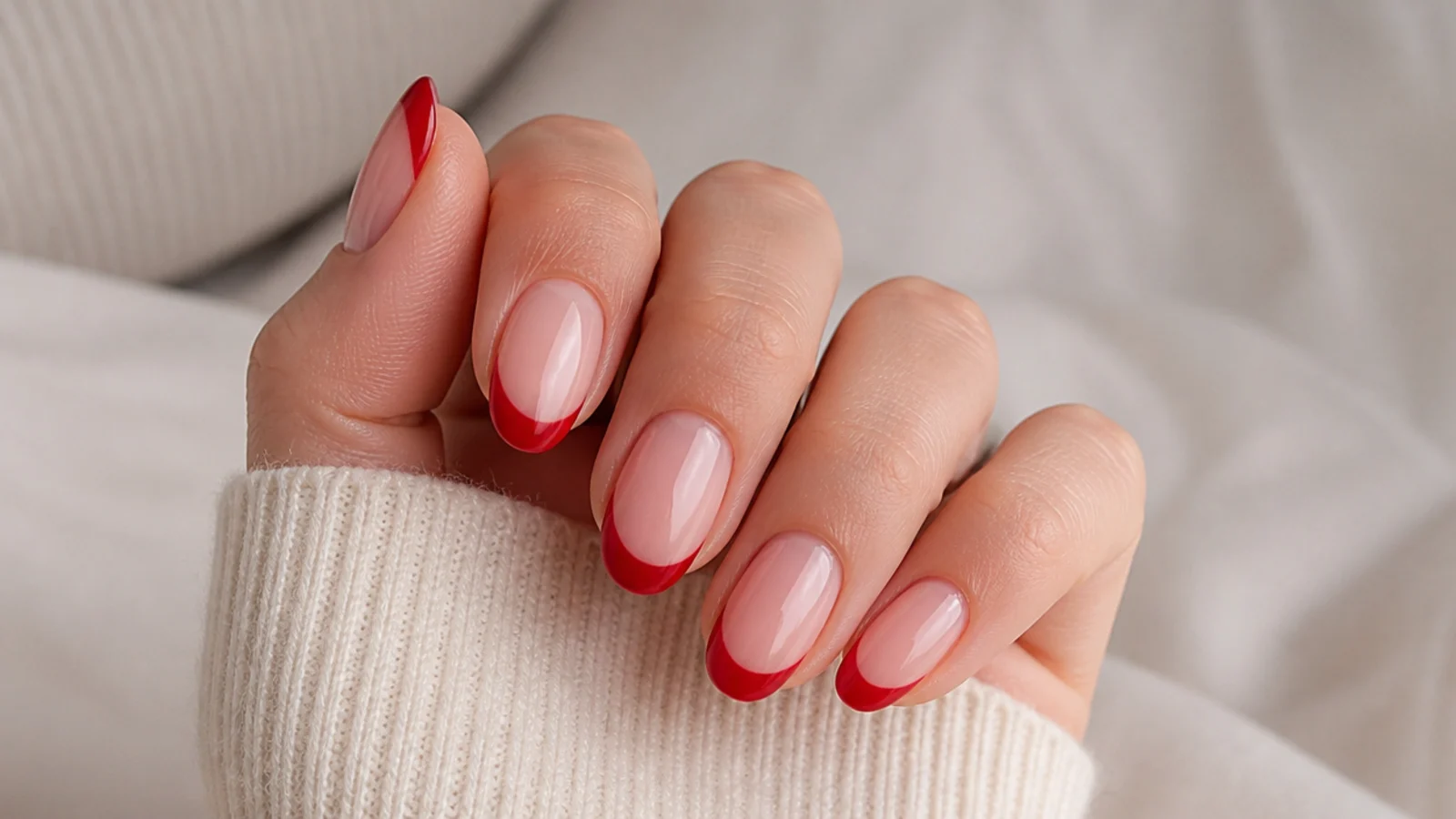
A blue-based true red band over a sheer pink base, high gloss. Red French is the highest-impact version of this manicure and blue-based cherry flatters more skin tones than an orange-leaning tomato does. On oval the curve softens the red just enough that it reads chic rather than costume. Two thin coats on the tip, never one thick one, since red pigment streaks badly on a curve. Use a base coat first because red stains the natural nail. The seasonal read is in red December nails.
Who it suits: Date nights, holidays and classic wearers.
Tip: Wipe the brush almost dry before the first tip coat so the red does not flood the sidewall.
10. Gold Chrome French Tip Oval Nails
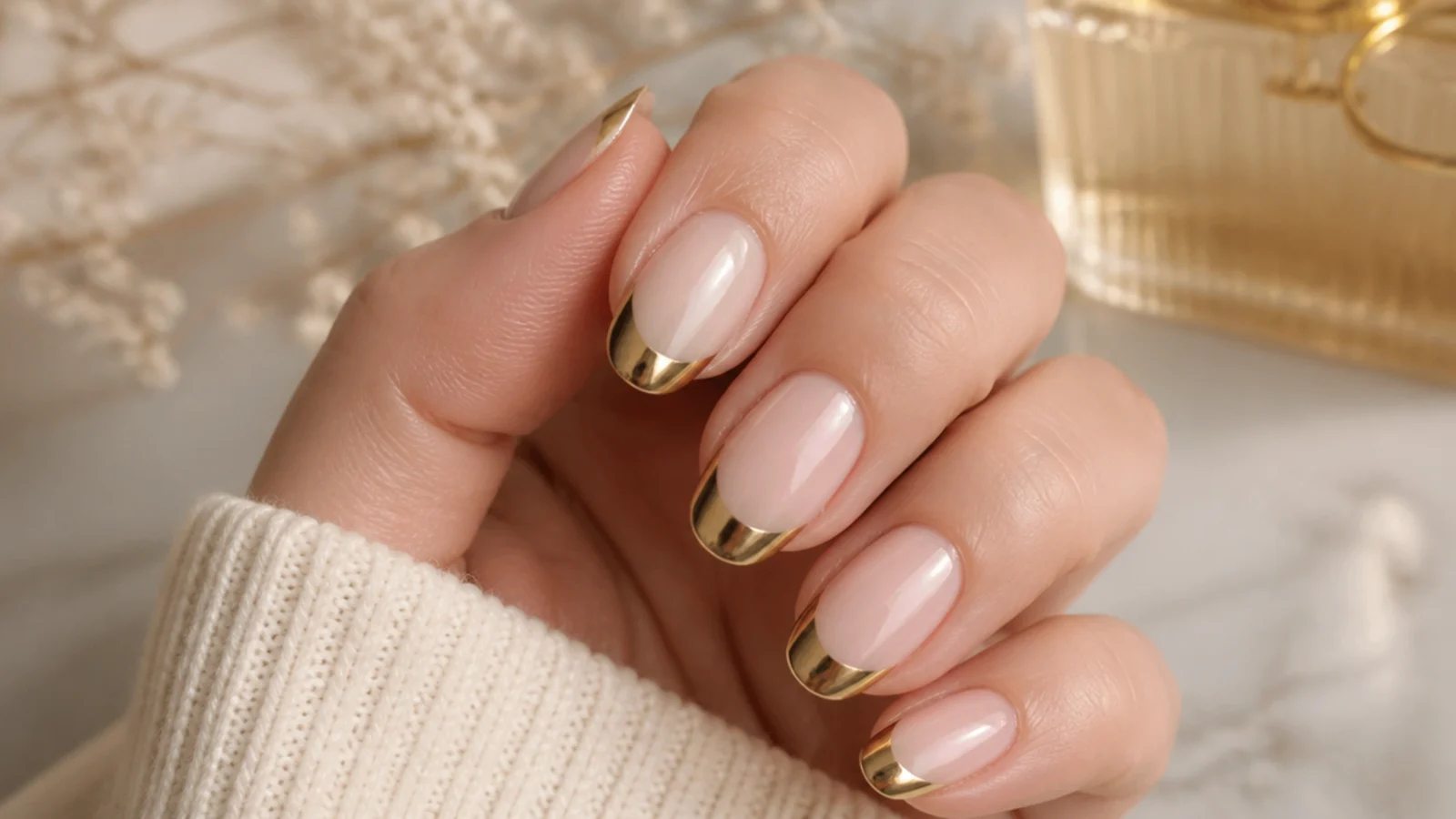
Chrome powder buffed only across the tip band, over a cured no-wipe top coat, so the French becomes a strip of mirror metal. Gold reads warmer and more wearable than silver on a curved tip because the reflection bends with the arc instead of flashing flat. Expect 10 to 20 dollars over a standard gel set and a slightly longer appointment. The base has to be perfectly smooth first, since chrome magnifies every ridge. The full method sits in how to white chrome nails.
Who it suits: Parties, New Year and anyone wanting shine.
Tip: Ask the tech to cap the chrome with a thick top coat or the metal will dull by day six.
11. Glitter French Tip Oval Nails
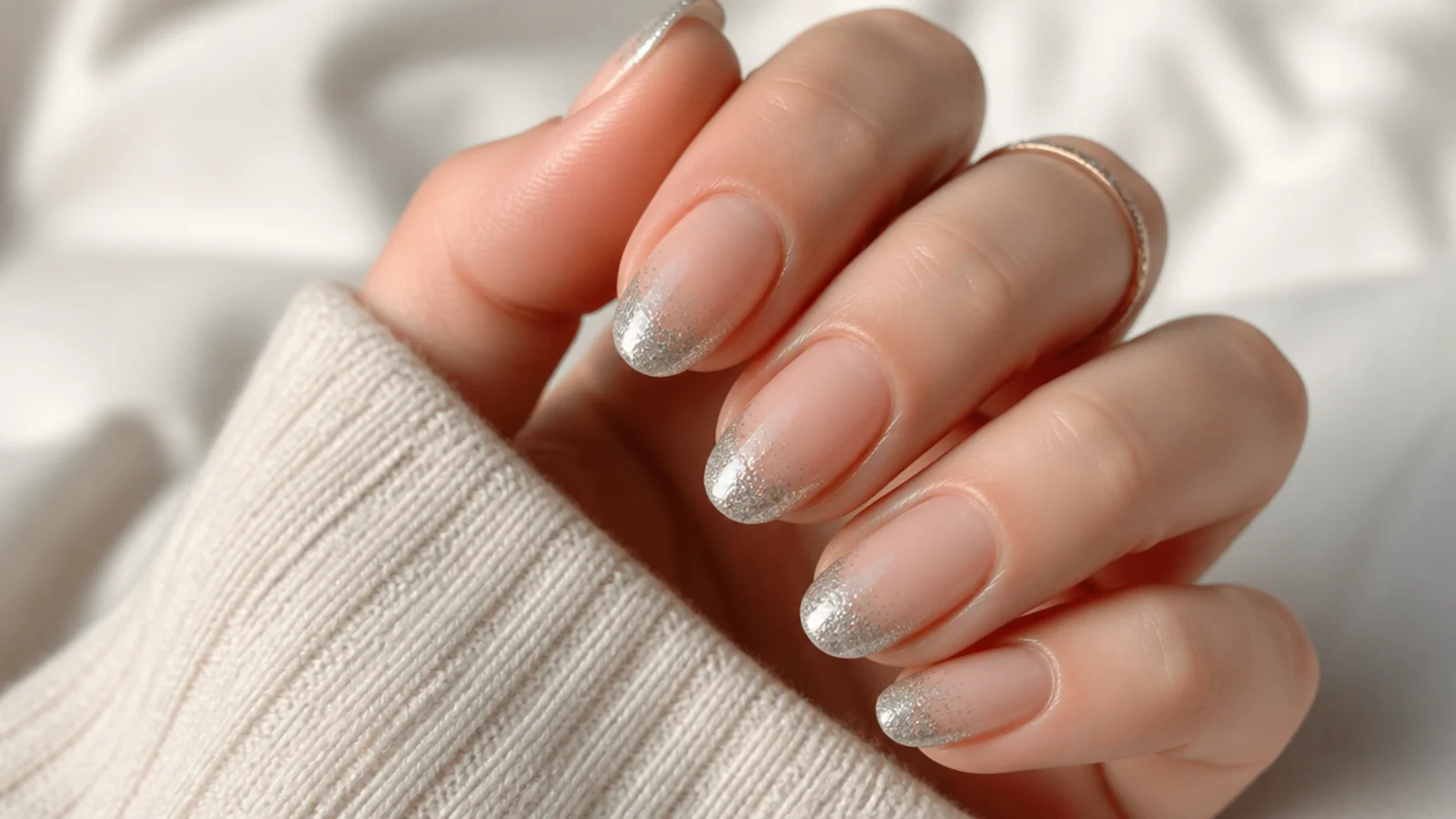
Fine silver or champagne glitter packed onto the tip and faded upward so there is no hard line at all. It is the prom and wedding-guest set, and it suits oval because a curved edge gives the fade a natural place to stop. Ask for glitter fading toward the cuticle, not a hard glitter tip, or you will get a glittery band with a visible seam. Expect a slightly thicker finish and a longer acetone soak at removal, since glitter gel resists it.
Who it suits: Prom, weddings and party sets.
Tip: Ask for a smoothing top coat over the glitter so the tip does not feel gritty for three weeks.
12. Double French Tip Oval Nails
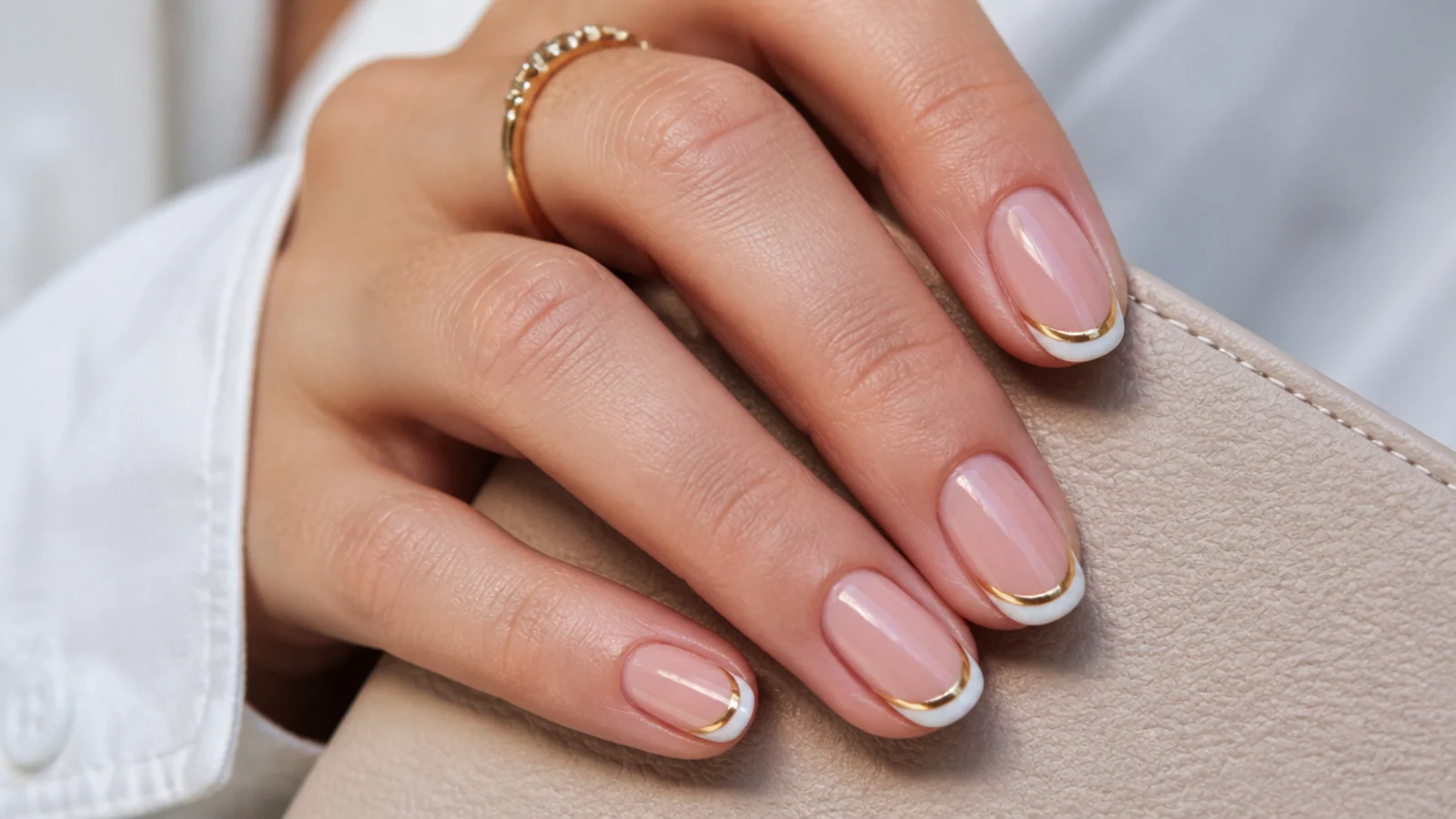
Two parallel bands following the same curve: a 2mm white tip with a 1mm gold or black line sitting just above it, separated by a sliver of bare base. The double line only works on a shape with a smooth continuous edge, which is why oval and round own it and square does not. Keep the gap even, about 1mm, or the two lines collide at the sidewalls. It adds roughly 5 dollars per nail at most salons because it doubles the painting time.
Who it suits: Anyone who wants French with visible detail.
Tip: Paint the thick white band first and let it cure fully before the thin line goes on top.
13. Deep Smile Line French Tip Oval Nails
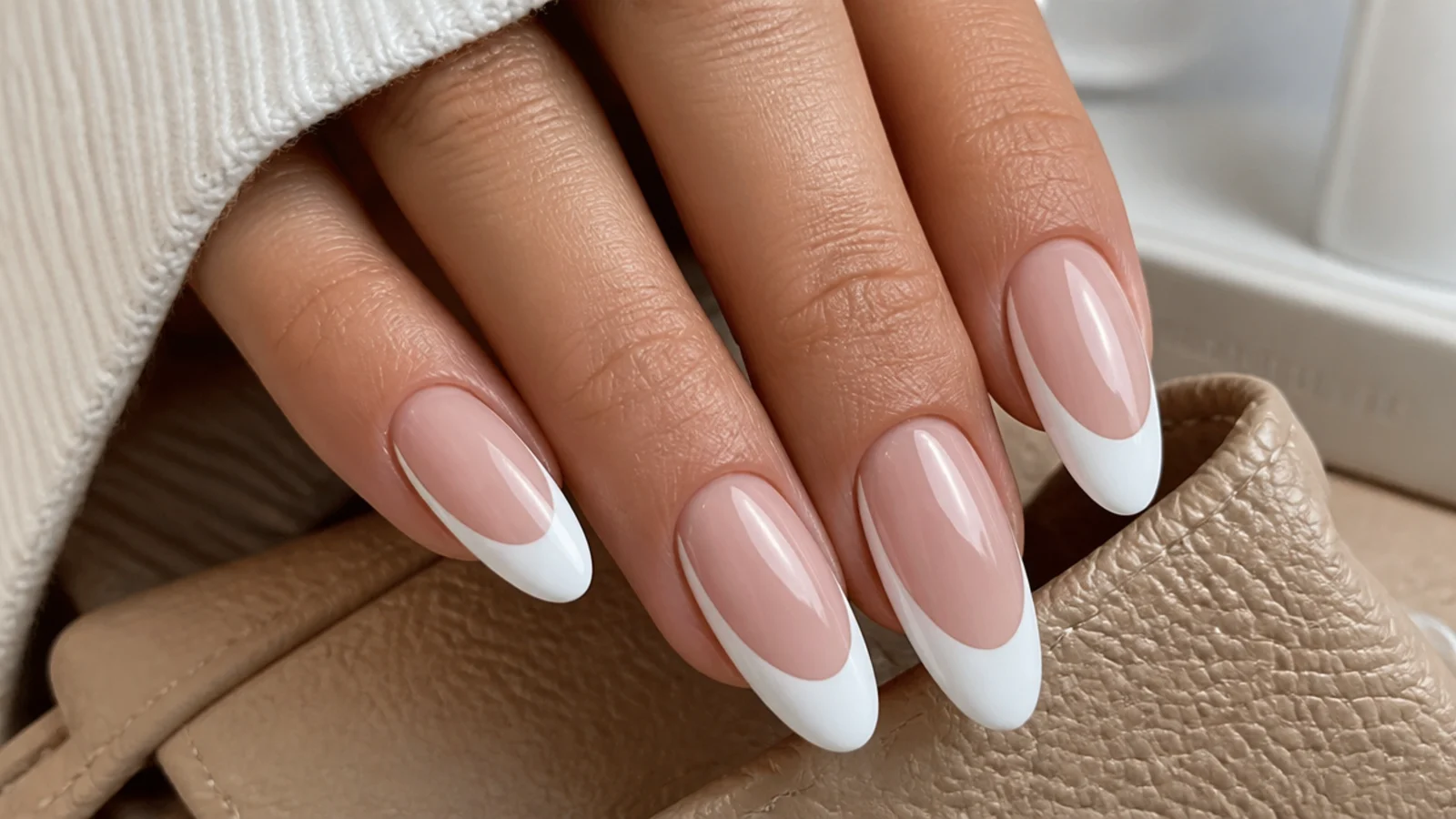
The dramatic version: the smile line starts low on each sidewall and sweeps up so the white covers close to half the nail. It needs length, about 6mm of free edge, or the deep curve swallows the nail. This is the 1990s French revival and it looks best in high-gloss white or the deep burgundy used in dark feminine red nails. On oval the deep line is more flattering than on square because the arc mirrors the cuticle line, so the nail reads like a long even lens rather than a block.
Who it suits: Long oval sets and anyone wanting retro drama.
Tip: Ask for the smile line to mirror your cuticle curve; matching the two is what makes it look balanced.
14. Aura French Tip Oval Nails
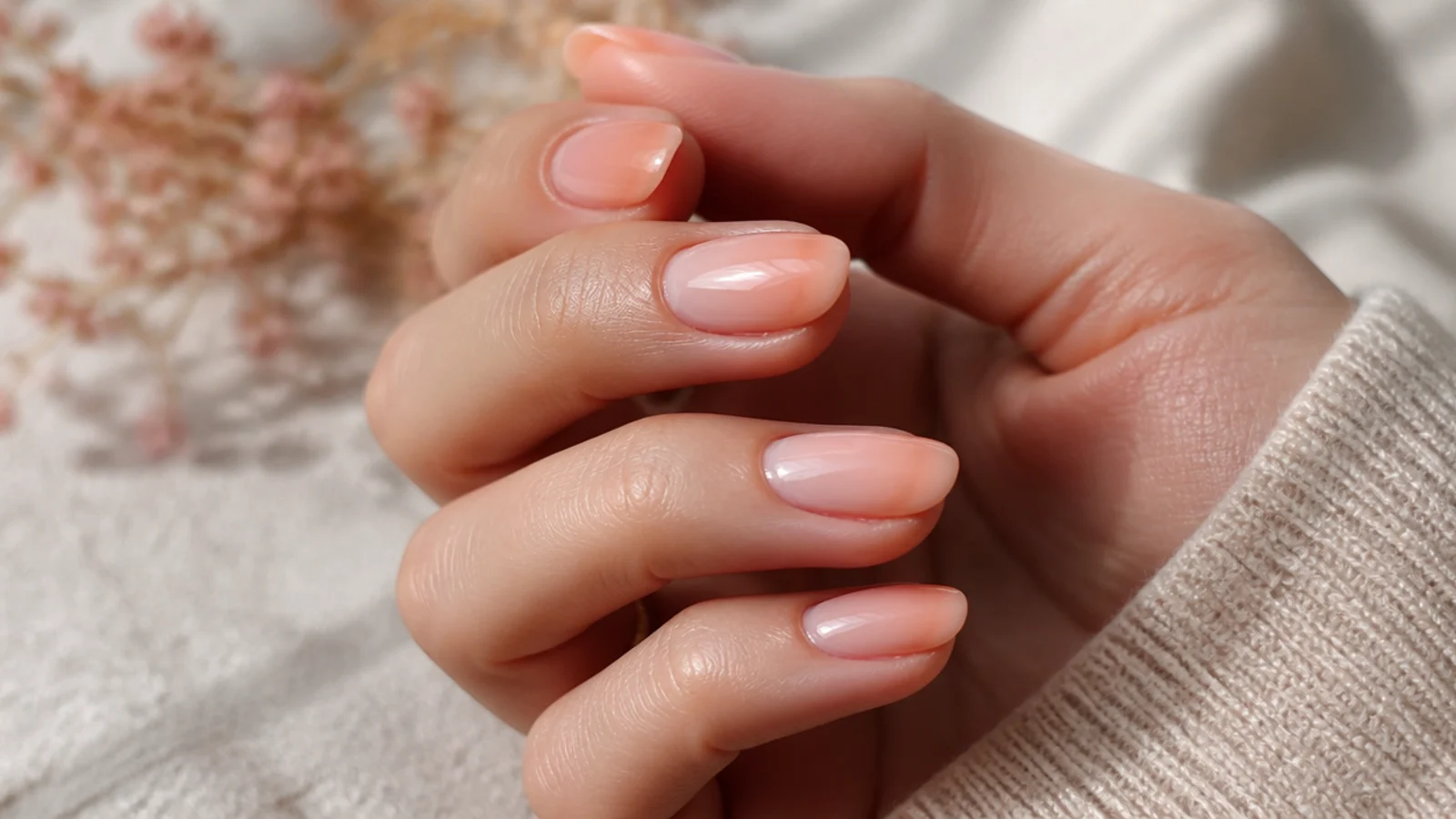
An airbrushed tip with no defined edge, so the color glows out of the free edge and dissolves halfway up the nail. Peach, dusty rose and smoke gray are the easiest to wear. It suits oval better than any other shape because a soft blur needs a soft outline to sit inside, and a square corner interrupts the fade. Ask for a blurred French or a smoke French, not an ombre French, which techs read as a full-nail gradient. Related technique in light purple ombre nails.
Who it suits: Summer, soft-glam wearers and gradient lovers.
Tip: Ask for the fade to stop halfway up so the blur has somewhere to disappear into.
15. Lavender French Tip Oval Nails
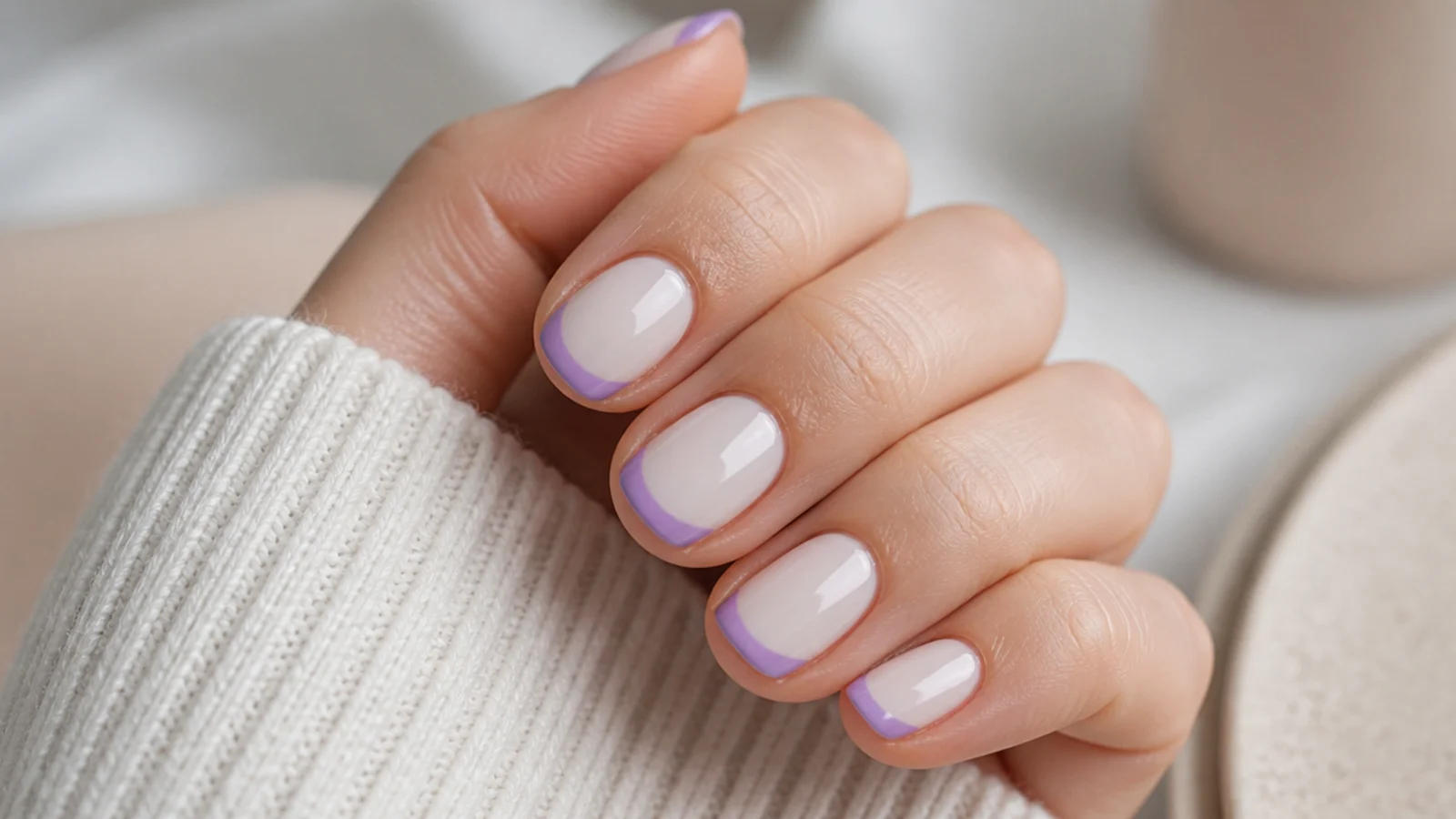
A muted lavender band over a milky white base, which is the most office-tolerable colored French because the contrast stays low. Lavender sits between neutral and color, so it passes in workplaces that quietly ban brights while still reading as a choice. Cool-toned lavender suits fair skin, and a grayer mauve-lavender holds up better on deep tones. Keep the band at 2mm on short nails. The full-nail version lives in milky lavender nails.
Who it suits: Spring, offices and cool undertones.
Tip: Ask for lavender over a milky base, not clear, or the pale tip will vanish against your nail.
The Smile Line Geometry That Makes an Oval French Work
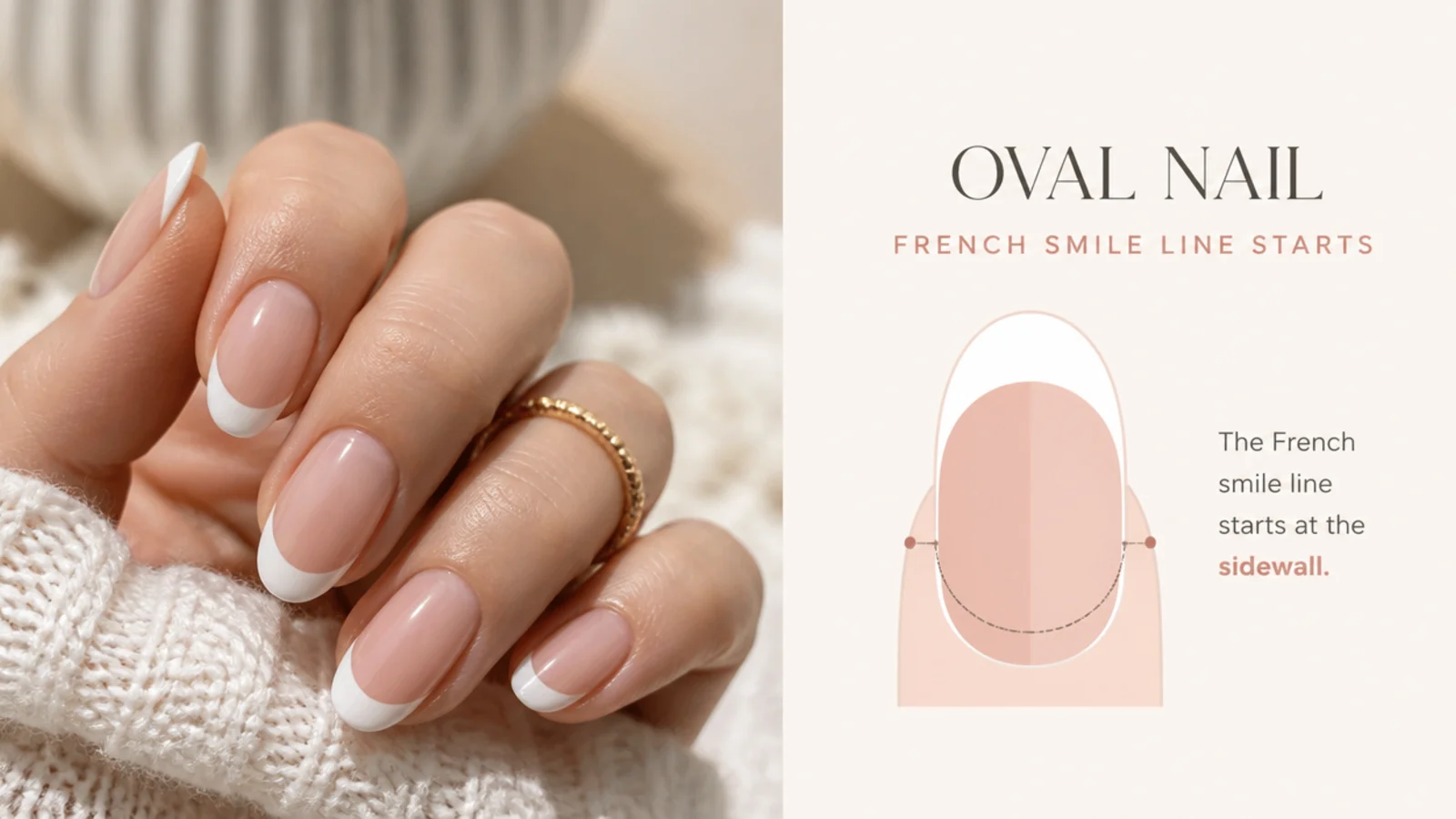
Everything about this manicure comes down to one decision: where the curve starts. On an oval nail the smile line has to begin exactly where the sidewall meets the free edge, at the widest point of the nail, and sweep down and across in a single arc. Start it there and the tip band tapers to nothing at each side, which is what makes the French look like part of the nail. Start it even 1mm higher up the sidewall and the band becomes a closed stripe that cuts the nail in half and visually shortens the finger. That is the single most common mistake, and it is why some oval Frenches look elongating and others look stubby. The second rule is symmetry of depth, not of width. Both sides must begin at the same height, but the deepest point of the arc should sit at the center of the tip, which on most nails is very slightly off the anatomical middle. Sight down the fingertip rather than looking from above to check it. More shape context sits in oval nail designs.
How to French Tip Oval Nails at Home Without a Stencil
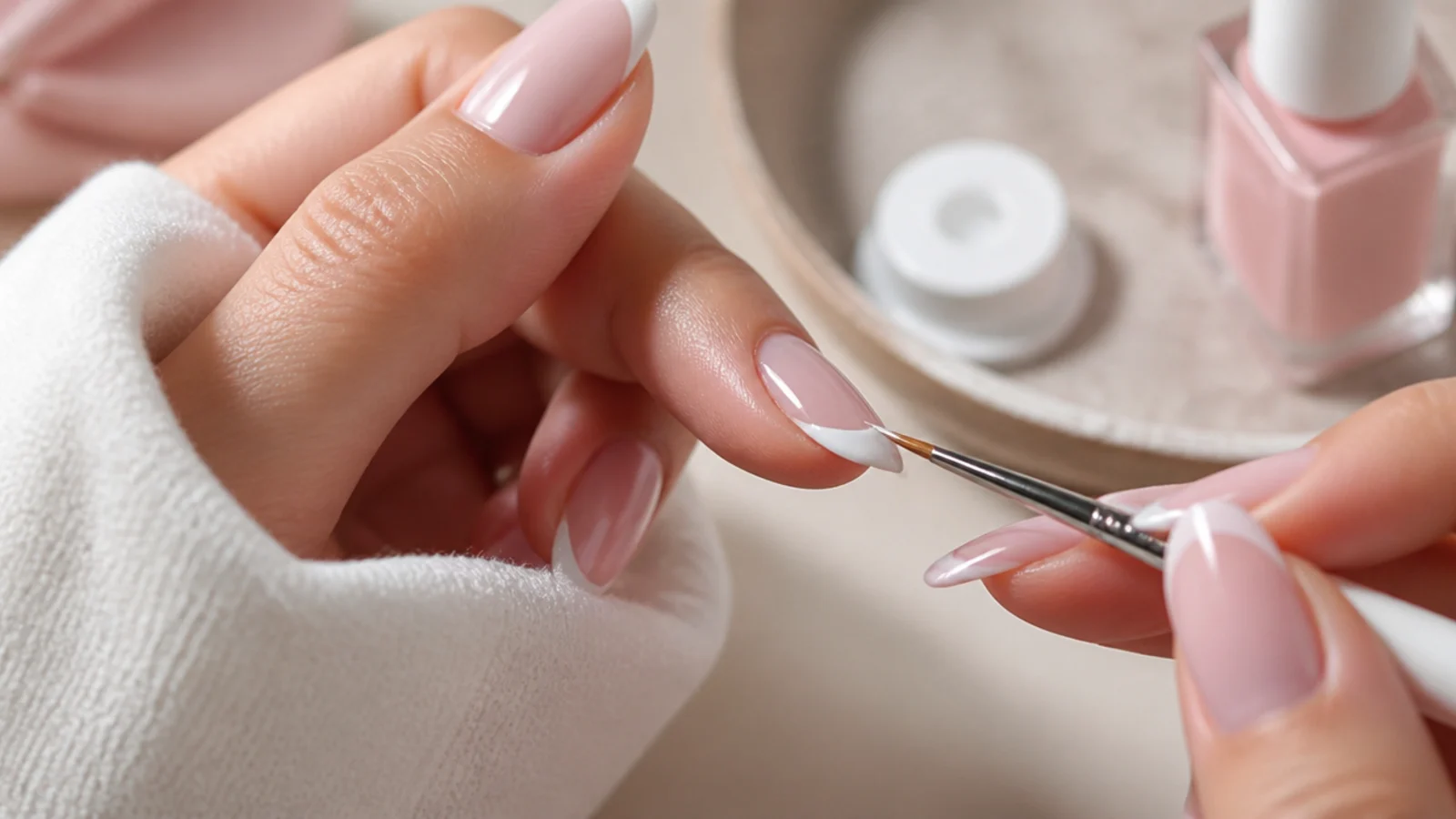
File first, paint second, and never the reverse. Take a 180 grit file, work one direction only from each sidewall toward the center of the tip, and stop when the free edge is a smooth arc with no flat spots at the corners. Apply a base coat, then two thin coats of your base color and let each set. For the tip, load a 7mm flat liner brush, wipe most of the product off, then rest the brush flat against the free edge and pull one stroke from the left sidewall to the center, and a second from the right sidewall to meet it. Two strokes, not ten. The meeting point is the deepest part of the smile. Clean up with a small brush dipped in acetone before it sets, not after. Seal with a top coat that wraps over the free edge, because an unsealed tip band chips within days. The same two-stroke method scales up to the cat-eye version in how to cat eye french tip nails.
Will Oval French Tips Suit Your Nail Beds and Fingers?
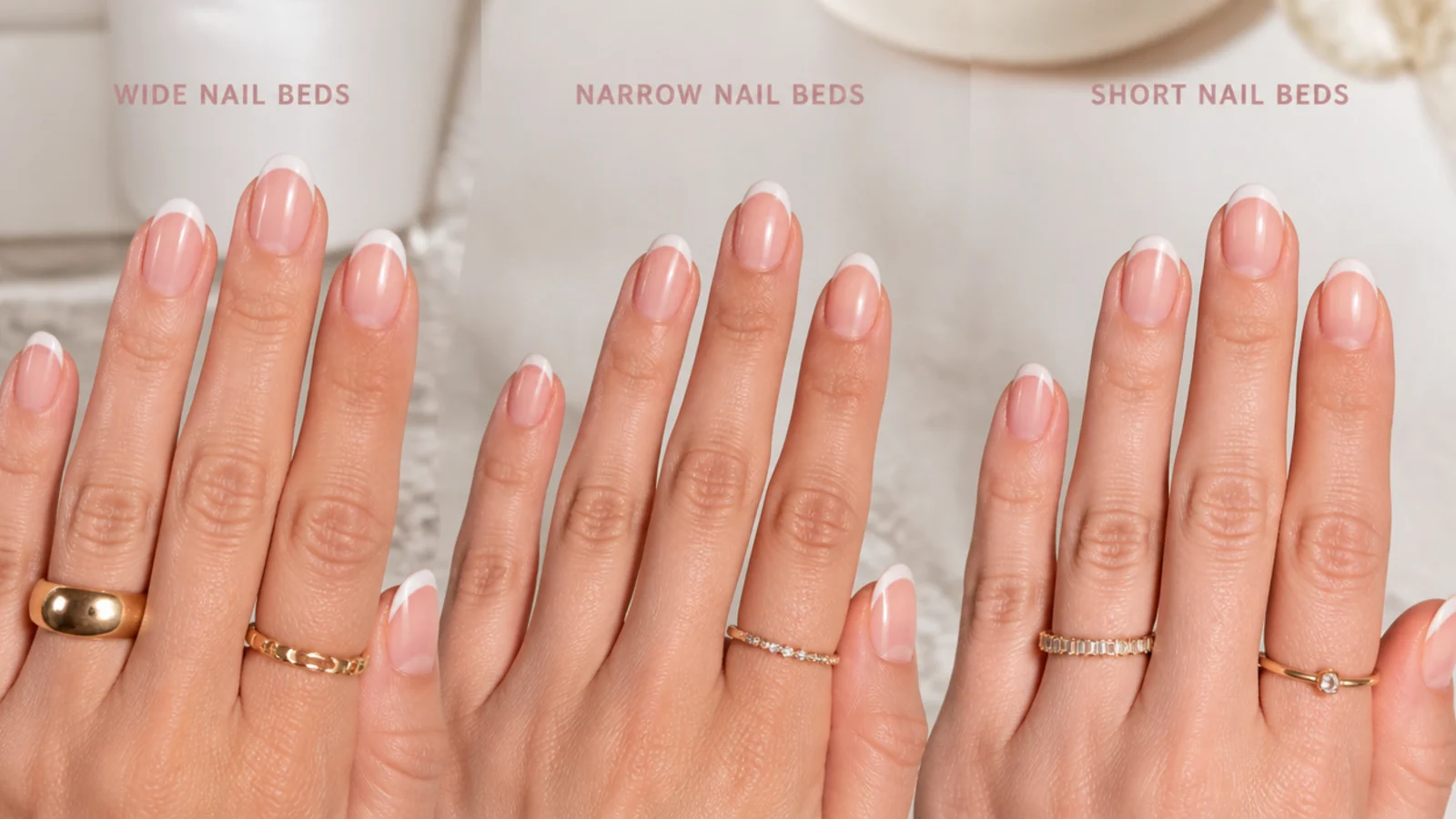
This is the question the inspiration galleries skip. Oval is the most universally flattering of the soft shapes because it narrows on a curve rather than a taper, so it forgives a wide nail bed instead of fighting it. If your nail beds are wider than they are long, oval French is the version to choose, and keeping the tip band thin, at 1 to 2mm, adds visual length. Short fingers benefit from a narrow band and a sheer base, since anything opaque and blocky at the tip shortens the whole hand. Long narrow beds can carry the deep smile line without looking cut in half. If your free edge is bitten or peeling, oval is still workable at 2mm where almond is not, because oval does not need a taper to register. One honest caveat: very flat nail plates make any French band look painted on rather than grown, so a sheer base and a soft off-white help more than a bright white will. Length guidance is in short oval nails.
What Oval French Tip Nails Cost and How Long They Last
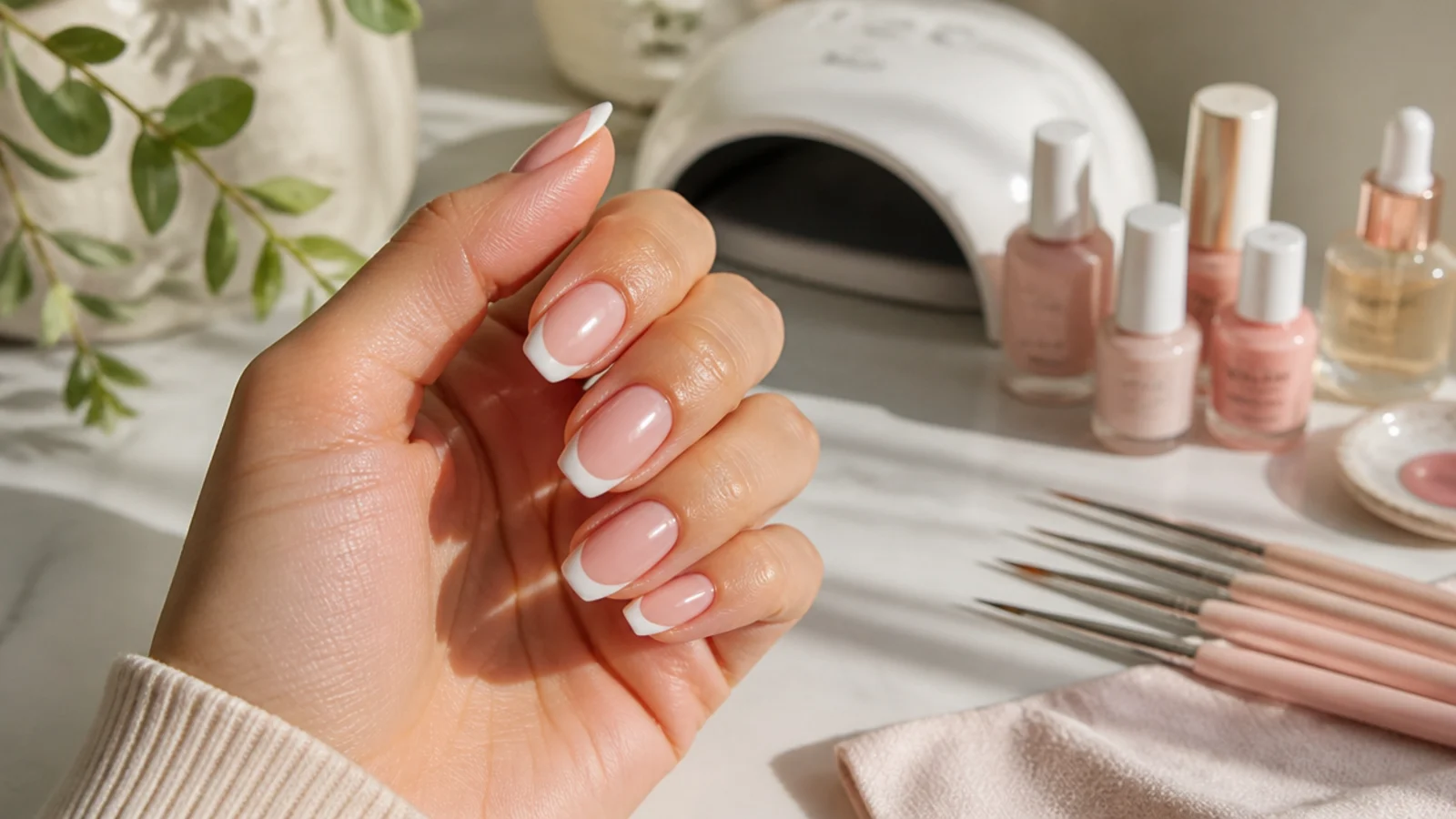
A gel French filed to oval on your natural nails runs about 40 to 65 dollars in most cities, and regular polish runs 25 to 40. Colored or micro French usually costs the same as classic white, since the labor is identical. Add roughly 10 to 20 dollars for chrome tips, about 5 dollars per nail for a double line, and 5 to 10 for glitter. Gel-X or acrylic extensions filed to oval start around 60 to 100 dollars. On wear, a gel oval French lasts two to three weeks before the regrowth gap at the cuticle becomes obvious, and here oval has a real advantage: because the tip band moves outward with the nail and the curve has no corners to catch, chipping starts later than on square. Polish gives you five to seven days. Removal costs 10 to 20 dollars and is worth paying for, since peeling gel off is what actually thins the nail plate.
Micro French Versus Classic French on Oval Nails
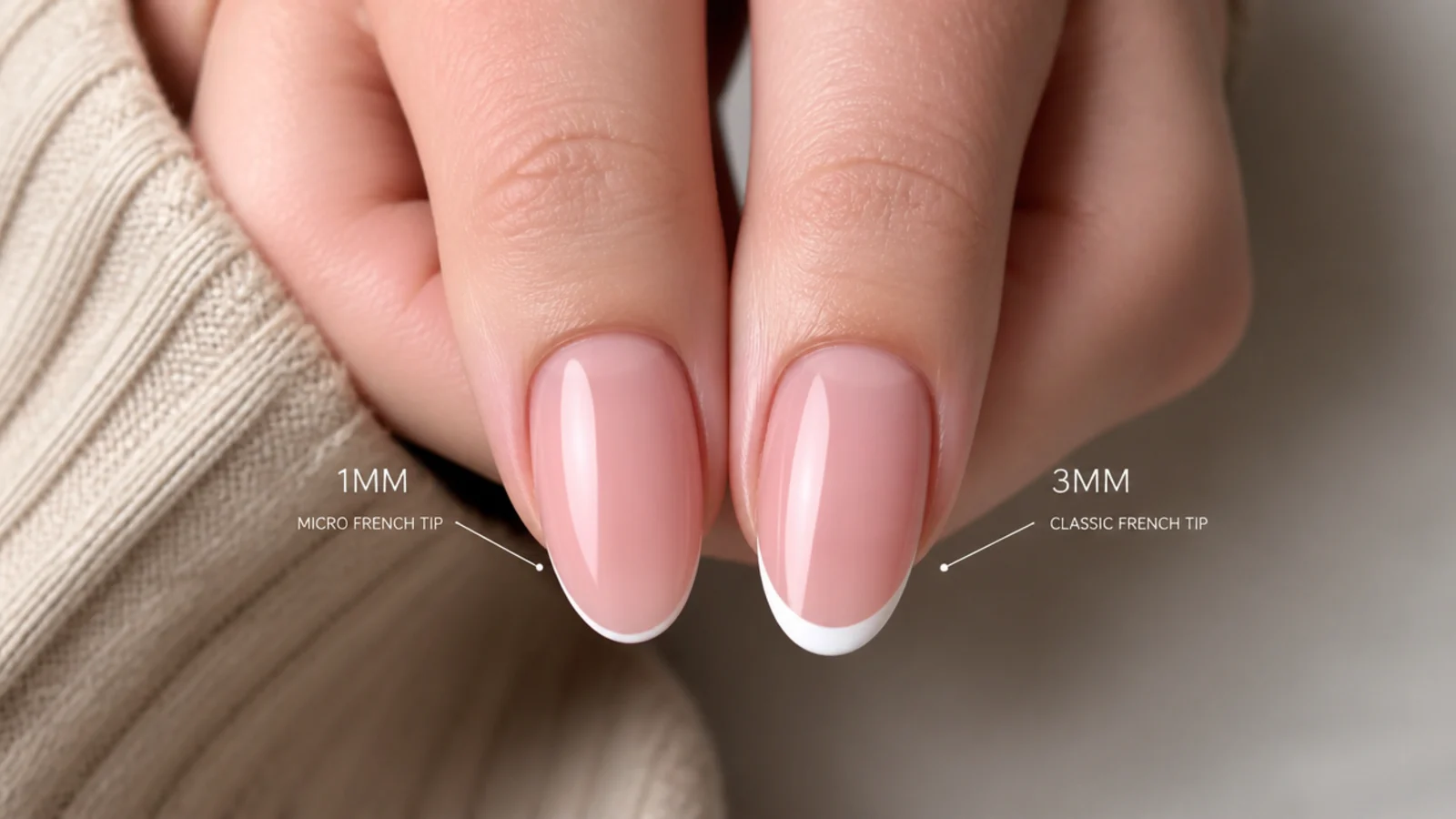
The width of the band is a bigger decision than the color. A micro French, at 1 to 1.5mm, sits on the free edge itself and barely touches the nail plate. It reads modern and clean, it suits short nails, and because it grows out along the edge it stays wearable far longer than a classic band. The trade-off is that it is nearly invisible from a distance and it needs a very steady line, since there is no width to hide a wobble. A classic French, at 3 to 4mm, is visible across a room, photographs better, and gives you a real surface for chrome or glitter. It also announces regrowth faster, because the band sits partly on the nail plate and moves up as the nail grows. Choose micro if your nails are under 3mm or you want low upkeep. Choose classic if the manicure is for an event. The related one-color treatment is in white chrome french tip nails.
Oval French Tip Troubleshooting: Five Things That Go Wrong
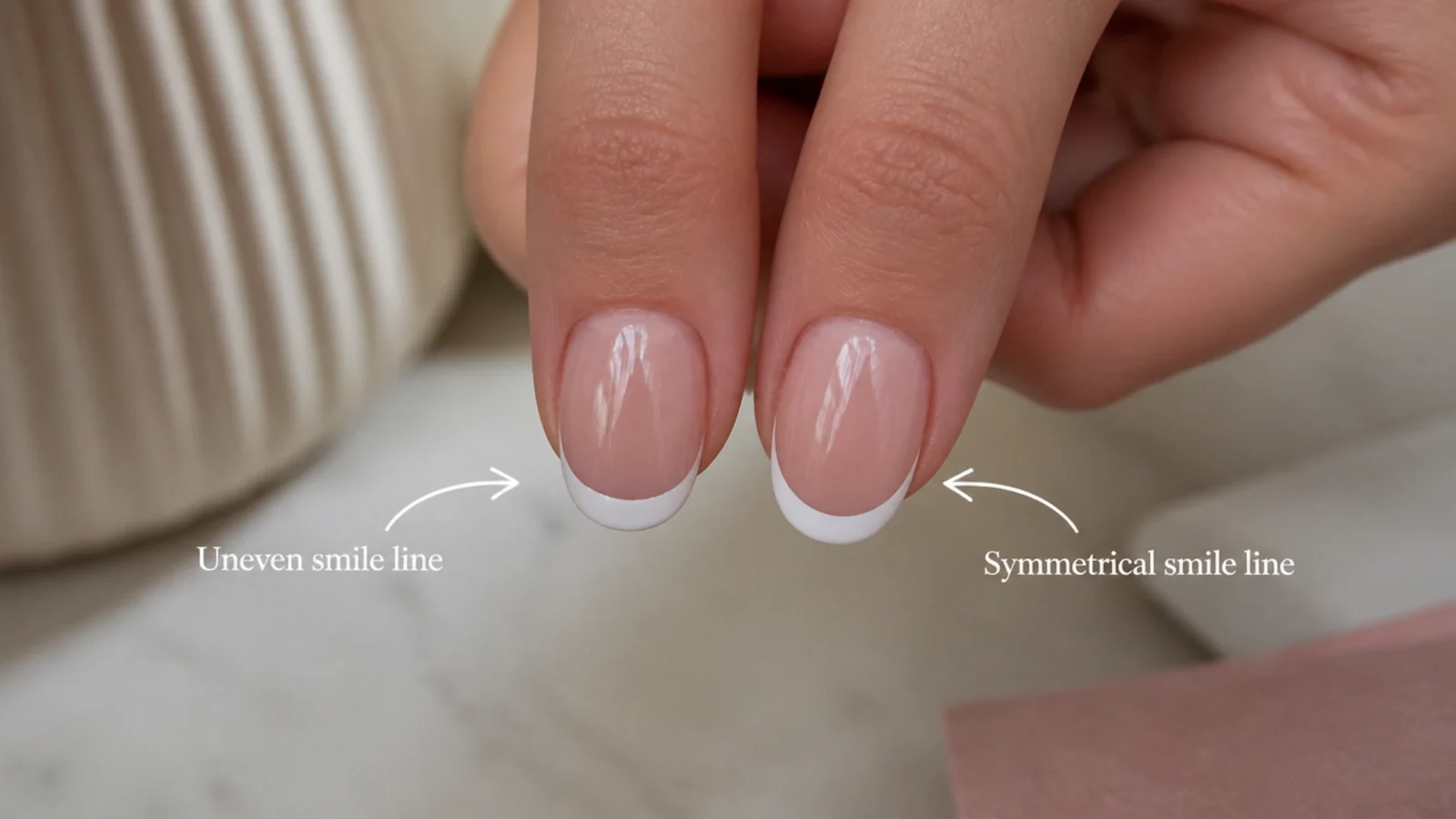
Five failures cover almost everything. If the tip band looks like a closed stripe across the nail, the smile line started too high on the sidewalls; drop it down to where the sidewall meets the free edge. If one side sits higher than the other, you painted both strokes from the same wrist angle, so rotate the hand and pull each stroke from its own side. If the white looks streaky, the brush was too wet, because two thin coats always beat one heavy one on a curved edge. If the band chips within three days, the top coat was not capped over the free edge, which is the single most skipped step in a home French. If the shape reads round rather than oval, the sidewalls were filed straight down instead of angled slightly inward; oval needs a gentle inward angle for the last few strokes before the tip rounds off. A 180 grit file shapes and a 240 grit refines. Compare the full shape method in almond cat eye french tip nails.
Frequently Asked Questions
What are oval french tip nails?
They are a French manicure painted on a nail filed to a smooth rounded arc with no corners. The smile line follows the same curve as the free edge, so instead of a hard horizontal stripe you get one continuous band that tapers to nothing at each sidewall. The result reads softer and more natural than a square or almond French.
How do you french tip oval nails at home?
File the free edge into a smooth arc using a 180 grit file, working one direction only. Apply base coat and two thin coats of your base color. Then take a thin liner brush, wipe it nearly dry, and pull one stroke from each sidewall to meet at the center of the tip. Clean up with acetone before it sets and cap the free edge with top coat.
Are oval nails good for short fingers?
Yes, and better than most shapes. Oval narrows on a curve, which adds visual length without needing extra free edge, so it works at about 2mm. On short fingers keep the French band thin, 1 to 2mm, and the base sheer. A wide opaque tip band is what shortens the hand, not the shape itself.
Do oval nails break easily?
Less than almond or coffin. The rounded tip has no corners and no taper, so knocks and typing spread force across the curve instead of concentrating it at one narrow point. That makes oval the most durable of the soft shapes and the best choice if you work with your hands or keep your natural nails.
What is the difference between oval and squoval nails?
Squoval keeps the straight sidewalls and squared tip of a square nail and only softens the two corners. Oval removes the corners entirely and rounds the whole free edge into an arc. For a French tip that difference matters a lot: squoval takes a nearly straight smile line, while oval takes a full curve.
How short can oval french tips be?
About 2mm of free edge. Below that there is not enough edge to file a visible arc and the nail reads as round rather than oval. At 2 to 3mm, keep the tip band at 1 to 1.5mm so the French stays proportionate. Anything wider covers the whole free edge and looks like a white nail with a tinted base.
Is white or colored french better on oval nails?
White is the safer formal choice and photographs best, but colored tips have a practical edge: a soft pink, lavender or chocolate band shows less contrast against the natural nail, which means small line imperfections and early regrowth are much harder to spot. For a first DIY attempt, a colored tip close to your base color is far more forgiving.
How long do oval french tip nails last?
A gel oval French lasts two to three weeks before regrowth at the cuticle becomes obvious, and regular polish gives you five to seven days. Oval chips later than square because the curved edge has no corners to catch on fabric. Capping the top coat over the free edge is what buys the last several days.
Can you get oval french tips on press-on nails?
Yes, and oval is one of the most widely stocked press-on shapes. Sized correctly and applied with tabs, a set lasts about five to seven days, and with nail glue closer to two weeks. Buy a sizing kit first, since a press-on that is too wide will lift at the sidewalls within a day no matter how good the glue is.
Which almond & oval nails look are you saving?
The one thing to take from all 15 of these oval french tip designs is that the smile line has to start down at the sidewall, level with the highest point of the curve, not partway up the nail. Start it too high and the tip band turns into a stripe that shortens the nail instead of extending it. Keep the band at 1 to 2mm on short nails and 3 to 4mm on medium, use a base color you would happily wear on its own, and thin coats every time so the line stays crisp. Milky pink with a soft white tip is the easiest first set. Save the photos you like, then browse short oval nails for length guidance or the full almond and oval nails hub.