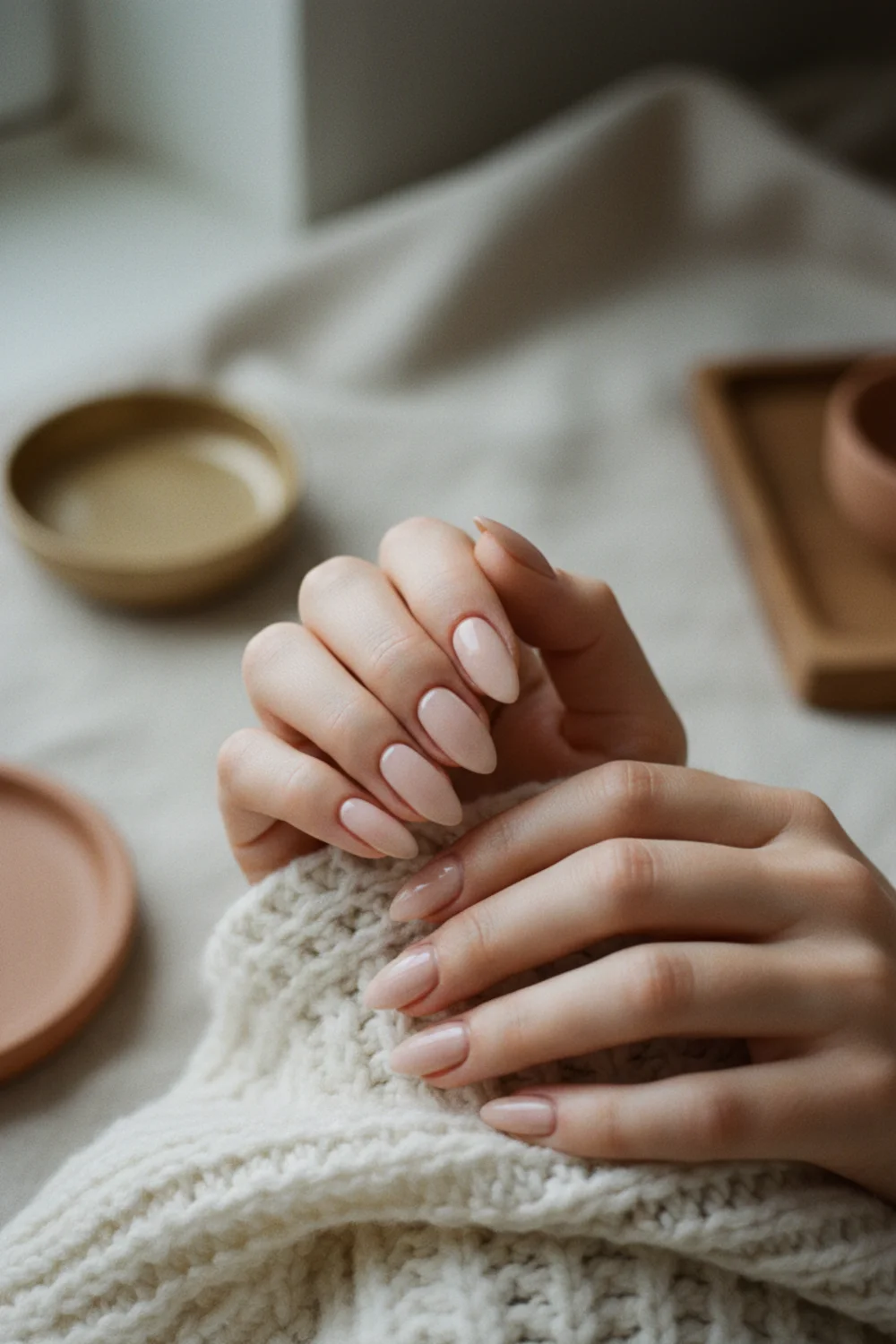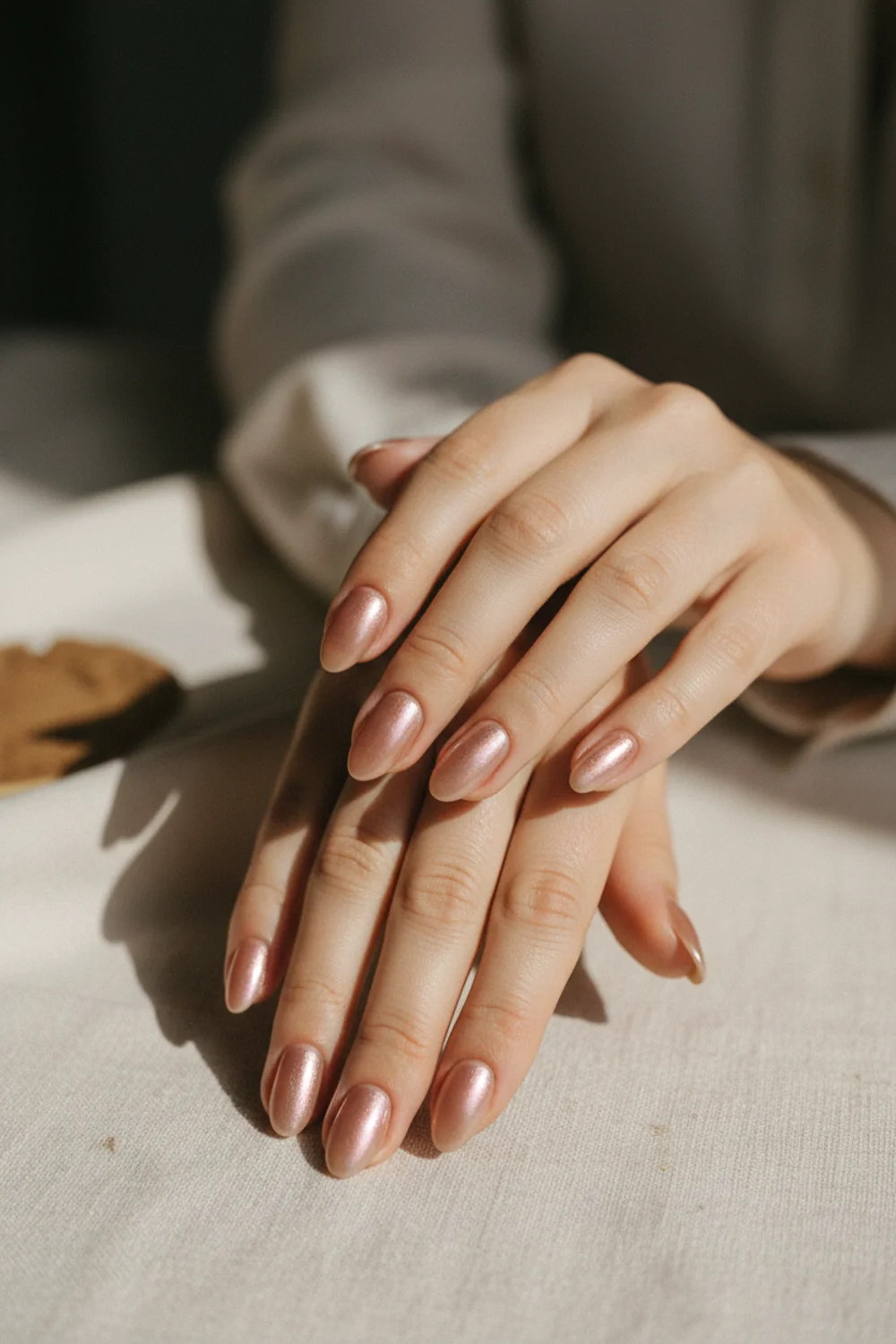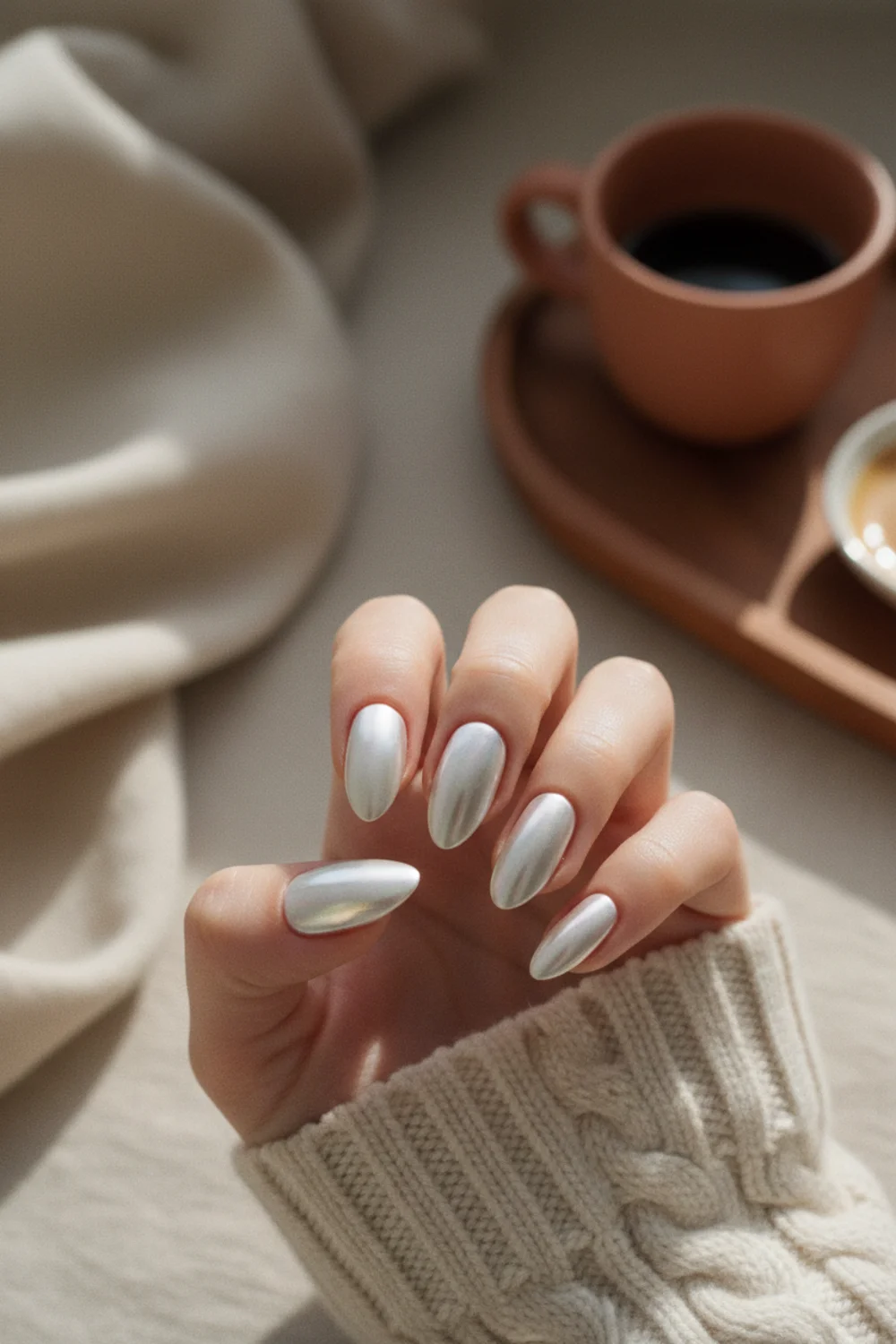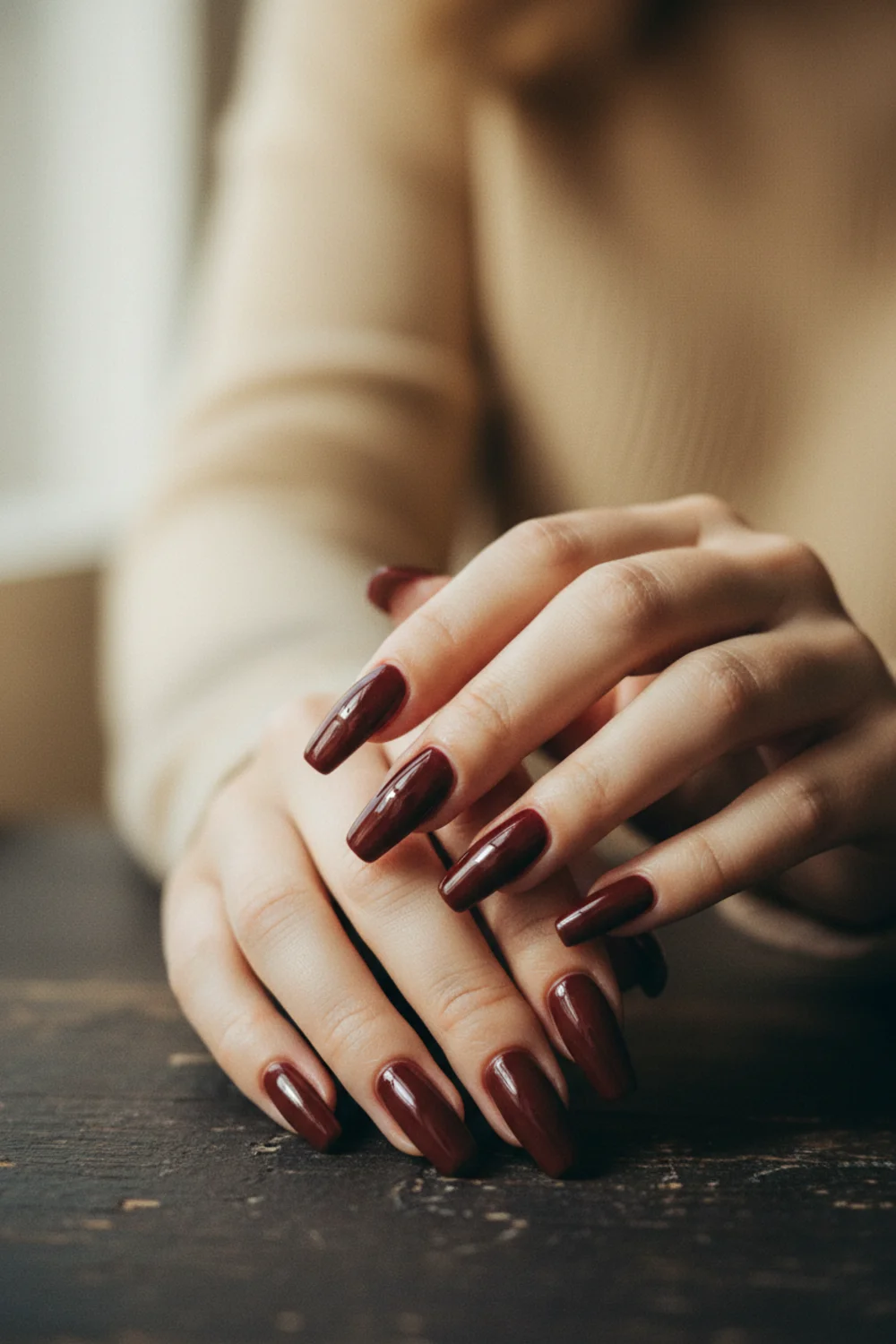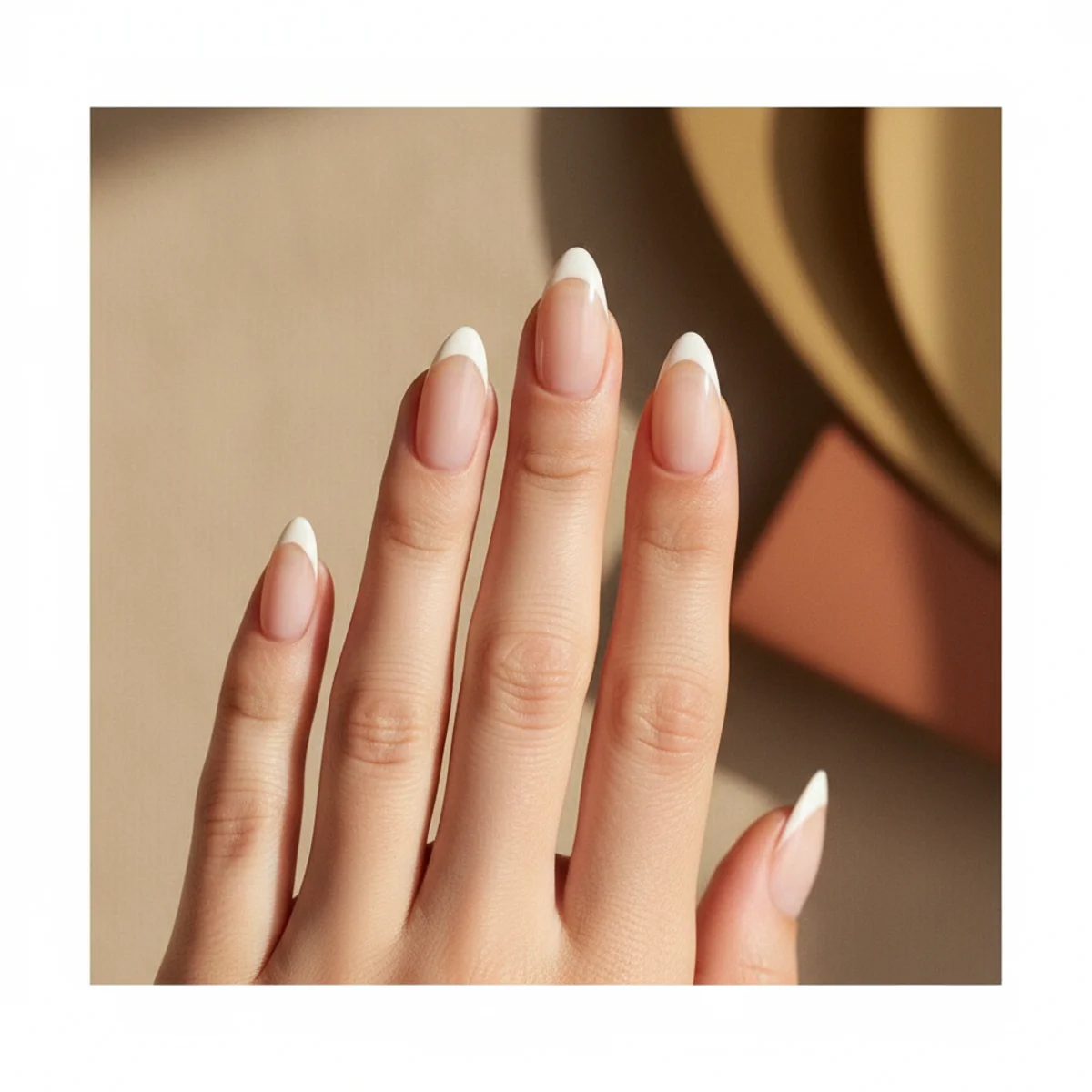
1. Slim Warm-White Tip
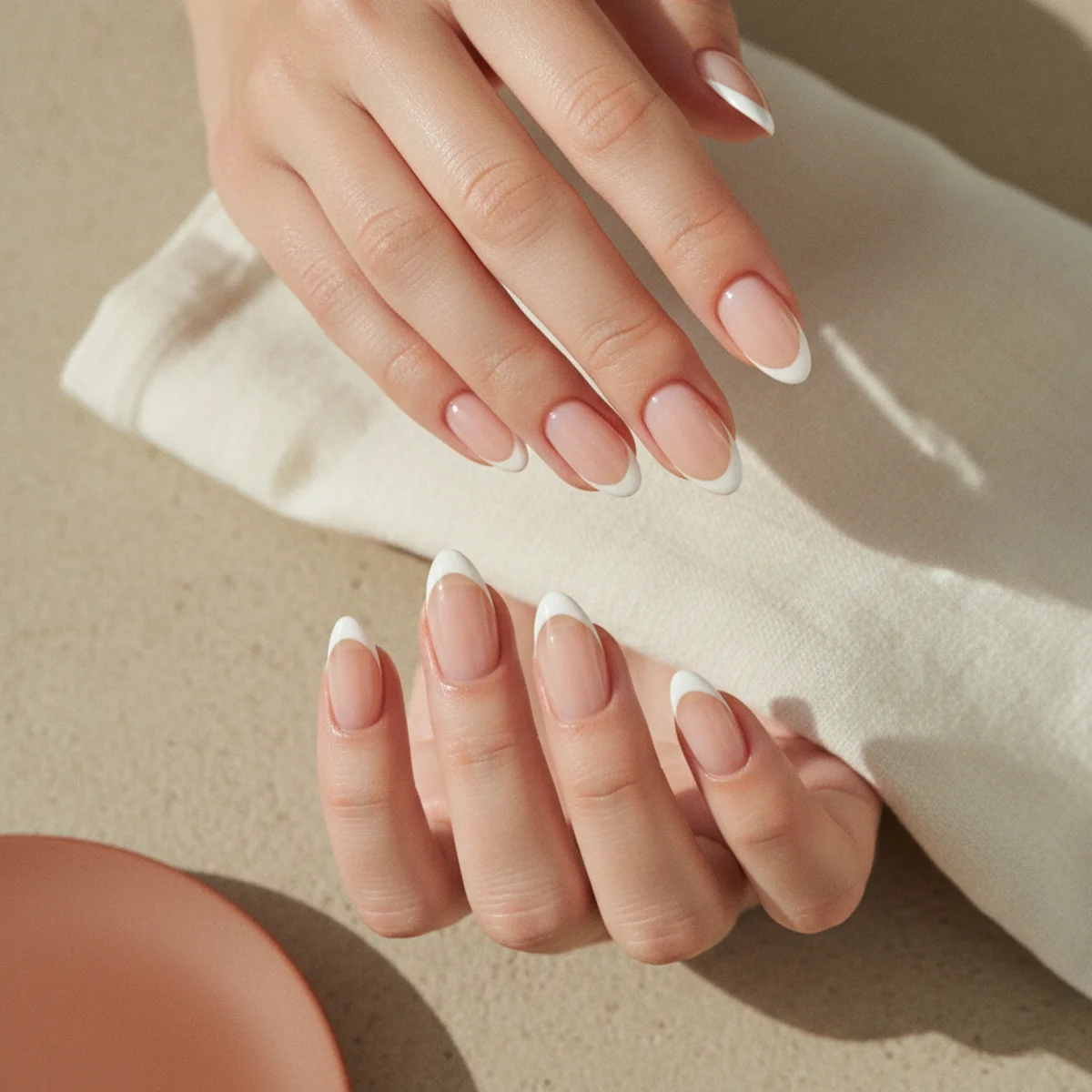
The simplest 2026 update to the classic French: swap the bright white tip for a warm, slightly ivory white, and thin the smile line to just a few millimetres. The result is a French that feels fresh and modern — less 1990s, more quiet-luxury 2026. The warmth of the white is more flattering than a stark optic white against most skin tones.
Ask specifically for a 'warm white' or 'ivory white' rather than a 'bright white' — the difference sounds small but looks significant. A slightly thinner than traditional tip line also modernises the look instantly.
2. Chrome-Tip French
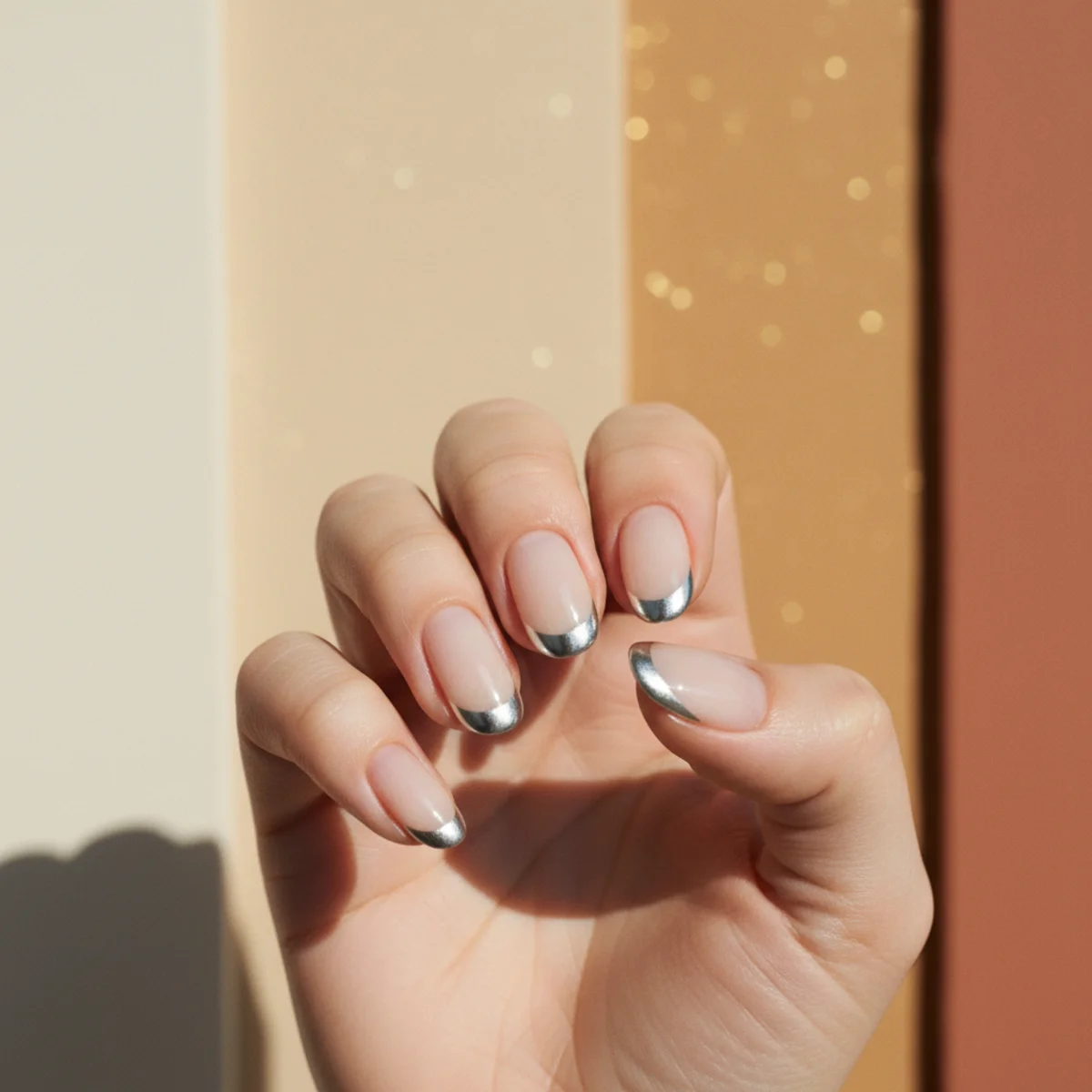
Instead of polish on the tip, a precise application of chrome powder over the smile line gives the French manicure a metallic, glowing quality. The sheer base stays barely-there while the chrome tip catches every light source — it's the French for people who want something special without committing to full nail art.
Chrome tips require precise masking before application — tape or form guides at the smile line will keep the chrome crisp and prevent it from bleeding into the base. The precision is what elevates this from DIY to salon-quality.
3. Sage Coloured Tip
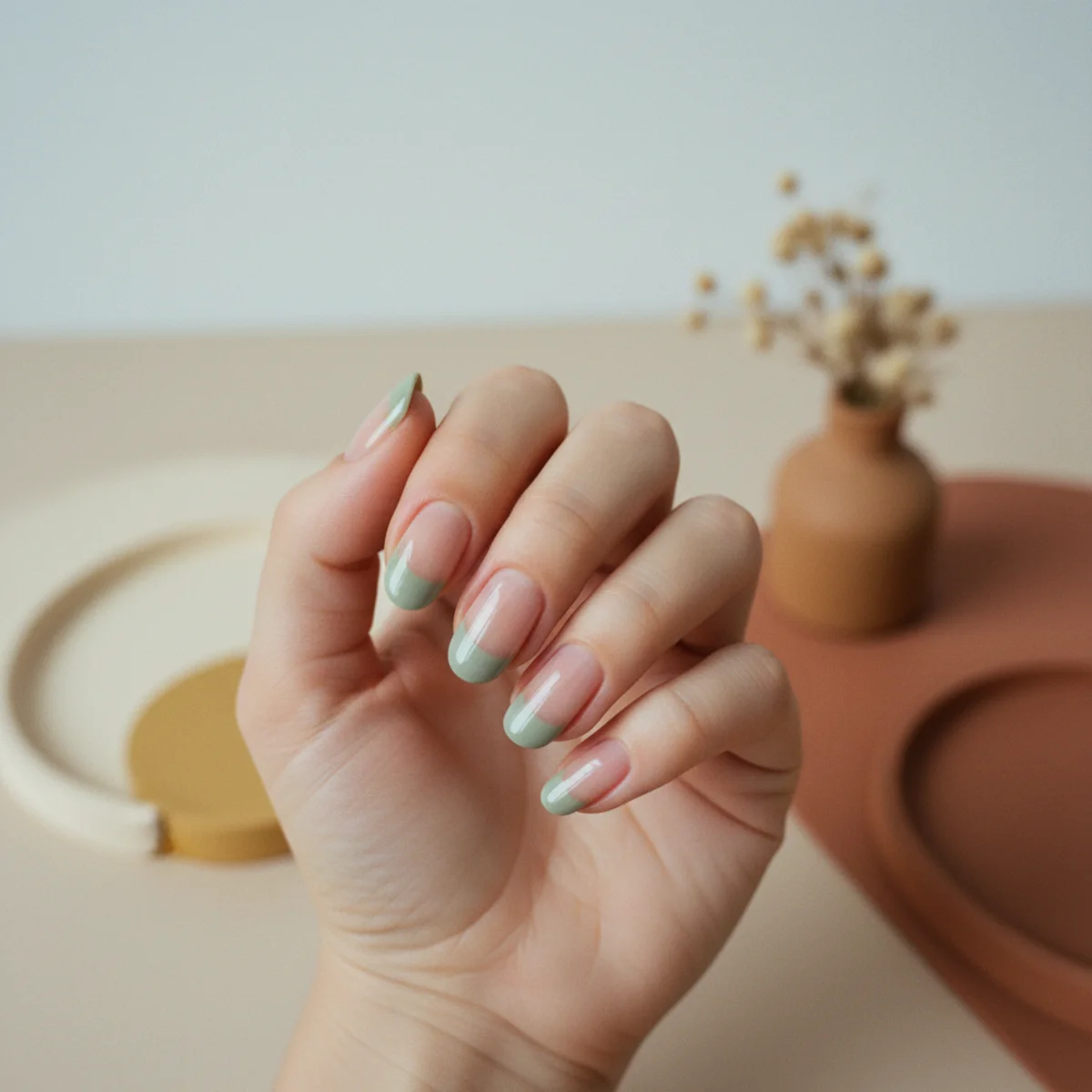
Replacing the white tip with a coloured one is the easiest way to personalise the French. Sage green is one of the most flattering options — it's muted enough to read as neutral from a distance, but up close the green gives the classic structure a completely fresh quality. It's a French for people who want to be slightly unexpected.
Keep the tip line slim and the base very sheer so the coloured tip remains the focal point. A sage that leans slightly grey rather than bright green stays in the quiet-luxury register and pairs with almost everything.
4. Reversed French
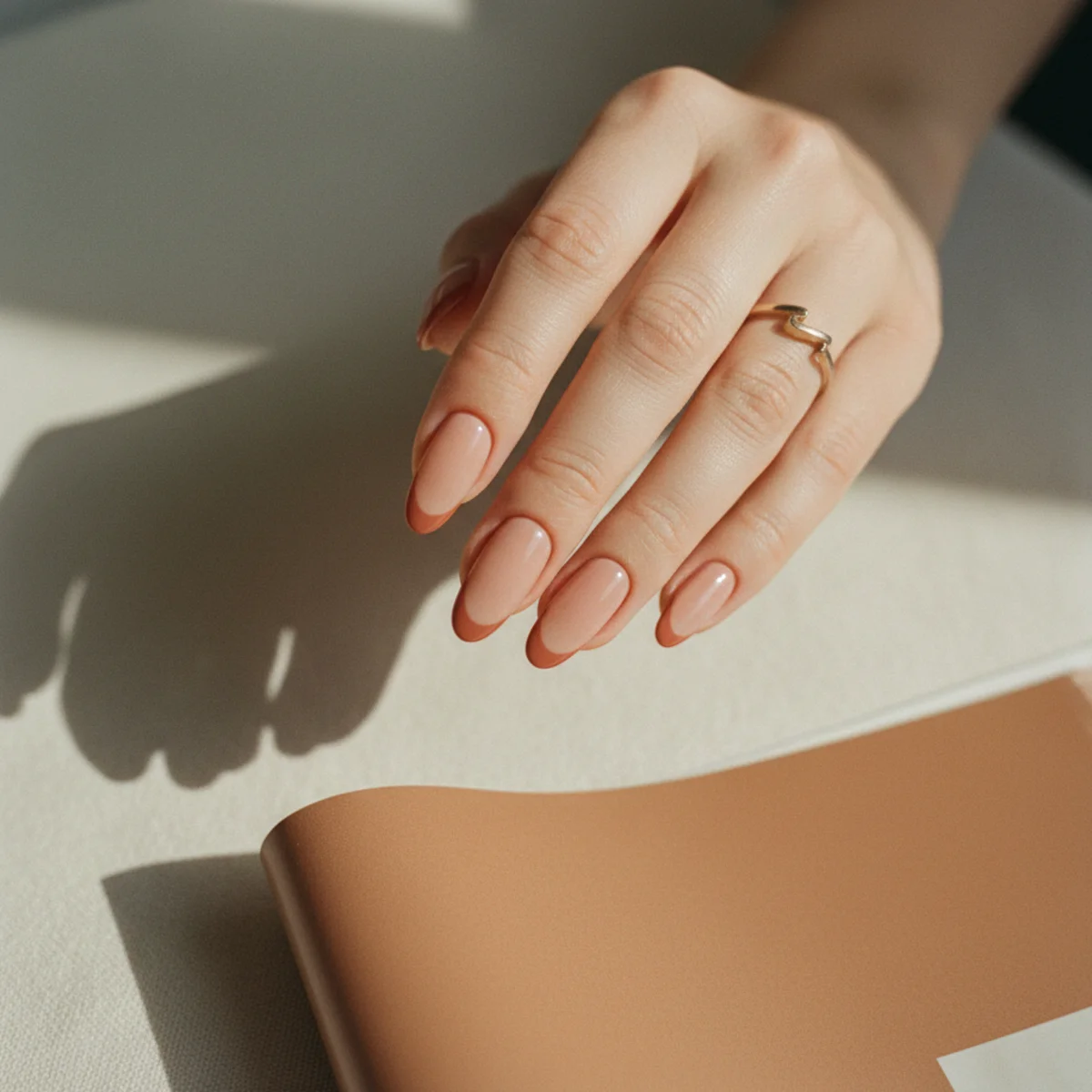
The reversed French flips the classic formula: the tip stays bare or sheer while a soft colour is painted as a half-moon arc at the nail's base. The result looks graphic, deliberately designed and completely unlike a traditional French — it's the architectural choice for someone who loves structure in their nail art.
A muted berry, a dusty rose or a deep navy at the base makes the reversed French feel grounded and intentional. The half-moon arc needs clean edges to read as design rather than accident, so a steady hand or a fine brush is essential.
5. Micro French in Pink
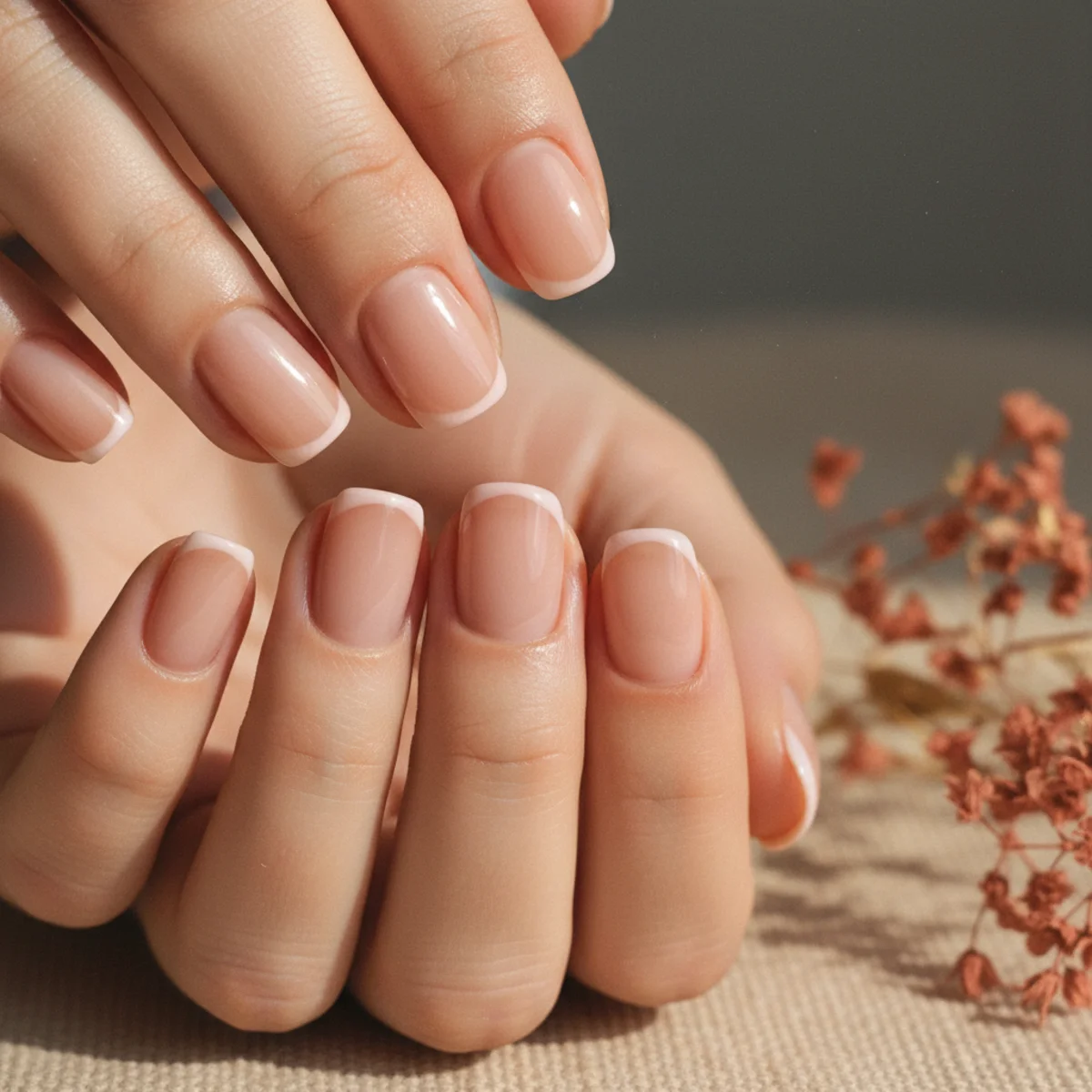
A micro French reduces the smile line to the absolute minimum — a hair-thin line of colour barely visible at the tip. In a soft strawberry or blush pink rather than white, the effect is very soft and modern: a manicure that only reveals its detail at close range. It's the most subtle French on this list and the most wearable for everyday.
Micro French tips require a fine-liner brush for clean application — even a small amount of the tip colour bleeding into the free edge affects the precision. Book with a tech who has done it before and show them a clear reference photo.
6. French with Gold-Line Detail
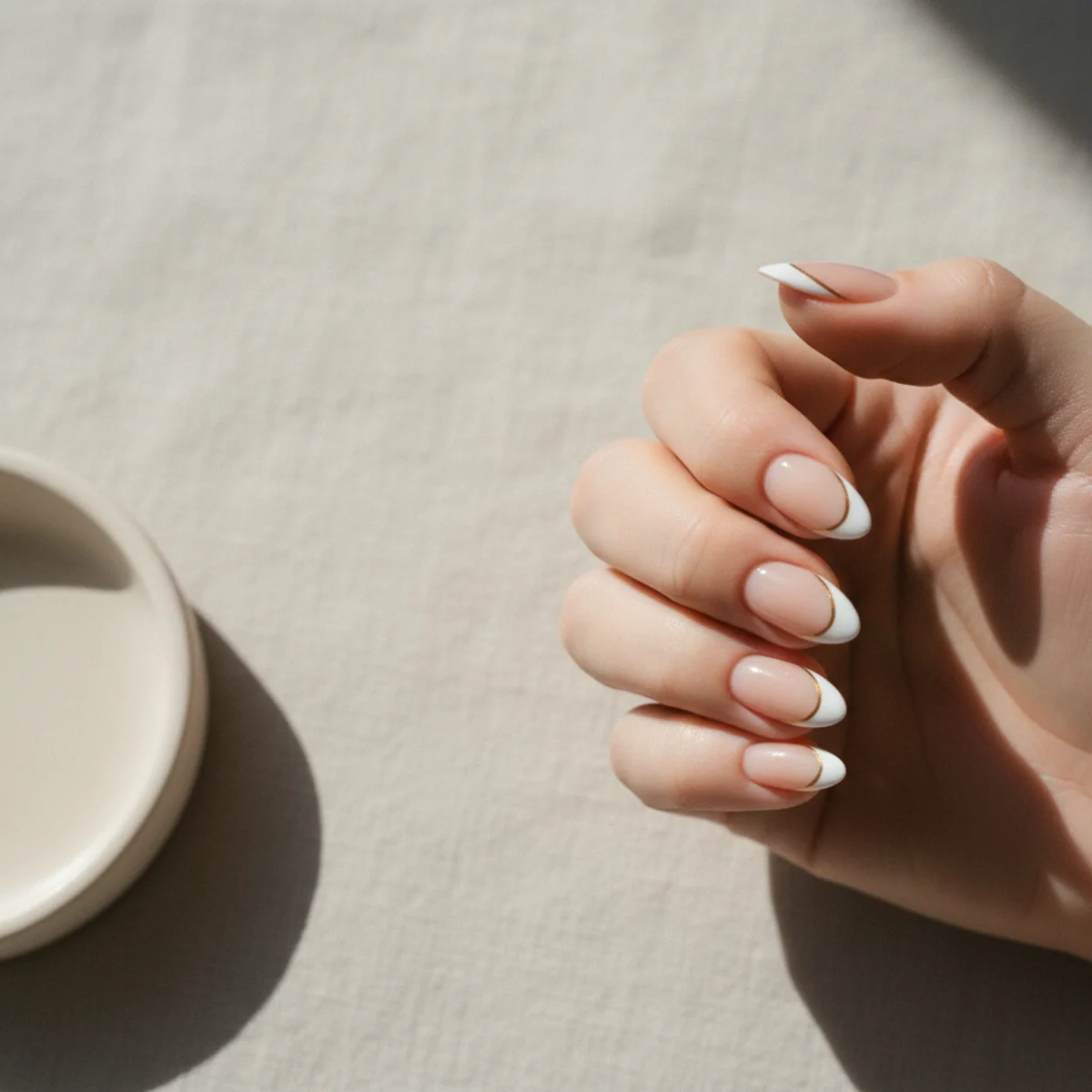
A classic white-tip French manicure gets one small but transformative addition: a fine line of gold painted right along the smile line. It's one thin brush stroke, but it changes the entire character of the manicure — from classic and clean to quietly luxe. Think of it as the French wearing jewellery.
The gold line should be as thin as possible — use a striping brush or a fine liner. A metallic gold gel rather than regular polish will give a cleaner, more precise line that dries without smudging.
7. Glazed Pink French
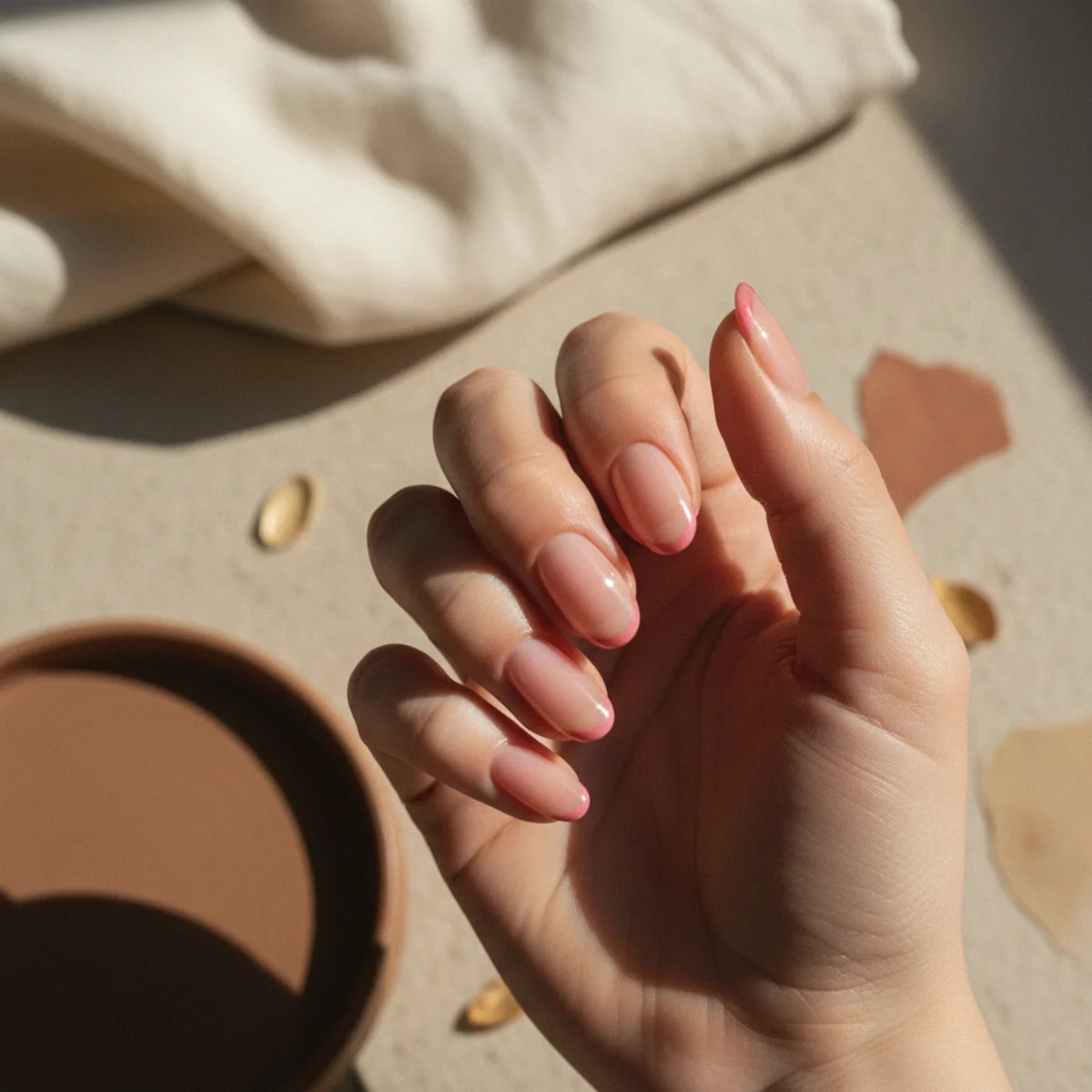
A sheer pink base with a rose-pink chrome tip creates a monochromatic French that looks like the nail is lit from the tip down. The glazed quality of the chrome tip over a translucent base gives the whole thing that coveted wet, dimensional finish without leaning too metallic or too pastel.
This look works especially well on almond and oval shapes where the curved smile line enhances the chrome powder effect. Ask for a very sheer base — almost transparent — so the chrome tip has maximum contrast.
8. Navy-Tip French
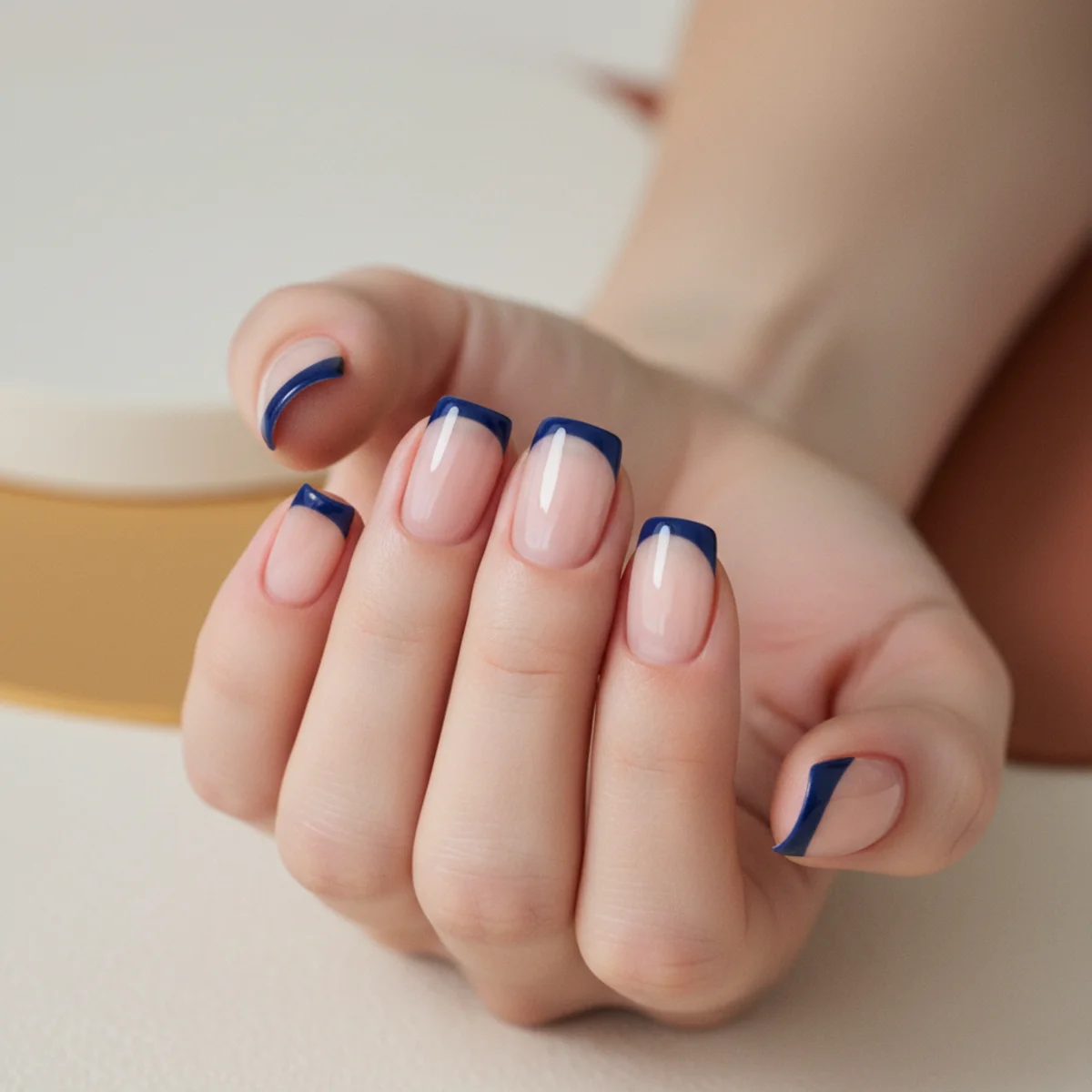
A bold navy tip on a sheer or nude base is the most graphic interpretation of the coloured French. The contrast between the very light base and the deep navy is striking and deliberate — it's not trying to blend, it's making a statement with clean colour blocking. On a square nail the flat tip makes the navy line especially crisp.
The width of the tip matters here — a medium-width navy tip feels preppy and polished; a wide tip leans more dramatic. Start with a medium width and adjust from there based on your nail length.
9. Three-Colour Rainbow French
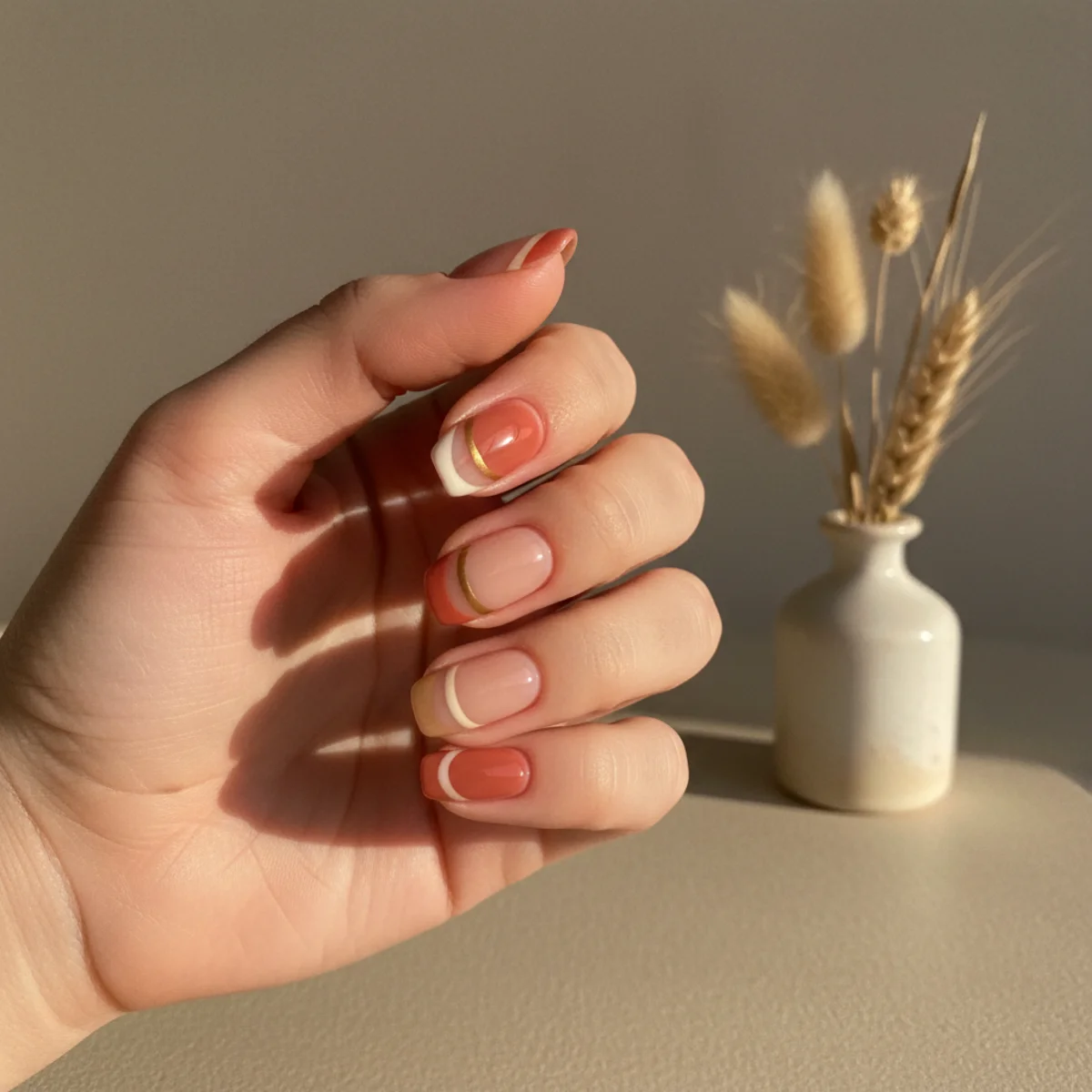
A French tip where each nail gets a different pastel tip colour — soft yellow, lilac, mint, peach and blush distributed across the hand — creates a French set that's playful, fresh and very on trend. The structure of the French keeps it from reading as chaotic; the varied colours give it personality and a joyful energy.
Choose a palette that shares the same tone — all muted pastels, or all bright ones — so the variety feels curated rather than random. A single thin tip line in each colour keeps everything crisp and the contrast with the sheer base does the rest.
10. Black-Tip Graphic French
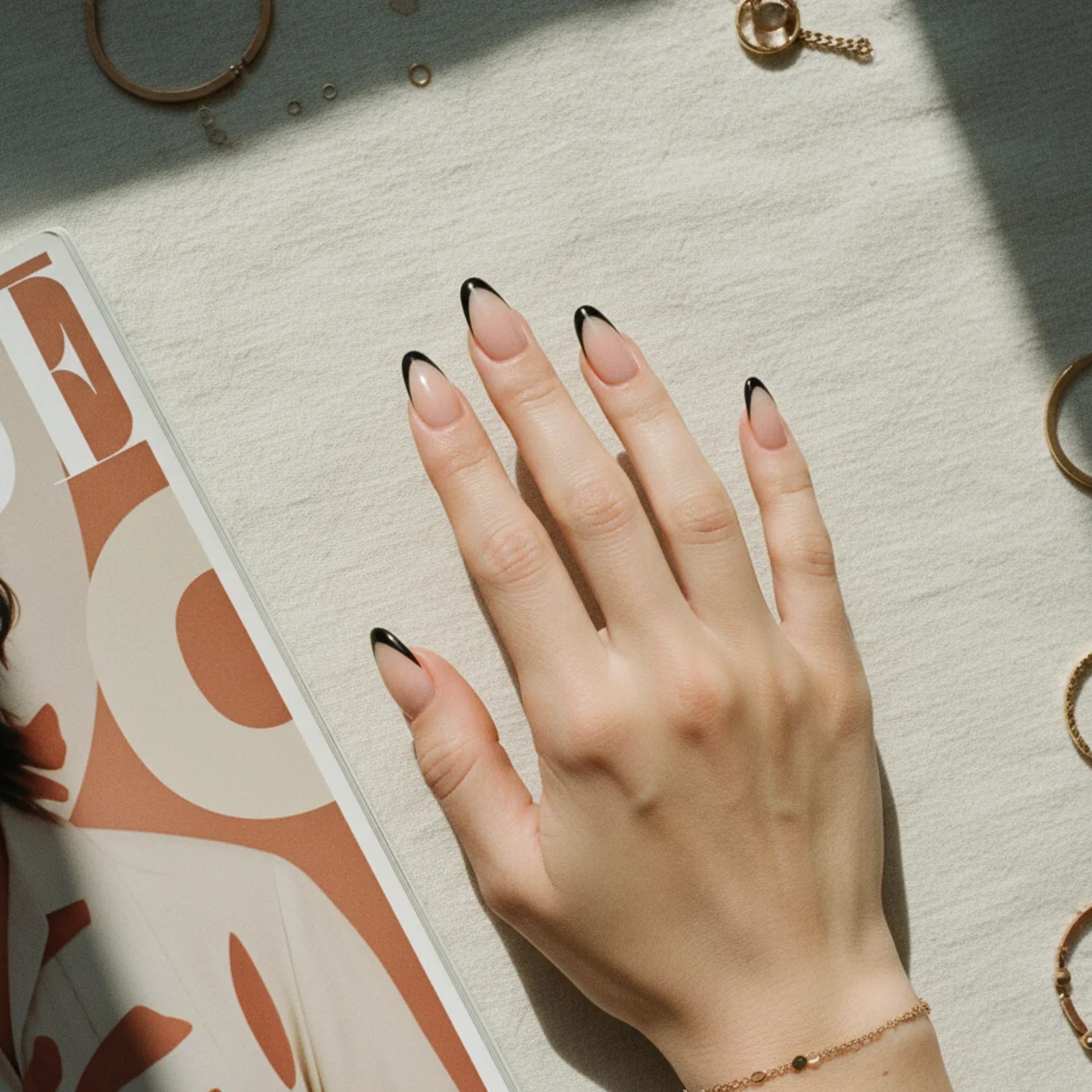
A thick, graphic black tip on a sheer or nude base is the most editorial French on this list. It references the classic French but strips it of all softness — the black is bold, the line is strong and the contrast with the nude base is sharp and intentional. It's the French for people who prefer their nails to look like graphic design.
A bold black tip works best kept clean and even — any waviness in the smile line reads as a mistake rather than a feature. Use tape guides or nail forms to get a truly clean edge before painting.
11. French with Negative Space
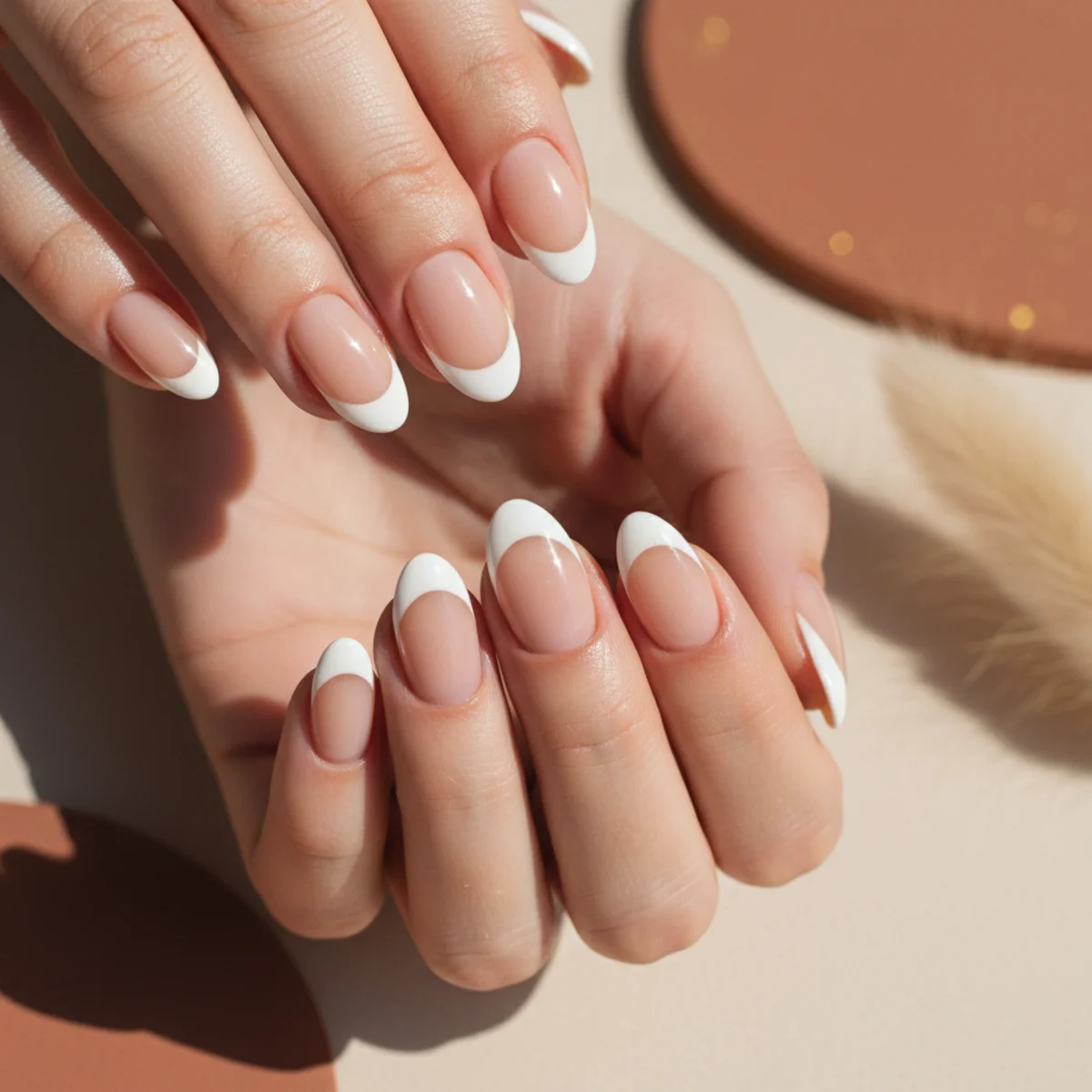
Adding a negative-space element to the French — leaving a clean curved area of bare nail at the base while the tip is painted as usual — creates a design that plays with light and depth. The unpainted section draws attention to the natural nail and gives the classic structure a more complex, intentional quality.
Negative space nail art is best executed in gel — it holds the bare area cleaner for longer and prevents the uncoated section from looking accidental rather than designed. Keep the negative space shape consistent across all nails for a polished result.
12. Sheer Mauve Tip
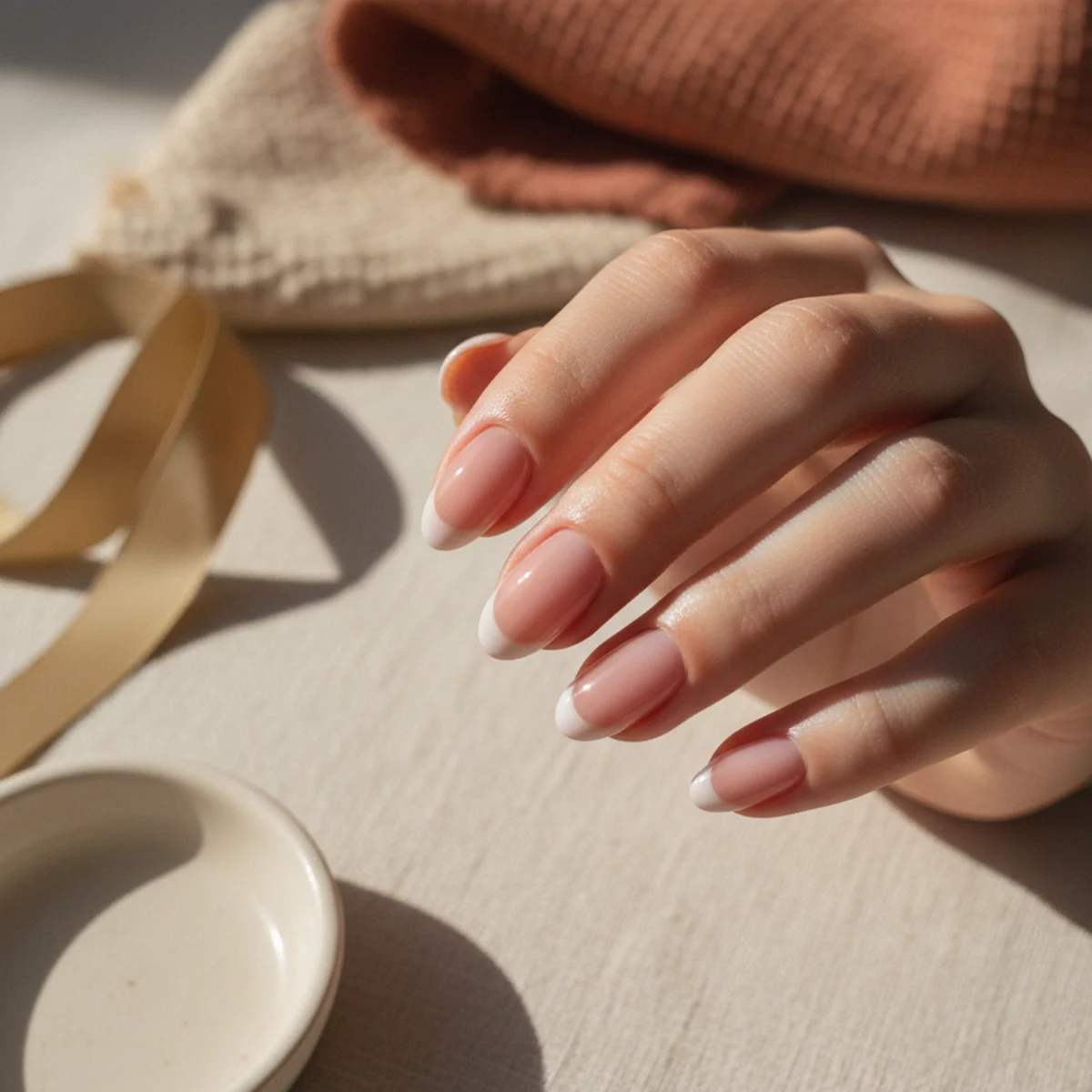
A sheer, semi-translucent mauve tip on a nude base is the most wearable grown-up French on this list. The mauve is soft enough that the smile line doesn't create a sharp line — it fades slightly at the edges, giving the tip a gentle, barely-there quality that's endlessly elegant. It reads as a simple, refined manicure rather than obvious nail art.
Choose a formula with a slightly translucent quality rather than a full opaque mauve — the sheer finish is what gives this look its gentle, polished character and allows it to grow out gracefully without showing a harsh line.
13. Double French Tip
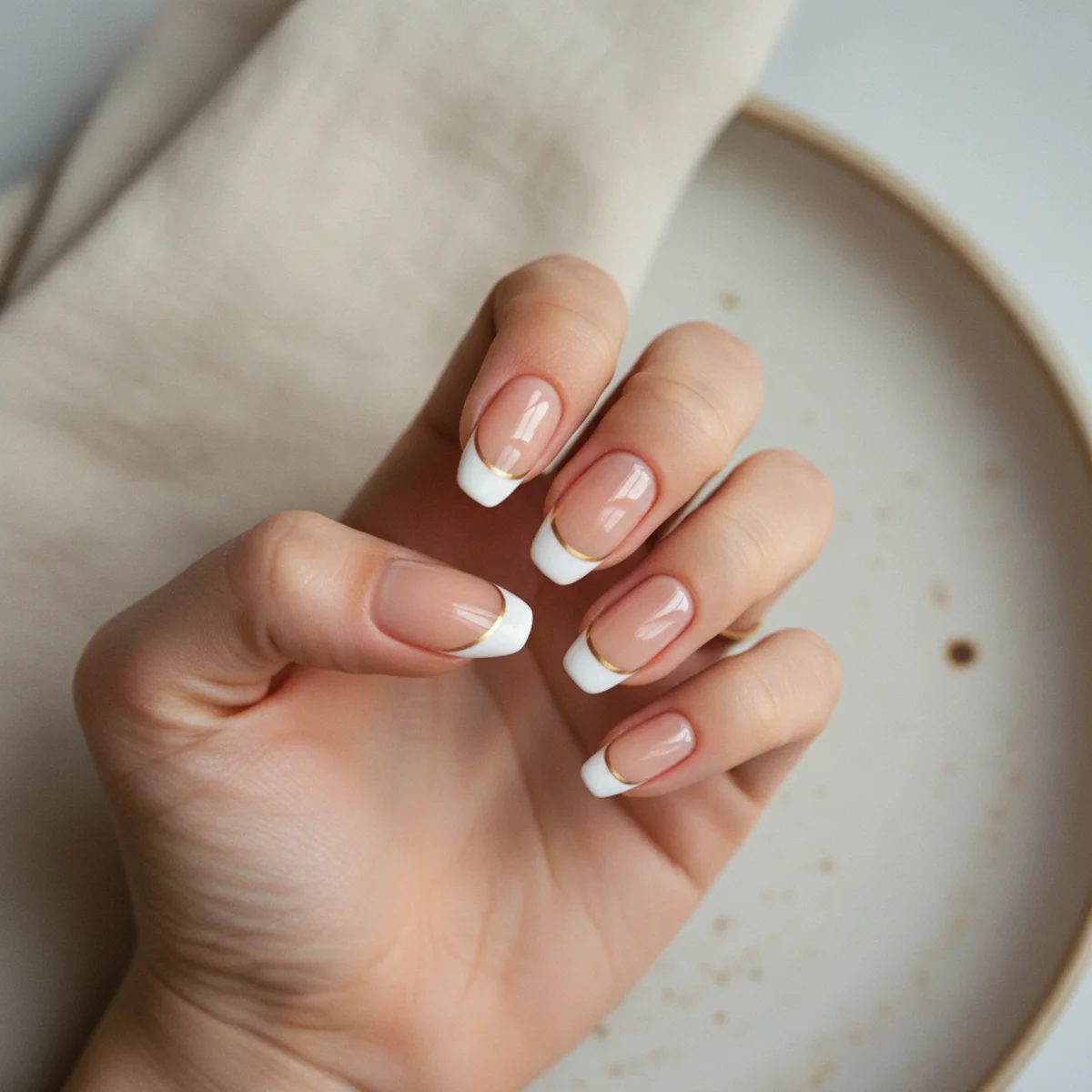
The double French stacks two tip lines: a thin warm-white outer tip and a very fine gold or coloured line set back a millimetre from it, like a shadow or underline. The effect is more intricate than a single French but still completely clean and contained — a French with extra detail for people who want just a little more.
The spacing between the two lines is key — they need to be close enough to read as a pair but far enough apart that both are clearly visible. About a millimetre of separation is the sweet spot for most nail lengths.
Which French-tip update is going on your next booking request?
The French tip has survived decades of trends because its underlying logic is sound — a clean base, a defined tip, a finished look. These 13 versions prove there's still room to reinvent it. Save the one that feels right for you, and bring it along to your next appointment.