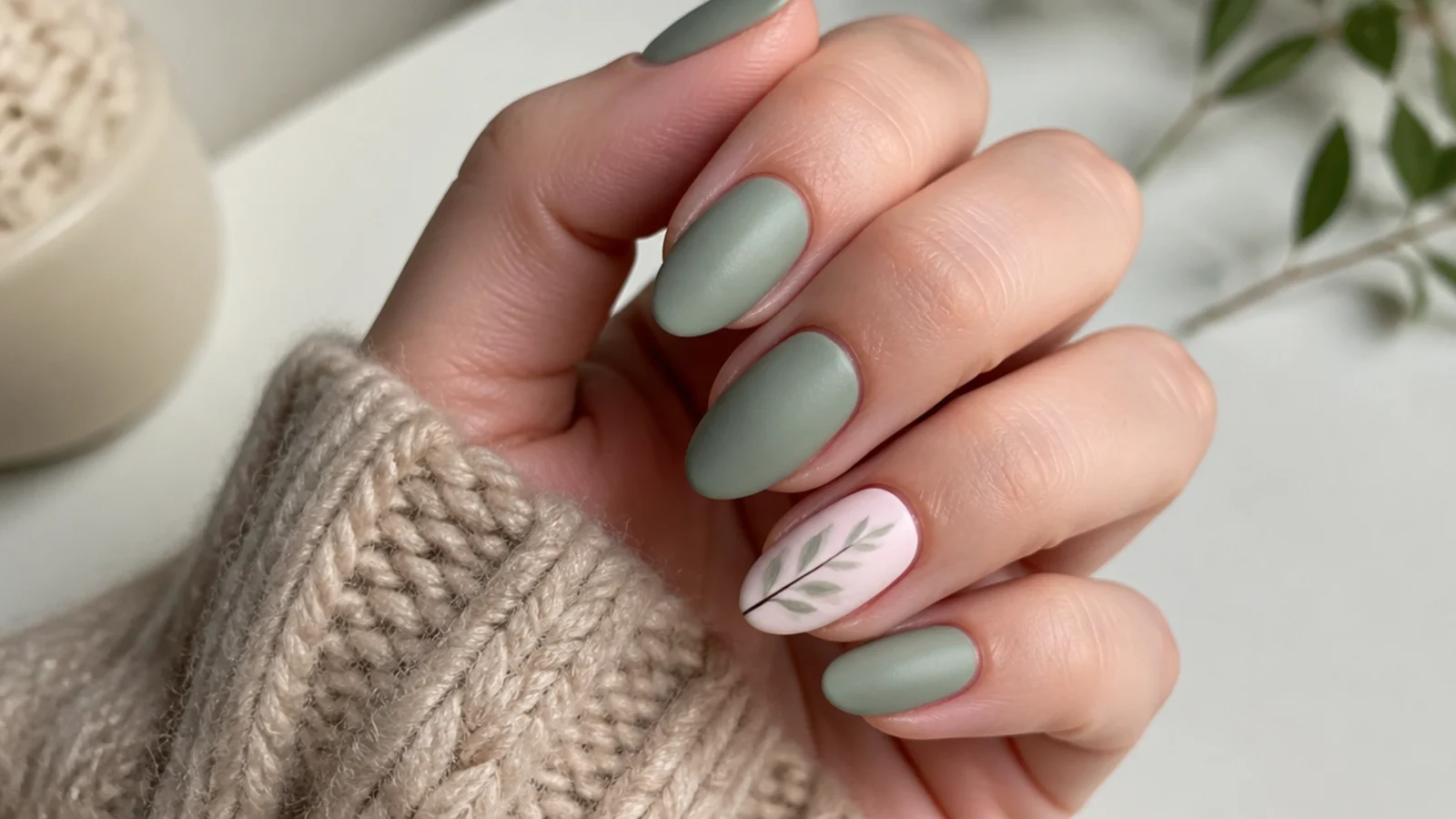
1. Prep and Shape Your Nails
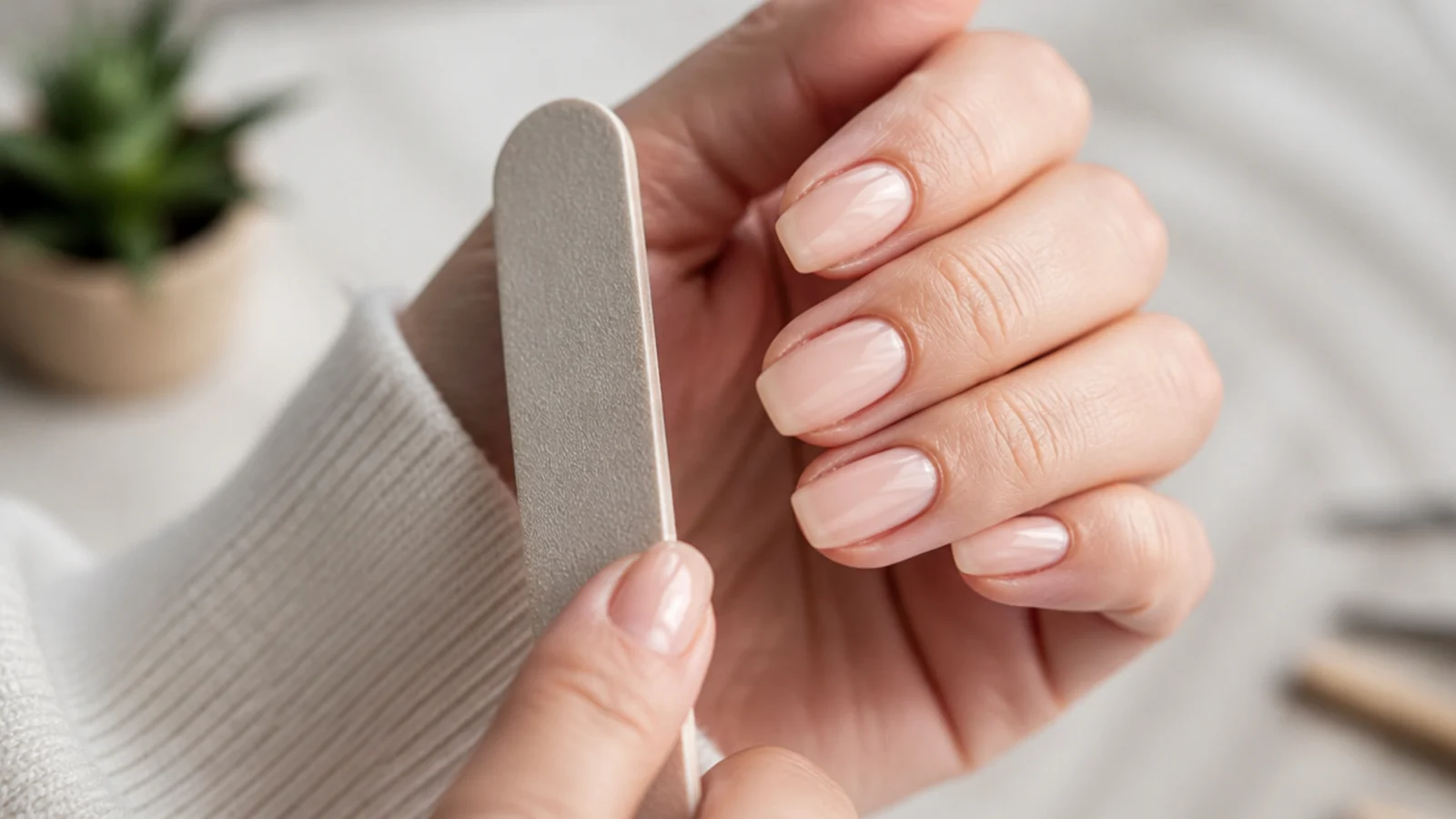
Start with clean, dry nails. Push back the cuticles, shape the free edge to your chosen shape - squoval is the safe universal - and lightly buff the surface. Matte shows an uneven surface less than gloss, so you do not need a glassy finish, just an even one. Trim any hangnails and brush away dust so nothing sits under the color. Good prep is what keeps the color from lifting and the matte coat from going patchy.
Common mistake: Over-buffing thins and weakens the natural nail - a few light passes are enough since matte hides fine ridges anyway.
Pro tip: Pick a shape that suits your fingers: oval or almond elongate short fingers, squoval flatters everyone.
2. Cleanse and Dehydrate the Surface
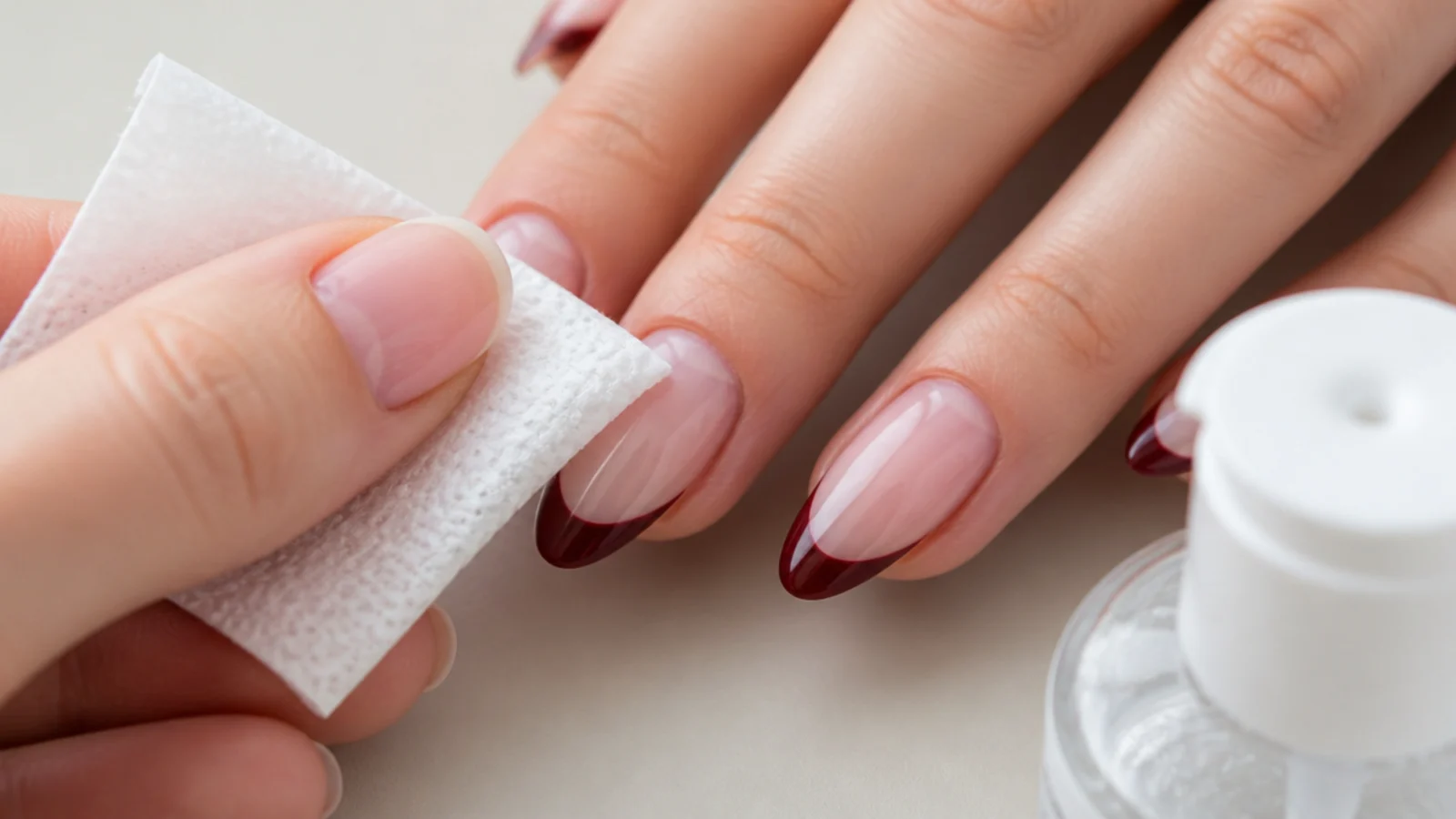
Wipe every nail with a lint-free wipe and cleanser or isopropyl alcohol so no oils or dust remain. This is the most important prep step for matte, because skin oils and cuticle residue are the number one cause of shiny patches later. If you are working in gel, follow with a dehydrator and primer so the set grips. The surface should feel squeaky and look dull before you paint - any leftover oil will show as a glossy spot through the finish.
Common mistake: Touching the cleaned nail with bare fingers re-deposits oil - handle nails by the edges after wiping.
Pro tip: Cleanse again if you paused or washed your hands; oil returns to the nail plate within minutes.
3. Apply Base Coat
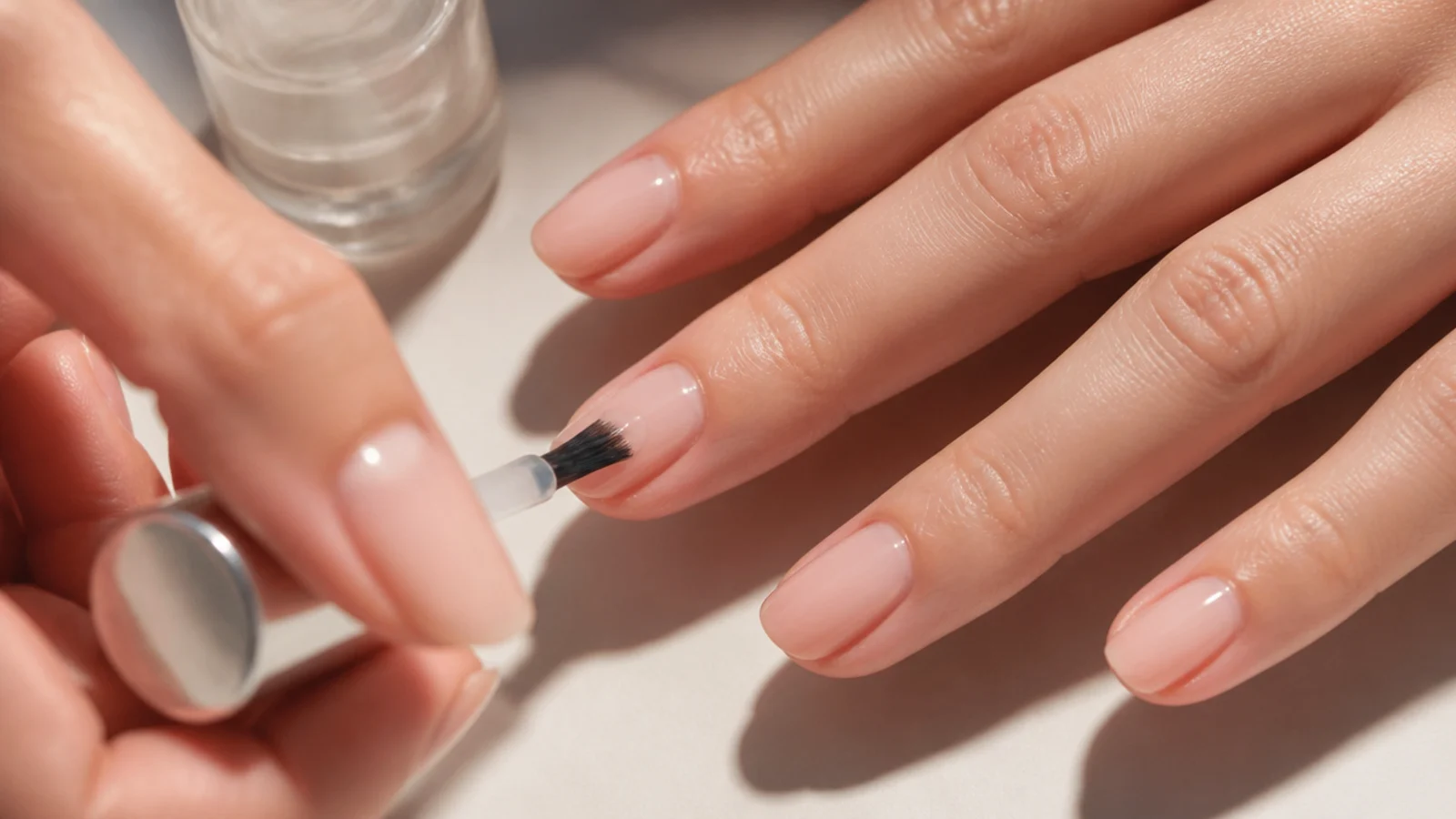
Brush on a thin, even base coat and cap the free edge by running the brush along the tip. If you are working in gel, cure under your lamp as directed - about 30 to 60 seconds under LED or roughly 2 minutes under UV. If you are using regular polish, let it dry fully. The base protects your natural nail, prevents staining from dark mattes like black or deep red, and gives the color something to hold onto.
Common mistake: Skipping the base coat lets dark matte colors stain the nail and weakens the whole set.
Pro tip: A base coat is especially worth it under matte black and red, which stain bare nails fast.
4. Paint Your First Color Coat
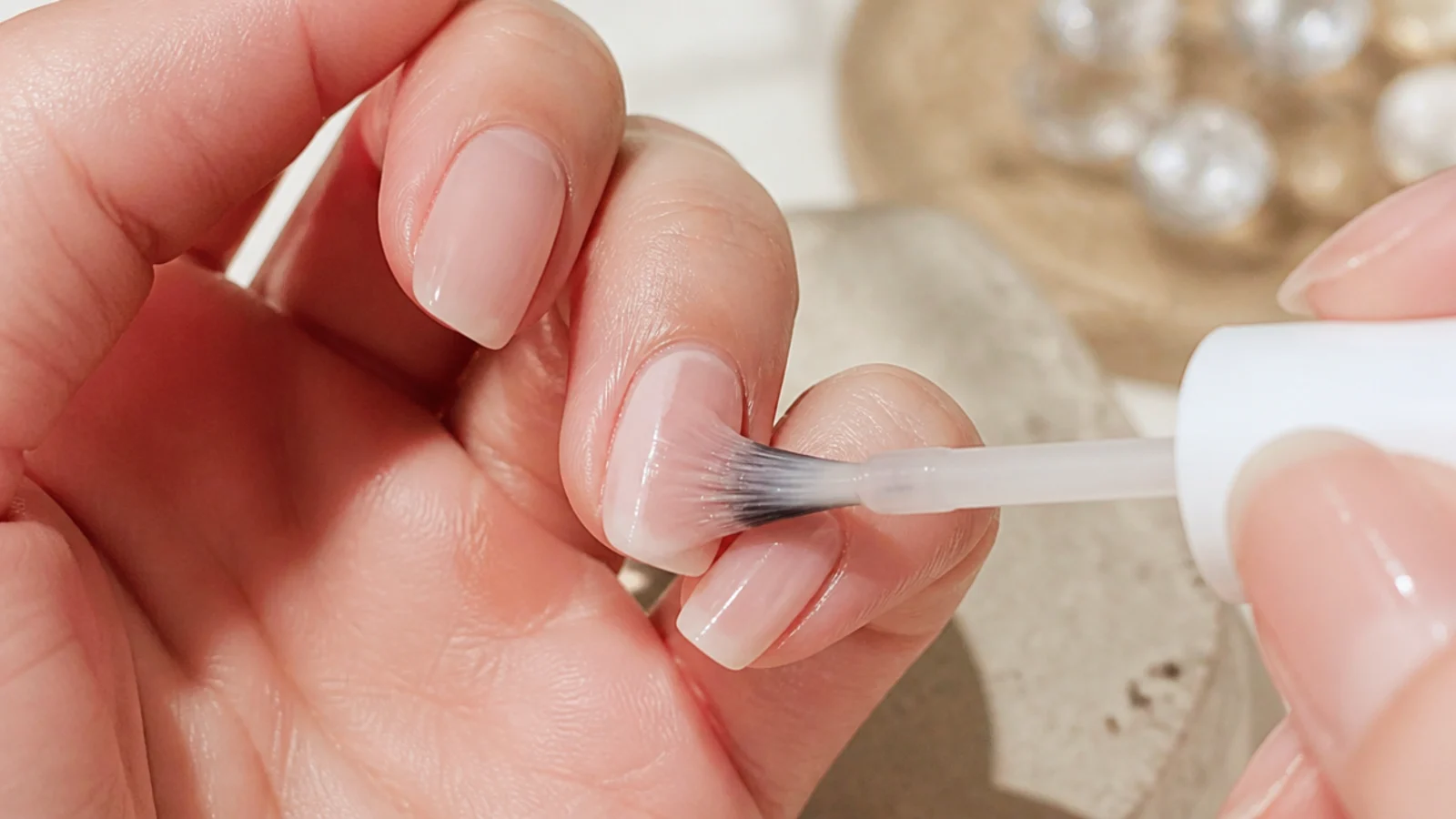
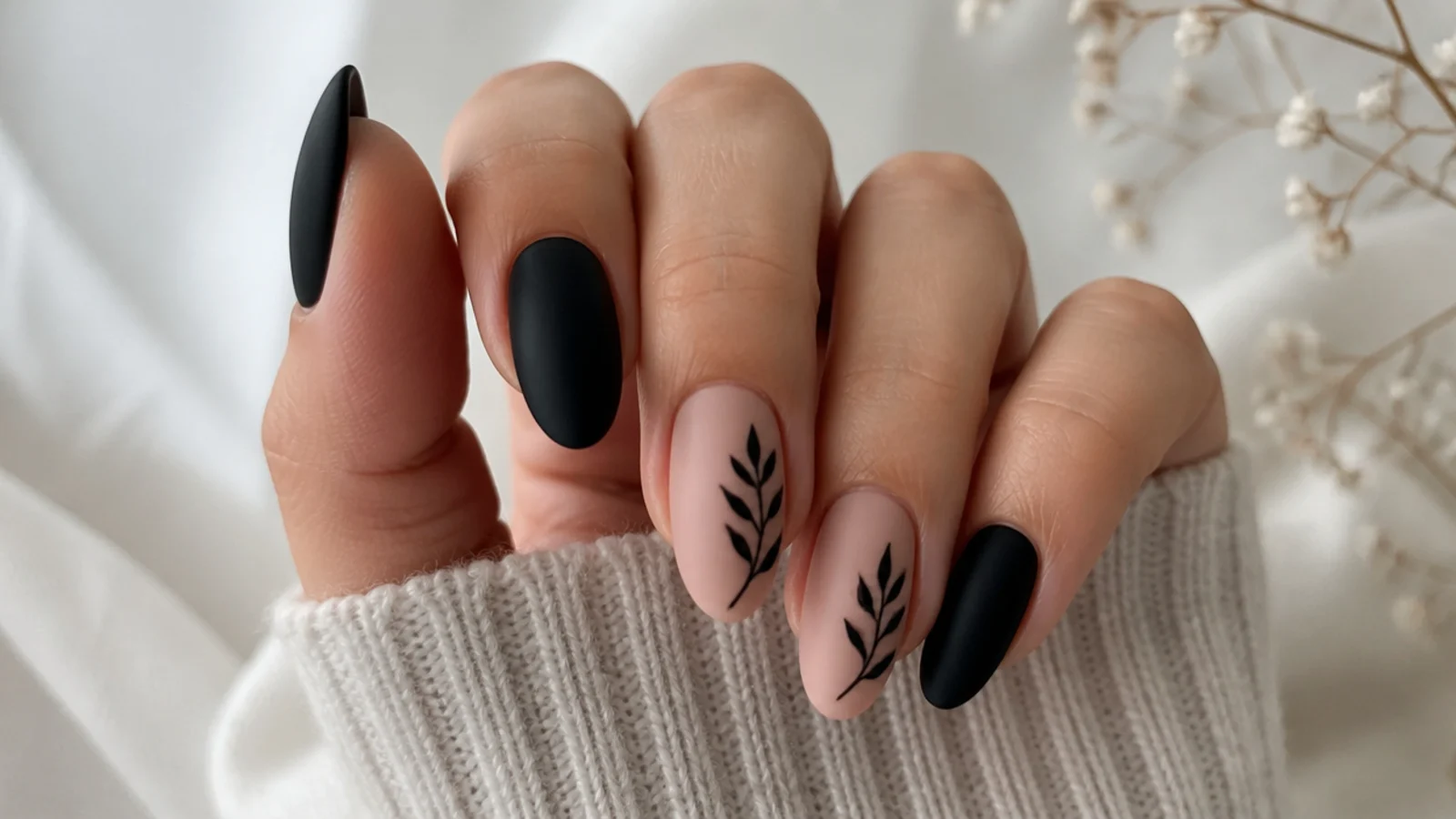
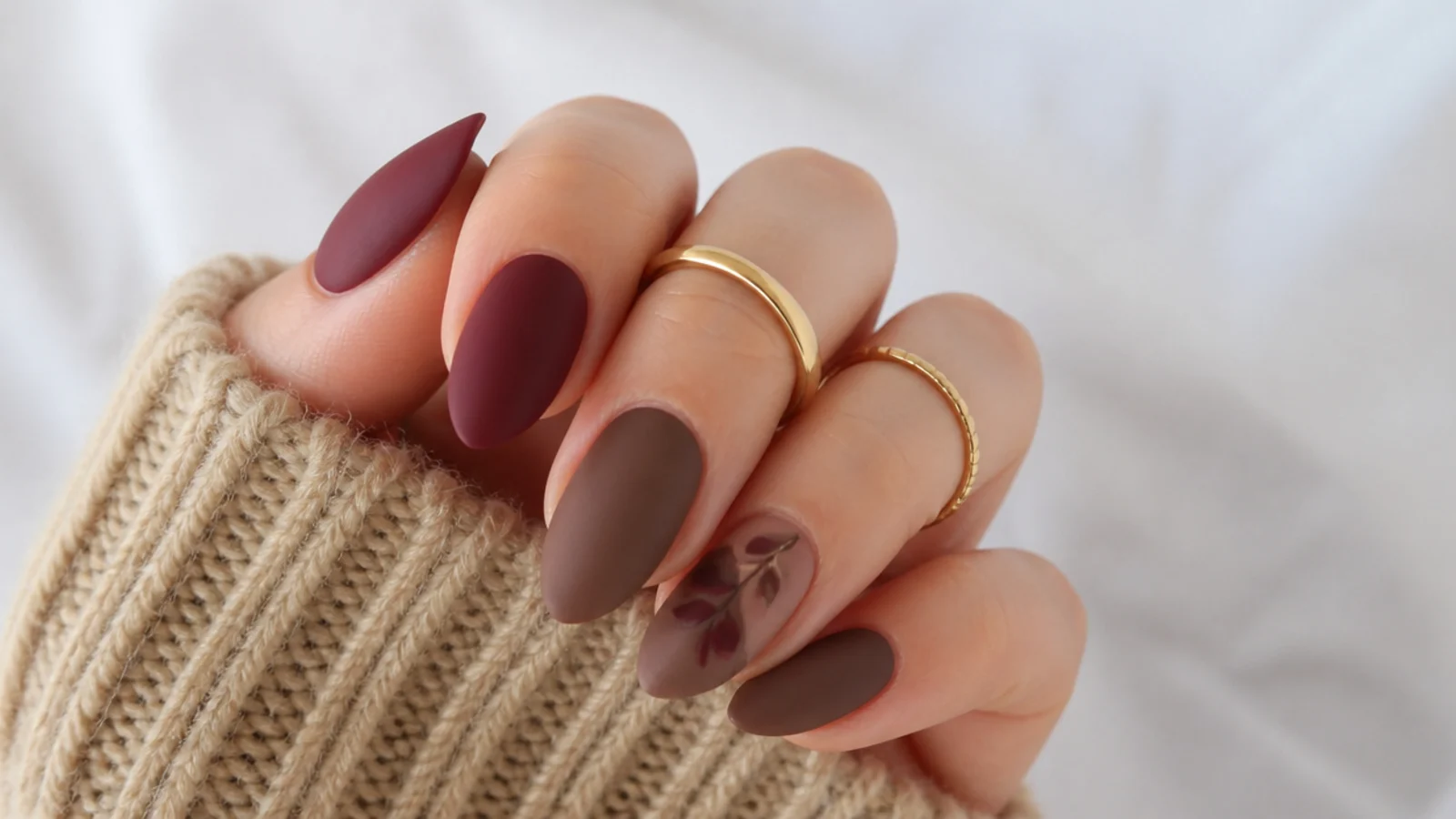
Paint one thin coat of your chosen color and cap the free edge. Any shade works matte - black, red, nude, pink, white, blue, green, or a cozy fall tone. This first coat will look sheer and streaky, and that is fine; it is just laying the foundation. Cure it for about 30 to 60 seconds under LED if you are in gel, or let regular polish dry to the touch before the next coat. Keep it thin, since thick coats bubble and cure unevenly.
Common mistake: Trying to get full opacity in one heavy coat leads to streaks, bubbling and slow drying - build in thin layers.
Pro tip: Do not worry about the polish's own shine here; the matte top coat flattens the finish regardless.
5. Paint the Second Color Coat
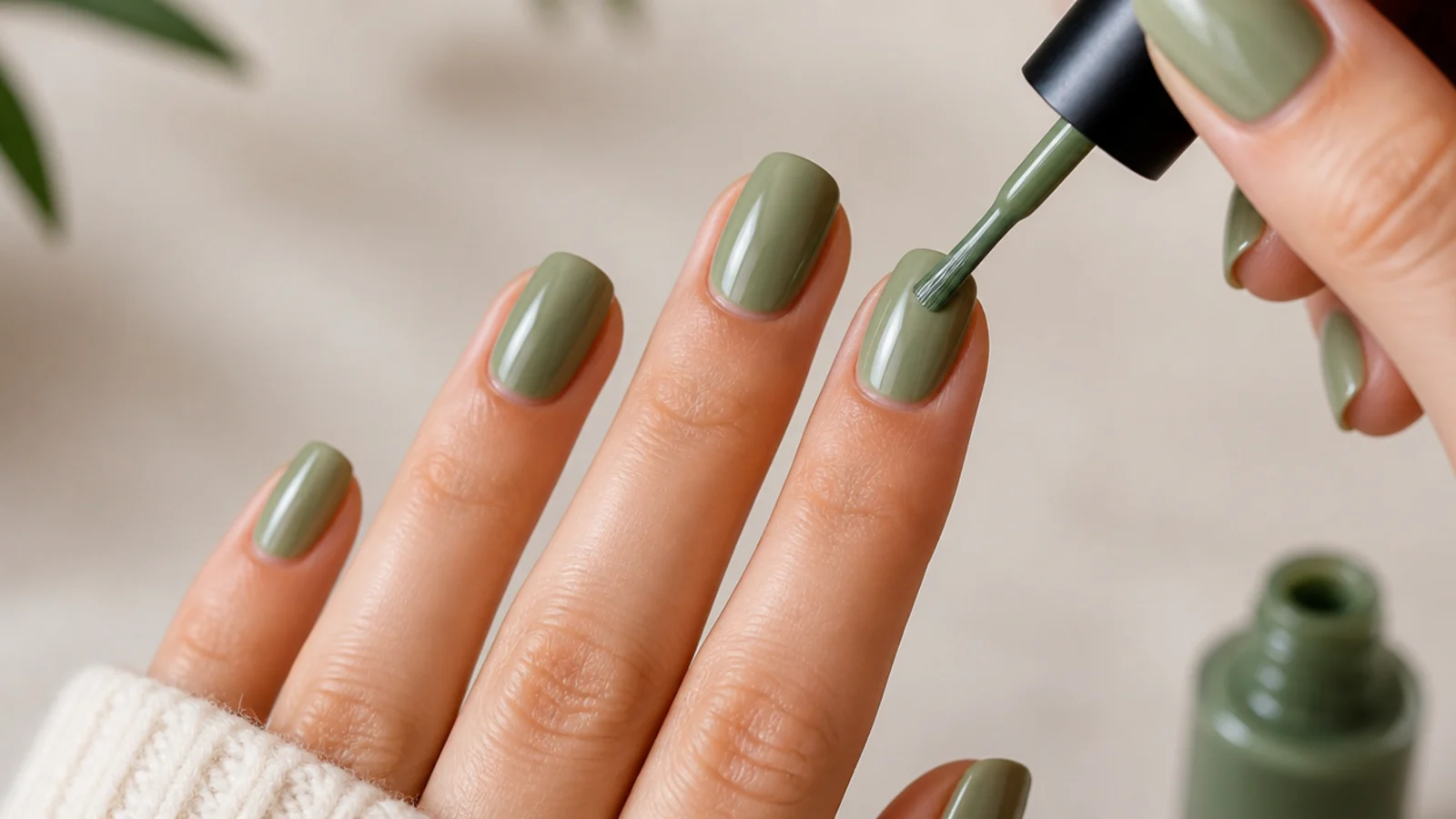
Add a second thin coat to bring the color to full, even opacity and cap the free edge again. Cure for about 30 to 60 seconds under LED, or let regular polish dry fully. Most colors need two coats to read solid; very sheer or pale shades may need a light third. Check that coverage is even across the whole nail before you seal, because the matte top coat flattens the sheen but will not hide a patchy, uneven color layer underneath.
Common mistake: Sealing over patchy color locks in the unevenness - fix thin spots with a third coat before the top coat.
Pro tip: Matte-ify a color you already own: even a glossy, shimmer or glitter polish turns matte under the top coat.
6. Seal With a Matte Top Coat
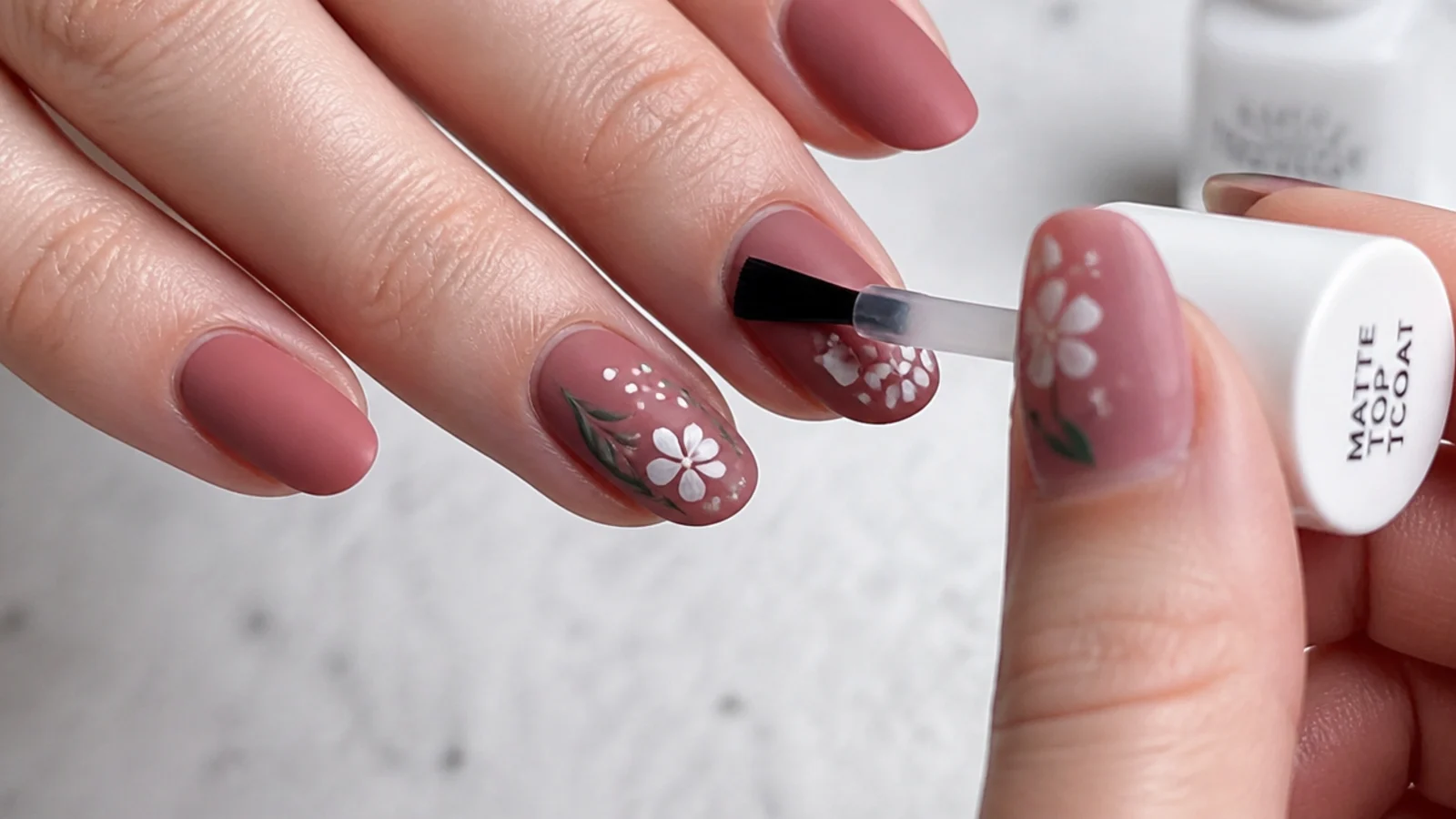
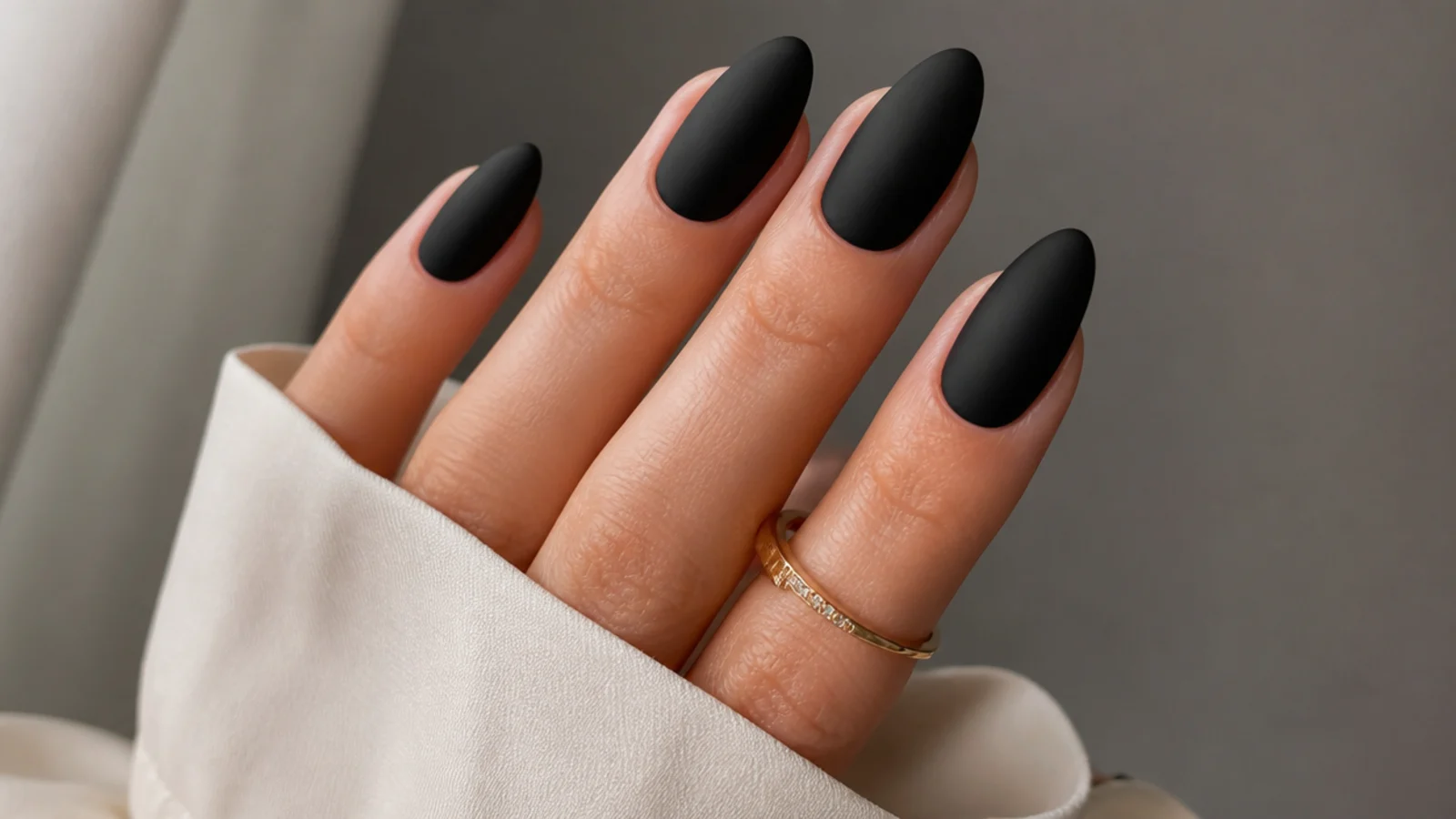
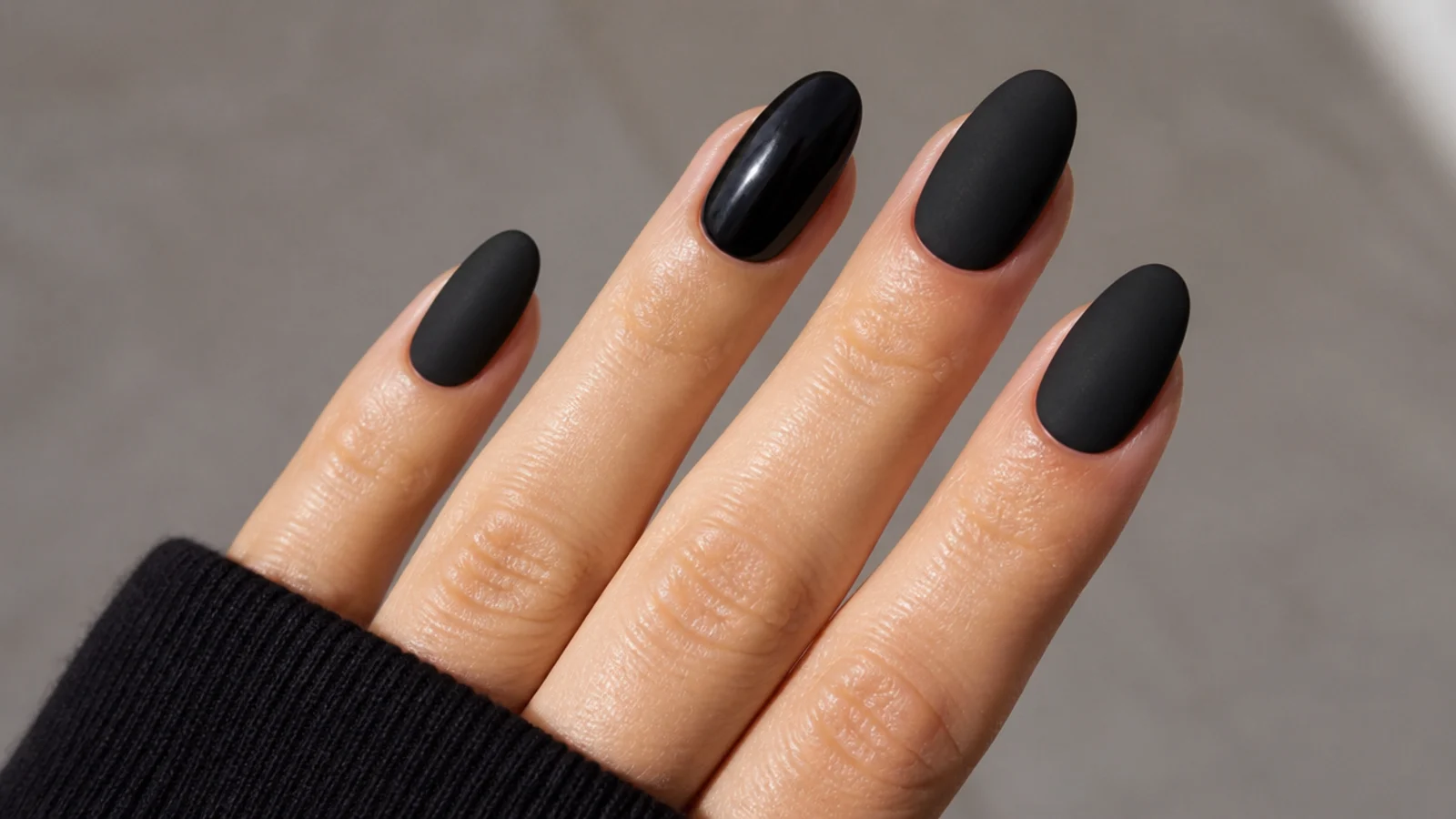
This is the step that makes it matte. Brush one thin, even layer of matte top coat over the whole nail and cap the free edge. For gel, use a matte gel top coat and cure as normal - about 30 to 60 seconds under LED or 2 minutes under UV; the finish looks glossy while wet and turns velvety once cured. For regular polish, use a matte topcoat and let it dry. Keep the coat thin and even, since a heavy or streaky layer dries unevenly and can flash shiny in spots.
Common mistake: Applying the matte top coat thick or going back over drying areas leaves streaks and uneven sheen - one clean pass is best.
Pro tip: Do not shake a matte top coat hard; bubbles show more on a flat finish. Roll the bottle gently instead.
7. Cure or Dry Fully and Check the Finish
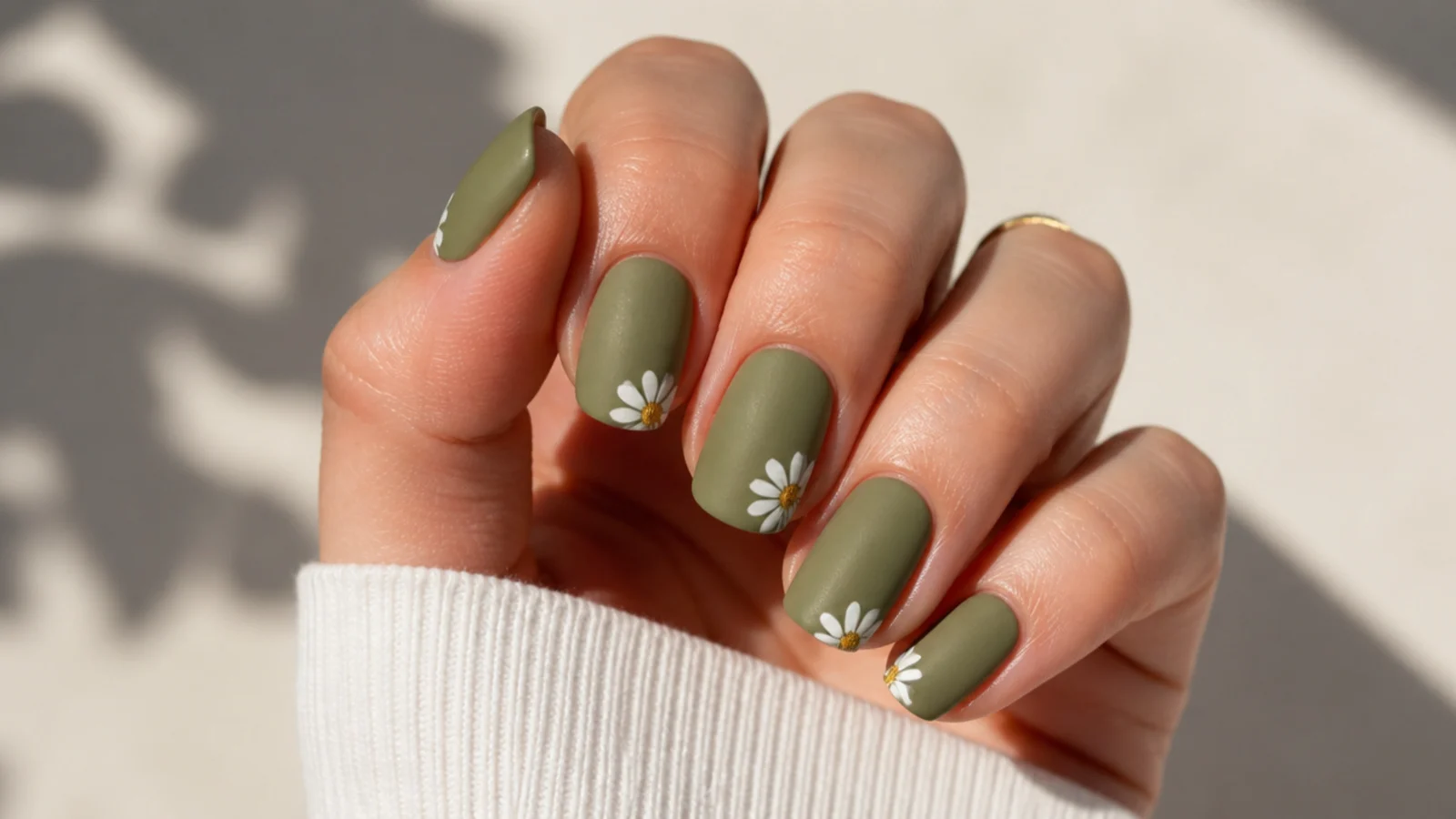
Let the matte finish set completely before you touch anything. Gel is done the moment it comes out of the lamp and needs no dry time, but wipe any sticky residue only if your matte top coat calls for it. Regular matte polish needs several minutes of undisturbed air-drying. Once set, turn your hand under the light and look for any glossy spots. If you find one, it usually means oil or an uneven coat, and you can refresh the matte top over that nail.
Common mistake: Handling matte before it fully sets presses fingerprints and shiny dents into the soft finish.
Pro tip: Avoid a fast-dry drop oil on regular matte polish; oil-based dryers can leave the exact shiny patches you are avoiding.
8. Oil the Skin, Not the Nail
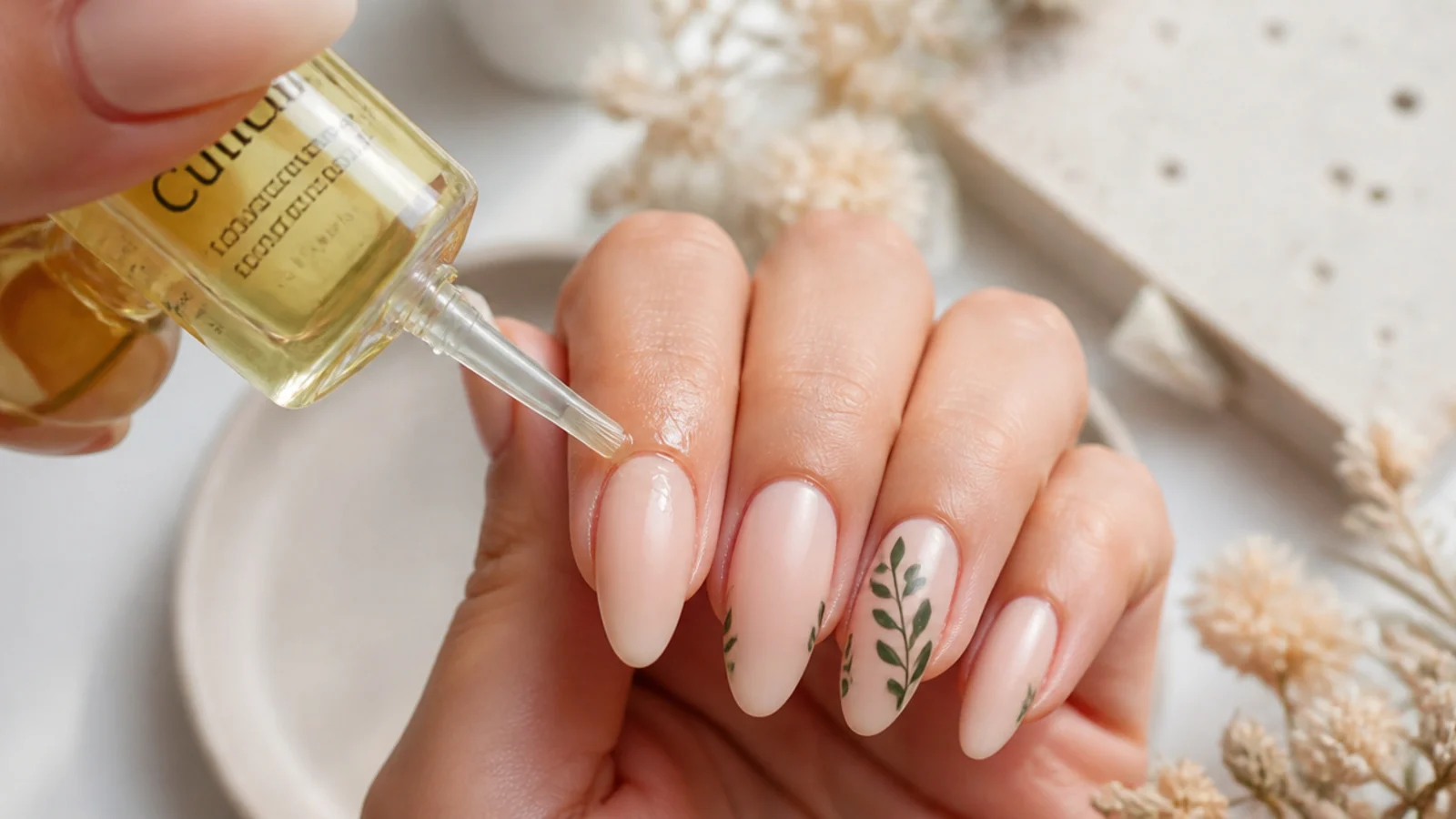
Finish by massaging cuticle oil into the skin around each nail - the cuticle and side walls - but keep it off the matte surface. Oil is the enemy of matte and leaves shiny patches wherever it touches the flat finish, so apply it around the nail, not across it. This is the single habit that keeps a home matte manicure looking even. If oil does smudge the surface, buff it away gently and, for gel, refresh the matte top coat over that nail.
Common mistake: Rubbing cuticle oil or hand lotion across the nail plate is the fastest way to create shiny spots on matte.
Pro tip: Use a fine brush or the applicator tip to place oil right at the cuticle line so it never crosses the matte surface.
Supplies You Need
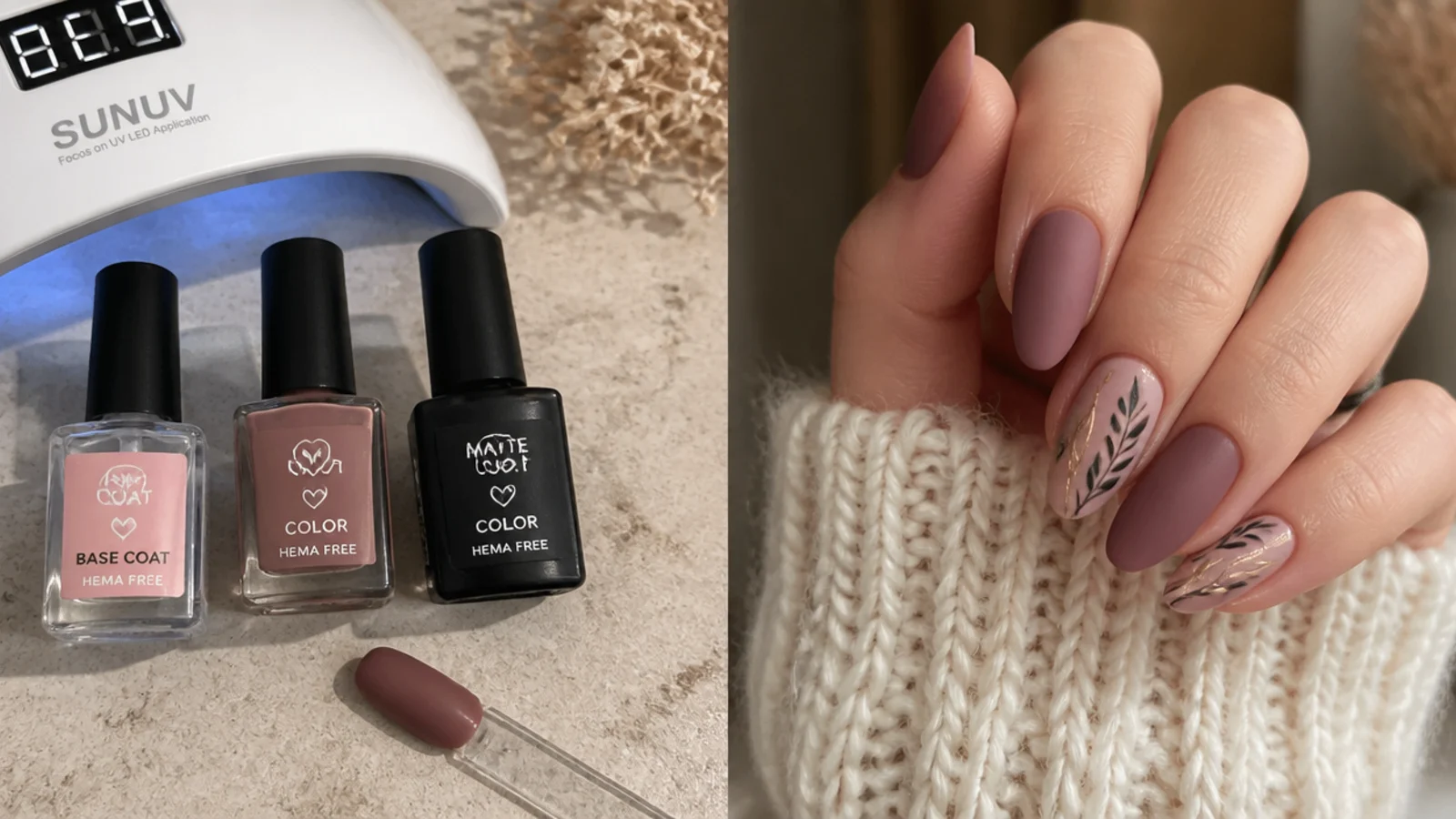
A matte manicure uses the same kit as a normal one, with a single swap: the top coat. You will need a base coat, your color, and a matte top coat. For gel, that means a matte gel top coat and an LED or UV lamp to cure it - gel will not set without one. For regular polish, a matte topcoat that air-dries is all you need, no lamp required. Round out the kit with lint-free wipes and cleanser or isopropyl alcohol for prep, and cuticle oil for the skin around the nail. A single bottle of matte top coat is the only new buy, and it turns any glossy color you already own matte, so the cost is minimal. If you want the flat finish to last, gel is the more durable route; if you like to change colors often, a regular matte topcoat over regular polish is cheaper and faster.
Common Matte Mistakes to Avoid
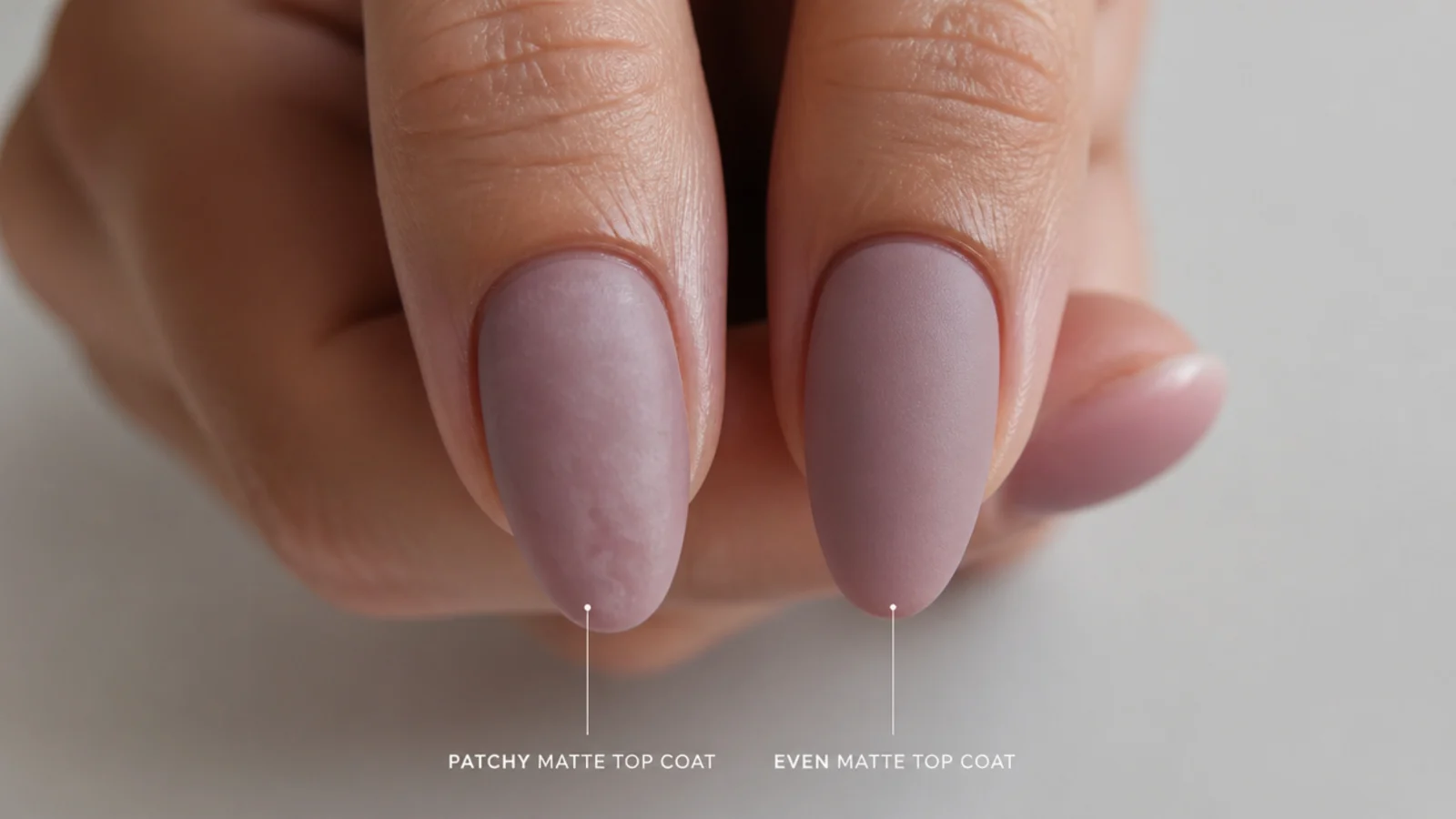
Most matte problems come from a short list of fixable errors. The biggest by far is oil: skin oils, cuticle oil and hand lotion all leave shiny patches on a flat finish, so keep them off the nail surface and apply cuticle oil around the nail, not across it. The second is a thick or streaky matte top coat, which dries unevenly and can flash glossy in spots - use one thin, even pass. Shaking the bottle hard adds bubbles that show more on matte than gloss, so roll it gently instead. Forgetting to cap the free edge lets the finish chip and peel early. And touching or buffing the surface too much after it sets can polish it back toward shine. If a spot does go shiny, buff it lightly and refresh the matte top coat over that nail, or reapply the matte topcoat once regular polish has fully dried.
How to Make It Last and Remove It Safely
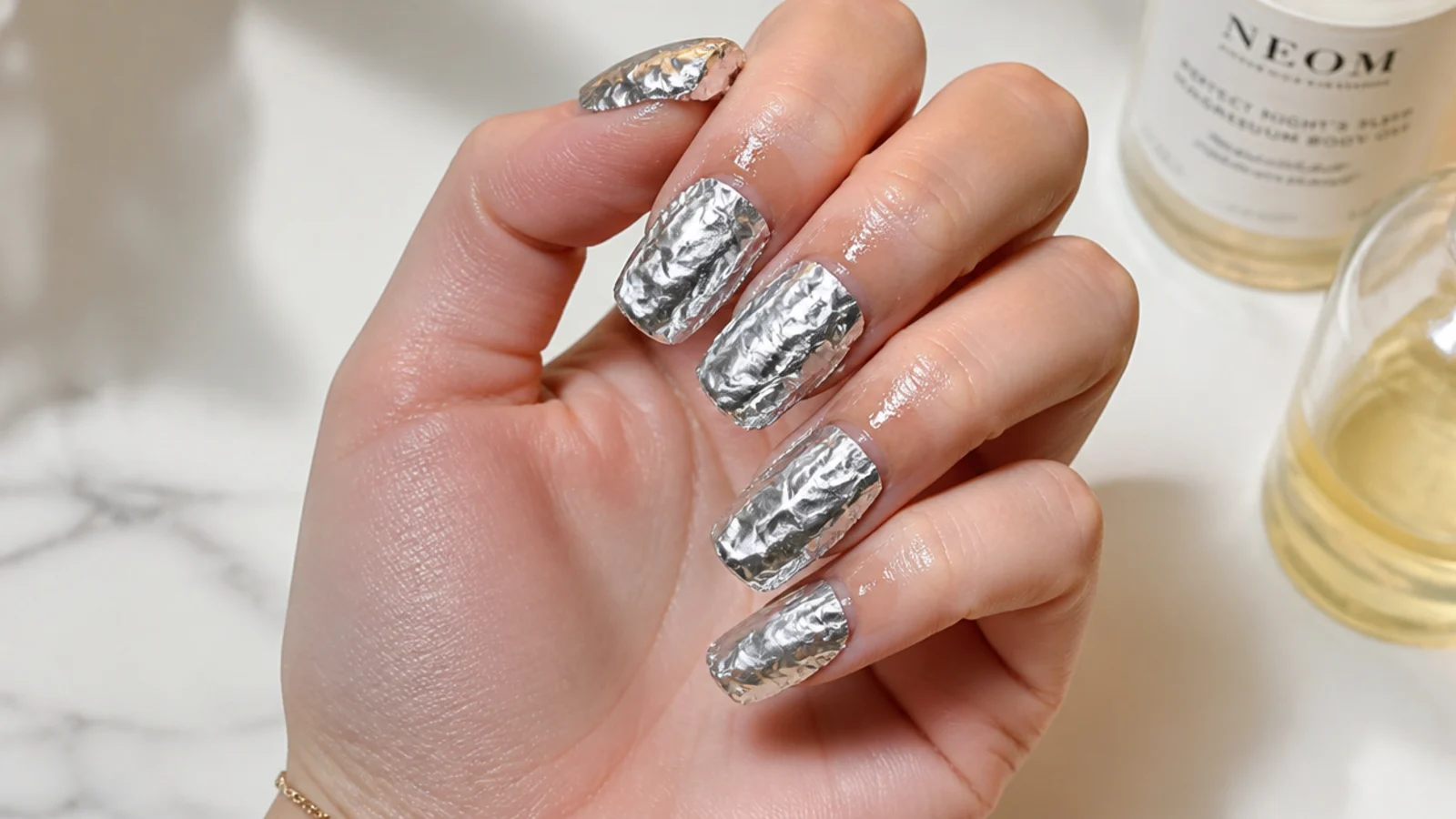
How long matte lasts depends on the base. Regular matte polish keeps its velvety finish about 3 to 5 days before shine returns fast from daily handling and oils, while matte gel holds its flat finish for 2 to 3 weeks like any gel set. To stretch either, keep oil and lotion off the surface, wear gloves for dishes and cleaning, and avoid using your nails as tools; refresh the matte top coat if a nail starts to shine. Regular polish comes off with normal remover. For gel, do a proper soak-off: lightly file the matte surface to break the seal, soak cotton in 100% acetone, press it to each nail, wrap in foil for 10 to 15 minutes, then gently push the softened gel off with a wood stick. Never peel or pry it, and see a nail tech if you notice lifting, pain or irritation.
Frequently Asked Questions
How do you make nails matte at home?
Build a normal manicure - prep, base coat, two thin color coats - then finish with a matte top coat instead of a glossy one. For gel, use a matte gel top coat and cure it as normal; for regular polish, use a matte topcoat and let it dry. Keep the surface oil-free and apply the matte coat in one thin even pass.
How do you keep matte nails from getting shiny?
Oil is the enemy of matte, so keep skin oils, cuticle oil and hand lotion off the nail surface - apply cuticle oil around the nail, not across it. Wear gloves for chores and avoid rubbing the surface. If a spot goes shiny, buff it lightly and refresh the matte top coat over that nail to bring the flat finish back.
Does matte top coat ruin your nails?
No. A matte top coat is no harder on your nails than a glossy one - it uses the same base and color underneath and only changes the final layer. Damage comes from improper gel curing or peeling gel off, not from the matte finish itself. Remove gel by soaking in acetone, never by prying, and your natural nails stay healthy.
How long do matte nails last?
Regular matte polish keeps its velvety finish about 3 to 5 days before shine creeps back from daily handling. Matte gel holds its flat finish for 2 to 3 weeks, the same as any gel set. To get the most wear, keep oil and lotion off the surface, cap the free edge, and refresh the matte top coat if a nail starts to shine.
What is the difference between matte and glossy nails?
Matte is a flat, velvety, non-shiny finish that reads modern and hides surface ridges, while glossy reflects light and shows every ridge more. The color and application are the same up to the last step - only the top coat changes. Matte tends to look more understated and elegant; glossy looks brighter and more classic. It is purely a finish preference.
Can you make gel nails matte?
Yes. Apply a matte gel top coat over your cured gel color and cure it as normal - about 30 to 60 seconds under LED or 2 minutes under UV. It looks glossy while wet and turns velvety once cured. You can matte-ify any gel color this way, and matte gel keeps its flat finish for the full 2 to 3 weeks of a gel set.
What are the best matte fall nail colors?
Matte suits cozy fall tones especially well: deep matte reds and oxblood, warm nudes and caramels, matte black, forest green and muted blues. The flat finish makes these rich shades read soft and modern rather than glassy. Matte black and deep red are the most popular, while a warm matte nude is the easiest everyday choice for fall.
Do matte nails chip faster than glossy?
Matte does not chip faster - durability comes from the base, not the finish. Matte gel wears just as long as glossy gel, about 2 to 3 weeks, and matte regular polish chips on the same 3 to 5 day timeline as any regular polish. What matte does show sooner is shine returning from oils, which you fix by refreshing the matte top coat, not the color.
Can I make a glossy polish I already own matte?
Yes. A matte top coat turns any glossy color, shimmer or even glitter polish matte, so you do not need to buy new colors. Paint your usual color, let it dry or cure it, then seal with the matte top coat in one thin even pass. This is the cheapest way to try the matte look with a wardrobe you already own.
Gel application and removal, lamps, and 100% acetone should be used as directed. Curing gel improperly or force-removing it can damage your natural nails. For best results and nail health, see a licensed nail technician, and stop if you have any irritation or reaction.
Which matte nails look are you saving?
Matte nails are the easiest finish upgrade you can make at home: build your manicure as usual, then seal with a matte top coat instead of a glossy one. Keep the surface oil-free, apply the matte coat in one thin even pass, and cap the free edge so it wears cleanly. Remember that oil is the enemy - apply cuticle oil around the nail, not across it, and refresh the matte top if a spot goes shiny. Regular matte polish stays velvety about 3 to 5 days before shine creeps back, while matte gel holds its finish 2 to 3 weeks. Be gentle with your natural nails, never peel or pry gel off, and see a nail tech if you notice any irritation. Save this guide and enjoy the soft, modern look.