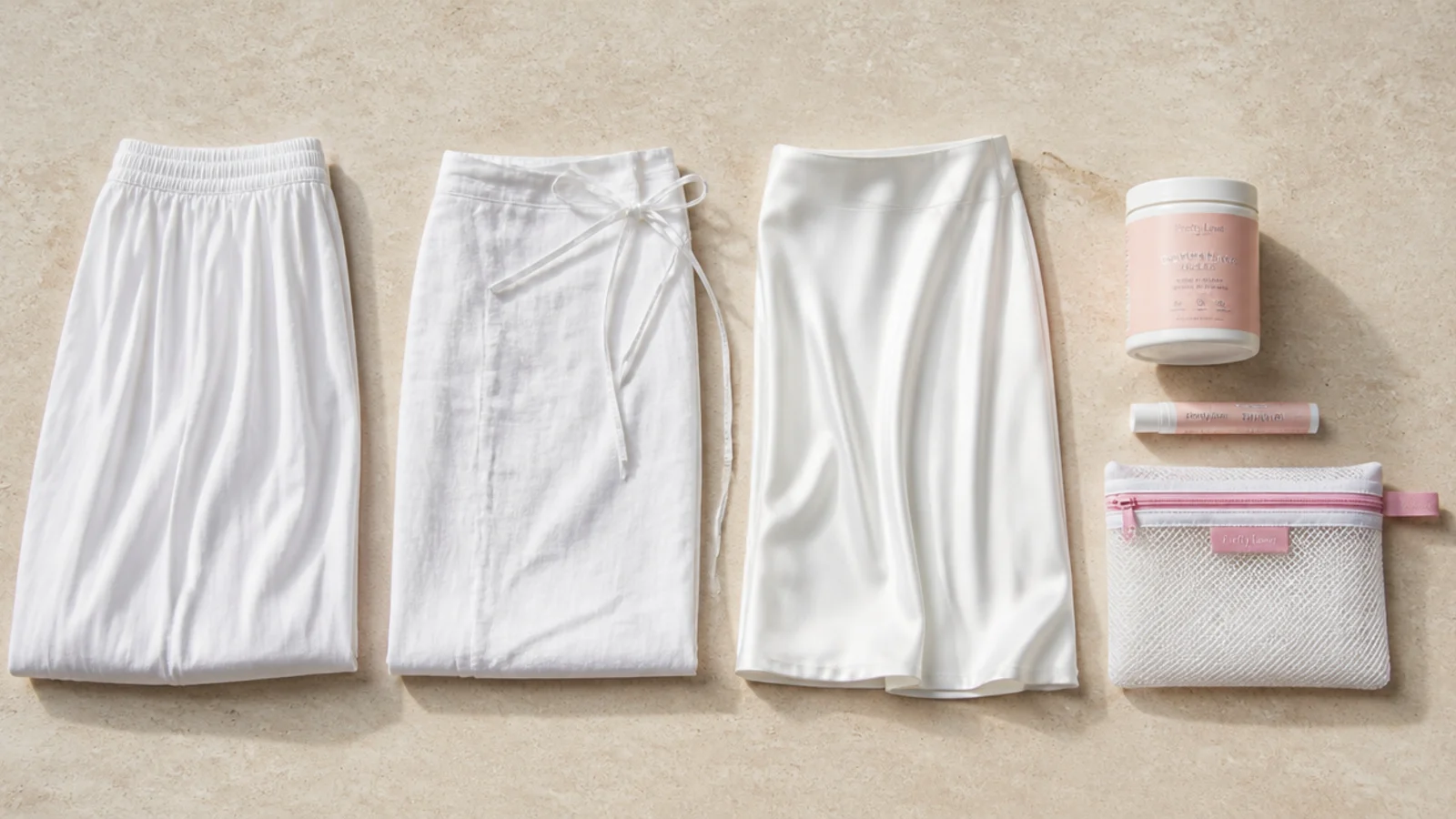
Quick Comparison
| Oxygen Bleach (Safe on Whites) | Chlorine Bleach (Risky on Whites) | |
|---|---|---|
| What it is | Powdered sodium percarbonate, oxygen-based | Liquid sodium hypochlorite, chlorine-based |
| Effect on white | Brightens and lifts stains gradually | Whitens fast but often yellows over time |
| Why it yellows or not | Does not react with body oils to yellow | Reacts with oils and brighteners to yellow |
| Effect on fibers | Gentle, safe for repeated use | Weakens cotton and linen, thins fabric |
| Safe fabrics | Cotton, linen, denim, most polyester | Only sturdy white cotton, sparingly |
| Unsafe fabrics | Silk and some elastane blends only | Satin, silk, wool, elastane, spandex |
| Best use | Regular wash boost and long soaks | Rare rescue on tough cotton stains |
| Soak time | One to six hours, very forgiving | Minutes only, damages if left too long |
| Verdict for a white skirt | The default for almost every white skirt | Avoid on nearly all white skirts |
1. White Cotton Skirt: Warm Wash With Oxygen Bleach
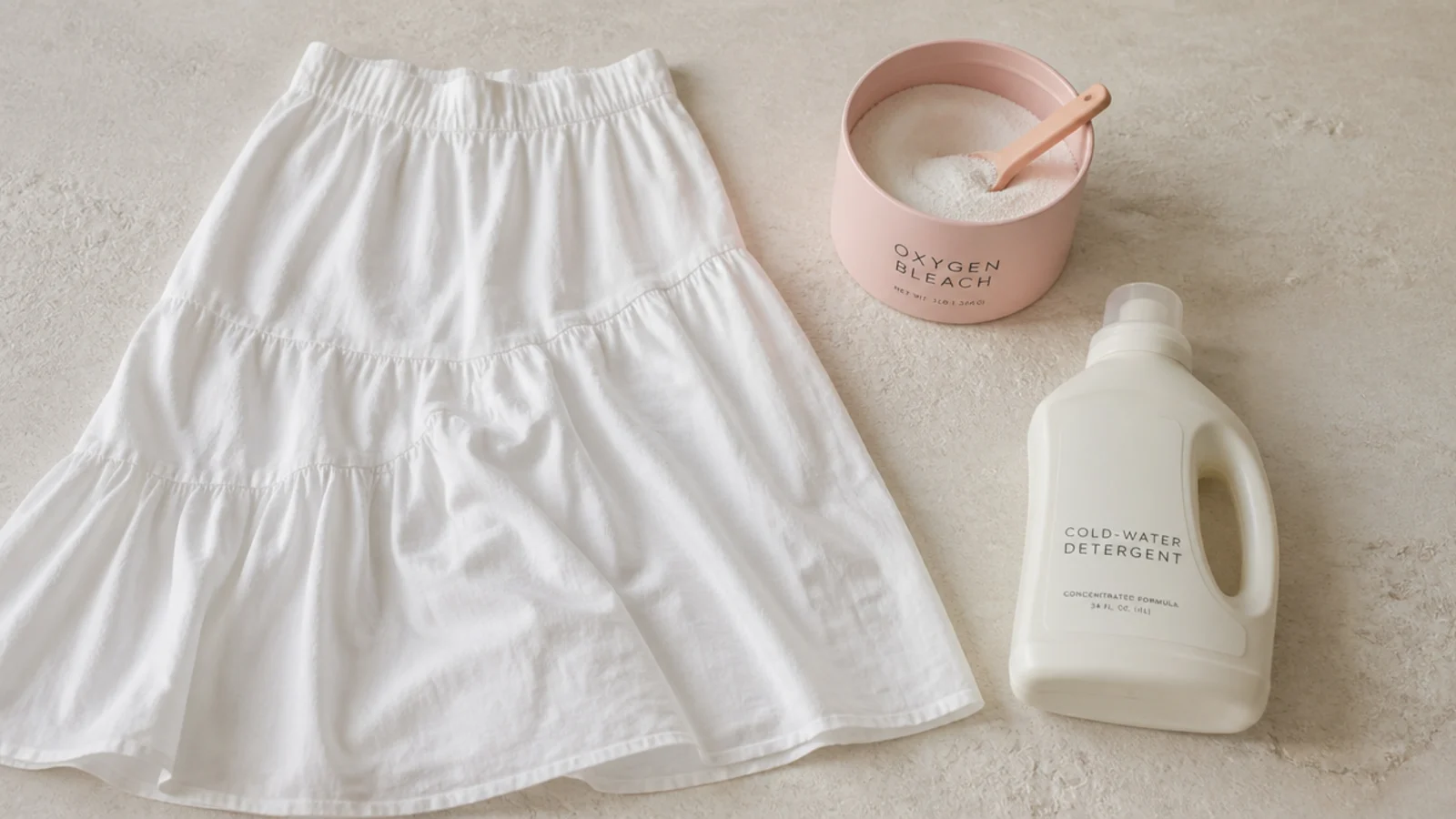
White cotton is the most forgiving white fabric, so use its toughness. Wash it warm, around 40 degrees, with a normal dose of liquid detergent and a scoop of oxygen bleach to lift the body oils cold water leaves behind. For a grayed or yellowed cotton skirt, soak it in dissolved oxygen bleach for one to six hours before washing. Air-dry in gentle sun, which naturally whitens cotton, and skip chlorine bleach, which weakens the fibers and can yellow them. This is the same sturdy fabric behind most white denim skirt outfits.
Pre-treat the waistband first with an oxygen-bleach paste; that hidden oil zone is where a white cotton skirt yellows before anywhere else.
2. White Linen Skirt: Cold Wash and Dry Flat
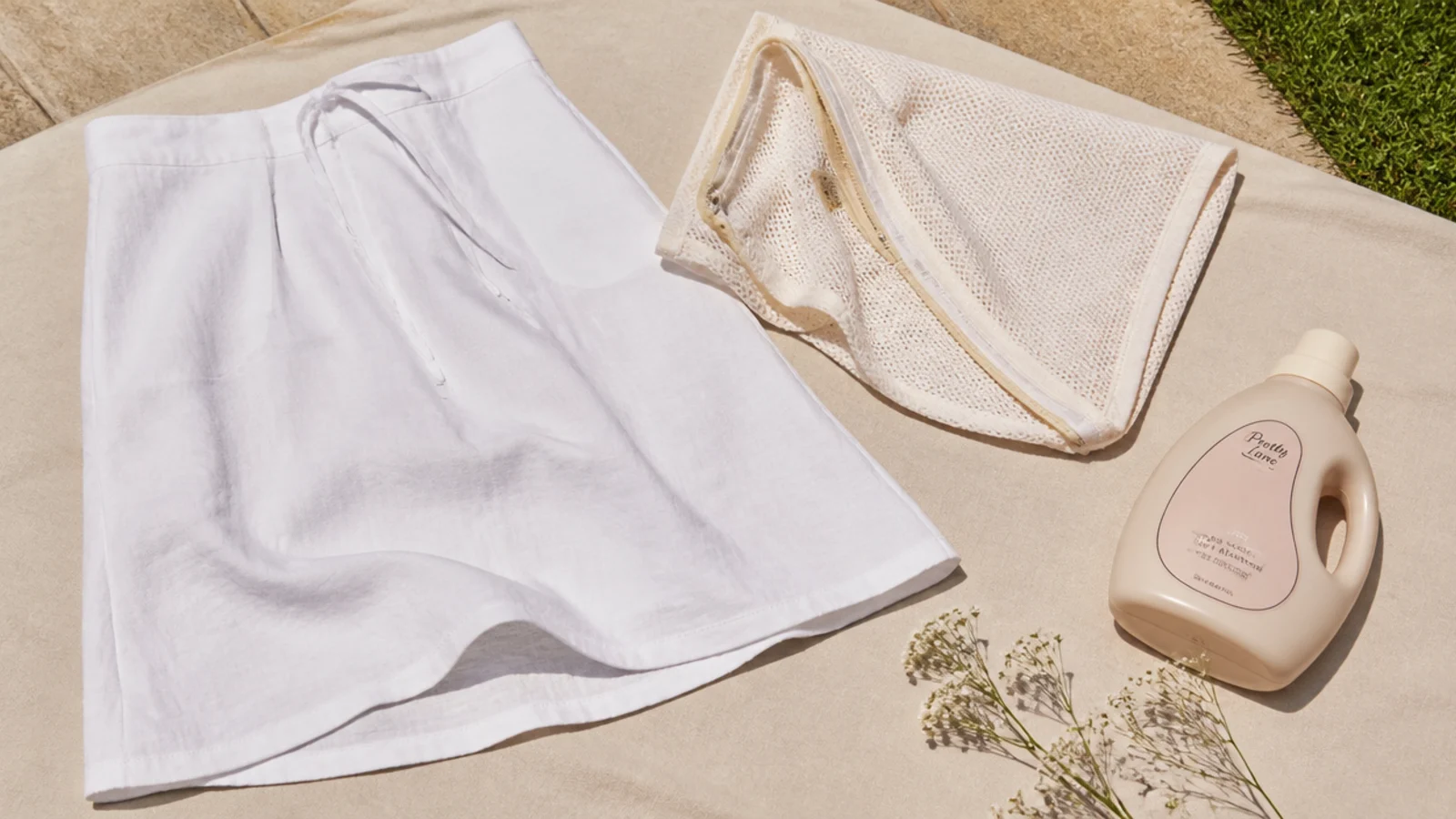
White linen is strong when wet but hates heat and wringing. Wash it cool, around 30 degrees, on a gentle cycle inside a mesh bag with mild detergent and a little oxygen bleach only if it needs brightening. Never wring it, since twisting breaks fibers and sets creases; press the water out and dry flat or hung while damp so it smooths itself. A slip underneath cuts the friction and body oil that yellow linen fastest and fixes its semi-sheer opacity too. Style it in white skirt summer outfits.
Iron white linen while it is still damp on high steam; dry linen creases are stubborn and dry heat can scorch it yellow.
3. White Denim Skirt: Wash Inside-Out in Cold Water
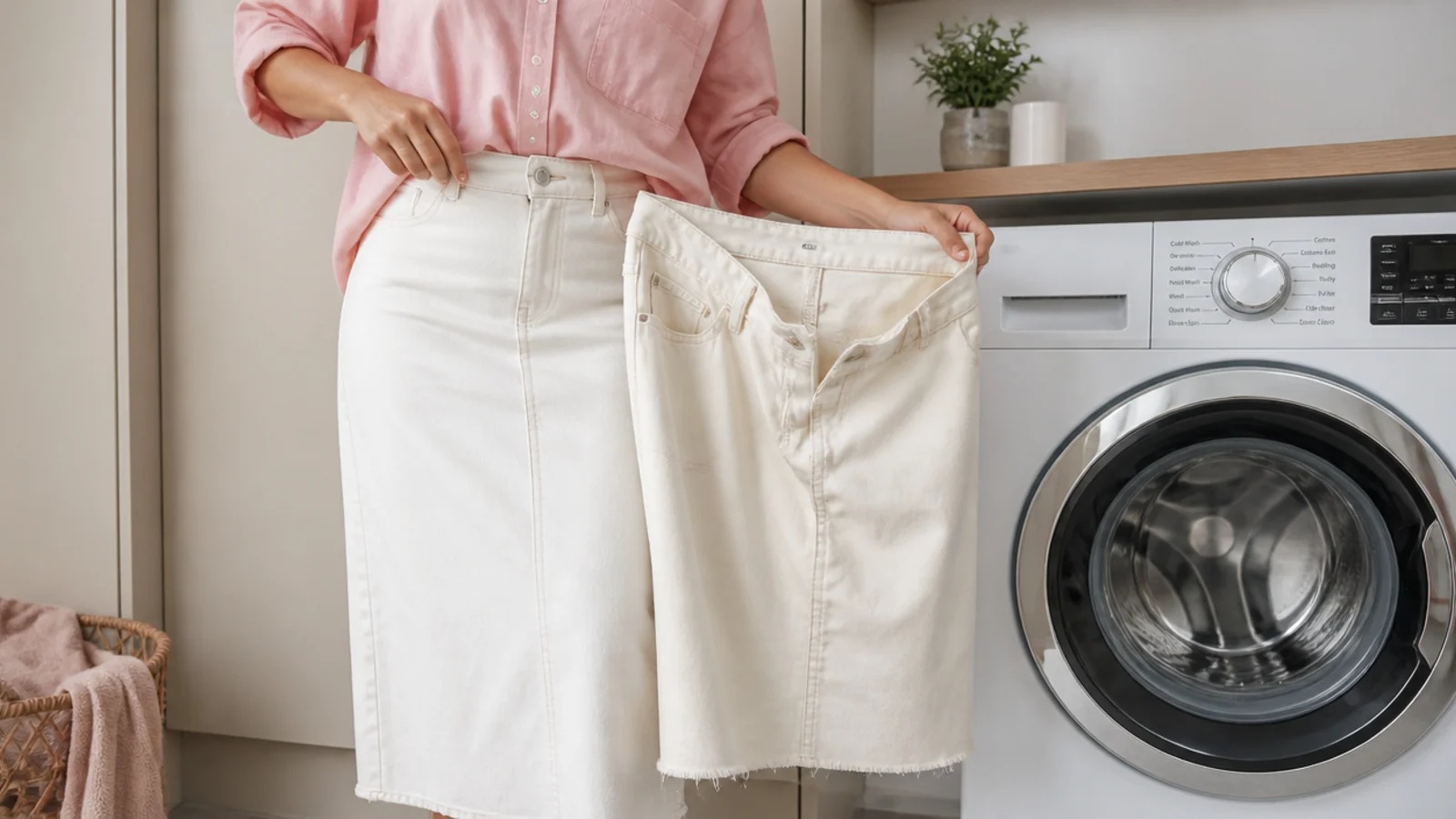
White denim needs the same trick as any denim: turn it inside out and wash it cold, around 30 degrees, so the outer surface does not abrade to a dull gray. Use liquid detergent and oxygen bleach, and wash it only with other whites so no indigo or dye redeposits. Denim is heavy, so keep it out of a load with delicate linen or satin that it can rough up. Air-dry it rather than tumble-drying, which sets stains and shrinks the fit. Build looks from white denim skirt outfits.
Wash a new white denim skirt separately the first few times; even white denim can release a little dye and finish that dulls other whites.
4. White Satin Skirt: Hand-Wash Cool, Never Tumble Dry
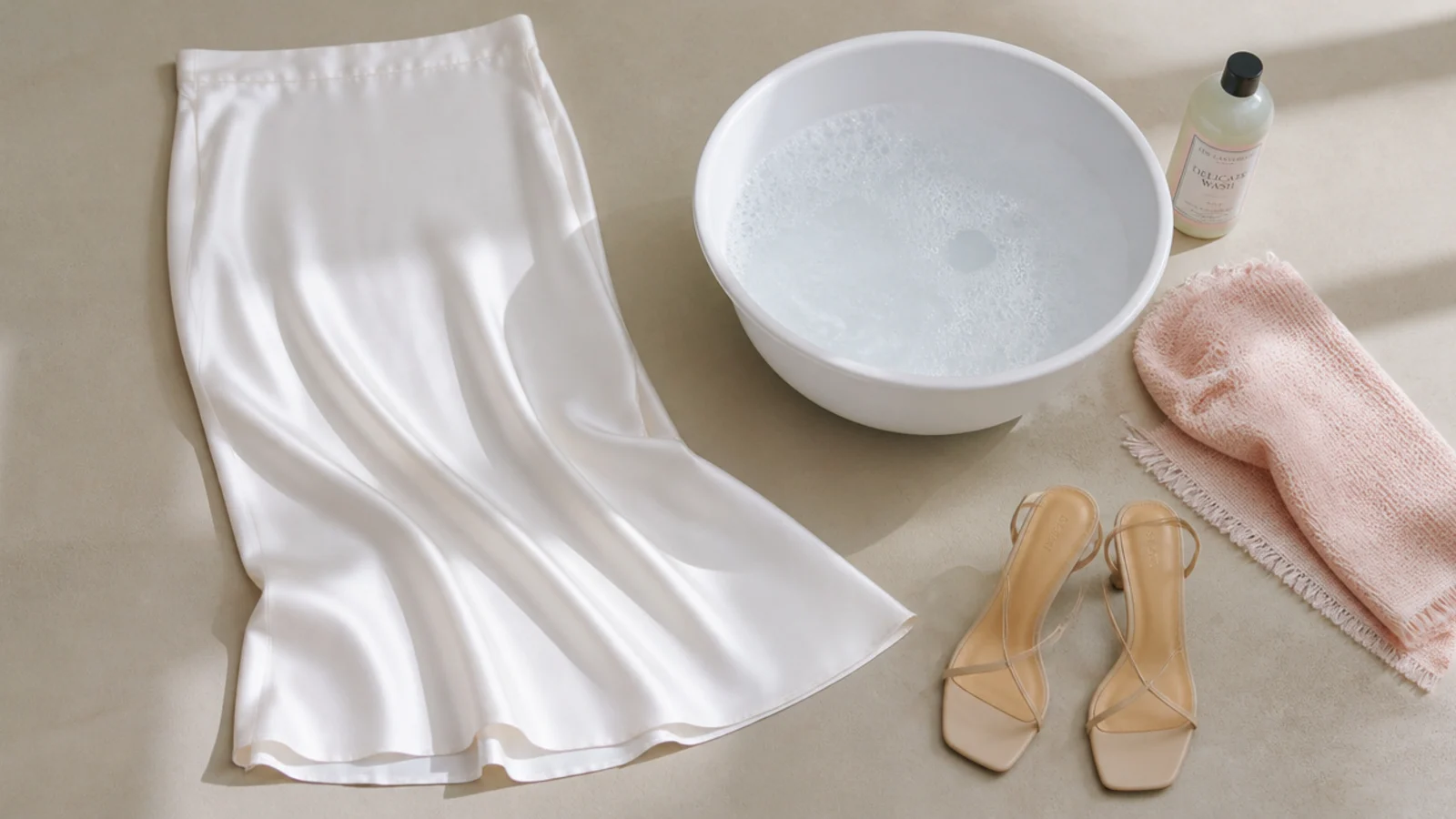
White satin is the fussiest white fabric and the easiest to ruin. Hand-wash it in cool water with a drop of gentle detergent, or use the delicates cycle in a mesh bag, and never use chlorine bleach or hot water, which both scorch and yellow the finish. Skip oxygen bleach on satin with elastane; test a seam first. Press the water out, never wring, and hang or lay flat to dry away from sun and heat. Iron on low through a pressing cloth only. Protect it and wear it in white satin skirt outfits.
Blot a satin spill immediately with cool water and never rub; satin shows friction marks and a rubbed stain becomes a permanent dull patch.
5. White Pleated Skirt: Mesh Bag and Hang to Keep Pleats
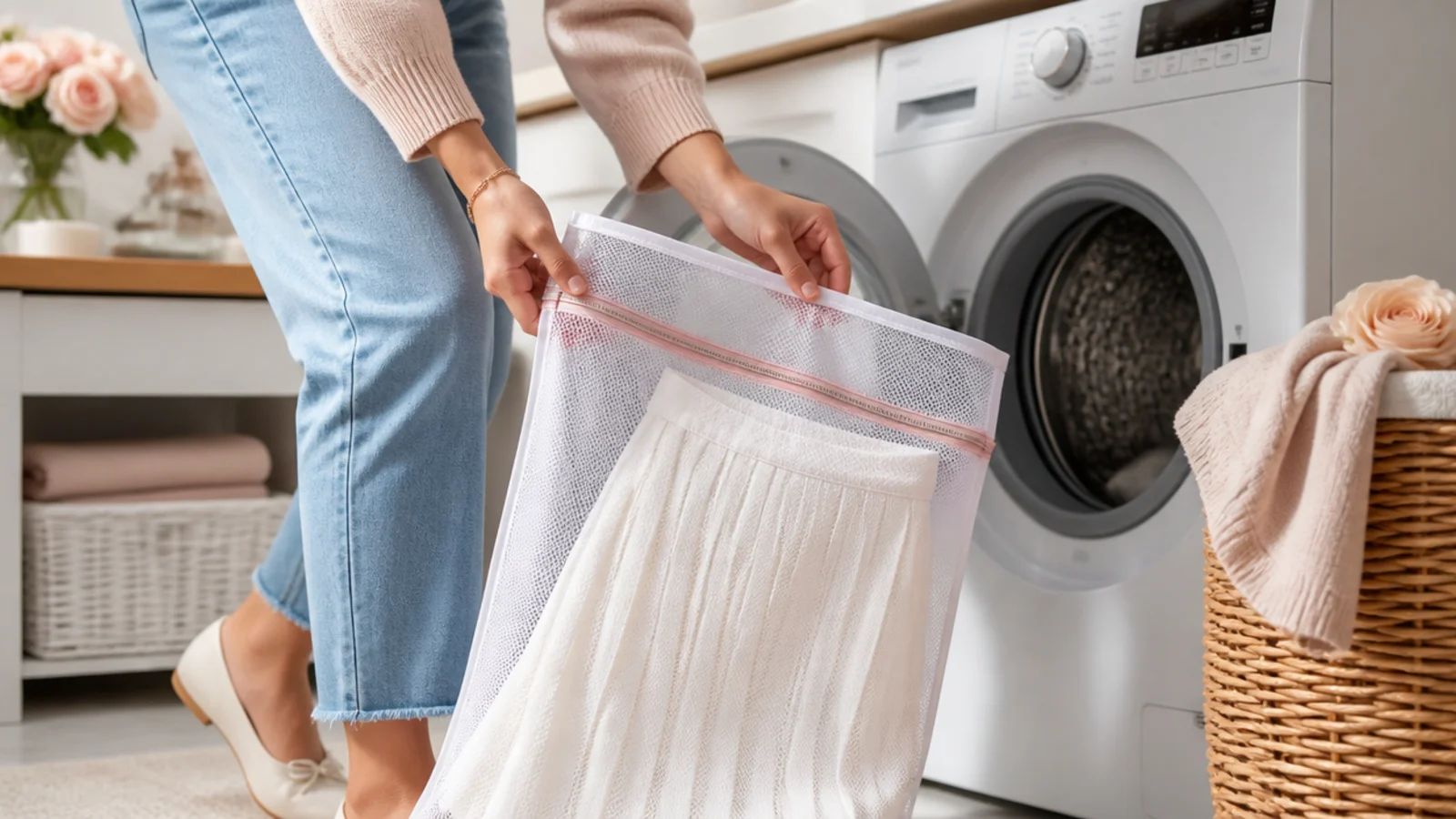
A white pleated skirt yellows like any white but has one extra risk: losing its pleats. Wash it cool on a gentle cycle inside a mesh bag so the pleats do not thrash out of shape, with mild detergent and a touch of oxygen bleach if needed. Never tumble-dry it; heat relaxes pressed pleats permanently. Hang it to dry, and if the pleats soften, press them back with a low iron and a pressing cloth, folding along each crease. Wear the crisp result in white pleated skirt outfits.
Hang a pleated skirt by the waistband so gravity keeps the pleats aligned as it dries, instead of laying it flat where they splay.
6. Remove Yellow Sweat and Deodorant Stains
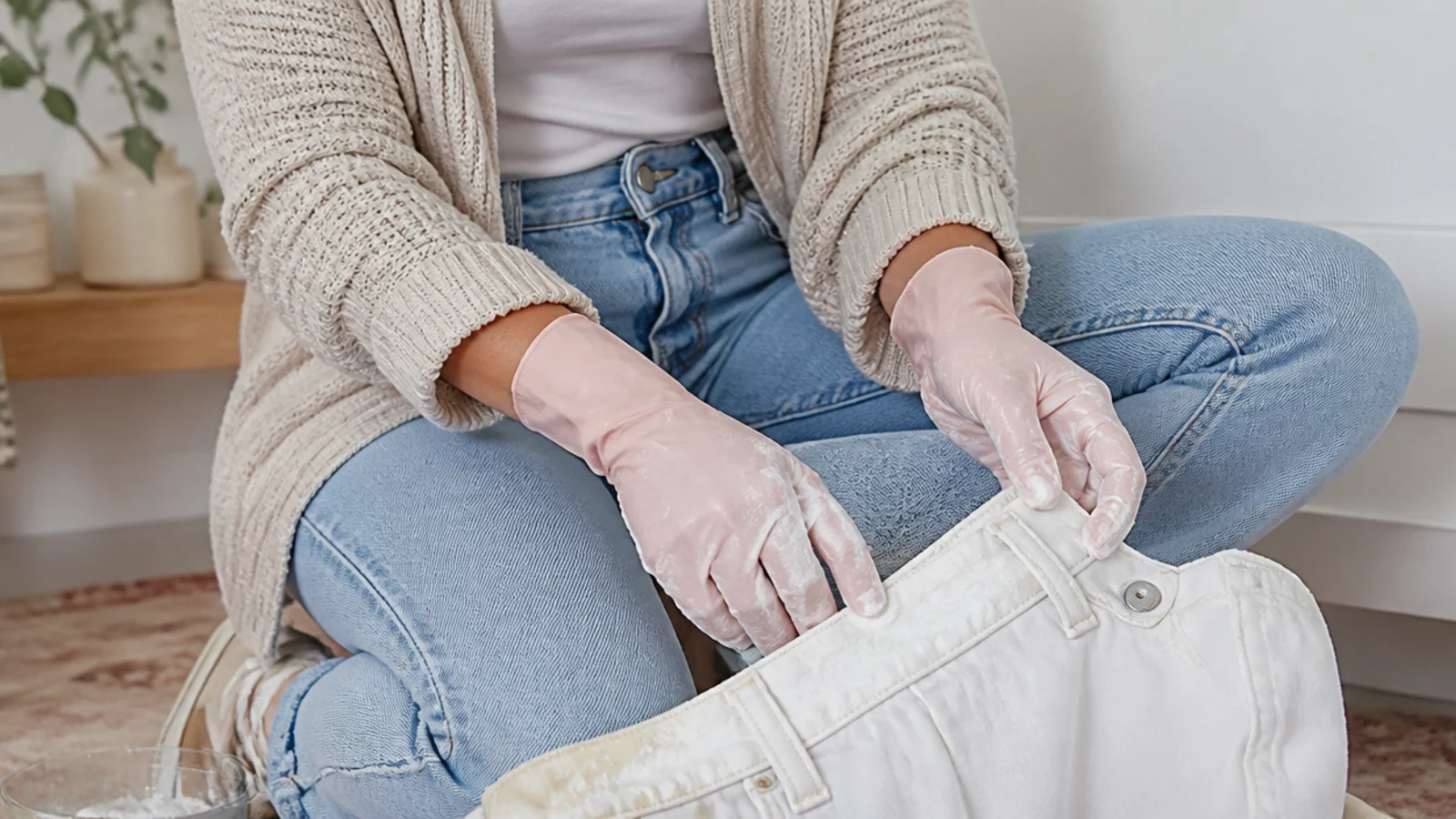
Sweat and deodorant are the number-one cause of yellow on a white skirt, gathering at the waistband and inside back. Mix roughly one part dish soap, two parts hydrogen peroxide and a sprinkle of baking soda into a paste, work it into the yellow, and let it sit thirty minutes to an hour before rinsing and washing. Hydrogen peroxide is a gentle bleach safe on most whites; test satin and blends on a seam first. Treat these marks before drying, because dryer heat sets them into permanent yellow that no wash removes.
Wash a white skirt every one or two wears rather than after several; fresh sweat rinses out, but sweat left to oxidize turns yellow and sets for good.
7. Remove Wine, Coffee and Juice Stains
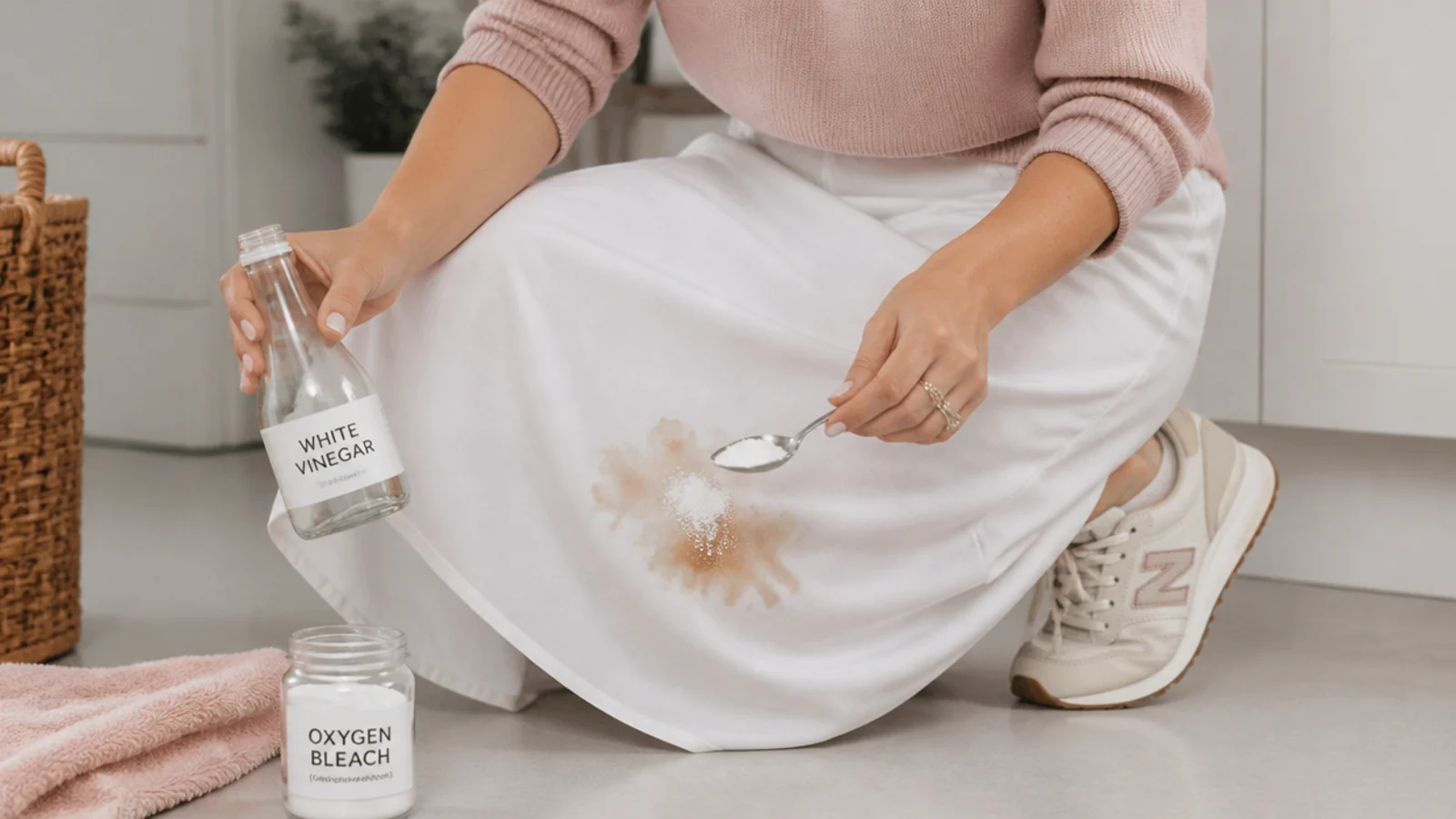
Wine, coffee, tea and fruit juice are tannin stains, and they respond to acid and oxygen, not soap alone. Rinse the mark in cold water from the back to push it out, then soak in oxygen bleach dissolved in warm water, or dab white vinegar mixed with water on the spot before washing. For white cotton and linen, spreading lemon juice on the stain and drying it in the sun bleaches out the last shadow. Never use hot water first, which cooks a tannin stain into the fibers and makes it far harder to lift.
Blot, never rub, and hit a red-wine spill fast; a pinch of salt on the fresh stain absorbs the liquid until you can treat it properly at home.
8. Remove Grease, Oil and Makeup Marks
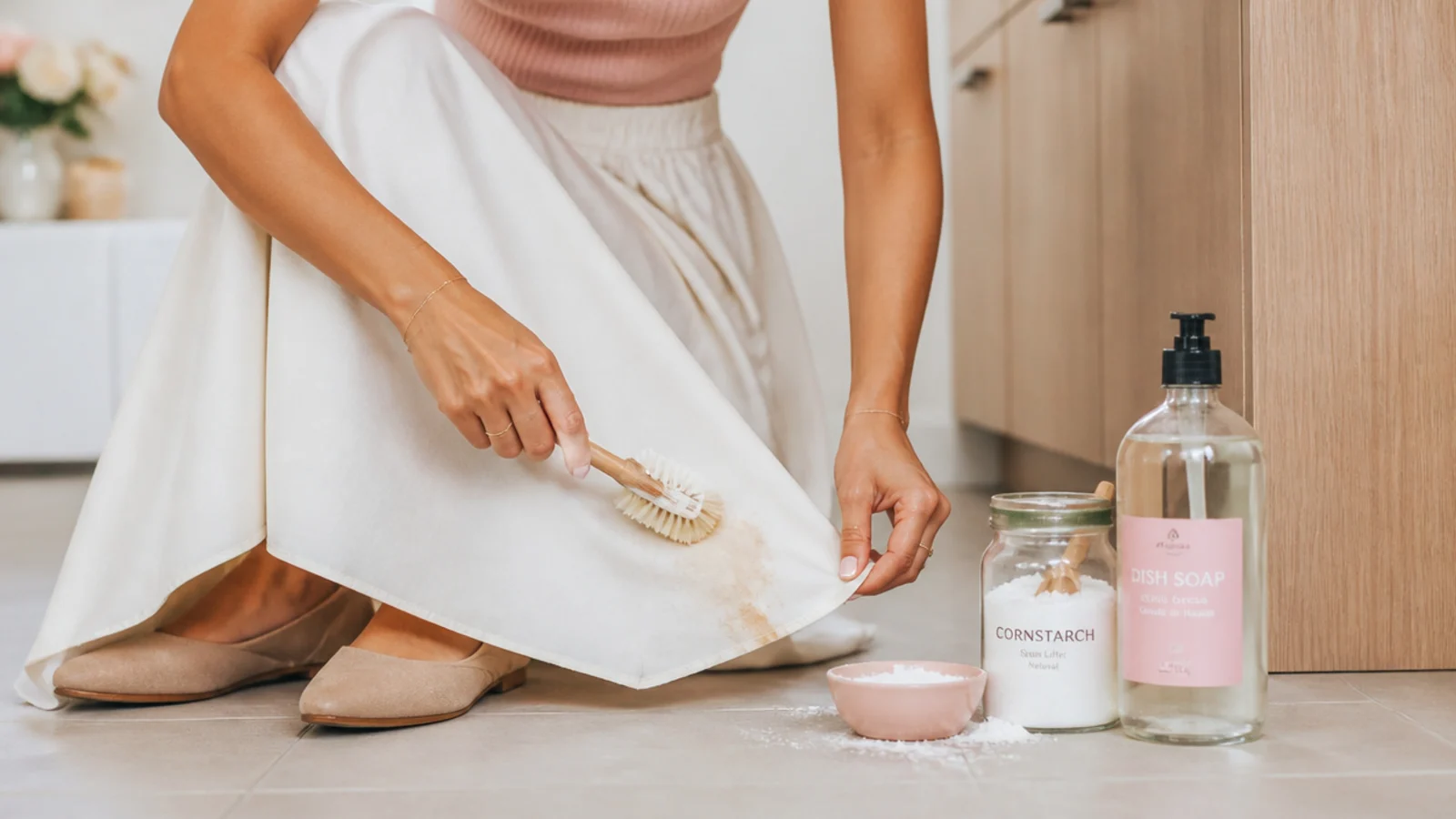
Grease, salad dressing, sunscreen and makeup are oil-based, so they need an oil-cutter, not water. Work a little dish soap directly into the mark and let it sit fifteen minutes before washing, since dish soap is built to break grease. For a fresh oily drip, first dust on cornstarch, talc or baby powder to absorb the oil, leave it a few minutes, then brush it off before treating. For foundation or lipstick, dish soap plus a dab of oxygen bleach usually lifts it. Wash warm if the fabric allows to flush the loosened oil.
Do not rub sunscreen into a white skirt; many sunscreens contain avobenzone that reacts with iron in water and leaves a rust-orange stain, so treat those with lemon juice.
9. Store White Skirts Without Yellowing
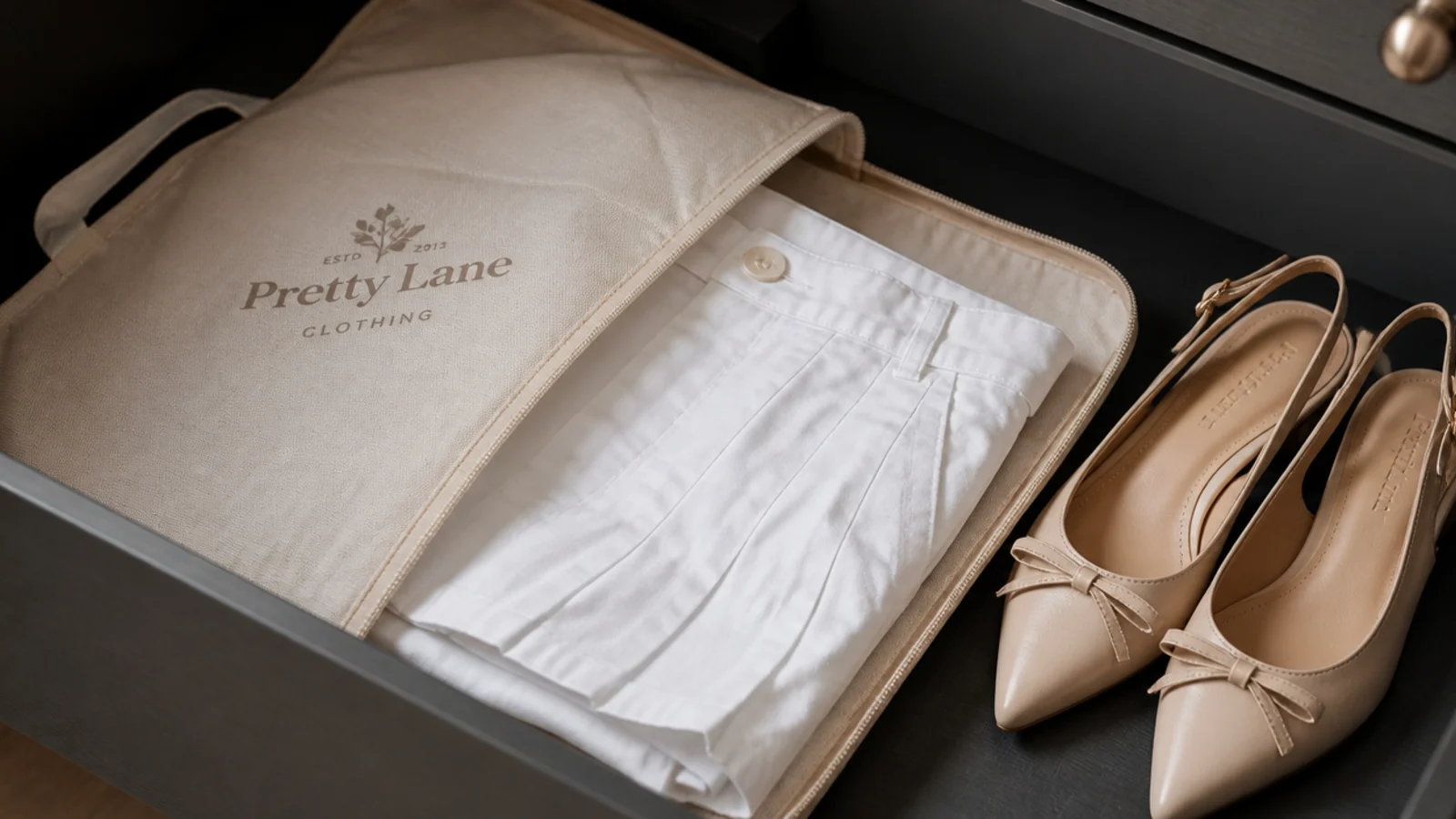
How you store a white skirt between seasons decides whether it comes out bright or yellowed. Always store it fully clean, because leftover body oil oxidizes into yellow while it sits. Never seal white in plastic dry-cleaner or vacuum bags, which trap moisture and off-gas chemicals that yellow fabric; use a breathable cotton or muslin garment bag, or acid-free tissue for satin. Keep the spot cool, dark and dry, add a silica-gel packet against damp, and skip scented sachets that can stain. Then it is ready for white skirt fall outfits.
Fold heavy cotton and denim so they do not stretch on a hanger, but hang linen and satin so they do not set deep creases in storage.
1. Pre-Treat the Waistband, Underarms and Any Marks First
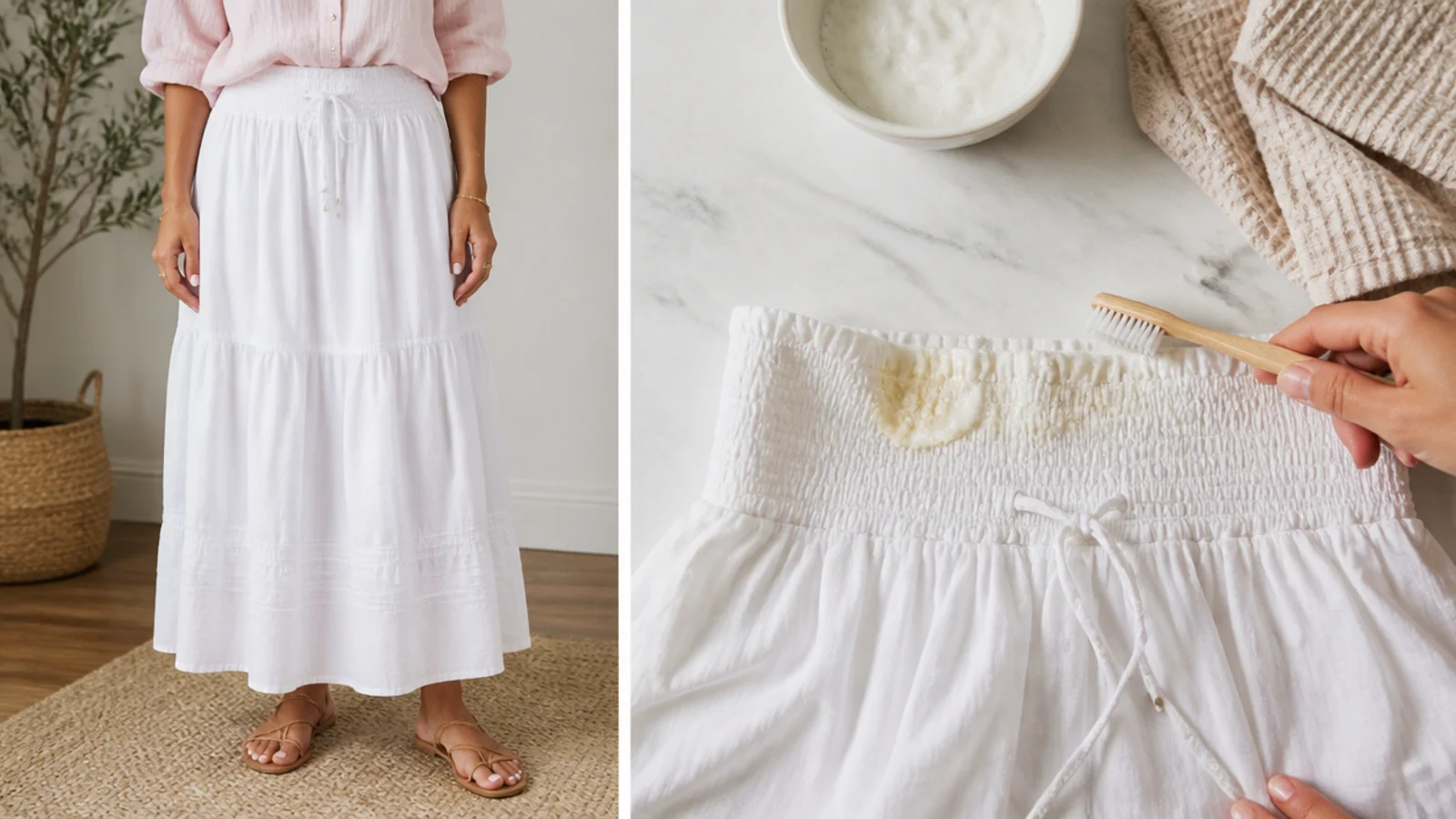
Before the skirt goes near the machine, look for the invisible stains, the waistband, the inside back and any spots where skin met fabric. These body-oil zones are where yellowing starts. Work a paste of oxygen bleach and a little water into those areas, or dab a stain remover on visible marks, and let it sit ten to fifteen minutes. Pre-treating lifts oils before the wash sets them, which is the single biggest reason white waistbands turn yellow.
Common mistake: Tossing the skirt straight in the wash without touching the waistband, so body oil bakes in a little deeper every cycle until it yellows for good.
Pro tip: Keep a stain pen in your bag and hit fresh marks within minutes; a stain you treat wet almost always lifts, one you treat next week often will not.
2. Turn the Skirt Inside Out and Sort a Whites-Only Load

Turn the skirt inside out to protect the outer surface, then wash it only with other true whites, never with pastels, denim or anything that bleeds. Even a pale gray sock sheds a little dye that redeposits and dulls white to a grimy off-white over time. A clean whites-only load stays uniformly bright. Sort by weight too, so a heavy denim skirt does not abrade a delicate linen or satin one in the same drum.
Common mistake: Adding one white skirt to a mixed colored load to save water, which is exactly how white drifts to a dingy gray after a few washes.
Pro tip: Keep a separate hamper for whites so a full white load is always ready and nothing colored ever sneaks in by accident.
3. Match the Water Temperature to the Fabric
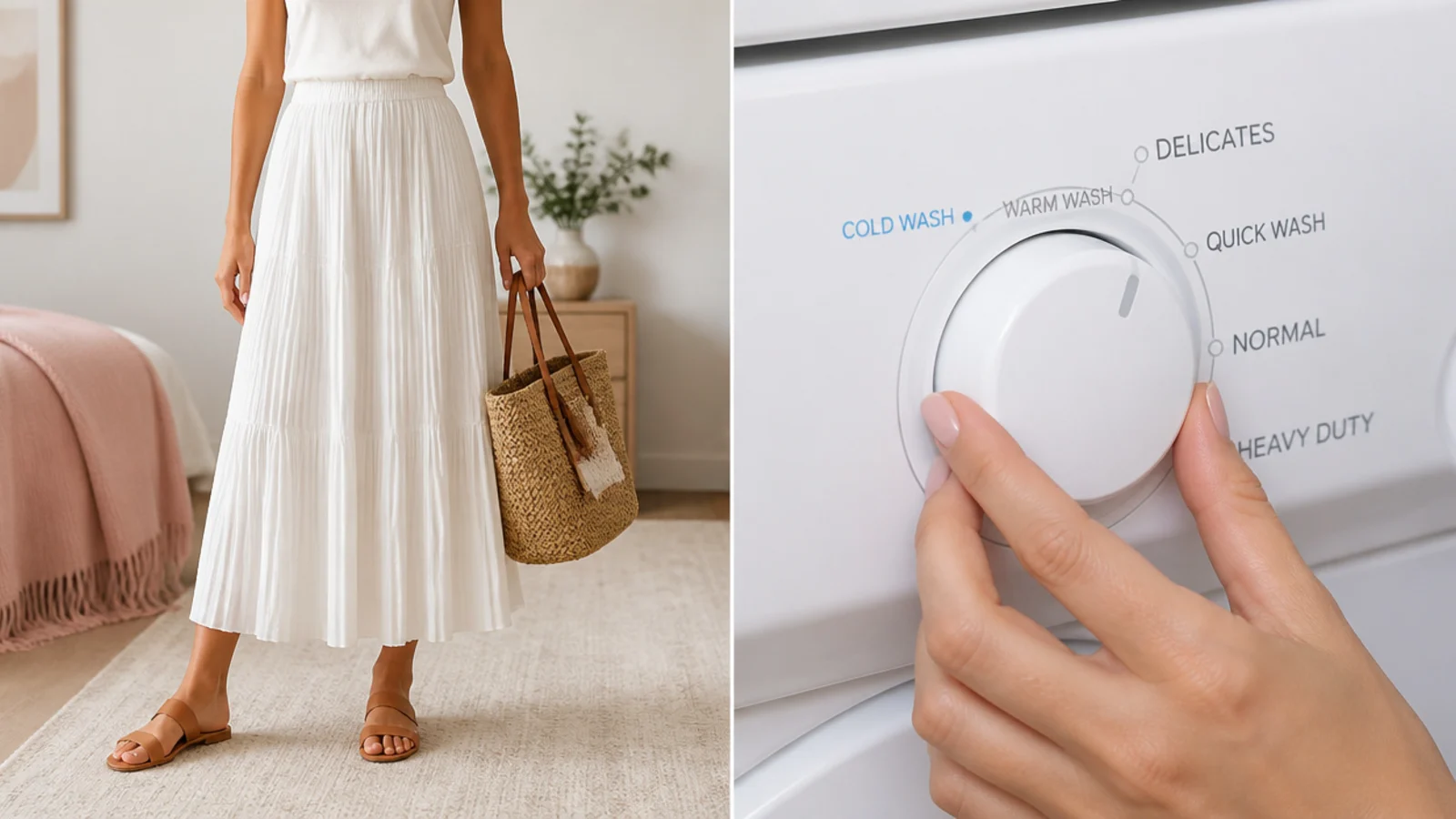
Temperature is where most people ruin a white skirt. Sturdy white cotton and denim can take a warm wash, around 40 degrees, which helps dissolve body oils that cold water leaves behind. Linen, satin, viscose and anything with elastane want cool water, around 30 degrees or below, so they do not shrink, pucker or lose their finish. Always read the care label first, but when in doubt go cooler; you can boost cleaning power with oxygen bleach instead of heat.
Common mistake: Washing a satin or linen skirt hot to get it whiter, then watching it shrink, pucker or turn permanently dull.
Pro tip: Hot water sets protein stains like sweat and food, so if the skirt has those, treat them cold first, then wash warm only if the fabric allows.
4. Use Oxygen Bleach, Never Chlorine Bleach
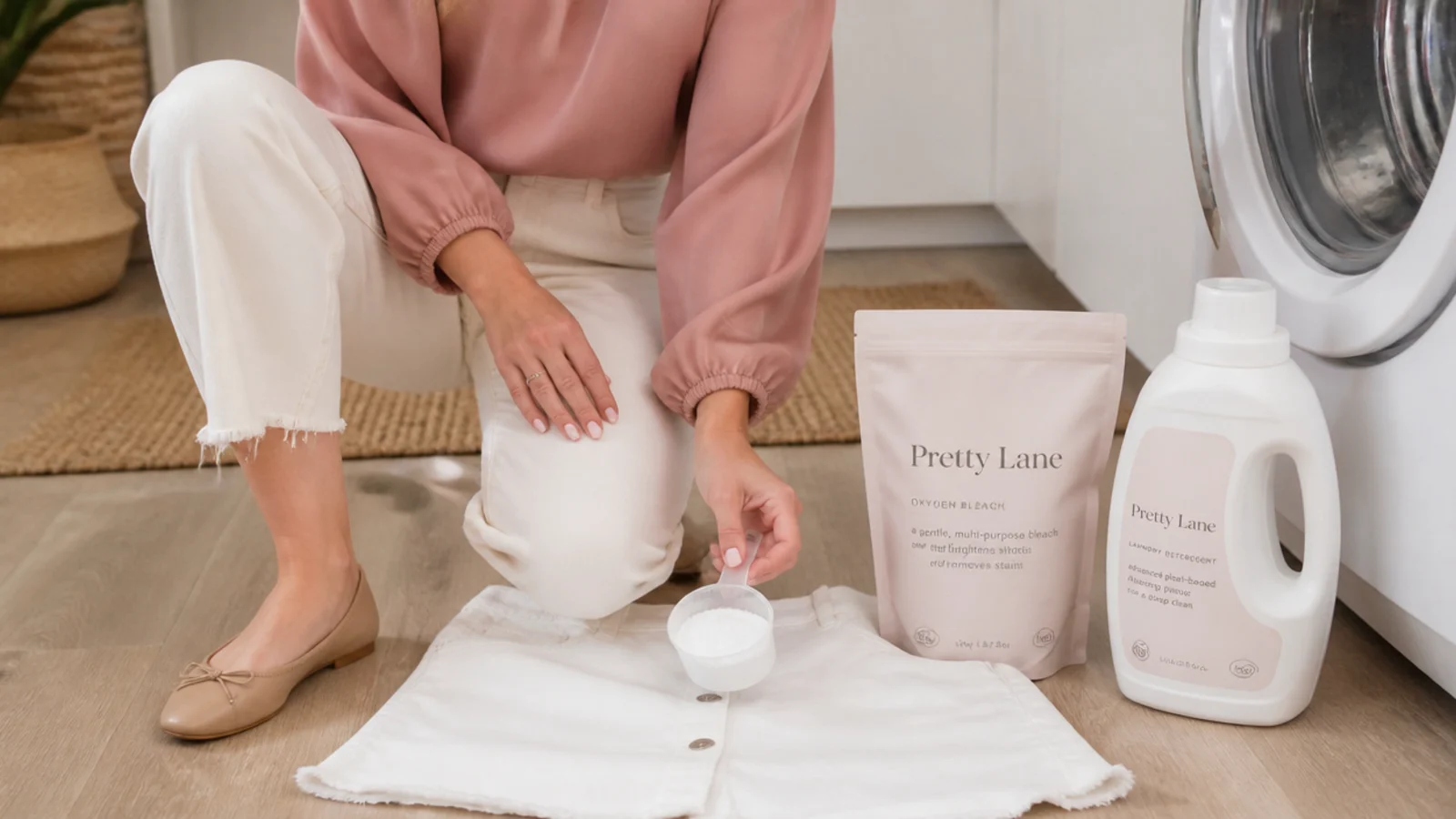
Add a scoop of oxygen bleach, the powdered sodium-percarbonate kind, to the wash along with a normal dose of liquid detergent. Oxygen bleach brightens and lifts stains without the harshness of chlorine. Chlorine bleach looks like the obvious choice for white, but it actually reacts with body oils and protein to turn fabric yellow, and it weakens cotton and linen fibers so the skirt wears thin. Oxygen bleach is safe on almost every white fabric except silk and some elastane blends.
Common mistake: Reaching for chlorine bleach on a yellowed white skirt, which often deepens the yellow and eats the fabric instead of whitening it.
Pro tip: For a badly grayed cotton or denim skirt, dissolve oxygen bleach in warm water and soak the whole skirt for one to six hours before washing.
5. Run the Right Cycle and Do Not Overload the Drum
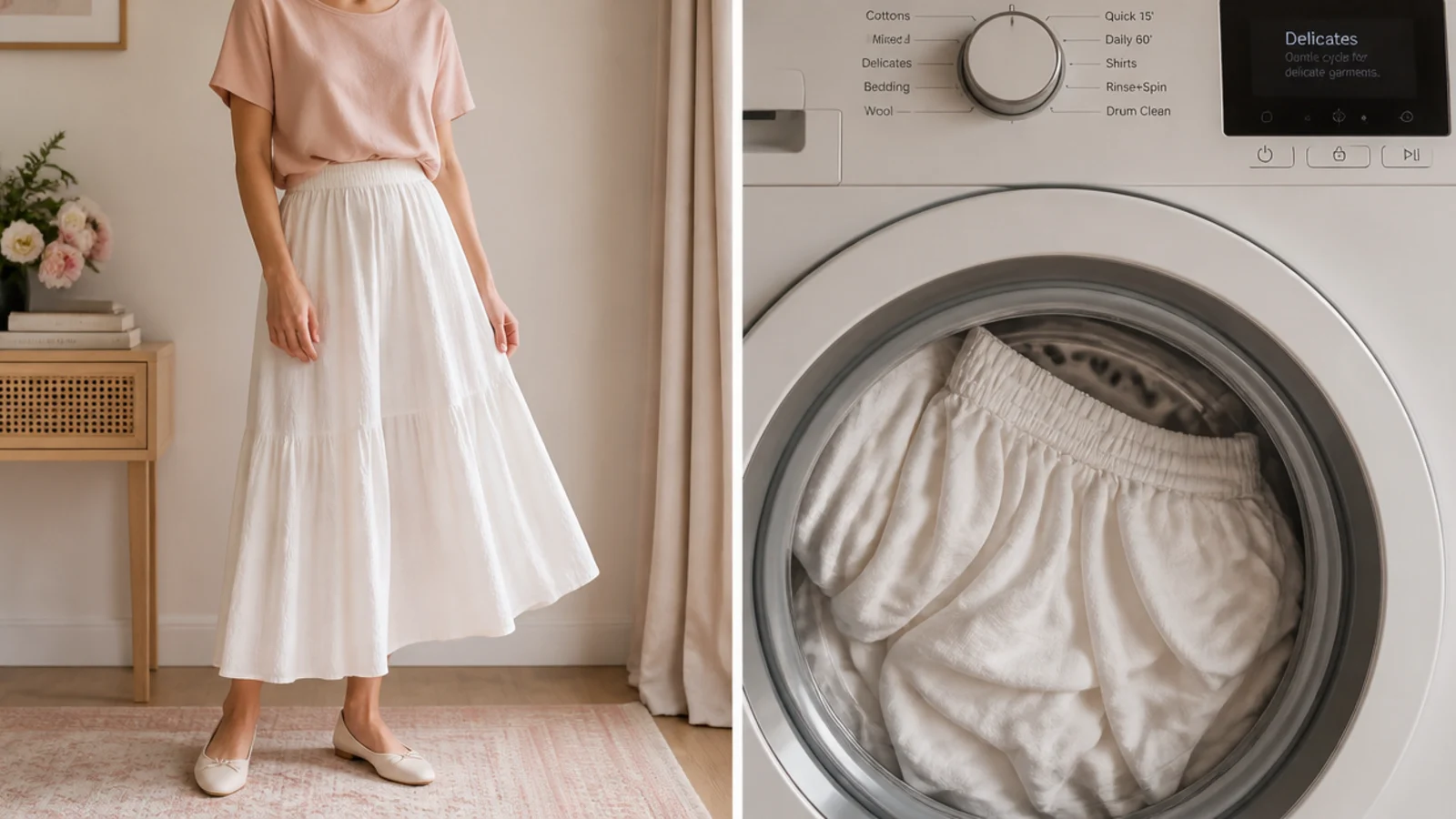
Choose the cycle by fabric: a normal cotton cycle for white cotton and denim, and a gentle or hand-wash cycle for linen, satin, pleats and anything lined. Keep the drum loose rather than packed, because clothes need room to move for detergent to rinse fully. An overloaded drum leaves detergent residue trapped in the fabric, and that residue is a top hidden cause of yellowing. Put delicate or pleated skirts in a mesh wash bag to protect the shape.
Common mistake: Cramming a full hamper into one load so the skirt comes out with soap still in it, which dries to a dull yellow-gray film.
Pro tip: If your machine has an extra-rinse option, use it on whites; a second rinse flushes the leftover detergent that quietly yellows fabric.
6. Add a White-Vinegar Rinse to Strip Residue
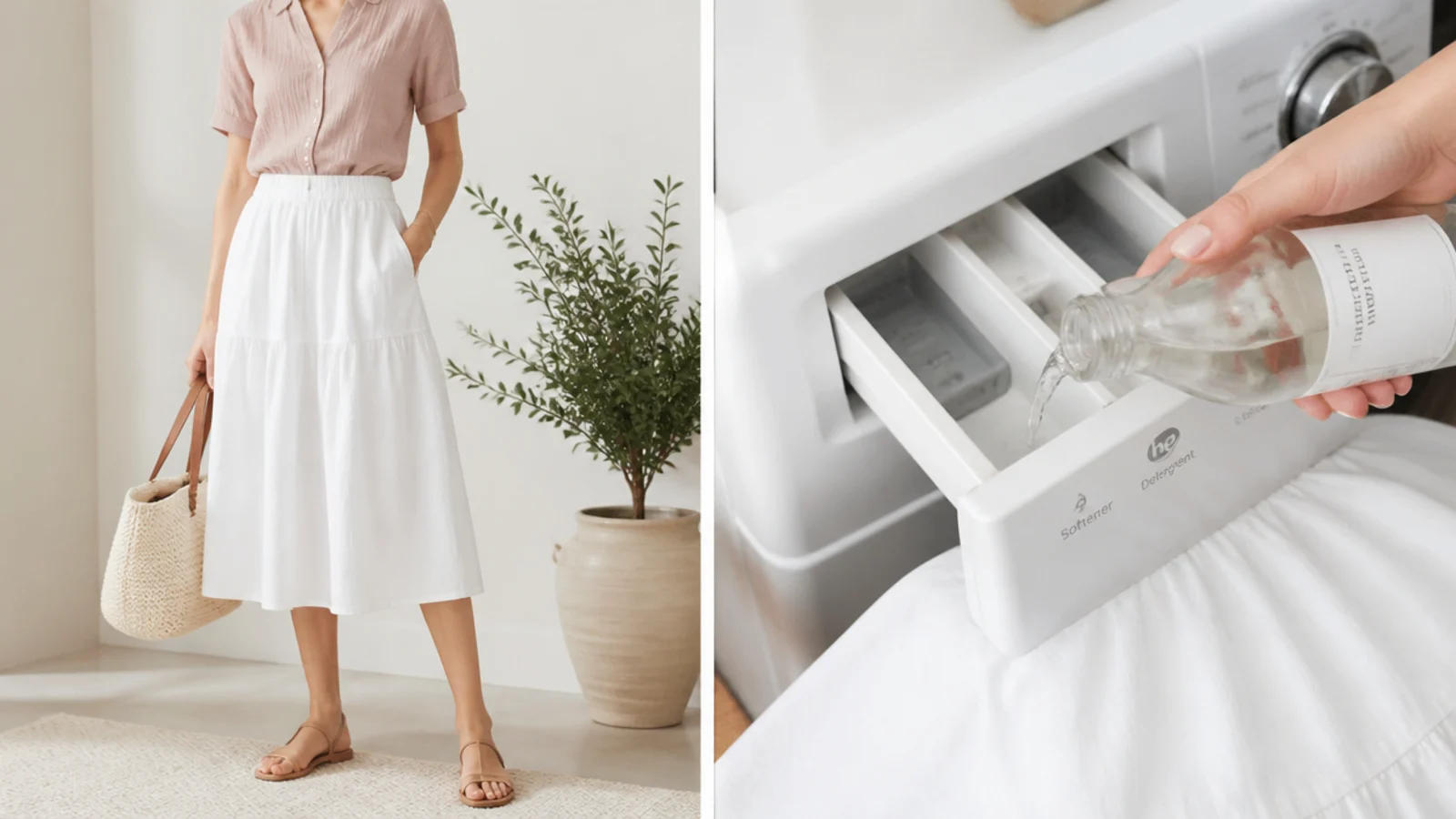
Pour half a cup of distilled white vinegar into the rinse compartment or the drum before the rinse cycle. The mild acid dissolves detergent and mineral residue, the buildup that makes white look chalky and dingy, and it softens fibers without the waxy coating that liquid fabric softener leaves behind. Fabric softener is a common yellowing culprit, so vinegar quietly replaces it. It rinses out completely and leaves no smell once the skirt is dry.
Common mistake: Using liquid fabric softener on whites, which coats the fibers in a film that traps oils and yellows the fabric faster.
Pro tip: Vinegar also helps set any loose dye on trim or embroidery, so a white skirt with contrast stitching keeps its detail crisp.
7. Dry Flat or Hung Out of Direct Sun
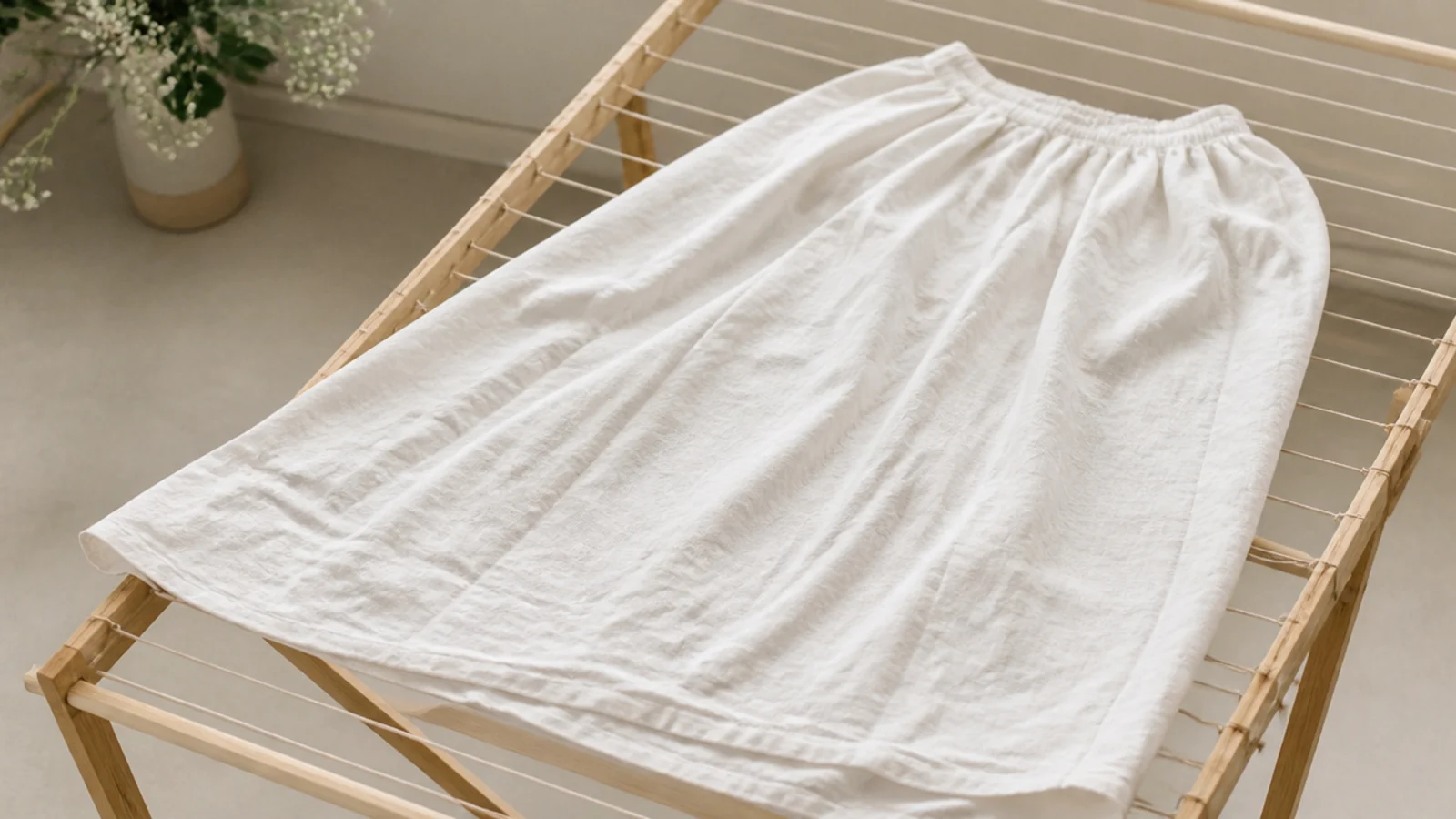
Skip the dryer for most white skirts. High heat can set any faint stain you missed into a permanent yellow mark, and it shrinks linen, satin and blends. Air-dry instead: lay knits and linen flat to hold their shape, and hang cotton and denim on a rack. A little indirect sunlight actually helps bleach cotton and linen whiter, but strong direct sun over hours can yellow some fabrics and degrade elastane, so bright shade is the safe default.
Common mistake: Tumble-drying a white skirt on high heat, which locks in invisible sweat and oil marks as yellow stains you can no longer remove.
Pro tip: For white cotton and linen only, a couple of hours flat in gentle morning sun is a free natural whitener; just do not leave satin or blends out that long.
8. Iron or Steam Inside-Out With a Pressing Cloth
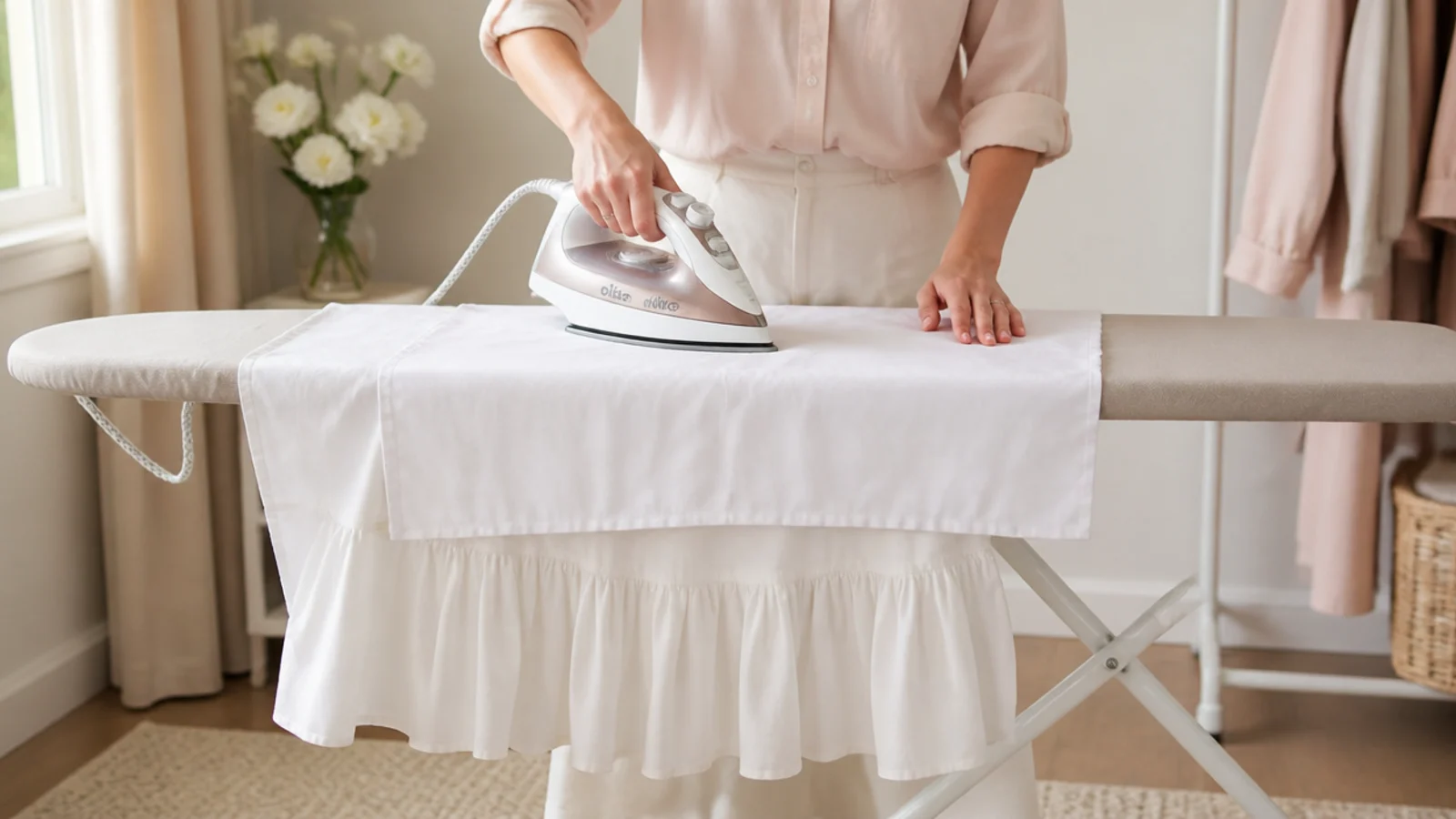
Press the skirt inside out while it is still slightly damp, and always match the iron heat to the fabric: high for cotton and linen, low for satin, viscose and blends. Lay a clean white pressing cloth or thin cotton between the iron and the fabric on anything delicate. Direct high heat scorches white to a yellow-brown shine that never comes out, especially on satin and synthetics. Steaming is even safer and refreshes a white skirt without any scorch risk at all.
Common mistake: Ironing satin or a blend on a hot setting with no cloth, which leaves a shiny scorched patch that is permanent.
Pro tip: Never iron over a stain or deodorant mark; the heat bakes it in, so wash it clean first, then press.
Why Do White Clothes Turn Yellow?
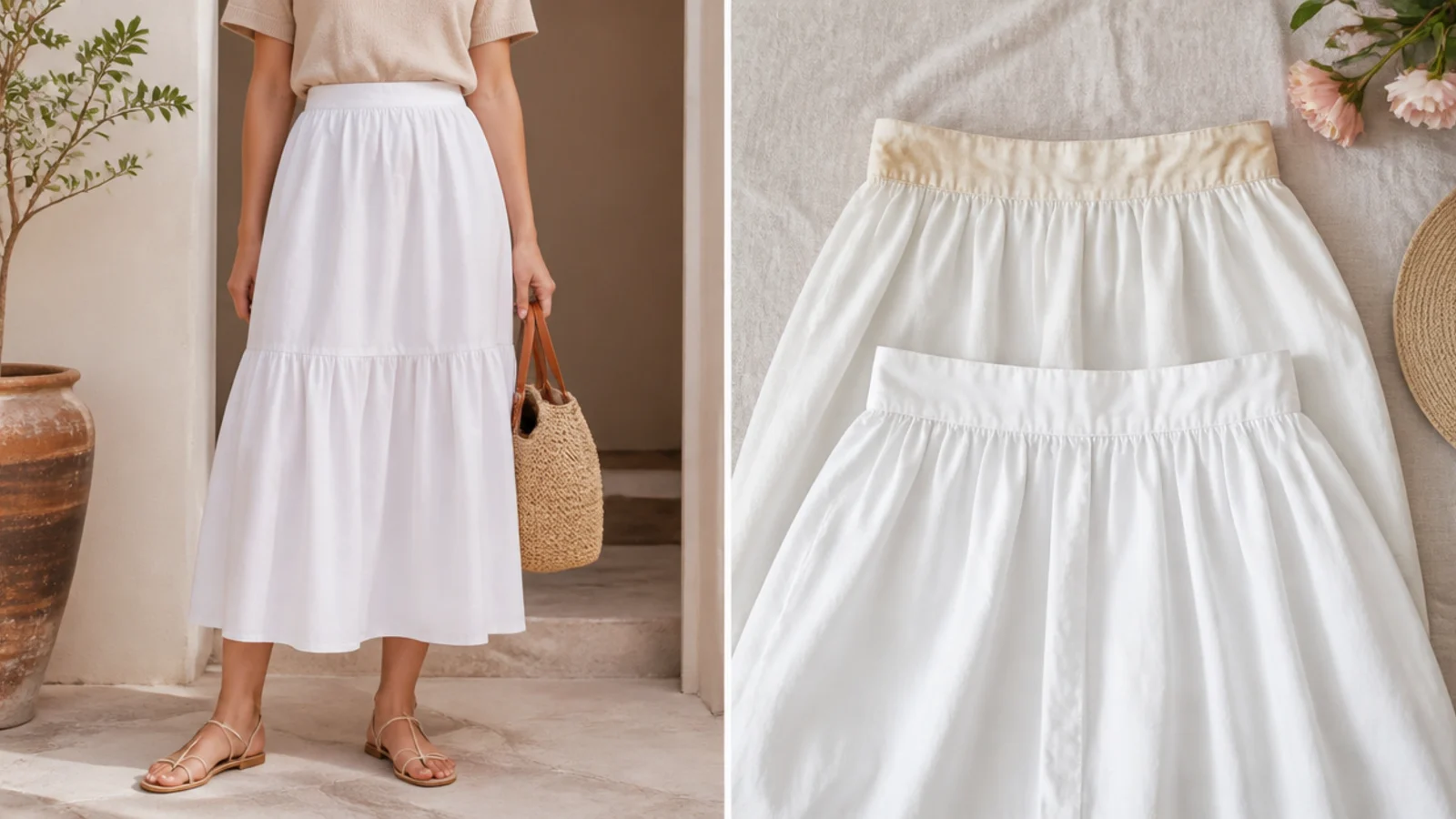
White clothes turn yellow for reasons that have nothing to do with age, and knowing the cause tells you the fix. The biggest culprit is body chemistry: sweat, skin oil and deodorant leave invisible deposits that oxidize over weeks into yellow marks, which is why the waistband and inside back yellow first. The second cause is you, indirectly: too much detergent or fabric softener leaves a residue that traps oils and dulls to yellow, and hard-water minerals do the same. The third is the wrong bleach. Chlorine bleach reacts with body oils and protein and with the optical brighteners already in white fabric, and the result is often more yellow, not less. Heat is the fourth, because a hot dryer or a hot iron sets any faint stain into a permanent yellow-brown. And the fifth is storage: sealing white in plastic traps moisture and gases that yellow fabric, while direct sun over time can do it too. Every one of those is preventable, so a yellowing white skirt is almost always a care problem, not a worn-out garment. Keep the fabric clean, rinse it fully, skip chlorine and heat, and store it right, and white stays white.
How to Remove Yellow Stains From White Clothes
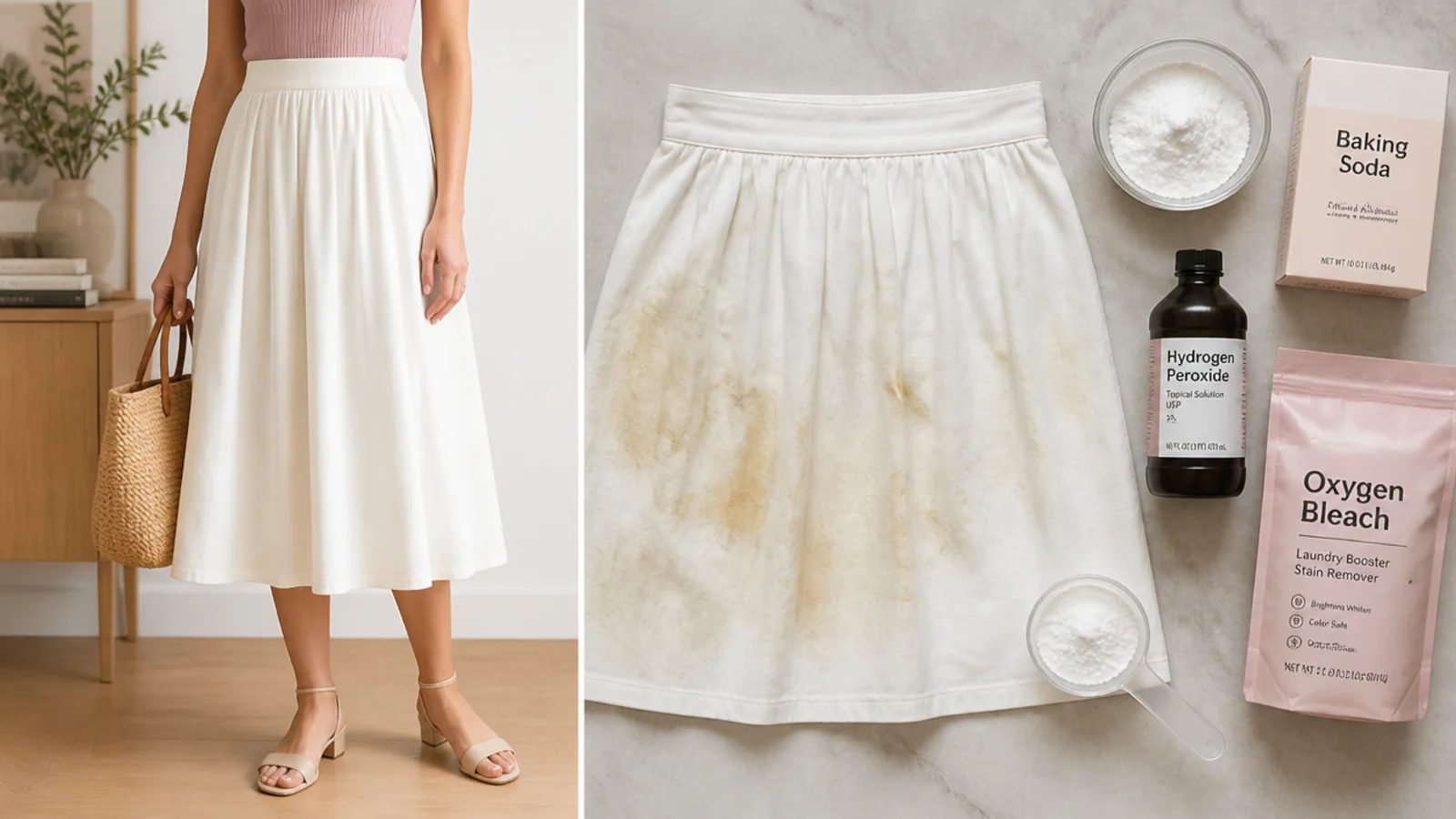
To remove yellow stains from white clothes, work with oxygen, not chlorine. For general dinginess or a yellowed waistband, dissolve a scoop of oxygen bleach in a basin of warm water, submerge the skirt, and soak it one to six hours before a normal wash; the longer soak lifts stains cold water leaves behind. For a stubborn sweat or deodorant yellow, mix roughly one part dish soap, two parts hydrogen peroxide and a sprinkle of baking soda into a paste, work it into the mark, and let it sit thirty minutes to an hour before rinsing and washing. Hydrogen peroxide is a gentle bleach that is safe on most whites, and the baking soda helps break the oils. For older, set-in yellow on white cotton or linen, a paste of lemon juice and salt left in indirect sun can bleach it out naturally. Always test any treatment on a hidden seam first, especially on satin, viscose or elastane blends, which cannot take peroxide as well as cotton. Whatever you use, treat before you dry, because heat turns a treatable yellow into a permanent one. For the fabric-specific care that stops yellowing in the first place, see the entries above and types of white skirts compared.
Washing a White Linen Skirt Without Wrecking It
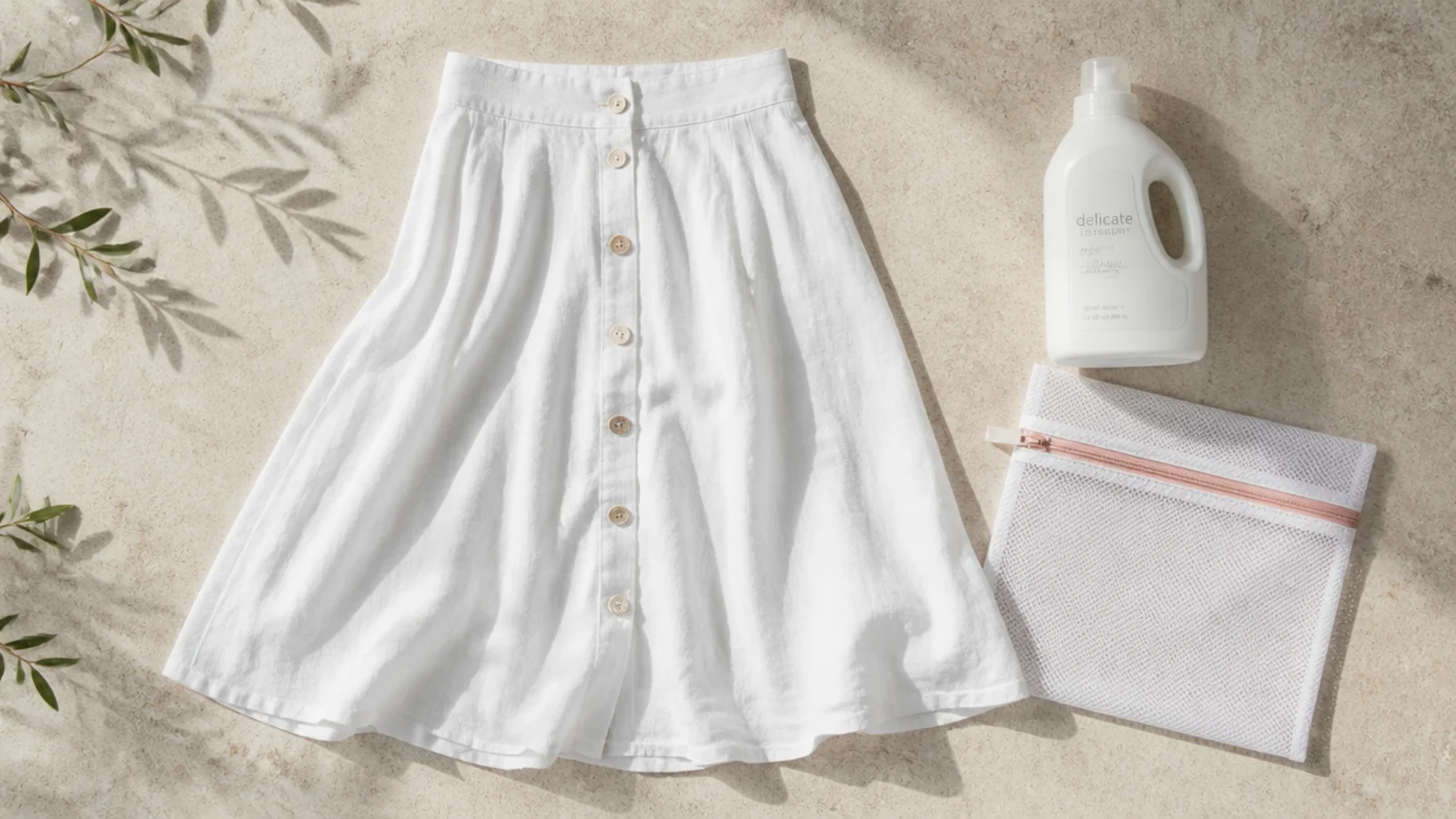
White linen is the fabric that punishes rough handling, so wash it cool and gentle. Use cold to lukewarm water, around 30 degrees, a mild liquid detergent and a small dose of oxygen bleach if it needs brightening, and choose the gentle or hand-wash cycle inside a mesh bag. Never wring linen; twisting breaks the fibers and sets deep creases that are hard to press out. Instead, press the water out gently and lay the skirt flat or hang it to dry while still damp so gravity smooths it. Linen actually whitens well in gentle sun, so a couple of hours flat outdoors brightens it naturally, but keep it out of harsh midday sun for long stretches. Skip the dryer entirely, because high heat shrinks linen and can scorch it yellow. Iron it while damp on a high steam setting for the crisp finish linen is known for. Because linen is often semi-sheer in white, a slip underneath saves it from the friction and body oil that yellow the fabric fastest, and it solves the opacity problem too; see what to wear under a white skirt. Style the results in white skirt summer outfits.
Storing White Clothes Without Yellowing
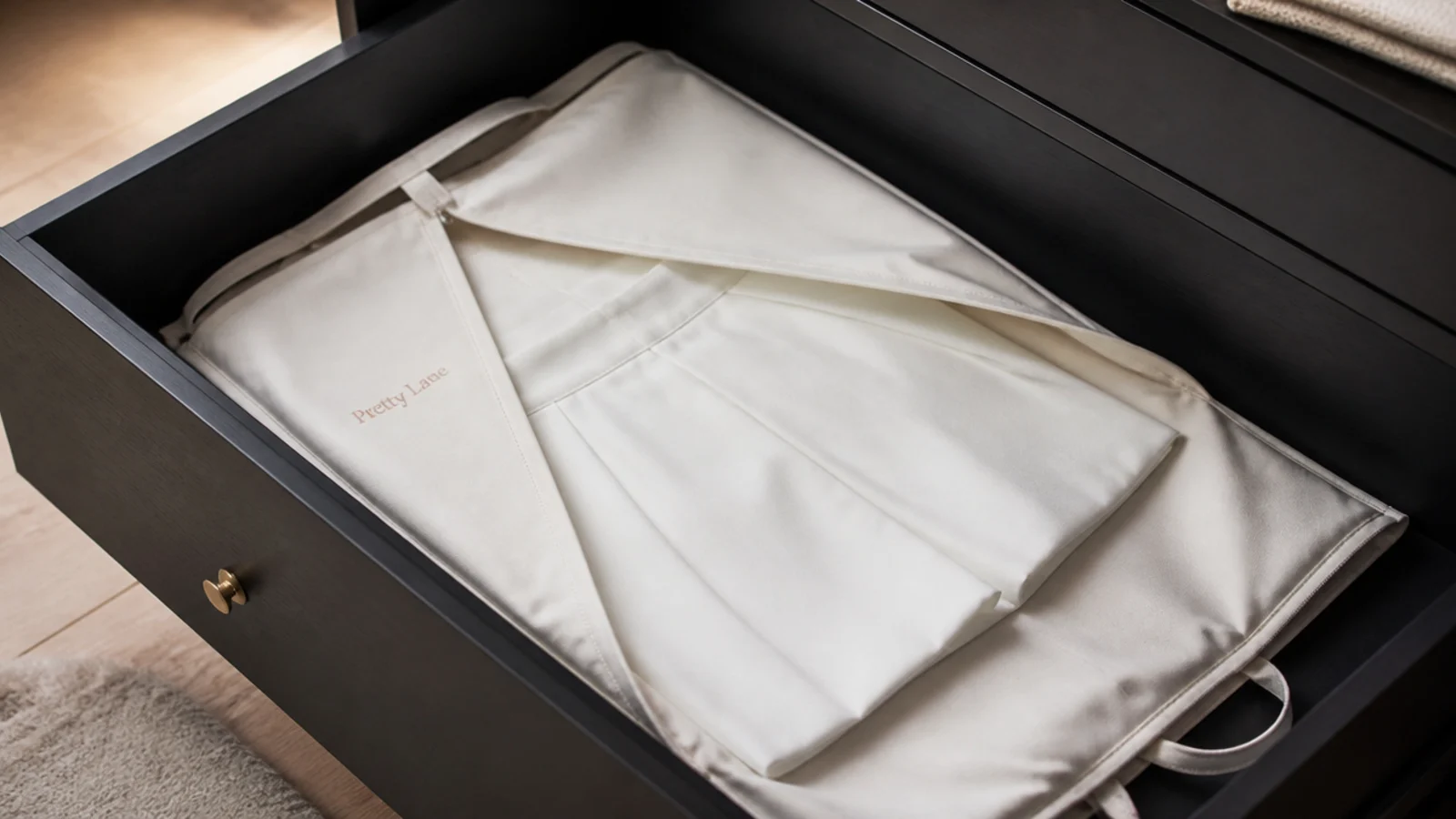
Storing white clothes without yellowing comes down to three rules: clean, cool and breathable. Always store a white skirt fully clean, because invisible body oil and sweat oxidize into yellow marks while the garment sits, and a skirt you hung up dirty for a season will come out yellowed at the waistband. Never store white in plastic, not dry-cleaner bags, not vacuum bags, not sealed bins; plastic traps moisture and off-gasses chemicals that yellow fabric over time. Use a breathable cotton or muslin garment bag instead, or an acid-free tissue wrap for anything special like satin. Keep the storage spot cool, dark and dry, since heat, humidity and light all speed yellowing, and a damp closet invites both mildew and yellow spotting. Fold heavy knits and denim so they do not stretch on the hanger, but hang linen and satin so they do not crease. For long-term storage, tuck in a silica-gel packet to fight damp and skip the scented sachets that can stain. Do this and a white skirt comes out of storage as bright as it went in, ready for white skirt fall outfits or white skirt winter outfits.
White Skirt Stain Emergencies When You Are Out
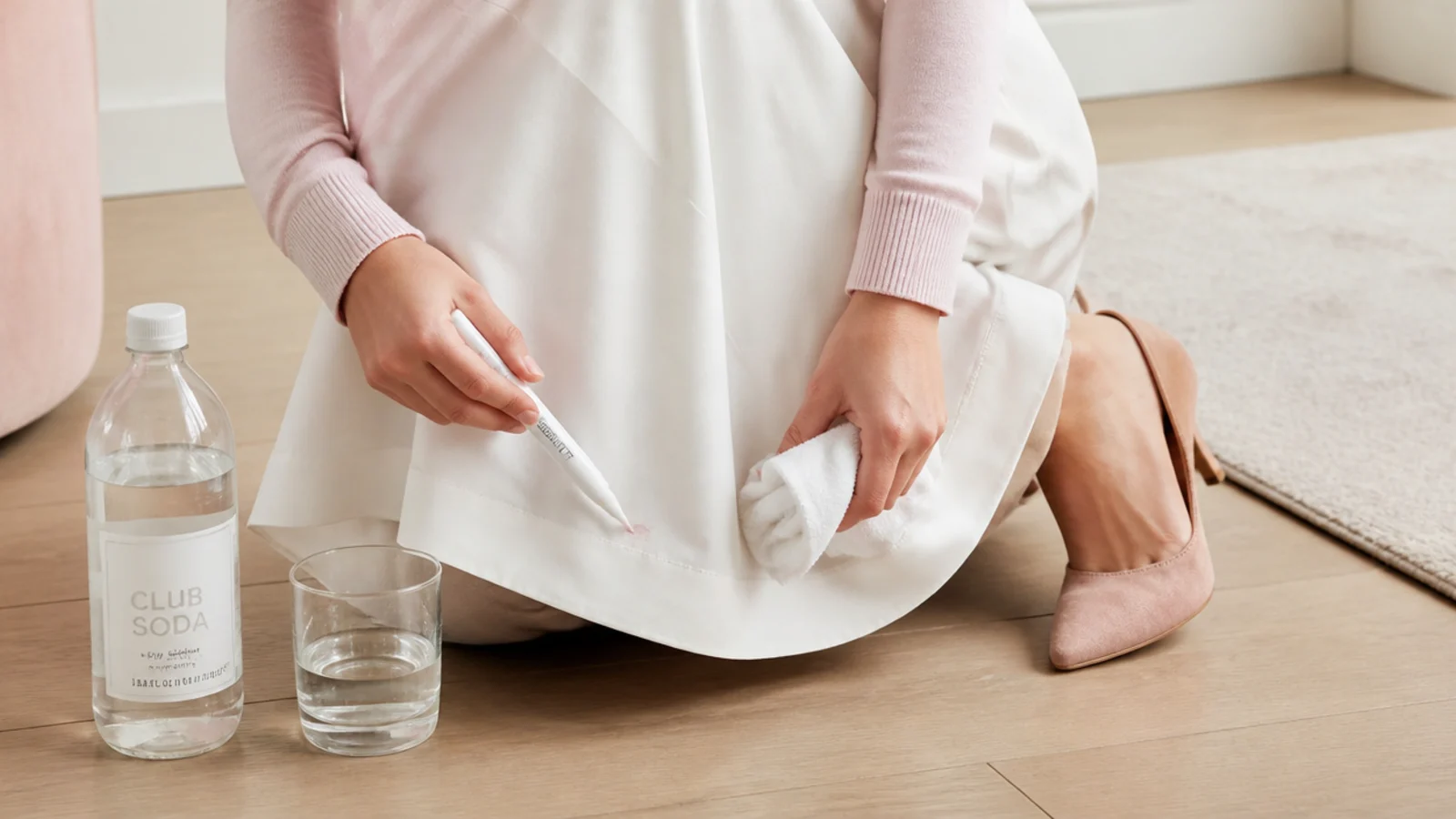
Most white-skirt disasters happen away from your laundry room, so the goal out and about is damage control until you can wash properly. The golden rule is blot, never rub: pressing a clean napkin or cloth into the stain lifts it, while scrubbing grinds it deeper into the weave and frays the surface. For a fresh spill, dab with a little cold water or club soda from the outside of the mark inward so you do not spread it. Carry a white-fabric stain pen or wipes; they neutralize most food and drink marks in seconds and buy you time. For grease or salad-dressing drips, a tiny touch of dish soap on a damp napkin cuts the oil, or a dusting of talc, cornstarch or even table salt absorbs it if you let it sit a few minutes then brush it off. Avoid sitting on painted benches, newsprint or dyed leather in a white skirt, since those transfer color you may not get out. And resist the bathroom hand dryer on a wet mark, because heat can set it. Treat it properly at home the same day, before the stain oxidizes into a yellow that will not budge. For the outfits worth protecting this carefully, see white satin skirt outfits and white denim skirt outfits.
Main Differences
- Oxygen bleach brightens white gradually without reacting with body oils, so it will not yellow the fabric the way chlorine can.
- Chlorine bleach whitens fast but reacts with oils and optical brighteners, and over time it often turns white skirts yellow instead.
- Oxygen bleach is safe on cotton, linen, denim and polyester and tolerates long soaks; chlorine weakens those same fibers.
- For satin, silk and elastane blends, skip both and use diluted hydrogen peroxide or a gentle wash, since bleach ruins the finish.
Frequently Asked Questions
How do you keep a white skirt white?
Wash it every one or two wears before body oils set, pre-treating the waistband and underarm areas first. Use oxygen bleach and a normal dose of liquid detergent in water matched to the fabric, add a white-vinegar rinse to strip residue, and skip chlorine bleach entirely. Air-dry out of harsh sun, iron on the right heat with a cloth, and store the skirt clean, cool and in breathable cotton. That routine stops the oils, residue and heat that yellow white.
Why do white clothes turn yellow?
Mostly from body chemistry: sweat, skin oil and deodorant leave invisible deposits that oxidize into yellow over time, especially at the waistband and underarms. Detergent and fabric-softener residue, hard-water minerals, chlorine bleach reacting with oils, hot-dryer or iron heat setting faint stains, and storing white sealed in plastic all add to it. None of it is aging, so a yellowed white skirt is a care problem you can usually reverse.
How do you remove yellow stains from white clothes?
Soak the garment in oxygen bleach dissolved in warm water for one to six hours, then wash normally. For stubborn sweat or deodorant yellow, work in a paste of dish soap, hydrogen peroxide and baking soda, leave it thirty to sixty minutes, then rinse and wash. For set-in yellow on white cotton or linen, lemon juice and salt in gentle sun bleaches it out. Always treat before drying, since heat makes yellow permanent.
How do you get stains out of a white skirt?
Treat by stain type and act fast. Blot, never rub, and work from the outside in. Sweat and deodorant respond to hydrogen peroxide and baking soda; wine, coffee and juice come out with oxygen bleach or vinegar plus sun; grease and makeup lift with a dab of dish soap or an absorbent like cornstarch. Rinse in cold water first, treat the mark, then wash in the warmest water the fabric allows and air-dry before checking the result.
Can you use bleach on a white skirt?
Use oxygen bleach, not chlorine bleach. Oxygen bleach, the powdered sodium-percarbonate kind, brightens and lifts stains on cotton, linen and denim without weakening the fibers or yellowing them. Chlorine bleach whitens fast but reacts with body oils and the optical brighteners in white fabric, which often turns the skirt yellow, and it thins cotton and linen. Never use chlorine on satin, silk or elastane blends, and even on sturdy cotton, oxygen bleach is the safer default.
How do you wash a white linen skirt?
Wash white linen in cool to lukewarm water, around 30 degrees, on a gentle or hand-wash cycle inside a mesh bag, with mild detergent and a little oxygen bleach if needed. Never wring it, since twisting sets deep creases and breaks the fibers; press the water out and dry flat or hung while damp. Skip the hot dryer, which shrinks and scorches linen, and iron it damp on high steam for the crisp finish. A slip underneath cuts friction and body oil.
How do you store white clothes without yellowing?
Store them clean, because leftover body oil oxidizes into yellow while the garment sits. Keep them cool, dark and dry, and never seal white in plastic dry-cleaner or vacuum bags, which trap moisture and off-gas chemicals that yellow fabric. Use a breathable cotton or muslin garment bag, or acid-free tissue for satin, add a silica-gel packet against damp, and skip scented sachets that can stain. Stored this way, a white skirt comes out as bright as it went in.
How do you whiten a white skirt that has gone dingy or gray?
Dinginess is usually residue and redeposited dye, not permanent damage. Dissolve oxygen bleach in warm water and soak the skirt one to six hours, then wash it in a whites-only load with a white-vinegar rinse to strip the film. For white cotton and linen, a few hours drying flat in gentle sun brightens further. Avoid chlorine, which can deepen the gray to yellow, and going forward wash whites separately so colored dye stops dulling them.
Which white-skirt fix are you trying first?
If you change one habit, make it this: wash a white skirt every one or two wears with oxygen bleach, not chlorine, and never let sweat or oil sit long enough to set. Match the method to the fabric, satin and linen want gentle cool hand-washing while cotton and denim can take a warm oxygen soak, and store every white piece clean, cool and in breathable cotton, never sealed in plastic. Do that and your white skirt stays crisp for years instead of yellowing in a season. Now put it to work: style the pieces you just protected in white skirt outfits, or browse the full set of outfit ideas to build around your brightest white.