Quick Comparison
| Water-Resistant Trench | Rated Waterproof Shell | |
|---|---|---|
| Handles | Drizzle and light, short-lived rain | Steady rain through to a downpour |
| How it works | Tight weave or surface treatment | Coated or membrane fabric with taped seams |
| Seams | Open, stitched; water can creep through | Taped or welded so stitch holes stay sealed |
| Rain rating | None; resists rather than blocks | 10,000mm for steady, 15,000mm plus for storms |
| Dressiness | High; reads polished over almost anything | Casual to sporty; function-first look |
| Best shell length | Knee-length to carry runoff past the hips | Mid-thigh to knee with a hood |
| Wear it with | Knit, straight jeans and Chelsea boots | Fleece, technical pants and GORE-TEX sneakers |
| Watch out for | Wets through in a real downpour | Can feel clammy if it is not breathable |
| Own it for | Everyday style and commutes in light rain | The forecast that says heavy rain all day |
1. Trench Over a Tee and Straight Jeans
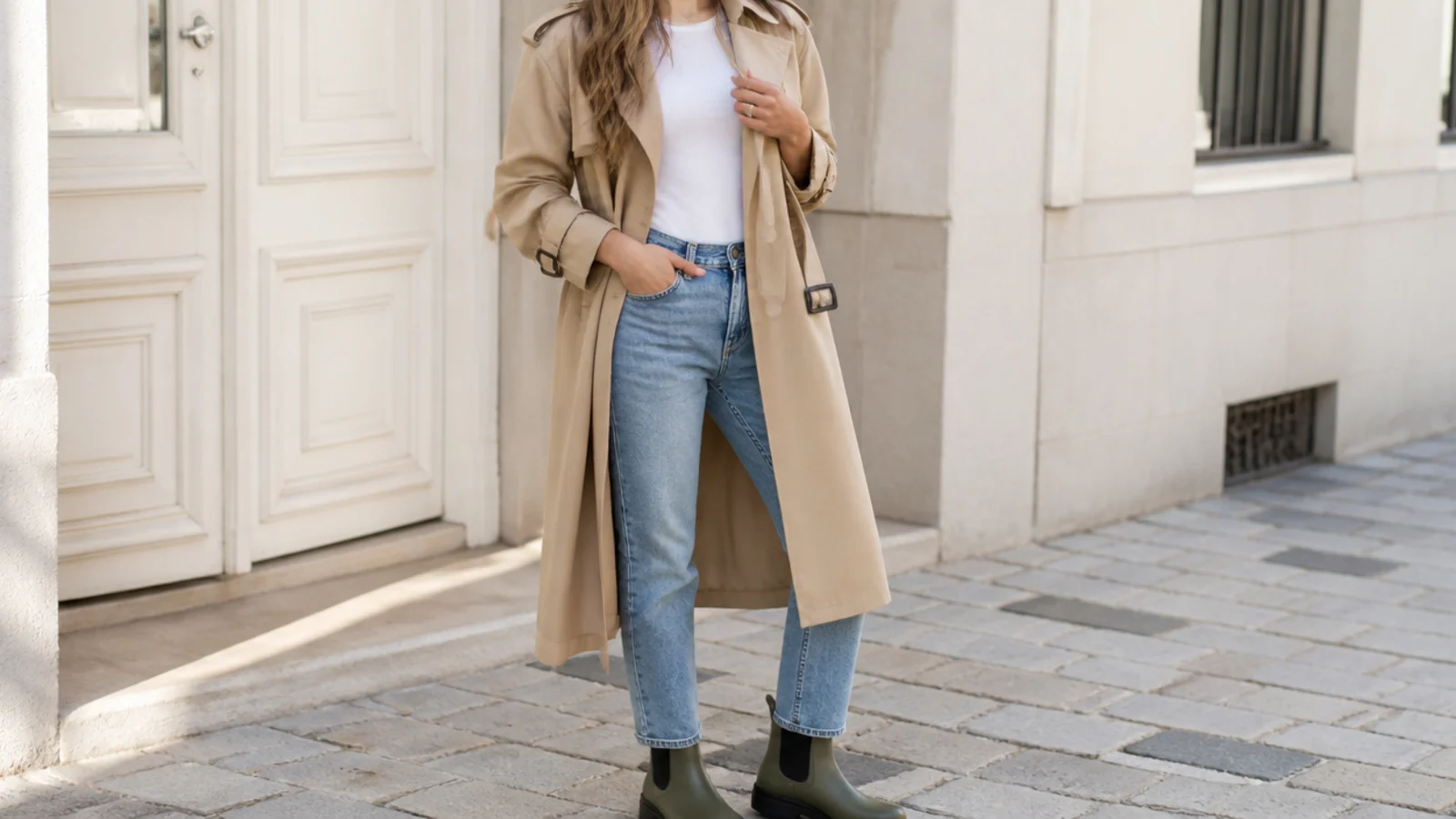
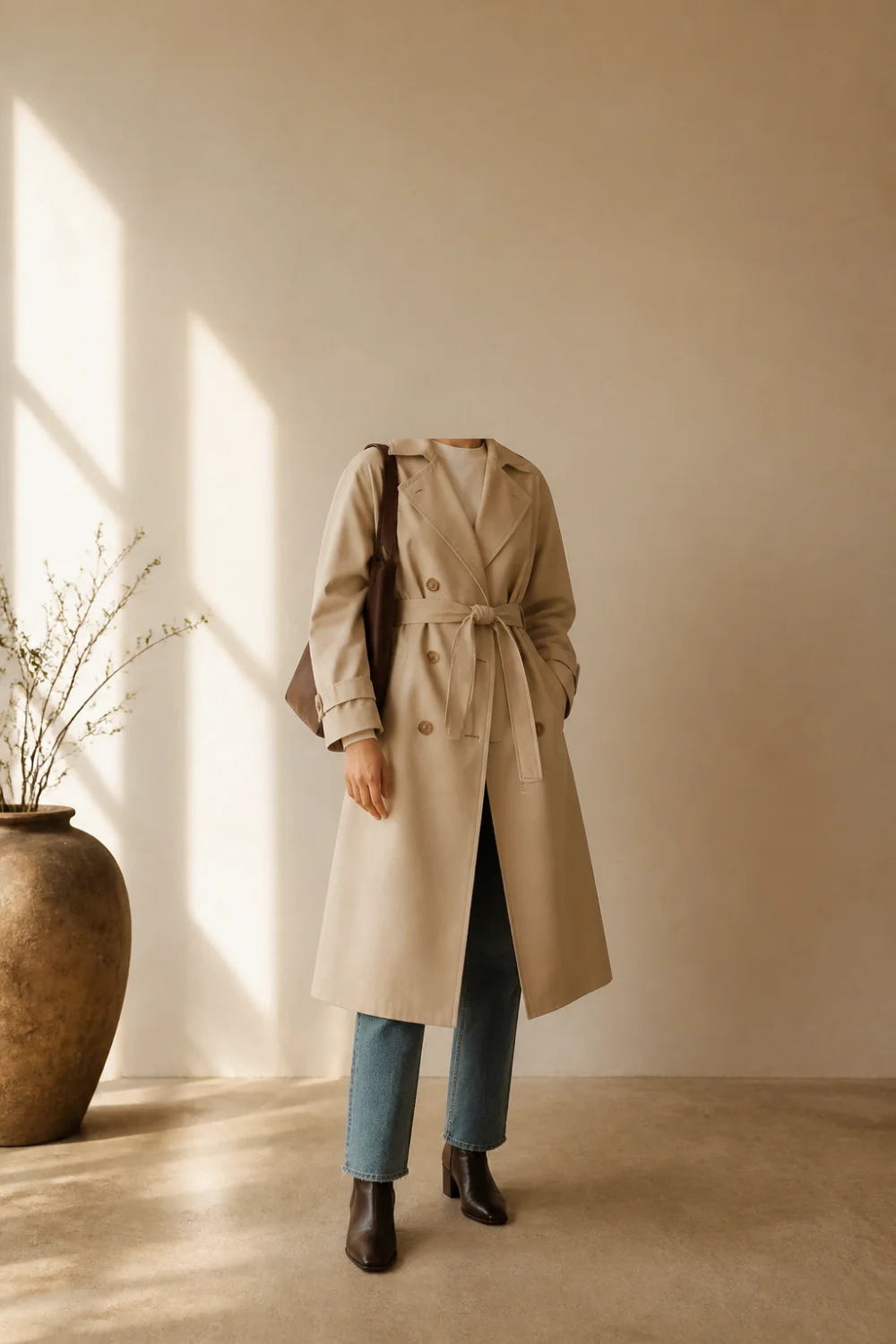
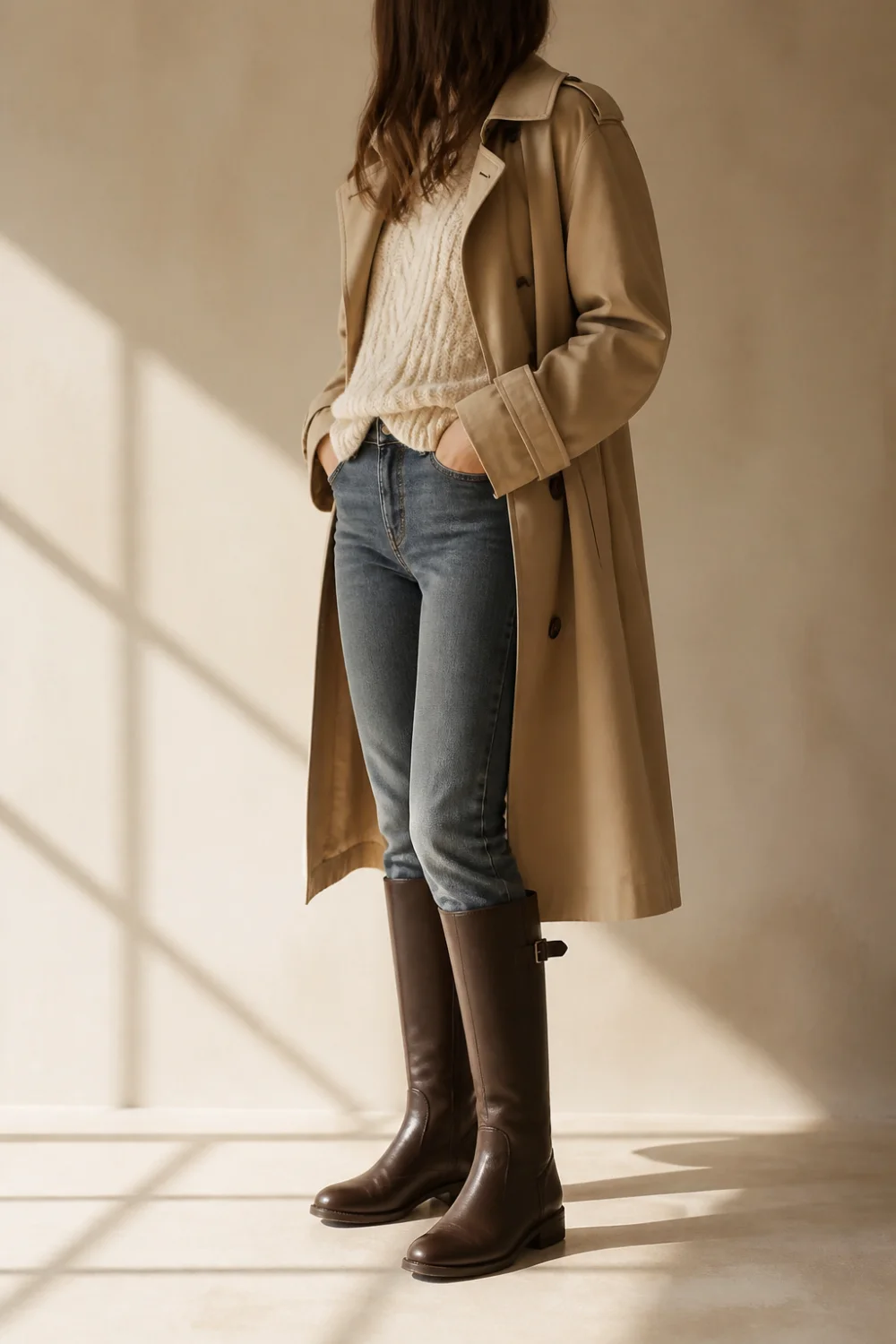
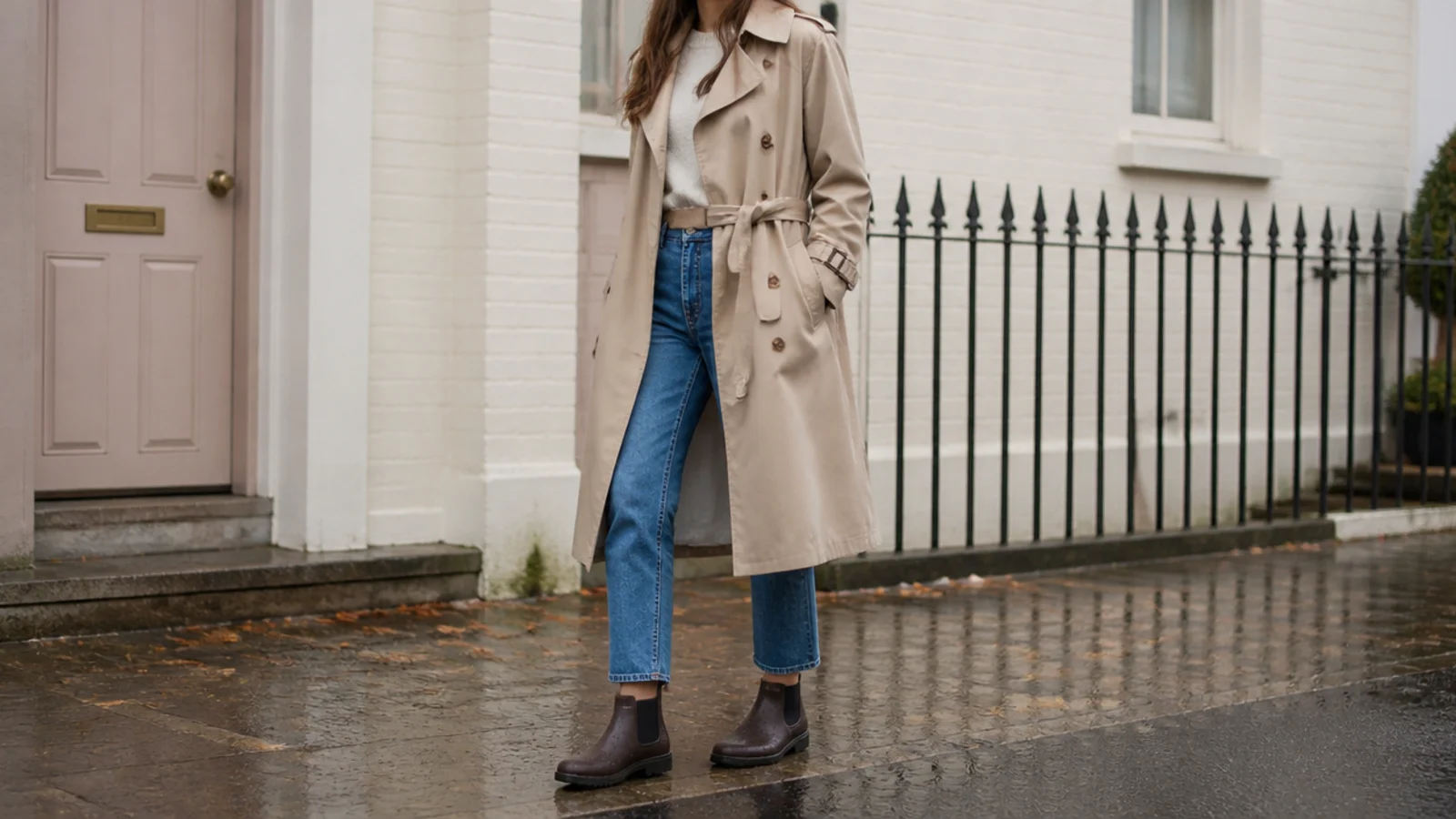
Best for a drizzle. This is the everyday rain formula, and the belted trench does all the work: it sheds light rain, cinches the waist and looks intentional over almost anything. Layer a fitted merino or synthetic tee under a waxed or tightly woven khaki trench, add a straight-leg jean in a dark wash, and ground it with rubber Chelsea boots that seal out puddles. Cuff the jean above the boot so the hem stays dry. It is the look that takes you from errands to a cafe without a second thought. For jean-specific versions, see rainy day outfits with jeans.
When it goes wrong: if a downpour starts, the cotton trench wets through. Swap to a coated raincoat and keep the same jeans and boots.
2. Belted Raincoat, Knit and Cropped Trousers
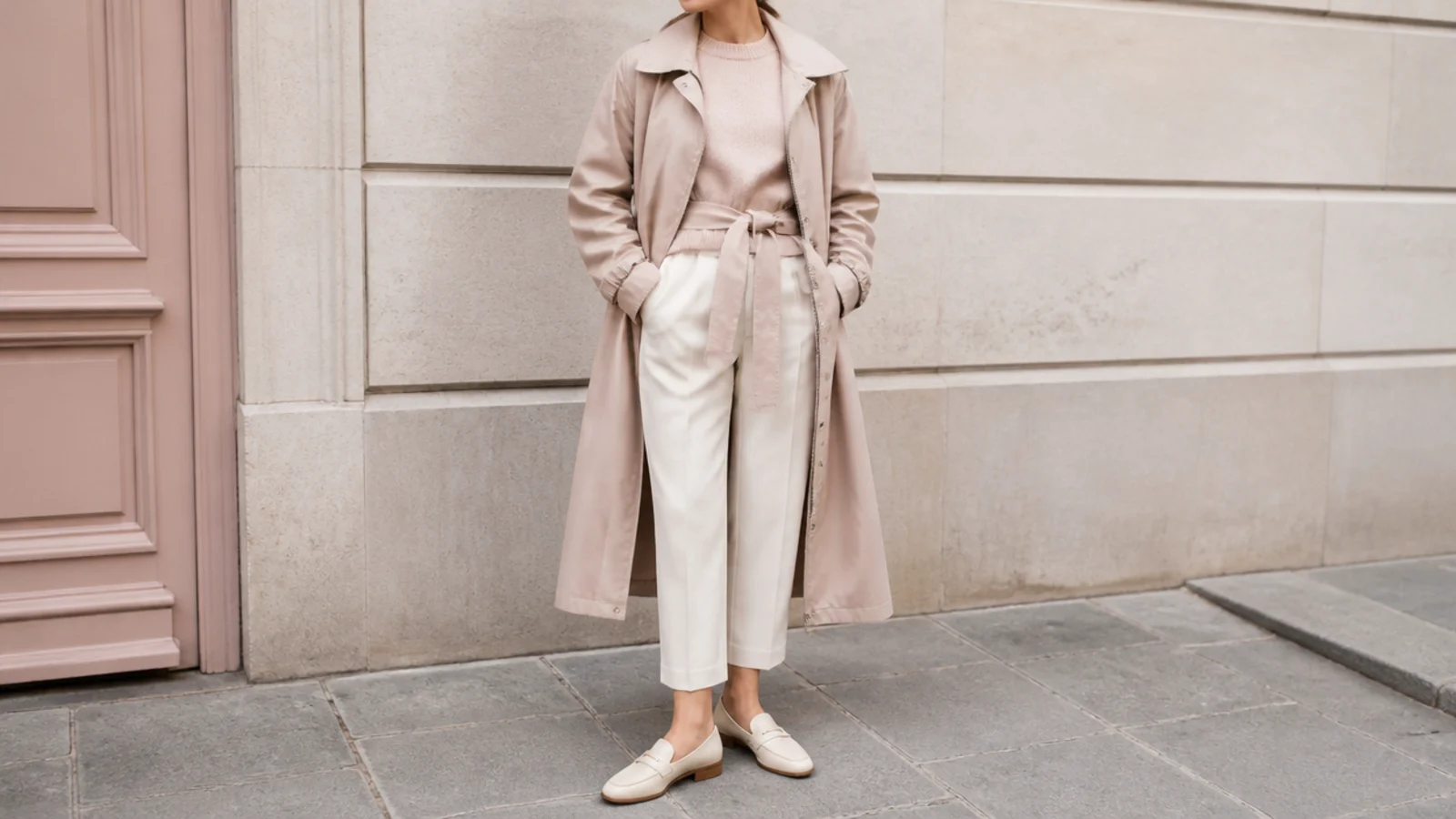
Best for steady rain. When it is genuinely coming down but not stormy, a coated-nylon belted raincoat is the piece that keeps you dry through a full commute. Layer it over a wool-blend crewneck and cropped ankle trousers so no hem drags in the wet, then add waterproof loafers. The cropped length is the whole trick: it keeps the fabric off the ground where splash-back soaks a full-length pant. Keep the palette to two neutrals and let the belt define the shape. Polished enough for the office, sealed enough for the walk there.
When it goes wrong: if the loafers let water in at the seams, hit them with waterproofing spray or switch to a lug-sole ankle boot.
3. Rated Rain Shell Over Fleece and Waterproof Pants
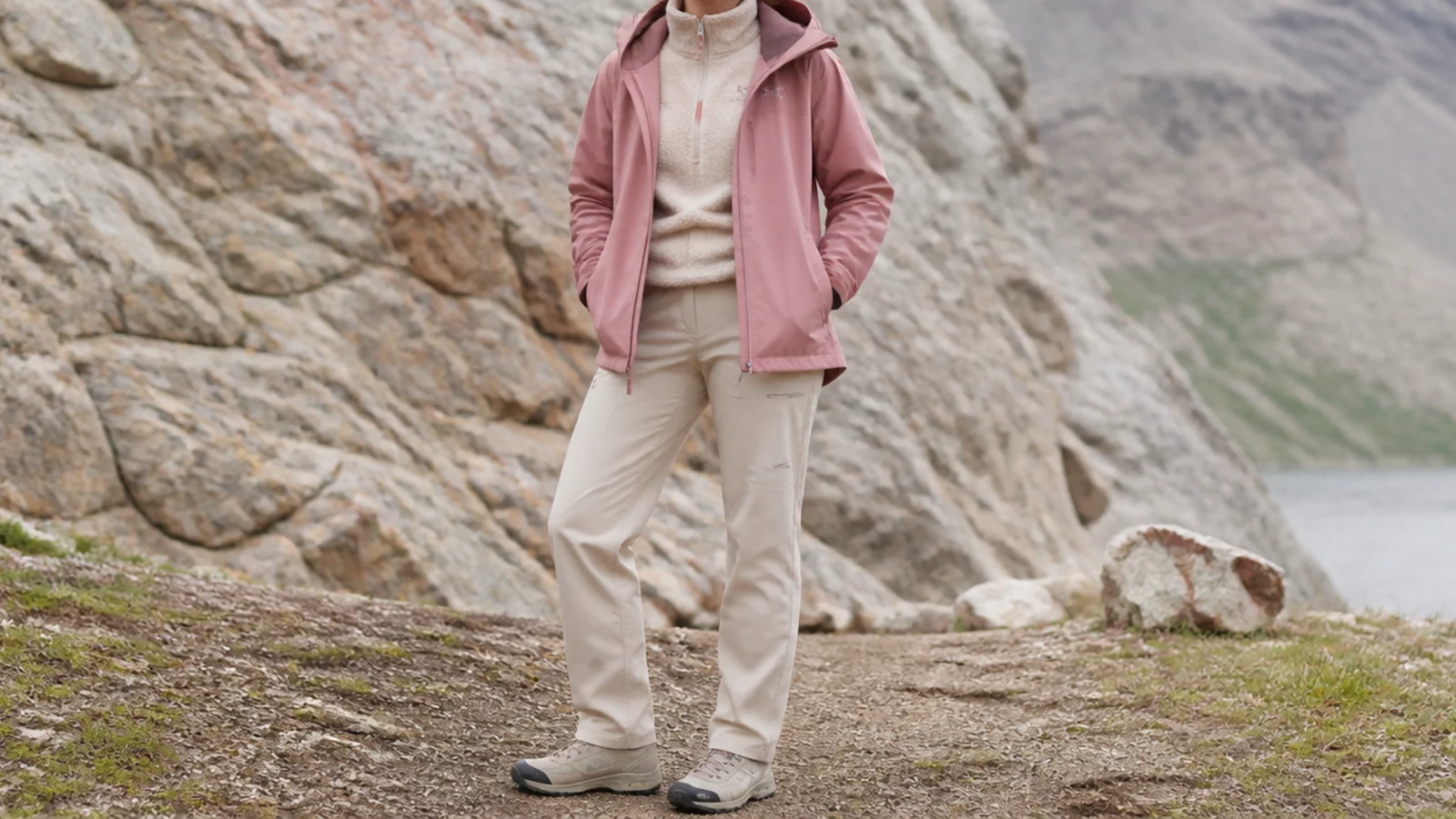
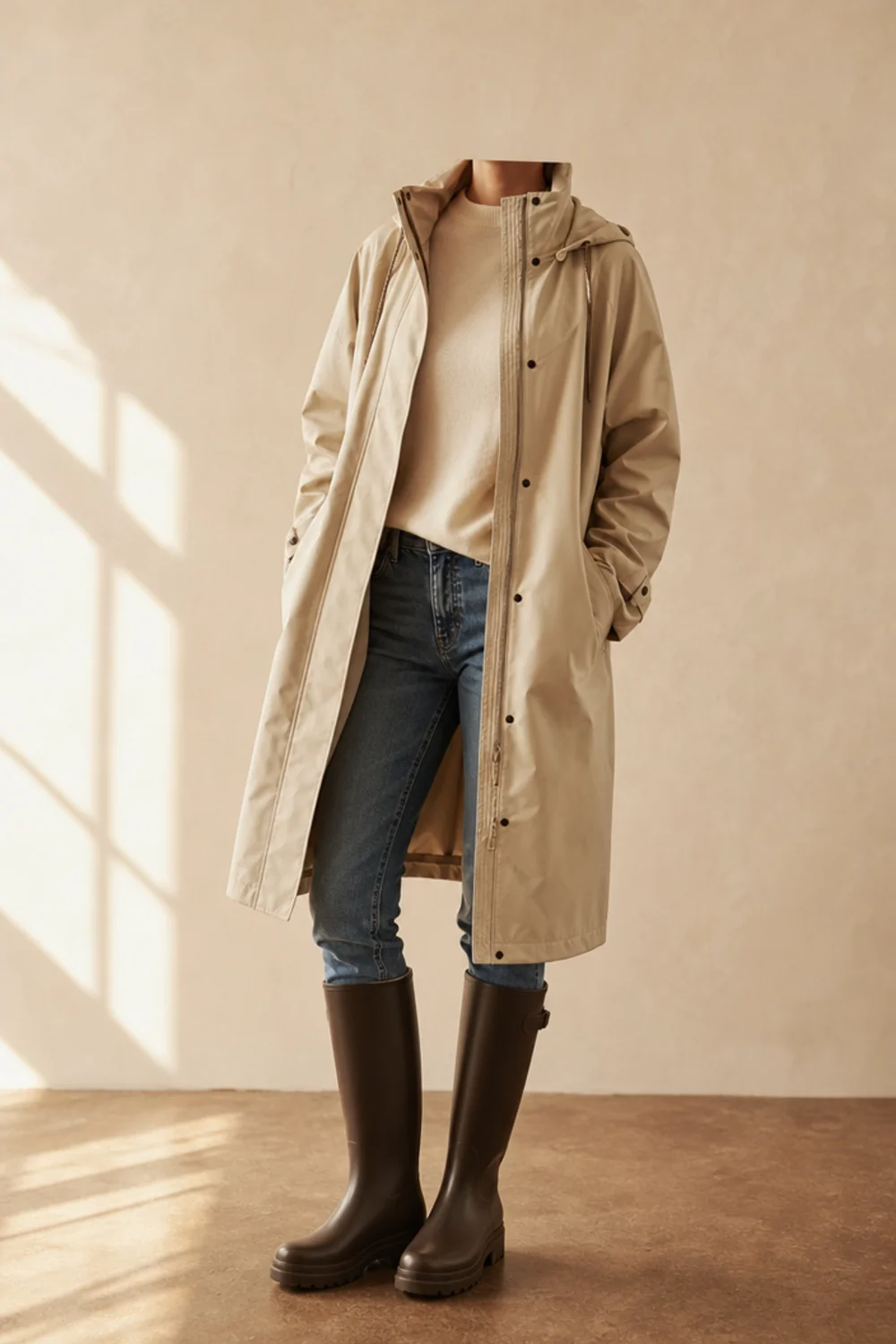
Best for a downpour. When the sky truly opens, style takes a back seat to staying dry, but you can still look pulled together. Reach for a hooded rain shell rated at least 10,000mm with taped seams, layer it over a fleece pullover for warmth that survives damp, and wear technical or coated pants that shed water instead of soaking it. GORE-TEX sneakers with a grippy sole finish it. Keep the shell mid-thigh or longer so runoff clears your hips. This is function first, and it still beats a soaked pretty outfit every time. For sneaker-led looks, see rainy day outfits with sneakers.
When it goes wrong: if the shell feels clammy inside, it is not breathable enough for exertion. Unzip pit vents or slow your pace so you do not sweat it out.
4. Water-Resistant Blazer, Ankle Boots and a Waterproof Tote
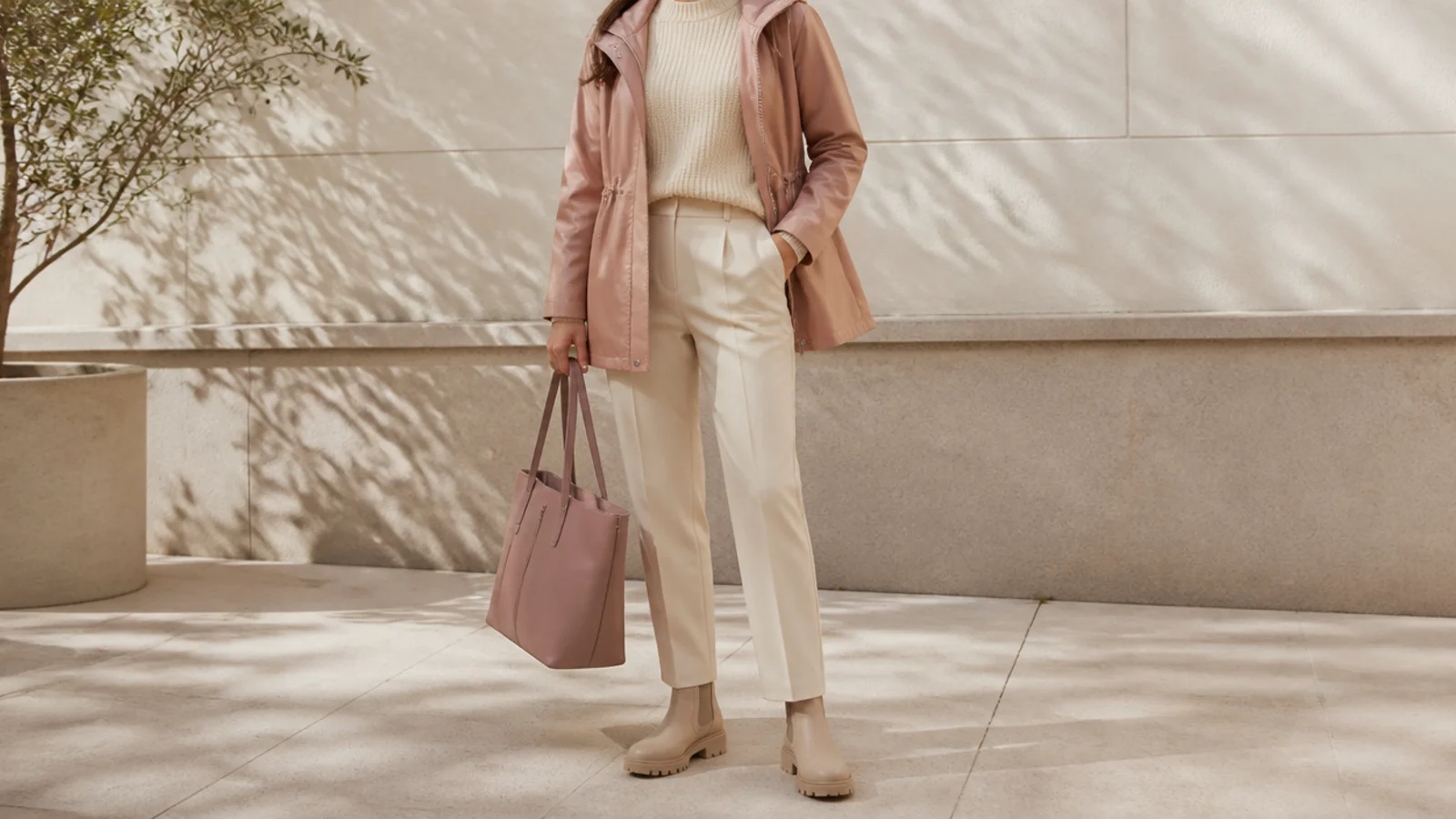
Best for steady rain at work. A treated or tightly woven blazer reads far more polished than a raincoat and still repels light-to-moderate rain, so it is the commute look when you cannot show up in technical gear. Layer it over a fine knit with tailored trousers, add lug-sole ankle boots for grip on wet pavement, and carry a coated-nylon tote that shrugs off the rain your leather bag would never survive. A folded compact umbrella lives in the tote. Sharp, dry and meeting-ready. See more in rainy day work outfits and rainy day commute outfits.
When it goes wrong: a wool blazer wets through in real rain. Carry it under a clear umbrella or add a packable shell over the top for the heaviest stretch.
5. Midi Dress, Tights and Rubber Chelsea Boots
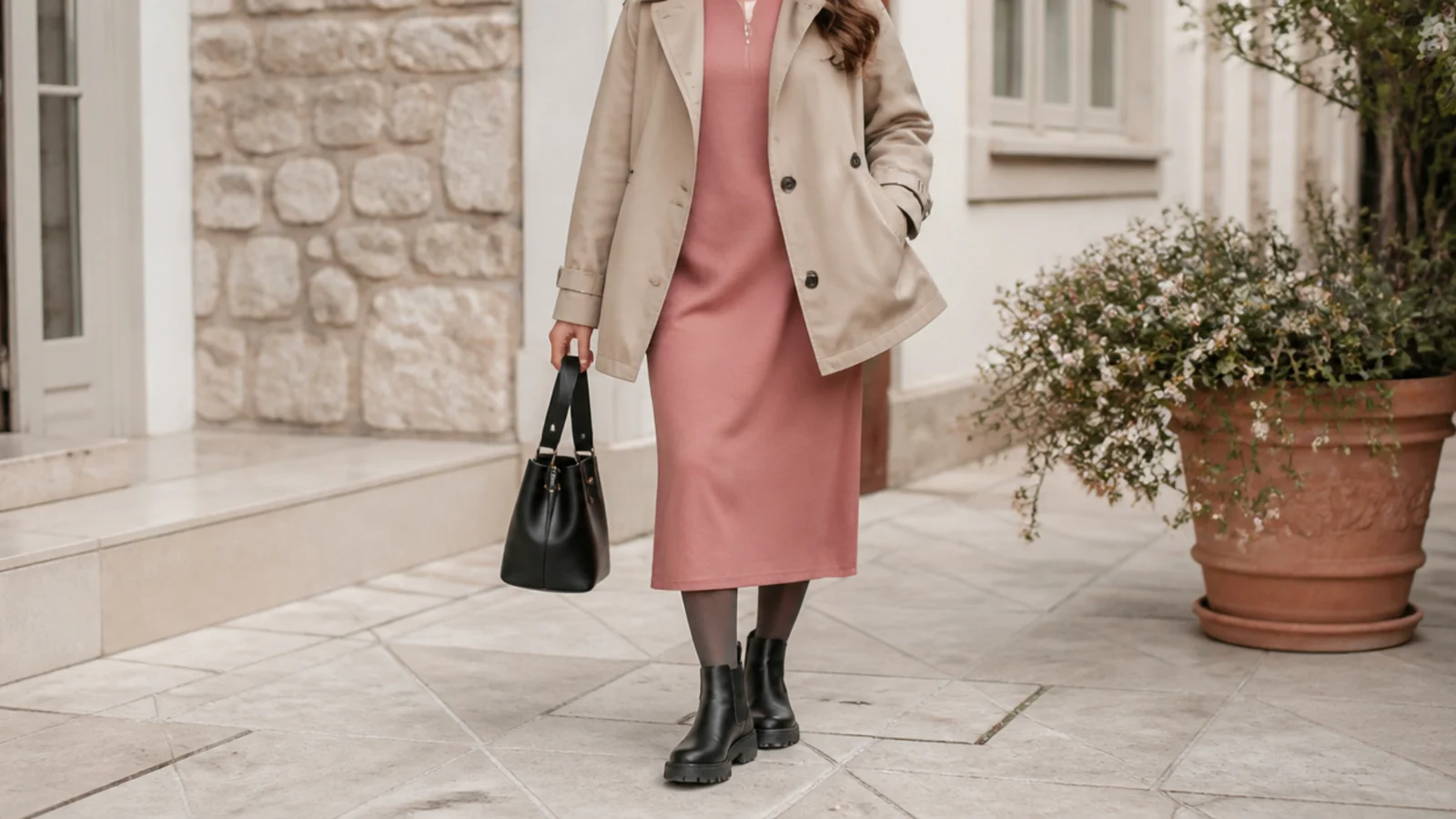
Best for a drizzle. You can absolutely wear a dress in the rain if you get the length and fabric right. Choose a midi or above-knee dress, never a maxi that drags and wicks water up the hem, in a jersey or ponte that skims rather than clings. Add opaque tights, which dry faster than trousers and keep you warm, then ground it in rubber Chelsea boots. A short trench over the top protects the shoulders; rainy day leggings outfits use the same warm-legwear trick. The result is feminine and weather-smart at once. For skirt versions, see rainy day date outfits.
When it goes wrong: a thin light dress can go transparent when damp. Line it, choose a darker color, or add a slip underneath.
6. Wool Coat Over a Waterproof Base and Lug-Sole Boots
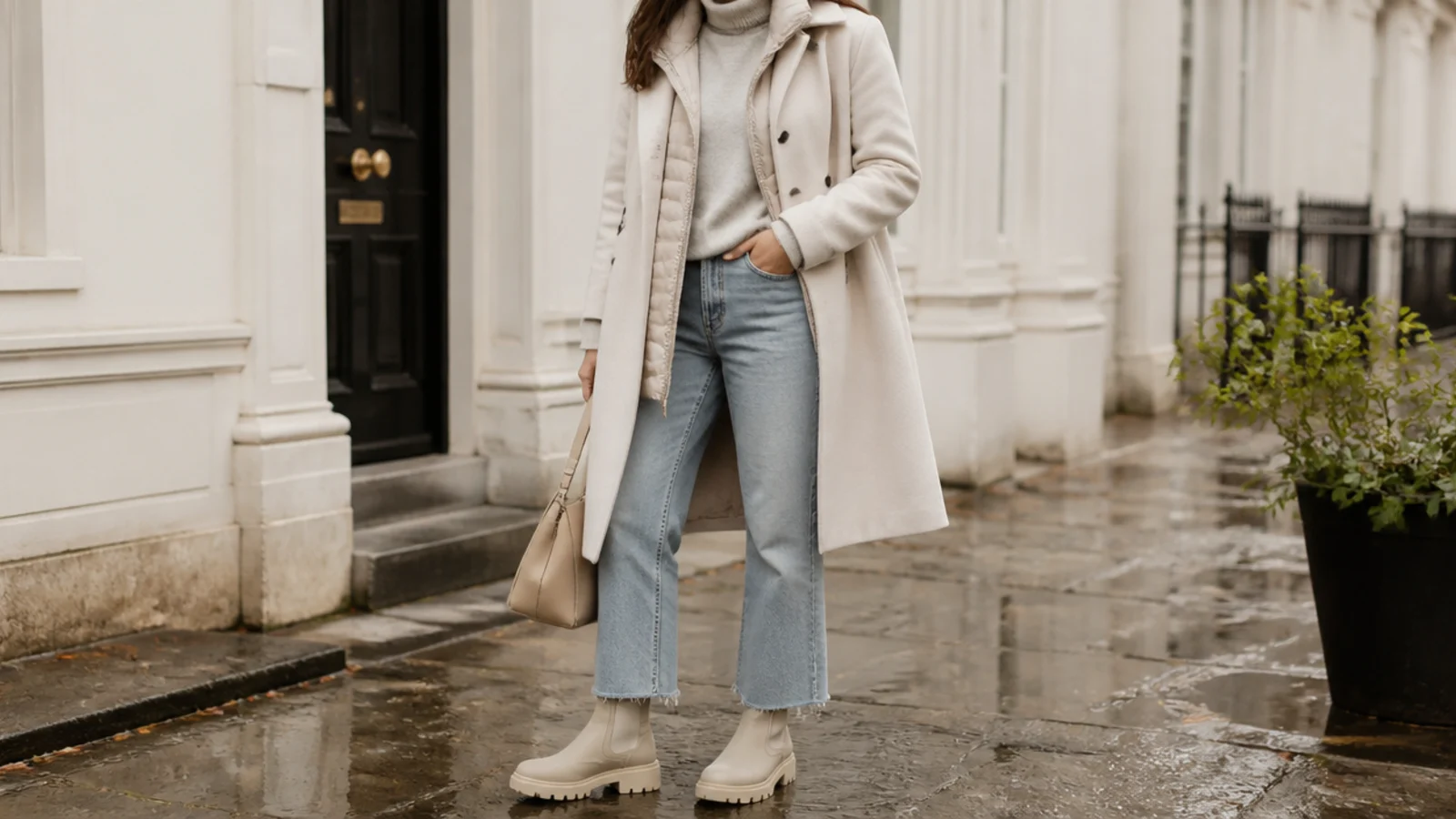
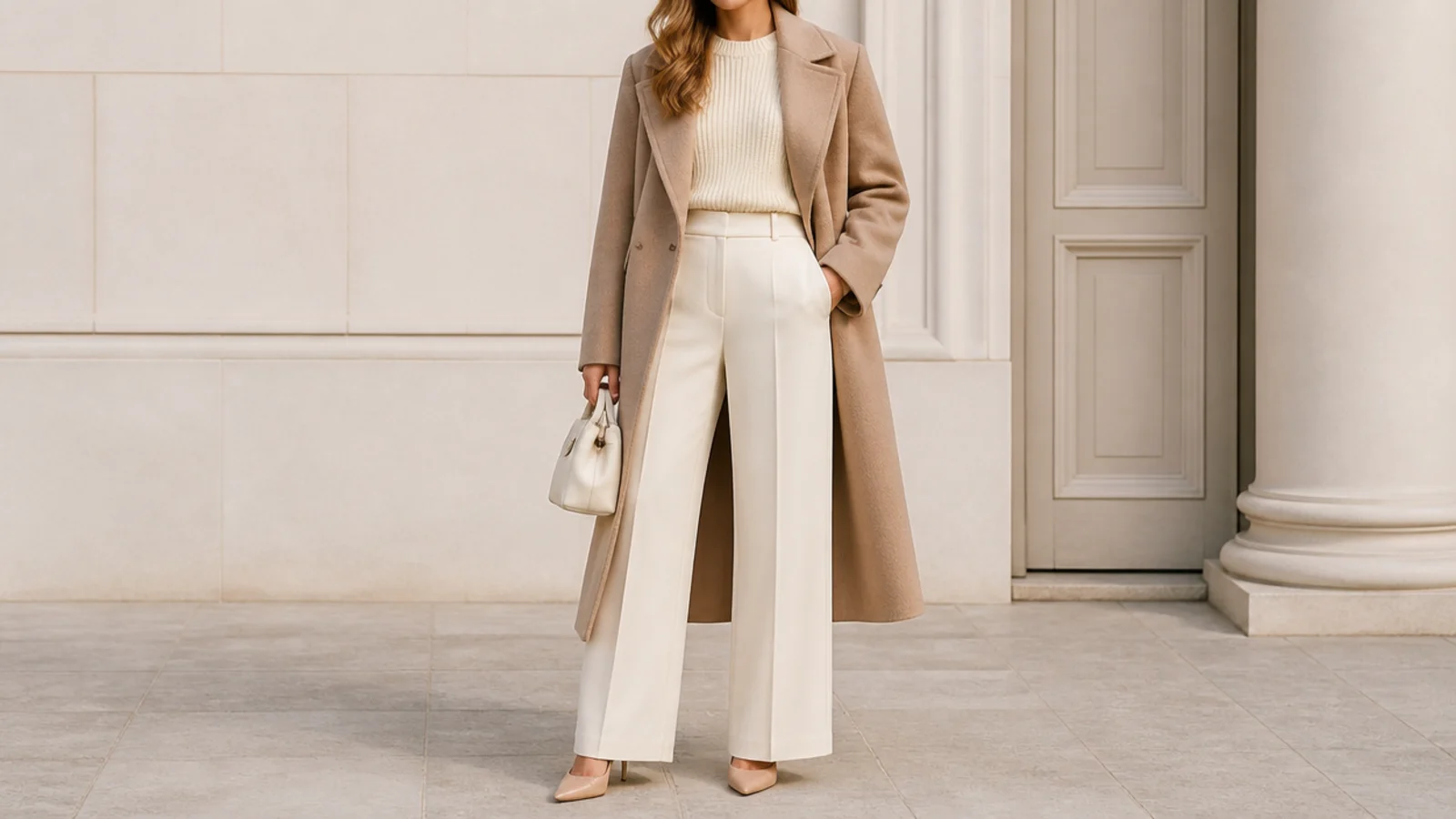
Best for cold, steady rain. When it is chilly and wet, layer a wool car coat over a thin coated shell so the wool handles warmth and the shell handles water, giving you a cozy look that is actually rain-viable. Under it, a turtleneck and dark jeans; on your feet, knee-high or ankle lug-sole boots for warmth and traction. Skip a down puffer here, since wet down loses its loft and stops insulating. An oversized neutral coat over dark layers is the chic cold-rain default, and a trench coat outfit works the same way in milder weather. See fall rainy day outfits for the cool-weather spin.
When it goes wrong: if the wool coat soaks in heavier rain, the hidden shell is what keeps you dry. Zip it under the wool and let the coat be the looks layer.
1. Start With a Non-Clinging Base Layer
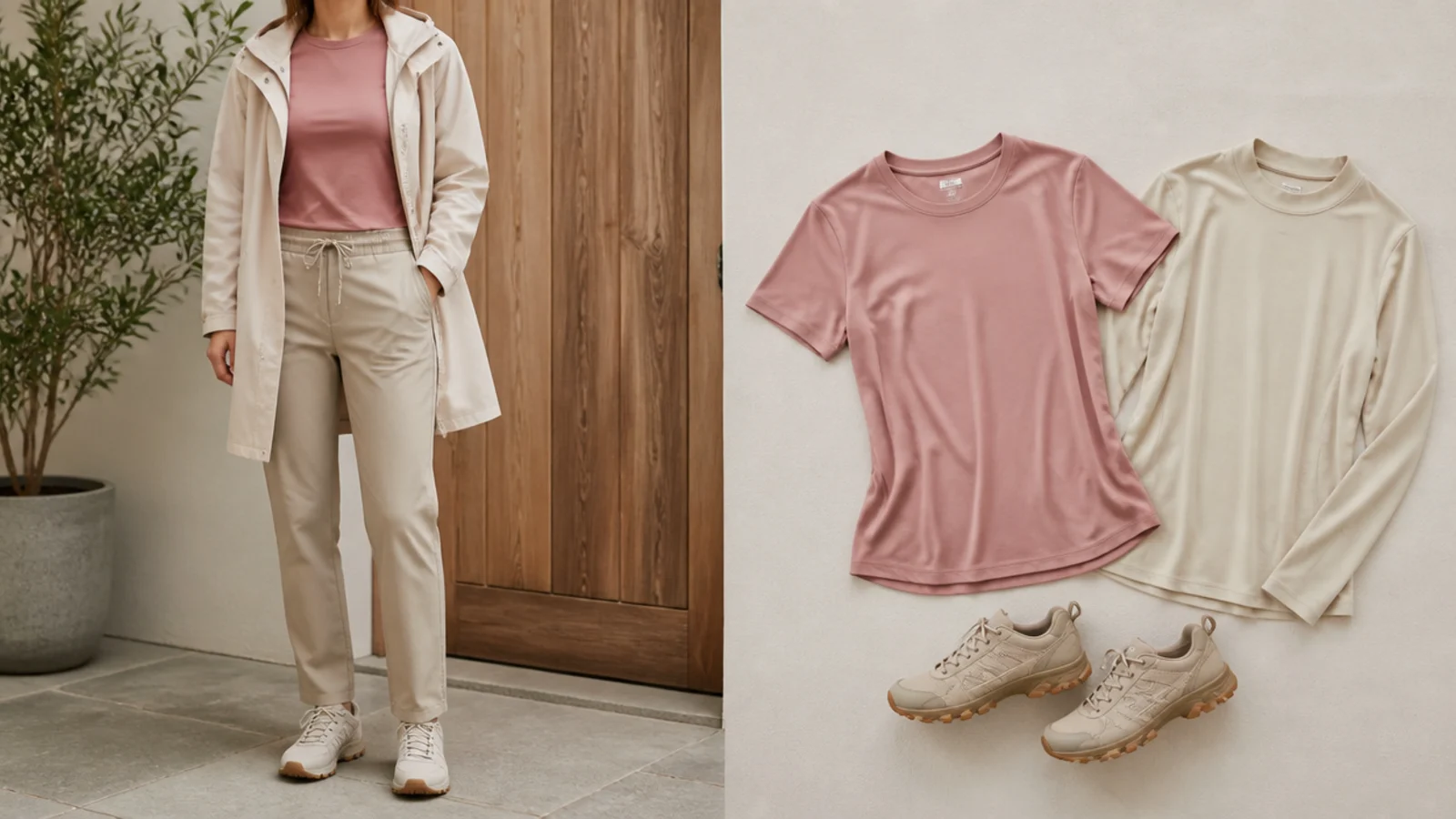
Build from the skin out. Choose a base that will not cling or go transparent if a little rain gets through, like a fitted merino tee, a synthetic long-sleeve or a smooth knit. Merino and synthetics wick and dry fast; they stay comfortable even slightly damp. This is the layer nobody sees but everybody feels, so get it right before you think about the shell.
Common mistake: A thin white cotton tee that turns sheer and cold the moment it takes on any moisture.
Pro tip: Pick a mid-tone or dark base over stark white, since wet fabric always reads more transparent than it looks dry.
2. Add a Warmth Mid-Layer That Is Not Cotton
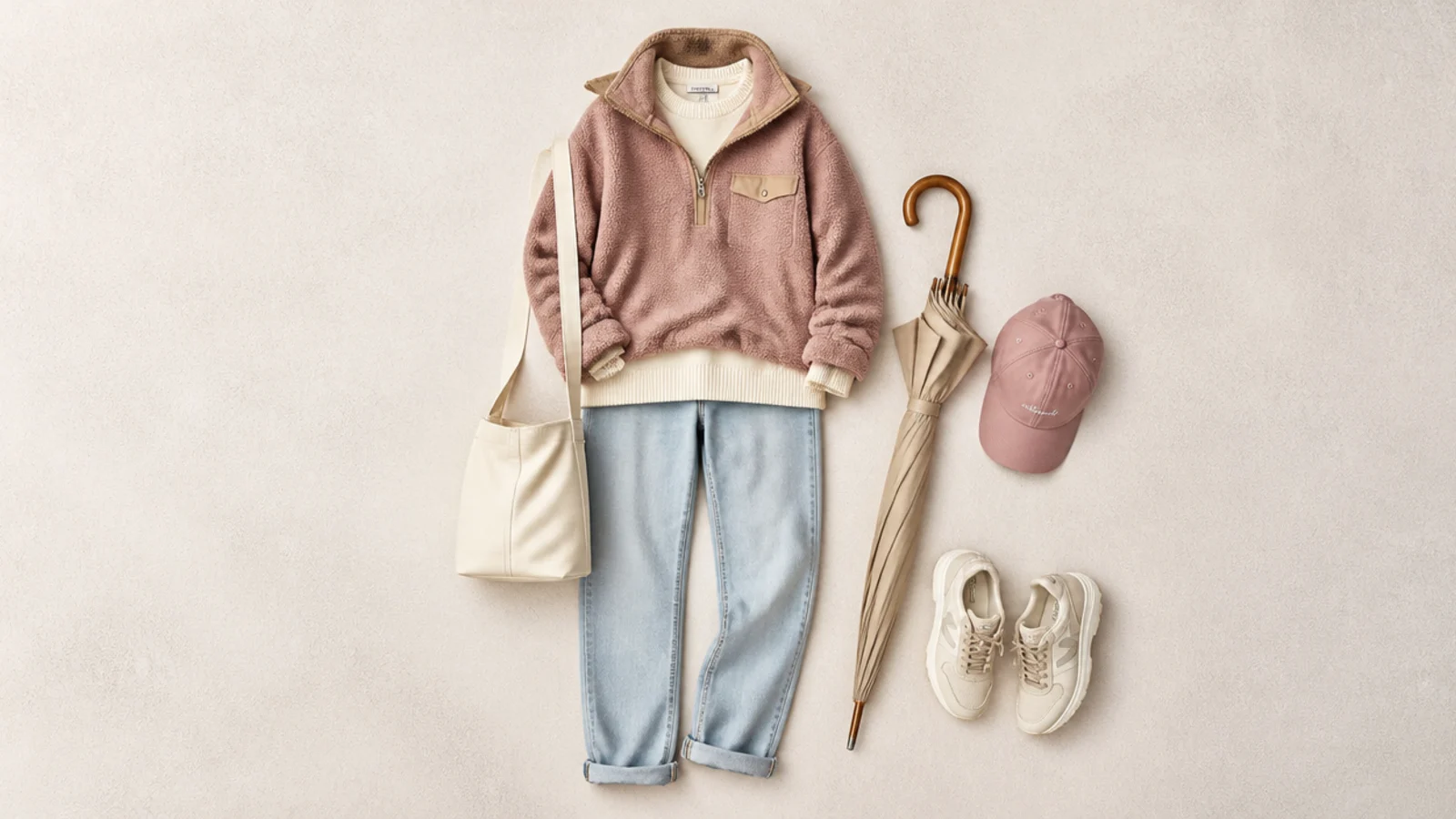
Add warmth with a mid-layer that keeps insulating when damp. A wool or wool-blend sweater, a fleece pullover or a quilted synthetic vest all hold heat even if they get splashed. Skip a pure cotton sweatshirt here; cotton soaks up water, goes heavy and cold, and takes hours to dry against you.
Common mistake: Reaching for a cotton hoodie because it is cozy, then wearing a cold wet sponge for the rest of the day.
Pro tip: A fleece-lined synthetic reads just as cozy as a knit but shrugs off rain, so it is the smarter cozy pick. See more in cozy rainy day layering.
3. Choose a Water-Resistant or Waterproof Shell
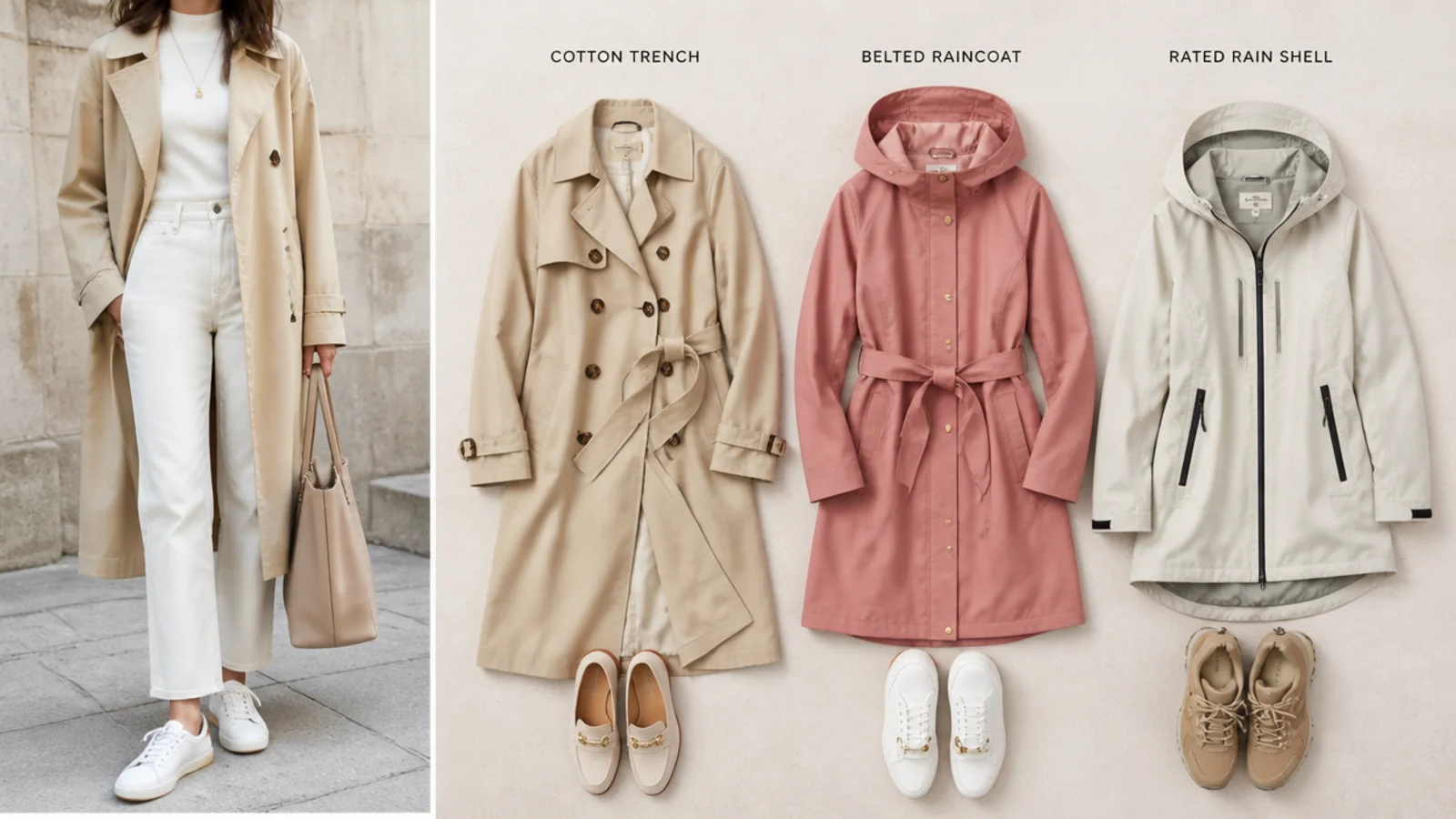
The shell is the whole outfit. For a drizzle, a waxed-cotton or tightly woven trench sheds light rain and looks polished. For steady rain, a belted raincoat in coated nylon keeps you dry through a commute. For a real downpour, reach for a rated rain shell with taped seams and a hood. Let the shell be the piece you actually style around.
Common mistake: Trusting an untreated wool coat in heavy rain; wool blocks a drizzle but wets through and stays soaked in a downpour.
Pro tip: A can of waterproofing spray upgrades a favorite trench or canvas jacket to genuinely water-resistant for a few dollars.
4. Match the Shell Length to the Rain
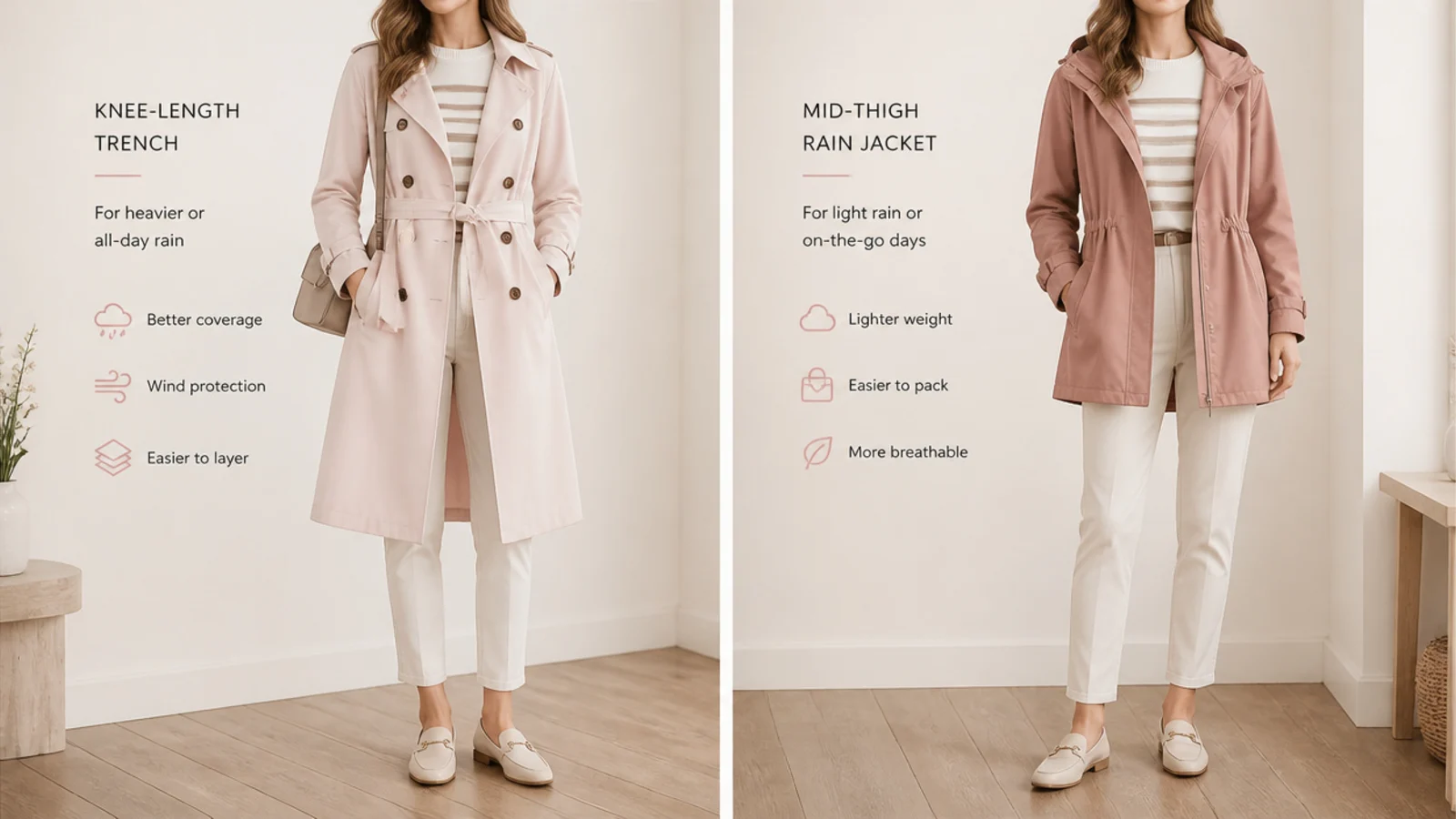
Length controls where the water runs off. A very smooth, short jacket sheds rain straight onto your legs, so for heavier rain choose a mid-thigh-to-knee length like a trench or car coat that carries the runoff past your hips. In a light drizzle a cropped shell is fine. The harder it rains, the longer the shell should be.
Common mistake: A slick cropped raincoat in a downpour, which funnels every drop onto your thighs and soaks your pants.
Pro tip: Knee-length is the safest all-rounder; it protects the outfit and hits a flattering point on almost everyone.
5. Ground the Outfit in Waterproof Shoes
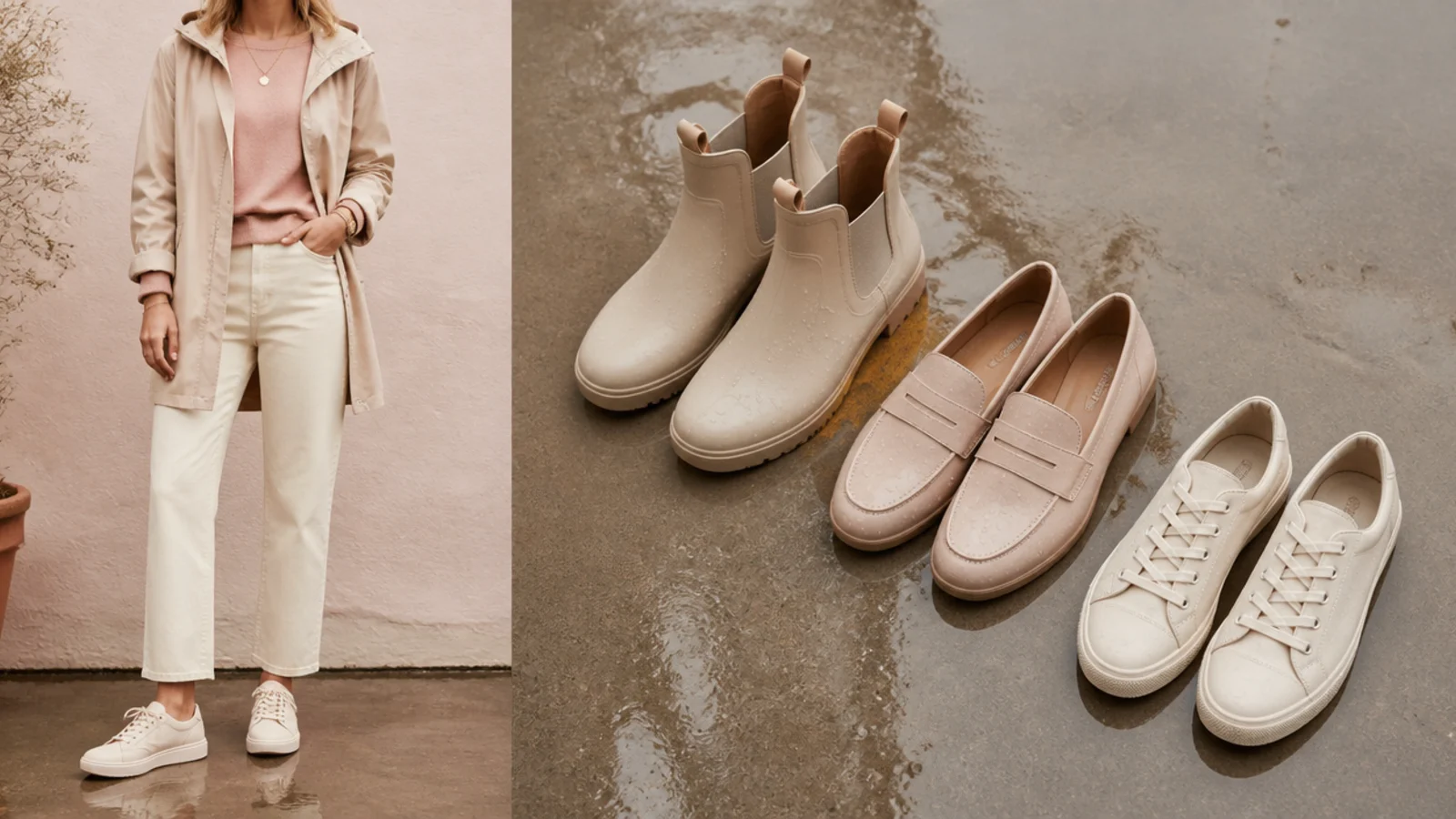
Finish at the feet, because wet shoes ruin a dry outfit. You do not need rain boots: rubber Chelsea boots, waterproof loafers, GORE-TEX sneakers or lug-sole ankle boots all seal out water and look styled. Prioritize a grippy outsole; wet pavement and smooth soles are how people slip. Closed, sealed and grippy is the rule.
Common mistake: Open-toe sandals or canvas sneakers, which take on water instantly and leave you squelching all day.
Pro tip: Waterproofing spray works on leather boots and canvas sneakers too, so you can rain-proof a pair you already love. See rain boot outfits for the boot version.
6. Protect Your Bag and Hair
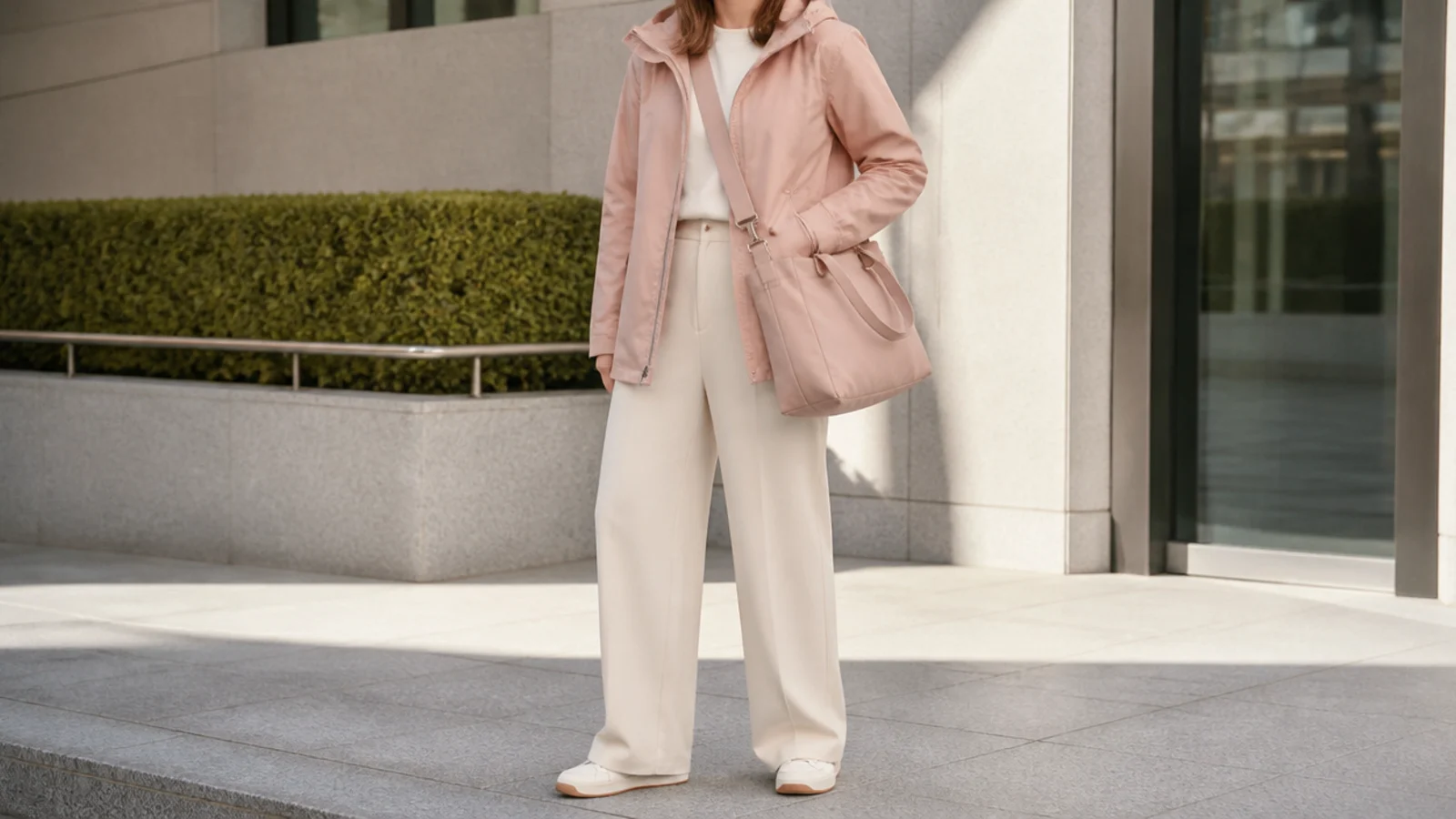
Two things get forgotten and ruined: your bag and your hair. Carry a coated-nylon or vinyl tote or a crossbody, not untreated leather, which water-spots permanently. For hair, a roomy hood or a clear dome umbrella beats a flat cap. A crossbody keeps a hand free for the umbrella, since umbrella plus bag plus phone is three things and two hands.
Common mistake: Carrying a suede or untreated-leather bag in the rain and finding permanent water rings the next day.
Pro tip: Keep a folded plastic bag in your tote for a wet umbrella so it does not soak everything indoors.
7. Add One Color-Pop Accessory
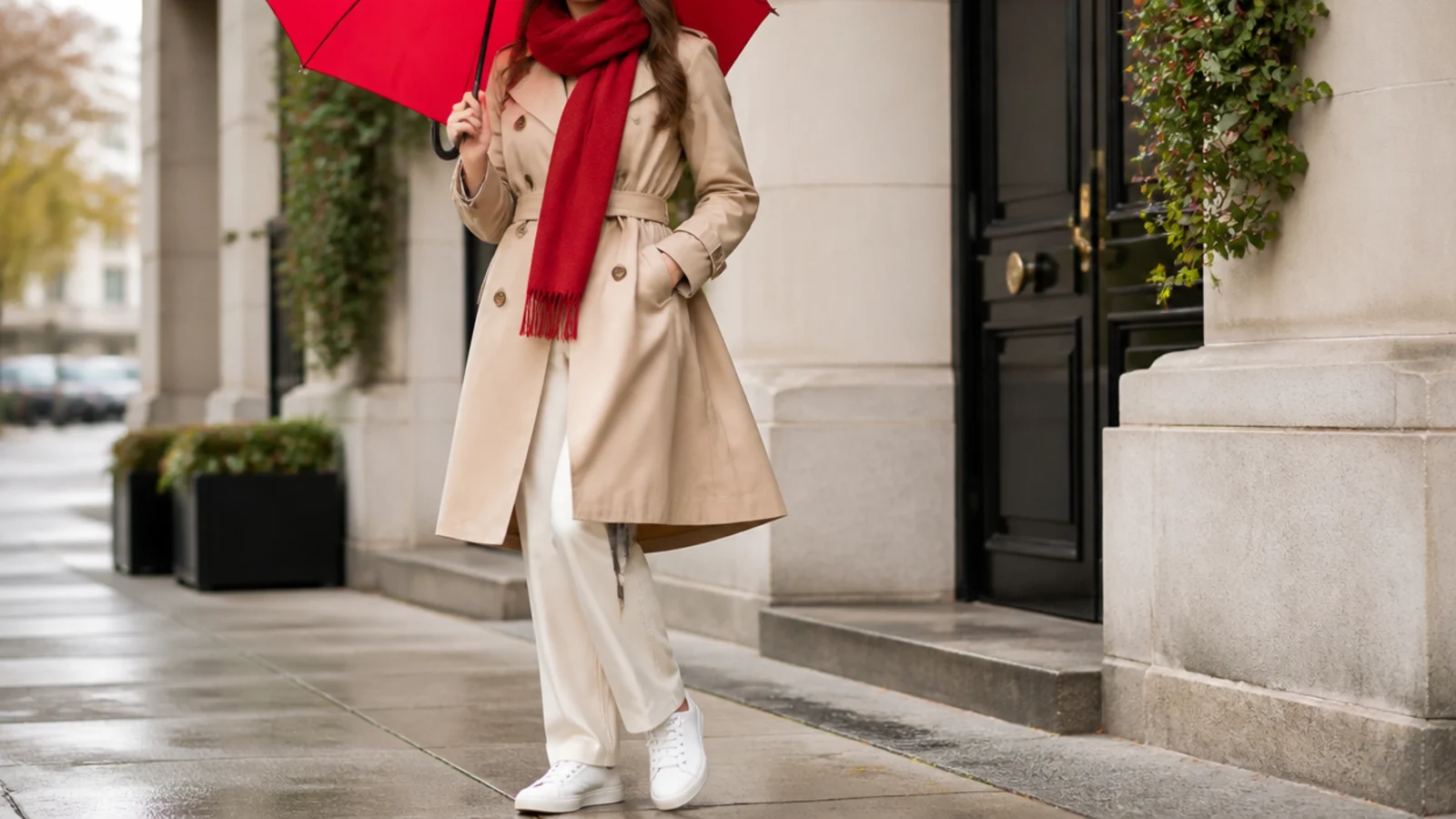
Rain flattens everything to gray, so add one deliberate color. A bright raincoat, a red scarf, a cobalt umbrella or a yellow tote lifts the whole look against a dull sky. Keep the rest neutral and let the single pop do the work. This is the difference between looking dressed for the weather and looking like you are hiding from it.
Common mistake: Head-to-toe black or gray on a gray day, which reads defeated rather than chic.
Pro tip: If your coat is neutral, make the umbrella or scarf the color; if the coat is bright, keep everything else quiet.
What Fabrics Are Best to Wear in the Rain?
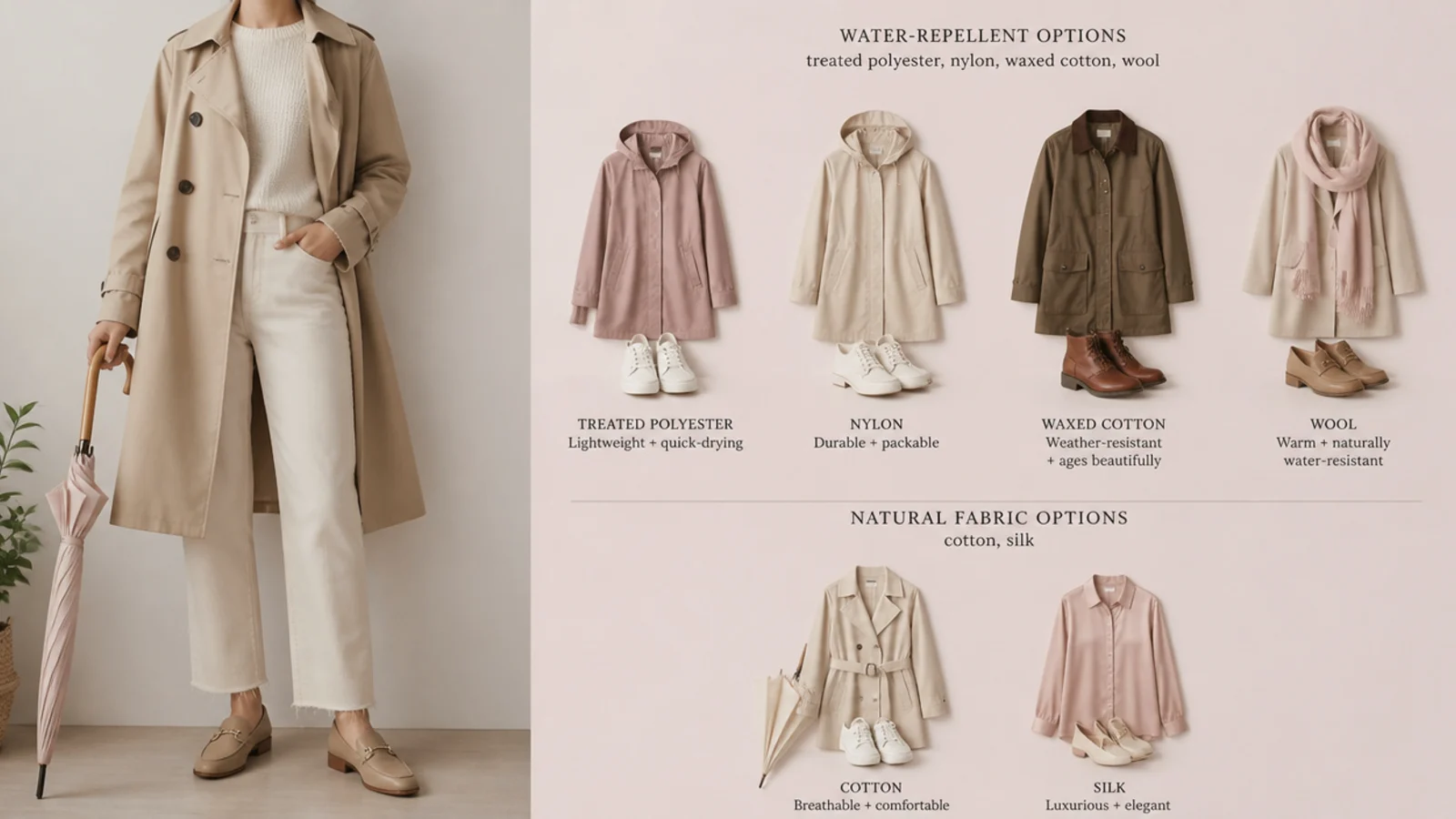
The best rain fabrics either shed water or dry fast, and the worst soak it up and hold it. Reach for treated polyester, coated nylon and waxed cotton for shells, since their tight weave and finish make water bead and run off. Wool and wool blends are the exception among natural fibers: they keep insulating even when damp, which is why a wool coat works in a drizzle. For layers touching your skin, merino and synthetics wick moisture and dry quickly. Now the fabrics to skip. Cotton is hydrophilic, so it drinks water, goes cold and heavy, and takes hours to dry against you. Denim is cotton, so a wet jean holds moisture and clings all day. Silk water-spots permanently and can go transparent, so save it for dry weather. The one-line rule: synthetics and wool for rain, cotton and silk for sun. Get the shell and the base right and the rest of the outfit follows.
How Do You Layer for a Rainy Day?
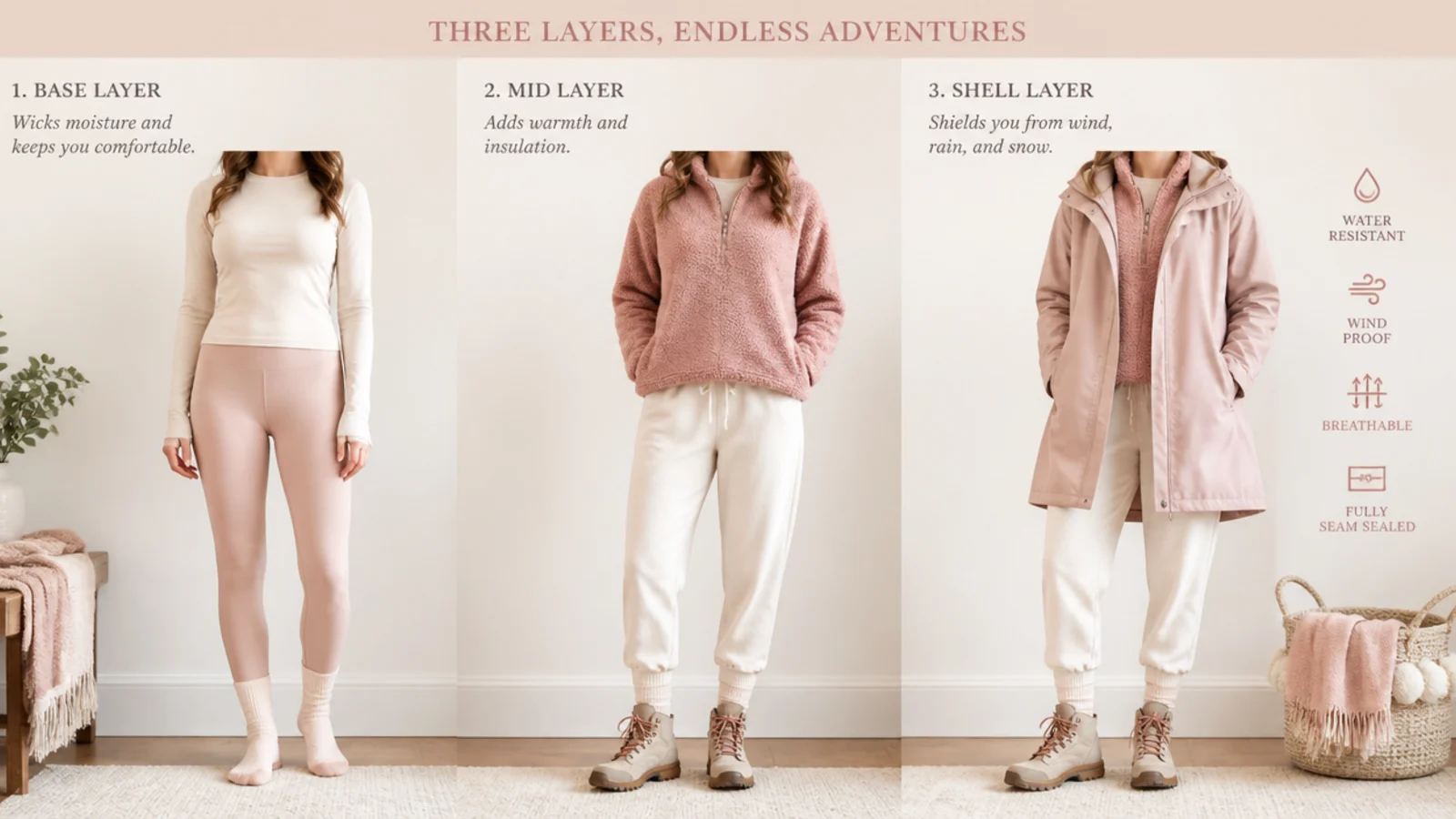
Rain layering is a three-part system, always in the same order. First, a non-clinging base: a fitted merino or synthetic top that wicks and will not go sheer if a little water gets through. Second, a warm mid-layer that keeps working when damp, which means a wool or wool-blend sweater, a fleece or a quilted synthetic vest, never a cotton sweatshirt that turns into a cold sponge. Third, a water-resistant or waterproof shell sized with a little room so the layers underneath are not crushed. The shell is the piece that meets the rain, so it does the heaviest work. Two rules make it look intentional rather than bulky. Keep each layer thin and let the shell provide the structure, and match the shell length to the rain, going longer as it comes down harder. Finish with a closed, grippy, waterproof shoe. Base, mid, shell, shoe: build in that order and any rainy day outfit comes together in a few minutes. See it applied in casual rainy day outfits.
How Do You Look Cute in the Rain?
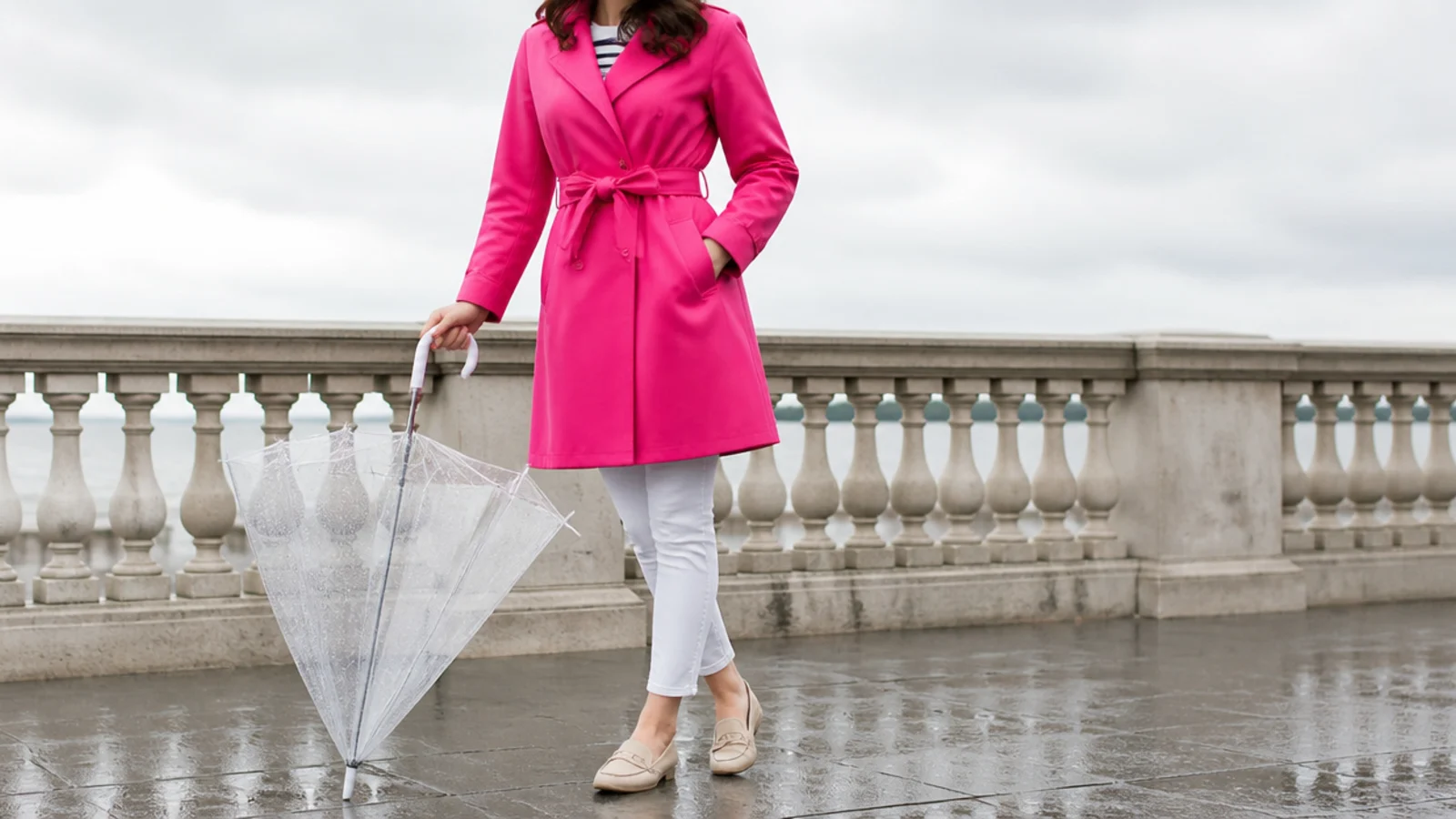
Looking cute in the rain is mostly about fighting the way rain flattens everything to gray. Three moves do it. First, add one deliberate color: a bright raincoat, a red scarf, a cobalt umbrella or a yellow tote lifts the whole look against a dull sky while the rest stays neutral. Second, keep a defined waist. A belted trench or raincoat cinched at the middle reads styled, where a shapeless shell reads like you gave up. Third, mind the hem. Keep skirts and dresses at or above the knee so nothing drags in puddles, and cuff or crop trousers to keep them off the ground. A clear dome umbrella is the secret weapon, since it shields your hair and shows off the outfit instead of hiding it. Add a grippy waterproof boot and a coated bag, and you look like you dressed for the rain on purpose rather than despite it. For more, browse cute waterproof outfits or summer rain outfits for the warm-weather version.
Water-Resistant vs Waterproof: What Is the Difference?
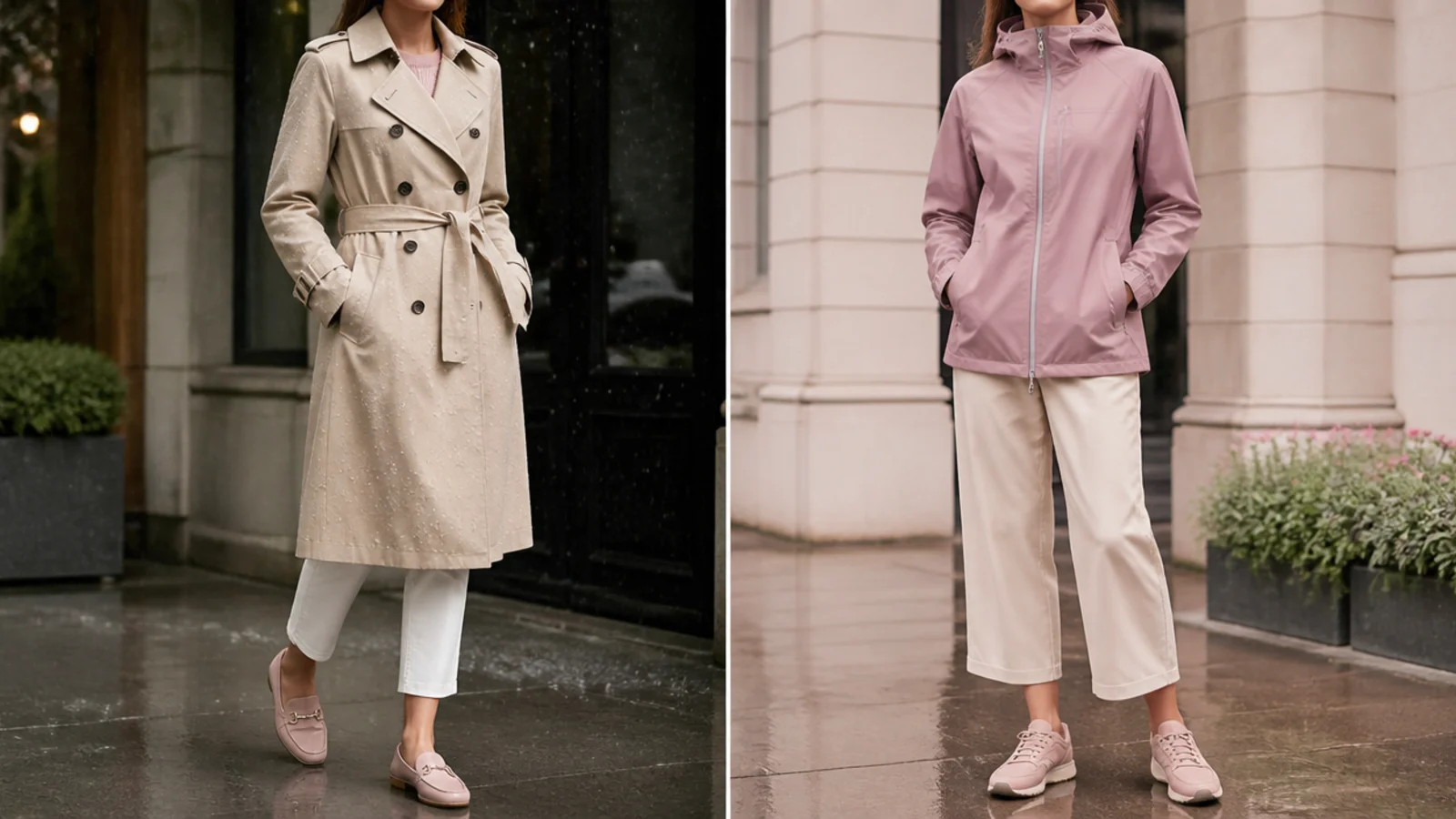
This is the distinction almost no fashion guide explains, and it decides whether you stay dry. Water-resistant means the fabric resists light rain for a while, usually through a tight weave or a surface treatment, but it wets through under sustained or heavy rain and has open, stitched seams. A classic cotton trench, a waxed jacket and most treated blazers are water-resistant: perfect for a drizzle or a short walk, not for a downpour. Waterproof means the garment blocks water even under pressure, which requires a coated or membrane fabric plus taped or welded seams so water cannot creep through the stitch holes. Serious rainwear carries a millimeter rating: 10,000mm handles steady rain, and 15,000mm and up handles a real storm. The practical read is simple. Own one water-resistant piece for style and light rain, like a trench, and one truly waterproof rated shell for when the sky opens. Match the piece to the forecast and you never get caught out.
What Shoes Work When You Refuse to Wear Rain Boots?
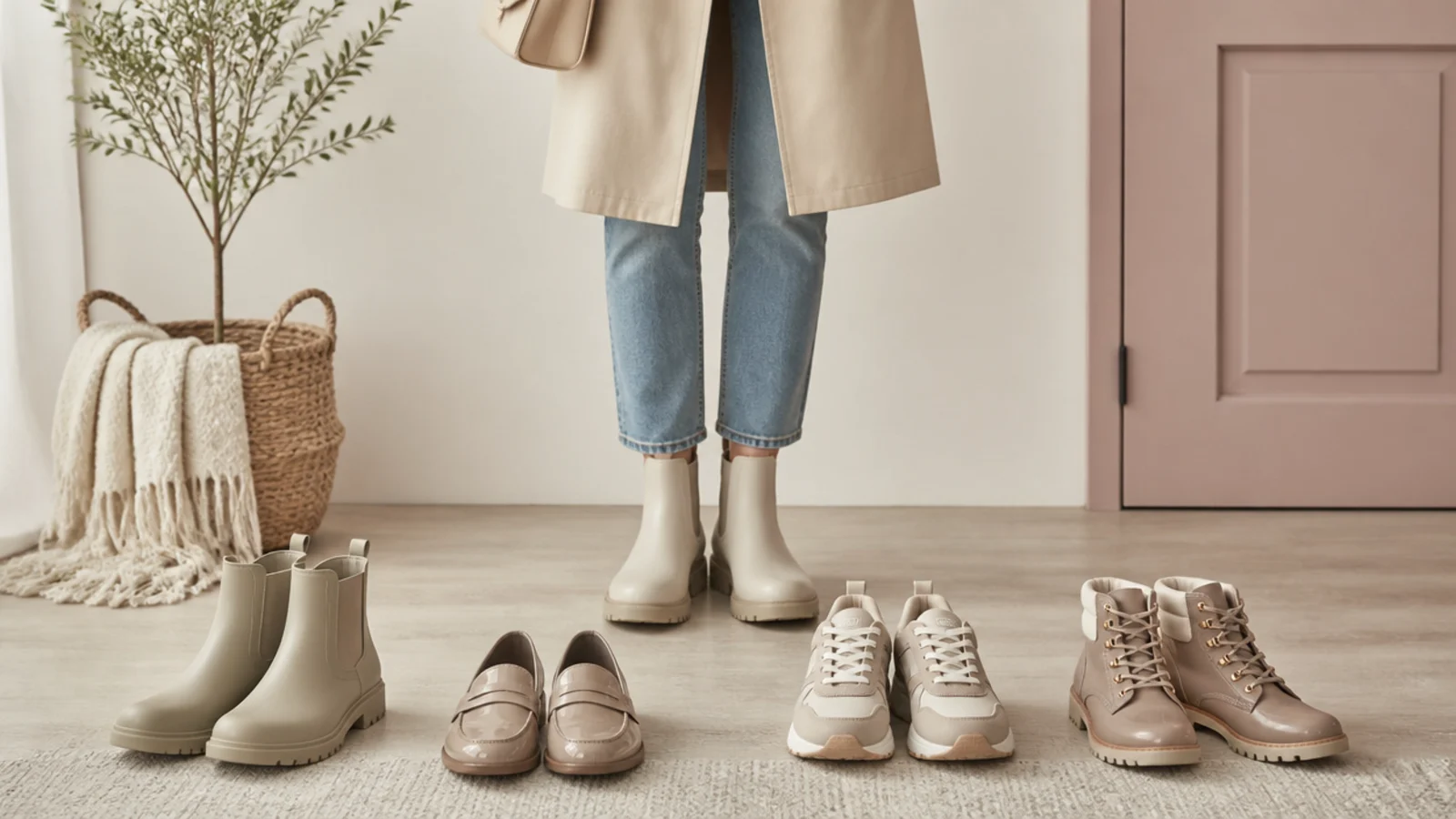
You do not need tall rubber rain boots to keep your feet dry, and plenty of people find them bulky to walk in. Four alternatives seal out water and actually style well. Rubber Chelsea boots are single molded, seamless and fully waterproof, and they read as a real ankle boot with jeans or a midi dress. Waterproof loafers are the office pick and pair with trousers and skirts. GORE-TEX or RAIN.RDY sneakers keep a casual look dry with a grippy sole for wet pavement. Lug-sole leather ankle boots, treated with waterproofing spray, give traction and warmth for cold rain. The two things that matter most are a sealed upper and a grippy outsole, since smooth soles are how people slip on wet pavement. And waterproofing spray retrofits almost any leather or canvas pair, so a shoe you already love can join the rotation. See the boot-specific looks in rain boot outfits.
Main Differences
- A water-resistant trench resists light rain through weave and treatment but wets through in a downpour and has open seams.
- A rated waterproof shell blocks water under pressure with a coated fabric and taped seams, and carries a millimeter rating.
- Length matters more as rain intensifies: go knee-length so runoff clears your hips instead of soaking your legs.
- The smart wardrobe owns both: a trench for style and light rain, a rated shell for when the sky truly opens.
Frequently Asked Questions
How do you style rainy day outfits that still look cute?
Use one formula: a non-clinging base, a warm non-cotton mid-layer, a water-resistant shell and a closed waterproof shoe, then tune the shell to the rain. Keep a defined waist with a belted trench or raincoat, add one color pop like a bright umbrella or scarf, and keep hems at or above the knee. A clear dome umbrella shows the outfit off instead of hiding it.
What fabrics are best to wear in the rain?
Treated polyester, coated nylon and waxed cotton for shells, because their tight weave and finish make water bead and run off. Wool and wool blends keep insulating even when damp. For base layers, merino and synthetics wick and dry fast. Avoid cotton and denim, which drink water and dry slowly, and silk, which water-spots and can go transparent. The rule: synthetics and wool for rain, cotton and silk for sun.
How do you layer for a rainy day without looking bulky?
Layer in three thin parts and let the shell give the structure. Start with a fitted merino or synthetic base, add a slim wool-blend sweater or fleece mid-layer, then a water-resistant shell sized with a little room. Keeping each layer thin is what stops the bulk. Match the shell length to the rain, going longer as it comes down harder, and finish with a closed waterproof shoe.
Can you wear jeans in the rain?
You can, but jeans are cotton, so they hold moisture, cling and dry slowly, and a wet hem stays cold all day. If you wear them, choose a dark straight-leg, cuff the hem above your boot to keep it off the ground, and ground the look in waterproof Chelsea boots. For heavier rain, swap to coated or technical pants that shed water instead. Tights under a dress dry faster than jeans.
What is the difference between water-resistant and waterproof?
Water-resistant means the fabric resists light rain for a while through a tight weave or treatment, but wets through in sustained rain and has open seams; a cotton trench is a good example. Waterproof means the garment blocks water under pressure using a coated or membrane fabric with taped or welded seams, and it carries a millimeter rating. Own one water-resistant piece for style and one rated shell for downpours.
Can you wear a puffer in the rain?
A synthetic-fill or coated puffer with a water-resistant shell is fine in light rain. A down puffer is the problem: wet down loses its loft and stops insulating, so you end up cold. If rain is likely, choose a synthetic puffer or add a waterproof shell over the down. For cold, steady rain, a wool coat over a thin coated shell layers warmth and waterproofing better than down.
What shoes should you wear in the rain if you hate rain boots?
You have four good options that seal out water without tall rubber boots. Rubber Chelsea boots are seamless and fully waterproof and read like a real ankle boot. Waterproof loafers suit the office with trousers and skirts. GORE-TEX or RAIN.RDY sneakers keep casual looks dry. Lug-sole leather ankle boots, treated with waterproofing spray, add traction for cold rain. Prioritize a sealed upper and a grippy sole.
Does waterproofing spray actually work?
Yes, within limits. A silicone or fluoropolymer waterproofing spray adds a water-repellent finish that makes rain bead and run off leather, canvas and treated fabrics, which upgrades a favorite trench, boot or sneaker to genuinely water-resistant. It does not make an item fully waterproof, since it cannot seal seams, and it wears off, so reapply every few weeks in wet season. Great for light and steady rain, not a substitute for a rated shell.
Which rainy day outfit formula are you trying first?
If you keep one idea, keep the formula: non-clinging base, warm non-cotton mid, water-resistant shell, waterproof shoe, then dial the shell to the sky. A trench handles a drizzle, a belted raincoat handles steady rain, and a rated shell handles a downpour. Choose fabrics that shed or dry fast, ground every look in a closed waterproof shoe, and let the shell or umbrella be your color. Start with a belted trench over a knit and straight jeans, since it takes almost any weather short of a storm. When you want full looks to copy, browse the cute waterproof outfits or more outfit ideas to finish your rainy rotation.