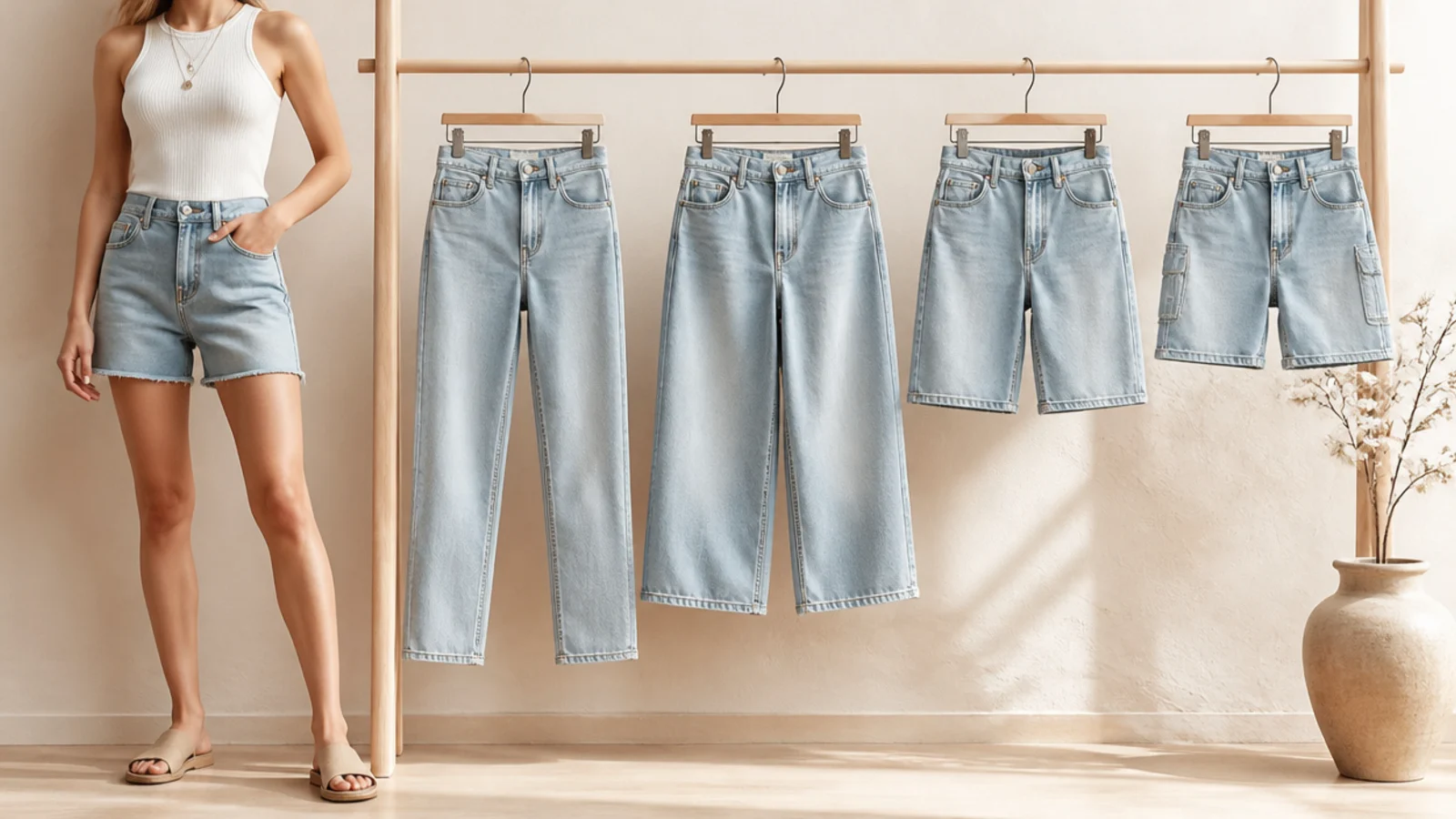
Quick Comparison
| Structured Jorts (High-Rise Straight, A-Line, Bermuda, Dark Rigid) | Relaxed Jorts (Baggy, Wide-Leg, Carpenter, Low-Rise, Light Relaxed) | |
|---|---|---|
| Silhouette | Clean straight or flared leg that skims the body | Loose, slouchy or full leg with visible volume |
| Best rise | High-rise to smooth the waist and lengthen the leg | Mid or low-rise for a casual, trend-led slouch |
| Best top | Slightly looser: linen shirt, boxy tee or soft blouse | Fitted or cropped: rib tank, baby tee or tucked bodysuit |
| Best shoe | Ballet flats, loafers, heeled sandals and ankle boots | White or chunky sneakers, flat slides and sport sandals |
| Best occasions | Dinner, day events, work-adjacent, dressed-up evenings | Errands, festivals, weekends, beach days, street style |
| Most flattering for | Curvier lower body and anyone wanting a polished line | Straighter or athletic frames wanting added shape |
| Coverage | More, especially the knee-length bermuda | Less on baggy and low-rise, moderate on relaxed |
| Trend vs classic | Bermuda and dark rigid are the evergreen, timeless picks | Baggy, carpenter and low-rise are the current 2026 trend |
| Buy this group first if | You want one versatile, dress-up-able everyday pair | You already have a straight pair and want the trend |
1. High-Rise Straight Jorts
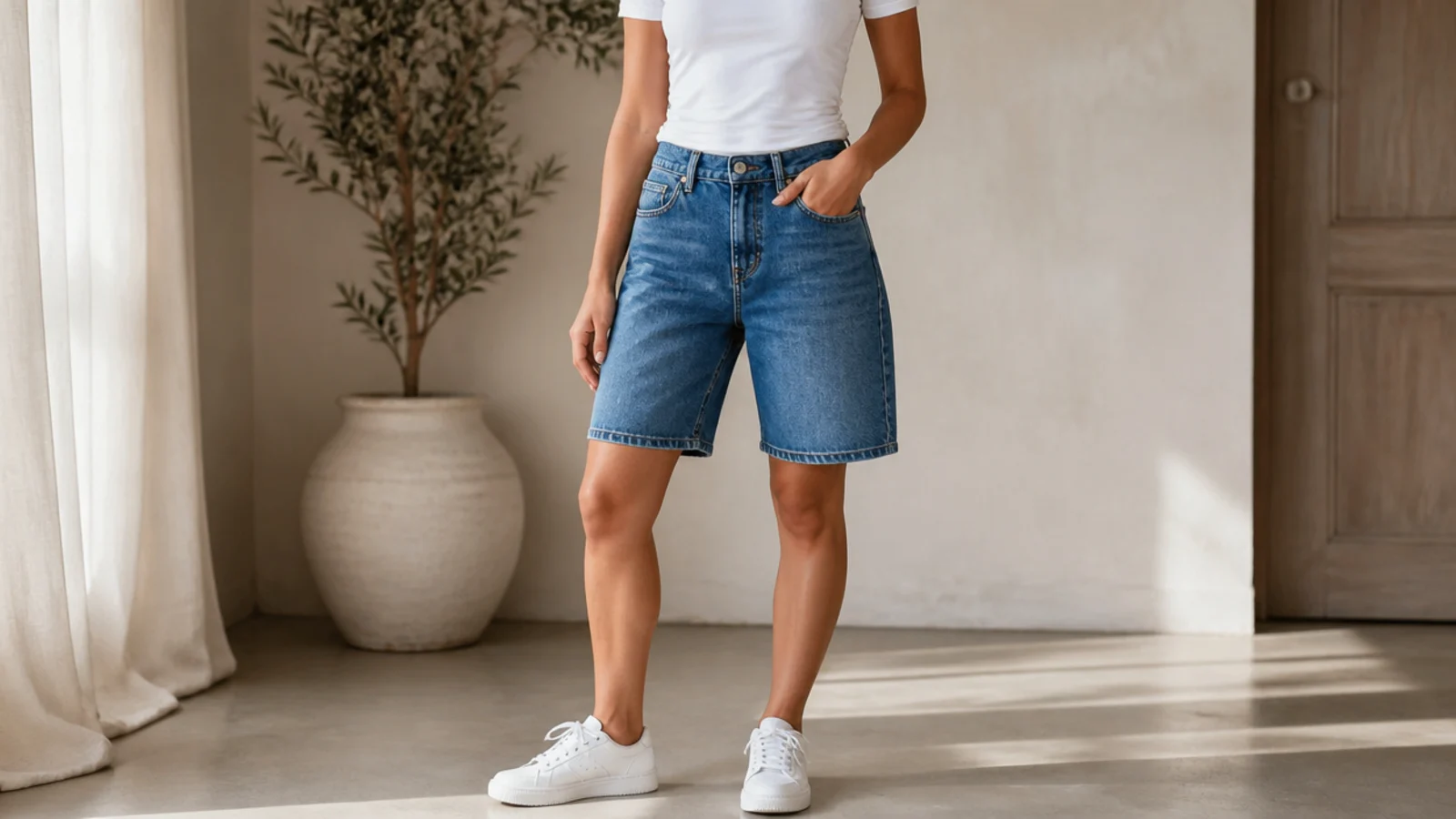
The high-rise straight jort sits at the natural waist and runs the same width from hip to a mid-thigh hem with no taper, which makes it the do-everything pair and the pick if you only own one. The high rise smooths the tummy and lengthens the leg, while the clean straight line skims rather than clings, so it flatters almost every proportion. Wear it with a tucked baby tee, a fitted knit or a cropped blouse, and finish with white sneakers, a flat sandal or a ballet flat. This is the pair to buy first. See it styled across jorts outfits.
A mid-blue rigid denim in a high rise is the most versatile straight jort. Cut or cuff the hem to hit mid-thigh for the longest leg line.
2. Mid-Rise Baggy Jorts

The mid-rise baggy jort sits just below the natural waist and runs loose and roomy through the hip and thigh, giving the slouchy, skater-leaning volume that defines the current trend. Because the bottom half is full, it needs a fitted or tucked top to keep the waist visible, so pair it with a ribbed tank, a baby tee or a cropped knit. Finish with chunky sneakers or a flat sandal to keep it street. It reads the most effortlessly cool of the cuts and is the heart of the baggy look. See more in baggy jorts outfits.
Always tuck or crop the top with baggy jorts so the waist stays defined. Keep the hem at mid-thigh so the volume does not swallow your frame.
3. Bermuda Jorts
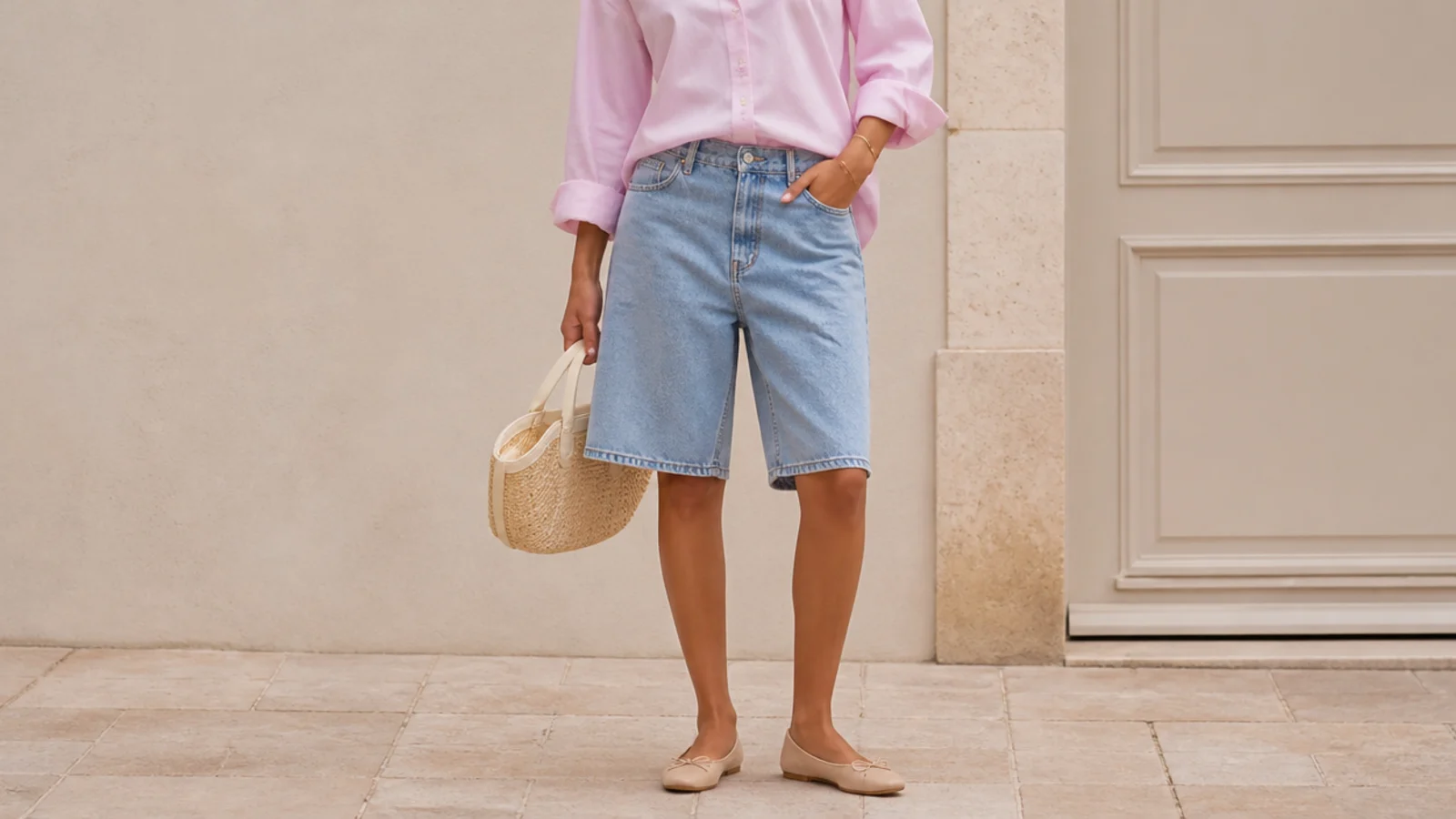
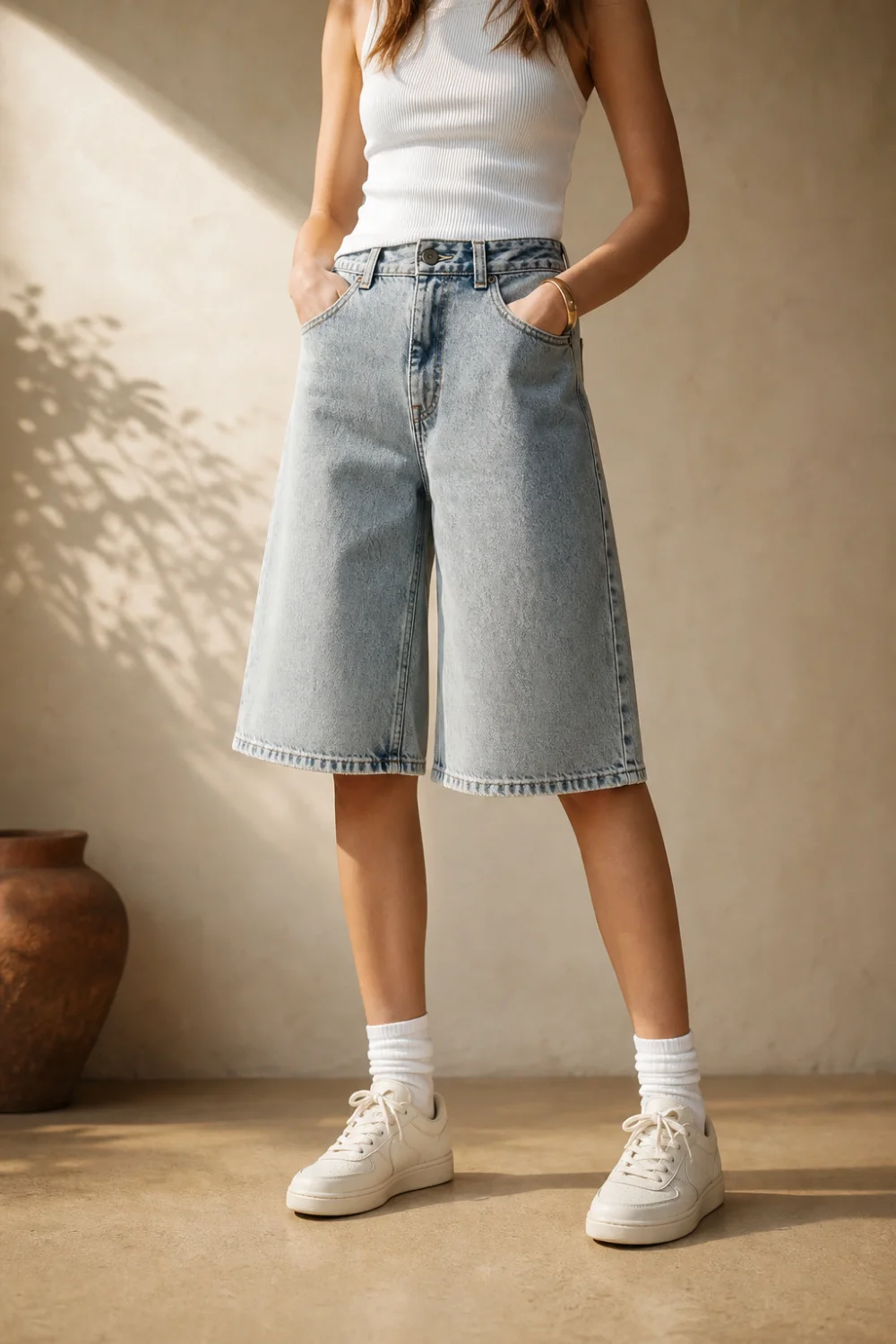
The bermuda jort is the long silhouette, hitting at or just below the knee with a straight, tailored leg, and it is the most covered and most polished of the cuts. The extra length reads elegant and grown-up, which makes it the easiest jort to dress up for work-adjacent or evening looks. Wear it with a tucked poplin shirt, a fitted blouse or a fine knit, and finish with a ballet flat, a loafer or a heeled sandal. It flatters a longer leg and offers real coverage for hot days out. See the long-cut angle in long jorts outfits.
Keep the bermuda hem straight and just below the knee for the most tailored line. A pointed flat or heel lengthens the leg under the extra length.
4. Cuffed Jorts

The cuffed jort is any straight or relaxed pair finished with a folded double-turn hem, and that single fold is what makes it read deliberate rather than accidentally cut off. The cuff adds a crisp horizontal line, shortens the leg slightly and stops a raw hem from fraying, so it is the tidiest, most put-together everyday cut. Wear it with a tucked linen tank, a fitted tee or a cropped shirt, and a flat slide sandal or a white sneaker. It suits a mid-thigh length best and reads clean and intentional for casual summer days.
Fold a deep two-inch double cuff and press it flat so it holds all day. Keep the hem at mid-thigh so the cuff does not cut the leg too high.
5. Raw-Hem Jorts

The raw-hem jort is the classic cut-off, chopped straight and left to fray into a soft white beard of threads, and it is the most casual and most youthful of the silhouettes. The undone hem reads effortless and lived-in, which makes it the natural weekend, festival and beach-day pair. Wear it with a fitted graphic tee, a tank or a cropped tee, and canvas sneakers or a flat sandal. It looks best in a light or mid wash where the fray shows, and it pairs cleanly with the whole casual jorts wardrobe. See it in everyday jorts outfits.
Wash the raw hem once before wearing to bloom the fray evenly. Keep the top fitted so the undone hem reads styled, not sloppy.
6. Wide-Leg Jorts
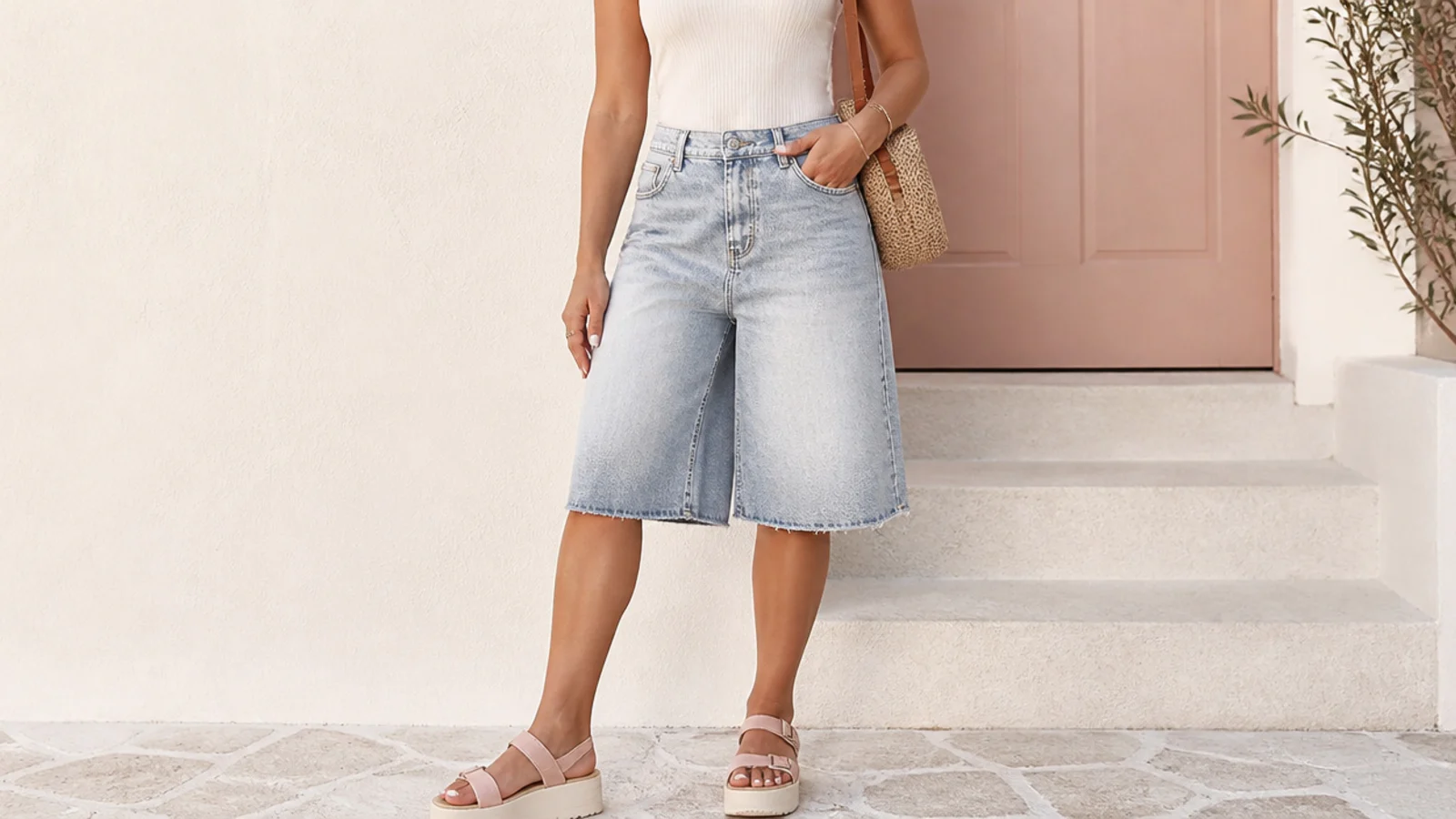
The wide-leg jort runs full and straight from the hip with no taper, giving an even, architectural volume that reads modern and a little fashion-forward. Unlike the baggy, which slouches, the wide leg holds a clean column, so the volume is structured rather than casual. It most needs a fitted or tucked top, since a loose top over a wide leg erases the waist entirely. Wear it high-rise with a tucked tank, a fitted knit or a crop, and a platform sandal or a flat that peeks out. It flatters most frames when the top defines the waist and the shoe adds a little height.
Tuck or fit the top so the wide column stays clean. A slight platform or a mule keeps the leg from looking stumpy under all that width.
7. Carpenter Jorts
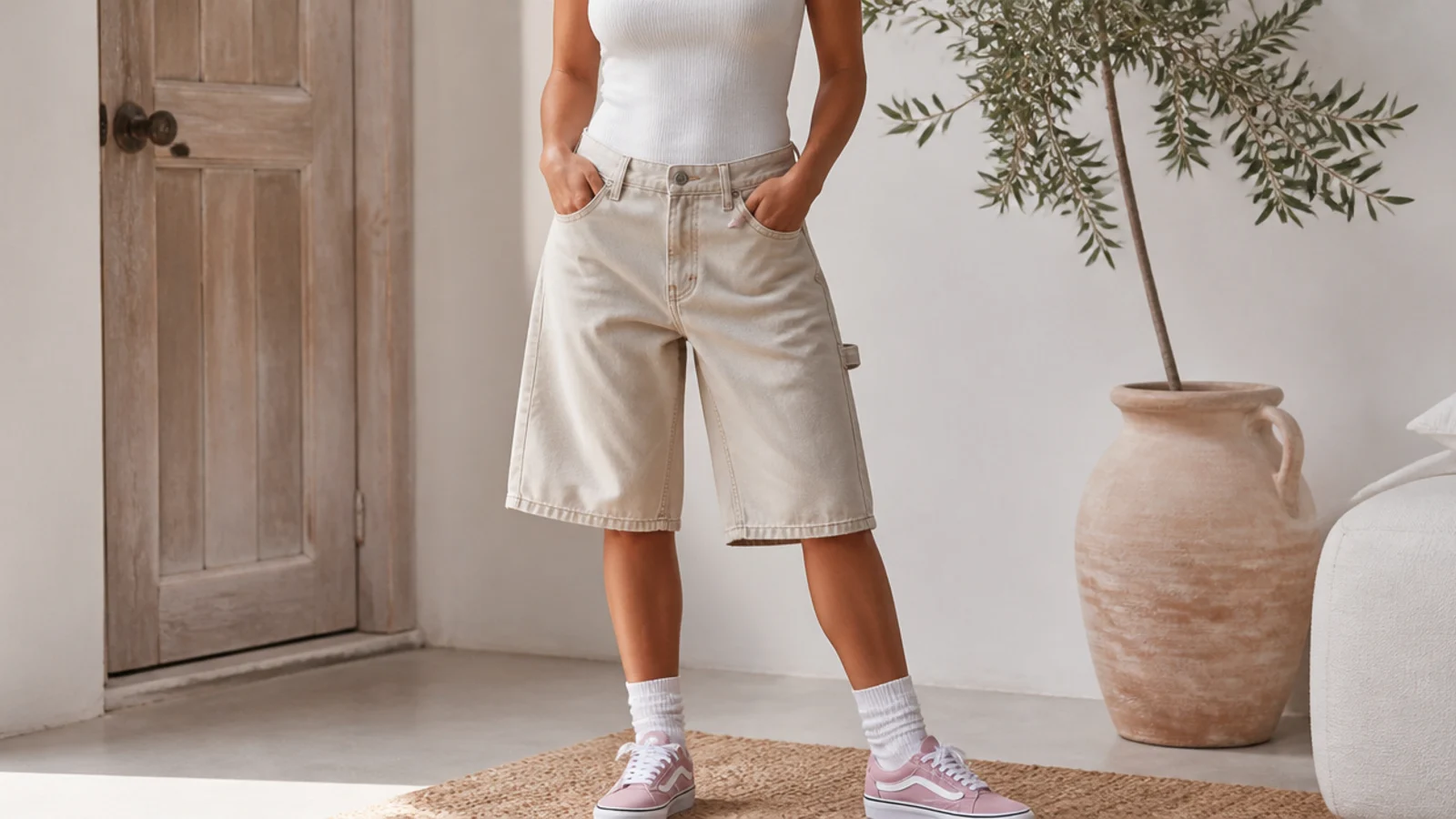
The carpenter jort is the utility silhouette, cut loose and straight with a hammer loop, a side ruler pocket and often a bib of extra stitching, and it is the most workwear-leaning of the cuts. Those utility details read tomboy and streetwear, which makes it the go-to for a relaxed, off-duty look. Because the fit is roomy, pair it with a fitted rib tank, a baby tee or a cropped hoodie to balance the volume, and finish with skate sneakers or a chunky sandal. It suits a light or mid wash and leans into the Y2K revival. See the era angle in y2k jorts outfits.
Keep the top fitted and short so the utility volume reads intentional. Let the hammer loop and ruler pocket show rather than hiding them under a long top.
8. Low-Rise Jorts
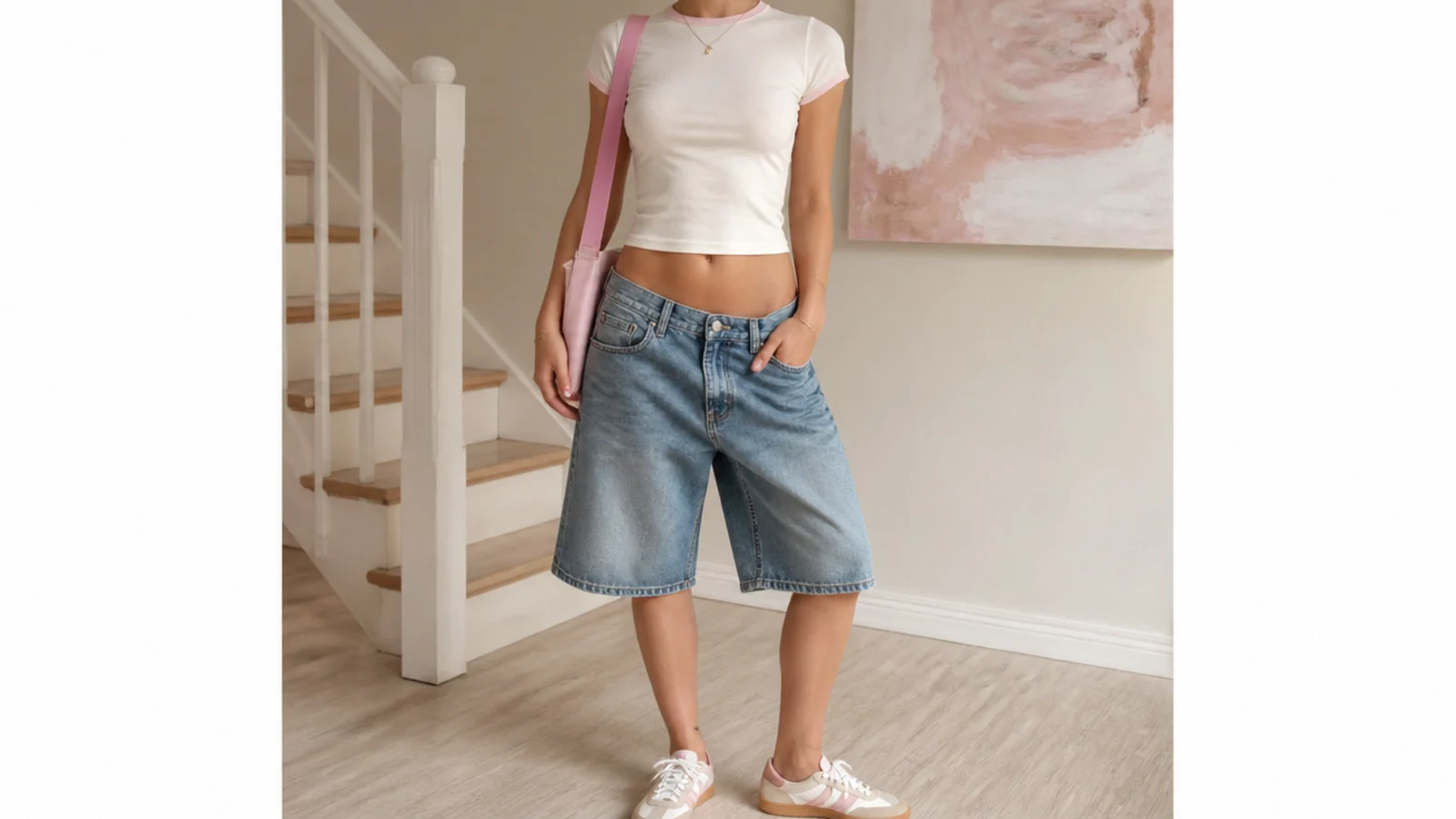
The low-rise jort sits on the hips well below the natural waist, showing the most midriff and reading the most trend-led and Y2K of every silhouette. It is the fashion choice rather than the staple: the least forgiving rise and the hardest to wear on a long day, but the one that nails the 2000s revival. Pair it with a fitted baby tee, a crop or a bandeau so the exposed waist reads deliberate, and finish with low-top sneakers or a flat sandal. It suits a baggy or wide leg best, where the low rise balances the volume. See the full throwback in y2k jorts outfits.
Wear a fitted crop with low-rise jorts so the midriff looks intentional. Choose a slightly baggier leg so the low rise reads Y2K rather than ill-fitting.
9. A-Line Jorts
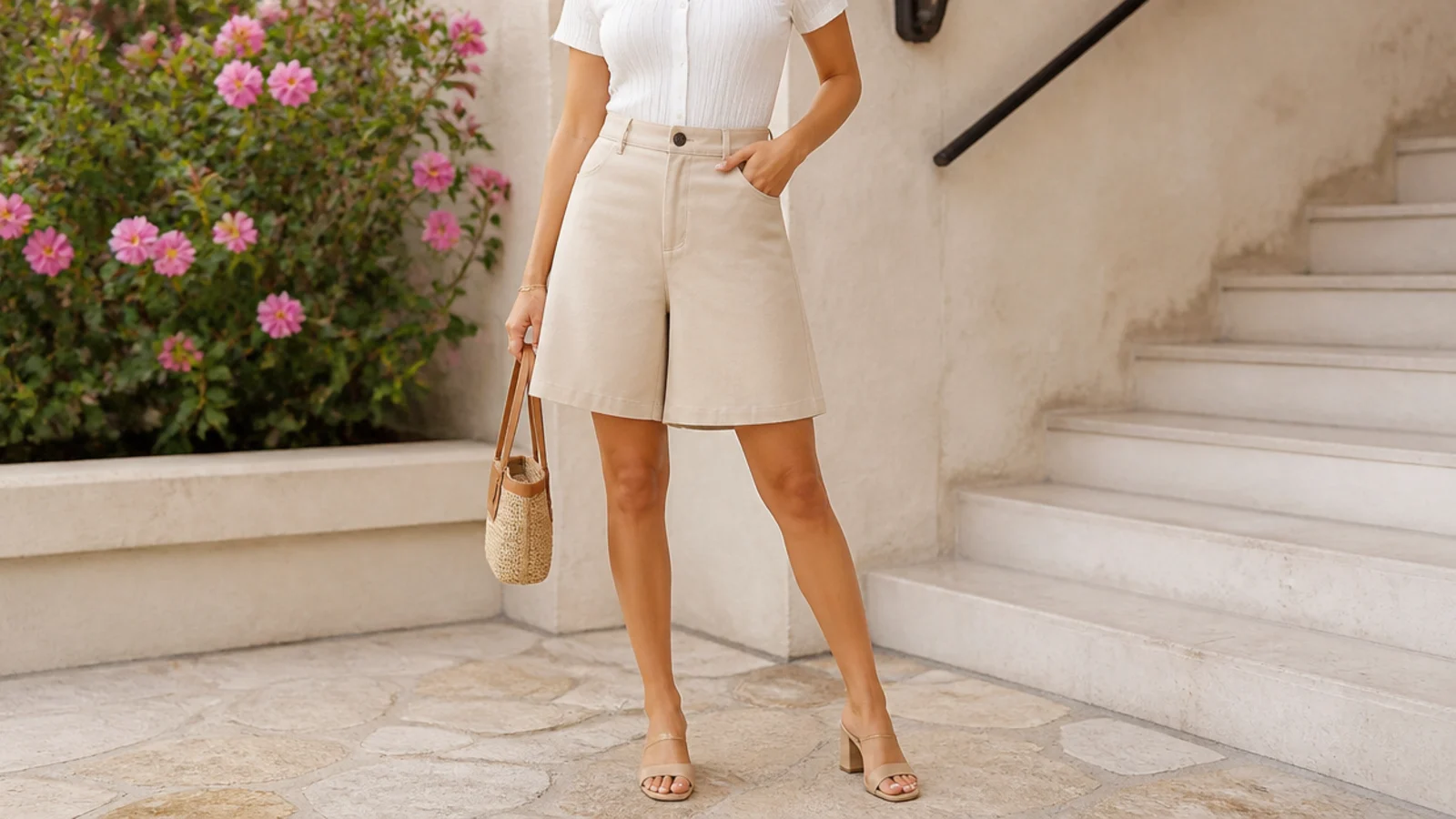
The A-line jort fits close at the high waist and flares gently out toward the hem, giving a soft, skirt-like shape that is the most feminine and flattering of the cuts. That subtle flare skims the hip and thigh rather than clinging, so it is the most forgiving silhouette for a curvier lower body. Wear it with a tucked fitted blouse, a bodysuit or a fine knit to keep the top clean against the flared hem, and finish with a heeled sandal, a mule or a ballet flat. It dresses up easily for dinner or a day event and reads polished with minimal effort.
Tuck a fitted top so the A-line flare stays the focal point. Keep the hem at mid-thigh so the shape reads like a short skirt rather than a full one.
10. Distressed Jorts

The distressed jort adds ripped knees, abrasion whiskering and blown-out patches to a straight or baggy base, giving the most broken-in, edgy look of the silhouettes. The tears read rock-and-roll and lived-in, which makes it a statement pair rather than a neutral one. Keep the rest of the outfit clean so the rips carry the interest: a fitted plain tank, a baby tee or a simple bodysuit, plus white low-top sneakers or a flat sandal. It looks best in a light or faded mid wash where the distressing shows, and it leans into the concert and festival crowd. See it in jorts festival outfits.
Keep the top and shoes plain so the distressing stays the focal point. Avoid heavy rips on the seat if you want the pair to read styled rather than worn out.
11. Dark Rigid Jorts
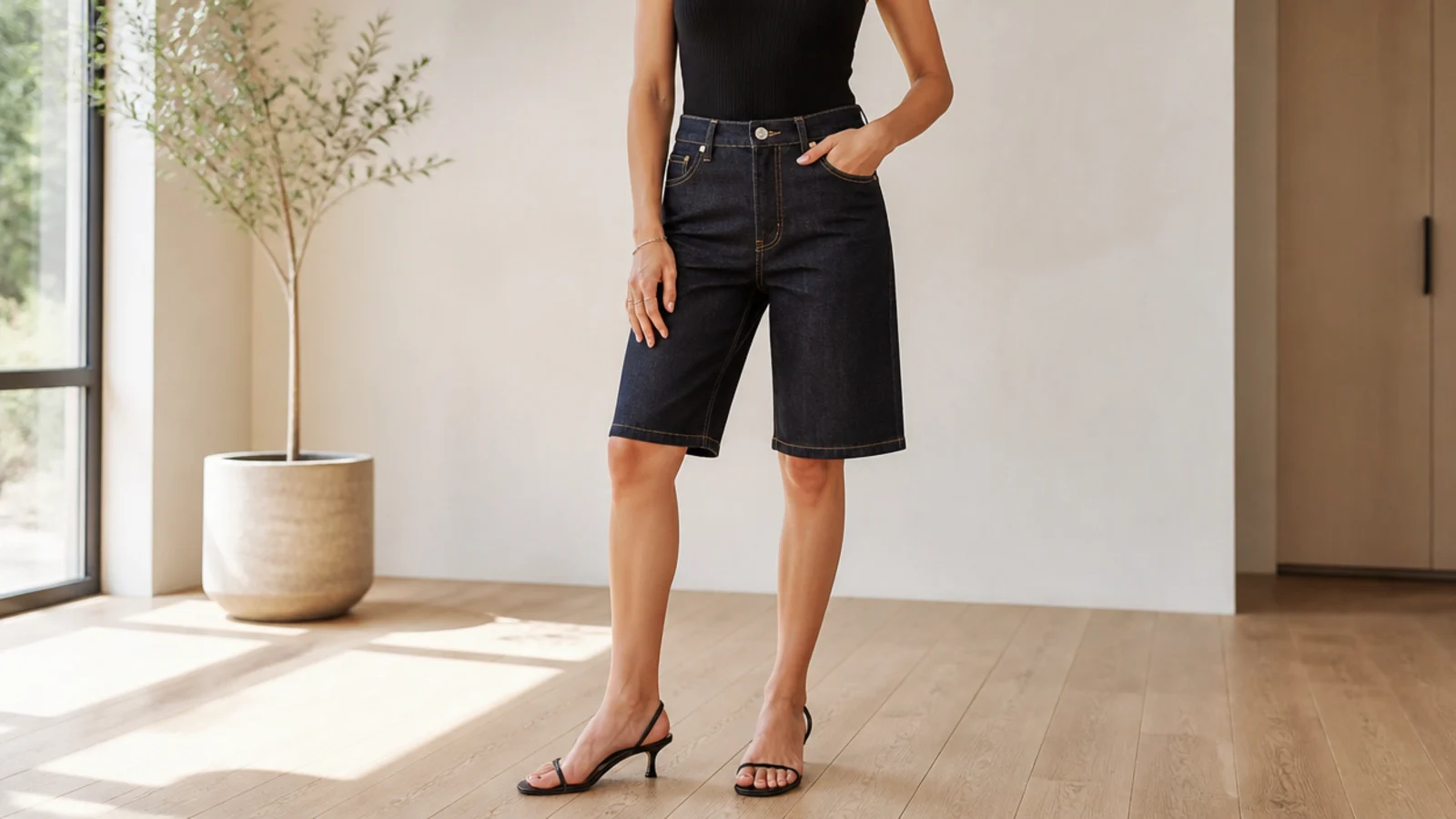
The dark rigid jort is a clean straight or A-line cut in a deep indigo, non-stretch denim with a crisp finished or cuffed hem, and it is the dressiest and most expensive-looking of the silhouettes. The dark wash and structured denim read almost like tailored shorts, which lets it cross into evening and going-out territory that no faded pair can. Wear it with a tucked silk tank, a fitted knit or a blazer, and finish with a heeled sandal, a mule or an ankle boot. It is the pair that dresses up for dinner and the one that suits black and jewel tones best. See the sleek angle in black jorts outfits.
Choose a rigid, non-stretch dark denim with a clean hem for the most tailored, expensive look. Keep the whole outfit dark and sleek to lean fully into evening.
12. Light-Wash Relaxed Jorts
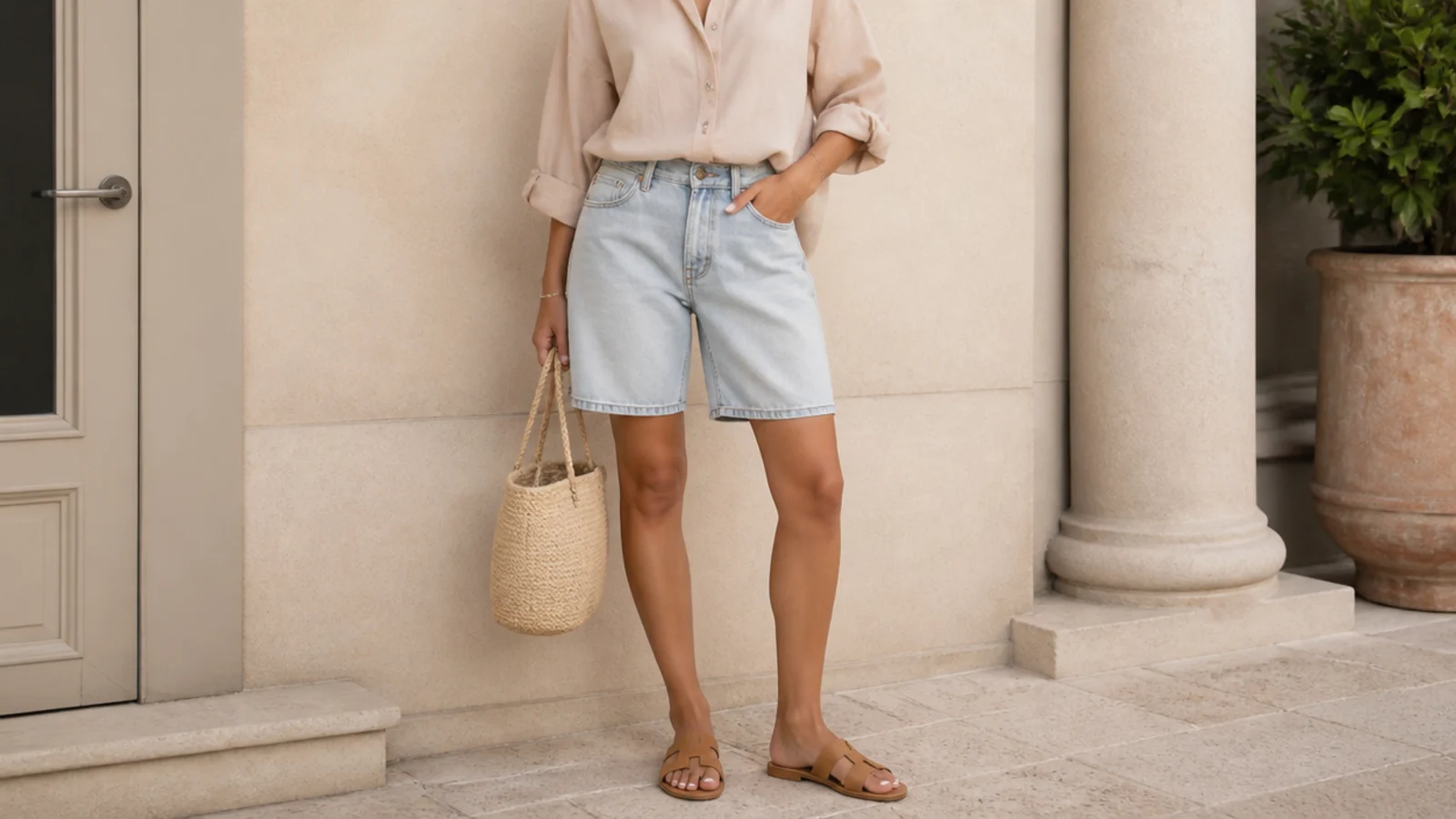
The light-wash relaxed jort is the easy, breezy silhouette in a pale blue or bleached denim with a loose but not baggy leg, and it is the most summery and laid-back of the cuts. The faded wash reads soft and sun-worn, which makes it the natural vacation, brunch and beach-town pair. Because the fit is relaxed rather than voluminous, it takes almost any top: a tucked linen shirt, a tank, a crop or a breezy blouse, plus a tan flat sandal or a canvas sneaker. It flatters most frames and is the coolest pair for genuinely hot days. See the warm-weather looks in summer jorts outfits.
A pale, soft wash reads most summery and pairs with any top color. Keep the leg relaxed rather than fully baggy so it stays easy to dress up or down.
High-Rise vs Low-Rise Jorts: What Is the Difference?
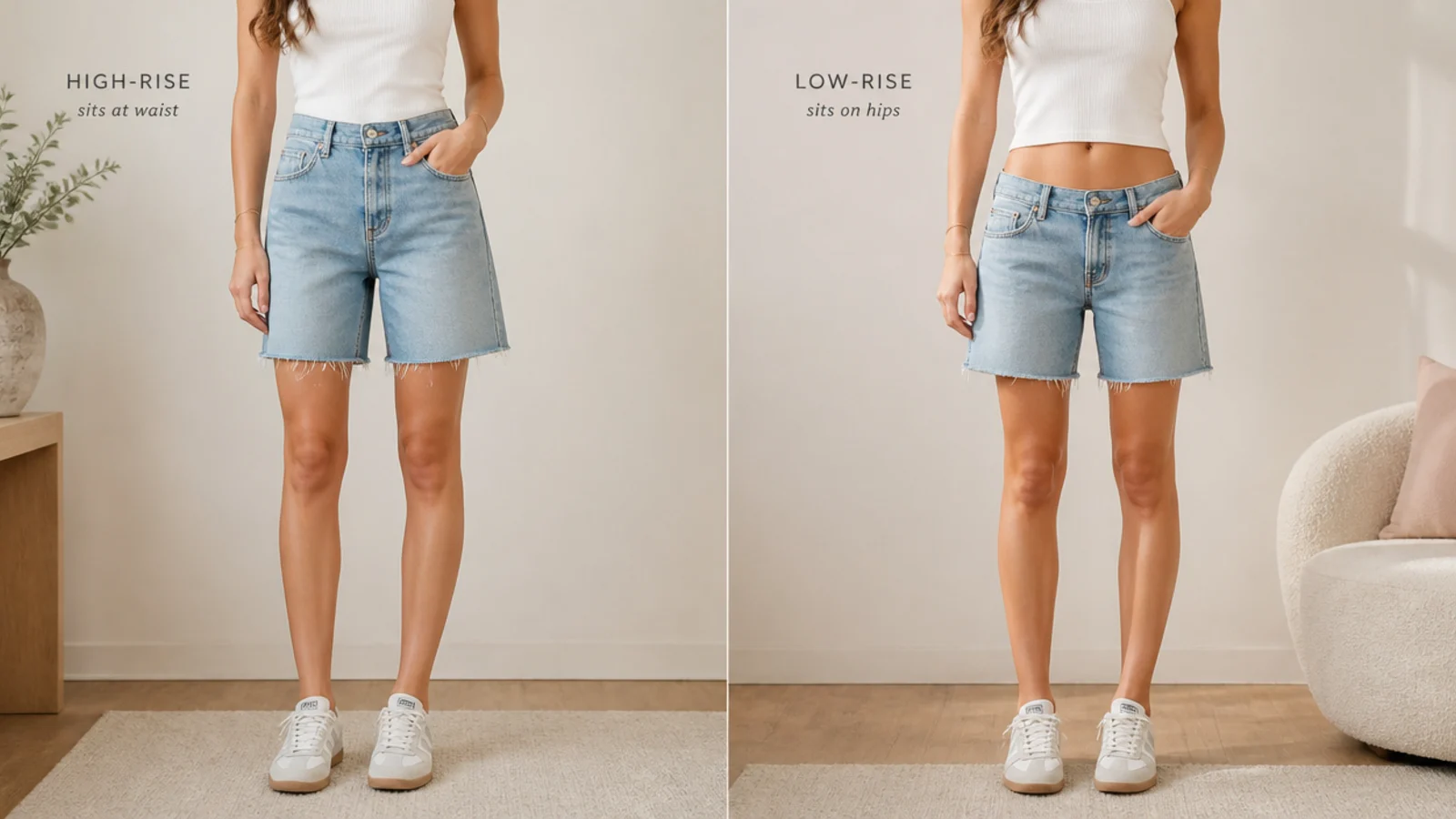
Rise is where the waistband sits, and it changes both the flattery and the whole mood of a jorts outfit more than the wash does. High-rise jorts sit at or just above the natural waist, smooth the tummy, lengthen the leg and are the easiest to tuck a top into, which is why they suit almost every body and read the most polished. Low-rise jorts sit on the hips well below the waist, show the most midriff and read the most trend-led and Y2K, but they are the least forgiving and the hardest to wear through a long day. Mid-rise sits in between and is the most casual everyday option, pairing cleanly with both tucked and untucked tops. The simple rule: choose high-rise when you want a smoother waist, a longer line and a look you can dress up, and treat low-rise as a deliberate throwback styled with a fitted crop rather than an all-day staple. Match the rise to your torso, since a short torso often prefers mid-rise while a long torso carries high-rise well. For the full 2000s take, see y2k jorts outfits.
Bermuda Jorts vs Baggy Jorts: Which Should You Choose?
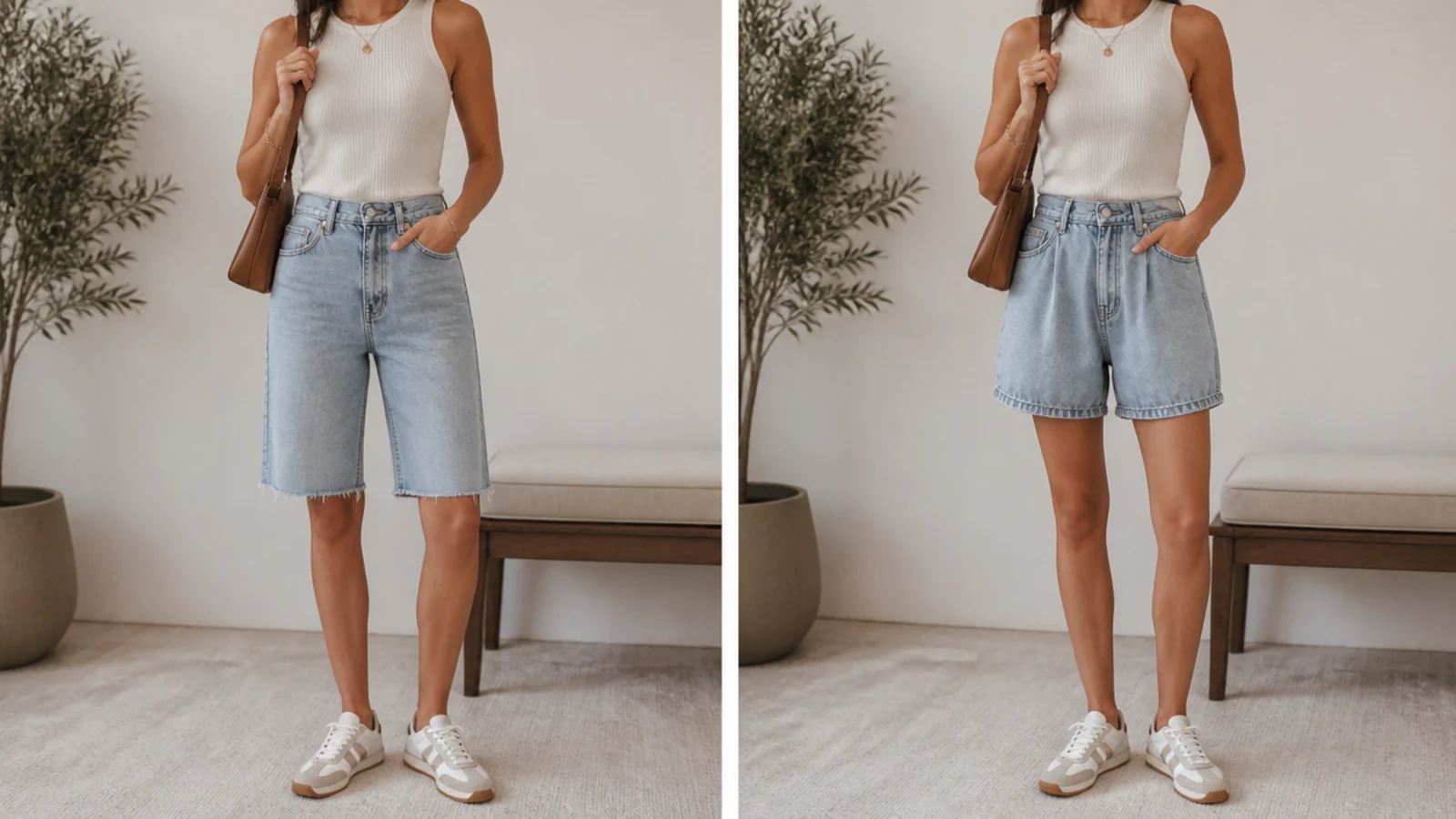
Bermuda and baggy jorts get confused because both are roomy, but the length and the intent tell them apart. Bermuda jorts are defined by length: they hit at or just below the knee with a straight, tailored leg, so they read covered, polished and easy to dress up for work-adjacent or evening looks. Baggy jorts are defined by volume: they usually run shorter, from mid-thigh to just above the knee, with a loose, slouchy leg that reads casual, skater and street. In practice, reach for a bermuda when you want coverage and a grown-up line you can wear with a poplin shirt and flats, and reach for a baggy when you want the effortless, trend-led slouch worn with a baby tee and chunky sneakers. Both flatter when you balance the top: a bermuda takes a tucked fitted top to define the waist above the long leg, and a baggy needs a cropped or tucked top so the volume does not swallow your frame. If you can only own one, a bermuda is the more versatile across occasions, while a baggy is the more current. See each fleshed out in long jorts outfits and baggy jorts outfits.
Which Jorts Silhouette Is Most Flattering for Your Shape?
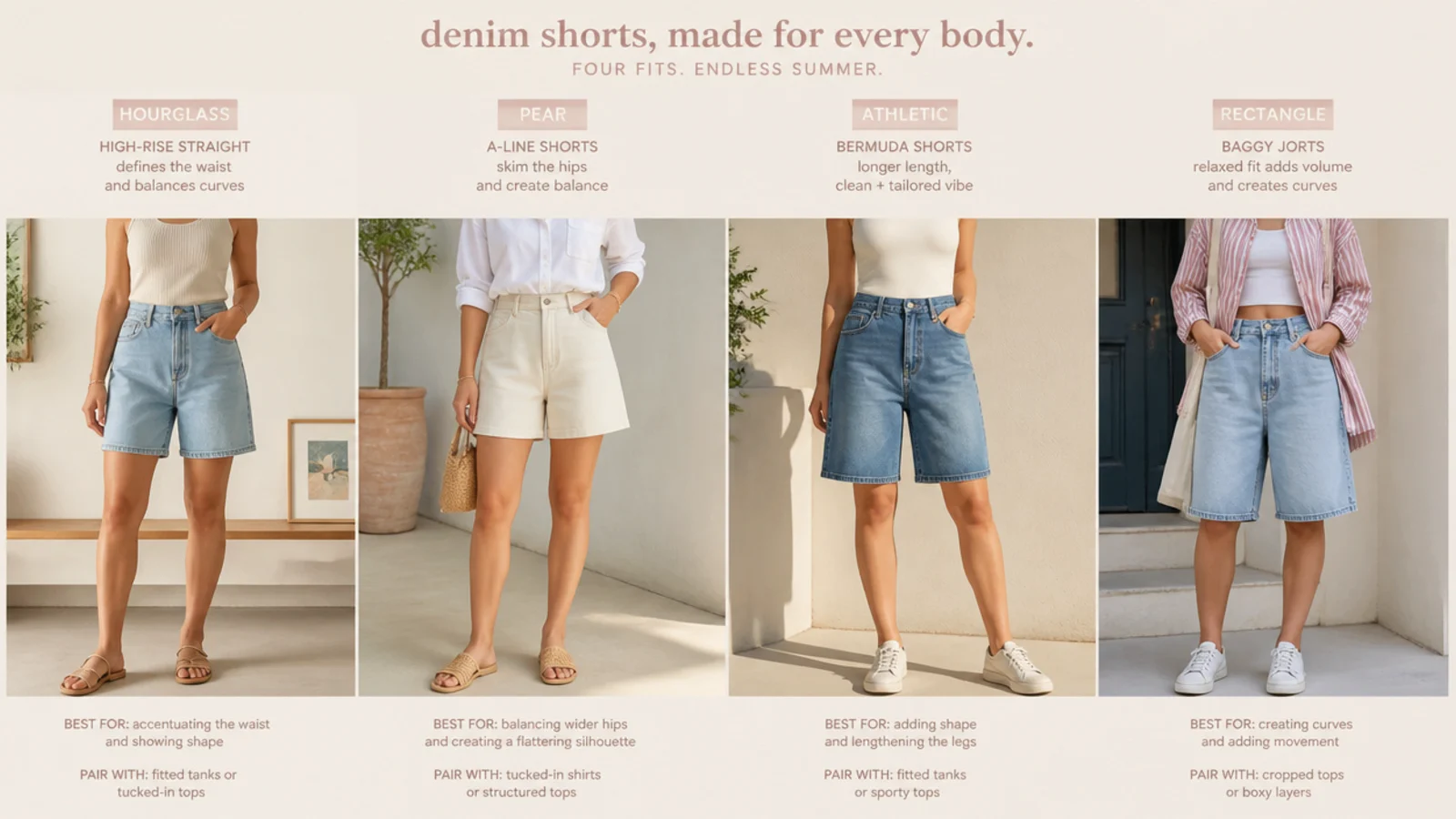
The most flattering jort is the one that balances your proportions, not a single universal answer. The high-rise straight is the safest all-shape pick because its clean line skims the body and lengthens without clinging. For a curvier hip and thigh, an A-line or a high-rise straight in a rigid, non-stretch denim flatters most, since the structured fabric holds its shape and the gentle flare skims rather than grips. For a straighter or athletic frame, a baggy or wide-leg adds shape and the illusion of curves through the volume. A petite frame is elongated most by a high-rise cut worn at mid-thigh with a pointed flat or a slight heel, keeping the hem short enough to show leg rather than cutting it at the widest point. A longer or taller frame carries the bermuda and the wide-leg easily. The rule that beats any single silhouette: pair a voluminous jort with a fitted or tucked top, and a fitted jort with a slightly looser top, so the waist always stays visible. A six-inch inseam hitting mid-thigh is the most universally flattering length. Match the cut to your shape and the top to the cut, and the jorts always look intentional.
How Do You Match a Top to Each Jorts Cut?
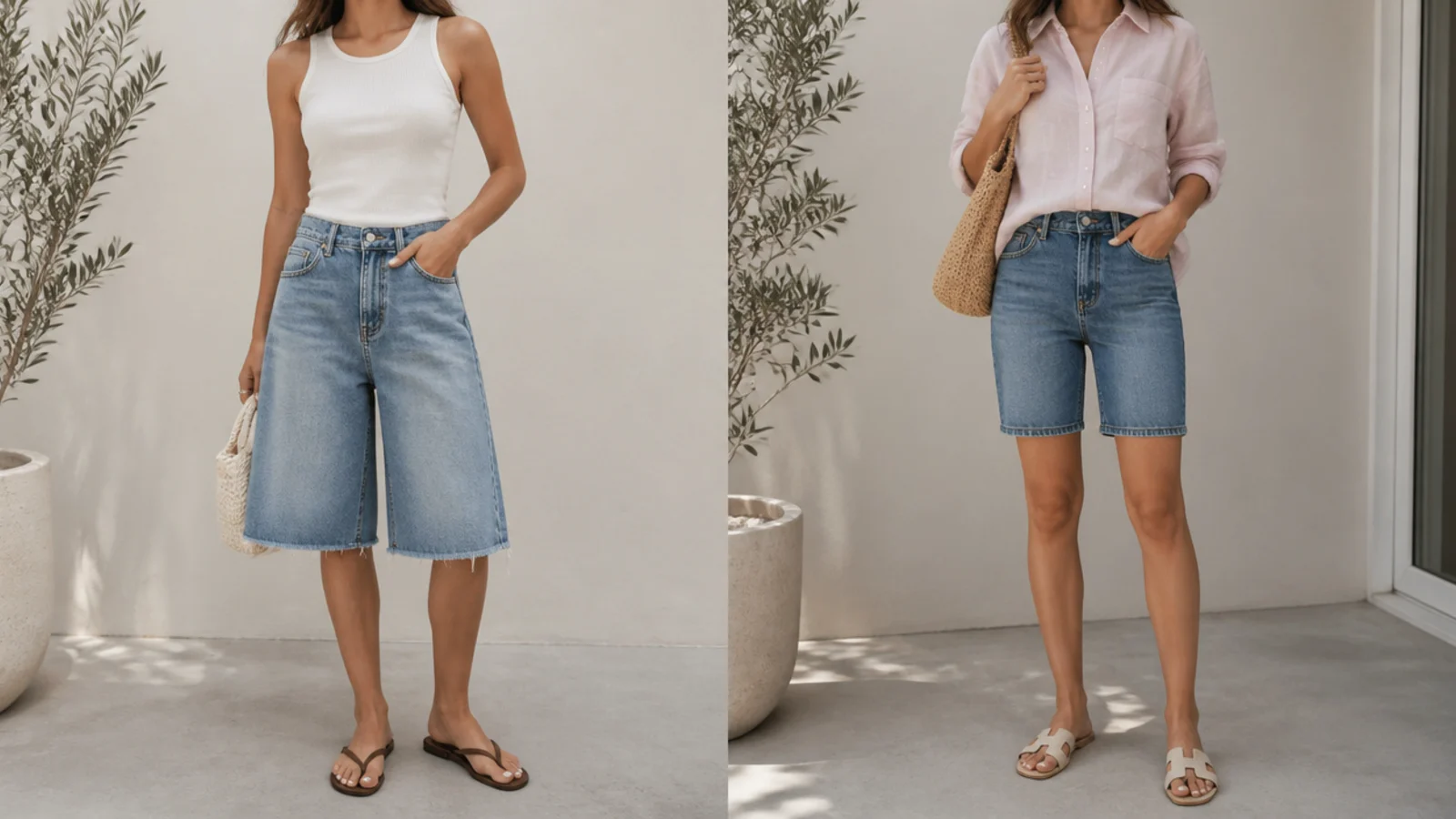
The single rule that makes any jort look styled is balance: match the volume of the top to the opposite of the shorts. Voluminous cuts need the top pulled in, so wear baggy, wide-leg, carpenter and low-rise jorts with a fitted rib tank, a baby tee, a cropped knit or a tucked bodysuit that keeps the waist defined. Fitted and structured cuts take a slightly looser top, so the high-rise straight, A-line, bermuda and dark rigid pairs look great with a relaxed linen shirt, a boxy tee or a soft blouse. The tuck itself is a tool: a full tuck defines the waist for high-rise cuts, a half-tuck adds a relaxed break, and a crop naturally sets the waist without any tucking. When in doubt with a baggy or wide leg, reach for a cropped top so the leg lengthens from a clearly marked waist. Add a third piece such as an open button-down, a cropped denim jacket or a light cardigan to restructure a slouchy look for cooler days. Get the top volume right and even a plain tee and jorts look considered. See the idea across jorts and tank top outfits and jorts crop top looks.
What Shoes Go With Each Jorts Silhouette?
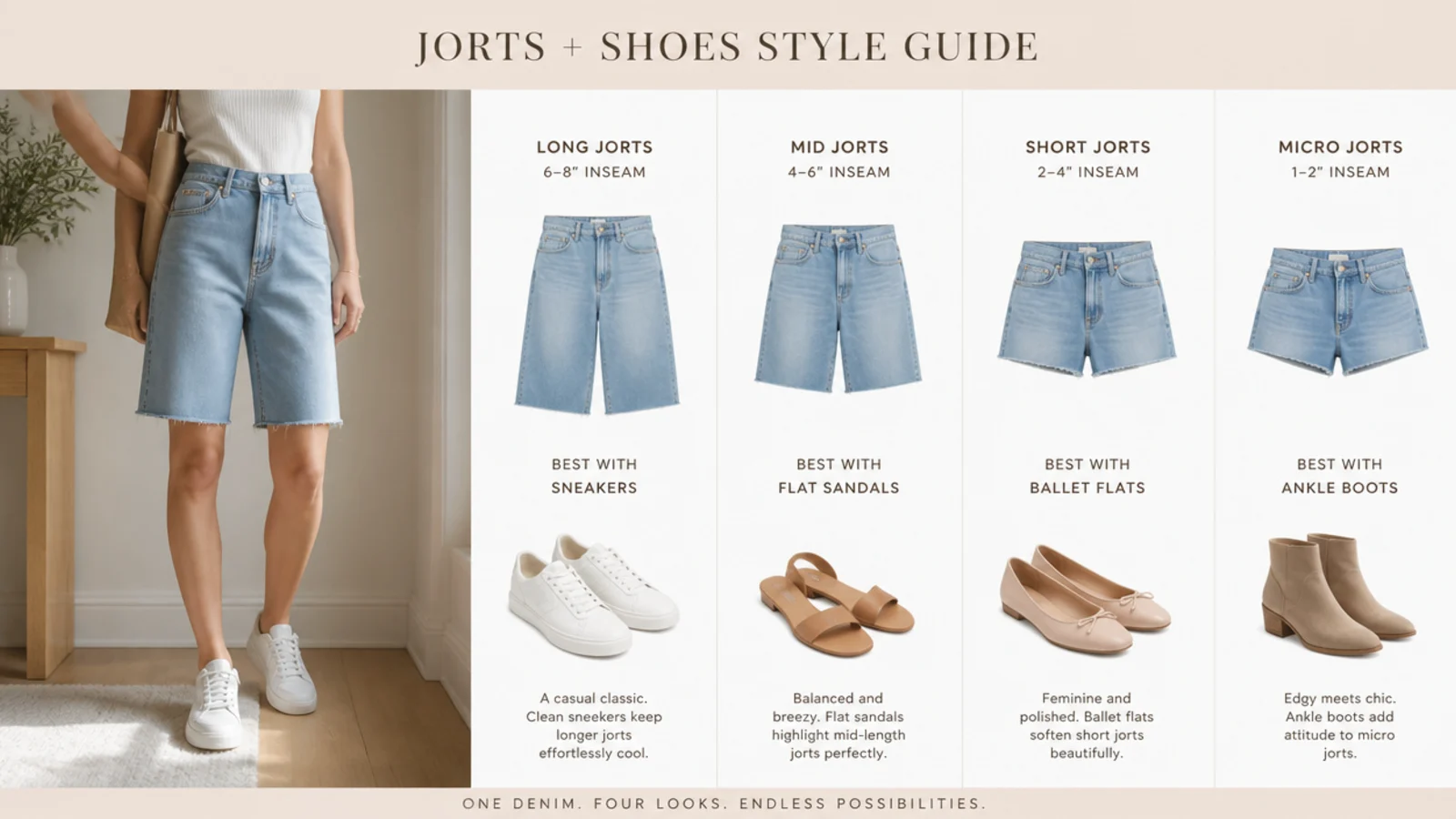
The shoe sets how casual or dressy a jort reads, and each silhouette has a natural match. White sneakers and chunky skate sneakers are the default for baggy, carpenter and raw-hem cuts, keeping them street and easy. Flat slide and fisherman sandals suit the light relaxed and cuffed pairs for breezy warm-weather days. A ballet flat or a loafer dresses up the bermuda and the high-rise straight, adding a polished note without height. Heeled sandals, mules and pointed flats are what turn the A-line and the dark rigid jort into an evening outfit, lengthening the leg under a short hem. Ankle boots carry the straight, bermuda and dark rigid cuts into fall, worn with or without a sock depending on the temperature, as covered in fall jorts outfits. The rule of thumb: match a casual shoe to a casual, faded or slouchy jort and a dressier shoe to a structured or dark one, and let the hem length decide the height, since a longer bermuda balances a flat while a shorter cut can take a heel. For the full footwear breakdown, see jorts with sneakers, jorts with ballet flats and jorts with boots.
Which Jorts Are Real Jorts, and What Makes a Good Pair?
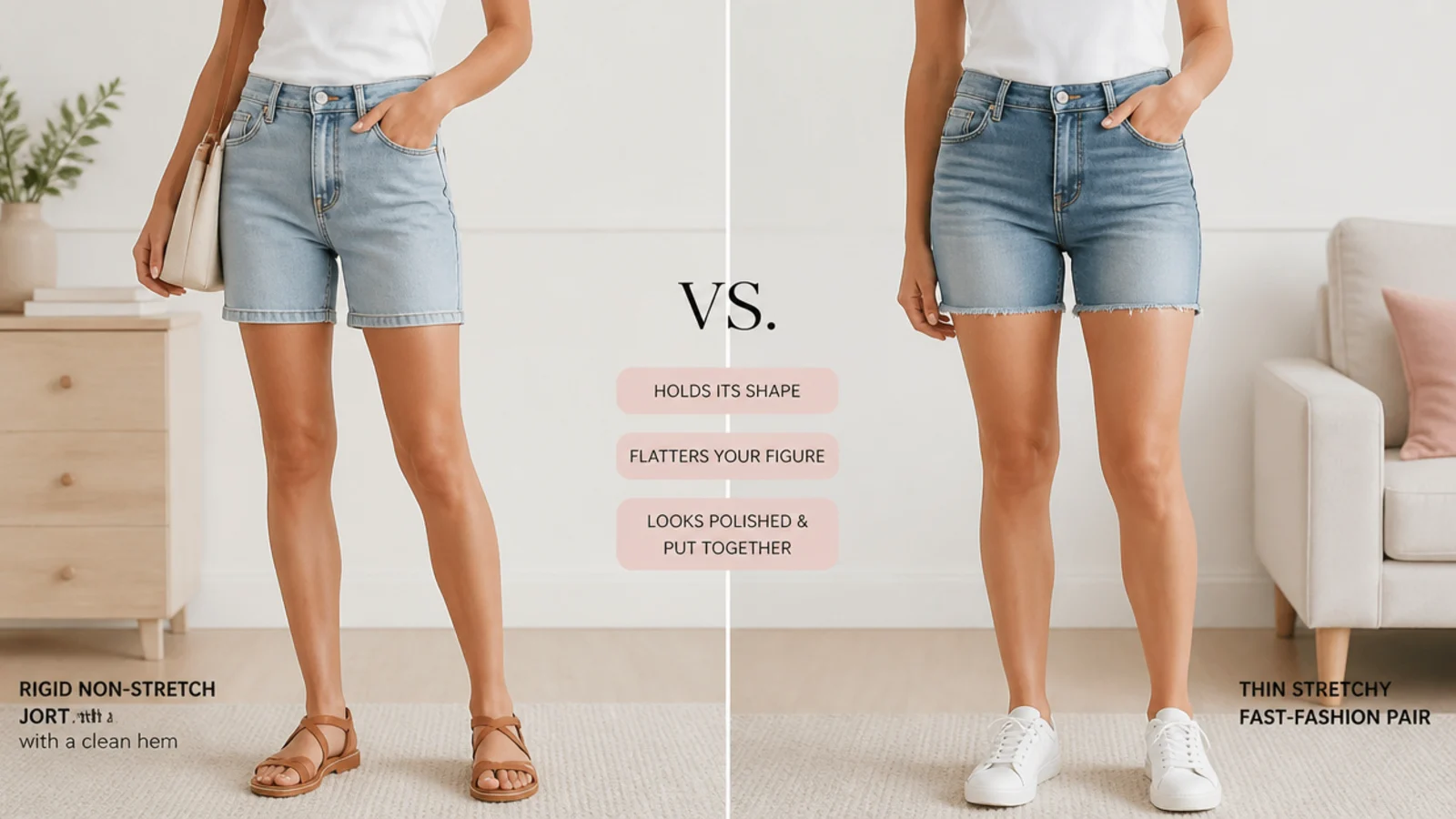
A real pair of jorts is defined by silhouette and fabric, not just by being denim shorts. The look that reads as jorts rather than fitted denim cut-offs is a relaxed, straight or baggy leg with a longer, mid-thigh-or-below inseam, worn slightly loose rather than skin-tight. On fabric, the best pairs use a rigid or near-rigid denim with roughly three percent elastane or less, so they hold their shape, keep a crisp hem and do not cling or sag through the day. Very stretchy, thin, sub-thirty-dollar fast-fashion pairs tend to bag out at the seat, twist at the seam and read cheap in photos, which is the most common reason a jort disappoints. Check three things before buying: the inseam length, since a five to seven inch inseam gives the balanced mid-thigh hit that flatters most; the rise, choosing high for polish or mid for casual; and the denim weight, favoring a heavier, structured fabric. A clean or evenly frayed hem, a wash you actually like, and a leg opening that reads relaxed rather than tight complete a pair worth keeping. Get those right and even an inexpensive pair can look expensive.
Main Differences
- Structured jorts (high-rise straight, A-line, bermuda, dark rigid) skim the body and dress up; relaxed jorts (baggy, wide-leg, carpenter, low-rise, light) read casual and street.
- High-rise smooths and lengthens and suits almost every shape; low-rise shows the most midriff and is the trend-led Y2K choice.
- Bermuda is defined by knee-length coverage; baggy is defined by shorter, slouchy volume.
- Fitted and structured cuts take a looser top; baggy and wide cuts need a fitted or cropped top to keep the waist defined.
Frequently Asked Questions
What is the jorts style?
Jorts are jean shorts cut in a relaxed, longer silhouette rather than a fitted, short one, usually with a straight or baggy leg and a mid-thigh-or-below inseam. The style reads casual and denim-forward, often with a raw or cuffed hem, and it spans everything from tailored bermuda lengths to slouchy baggy cuts. What separates jorts from regular denim shorts is the looser fit and the longer, more covered leg.
What is the difference between high-rise and low-rise jorts?
High-rise jorts sit at or above the natural waist, smooth the tummy, lengthen the leg and are the easiest to tuck a top into, so they read polished and flatter most bodies. Low-rise jorts sit on the hips well below the waist, show the most midriff and read the most Y2K and trend-led, but they are the least forgiving to wear all day. Choose high-rise for versatility and low-rise as a deliberate throwback with a fitted crop.
Which is better, bermuda jorts or baggy jorts?
It depends on the outfit. Bermuda jorts hit at or below the knee with a tailored leg, giving coverage and a polished line you can dress up with a shirt and flats. Baggy jorts run shorter and slouchier for a casual, street look worn with a baby tee and chunky sneakers. Bermuda is the more versatile across occasions, while baggy is the more current for 2026. Own the bermuda first if you want one grown-up pair.
Which jorts silhouette is most flattering?
The high-rise straight jort is the most universally flattering because its clean line skims the body and lengthens the leg without clinging, so it suits nearly every shape. For a curvier lower body, an A-line or a rigid high-rise flatters best, while a baggy or wide-leg adds shape to a straighter frame. A five to seven inch inseam hitting mid-thigh is the most flattering length, and balancing the top volume matters more than the cut alone.
What are the best jorts for women to buy first?
Buy a high-rise straight pair in a mid-blue rigid denim first. It is the single silhouette that crosses the most occasions, reading polished with a ballet flat and a blouse and casual with a sneaker and a tank, and it flatters nearly every proportion. A rigid, non-stretch denim with a clean or evenly frayed hem holds its shape and looks more expensive than the price. Then build outward with a bermuda, a baggy and a dark rigid pair.
What makes a good pair of jorts versus a cheap one?
A good pair uses a rigid or near-rigid denim with roughly three percent elastane or less, so it holds its shape, keeps a crisp hem and does not bag out at the seat. The silhouette should be relaxed and straight or baggy, with a five to seven inch inseam for a balanced mid-thigh hit. Thin, very stretchy, sub-thirty-dollar fast-fashion pairs tend to twist, sag and read cheap in photos, which is the most common reason a pair disappoints.
What top should I wear with baggy jorts?
Baggy jorts need a fitted or cropped top to keep the waist defined, since a loose top over a loose leg erases the shape. Pair them with a ribbed tank, a baby tee, a cropped knit or a tucked bodysuit, and add a third piece like an open button-down or a cropped denim jacket for cooler days. Finish with chunky or white sneakers to keep the look street, or a flat sandal for a softer version.
Can you wear jorts in fall?
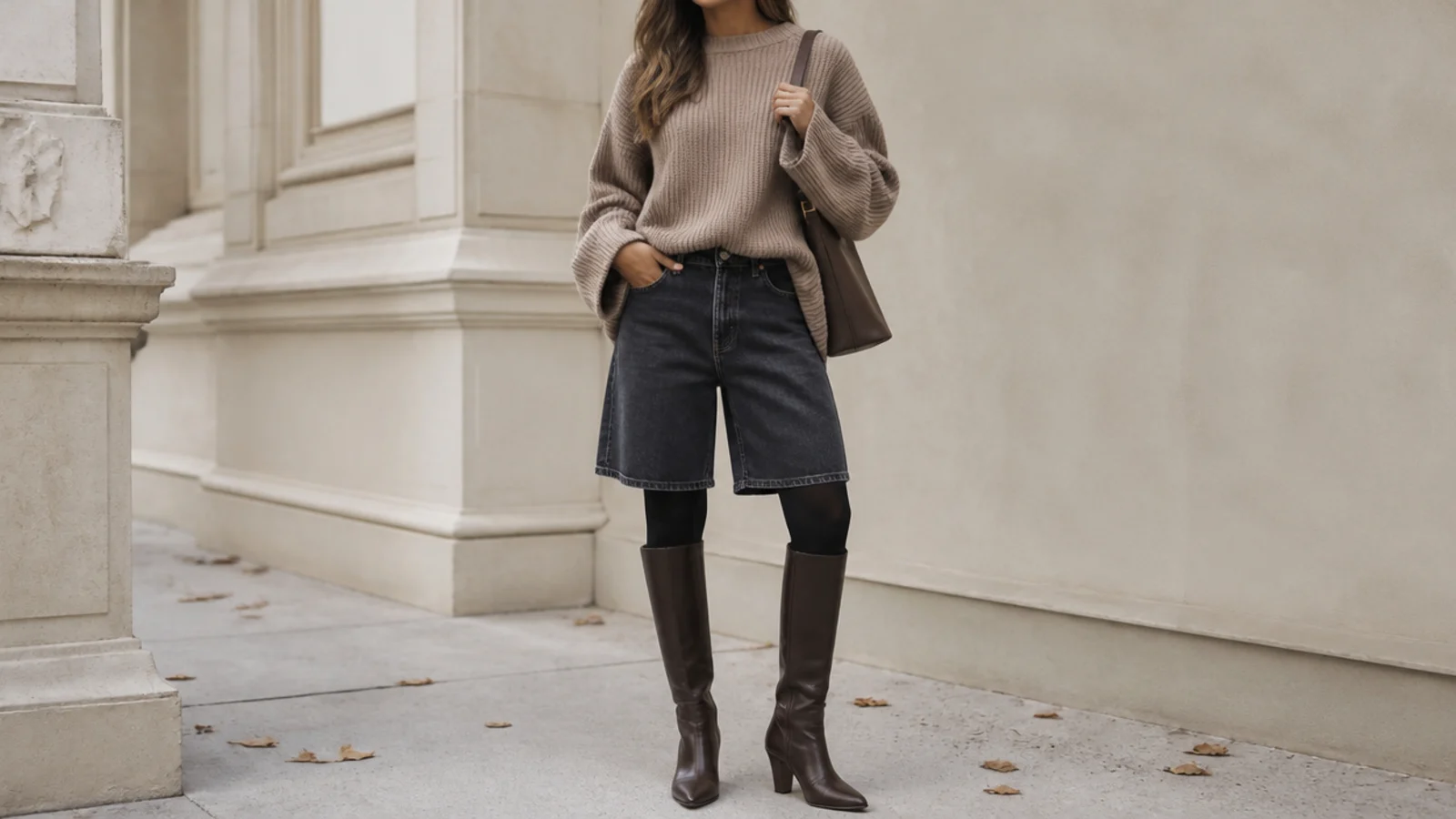
Yes. Jorts carry into fall with the right layering: choose a longer bermuda or a dark rigid pair, add opaque tights or bare legs depending on the temperature, and layer a chunky knit, a leather jacket or a cardigan on top. Swap sandals for ankle boots or knee-high boots to ground the look. Structured, darker silhouettes transition best because they read less summery than a faded raw-hem pair. See the seasonal breakdown in fall jorts outfits.
What shoes go best with jorts?
Match the shoe to the silhouette. Baggy, carpenter and raw-hem jorts pair best with white or chunky sneakers for a street look, while light relaxed and cuffed pairs suit flat slide or fisherman sandals. Bermuda and high-rise straight cuts dress up with ballet flats or loafers, and A-line and dark rigid pairs take heeled sandals or mules for evening. Ankle boots carry the straight, bermuda and dark rigid silhouettes into cooler weather.
Which jorts silhouette are you buying first?
If you take one decision from this list, make it the rise and length before the wash: a high-rise straight pair in a mid-blue rigid denim, cut to hit mid-thigh, is the single most versatile silhouette you can own, crossing sneakers, sandals and ankle boots without a swap, so buy that pair first. Then build outward by proportion, adding a bermuda for coverage, a baggy for volume and a carpenter for weekend ease. Match the top to the cut, keep the rise where your torso is happiest, and every look falls into place. Save the silhouettes that fit your wardrobe and browse more outfit ideas, or see the finished looks in jorts outfits and the honest jorts wear test next.