Quick Comparison
| Beige-Family Neutrals (camel, oatmeal, ecru, taupe, cream) | Hard Neutrals (black, white, gray) | |
|---|---|---|
| What it is | The warm, soft base that reads expensive and current | The structural anchor that grounds and covers dress codes |
| Versatility | High within a warm palette; needs undertone matching | Highest overall; black and white pair with everything |
| Cost per wear | Low on coats and blazers worn for years | Lowest on tees, jeans and trousers worn weekly |
| Seasons covered | All four; camel and oatmeal peak in fall and winter | All four; white peaks in summer, black year-round |
| What it replaces | Loud statement pieces and mismatched brights | A separate work wardrobe and formal edit |
| Who it suits | Warm and neutral skin; flatters golden undertones | Every complexion; gray and white best on cool skin |
| Styling risk | Shows marks, can wash out skin, undertone clashes | Low; hides marks, rarely looks cheap or dated |
| Buy this group first if | You want a soft, elevated, quiet-luxury look | You want an easy, low-maintenance, authoritative base |
1. White Cotton Crewneck Tee
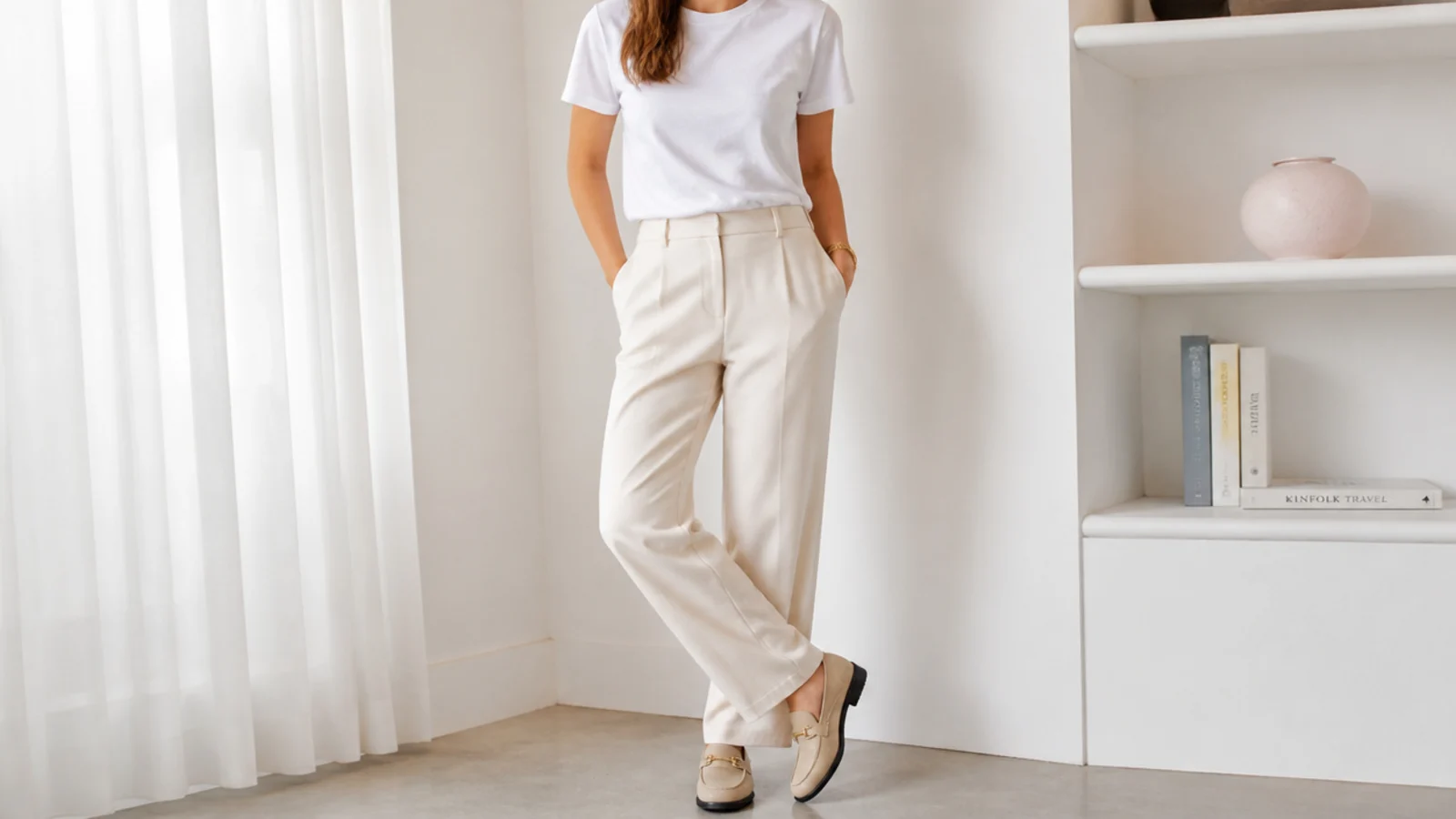
A mid-weight white cotton crewneck tee is the highest-frequency staple in any neutral wardrobe and the one you replace most often. Buy a structured 180 to 220 gsm cotton that holds its shape rather than a thin jersey that goes see-through, since a crisp white tee reads expensive while a limp one reads cheap. It works all four seasons under a blazer, a trench or a knit, and tucks into everything from jeans to a slip skirt. Cost per wear is unbeatable at a few cents. It suits every coloring because true white sits away from the face cleanly. See it styled in beige outfits for women.
Choose a slightly boxy 180 gsm cotton so it tucks cleanly and does not cling. Replace it yearly before the neckline stretches.
2. Crisp White Poplin Button-Down
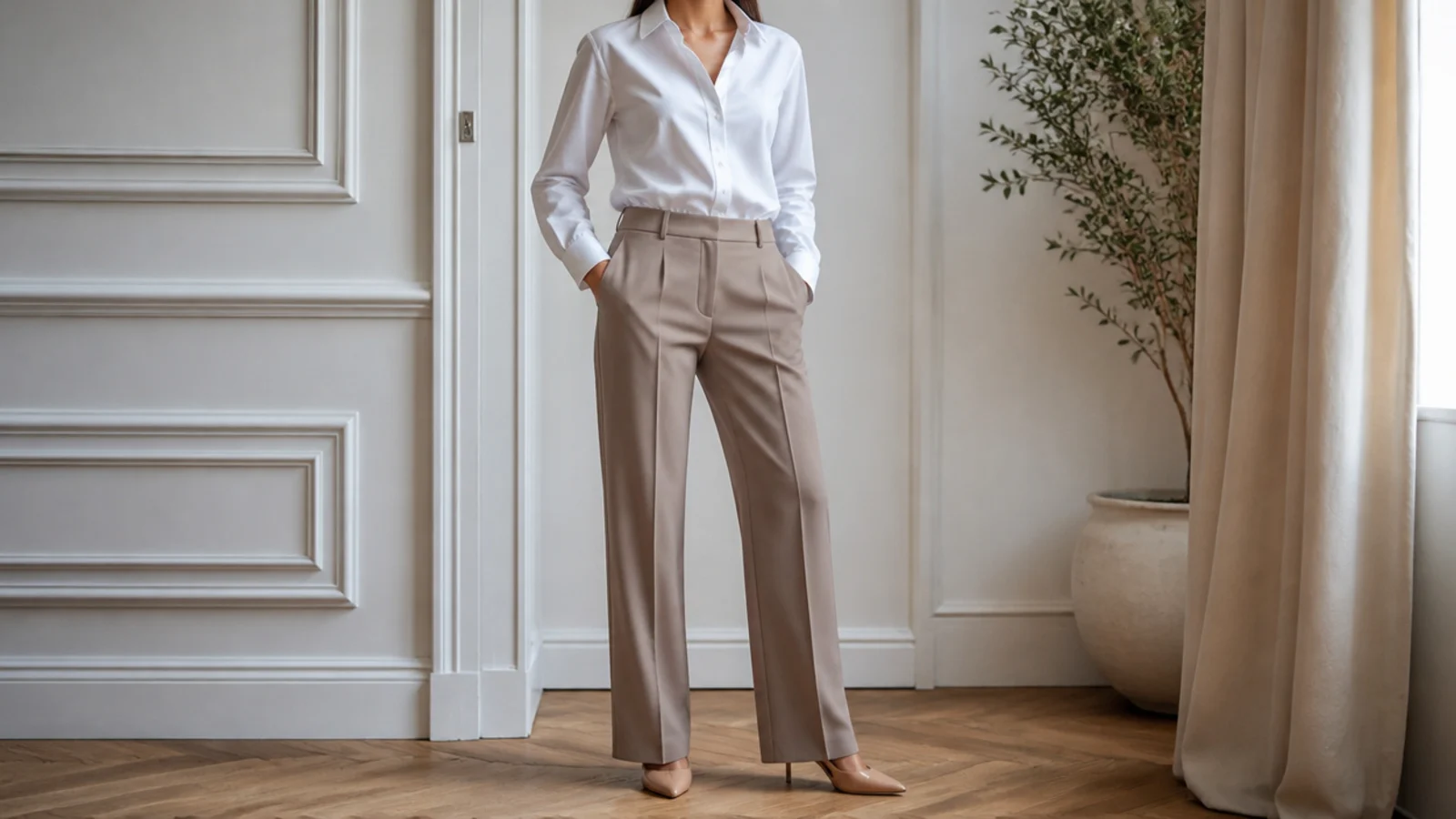
A crisp white poplin button-down is the single most versatile top on this list, spanning office, dinner and weekend from one hanger. Poplin holds a clean collar and cuff where a jersey never can, so it dresses a look up instantly under a blazer, then relaxes half-tucked over jeans with the sleeves rolled. It carries every season and layers under knits in winter. A well-cut cotton shirt worn twice a week for years lands at a few cents per wear. It flatters every complexion because the bright white lifts the face rather than draining it. It is one of the first three staples to buy, and anchors half the looks in neutral outfit ideas that look expensive.
Size up half a size for a relaxed, tuck-friendly fit. A structured cotton poplin looks far more expensive than a soft slub weave.
3. Oatmeal Ribbed Knit Crewneck
An oatmeal ribbed knit crewneck is the warm-neutral workhorse of the cool months and the piece that makes texture do the work color usually does. Choose a merino or cotton-blend rib rather than acrylic, since the ribbing catches light and reads as depth against flat trousers. Oatmeal, a soft warm beige with a gray base, is more forgiving than pure cream and flatters warm and neutral skin especially well. It layers over a collared shirt, under a trench or over a slip dress from fall through early spring. Worn all winter, cost per wear drops fast. For the cozy end of neutral dressing, see beige sweatpants outfits, or the tonal-layering idea in neutral outfit ideas that look expensive.
Pick a merino rib over acrylic so it holds shape and does not pill. Layer a white collar underneath to lift oatmeal off the face.
4. Gray Merino Crewneck Sweater
A gray merino crewneck is the cool-neutral counterpart to the oatmeal knit and the sweater that reads sharpest against cool-toned skin, dark hair and gray-blue eyes. A mid to charcoal gray pairs cleanly with black, white, navy and denim, making it the most mix-friendly knit color after cream. Fine-gauge merino wears three seasons, layering under a coat in winter and standing alone in a cool spring. It dresses down over jeans and up over tailored trousers with loafers. Because gray is a hard neutral, it hides marks and never looks cheap the way pale beige can when it picks up a stain.
A fine-gauge merino layers under a blazer without bulk. Choose charcoal over pale gray if you want the most forgiving, low-maintenance option.
5. Camel Oversized Blazer
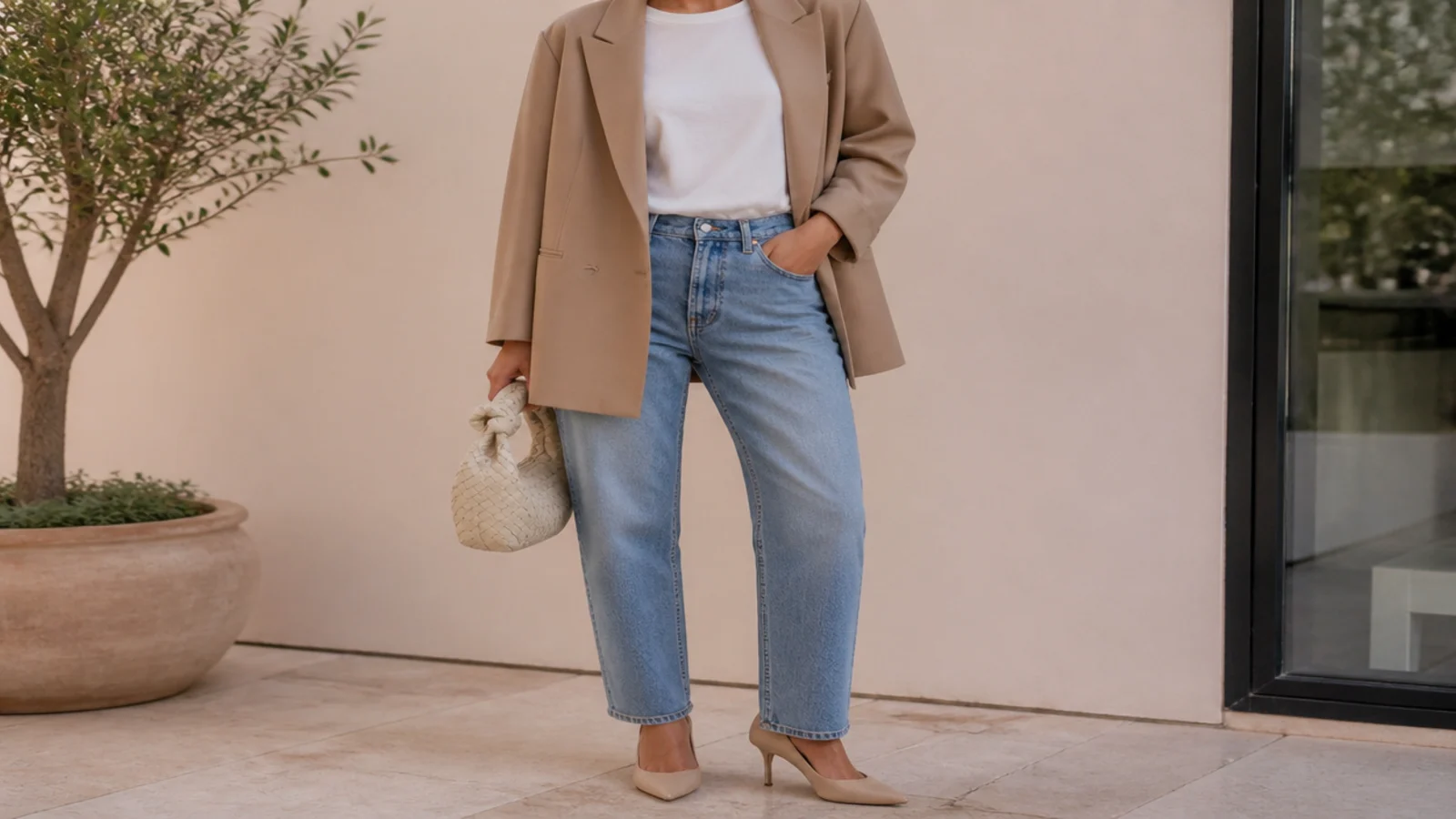
A camel oversized blazer is the instant-polish staple that lifts a tee and jeans into an outfit and the third piece that finishes almost any neutral base. Camel, a warm mid-brown, is the most expensive-looking neutral you can wear and the color most associated with quiet luxury. A relaxed, slightly padded shoulder in a wool-blend crepe drapes better than a stiff suiting weave. It carries spring through fall and layers over a knit in winter, spanning office, dinner and weekend. Worn weekly, its cost per wear beats any trend jacket. See it dressed for work in beige blazer outfits for work.
Roll the sleeves and leave it open over a fitted layer to keep the waist visible. A wool-blend crepe drapes far better than stiff suiting.
6. Beige Cotton Trench Coat
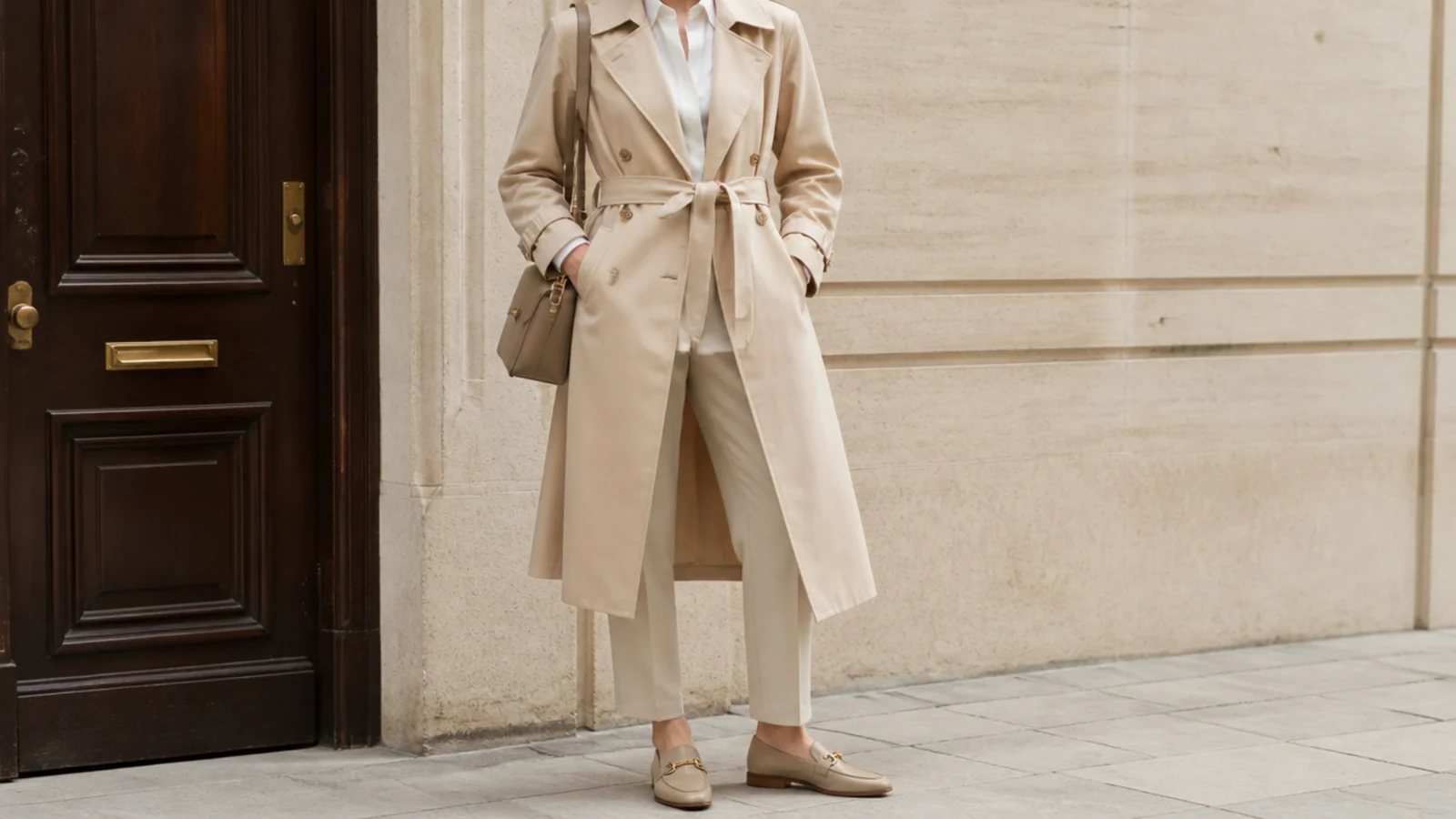
A beige cotton-gabardine trench is the highest cost-per-wear payoff on this list, the piece that justifies a bigger spend because it carries so many outfits. A classic double-breasted trench works spring and fall over everything from a slip dress to jeans and a knit, and it reads polished belted or relaxed open. Do the math: a $250 trench worn a hundred times over a few years costs $2.50 a wear, less than a cheap tee worn twice. Choose gabardine over a shiny synthetic for the crisp, structured drape. It suits every coloring since the collar sits away from the face.
Knot the belt rather than buckling it for a softer, more current line. Gabardine holds structure far better than a lightweight synthetic shell.
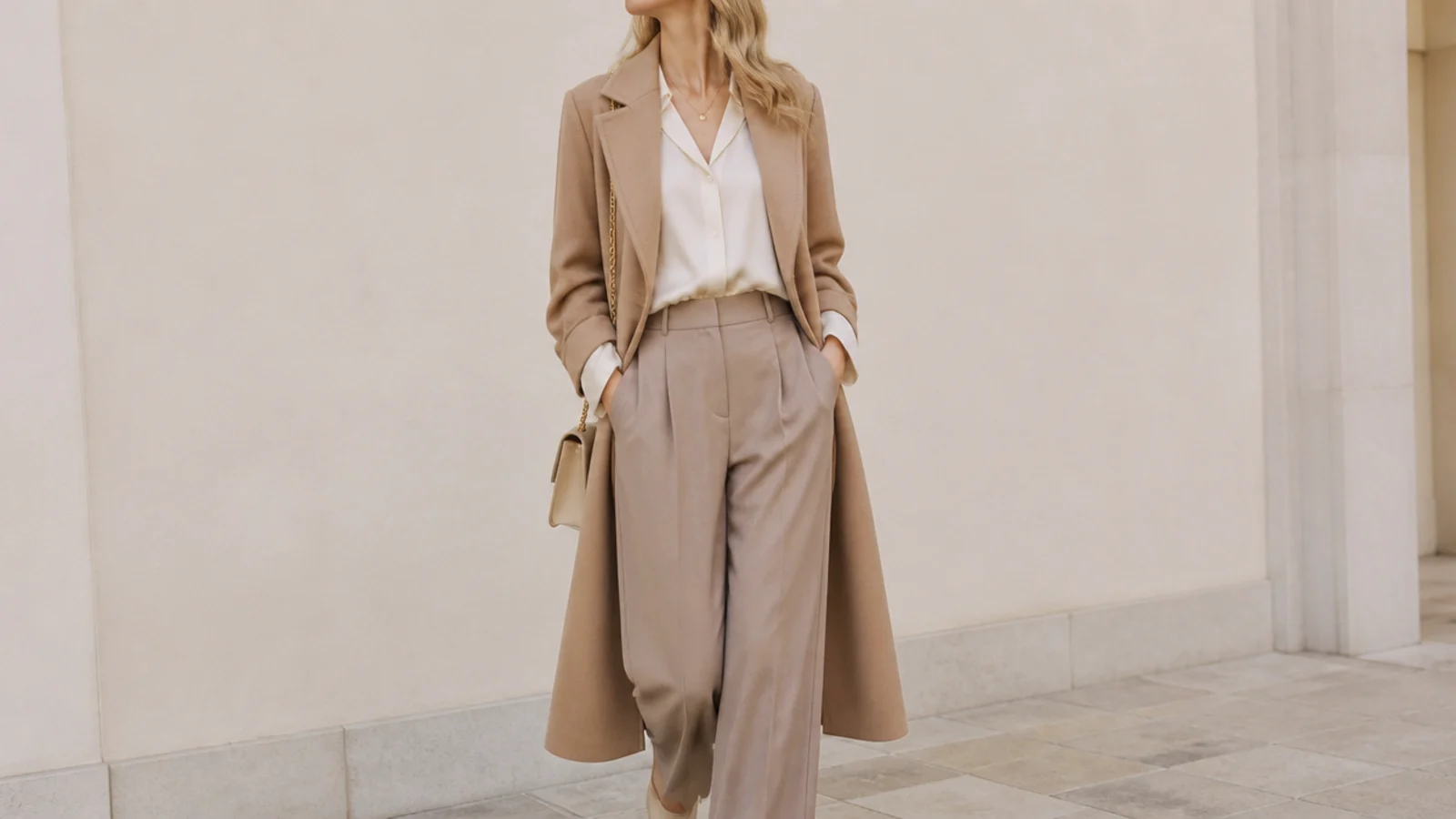
7. Camel Wool Overcoat
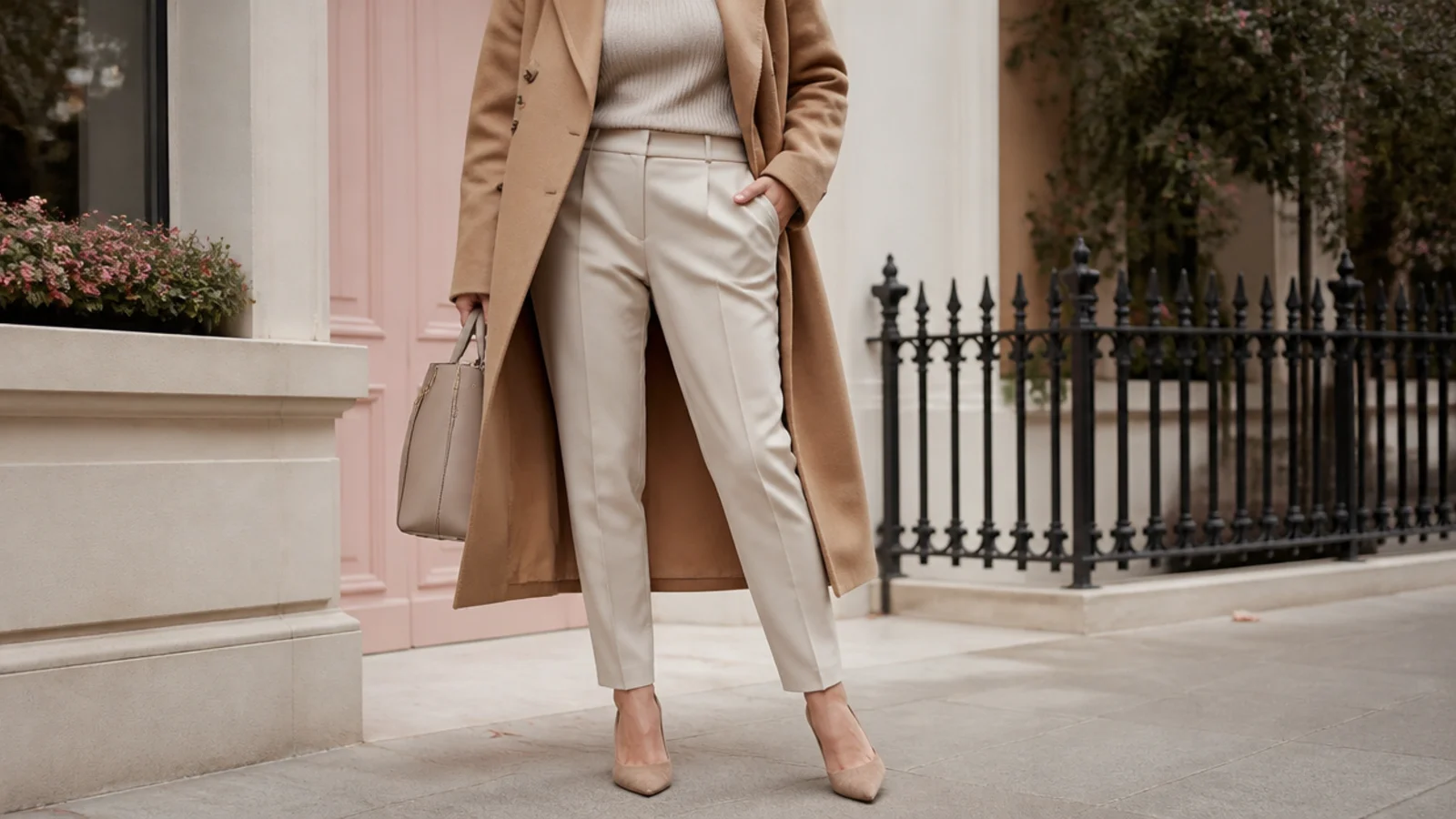
A camel wool overcoat is the single most luxury-signaling neutral staple and the one winter piece worth investing in, since a good wool coat sits over every cold-weather outfit you own. A straight or slightly cocoon cut in a wool or wool-cashmere blend drapes cleanly over a knit and trousers or a midi dress. Camel flatters warm and neutral skin best; if you are cool-toned, a charcoal or oatmeal wool coat is the more forgiving swap. It is a one-season piece but worn daily for months, so cost per wear stays low. Pair it with an elegant neutral outfit underneath.
Buy a wool blend of at least 70 percent wool so it holds shape and warmth. Size to layer a blazer or thick knit underneath.
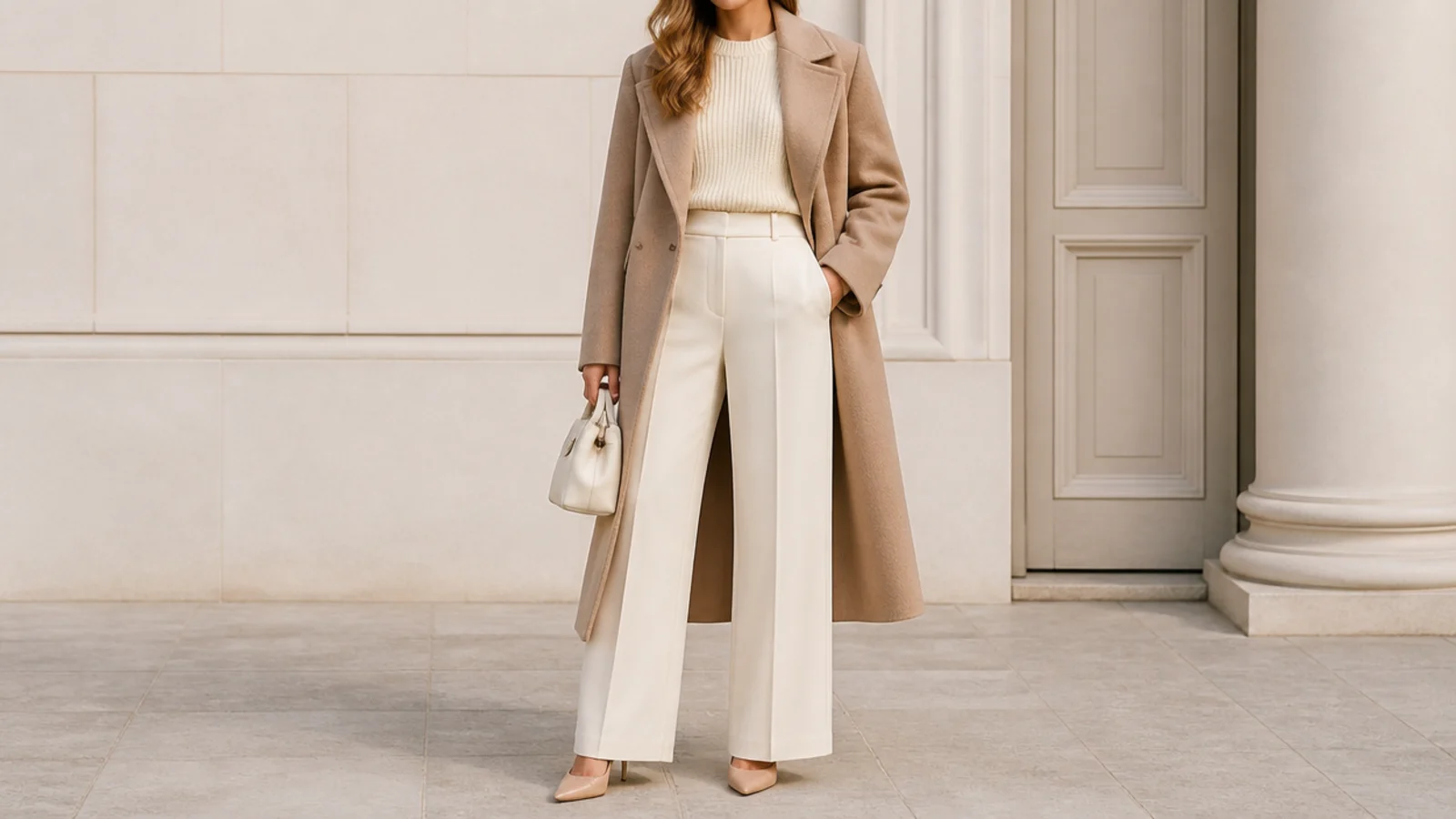
8. Ecru Tailored Trousers
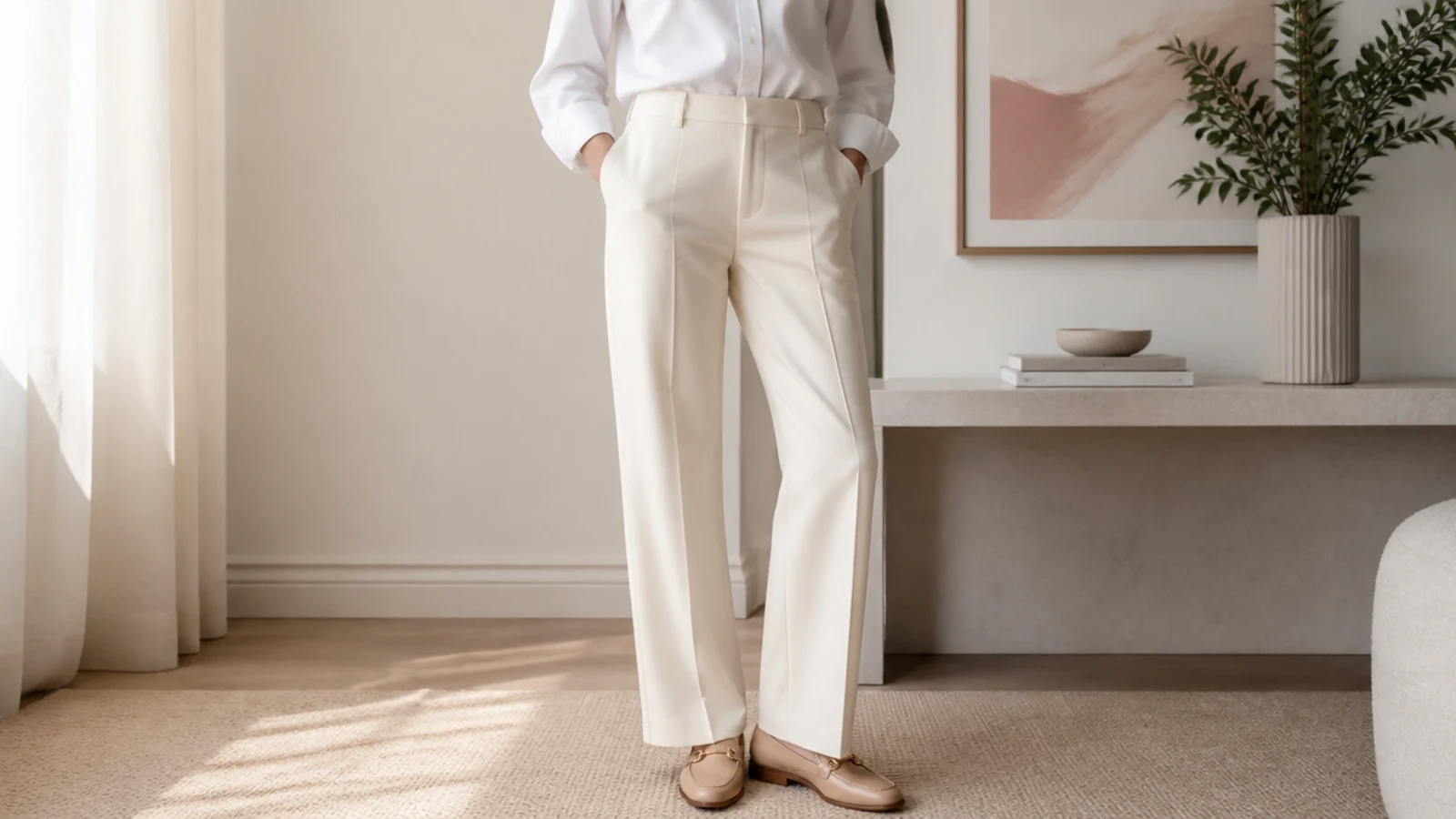
Ecru tailored straight-leg trousers are the lighter, dressier alternative to jeans and the base that reads most expensive in a tonal beige look. Ecru, a soft off-white with a warm cast, is cleaner than cream and less stark than pure white, so it flatters more complexions. A mid-rise straight or slightly wide leg in a crepe or wool blend holds a sharp crease that jersey never can. It spans office, dinner and warm-weather events across three seasons. The trade-off is upkeep: pale trousers show marks, so spot-clean fast. Style them beside the workwear pairings in beige pants outfits.
Choose a crepe or wool blend that holds a crease over a soft linen that creases and clings. Line or double-layer pale fabric so it is not sheer.
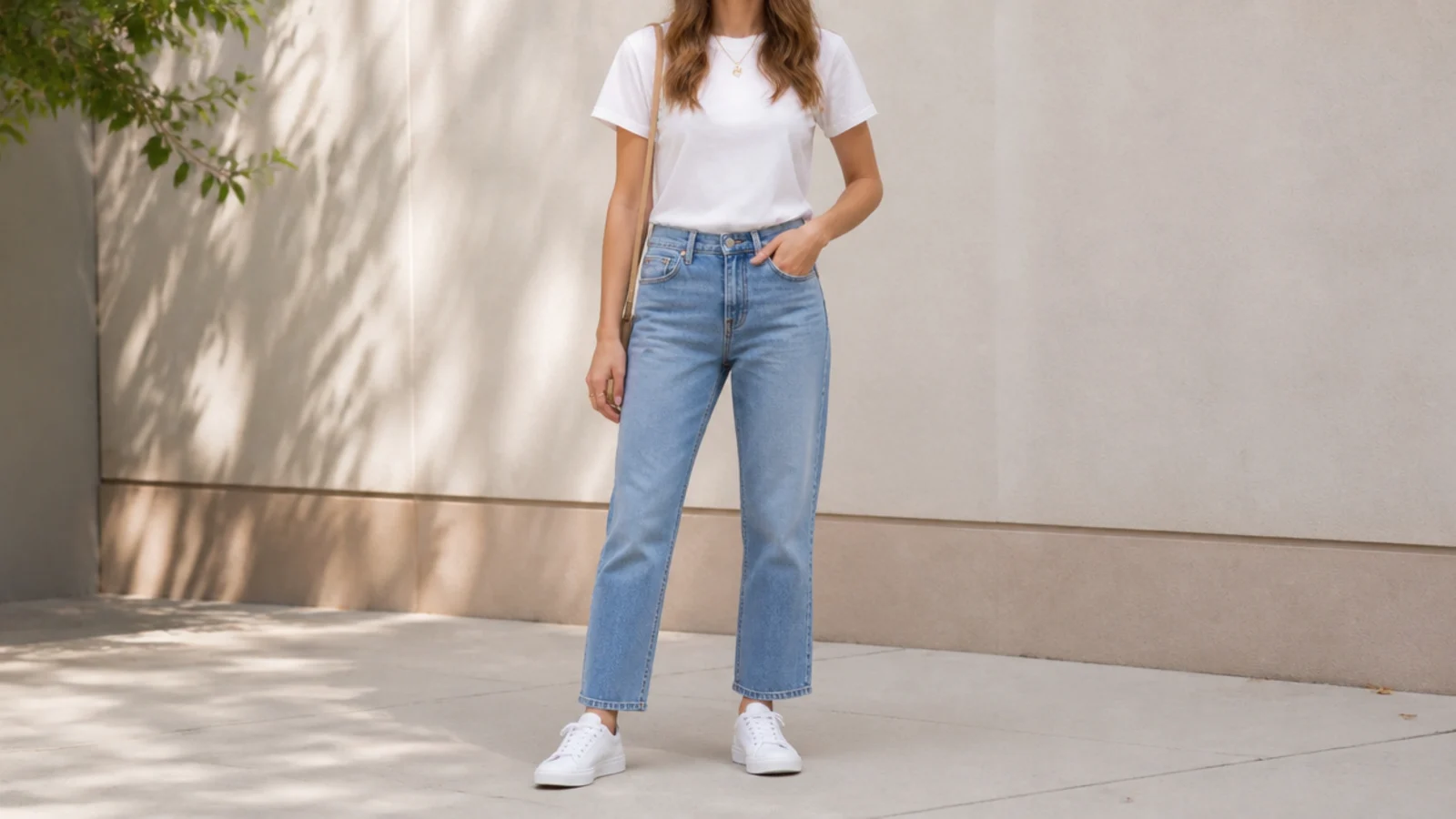
9. Mid-Blue Straight-Leg Jeans

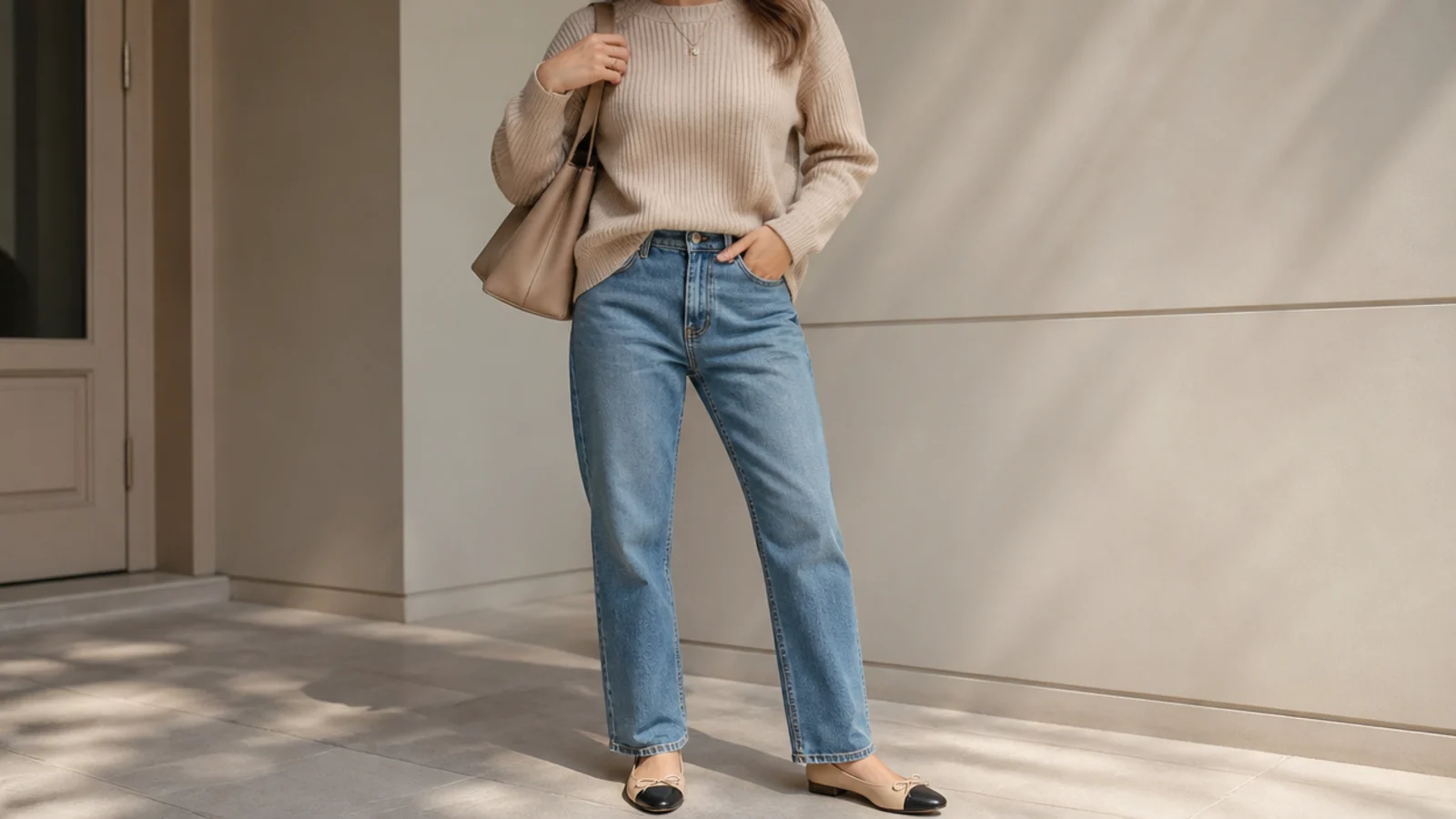
Denim is an honorary neutral, and a mid-rise mid-blue straight-leg jean is the highest-versatility bottom you can own, crossing sneakers, flats and boots without a swap. A clean mid-blue with no heavy fading behaves like a neutral against every top color, from a white shirt to a camel knit. The straight leg skims rather than clings and flatters nearly every proportion. It wears all four seasons and reads casual with a tee or elevated under a blazer. Worn several times a week for years, it is the lowest cost-per-wear staple on this list after the tee. It is one of the first three to buy, and grounds the relaxed end of beige pants outfits.
A dark, rigid mid-blue with minimal fading looks the most versatile and the most expensive. Crop the hem to graze the ankle for the longest line.
10. Black Tailored Trousers
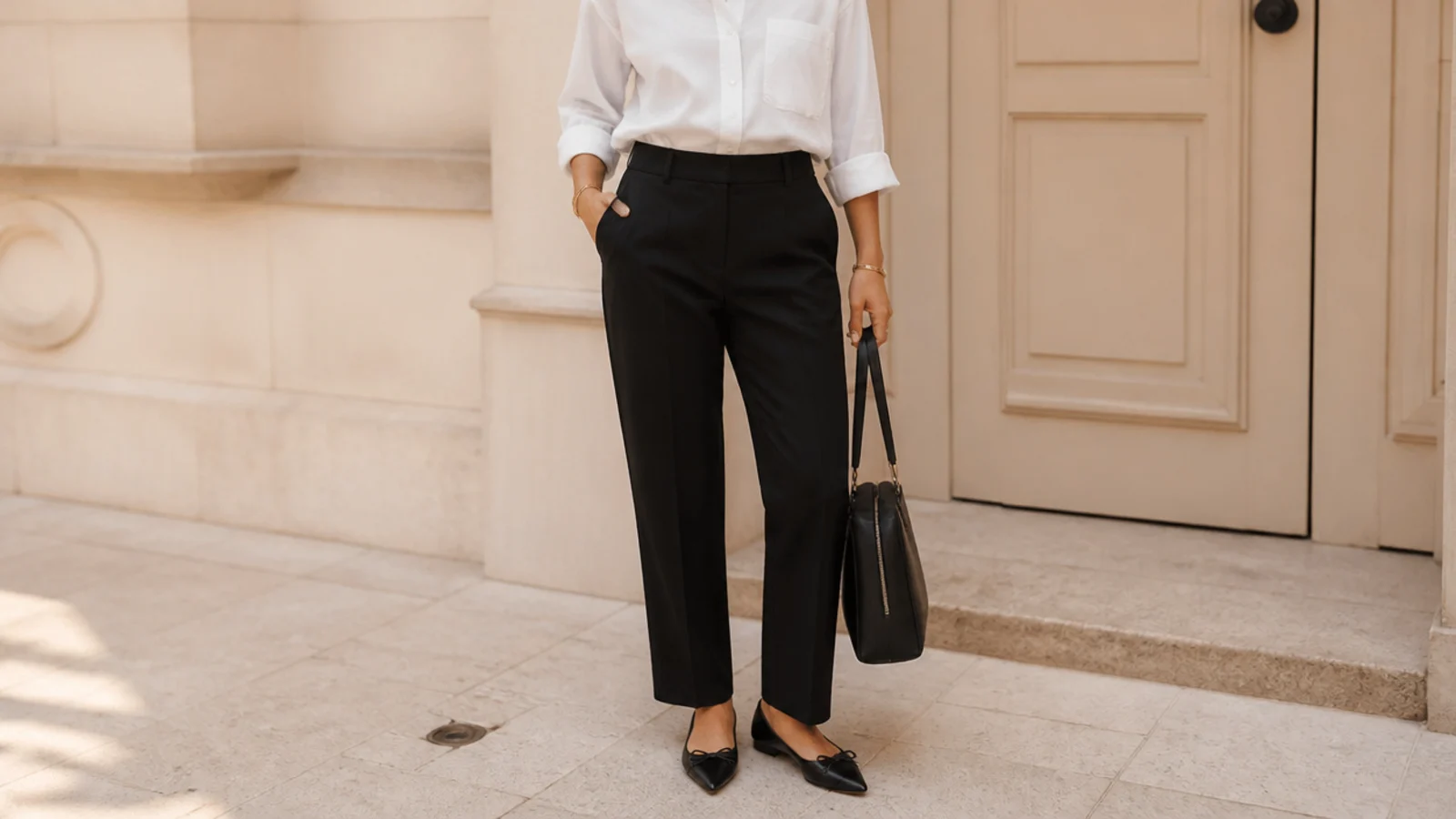
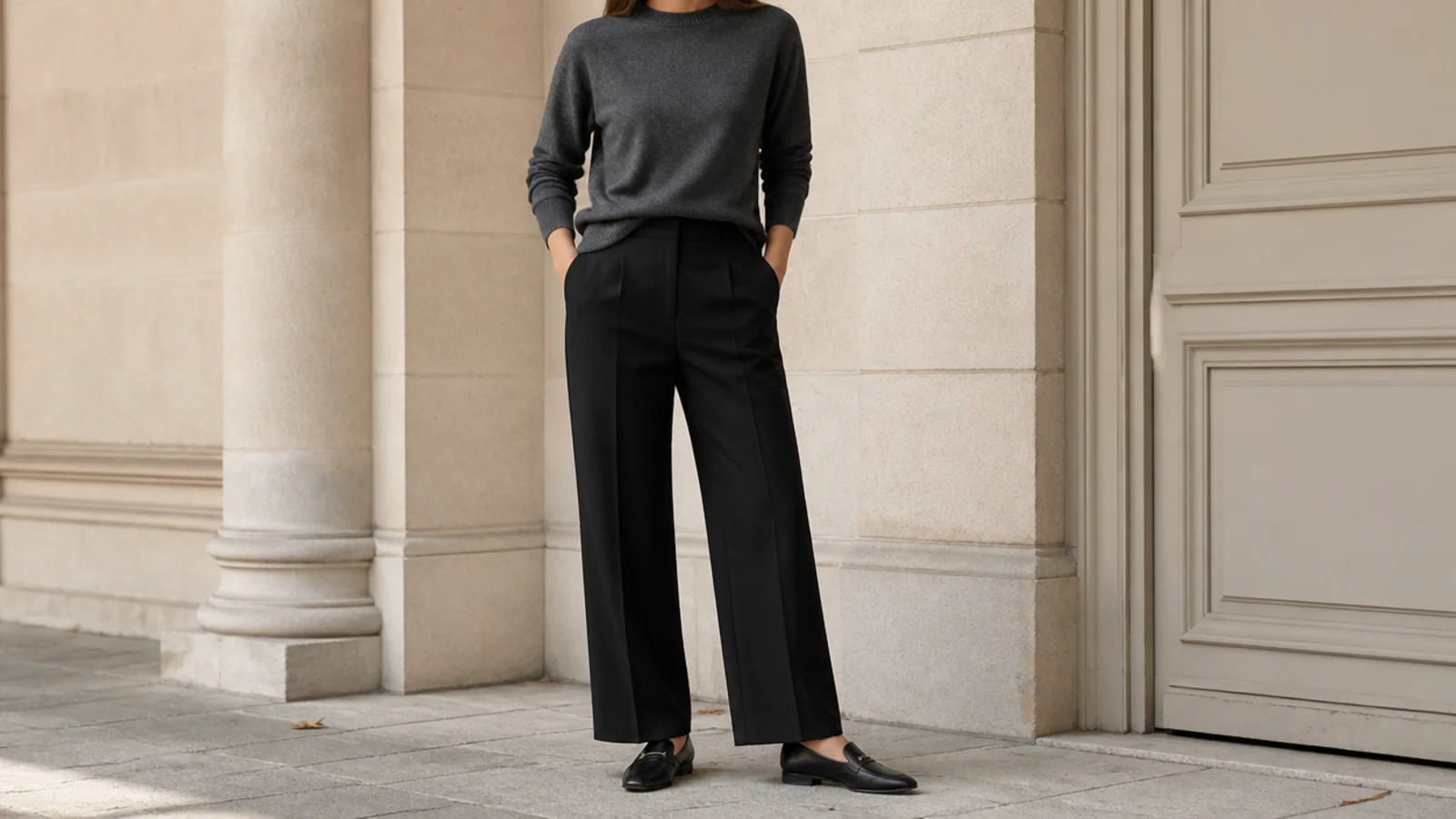
Black tailored trousers are the hard-neutral anchor every beige wardrobe needs, the piece that grounds a soft palette and covers the strictest dress codes. Where ecru trousers read relaxed and luxe, black reads sharp and authoritative, so the two together give you range no single base offers, the same base logic behind beige outfits for women. A mid-rise straight or slim leg in a crepe or wool blend holds a crease and hides marks completely, making it the lowest-maintenance bottom here. It spans all four seasons and every occasion from office to evening. Black suits every complexion, though it can be heavy near very fair skin, so keep a white collar or knit at the neckline.
Keep a white or cream layer at the collar so black does not drain a fair complexion. A crepe weave holds a crease and hides marks best.
11. Champagne Silk Slip Dress
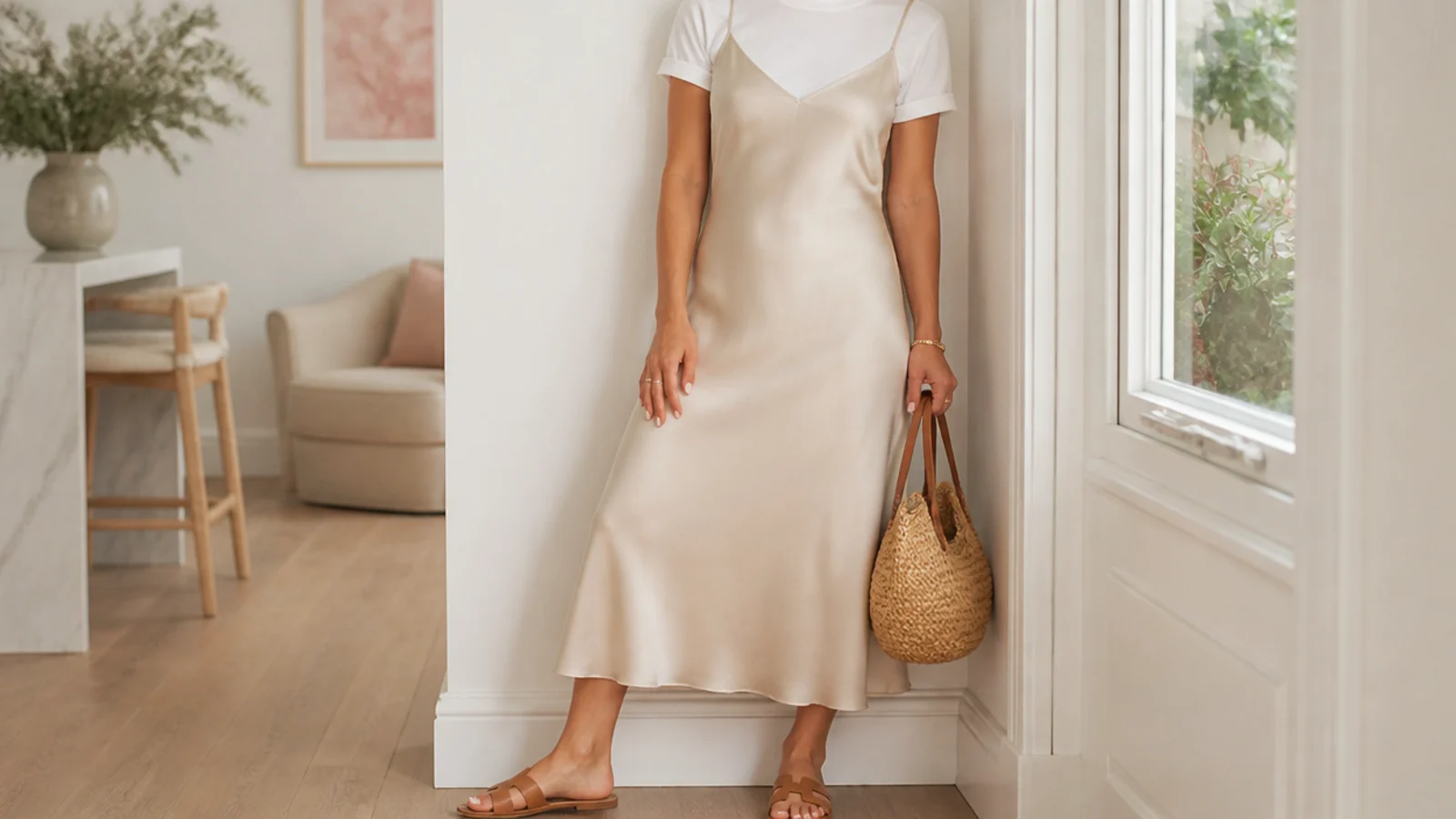
A champagne silk slip dress is the range piece that flexes from a layering base to an evening dress in one garment. Worn alone with heeled sandals it reads elegant for dinner or a wedding; layered over a white tee with sneakers or under an oversized knit it turns everyday. A bias-cut silk or silk-blend catches light and drapes to skim the body, giving the soft sheen that makes neutrals look expensive. Champagne, a warm off-white with a golden cast, flatters warm and olive skin; cool-toned complexions suit a stone or dove gray slip better. It wears three seasons with the right layer, and dresses up into elegant neutral outfits for evening.
Layer it over a fitted tee and under a knit to carry it into cooler months. A bias cut drapes far more expensively than a straight-cut satin.
12. Beige Knit Midi Dress
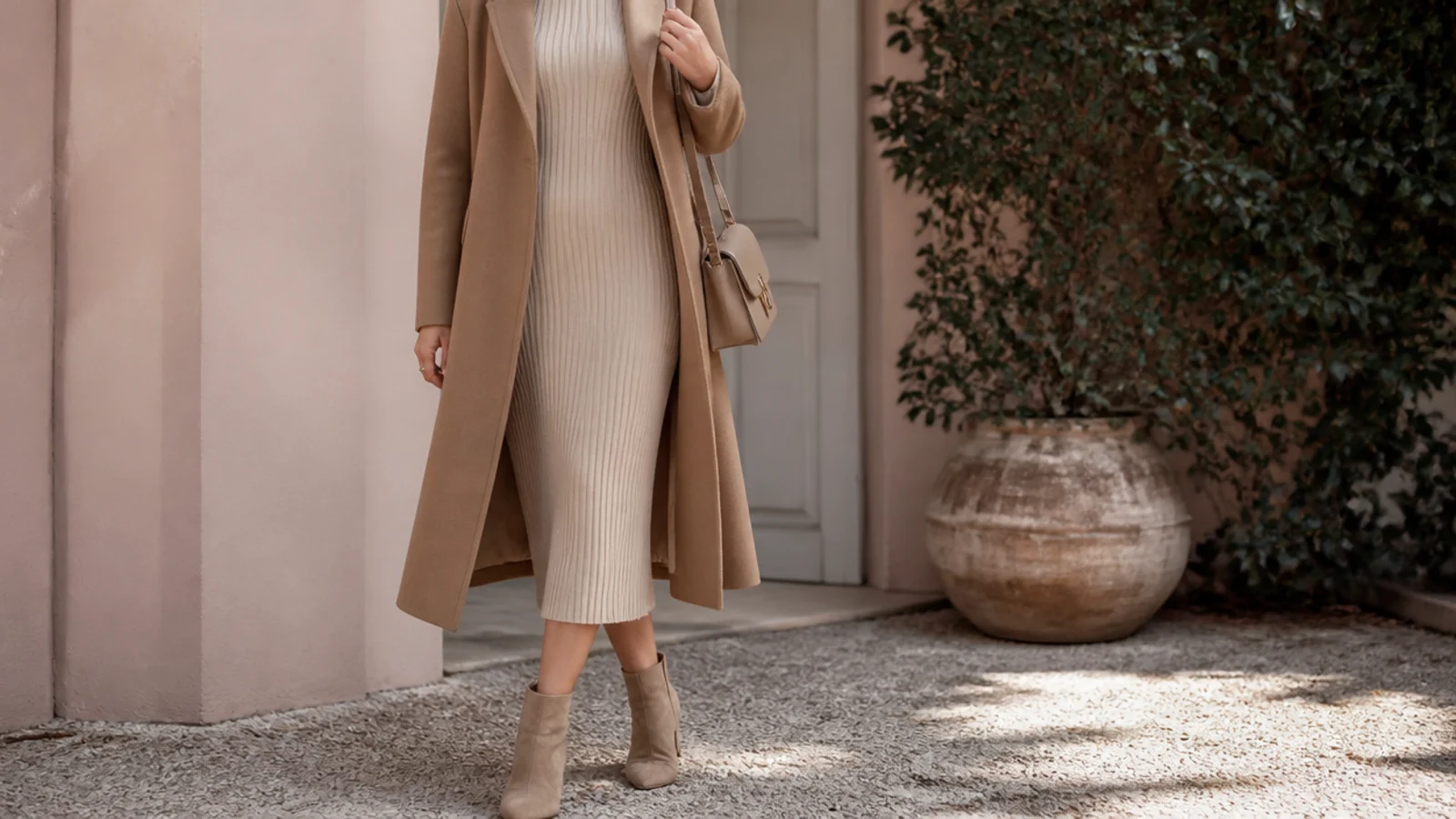
A fitted beige ribbed knit midi dress is the one-piece staple that does all the styling for you and the easiest way to look put-together in a single reach. The ribbed texture skims the body and adds the depth a flat neutral lacks, while the midi length reads polished from office to dinner. Beige, a soft warm neutral, flatters warm and neutral skin; if it sits too close to your complexion, break it with a contrasting coat or boot so you do not wash out. Layer it under a camel coat with boots in winter or wear it alone with sandals in summer, giving it three-season range. See it among more beige blazer outfits for work styling.
Break a close-to-skin beige with a darker coat or boot so it does not wash you out. A fine rib skims the body more flatteringly than a chunky knit.
How Do You Build a Neutral Capsule Wardrobe?
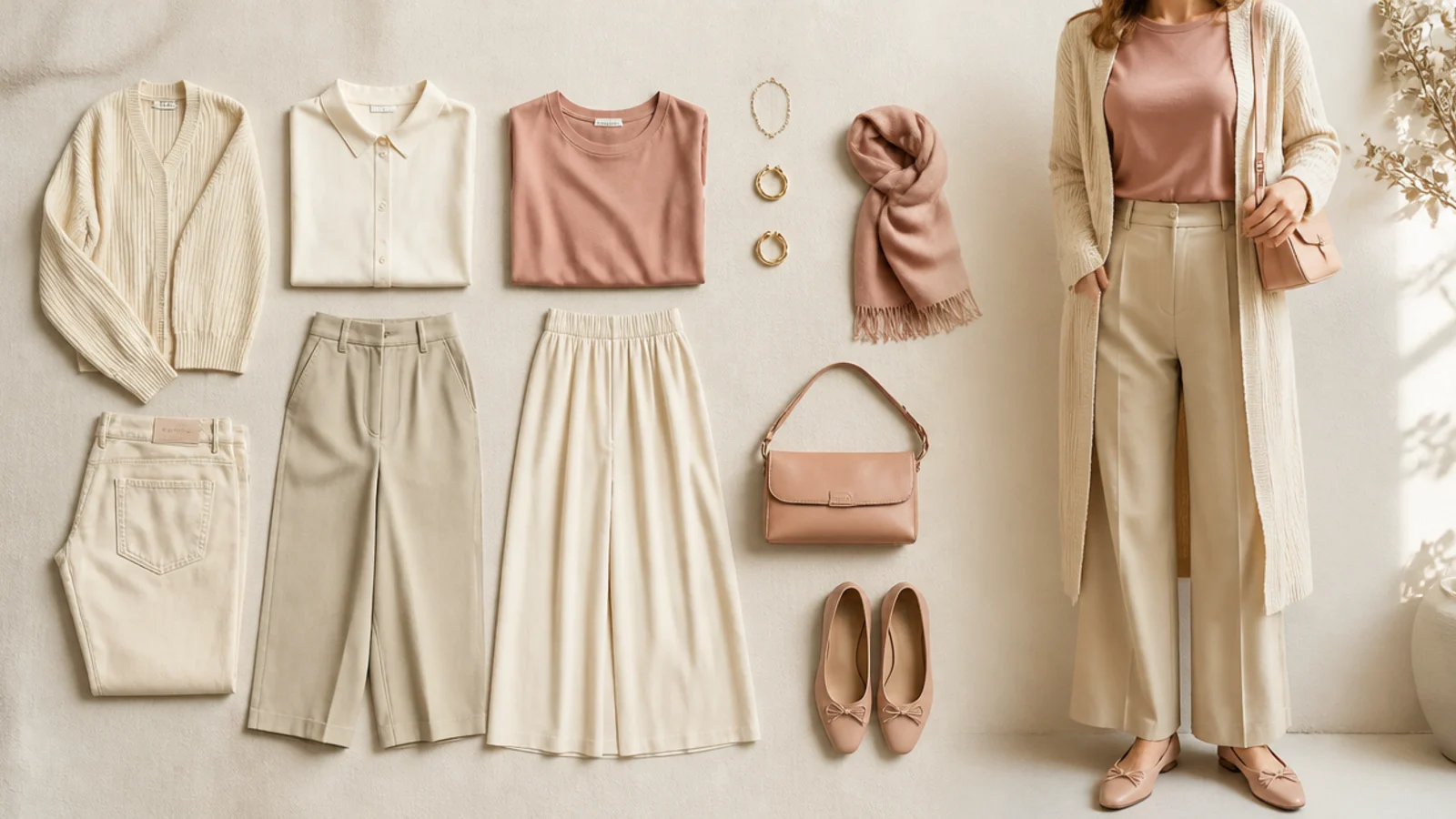
Building a neutral capsule starts with a rule, not a shopping list: choose two core neutrals plus one accent. Pick one warm-family base such as camel, oatmeal or ecru and one hard neutral such as black, white or gray, then add a single accent color you love, like olive, navy or rust. That gives every piece a reason to mix with every other piece. Aim for roughly 30 to 40 garments with about 75 to 80 percent of them neutral, since a small share of accent goes a long way. Build in layers: start with the highest-versatility staples, the straight-leg jean, the white poplin shirt and the camel blazer, then add outerwear, then one or two dresses for range. Buy by season so you are not covering winter in July, and replace worn basics rather than adding new categories. The test of a working capsule is that any top pairs with any bottom, which only happens when the palette is disciplined. For finished looks the capsule builds, see neutral outfit ideas that look expensive.
Is Beige or Black a Better Wardrobe Base?
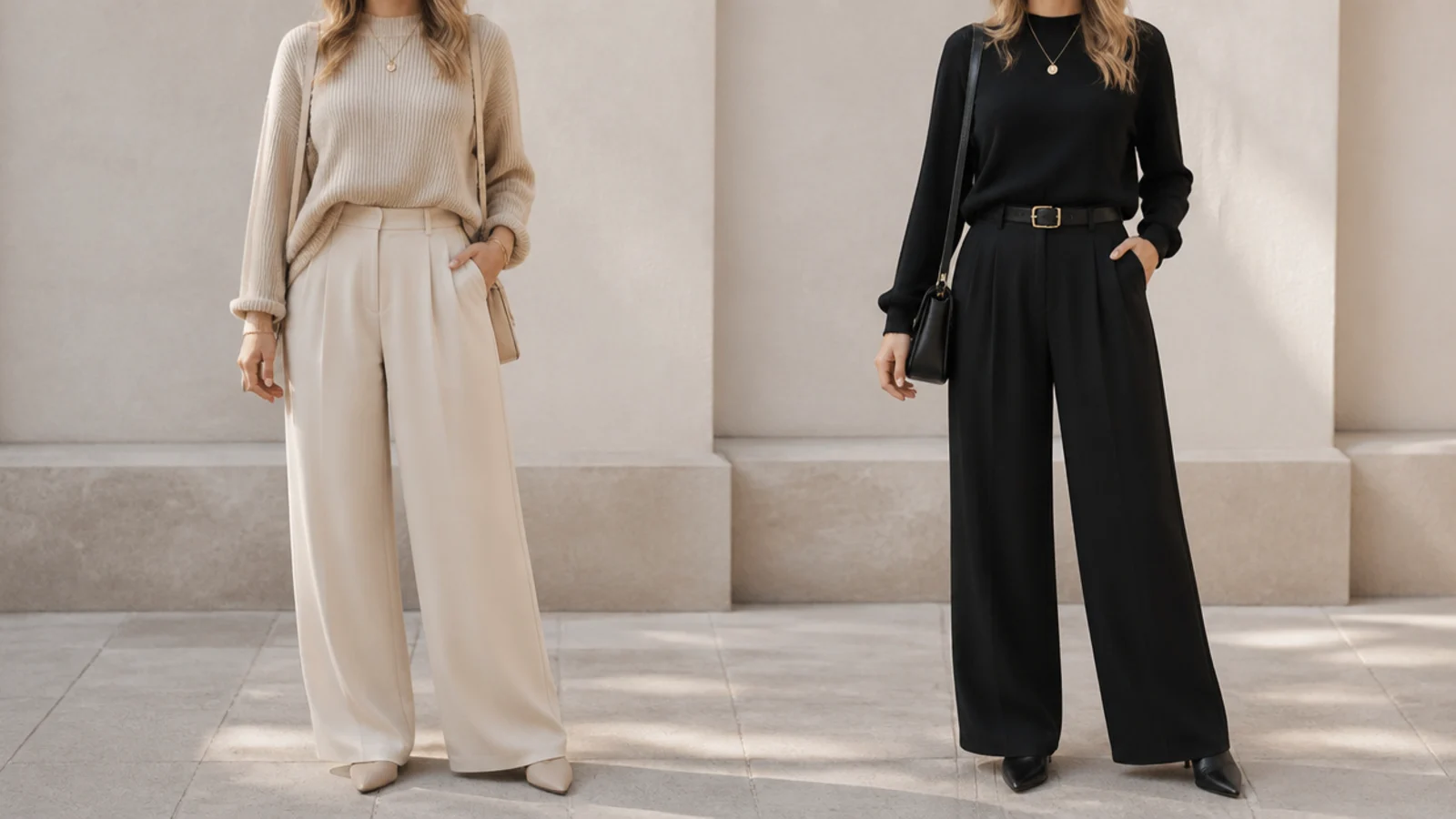
Neither beige nor black is universally better; they solve different problems, and the strongest wardrobes use both. Beige and the warm neutrals around it, camel, oatmeal, ecru and taupe, read softer, more expensive and more current, and they photograph as quiet luxury. The trade-off is risk: pale beige shows every mark, can wash out a complexion close to its tone, and is harder to match across undertones. Black and the hard neutrals, white and gray, are more forgiving. Black hides marks, flatters every skin tone, covers strict dress codes and never looks cheap, but a head-to-toe black base can read heavy or severe and lacks the softness beige brings. The practical answer is to choose your base by lifestyle: if you want an easy, low-maintenance, authoritative wardrobe, anchor in black and white; if you want a soft, elevated, tonal look and will spot-clean carefully, anchor in the beige family. Most people are best served owning a beige base for warmth and a black anchor for structure, which is exactly why this list includes both ecru and black trousers.
What Are the Most Versatile Neutral Colors?
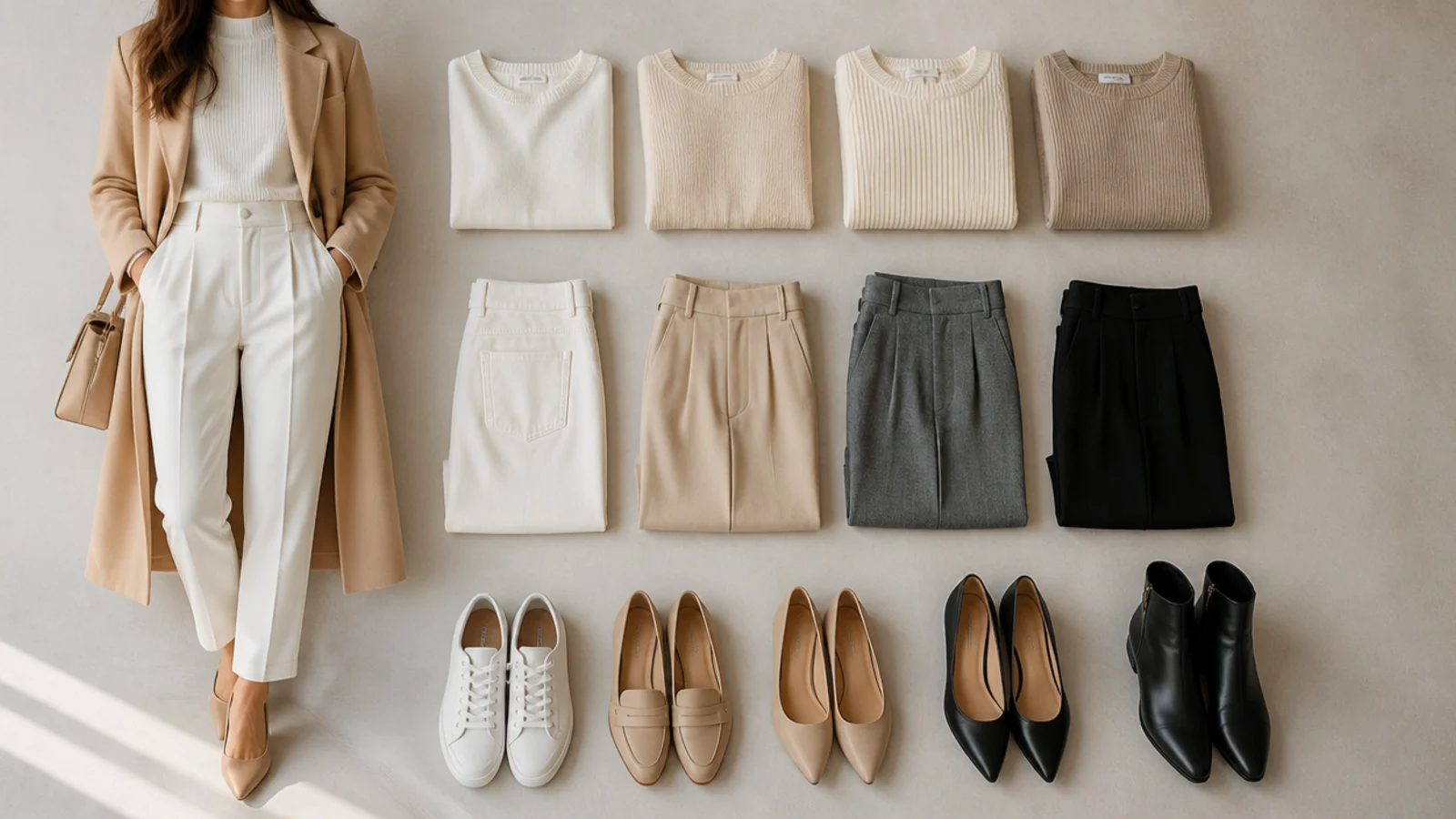
The most versatile neutrals are the ones that pair with the widest range of other colors, and a few earn their keep above the rest. White is the most flexible of all, since it lifts every color and every other neutral. Black is next, grounding any palette and covering any occasion. Camel is the most expensive-looking versatile neutral, bridging warm and cool outfits and pairing beautifully with white, black, navy and denim. Gray, especially a mid to charcoal, is the most mix-friendly cool neutral and a softer alternative to black. Navy behaves as a neutral too, reading richer than black while pairing just as widely. The softer beiges, oatmeal, ecru, taupe and cream, are versatile within a warm palette but need undertone care so they do not clash with one another. The rule that beats chasing every shade: build from two or three of these core versatile neutrals rather than collecting one of everything, because a focused palette mixes and a scattered one does not.
How Do You Match Your Base Neutral to Your Coloring?
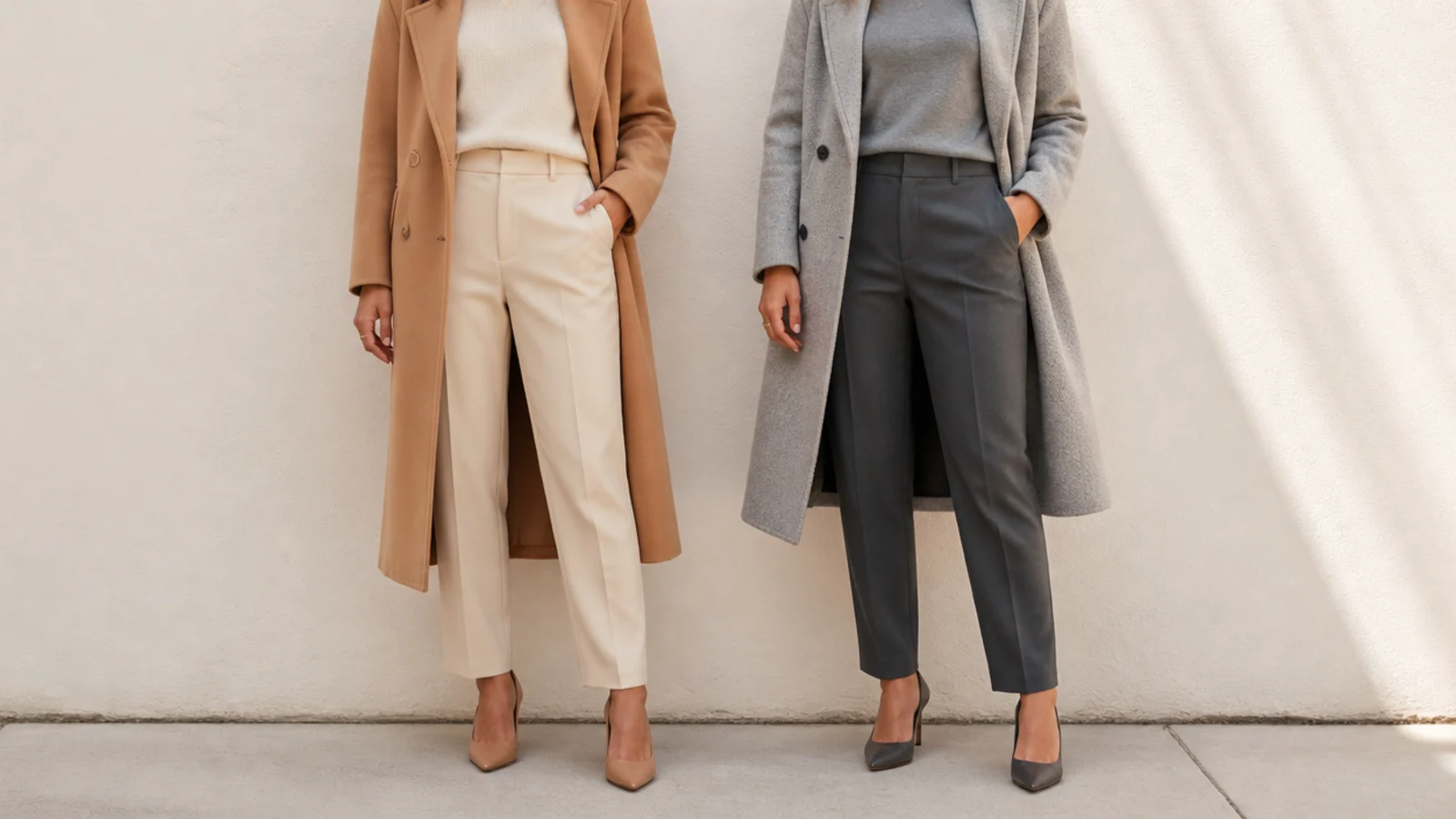
Matching your base neutral to your coloring is the single step that stops beige from washing you out, and it is the piece most guides skip. Look at your skin, hair and eye undertones first. If your skin has warm, golden or peachy undertones, veins that look green and hair with warm depth, you suit warm neutrals: camel, oatmeal, ecru, tan and warm brown will make you glow. If your skin has cool, pink or blue undertones and veins that look blue, you suit cool neutrals: gray, charcoal, stone, dove and true white sit best against you. The specific danger with beige is the wash-out: any neutral that sits within a shade or two of your own complexion drains the face, which is why fair, warm skin often looks flat in pale cream. The fix is contrast. Break a close-to-skin neutral with a darker layer at the neckline, a coat, a knit or a scarf, or shift to a shade with more depth like camel over cream. Get the undertone right and neutrals flatter; get it wrong and they age you.
What Neutral Basics Should You Buy First?
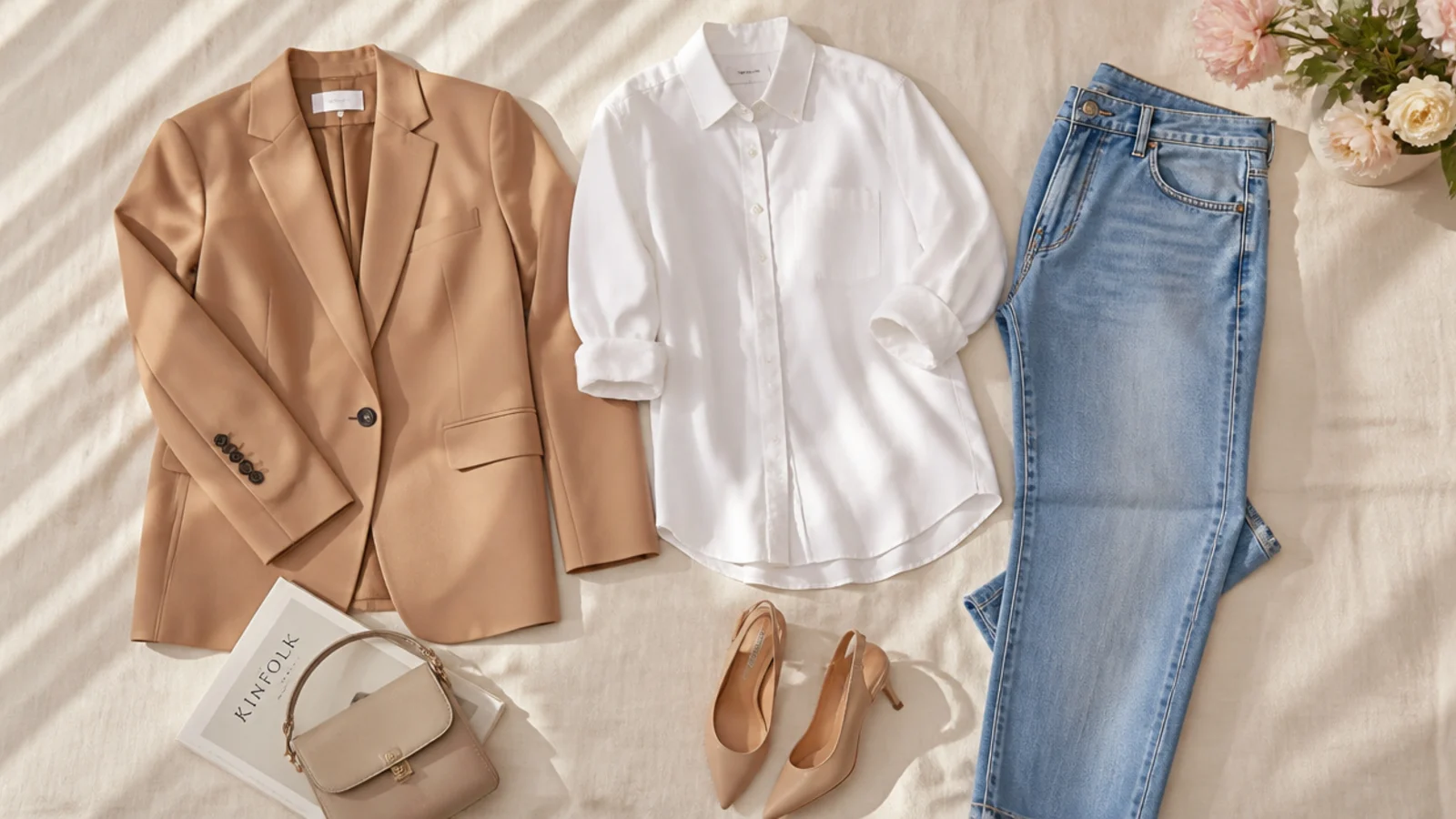
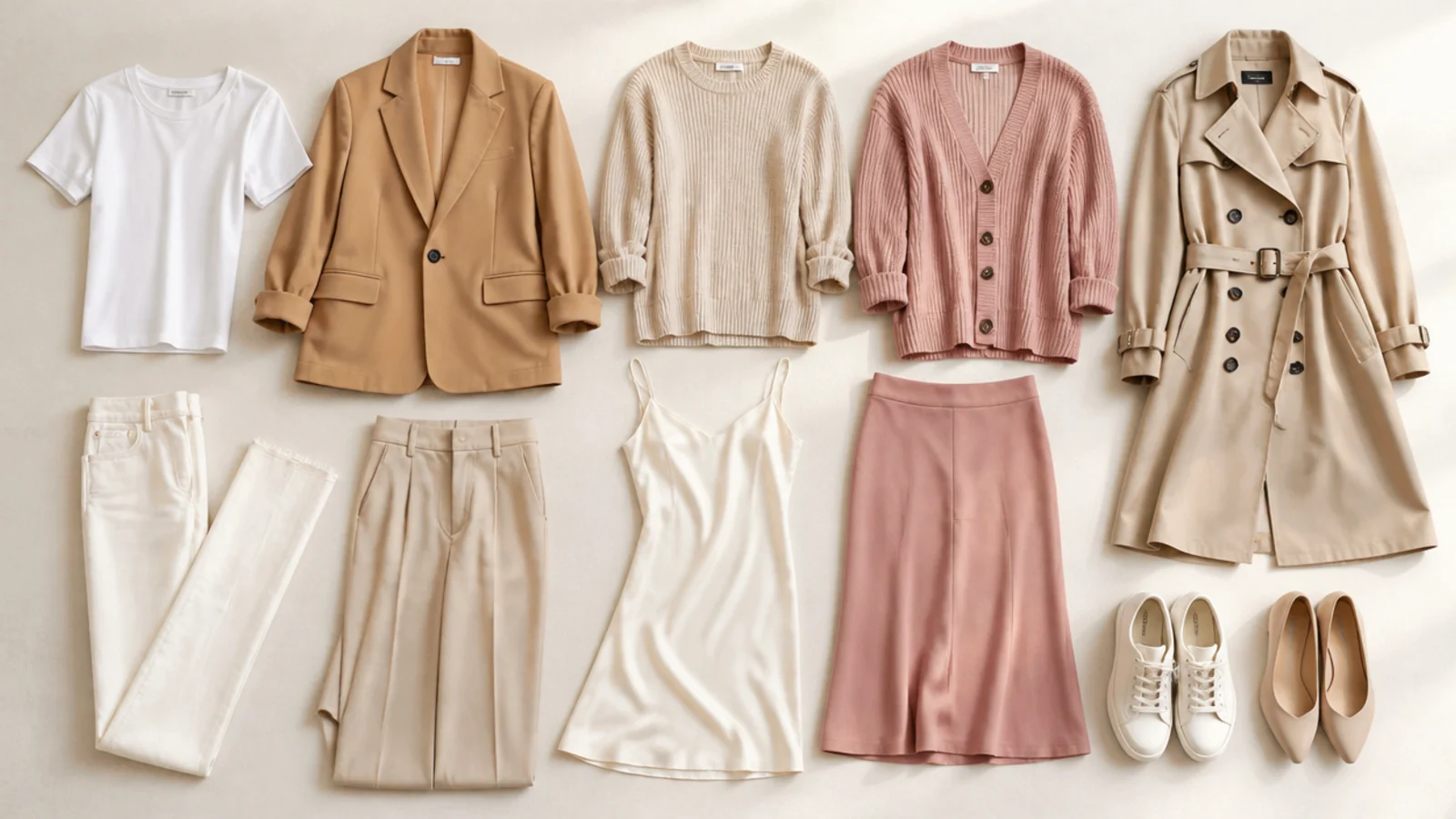
Buy the three highest-versatility staples first: a mid-rise straight-leg jean, a crisp white poplin button-down and a camel blazer. Together they cross the most occasions and outfits of anything on this list, reading casual with sneakers and elevated with loafers and a heel. From there, build outward by function rather than by color. Add the tops that layer under them, a white tee and one knit matched to your undertone, oatmeal for warm skin or gray for cool. Then add outerwear in order of wear: a beige trench for spring and fall, then a camel or charcoal wool coat for winter, since those two carry the most cost-per-wear value despite the higher price. Finish with range pieces, a silk slip and a knit midi dress, and a black tailored trouser as the hard-neutral anchor. Skip trend colors and duplicate categories until these basics are covered, because a second beige knit does far less than a first pair of black trousers. For the workwear end of this order, see beige blazer outfits for work.
Main Differences
- Beige-family neutrals read softer and more expensive; hard neutrals like black and gray are more forgiving and lower risk.
- Camel and oatmeal flatter warm skin; gray, charcoal and true white flatter cool skin.
- Coats and blazers earn their cost through years of wear; tees and jeans win on sheer frequency of wear.
- Pale beige shows marks and can wash out the face; black hides marks and covers strict dress codes.
Frequently Asked Questions
How do you build a neutral capsule wardrobe?
Start with two core neutrals plus one accent: one warm base such as camel or ecru, one hard neutral such as black or gray, and a single accent you love. Aim for about 30 to 40 pieces with 75 to 80 percent neutral, so any top pairs with any bottom. Buy the highest-versatility staples first, the straight-leg jean, white poplin shirt and camel blazer, then add outerwear and one or two dresses for range.
Is beige or black a better wardrobe base?
Neither wins outright; they solve different problems. Beige and the warm neutrals read softer, more expensive and more current, but they show marks and can wash out skin close to their tone. Black and the hard neutrals are more forgiving, hide marks, flatter every complexion and cover strict dress codes, but can read heavy alone. The strongest wardrobes use both, which is why a full base includes ecru trousers for warmth and black trousers for structure.
What are the most versatile neutral colors?
White is the most versatile because it lifts every other color, followed by black, which grounds any palette. Camel is the most expensive-looking versatile neutral and bridges warm and cool outfits. Gray, especially charcoal, is the most mix-friendly cool neutral, and navy behaves as a neutral too. Build from two or three of these core colors rather than collecting one of every beige, since a focused palette mixes and a scattered one does not.
How many pieces should a neutral capsule wardrobe have?
Most working capsules run 30 to 40 pieces across a season, with roughly 75 to 80 percent of them neutral and the rest accent color. That is enough to build several weeks of outfits without repetition while staying small enough that every piece mixes. Count tops, bottoms, layers, dresses and shoes together, and split the number across seasons rather than trying to cover the whole year in one closet.
What is cost per wear and how do you calculate it?
Cost per wear is the price of a garment divided by how many times you wear it, and it is a truer value measure than sticker price. A $250 trench worn a hundred times over a few years costs $2.50 a wear, cheaper than a $20 tee you wear twice and abandon. Neutral staples win on this math because you reach for them constantly, which is why spending more on a versatile coat or blazer usually costs less over time.
How do you wear neutrals without looking washed out?
Wash-out happens when a neutral sits within a shade or two of your own complexion, draining the face. Match your base to your undertone first: warm, golden skin suits camel, oatmeal and ecru, while cool, pink skin suits gray, charcoal and true white. When a light neutral sits too close to your skin, add contrast at the neckline with a darker knit, coat or scarf, or shift to a deeper shade like camel over pale cream so the face stands out.
What is the difference between beige, cream, taupe and camel?
They are all warm neutrals separated by depth and undertone. Cream is a soft off-white with a warm cast, the palest of the four. Beige is a light tan, slightly deeper than cream. Taupe is a greyed-brown, cooler and more muted than beige. Camel is the deepest, a rich warm mid-brown that reads the most expensive. Matching undertones across these shades is what keeps a tonal neutral outfit from looking mismatched.
Are neutral basics worth the investment?
Yes, because neutral basics earn their cost through frequency of wear in a way trend pieces never do. A camel blazer, a beige trench and a white poplin shirt cross seasons and occasions for years, dropping their cost per wear to a few dollars or cents. Spend the most on the pieces you wear most, the coat, blazer and jeans, and save on the items you replace often like tees, and the wardrobe pays for itself.
Which neutral staple are you buying first?
If you take one decision from this list, make it your base neutral before your first purchase: pick the family that flatters your skin, hair and eyes, then buy the mid-rise straight-leg jean, the white poplin shirt and the camel blazer as your first three high-versatility staples. Build outward by season, adding the trench and wool coat for cover and the silk slip and knit dress for range, and let cost per wear rather than sticker price guide what you spend. Keep 75 to 80 percent of the closet neutral with one accent, and every piece will mix with the rest. Save the staples that fit your life and browse more outfit ideas, or see them styled in elegant neutral outfits next.