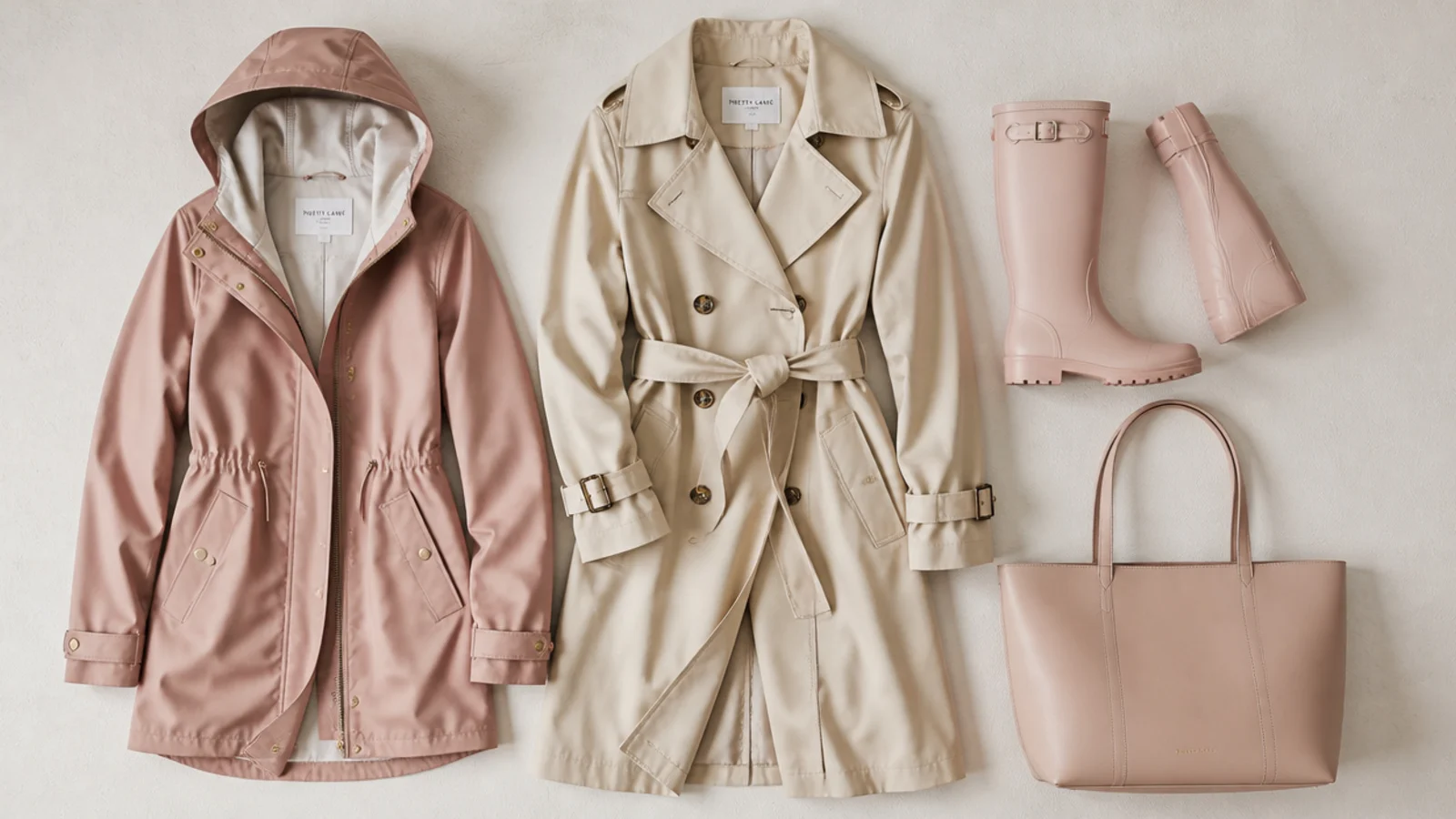
Quick Comparison
| Waterproof Rain Jacket (Shell) | Trench Coat | |
|---|---|---|
| Waterproofing | Fully waterproof, rated 10,000mm and up | Water-resistant only, no rating |
| Seams | Taped or welded, sealed against leaks | Stitched and untaped, wicks in heavy rain |
| Hood | Attached, adjustable hood | Usually none, open collar |
| Best weather | Steady rain, downpours, all-day wet | Drizzle and gray days, umbrella backup |
| Dressiness | Casual and sporty | Polished, works for the office and evening |
| Fabric | Coated nylon or membrane shell | Tightly woven cotton gabardine |
| Packability | Packs down small, travel-friendly | Bulky, does not pack |
| Wear it with | Knits, cropped jeans, leggings, waterproof sneakers | White tee and jeans, trousers, midi skirt, loafers |
| Buy this first if | You need to stay dry in real rain | You want to look sharp in light rain |
1. Waterproof Rain Jacket (Rain Shell)
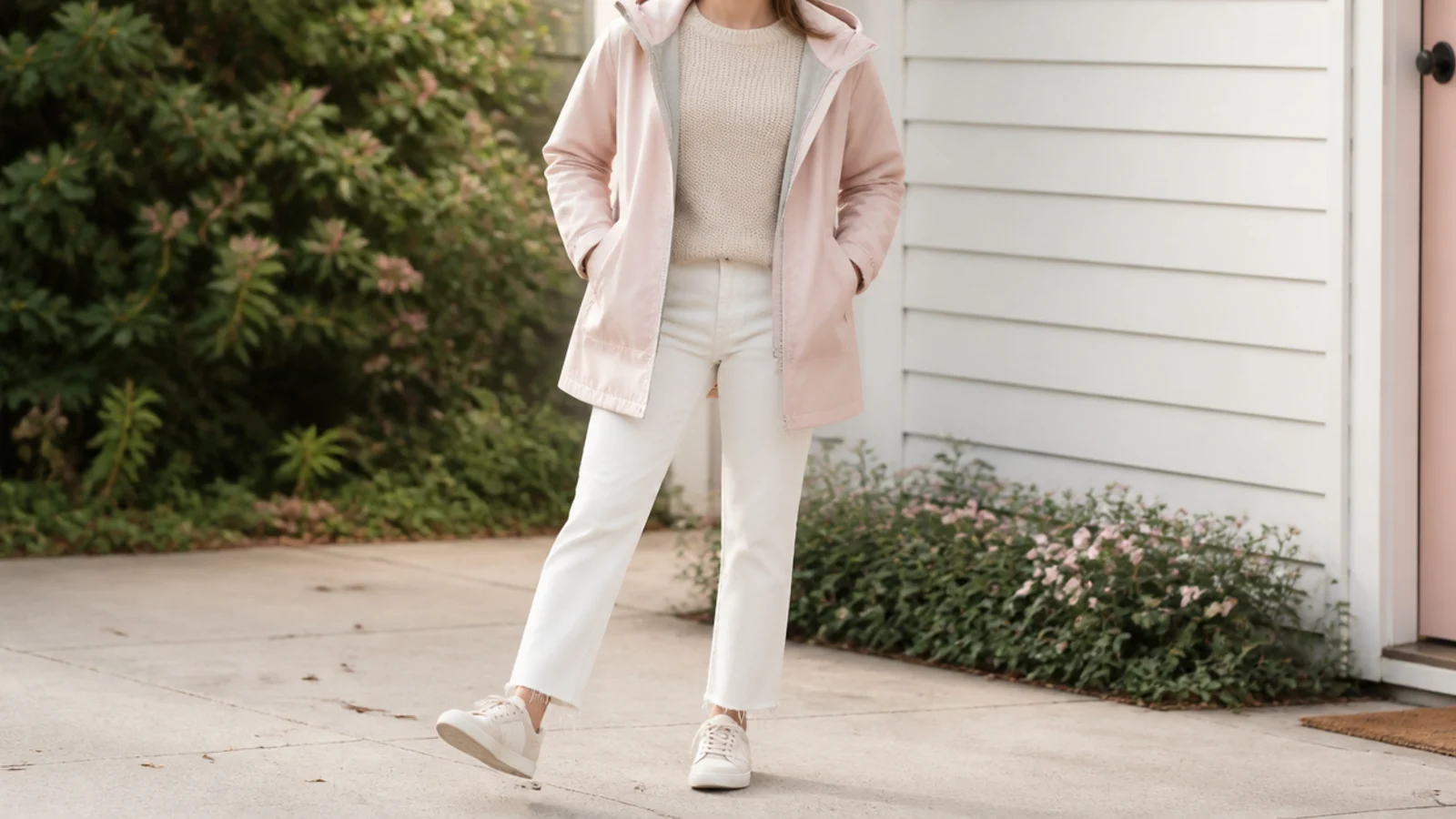
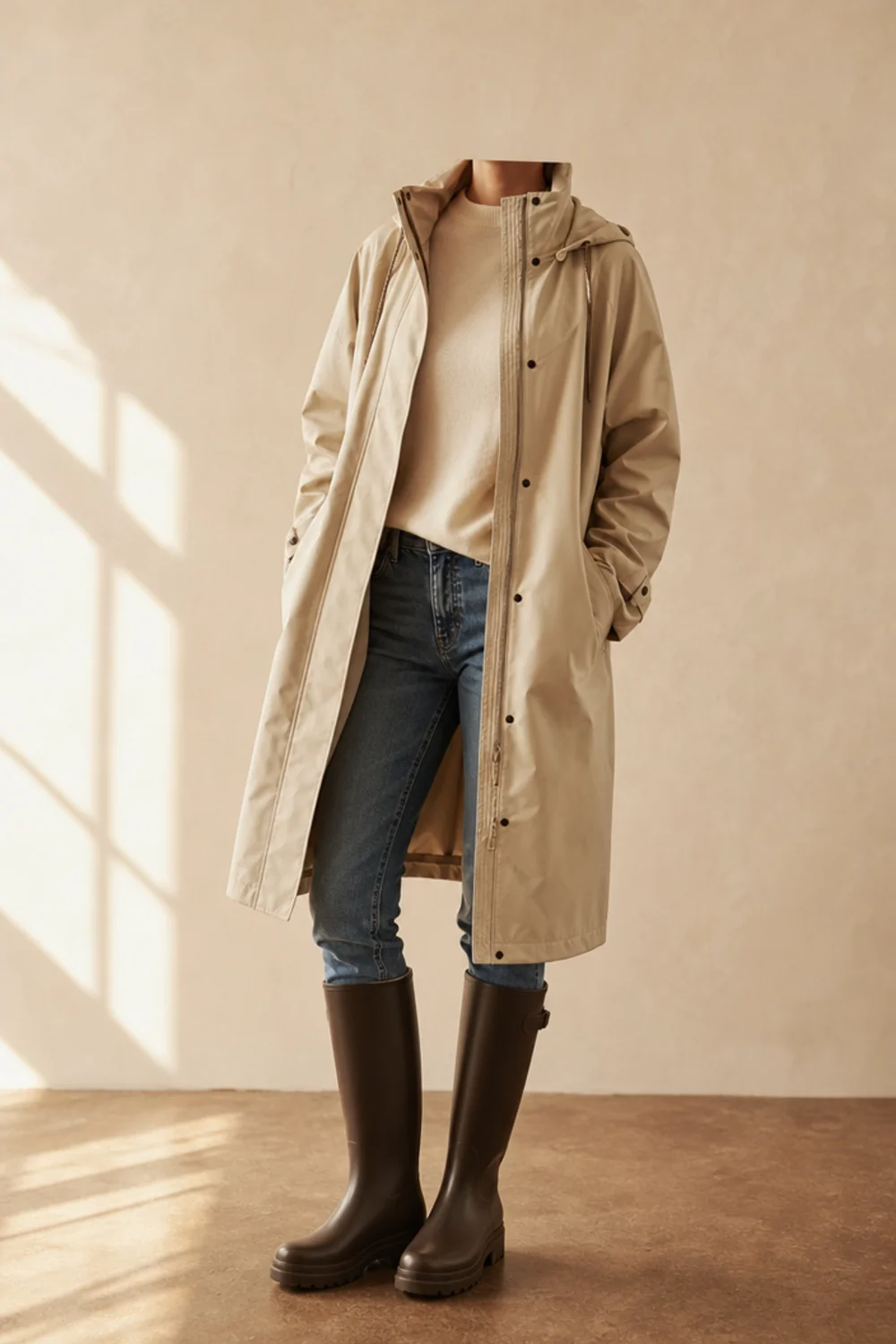
A rain shell is the only staple here that is truly waterproof, built from coated nylon or a GORE-TEX-style membrane with fully taped or welded seams and an attached hood. Look for a 10,000mm rating for everyday rain and 15,000mm and up for a downpour or a full day out. It packs down small, wipes clean and layers over anything. Style it over a chunky knit with cropped jeans and waterproof sneakers, or belt a longer one over leggings. It is the pick when the forecast says steady rain, not the one for a formal event. See it worn in cute waterproof outfits.
Check that the seams are taped on the inside; unsealed seams leak even on a rated fabric. Size up for a knit underneath.
2. Trench Coat
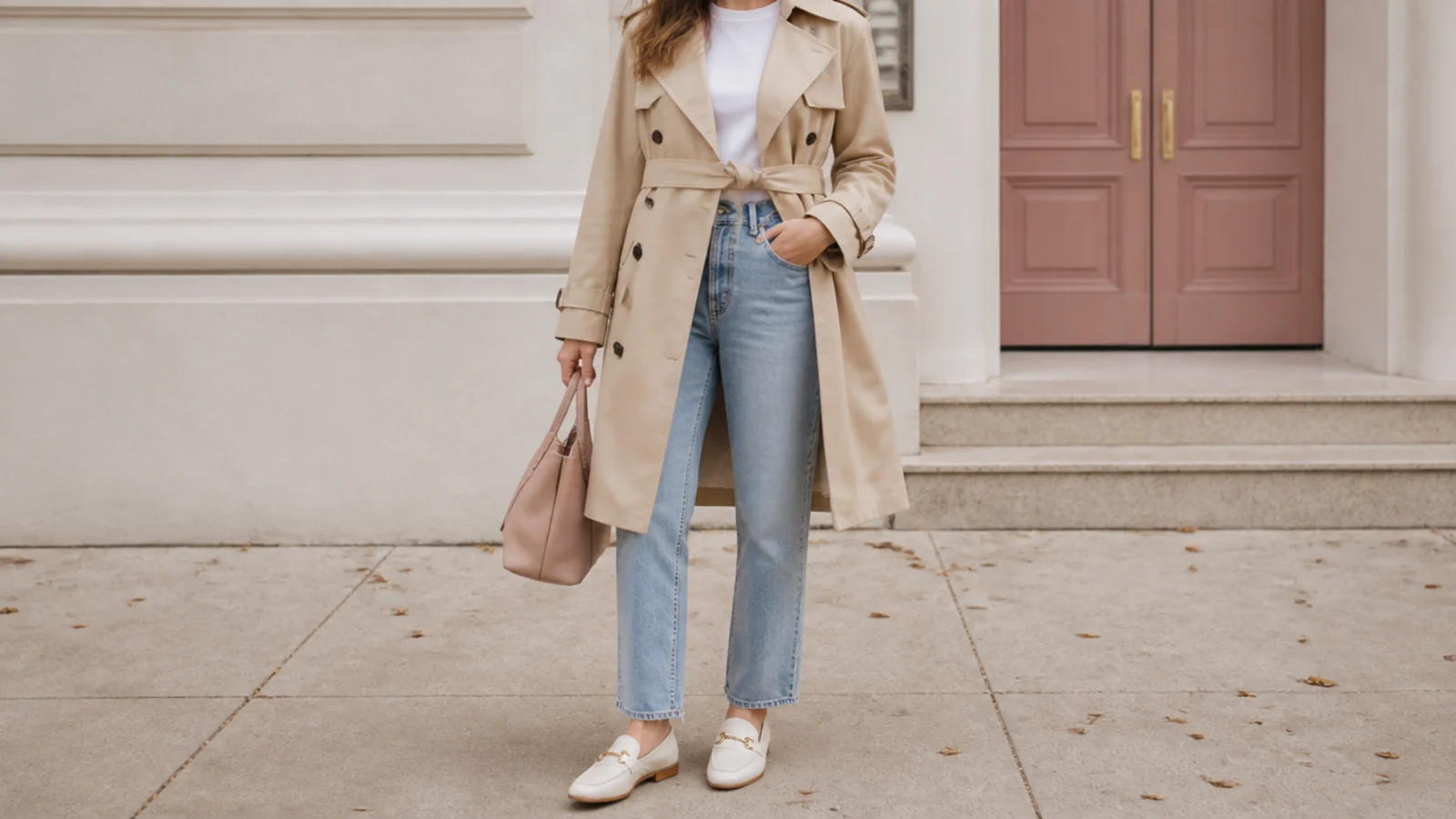
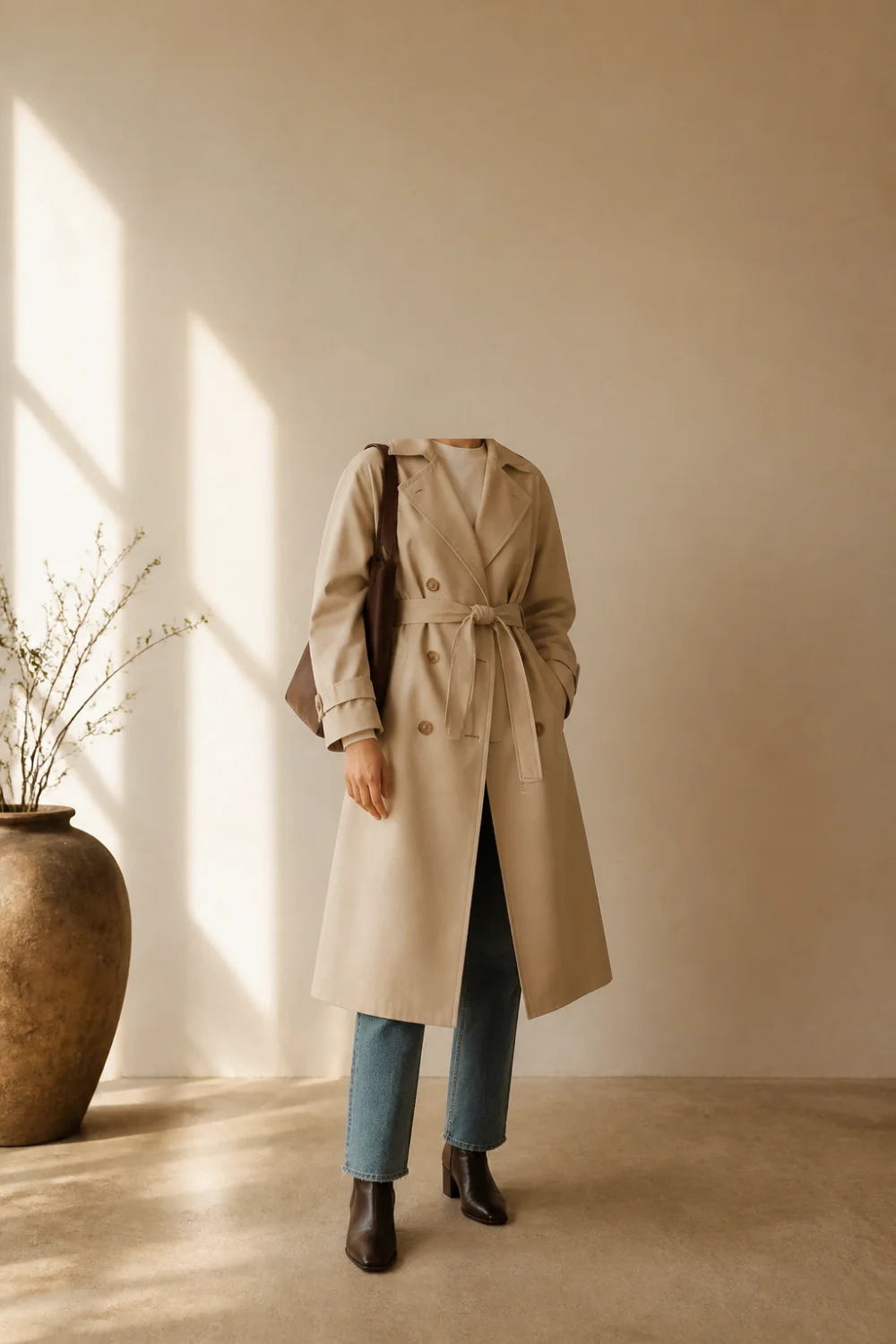
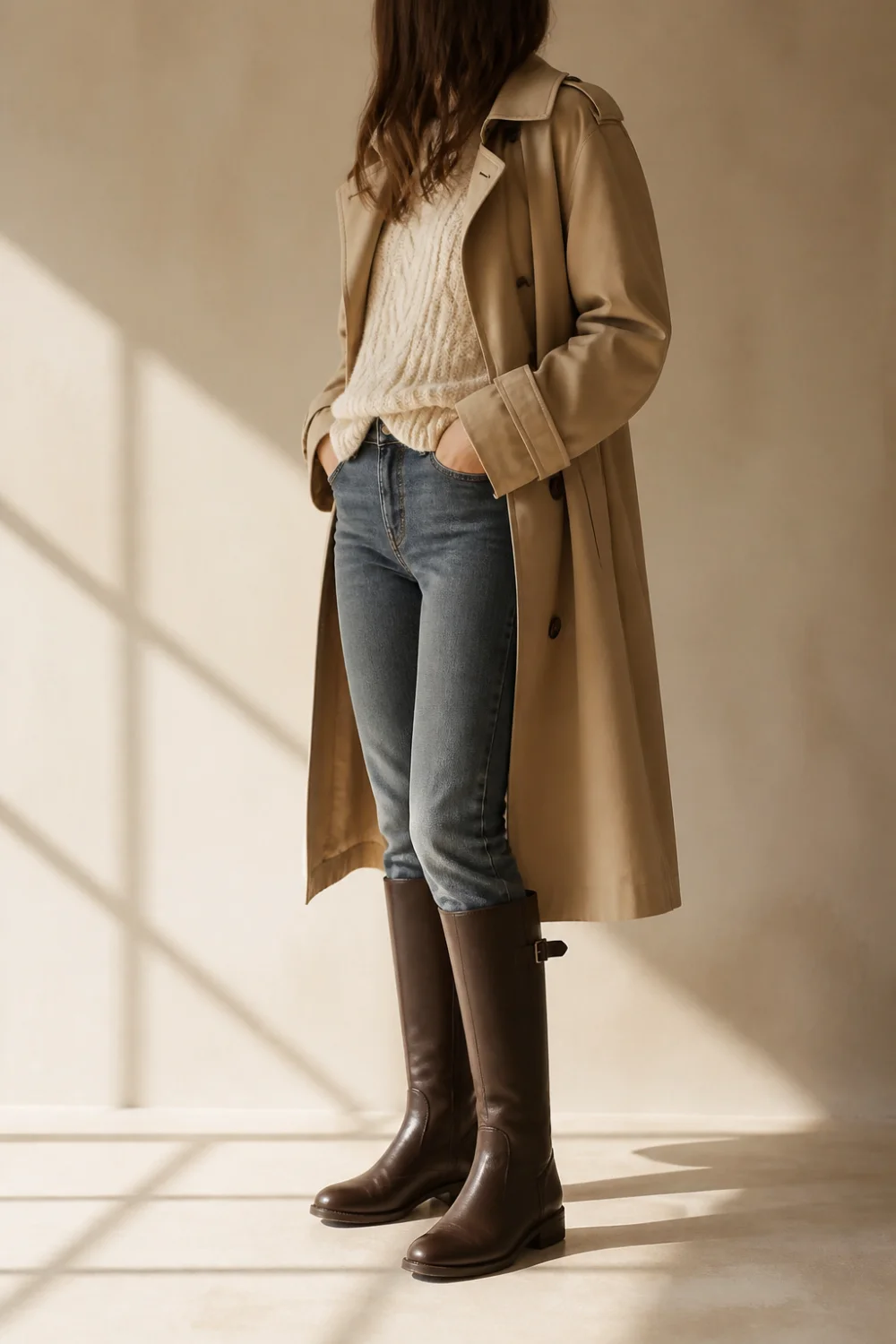
The trench is the dressy end of rain wear: a belted, double-breasted classic in tightly woven cotton gabardine that beats a drizzle but is only water-resistant, not waterproof. It has no taped seams and usually no hood, so a real downpour soaks through the shoulders. What it does best is polish. A beige or khaki trench over a white tee, straight jeans and loafers is the timeless light-rain look, and it dresses up over trousers or a midi skirt for work. Reach for it on gray drizzly days and evenings out. See more in trench coat outfits.
Reproof the gabardine with a spray-on water repellent each season. Carry an umbrella; the open collar and seams are the weak points.
3. Classic Raincoat (Mac)
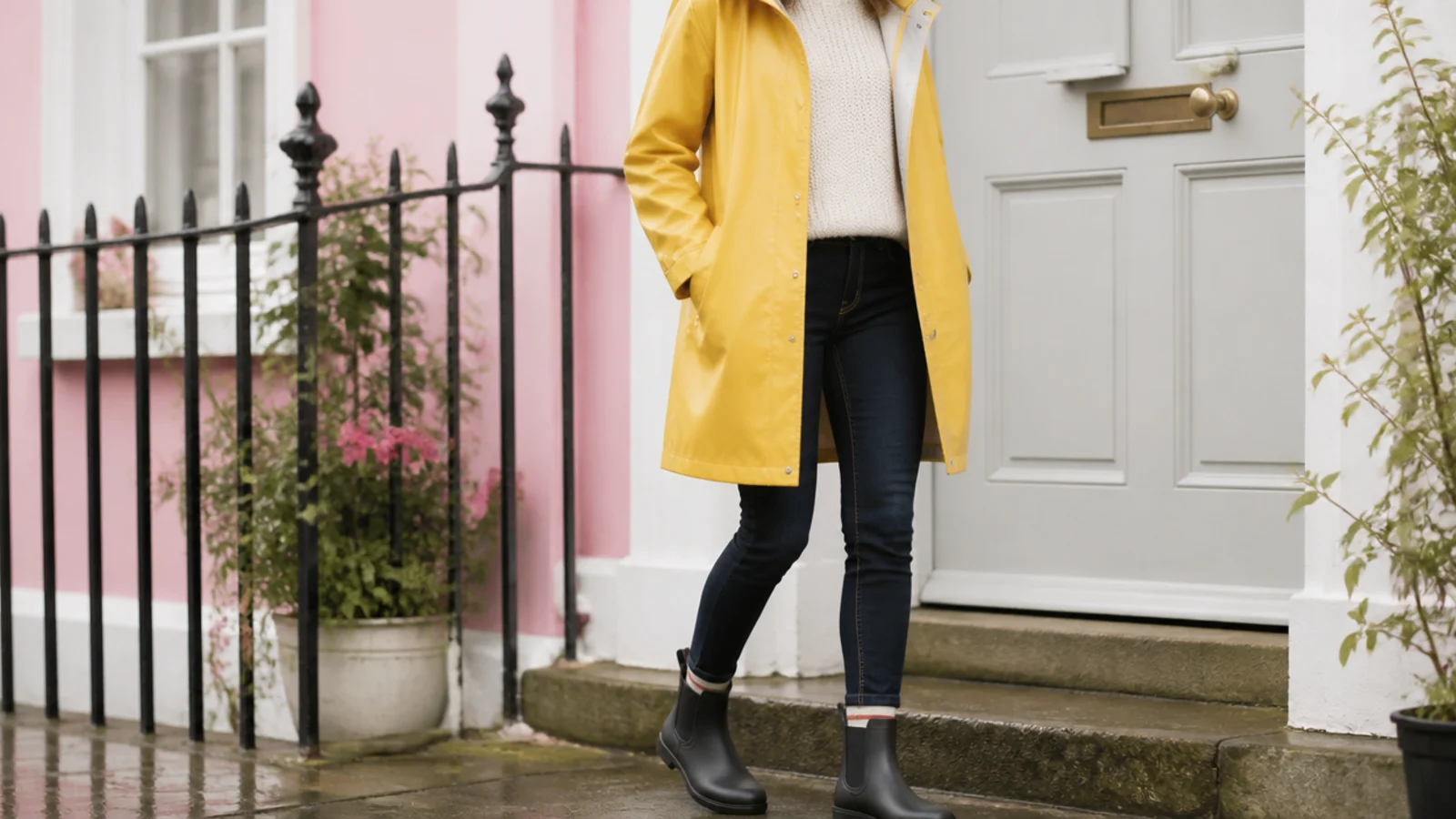
A raincoat, or mac, is the function-first cousin of the trench: single-breasted, often collared with a hood, and made from a coated or rubberized fabric that is genuinely waterproof rather than merely resistant. It reads more casual and practical than a trench and comes in glossy brights as well as neutrals. A yellow or navy mac over a knit, dark jeans and rubber Chelsea boots is the cheerful, keep-dry commuter look. It sits between the storm-ready shell and the dressy trench, so it is the do-most middle pick for regular city rain. Style the commute in rainy day commute outfits.
Choose a mac with a hood and a mid-thigh-to-knee length so runoff clears your hem. Wipe the coating clean; do not machine wash it hot.
4. Rain Poncho
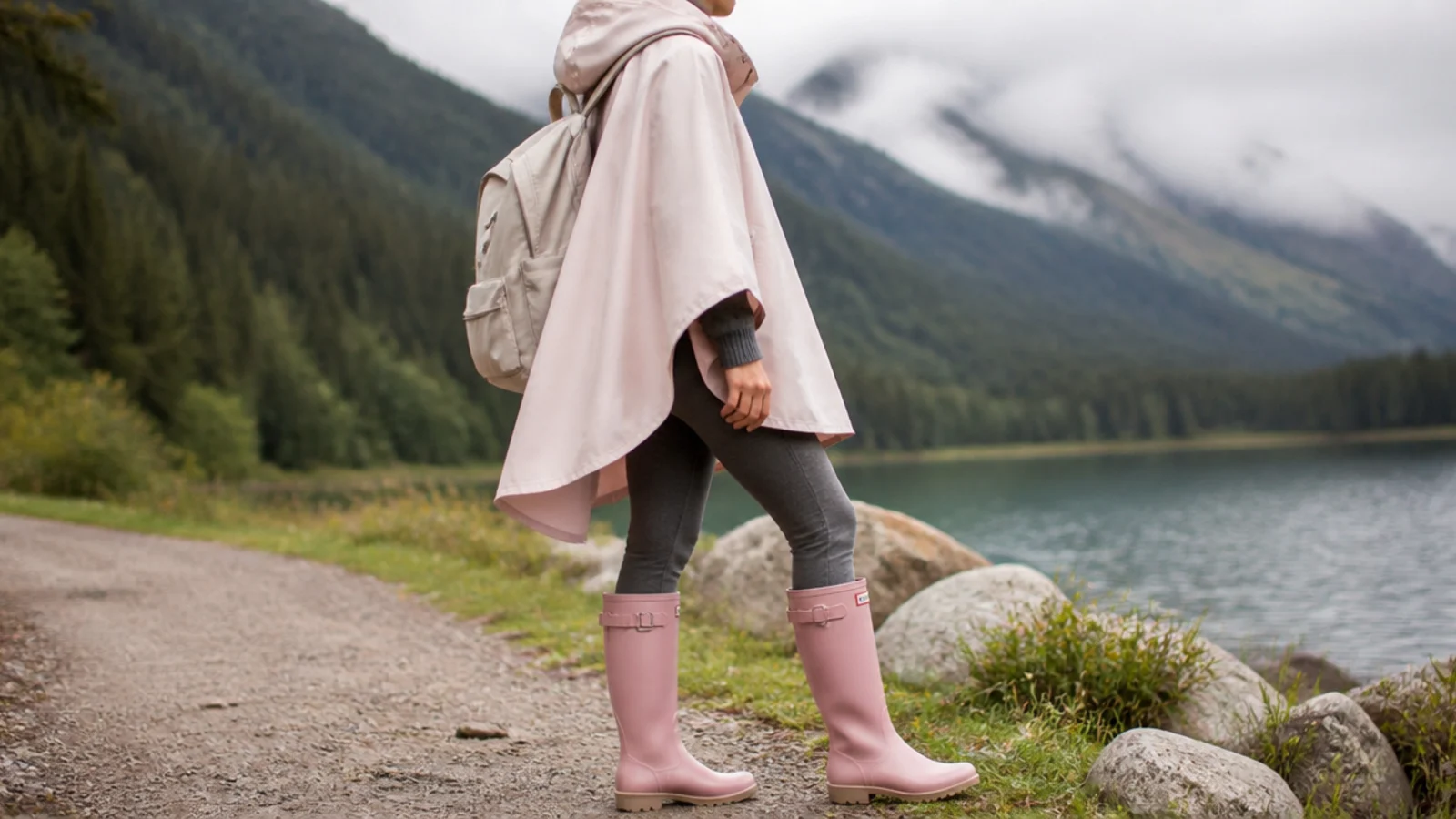
A poncho is the most packable staple on the list, a hooded waterproof cape that folds into a pouch and throws over everything, including a backpack, in one move. Modern versions in coated ripstop nylon look far sleeker than the old plastic sheet, and a longer cape cut covers the tops of your legs. It is the grab-and-go pick for festivals, travel and unpredictable forecasts where you want protection with zero bulk. The trade-off is shape: it drapes rather than flatters, so keep the layers underneath slim. Style it over leggings and rain boots for a downpour you did not plan for. More in rainy day leggings outfits.
Pick a cape long enough to cover your thighs so rain does not run onto your bottoms. Keep it in your bag as a just-in-case layer.
5. Waterproof Parka
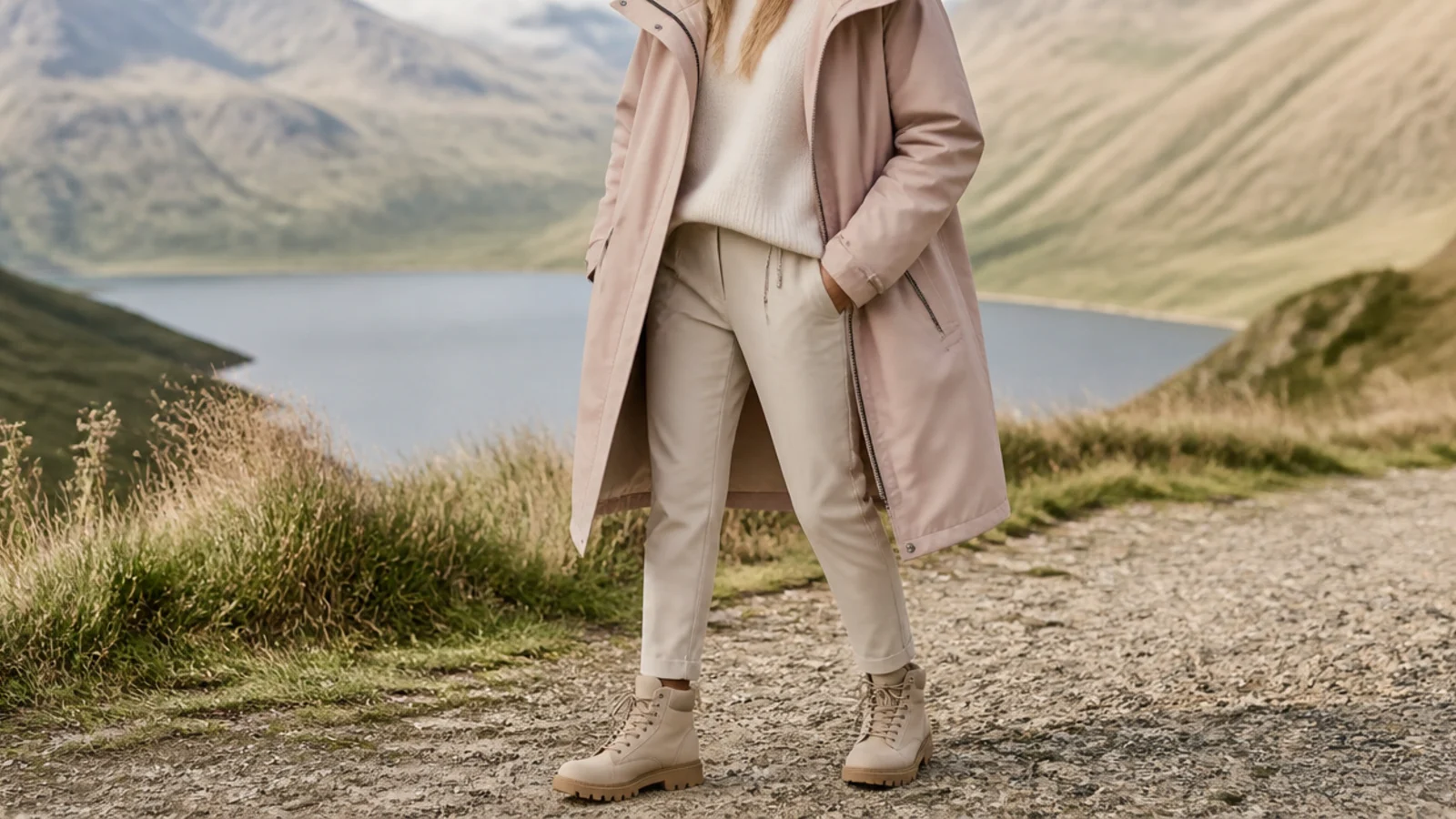
A parka is the long, hooded, cold-and-wet workhorse: a rated waterproof shell in a knee-skimming length, often with a drawcord waist and a lined body for warmth. Unlike a shell it covers your hips and thighs, so runoff clears your bottoms entirely, which makes it the best pick for a long walk in steady, chilly rain. Look for the same 10,000mm-plus rating and taped seams as a shell. Style a khaki or black parka over a knit with quick-dry trousers and lug-sole boots for traction on wet pavement. It is warmth plus waterproofing in one coat, ideal for fall and winter downpours. See cold-rain layering in fall rainy day outfits.
A longline hem is the whole point; it keeps your thighs and bottoms dry. Cinch the waist so it does not read boxy.
6. Waterproof Puffer Coat
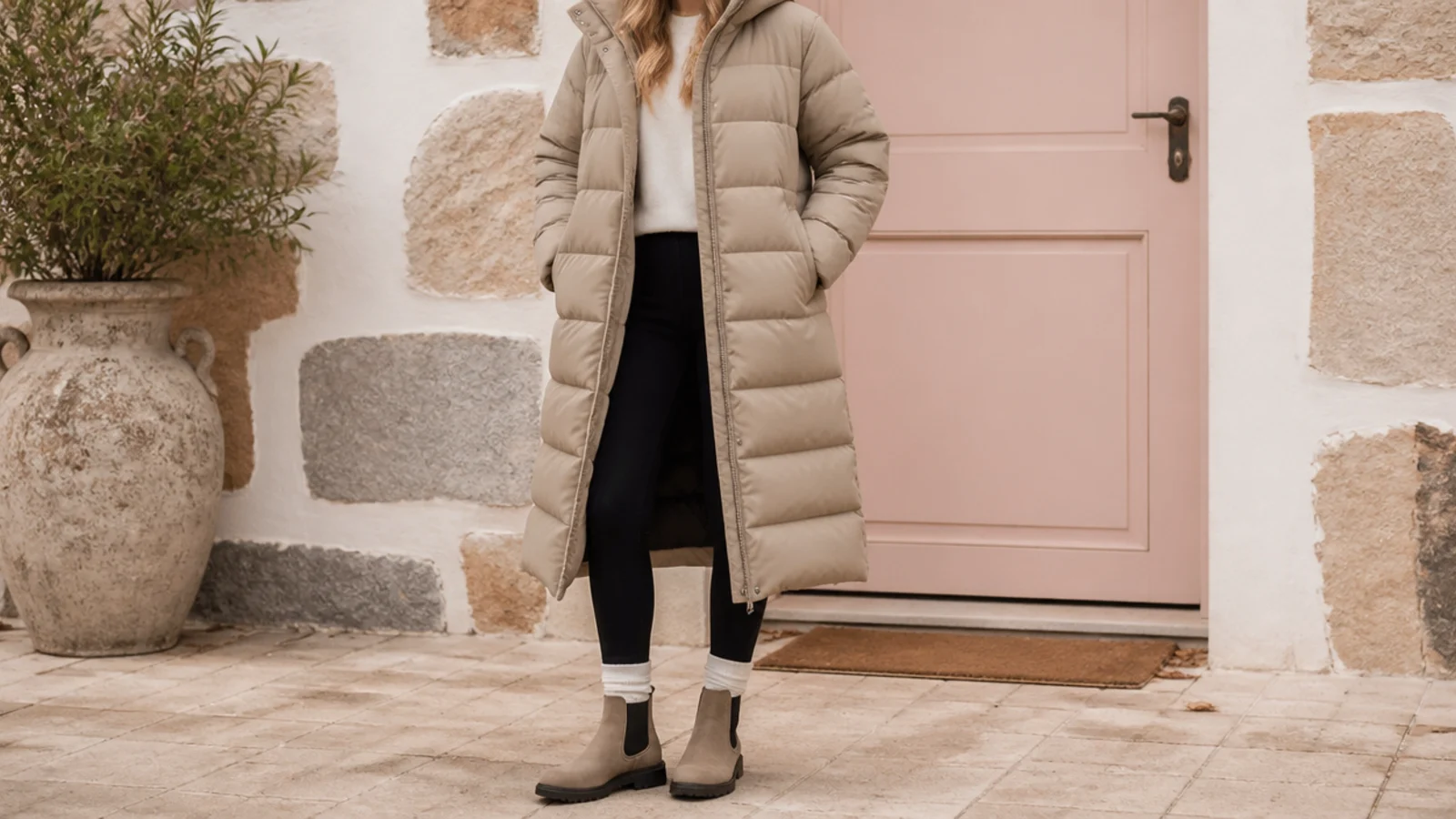
A puffer keeps you warm, but only a waterproof one keeps you dry, and the fill matters more than people think. Down loses its loft and its warmth the moment it gets wet, so for rain choose a synthetic-fill puffer with a coated or laminated waterproof shell and taped seams. A longline quilted style over leggings and waterproof Chelsea boots is the cozy, keep-dry winter look, and the quilting reads richer than a plain shell. Skip an untreated down puffer in real rain; it soaks, flattens and stops insulating. This is the pick for cold, wet days when you want warmth and waterproofing together. More cozy pairings in rainy day leggings outfits.
Confirm synthetic fill and a waterproof shell, not just water-resistant. Down is the wrong choice the moment it rains.
7. Rain Boots (Wellington)
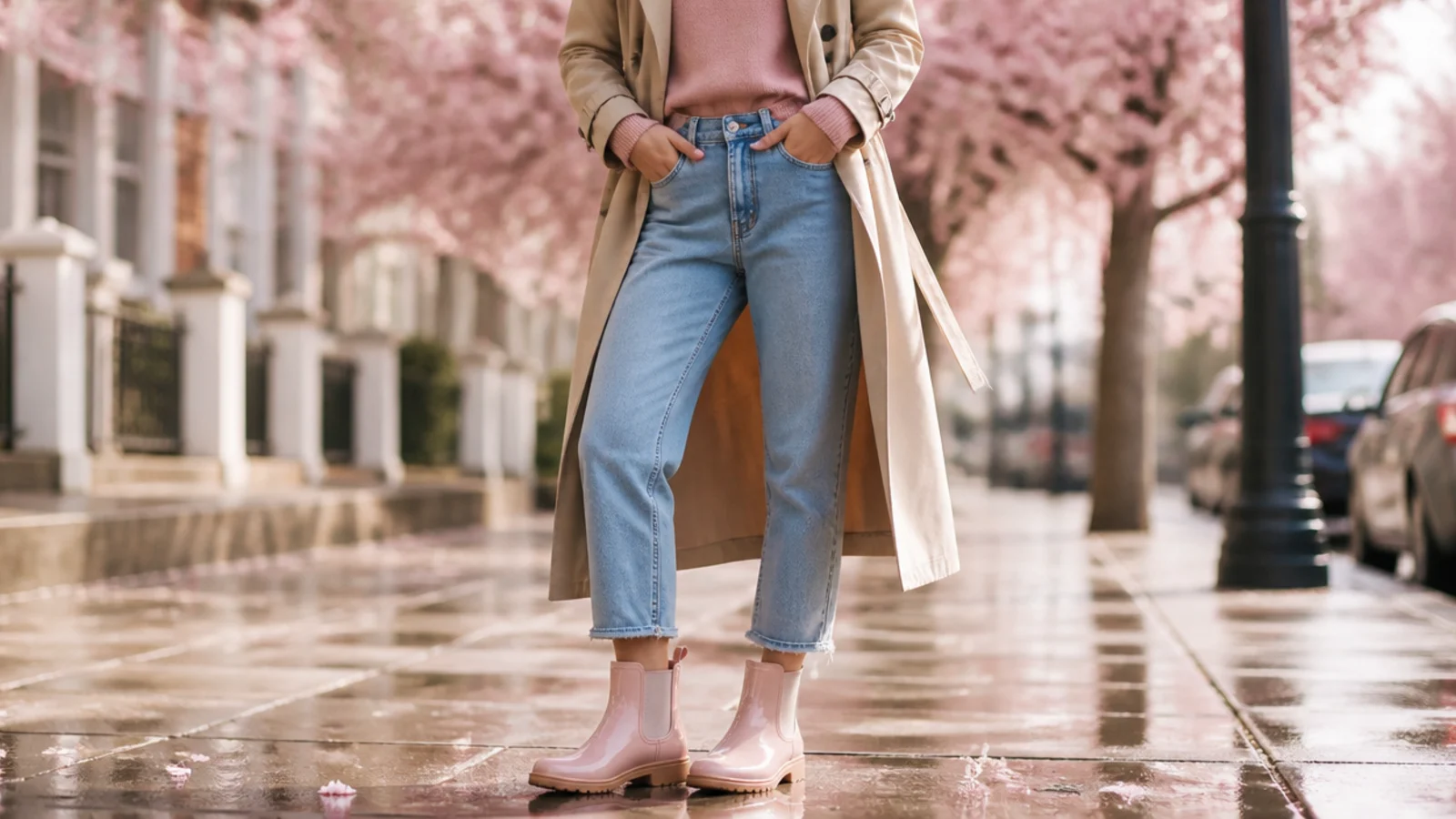
Rain boots are the only fully waterproof footwear that submerges without a worry, molded from a single piece of rubber with no seams to leak. The current shape is short and sleek, not the tall stiff Wellington that is awkward to walk in, and a glossy black or olive short boot slips under cropped jeans or a midi skirt without looking clunky. They handle puddles and downpours that would flood any other shoe. Add a cushioned insole for all-day comfort, since bare rubber has none. This is the storm-day footwear pick, casual by nature. See it styled all the ways in rain boot outfits.
Choose a short shaft over a tall one for walkable comfort. Drop in a cushioned insole; rubber alone tires your feet.
8. Waterproof Chelsea Boots
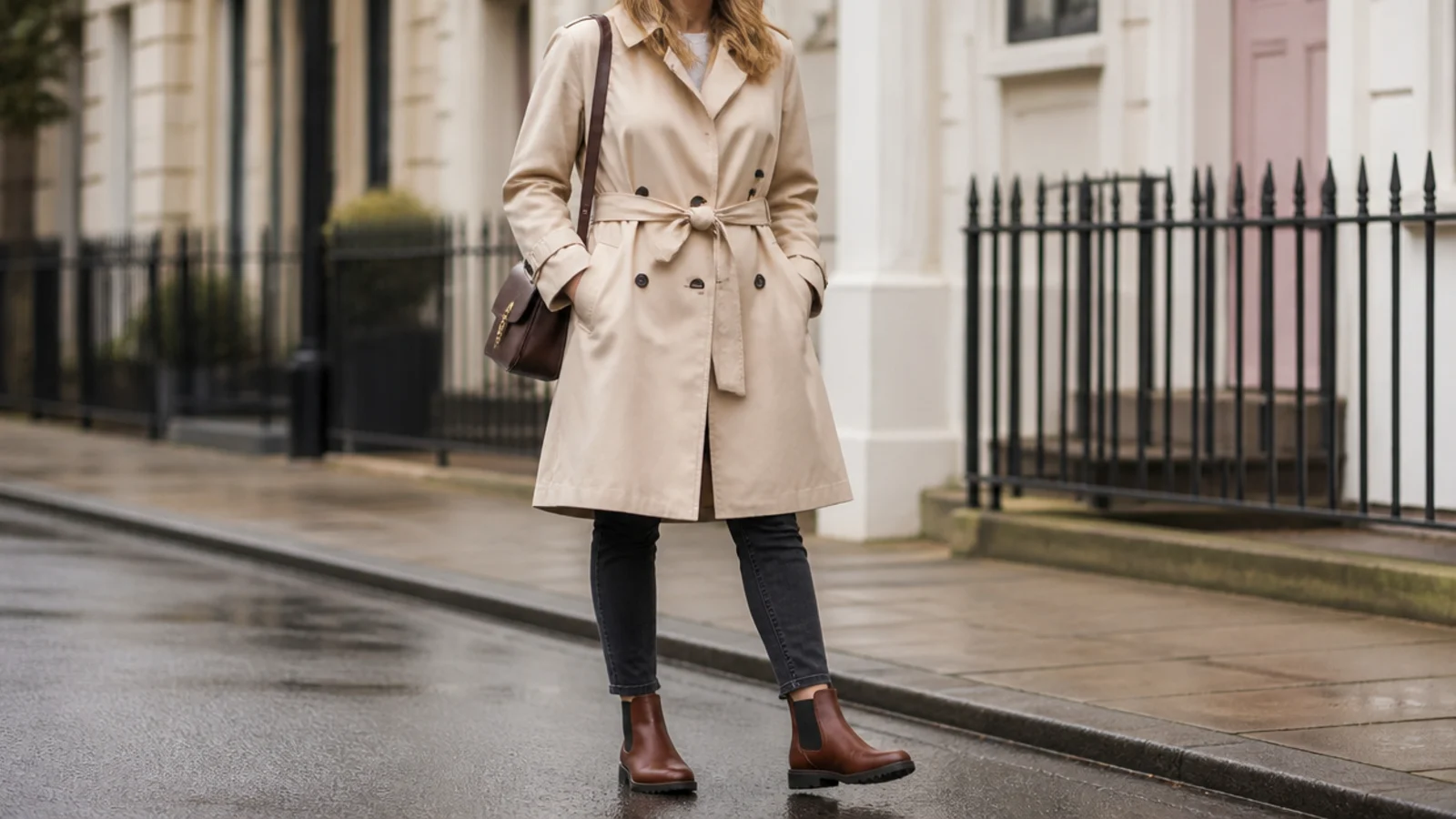
A waterproof Chelsea boot is the sleekest way to stay dry on your feet, a pull-on rubber or treated leather boot with elastic side gussets and a lug outsole for grip on wet pavement. It reads far dressier than a rain boot, so it crosses from a rainy commute to the office to dinner without a swap. A black rubberized Chelsea with dark skinny jeans and a mac is the quietly polished wet-weather look. Confirm the gussets and seams are sealed, since untreated leather wicks water at the stitch line. It is the dress-up rain shoe that still handles a genuine puddle. More at rainy day commute outfits.
Look for a sealed gusset and a lug sole for grip. Spray treated leather with a waterproofing product before winter.
9. Waterproof Sneakers
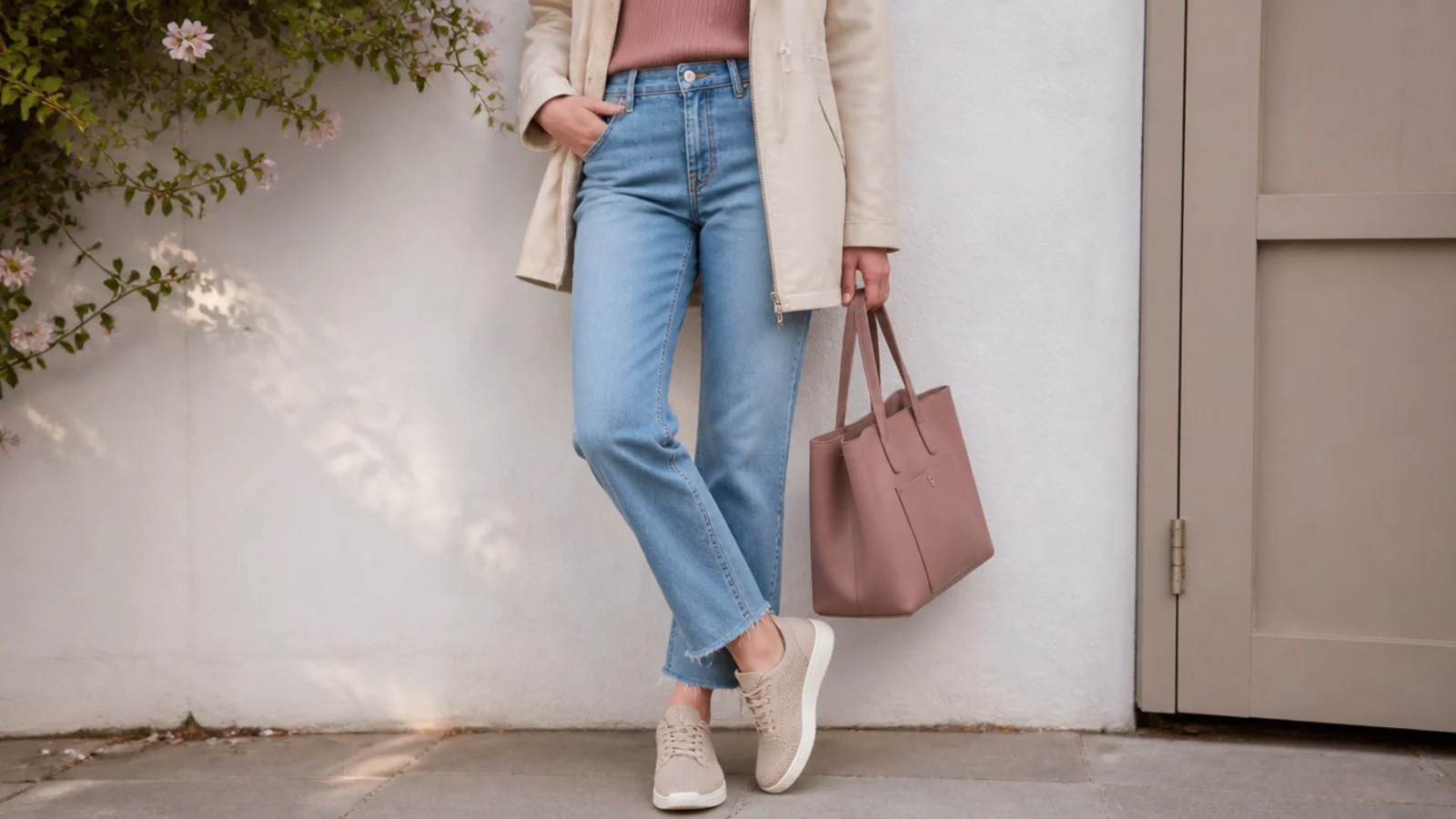
Waterproof sneakers are the everyday answer for people who refuse rain boots, built with a sealed knit upper or a GORE-TEX-style membrane that keeps rain out while still walking like a normal trainer. Styles like the Vessi Weekend or a GORE-TEX-lined runner pair with cropped jeans, leggings and casual dresses for errands, travel and the school run. They are not for a deep puddle, since water still tops the ankle, but for steady rain and long walking they are the most comfortable dry-foot pick. Keep the color dark so splashback does not show. See them styled in rainy day outfits with sneakers.
A sealed knit or membrane upper is the key; a canvas sneaker soaks instantly. Stay out of ankle-deep puddles.
10. Waterproof Loafers
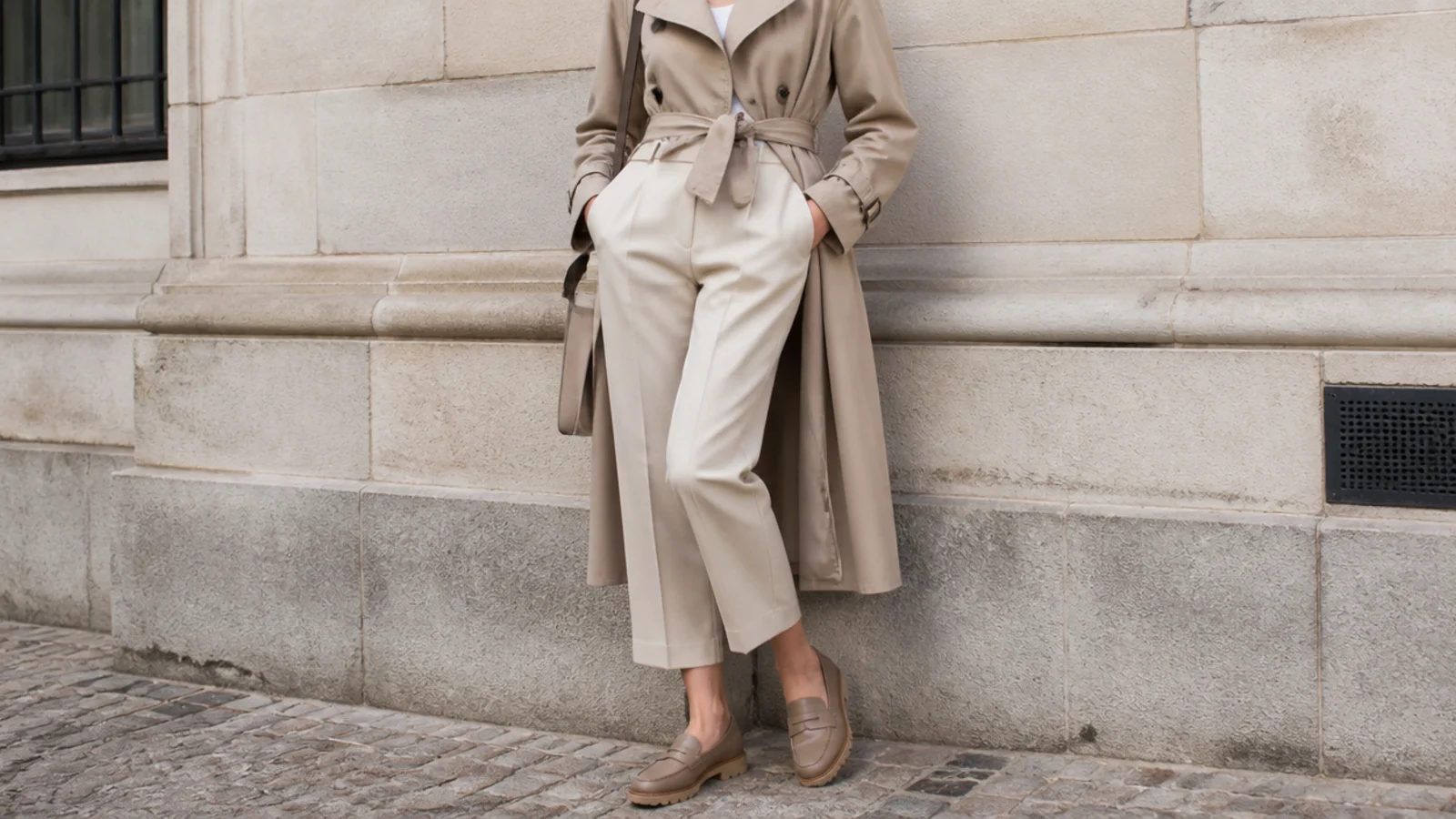
A waterproof loafer is the office-day rain shoe, a rubber or coated-leather penny or lug-sole loafer that keeps a polished look on a wet commute. It is the dressiest flat that survives rain, pairing with cropped trousers, a pencil skirt or dark denim under a trench. A lug sole adds grip that a smooth leather loafer lacks on slick pavement. It is not for a downpour or a puddle, but for drizzle-to-steady rain on a business-casual day it beats ruining real leather shoes. Keep a pair at your desk if your walk is long. Style the polished version in rainy day work outfits.
Pick a lug or rubber sole for grip on wet floors. Reserve smooth leather loafers for dry days only.
11. EVA Clogs
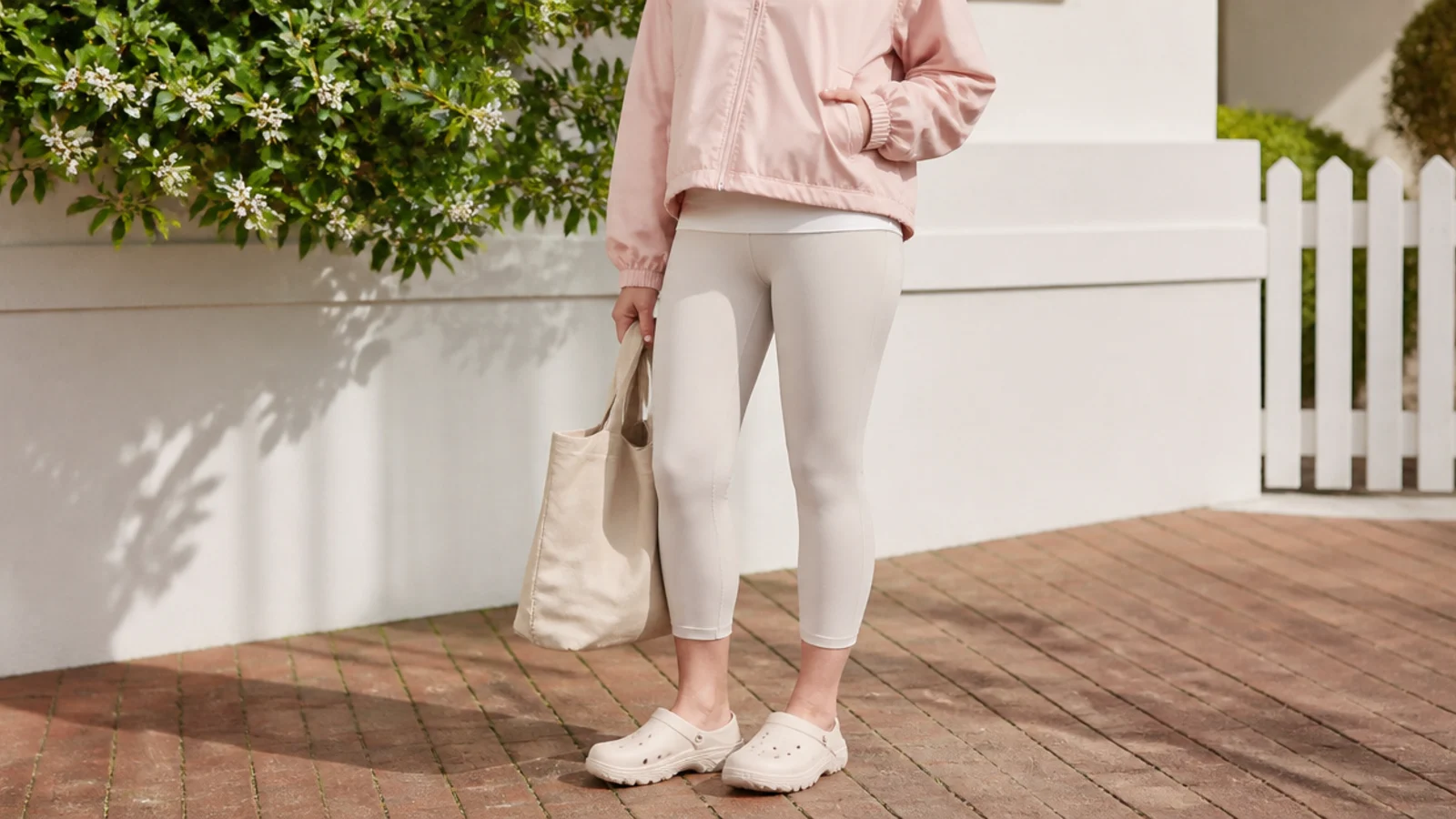
EVA clogs are the most waterproof shoe you can slip on, a single molded piece of lightweight foam with no seams, no laces and nothing to soak. They rinse clean under a tap, dry instantly and weigh almost nothing, which makes them the pick for a garden, a festival, a beach town or a quick dash to the car. The trade-off is dressiness: they read purely casual, so keep them to relaxed looks with cropped leggings or a sporty dress. Choose a closed-toe molded style over an open one so rain does not run straight in. This is the throw-on, hose-off warm-weather rain shoe. More casual rain looks in summer rain outfits.
A closed-toe molded clog keeps rain out better than an open one. Add a grippy insole; wet foam can be slippery underfoot.
12. Waterproof Tote Bag
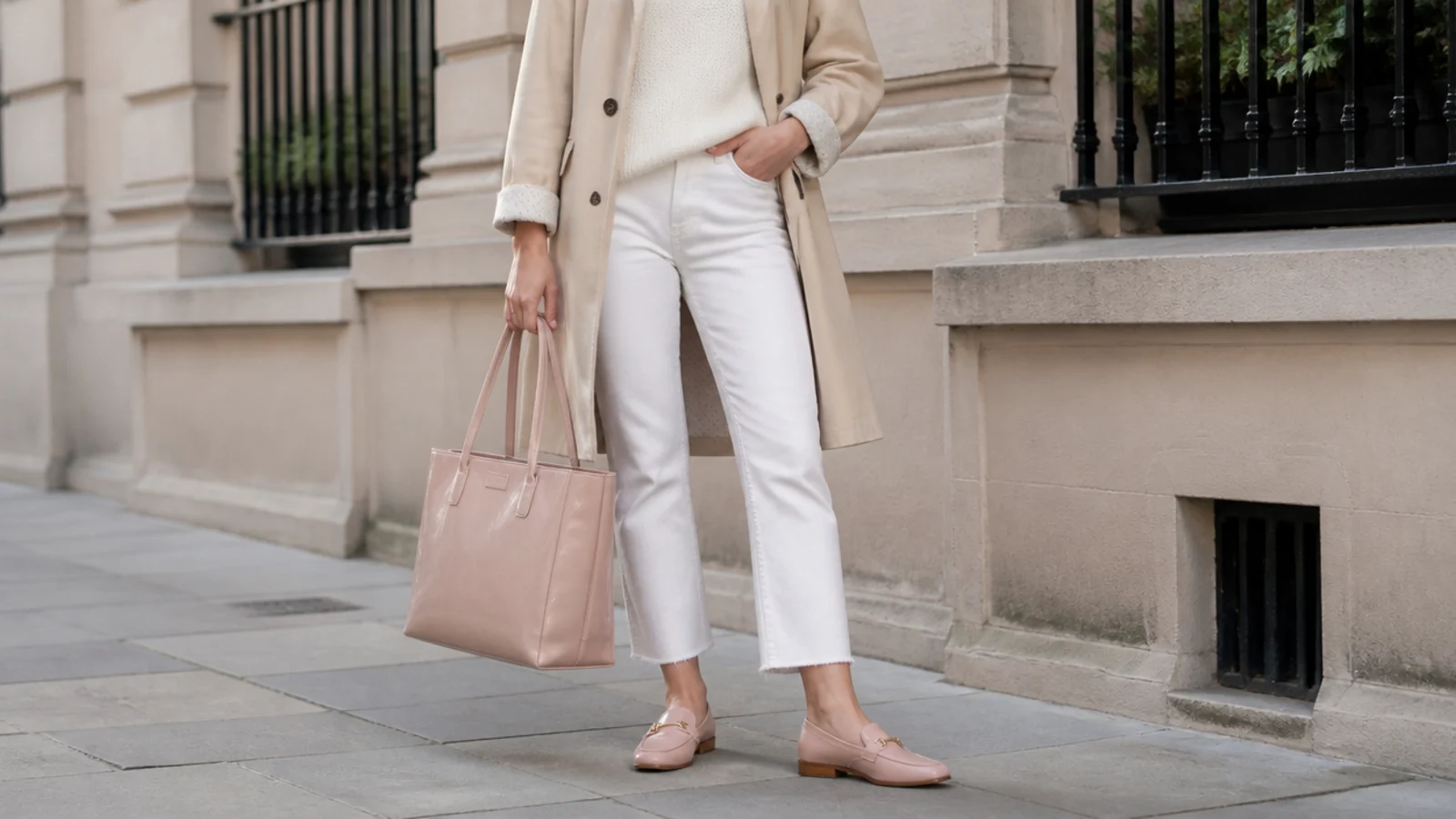
Your bag is the staple people forget until their laptop is wet. A waterproof tote in vinyl-coated nylon, TPU or rubberized canvas keeps everything inside dry and wipes clean, unlike suede or untreated leather that water-spots permanently. A structured black or olive coated tote carries to work under a trench, and a lightweight roll-top version suits travel. Choose a zip or magnetic closure over an open top so rain does not fall straight in. A crossbody strap frees both hands for an umbrella. It is the finishing staple that protects the gear the rest of the outfit cannot. See more grab-and-go rain looks in rainy day outfits.
Pick a covered or zip closure so rain cannot drop inside. Keep suede and untreated leather bags home on wet days; the spots are permanent.
What Is the Difference Between a Raincoat and a Trench Coat?
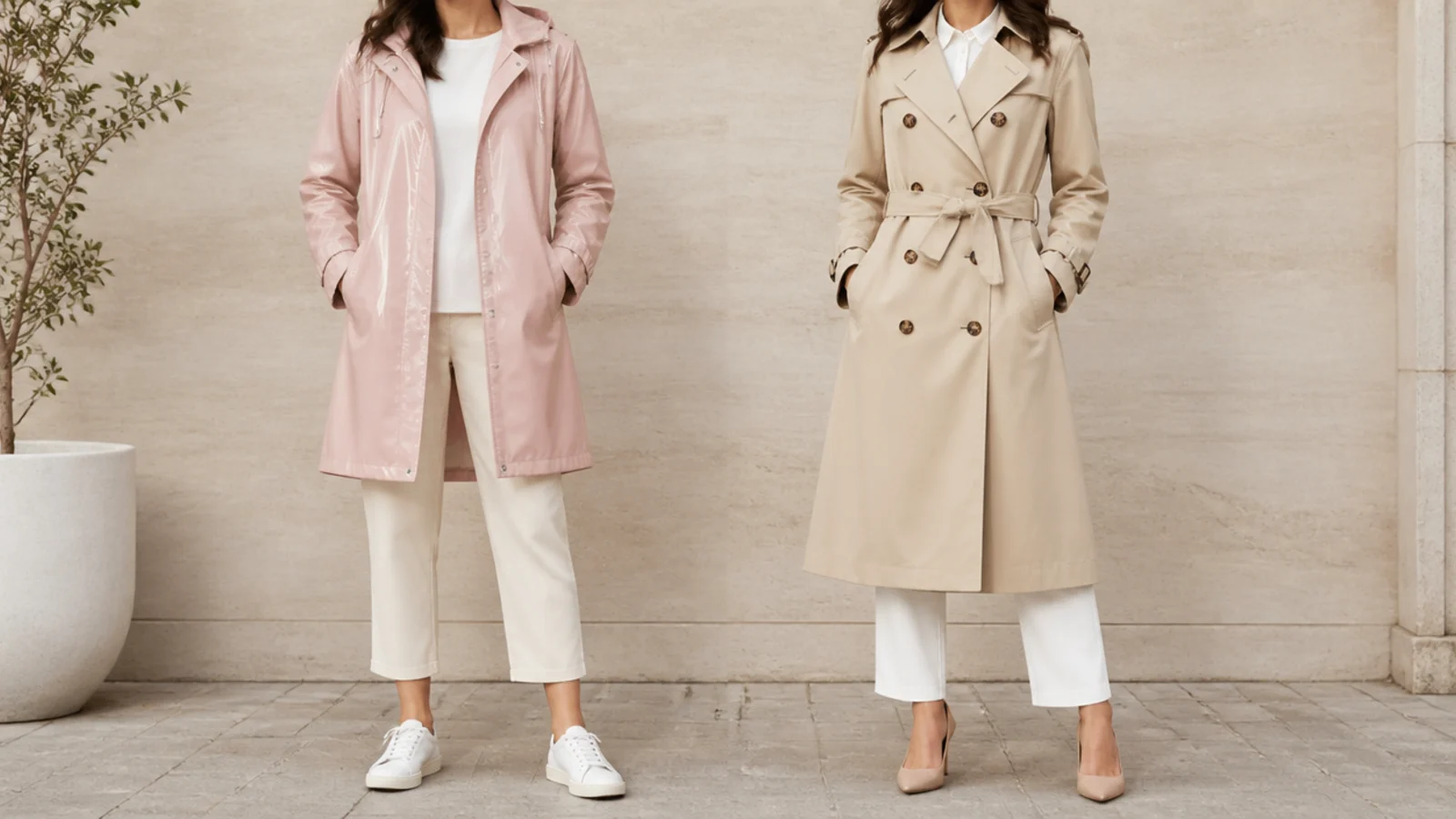
This is the question people ask most, and the split comes down to purpose. A trench coat was designed as a military overcoat and evolved into a fashion piece: double-breasted, belted, with a collar, storm flap and no hood, made from tightly woven cotton gabardine that resists a drizzle. Its job is polish first, weather second, so it is water-resistant, not waterproof. A raincoat, or mac, was designed the other way around: function first. It is usually single-breasted, often hooded, and made from a coated or rubberized fabric that is genuinely waterproof, so it keeps you dry in real rain but reads more casual and practical. In short, a trench is a dressy coat that copes with light rain, while a raincoat is a keep-dry coat that happens to look decent. If you want to look sharp on a drizzly day, wear the trench; if you need to stay dry in a downpour, wear the raincoat. Many people own both for exactly that reason, and you can see the dressy end styled in trench coat outfits.
Is a Trench Coat Waterproof?
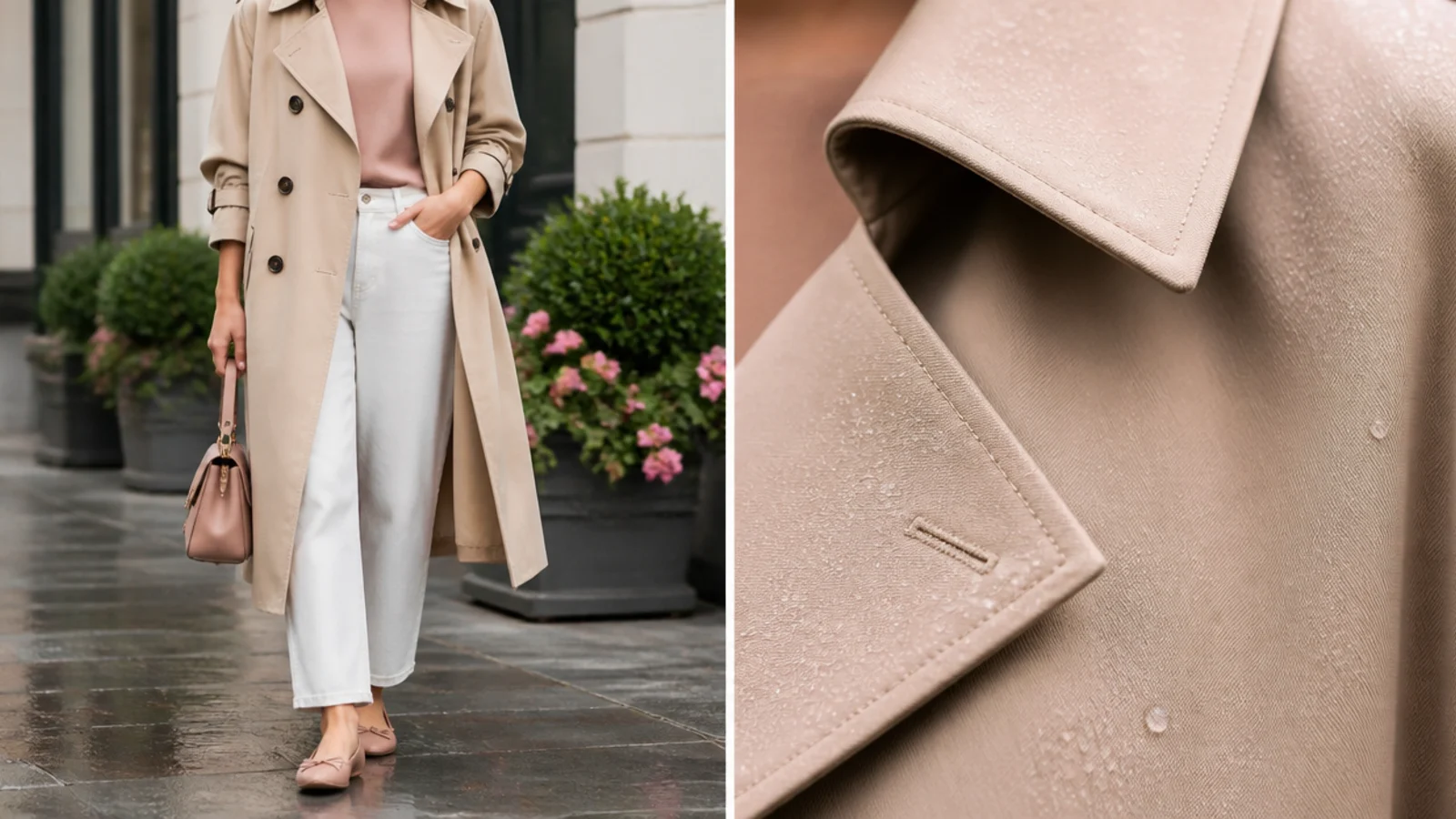
No, a classic trench coat is water-resistant, not waterproof, and knowing the difference saves you a soaked commute. The traditional trench is cotton gabardine, a tightly woven fabric that sheds a light drizzle because the weave is dense and often treated with a durable water-repellent finish. But it has no sealed barrier, no taped seams and usually no hood, so in steady or heavy rain water eventually wicks through the weave and runs in at the open collar, the belt seams and the shoulders where it pools. The DWR finish also wears off over time and needs reproofing with a spray each season. Some modern trenches are made in coated or laminated fabrics that push closer to true waterproofing, but the classic gabardine version is not one of them. The practical rule: a trench is perfect for a gray, drizzly, look-good day, but pair it with an umbrella and expect to get wet if the sky opens. For a real downpour, reach for a rated rain shell or a raincoat instead.
Water-Resistant vs Waterproof Clothing: What's the Difference?
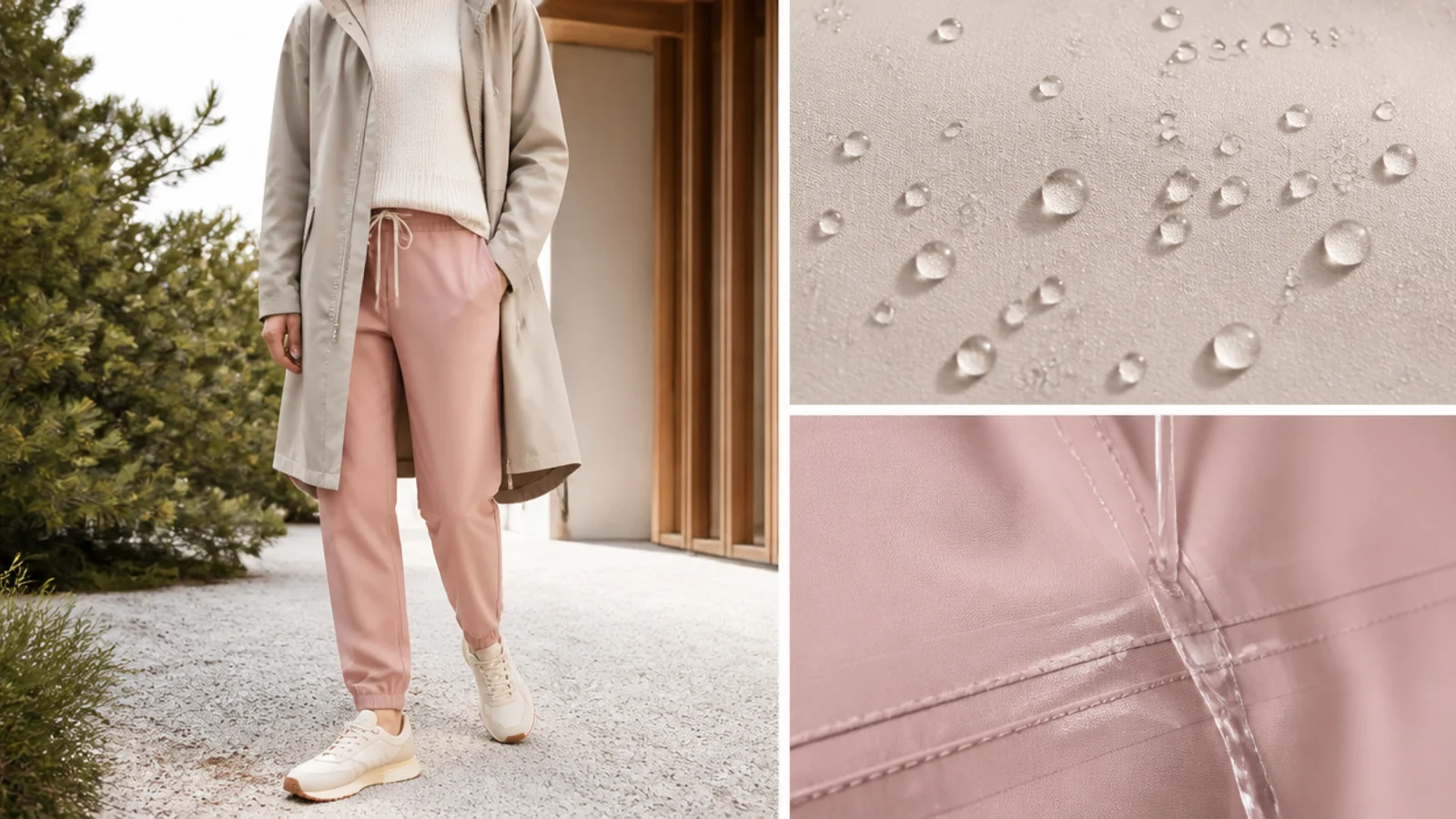
These two terms get used interchangeably on labels, but they describe very different levels of protection. Water-resistant means the fabric has a coating or a tight weave that repels light water for a while, like a trench or a treated cotton jacket; it beats a drizzle but soaks through in a sustained downpour, and the finish wears off and needs reproofing. Waterproof means the garment has a sealed, rated barrier, a membrane or a heavy coating, plus taped or welded seams so water cannot sneak through the stitch holes. That is what keeps you dry in real rain. The giveaways that a piece is genuinely waterproof are a millimeter rating on the label, visible seam tape on the inside, and often a hood and storm flaps over the zip. A third term, water-repellent, is just another way of saying water-resistant. The simple test before you buy: look for a mm rating and taped seams. No rating and no seam tape means water-resistant at best, so treat it as a drizzle coat, not a storm coat.
What Waterproof Rating Do I Need?
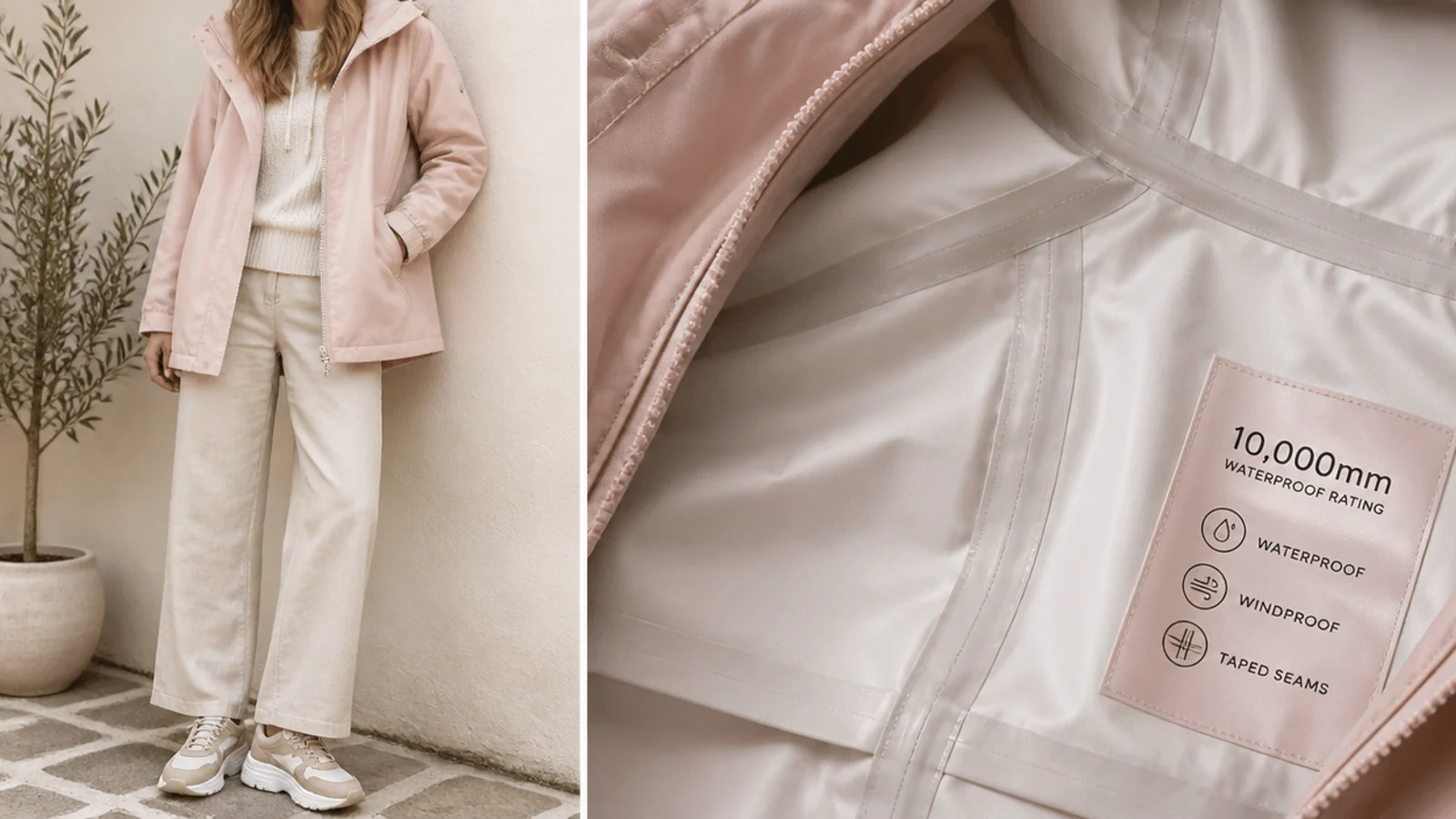
Waterproofing is measured in millimeters, a lab figure for how tall a column of water a fabric holds back before it leaks, and reading that number takes the guesswork out of buying. Anything under about 5,000mm is water-resistant only, fine for a brief drizzle but not a real shower. Around 5,000mm to 10,000mm handles light to moderate rain for a short time, which suits a quick commute. A 10,000mm rating is the sensible everyday minimum for genuine rain and the number to look for in a city shell. From 15,000mm upward you get protection for heavy, sustained rain and a full day outdoors, and 20,000mm and above is built for storms and hiking. The rating is only half the story, though: seams must be taped and the zips storm-flapped or water still gets in. Breathability, listed separately, matters too if you walk fast and sweat. For most women buying one everyday rain jacket, a 10,000mm-rated shell with taped seams and a hood is the safe all-purpose choice, and a 15,000mm version is worth it in a wet climate.
What Are the Best Raincoats for Women, and What Should You Buy First?
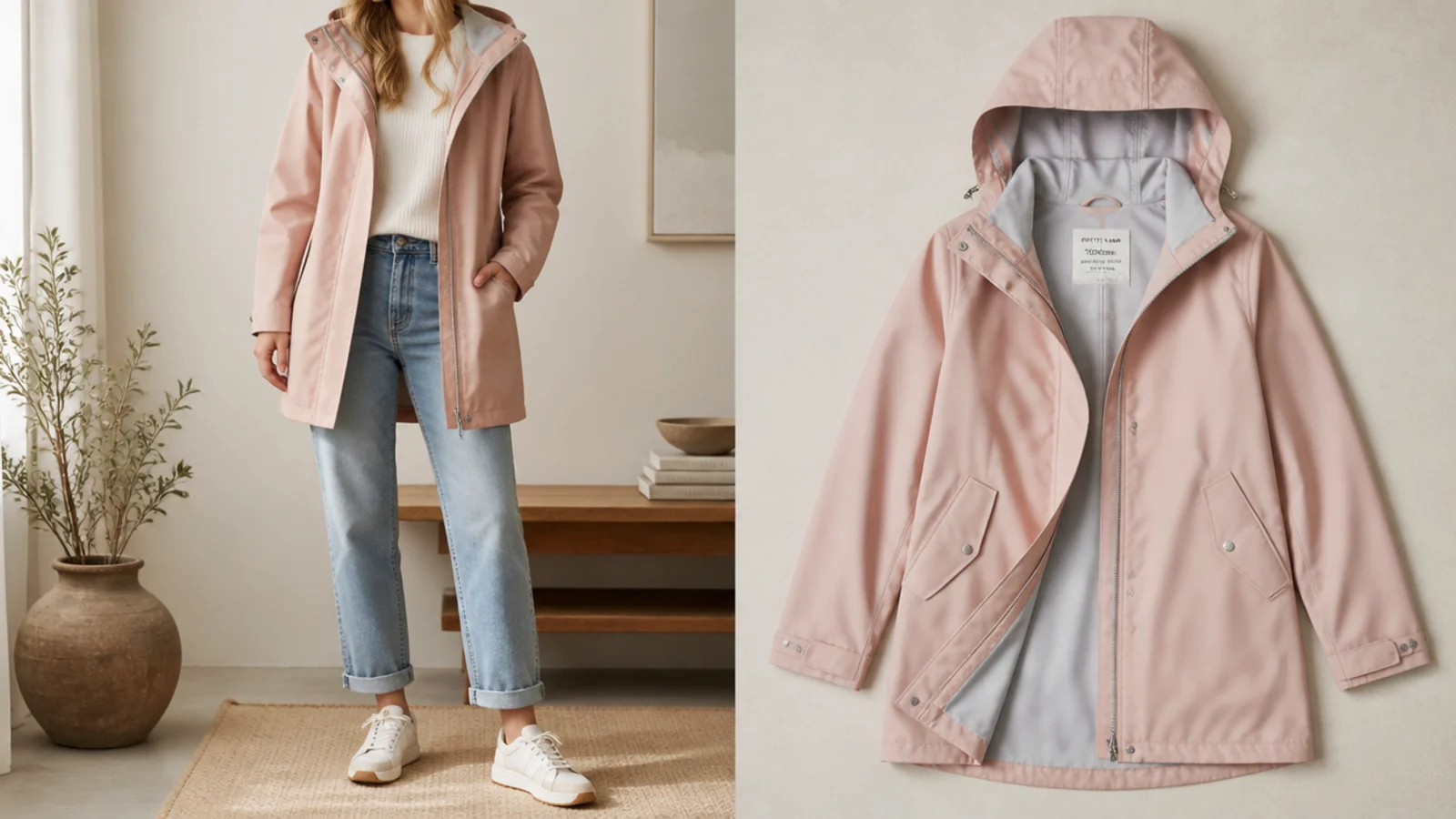
The best raincoat for you depends on your climate and how dressy you need to be, but the buying order is clear. Buy a hooded, rated waterproof rain shell first: a 10,000mm-or-higher packable jacket with taped seams and an adjustable hood is the one staple that actually keeps a downpour out, layers over anything and travels flat. In a neutral like black, khaki or navy it goes with everything, and belting a longer one adds shape. Add a trench coat second, for the drizzly days and evenings when you want to look polished rather than sporty; it is a wardrobe classic even though it is only water-resistant. If you live somewhere cold and wet, a waterproof parka or a synthetic-fill waterproof puffer earns the third slot for warmth plus rain protection. A glossy mac is a cheerful alternative first coat if you want color and a hood in one. Skip a poncho as your only rain layer; it is a brilliant backup that packs into a bag, but it drapes rather than flatters. Cover the shell and the trench first and you are ready for almost any forecast.
Main Differences
- A rain jacket is truly waterproof with taped seams and a hood; a trench coat is water-resistant and soaks through in a downpour.
- Rain boots, EVA clogs and waterproof sneakers keep feet dry casually; waterproof loafers and Chelsea boots do it dressed up.
- A raincoat or mac sits between the two, genuinely waterproof but more casual than a trench and more polished than a shell.
- For warmth plus rain, choose a synthetic-fill waterproof puffer or a longline parka, never an untreated down coat.
Frequently Asked Questions
What is the difference between a raincoat and a trench coat?
A trench coat is a dressy, belted, double-breasted overcoat in cotton gabardine that resists a drizzle but is not waterproof and has no hood. A raincoat, or mac, is a more casual, often hooded coat in a coated or rubberized fabric that is genuinely waterproof. In short, a trench looks sharp in light rain, while a raincoat keeps you dry in real rain.
Is a trench coat actually waterproof?
No, a classic trench coat is water-resistant, not waterproof. Its tightly woven cotton gabardine sheds a light drizzle, but it has no sealed barrier, no taped seams and usually no hood, so heavy or steady rain wicks through the weave and runs in at the collar and belt seams. Reproof it each season and carry an umbrella if the sky looks serious.
What is the difference between water-resistant and waterproof clothing?
Water-resistant means a coating or tight weave that repels light water for a while, then soaks through and needs reproofing. Waterproof means a sealed, rated barrier plus taped or welded seams that keep water out in real rain. The giveaways of a truly waterproof piece are a millimeter rating on the label, visible seam tape inside, and often a hood and storm flaps.
What waterproof rating do I need for a rain jacket?
For everyday rain, look for a 10,000mm rating as the sensible minimum, and 15,000mm or higher for heavy, all-day or stormy weather. Under 5,000mm is water-resistant only and fine for a brief drizzle. The rating matters most alongside taped seams and a storm-flapped zip, since a high number leaks anyway if the seams are not sealed.
What are the best raincoats for women?
The best first buy is a hooded, rated waterproof rain shell at 10,000mm or higher with taped seams, since it keeps a downpour out and layers over anything. Add a trench coat for polished drizzly days, and a waterproof parka or synthetic-fill puffer if your winters are cold and wet. A glossy mac is a cheerful, hooded alternative first coat if you want color.
Can you wear a puffer in the rain?
Only a waterproof, synthetic-fill puffer belongs in the rain. Down loses its loft and stops insulating the moment it gets wet, so an untreated down puffer soaks, flattens and leaves you cold. Choose a puffer with a coated or laminated waterproof shell, taped seams and synthetic fill, and it will keep you both warm and dry on a cold, wet day.
What shoes keep your feet driest in the rain?
Rain boots and molded EVA clogs are the most waterproof, since both are seamless single pieces of rubber or foam that shrug off puddles. For a dressier dry foot, waterproof Chelsea boots and waterproof loafers work on a commute or in the office, and sealed waterproof sneakers suit long walks. Keep sneakers and loafers out of ankle-deep water, which tops the shoe.
Do I need both a rain jacket and a trench coat?
If you can own two rain layers, yes, because they do different jobs. The rain shell is for the forecast, keeping you dry in genuine rain with its rating, hood and taped seams. The trench is for the occasion, keeping you polished on gray, drizzly days and evenings. Buy the waterproof shell first for protection, then add the trench for looks.
What should you wear under a rain jacket to stay dry?
Pair a rain jacket with quick-dry bottoms and a waterproof shoe, since the jacket only covers your top half. Choose synthetic or technical trousers, leggings or a midi skirt with tights over slow-drying cotton and full-length jeans that soak and cling. Add a knit mid-layer for warmth in cold rain, and ground the look with rain boots or waterproof sneakers.
Which rain-ready staple are you buying first?
If you take one decision from this list, make it the rating over the look: a jacket labeled waterproof with taped seams and a 10,000mm or higher rating is the only staple that keeps a real downpour out, and a trench coat, for all its polish, is a water-resistant piece that will soak through in a storm. Own both if you can, the shell for the forecast and the trench for the occasion, and ground either one with quick-dry bottoms and a waterproof shoe. Save the staples that fit your climate, then browse more outfit ideas, see the full set of cute waterproof outfits, or style your new boots with rain boot outfits next.