Study Tips & Skills
Coffee for Studying: How to Stay Focused & Productive

Jan 24
2026
Coffee for studying — what to drink, when to drink it, and the small caffeine habits that improve focus without wrecking your sleep.
Somewhere around her second year, a specific kind of student becomes a coffee person. The £4 daily flat white. The afternoon Americano. The 11pm pre-deadline espresso. The cumulative effect on her bank account and her sleep, by the end of the term, is impressive in entirely the wrong direction.
Coffee and studying have a more complicated relationship than most students realise. Used well, caffeine is one of the cheapest, most-evidenced cognitive enhancers available. Used badly, it's the thing that wrecks your sleep, your wallet, and your afternoons all at once.
This article is the honest guide. How to use coffee strategically — for focus, for energy, and for the small daily pleasure of it — without becoming dependent on it or letting it destroy your sleep.
Save this. The coffee habits below have measurably changed my own study weeks. They might change yours.
How Caffeine Actually Works
Three quick facts that change how you'll think about your next cup.
Caffeine has a 5-6 hour half-life. A 3pm coffee is still 50% in your system at 8pm and 25% at 1am. The "I don't feel it anymore" sensation is misleading; it's still affecting your sleep architecture.
Adenosine is the real story. Caffeine doesn't actually give you energy — it blocks the brain's tiredness signal (adenosine). When the caffeine wears off, the accumulated adenosine hits all at once. This is the crash.
Tolerance builds in about 10 days. A daily three-coffee habit produces less mental boost than the same three coffees consumed by someone who drinks coffee twice a week. The strategic coffee drinker uses caffeine like a tool, not a fuel.
The Timing Rules
When you have your coffee matters more than how much you have.
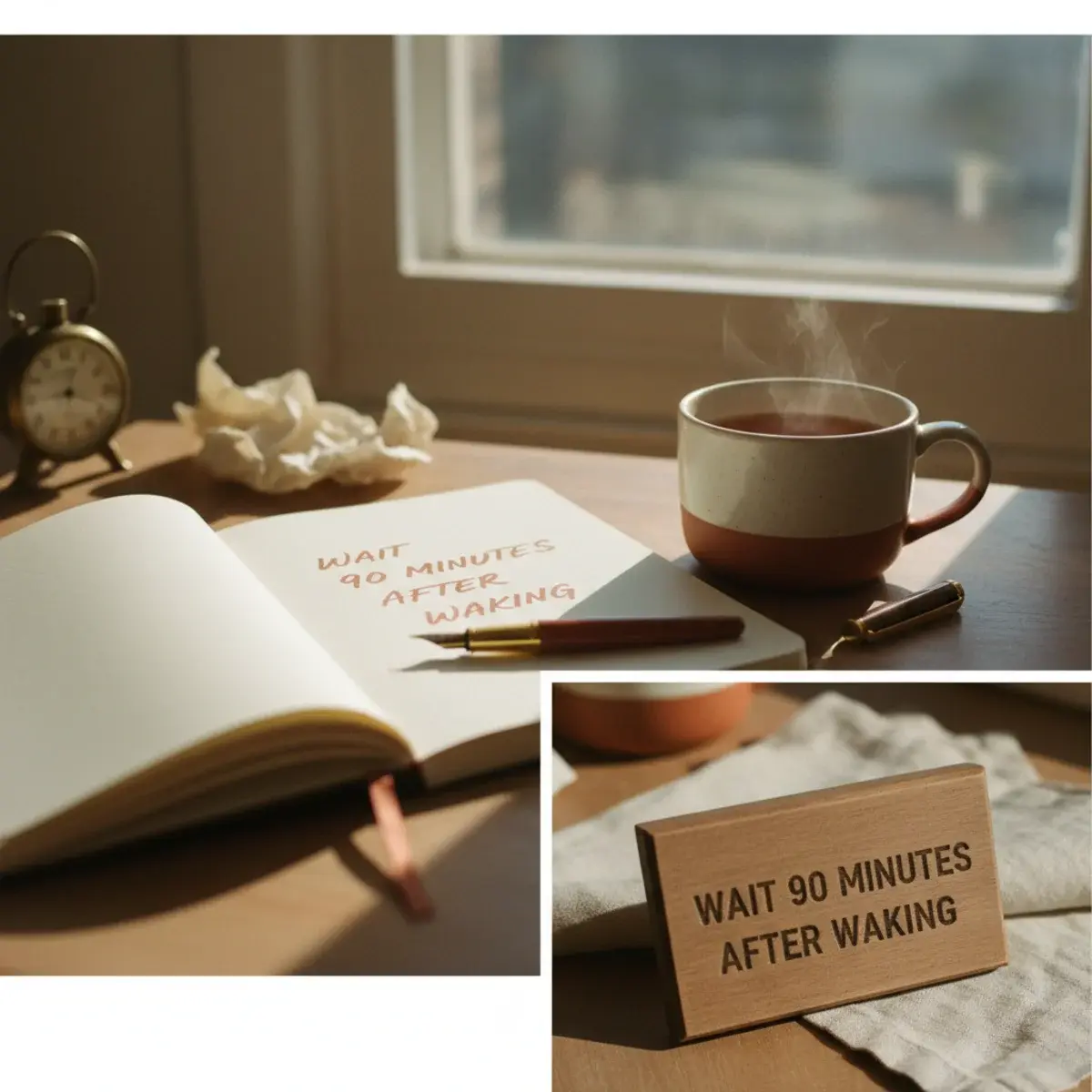
1. Wait 90 Minutes After Waking
The single most evidence-backed coffee-timing rule. Cortisol — your natural wake-up hormone — peaks 60-90 minutes after you wake up. A coffee in those first 90 minutes is largely wasted on the natural alertness already happening, and it trains your body to need caffeine for the cortisol response.
Have water first. Then breakfast. Then your coffee, around 90 minutes after waking. The same single cup will feel dramatically more effective.
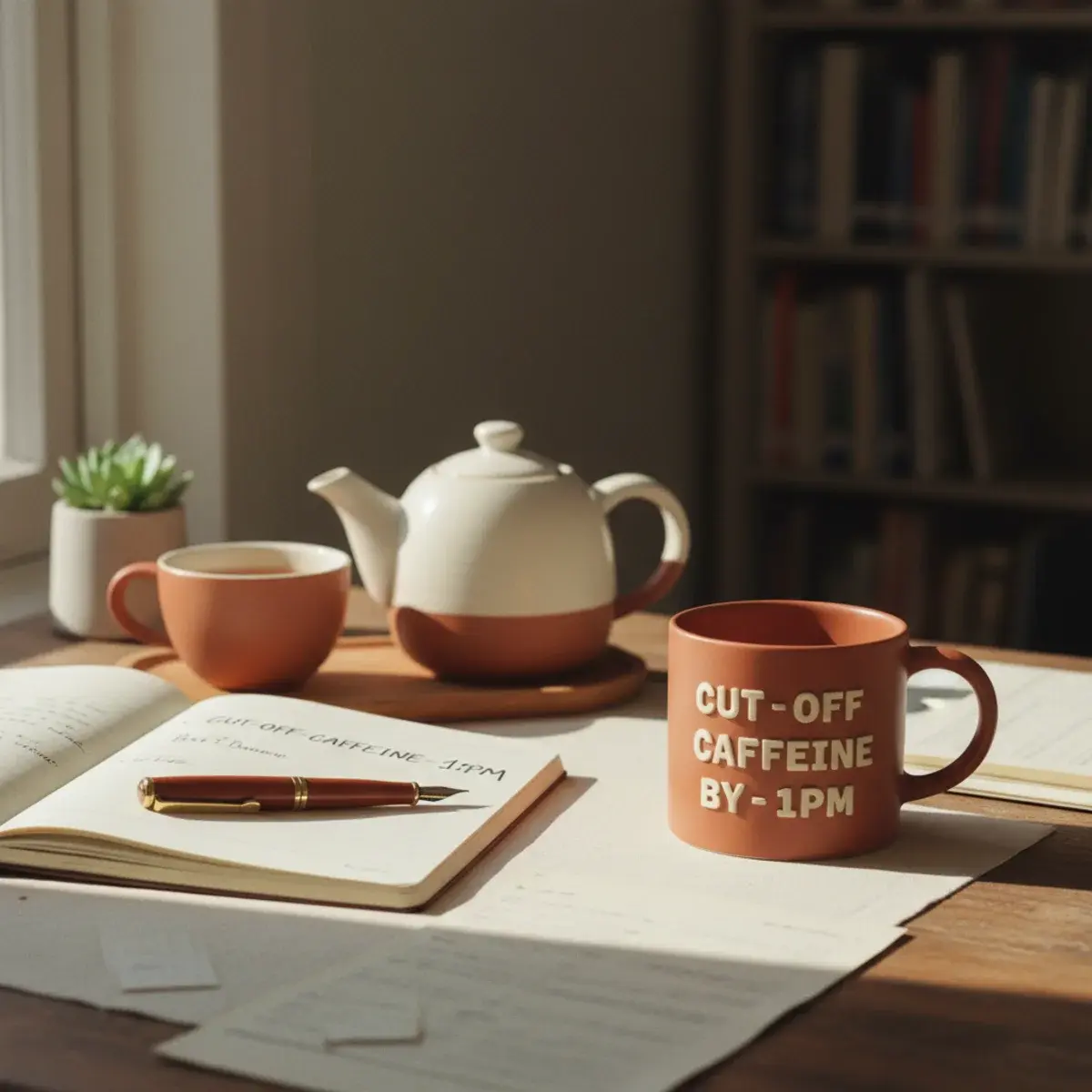
2. Cut Off Caffeine by 1pm
The sleep-protection rule. Caffeine consumed after 1pm measurably disrupts the next night's sleep, even if you don't feel it. The 3pm coffee that "didn't keep me up" still cost you 20 minutes of deep sleep — and deep sleep is what consolidates the day's learning.
If you absolutely need an afternoon boost, switch to decaf, green tea (lower caffeine), or just a short walk outside.
3. Time Your Pre-Study Coffee to Hit at the Right Moment
Caffeine peaks in your bloodstream about 45 minutes after consumption. The implication: drink your coffee 45 minutes before your hardest study block, not at the start of it.
The 9am espresso for the 9:45am deep-work session is dramatically better-timed than the espresso you drink while opening your textbook.
The Dose
How much, in honest amounts.
4. The Sweet Spot Is 200–400mg/Day
The published research is clear: 200-400mg of caffeine a day produces the cognitive benefits without the anxiety, sleep disruption, and crash. That's roughly two small coffees, two medium teas, or one large coffee.
More than 400mg/day produces diminishing returns and worsening sleep. Less than 200mg/day is fine but provides less of the focus benefit. The middle is the sweet spot.
5. A Single Strong Coffee Beats Two Weak Ones
If you want maximum cognitive effect, one full-strength coffee (a proper espresso, a 200ml filter coffee) beats two diluted cups. The single dose delivers caffeine in a sharp peak; spreading the same total caffeine across multiple cups produces a less effective plateau.
6. Reset Your Tolerance Twice a Year
If coffee has stopped working for you, the answer isn't more coffee — it's less for a week. A seven-day caffeine break (or a switch to half-strength) resets your adenosine receptor sensitivity. By day eight, the regular dose works again at full strength.
Do this in late August (before the autumn term) and late February (mid-term break). Two resets a year keeps caffeine working as a real tool.
The Cost Conversation
The honest financial maths.
The £4 daily café coffee
£4 × 365 = £1,460/year. That is genuinely a lot of money — roughly the cost of a beautiful summer holiday or a serious investment in your skills (a real laptop, a meaningful course, six months of pension contributions).
If a daily café coffee is genuinely the best part of your day, keep it. If it's an unexamined habit, the maths is worth pausing on.
The home-brewing alternative
A £25 Aeropress + a £6 bag of decent beans + £4 of milk = roughly £0.30 per beautiful filter coffee. Net savings over a year: about £1,350.
Most students who switch to home brewing find that they actually prefer their own coffee within a fortnight. The café version was mostly habit.
The Pairings That Work
Caffeine plus something else. The three combinations worth knowing about.
7. Caffeine + Protein at Breakfast
A coffee on an empty stomach is genuinely irritating to your gut and produces a sharper crash. A coffee with a protein-rich breakfast (eggs, Greek yoghurt, a protein smoothie) produces a longer, smoother focus window.
8. Caffeine + L-Theanine (Green Tea)
L-theanine — an amino acid naturally present in green tea — measurably smooths the focus effect of caffeine while reducing the jitters. The natural form: a single cup of decent green tea has both the caffeine and the L-theanine built in.
Matcha works particularly well here. The slower caffeine release plus the L-theanine produces 3-4 hours of calm focus, where the same caffeine in coffee would produce 90 minutes of sharper focus and a crash.
9. Caffeine + a 20-Minute Walk
The single most underrated coffee pairing. Drink the coffee, then walk for 20 minutes. The walk increases blood flow, accelerates the caffeine peak, and gets you back to your desk in an unmistakably activated state.
The Honest Don'ts
Three things to avoid.
Don't drink energy drinks as your primary caffeine source. They're badly dosed (often 200mg+ in a single can), packed with sugar, and produce the worst crash of any common caffeine source. If you need caffeine, drink coffee or tea.
Don't use coffee to compensate for under-sleeping. This is the cycle that breaks students. Bad sleep → more coffee → worse sleep → more coffee. The fix is the sleep, not the dose.
Don't drink decaf in the afternoon thinking it's caffeine-free. Decaf still contains 5-15mg of caffeine per cup. For sensitive sleepers, that's enough to matter. Use herbal tea (chamomile, peppermint, ginger) in the afternoon instead.
A Note on Coffee Alternatives
For the students who don't drink coffee, or who want to vary their caffeine sources.
Matcha: the smoother caffeine experience. A whisk, a small bowl, and a tin of ceremonial-grade matcha (£15, lasts months). The L-theanine in matcha smooths the focus effect of the caffeine.
Black tea: roughly half the caffeine of coffee, gentler ramp-up. Strong English breakfast or Assam, brewed properly for four minutes. The British classic.
Yerba mate: the South American alternative. Roughly the same caffeine as coffee, with a distinctively different flavour profile. Worth trying once.
No caffeine at all: the option people forget. The student who doesn't drink caffeine, sleeps eight hours, and uses Pomodoro structure outperforms the over-caffeinated student by a clean margin. Caffeine is a tool, not a requirement.
The Honest Question of Whether to Drink Coffee at All
A genuine reflection point: do you actually enjoy coffee, or is it a habit you've inherited?
If you genuinely love the taste and ritual, keep the practice. Make it intentional. Make the cup good.
If you drink it mostly to mask under-sleeping, that's the wrong fix. Sleep more. The coffee will become genuinely pleasurable again when it isn't covering something else.
The well-rested woman drinking one beautiful cup at 9am is in a structurally different place than the under-slept woman drinking four mediocre cups across a day. Both are technically coffee-drinkers. Only one is actually enjoying it.
Final Thoughts
Coffee, used well, is one of the genuine pleasures of student life and one of the cheapest cognitive enhancers ever discovered. Used badly, it's the slow, expensive trap that eats your sleep and your bank account.
The framework above is the difference. Wait 90 minutes after waking. Cap at 1pm. Time it 45 minutes before your hardest work. Keep the total dose moderate. Reset tolerance twice a year. Pair it with protein, L-theanine, or a walk.
The cup itself becomes more enjoyable when it's used as a tool rather than as fuel. The studying gets sharper. The afternoons get less ruined. The sleep gets better.
Make the next cup count.
More from this category


Leave a Reply
Want to write back? Comments aren't open yet — but you can reply to this article on Pinterest, save it to a board, or share it with a friend.