College & Student Life
How to Make Friends as an Online College Student

Jan 20
2026
How to make friends as an online college student — practical, kind ways to build a real social life when your classes only happen on screens.
Online college is, by structural design, one of the loneliest forms of higher education. The lectures happen through a screen. The classmates are tiny rectangles. The natural friendships that emerge from sitting next to someone in a real classroom for three months don't form automatically. For most online students, friendship has to be built deliberately — and most have never been taught how.
This article is the honest playbook. The specific tactics that actually work for building real friendships when your degree happens online. Tested across two years of online college and dozens of conversations with students who got it right.
Save this. Try two tactics this week.
The Foundation Truth
The single hardest mental shift for online students: realising that nobody else is going to introduce themselves first. The chat will stay silent for the entire first week unless someone — you — breaks the seal.
This isn't because your classmates are unfriendly. It's because everyone is waiting for someone else to do the awkward first move. The student who is that someone reliably becomes the social hub of the cohort.
The Specific Tactics
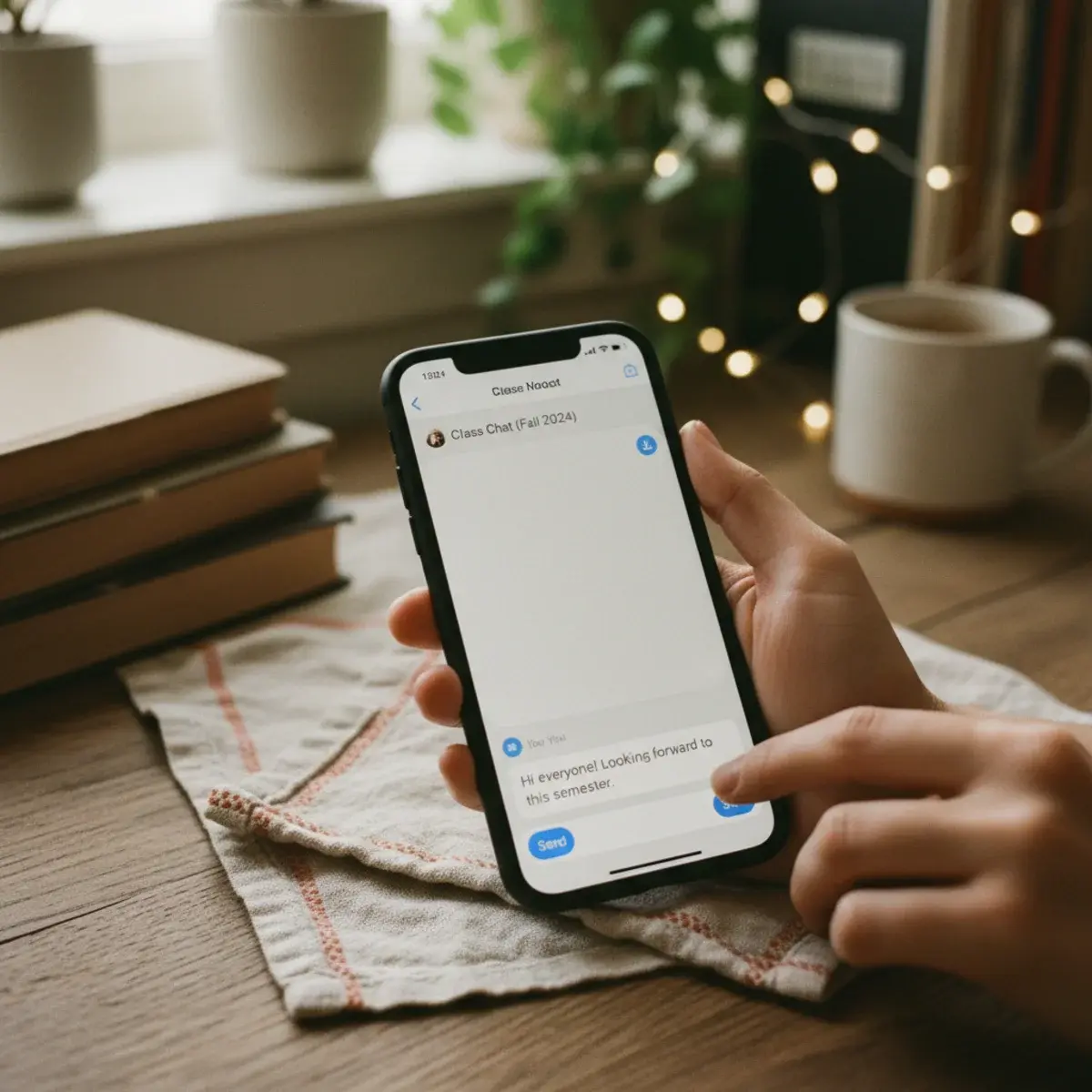
1. Send the First Message in the Class Chat
Day one of every class, send a single warm message. "Hi everyone — first-year here, looking forward to this module. Anyone else from the Manchester area? Would love to compare notes."
Out of 30 students, 3-4 will reply. Those 3-4 become the seeds of your first real online friendships.
2. DM Someone After a Good Answer
When someone says something insightful in the lecture chat or on the discussion board, DM them. "Hey, your point about X was really sharp — I hadn't thought about it that way. Are you on the [next module] in the spring?"
The single most underused move in online college. Most people will be flattered and respond warmly.
3. Start a Two-Person Study Group
Not a five-person group. Start with one other student. "Want to do a weekly Zoom study session? Same time each week, just for accountability." If it's working at the four-week mark, expand to three. If not, no harm done.
4. Turn Your Camera On (Always)
The single biggest social move in any online class. The students with cameras on find each other, become recognisable to each other, and become real to each other. Cameras-off students stay invisible.
5. Show Up to Live Sessions Even When You Could Watch the Recording
The students who attend live become friends with each other. The students who watch recordings later never enter the social fabric. The hidden cost of "I'll catch up on the recording" is the friendship you didn't make.
6. Organise One In-Person Meetup Per Term
If any of your classmates are within travel distance, organise one coffee meetup per term. A café, a Saturday morning, three or four people. The single in-person meeting builds more friendship than three months of Zoom.
7. Be the One Who Texts First (Repeatedly)
The single most reliable friendship-building habit: be the person who texts first. Most people are passive. The active one becomes the social anchor of the group.
The Common Mistakes
Waiting for friendship to happen accidentally. It won't. Online college has none of the structural accident-generators that in-person school has. You have to engineer the friendships deliberately.
Trying to befriend everyone. Pick three or four people whose work or temperament you admire and invest in those specifically. Quality over quantity.
Giving up after two failed attempts. Out of ten genuine outreach moves, maybe three will produce friendships. That's a great ratio. Don't quit at attempt two.
How to Make the First In-Person Meeting Work
Once you've found one or two online classmates worth knowing, the single biggest move is converting the friendship from screen to in-person. Here's the framework.
Pick a coffee, not a meal
A coffee meeting is 60-90 minutes — low-commitment for both parties. Dinner is a 2-3 hour commitment that feels like more than a first meeting should be. Coffee is the right unit.
Pick a specific café, on a specific weekend
Don't ask "want to meet up sometime?" That sometimes-never-happens. Suggest a specific day, time, and place. "There's a small café near the station — want to meet Saturday at 11am for an hour?" The specificity makes it actually happen.
Have one topic of conversation pre-loaded
Awkward silences kill new friendships. Have one non-coursework topic you can fall back to — a book you read, a film you saw, a recent news item you have an opinion about. The conversation flows from there.
Don't expect instant best-friendship
The first in-person meeting is just that — the first one. Real friendship takes 5-10 hours of total face time to develop. The first coffee is one hour of those. Plan a second within a fortnight.
What to Do If You're Genuinely Lonely
If the loneliness of online college has gone beyond a passing mood — if it's persistent, deep, or starting to affect your mental health — please reach out. Most universities have free counselling services that take online students just as seriously as in-person ones.
The loneliness is structural, not personal. It is genuinely harder to make friends through a screen. Many other students are experiencing exactly the same thing. The act of reaching out — to a friend, a counsellor, a family member — is itself part of the cure.
For more on protecting your mental health, see How to Stay Healthy as an Online Student.
The Long-Term Game
A small reframe: the friendships you build in online college do not have to be limited to during online college. The classmates you become real friends with often become lifelong contacts.
Many of my closest professional contacts started as online classmates I deliberately reached out to during a course five years ago. The course ended. The friendships continued. Several of those people are now collaborators on projects I never could have predicted.
The act of treating online classmates as real future colleagues — not just temporary cohort members — is itself part of the friendship-building.
Three Specific Mindsets That Help
Assume good faith on every message. The classmate who hasn't responded probably isn't ignoring you — she's busy. Send a friendly follow-up. Don't take silence as a verdict.
Be the person who remembers. Mention someone's interests, their previous answers, their projects when you talk. People remember being remembered.
Lead with curiosity. Ask real questions about their lives, their interests, their plans. Most online interactions stay shallow because nobody asks anything beyond the coursework. The student who asks deeper questions becomes the person everyone wants to talk to.
A Final Note
If you've read this far, you're already ahead of most online students — most of whom never deliberately think about friendship-building at all. The first move you make this week will start the slow compound effect that ends with a real social circle by the end of your degree.
Send the first message tonight. The rest follows.
The Stages of Online-College Friendship
A small framework for tracking where you are.
Stage 1: Recognition (Weeks 1-2)
You notice each other in class. You remember their name, their face, their general vibe. They might not yet remember you.
Stage 2: First Contact (Weeks 2-4)
A DM after class, a reply to a chat message, a brief conversation in the breakout room. The first specific exchange.
Stage 3: Repeated Contact (Weeks 4-8)
You're DMing semi-regularly about coursework. You sit together in breakout rooms when the option exists. You'd recognise each other on the street.
Stage 4: Off-Topic (Weeks 8-12)
You start talking about non-coursework things. Your weekends. Your favourite shows. The first real personal exchange. This is where friendship actually starts.
Stage 5: Real Friendship (Beyond Week 12)
You text outside of class hours. You meet in person if geographically possible. You're recommending books and TV shows to each other. The friendship is genuinely real now.
Most students get stuck at stage 2 or 3, mistaking acquaintance for friendship. The deliberate progression through these stages is what produces real friendships from online classes.
Final Thoughts
The friendships you build in online college will not happen by themselves. They will happen because you sent the first message, you turned the camera on, you started the two-person study group, you organised the meetup.
The students who graduate from online college with real friends are not the lucky ones. They are the ones who decided, in week one, that they were going to be the active social participant in their cohort.
Send the first message this week. The rest follows.
More from this category



Leave a Reply
Want to write back? Comments aren't open yet — but you can reply to this article on Pinterest, save it to a board, or share it with a friend.