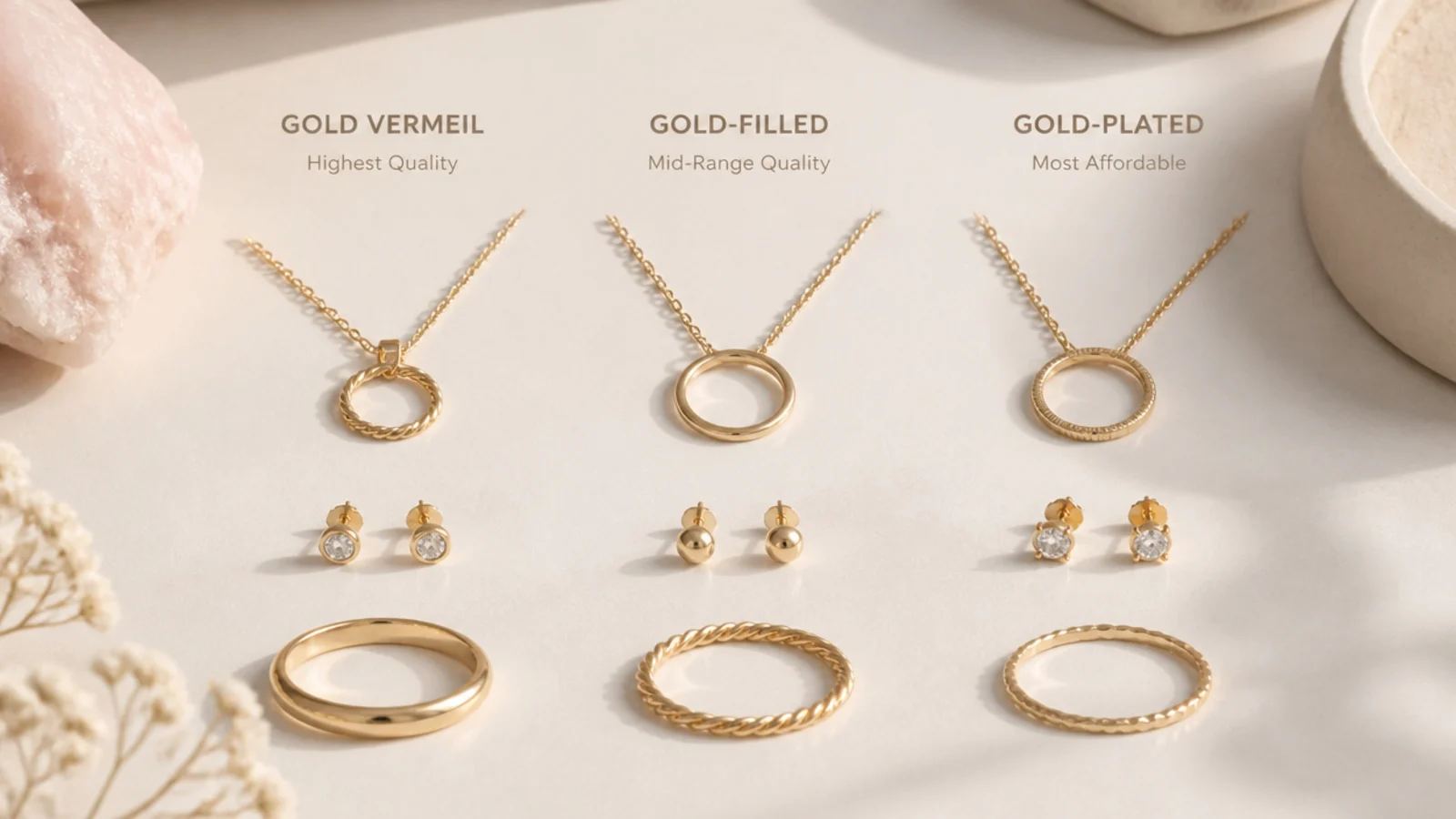
Quick Comparison
1. Gold Vermeil: Real Gold Over Sterling Silver
Gold vermeil (pronounced ver-may) is real gold electroplated over a solid sterling silver base, and to be called vermeil in the US the gold must be a minimum of 2.5 microns thick and at least 10k. That is roughly five times thicker than standard plating, which is why it lasts far longer. The sterling core is the key advantage: there is no brass to react, so vermeil is nickel-free and safe for most sensitive skin. Expect 1 to 2 years of regular wear before the gold thins. It is the best pick when you want genuine warm-gold tone and skin safety on a demi-fine budget.
Confirm the listing says sterling silver base and 2.5 micron or higher. If it says vermeil but hides the base metal, treat it as ordinary plating.
2. Gold Filled: 14k Bonded Over a Brass Core
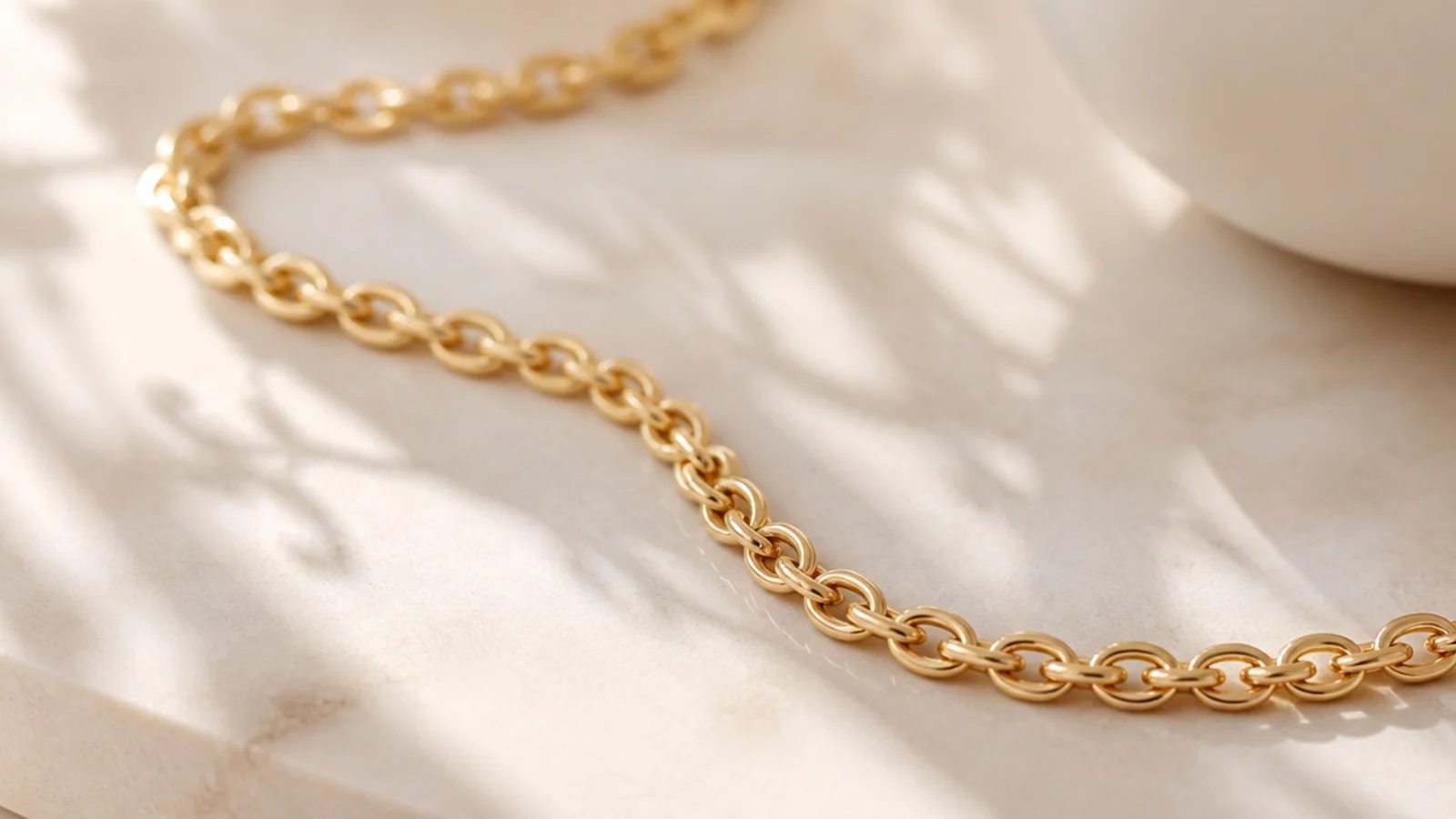
Gold-filled is the most durable material short of solid gold. A thick layer of 14k gold is bonded to a brass core under heat and pressure, and by law the gold must be at least 5% of the item's total weight - roughly a hundred times more gold than plating. Because the gold is mechanically bonded, not just electroplated, it does not flake or peel. Gold-filled is rated to last 3 to 5 years or longer, is genuinely waterproof, and is nickel-free, so you can shower and swim in it. It is the smart choice for rings, daily chains, and anyone who never takes jewelry off.
Look for the stamp 14/20 or 1/20 14k gold-filled. That fraction confirms the 5% gold-by-weight standard rather than a marketing use of the word filled.
3. Gold Plated: Under 0.5 Micron Over Brass
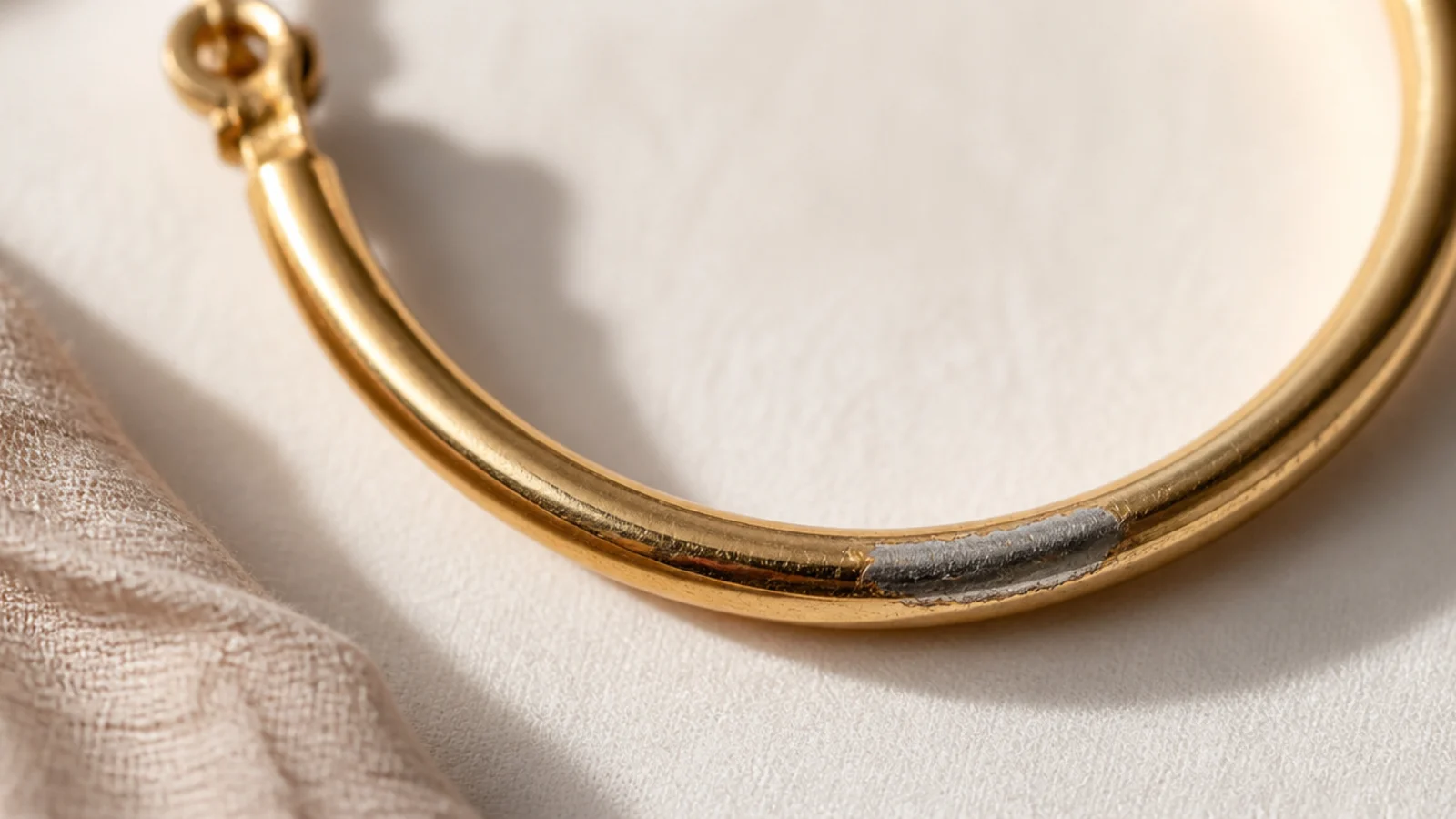
Standard gold-plating is a very thin gold layer, usually under 0.5 micron and sometimes as little as 0.175 micron, electroplated over brass or copper. That whisper of gold looks identical to vermeil in a photo but behaves nothing like it. The plating wears through within months at any friction point, air and sweat reach the brass, and the brass reacts - which is the dark tarnish on the chain and the green mark on your skin. Plated is not hypoallergenic because the base is brass, which can contain nickel. It has a real place as an inexpensive trend piece for earrings and necklaces, just not for rings or daily skin contact.
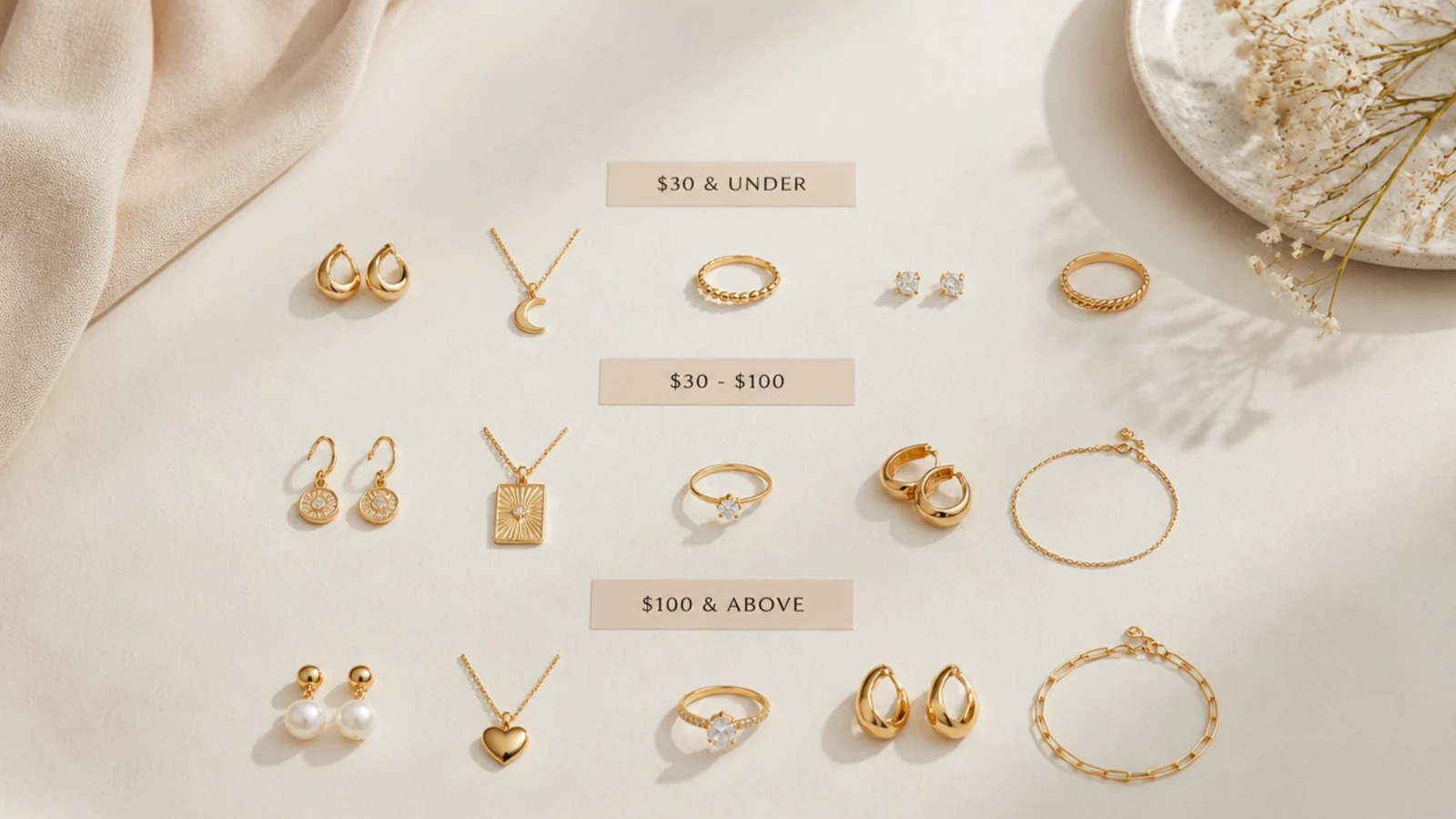
A price alone tells you a lot: a chunky heavy piece at $12 to $25 with the base metal unstated is almost always plated brass. Browse the full <a href="/jewelry">jewelry guides</a> or see <a href="/jewelry/gold-jewelry-under-50">gold jewelry under $50</a> for which plated buys are still worth it.
4. Micron Thickness: The Number That Separates Them
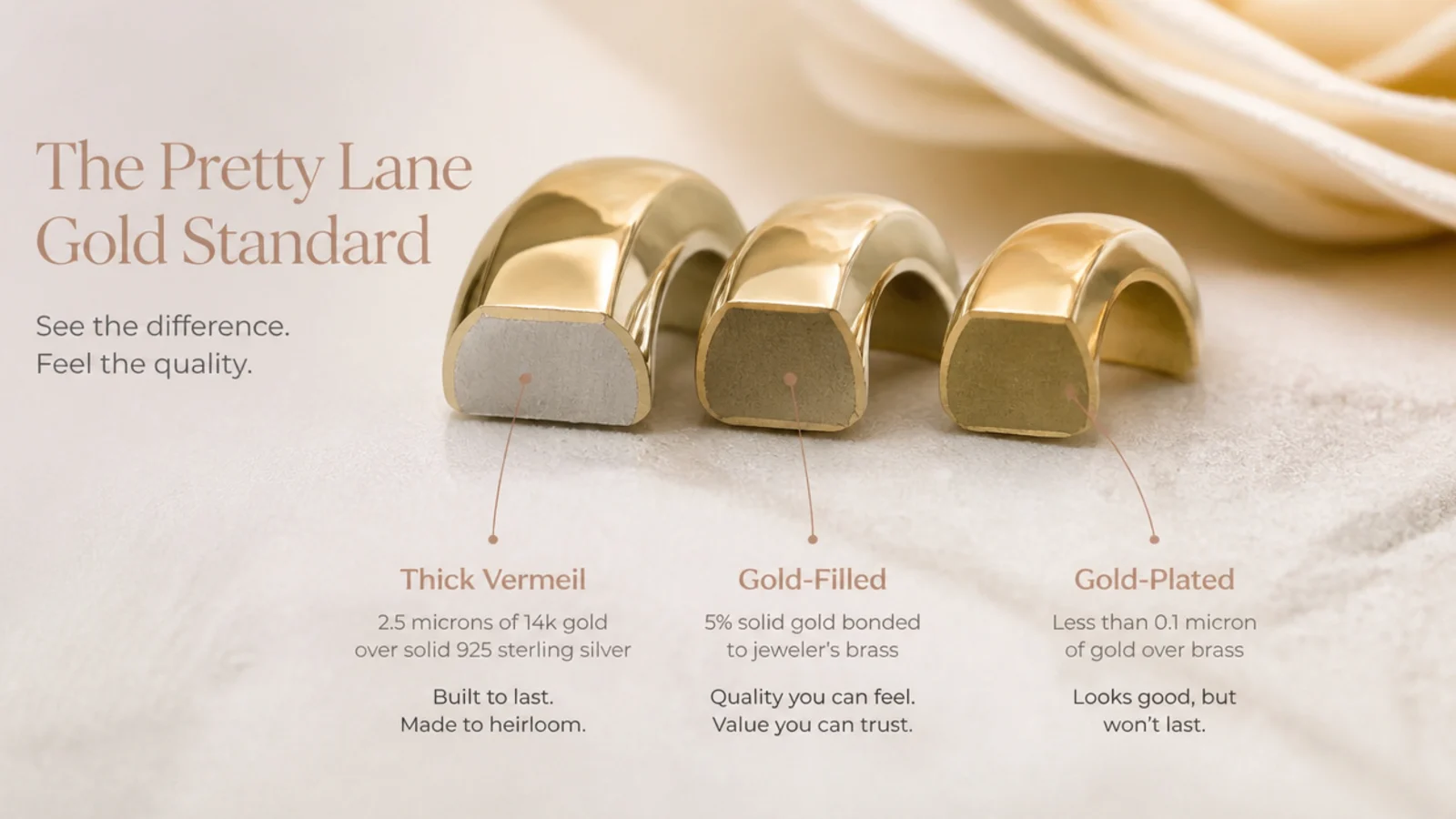
Micron thickness is the single most useful spec, and almost no shop page states it. Standard plating runs under 0.5 micron. Heavy or thick plating (sometimes marketed as 18k plated) reaches around 1 micron. Vermeil starts at 2.5 microns by legal definition. Gold-filled is measured differently - by weight, at 5% - but that translates to a far thicker effective layer than any plating. The rule is simple: below 0.5 micron the piece is a season or two of life, at 2.5 microns you get years, and gold-filled outlasts them all. When a brand refuses to publish microns, that silence usually means the number is low.
Ask a brand directly for the micron thickness before buying. A quality demi-fine seller answers instantly; a dropshipper goes quiet, which is your answer.
5. Lifespan and Durability by Material
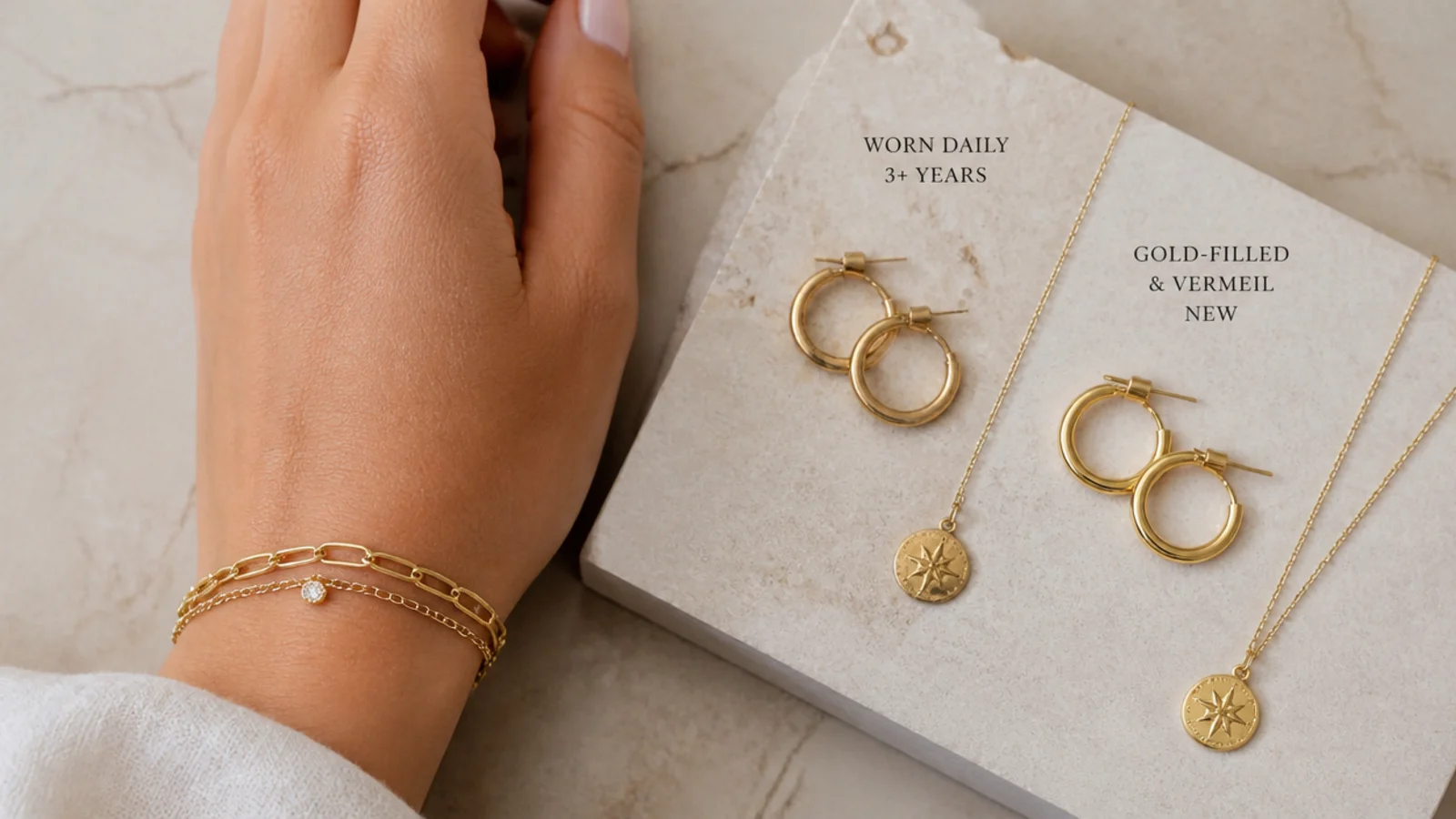
Lifespan follows thickness directly. Gold-plated pieces last months to about a year before the gold fades and brass shows at edges and friction points. Gold vermeil lasts 1 to 2 years of regular wear thanks to the 2.5 micron layer. Gold-filled lasts 3 to 5 years and often much longer because the bonded gold does not peel. Solid gold, the ceiling, lasts a lifetime. But where you wear the piece matters as much as the material: the same vermeil that lasts years as a stud can thin in months as a ring. Friction, water, and chemicals are what actually kill the gold, not time on a shelf.
Rotate your pieces so no single item takes all the daily wear. Alternating two chains roughly doubles how long each one stays bright.
6. Tarnish Resistance: Does Gold Filled Tarnish?
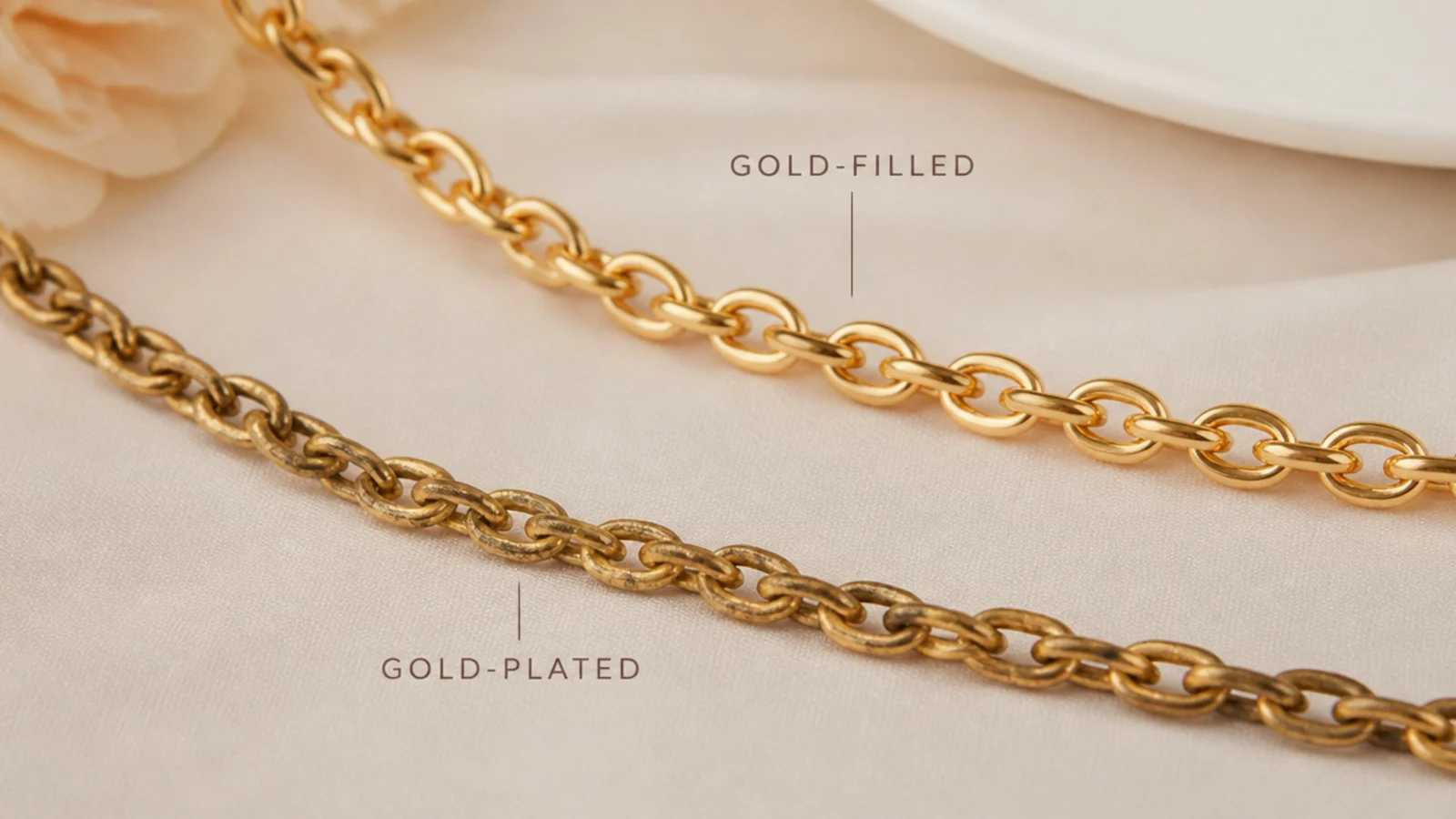
Gold-filled does not meaningfully tarnish - the bonded 14k surface behaves like solid gold, so it stays bright for years and only needs an occasional soft-cloth wipe. Gold itself never tarnishes in any of these materials; what tarnishes is exposed base metal. That is why plated brass darkens fast once the thin gold wears through, and why vermeil can eventually dull as its gold thins to reveal the sterling (which oxidizes gray, not green). Ranked by tarnish resistance: solid gold and gold-filled are best, PVD stainless is excellent, vermeil is good for a year or two, and plated is worst.
Store every material dry and separate. Trapped moisture in a clasp or a jumbled dish is what starts tarnish at the weakest point first - see <a href="/jewelry/jewelry-box-organization-ideas">jewelry box organization ideas</a> for anti-tarnish storage.
7. Sensitive Skin and Nickel: Which Is Safe
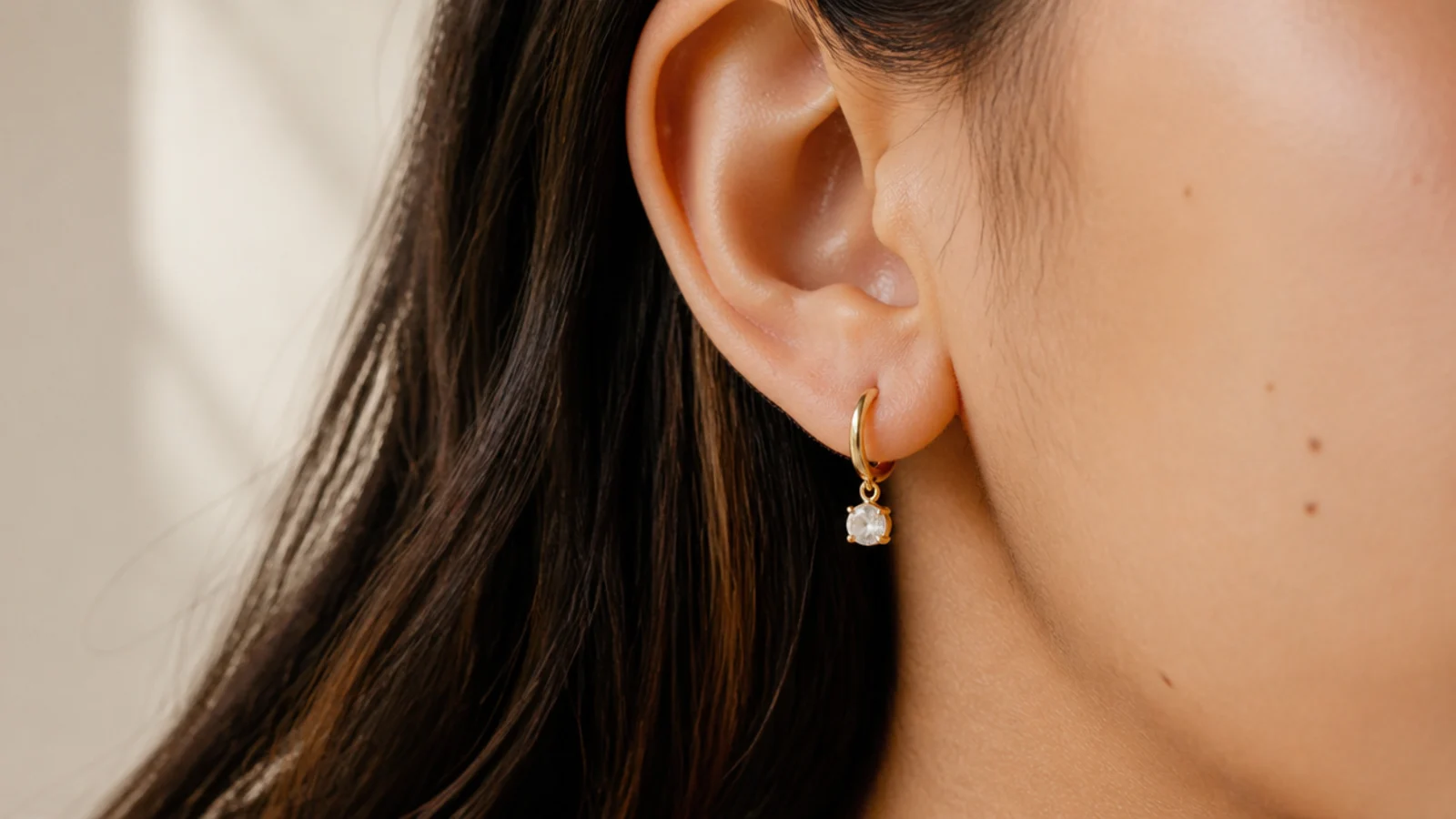
For sensitive skin, the base metal is everything. Nickel is the top cause of contact allergy, and it hides in brass alloys. Gold vermeil sits over sterling silver with no brass, so it is nickel-free and one of the safest options for pierced ears and reactive skin. Gold-filled uses a brass core but the thick bonded gold seals it, and reputable gold-filled is nickel-free, making it safe for most people even long-term. Solid gold and 18k PVD stainless steel are also safe. Gold-plated is the one to avoid: as the thin gold wears, brass and any nickel it contains contact the skin directly and trigger reactions.
For newly pierced or very reactive ears, choose vermeil studs or solid gold. See <a href="/jewelry/best-jewelry-brands">best jewelry brands</a> for labels that specify nickel-free.
8. Waterproof and Shower-Safe Ranking
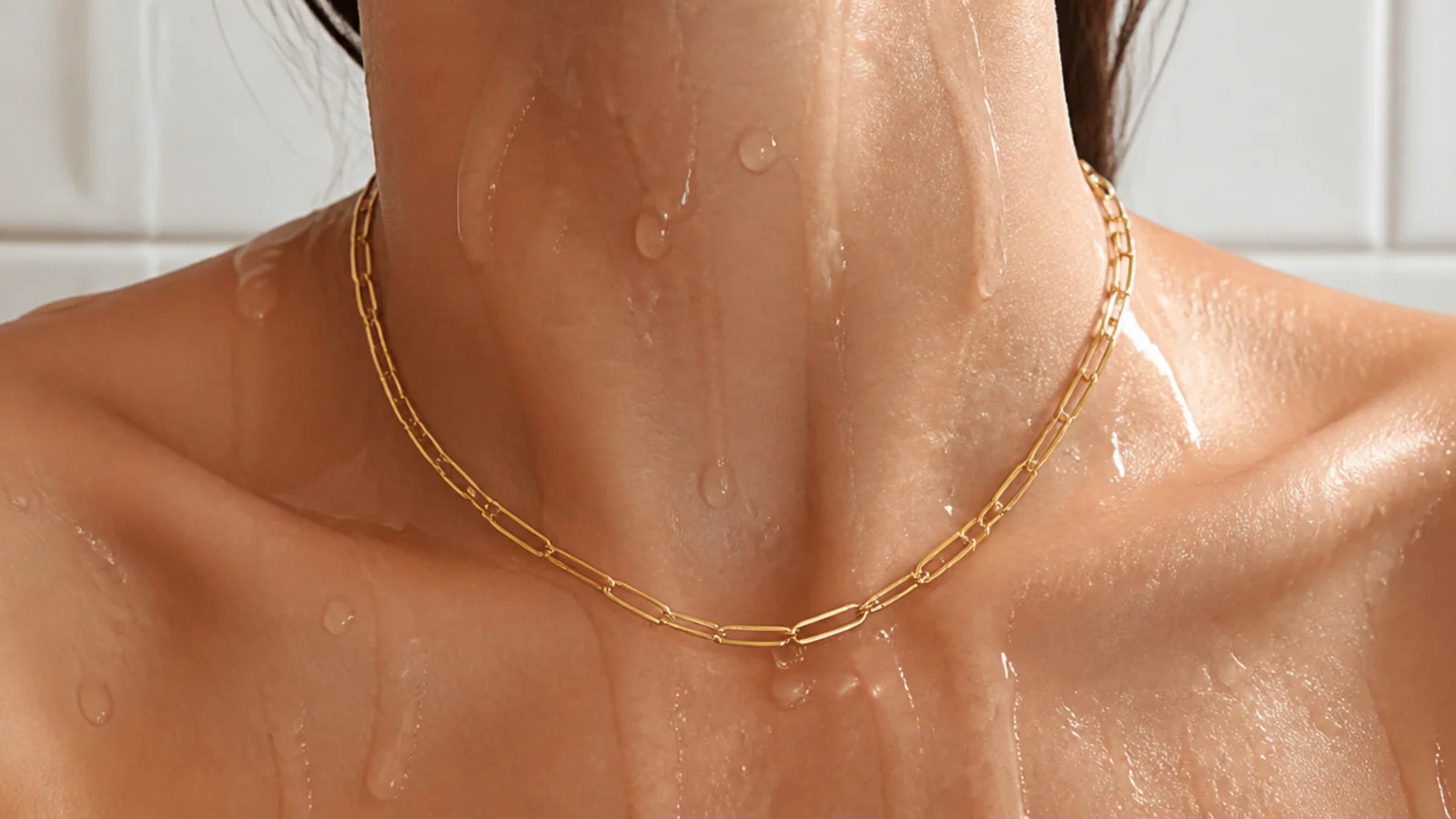
Only two of these materials are truly water-safe. Gold-filled is genuinely waterproof - you can shower, swim, and sweat in it without harm, because the bonded gold fully seals the brass. 18k PVD stainless steel is equally waterproof and tarnish-proof. Gold vermeil is not waterproof: repeated water, chlorine, and soap speed up how fast the 2.5 micron layer thins and reaches the sterling, so it should come off before showering. Gold-plated is the least water-tolerant - water attacks the brass at every worn spot and accelerates the green-skin problem. If you want a piece you never remove, gold-filled or PVD is the only honest answer.
Chlorine and salt water are harsher than tap water on every material. Take even gold-filled off before a hot tub, where heat plus chlorine is the worst combination.
9. Price Floors: What Each Should Cost
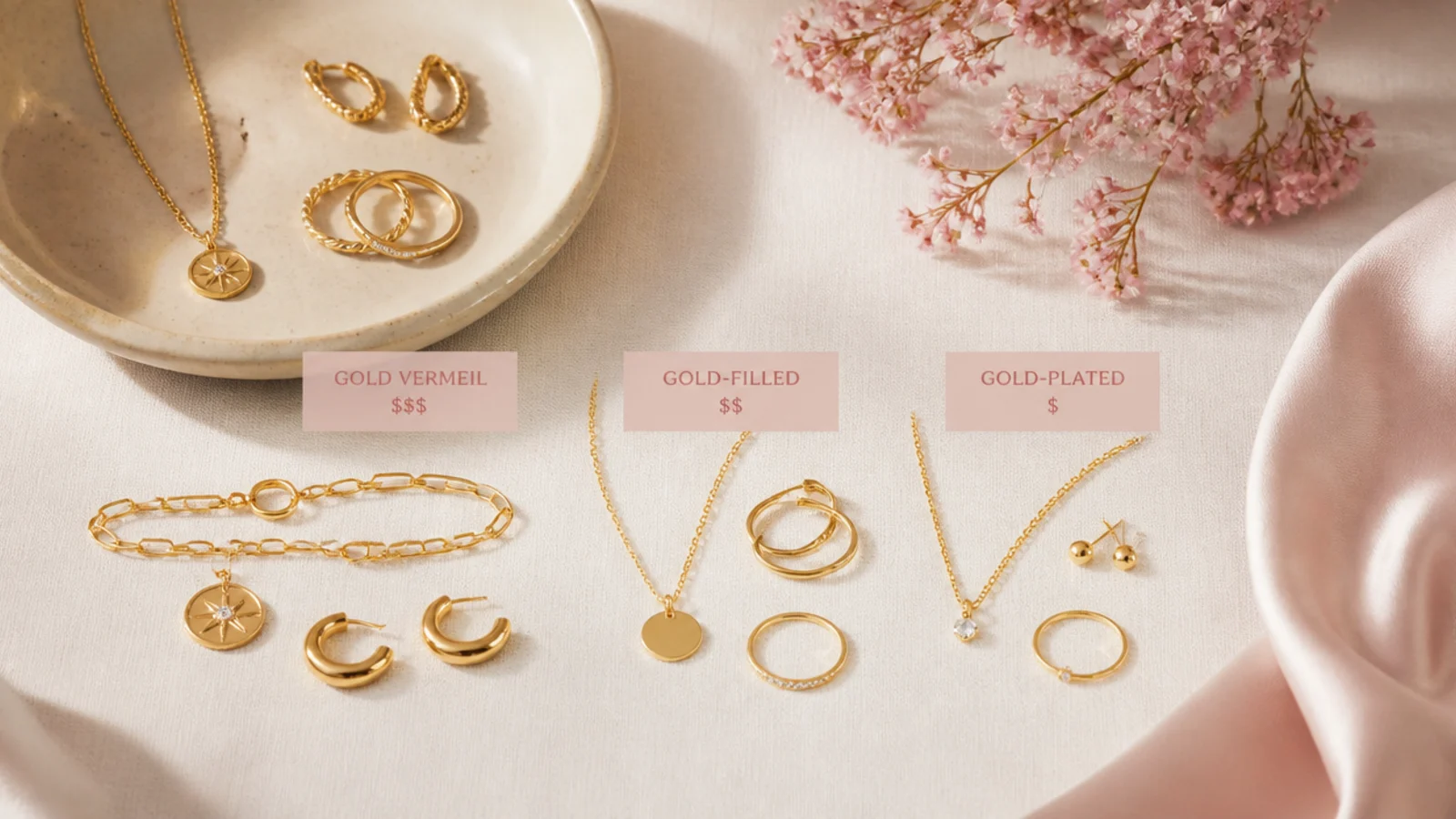
Real gold content sets a price floor, and that math exposes fakes. Gold-filled contains enough gold that a substantial piece under about $100 should make you suspicious - the gold alone costs more than that, so a chunky gold-filled chain for $12 is almost certainly mislabeled plated. Vermeil quality typically runs $50 to $300 depending on size, since sterling plus a thick gold layer is not cheap. Gold-plated should be inexpensive by nature, so paying above $80 to $100 for plated makes no sense unless the design itself justifies it. Use these floors as a lie detector: a price far below the material's floor means the material is not what the label claims.
When a demi-fine price looks too good for its stated material, the base metal is the catch. Read the spec, not the headline - our guide to <a href="/jewelry/buying-jewelry-online-tips">buying jewelry online</a> breaks down every listing red flag.
10. Best Use for Each Material
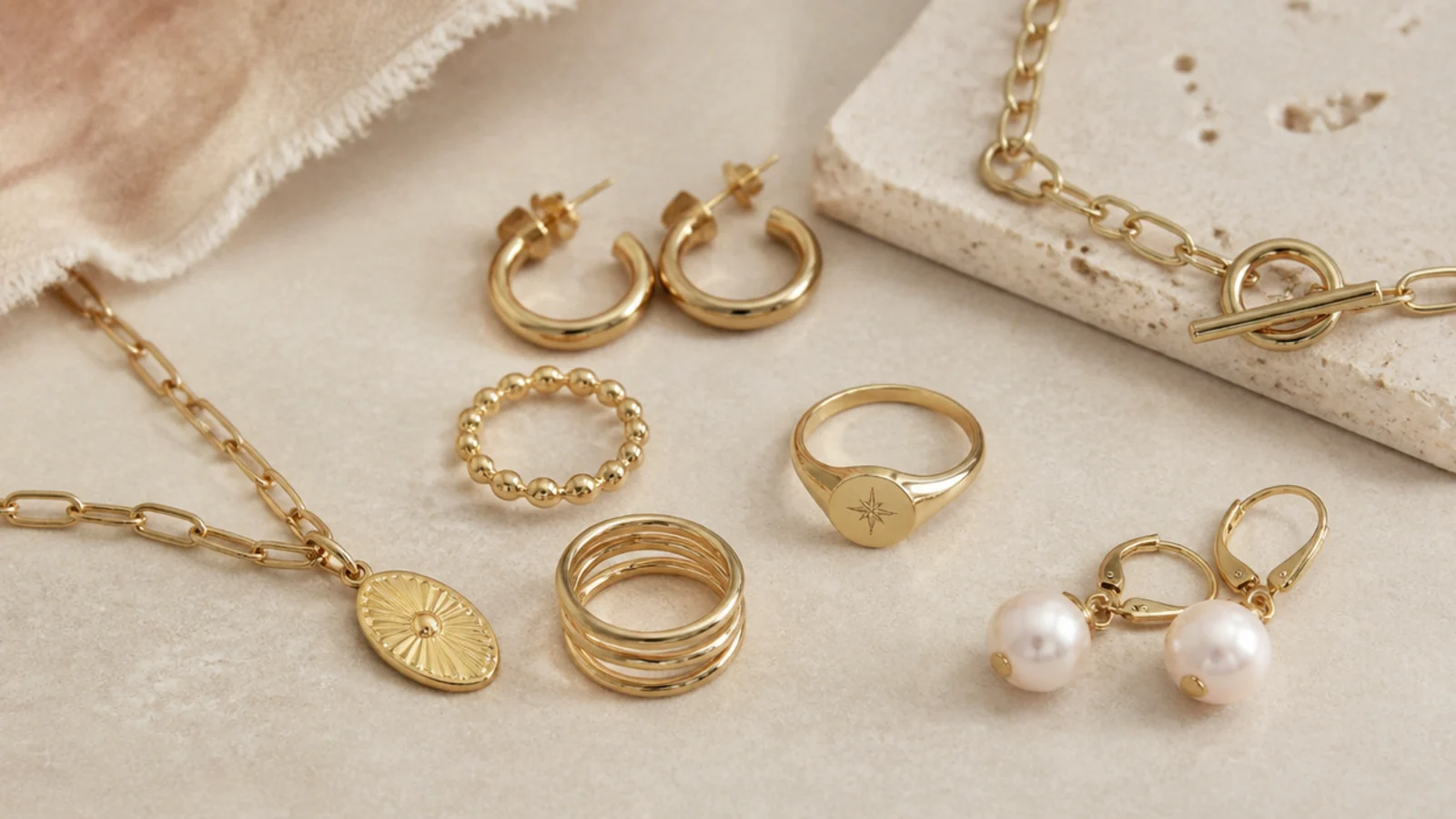
There is no single winner - each material wins a different job. Buy gold-filled for rings, everyday bracelets, and any chain you plan to shower and sleep in, because it survives the most friction and water. Buy gold vermeil for earrings, pendant necklaces, sensitive ears, and whenever you want authentic warm-gold tone without solid-gold prices. Buy 18k PVD stainless for a truly never-take-it-off ring or a hands-in-water job. Reserve gold-plated for low-friction trend earrings and necklaces you are happy to replace in a season. Solid gold is the heirloom ceiling. Match the material to the friction and the water, and nothing you buy disappoints.
Build a mixed rotation on purpose: gold-filled for the pieces you never remove, vermeil for the pieces you style. See <a href="/jewelry/everyday-jewelry-essentials">everyday jewelry essentials</a> to plan it, or <a href="/jewelry/how-to-style-jewelry-for-work">how to style jewelry for work</a> for a polished daily set.
Is Gold Vermeil Real Gold? The Sterling Silver Difference
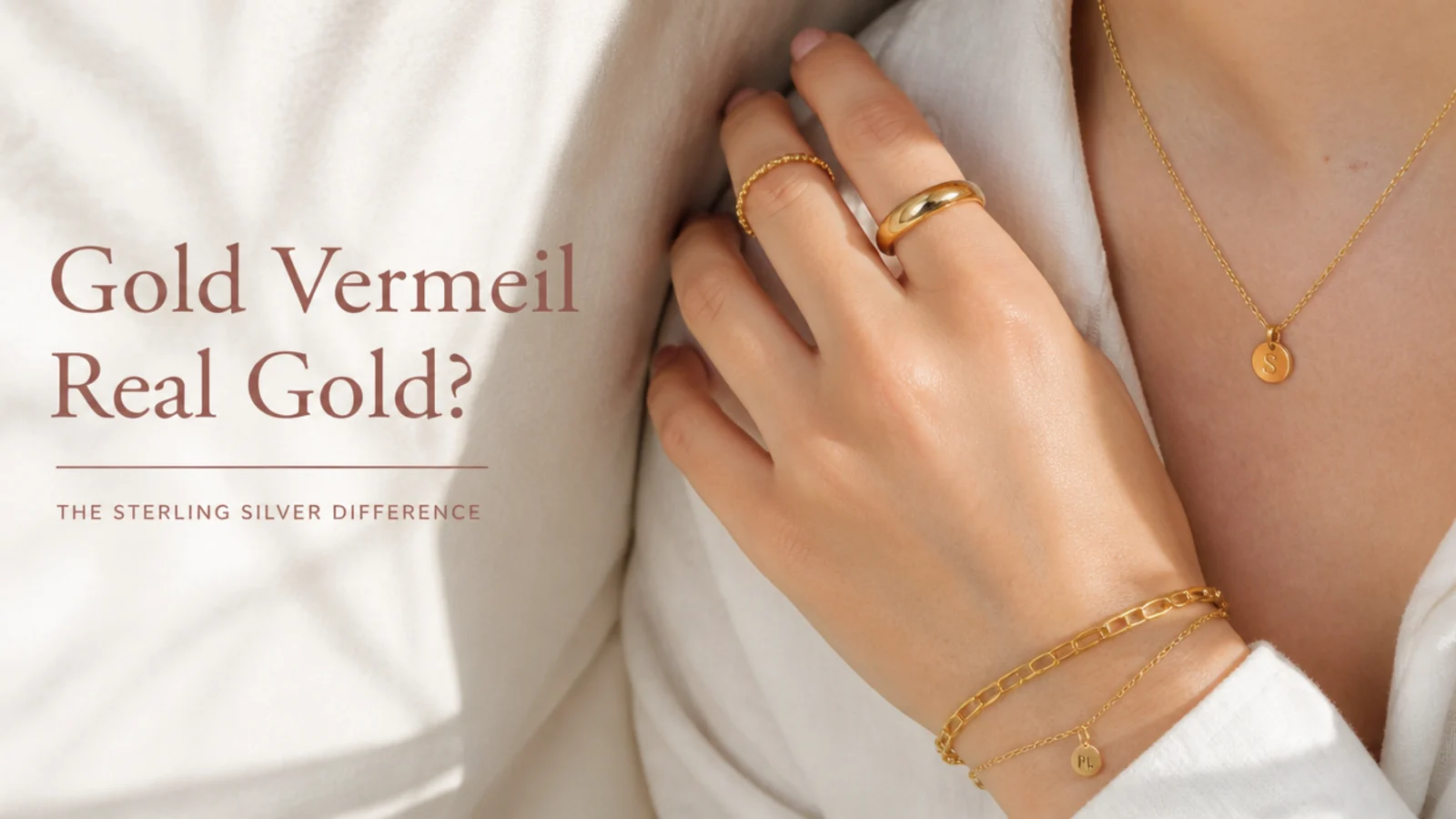
Yes - gold vermeil is real gold, and the sterling silver underneath is exactly why it outperforms ordinary plating. Vermeil is a legally defined term in the United States: the base must be solid sterling silver, and the gold layer must be at least 2.5 microns thick and no less than 10k. That combination gives you two real advantages. First, the 2.5 micron layer is roughly five times thicker than standard plating, so it wears through far more slowly and lasts 1 to 2 years of regular wear. Second, and more important for many people, the sterling core contains no brass and no nickel, so vermeil is genuinely nickel-free and safe for sensitive and freshly pierced skin. The catch is that vermeil is only as honest as its label. Some sellers stretch the word to cover thin gold over cheaper metal. Verify two specs before buying: a sterling silver base and a 2.5 micron minimum. If either is missing or vague, you are looking at ordinary plating wearing the vermeil name. When both check out, vermeil is the best warm-gold value in demi-fine jewelry.
Gold Filled vs Gold Plated: Why Bonding Beats Electroplating
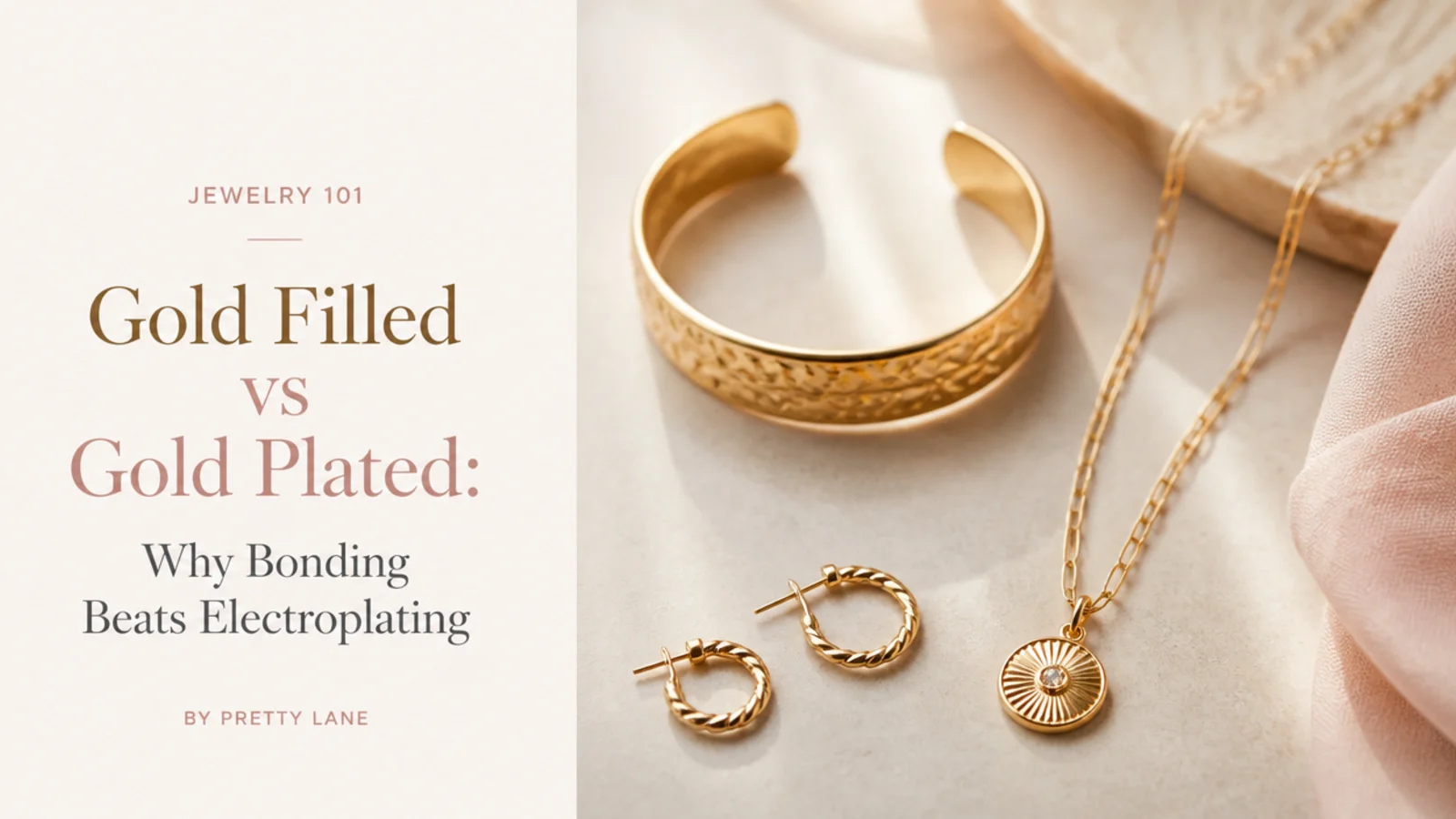
Gold-filled and gold-plated sound similar and cost worlds apart, and the reason is how the gold attaches. Gold-plating is electroplating: a microscopically thin gold layer, under 0.5 micron, is deposited electrically onto brass. It bonds only at the surface, so ordinary friction rubs it off within months. Gold-filled is mechanical bonding: a thick sheet of 14k gold is fused to a brass core under intense heat and pressure, and the gold must equal at least 5% of the piece's total weight. That is about a hundred times more gold, locked on so firmly it cannot flake or peel. The practical results are night and day. Gold-filled is waterproof, nickel-free in reputable pieces, and rated for 3 to 5 years or far longer; plated is none of those things and fades fast. This is also why price is a giveaway: the gold in gold-filled sets a real floor, so a gold-filled chain that costs less than a fast-food meal is mislabeled. If you want the most durability short of solid gold, gold-filled is the answer, and it is the one material here you can honestly wear in the shower every day.
How Long Does Gold Plated Last, and Why It Turns Skin Green
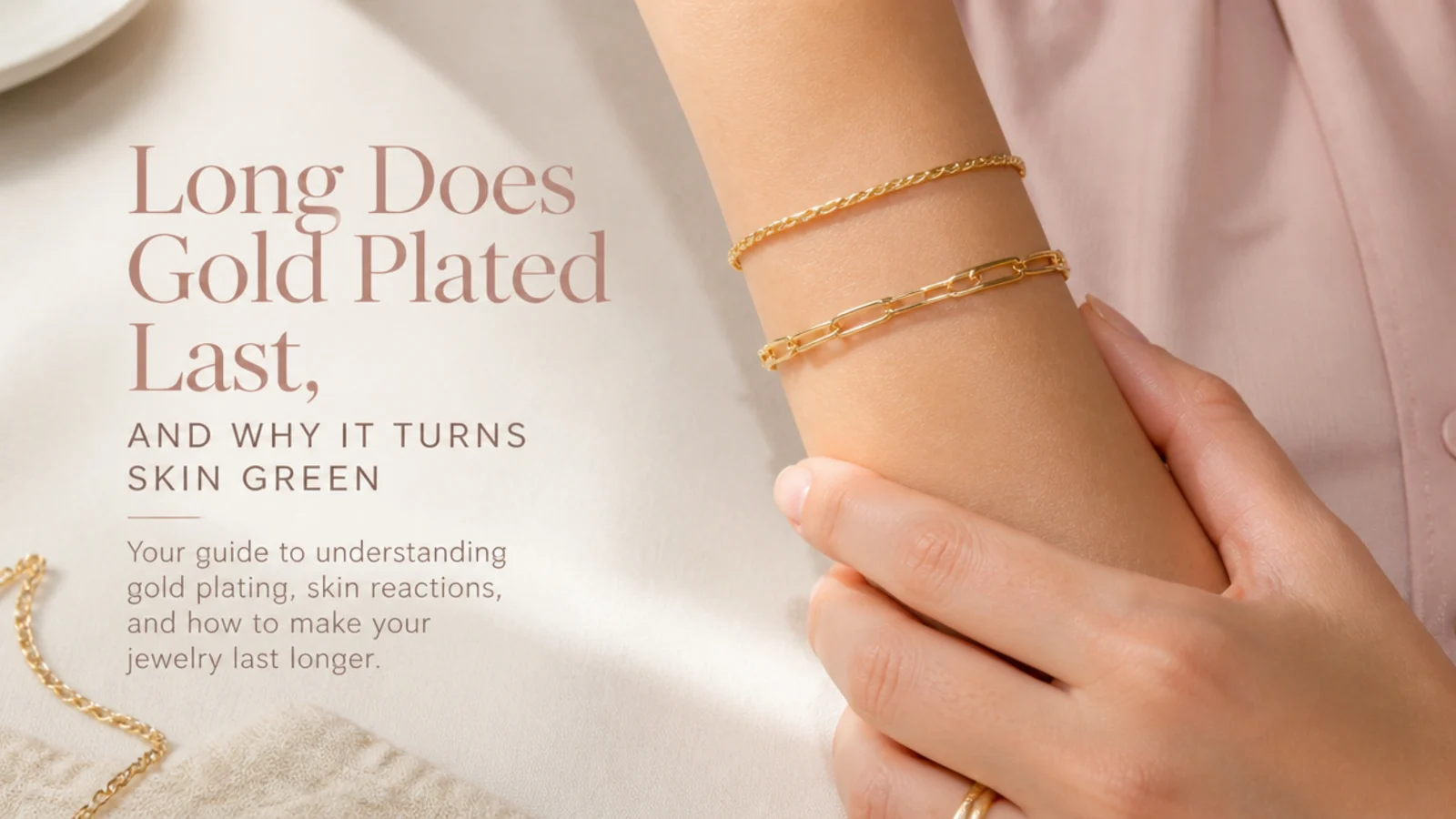
Gold-plated jewelry lasts months to about a year of regular wear, and low-friction pieces stretch a little longer than that. The mechanism is worth understanding because it explains the dreaded green mark. The gold never tarnishes. What happens is the thin under-0.5-micron layer wears through at friction points - the inside of a ring band, the back of a clasp, the edge of a hoop - and once it does, air, sweat, lotion, and water reach the brass or copper core. That base metal oxidizes, which shows as dark tarnish on the piece, and it also reacts with the acids and salt in your skin, leaving a green or gray mark. Nickel in the alloy can trigger an itchy rash on top of the discoloration. You can slow it down - keep plated pieces dry, put them on last after lotion and perfume, and wipe them after wear - and a thin swipe of clear nail polish on the inside creates a temporary barrier. But you cannot stop it. That is why plated belongs on earrings and necklaces you treat as trend pieces, and why rings and bracelets you wear daily should be gold-filled, vermeil, or PVD instead.
Which Is Best for Sensitive Skin and Pierced Ears
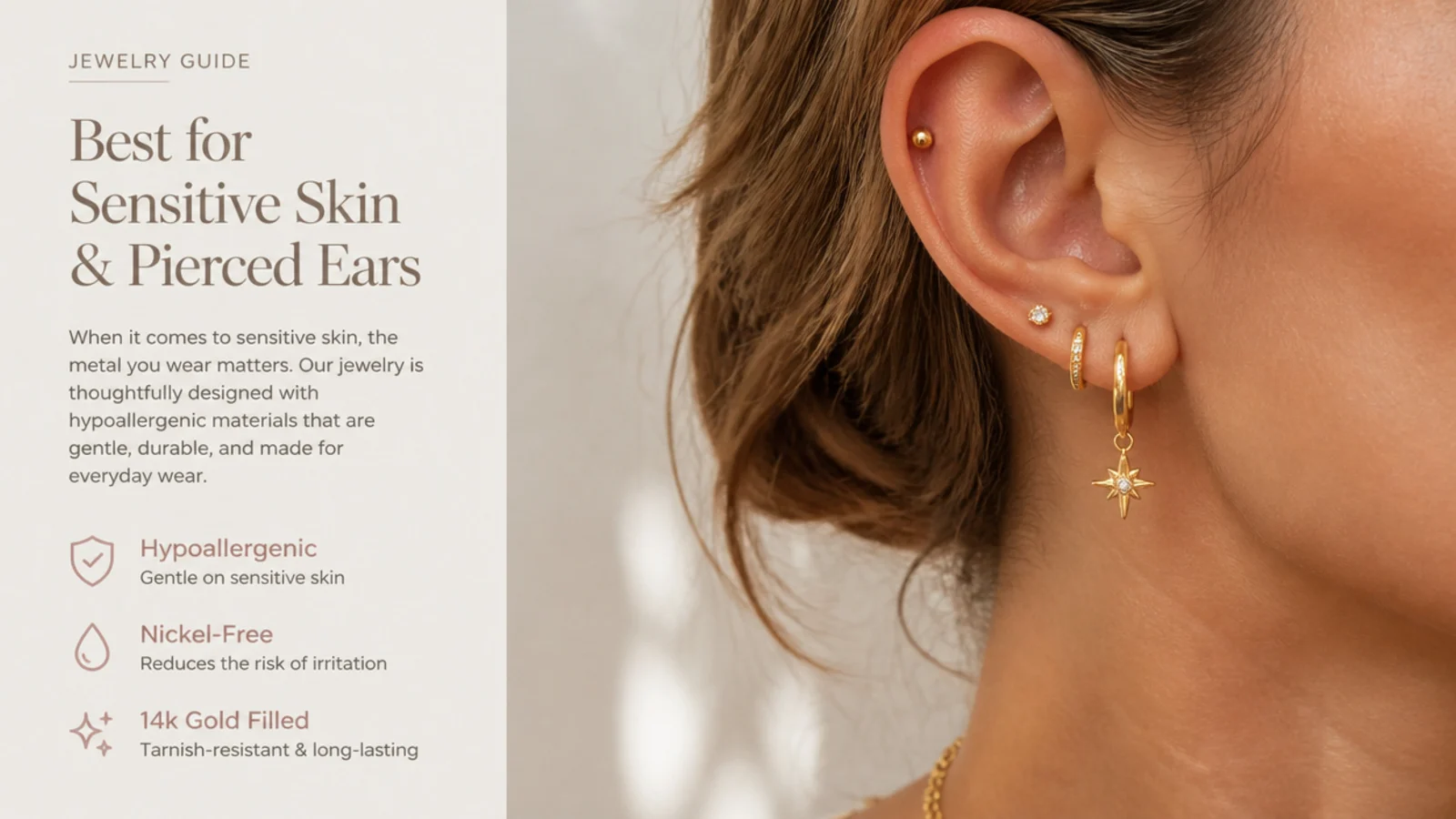
If your skin reacts to jewelry, the culprit is almost always nickel in the base metal, so the ranking for sensitive skin follows the base, not the gold. Solid gold is safest but priciest. Gold vermeil comes next and is the best value: its sterling silver core is nickel-free, and there is no brass anywhere in the piece, so nothing reactive touches your skin even as the gold ages. Gold-filled is also an excellent choice - it has a brass core, but the thick bonded gold fully seals it, and reputable gold-filled is made nickel-free, so most people wear it long-term without trouble. 18k PVD stainless steel is hypoallergenic too and handles water better than anything. Gold-plated is the one to avoid for reactive skin: the moment the thin gold wears, brass and any nickel in it contact the skin directly. For newly pierced or very reactive ears, choose vermeil studs or solid gold and low-friction styles that keep the gold intact longer. To find labels that specify nickel-free construction, see our roundup of <a href="/jewelry/best-jewelry-brands">best jewelry brands</a>, and pair it with tarnish-safe daily picks in <a href="/jewelry/gold-jewelry-under-50">gold jewelry under $50</a>.
Matching the Material to the Piece and the Outfit
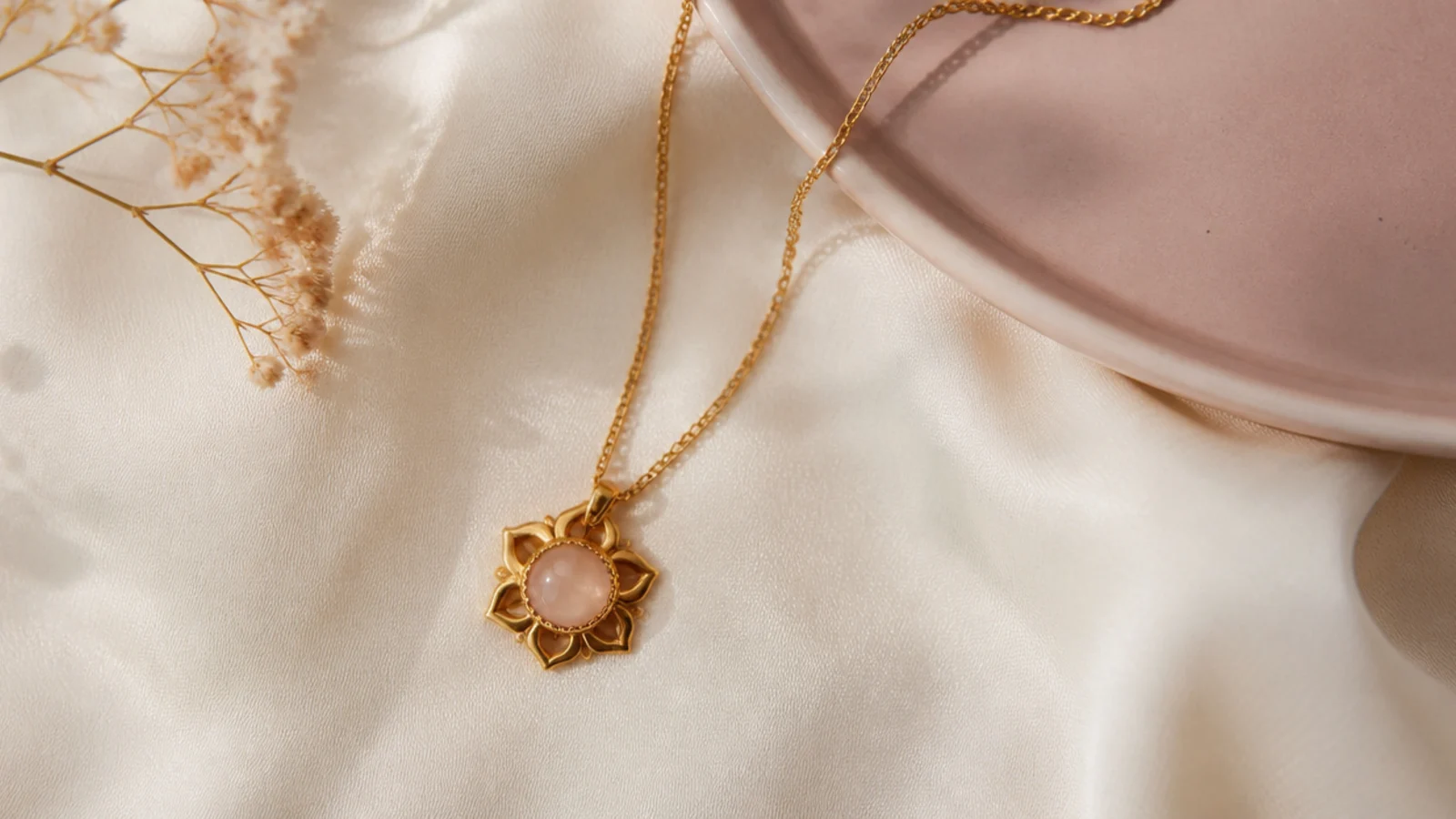
The smartest way to buy is to stop asking which material is best overall and start asking which is best for this specific piece. Friction is the deciding variable. Rings take the most abuse of anything you wear - constant rubbing plus hand-washing - so buy rings only in gold-filled or 18k PVD stainless, never plated. Bracelets sit in the middle; vermeil or gold-filled both work, with fine links reading more expensive than a chunky plated cuff. Necklaces and earrings are low-friction, so this is where affordable vermeil, and even good plated, lasts longest and where your money stretches furthest. Then think about tone against your wardrobe: warm real-gold vermeil and gold-filled flatter warm neutrals and an <a href="/outfits/elegant-neutral-outfits">elegant neutral outfit</a>, while a bright plated herringbone pops against an <a href="/outfits/all-black-work-outfits">all-black work outfit</a>. For a full framework on layering lengths and mixing metals, see our guide to <a href="/jewelry/jewelry-styling-ideas-for-any-outfit">jewelry styling ideas for any outfit</a> and the quiet-luxury tells in <a href="/jewelry/jewelry-that-looks-expensive">jewelry that looks expensive</a>.
Frequently Asked Questions
Is gold vermeil real gold?
Yes. Gold vermeil is real gold electroplated over solid sterling silver, and US law requires the gold to be at least 2.5 microns thick and no less than 10k. That thick layer over a sterling base is what separates it from ordinary plating. It is genuine gold and nickel-free, though it is not solid gold, so it will eventually wear after one to two years of regular use.
Does gold filled tarnish?
Not meaningfully. Gold-filled has a thick 14k layer bonded to a brass core at about 5% of the piece's weight, so the surface behaves like solid gold and stays bright for years. The gold seals the brass completely, so it does not turn dark or mark skin. An occasional wipe with a soft cloth keeps it looking new. It is the most tarnish-resistant option short of solid gold.
How long does gold plated last?
Gold-plated jewelry lasts months to about a year of regular wear. The gold layer is under 0.5 micron, so it wears through quickly at friction points like ring bands and clasps. Low-friction earrings and necklaces last longer than rings and bracelets. Once the thin gold is gone, the brass base shows and can mark skin. Keeping it dry and off during showers extends its life.
What is the difference between gold vermeil and gold filled?
The base metal and the bonding. Vermeil is real gold over a sterling silver core, at least 2.5 microns thick. Gold-filled is real gold mechanically bonded to a brass core under heat and pressure, at 5% of total weight. Gold-filled is thicker, more durable, and waterproof, lasting 3 to 5 years. Vermeil offers a nickel-free sterling base and warm tone, lasting 1 to 2 years.
Which gold material is best for sensitive skin?
Gold vermeil is the best value for sensitive skin because its sterling silver base is nickel-free with no brass anywhere. Gold-filled is also excellent since its brass core is fully sealed and reputable versions are nickel-free. Solid gold and 18k PVD stainless are safe too. Avoid gold-plated, because once the thin gold wears, brass and any nickel touch skin directly and cause reactions.
Can you shower with gold vermeil or gold-filled jewelry?
Gold-filled is genuinely waterproof, so you can shower, swim, and sweat in it safely. Gold vermeil is not waterproof and should come off first, because repeated water, soap, and chlorine speed up how fast the gold layer thins and reaches the sterling underneath. If you want a piece you never remove, choose gold-filled or 18k PVD stainless steel, not vermeil or plated.
Why does gold-plated jewelry turn my skin green?
The gold never causes it - the base metal does. As the thin plating wears through, the brass or copper core reacts with sweat, acids, and salt on your skin, leaving a green or gray mark, and any nickel can add irritation. Keeping plated pieces dry and putting them on last helps. A thin coat of clear nail polish inside the piece creates a temporary barrier, but the real fix is choosing vermeil or gold-filled.
Is gold-filled worth more than vermeil?
For durability and water resistance, yes - gold-filled lasts longer and can be worn in the shower, which vermeil cannot. But vermeil has a nickel-free sterling base and a warmer real-gold tone many prefer, and it costs less for the same look. Neither is simply better; gold-filled wins for rings and daily wear, vermeil wins for earrings, sensitive skin, and styled pieces.
How can I tell if jewelry is gold-filled or just plated?
Check the stamp and the price. Genuine gold-filled is marked 14/20 or 1/20 14k gold-filled, confirming the 5% gold-by-weight standard. Plated carries no such fraction and is often labeled only gold or gold-tone. Price is the second tell: real gold-filled has a floor because of its gold content, so a substantial gold-filled piece for well under $50 is almost certainly mislabeled plating.
Which gold material fits the piece you're about to buy?
If you remember one rule, remember that the base metal decides the piece, not the karat number on the label - vermeil and gold-filled put real gold over a non-reactive core, plated puts it over brass that eventually shows. Buy gold-filled or PVD stainless for rings and anything you wear in water, vermeil for earrings, sensitive skin, and pieces you want in warm real-gold tone, and treat plated as an honest trend layer for low-friction spots only. Then make it last with our guide to <a href="/jewelry/how-to-keep-gold-jewelry-from-tarnishing">how to keep gold jewelry from tarnishing</a>, or shop the tested picks in <a href="/jewelry/gold-jewelry-under-50">gold jewelry under $50</a>.