Quick Comparison
| Gold-Plated (thin layer) | Solid or Gold-Filled (safe) | |
|---|---|---|
| Does it tarnish | The gold does not, but the base metal shows through as it wears | Solid gold never tarnishes; gold-filled resists it for years |
| What actually happens | Plating wears thin, base metal reacts with sweat and air | Thick real gold surface keeps skin off the base metal |
| Typical lifespan | Months to about two years of regular wear | Gold-filled 3 to 5 years plus; solid gold effectively forever |
| Shower and water | Remove for all water; hot showers strip it fastest | Tolerates daily water, though removal still extends life |
| Green skin risk | High once plating wears through at friction points | Essentially none; the base rarely contacts skin |
| Best pieces for it | Trend earrings and necklaces you may replace anyway | Daily rings and bracelets that take constant friction |
| At-home cleaning | Mild soap and a soft cloth only; no abrasives ever | Mild soap, and gold-filled forgives gentle polishing |
| When it fades | Barrier coat buys time; then replate or replace | Rarely fades; a polish restores the shine if dull |
| Price sanity check | Under 20 dollars; do not pay to restore it | Higher up front, but the last time you buy that piece |
1. Take Gold Jewelry Off Before the Shower
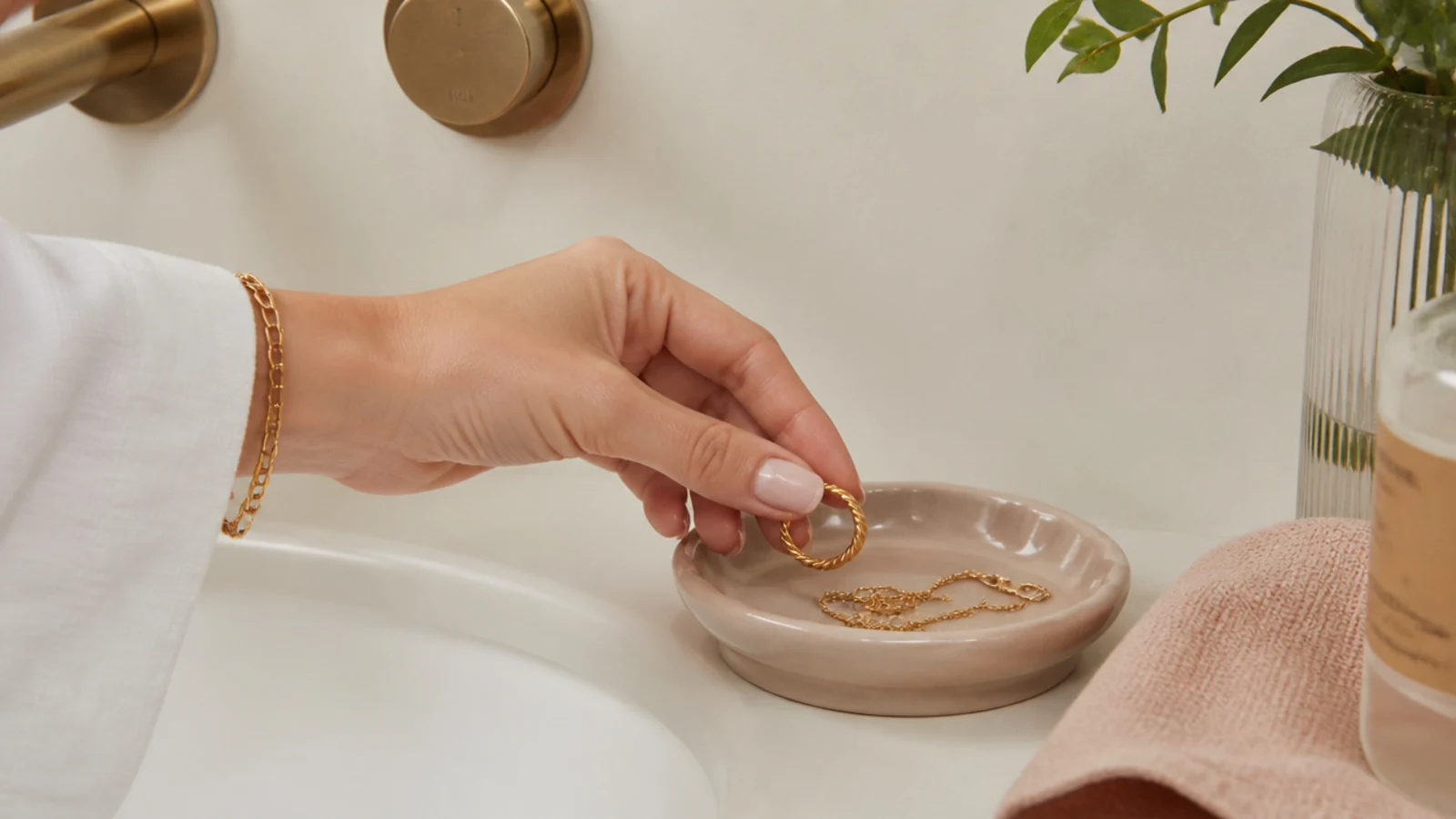
Water is the single fastest way to age plated and vermeil gold, and the shower is the worst offender because it combines hot water, soap, shampoo and steam in one place. Those strip the thin gold layer and let moisture reach the base metal, which then reacts and dulls. Keep a small dish by the sink and make removing your rings and bracelets the first thing you do before you wash. Solid gold and gold-filled tolerate the occasional splash, but even they last longer kept out of daily hot water and the chemicals that ride along with it. The habit costs nothing and adds years to every piece in your everyday jewelry rotation.
Set the dish somewhere you cannot miss it, not the back of a shelf, so taking pieces off becomes automatic instead of something you forget until the water is running.
2. Put Jewelry On Last, After Perfume and Lotion
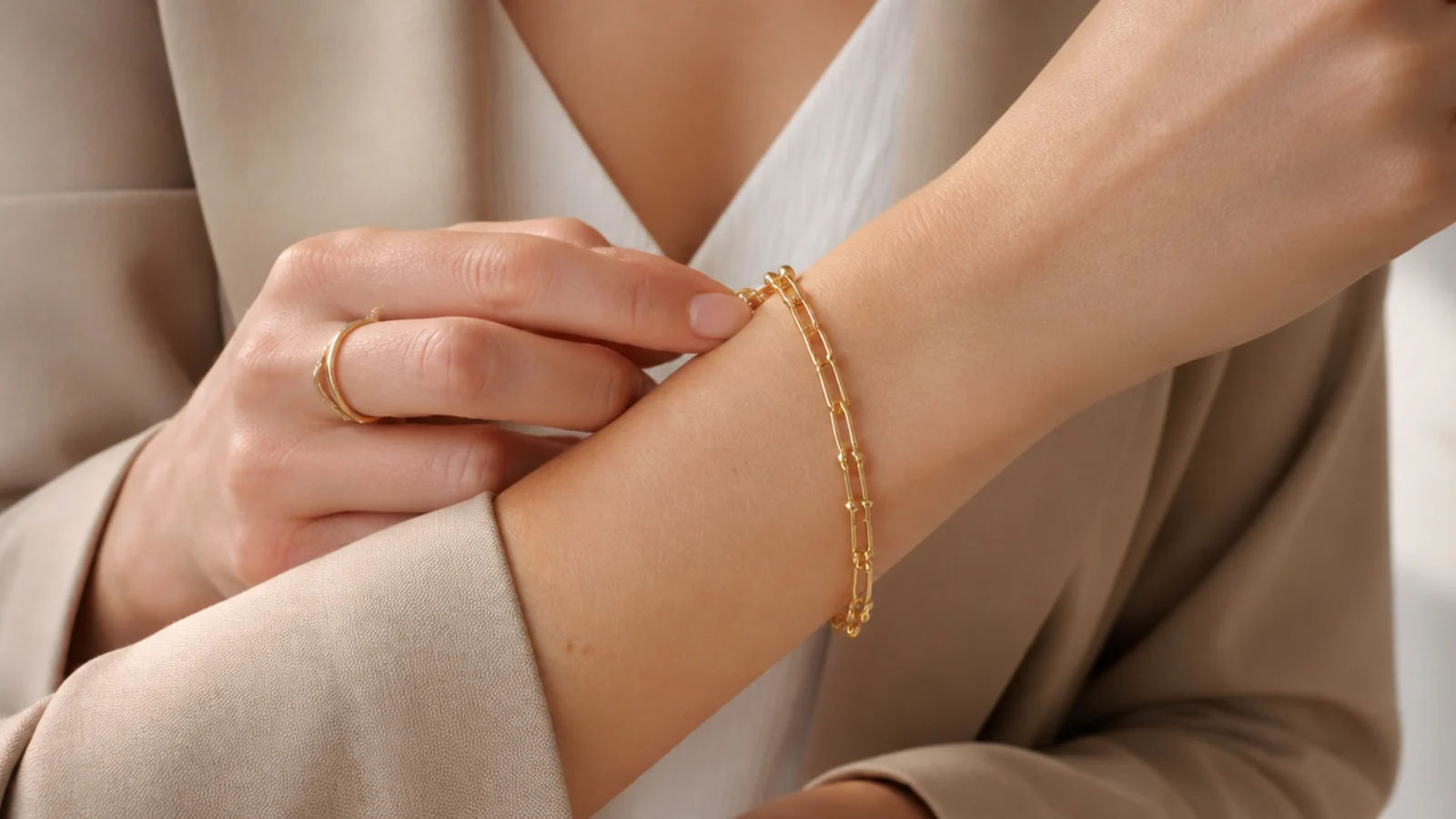
Perfume, body lotion, sunscreen and hairspray are packed with alcohols, oils and acids that eat through gold plating faster than sweat does, and spraying them onto jewelry you are already wearing coats every surface. The rule is simple: get fully dressed, do your hair, apply your scent and lotion, let it all dry, then put your jewelry on last. Take it off first at night in reverse order. This one habit protects vermeil and plating more than any cleaning routine, because it stops the damage before it starts instead of trying to undo it afterward. It also keeps pearls and porous stones from clouding.
Give perfume a full minute to dry on skin before your necklace touches it, since the wet spray is most corrosive right as it lands.
3. Wipe Each Piece Down With a Soft Cloth After Wear
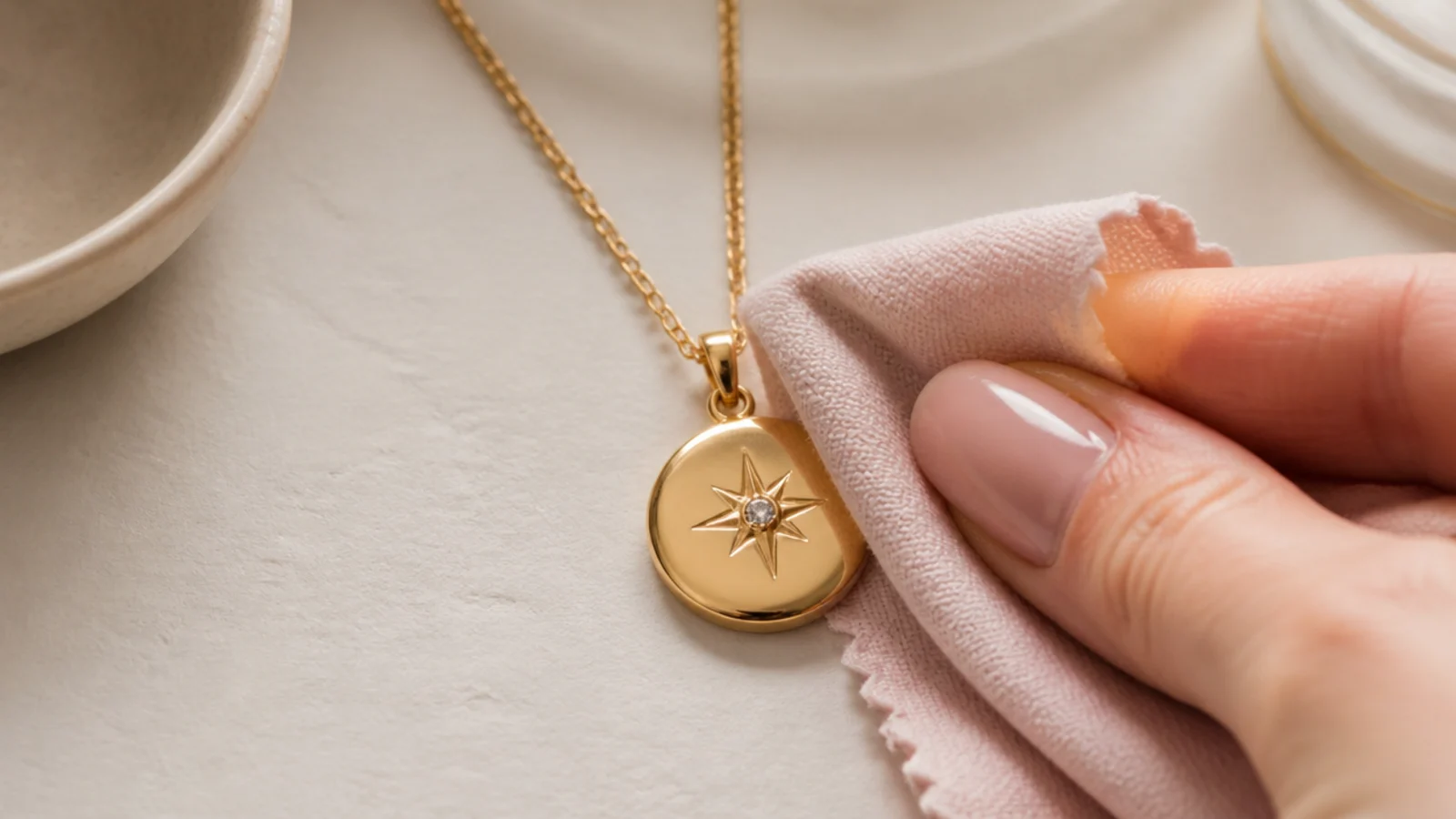
A full day on skin leaves a film of sweat, body oil and product on every piece, and that film is what slowly corrodes the metal overnight in the box. Thirty seconds with a soft, dry cloth lifts it before it can do any harm. Use a microfiber or a dedicated jewelry polishing cloth, not a paper towel, which is abrasive enough to micro-scratch soft gold. Wipe the whole surface, including the back of pendants and the inside of rings where oil collects most. Do this every night for the pieces you wore, and you remove most of the reason gold dulls between deeper cleanings.
Keep the cloth right where you take your jewelry off, so wiping is a two-second reflex rather than an extra errand you skip when you are tired.
4. Store Gold Jewelry Dry and Separated
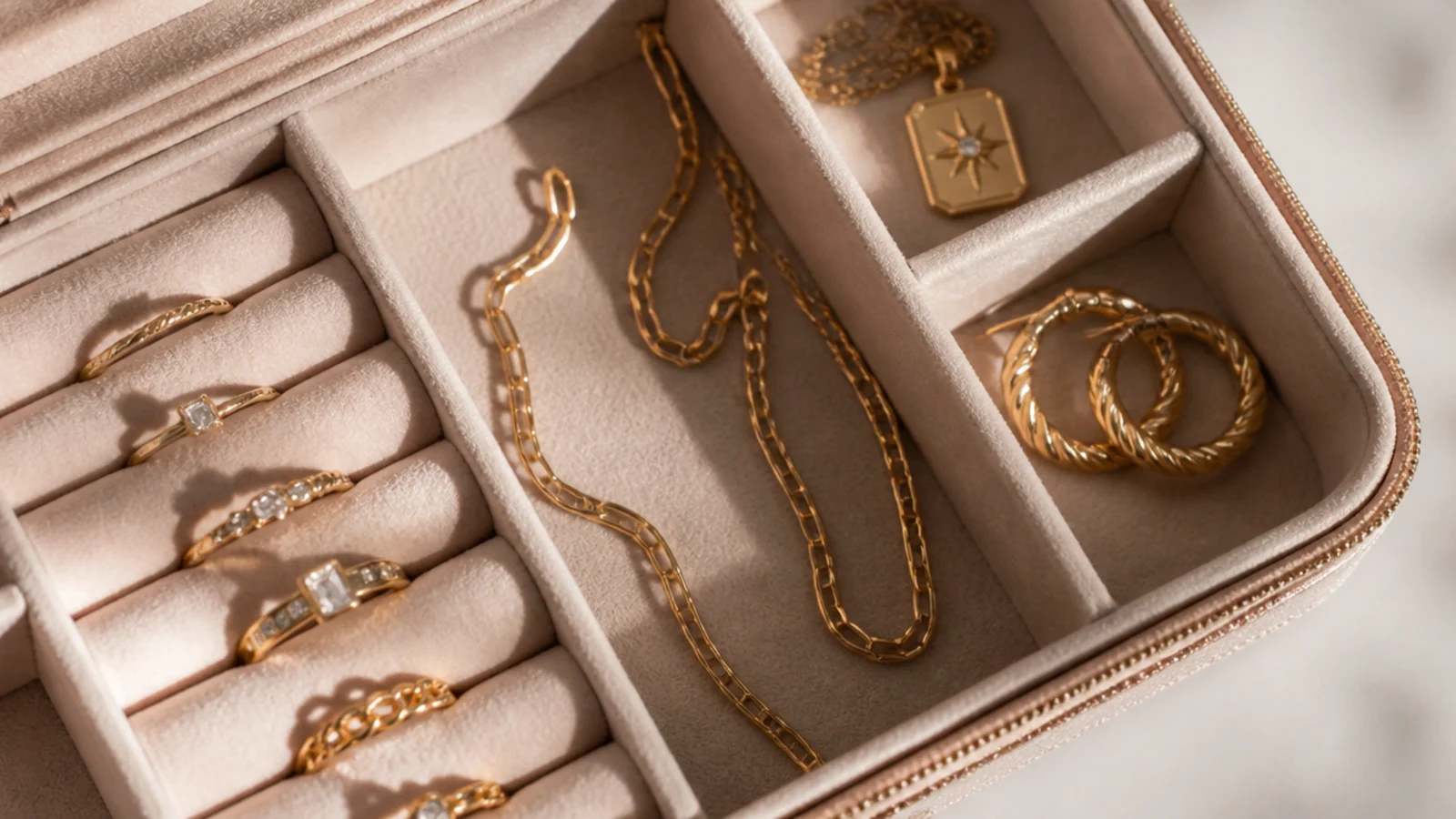
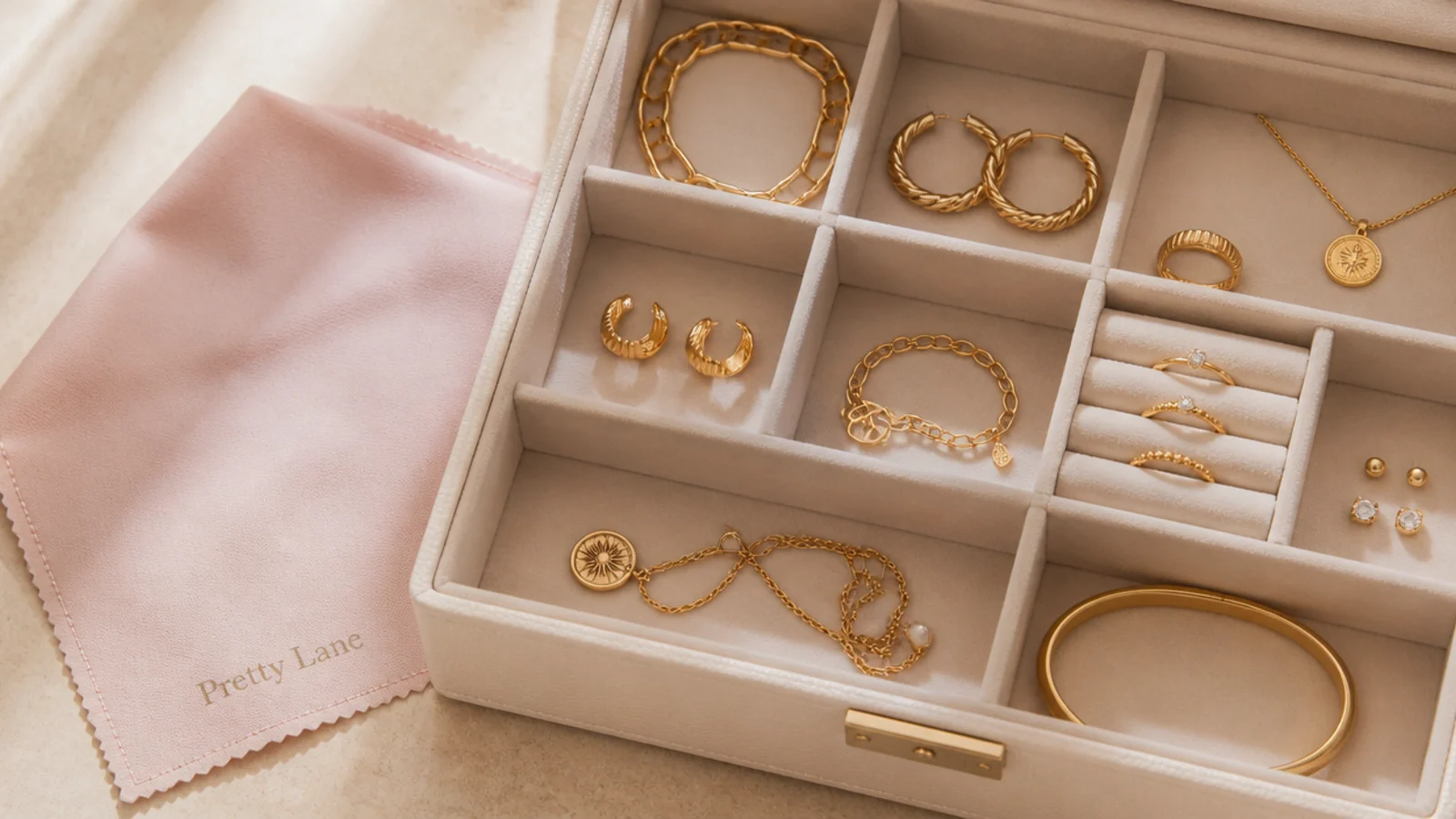
Humidity and contact are the two storage enemies. Moisture in the air speeds the base-metal reaction, and pieces piled together scratch each other, and every scratch is a fresh gap for tarnish to start. Store gold somewhere dry and cool, never the steamy bathroom, and give each piece its own slot, pouch or compartment so nothing rubs. Lay chains flat or hang them so they cannot knot and abrade. A lined box with dividers does this for a whole collection at once, and it doubles as the anti-tangle system that keeps fine chains usable. Good storage is the quiet half of tarnish prevention that almost nobody bothers with.
A simple compartment box beats a shared dish or bowl every time; see the setups in jewelry box organization ideas if you are starting from a tangled drawer.
5. Add Anti-Tarnish Strips to Your Jewelry Box
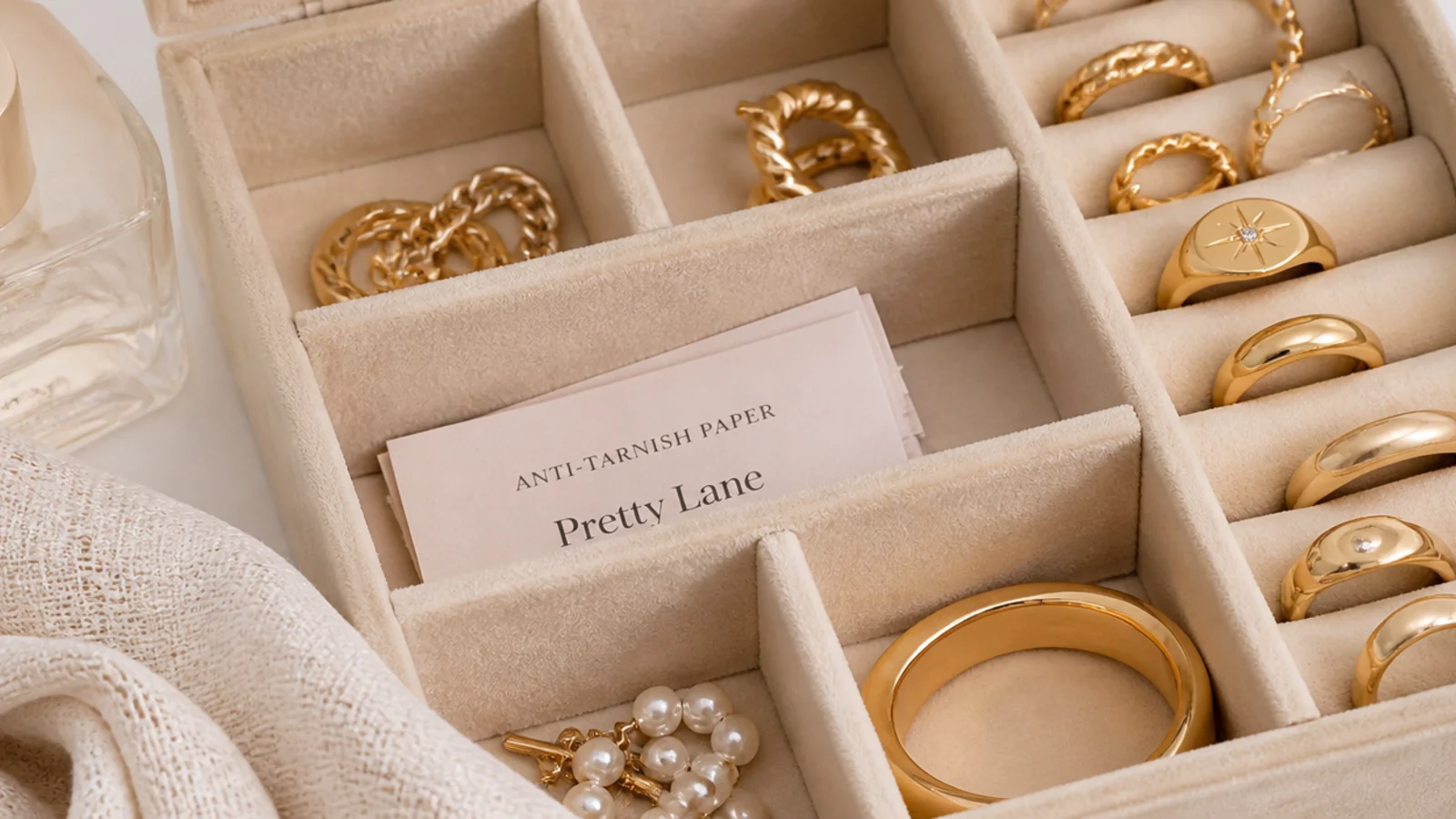
Anti-tarnish strips are small treated paper tabs that absorb the moisture and sulfur compounds in the air that trigger tarnish, and they are the cheapest insurance you can buy for a collection. Drop one or two into each drawer or box and replace them roughly every six months as they saturate. They are especially worth it for sterling silver and vermeil, which react to airborne sulfur even when you are not wearing them. Silica gel packets, the little ones that come with new shoes and bags, do a similar job of pulling humidity. Neither replaces the on-last and wipe-down habits, but together they slow tarnish on the pieces sitting idle, which is why a divided box beats a shared dish; see the layouts in jewelry box organization ideas.
Save the silica packets from packaging instead of tossing them, and tuck them into your travel pouch where damp is hardest to control.
6. Rotate Pieces Instead of Wearing One Daily
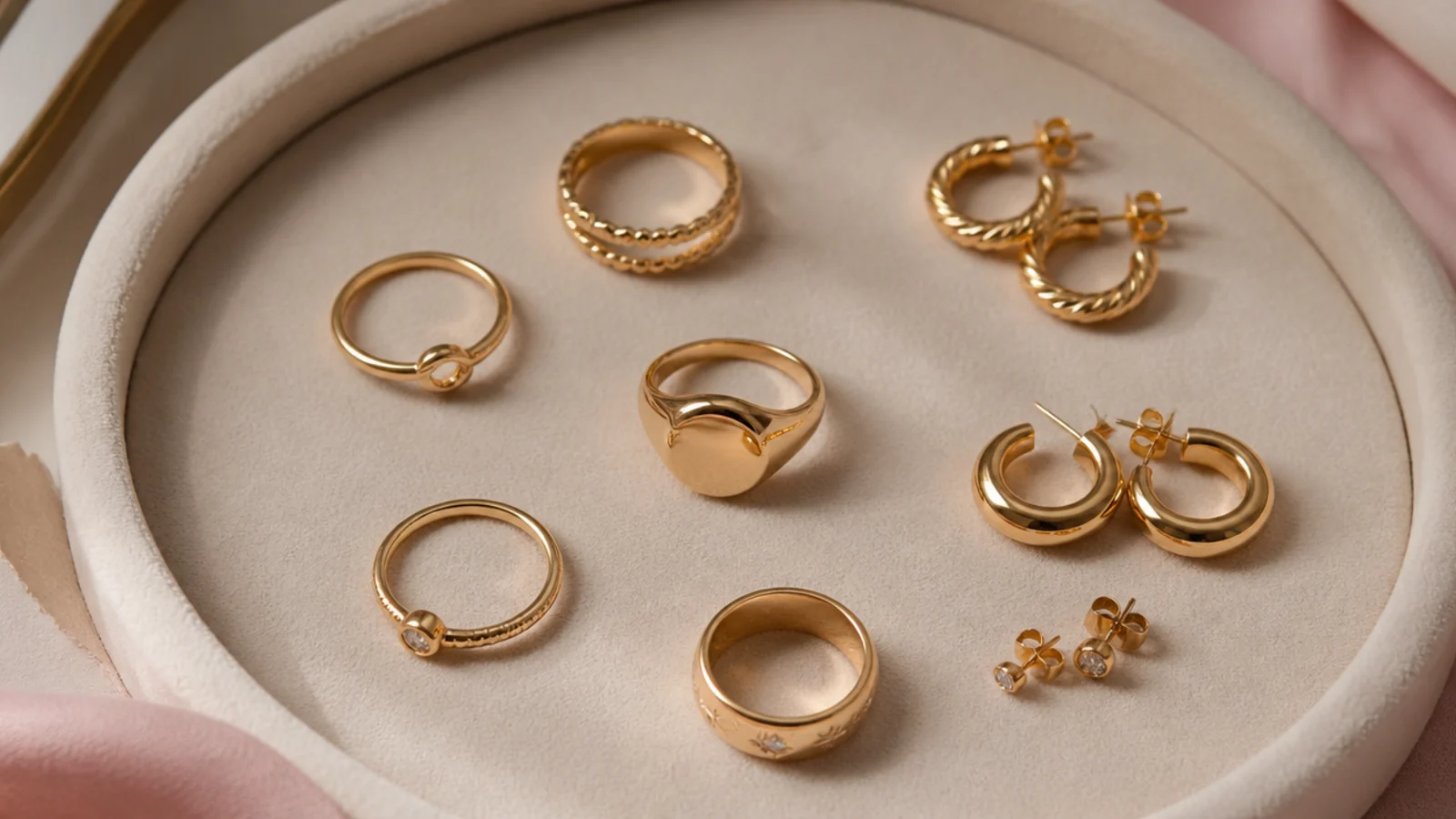
A single piece worn every single day gets a constant dose of sweat, friction and product with no time to be wiped and rested, so it fades fastest. Rotating even two or three favorites cuts each one's exposure roughly in half and doubles how long the plating survives. This matters most for the pieces that never come off, like a signet ring or an everyday chain. Rotation also gives you the chance to wipe and inspect a piece before it goes back in the box, so small problems get caught early. It costs you nothing beyond owning a couple of options, which most people who follow jewelry styling ideas for any outfit already have.
Keep your rotation visible on a small tray so switching is easy; the pieces you cannot see are the ones you wear to death.
7. Keep Rings Off During Dishes, Cleaning and the Gym
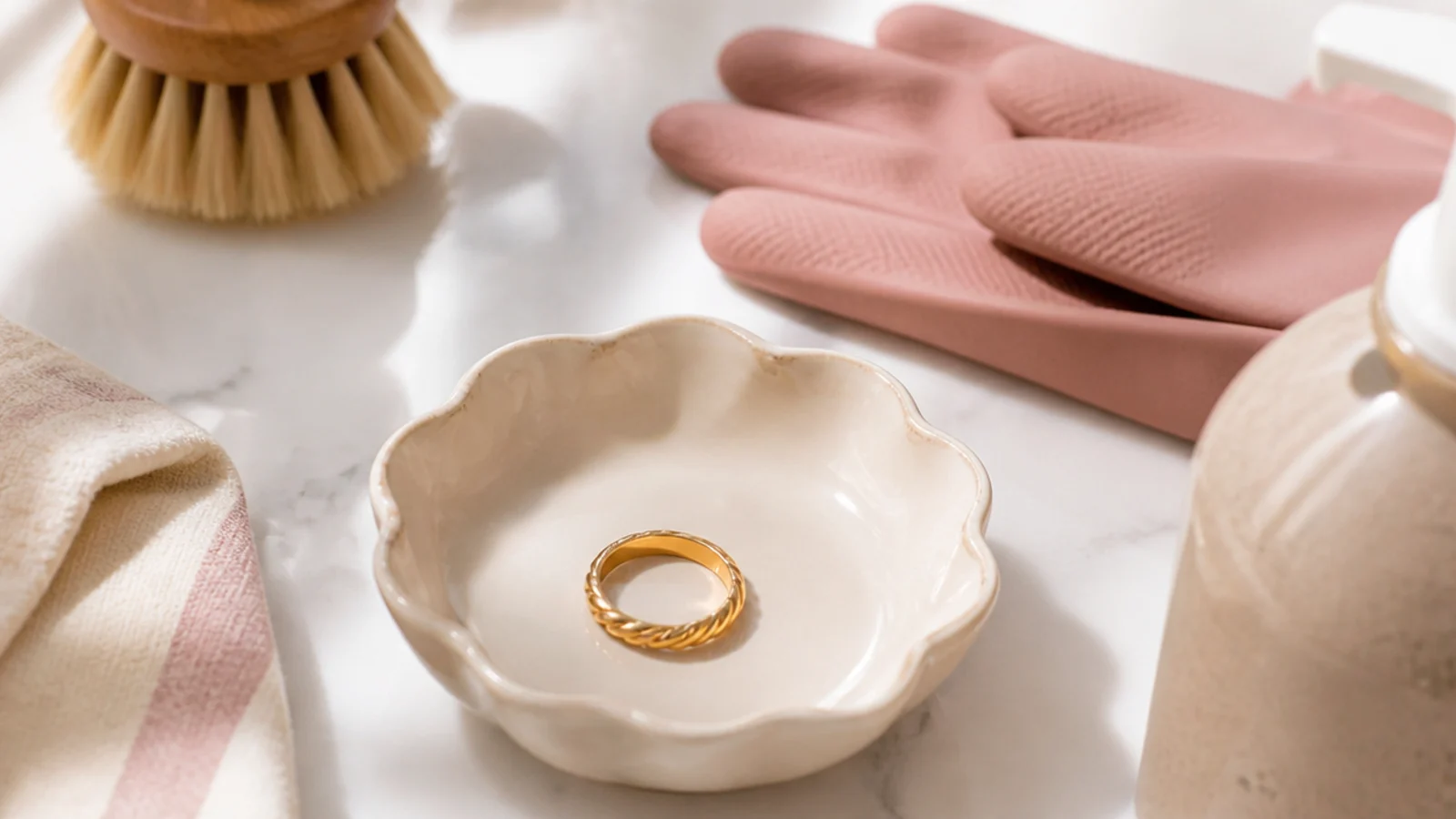
Rings live at the highest-friction, highest-exposure spot on your body, and household chores pile on the worst offenders at once: dish soap, hot water, bleach, all-purpose cleaner and the abrasion of scrubbing. The gym adds heavy sweat and the constant grip of weights and bars. Any of these will strip plating in weeks. Slide rings off before dishes, before cleaning, and before you train, and keep a dish or a zip pouch in the kitchen and gym bag so they have a safe home. This is the single biggest reason rings green a finger while the matching earrings still look new.
Never leave a ring balanced on a sink edge; drains eat jewelry. Use a closed dish or a pocket in your bag every time.
8. Buy the Right Material for High-Friction Pieces
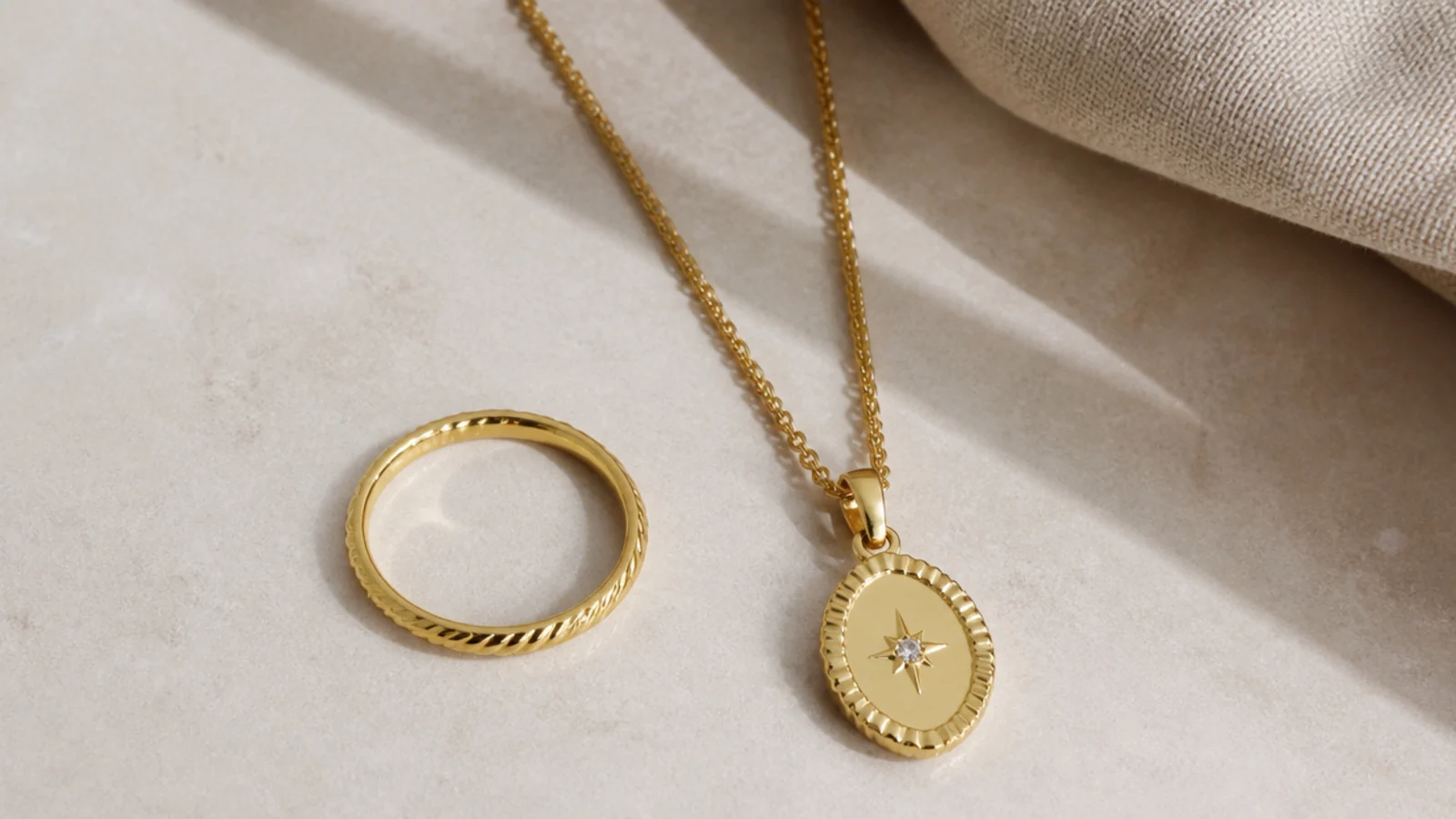
The best tarnish fix is buying the right material before it ever fades. Friction, not price, decides how long gold lasts, so put your money where the rubbing is. Rings and bracelets take constant friction and should be gold-filled or solid gold, which have real gold thickness that wears for years. Studs, huggies and necklaces sit almost still against low-friction skin, so quality vermeil there lasts and looks identical to solid. Avoid gold-plated brass for anything worn daily on skin, since it wears through in months. Getting this match right up front prevents more tarnish than any cleaning habit can undo later, and it is the same logic behind picking the pieces in gold jewelry under 50 that actually survive a year.
See the exact micron thicknesses and lifespans behind each material in gold vermeil vs gold filled vs plated before you buy your next daily piece.
9. Apply a Clear Barrier Coat to Stop Green Skin
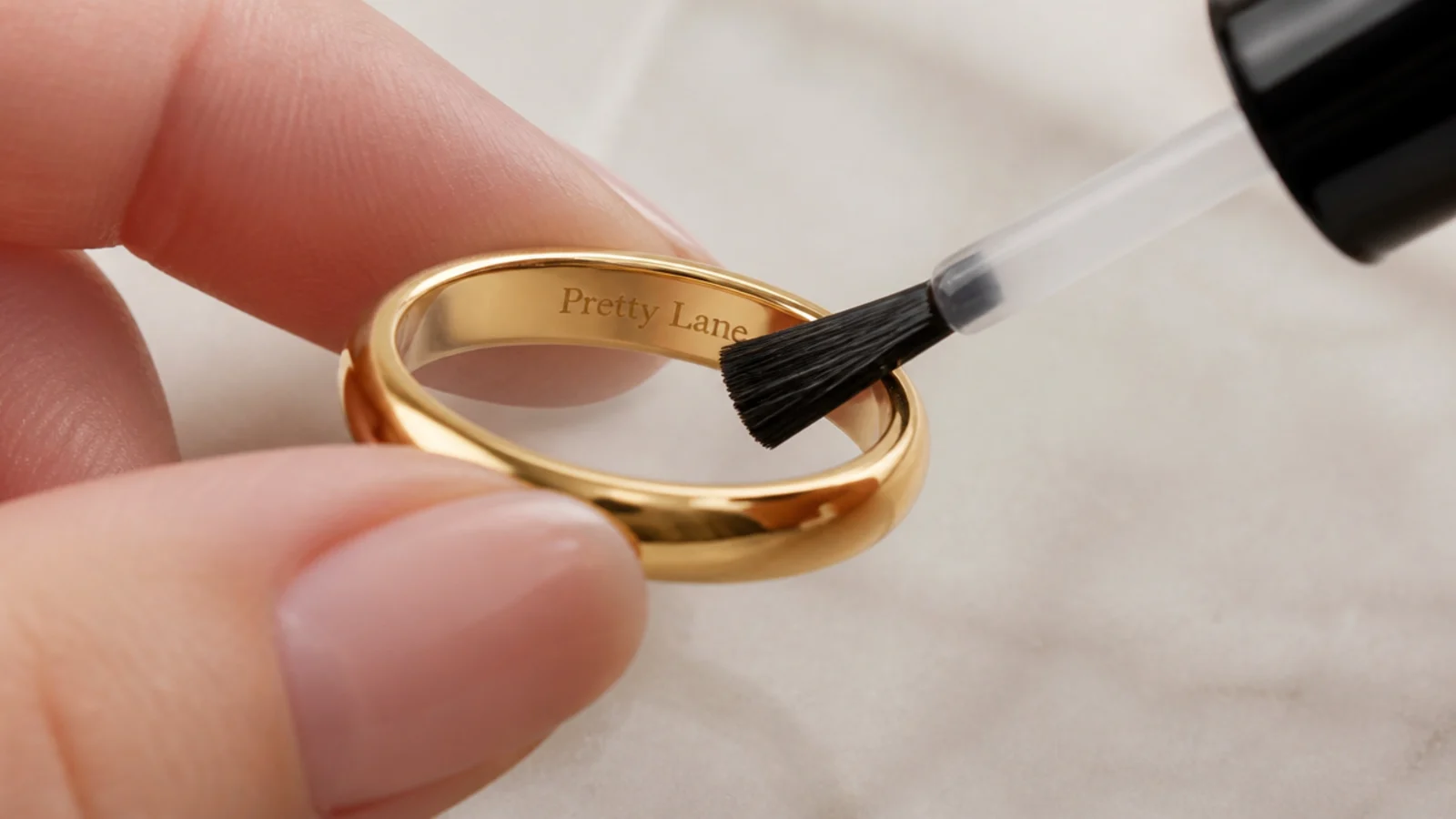
When a plated ring turns your finger green, it is because the plating has worn thin enough for the base metal to touch damp skin and react. A thin, clear barrier on the contact surface buys time. A jeweler's clear lacquer made for jewelry is the proper option, and a coat of clear nail polish on the inside of a band is the well-known home version. It wears off and needs reapplying every week or two, so treat it as a stopgap on an inexpensive piece, not a cure. On anything you love, it is a sign the plating is going and replating or replacing is the real answer.
Only coat the inner surface that touches skin, and let it dry fully; a coat over the visible top will cloud and peel and look worse than the tarnish.
10. Clean Gently With Warm Water and Mild Soap
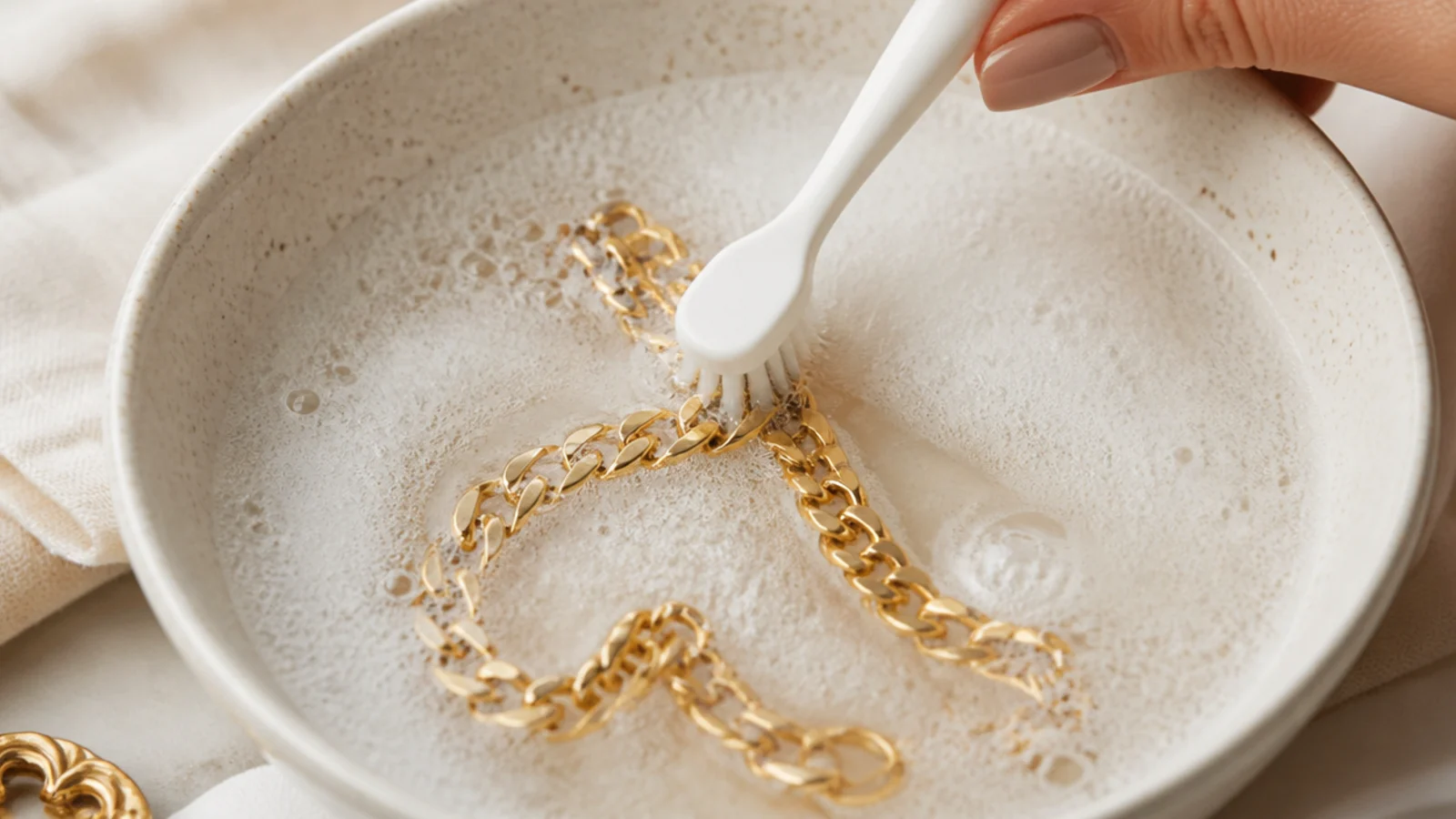
When gold looks dull rather than worn through, a gentle wash usually restores it. Mix a few drops of mild dish soap into warm, not hot, water, let the piece soak a few minutes, and lift grime from crevices with a soft baby toothbrush. Rinse in clean water and dry completely with a soft cloth before it goes away. Skip everything harsh: no toothpaste, baking soda, ammonia, bleach or commercial silver dips on plated or vermeil gold, because the abrasives and acids strip the thin gold layer and make the tarnish permanent. Gentle and regular beats aggressive and occasional every time with plated pieces.
Plug the drain or clean over a bowl, never an open sink, so a slippery wet chain cannot vanish down the pipe mid-rinse.
11. Keep Gold Away From Chlorine, Saltwater and Hot Tubs
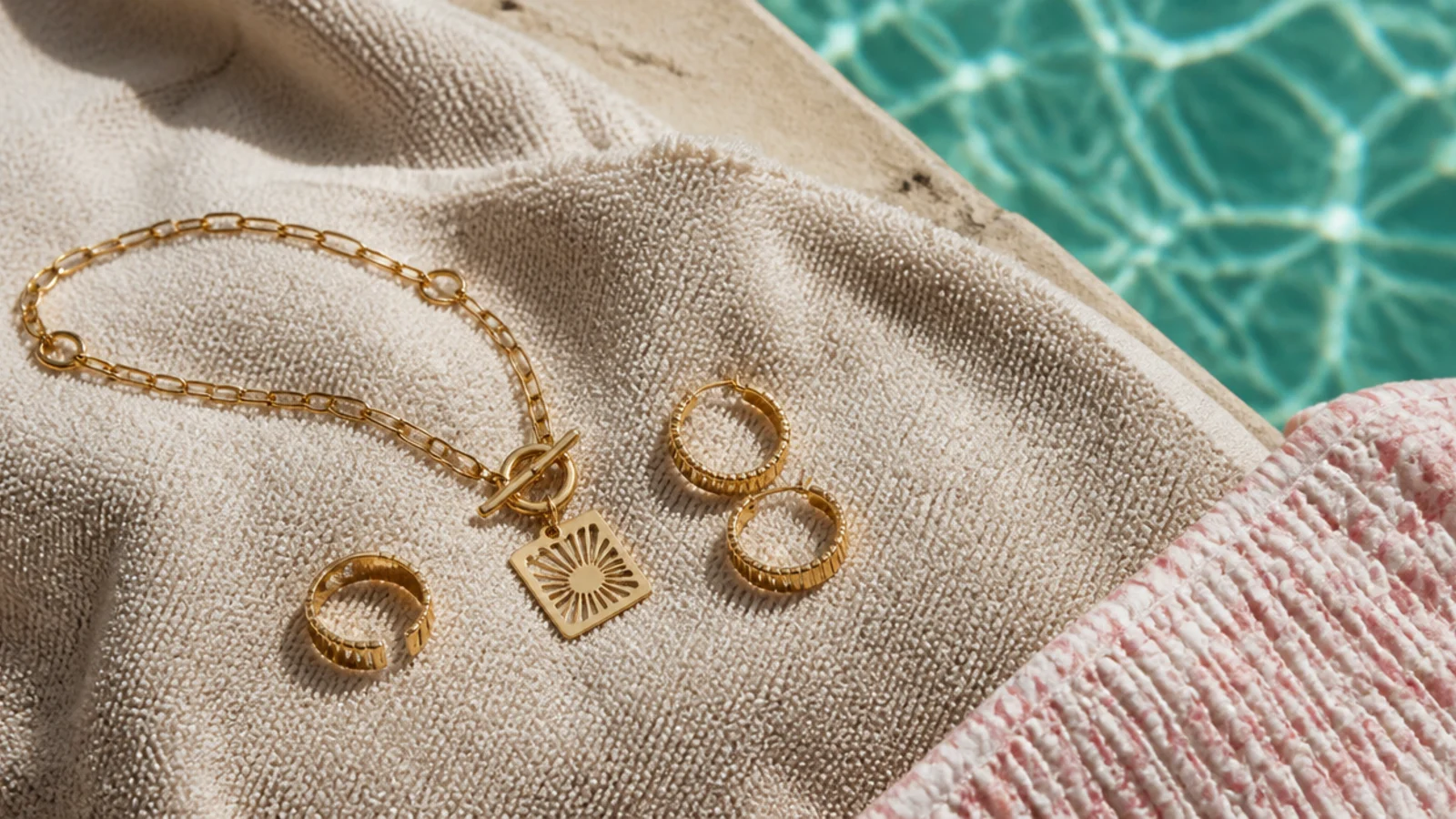
Pool chlorine and hot-tub chemicals are far harsher on gold than plain water, and they attack even solid gold over time by weakening the alloy at a microscopic level, which is how prongs loosen and stones fall out. On plated and vermeil, a single long soak in a chlorinated pool can visibly strip the finish. Saltwater is corrosive too and leaves a residue that keeps working after you are out. Take everything off before you swim or soak, and rinse in fresh water if a piece does get splashed. This is the exposure people most often forget on vacation, right when they are wearing their nicest pieces.
Pack a small zip pouch for the pool bag so there is a safe spot for rings and earrings the moment you get to the water.
12. Know When to Replate Instead of Replace
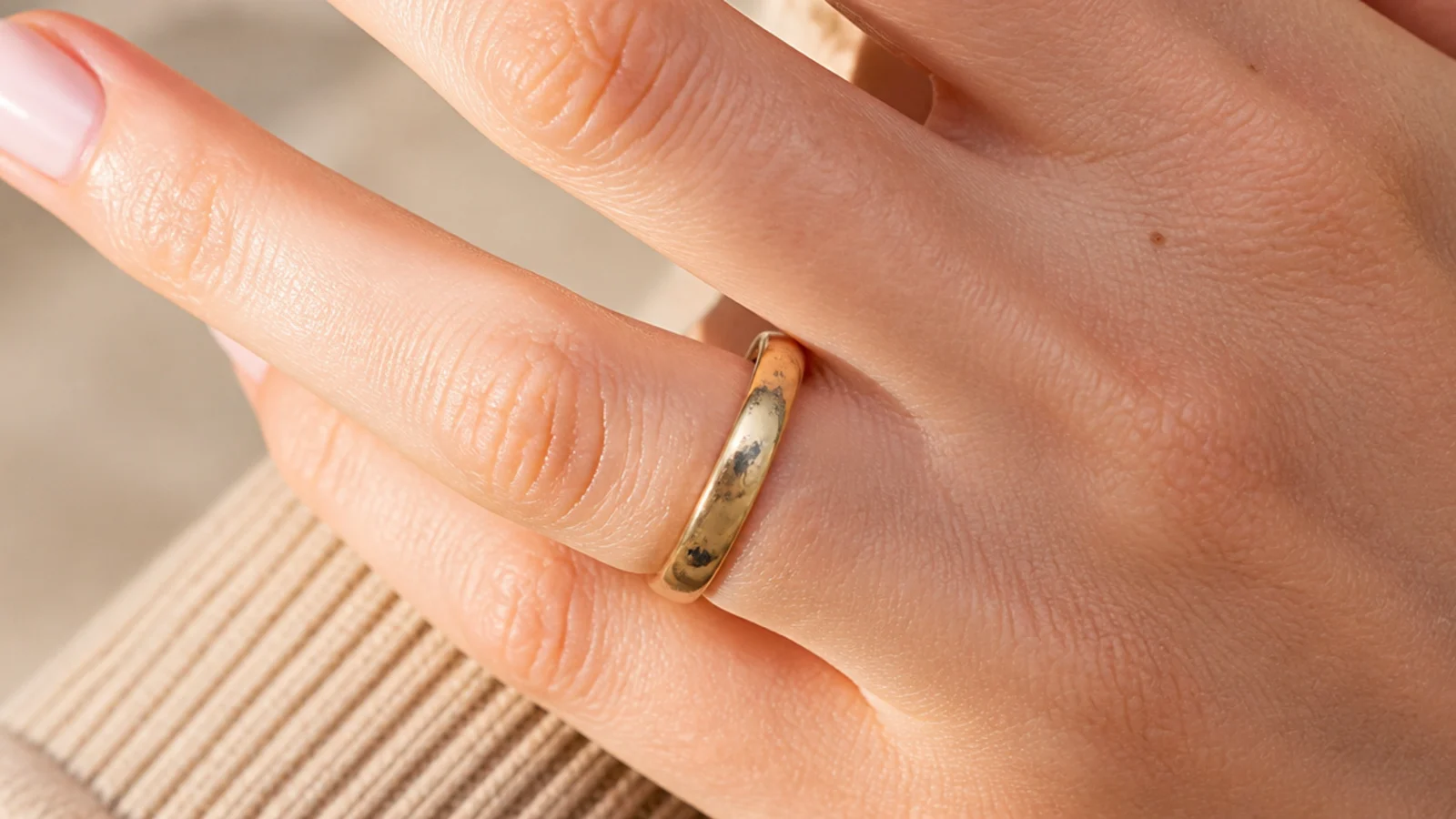
Some tarnish is not tarnish at all but the plating gone, and no cleaning brings it back. Once you see the base metal, a silvery or coppery patch showing through at a ring band or a bracelet clasp, the gold layer is worn away and the piece can only be restored by replating. A jeweler can replate a solid-silver-cored vermeil or a well-made piece for roughly the cost of a new mid-range item, so it is worth it on something you love or that has meaning. On a cheap plated-brass piece, replacing is almost always cheaper and smarter, and browsing gold jewelry under 50 often beats paying to restore a worn one. Knowing which is which saves both money and disappointment.
Ask the jeweler what the base metal is before paying to replate; brass and copper cores take plating poorly and wear through again fast. Brands vary widely on base-metal quality, which is worth checking in best jewelry brands before you commit to replating.
1. Set Up a Safe Cleaning Station
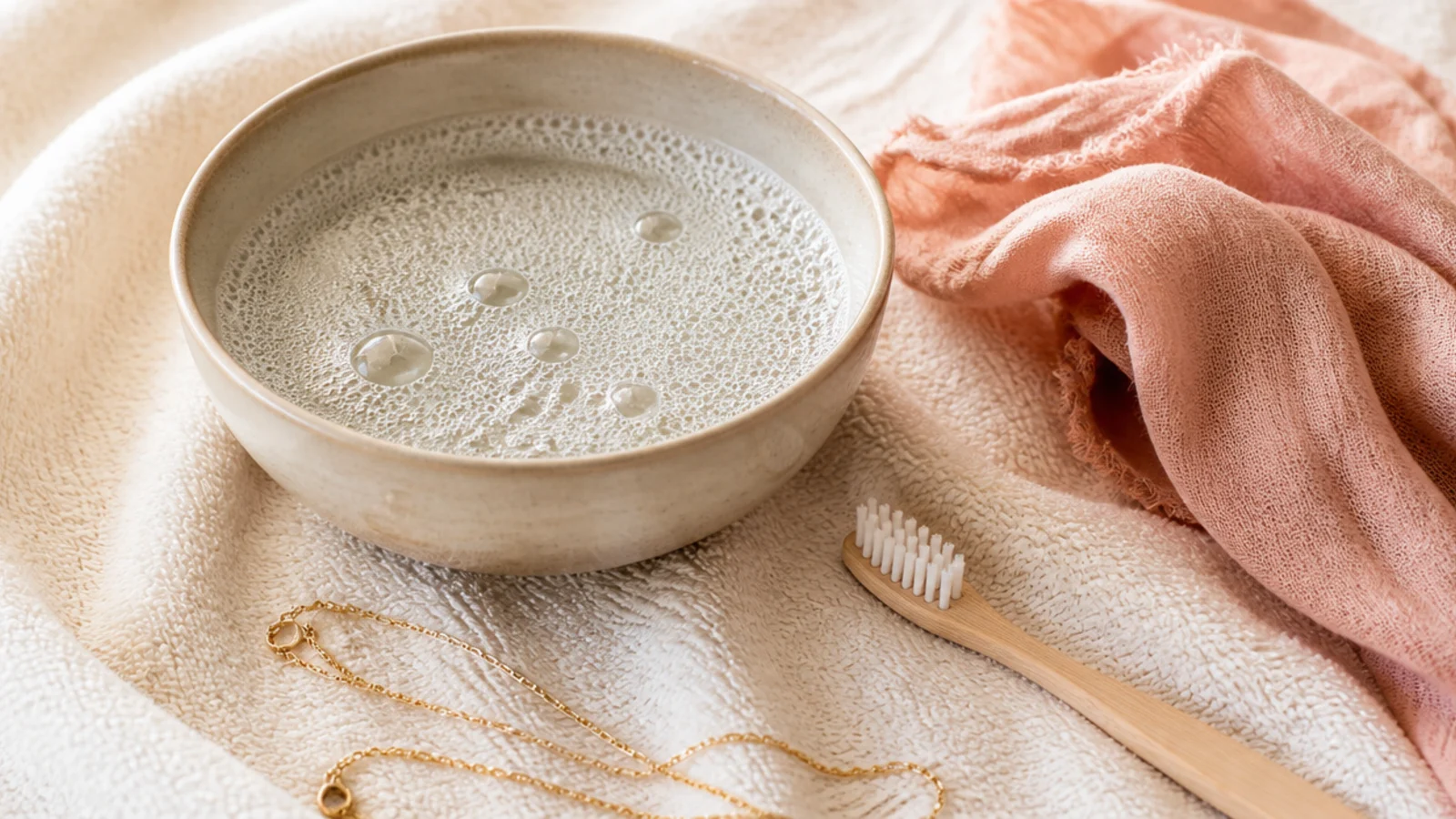
Work over a closed bowl or a towel on the counter, never an open sink, because a wet chain is slippery and drains are where jewelry disappears. Fill a small bowl with warm, not hot, water and add two or three drops of mild dish soap, the plain unscented kind without added moisturizers or citrus. Lay out a soft baby toothbrush, a clean lint-free cloth and a second bowl of clean water for rinsing. Confirm the piece is only dull, not worn through to a silvery or coppery patch, because if the base metal shows, cleaning cannot help and you should stop here and consider replating instead.
Common mistake: Using hot water, which speeds the very reaction you are trying to reverse and can loosen glued-in stones.
Pro tip: Cleaning over a mesh strainer set in the bowl catches any small piece before it can slip away.
2. Soak the Piece Briefly
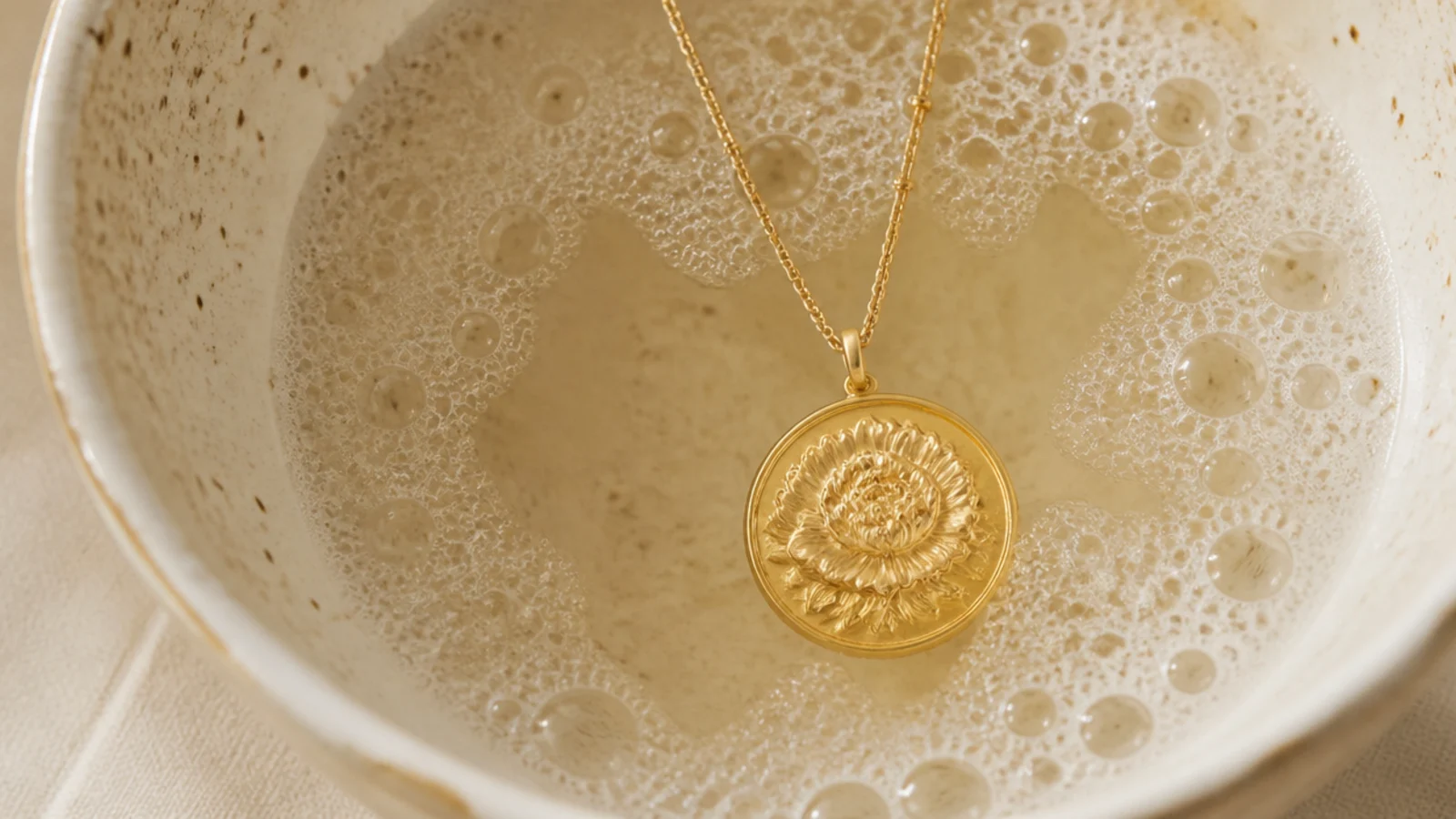
Lower the piece into the soapy water and let it sit for three to five minutes so the warm water and soap loosen the film of oil, sweat and product that dulls the surface. A short soak is plenty; there is no benefit to leaving plated or vermeil gold submerged for long, and porous stones like pearls, opals and turquoise should not be soaked at all, so wipe those with a barely damp cloth instead. If the piece has strung pearls or glued settings, keep the soak to under a minute to avoid weakening the thread or adhesive.
Common mistake: Soaking pearls, opals or turquoise, which are porous and can crack, discolor or come unglued in water.
Pro tip: Do one piece at a time so nothing rubs together in the bowl and scratches during the soak.
3. Lift Grime With a Soft Toothbrush
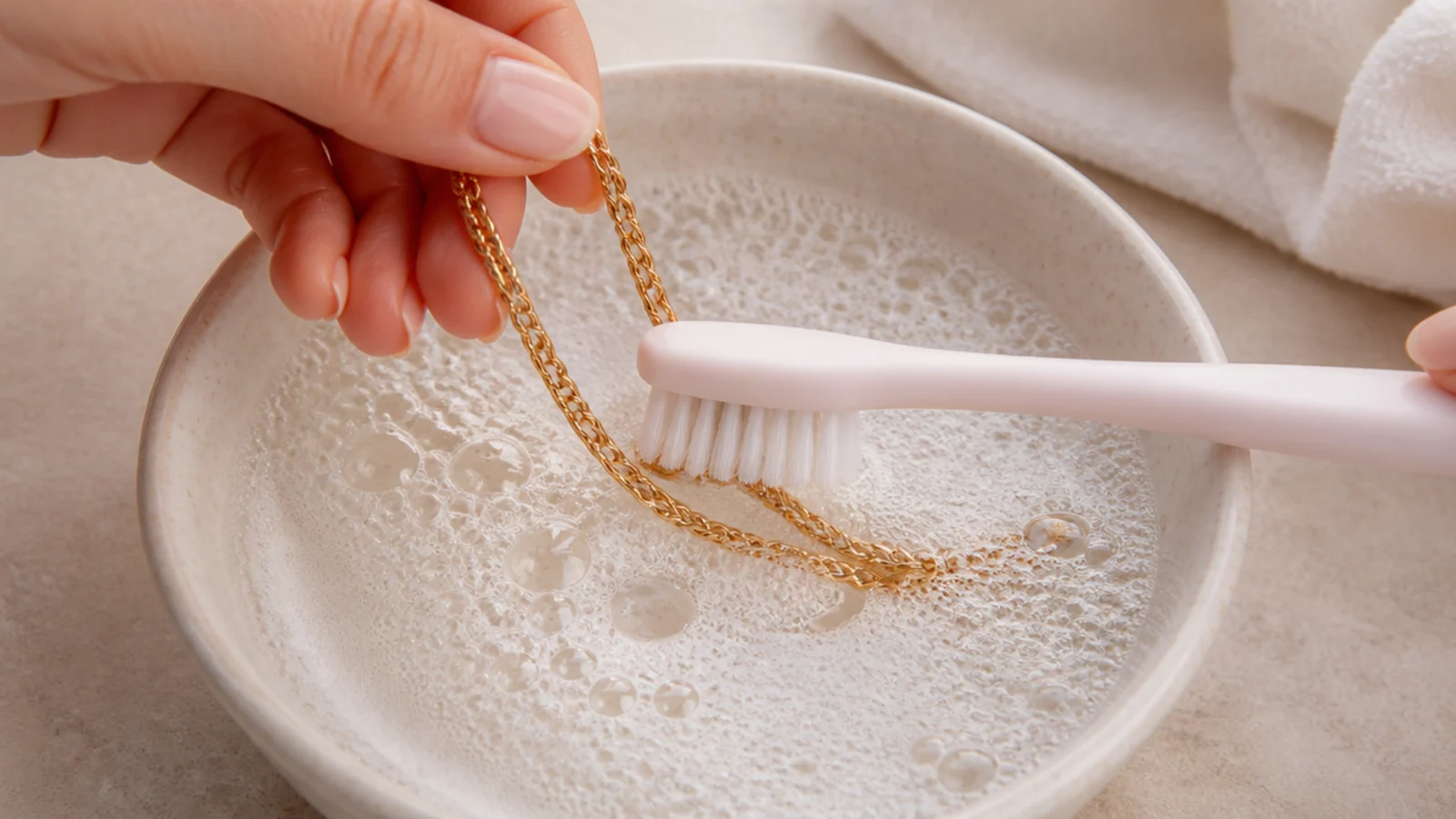
Lift the piece out and gently work the soft toothbrush over it, paying attention to the crevices where grime hides: between chain links, around prongs, inside a ring band, behind a pendant. Use the lightest pressure that moves the dirt, and let the soft bristles do the work rather than scrubbing, since hard pressure on thin plating wears it. Brush along the length of a chain, not across it, so links do not catch and kink. This step lifts the settled grime a plain soak leaves behind and is where most of the dullness actually comes off.
Common mistake: Pressing hard or using a stiff brush, which micro-scratches soft gold and thins the plating you are trying to save.
Pro tip: A brush reserved only for jewelry stays free of the toothpaste grit that a used one carries.
4. Rinse in Clean Water
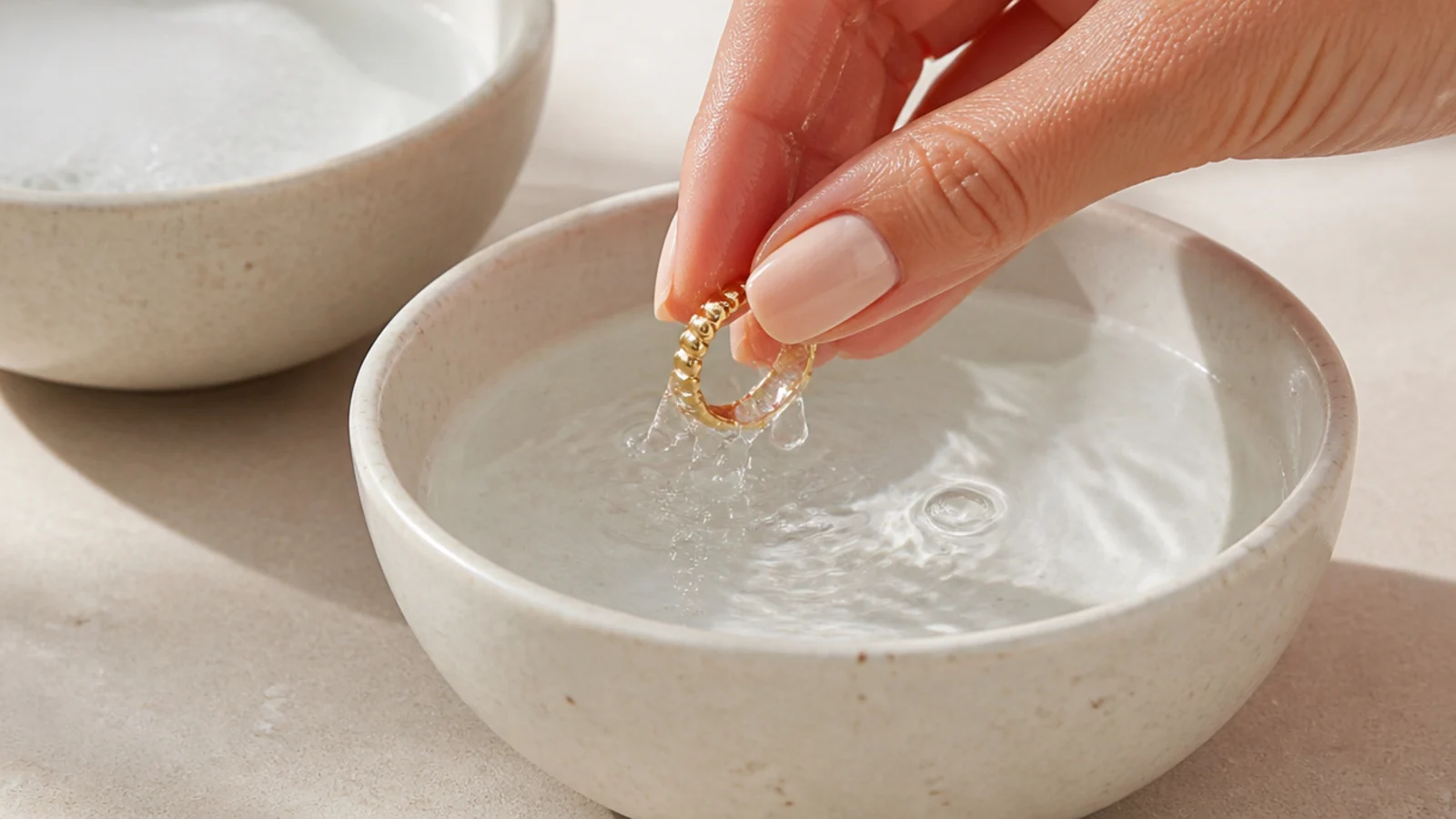
Move the piece to your second bowl of clean, warm water and swish it gently to rinse every trace of soap away. Leftover soap film dries to its own dull haze, so this rinse is what leaves the piece actually clean rather than just wet. Keep it over the bowl, not the open drain, the entire time. If the water was very soapy, give it a second rinse in fresh water to be sure nothing is left in the crevices and around the stones.
Common mistake: Rinsing under a running tap over an open drain, the classic way a slippery clean piece is lost for good.
Pro tip: Room-temperature filtered water leaves fewer mineral spots than hard tap water as it dries.
5. Dry Completely With a Soft Cloth
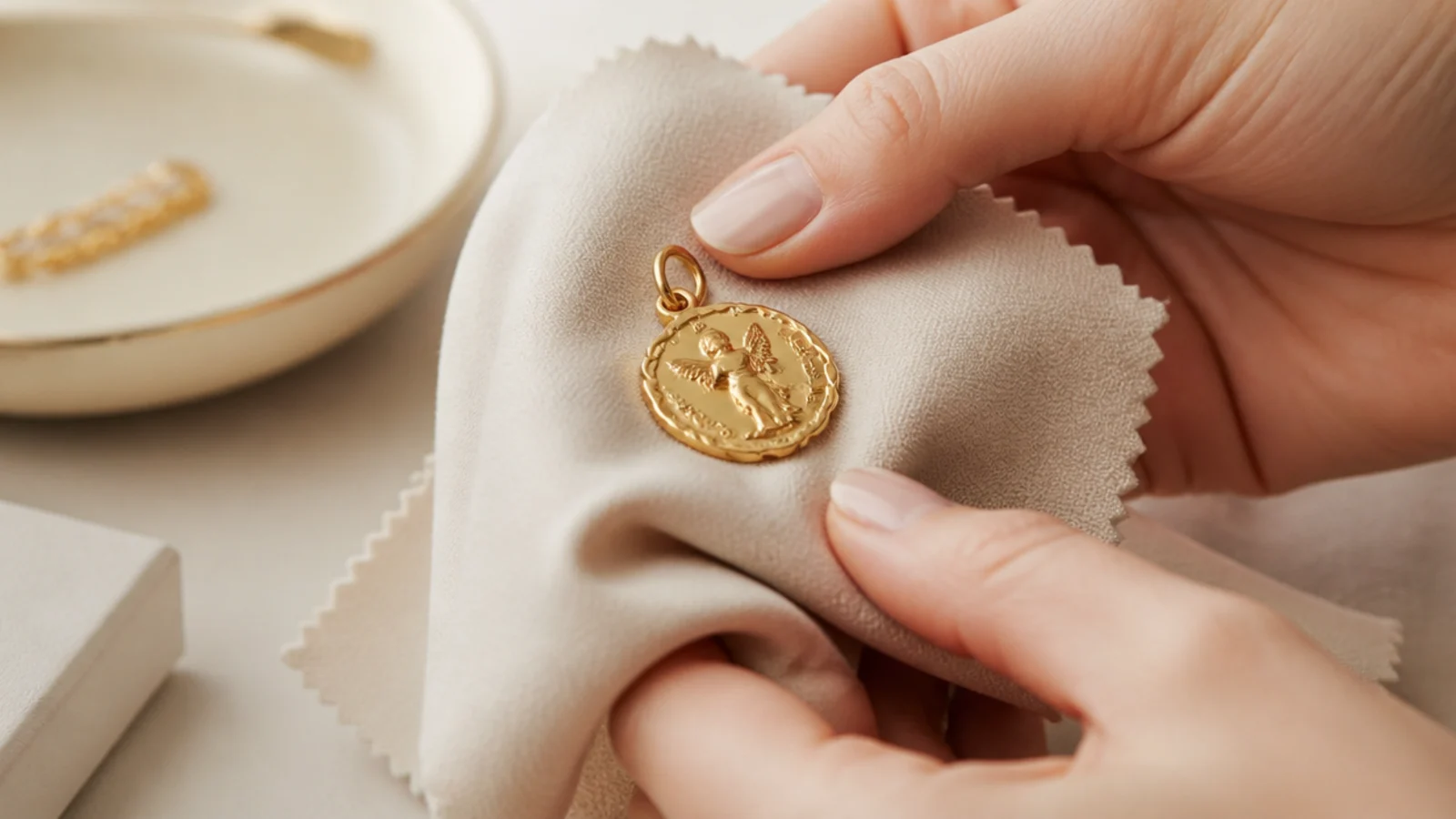
Dry the piece thoroughly and immediately with a soft, lint-free cloth, because trapped moisture is exactly what restarts tarnish on the base metal. Gently pat and press rather than rubbing hard, and work the cloth into the links and around settings where water pools. For a chain, draw it slowly through the folded cloth. Let the piece finish air-drying on a dry towel for a few minutes before it goes back in the box, since even a trace of dampness sealed into storage will dull it again within days.
Common mistake: Putting a piece away even slightly damp, which traps moisture against the metal and undoes the whole cleaning.
Pro tip: A hair dryer on its cool, low setting clears water from tight chain links and filigree that a cloth cannot reach.
6. Buff Gently and Store It Right
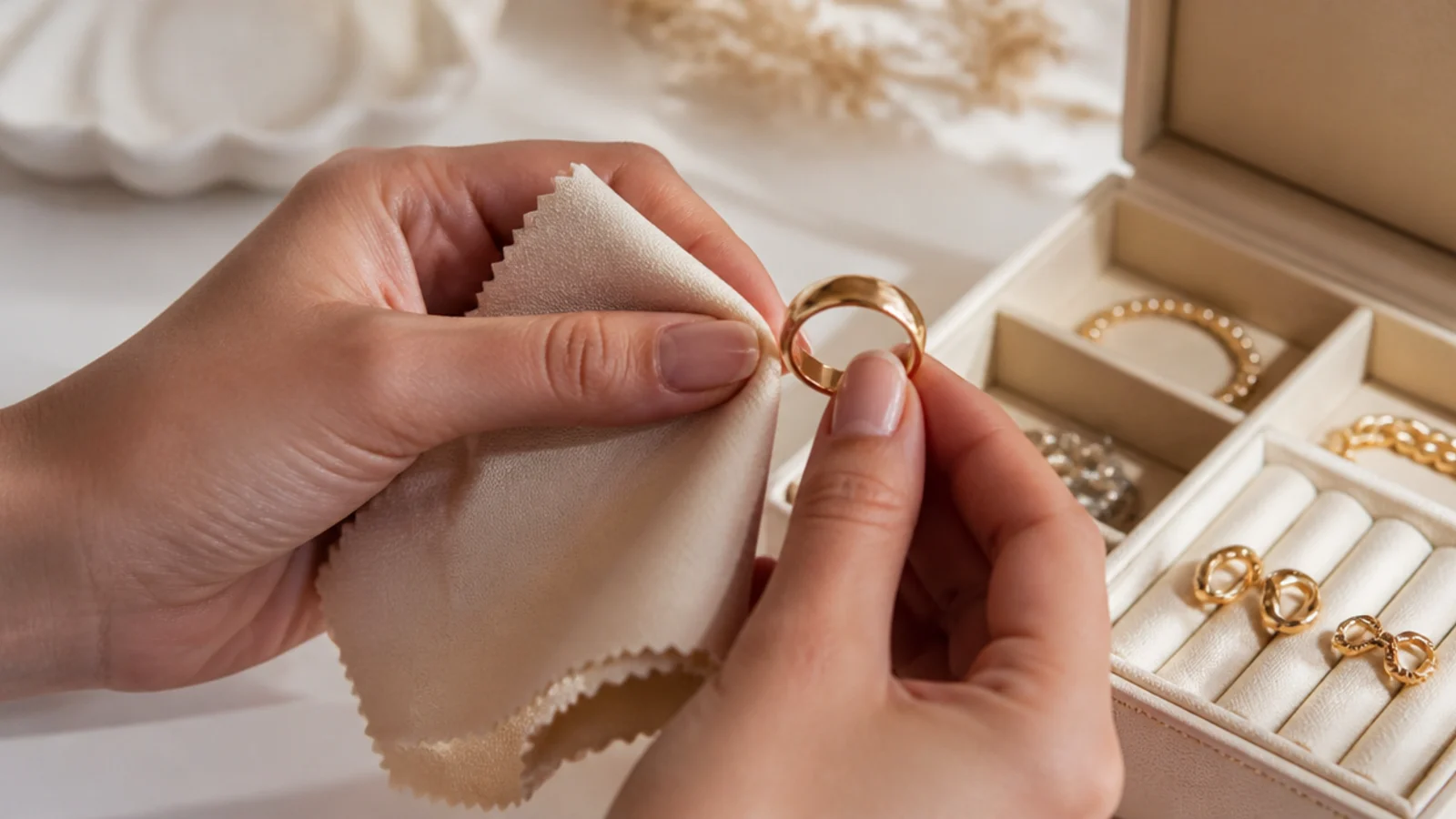
Give the dry piece a light pass with a dedicated jewelry polishing cloth to bring back the shine and lift any last haze. On plated and vermeil gold use only a soft cloth made for jewelry and a gentle touch; save impregnated polishing cloths and any rubbing compound for solid gold and sterling. Then store the piece dry and separated in its own slot or pouch with an anti-tarnish strip nearby, so the work you just did lasts. If it still looks dull after all this, the plating is likely worn, not dirty, and replating is the only remaining fix.
Common mistake: Reaching for an abrasive polishing compound on plated gold, which strips the thin layer you just cleaned.
Pro tip: Cleaning right before you store a piece for a long stretch means it goes away in its best state, not its worst.
Does Gold Plated Jewelry Tarnish, and Why?
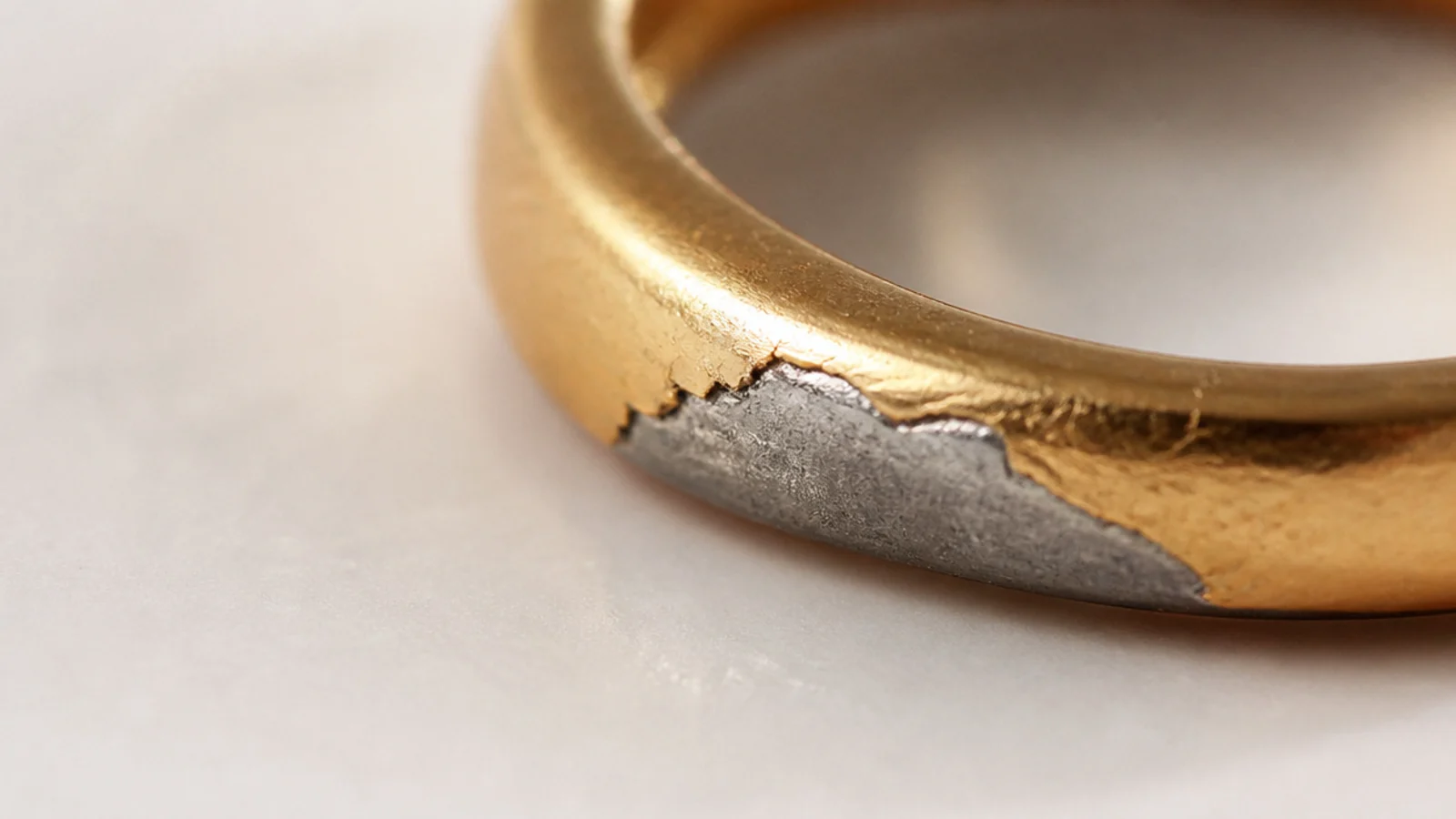
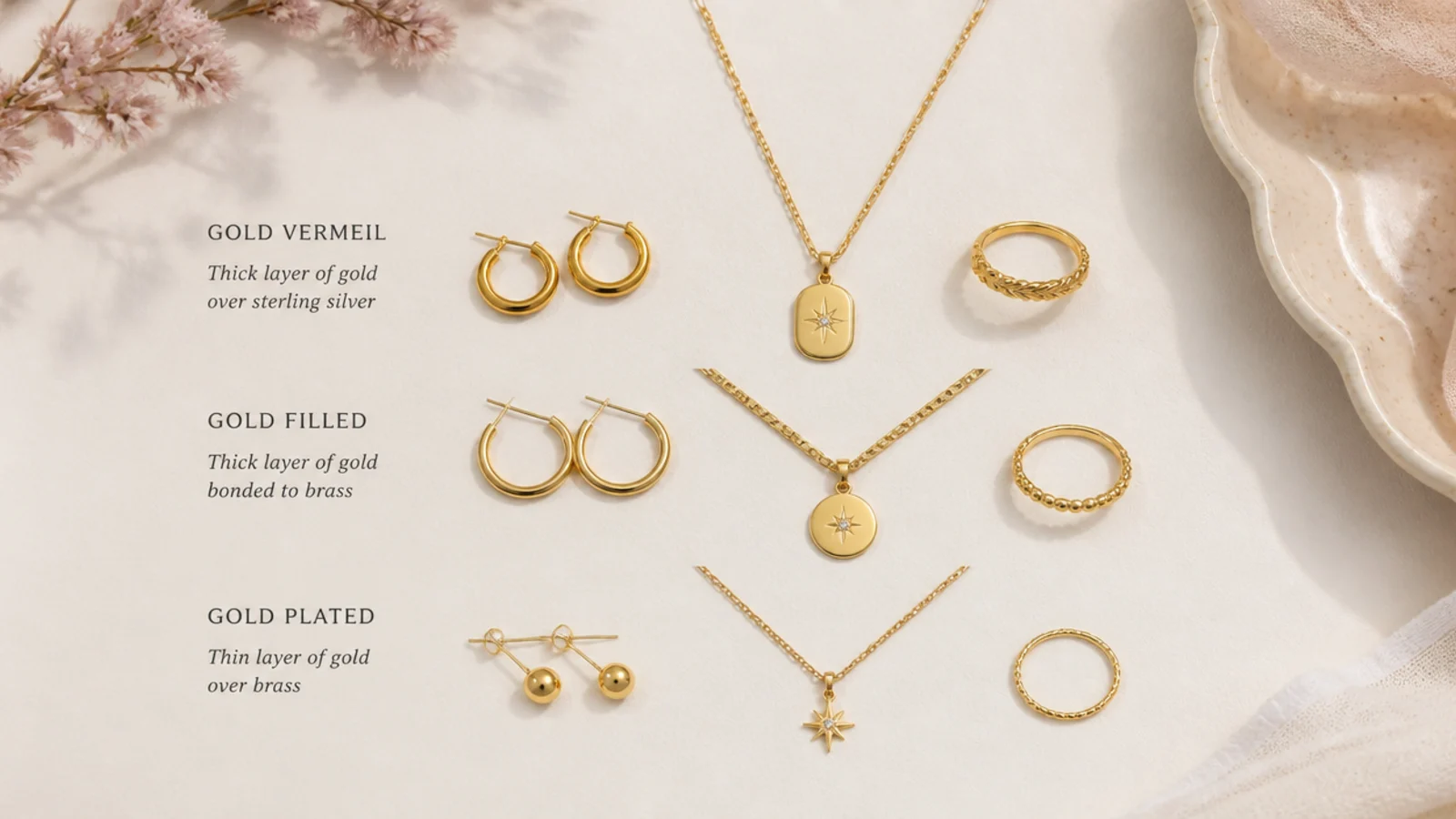
Yes, but not the way people think. Pure gold is chemically stable and does not tarnish, rust or corrode, so the gold itself is never the problem. Gold-plated jewelry is a very thin layer of gold, usually under half a micron, electroplated over a base metal like brass or copper. That layer is microscopically thin, and daily wear, friction, sweat, water and cosmetics gradually wear it away or let moisture pass through it. Once air and sweat reach the brass or copper underneath, that base metal oxidizes and reacts, and what you see as tarnish, dull spots, dark patches or a green mark on skin, is really the base metal showing its age, not the gold. This is why thicker options last longer: gold vermeil carries a minimum 2.5 microns of gold over sterling silver, and gold-filled bonds a full 5 percent of its weight in real gold, so there is simply more gold to wear through before the base is exposed. The full material breakdown is in gold vermeil vs gold filled vs plated.
How Long Does Gold Plated Jewelry Last?
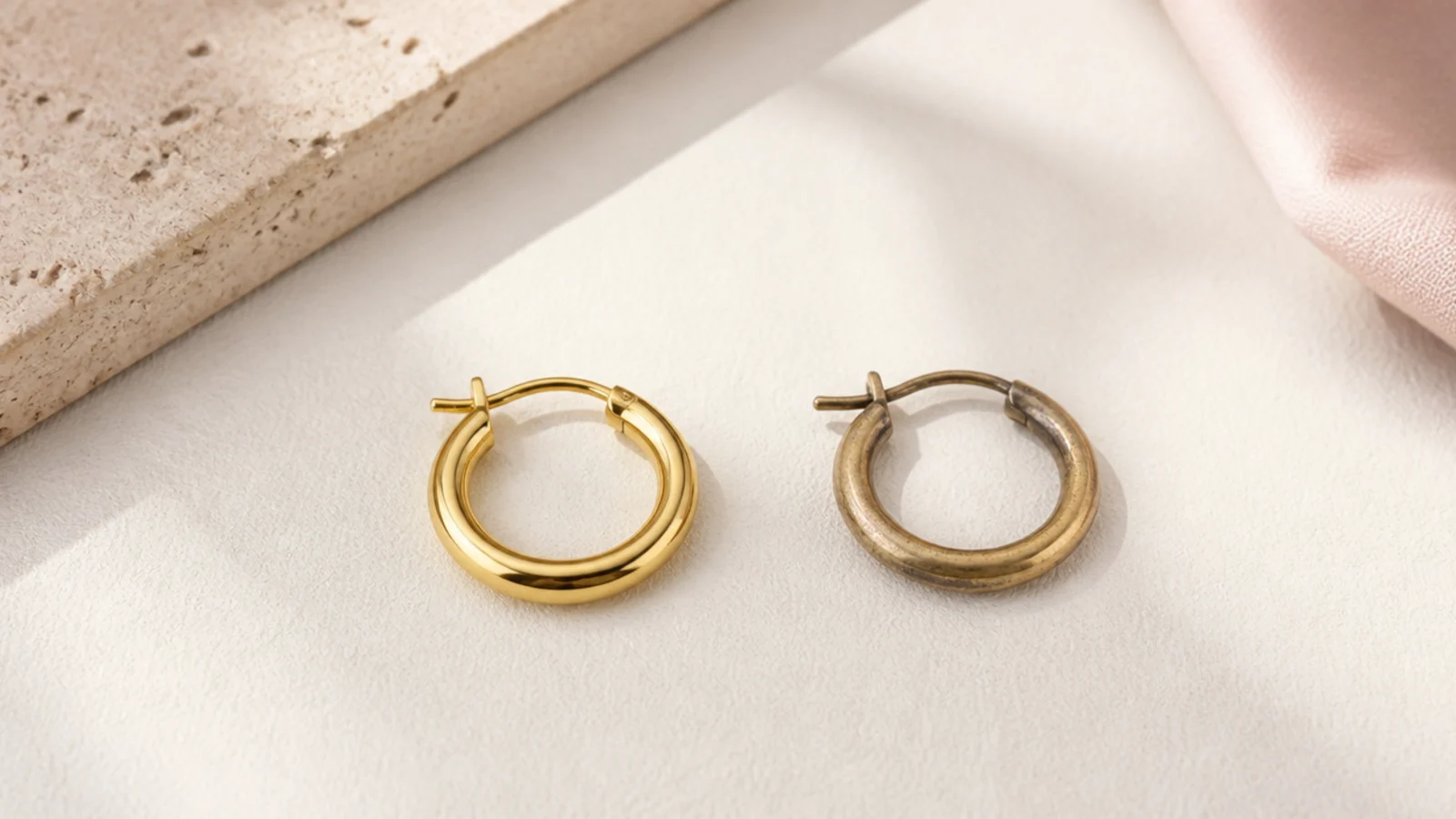
It depends far more on the piece and how you treat it than on any single number, but here are honest ranges. Standard gold-plated jewelry lasts anywhere from a few months to about two years of regular wear before fading is visible. Gold vermeil, with roughly five times the gold thickness, holds up one to two years and often longer on low-friction pieces. Gold-filled lasts three to five years and frequently much longer with care, and solid gold effectively lasts forever. The bigger variable is friction. A plated ring or bracelet, rubbing constantly against skin, surfaces and your other hand, can wear through in a season, while plated studs or a pendant on the same plating quality can look new for years because they barely move. So two identical-quality pieces can have wildly different lifespans depending only on where you wear them. If you want maximum life from an affordable piece, buy earrings and necklaces plated and reserve solid or gold-filled for the rings and bracelets, the same build order behind a lasting everyday jewelry collection.
Why Does Jewelry Turn My Skin Green, and How Do I Stop It?
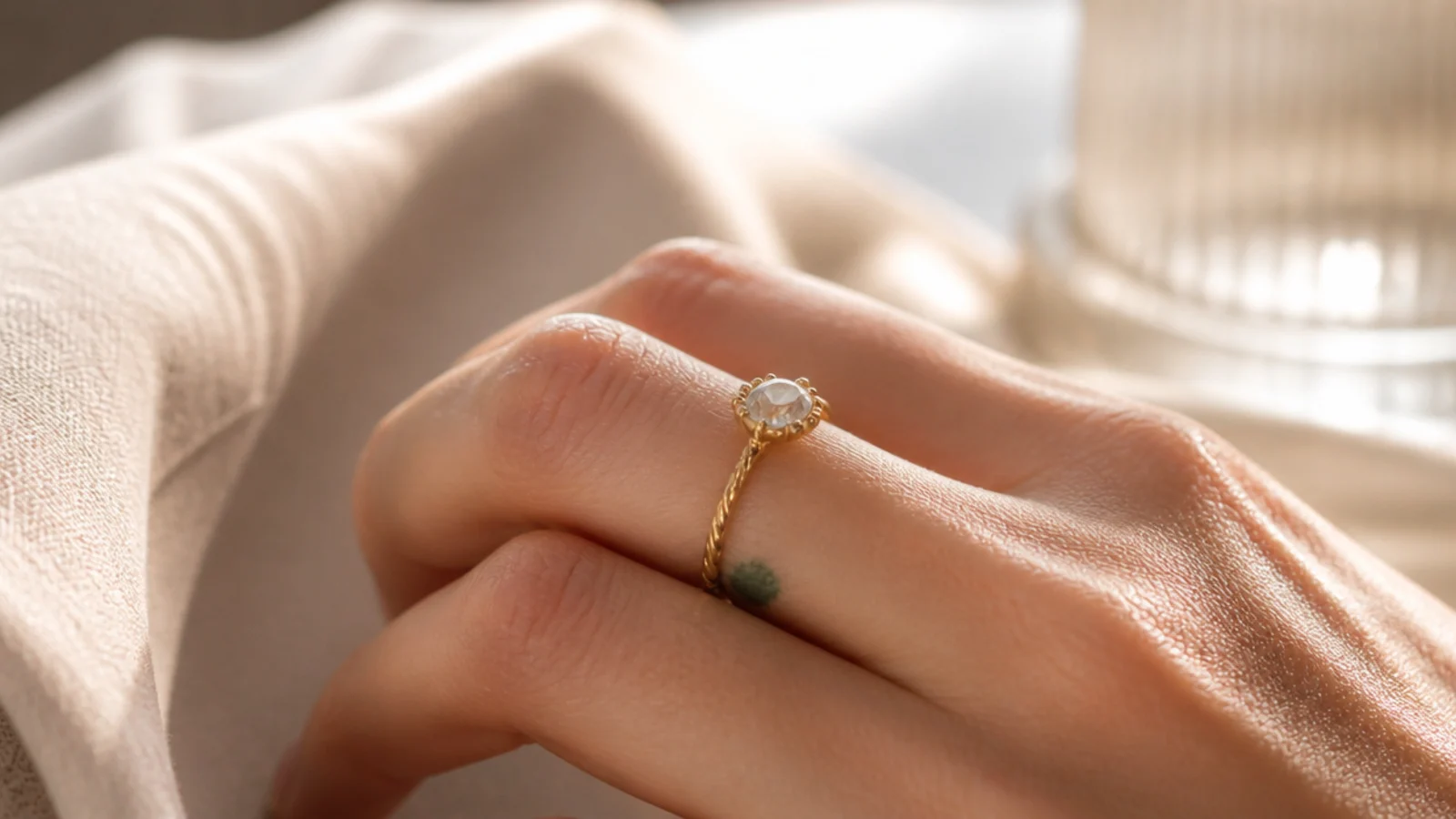
A green mark on your skin is not an allergy and it is not dirt, it is a harmless chemical reaction. Once the gold plating wears thin, the copper in the base metal reacts with the acids and moisture in your sweat and forms copper salts, which are green and rub off onto skin. It is more common in warm weather, during exercise, and on rings and bracelets where friction wears the plating fastest. The green itself is harmless and washes off, but it is a clear signal the plating is going. To stop it, first keep the piece drier: take it off for water, sweat and lotion. Second, apply a thin clear barrier coat to the inside surface that touches skin as a short-term fix. Third, and most reliably, buy the pieces that sit against skin all day, meaning rings and bracelets, in gold-filled or solid gold, where the copper base never reaches your skin at all. If a single cheap ring is the culprit, replacing it usually costs less than repeatedly recoating it, and many jewelry brands now list nickel-free, sterling-based options that never green skin in the first place.
Can You Shower With Gold Plated Jewelry?
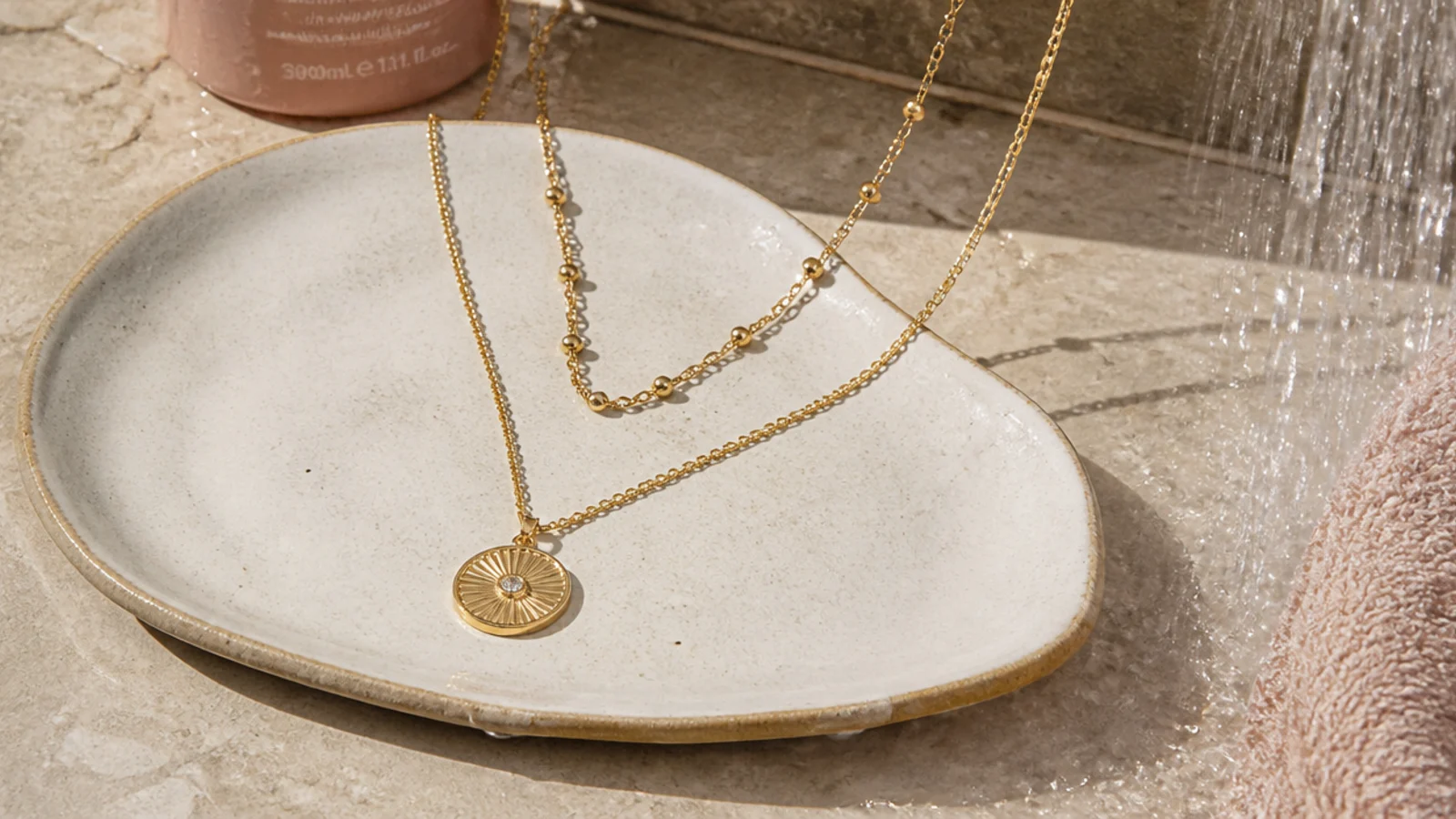
You can, but you should not, and doing it regularly is one of the fastest ways to ruin plated and vermeil gold. The problem is not water alone but everything that comes with a shower: hot water opens and speeds the reaction, and soap, shampoo, body wash and conditioner are full of chemicals and abrasives that strip the thin gold layer. A single shower will not destroy a piece, but daily showers will visibly fade plated and vermeil jewelry within months. Solid gold and, to a lesser degree, gold-filled tolerate occasional water contact without harm, which is why gold-filled is the honest answer for a piece you genuinely never want to remove, like a welded bracelet, and why it is the material to prioritize when you build an everyday jewelry collection. For everything else, the rule is simple and cheap: take it off before you shower, swim or soak, and keep a dish by the sink so the habit sticks. The two minutes you save by leaving it on will cost you the piece.
How to Clean Tarnished Gold Plated Jewelry: What Works and What Ruins It
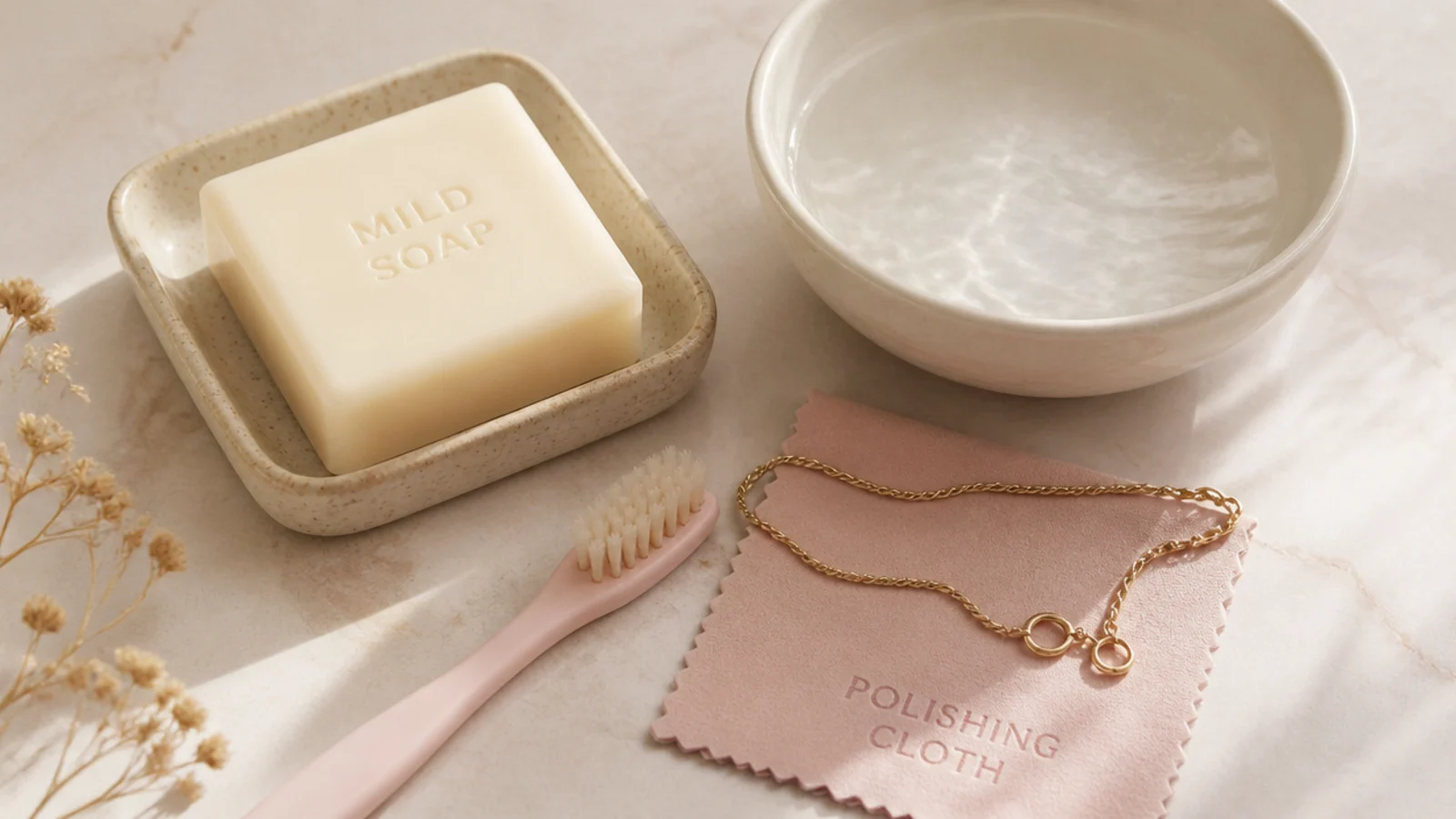
For plated and vermeil gold, gentle is the only safe approach, and the wrong method will finish off a piece the tarnish only dulled. What works: a few drops of mild dish soap in warm water, a short soak, a soft baby toothbrush for crevices, a fresh-water rinse and a thorough dry with a soft cloth. That lifts oil, product and light tarnish without touching the gold. What ruins it: toothpaste, baking soda, salt-and-foil baths, ammonia, bleach and commercial silver-cleaning dips. Every one of those relies on abrasion or a chemical reaction that eats microns of gold, so on a layer already thinner than a hair, they strip the plating and expose the base metal for good. Save the aggressive methods for solid sterling silver, which can take them because there is no plating to lose. And know the limit: if you see base metal showing through, no cleaner will bring the gold back, and the step-by-step routine below is for pieces that are dull, not worn through. When a favorite is genuinely worn, a jeweler's replating is the only real restoration.
Frequently Asked Questions
Does gold plated jewelry tarnish?
The gold layer itself does not, but gold-plated jewelry does dull and discolor over time. The plating is a very thin layer of gold over a base metal like brass or copper, and once it wears through or lets moisture past, the base metal underneath reacts with air and sweat. That reaction is what you see as dullness, dark patches or green skin. So it is the base metal tarnishing, not the gold, but the visible result is the same.
How long does gold plated jewelry last?
Standard gold-plated jewelry lasts a few months to about two years of regular wear before fading shows. Gold vermeil, with about five times the gold thickness, lasts one to two years and often longer, gold-filled runs three to five years or more, and solid gold lasts effectively forever. The single biggest variable is friction: plated rings and bracelets fade fastest, while plated studs and necklaces on the same quality can look new for years.
Why does jewelry turn my skin green?
It is a harmless chemical reaction, not an allergy. Once plating wears thin, the copper in the base metal reacts with the acids and moisture in your sweat and forms green copper salts that rub off on skin. It happens most on rings and bracelets and in warm weather. The green washes off, but it signals the plating is going. Keep the piece dry, add a clear barrier coat as a stopgap, or switch to gold-filled or solid gold.
Can you shower with gold plated jewelry?
You can, but you should not make a habit of it. It is not the water alone but the hot temperature plus soap, shampoo and conditioner that strip the thin gold layer, and daily showers will fade plated and vermeil pieces within months. Solid gold and gold-filled tolerate occasional water, which is why gold-filled suits a piece you never remove. For everything else, take it off before you shower and keep a dish by the sink.
How do you clean tarnished gold plated jewelry?
Gently, and never with abrasives. Soak the piece a few minutes in warm water with a couple of drops of mild dish soap, lift grime from the crevices with a soft baby toothbrush, rinse in clean water and dry completely with a soft cloth. Avoid toothpaste, baking soda, ammonia, bleach and silver dips, which strip the thin gold and make the damage permanent. If the base metal shows through, cleaning cannot help and only replating restores it.
Does gold vermeil tarnish?
Vermeil resists tarnish far better than standard plating because it carries a minimum 2.5 microns of gold, about five times thicker, over a solid sterling silver base. It typically holds up one to two years of regular wear and looks identical to solid gold when new. The sterling base also means it will not turn skin green the way plated brass does. It still benefits from the same care: keep it out of water and off after perfume, and wipe it after wear.
Does gold-filled jewelry tarnish?
Barely, and much more slowly than plated or vermeil. Gold-filled bonds a thick layer of real 14k gold, a full 5 percent of the piece's weight, to a brass core under heat and pressure, so there is far more gold to wear through before the base is ever exposed. It lasts three to five years and often much longer, tolerates daily water, and rarely turns skin green. It is the best choice for rings and bracelets you want to wear constantly without babying them.
Can tarnished gold jewelry be restored?
It depends on whether it is dull or worn. If the piece is only dull from oil and light tarnish, a gentle soap-and-water clean and a soft buff restore it at home. If you can see the base metal showing through, the plating is gone and no cleaning brings it back, only professional replating does. Replating is worth it on a piece you love or a well-made vermeil, while a cheap plated-brass piece is usually cheaper to replace.
How do I store gold jewelry to prevent tarnishing?
Store it dry, cool and separated. Keep pieces out of the humid bathroom, give each one its own slot or pouch so nothing rubs and scratches, and lay chains flat so they cannot knot. Add an anti-tarnish strip or a silica gel packet to each box to pull moisture and sulfur from the air, and replace the strips about every six months. Wipe each piece with a soft cloth before it goes away, since a day's sweat and oil left on the metal is what corrodes it overnight.
Which gold jewelry habit are you fixing first?
If you change one habit today, make it this: put your jewelry on last, after perfume, lotion and hairspray, and take rings and bracelets off before water. Those two moves prevent most of the tarnish people blame on cheap metal. Match the material to the job too, so your daily rings are gold-filled or solid and your studs and necklaces can be quality vermeil, then store everything dry and separated with an anti-tarnish strip. When something does dull, a soft cloth and mild soap fix most of it at home; replating is only worth paying for on pieces you truly love. See exactly which material to buy for each spot in gold vermeil vs gold filled vs plated, or browse the full jewelry hub for more care and buying guides.