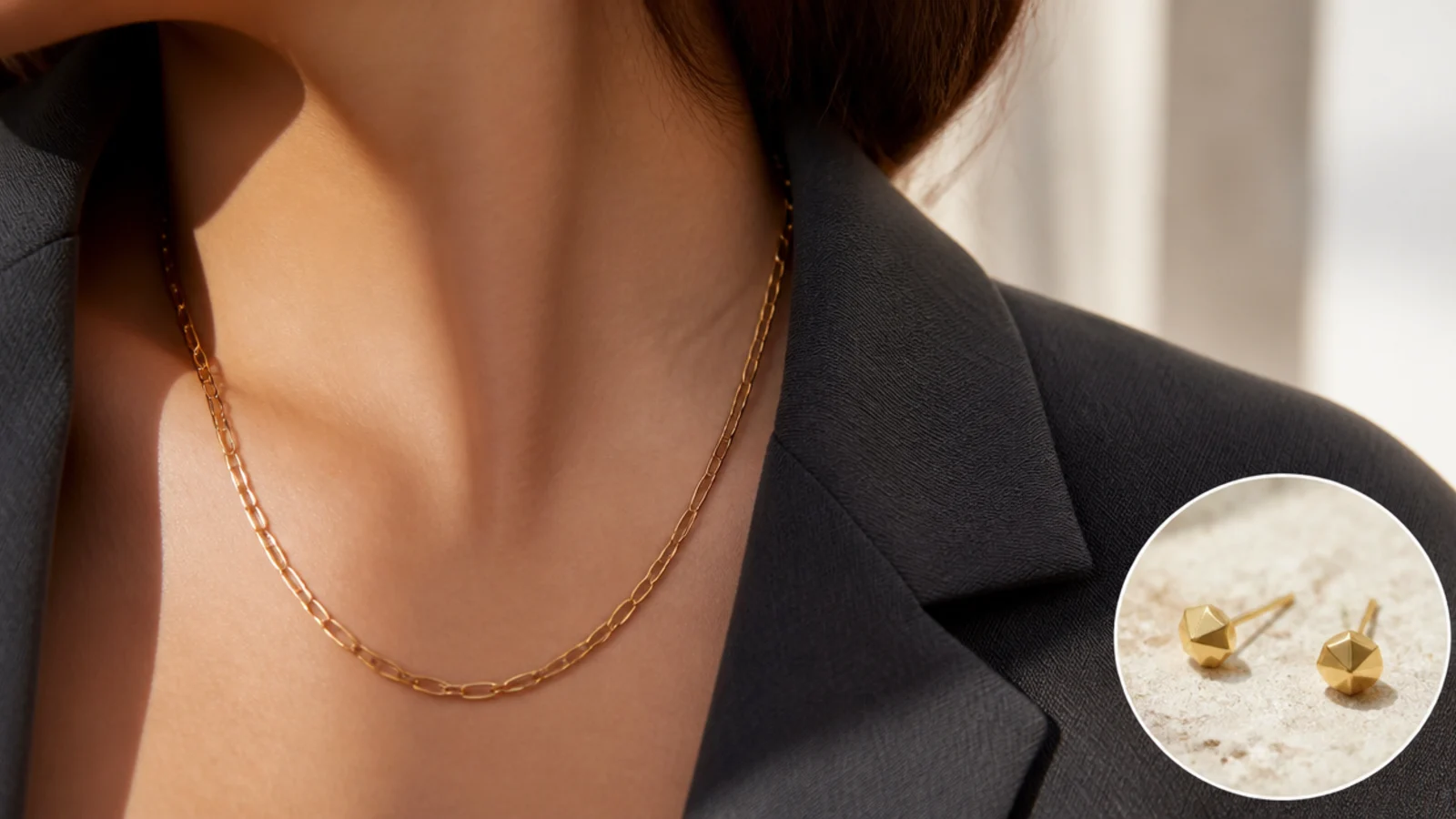
Quick Comparison
| Traditional corporate office | Creative or startup office | |
|---|---|---|
| Earrings | Diamond or pearl studs, small huggies | Studs, medium hoops, one sculptural pair |
| Necklace | One thin collarbone chain, plain pendant | A layered pair or one bolder pendant |
| Rings | One plain band or flat signet | A small stack of two to three fine rings |
| Bracelets | One slim tennis or bangle, or none | A thin cuff or a small mixed stack |
| Metals | Stick to one metal per look | Mixed gold and silver is welcome |
| Statement pieces | Avoid; keep everything understated | One statement piece, balanced by the rest |
| Watch | Classic leather or metal, or a plain smartwatch face | Any watch, including a colorful band |
| What to avoid | Anything that jangles, swings or oversized | Costume that looks plastic or unfinished |
1. Diamond Stud Earrings for the Office
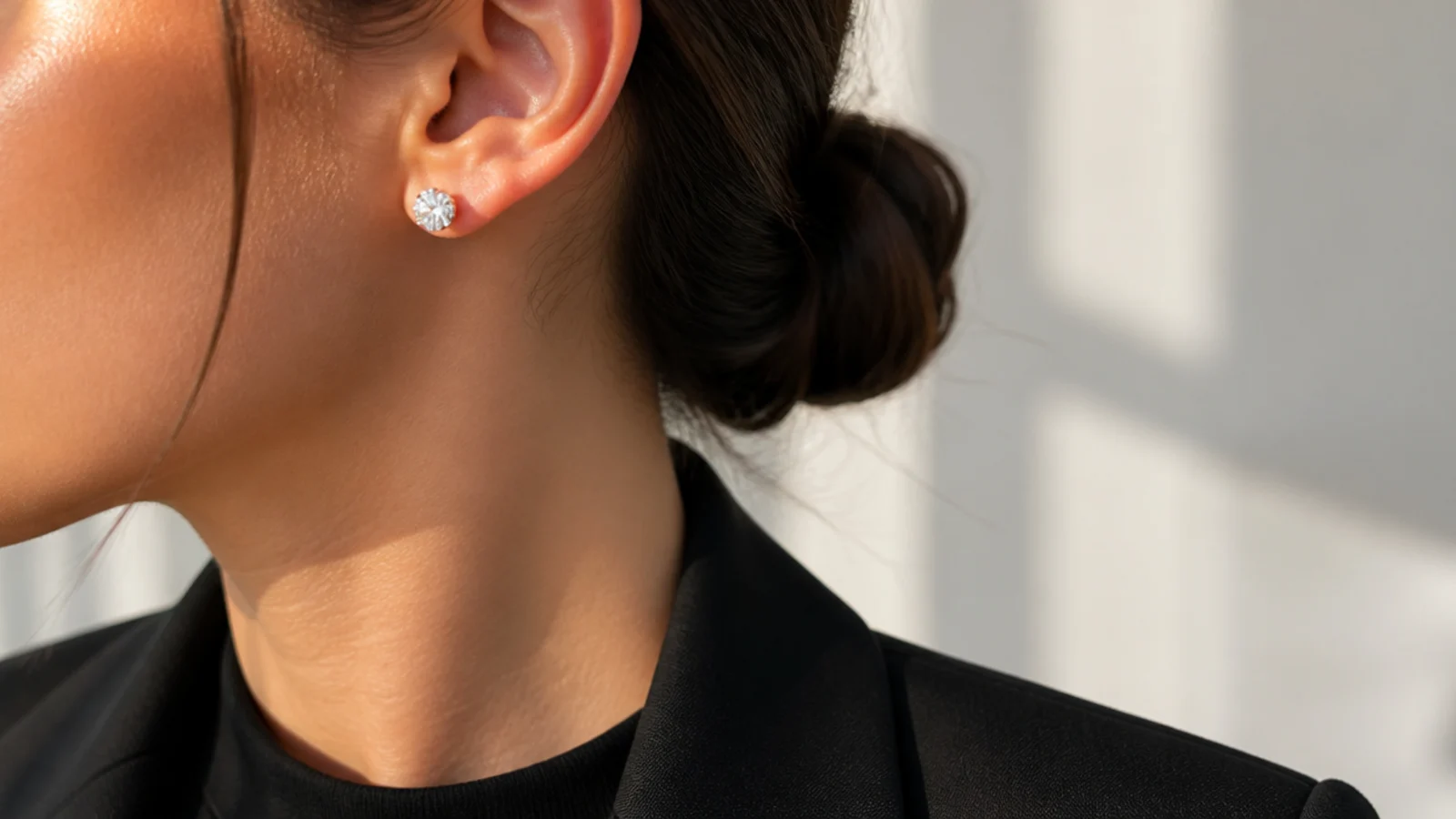
Diamond or lab-grown studs are the little black dress of work jewelry: they go with every dress code, every neckline, and every metal you already own. A 0.25 to 0.5 carat round stud reads polished without shouting, and cubic zirconia in the same size looks nearly identical from across a meeting table. They sit flush to the ear, so nothing swings or catches on a headset. This is the single safest piece to buy first and the one you will reach for most.
Pair them with an all-black work outfit and a single gold or white-gold chain. If your ears are sensitive, buy solid gold or platinum posts, not plated brass.
2. Small Gold Huggie Hoops
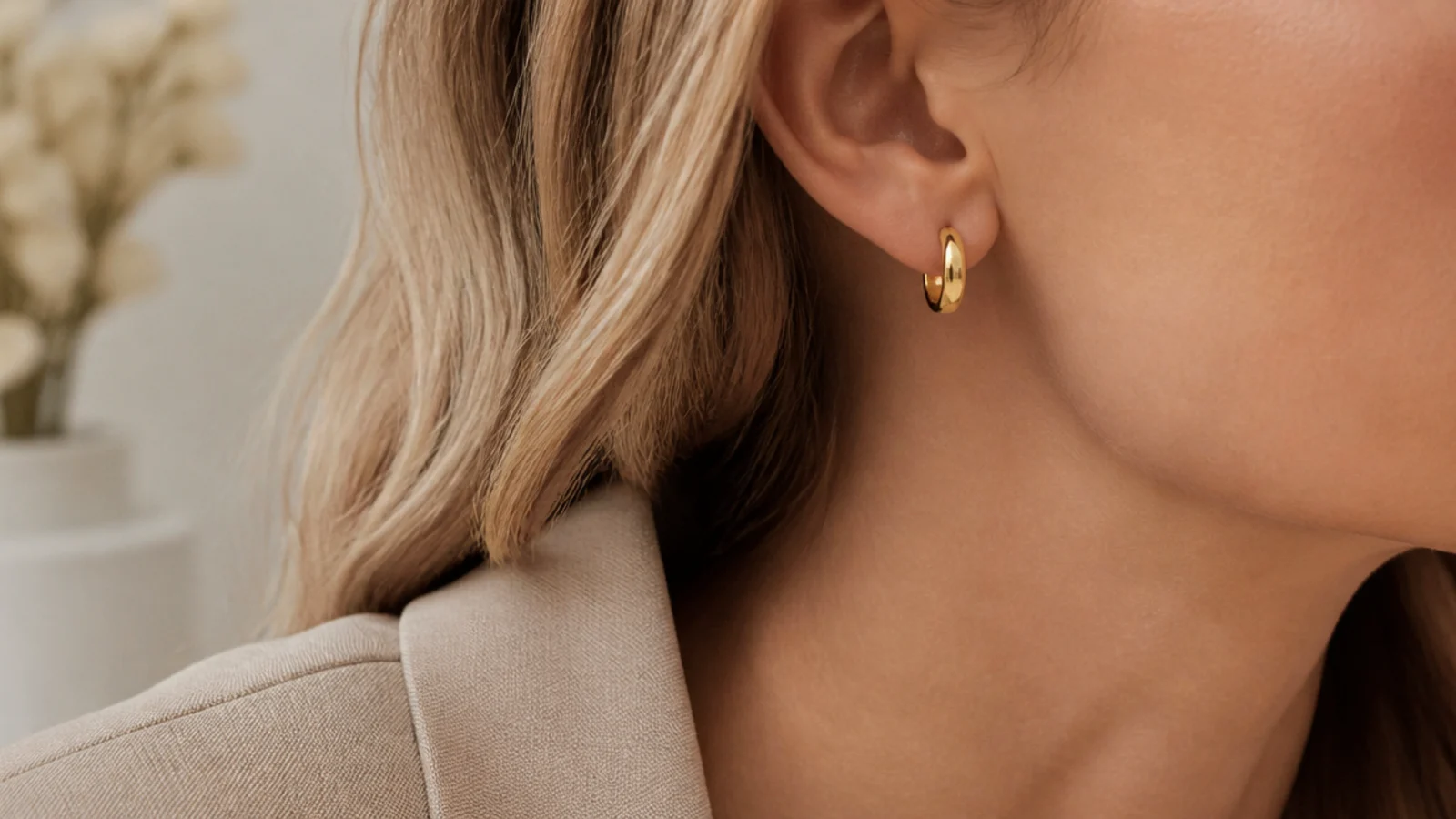
Huggie hoops are the comfortable, all-day answer to the hoop question. At 10 to 14 millimeters they hug the lobe instead of dangling, so they never tangle in hair, a scarf, or a phone held to your ear. They read a touch warmer and more modern than studs while staying firmly office-safe. A thin, high-polish gold huggie works from a Monday standup to a client lunch without a second thought, and it flatters a bare, open neckline better than a stud does.
Wear them with a beige blazer work outfit and skip the necklace so the ears lead. Keep the diameter under 15 millimeters for conservative offices.
3. A Single Collarbone Gold Chain
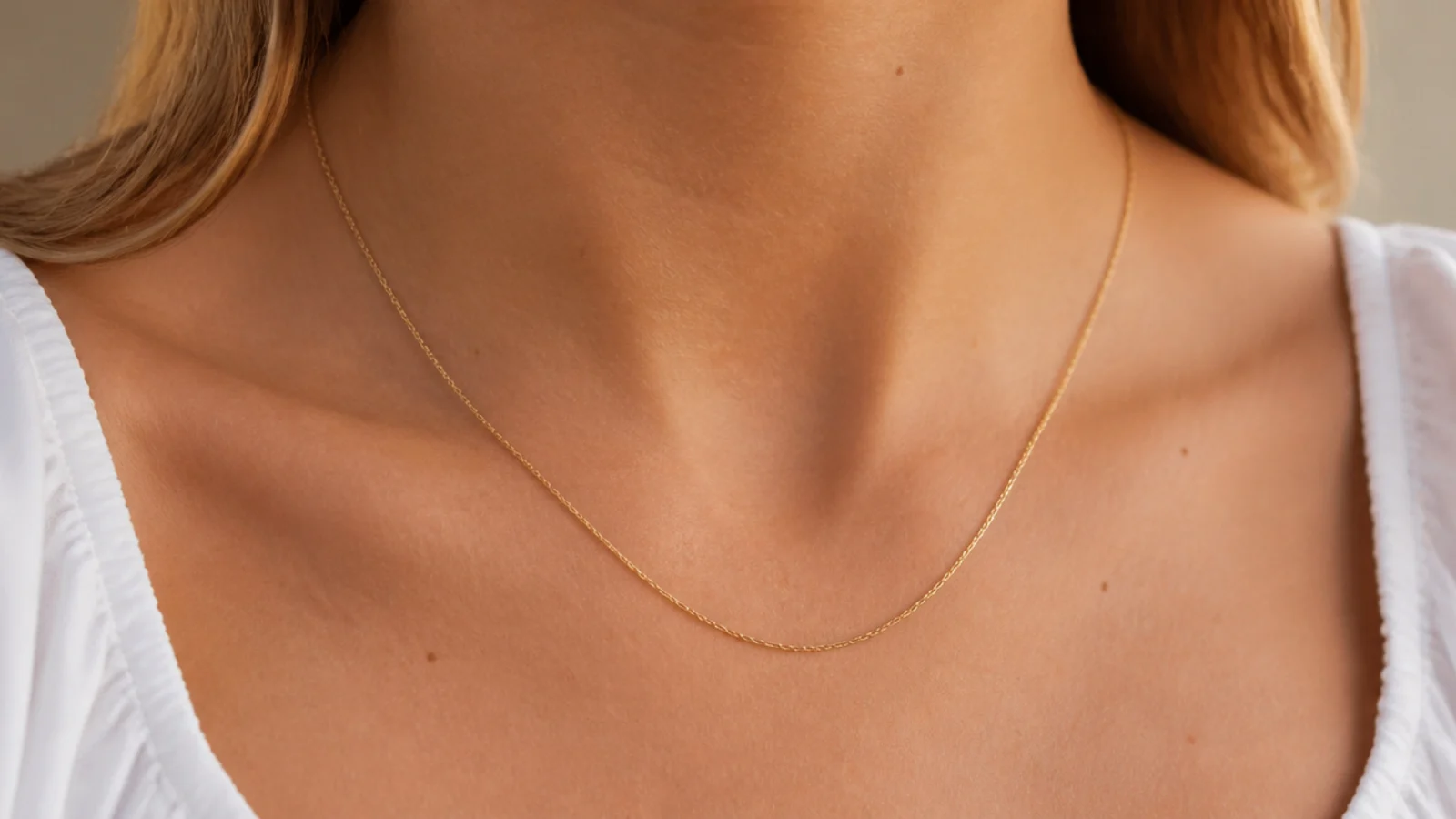
One medium-weight chain that lands just below the collarbone, roughly 16 to 18 inches, is the most useful necklace you can own for work. At that length it clears a crew neck, fills the gap of an open collar, and layers under a blazer without disappearing. A plain cable or box chain in 14k or gold-fill reads quietly expensive and needs zero styling. It is the piece that makes a simple top look deliberate rather than unfinished.
Style it over a white skirt work outfit with a tucked shirt. For a V-neck, drop to an 18 inch chain so the pendant sits inside the neckline, not above it.
4. A Thin Tennis Bracelet
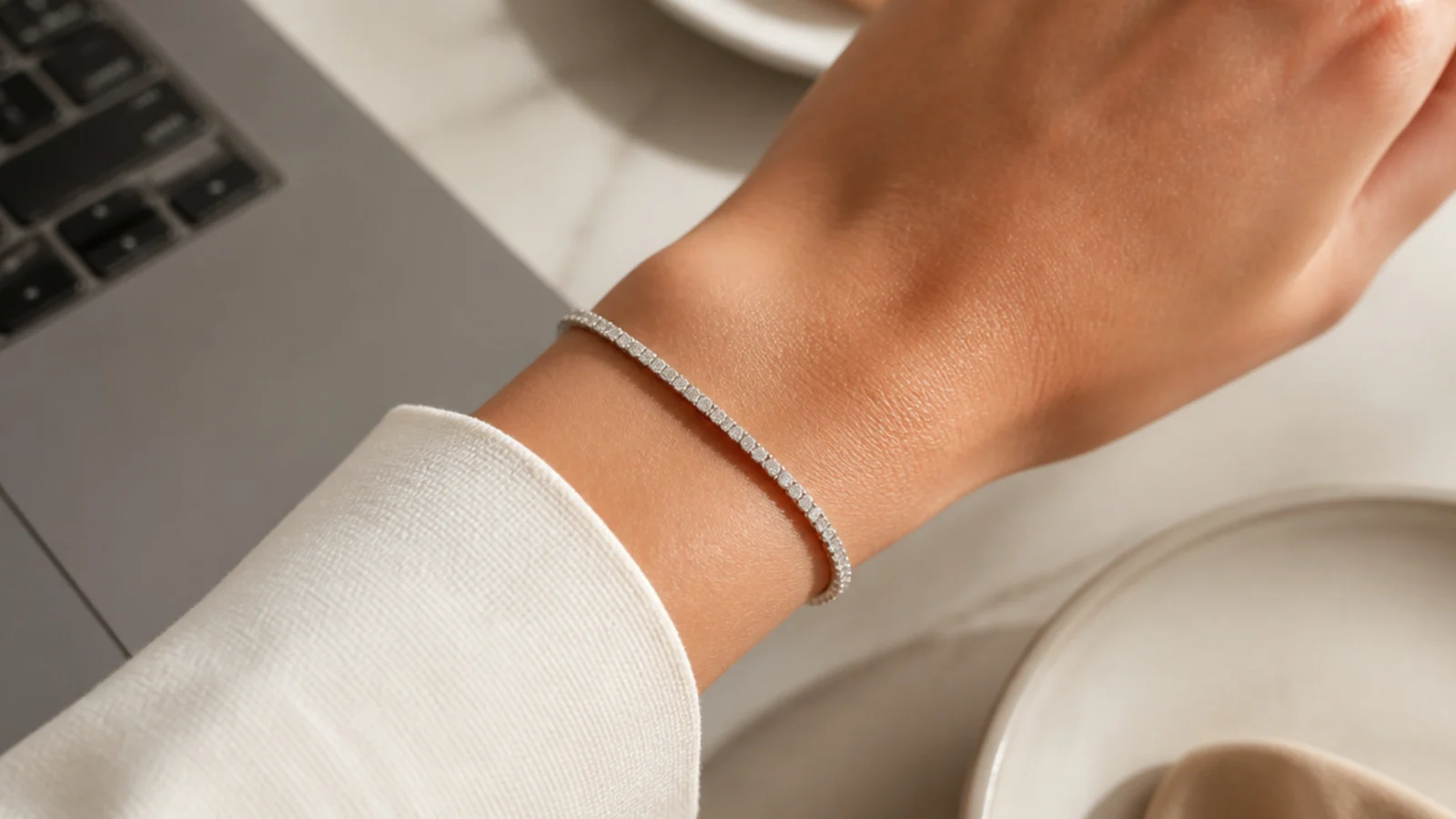
A slim tennis bracelet is the quiet-luxury piece that dresses up a sleeve without making noise. Choose a fine, flexible line of small stones, around 1.5 to 2 millimeters, so it lies flat under a blazer cuff and does not clack against a keyboard or a mug. Worn alone on the writing wrist it catches light when you gesture and vanishes when you type. It is the most elegant way to add sparkle to work without tipping into party jewelry.
Layer it under a blazer, as with a corset and blazer look softened for the office. Wear it on the non-dominant wrist so it stays out of the way while you work.
5. A Plain Signet or Band Ring
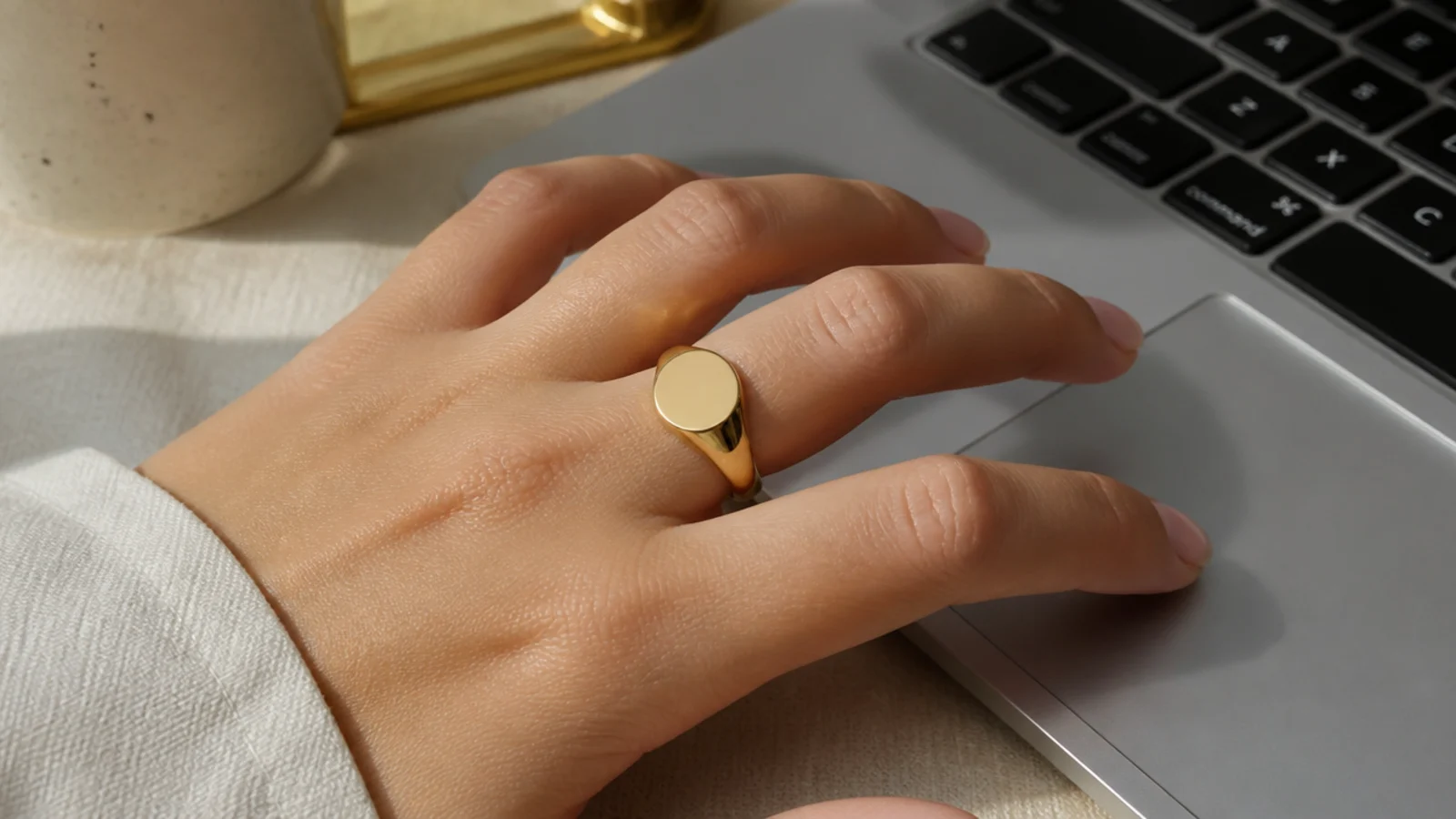
For hands-on and client-facing roles, a single low-profile ring is the smart pick: a plain gold band or a small flat signet with no raised stone to snag gloves, fabric, or a handshake. It reads grown-up and intentional, adds warmth to a bare hand on a video call, and cleans up in seconds. Skip anything with prongs or a tall setting if you use your hands all day; they catch and scratch. One ring on one hand is plenty for the office.
Pair it with a relaxed sneaker work outfit for a creative dress code. Solid metal survives daily wear; plated bands wear through at the finger fastest.
6. Classic Pearl Studs for Interviews
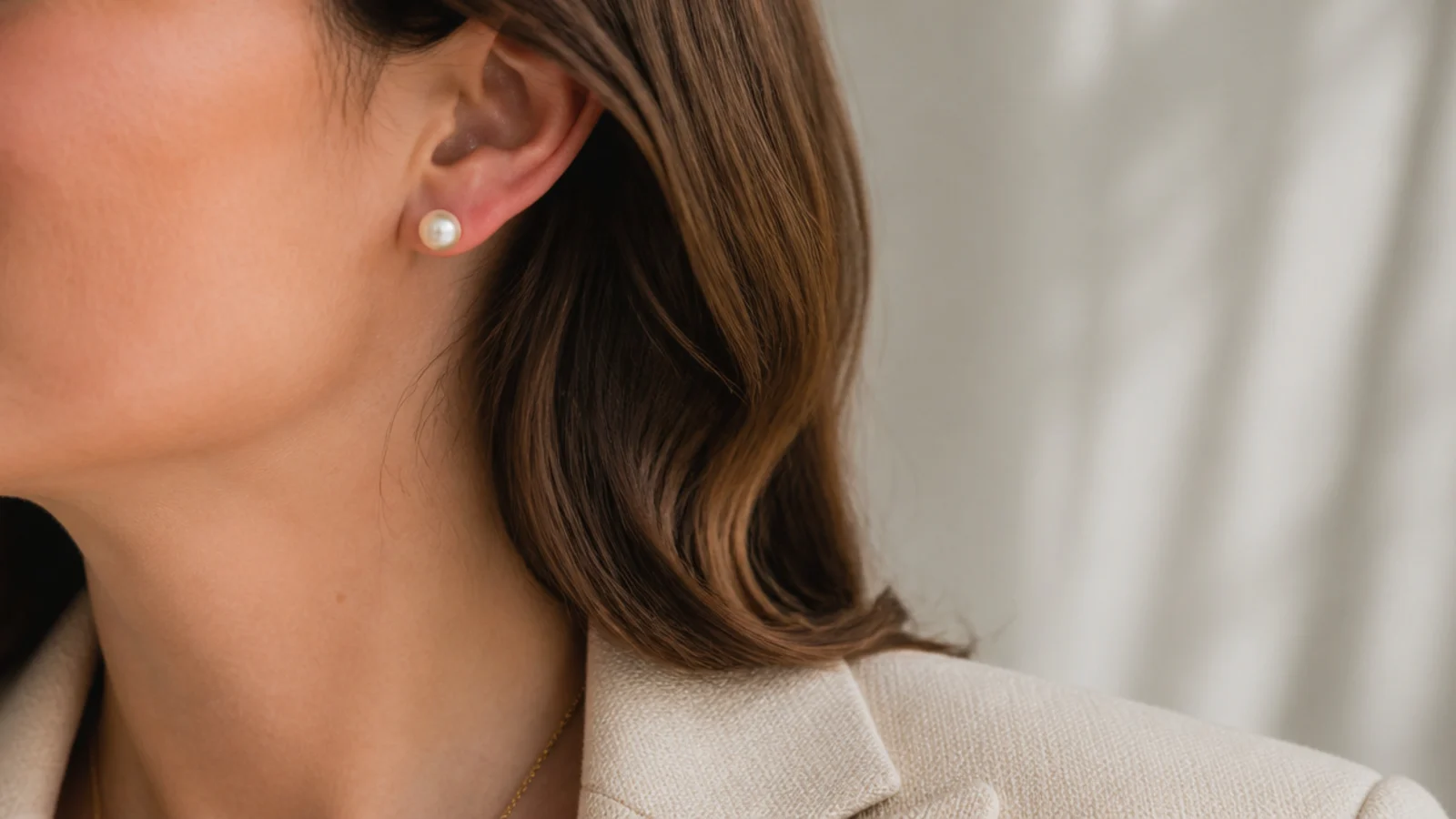
Pearl studs are the safest interview earring there is: soft, classic, and impossible to read as flashy. A 6 to 8 millimeter round pearl sits close to the lobe and adds a warm point of light near the face, which flatters on camera and in person. They signal put-together without competing with what you are saying, which is exactly the balance a first meeting needs. They also bridge generations of dress code, so no interviewer will find them dated or trendy.
Wear them with an ankle boot work outfit and nothing else but a watch. For an interview, this pair plus one thin chain is the entire jewelry list.
7. An On-Camera Earring and Necklace Pairing
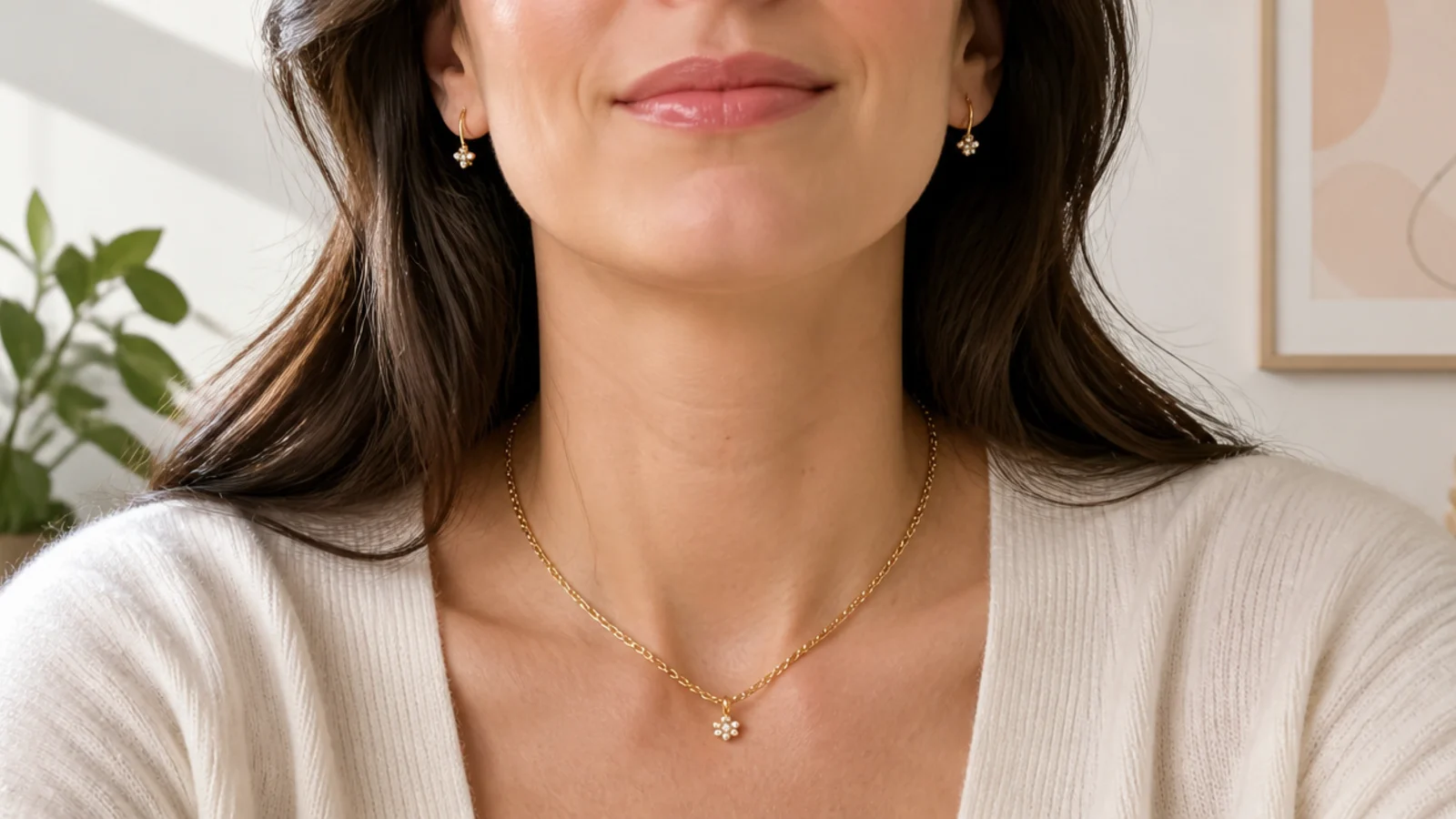
On a video call the frame stops at your chest, so only your earrings and the very top of a necklace ever show. That is where to put your effort. Choose earrings with a little light, a small hoop or a stud with a tiny stone, and a short 16 inch necklace that sits high enough to appear in frame. Skip bracelets and rings entirely; they never make it on screen. Keep the earrings modest in size so they do not blur or distract when you move.
Style it over a rainy-day work outfit for a work-from-home day. Face a window or lamp so the metal catches soft light rather than a hard overhead glare.
1. Read the dress code and watch the room first

Before you buy or wear anything, check the written dress code, then spend a few days noticing what senior colleagues actually wear. Calibrate to the most conservative person you respect in the room.
Common mistake: Assuming every office wants quiet luxury; a design studio and a bank want opposite things.
Pro tip: When you cannot tell, dress one notch simpler than you think for the first week, then adjust.
2. Choose one hero piece, then add only one supporter
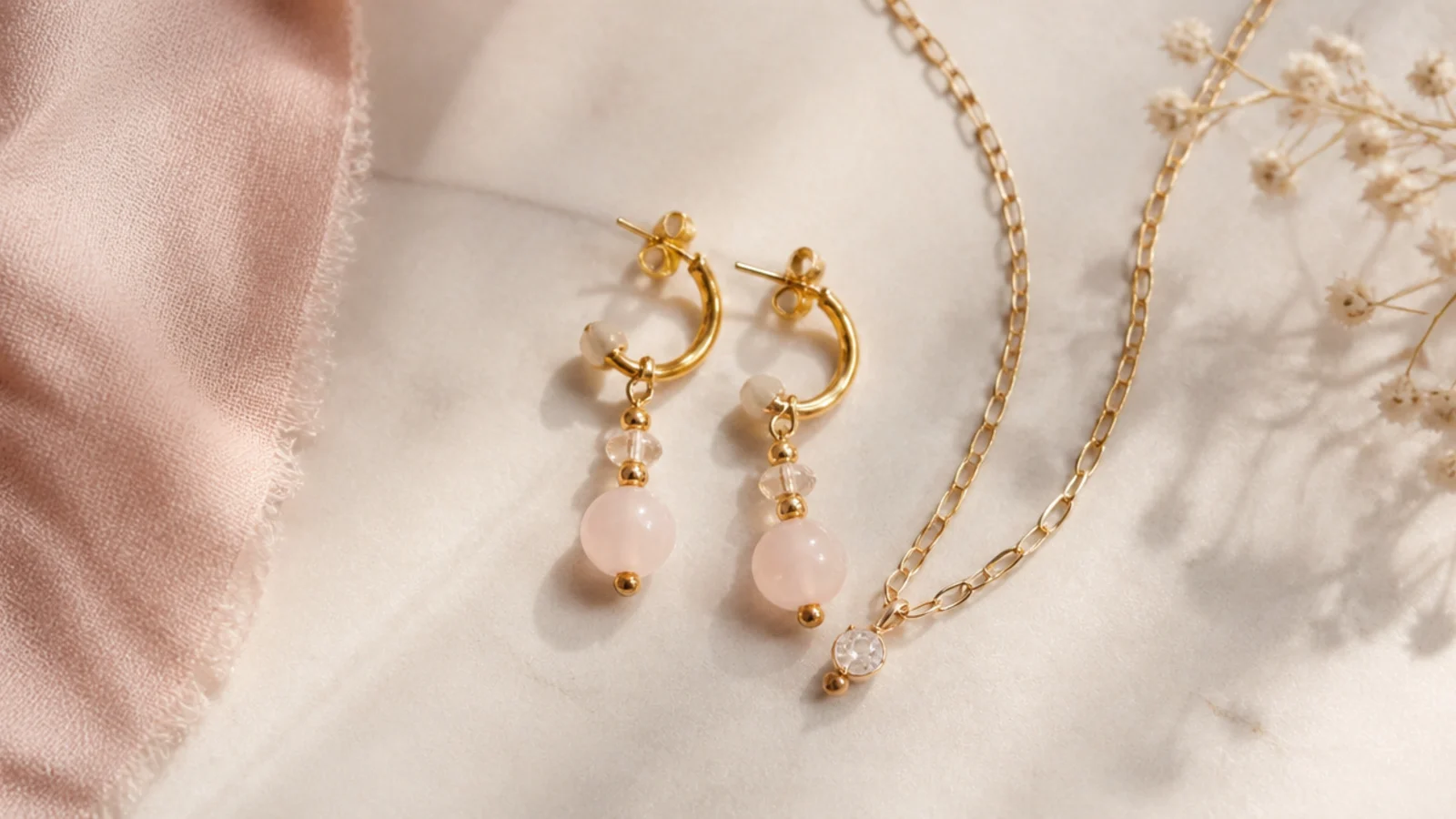
Pick the piece that leads, usually the earrings, then add at most one supporting piece such as a single chain or a thin bracelet. Two intentional pieces beat five competing ones every time.
Common mistake: Wearing studs, a necklace, a bracelet and three rings at once, so nothing reads as chosen.
Pro tip: If you add a third piece, remove something else so the total stays at two or three items.
3. Match your metal to the warmth of your outfit
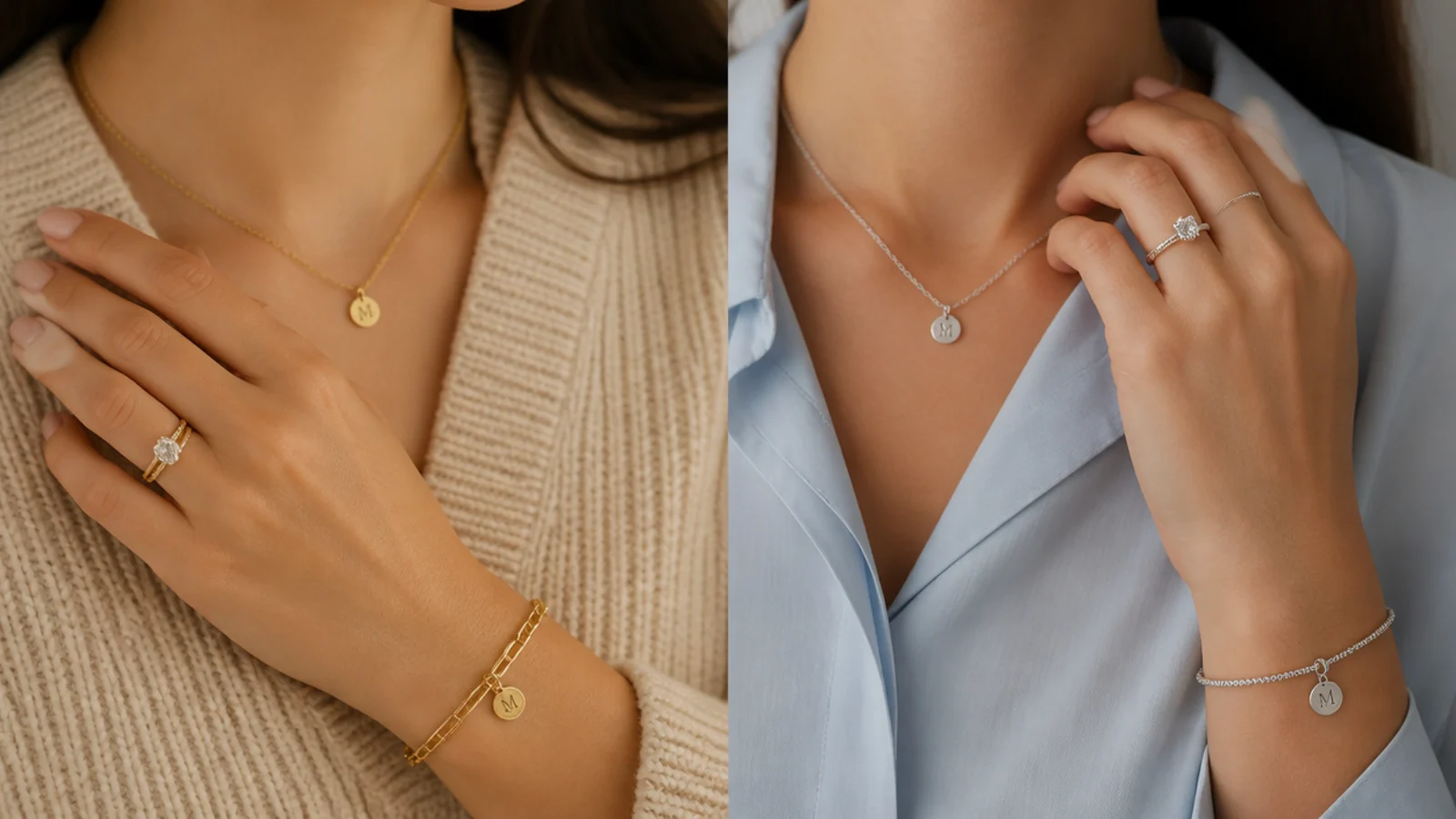
Pair warm gold and rose gold with warm colors like camel, cream, olive and brown, and silver or white gold with cool colors like gray, navy, black and white. Keep one metal per look at the office.
Common mistake: Fighting your outfit's temperature, so warm gold on an icy gray suit looks slightly off.
Pro tip: Own both a gold and a silver pair of studs so you can match either half of your wardrobe.
4. Match necklace length to your neckline
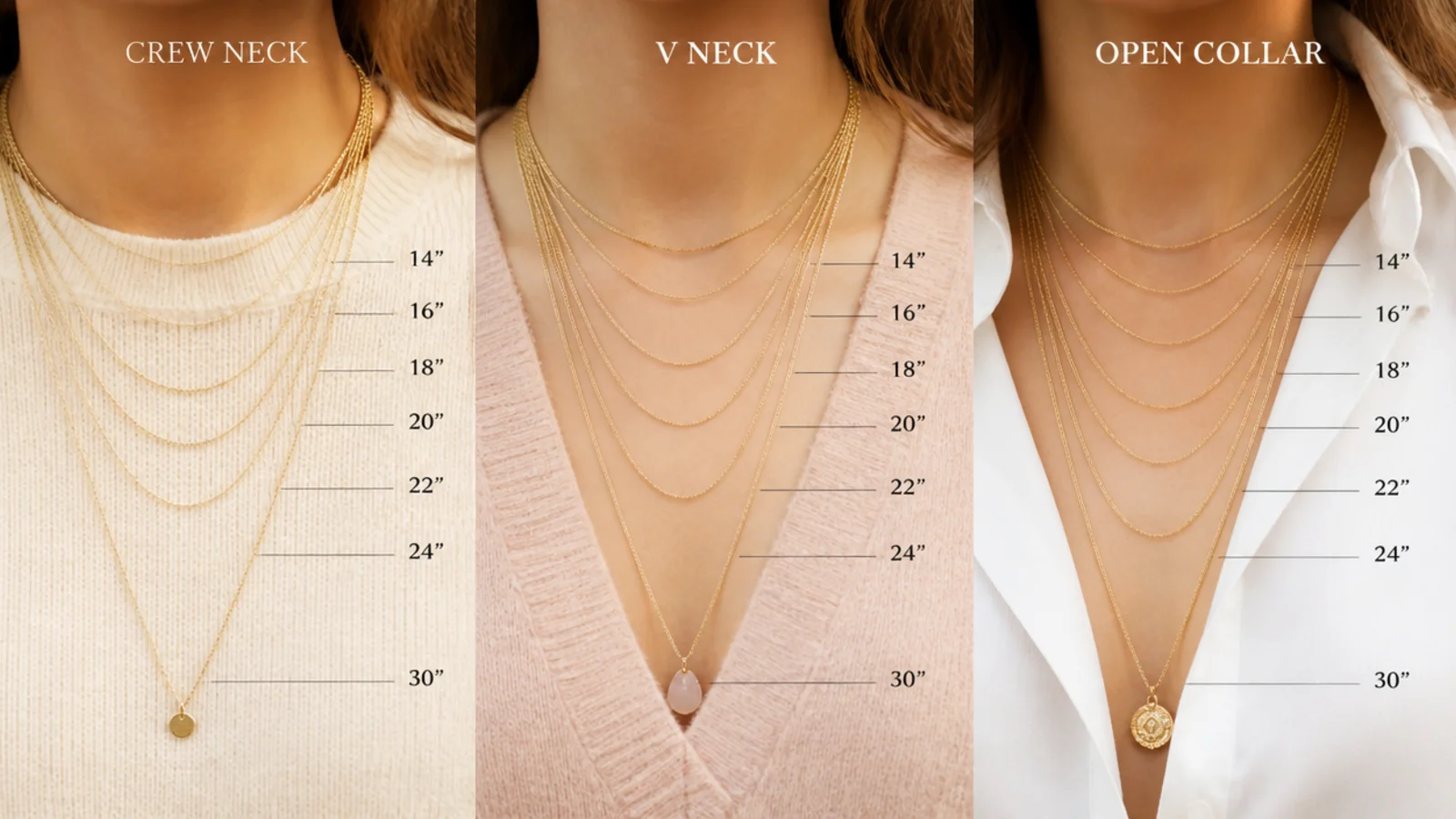
Use a 16 inch chain for a high or crew neck so it sits on the fabric, and an 18 inch chain for a V-neck or open collar so the pendant falls inside the neckline rather than floating above it. Try it over an all-white skirt outfit with a scoop-neck top.
Common mistake: One short chain fighting a deep V, leaving an awkward gap between pendant and neckline.
Pro tip: For a turtleneck, layer a slightly longer chain on top of the knit instead of hiding it.
5. Keep it quiet and secure
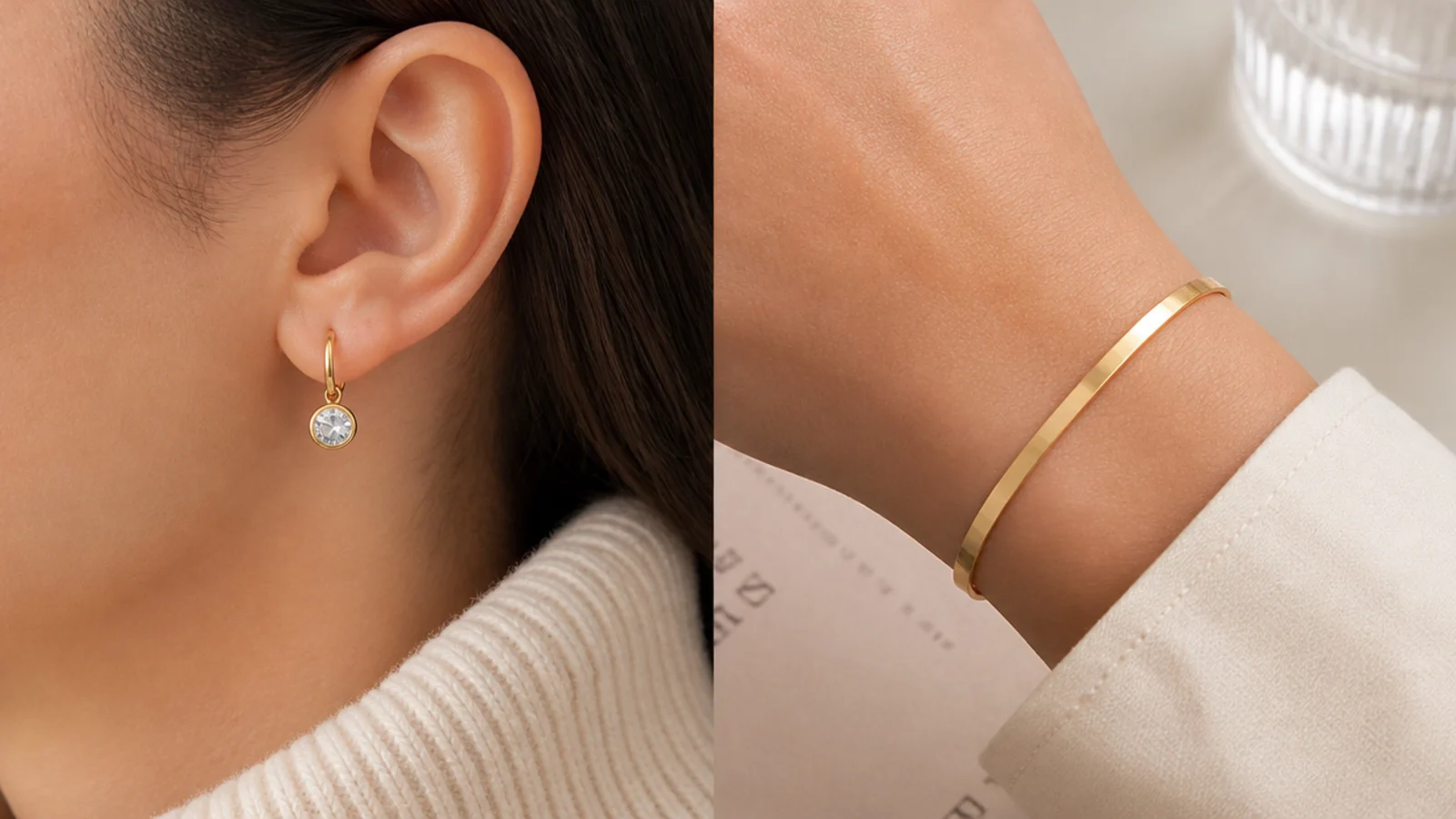
Choose pieces that stay still and stay silent: lever or screw backs over hooks, flat bracelets over stacks of bangles, and no charms that clink. Your jewelry should be invisible in a quiet meeting.
Common mistake: A stack of bangles that clacks on the table every time you take notes or reach for a mug.
Pro tip: Do a shake test at home; if you can hear it when you move, it will be heard in the room.
6. Frame it for the camera on video calls
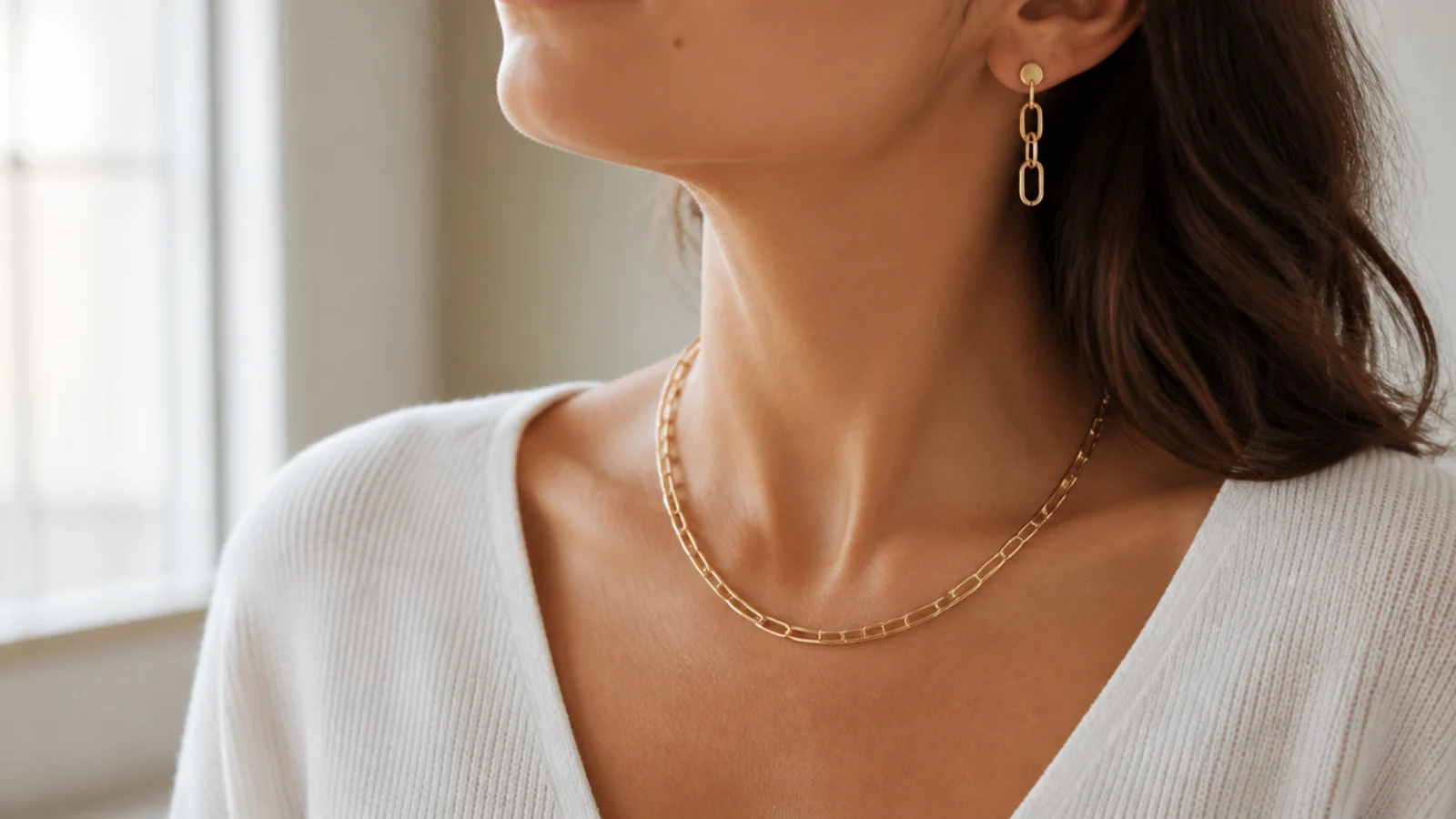
For remote meetings, put your effort into earrings and a short 16 inch necklace, skip everything below the chest crop, and face a window or lamp so metal catches soft, even light.
Common mistake: Wearing a long pendant and a great ring on camera, where neither ever enters the frame.
Pro tip: Preview yourself before the call and swap oversized earrings that blur when you move.
7. Downgrade for an interview
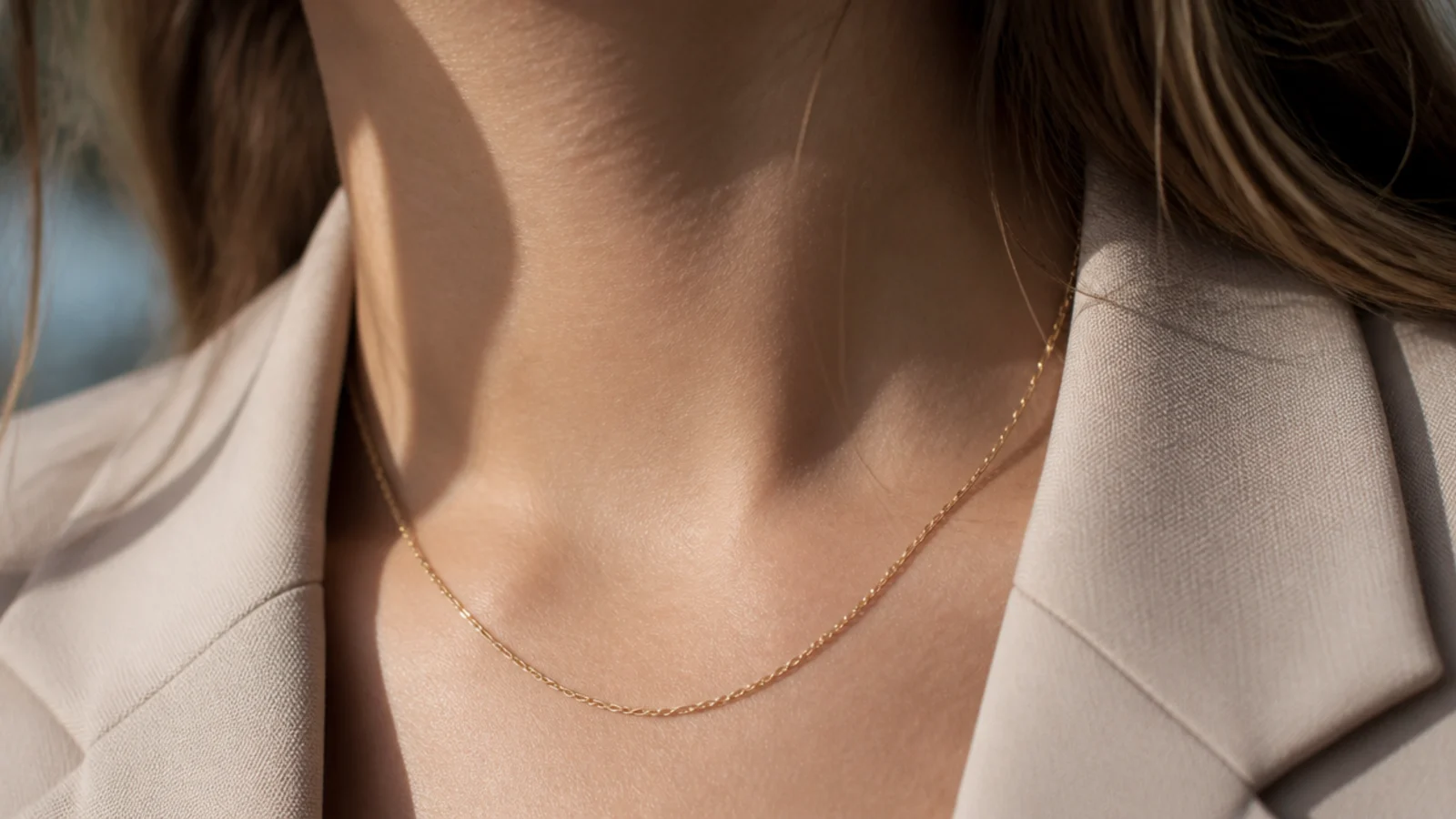
For a first meeting, cut back to small studs plus one thin chain and a watch. Remove bracelets and statement rings so nothing moves, clicks or competes with your face during the conversation.
Common mistake: Wearing your boldest pieces to look impressive, which pulls the interviewer's eye off you.
Pro tip: Lay the interview jewelry out the night before so you are not over-accessorizing at 8 a.m.
What Jewelry Is Appropriate for Work?
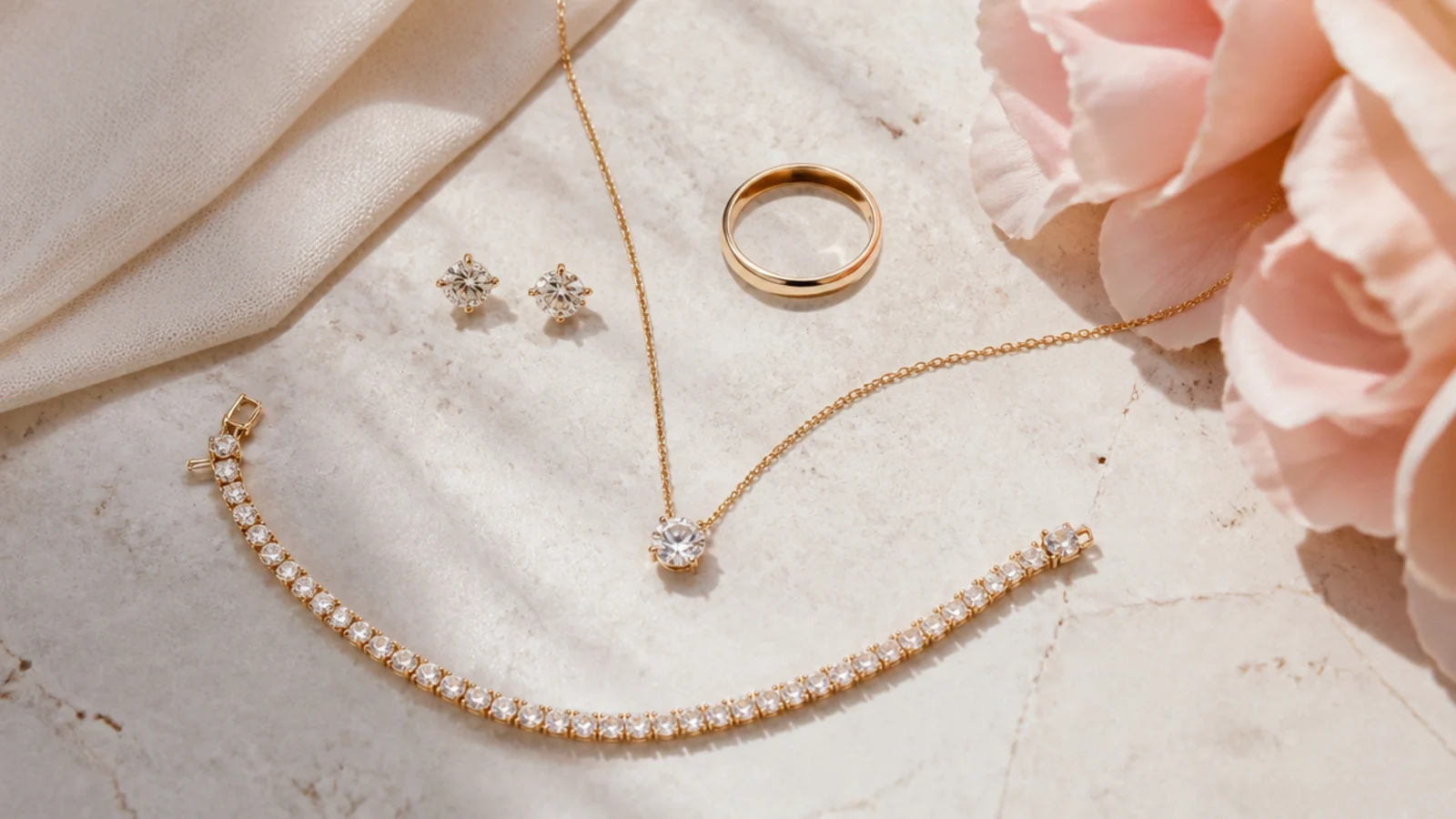
Appropriate work jewelry is small, quiet, and secure. The safest categories are fine metals and classic stones: gold, silver or platinum, diamonds or cubic zirconia, and pearls. Stud earrings, small huggie hoops, one collarbone chain, a slim bracelet, and a single plain ring cover almost every office. The test is not price, it is behavior: does it stay still, stay quiet, and stay out of your way? Anything that jangles in a meeting, catches on papers, needs constant adjusting, or pulls focus from your face fails that test, however expensive it is. Costume pieces are fine when they are subtle and well made, but avoid anything that looks plastic or oversized. As a rule, wear no more than two or three pieces total and let one of them lead. The most professional jewelry reads as a finishing touch, not a focal point, which is why studs and a single chain are the workhorses of every dress code from a law firm to a startup. For outfit ideas to build these pieces onto, browse a white skirt and blazer look or the wider jewelry edit for styling by neckline.
What Jewelry to Wear to an Interview
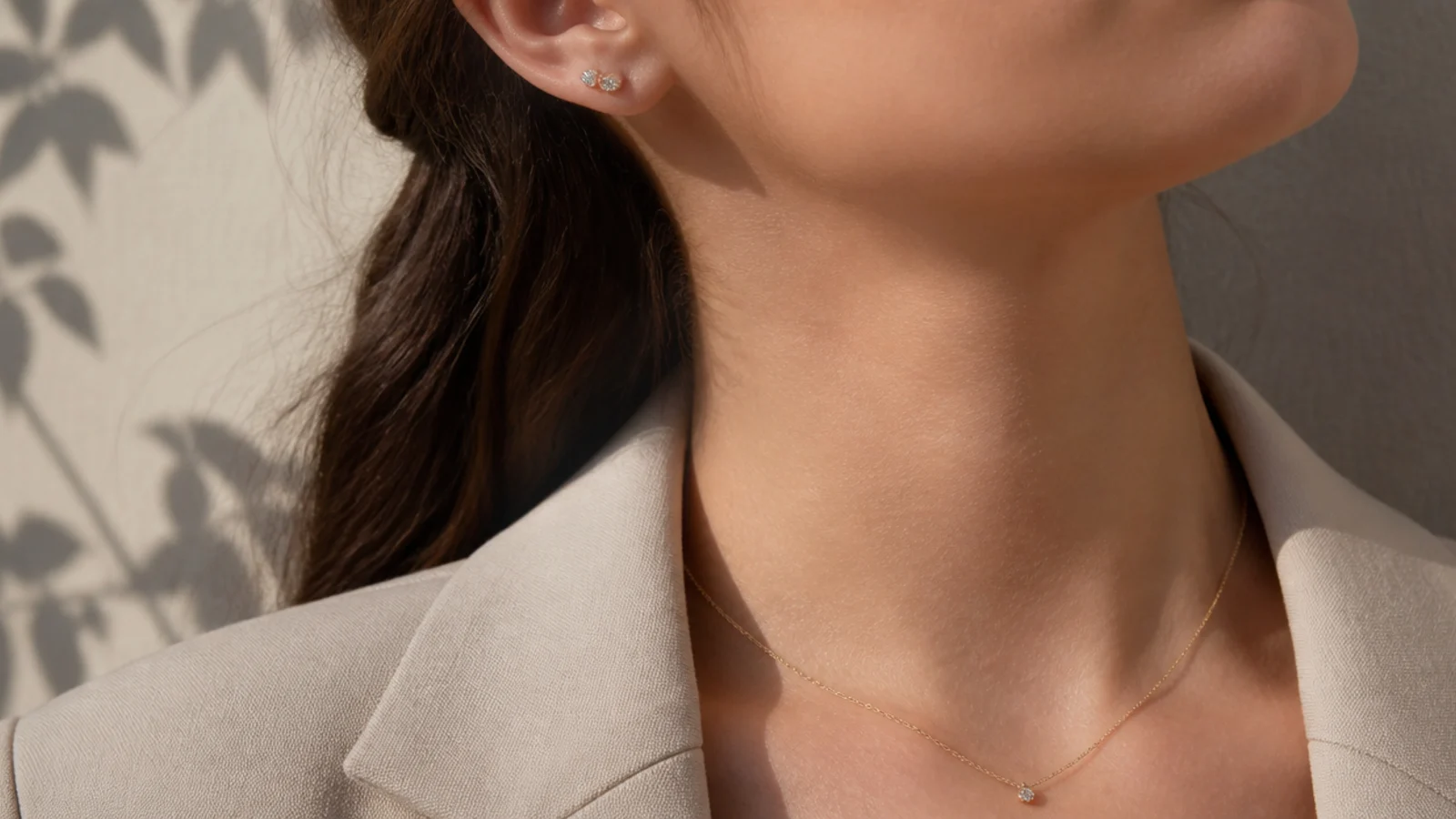
An interview is the one time to downgrade, not dress up. You want the interviewer looking at your face and listening to your answers, not tracking a swinging earring or a stack of bangles. Stick to two pieces at most: small studs, diamond, cubic zirconia or pearl, plus one thin chain if you want it. Skip bracelets entirely, because they slide and click when you gesture or take notes, and skip statement rings that pull the eye during a handshake. Match your metal to your outfit and keep everything close to the body so nothing moves. If you are interviewing at a creative company, you have slightly more room for a single interesting piece, but even there, understated wins a first meeting. The goal is to look considered and calm. A watch is fine and can even help, since checking the time reads as respectful of the schedule. When in doubt, wear less; nobody has ever lost an offer for wearing jewelry that was too simple.
Jewelry for Video Calls: What Actually Reads on Camera
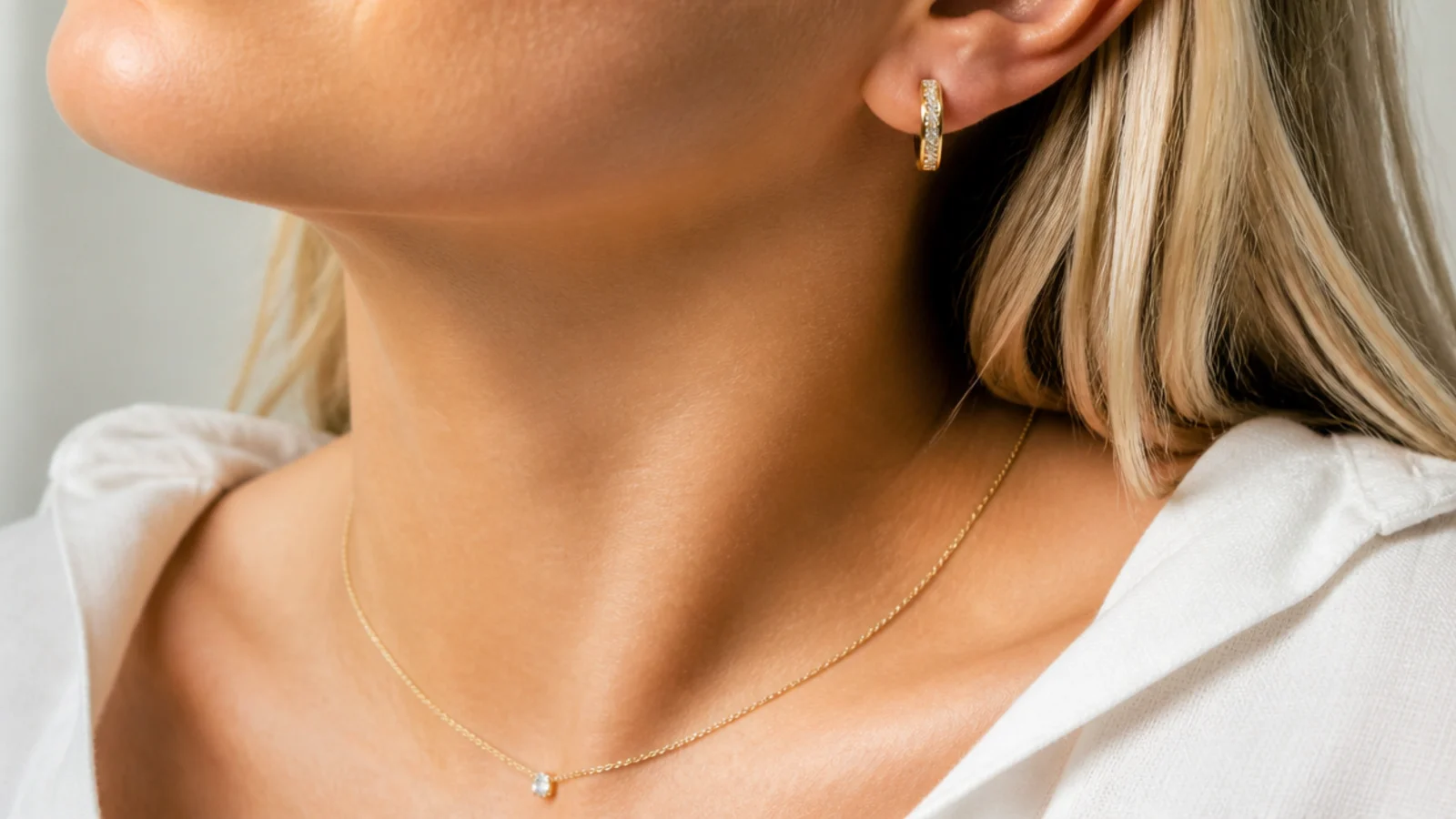
Video calls change the math completely. The camera crops at roughly the chest, so your rings, bracelet and watch are invisible and your earrings and the top inch of a necklace are the only pieces that count. Put your effort there. Earrings do the most work because they frame your face right where people are looking; a small hoop or a stud with a little light lifts a plain top instantly. Keep them modest in size, because large or dangly earrings can blur or jitter when you move and pull focus from what you are saying. A short necklace around 16 inches sits high enough to appear in frame; a longer one drops below the crop and does nothing. Lighting matters as much as the piece: face a window or a lamp so metal and stones catch a soft, even light instead of a hard shadow from an overhead bulb. This is also the cheapest place to look expensive, since you only need to invest in two visible pieces rather than a whole look. It pairs well with an easy work-from-home outfit like a rainy-day work look that still photographs neatly on camera.
Can You Wear Hoops to Work?
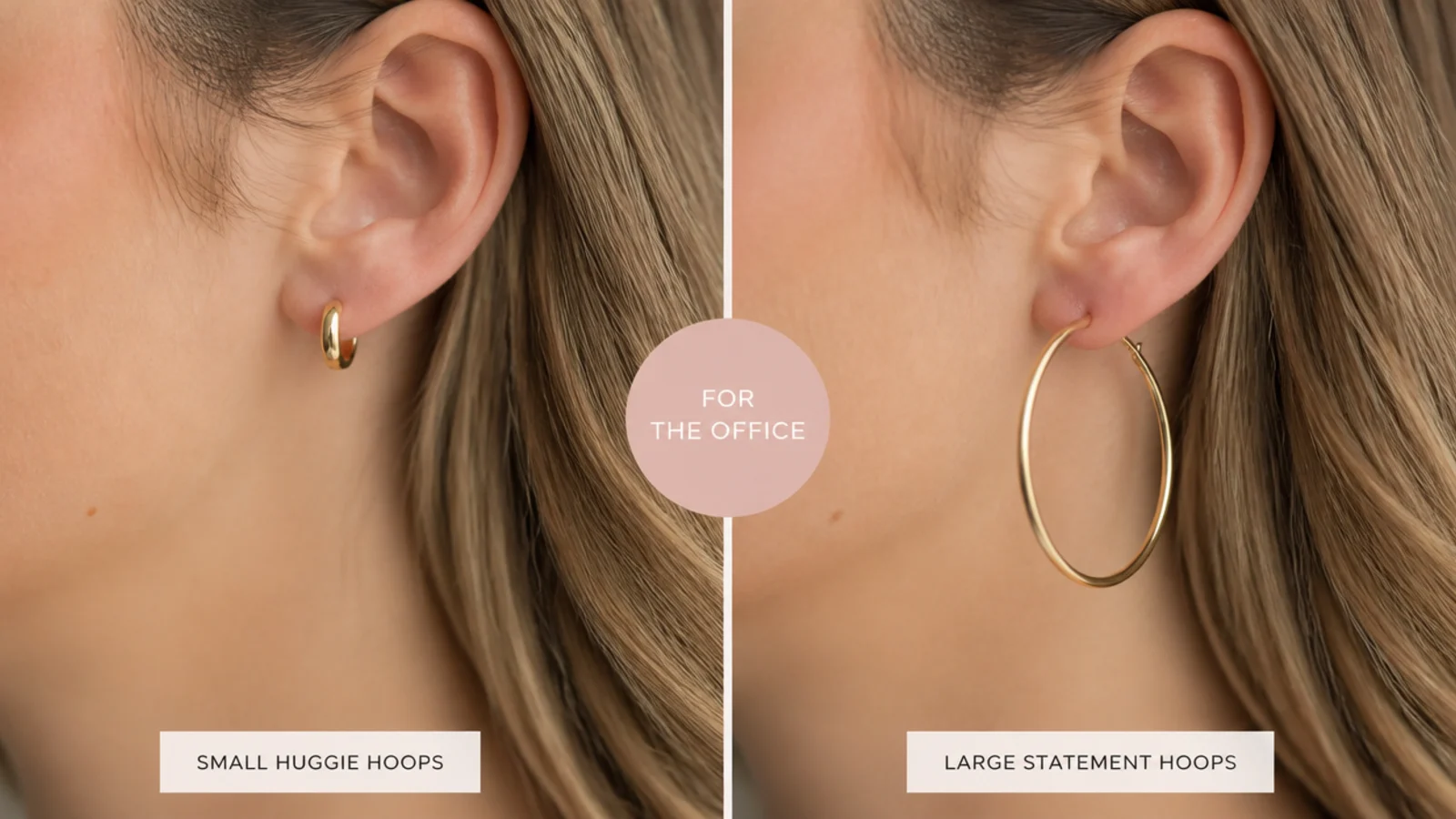
Yes, with a size caveat. Small hoops read as professional almost everywhere; large hoops read as casual or going-out in conservative rooms. The reliable line is diameter. Huggies and small hoops up to about 15 millimeters are office-safe across nearly every dress code and are genuinely more comfortable than studs for all-day wear because they sit close to the lobe. Medium hoops, around 20 to 30 millimeters, work fine in creative, tech and hybrid offices but can feel loud in a law firm or a client-facing finance role. Anything larger than a golf ball, or very thin door-knocker styles, belongs to your weekend, not your Monday. Thickness matters too: a fine, high-polish hoop reads more refined than a wide, chunky one. If you love hoops and work somewhere conservative, buy a small textured or twisted huggie; you keep the shape you like while staying firmly inside the dress code. Medium hoops sit happily with relaxed creative looks such as a sneaker work outfit or a blazer over sweatpants. When unsure, look at what senior women in your office actually wear and calibrate to the room.
Professional Jewelry for Hands-On and Client-Facing Roles
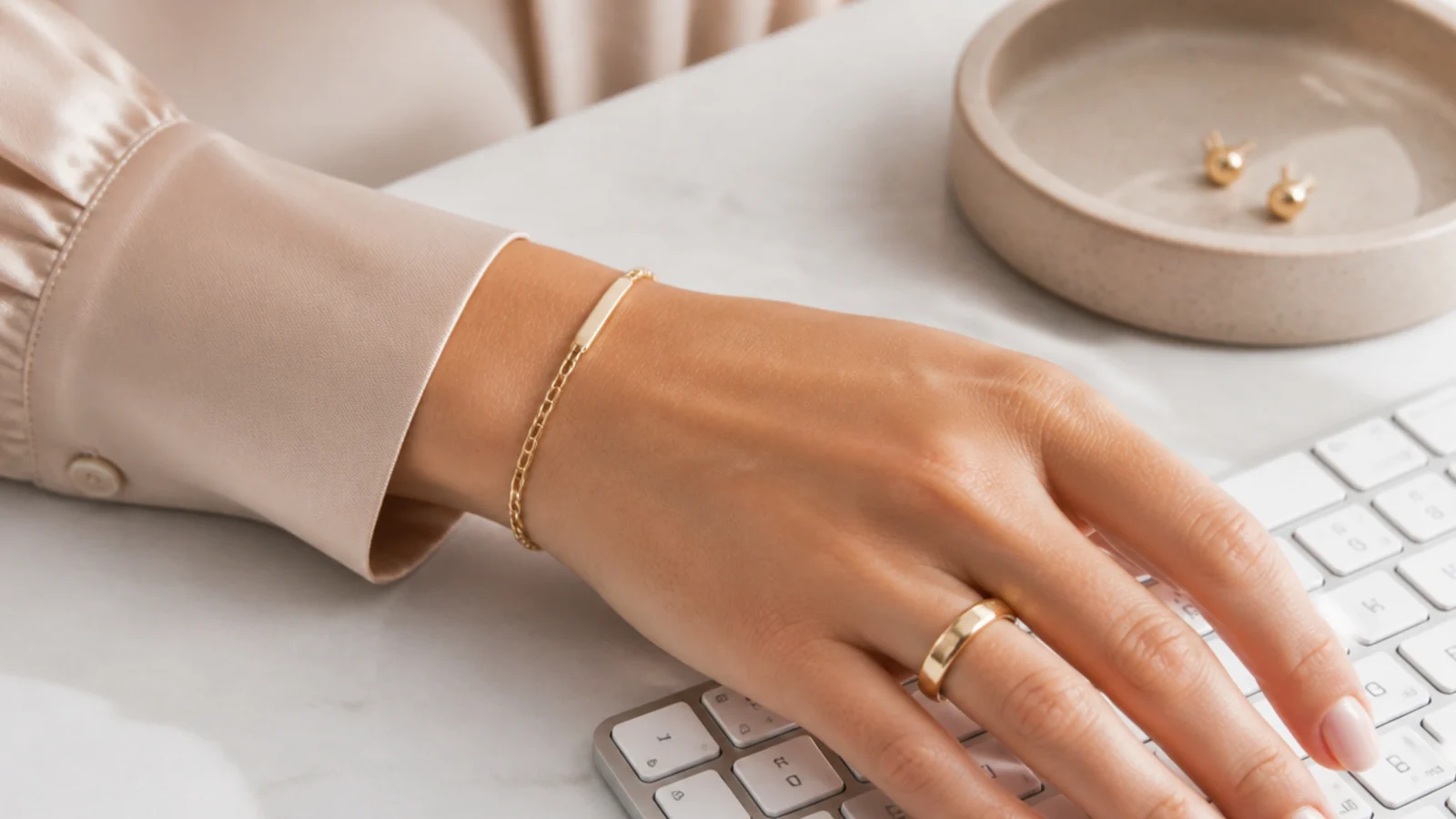
If you use your hands all day, jewelry has to earn its place by staying out of the way. The most common failure is a raised stone: a solitaire ring with tall prongs snags gloves, fabric and hair, scratches surfaces, and loosens over time. The fix is a low-profile piece, a flat band or a small signet with a bezel setting where the stone sits flush. A second failure is bracelets that slide down and clack against keyboards, counters or tools; the fix is to move a single thin bracelet to your non-dominant wrist or skip it. For client-facing roles, the giveaway that looks unprofessional is jewelry that needs constant adjusting, so choose secure clasps and screw or lever backs over hooks. Nurses, teachers, chefs, stylists and lab staff do best with studs, one plain band and nothing that dangles. For a polished client-facing base to build on, an all-black work outfit keeps the focus on one clean piece. Match the piece to the task and it disappears into your day instead of interrupting it, which is exactly what professional jewelry is supposed to do.
Frequently Asked Questions
What jewelry is appropriate for work?
Small, quiet, secure pieces in fine metals and classic stones: stud earrings, small huggie hoops, one collarbone chain, a slim bracelet and a single plain ring. Wear two or three pieces at most and let one lead. The test is behavior, not price: it should stay still, stay silent and stay out of your way.
What jewelry should I wear to an interview?
Downgrade to two pieces at most: small diamond, cubic zirconia or pearl studs, plus one thin chain if you like. Skip bracelets and statement rings, since they move and click when you gesture. A simple watch is fine. The goal is to look considered while keeping all the attention on your face and your answers.
Can you wear hoops to work?
Yes, if they are small. Huggies and hoops up to about 15 millimeters are office-safe almost everywhere and are comfortable for all-day wear. Medium hoops of 20 to 30 millimeters suit creative and tech offices but can feel loud in conservative rooms. Save large or thin door-knocker hoops for the weekend.
How much jewelry is too much for the office?
More than three pieces usually tips into too much, and any piece that jangles, swings, catches on papers or needs constant adjusting is too much on its own. A reliable formula is one hero piece plus one supporting piece. If you are unsure whether to add a fourth item, take one off instead.
What jewelry works best on video calls?
Only your earrings and the top of a short necklace show on camera, so invest there and skip rings, bracelets and watches. Choose earrings with a little light in a modest size, and a 16 inch necklace that sits high in frame. Face a window or lamp so the metal catches soft light rather than harsh overhead glare.
Can you wear gold and silver together at work?
In creative, tech and hybrid offices, mixed metals look intentional and modern. In traditional corporate settings, it is safer to keep one metal per look. If you want to mix, anchor it with a single piece that combines both metals so it reads as a deliberate choice rather than an accident.
Is it OK to wear a smartwatch to work?
Yes, in almost every office. Choose a classic or plain watch face and a neutral leather or metal band for conservative settings; a colorful band is fine in creative ones. A watch reads as professional and practical, and glancing at it during a meeting comes across as respectful of everyone's time.
Are statement earrings unprofessional?
Not automatically, but they carry risk. In a creative or startup office, one sculptural pair can be your single statement piece if the rest of your jewelry stays quiet. In a conservative office or an interview, statement earrings pull focus and can read as going-out rather than working, so studs or small hoops are the safer call.
Which work jewelry piece are you adding first?
If you take one thing from this, make it the two-piece rule: a pair of studs plus one collarbone chain finishes almost any work outfit without a single fussy decision. Own those two, add a thin bracelet or a plain ring when you want more, and match your metal to the warmth of your clothes. Downgrade for interviews and put your best pieces where the camera can see them on video calls. Start with the studs and the chain this week, then build slowly. When you are ready to shop the affordable end, our guide to gold jewelry under $50 shows which pieces survive daily wear, and the full jewelry edit covers styling, materials and care.