Study Motivation
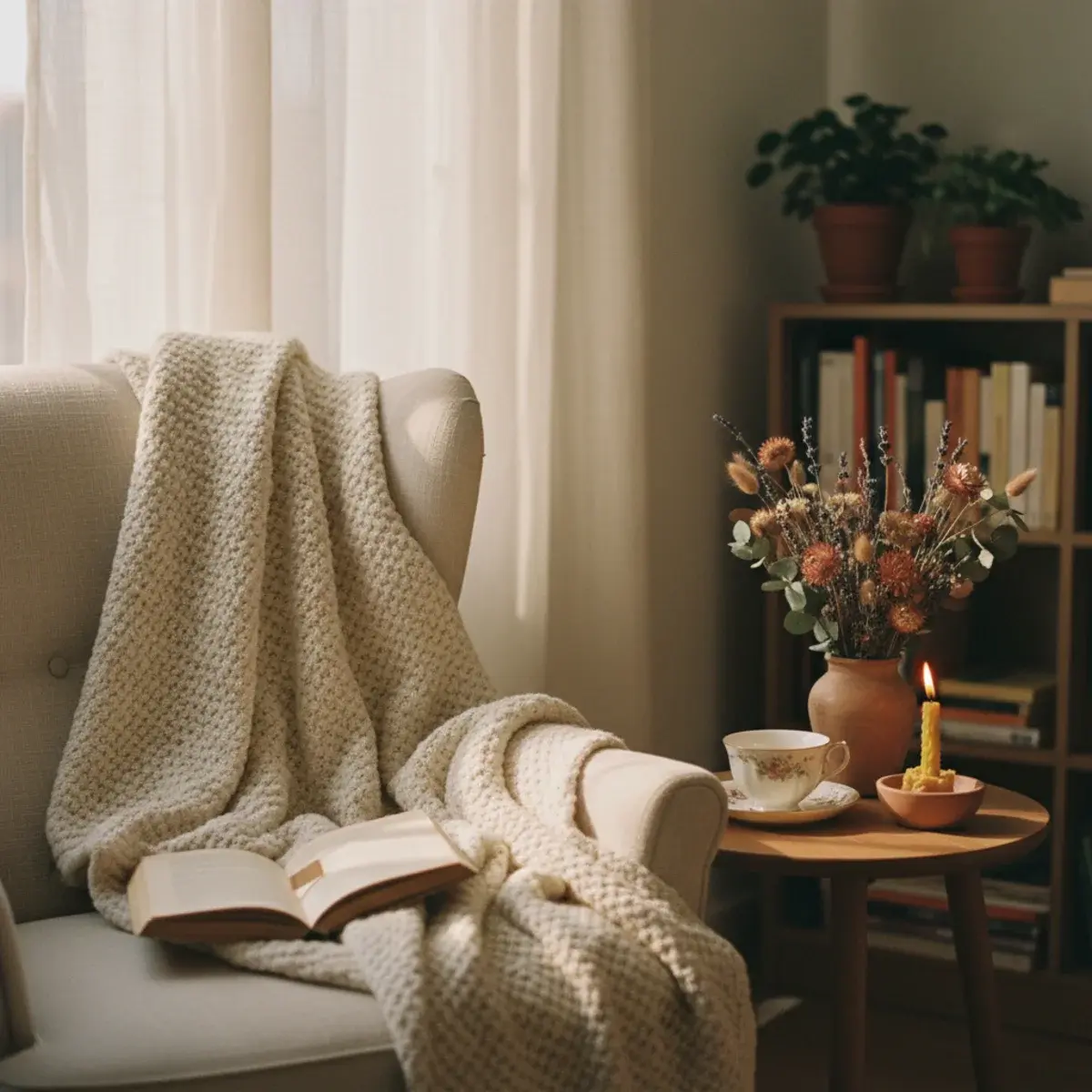
The Ultimate Guide on How to Romanticize Studying
Feb 21
2026
The ultimate guide on how to romanticise studying — rituals, settings, and small luxuries that turn studying into a slow, beautiful practice.
There is a specific moment, somewhere around week six of every term, when studying stops feeling like something I'm doing and starts feeling like something that's being done to me. The desk becomes a kind of prison. The textbook becomes an enemy. The whole thing becomes an unrelenting grey grind I have to push through to get to the weekend.
The thing that has saved me, every time, is a deliberate decision to romanticise the studying. Not pretend that I love it. Not Instagram-post about my study aesthetic. Just slowly, carefully, change the texture of the experience so that opening my laptop feels less like clocking in at a factory and more like settling into something I'm choosing.
This article is the full how-to. Not a vibes-only guide — actual specific things you can do today to make your study sessions feel beautiful, intentional, and yours. Even when the material is dry. Even when the deadline is brutal. Even when the term has been hard.
Save this article. Try one ritual from each section this week. Watch your relationship to your desk transform.
Start with the Space
Your physical environment teaches your nervous system what mood to be in. The single biggest move in romanticising your studying is not in your head — it's in the room you study in.
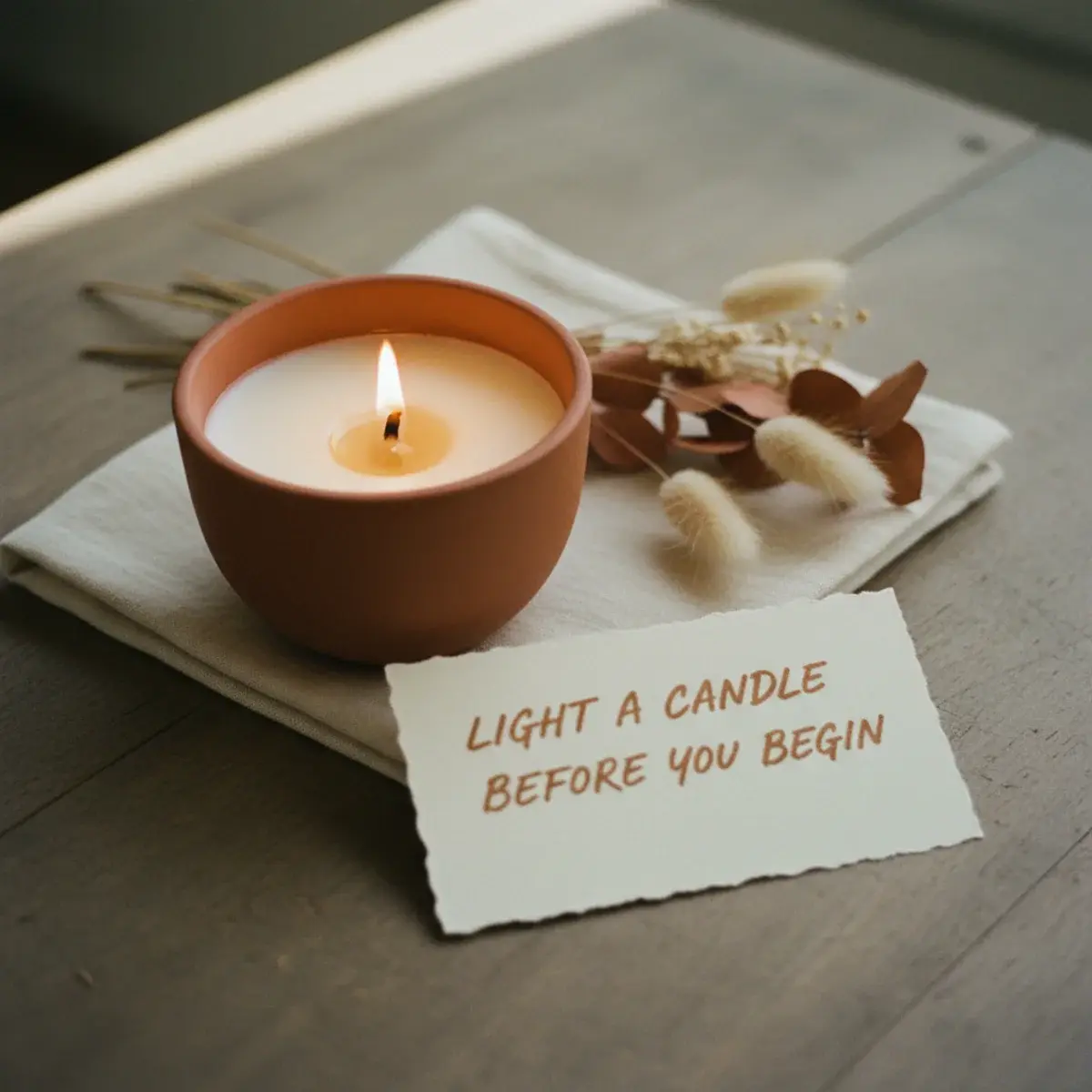
1. Light a Candle Before You Begin
The single most underrated thing you can do. Lighting a candle is a ritual gesture — it signals to your brain that the next ninety minutes are sacred in some small way. Pick a candle with a scent that you only ever burn while studying. (Mine is fig and cedarwood from Marks & Spencer's Apothecary range — £8 — and the smell now puts me into deep-focus mode within about thirty seconds.)
The candle does three things: marks the start of the session, creates an associative smell that triggers focus, and gives you a small ritual to close with by blowing it out. Three benefits, one £8 candle.
2. Use a Beautiful Notebook (Even If Nobody Will See It)
The hardback Leuchtturm1917 is the classic. The Muji A5 with the soft beige cover is the minimalist's pick. The Smythson Panama, if you're feeling extravagant, is the heirloom version. The point isn't the notebook — it's that you'll want to write in it.
I have, for years, kept the same rule: I'm allowed to start a beautiful notebook only when I'm starting something I genuinely want to commit to. The notebook is the commitment in physical form.
3. Replace the Overhead Light with Lamps
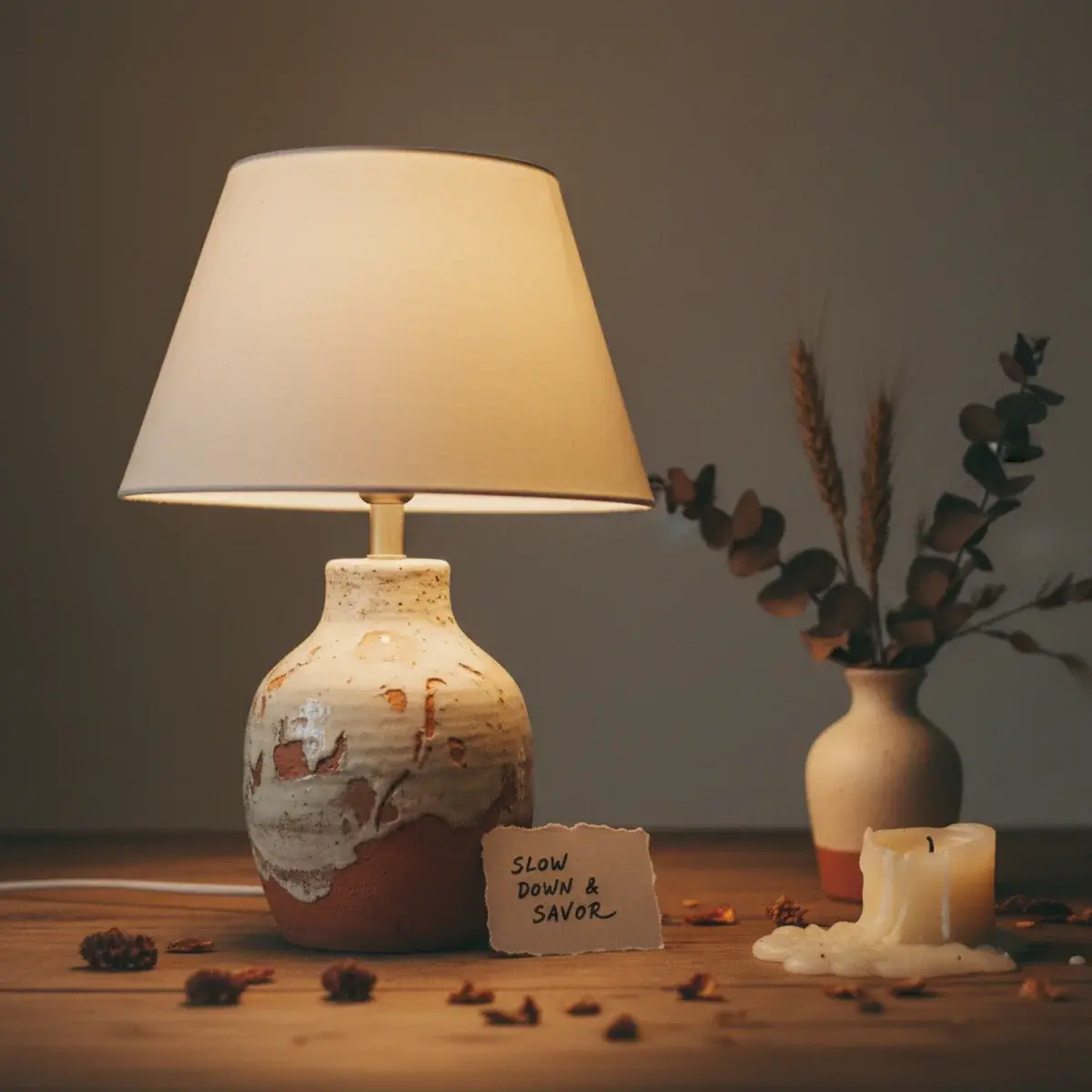
This is the single most consequential lighting change you can make. Overhead fluorescent or LED light is biologically the wrong colour for evening study — it suppresses melatonin and makes your nervous system feel surveilled. Lamps with warm-coloured bulbs (2700K-3000K) do the opposite: they relax you and let you focus.
A £20 desk lamp from John Lewis and a £25 floor lamp from IKEA will transform your studying experience more than any productivity app.
4. Put Real Flowers on Your Desk
A single stem of supermarket eucalyptus in a small glass jar costs £2.50 and lasts a fortnight. A bunch of carnations for £4 lasts ten days. The presence of a living thing on your desk is psychologically different from the absence of it. You'll work more carefully near flowers. Try it for one week.
5. Tidy Before You Start (Five Minutes, Always)
Not a deep clean. Just five minutes of putting away the mug, wiping down the surface, arranging the pens in a small ceramic dish. The ritual of tidying gives you a clean physical starting point — which, for some reason none of us fully understand, gives you a clean mental starting point too.
Build a Ritual Around the Session
A romanticised study session has a beginning, a middle, and an end. Most students' sessions have only a middle — they just barge in and barge out. The ritual is the romance.
6. Make a Proper Cup of Something
Not a mug grabbed in passing. A proper cup. Loose-leaf tea in a small ceramic pot. A French press of coffee in a real cup. Hot lemon water in a glass mug with a slice of fresh ginger.
The making of the drink is the first half of the ritual. The drinking of it is the second half. By the time you sit down with the cup in front of you, your nervous system already knows what mode it's in.
7. Put On Music That Feels Like Studying
Not the latest pop hits. Music that has a specific studying quality — instrumental, melodic, slightly melancholic. My current rotations:
- The classical: Chopin's Nocturnes, Erik Satie's Gymnopédies, Debussy's Suite Bergamasque. All on Spotify.
- The modern: Ólafur Arnalds' Island Songs, Max Richter's Sleep, Joep Beving's Solipsism.
- The lyrical-but-soft: Phoebe Bridgers' quieter tracks, the Folklore/Evermore sister-albums by Taylor Swift, Adrianne Lenker's songs album.
Pick one. Put it on. Don't change it. Same music, same desk, same drink — the consistency is what builds the focus state.
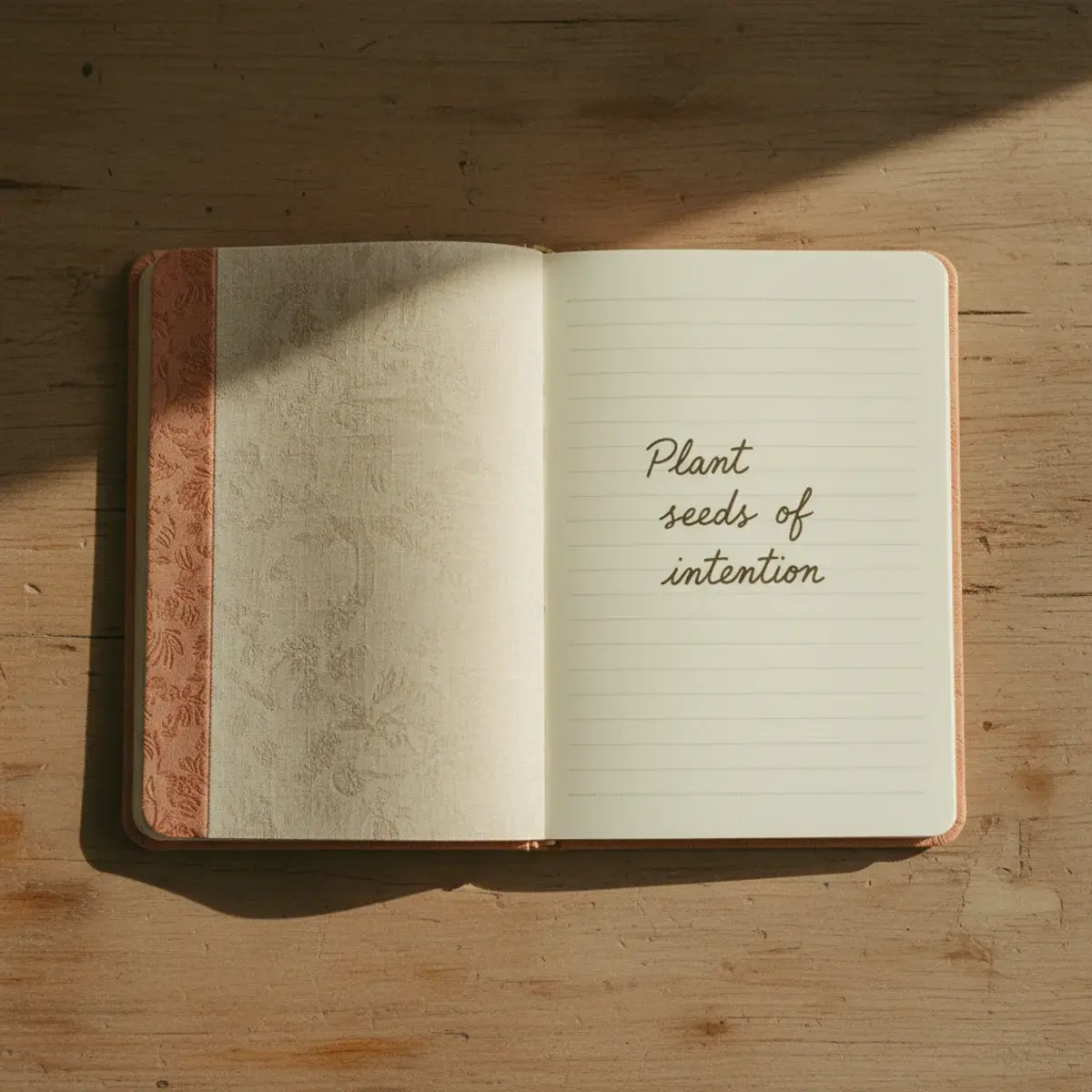
8. Set a Specific Intention for the Session
Out loud, in your head, or written on the first page of the notebook. "In this 90 minutes, I am revising chapters 4 and 5 of the constitutional law textbook." Specific. Bounded. Named.
The intention is the third gate (after the space and the drink). When you wander away from the intention — and you will — the named intention is what brings you back.
9. Use the Pomodoro Method (With a Beautiful Timer)
The Pomodoro Method is famous because it works. Twenty-five minutes of focused work, five minutes of break, repeat. The romanticised version: instead of a phone app, use a small physical timer on your desk. The wind-up tomato timer is £4 on Amazon. The little hourglass with falling sand is £8. Both make the timer part of the aesthetic rather than another notification.
For the deeper guide, see How to Use the Pomodoro Technique for Studying.
10. Close the Session Deliberately
When the session ends — at the end of your last Pomodoro, when the timer rings — close the notebook, blow out the candle, take the cup to the kitchen, push the chair in. Don't drift away. Close with a small ceremony. The closing is what makes the next opening so much smoother.
Curate the Sensory Experience
The smells, sounds, and tactile experience of studying. The details most students never think about.
11. Pick a Signature Scent for Studying
This builds on the candle, but goes further. Pick a scent — perfume, room spray, essential oil — that you only use during study sessions. After three or four weeks, your brain will start to anticipate focus the moment it catches that scent.
The neuroscience term is state-dependent learning: information learned in a specific sensory context is recalled more easily when that context is present. Use the same scent during studying and during the exam. (A small wrist-dab is enough.) Watch your recall improve.
12. Use a Real Fountain Pen
A £20 Lamy Safari is the entry-level. A £35 Pilot Metropolitan is the upgrade. A real fountain pen makes your handwriting slower and more deliberate — which makes your note-taking more thoughtful, which makes you remember more.
The first week with a fountain pen feels slightly precious. The second week, you can't go back to ballpoint. The romance of writing with real ink is enormous and entirely worth the £20.
13. Wear Something You'd Wear to a Café
Not pyjamas. Not the same hoodie you slept in. Something you'd be willing to be photographed in. A cream knit jumper. A button-down shirt. A neat T-shirt and well-fitting trousers. The clothes signal to your nervous system that you're somewhere — even if that somewhere is your kitchen table.
This sounds shallow. It works anyway. I have tested it both directions and the dressed version of me studies better than the pyjama version every single time.
14. Use Thick Cream Paper, Not Cheap White
Paper quality matters more than people admit. Thin white photocopier paper bleeds ink, feels cheap, and turns your beautiful fountain-pen handwriting into smudges. Thick cream paper — 80-90 gsm minimum — holds ink, feels good under your hand, and turns even ordinary notes into something worth keeping.
Rhodia, Leuchtturm, Midori, and Muji all have cream-paper notebooks. £14–£20 for a notebook that lasts a term.
15. Pick a Specific Background Sound
If music isn't working for the type of studying you're doing (essays, language work), try ambient sounds. The Calm app and Spotify both have:
- The rain-on-a-window playlist — for autumn revision.
- The crackling-fireplace track — for winter evenings.
- The café-ambience track — for the days you wish you were studying in a café but can't.
Loop one for the whole session. The consistency is the magic.
Change Where You Study
Romanticising the studying sometimes means leaving the desk entirely. The single best productivity hack of the last five years, for me, has been the strategic café Friday.
16. Study at a Café Once a Week
Pick the same café, same day, same time. By week three the staff will recognise you. By week six you'll have your own little corner. The café studying does three things: gets you out of the house, surrounds you with productive strangers (you're not the only one working), and makes the studying feel like a small weekly outing.
The trick is to pick a café with the right energy — not the loudest, busiest one with bad WiFi. The quiet independent one with good filter coffee and unobtrusive music. Most cities have one. Find yours.
17. Study at the Library (Even If You Don't Need To)
If you're privileged enough to live near a university library or a beautiful public one, use it. The old wood, the silence, the hundreds of years of accumulated thinking. The library is the romanticisation in physical form.
The British Library reading rooms in London, the Bodleian in Oxford, the Long Room at Trinity in Dublin, your own university's main reading room — all of these are intentionally beautiful because the people who designed them understood that beauty makes the work better.
For the full kit, see The Ultimate List of Library Study Essentials.
18. Try Outdoor Studying (Park, Bench, Garden)
Once a week, when the weather allows, pack a small bag — notebook, pen, book, thermos, a little blanket — and take your study session outside. Twenty minutes in fresh air resets your nervous system in a way no indoor session can. The studying is also weirdly more productive because the visual distractions of indoor life (the kitchen mess, the laundry pile) aren't there.
19. Study Somewhere New Every Few Weeks
Variety is part of the romance. A new café, a different library, a friend's flat for a study afternoon, a hotel lobby for a few hours. Novelty in your physical environment keeps the studying from sliding into monotony.
Use Time Beautifully
The romantic relationship with time is the part nobody talks about. Most students experience time as the enemy. The romanticised version: time as the medium your work happens in.
20. Start Earlier in the Day
The single largest mood-swing factor in studying is the difference between starting at 9am and starting at 4pm. Morning study sessions feel like a generosity. Afternoon ones feel like a chore. You don't have to become a 5am person — you just have to start before the day has had a chance to exhaust you.
21. Build in a Real Tea Break
Forty-five minutes in. Get up. Go to the kitchen. Make a real cup of tea. Sit somewhere that isn't the desk for ten minutes. Read something unrelated to your subject. Then come back.
The tea break is the most British piece of advice on this list and it is the single most reliably restorative thing you can build into a study afternoon.
22. Romanticise the Long Stretch
Some study sessions need to be three or four hours. The romanticised version isn't to power through — it's to break the long stretch into named acts. Act I: chapter 4. Act II: chapter 5. Interval: tea and a walk around the block. Act III: practice questions. The acts give the long session structure. The intervals give it relief.
23. Take the Slow Sunday Reset Seriously
Once a week — Sunday is the classic — do a deliberate, slow review of the week behind you and the week ahead. A cup of tea, a notebook, no laptop. Twenty minutes. The slow Sunday is the closing ceremony of one week and the opening of the next, and it makes the whole studying enterprise feel like a chosen practice instead of a forced march.
Frame the Bigger Picture
The biggest part of romanticising studying is in how you talk to yourself about it.
24. Stop Calling It Work
Words shape experience. Calling your study session "work" puts your brain into work-mode (resentful, time-pressured, looking forward to the end). Try calling it reading if it's mostly reading, writing if it's mostly writing, practice if it's problem sets. The reframing is small. The effect over time is large.
25. Romance Your Subject
Find one thing about your subject that genuinely thrills you — even if it's small. The single elegant proof in a maths course. The single beautifully written passage in a literature module. The single case in the law textbook that involves a brilliant turn of phrase. Lean into that thing. Underline it. Show it to your friends. The subject is more romantic than its dullest weeks make it seem — you just have to remember the romantic bits.
26. Remember Why You Chose This
The single best journal prompt for a hard study week: Why did I choose this degree, this subject, this path? Write the answer. Three sentences minimum. Read it back when you've forgotten.
If you write that prompt three times in a term and the answer keeps coming up blank, that's also useful information — it might be time to reconsider the choice. Both directions of answer are valuable.
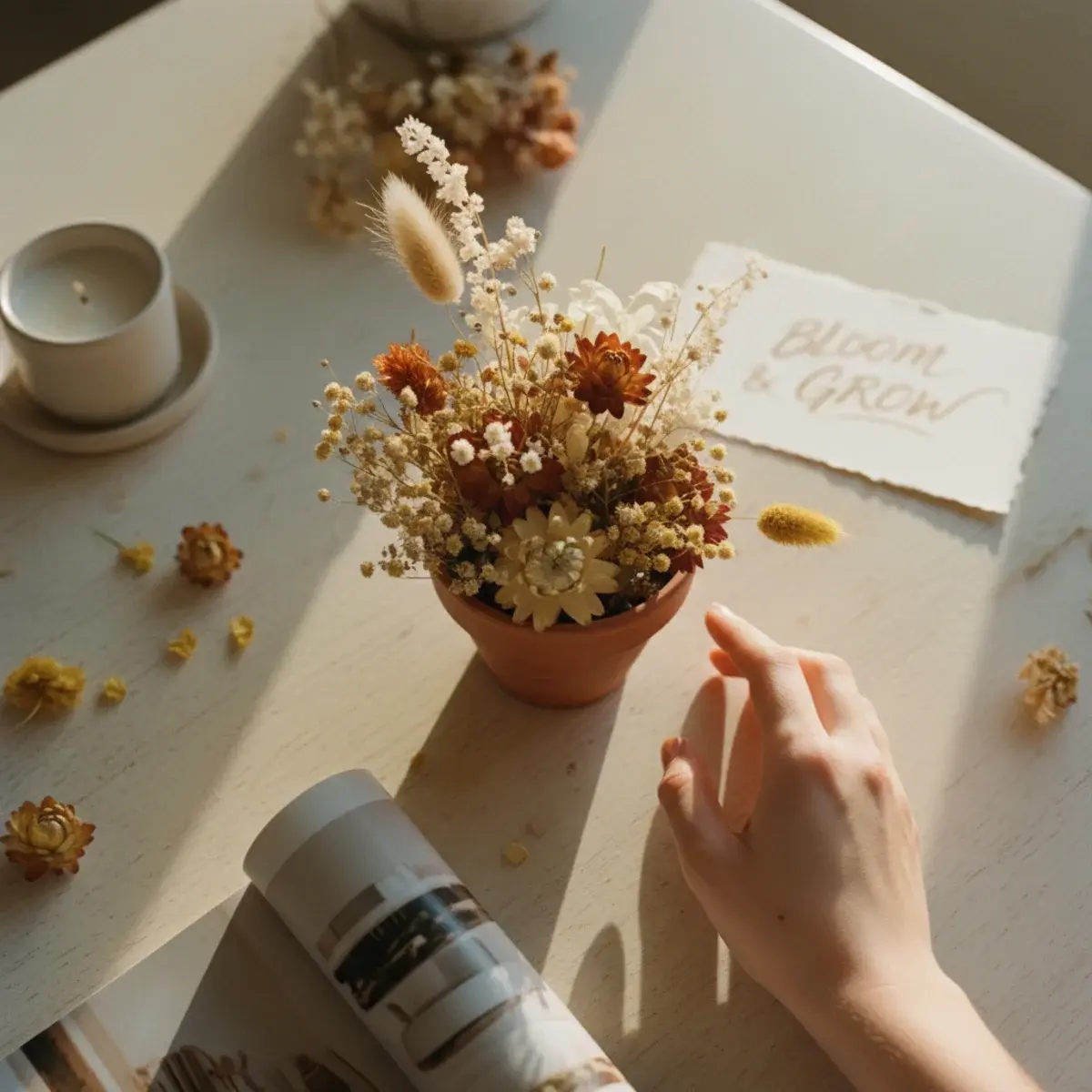
27. Take the Aesthetic Photos (But Don't Post Them)
A small permission slip: it's okay to take the beautiful flat-lay of your study desk. Photograph the candle, the cup, the open notebook in the morning light. The aesthetic is part of the romance. The mistake is when the photograph becomes the point and the studying becomes the backdrop.
Take the photos. Keep them in a private album. Look at them on a hard week. Don't post them. The romance is for you. Not for the algorithm.
28. Remember That You Are Privileged to Study
This is the hardest one to internalise, and the most powerful. For most of human history, women weren't allowed near a university. In many parts of the world today, women still aren't. The fact that you are sitting at a desk with a book in front of you and a degree on the other side of it is not an inconvenience to endure — it is a generational privilege your great-grandmother probably did not have.
I write this not to guilt anyone. The point is the opposite: when studying feels like a chore, remembering that it is actually a gift can transform the texture of the experience. Not always. But often enough to be worth keeping in your pocket.
What Romanticising Doesn't Mean
Two important counterpoints before we close.
It doesn't mean performing. The candle, the notebook, the cup of tea — these are for you. The moment they become a performance for Instagram or TikTok, the romance turns into work of a different kind. Take the photos for yourself. Use the props because you like them. Don't outsource the experience to an audience.
It doesn't replace the work. A beautiful desk doesn't write the essay. A real fountain pen doesn't memorise the chapter. The romanticising is a frame around the work — it isn't a substitute for it. Don't let the setup of the studying eat the studying itself.
Final Thoughts
The point of romanticising studying isn't to pretend that it's easy or always pleasurable. It isn't. It's hard. Some weeks it is genuinely miserable.
The point is to recognise that the frame you put around hard work changes what the hard work feels like. A miserable hour at a horrible desk is harder than a miserable hour at a beautiful desk. A grim slog with no candle is worse than a grim slog with one. The candle does not make the slog easy — but it makes it a little more yours.
Pick three things from this list. Try them this week. Decide which ones stick. Build your own version of a romanticised studying practice — one that's specific to you, that you genuinely enjoy, that you'd choose even if no one ever saw it.
The degree is years long. You might as well make the years beautiful.
More from this category

Leave a Reply
Want to write back? Comments aren't open yet — but you can reply to this article on Pinterest, save it to a board, or share it with a friend.