Study Tips & Skills
How to Use the Pomodoro Technique for Studying

Feb 3
2026
How to use the Pomodoro Technique for studying — the simple 25-minute method that turns scattered study sessions into deep, focused work.
Picture the evening: I sit down at my desk at 7pm intending to study. At 9:30pm, I look up to discover that I have done approximately 22 minutes of actual work, scrolled through three different apps, made two cups of tea I didn't drink, and reorganised my pen case twice. The hours were technically spent studying. None of them produced anything.
The Pomodoro Technique exists for exactly this kind of evening. It is the simplest, oldest, best-evidenced focus method in modern productivity literature — and it has, more than any other single intervention, transformed how I actually get work done. This article is the honest guide to how it works, why it works, and how to make it stick when you've tried it before and given up.
Save this. Try it for two weeks. The maths is real.
What the Pomodoro Technique Actually Is
The original version, designed by Francesco Cirillo in the late 1980s and named after his tomato-shaped kitchen timer (pomodoro means tomato in Italian):
- 25 minutes of focused work on a single task
- 5 minutes of complete break
- Repeat for four cycles
- After four cycles, take a longer break of 15–30 minutes
That's it. The entire system. No app, no expensive course, no productivity guru required. Cirillo wrote a small book about it; the rest is execution.
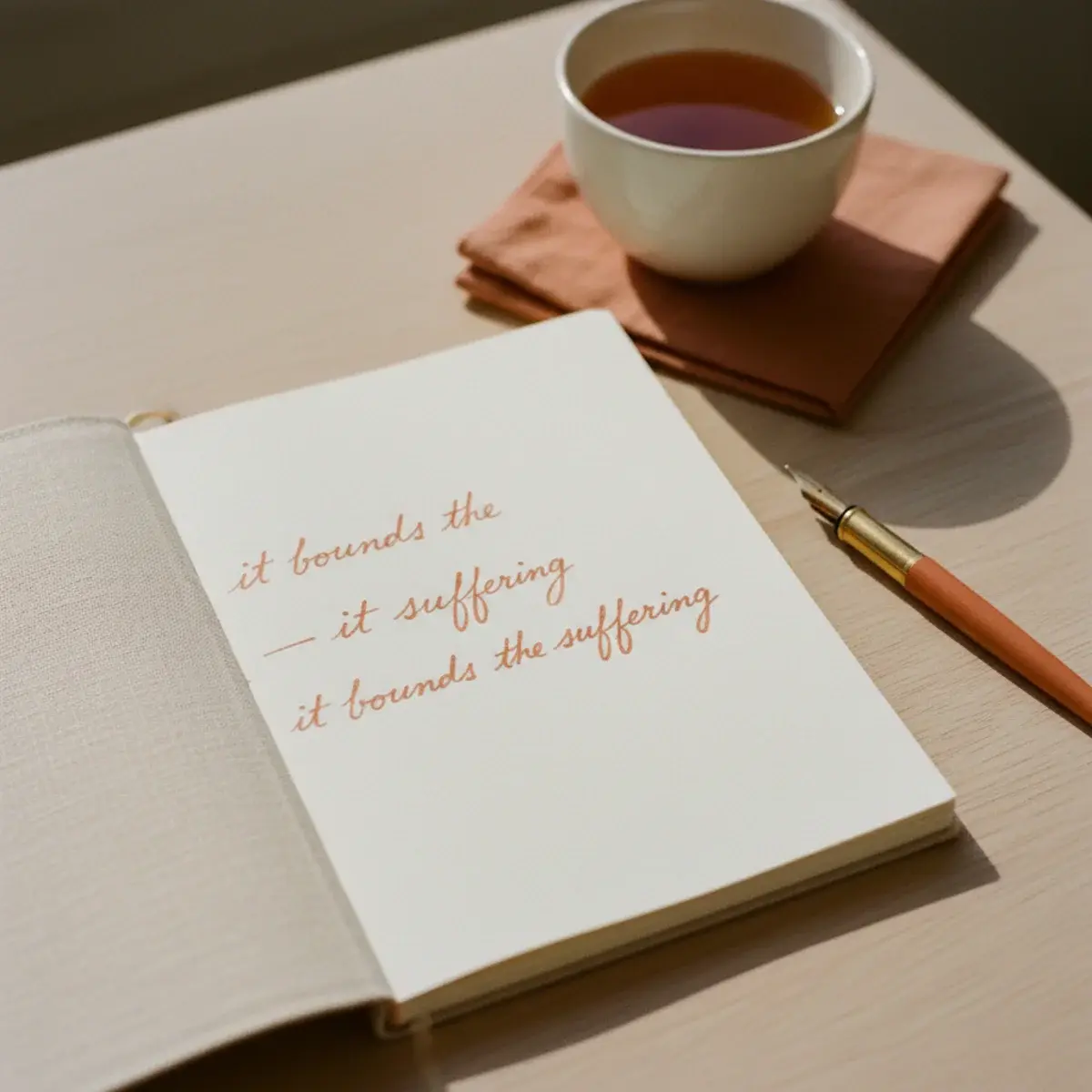
The genius of the technique is in its constraints — short enough that the suffering is bounded, structured enough that the work becomes rhythmic, simple enough that it actually gets used.
Why It Works (The Real Reasons)
Four mechanisms explain why this absurdly simple system outperforms most expensive productivity systems.
It bounds the suffering
The biggest barrier to starting a hard task isn't the work itself — it's the imagined endlessness of the work. "I have to study all evening" is a sentence that produces paralysis. "I have to study for 25 minutes" is a sentence that produces a chair-sit.
The 25-minute boundary makes the work survivable. You can do almost anything for 25 minutes. The bounded suffering is the trick.
It removes decision fatigue
A standard study session involves dozens of micro-decisions: should I check my phone now, should I stop, should I move to a different task, am I hungry, is this enough? Every decision drains willpower.
Pomodoro removes the decisions. The timer decides when you stop. The protocol decides when you break. You just work.
It creates a closed-loop reward system
The completion of a single Pomodoro is a small win. Four of them is a bigger win. Twelve of them across a day is a sense of genuine, measurable productivity. The closing of the loop — task started, timer set, work done, break taken — is psychologically satisfying in a way open-ended studying is not.
It forces real breaks
A standard study session has zero scheduled breaks, which produces the worst of both worlds: chronic low-grade fatigue and phone-induced micro-distractions every fifteen minutes. Pomodoro replaces this with proper alternation between focused work and proper rest.
The Step-by-Step Protocol
The exact mechanics, refined across multiple terms of personal use.
Before you begin
-
Pick one task. Not two. Not "study for an hour". One specific task. Write the first chapter of the essay. Solve problem set 4. Read pages 80–110 of the textbook.
-
Set a timer for 25 minutes. A physical timer is best (a £6 wind-up tomato from Amazon, or any kitchen timer). A phone timer works but be careful — the phone is also the biggest source of distraction. If you use a phone timer, put the phone face-down on the other side of the desk.
-
Close everything else. Other tabs. The phone. The chat app. The email. If it isn't the task, it isn't there.
During the 25 minutes
-
Work only on the task. If a distracting thought appears (an errand to run, a text to send, a different task), write it on a small piece of paper next to you. Don't act on it. Process the list during your break.
-
If you finish early. Use the remaining time to review, polish, or read ahead on the same task. Don't start a new task. The Pomodoro is its own unit.
-
When the timer rings. Stop. Even mid-sentence. Especially mid-sentence — the slight unfinishedness creates momentum into the next Pomodoro.
During the 5-minute break
-
Stand up. Leave the desk. This is non-negotiable. The break that happens in your chair is not a break.
-
Do something restorative, not stimulating. Water. Stretches. Look out a window. Walk to the next room. Do not check your phone. The phone is a different kind of cognitive load; it doesn't rest your brain.
-
Come back to the desk when the break timer ends. Reset the work timer for another 25 minutes. Begin again.
After four Pomodoros (a "set")
- Take a longer break. 15–30 minutes. Eat something. Walk outside. Have a real conversation with another person. The long break is where the deep recovery happens.
What Counts As a "Real" Pomodoro
The standard most students apply too loosely. A real Pomodoro requires:
- Single task. Not "study and check email". Study.
- Single block of time. Not "study for 12 minutes, check phone, study for 13 more". 25 unbroken minutes.
- No interruptions you didn't pre-write. If a thought intrudes, write it on the list and keep working.
If any of these is violated, the Pomodoro doesn't count. Reset and start again. This sounds harsh — it is the point. The standards-strictness is what makes the technique transformative rather than performative.

How Long Pomodoros Should Be (Honest Variations)
The original 25/5 split works for most people. Two variants worth knowing about.
The 50/10 split (for deep work)
For writing, complex problem-solving, or any task that requires real flow-state thinking, 25 minutes can be too short. The deeper the cognitive demand, the longer the warm-up. Try 50 minutes of work and 10 minutes of break.
The trade-off: fewer "set" cycles in a day. Most people manage 4-5 of the longer Pomodoros in a productive day, versus 8-10 of the shorter ones.
The 90/20 split (for serious deep work)
The ultradian rhythm research suggests humans operate in 90-minute peak-focus cycles. For a writer working on a dissertation chapter, a coder building a complex feature, or a scientist working through a difficult proof, 90 minutes is the natural unit.
This requires real practice. Most people cannot sustain 90 minutes of focus on day one. Build up: start with 25/5 for a week, then 50/10 for a week, then try 90/20.
Don't go shorter than 25
Pomodoros shorter than 25 minutes don't work. The cognitive warm-up to a hard task takes 5–10 minutes; a 15-minute Pomodoro is mostly warm-up. The 25-minute floor exists for a reason.
What to Do During the 5-Minute Break
The break is the part most students get wrong. Here's the honest hierarchy.
Best (genuinely restorative)
- Walk outside, even just to the front step. Natural light, fresh air, change of scenery.
- Look out a window for two full minutes. Distance-focusing rests your eyes.
- Stretch your neck, shoulders, and back. Counteracts the desk posture.
- Drink a glass of water. Hydration is the most underrated focus enhancer.
- Make a cup of tea slowly. The act of making something gives the brain a small project.
Acceptable (neutral)
- Tidy a small area of your desk. Light movement, low cognitive demand.
- Do a household micro-task. Empty the dishwasher one rack. Hang up one item of clothing.
- Refill your water bottle. Multi-purpose.
Bad (don't do these)
- Check your phone. The cognitive load shift is enormous. The five-minute break becomes a fifteen-minute break which becomes the end of your study session.
- Open any social media. Same problem, more severe.
- Eat a snack mindlessly. Eat a snack intentionally during a long break instead.
- Start a different task. Defeats the purpose; the brain doesn't rest.
A Realistic Daily Schedule
What a productive Pomodoro-structured study day actually looks like.
9:00 — 9:25 Pomodoro 1 (essay, first paragraph) 9:25 — 9:30 Break (water, stretch) 9:30 — 9:55 Pomodoro 2 (essay, second paragraph) 9:55 — 10:00 Break (walk to kitchen) 10:00 — 10:25 Pomodoro 3 (essay, third paragraph) 10:25 — 10:30 Break (window, water) 10:30 — 10:55 Pomodoro 4 (essay, fourth paragraph) 10:55 — 11:25 Long break — actual breakfast, walk outside
11:25 — 11:50 Pomodoro 5 (lecture notes, chapter 4 review) …and so on.
Eight Pomodoros across a morning is 3 hours and 20 minutes of focused work, plus the breaks. That is more productive output than most students manage in an entire eight-hour "study" day of fragmented effort.
Three Common Mistakes
Mistake 1: Skipping breaks "because I'm in flow". Tempting; counterproductive. The breaks are what make the next Pomodoro possible. Skip them and you'll crash by the third one. Trust the protocol.
Mistake 2: Checking the phone during the break. Even briefly. The dopamine spike fragments the attention pattern Pomodoro is trying to build. The phone stays away during the whole study block.
Mistake 3: Treating Pomodoros as a goal in themselves. "I did 12 Pomodoros today!" is meaningless if the task quality was poor. Pomodoros are a vehicle for the work. The output is what matters.

When the Pomodoro Technique Doesn't Work
The honest list of contexts where this technique is the wrong tool.
Tasks under 10 minutes long. Don't Pomodoro a quick email. Just send it.
Tasks that require waiting. Lab experiments with five-minute heating intervals. Watching a slow video lecture. Use a different tool.
Group work. Pomodoro is for solo focused work. Group study uses different protocols.
Creative work in pure flow state. If you're 90 minutes deep into a piece of writing and it's working, don't break the spell for a five-minute break. Save the technique for re-entry.
For most students, most of the time, Pomodoro is the right tool. But it isn't the only tool, and pretending otherwise is itself a productivity mistake.
How to Build the Habit (Honest 14-Day Plan)
Day 1. A single Pomodoro. One. Twenty-five minutes. Don't try for more.
Days 2–3. Two Pomodoros in a study session. Build the rhythm.
Days 4–7. Four Pomodoros (one full "set") in a session. By the end of week one, this should feel normal.
Days 8–14. Eight to ten Pomodoros across a day, structured around real meals and a proper lunch break. By day 14, you have a working Pomodoro-based study routine and the maths is unmistakable.
The students who try to do twelve Pomodoros on day one give up by day three. The students who start with one and build slowly are still doing them three years later.
Final Thoughts
The Pomodoro Technique is not a miracle. It is a small, well-engineered behavioural protocol that solves the most common reason students fail to study effectively: the lack of bounded structure in their study time.
Try it for fourteen days. Set the timer. Do the work. Take the breaks. Trust the maths.
Your evenings will return to you. The studying will get done. The reorganised pen case can wait.
More from this category



Leave a Reply
Want to write back? Comments aren't open yet — but you can reply to this article on Pinterest, save it to a board, or share it with a friend.