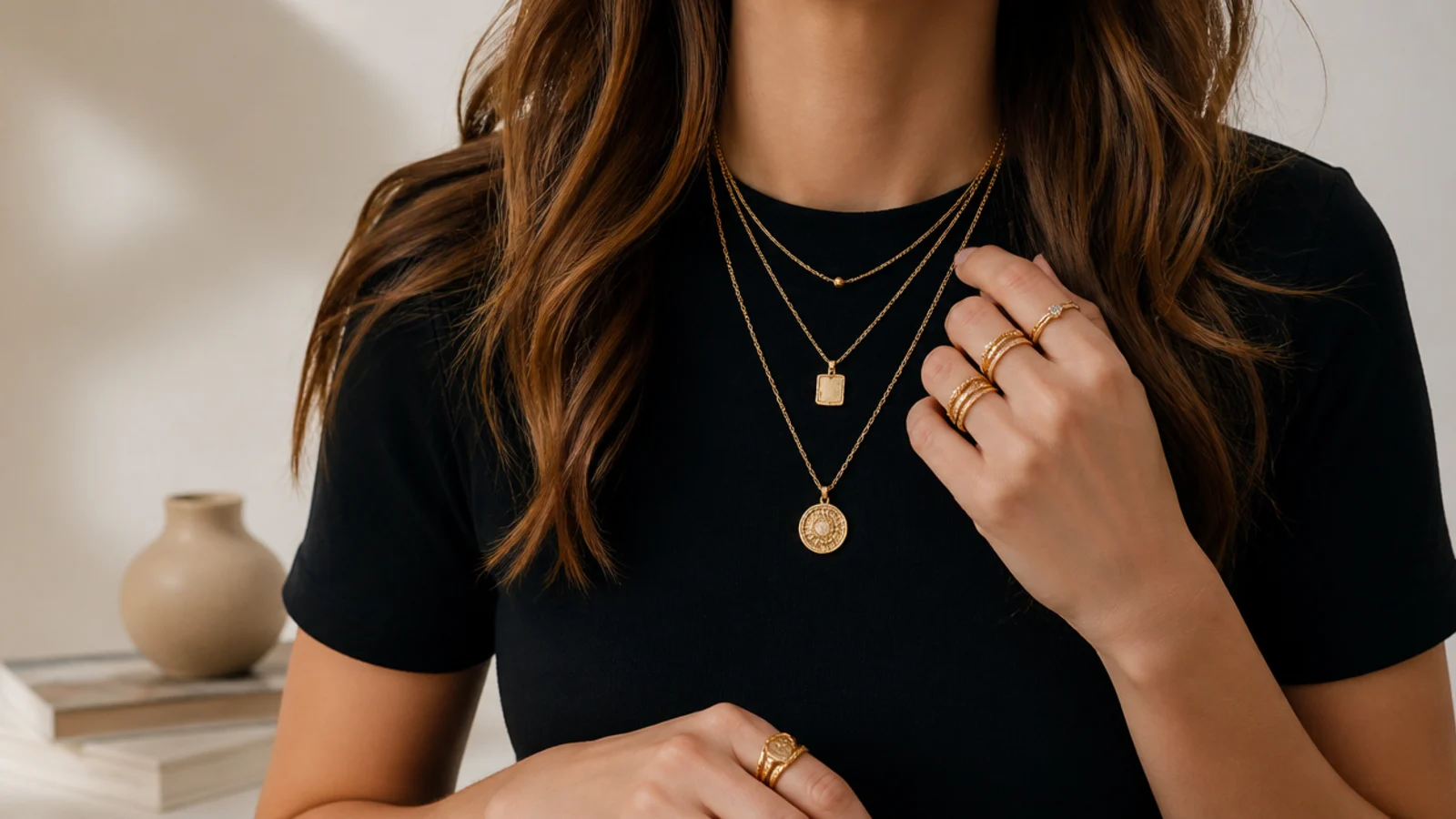
Quick Comparison
| Warm-Metal Gold | Cool-Metal Silver | |
|---|---|---|
| Best outfit colors | Camel, olive, rust, cream and earth tones | Navy, gray, cool blue and true white |
| Best skin undertone | Warm, where veins look greenish | Cool, where veins look bluish |
| With black | Excellent, warmth lifts flat black | Clean and sharp but cooler |
| With denim | Warm contrast against blue denim | Tonal, blends with cool blue |
| Overall feel | Warm, rich, classic | Crisp, modern, understated |
| Pearls pair with | Cream and warm pearls beautifully | White and gray pearls beautifully |
| Layering look | Reads bold and full when stacked | Reads sleek and quiet when stacked |
| Easiest fix if unsure | Add a two-tone piece to bridge both | Add a two-tone piece to bridge both |
| Best for | Warm wardrobes and warm undertones | Cool wardrobes and cool undertones |
1. Crew Neck: A 16-Inch Pendant
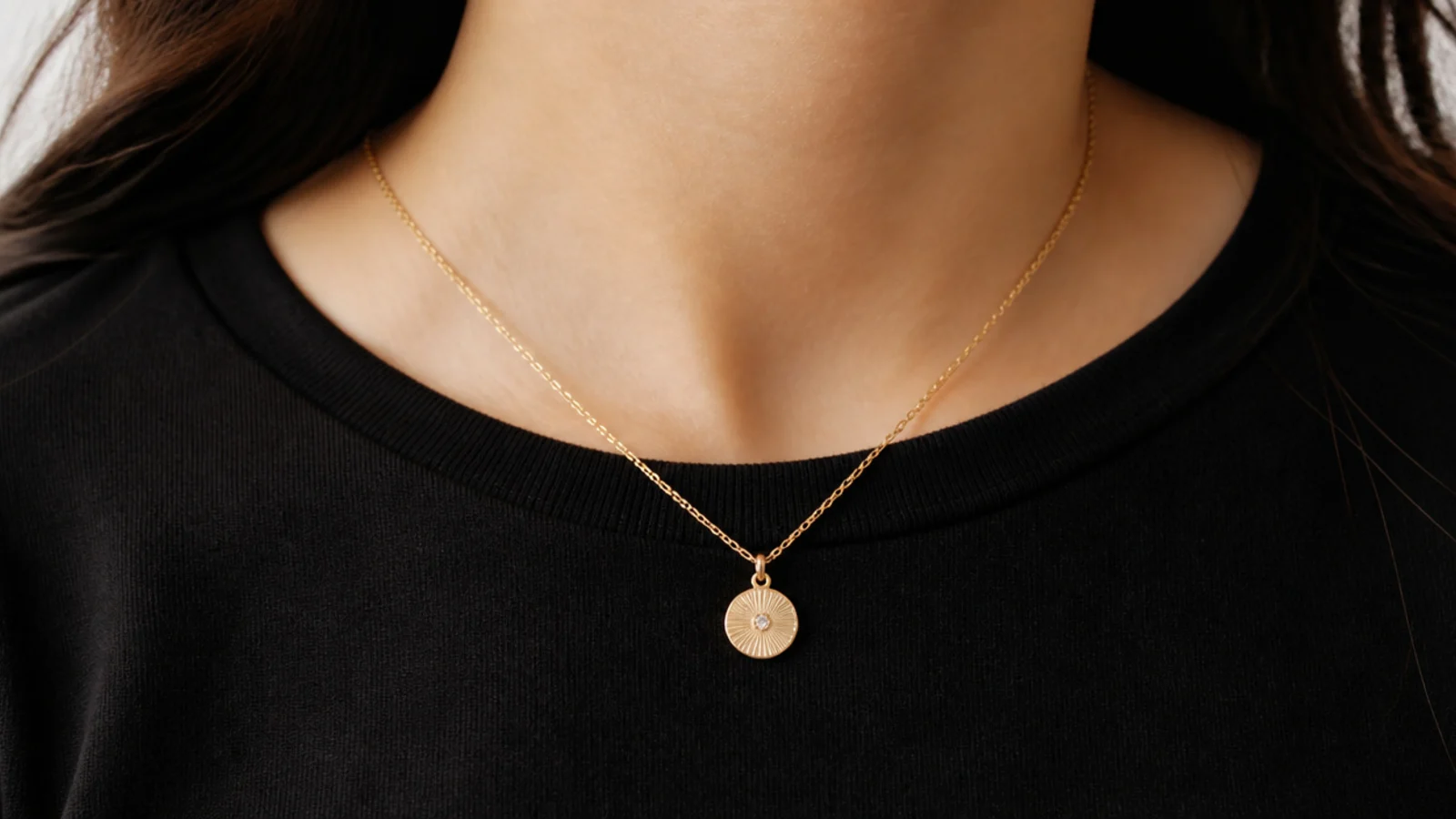
A crew neck sits high and straight, so it wants a necklace that fills the open space just below the collarbone without disappearing under the fabric. A 16-inch pendant on a fine gold chain is the exact answer: the pendant lands in the gap and the crew neck frames it. Skip anything longer, which vanishes under the neckline, and skip a bold collar, which fights the high crew line. This is the most foolproof pairing on the list and the one to memorize first. See it worked into everyday jewelry essentials.
If your tee is thick or ribbed, go 18 inches so the pendant clears the fabric roll at the neckline.
2. V-Neck: A Y-Necklace or Pendant
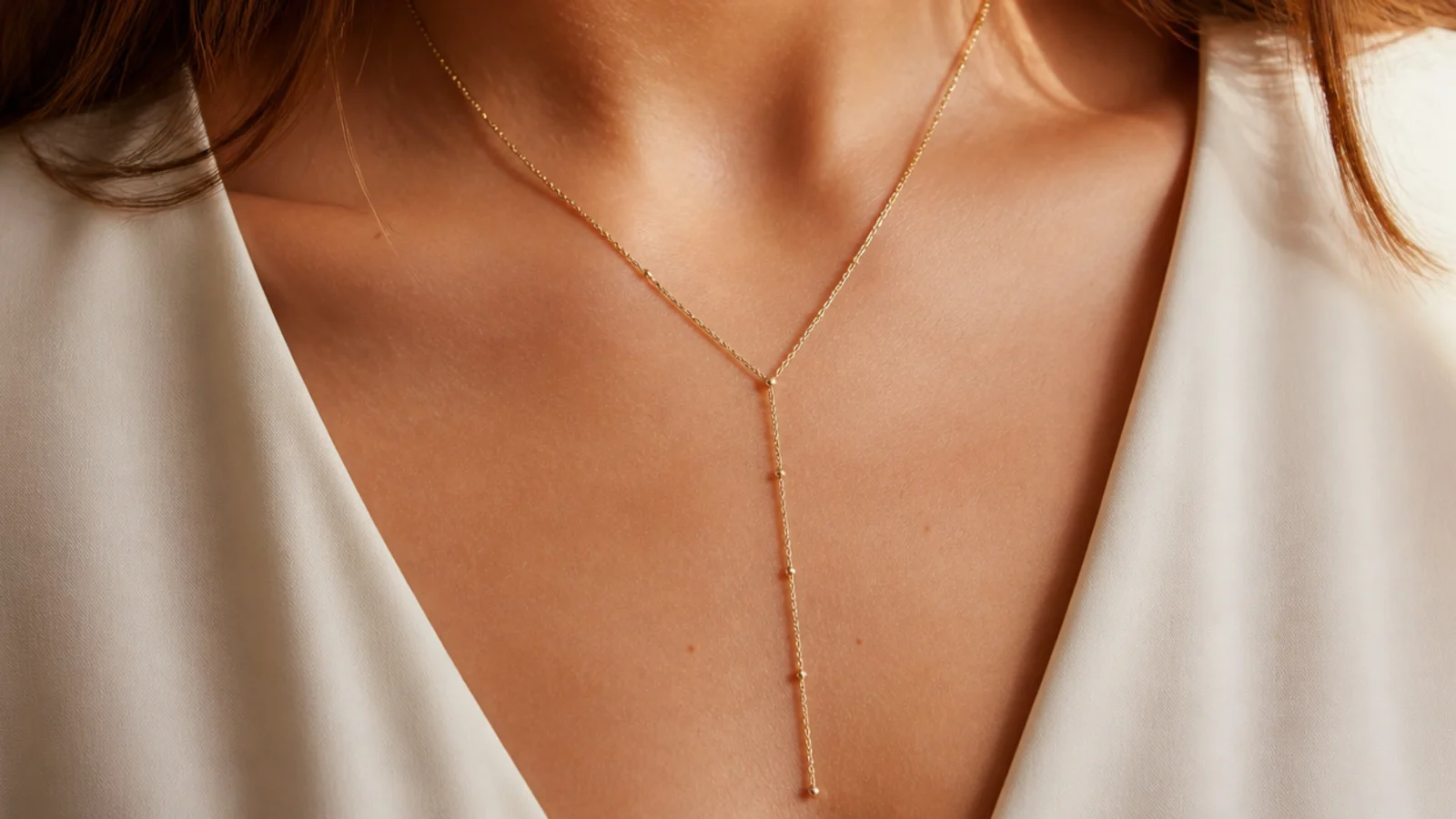
A V-neck draws a line down to a point, and your necklace should echo that line instead of cutting across it. A Y-necklace, which drops a small pendant from a V-shaped chain, traces the neckline exactly and looks made for it. A single pendant on an 18 to 20-inch chain works too, sitting inside the V. Avoid a short choker or a straight collar here; a horizontal line at the top of a vertical neckline reads as a mismatch. The V-neck is the easiest neckline to flatter because it does half the styling for you.
Keep the pendant small on a deep V so it sits above the bust, not below it.
3. Scoop Neck: Two Short Layered Necklaces
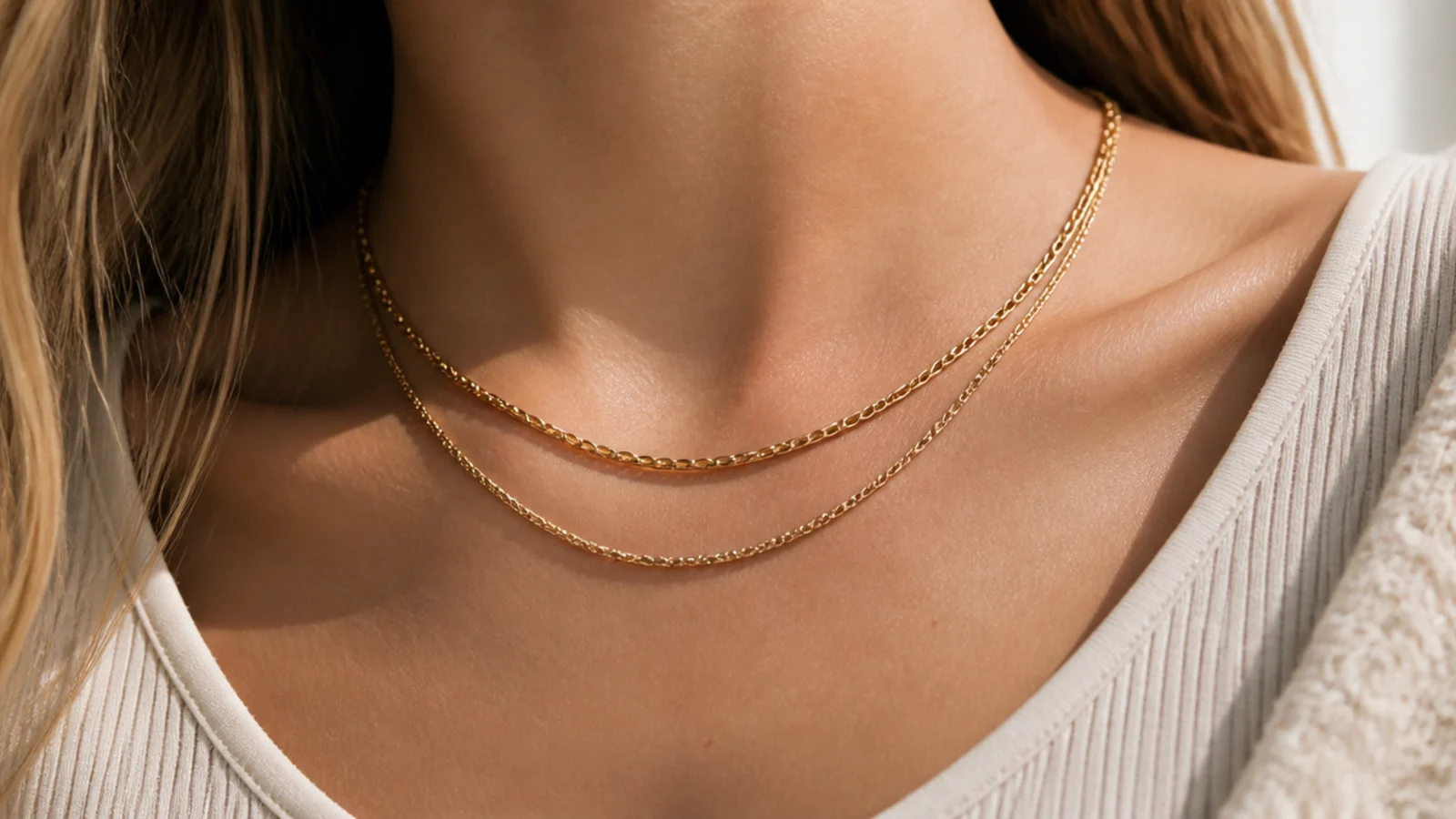
A scoop neck curves in a soft U, so it flatters curved necklaces rather than pointed ones. Two short layered chains at 14 and 16 inches follow the scoop and echo its shape, filling the wider opening a single fine chain would leave looking bare. A curved bar or a crescent pendant works for the same reason. The one thing to avoid is a long pendant that drops well below the scoop and pulls the eye down past the neckline entirely. Curved shapes for a curved neck is the rule to remember.
A wide scoop can take a slightly bolder chain than a crew neck, since there is more open skin to fill.
4. Square Neck: A Straight Collar or Choker
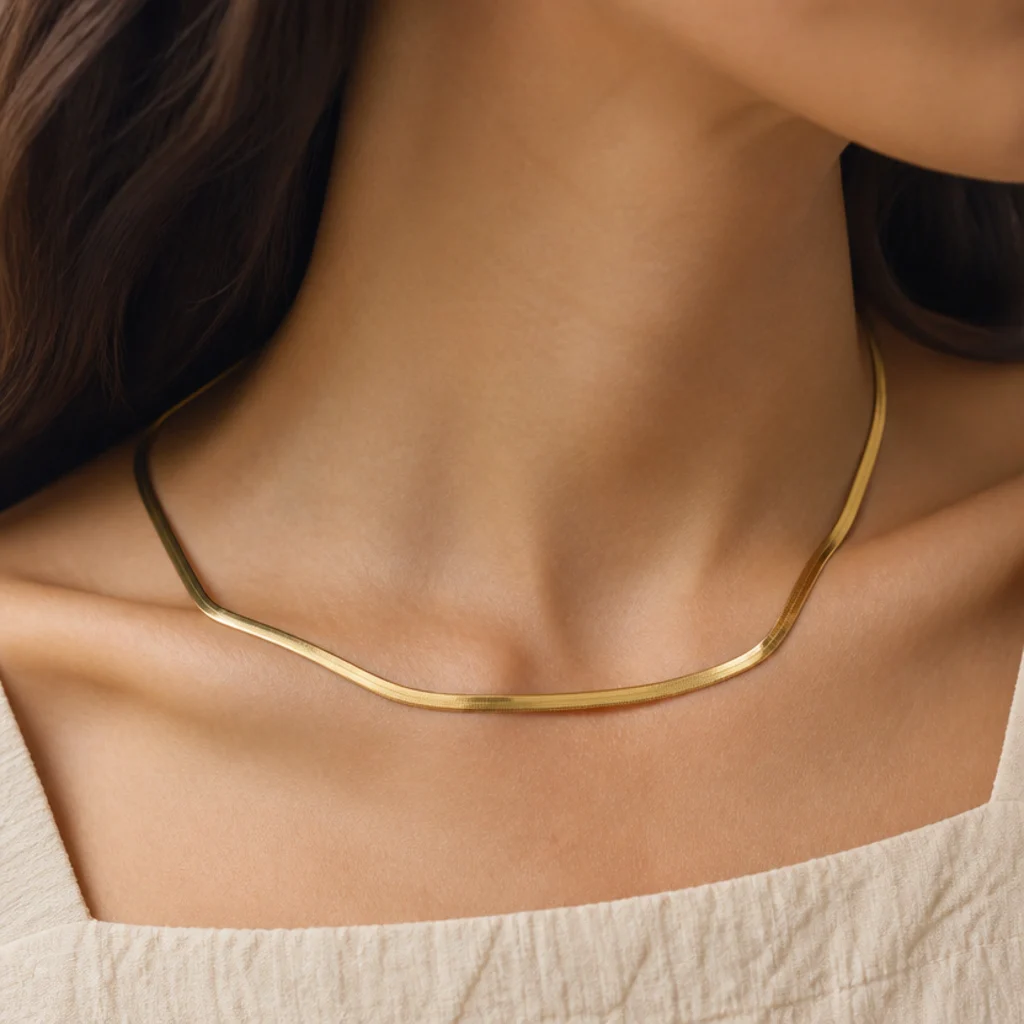
A square neckline has strong horizontal and vertical lines, so it wants a necklace that answers those straight edges. A choker or a straight collar necklace sitting just above the square edge mirrors the geometry and looks deliberate. A short 16-inch chain with a small bar pendant works too. Skip the Y-necklace here, since its point fights the flat bottom edge of a square neck. This is one of the few necklines that genuinely suits a choker, so if you own one, a square neck is where it earns its place.
Leave a small gap between the choker and the neckline edge so the two lines read as parallel, not stacked.
5. Halter Neck: Statement Earrings, No Necklace
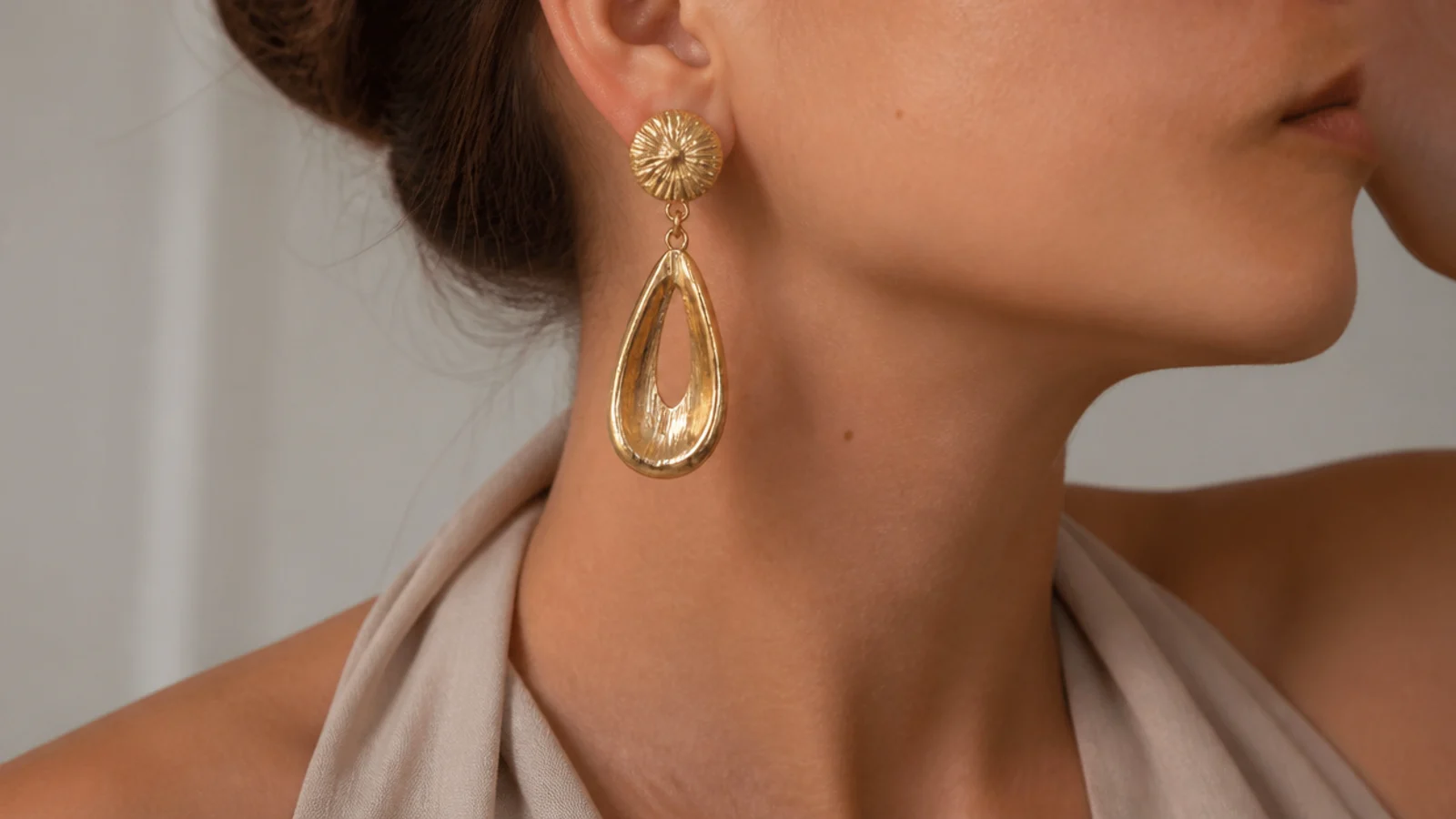
A halter neck already has a strong line running up to the throat, so a necklace has nowhere to sit and only adds clutter. Leave the neck bare and move the interest to your ears with statement drop earrings or bold hoops. The open shoulders and collarbone become the frame, and the earrings catch the light in the empty space. This is the clearest example of the one-statement-zone rule: when the neckline is busy, the ears take over. It looks intentional and modern every time.
If you feel bare, add a delicate bracelet or a ring stack rather than forcing a necklace.
6. Off-Shoulder: Statement Earrings and a Choker
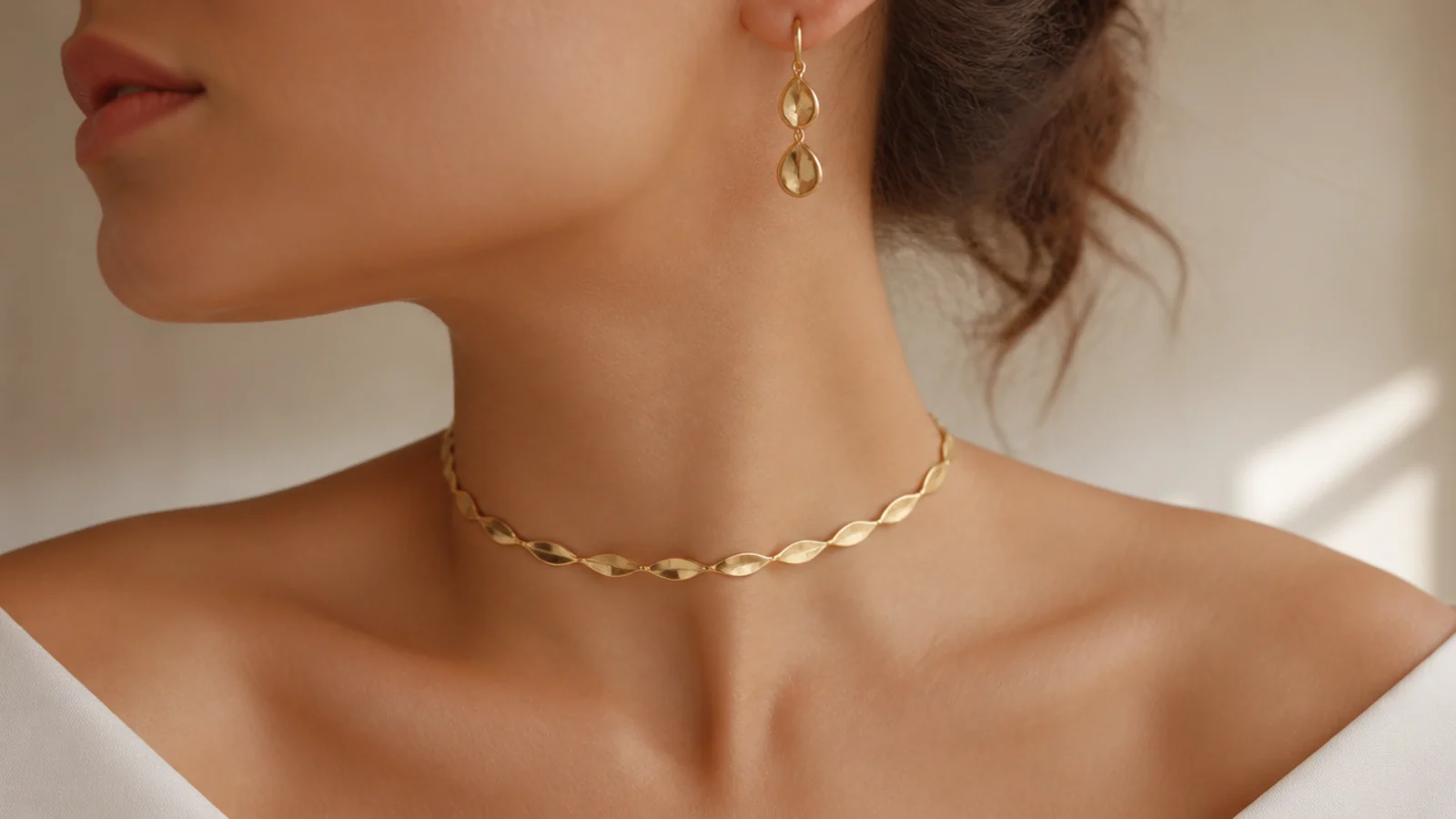
An off-shoulder top bares the collarbone and shoulders, creating a wide horizontal expanse that swallows a short pendant. A choker sitting high on the throat holds its own against all that open skin, and statement earrings balance the horizontal line of the neckline. If a choker feels like too much, go earrings only and leave the neck clean. What to avoid is a mid-length pendant floating alone in the open space with nothing to anchor it. Fill the throat or fill the ears, not the empty middle.
A single bold cuff on the upper arm is an unexpected way to use the bare-shoulder space.
7. Turtleneck: A Long 24-Inch Pendant
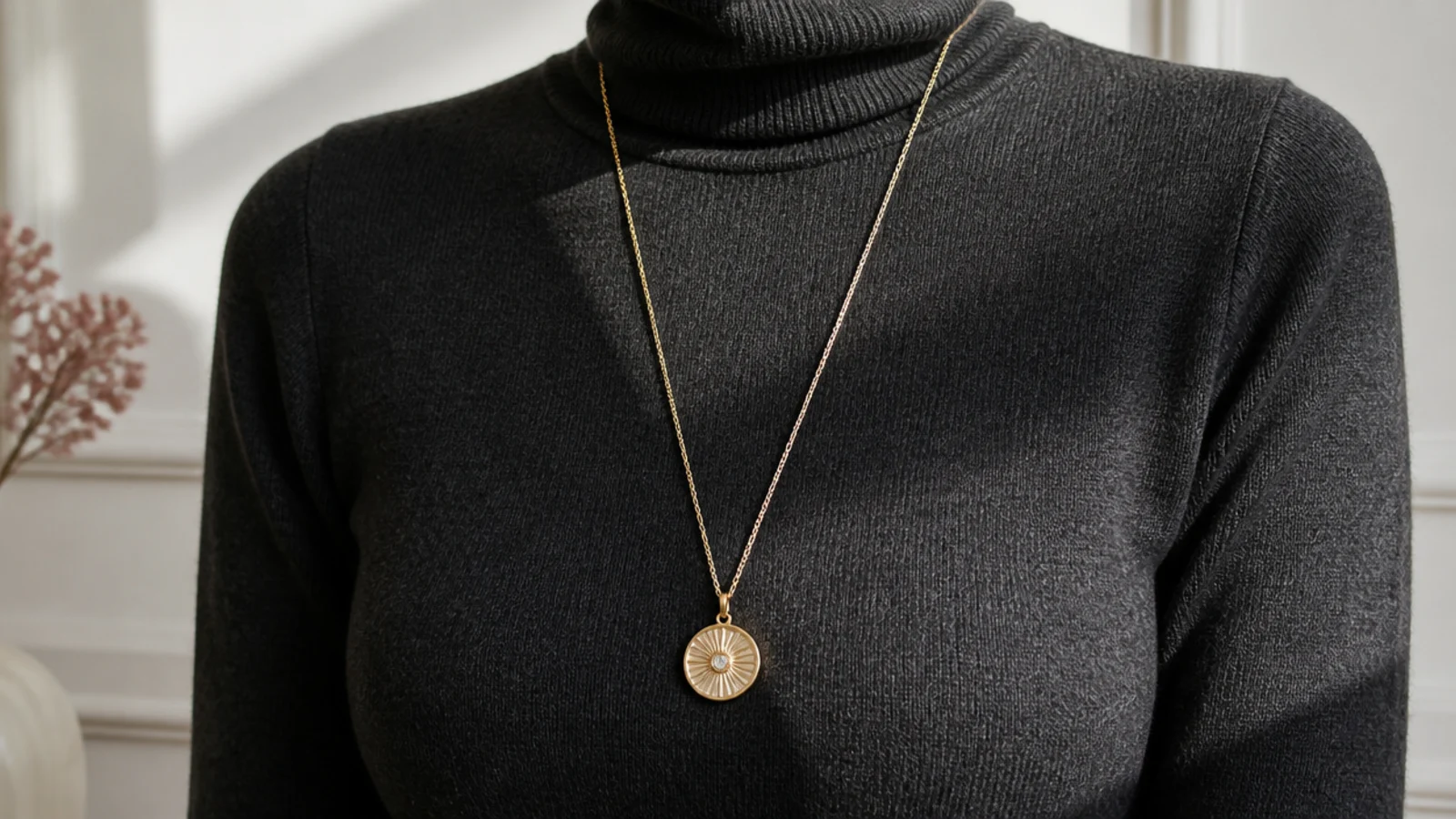
A turtleneck covers the whole neck and collarbone, so short necklaces have nothing to frame them and just sit on top of the fold. The fix is length: a long pendant on a 24 to 30-inch chain laid over the knit creates a clean vertical line down the body and looks intentional. Long layered chains work the same way. A turtleneck is also the best backdrop for a bold statement earring, since the covered neck lets the ears lead. Think long-and-vertical over the knit, never short-and-buried.
A charcoal or cream turtleneck shows a gold pendant best; match the metal to the outfit temperature.
8. Sweetheart Neckline: A Curved Pendant
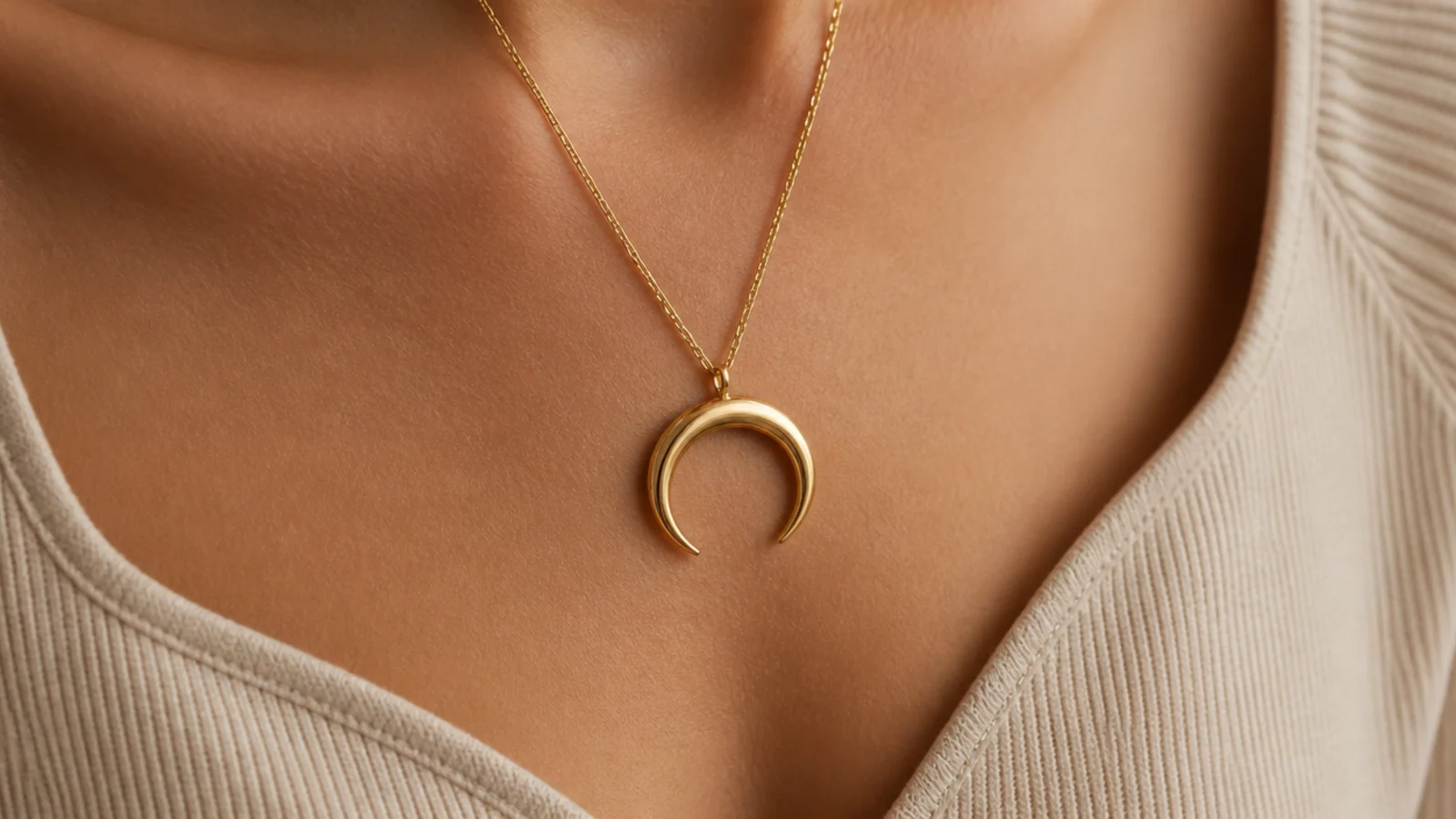
A sweetheart neckline dips in two soft curves, so it flatters a rounded pendant that follows the same line. A crescent, a curved bar, or a small teardrop on a 16 to 18-inch chain nestles into the dip and echoes the shape. This neckline shows up on going-out tops and dresses, so a little sparkle here reads as dressed-up, not overdone. Avoid a sharp geometric or a hard angular pendant, which clashes with the soft romantic curves. Soft shapes for a soft neckline keeps the whole look consistent.
Pearl or a single small stone suits the romantic feel of a sweetheart neckline better than heavy chunky gold.
9. Boat Neck: Long Drop Earrings, Skip the Necklace
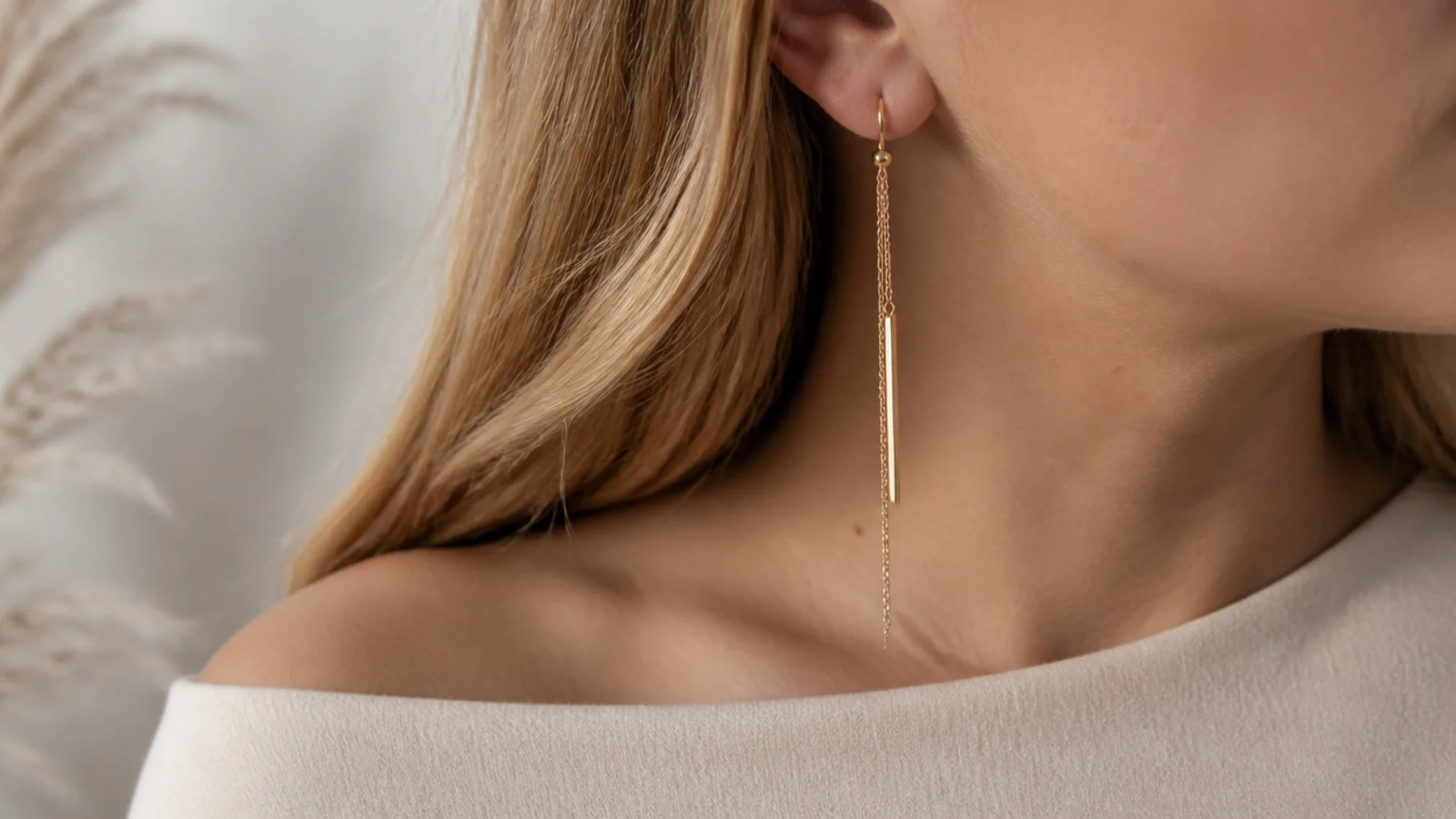
A boat neck runs in a wide straight line almost to the shoulders, covering the collarbone and leaving no natural spot for a necklace. Trying to add one only crowds the horizontal line. Instead, lean into long drop earrings that draw a vertical line down toward the wide neck and balance it. The clean expanse of a boat neck is the perfect quiet backdrop for the ears to do all the work. If you want more, add a stacked cuff or bracelet, keeping every bit of interest off the covered neck.
Linear or bar-drop earrings suit a boat neck better than round hoops, since the vertical line offsets the wide horizontal one.
10. Cowl Neck: A Bold Cuff, Bare Neck
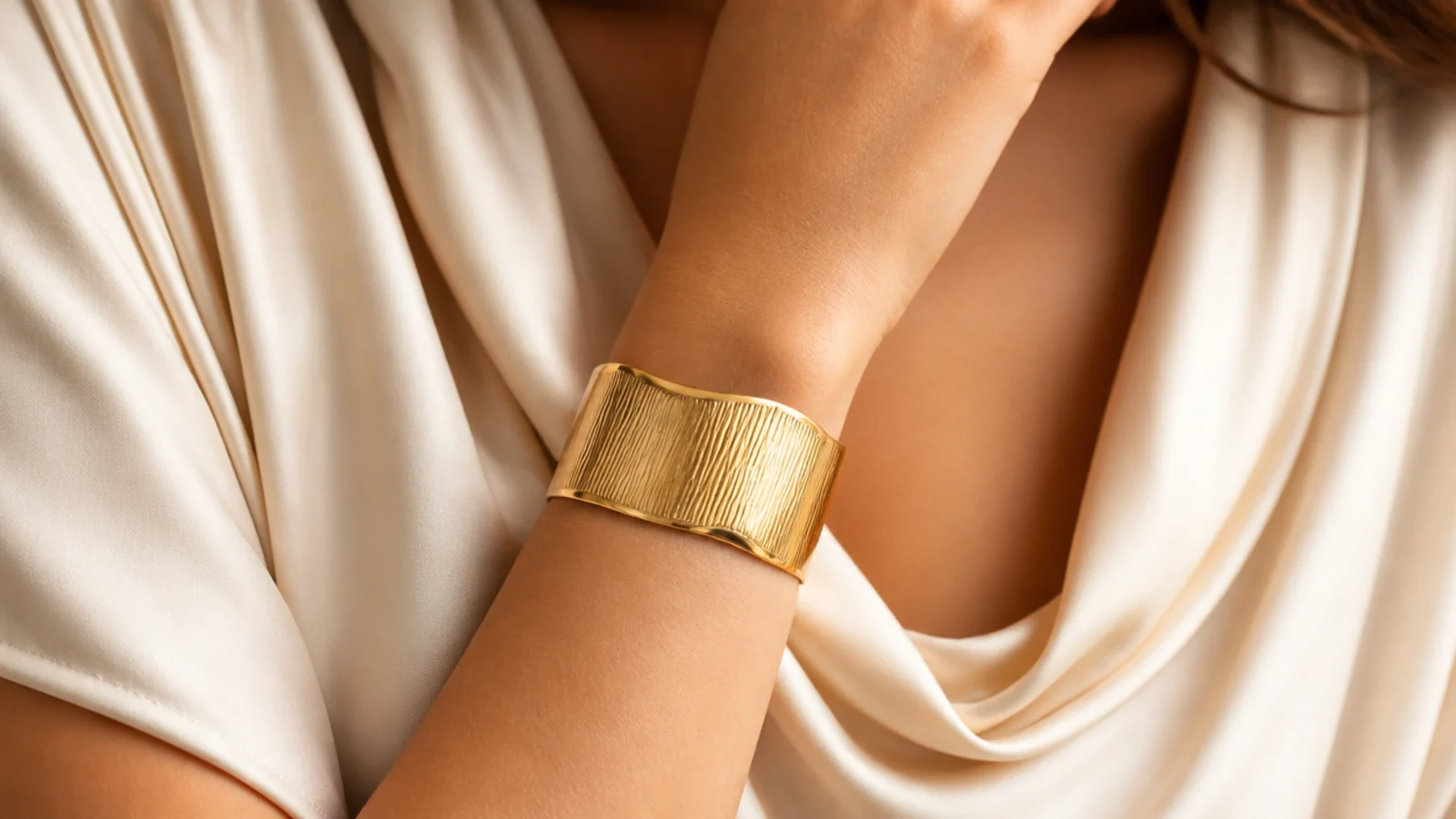
A cowl neck has soft draped folds of fabric at the throat, which is texture enough on its own; a necklace disappears into the folds and looks lost. Leave the neck bare and move the statement to your wrist with a bold cuff, or to your ears with a clean hoop. The draped fabric becomes the focal point, and a single strong wrist piece balances it. This is a case where less at the neck is genuinely more. Let the fabric drape be the neckline event and accessorize everywhere else.
A cowl in satin or fine knit reads dressier with a polished cuff than with anything sparkly at the neck.
11. Strapless: A Choker or Collar Necklace
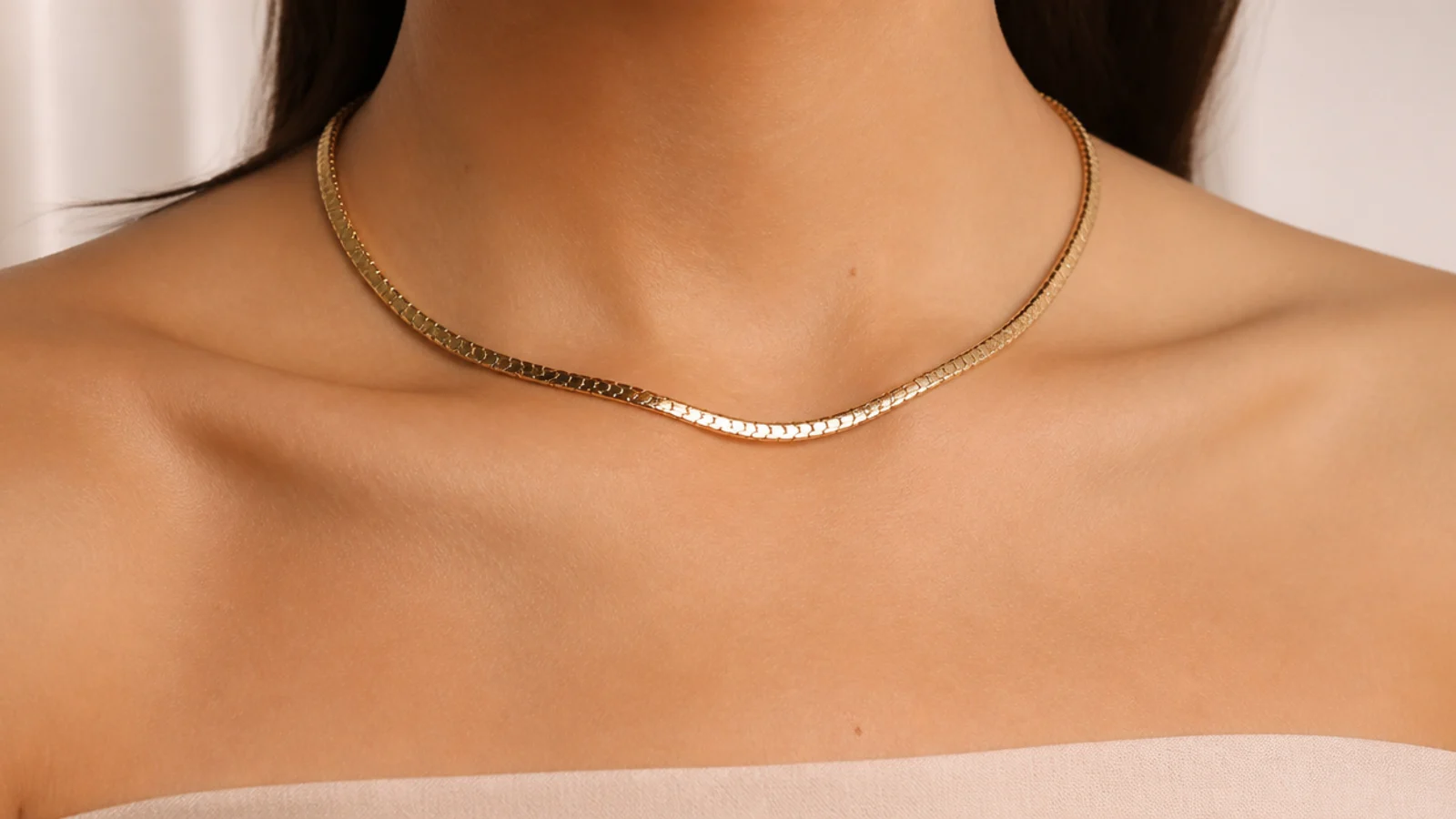
A strapless top or dress leaves the widest open expanse of any neckline, and that much bare skin needs a necklace with presence or it looks unfinished. A choker or a fitted collar sitting high on the throat holds the space and gives the eye somewhere to land. A short layered set at 14 and 16 inches works too. What fails here is a single thin pendant swimming alone in all that open skin. Fill the space with structure, then keep the earrings small so the neck stays the star.
Match the choker to a going-out look like a corset outfit for an evening event.
12. Button-Down Collar: A Short Chain Inside the Collar
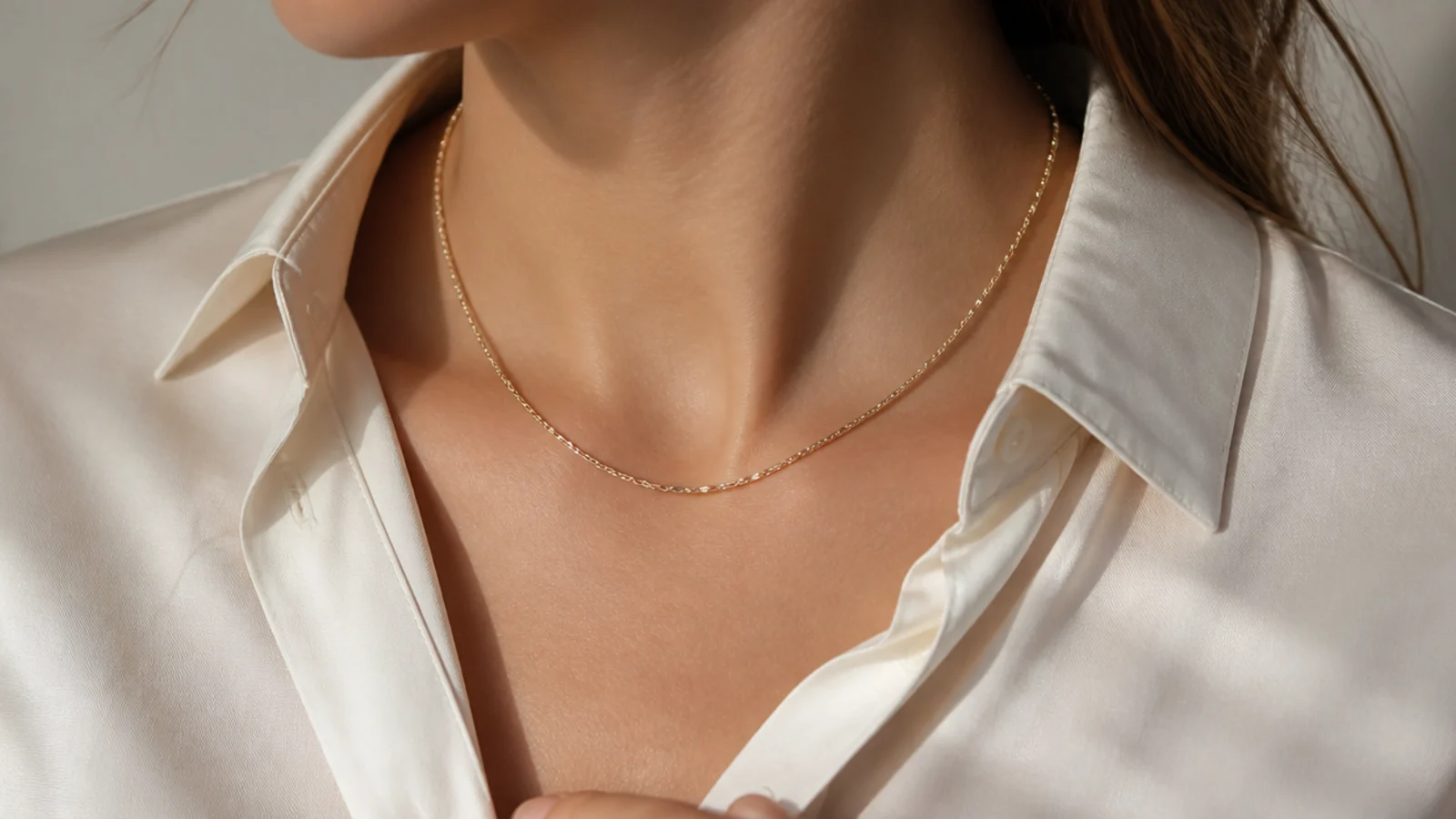
A collared button-down gives you two options, and both look sharp. Wear a short 16-inch chain or small pendant inside the open collar with the top buttons undone, so it peeks out against the skin. Or layer a couple of fine chains over the collar for a looser, layered-preppy feel. The mistake is a mid-length pendant that lands awkwardly on the placket buttons. Keep it high and inside the collar, or fully layered on top, never stranded in between. A crisp shirt with a fine gold chain is quiet-luxury shorthand.
Undo one extra button so the chain has room to show against skin rather than against fabric.
13. Mock Neck: Long Layered Chains
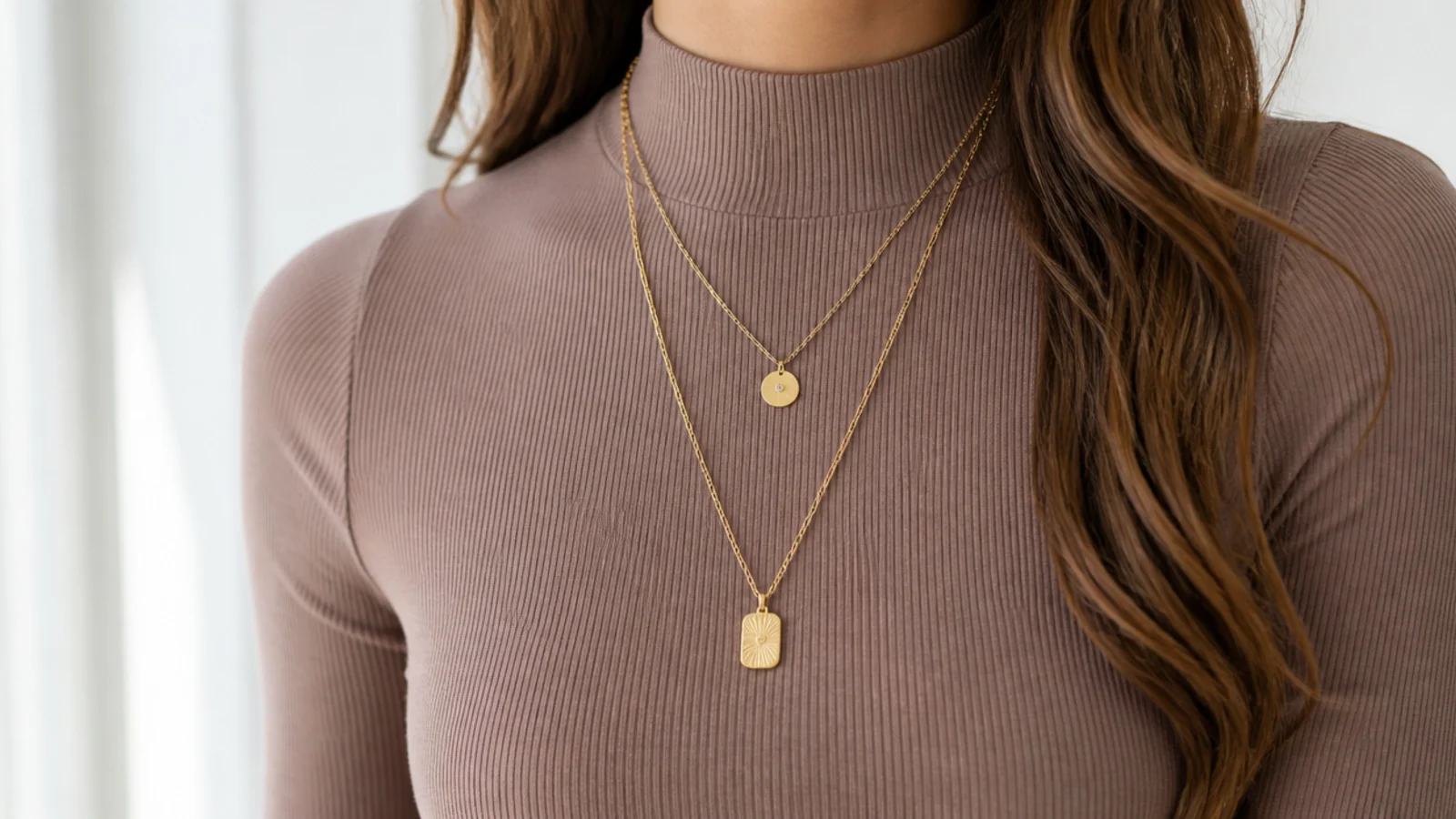
A mock neck sits lower than a full turtleneck but still covers the collarbone, so short chains land on fabric with nothing to frame them. Two long chains at 20 and 24 inches layered over the top draw a clean vertical line and add interest without crowding the neck. A single long pendant works just as well. Bold studs or small huggies finish it at the ears. Treat a mock neck like a mini turtleneck: go long and vertical over the fabric, and let the ears carry any sparkle.
Fitted mock necks in fine knit show layered chains cleanly; chunky ribbed ones can swallow thin chains, so go bolder.
14. Black Corset Top: Delicate Layered Gold
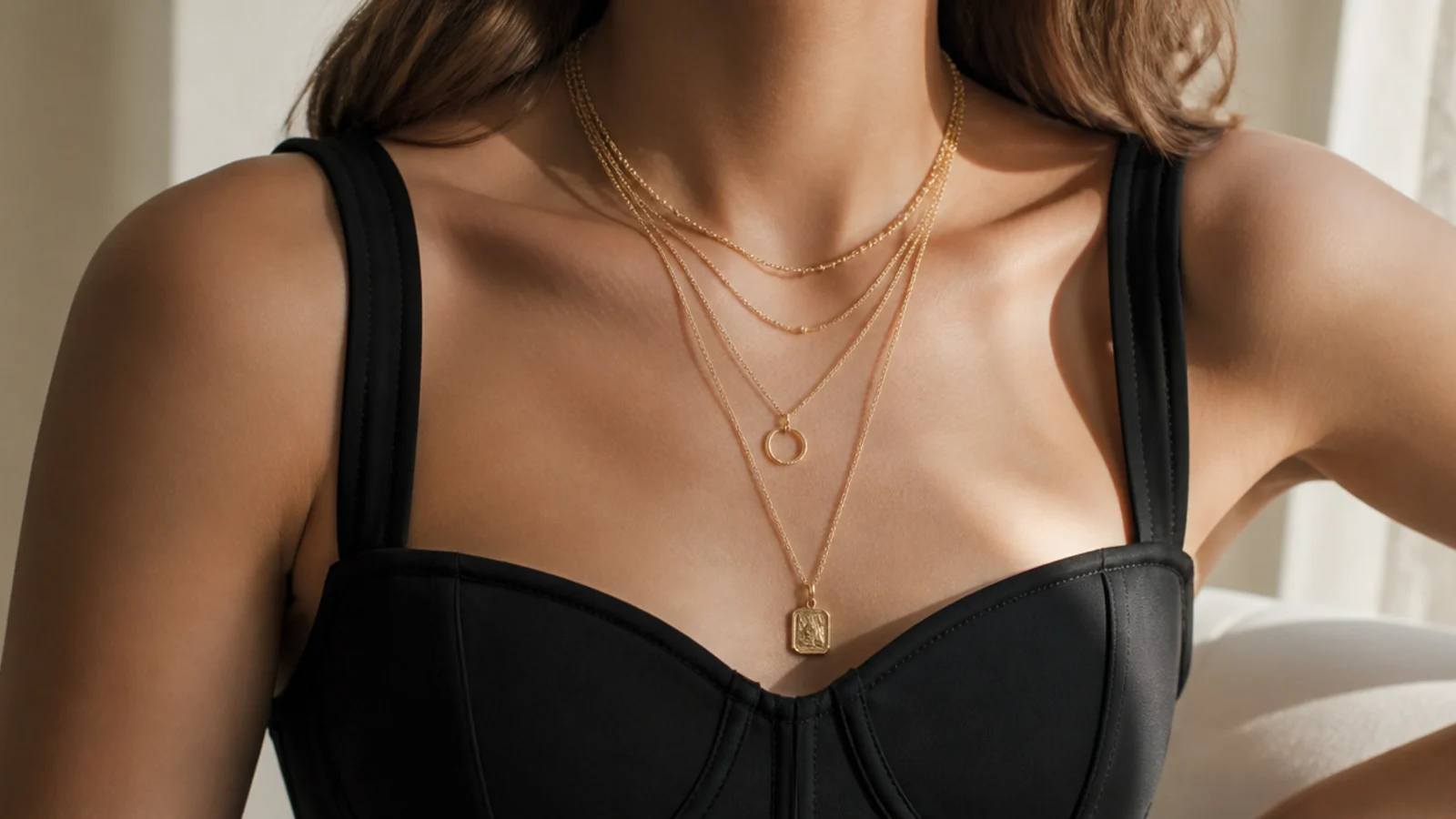
A black corset top is already a strong, structured statement, so it wants delicate jewelry that complements rather than competes. Two or three fine gold chains layered at staggered lengths sit beautifully against the straight top edge, and small gold hoops keep the ears quiet. Gold reads warm and rich against black, which is why it beats silver here for most people. Skip a bold collar or a heavy pendant; the corset is the drama, and the jewelry is the finish. See the full look in corset outfits.
If the corset has a straight neckline, treat it like a square neck and keep the shortest chain close to the edge.
15. Baggy Jeans and Tee: Chunky Gold Hoops
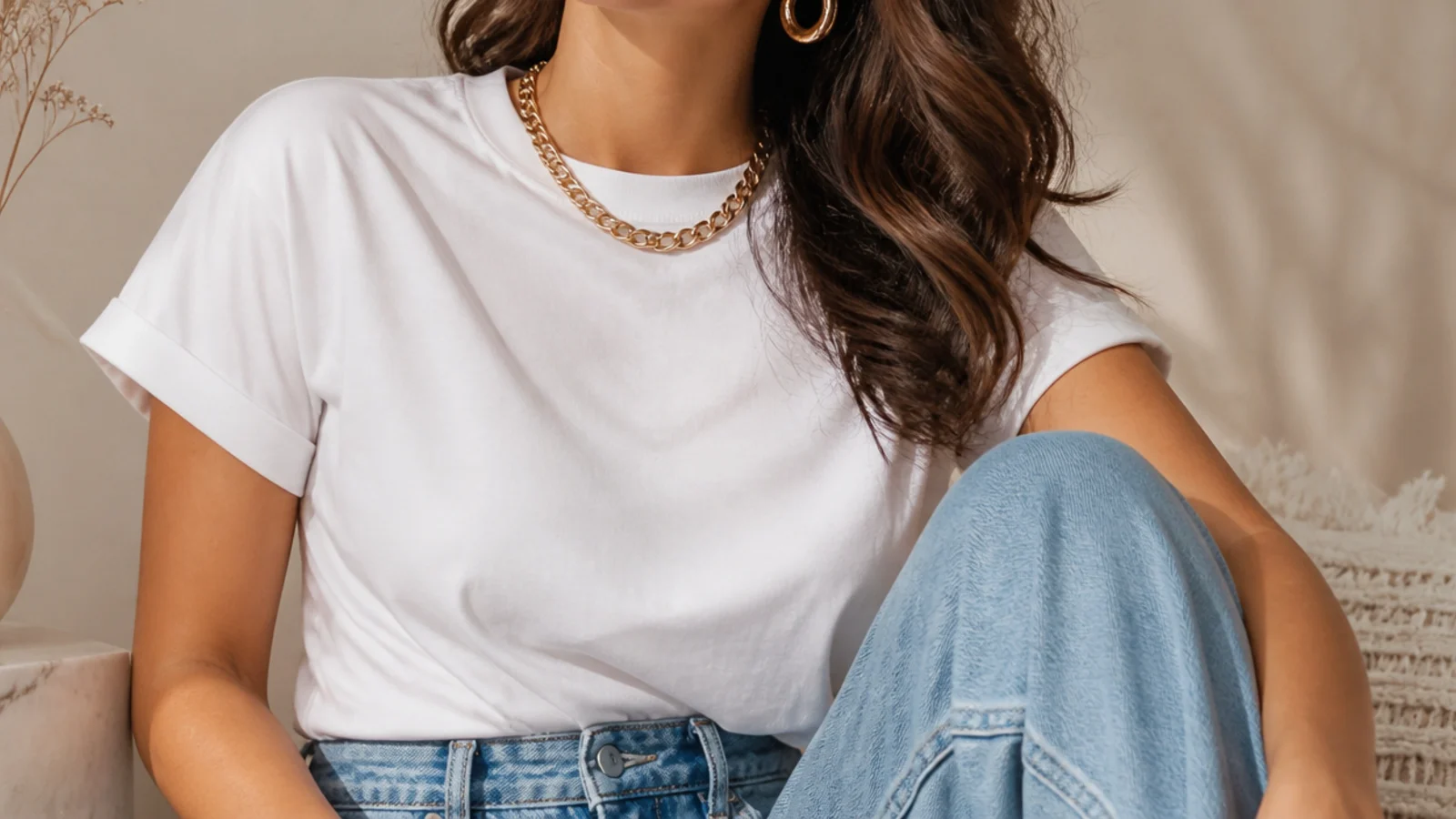
A plain tee with baggy jeans is a blank canvas, which is exactly when you reach for a statement piece. Chunky gold hoops instantly lift a basic outfit, and a bold curb-chain necklace adds the weight the casual look can carry. Because the outfit is simple, the jewelry can be the loudest thing you wear. This is the inverse of the corset rule: plain outfit, bold jewelry. Add a couple of chunky rings and you have turned jeans and a tee into a considered look. Style it with baggy jeans outfits.
Keep everything in one metal here so the boldness reads as intentional rather than piled on.
16. White Midi Skirt: Pearl Drop Earrings
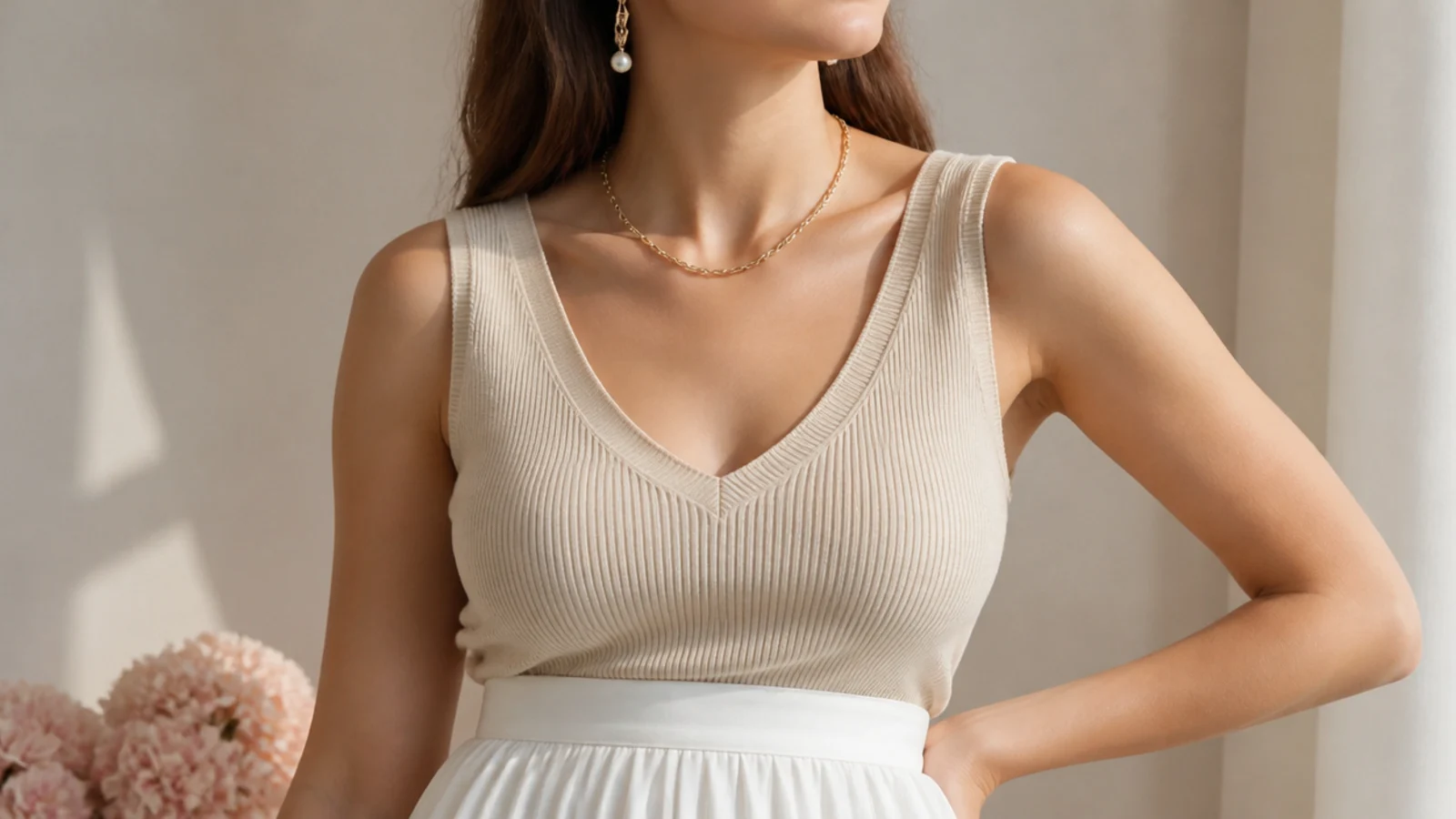
A white or cream midi skirt reads clean and slightly elevated, so it pairs best with jewelry that matches that polish. Freshwater pearl drop earrings add a soft, expensive touch, and a single fine gold chain keeps the neckline uncluttered. Pearls have quietly become a modern, not fussy, choice and they flatter the crisp neutral of a white skirt. Avoid anything too chunky or streetwear here; it fights the refined feel. A little pearl and thin gold is the whole formula. See it in white midi skirt outfits.
Mix a pearl earring with a gold huggie in a second piercing for a modern take on classic pearls.
17. Little Black Dress: Studs and a Tennis Bracelet

A little black dress is the classic case for quiet, precise jewelry that reads as expensive. Diamond or crystal studs and a tennis bracelet give sparkle without noise, and the light bounces beautifully against black. Let the neckline of the dress decide whether you add a necklace: bare and high, add a short pendant; already detailed, leave it. The same precise pieces suit how to style jewelry for work. This is quiet luxury in practice - small, bright, precise. Resist stacking too much; on a black dress, restraint is what makes it look costly rather than busy. The same restraint carries over to all-black outfits, and more finish tricks live in jewelry that looks expensive.
A tennis bracelet plus studs is the smallest amount of jewelry that still reads as dressed for an event.
18. Denim Jacket: Layered Gold Chains
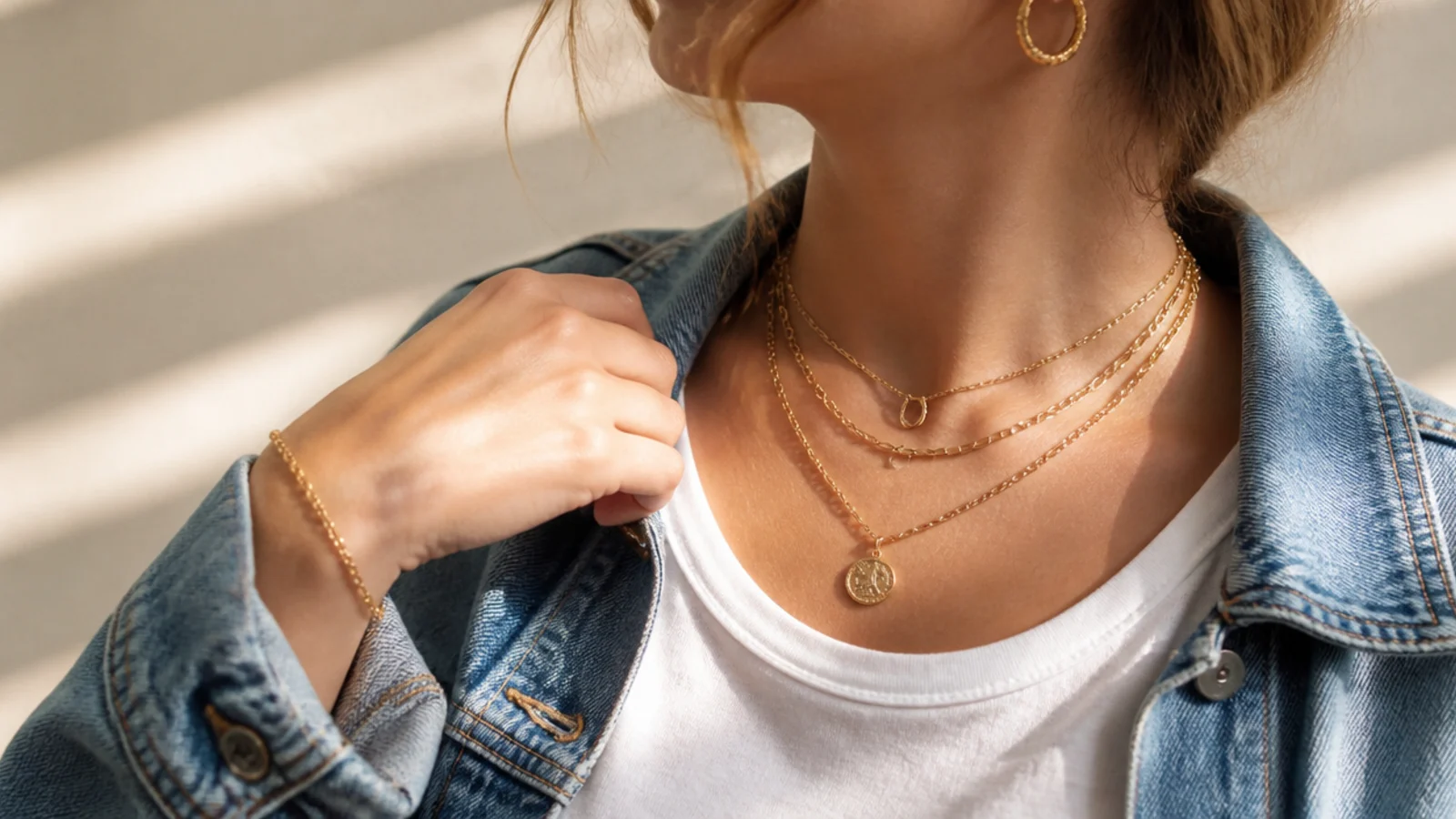
A denim jacket is casual and a little tough, so it takes warm gold well and can handle some volume. Layer two or three gold chains at 16, 18 and 20 inches over a tee beneath the open jacket, and add medium hoops. Gold against blue denim is a warm-cool contrast that always works. Because denim is relaxed, you have room to layer more than you would with a dressy top. Keep the metals consistent so the stack looks curated. Style the full outfit with denim jacket outfits.
Let the shortest chain sit above the tee neckline and the longest below it for clear separation.
19. Layered Necklaces: Staggered 14, 16, 18-Inch Lengths
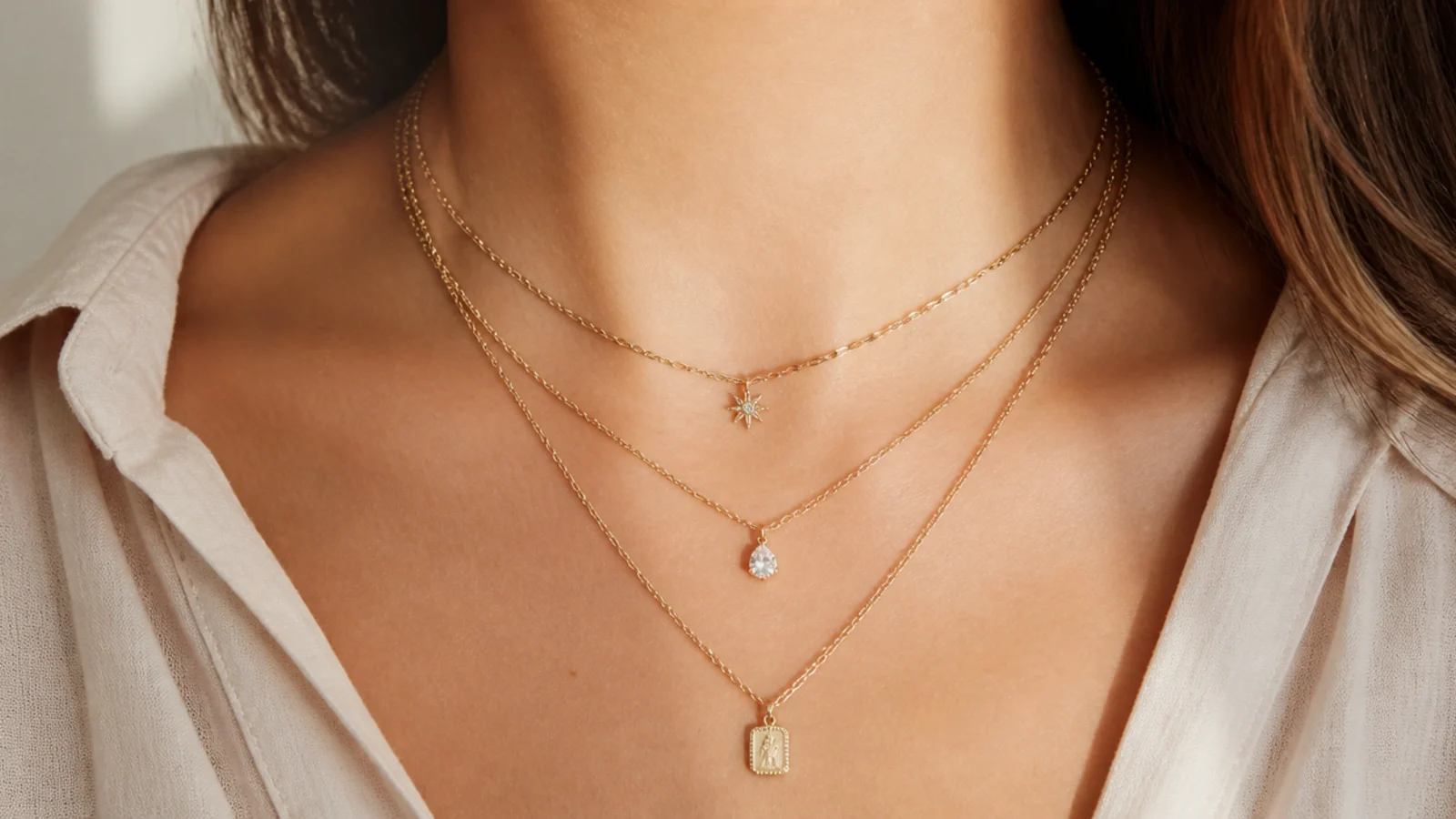
Layering looks effortless but has one hard rule: stagger the lengths so each chain shows. Two inches of difference is the minimum, so 14, 16 and 18 inches, or 16, 18 and 20, keeps them from tangling into one clump. Vary the weight too, pairing a fine plain chain with one that has a small pendant, so the eye can tell them apart. Keep all three in the same metal for a clean look, or add one contrast piece on purpose. Odd numbers, usually three, look more balanced than two. This is the single most Pin-worthy jewelry skill.
A layering clasp or a spacer connector holds the chains in place and stops the shortest from riding up.
20. Mixed Metals: Gold and Silver on One Hand
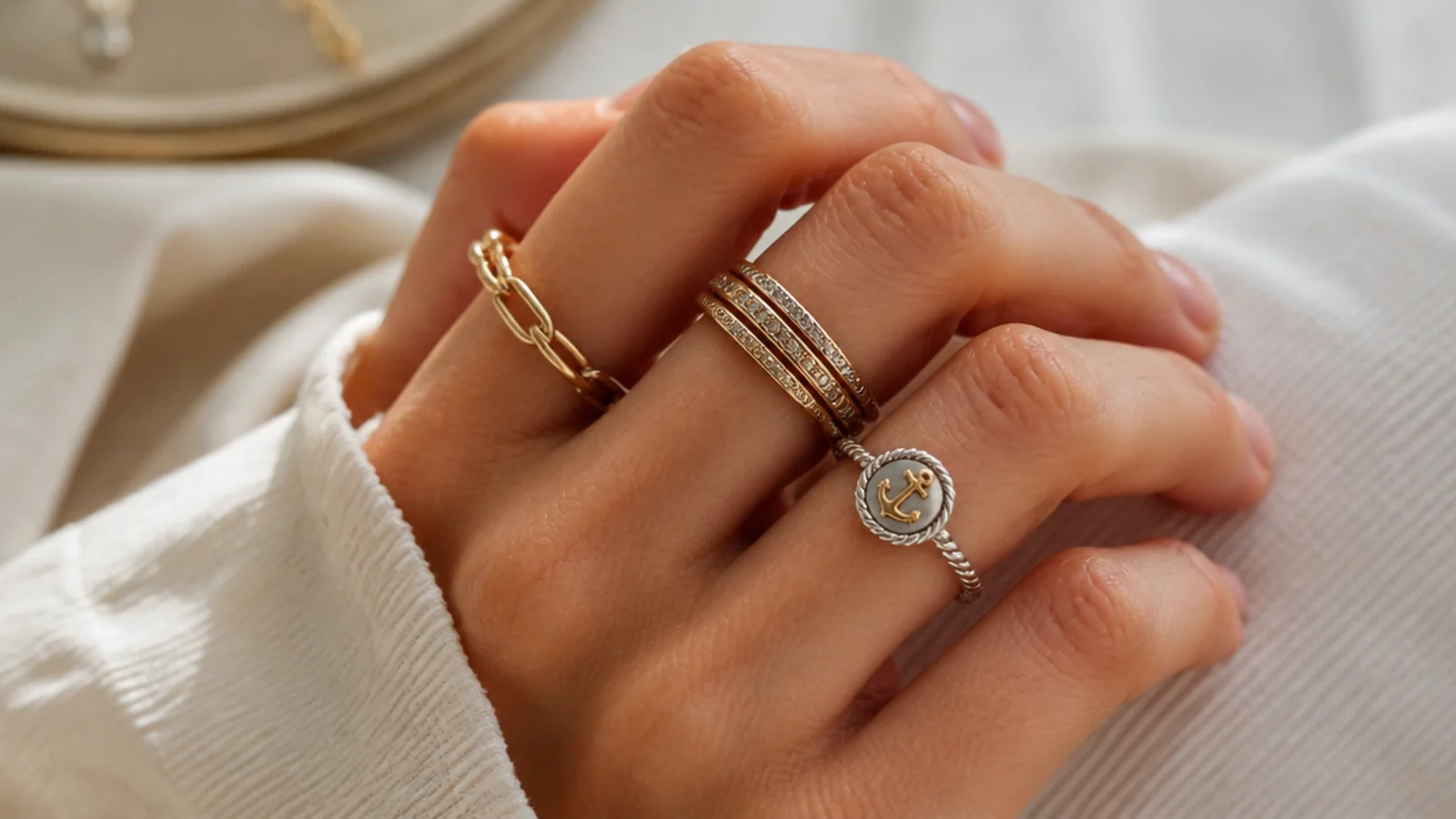
Yes, you can mix gold and silver, and it looks current when you do it on purpose. The trick is to anchor the mix with one two-tone piece, a ring or watch that already combines both metals, so your eye reads the whole thing as intentional. Repeat each metal at least twice, for example two gold rings and two silver, rather than one lonely silver ring among gold. Stacking rings on one hand is the easiest place to practice. Mixed metals also mean your jewelry works with both warm and cool outfits.
Start the mix at the hands, where it reads as playful, before trying it at the more formal neckline.
21. Ring Stacking: Three Thin Bands
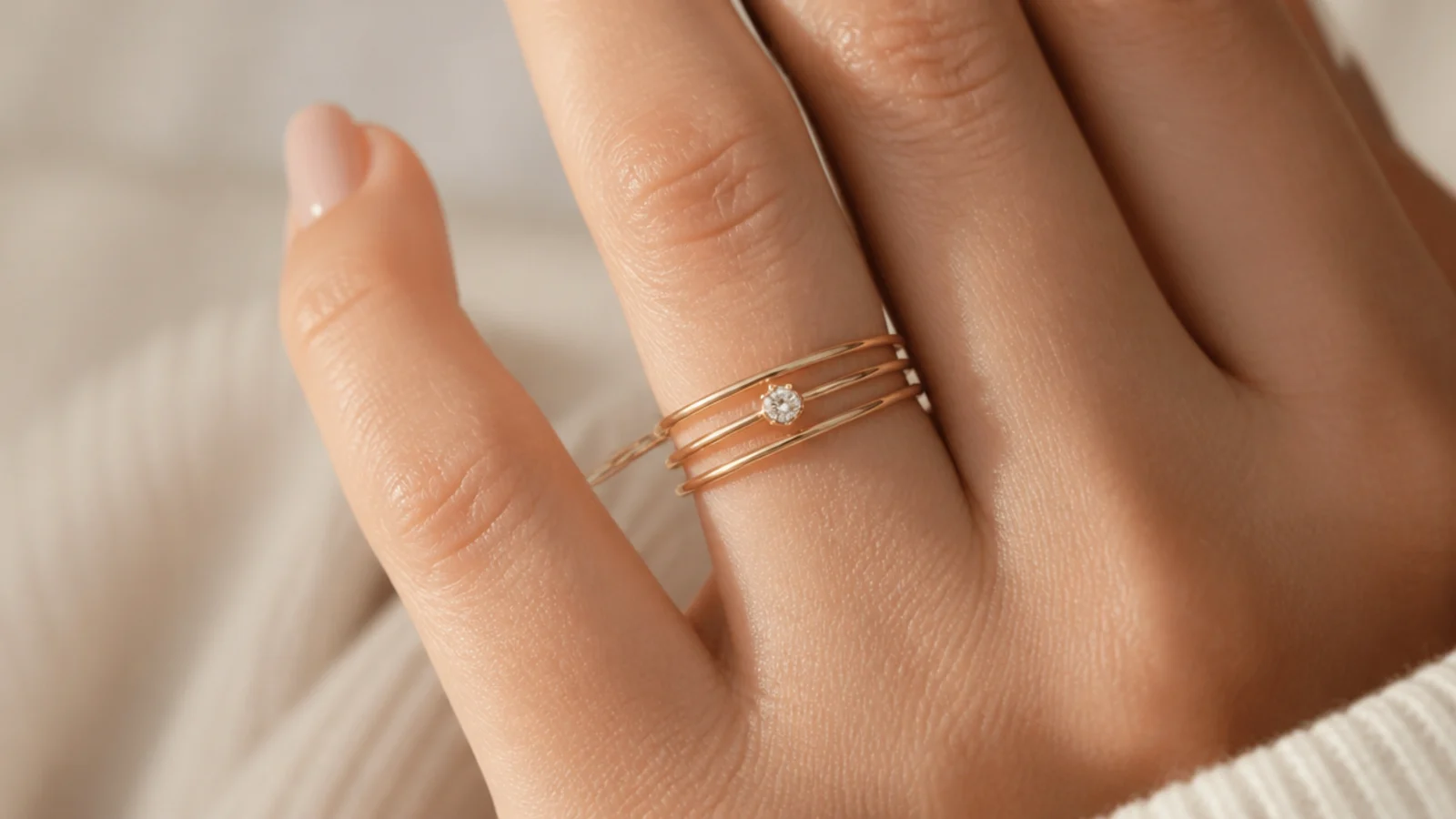
A ring stack adds interest to bare hands without any risk of clashing with your neckline. Three thin bands, one plain, one textured, one with a tiny stone, stacked across one or two fingers is the go-to formula. Vary the finish so they read as a curated set rather than a matched trio. Balance the stack by leaving the other hand nearly bare, or wearing just one statement ring on it. Thin and stackable beats one chunky cocktail ring for everyday, since the stack flexes up or down by how many you add. A ring stack is also an easy statement zone with casual looks like baggy jeans outfits.
Keep daily-wear stacks to solid gold or gold-filled; thin plated bands wear through fastest at the friction points.
22. Bracelet Stack: Bangle, Chain and Cuff
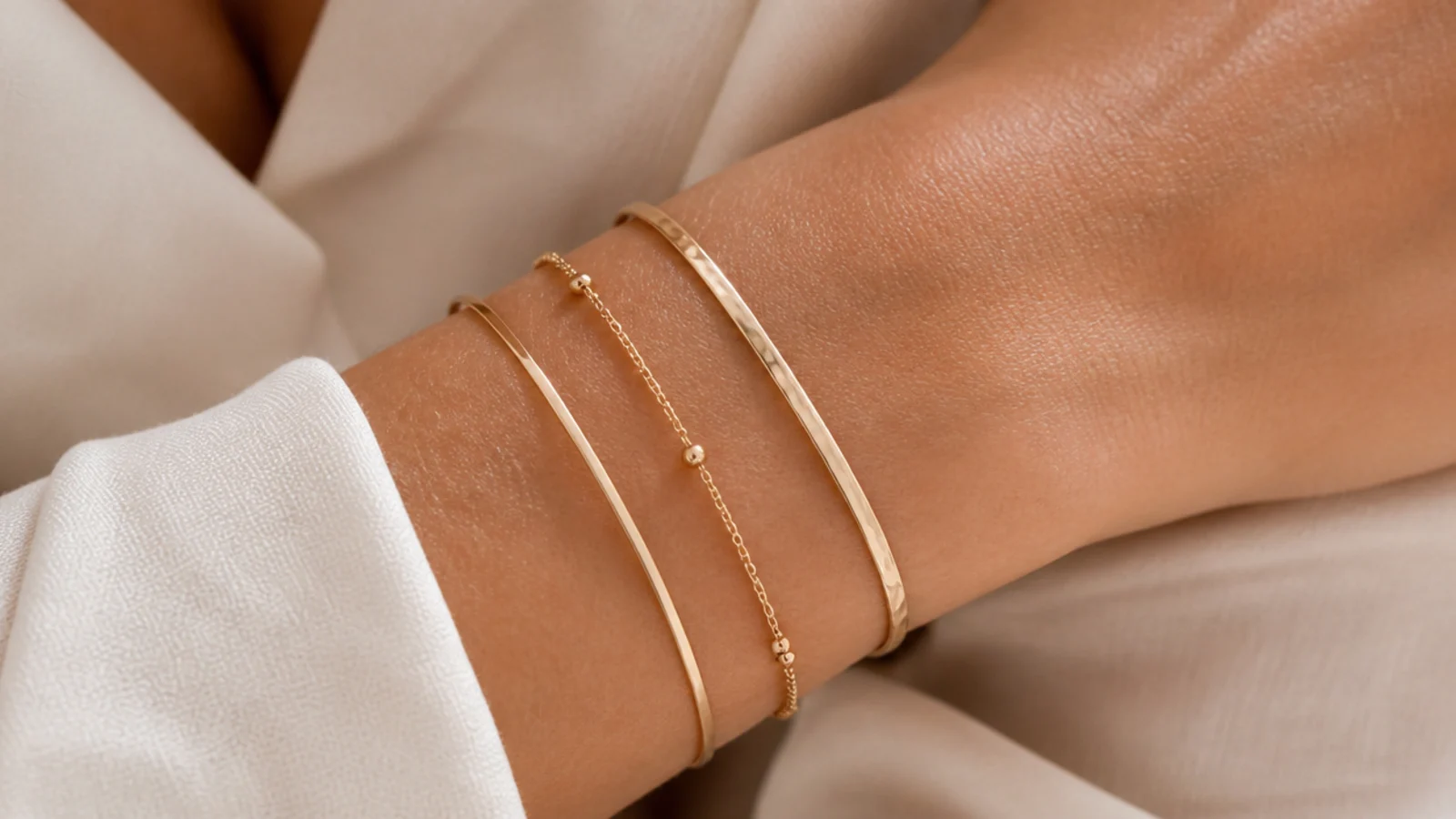
A bracelet stack is the wrist version of layered necklaces, and it follows the same mix-the-weights rule. Combine a thin bangle, a fine chain bracelet and a slim cuff so each has a different texture and the stack has depth. Keep them in one metal, or add a single beaded or two-tone piece as a break. A wrist stack is a great statement zone when your neckline is covered or busy, since it moves the interest off the neck. Slide a watch into the mix and it still reads as one intentional stack.
Leave a little room between pieces so they move and catch the light instead of locking into a solid band.
23. One Statement Piece: Bold Earrings, Bare Neck
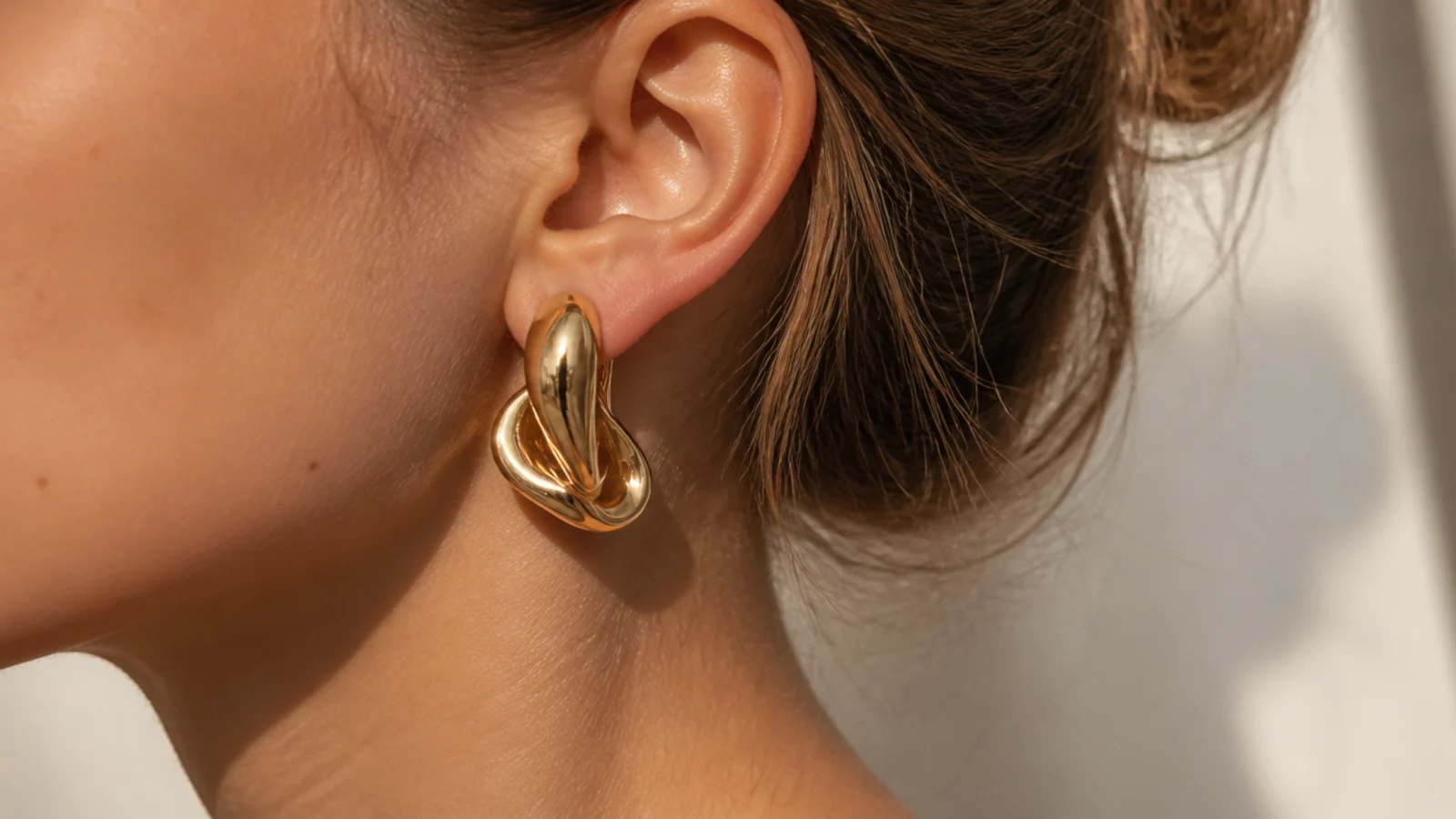
When in doubt, wear one statement piece and keep everything else quiet. Bold sculptural earrings with a bare neck and simple rings is the most reliable way to look pulled together without overthinking it. The single loud piece becomes the focal point, and the restraint everywhere else makes it read as a choice. This is the fix for the too-much-jewelry problem: one statement zone, not three. It works for any outfit and any neckline, which is why it is the rule to fall back on when nothing else feels right.
If the earrings are the statement, keep necklace, bracelet and rings under one metal and very small.
24. Ear Stack: Stud, Huggie and Climber
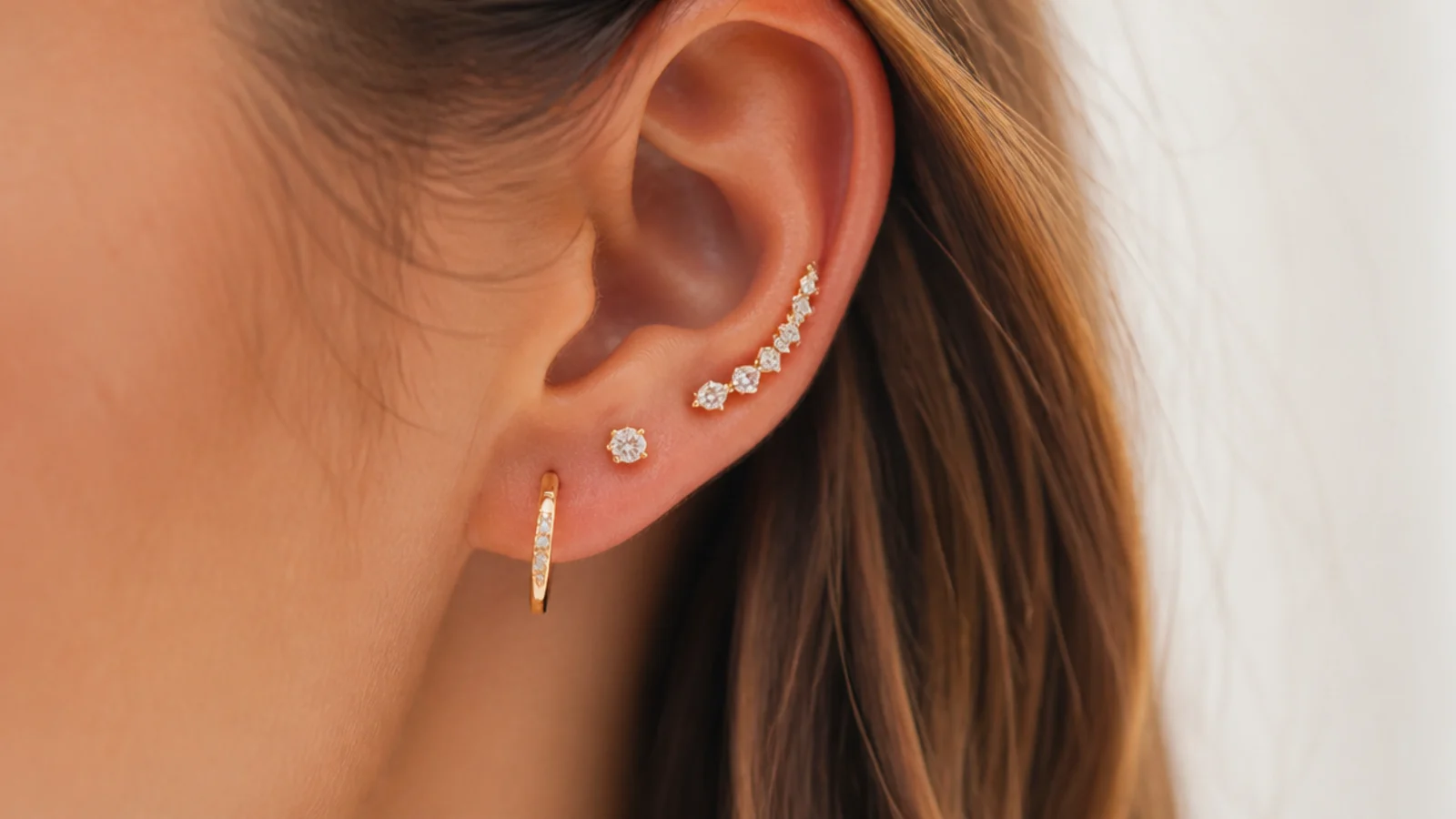
A curated ear stack, sometimes called an ear party, turns multiple piercings into one considered look. Anchor the lobe with a stud, add a small huggie hoop in a second hole, and finish higher with a climber or a tiny hoop. Keep them in one metal for cohesion, and vary the size so they graduate up the ear. This is the perfect statement zone when your neckline is covered, since all the interest lives at the ear. Even two piercings styled this way look intentional rather than accidental.
Mix a stud with one small hoop before adding a third piece; two well-chosen earrings already read as curated.
25. Anklet with Sandals: Warm-Weather Finish
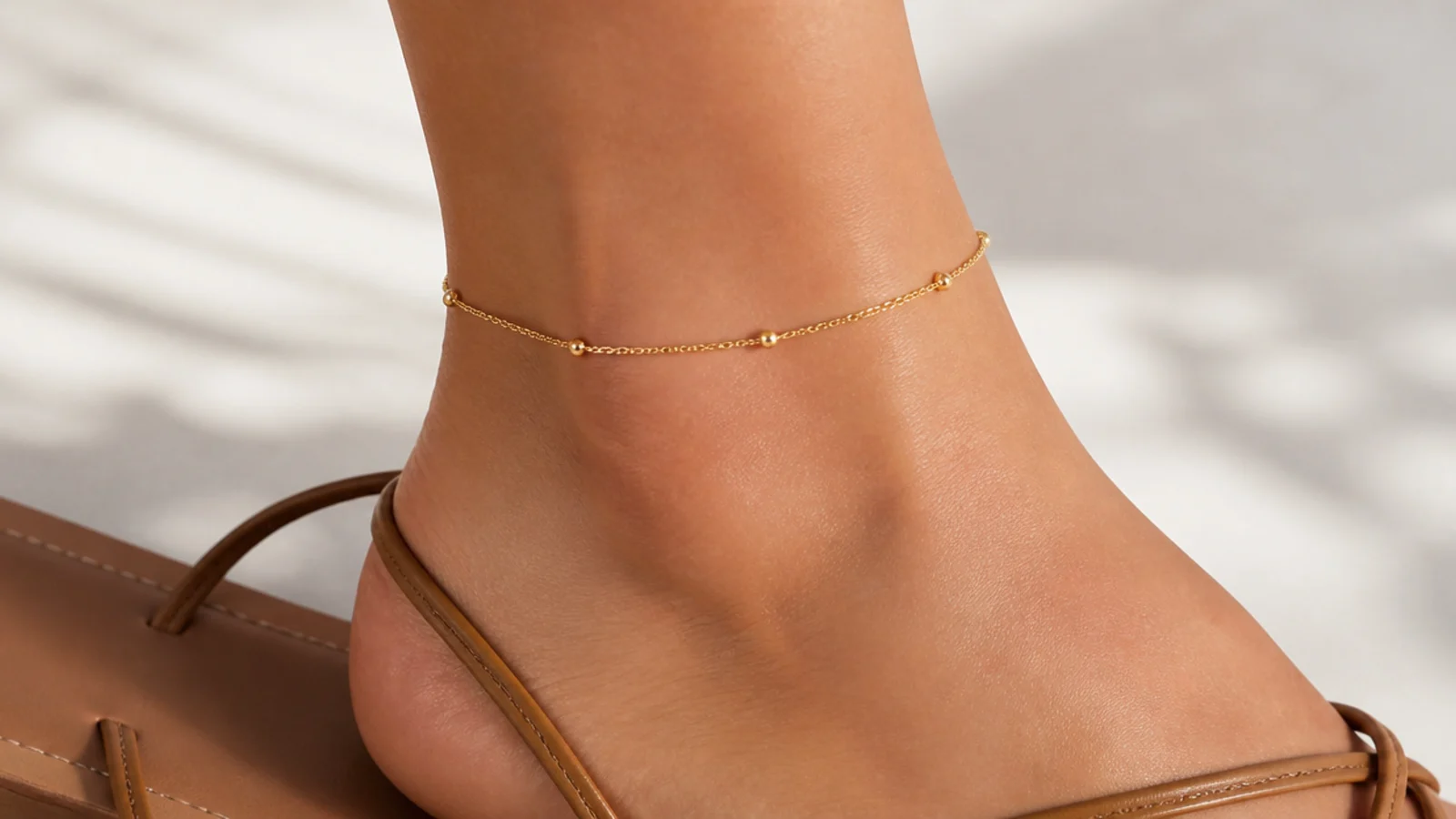
When your outfit shows ankle, a fine chain anklet is a quiet way to extend your jewelry story down the body. Worn just above a strappy sandal with a midi skirt like a white denim skirt outfit or cropped jeans, a delicate gold anklet catches the light as you move and finishes a warm-weather look. Keep it thin and simple, since a chunky anklet reads costume rather than considered. Treat it as a subtle accent, not a statement zone, and pair it with equally quiet pieces up top. It is the finishing touch most people forget.
A water-safe gold-filled or solid chain suits an anklet, since it takes friction from shoes and the elements.
How to Match a Necklace to Any Neckline
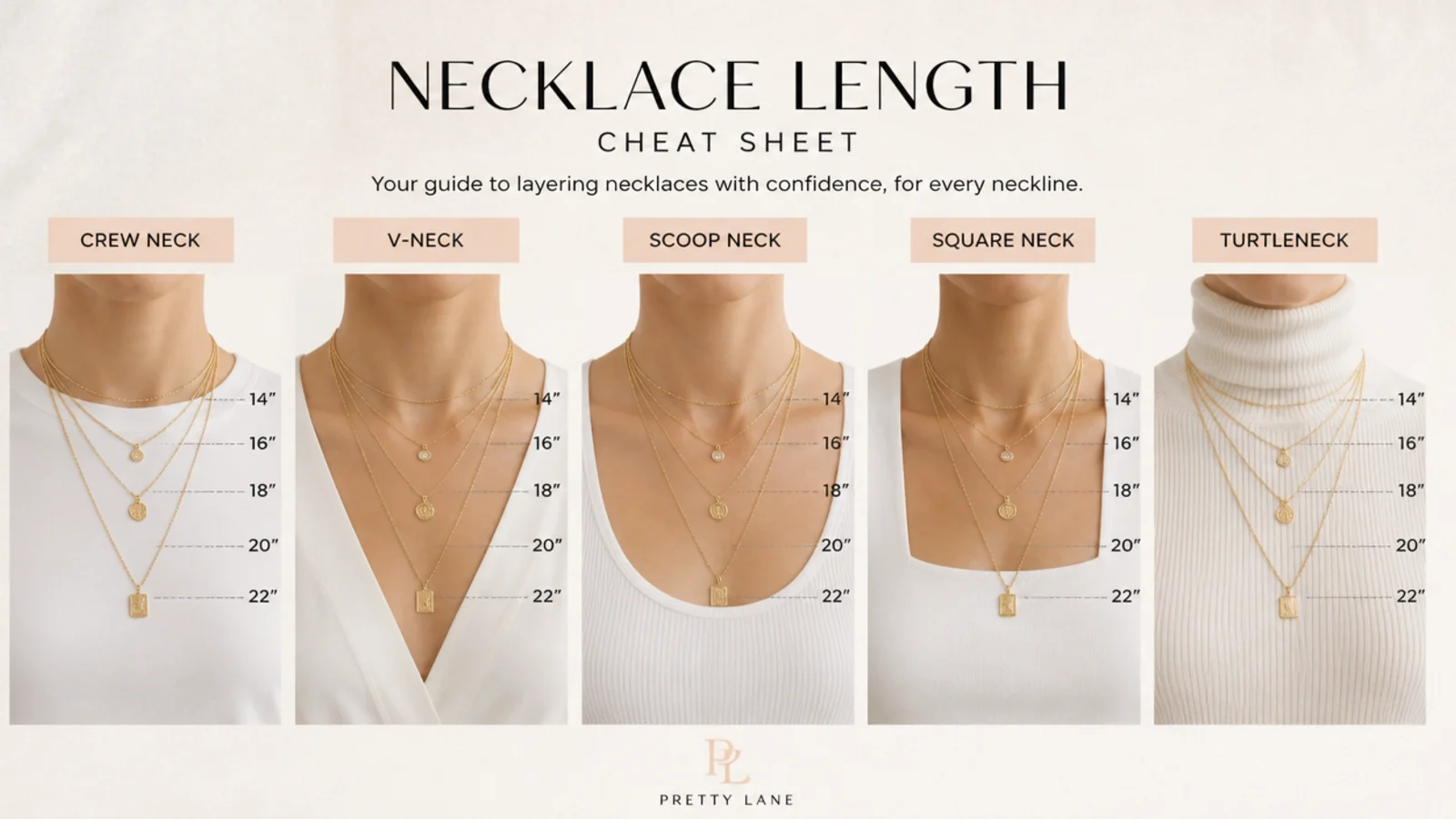
The neckline decides your necklace before taste does, so learn the shape-matching rule and you can dress any top in seconds. Curved necklines take curved necklaces: a scoop or sweetheart neck flatters a crescent or a soft layered set. Pointed necklines take pointed necklaces: a V-neck wants a Y-necklace or a pendant that drops into the V. Straight necklines take straight necklaces: a square or strapless neck suits a choker or a flat collar that mirrors the edge. High, covered necklines take length: a turtleneck or mock neck wants a long 24-inch pendant laid over the fabric, never a short chain buried under it. And busy or bare necklines, halter, off-shoulder, boat, take no necklace at all - move the interest to statement earrings instead. Length is the other half: 16 inches fills a crew neck, 18 to 20 inches suits most V-necks and scoops, and 24 inches and up belongs over covered necks. Match the shape, then match the length, and the necklace question is solved.
Can You Mix Gold and Silver Jewelry?
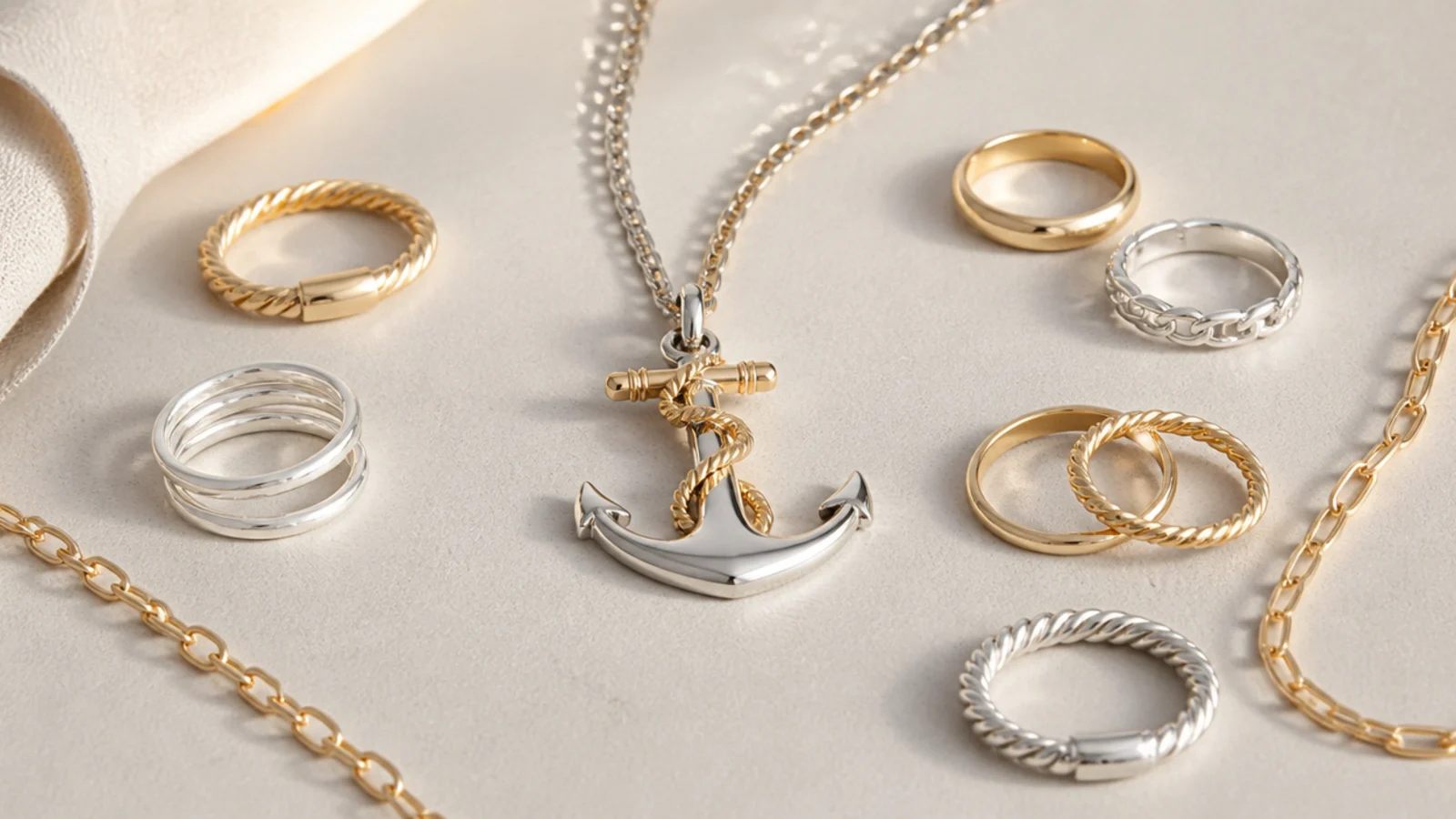
Yes, mixing gold and silver is not only allowed, it looks current and expensive when you do it with intention. The old rule of never mixing metals is gone; the new rule is anchor and repeat. Anchor the mix with one two-tone piece - a ring, a watch, or a necklace that already combines both metals - so the eye reads the whole look as planned rather than accidental. Then repeat each metal at least twice, so you have two gold and two silver pieces rather than a single lonely silver ring lost in a sea of gold. Start the mix at your hands, where stacked rings make it feel playful and low-stakes, before carrying it up to the more formal neckline. The practical payoff is huge: a mixed-metal approach means one jewelry set works with both warm-toned and cool-toned outfits, so you stop having to own everything twice. If you would rather keep it simple, staying in one metal always works too - mixing is a choice, not a requirement.
How Much Jewelry Is Too Much?
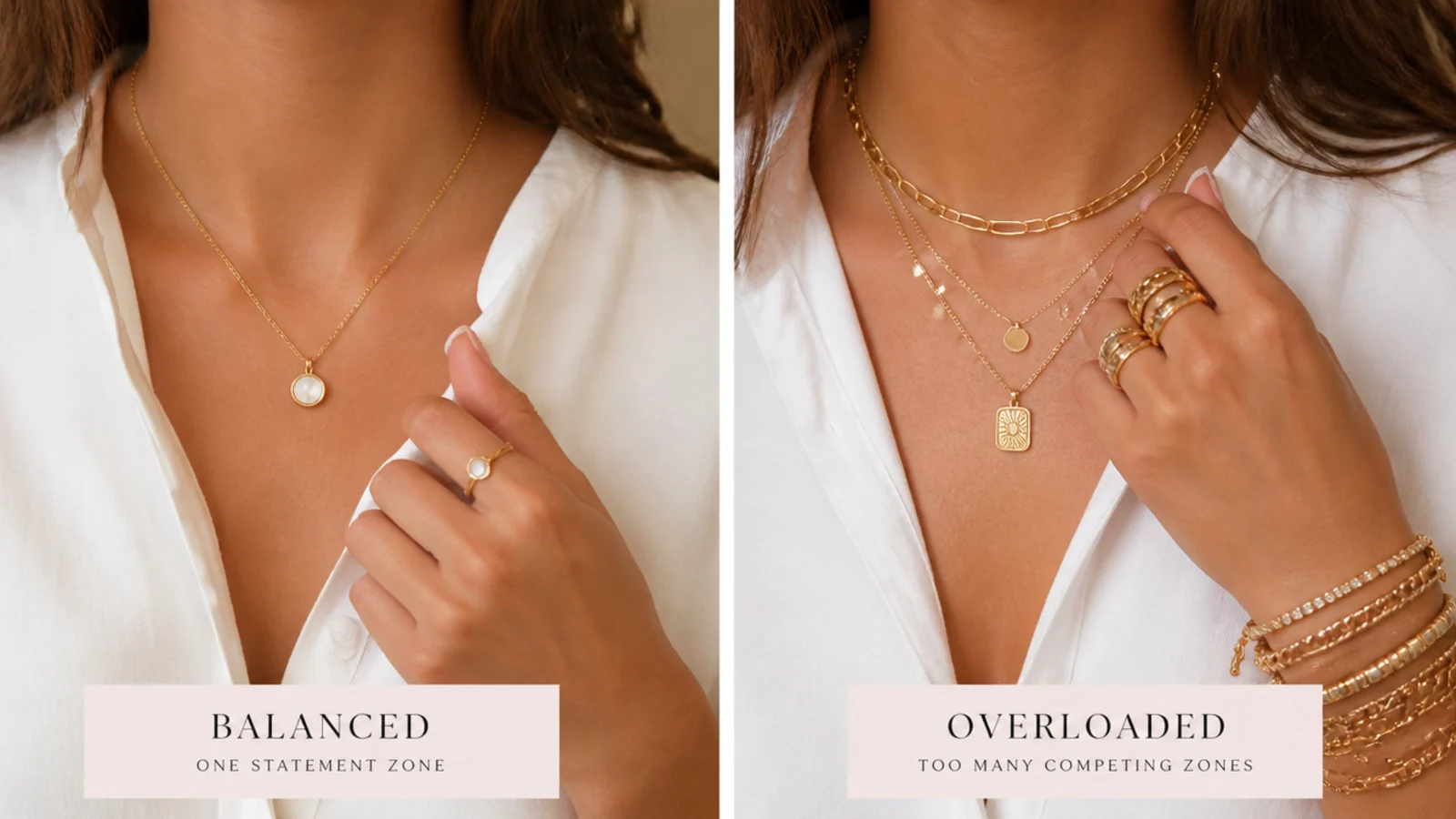
Too much jewelry is more than one statement zone competing for attention at the same time. Think of your body as having three zones - ears, neck, and wrists and hands - and let only one of them lead. If your earrings are bold, keep the necklace short and simple and the rings small. If a layered necklace is the star, wear studs and a single thin bracelet. When two or three zones all shout at once, the eye has nowhere to rest and the look reads as piled on rather than styled. The famous advice to remove one thing before you leave is really this rule in action: you are taking away the second statement zone. Volume is fine when it is contained - a big ring stack or a full bracelet stack is one zone, not five separate decisions. The test is simple: pick the piece you love most today, build around it, and quiet everything else. A balanced look almost always has one loud thing and several soft ones, never three loud things fighting for the same glance.
Matching Your Metal to Your Outfit and Skin
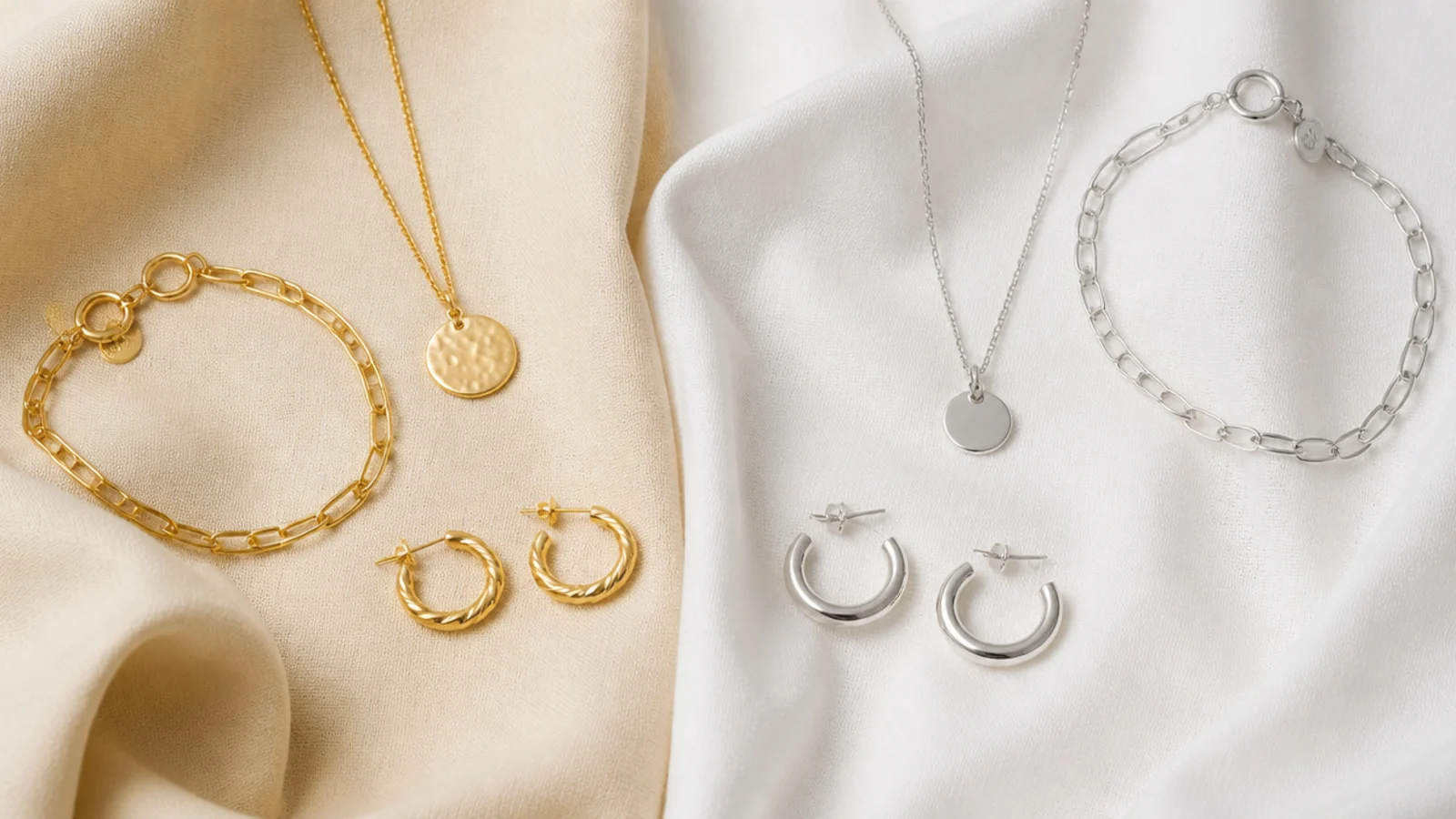
Metal temperature is a quiet lever that makes jewelry look right or slightly off, and it works two ways. First, match the metal to the outfit's color temperature: warm gold and rose gold sit best with warm colors like camel, olive, rust, cream and most earth tones, while silver and white gold suit cool colors like navy, gray, cool blues and true white. Gold against black is the exception almost everyone loves, because the warmth lifts the flatness of black. Second, consider your skin's undertone: warm undertones, where veins look greenish and gold earrings flatter, lean gold, while cool undertones, where veins look bluish and silver flatters, lean silver. Neutral undertones can wear both, which is the easiest position to be in. None of this is a hard law - a mixed-metal piece sidesteps the whole question, and confidence beats color theory. But when an outfit feels almost right and you cannot say why, swapping the metal temperature is often the fix. Use it as a tiebreaker, not a cage.
Building a Small Jewelry Set That Works With Everything
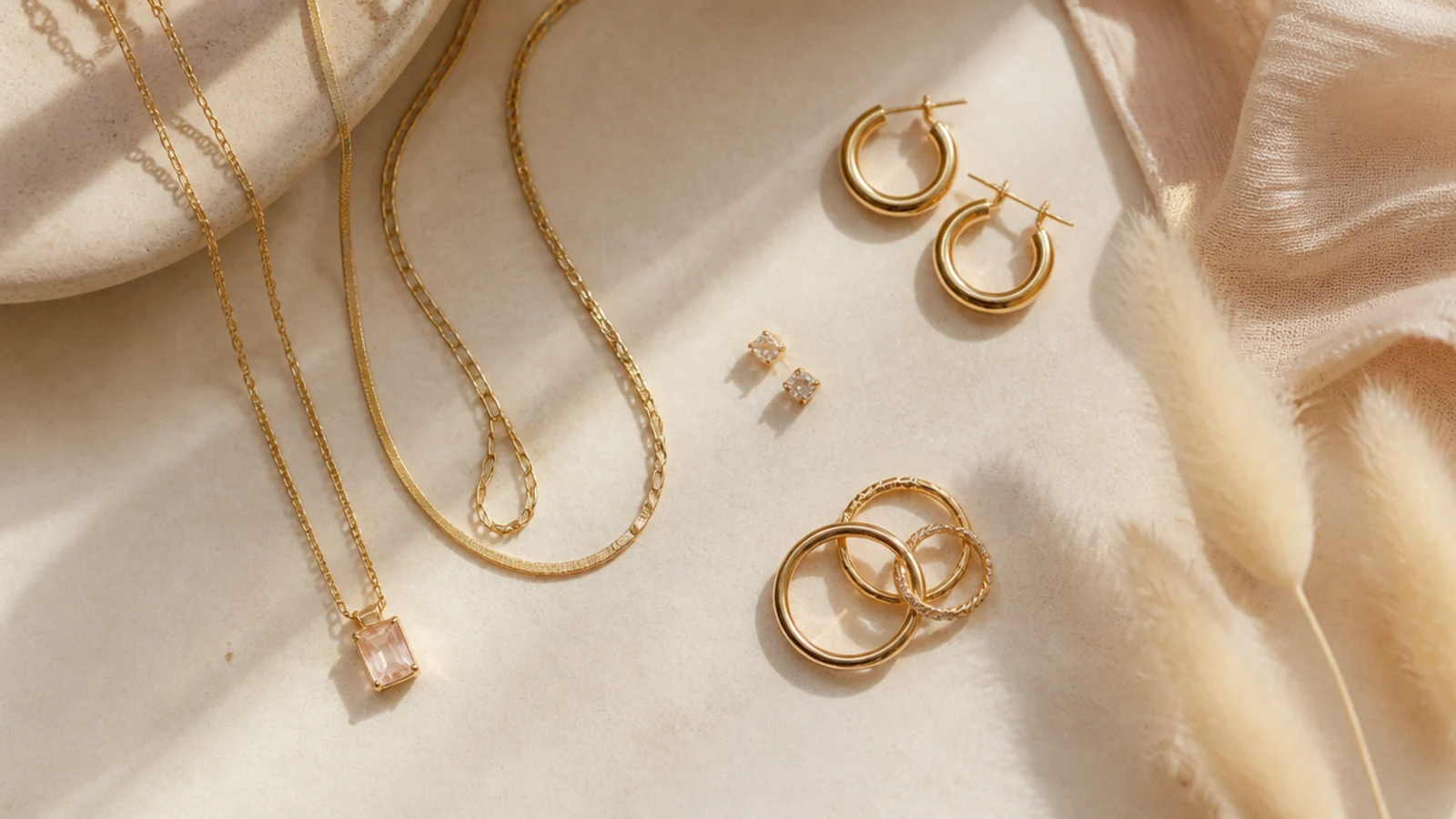
You do not need a drawer full of jewelry to style any outfit; you need about eight versatile pieces that recombine. Start with the workhorses: a pair of stud earrings, a pair of medium hoops, a 16-inch pendant, and a Y-necklace or a second chain for layering. Add a couple of thin stacking rings and one bolder statement ring, plus a fine bracelet and one cuff. With that set you can answer every neckline in this guide - the pendant for crew necks, the Y for V-necks, the layering chains for scoops, the hoops when the neck is covered, and the rings and cuff whenever you want a statement zone away from the neck. Buy the pieces you will wear daily in solid gold or gold-filled so they survive friction, and save plated for pieces you wear occasionally. A small, well-chosen set beats a big pile of single-outfit pieces every time. See the full starter list in everyday jewelry essentials, and the work-appropriate version in how to style jewelry for work.
Main Differences
- Gold flatters warm colors and warm undertones, while silver suits cool colors and cool undertones, so the outfit's temperature is the first thing to check.
- Gold is the near-universal winner against black because its warmth lifts the flatness, while silver stays cooler and cleaner.
- A two-tone or mixed-metal piece sidesteps the whole gold-versus-silver question and lets one set work with any outfit.
- Neutral undertones can wear both freely, so if your veins read blue-green, buy whichever metal you prefer and stop worrying about the rule.
Frequently Asked Questions
How do I match a necklace to my neckline?
Match the shape, then the length. Curved necklines like scoop and sweetheart take curved necklaces; pointed V-necks take a Y-necklace or a pendant that drops into the V; straight square and strapless necks take a choker or flat collar; and high turtlenecks take a long 24-inch pendant over the fabric. Busy necklines like halter and off-shoulder take no necklace at all, so move the interest to statement earrings instead.
How do you coordinate jewelry with your outfit?
Use the balance rule. A bold, busy, or structured outfit wants one delicate piece, while a plain outfit wants one statement piece. Then match the metal to the outfit's color temperature - gold with warm tones and black, silver with cool tones. Finally, pick a single statement zone, ears, neck, or wrist, and keep the other two quiet. That is the whole system: balance, metal temperature, one statement zone.
Can you mix gold and silver jewelry?
Yes, and it looks intentional when you anchor and repeat. Wear one two-tone piece - a ring, watch, or necklace that already combines both metals - so the mix reads as planned, then include at least two pieces of each metal rather than one lonely outlier. Start at the hands with stacked rings, where mixing feels playful, before carrying it up to the neckline. Mixed metals let one set work with both warm and cool outfits.
How much jewelry is too much?
More than one statement zone at a time. Split your body into three zones - ears, neck, and wrists and hands - and let only one lead. Bold earrings mean a simple necklace and small rings; a layered necklace means studs and one thin bracelet. When two or three zones compete, the look reads as piled on. The old advice to remove one thing before leaving is just this rule: take away the second statement zone.
What are the best layered necklace ideas?
Stagger the lengths by at least two inches so each chain shows - try 14, 16 and 18 inches, or 16, 18 and 20. Vary the weight, pairing a plain fine chain with one that carries a small pendant, so the eye can separate them. Odd numbers, usually three, look more balanced than two. Keep them in one metal for a clean look, and use a layering clasp or spacer to stop the shortest chain riding up.
What necklace works with a V-neck top?
A Y-necklace is the ideal match because it drops a pendant from a V-shaped chain and traces the neckline exactly. A single pendant on an 18 to 20-inch chain sitting inside the V works too. Avoid a short choker or a straight collar, since a horizontal line at the top of a vertical neckline reads as a mismatch. On a deep V, keep the pendant small so it sits above the bust.
What jewelry goes with a turtleneck?
Length, not a short chain. A turtleneck covers the collarbone, so a long pendant on a 24 to 30-inch chain laid over the knit creates a clean vertical line and looks intentional, and long layered chains do the same. A turtleneck is also the best backdrop for a bold statement earring, since the covered neck lets the ears lead. Skip anything short, which just sits on top of the fold with nothing to frame it.
Should jewelry match my skin tone or my outfit?
Both help, and they usually agree. Warm undertones, where veins look greenish, flatter gold; cool undertones, where veins look bluish, flatter silver; neutral undertones wear either. For the outfit, match warm gold to warm colors and black, and silver to cool colors. When skin and outfit point different ways, a mixed-metal or two-tone piece bridges them. Treat all of this as a tiebreaker, since confidence matters more than color theory.
What is the one-statement-piece rule?
Wear one bold piece and keep everything else quiet. Bold sculptural earrings with a bare neck and small rings is the most reliable version, but it can be a big ring stack, a full bracelet stack, or a statement necklace instead. The single loud piece becomes the focal point, and the restraint everywhere else makes it read as a choice rather than an accident. It is the fix to fall back on for any outfit or neckline when nothing else feels right.
Which neckline are you styling first?
If you remember one thing, let it be the neckline rule: the shape of your top decides your necklace length before taste ever enters the picture, so a 16-inch pendant for a crew neck and a Y-necklace for a V-neck will never look wrong. Then pick one zone to lead - ears, neck, or wrist - and keep the other two quiet so nothing competes. Build a small set you can grab without thinking by starting with everyday jewelry essentials, learn the finish tricks in jewelry that looks expensive, and browse more jewelry ideas to round out your rotation.