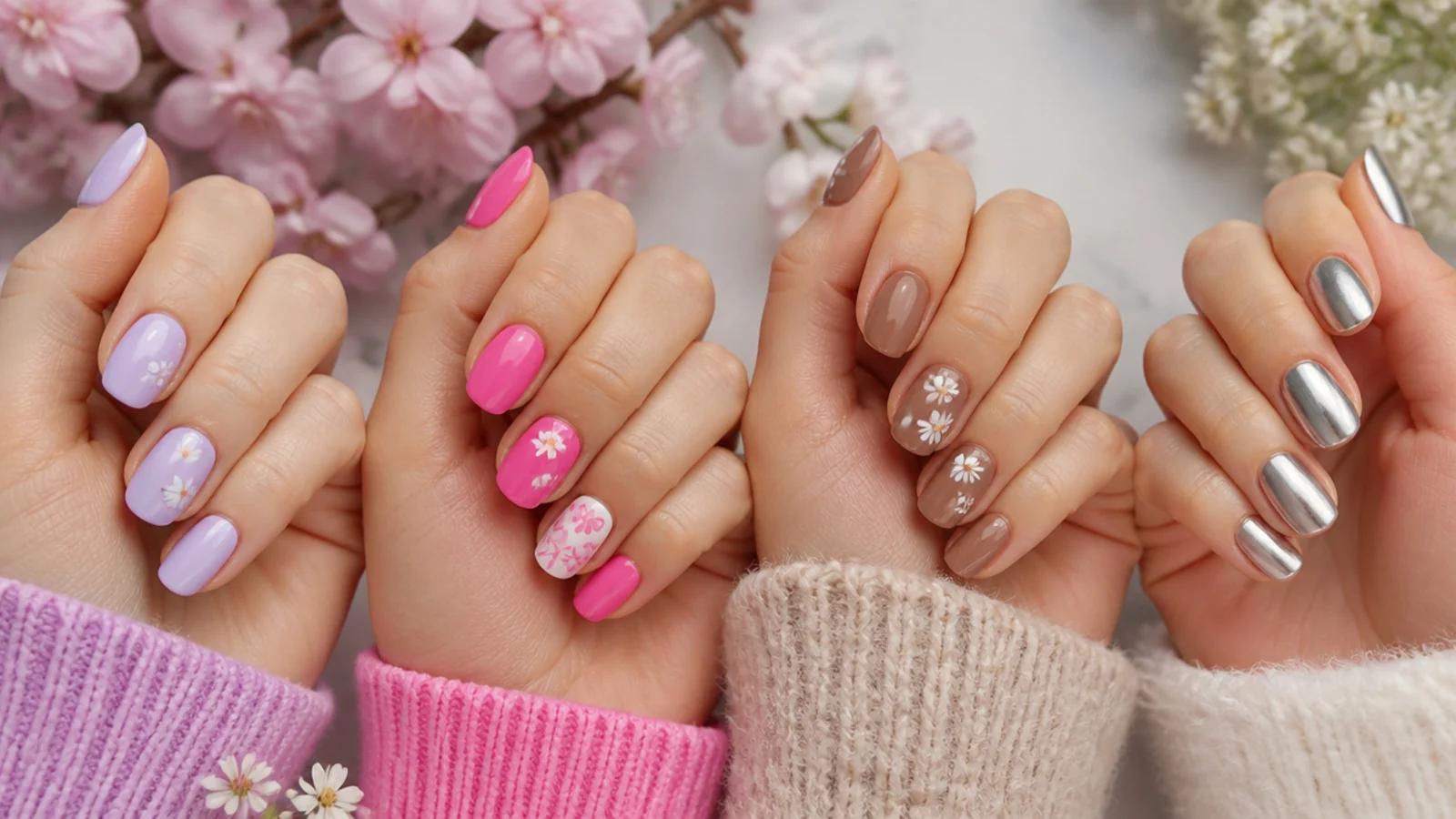
Quick Comparison
| Spring and Summer Nails | Fall and Winter Nails | |
|---|---|---|
| Core palette | Pastel lilac, mint, Barbie pink, lemon, coral, lagoon blue | Mocha, burnt orange, olive, oxblood, navy, emerald |
| Typical finish | High gloss and jelly translucence | Matte, satin, chrome and pearl |
| Common shape | Short square, round and coffin | Almond, squoval and short round |
| Art motifs | Daisies, waves, fruit, smileys, mismatched pastels | Tortoiseshell, latte stripes, snowflakes, gold foil |
| Main wear problem | Sun and chlorine fade brights; neons stain badly | Dry heat lifts edges; dark pigment stains yellow |
| Base coat need | Essential under yellow, neon pink and jelly red | Essential under navy, oxblood and emerald |
| Best undertone fit | Deeper and olive tones carry brights easiest | Cool tones carry navy and oxblood easiest |
| Salon cost | Gel 35 to 50 dollars, art adds 5 to 10 per nail | Gel 35 to 60 dollars, chrome adds 10 to 20 |
| Transitional bridge shade | Sage green and mocha brown carry you into fall | Milky white glazed and dusty rose carry you into spring |
1. Pastel Lilac Spring Nails
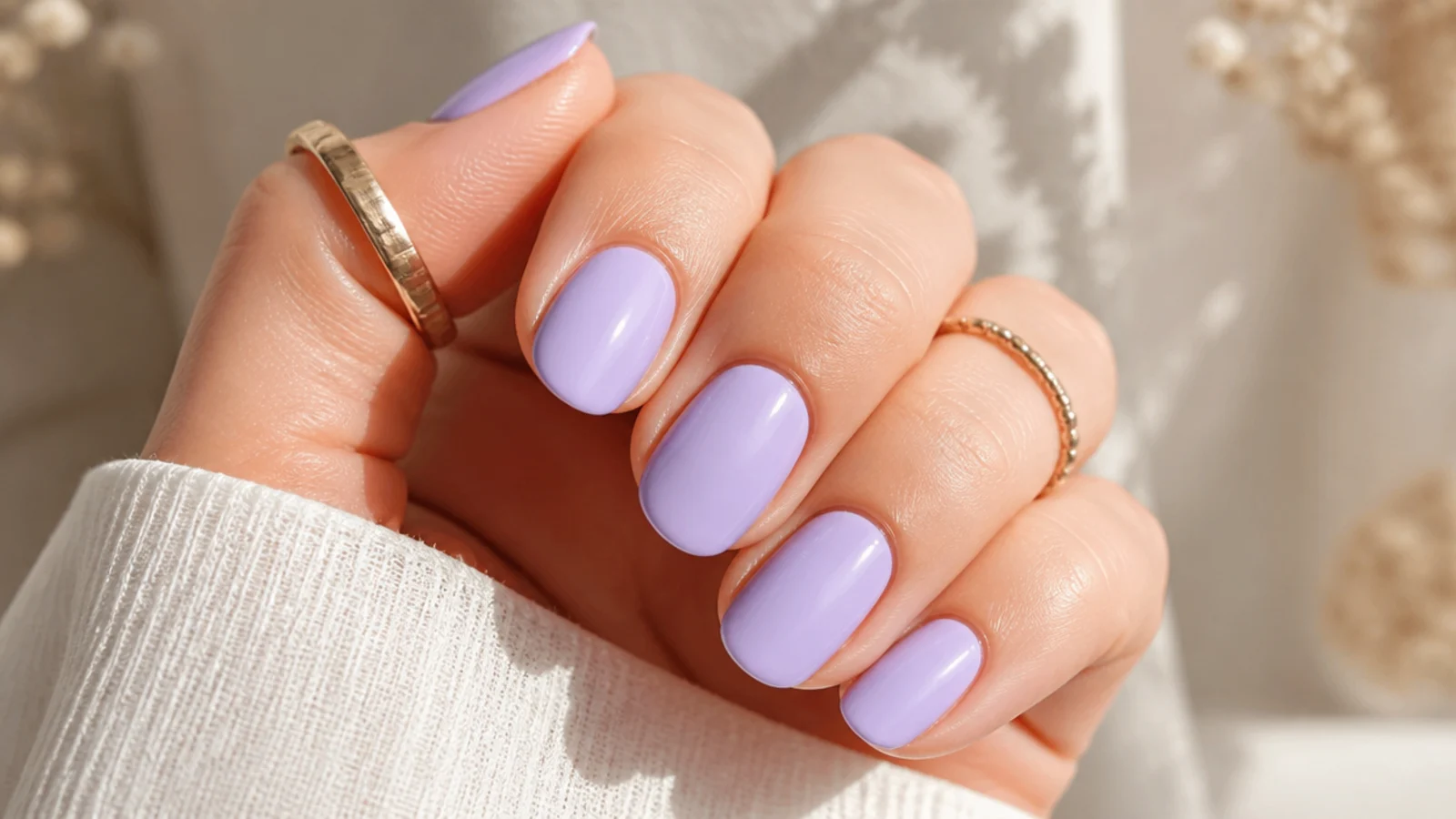
The easiest spring color to wear because it flatters cool and neutral undertones without going juvenile the way baby pink can. Two coats of a creamy lilac such as OPI Do You Lilac It gives full opacity on short almond nails at about 3mm of free edge. Pastels are the one family where a thin base coat genuinely changes the result, since a bare nail bed shows pink through the pigment and muddies the lavender. Budget 35 to 45 dollars for gel or about 10 dollars for a polish bottle you keep. More options in pastel lavender nails.
Who it suits: Cool and neutral undertones, offices, and short nails.
Tip: Ask for three thin coats over a white-tinted base so the lilac reads true instead of gray.
2. White Daisy Nails on a Milky Base
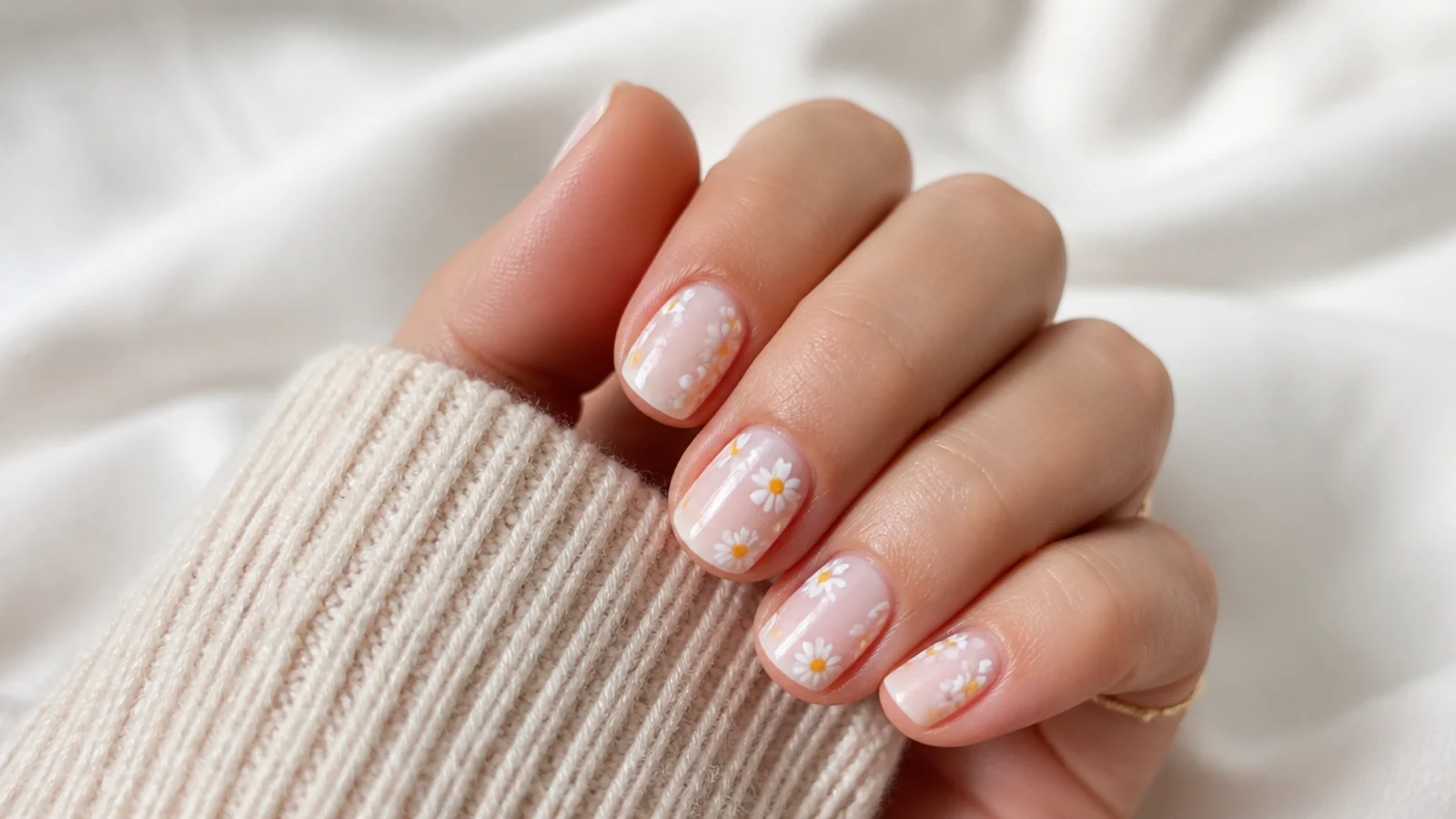
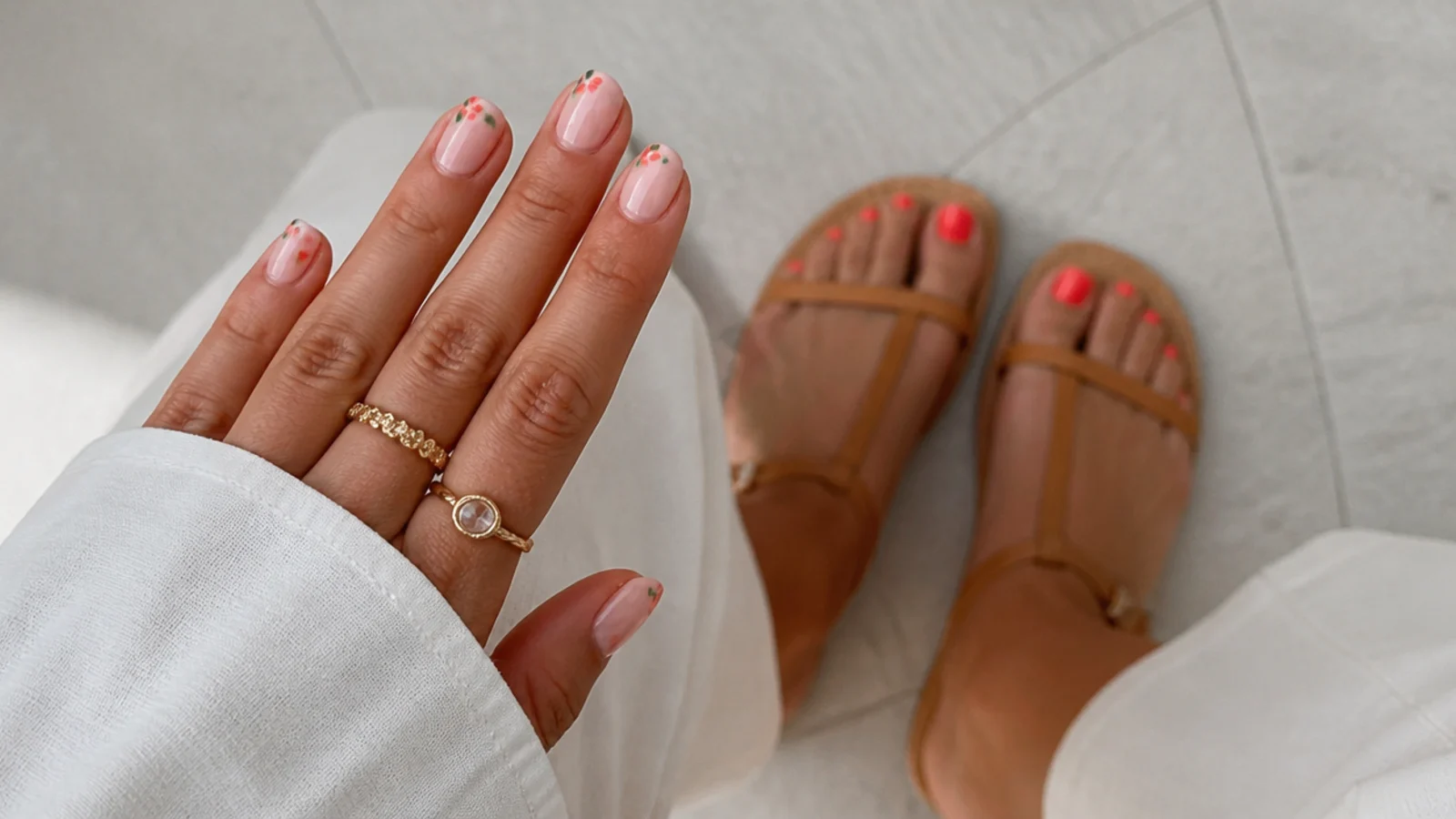
Five-petal white daisies with a single yellow dot center, painted on two accent nails over a milky nude base. This is the most saved spring design on the board and it is genuinely beginner-friendly: each petal is one dotting-tool press pulled slightly outward, so you are making dots, not painting flowers. Keep the daisies small, around 4mm across, and put them on the ring and index nails only. A salon charges roughly 5 dollars per painted nail. See the technique cousin in blooming gel flower nails.
Who it suits: Beginners, short nails and anyone wanting spring art without a full set.
Tip: Press the petal dots while the base is fully cured, or the white will smear into the nude.
3. Pastel French Tip Nails
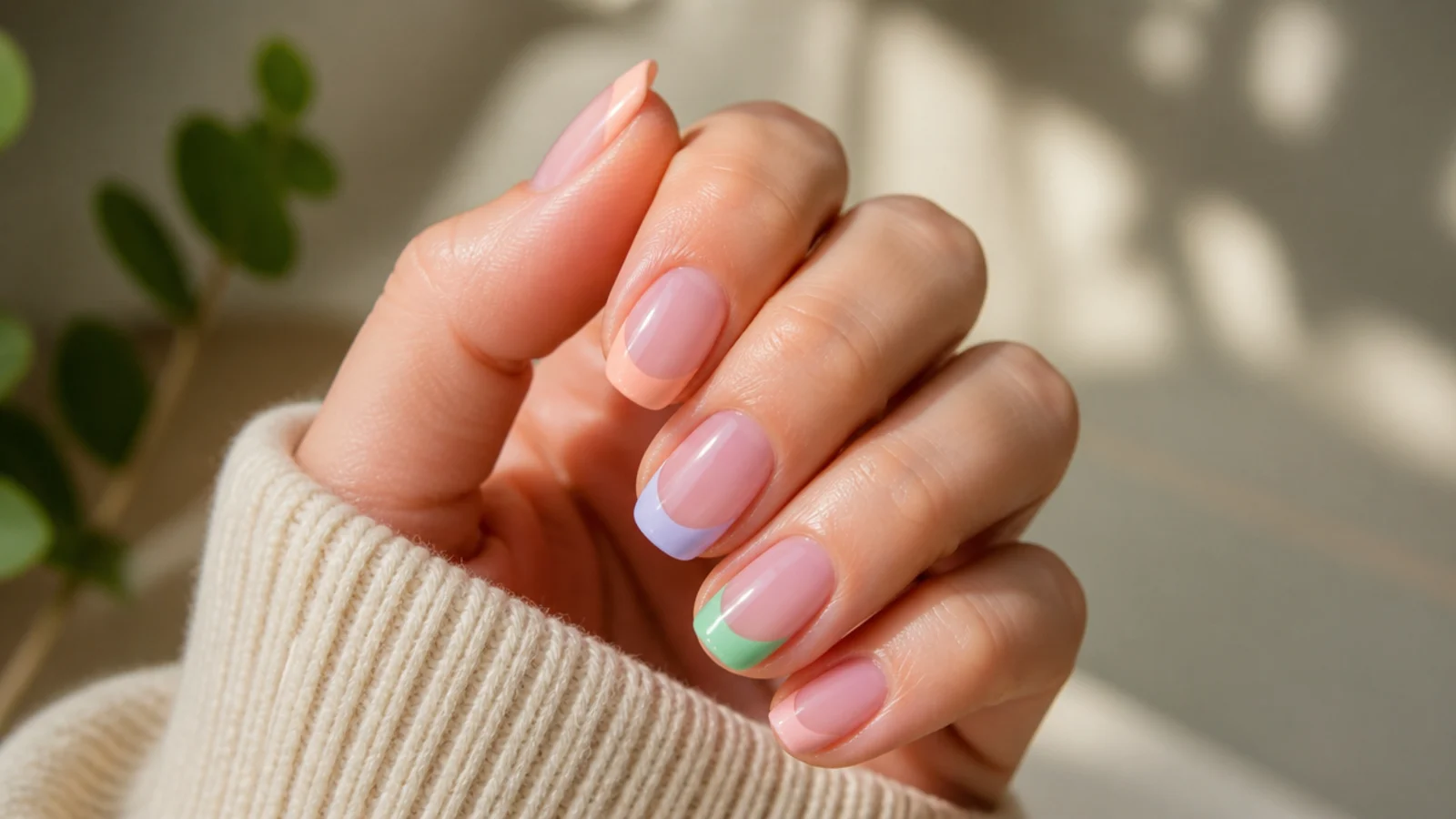
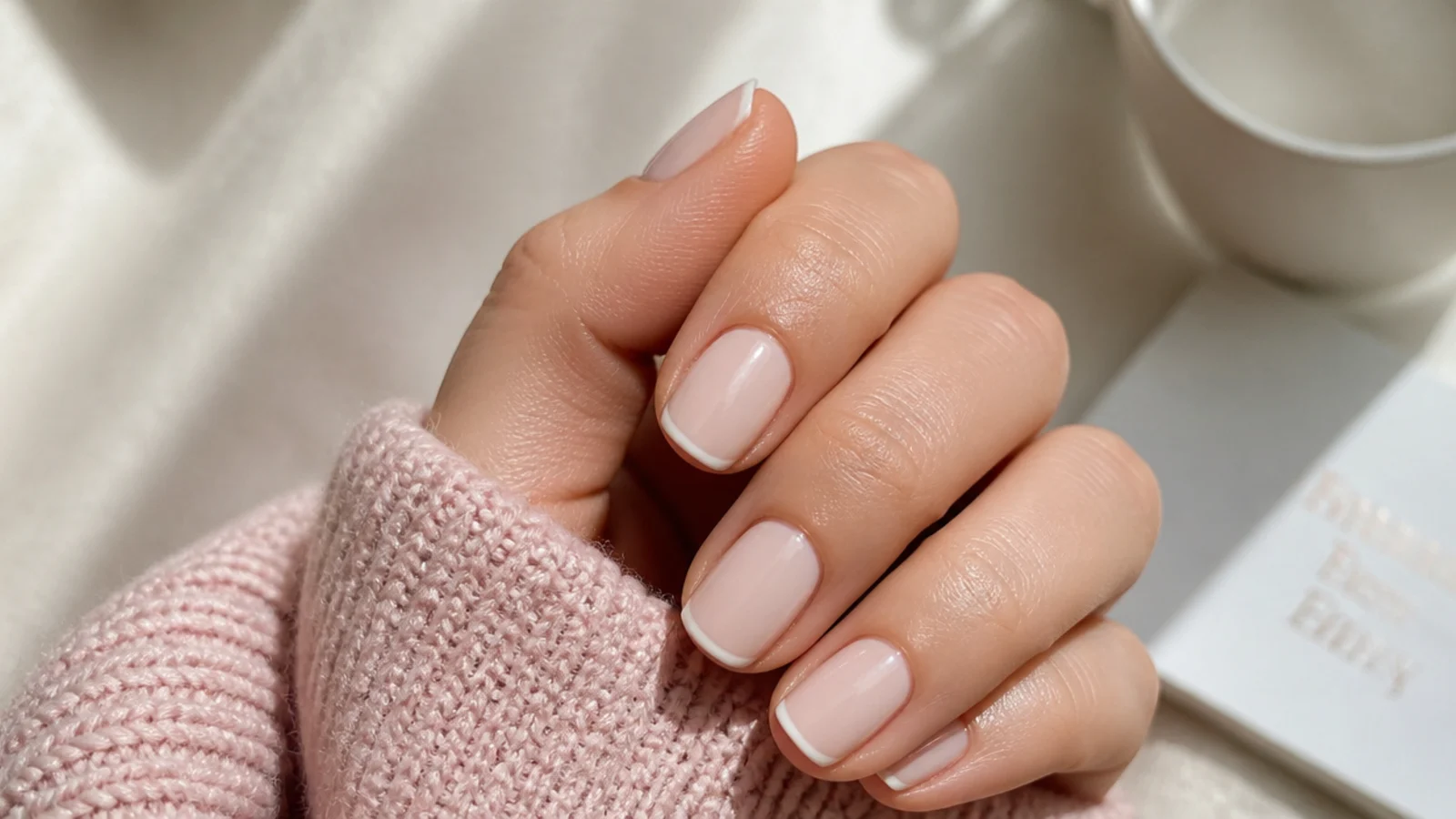
A classic French with the white swapped for a different pastel on each nail: mint, lilac, peach, butter yellow and baby blue over a sheer pink base. Mismatched sets are one of the biggest 2026 nail stories and this is the softest version of it. Transitional pick: it bridges spring into summer, because the same five pastels read fresh in June if you brighten the base coat. Ask for a 3mm tip band, not a hairline, so the colors register. Costs about 45 to 55 dollars in gel.
Who it suits: Anyone who wants color without a full opaque set.
Tip: Ask your tech to keep all five tips at matched width so the mismatch looks planned.
4. Barbie Pink Spring Nails
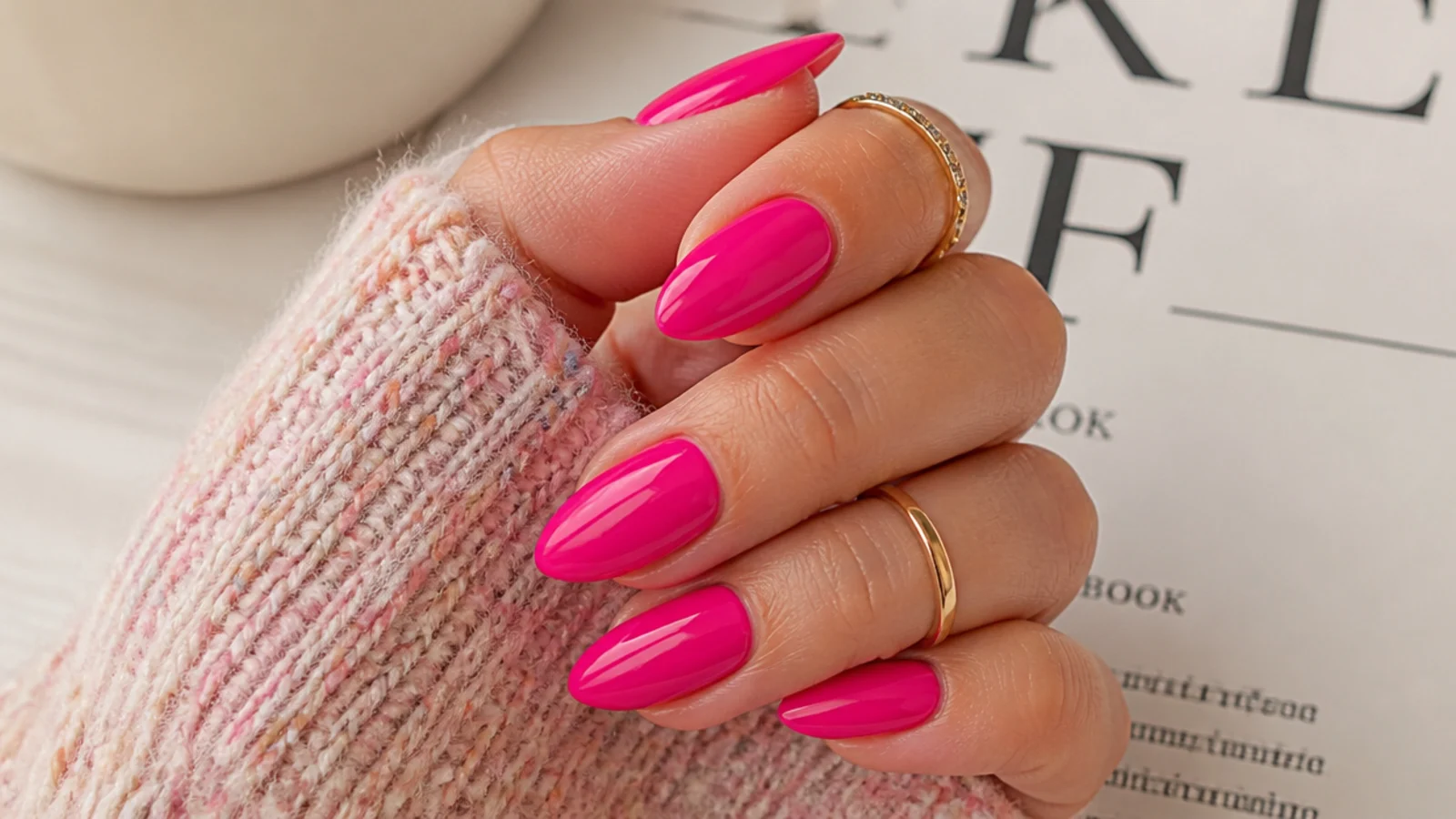
A saturated blue-based bubblegum pink, opaque in two coats, at medium almond length. This is the loudest spring shade that still reads cute rather than costume, and blue-based pink flatters far more skin tones than a coral-leaning pink does. It stains, so a base coat is not optional here. Bright pink also shows chips at the free edge faster than a nude, so gel is worth the money if you want more than a week. Pair it with the shade guide in cute pink nails for a soft girl look.
Who it suits: Spring break, warm weather and anyone bored of neutrals.
Tip: Cap the free edge with both color coats or bright pink will chip visibly by day four.
5. Cherry Blossom Nails
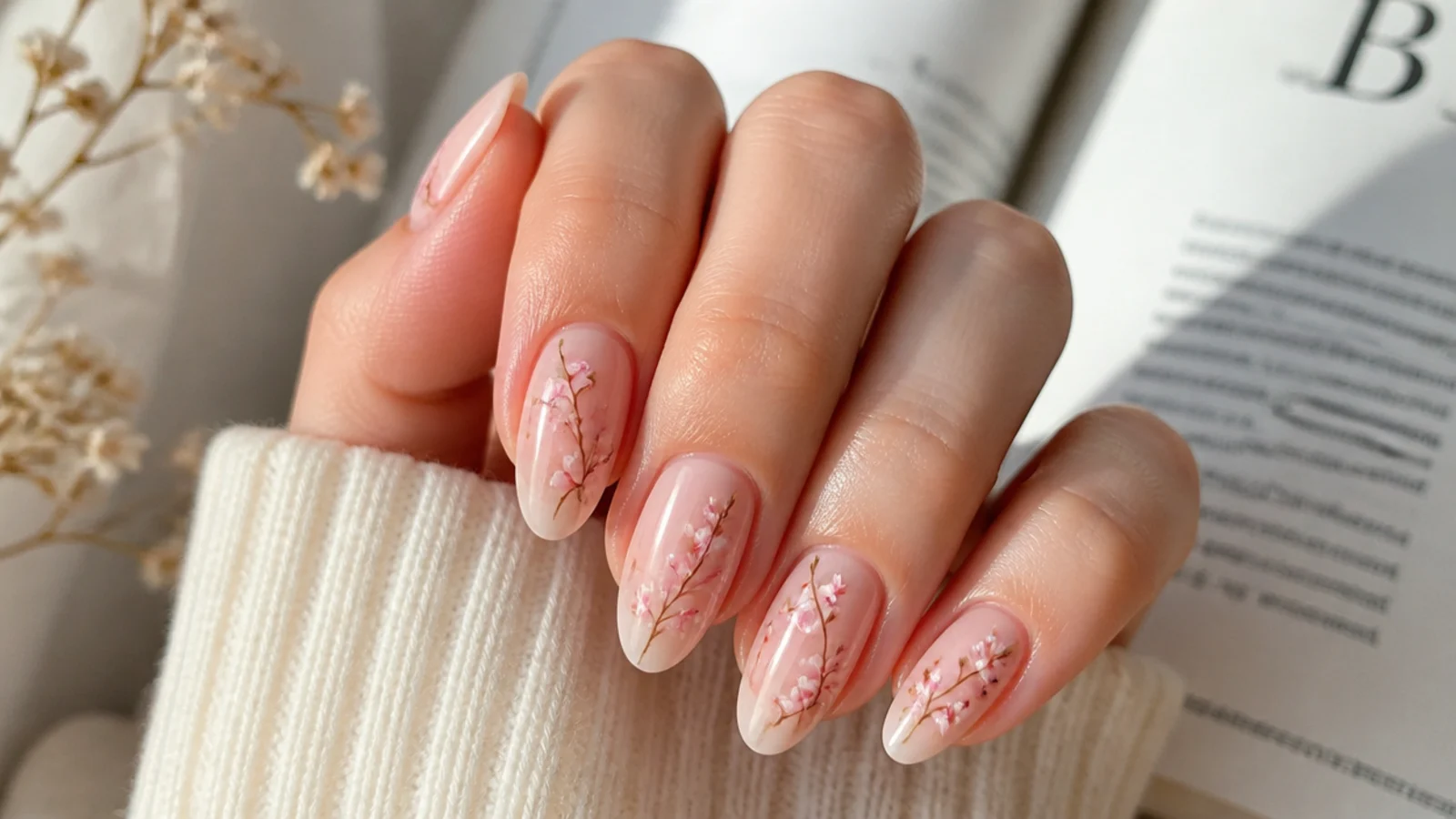
Thin brown branch lines running diagonally across a sheer nude base, with three or four pale pink five-petal blossoms clustered where the branch bends. It is the most detailed spring look on this list and it needs a striper brush, so most people should book it rather than attempt it. Two accent nails is plenty; ten reads busy. Expect 10 to 15 dollars per painted nail on top of the set. Keep the base sheer, because an opaque nude flattens the depth the branches depend on.
Who it suits: Longer nails, spring events and anyone wanting real hand-painted art.
Tip: Ask for the branch to run off the edge of the nail rather than stopping inside it.
6. Sage Green Nails
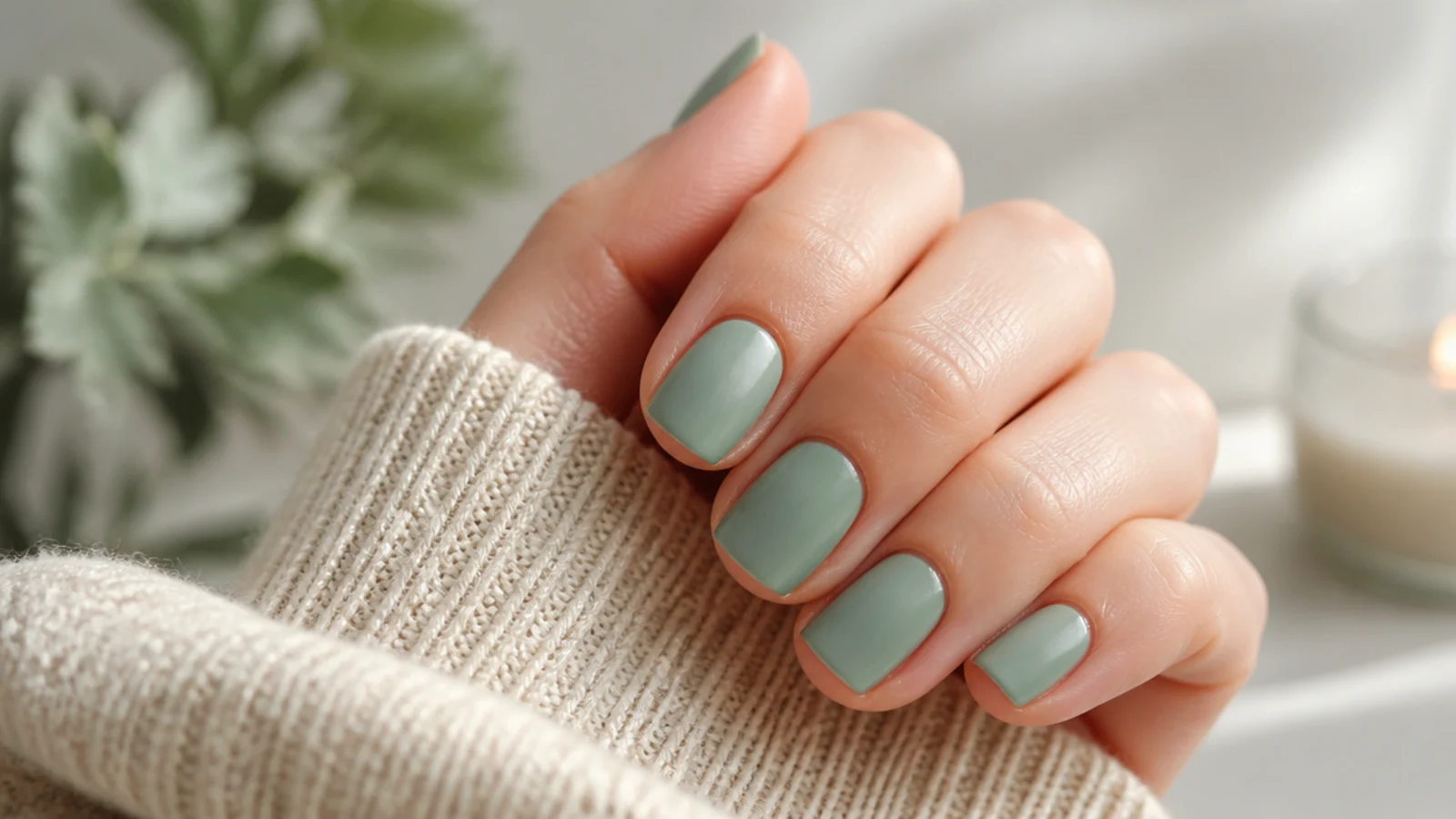
A dusty, gray-leaning green that behaves like a neutral. Transitional pick: sage is the single best spring-to-summer bridge shade because it is muted enough for March and cool enough for July, and it also survives an early fall week better than any pastel. It suits olive and warm undertones especially well, where cool pastels can look ashy. Two coats on short squoval nails, high gloss or satin. About 35 to 45 dollars in gel. The deeper end of this family lives in olive green nails.
Who it suits: Olive and warm undertones, and anyone who wants one set to last two seasons.
Tip: Choose a sage with gray in it, not yellow, or it turns into a spring-only mint.
7. Hot Pink Summer Nails
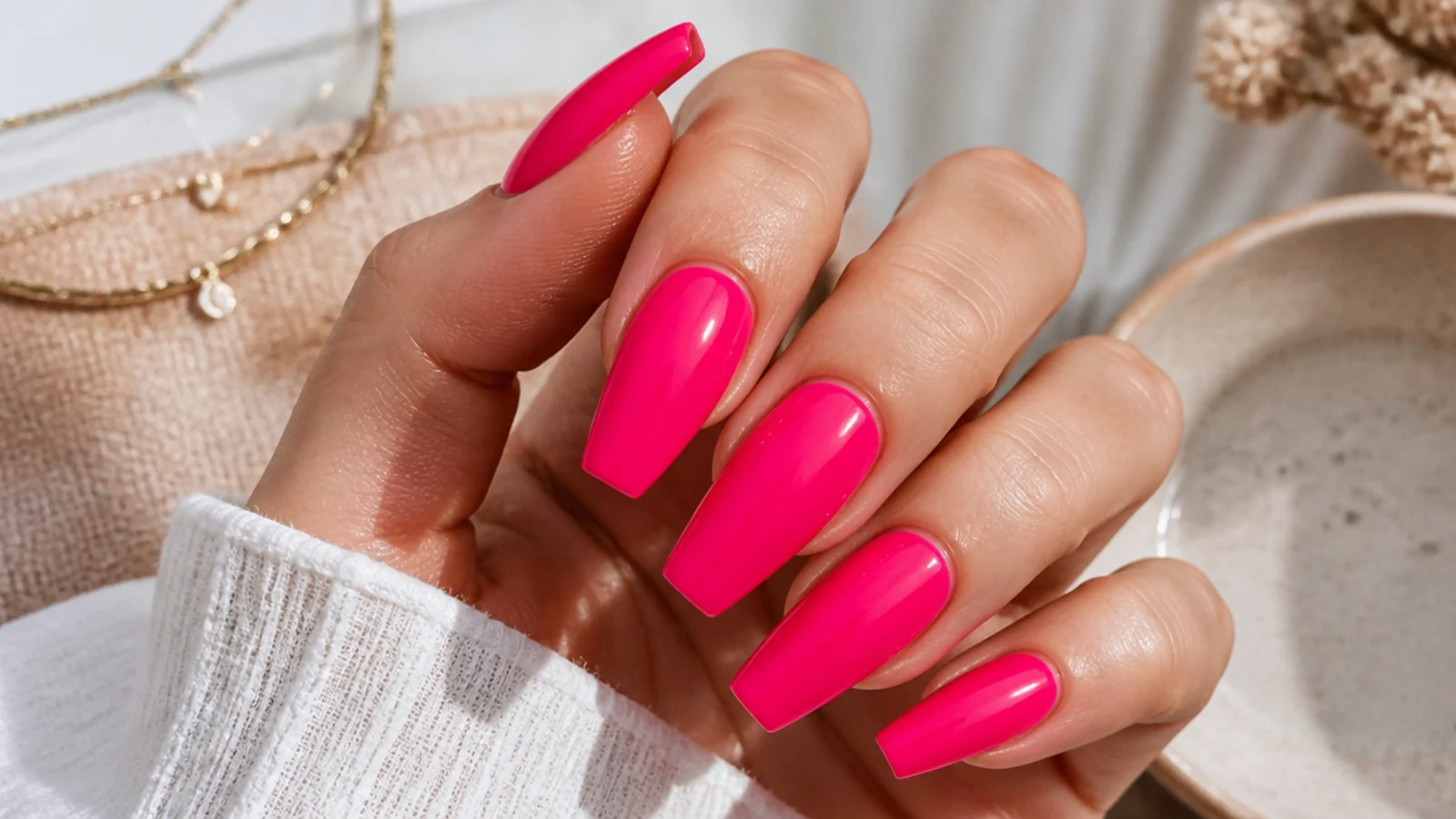
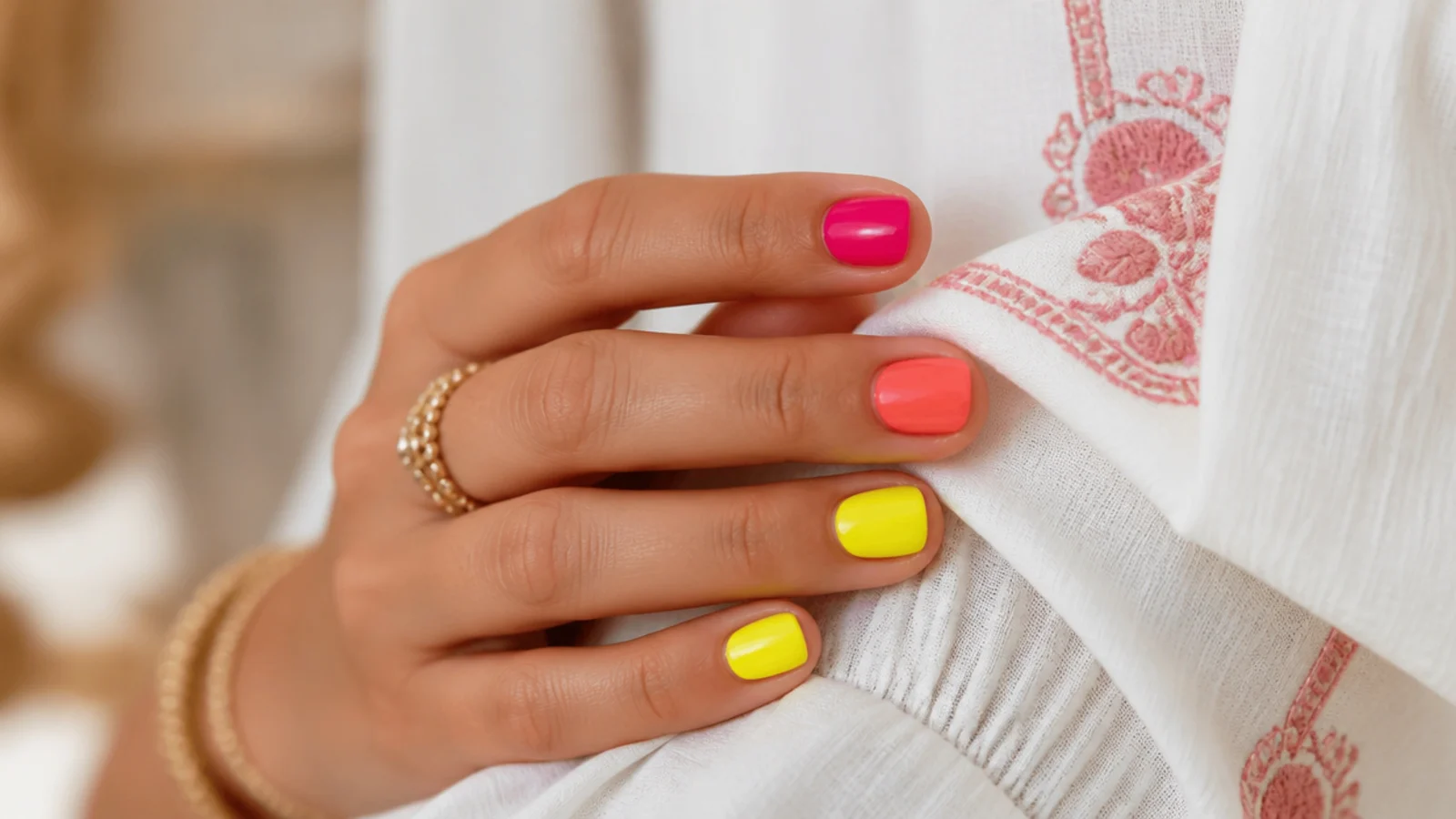
Full-strength magenta pink, the shade that reads summer from across a room. Brights like this need a white base coat under the color to look true; over a bare nail the pigment goes dull and slightly muddy, which is the single most common at-home summer nail mistake. Hot pink also fades in strong sun and chlorine, so a pool trip will cost you a shade or two by week two. Gel holds the color far better than polish. Full brights breakdown in cute summer nails in bright colors.
Who it suits: Vacations, tan skin and anyone wanting maximum summer color.
Tip: Lay one thin coat of white polish under the pink so the color reads at full strength.
8. Lemon Yellow Nails
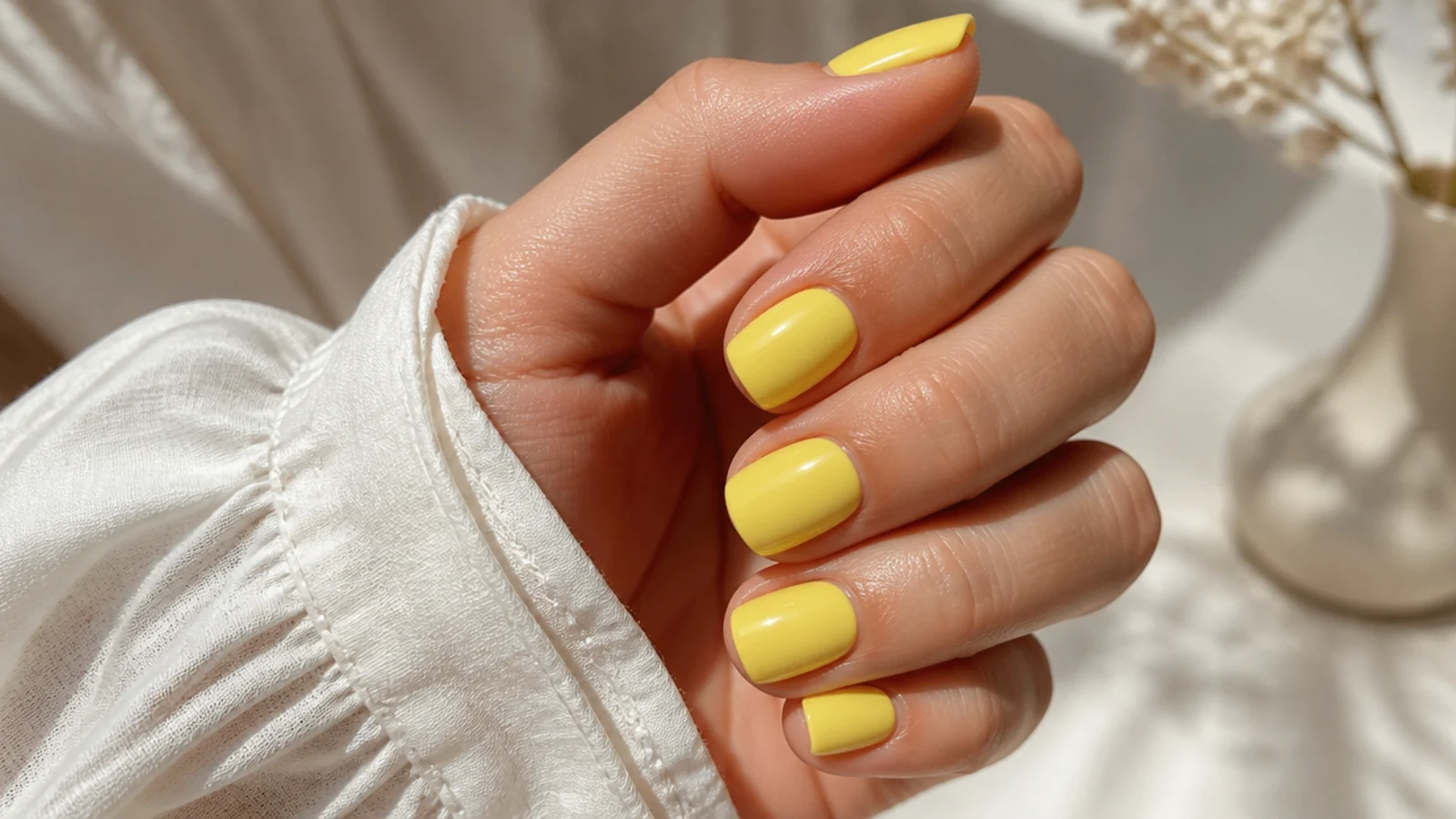
The hardest bright to wear and the most rewarding when it works. Yellow needs an opaque white base underneath or it goes streaky and translucent, and it is the worst offender for staining the natural nail, so use a base coat every time. Cool, very fair skin usually looks better in a butter yellow than a true lemon; deeper and olive tones can carry the full citrus. Keep nails short and square so the color does the work. About 35 to 45 dollars in gel, or one 10 dollar bottle.
Who it suits: Deeper and olive undertones, summer holidays and short nails.
Tip: Never put yellow straight on a bare nail; the stain outlasts the manicure by weeks.
9. Jelly Watermelon Red Nails
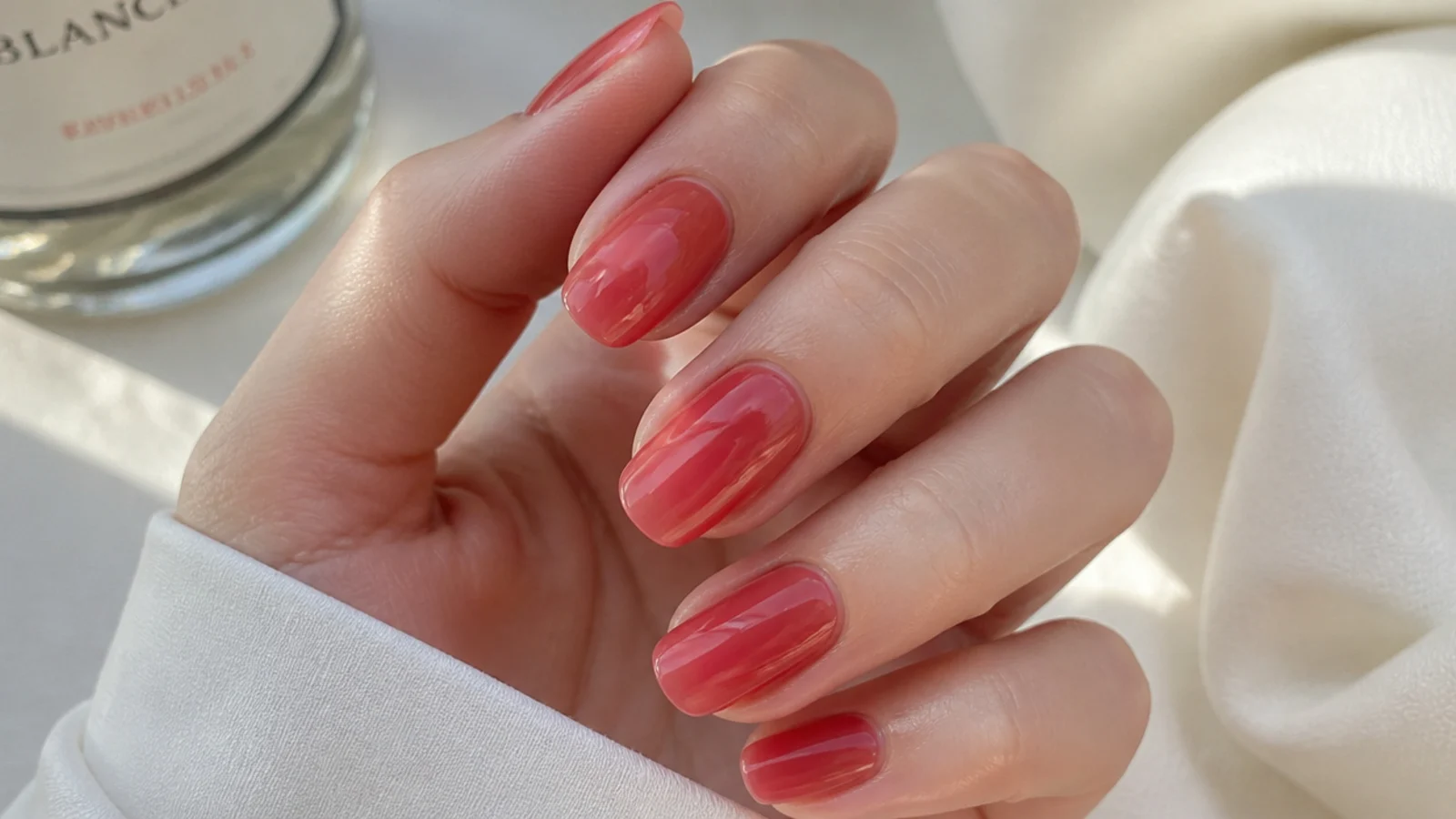
A translucent watermelon red tint, two coats maximum, so the natural nail shows through and the color deepens toward the free edge. Jelly nails are the named 2026 summer trend and this is the most wearable version of it, since a sheer red goes with everything and grows out invisibly. The rule is no white base and no third coat: both kill the transparency the finish depends on. Works best at short to medium length where the see-through band stays in proportion. Around 40 to 50 dollars in gel.
Who it suits: Anyone wanting summer color that still passes at work.
Tip: Ask for jelly red over a bare nail, two coats, so the see-through effect actually happens.
10. Ocean Blue Wave Nails
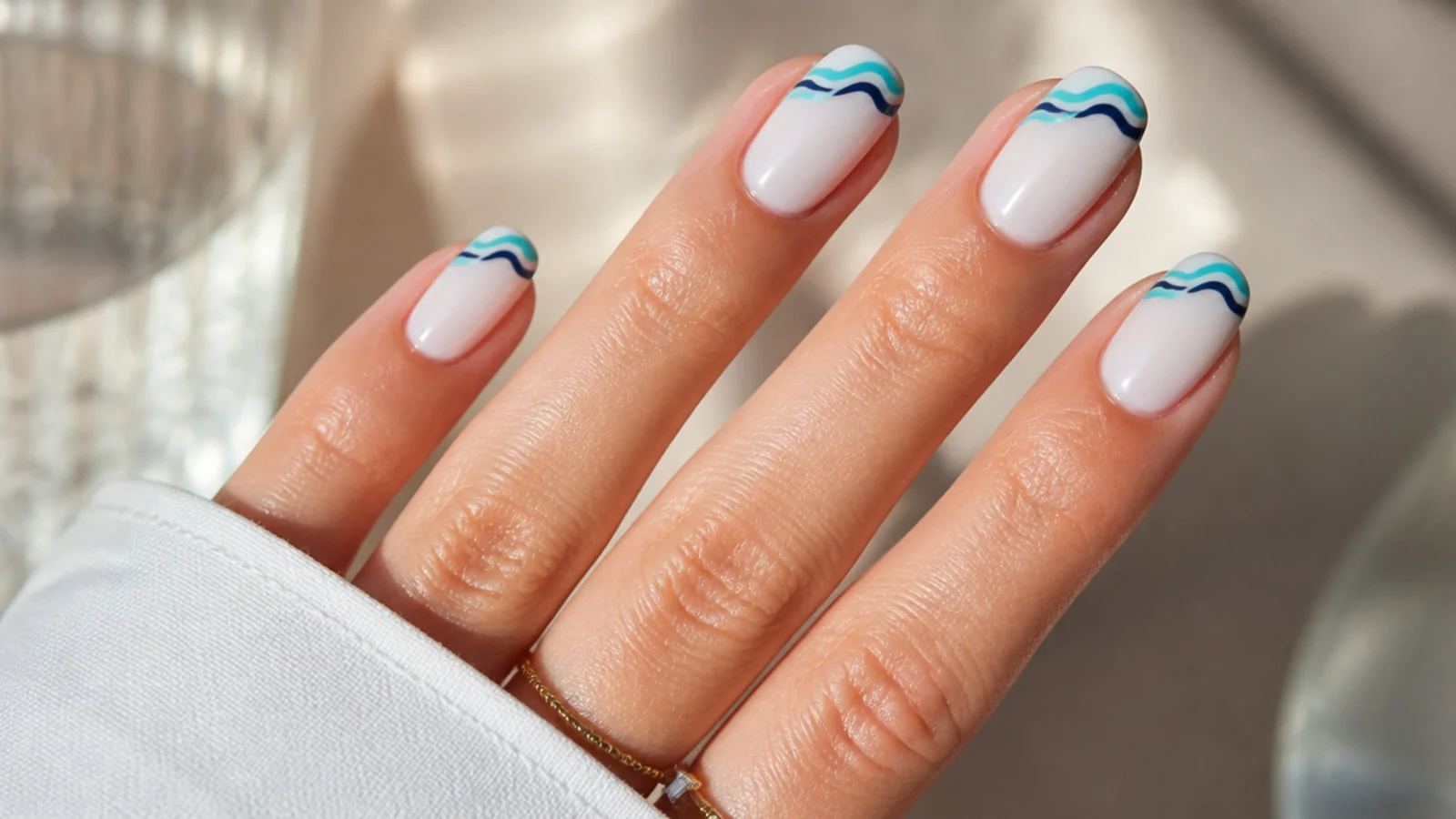
Two or three wavy lines in turquoise and navy running across a milky white base, painted freehand with a striper. Waves are more forgiving than any other summer motif because the whole point is that they are uneven, so a shaky line still looks right. Put them across the middle of the nail rather than at the tip, since a tip-heavy design draws attention to grow-out. Around 5 to 8 dollars per painted nail. The brighter blue version lives in royal blue nails.
Who it suits: Beach trips, beginners at freehand art and medium length nails.
Tip: Paint the pale wave first and the dark one second so any wobble gets covered.
11. Coral Orange Nails
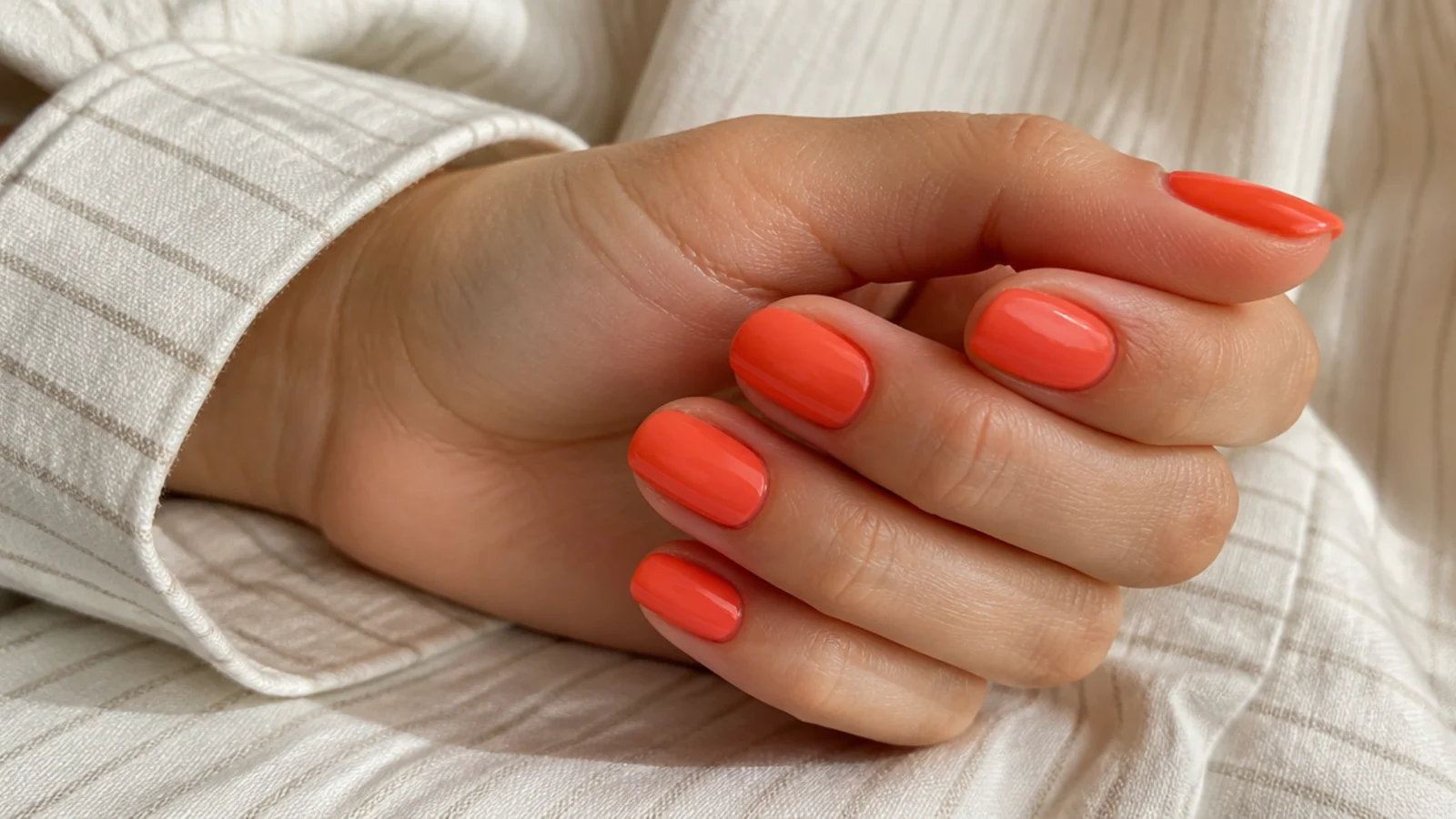
A warm pink-orange that is the most universally flattering bright in the summer palette, because the pink in it keeps it from going brassy on cool skin the way a true tangerine does. It is also the classic sandal-season pedicure shade and one of the few colors that genuinely looks right on hands and toes at the same time. Two coats, high gloss, short round nails. About 35 to 45 dollars in gel. For the matching pedicure see cute toe nails for sandal season.
Who it suits: Almost every undertone, plus matching hand and toe sets.
Tip: Pick a coral with visible pink in the bottle; pure orange narrows who it flatters.
12. Flipped French Nails in Lagoon Blue
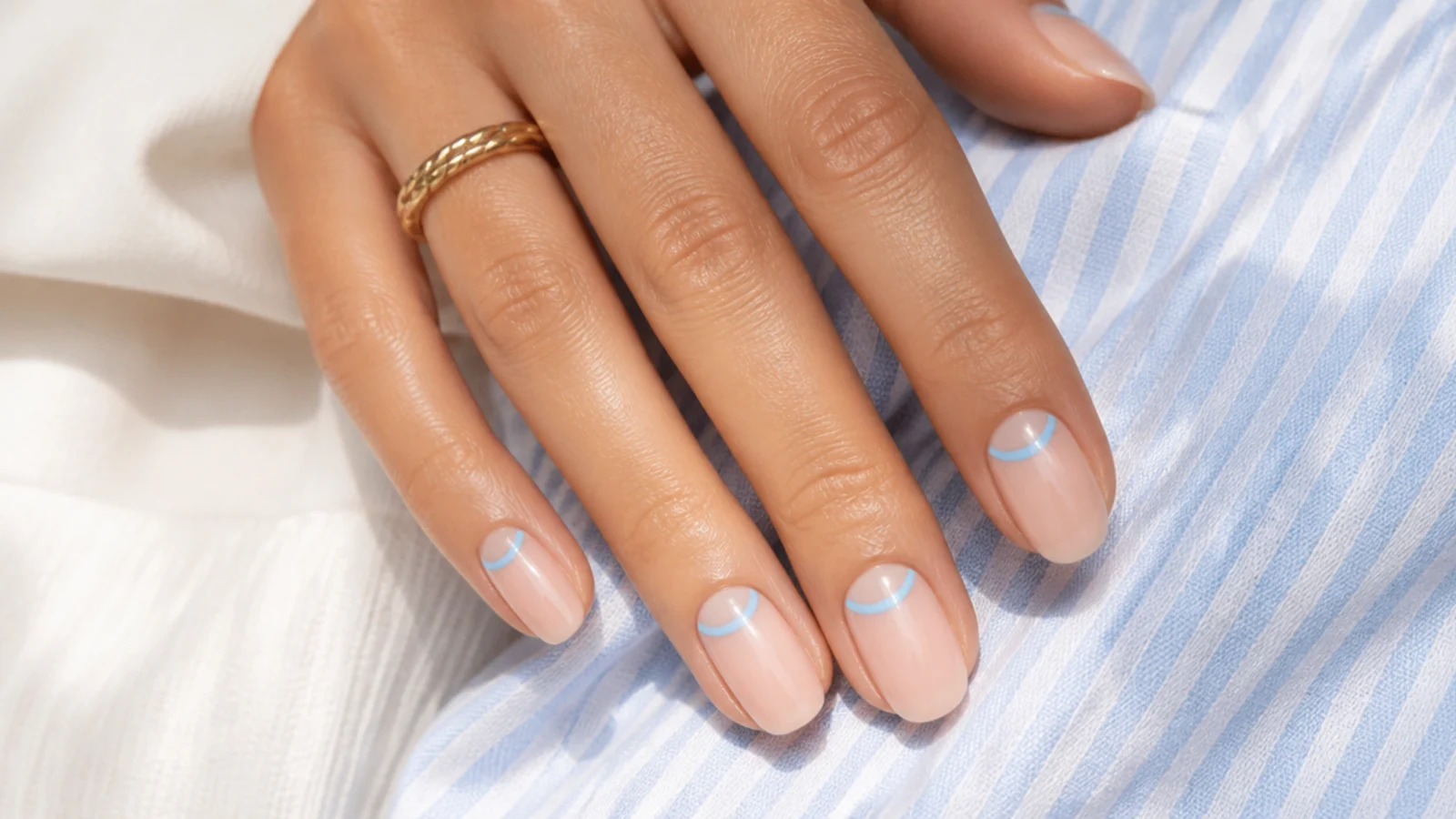
A French tip turned upside down: the color band sits at the cuticle and the rest of the nail stays sheer. Flipped or reverse French is one of the strongest 2026 looks and it has a practical advantage nobody mentions, which is that it hides grow-out for the first week instead of exposing it. Lagoon blue keeps it summery; the same shape works year round in any shade. Ask for a 4mm cuticle band with a clean curve. Around 45 to 55 dollars in gel.
Who it suits: Anyone who hates seeing regrowth and wants something less expected.
Tip: Ask for the band to follow your cuticle curve exactly, since a straight band reads as a mistake.
13. Mocha Brown French Tip Nails
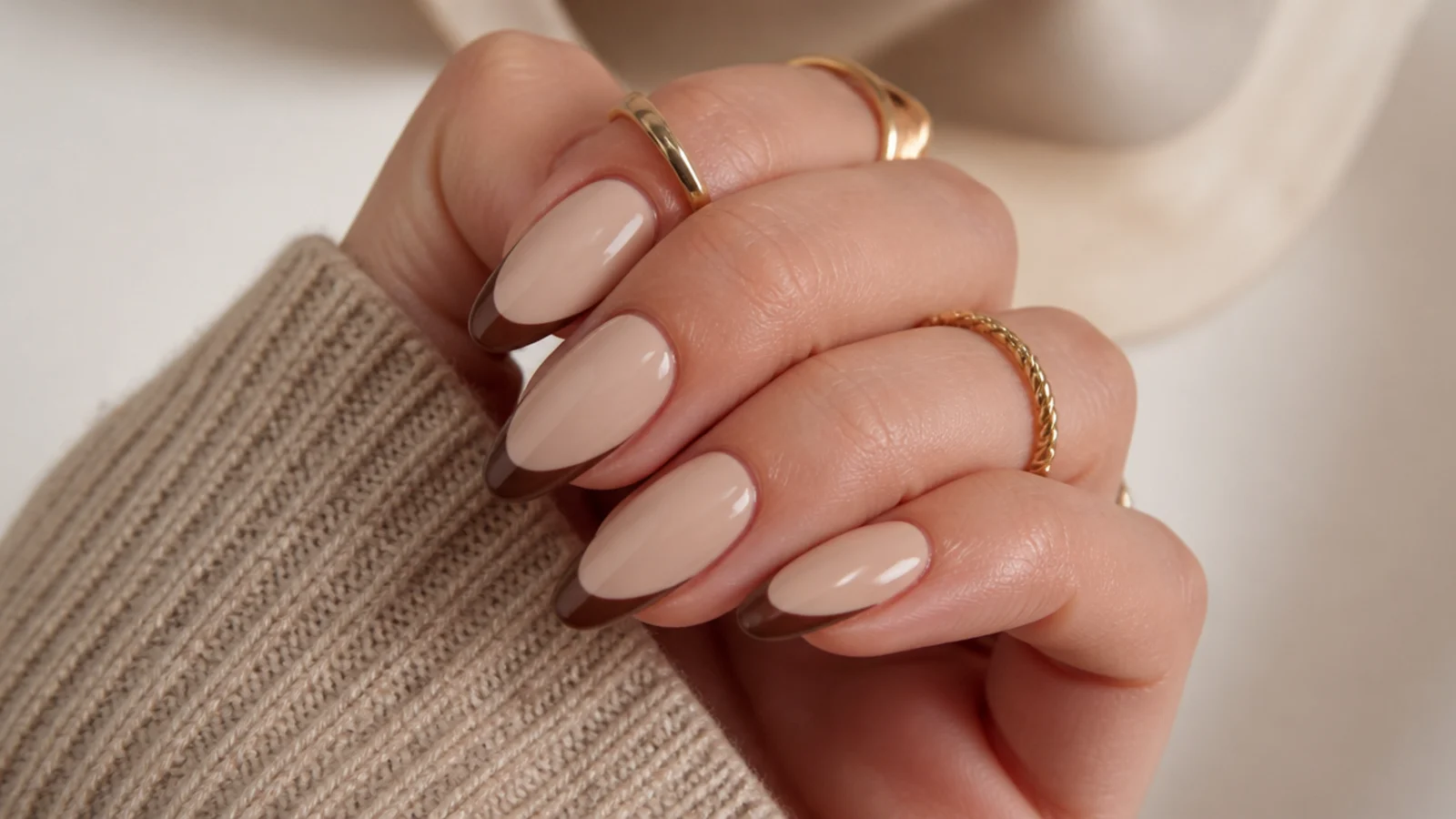
An espresso or mocha tip band over a warm beige base instead of white on pink. Transitional pick: this is the best late-summer-into-fall set there is, because brown reads warm enough for August and rich enough for October, so a three-week gel set booked in early September never looks wrong. It also flatters deep and olive skin far better than a stark white French. Keep the band at 3 to 4mm. Around 45 to 55 dollars. Compare the classic version in pink French tip nails.
Who it suits: Deep and olive undertones, and the September color switch.
Tip: Ask for a warm brown, not a cool taupe, so it still works while the weather is warm.
14. Burnt Orange Fall Nails
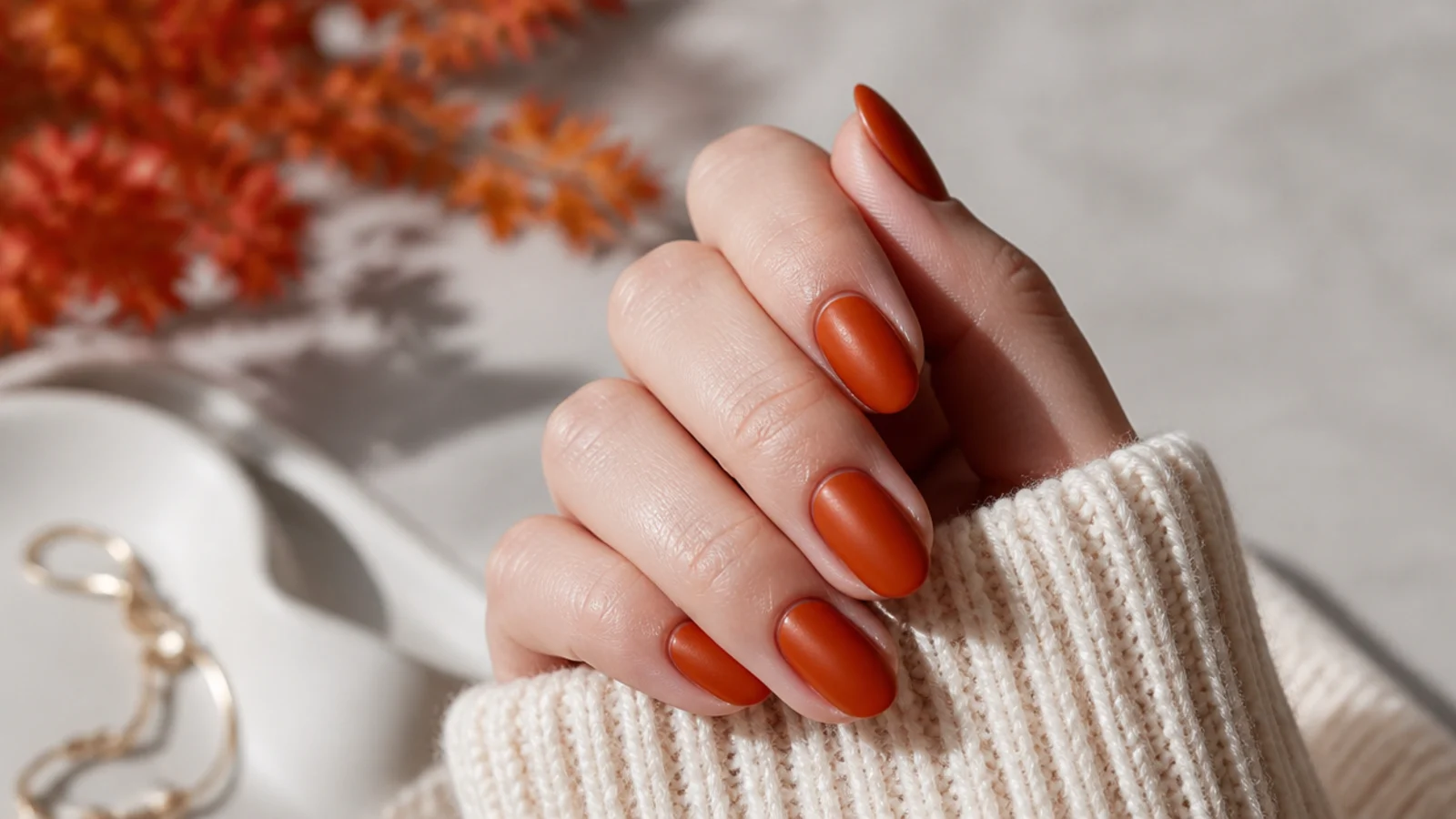
A darkened, brick-leaning orange with brown in it, which is what separates a fall orange from a summer one. This is the shade most people mean when they say pumpkin nails, and it looks considerably more expensive under a matte top coat than under gloss, because the flat finish reads like suede. Warm and olive undertones wear it best; very cool fair skin usually looks better in an oxblood. Two coats on short almond nails. About 35 to 45 dollars. More matte fall options in fall matte nails.
Who it suits: Warm and olive undertones, October, and matte finish lovers.
Tip: Go matte for fall and glossy for summer; the same orange changes season with the top coat.
15. Tortoiseshell Nails
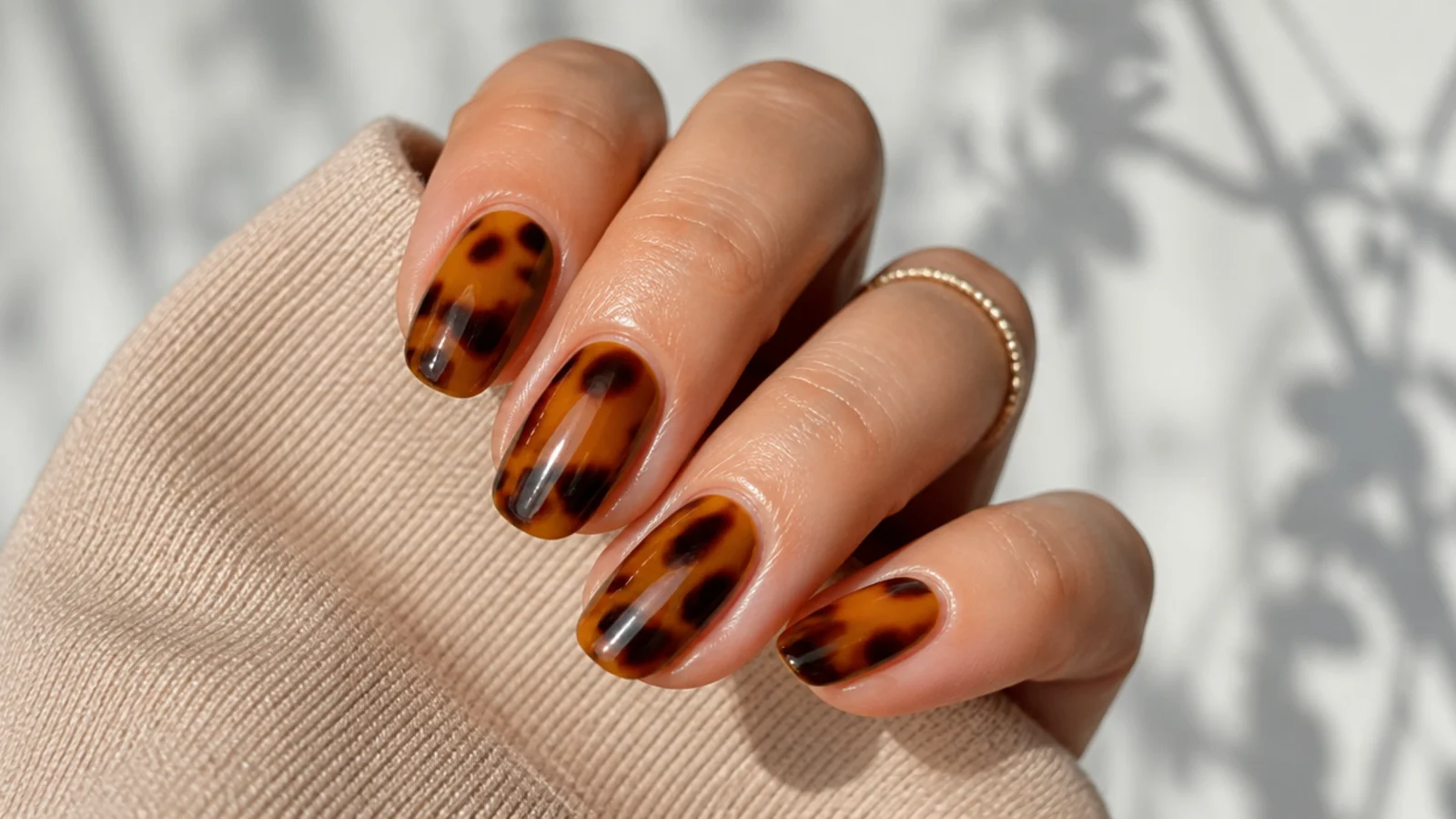
Amber, caramel and near-black brown dropped into a warm honey base and allowed to bleed before curing, so the pattern looks like tortoiseshell eyewear rather than painted spots. It is the most convincing fall nail art you can get without a tech who paints, because the effect comes from the gel spreading, not from your line control. Two or three accent nails with plain amber on the rest keeps it from going busy. Expect 8 to 12 dollars per patterned nail on top of the set.
Who it suits: Fall wardrobes, warm undertones and neutral dressers.
Tip: Ask for it as tortoiseshell with a blooming gel bleed so your tech knows the method.
16. Olive Green Fall Nails
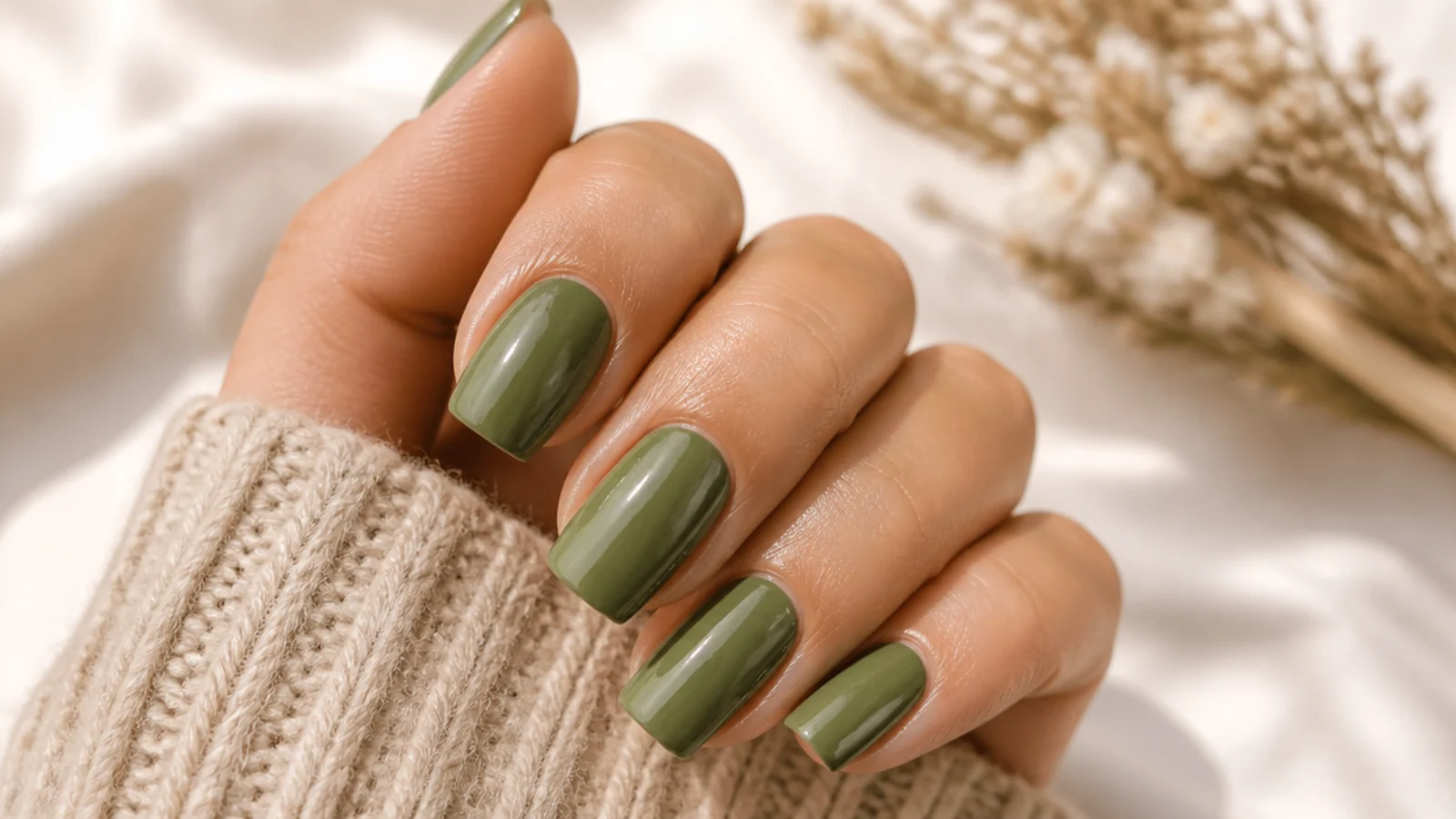
A muted yellow-green that behaves like brown but is more interesting. Transitional pick: olive bridges fall into winter cleanly, since deepening it with one coat of a darker green top color takes it from September to December without a full change. It is also one of the few greens that flatters warm, olive and deep skin equally. Two coats on medium squoval nails, gloss or matte. About 35 to 45 dollars in gel. The full range sits in olive green fall nails.
Who it suits: Warm, olive and deep undertones across two seasons.
Tip: Layer one sheer coat of forest green over olive in November to age the set into winter.
17. Latte Stripe Nails
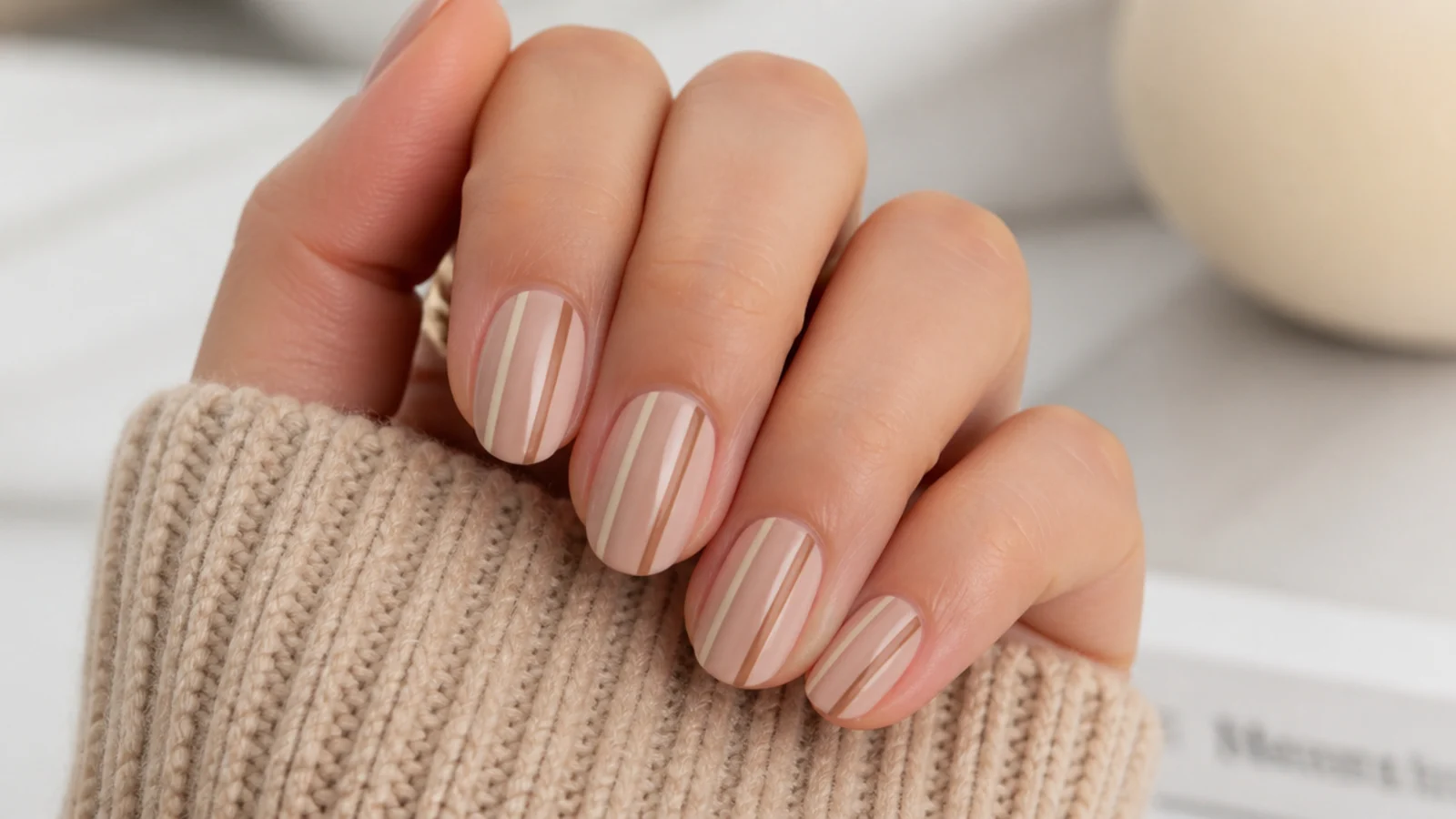
Thin vertical stripes in three shades of brown and cream, from oat to espresso, over a nude base. The latte palette is one of the defining 2026 neutral trends and stripes are the cheapest way into it, since a striper brush and steady hand replace any real painting skill. Vertical stripes also visually lengthen short nail beds, which no competitor mentions. Two to four stripes per nail, uneven widths. Roughly 8 dollars per striped nail. Neutral cousins are in matte nude nails.
Who it suits: Short nail beds, quiet-luxury dressers and office dress codes.
Tip: Vary the stripe widths; evenly spaced identical lines read like a printed pattern.
18. Oxblood Wine Red Nails
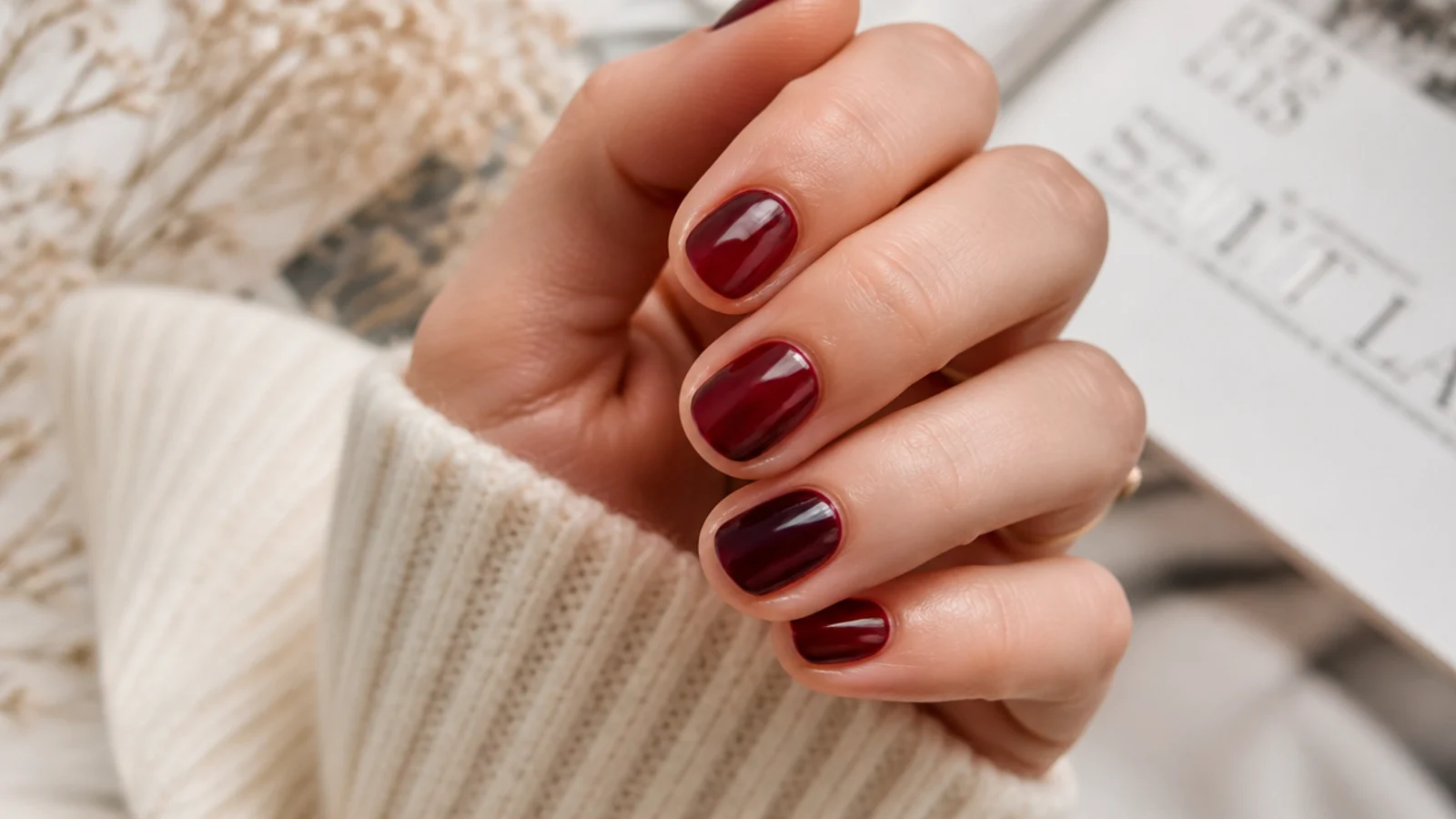
A deep, almost-brown red with real depth. Transitional pick: oxblood is the strongest fall-to-winter bridge on this list, because it is the same shade family as a burnt orange in October and a cranberry in December, so nobody can date it. It suits every undertone, which is rare for a dark shade, and it looks equally right at 3mm and 8mm. Two coats, gloss for winter or matte for fall. Around 35 to 45 dollars. Compare in red matte nails.
Who it suits: Every undertone, and the single best November booking.
Tip: Use a base coat; dark reds are the worst family for staining the natural nail yellow.
19. Silver Chrome Winter Nails
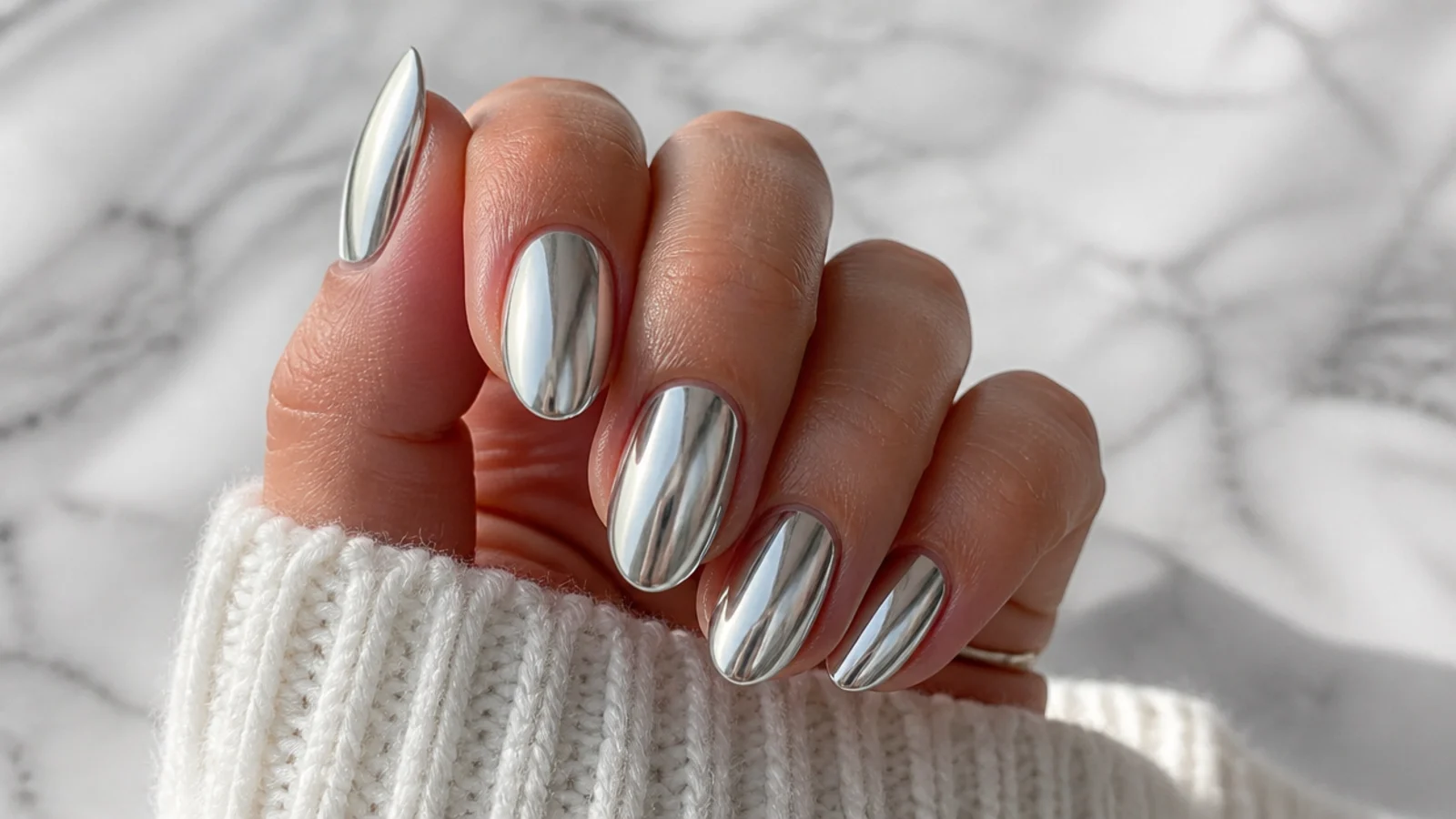
Chrome powder buffed over a cured no-wipe top coat until the nail turns to mirror. It is the most photographed winter finish and the most demanding: chrome shows every ridge in the nail plate, so ask for a builder gel smoothing layer first or the mirror will look dented. It also requires a salon, since the powder needs a gel top coat to bond to. Budget 10 to 20 dollars over a standard gel set. The warmer metallic option is gold chrome nails.
Who it suits: Holiday parties, New Year and cool undertones.
Tip: Ask for a smoothing layer before the chrome; ridges are what ruins a mirror finish.
20. Cranberry Red Christmas Nails
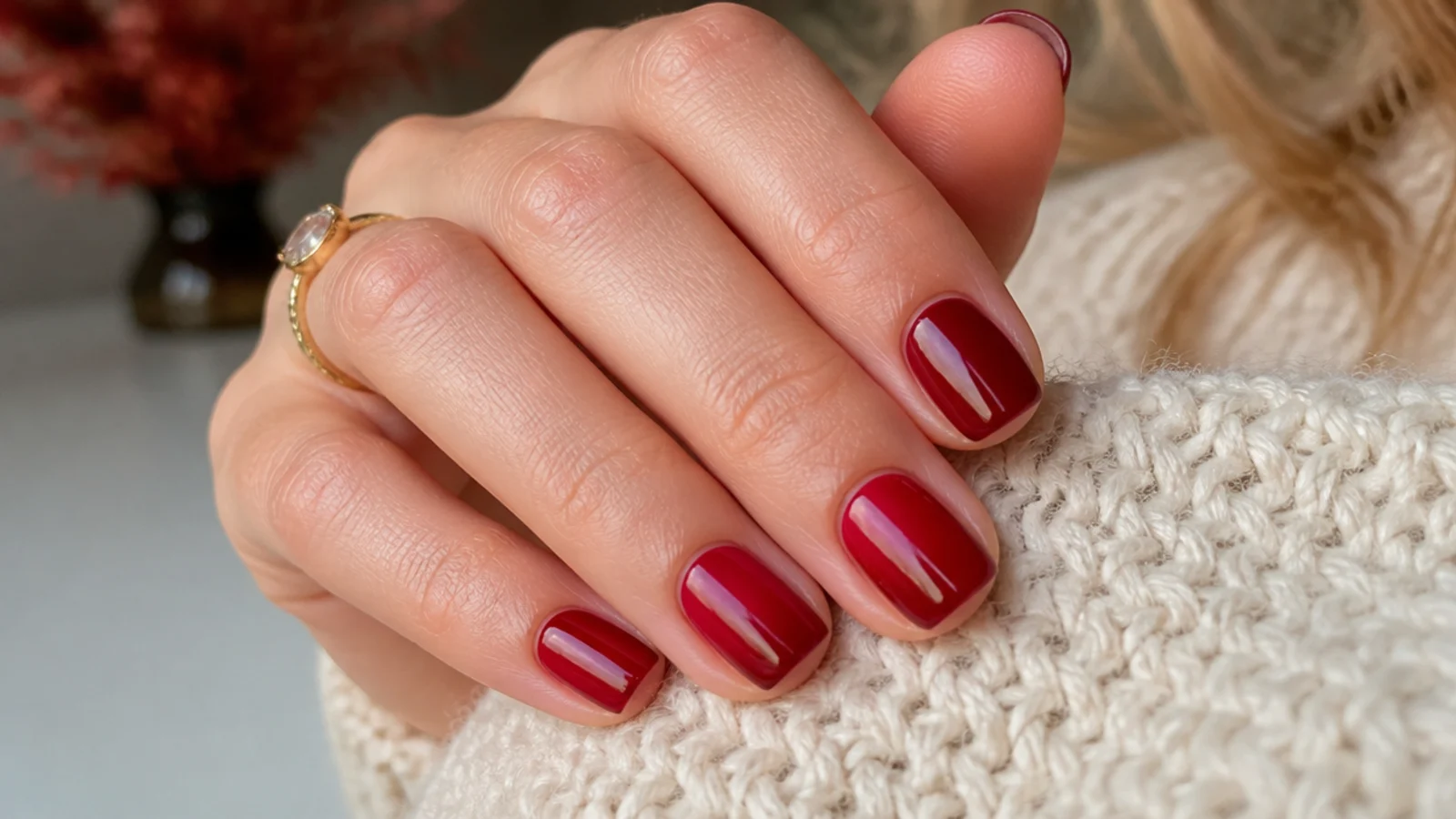
A blue-based bright red, opaque in two thin coats, which is the December default for a reason: it flatters more skin tones than an orange-leaning tomato red and photographs true under warm indoor light. Red shows application streaks more than any other color, so three thin coats beat two thick ones every time. Keep nails short and square for a modern read rather than a retro one. About 35 to 45 dollars in gel. More holiday reds in red December nails.
Who it suits: Christmas, parties and anyone who wants one reliable winter color.
Tip: Three thin coats, not two thick ones, or the red will show brush lines under light.
21. White Snowflake Nails
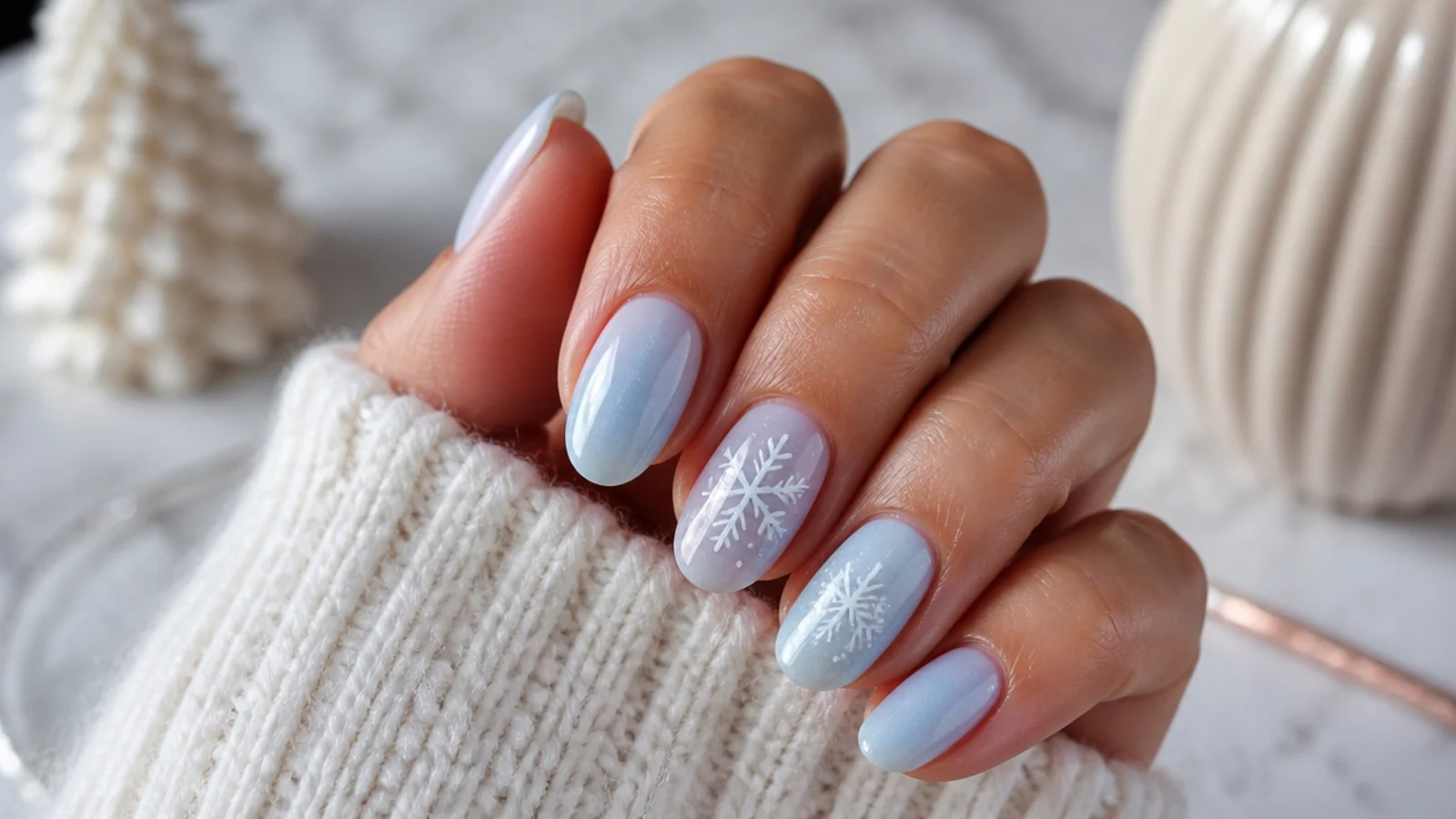
Six-armed white snowflakes on two accent nails over a sheer icy blue or bare base. The trick that makes them look professional is symmetry: paint one vertical line, one horizontal, then two diagonals, then add the small V shapes at each arm tip. Doing this in gel rather than polish matters, because you can cure and correct one line at a time. Two accent nails only. Around 8 to 12 dollars per painted nail. Full walkthroughs in white snowflake nails.
Who it suits: December, beginners willing to work slowly and short nails.
Tip: Build each snowflake from six equal arms first, then decorate; asymmetry is what looks amateur.
22. Navy Blue Winter Nails
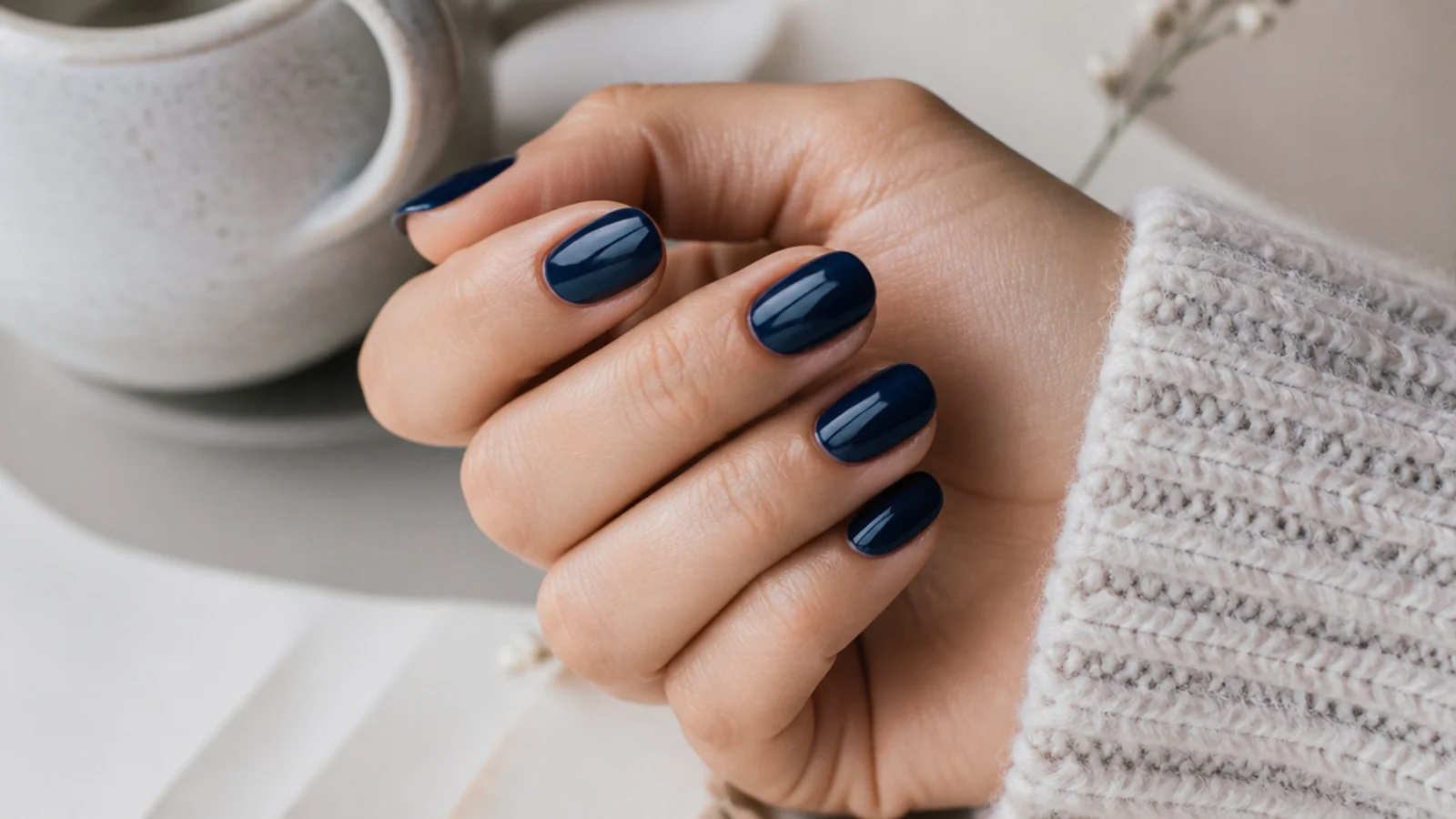
An almost-black navy in high gloss. Transitional pick: navy is the most office-tolerable dark shade and it carries from January straight through to early spring, where lightening it with a single sheer coat of periwinkle refreshes the set instead of replacing it. Blue pigment is among the hardest to remove cleanly and will tint the free edge, so a base coat is genuinely required. Two coats, short almond, roughly 35 to 45 dollars. Brighter blues sit in royal blue nails.
Who it suits: Conservative workplaces and the January to March stretch.
Tip: Always base coat under navy; the stain it leaves outlasts the manicure by two weeks.
23. Milky White Glazed Nails
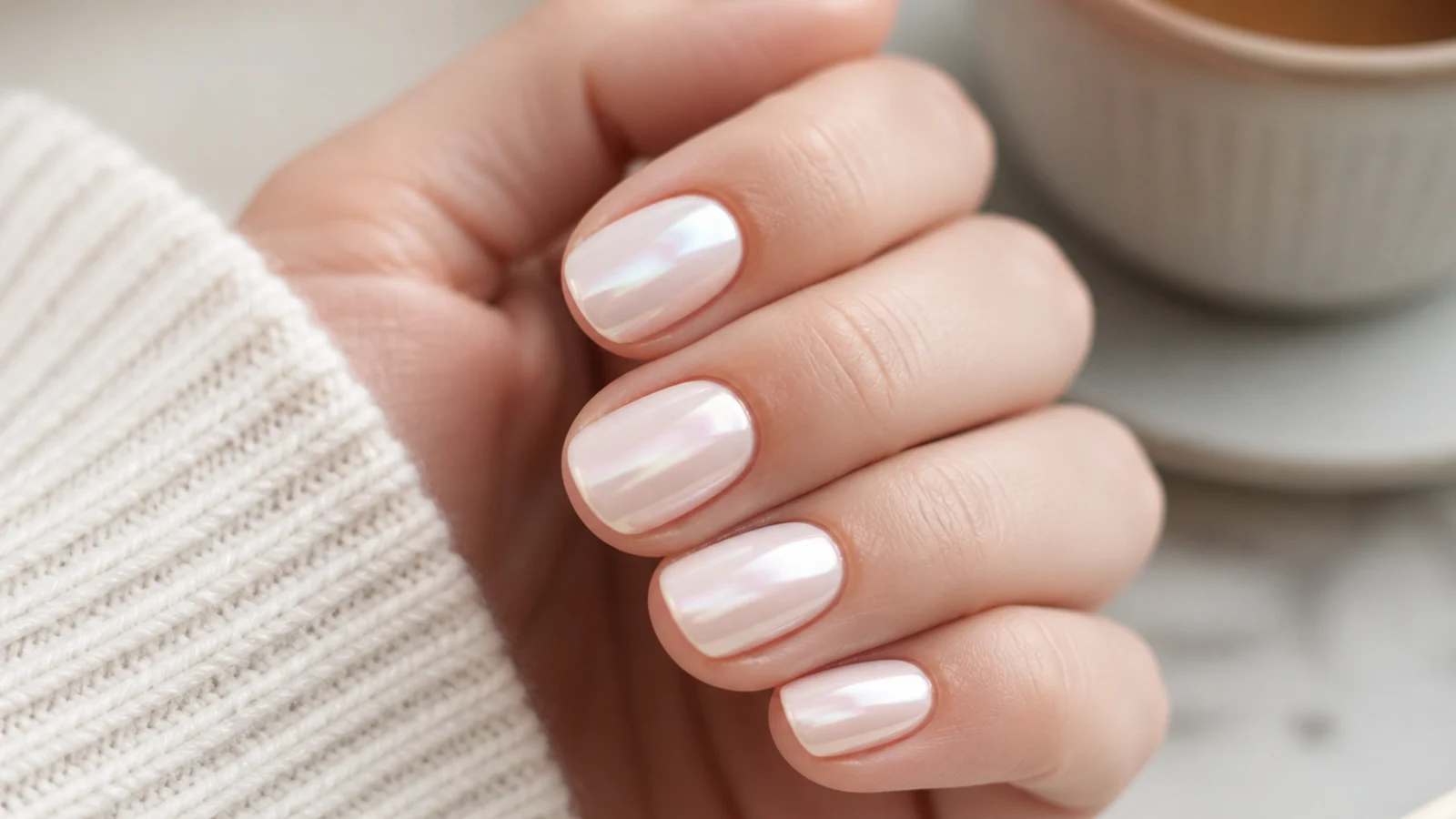
A milky white base with pearl or aurora powder buffed over the top so it shifts pink, blue and lilac in the light. Transitional pick: this is the best winter-to-spring bridge because the pearl shift keeps it icy in February and the milky base reads soft and fresh in April. It also grows out more forgivingly than silver chrome, since the pale base hides the gap for an extra week. About 45 to 60 dollars. Detail in milky white chrome nails.
Who it suits: Every undertone, plus anyone who hates visible regrowth.
Tip: Ask for a milky base rather than clear, or the pearl powder will look gray over your nail.
24. Emerald Green Holiday Nails
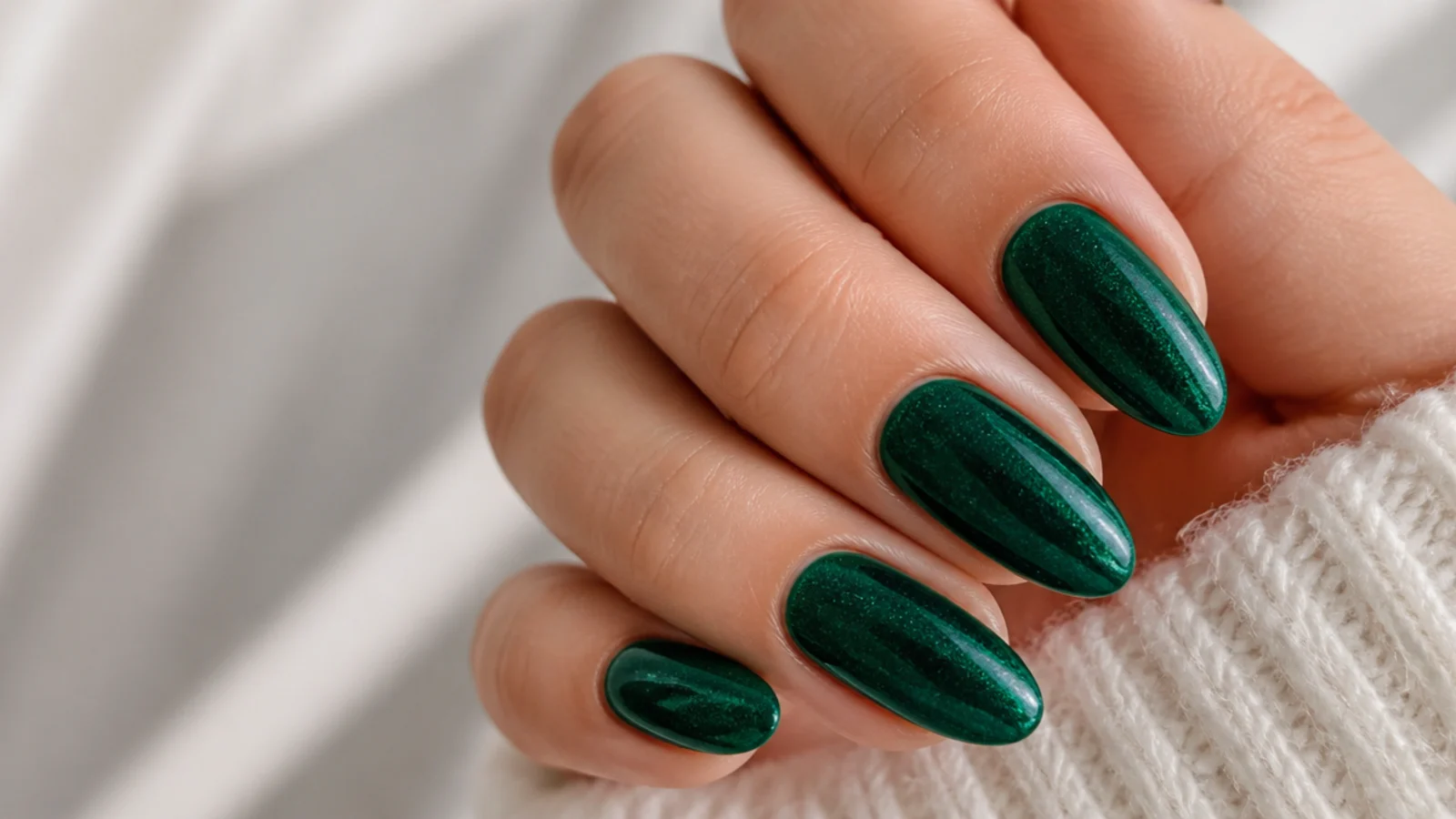
A deep jewel green with shimmer through it rather than a flat cream, which is what stops it from reading plastic at length. Emerald is the most flattering dark shade on medium and deep skin tones and it pairs well with a single gold-foil accent nail for holiday parties. It is a genuine December alternative for anyone who wears red every year and wants out. Two coats at medium almond length, about 35 to 50 dollars. Deeper versions in dark emerald green nails.
Who it suits: Medium and deep skin tones, holidays and jewel-tone dressers.
Tip: Choose a shimmer emerald over a flat cream so the color keeps depth under indoor light.
25. Dusty Rose Nails
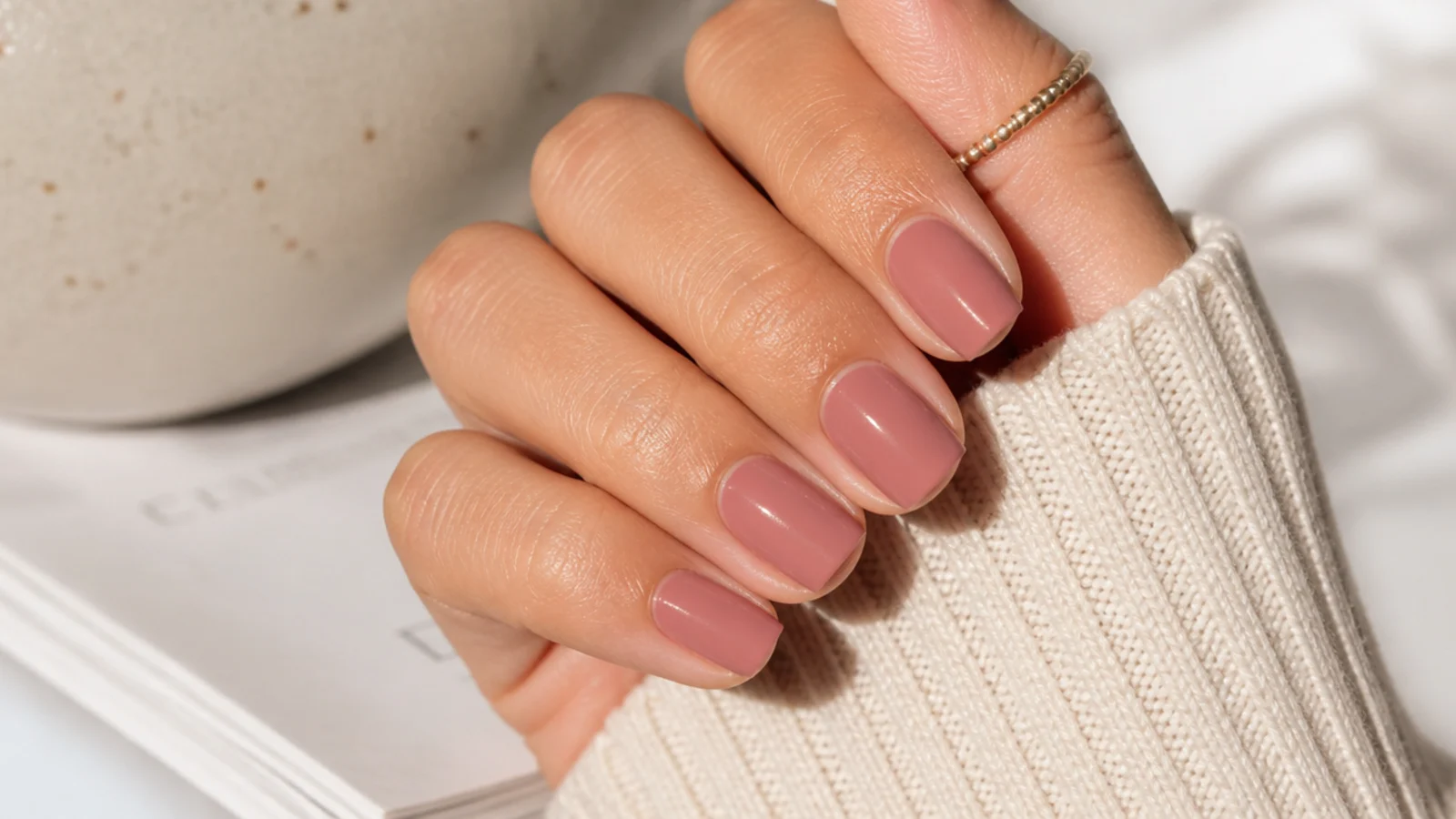
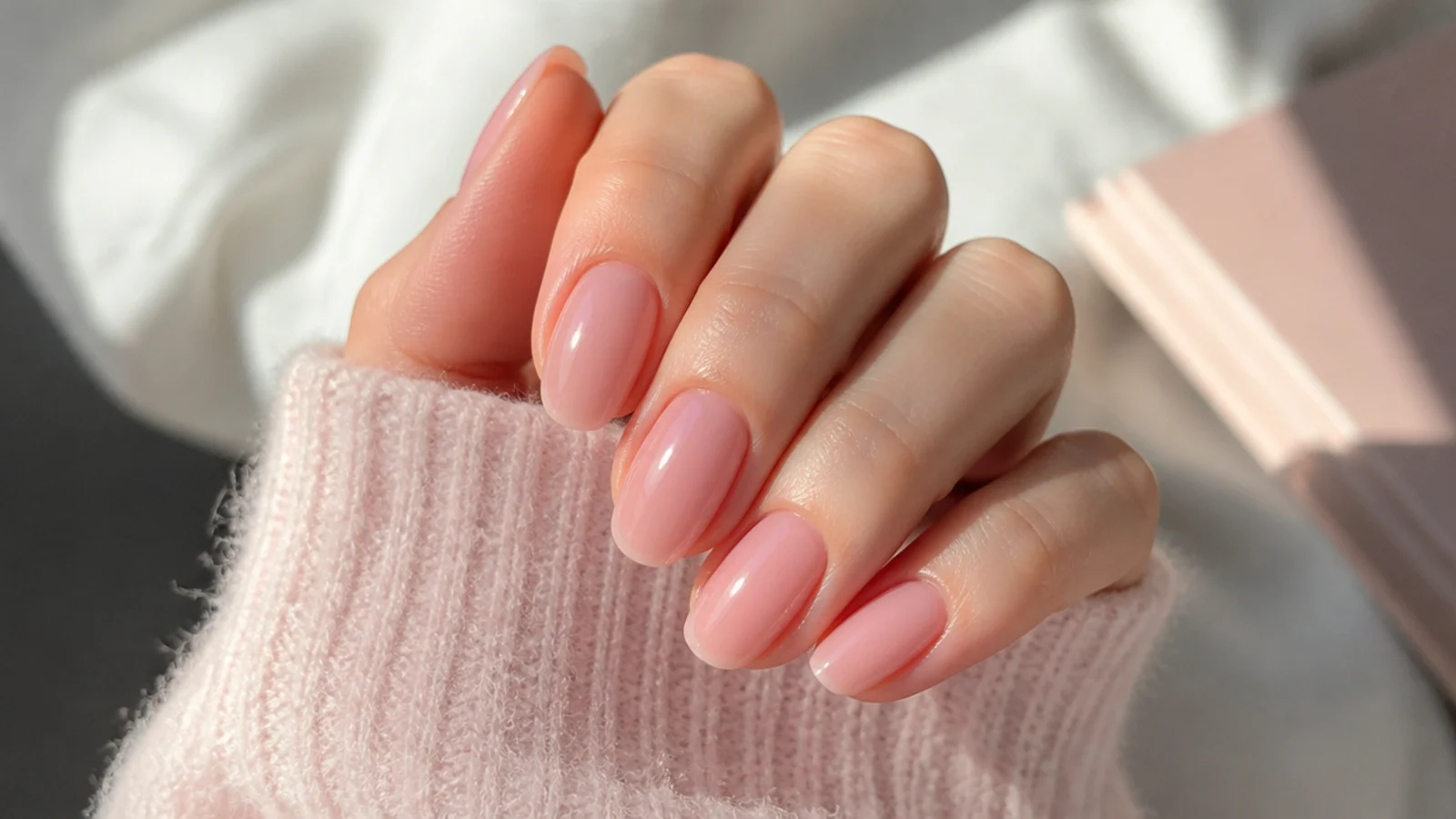
A grayed-off, muted pink that sits between a nude and a real color. Transitional pick: dusty rose is the quietest year-round shade on this list and the one to book when you genuinely do not know what season your set will end in, since it never looks wrong in any month. It suits cool and neutral undertones best; warm skin should shift a half step toward a peachy nude. Two coats on short squoval nails, satin or gloss, about 35 to 45 dollars. Browse more in the cute nails hub.
Who it suits: Cool and neutral undertones, weddings, work and season changeovers.
Tip: Hold the bottle against your inner wrist; if it disappears, go one shade deeper.
When Should You Switch Your Nail Color for a New Season?
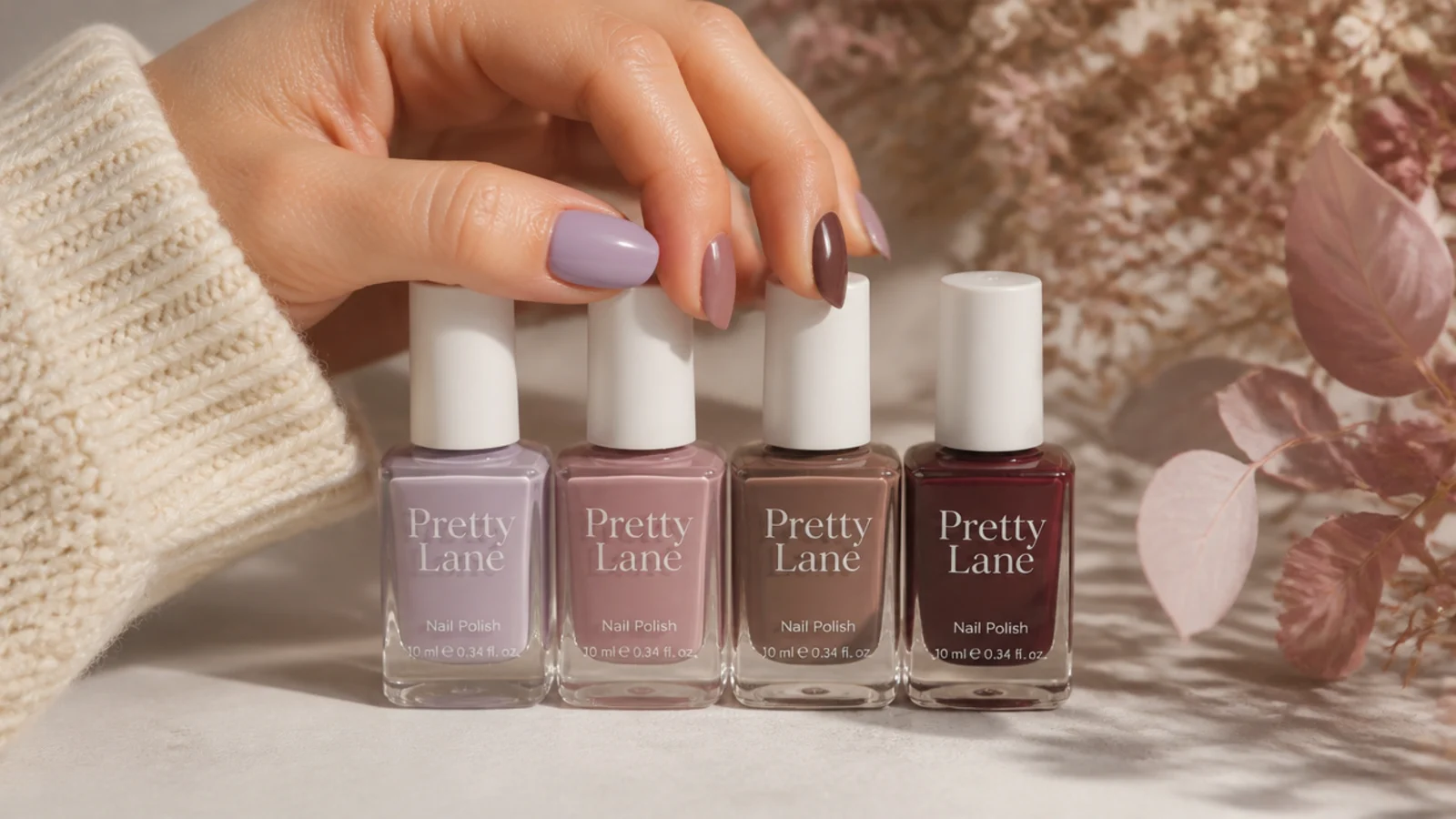
Switch about two weeks before the season actually turns, not after. The reason is arithmetic rather than fashion. A gel manicure lasts two to three weeks and an acrylic set runs three to four weeks between fills, so whatever you book will still be on your hands well past the day you sat down. If you book lemon yellow on the last warm day of August, you wear it through the first three weeks of fall. If you book mocha brown two weeks before that, the set arrives slightly early and ages into exactly the right thing. In practice that means shifting to spring shades in late February, summer shades in late May, fall shades in late August, and winter shades in late November. The one exception is anything tied to a date rather than a season, like Christmas art, which should be booked so the set peaks on the day and not two weeks before it. If you wear regular polish rather than gel, none of this matters much, since five to seven days of wear never crosses a season line.
Transitional Nail Designs That Bridge Two Seasons
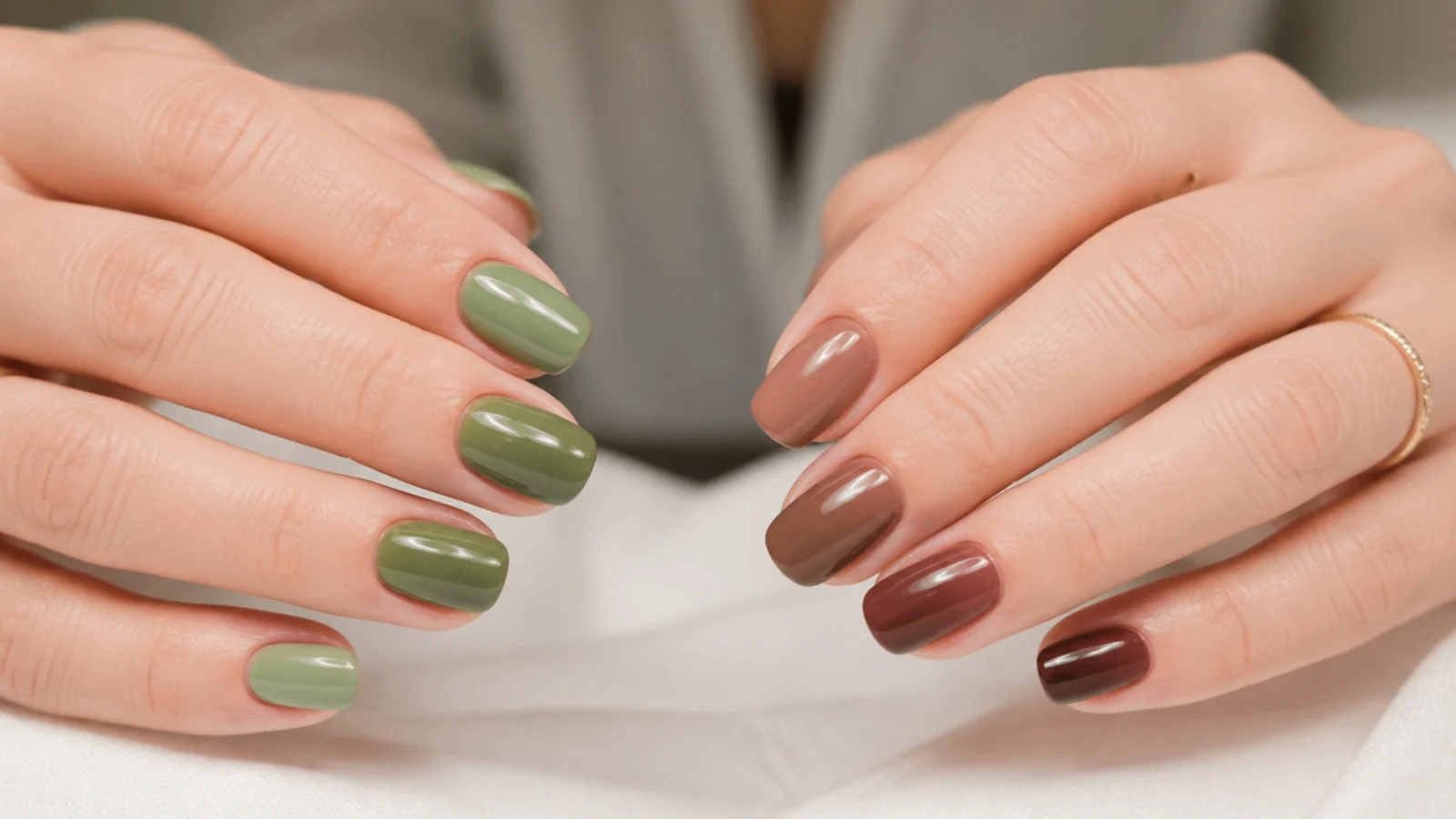
Eight of the 25 ideas above are tagged as transitional, and they share one quality: the shade sits between two seasonal families instead of belonging clearly to either. Sage green is muted enough for March and cool enough for July. Mocha brown French is warm enough for August and rich enough for October. Olive green deepens into winter with one sheer coat of forest green over the top. Oxblood is the same family as October burnt orange and December cranberry, so it cannot be dated. Navy carries January into March, and a sheer periwinkle coat lightens it rather than replacing it. Milky white glazed reads icy in February and fresh in April. Dusty rose never looks wrong in any month. Pastel French tips bridge spring into summer if you brighten the base. The practical rule: book a transitional shade for your last set of any season, and save the loud, obviously seasonal colors for the middle weeks when there is no risk of the weather turning under them.
Nail Colors by Season and Skin Undertone
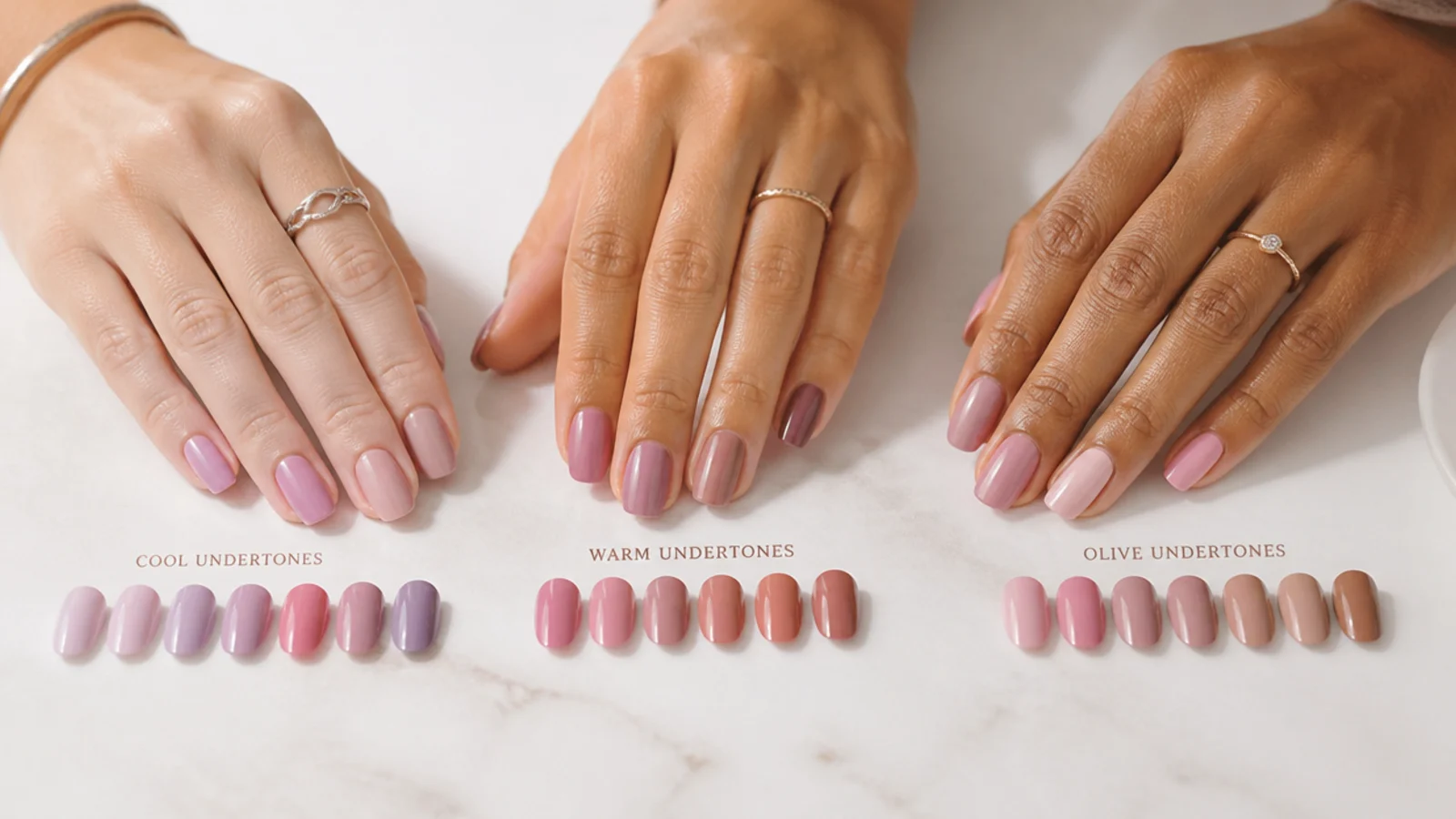
Undertone beats the calendar whenever the two disagree. Check yours by looking at the veins on your inner wrist in daylight: blue or purple means cool, green means warm, and a mix means neutral. Cool undertones wear blue-based shades best, so lilac, cranberry red, navy, dusty rose and true silver chrome. Warm undertones wear yellow-based shades, so coral, burnt orange, olive, mocha and gold chrome, and often look sallow in an icy pastel. Olive skin is its own case: muted, slightly gray shades like sage and dusty rose look expensive on olive tones, while very pale pastels can read washed out. Deep skin tones carry the widest range and look particularly strong in emerald, cranberry, lemon yellow and bright coral, all of which have enough saturation to hold their own. The one shade almost nobody can wear straight is a pure neon over a bare nail, which is why the white base coat trick exists. For short nails specifically, see nail colors for short nails by skin tone.
How Long Seasonal Nails Last and What Chips First
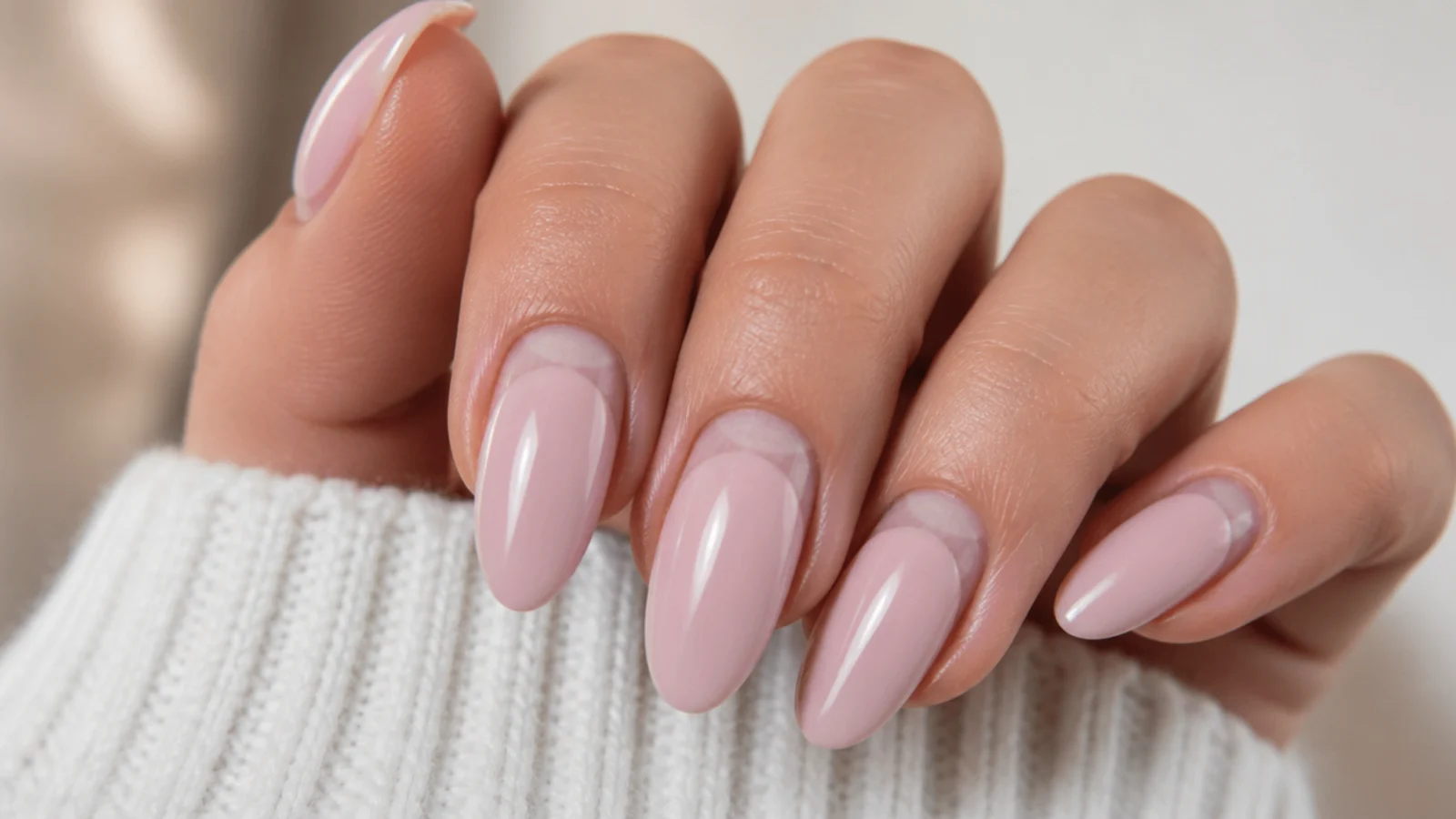
Regular polish gives you five to seven days, gel gives two to three weeks, Gel-X and acrylic extensions run three to four weeks with a fill every two to three, and press-ons last one to three weeks depending entirely on how well you prep and glue them. The season changes those numbers more than most people expect. Summer is hardest on color: chlorine and strong sun visibly fade brights, and sunscreen oils soften a top coat enough to dull the gloss inside a week. Winter is hardest on adhesion, because indoor dry heat plus frequent hand washing lifts the edges first, particularly around the cuticle. In both cases the free edge is what fails first, which is why capping the tip with every color coat and again with top coat is the single highest-value habit in nail care. Cuticle oil twice a day genuinely extends a winter set, since a flexible nail plate lifts less than a brittle one.
What Seasonal Nail Sets Actually Cost
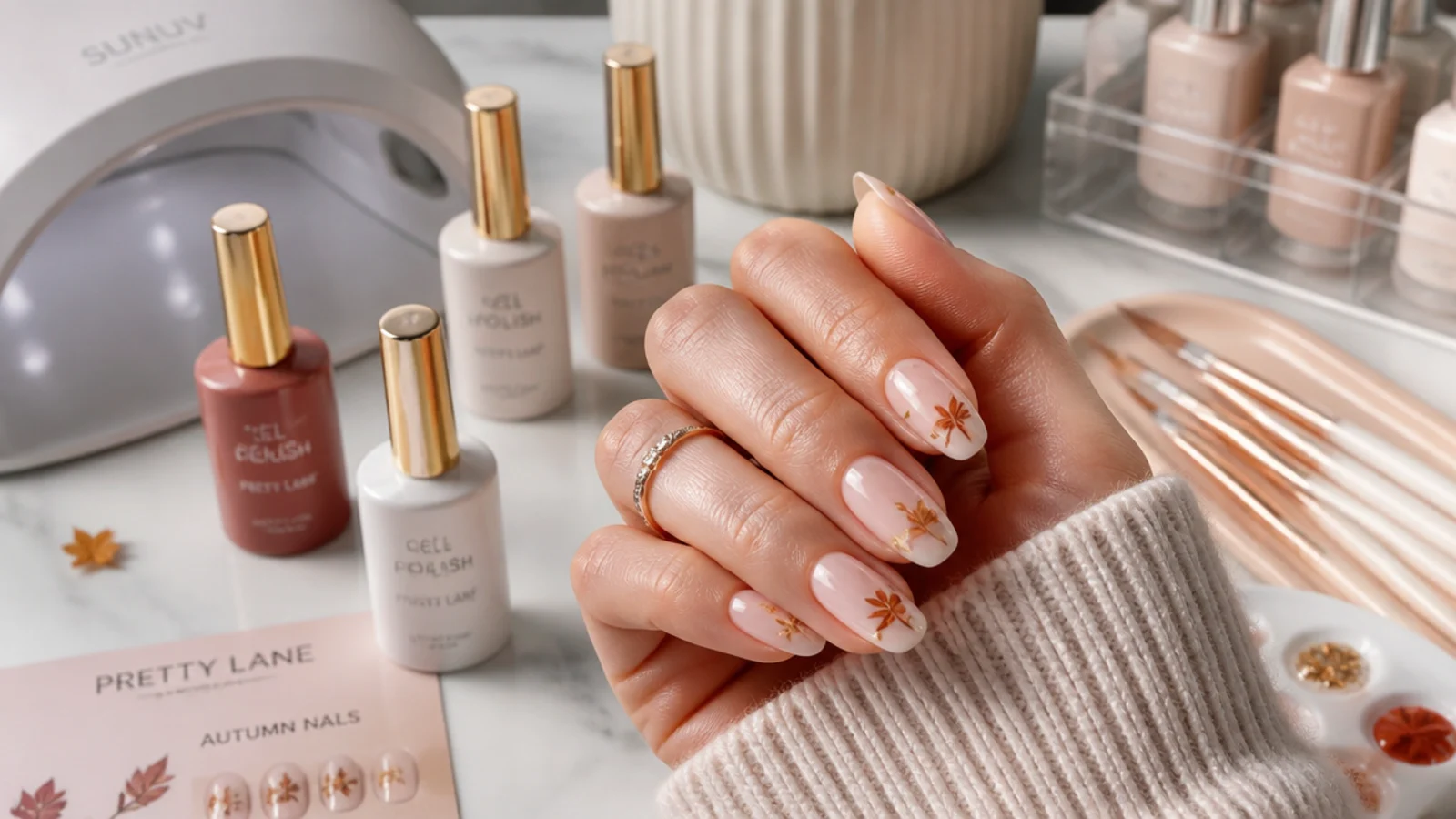
A single-color gel manicure runs about 35 to 60 dollars depending on your city, and that covers most of the solid shades on this list, from pastel lilac to navy. Hand-painted art is priced separately: expect roughly 5 dollars per simple accent nail for daisies or waves, 8 to 12 for tortoiseshell, latte stripes or snowflakes, and 10 to 15 for detailed cherry blossoms. Chrome and pearl finishes add 10 to 20 dollars to the set because of the extra powder and top coat steps. A full set of acrylic or Gel-X extensions runs 60 to 120 dollars, with fills at 35 to 60 every two to three weeks. Removal is often 10 to 20 dollars and is worth paying for, since peeling a set off is what actually thins the nail plate. Doing it at home changes the math completely: about 15 of these 25 ideas need only one or two polish bottles at roughly 10 dollars each plus a base and top coat you reuse all year.
Seasonal Nail Troubleshooting: Stains, Fades and Grown-Out Sets
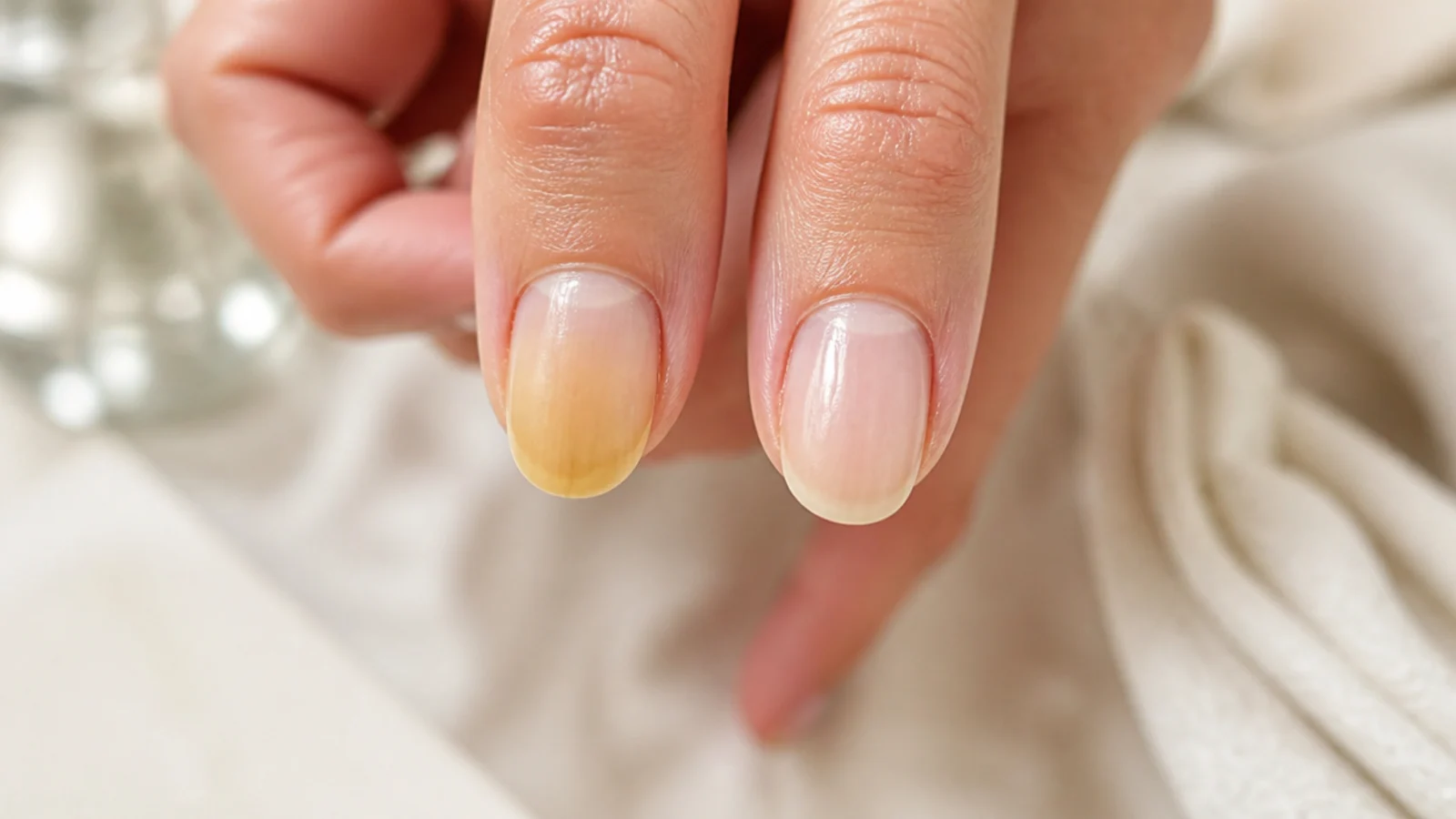
Four failures repeat every year and each has a fix. Yellow stained nails after a red, navy or neon set means the pigment reached the nail plate, so the cause is a missing base coat. The stain fades in two to four weeks; buffing lightly with a 240 grit and using a base coat every time prevents it. Faded summer brights mean sun and chlorine exposure, so wear gloves for pool chemicals and pick gel over polish for vacation sets. Lifting at the cuticle in winter means dry heat and hand washing, and the fix is cuticle oil twice daily plus keeping the gel off your skin at application, since product touching the cuticle is what starts the lift. A set that suddenly looks stale usually is not chipped at all, it is just out of season, which is exactly what the transitional shades above solve. If the set has three or more days left in it, a single sheer coat in a deeper shade over the top buys you another week.
Frequently Asked Questions
What are the best nail colors for each season?
Spring runs to pastel lilac, mint, Barbie pink and pastel French tips. Summer means hot pink, lemon yellow, coral, jelly red and lagoon blue. Fall shifts to mocha brown, burnt orange, olive green and tortoiseshell. Winter takes silver chrome, cranberry red, navy, emerald and milky white glazed.
What are the spring 2026 nail trends?
Mismatched pastel French tips, milky bases with tiny hand-painted daisies, and muted greens like sage doing the work a neutral used to do. The flipped French, with the color band at the cuticle instead of the tip, has carried over from winter and is one of the most requested spring shapes this year.
Can you wear pastels in fall?
Yes, if you deepen them. A pastel lilac reads spring, but a grayed-off mauve version of the same shade reads fall perfectly well. The rule is saturation, not hue: fall shades have more gray or brown in them. Sage green and dusty rose are pastels that already work in fall without any adjustment.
What are transitional nail colors?
Shades that sit between two seasonal families so they read correctly on both sides of a season change. Sage green, mocha brown, olive, oxblood, navy, milky white glazed and dusty rose all qualify. Book one for your last set of a season, since a three-week gel set will almost always outlive the weather it was chosen for.
When should I change my nail color for the season?
About two weeks before the season turns, which means late February, late May, late August and late November. Because gel lasts two to three weeks, a set booked on the last day of a season is worn almost entirely in the next one. Booking slightly early means the set ages into the right thing instead of out of it.
What nail color goes with everything all year?
Dusty rose and milky white glazed are the two most season-proof shades on this list. Both are muted enough to avoid looking obviously seasonal, both suit most undertones, and both grow out invisibly, which is why they are the safest bookings for a wedding, a long trip or any set you cannot get redone on schedule.
How long does a seasonal gel manicure last?
Two to three weeks, which is long enough to cross a season boundary. Acrylic and Gel-X extensions run three to four weeks with a fill every two to three. Regular polish gives five to seven days. Summer sun and chlorine fade bright colors early, while winter dry heat lifts edges at the cuticle first.
How much do seasonal nail designs cost?
A single-color gel manicure runs 35 to 60 dollars. Simple painted art like daisies or waves adds around 5 dollars per nail, tortoiseshell and snowflakes 8 to 12, and detailed florals 10 to 15. Chrome and pearl finishes add 10 to 20 dollars to the set. Full acrylic or Gel-X sets run 60 to 120 dollars.
Why do dark and bright nail colors stain my nails?
Pigment from reds, navies, yellows and neons soaks into the top layers of the nail plate whenever it touches bare keratin. A base coat blocks it completely. If staining has already happened, it grows out in two to four weeks and a light buff with a 240 grit file speeds it along without thinning the nail.
Do my toe nails have to match my finger nails?
No, and matching often looks dated. Coral, cranberry and dusty rose are the shades that genuinely work on both at once. Toenails also grow roughly half as fast as fingernails, so a pedicure realistically outlasts a manicure, which means a seasonal pedicure shade should be chosen a little more conservatively.
Which cute nails look are you saving?
If you take one thing from these 25 ideas, make it the transitional rule: book your last set of a season in a shade that also works in the next one. Mocha brown, sage green, oxblood, milky white, dusty rose and navy all clear that bar, and they save you from a set that looks three weeks out of date by week two. Do the color switch about two weeks before the weather actually turns, keep a base coat under anything saturated so the pigment does not stain, and let undertone override the calendar when the two disagree. Next, pick your summer brights from 15 cute summer nails in bright colors, or browse the whole cute nails hub for more.