Quick Comparison
| Bright Gel | Bright Regular Polish | |
|---|---|---|
| Wear time | 2 to 3 weeks before regrowth shows | 4 to 6 days before the first visible chip |
| Chlorine resistance | Strong; the cured layer is non-porous | Weak; warm shades go chalky after two swims |
| Sun fading | Slight dulling on orange and yellow only | Noticeable on orange, coral and yellow by day 5 |
| Staining the natural nail | Higher, since pigment sits against the nail for 3 weeks | Lower, because the color comes off sooner |
| Neon accuracy | Excellent; gel white bases are fully opaque | Fair; needs 3 coats over white to read true |
| Cost per set | 35 to 60 dollars in salon, 10 to 15 at home with a kit | 8 to 12 dollars a bottle, reused all summer |
| Jelly finishes | Yes; jelly gel is built for this and is the 2026 trend | Limited; sheer polish streaks without a gel overlay |
| Removal | 15 minute acetone soak, do not peel | One minute with remover, no soak needed |
| Best for a beach week | Yes, if you book the day before you fly | Only with a top coat refresh every 2 days |
1. Hot Pink Neon Summer Nails
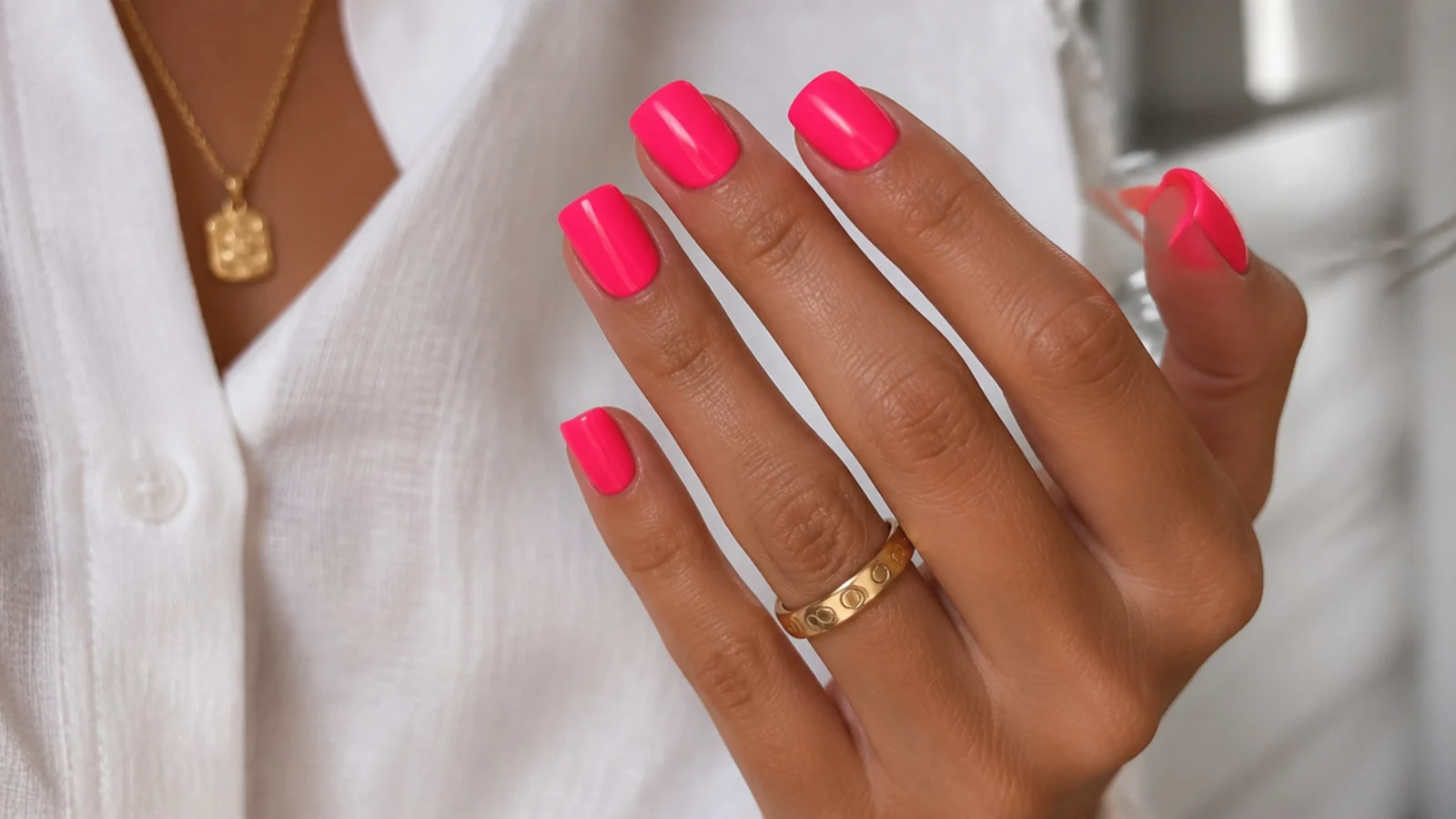
The workhorse bright. A blue-based fluorescent pink like China Glaze Thistle Do Nicely or Essie Off the Wall, laid over one opaque white coat so the pigment reads electric instead of dusty. Neon pink is the most chlorine-tolerant of the fluorescents because the pigment load is heavy enough to survive repeated wetting. Short square at 2 to 3mm keeps it wearable at work. Stain risk: high, use two base coats. Chlorine: good, holds about 5 days of daily swimming. Fade: minor at 10 days.
Who it suits: Every skin tone; the safest first neon.
Tip: Two thin neon coats over white beats three thick coats straight on the nail.
2. Sunshine Yellow Short Square Nails
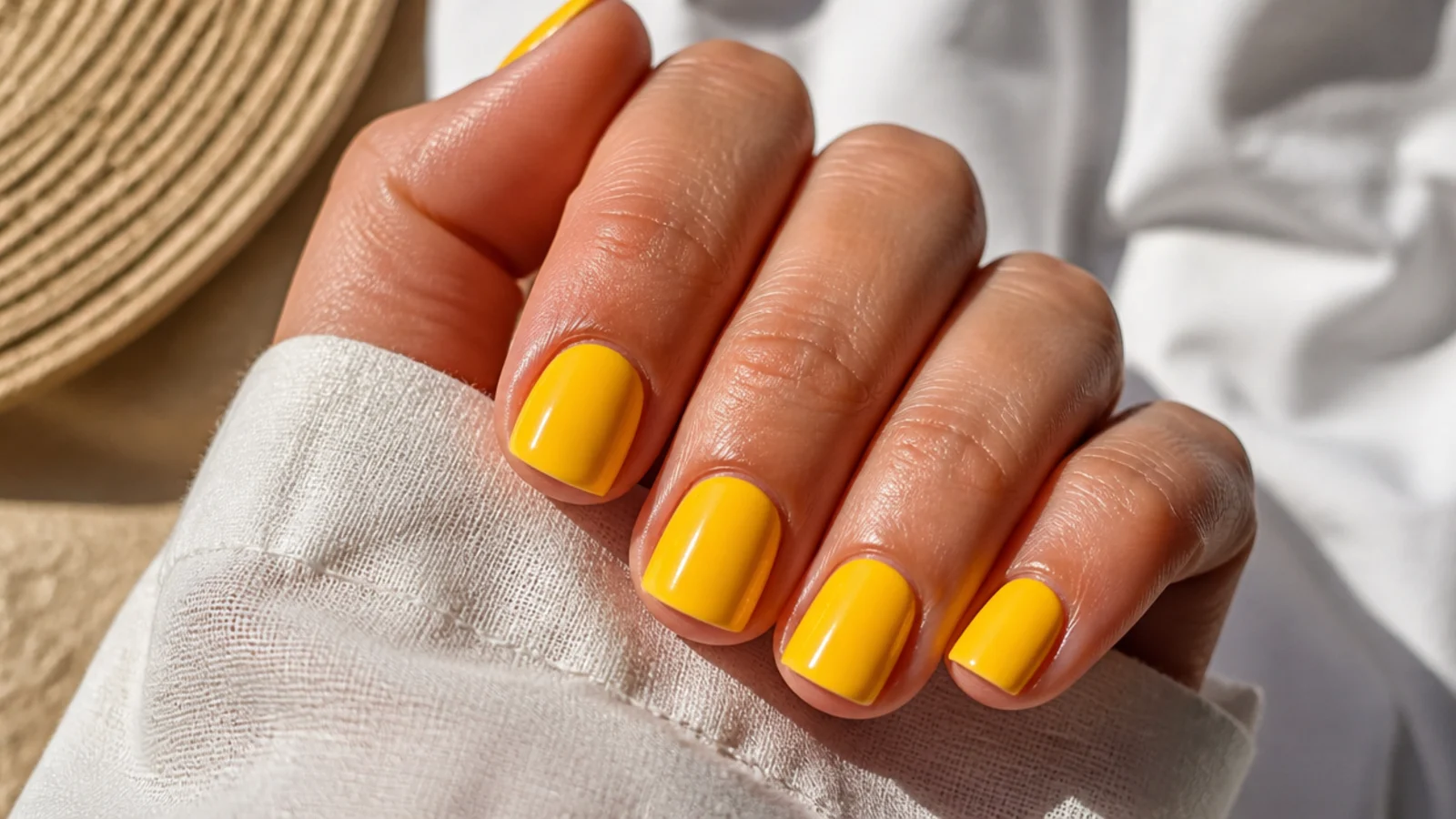
Yellow is the hardest bright to wear and the most rewarding when it lands. Straight yellow polish over a bare nail turns greenish and shows every ridge, so a white base is not optional here. Butter-toned yellows like Essie Chillato flatter more skin tones than a true lemon does. Keep the nail short and square so the color reads graphic rather than costume. Stain risk: very high, yellow pigment is the worst offender on this list. Chlorine: fair. Fade: visible dulling by day 7 in strong sun.
Who it suits: Deep and olive skin tones; anyone wanting the loudest option.
Tip: Test yellow on one nail first; if your hands read pink, go butter, not lemon.
3. Coral Orange Almond Nails
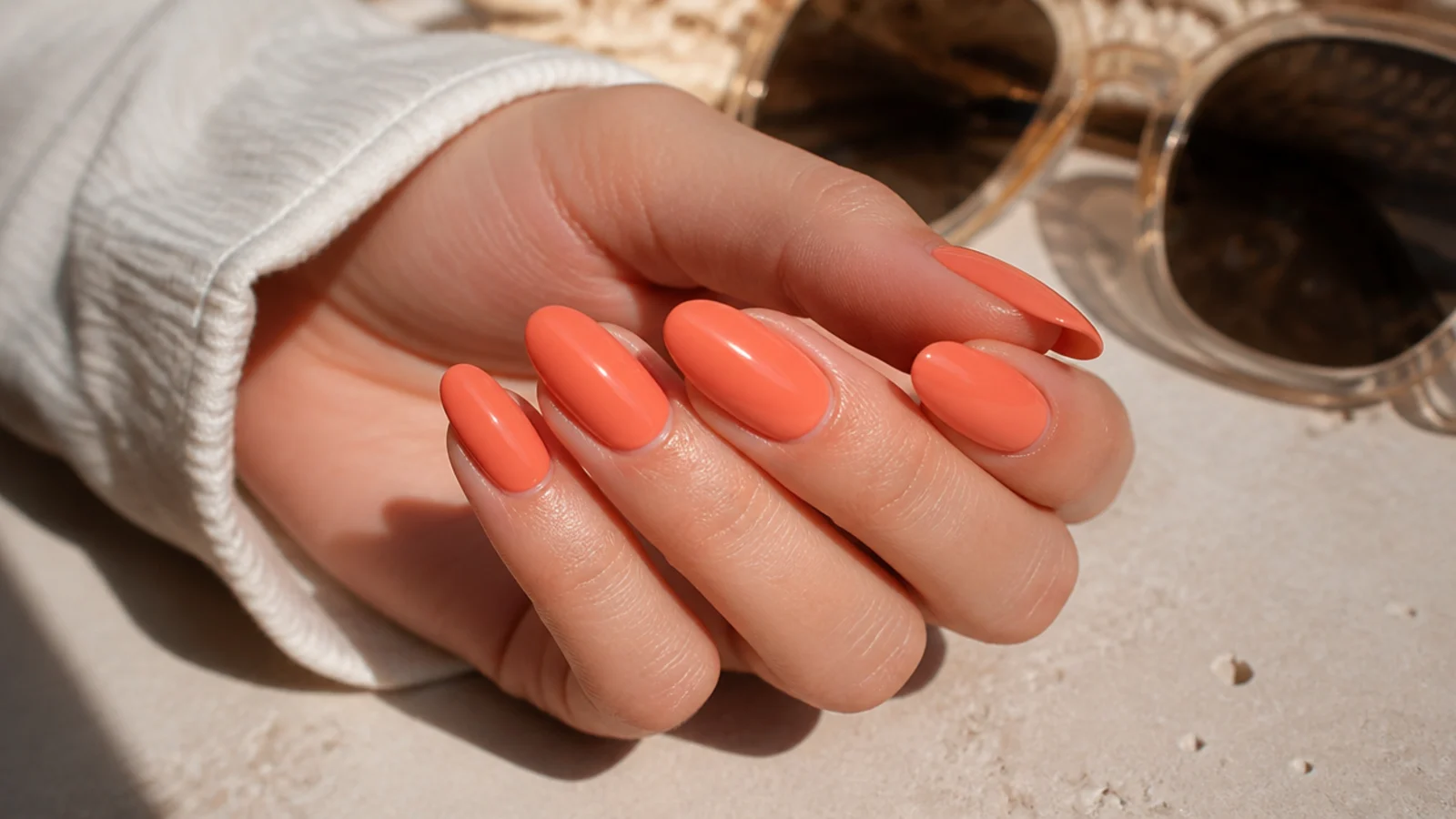
Coral sits between pink and orange and is the single most flattering bright across skin tones, because it borrows warmth from orange without the harshness. Essie Tart Deco and OPI Toucan Do It If You Try are the reference bottles. Almond at 4 to 5mm stretches the finger and keeps the warm tone from looking blocky. The catch is durability: coral pigment is chlorine's favorite target and goes chalky fast. Stain risk: medium. Chlorine: poor, expect visible fade after two pool sessions. Fade: significant at day 6. More almond shapes in short almond nails.
Who it suits: Warm and olive undertones, vacation sets.
Tip: Ask for a gel version if you are swimming; coral in regular polish will not last a trip.
4. Cherry Red Glossy Summer Nails
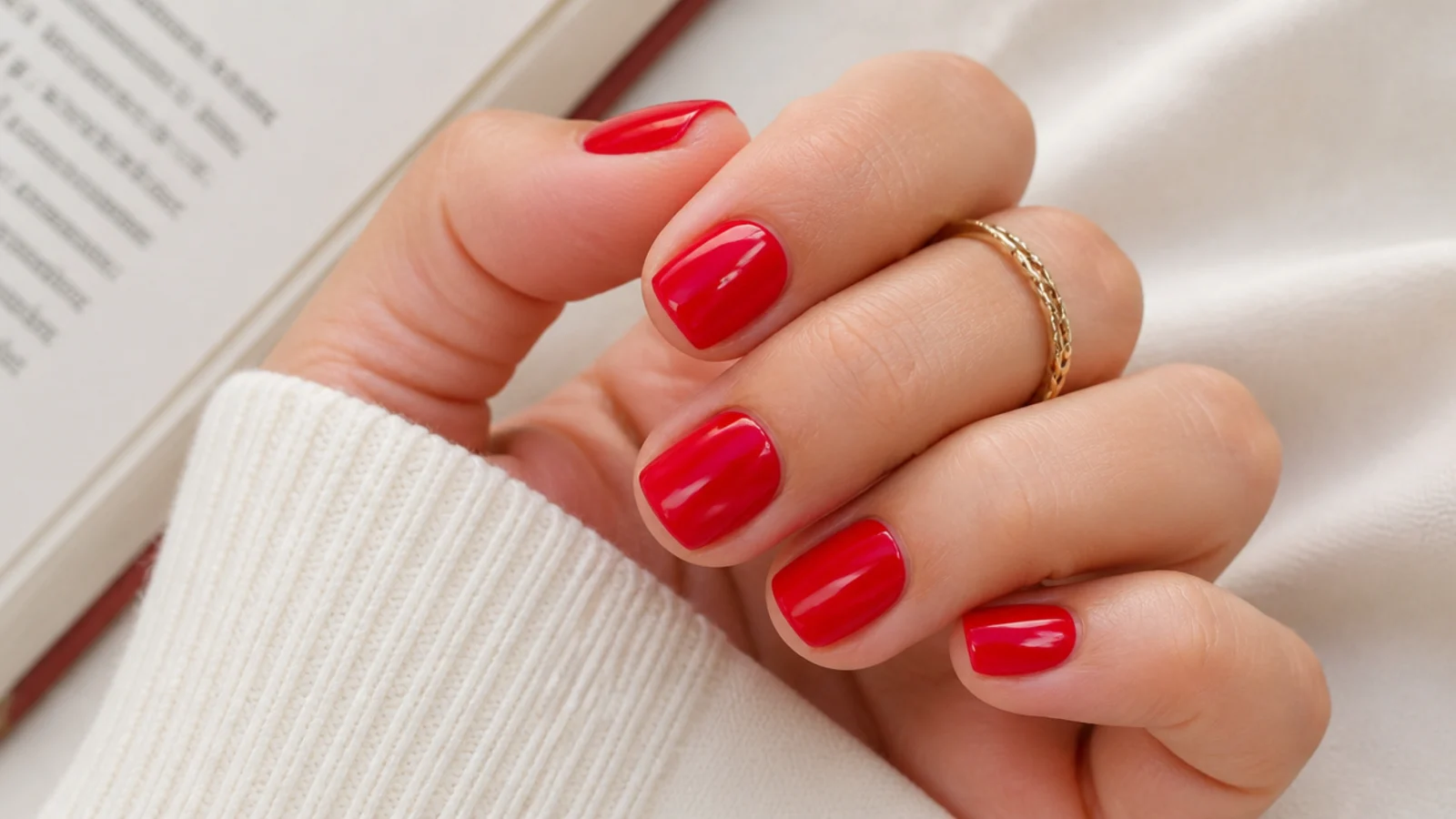
Red is not usually filed under summer brights, but a blue-based cherry with high gloss is the most durable saturated color you can wear in July. The pigment is dense, so it resists sun-bleaching better than orange or yellow, and it looks deliberate against a tan rather than shouting. Two coats gets full opacity. The one real problem is staining: red pigment tints the natural nail more reliably than any other family. Stain risk: high. Chlorine: excellent, the most pool-proof bright here. Fade: negligible at 14 days. See also red coffin nail ideas.
Who it suits: Anyone wanting a bright that still reads grown-up.
Tip: Never skip base coat under red; the yellow ghost it leaves takes weeks to grow out.
5. Lagoon Blue Jelly Nails
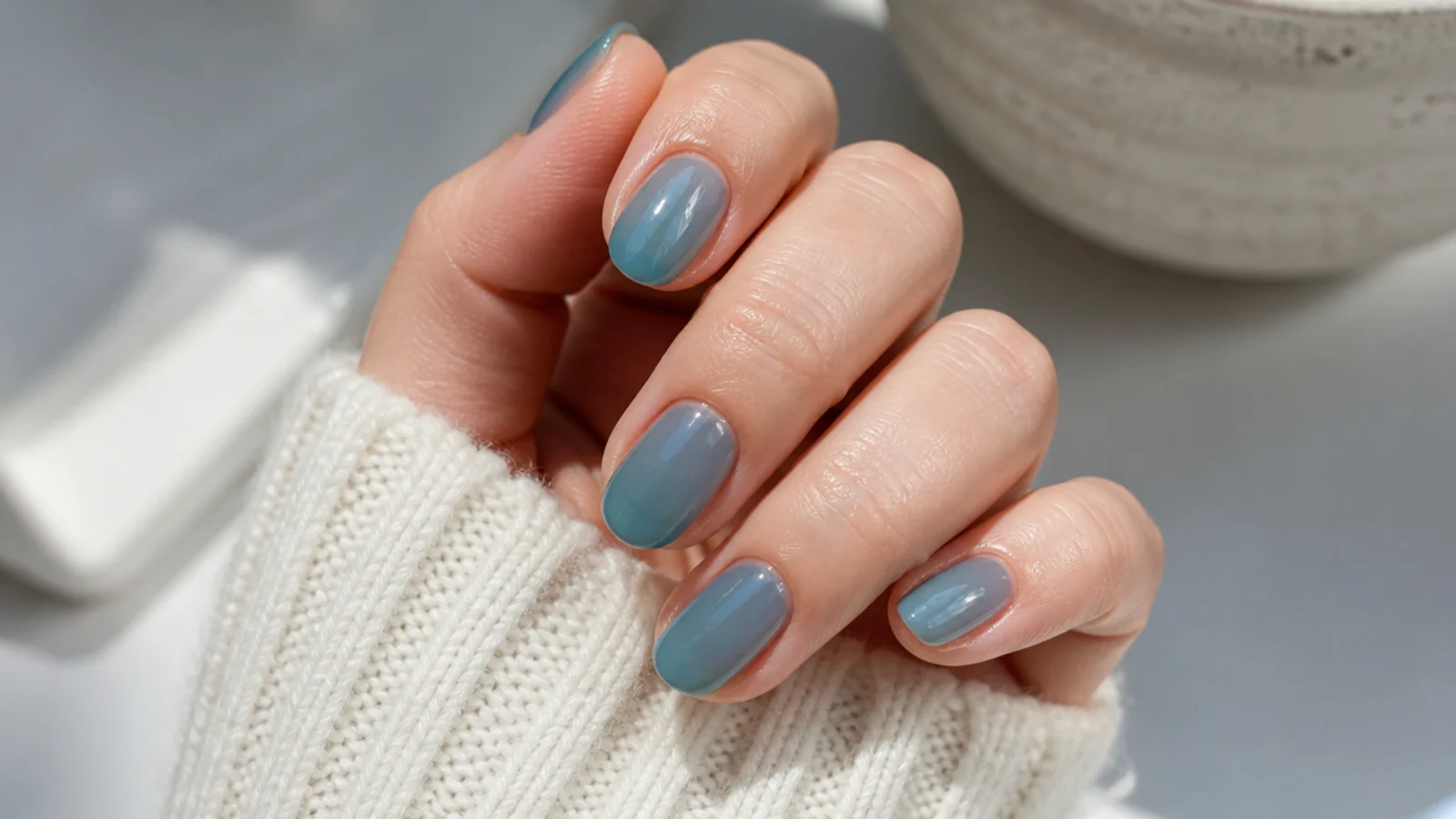
The defining 2026 summer finish. A translucent blue-green gel worn two coats deep over a bare nail, so the color reads like seawater in a glass rather than flat paint. Jelly formulas carry far less pigment than an opaque bright, which is exactly why they barely stain. The trade-off is that the tint dulls as it collects micro-scratches, usually around week two. Stain risk: low. Chlorine: good. Fade: the tint clouds by day 12. Compare with the opaque version in royal blue nails.
Who it suits: Cool undertones and anyone who hates a stark color line.
Tip: Two jelly coats maximum; a third kills the transparency the whole look depends on.
6. Neon Green Flipped French Nails
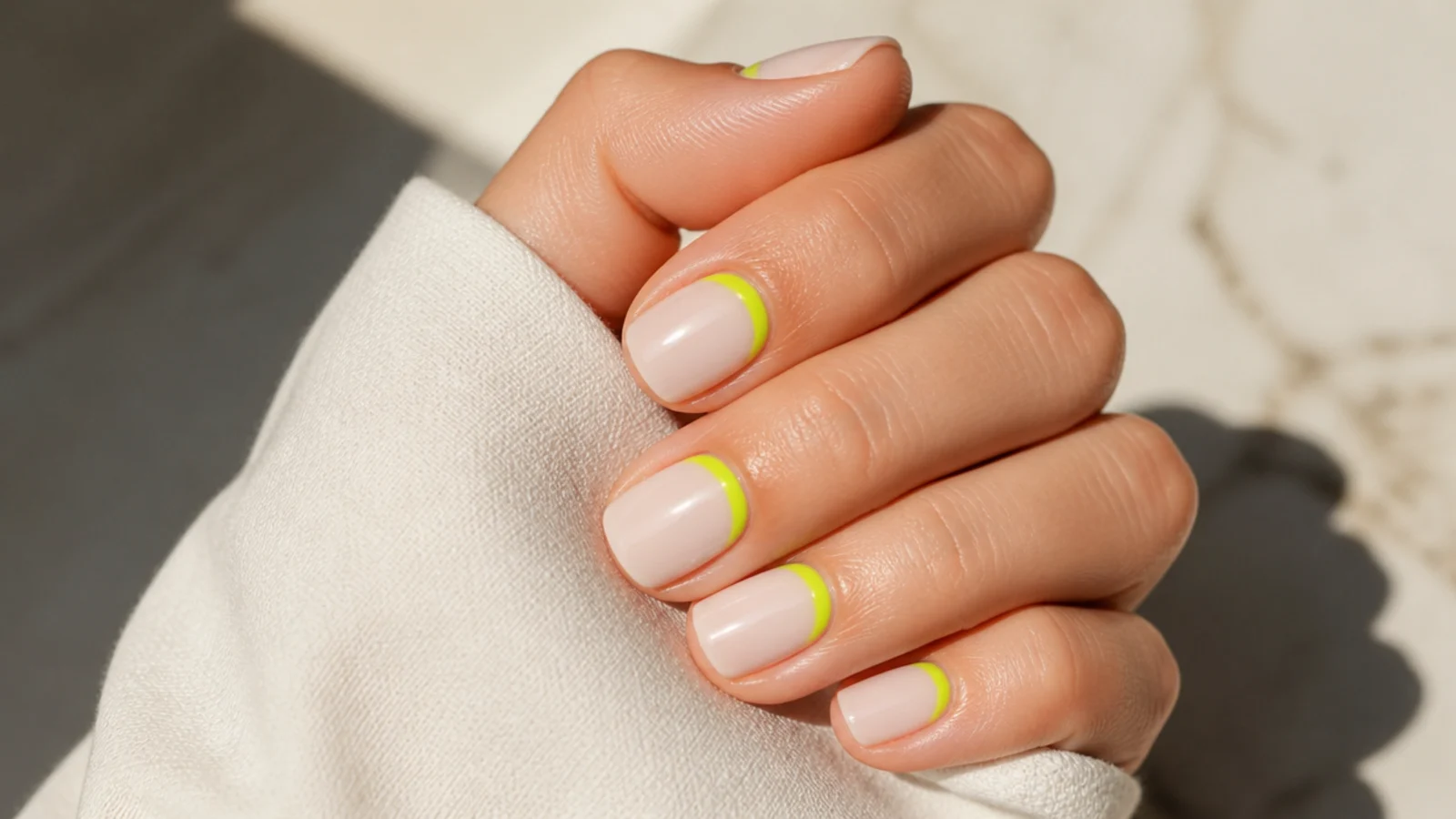
The flipped or reverse French puts the color band at the cuticle and leaves the tip bare, which is the smartest summer trick nobody uses: as the nail grows the band moves away from the skin, so grow-out reads as design rather than as regrowth. Neon green over a milky base gives maximum contrast. Ask for a 3mm arc following the cuticle curve, not a straight line. Stain risk: medium, and only where the band sits. Chlorine: good. Fade: minor at 10 days. The classic direction is covered in french tip nails.
Who it suits: Short nails, and anyone who hates seeing regrowth.
Tip: Say flipped French, color at the cuticle, or your tech will default to a tip.
7. Tangerine Orange Coffin Nails
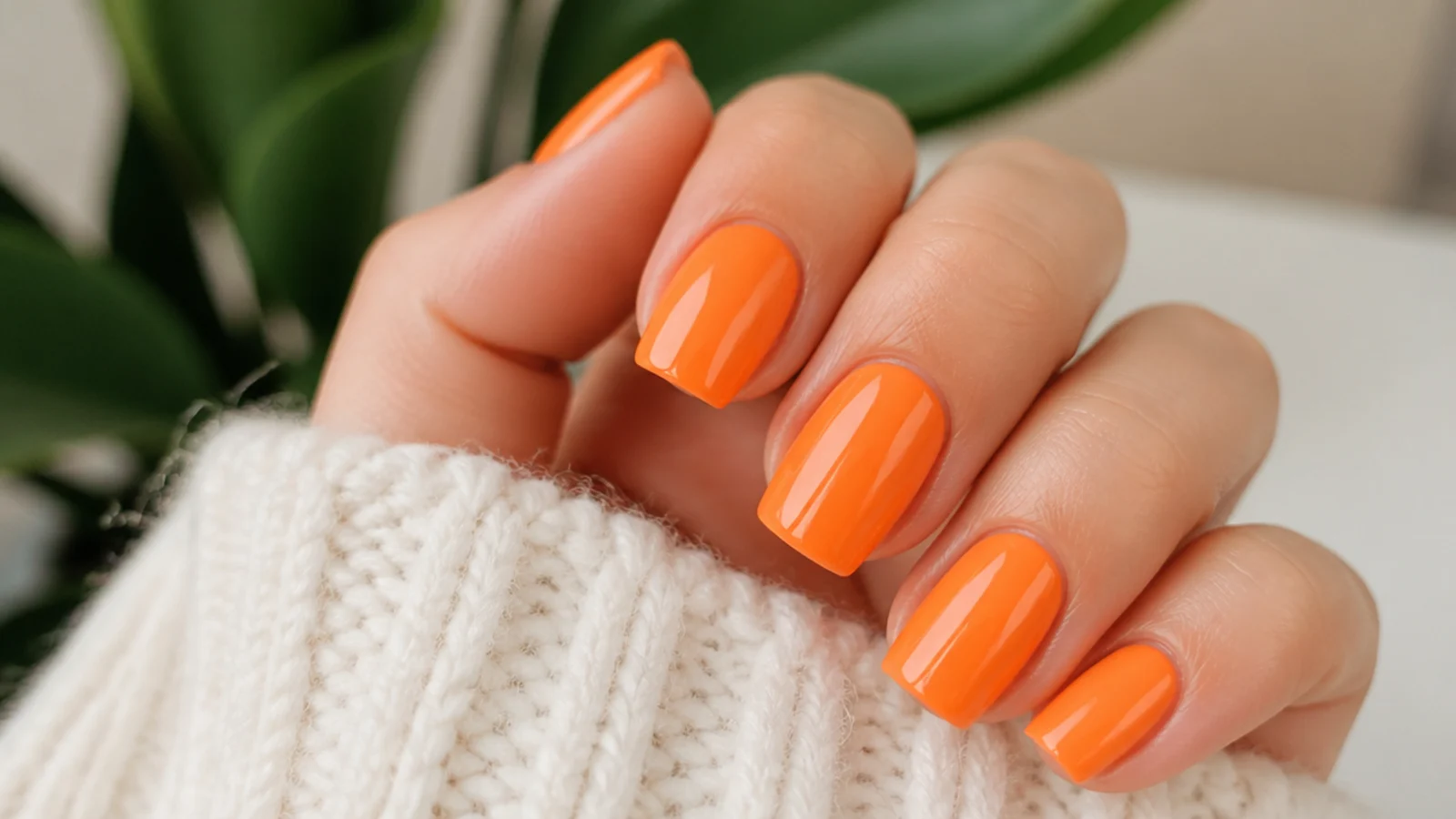
A pure zesty orange with no red in it, built opaque over white. Orange is the most sun-reactive bright on this list because the pigment breaks down under prolonged UV, which is why a July set looks chalkier by the end of a beach week than the same shade in September. Short coffin gives the flat tip a wide band of color that reads intentional. Stain risk: high. Chlorine: poor. Fade: heavy, visible dulling from day 5. Shape guidance sits in coffin nail ideas.
Who it suits: Deep and tanned skin, festival and vacation sets.
Tip: Add a UV-resistant gloss top coat and re-cap the free edge every three days.
8. Watermelon Pink and Green Nails
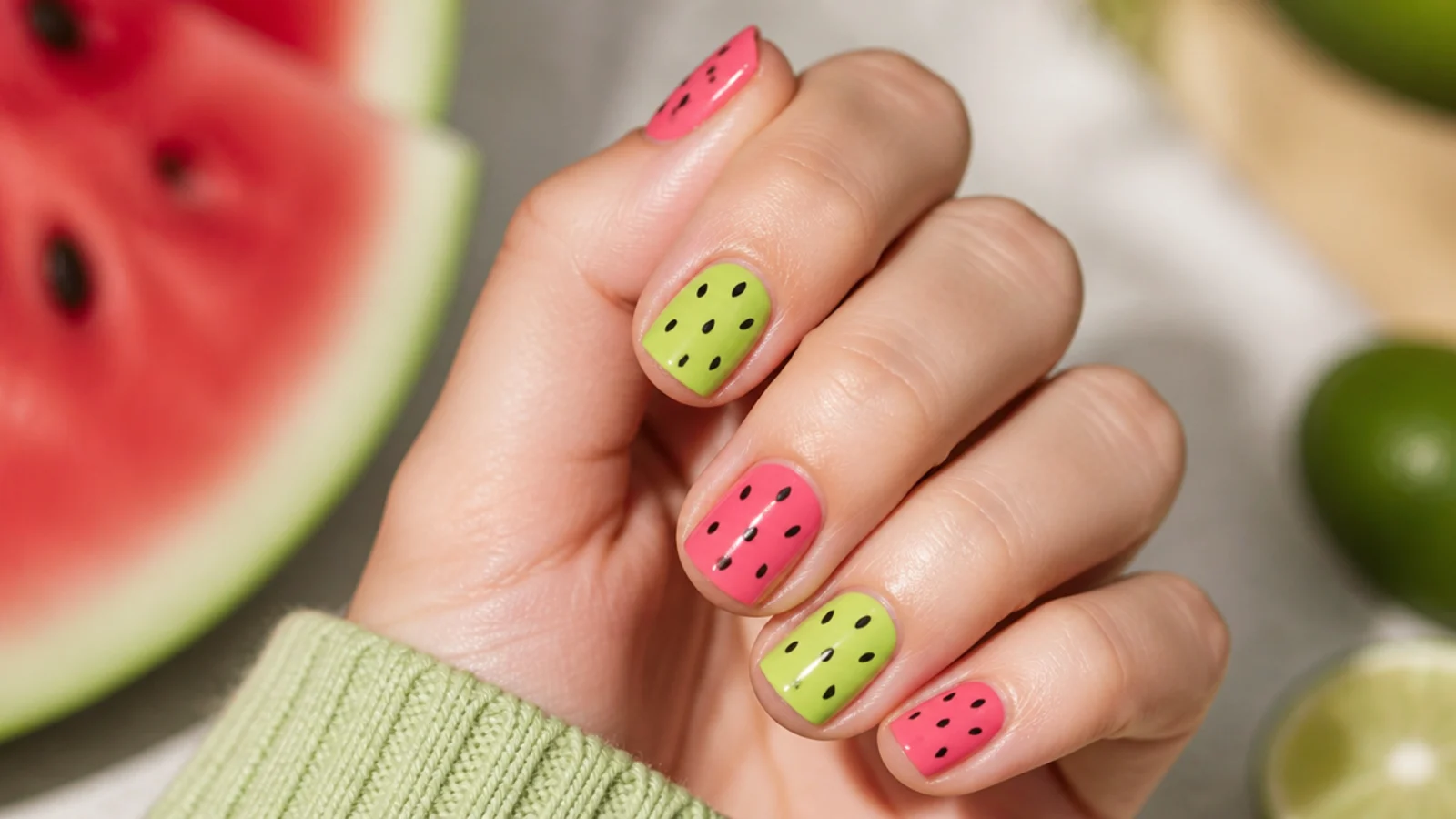
Alternating nails in melon pink and lime green, with three or four tiny black seed dots painted on two accent nails using a dotting tool or the head of a straight pin. It is the most-saved novelty summer set and it survives being cute rather than childish because the two brights are close in saturation. Keep the seeds small, roughly 1mm, and off-center. Stain risk: medium. Chlorine: fair, the green dulls first. Fade: moderate at day 8. Easy at home, see cute simple nails at home.
Who it suits: Teens, beach weeks and anyone wanting a talking-point set.
Tip: Paint seeds last, after the top coat has cured, then seal with a second thin gloss layer.
9. Rainbow Mismatched Bright Nails
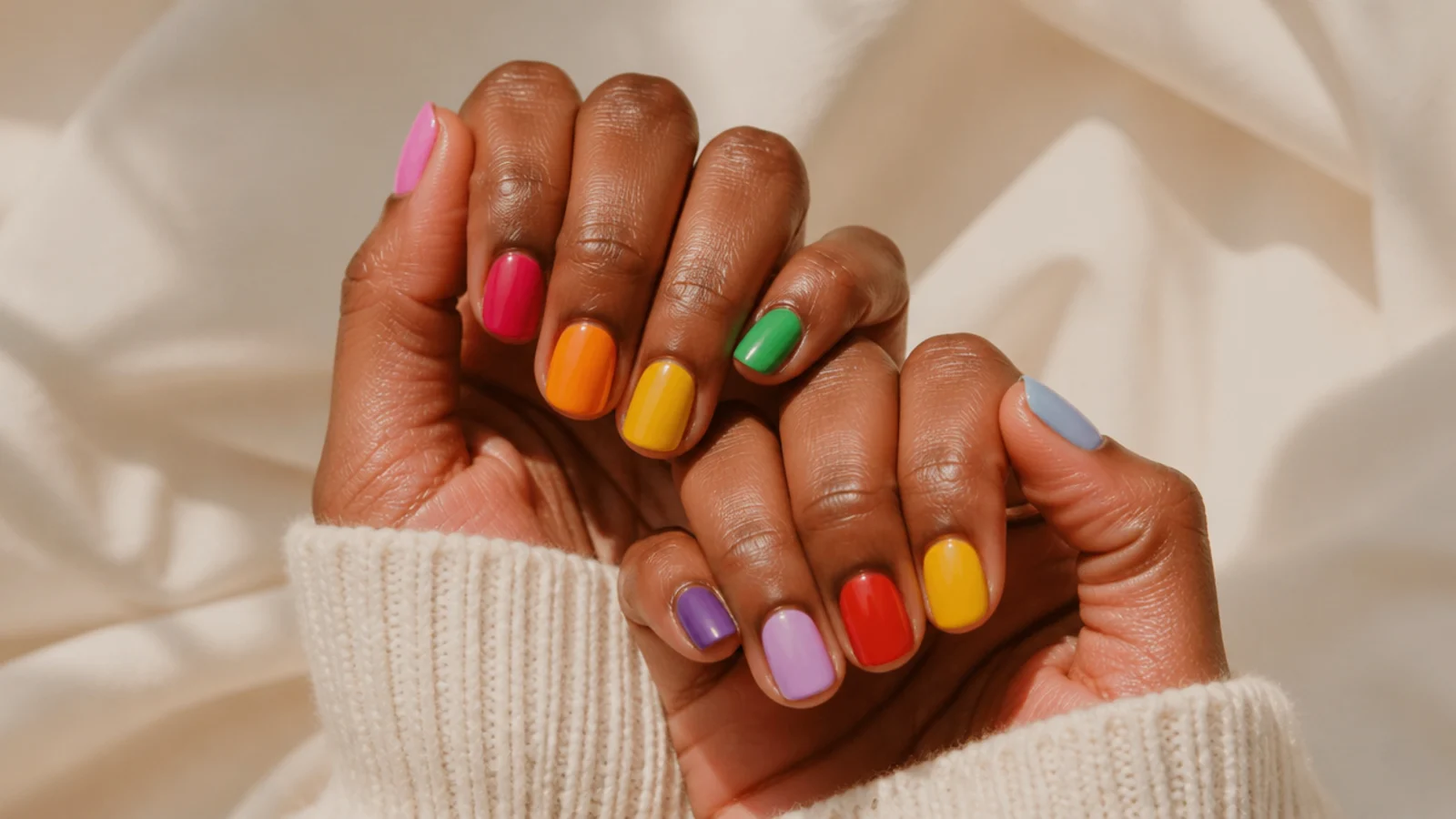
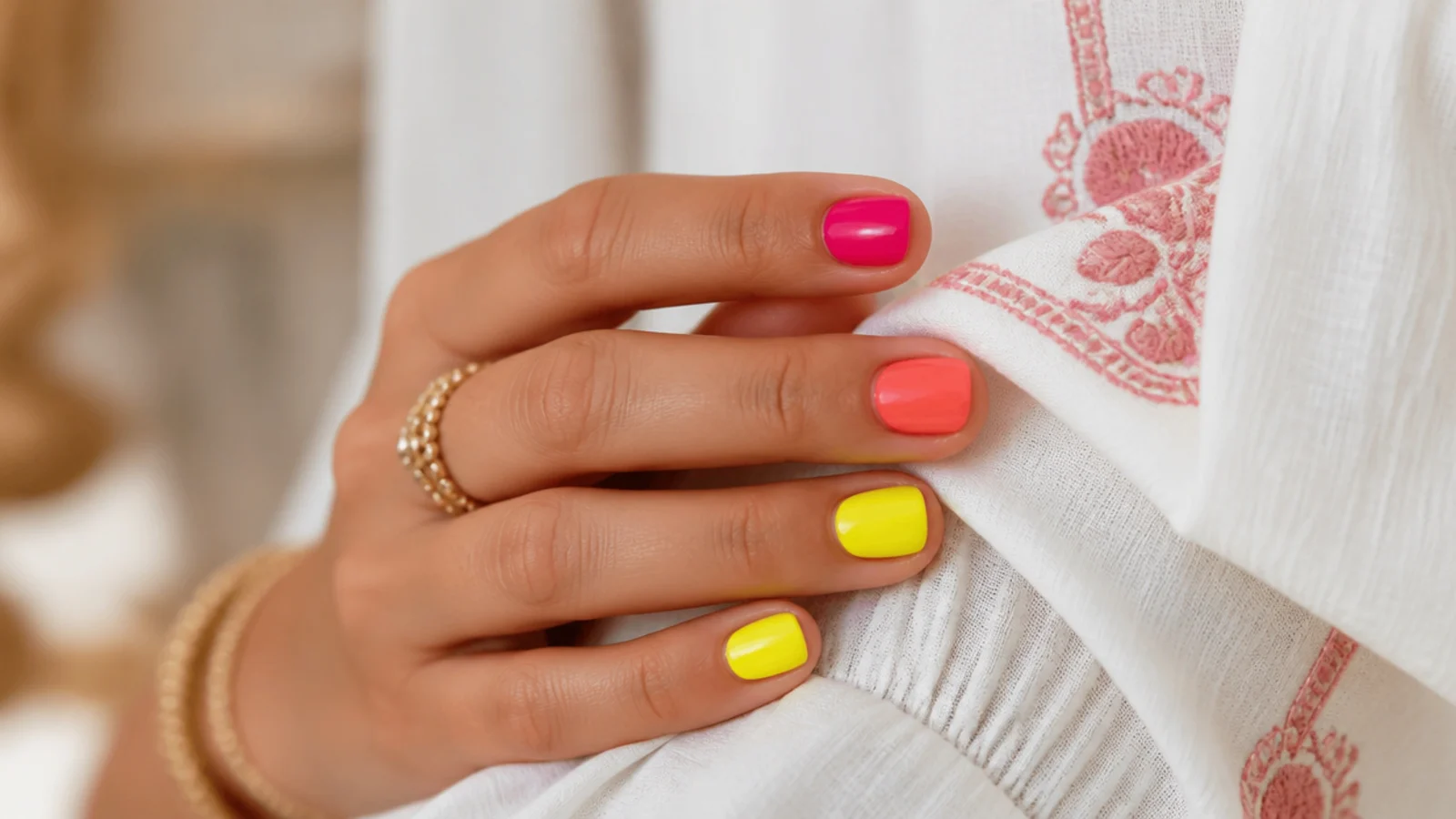
Every nail a different bright: hot pink, tangerine, sunshine yellow, lime, lagoon blue. The rule that separates good mismatched sets from chaos is keeping all ten at the same finish and the same saturation level, so five glossy neons work and three neons plus two pastels do not. Order them so no two adjacent nails sit next to each other on the color wheel. Stain risk: high, because you are wearing every problem pigment at once. Chlorine: mixed, the warm shades go first. Fade: uneven by day 7, which is the real drawback.
Who it suits: Short nails, festivals and using up polish you already own.
Tip: Repeat the same two colors on both thumbs so the hands still read as a pair.
10. Electric Purple Chrome Summer Nails
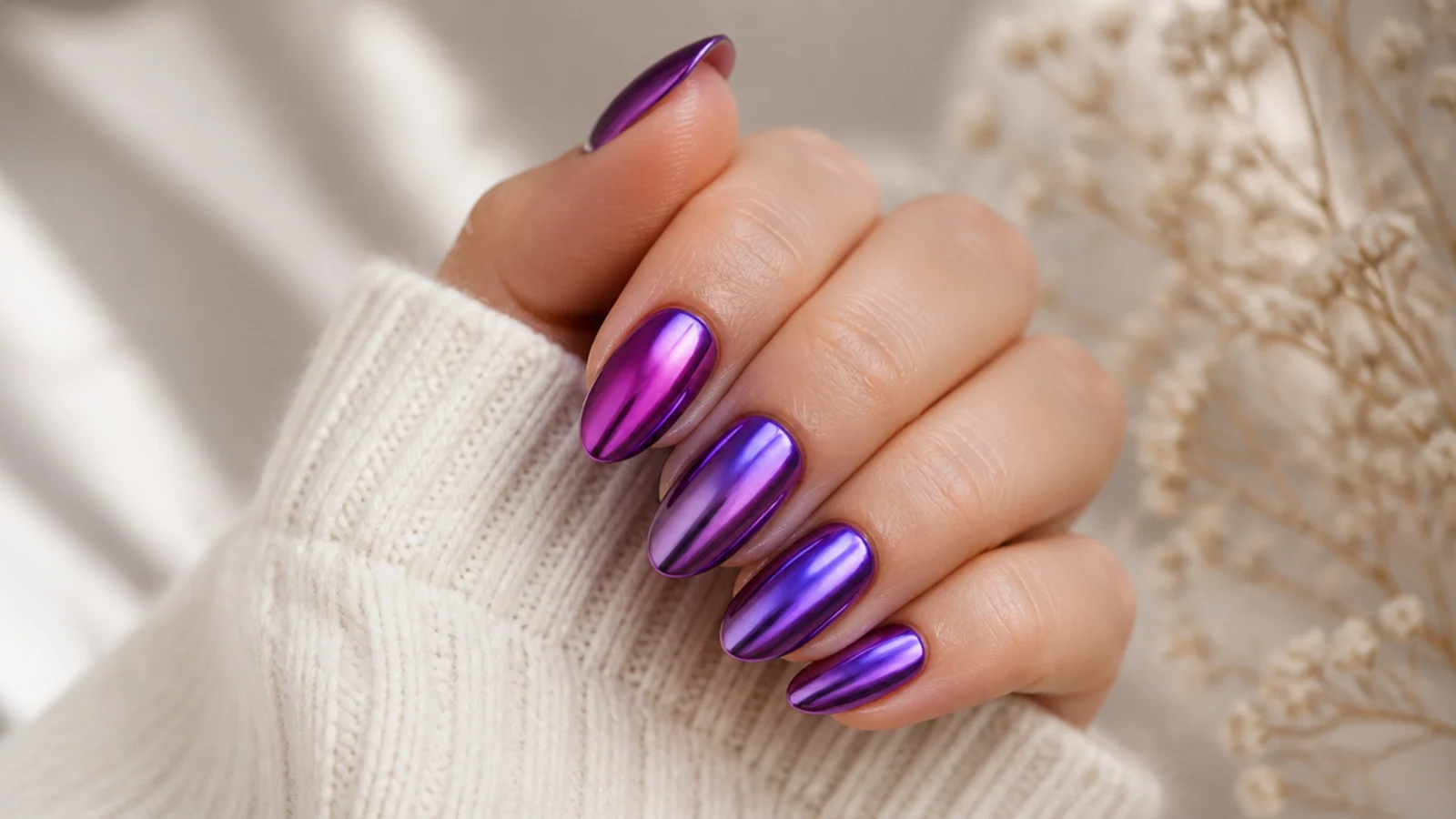
Bright violet gel cured first, then chrome powder buffed over a no-wipe top coat so the purple keeps its hue under the mirror. Chrome is the one finish that gets brighter in sunlight instead of fading, because the effect is reflective rather than pigment-dependent, which makes it the most sun-proof option on this list. Budget 10 to 20 dollars over a standard gel set. Stain risk: low, the chrome layer seals everything. Chlorine: excellent. Fade: none, though the mirror dulls at the free edge by week two. Softer purples live in light purple nails.
Who it suits: Nights out, cool undertones, sun-heavy trips.
Tip: Say chrome over color, not chrome over black, or the purple mutes to gunmetal.
11. Turquoise Aqua Summer Nails
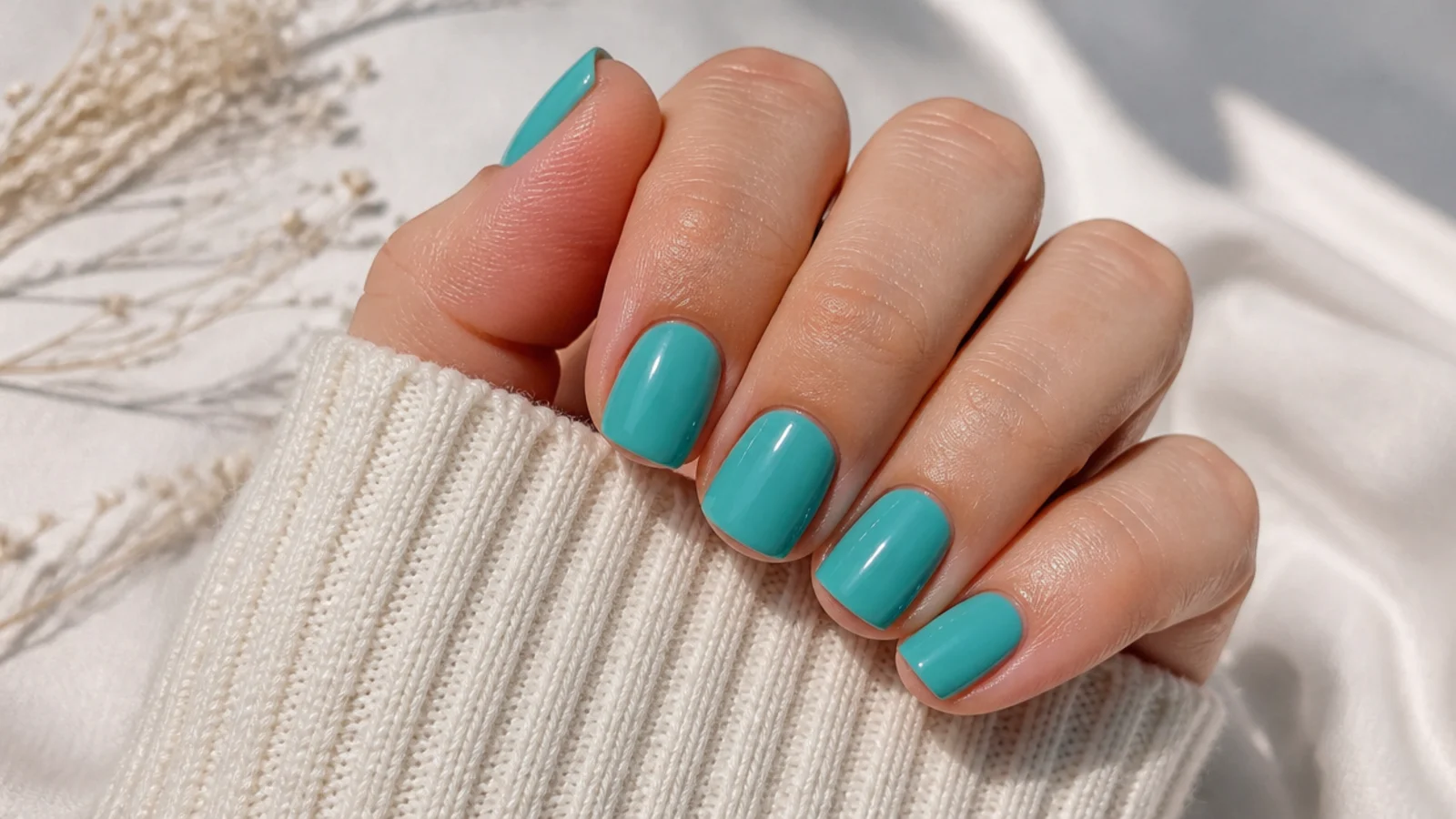
A saturated blue-green cream, opaque in two coats, and the single best bright against a tan because the cool tone throws the warmth of the skin forward. It is also the classic pedicure shade, which is why matching fingers and toes in turquoise reads coordinated rather than matchy. Turquoise pigment holds up unusually well in salt water. Stain risk: medium, blue-green pigment tints the free edge. Chlorine: good. Fade: light at day 10. For the pedicure version see cute toe nails for sandal season.
Who it suits: Every skin tone; strongest on tanned and deep skin.
Tip: Use base coat right to the free edge, since blue-green stains the tip most visibly.
12. Hibiscus Flower Nails on Bright Orange
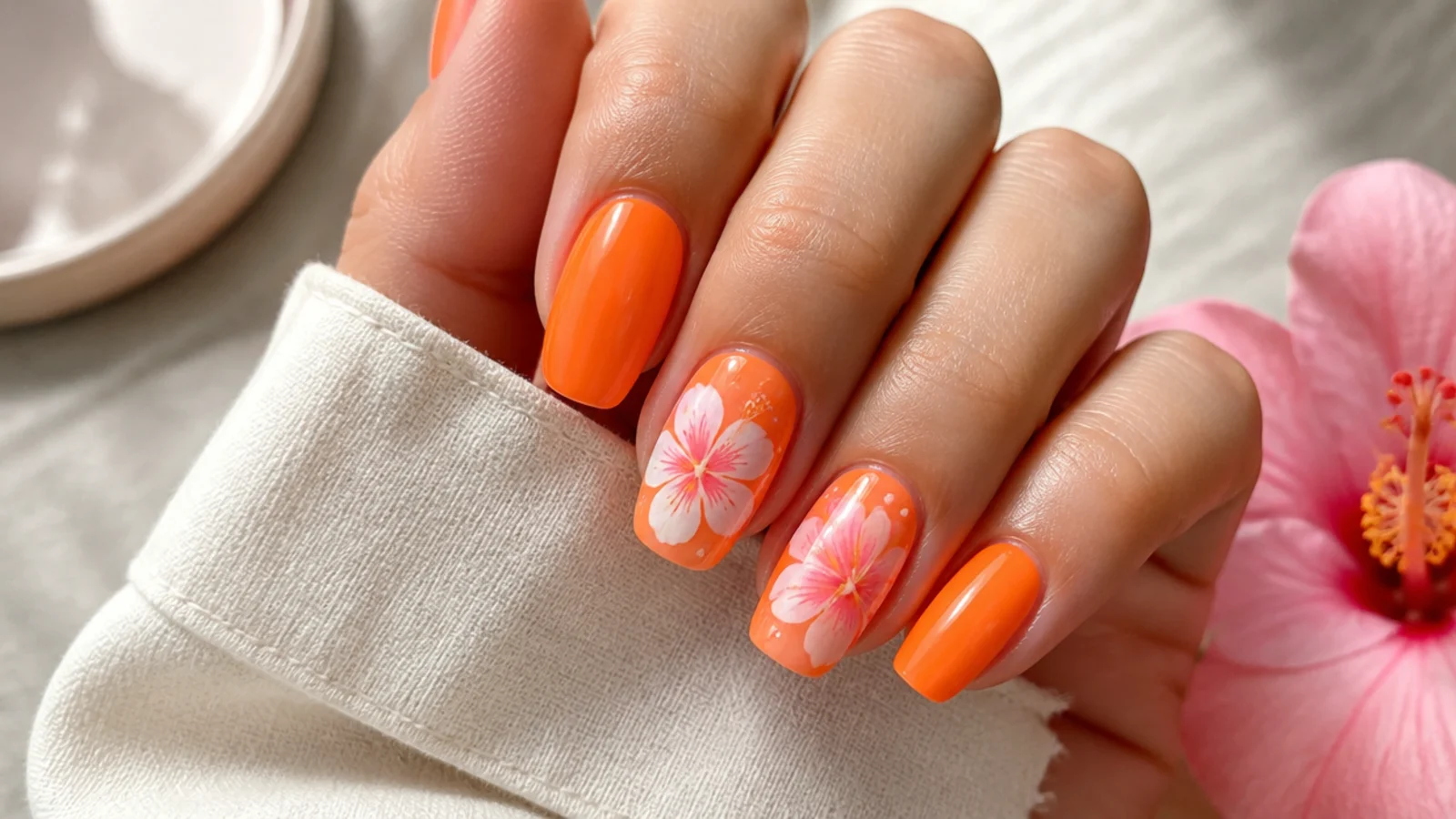
Two accent nails carrying a hand-painted white hibiscus with a magenta throat and a fine yellow stamen, over a tangerine or coral base on the remaining eight. Tropical florals are the summer art request, and hibiscus works better than palm leaves because the round bloom fills a short nail without getting cropped. Expect 5 to 10 dollars per painted nail and an extra 15 minutes of chair time. Stain risk: high from the orange base. Chlorine: fair. Fade: the base dulls before the art does. A softer painted-flower method is blooming gel flower nails.
Who it suits: Vacations, cruises and anyone booking a special-occasion set.
Tip: Ask for the bloom on the ring and index nails only; four florals looks like wallpaper.
13. White French Tips Over a Neon Base
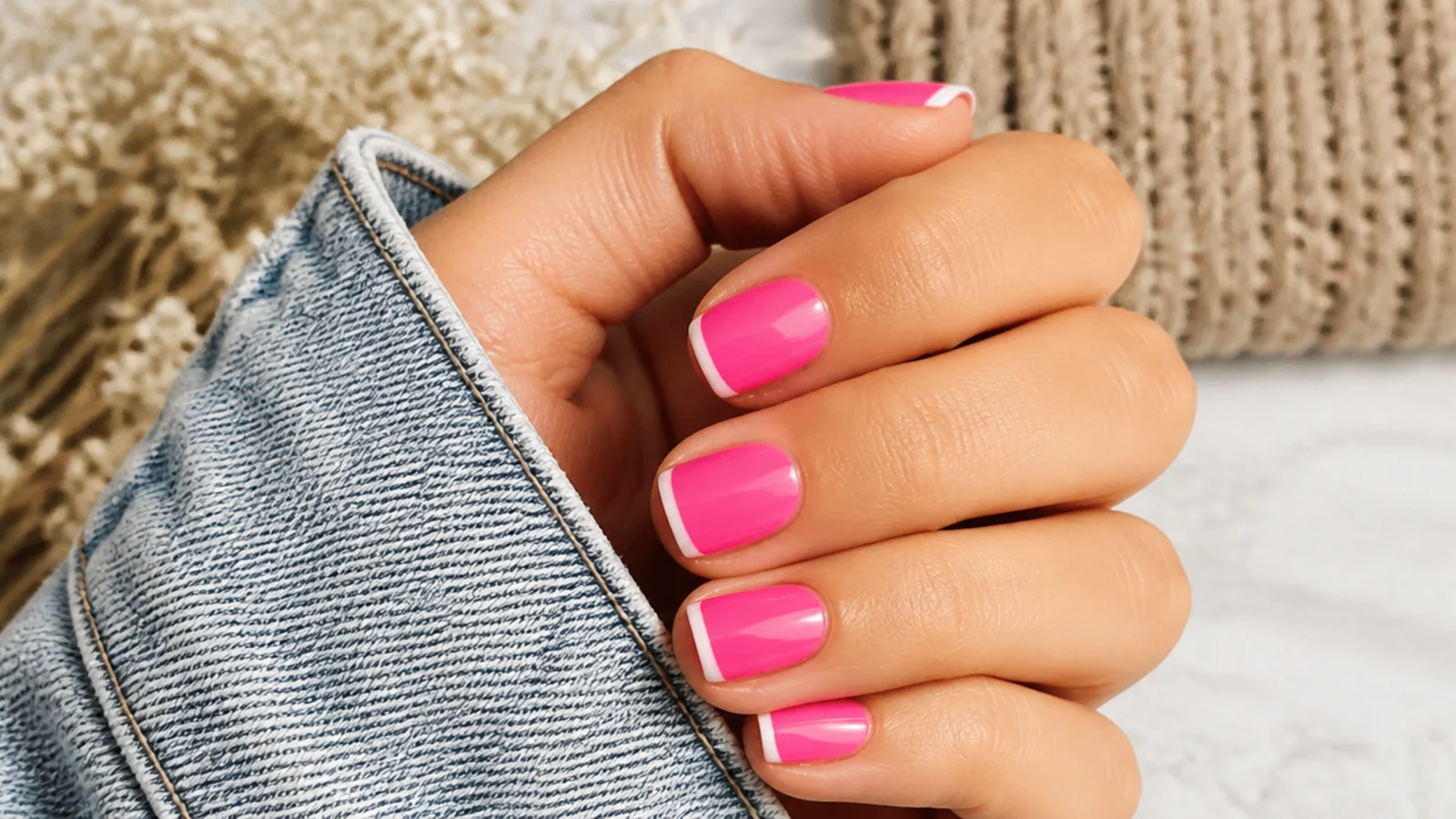
A crisp white tip band, roughly 2 to 3mm, painted over a fully opaque neon base rather than the usual sheer pink. The white does the work the base coat normally does, bouncing light back through nothing, so the contrast is what sells it. This is the most office-tolerable bright set here, because the eye reads French first and color second. Stain risk: matches whichever neon you pick. Chlorine: good, white tips resist better than the base. Fade: minor at 12 days in gel. Compare with white french tip nails.
Who it suits: Workplaces with a dress code, short nails.
Tip: Ask for the same tip width on all ten; uneven bands are what make a French look cheap.
14. Magenta Jelly Nails
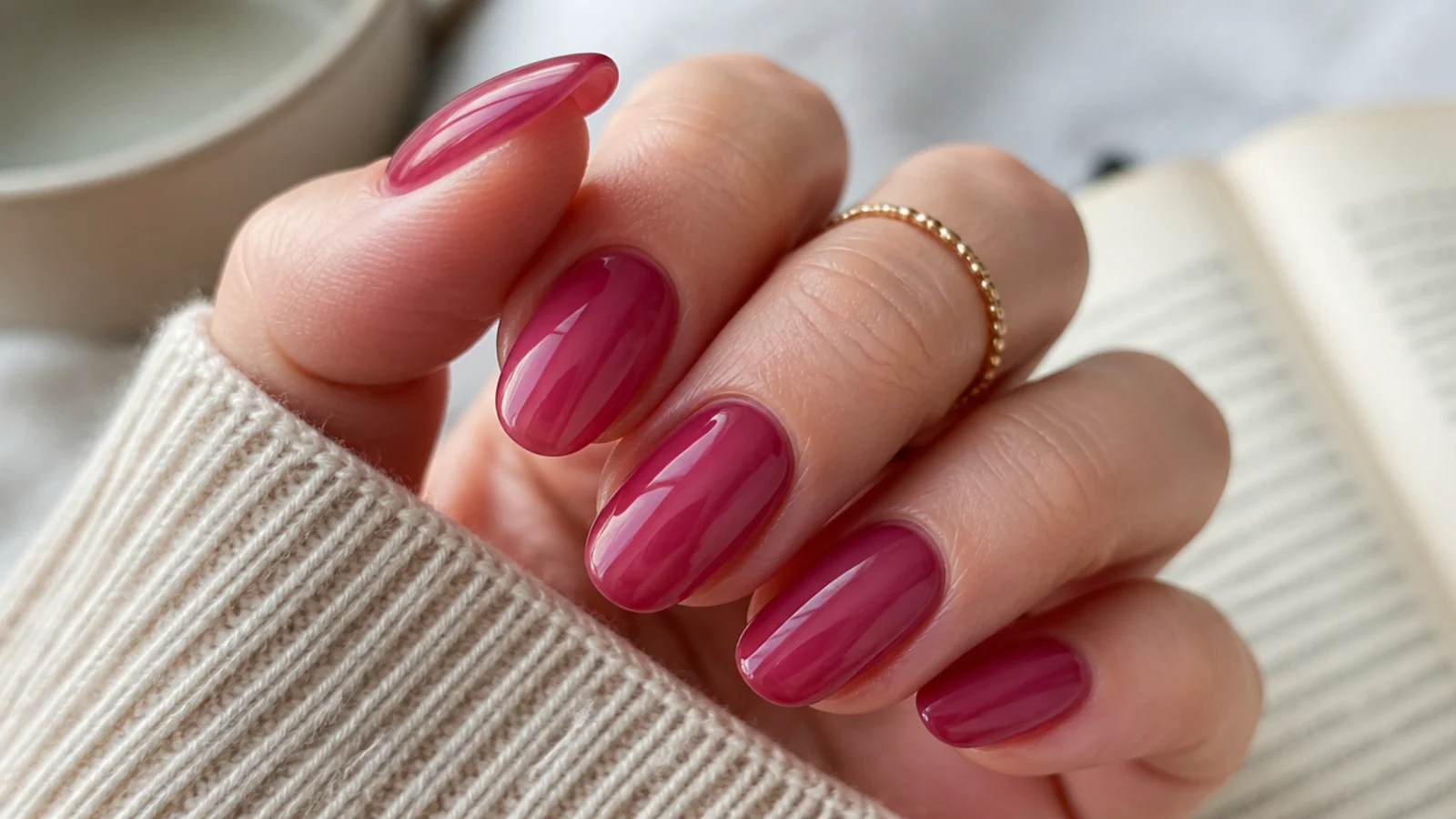
The pink half of the jelly trend: a see-through raspberry tint worn over a bare nail, most transparent across the free edge where only the overlay remains. Magenta jelly gives you the punch of a bright without the flat opacity, and because it is sheer it grows out invisibly, which is why it outlasts opaque brights on look even when the wear time matches. Stain risk: low. Chlorine: good. Fade: the tint clouds around day 12. The glassy family is covered in soap nails.
Who it suits: Anyone wanting color that still shows the natural nail.
Tip: Skip the white base entirely; a base under jelly turns it into ordinary opaque polish.
15. Lime Green and Cobalt Blue Color Block Nails
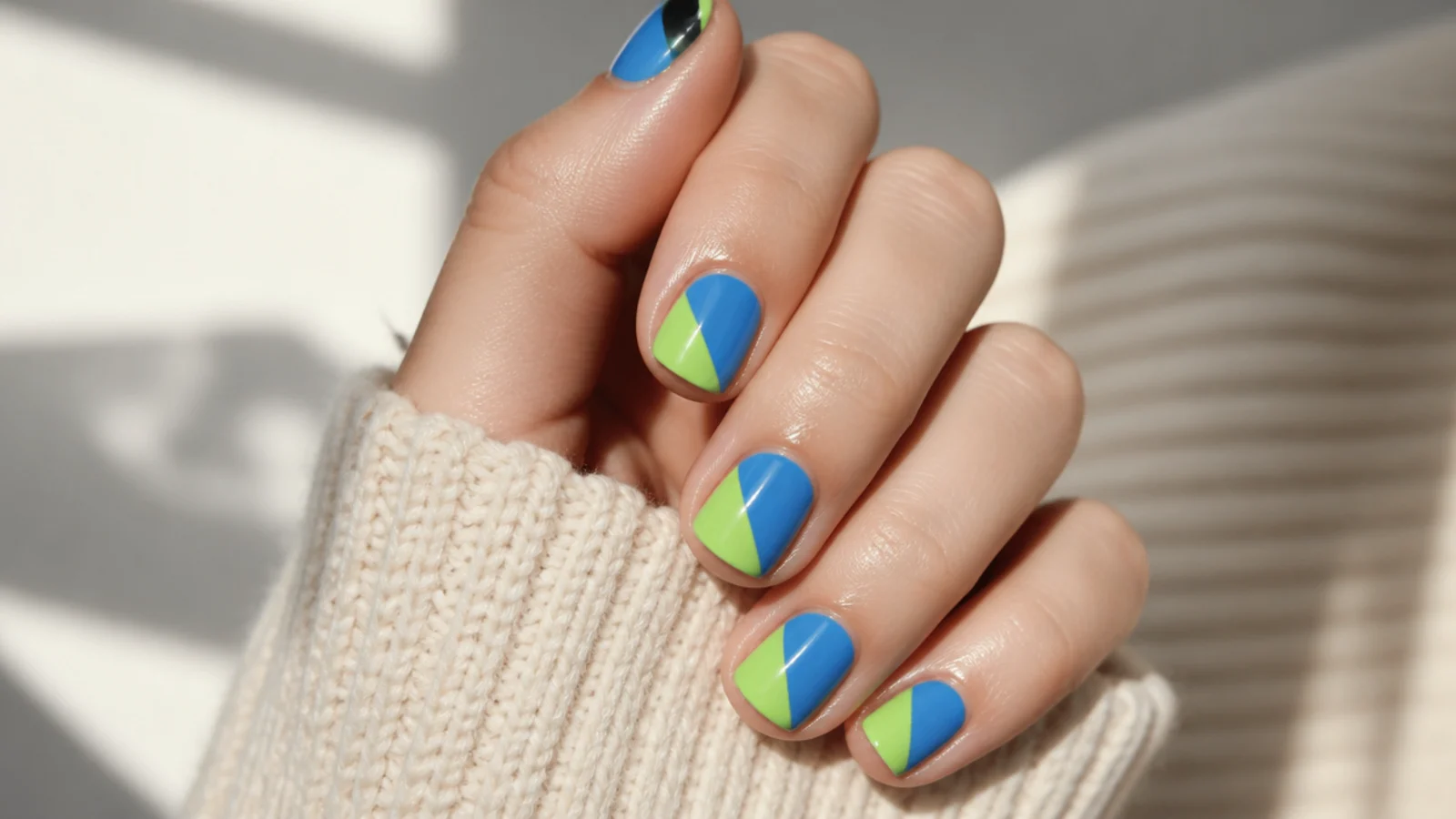
Each nail split into two fields, lime green against cobalt blue, divided by a clean diagonal taped before the second color goes on. The blocks must meet edge to edge with no gap, which is why striping tape beats a freehand line for anyone doing this at home. Alternate which color sits on top across the ten nails so the set has movement. Stain risk: high from the lime. Chlorine: fair. Fade: the lime dulls noticeably by day 6 while the cobalt holds. Bolder color ideas in bold nail colors for short nails.
Who it suits: Short square nails and graphic, non-floral summer looks.
Tip: Cure or fully dry the first color before taping, or the tape lifts the paint with it.
Do Bright Nail Colors Stain Your Natural Nail?
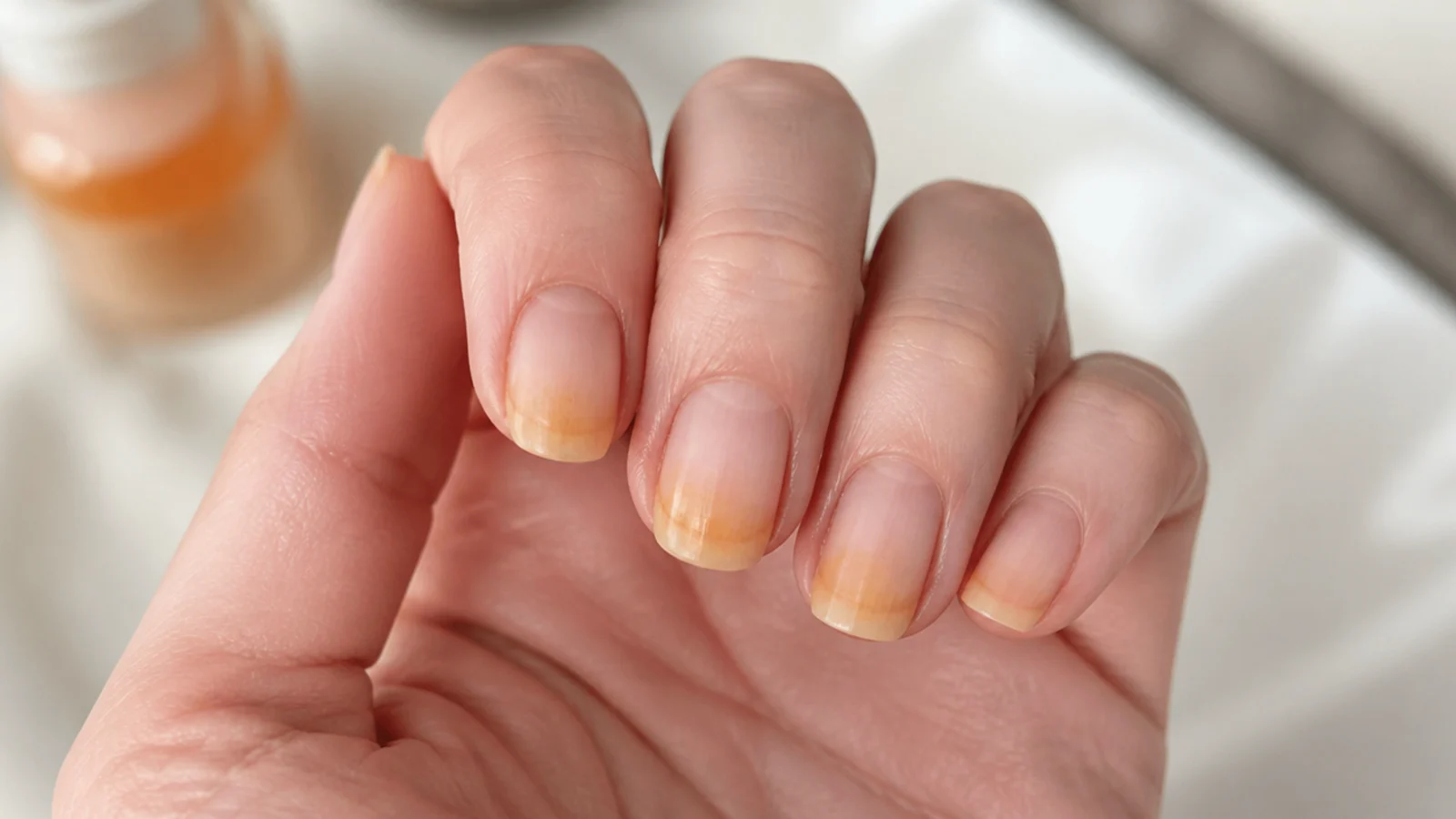
Yes, and the brighter the shade the worse it is. The natural nail plate is porous keratin, and highly saturated pigment migrates into those pores while the color sits on top. Yellow, orange, red and fluorescent pink are the four worst families, in roughly that order. What you see after removal is a dull yellow or salmon cast across the whole plate, and because it lives inside the keratin you cannot buff it off without thinning the nail. It grows out in four to eight weeks. The fix costs nothing: two thin coats of a clear base coat, fully dry, before any color goes on. One coat is not enough under a neon, since the color coat can wick through a single thin layer while it is still soft. If you have already stained a nail, leave it bare for a week and use a whitening base coat with a violet tint, which cancels the yellow optically while the growth catches up. This is the single most useful thing no bright summer nail listicle tells you. Shorter sets forgive it best, see summer nail colors for short nails.
Which Bright Summer Nail Colors Survive Chlorine and Salt Water?
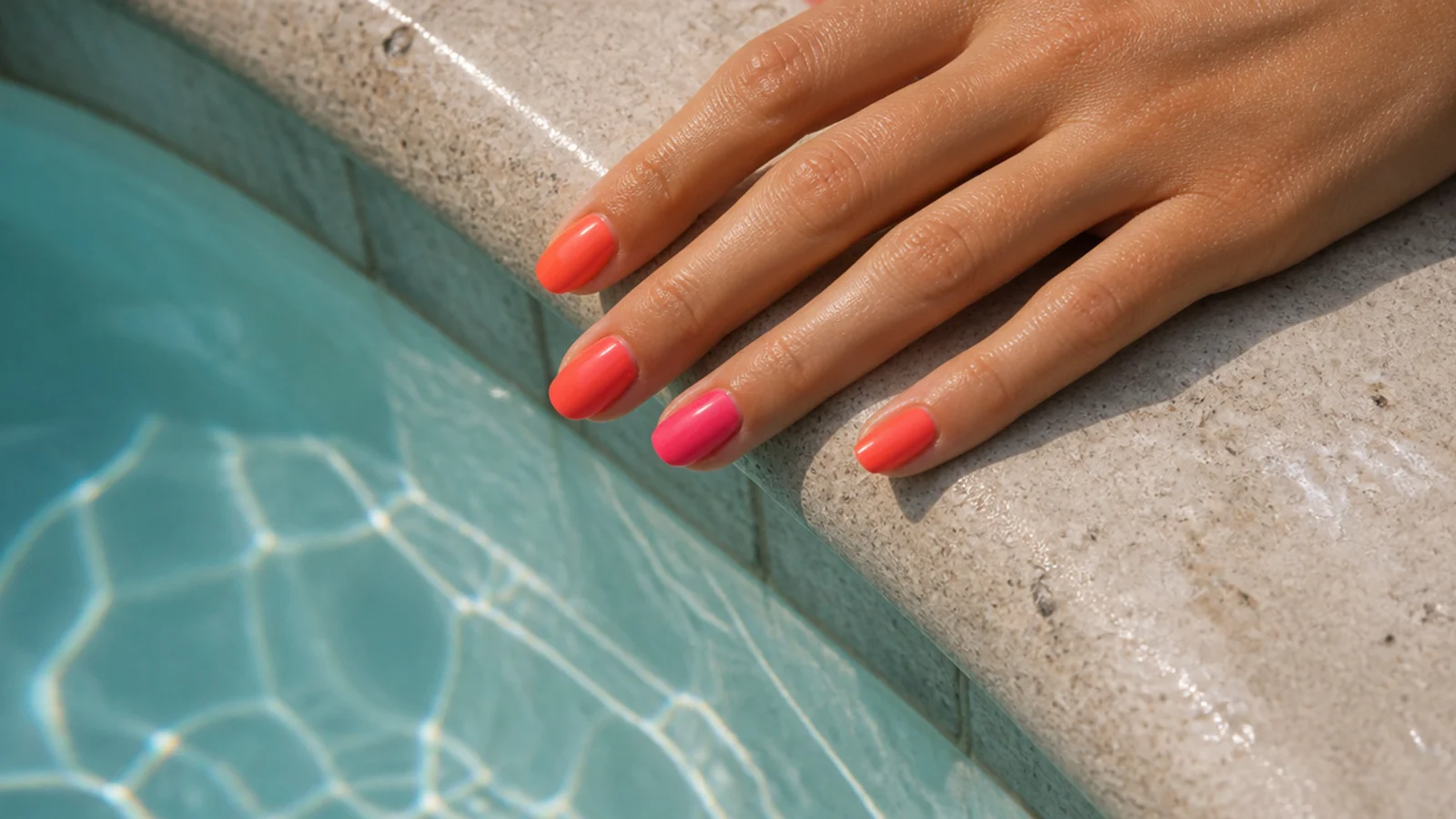
Chlorine is an oxidizer, so it attacks pigment the same way it bleaches a swimsuit, and it works fastest on warm shades. Coral, tangerine and sunshine yellow go chalky first, usually after two or three long swims. Cherry red, magenta, turquoise and electric purple hold the longest, because the pigment is denser and sits further from the range chlorine strips. Salt water is gentler on color but harder on adhesion, since repeated wet and dry cycles lift the free edge. Three habits make the difference. Rinse your hands in fresh water within a few minutes of getting out, since it is the residue drying on the nail that does the damage, not the swim itself. Re-cap the free edge with a clear top coat every two or three days, running the brush along the tip edge rather than just over the surface. And choose gel over regular polish for any trip longer than four days, because a cured gel surface is effectively non-porous. Hot tubs are worse than pools: heat accelerates everything.
Do Neon Nails Need a White Base Coat?
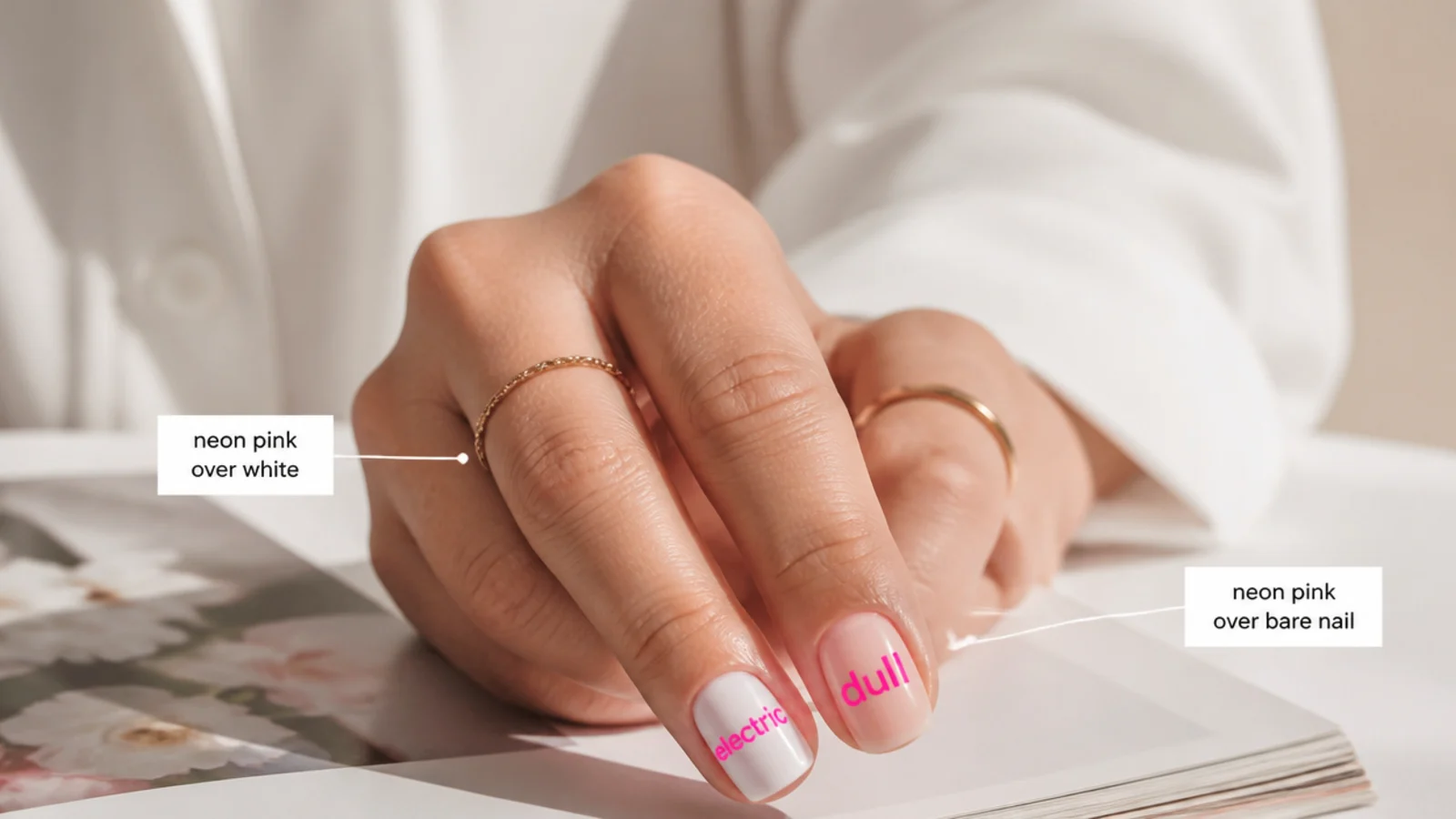
Almost always, and this is why home neon manicures look disappointing next to salon ones. Fluorescent pigment does not have much opacity of its own. It works by taking light that passes through it, bouncing off whatever is underneath, and throwing it back out, which is what makes a neon appear to glow. Painted directly onto a natural nail, that light bounces off pink-beige keratin, so the color comes back muted and slightly muddy, and a yellow neon can go visibly green. One opaque white coat, fully dry, gives the pigment a clean reflective floor and the shade reads exactly as it does in the bottle. The layer order that works is base coat, base coat, white, neon, neon, top coat. That sounds like a lot of coats, but each one goes on thinner than a normal color layer. Two exceptions: jelly finishes must go straight onto the bare nail, since a white base destroys the translucency that defines them, and chrome needs its own cured color layer instead. Practice the layering in cute simple nails at home.
Bright Summer Nail Colors by Skin Undertone
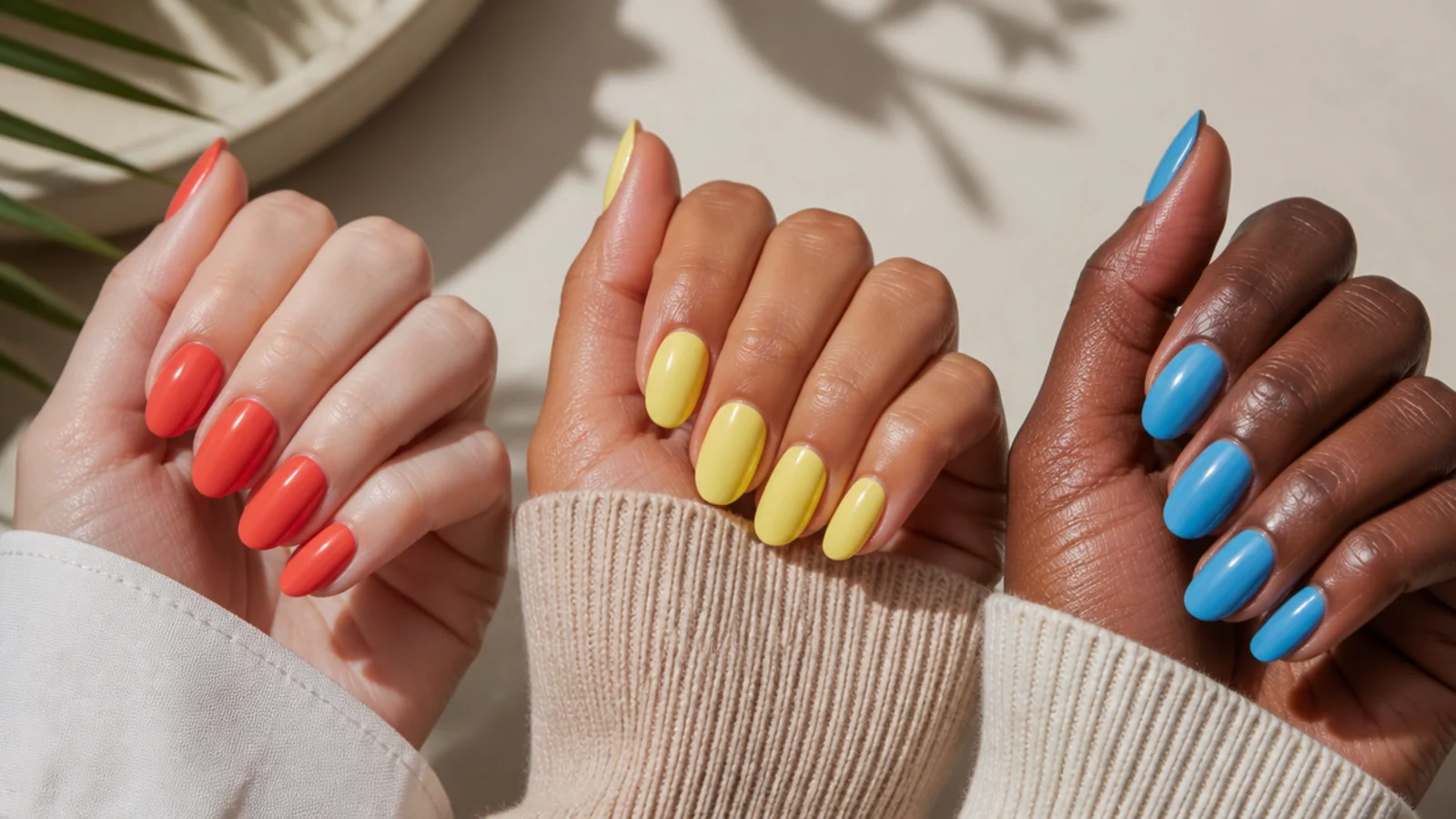
Brights are the hardest color family to wear because they sit right next to the skin with no neutral buffer, so undertone matters more here than with any nude or pastel. Check yours by looking at the veins on your inner wrist in daylight: blue or purple means cool, green means warm, a mix means neutral. Cool undertones look best in blue-based brights, so magenta, lagoon blue, electric purple, cherry red and true fuchsia. Warm and olive undertones carry the whole orange side of the wheel, including coral, tangerine, butter yellow and lime green, which tend to look sallow on very cool skin. Neutral undertones can wear turquoise and hot pink safely, which is why those two shades appear on nearly every summer list. Deep skin tones take the most saturated versions of everything and are the only group who can wear a true lemon yellow without it fighting the hand. Tanned skin shifts you warmer for a few weeks, so a shade that flattered in May may not in August. Full breakdown in nail colors for short nails by skin tone.
What Bright Summer Nails Cost and How Long They Last
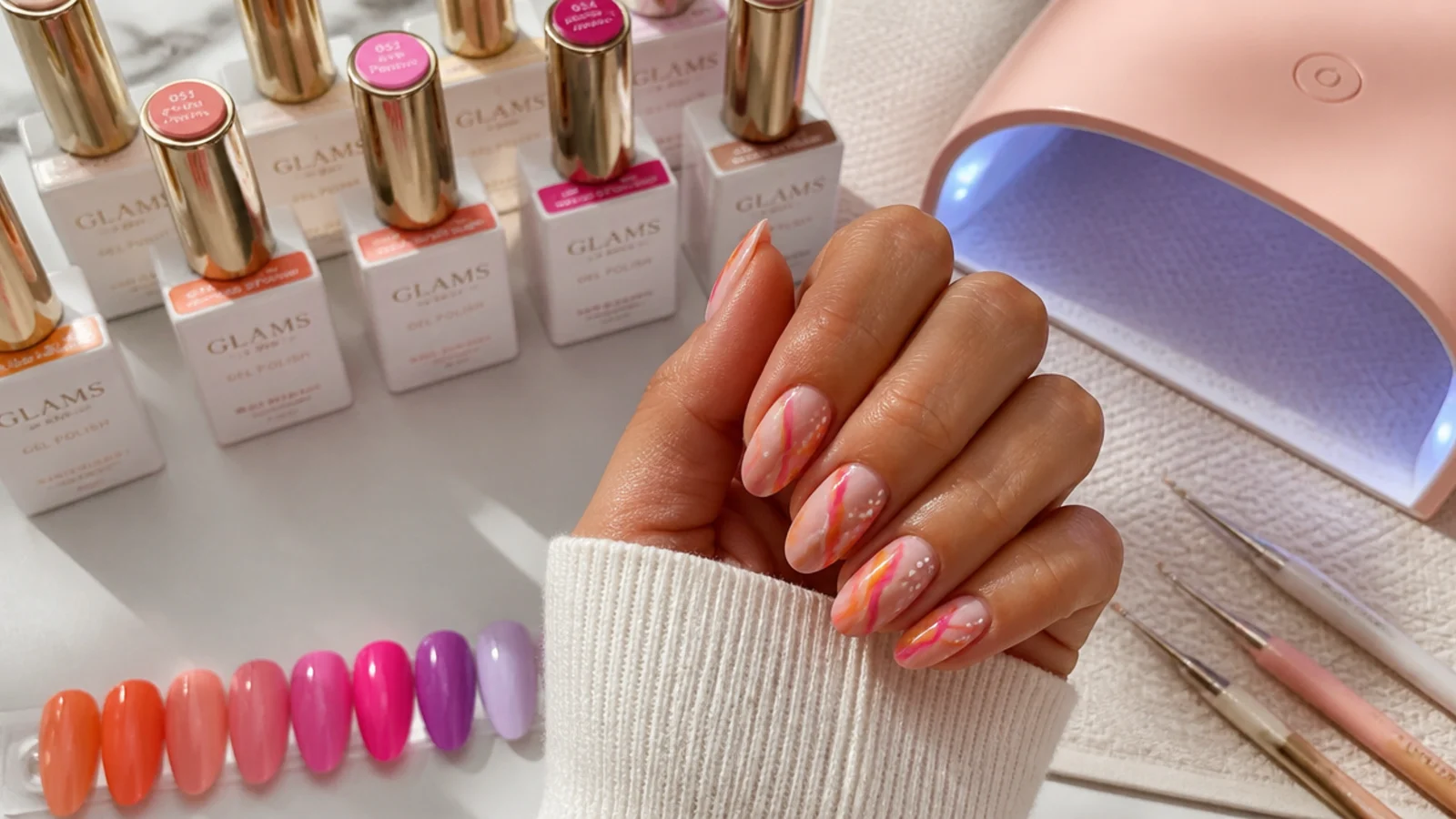
A plain gel manicure in a single bright runs about 35 to 60 dollars depending on your city and lasts two to three weeks before regrowth shows. Add hand-painted art such as a hibiscus or a watermelon seed detail and expect 5 to 10 dollars per accent nail, with detailed tropical work reaching 15 to 25 dollars per nail. Chrome adds 10 to 20 dollars. A flipped French or a color-block set is usually priced as art, so add roughly 10 to 15 dollars to the base price. Regular polish in the salon is cheaper, around 20 to 30 dollars, but realistically gives you four to six days on a bright before the first chip shows at the free edge. At home, a bottle of bright polish costs 8 to 12 dollars and lasts the whole summer, and a starter gel kit with lamp, base and top coat runs 30 to 50 dollars, which pays for itself in about two sets. Removal in salon is 10 to 20 dollars and worth paying for on gel. Budget-friendly ideas sit in cute short nails that look expensive.
Bright Summer Nails Troubleshooting: Fading, Bleeding and Chips
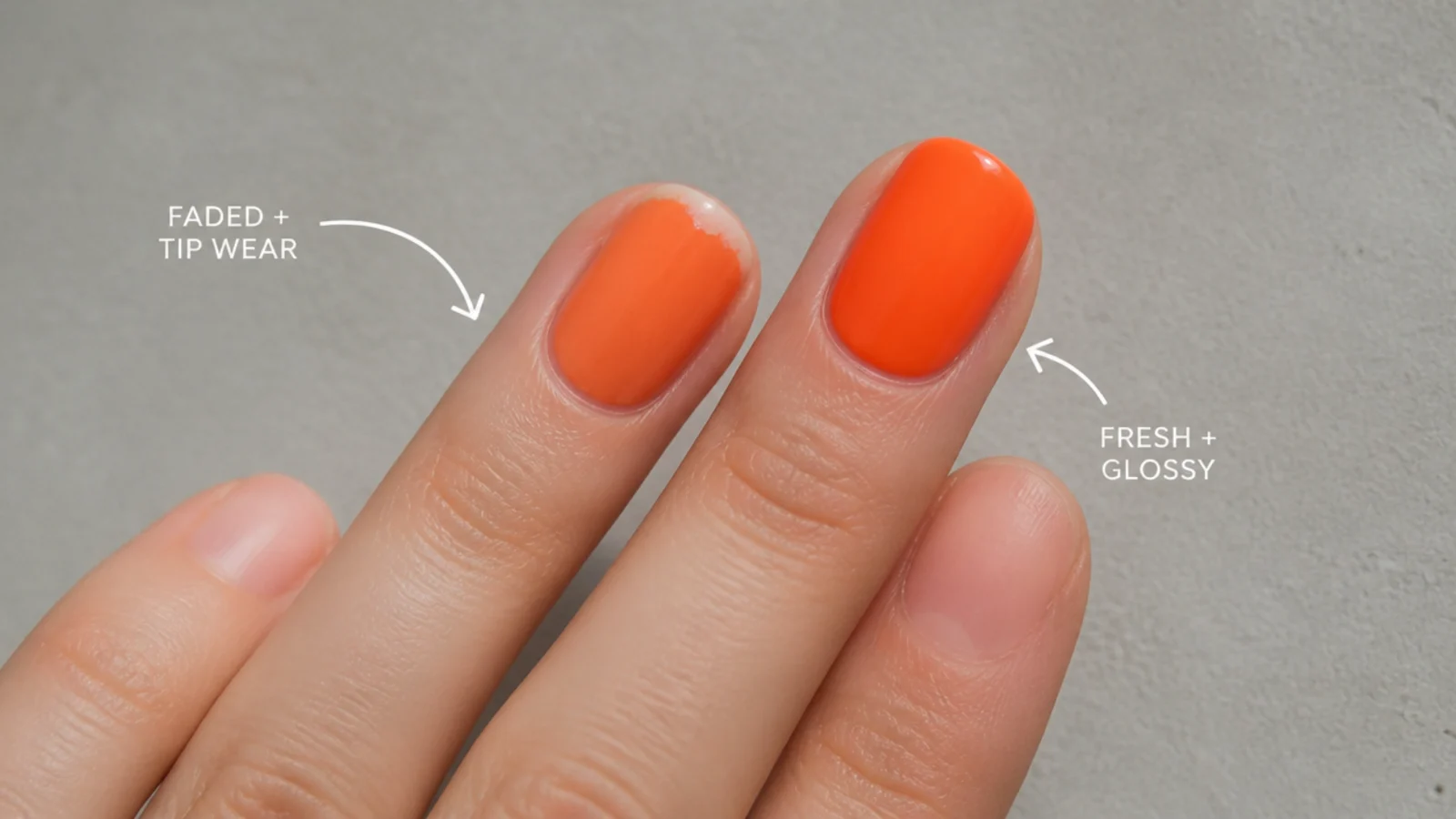
Five things go wrong with brights and each has a specific cause. If the color came out muddy, there was no white base under the neon, so the pigment is bouncing light off your nail bed instead of a white floor. If the tips look worn while the rest looks fine, the free edge was never capped, so run the top coat brush along the tip edge at every refresh. If a neon bled into your top coat and left streaks, the color coat was not fully cured or dry before sealing, which happens most with three thick coats rather than four thin ones. If your set faded unevenly across the hand, that is sun exposure and it will always hit the dominant hand first, since it spends more time on a steering wheel or a poolside chair. And if the polish lifted in sheets after a beach day, the culprit is sunscreen: oils on the nail plate before painting destroy adhesion, so wipe the nail with alcohol or acetone right before the base coat, even if you just washed your hands. See what works year round in cute nail ideas for every season.
Frequently Asked Questions
What are the best bright nail colors for summer 2026?
The 2026 summer palette leads with hot pink, sunshine yellow, coral orange, cherry red and lagoon blue, with jelly and translucent finishes replacing the milky pastels of recent seasons. Turquoise and magenta are the most flattering across skin tones. Cherry red and electric purple chrome hold up best on a pool trip.
Do neon nails stain your natural nail?
Yes. Neon pigment migrates into the porous keratin of the nail plate and leaves a yellow or salmon cast after removal that you cannot buff out without thinning the nail. It grows out in four to eight weeks. Two thin coats of clear base coat before any color, fully dry, prevents it almost entirely.
Why do my neon nails look dull instead of bright?
Because there is no white base underneath. Fluorescent pigment glows by reflecting light off whatever sits below it, so painted straight onto a natural nail the light bounces off pink-beige keratin and comes back muted. One opaque white coat, fully dry, then two thin neon coats, gives you the shade you saw in the bottle.
What are jelly nails and why are they everywhere this summer?
Jelly nails are a translucent tinted gel worn two coats deep over a bare nail, so the color reads like colored glass with the natural nail visible through it. They are the defining 2026 summer finish because they deliver bright color without full opacity, they barely stain, and they grow out invisibly instead of leaving a regrowth line.
How long do bright summer nails last?
A bright gel set gives you two to three weeks before regrowth shows, while bright regular polish realistically lasts four to six days before the first chip. Warm shades like coral and tangerine look faded before they chip, often by day five in strong sun. Jelly finishes hold color but cloud around day twelve.
Which nail colors survive chlorine best?
Cherry red, magenta, turquoise and electric purple chrome hold up longest, because they carry denser pigment or a reflective sealed surface. Coral, tangerine and yellow fade fastest, usually going chalky after two or three long swims. Rinse your hands in fresh water right after the pool and re-cap the tips with clear top coat every few days.
What is a flipped French manicure?
A flipped or reverse French puts the color band at the cuticle instead of the tip, following the curve of the cuticle line in a roughly 3mm arc. It is a smart summer choice because as the nail grows the band moves away from the skin, so regrowth reads as part of the design rather than as a gap that needs filling.
Which bright summer nail color suits my skin tone?
Check the veins on your inner wrist. Blue or purple means cool undertones, so choose magenta, lagoon blue, cherry red or electric purple. Green means warm, so coral, tangerine, butter yellow and lime green will flatter. Neutral undertones can wear turquoise and hot pink safely, which is why both appear on almost every summer list.
Can I do bright summer nails at home?
Yes, and solid brights are the easiest place to start. The layer order matters more than the technique: base coat, base coat, one white coat, two thin color coats, top coat, capping the free edge each time. Color blocking with striping tape and dotted watermelon seeds are both beginner-friendly. Hand-painted florals need a salon.
Should my toe nails match my bright summer nails?
They do not have to match exactly, but they should share a temperature. Cool fingers with warm toes reads accidental. Picking one shade for both, or the same color family at two saturations, is the safest route. Turquoise and coral are the two classic pedicure brights, and pedicures outlast manicures because toenails grow more slowly.
Which cute nails look are you saving?
If you take one thing from these 15 bright summer nail ideas, make it the base-coat rule: two coats of a clear base under any neon, and an opaque white layer under the fluorescent shades that need to glow. That single step is the difference between a set that comes off clean in September and a natural nail stained yellow for a month. Hot pink and cherry red are the safest brights for a pool week, coral and neon orange are the fastest to fade, and jelly finishes buy you translucency without the pigment load. Pick two shades, not five, and let the shape do the rest. Match your pedicure next in cute toe nails for sandal season, or browse the whole cute nails hub for the rest of the year.