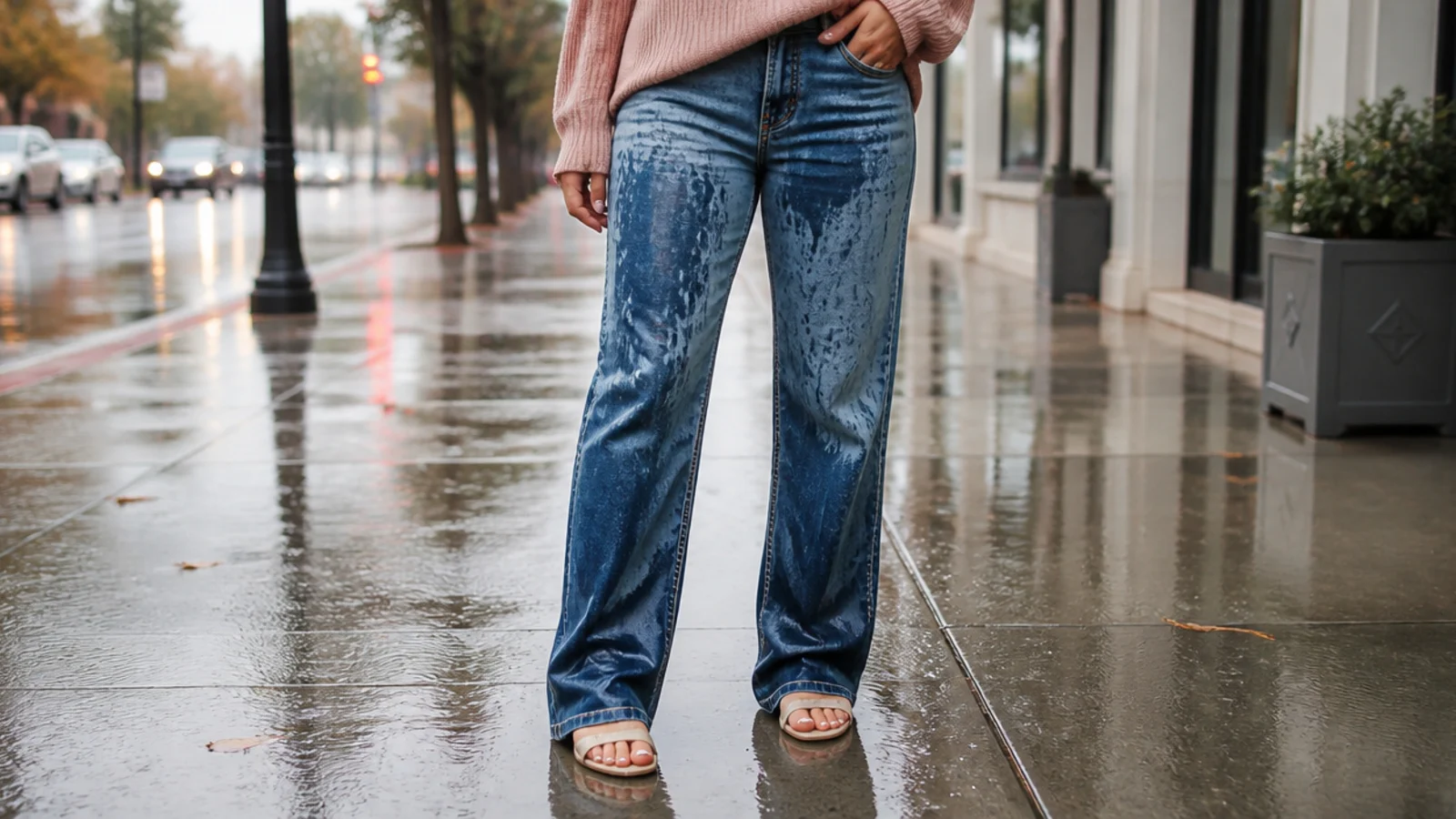
Quick Comparison
| Fabrics That Fail in the Rain | Fabrics That Work in the Rain | |
|---|---|---|
| Examples | Cotton, denim, silk, suede, untreated down, chunky knits, linen | Treated polyester, nylon, wool blends, coated fabrics, rated membranes |
| Water behavior | Absorbs and holds water in the fiber | Beads and sheds water off the surface |
| Dry time | Slow, stays damp for hours | Fast, dries in minutes to an hour |
| When wet | Clings, gets heavy, goes see-through | Keeps shape and stays opaque |
| Warmth when wet | Cold; down and cotton lose all warmth | Wool blends and synthetics hold warmth |
| Stain and damage risk | Silk rings, suede spots, denim can water-mark | Wipes clean, no permanent marks |
| Smell | Wet cotton and wool can go musty | Technical fabrics resist odor |
| Verdict | Save for dry days only | Reach for these when rain is forecast |
| Wear instead | Swap cotton tee for a synthetic or wool-blend top | Layer under a rated waterproof shell and boots |
1. A White Cotton T-Shirt
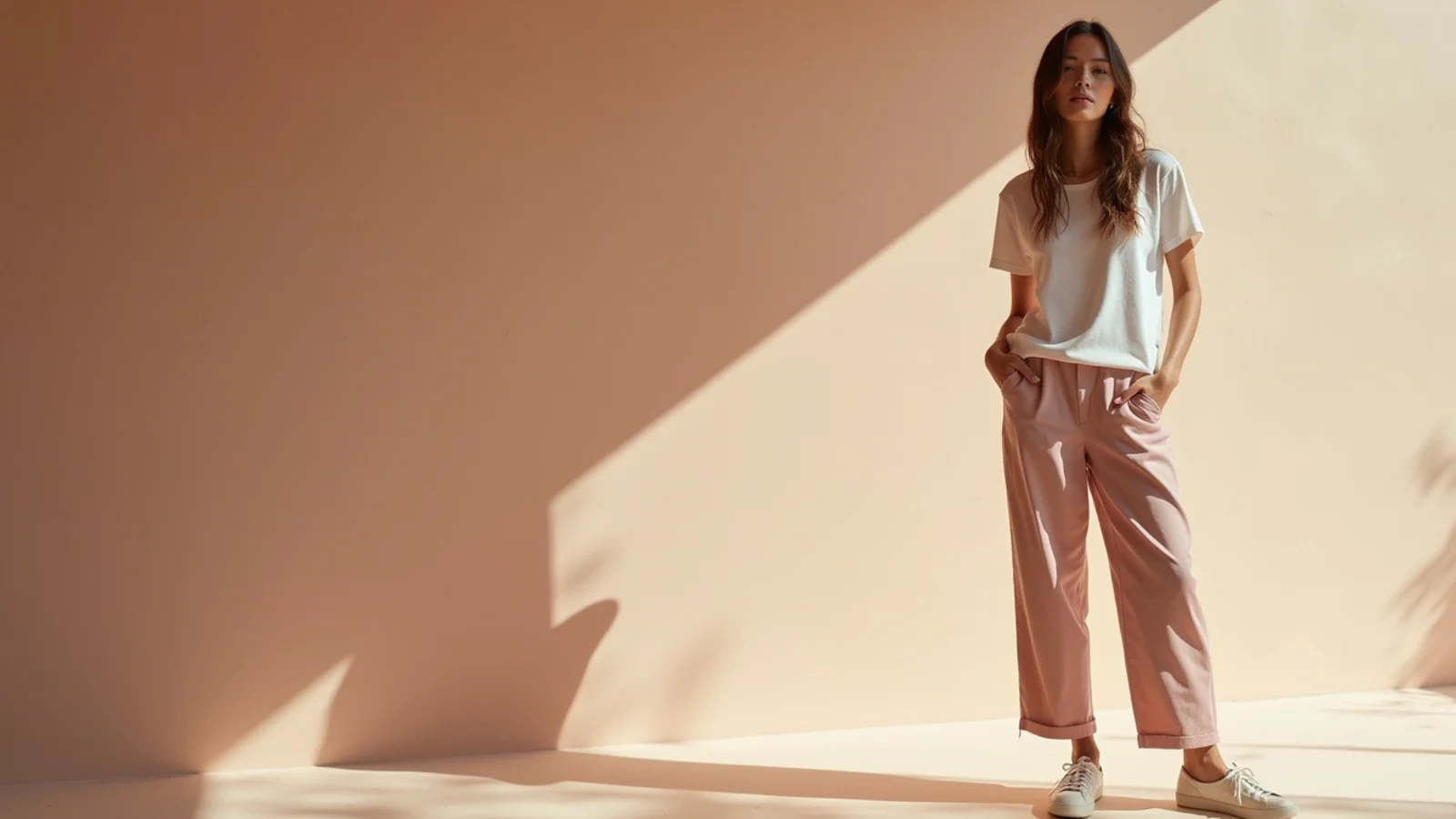
A plain white cotton tee is the classic rain mistake because cotton is hydrophilic, meaning the fibers pull water in and hold it. A white one goes see-through the moment it is damp, then stays cold and clingy for hours because cotton evaporates slowly. You end up wet, chilly and exposed. Wear instead a treated polyester or nylon top in a darker color, or a merino wool blend that keeps some warmth even when damp. Layer it under a rated waterproof shell and the rain never reaches it. See dry alternatives in cute waterproof outfits.
If you love a tee under a jacket, pick a synthetic or wool blend in navy, charcoal or black so a splash does not show through.
2. Full-Length Skinny Jeans
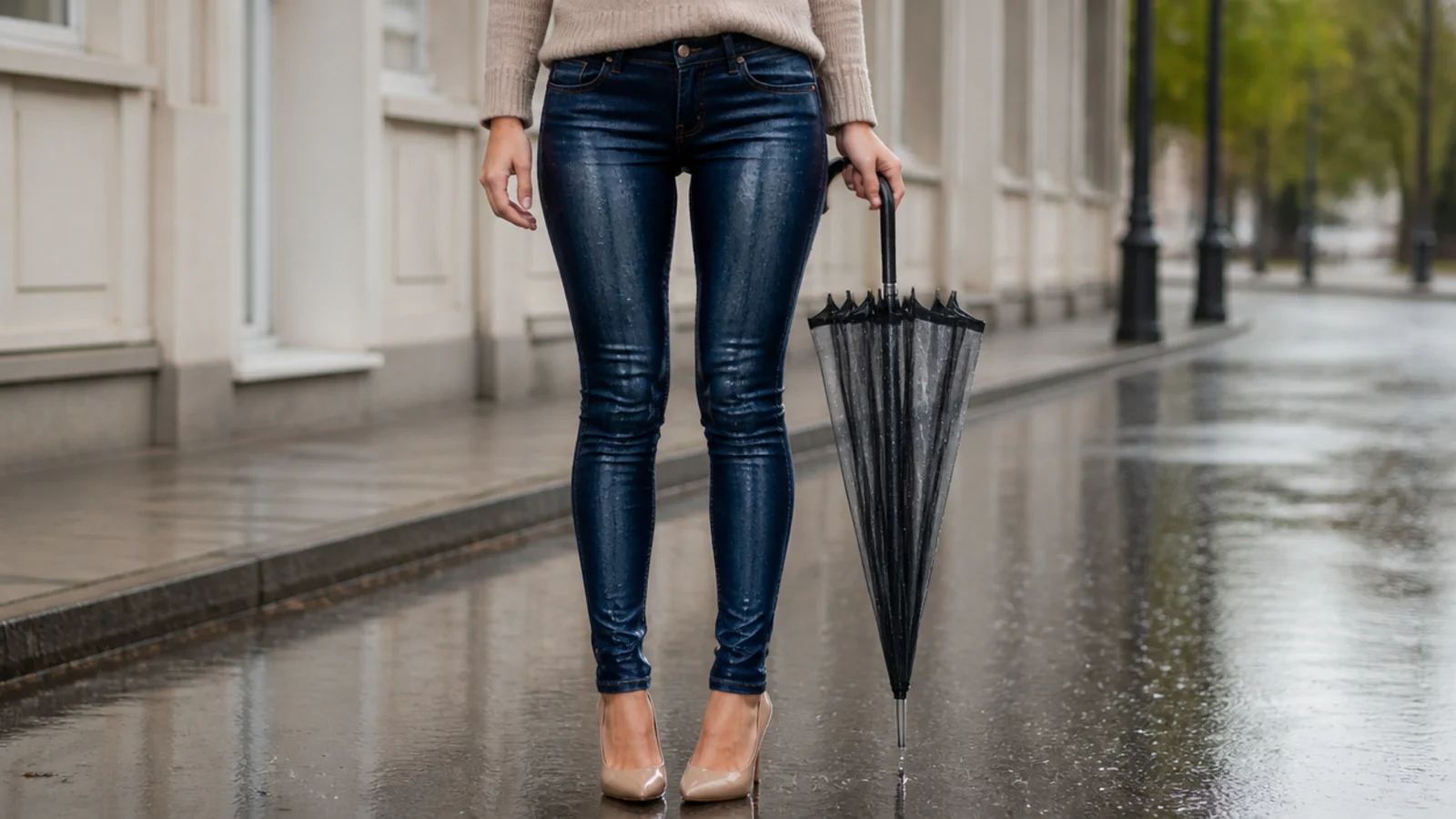
Can you wear jeans in the rain? You can, but full-length denim is one of the worst picks. Denim is heavy woven cotton, so it soaks up water, holds it against your skin and takes hours to dry, leaving you cold and chafed. Wet hems also drag through puddles and wick moisture up the leg, and pale denim can water-mark. Wear instead cropped or ankle-length jeans that clear the splash zone, or quick-dry technical trousers and leggings in synthetic fabric. If you must wear denim, go dark, cropped and skinny over wide or flared. More denim swaps live in rainy day outfits with jeans.
Choose a cropped or ankle-grazer length so the hem never touches standing water, and pack a dry pair if you have a long day out.
3. Suede Boots or Sneakers
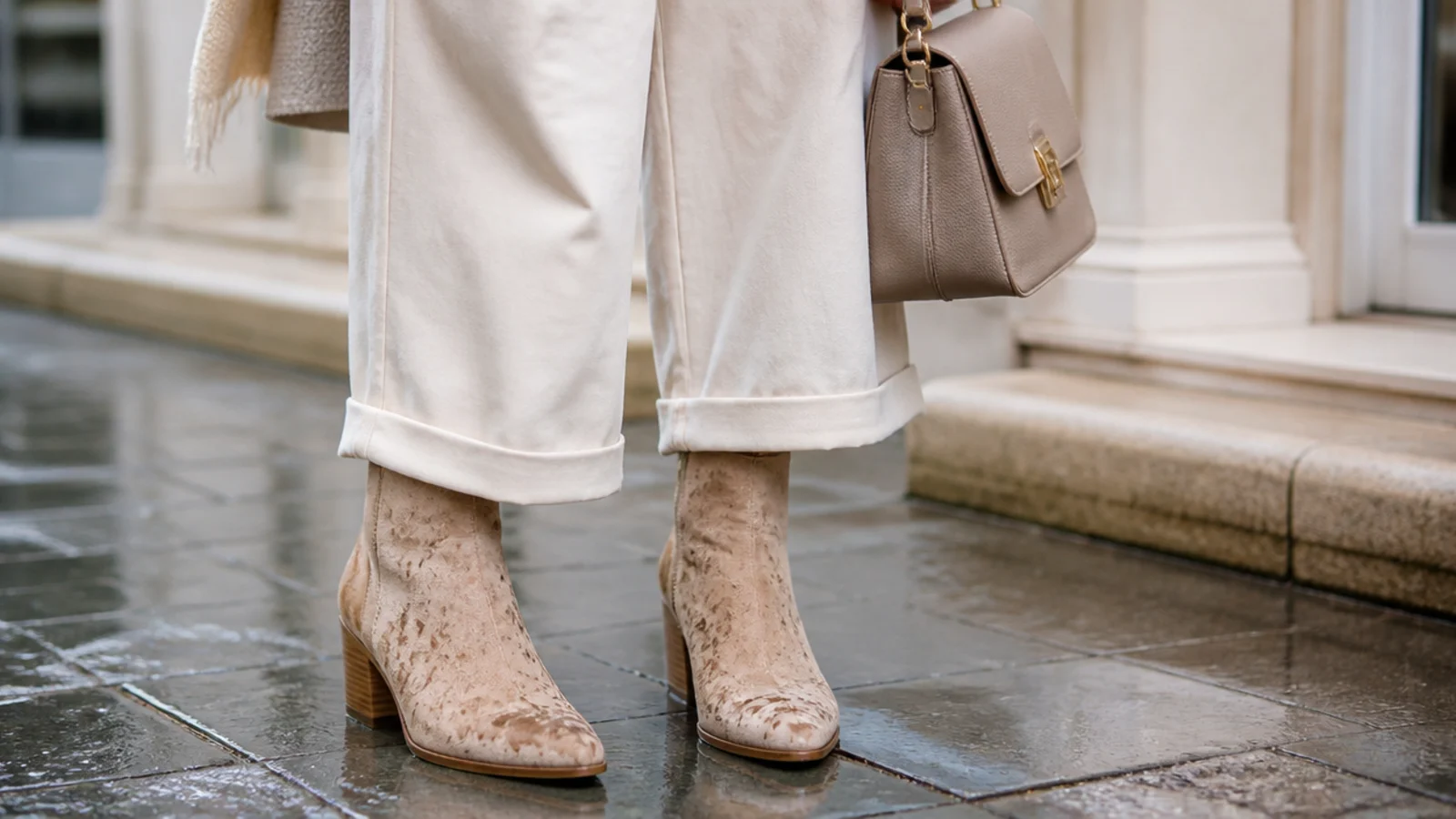
Suede is brushed leather with a soft napped surface, and water is its enemy. A single puddle leaves dark water spots and stiff patches that are hard to remove, so one rainy commute can permanently mark a favorite pair. Salt and grit from wet pavement make it worse. Wear instead sealed waterproof leather, rubber Chelsea boots, molded EVA clogs or coated waterproof sneakers that wipe clean. If you only own suede, treat it with a spray-on suede and nubuck protector first, though that resists light drizzle at best. Ground a rainy look with the shoes in rainy day outfits with sneakers.
Keep suede for dry days only. For rain, a waterproof Chelsea boot or a rubber-soled sneaker gives the same look without the damage.
4. A Silk Blouse or Slip Dress
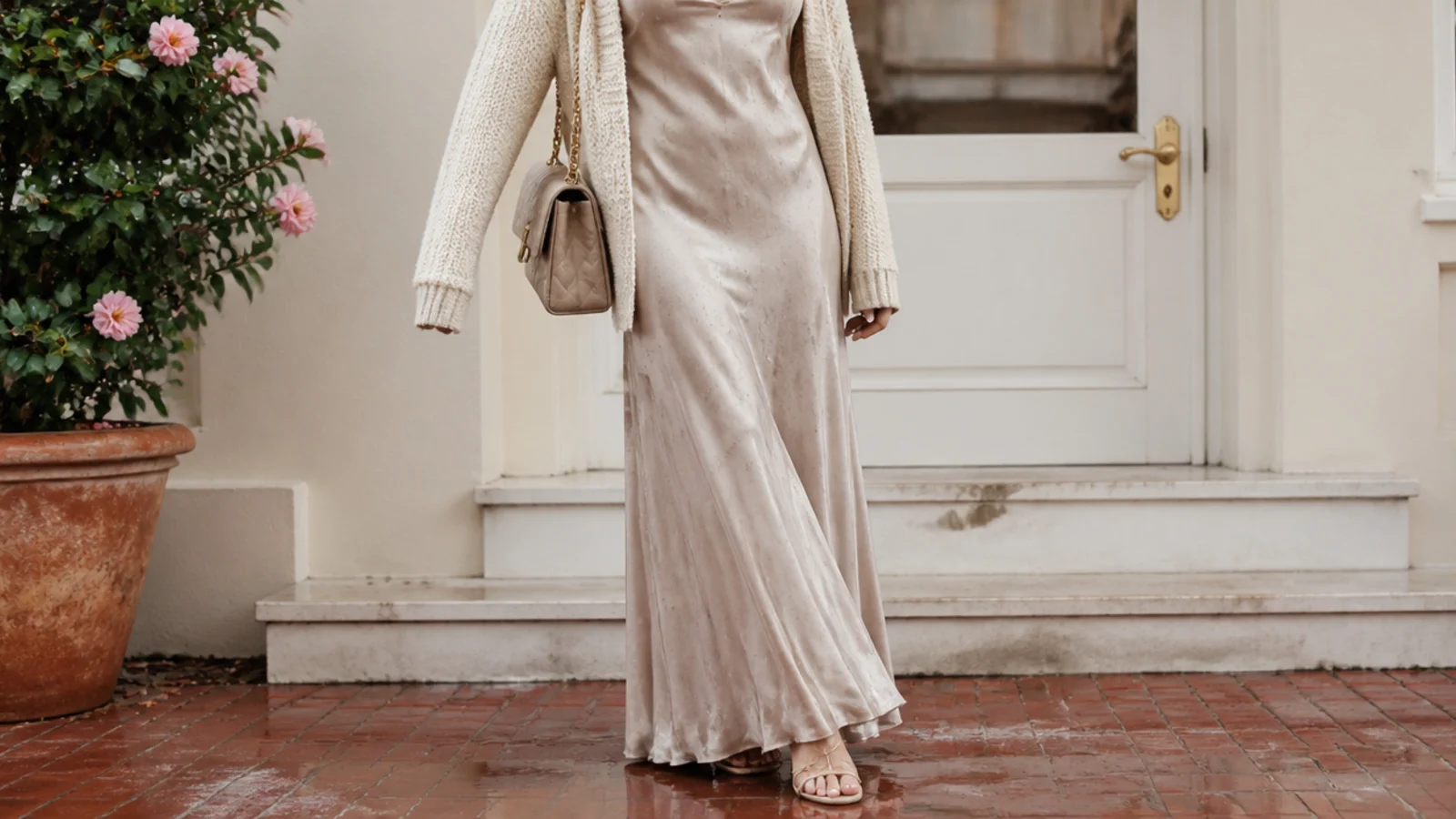
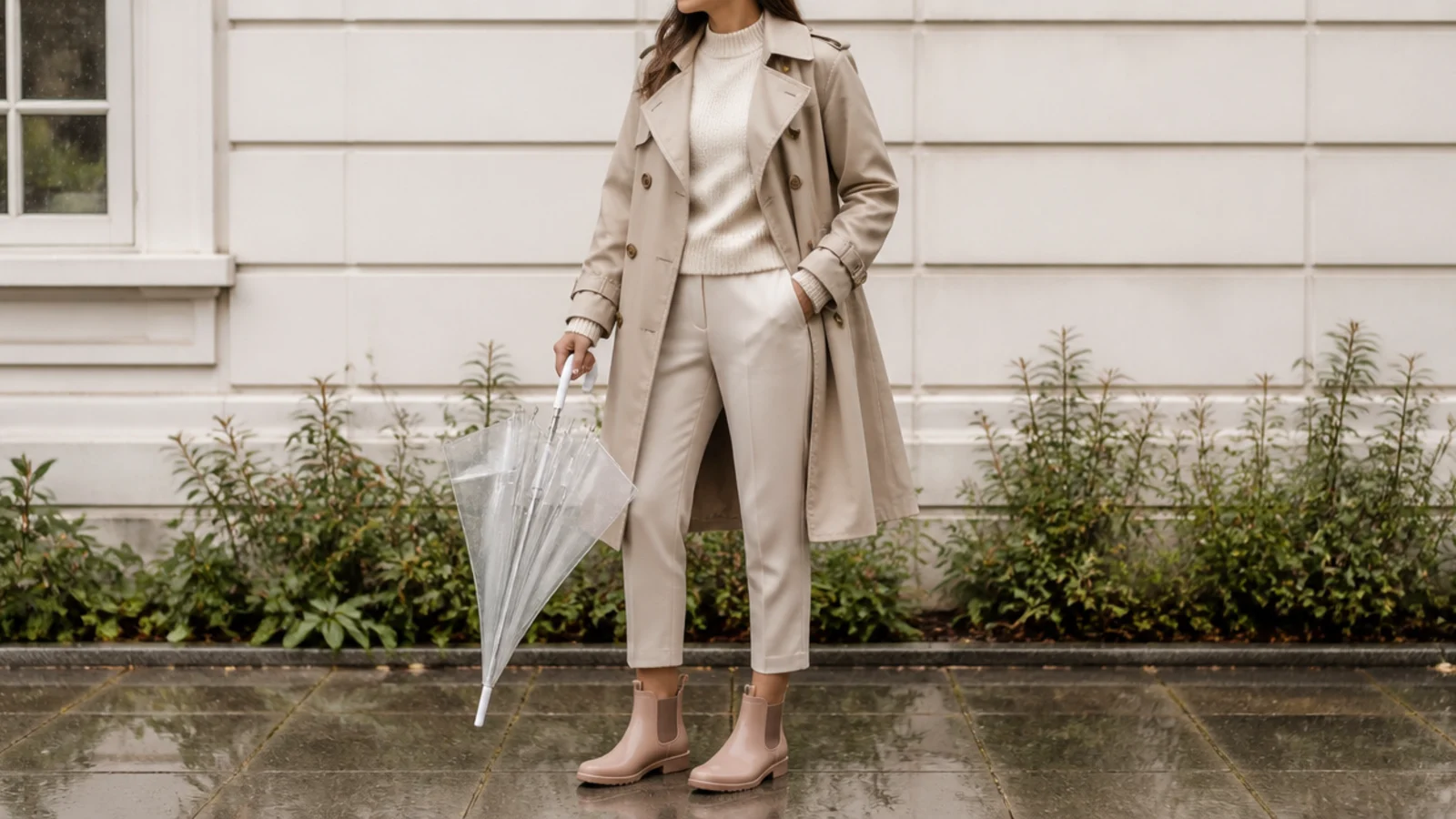
Silk looks luxe and photographs beautifully, which is exactly why the rain feels so unfair to it. Silk is a delicate protein fiber that water-stains: droplets leave rings and darkened patches that can set permanently, and the fabric turns thin and clingy when wet. Even a short dash from car to door can mark it. Wear instead a satin-finish polyester that mimics the sheen but sheds water and dries fast, or save real silk for indoor plans. If you love the slip-dress look, layer it under a trench and keep an umbrella up. See dressier rain options in rainy day work outfits.
A washable polyester satin reads almost identical to silk in photos but survives a shower, so keep the real thing for dry evenings.
5. Wide-Leg or Flared Trousers
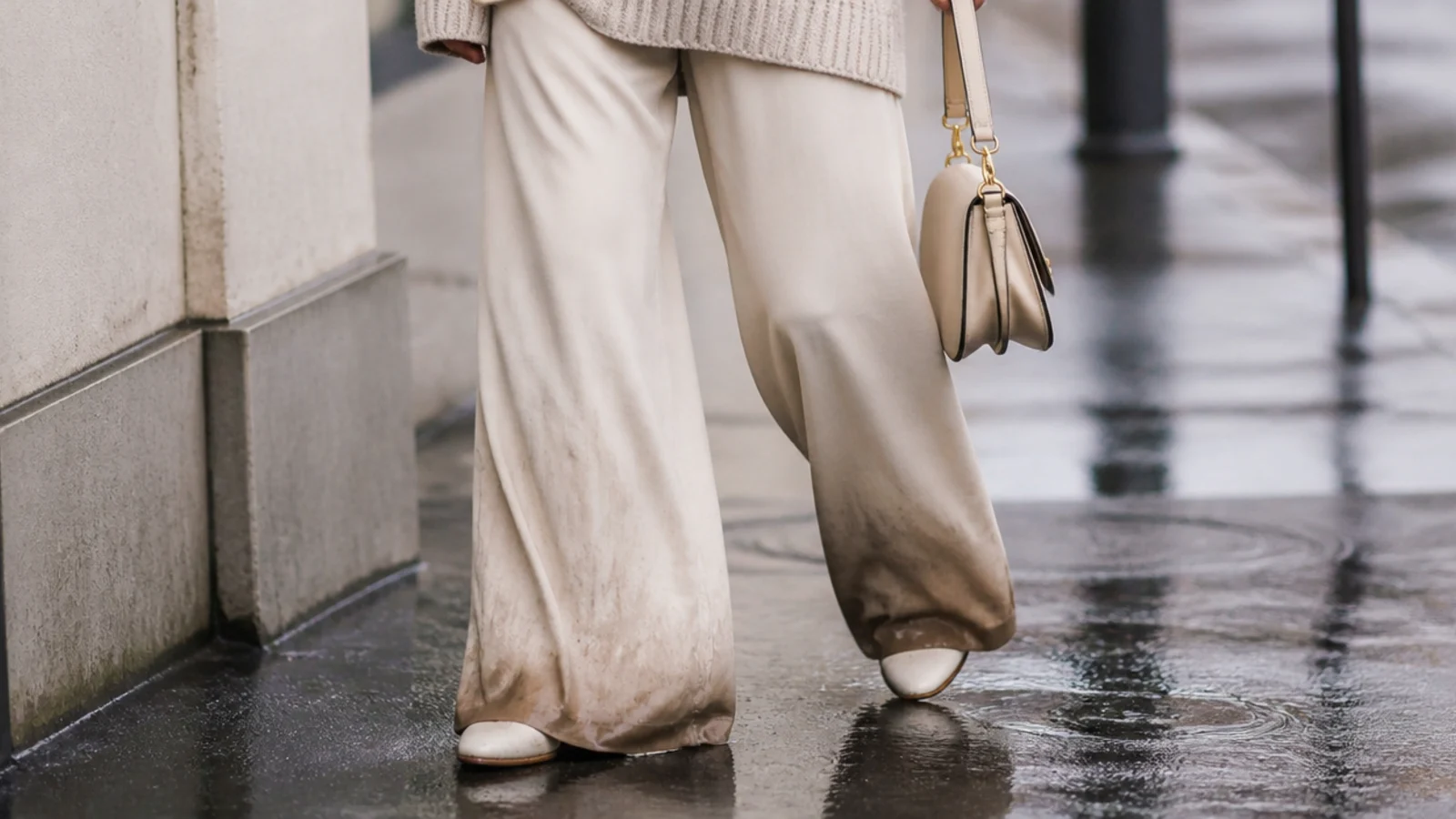
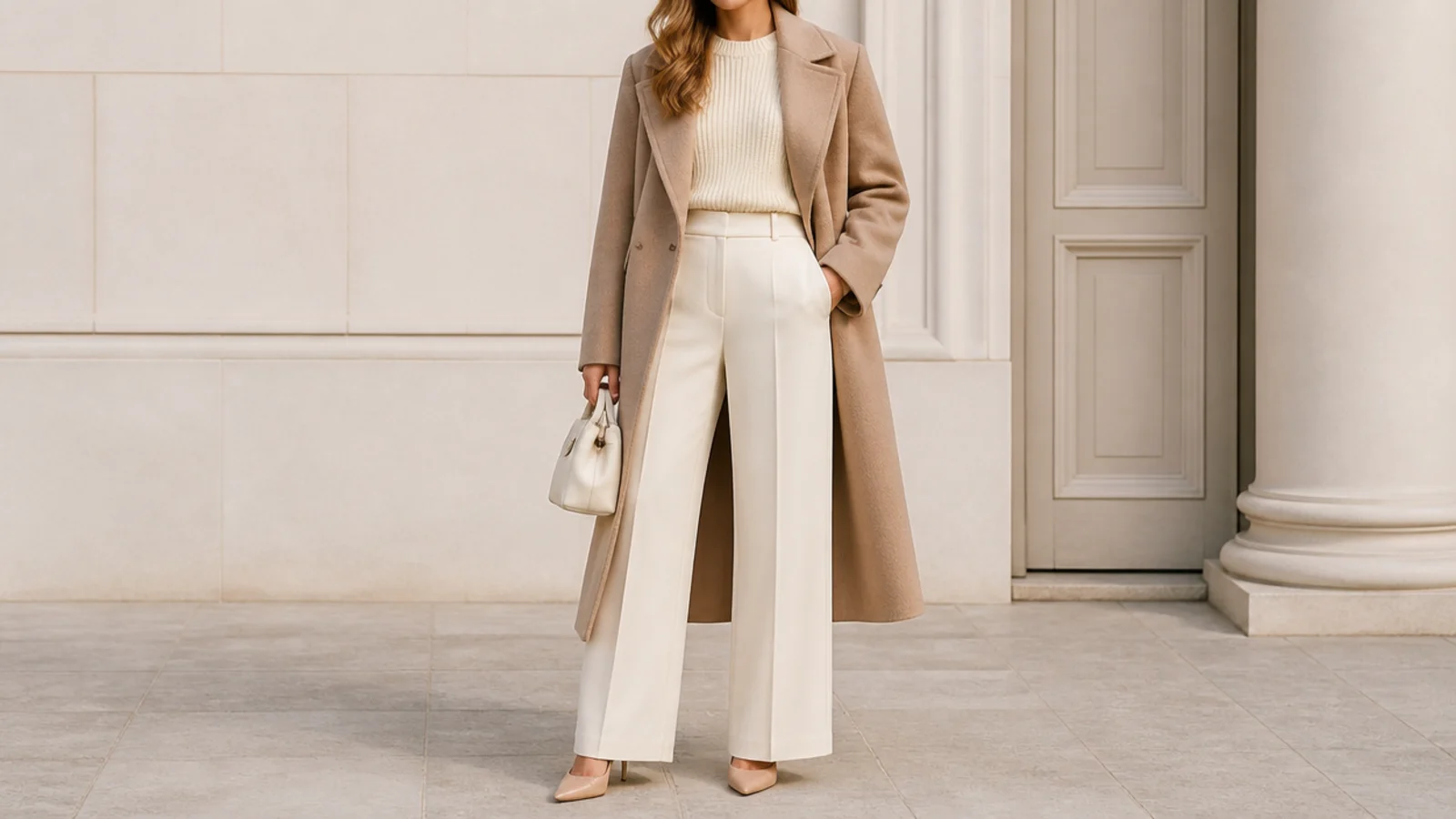
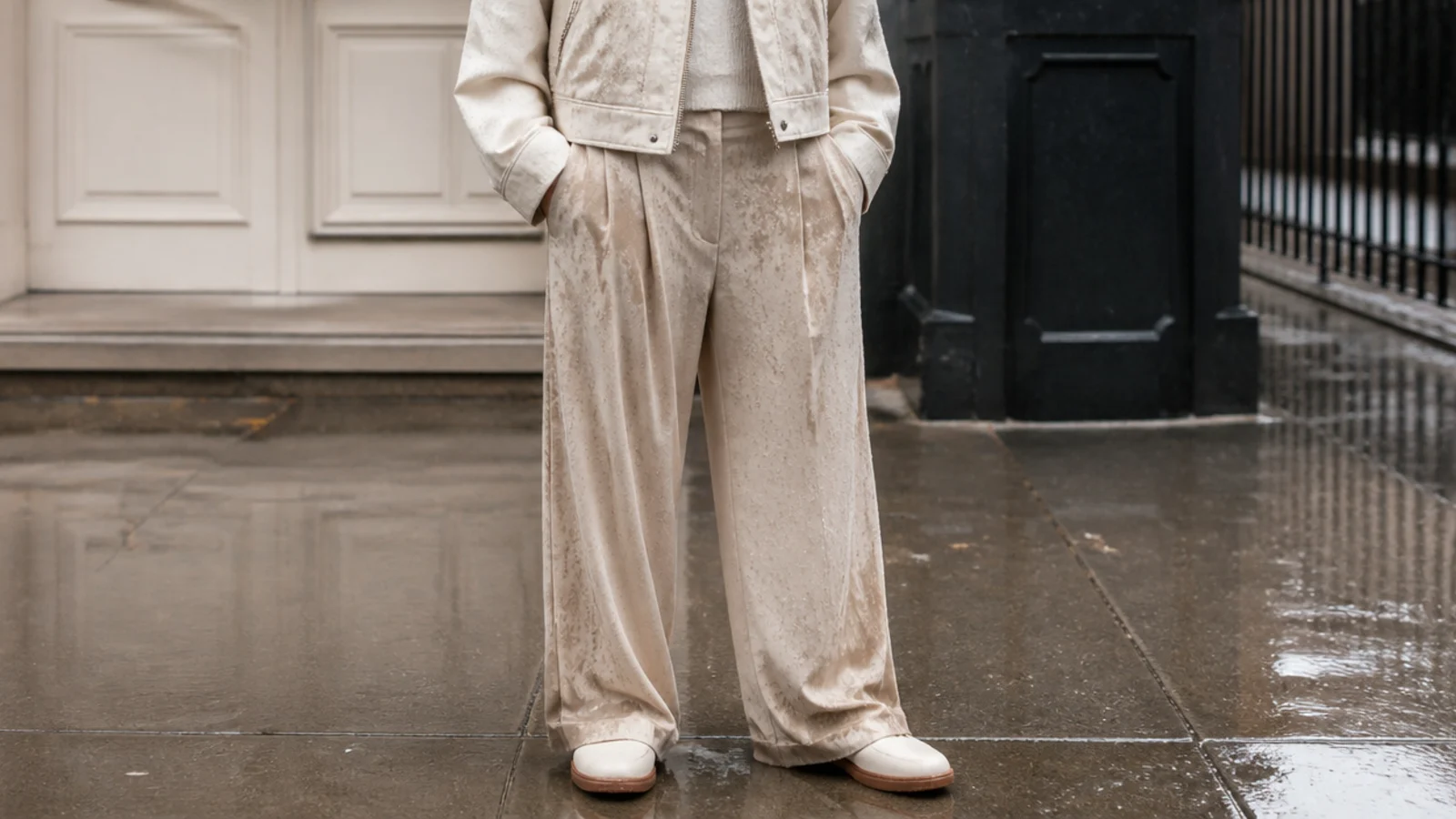
Wide-leg and flared trousers are a shape mistake as much as a fabric one. The long, loose hem drags along wet ground, sweeps through puddles and wicks water up the leg, so even a waterproof top half leaves you damp from the ankles. In cotton or linen the problem doubles, since those fabrics soak and stay wet. Wear instead a cropped, tapered or ankle-length trouser in a quick-dry synthetic that clears the splash zone. If you want volume, a cropped wide-leg that hits above the ankle keeps the drama without the drag. See more bottoms in rainy day leggings outfits.
Cuff or crop the hem above the ankle bone. A tapered leg in treated polyester stays dry where a puddling flare does not.
6. Open-Toe Sandals and Strappy Heels
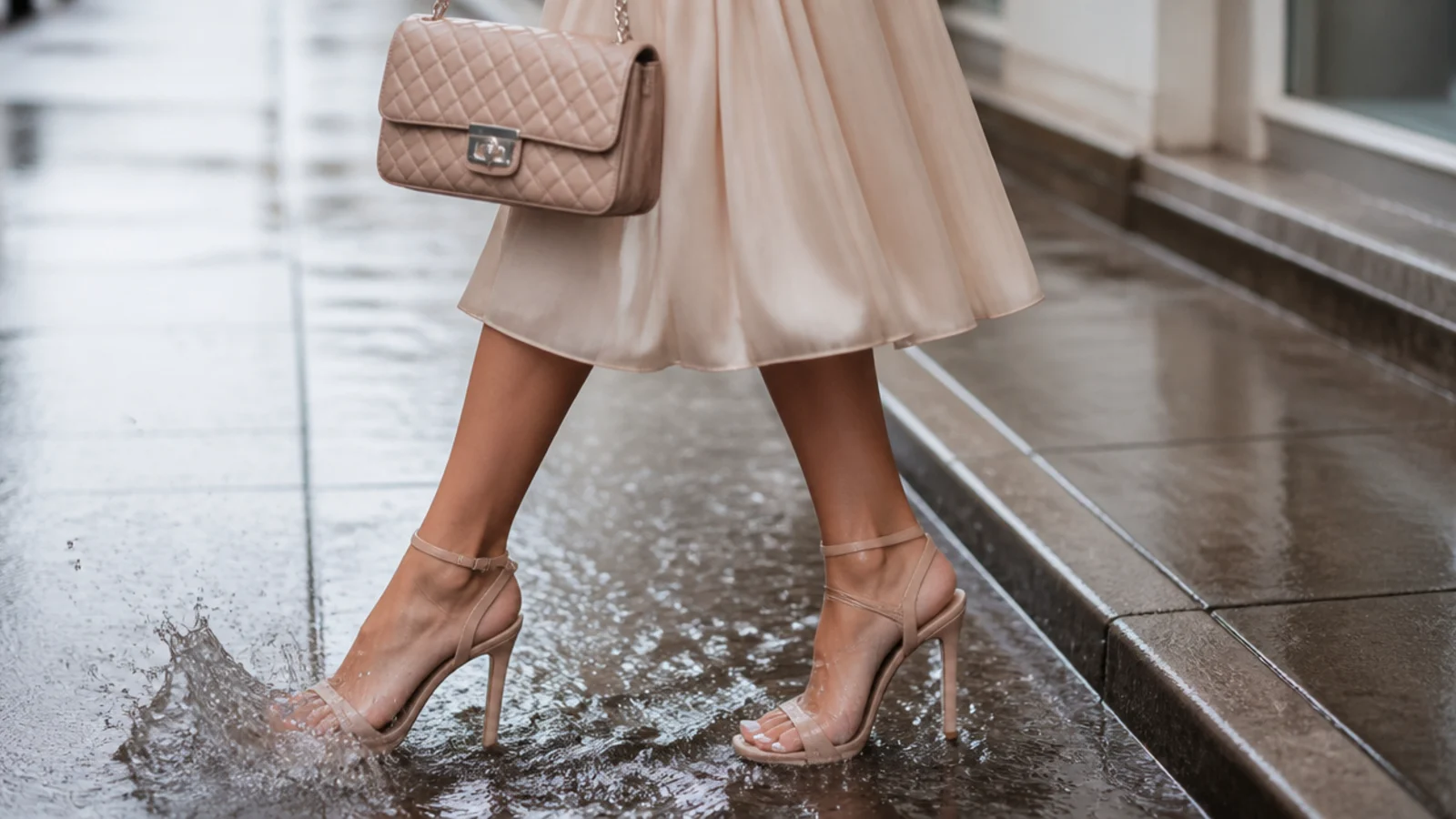
Open-toe sandals and delicate strappy heels leave your feet exposed to every puddle, splash and gutter stream, so you spend the day cold, wet and slipping. Smooth leather soles turn dangerously slick on wet pavement, and thin straps chafe once your skin is damp. Wear instead a closed waterproof shoe: a rubber Chelsea boot, a molded jelly sandal or a waterproof loafer with a grippy rubber outsole. If you need height, a block-heeled waterproof ankle boot stays stable and dry. Save the fine sandals for a dry event. Build a dry-footed look with rain boot outfits.
Prioritize a rubber outsole for traction. Molded jelly sandals give you an open, warm-weather look that is actually waterproof.
7. A Floor-Length Maxi Skirt or Dress
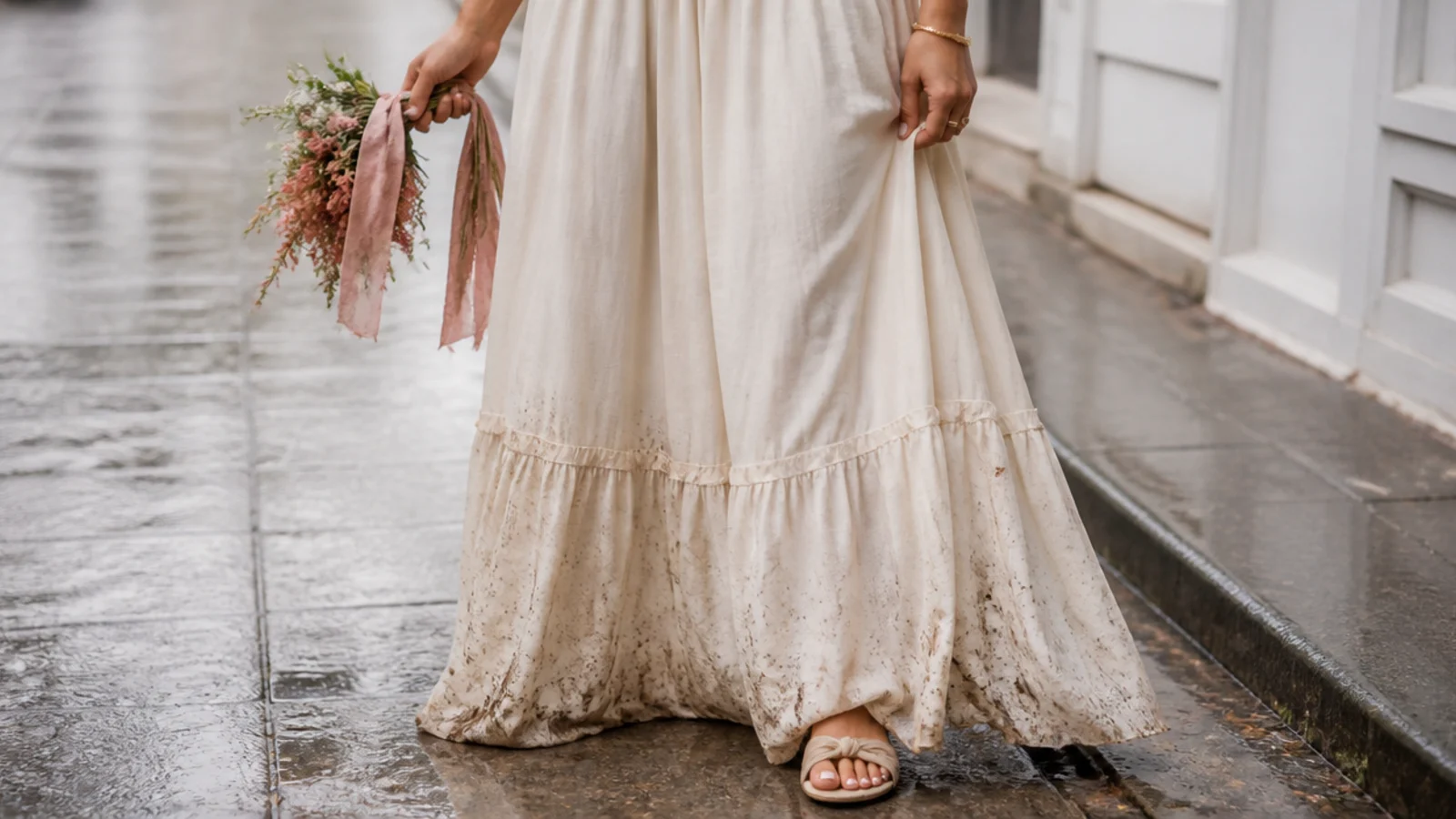
A floor-sweeping maxi is a hemline mistake. The fabric drags on wet ground, soaks up water like a wick and carries splash-back grit all the way up the skirt, so the bottom foot is heavy and dirty within a block. In cotton or jersey it also clings once wet. Wear instead a midi or above-knee length that clears the ground, with tights or leggings underneath that dry faster than trousers. A leather or coated midi repels light rain better than most fabrics. Pair it with rain boots to ground the look. Style the swap in rainy day outfits.
Keep the hem at midi or above the knee in the rain, and add opaque tights so bare legs stay warm and dry.
8. An Untreated Down Puffer
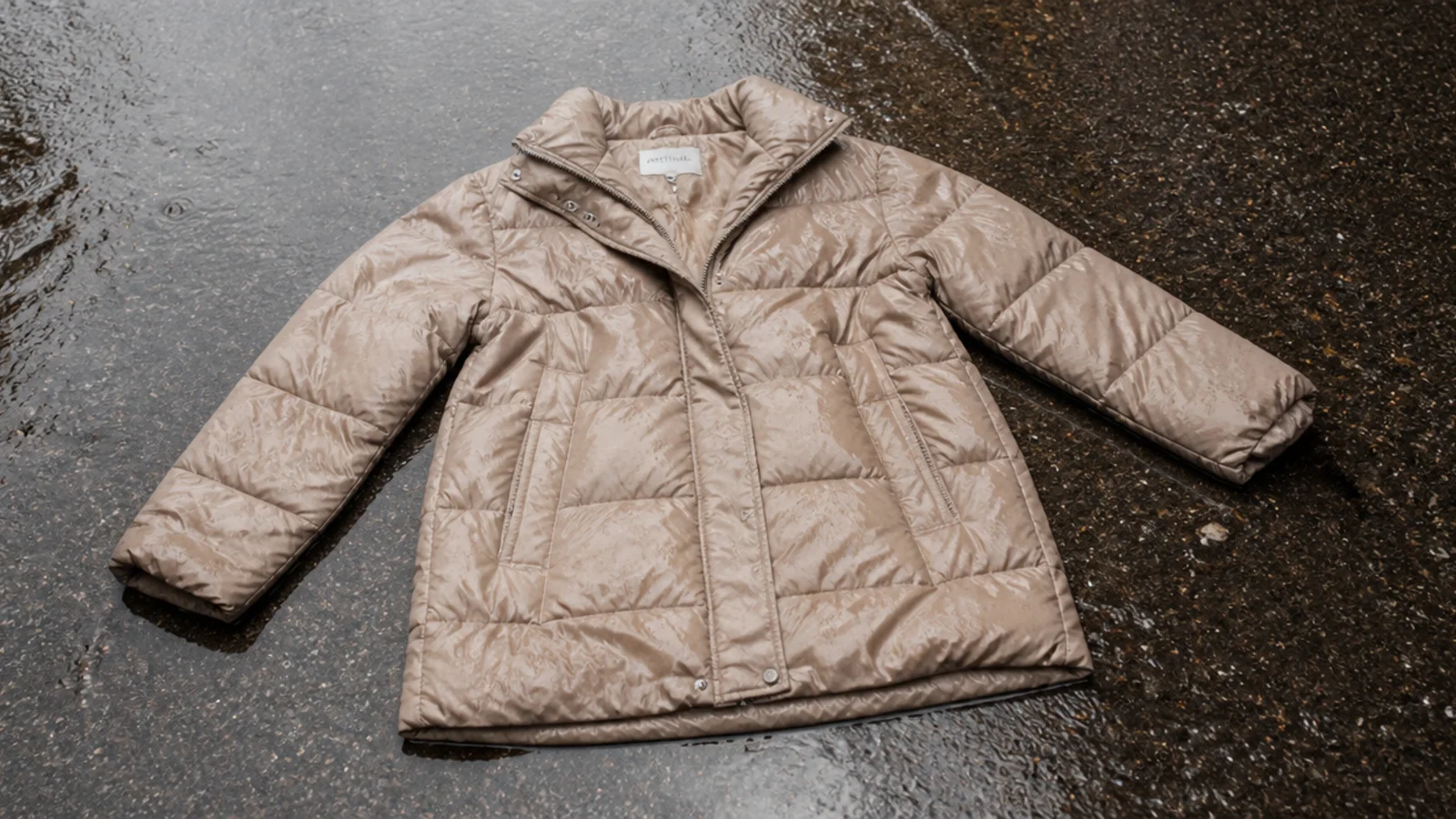
A cozy down puffer feels like the right call on a cold, wet day, but untreated down fails fast in rain. Down insulates by trapping air in fluffy clusters, and the moment those clusters get wet they clump, flatten and stop holding heat, so a soaked down coat leaves you cold and takes days to dry. Wear instead a synthetic-fill puffer with a coated or laminated waterproof shell and taped seams, which keeps its loft when wet, or layer a rated rain shell over a warm knit. Compare warm rain outerwear in rain-ready staples compared.
Look for a waterproof shell and synthetic fill on the label. That combination gives you puffer warmth that survives a downpour.
9. A Chunky Wool Sweater as Your Top Layer
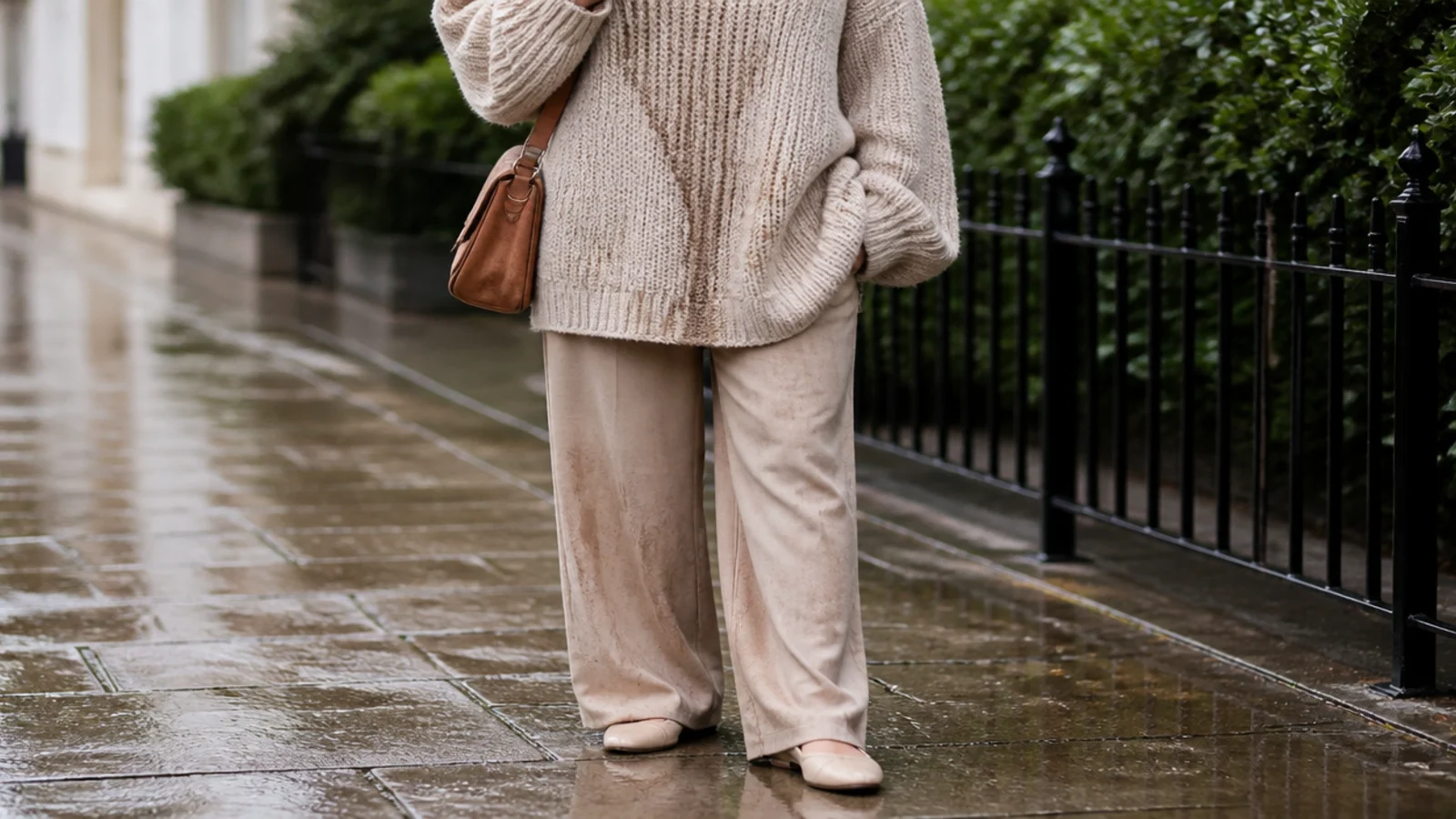
Wearing a chunky knit as your outermost layer is a cozy trap. An open-weave wool or cotton sweater has no barrier, so rain runs straight through the stitches, and the fabric holds a lot of water, gets heavy, stretches out of shape and can smell musty until fully dry. Wear instead the same warm knit as a mid-layer under a rated waterproof shell or a raincoat, so the rain hits the coat and the knit stays dry and warm. A tighter wool blend fares better than loose cotton. Keep the cozy look going with cozy rainy day outfits.
Treat knitwear as insulation, never as armor. A waterproof shell over your sweater keeps both you and the knit dry.
10. A Leather or Suede Handbag
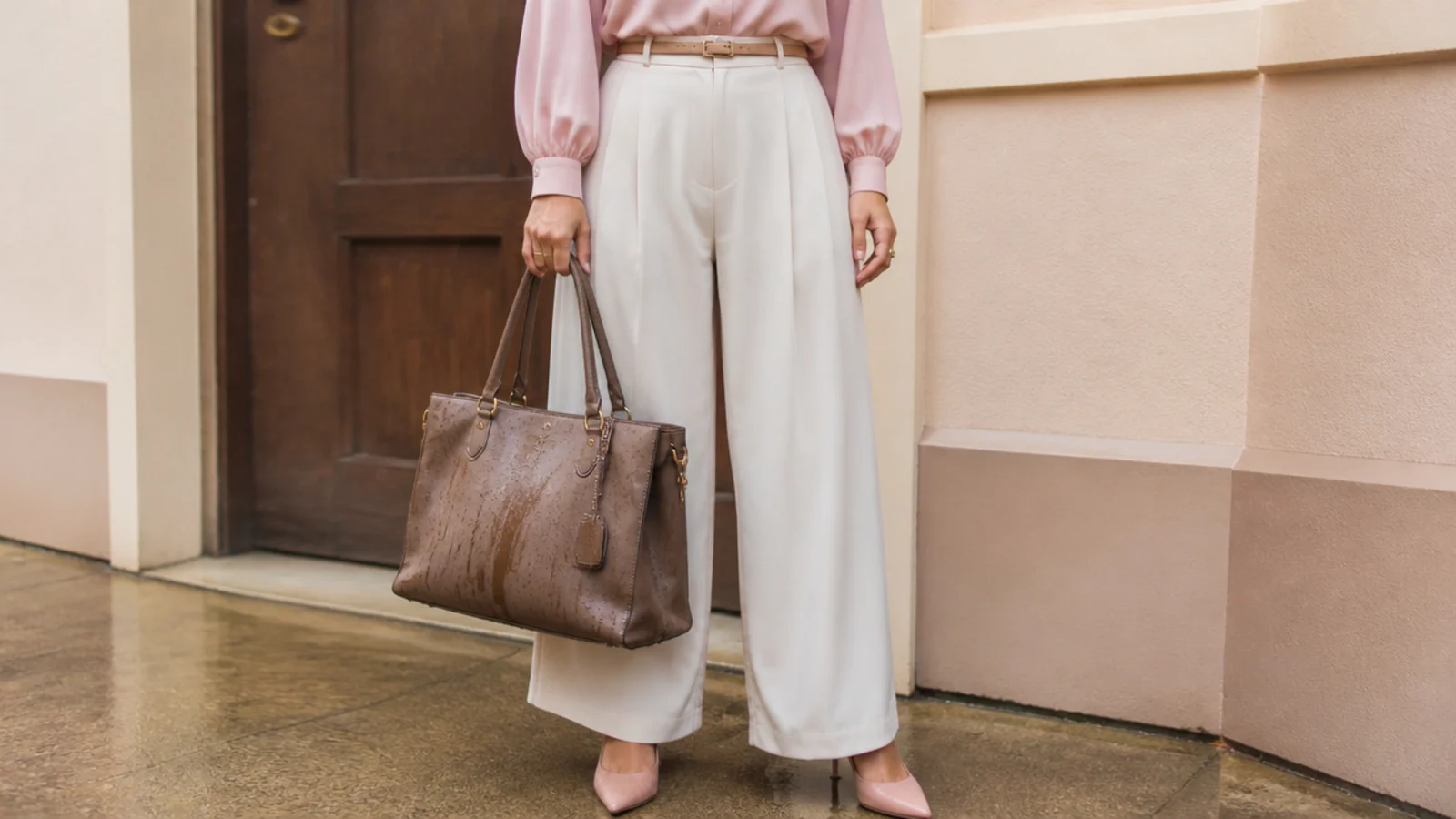
Your bag gets rained on as much as you do, and unprotected leather or suede pays for it. Water leaves permanent spots and rings on smooth leather and darkens and stiffens suede, so a favorite bag can be ruined in one wet commute. Wear instead a coated or vinyl tote, a nylon crossbody or any bag in a genuinely waterproof material, and choose a crossbody so both hands stay free for an umbrella. If you must carry leather, condition it first and tuck it under your coat. Finish a rainy outfit with pieces from cute waterproof outfits.
A vinyl-coated nylon tote or crossbody wipes clean and shrugs off rain, so save fine leather bags for dry days.
11. A Cropped Waterproof Jacket
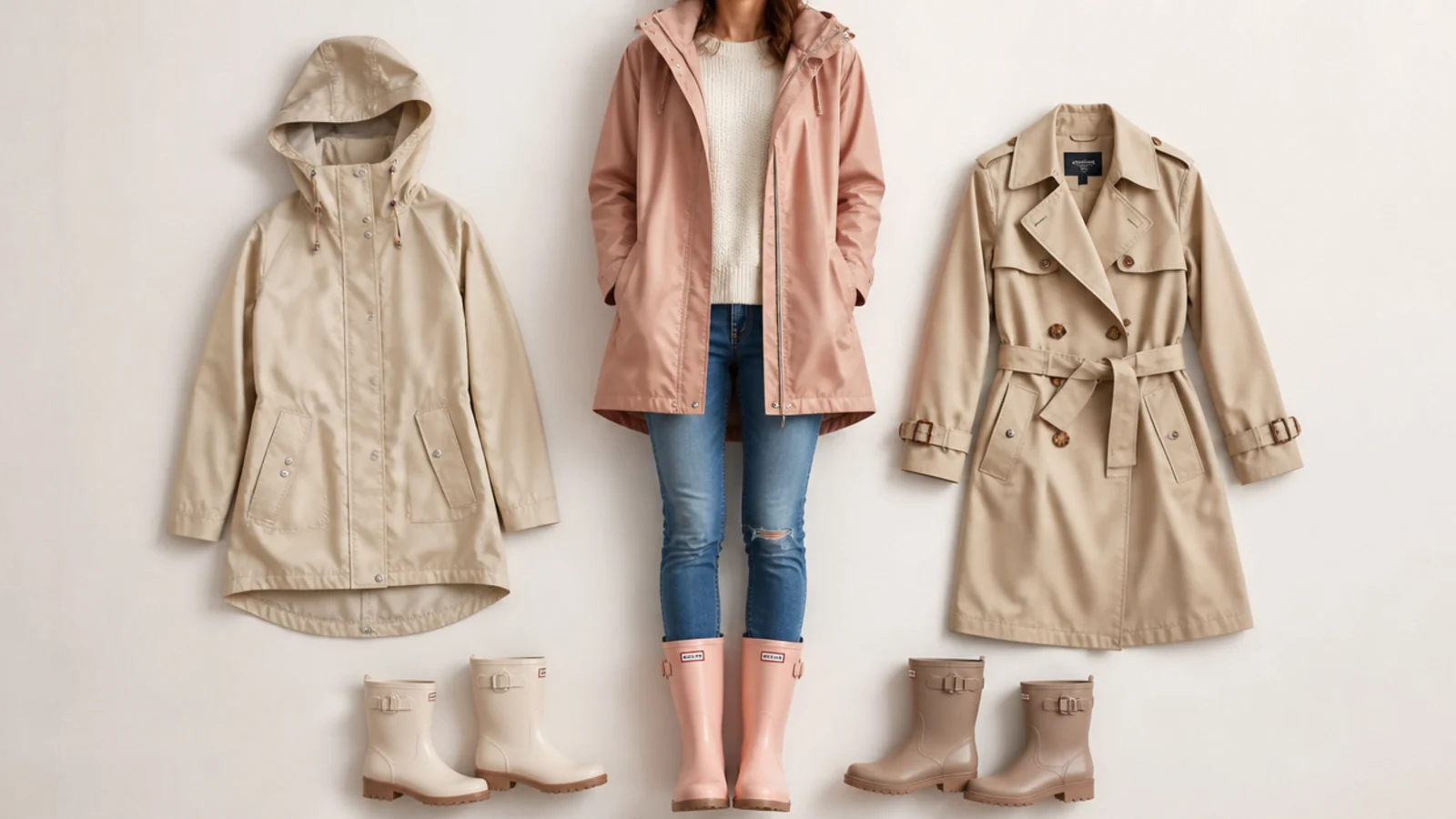
A very short waterproof jacket seems fine because it is waterproof, but the length is the mistake. A smooth, cropped shell sheds all its runoff at the hem, and if that hem sits at your waist the water pours straight onto your trousers or skirt, soaking everything below. Wear instead a mid-thigh to knee-length raincoat, trench or longline shell that carries the runoff past your hips and protects more of the outfit. A hood and a mid length together are what actually keep you dry. Compare coat lengths in rain-ready staples compared.
Choose a raincoat that hits mid-thigh or lower with a hood. Length matters as much as the waterproof rating for staying dry.
12. A Cotton Hoodie or Sweatshirt
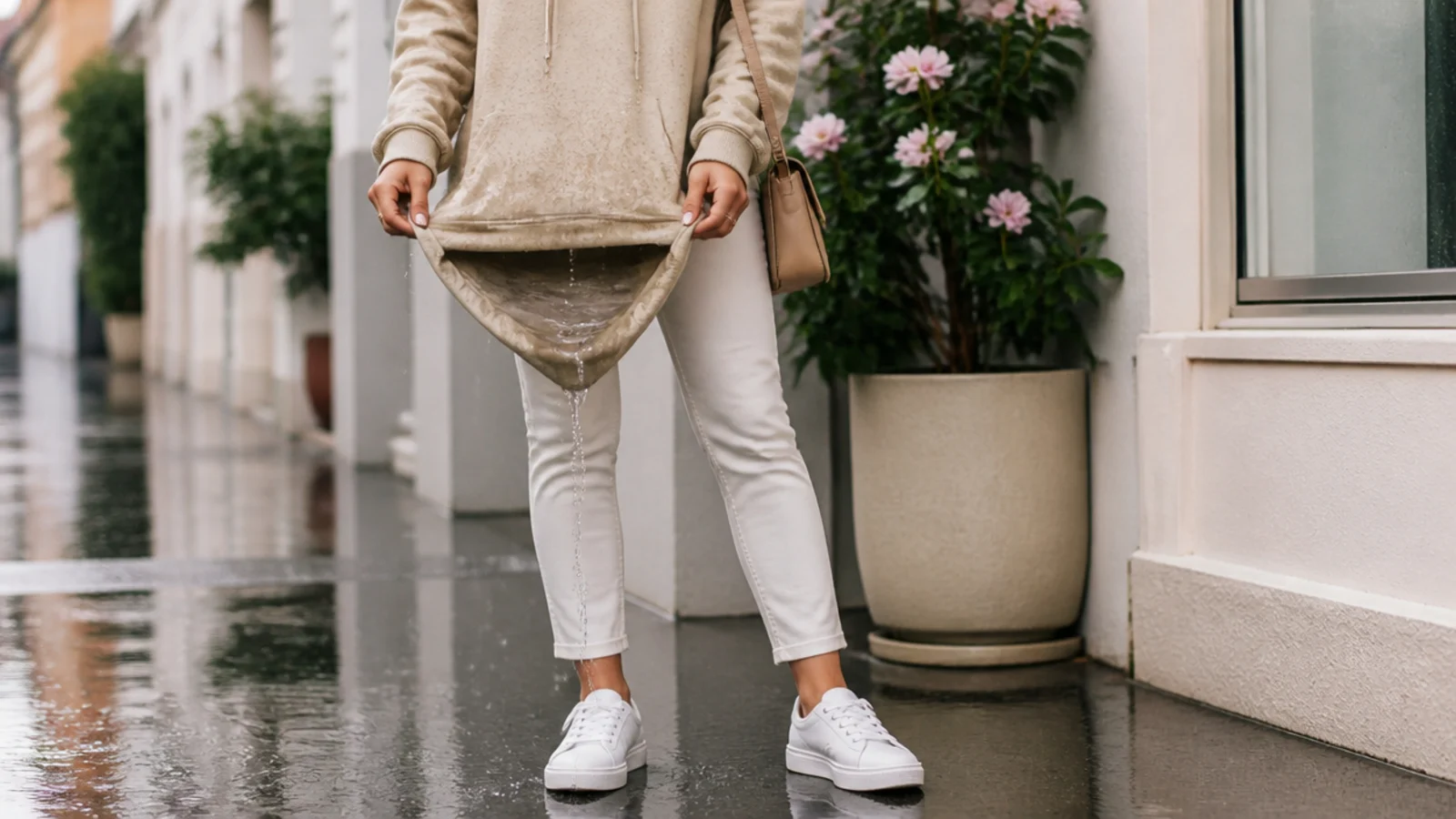
Grabbing a cotton hoodie because it has a hood is a false sense of security. Cotton fleece soaks up water, the hood fills and sags heavy against your neck, and the whole thing stays cold and damp for hours because cotton dries so slowly. It offers zero real rain protection. Wear instead a technical or fleece-lined synthetic hoodie that wicks and dries fast, or keep the cotton hoodie as a mid-layer under a rated waterproof shell with its own hood. On a cool commute a coat over the hoodie is the dry combination. See it styled in rainy day commute outfits.
A cotton hoodie belongs under a shell, not on top. For the athletic look in real rain, choose a synthetic or fleece-lined version.
Why You Shouldn't Wear Cotton in the Rain
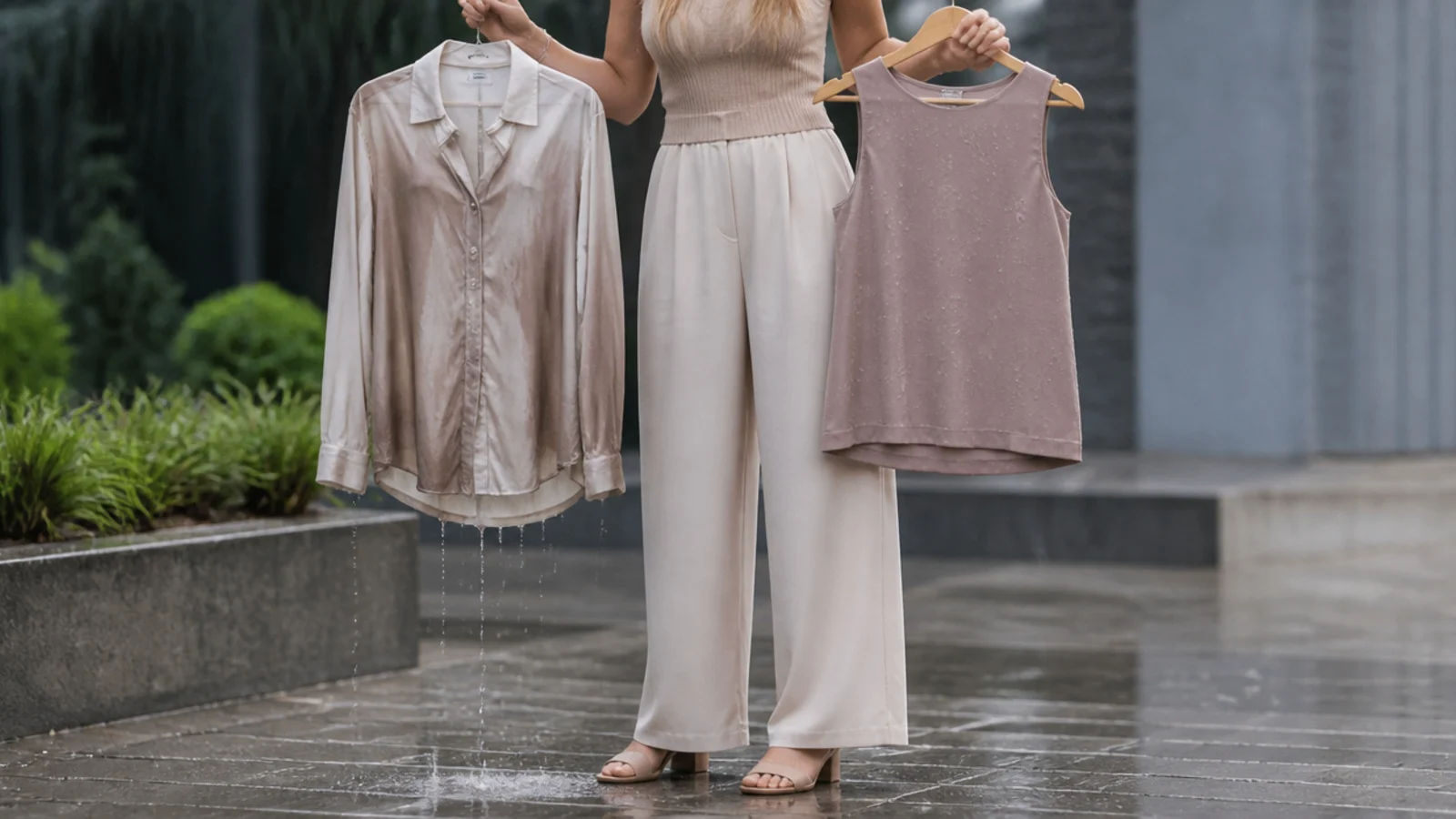
Cotton is the single worst everyday fabric for rain, and the reason is in the fiber. Cotton is hydrophilic, which means it actively attracts and absorbs water rather than repelling it, so the fibers swell and soak up many times their weight in moisture. Once wet, cotton holds that water against your skin and releases it slowly, because its dense, absorbent structure gives water very little chance to evaporate. That is why a cotton tee, hoodie or pair of jeans stays cold and clammy for hours after a shower stops. On top of the slow dry, thin cotton turns transparent when damp and heavier cotton gets weighty and shapeless. Synthetics like polyester and nylon do the opposite: they are hydrophobic, so water beads and rolls off, and what little soaks in evaporates fast. Wool blends stay warm even when damp. The simple rule is to keep cotton for dry days and reach for treated synthetics or wool blends when rain is in the forecast, layered under a shell.
Can You Wear Jeans in the Rain, and Do Jeans Get Ruined?
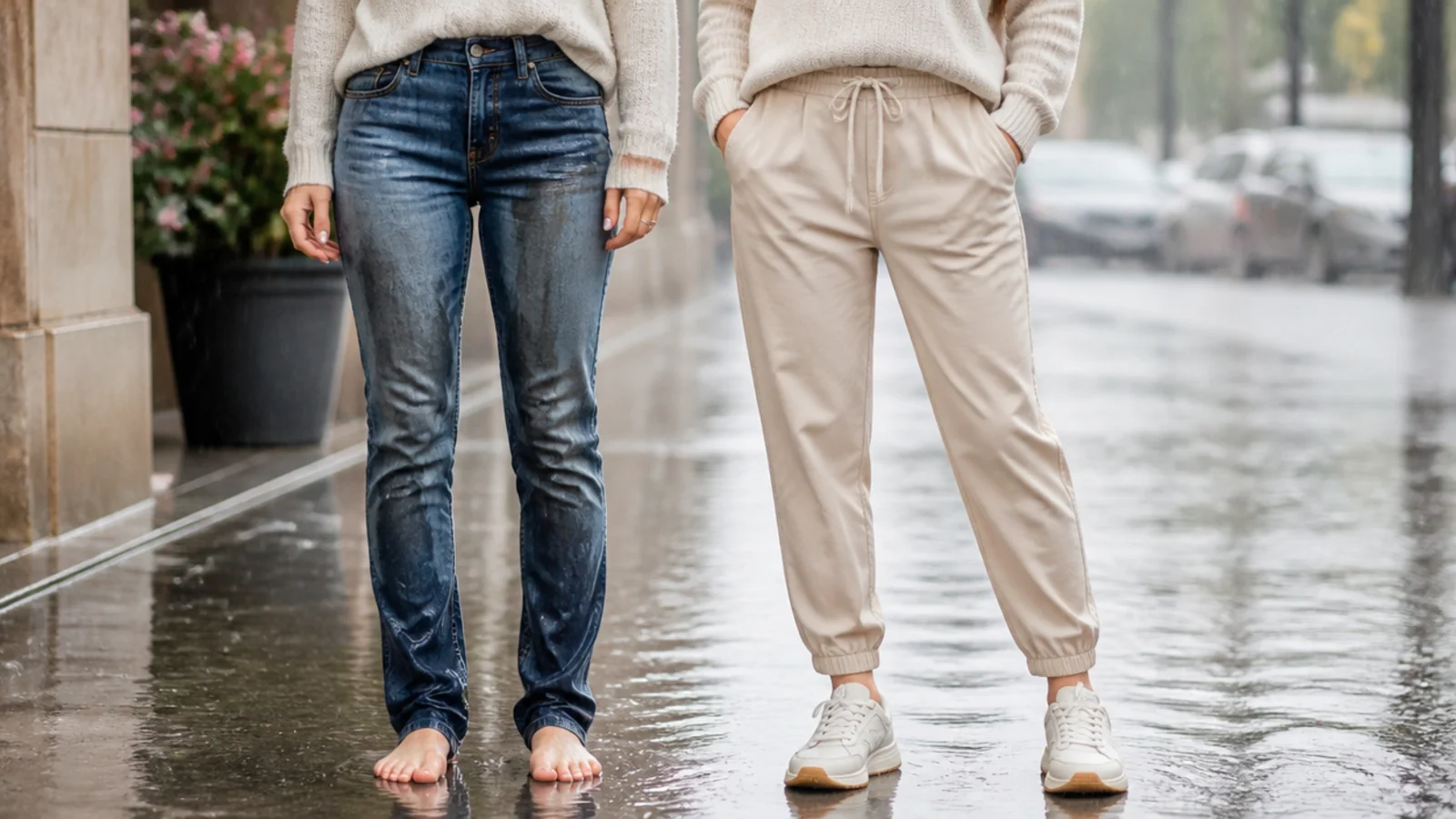
You can wear jeans in the rain, but they are a poor choice, and light rain will not usually ruin a pair for good. Denim is heavy woven cotton, so it behaves like all cotton: it soaks up water, holds it against your legs, gets cold and clingy, and takes hours to dry. A long day in wet jeans means chafing and a chill, not a destroyed garment. Real damage is rarer but possible: pale or raw denim can water-mark or bleed dye onto lighter layers and shoes, and repeated soaking can fade and stiffen the fabric over time. Dark, pre-washed denim is the safest if you insist on jeans. The smarter move is to size the risk down: choose cropped or ankle-length jeans so the hem clears puddles, or swap to quick-dry technical trousers and leggings altogether. For full outfits built on the right denim, see rainy day outfits with jeans.
The Worst Fabrics to Wear in the Rain
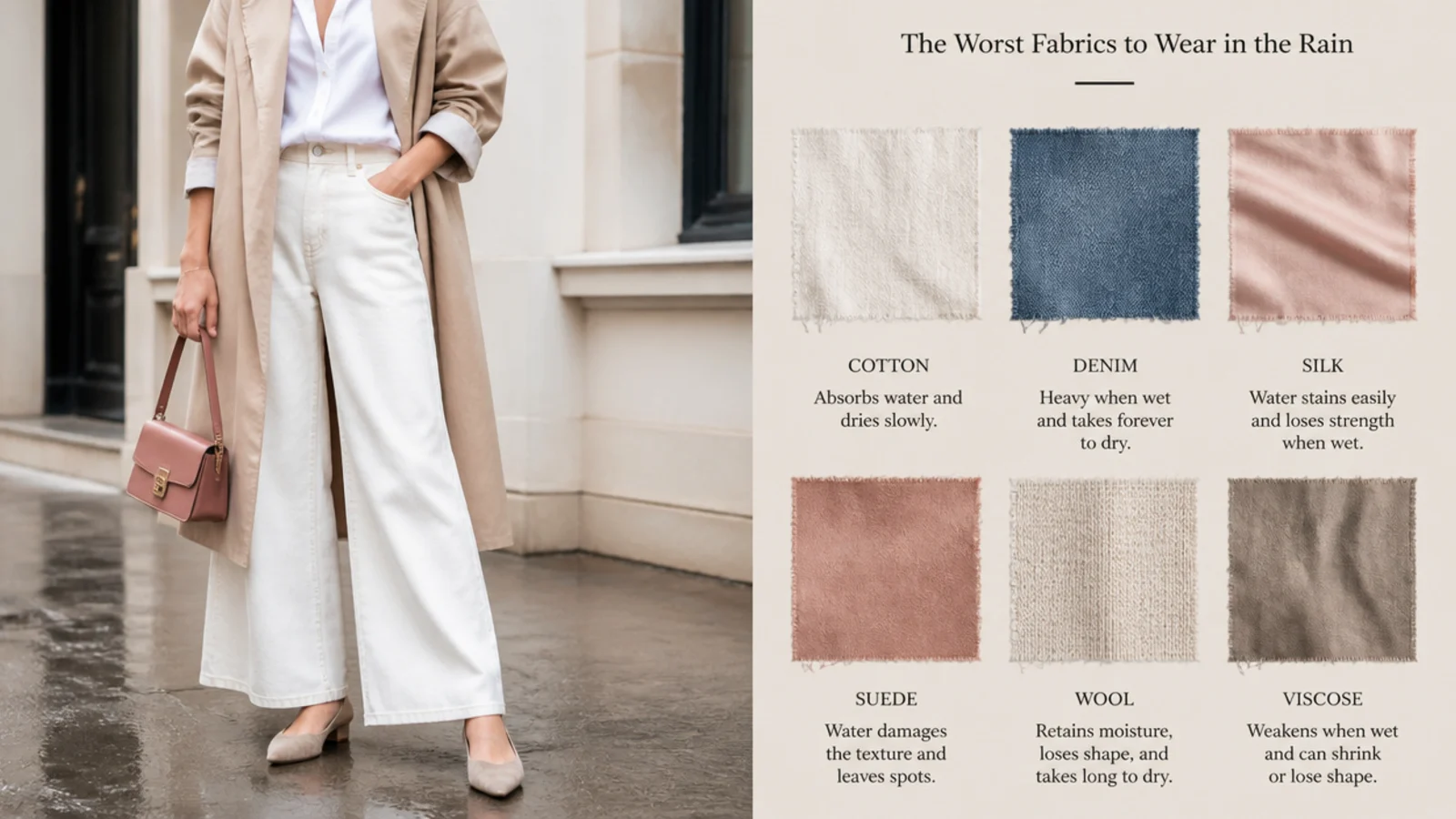
Group the rain offenders by how they fail and the list is easy to remember. Cotton and denim are the absorbers: they drink water, cling and dry painfully slowly. Silk and other delicate protein fibers are the stainers: droplets leave permanent rings and the fabric turns thin and see-through. Suede is the destroyer: a single soaking water-spots and stiffens the nap, often for good. Untreated down is the collapser: it loses loft and warmth the instant it gets wet. Open-weave wool and chunky knits are the sponges: rain runs through the stitches, the fabric gets heavy and can smell musty. Linen crushes and soaks nearly as fast as cotton. The fabrics that work are the opposite of all these: treated polyester, nylon and other technical synthetics that bead water and dry fast, tightly woven or coated pieces, wool blends that hold warmth when damp, and anything with a rated waterproof membrane. The comparison table below lays the two camps side by side so you can shop by fabric, not by looks.
What to Wear Instead: The Rain-Ready Formula
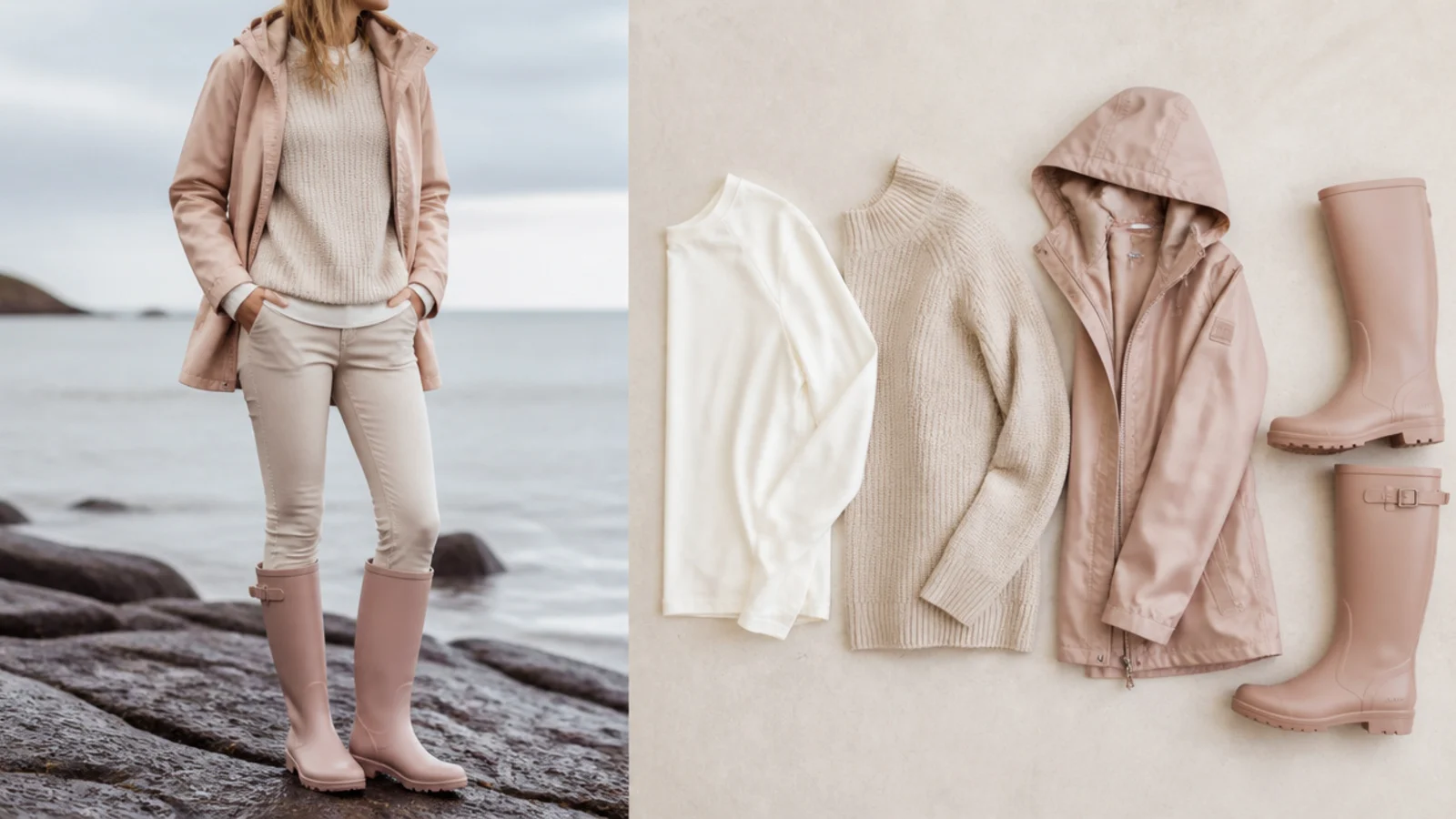
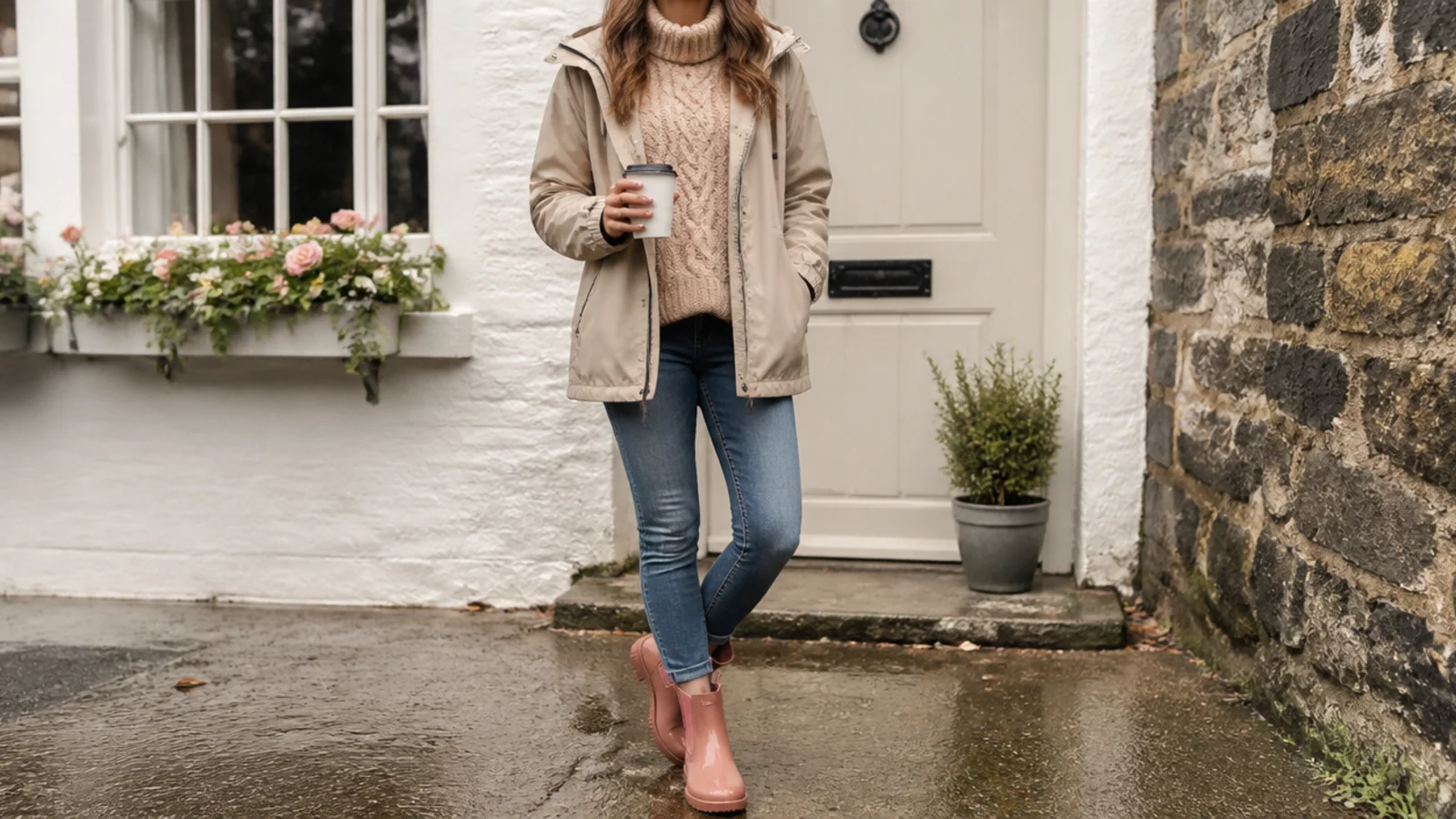
Once you know what not to wear, the fix is a simple three-part formula you can apply to any closet. Start with a non-clinging base in treated polyester, nylon or a merino wool blend instead of cotton, so the layer touching your skin sheds water and dries fast. Add a warm mid-layer only if it is cold, keeping a wool-blend knit as insulation rather than as your outer shell. Finish with a rated waterproof top layer: a shell, raincoat or trench that hits mid-thigh or lower with a hood, so runoff clears your hips instead of your knees. On the bottom half, choose cropped or quick-dry trousers, leggings, or a midi skirt with tights over full-length jeans and floor-length maxis. Ground the whole thing in a waterproof shoe with a rubber outsole, and carry a coated or nylon crossbody bag. That base, shell and shoe combination keeps you dry and cute in any shower. See the layering broken down in how to style rainy day outfits.
The Shoe and Bag Mistakes That Ruin a Rainy Outfit
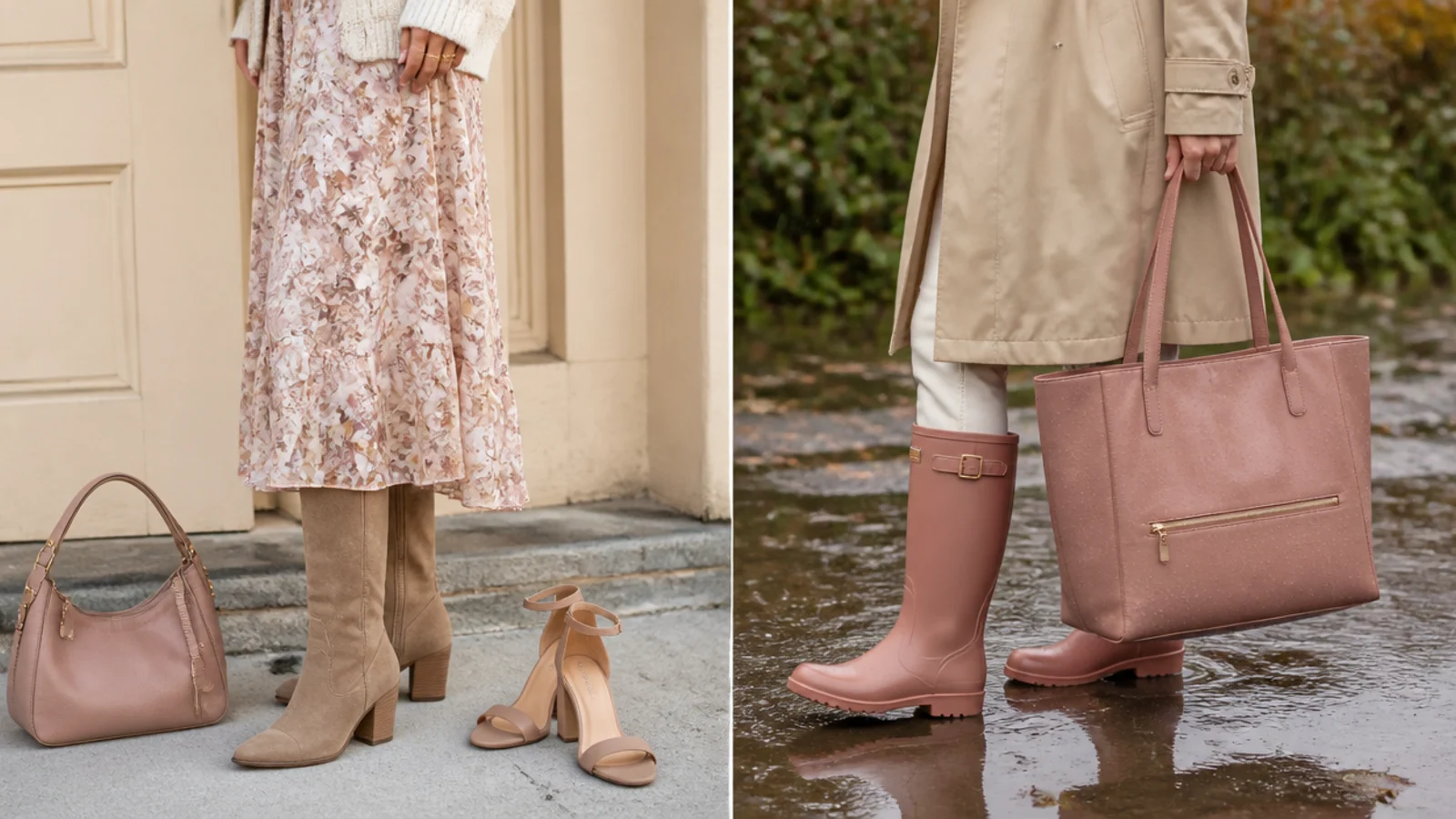
Your outfit can be perfect and still be sabotaged from the feet and shoulders. Suede shoes water-spot and stiffen after one puddle, smooth leather soles turn slippery on wet pavement, and open-toe sandals leave your feet cold, wet and exposed to gutter splash. The dry, safe choices are sealed waterproof leather, rubber Chelsea boots, molded EVA clogs and coated waterproof sneakers, all with a grippy rubber outsole, or a block-heeled waterproof ankle boot when you want height. Bags fail the same way: unprotected leather and suede pick up permanent water spots, and a full tote in one hand plus an umbrella in the other leaves you juggling. Switch to a coated or vinyl tote or a nylon crossbody so the bag wipes clean and both hands stay free. Waterproofing spray is a useful retrofit for shoes and bags you already own, though it resists a light drizzle rather than a downpour. Ground a whole look with rain boot outfits.
Main Differences
- Cotton and denim absorb and hold water, so they cling and dry slowly; treated synthetics bead water and dry fast.
- Silk water-stains and suede spots permanently, while coated fabrics, nylon and vinyl wipe clean with no marks.
- Untreated down collapses and loses warmth when wet; a synthetic-fill puffer with a waterproof shell keeps its loft.
- A cropped shell dumps runoff on your legs; a mid-thigh-to-knee raincoat with a hood carries water past your hips.
Frequently Asked Questions
What should you not wear in the rain?
Avoid cotton, denim, silk, suede, untreated down, open-weave knits and floor-length hems. Cotton and denim soak and cling, silk water-stains, suede spots permanently, down collapses when wet, and long hems drag through puddles. Skip open-toe sandals and delicate heels too. Wear treated synthetics, wool blends, cropped or quick-dry bottoms, a rated waterproof shell and waterproof shoes instead.
Can you wear jeans in the rain?
You can, but jeans are a poor rain choice. Denim is heavy woven cotton, so it soaks up water, holds it against your legs, gets cold and clingy and takes hours to dry. If you want denim, pick dark, cropped or ankle-length jeans so the hem clears puddles, and pack a dry pair for long days. Quick-dry technical trousers or leggings are the smarter swap.
Do jeans get ruined in the rain?
Usually not from light rain, though there is some risk. Wet denim mostly means discomfort: chafing, a chill and a slow dry, not a destroyed pair. Real damage is rarer but possible; pale or raw denim can water-mark or bleed dye onto lighter layers and shoes, and repeated soaking can fade and stiffen the fabric over time. Dark, pre-washed denim is the safest if you wear jeans in rain.
Why shouldn't you wear cotton in the rain?
Cotton is hydrophilic, meaning the fibers attract and absorb water instead of repelling it. Once wet, cotton holds that water against your skin and dries very slowly, so a cotton tee, hoodie or jeans stays cold and clammy for hours. Thin cotton also turns transparent when damp. Choose hydrophobic synthetics like polyester and nylon, or a wool blend that stays warm even when wet.
What are the worst fabrics to wear in the rain?
The worst are cotton and denim, which absorb water and dry slowly; silk, which water-stains permanently; suede, which spots and stiffens from one soaking; untreated down, which loses its loft and warmth when wet; and open-weave wool or chunky knits, which soak through and get heavy. Linen crushes and soaks fast too. Treated polyester, nylon and wool blends are the fabrics that work.
Does silk get ruined in the rain?
Silk is easily damaged by rain. It is a delicate protein fiber that water-stains, so droplets leave rings and darkened patches that can set permanently, and the fabric turns thin and clingy when wet. Even a short dash outdoors can mark it. Save real silk for dry, indoor plans, or wear a washable polyester satin that mimics the sheen but sheds water and dries fast.
Can you wear suede in the rain?
It is best avoided. Suede is brushed leather with a soft napped surface that water spots, darkens and stiffens, so a single puddle can permanently mark a favorite pair. A spray-on suede and nubuck protector helps, but it only resists a light drizzle. For real rain, choose sealed waterproof leather, rubber Chelsea boots, molded EVA clogs or coated waterproof sneakers that wipe clean instead.
What should you wear instead of jeans in the rain?
Swap full-length jeans for quick-dry technical trousers, leggings or a midi skirt with opaque tights, all of which dry faster and do not cling. If you love denim, choose dark, cropped or ankle-length jeans so the hem clears the splash zone. Pair whichever bottom you pick with a rated waterproof shell and a waterproof shoe to keep the whole look dry.
Can you wear a puffer in the rain?
Only a waterproof, synthetic-fill puffer belongs in the rain. Down insulates by trapping air in fluffy clusters, and those clusters clump and flatten the moment they get wet, so an untreated down coat soaks, loses its warmth and takes days to dry. Choose a puffer with a coated or laminated waterproof shell, taped seams and synthetic fill, and it stays both warm and dry.
Which rain mistake are you swapping out first?
If you remember one rule, make it this: read the fabric before you read the forecast. Cotton, denim, silk, suede and untreated down are the pieces that ruin a rainy day, and every one has a quick-dry, water-shedding swap that keeps you just as cute. Build a small rain rotation around treated synthetics, a rated waterproof shell and a waterproof shoe, and a wet day stops being a wardrobe problem. Save the swaps that fit your closet, then browse more outfit ideas, copy a full look from cute waterproof outfits, or learn the layering system in how to style rainy day outfits next.