Quick Comparison
| Knotless Braids | Traditional Box Braids | |
|---|---|---|
| Root tension | Low - extension fed in gradually, no anchor knot | High - a tight knot grips the root from day one |
| Best for fine 4C | Yes - the safest long-wear braid for low density | Risky - the knot concentrates pull on fine strands |
| Weight at the scalp | Lighter start, weight builds gradually down the braid | Full weight sits at the root immediately |
| Edge safety | Good if the first stitch is kept loose | Poor - a common cause of thinning edges |
| Typical wear time | Four to six weeks | Four to six weeks, but often left in too long |
| Install time and cost | Longer to install, usually costs more | Faster and usually cheaper |
| Takedown ease | Unravels cleanly with conditioner | Knots snag shed hair and drag at takedown |
| Scalp soreness | Rare when done correctly | Common in the first two days |
| Choose this if | You have fine, low-density coils and value your edges | You want the fastest, cheapest braid and have sturdier hair |
1. Knotless Box Braids, Shoulder-Length
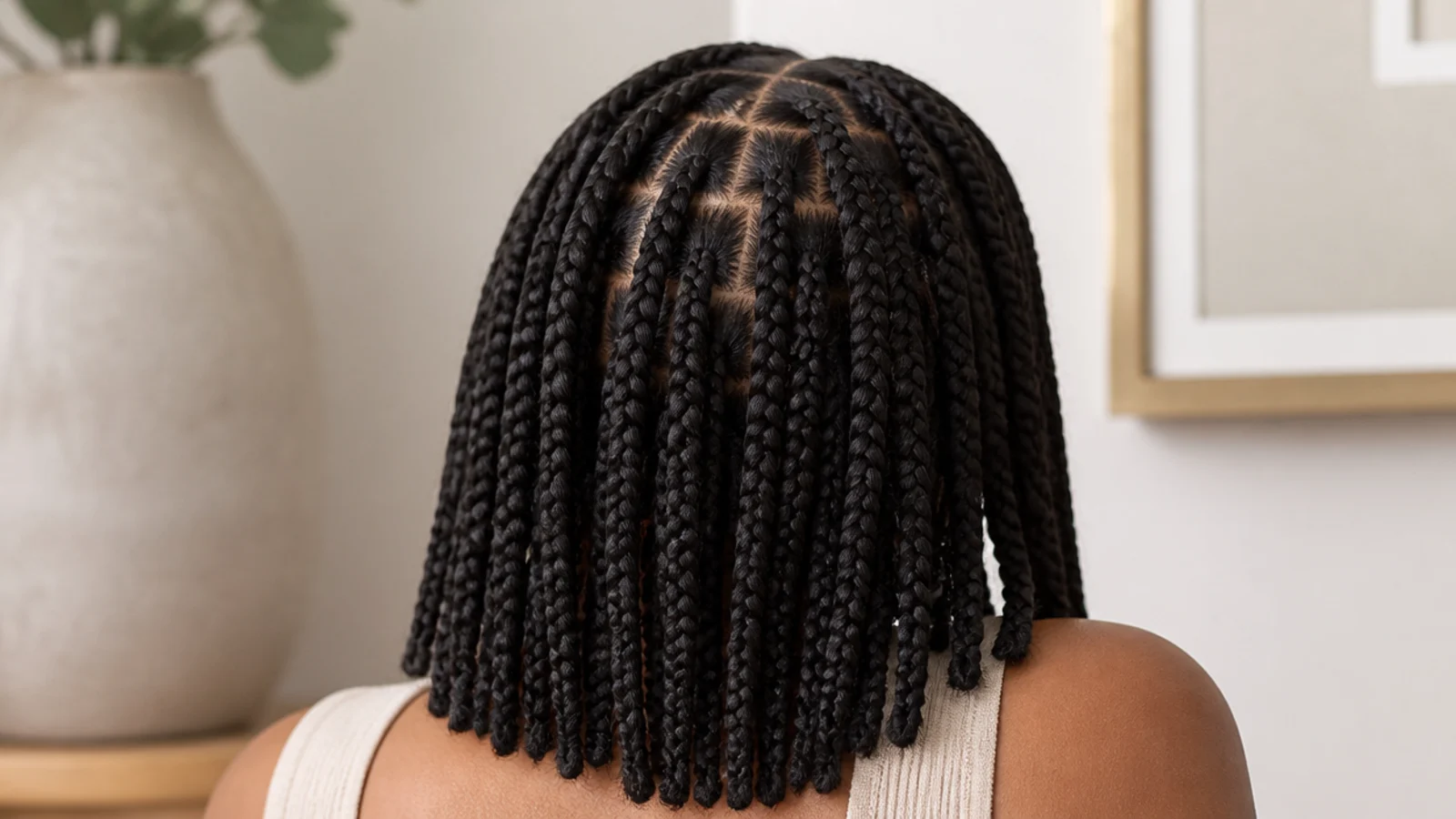
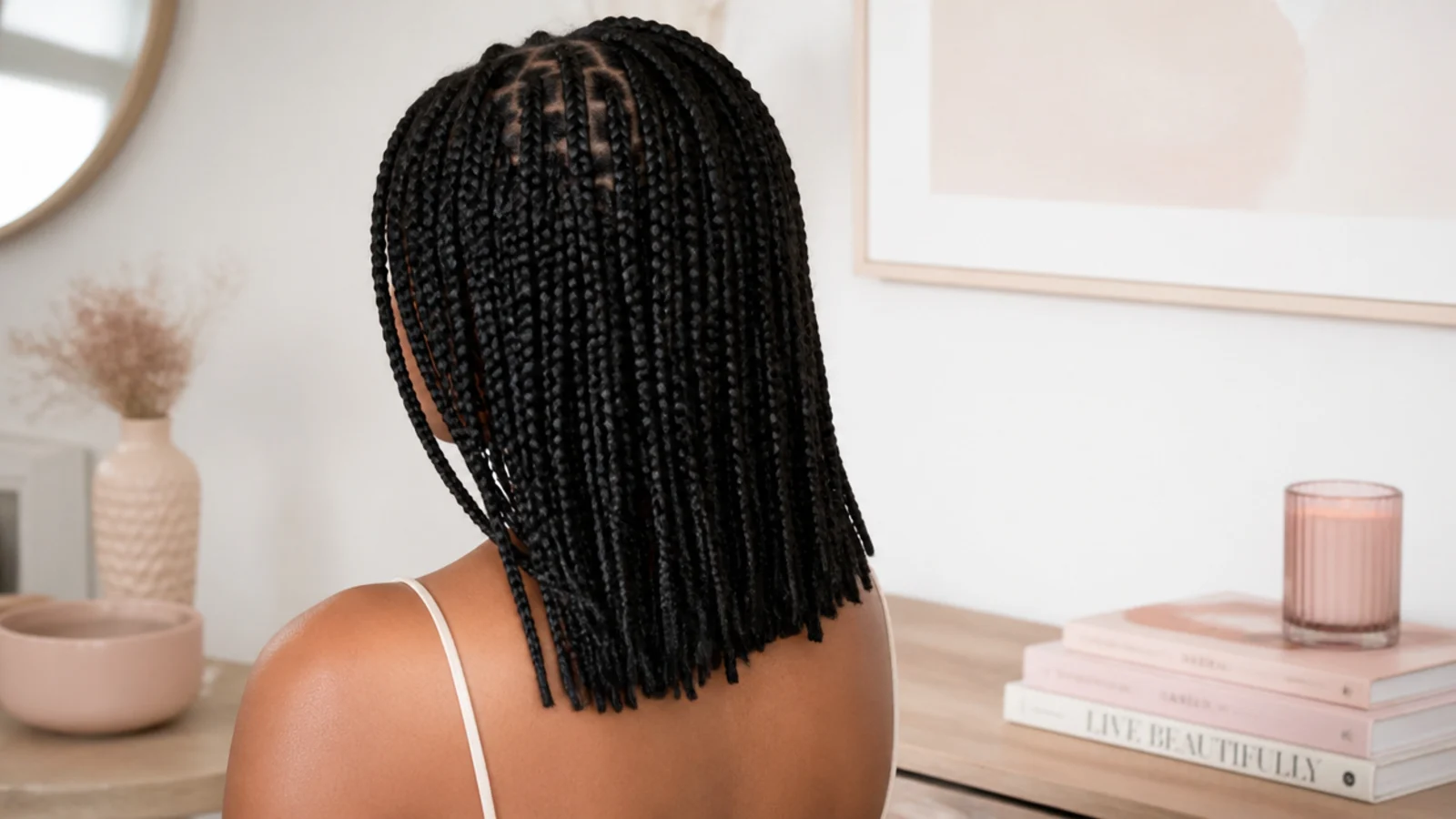
Knotless box braids are the single best long-wear protective style for fine 4C hair because the braider feeds the extension in gradually instead of anchoring a tight knot at the root. That means no hard knot digging into a low-density scalp and far less tension at the base. Keep the sections medium, not jumbo, and the length at shoulder rather than waist so the weight stays low. Worn loose or in a soft, low bun, they last four to six weeks. This is the go-to if you want set-and-go hair without the edge damage that traditional braids cause. See the DIY braid basics in easy braided hairstyles for everyday.
Ask for a loose first stitch and medium sections. If the braid tugs when you look down, it is too tight.
2. Small Two-Strand Twists
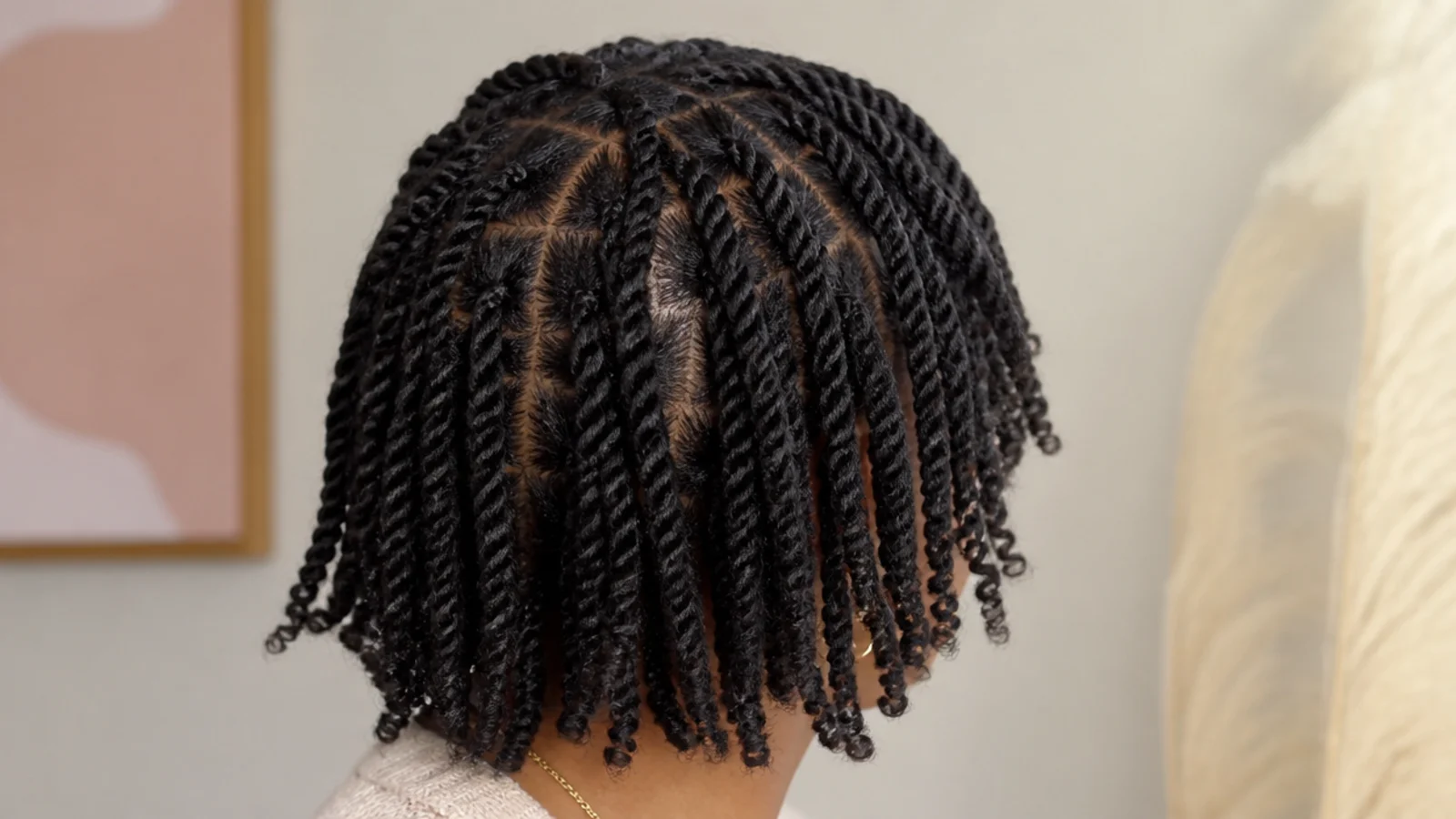
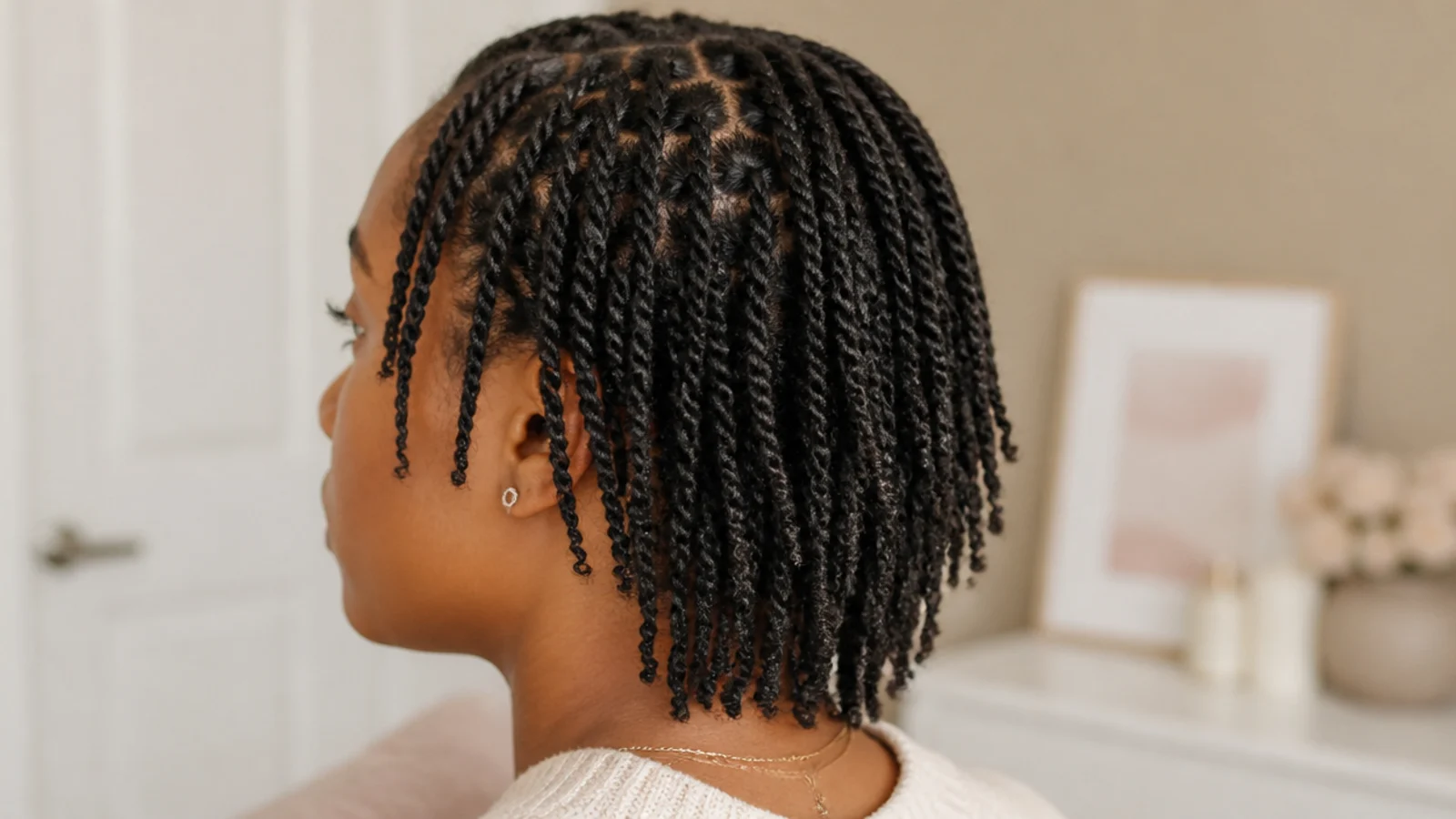
Small two-strand twists on your own hair, with no added extension, are the gentlest true protective style here and the easiest to do yourself. Because there is no tension from a braiding grip and no extra weight pulling the root, they suit low-density coils that cannot take braids. Twist on stretched, moisturized hair so the coils do not shrink and snag. They hold two to three weeks, and you can wear them down, in a puff, or unravel them for a twist-out on day one. This is the no-appointment, low-cost option for a rest week between heavier styles. For more everyday texture styling, see how to style short fine hair.
Do not over-twist or add rubber bands at the root. Seal each twist with a light oil, not a heavy butter.
3. Mini Passion Twists
Passion twists give the fullness of a long protective style with a fraction of the weight, which is exactly what fine 4C hair needs. Choose mini or small sizes in a lightweight water-wave hair so the finished style does not drag on the roots the way jumbo twists do. Because the wavy texture is airy, you get length and volume without the heavy pull that thins edges. They last three to four weeks before the roots loosen. Wear them half-up or in a low, loose pineapple to keep tension off the hairline. This is the lightweight alternative to box braids when you want movement.
Pick the lightest wave hair you can find. Skip a tight ponytail over the twists, which doubles the pull.
4. Crochet Braids Over a Flat Cornrow Base
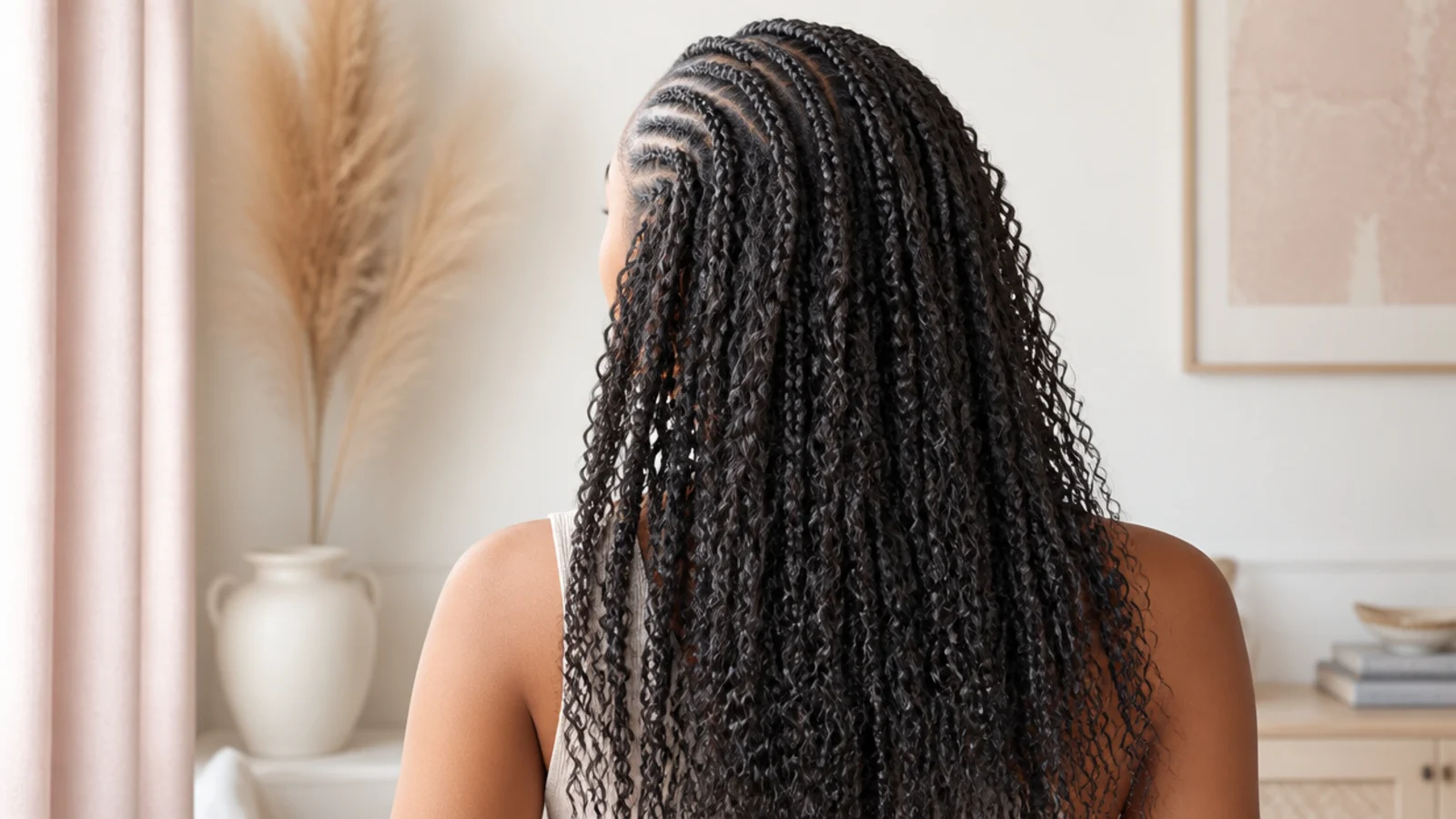
Crochet braids are underrated for fine 4C hair because the hair is looped onto a cornrow base rather than braided strand by strand, so your own low-density coils never take the weight of the extension. The tension lives in the cornrow foundation, and as long as that base is braided loosely, edges stay protected. Choose a light, pre-looped curly or wavy hair to keep the finished style airy. Installed well, crochet lasts four to six weeks and takes down in minutes. This is the style to book when you want big volume with minimal strand-level stress. It also grows out gently as the cornrows loosen.
Insist on loose cornrows at the hairline. A too-tight base is the one thing that ruins crochet edges.
5. Feed-In Cornrows, Straight Back
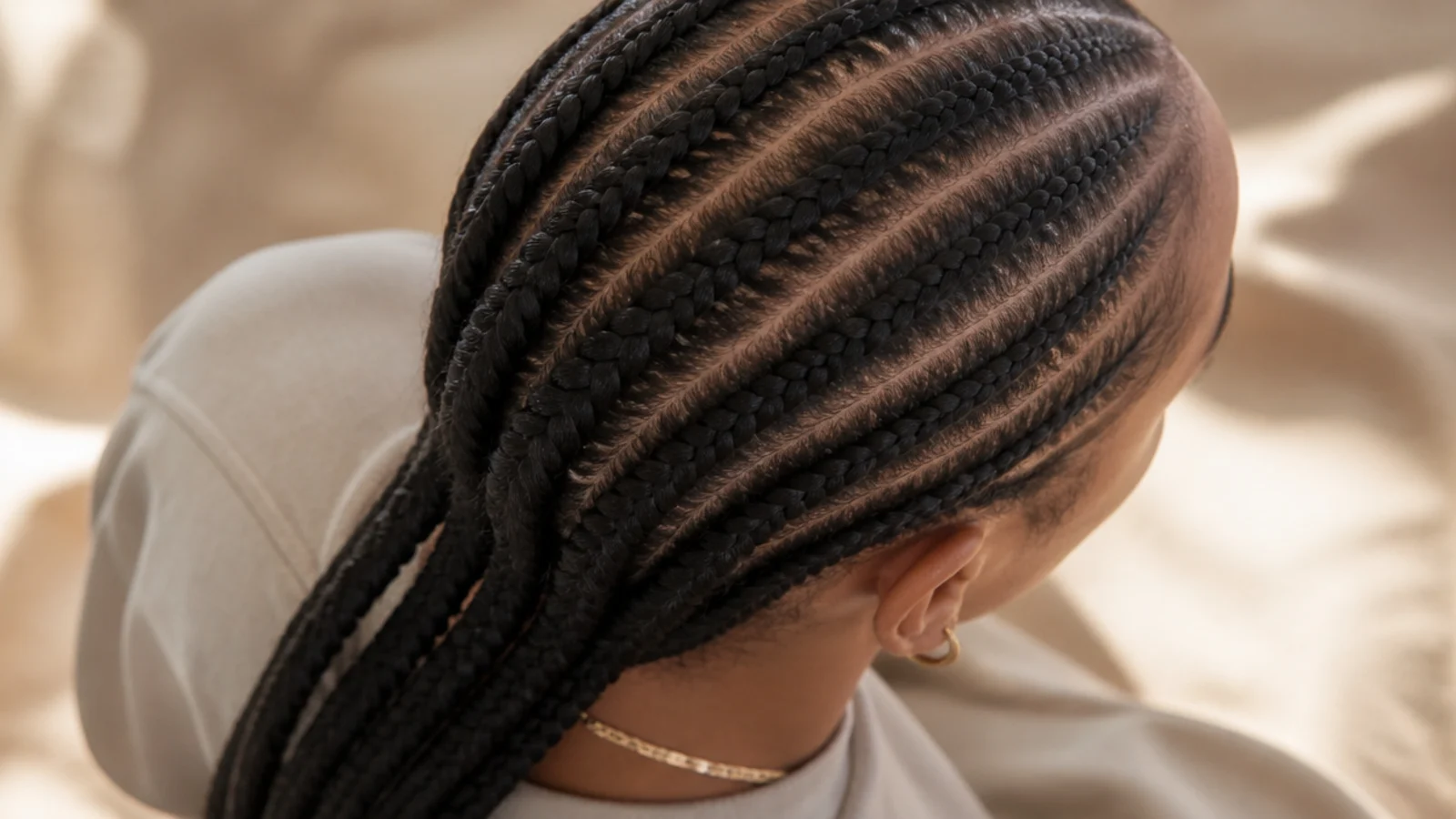
Feed-in cornrows start with only your natural hair and add extension gradually, so the braid begins thin and light at the hairline instead of gripping a thick knot right at the edge. That gradual start is what makes them safer than standard cornrows for low-density coils. Keep the rows medium-width and the extension light, and avoid ultra-thin micro rows that concentrate tension. Straight-back rows last two to three weeks and are an easy base you can top with a scarf or a loose puff. This is a sleek, low-profile option for a shorter protective stretch. Match it to your texture with the hairstyle for your hair type guide.
Ask the braider to feed in slowly at the front. Stinging at the temples means loosen it now, not later.
6. Flat Twists Into a Tucked Low Bun
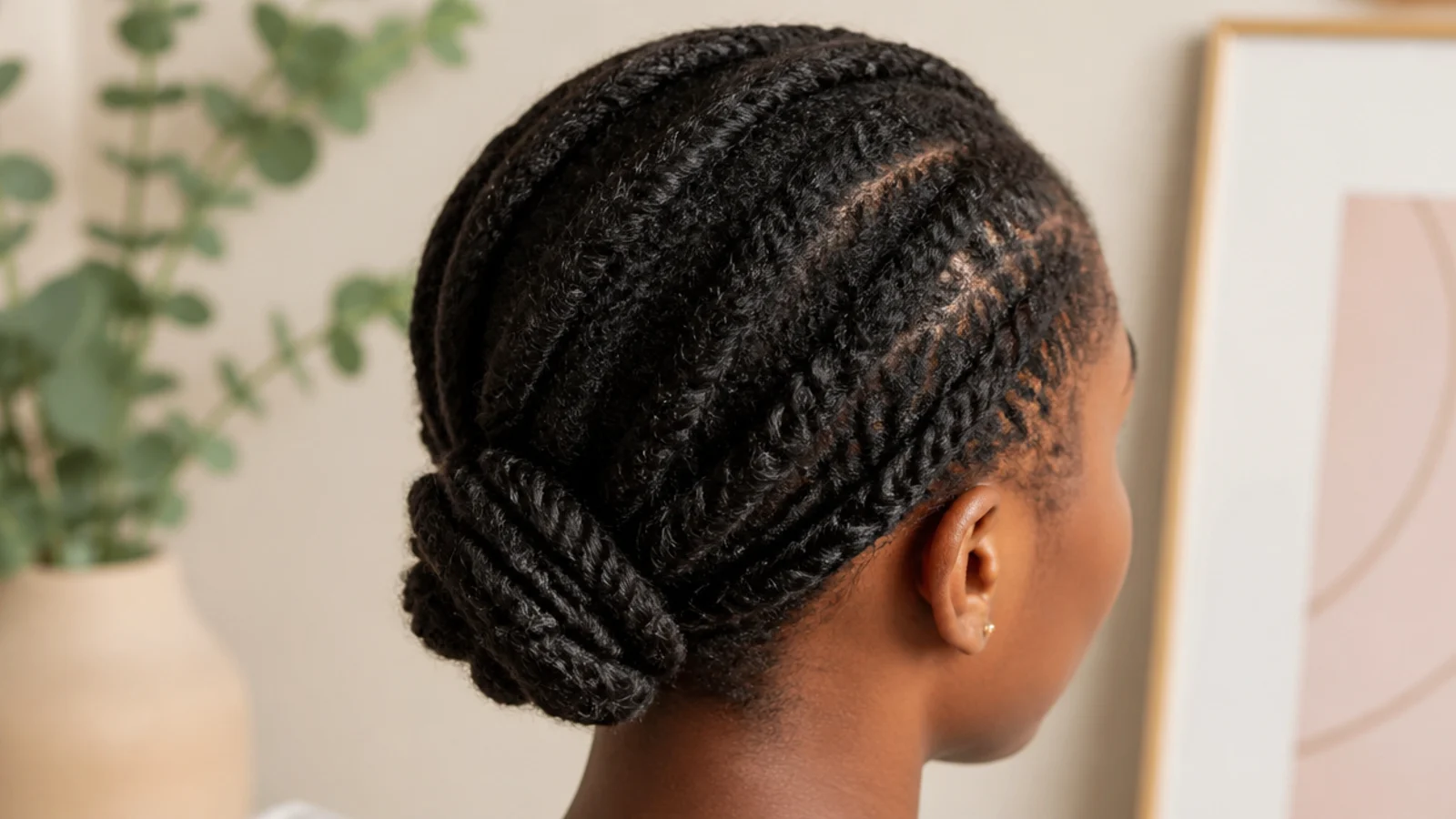
Flat twists lie flat against the scalp like cornrows but use a two-strand twist motion, which is gentler and does not require the tight grip a cornrow needs. Twisted loosely on your own hair and gathered into a soft, tucked low bun, they hide your ends completely and keep every strand off your collar and away from friction. Because there is no extension and no hard pull, this is a true low-tension style for a rest week. It holds five to seven days before the twists fuzz. This is the DIY updo to reach for when your edges need a break from anything heavier.
Twist toward the nape so the bun sits low. Pin with smooth bobby pins, never a tight elastic.
7. Braided Halo Crown
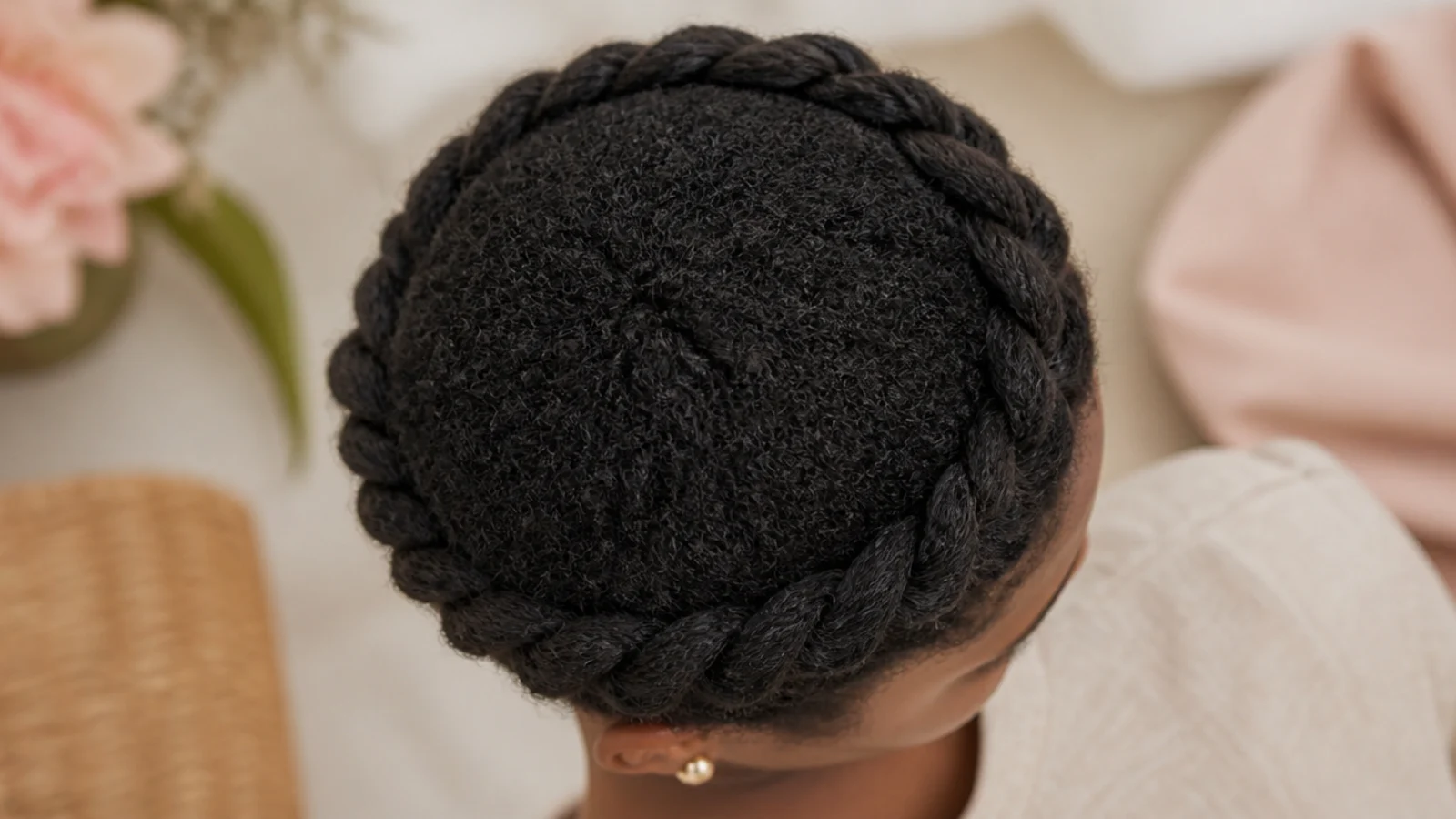
A braided halo, where a single loose braid wraps around the crown, tucks your ends away and keeps hair off your face without the all-over tension of a full head of braids. On fine 4C hair, work on stretched hair and keep the braid soft rather than tight so it drapes instead of pulls. Because only one braid is doing the work and it sits low against the head, the load on any one section stays light. It holds five to seven days under a bonnet. This is the pretty, low-commitment option for a wedding, a workday, or any time you want your hair up and protected. See more up-styles in easy braided hairstyles for everyday.
Leave the braid loose enough to slide a finger under. Tuck the tail, do not yank it into place.
8. Chunky Two-Strand Twist Updo
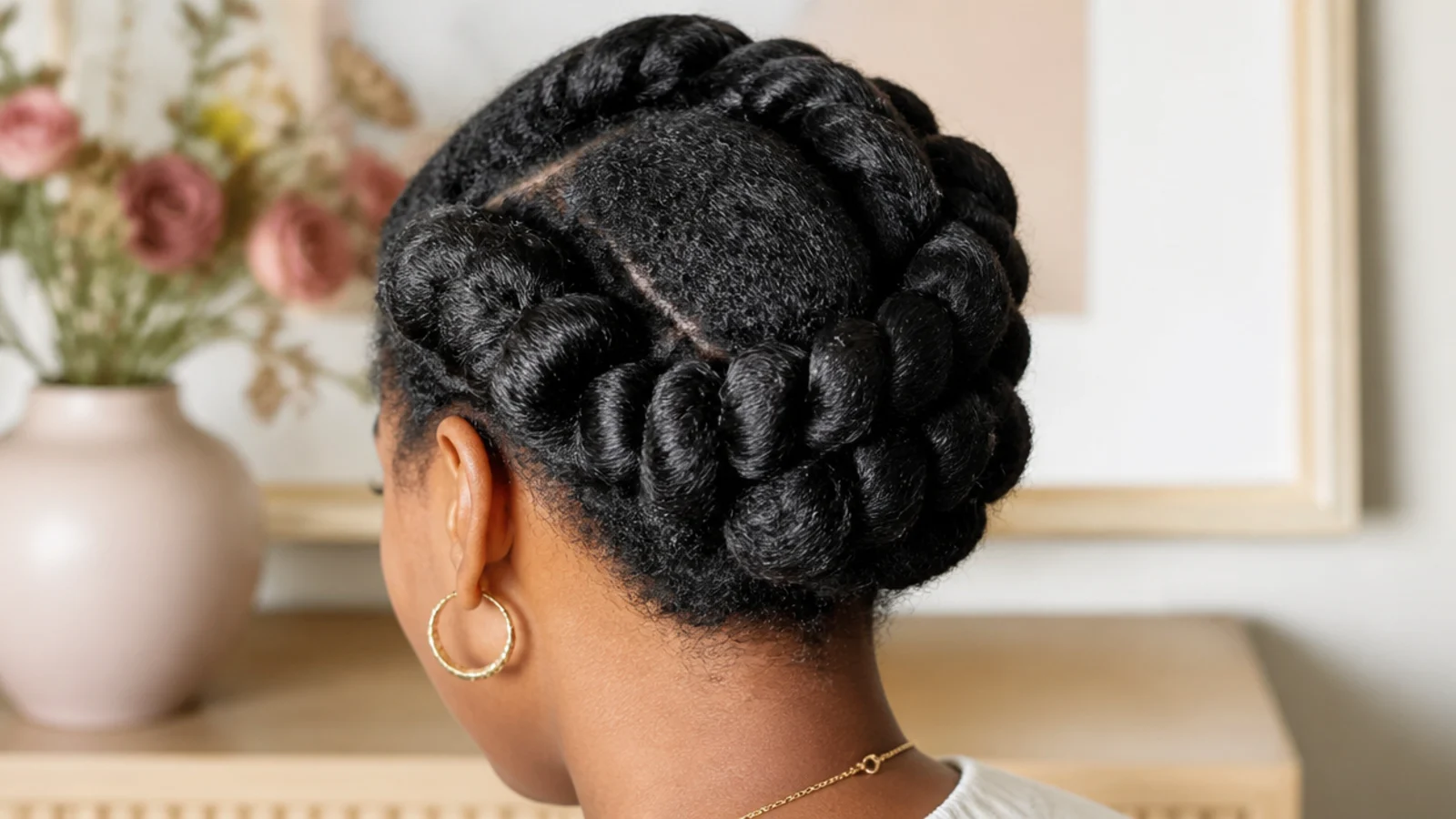
Larger, chunkier two-strand twists pinned into an updo cover the whole head in far less time than small twists and still keep tension low because there is no extension and no braiding grip. The bigger sections mean fewer parts and less manipulation, which fine, fragile coils appreciate. Twist on moisturized, stretched hair, then pin the twists up and in so your ends are fully hidden from friction. This holds one to two weeks and doubles as a stretched twist-out when you take it down. This is the fast, gentle updo for a week when you have no time for a salon install and want your hands off your hair.
Fewer, fatter twists mean less pulling. Pin into the twist itself, not into your scalp-level roots.
9. Bantu Knots, Stretch and Style
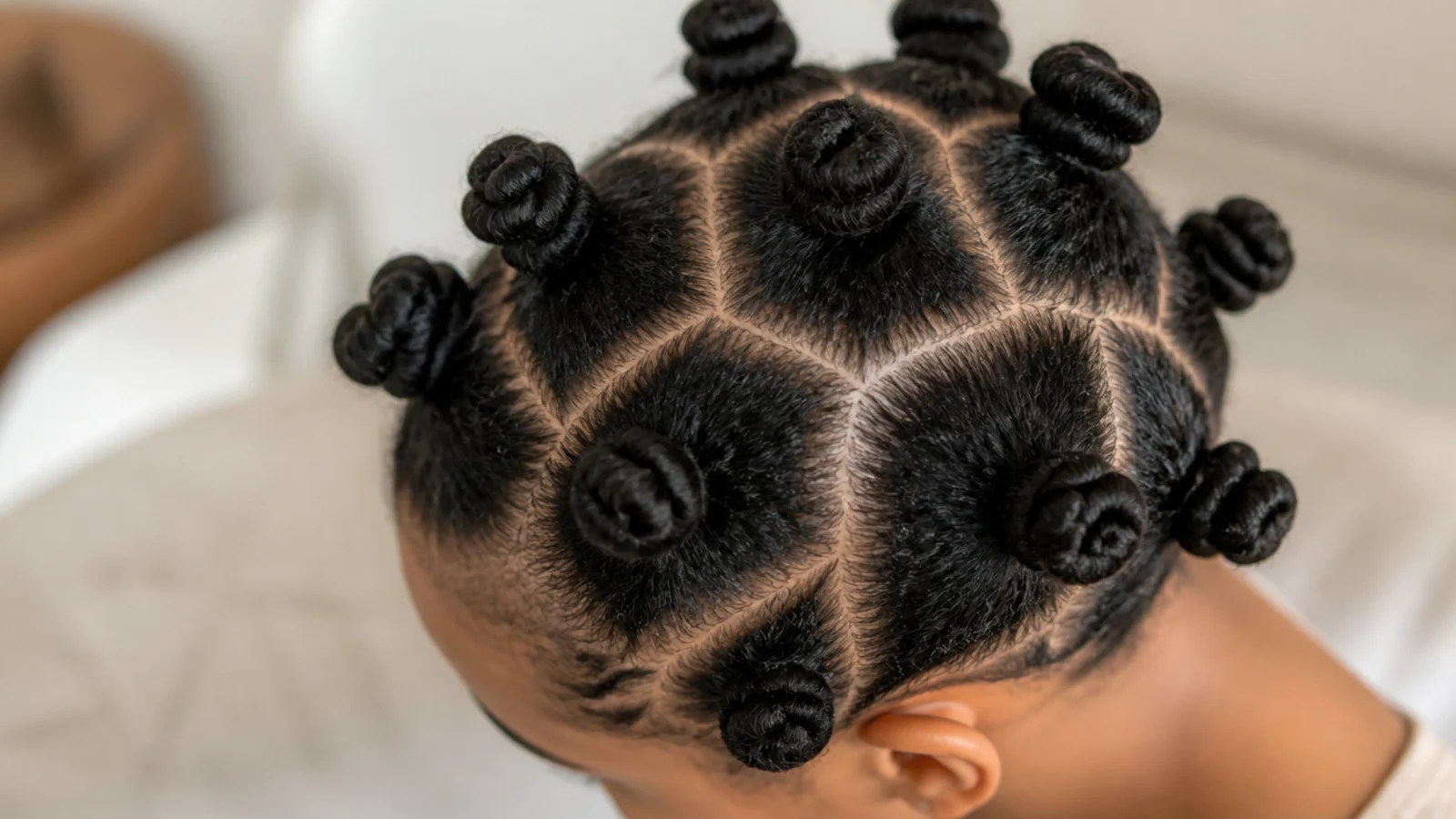
Bantu knots coil each section into a small, secured knot that sits close to the head, tucking your ends away for a few days and setting a spiral pattern when you take them out. On fine 4C hair, keep the sections generous and coil with gentle tension so the knot holds without straining the root. They are a short-wear protective style, best worn three to five days, and they pull double duty: wear them as the style, then unravel for a bantu knot-out. This is the low-cost, no-extension pick for a weekend reset that also gives you a second-day look for free.
Coil, do not wrench, each knot. If a knot throbs, it is too tight - loosen and re-coil that section.
10. Threaded Puff With African Threading
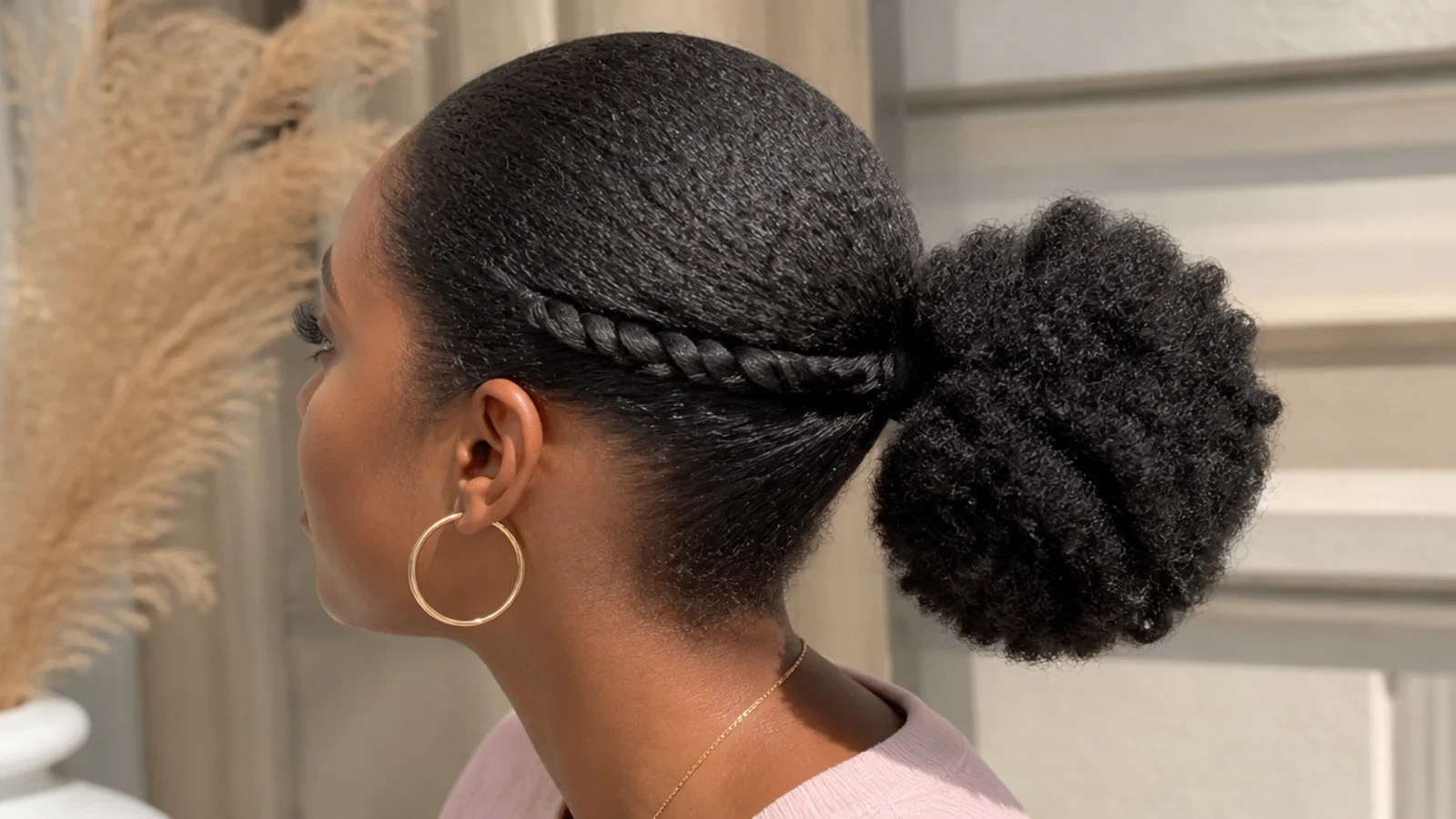
African threading wraps thread around sections to stretch the coils with zero heat and almost no tension, and gathering the threaded lengths into a soft puff keeps a low-density crown looking full without an elastic strangling your edges. The thread stretches the hair so the puff reads bigger than your true density, and because the gather sits high and loose there is no persistent pull on the hairline. Worn as a puff it lasts five to seven days, and unthreaded it leaves a smooth stretch. This is the heatless, edge-safe way to wear a puff when a tight ponytail holder is off the table for you.
Use a wide, soft hair tie or a threaded loop, never a thin elastic. Keep the puff loose at the temples.
Why Fine 4C Hair Loses Hair to Tension
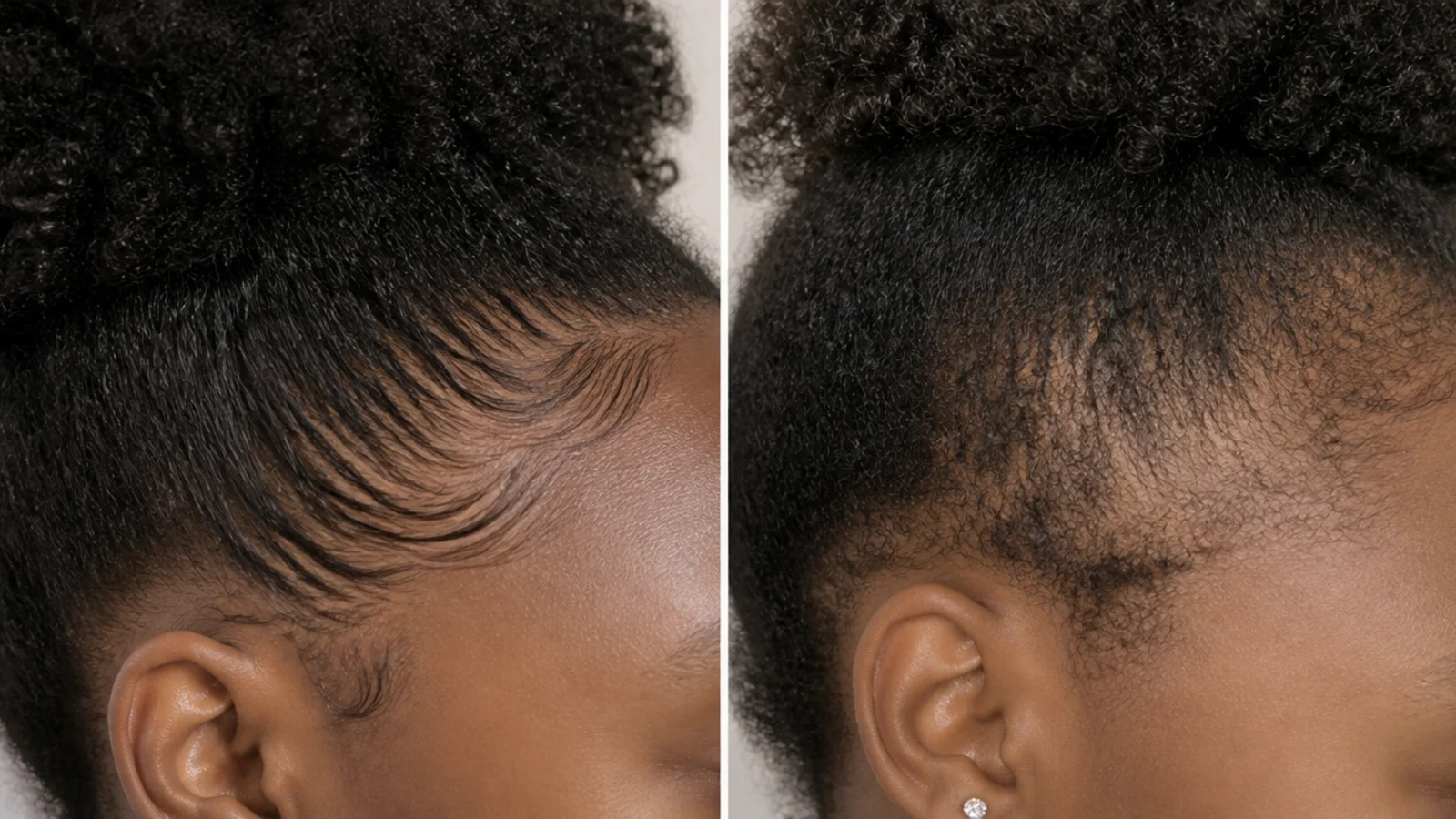
Fine 4C hair has two things working against it at once: a small strand diameter, which makes each coil physically weak, and low density, which means fewer hairs are sharing every bit of load. When a style pulls, that pull concentrates on a small number of fragile strands, especially at the temples and nape where hairs are finest. Held there for weeks, the constant drag inflames the follicle and, over time, the hair stops growing back in that spot. That gradual, tension-driven thinning is traction alopecia, and it is the main risk of protective styling done wrong. The key point is that the style itself is not the enemy - the weight, the grip, and the duration are. A light style with loose parts spreads the load and lets the follicles rest, while a heavy, tight install on low-density coils does the opposite. Choosing for weight and tension, not just for looks, is the whole game for fine 4C hair.
How to Tell a Protective Style Is Too Tight
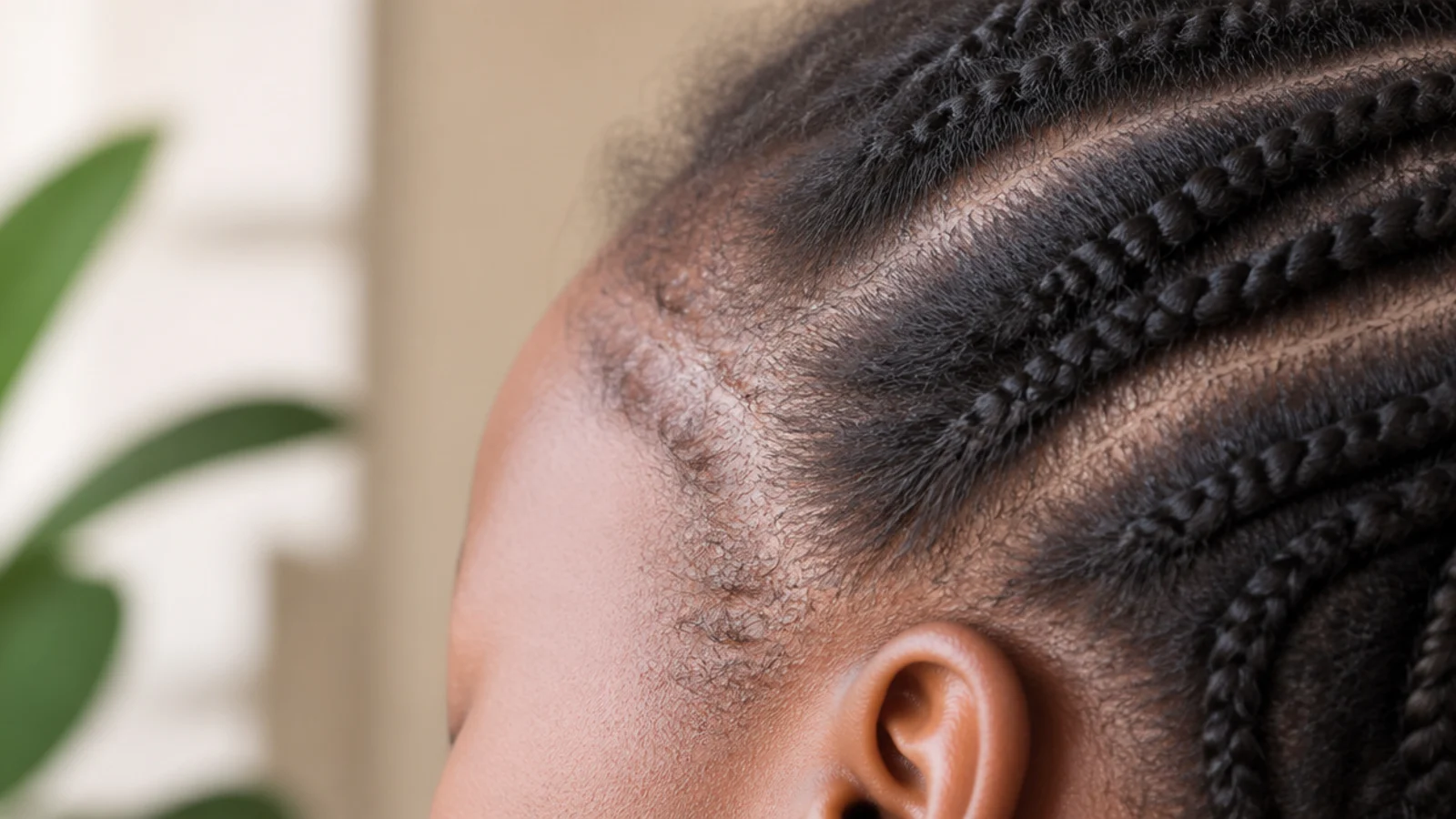
You should never have to suffer for a style, and fine 4C hair gives clear early warnings when tension is too high. The first sign is a tender, sore scalp that stings when you raise your eyebrows or lie down - a healthy install feels snug at most, never painful. The second is small raised bumps or pimples along the braid line within a day or two, which are inflamed follicles telling you the grip is too strong. A third is a hairline that looks pulled forward or a part that has widened into a shiny line of scalp. Little white bulbs on the ends of shed hairs at takedown mean strands were yanked out by the root, not shed naturally. If you notice any of these, do not wait out the pain in the name of longevity - loosen the front, take out the tightest rows, or remove the style entirely. On low-density hair, one too-tight install can cost you edges that take a year to recover.
Weight and Size: Why Smaller Protects Low-Density Coils
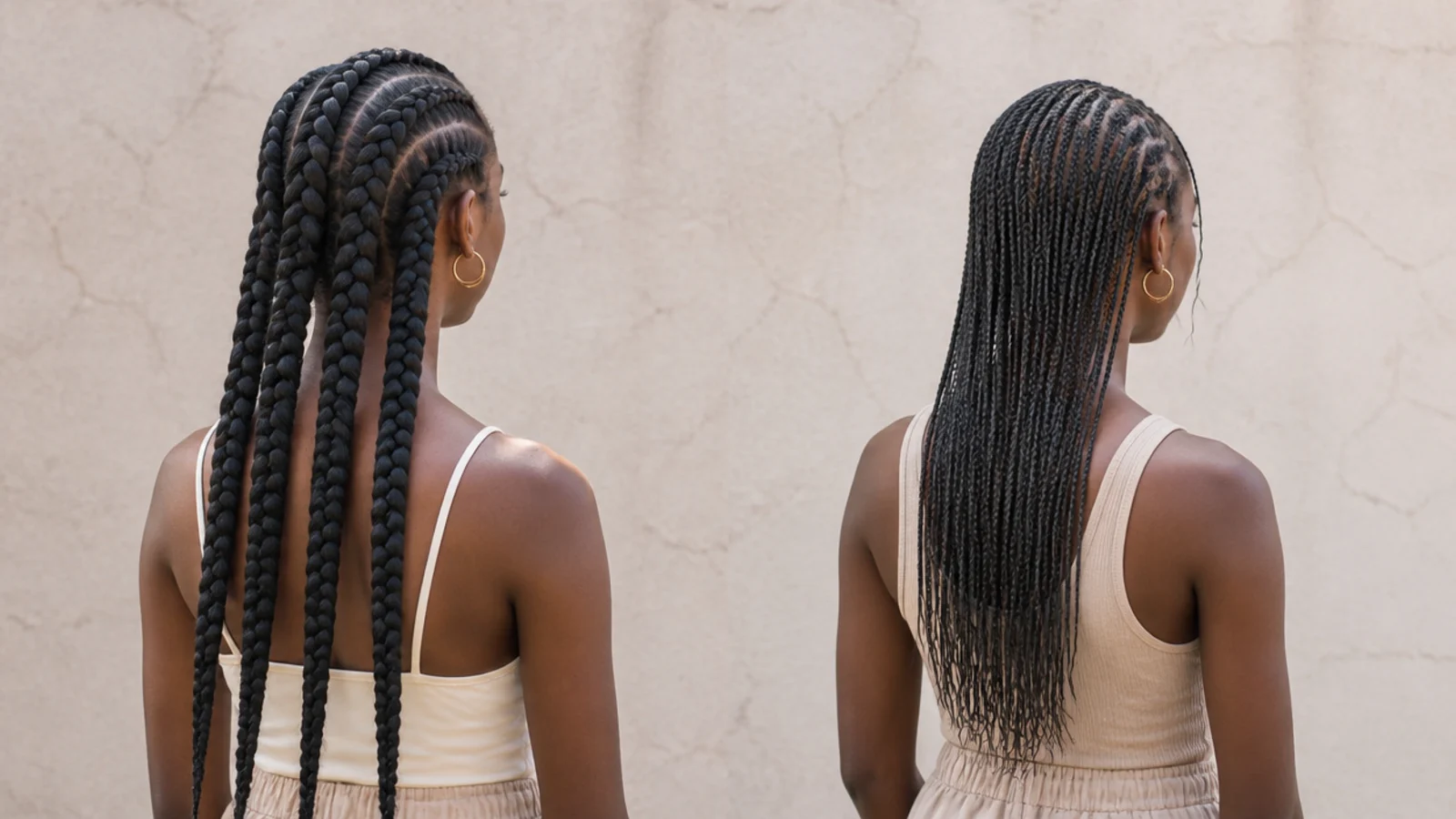
The most common mistake on fine 4C hair is choosing a style for the fullness it adds rather than the weight it costs. Long, jumbo braids and heavy extensions look dense, but every extra inch and every extra ounce hangs off a root system that has fewer hairs to hold it. That hanging weight is a slow, round-the-clock pull on the follicle, and low-density coils cannot absorb it. Smaller sections and shorter lengths flip the math: they distribute the load across more anchor points and shorten the lever pulling on each root. That is why small knotless braids beat jumbo, why mini passion twists beat chunky ones for long wear, and why shoulder-length beats waist-length on fine hair. Lightweight extension hair matters too - a light water-wave weighs far less than a dense, heavy pack. When you choose a style, ask how much it weighs and how long it hangs before you ask how full it looks. For fine coils, lighter and smaller is almost always the safer call.
Protecting Your Edges and Hairline
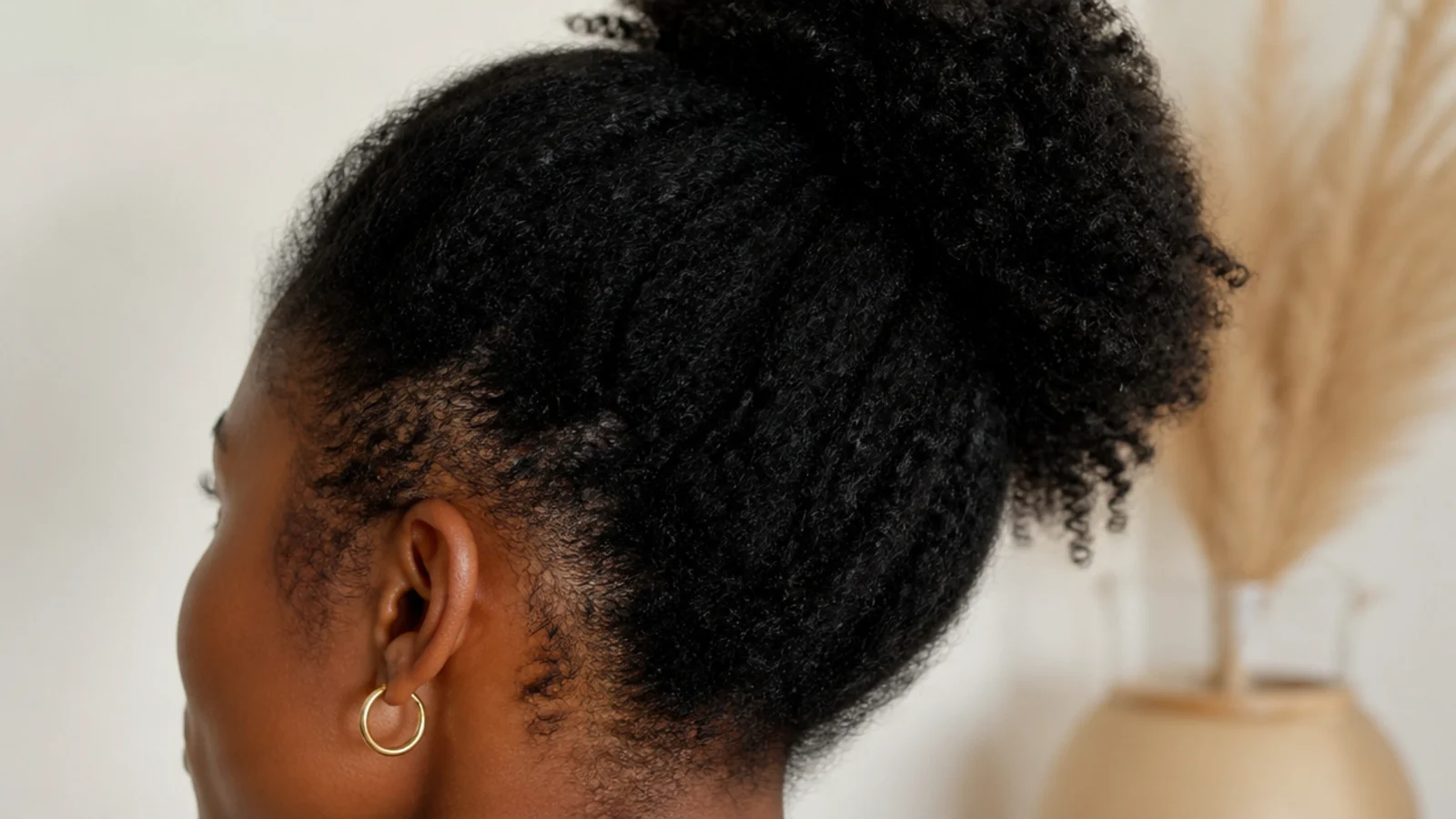
Your edges are the finest, most fragile hairs you have, so they need the least tension of anywhere on your head - and yet they are usually braided the tightest for a sleek finish. Break that habit. Ask your braider to keep the very front rows loose, or leave your edges out of the style entirely and lay them softly rather than gluing them down with heavy gel and hard brushing, both of which stress the hairline further. Skip thin elastics and tight ponytail holders over any style, since a band cinched at the temples undoes the protection the rest of the style provides. At night, a satin bonnet or scarf cuts the friction that frays edges while you sleep. If your hairline is already thinning, give it a full rest in low-manipulation styles like flat twists or a loose threaded puff before your next braided install. Edges recover slowly, so prevention beats repair every time on low-density 4C hair.
Taking Down Protective Styles Without Breakage
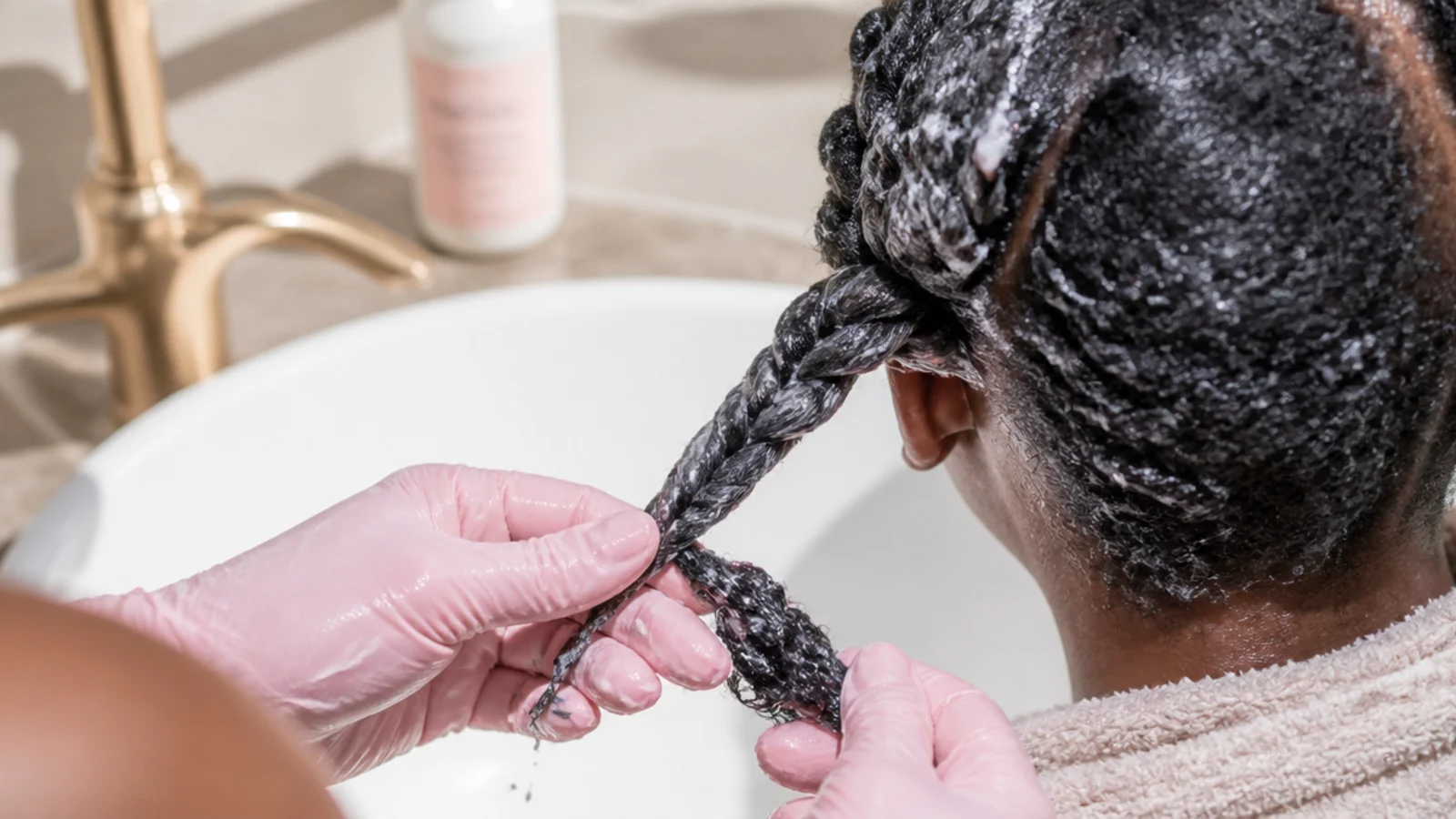
More breakage happens at takedown than at install, because weeks of shed hair are tangled around the braids and dried-on product cements everything together. Rushing this step shreds fragile fine coils. Work in sections and never dry-rip a braid. Saturate each section with a slippery conditioner or a water-and-conditioner mix so the shed hair slides free, unravel slowly from the ends up, and finger detangle before you bring a wide-tooth comb anywhere near it. Expect a pile of shed hair - the average scalp sheds daily, and a six-week style has simply been holding onto weeks of it, so that shedding is normal, not damage, as long as you are not snapping strands. Take your time even if it means splitting takedown over two sessions. Then clarify, deep condition, and give your scalp a few days of low manipulation before the next install. A gentle takedown is the difference between protective styling that grows your hair and styling that quietly costs it.
Caring for Your Scalp While Styled
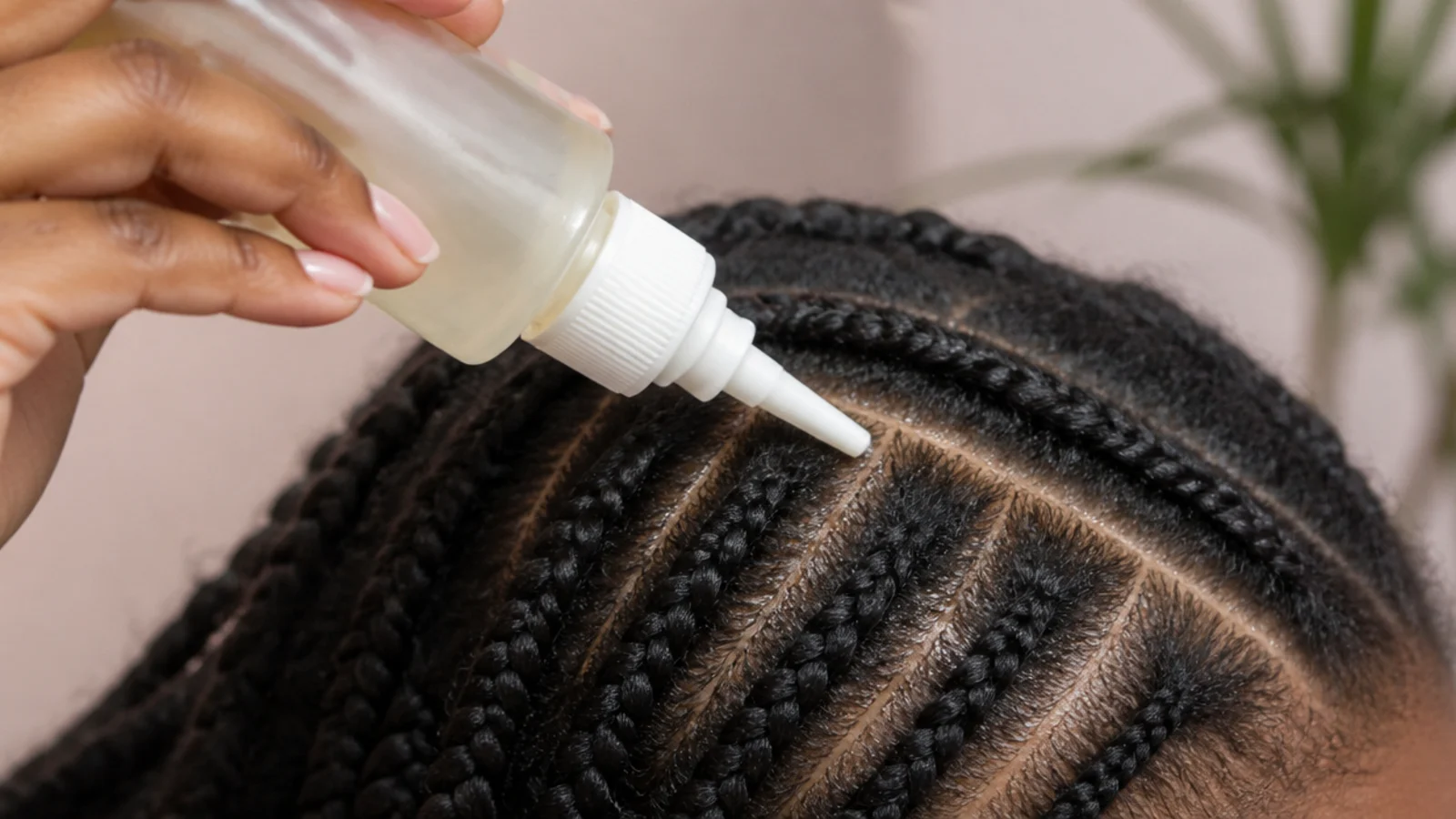
A protective style is only protective if the hair underneath stays healthy for the whole wear, so the scalp cannot be ignored for six weeks. Keep the parts and scalp lightly moisturized with a diluted leave-in or a light oil applied through a nozzle bottle so you can reach the roots without disturbing the style. Cleanse the scalp gently every one to two weeks with a diluted shampoo or a scalp cleanser, then let braids dry fully to avoid mildew and a sour smell. Resist the urge to itch and scratch, which tears the scalp and the fine hairs at the root - pat or use a scalp soother instead. Refresh your edges softly rather than re-slicking them hard each morning. And most important, respect the calendar: four to six weeks is the ceiling for braids and twists on fine 4C hair, because past that the new growth matts at the root and takedown turns into a breakage session. Care for the scalp and end on time, and each style leaves your hair better than it found it.
Main Differences
- Knotless braids feed the extension in gradually, so there is no tight anchor knot pulling the root.
- Traditional box braids put the full weight and grip at the root on day one, which strains fine edges.
- For fine, low-density 4C hair, knotless is the safer long-wear braid almost every time.
- Whichever you choose, keep sections small, length at the shoulder, and never wear past six weeks.
Frequently Asked Questions
How long can I keep box braids in fine 4C hair?
Four to six weeks is the ceiling for fine 4C hair, and knotless braids are safer than traditional box braids at that length. Past six weeks, new growth matts at the root, the weight keeps pulling on low-density edges, and takedown turns into a breakage session. If your scalp feels sore or your edges look strained before then, take the braids down early - longevity is never worth thinning your hairline.
Do knotless braids work for fine hair?
Yes, knotless braids are the best long-wear braid for fine, low-density hair. Because the braider feeds the extension in gradually instead of anchoring a tight knot at the root, there is far less tension at the base and no hard knot digging into the scalp. Keep the sections small to medium, the length at the shoulder to limit weight, and ask for a loose first stitch so the hairline stays protected.
Which protective styles help prevent traction alopecia?
Light, low-tension styles with loose parts prevent the constant pull that causes traction alopecia. On fine 4C hair the safest picks are small two-strand twists, flat twists, small knotless braids and crochet over a loose cornrow base. Avoid jumbo braids, heavy extensions, tight ponytails and edges braided too tight. Keep any style under six weeks and take it down the moment your scalp feels sore or bumps appear along the hairline.
Are protective styles good for low-density coily hair?
They are, as long as you choose for weight and tension rather than fullness. Low-density coily hair has fewer strands sharing the load, so heavy or tight styles concentrate the pull and thin the hair. Lightweight, smaller styles like mini passion twists, small twists and crochet spread the load and let follicles rest. Done right, protective styling reduces daily manipulation and helps low-density coils retain length as they grow.
What natural hairstyle ideas work best for 4C hair that is fine?
The most reliable natural hairstyle ideas for fine 4C hair are the low-tension, low-weight ones: small two-strand twists, flat twists into a low bun, a chunky twist updo, bantu knots and a threaded puff for no-extension weeks, plus small knotless braids, mini passion twists, crochet and feed-in cornrows when you want a longer install. Each hides your ends and cuts daily manipulation without dragging on a low-density hairline.
Why do my edges thin out when I get braids?
Edges thin from tension. The hairs at your temples and nape are the finest you have, and braiding them tight for a sleek finish concentrates constant pull on the weakest follicles, which is how traction alopecia starts. Fix it by keeping the front rows loose or leaving edges out, skipping tight ponytails over the style, avoiding heavy gel and hard brushing, and never wearing a style past six weeks. Rest thinning edges in low-manipulation twists between installs.
How often should I take down and rest protective styles?
Take braids and twists down at four to six weeks, then give your hair a few days to a week of low manipulation before the next install. That rest lets you cleanse, deep condition and let the scalp recover, and it stops the back-to-back tension that thins edges. Fine 4C hair does best alternating longer installs with no-extension weeks in twists or a threaded puff, so the hairline never carries weight continuously.
Can I sleep in these protective styles without damaging fine hair?
Yes, and you should protect them at night to get the full benefit. Cover braids, twists or a puff with a satin or silk bonnet or scarf, which cuts the friction that frays fine edges and dries out coils against cotton. For a puff or updo, loosen it slightly before bed so nothing pulls while you sleep. Keep the scalp lightly moisturized and let braids dry fully after washing to avoid mildew during the wear.
Which low-tension protective style are you booking first?
If you take one rule from this list, let it be weight: on fine, low-density 4C hair, the lightest style with the loosest parts always wins, and no look is worth a receding hairline. Start with small knotless braids or two-strand twists, keep them under six weeks, and take them down slowly with conditioner rather than ripping. Watch your edges and your scalp between installs - tenderness and tiny bumps are the early warning that a style pulled too hard. Save the styles that fit your density, then match your whole routine to your texture with the hairstyle for your hair type guide, or browse more hairstyle ideas for your next low-tension install.