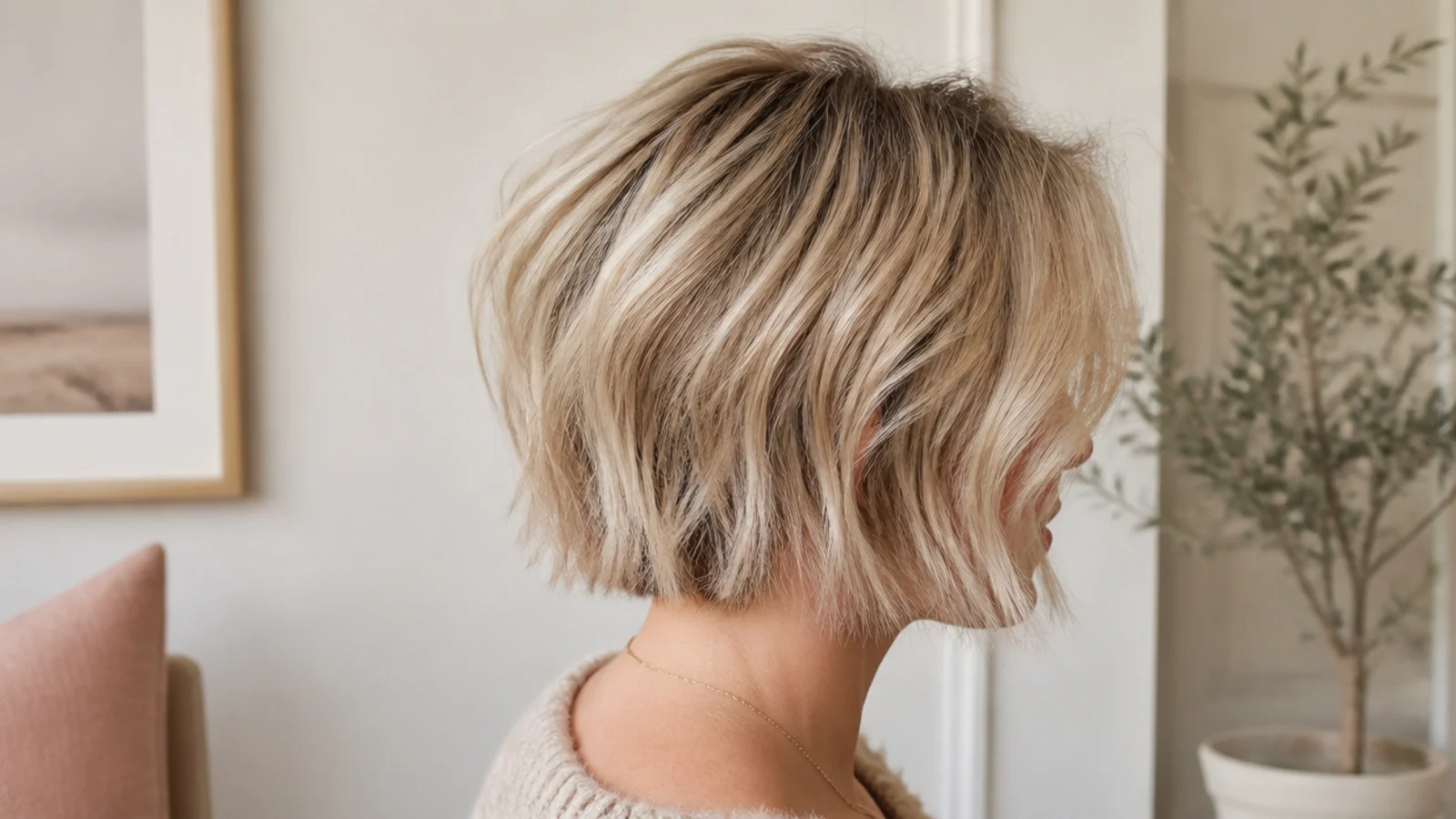
Quick Comparison
| Root-Lift Mousse | Dry Texture Spray | |
|---|---|---|
| What it does | Builds volume from wet, coating roots for stand-up support | Adds grip and grit to dry hair for hold and separation |
| When to apply | On damp hair, before you blow-dry | On dry hair, at the finish or to refresh |
| Where to apply | Roots and crown, never the ends | Underneath the crown and through the mids |
| Best for | Setting all-day volume during a blow-dry | Reviving flat roots and second-day hair fast |
| Weight on fine hair | Light if you use a golf-ball amount | Very light, almost weightless |
| Heat needed | Yes, it works with a blow-dry | No heat required |
| Hold duration | All day when set with the cool shot | A few hours, easy to top up |
| Common mistake | Using too much or dragging it to the ends | Spraying on top instead of underneath the crown |
| Choose this if | You are styling from wet and want lasting lift | You need a quick, no-heat volume refresh |
1. Root-Lifted Blow-Dry on a Pixie
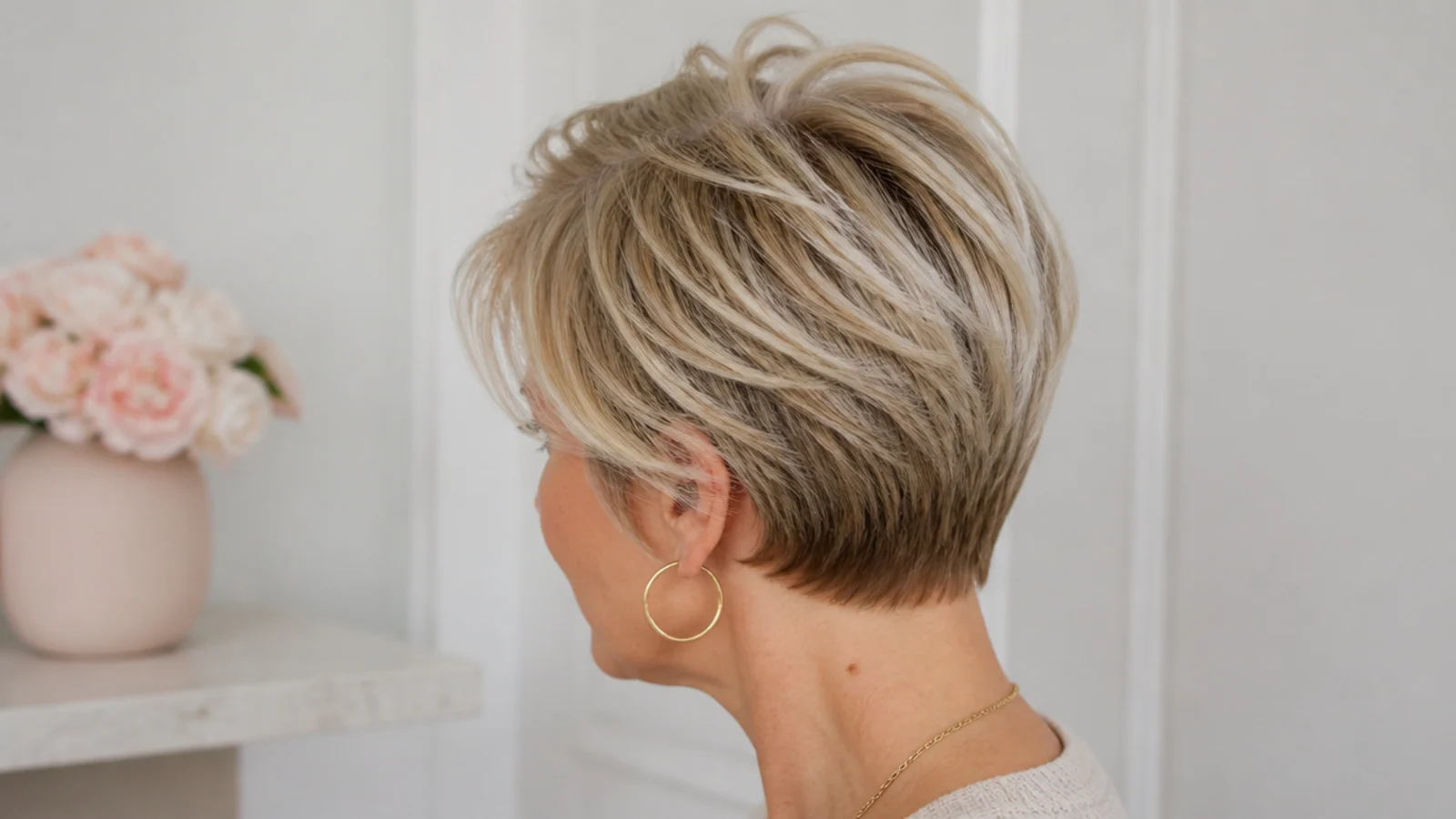
The single most useful everyday look for short fine hair is a proper root-lifted blow-dry on a pixie. Work a golf-ball of lightweight mousse, like L'Oreal EverPure or Bumble and bumble Thickening Mousse, through damp roots, then rough-dry the crown with your fingers pushing the hair up and against its natural fall. Finish the top with a small round brush, lifting each section straight up before you dry it cool. That vertical root is what makes fine hair look full instead of flat, and it lasts all day. Lock in that lift with the root lift steps below, and if you are still choosing a shape, the volumizing cuts in modern bob haircuts suit fine hair beautifully.
Dry the crown first while your arms are fresh, and always finish each lifted section with the cool shot so the volume sets.
2. Textured Tousle With Sea Salt Spray
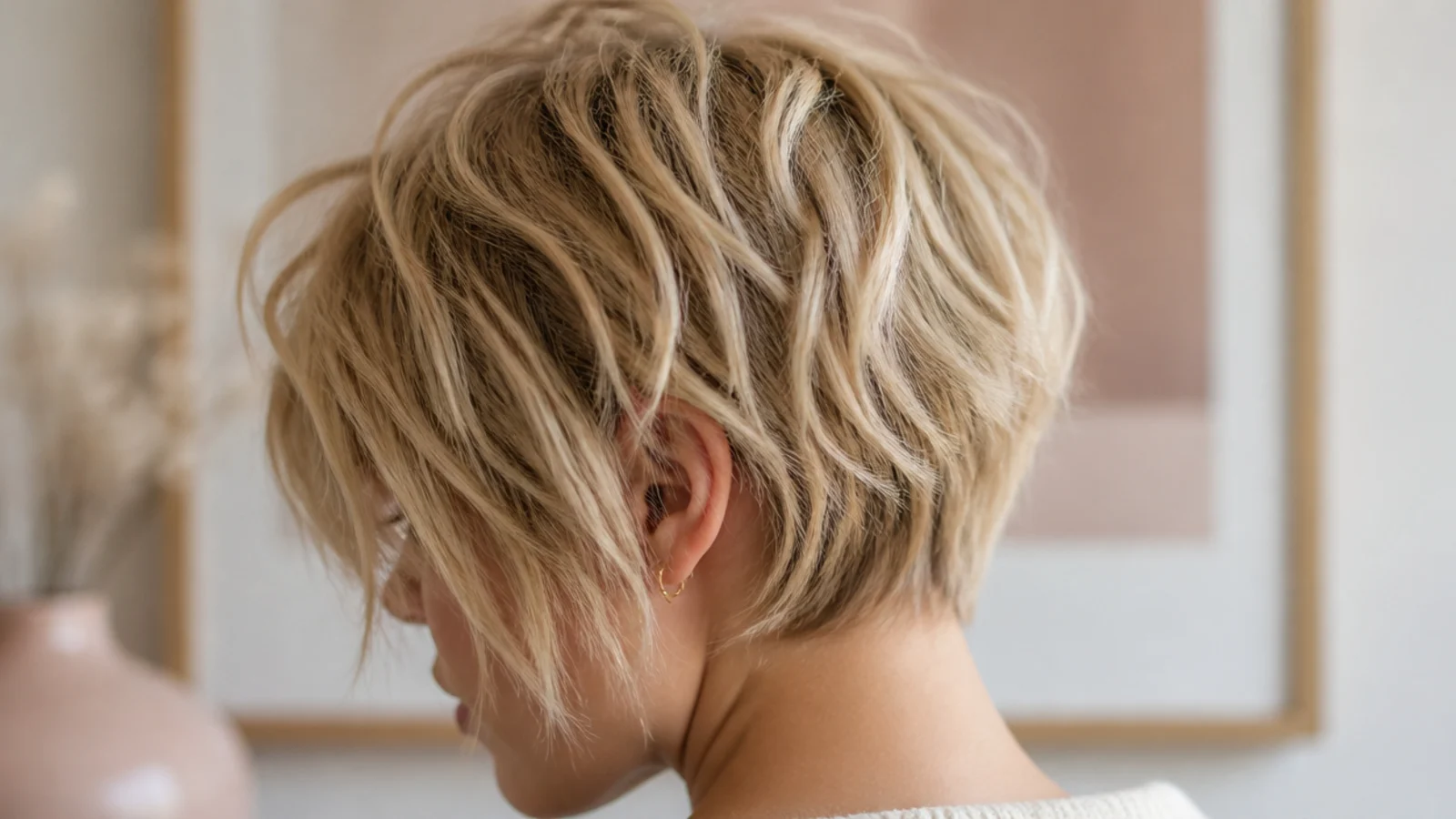
A quick tousle with sea salt spray gives fine hair the grip it is missing. On damp or dry hair, mist a salt spray like Bumble and bumble Surf Spray or OUAI Wave Spray through the mid-lengths, scrunch upward with your hands, and let it air-dry or hit it with a diffuser. The salt swells each strand slightly and roughs up the surface so pieces separate instead of clumping flat. This is the two-minute, no-heat look for a busy morning. It suits a crop, a pixie or a short shag and reads as undone rather than styled.
Keep salt spray off the roots at the scalp, where it can look crunchy; concentrate it from the ears down for movement without stiffness.
3. Deep Side Part With Crown Volume
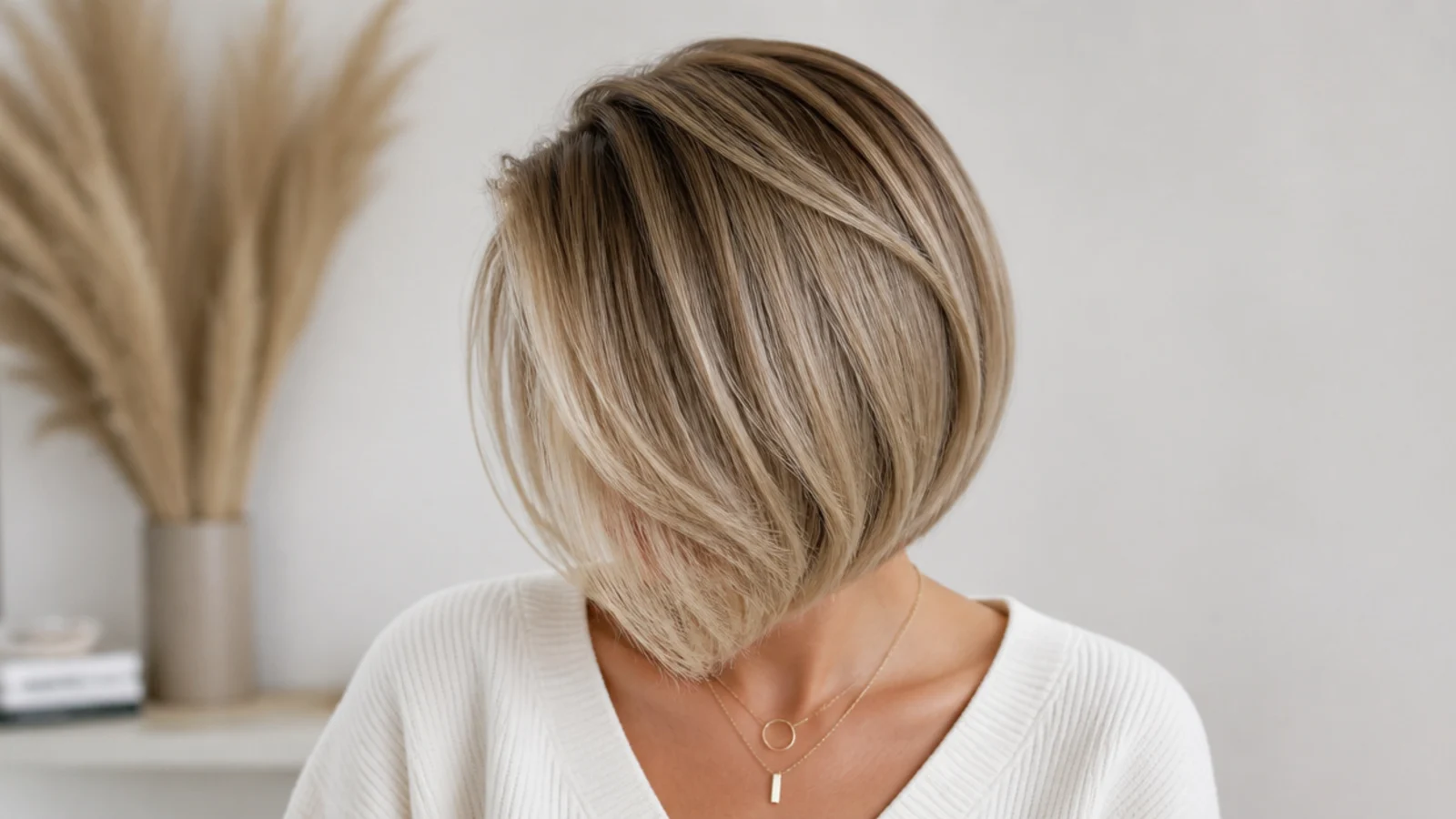
A deep side part is the easiest optical volume trick for short fine hair. Comb a strong part well off-center, then push the heavier side back and up so the hair stacks against the direction it wants to fall. That built-in resistance holds lift at the crown far longer than a center part, which lets fine hair collapse flat on both sides. Set the part with a light mist of hairspray and a pinch of dry texture spray underneath the crown section. It flatters a bob, a lob or a grown-out pixie and takes under a minute once your hair is dry.
Make the part when your hair is slightly damp so it holds; a bone-dry part on fine hair drifts back to center by lunch.
4. Half-Up Claw Clip on a Bob
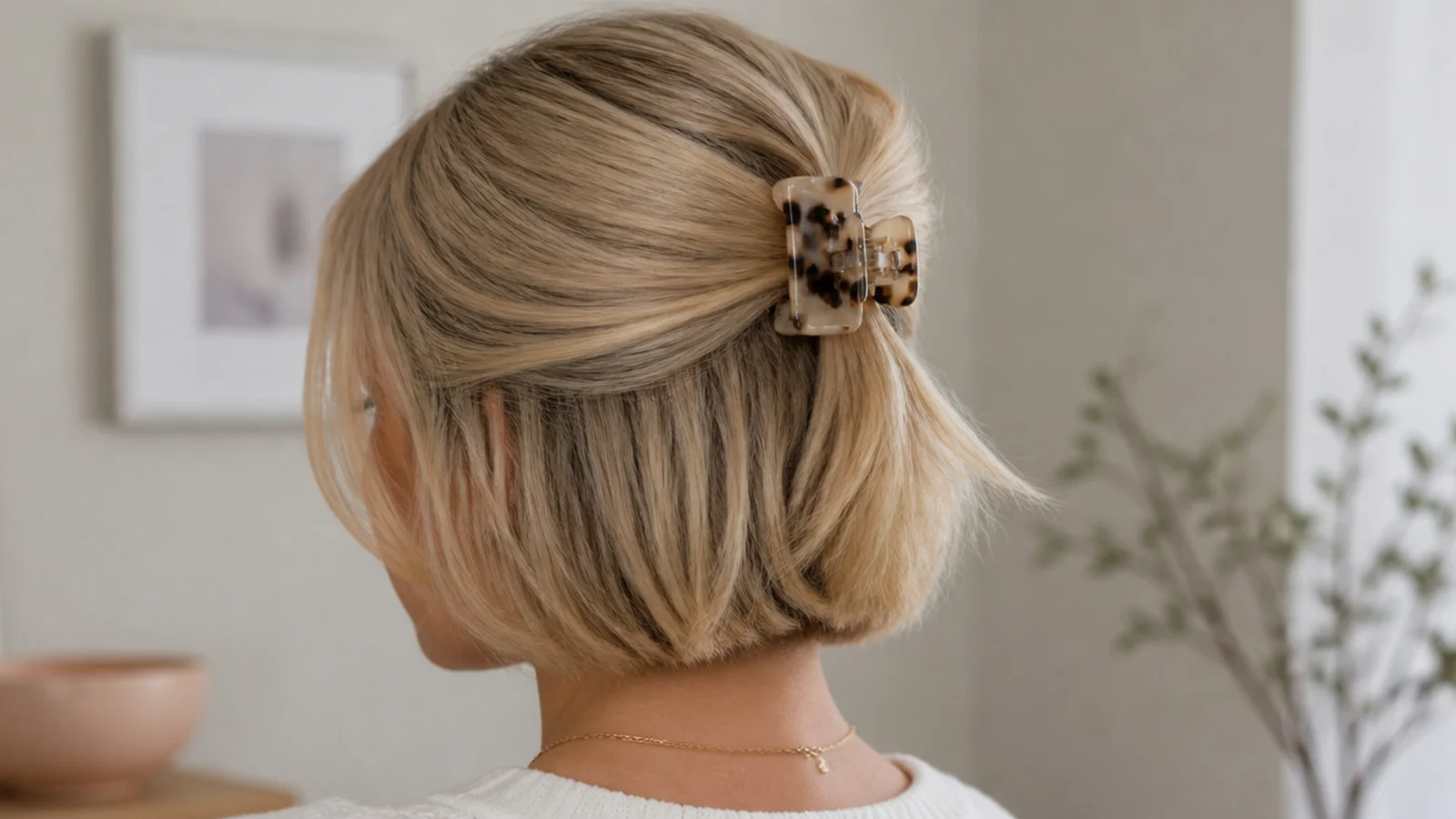
A half-up claw clip works on a bob if you set it up for fine hair, which slips out of clips faster than any other texture. Gather only the top third, backcomb the roots lightly for grip, twist the section once, and clip a small claw against the twist rather than clamping flat hair. The twist gives the clip something to bite. This pulls height into the crown and keeps hair off your face without the whole thing sliding down by noon. For more clip and updo tricks that hold, see cute hairstyles that last all day.
Use a small or medium claw, not a jumbo one; an oversized clip is too heavy for fine hair and drags the twist loose.
5. Slicked-Back Wet Look for Fine Hair
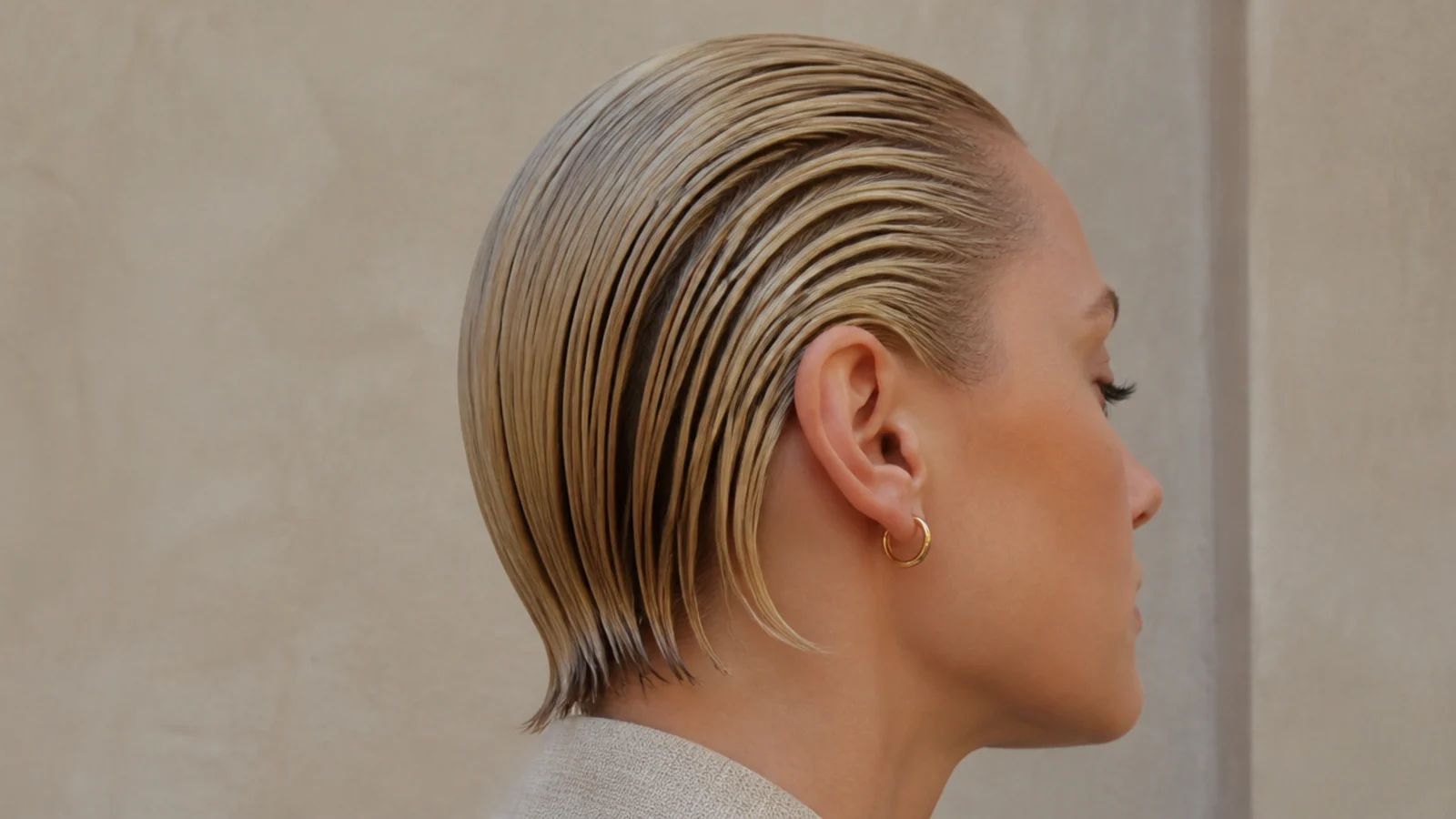
When fine hair will not hold volume, stop fighting it and go the other way with a sleek wet look. Rake a small amount of strong gel, like Got2b Glued or a light styling gel, through damp hair from the hairline straight back, comb it flat, and let it set hard. Fine hair actually excels here because it lies smooth with no bulk or flyaways. This is the polished, five-minute option for work or an event, and it grows more textured as it dries down over the day. It suits a pixie, a crop or a short bob tucked behind the ears. Once your hair grows long enough to gather, the same sleek finish translates to the sleek ponytail styles.
Apply gel to wet, not damp, hair for the glossiest finish; on dry fine hair gel goes patchy and flakes.
6. Tucked-Behind-Ear Bob With Tousled Ends
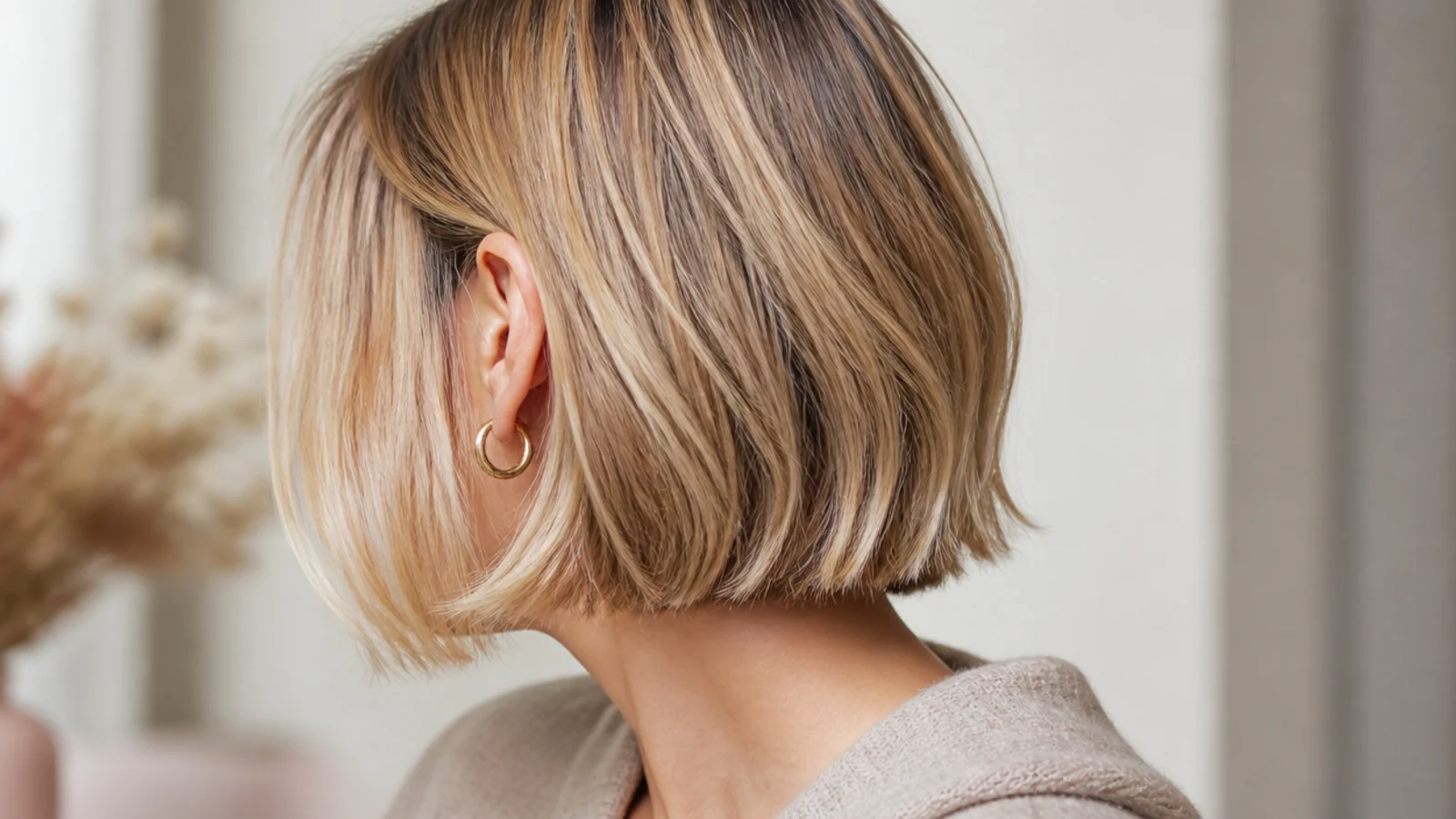
Tucking one side of a bob behind the ear is a fast way to create asymmetry and fake fullness on the loose side. Push the heavier side back behind your ear, let the other side fall forward, and rough up the ends with a little dry texture spray so they flick out instead of hanging in a flat curtain. The uneven weight distribution reads as movement, which fine hair usually lacks. It is a thirty-second reset you can do at your desk. Pairs well with a deep side part for extra crown lift.
Bend the tucked side slightly with a flat iron first so it stays put; poker-straight fine hair slides right back out from behind the ear.
7. Velcro Rollers at the Crown
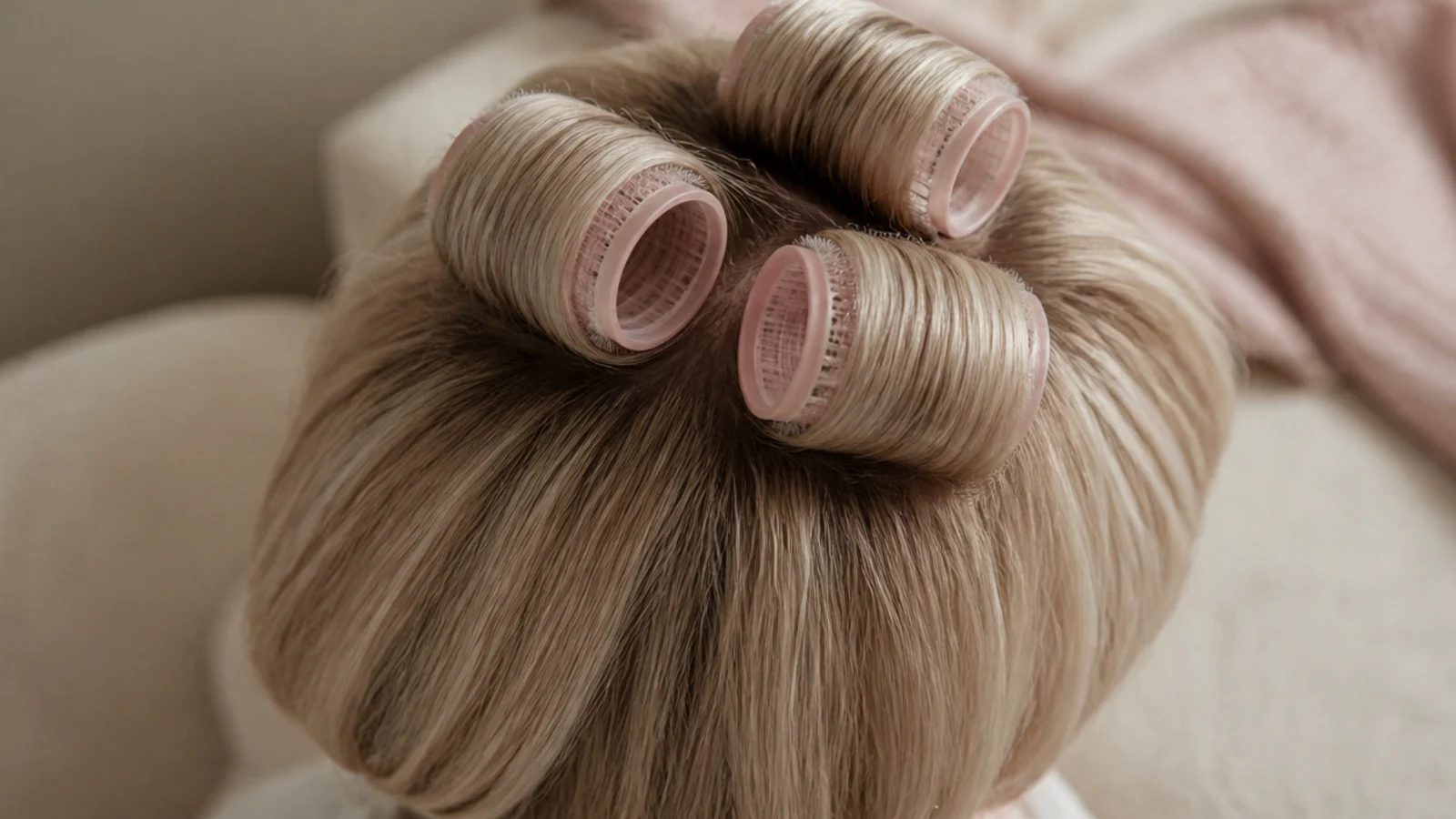
Velcro rollers are the highest-payoff, lowest-effort volume tool for short fine hair. Set two or three medium self-grip rollers into the crown on dry hair, mist with a light hairspray, and leave them for ten minutes while you get ready. The rollers lift the roots straight off the scalp and hold that lift as the section cools. Take them out gently, tip your head down, and shake. It is the closest thing to a salon blow-out you can do at home, and it works on a pixie, a bob or a lob.
Roll the crown sections straight up and back, not down toward your face; rolling the wrong direction cancels the lift you are trying to build.
8. Messy Textured Quiff
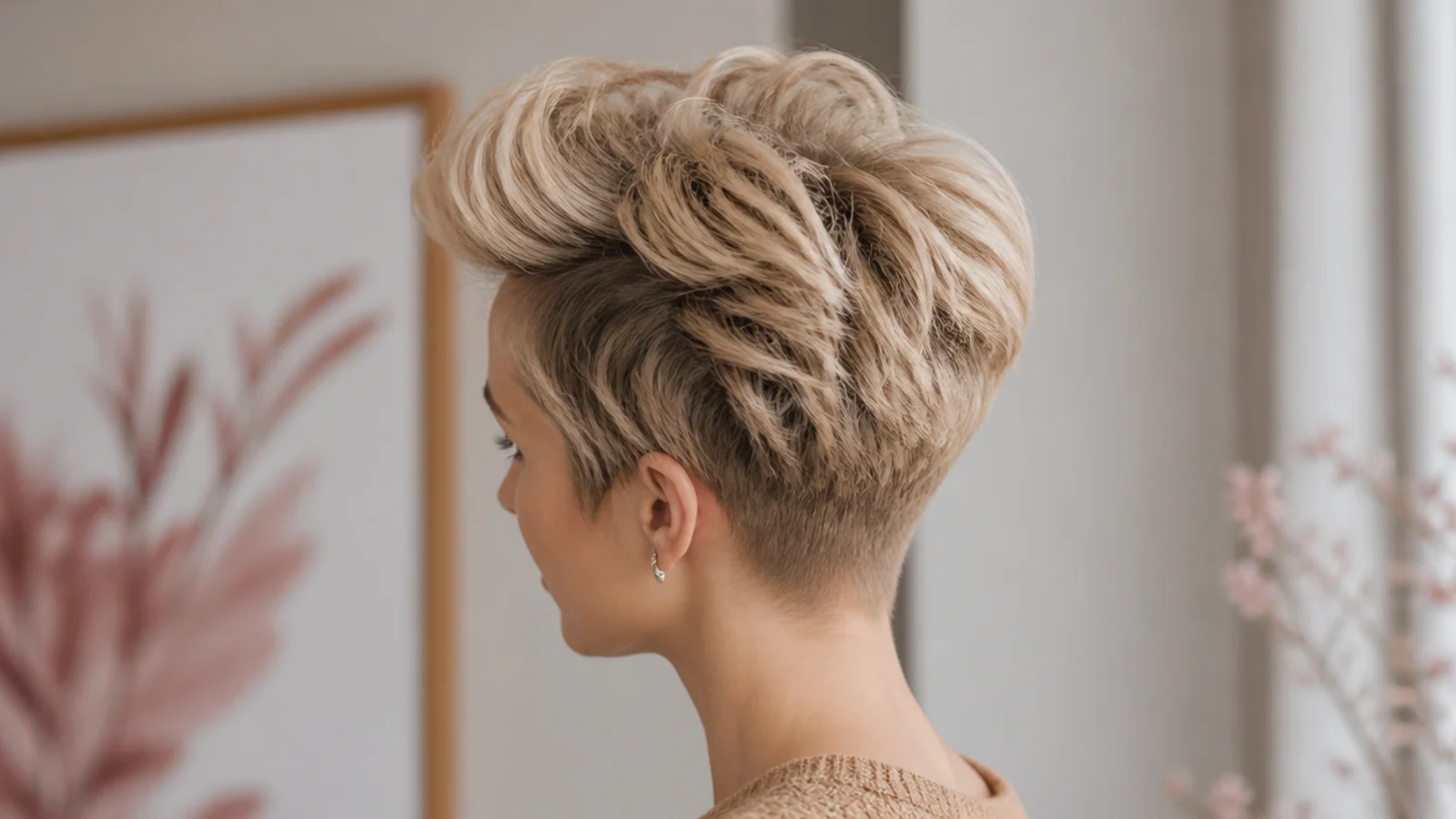
A quiff pushes the front section up and back for real height, which suits fine pixies and short crops that fall flat at the hairline. Work a matte paste or a light clay, like American Crew Fiber or Living Proof Full Thickening Cream, through the top on dry hair, then push the front up and back with your fingers and hold it while it sets. Keep it soft and piecey rather than stiff, so it looks lived-in. This is an edgy, five-minute everyday look with the most vertical volume of any style here, and it holds through the day like the styles in cute hairstyles that last all day.
Use a matte product, not a shine paste; gloss makes fine hair look wet and thin, while matte texture makes it look denser.
9. Two Mini Twist-Backs Off the Face
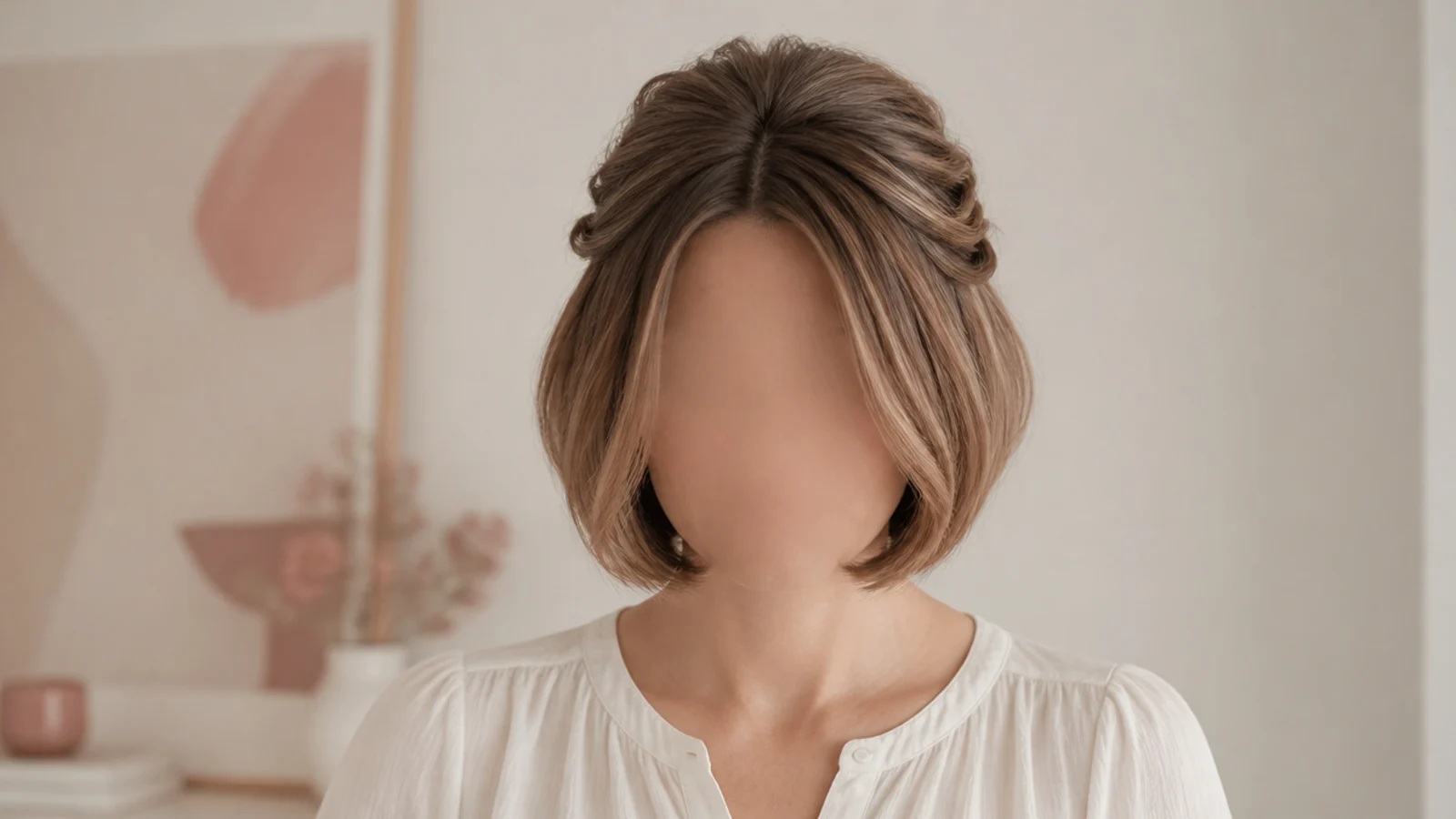
Two small twist-backs pull the front pieces off your face while keeping height at the crown, which a headband or a tight pony would flatten. Take a one-inch section at each temple, twist it back away from your face, and pin it behind your ear with a small bobby pin crossed into an X so it grips fine hair. Leave the crown loose and lifted. It is a pretty, practical look for a short bob or grown-out pixie and takes two minutes. For the braid version of this, see easy braided hairstyles for everyday.
Backcomb the base of each twist before pinning; smooth fine hair has nothing for a bobby pin to hold without a little roughed-up grip.
10. Voluminous Side-Swept Fringe
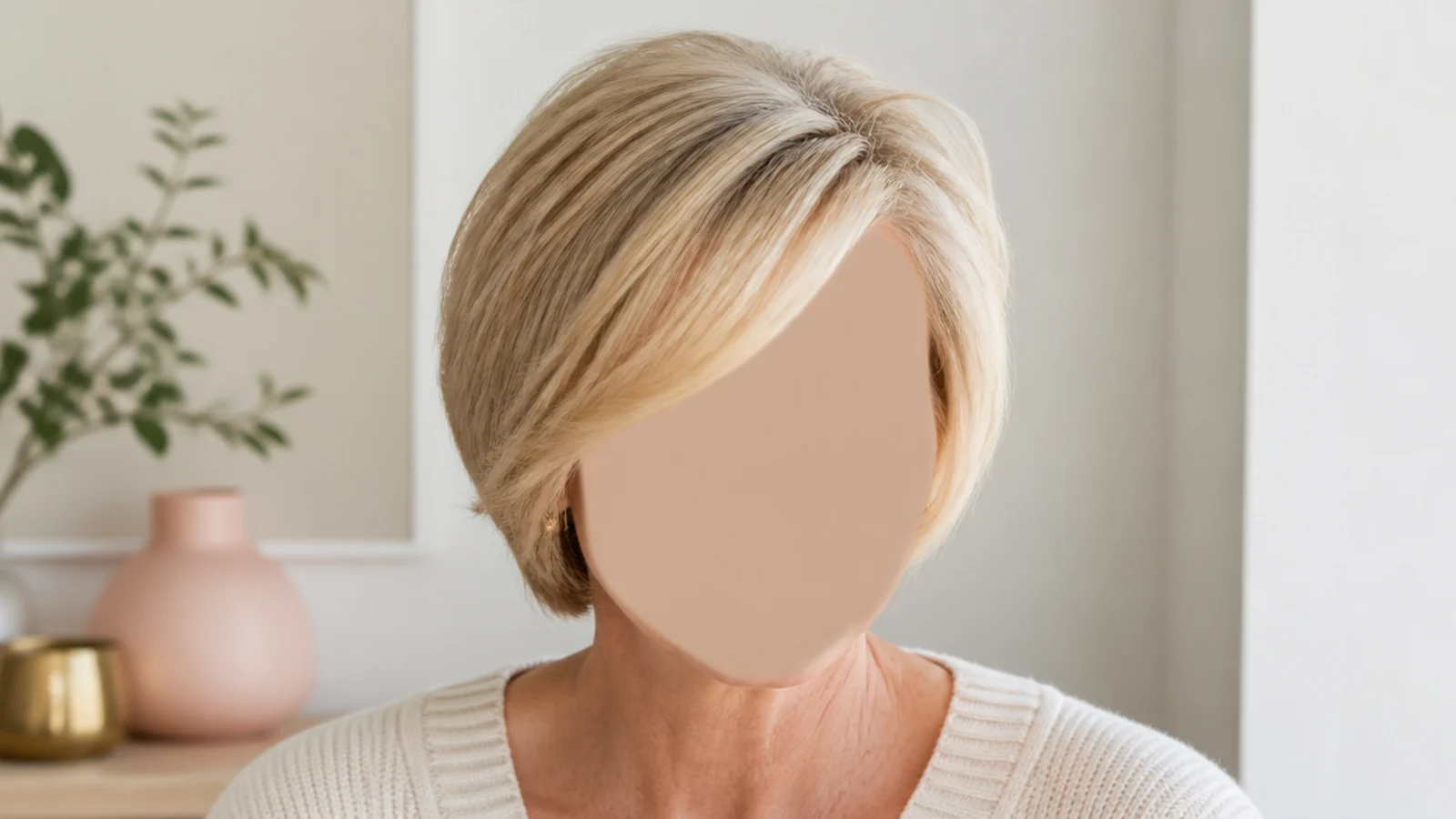
A side-swept fringe adds softness and disguises a high forehead, and on fine hair the trick is volume at the fringe root so it does not lie flat against your skin. Blow-dry the fringe with a round brush, lifting it up and to the side before you sweep it across, then set with a whisper of hairspray on the brush. A wispy, textured fringe suits fine hair far better than a heavy blunt one, which shows every gap. It flatters a pixie, a bob or a lob and refreshes easily with dry shampoo.
Cut or ask for a wispy, point-cut fringe rather than a blunt one; blunt fringes lie flat and reveal how fine the hair is.
11. Tousled Bob With a Curling Wand
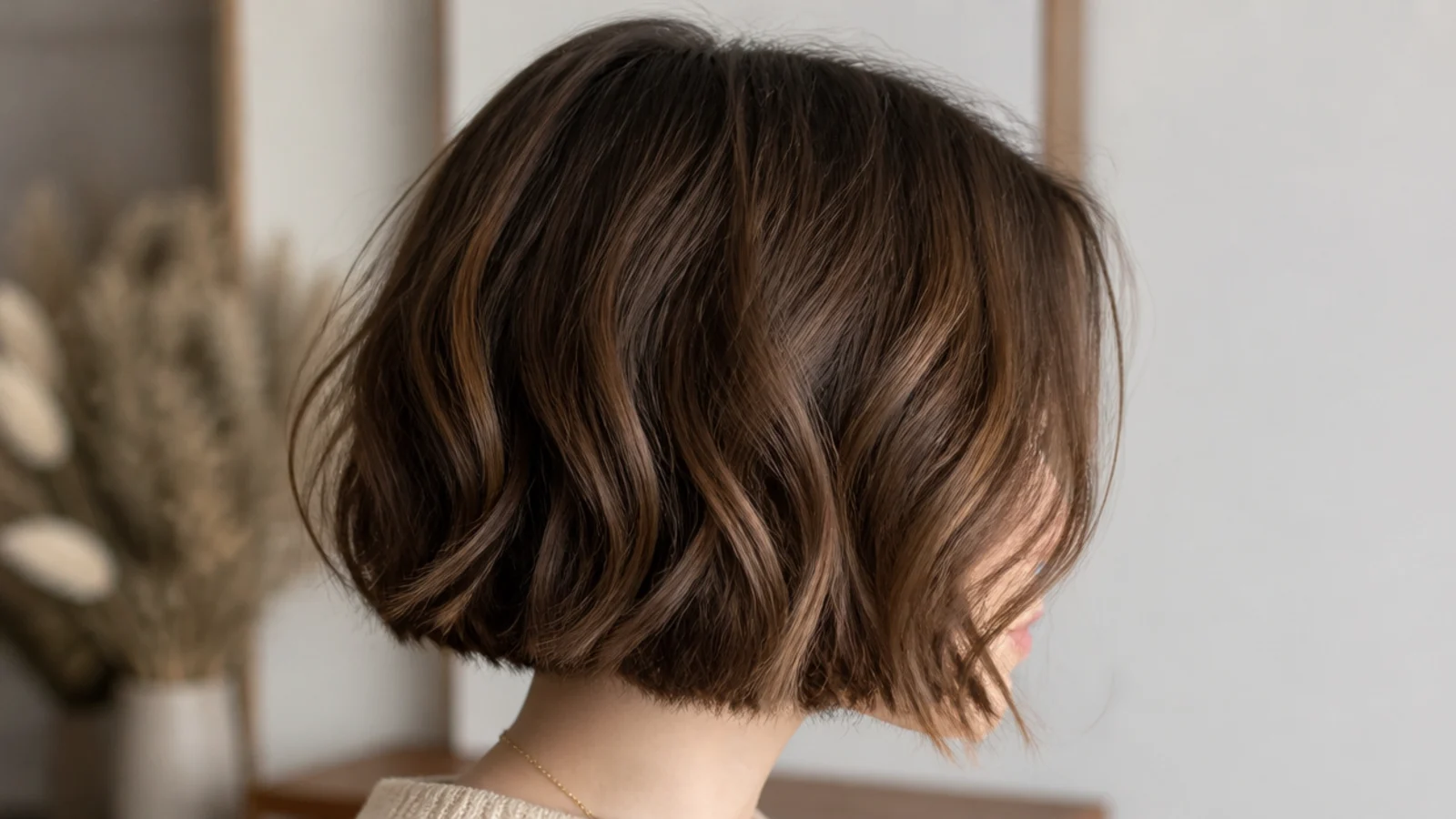
Soft bends from a curling wand give a fine bob the body it will not hold on its own. Use a small barrel, around one inch, on dry hair prepped with a heat protectant and a little dry texture spray for grip. Wrap alternating sections in different directions, leave the ends out for an undone finish, and let each curl cool in your palm before you release it. Cooling is what sets the bend in fine hair. Once cool, break the curls up with your fingers for lived-in waves. It reads full and soft, not tight or done.
Always let each curl cool clipped or cupped in your hand before you touch it; a warm fine-hair curl drops straight within the hour.
12. Low Tucked Chignon for a Grown-Out Bob
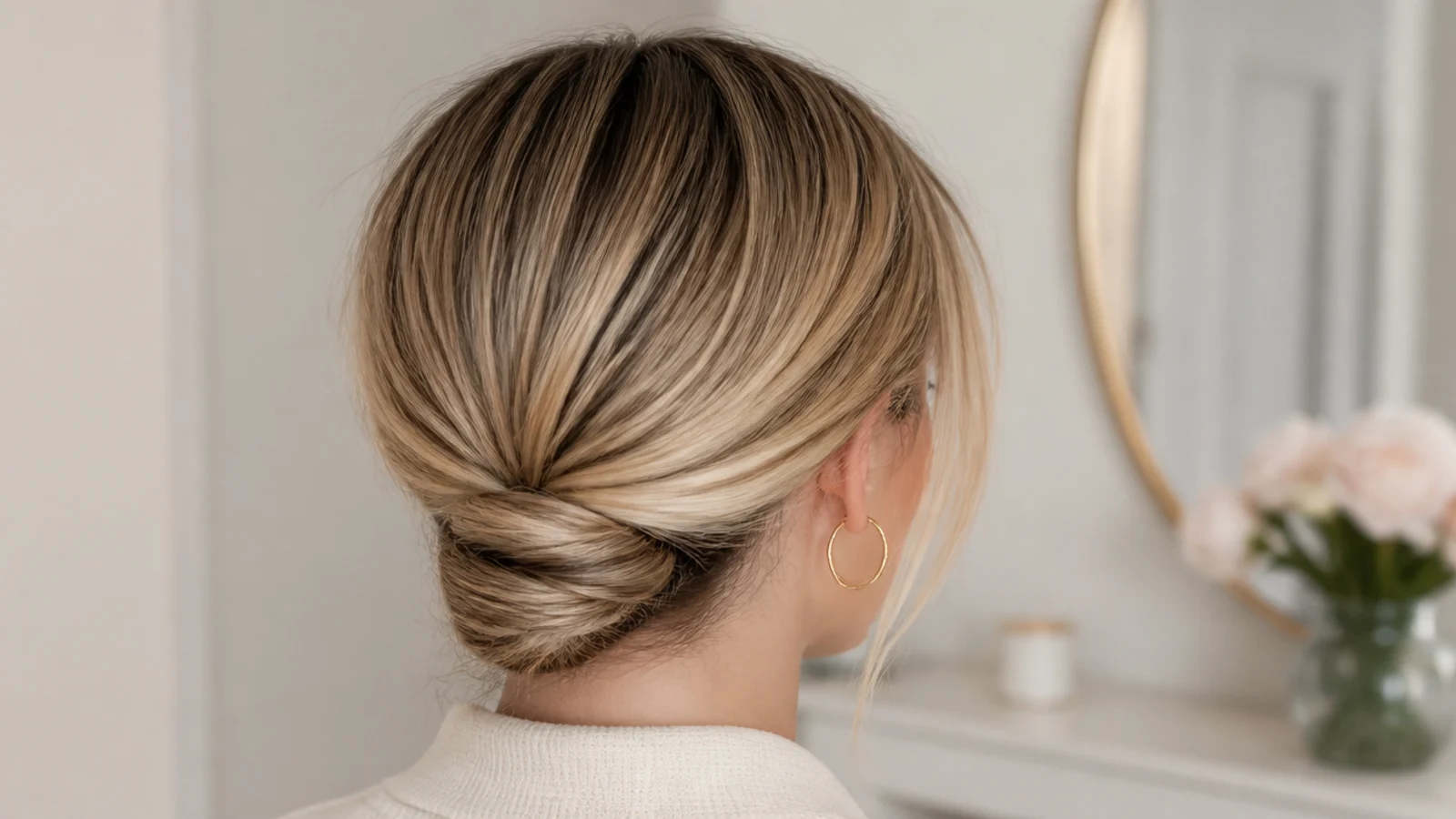
Once a bob grows past the chin, a low tucked chignon turns short fine hair into a neat updo without needing length or thickness. Gather the hair low at the nape, twist it up, and tuck the ends under, pinning into the twist itself rather than the scalp. Leave a few face-framing pieces out and keep volume at the crown so it does not read severe. This is the polished option for work or an event when your hair is between lengths. For more up-styles that survive a full day, see long hair updos that last.
Spray each bobby pin with hairspray before it goes in; a dry pin slides straight out of fine, slippery strands.
13. Headband Push-Back With Root Volume
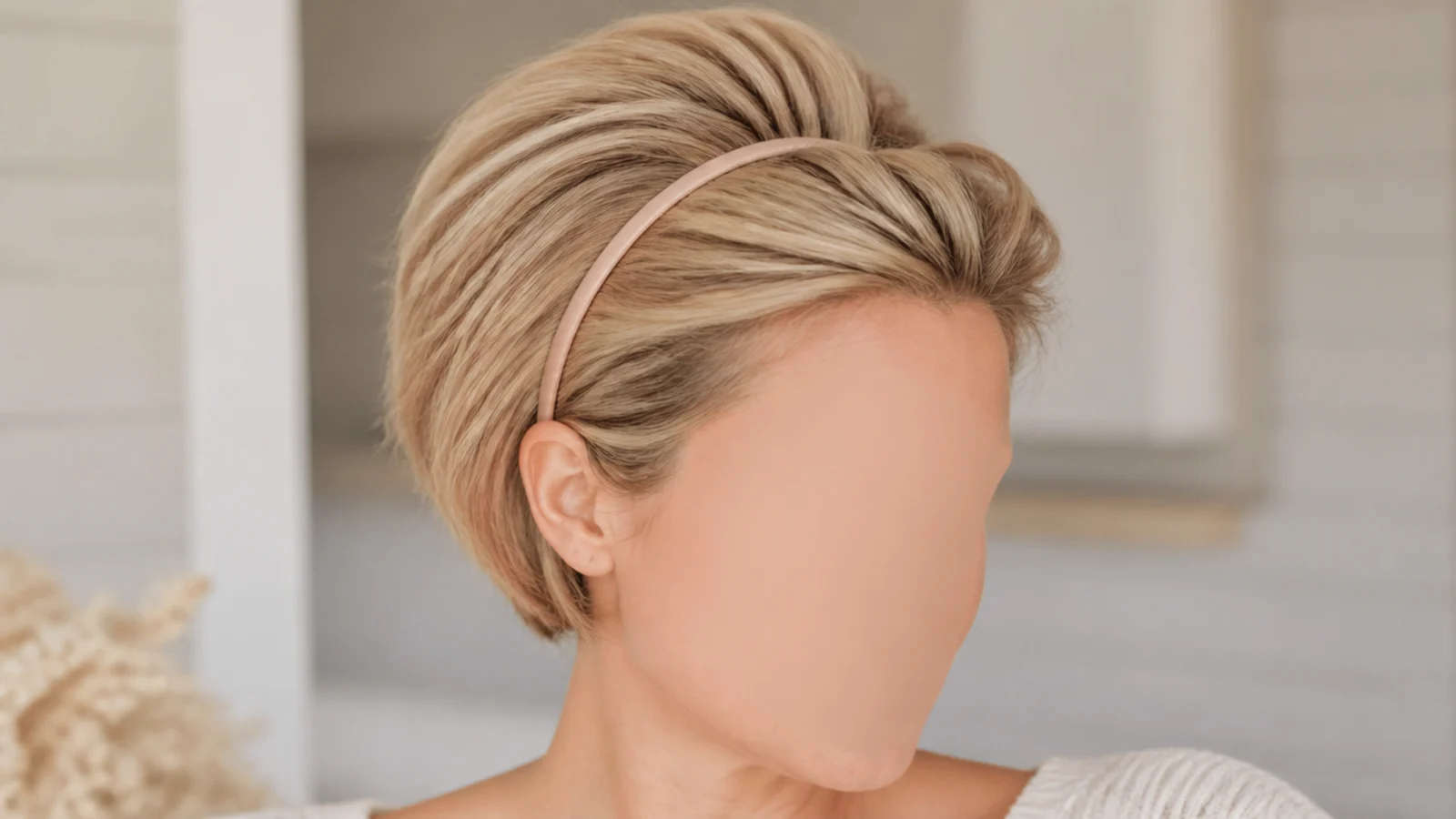
A thin headband gets fine hair off your face, but the mistake is letting it flatten the crown. Instead, place the band, then use the tail of a comb to gently pull the crown section forward and up so it puffs behind the band. That little bump of volume keeps the look from reading slick and thin. Choose a thin, non-slip band with a grippy underside, since satin bands slide right off fine hair. It is a thirty-second fix on a bad-hair day and works on any short length; browse more short-hair options in the full hairstyle ideas hub.
Push the crown forward before you settle the band into place, then set it so the band traps the volume rather than crushing it.
14. Piecey Air-Dried Crop With Cream
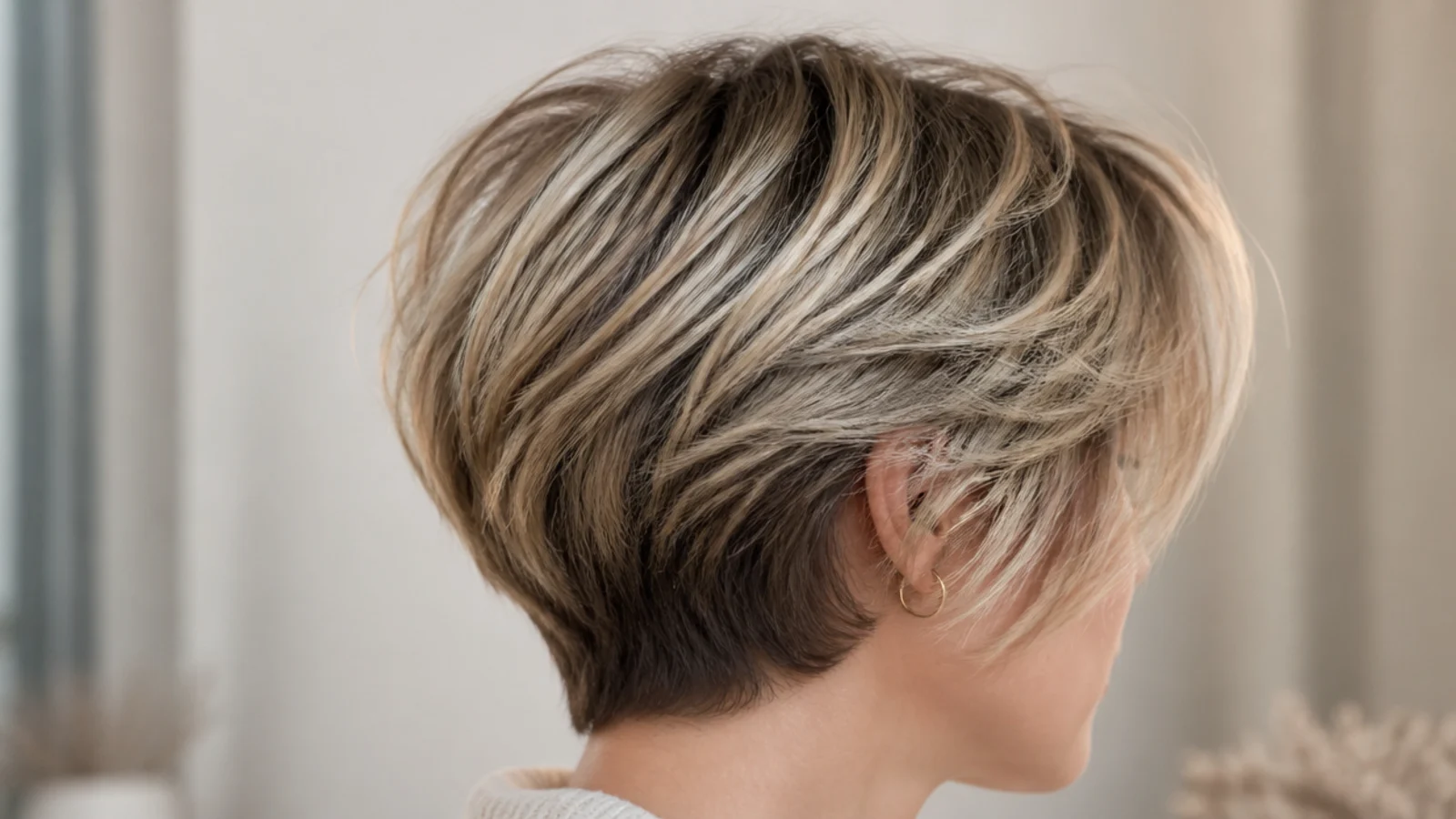
A piecey air-dried crop is the low-effort, no-heat look for fine hair that has a bit of natural wave. Work a pea-sized amount of a lightweight styling cream, like Living Proof or a light air-dry cream, through damp mids and ends, then scrunch and pinch small sections so they dry separated instead of flat. Keep the product off the roots so the crown stays light and lifted. As it dries it forms defined, undone pieces. This is a wash-and-go option for a pixie or crop that needs texture, not volume tools. For soft-wave versions of this on slightly longer fine hair, see the effortless beach-wave hairstyles.
Use half the cream you think you need; fine hair goes greasy and stringy fast, and you can always add a touch more once it is dry.
15. Second-Day Dry Shampoo Refresh
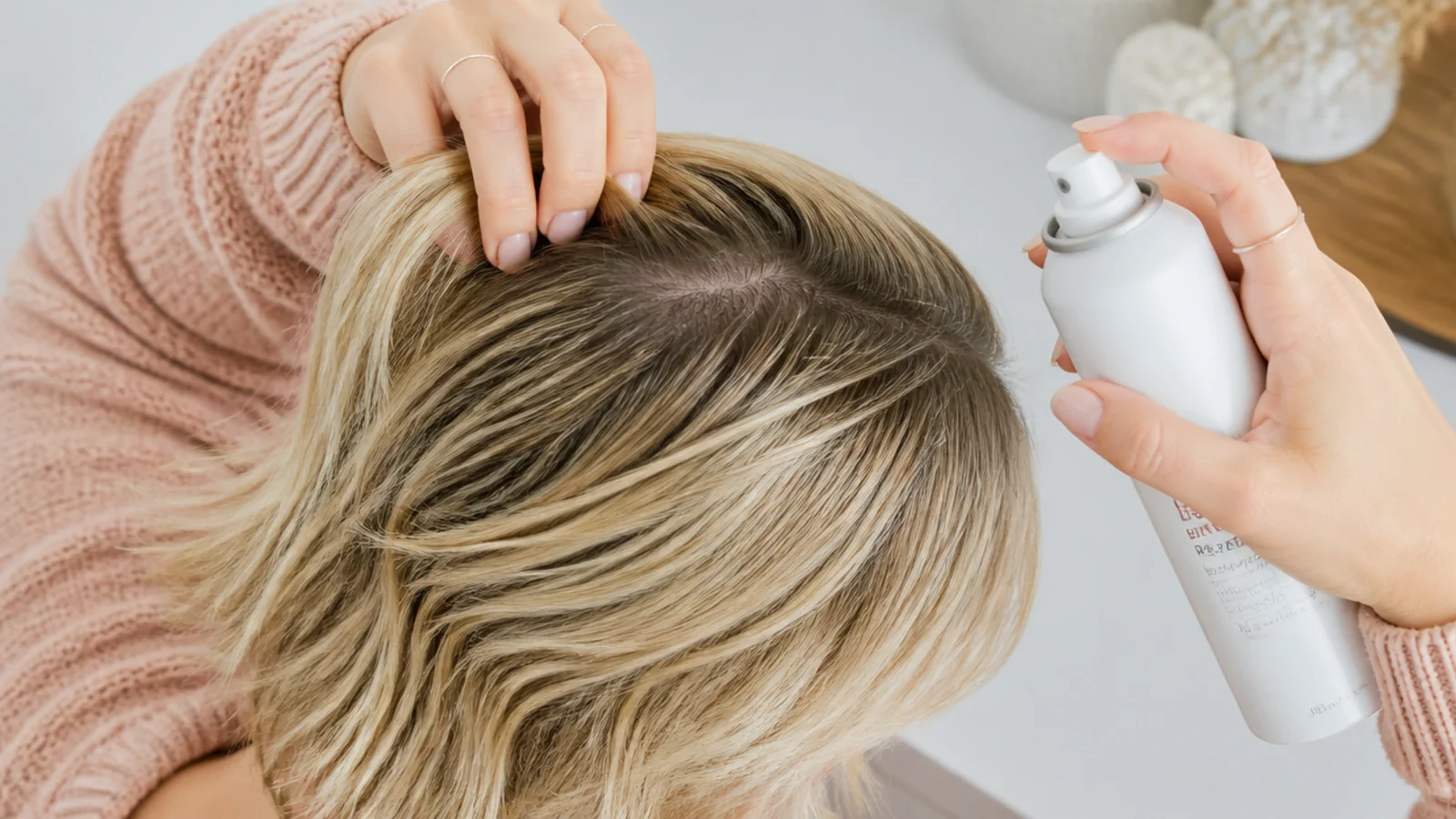
Second-day hair is the secret to volume on fine hair, because a little natural grip holds texture that squeaky-clean hair slides right out of. Mist a dry shampoo, like Batiste or Living Proof Perfect Hair Day, at the roots, wait a minute, then massage the crown and tip your head to shake it out. It absorbs oil, adds grit, and lifts the roots in one step. Style from there with your fingers or a quick tousle. This is the everyday morning refresh that keeps fine hair from needing a daily wash, which only makes it flatter. It is also the fastest no-fuss option on a rushed morning, like the quick styles in easy hairstyles for school.
Spray dry shampoo the night before and sleep on it; it absorbs oil overnight and gives you even more root lift by morning.
Fine Hair vs Thin Hair: The Difference That Changes Everything
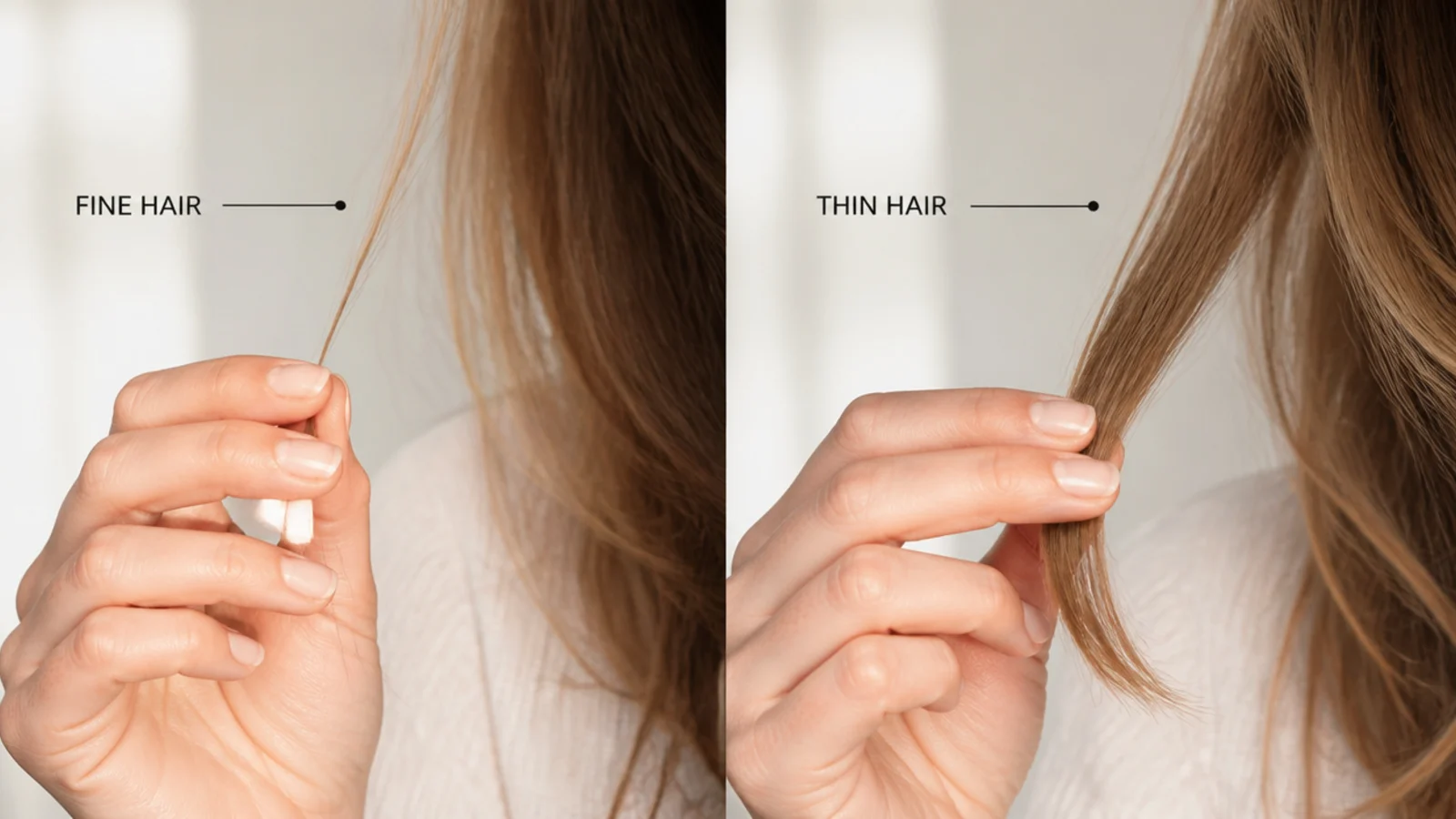
The fine hair vs thin hair difference is the one thing that fixes your whole routine, and almost no styling list explains it. Fine describes the width of each individual strand: fine hair is small in diameter, soft and silky, and it can go flat no matter how much of it you have. Thin describes density: how many hairs grow per square inch of scalp, so thin hair means fewer strands and more visible scalp. You can be fine and dense, thin and coarse, or both fine and thin at once. It matters because the fixes are different. Fine hair needs lightweight products and root lift so the delicate strands are not weighed down. Thin hair needs coverage tricks, strategic parting and sometimes color depth to hide scalp. If you have short fine hair, your enemy is weight and flatness, not sparseness, so every product and technique here is chosen to add body without drag. Confirm exactly what you are working with using the hairstyle for your hair type guide, which walks you through strand width and density separately. If your fine hair is also coily and low-density, the tension rules in protective styles for fine 4C hair apply to you too.
The Root Lift Technique for Short Hair
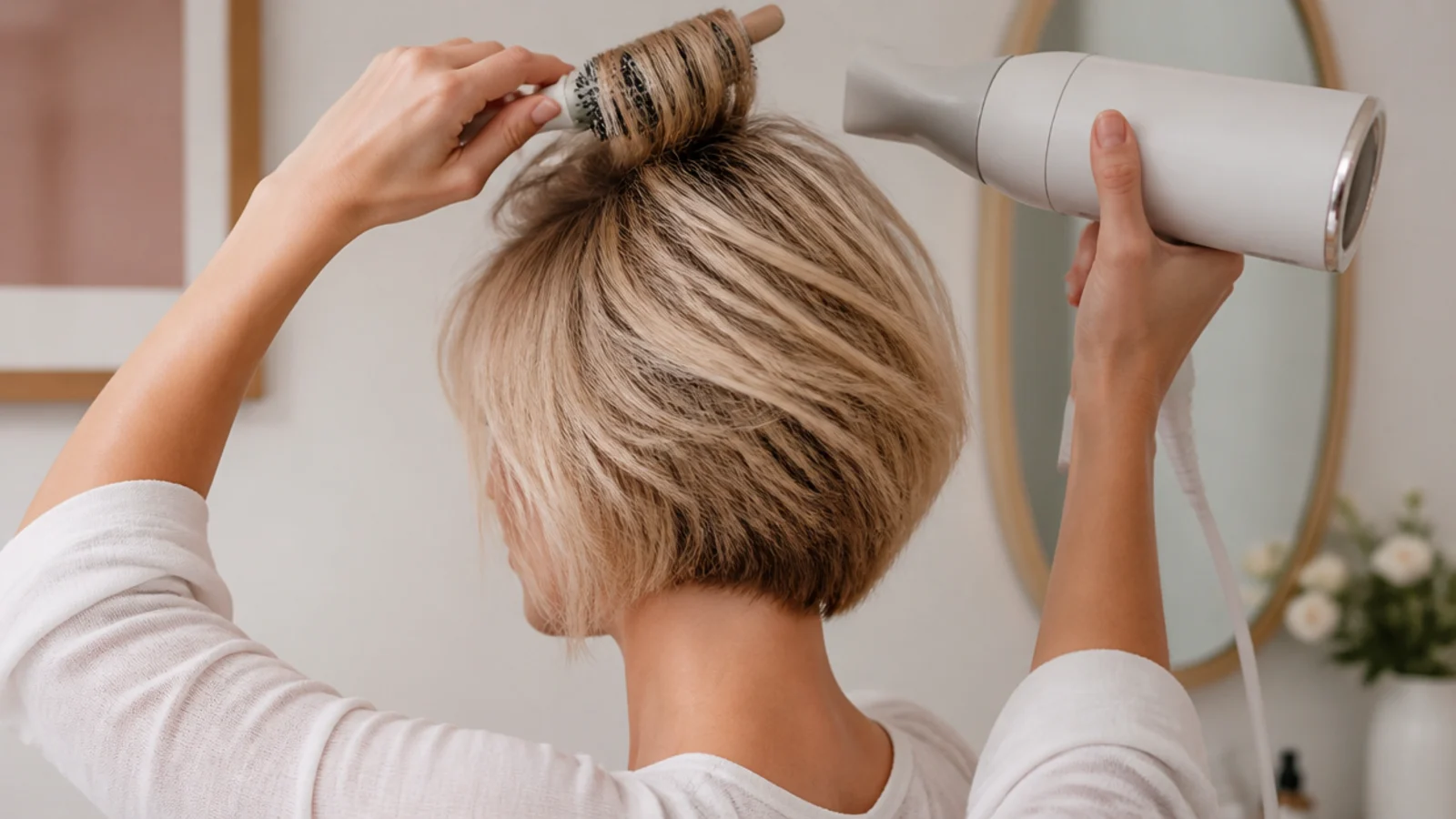
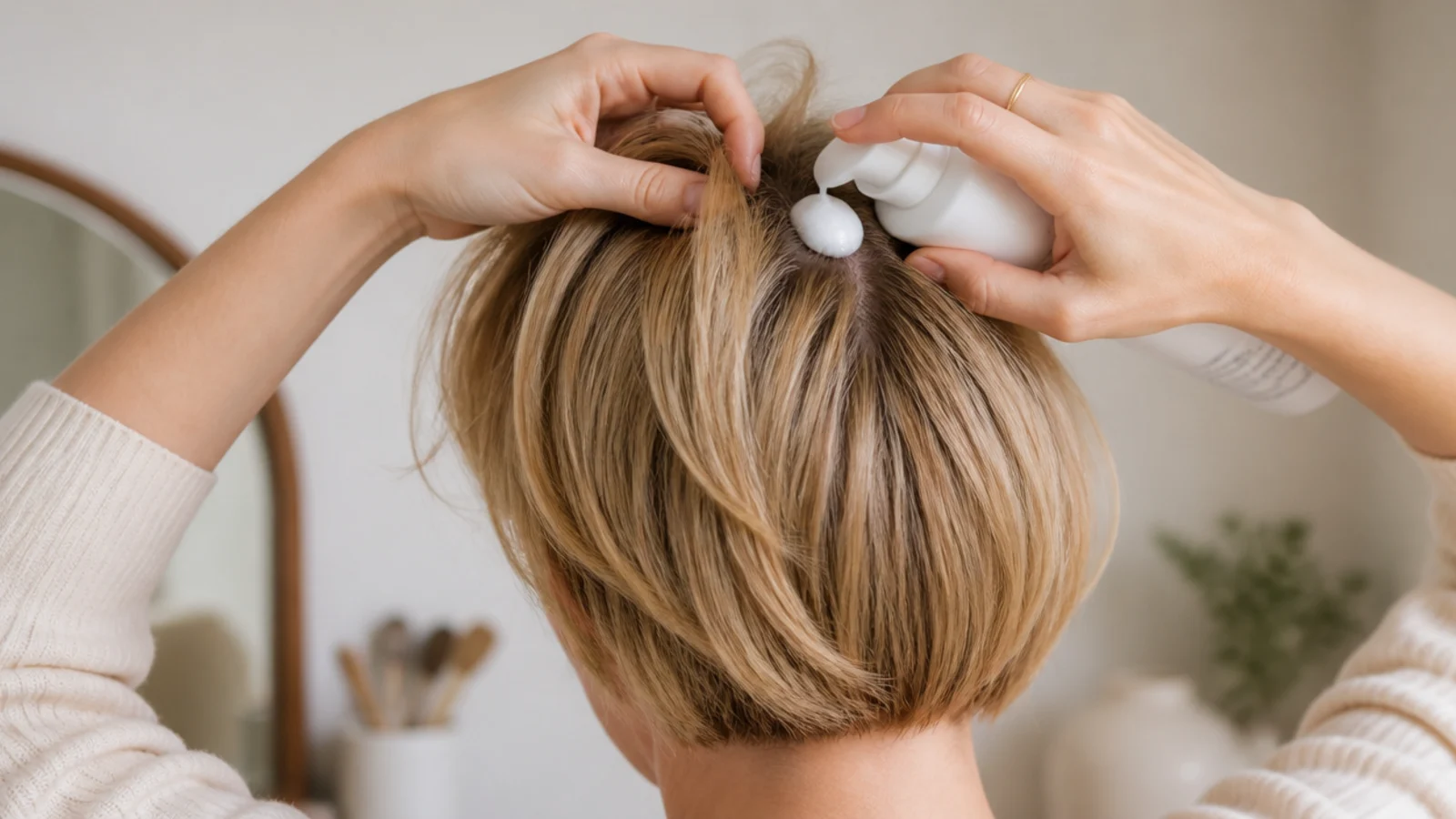
Root lift is the whole ballgame for short fine hair, because volume at the crown makes fine hair read full while flat roots make even thick hair look limp. The root lift technique for short hair starts in the shower: rinse conditioner only from the mids and ends, keeping it off the roots so the crown stays light. On damp hair, work a lightweight mousse into the roots at the crown, then flip your head upside down and rough-dry with your fingers, pushing the roots against the direction they naturally fall. Once mostly dry, flip back up and use a small round brush to lift each crown section straight up off the scalp, aiming the dryer at the root, then hit it with the cool shot to set. The cold air locks the lifted shape while the hair is still in position. Finish with a light mist of dry texture spray underneath the crown, never a heavy hairspray on top, which crushes the lift you just built. Done right, this holds all day.
Volume Styling for Fine Hair Without Damage
Volume styling for fine hair is a balance: fine strands snap and heat-damage more easily than coarse ones, so you want the fullest look with the least stress. Keep heat moderate, always use a heat protectant, and lean on no-heat tools like velcro rollers, which build lift while you do your makeup with zero thermal damage. Backcombing works but do it gently at the base only, and never rake a comb back down through teased hair, which shreds fine strands. Blow-drying cool once the hair is nearly dry sets volume without cooking the cuticle. At night, a silk or satin pillowcase cuts the friction that frays fine hair and flattens your style, and a loose pineapple on top keeps crown lift overnight. Wash less often, since daily shampooing strips the natural oils that give fine hair a little grip and body. The goal is body that lasts, built with light products and low heat, not a stiff style you have to blast into place every morning and repair later.
Products That Actually Hold on Fine Hair
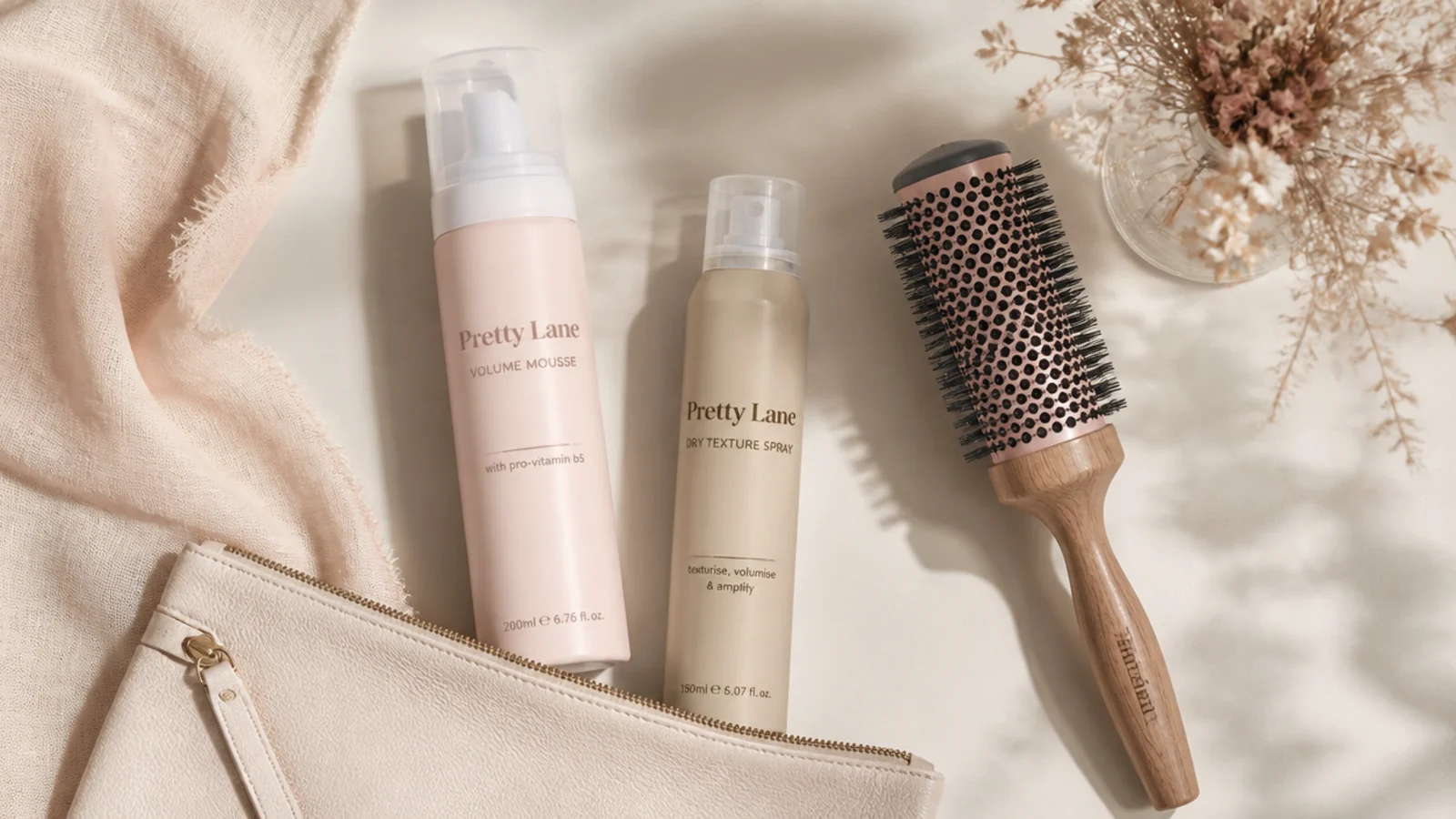
Fine hair is picky about product: too heavy and it goes flat and greasy, too little and nothing holds. The rule is lightweight and root-focused. Reach for a volumizing mousse, a root-lift spray, a dry texture spray and a dry shampoo, and apply everything at the roots and mids, never the ends, which do not need weight. A tiny amount of matte paste or clay adds piecey grip to a pixie without shine. What to skip: heavy leave-in creams, rich oils, silicone smoothing serums and most leave-in conditioners applied near the scalp, all of which coat fine strands and drag them down within an hour. Use a clarifying shampoo once a week to strip product buildup, because residue is a top hidden cause of limp fine hair. When you do use a serum or oil, keep it to a rice-grain amount on the very ends only. Second-day hair holds texture best, so a good dry shampoo is worth more than any styling cream in a fine-hair routine.
Hairstyles to Avoid With Fine Hair
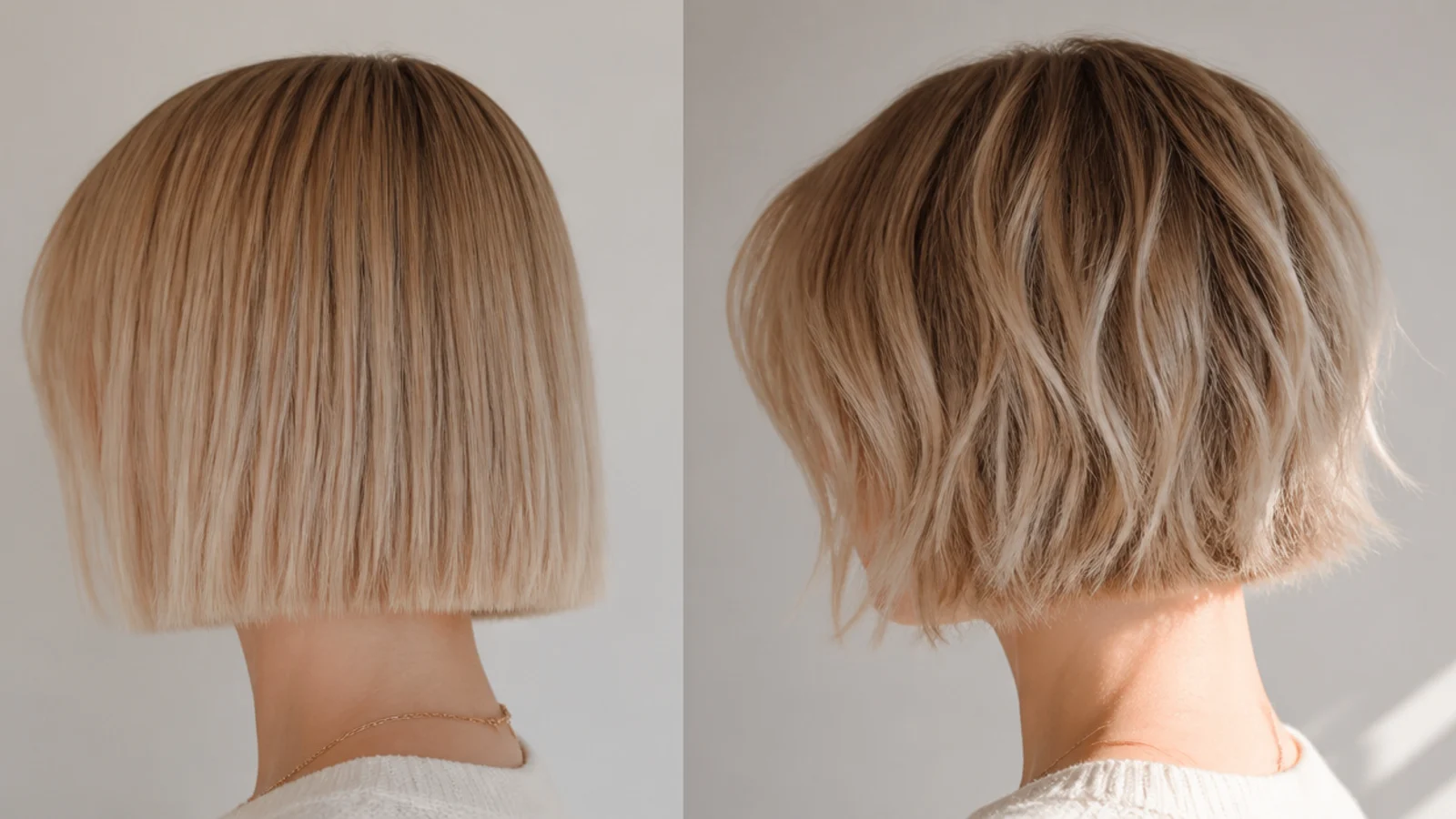
Some styles work against fine hair, and knowing the hairstyles to avoid with fine hair saves you from looking flatter than you are. Skip long, one-length cuts past the shoulders, where the weight drags the roots flat and the ends look wispy and thin. Avoid heavy blunt fringes, which lie flat and reveal exactly how fine the hair is; a wispy, textured fringe is far kinder. Be careful with over-layering: a few strategic layers add movement, but heavily razored or feathered short cuts can leave fine ends looking stringy and sparse. Steer clear of very tight slick-back ponytails worn daily, which stress the fine hairline over time, and of heavy extensions, which pull on delicate roots. Center parts flatten crown volume on both sides, so a deep side part almost always looks fuller. And go easy on shine: glossy, wet-looking finishes make fine hair look thinner, while matte texture reads as more density. Choose blunt-ish, chin-length or textured short shapes that hold body instead, like the ones in modern bob haircuts. Color helps too: a dimensional soft balayage adds the illusion of depth and thickness that flat, all-over color cannot.
Second-Day Styling: Making Fine Hair Last
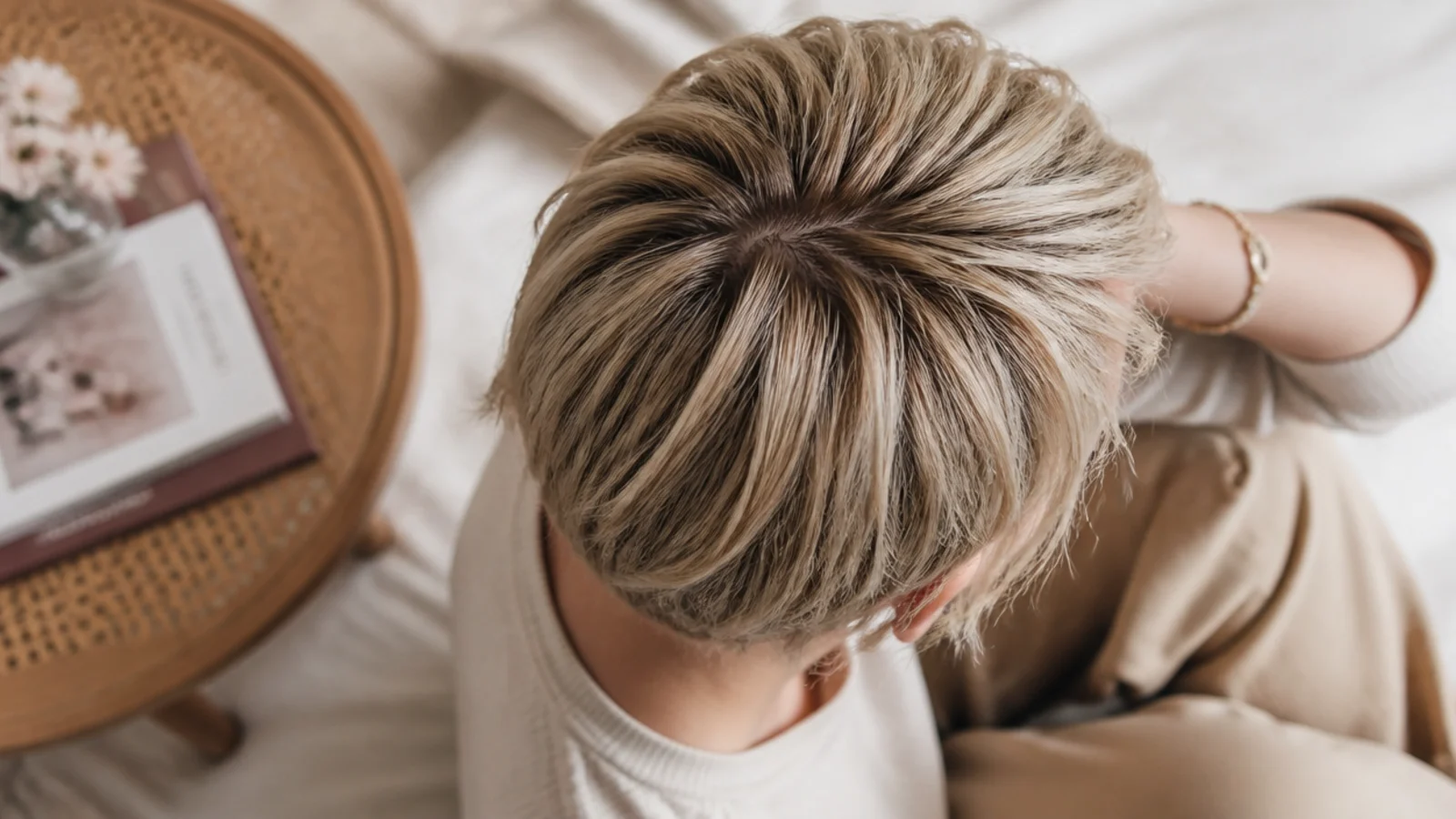
Fine hair holds a style better on day two than day one, so the smartest move is to wash less and style more. Freshly washed fine hair is clean, slippery and quick to fall flat, while a little natural oil gives strands the grip that texture and volume need to hold. Wash every two to three days, not daily, and refresh in between with dry shampoo at the roots to absorb oil and rebuild lift. Sleep on a silk pillowcase and, if your hair is long enough, loosely pineapple the crown on top of your head to preserve volume overnight. In the morning, mist dry shampoo, wait a minute, massage the crown, and re-tousle with your fingers or refresh a few bends with a wand. A quick velcro roller set at the crown revives flat roots in ten minutes. Treating day-two and day-three hair as a feature, not a problem, is the fine-hair mindset shift that makes every style here last longer with less effort.
Main Differences
- Fine hair refers to the width of each strand, so the hair is soft, silky and quick to go flat.
- Thin hair refers to density, meaning fewer hairs per inch and more visible scalp.
- Fine hair needs lightweight products and root lift; thin hair needs coverage and parting tricks.
- You can be fine but dense, thin but coarse, or both at once, so treat width and density separately.
Frequently Asked Questions
What is the difference between fine hair and thin hair?
Fine describes the width of each individual strand, so fine hair is small in diameter, soft and prone to going flat no matter how much you have. Thin describes density, meaning fewer strands per square inch and more visible scalp. You can be fine and dense at the same time. It matters because fine hair needs lightweight products and root lift, while thin hair needs coverage tricks and strategic parting to hide scalp.
How do I add volume to short fine hair?
Focus on the roots at the crown. Work a lightweight mousse into damp roots, rough-dry upside down with your fingers, then lift each crown section straight up with a round brush and set it with the cool shot. Velcro rollers at the crown add fast lift with no heat, and a dry texture spray underneath the crown holds it. Keep all product off the ends, which only need weight removed, not added.
What products are best for short fine hair?
Lightweight, root-focused products win: a volumizing mousse, a root-lift spray, a dry texture spray and a good dry shampoo. Apply everything at the roots and mids, never the ends. Skip heavy oils, rich creams, silicone serums and leave-in conditioners near the scalp, which coat fine strands and flatten them within an hour. Use a clarifying shampoo weekly to strip buildup, since residue is a top hidden cause of limp fine hair.
Which hairstyles should I avoid with fine hair?
Avoid long, one-length cuts that drag the roots flat, heavy blunt fringes that reveal how fine the hair is, and heavily razored layers that leave ends stringy. Skip daily tight slick-back ponytails and heavy extensions that stress delicate roots. Center parts flatten crown volume, so a deep side part looks fuller. Glossy, wet-look finishes read thinner, while matte texture looks denser. Choose blunt-ish, chin-length or textured short shapes that hold body.
How do I get root lift on short hair?
Start in the shower by keeping conditioner off the roots so the crown stays light. On damp hair, massage lightweight mousse into the roots, rough-dry upside down with your fingers, then use a small round brush to lift each crown section straight up while aiming the dryer at the root. Set every lifted section with the cool shot, which locks the shape. Finish with dry texture spray underneath the crown, not a heavy hairspray on top.
Why does my fine hair go flat by midday?
Fine hair goes flat because the strands are lightweight and have little natural grip, so gravity and skin oils pull the roots down over the day. Heavy products, drying with your head up, and skipping the cool shot all speed it up. Fix it by styling from damp with mousse, setting volume with cold air, washing less so second-day grip helps, and keeping a dry texture spray or dry shampoo handy for a midday root refresh.
Can short fine hair hold a curl?
Yes, but the curl needs help setting and staying. Prep dry hair with a heat protectant and a little dry texture spray for grip, use a smaller barrel, and most importantly let each curl cool fully in your palm or clipped before you touch it. Cooling is what sets a bend in fine hair. Curling second-day hair holds better than clean hair, and a light mist of dry texture spray, not heavy hairspray, keeps the shape soft.
Should short fine hair be layered?
A few strategic layers add movement and stop fine hair from hanging in a flat curtain, but heavy or over-razored layering leaves the ends looking stringy and sparse. The sweet spot is a blunt-ish base with light, face-framing layers or a soft textured shape like a chin-length bob or a textured pixie. Ask your stylist for point-cut ends rather than aggressive feathering, and keep the overall length short, where fine hair naturally looks fuller.
Which short fine hair look are you styling first?
If you take one thing from this, make it root lift: on short fine hair, volume at the crown is worth more than any single style, and it starts the second you dry your hair upside down. Reach for lightweight mousse and a dry texture spray, keep heavy oils and creams away from your roots, and let a blunt or chin-length shape do half the work. Style on second-day hair whenever you can, since fine strands hold texture better with a little grip. Save the looks that fit your length, then match your whole routine to your texture with the hairstyle for your hair type guide, or browse more hairstyle ideas for your next short-hair look.