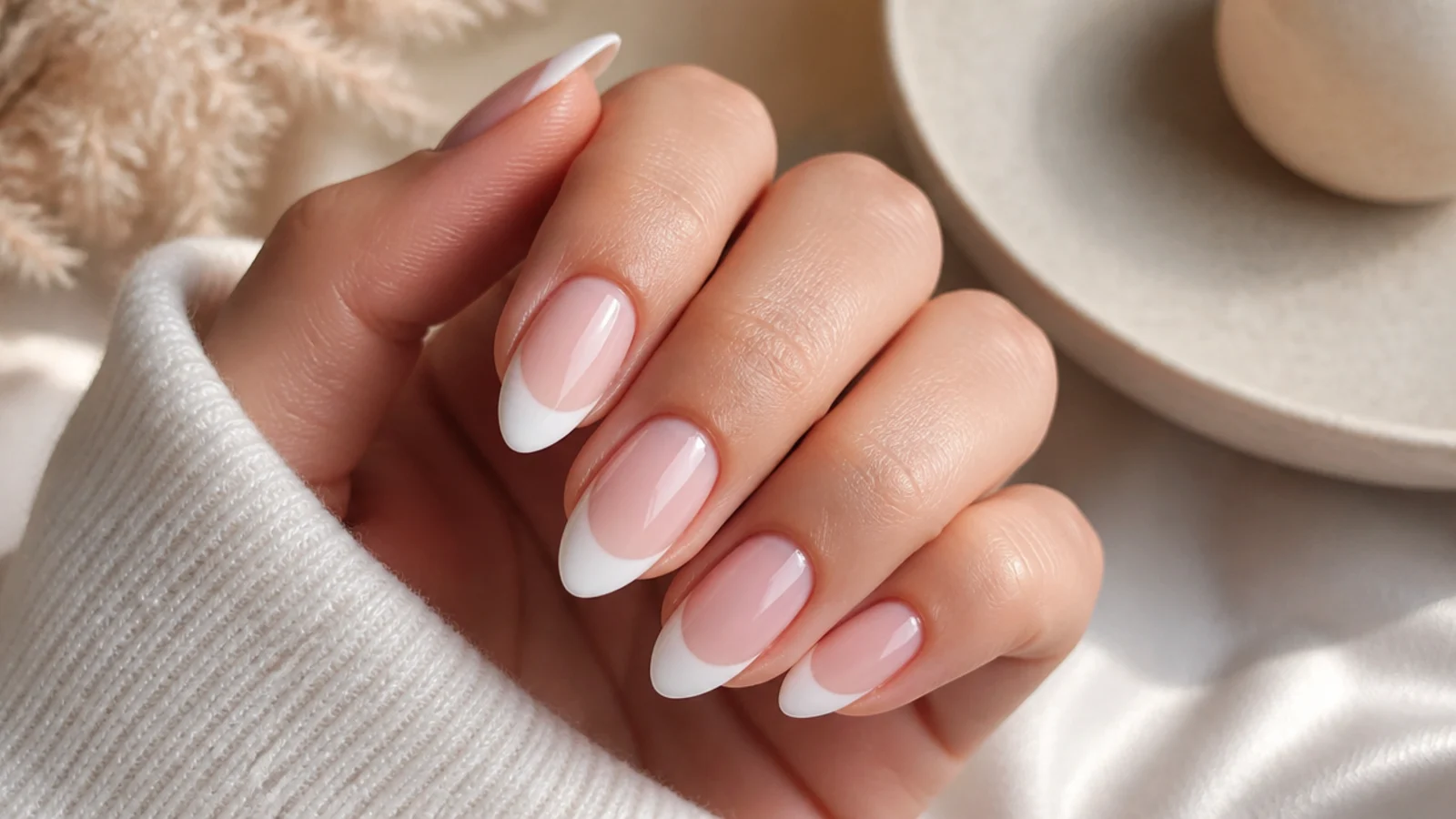
Quick Comparison
| Classic French Tip | Micro French Tip | |
|---|---|---|
| Tip depth | 3 to 5mm band along the free edge | 1 to 2mm hairline along the very edge |
| Best nail length | Medium to long, about 4mm of free edge and up | Short to medium, works from about 2mm |
| Effect on nail bed | Visually shortens the bed; the band takes space | Leaves the bed intact; reads longer on short nails |
| Smile line difficulty | Easier; a thicker band hides small wobbles | Harder; every millimeter of error is visible |
| Best system | Polish or gel both work | Gel only; polish wears off the edge in two days |
| How it grows out | Gap at the cuticle shows at about day twelve | Almost invisible growth; the line stays at the edge |
| Formality | Bridal, corporate, formal events | Modern, casual, minimalist and office-safe |
| Typical salon cost | 40 to 70 dollars in gel, 25 to 40 in polish | 45 to 75 dollars in gel; charged as fine line work |
| Realistic wear time | 5 to 7 days polish, 2 to 3 weeks gel | 2 to 3 weeks gel; the thin line chips last, not first |
1. Classic White French Tip Nails
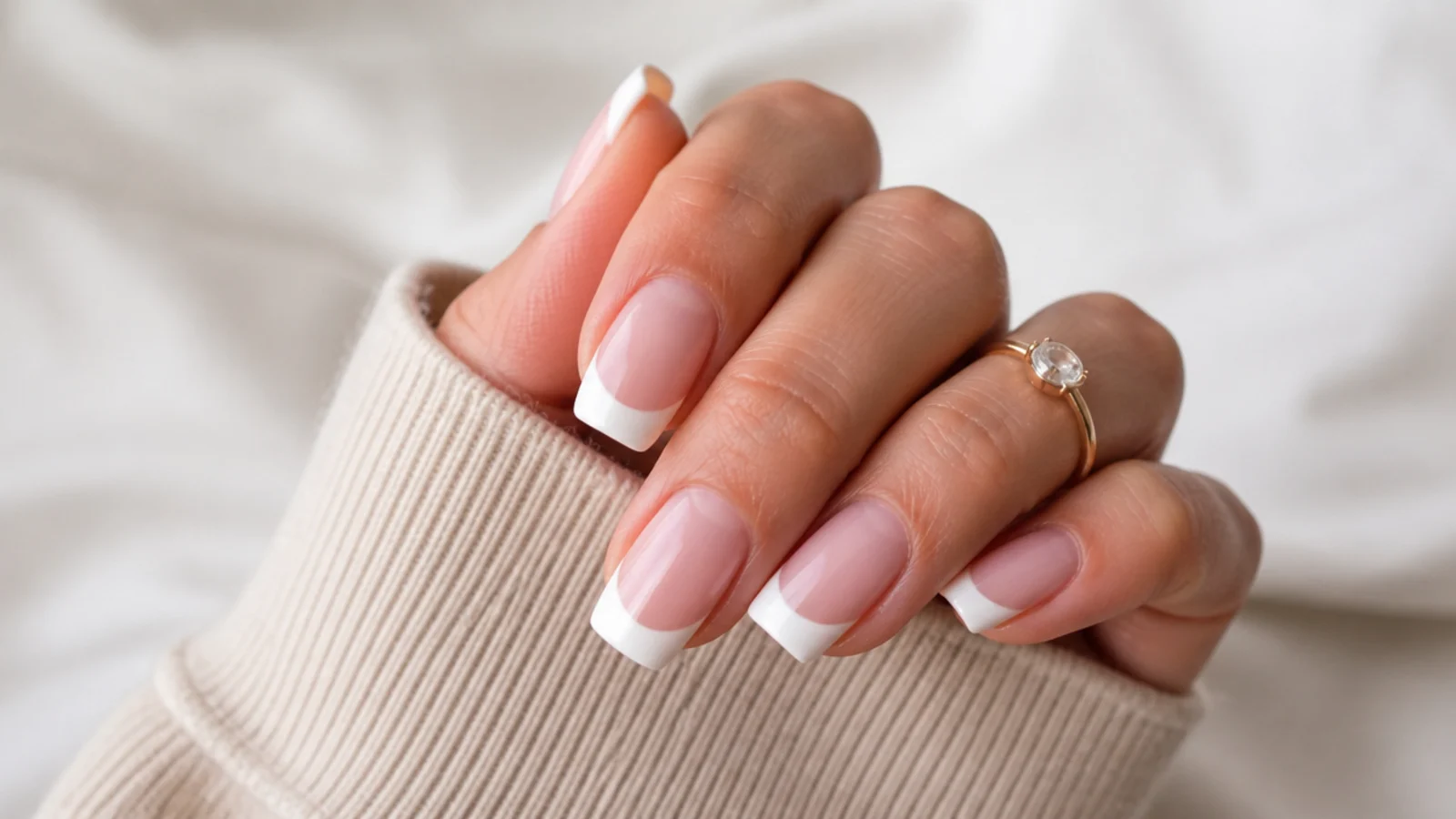
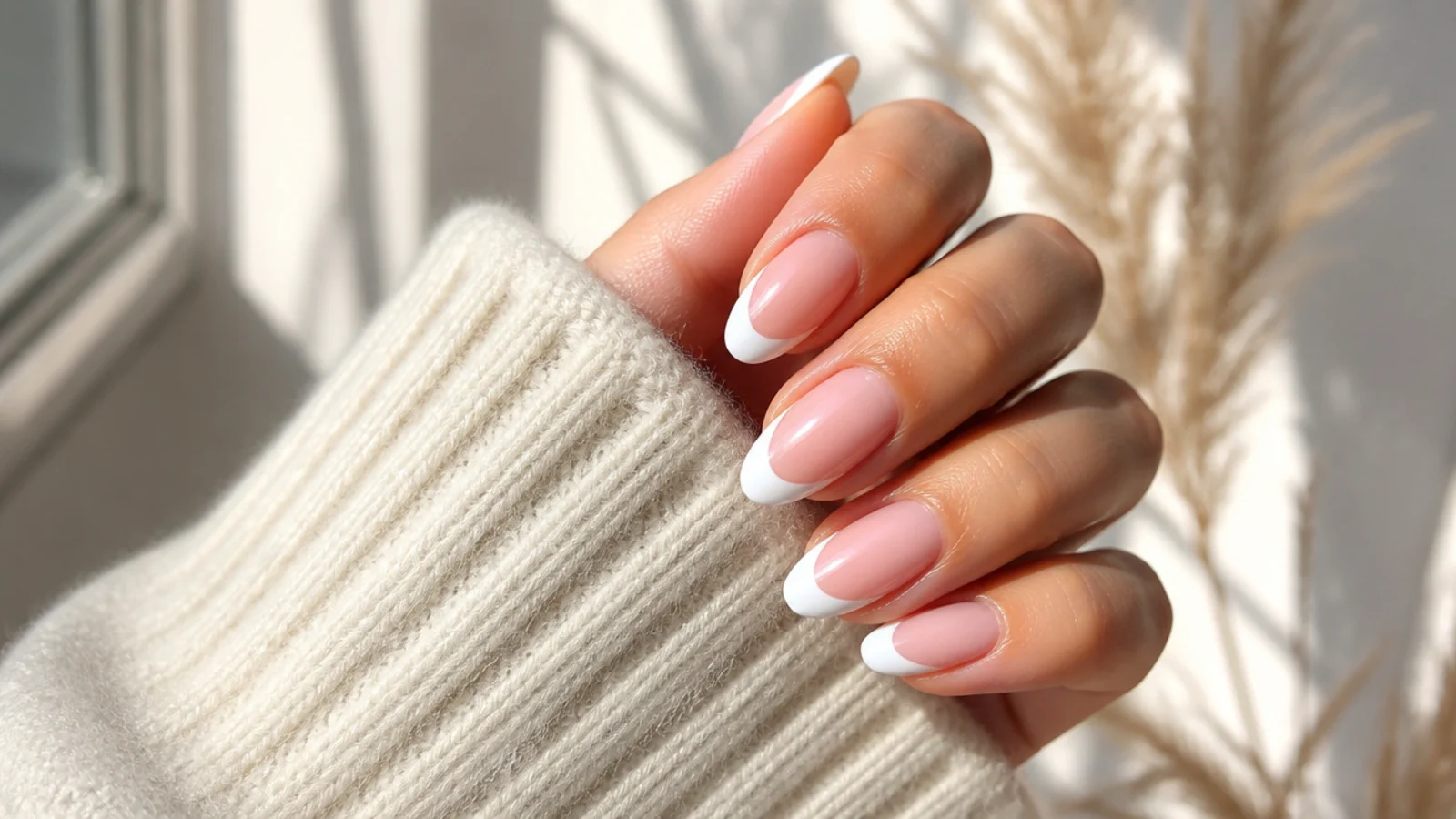
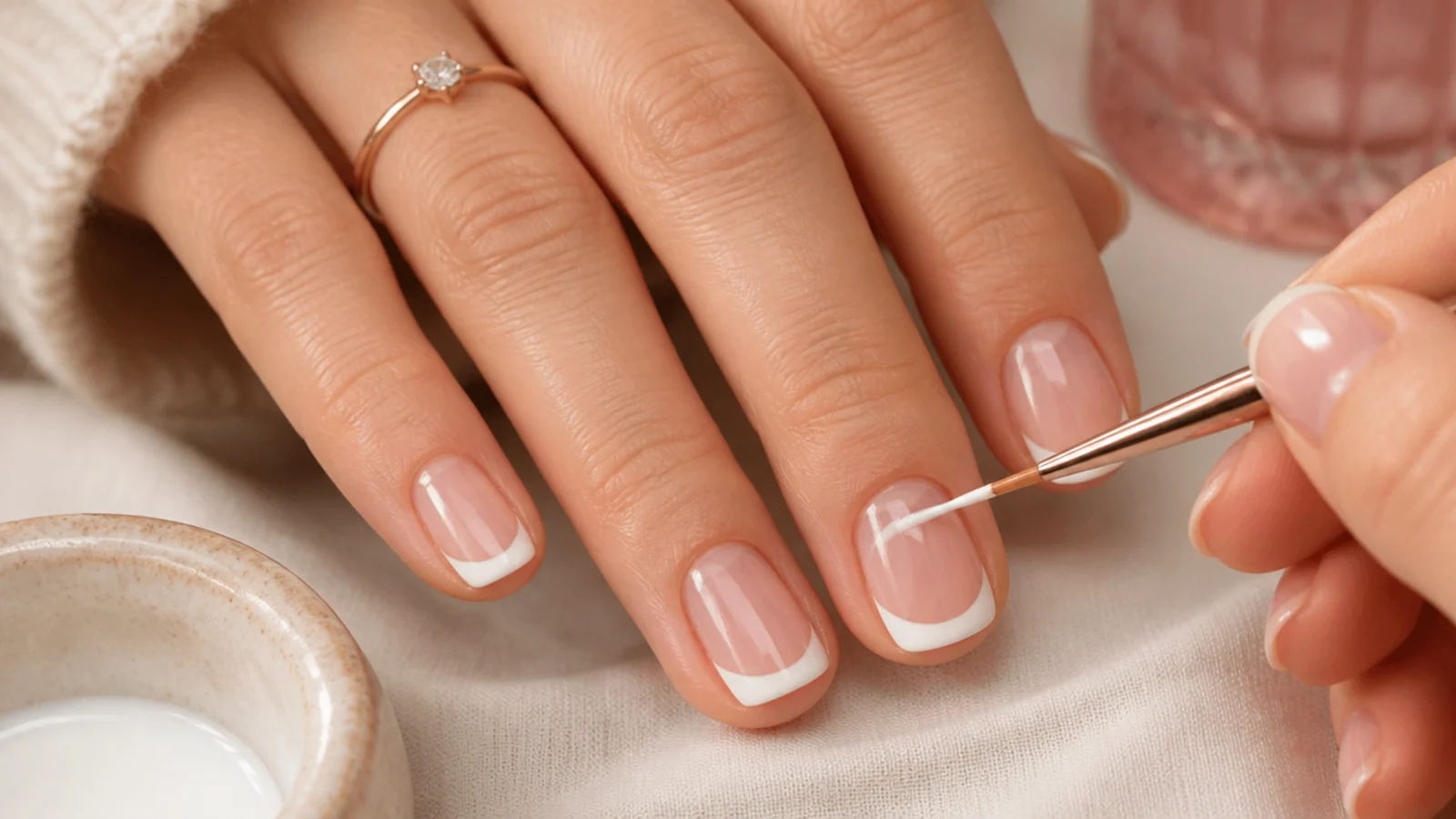
The original: an opaque white band about 3 to 4mm deep over a sheer pink or beige base, finished with high gloss. It is the version every salon can do without a reference photo, and the only one that reads as formal enough for a wedding. Bright white needs two or three thin coats to stop looking streaky, which is why techs often reach for a gel white rather than polish. Works on square, squoval, almond and coffin at medium length. Full shade breakdown in white French tip nails.
Who it suits: Brides, interviews and anyone wanting the safest French.
Tip: Ask for a 3mm tip with a curved smile line, matched on all ten, so the thumbs do not creep wider.
2. Micro French Tip Nails
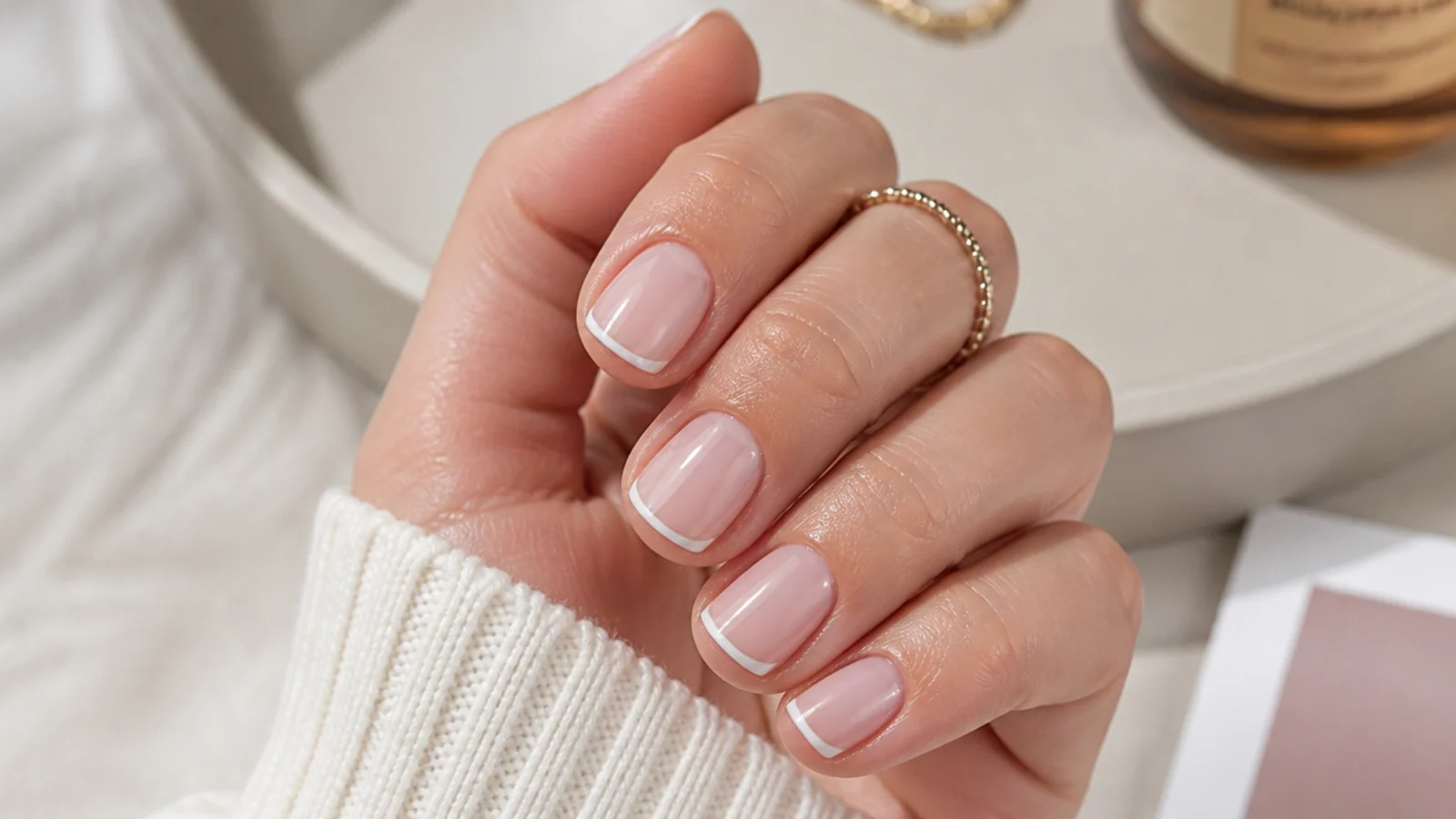
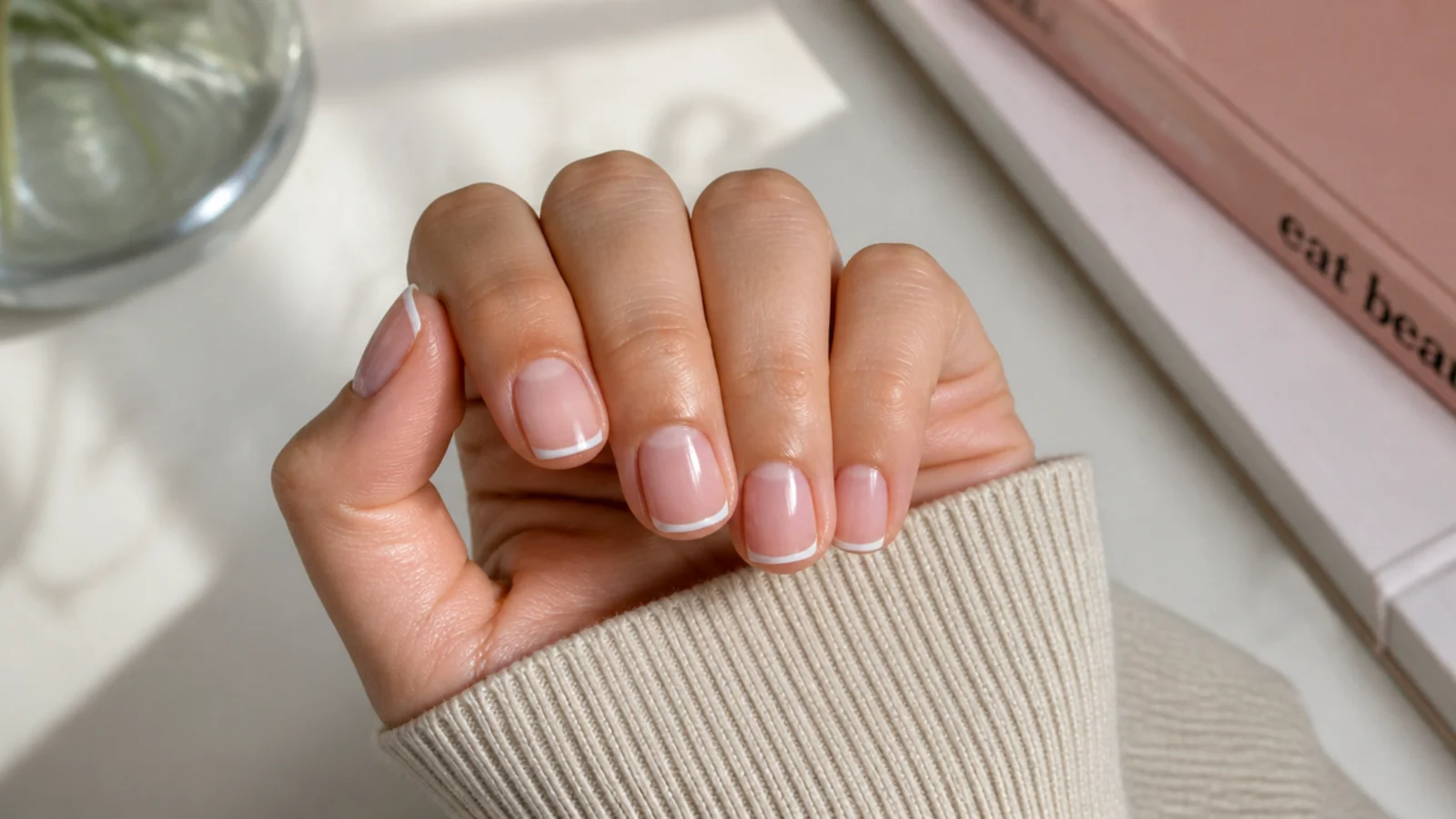
A hairline band, roughly 1mm, painted right along the edge of the free edge. This is the defining French of the last three years and the reason the look came back at all: it gives you the outline without the visual weight, so short nails do not get chopped shorter. Best over a bare or barely-tinted nail so the line is the only detail. It has to be gel, because a 1mm polish line wears off the edge within two days. Excellent on short square and short almond.
Who it suits: Short nails, typists, minimalists and anyone in a strict office.
Tip: Ask for a skinny French or micro French in gel, and say 1mm, not thin, so you both mean the same thing.
3. Milky White French Tip Nails
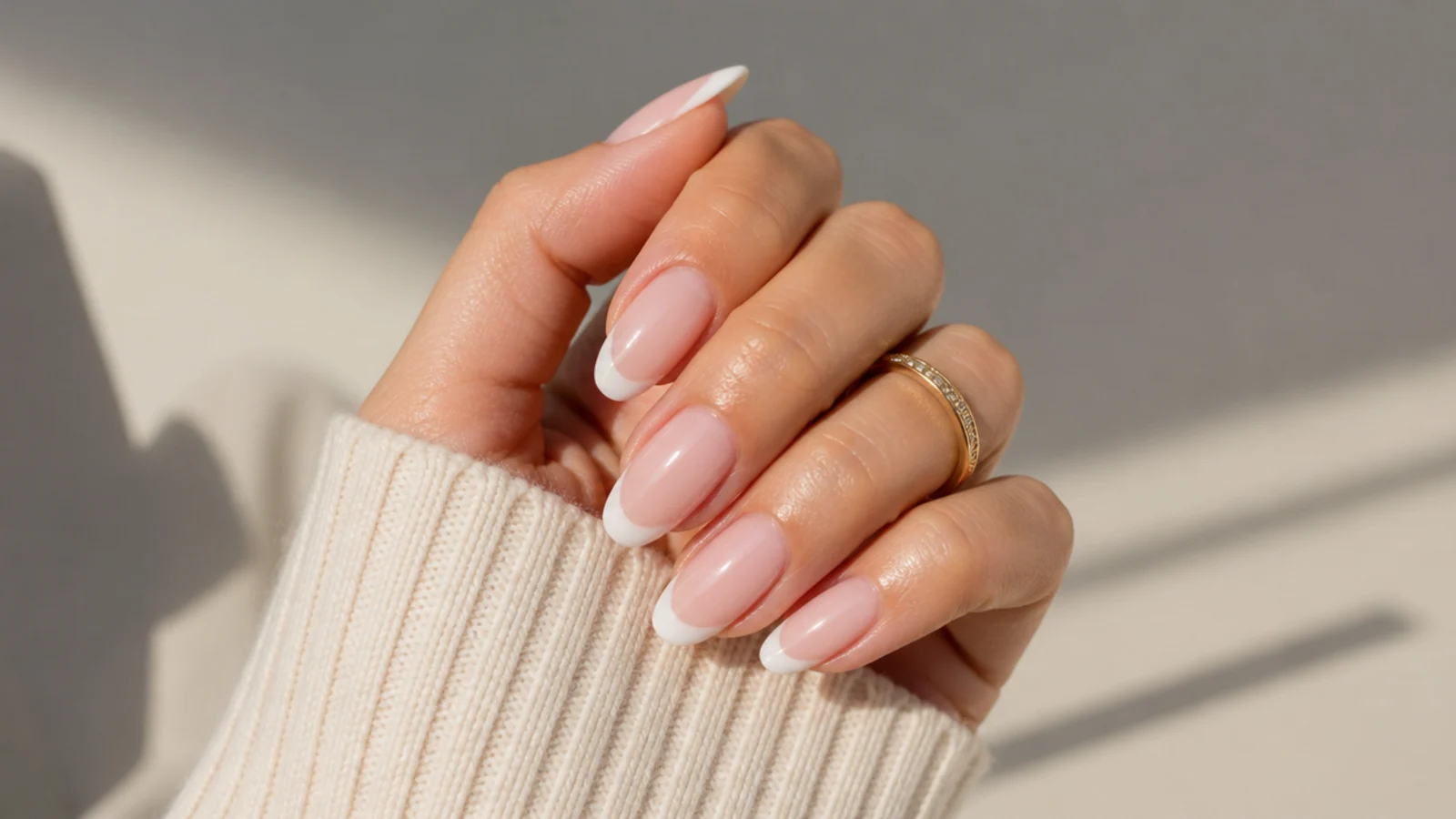
The fix for everyone who thinks bright white looks harsh. A milky white such as OPI Funny Bunny or Essie Marshmallow is semi-sheer, so the tip reads soft cream rather than correction fluid, and it forgives a slightly wobbly smile line because there is less contrast to expose it. It also grows out more gracefully than bright white. Two to three sheer coats builds it. This is the shade most people mean when they save a photo and cannot name why it looks expensive.
Who it suits: Fair and neutral skin tones, and anyone whose bright white looked too stark.
Tip: Ask for milky white, not bright white, and expect three sheer coats rather than two thick ones.
4. Short Square French Tip Nails
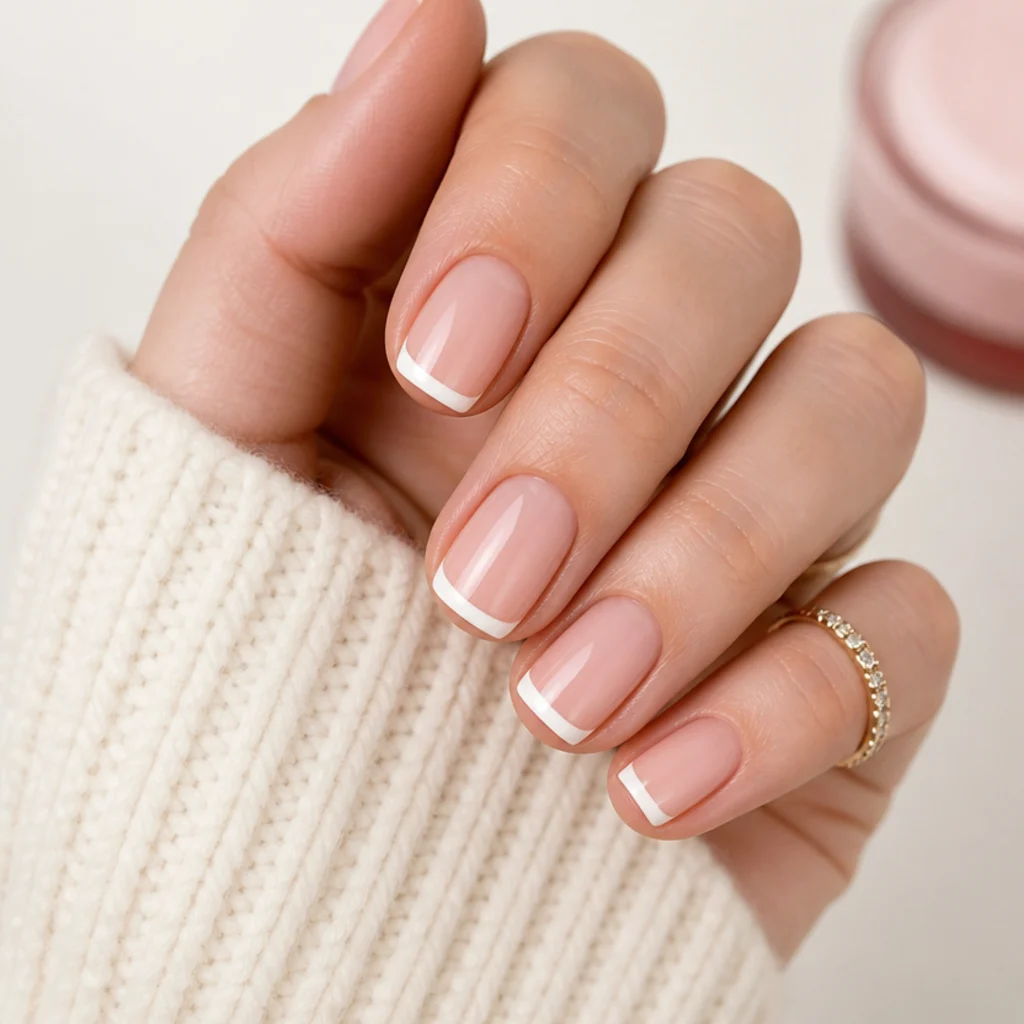
On a short square nail the tip has to be shallow, about 2mm, and the smile line should be gentle rather than a deep U. A deep curve on a short nail eats the nail bed and makes the finger look stubby. Keep the base sheer so there is no second horizontal line competing with the tip. This is the most practical French there is, and it survives typing and dishes better than any length above it. More at this length in short French tip nails.
Who it suits: Short natural nails and anyone who works with their hands.
Tip: Ask for a shallow smile line at 2mm; a deep curve visually shortens a short nail bed.
5. Almond French Tip Nails
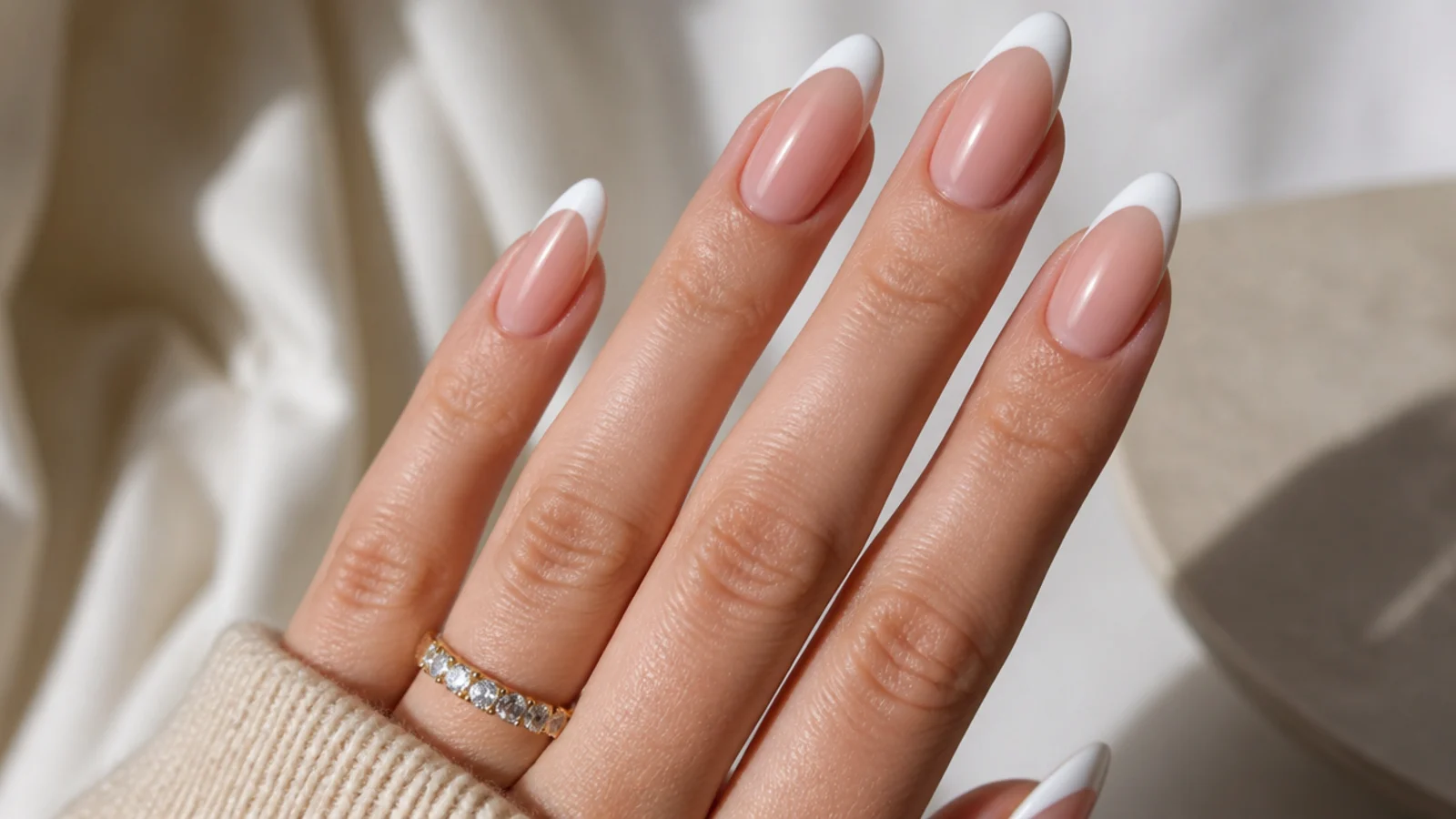
On almond the smile line has to curve deeper than it would on square, or the tip reads flat and disconnected from the shape. The band should also follow the taper, narrowing slightly as it approaches the point. Almond is the most forgiving shape for a French because the curve hides small asymmetries that a straight square edge would expose. You need about 4mm of free edge for the taper to show. The oval variation sits in oval French tip nails.
Who it suits: Medium to long nails and anyone wanting an elongated hand.
Tip: Say deeper smile line to follow the almond taper, or the tip will look pasted on straight.
6. Double French Tip Nails
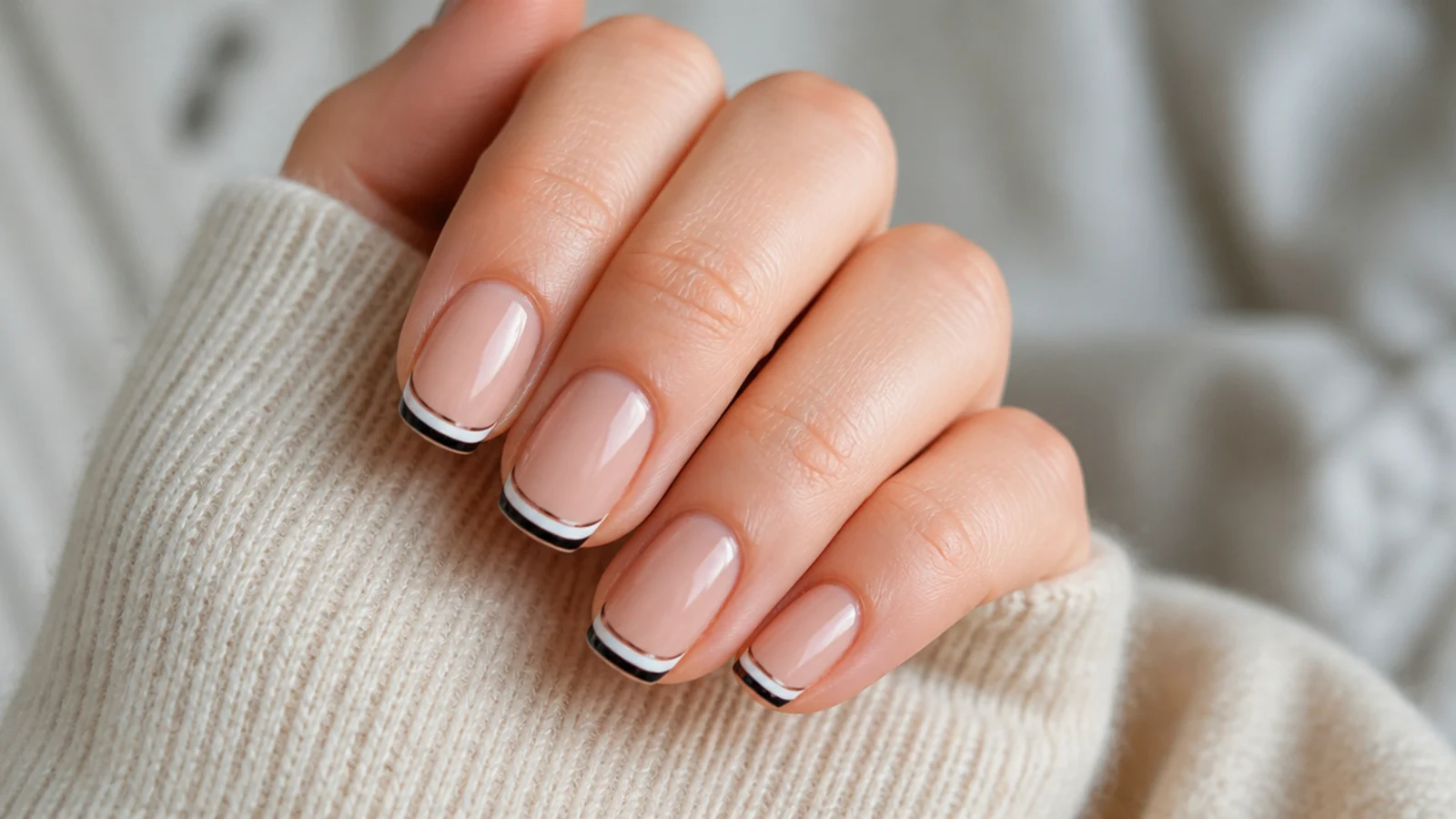
Two curved lines instead of one: usually a thicker color band with a thin contrasting line sitting just below it, most often white over black, white over red, or nude over gold. It is the single easiest way to make a classic French look 2026 rather than 1996, and it costs nothing extra beyond a steadier hand. The lower line should be roughly a third the thickness of the upper band. Needs at least 3mm of free edge or the two lines merge into a smudge.
Who it suits: Medium and long nails, and anyone bored of one white line.
Tip: Ask for the outline sitting below the tip, not touching it, so a visible gap keeps both lines readable.
7. Reverse French Tip Nails
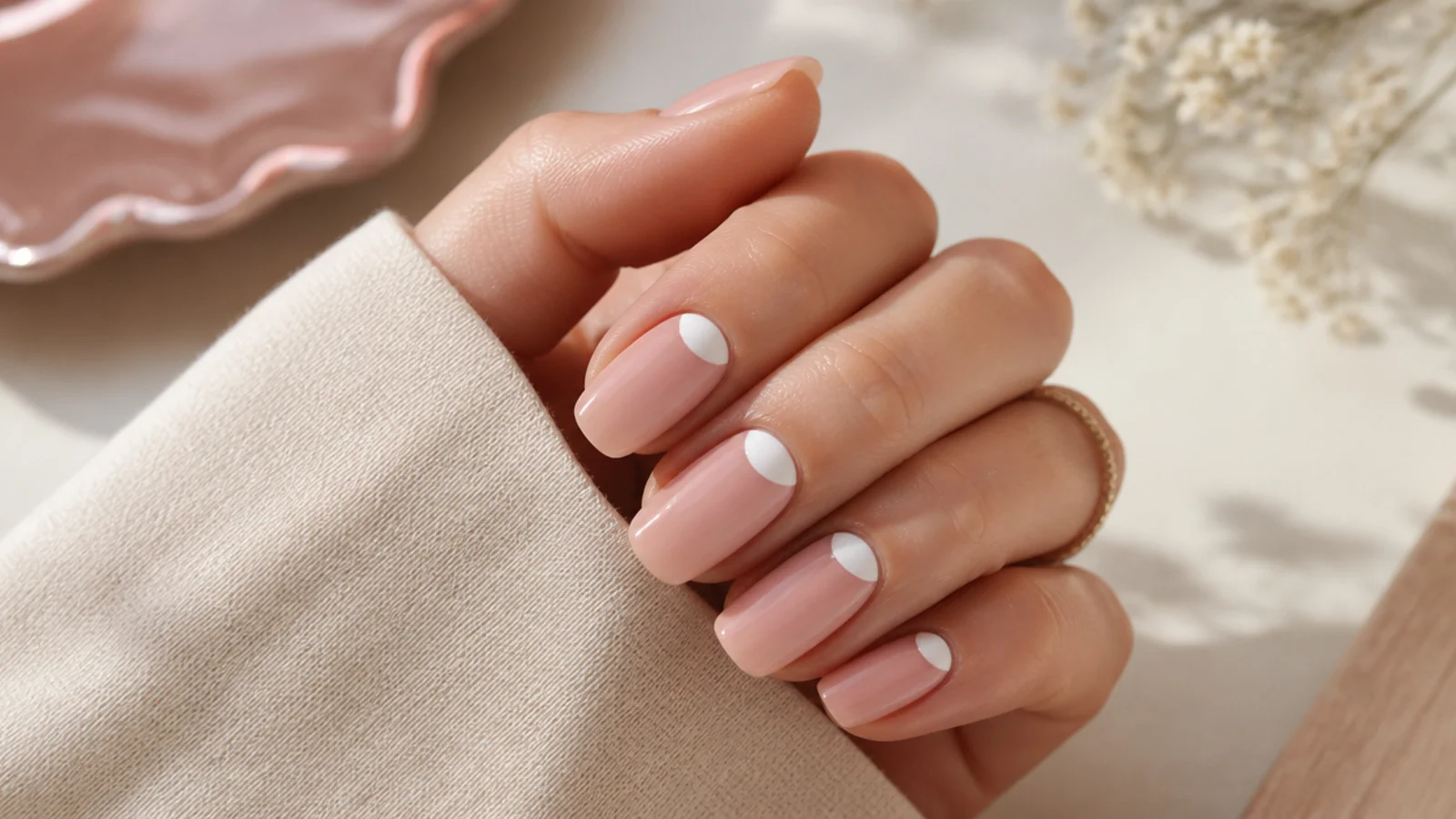
The smile line moves to the cuticle end, so a curved band of color sits over the half moon and the free edge stays bare. It is also called a half moon manicure, and it was actually the dominant style before the tip version took over in the 1970s. The practical advantage is real: regrowth is invisible because the color is already at the base. The practical downside is that the line is harder to place, since it has to follow your cuticle exactly.
Who it suits: Anyone who hates the grown-out gap, and fans of vintage nails.
Tip: Ask for a reverse French or half moon and leave a hair of bare nail at the cuticle so it does not flood.
8. Ombre French Tip Nails
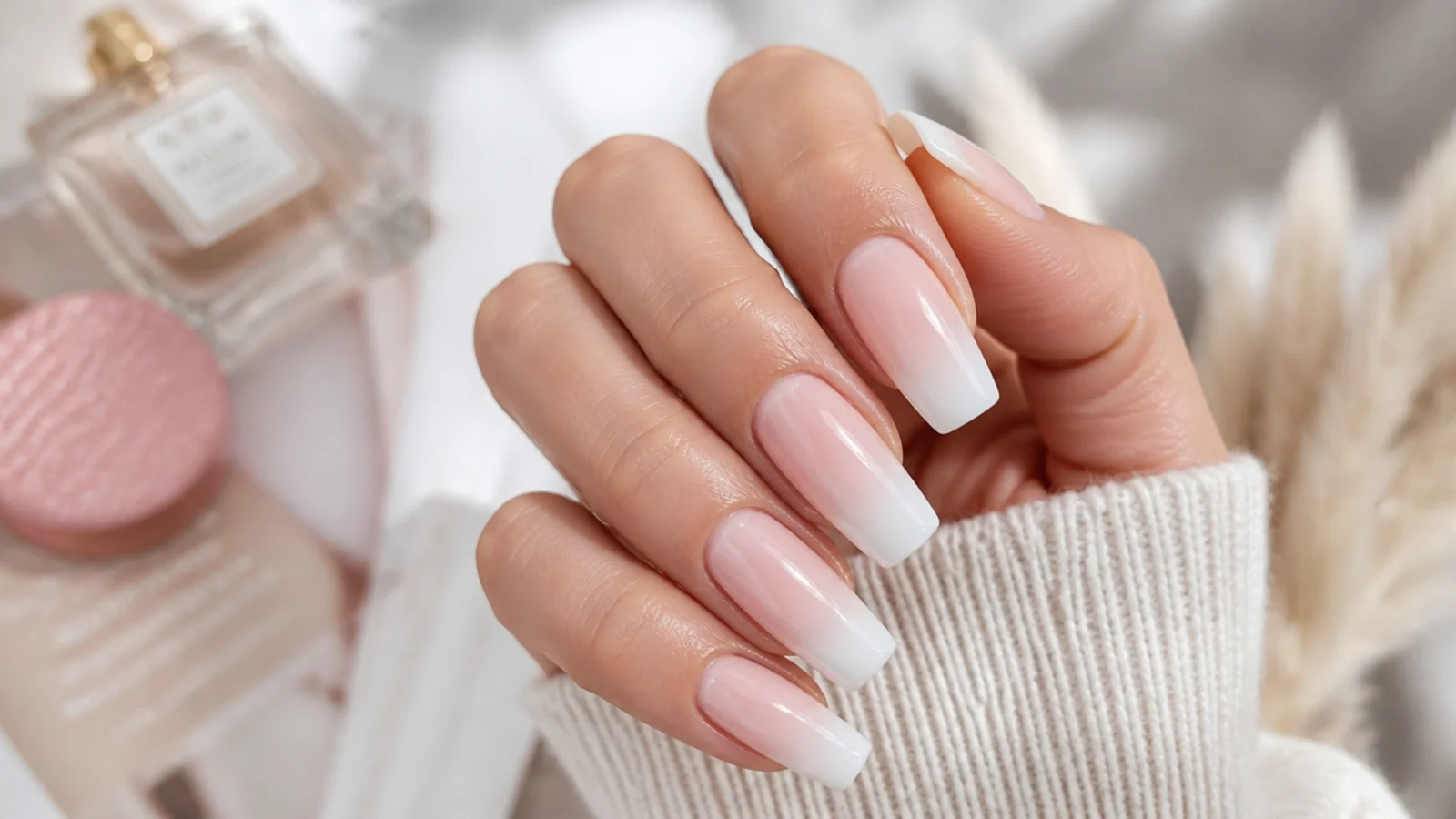
The white does not stop at a line, it fades up the nail, usually sponged or airbrushed so the transition is invisible. Salons call it baby boomer or ombre French, and baby boomer is the phrase most likely to get you the right result. It is the most flattering French on wide nail beds because the soft edge does not draw a horizontal stripe across the nail. Expect 10 to 20 dollars more than a standard gel French and a longer appointment, since it is built in layers.
Who it suits: Weddings, wide nail beds and anyone who wants no hard line at all.
Tip: Ask for baby boomer, not ombre, or your tech may fade cuticle to tip instead.
9. Deep V French Tip Nails
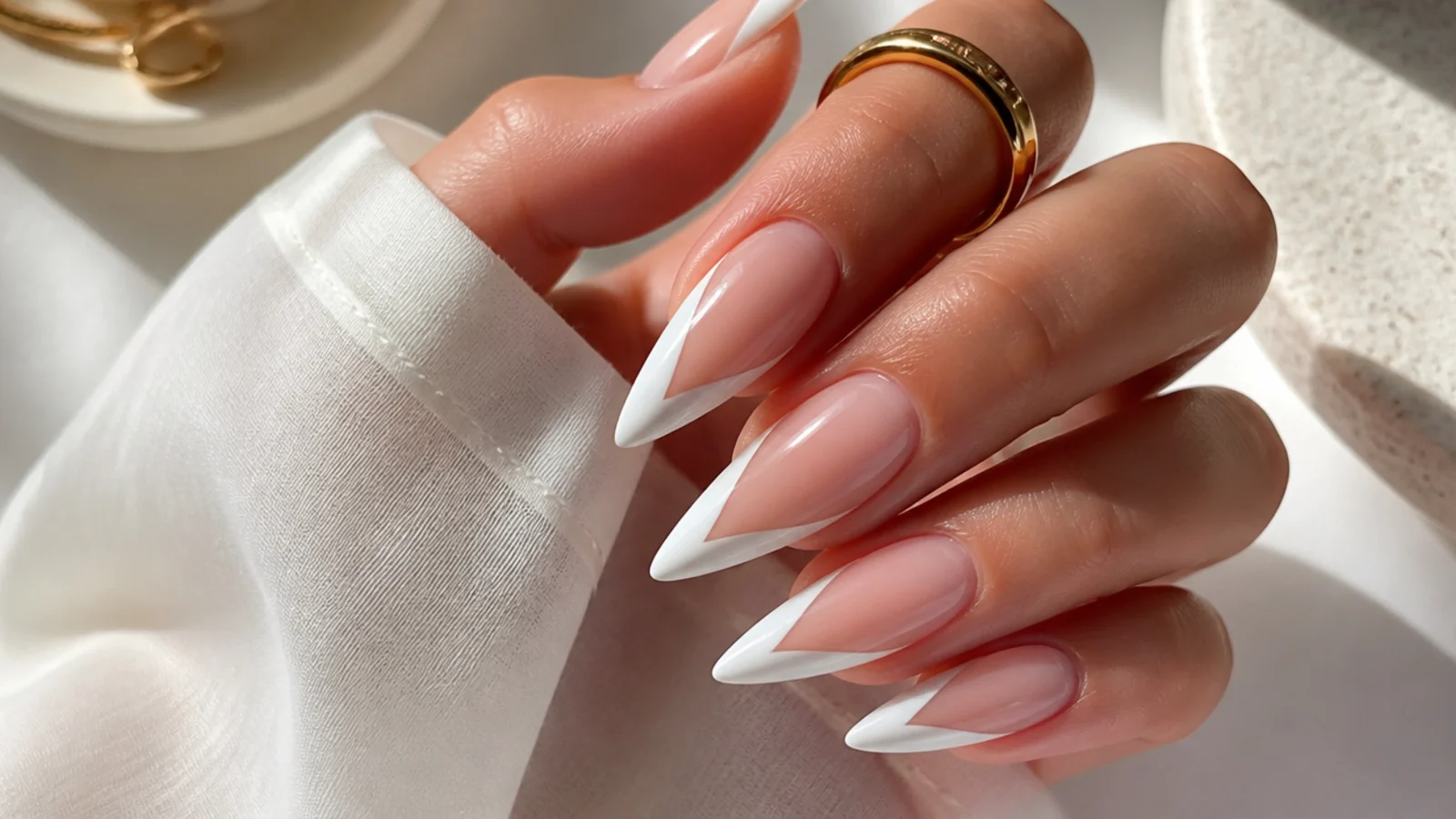
The smile line becomes a sharp V pointing down toward the cuticle instead of a soft curve. It stretches the nail bed hard, which is why it lives on long stiletto and almond sets, and it is the one French shape that genuinely needs length: on anything under 6mm the point of the V hits your cuticle. Works best in a single color with no base tint, so the geometry is the whole design. Also called a V French or an arrow French.
Who it suits: Long stiletto and almond sets, and anyone wanting maximum elongation.
Tip: Bring a photo; V depth varies wildly between techs and words alone will not pin it down.
10. Diagonal French Tip Nails
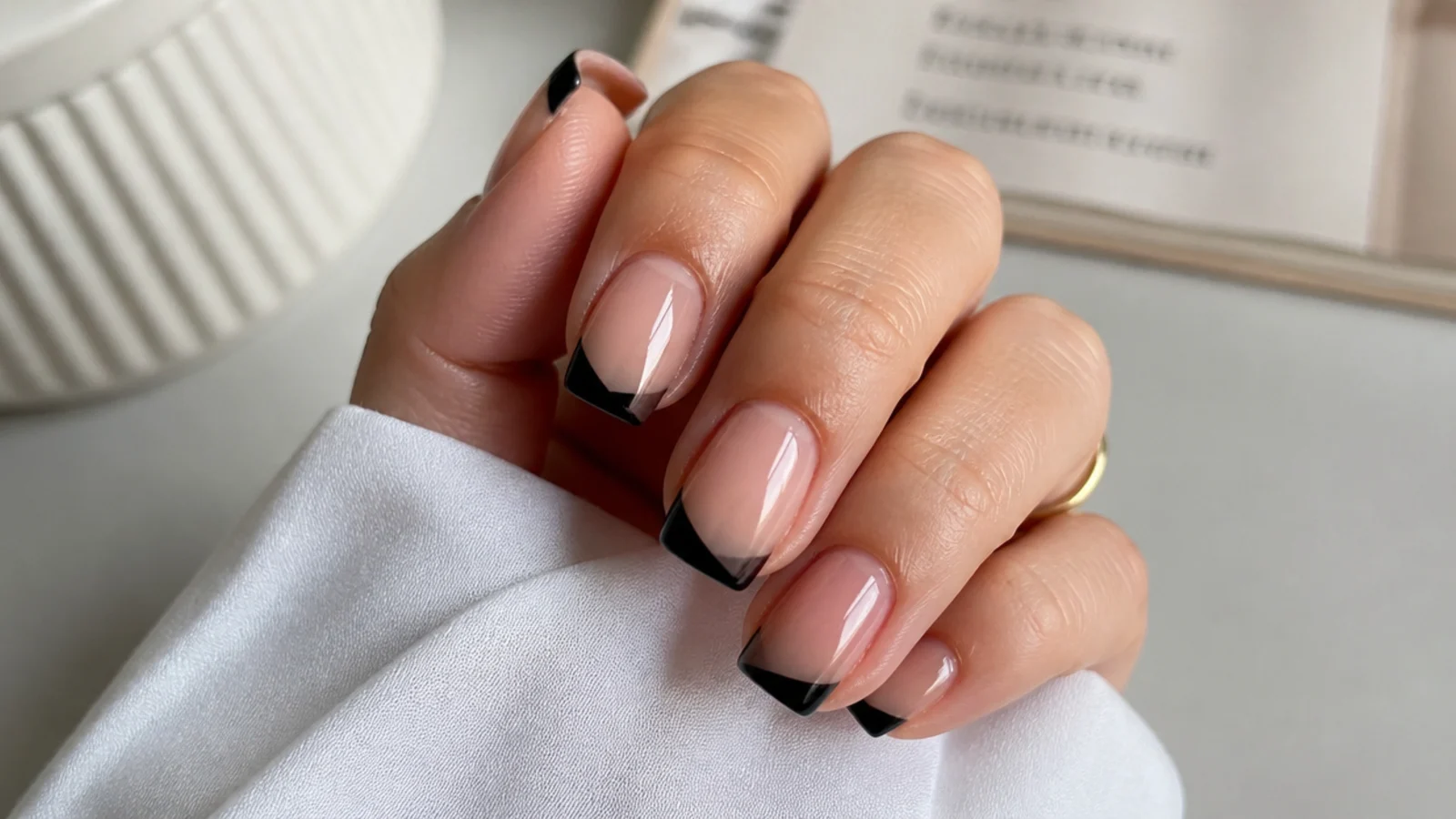
The line runs at an angle rather than parallel to the free edge, usually about 30 degrees, so the tip is thick on one side and nearly nothing on the other. Mirror the angle on the left and right hands or it looks like a mistake. It is a straight-line design rather than a curve, which makes it one of the easier freehand options at home, and it reads modern in black or chrome over a bare nail. Slightly more forgiving than a curved smile line.
Who it suits: Square and squoval nails, and anyone learning to freehand.
Tip: Ask for the angles mirrored across both hands so the set reads deliberate.
11. Black French Tip Nails
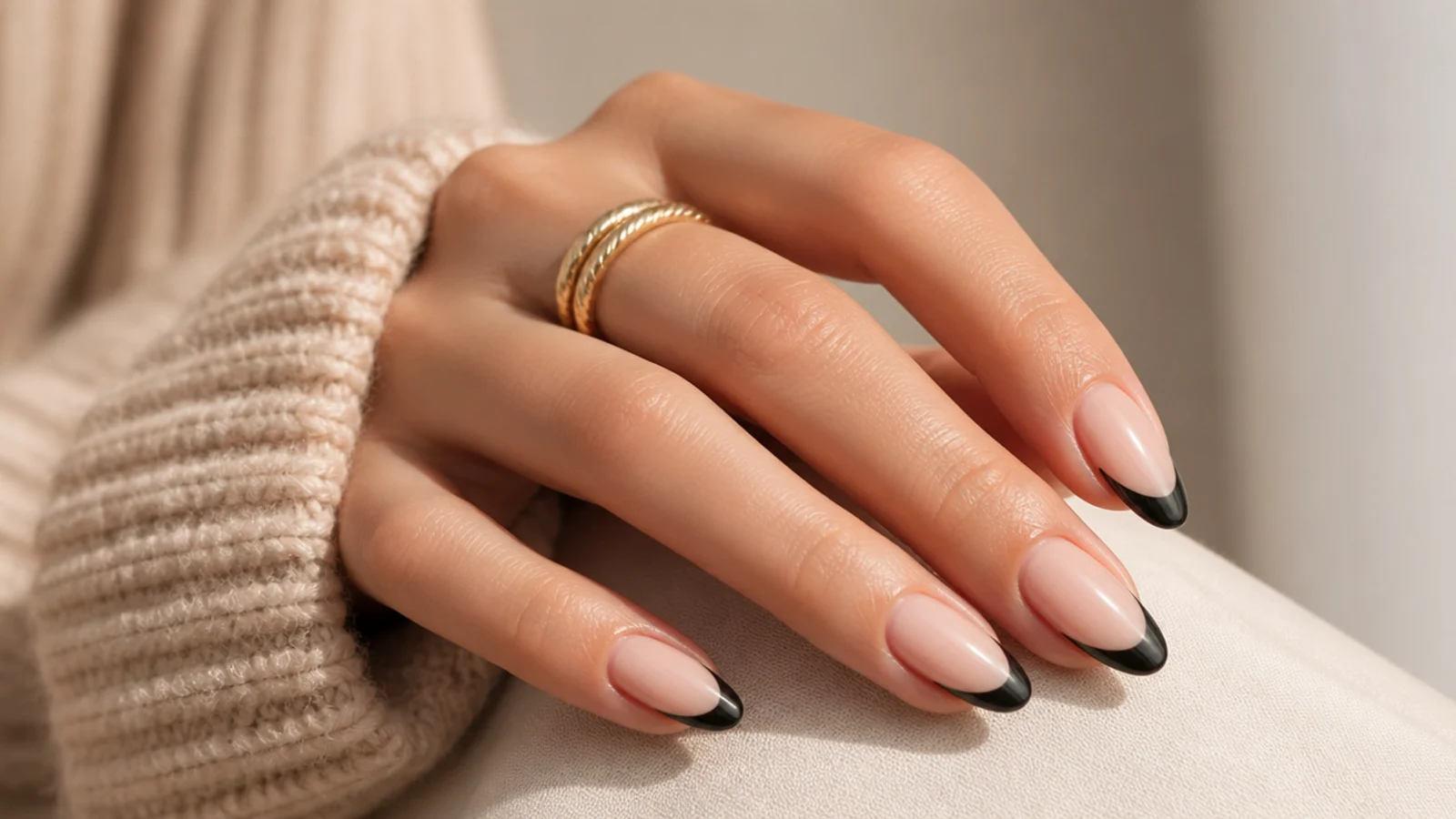
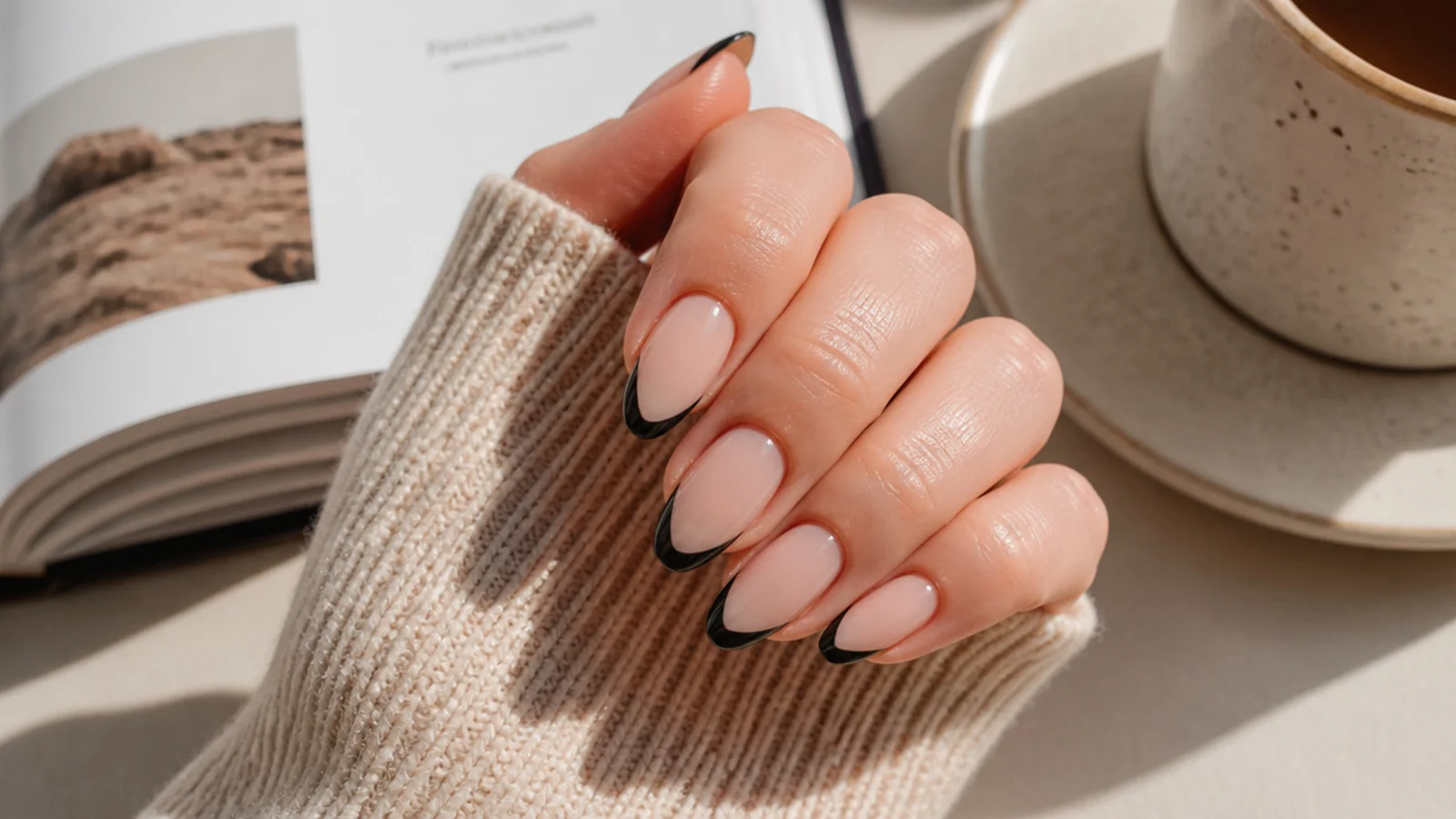
Black over a sheer nude is the highest-contrast French there is, which is exactly the problem: black exposes every wobble in the smile line that white would hide. Ask for gel and a cleanup pass, not polish. It works at any length but looks sharpest as a micro line on short nails and a 3mm band on long almond. Glossy reads polished, matte reads editorial. The magnetic version lives in black cat eye French tip nails.
Who it suits: Nights out, edgier wardrobes and high-contrast lovers.
Tip: Ask for a cleanup with a flat brush and alcohol along the inside of the smile line.
12. Red French Tip Nails
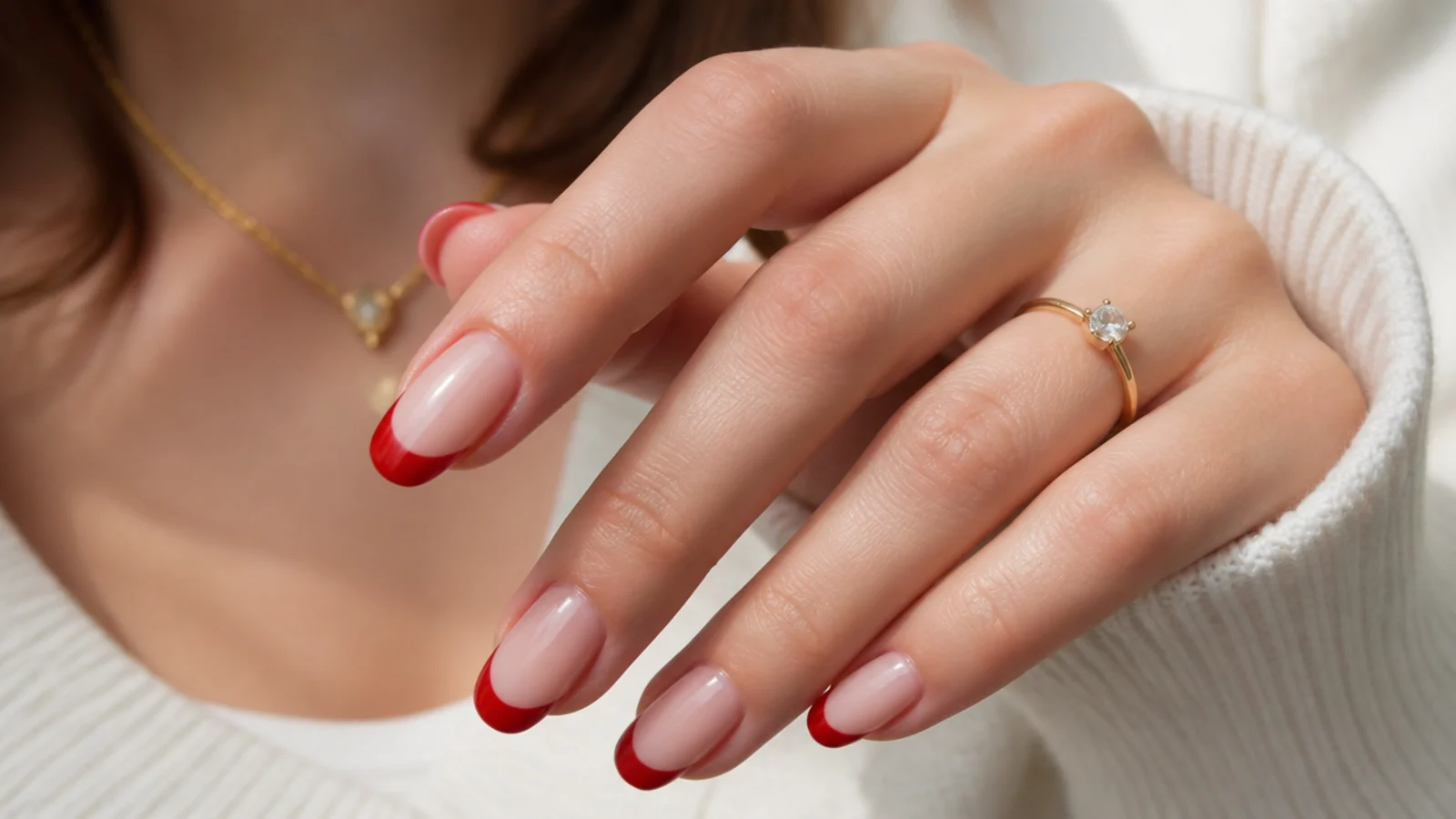
A cherry or blue-based red band over a nude base, which is the most-saved colored French after black. Two practical warnings nobody gives you: red pigment stains the natural nail without a base coat, and red against a pale base shows regrowth faster than white does, so the set looks tired at about day ten rather than day fourteen. A slightly thicker 3 to 4mm band suits red, because thin red lines read pink from a distance. See also red cat eye French tip nails.
Who it suits: Date nights, holidays and classic red wearers.
Tip: Insist on a base coat first; red is the worst offender for staining the natural nail yellow.
13. Hot Pink French Tip Nails
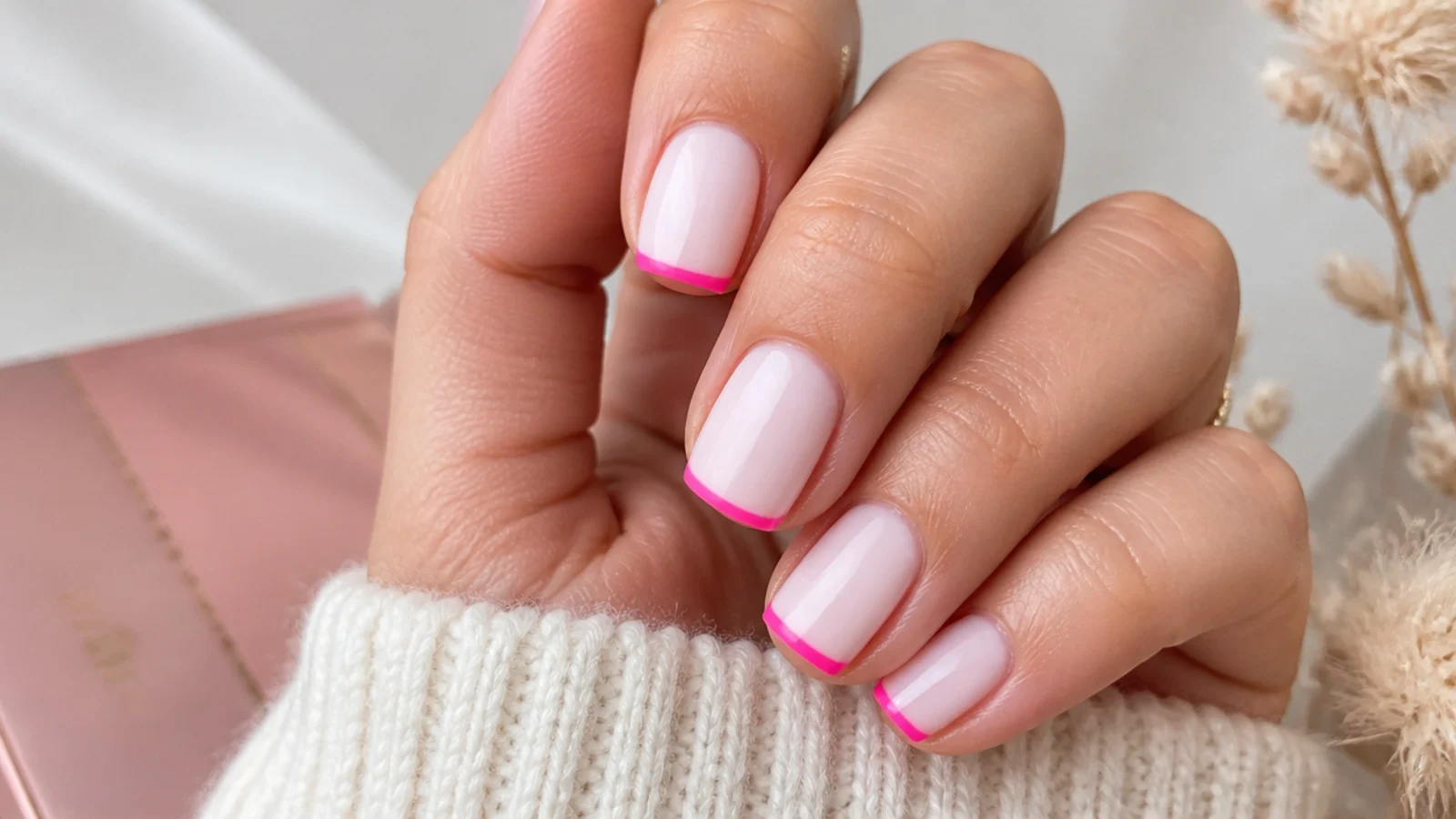
A saturated fuchsia band over a milky or sheer base, the loudest French on this list and the one that reads summer instantly. Because hot pink is a mid-tone rather than a dark, a 1mm micro line barely registers on short nails, so go thicker here than you would in black: 2 to 3mm minimum. On fair skin a blue-toned fuchsia stays chic while an orange-leaning pink tips into costume. Softer pinks are covered in pink cat eye French tip nails.
Who it suits: Summer, vacations and anyone wanting color without a full bright manicure.
Tip: Go 2 to 3mm on hot pink; a micro line in a mid-tone color simply disappears at arm's length.
14. Baby Blue French Tip Nails
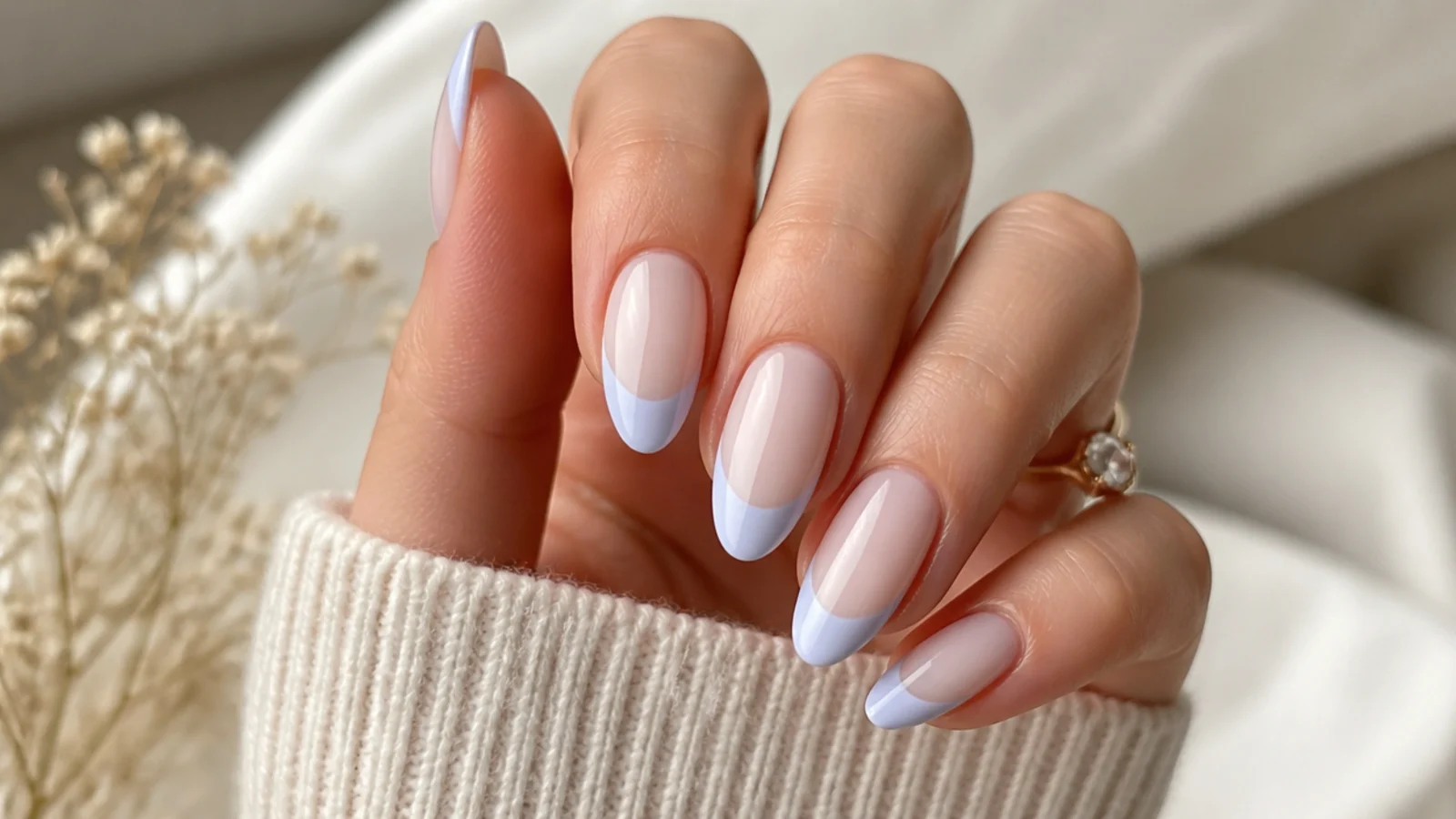
A pale powder blue tip over a milky base, which is the softest way to wear color on a French and the most requested spring version. Pastel blue is low contrast, so it hides an imperfect smile line better than any color except milky white, making it a genuinely good first colored French. Blue pigment does stain, so a base coat is not optional. Reads well at 2 to 4mm on almond and squoval. The magnetic cousin is blue cat eye French tip nails.
Who it suits: Spring, weddings as a guest, and cool undertones.
Tip: Pair pale blue with a milky base rather than clear, or the tip looks washed out against bare nail.
15. Chocolate Brown French Tip Nails
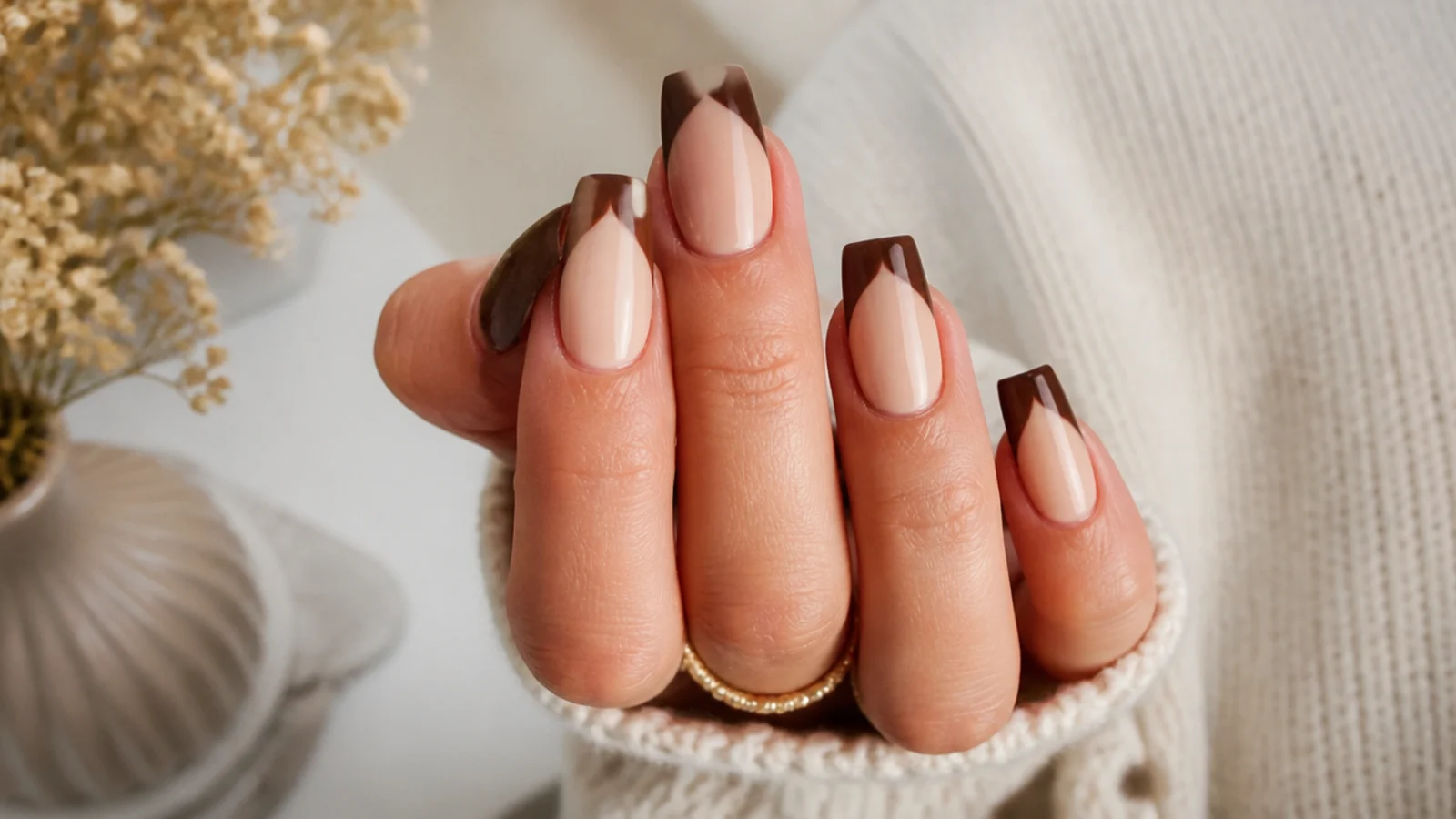
An espresso or mocha band over a warm beige base. This is the quiet replacement for white French on medium and deep skin tones, where stark white can read chalky against warm undertones while brown reads like an extension of the hand. It also grows out almost invisibly, since brown against beige is far lower contrast than white against pink. Keep it at 3 to 4mm; thinner and it looks like a stain rather than a design.
Who it suits: Deep and olive undertones, fall wardrobes and office settings.
Tip: Match the base to your skin, not to the brown, so the tip is the only thing you see.
16. Lavender French Tip Nails
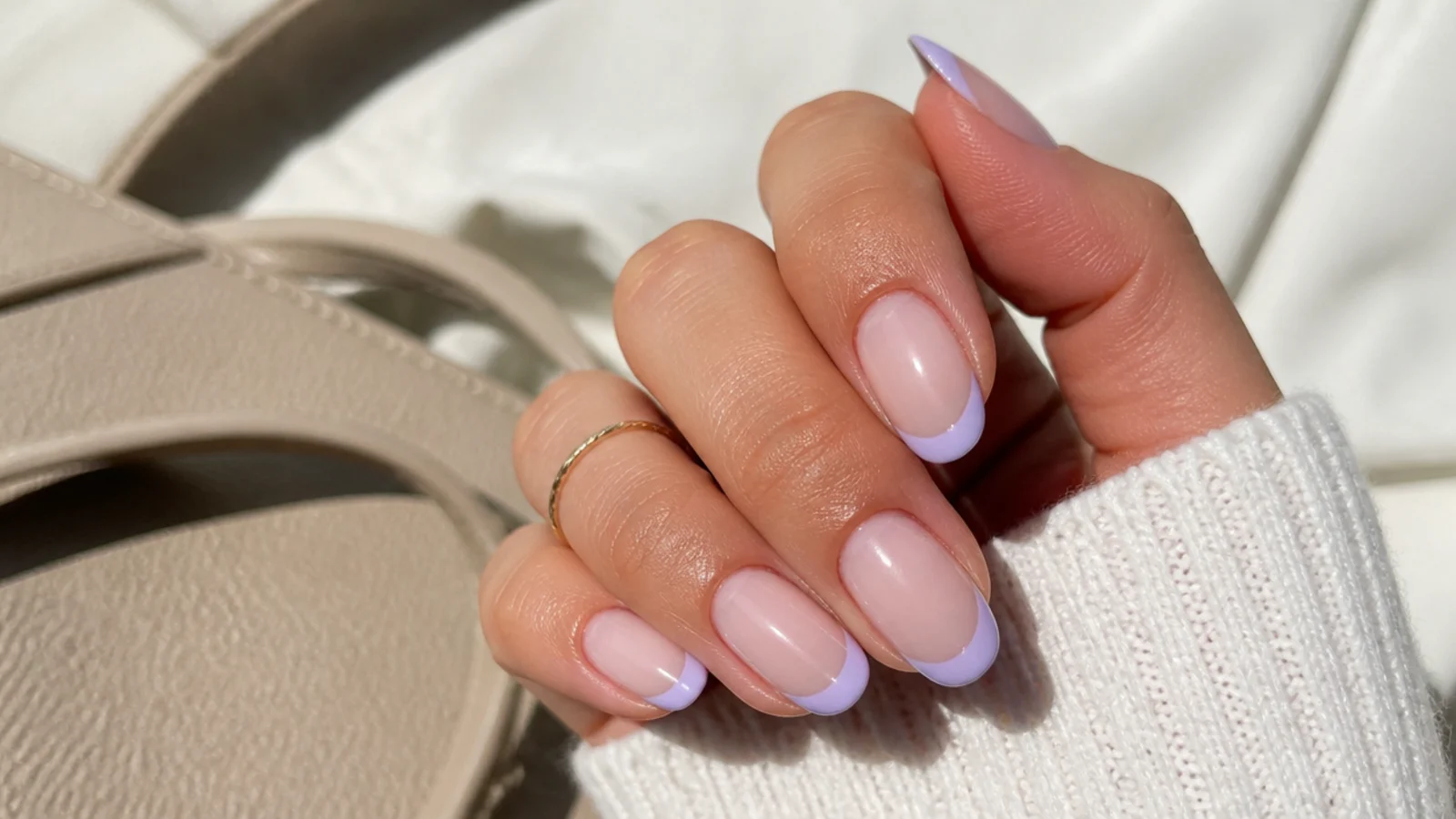
A soft grayed purple band, the pastel that has replaced baby pink as the default soft French. Lavender is unusual because it flatters both cool and warm undertones, since the gray in it stops the purple from going neon. It is also one of the few pastels that still reads adult on long nails. Two coats of a gel lavender over a sheer base gets there. Best at 2 to 3mm, where it looks intentional rather than faded.
Who it suits: Spring, summer and anyone who finds pink too sweet.
Tip: Choose a grayed lavender over a bright violet; the gray is what keeps it from looking like candy.
17. Chrome French Tip Nails
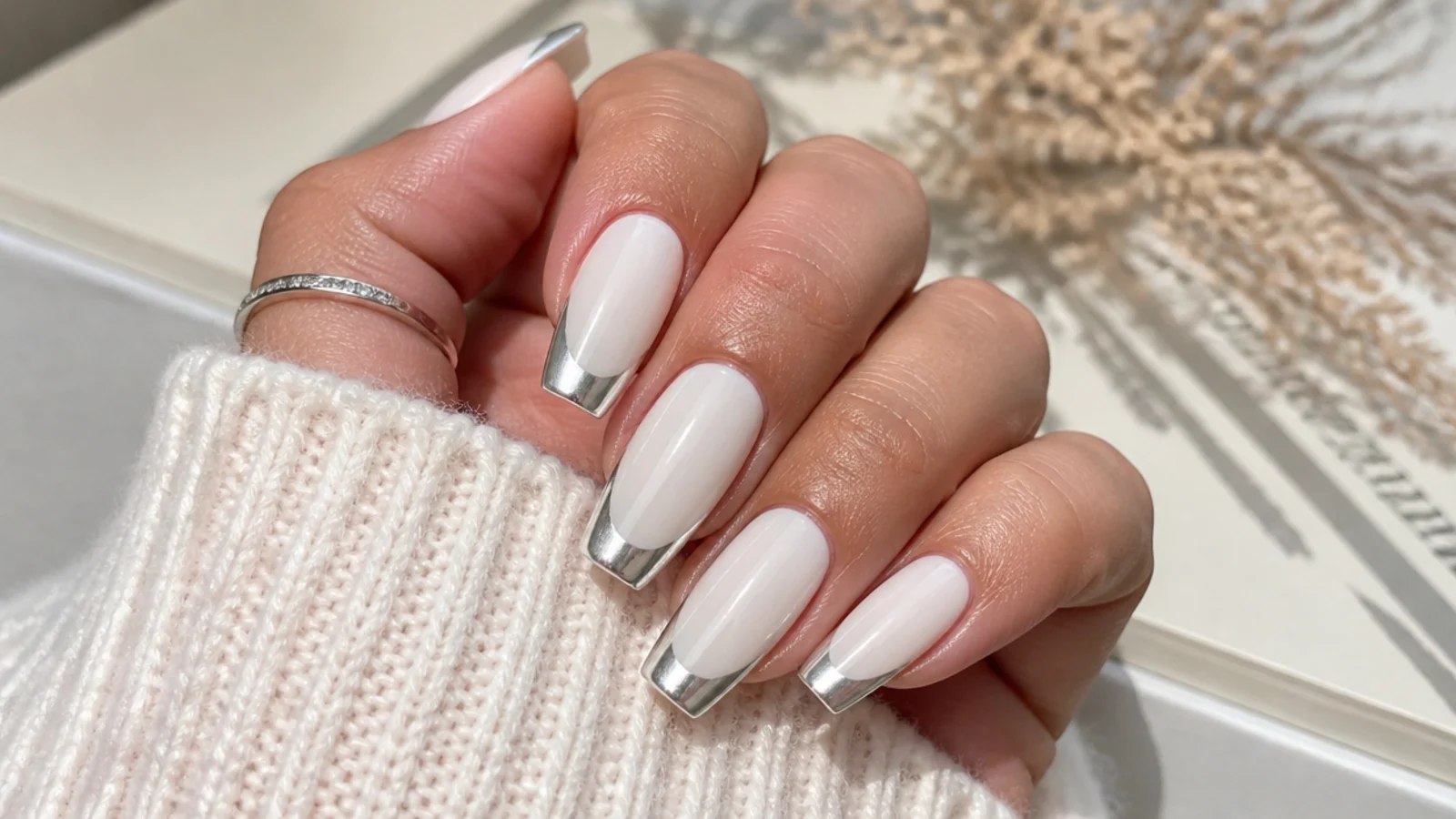
Chrome powder buffed over just the tip band, so the free edge turns liquid mirror while the rest of the nail stays matte or milky. It is fiddlier than a full chrome nail because the powder has to stop exactly at the smile line, which is why some techs chrome the whole nail then paint the base back over. Expect 10 to 20 dollars over a standard gel French. Silver is the default, rose gold the flattering option. Full technique in white chrome French tip nails.
Who it suits: Parties, New Year and anyone wanting shine without full metallic nails.
Tip: Ask for chrome applied over a no-wipe top coat, or the powder will not grip and will look patchy.
18. Glazed Pearl French Tip Nails
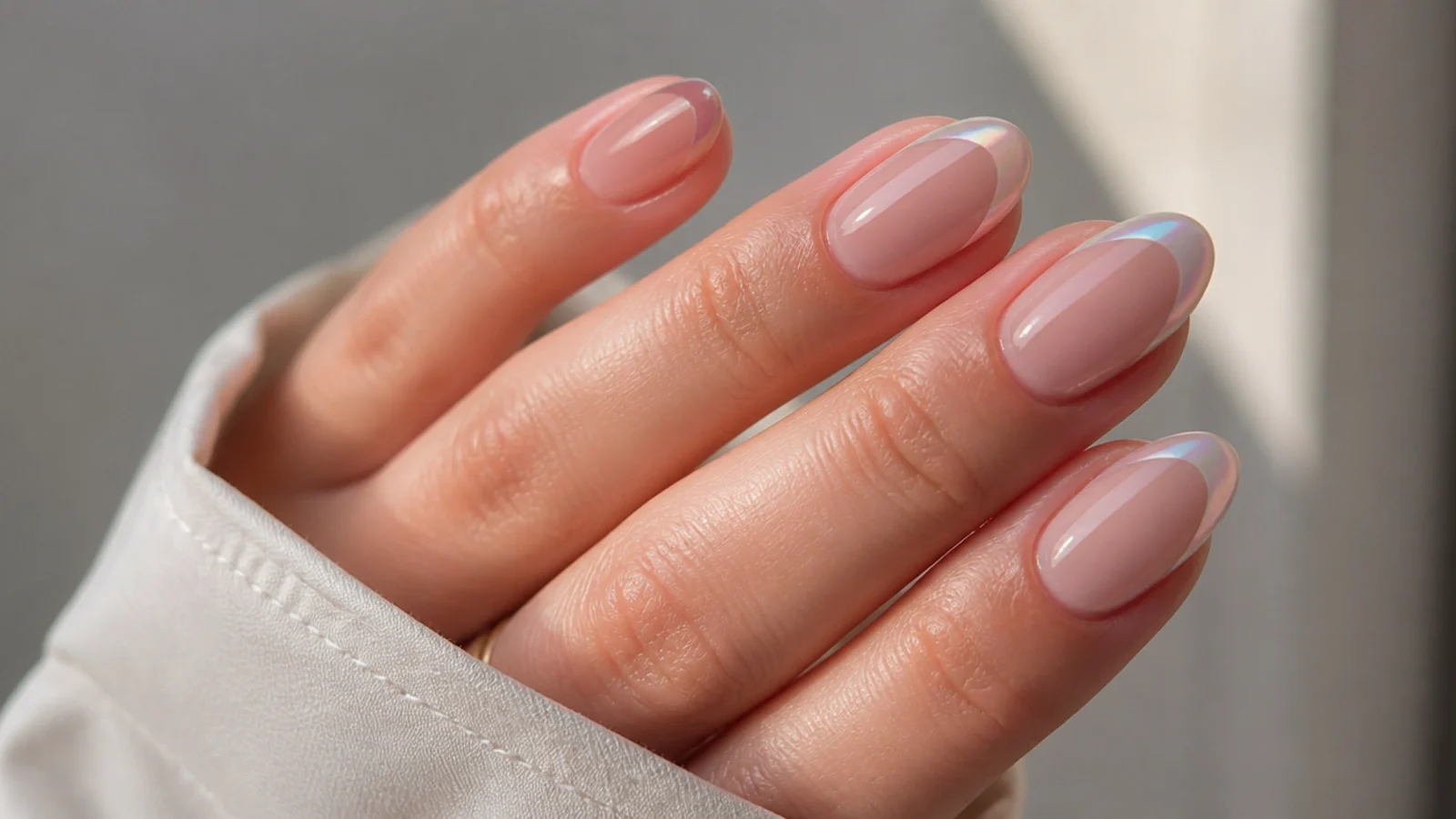
Aurora or pearl powder over a milky white tip, giving a soft iridescent shift instead of a hard mirror. This is the glazed donut finish applied only to the free edge, and it is the most wearable of all the shine options because it stays neutral from a distance and only sparks up close. It also hides regrowth better than silver chrome, since the pale base blends. Works on short nails, which is unusual for a metallic. Related in pearl white chrome nails.
Who it suits: Brides, everyday wear and anyone wanting subtle shine.
Tip: Ask for a milky base under the pearl powder, not clear, or the shift reads gray on natural nail.
19. Matte Black French Tip Nails
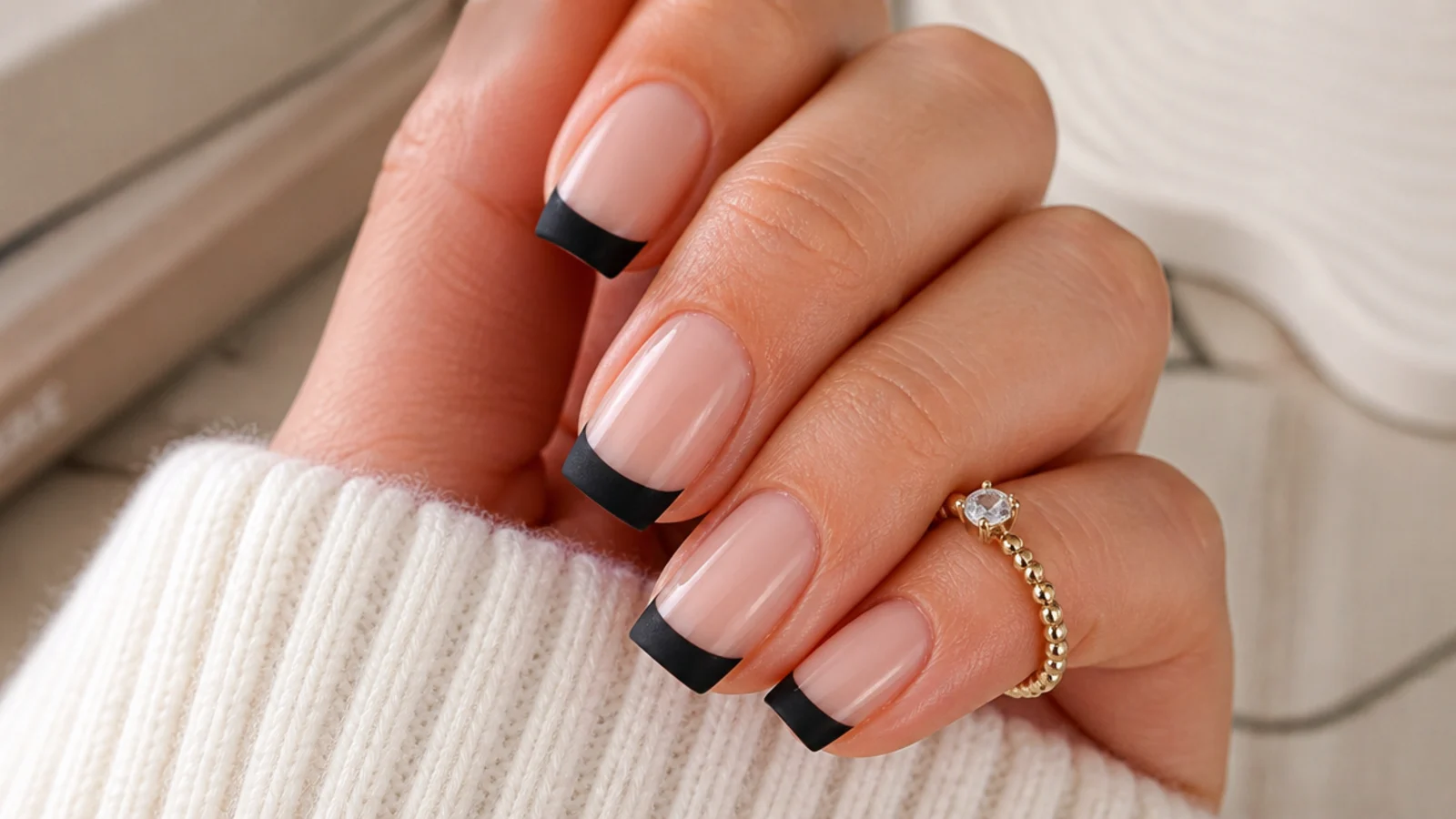
Flat black tips under a matte top coat with the base left glossy, so the contrast is texture as much as color. Here is the useful part: matte actually hides a slightly uneven smile line, because a flat finish scatters light instead of throwing a hard reflection down the edge of the line. If your tech is newer, matte black is the safer black. Expect the matte to dull further after about ten days and to spot where hand cream touches it. Compare finishes in matte black nails.
Who it suits: Anyone wanting black French with less risk of a visible wobble.
Tip: Keep cuticle oil off matte tips; oil leaves shiny patches that cannot be buffed back out.
20. Jelly Base French Tip Nails
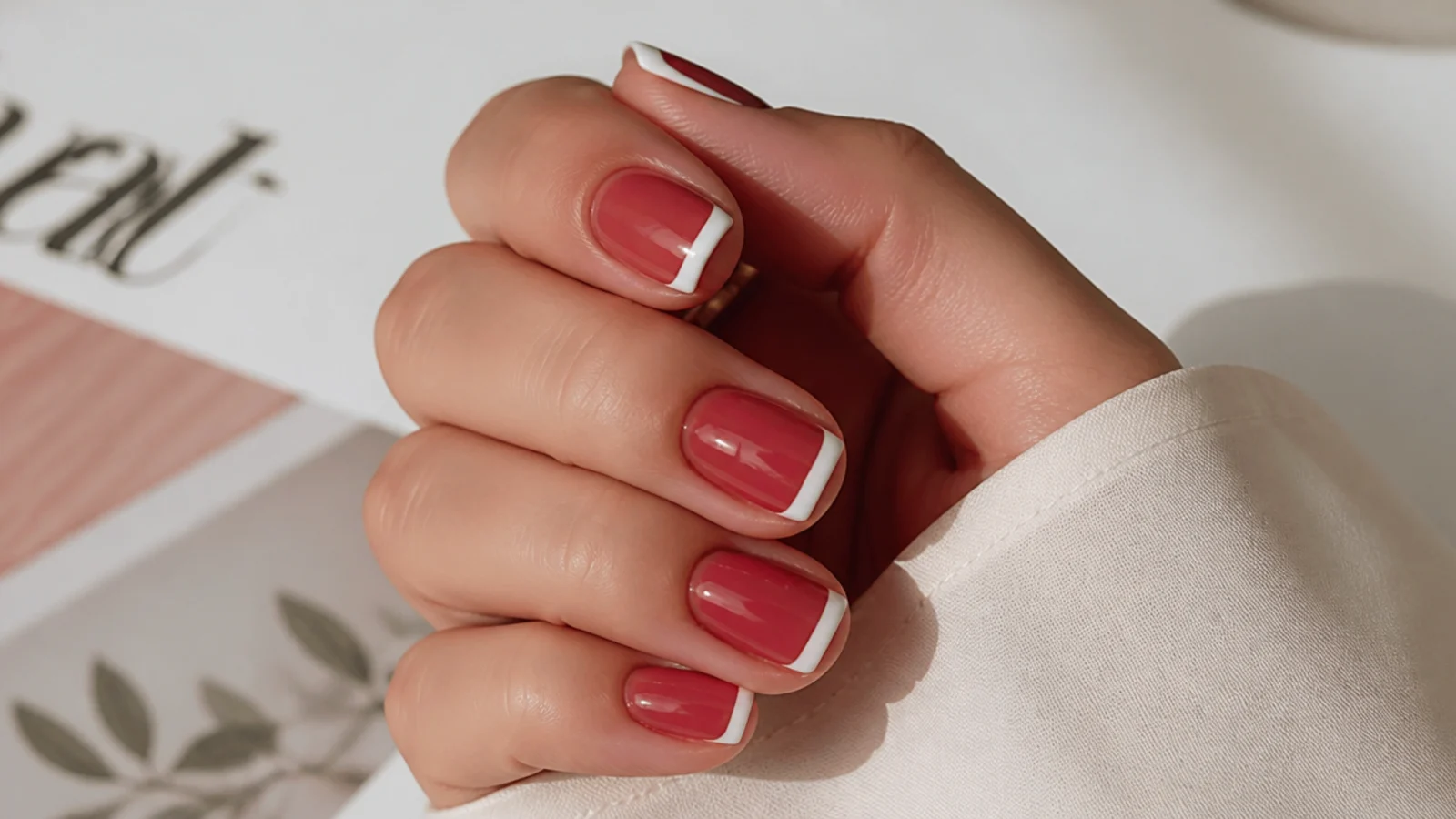
A translucent tinted overlay instead of a sheer nude base, so the whole nail glows peach, cherry or smoke gray and the opaque tip sits on top of it. Two jelly coats maximum, because a third kills the transparency the look depends on. It is the most 2026 way to wear a plain white French without changing the tip at all, and it survives office dress codes that ban brights because the color stays sheer. The glassy finish overlaps with soap nails.
Who it suits: Summer, Y2K looks and anyone wanting color that stays see-through.
Tip: Ask for jelly over a bare nail with no white underlayer, or the transparency never happens.
21. Swirl French Tip Nails
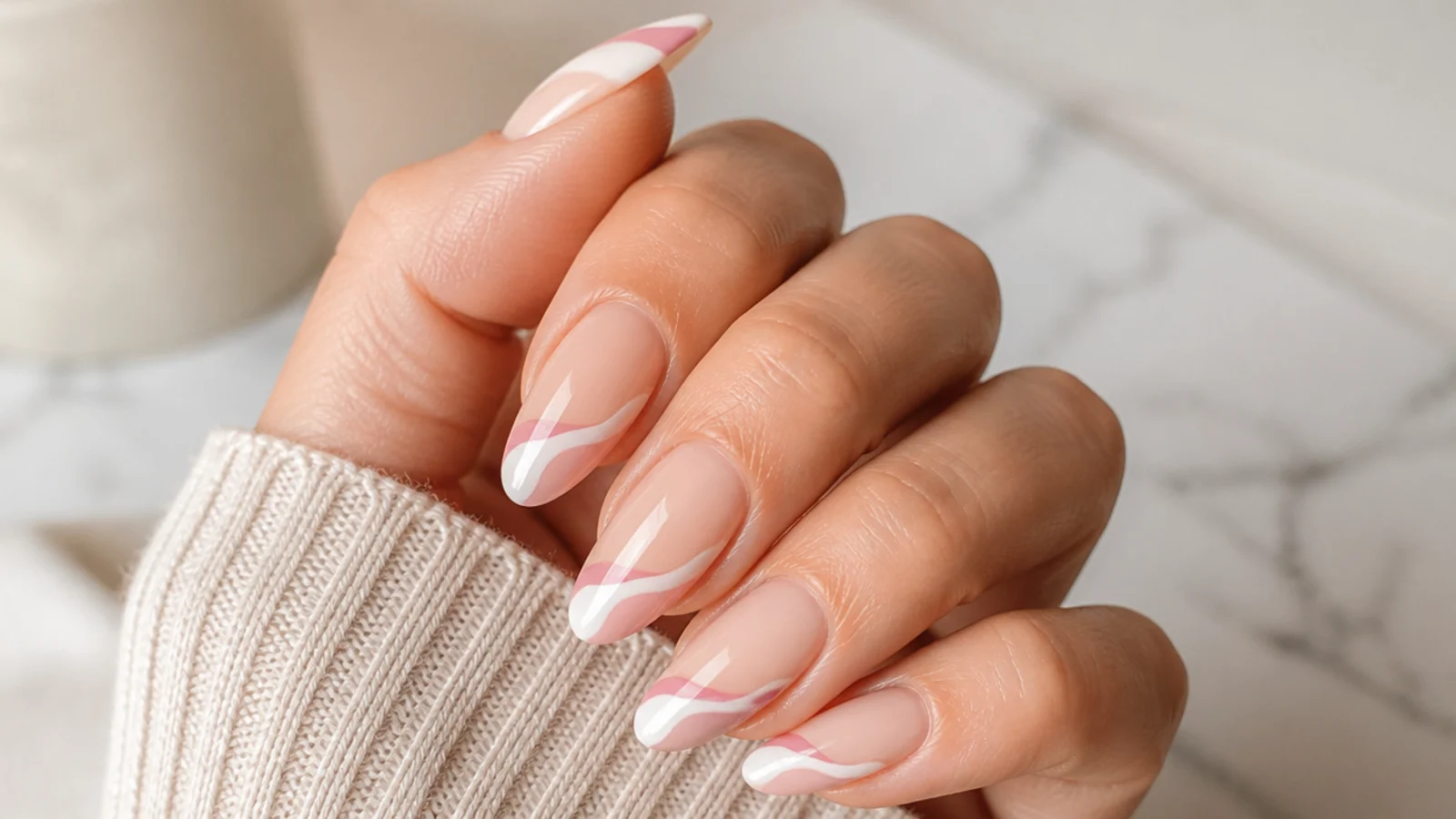
The smile line becomes a wave, curving up one sidewall and dipping down the other instead of running parallel to the free edge. It is the design that dominated nail social feeds through 2025 and 2026, and it is genuinely forgiving because a wavy line has no correct position, so nobody can see that it is uneven. Best with two colors, one swirl in white and one in a soft brown or blue. Needs 3mm of free edge for the wave to have room to move.
Who it suits: Anyone whose smile lines never come out even, and trend followers.
Tip: Ask for the swirl to cross the nail diagonally, so the wave reads as movement rather than a mistake.
22. Glitter French Tip Nails
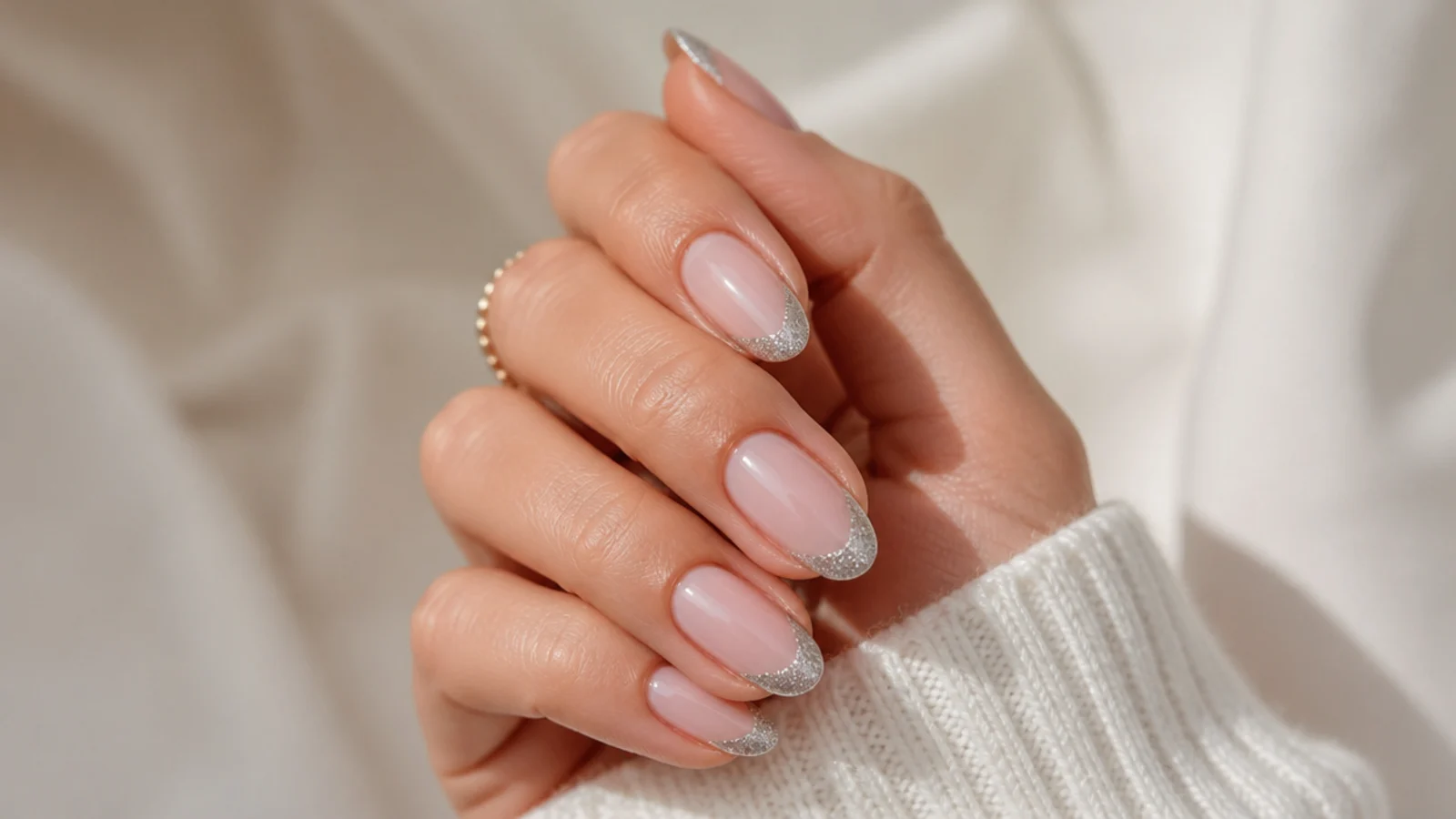
A silver or champagne glitter band in place of the white, most often applied densest at the edge and thinning slightly toward the smile line. It is the party French, and it has one real advantage: glitter completely hides an imperfect line, because the eye reads sparkle rather than an edge. It has one real drawback too, which is that glitter gel resists acetone and adds ten minutes to removal. Fine glitter reads elegant, chunky glitter reads festive.
Who it suits: Prom, New Year, weddings and anyone with a shaky hand.
Tip: Choose fine glitter over chunky if you want the set to still look right at the office on Monday.
23. Rhinestone French Tip Nails
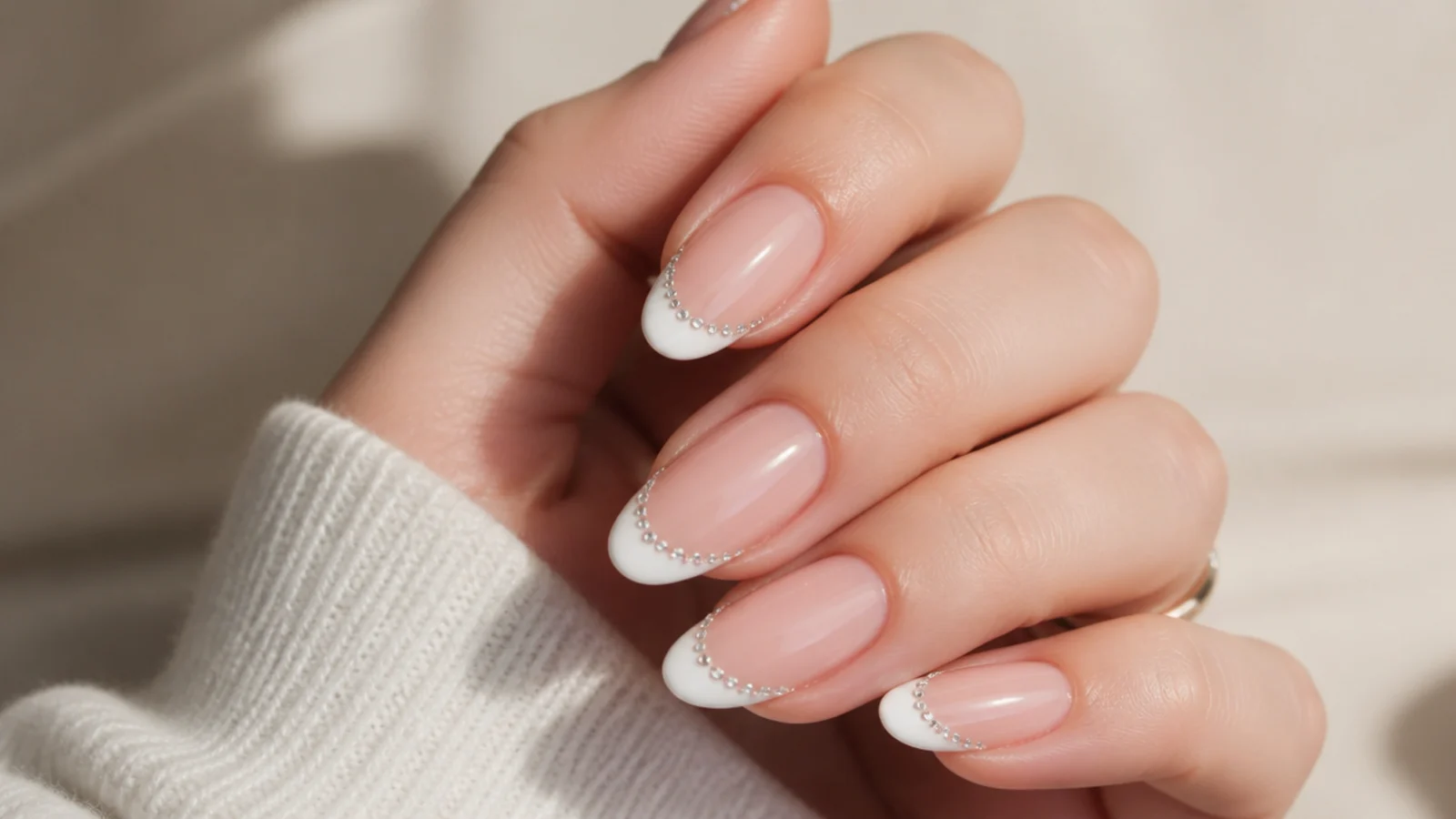
Tiny flatback crystals set in a line along the smile line, or clustered at one corner on two accent nails. This is the Y2K revival element and the one that most affects durability: rhinestones set in gel and capped with a builder bead survive a week of typing, while stones glued on top of a finished mani start dropping off in two days. Expect about 5 dollars per accent nail. Keep stones to two nails rather than ten unless you never use a keyboard.
Who it suits: Events, holidays and anyone wanting the Y2K look.
Tip: Ask for the stones encapsulated in builder gel, not glued on top, if you want them to last a week.
24. Daisy French Tip Nails
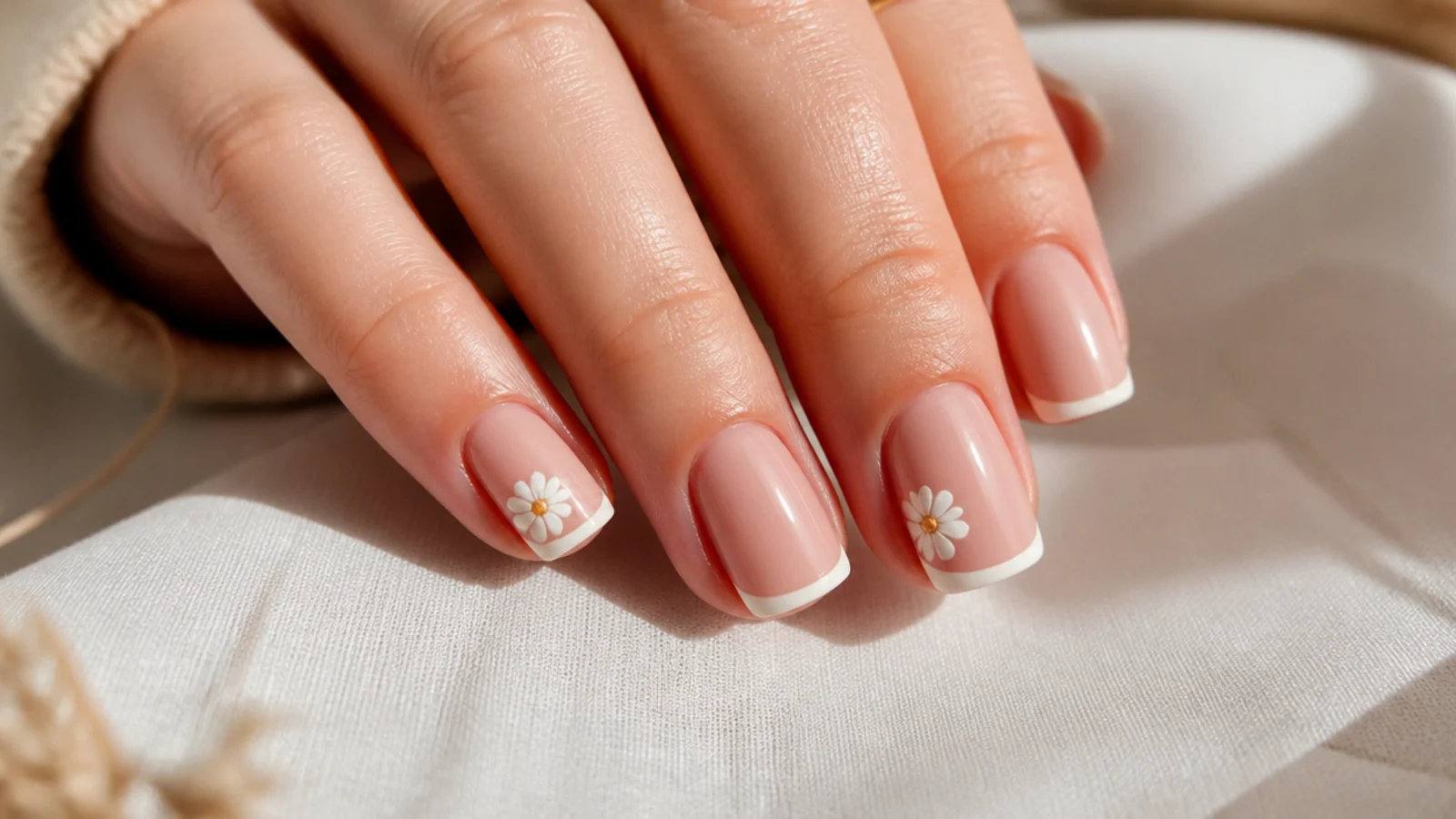
A classic tip on eight nails with a small hand-painted daisy on the two accent nails, usually white petals and a yellow dot center over the same sheer base. It is the friendliest add-on there is: a dotting tool makes it in under a minute per nail, so most salons charge little or nothing extra. Keep the flower near the cuticle end rather than the tip so it does not fight the smile line. Reads spring and summer, and works at any length.
Who it suits: Spring, summer and anyone wanting art without commitment.
Tip: Ask for two accent nails only, ring and index, so the daisies read placed rather than scattered.
25. Gold Foil French Tip Nails
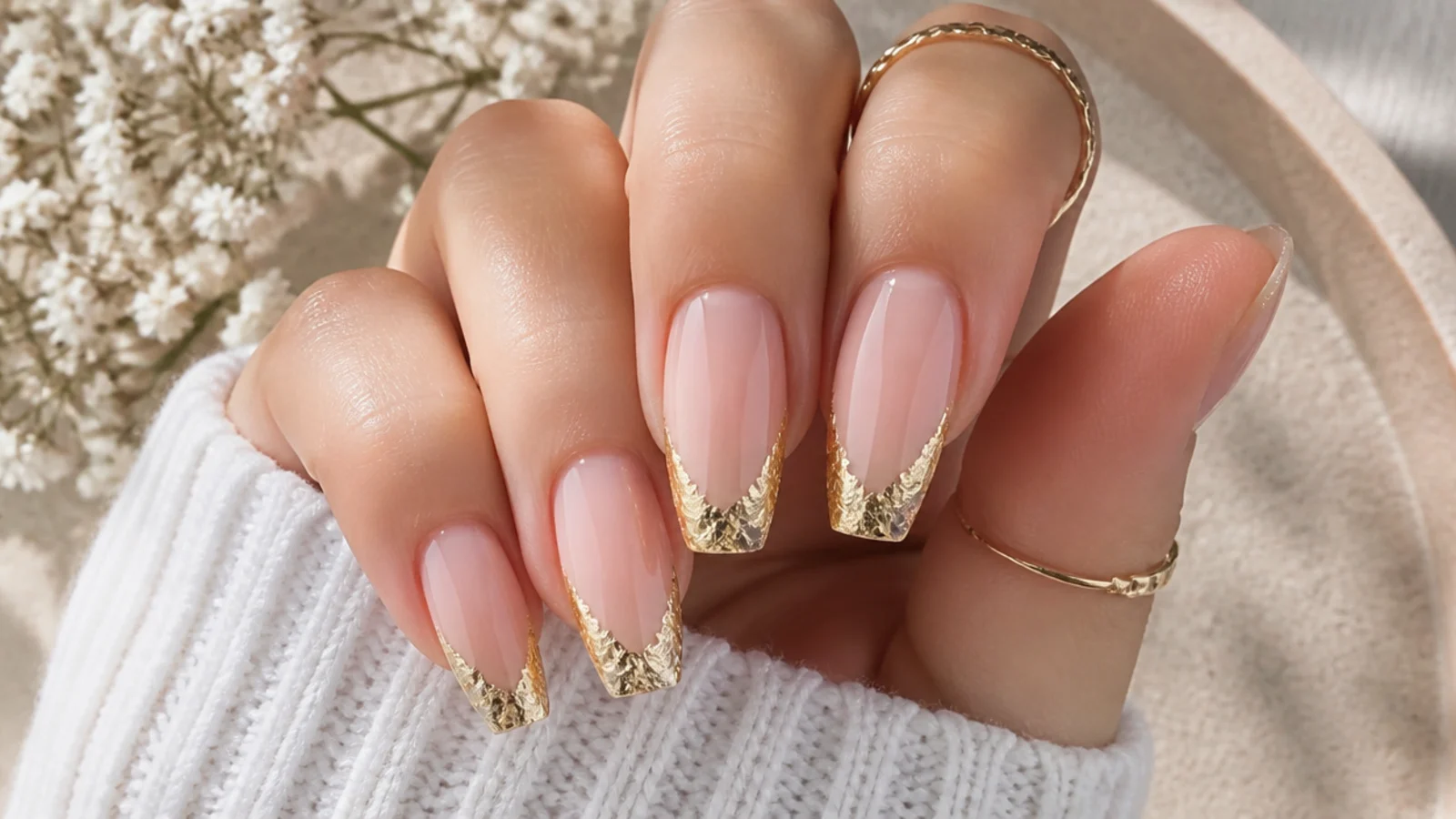
Torn fragments of gold leaf pressed along the free edge in place of a painted band, or laid as a thin line just under a white tip. The uneven broken edges are the whole point, so ask for foil scattered along the tip rather than full coverage. It is the most expensive-looking finish here for the least skill, and it costs about 5 dollars per foiled nail. The raised edges do need a thick top coat or they catch and lift within a week. Pairs well with the flat tip on coffin nails.
Who it suits: Holidays, New Year and anyone wanting texture on a classic base.
Tip: Ask for two thick top coat layers over foil; a single coat leaves edges proud enough to snag.
What Are French Tip Nails and How Do They Differ From a French Manicure?
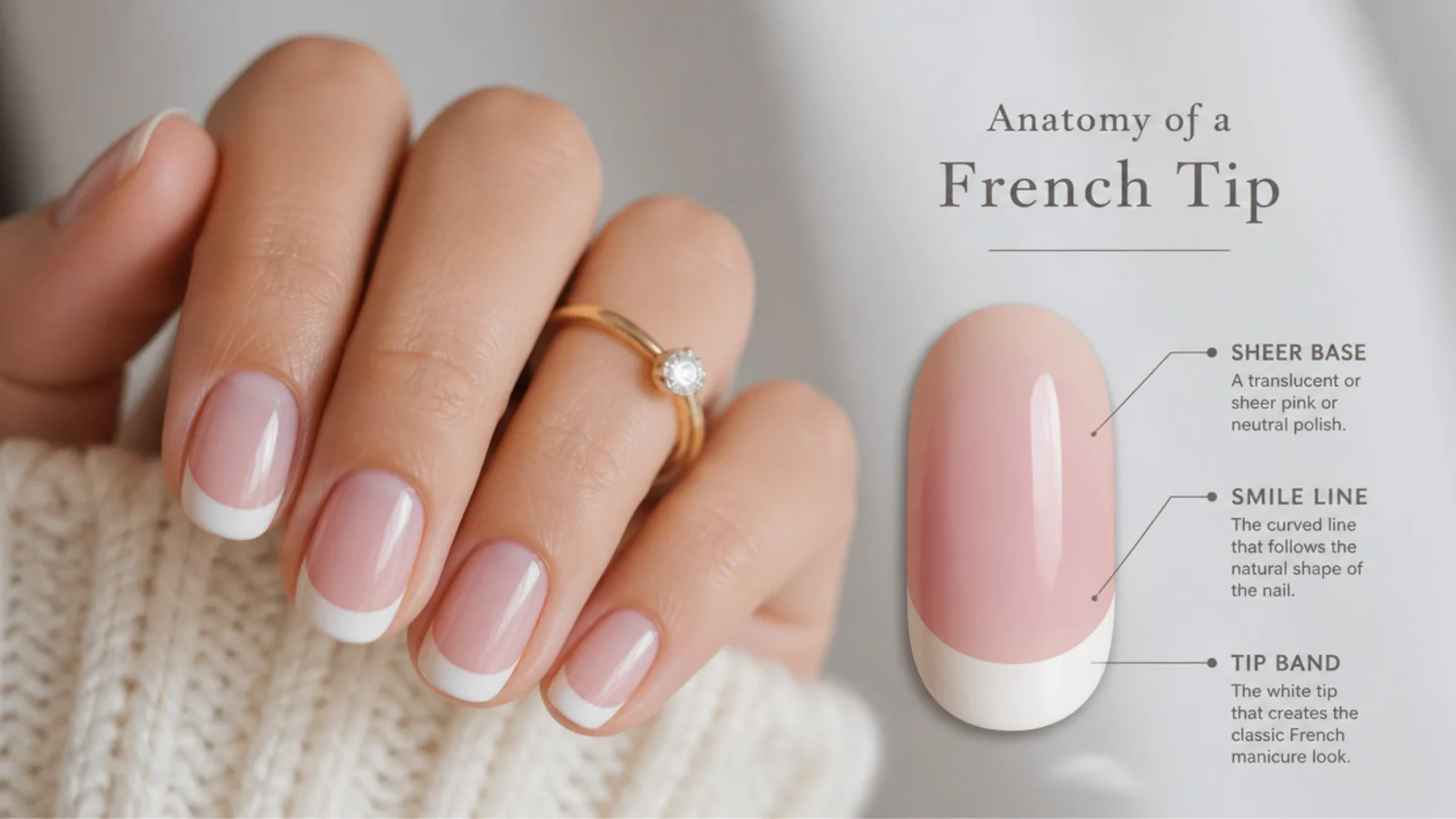
A French tip is the band of color painted along the free edge of the nail. A French manicure is the whole finished look: nail prep, a sheer pink or nude base, that band, and a glossy top coat. In everyday use the two phrases mean the same thing, and no salon will correct you. The part that actually matters is the smile line, the curve where the tip band meets the nail bed. Its shape, depth and symmetry decide whether a set looks professional. A traditional French pairs a sheer pink base with an opaque white tip; every variation on this page changes one of those three variables. Change the color and you get a black or red French. Change the line into a fade and you get baby boomer. Move the line to the cuticle and you get a reverse French. Add a second line and you get a double French. That is the entire taxonomy, which is why the style survives decade after decade. Start at the French tip nails hub to see how each family branches.
Are French Tips Still in Style in 2026?
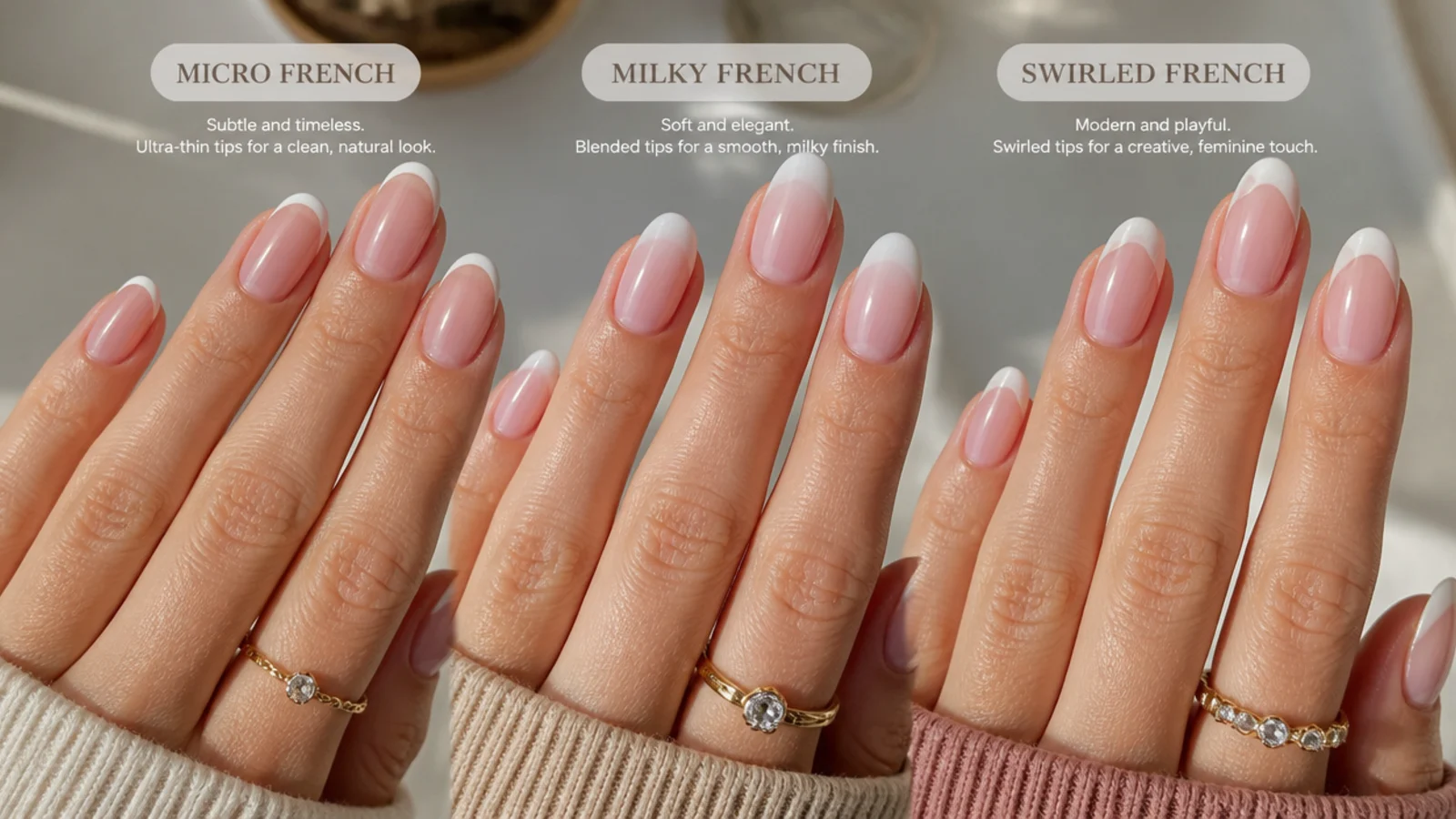
Yes, but the 1990s version is not what people are asking for. The French tip in 2026 has moved in four clear directions. First, thinner: the micro or skinny French at about 1mm has replaced the 5mm white block, and it is now the default on short nails. Second, softer: milky white and glazed pearl have taken over from stark bright white, because they photograph better and forgive an uneven line. Third, structural: double lines, deep V lines and swirled waves keep the concept while abandoning the parallel curve. Fourth, colored: black, cherry red, chocolate brown and lavender all read as French now, not as a departure from it. What genuinely looks dated is a thick, chalky white tip with a straight-across line on a long square nail. Keep the band under 5mm, ask for a curve rather than a straight line, and any color on this page reads current. For the trend-forward end of the range, see cat eye French tip nails.
The Six Types of French Tip Nail Art Explained
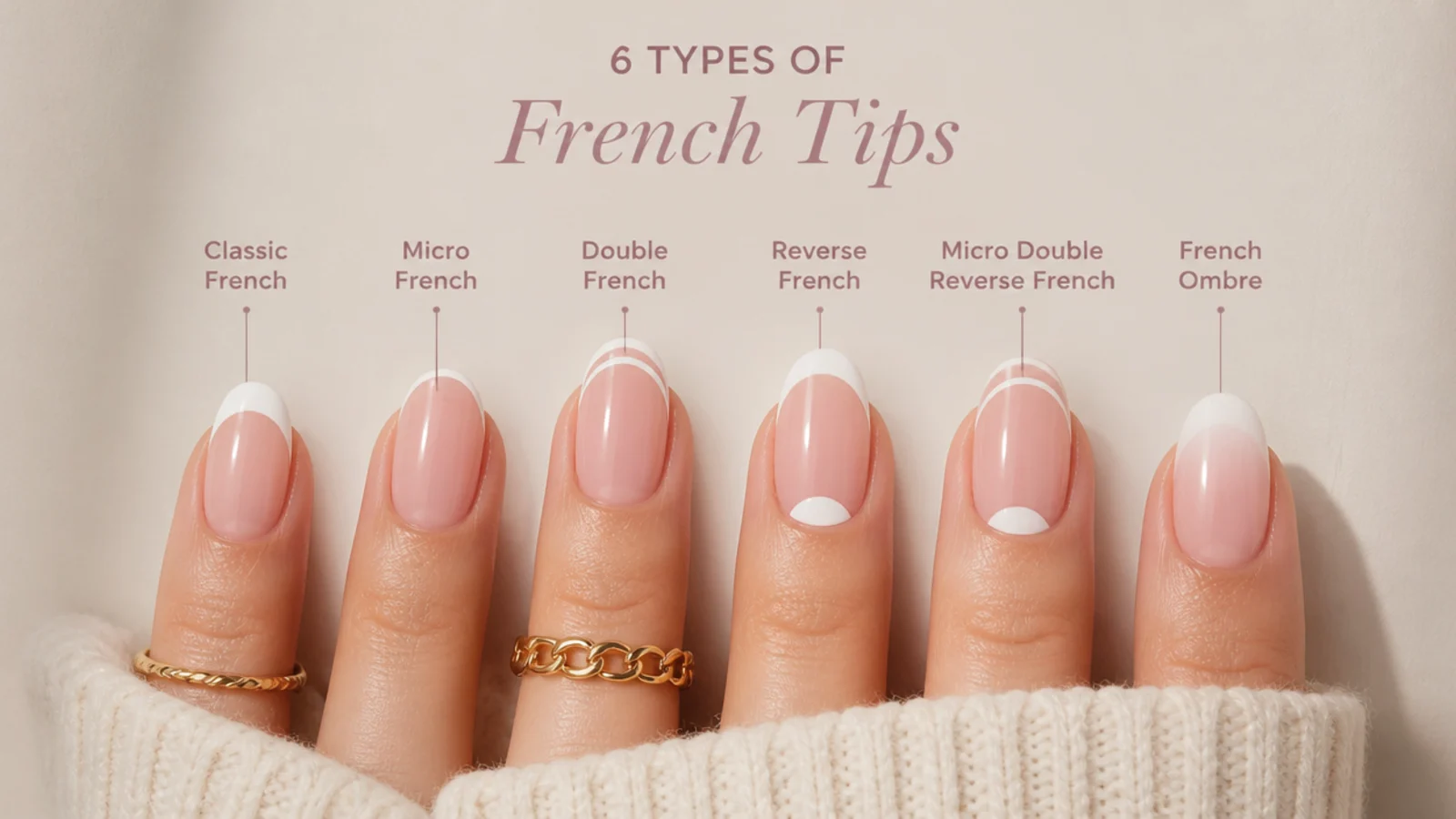
Every design on this page belongs to one of six families, and knowing the family name is what gets you the right set at the salon. Classic is an opaque 3 to 5mm band with a curved smile line, and it is still the wedding standard. Micro is the same line pushed to 1 to 2mm, gel only, and it is the short nail winner. Double stacks a thin contrasting outline under the main band, usually a third of its thickness. Reverse moves the curve to the cuticle as a half moon, which makes regrowth invisible. Ombre, which techs call baby boomer, blurs the line into a fade with no hard edge at all. Embellished keeps a standard tip and adds glitter, foil, rhinestones or hand-painted flowers on top. Cost climbs roughly in that order: classic and micro are standard price, ombre adds 10 to 20 dollars, and embellishment adds about 5 dollars per accent nail. The design-led end of the range is covered in white French tip nails.
How Thick Should a French Tip Be for Your Nail Length and Shape?
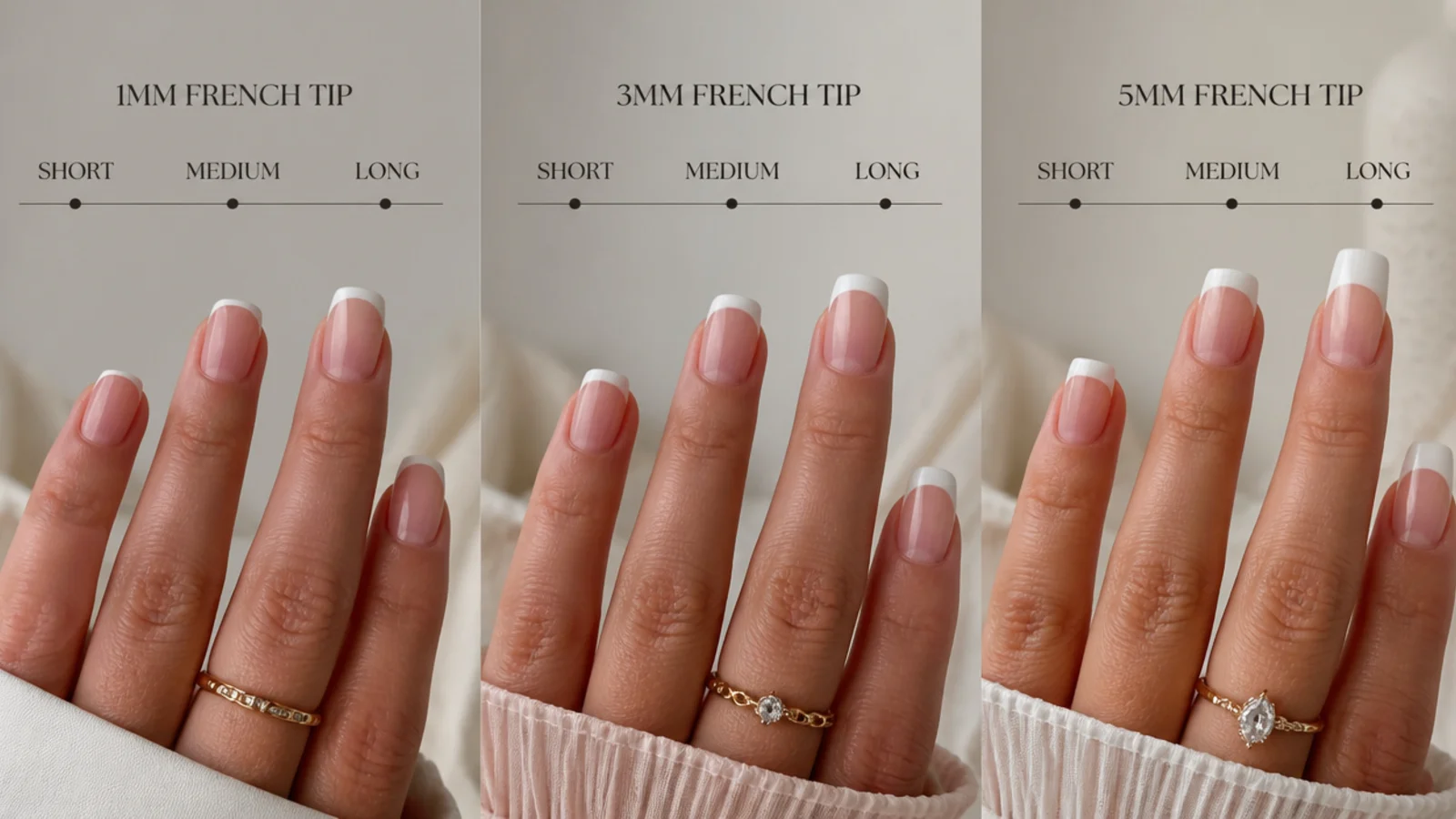
Nobody gives an actual number, so here is one. On a short nail with under 3mm of free edge, keep the band at 1 to 2mm and keep the smile line shallow. A deep U curve on a short nail cuts the visible nail bed in half and makes the finger look stubby, and a hard white against nude contrast chops it further. On a medium nail at 4 to 6mm, a 3mm band is the sweet spot. On long nails past 6mm you can carry 4 to 5mm without it looking heavy. Shape changes the curve, not the depth. Square and squoval want a shallow, wide smile line that runs close to parallel with the free edge. Almond and oval want a deeper curve that follows the taper, or the tip looks pasted on. Coffin wants a straight, architectural line because the flat tip gives it somewhere to sit. Stiletto is the only shape a deep V really works on. Length-specific guidance is in short French tip nails and short almond nails.
What French Tip Nails Cost and How Long Each Version Lasts
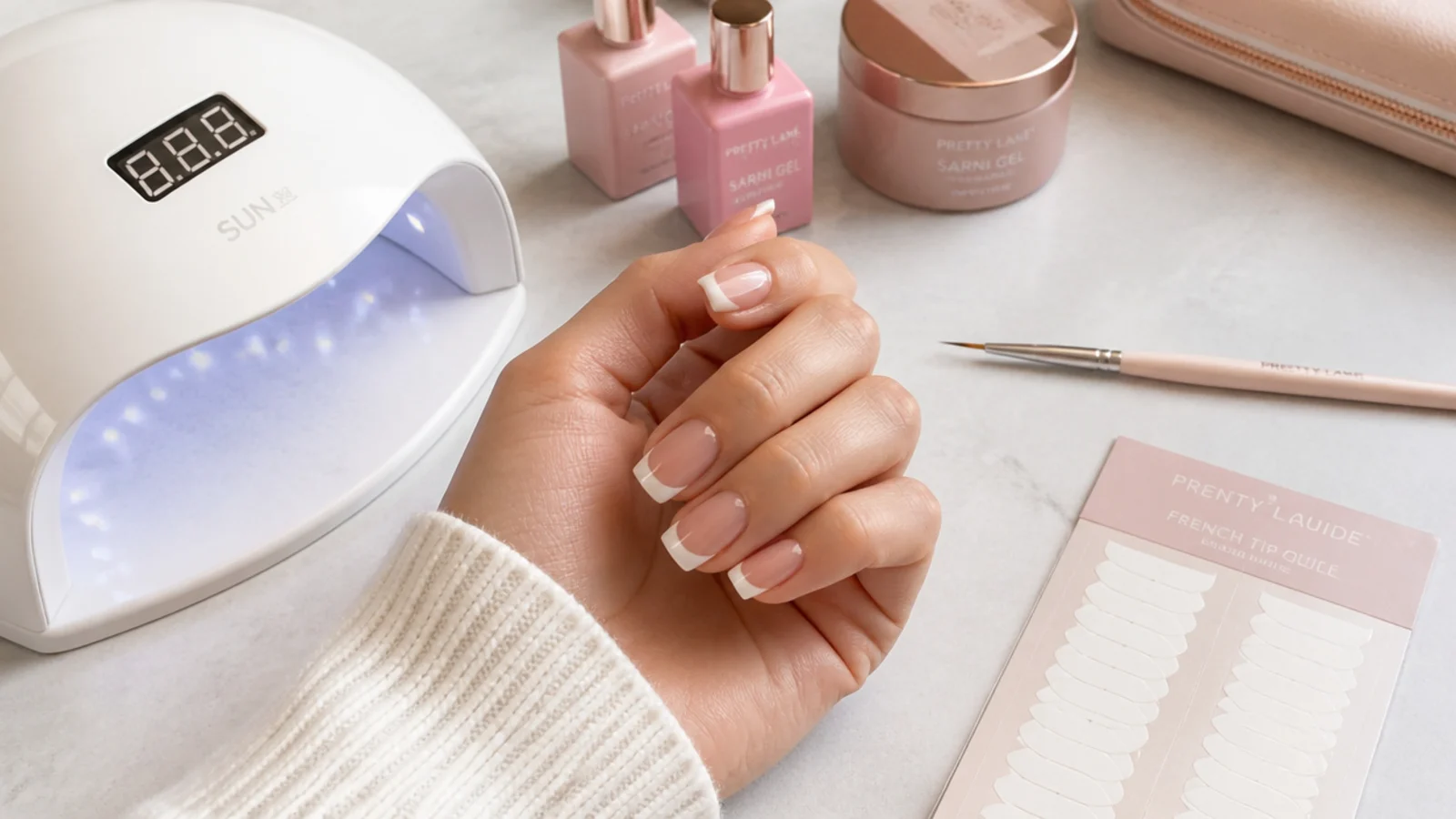
Regular polish over natural nails is the cheapest route at roughly 25 to 40 dollars, and it lasts five to seven days before the tip starts to wear off the free edge, which is always the first place a French chips. Gel is the standard choice at about 40 to 70 dollars and holds two to three weeks with the line intact. Acrylic or Gel-X extensions run 60 to 120 dollars and up, last three to four weeks, and need a fill every two to three weeks once the regrowth gap sits below the smile line. Custom design work sits at 80 to 150 dollars and up. Add-ons are priced separately: ombre or baby boomer adds 10 to 20 dollars, chrome adds 10 to 20, and hand-painted art or rhinestones add about 5 dollars per accent nail. A full DIY setup with a lamp, base, gel white, liner brush and top coat comes in under 40 dollars, which means it pays for itself in a single skipped gel appointment. The full home method is in how to do French tip nails at home.
French Tip Troubleshooting: Uneven Smile Lines and Wobbly Edges
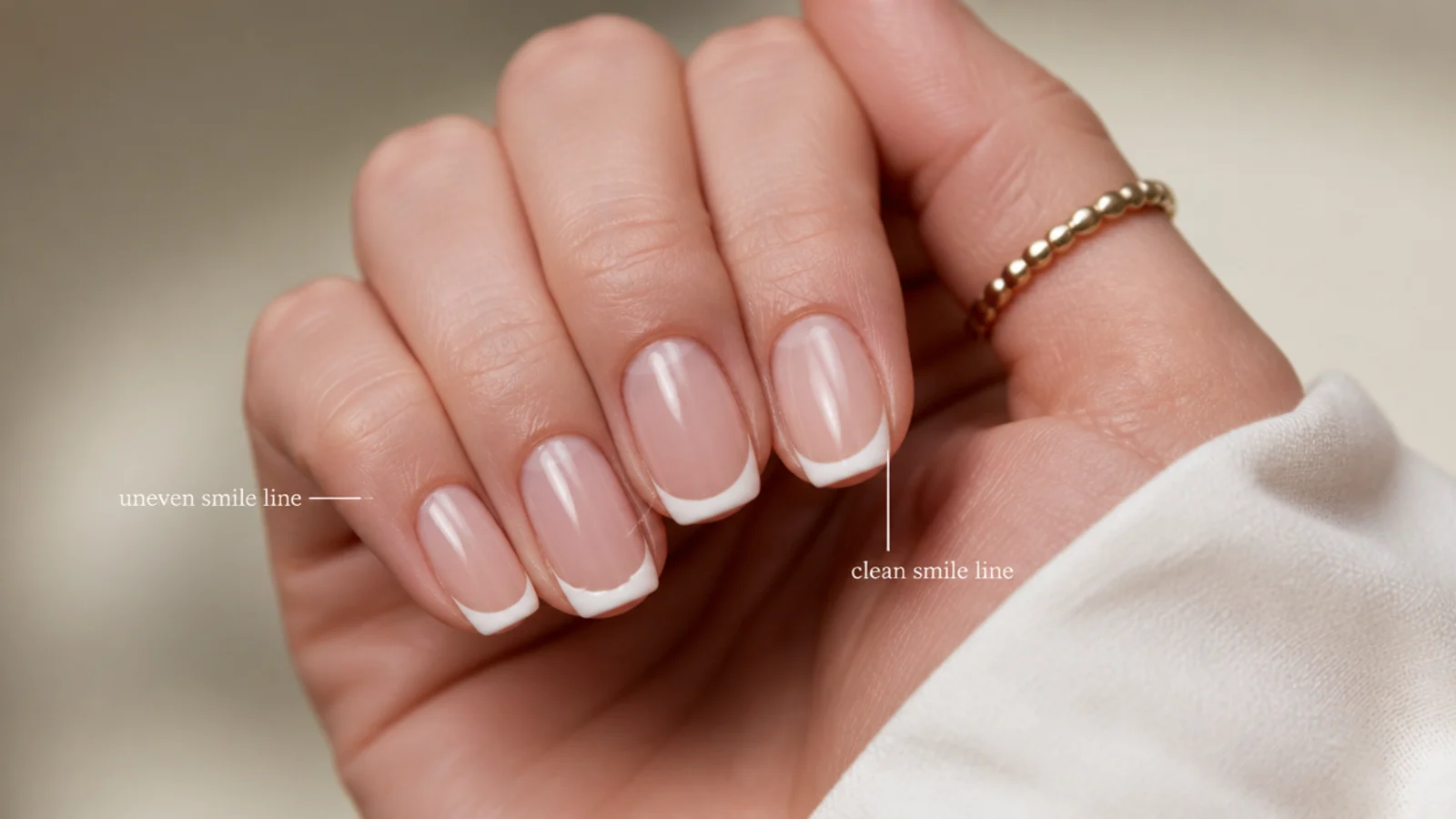
Five failures cover almost every bad French, and each has a fix. If the line is asymmetric side to side, you painted from one angle only. Turn the hand so you look straight down the finger from the tip before you commit to the curve. If the tip dragged and smeared, the base was still wet; a base coat needs to be fully dry or fully cured before any tip goes on, and this is why tape guides fail so often. If the line is thick and clumsy on short nails, the brush was overloaded. Wipe it almost dry and build the band in two passes rather than one. If the curve looks flat rather than smiling, you drew a straight line; the band must dip lowest in the center of the nail. And if the edge is fuzzy, you skipped cleanup, which is the step most tutorials omit: run a flat synthetic brush dipped in isopropyl alcohol along the inside of the smile line to cut it sharp before curing. Matte and glitter finishes forgive a wobble; glossy black and cherry red expose it. Classic versus magnetic technique is compared in cat eye vs classic French tip.
Frequently Asked Questions
What are the different types of French tip nail art?
There are six families. Classic is a 3 to 5mm opaque band, micro is the same line at 1 to 2mm, double adds a thin contrasting outline underneath, reverse moves the curve to the cuticle as a half moon, ombre or baby boomer blurs the line into a fade, and embellished adds glitter, foil, rhinestones or painted art over a standard tip.
Are French tips still in style in 2026?
Yes, though the shape has changed. Thin micro tips, milky white instead of stark white, swirled and double lines, and colored tips in black, brown and cherry red are all current. What looks dated is a thick chalky white band with a straight-across line on a long square nail. Keep it under 5mm with a curved smile line and it reads modern.
What is the difference between a French manicure and a French tip?
A French tip is the painted band along the free edge. A French manicure is the complete service: prep, sheer pink or nude base, the tip band, and top coat. In practice people use both phrases for the same look and no salon will correct you. The part that decides how good it looks is the smile line where the tip meets the nail bed.
How thick should a French tip be?
Match it to your free edge. Under 3mm of length, keep the band at 1 to 2mm with a shallow curve. At 4 to 6mm, a 3mm band is the sweet spot. Past 6mm you can carry 4 to 5mm without looking heavy. Anything over 6mm on any length reads like a 1990s acrylic set rather than a current French.
Do French tips make short nails look longer?
A thin one does. A 1 to 2mm micro line traces the edge without eating the nail bed, so the bed stays fully visible and the nail reads longer. A thick, high-contrast white band does the opposite: it draws a hard horizontal stripe that visually chops the nail. On short nails, thin line and low contrast are the two rules that matter.
How much do French tip nails cost?
Regular polish runs about 25 to 40 dollars, gel about 40 to 70, and acrylic or Gel-X extensions about 60 to 120 and up, with custom design work reaching 80 to 150. Ombre adds 10 to 20 dollars, chrome adds 10 to 20, and rhinestones or hand-painted art add roughly 5 dollars per accent nail. A DIY kit costs under 40 dollars total.
How long do French tip nails last?
Regular polish gives five to seven days, and the tip wears off the free edge first because that edge takes every knock. Gel holds two to three weeks with the line intact. Acrylic and Gel-X last three to four weeks and need a fill every two to three weeks, once regrowth pushes the smile line away from where it should sit.
Why do my French tips look uneven?
Usually one of three things. You painted from a single angle instead of looking straight down the finger from the tip, the base coat was still wet so the tip dragged, or you drew a straight line rather than a curve that dips lowest in the center. The fix nobody mentions is cleanup: a flat brush with isopropyl alcohol run along the inside of the line.
What is a micro French tip?
A hairline band about 1mm deep painted right along the very edge of the nail. It has become the default modern French because it gives the outline without the visual weight, so short nails do not look shorter. It has to be done in gel, since a 1mm polish line wears off the free edge within about two days of normal use.
Can you do French tips on natural nails?
Yes, from about 2mm of free edge. Below that there is nowhere for the band to sit and the color floods into the nail bed. On natural nails, gel over a base coat gives the best result because it will not chip off the edge the way polish does. Keep the tip thin, since natural nails are usually shorter than enhancements.
Which french tip nails look are you saving?
If you take one thing from these 25 French tip nails, make it the millimeter rule. Tip depth is what dates a French manicure, not color: 1 to 2mm reads modern on short nails, 3 to 5mm reads classic on long ones, and anything past 6mm reads like a 1998 acrylic set. Name that number when you book, ask for a curved smile line rather than a straight one, and ask for gel rather than polish if you want the line to survive past day five. Start with classic white or milky white if this is your first set, then move to micro, double or chrome once you know how thick you like the band. Next, read white French tip nails for the bright-versus-milky decision, or browse the whole French tip nails hub.