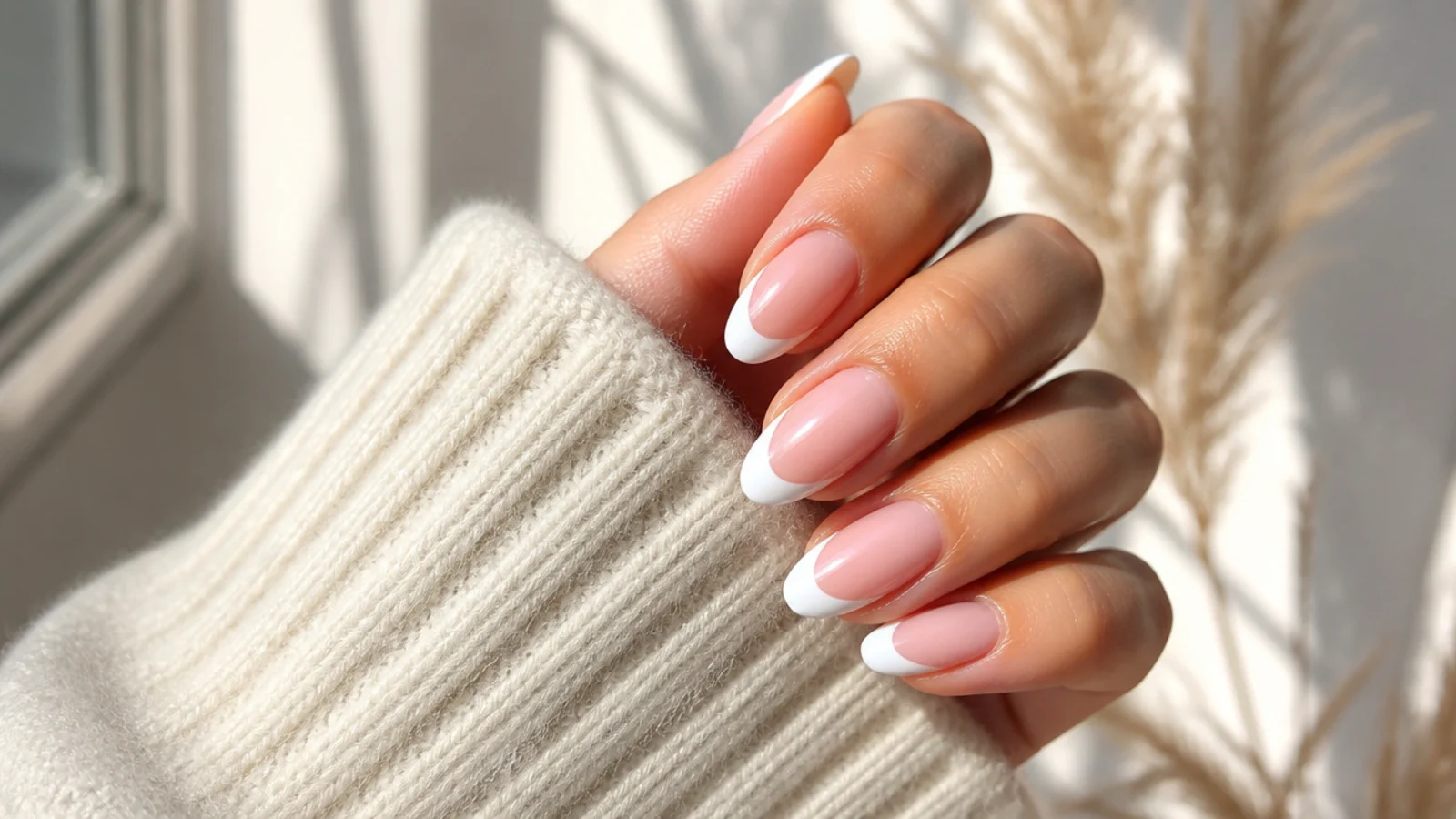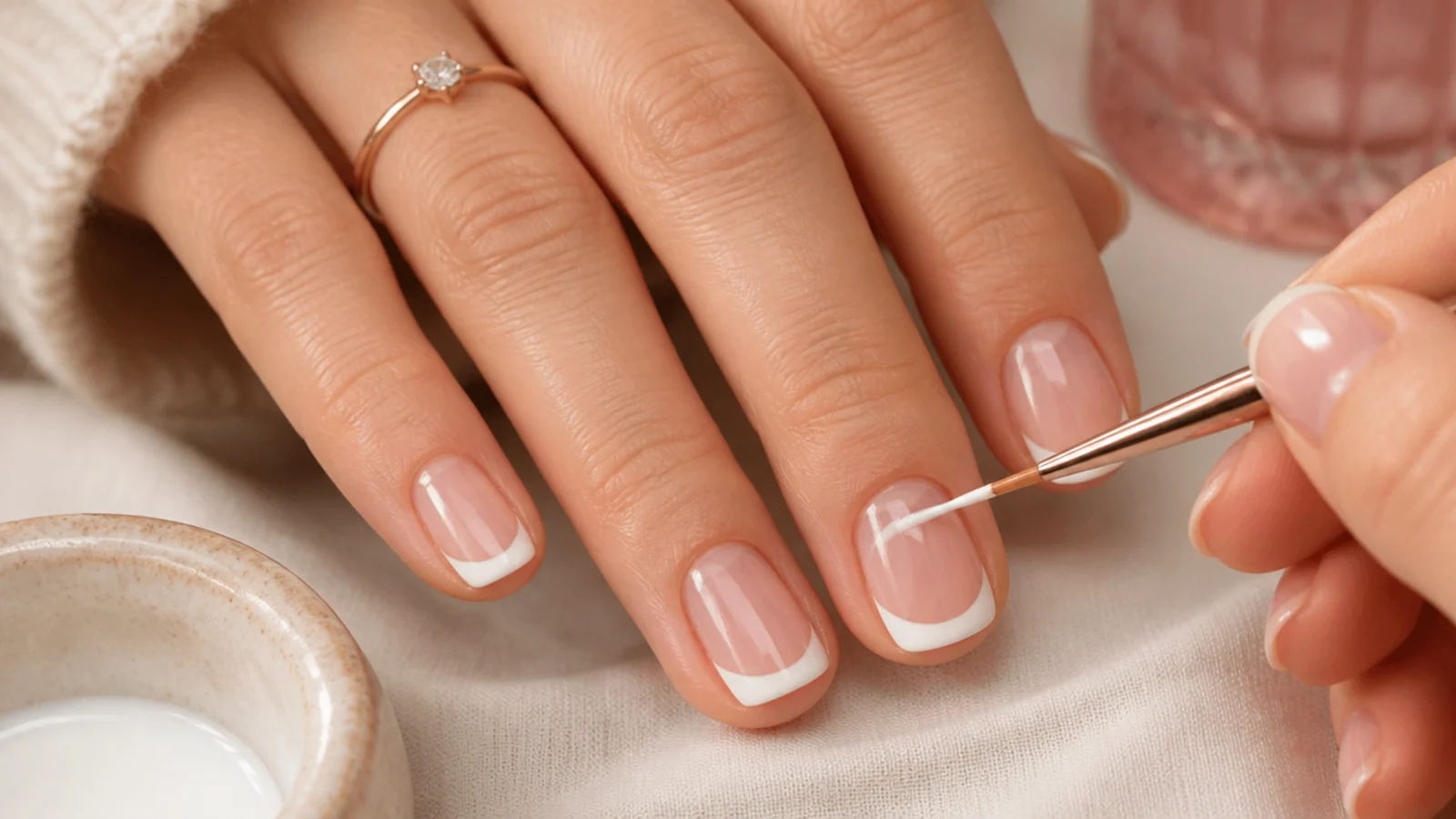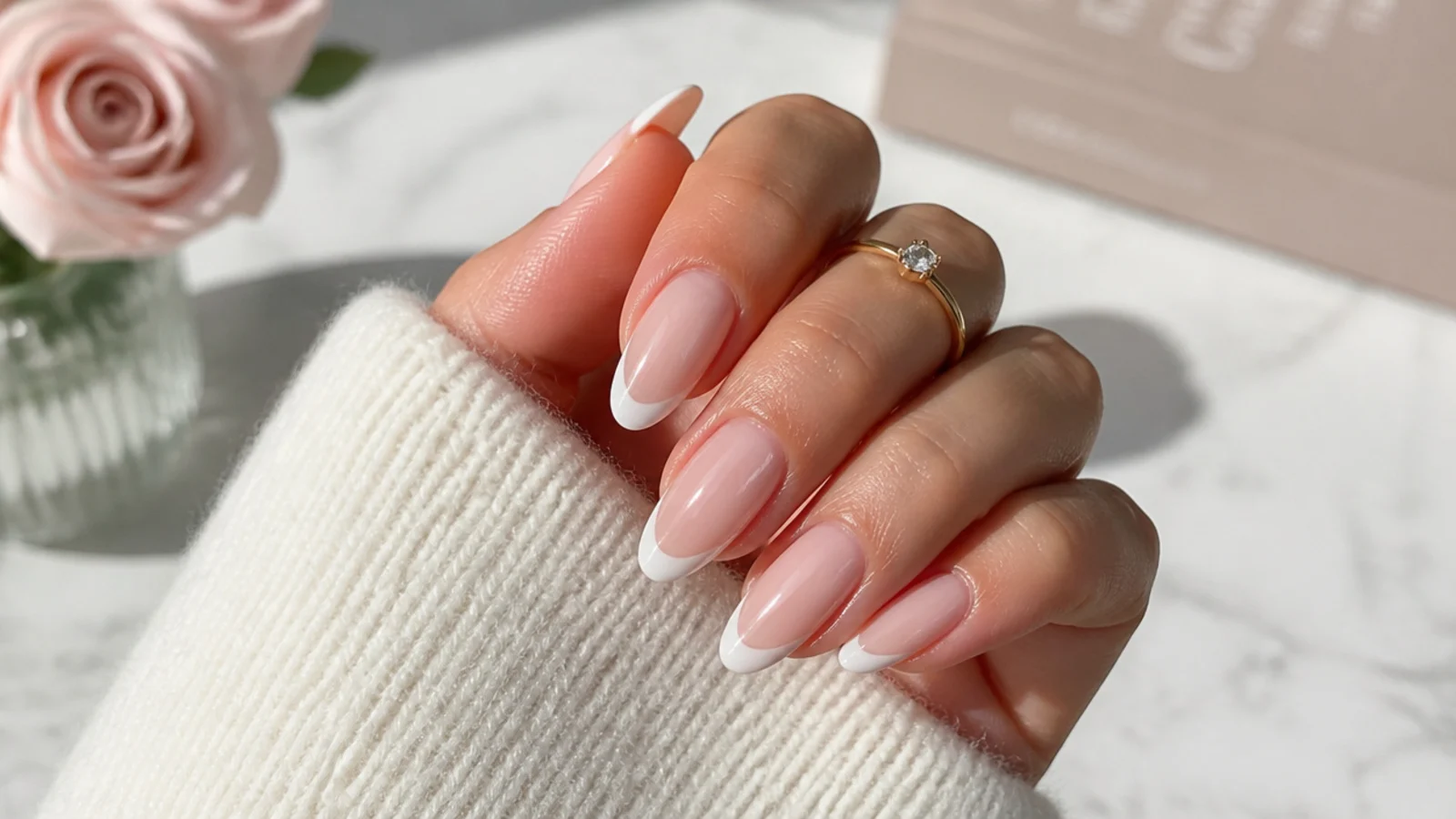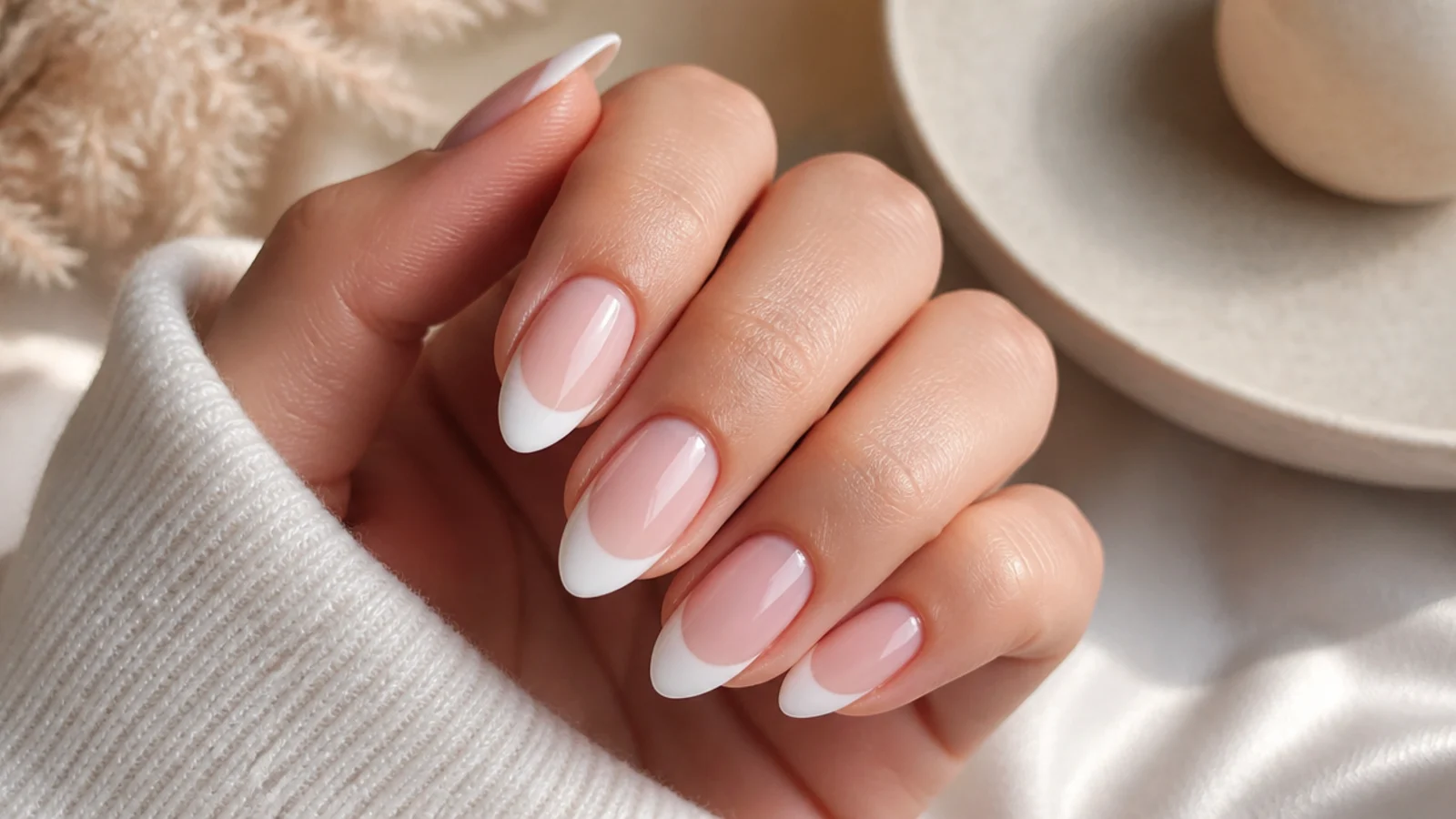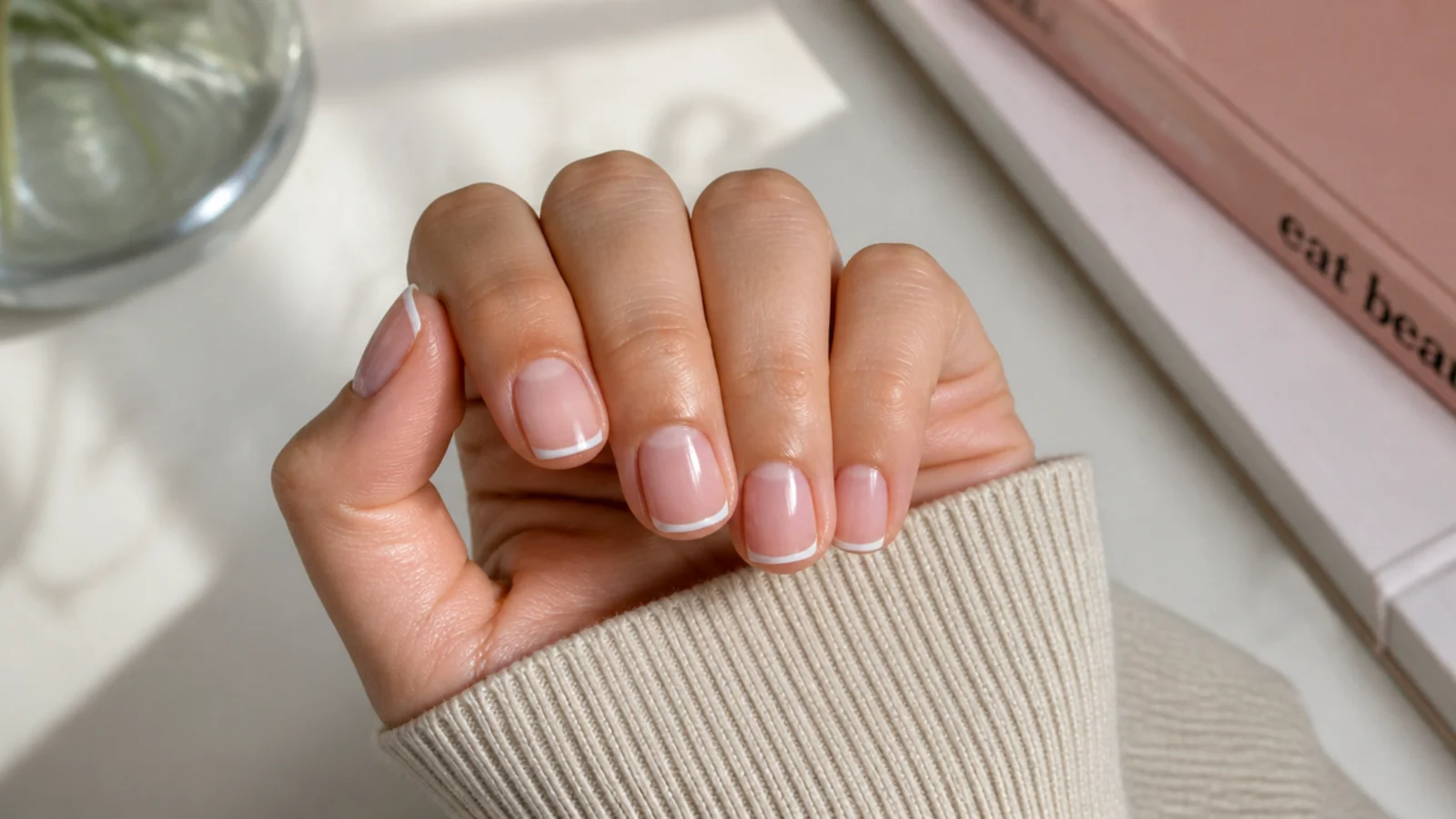
Quick Comparison
| Micro French on Short Nails | Classic Wide French on Short Nails | |
|---|---|---|
| Tip depth | 1 to 1.5mm hairline band | 3 to 4mm salon standard |
| Effect on nail length | Lengthening; nail bed stays fully visible | Shortening; the band eats a third of a short nail |
| Smile line shape | Shallow, almost parallel to the free edge | Deep curve that pushes color toward the cuticle |
| Best base | Bare, sheer pink or milky | Opaque nude, which flattens the bed further |
| Forgiveness of a wobbly line | Low; a fine line shows every waver | Higher; a wide band hides small errors |
| Best tool | Thin liner brush in gel | Guide stickers or a silicone stamper |
| Regrowth visibility | Barely visible; nothing sits near the cuticle | Visible at about 10 days as the band shifts up |
| Best colors | White, black, gold, milky and nude | Soft pastels and nudes only; black looks heavy |
| Salon time and cost | Adds 10 to 15 minutes; 40 to 70 dollars in gel | Standard timing; 40 to 60 dollars in gel |
1. Micro French Tip Short Nails
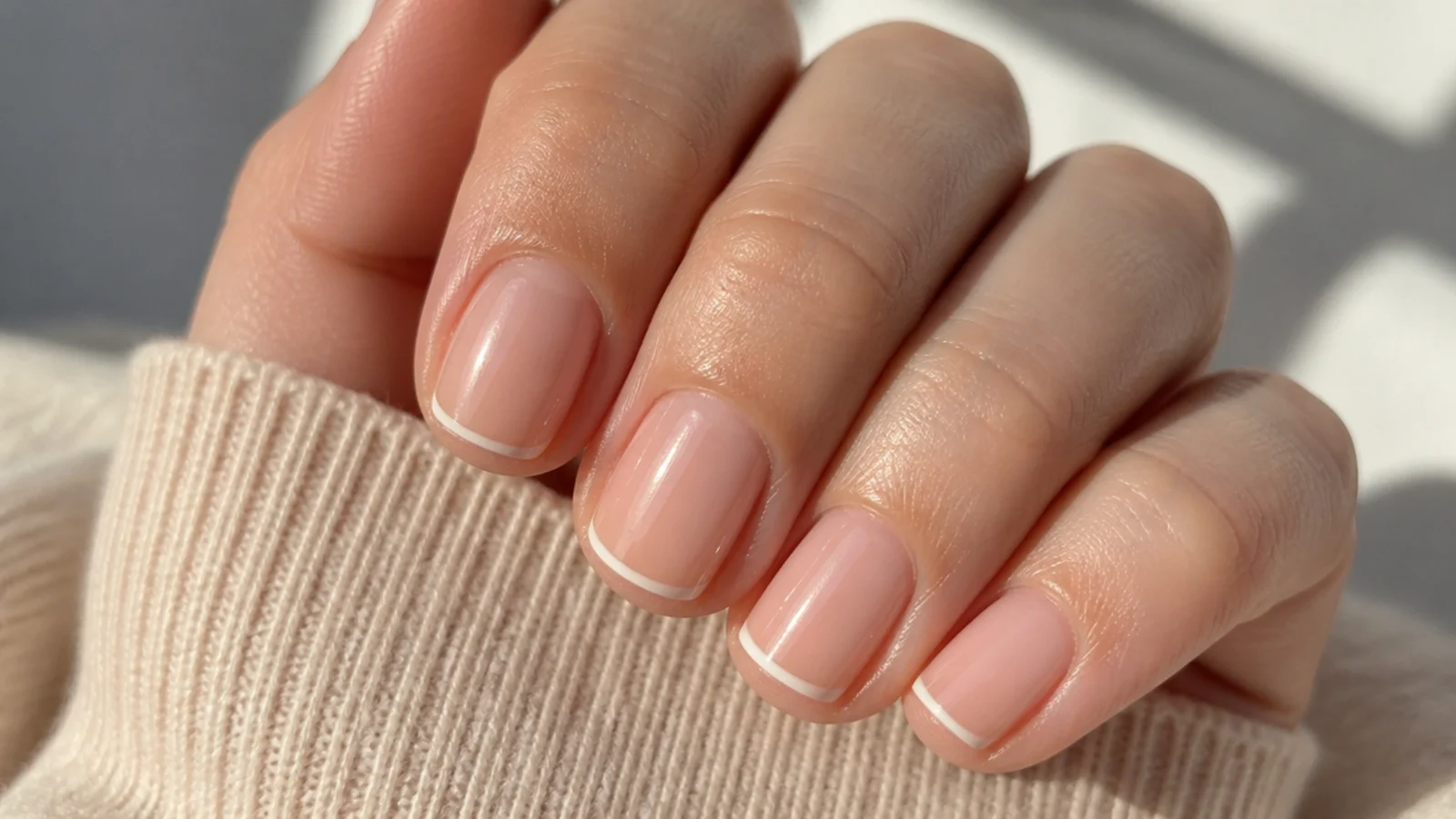
The single best French for short nails: a hairline band roughly 1mm deep painted right along the free edge in gel, with the base left bare or barely tinted. Because the line is thinner than the natural white of the free edge, it reads as a crisp outline rather than a block of color, so nothing is subtracted from the nail bed. Ask for a micro French or skinny French and specify 1mm, because most techs default to 3 to 4mm. Painting one this fine needs a liner brush, not a stamper, as covered in how to do French tip nails at home.
Who it suits: Nail beds under 12mm and anyone who types all day.
Tip: Say micro French, about 1mm, and hold up your pinky nail as the reference width.
2. Classic White French Tip Short Square Nails
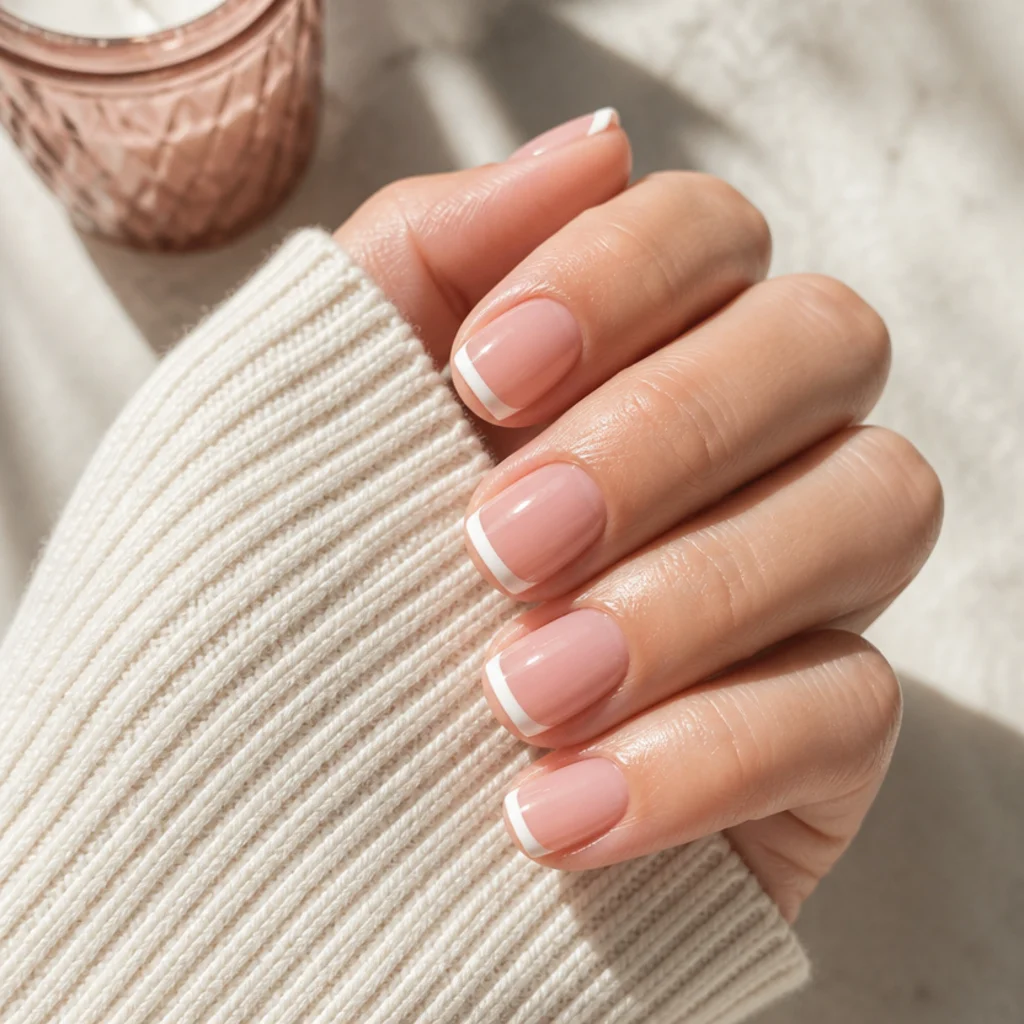
The one everybody pictures, scaled down properly. On a short square nail the smile line should run almost straight across with only a gentle dip at the center, because a deep U on a short nail pushes the white toward the cuticle and shortens the bed further. Keep the white to 2mm. A sheer pink base such as OPI Bubble Bath or Essie Mademoiselle blends into the nail plate so the transition is soft. Bright white polish needs two thin coats to stop streaking, which is why gel wins here. Full color breakdown in white French tip nails.
Who it suits: Offices, weddings and anyone wanting the traditional look.
Tip: Ask for a shallow smile line, not a deep V, and cap the free edge so the white does not chip.
3. Milky White French Tip Short Nails
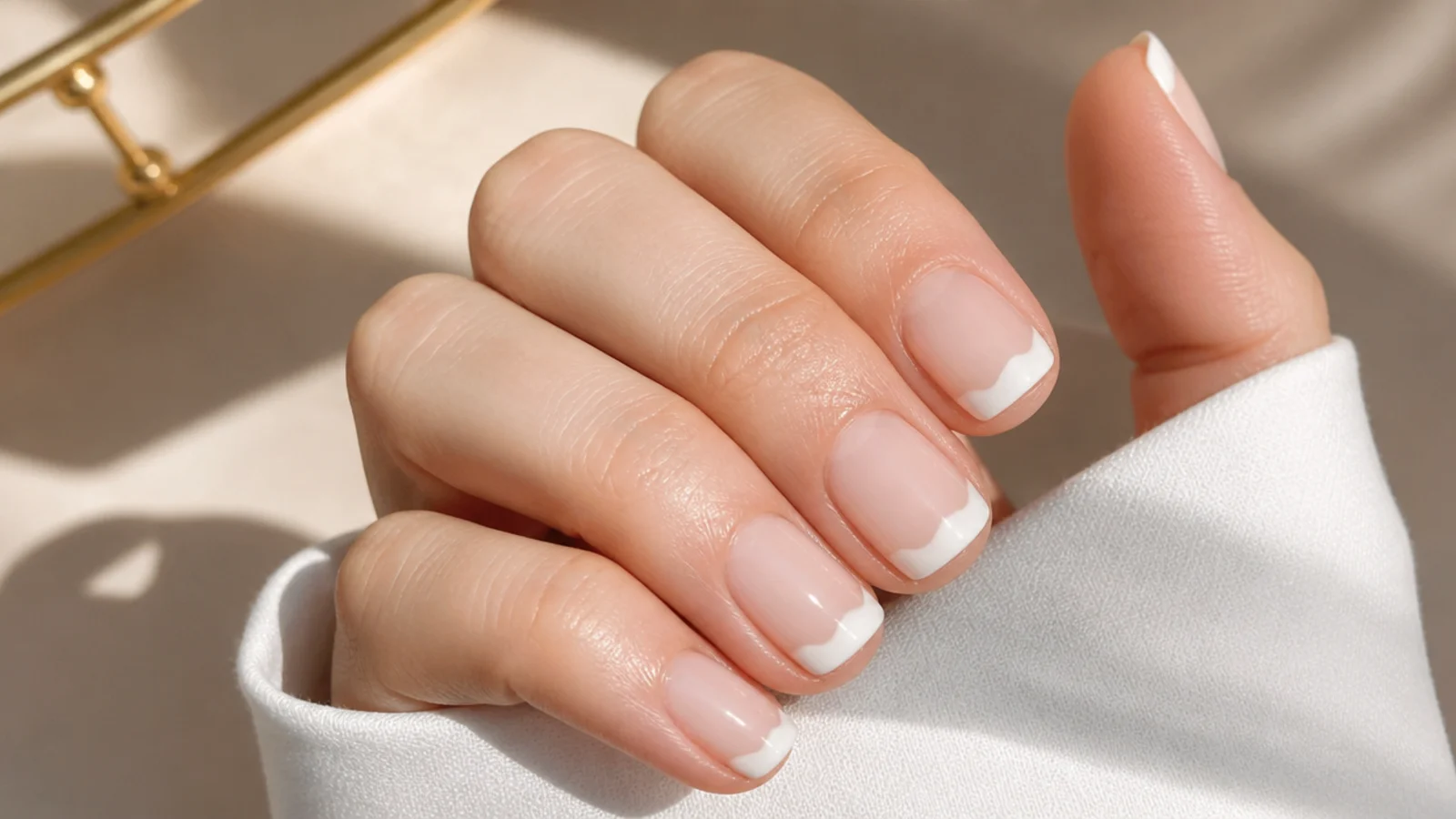
Milky white is bright white with the volume turned down, and on short nails it is quietly the smartest swap you can make. The soft cream tone sits closer to the natural nail than a stark white does, so the eye does not register a hard border where the tip starts. That is exactly the effect that keeps a short nail looking continuous. It also forgives a slightly wobbly smile line, since low contrast hides unevenness. Two sheer coats build it without going chalky. If you like the finish across the whole nail, see milky lavender nails.
Who it suits: Anyone whose bright white French has looked harsh.
Tip: Ask for milky white, not bright white, and expect three sheer coats rather than two thick ones.
4. Nude French Tip Short Nails
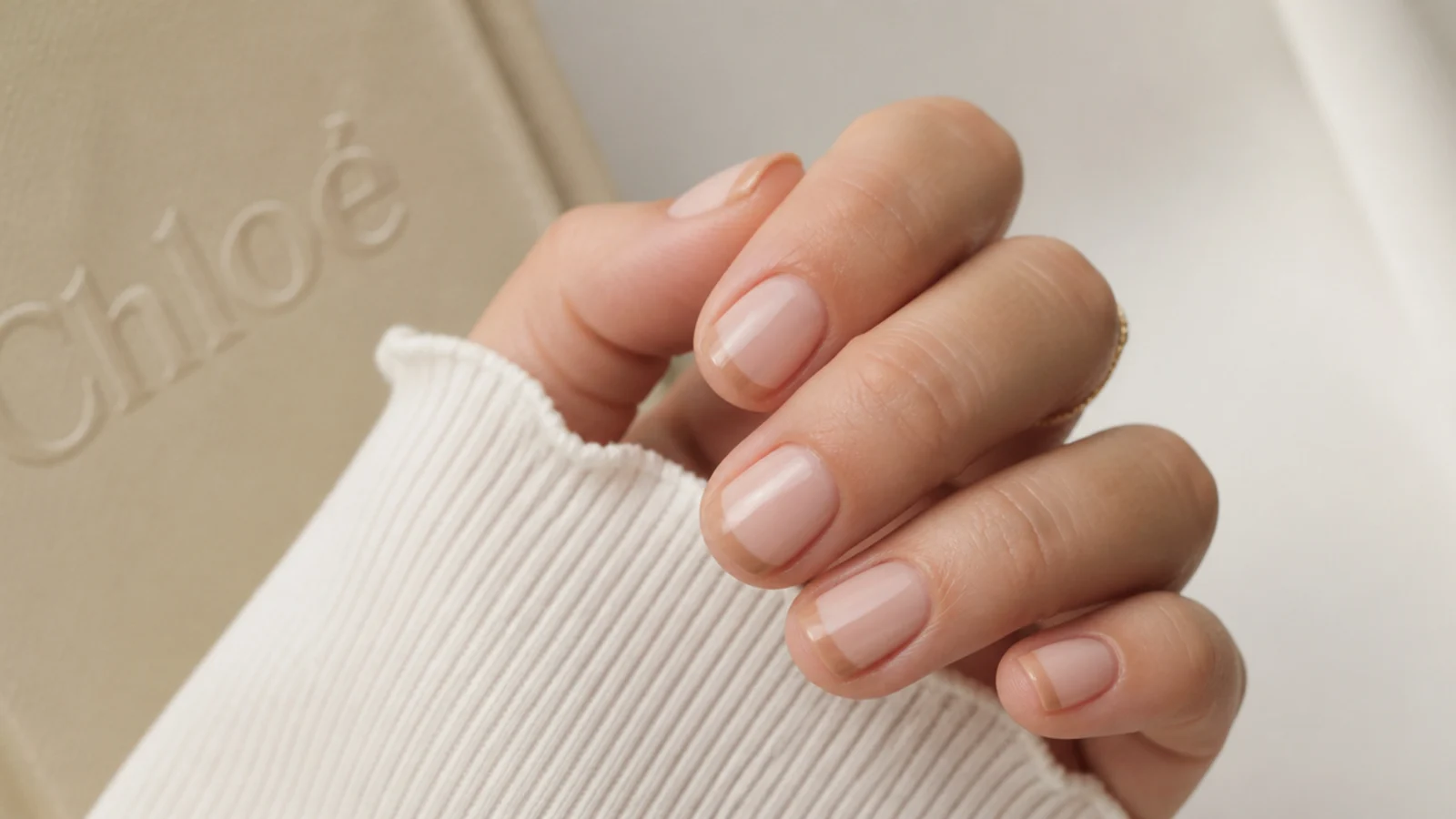
A tone-on-tone French where the tip is a beige just one or two shades deeper than the base, so the shape of the French registers without any color contrast at all. This is the lowest-risk short French there is, because contrast is what visually cuts a nail bed in half and here there is almost none. It reads expensive in person and photographs as a plain manicure, which is the point. Match the tip to your own skin depth rather than a universal beige. The flat version pairs well with matte nude nails.
Who it suits: Conservative workplaces and minimalists.
Tip: Hold two nudes against your knuckle; pick the tip shade one step darker than your base, no more.
5. Sheer Pink French Tip Short Nails
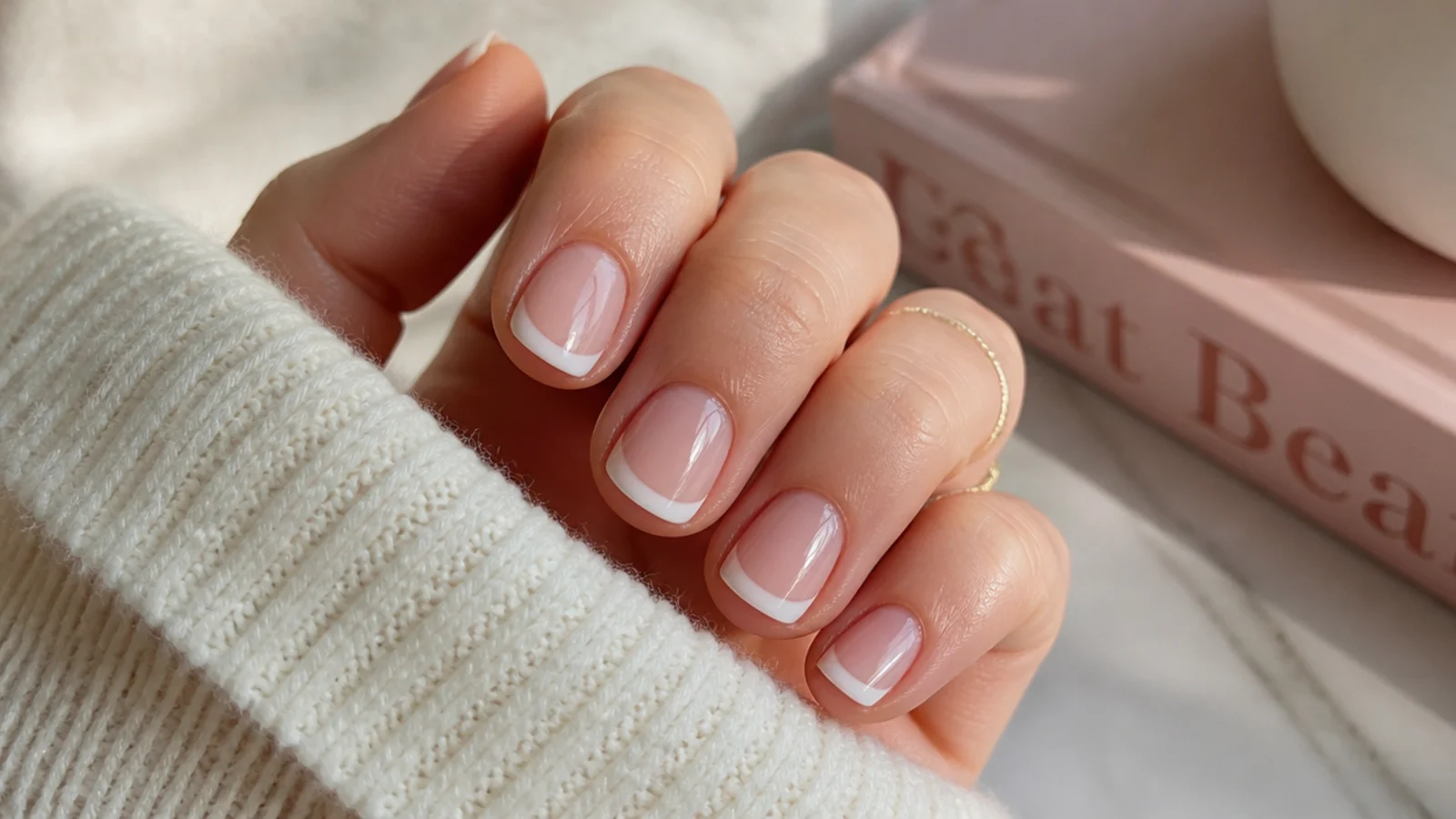
The base does the work here. A translucent pink such as Essie Ballet Slippers lets your own nail bed show through, so the pink area still reads as living nail rather than paint, which keeps a short nail from looking painted-on and squat. Over that, a 1.5mm white or off-white tip. Sheer bases also grow out invisibly, so you get an extra week before regrowth shows. Two coats maximum or the sheerness disappears. This is the classic clean-girl short French and the safest first attempt.
Who it suits: First-time French wearers and grow-out-averse hands.
Tip: Ask for sheer pink over a bare nail, no opaque base, so the nail bed still shows through.
6. Thin French Tip Short Almond Nails
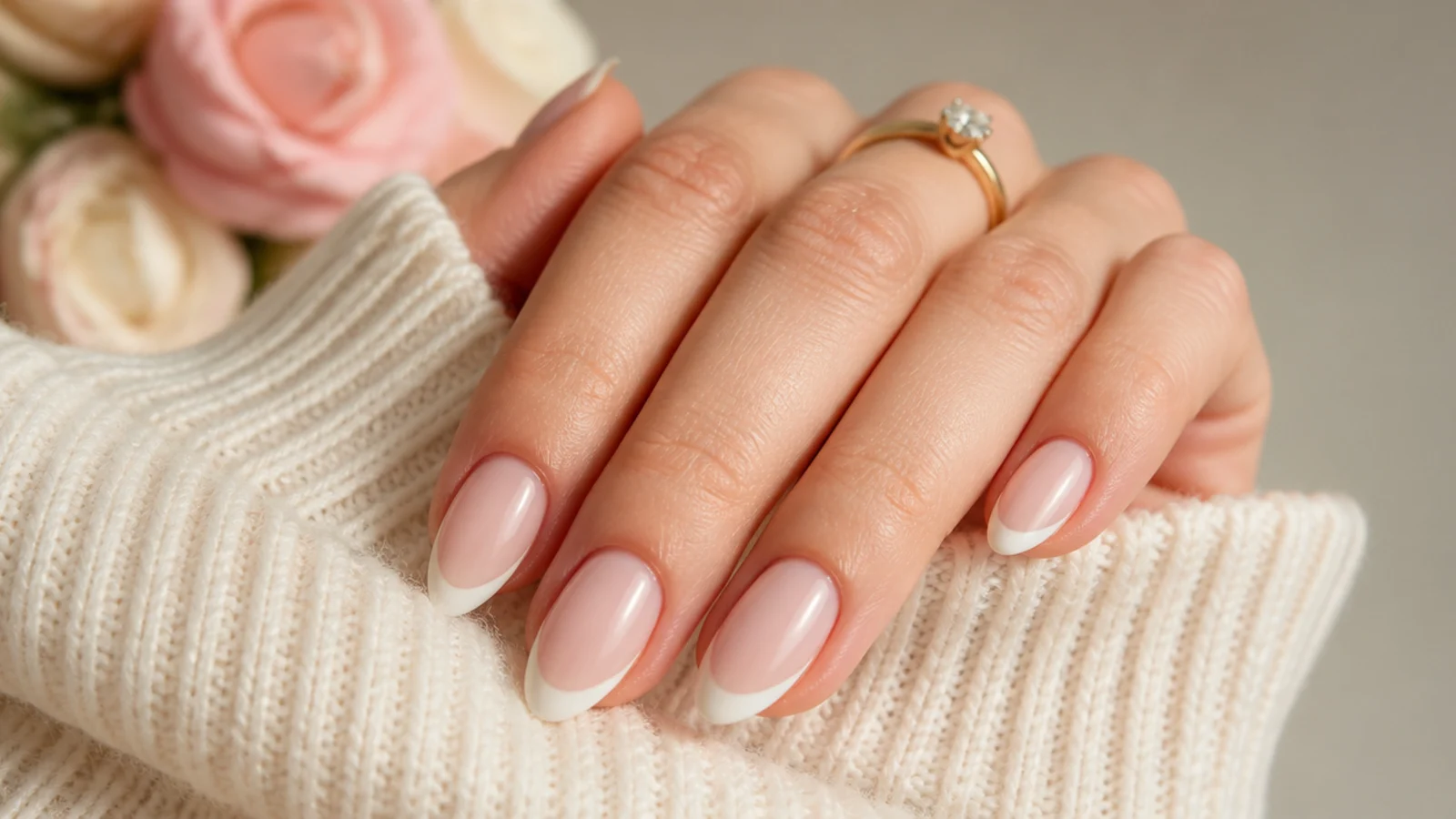
On short almond the tip band has to follow the taper, which means it looks widest at the sidewalls and narrows toward the point. A tech who paints it straight across instead will make the nail look blunt. Keep it at 1.5mm at the widest part. Short almond already borrows a millimeter of visual length from the soft point, so it takes a thin French better than any other short shape. You only need about 2mm of free edge to file it. Longer versions live in almond French tip nails.
Who it suits: Wide nail beds and anyone wanting length without extensions.
Tip: Ask the tech to follow the taper with the smile line so the tip does not read flat.
7. Black French Tip Short Nails
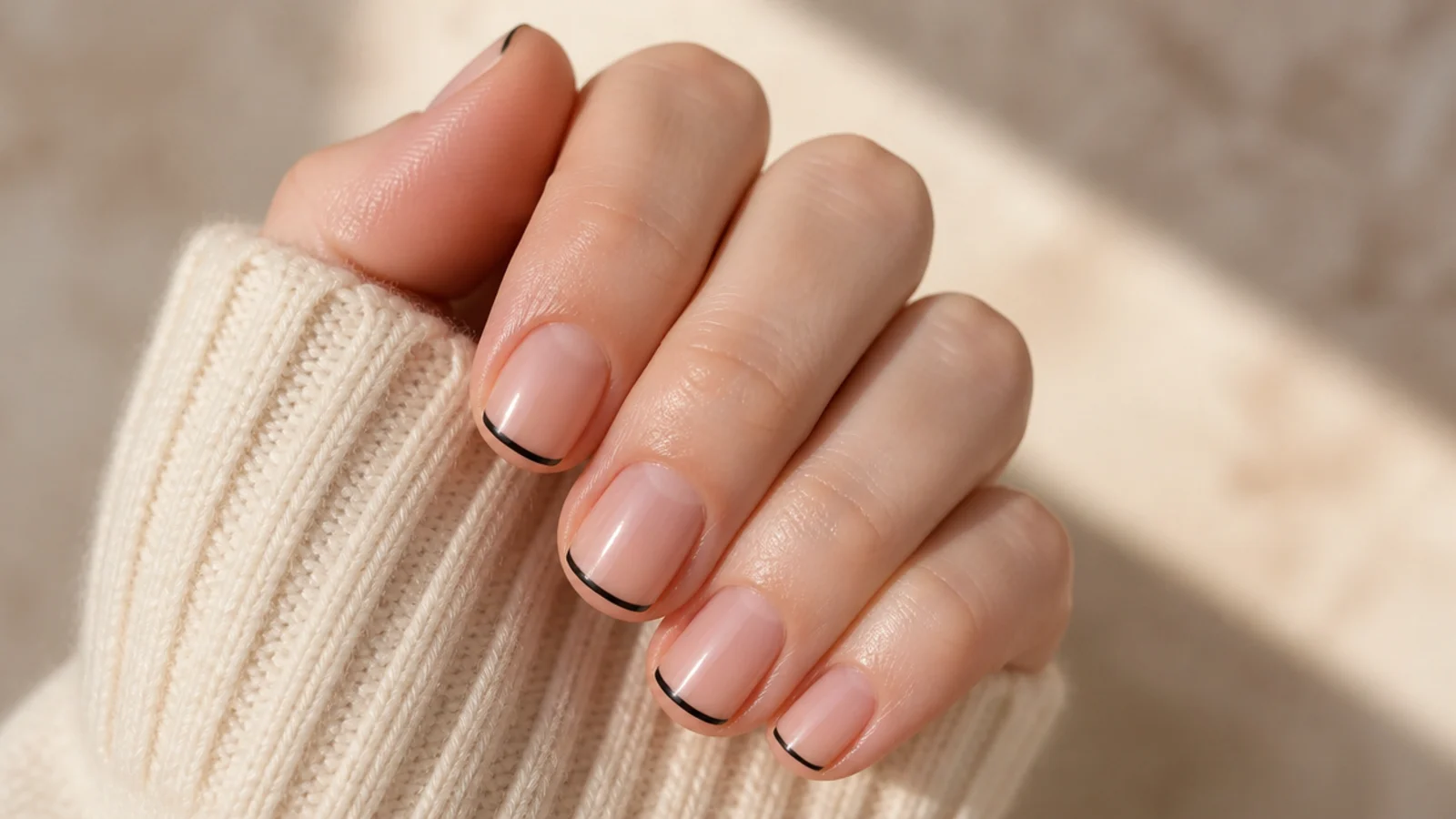
Black is the least forgiving French color because maximum contrast exposes every wobble in the smile line, and on a short nail a thick black band reads like a shadow that cuts the nail in half. Keep it at 1mm and no more. Painted that fine on a bare or milky base it looks graphic and modern rather than heavy. A matte top coat hides an imperfect line better than gloss does, since gloss creates a highlight right along the edge. Compare it to the magnetic version in black cat eye French tip nails.
Who it suits: Edgier wardrobes and very short natural nails.
Tip: Ask for black in gel with a cleanup brush pass, since black polish smudges at this width.
8. Baby Pink French Tip Short Nails
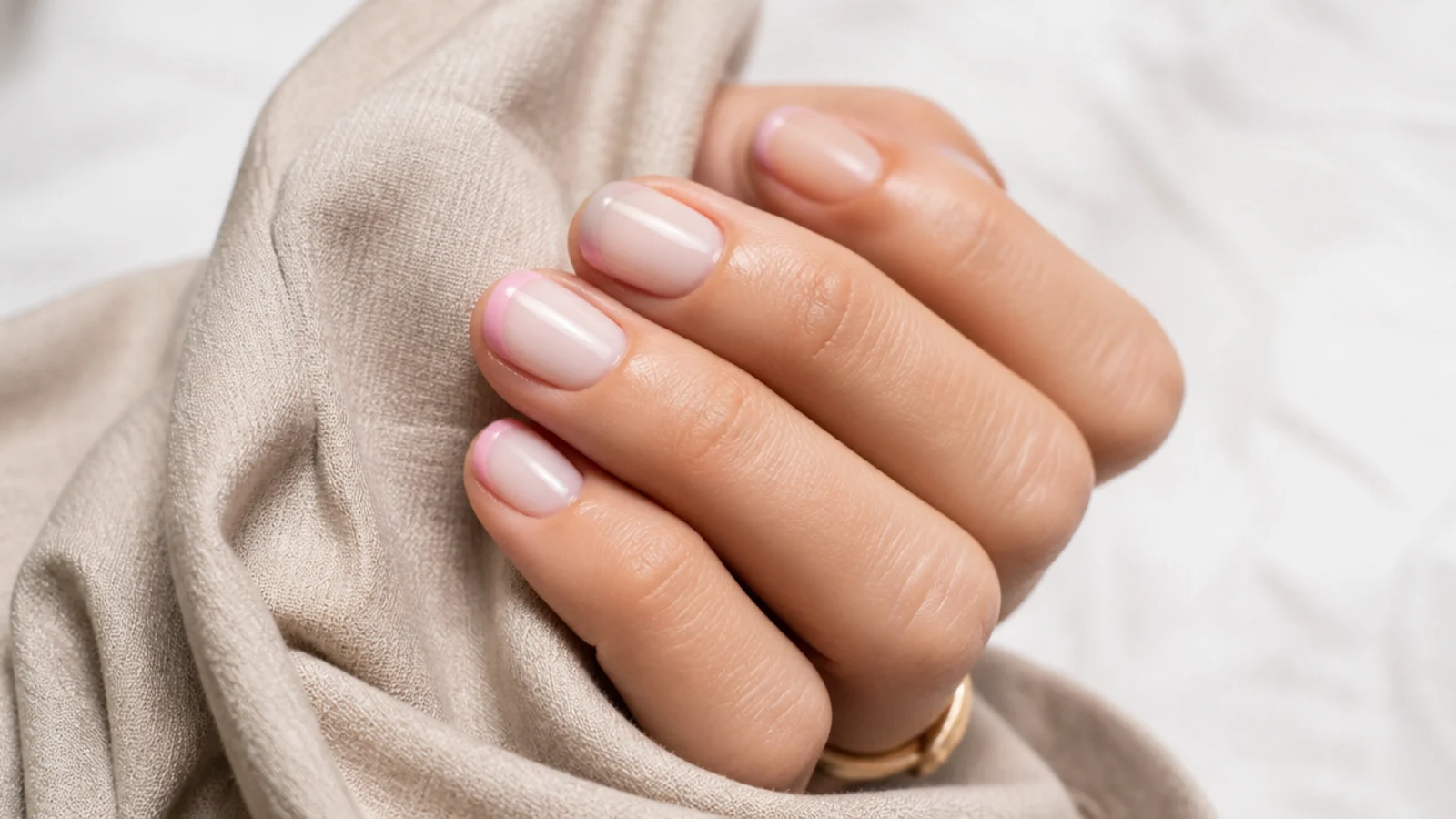
Pink on pink: a soft opaque baby pink tip over a milky or sheer nude base. Because both tones sit in the same family the contrast is low, so the French reads as a shape rather than a hard border, which is exactly what short nails need. It is also the most forgiving color to freehand, since a slightly thick pink line still looks intentional where a thick white one looks overgrown. Two millimeters is fine here, a rare exception to the depth rule. Related shade work in matte pink nails.
Who it suits: Soft-glam wearers and anyone new to painting their own French.
Tip: Pick a pink one shade deeper than your base, not a bright bubblegum, or the tip reads costume.
9. Cherry Red French Tip Short Nails
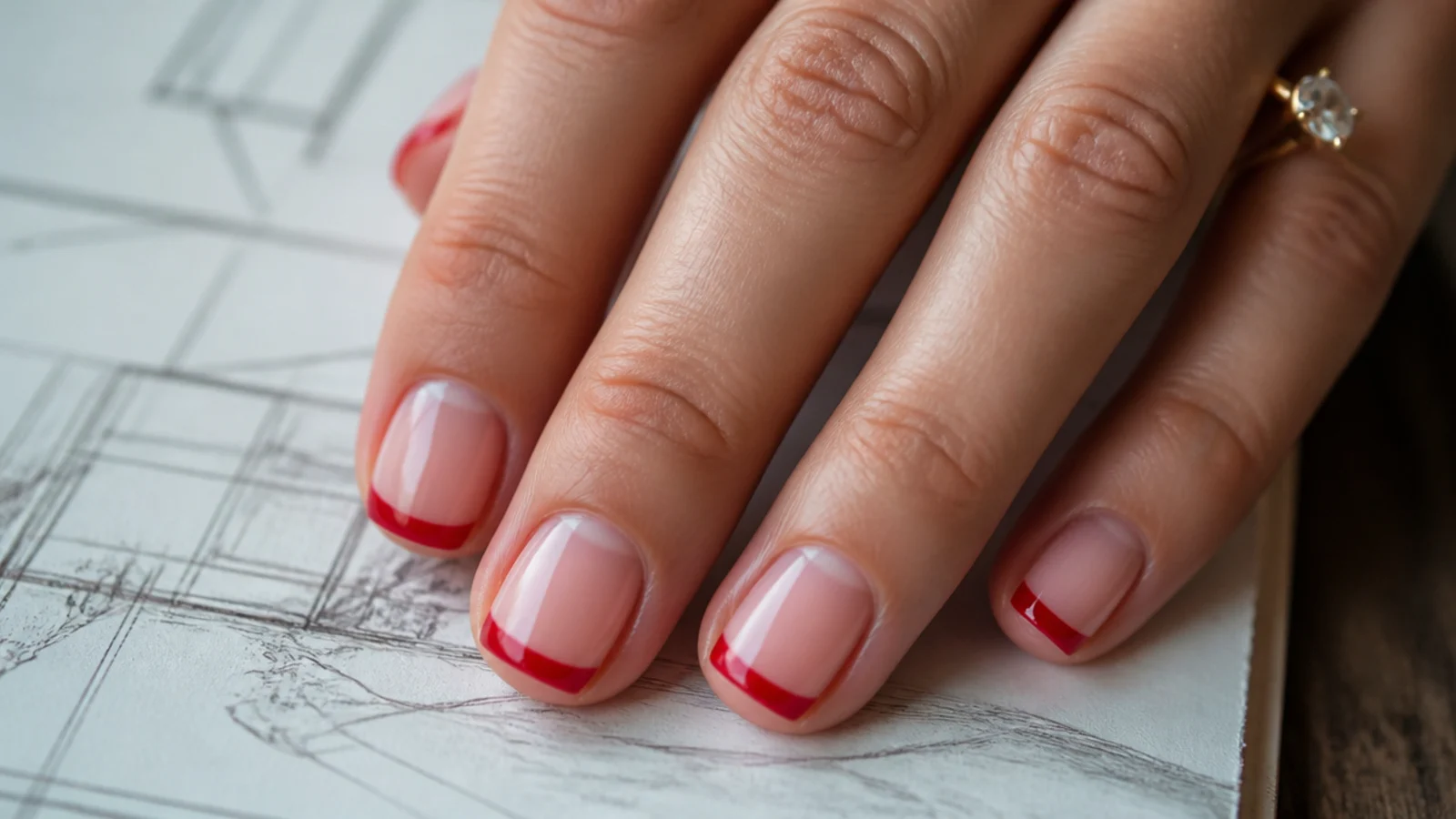
A blue-based cherry red band, about 1.5mm, on a bare or sheer nail. Red is high contrast, so this is a deliberately bold short French rather than a subtle one, and it works because the eye reads the red as a stripe of color rather than as the end of the nail. Red pigment stains the natural nail plate, so a base coat is not optional even though most of the nail stays bare. Blue-based cherry flatters more skin tones than an orange-leaning tomato red. The holiday version sits in red December nails.
Who it suits: Date nights and anyone wanting one high-impact detail.
Tip: Ask for a clear base coat under the whole nail, not just under the tip, to stop red staining.
10. Mocha Brown French Tip Short Nails
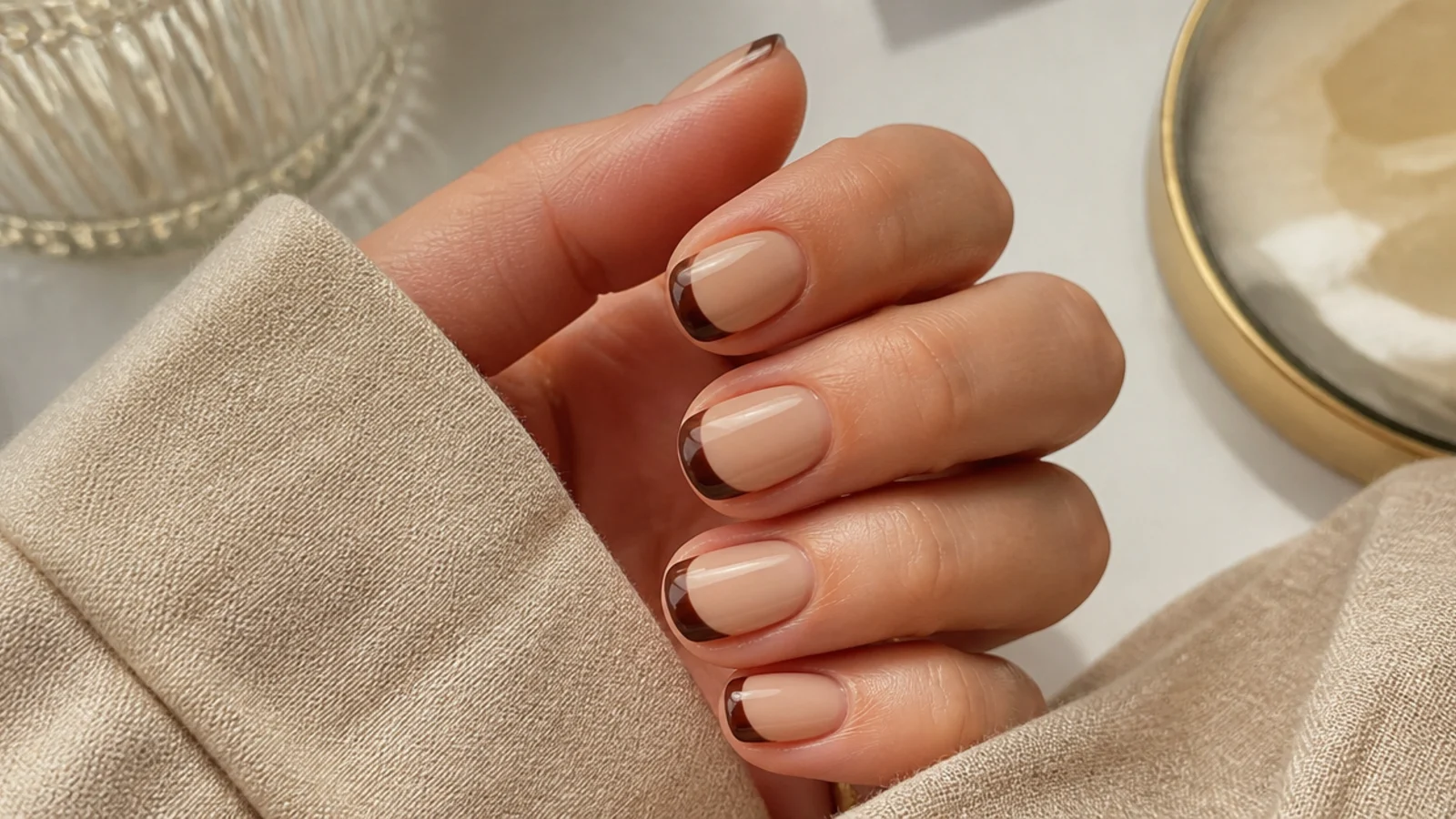
An espresso or mocha band over a warm beige base, the quiet replacement for white French since chocolate shades took over. Brown flatters deep and olive skin tones far better than stark white, which can read chalky against warmer undertones. On short nails the advantage is contrast control: brown against beige is a mid-contrast pairing, so it defines the tip without the visual chop that white on nude creates. Keep it at 1.5 to 2mm. It also grows out more gracefully than any bright color.
Who it suits: Deep and olive undertones, and fall wardrobes.
Tip: Ask for the brown mixed one shade lighter if your base beige is very pale, to keep contrast mid-range.
11. Lavender French Tip Short Nails
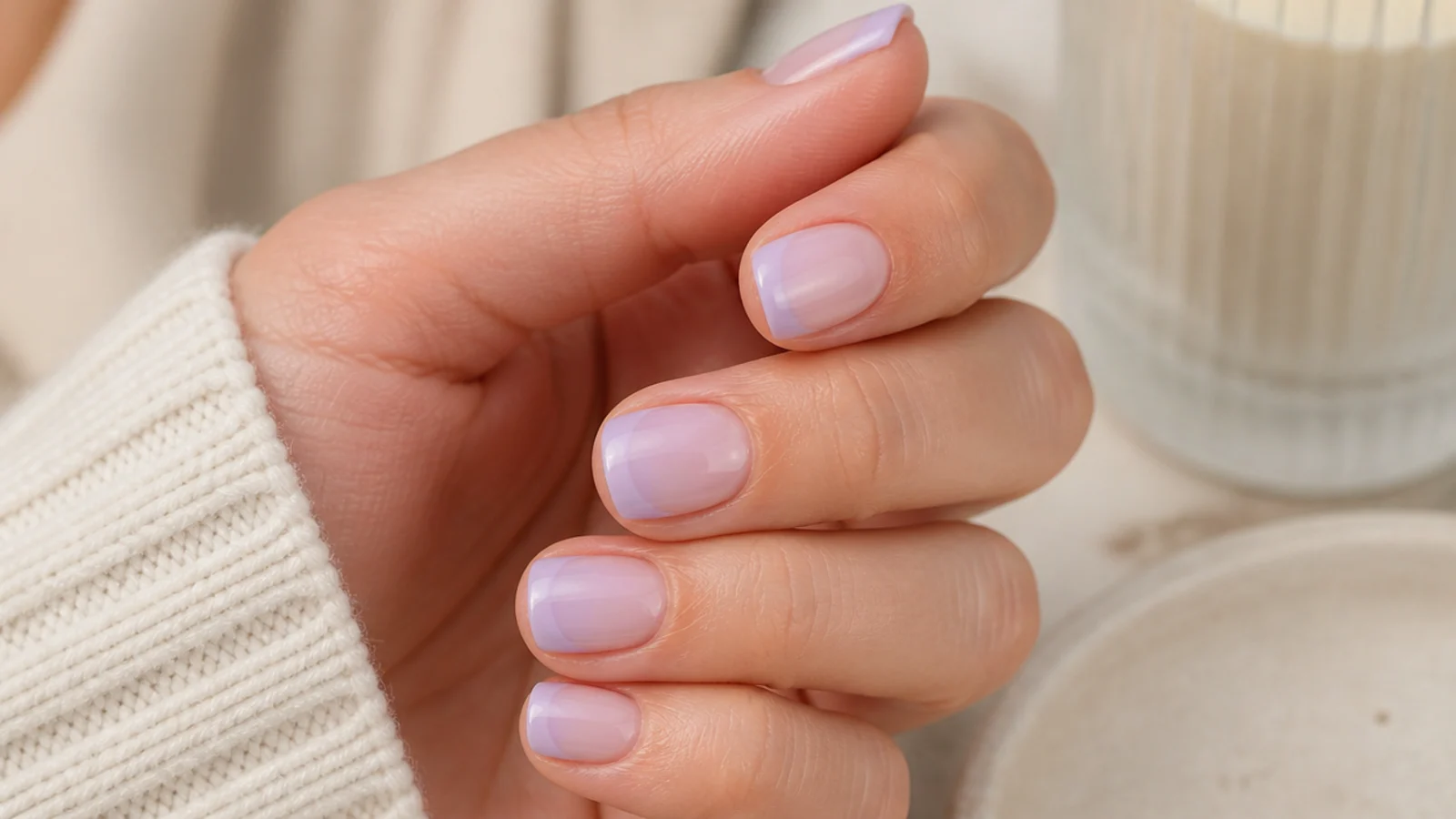
A pale lavender tip on a milky base, which is the pastel that reads most expensive because it is cool-toned rather than sugary. Pastels are ideal for short nails specifically because low-saturation colors create low contrast, and low contrast is what stops a French from cutting the nail bed short. Lavender also flatters cool undertones that bright white can wash out. Two millimeters is safe. Ask for a cream lavender rather than a sheer one, since sheer pastels look patchy at this width. More in light purple French tip nails.
Who it suits: Spring, cool undertones and pastel wardrobes.
Tip: Ask for a cream formula, not sheer, so a 2mm band goes opaque in one pass.
12. Sage Green French Tip Short Nails
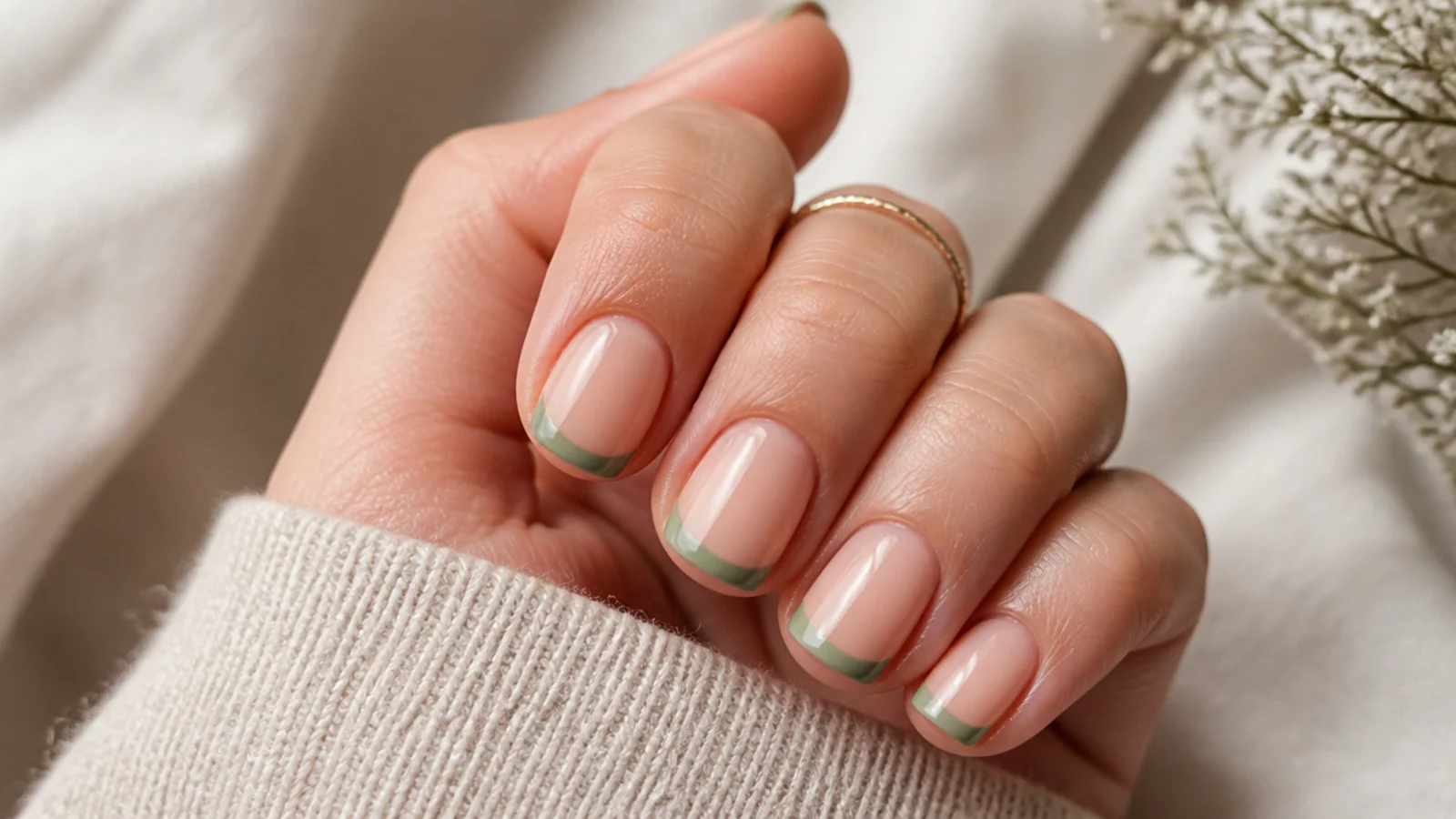
A muted, gray-leaning green tip on a sheer nude base. Sage is the most wearable green on short nails because its low saturation keeps contrast down, and it is neutral enough to pass in most workplaces where a bright green would not. It suits olive undertones especially well, since the two share a yellow-gray cast. Keep the band at 1.5mm and gloss it, because matte flattens sage into something closer to gray. The full-coverage version is olive green French tip nails.
Who it suits: Olive undertones, spring and neutral wardrobes.
Tip: Choose a sage with a gray base, not a yellow one, or it will read mint on warm hands.
13. Navy Blue French Tip Short Nails
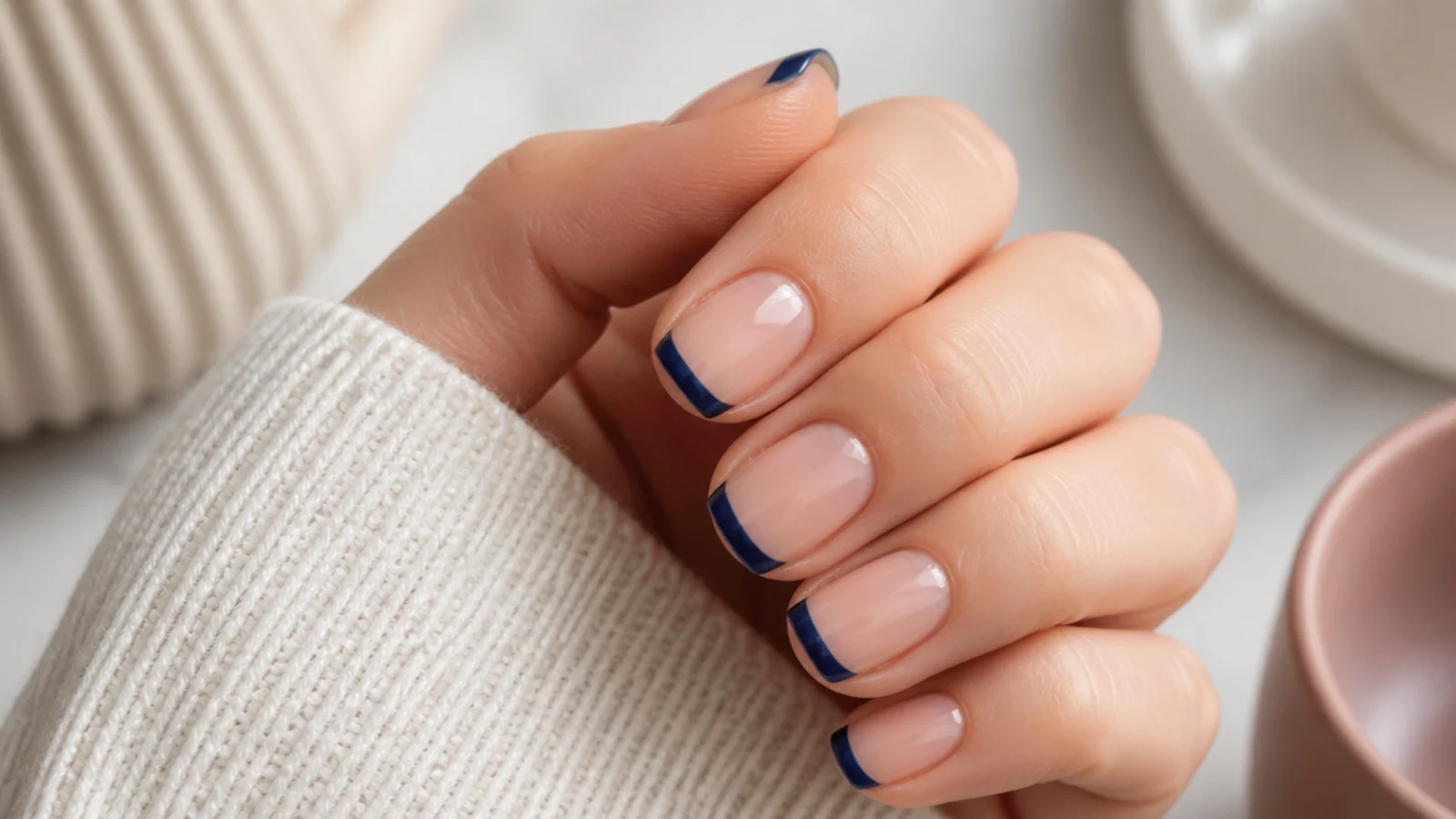
Near-black navy on a bare nail, which is the most office-tolerable dark French and the easiest deep color to wear year round. Like black it is a high-contrast tip, so 1mm is the ceiling on short nails. Navy hides an uneven line slightly better than black because the color has depth rather than flat opacity, so the eye is less drawn to the edge. Blue pigment stains badly, so use a base coat. If you want the color across the whole nail instead, see short royal blue nails.
Who it suits: Year-round wear and conservative offices.
Tip: Ask for navy in gel; navy polish needs two coats and two coats at 1mm builds a visible ridge.
14. Short Square French Tips
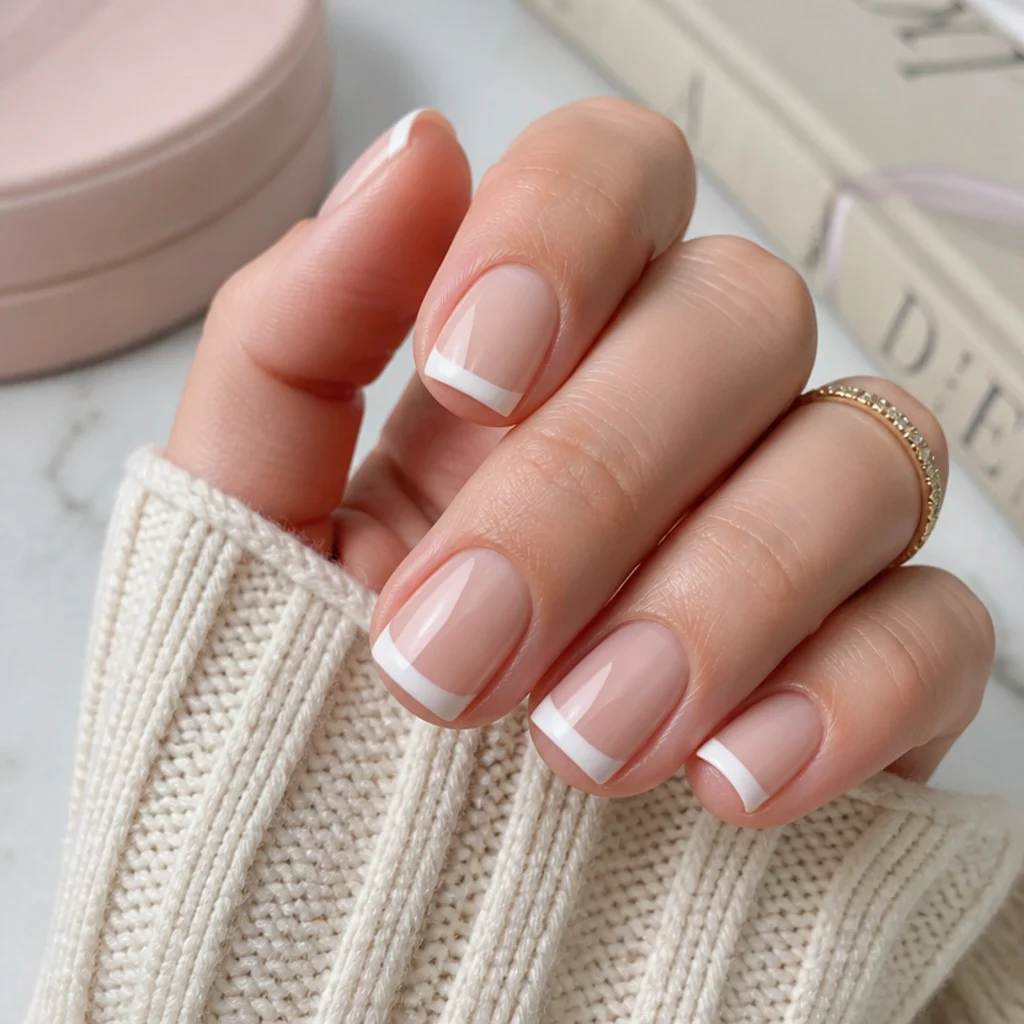
Square is the most common short shape and the trickiest French, because a straight tip edge makes any asymmetry in the smile line obvious. The fix is to run the line almost parallel to the free edge with only a shallow dip in the middle. Square also visually widens a nail, so keep the tip band to 1mm and choose a soft color to avoid a stubby look. It suits long, narrow nail beds better than wide ones. Wide beds do better in squoval or short almond, covered next.
Who it suits: Long narrow nail beds and anyone who likes sharp corners.
Tip: Ask for the corners softened by one file pass so the square does not catch on fabric.
15. Short Squoval French Tip Nails
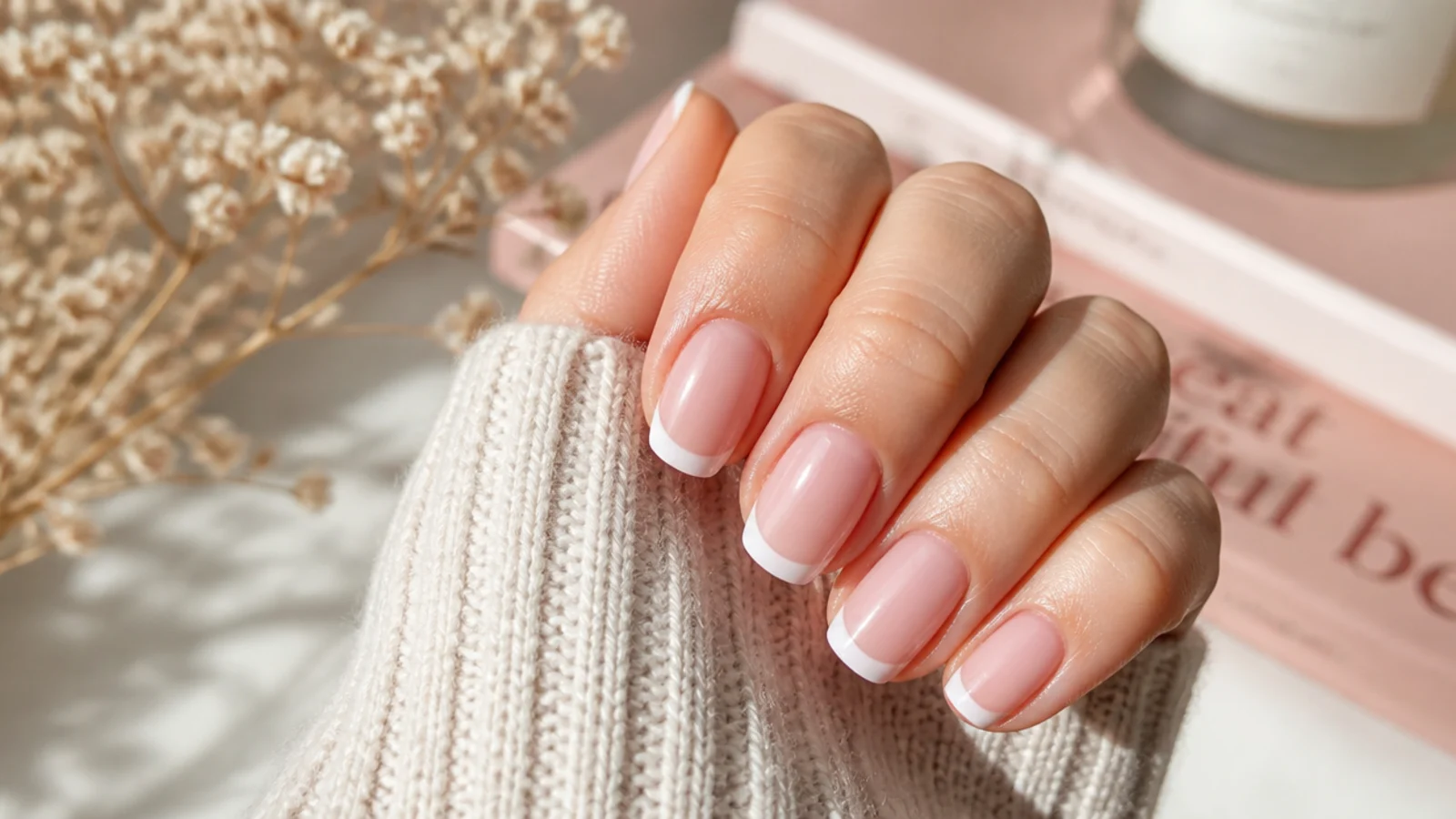
Squoval is square with the corners rounded off, and it is the most flattering short French shape for wide nail beds. The rounded corners pull the eye inward, which narrows the nail visually, and the gently curved tip edge gives the smile line something to follow so a slight wobble disappears. It is also the most durable short shape, since square corners are the first thing to catch and tear. A 1.5mm tip is the sweet spot. This shape is the reason squoval keeps outselling square in salons.
Who it suits: Wide nail beds and anyone whose square corners keep breaking.
Tip: Ask for square with softened corners if your tech does not use the word squoval.
16. Short Almond French Tip Nails
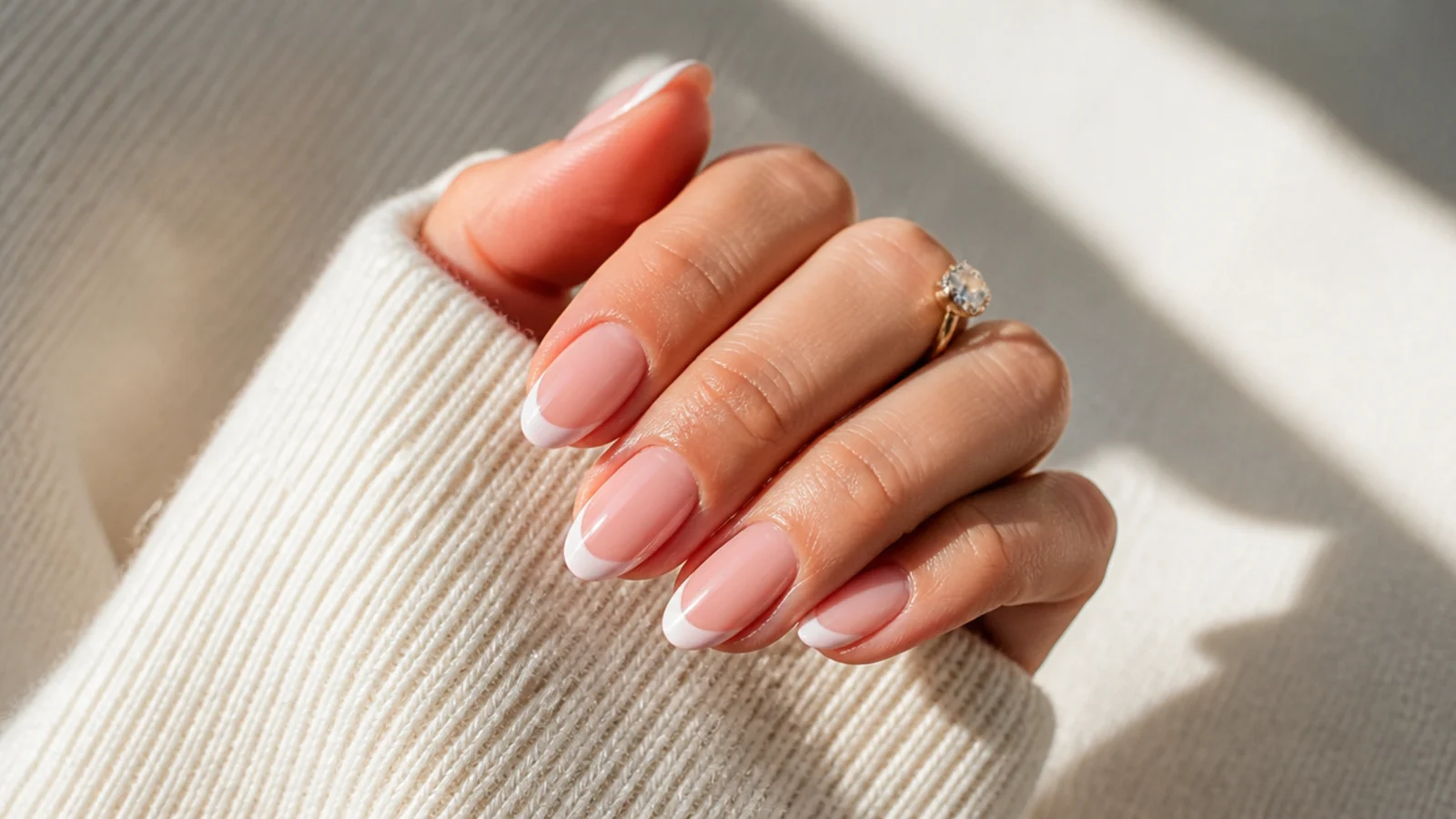
Short almond needs about 2 to 3mm of free edge to file, and it buys you the most visual length of any short shape because the taper draws the eye toward a point. The smile line here must curve deeper than on square, otherwise it reads flat against the taper and the whole nail looks blunt. Do not overfile the sidewalls chasing a point on a short nail, since that weakens the stress area and snaps the tip. Filing guidance sits in how to shape almond and oval nails and short almond nails.
Who it suits: Anyone wanting length illusion without extensions.
Tip: Ask for a deeper curve on the smile line here than you would on square, so it follows the taper.
17. Short Round French Tip Nails
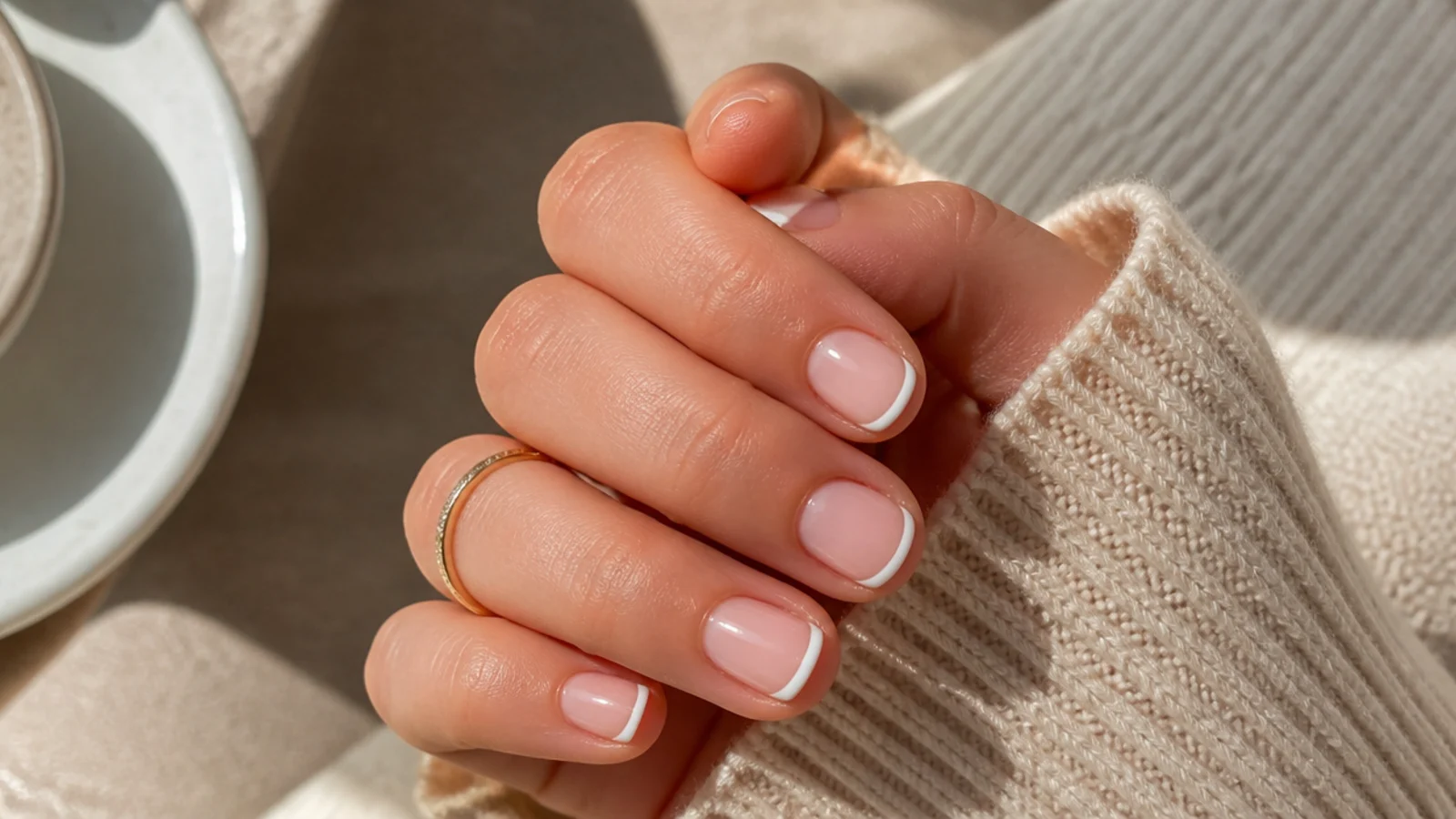
Round is the shape for nails with almost no free edge, roughly 1mm or less, and it is the only French that works at that length. The tip band has to shrink with it: half a millimeter, painted right on the edge and following the natural curve. At this length skip white entirely and use a milky or nude tip, because white on a nail with almost no free edge just looks like an unpainted stripe. It is also the most break-resistant shape, since there are no corners at all. The related soft look is short soap nails.
Who it suits: Bitten nails, growing-out phases and hands-on jobs.
Tip: Ask for the tip in a milky shade at this length; white shows every millimeter of unevenness.
18. Double French Tip Short Nails
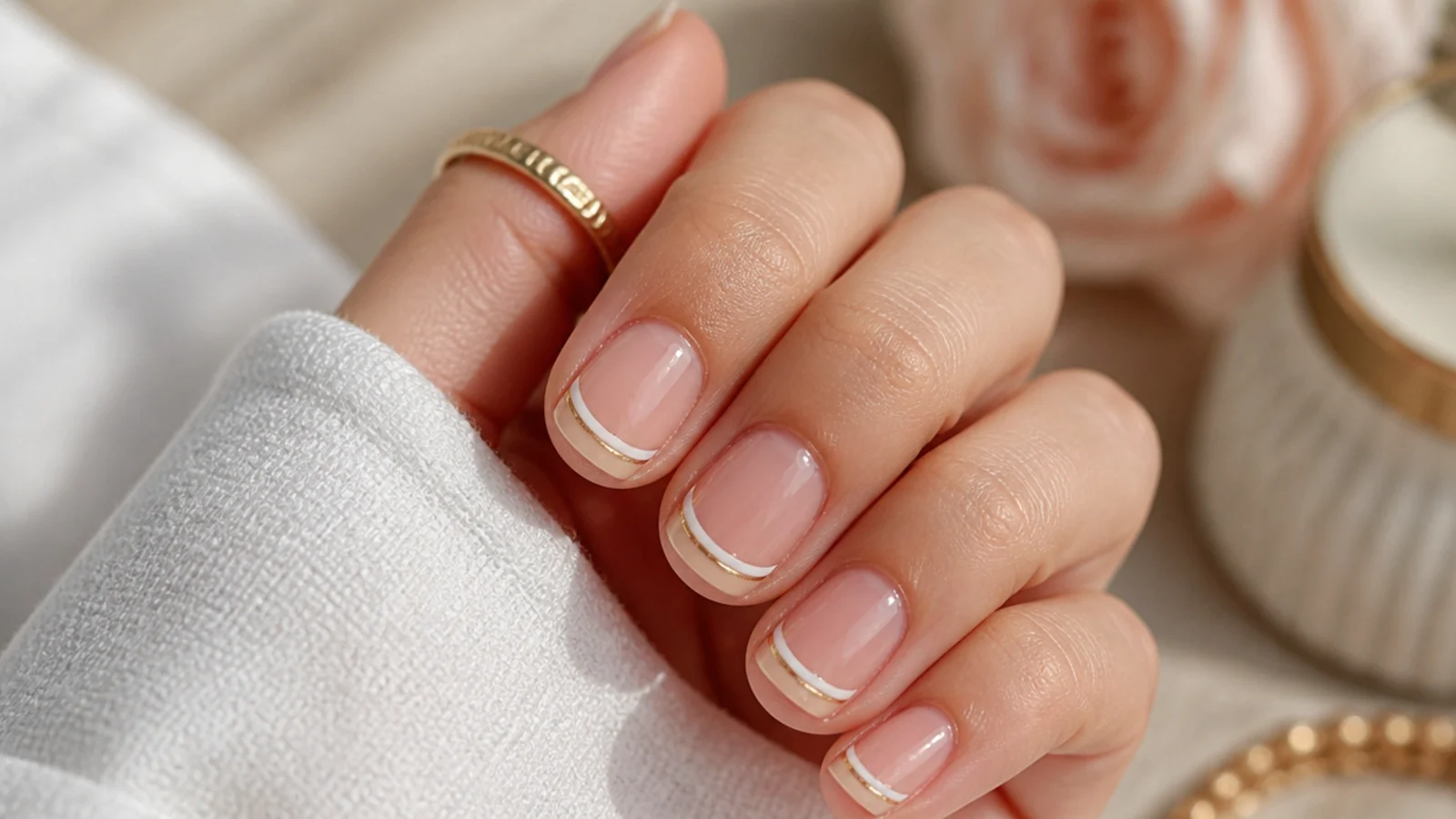
Two lines instead of one: a 1mm color tip with a second hairline stripe sitting just below it, usually in gold, black or a contrasting pastel. It sounds like it should overwhelm a short nail and it does the opposite, because two thin horizontal lines read as detail rather than as a block. The total painted depth still has to stay under 2mm, so both lines must be genuinely fine and the gap between them tight. This is one of the most-saved French variations of 2026 and needs a steady liner brush or gel striping tape.
Who it suits: Anyone bored of a single line who still has short nails.
Tip: Ask for the second line half the width of the first so the pair does not read as one thick band.
19. Ombre French Tip Short Nails
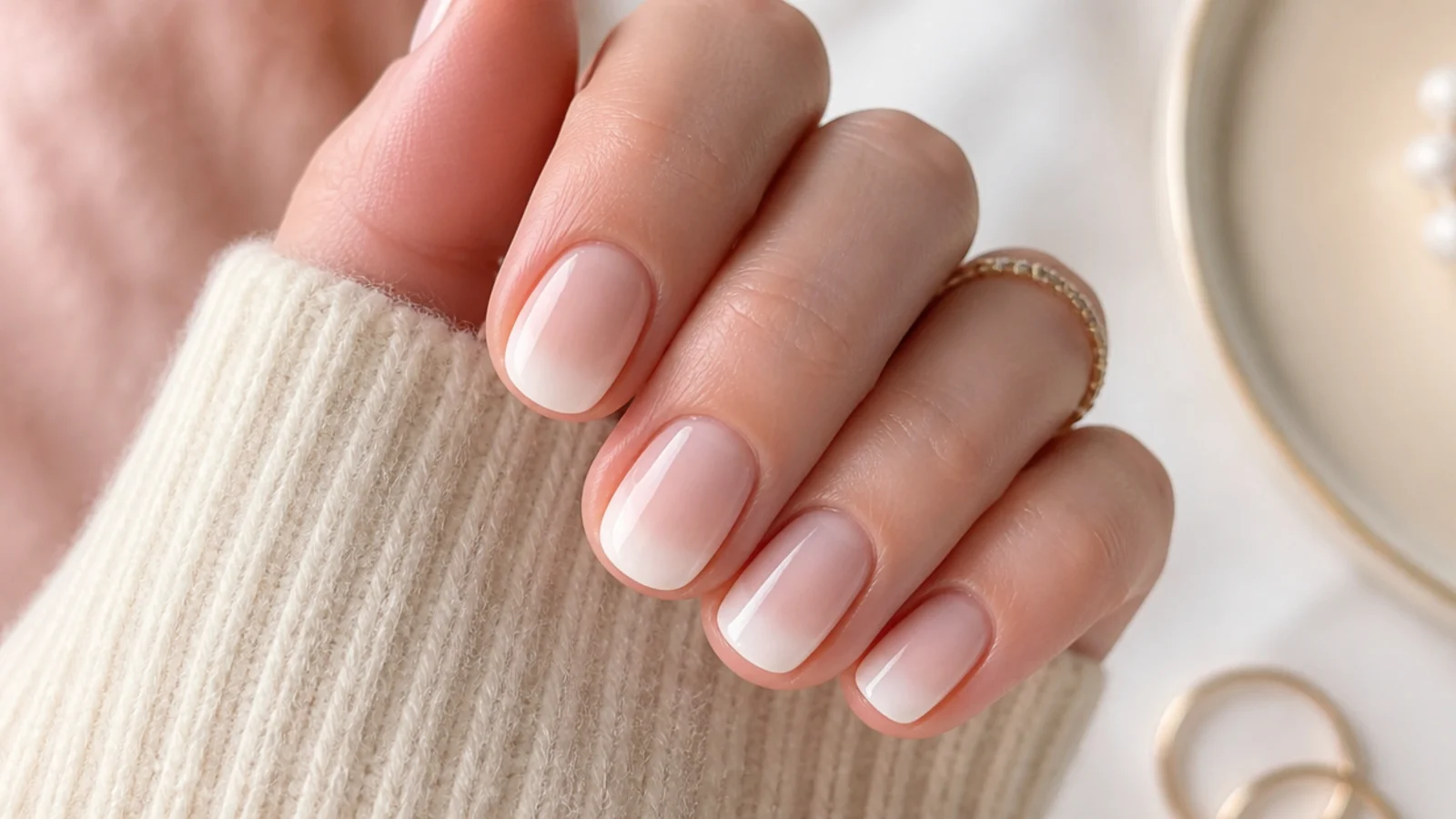
The tip color is sponged or airbrushed so it fades upward instead of stopping at a line, which removes the hard border entirely. That makes it arguably the single most lengthening French for short nails, since there is no visual cut anywhere on the nail. The trade-off is that a fade covers more of the nail than a line does, so ask for the fade to start at the tip and vanish by a third of the way up, no further. Airbrushed versions look smoother than sponged ones. This is also the most forgiving option if your tech struggles with smile lines.
Who it suits: Anyone whose crisp French lines never come out even.
Tip: Ask for the fade to die out by the first third of the nail so the bed stays visible.
20. Reverse French Tip Short Nails
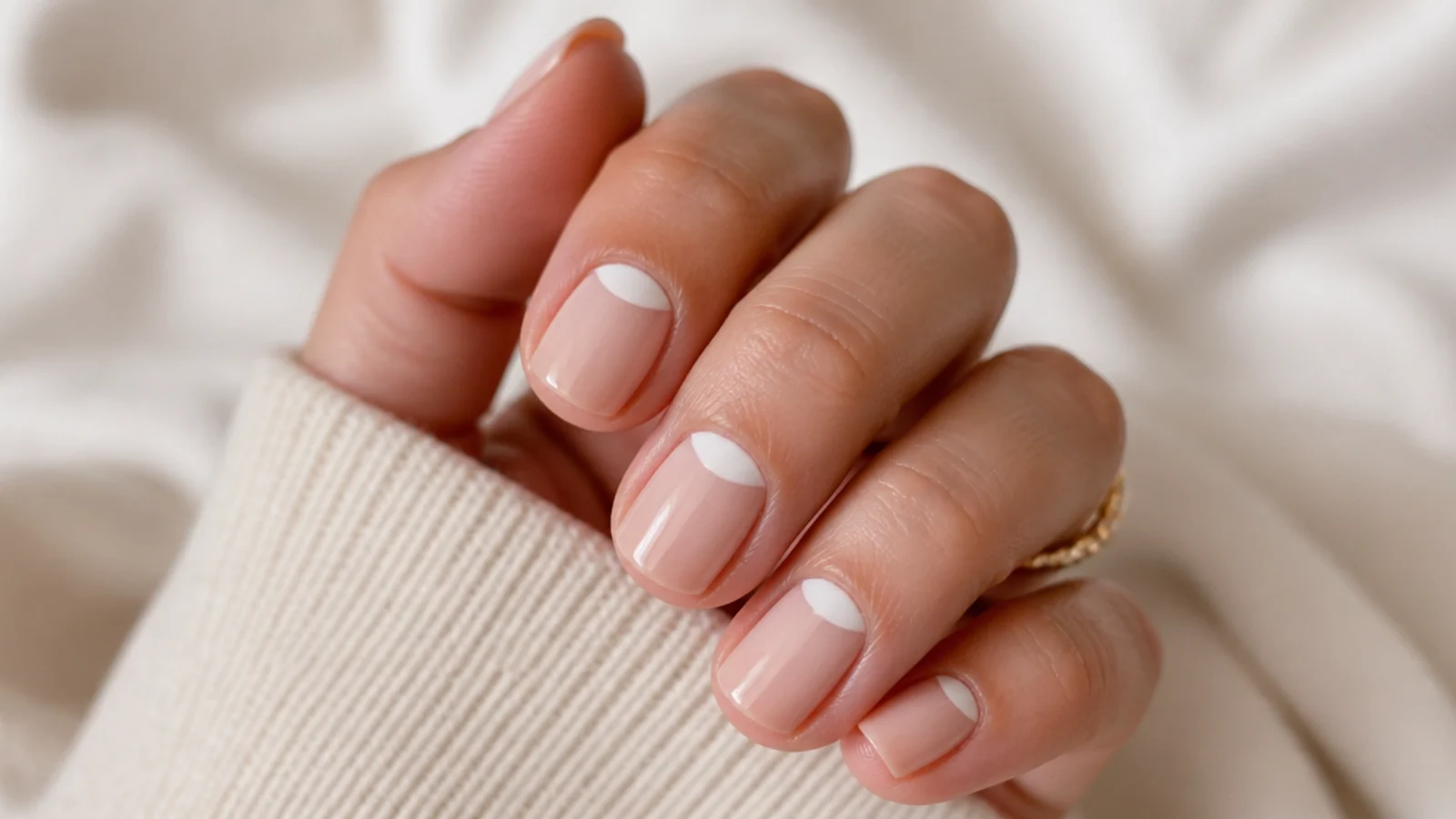
The line moves to the cuticle: a thin half moon painted at the base of the nail with the tip left bare. On short nails this is a genuinely useful trick, because it puts the only strong color at the far end of the nail bed and leaves the free edge clear, which stretches the visible nail rather than capping it. The catch is regrowth, since a cuticle line becomes visibly off-center within about ten days. Book it when you have somewhere to be rather than as a three-week set.
Who it suits: Short events and anyone who wants a bare free edge.
Tip: Ask for the half moon to sit 1mm off the cuticle so growth pushes it into place, not out of it.
21. Diagonal French Tip Short Nails
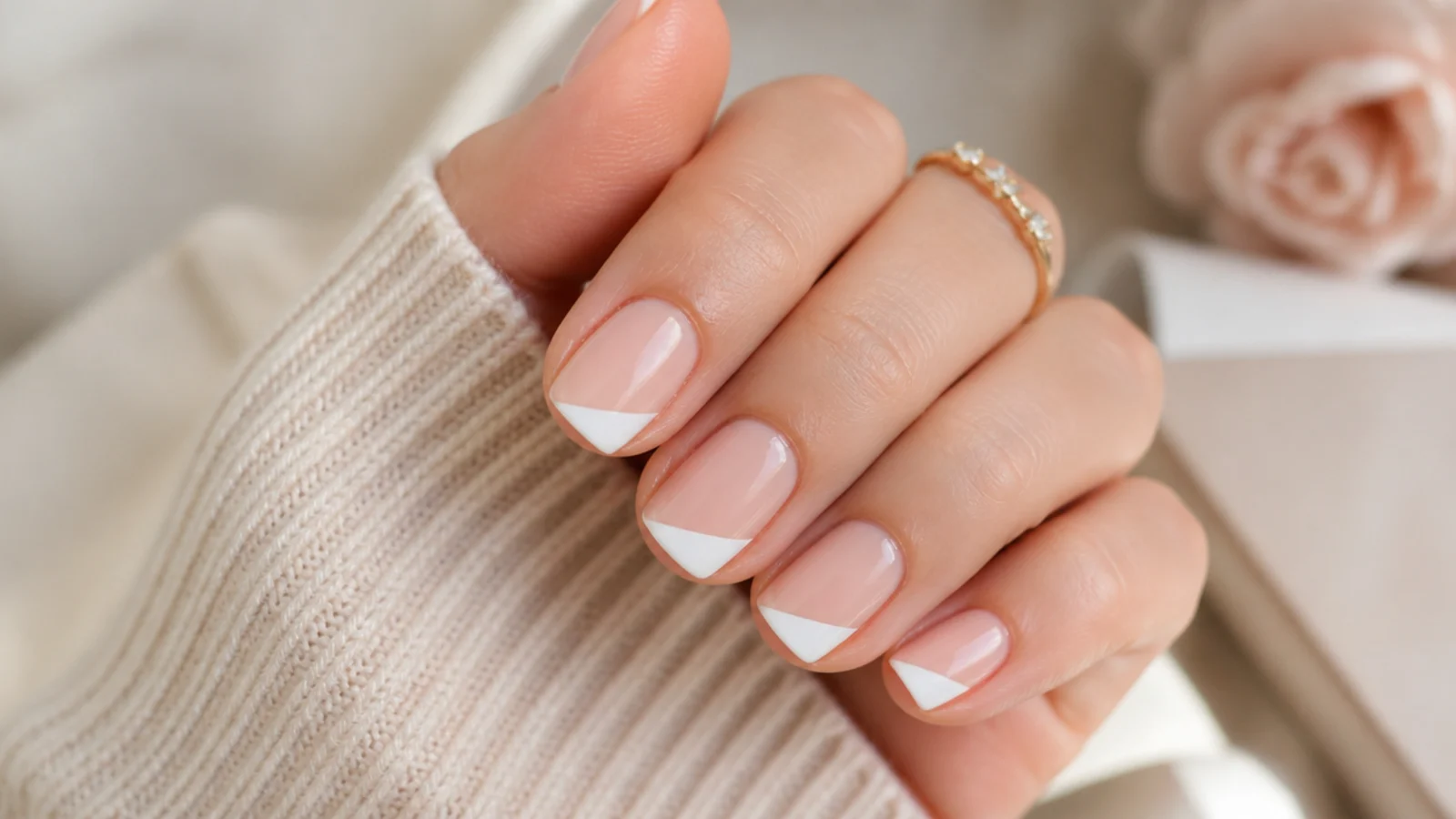
The tip line runs on a slant instead of straight across, cutting from one sidewall down toward the opposite corner. The angle is doing real work on a short nail: a diagonal is longer than a horizontal line across the same nail, so the eye travels further and the nail reads longer. It is the most flattering geometric French for a short square. Keep the deepest point of the slant under 3mm and the shallow end under 1mm. Mirror the angle on both hands so it looks deliberate rather than crooked.
Who it suits: Short square nails and anyone wanting a modern twist.
Tip: Ask for the slant angled the same direction on all ten nails, not mirrored between hands.
22. Swirl French Tip Short Nails
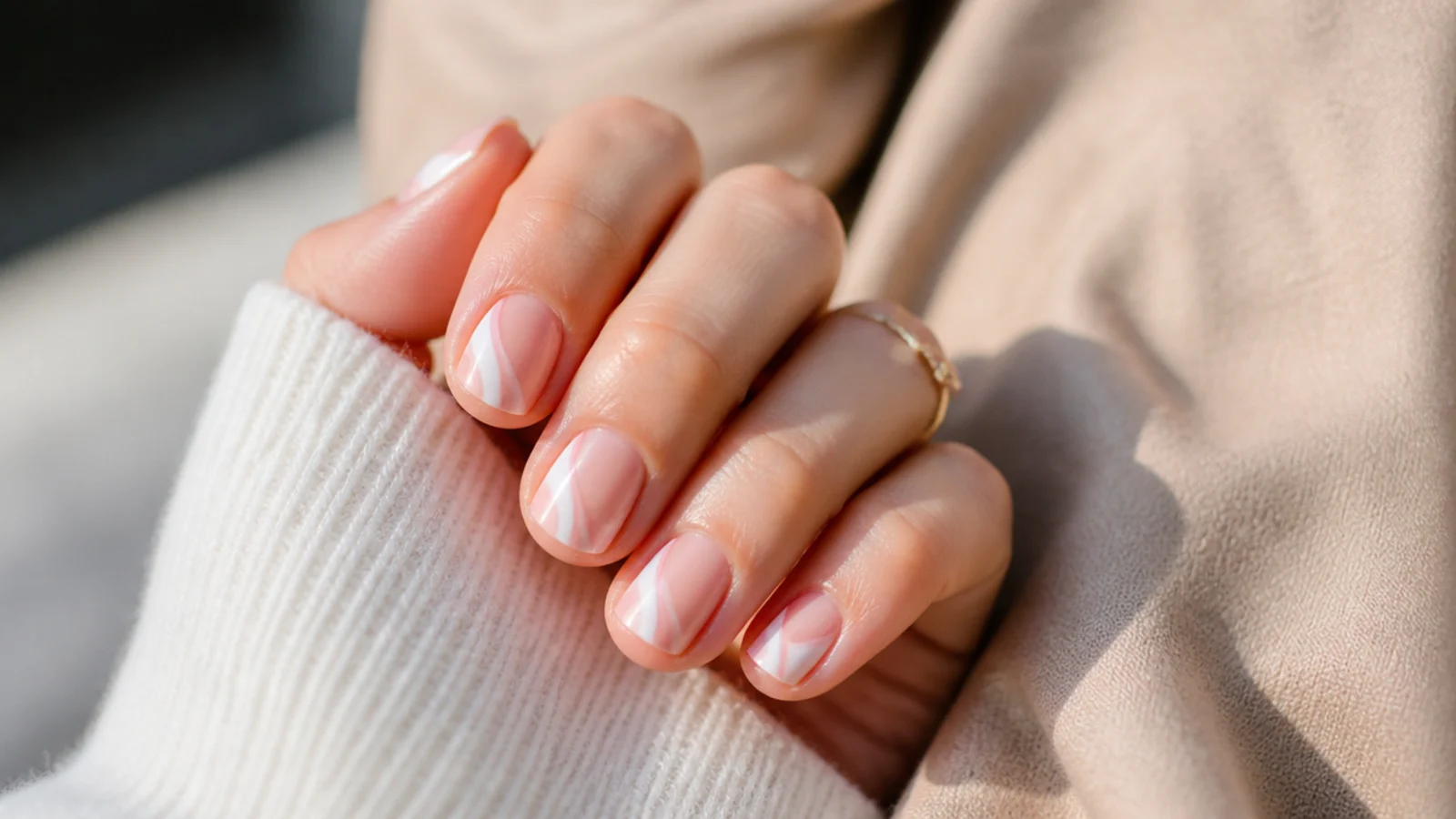
Instead of a smile line, a single curved ribbon sweeps from one sidewall up and across the nail. Swirls have dominated nail feeds for two years and they suit short nails because a curve drawn on the diagonal is longer than any straight band, which stretches the nail visually. Keep it to one swirl per nail and one or two colors maximum. Two swirls on a short nail turns into noise. Ask for it in gel; polish dries too fast to draw a long continuous curve cleanly.
Who it suits: Anyone wanting nail art without losing the French shape.
Tip: Ask for one swirl per nail in a single color so the design does not crowd a small surface.
23. Chrome French Tip Short Nails
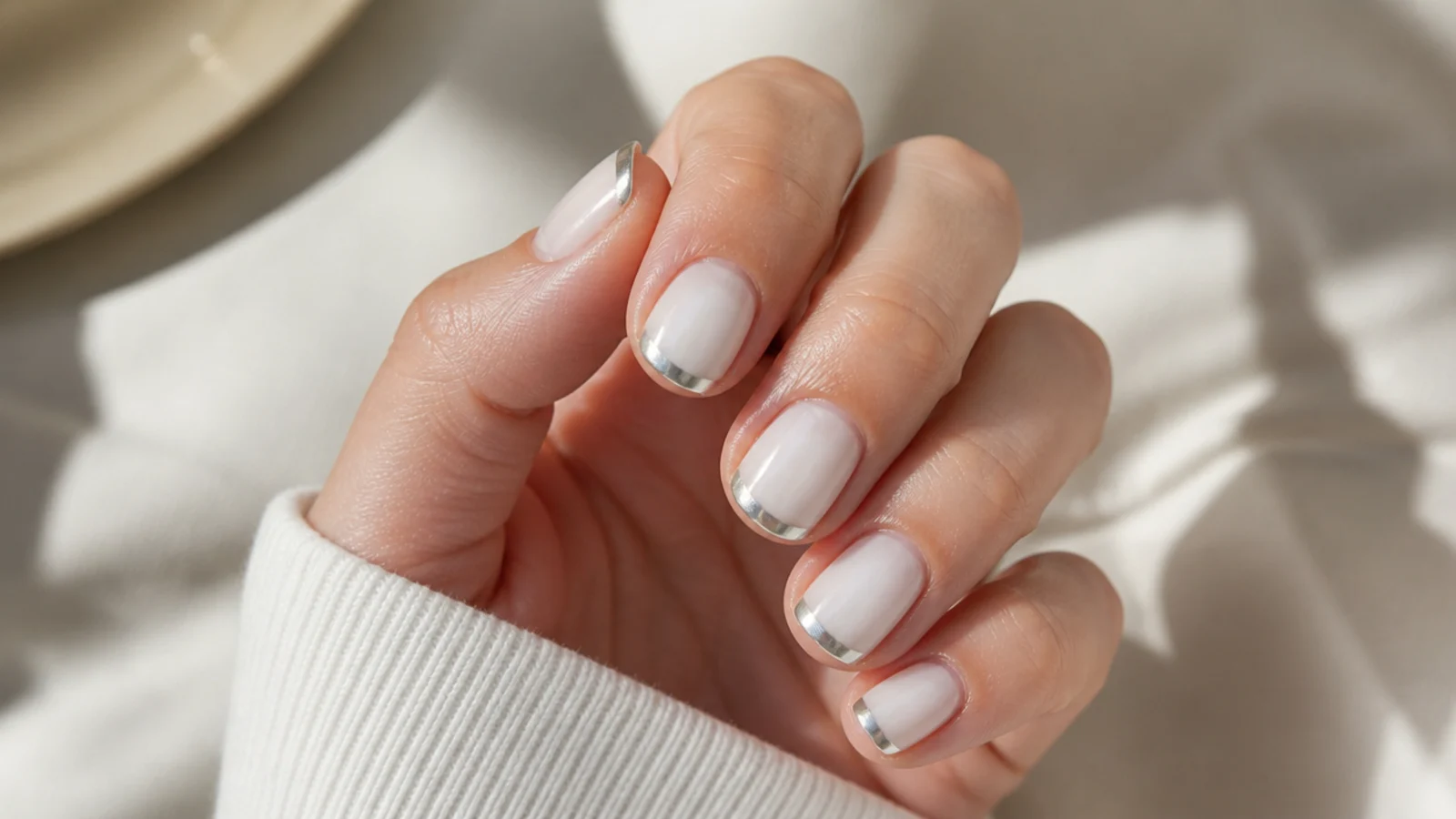
Chrome powder buffed over a cured no-wipe top coat along the tip only, giving a mirror band instead of a flat color. On short nails chrome is smart because a reflective surface has no fixed border: it shifts with the light, so it never reads as a hard cut across the nail. Silver over milky white is the most wearable pairing, and pearl chrome is even softer. Budget 10 to 20 dollars over a standard gel set. Chrome shows ridges, so ask for a smoothing layer first. Full breakdown in white chrome French tip nails.
Who it suits: Nights out and anyone wanting shine without length.
Tip: Ask for chrome on the tip only, not the full nail, or you lose the French shape entirely.
24. Glitter French Tip Short Nails
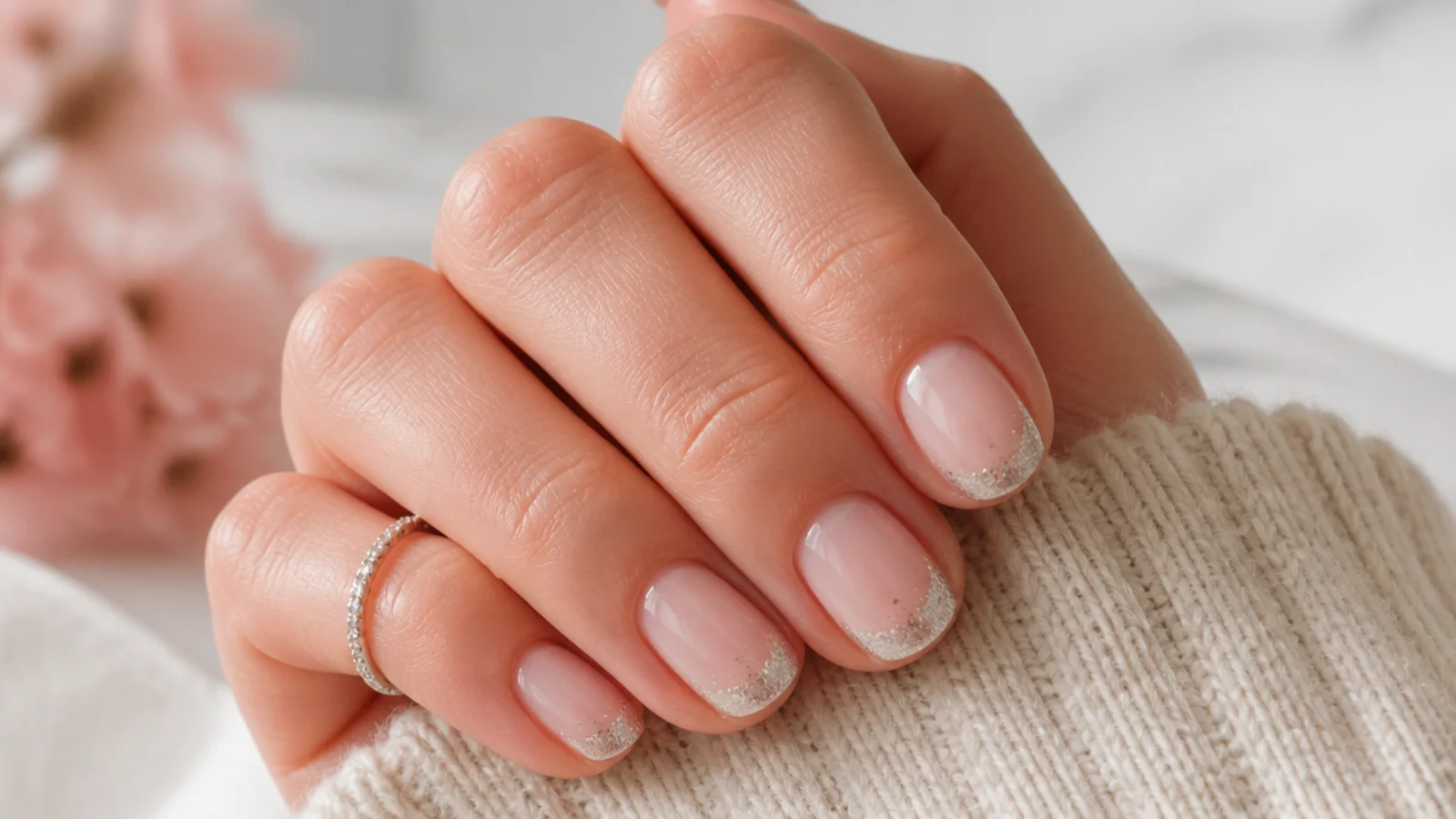
Fine silver or champagne glitter along the tip, fading rather than stopping at a line. Glitter is the most forgiving French material there is, because a scattered edge has no line to be uneven, which makes it the best choice if your smile lines never come out clean. Use fine glitter, not chunky, since large flakes look oversized on a short nail and lift within a week. Expect a longer acetone soak at removal, because glitter gel resists it. This is the party and wedding-guest short French.
Who it suits: Prom, weddings and anyone with a shaky hand.
Tip: Ask for a smoothing top coat over the glitter so the tip edge does not feel gritty.
25. Pearl Glazed French Tip Short Nails
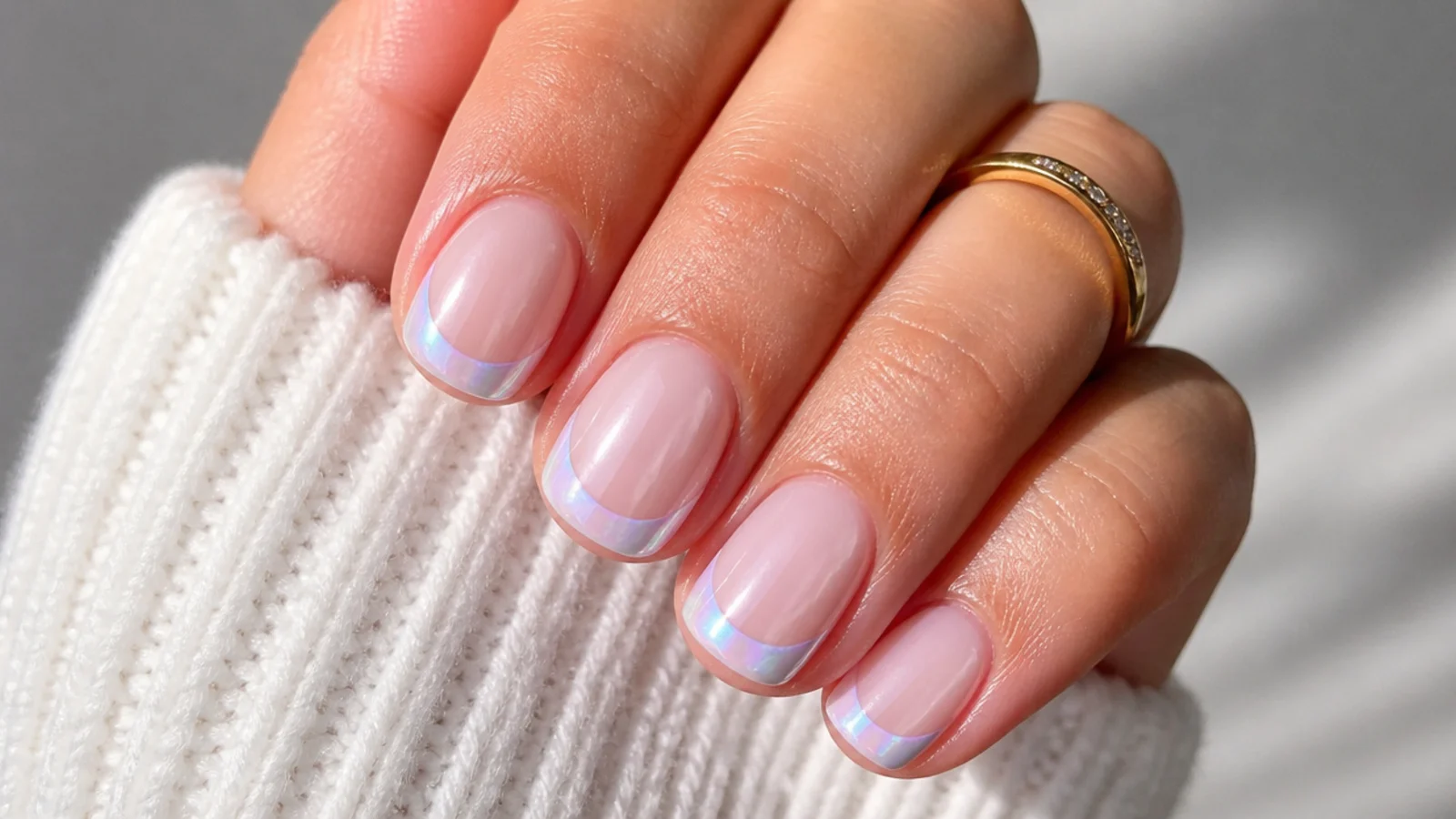
Aurora or pearl powder buffed over a milky base along the tip, giving the glazed-donut finish that shifts pink, blue and lilac as your hand moves. It is the softest way to get shine on short nails, and unlike silver chrome it grows out almost invisibly because the pale base hides the gap for an extra week. Ask for a milky base rather than clear, since pearl powder over a bare nail turns gray. Pairs beautifully with the same finish worn full-nail in short white chrome nails.
Who it suits: Anyone wanting shine that still reads soft and neutral.
Tip: Ask for pearl over milky white, not over clear, or the shift will read dull gray on your nail.
How Deep Should the Tip Be on Short Nails?
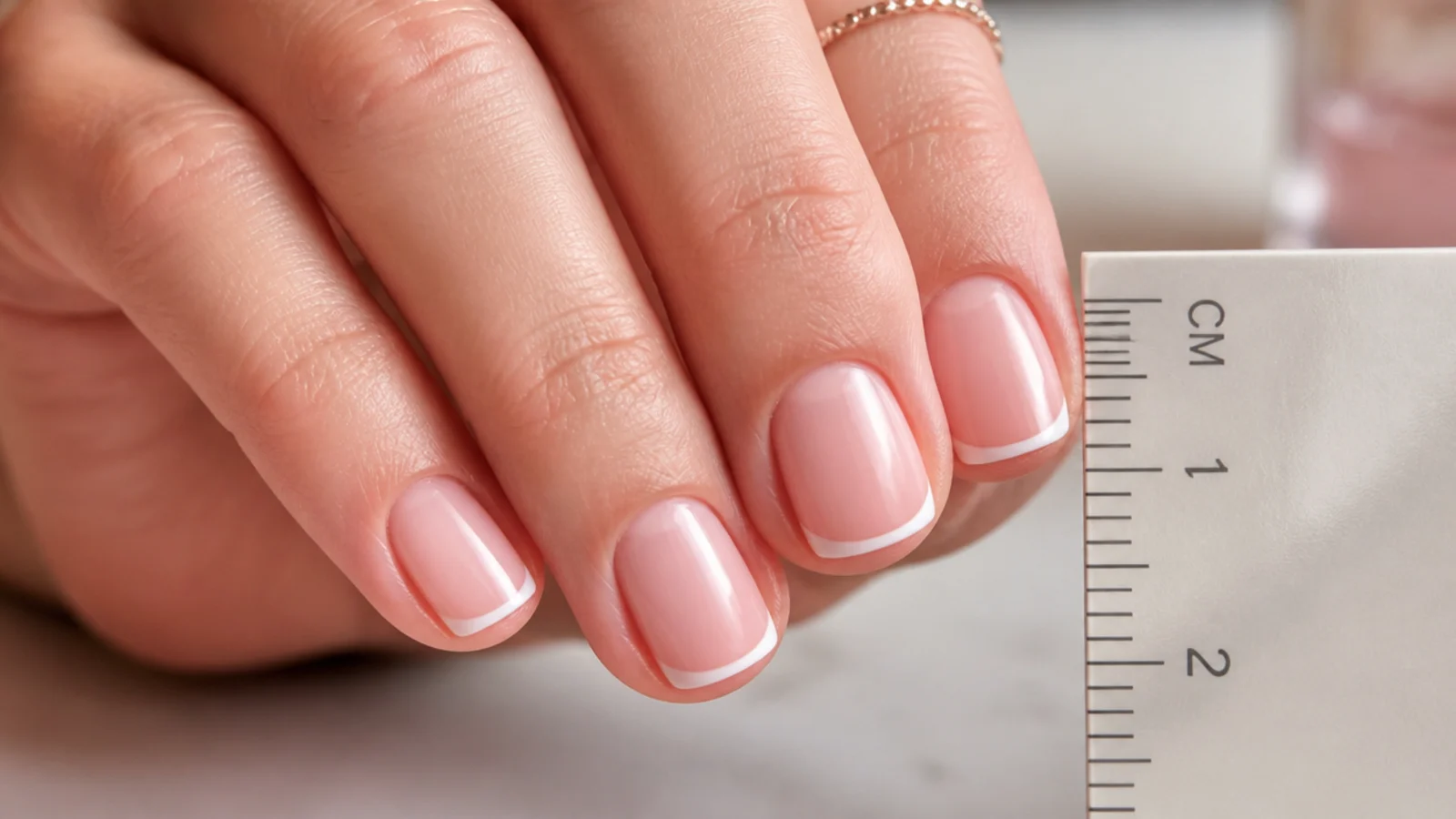
Here is the rule nobody on page one will give you: on a short nail, keep the painted tip band between 1 and 2mm, measured from the free edge upward. That is roughly the width of the white part of a nail you have just trimmed. A standard salon French runs 3 to 4mm, which is fine on a long nail where the bed is 15mm or more, but on a short nail with an 11mm bed a 4mm band takes more than a third of the visible nail. The proportion is what makes short French tips look stubby, not the shortness itself. There is a second half to the rule: the smile line should be shallow. A deep U-shaped curve pushes the color up toward the cuticle at the sidewalls, so even a 2mm band at the center ends up 4mm deep at the edges. Ask for a shallow smile line that runs almost parallel to the free edge, dipping only slightly at the middle. On short almond you need a little more curve so the line follows the taper, but the principle holds everywhere. Painting a band that fine takes a liner brush rather than a stamper, which is covered step by step in how to do French tip nails at home.
Do French Tips Make Short Nails Look Longer?
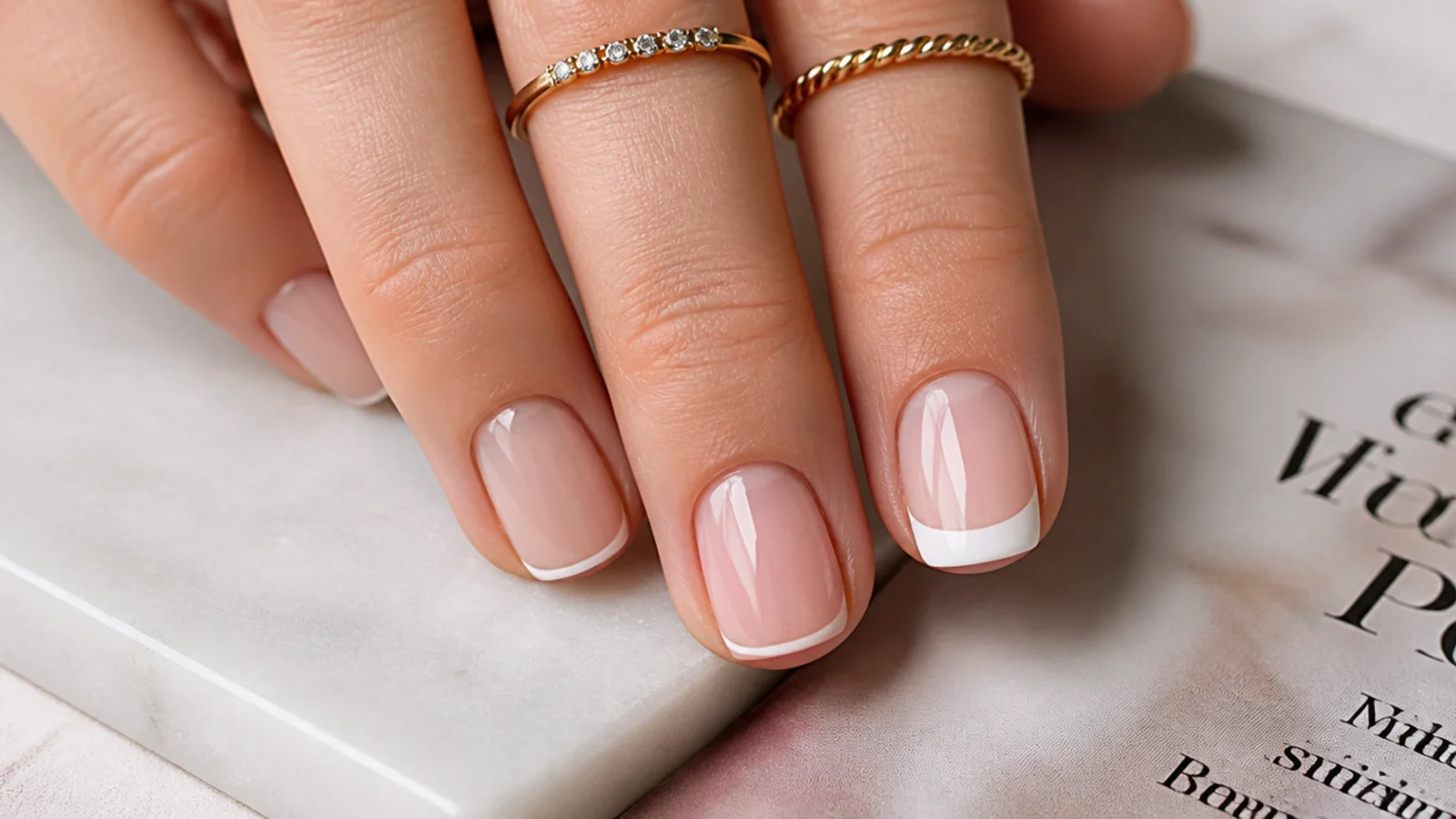
They can, and they can also do the exact opposite, which is why the answer online is so muddled. A French tip lengthens a short nail when it is thin and low in contrast, because the eye reads the nail as one continuous surface with a defined edge, and a defined edge makes the whole shape look finished and deliberate. A French tip shortens a short nail when the band is thick and the contrast is stark, because a hard horizontal line across a small surface is read by the eye as the end of the nail, and everything past it becomes visually separate. That is why bright white on an opaque nude base is the worst combination for short nails despite being the most photographed. Three things maximize the lengthening effect. Use a sheer or milky base so the nail bed still shows through as living nail. Soften the tip color toward the base tone, so nude on beige, milky on sheer pink, brown on caramel. And angle the line where you can, since a diagonal or swirled tip covers a longer path across the same nail than a straight band does. Shape helps too, which the next section covers.
Best Nail Shapes for a French Manicure on Short Nails
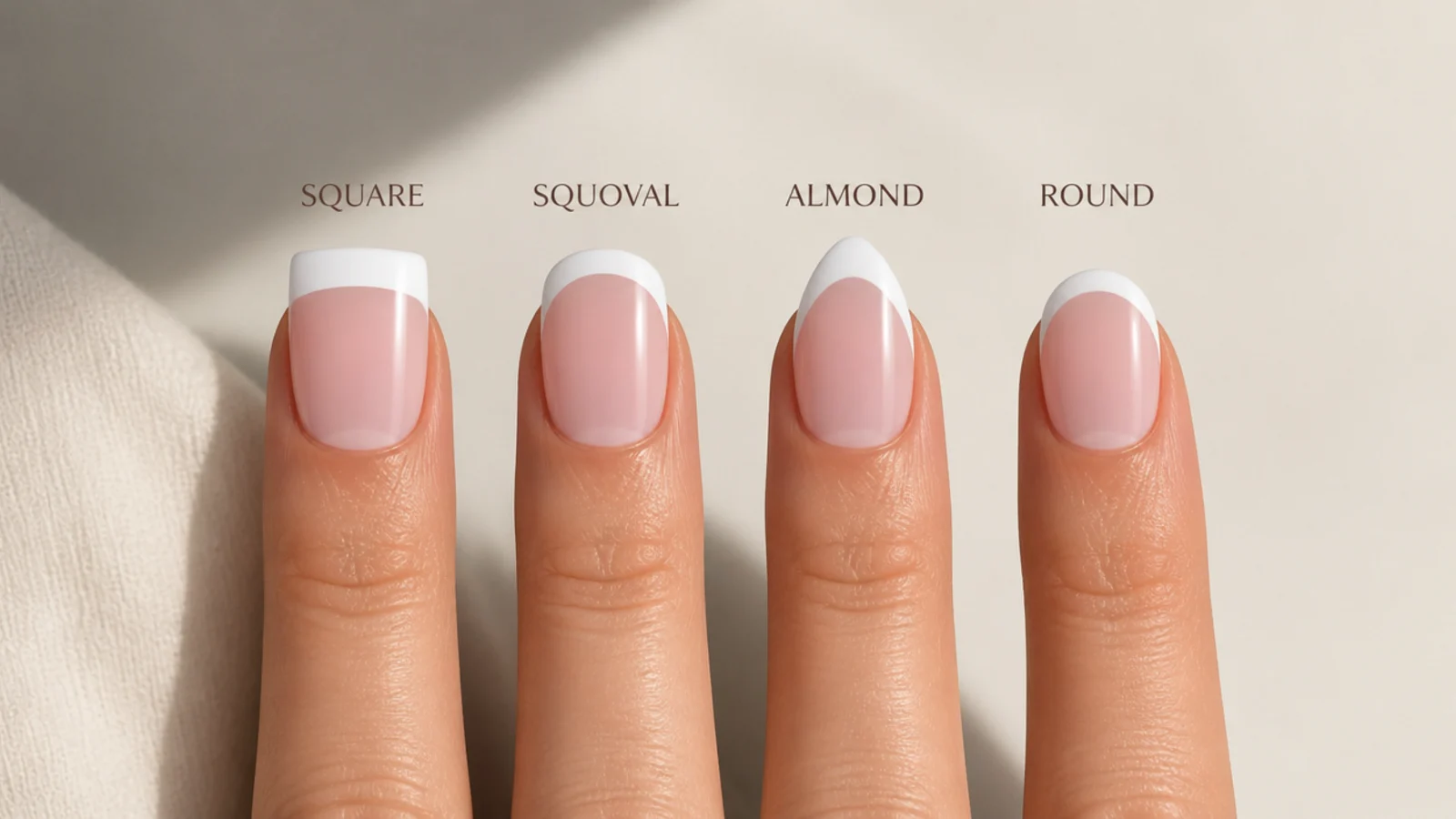
Squoval is the best all-round short French shape. Rounding the corners narrows the nail visually, gives the smile line a curve to follow so small wobbles disappear, and removes the corners that catch and tear. It needs only about 1.5mm of free edge. Short almond buys the most visual length because the taper pulls the eye to a point, but it needs 2 to 3mm of free edge to file and the smile line has to curve deeper to match the taper. Do not overfile the sidewalls to force a point on a short nail, since that thins the stress area and the tip snaps. Square is the most popular and the least forgiving: a straight tip edge makes any asymmetry in the line obvious, and the flat shape widens the nail, so keep the band at 1mm and choose a soft color. Round works at almost no free edge at all, around 1mm, and it is the only shape where a French still reads at that length, but skip white and use a milky or nude tip instead. Compare shapes in detail in almond vs oval nails and short oval nails.
What Short French Tip Nails Cost and How Long They Last
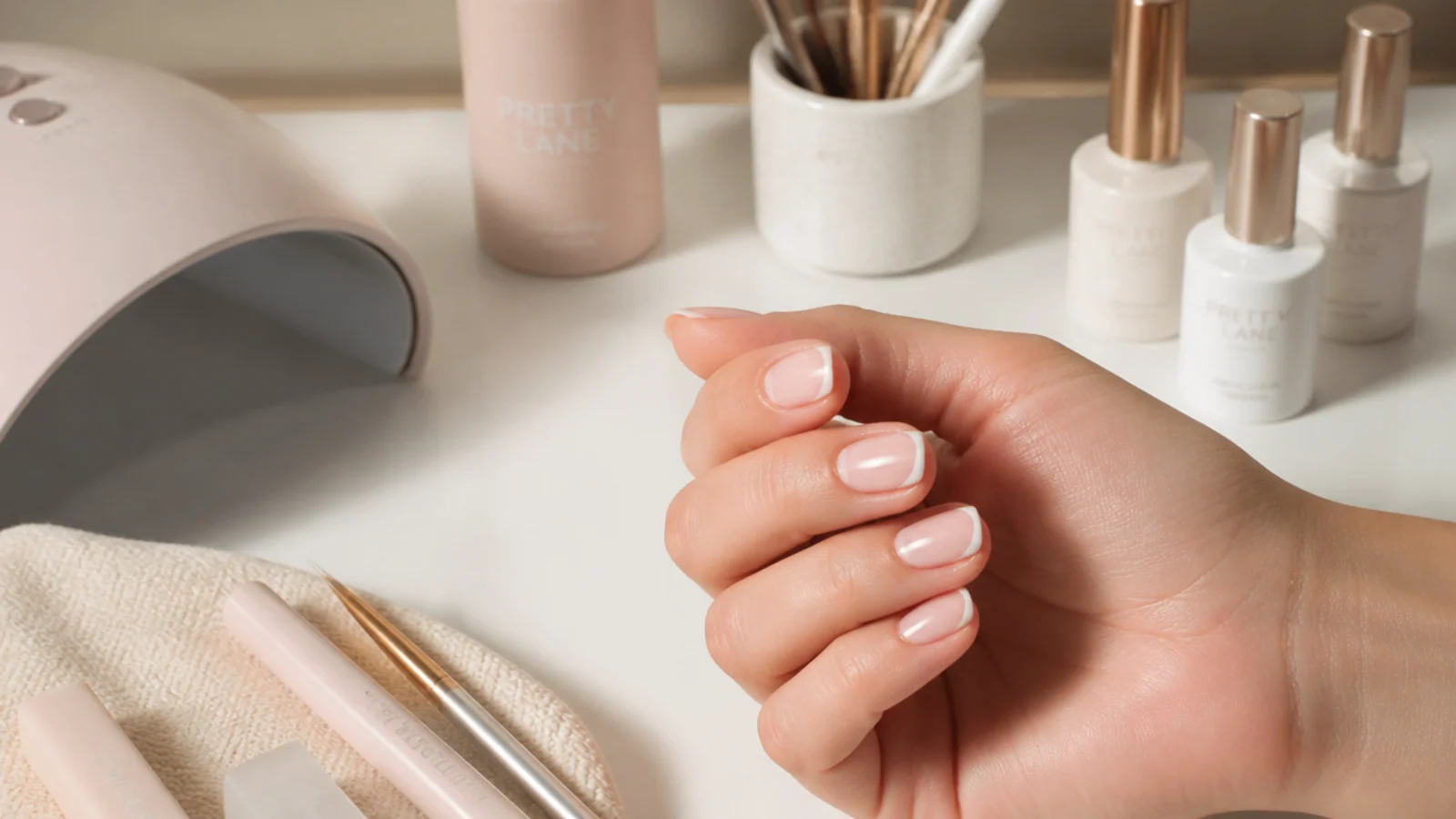
A gel French on short natural nails runs about 40 to 70 dollars and lasts two to three weeks. Regular polish runs 25 to 40 dollars and gives you five to seven days, which is the honest number, and a thin French line in polish often chips at the free edge before day five because the band sits right on the wear point. Short Gel-X or acrylic sets run 60 to 120 dollars, though most people wanting short French tips do not need extensions at all, which is a large part of the appeal. Expect the fine line to add 10 to 15 minutes of salon time compared with a single color, and some techs charge 5 to 10 dollars extra for freehand French. Chrome or pearl tips add another 10 to 20 dollars. At home, a liner brush, a bottle of white gel and a small lamp come in under 40 dollars total, which breaks even against a single gel appointment. Press-on short French sets run about 15 to 30 dollars and last five to ten days with tabs, longer with glue. Removal at a salon is usually 10 to 20 dollars and worth paying for, since peeling gel off is what actually thins the nail plate.
How to Ask Your Nail Tech for Short French Tips
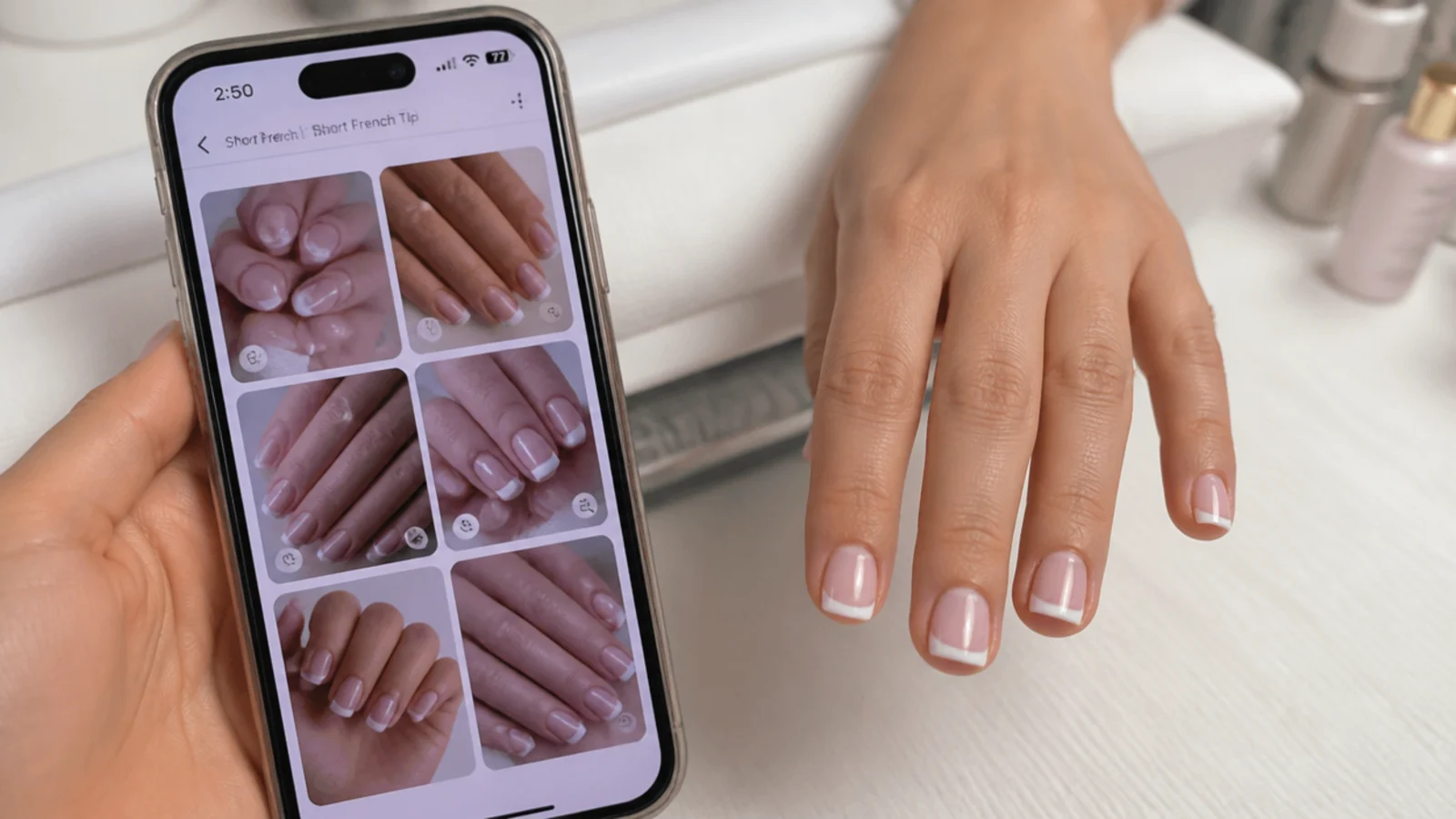
Photos help but numbers help more, because short and thin mean different things to every tech. Lead with the depth: say micro French, about 1 to 2mm, and hold up a trimmed nail as the reference. Then say shallow smile line, not a deep curve, because that single phrase prevents the most common short French failure. Name the shape next, so squoval, short almond, square with softened corners, or round. Then the base: bare, sheer pink or milky white, and specifically not an opaque nude if you want the lengthening effect. Name the tip color as a family rather than a word, so off-white rather than white, or blue-based cherry rather than red. Ask for gel rather than polish if you want the line to survive past day five. Finally, ask for two things most people forget. Ask the tech to cap the free edge, which means sealing the polish over the very tip so the band does not chip off. And ask them to check the line width against all ten nails before curing, since thumbs almost always end up with a thicker band than the pinkies. The full at-home method is in how to do French tip nails at home.
Short French Tip Troubleshooting: Stubby, Wobbly and Uneven Lines
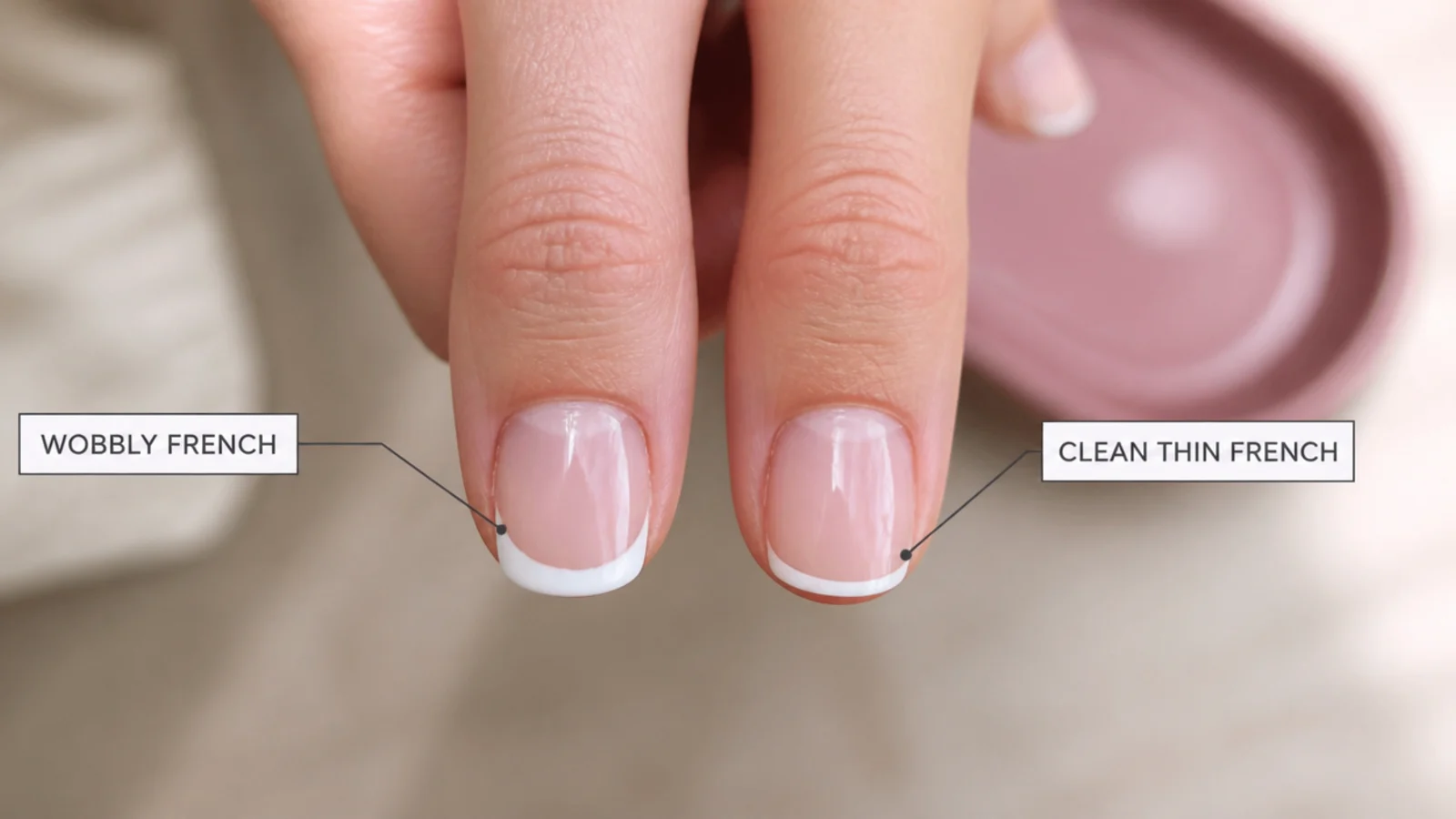
Five things go wrong on short French tips, and each has a fix. If the nail looks stubby, the band is too deep or the contrast is too stark. Cut the depth to 1 to 2mm and move the tip color closer to the base tone. If the smile line wobbles, the brush was reloaded mid-stroke. Load the liner once, then pull one continuous stroke from sidewall to center and a second from the other sidewall to meet it. If the two sides do not match, the nail was held at an angle. Look straight down the finger from the fingertip rather than from above before you commit. If the line smudges into a wet base, the base was not fully dry, which is the single most common failure with guide tape. In gel, cure the base fully before the tip goes on. And if the tip chips within days, the free edge was not capped, so swipe the brush along the very edge of the nail after painting. One more pro habit worth stealing: a clean brush dipped in isopropyl alcohol, run along the inside of the smile line, straightens a slightly wavy line in seconds before you cure.
Frequently Asked Questions
Can you do a French manicure on short nails?
Yes, and short nails are arguably the most versatile French there is. The only change you need is proportion. Keep the painted tip band to 1 to 2mm instead of the standard 3 to 4mm, keep the smile line shallow rather than deeply curved, and use a sheer or milky base so the nail bed still shows through.
How thin should the tip be on short nails?
About 1 to 2mm, measured up from the free edge, which is roughly the width of the white part of a freshly trimmed nail. High-contrast colors like black and navy should stay at the 1mm end. Softer pairings like pink on milky or nude on beige can take a full 2mm without looking heavy.
Do French tips make short nails look longer?
A thin, low-contrast French tip does, because the eye reads the nail as one continuous surface with a finished edge. A thick, high-contrast French tip does the opposite: a hard horizontal line across a small surface reads as the end of the nail. Bright white on opaque nude is the worst combination for short nails.
What is the best nail shape for a short French manicure?
Squoval, meaning square with rounded corners. It narrows the nail visually, gives the smile line a curve to follow so wobbles hide, and removes the corners that catch and tear. Short almond gives more length illusion but needs 2 to 3mm of free edge. Round works when you have almost no free edge at all.
Why do my French tips look uneven on short nails?
Usually because the brush was reloaded mid-stroke or the nail was viewed from above instead of head on. Load the liner once, pull one stroke from each sidewall to the center, and check the nail by looking straight down the finger from the fingertip. A clean brush dipped in alcohol will straighten a wavy line before you cure it.
Should I use white or a softer color for short French tips?
Softer usually wins on short nails. Milky white, off-white, nude and brown all sit closer to the natural nail tone, so they define the tip without creating the hard border that visually chops a short nail. Save bright white for square nails with long beds, or use it at 1mm on a bare base.
How long do short French tip nails last?
A gel French lasts two to three weeks. Regular polish gives five to seven days, and a thin French band often chips sooner because it sits right on the free edge where wear happens. Capping the free edge, meaning sealing polish over the very tip, adds several days to either. Press-ons last five to ten days.
How much do short French tip nails cost?
A gel French on short natural nails runs about 40 to 70 dollars, and polish runs 25 to 40 dollars. Some salons add 5 to 10 dollars for freehand French rather than guide stickers, and chrome or pearl tips add 10 to 20 dollars. A home setup with a liner brush, white gel and a small lamp comes in under 40 dollars.
Are French tip stampers good for short nails?
Not really. Stampers press a preset curve onto the nail, and that curve is sized for medium and long nails, so on a short nail it lands too deep. They also struggle on highly curved or narrow nail plates, leaving gaps at the sidewalls. A thin liner brush gives far more control at 1 to 2mm.
Can I get chrome or glitter on short French tips?
Yes, and both are smart choices for short nails. Chrome has no fixed border because the mirror finish shifts with the light, so it never reads as a hard cut across the nail. Glitter has a scattered edge with no line to be uneven, which makes it the most forgiving option if your smile lines never come out clean.
Which french tip nails look are you saving?
If you take one thing from these 25 short French tip nails, make it the depth rule: 1 to 2mm of tip, a shallow smile line, and softened contrast between the tip color and the base. That single set of numbers is the difference between a French that stretches a short nail and one that chops it in half. Start with a micro white or milky French, since both hide an imperfect line, and move to double, ombre or chrome once your tech has your smile line dialed in. Ask for gel rather than polish so the thin band survives past day five. When you are ready to compare finishes, read white French tip nails or browse the rest of the French tip nails hub.