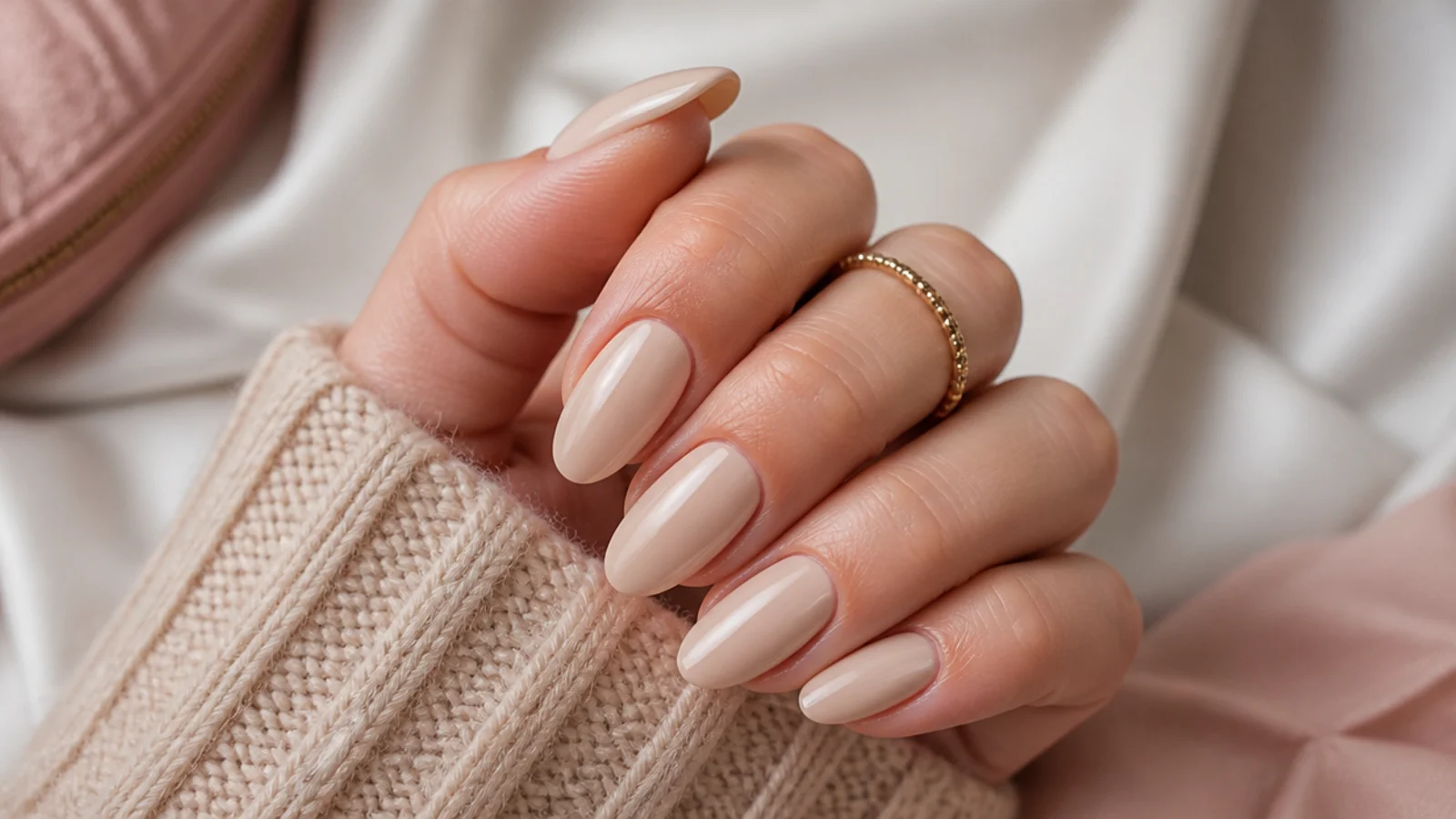
Quick Comparison
| Almond Nails | Oval Nails | |
|---|---|---|
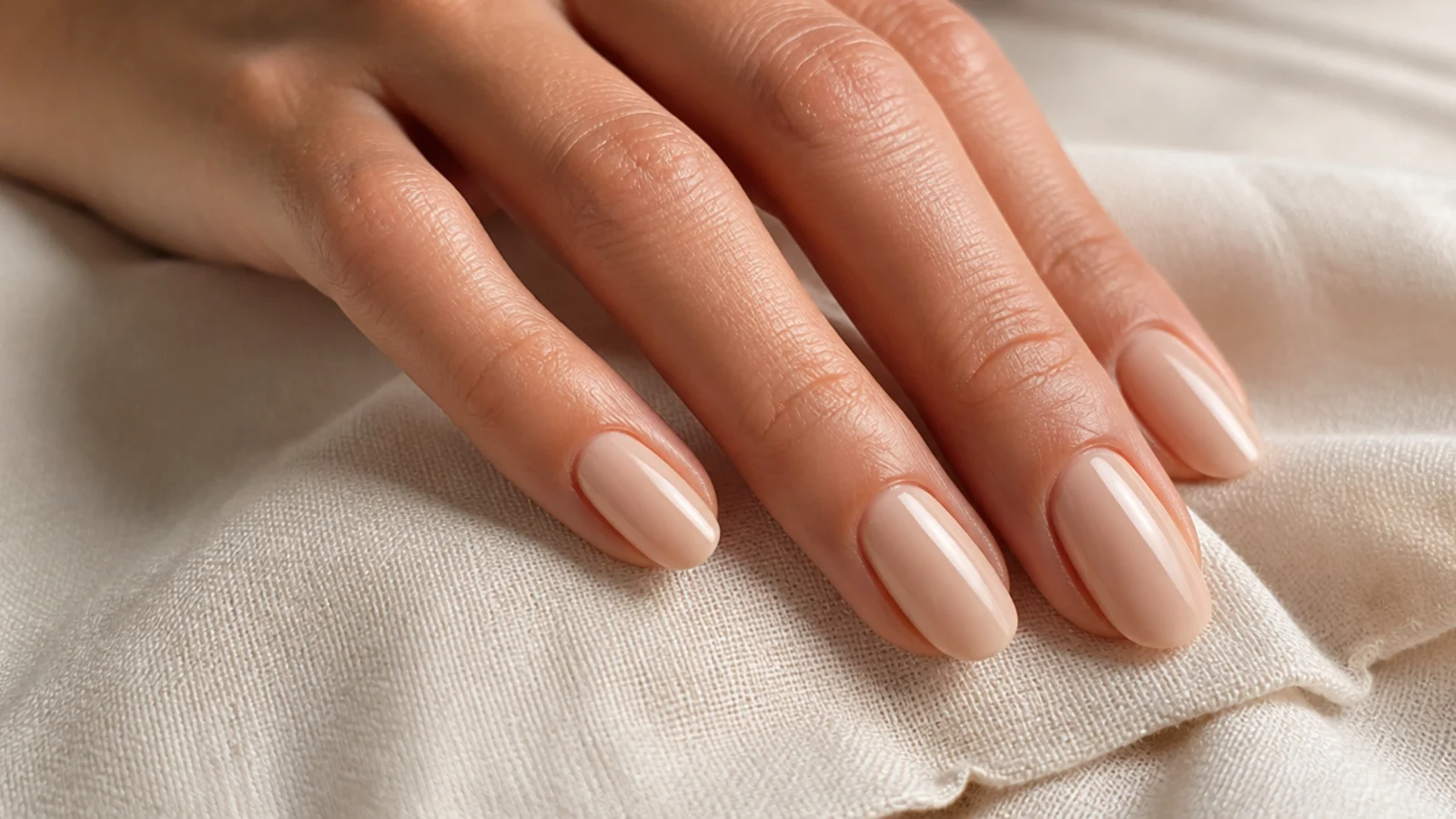
| Tip shape | Tapered to a soft rounded point | Rounded evenly with no point at all |
| Sidewalls | Filed inward from below the halfway mark | Follow the natural sidewall with no taper |
| Elongating effect | Strong; the point extends the finger line | Moderate; it softens rather than lengthens |
| Minimum free edge | About 2mm before the point is visible | Works on any length, including bitten nails |
| Breakage point | The sidewall, where filing removes structural width | Rare; the even curve spreads impact |
| Typing and daily use | Comfortable to about 6mm, then the point catches | Comfortable at any length |
| Best neutral shades | Milky white, taupe, mocha, greige, pearl chrome | Sheer nude, soft pink, creamy ivory |
| Home filing difficulty | Harder; both sidewalls must taper at the same angle | Easy; one curved stroke around the free edge |
| Salon cost | Gel 35 to 60 dollars, acrylic 55 to 100 dollars | Gel 30 to 55 dollars, acrylic 50 to 95 dollars |
1. Milky White Almond Nails
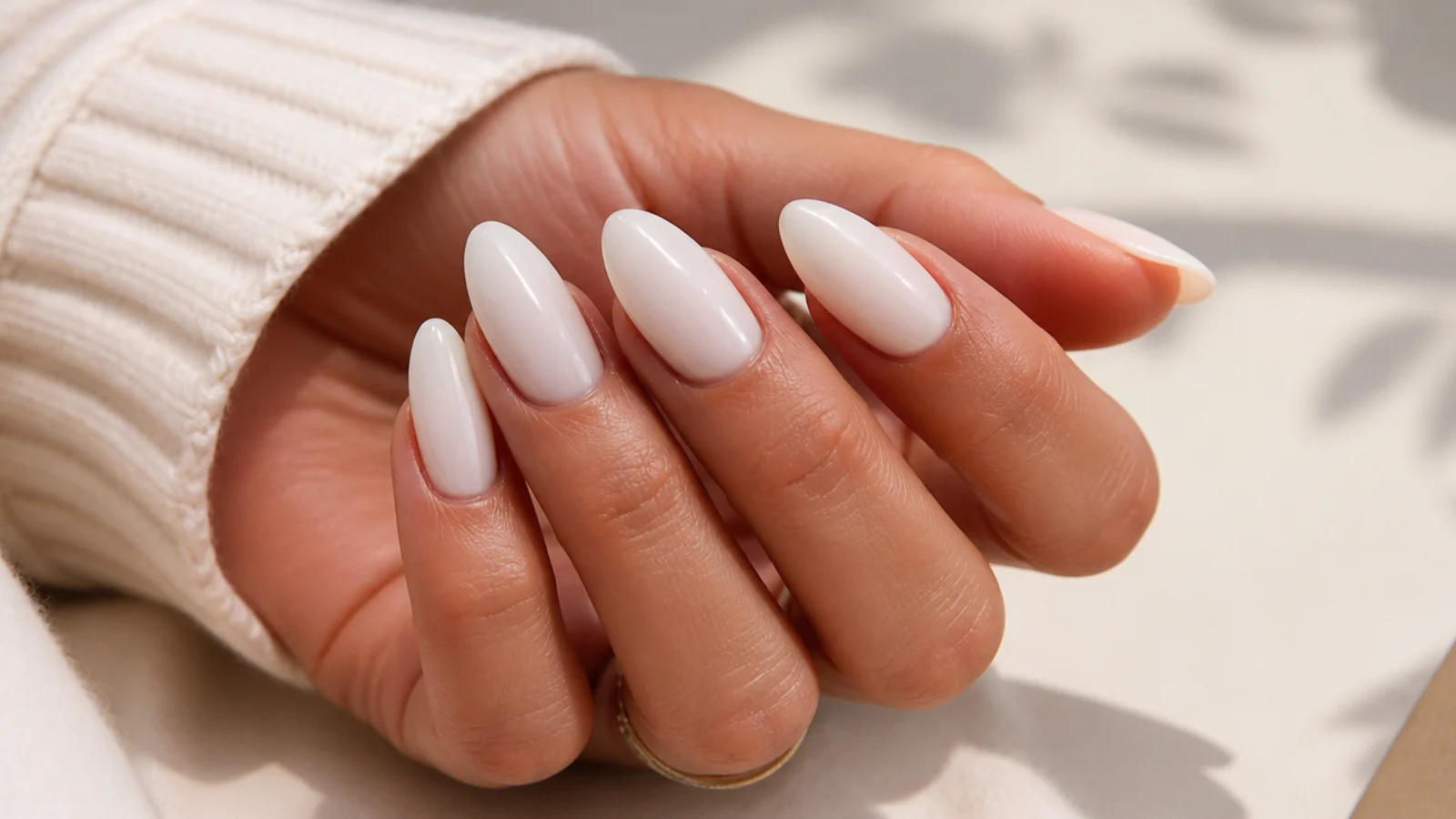
Three sheer coats of a milky white gel such as OPI Funny Bunny, built until the free edge reads soft cream rather than chalk. Almond is the best shape for milky white because the tapering sidewalls keep the sheer color from pooling at the corners the way it does on square nails. Medium length, about 5mm of free edge, is the sweet spot. It grows out almost invisibly, which is why it is the most repeated neutral in the whole neutral and classy nails hub.
Who it suits: Every skin tone; the safest first almond set.
Tip: Ask for three sheer coats, not two thick ones, or the milky base will streak down the center.
2. Sheer Nude Almond Nails
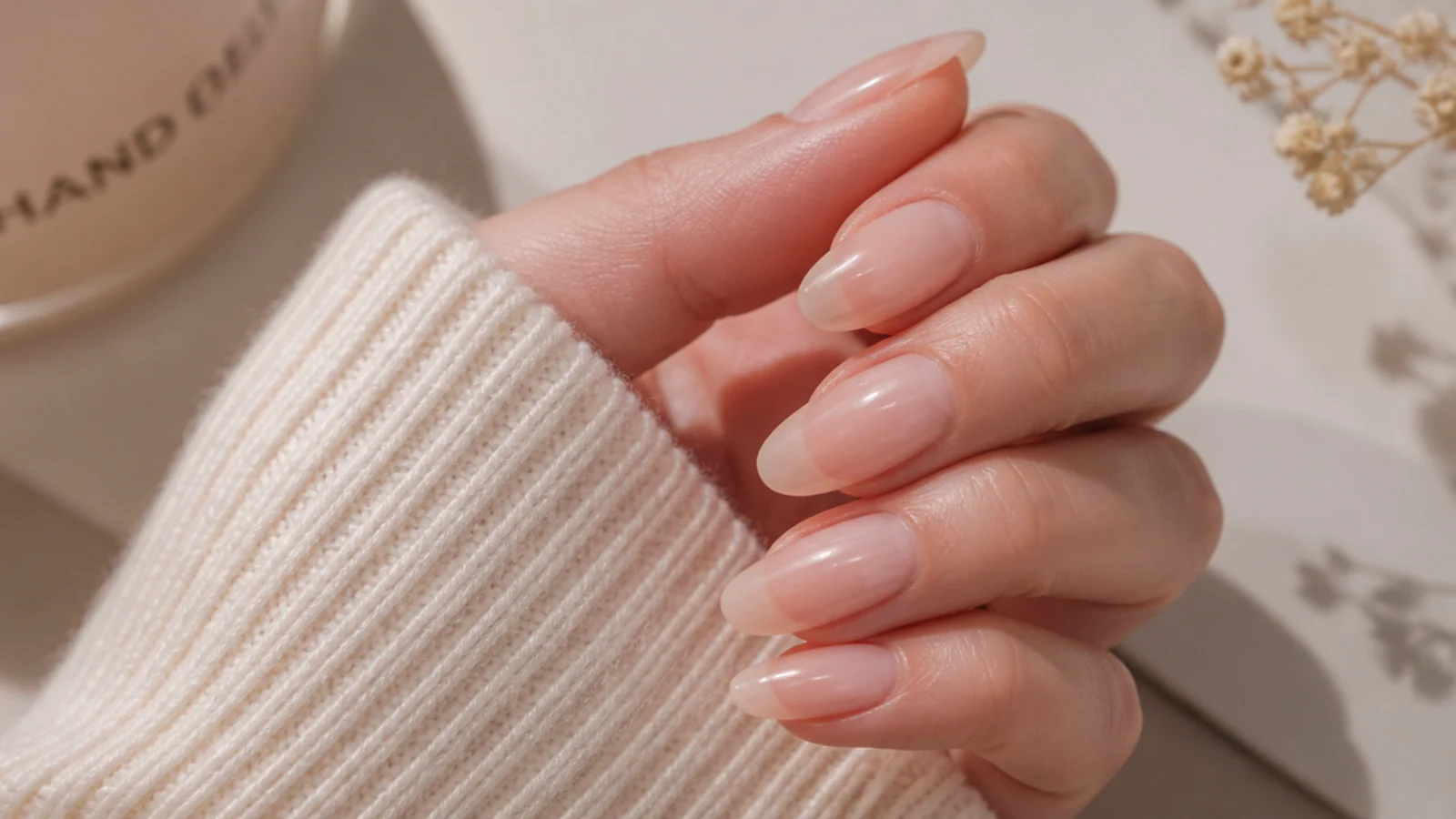
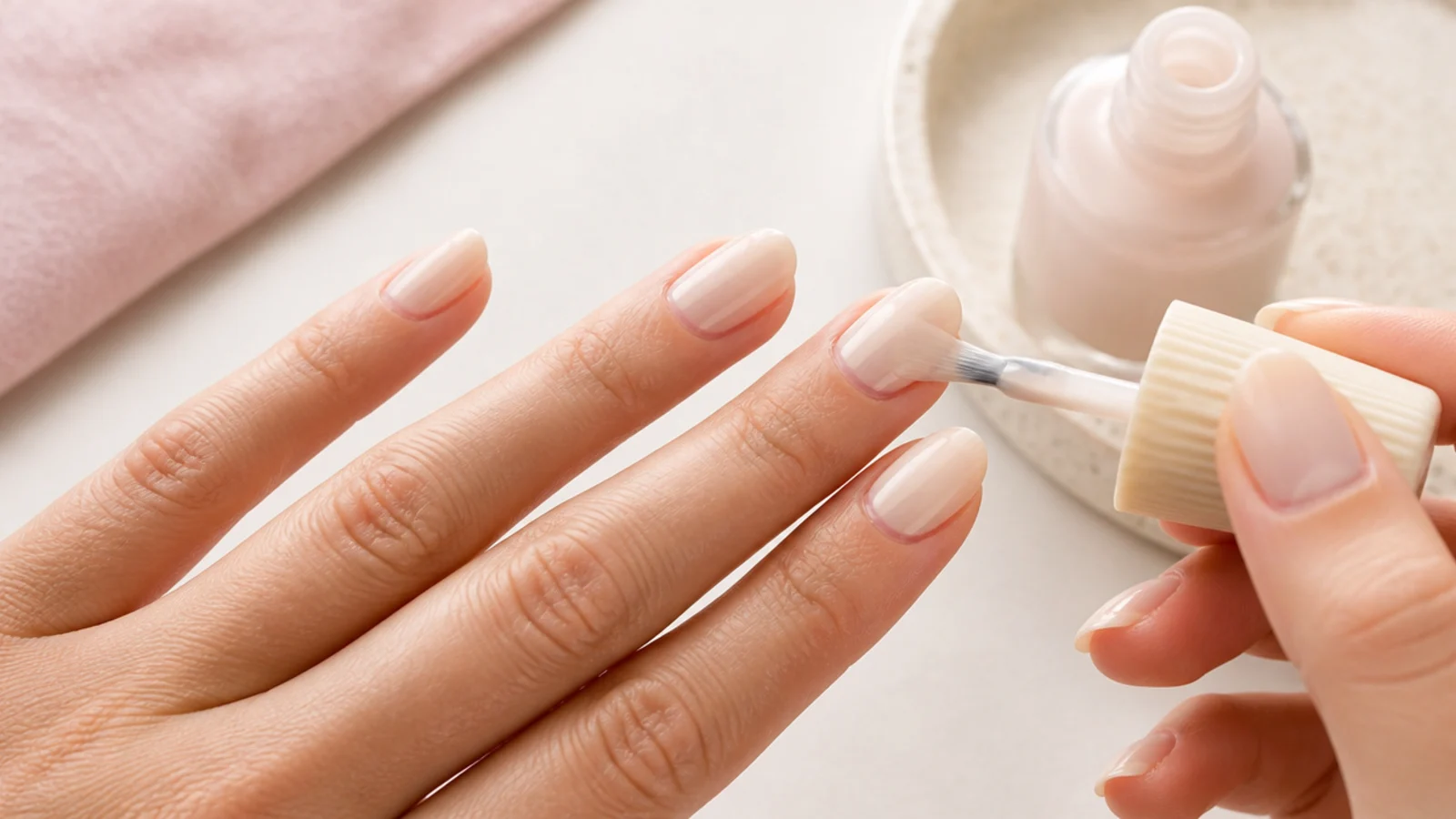
One or two coats of a translucent beige like DND Perfect Nude, thin enough that your own nail line still shows through the free edge. This is the lowest-commitment classy manicure there is, and it chips almost invisibly, so it stretches a polish manicure from five days to closer to nine. On almond the sheer wash flatters because the point draws the eye down the finger instead of across the tip. Occasion-by-occasion versions live in classy nude nails for any occasion.
Who it suits: Interviews, hospital shifts and anyone who cannot commit to color.
Tip: Push the brush back toward the cuticle to thin the coat instead of wiping it on the bottle neck.
3. Soap Finish Almond Nails
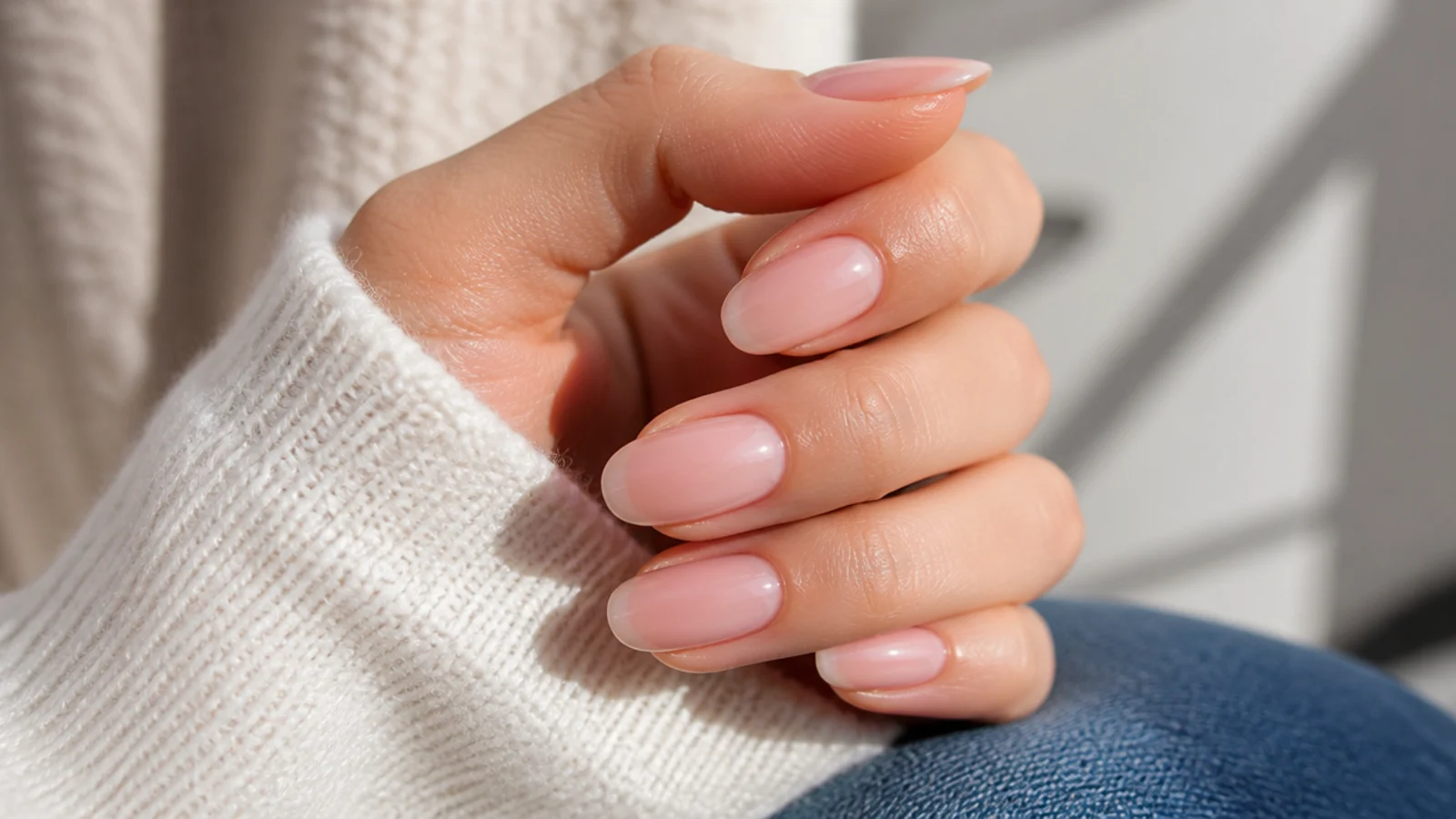
The 2026 finish everyone screenshots: a sheer wash of pinky-nude under a thick glass-like gloss top coat, so the nail looks freshly washed rather than painted. The shine is doing all the work, which means the shape has to be clean, and almond gives the gloss a continuous curve to reflect off with no flat corners to break the highlight. Keep it at 3 to 5mm. The full method sits in almond soap nails.
Who it suits: Anyone who wants their nails to look like better versions of themselves.
Tip: Ask for a no-wipe gloss top coat; matte-prone builder gel kills the wet-glass effect.
4. Milky Aura Almond Nails
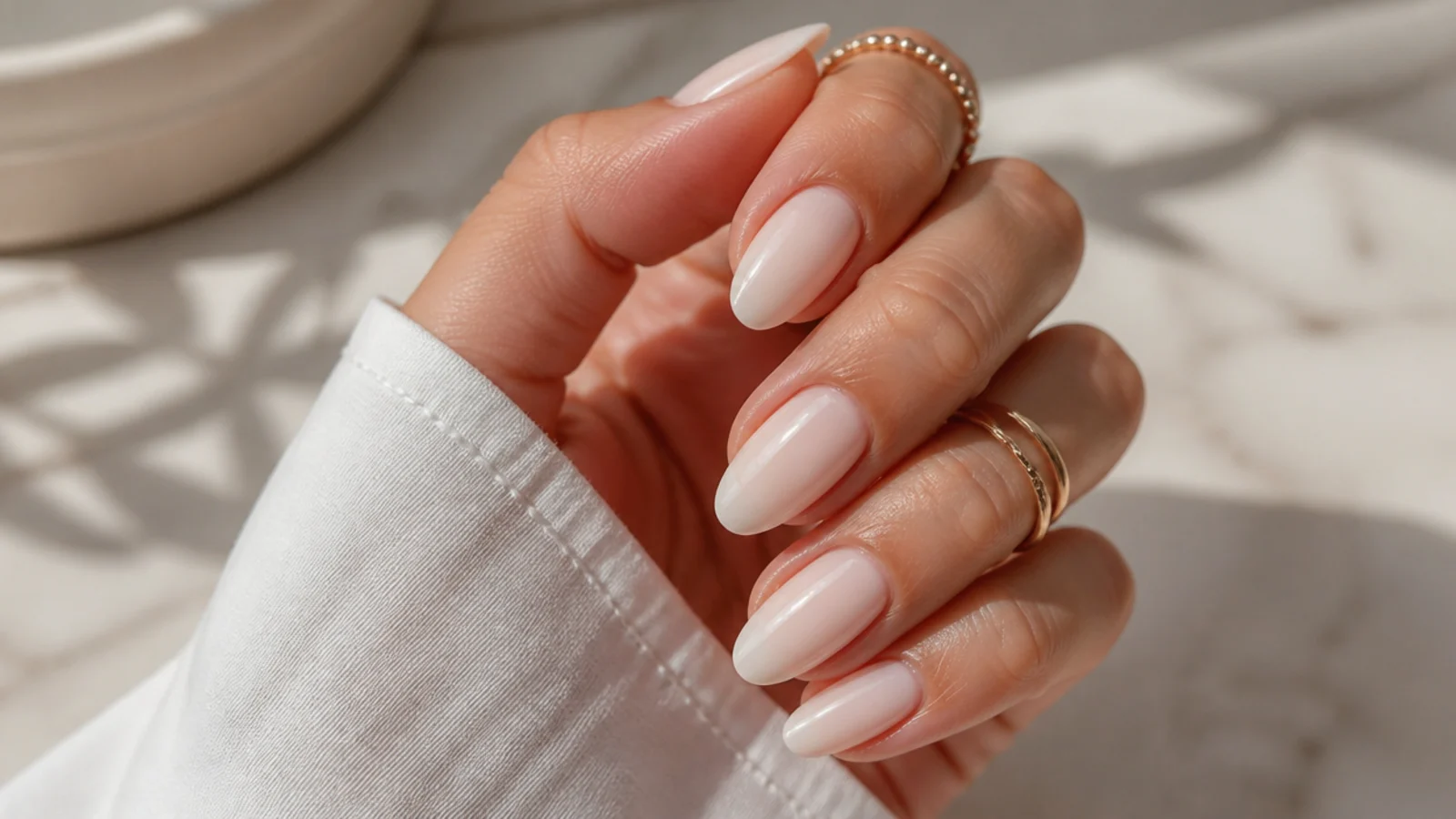
A pale white halo airbrushed into the center of a nude base so it glows outward and fades before it reaches the sidewalls. Almond suits the aura better than any other shape because the halo can sit in the widest part of the nail and let the taper frame it, instead of getting cropped by a flat tip. Ask for it airbrushed rather than sponged, since sponging leaves visible grain. Expect about 10 dollars over a plain gel set.
Who it suits: Soft-glam wearers who still want the set to read neutral.
Tip: Ask for the halo placed slightly above center so it does not disappear as the nail grows out.
5. Micro French Almond Nails
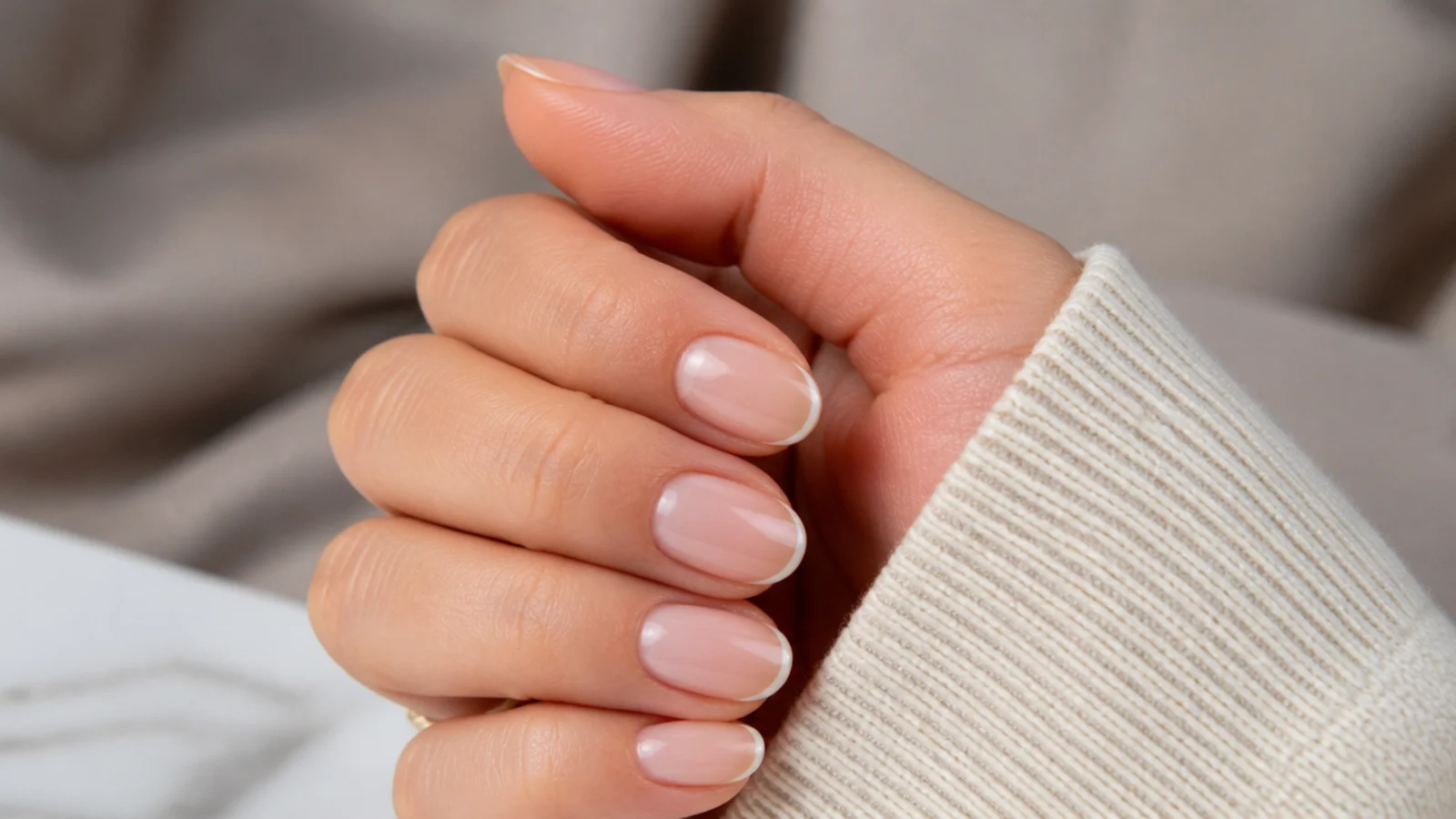
A hairline white line, roughly 1mm wide, traced along the almond curve over a bare or barely tinted nail. This is the single cheapest way to make a short natural nail look salon-finished, and it is why micro French keeps getting called the definition of quiet luxury. The almond curve is harder to trace than a flat coffin edge, so ask for gel rather than polish and let the tech use a striper brush. Works from 2mm up. More short-length ideas in short classy nails that look expensive.
Who it suits: Short nails, typists and anyone with a strict dress code.
Tip: Ask for the line to follow the free edge exactly; a straight line across an almond tip looks crooked.
6. Classic White French Almond Nails
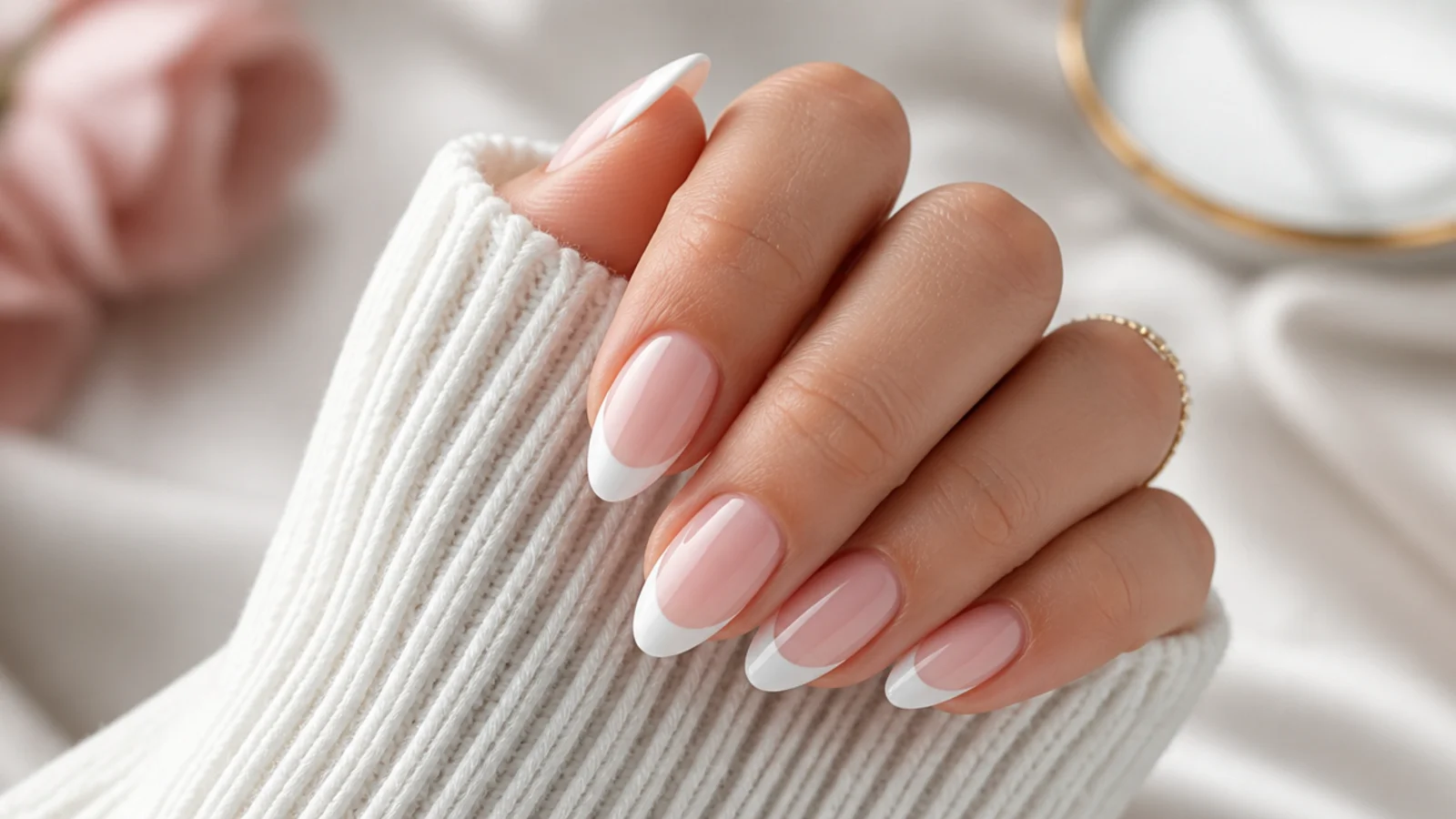
The traditional French, resized for almond: a sheer pink or nude base with a 3 to 4mm white tip and a smile line that curves rather than runs straight. On almond the smile line has to deepen slightly at the center to stay parallel with the point, which is the detail cheap French sets get wrong. Say deep curved smile line, matched on all ten. It is the standard wedding and graduation set. Compare tip styles in almond French tip nails.
Who it suits: Brides, bridesmaids and formal events.
Tip: Check the thumbs; techs almost always paint thumb tips wider than the other eight.
7. Gold Micro French Almond Nails
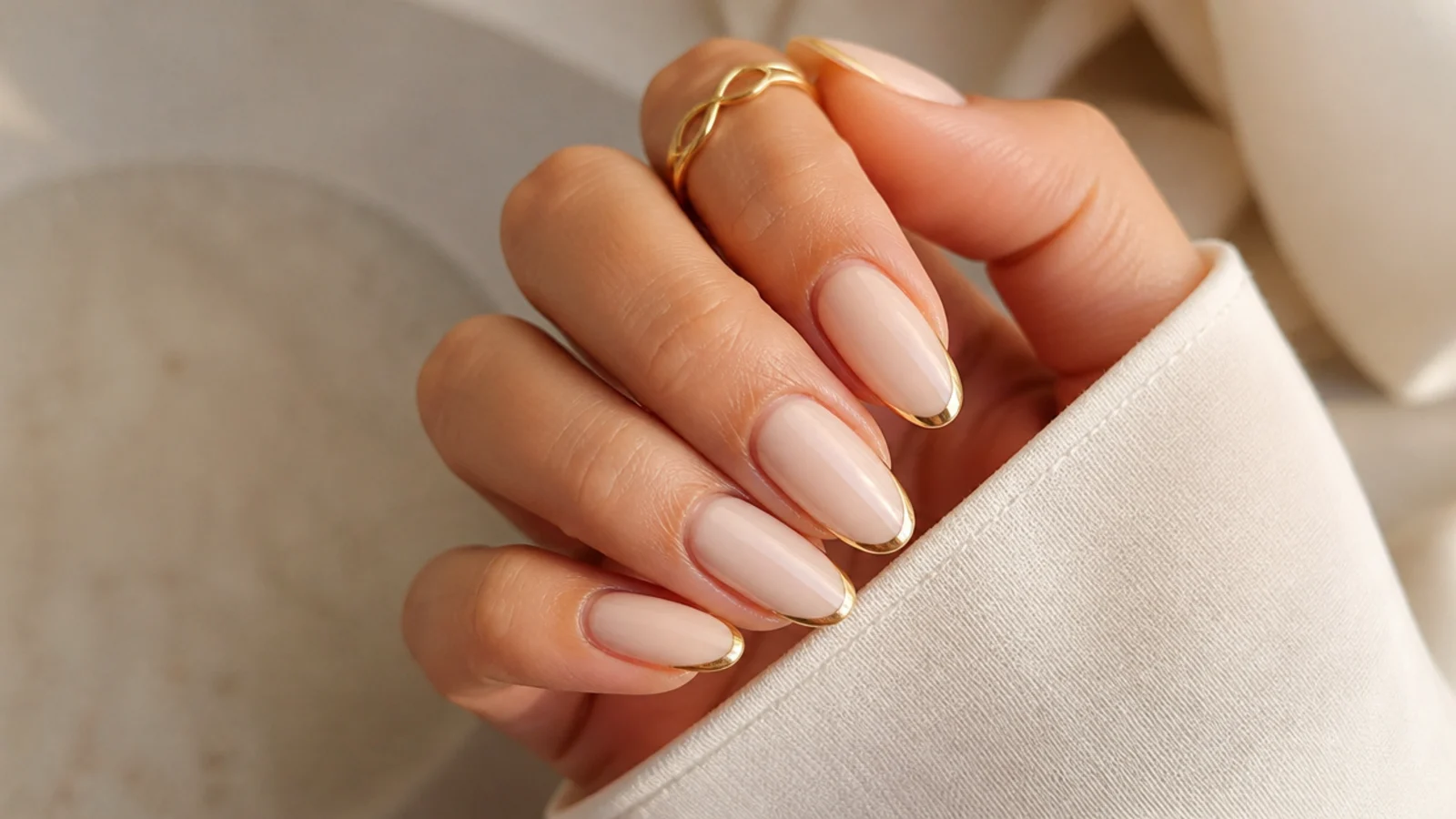
Swap the white hairline for metallic gold chrome or gold gel paint over a milky beige base, and the same 1mm line reads jewelry rather than manicure. Gold sits better on warm and olive undertones than silver does, and it picks up the color of a wedding band, which is why it photographs so well on ring-hand shots. Ask for gold liner over a cured base, sealed with gloss. Budget 8 to 15 dollars over a plain set.
Who it suits: Warm undertones and anyone wearing yellow gold jewelry.
Tip: Ask for gold chrome powder on a liner brush, not glitter gel, or the line will look gritty.
8. Soft Beige Almond Nails
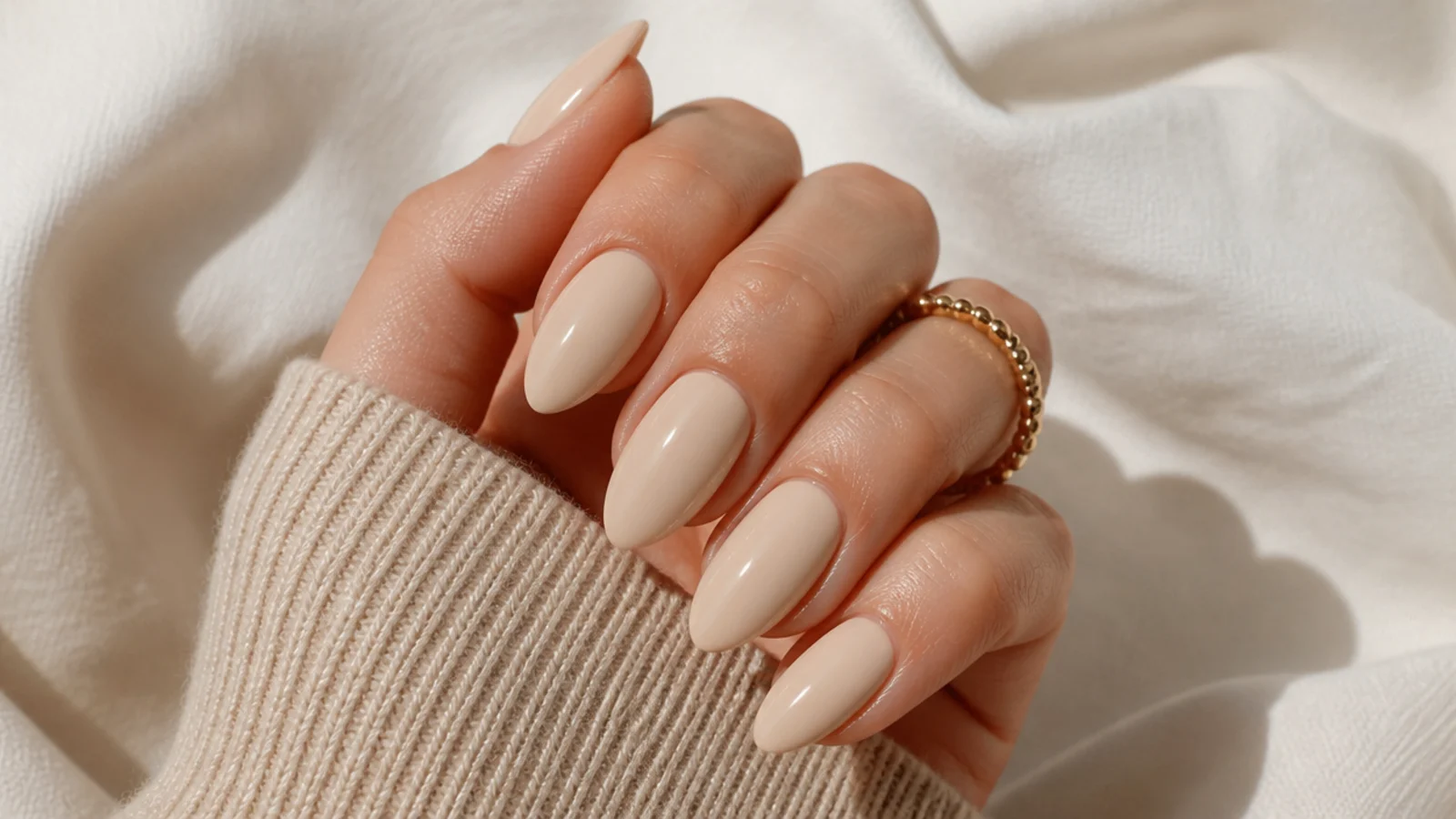
A fully opaque warm beige, two coats, no shimmer. This is the workhorse of the neutral palette because it covers ridges and staining that a sheer nude exposes, so it is the better choice if your natural nails are uneven. On deeper skin tones pick a beige a shade or two darker than your fingertip so it does not read gray. Medium 4 to 5mm length. For work dress codes specifically, see neutral short nail colors for work.
Who it suits: Ridged or stained natural nails that need coverage.
Tip: Hold the bottle against your inner wrist; beige that matches your skin exactly will wash you out.
9. Taupe Almond Nails
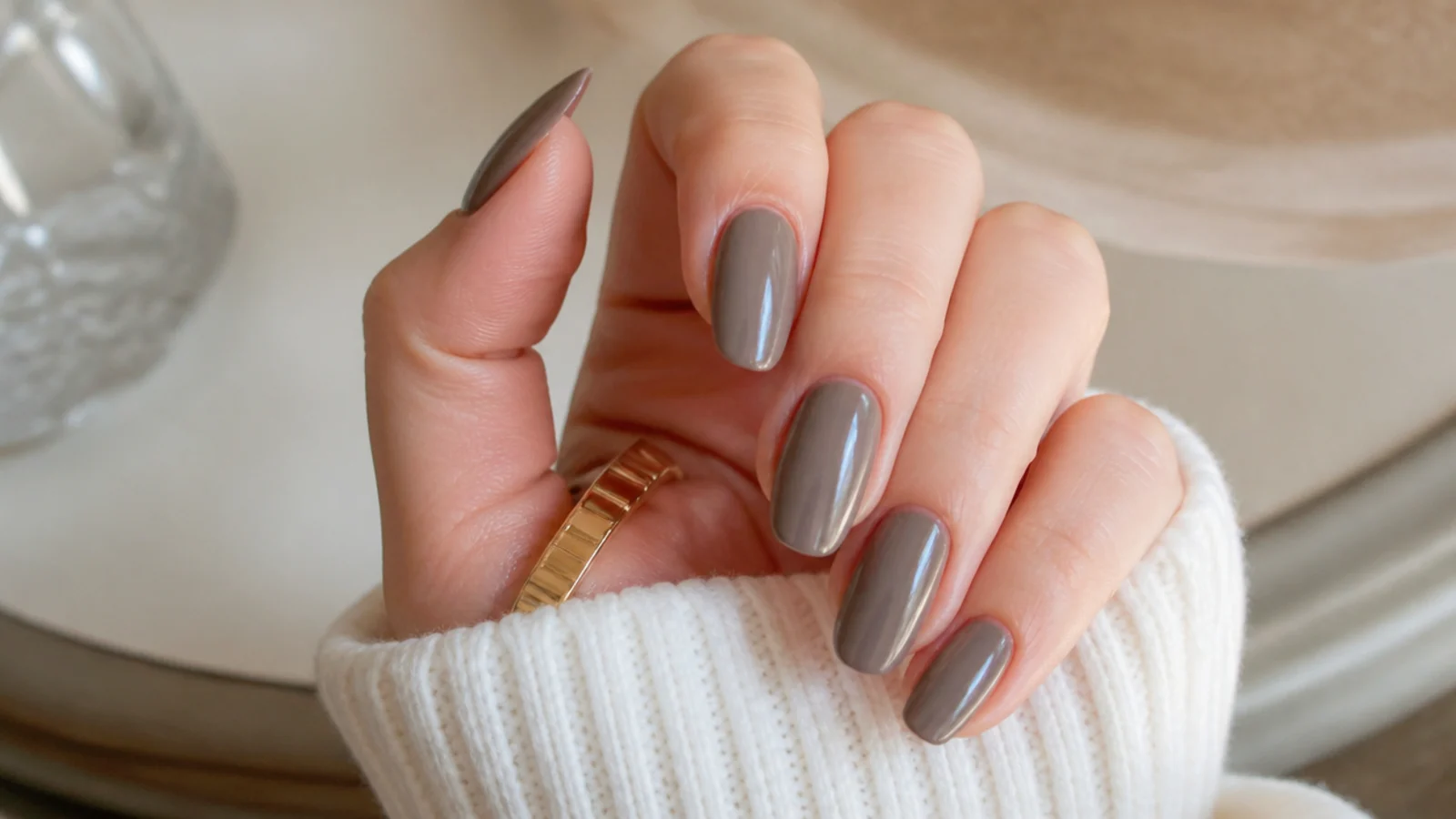
Taupe is beige with gray in it, and it is the most versatile neutral in the category because it goes with black, navy and camel equally. Essie Chinchilly is the benchmark bottle. On almond the cool gray cast reads sculptural rather than muddy, since the taper gives the shade a highlight down the center of each nail. Two coats for full opacity. It suits cool and neutral undertones best; warm undertones should shift toward greige instead.
Who it suits: Cool undertones and all-black wardrobes.
Tip: Two coats minimum; one coat of taupe looks like an under-mixed gray on most nail beds.
10. Greige Almond Nails
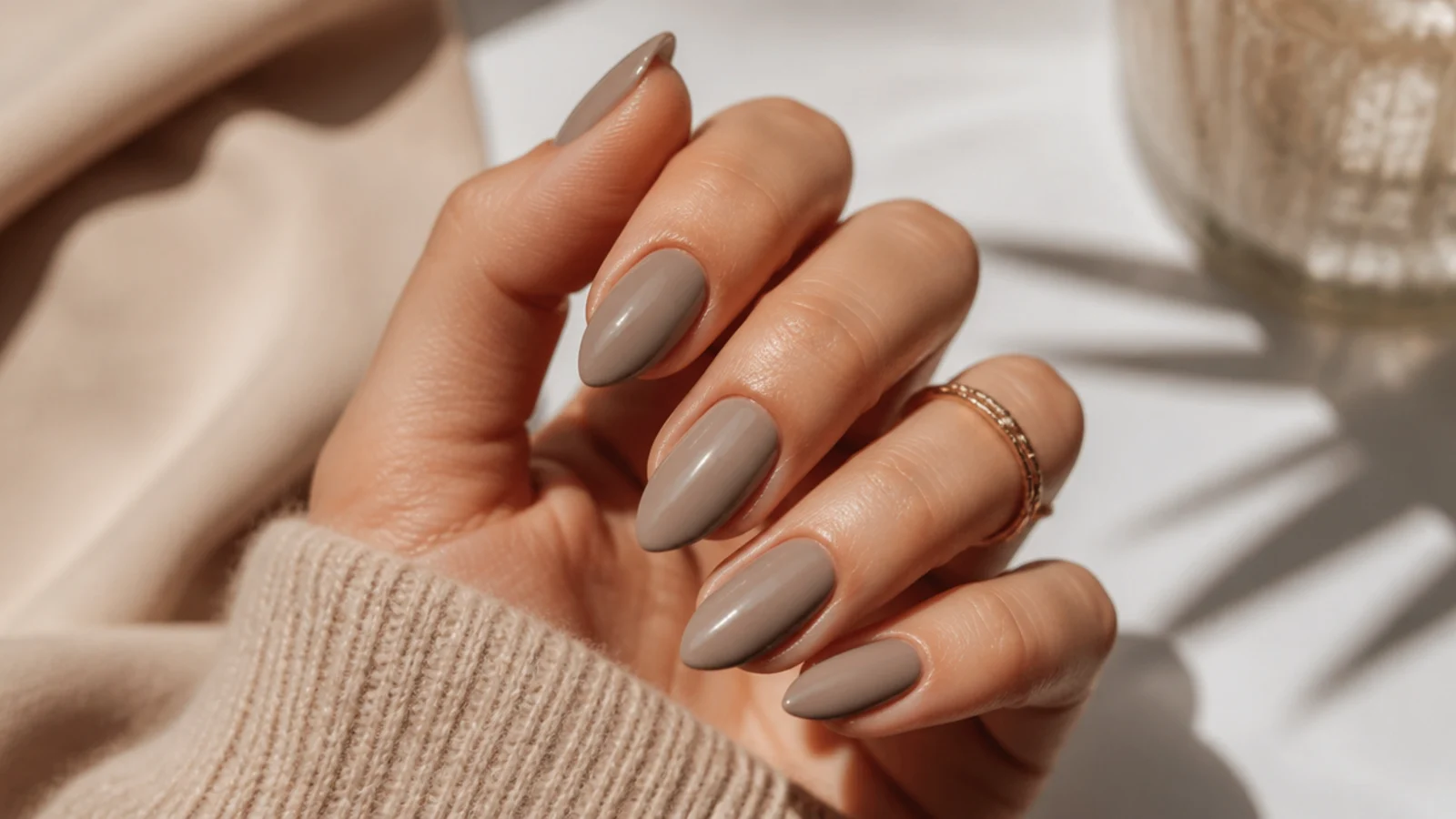
The middle ground between gray and beige, warmer than taupe and cooler than nude, which makes it the neutral most people can wear without checking their undertone first. It is the shade that looks like expensive paint rather than nail polish. On almond it flatters medium and olive skin especially, because the warmth in it stops the gray from turning ashy against the finger. Two coats, high gloss, 4 to 6mm. Try it matte too via matte nude nails.
Who it suits: Olive and medium skin tones, and anyone unsure of their undertone.
Tip: Greige shows brush strokes, so float the second coat rather than dragging it.
11. Mocha Brown Almond Nails
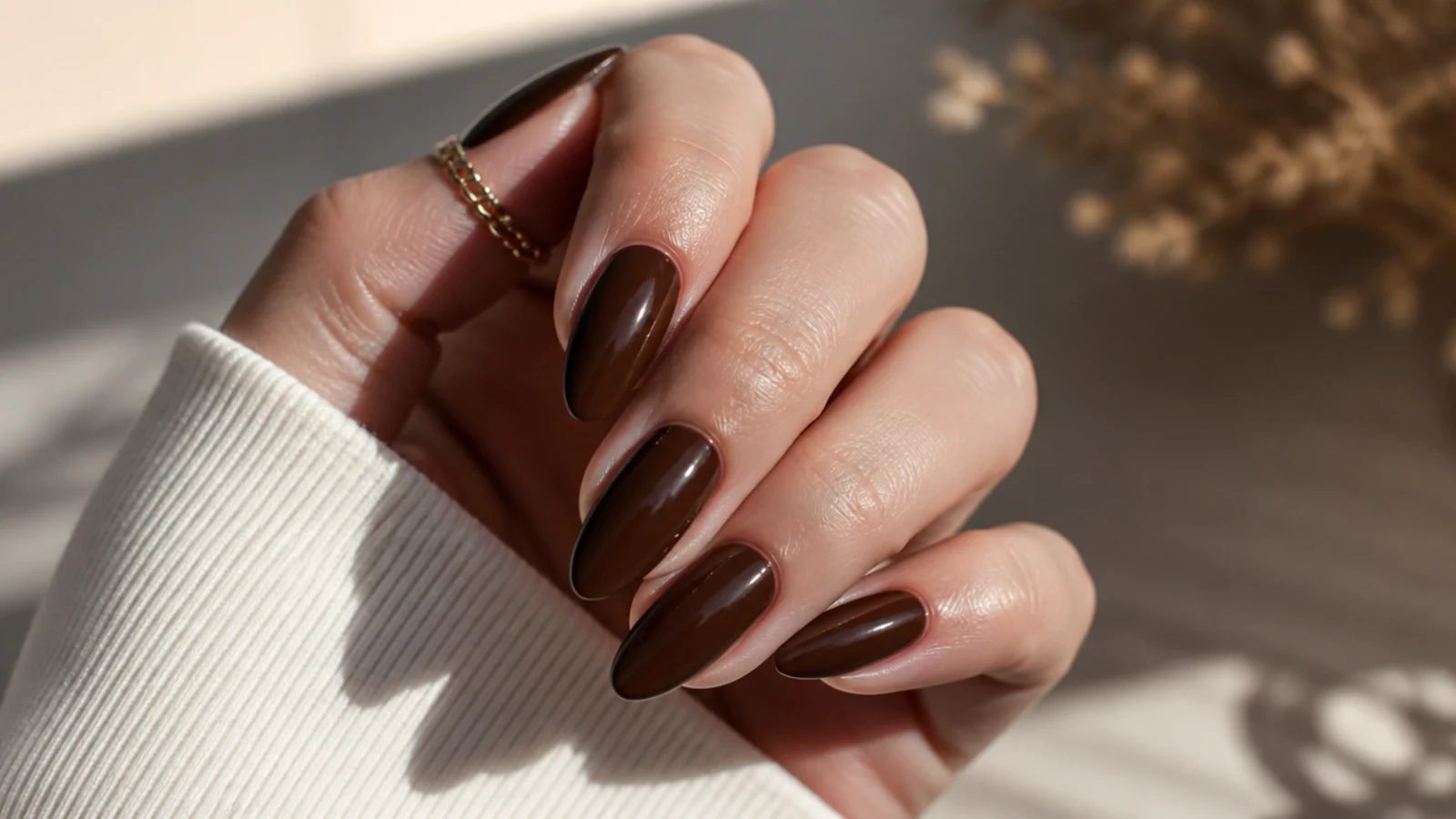
A milk-chocolate to espresso brown, opaque in two coats, and currently the neutral that reads most expensive on camera. Brown works on almond because the shape is already soft, so a dark shade lands as grown-up rather than gothic. It flatters deep and olive skin tones outright, and on fair skin a lighter mocha rather than a true espresso keeps the contrast from looking harsh. Medium 5mm. Use a base coat, since brown pigment stains the nail plate.
Who it suits: Fall and winter, and deep or olive undertones year round.
Tip: Ask for a base coat first; brown is the second worst stainer after true red.
12. Latte Ombre Almond Nails
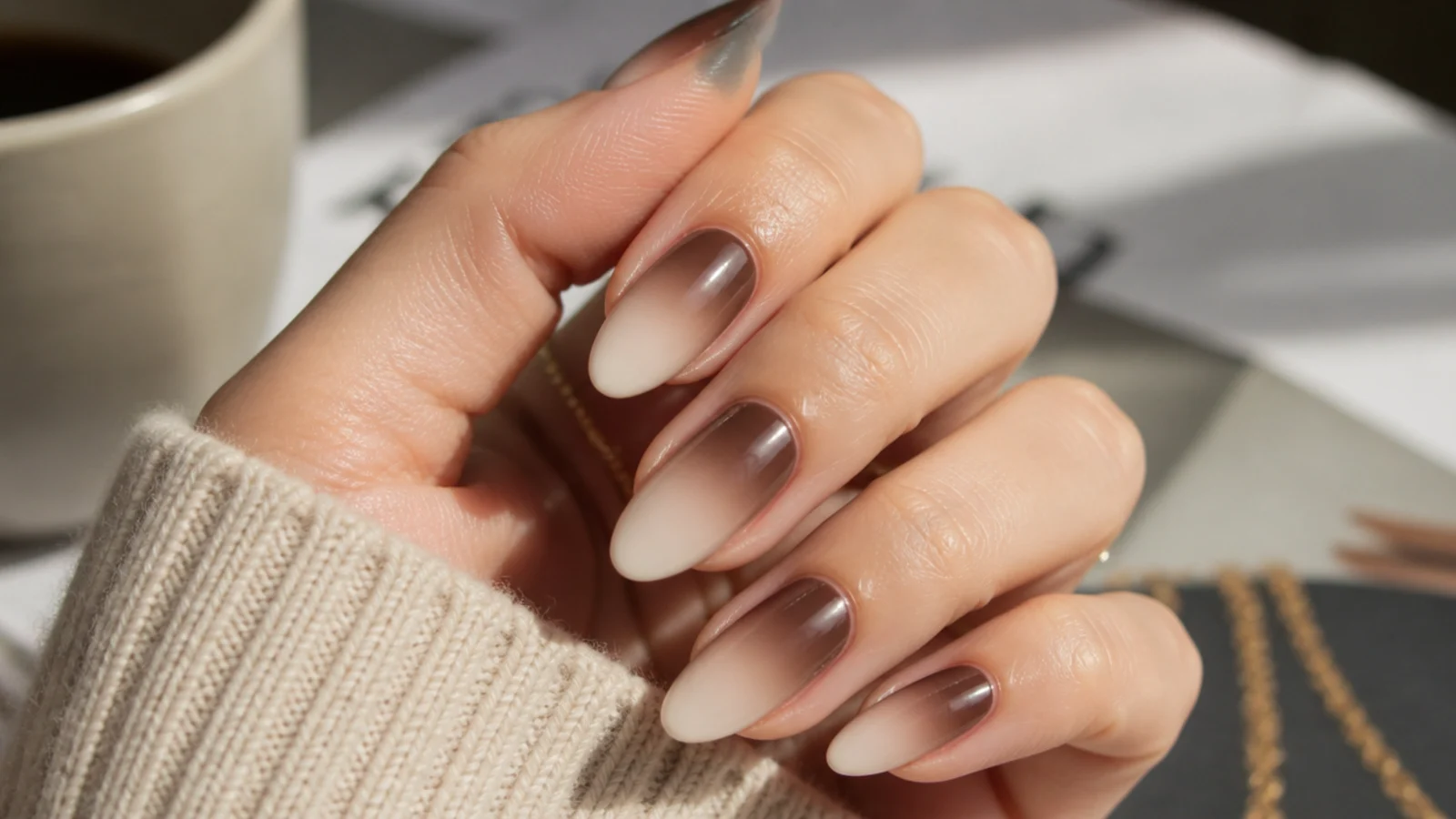
A gradient running espresso at the cuticle to pale cream at the point, blended with a sponge or a soft blending brush. Almond is the shape that sells an ombre best, because the taper narrows as the color lightens, so the fade looks like it follows the geometry instead of fighting it. Ask for the darkest section to sit at the cuticle, not the tip, which is the version that grows out gracefully. Expect 10 to 20 dollars extra and a longer appointment.
Who it suits: Anyone wanting depth without a full dark color.
Tip: Ask for at least three blending passes; two passes leaves a visible band where the shades meet.
13. Glazed Doughnut Almond Nails
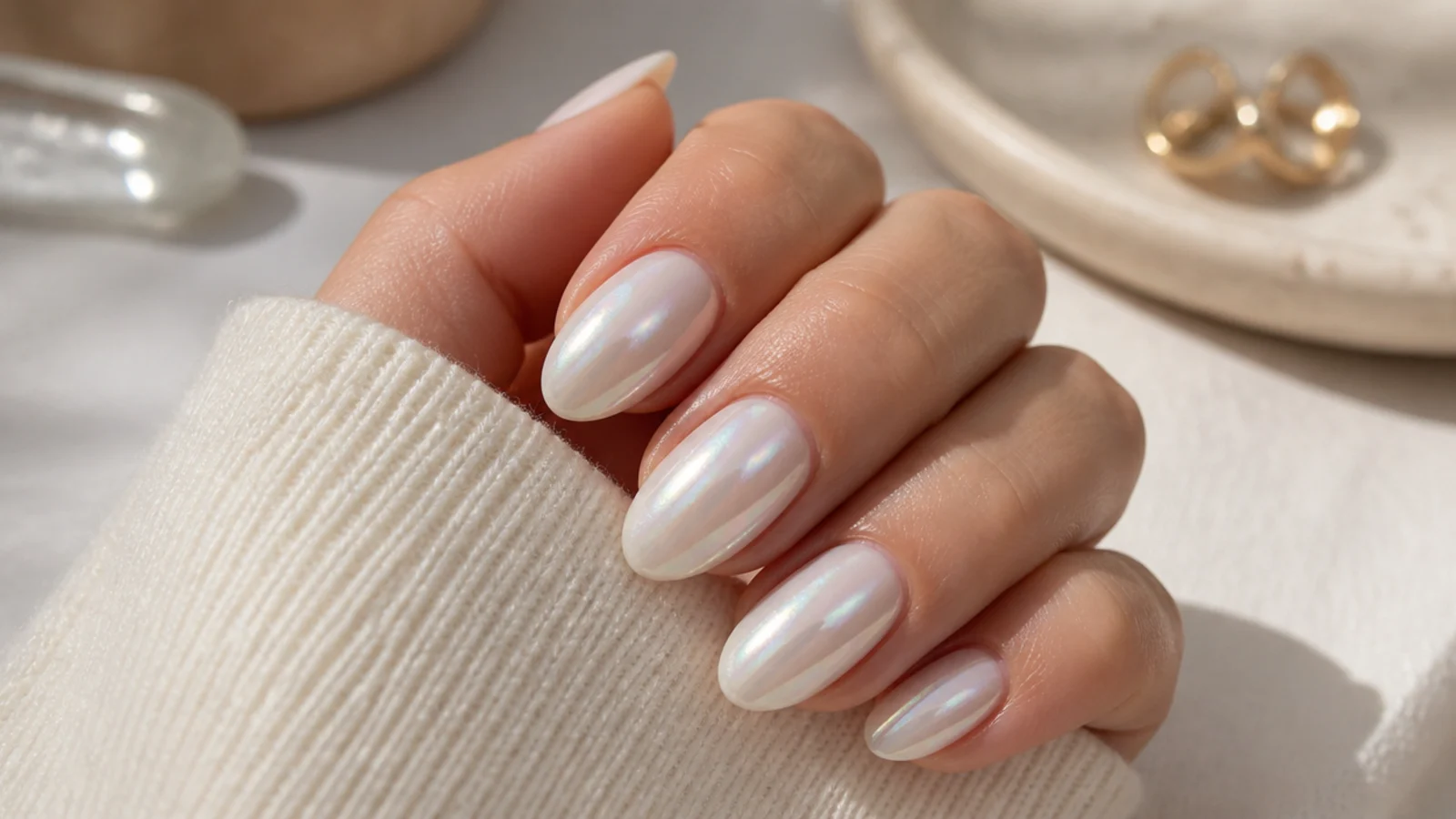
Pearl or aurora chrome powder buffed over a milky white base until the surface shifts pink, lilac and pale blue in the light. It is the softest way to wear chrome and the only metallic finish that still passes as neutral in a conservative office. On almond the curve rolls the color shift down the nail as your hand moves, which is why it looks liquid in video. Budget 10 to 20 dollars over a gel set. The white-base version is broken down in white chrome almond nails.
Who it suits: Anyone wanting shine that still reads soft and neutral.
Tip: Insist on a milky base, not clear; pearl powder over a bare nail turns gray.
14. Pearl Chrome Almond Nails
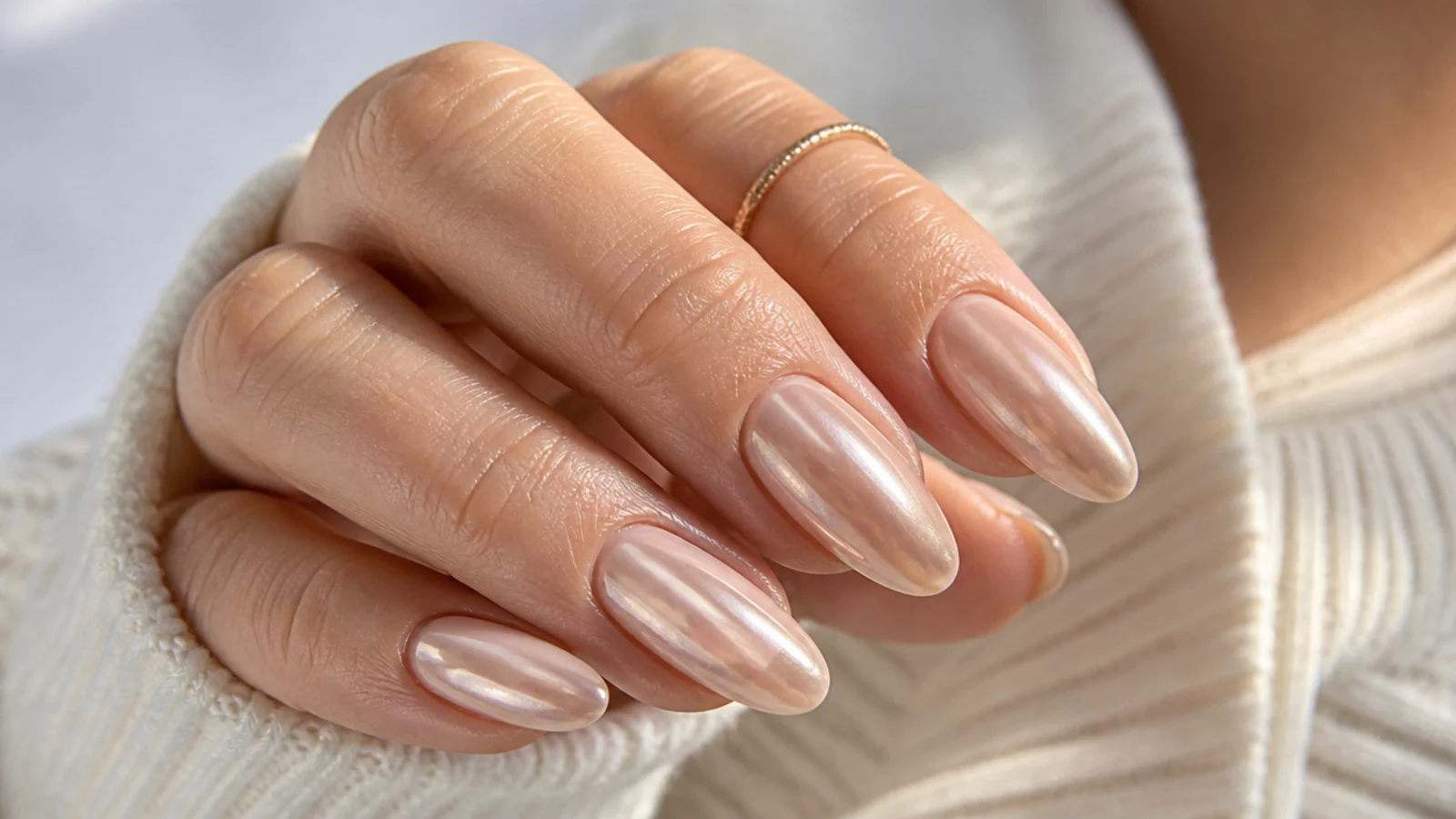
A step up in intensity from the glazed finish: champagne pearl chrome over a nude base, closer to a true mirror but warm enough to stay wearable. It is the bridal alternative to a white French for anyone who finds a painted tip too traditional. Chrome exposes every ridge and file mark, so ask for a smoothing builder layer underneath before the powder goes on. Best at 5 to 6mm. Related finishes sit in pearl white chrome nails.
Who it suits: Weddings, holiday parties and evening events.
Tip: Ask for a builder gel smoothing layer first, or the chrome will map every ridge on your nail.
15. Short Almond Nails in Creamy Ivory
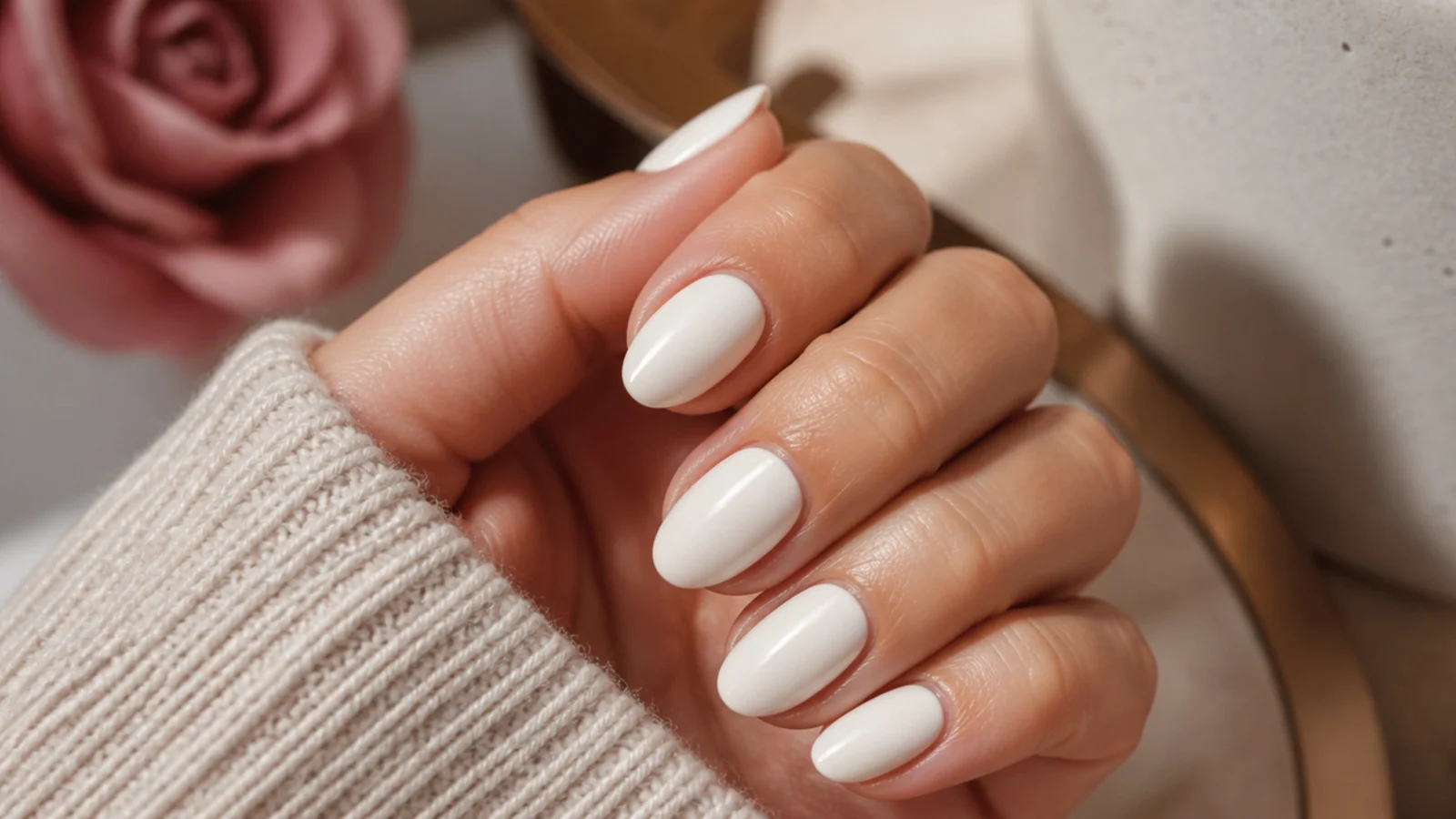
Proof that almond works short: a soft ivory, warmer and less stark than white, on a 2 to 3mm free edge filed to a shallow point. At this length the taper has to start further back along the sidewall, closer to the cuticle, or the nail just reads oval. Ivory is the smartest short-nail neutral because the pale color makes the free edge look longer than it is. Two coats. More at this length in short almond nails.
Who it suits: Nail biters, gardeners, nurses and anyone who keeps nails short by necessity.
Tip: Ask the tech to start the taper below the halfway point so the shape reads almond, not oval.
How to File an Almond Shape at Home
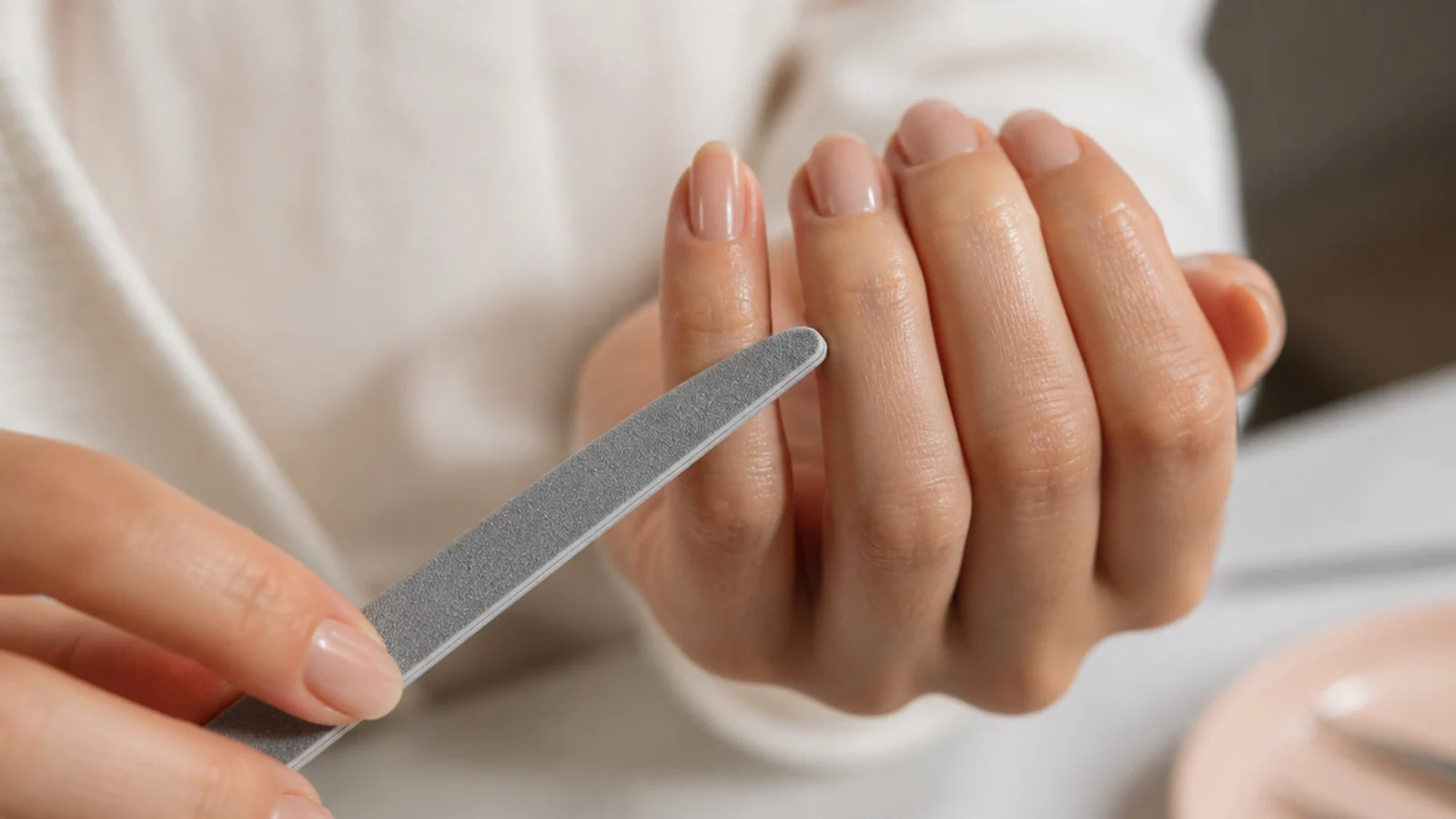
Almost every article that calls almond the most elegant shape stops short of telling you how to get it, so here is the method. Start with a 180 grit file and at least 2mm of free edge. Square off the tip first with one stroke straight across, which gives you a reference edge. Then mark the apex, meaning the peak of the point, by looking down the nail from the fingertip and picking the spot in line with the center of your cuticle. File one sidewall from the base of the free edge up toward that apex, keeping the file at a steady angle and counting your strokes, usually six to eight. Repeat on the other side with the exact same number of strokes. Only then round the tip itself, using a 240 grit file and short light passes, until the point softens from a triangle into an almond. File in one direction, never sawing back and forth, or the free edge will peel in layers. Full color technique is in how to do classy neutral nails at home.
Do Almond Nails Suit Short Nails?
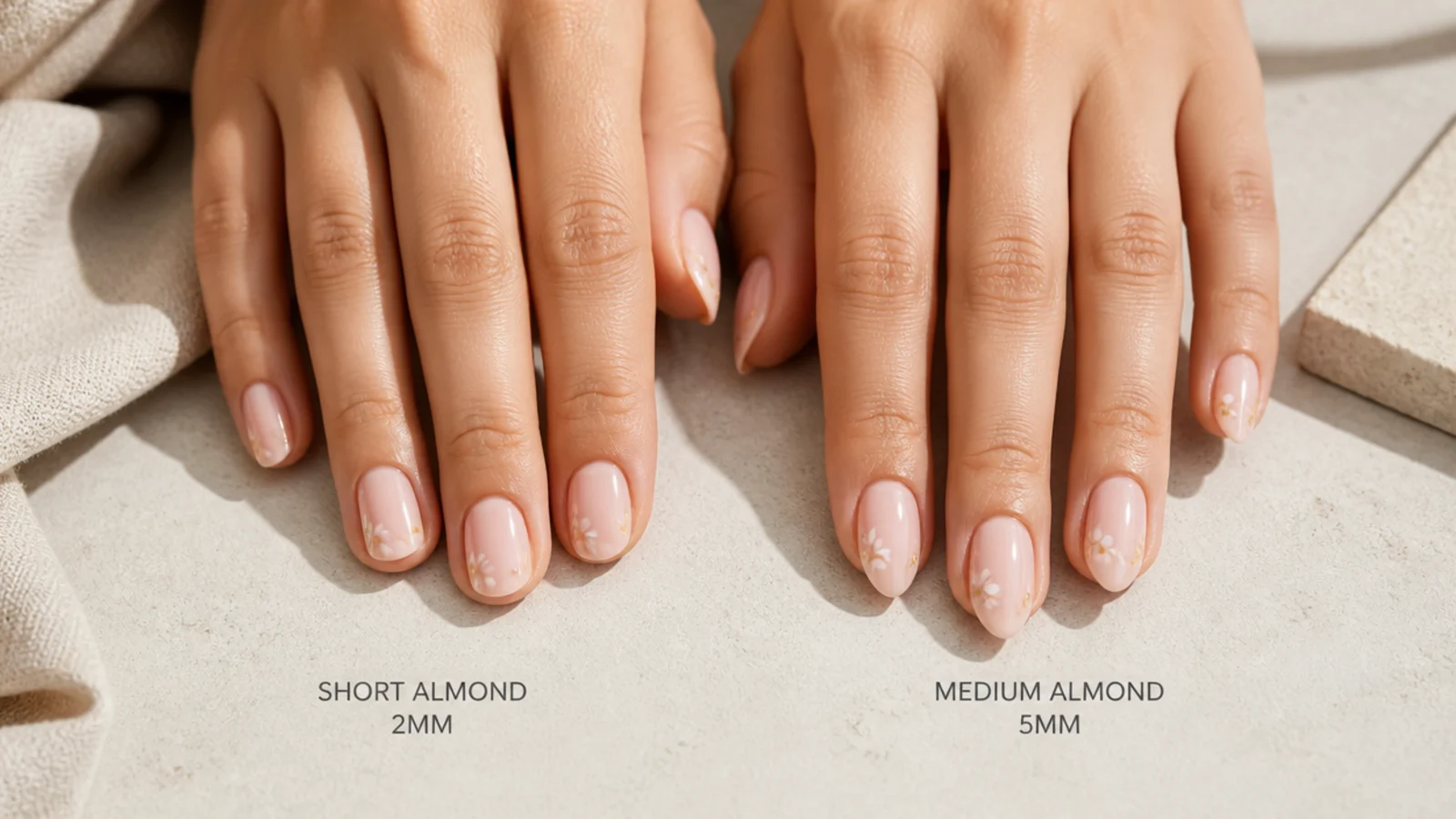
Yes, and almond is actually the most short-friendly of the tapered shapes. Coffin needs roughly 3mm of free edge before the sidewalls have anywhere to angle in, and stiletto needs far more. Almond starts working at about 2mm because the taper is a curve rather than a straight line, so it can begin below the halfway point of the nail and still read as a point at the top. The catch is where the taper starts. On a short nail, if your tech begins filing at the free edge you will get an oval, not an almond, because there is not enough length left to form a point. Ask for the taper to start on the sidewall of the nail plate itself, just past the halfway mark. That single instruction is the difference between the two shapes at short length. Two other rules help: keep the color pale, since ivory and milky white make the free edge look longer than mocha does, and skip full-coverage art. More short ideas sit in short classy nails that look expensive.
Almond vs Oval vs Coffin: How the Three Shapes Differ
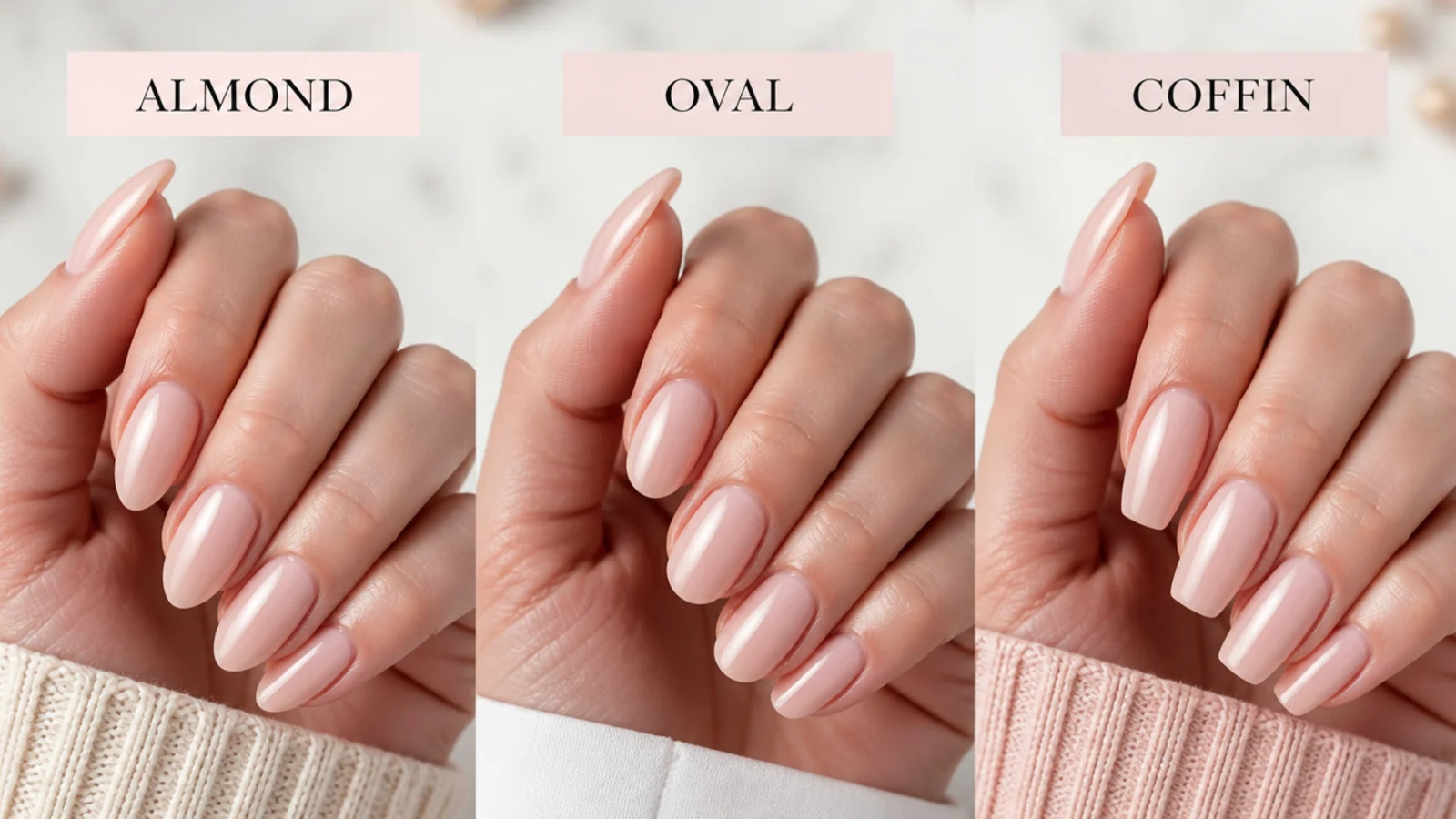
All three taper, but they end differently and that ending changes everything. Oval follows the natural sidewall and rounds off with no narrowing, so it is the most forgiving and the least dramatic. Almond narrows from below the halfway point and finishes in a soft point, which is what does the elongating. Coffin narrows the same way but then stops flat, giving you a wide canvas for art at the cost of durability. In practice the choice comes down to your nail bed. Long narrow beds suit all three. Wide short beds look best in almond, because the curve can taper gently without cutting into structural width, while coffin on a wide bed either overfiles the sides or leaves a stubby trapezoid. If you break nails often, oval is the safest and coffin the riskiest. For neutral colors specifically, almond and oval carry milky and sheer shades better, since a flat coffin tip shows every streak. Read the direct head-to-head in almond vs oval nails, or the flat-tip case in coffin nail ideas.
Why Almond Nails Break at the Sidewall and How to Stop It
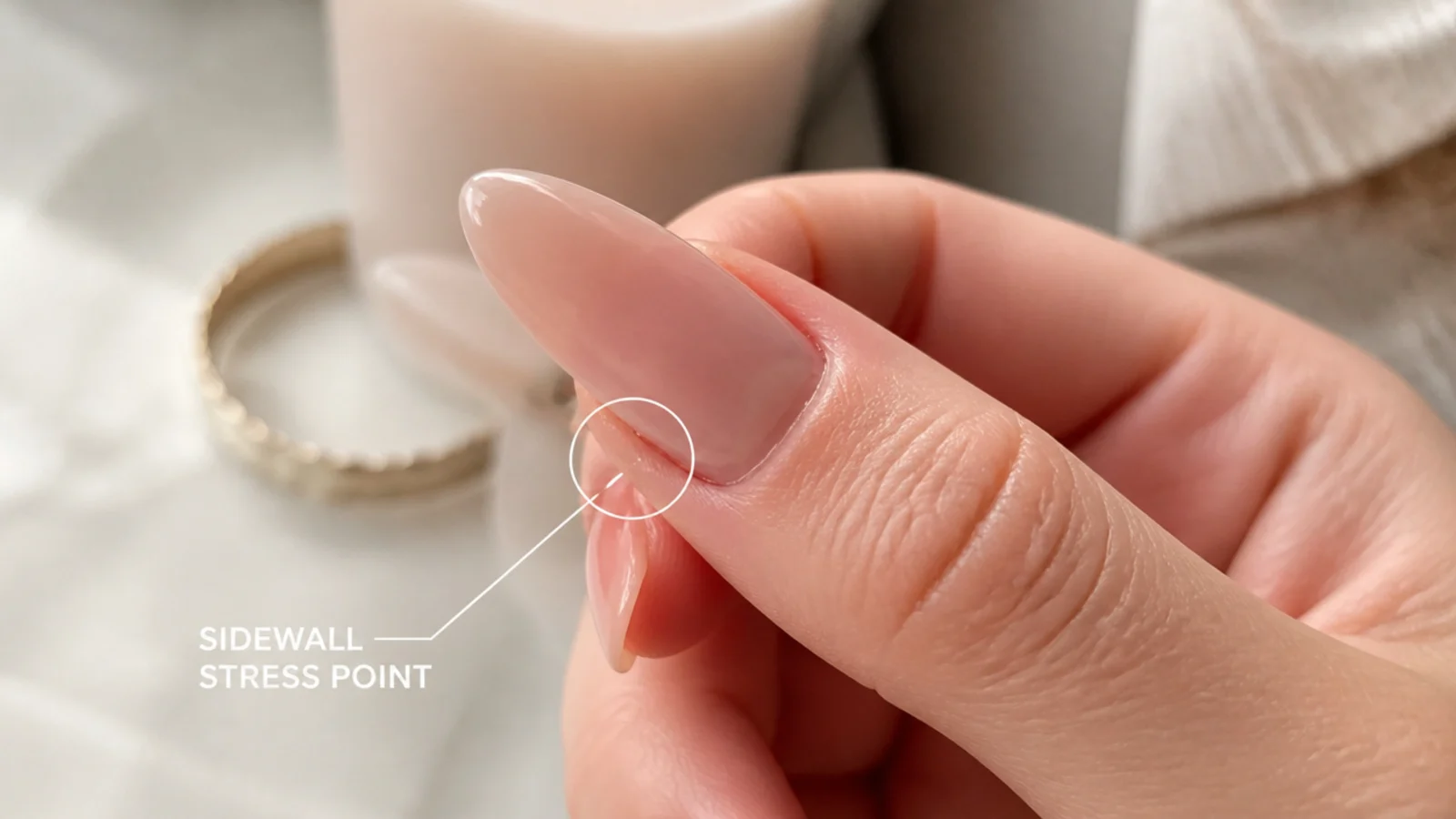
Almond has a reputation for being high maintenance, and the reputation is half earned. The tip itself is strong, because a curve spreads impact rather than concentrating it. What fails is the sidewall. Getting to a point means removing width from both sides of the nail, and that width is the structure holding the free edge onto the nail plate. Over-file it and the nail cracks in from the side, usually at the stress point where the free edge leaves the finger. Three fixes. First, do not taper past the point where the free edge would be narrower than half your nail bed width; a sharper point than that is an extension, not a natural nail. Second, on gel or acrylic ask for the apex, the thickest part of the product, to sit over the stress area rather than near the cuticle, so the sides have something to lean on. Third, keep length under about 6mm on natural nails. A broken sidewall is worth repairing rather than cutting, since filing the survivor down to match ruins the whole set.
Matching Your Neutral Almond Shade to Your Undertone
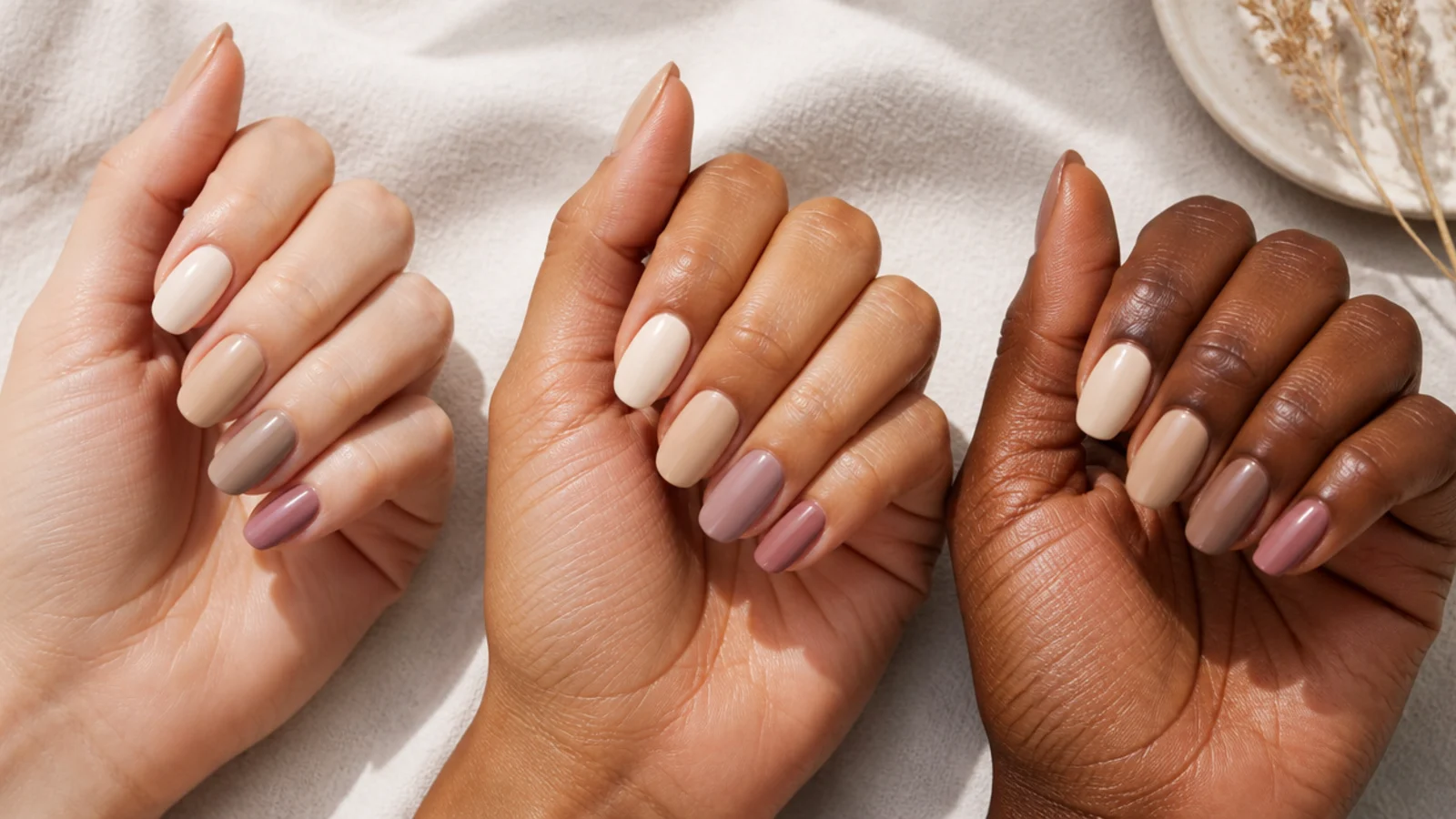
This is the guidance the design listicles skip entirely, and it is the reason a shade that looks expensive on Pinterest can look sallow on you. Check the veins on your inner wrist in daylight. Blue or purple veins mean cool undertones, green means warm, and a mix means neutral. Cool undertones look best in shades with gray or pink in them: taupe, cool greige, milky white, sheer pink nude. Warm undertones want yellow or gold in the base: creamy ivory, soft beige, caramel, latte, gold micro French rather than silver. Neutral undertones can wear almost anything, which makes greige the safest single bottle to own. The second rule matters more than undertone: your polish should sit one to two shades away from your own fingertip color, either lighter or darker. A nude that matches your skin exactly erases the nail and makes the hand look shorter, which is the opposite of what the almond shape is doing for you. Deeper skin tones usually need to go two shades darker, toward mocha and espresso.
What Classy Almond Nails Cost and How Long They Last
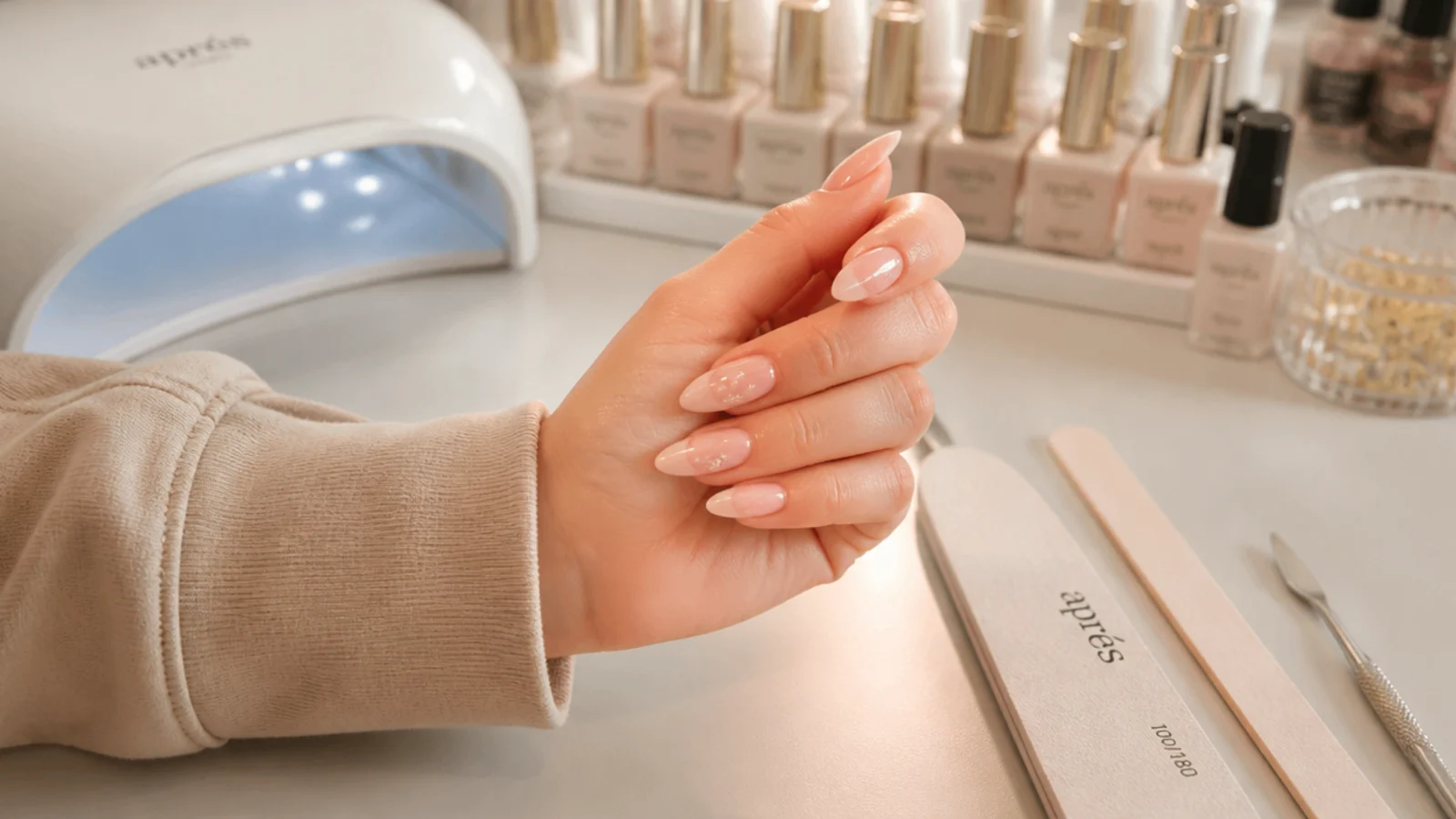
A gel manicure filed to almond on your natural nails runs about 35 to 60 dollars depending on your city, and holds two to three weeks before regrowth shows at the cuticle. A full set of acrylic or Gel-X almond extensions runs roughly 55 to 100 dollars, with fills at 35 to 55 dollars every two to three weeks. Regular polish on a home-filed almond costs the price of the bottle and gives you five to seven days, though neutral shades stretch that, because a chip in a sheer beige is genuinely hard to see while a chip in red is not. Add-ons are priced separately at most salons: chrome and pearl finishes add 10 to 20 dollars, an ombre fade adds 10 to 20, and a micro French line adds about 8 to 15. Removal runs 10 to 20 dollars and is worth paying for, since peeling gel off takes layers of nail plate with it. Doing the whole thing at home is covered step by step in how to do classy neutral nails at home.
Frequently Asked Questions
What are classy almond nails?
Classy almond nails are nails filed so both sidewalls taper inward from below the halfway point and finish in a soft rounded tip, then painted in a restrained neutral such as milky white, beige, taupe or mocha brown. The shape copies the natural curve of the nail bed, which is why it elongates the finger without looking exaggerated.
How do you file an almond shape?
Square off the tip first to create a reference edge, then look down the nail from the fingertip and mark an apex in line with the center of your cuticle. File one sidewall up toward that apex with a 180 grit file, counting strokes, and repeat the identical count on the other side. Soften the point last with 240 grit.
Does almond suit short nails?
Yes. Almond needs only about 2mm of free edge, which is less than coffin or stiletto require. The trick is where the taper begins: it has to start on the sidewall of the nail plate, just past the halfway mark, rather than at the free edge. Starting at the free edge on a short nail gives you an oval instead.
What is the difference between almond and oval nails?
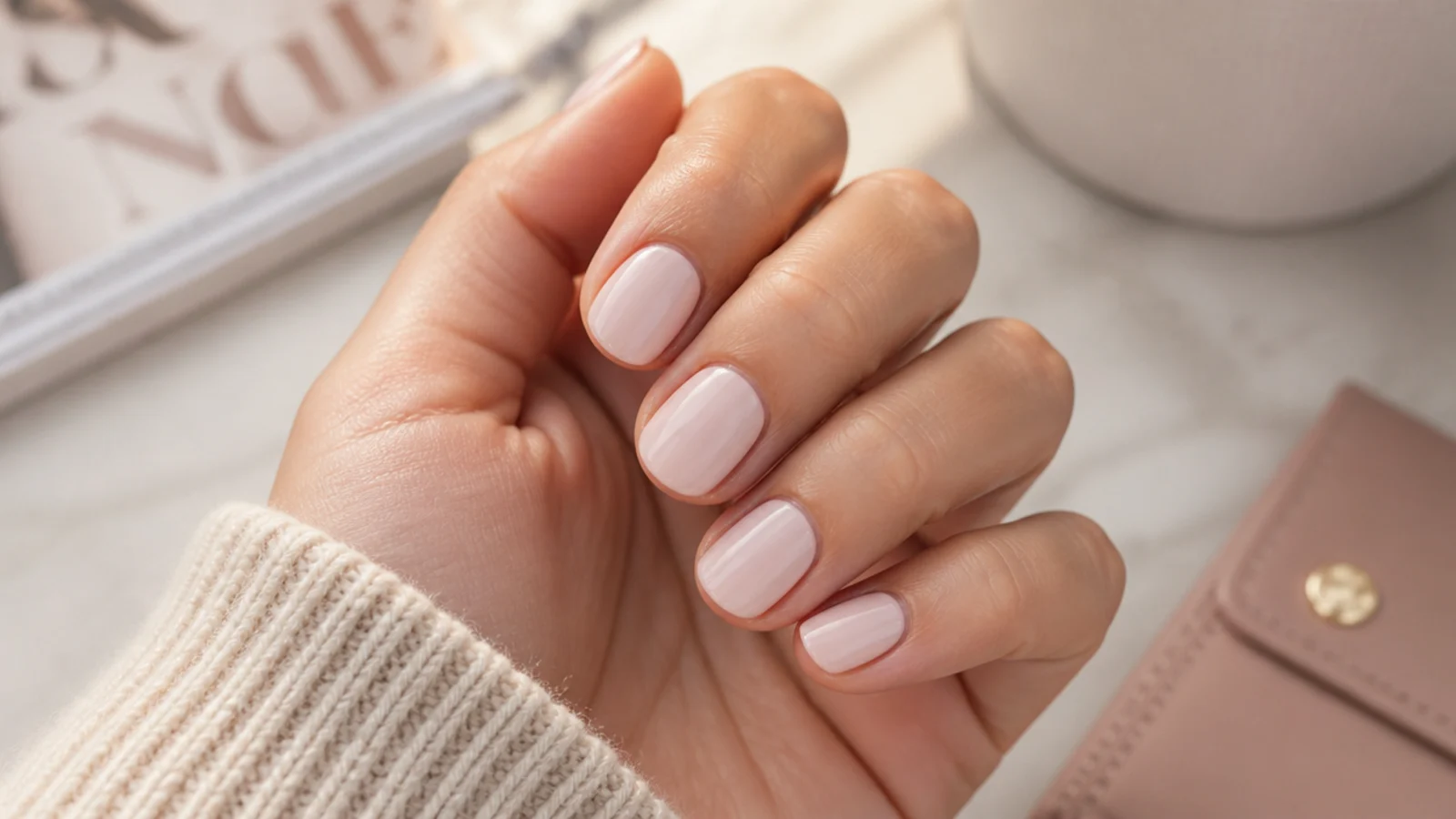
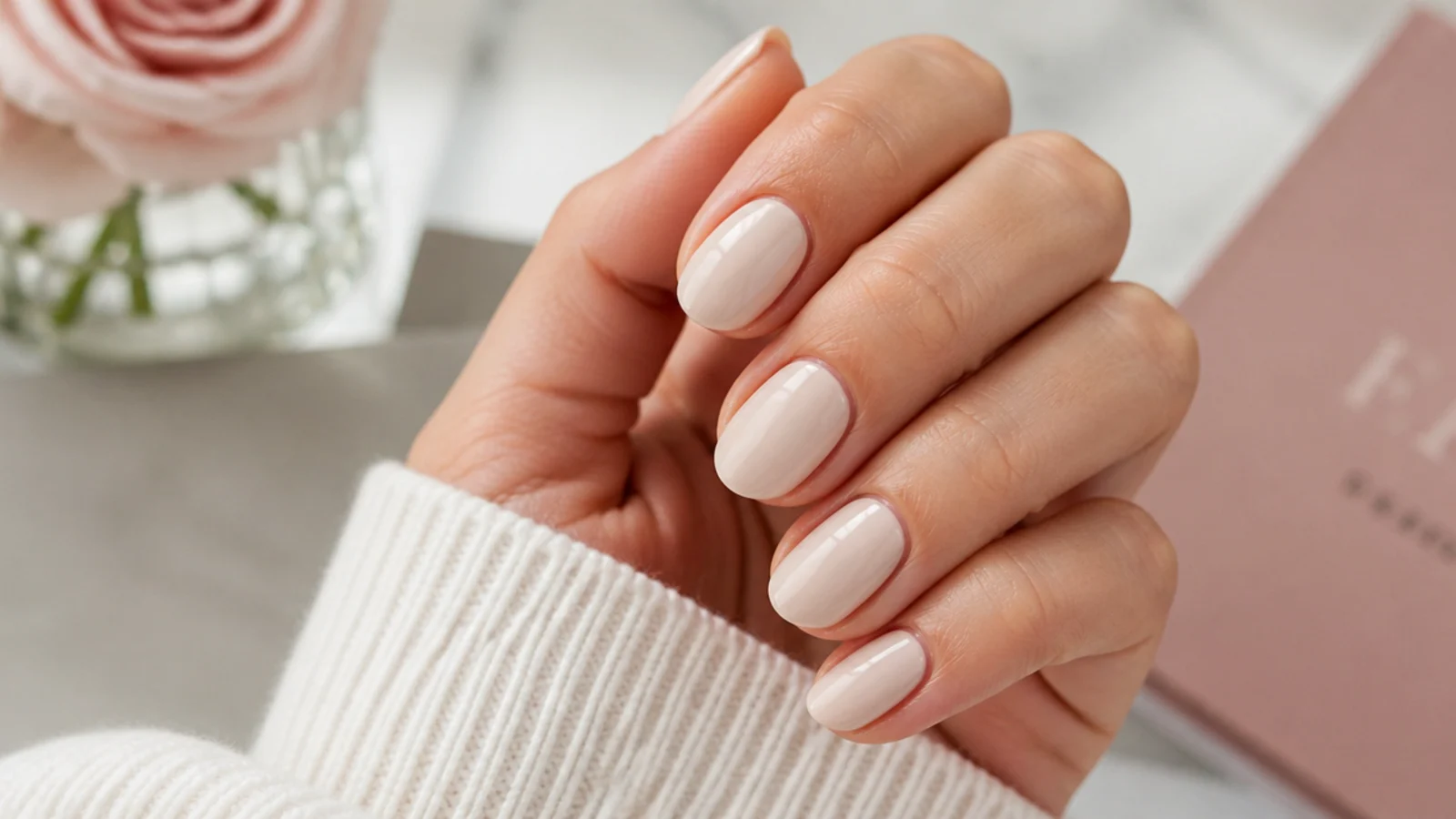
Oval follows the natural sidewall and rounds off with no narrowing, so the tip stays as wide as the nail bed. Almond files width off both sides so the nail narrows to a soft point. Almond elongates more, oval is more durable and easier to file at home, and both carry sheer neutral shades better than a flat coffin tip does.
Do almond nails break easily?
The tip does not, but the sidewalls can. Filing to a point removes width that structurally supports the free edge, so over-tapered almond nails crack in from the side. Keeping the point no narrower than half your nail bed width, keeping natural length under about 6mm, and placing the apex over the stress point on gel sets all prevent it.
What is the best neutral shade for almond nails?
Greige is the most universally wearable, since it sits between warm and cool. Cool undertones do better in taupe or milky white, warm undertones in creamy ivory or soft beige, and deeper skin tones in mocha and espresso browns. The rule that matters most is picking a shade one to two steps away from your own fingertip color.
Are almond nails high maintenance?
Less than the reputation suggests. On natural nails at 4 to 6mm with a neutral polish, an almond set needs a light reshape every week or two and nothing else. Maintenance climbs only when you add extension length or chrome finishes, which show regrowth faster because the mirror surface highlights the gap at the cuticle.
Are almond nails appropriate for work?
In most offices, yes, provided the length stays under about 5mm and the shade stays neutral. Milky white, beige, greige and taupe read as groomed rather than decorative. Healthcare and food service roles are the exception, since many set a hard length limit at the fingertip and prohibit enhancements entirely, regardless of shape or color.
How long do almond gel nails last?
Two to three weeks before regrowth at the cuticle becomes obvious. Almond hides growth slightly better than square shapes because the eye follows the point rather than the base. Neutral shades stretch the wear window further, since a chip or a lifted edge in sheer beige is much harder to spot than the same damage in a dark or bright color.
Which neutral & classy nails look are you saving?
If you take one thing from these 15 classy almond nails, make it this: the shade matters less than the symmetry. A 15 dollar bottle of milky beige on two evenly filed almond points looks more expensive than a 60 dollar salon set with one sidewall higher than the other. File from the side toward the center on both walls, count your strokes, then look down each nail from the fingertip before any color goes on. Milky white, soft taupe and mocha brown are the three most forgiving starting shades. Save the ideas you want, then read short classy nails that look expensive or browse the whole neutral and classy nails hub.