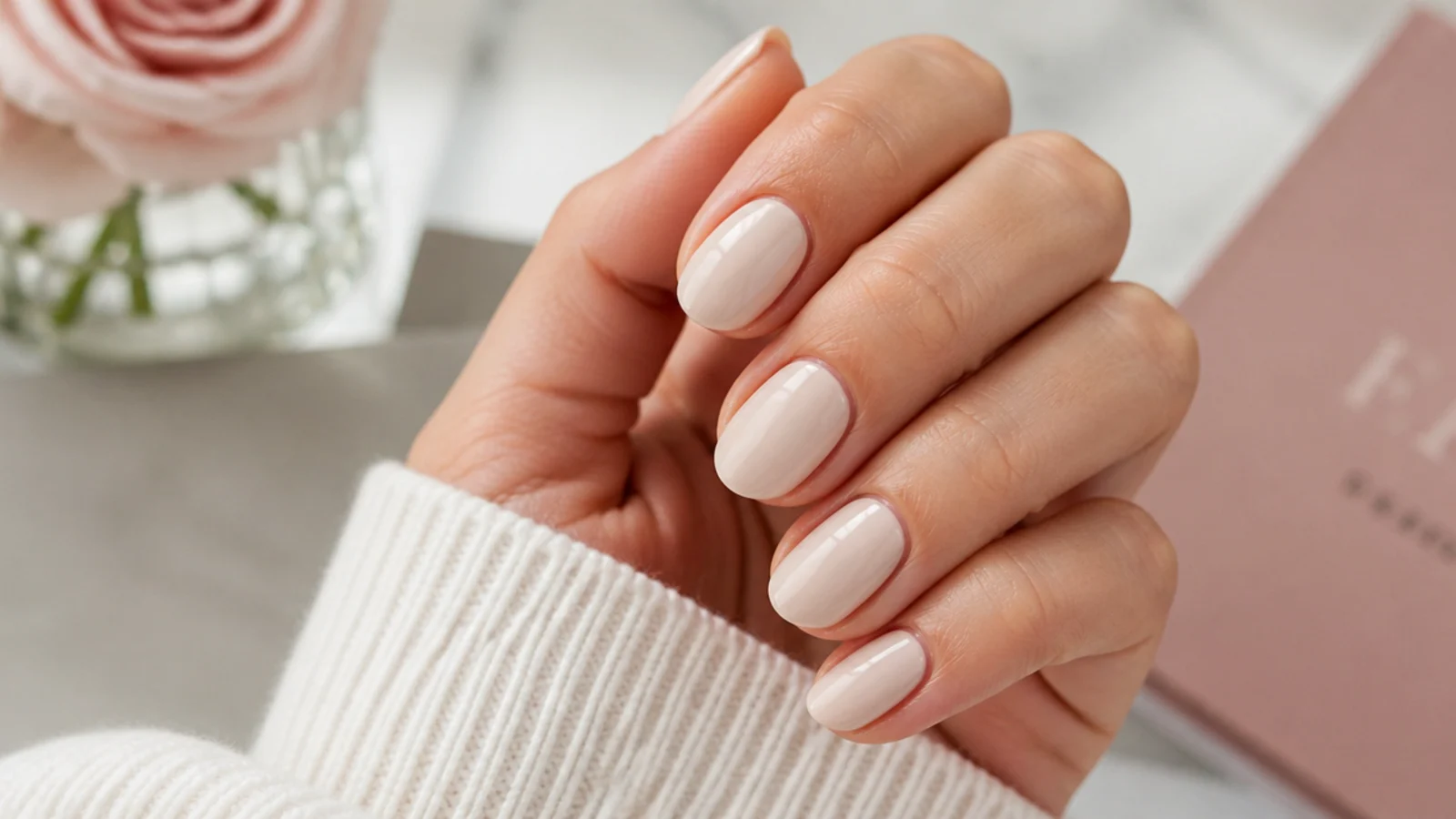
Quick Comparison
| Cool-Toned Neutrals | Warm-Toned Neutrals | |
|---|---|---|
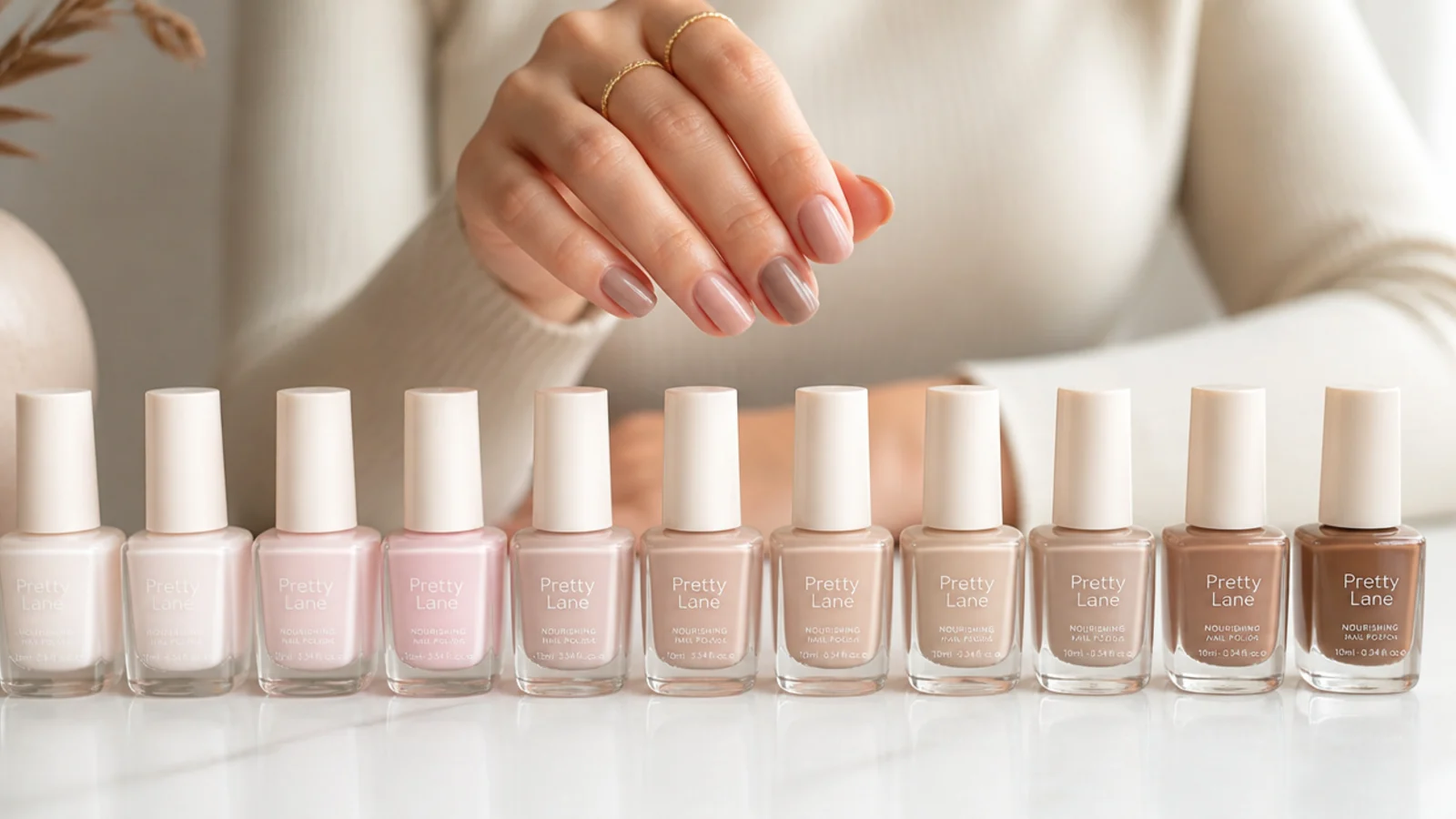
| Shade family | Milky white, sheer pink, gray, greige, slate | Beige, ivory, latte, mocha, caramel, espresso |
| Who it suits | Blue or purple wrist veins, pink or rosy skin | Green wrist veins, golden or olive skin |
| Benchmark shades | OPI Bubble Bath, Essie Chinchilly, Essie Ballet Slippers | Essie Sand Tropez, OPI Samoan Sand, OPI Tickle My France-y |
| Jewelry pairing | Silver, platinum and white gold | Yellow gold, rose gold and bronze |
| Failure mode | Can read ashy or gray on warm skin | Can read yellow or muddy on cool skin |
| Coats to opacity | 3 thin coats for sheers, 2 for gray creams | 2 coats for beige and mocha creams |
| Best finish | High gloss or glazed pearl | Cream gloss or micro shimmer |
| Grow-out visibility | Low; pale bases hide the regrowth gap | Low for latte, moderate for espresso |
| Safest all-rounder | Greige, which sits closest to center | Taupe, which reads warm without going beige |
1. Milky White Nails
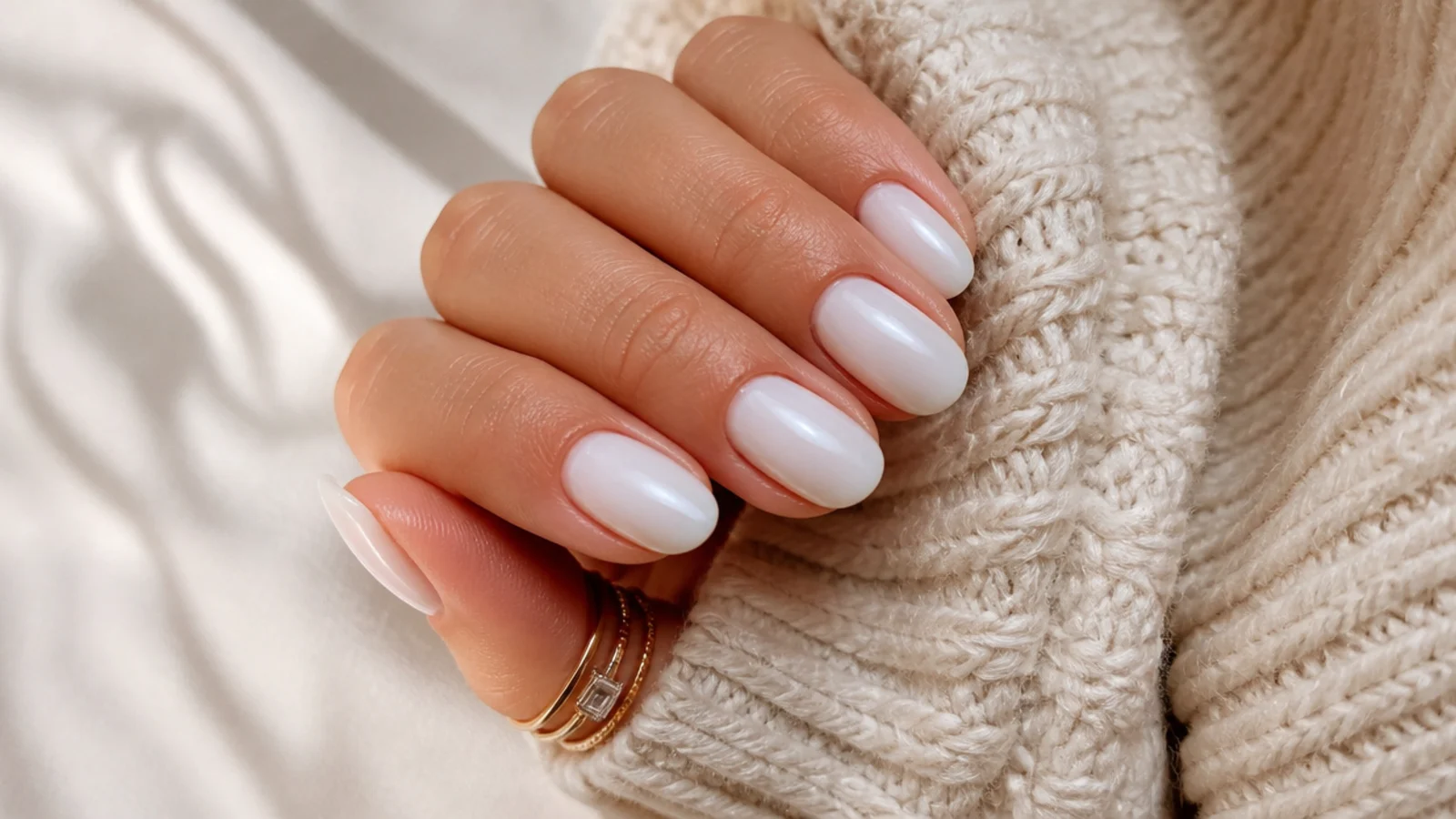
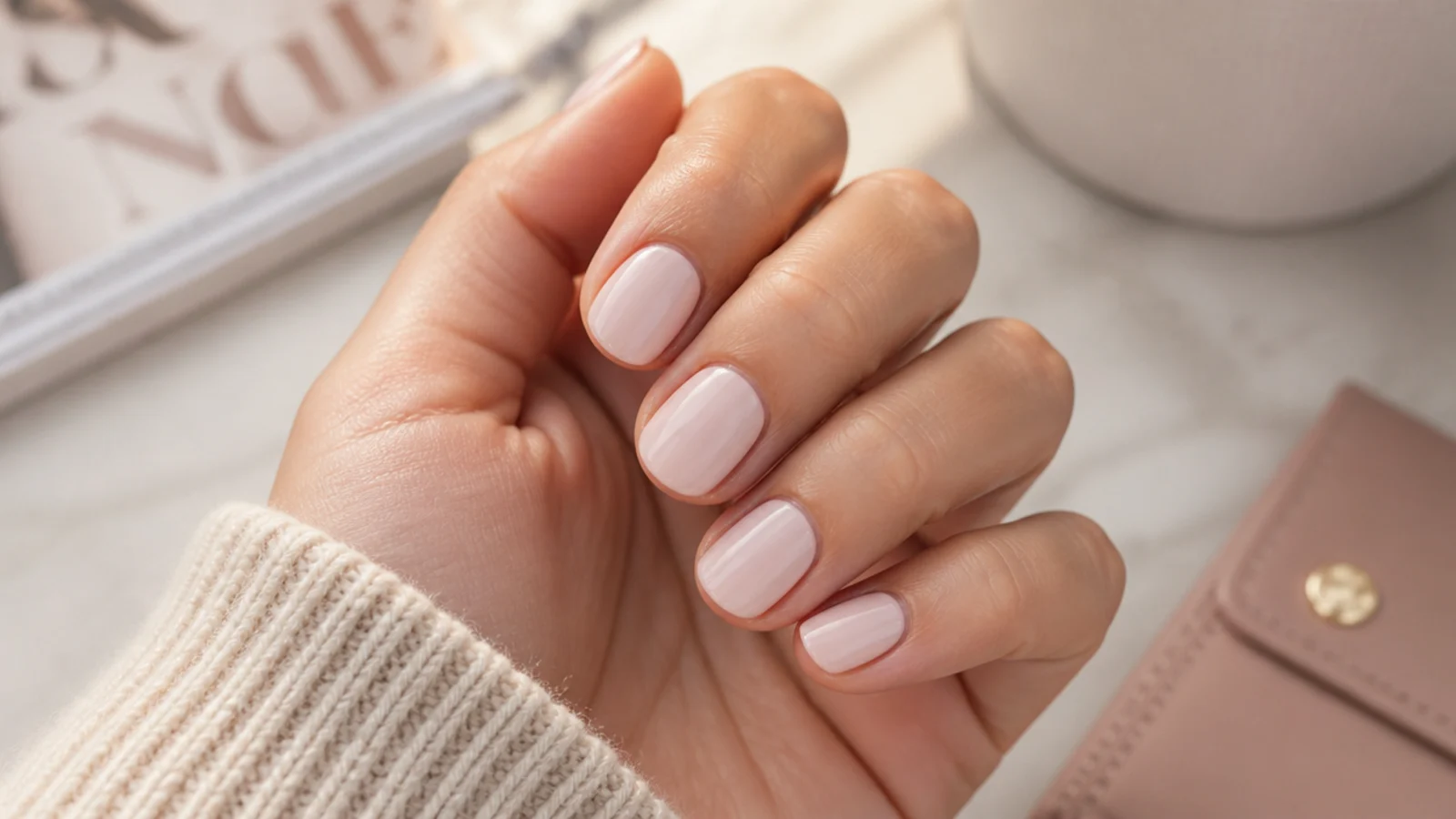
The anchor of the whole neutral category: a semi-sheer white such as OPI Funny Bunny built up over three thin coats until the free edge reads soft cream rather than correction fluid. Two thick coats is what makes milky white streak, so thin is not optional. It suits every undertone because it is low saturation, and it grows out almost invisibly, which is why it is the highest wear-time neutral in the list. Short round or soft almond keeps it modern. The chrome version lives in milky white chrome nails.
Who it suits: Every undertone, and anyone wanting the safest classy neutral.
Tip: Ask for three sheer coats of milky white, not two, so the cuticle end does not go patchy.
2. Sheer Pink Nails
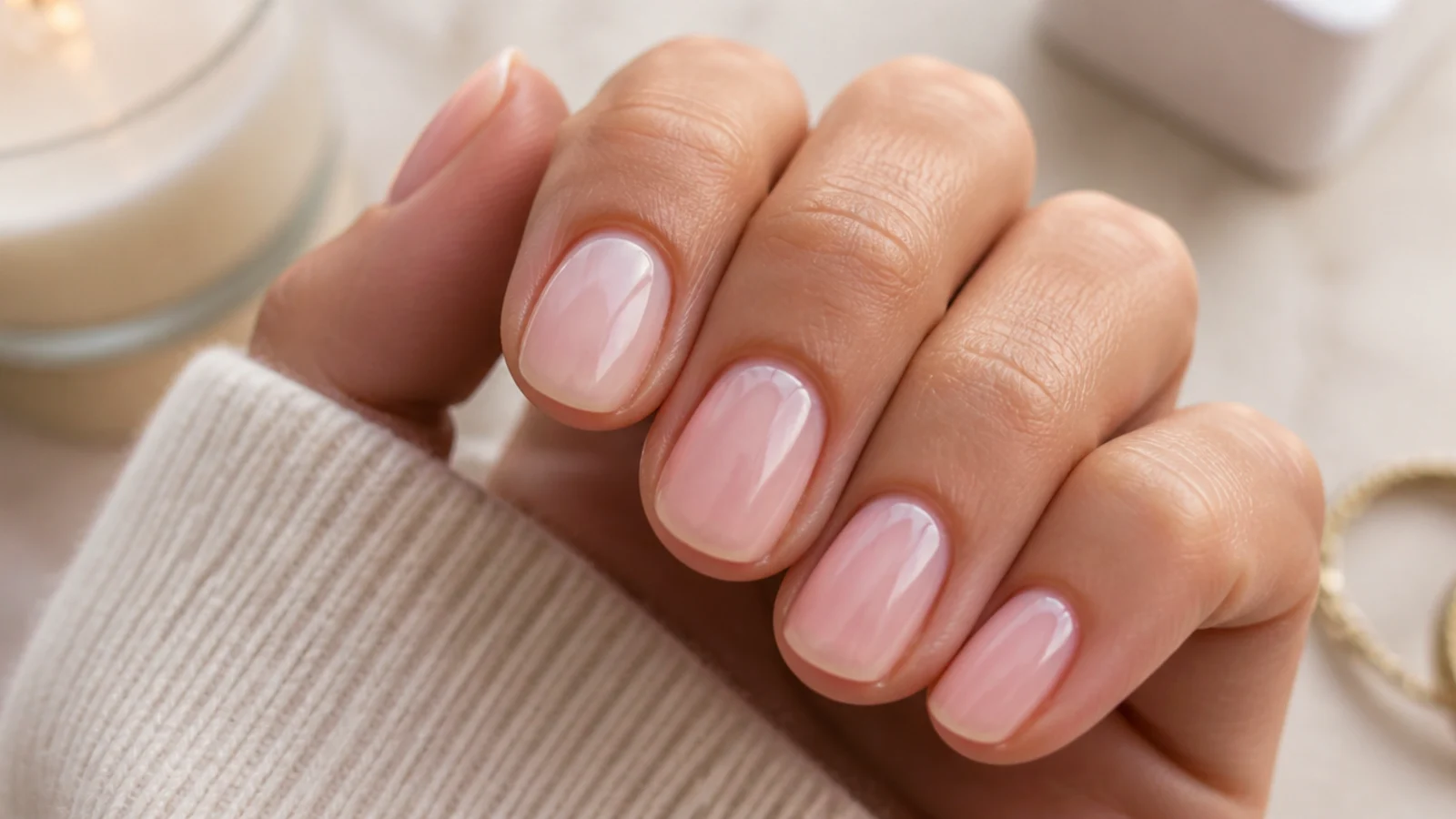
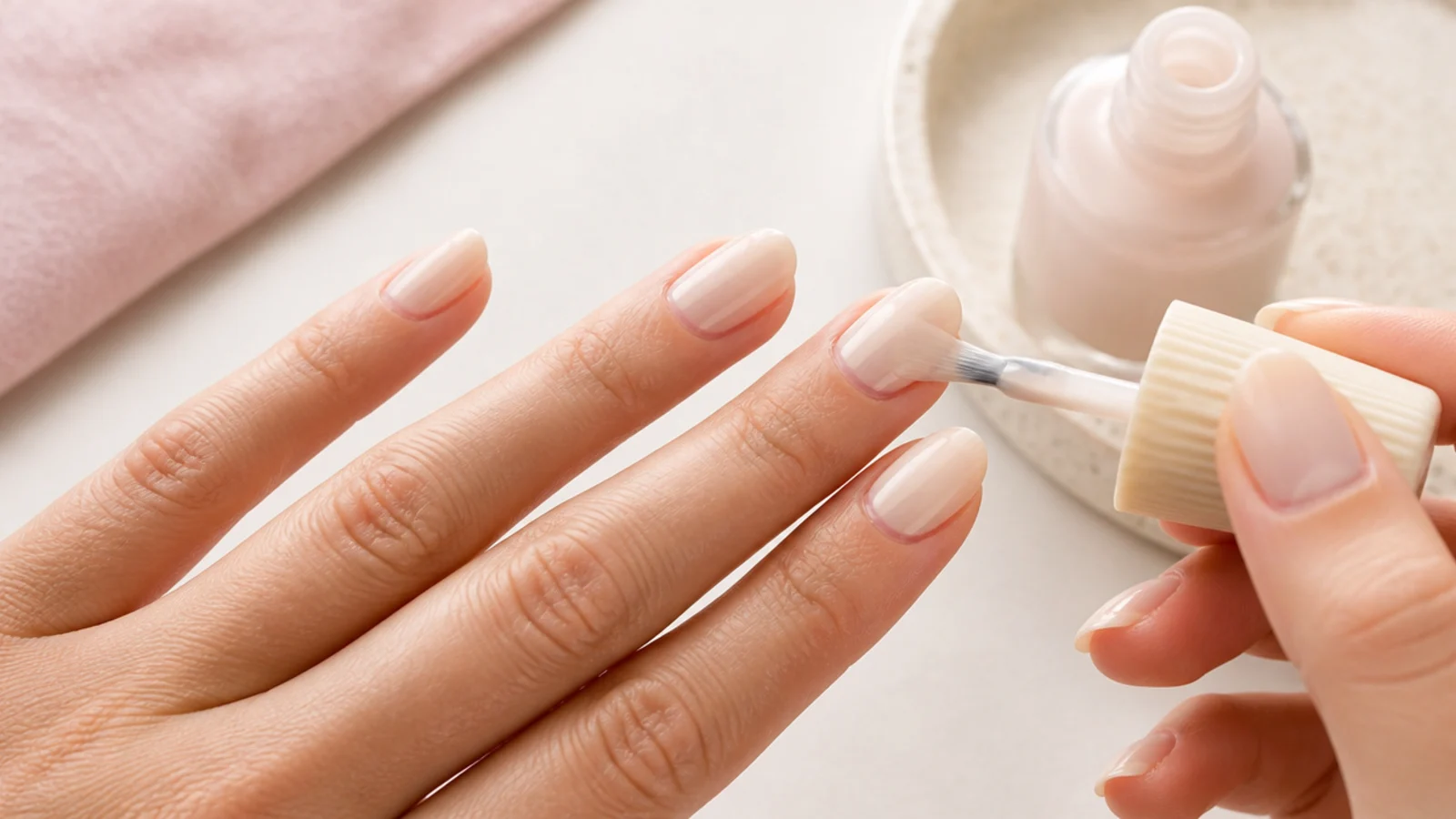
One or two coats of a barely-there pink such as Essie Ballet Slippers or OPI Bubble Bath, worn thin enough that your natural nail still shows through. It is the lowest commitment polished look there is and the one most people mean by classy nails when they cannot name a shade. Cool undertones get the most from it, since a blue-leaning pink cancels the yellow cast that bare nails pick up. Keep the length short, around 2 to 3mm of free edge, and the gloss high.
Who it suits: Cool undertones, interviews and low-effort weeks.
Tip: Wipe the brush on the bottle neck twice so the first coat goes on as a wash, not a stripe.
3. Soap Nails in Sheer Nude
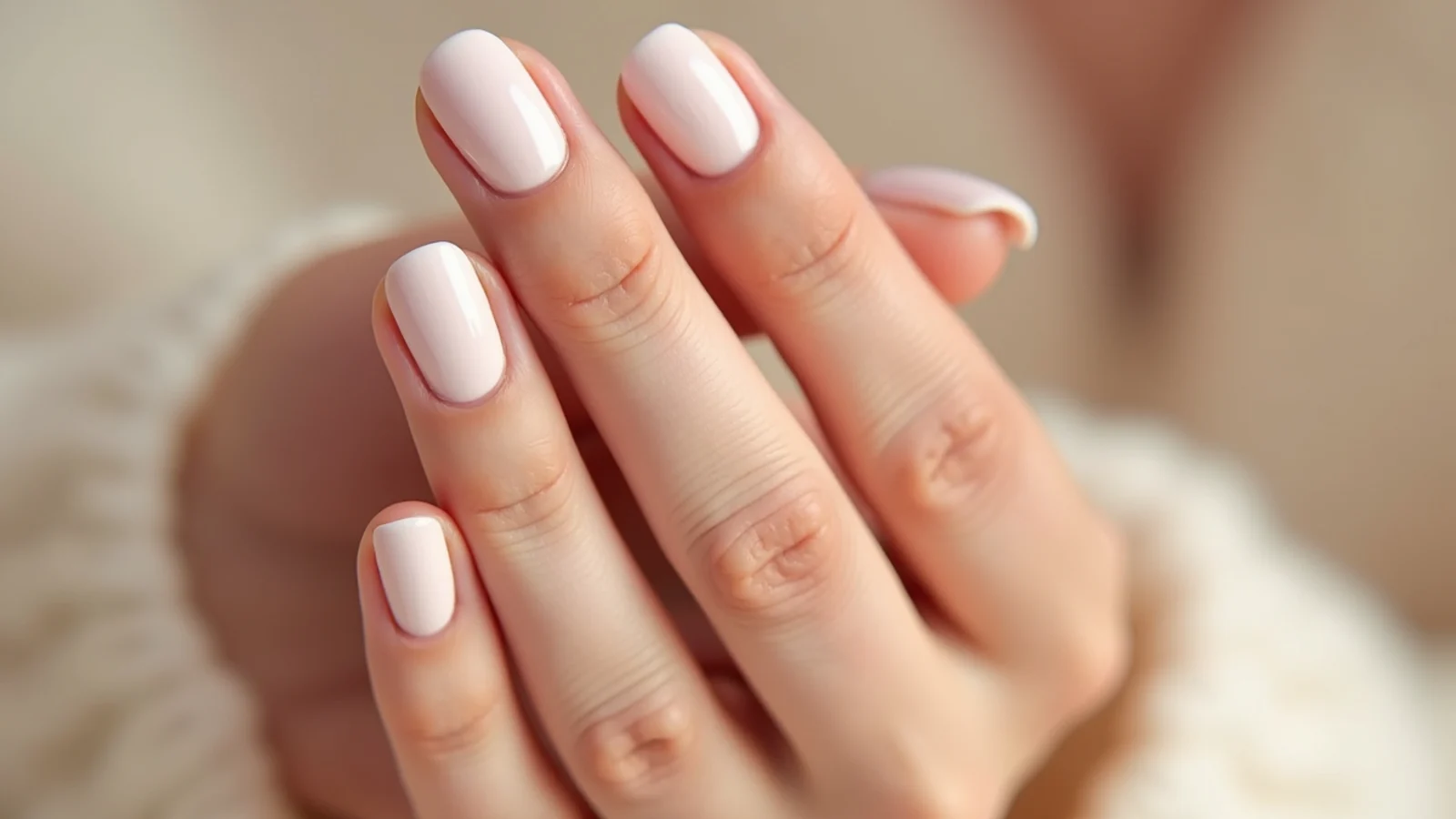
Soap nails are the glass-shine version of a neutral: sheer coverage with almost no pigment, finished under an extremely glossy top coat so the nail looks wet. The trick is that all the visual interest comes from shine rather than color, which is exactly the quiet luxury logic. A single sheer coat over a well buffed nail plate is enough, and buffing matters more here than anywhere else on this list. Full method in soap nails and natural soap nails.
Who it suits: Anyone wanting shine without visible color.
Tip: Buff the nail plate smooth first; soap nails magnify every ridge under the gloss.
4. Milky Aura Nails
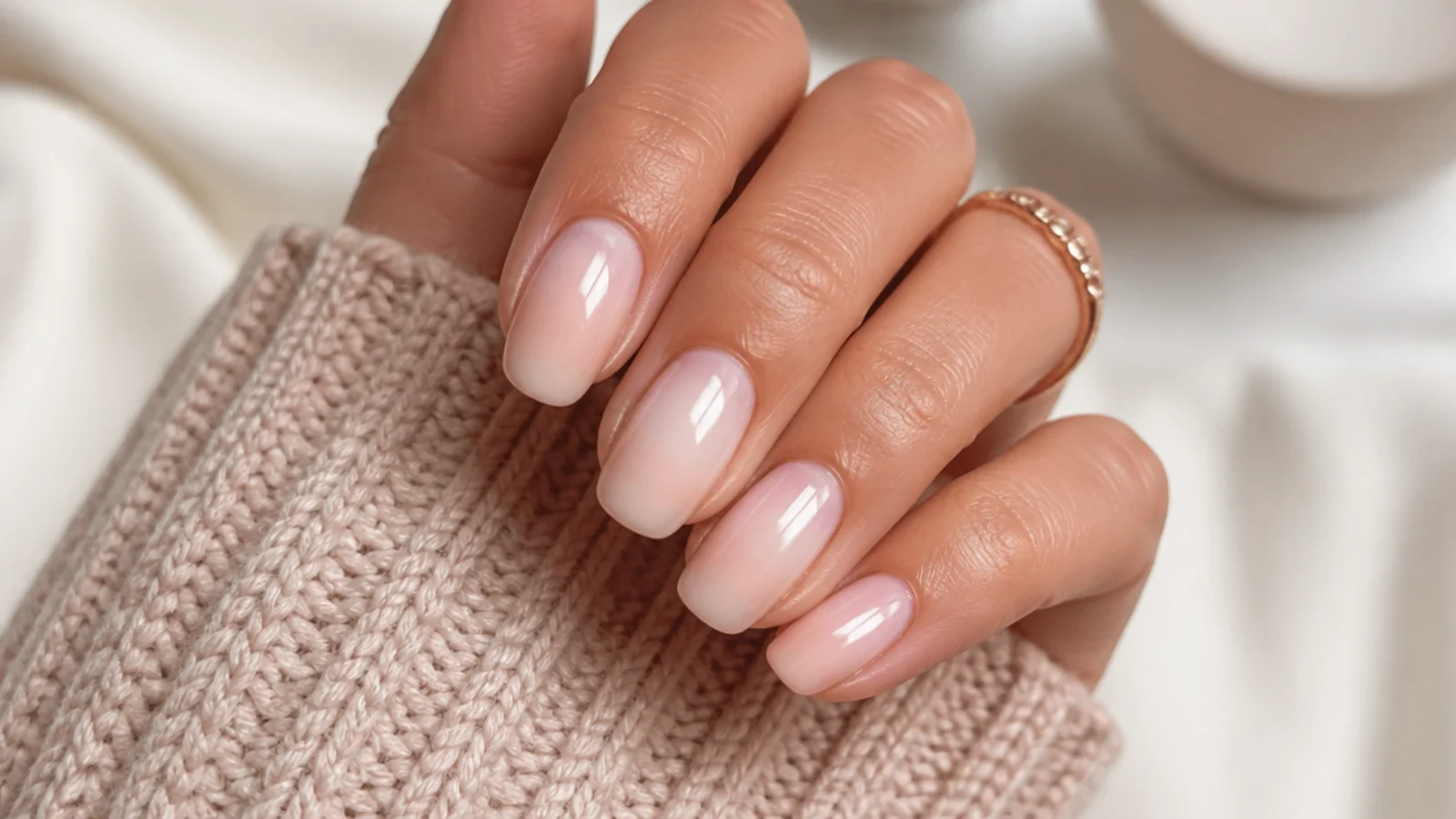
A pale halo airbrushed into the middle of a milky base so the center glows and fades before it reaches the sidewalls. Unlike bright aura nails, the neutral version keeps the contrast between halo and base to about two shades, which is what keeps it elegant instead of tie-dye. Airbrushed auras look smoother than sponged ones, so ask which your tech uses. It reads soft in photographs and passes almost every office dress code. Compare the bolder take in chrome aura nails.
Who it suits: Soft glam wearers and anyone bored of flat milky white.
Tip: Ask for the halo set slightly above the nail center so it does not disappear as the nail grows.
5. Glazed Pearl Neutral Nails
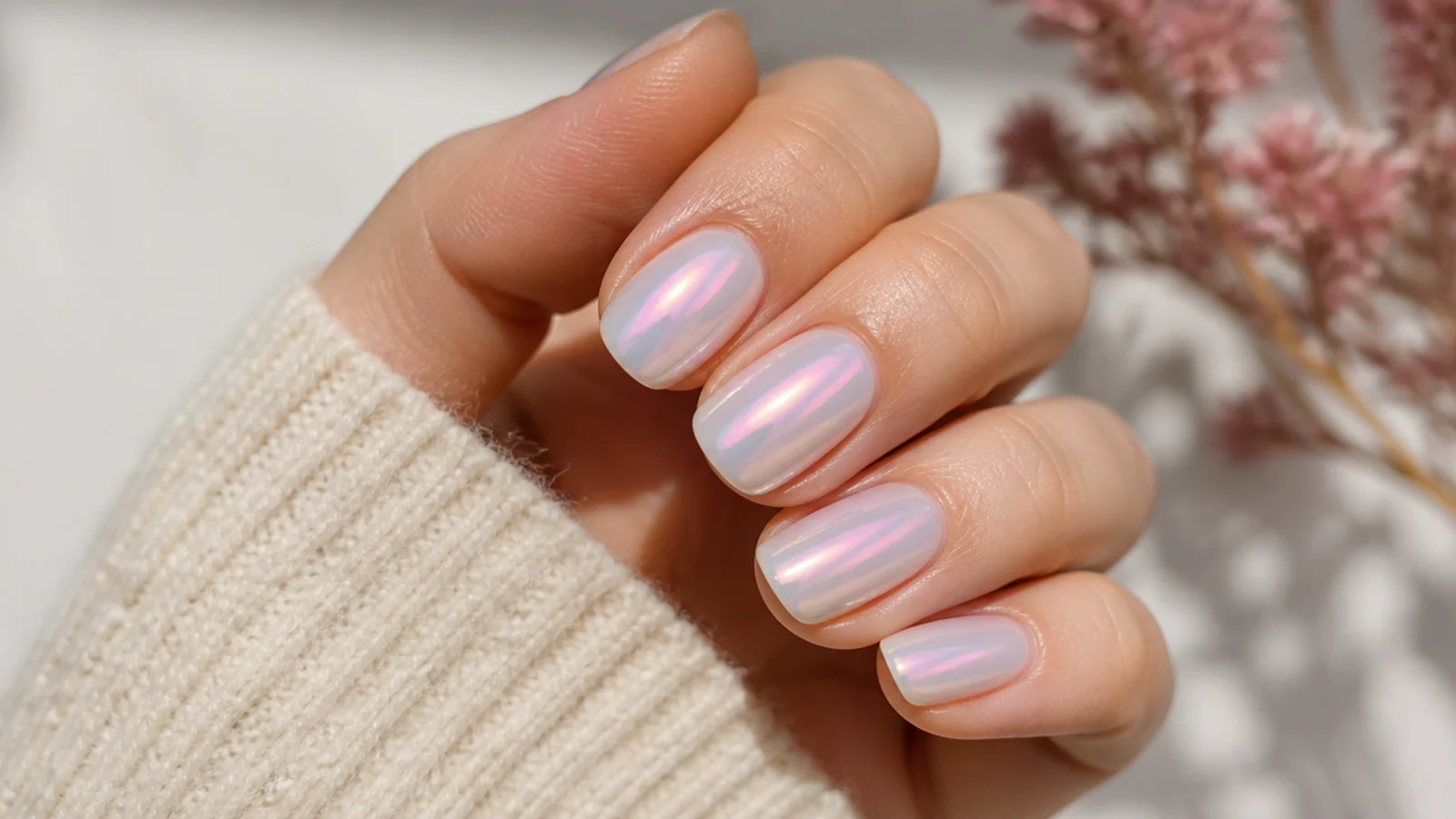
Pearl or aurora powder buffed over a milky beige base until the surface shifts pink, lilac and pale blue depending on the light. This is the glazed doughnut finish, and the neutral base is what separates the classy version from the frosty one. It grows out more forgivingly than silver chrome, since the pale base hides the regrowth gap for an extra week. Budget about 10 to 20 dollars over a standard gel set. See pearl white chrome nails for the full technique.
Who it suits: Weddings, holidays and anyone wanting shine that still reads neutral.
Tip: Ask for a milky base, never clear, or the pearl powder will pull gray over your natural nail.
6. Micro French Tip Nails on a Milky Base
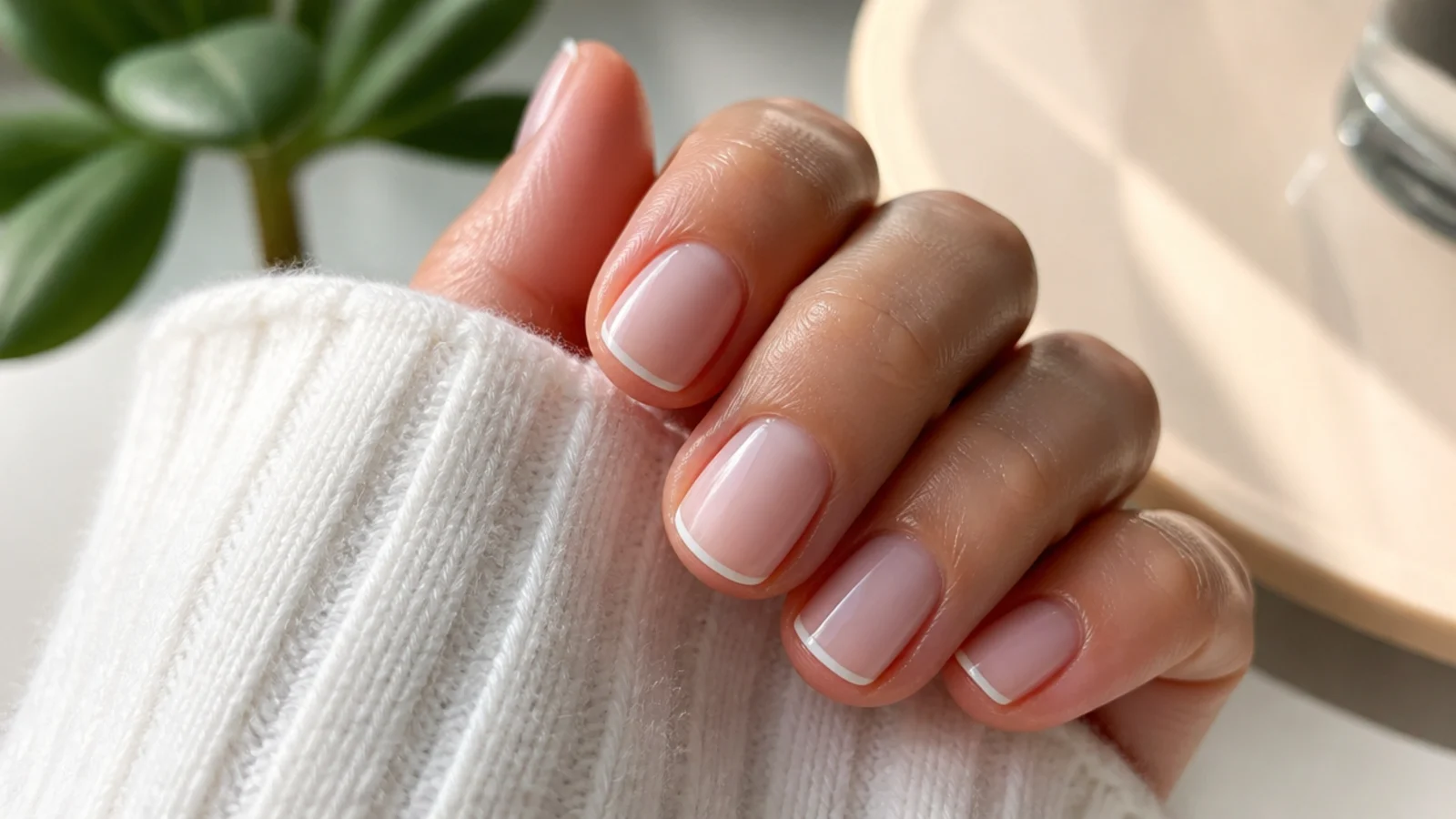
A hairline French, roughly 1mm wide, painted along the free edge over a milky nude base. It is the single most cited quiet luxury manicure of 2026 for a practical reason: the line is so thin it grows out cleanly, so a two week old set still looks deliberate. It works at 2mm of free edge, which is shorter than a classic French can survive. Ask for it in gel rather than polish so the line stays crisp past day five. Compare widths in short French tip nails.
Who it suits: Short nails, typists and conservative offices.
Tip: Ask for a 1mm line matched on all ten so the thumbs do not creep wider than the rest.
7. Ivory Cream Nails
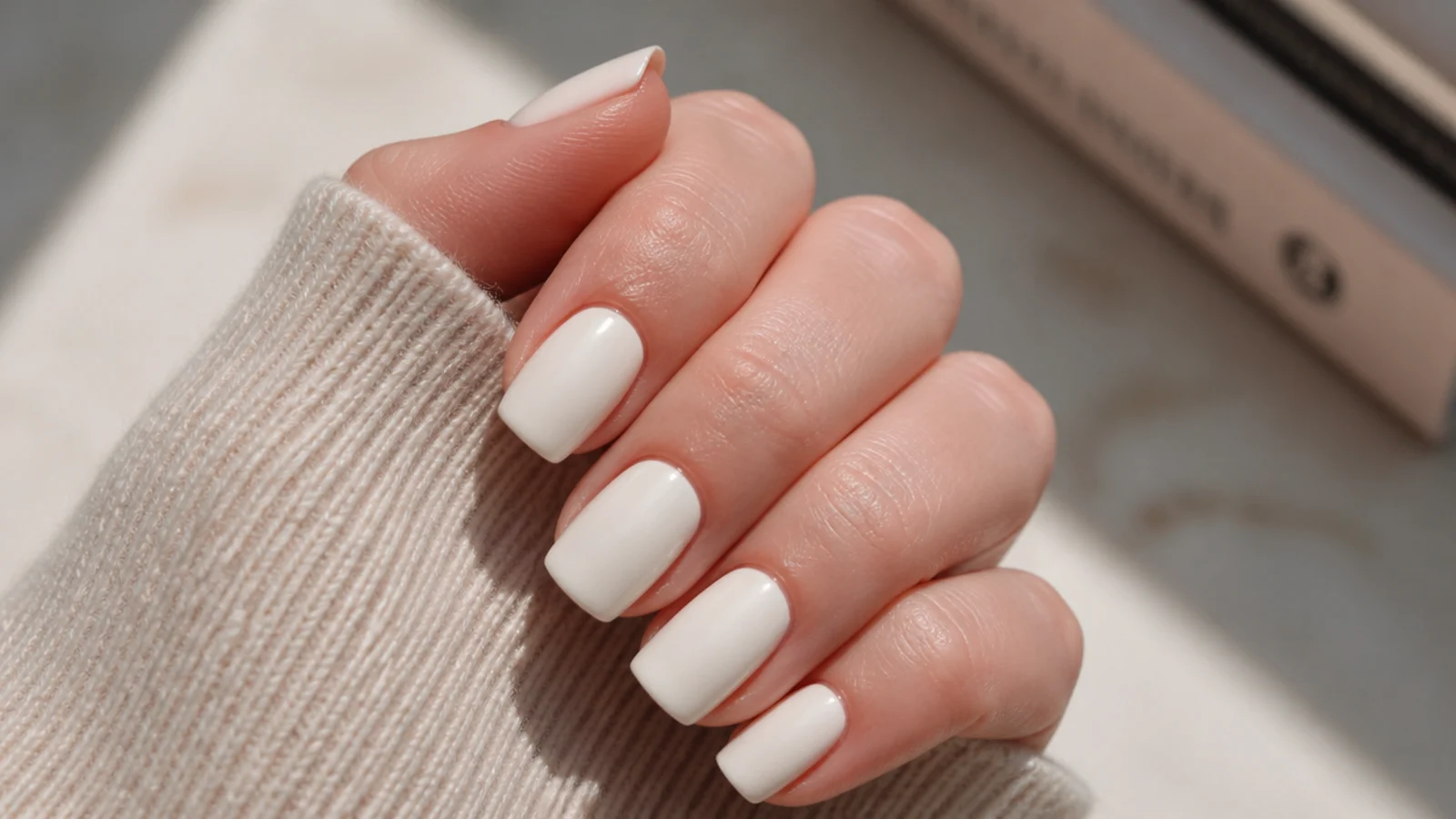
Fully opaque warm white with a drop of yellow in it, which is what stops it reading as clinical the way pure white does. Ivory is the neutral that photographs best against gold jewelry and warm-toned clothing, and it flatters deeper skin tones far better than a cool stark white. Because it is opaque, two coats is enough and streaking is much less of a risk than with milky sheers. Squoval or soft almond at medium length keeps it grown up. The flat version is matte white nails.
Who it suits: Deep and warm undertones, and gold jewelry wearers.
Tip: Hold the bottle beside your gold rings; if it looks blue against them, it is not ivory.
8. Warm Beige Nails
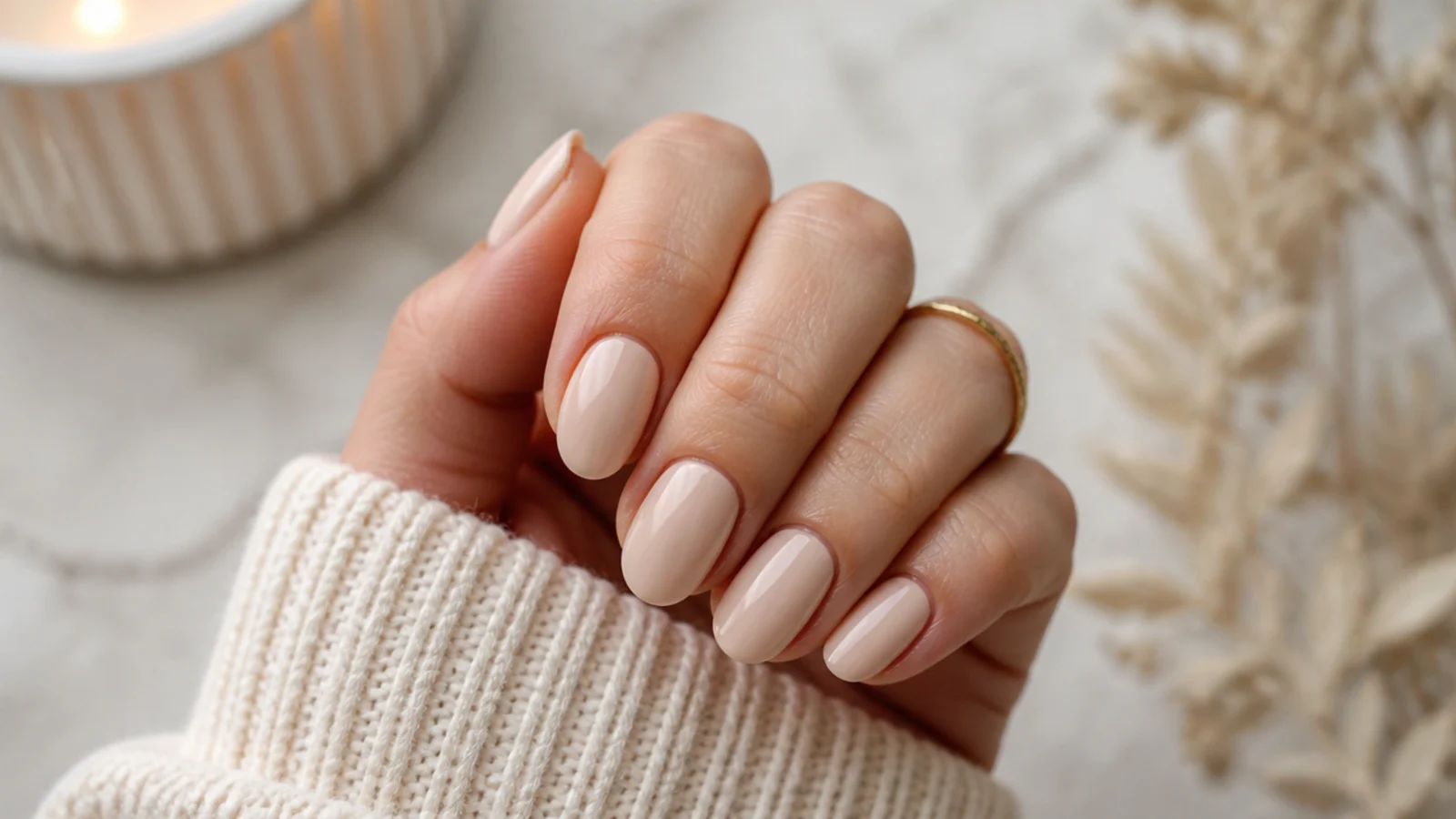
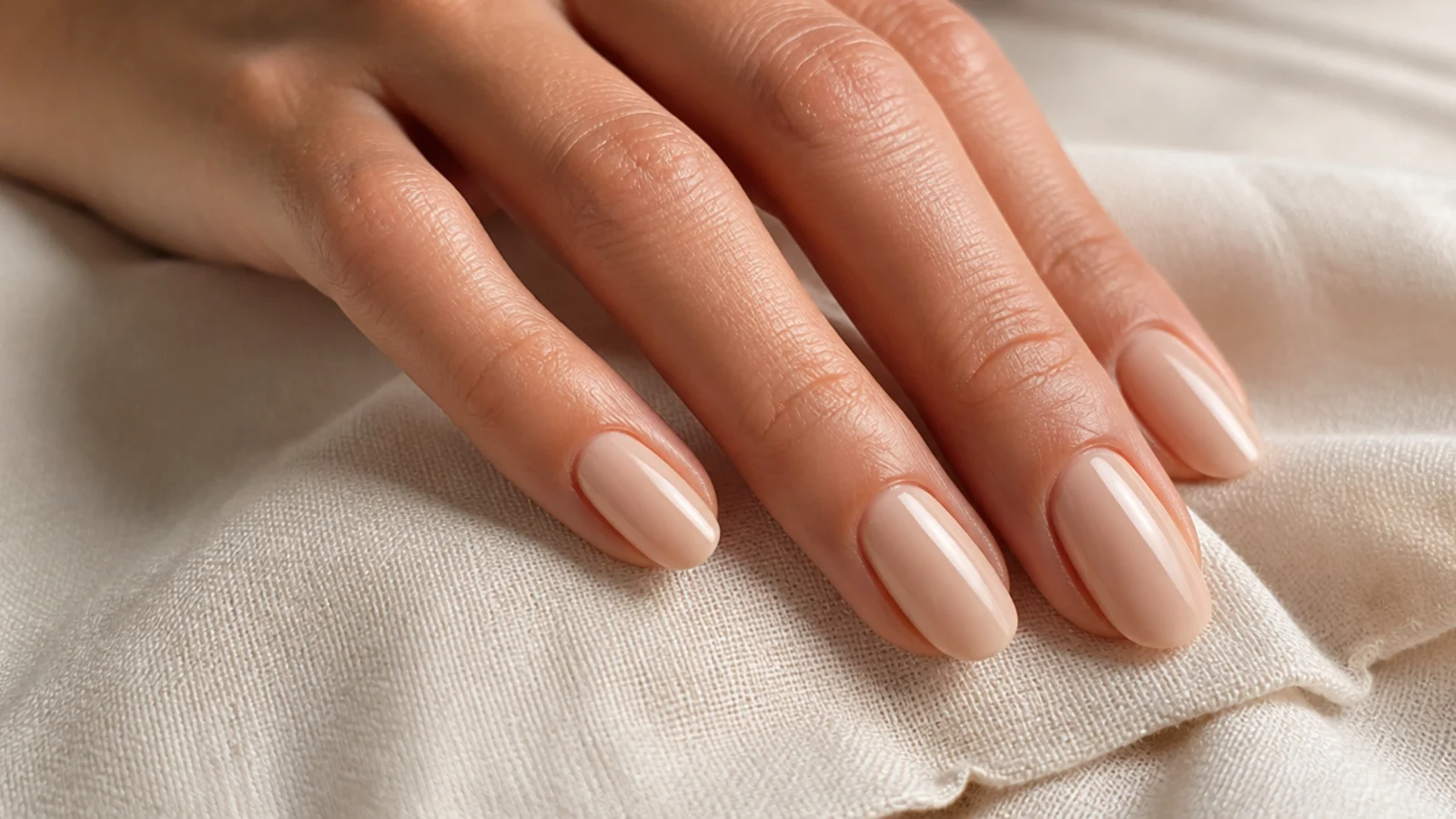
The workhorse of the beige family: an opaque sand-toned beige such as Essie Sand Tropez or OPI Samoan Sand, warm enough to look like skin in good lighting rather than putty. Warm beige is the shade most people fail at, because picking one that is too gray for a warm undertone is what creates the dreaded ashy hand. Check it against the inside of your wrist, not the back of your hand, which is usually a shade or two darker. Two coats, high gloss, short almond.
Who it suits: Warm and olive undertones.
Tip: Test beige on your wrist in daylight; salon lighting hides the gray in a badly matched shade.
9. Taupe Nails
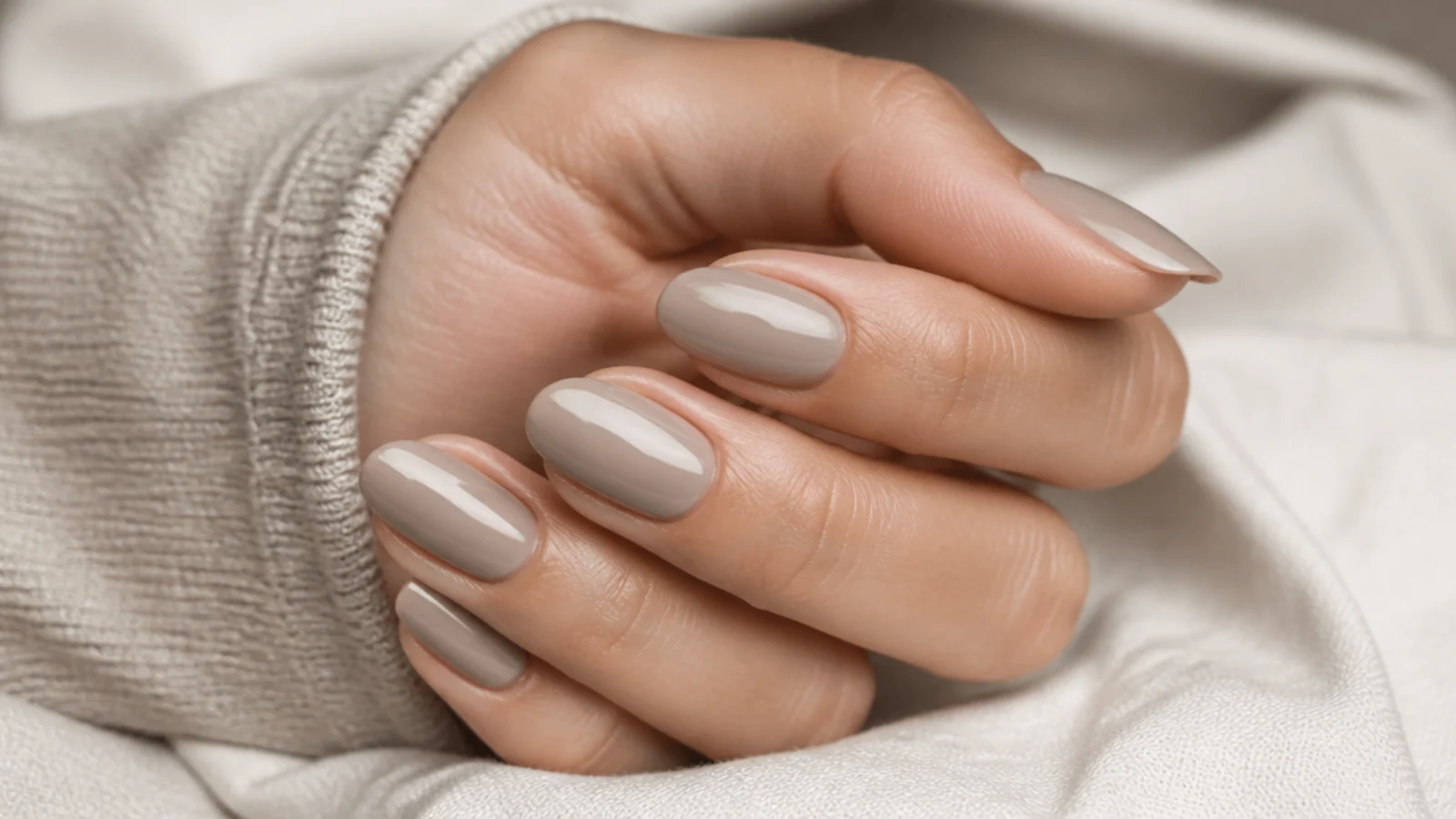
Taupe sits exactly between brown and gray, which is why it is the one neutral that flatters cool, warm and neutral undertones alike. It is also the shade every quiet luxury feed reaches for when a look needs to read expensive without reading beige. Essie Mink Muffs and DND Perfect Nude are the two most-named benchmarks. It works at any length and any shape, and it is genuinely wardrobe-neutral, pairing with black, navy, cream and denim without argument. Shade specifics in neutral nail polishes compared.
Who it suits: Every undertone, and anyone who wants one shade to cover everything.
Tip: If a taupe looks muddy on you, go one shade lighter rather than switching to beige.
10. Taupe French Tip Nails
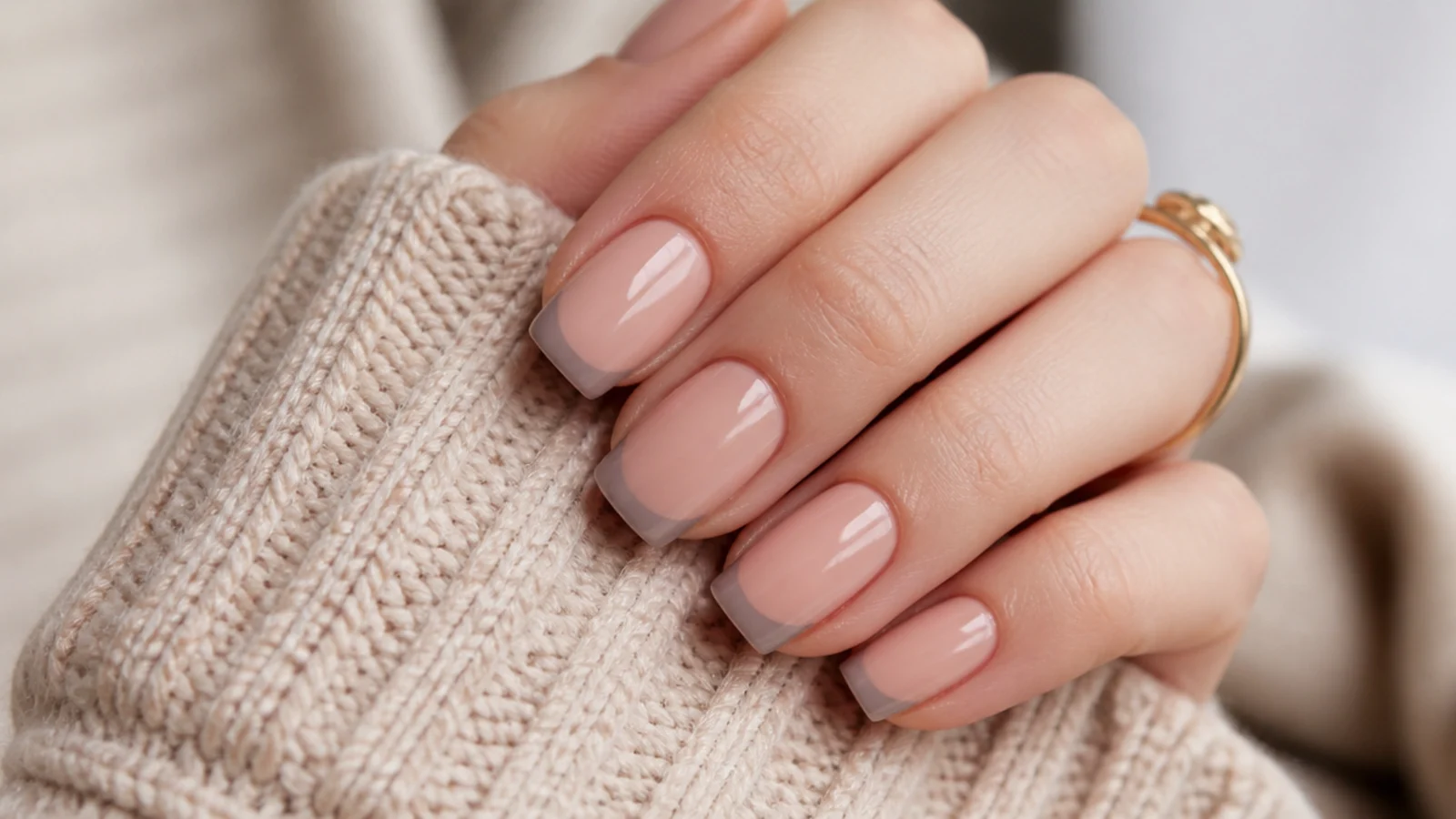
A French where the white tip is swapped for taupe over a sheer nude base, which softens the whole design by dropping the contrast from high to medium. It is the version of the French manicure that survives a conservative office better than white does, because nothing about it reads decorative. Ask for a 3mm tip band and a straight smile line rather than a deep curve. The tonal version, taupe on taupe, is even quieter. More tip shapes in white French tip nails.
Who it suits: Corporate offices and anyone who finds white French too stark.
Tip: Ask for tonal French, one shade darker than the base, if you want it nearly invisible.
11. Matte Nude Nails
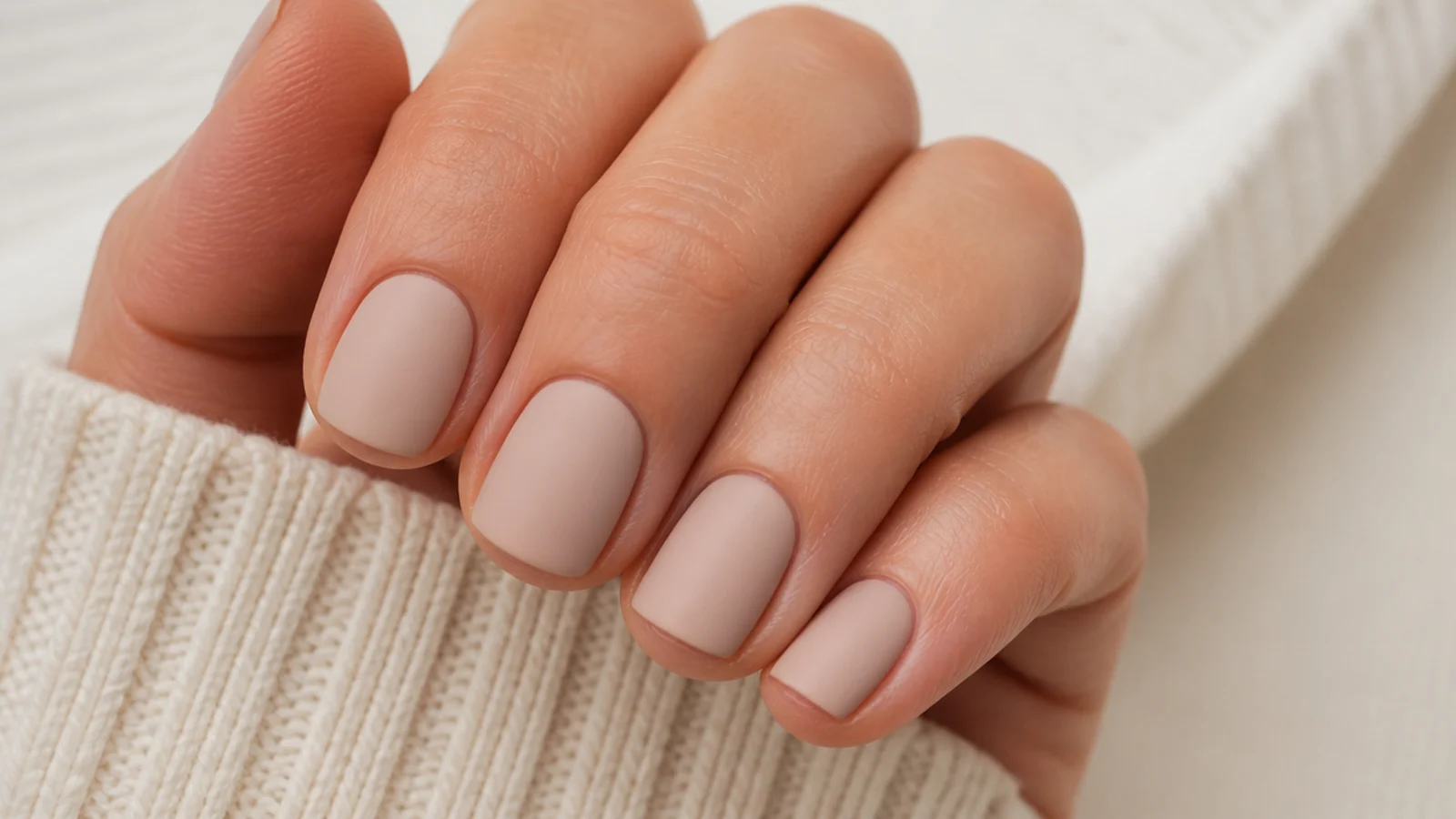
The same nude you already wear, finished under a matte top coat so the surface goes velvet and the nail edge looks sharper. Matte does two useful things to a neutral: it hides surface ridges that gloss magnifies, and it makes a cheap-looking shade read more expensive by removing the plastic shine. The trade-off is that matte dulls after about ten days and picks up shiny patches from hand cream. Full breakdown in matte nude nails and matte versus glossy nails.
Who it suits: Ridged nails and anyone wanting texture without color.
Tip: Keep cuticle oil off matte sets; oil leaves glossy spots that will not buff back out.
12. Champagne Shimmer Nails
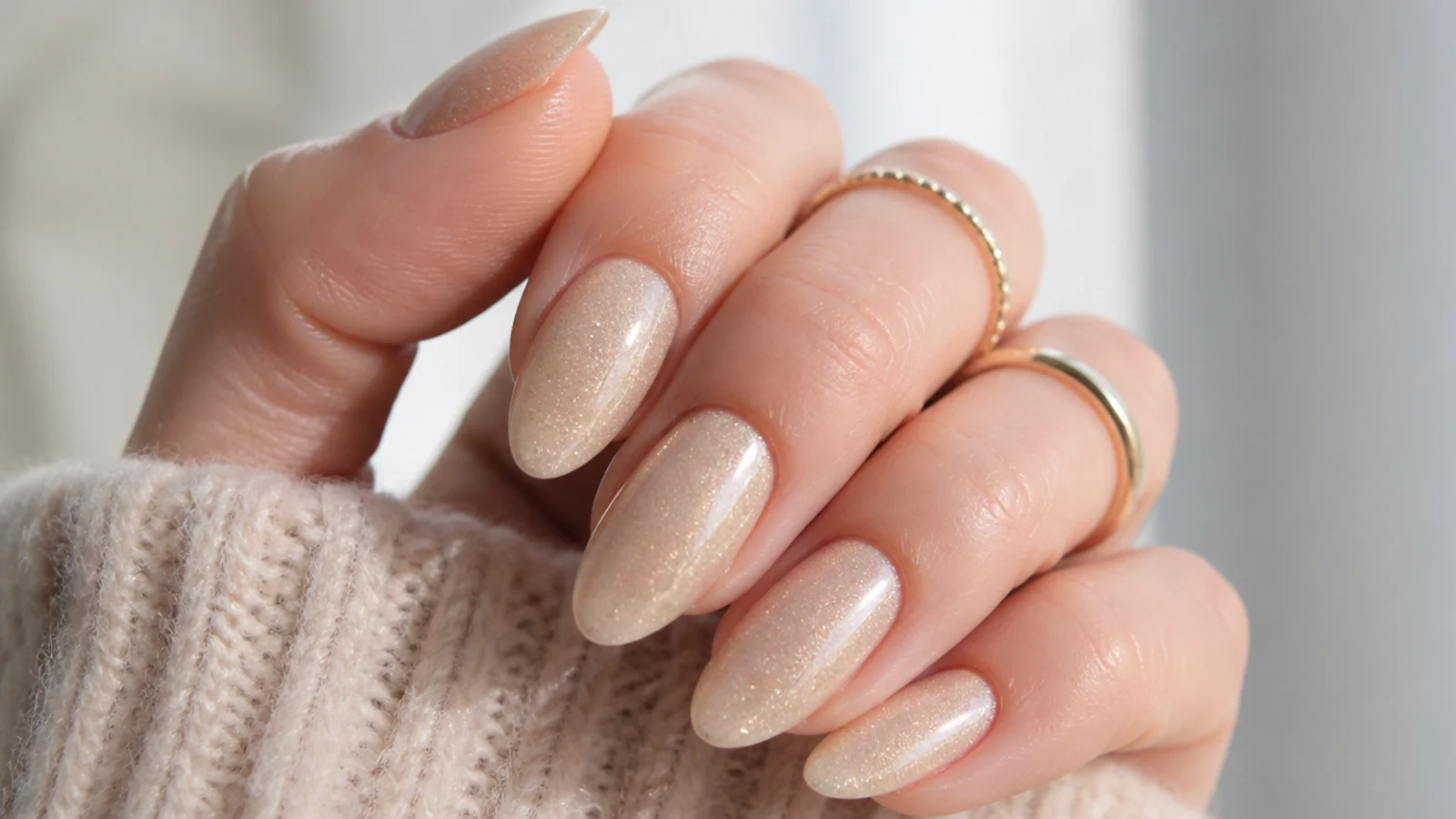
A beige base carrying micro shimmer so fine it reads as a sheen rather than glitter, which is the specific thing that keeps it professional. The particle size is the whole decision: anything you can see as an individual fleck reads party, anything you cannot reads expensive. It is the standard wedding guest neutral and it hides ridges better than any cream finish. Two coats over a base coat, high gloss on top. Deeper metallic versions sit in gold chrome nails.
Who it suits: Weddings, holidays and warm undertones.
Tip: Ask for micro shimmer, not glitter, so your tech does not reach for a chunky topper.
13. Beige Nails With Gold Micro French
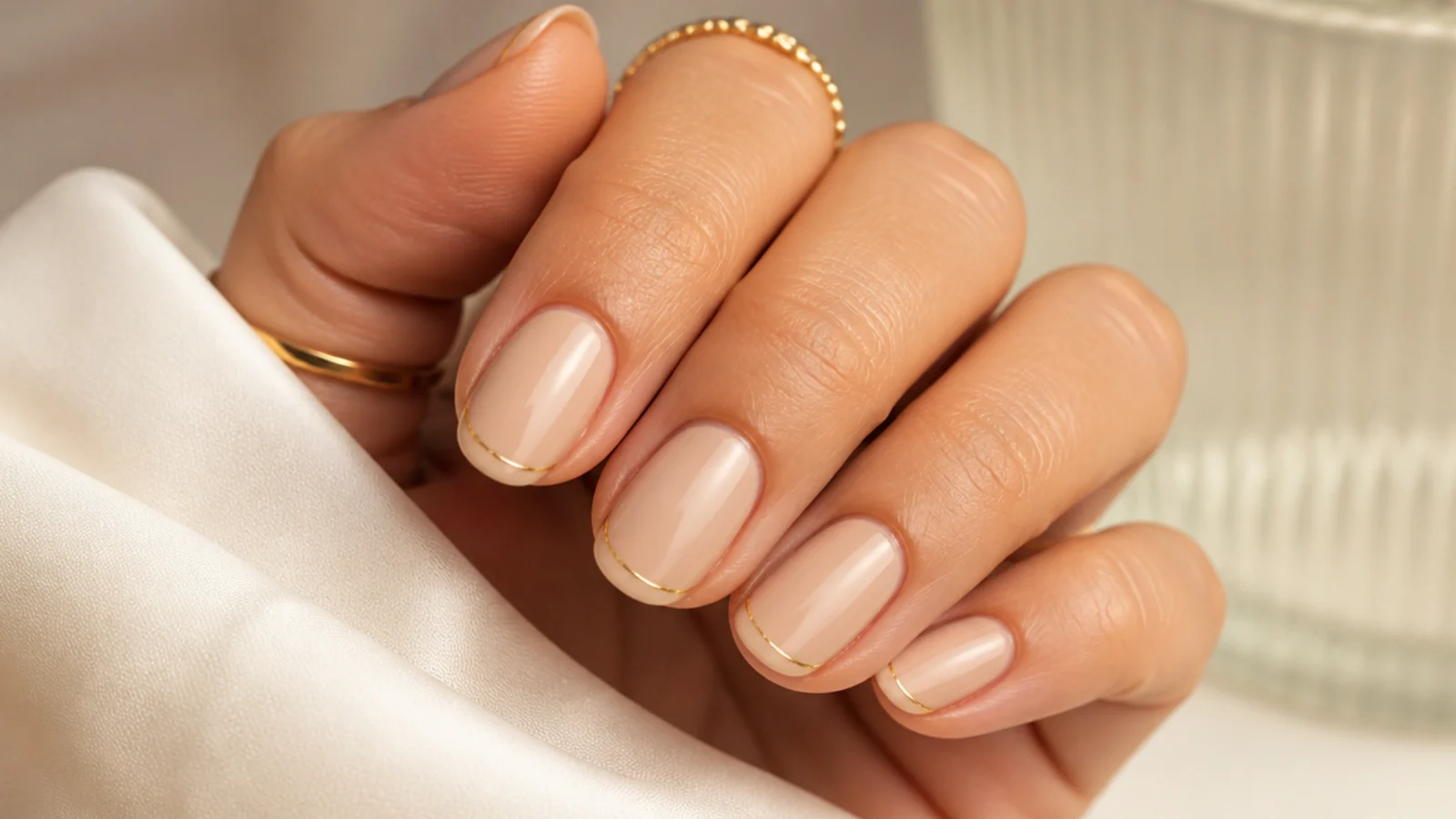
A beige or milky base with a hairline gold line traced along the free edge, sometimes called a gold rimmed French. It is the cheapest possible upgrade to a plain neutral, usually about 5 dollars extra, and it is what makes a bare-looking manicure read intentional in photographs. Gold suits warm and olive undertones best; cool undertones should ask for a pale silver or platinum line instead. Keep the line under 1mm or it starts to read as a metallic tip rather than an outline.
Who it suits: Warm undertones and anyone wanting detail without color.
Tip: Ask for the gold line in gel with a striper brush, not a pen, so it does not wear off at the edge.
14. Mocha Brown Nails
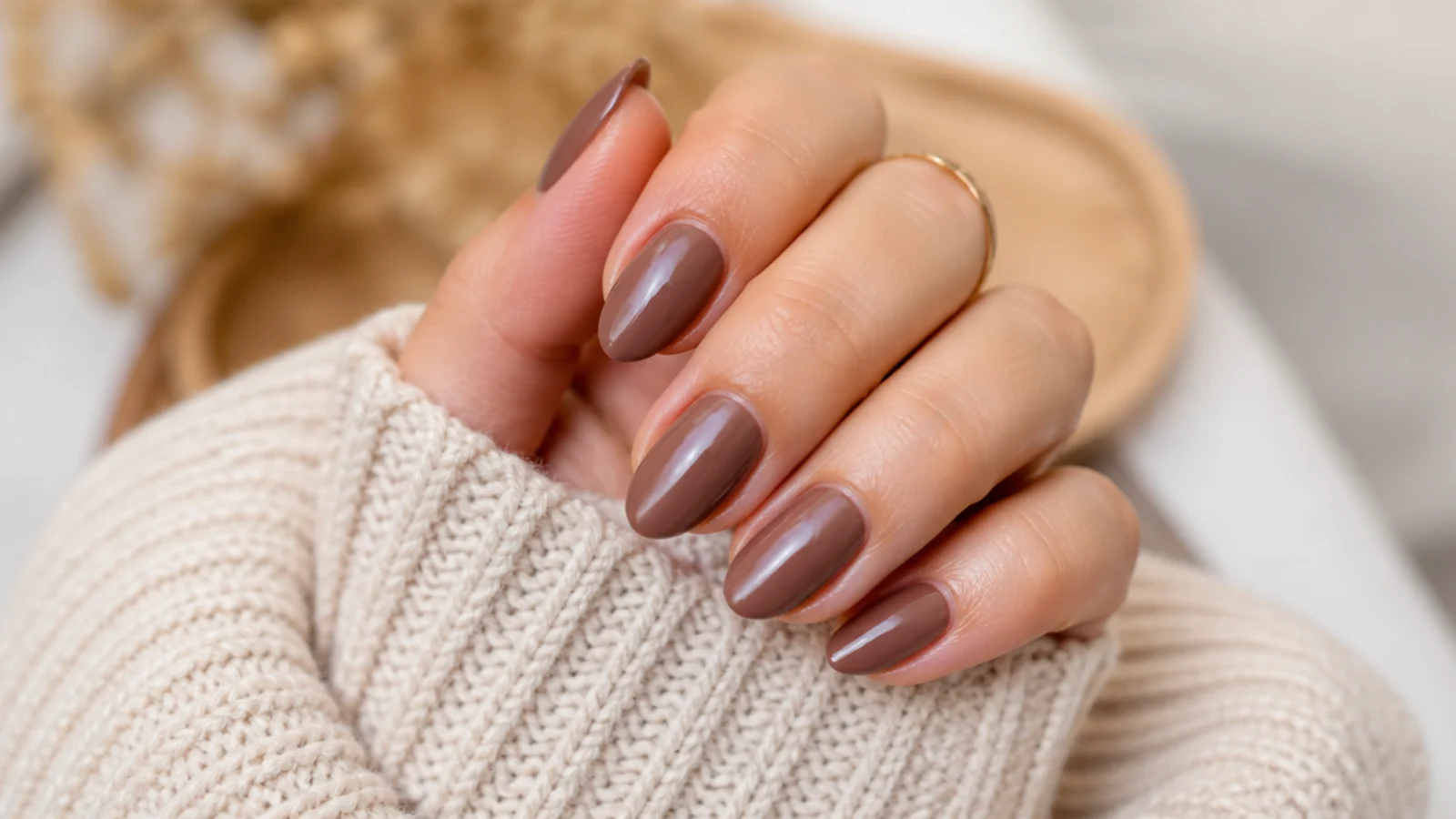
Mid-tone milk chocolate brown, fully opaque, and the single biggest neutral shift of the last two years: brown is now a legitimate office color rather than a fall novelty. It flatters deep and olive skin tones better than beige does, because it works with the skin instead of trying to match it. Two coats gets full opacity in most creams. Pair it with gold jewelry rather than silver. It is also the most forgiving neutral for grow-out, since the contrast at the cuticle stays soft.
Who it suits: Deep and olive undertones, and year-round wear.
Tip: Ask for a cream mocha rather than a shimmer so it stays office-appropriate at close range.
15. Latte Nails
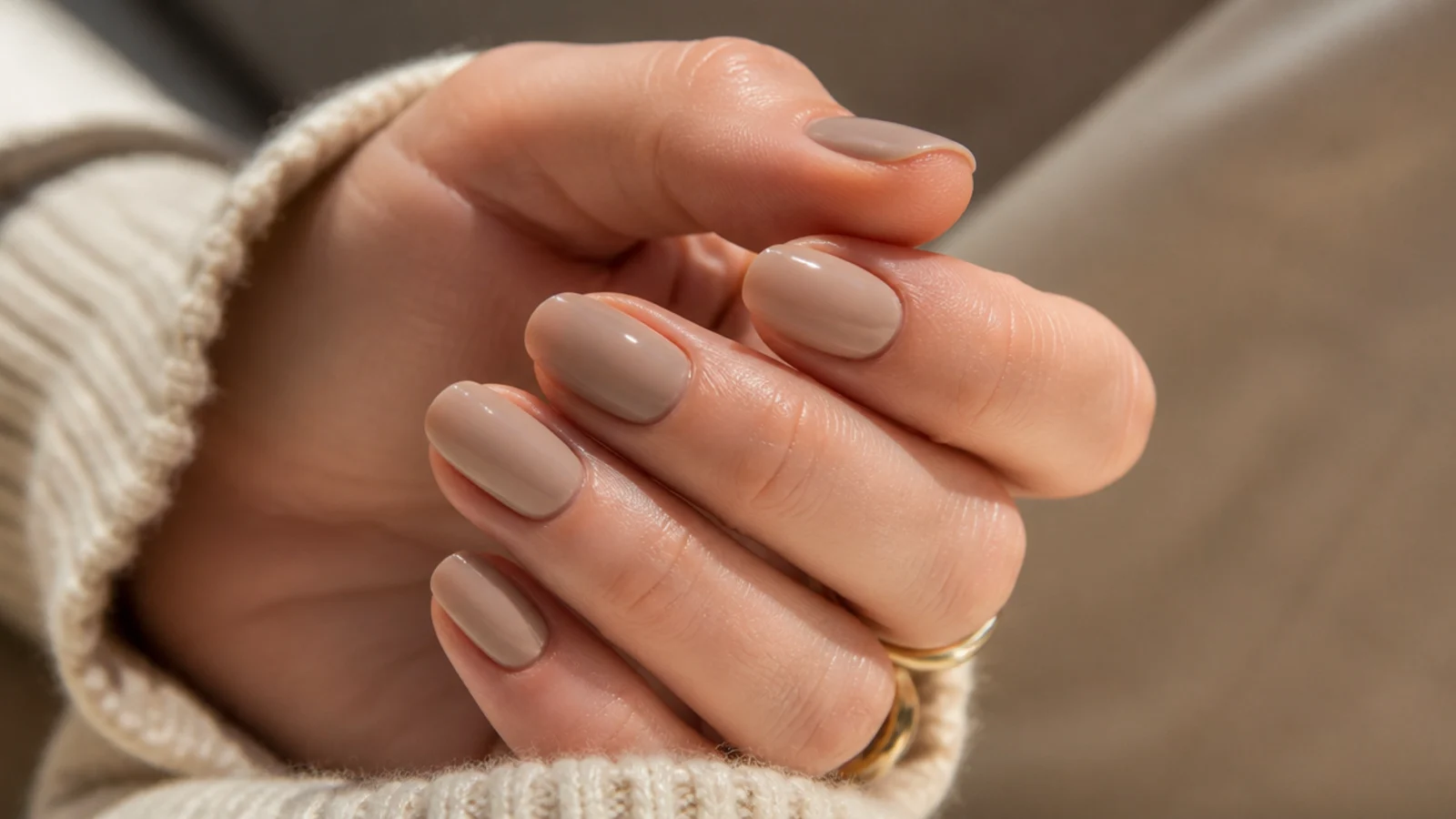
The lightest rung of the brown ladder: a milky coffee shade that sits between beige and mocha, with enough brown to have depth and enough milk to stay soft. Latte is the easiest entry point if brown nails feel like a stretch, because it reads as a warm neutral first and a brown second. It is especially good on short nails, where a dark espresso can look heavy. Ask for latte or milky brown; most techs know the term. Short shape guidance in short almond nails.
Who it suits: Warm undertones and short nails.
Tip: Ask for one thin coat of milky white under the latte to keep the brown from going muddy.
16. Espresso Brown Nails
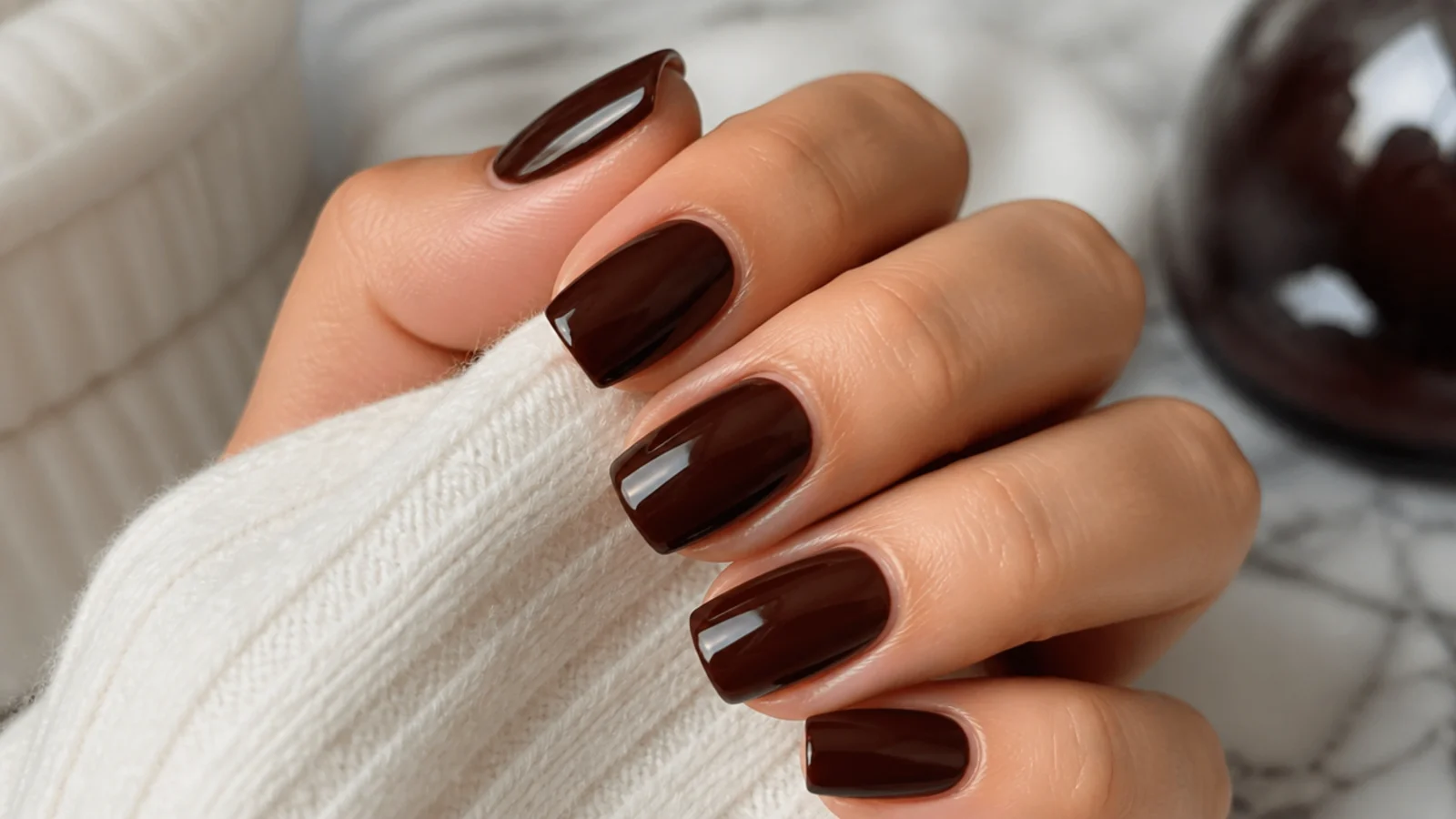
Near-black brown with warmth still visible in the light, which is what separates espresso from a plain dark shade. It is the most formal neutral on this list and the one that reads most expensive at length, because deep saturated color shows any flaw in the application and therefore signals a careful one. Dark pigment stains the natural nail, so a base coat is not optional here. Best on medium length in squoval or almond. The moodier siblings sit in dark feminine nails.
Who it suits: Fall, winter and anyone wanting a dark shade that still counts as neutral.
Tip: Always use a base coat under espresso, or the brown pigment will tint your nail after removal.
17. Brown French Tip Nails on a Nude Base
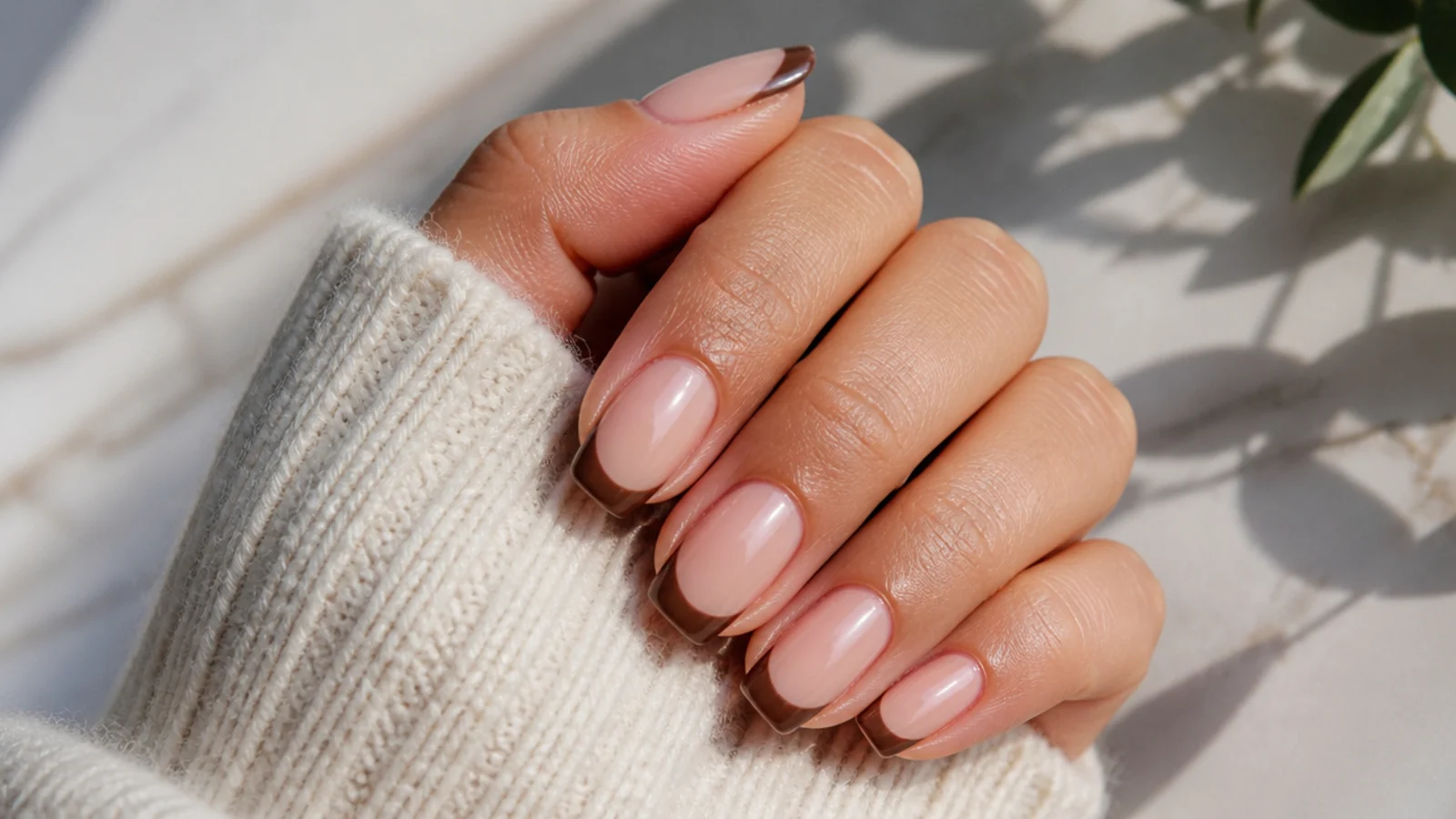
A French manicure that swaps the white tip for mocha or espresso over a warm nude base. It has quietly become the default French of 2026 because it flatters deep and olive skin far better than stark white, which can read chalky against those tones. Keep the tip band no wider than 4mm so it looks deliberate rather than grown out. It works on almond, squoval and coffin. Compare the standard version in black French tip nails for a harder contrast.
Who it suits: Deep and olive undertones and anyone tired of white French.
Tip: Ask for the smile line straight rather than deeply curved so the brown does not look like a shadow.
18. Beige to Brown Ombre Nails
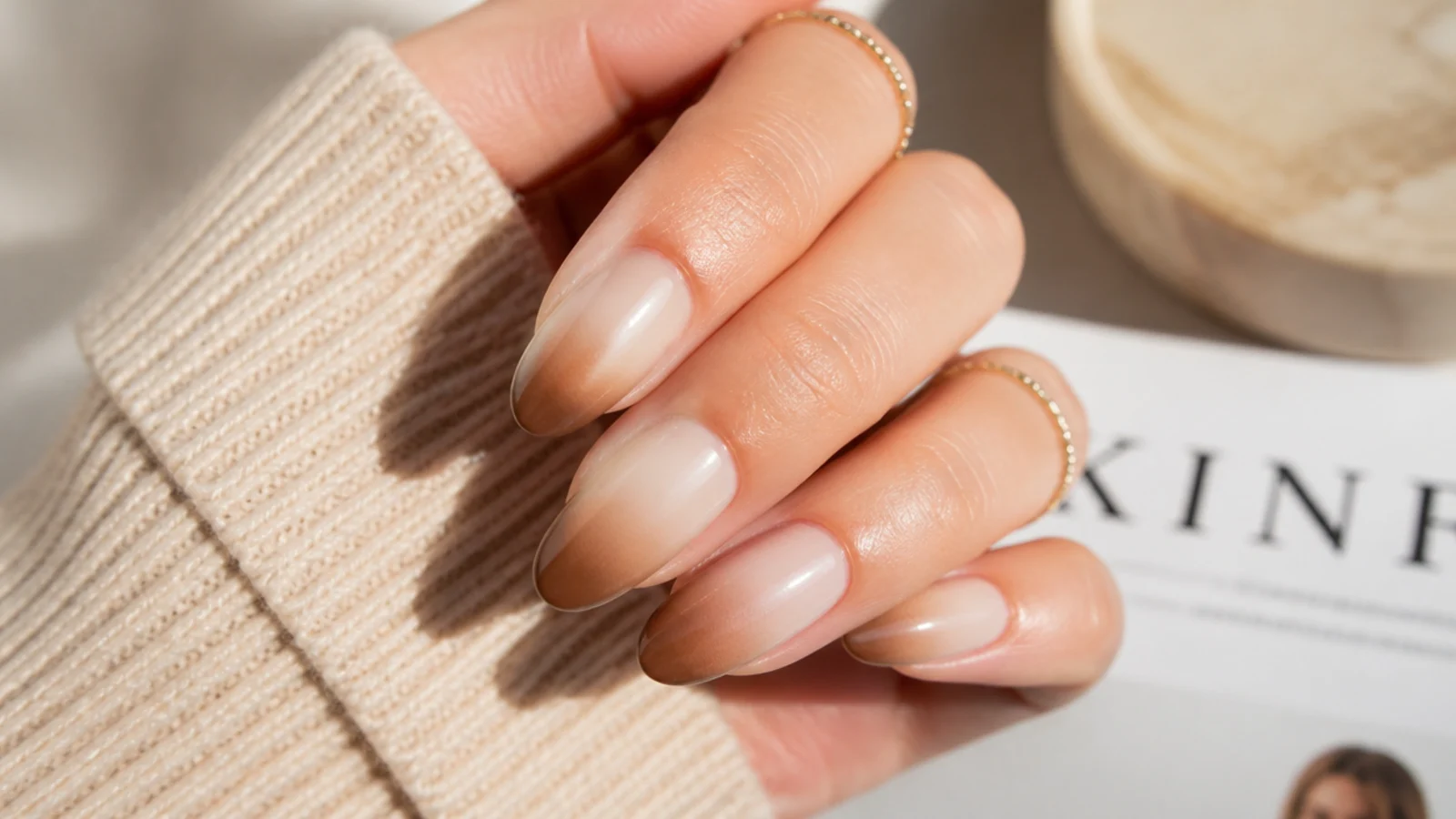
A soft gradient running beige at the cuticle to mocha at the tip, blended with a makeup sponge while the gel is uncured. It gives a neutral set dimension without adding a single decorative element, which is why it survives dress codes that ban nail art. Keep the two shades within three steps of each other; a wide jump reads as a bad dip job. Expect about 10 dollars extra and a longer appointment. The reverse, dark cuticle to light tip, elongates short nails more.
Who it suits: Anyone wanting depth without decoration.
Tip: Ask for the blend line to sit above the nail center so the gradient does not compress.
19. Caramel Chrome Nails
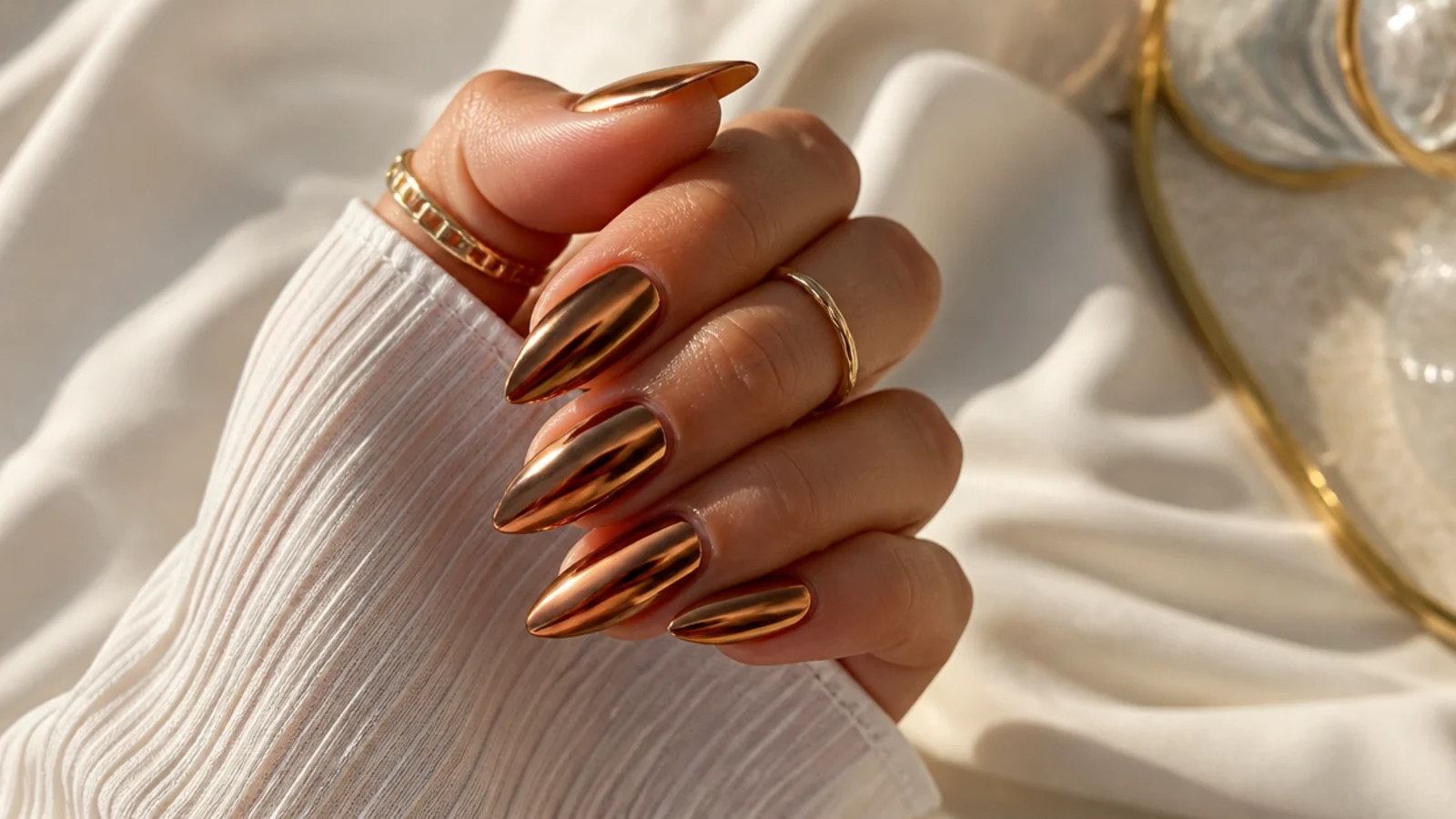
Chrome powder buffed over a caramel or warm beige base so the mirror finish comes out bronze rather than silver. It is the most skin-tone friendly metallic in the neutral family, and unlike silver chrome it does not fight with gold jewelry. Chrome shows every ridge underneath, so ask for a smoothing builder gel layer before the powder goes on. Budget 10 to 20 dollars over a gel set. Compare finishes in white versus silver chrome nails.
Who it suits: Warm undertones and evening looks.
Tip: Ask for a builder gel smoothing layer first; chrome magnifies ridges more than any other finish.
20. Greige Nails
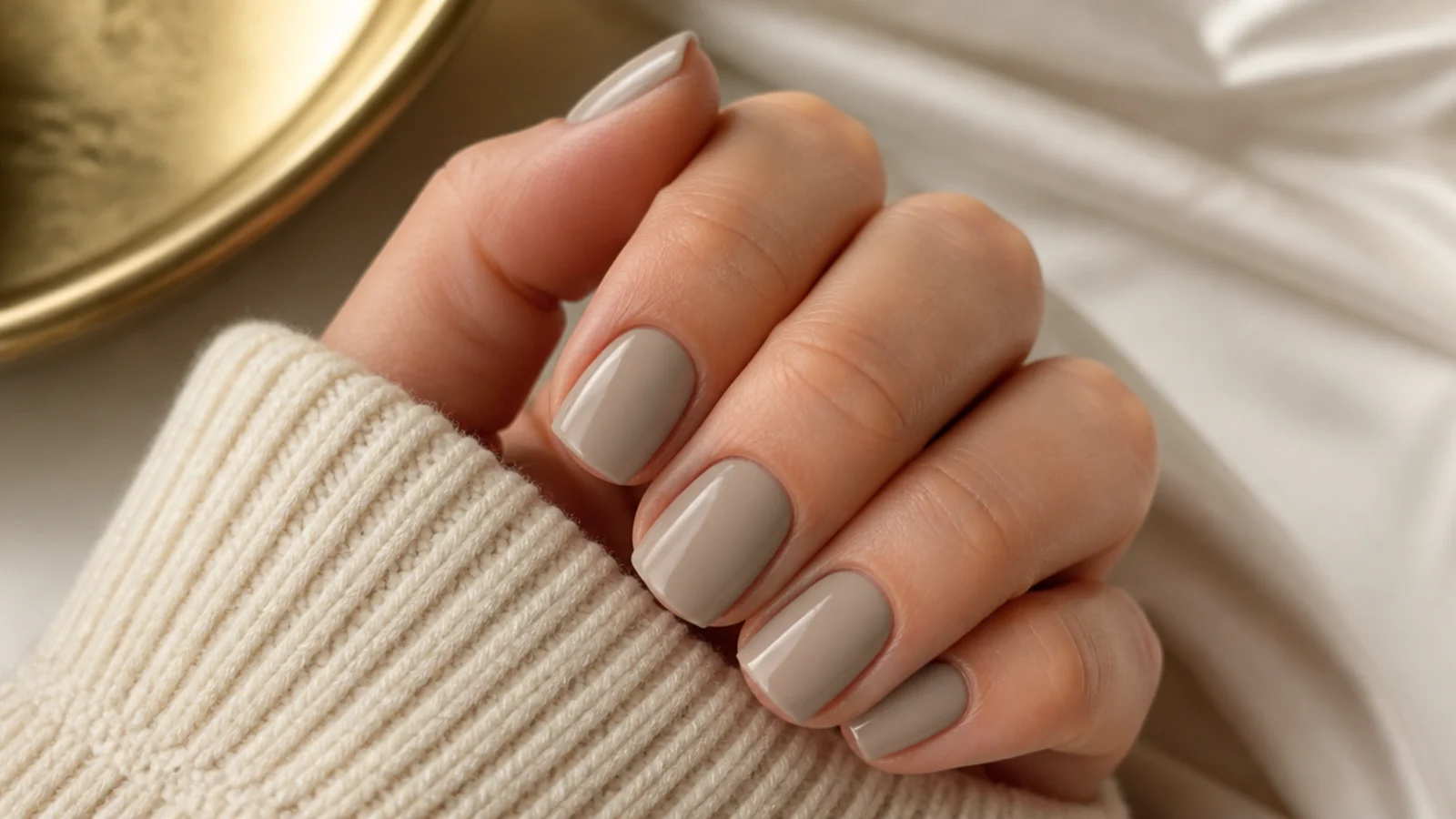
Gray plus beige, the shade that fixes both problems at once: too gray reads ashy, too beige reads flat, and greige sits in the middle. It is the second most undertone-flexible neutral after taupe, and it is the shade to try if beige has always looked wrong on you. Essie Chinchilly is the most-named benchmark on the cool side. Two coats, high gloss, any shape. It pairs with silver jewelry the way mocha pairs with gold.
Who it suits: Cool and neutral undertones, and silver jewelry wearers.
Tip: If greige goes ashy on you, add one sheer coat of milky pink underneath to warm it up.
21. Light Gray Nails
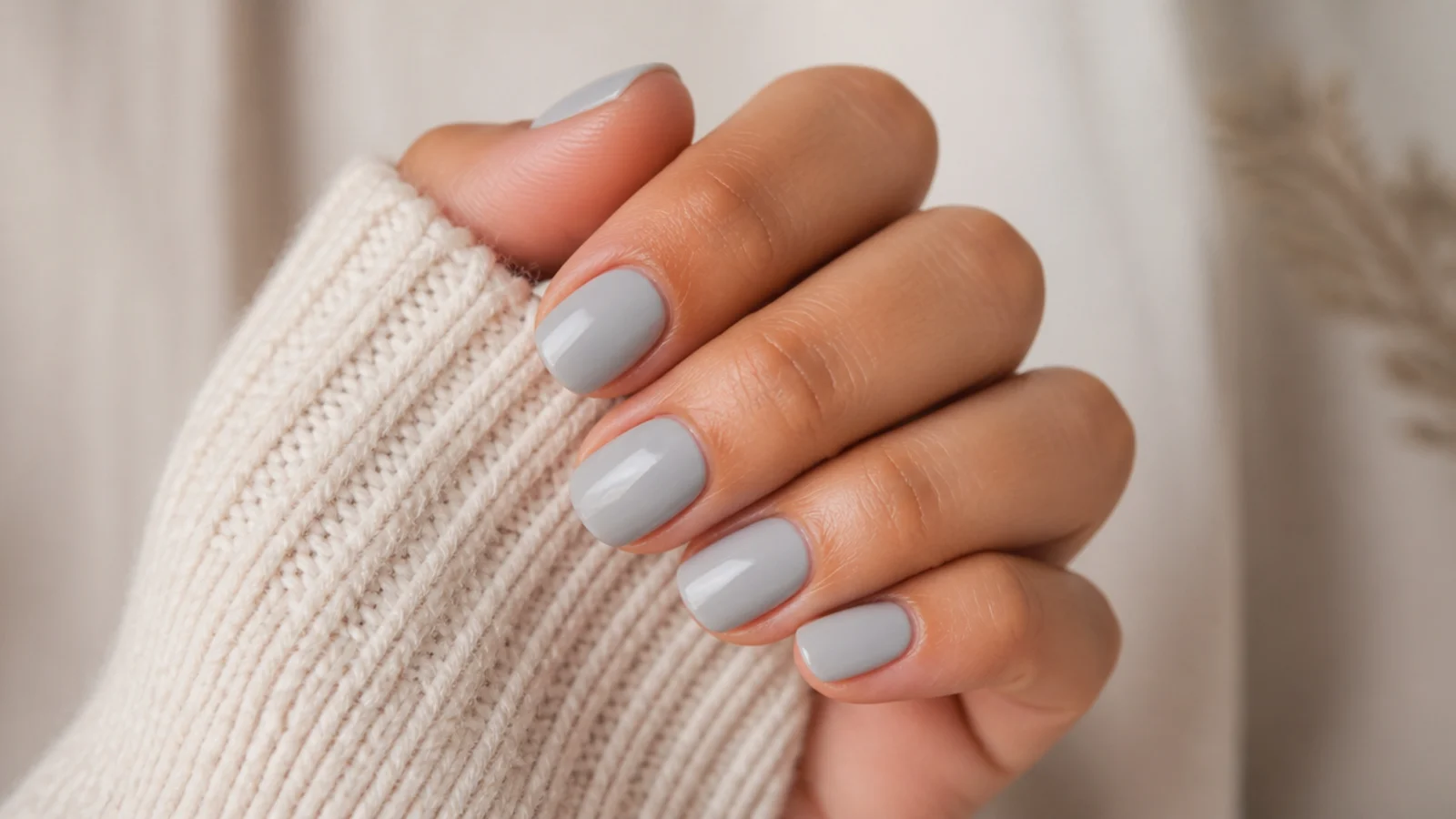
Pale dove gray, opaque, with no brown in it at all. It is the coolest shade in the neutral family and the sharpest looking, which is why it works so well with navy, black and white wardrobes. Light gray is unforgiving of a sloppy cuticle line, since the contrast against skin is higher than beige, so tidy prep matters more here. Short oval or squoval keeps it modern. If it looks cold on your hand, greige is the same idea with the edge taken off.
Who it suits: Cool undertones and monochrome wardrobes.
Tip: Push cuticles back before painting; gray shows a ragged cuticle line more than any beige will.
22. Slate Gray Nails
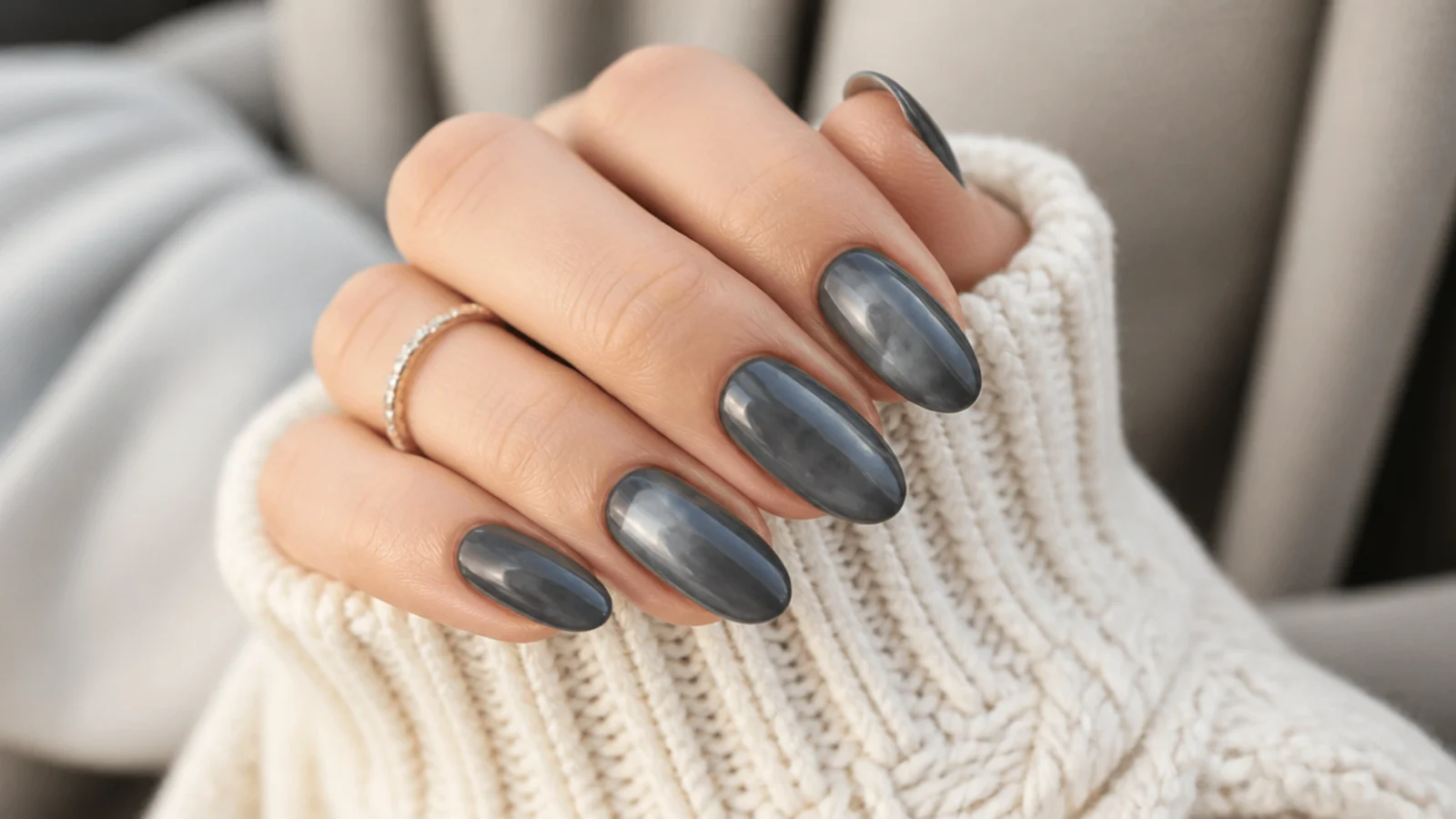
Deep charcoal gray, the gray family answer to espresso brown, and the darkest shade that still counts as a neutral rather than a statement. It reads modern and slightly severe, which is exactly why it works in creative offices where beige feels dull. It is also the most flattering dark shade on very fair, cool-toned hands, since near-black can look harsh there. Two coats, base coat first, medium length. The matte version drops the shine and sharpens the edges further.
Who it suits: Cool undertones, fall and creative workplaces.
Tip: Try slate gray in matte if the glossy version reads too much like wet cement.
23. Neutral Marble Nails
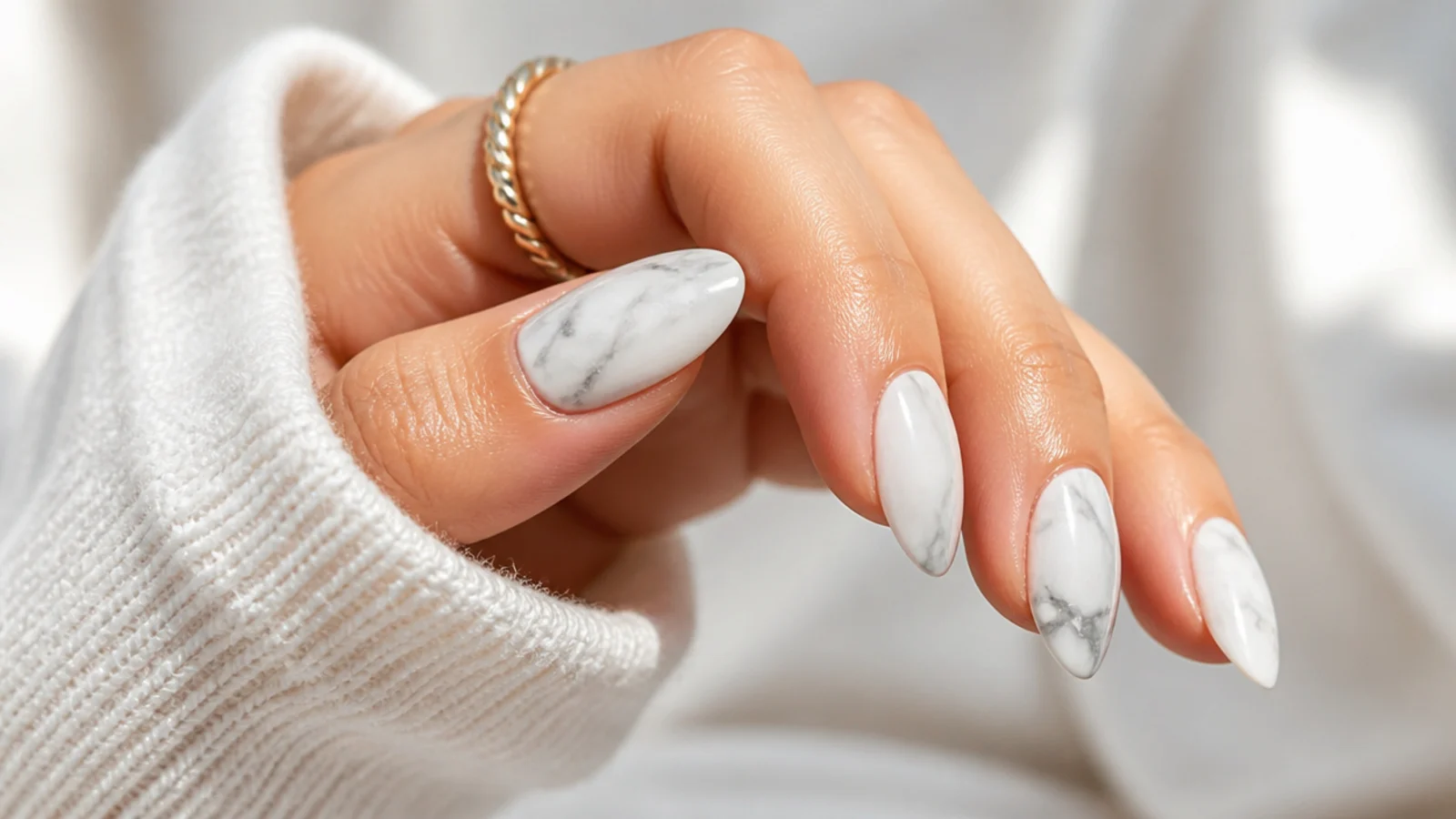
Thin gray veins swirled through a milky white base while the gel is still wet, so the pattern looks like polished stone rather than painted lines. The rule that separates good marble from bad is vein weight: hairline veins running diagonally read as stone, thick veins running straight down read as scribble. Ask for two or three accent nails rather than all ten, at roughly 5 dollars per nail. The wet-bleed technique is the same one used in blooming gel flower nails.
Who it suits: Anyone wanting nail art that does not look like nail art.
Tip: Ask for hairline diagonal veins on two nails only; ten marbled nails reads busy, not stone.
24. Gray Chrome Nails
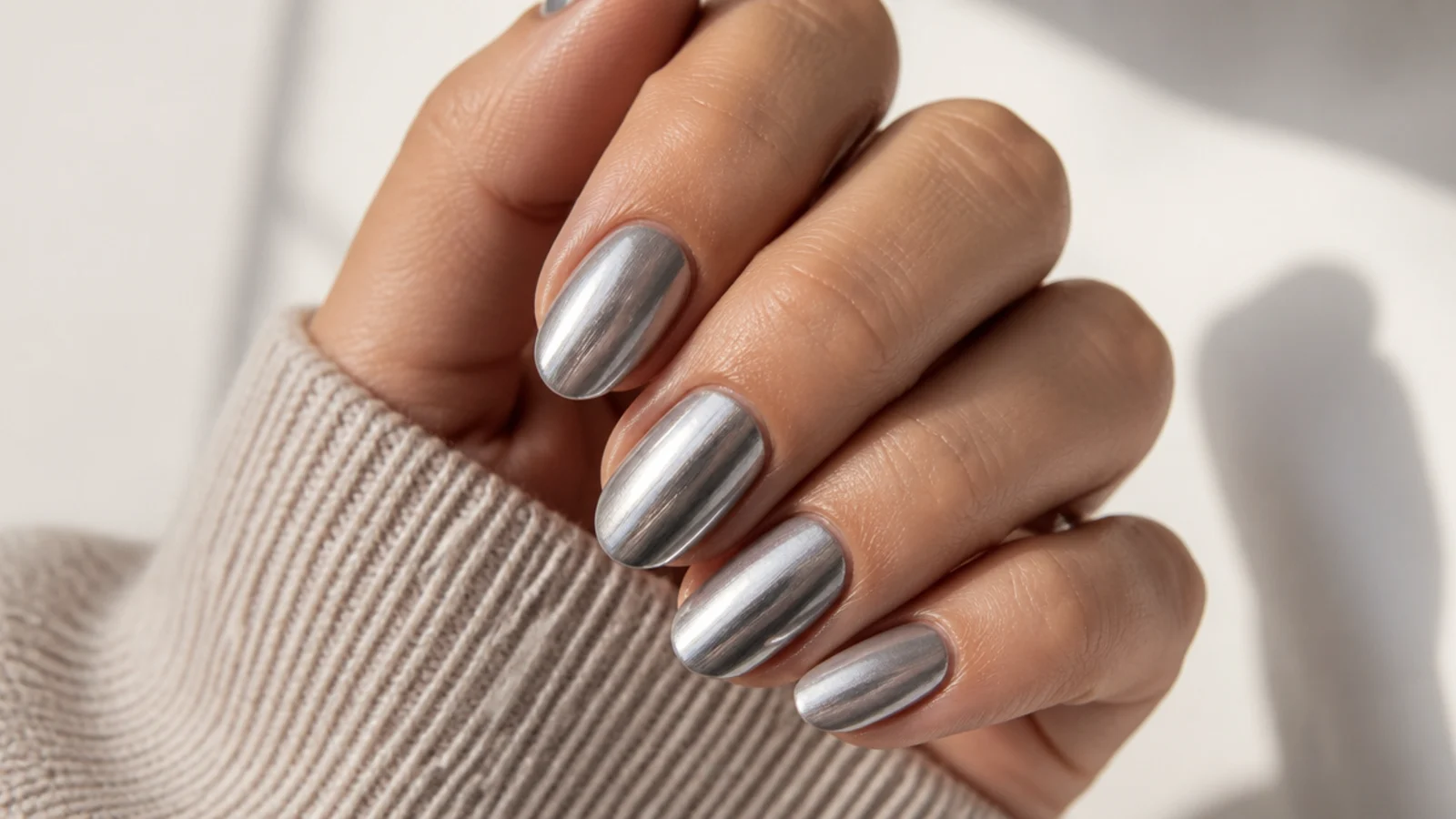
Silver chrome powder over a gray base rather than a black one, which mutes the mirror into brushed pewter instead of a hard reflection. It is the coolest-toned way to get shine in this palette and the best chrome for silver jewelry. Because the base is pale, grow-out hides for an extra week compared to chrome over black. Ask specifically for chrome over gray, since chrome over black is the default in most salons. Full method in how to do white chrome nails.
Who it suits: Cool undertones and anyone wanting chrome that stays neutral.
Tip: Say chrome over a gray base, not over black, or the finish will come out as a mirror.
25. Neutral Nails With a Single Thin Line
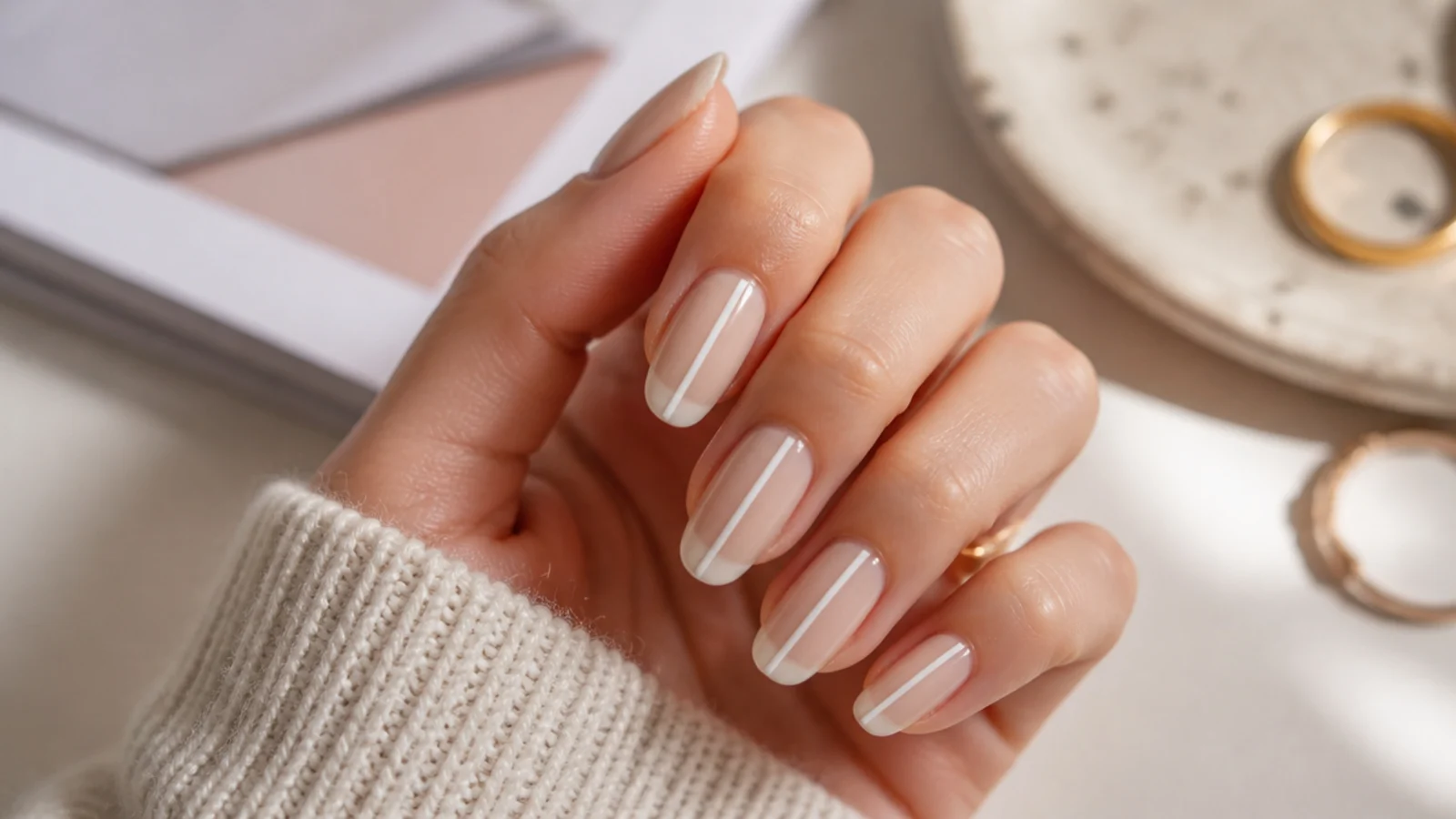
One skinny stripe, roughly 0.5mm, painted down the center or across the base of a beige or milky nail. It is the smallest possible amount of nail art and the most effective, because a single deliberate line is what tells the eye a bare-looking manicure was a choice. White on beige, gold on milky, or tonal one shade darker all work. It costs about 5 dollars extra and adds five minutes. Do it on two nails, not ten, so it reads as an accent.
Who it suits: Minimalists and strict dress codes.
Tip: Ask for a striper brush line in gel; polish lines soften and blur within three days.
What Makes a Neutral Nail Look Expensive?
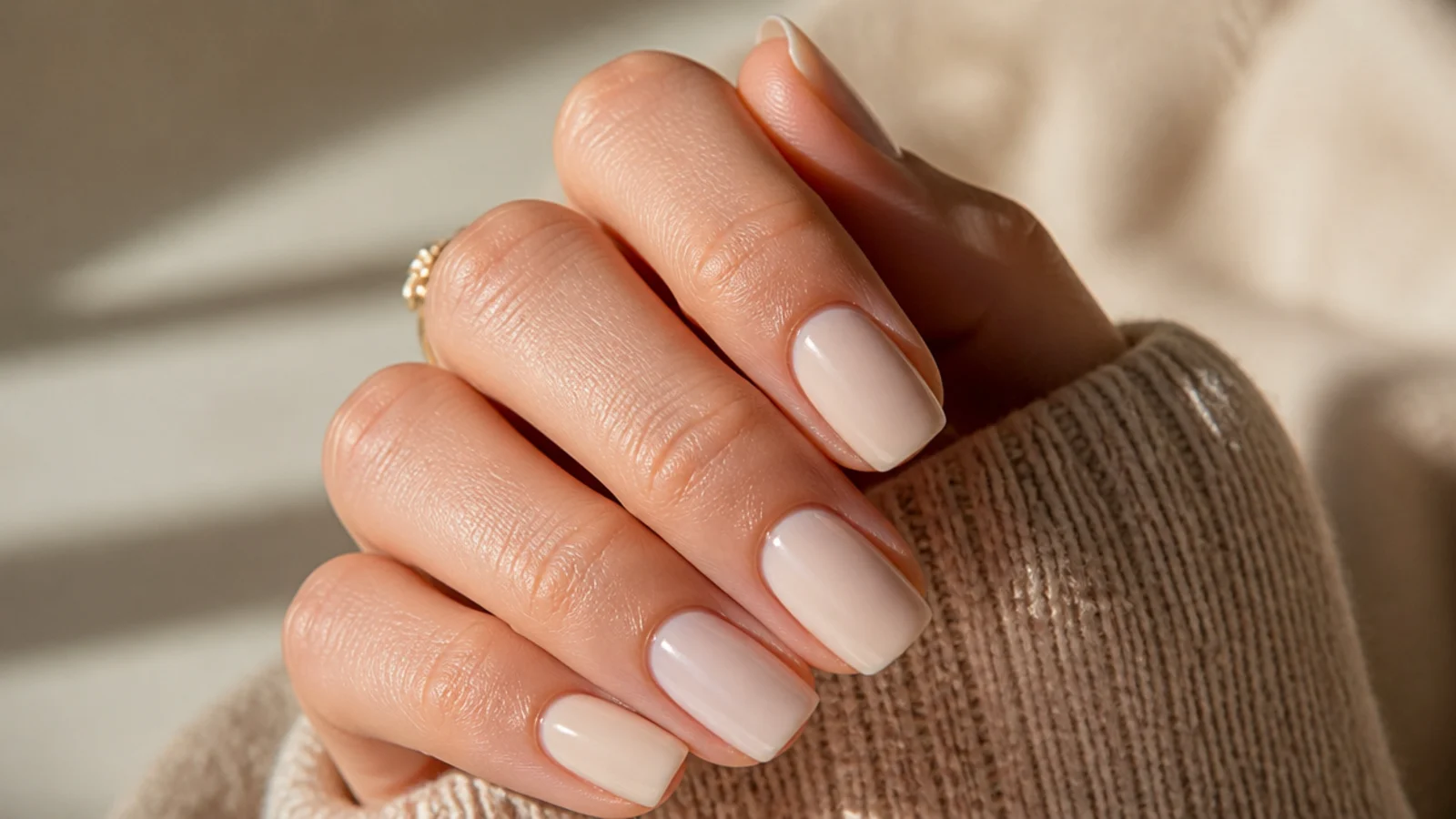
None of the pages competing for this keyword actually answer it, so here is the mechanism. An expensive-looking neutral comes down to four things, and color is the last of them. First, the cuticle line: pushed back, tidy and free of polish flooding, which is what creates the illusion of a longer nail bed. Second, the finish: a genuinely high-gloss top coat, or a deliberate matte, but never the half-dulled shine of a polish going stale. Third, even opacity, which is why sheer milky shades need three thin coats rather than two thick ones. Fourth, matched length and shape across all ten nails, since one longer thumb undoes the whole set. Only after those does shade matter, and even then the rule is simple: low saturation reads expensive, high saturation does not. That is why a flat bright shade looks cheaper than the same price of milky beige. More on this in short classy nails that look expensive.
Neutral vs Nude Nails: What Is the Difference?
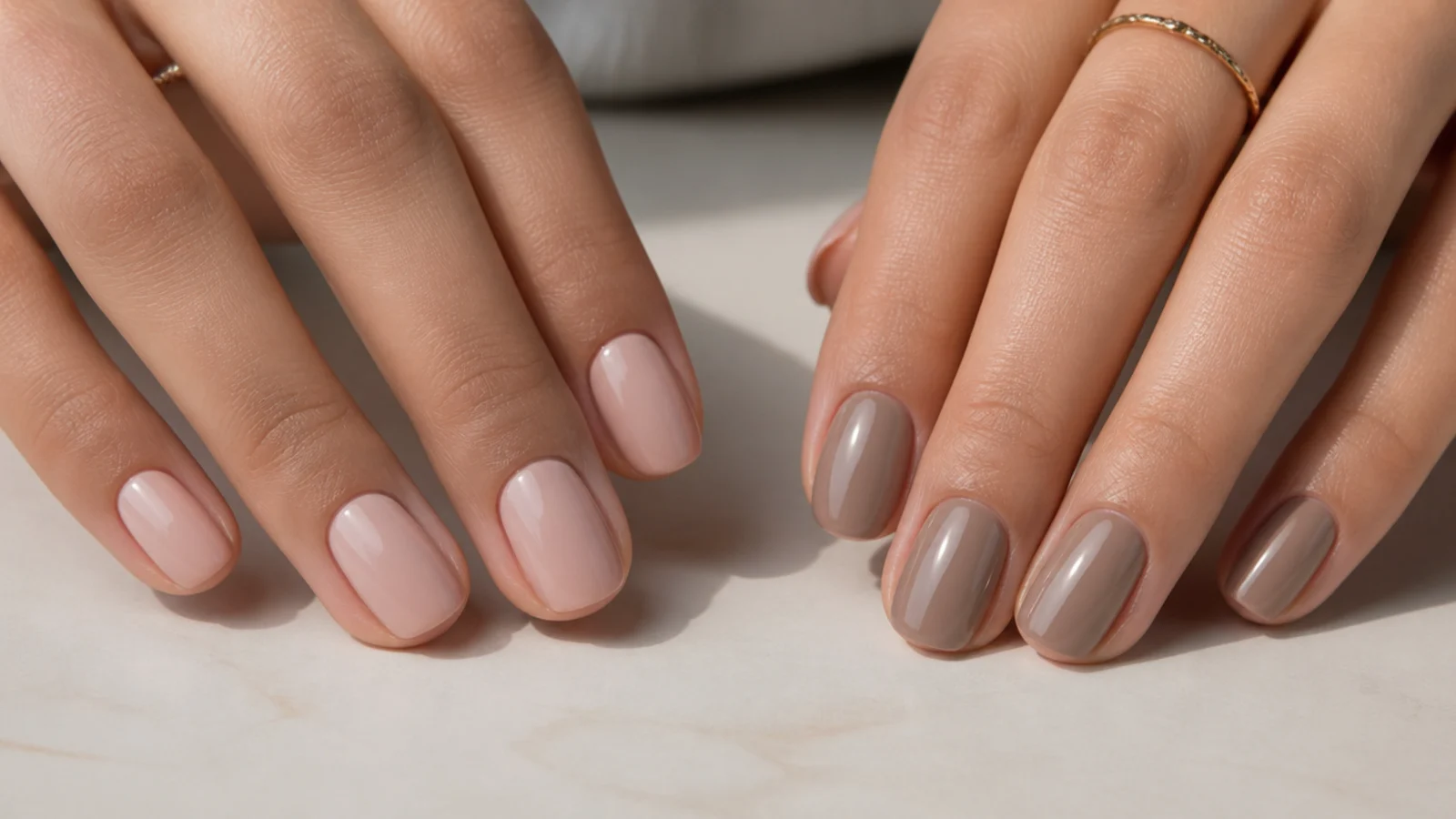
They get used interchangeably and they are not the same thing. Nude is a relationship: a shade that matches your own skin tone, so a nude on fair skin is a pale pink beige and a nude on deep skin is a rich caramel or chocolate. There is no single nude shade, which is why the one your friend recommended may look wrong on you. Neutral is a category: any low-saturation shade in the beige, brown, gray, white or soft pink families, whether or not it matches your skin. So every nude is a neutral, but not every neutral is a nude. Taupe, slate gray and milky white are all neutrals and none of them is a nude on anybody. The practical difference is what you ask for in the salon. Say nude and you will get the tech's guess at your skin match. Say the actual shade family, so warm beige or cool greige, and you will get what you pictured.
How to Match a Neutral to Your Skin Undertone
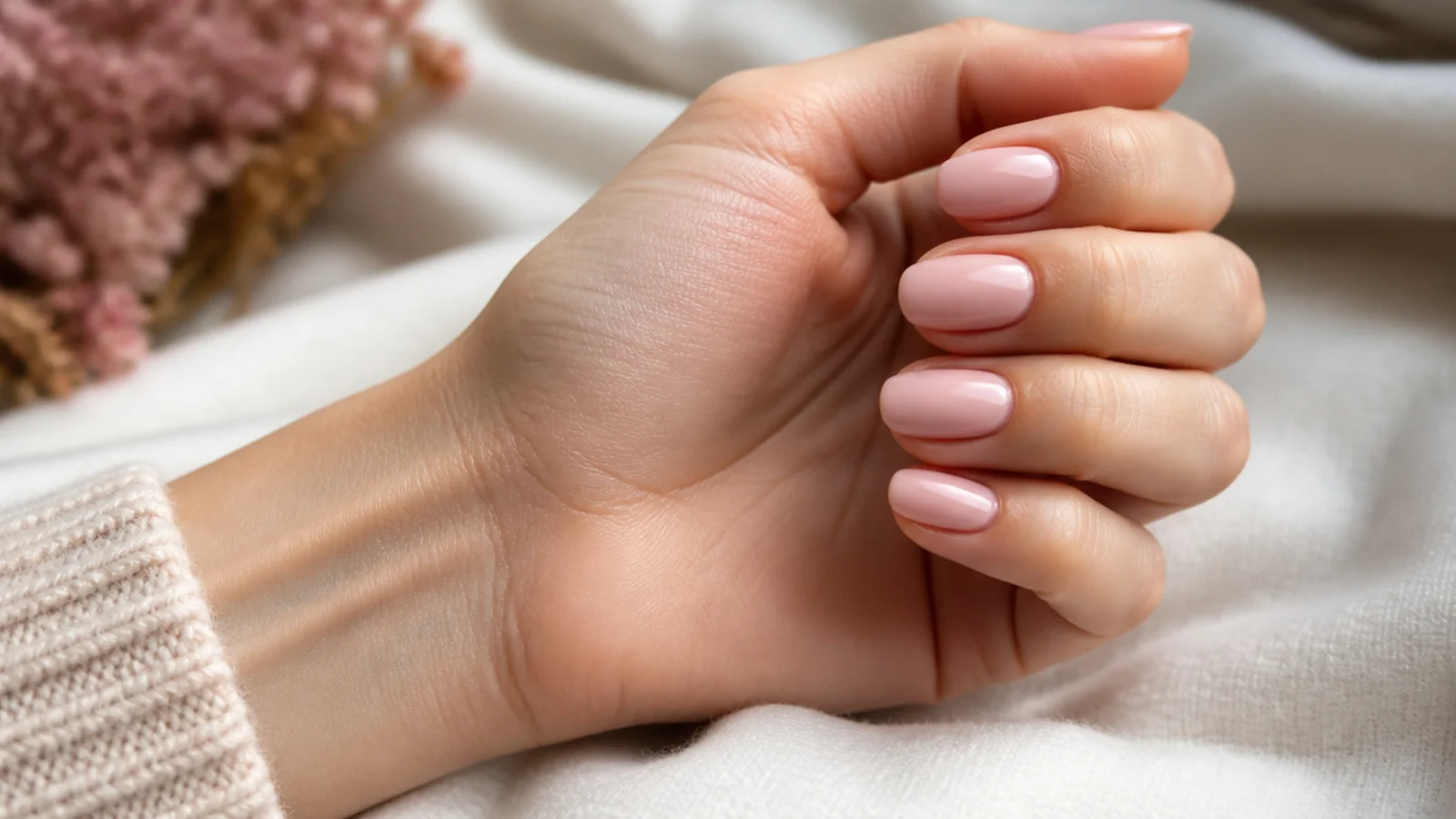
This is the biggest gap on this whole search result: undertone guidance exists on its own pages and never inside the design lists. Here is the two minute version. Look at the veins on the inside of your wrist in daylight. Blue or purple veins mean a cool undertone, so reach for milky white, sheer pink, light gray, greige and slate. Green veins mean a warm undertone, so reach for warm beige, ivory, latte, caramel and mocha. If you genuinely cannot tell, you are neutral undertone, and taupe and greige are made for you. A second check: hold silver and gold jewelry against your skin. If silver looks cleaner you are cool, if gold looks richer you are warm. Two more rules that save money. Test any shade against the inside of your wrist rather than the back of your hand, which is usually darker. And if a beige looks ashy on you, the problem is that it is too gray, not too light. Shade picks by tone sit in nail colors for short nails by skin tone.
Which Neutral Nail Color Goes With Everything?
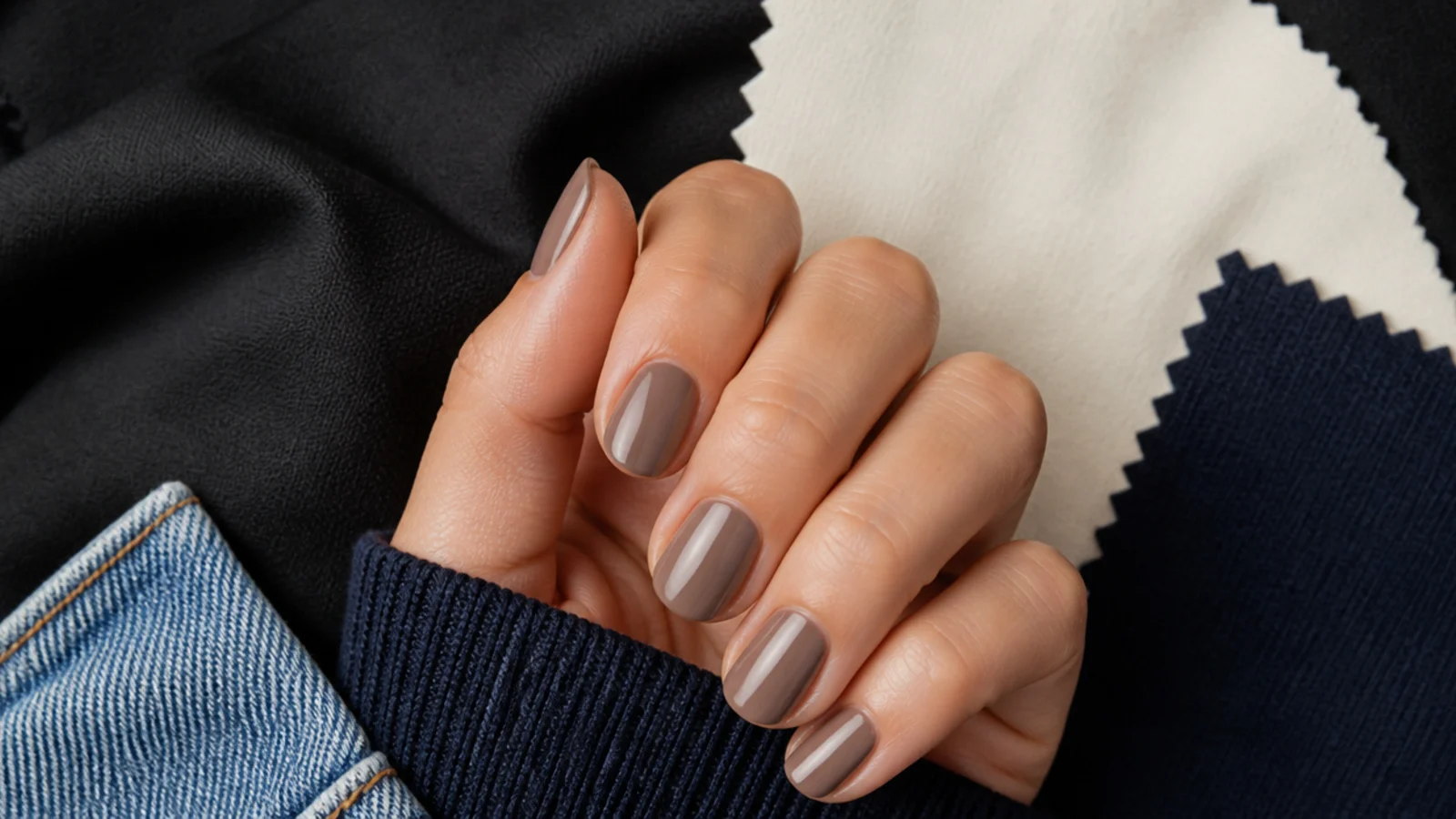
Taupe, and it is not close. Because taupe sits between brown and gray, it never argues with a warm or a cool wardrobe, and it does not compete with the color of what you are wearing the way a saturated shade does. Greige is the runner up and works the same way with a slightly cooler bias. If you want a single set that carries a work week, a wedding and a weekend without a repaint, those are the two. There is a practical argument for neutrals beyond looks, and nobody ranking for this keyword makes it: chips are far less visible in a low-contrast shade. A chip in taupe against your nail bed is a change of maybe two shades, while a chip in cherry red is a change of ten, so the same manicure buys you two or three extra wearable days before a repaint. Shade by shade wear data sits in neutral nail polishes compared.
How to Stop Neutral Nails Looking Boring
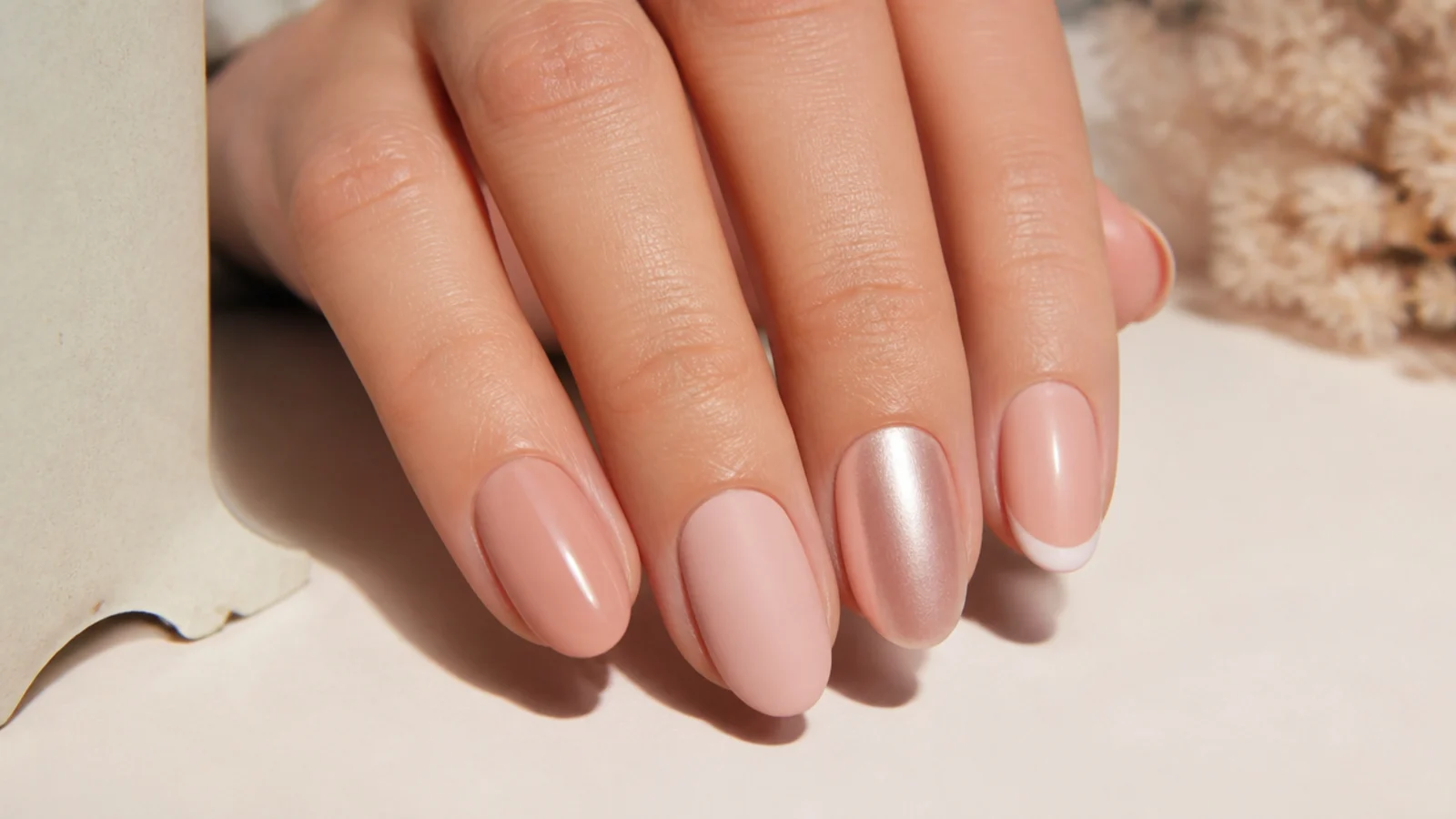
A neutral goes flat when nothing about it was a decision. There are four cheap fixes, in rising order of effort. Change the finish first: the same beige in matte, glazed pearl or chrome reads as three different manicures for the price of a top coat. Second, add one line, a 1mm micro French or a single skinny stripe, which costs about 5 dollars and takes five minutes. Third, run tonal contrast, so a base one shade lighter than the tip, or a beige to brown gradient, which gives depth without adding any decoration a dress code could object to. Fourth, change the shape rather than the shade: a soft almond or squoval reads more current than a flat square, and it does more for the look than any color swap. Do one of the four, not all four. Stacking chrome, marble and gold lines on the same set is what pushes a neutral out of the classy category. Everyday versions live in simple short nail ideas for everyday.
Neutral Nail Troubleshooting: Streaks, Yellowing and Grow-Out
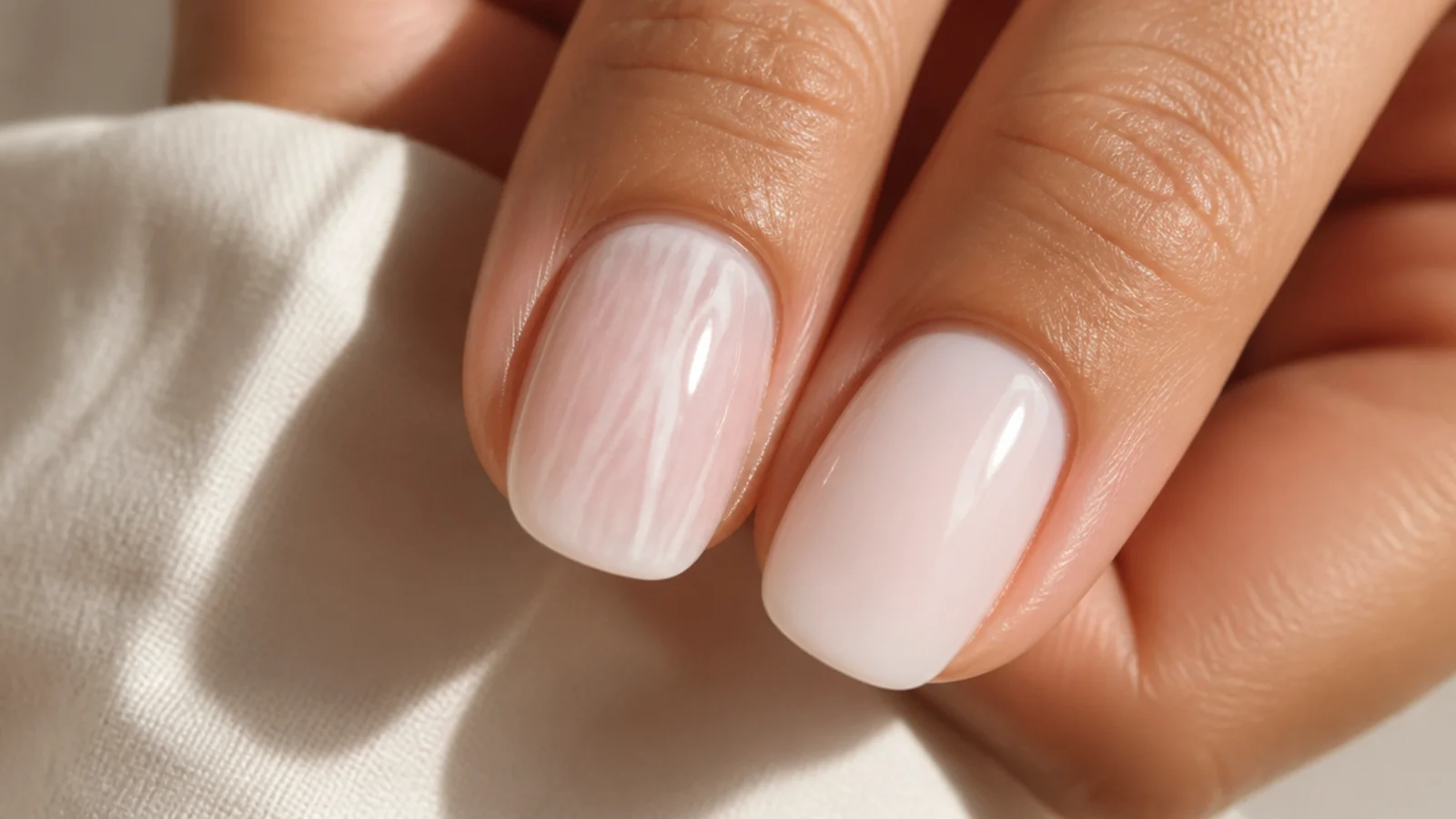
Four things go wrong with neutrals and each has a fix. Streaky sheers are the most common: the cause is thick coats, and the fix is three thin ones with a full two minutes of drying between each, brush wiped twice on the bottle neck. Patchy coverage at the cuticle happens when polish is dragged toward the skin, so start each stroke about 1mm from the cuticle and push the bead back rather than pulling it forward. Yellowing under a pale neutral is pigment staining from a previous dark shade, and the only prevention is a base coat every time, since acetone will not lift a stain that has already set. Visible grow-out is the one neutrals mostly solve for you, but if you see it, the shade is too far from your nail bed color, so drop one step lighter or warmer. Bubbling means the polish was shaken rather than rolled, or a coat went on before the last one dried. Step by step technique is in how to do classy neutral nails at home.
Frequently Asked Questions
What are classy nails?
Classy nails are low-saturation, well-finished manicures where the polish sits neatly inside a tidy cuticle line and the length is matched across all ten nails. In practice that means the neutral families: milky white, sheer pink, beige, taupe, mocha and greige, in a high gloss or deliberate matte finish rather than a half-dull one.
Is neutral the same as nude?
No. Nude is a shade that matches your own skin, so it is different for everyone, from pale pink beige on fair skin to caramel or chocolate on deep skin. Neutral is the whole low-saturation category of beige, brown, gray, white and soft pink. Every nude is a neutral, but taupe and slate gray are neutrals that are nobody's nude.
Which neutral nail color goes with everything?
Taupe, because it sits exactly between brown and gray and therefore does not fight a warm or a cool wardrobe. Greige is the cooler runner up. If you want one set to carry a work week, a wedding and a weekend without a repaint, those two are the safest picks across cool, warm and neutral undertones alike.
How do I know if I have cool or warm undertones?
Look at the veins on your inner wrist in daylight. Blue or purple veins mean cool undertones, so milky white, sheer pink, gray and greige suit you. Green veins mean warm undertones, so beige, latte and mocha suit you. If you cannot tell, you are neutral and taupe works. Cross-check with silver versus gold jewelry.
How do you make neutral nails not look boring?
Change one variable, not four. Swap the finish to matte, glazed pearl or chrome, or add a single 1mm micro French line, or run a soft beige to brown gradient, or change the shape to soft almond. Any one of those makes a neutral read intentional. Stacking chrome, marble and gold lines on one set is what tips it out of classy.
Why do my sheer milky nails look streaky?
Almost always because the coats are too thick. Sheer formulas need three genuinely thin coats with a couple of minutes between each, and the brush wiped twice on the bottle neck before it touches the nail. Trying to reach opacity in two coats drags the pigment into ridges that no top coat will smooth out afterward.
Are neutral nails okay for a professional office?
Yes, and they are the safest option in almost every dress code. Milky white, beige, taupe, greige and mocha all pass in corporate settings. Keep length short to medium and the shape rounded or squoval, since rounded edges snag less. Avoid chunky glitter and long extensions if your workplace is conservative or healthcare adjacent.
How long do neutral nails last?
Regular polish gives 5 to 7 days and a gel manicure 2 to 3 weeks, the same as any other shade. In practice neutrals feel like they last longer because a chip in a low-contrast color barely shows against your nail bed, so most people get two or three extra wearable days before they need a repaint.
What is the difference between taupe and greige nails?
Taupe is a brown-gray blend that leans slightly warm and reads richer against skin. Greige is a gray-beige blend that leans cool and reads cleaner alongside silver jewelry. Both are undertone-flexible, so the choice usually comes down to your jewelry and your wardrobe rather than your skin tone.
Are brown nails still a neutral?
Yes. Latte, mocha and espresso are now treated as core neutrals rather than a fall novelty, and they flatter deep and olive skin tones better than beige does because they work with the skin instead of trying to match it. Use a base coat, since dark brown pigment stains the natural nail on removal.
Which neutral & classy nails look are you saving?
If you take one thing from these 25 ideas, take this: a neutral looks expensive because of finish and cuticle work, not because of the color itself. Push your cuticles back, wipe the nail plate with alcohol so nothing lifts, build sheer shades in three thin coats and finish with a genuinely high gloss top coat. Taupe, greige and milky white are the three safest starting points if you are choosing blind, since all three sit close to neutral undertone and forgive a slightly uneven application. Pick the family that matches your wrist veins. For the shade-by-shade breakdown read neutral nail polishes compared, or browse the rest of the neutral and classy nails hub.