Quick Comparison
| Nude Elongation by Continuation | Dark Elongation by Contrast | |
|---|---|---|
| How it works | Erases the border between skin and nail | Makes the eye read nail shape, not finger |
| Shade family | Skin-matched nude one shade lighter, milky sheer | Oxblood, espresso brown, near-black cherry, navy |
| Best nail bed | Wide beds, where dark reads as a chunky block | Narrow beds, which already have vertical proportion |
| Finish needed | Sheer, three thin coats, high gloss | Opaque cream, two coats, high gloss |
| Prep tolerance | Shows ridges, so buff and use a filling base | Shows flooded cuticles and ragged sidewalls |
| Sidewall margin | Optional; the shade already blends | Essential; a hard edge must be clean |
| Grow-out | Invisible for 2 to 3 weeks | Visible line at the cuticle by day 7 |
| Difficulty at home | Easy; mistakes hide | Moderate; every stray brushstroke shows |
| Best for | Office, everyday, anyone wanting a subtle effect | Evening, photos, anyone wanting the nail noticed |
1. Remove Polish, Soak Briefly and Push Back the Cuticle
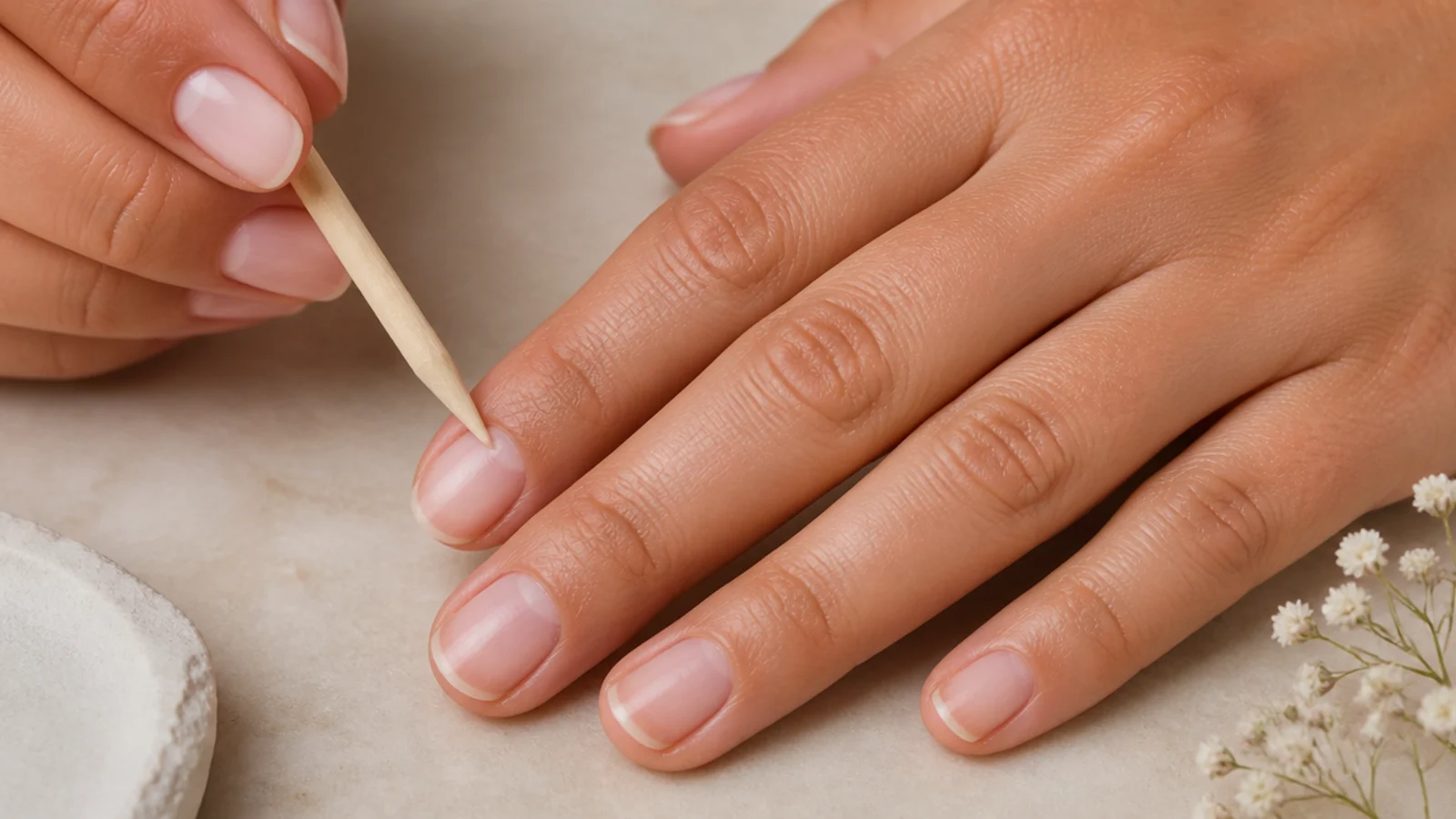
Take everything off with acetone, wash and dry, then soak for no more than two minutes in warm water. Apply a cuticle remover along the base of each nail, wait 30 seconds, then push the tissue back with a wood stick held almost flat to the plate. You are recovering the one to two millimeters of nail that overgrown cuticle hides, which is the cheapest length gain available. Wipe the residue off and let the nails dry completely before you file.
Common mistake: Cutting the eponychium instead of pushing it back invites lifting and a thickened regrowth line.
Pro tip: Do this the night before if you can, so the plate is fully dehydrated by painting time.
2. File Both Sidewalls Straight Before You Touch the Tip
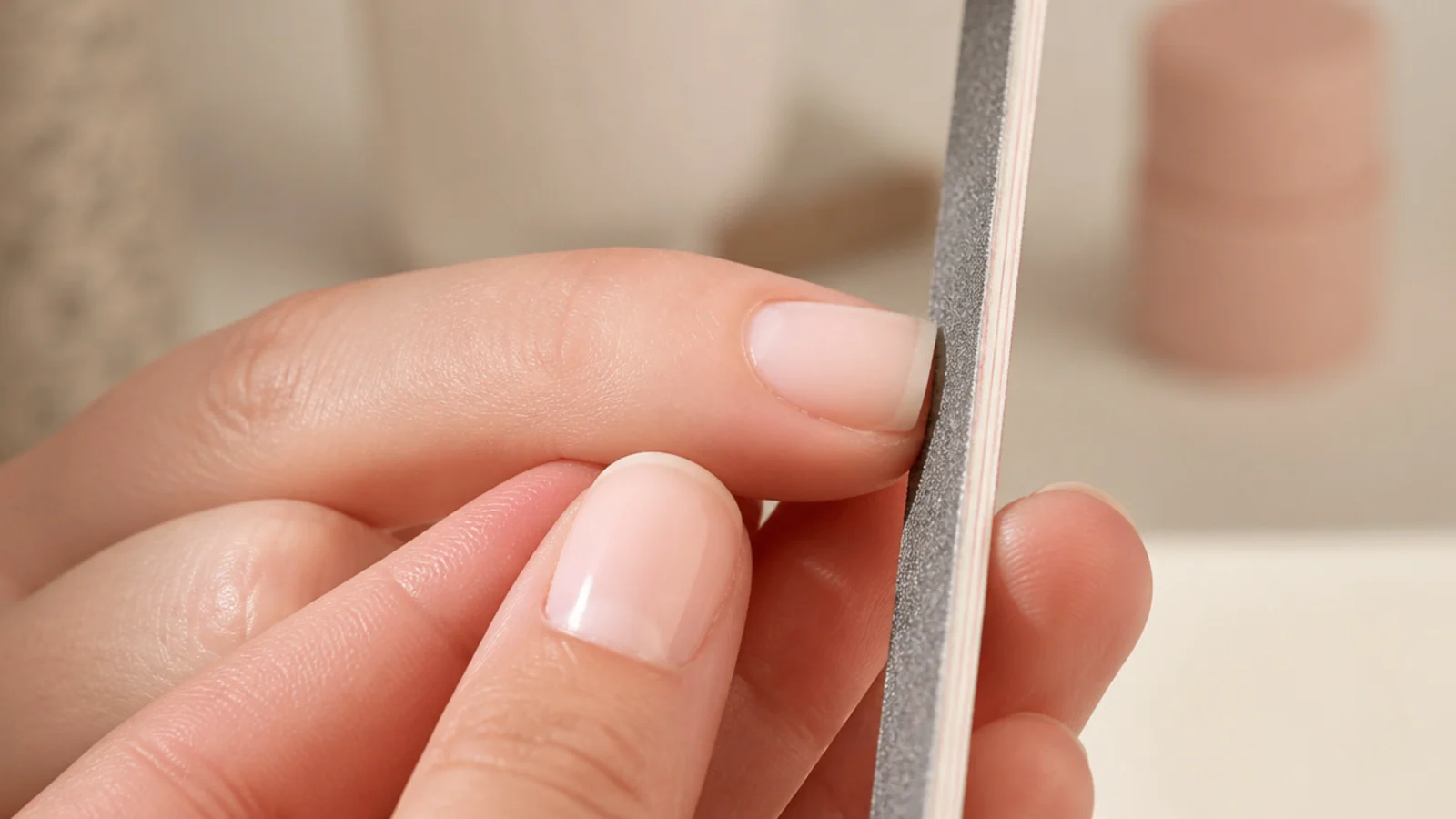
Take a 240 grit file and run it straight along each sidewall, following the natural groove, in one direction only. Do not angle inward yet. Straight walls are what create the vertical line, and most people skip this and go straight to the tip, which is why home files end up round. Six to eight strokes per side is usually enough on a natural nail. Look at the nail from the palm side to check both walls are parallel before you move on.
Common mistake: Filing the sidewalls inward at an angle narrows the plate but also shortens the apparent length.
Pro tip: File dry, never straight after a soak, because wet keratin tears instead of cutting.
3. Round Only the Last Millimeter Into a Soft Almond
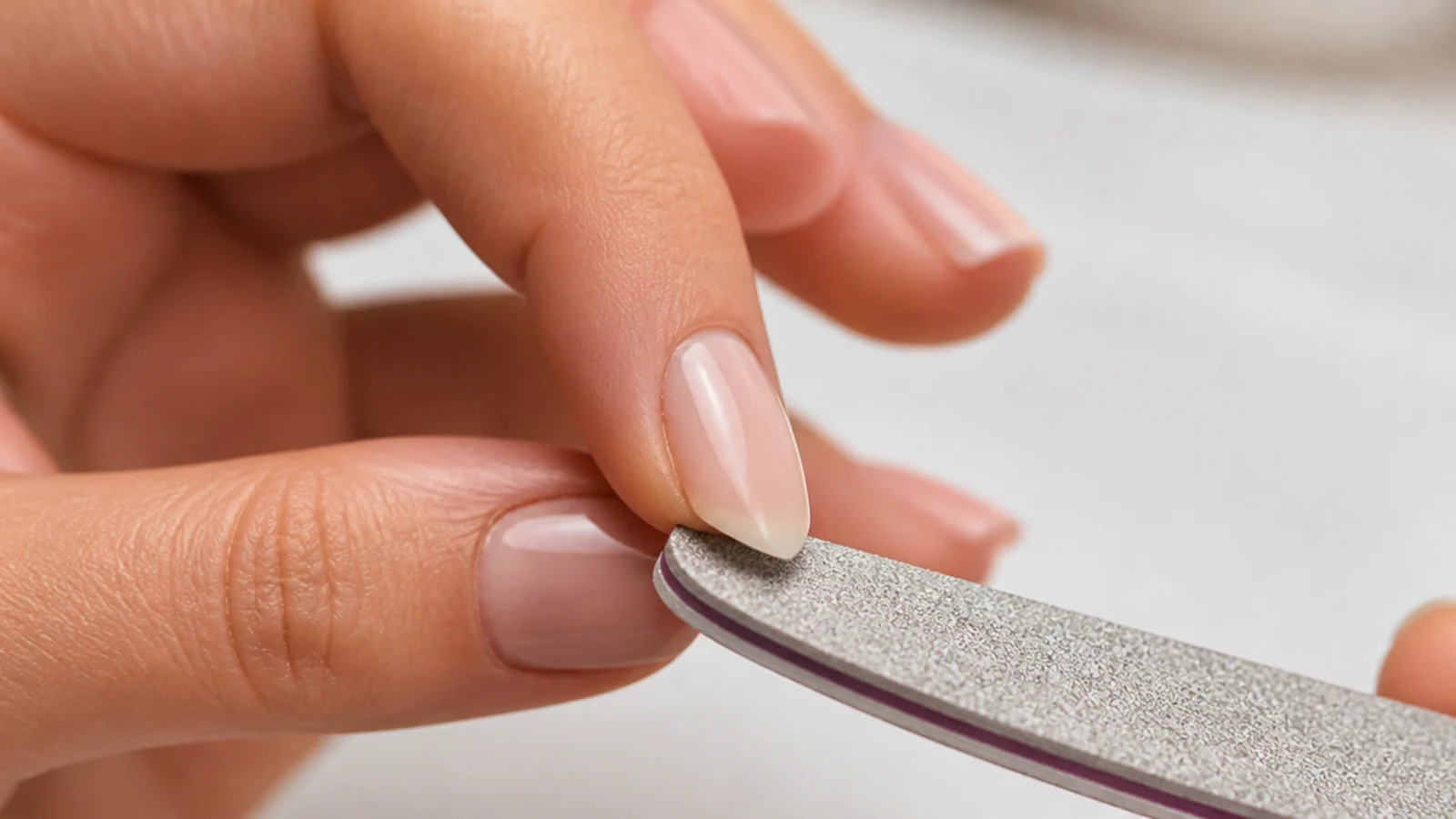
Now soften the tip. Hold the file at a shallow angle and take short strokes from each corner toward the center, rounding only the outermost millimeter into a gentle point. Stop the moment the corners disappear. On a 2mm free edge you are aiming for soft almond, not a true taper. If your free edge is barely past the flesh line, file to squoval instead: straight walls with the corners just knocked off. Both elongate; blunt square does not.
Common mistake: Chasing a sharp almond point on a short free edge thins the tip and it splits within days.
Pro tip: Compare shapes side by side in almond vs oval nails before you commit.
4. Buff the Ridges Flat and Wipe the Plate Clean
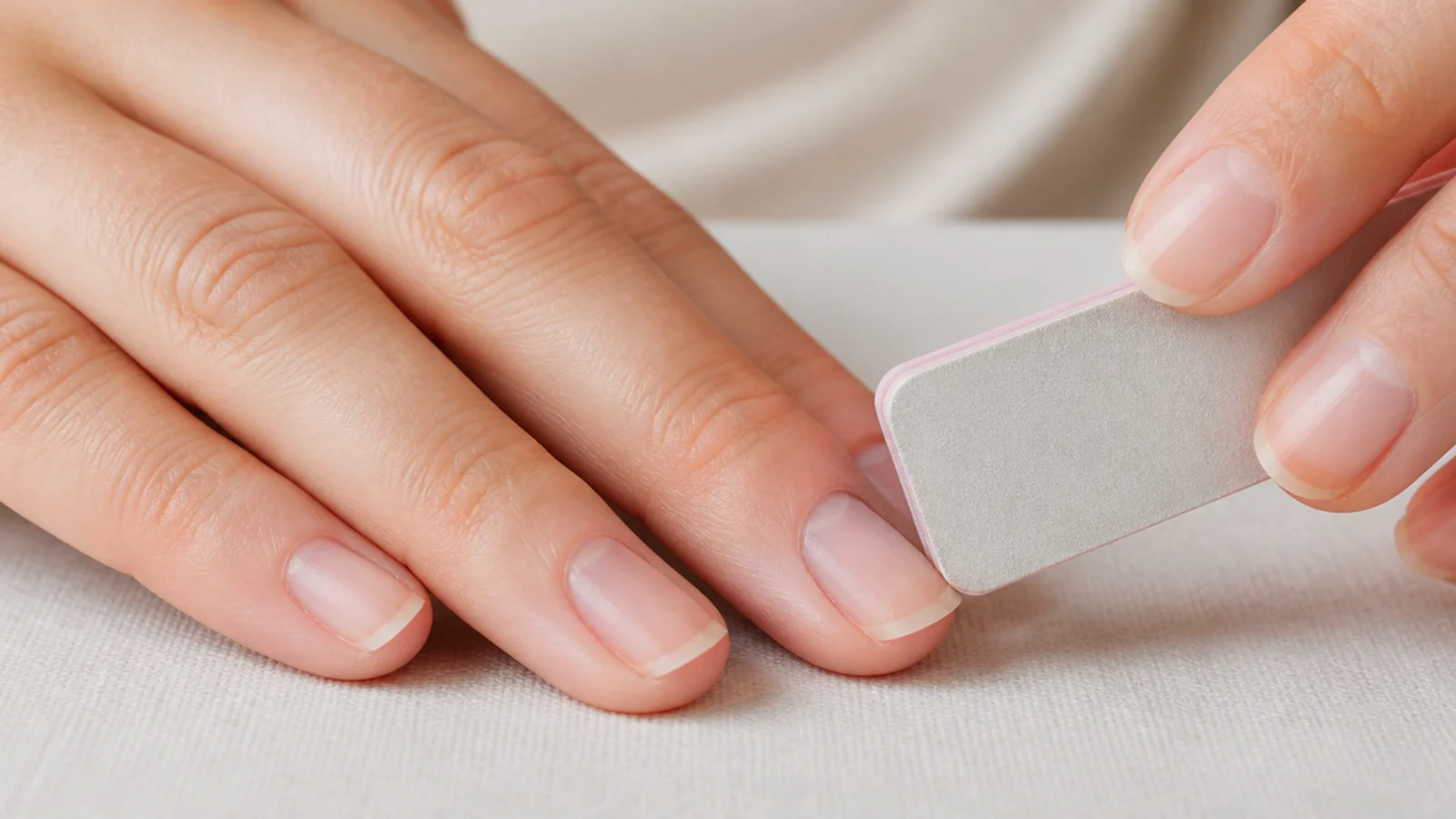
Run a fine buffer lightly across the plate in the direction of growth, three or four passes only, to knock down vertical ridges. Sheer and nude shades sit right on top of texture and every ridge shows as a shadow that breaks the smooth line you are building. Then wipe each nail with an alcohol pad or acetone on lint-free cotton to strip oil. Skip this and the polish will lift at the free edge within two days.
Common mistake: Over-buffing to chase a perfect surface thins the plate and makes it flex and peel.
Pro tip: If the ridges are deep, use a ridge-filling base coat rather than buffing harder.
5. Apply a Ridge-Filling Base Coat Right to the Cuticle
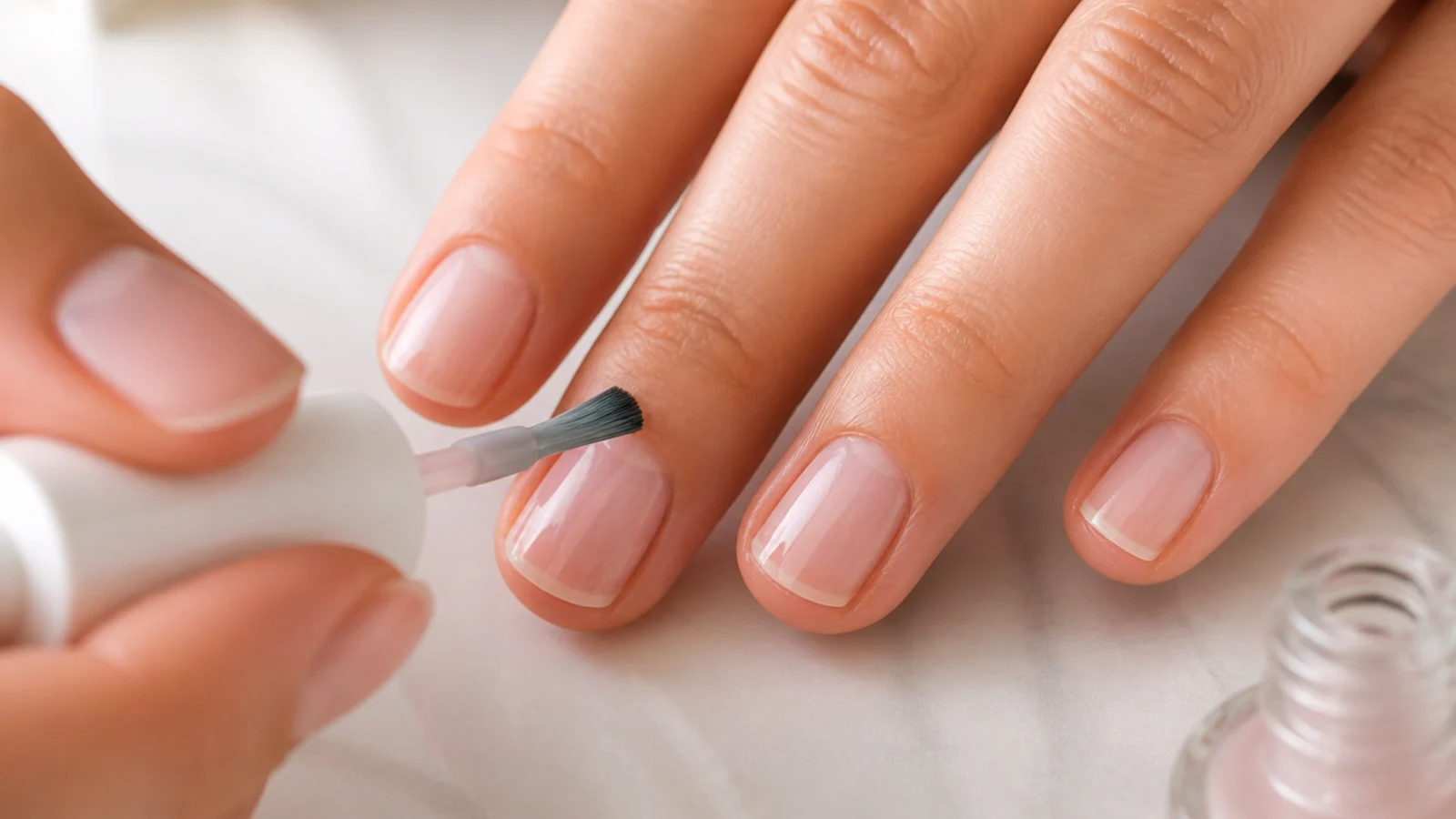
One thin coat of a ridge-filling or smoothing base, taken as close to the cuticle as you can without touching skin. Starting the color right at the cuticle line rather than a millimeter down is worth real visible length, and the base coat is where you practice that placement because it dries invisible if you flood. Let it set for two full minutes. A tacky base grabs the color coat and stops it self-leveling into the sidewalls.
Common mistake: Starting the base a millimeter below the cuticle wastes the length you just recovered in step one.
Pro tip: Push any stray base off the skin with a wood stick before it dries rather than after.
6. Paint Three Sheer Coats, Leaving a Bare Sidewall Margin
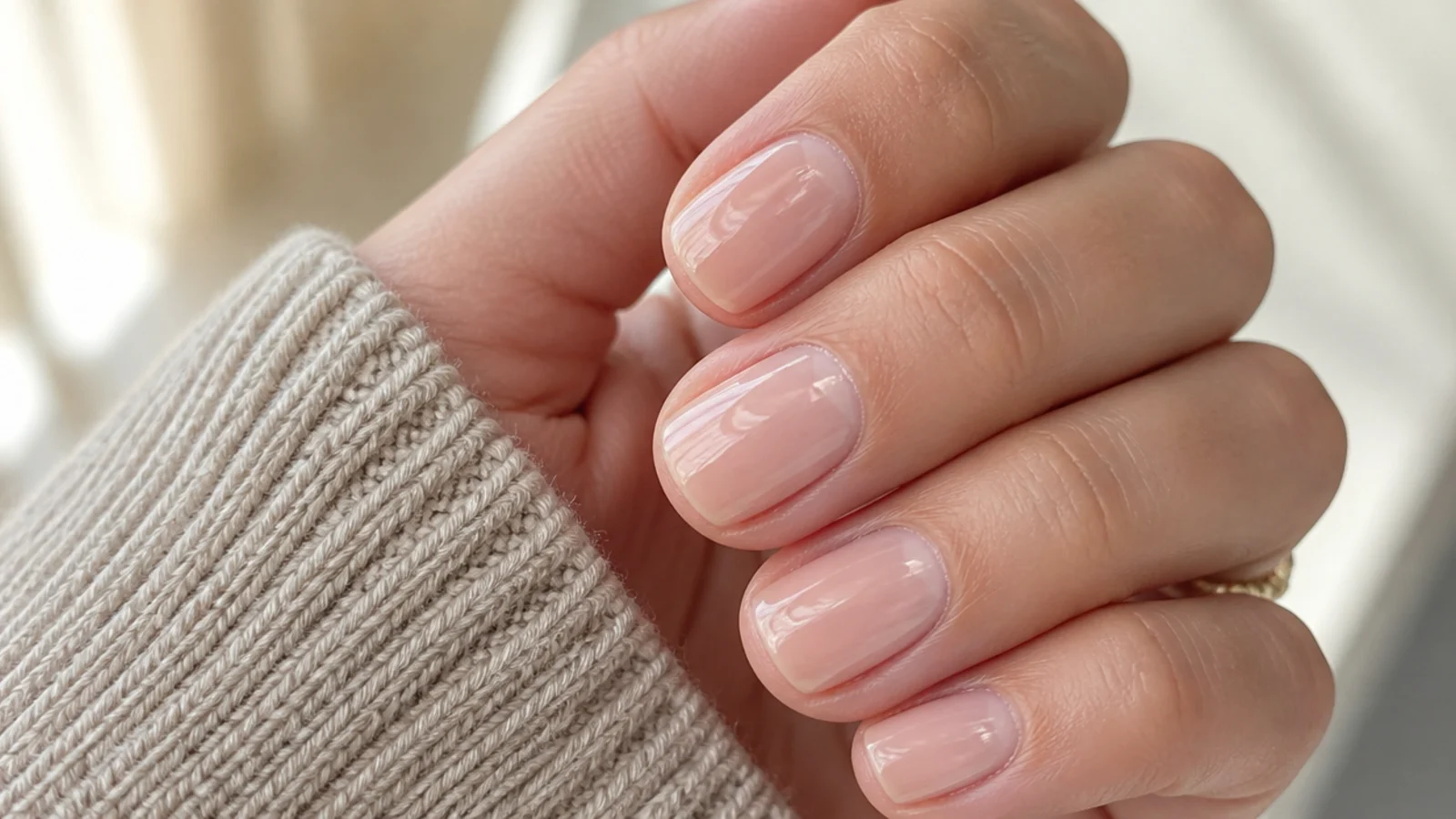
Wipe the brush on the bottle neck twice so it is nearly dry, then lay one stroke down the center of the nail and two flanking strokes, stopping about half a millimeter short of each sidewall. Repeat for three sheer coats rather than two thick ones. Sheer builds depth without bulk, and the bare margins make the painted area read as a tall column. Wait two minutes between coats so the layers do not drag into the gap you just left.
Common mistake: Flooding the sidewalls and cuticle turns the whole nail into a wide block of color.
Pro tip: The milky sheer builds used in short soap nails are ideal for this.
7. Add the Micro Tip or Vertical Line, Then Gloss and Cap
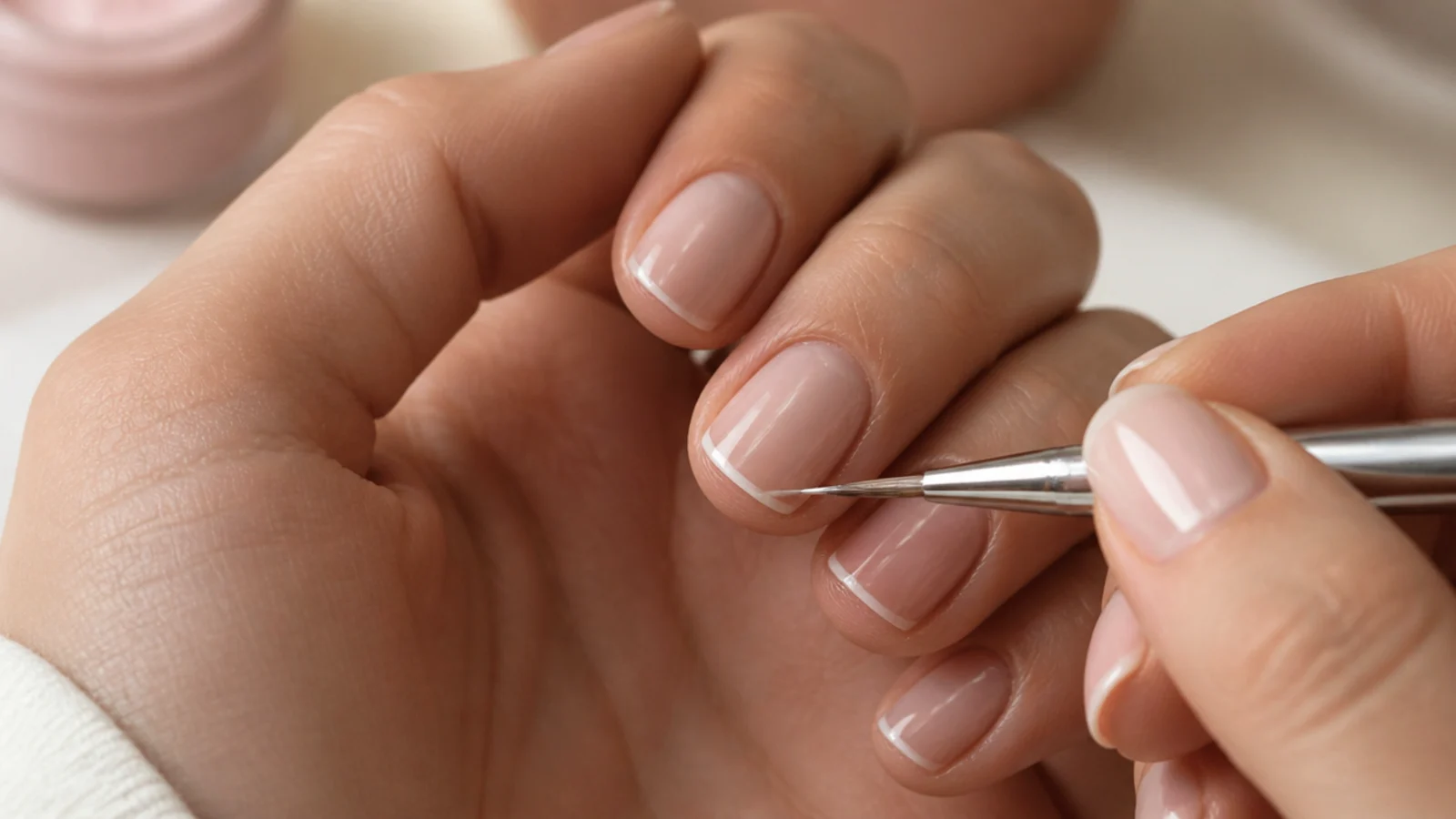
If you want detail, take a thin liner brush and place either a sub-millimeter white edge along the very tip or a single hairline stripe running cuticle to tip. One element only. Let it dry three minutes, then flood the whole nail with a thick glossy top coat and swipe the brush across the free edge to cap it. Capping stops chips and puts a shine on the tip so the eye reads the nail as continuing past where it stops.
Common mistake: A French band deeper than 2mm cuts the visible free edge in half and undoes everything above.
Pro tip: Refresh the glossy top coat at day four and a polish manicure holds a week.
Why Nudes and Dark Colors Both Make Short Nails Look Longer
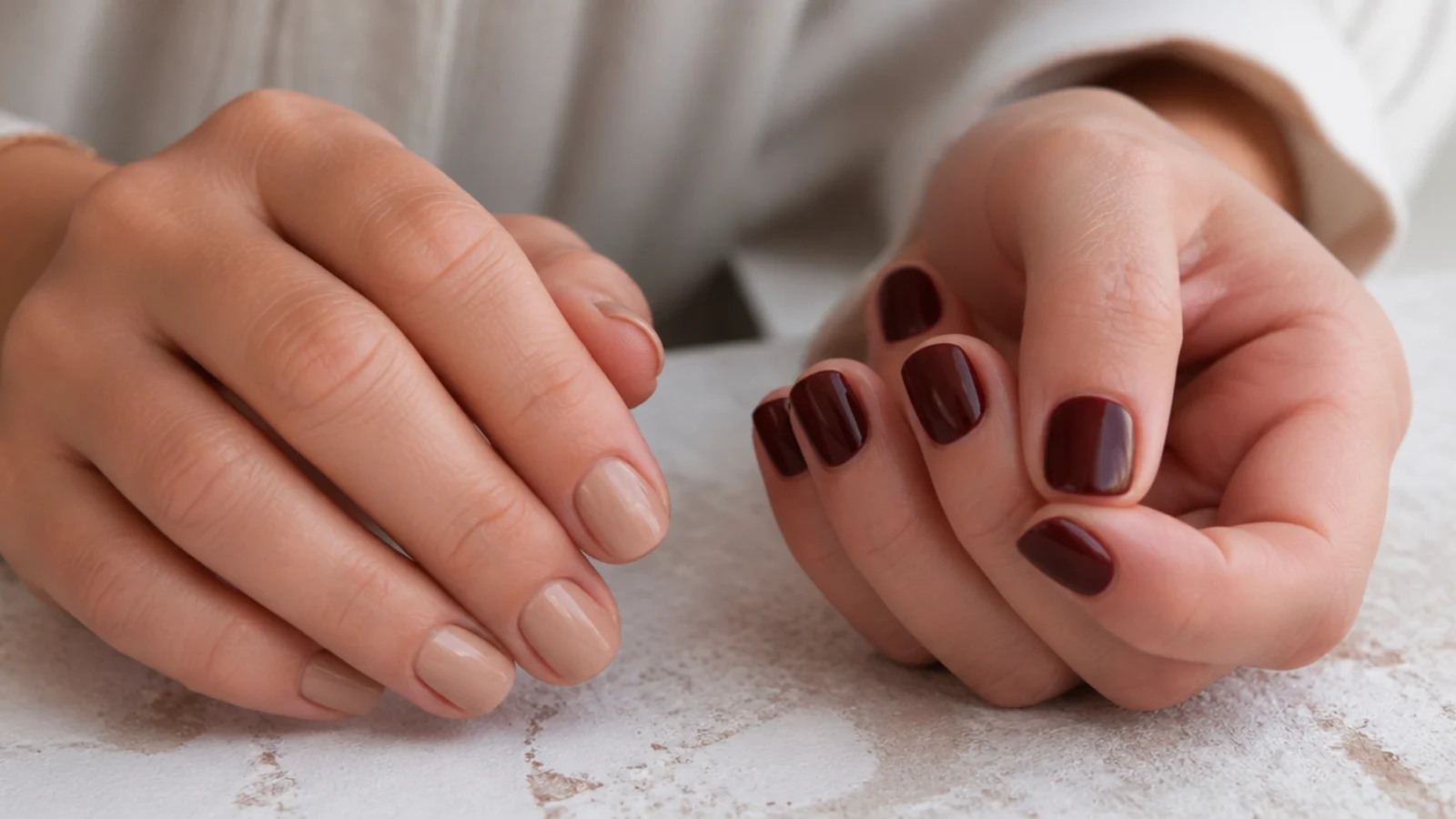
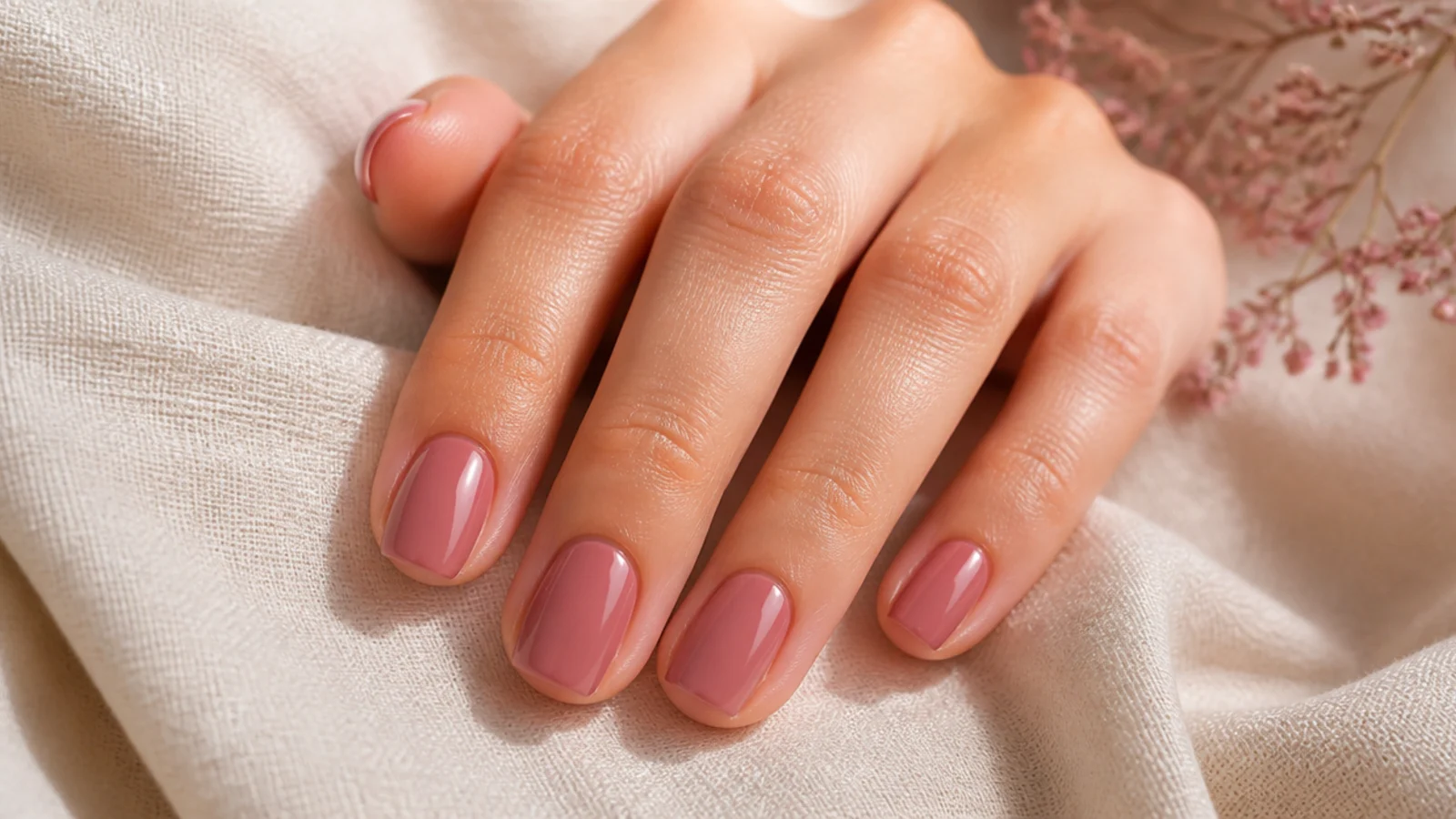
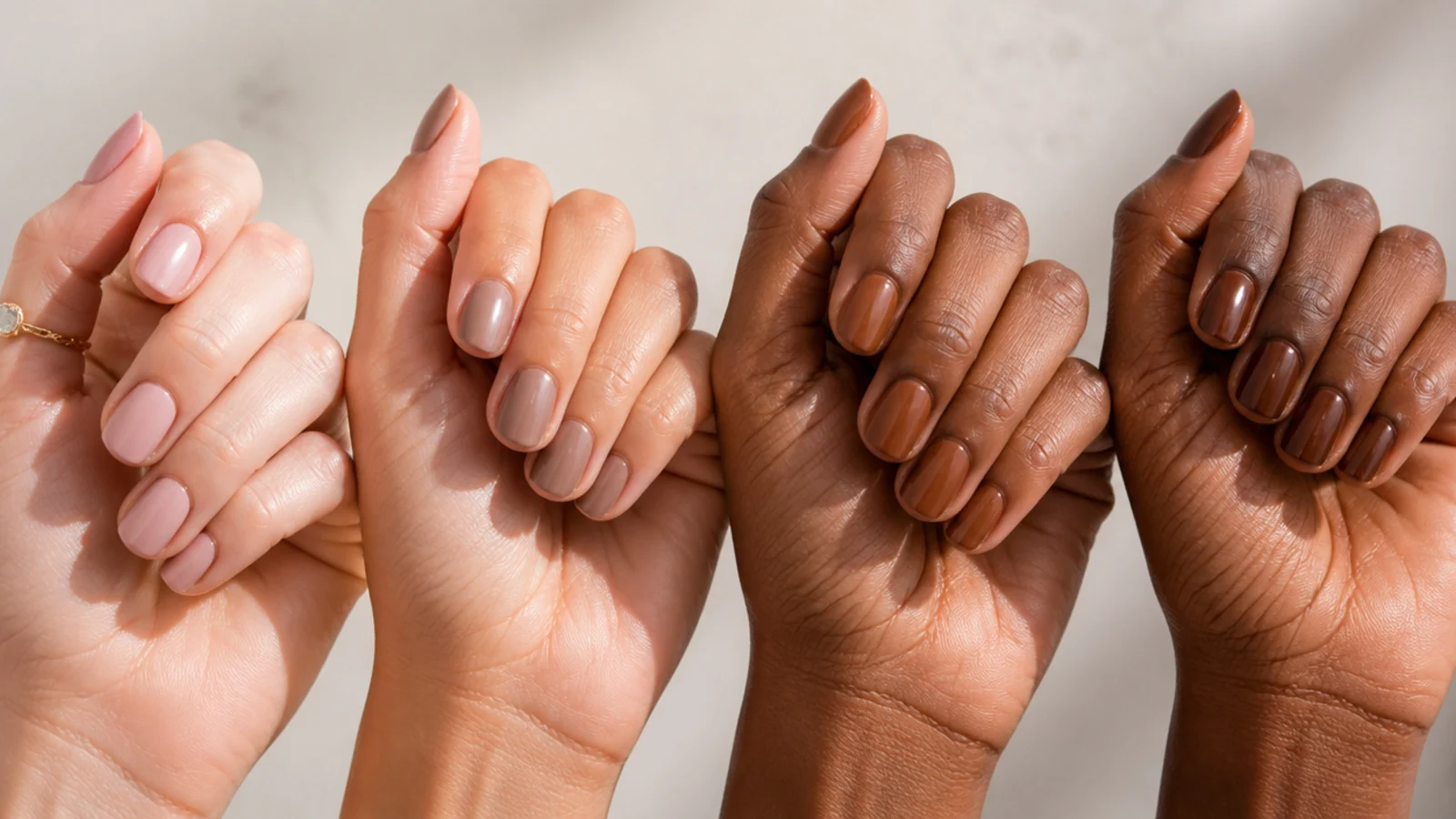
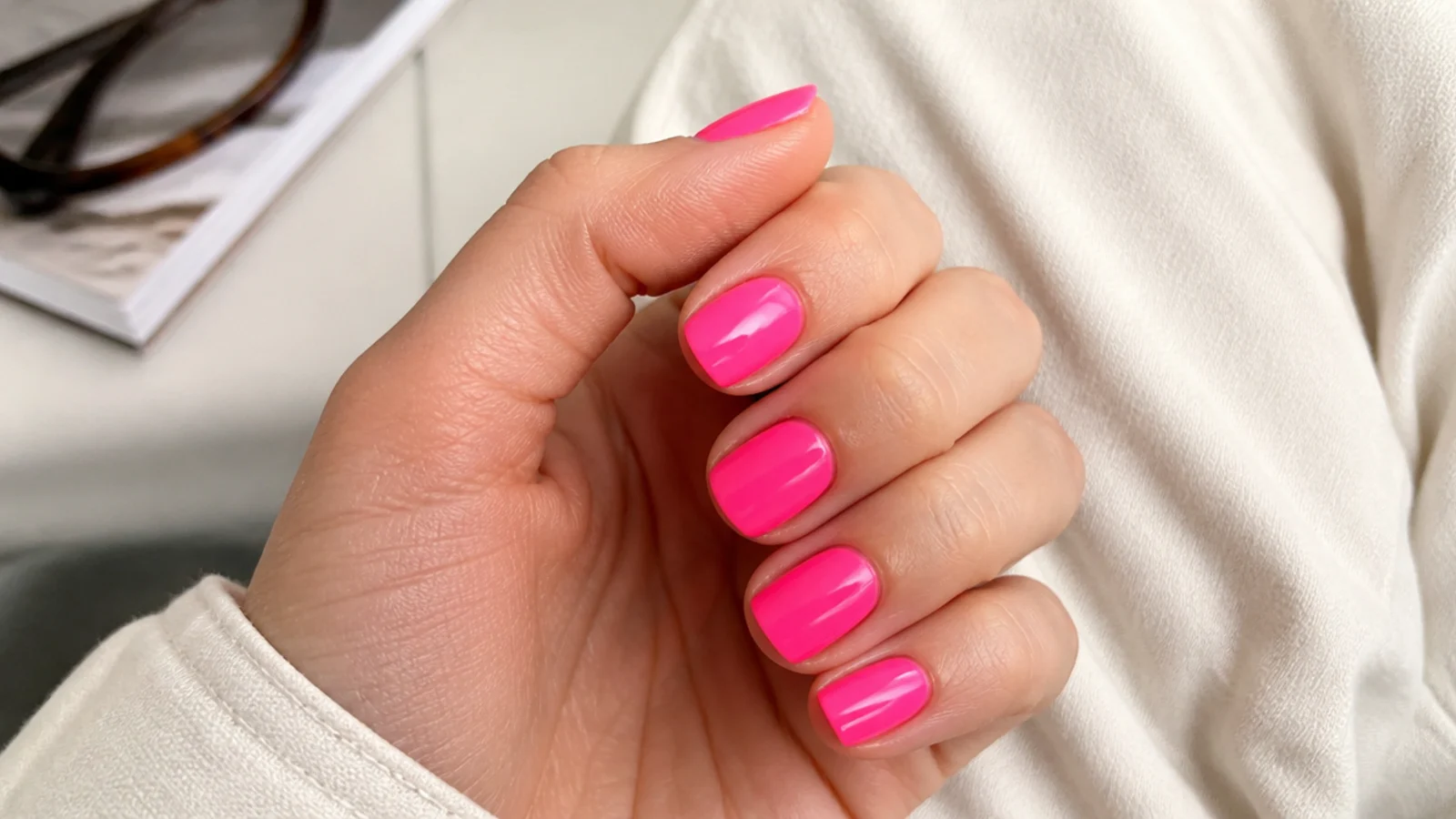
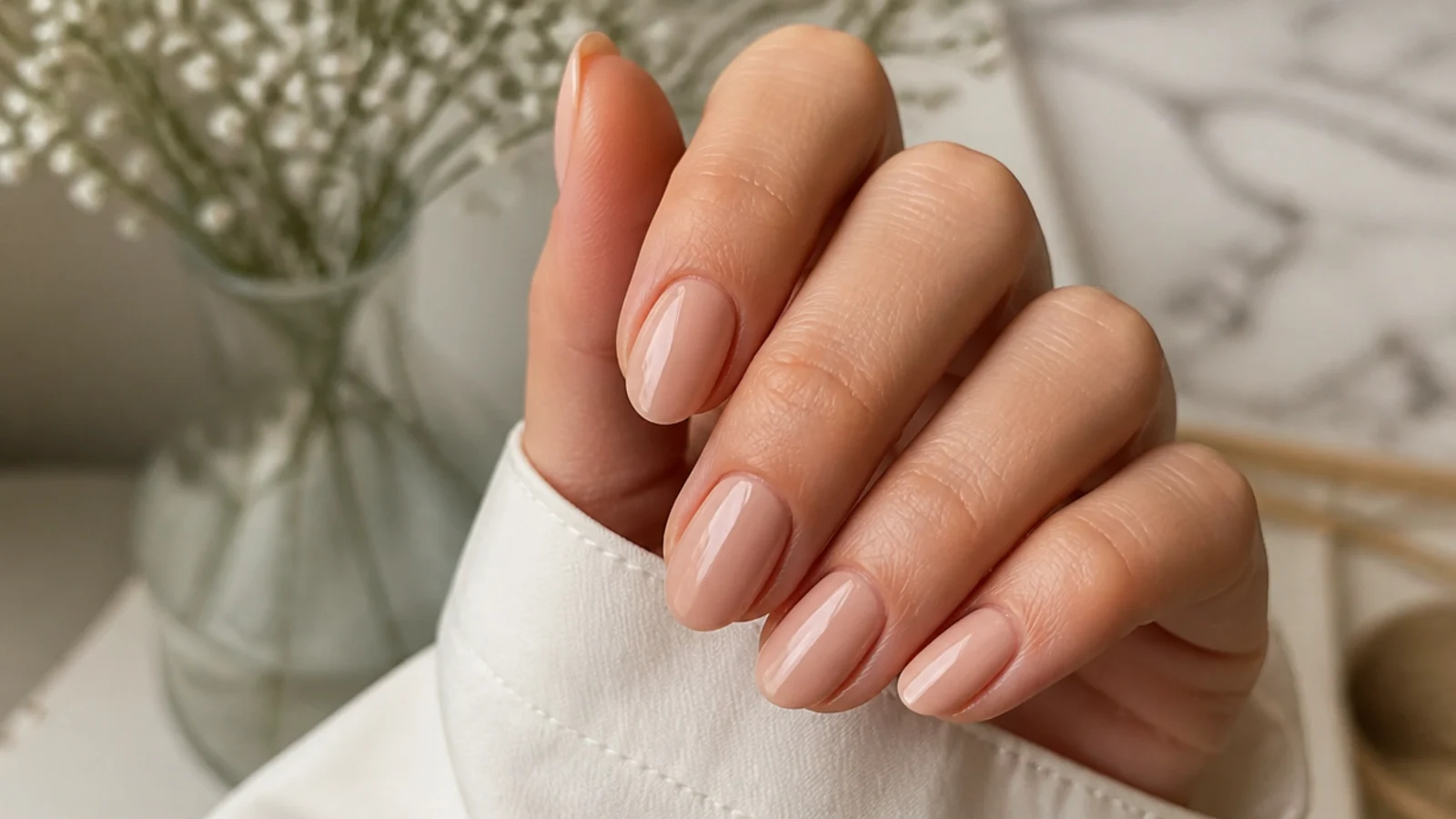
The internet contradicts itself on this constantly, and both camps are right about different mechanisms. Nude elongates by continuation: a shade matched to your skin one tone lighter removes the visual border between finger and nail, so the eye travels from knuckle to fingertip without registering a stopping point. Nothing looks short because nothing looks separate. Dark elongates by contrast and shape: a glossy oxblood or espresso stops the eye from reading skin at all and makes it read the silhouette of the nail instead, and a well-filed silhouette always looks intentional. Which one to pick comes down to your nail bed. Wide beds do better in nude, because a dark shade on a wide short plate reads as a chunky rectangle. Narrow beds carry dark beautifully, since the shape already has the vertical proportion the contrast needs. Skip the middle ground: a mid-tone opaque pink or a chalky pastel neither continues your skin nor contrasts with it, so it just sits there looking short. The full shade-by-shade breakdown lives in nail colors for short nails by skin tone.
Best Nail Shape for Short Nails: Almond, Squoval or Square
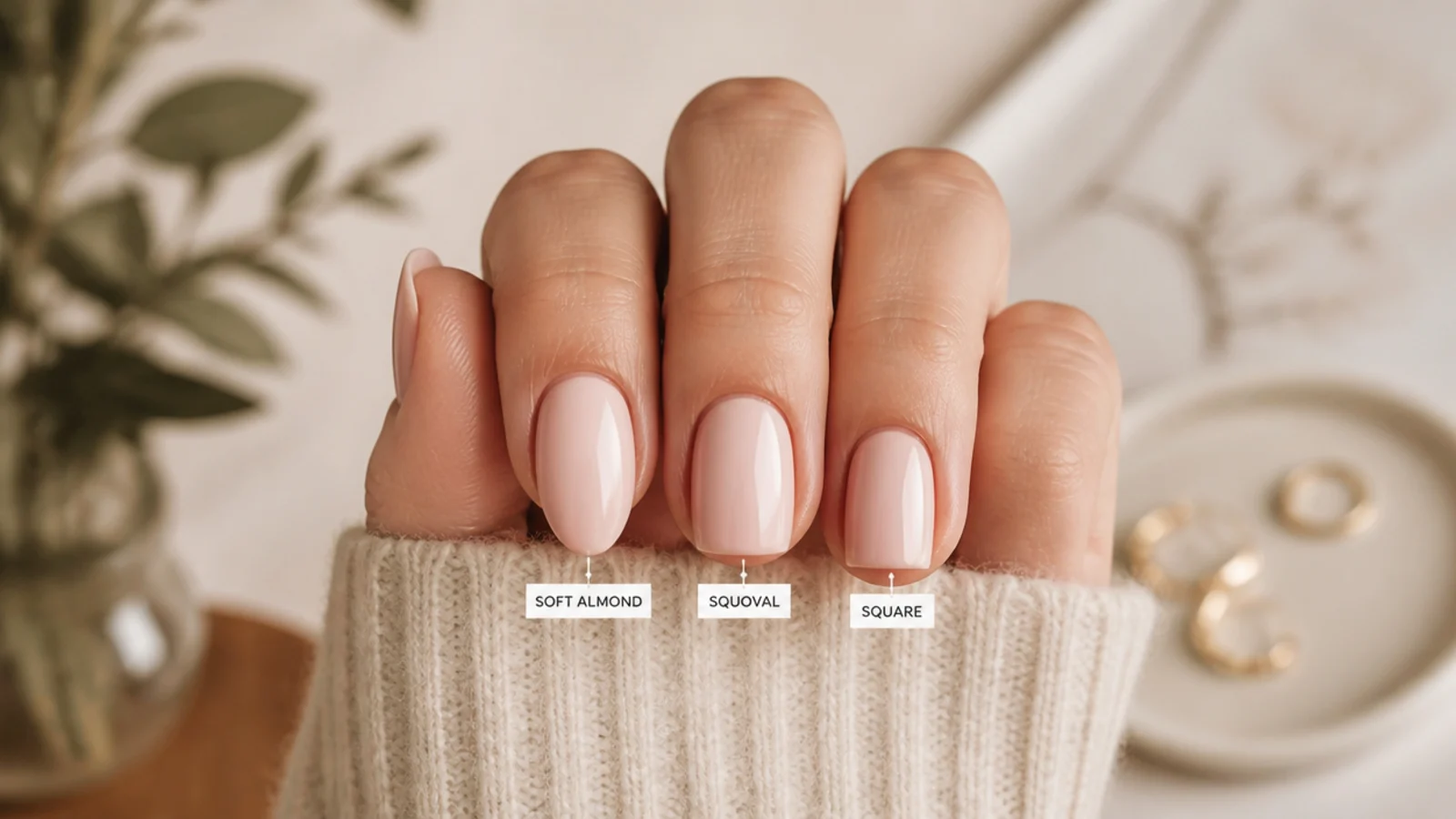
Soft almond wins on elongation, squoval wins on durability, and square loses on both counts at short length. Soft almond keeps the sidewalls straight and rounds only the last millimeter, which gives you a vertical line plus a tapering tip, and the taper is what tricks the eye. It needs about 2mm of free edge to read at all. Squoval is straight walls with the corners knocked off, and it is the shape to file if your free edge is barely past the flesh line or if you type all day, because there is no point to snap. It elongates less than almond but far more than square. True sharp square is the one to avoid when length is the goal: the flat tip draws a strong horizontal line right across the widest part of the nail, and that line is exactly what makes a short nail look stubby. If you love the square look, file a soft square and keep the color column narrow, which is the compromise used throughout short square nail ideas. Coffin is the other trap at this length, since short coffin nail ideas still need about 3mm before the taper shows.
Do Almond Nails Actually Make Your Fingers Look Longer?
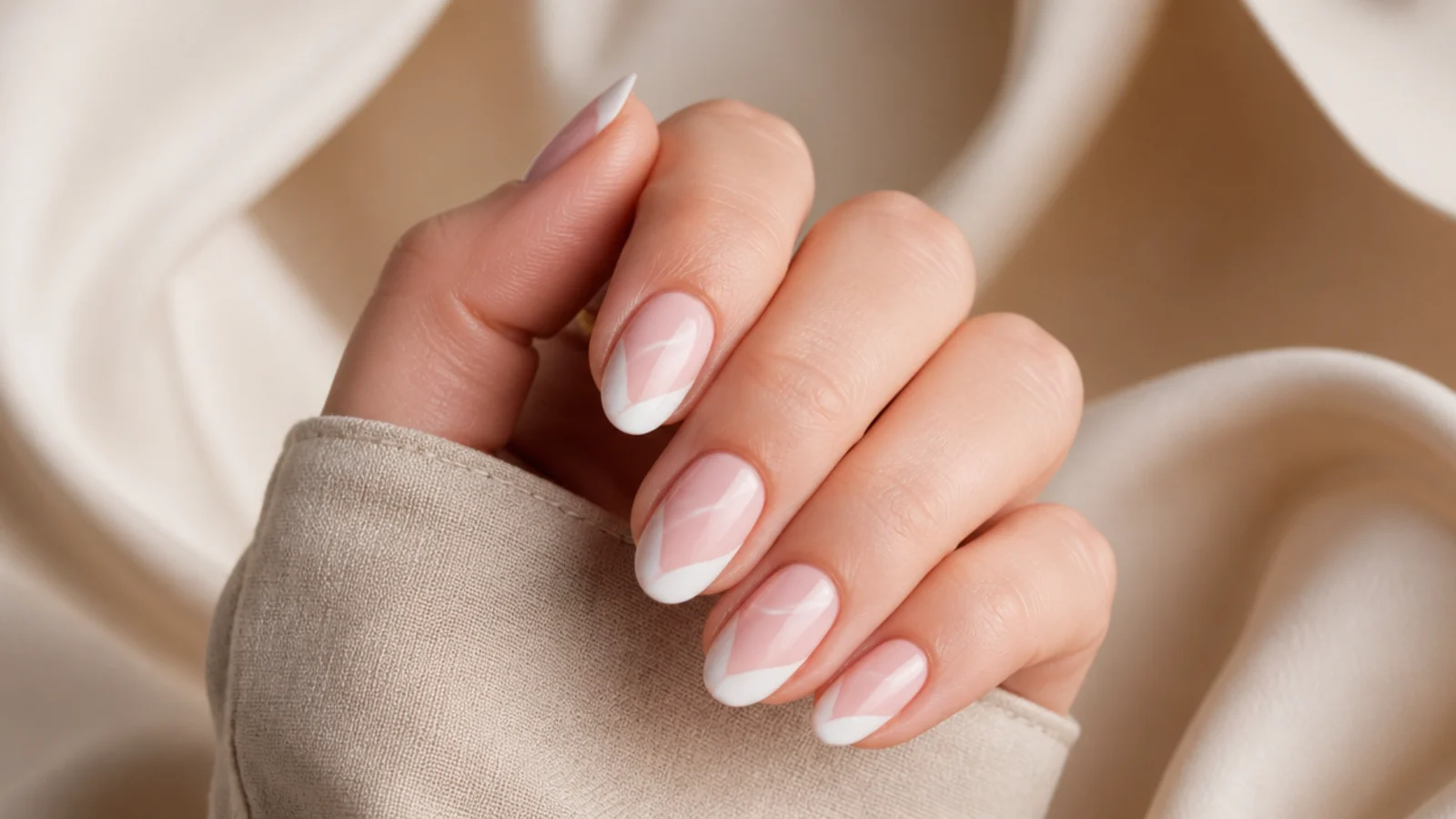
Yes, and the reason is geometry rather than magic. Your finger tapers slightly toward the tip, and an almond nail continues that taper instead of interrupting it with a flat edge. The eye reads the finger and nail as one converging shape, and converging shapes read as longer than parallel ones. That is also why an almond nail flatters short fingers more than long ones: it adds the taper that a shorter finger has less of naturally. The effect is real but modest at short length. On a 2mm free edge you get maybe the impression of an extra two or three millimeters, not an extra centimeter, and anyone promising more is selling extensions. Stack it with the sidewall margin and a matched nude and the combined effect is noticeably stronger than any one trick. If your nails are too short to take a point without splitting, oval is the gentler version of the same idea and is easier to maintain, as covered in short oval nails and short almond nails.
What Makes Short Nails Look Shorter: The Avoid List
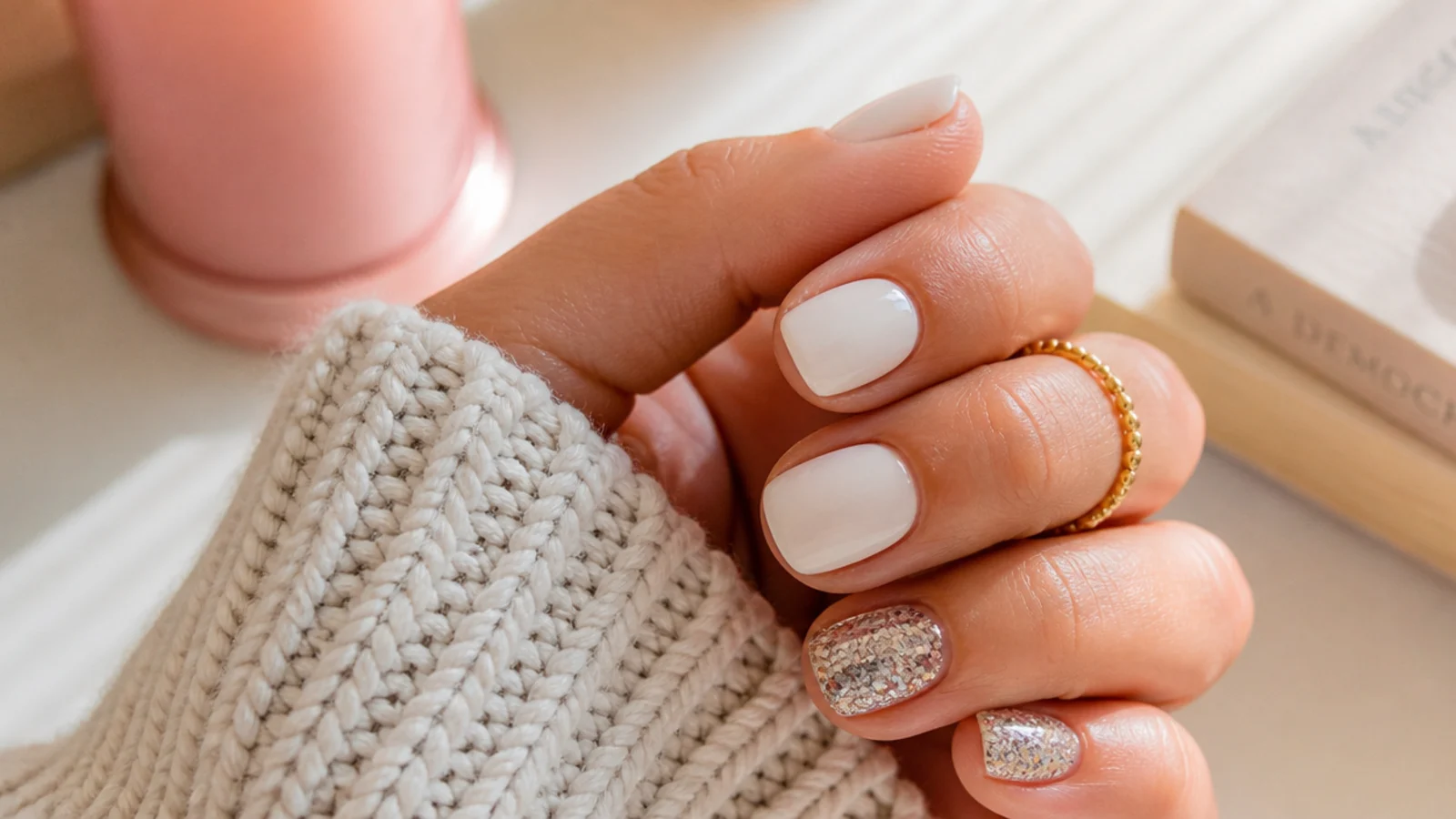
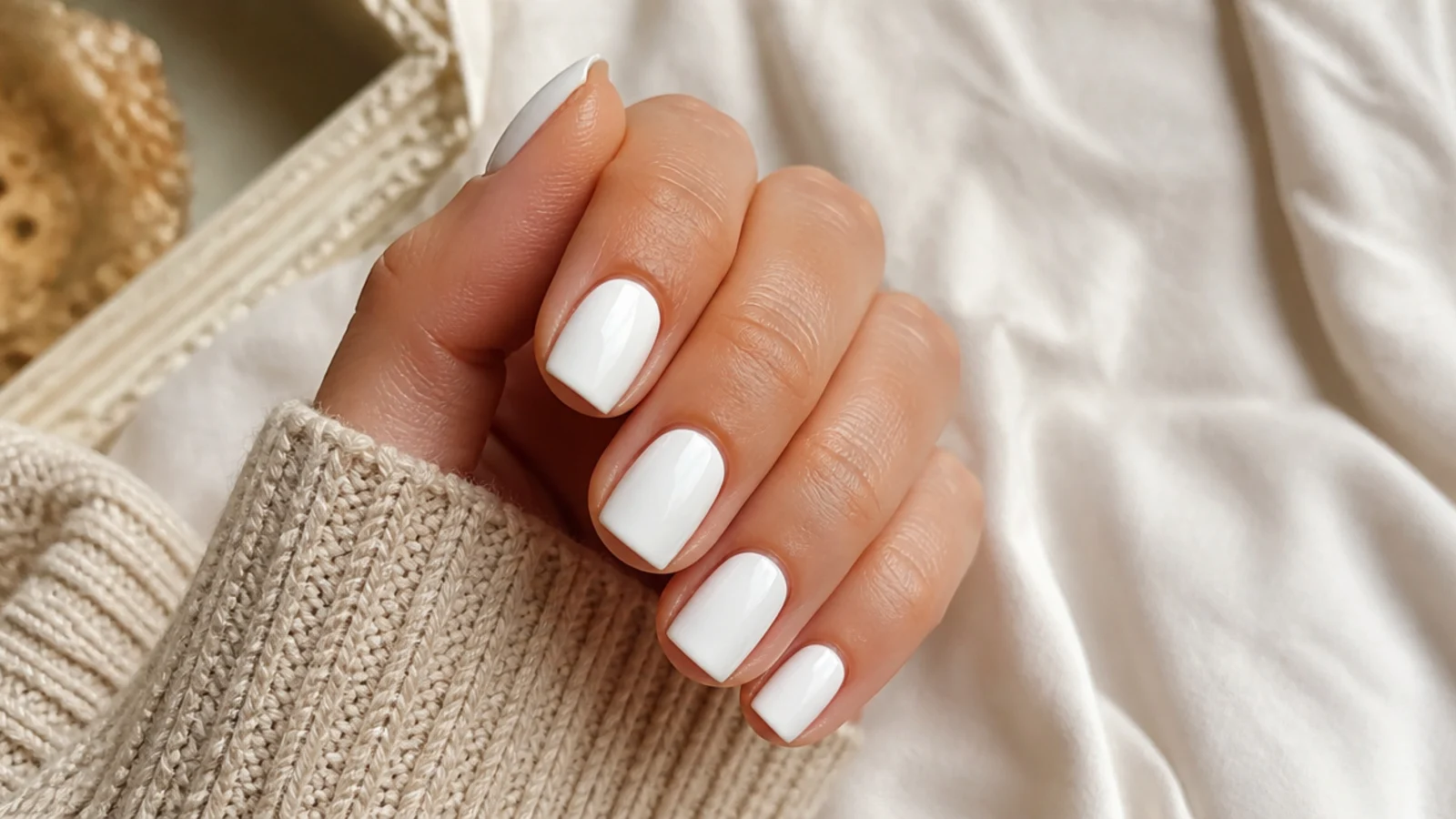
Five things undo everything above. Chalky opaque white is the worst offender, because it sits far lighter than any skin tone and slices the finger line clean in half at the cuticle. Chunky glitter is second: large particles scatter light in every direction, killing the vertical highlight that gloss creates, and on a small plate the flakes read as texture rather than color. Thick French tips deeper than 2mm delete the free edge you have. Horizontal nail art, wide color-block bands and side-to-side chevrons all draw the eye across rather than up. And painting wall to wall right into both sidewalls makes a wide nail read wider still. The fix for all five is the same discipline: keep lines vertical, keep the color close to your skin tone or hard against it, and keep the painted area narrower than the plate. If you want sparkle, use a fine shimmer or a chrome powder over a sheer base, like short white chrome nails, which reflects along the nail rather than scattering across it.
Nail Bed Width, Short Fingers and Nails You Bite
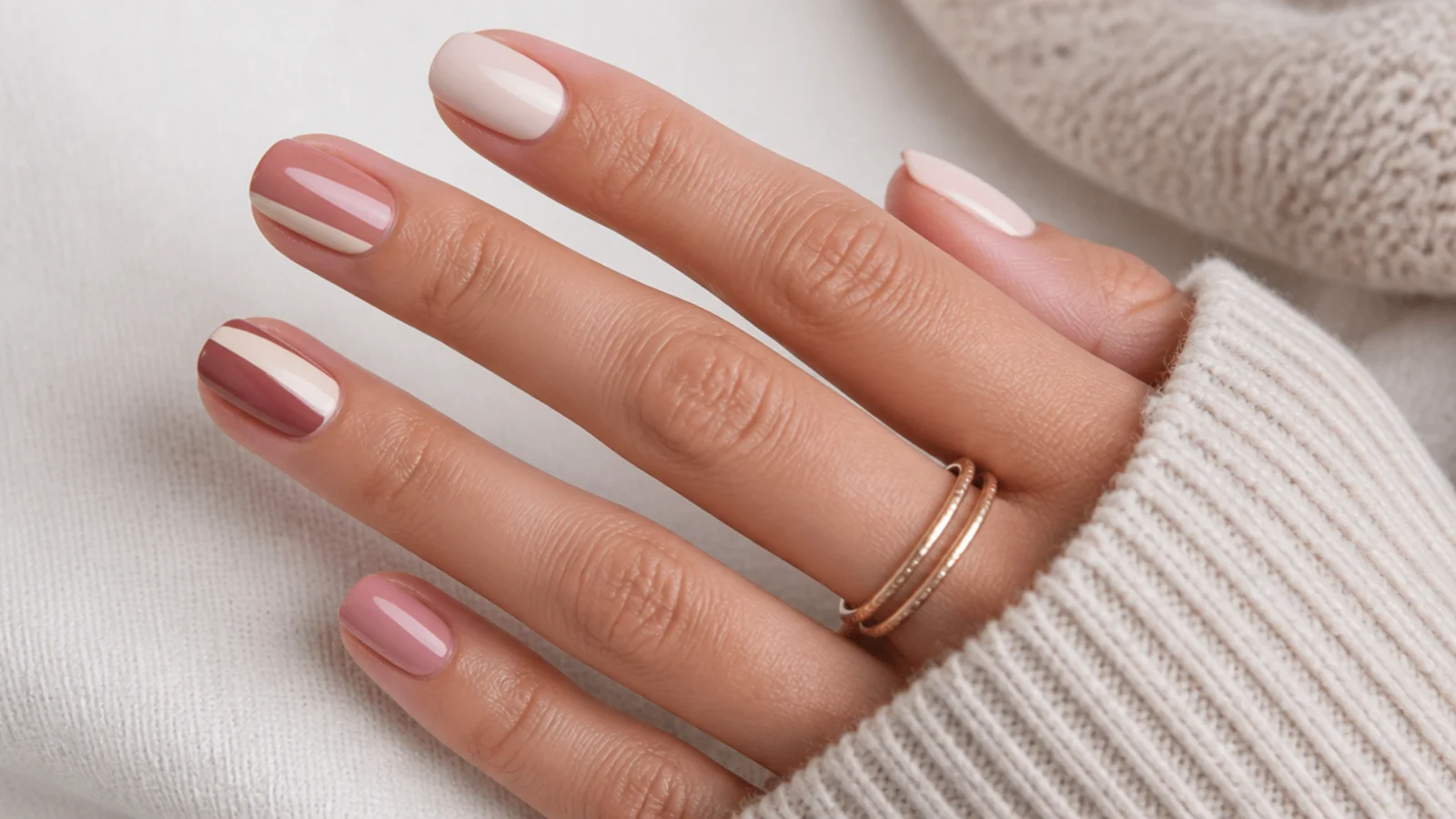
Three common situations need different answers. If your nail bed is wider than it is tall, the sidewall margin is not optional, it is the whole strategy: leave a full millimeter bare on each side and choose sheer over opaque so the margin blends. If your fingers are short overall, the taper matters more than the color, so prioritize the almond file and keep rings thin and stacked vertically rather than wide bands that cut the finger. If you bite your nails and the free edge sits below the fingertip, focus everything on the cuticle end: push the tissue back weekly, use a ridge-filling base, and start the color right at the cuticle line, which recovers visible plate you cannot grow overnight. A sheer milky shade is the most forgiving here because it hides an uneven free edge, and it is why finishes like milky white chrome nails and soap nails work so well on bitten nails. Give it four to six weeks of daily cuticle oil before judging the results.
Frequently Asked Questions
How do I make my short nails look longer?
File the sidewalls straight and round only the last millimeter into a soft almond, push the cuticle back to expose more plate, then paint a skin-matched nude as a narrow column leaving a hairline of bare nail down each side. Finish with a glossy top coat and cap the free edge. Skip chalky white and thick French tips.
What nail shape is best for short nails?
Soft almond elongates most, squoval is the most durable, and both beat square. Almond needs about 2mm of free edge to read; below that, file squoval with straight walls and the corners knocked off. Avoid a true sharp square, because the flat tip draws a horizontal line across the widest part of the nail and reads stubby.
Do almond nails make your fingers look longer?
Yes. Your finger tapers toward the tip and an almond nail continues that taper instead of cutting it off with a flat edge, so the eye reads finger and nail as one converging shape. The effect is real but modest on short nails, worth the impression of two or three extra millimeters rather than a dramatic change.
What nail colors make fingers look longer?
Two families work for opposite reasons. Nudes matched to your skin one shade lighter elongate by continuing the finger line, and deep glossy shades like oxblood or espresso elongate by contrast and shape emphasis. Mid-tone opaque pinks and chalky pastels do neither. Wide nail beds do better in nude, narrow beds carry dark better.
Does a French manicure make short nails look longer?
Only if the tip is under a millimeter deep. A hairline white edge defines where the nail ends and makes the plate read complete, which adds apparent length. Anything deeper than about 2mm eats the free edge you have and shortens the nail visibly. Draw the line along the very edge rather than following a deep smile line.
Do dark nail colors make short nails look shorter?
Not automatically. Dark shades shorten when they are painted wall to wall on a wide nail bed, because that reads as a chunky rectangle of color. Painted as a narrow column with a bare sidewall margin and a clean cuticle line, the same dark shade elongates by contrast. Gloss matters too, since matte dark flattens the plate.
Can you do nail art on short nails without making them look shorter?
Yes, as long as every line runs vertically. A single hairline stripe from cuticle to tip, a negative-space column down the center, or a micro French edge all add interest without stealing length. Horizontal bands, wide chevrons, full-nail florals and chunky glitter all draw the eye across the plate and shorten it.
Does pushing your cuticles back make your nails look longer?
It genuinely does. Most people carry one to two millimeters of nail plate hidden under overgrown cuticle, which is more visible length than a week of growth. Soak two minutes, apply cuticle remover, then push gently with a wood stick at a shallow angle. Never cut the eponychium, and oil twice daily or it creeps back within days.
Do glossy or matte top coats make nails look longer?
Glossy, clearly. A high-shine top coat puts a long vertical highlight down the center of the nail and that reflection reads as a line of length. Matte removes the highlight and flattens the plate into a solid shape, so the same shade looks shorter matte than glossed. Cap the free edge with gloss so the tip catches light too.
Cuticle work, buffing and acetone removal should be done gently and as directed. Over-buffing the nail plate or cutting live cuticle thins and damages the nail. If your nails split, peel or hurt, stop and see a licensed nail technician.
Which short nails look are you saving?
If you only do one of these eight, make it the sidewall margin: leave a hairline of bare nail down both sides and paint the color as a narrow column instead of wall to wall. It costs no extra time, works with every shade you already own, and it is the single change that makes a wide short nail read long. Stack it with a soft almond file and a glossy top coat and you have the whole effect. Keep cuticle oil by the sink so the plate stays flexible enough to hold that shape between manicures. From here, browse the short nails hub for design ideas, or go straight to nail colors for short nails by skin tone to find your exact nude.