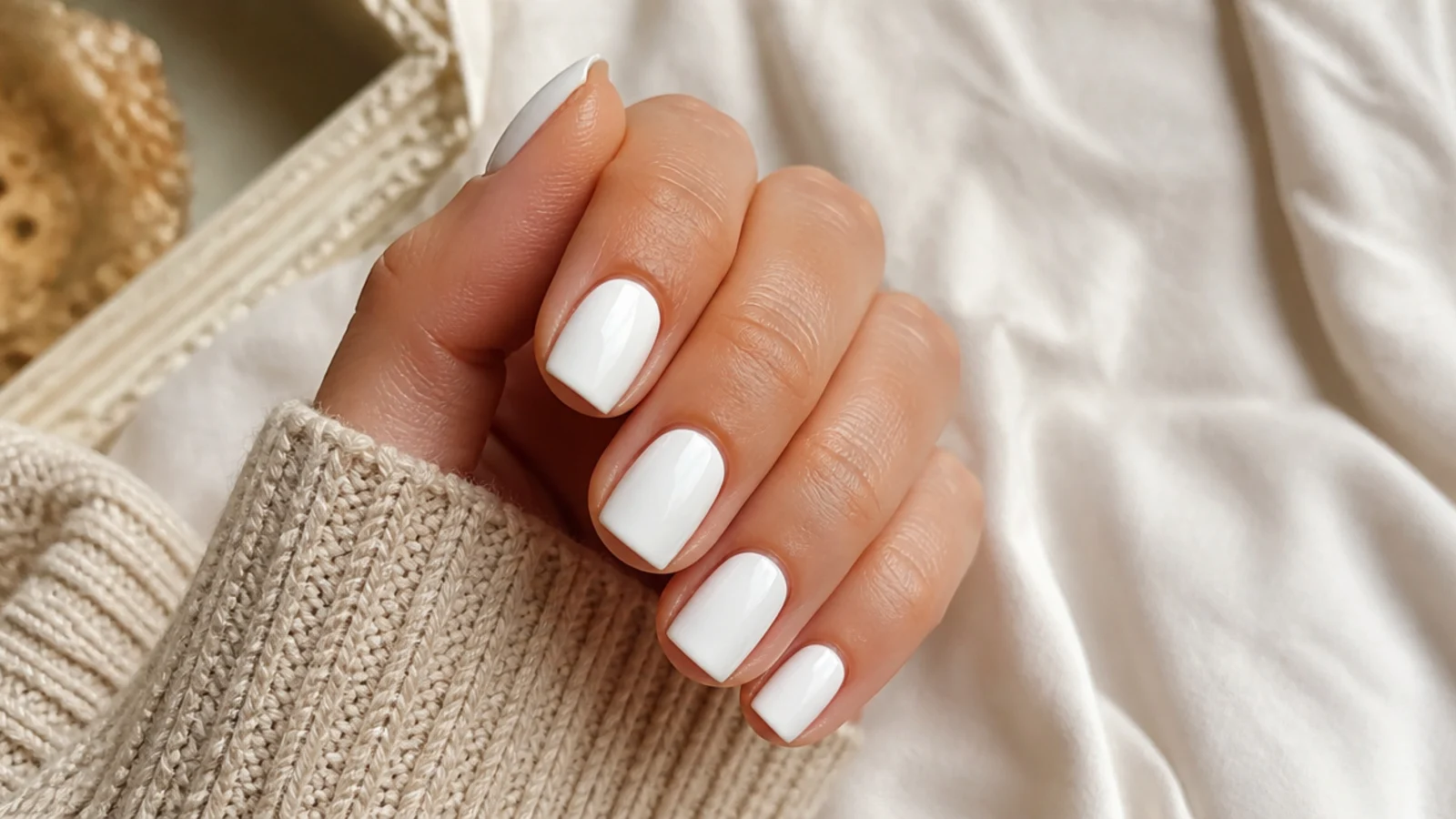
Quick Comparison
| True Square Short Nails | Squoval Short Nails | |
|---|---|---|
| Corner shape | Sharp 90 degree corners, left unrounded | Corners filed fully round, sidewalls stay straight |
| Minimum free edge | About 2 to 3mm before the shape reads square | Works from 1mm; the roundness is visible immediately |
| Best nail bed width | Narrow to medium beds; adds visual width | Wide beds; the rounded corners cut the width back |
| Snagging | High; corners catch knits, hair and pockets | Low; nothing left to catch |
| Breakage | Corners chip and split first | Force spreads around the curve, so it holds longer |
| French tips | Best option; the line runs parallel to the flat edge | Line falls away at the rounded corners |
| Negative space and geometry | Only shape these designs align to | Straight lines look crooked against the curve |
| Typing and daily wear | Corners hit keys sideways at 3mm and up | Easiest short shape for keyboards and phones |
| Filing difficulty at home | Hardest to keep symmetrical; one rocked stroke shows | Most forgiving; the rounding hides small errors |
1. Milky White Short Square Nails
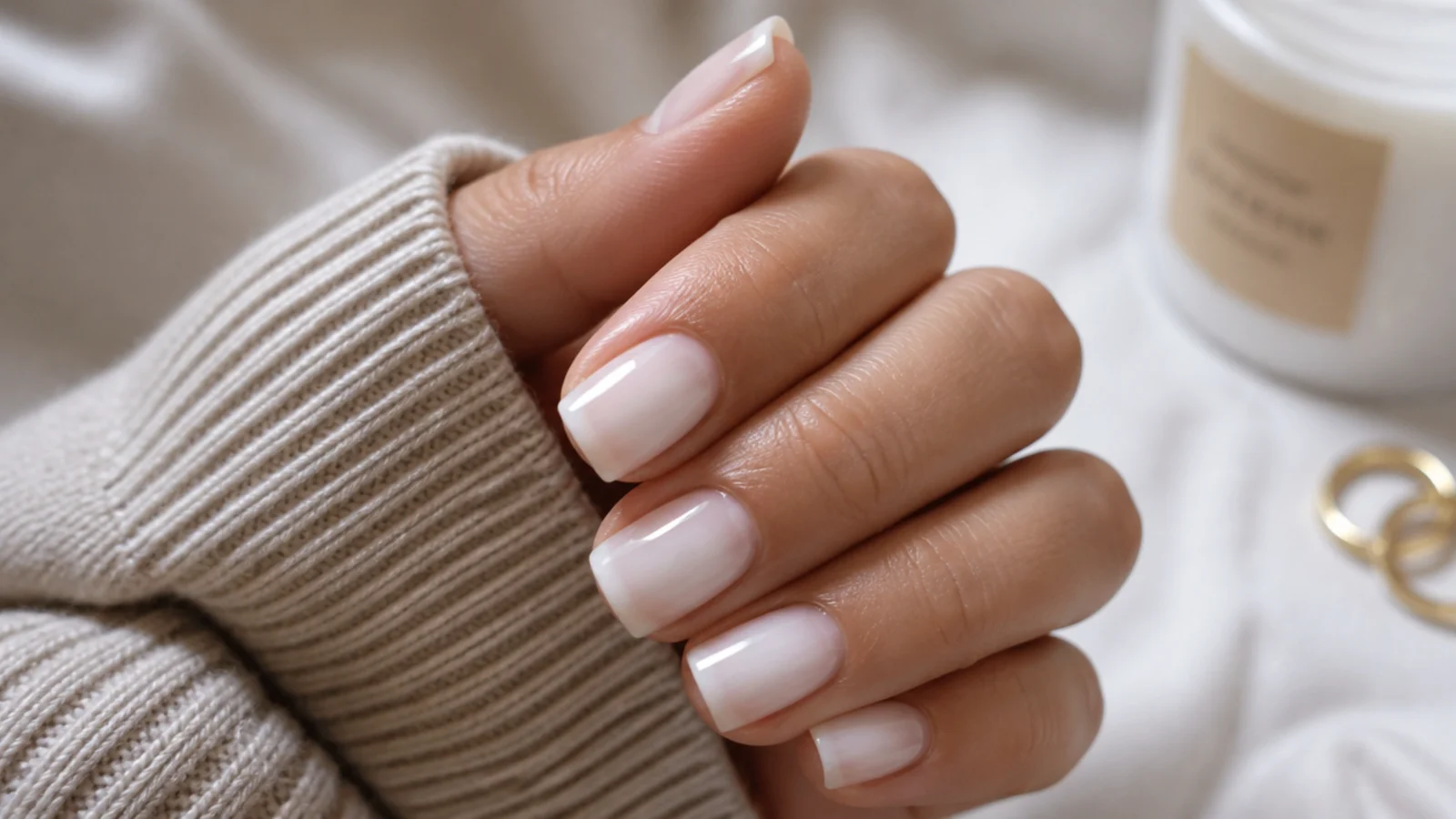
Three sheer coats of a milky white gel such as OPI Funny Bunny, built until the free edge reads soft cream rather than chalky. Chalky opaque white is what makes short nails look cheap, because it cuts a hard line across the finger; a translucent build keeps the line unbroken. Soft square is the right filing here, since the milky finish softens edges anyway and sharp corners would fight it. Works at 1 to 2mm of free edge and grows out almost invisibly. The pearl version lives in milky white chrome nails.
Who it suits: Fair to medium skin tones and anyone wanting the safest short square set.
Tip: Ask for three sheer coats, not two thick ones, or the white will streak across the flat tip.
2. Sheer Nude Short Square Nails
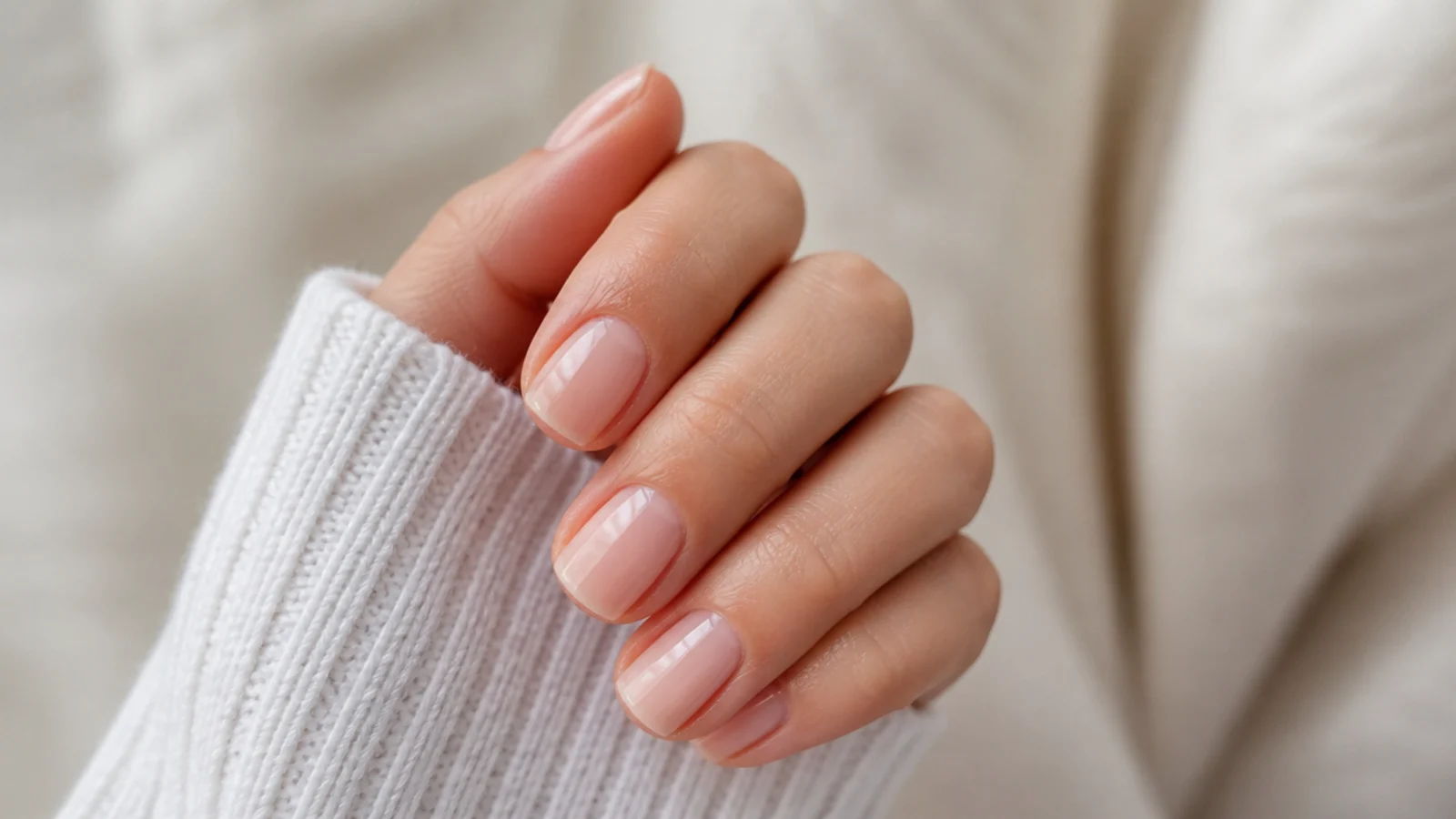
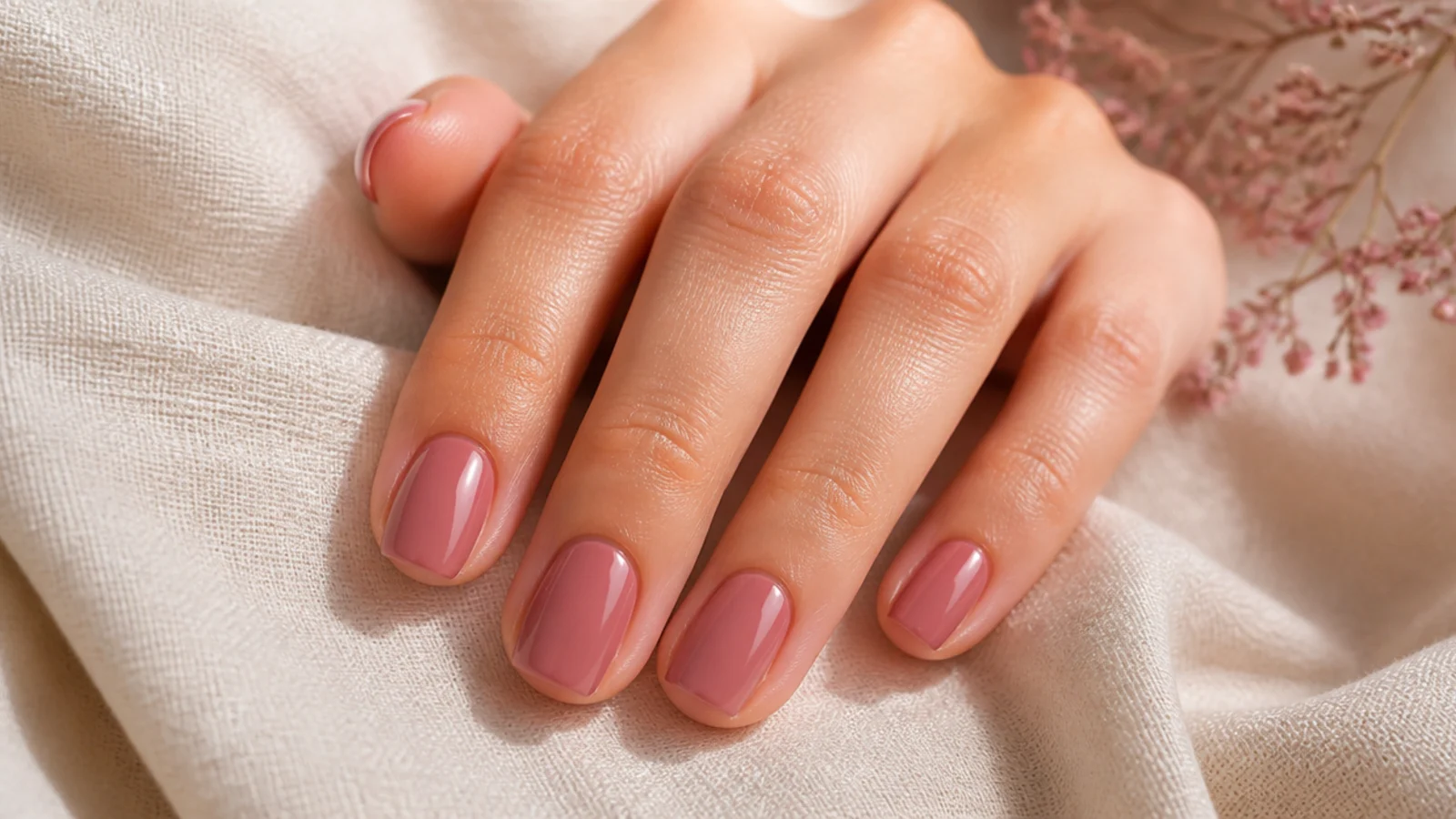
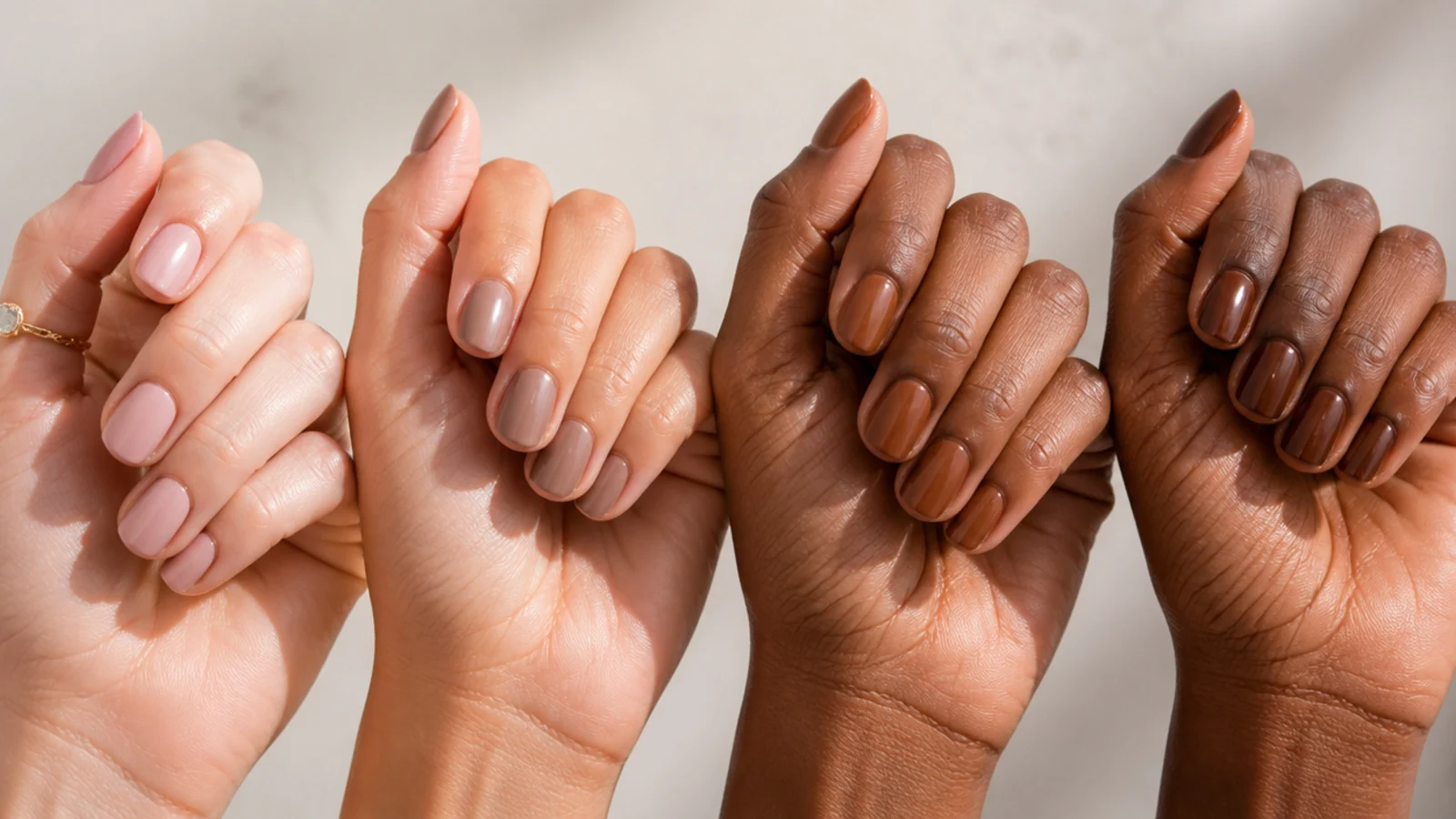
A nude chosen one shade lighter than your own skin, applied in two sheer coats so the nail reads as a continuation of the finger rather than a separate panel. This is the mannequin-hand effect, and it does more to lengthen a short square nail than any amount of extra millimeters. Squoval is the smarter filing, because rounded corners keep the eye traveling rather than stopping at a hard right angle. Match the tone properly using nail colors for short nails by skin tone.
Who it suits: Anyone whose job or schedule rules out visible color.
Tip: Hold the bottle against your inner wrist; a nude that reads gray on you will age the whole hand.
3. Almond Milk Beige Short Square Nails
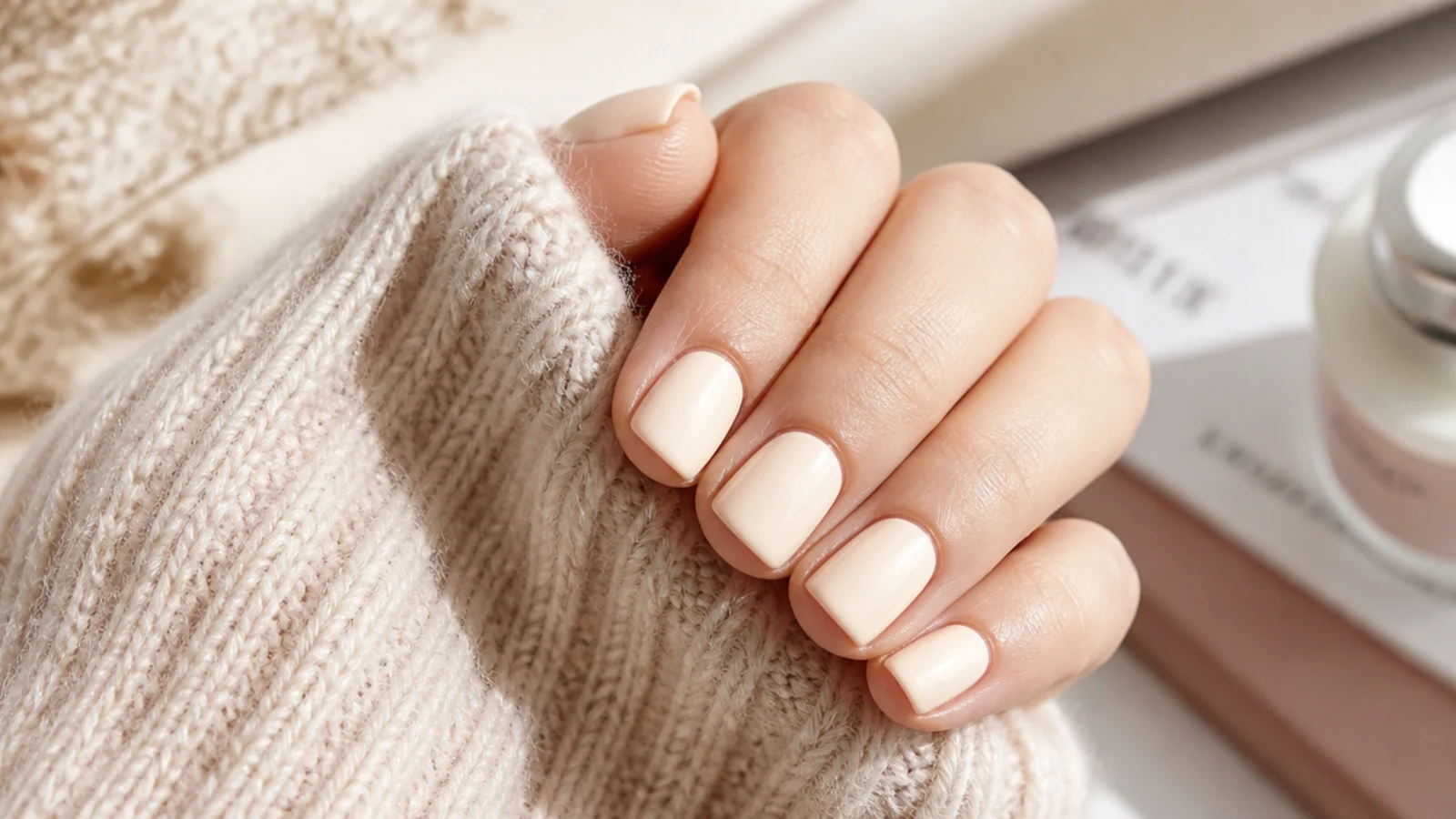
Opaque warm beige with a drop of cream in it, the shade that sits between white and nude and flatters more hands than either. Two coats, high gloss. On a short square nail the flat tip gives beige a clean terminal edge, which is what stops it looking like an unfinished base coat. Soft square filing suits it. Beige also hides regrowth better than white, so you get an extra four or five days out of the set before the cuticle line shows.
Who it suits: Medium and olive skin tones, and everyday wear year round.
Tip: Ask for a ridge-filling base first; opaque cream shades sit on top of texture instead of hiding it.
4. Warm Taupe Short Square Nails
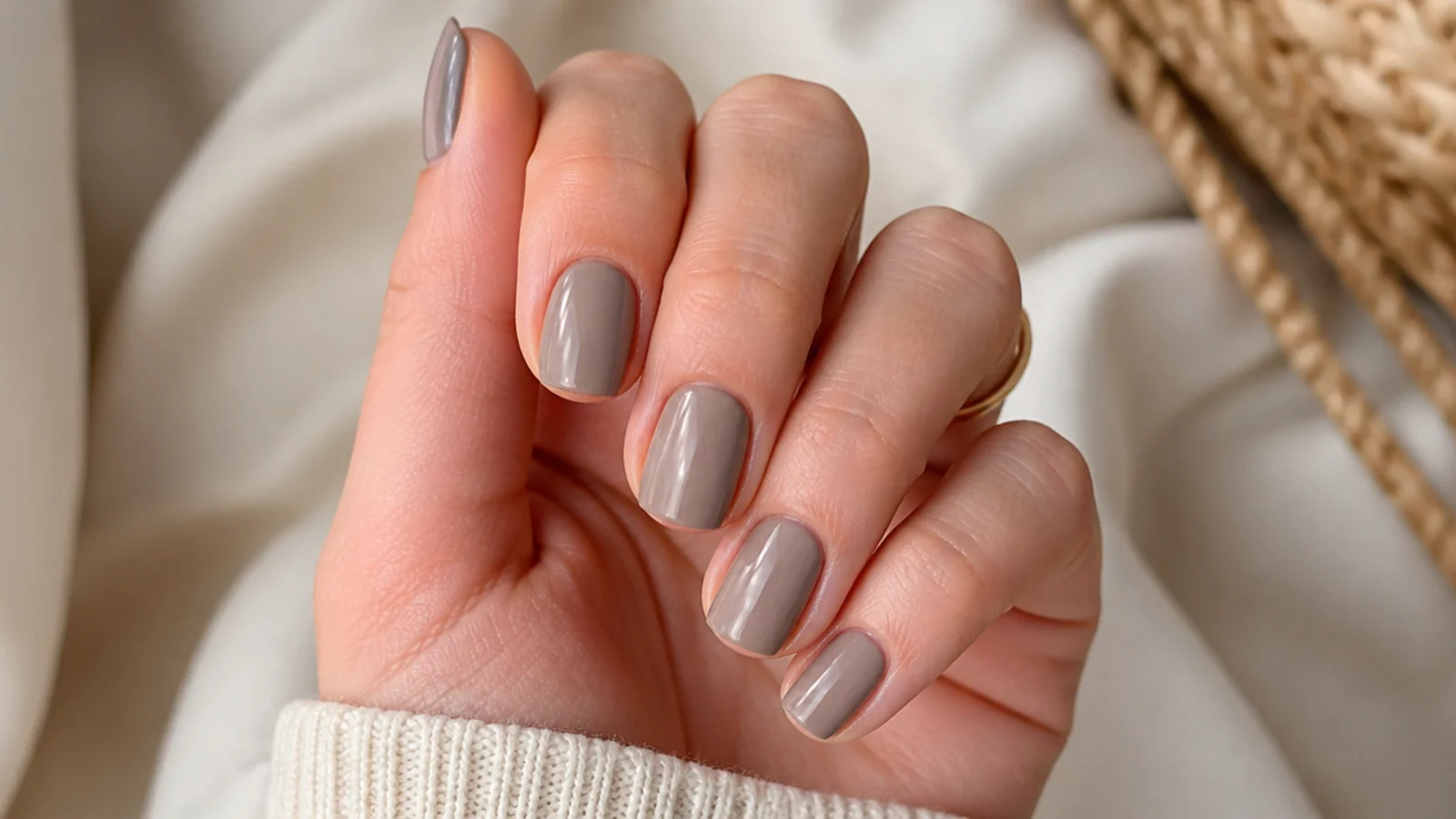
Gray with brown pulled through it, the neutral that reads deliberate rather than default. Taupe is the quiet-luxury shade of the short-nail world because it is dark enough to define the flat square edge but muted enough to pass any dress code. True square works here if your beds are narrow, since the crisp corners are what keep taupe from going muddy. Keep the free edge at 2mm. More of this register in short nail ideas that look expensive.
Who it suits: Office wear, cool undertones and minimal wardrobes.
Tip: Wipe the brush on one side only so the second coat lays flat; taupe shows brush marks badly.
5. Glossy Bare Short Square Nails
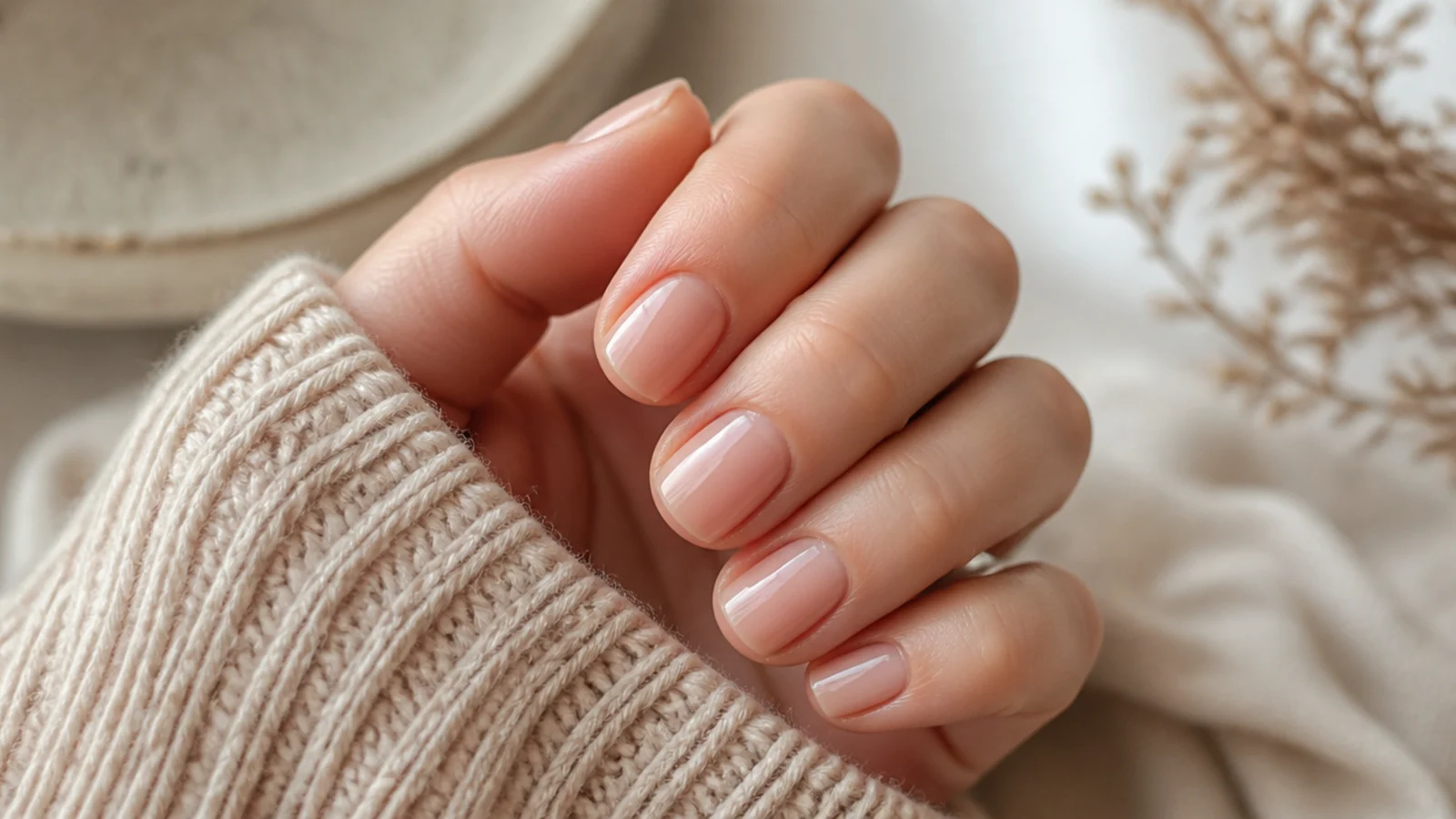
No color at all: a ridge-filling base, a clear builder layer for strength, and a thick gloss top coat over an immaculately filed square edge. This is the hardest short square look to fake, because with no pigment the shape and the cuticle work are the entire design. It is also the most durable set on this list, since there is no color to chip visibly. True square, filed dead flat, then beveled. The same glassy logic drives short soap nails.
Who it suits: Healthcare, food service and anyone growing their nails out.
Tip: Push cuticles back the day before, not the same day, so the skin is not red in photos.
6. Soft Gray Short Square Nails
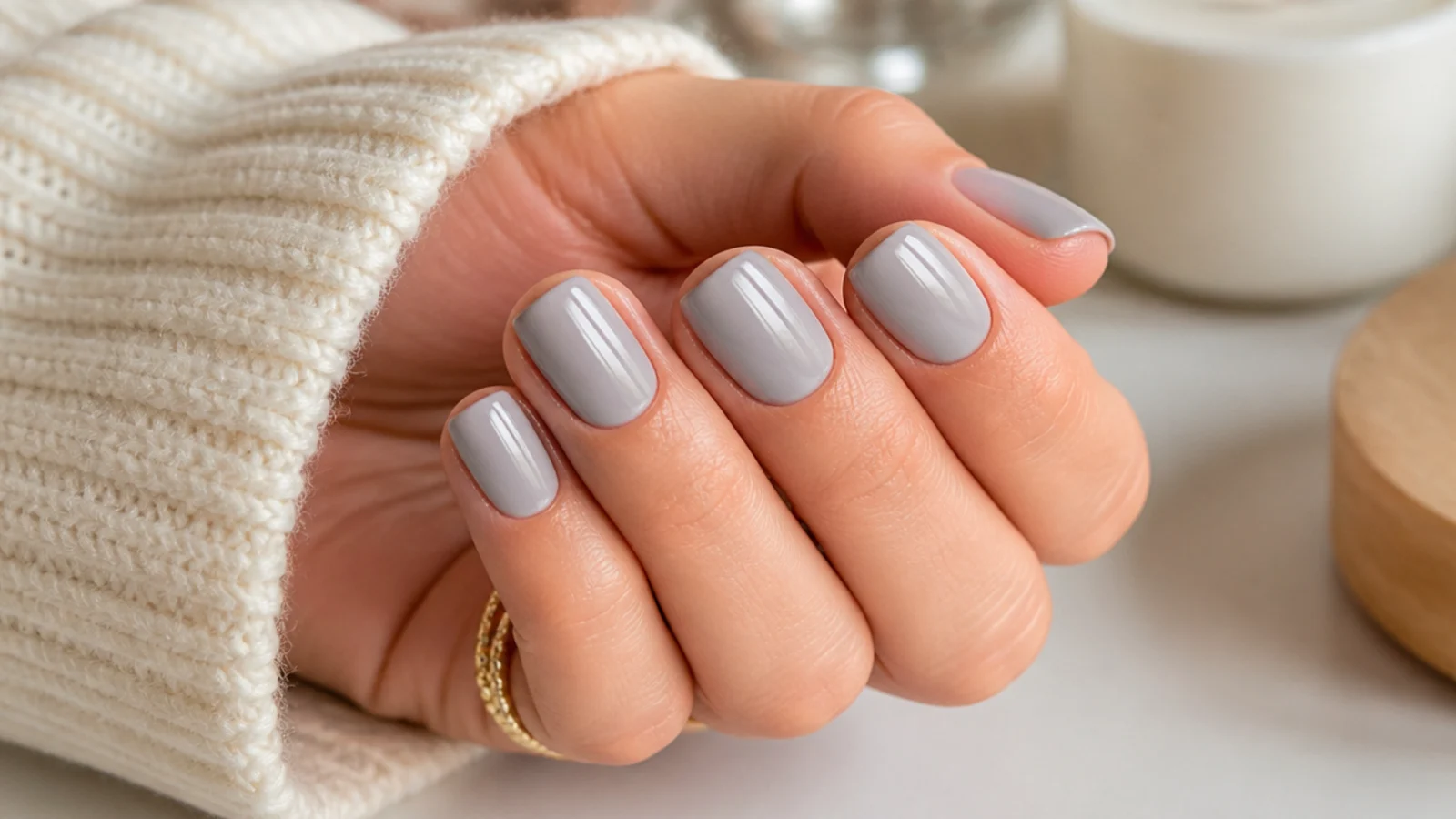
A dove gray with no blue in it, opaque in two coats. Gray is the most underused short-nail neutral and it is genuinely flattering on cool and neutral undertones, where beige can read sallow. On a square tip the flat edge gives gray a graphic quality that a rounded nail loses. Squoval if your nail beds are wide, true square if they are narrow. It also pairs with silver jewelry better than any warm neutral does.
Who it suits: Cool undertones, fall and winter, and silver jewelry wearers.
Tip: Avoid gray with a blue base if your hands run pink; it will make them look colder.
7. Micro French Tip Short Square Nails
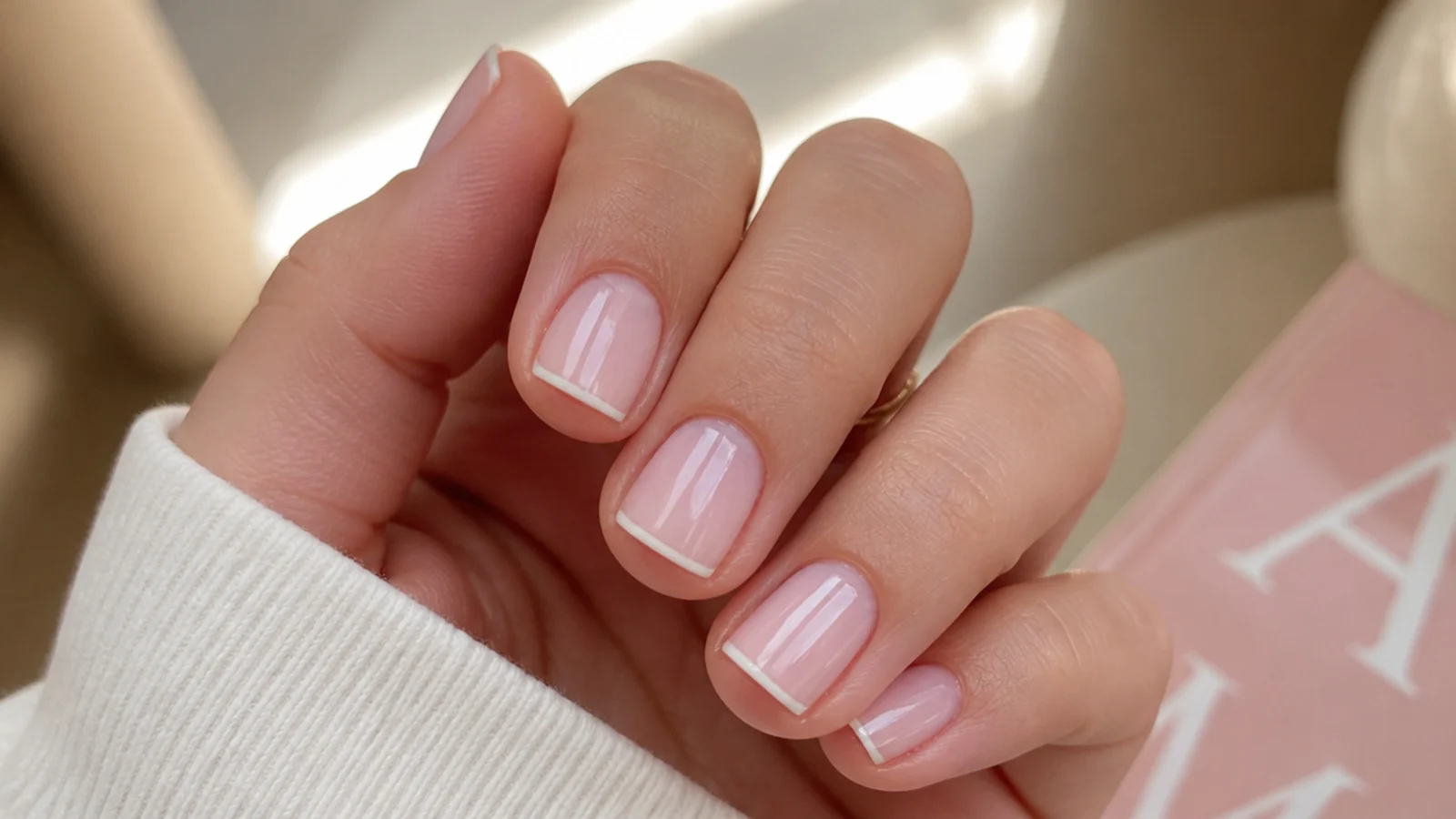
A white line roughly 1mm wide painted right along the flat edge of a bare or milky nail. This is the single best design for short square nails, because a straight tip turns the line into a drawn edge instead of a smudged curve. Thick French tips eat the nail plate at this length and make the finger look shorter; a micro line does the opposite. True square is essential, since a rounded corner makes the line fall away at the sides. Compare widths in short French tip nails.
Who it suits: Anyone with 1 to 2mm of nail who still wants a French.
Tip: Ask for the line in gel, not polish; polish micro lines soften and blur by day four.
8. Classic White French Short Square Nails
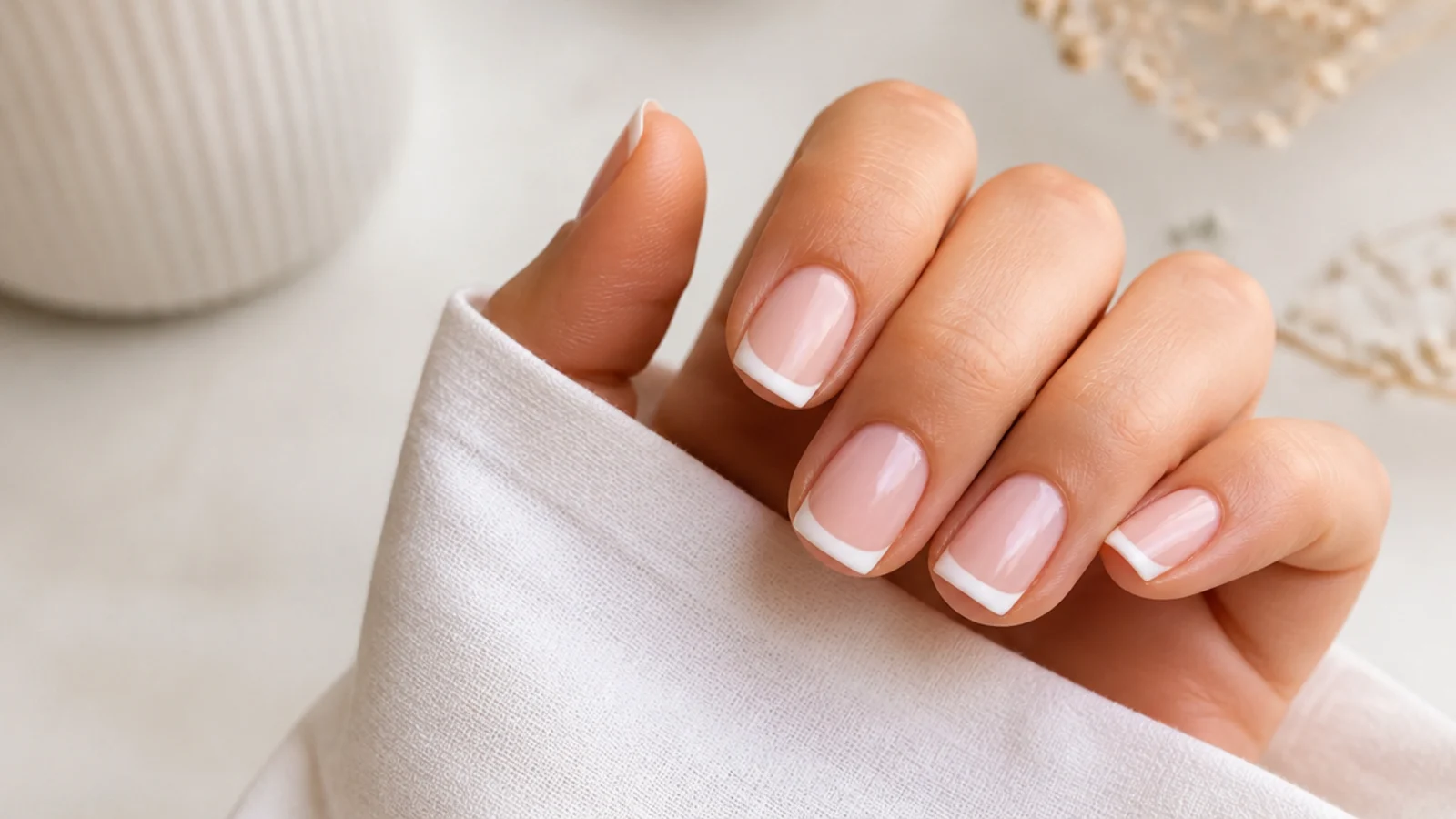
The traditional French, scaled down: a 2mm white band that follows the flat tip in a straight line, not a deep curved smile, over a sheer pink base. On square the smile line runs parallel to the edge, which is exactly why the French reads sharper here than on almond. Keep the band under 2.5mm or it starts shortening the nail visually. True square filing only. The full-size version is in white French tip nails.
Who it suits: Weddings, graduations and formal short sets.
Tip: Say straight smile line, matched width on all ten, so the thumbs do not end up wider.
9. Black French Tip Short Square Nails
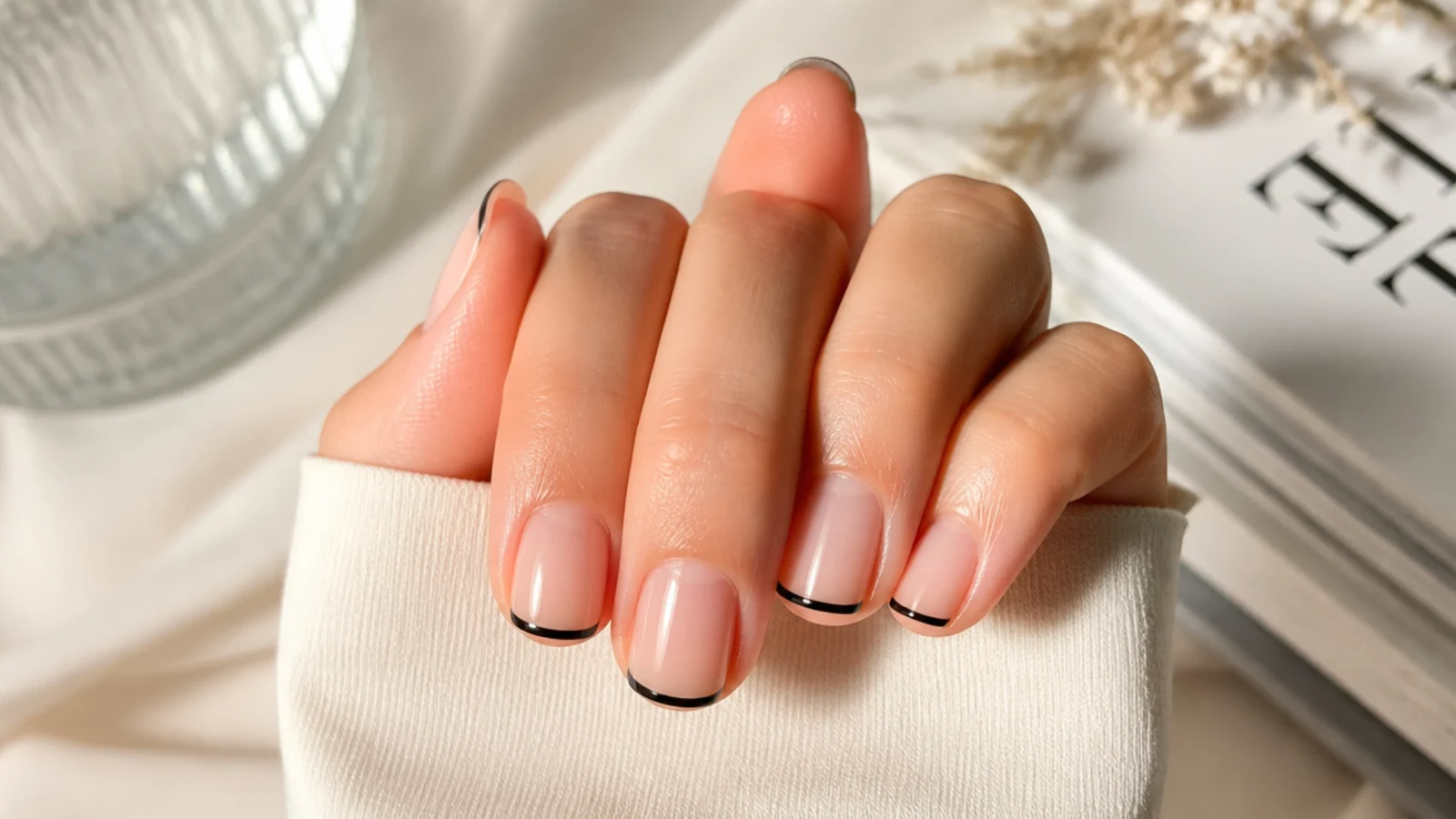
A 1 to 1.5mm black line along the flat edge over a clear or barely-there nude base. Black on square is graphic in a way it never is on round, because the line and the tip agree with each other. It is also the most forgiving dark design at short length, since only a sliver of dark pigment touches the nail so nothing gets shortened. True square, beveled corners, high gloss top coat. See the full range in black French tip nails.
Who it suits: Minimalists, creative workplaces and anyone bored of white.
Tip: Use a striper brush rather than the bottle brush; black shows every wobble at this width.
10. Baby Blue French Tip Short Square Nails
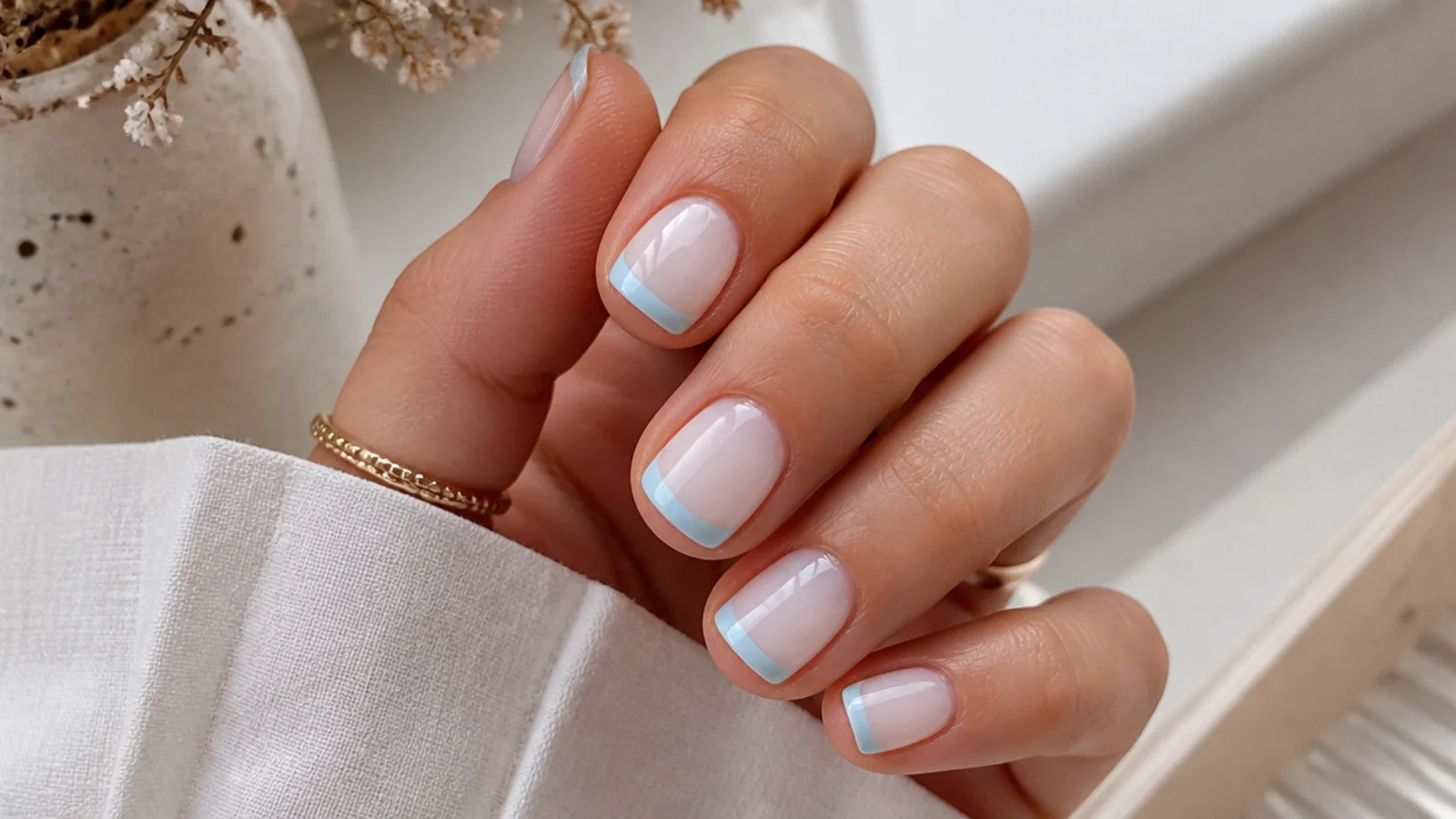
A pastel blue tip about 2mm deep over a milky base, the colored French that dominates spring and summer saves. Pale blue works better than pale pink on short square because it contrasts with skin instead of blending, so the flat edge stays visible. Soft square filing keeps it sweet rather than severe. Pair with a matching baby blue accent on the ring finger only if you want more color without more coverage.
Who it suits: Spring, summer and anyone wanting color that still reads soft.
Tip: Ask for a milky base under the blue; over a bare nail the pastel turns gray at the tip.
11. Reverse French Short Square Nails
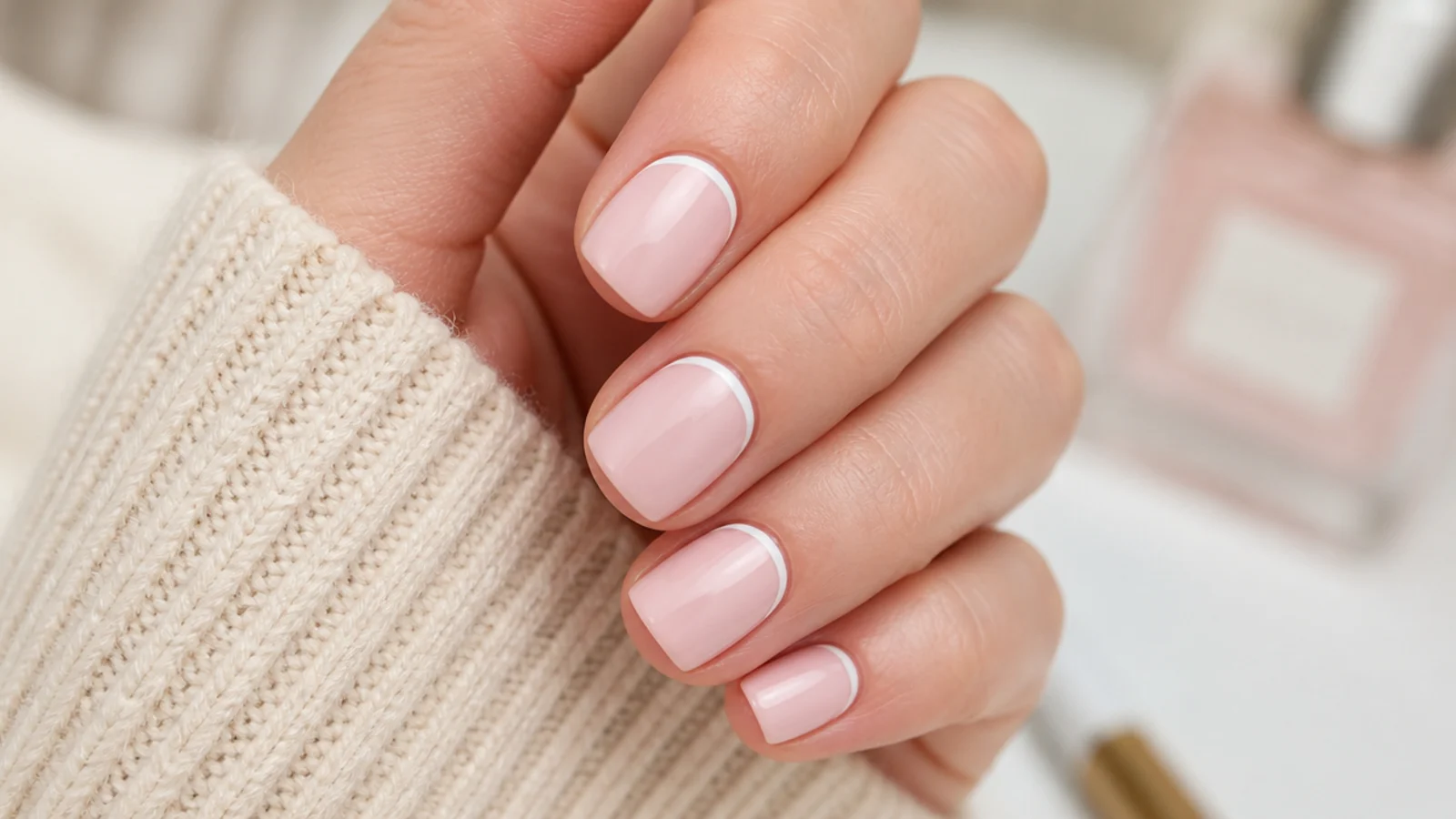
The line moves to the cuticle: a thin band of white or gold traced along the base of the nail with the rest left bare or nude. It is the smartest short-nail trick on this list, because putting the detail at the base leaves the whole nail plate reading uninterrupted, which makes the nail look longer than a tip design does. Squoval or soft square both work. It grows out awkwardly though, so plan on two weeks maximum. Related linework in square cat eye French tip nails.
Who it suits: Very short nails and anyone whose tips chip within days.
Tip: Leave a hairline of bare nail between the line and the cuticle so it does not read as flooding.
12. Double French Line Short Square Nails
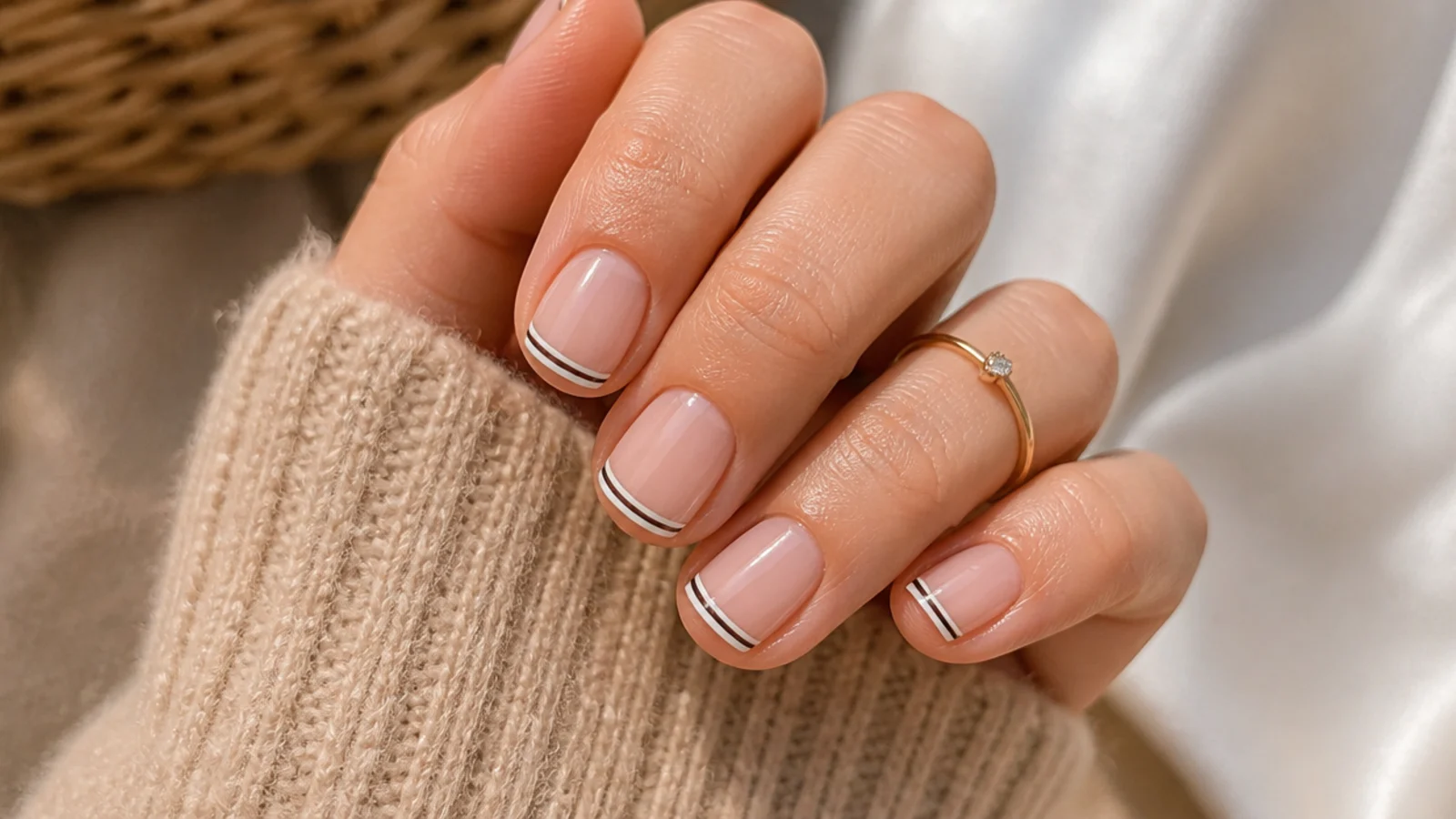
Two hairline bands at the tip, usually white then black or nude then gold, separated by a millimeter of bare nail. The design only works on a genuinely flat edge, since two parallel lines on a curve immediately look crooked. That makes it a true square exclusive. Keep both lines under 1mm each so the whole detail stays under 3mm. It is the highest-effort look in this section and worth booking an extra 15 minutes for.
Who it suits: Detail lovers and anyone with narrow, even nail beds.
Tip: Have the tech tape the first line before painting the second, or the gap will wander.
13. Pearl Chrome Short Square Nails
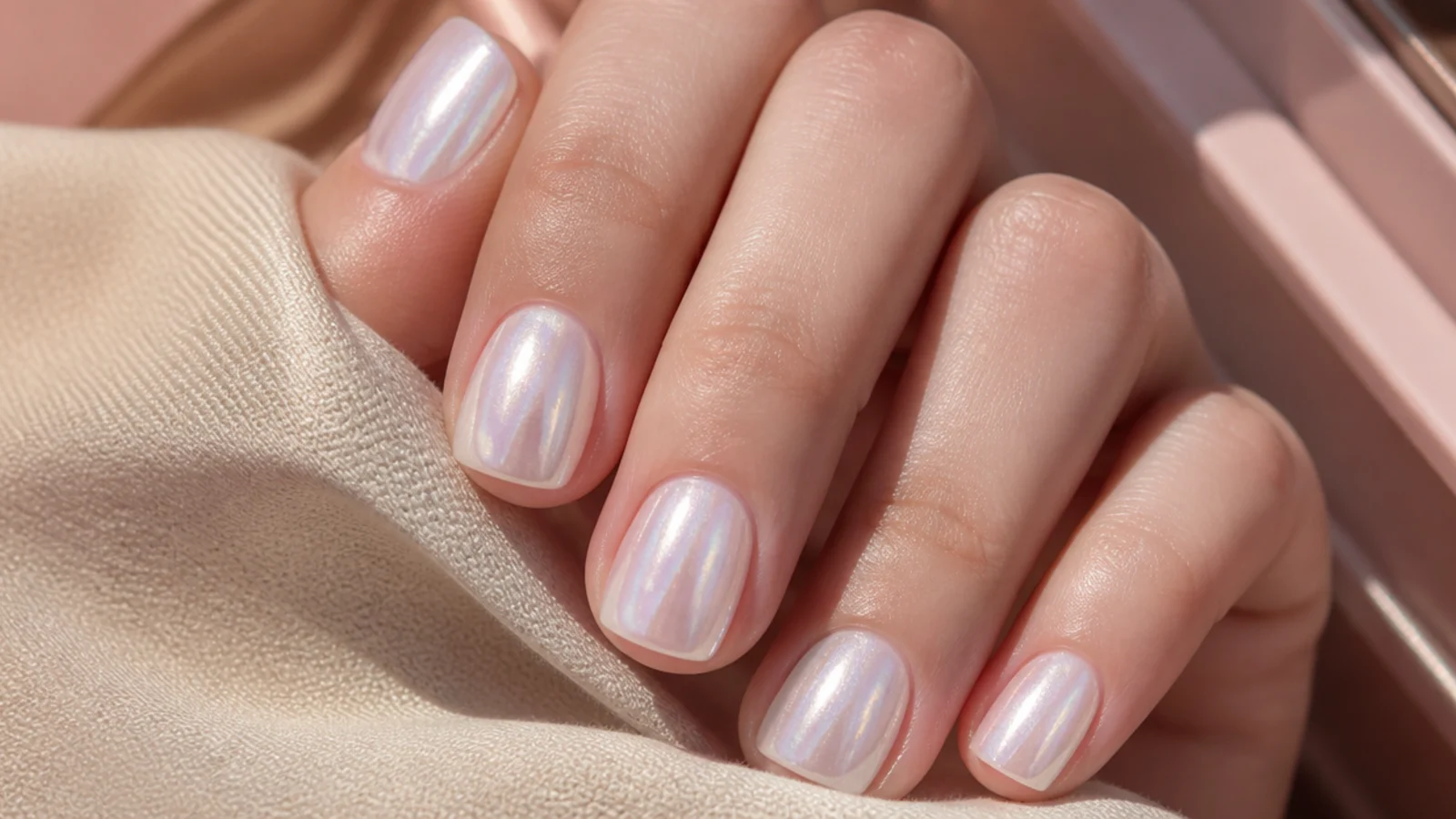
Aurora or pearl powder buffed over a cured milky white base, shifting pink, lilac and blue in the light. Pearl is the chrome that suits short nails, because it scatters light softly instead of throwing a hard mirror that highlights how little nail there is. The flat square tip catches the shift and holds it in a straight band. Soft square filing. Budget 10 to 20 dollars over a standard gel set. Full breakdown in pearl white chrome nails.
Who it suits: Weddings, brides and anyone wanting shine that stays neutral.
Tip: Insist on a milky base, not clear, or the pearl powder will read gray over your natural nail.
14. Silver Chrome Short Square Nails
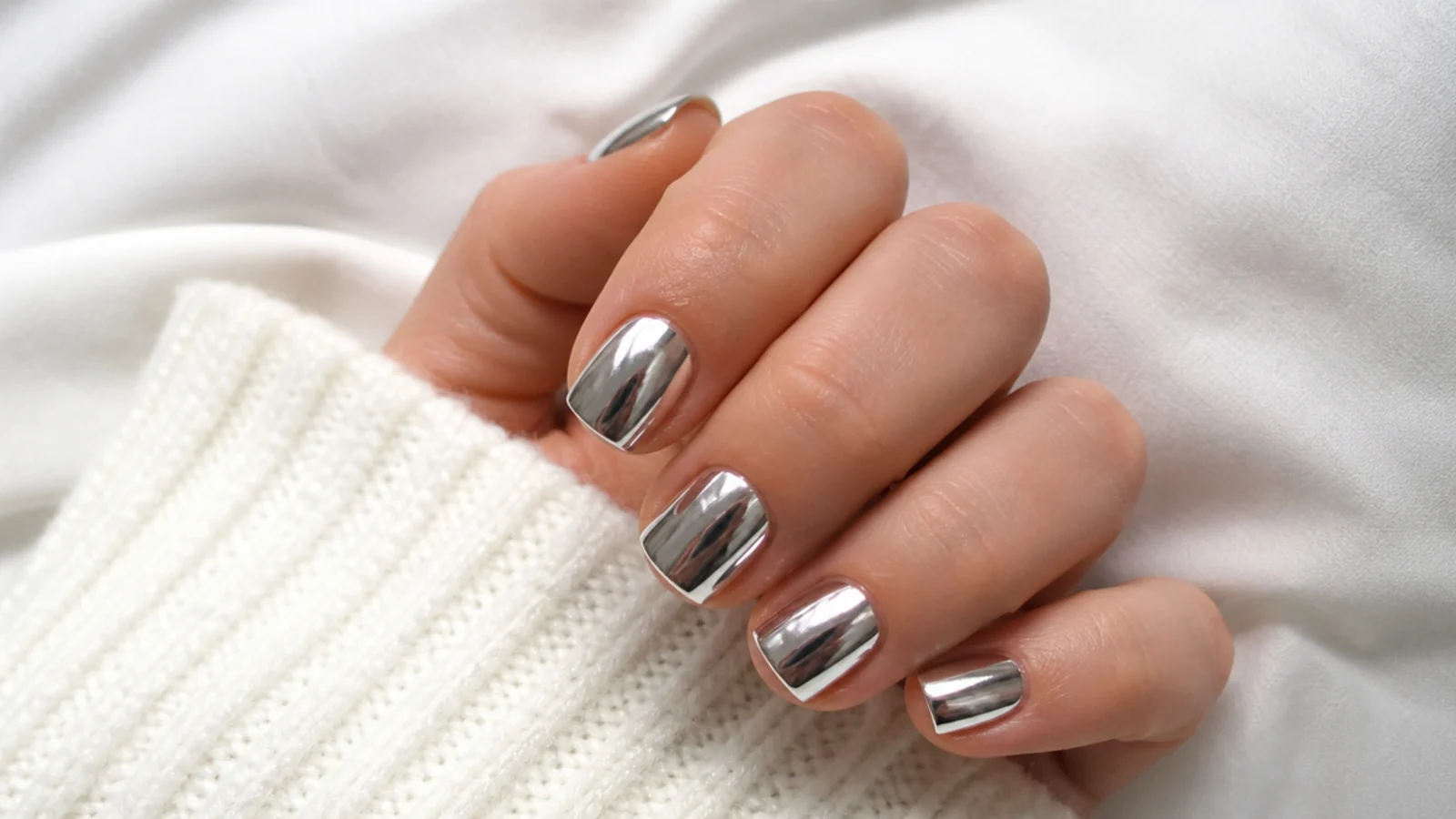
Full mirror silver, buffed over a no-wipe top coat until the nail looks like polished metal. On short square this reads as jewelry rather than nail art, because the flat tip and straight sidewalls give the mirror three clean planes instead of a curve that distorts the reflection. Chrome is unforgiving of ridges, so ask for a builder gel smoothing layer first. True square looks sharpest; squoval softens it if silver feels too hard. More at this length in short white chrome nails.
Who it suits: Nights out, parties and silver jewelry wearers.
Tip: Chrome needs a no-wipe top coat underneath; over a tacky layer the powder will not bond.
15. Cherry Jelly Short Square Nails
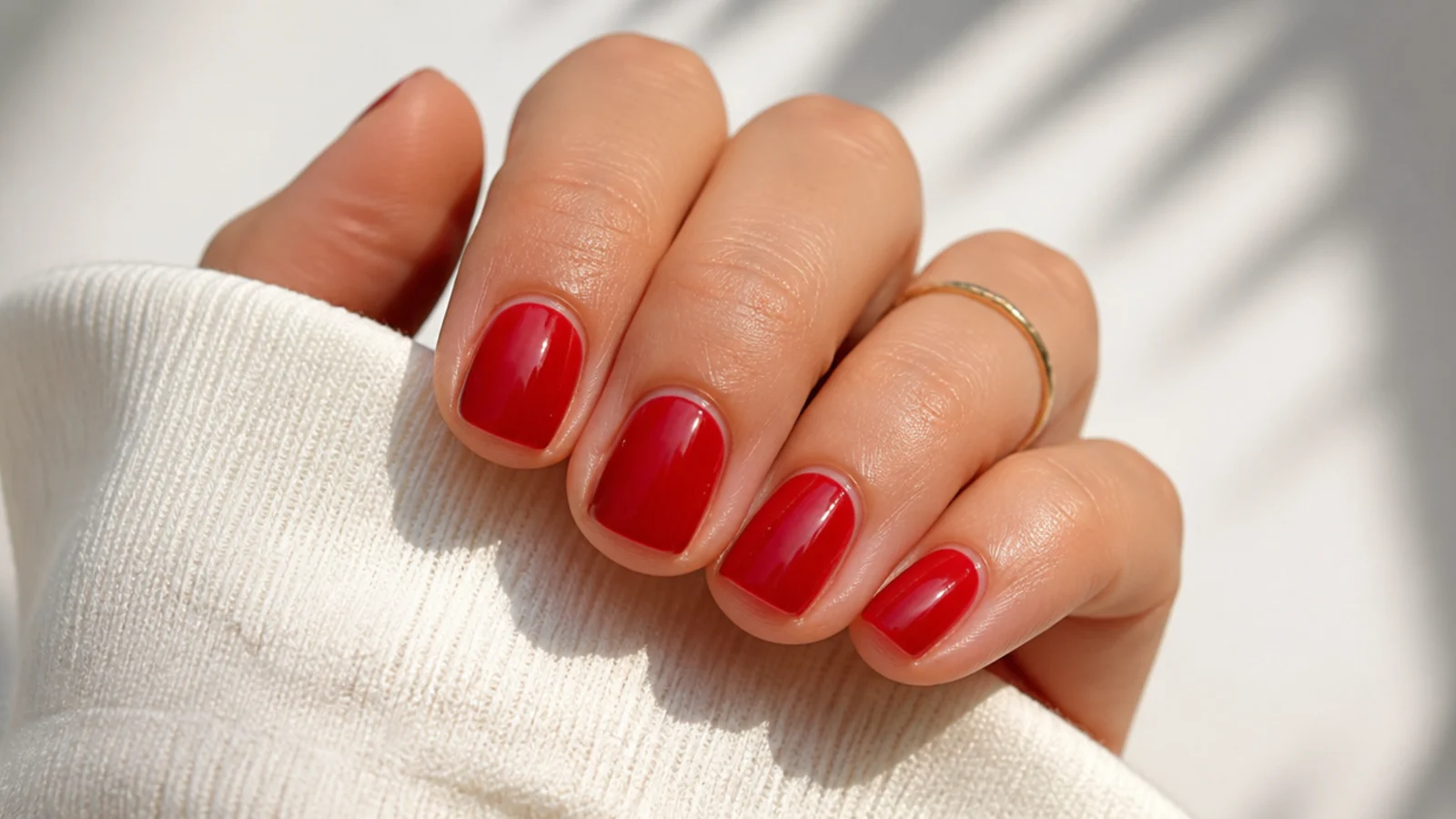
Two coats of a translucent red gel, left see-through so the natural nail shows underneath and the free edge glows rather than blocks. Jelly finishes are made for short nails: a small nail plate reads as a solid dot of paint in an opaque bright, but stays light and dimensional in a jelly. Two coats maximum, since a third kills the transparency that the whole look depends on. Soft square filing suits the softness of the finish.
Who it suits: Summer, Y2K looks and anyone who finds opaque red too heavy.
Tip: Ask for jelly over a bare nail with no white base, or the transparency simply will not happen.
16. Milky Pink Short Square Nails
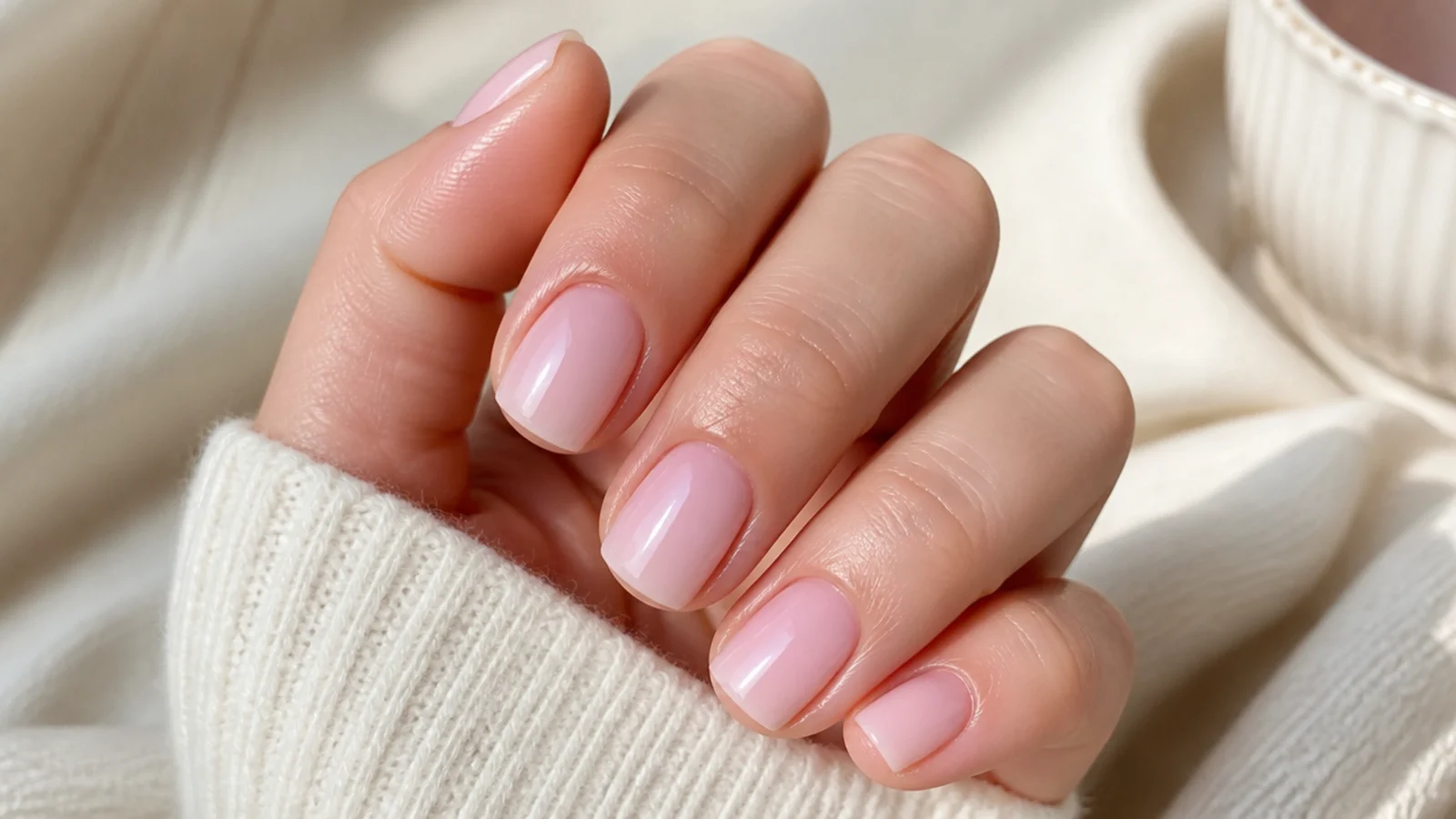
Sheer pink with white pulled through it, built in three thin coats so it reads cloudy rather than opaque. This is the most-saved short-nail finish going, and square suits it because the flat tip keeps the cloud from bunching at a point. It flatters warm and neutral undertones; if your hands run pink already, shift to the beige version instead. Squoval or soft square. See the seasonal palette in summer nail colors for short nails.
Who it suits: Everyday wear, brides and anyone who wants color that reads as skin.
Tip: Build with thin coats and cure between each; thick milky coats shrink away from the cuticle.
17. Lavender Chrome Short Square Nails
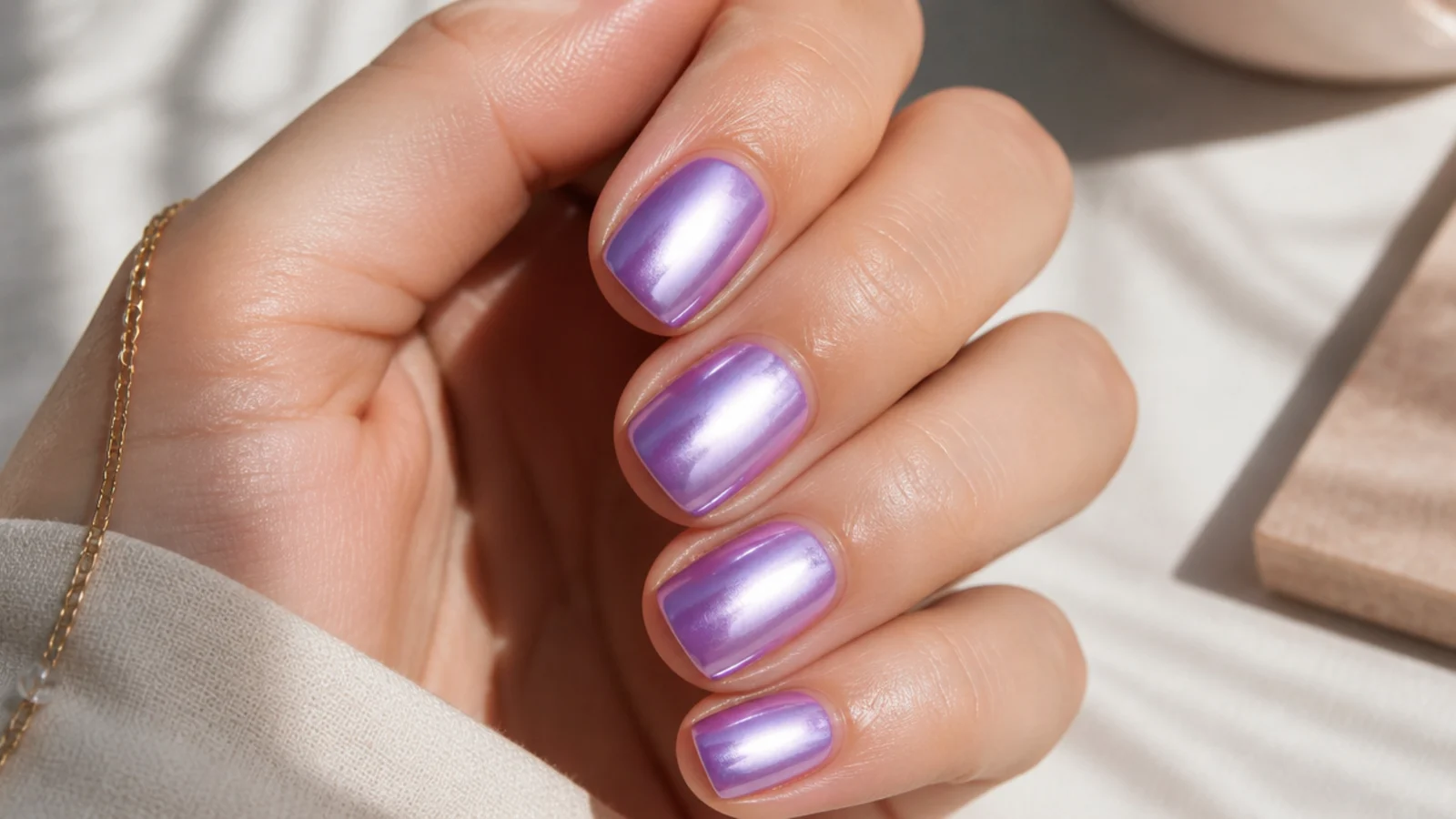
Silver chrome powder over a cured pale lavender gel, which lands between icy violet and pearl depending on the light. Lavender is the rare pastel that gains from a metallic finish rather than being flattened by it, and on a short square tip the shift is concentrated into a small enough field to look intentional. Soft square. Ask for chrome over color, not chrome over black, or the lavender will disappear under gray. More in lavender chrome nails.
Who it suits: Spring, cool undertones and pastel wearers who want shine.
Tip: Have the lavender base fully opaque before chroming; a patchy base shows straight through mirror.
18. Matte Nude Short Square Nails
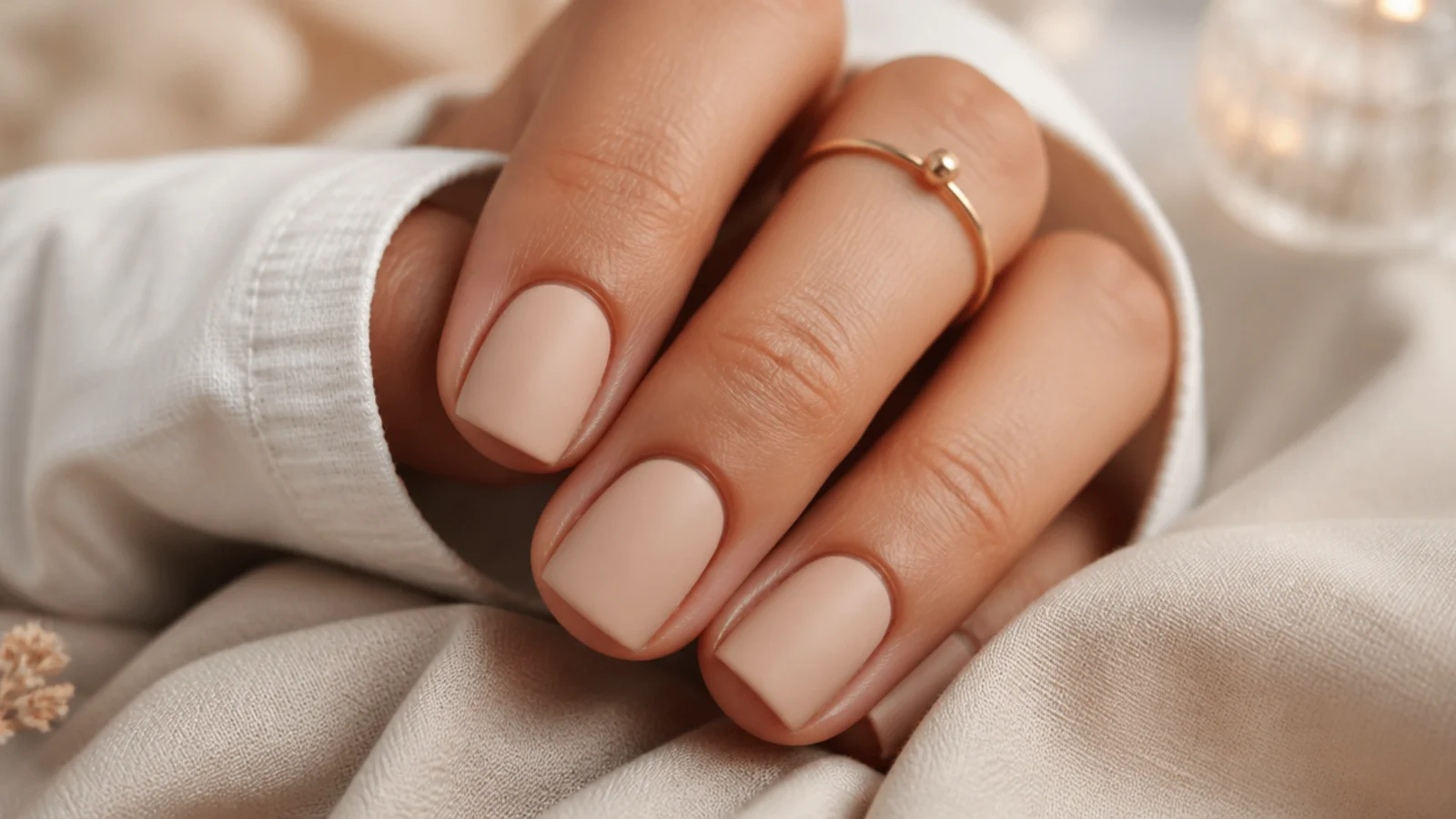
A skin-matched nude sealed under a matte top coat, which turns the color velvety and makes the square edges look razor sharp. Matte is the finish that rewards this shape most, because gloss rounds off the visual line of the sidewall while flat finishes emphasize it. True square filing gets the full effect. Expect the matte to dull further after ten days and to pick up shiny patches from hand cream. See the range in matte nude nails.
Who it suits: Anyone wanting a neutral that still looks styled.
Tip: Keep cuticle oil off the plate; oil leaves glossy patches on matte that will not buff out.
19. Cherry Red Short Square Nails
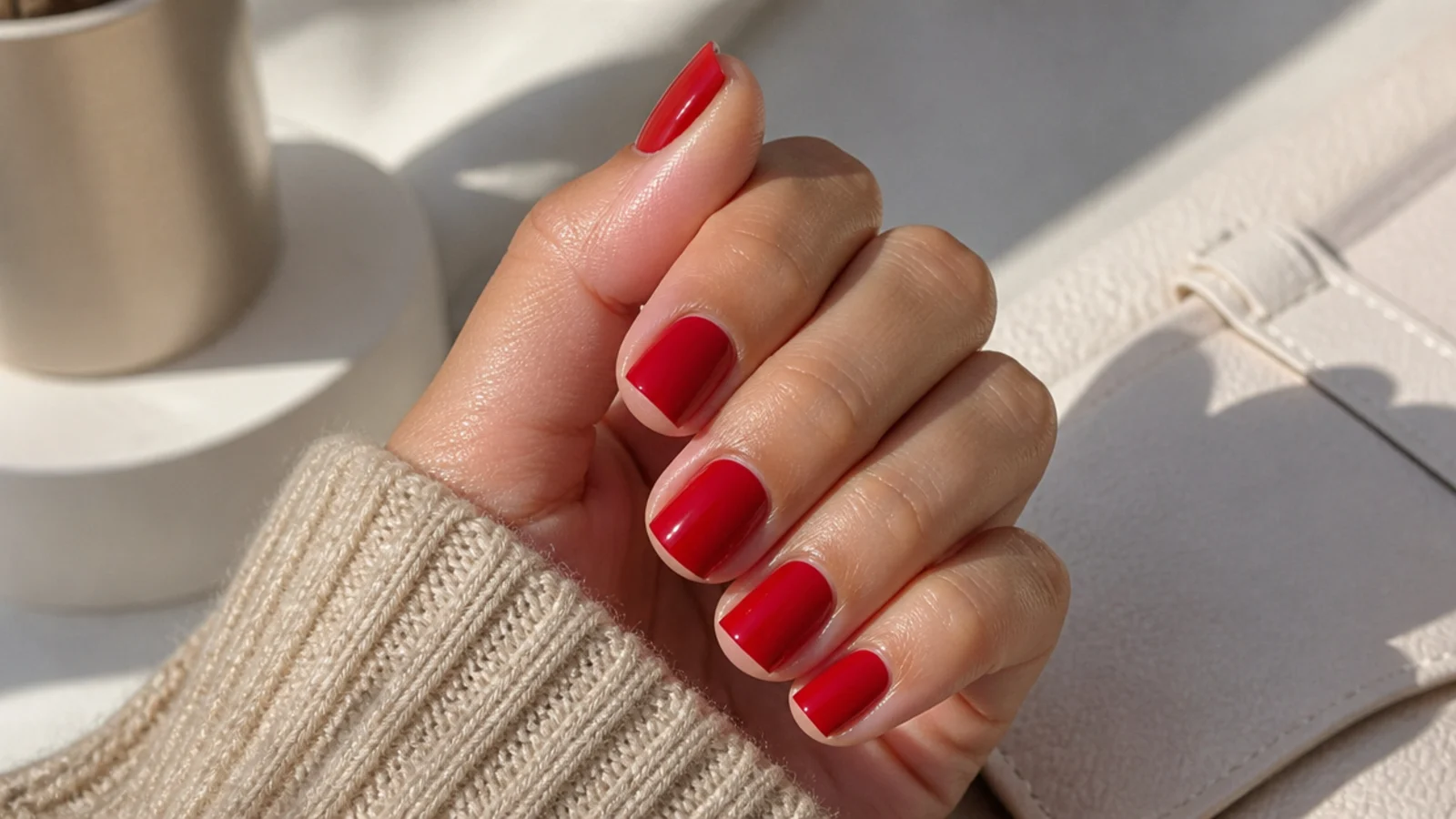
A blue-based true red, opaque, in three thin coats. Red on a short square nail is the most classic manicure there is, and blue-based cherry flatters more skin tones than an orange-leaning tomato. One warning nobody gives: a flat tip shows application streaks in red far more than a curved tip does, so thin coats are not optional. Red also stains the natural nail, so a base coat is mandatory. The moody version is dark feminine red nails.
Who it suits: Date nights, holidays and classic dressers.
Tip: Cap the free edge with every coat; red chips show first at the flat corner.
20. Espresso Brown Short Square Nails
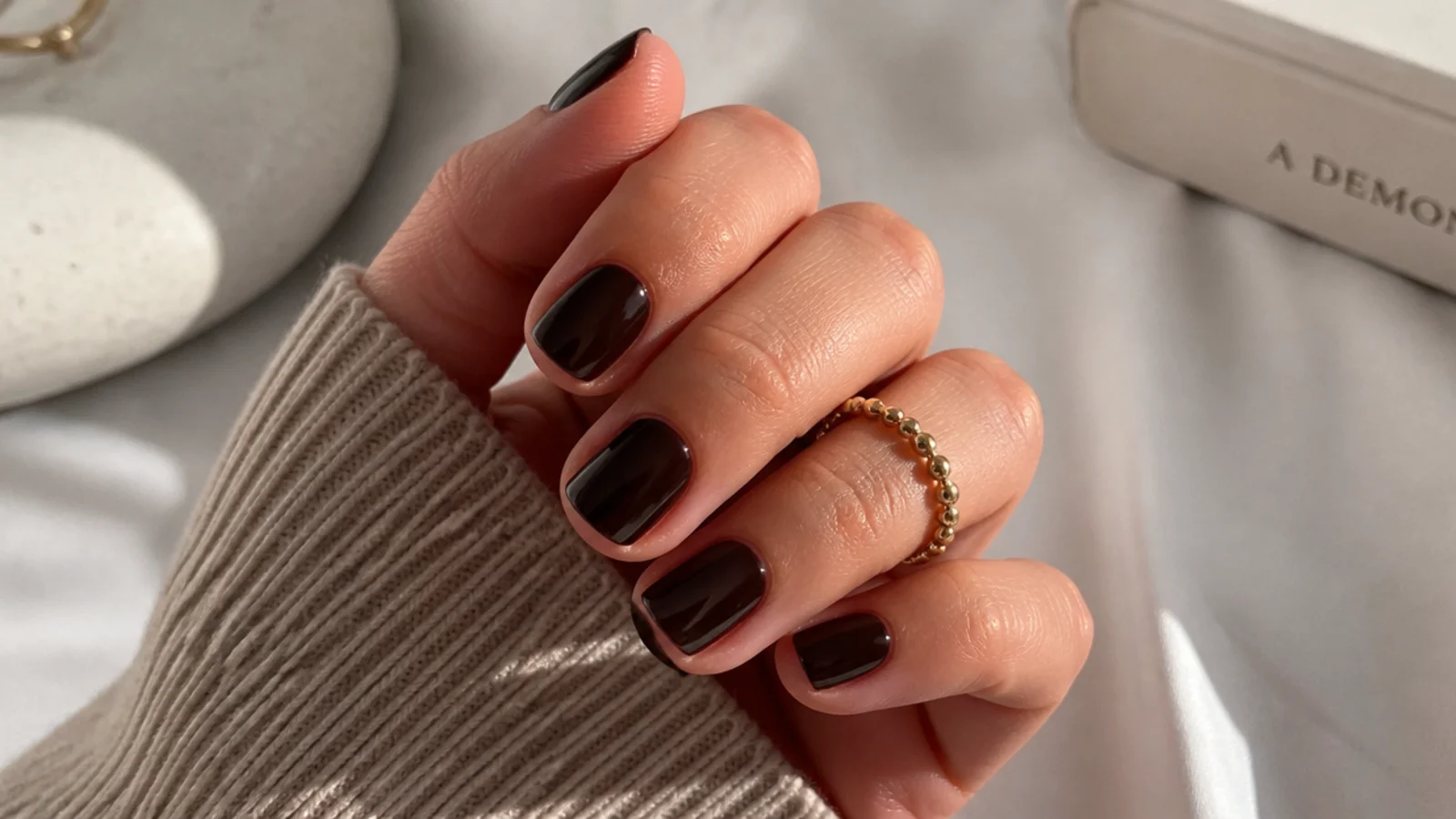
Near-black brown with warmth in it, the shade that replaced cherry red as the default moody neutral. Espresso is unusually good on short nails because it is dark enough to define the flat square edge but warm enough that it does not amputate the finger the way flat black can. Two coats, high gloss. True square if your beds are narrow, squoval if they are wide. Works from September straight through February with no styling changes.
Who it suits: Fall and winter, olive and deep skin tones, neutral wardrobes.
Tip: Ask for gloss not matte; matte brown at short length reads like a chocolate-colored plastic tip.
21. Navy Blue Short Square Nails
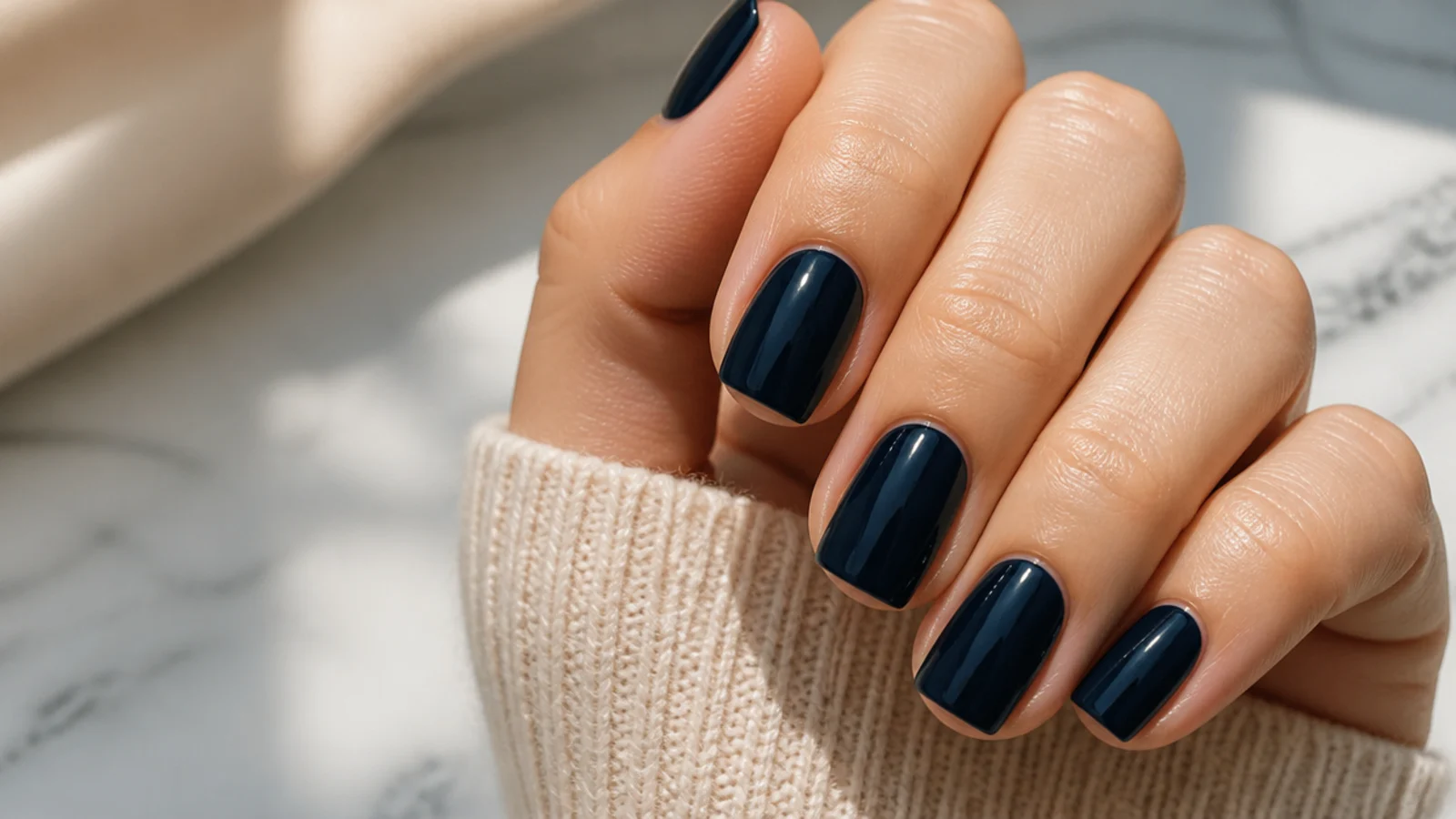
An almost-black navy in high gloss, the most workplace-tolerable dark color and the easiest blue to wear year round. Navy suits short square because the shape already reads formal, so the pairing looks intentional rather than costume. Blue pigment is among the hardest to remove cleanly and will tint the free edge, so a base coat matters more here than with any other shade. Two coats. The brighter alternative is short royal blue nails.
Who it suits: Conservative offices, fall and winter, cool undertones.
Tip: Do the cleanup with a flat brush and acetone before curing; navy on skin is very visible.
22. Hot Pink Short Square Nails
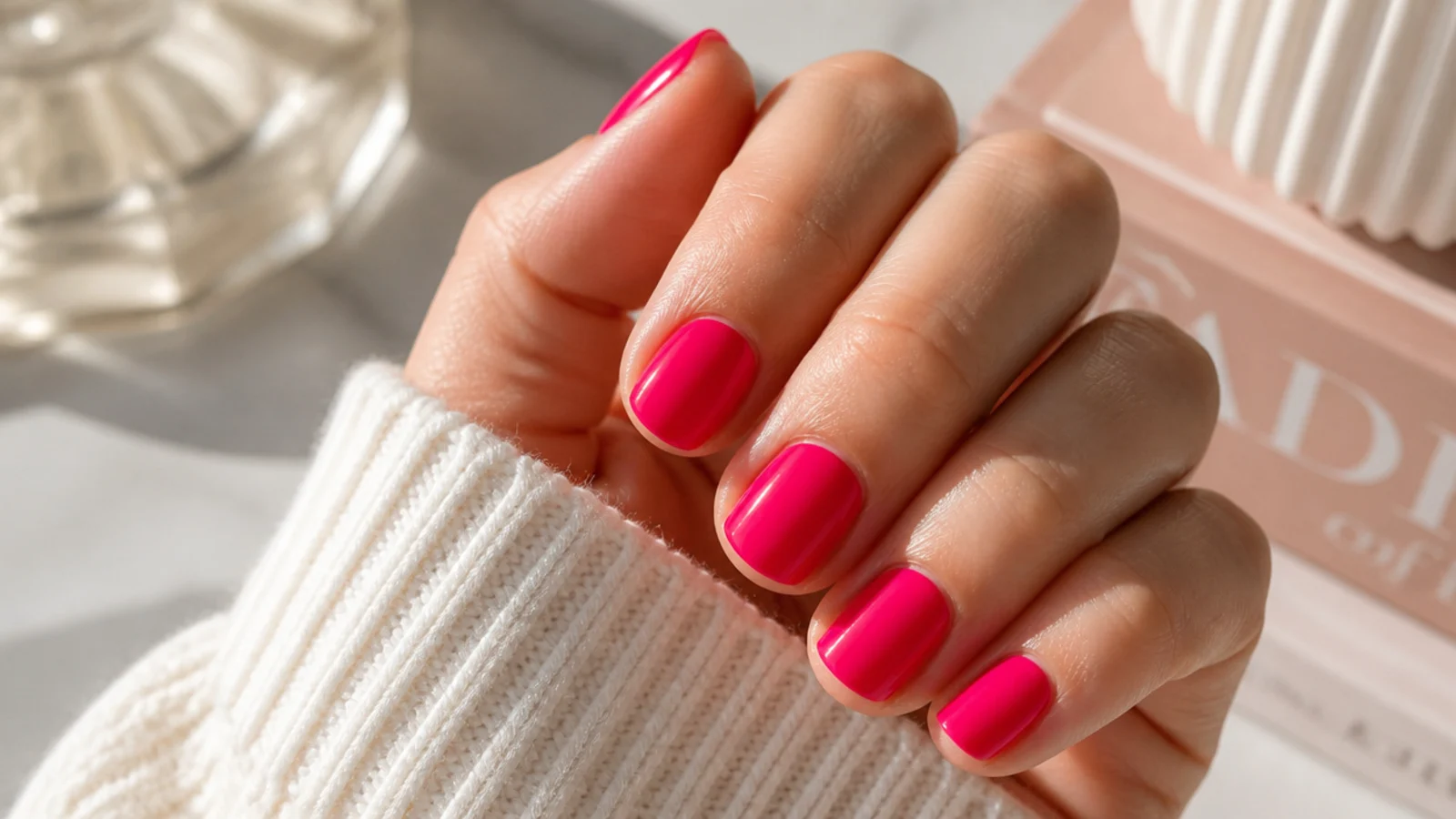
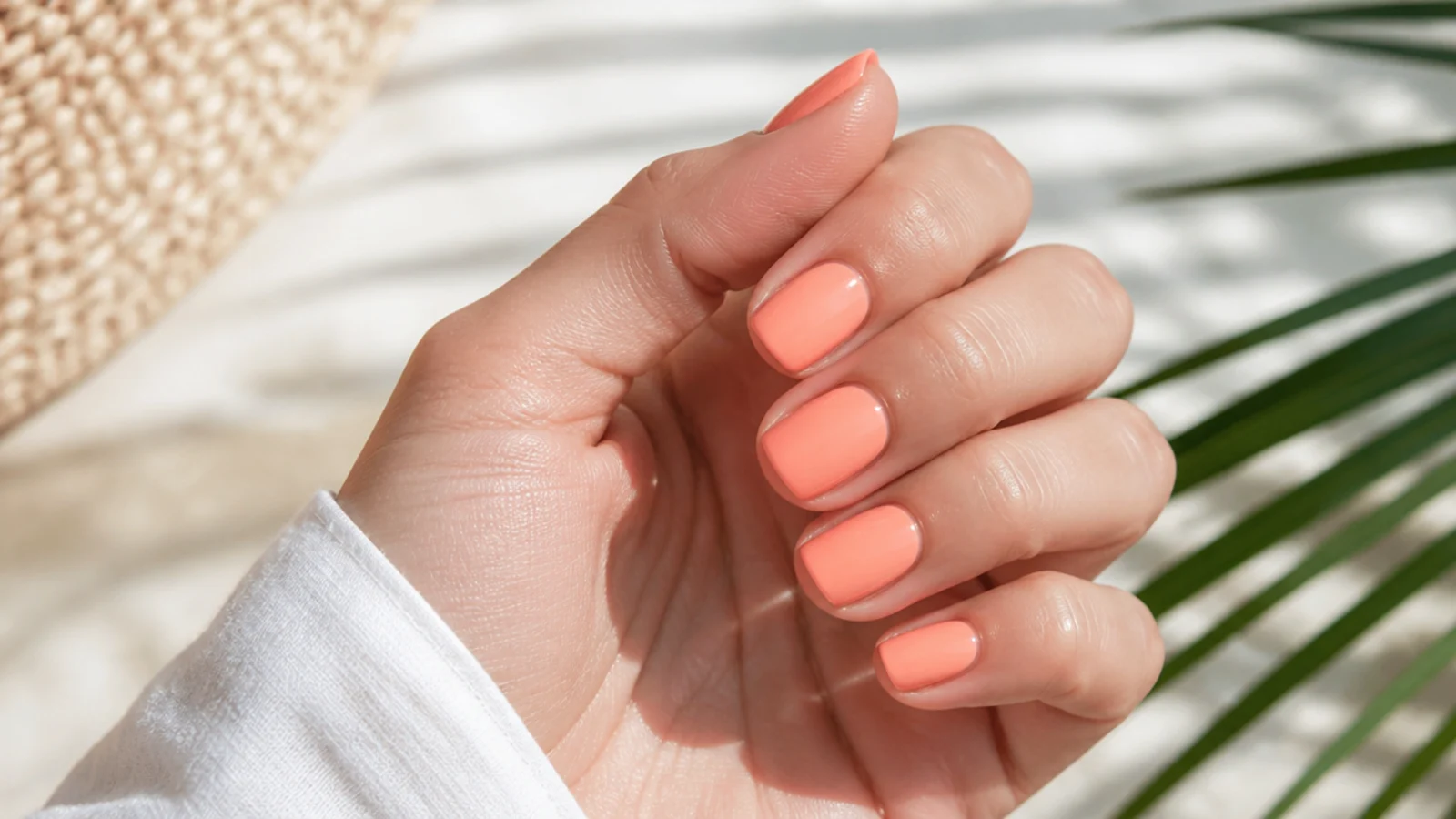
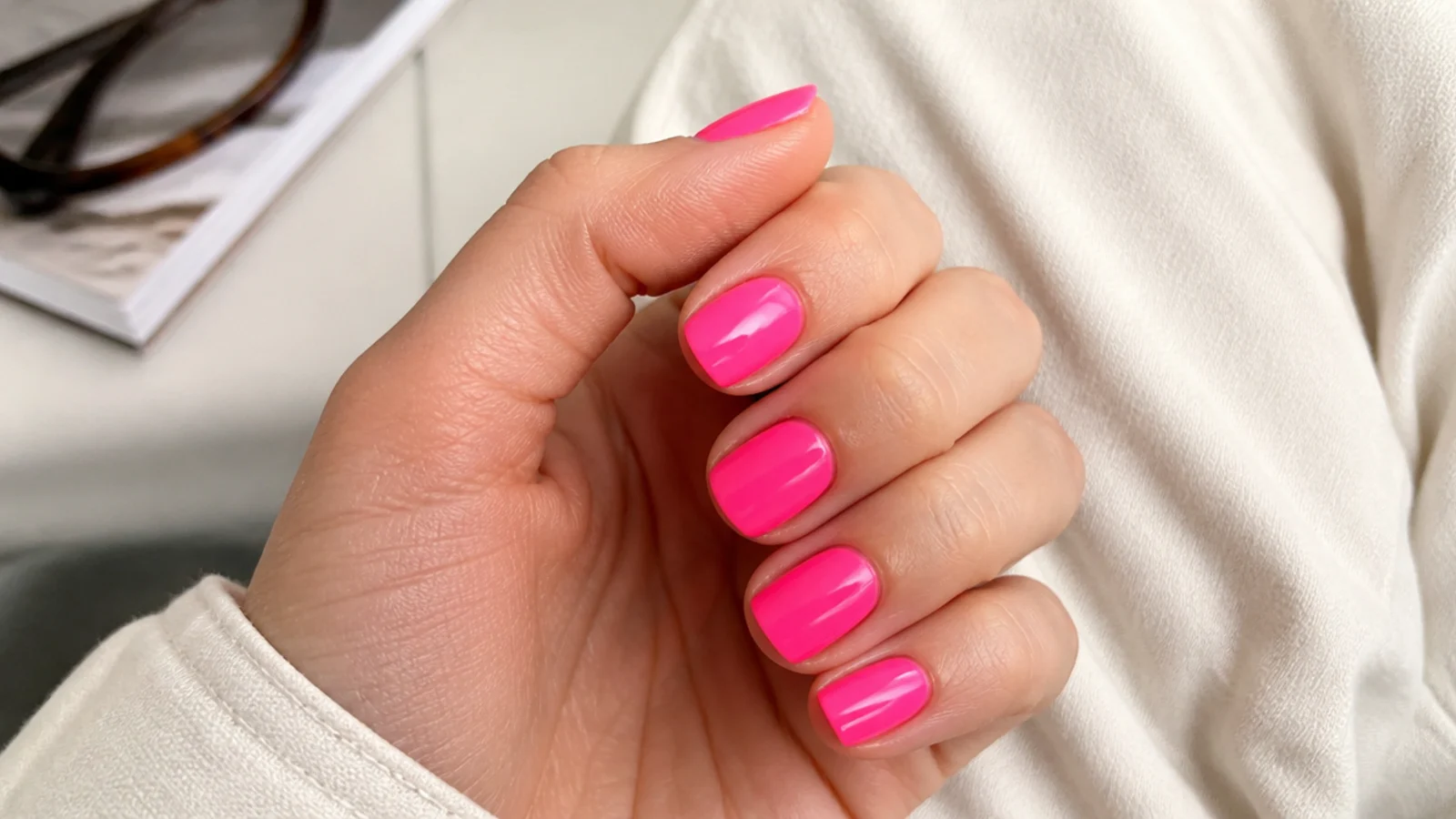
Saturated fuchsia, opaque in two coats, the loudest thing on this list and the one that most needs a cream formula rather than a shimmer. Chunky shimmer on a small nail plate reads as glitter dust rather than color; a flat cream stays a clean block of pink. Soft square keeps it playful. If your workplace rules out ten bright nails, do one hot pink accent on the ring finger over an otherwise nude set. Softer pinks live in pink French tip nails.
Who it suits: Summer, vacations and anyone who wants color to do the work.
Tip: Two coats, then stop; a third coat of a bright cream will pool at the flat tip and never level.
23. Butter Yellow Short Square Nails
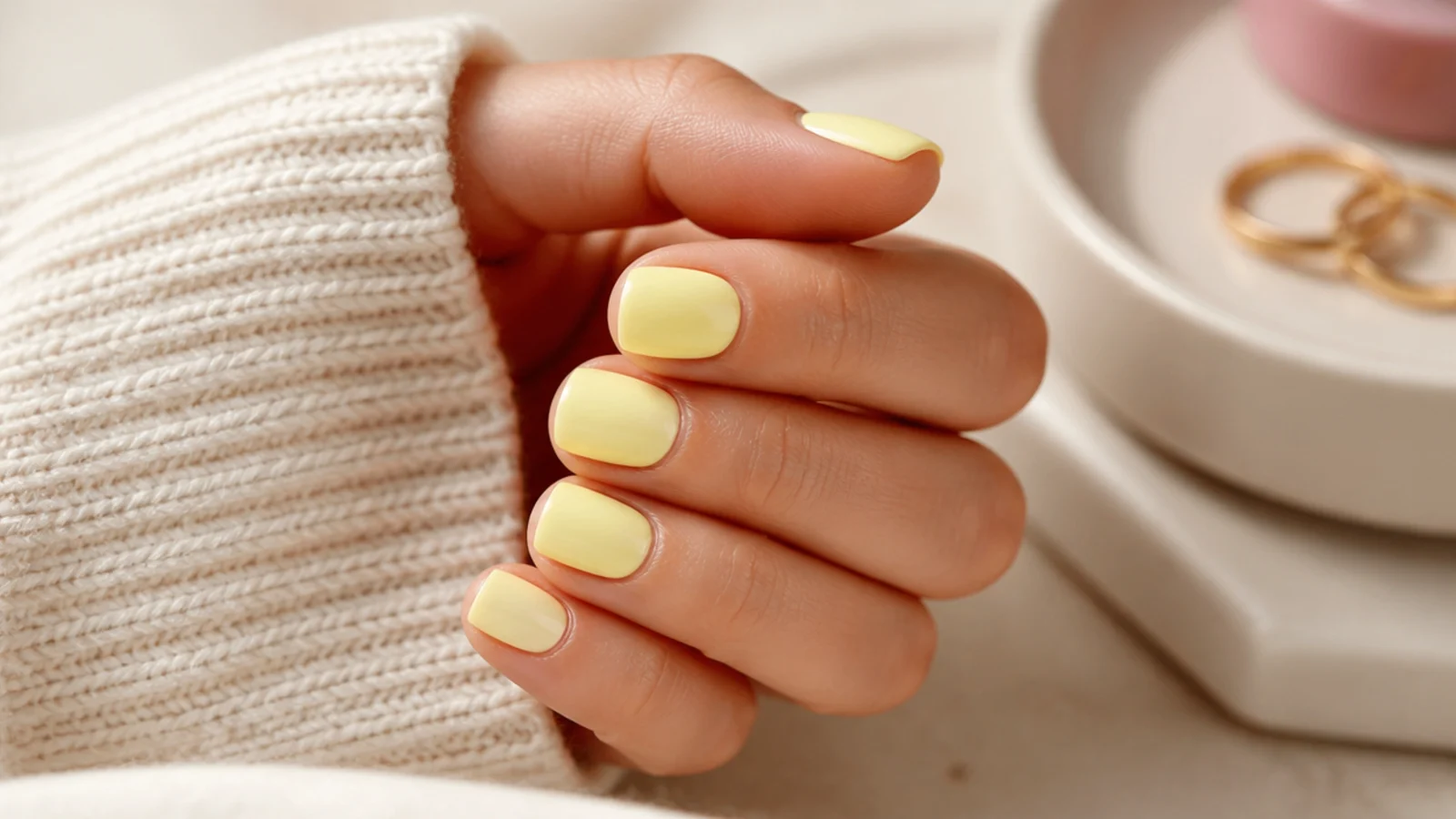
Pale, milky yellow with cream in it, not neon and not mustard. It is the modern neutral of the last two summers and it works on short square because the flat tip stops a soft pastel from looking like an unfinished base coat. Pale yellow flatters olive and deep skin tones especially well, and it is quietly the most flattering pastel on tanned hands. Soft square, high gloss, two coats over a white-tinted base for even opacity.
Who it suits: Summer, olive and deep skin tones, and pastel wearers.
Tip: Use a milky white base under it; over bare nail, yellow turns green-ish at the free edge.
24. Pistachio Green Short Square Nails
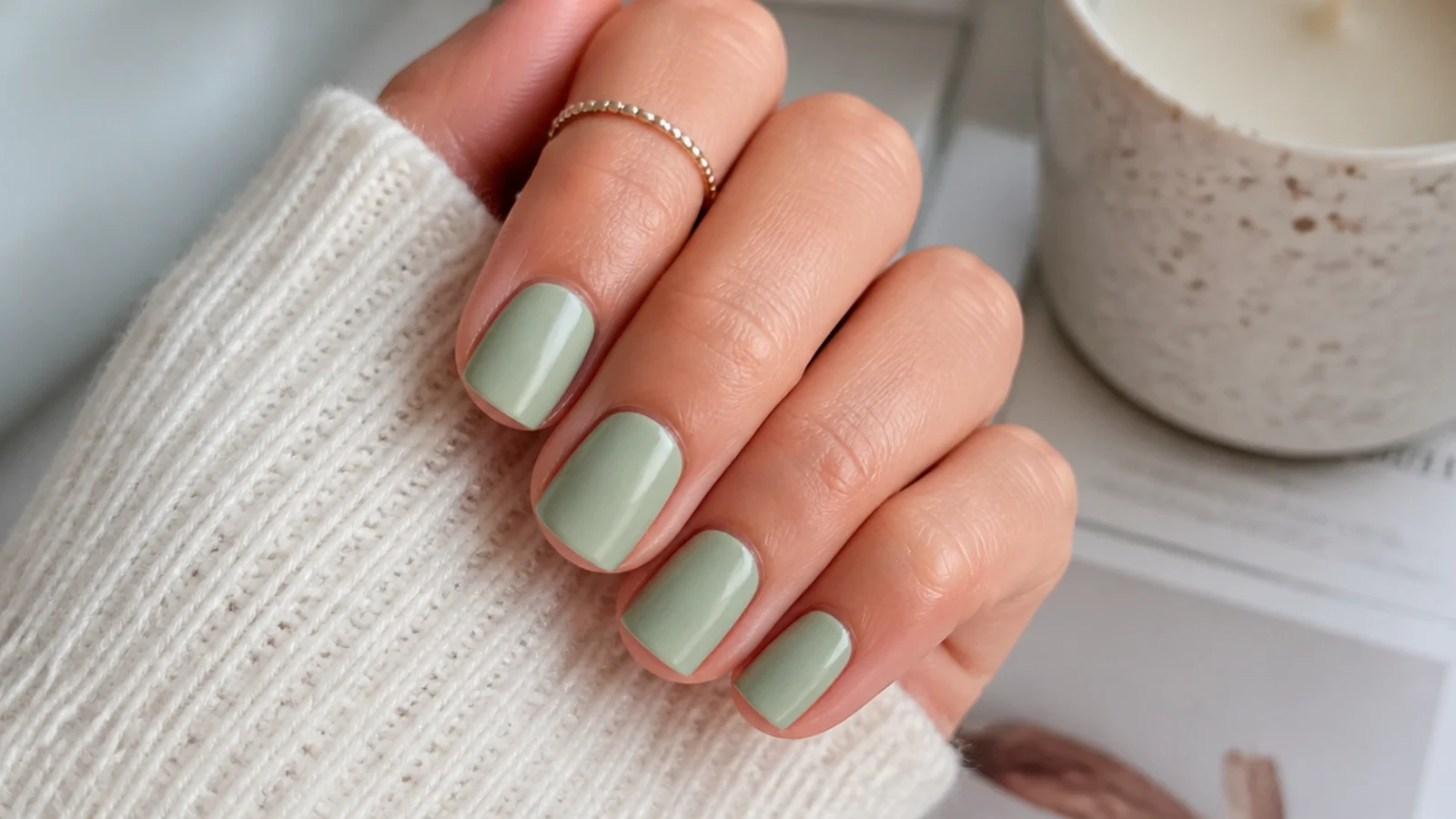
Muted, dusty green with gray in it, the pastel that reads grown-up rather than sugary. Pistachio behaves well on a small nail plate because it is low contrast against most skin tones, so it colors the nail without shortening it visually. Squoval filing softens the whole thing further. Two coats of a cream formula, never a shimmer, since sparkle turns a muted green murky at this scale. It also flatters gold jewelry more than most greens do. If you want it deeper, the same family runs through light olive green nails.
Who it suits: Spring, summer and anyone tired of pink pastels.
Tip: Check it against your veins; green pastels can pull sallow on very cool undertones.
25. Tortoiseshell Short Square Nails
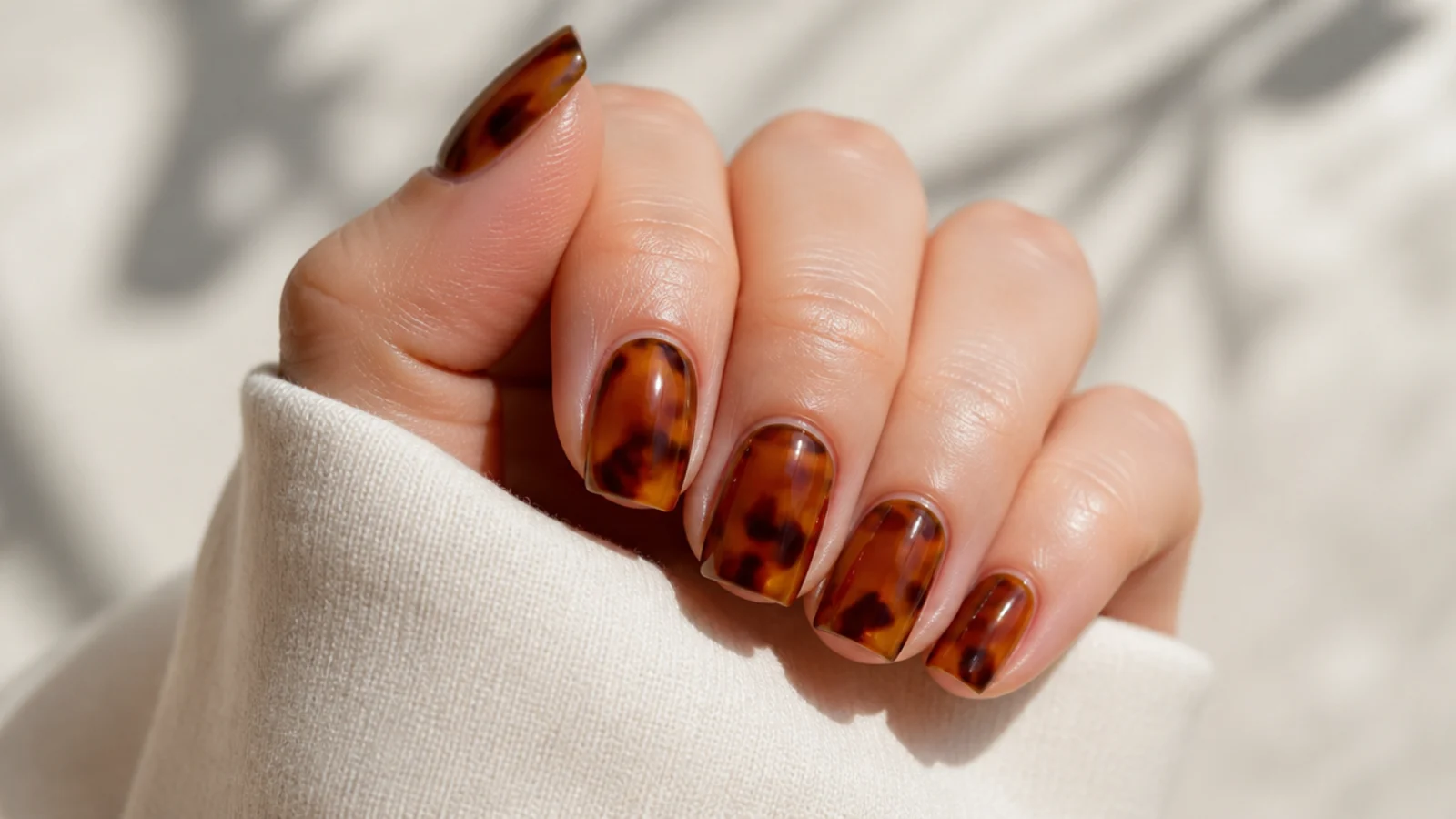
Amber, caramel and near-black brown bled into a honey base so the nail looks like tortoiseshell eyewear. It is usually built by dropping dark gel into a wet amber base and letting it spread before curing. On short square the flat tip gives the pattern a clean boundary to stop at, which is exactly what keeps it from looking like a smudge at this size. Do two accent nails, not ten. The bleeding technique is covered in brown blooming gel nails.
Who it suits: Fall, warm undertones and neutral wardrobes.
Tip: Ask for larger, fewer blobs; tiny tortoise spots on a short nail read as dirt from arm's length.
26. Negative Space Stripe Short Square Nails
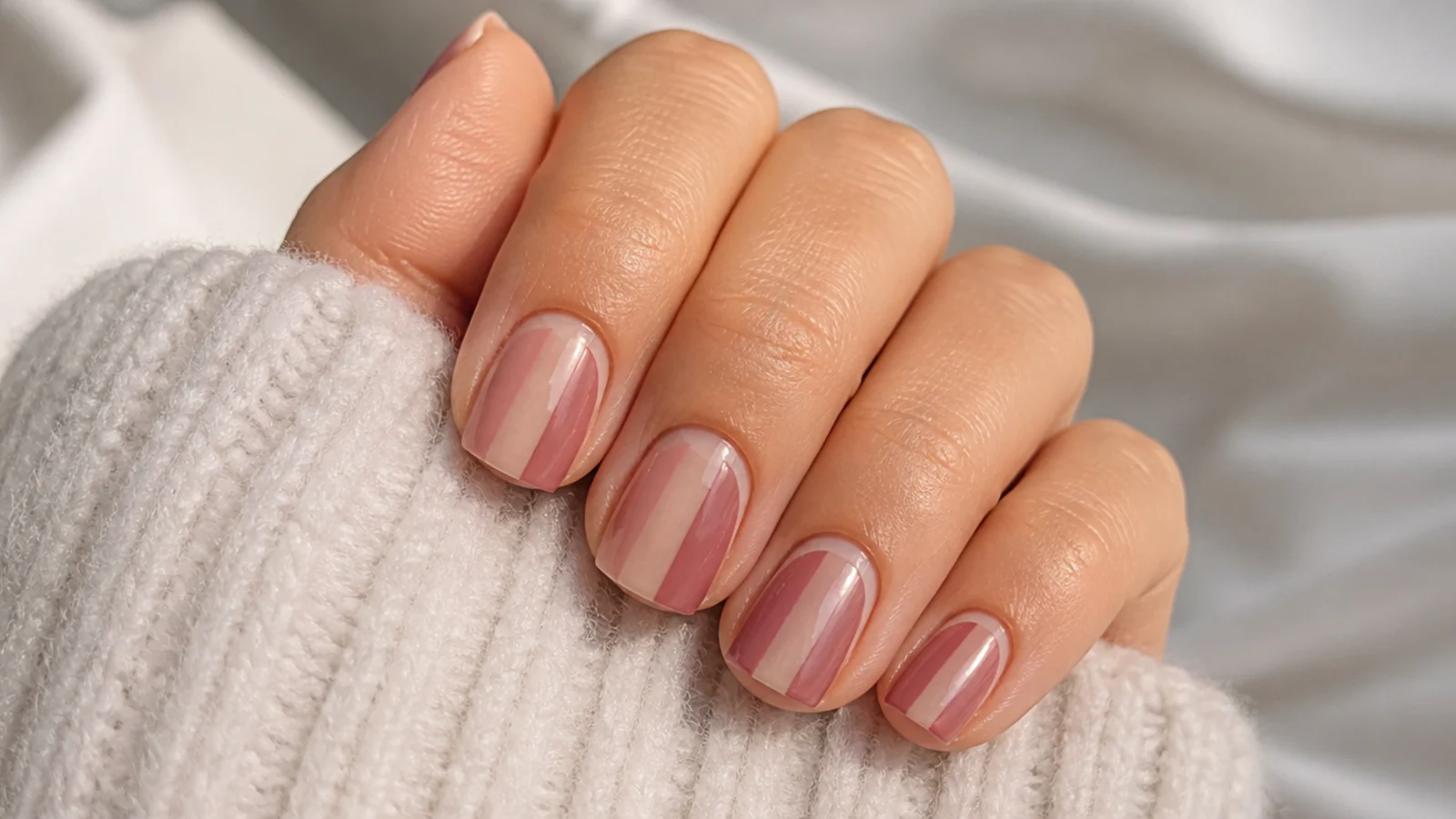
A vertical strip of bare nail left down the center or one side, with color blocked on either side. This design lives or dies on the square shape: negative space needs straight edges to align to, and on a rounded nail the bare stripe immediately looks like a chip. True square only, no bevel on the design nails. The vertical line is also genuinely lengthening, since it draws the eye up the nail rather than across it.
Who it suits: Wide nail beds and anyone who wants art without coverage.
Tip: Have the stripe taped before painting; freehand negative space on a 2mm nail never stays straight.
27. Black Dot Short Square Nails
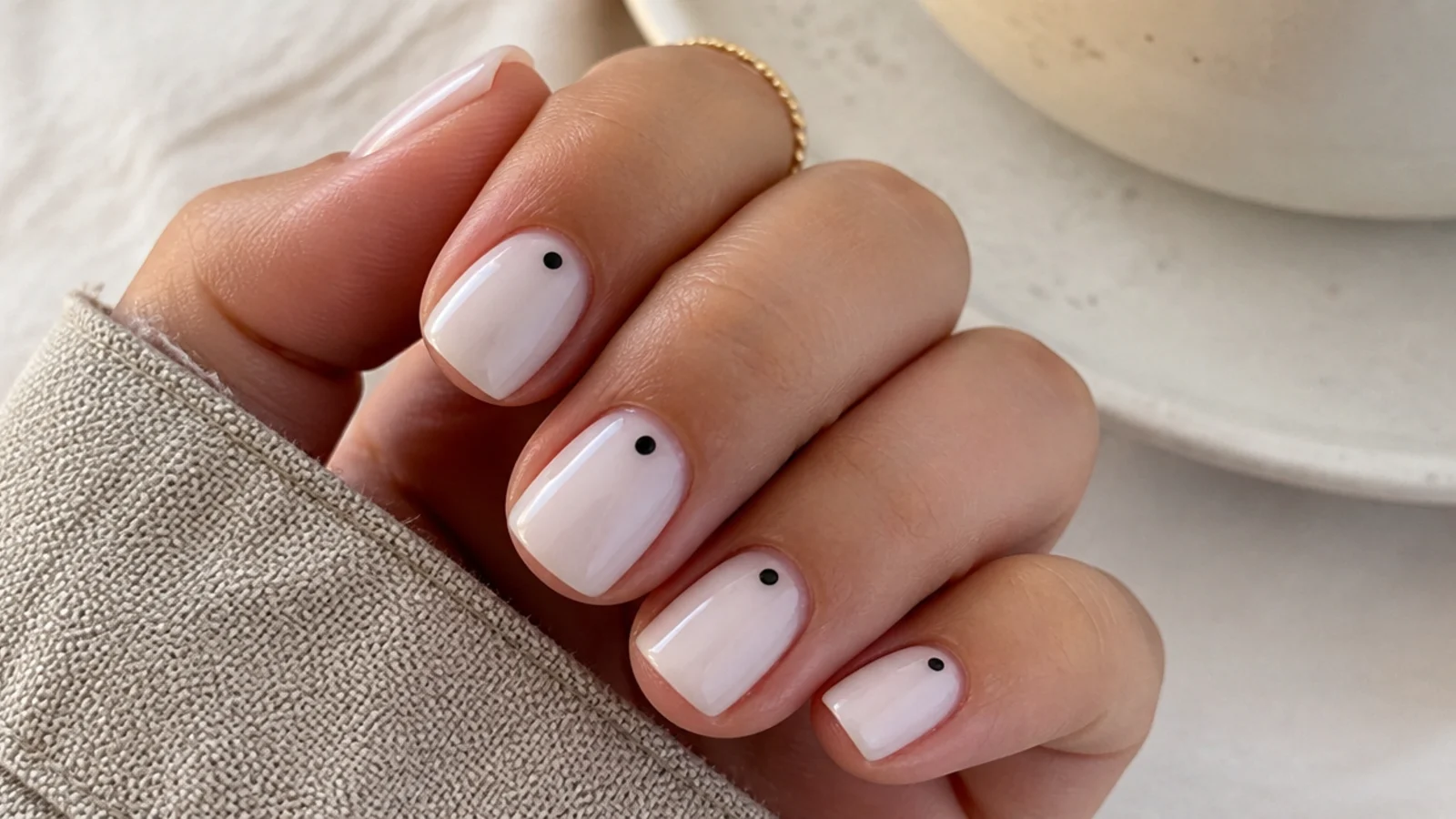
One small black dot placed near the cuticle on a milky or bare base, applied with a dotting tool or the round end of a bobby pin. It takes about four minutes for a full hand and is the highest impact-per-effort design here. Placing the dot low rather than at the tip keeps the nail plate clear, so the nail still reads long. Soft square filing. Vary it with three descending dots on the ring finger only.
Who it suits: Beginners, five-minute manicures and minimalists.
Tip: Load the tool once per dot; a reloaded tool makes the second dot twice the size of the first.
28. Tiny Daisy Short Square Nails
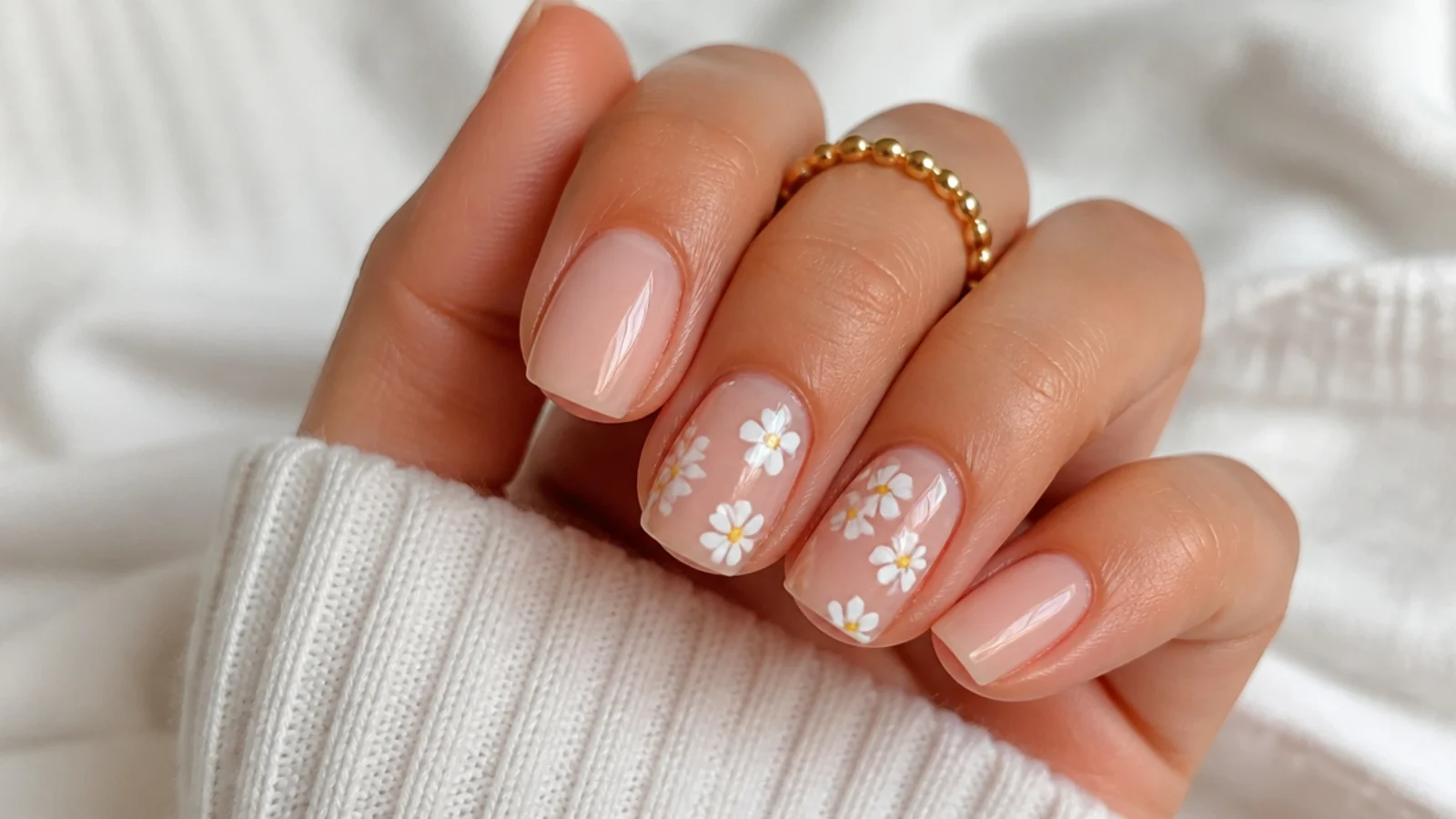
Five white petal dots around a yellow center, roughly 4mm across, on a sheer nude or milky base. Scale is the whole game on a short nail: one daisy per accent nail reads charming, three crowd the plate and make the nail look smaller. Put them on the ring and index only. Squoval filing suits the softness. Build the petals with a dotting tool rather than a brush so they stay round. More florals in this register at simple boho nails.
Who it suits: Spring, summer and anyone wanting nail art that stays sweet.
Tip: Dot the yellow center last, after the petals cure, or the white will drag into the yellow.
29. Checkerboard Short Square Nails
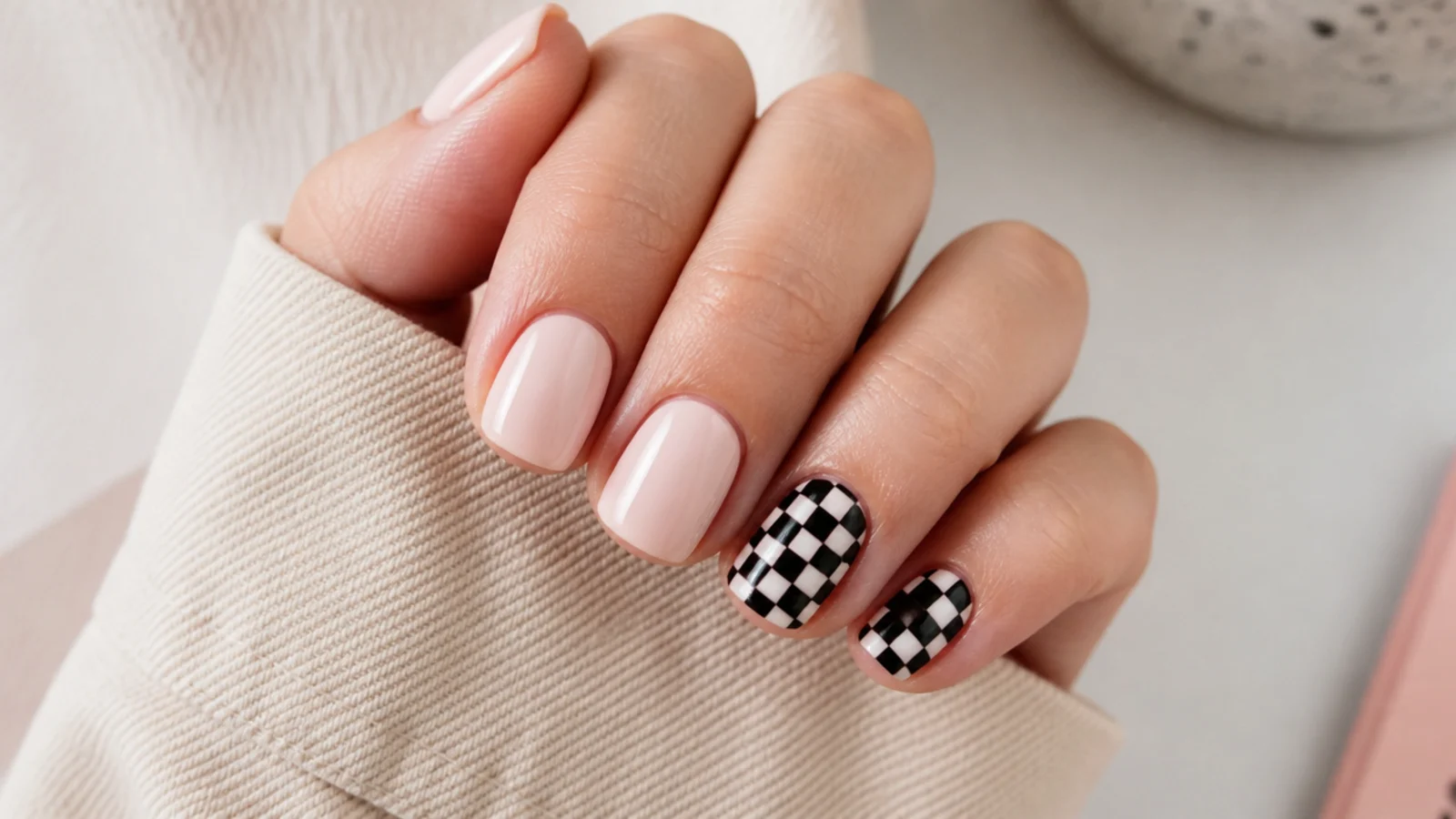
A grid of small alternating squares in black and white, or black and butter yellow, on one or two accent nails. Checkerboard is one of the only patterns that is genuinely better on short nails, because the square shape means the grid runs parallel to the nail edges instead of fighting them. Keep to a two-by-three grid at this length; anything finer turns to gray mush from a foot away. True square filing is required for the alignment to work.
Who it suits: Y2K looks, teens and anyone wanting a pattern that suits the shape.
Tip: Paint the white base first and add black squares on top; the reverse takes twice as many coats.
30. Gold Foil Accent Short Square Nails
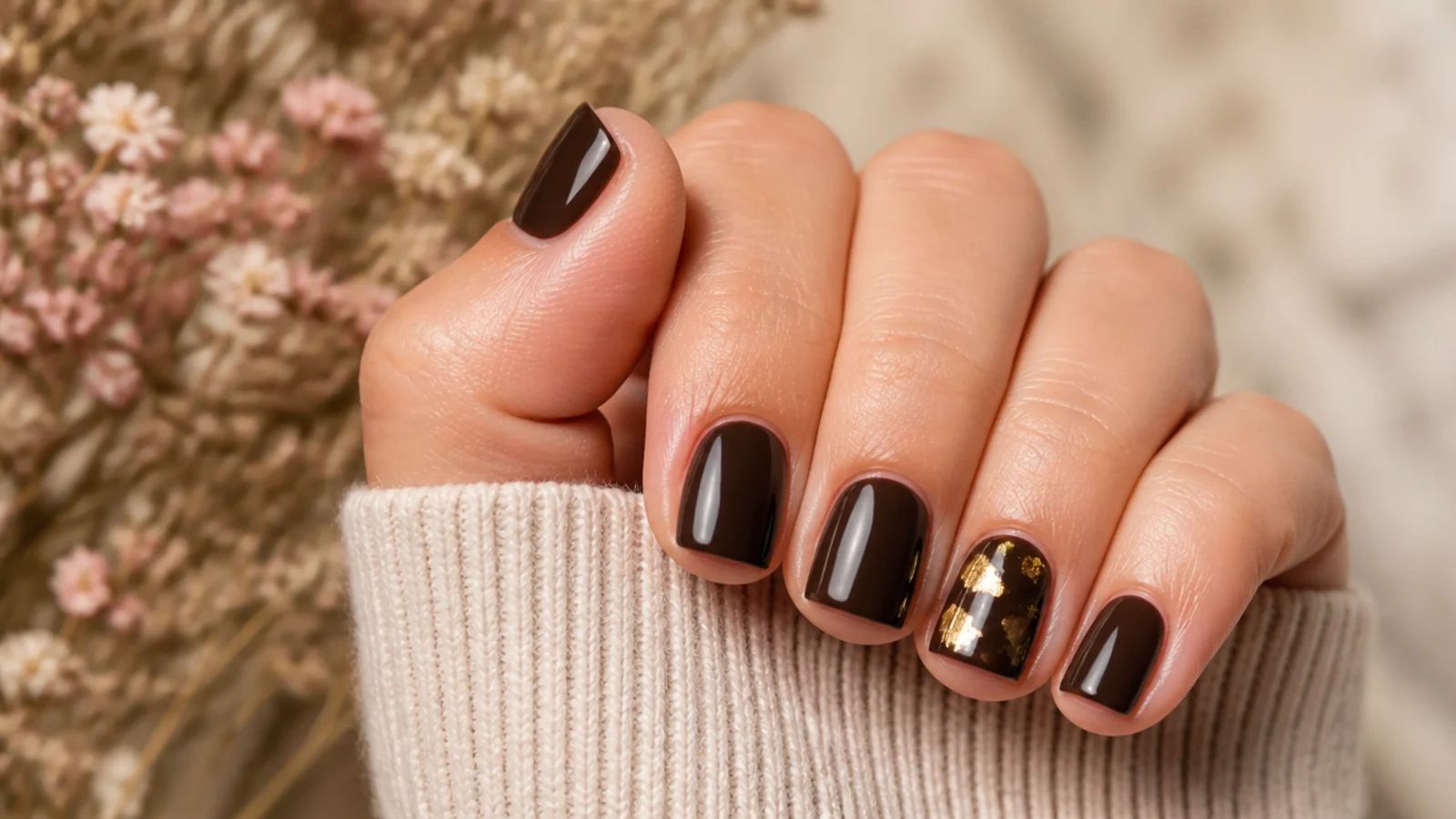
Torn fragments of gold leaf pressed into a dark base and sealed under a thick gloss top coat. Uneven edges are the point, so ask for scattered foil rather than full coverage. On short nails limit it to one accent nail, because foil adds visual weight and ten heavy nails make small hands look cluttered. Expect about 5 dollars per foiled nail. Soft square, and a genuinely thick top coat or the raised edges lift within a week. See it deeper in dark green and gold nails.
Who it suits: Holidays, New Year and party sets.
Tip: Press the foil with a silicone tool, not a fingertip; skin oil stops it bonding to the gel.
True Square vs Soft Square vs Squoval: Which Filing Do You Need?
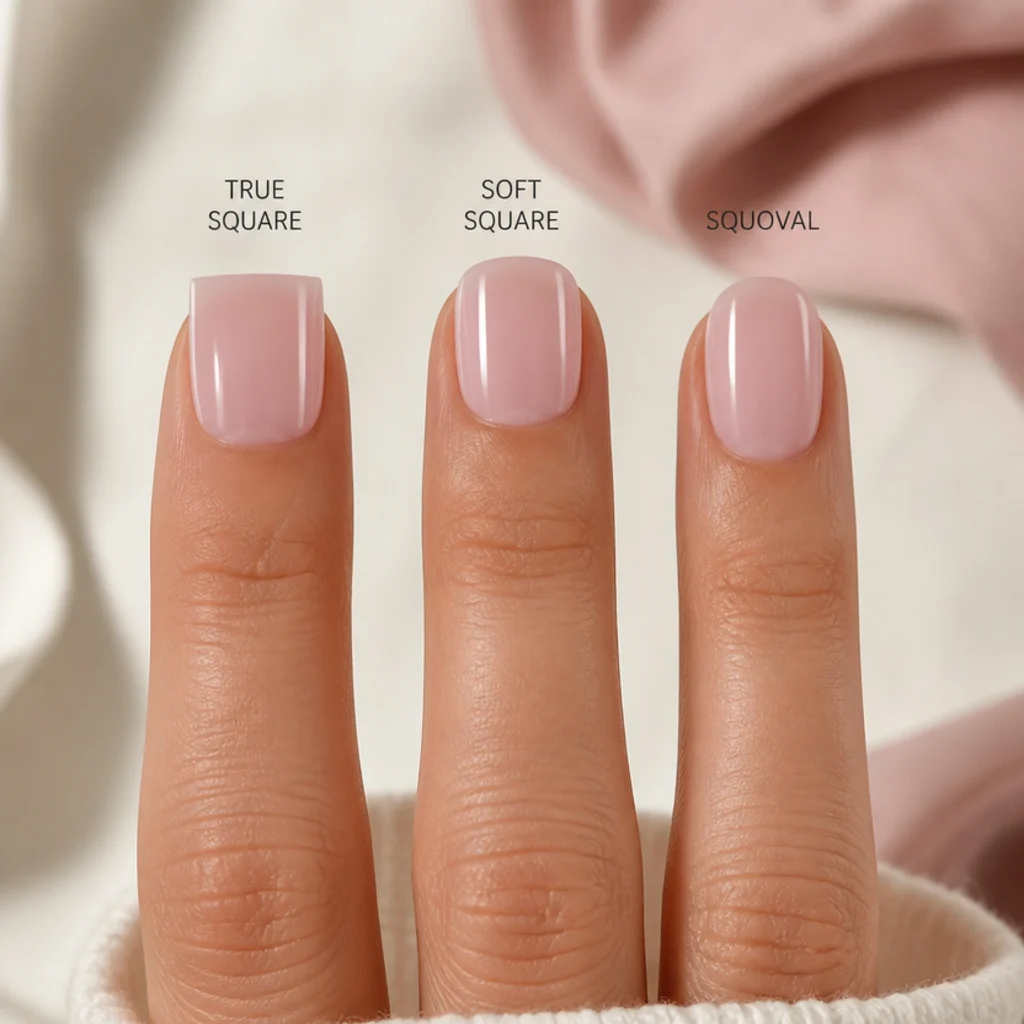
Every ranking page treats square as one shape. It is three, and the difference is entirely in the corners. True square leaves the corner at a sharp 90 degrees where the flat tip meets the straight sidewall. Soft square takes one light pass across each corner, removing maybe half a millimeter, so the nail still reads square from a foot away but has no point to catch on. Squoval rounds the corners fully, keeping straight sidewalls and a flat tip but curving where they meet, which is why it looks square from above and oval in profile. Pick true square if your nail beds are narrow and you want French tips, negative space or checkerboard, because those designs need straight edges to line up against. Pick soft square as the default: it is what most people mean by short square nails and it survives daily life. Pick squoval if your beds are wide or if you type all day. If none of the three sits right, the rounder options are covered in short almond nails.
Is Square or Round Better for Short Nails? Nail Bed Width Decides
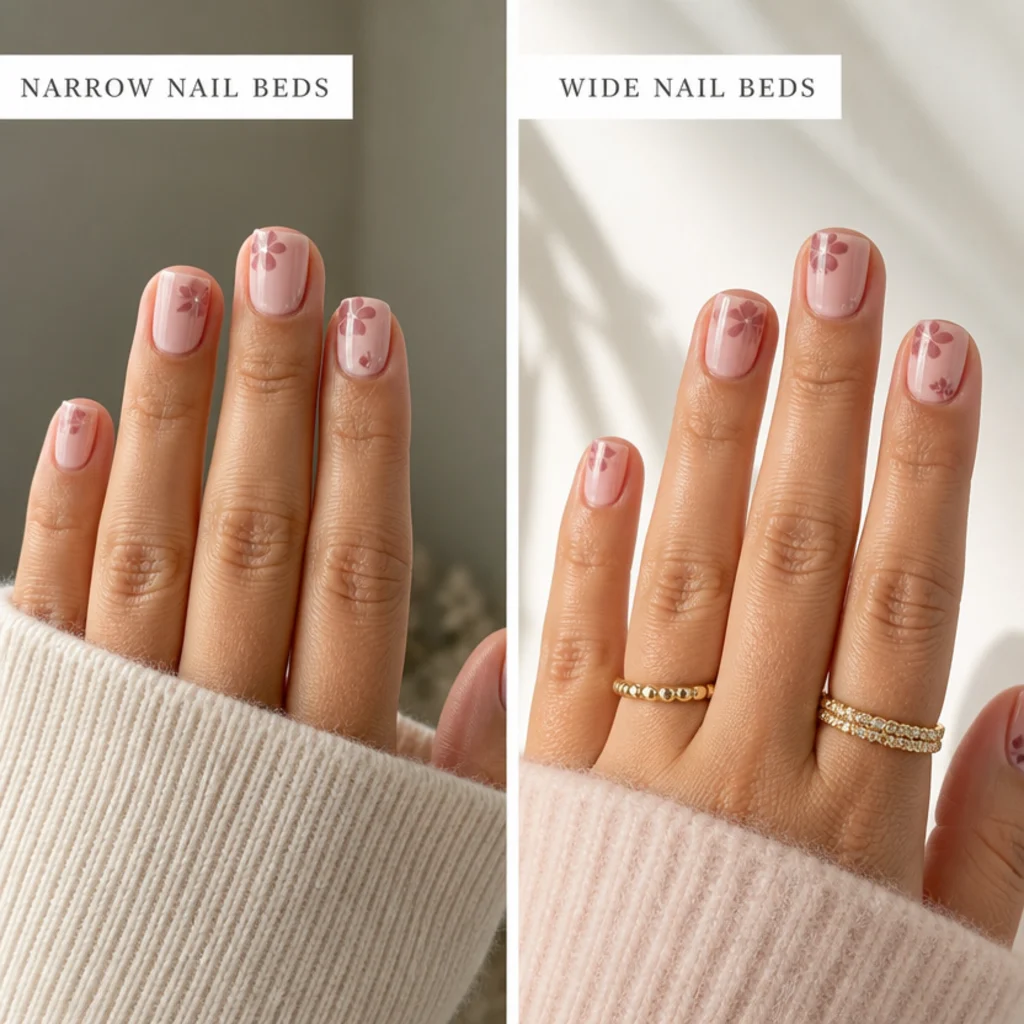
The honest answer is that it depends on the width of your nail bed, and no ranking page says so. A square tip continues the sidewall line straight out from the finger, which means it preserves whatever width you already have. On a narrow nail bed that is flattering: the square adds a little visual width and stops the nail looking pinched. On a wide nail bed it is the opposite, because square emphasizes the widest measurement of the nail and the result reads stubby no matter how neat the file is. Wide beds should go squoval, where the rounded corners visually shave a millimeter off each side. There is a second variable: finger length. Short fingers do better with square at 2mm or more of free edge, since the flat tip needs a little length before it reads as a shape rather than a stub. Long fingers can wear square at zero free edge and still look deliberate. If square is not working for you at all, the tapered alternative at this length is short coffin nail ideas.
Why Short Square Nails Snag and Break at the Corners
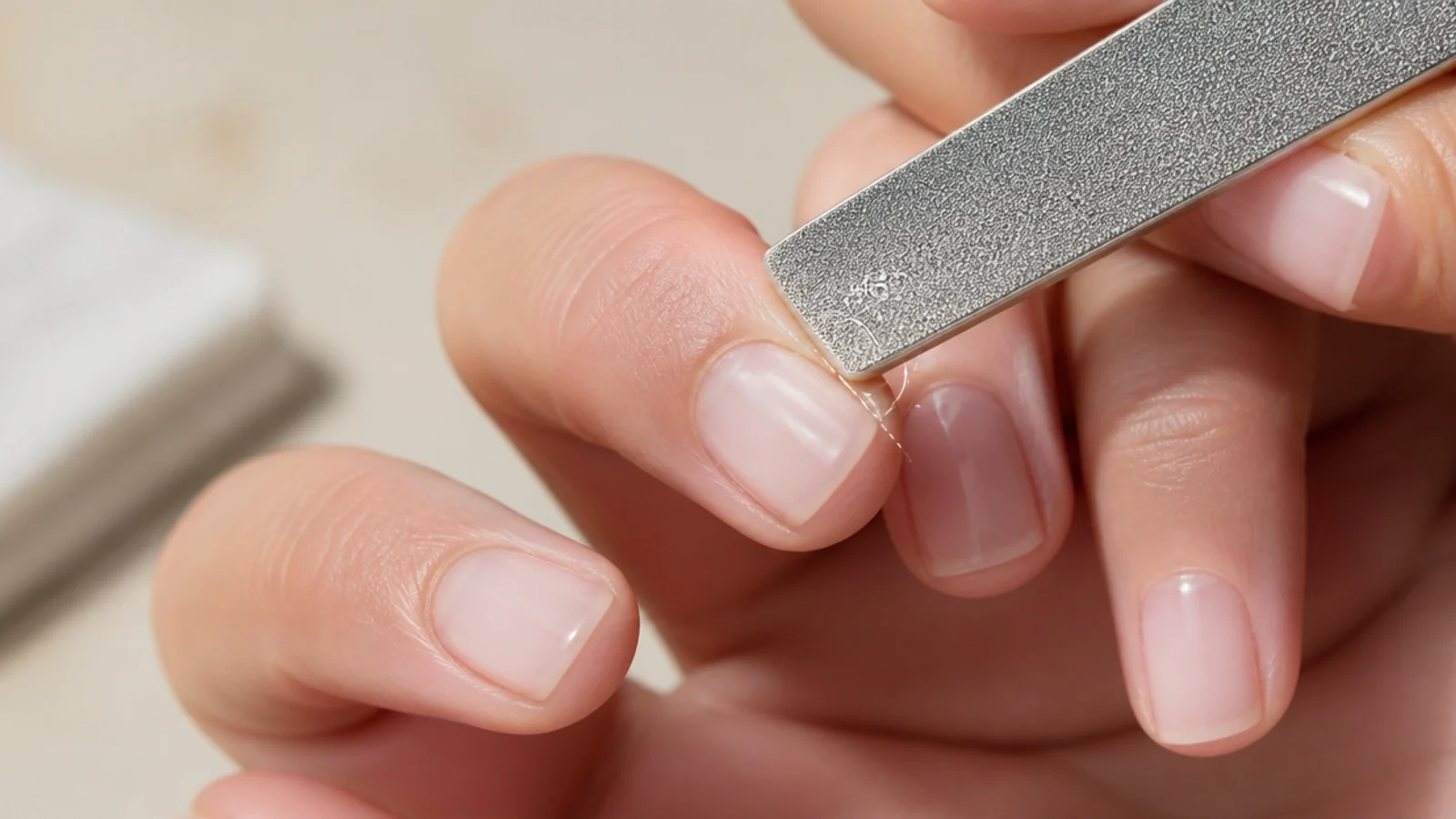
Nobody warns you about this and it is the number one complaint about short square sets. A sharp 90 degree corner is a stress concentrator: it is the point furthest from the support of the nail bed, and every knock, sweater sleeve and jeans pocket lands on it first. That is why square sets chip at the corner rather than across the tip, and why they pull threads out of knitwear. The fix takes ten seconds per nail. After shaping the tip flat, hold a 240 grit file at roughly 45 degrees to the corner and take two or three light passes on each side. You are removing a fraction of a millimeter, not rounding the shape, and the nail still reads square from above. Two more things help: cap the free edge with base, color and top coat so the corner is sealed rather than raw, and file in one direction only rather than sawing back and forth, which separates the layers of the free edge and starts the peel.
Can You Do Nail Art on Short Square Nails?
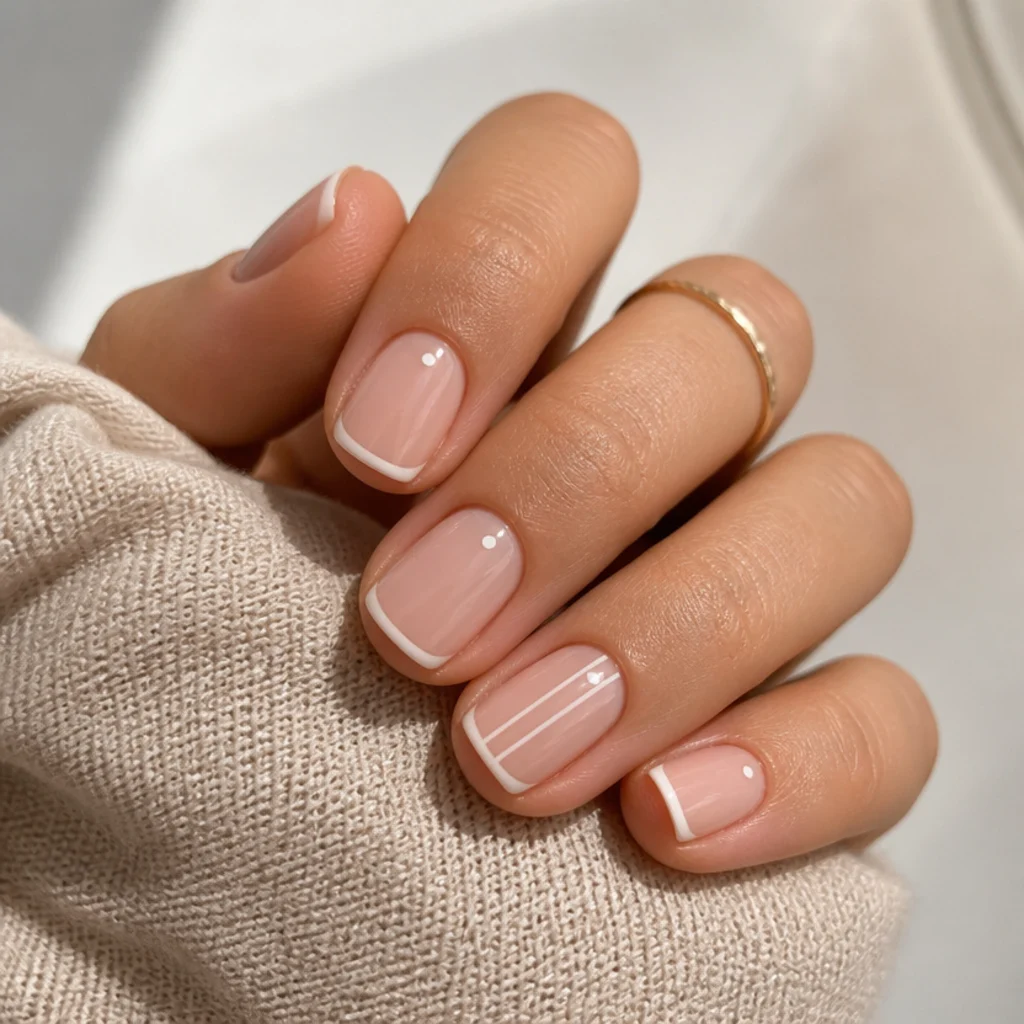
Yes, and short square is actually the best short shape for it, but the rules are different. Scale is the constraint. A design that occupies more than about a third of the visible nail plate makes the nail look smaller, which is why thick French tips and full florals fail at this length while micro lines and single dots succeed. Placement is the second rule: art near the cuticle keeps the plate clear and the nail reads longer, while art at the tip cuts it short. That is the entire reason reverse French works so well here. Third, the square shape gives you access to designs no other short nail can carry. Anything built on straight lines, so negative space, checkerboard, double French lines and color blocking, aligns to the flat tip and parallel sidewalls. On almond or round those same designs look crooked. Stick to two accent nails rather than ten for anything detailed. For more low-effort designs at this length, see simple short nail ideas for everyday.
How to File Short Square Nails at Home
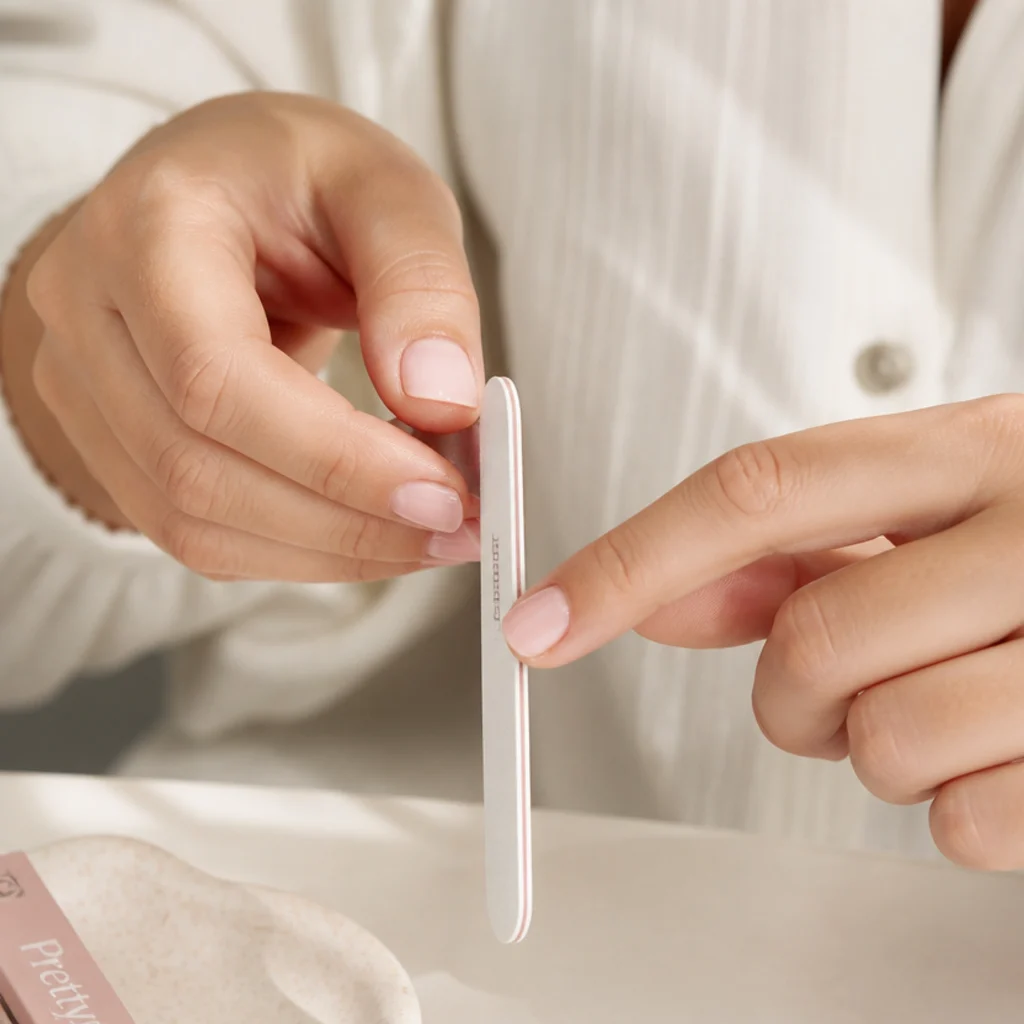
Square is the easiest shape to file at home because you are cutting one straight line, not judging a curve. Start with clean, dry nails, since wet nails are soft and tear. Clip or file all ten to the same length first, using the shortest as your reference. Then take a 180 grit file, hold it flat and perpendicular to the tip, and take it straight across in one plane, filing in one direction only. Do not rock the file, which is what produces a tip that looks curved. Check by looking down the finger from the tip, not from above, since asymmetry only shows from that angle. Next, run the file lightly along each sidewall to make sure they are parallel rather than tapering. Then bevel the corners at 45 degrees with a 240 grit file unless you specifically want true square. Finish by buffing the free edge from underneath with the fine side to remove the burr that causes peeling. The same one-plane logic applies in how to shape coffin nails.
Short Square Nail Troubleshooting: Uneven Tips, Stubby Look, Fast Chips
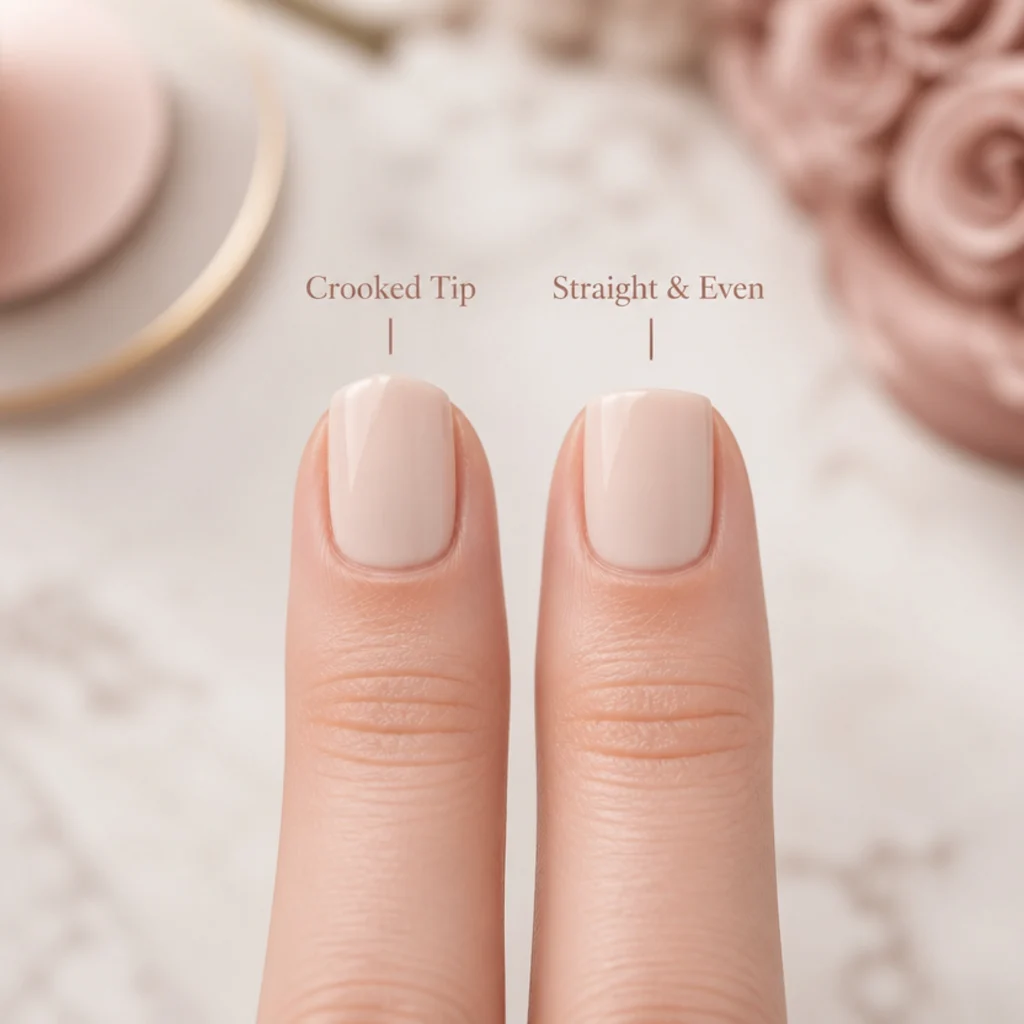
Four problems, four causes, four fixes. If the tips look crooked, the file was rocked or worked from one angle only; file side to side in matched stroke counts and check from the fingertip rather than from above. If the nails read stubby rather than square, either the free edge is under 2mm so there is no flat edge to see, or your beds are wide and true square is exaggerating them; switch to squoval. If the corners chip within days, they were left sharp and unsealed; bevel them and cap the free edge with every layer including top coat. If a light color looks streaky or ridged, the problem is prep rather than polish, because sheer and milky shades sit on top of surface texture rather than filling it; use a ridge-filling base and buff the plate lightly first. One more: if the sidewalls look like they are angling inward, you have filed a soft coffin by accident. Straighten them and stop filing the sides. The dark-set version of these fixes runs through dark feminine square nails.
Frequently Asked Questions
What nail shape is best for short nails?
Squoval is the most universally flattering short shape, because it keeps the flat tip and straight sidewalls of square while rounding the corners so nothing snags or splits. True square is better if your nail beds are narrow or if you want French tips, negative space or geometric art, since those designs need straight edges to align to.
Is square or round better for short nails?
It depends on nail bed width. Square preserves whatever width your nail already has, which flatters narrow beds and exaggerates wide ones. Round removes width at the corners, so it suits wide beds but can make narrow nails look pinched. Squoval sits between the two and is the safest choice if you are unsure.
How short can square nails be?
About 2mm of free edge is where true square starts to read as a shape rather than a stub, because you need a visible flat edge for the eye to register. Soft square and squoval work from roughly 1mm, since the rounded corners are visible immediately. Below that, any shape reads simply as a filed natural nail.
Can you do nail art on short square nails?
Yes, and the square shape carries more art than any other short shape. The rule is scale and placement: keep any design under about a third of the visible nail plate, and place it near the cuticle rather than the tip so the plate stays clear. Micro French tips, single dots and negative space stripes all work at 2mm.
Can you do a French manicure on short square nails?
It is the best shape for one. The smile line runs parallel to the flat tip instead of curving around a point, so it reads as a drawn line rather than a smudged arc. Keep the band under 2.5mm, or ideally do a 1mm micro French, since thick white tips visually shorten an already short nail.
How do I make my short square nails look longer?
Three things work. Use a sheer nude one shade lighter than your skin so the nail continues the finger line instead of interrupting it. Keep the sidewalls straight and stop filing the sides, since narrowing them shortens the visual line. Put any design near the cuticle rather than the tip, which is why reverse French flatters short nails.
Do short square nails make your fingers look shorter?
Only if your nail beds are wide, in which case the square tip emphasizes the widest part of the nail. On narrow to medium beds square is neutral to lengthening, especially in a skin-matched nude with straight sidewalls. If yours look stubby, switch to squoval and move any nail art down toward the cuticle.
How long do short square nails last?
Regular polish gives five to seven days, a soft gel manicure two to three weeks, and builder gel or short Gel-X tips three to four weeks before regrowth shows. Short square outlasts longer shapes because there is less leverage on the free edge, but sharp corners chip first, so beveling them adds several days.
What is the difference between squoval and square nails?
Both have a flat tip and straight sidewalls. Square leaves the corners at a sharp 90 degrees; squoval rounds those corners fully so the nail looks square from above and oval in profile. Squoval snags less, breaks less and suits wide nail beds, while square holds straight-line nail art far better.
Which short nails look are you saving?
If you take one thing from these 30 short square nail ideas, make it the corner bevel. Ask your tech to take one light pass at 45 degrees across each corner after shaping, or do it yourself with three strokes of a 240 grit file. It keeps the tip reading square from above while removing the sharp point that catches on knits, hair and pockets, and it is the single biggest reason a short square set survives two weeks instead of one. Start with milky white, a micro French or espresso brown if you are choosing your first set, since all three read expensive at 2mm. Then browse summer nail colors for short nails or the rest of the short nails hub.