Study Tips & Skills
19 Research-Backed Productivity Tips for Students
Feb 4
2026
19 research-backed productivity tips for students — evidence-based techniques to do more in less time without burning out.
Most productivity content tells you to wake up at 4am, journal in a leather notebook, drink celery juice, batch your emails, work in 90-minute deep-focus blocks, eat lunch at exactly 12:30, and meditate before bed. The result, the content promises, is that you will be transformed.
The reality, for most students who try this, is that they collapse by Wednesday and decide they are bad at productivity.
The honest truth: real productivity research is much smaller, calmer, and more boring than the wellness-influencer version. The interventions that actually work are well-established, well-evidenced, and quietly transformative — without requiring you to overhaul your entire personality.
This article is the realistic version. Nineteen research-backed productivity tips for students, ranked roughly by impact per unit effort. None of them require special equipment, expensive courses, or a 4am alarm.
Save this. Try three. The compound effect is real and quiet.
The High-Impact Tier (Try These First)
The five tips that, individually, deliver the largest measurable productivity improvements in published research.
1. Get 7-9 Hours of Sleep
The single most evidence-backed productivity intervention in modern science. The student who consistently sleeps 7.5 hours outperforms the student who consistently sleeps 6 hours on essentially every measurable cognitive metric — by a margin that gets larger over weeks.
The fix is not "sleep when you can". The fix is non-negotiable bedtimes. Pick a target wake time. Subtract 7.5 hours. That is your hard bedtime. The 11pm Netflix episode that becomes a 2am bedtime is the single biggest productivity loss in most students' weeks.
2. Use a Single Daily Priority List (Not a Master To-Do List)
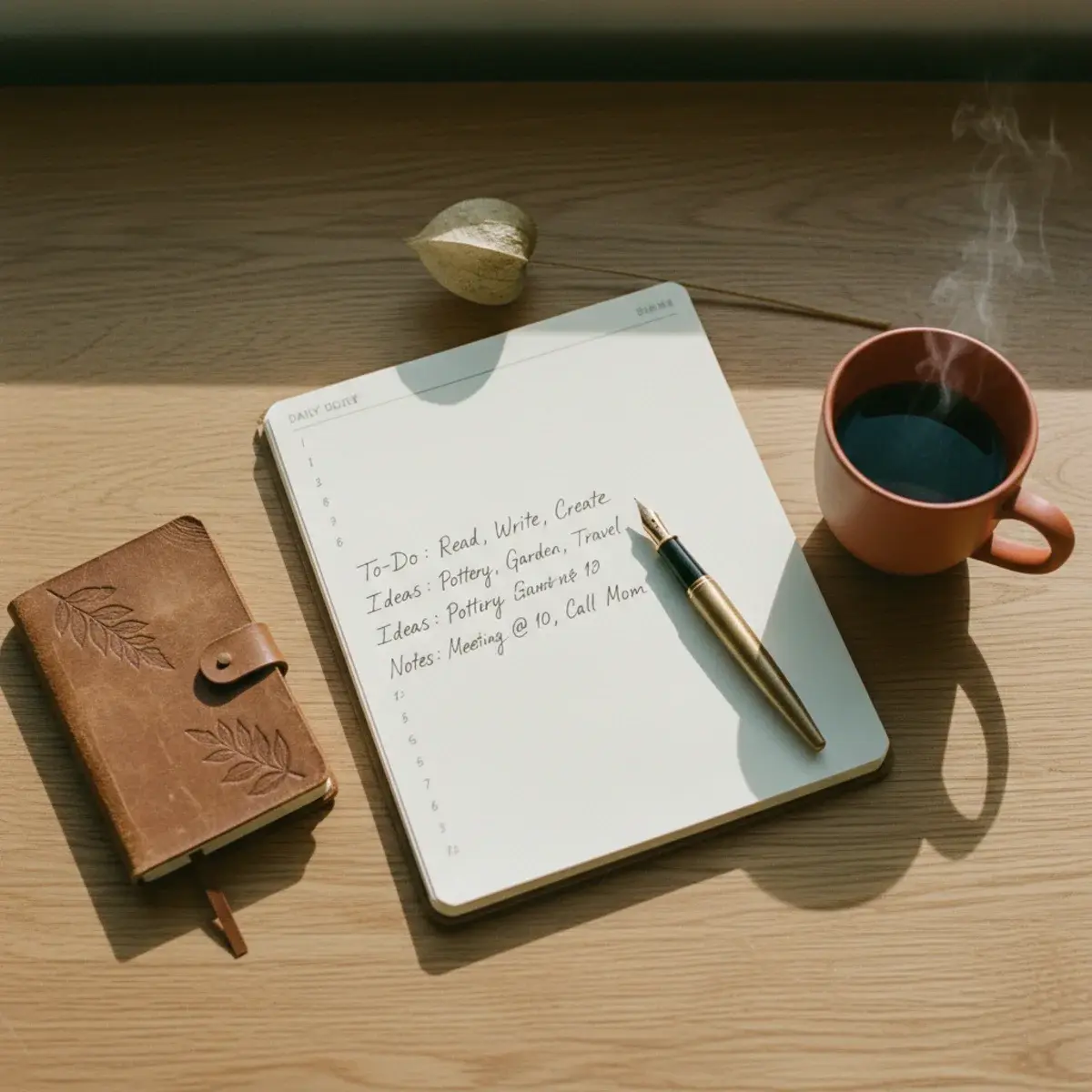
The most-recommended productivity habit in actual research is also the simplest: each evening, write the three most important tasks for the next day on a single piece of paper. Not ten. Three.
The single-list discipline forces ruthless prioritisation. You can't do everything; the three-task limit makes you decide what matters. The completion of three priorities reliably beats the completion of seven of seventeen — measurably, every time.
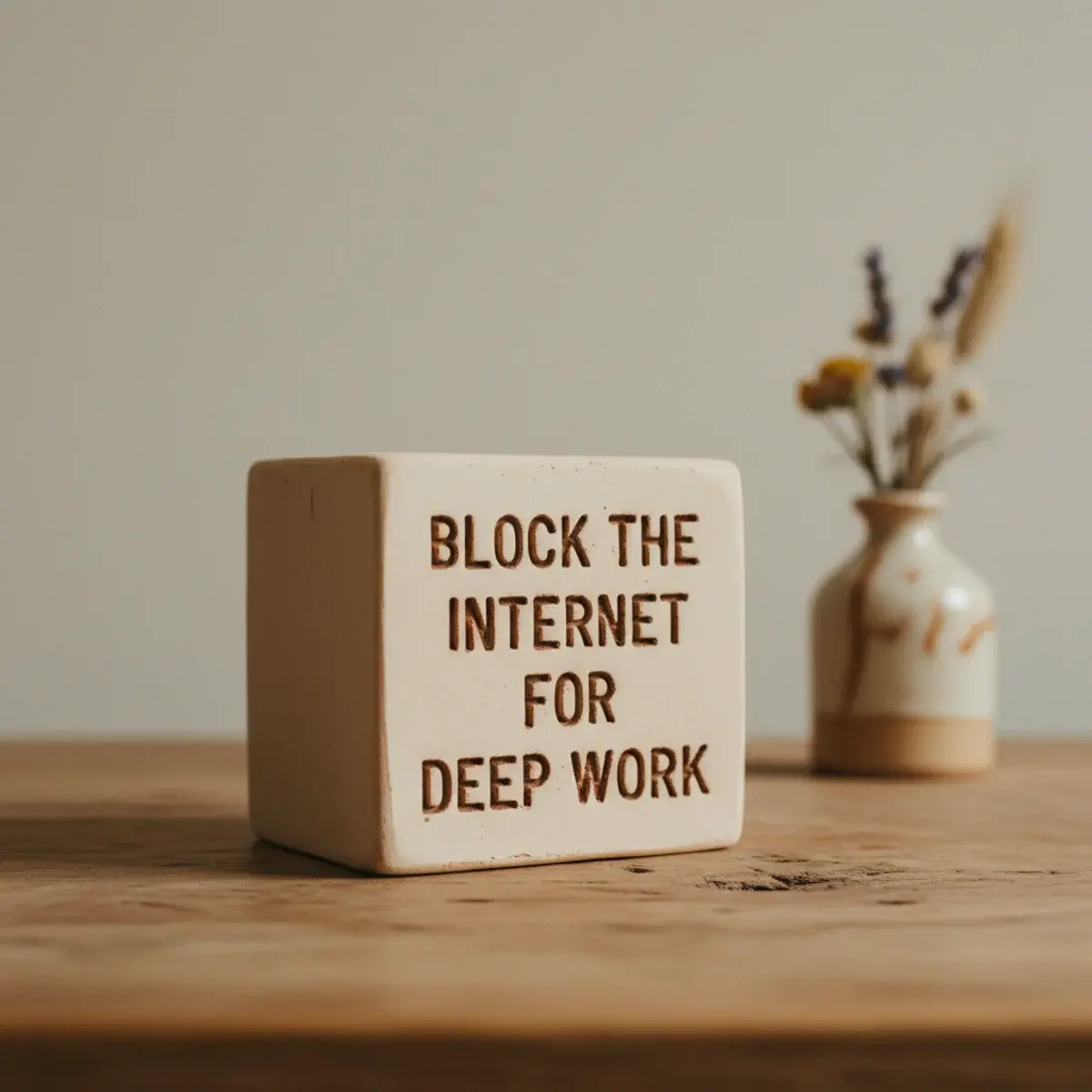
3. Block the Internet for Deep Work
The single largest distraction in modern student life is the internet, and the single largest productivity intervention is removing it during deep-focus work. The Forest app, Cold Turkey Blocker, or the airplane-mode-with-WiFi-off trick all work.
The mechanics: block all non-essential sites for 90-minute deep-work blocks, twice a day. The output of those two 90-minute blocks reliably exceeds the output of six hours of fragmented work. The maths is brutal.

4. Sleep, Eat, Move (Boring, Underrated)
The triad that productivity content systematically undersells because it doesn't make for exciting content. The student who sleeps 7.5 hours, eats three real meals, and moves 20 minutes a day will out-produce the student who optimises every other variable but neglects these three.
The boring biology: your brain runs on glucose, oxygen, and rest. Optimisation of all of productivity is, at the foundation, optimisation of these three inputs.
5. Schedule Tasks at Their Right Time of Day
Most people have a 3-4 hour daily window of peak cognitive function — usually 8am-12pm for most chronotypes. Hard cognitive work (writing, complex reading, problem-solving) goes here. Easy administrative work (emails, errands, scheduling, light reading) goes after lunch when your brain is at its lower-energy.
The student who writes her essay at 9am and answers emails at 3pm outperforms the student who answers emails at 9am and tries to write at 3pm — even with identical total time spent. The order matters.
The Medium-Impact Tier
The tips that, while less foundational, deliver measurable productivity improvements when stacked on top of the high-impact ones.
6. Use Pomodoro for Hard Tasks
The 25-minute focused work block followed by a 5-minute break. The Pomodoro Technique works for two psychological reasons: it bounds the suffering of hard work (you only have to sustain focus for 25 minutes), and it builds a rhythm of work that becomes self-sustaining.
For the full guide, see How to Use the Pomodoro Technique for Studying.
7. Eat the Frog (Hardest Task First)
The Mark Twain principle: if you have to eat a live frog, do it first thing in the morning so that the worst part of your day is behind you. Translated: do the hardest, most-feared task of the day in your peak morning window.
The behavioural research is unambiguous. The hardest task gets harder every hour it's procrastinated. Doing it first removes a low-grade dread that, otherwise, sits over the whole day.
8. Batch Similar Tasks
Five separate context-switches between writing and email-checking is dramatically less efficient than 90 minutes of writing followed by 30 minutes of email. The brain pays a context-switching cost every time it shifts modes.
The implementation: schedule "email blocks" twice a day (mid-morning, mid-afternoon). Outside those blocks, the inbox is closed.
9. Use Active Recall, Not Passive Re-Reading
The single most evidence-backed learning technique. Reading a textbook chapter and immediately closing it produces vastly worse retention than reading the chapter and then trying to write down what you remembered from it.
For the full guide, see How to Use Active Recall for Studying.
10. Take Real Breaks (Not Phone Breaks)
The "break" that consists of fifteen minutes of TikTok is not a break. It is a cognitive load shift to a different kind of demanding stimulus. A real break: walk outside, look at something far away, drink water, talk to a human in person for two minutes.
The 10-minute restorative break between 90-minute deep work sessions reliably extends the productivity of the next session. The 10-minute phone-doom-break shortens it.

11. Plan Your Week on Sunday Evenings
The 20-minute Sunday-evening planning ritual: look at the week ahead, block in major commitments, identify the three priorities for each day, decide when the hard work happens. The students who do this consistently outperform the students who plan day-by-day by a measurable margin.
The mechanism is not magic — it's that the plan-ahead student has already made her priority decisions when her willpower is fresh, instead of having to make them on a Wednesday morning when her willpower is depleted.
12. Set Implementation Intentions, Not Just Goals
The research on "implementation intentions" is one of the cleanest findings in behavioural science. The form is: when [trigger] happens, I will [behaviour].
Example: "When I sit down at my desk at 9am, I will open my essay document first, before any other tab."
The implementation intention dramatically outperforms the goal version ("I'll work on my essay this week"). The trigger-behaviour pair is what makes the habit automatic.
The Tools That Earn Their Place
The five tools that, in research and in practice, deliver real productivity improvements.
13. Notion or Obsidian for Your Notes
A single, searchable, well-organised personal knowledge base beats four notebooks and seven loose Google Docs every time. Notion (free for students) or Obsidian (free, local-first). Pick one. Commit. The compound benefit over a degree is enormous.
14. A Paper Planner for Daily Work
Counterintuitive, given the above, but: the daily planning that happens on paper (priorities, intentions, schedule) consistently outperforms the digital equivalent in adherence. The Hobonichi Techo, Muji weekly planner, or any plain dated diary works.
The hybrid: long-term notes in Notion/Obsidian. Daily planning on paper. Best of both worlds.
15. Forest App for Phone Discipline
The £3 paid version of Forest is the single most valuable productivity-app purchase a student can make. The app plants a virtual tree that grows over your focus block; if you leave the app to check social media, the tree dies. The shame-based behavioural conditioning is surprisingly effective.
16. Anki for Spaced Repetition Memorisation
For anything that requires memorising lots of discrete facts (vocabulary, formulas, anatomy, legal cases), Anki's spaced-repetition algorithm is genuinely transformative. For the full guide, see How to Make Easy and Effective Revision Flashcards.
17. Cal Newport's "Deep Work" Book
The single book most worth reading on focused productivity. Two hours of reading, a lifetime of clearer thinking about how to protect your attention. £8 paperback.
The Mindset Shifts
The internal recalibrations that, more than any tool or technique, change how productive your weeks become.
18. "Productive" Doesn't Mean "Busy"
The single most useful productivity reframe of the last decade. The student who is busy — constantly moving, multitasking, never not doing something — is usually less productive than the student who deliberately does fewer things but does them well.
The next time you feel pride at being busy, ask: did I produce anything that matters today? If not, the busyness was just motion. Real productivity is measured in output, not in activity.
19. Rest is Part of the Work
The most-underrated finding in productivity research: sustainable high performance requires more rest than under-performance, not less. The students who consistently produce excellent work over a degree are the students who take their Sundays completely off, sleep 8 hours, and refuse to work past 8pm.
The "always-on" student burns out by year two. The "rest-as-discipline" student graduates with first-class honours and most of her relationships intact.
What Doesn't Work (Even Though Everyone Recommends It)
Three "productivity" interventions that the research does not support.
Multitasking. Decades of research are unambiguous: humans cannot do two cognitive tasks at once. What looks like multitasking is rapid task-switching, and the context-switching cost makes it less productive than single-tasking. The student writing an essay with three other tabs open is doing four tasks badly, not one task well.
The 4am wake-up. The pre-dawn morning is not magic. The hour you wake up matters only insofar as you sleep 7.5 hours before it. A 7am wake-up with proper sleep beats a 4am wake-up with broken sleep every time.
"Just push through" when exhausted. The exhaustion is information, not weakness. The student who pushes through severe tiredness produces work of measurably lower quality and damages her capacity for the next day. Stop. Sleep. Resume.
How to Actually Implement
Don't try all nineteen. The framework that works:
- Week 1: sleep. Just sleep. Pick a hard bedtime. Hit it for seven days.
- Week 2: add the three-priority list. Five minutes the night before.
- Week 3: add 90-minute deep-work blocks with the internet blocked.
- Week 4: add real breaks between deep-work blocks.
By week four, you have the four highest-impact habits in place. The rest of the list can be added gradually over the next term.
Final Thoughts
Productivity, done honestly, is not a system of optimisations bolted onto a chaotic life. It is the slow, patient practice of doing fewer things, doing them well, resting properly, and protecting your attention from the dozen modern systems engineered to steal it.
The students who graduate with both excellent results and intact mental health are not the ones who worked the most hours. They are the ones who learned, somewhere in their second year, that productivity is mostly subtraction — fewer commitments, fewer tabs, fewer late nights, fewer attempts to do everything.
Pick three tips. Try them for a month. Watch your weeks become quietly more productive without your weeks becoming louder.
More from this category



Leave a Reply
Want to write back? Comments aren't open yet — but you can reply to this article on Pinterest, save it to a board, or share it with a friend.