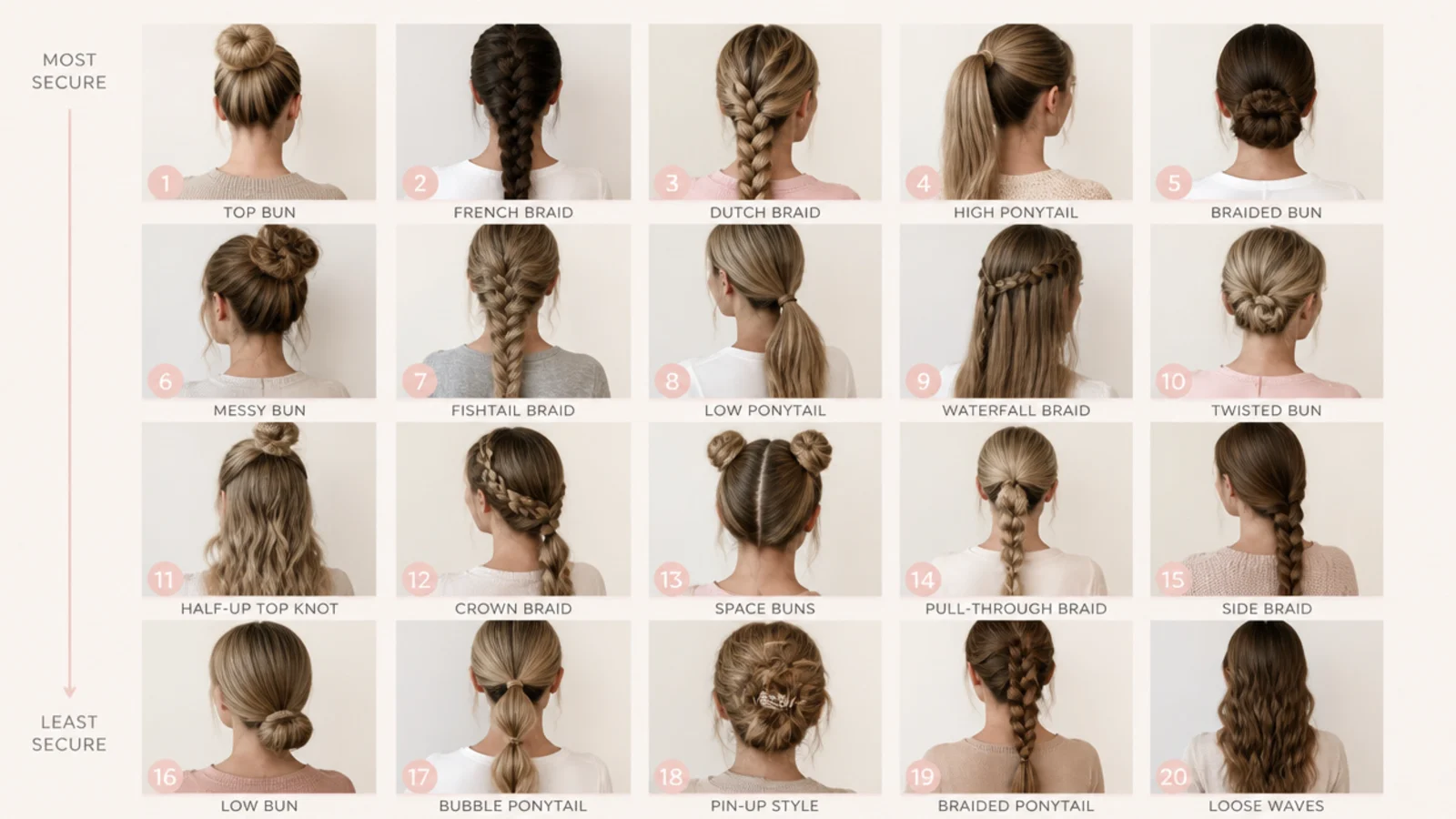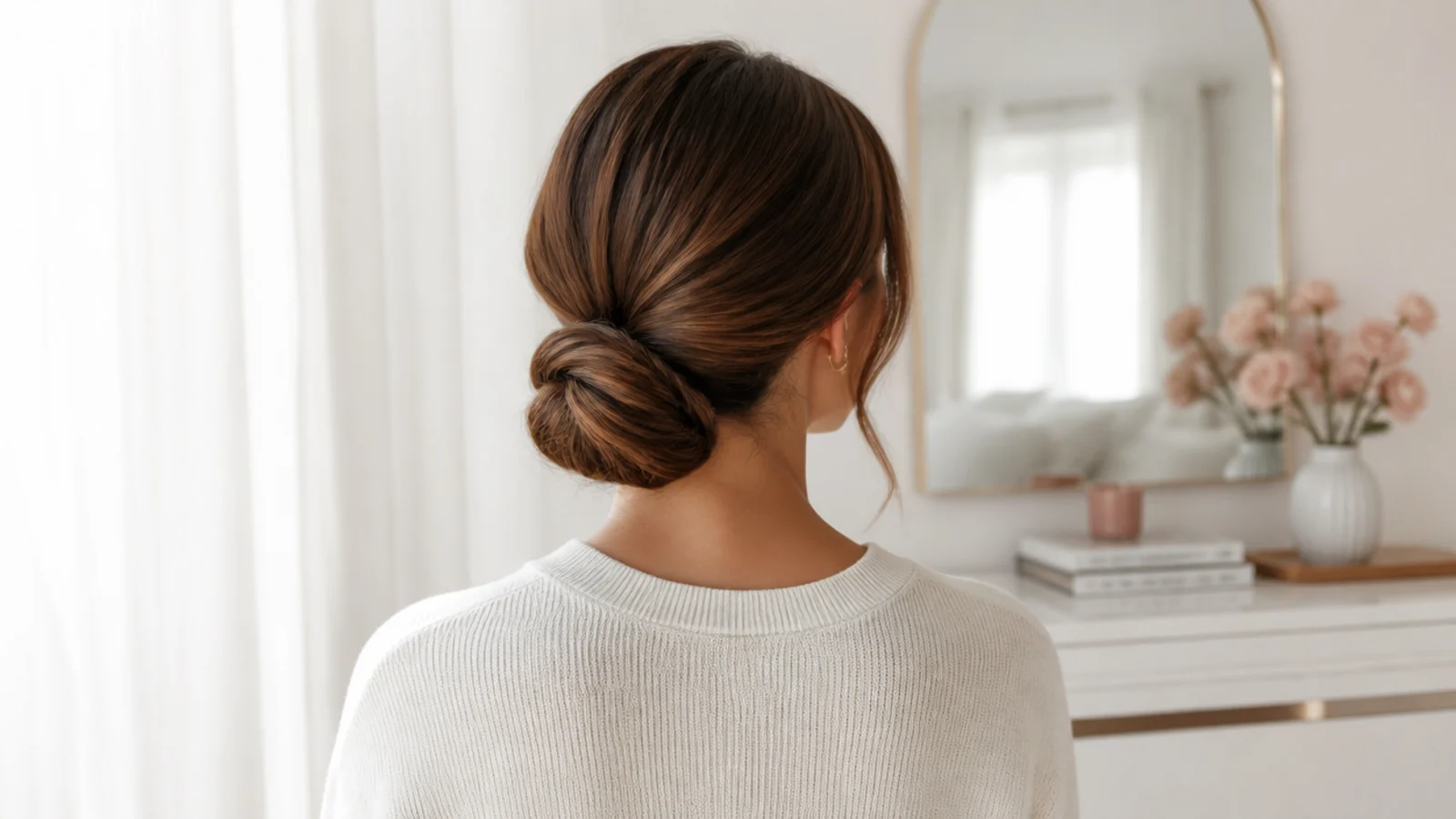
Quick Comparison
1. The Three-Minute Twisted Low Bun
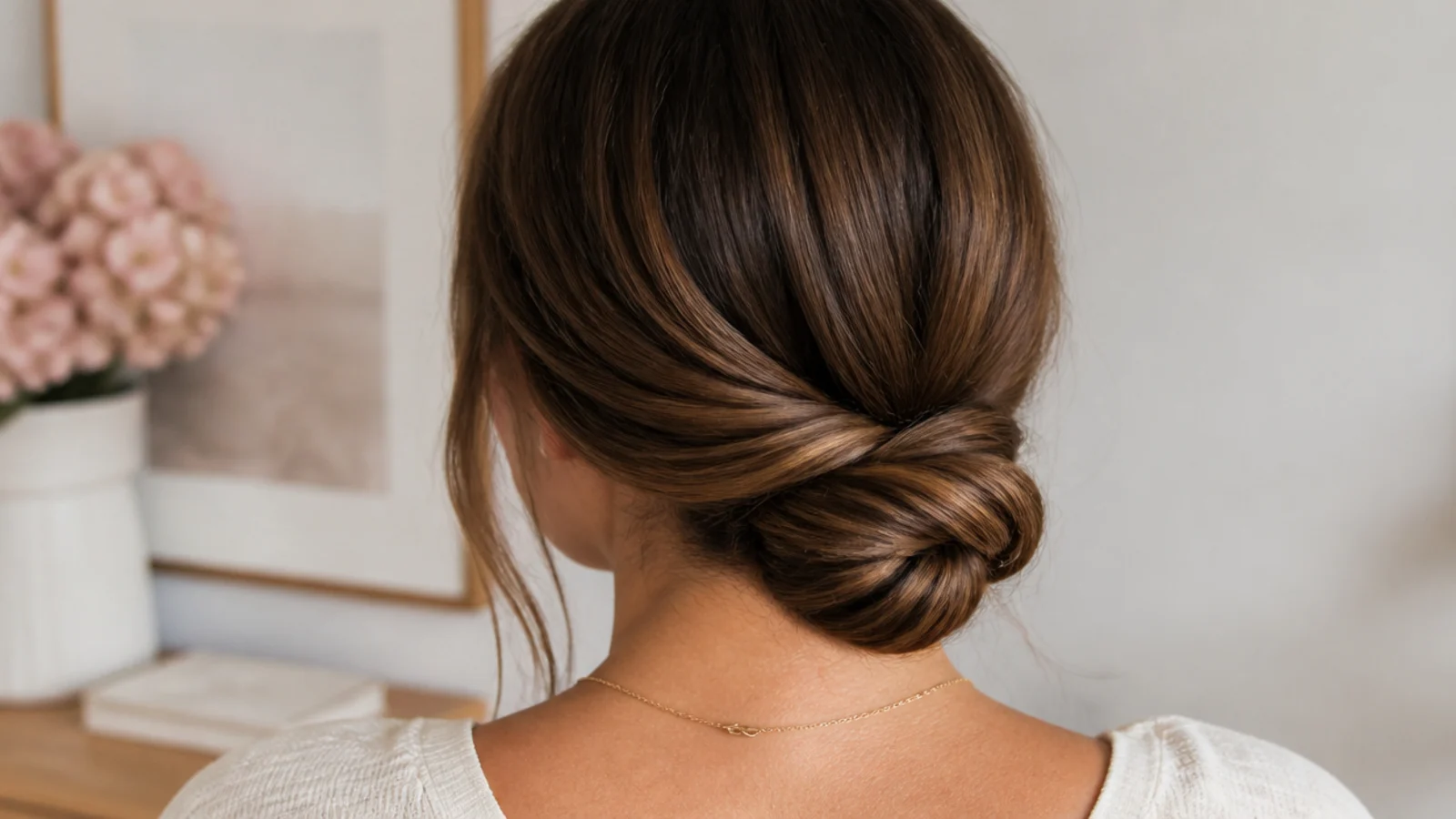
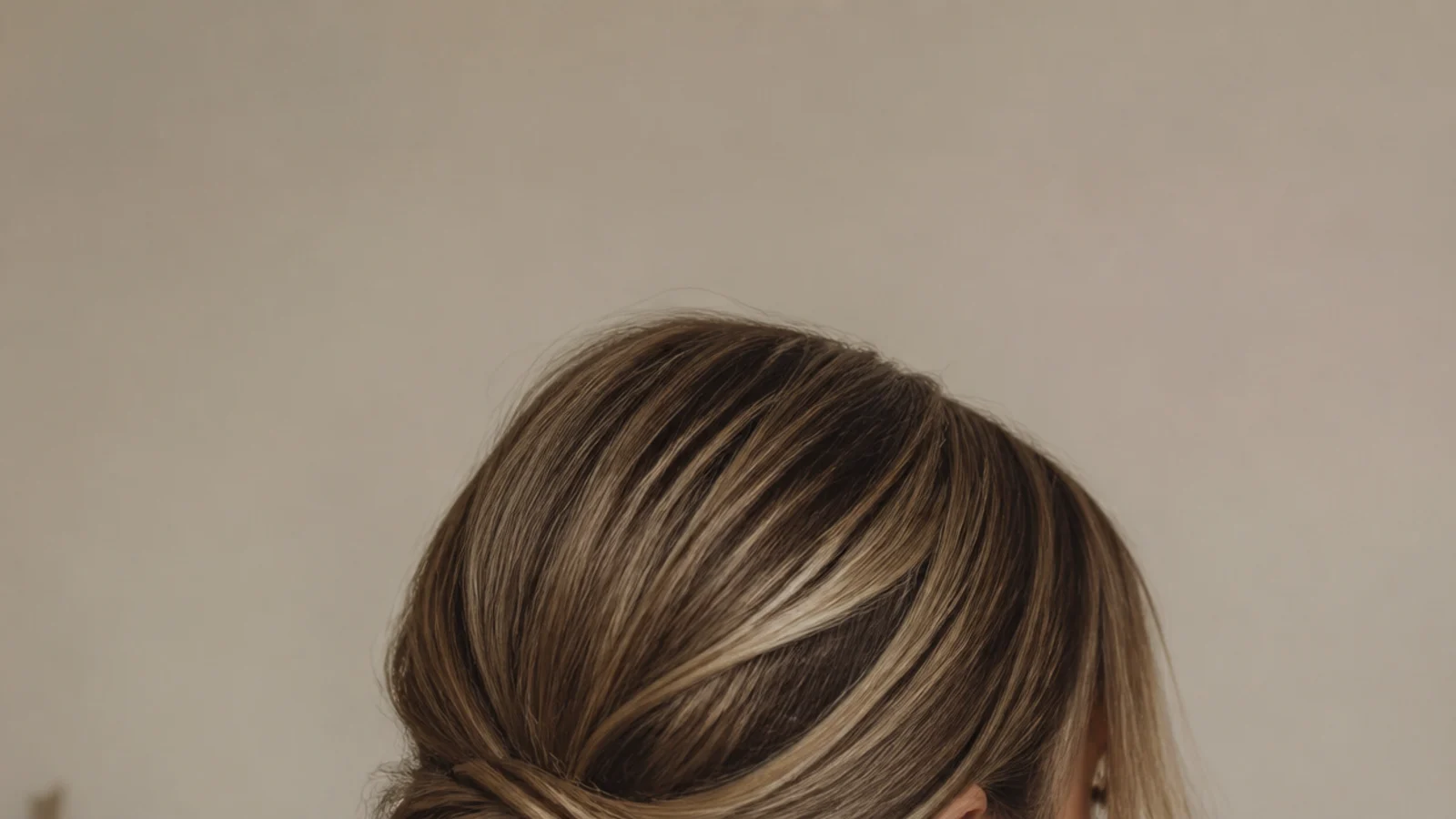
This is the flagship no-heat style and the one the six steps below teach. Gather hair into a low ponytail at the nape, twist the length into a rope, coil it around the base, and pin. On second-day hair it takes about three minutes and holds through a full workday. The twist adds grip that a plain wrapped bun does not have, which is why it does not sag by noon. For dressier coiled versions that hold for hours, compare our long hair updos that last.
Twist the rope tight, then let it relax slightly before you coil - a too-tight rope kinks and fights the pins.
2. Twisted Half-Up in Two Minutes
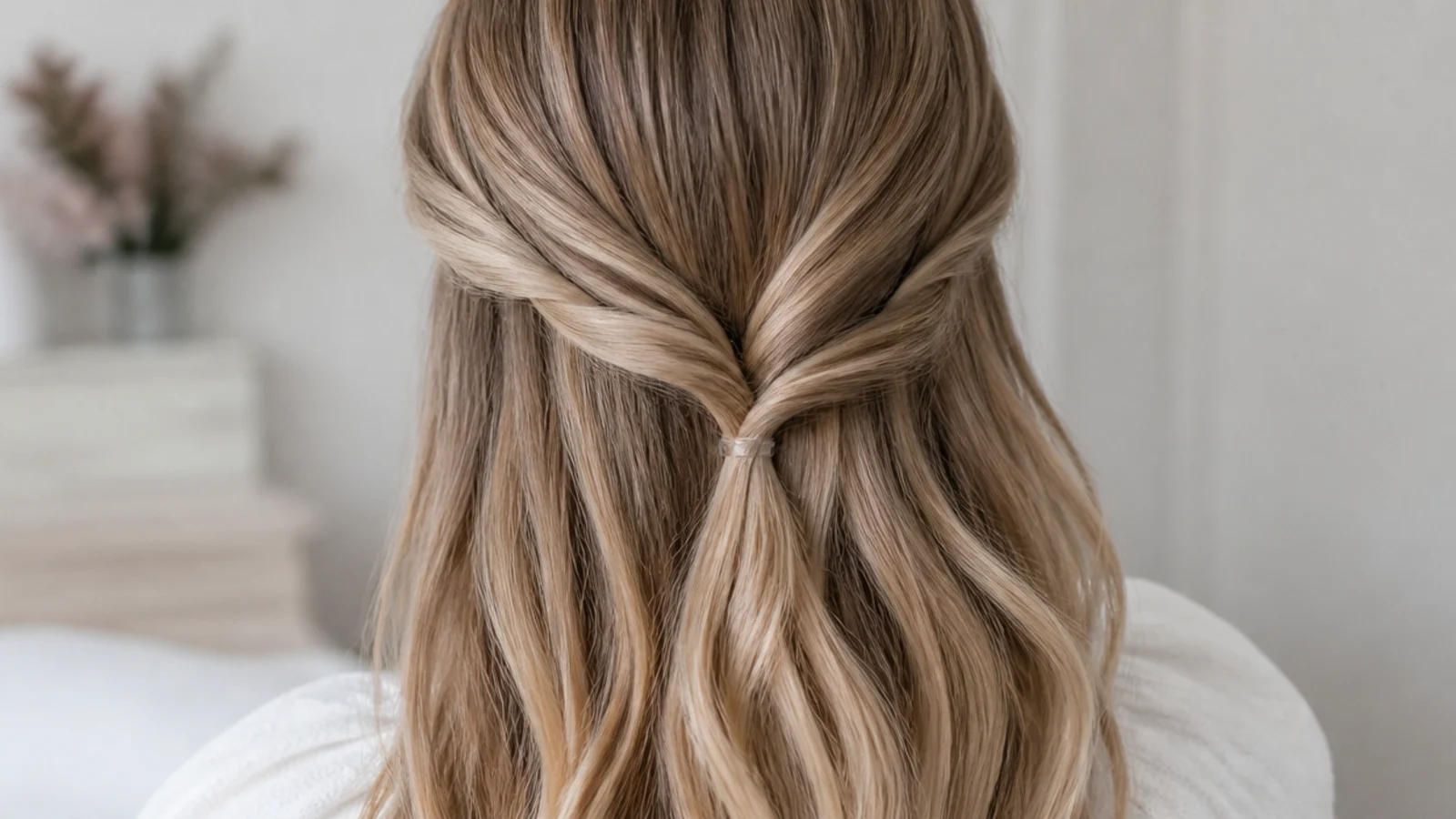
Take a section above each ear, twist both back toward the center, and join them with a small clear elastic. That is the entire twisted half up tutorial: two minutes, no heat, and it keeps hair off your face without flattening your crown. It suits fine hair because the twists add the illusion of volume at the sides. Leave a little slack before you secure so it does not pull. It earns a spot in our cute hairstyles that last all day rotation too.
Pinch and lift each twist upward before you fasten the elastic to build height at the back of the head.
3. The 60-Second Claw-Clip Twist
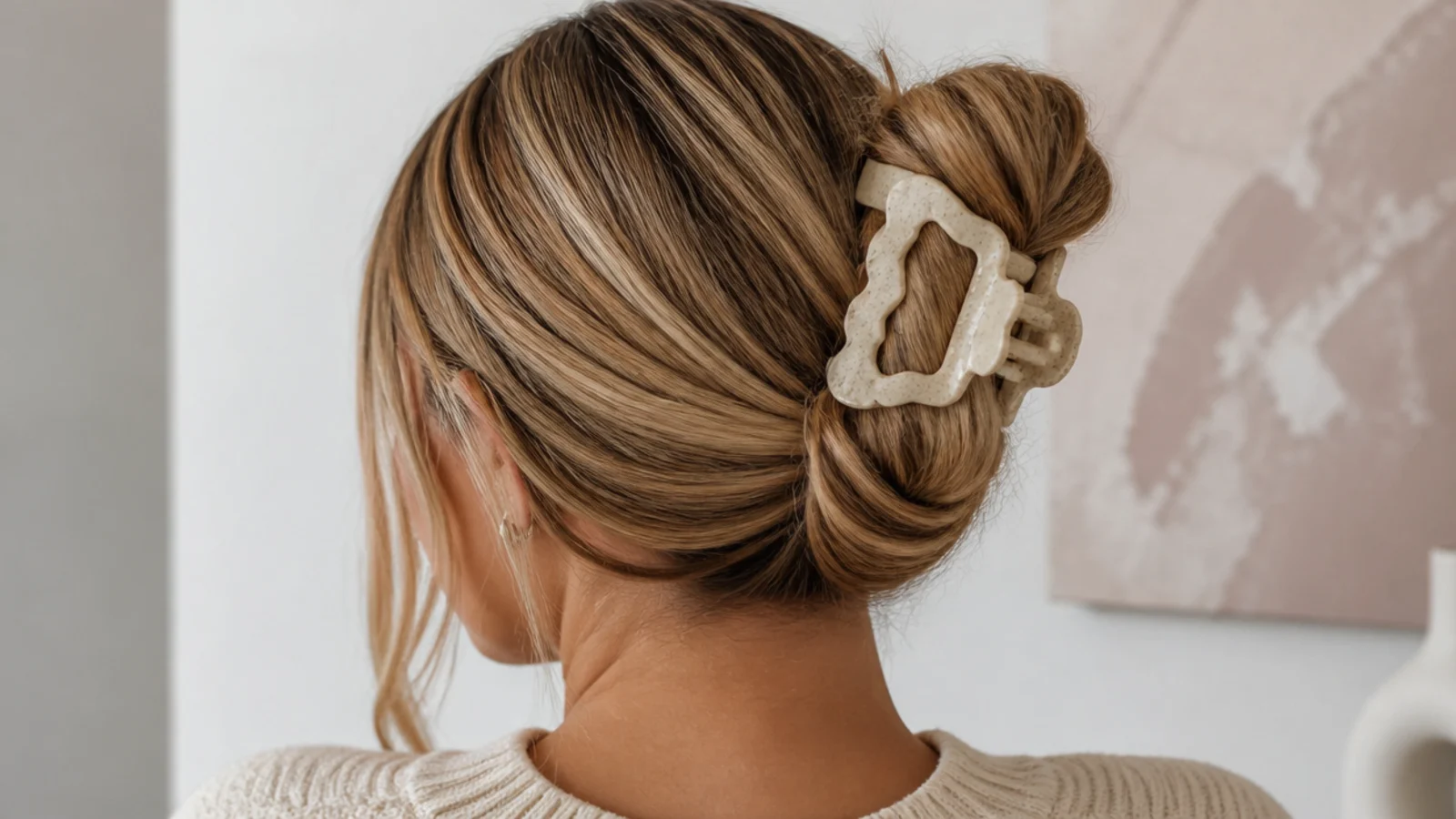
Gather all your hair, twist it up vertically against the back of your head, fold the ends under, and clamp a large claw clip over the twist. It is the fastest style here at about 60 seconds. The catch is that fine or fresh-washed hair slides straight out, so this one needs second-day texture and a claw clip with real teeth. A jaw clip with deep grooves grips far better than a smooth one. It is the grab-and-go move in our easy hairstyles for school lineup.
Twist tighter than feels necessary and clip so the teeth bite the twist, not just the surface hair.
4. The Low Knotted Ponytail
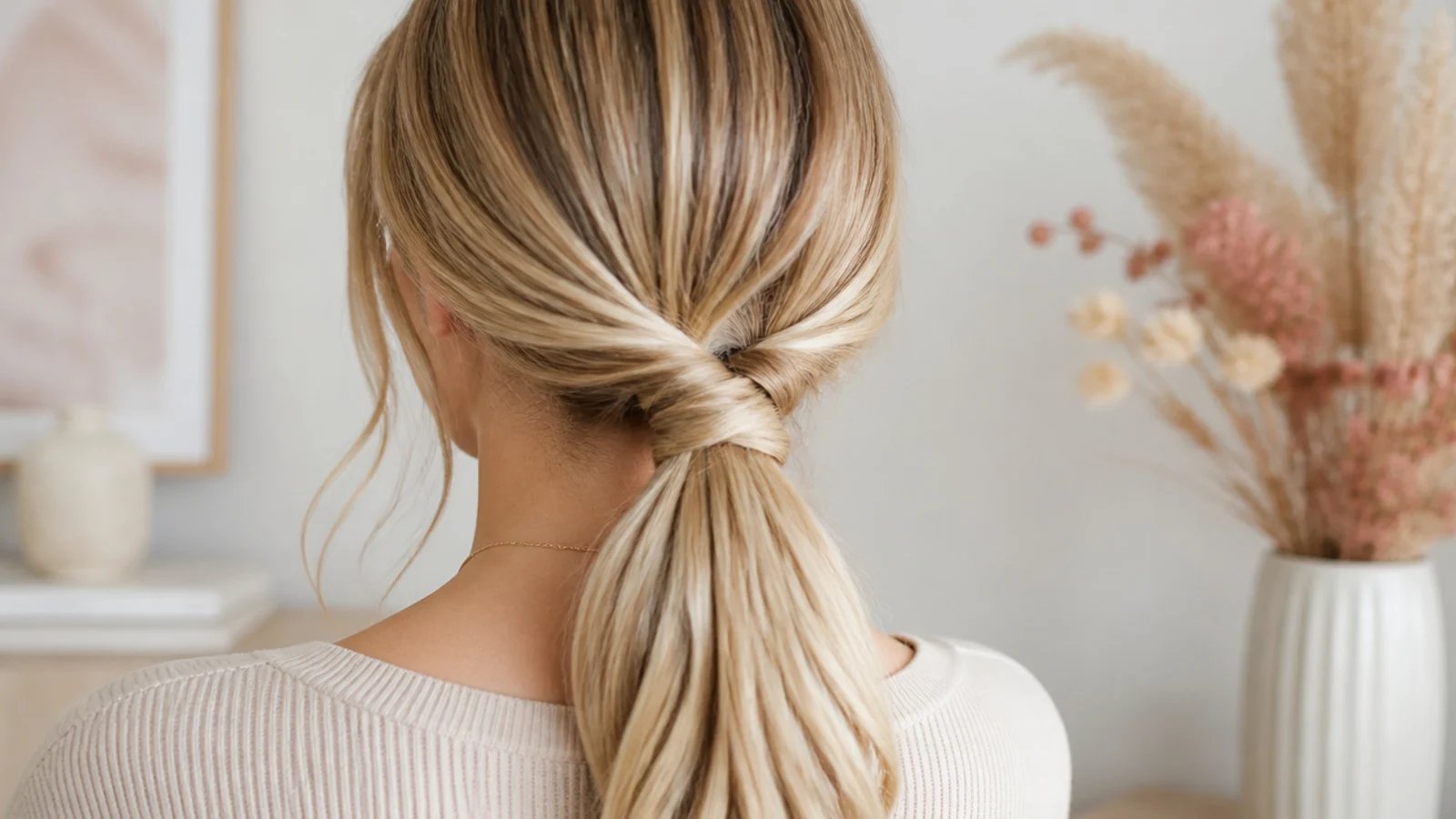
Tie a low ponytail, split the hair just above the elastic into two, and tie the tail once through that gap like a loose knot to hide the band. Two minutes, no heat, and it looks more finished than a plain pony. For more ways to elevate a basic ponytail, see our sleek ponytail styles. This version reads polished enough for the office but takes the same time as a school-run pony.
Slide the elastic down half an inch first so you have room to tuck the tail through cleanly.
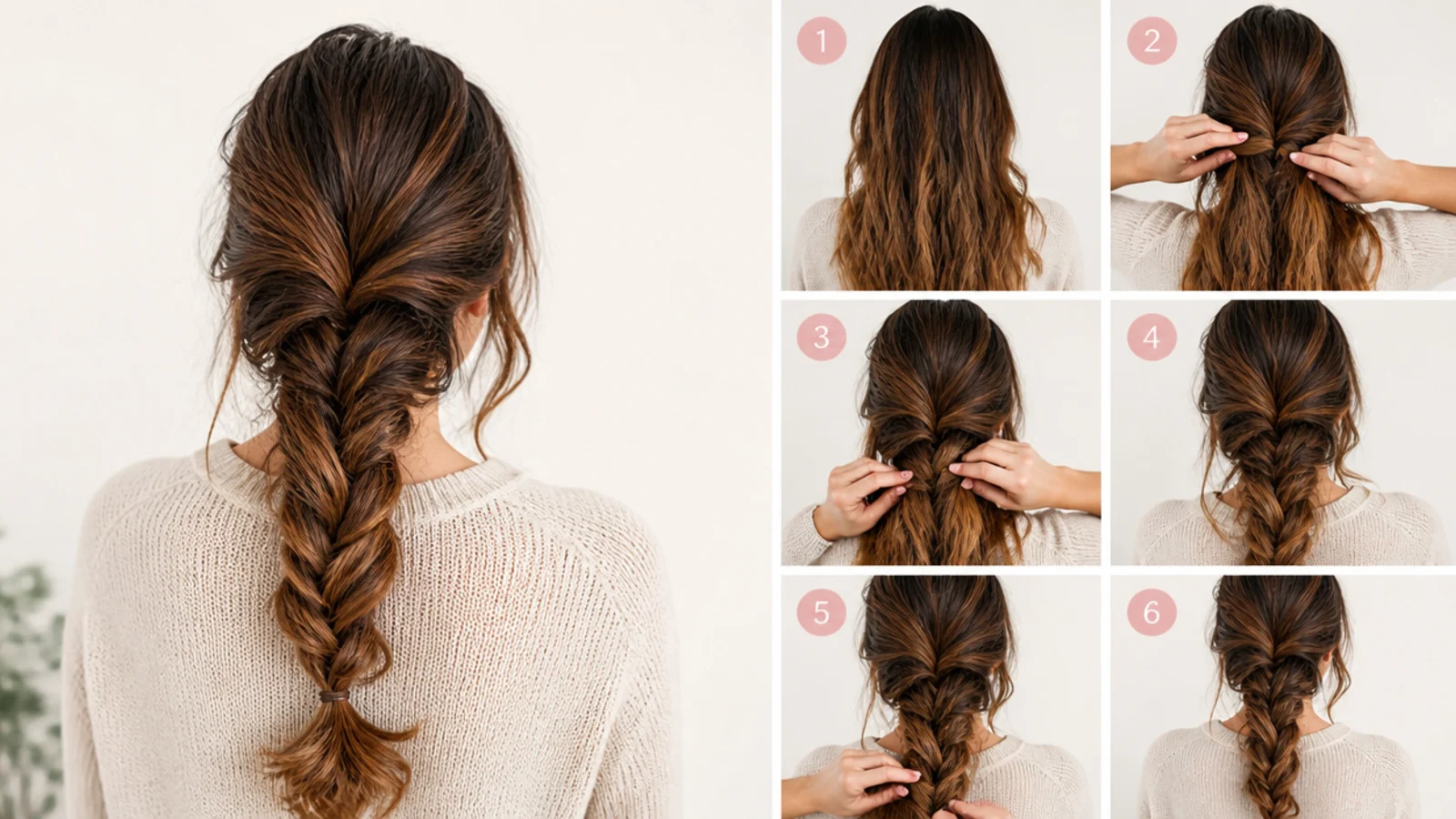
5. The Five-Minute Rope Braid
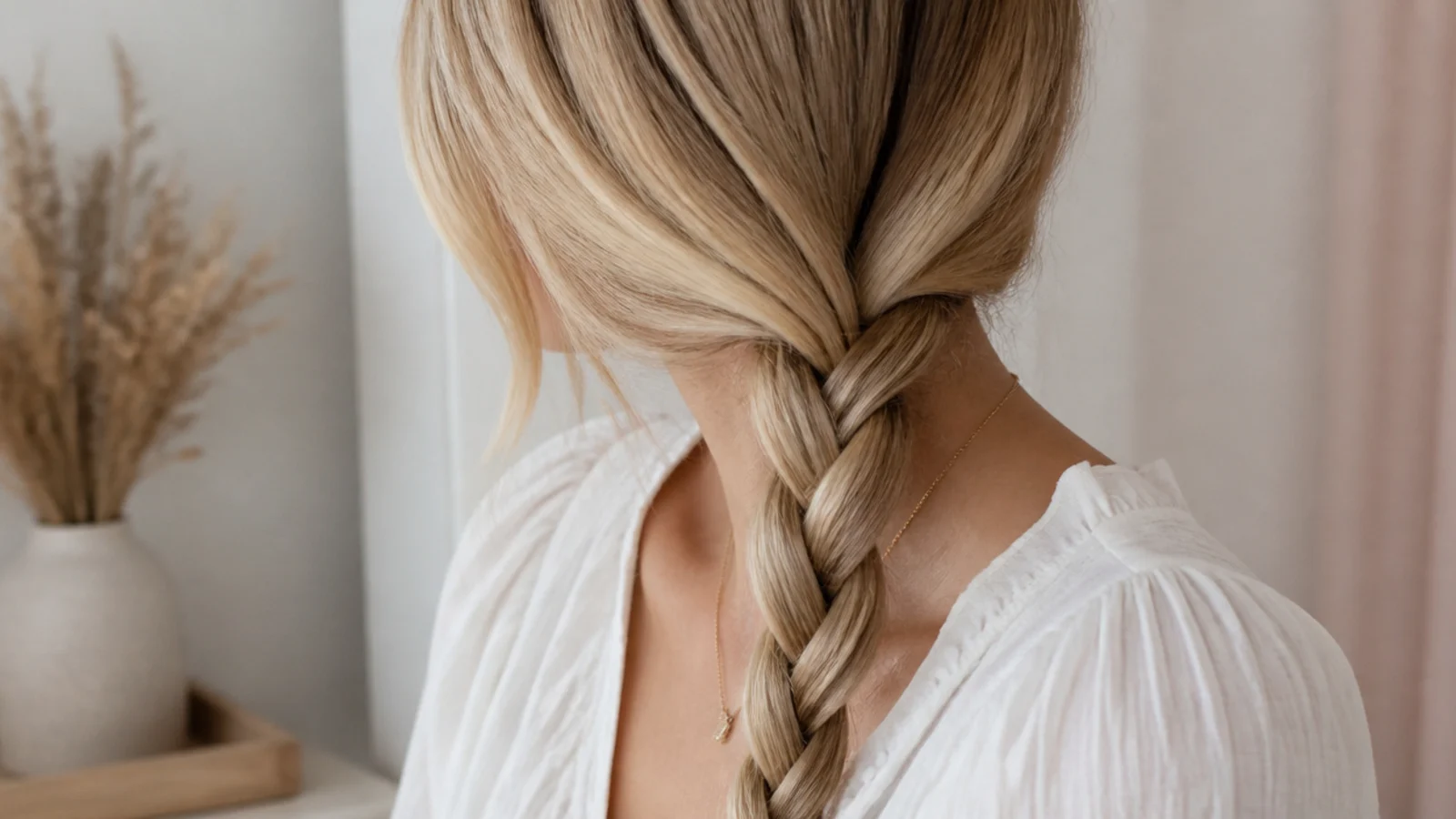
Split a low ponytail into two strands, twist each strand clockwise, then wind the two around each other counter-clockwise and secure the end. The opposing twist is what locks a rope braid so it does not unravel. It takes five minutes and looks intricate for the effort. If you want the full family of everyday plaits, our easy braided hairstyles guide walks through each one with real step counts.
Keep both strands twisting the same direction and wrap the opposite way - reverse either and it falls apart.
6. The Tucked Chignon Roll
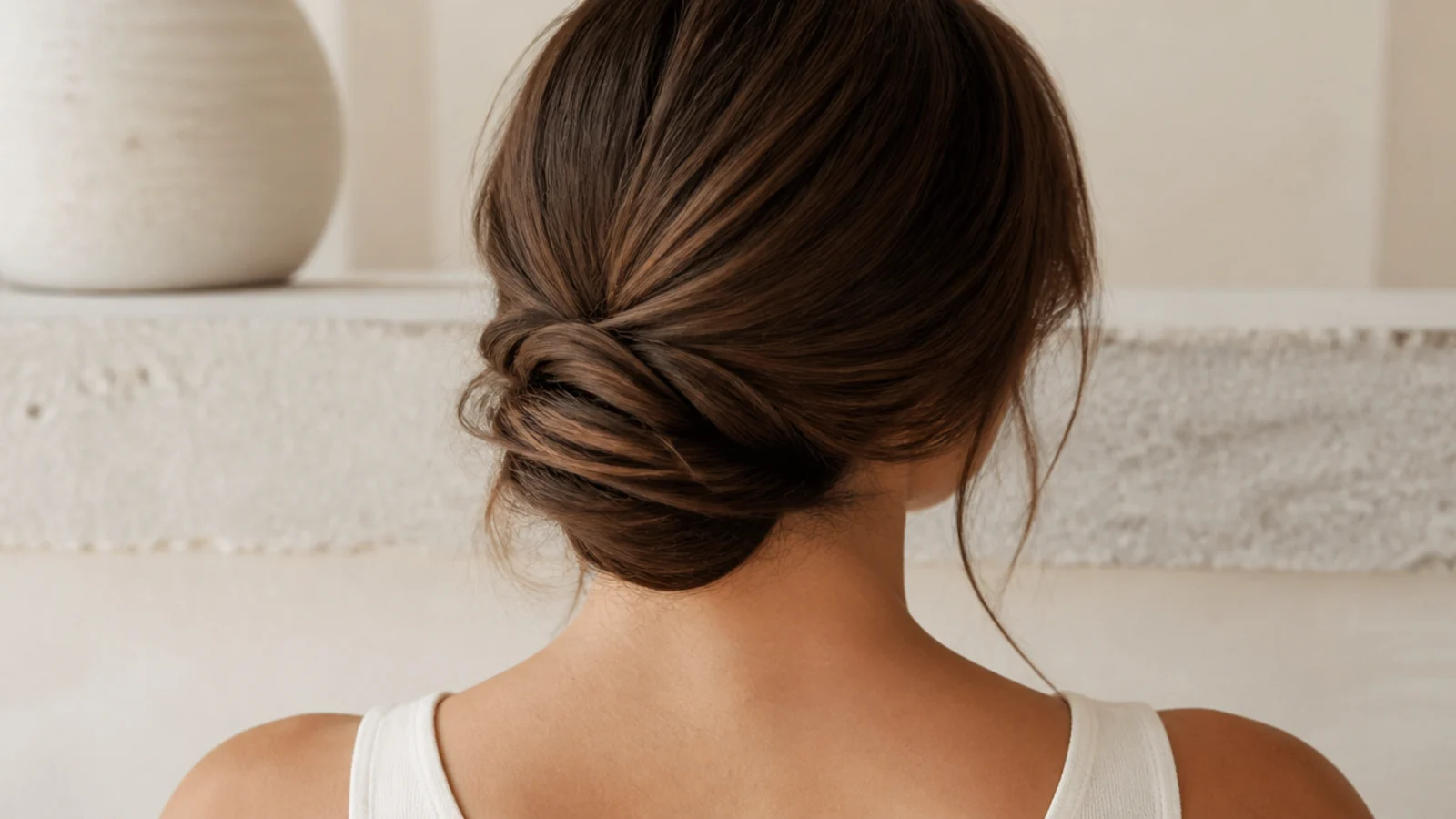
Make a low ponytail, then roll the length upward and tuck the ends under against your head, pinning the roll flat. It is a five-minute chignon with no heat and no donut, and it is the dressiest style here. Because it sits flat it survives a coat collar and a car headrest better than a round bun. For dressier versions that hold for hours, see our long hair updos that last.
Pin horizontally into the roll, not down through it, so the bobby pins grab both the roll and the hair underneath.
1. Step 1
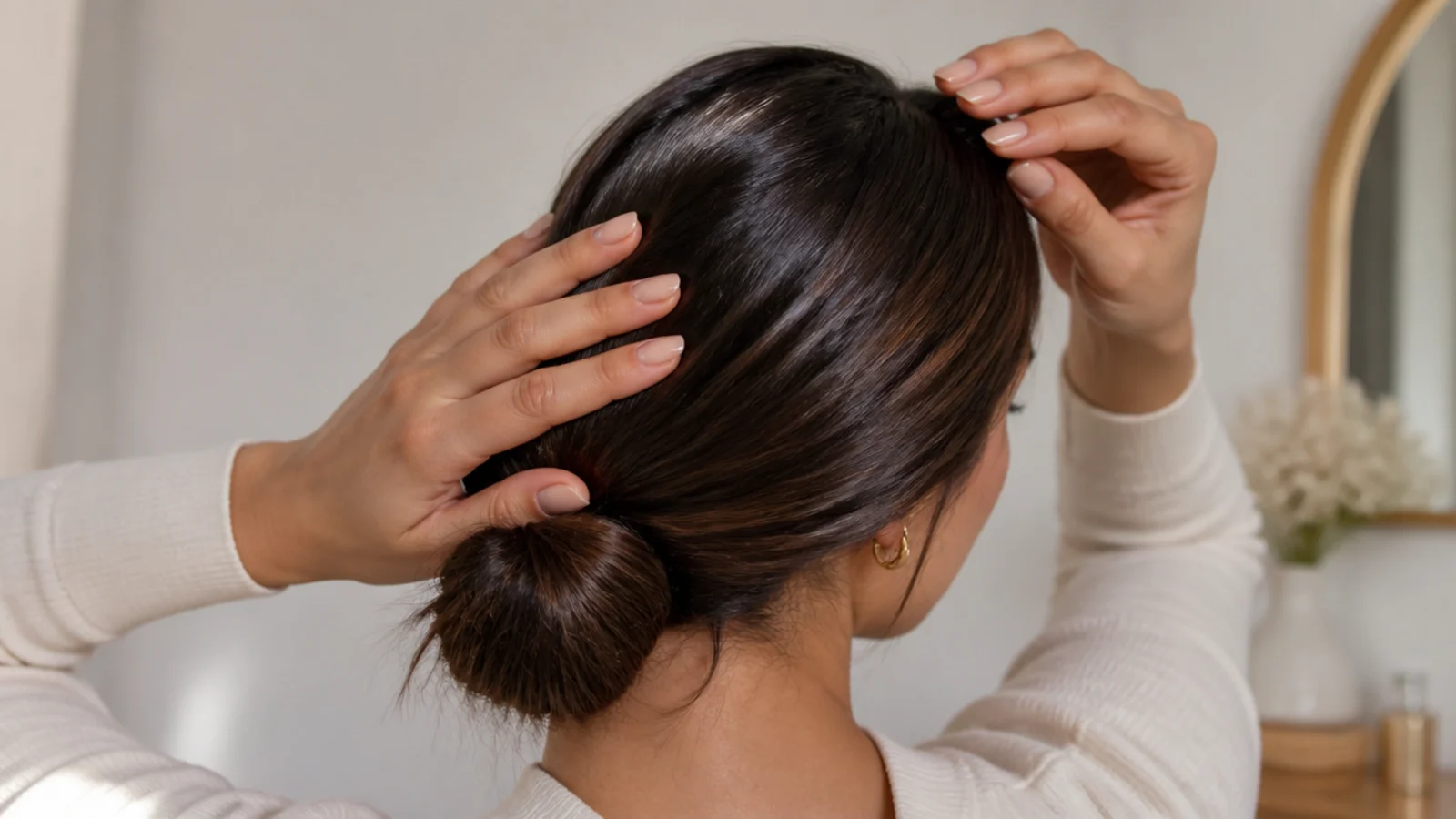
Start on dry, second-day hair. Smooth it back with damp fingers or a wide-tooth comb and set a center or side part at the front so the face-framing shape is decided before you gather anything.
Common mistake: Styling fresh-washed hair. Clean strands are too slippery to hold a no-heat bun, so it loosens within the hour.
Pro tip: If it must be wash day, mist dry shampoo at the roots and work a pea of styling cream through the mid-lengths for instant grip.
2. Step 2
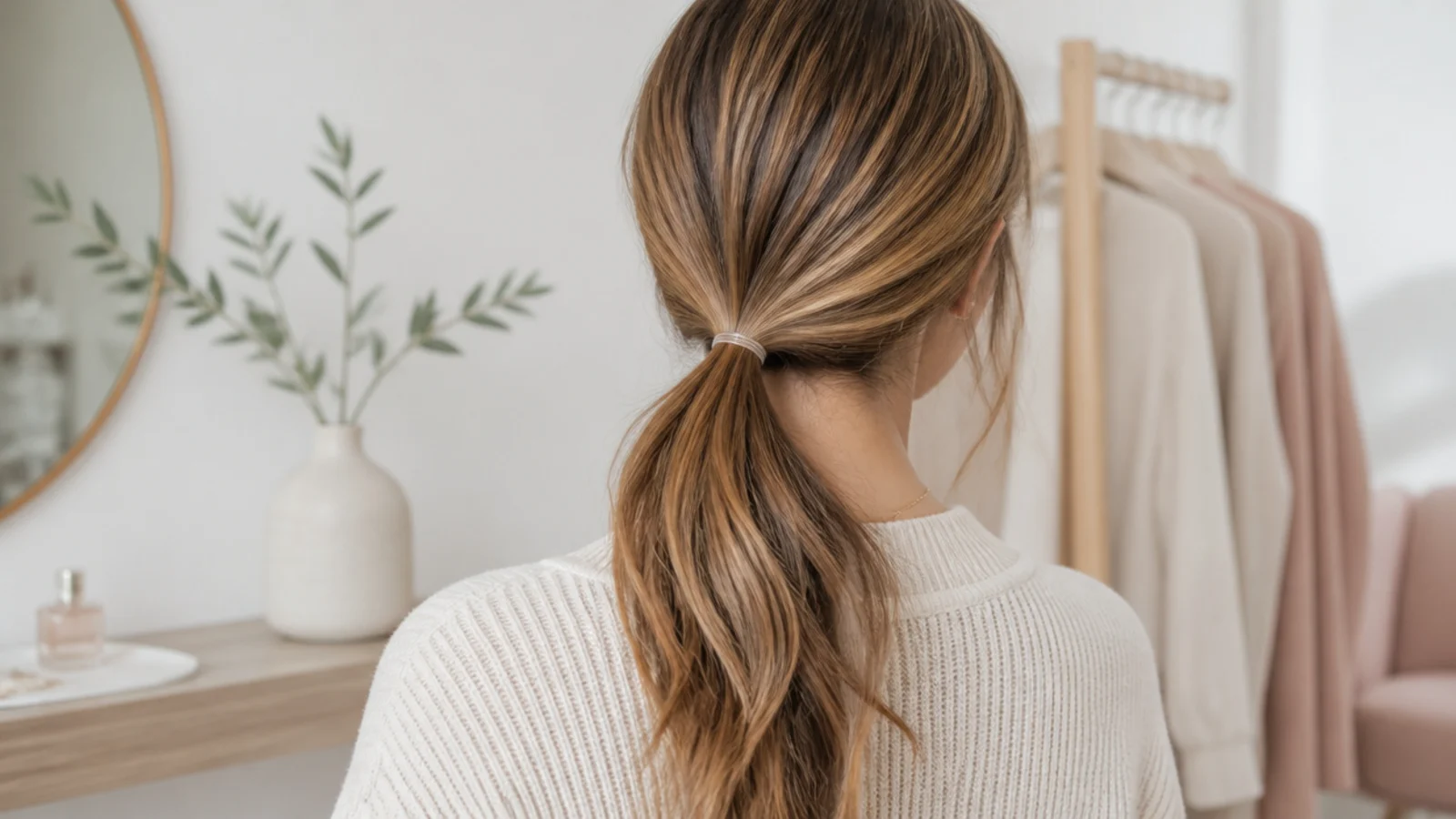
Sweep all your hair into a low ponytail sitting right at the nape of your neck and secure it with a single clear elastic. Keep it low; a high base makes the finished bun sag forward.
Common mistake: Brushing hard right before you gather. It strips the texture the pins need and makes fine hair slick and unmanageable.
Pro tip: Leave the elastic slightly loose at the very base so you have room to tuck the twist through in a later step.
3. Step 3
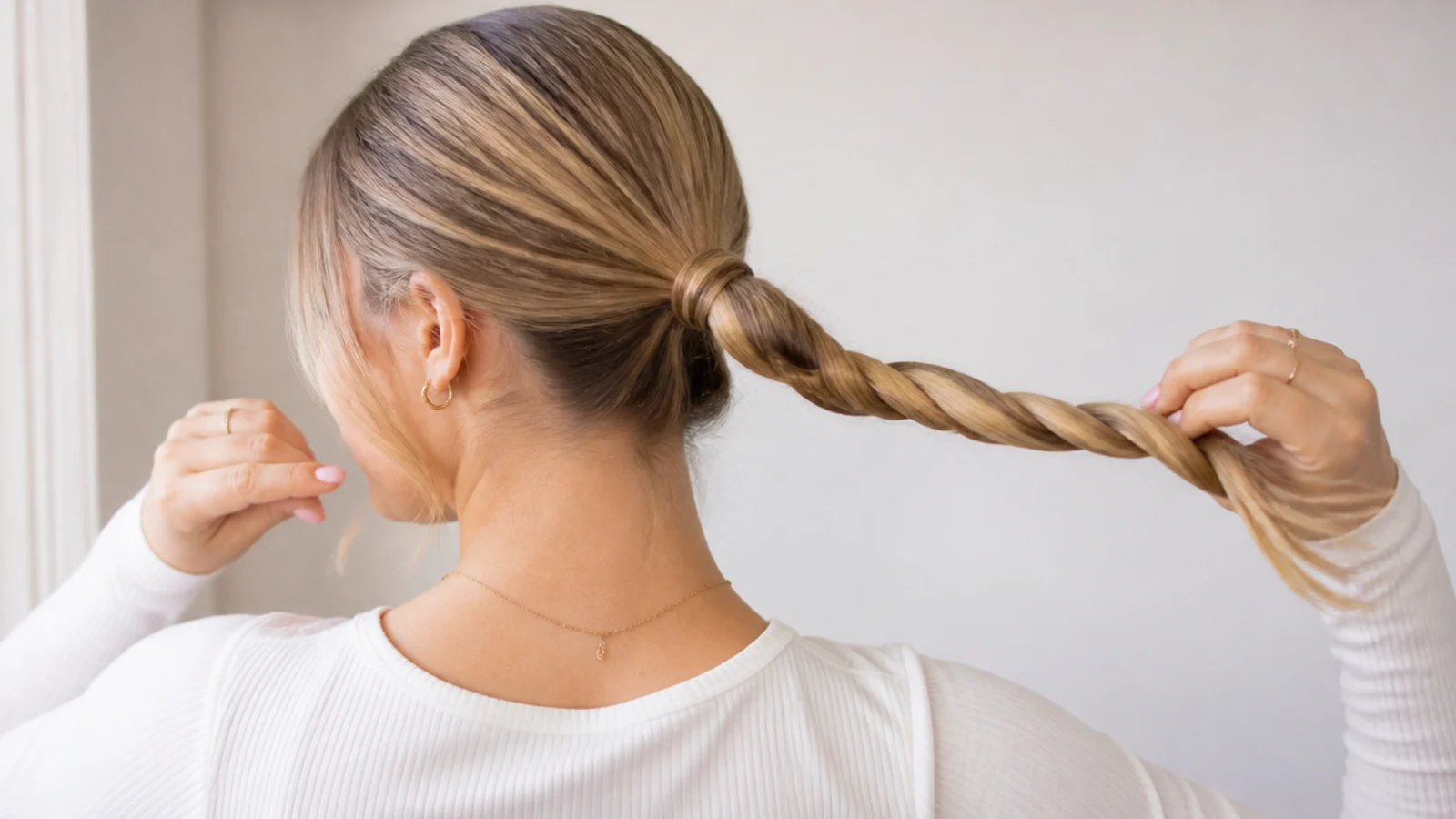
Hold the ponytail and twist the entire length in one direction until it coils into a firm rope. The tension you build now is what makes the finished bun hold without a dozen pins.
Common mistake: Over-twisting until the rope kinks and buckles. A rope that fights back will not coil flat against your head.
Pro tip: Twist tight, then release just enough for the rope to relax and lie smooth before you wrap it.
4. Step 4
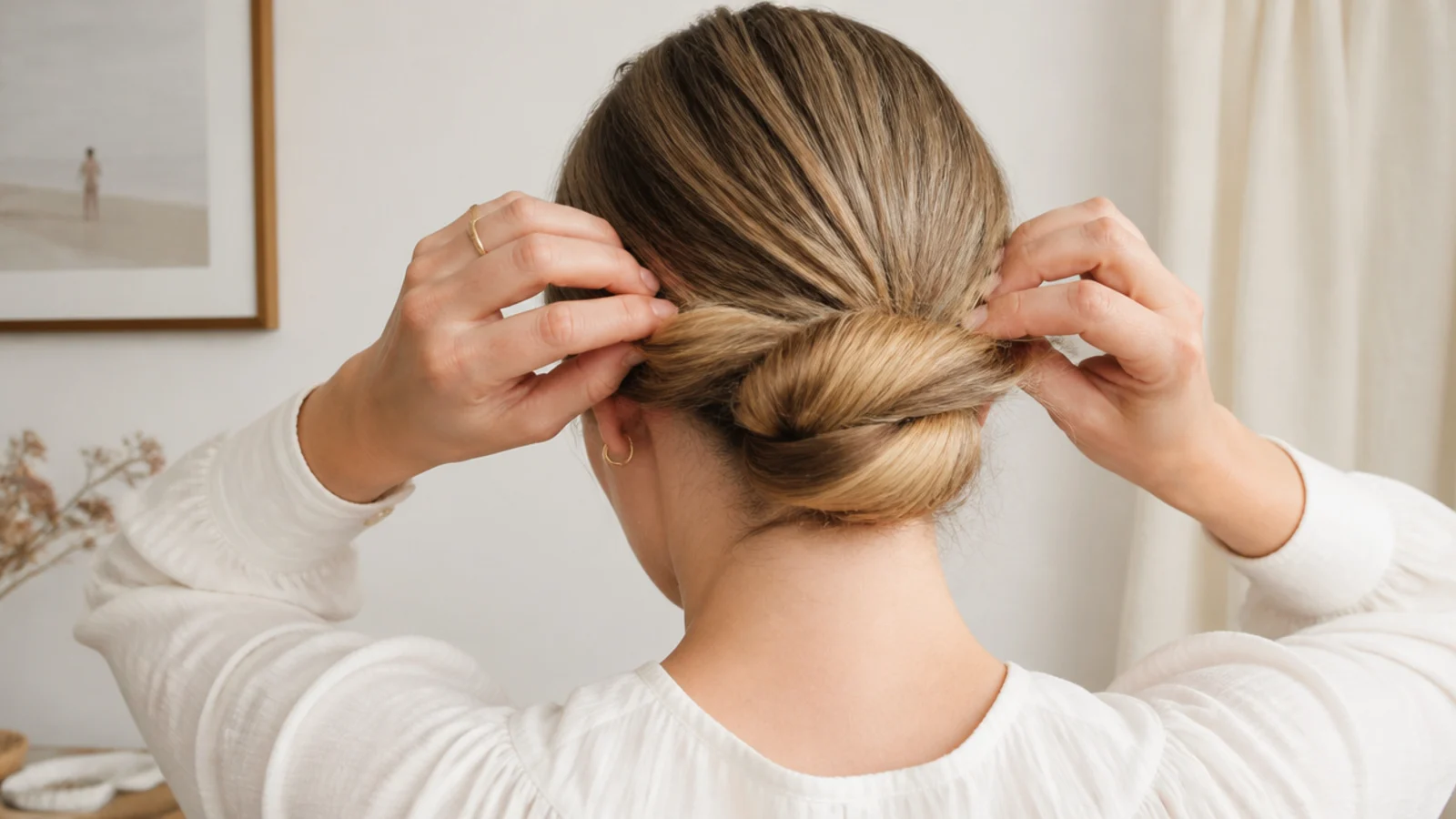
Wind the twisted rope around the elastic in the same direction you twisted, wrapping snugly so each pass sits against the last. Tuck the very end under the coil as you finish.
Common mistake: Wrapping loosely with gaps. A loose coil looks bulky and gives pins nothing solid to anchor into.
Pro tip: Keep gentle tension on the rope the whole way around so the bun stays compact and flat, not puffy.
5. Step 5
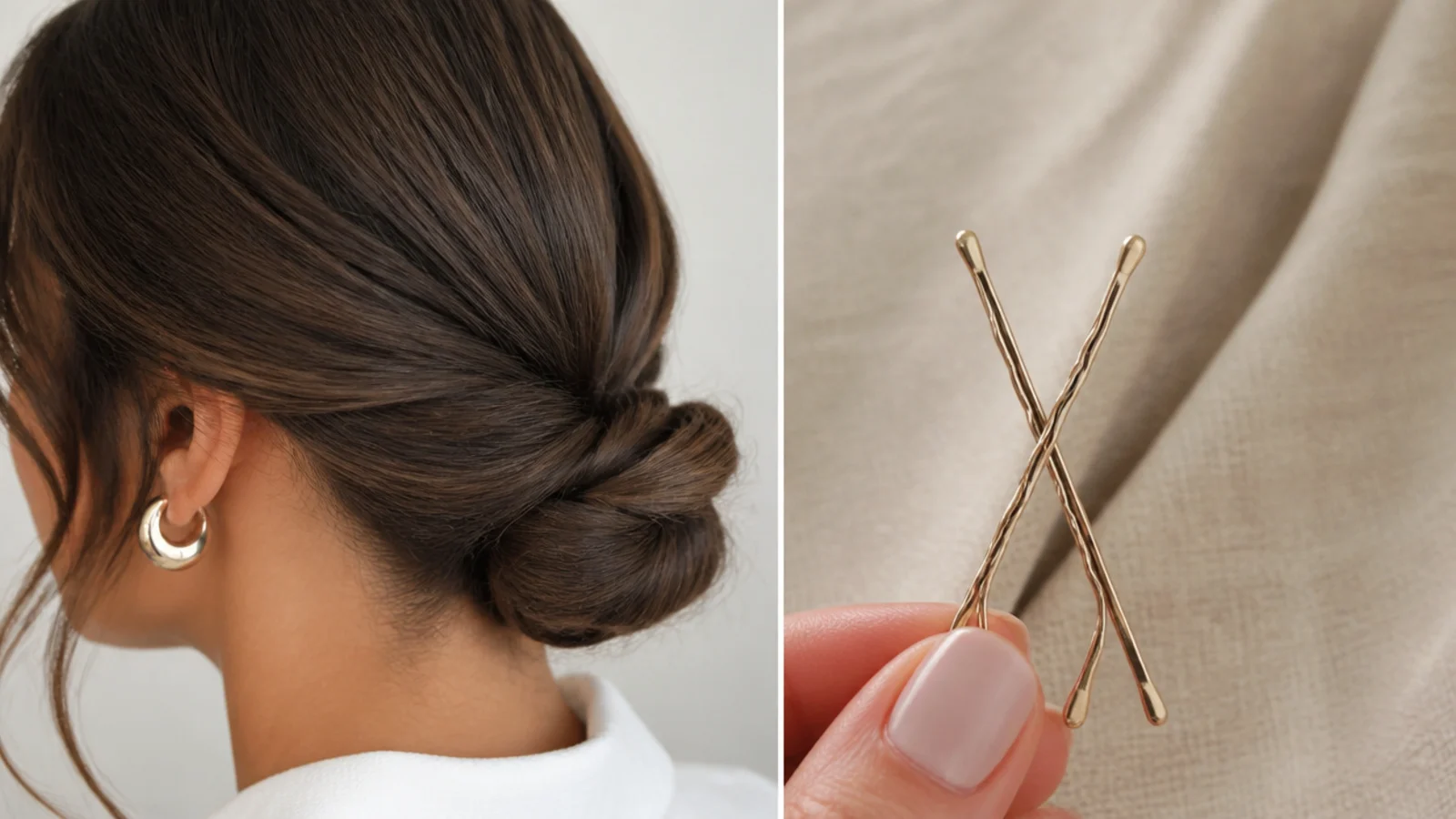
Push two ridged bobby pins into the bun against the direction of the twist, crossing them into an X at the base. Anchor each pin into the hair underneath the bun, not just the surface coil.
Common mistake: Pinning the same way the twist spirals. That unwinds the coil and is the top reason buns slide out by lunch.
Pro tip: Open each pin wide-side against the scalp and ridged-side against the coil so the wave in the metal grips.
6. Step 6
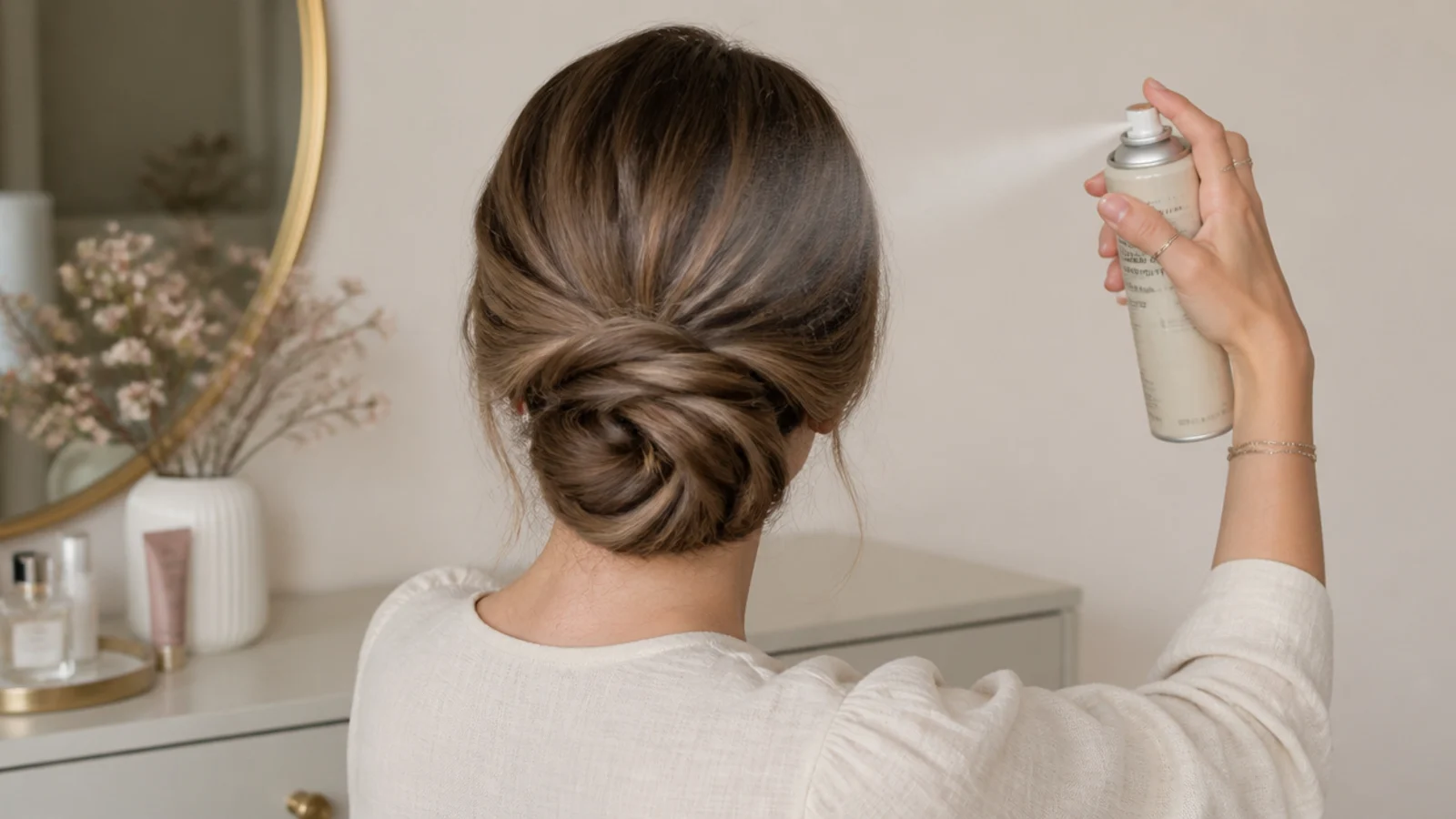
Press down any flyaways with damp fingers, then set the whole style with a light mist of flexible-hold hairspray held about ten inches away. This locks the shape without making it crunchy.
Common mistake: Drowning it in stiff hairspray up close. It goes crunchy, flakes white, and the bun cannot be reset later without redoing it.
Pro tip: Keep an elastic and two pins in your bag; a midday reset is one tighter pull and one fresh crossed pin.
Why second-day hair holds a 5-minute style better
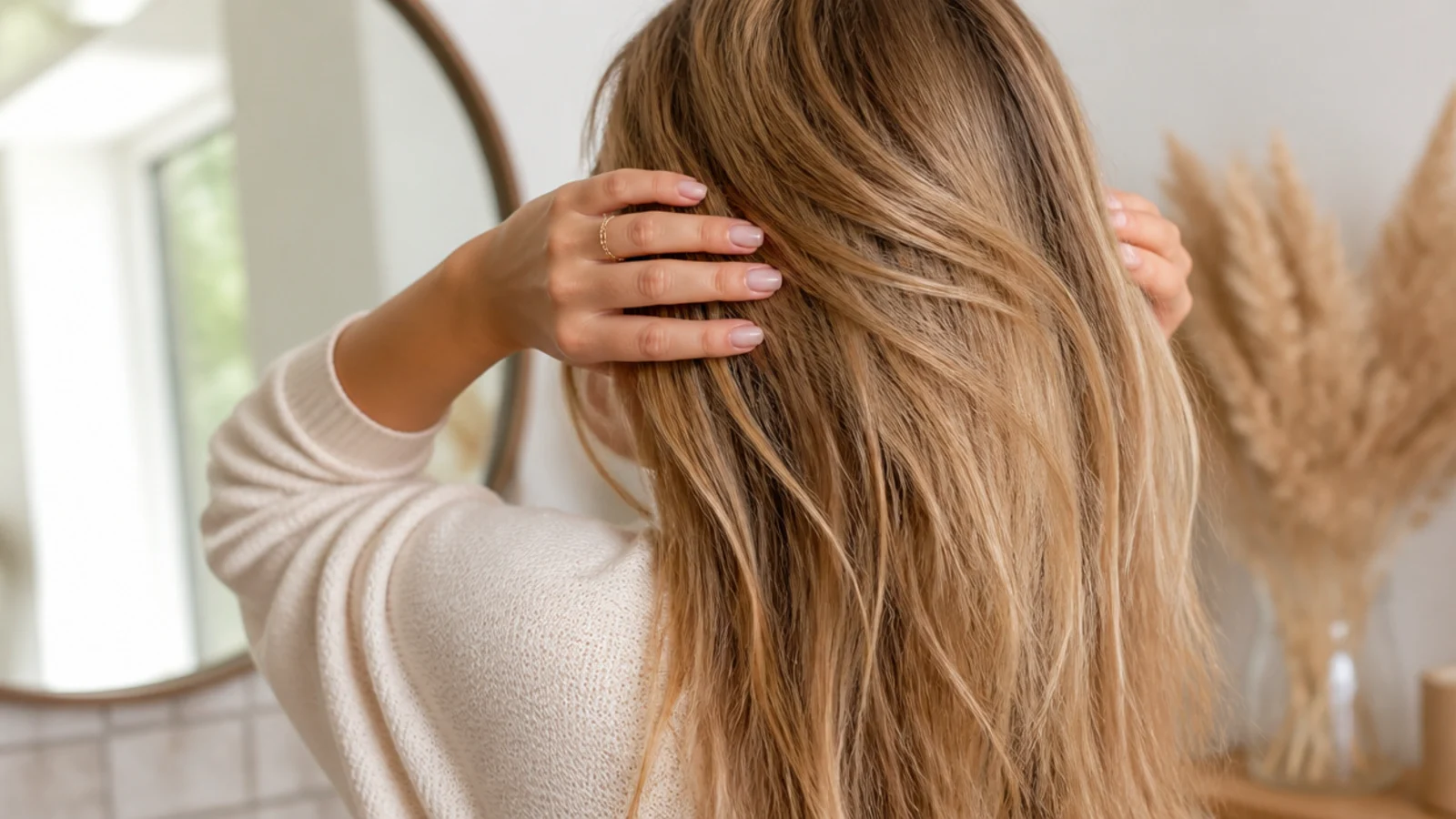
Fresh-washed hair is the enemy of a fast no-heat style. Clean strands are slippery, so pins and elastics slide and buns loosen within the hour. A day of natural scalp oil coats the hair shaft and adds friction, which is exactly the grip a twist or a claw clip needs to bite into. This is why the same low bun that falls out on wash day holds all afternoon on second-day hair. If your hair is very fine or freshly cleaned, fake the texture: a light mist of dry shampoo at the roots, or a pea of styling cream through the mid-lengths, gives pins something to hold. Avoid heavy oils near the crown - they weigh fine hair down and flatten the volume you are trying to keep. The rule is simple: style on day two whenever you can, and when you cannot, add grit before you add pins. For a texture-by-texture breakdown, see our guide to finding a hairstyle for your hair type.
The no-heat toolkit that makes 5 minutes realistic
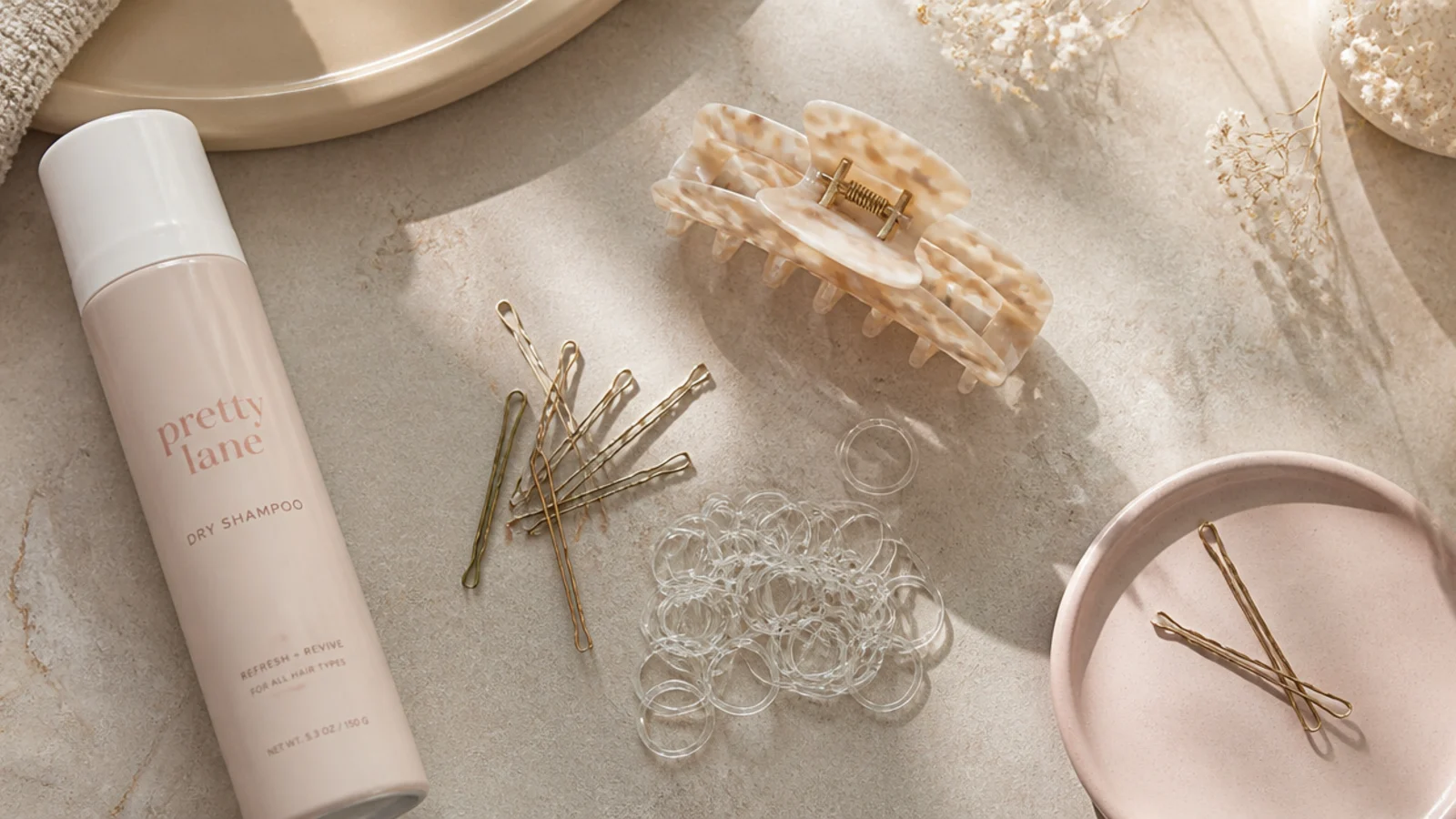
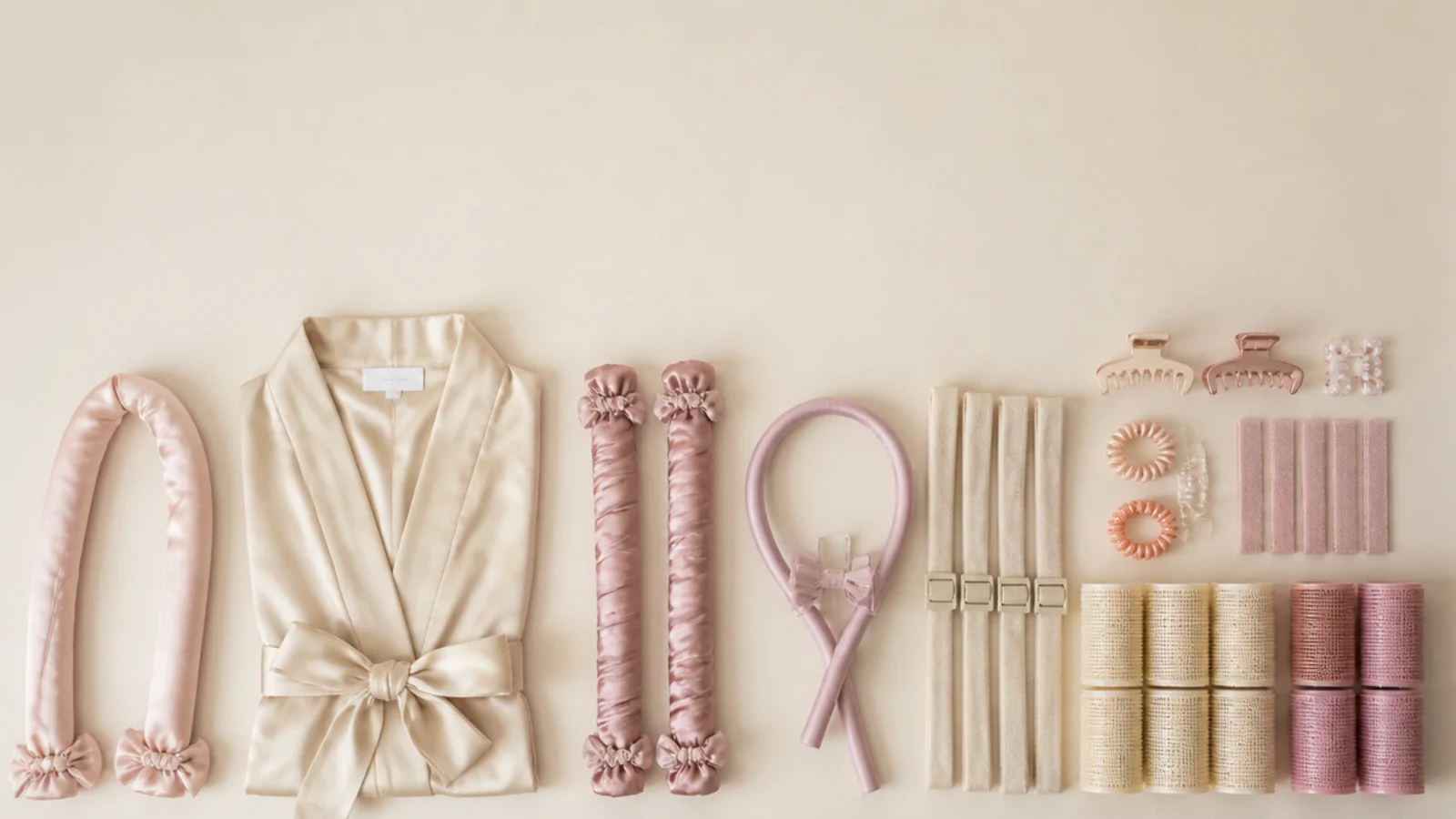
You do not need much, but the few things you keep matter. Clear elastics in your hair color disappear into the style and cost almost nothing. Bobby pins should be the ridged kind, not smooth - the wave in the metal is what grips, and you open them wide-side-down against the scalp. One large claw clip with deep teeth handles the 60-second twist. A travel dry shampoo lives in your bag for a midday grip refresh. Skip the paddle brush right before pinning; brushing removes the very texture the pins need, so smooth with damp fingers or a wide-tooth comb instead. That is the whole kit: elastics, ridged pins, one good claw clip, dry shampoo. Everything in this guide is built around no heat, so there is no straightener or curling wand to plug in, wait for, or burn a finger on. Fewer tools is exactly what makes five minutes achievable on a real morning.
How to stop your bun and twists from slipping out
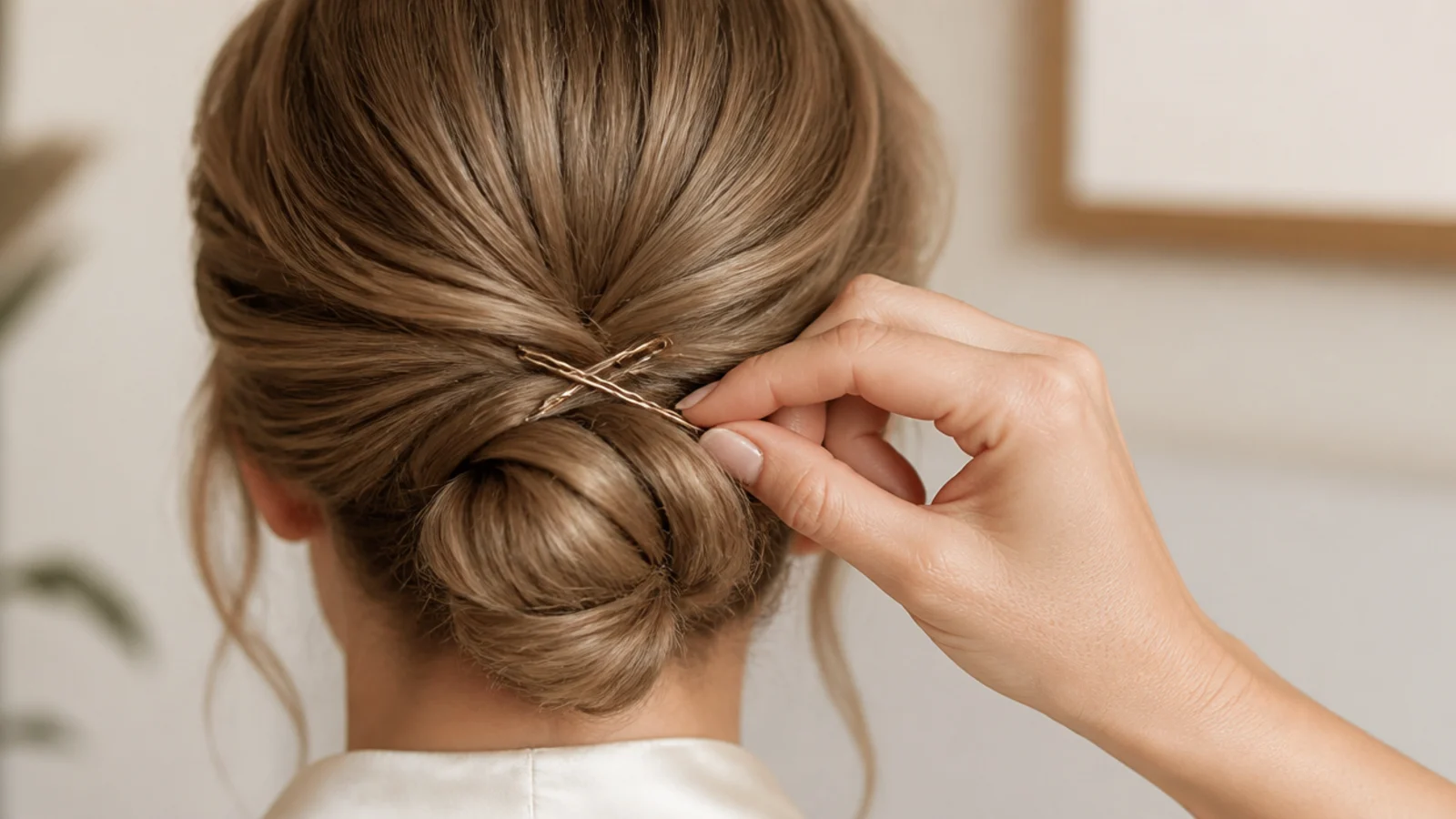
Slipping is the single most common failure, and it is almost always a pinning-direction problem, not a pin-quantity problem. When you pin, you must push the bobby pin against the direction of the twist so the two forces lock; pin the same way the twist spirals and it simply unwinds. Cross two pins into an X at the base of a bun rather than stacking them parallel - the X braces the coil from two angles. Anchor the pin into the hair underneath the bun, not just the bun itself, so it grabs a stable base. For claw clips, the teeth need to close on the twisted rope, not slide over the smooth outer layer. If a style still loosens by midday, the cause is usually fresh-washed hair with no grip, which the second-day rule above solves. Fine, low-density hair benefits from the extra friction most, and our notes on protective styles for fine 4c hair cover low-tension pinning that will not stress the strands.
Adapting each style to your hair length
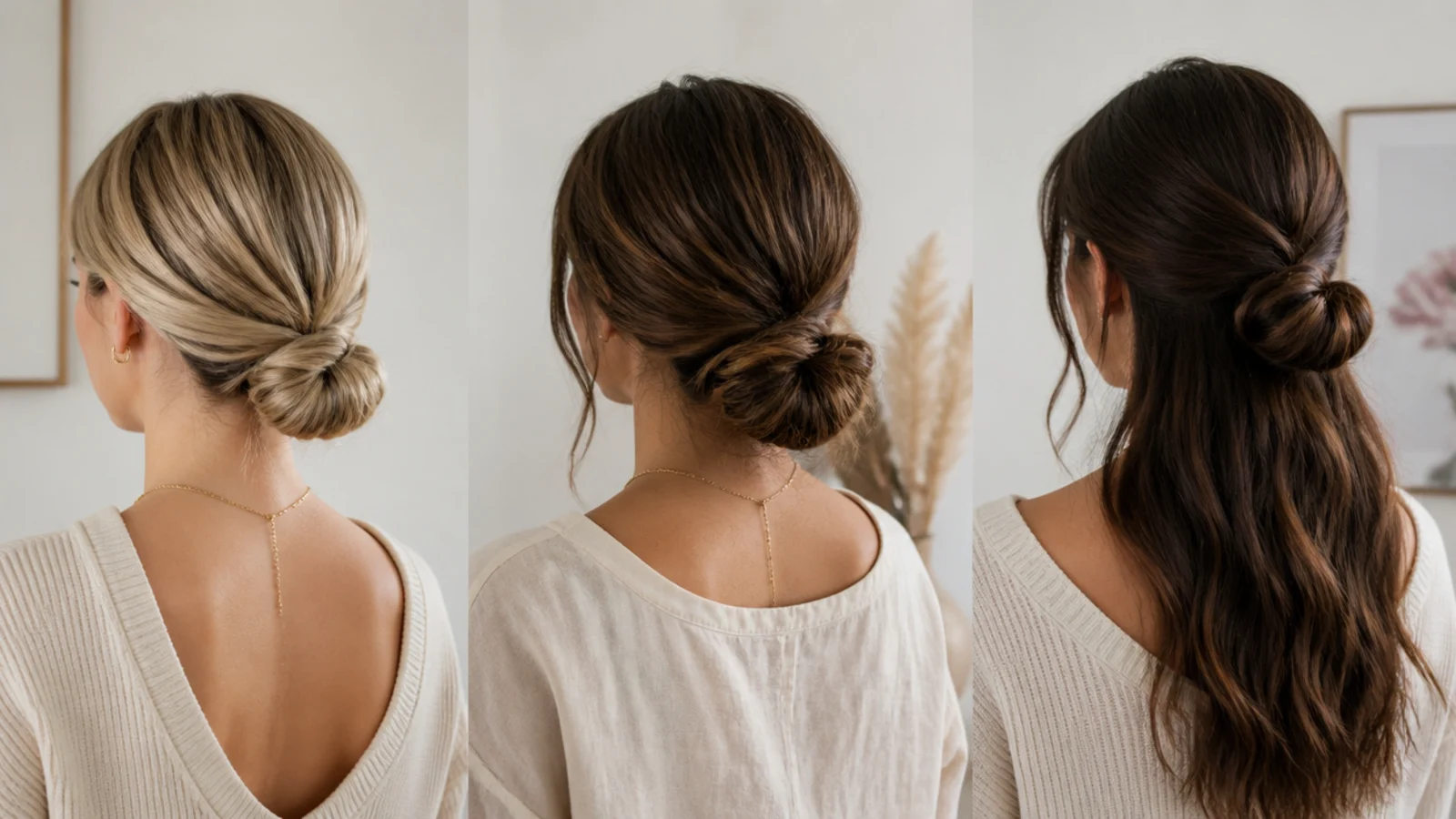
Length changes which of the six styles is fastest for you, and most quick lists never say so. Short, chin to shoulder hair does best with the twisted half-up and the 60-second claw-clip twist, because there is not enough length to coil a full bun; the twisted half up tutorial style also hides shorter layers that will not reach a ponytail. Medium, shoulder to collarbone hair suits the low knotted ponytail and the tucked chignon roll, which need just enough length to fold under. Long hair below the shoulder blades gets the most from the three-minute twisted low bun and the rope braid, where extra length adds body to the coil instead of fighting it. Very long or thick hair should split the section and use two smaller coils rather than one heavy bun, which prevents the weight from dragging the whole style down by lunch. When in doubt, shorter hair wants twists and clips; longer hair wants coils and braids.
Making a 5-minute style survive a full day
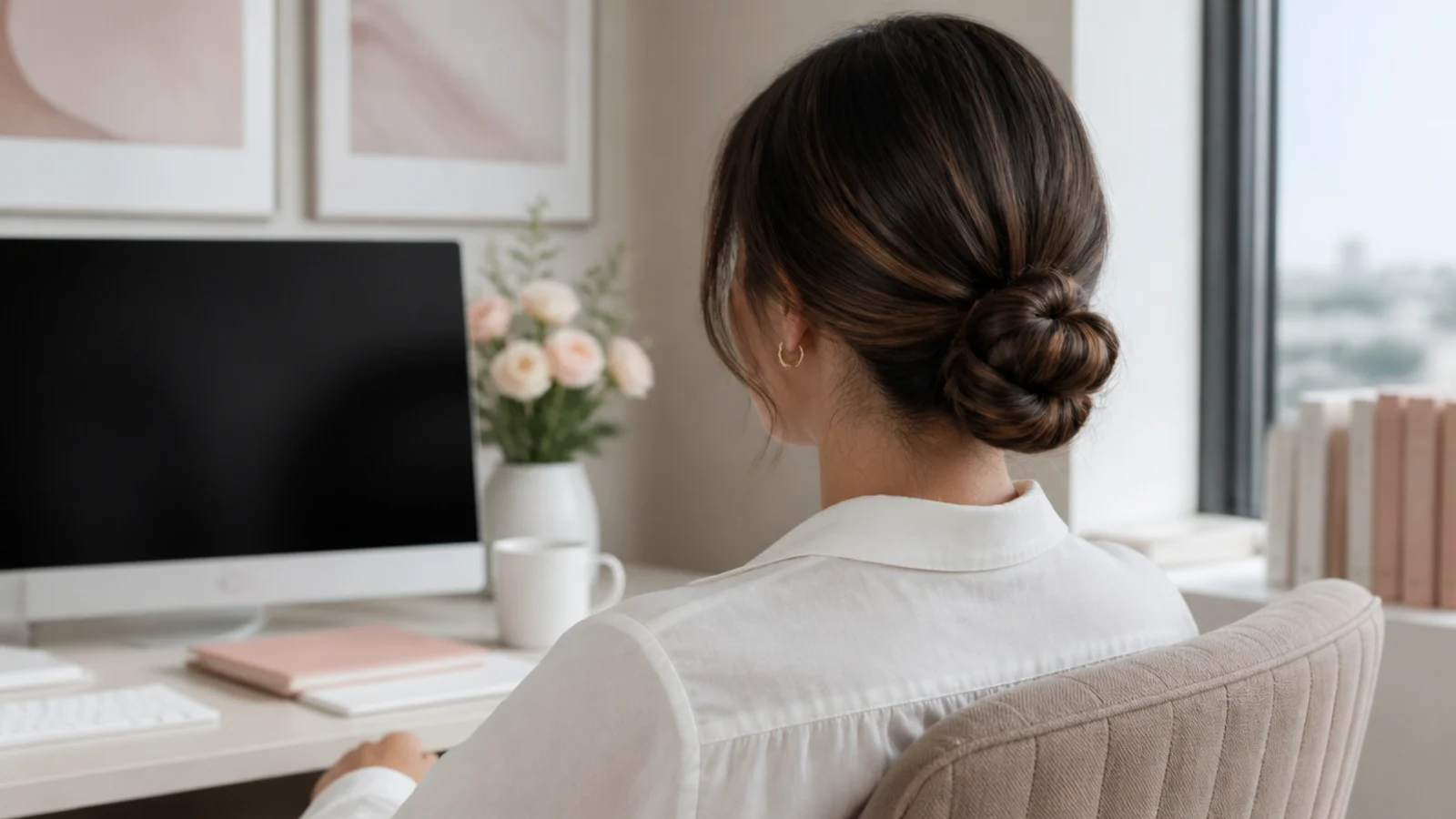
Getting the style in is half the job; keeping it there until evening is the other half. Set the finished style with a light mist of flexible-hold hairspray held about ten inches away, so it locks without going crunchy. Tuck any face-framing pieces back with a single pin if you know a windy commute is coming. If you carry a bag with a shoulder strap, sit a low bun slightly off the spot where the strap crosses so it does not rub loose. A midday reset is faster than a redo: pull the elastic tighter by half an inch, add one fresh crossed pin, and mist the roots with dry shampoo for grip. Styles that sit flat, like the tucked chignon roll, outlast round buns because a car headrest and a coat collar cannot catch them. For hairstyles built specifically to hold through a school day of PE and backpack straps, see our easy hairstyles for school, and for looks meant to last from morning to night, our cute hairstyles that last all day. You can also browse the full hairstyles hub for more no-heat everyday ideas.
Frequently Asked Questions
What is the fastest 5-minute everyday hairstyle with no heat?
The 60-second claw-clip twist is the quickest: gather all your hair, twist it up vertically, and clamp a deep-toothed claw clip over it. It only holds three to four hours and needs second-day hair for grip. If you want a full-day hold in about the same effort, the three-minute twisted low bun is the better trade.
How can I make a quick hairstyle look polished in under 5 minutes?
Work on second-day hair, set a clean part before you gather anything, and hide the elastic with either a tucked knot or a wrapped twist. Finish with a light mist of flexible-hold hairspray held ten inches away. Those four moves separate a rushed pony from a style that reads deliberate, and none of them add real time.
Why does my low bun keep slipping out by lunchtime?
Almost always one of two causes: fresh-washed hair with no grip, or pins pushed the same direction the twist spirals. Style on second-day hair, and cross two ridged bobby pins into an X against the twist direction, anchoring them into the hair underneath the bun. That locks the coil so it does not unwind through the day.
Can I really do these easy hairstyles for busy mornings without any heat?
Yes - every style here is designed to be no heat. Twists, coils, knots and rope braids all rely on natural texture and tension, not a curling iron. In fact no-heat styles hold better on the slightly oily second-day hair most busy mornings actually have, and they skip the wait time and burn risk of hot tools entirely.
What is the difference between the twisted low bun and the tucked chignon roll?
The low bun coils a twisted rope around the base into a round shape and takes about three minutes. The chignon roll folds the length upward and pins it flat against your head, taking about five minutes. The chignon sits flatter, so it survives a coat collar and a car headrest better, while the bun is faster and needs only two pins.
Which 5-minute style works best for fine or thin hair?
The twisted half-up is best for fine hair because the twists at the sides add the illusion of volume instead of flattening the crown. Fine hair slips, so avoid the smooth claw-clip twist unless it is second-day, and always add grip with dry shampoo at the roots before pinning. Ridged bobby pins hold fine strands far better than smooth ones. Our notes on protective styles for fine 4c hair cover low-tension holds that will not stress delicate strands.
How do I make my easy hairstyle last all day?
Set it with flexible-hold hairspray, sit a low bun off your bag strap line, and carry an elastic plus two pins for a midday reset. A reset is faster than a redo: pull the elastic half an inch tighter, add one fresh crossed pin, and mist the roots with dry shampoo. Flat styles like the chignon roll outlast round buns.
What tools do I actually need for these no-heat hairstyles?
Very little: clear elastics in your hair color, ridged bobby pins that grip better than smooth ones, one large claw clip with deep teeth, dry shampoo for grip, and a flexible-hold hairspray. Skip the paddle brush right before pinning, since brushing removes the texture the pins need. A wide-tooth comb or damp fingers is enough to smooth.
Are these quick hairstyles good for school or work?
Both. The low knotted ponytail and tucked chignon roll read polished enough for an office, while the twisted half-up and claw-clip twist suit a school morning with a hard bus deadline. For styles built to survive PE and backpack straps specifically, see our easy hairstyles for school guide, which ranks looks by how long they truly hold.
Which 5-minute style are you doing tomorrow morning?
Pick one style and practice it three mornings in a row - by day three the twisted low bun drops from five minutes to under three, because your hands learn the twist direction without thinking. Keep an elastic and two bobby pins in your bag so a midday reset takes seconds. The single biggest upgrade is styling on second-day hair, not fresh-washed: the natural oil is grip your fine hair needs. When you want styles built to survive a full workday, read our guide to long hair updos that last, or browse more everyday hairstyle ideas for the rest of the week.