Quick Comparison
| Gel Manicure for Work | Regular Polish for Work | |
|---|---|---|
| Typical cost | 35 to 65 dollars per appointment at most salons | Under 20 dollars for a bottle that covers many manicures |
| How long it lasts | 2 to 3 weeks with no chipping if the tips are capped | 5 to 7 days before the first visible chip at the free edge |
| Time it takes | 45 to 60 minutes in the chair including cure time | 25 to 35 minutes at home including drying between coats |
| Which of the 25 work | All 25; chrome, ombre and micro French need gel and a lamp | About 15, including sheer blush, taupe, gray, navy and matte nude |
| Mid-week chip repair | Needs a salon visit or a full soak-off of that nail | Repaint one nail in about five minutes at your desk drawer |
| Grow-out visibility | Visible line at day 10 in opaque shades, invisible in sheers | Rarely reaches grow-out; you repaint before it shows |
| Healthcare and food service | Usually prohibited, including clear gel overlays | Often restricted to clear or banned outright; check the policy |
| Damage risk | Low with proper soak-off, high if you pick or peel it off | Very low; acetone removal only, no filing of the nail plate |
| Best use case | Client weeks, conferences and anything that must survive travel | Weekly shade changes and workplaces with unpredictable rules |
1. Sheer Milky Nude Short Squoval Nails
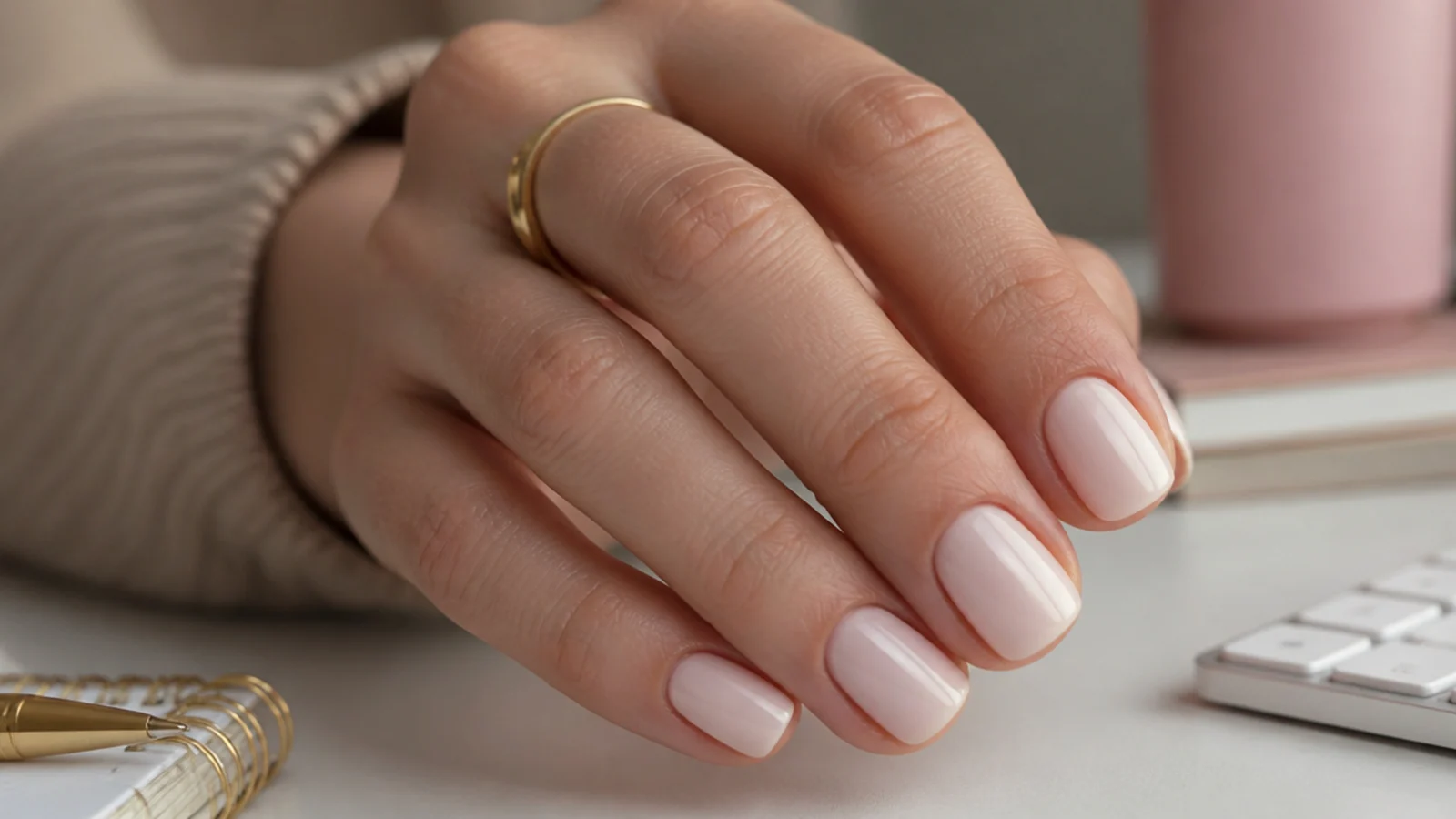
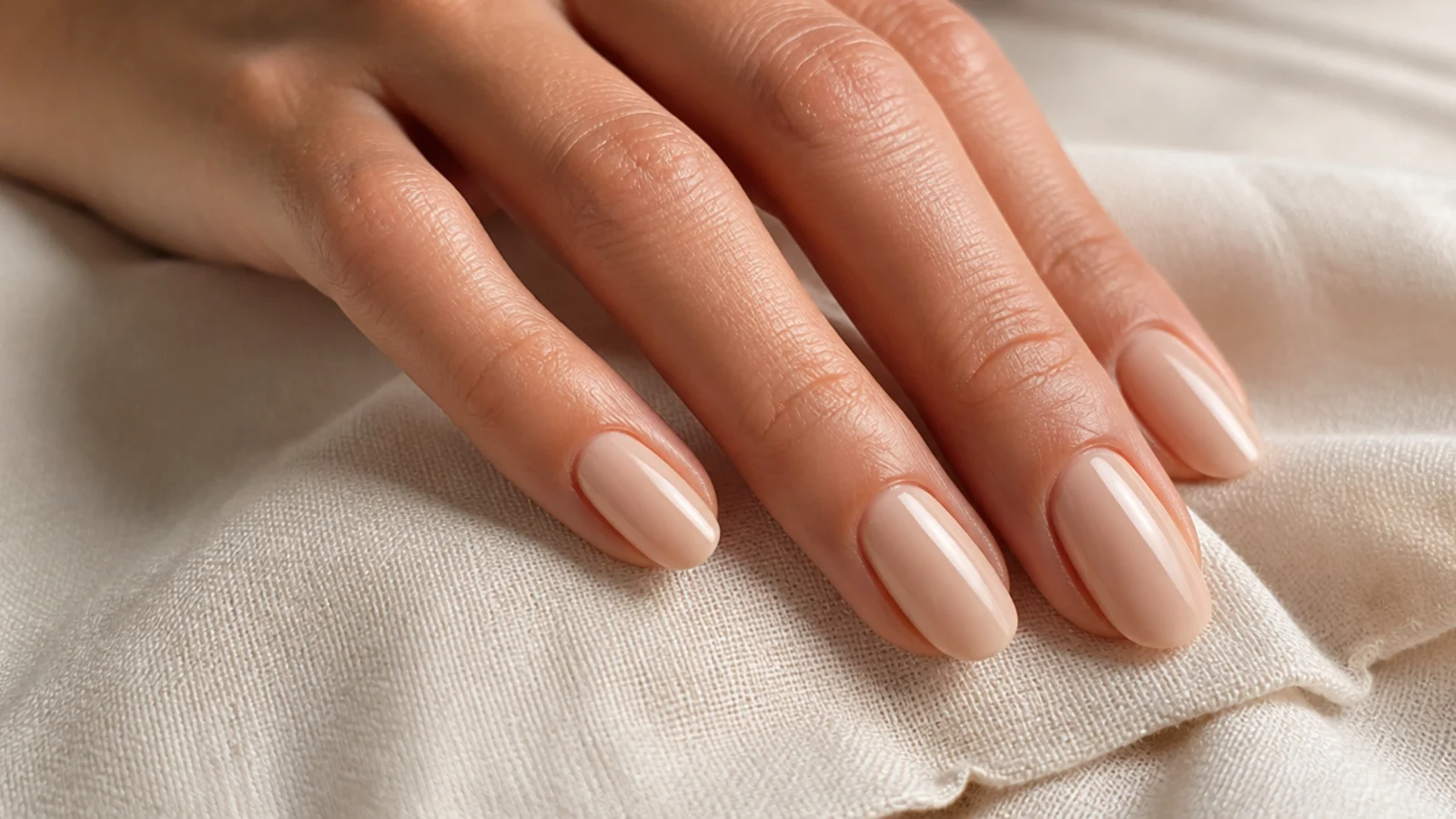
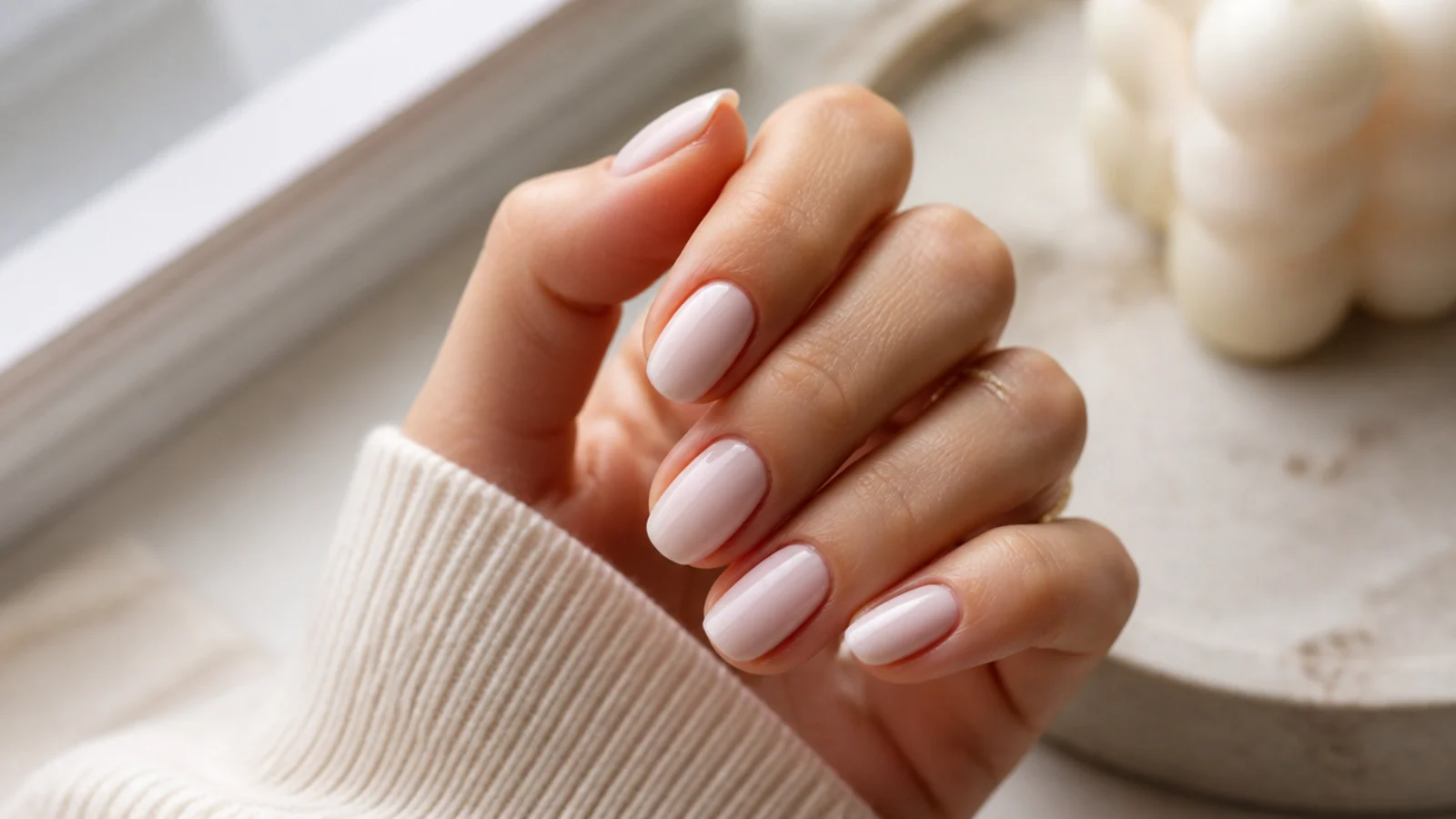
The single most office-proof manicure there is. Two or three sheer coats of a milky white such as OPI Funny Bunny or Bubble Bath, built until the free edge reads soft cream instead of chalky white, filed to a squoval at about 3mm. The sheerness is the whole point: grow-out is invisible for two full weeks because there is no hard line at the cuticle, which means a chipped or overgrown nail never announces itself in a meeting. Squoval keeps the flat modern edge without a sharp corner to catch on a keyboard.
Who it suits: Anyone starting from zero in a conservative office.
Tip: Ask for three sheer coats rather than two thick ones, or the milky base dries streaky down the center.
2. Micro French Tip Nails for the Office
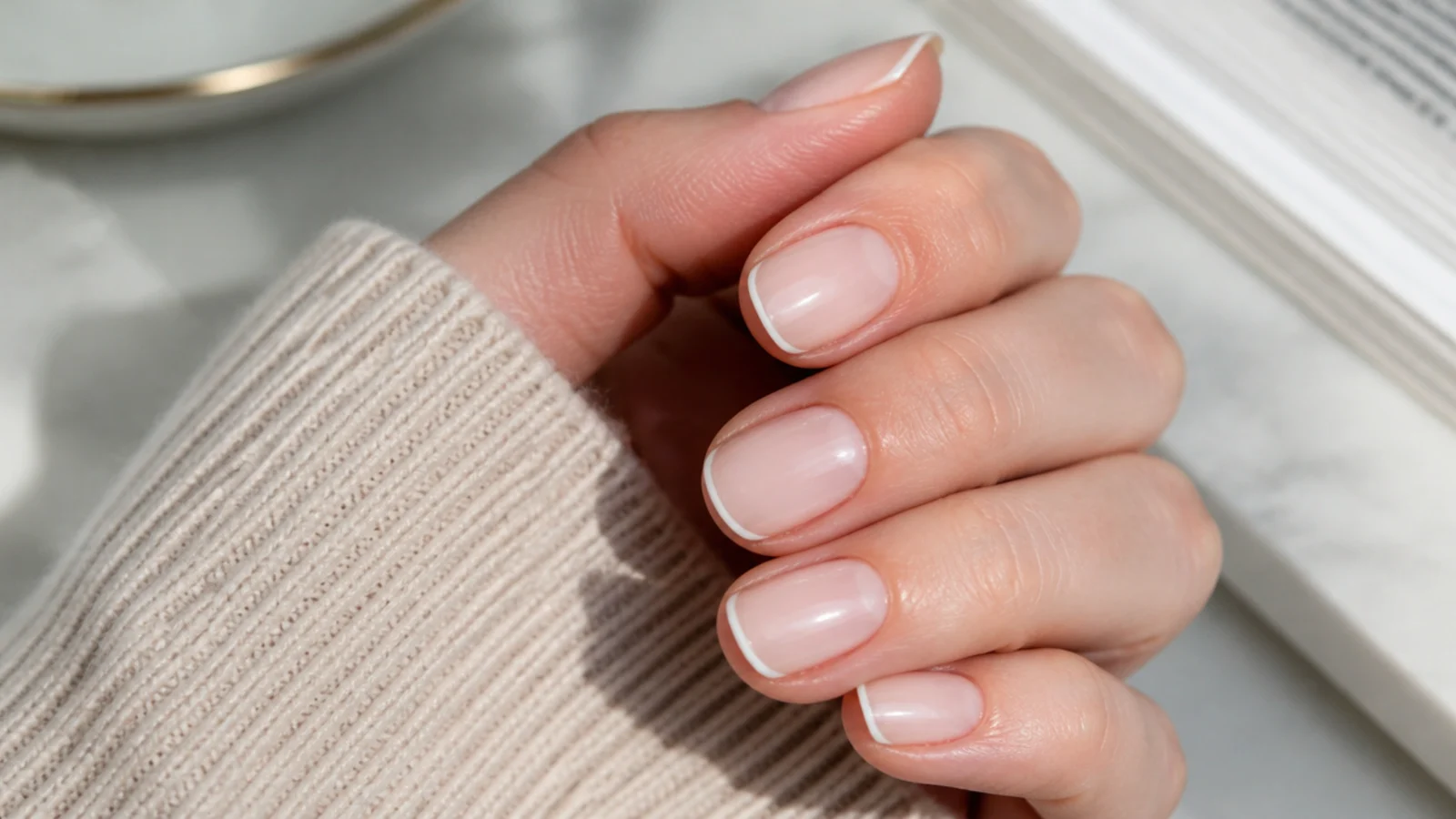
A hairline white line, roughly 1mm wide, painted right along the free edge over a bare or barely nude base. It reads as a manicure without reading as nail art, which is exactly the register a corporate dress code wants. Because the line is so thin, chipping at the tip is far less visible than on a full 4mm French band. Ask for it in gel rather than polish so the edge stays crisp past day five. If you want the fuller version, see short French tip nails.
Who it suits: Heavy typists and anyone in a client-facing corporate role.
Tip: Ask for the line matched in width across all ten nails, since thumbs are where techs drift wider.
3. Creamy Ivory Gel on Short Oval Nails
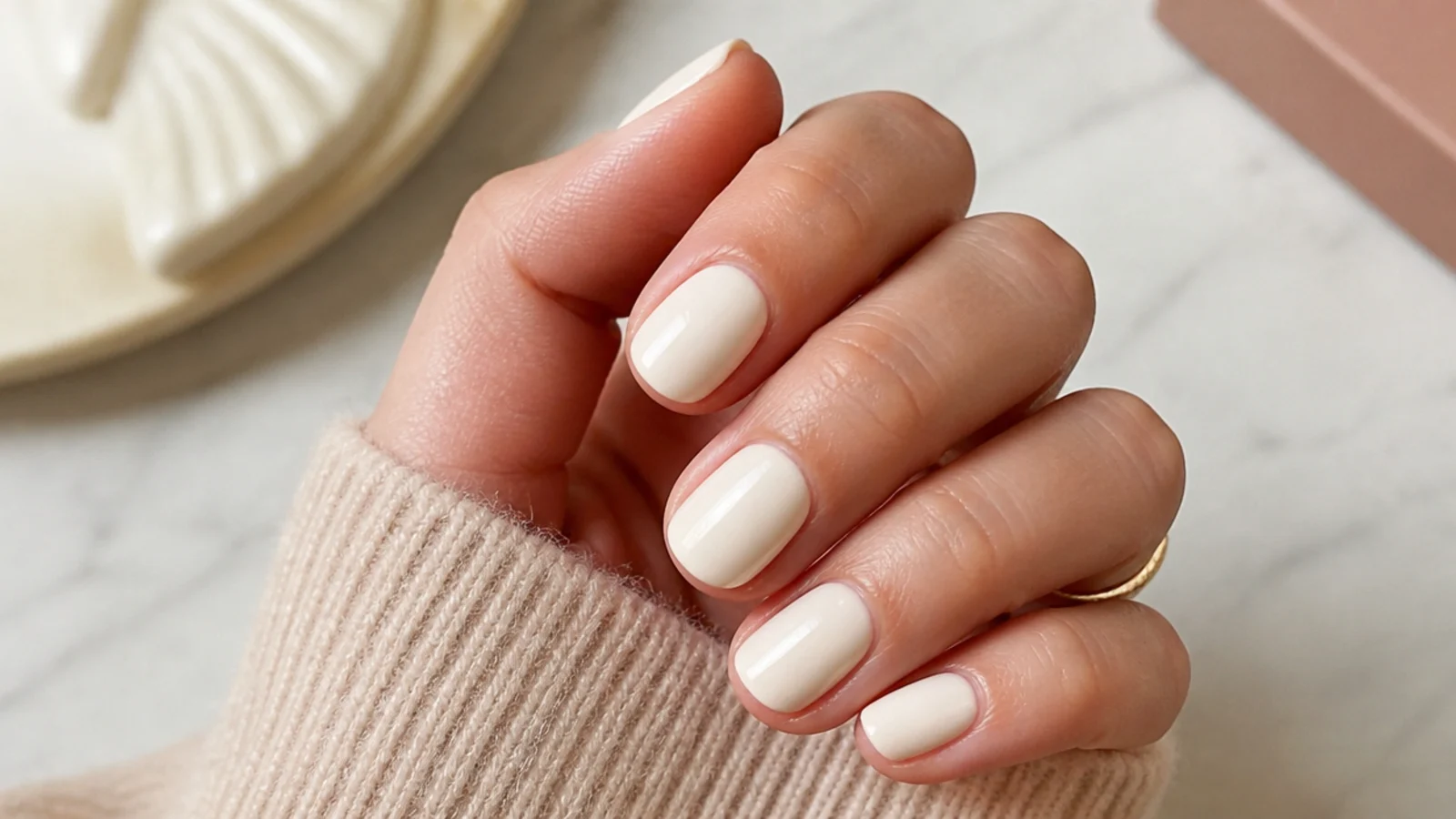
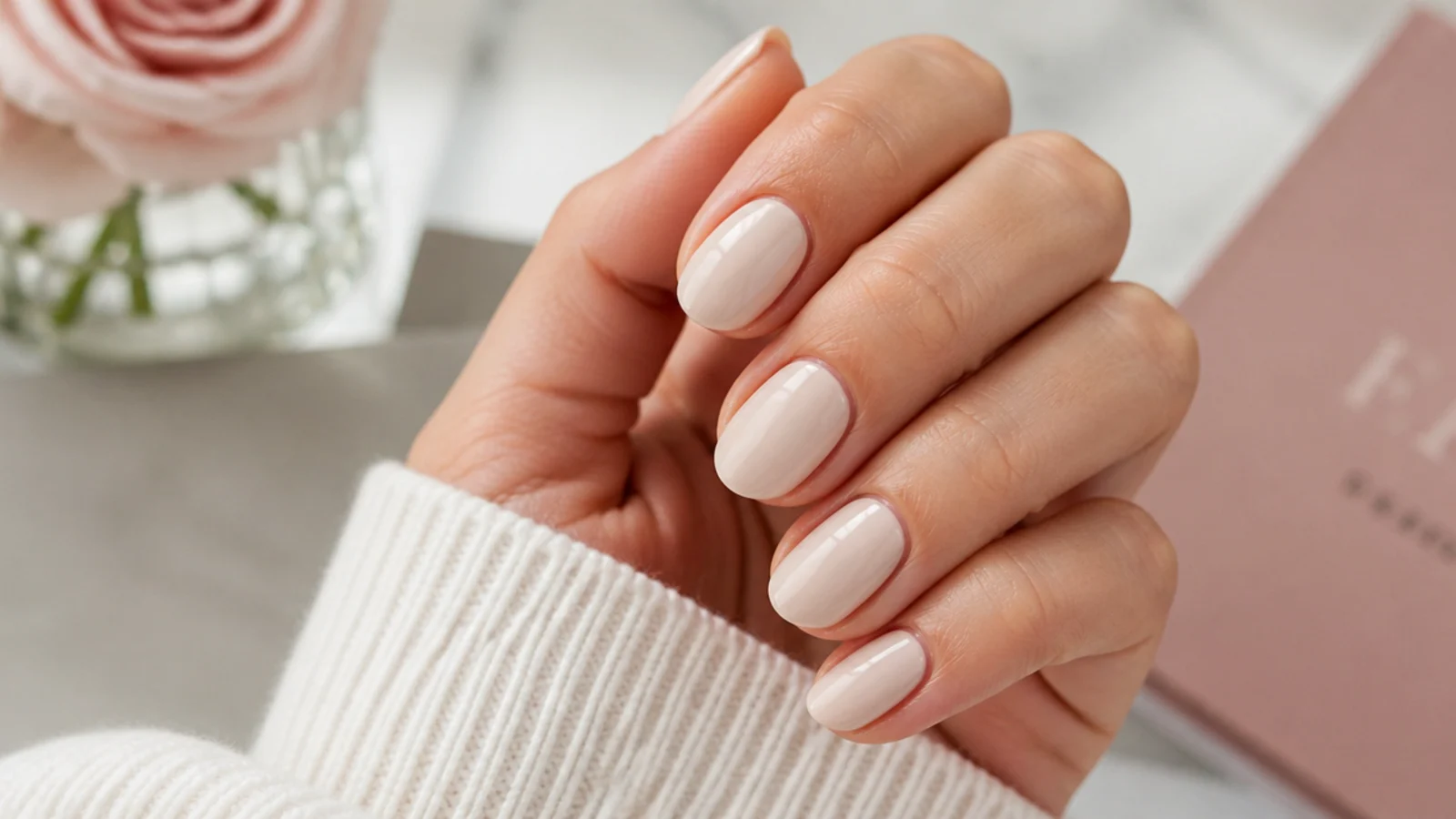
Full-coverage creamy ivory is the neutral that reads deliberate rather than bare. It is warmer than white and softer than beige, so it flatters most undertones without matching anyone's skin exactly. Two coats of gel gives complete opacity, and the oval shape rounds the corners off entirely, which is the least snag-prone shape you can wear. At 2 to 3mm it disappears into a handshake. The trade-off is that opaque shades show grow-out at about day ten, so book at two weeks. More on the shape in short oval nails.
Who it suits: Cool and neutral undertones, and anyone in finance or law.
Tip: Wipe the plate with alcohol before the base coat; ivory lifts fast off oily nails.
4. Muted Taupe Nails for Corporate Dress Codes
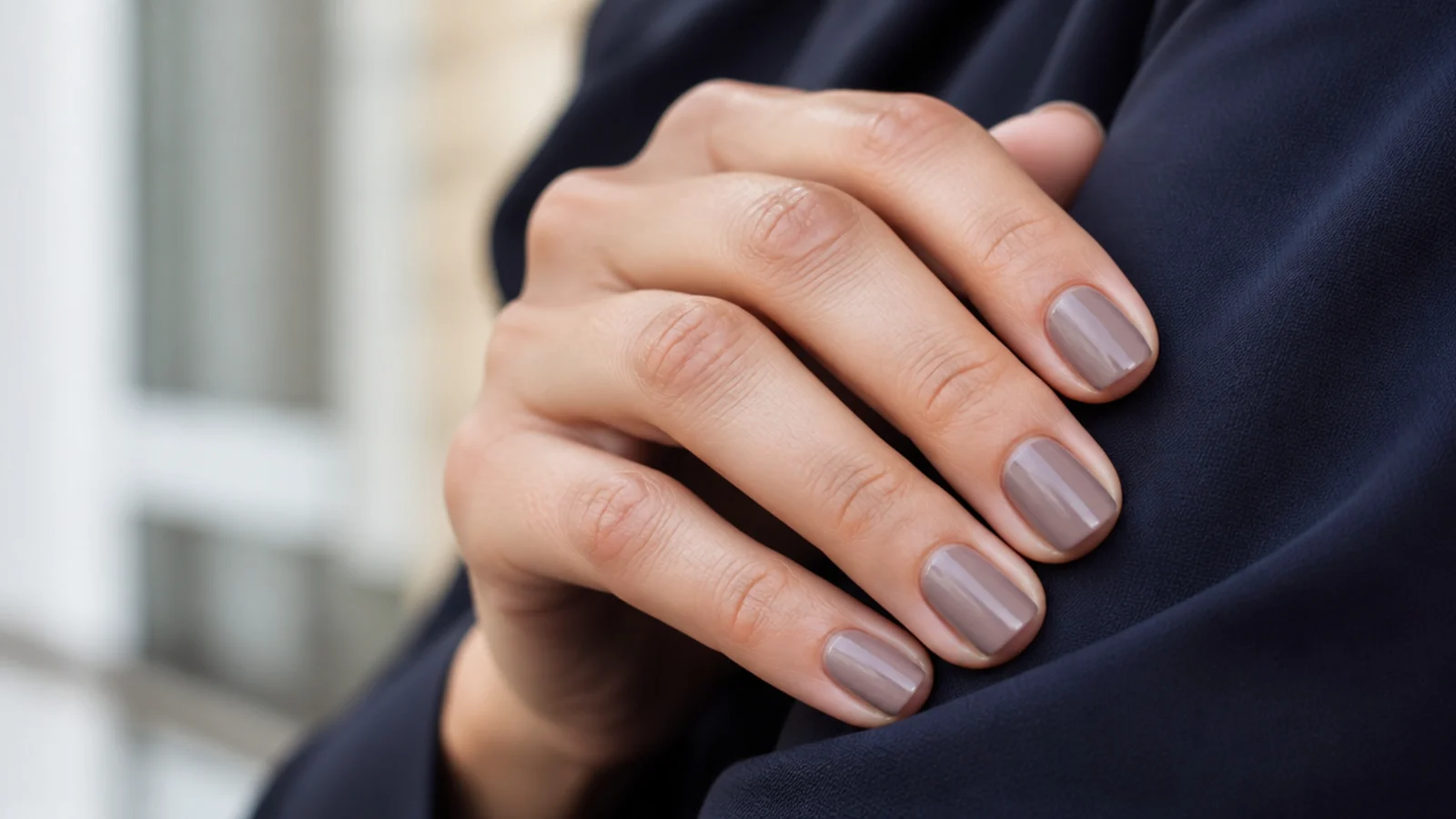
Taupe is the most versatile neutral in the category because it sits between gray and beige and therefore matches both cool navy suiting and warm camel knits. Essie Chinchilly is the benchmark bottle. Two coats gives a soft opaque gray-brown that photographs as expensive rather than as a color choice. It is the shade to pick when you want your hands to look intentional in a board meeting without anyone being able to name what you are wearing. Keep the finish glossy; matte taupe skews casual.
Who it suits: Corporate, legal and financial dress codes.
Tip: Taupe pulls muddy under warm office lighting, so check it once at your desk before committing.
5. Soft Beige Nails With a Glossy Top Coat
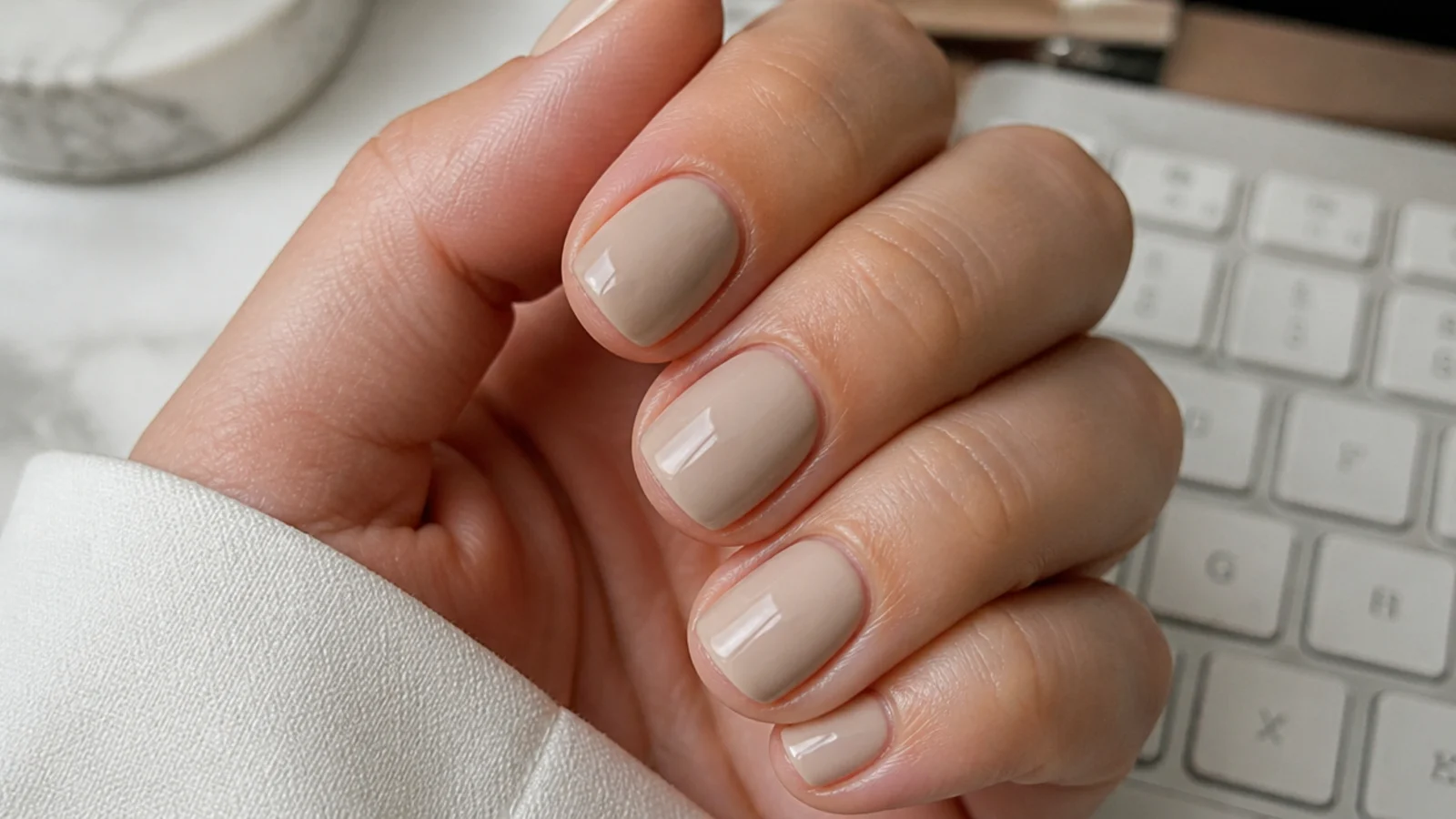
Plain soft beige is often dismissed as boring, and the reason it looks boring is almost always the top coat rather than the shade. A high-shine top coat over two coats of beige creates a wet, glassy surface that reflects light along the whole nail, and that reflection is the thing that reads as groomed. Skip the shine and the same beige looks like nothing. Reapply top coat on day four to bring the gloss back. The same glass-finish logic drives soap nails.
Who it suits: Warm and olive undertones in any office setting.
Tip: Float the top coat on in one pass; dragging it back and forth dulls the surface it is meant to create.
6. Blush Pink Sheer Nails for Conservative Offices
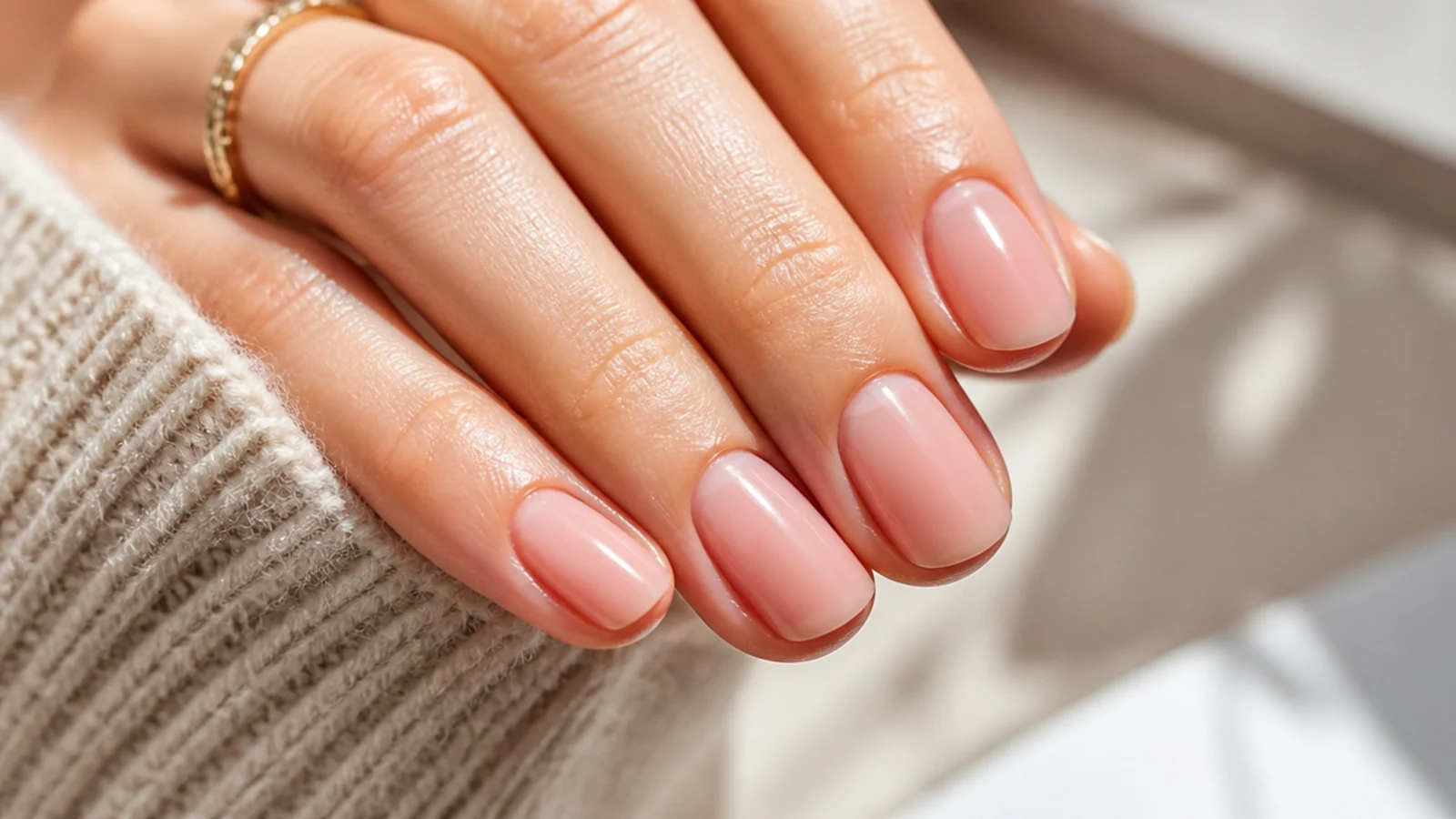
One or two sheer coats of a cool blush pink, the kind that just tints the nail rather than covering it. This is the lowest-commitment polished look available and the safest possible choice for an interview, a first week or a workplace where you have not yet read the room. Because the color is barely there, a chip at day six is genuinely invisible, which makes it the best pick if you cannot get to a salon reliably. One coat for a whisper, two for a visible flush.
Who it suits: New hires, interviews and anywhere you want zero attention on your hands.
Tip: Load a small bead of polish at the brush tip and push it back toward the cuticle to keep the coat thin.
7. Mocha Brown Nails for Work
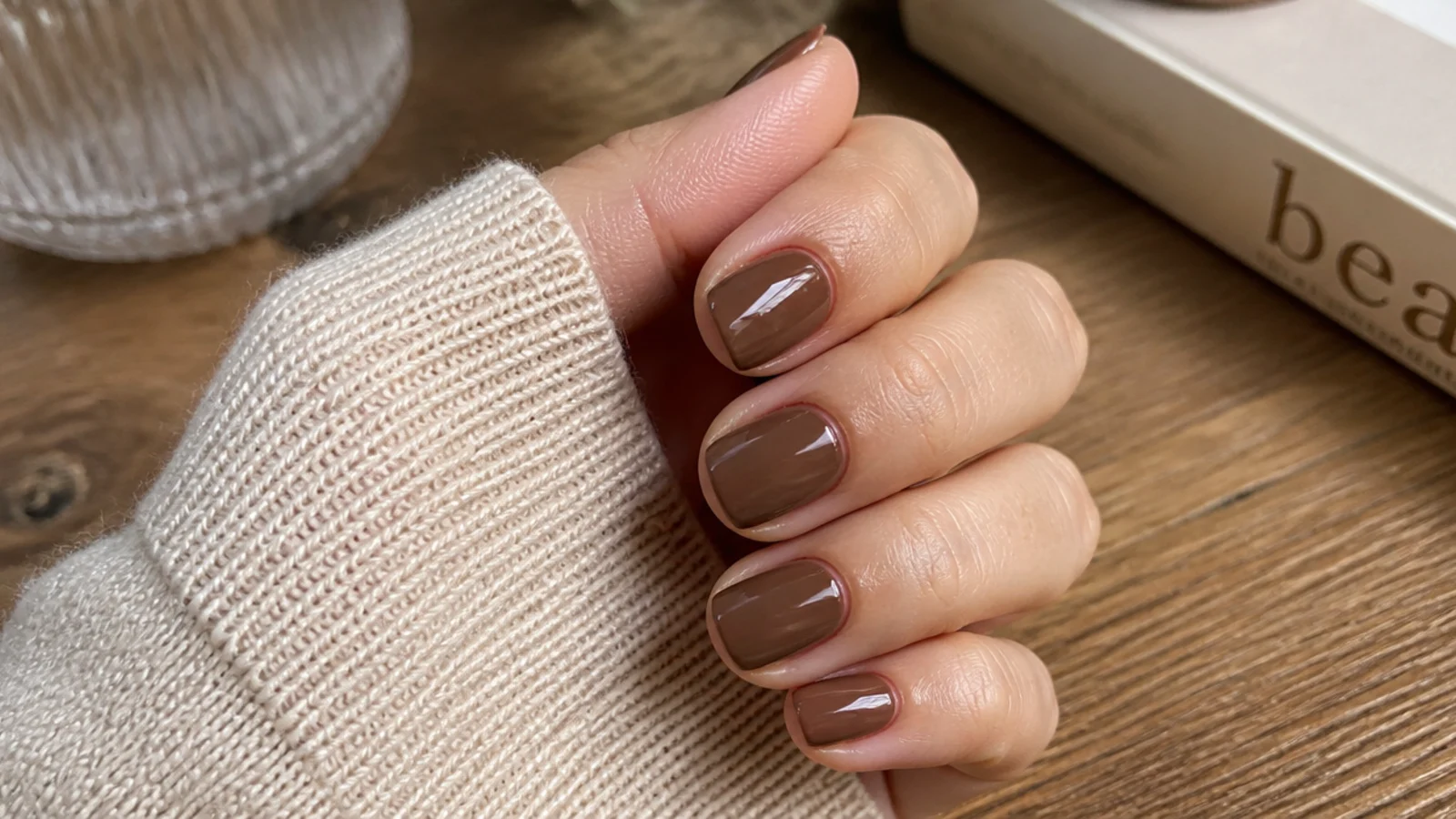
Mocha brown became a legitimate professional neutral rather than a fashion color, and it is the most useful addition to the office palette in years. A milk-chocolate mocha is dark enough to feel considered and warm enough to avoid the severity of a true dark shade, so it clears dress codes that would flag black or oxblood. Two coats of gel, short squoval, glossy. It is especially good against camel, cream and gray tailoring. The deeper espresso version sits further down this list.
Who it suits: Deep and olive undertones, and anyone bored of beige.
Tip: Choose a mocha with a red base rather than a gray one; gray-based browns read gloomy on most hands.
8. Latte Nude Ombre Nails for Client Meetings
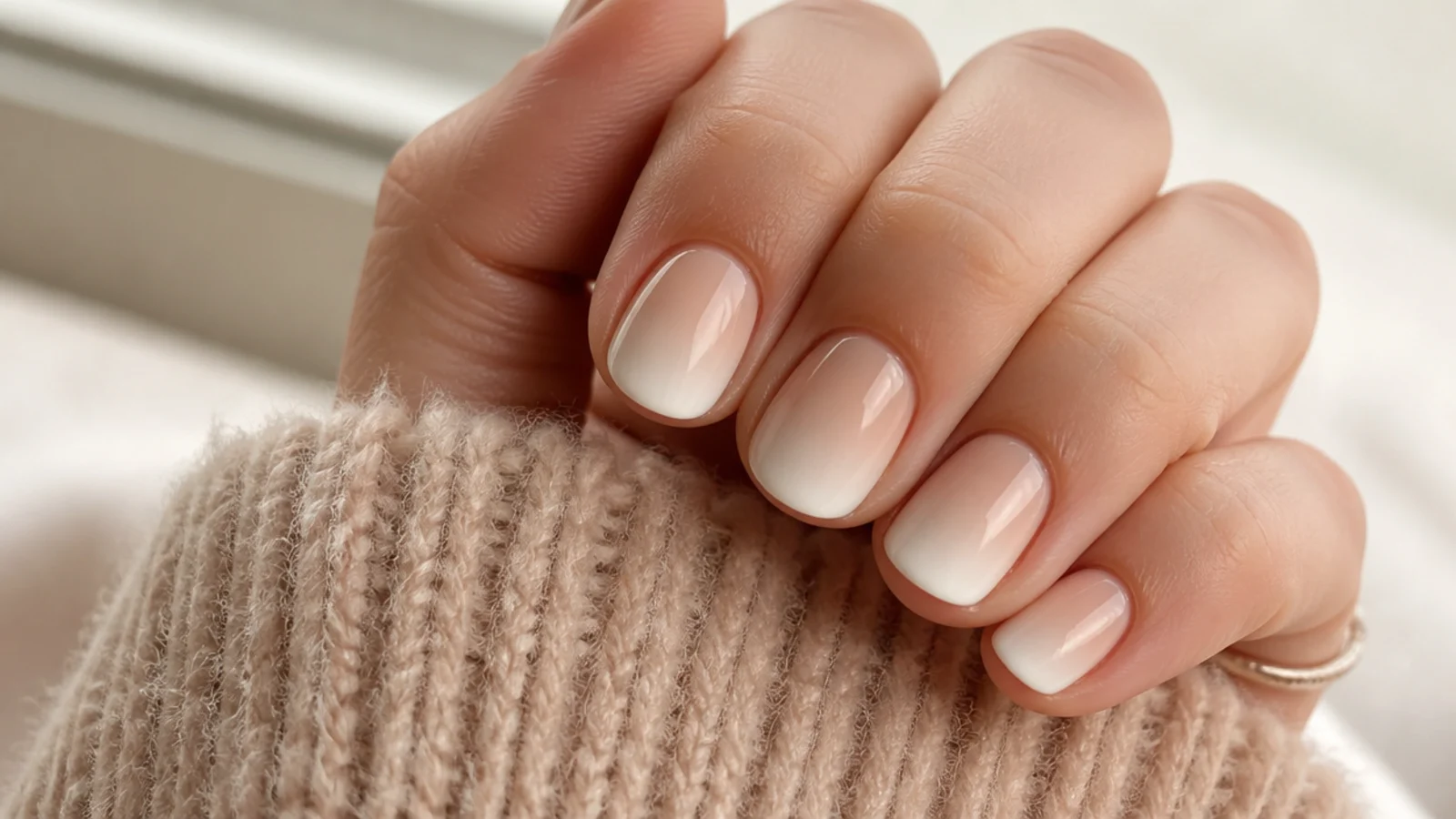
A soft fade from a latte beige at the cuticle to a cream tip, blended with a sponge or a gel brush so there is no visible transition line. It gives dimension without any actual design element, which is the trick for client-facing work: it looks like you made an effort and contains nothing anyone could object to. Ask for a vertical fade rather than a horizontal one at short length, since horizontal fades need free edge to breathe. Expect 10 to 15 dollars over a plain gel set.
Who it suits: Client-facing roles, sales and consulting.
Tip: Ask the tech to keep both shades within two steps of each other, or the fade turns into a stripe.
9. Greige Nails With a Matte Finish
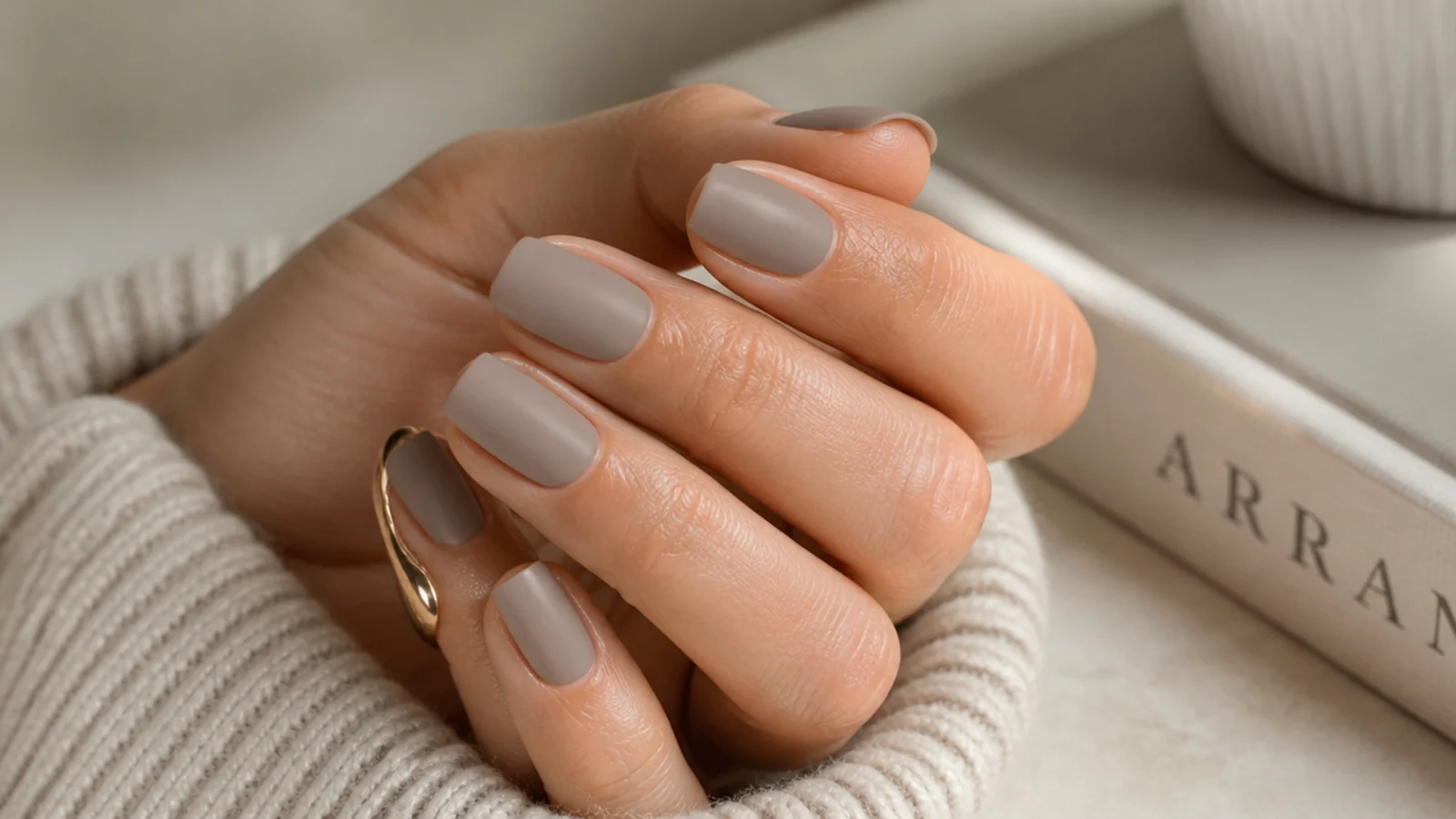
Greige is beige with gray folded in, and under a matte top coat it turns into something closer to a concrete or plaster finish. It is the most modern neutral on this list and the right pick for architecture, design and agency offices where a glossy nude reads slightly corporate. Matte hides surface scratches better than gloss but shows oils badly, so keep hand cream off the plate. Refresh the matte top coat weekly. More finish comparison in matte nails.
Who it suits: Creative studios and modern business-casual offices.
Tip: Matte top coat needs a fully cured color layer underneath or it dries patchy and shiny in spots.
10. Nude Base With Gold Micro French Tips
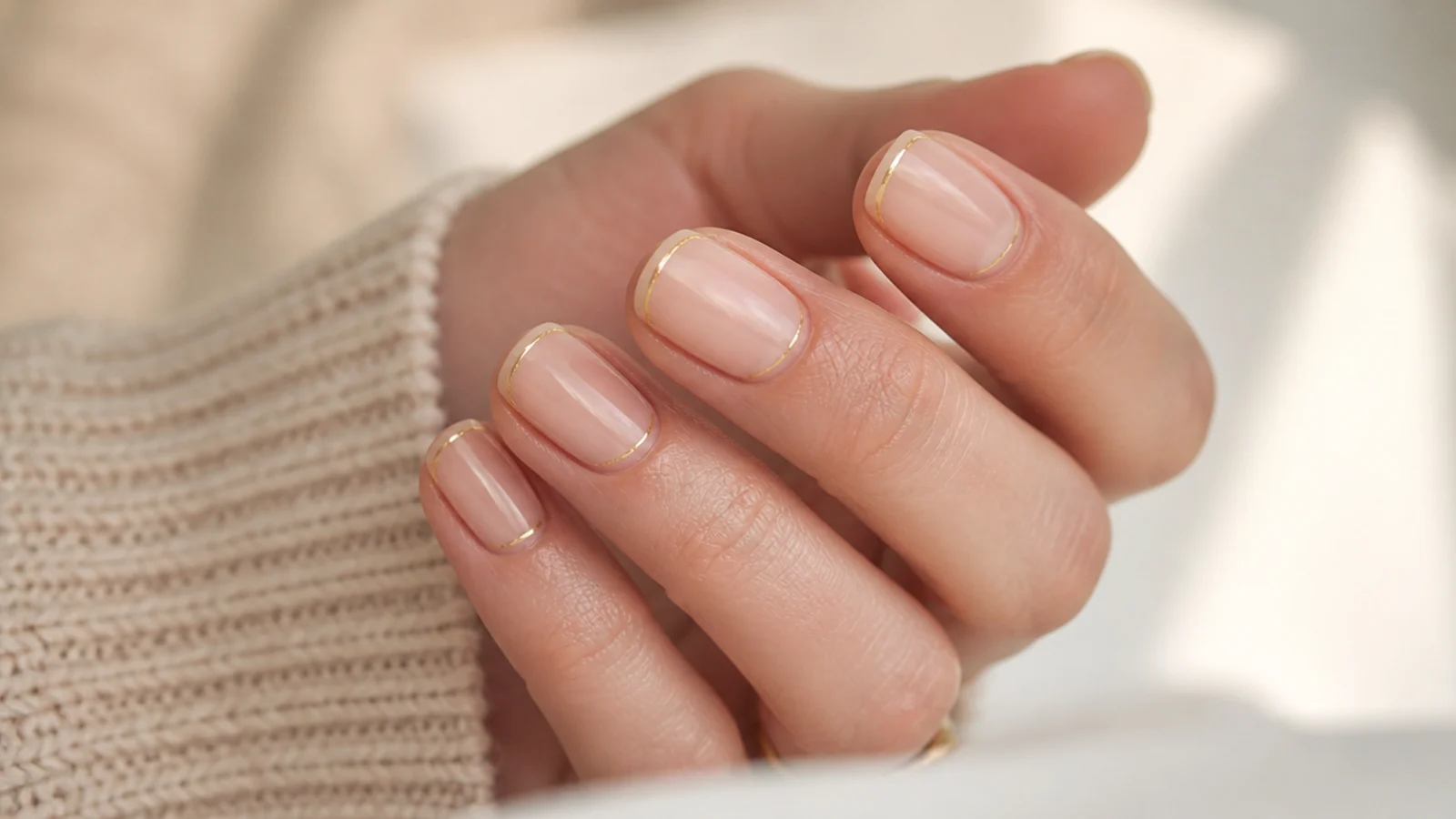
The same hairline French as earlier, painted in a warm gold chrome or fine gold liner instead of white. Gold reads warmer and slightly more decorative than a white micro line, which makes it the right upgrade for a client dinner or a conference where you want the manicure to register. It stays office-appropriate because the line is roughly 1mm and there is no glitter density to catch light aggressively. Pairs well with gold jewelry, obviously, and badly with silver.
Who it suits: Warm undertones and anyone who wears gold jewelry daily.
Tip: Gold chrome needs a no-wipe gloss top coat or the powder rubs off the tip edge within three days.
11. Soft Gray Nails for Business Casual
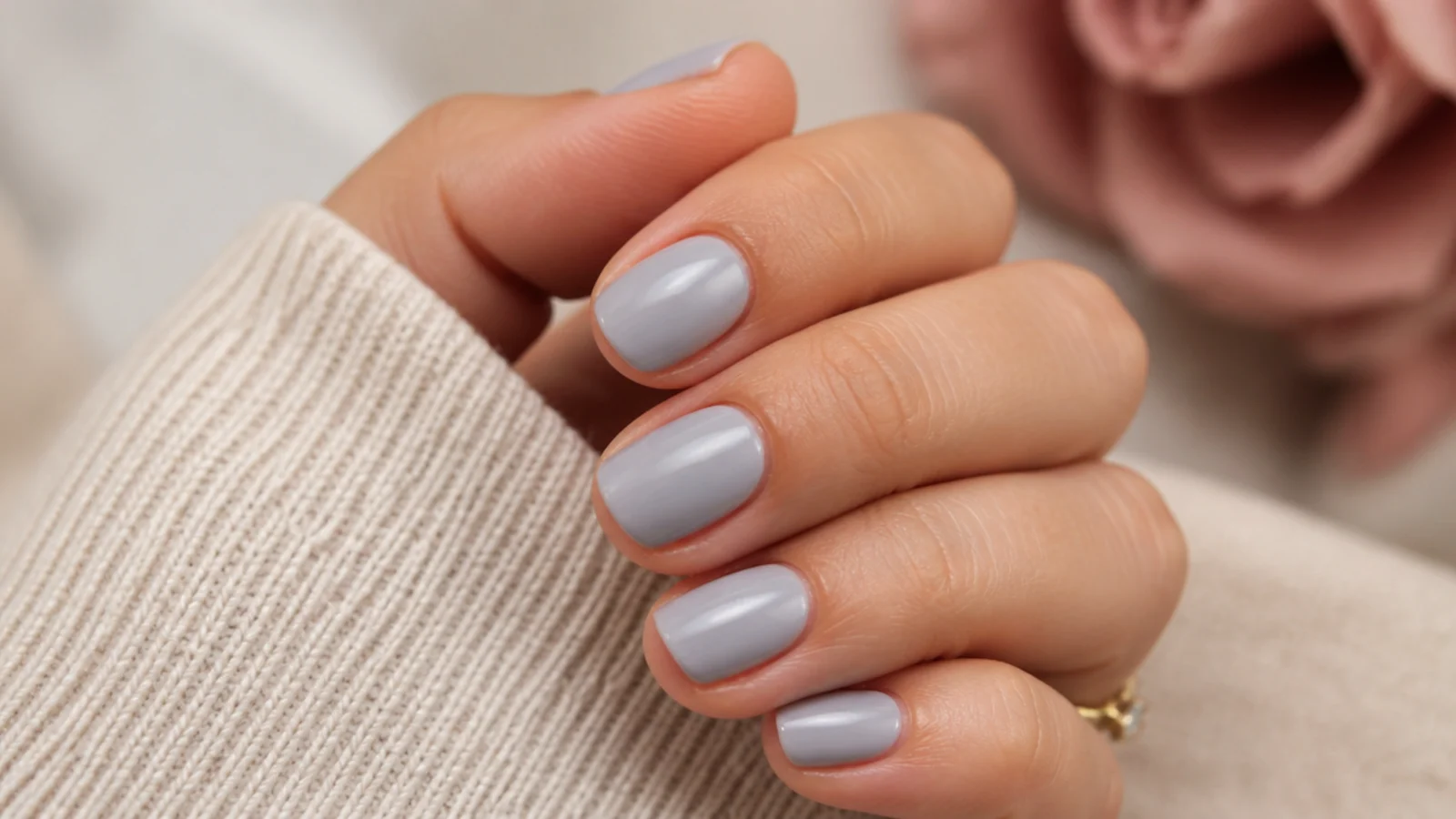
A soft dove gray, lighter and warmer than slate, is the neutral most people never try and then wear on repeat. It is completely non-obvious against navy, charcoal and black suiting, and unlike beige it does not compete with your skin tone, so it works identically on every hand. Two coats of polish is enough for opacity in most formulas. It is also the most forgiving shade for at-home application because gray hides brush strokes better than cream shades do.
Who it suits: Every undertone, and anyone whose work wardrobe is mostly gray or navy.
Tip: Stay above mid-gray; anything darker than a storm gray starts reading as a dark shade to a strict dress code.
12. Pearl Chrome Over Nude for Presentations
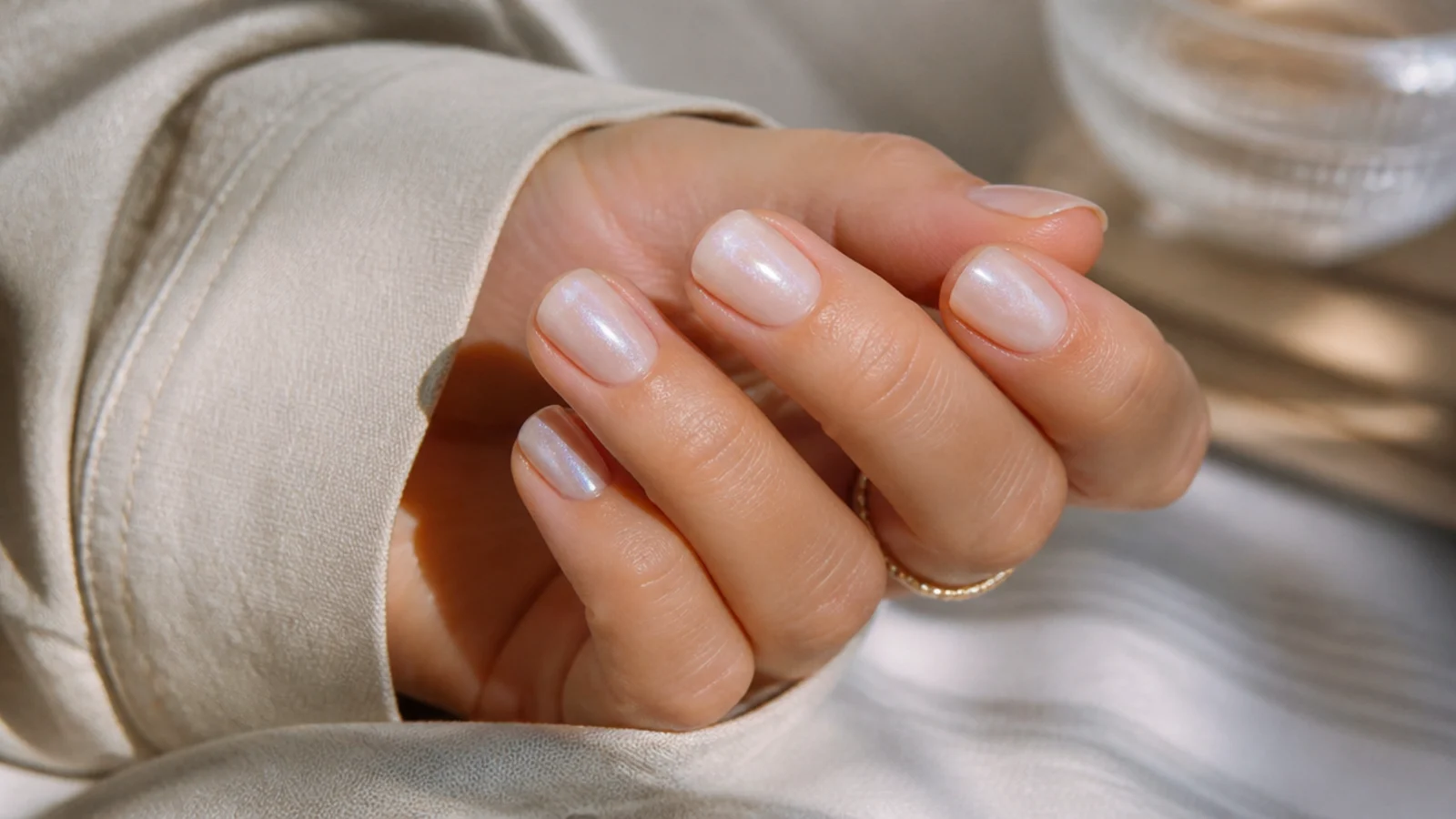
A fine pearl chrome powder buffed over a milky nude base, giving a low, shifting sheen rather than a mirror. It is the most photogenic manicure here, which matters if you present, film or shake hands on stage, because it catches light without throwing glitter. It stays professional because there is no color shift, just a soft luster over a neutral. Gel only, since the powder needs a cured tacky layer to bond. See pearl white chrome nails for the whiter version.
Who it suits: Presenters, conference speakers and anyone who is photographed at work.
Tip: Ask for the chrome sealed with two top coats; a single coat wears through at the tip in about a week.
13. Bare Buffed Nails for Healthcare Shifts
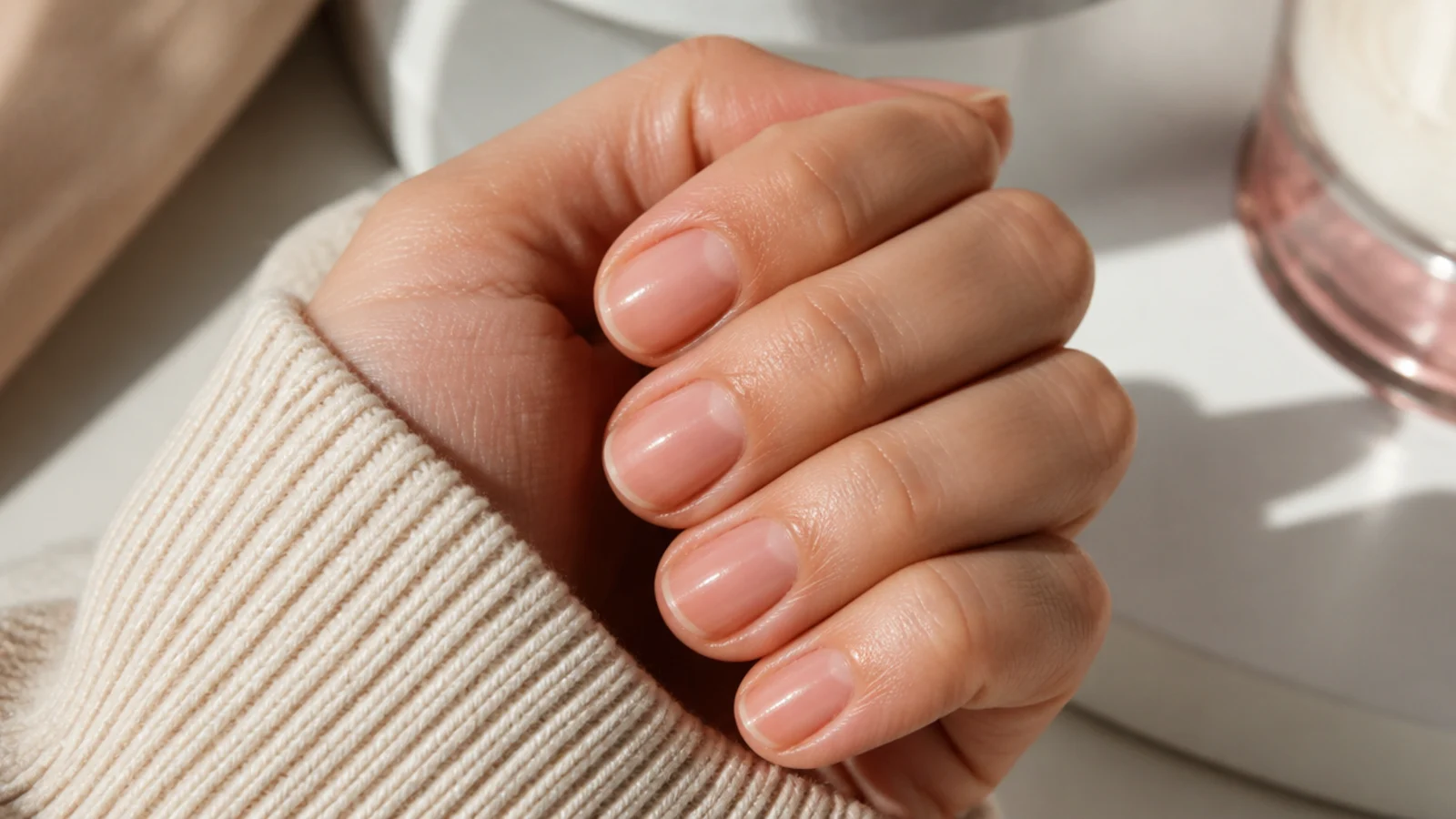
No polish at all, but genuinely finished: nails filed round at 1 to 2mm, cuticles pushed back and oiled, and the plate buffed with a four-way block to a soft natural shine. This is the only option that clears every hospital, dental and lab policy in existence, because most of those policies ban polish, gel and acrylic outright rather than restricting the shade. Buffing takes about five minutes and lasts a week. Cuticle oil twice a day is what makes bare nails look cared for rather than neglected.
Who it suits: Nurses, dentists, surgeons, lab techs and food handlers.
Tip: Buff lightly and no more than once a week; over-buffing thins the plate and causes peeling.
14. Ultra Short Round Nails in Sheer Pink
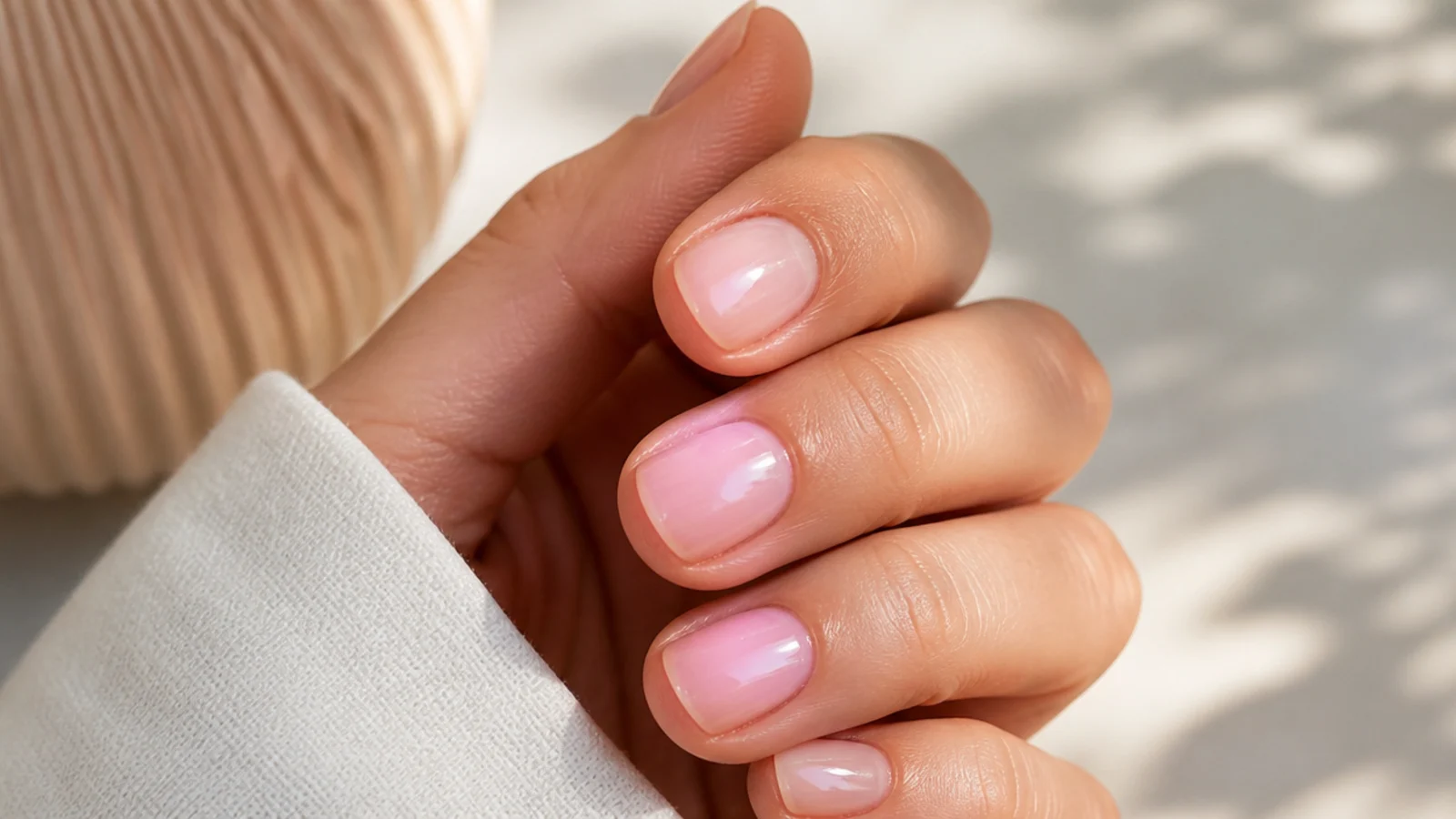
Filed round with almost no free edge showing, then given one sheer pink coat. This is the manicure for workplaces that cap length at the fingertip but still allow polish, which describes most food service, childcare and manufacturing roles. Round is the shape to ask for because there are no corners at all, so nothing catches on gloves, dough, fabric or equipment. One coat means fast repair: if a nail chips mid-shift you can fix it in ninety seconds. More at this length in short nail ideas that look expensive.
Who it suits: Childcare, retail, food service and hands-on trades.
Tip: File in one direction from the corner toward the center to stop the free edge from splitting.
15. Clear Gel Overlay Nails for Food Service
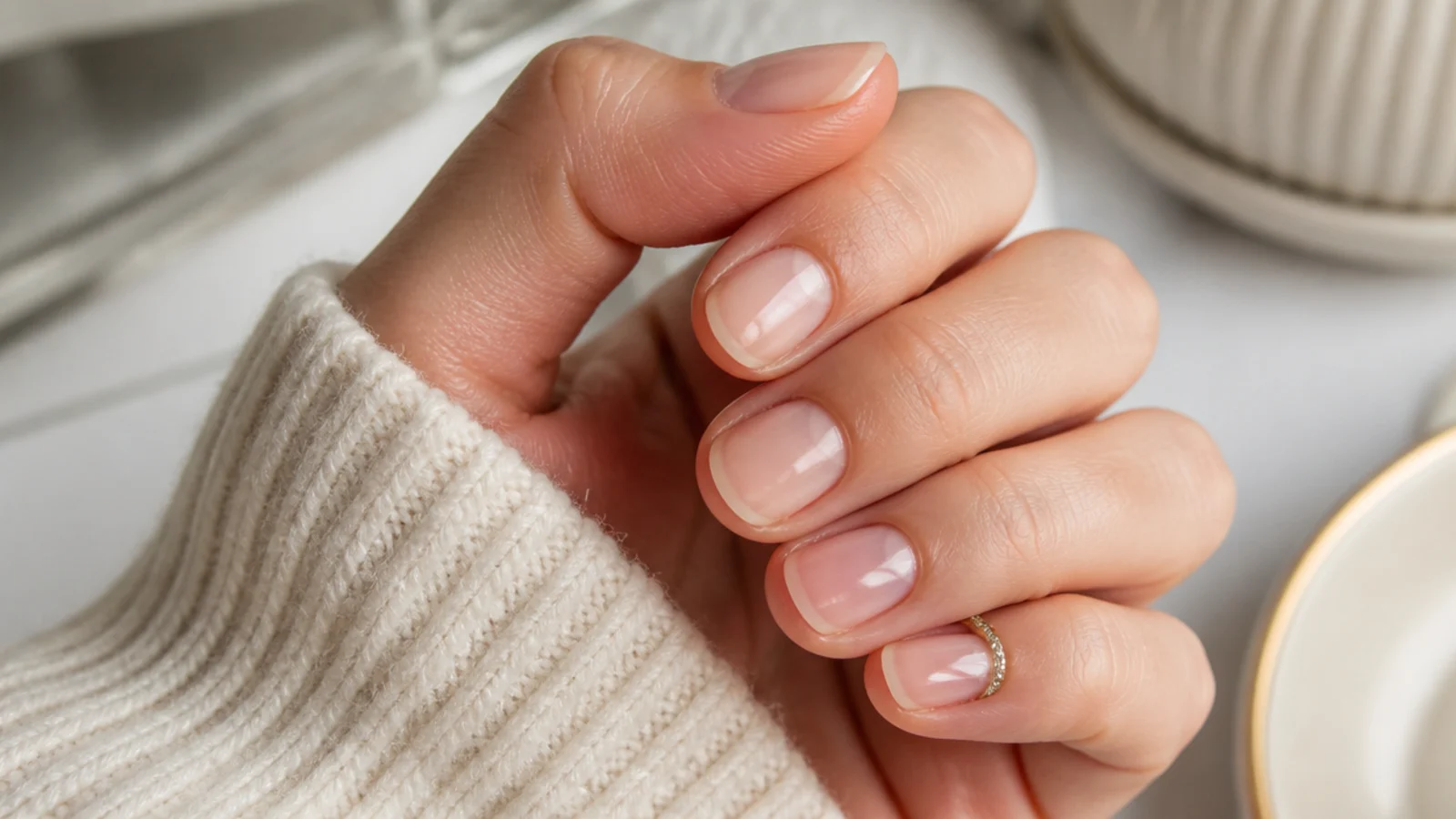
A thin clear builder or soft gel overlay on short natural nails, with no color at all. It reinforces a weak plate against constant hand washing and sanitizer, which is what actually destroys nails in service and clinical-adjacent work, while staying within policies that ban colored polish specifically. Check your policy wording first, because some ban all artificial coating regardless of color. Where it is allowed, it is the most durable neutral option on this list, at two to three weeks.
Who it suits: Baristas, servers and anyone washing hands twenty times a shift.
Tip: Ask for the overlay kept thin and sealed right to the free edge, since a thick lip traps water and lifts.
16. Single Coat Nude for Kitchen and Lab Work
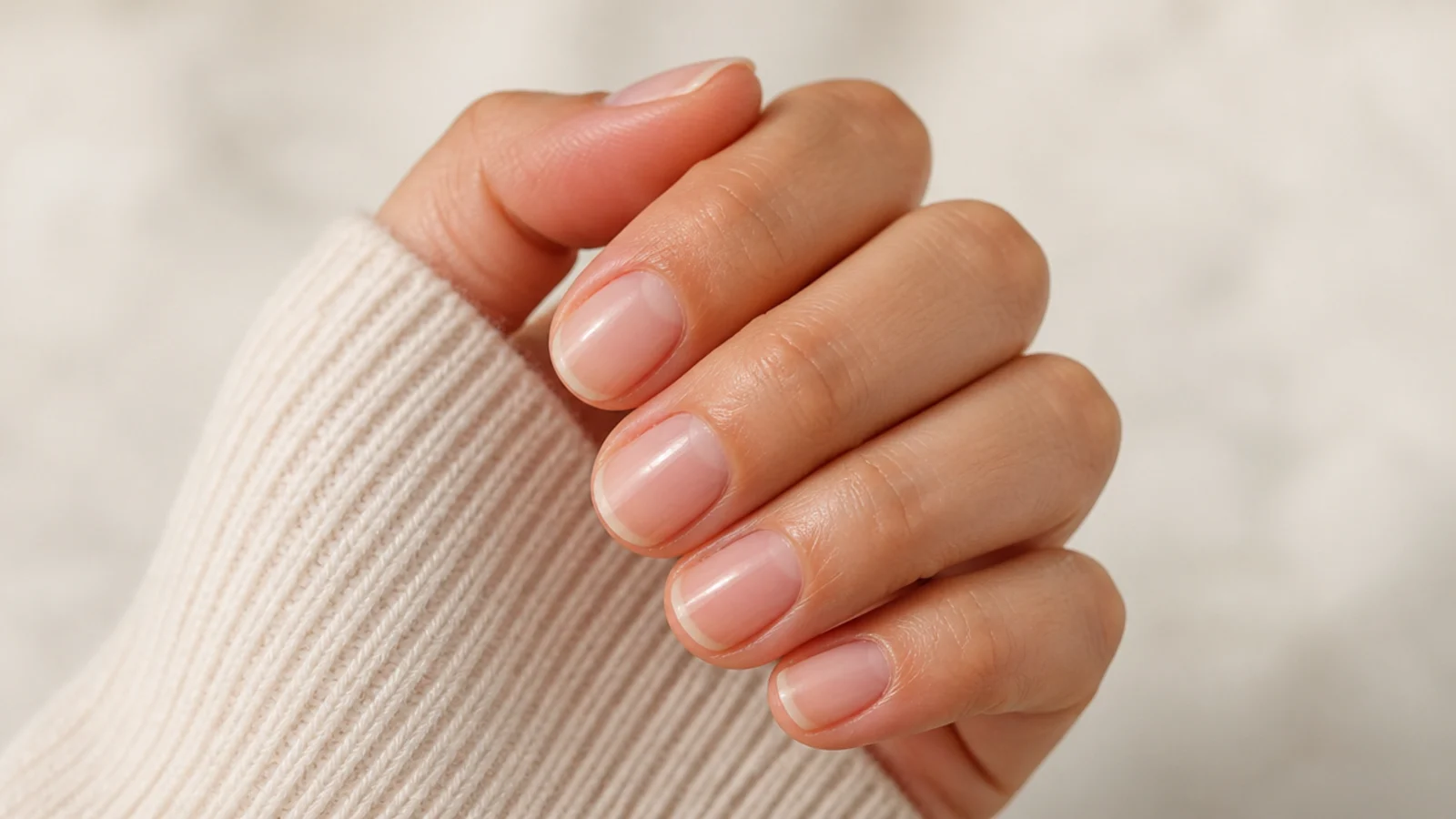
One thin coat of a nude polish, no base and no top, deliberately kept minimal. The logic is repair speed: a single sheer coat chips into a soft fade rather than a hard flake, and you can strip and redo all ten nails in under ten minutes with acetone and a cotton pad. In kitchens and labs where a visible chip is a hygiene issue, being able to reset quickly matters more than lasting two weeks. Choose a nude close to your own nail bed color so any wear disappears.
Who it suits: Kitchen, lab and workshop environments with daily inspections.
Tip: Match the nude to the pinkish part of your nail bed, not to your skin, or the free edge looks dirty.
17. Nude Nails Under 3mm for Length Rules
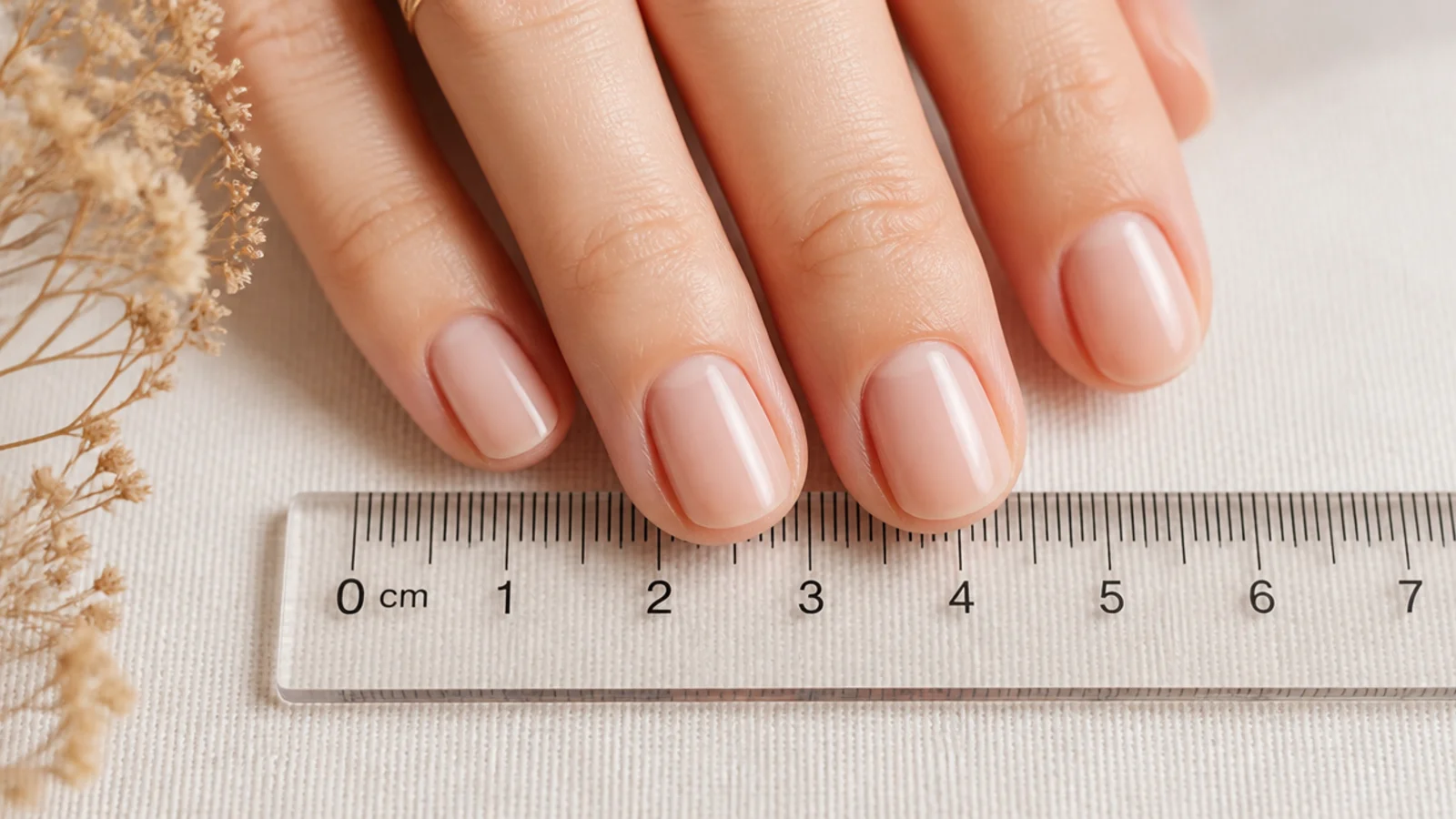
Explicitly filed so the free edge measures under 3mm, which is the number most written workplace policies land on when they specify anything at all. Painted in a soft opaque nude so the short length reads as a choice rather than as bitten nails. The way to make a very short nail look longer is to leave the sidewalls unpainted by a hair on each side, creating a narrow vertical stripe of color that lengthens the plate visually. More of that technique in how to make short nails look longer.
Who it suits: Anyone working under a written length policy.
Tip: Measure from where the nail leaves the skin, not from the cuticle, or you will overestimate by 2mm.
18. Espresso Brown Short Round Nails
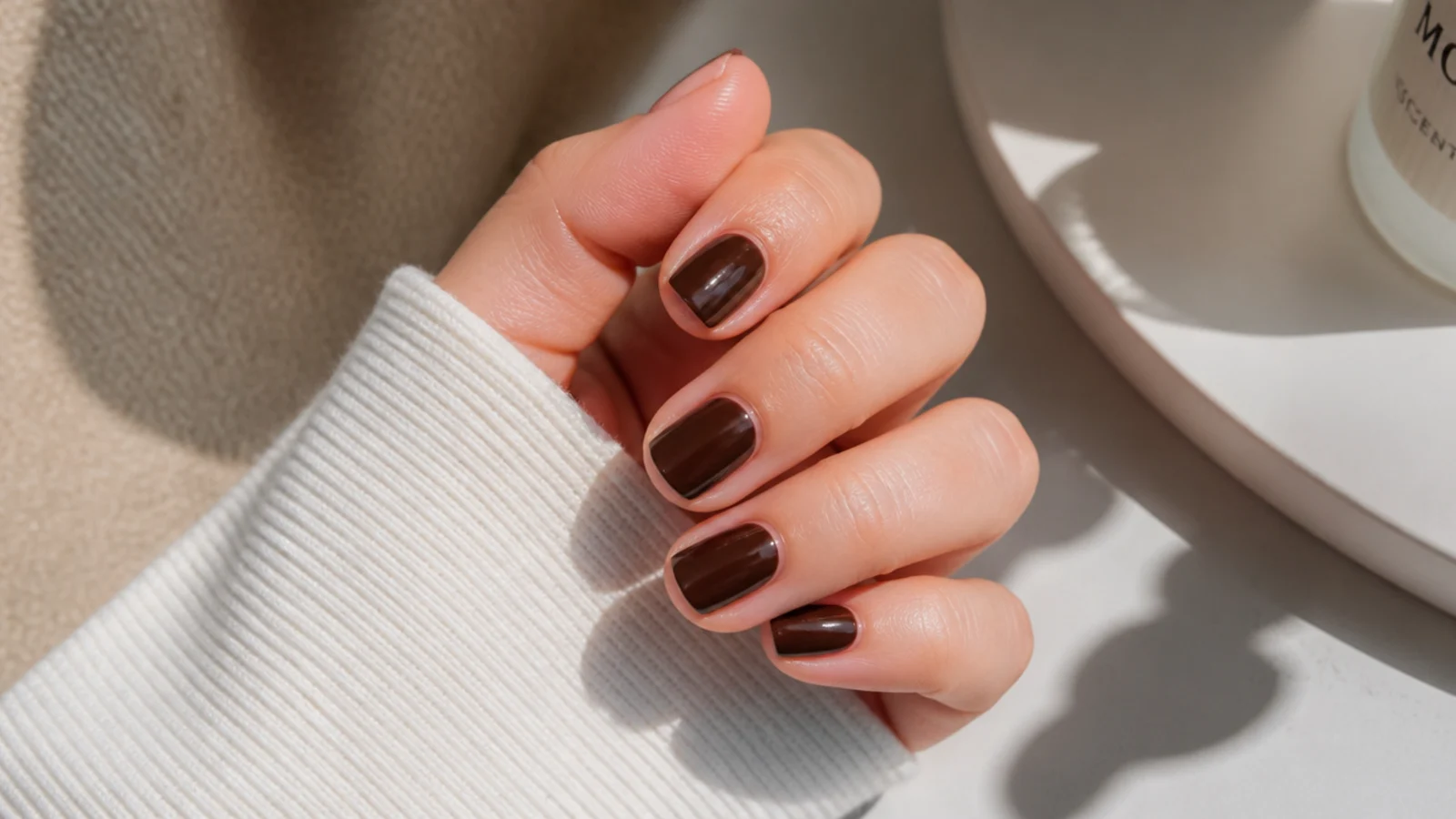
The dark end of the mocha family, roughly the color of espresso, on nails filed round at 2 to 3mm. Short and round is what keeps a dark shade professional: the same espresso on a 7mm almond reads dramatic, while on a rounded stub it reads like a good coat. This is the answer for anyone whose office technically allows dark polish but where a black or wine shade would draw comment. It also hides tip wear better than any light neutral, so it holds up for a full three weeks.
Who it suits: Deep undertones, and offices in the fall and winter months.
Tip: Dark shades stain the plate; always use a base coat or expect a yellow cast after removal.
19. Classic White French Tips for Interviews
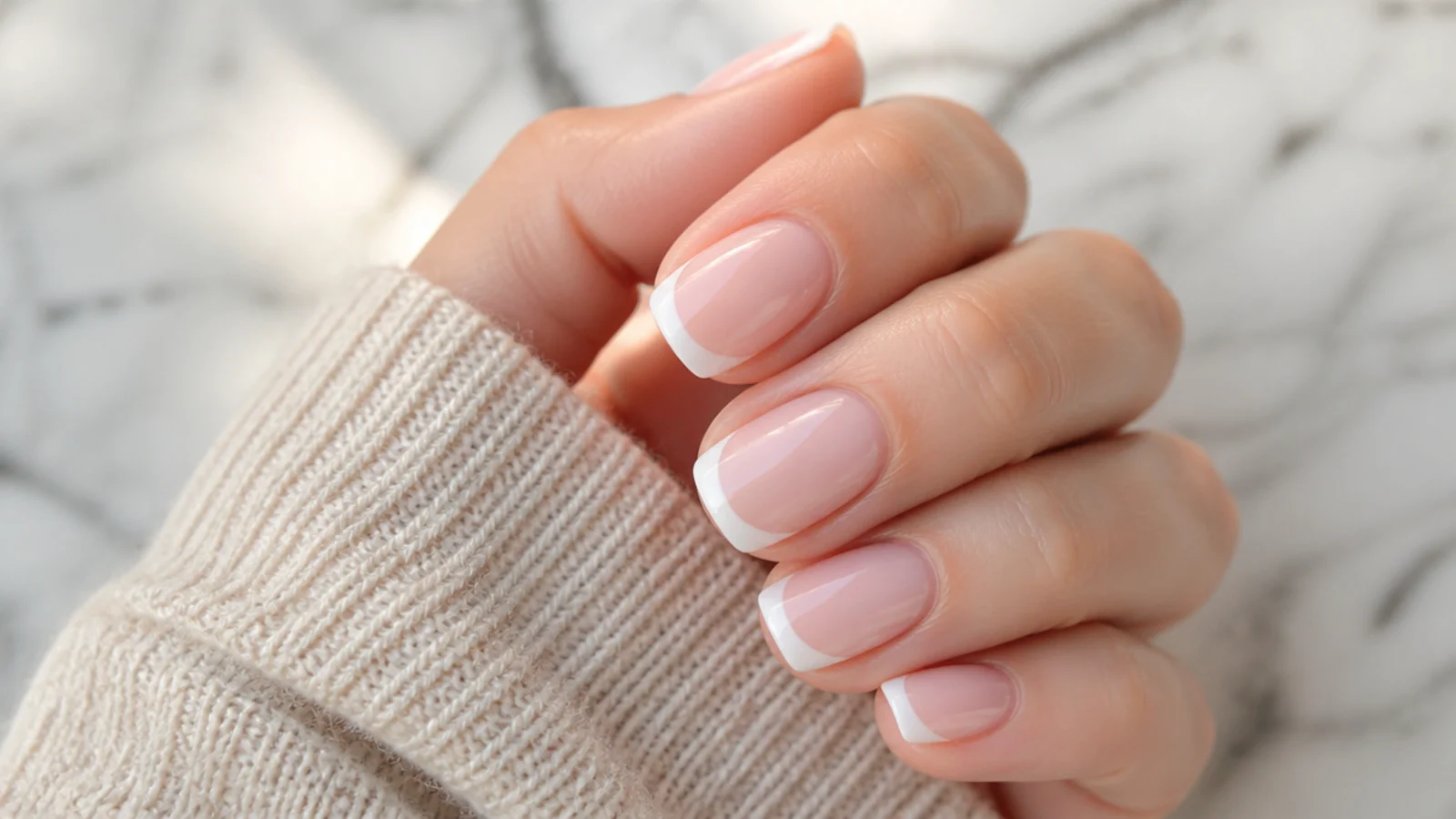
A proper French, with a 2 to 3mm crisp white band over a sheer pink or nude base, on short squoval nails. It is the most universally recognized professional manicure and the safest thing to wear to an interview in an industry you do not know yet. Keep the band narrow: anything past 4mm at short length swallows the nail and starts to read dated. Ask for a straight smile line rather than a deep curve. Full detail in white French tip nails.
Who it suits: Interviews, first weeks and formal corporate settings.
Tip: Ask for gel rather than polish; a chipped white tip is the most visible chip in nail care.
20. Warm Almond Nude Nails for Job Interviews
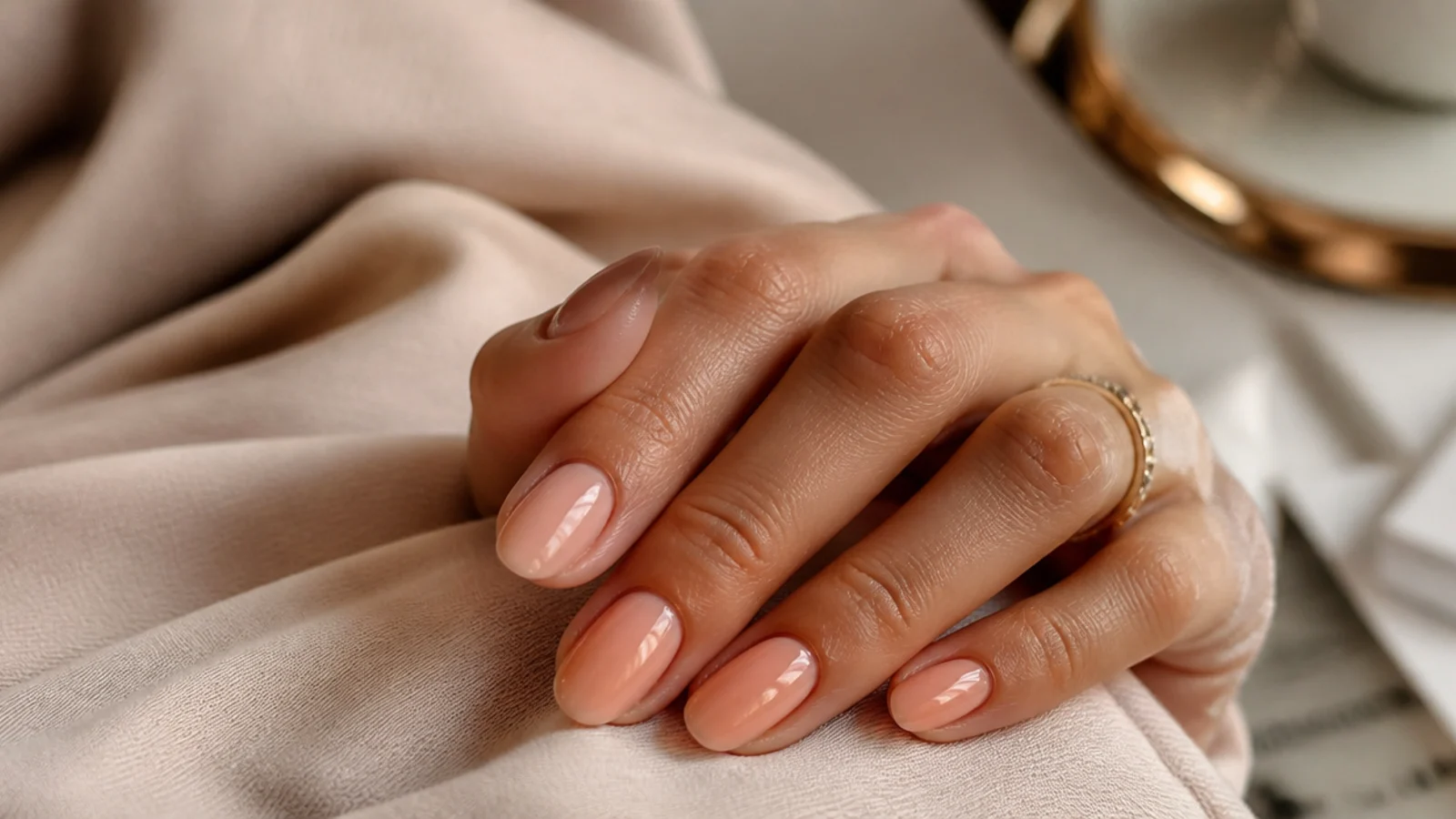
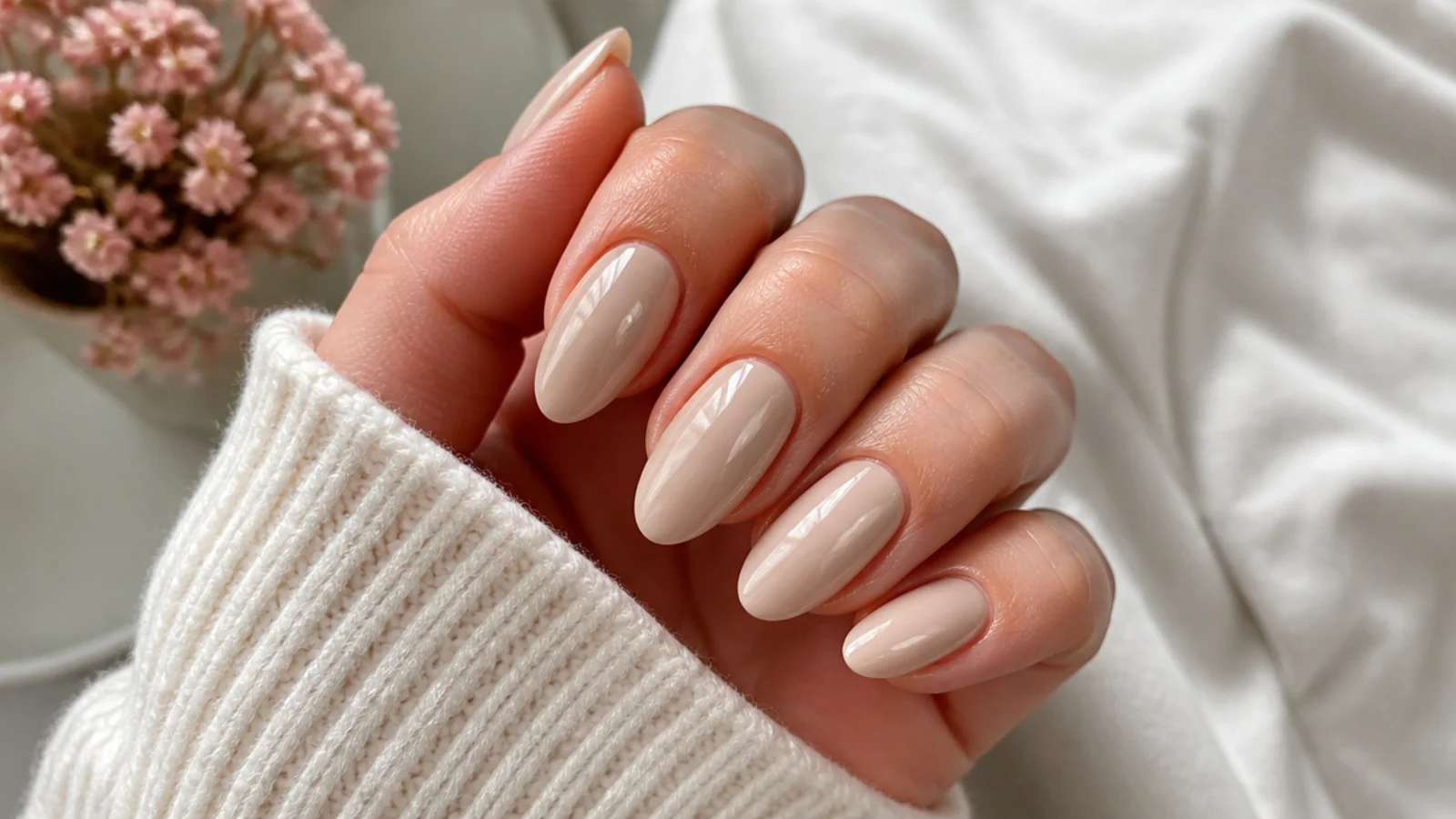
A warm peachy nude on a short almond shape, about 3mm. Almond narrows on a curve rather than an angle, which elongates the finger without adding actual length, so it is the shape to ask for if you want your hands to look longer while staying inside a length policy. The peachy warmth is important: a nude that is too pink or too gray against warm skin reads as a mismatch rather than a neutral. Shape mechanics are covered in short almond nails.
Who it suits: Warm and golden undertones, and short nail beds.
Tip: Ask for a shallow almond at short length; a sharp apex on a 3mm nail chips at the point within days.
21. Champagne Micro Glitter Nails for Office Parties
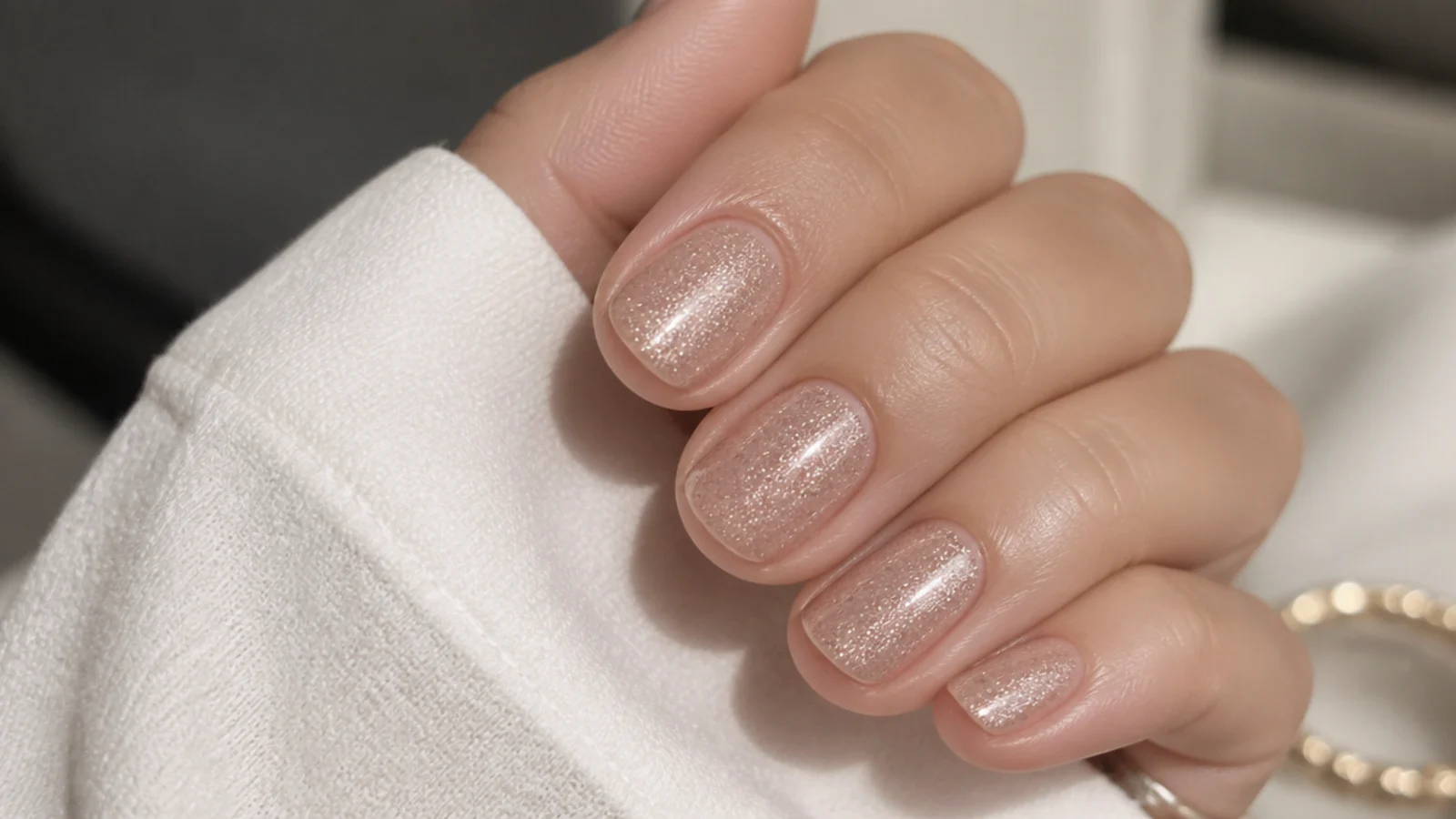
A nude base with a very fine champagne micro glitter suspended through it, so the sparkle reads as texture rather than as glitter. This is the one on the list that carries you from a Tuesday desk day to a work dinner or a holiday party without a change. The rule is particle size: micro glitter stays professional, and anything you can see individual flakes of does not. Two coats. Removal takes longer than a plain nude, so budget an extra ten minutes of soak time.
Who it suits: Office parties, work dinners and December generally.
Tip: Sponge the second coat on rather than brushing it, which distributes the glitter evenly to the tip.
22. Navy Nails With a Cream Accent for Winter Work
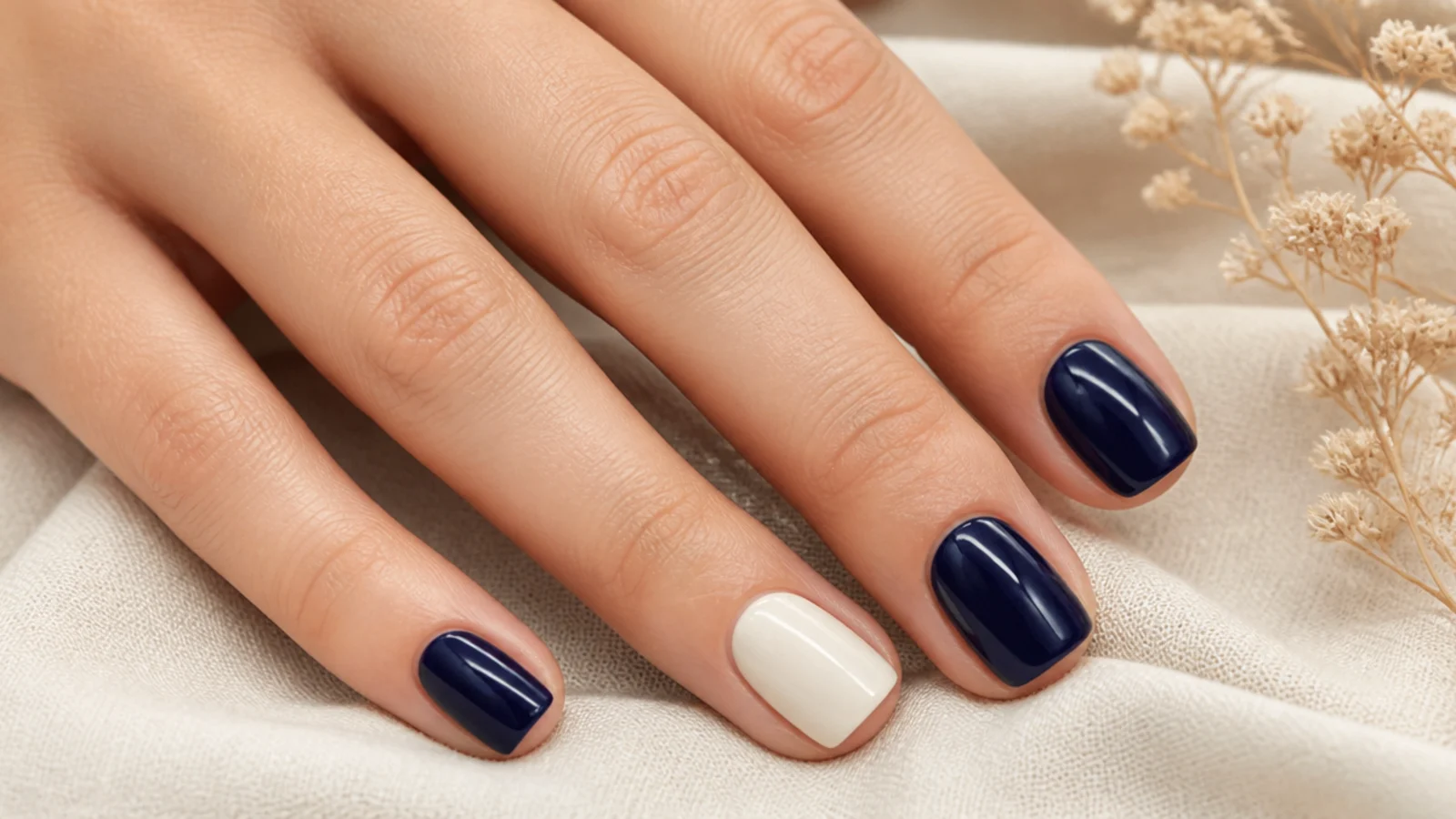
Deep navy on eight nails with a creamy off-white on the ring fingers. Navy is the dark shade that consistently survives conservative dress codes because it is read as a suit color rather than a statement, unlike black or bright red. The single cream accent stops the set from looking heavy at short length. Keep it to squoval at 3mm and glossy. It is the winter counterpart to taupe and pairs cleanly with charcoal and camel tailoring.
Who it suits: Cool undertones, and corporate offices in winter.
Tip: Navy floods cuticles easily; ask the tech to leave a hairline gap at the base rather than painting flush.
23. Deep Burgundy Nails for Corporate Evening Events
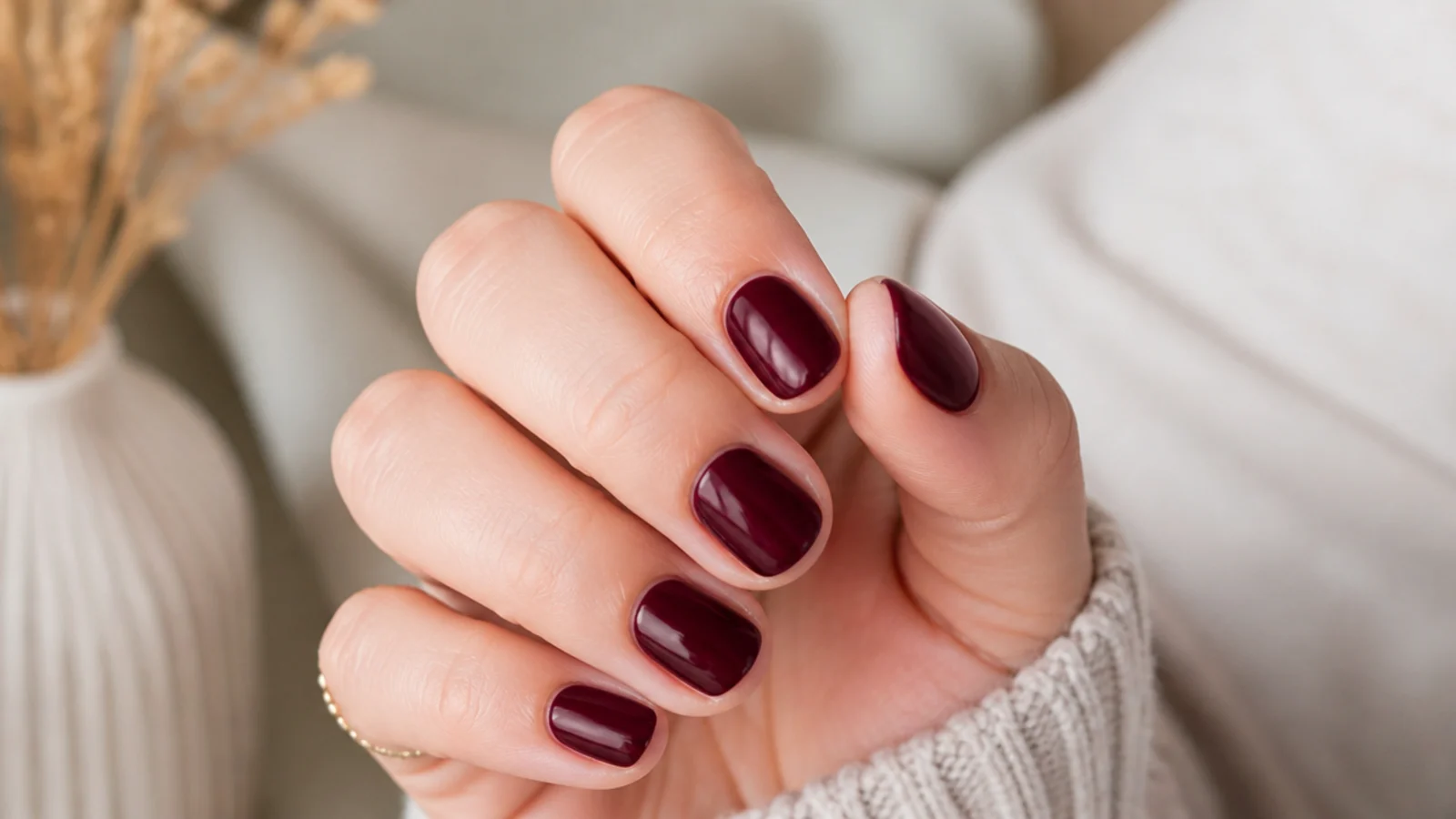
A muted burgundy, closer to dried wine than to cherry, on short round nails. This is the upper limit of what most corporate dress codes tolerate, and it works because the shade is desaturated rather than bright. Wear it for evening events, awards dinners and end-of-quarter functions rather than for a regular Monday. Two coats of gel gives depth; polish tends to look flat and thin in this family. Pairs with gold jewelry and with black or charcoal.
Who it suits: Evening work events and offices with relaxed color rules.
Tip: Test it against your own hand first; burgundy reads warm on olive skin and almost purple on very cool skin.
24. Olive Beige Nails for Creative Studios
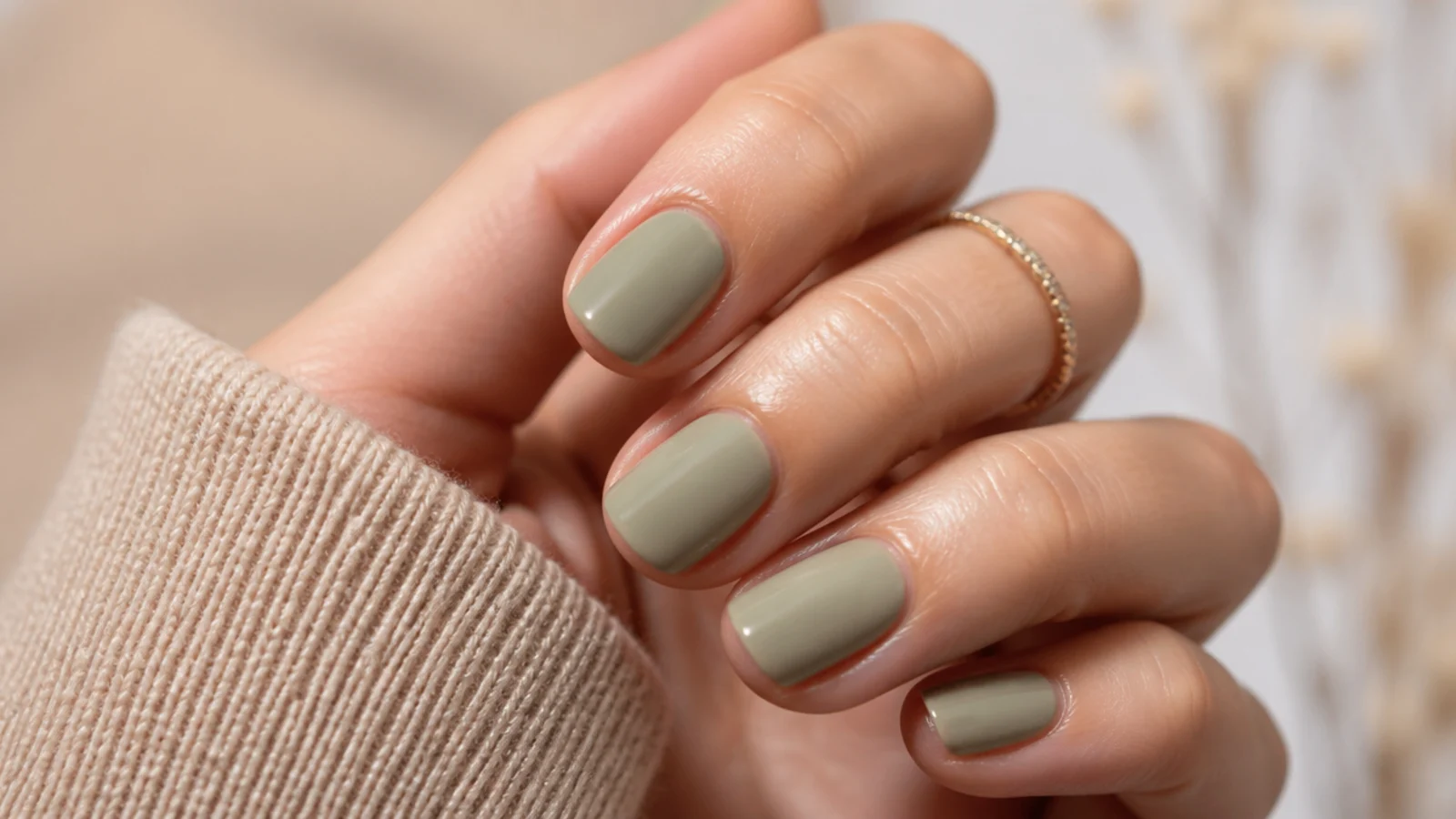
A beige with green folded through it, landing somewhere near a pale sage or a dusty khaki. It is the most interesting shade here and the only one that would look out of place in a bank, which is precisely why it belongs in a design studio, an agency or a startup office. It sits beautifully against cream, rust and denim. Two coats, squoval, and either gloss or a soft satin top coat. Skip it if your work wardrobe is all cool grays and navy.
Who it suits: Creative offices, olive undertones and anyone whose wardrobe skews warm.
Tip: Look for an olive with a beige base rather than a gray one; gray-based olives turn khaki-green on the nail.
25. Matte Nude Nails for Long Desk Days
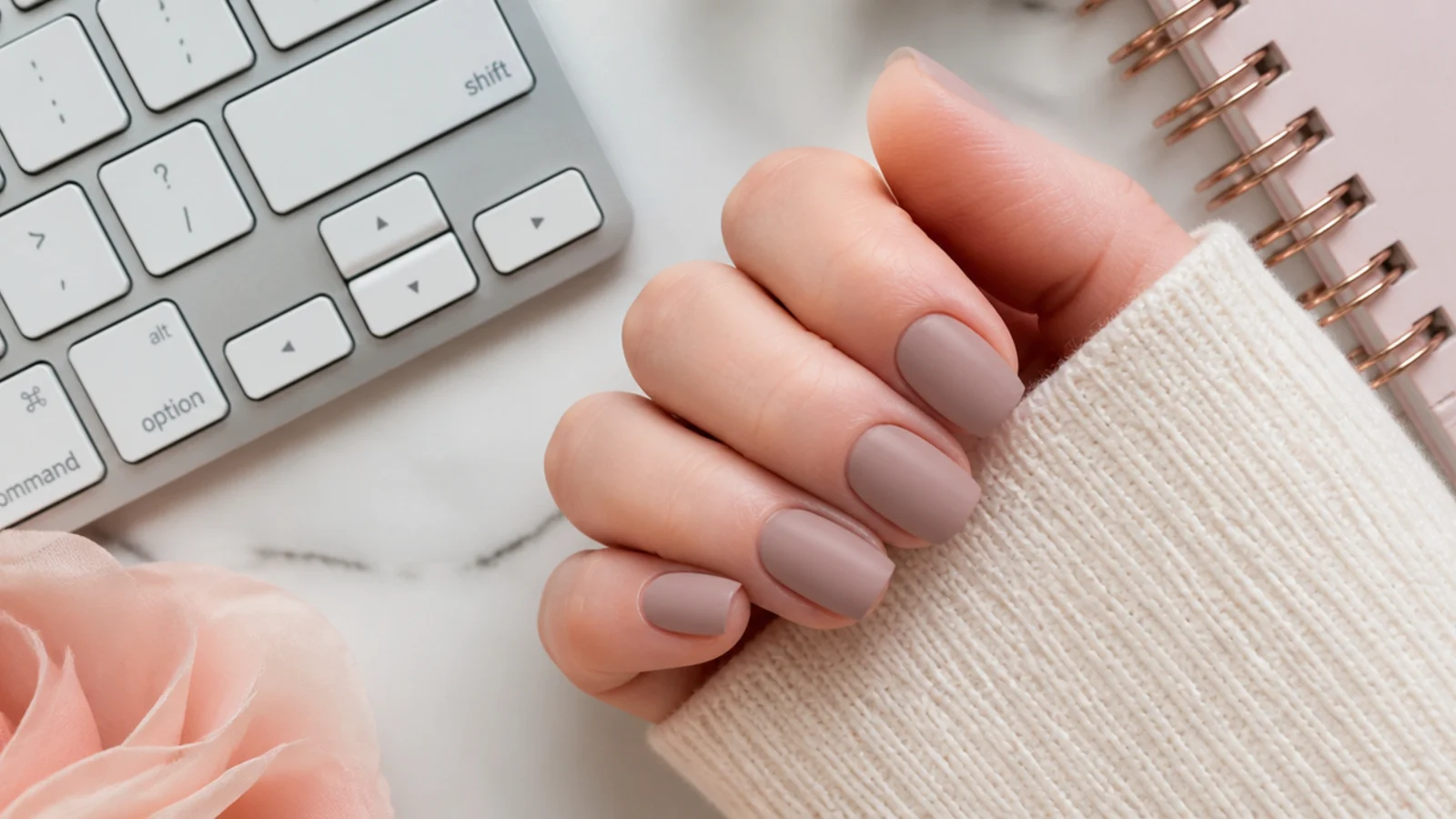
Two coats of a mid-tone nude sealed with a matte top coat, filed short and square-off-round. Matte reads quieter than gloss and, more practically, it hides the fine scratches that a keyboard puts into a shiny top coat over a working week. The downside is oil: hand cream and cuticle oil leave shiny patches, so keep both off the plate. Refresh the matte coat every five to seven days. The full finish comparison lives in matte nude nails.
Who it suits: Desk-heavy roles and anyone who dislikes shine on their hands.
Tip: Apply cuticle oil to the skin around the nail only, and blot immediately if it touches the matte surface.
What Nail Colors Are Appropriate for an Office?
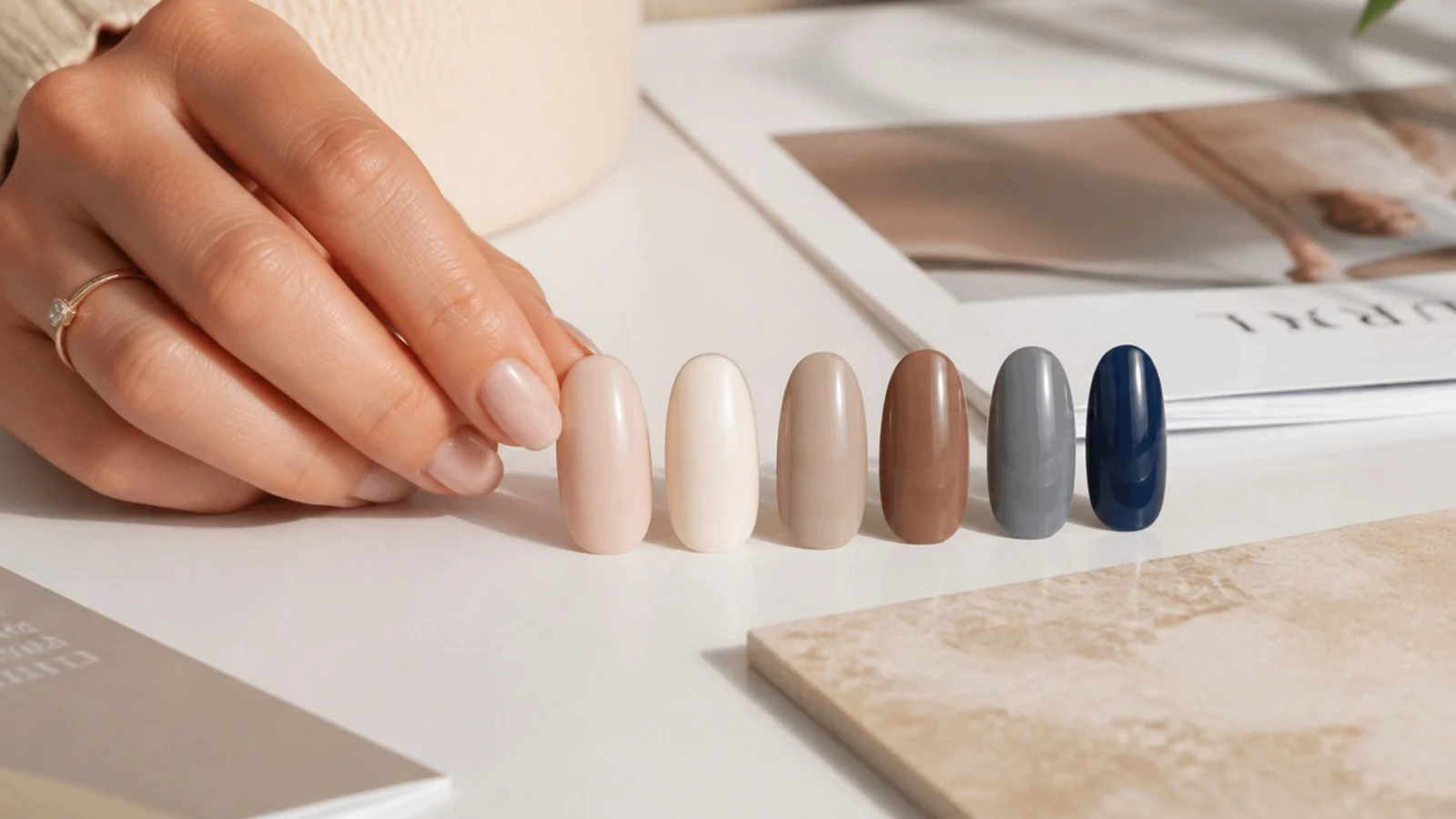
There is no universal rule, but there is a reliable test: a shade is office-appropriate when nobody can name it from three feet away. That puts sheer milky nude, creamy ivory, soft beige, muted taupe, dove gray and mocha brown in the safe zone for every environment, including finance, law and government. Navy, espresso and muted burgundy sit in a second band that clears most corporate offices but is worth checking against your own workplace before a big client day. What causes problems is saturation, not darkness. A desaturated deep burgundy passes where a bright cherry red does not, and a soft navy passes where an electric blue does not. Finish matters almost as much as color: a high gloss on a plain nude reads groomed, while a worn dull surface on the same nude reads neglected. For the colors laid out swatch by swatch instead of by environment, neutral short nail colors for work covers the shade side and nail colors for short nails by skin tone handles undertones.
How Long Can Nails Be for Work? Dress Code Length Rules
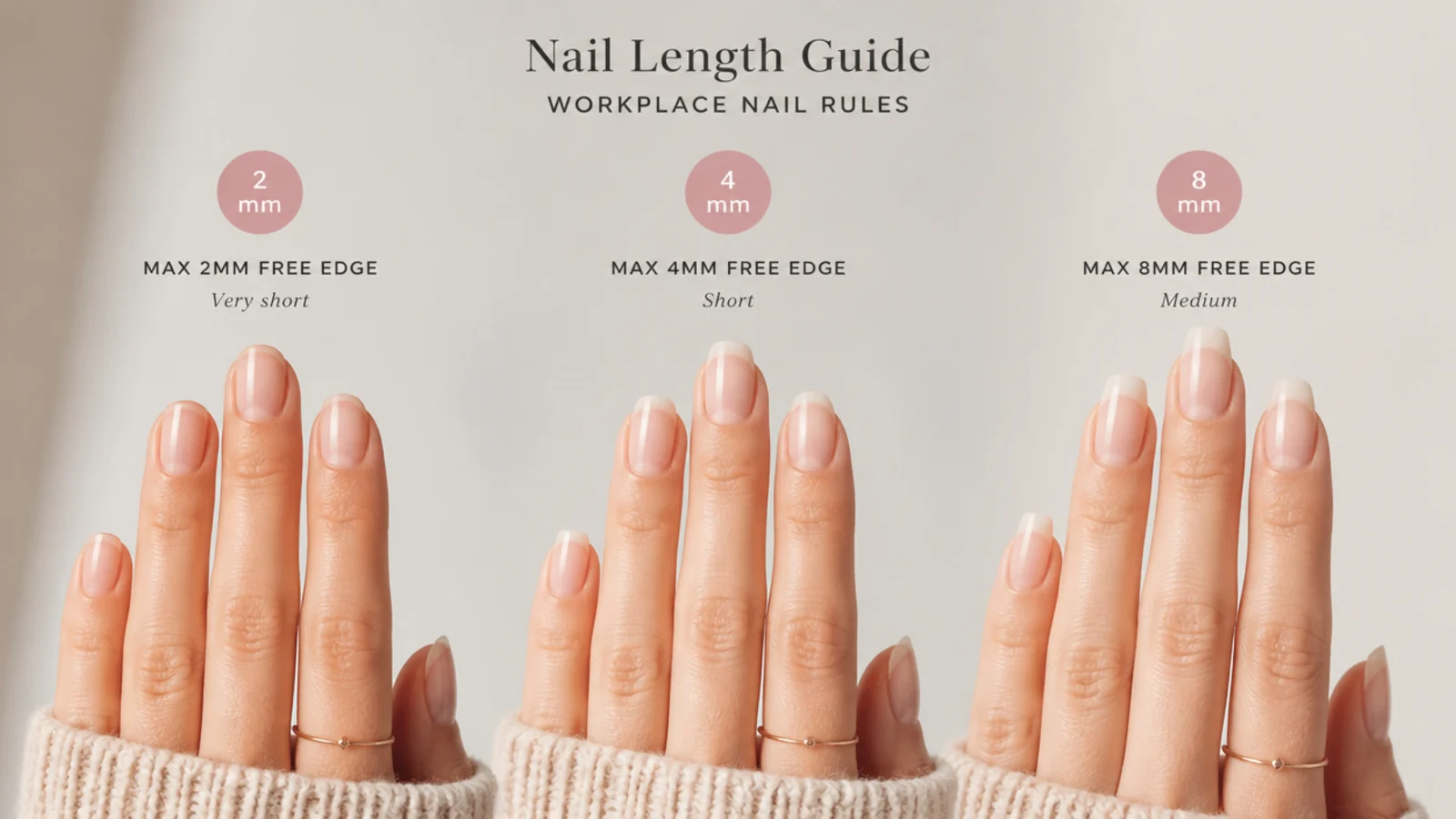
Length is the rule most often written down, and it is measured as free edge, the part of the nail past where it separates from the skin. Corporate offices rarely specify a number at all; the practical ceiling there is about 6mm, past which nails start affecting how you type and hand someone a document, which is when people notice. Client-facing and hospitality roles tend to sit around 4mm. Healthcare, laboratory and food handling roles are the strict ones, and the number that appears again and again in written policies is 3mm, with many hospitals going shorter and requiring nails that do not extend past the fingertip when viewed from the palm side. That palm-side test is the easiest way to check yourself: turn your hand over, and if you see nail past your fingertips, you are over the line for a clinical policy. If you are unsure, 3mm clears essentially everything and still leaves room for a French tip or a micro line. Ask HR for the written policy rather than guessing, since verbal norms and written rules often differ.
Are Acrylic Nails Unprofessional at Work?

In a normal office, no. Acrylics are almost never named in a corporate dress code, and a short neutral acrylic set is visually indistinguishable from a gel manicure to anyone who is not a nail tech. What gets flagged is not the product but the presentation: length past about 6mm, an obvious grow-out gap at the cuticle, bright colors, and 3D art. A short squoval acrylic in a soft beige is not going to be noticed, let alone commented on. The environments where acrylics genuinely are restricted are clinical and food-handling ones, and there the reasoning is hygiene rather than appearance, because the seam between the enhancement and the natural nail can harbor bacteria and is harder to clean. Many hospitals ban artificial nails outright for staff with patient contact, including gel overlays. If you are in a normal office and you like acrylic, the practical advice is to book fills every two to three weeks before the gap becomes visible, and to keep the set short. Shade and shape options are in classy acrylic nails in soft neutral shades.
Nail Rules for Healthcare, Food Service and Lab Work
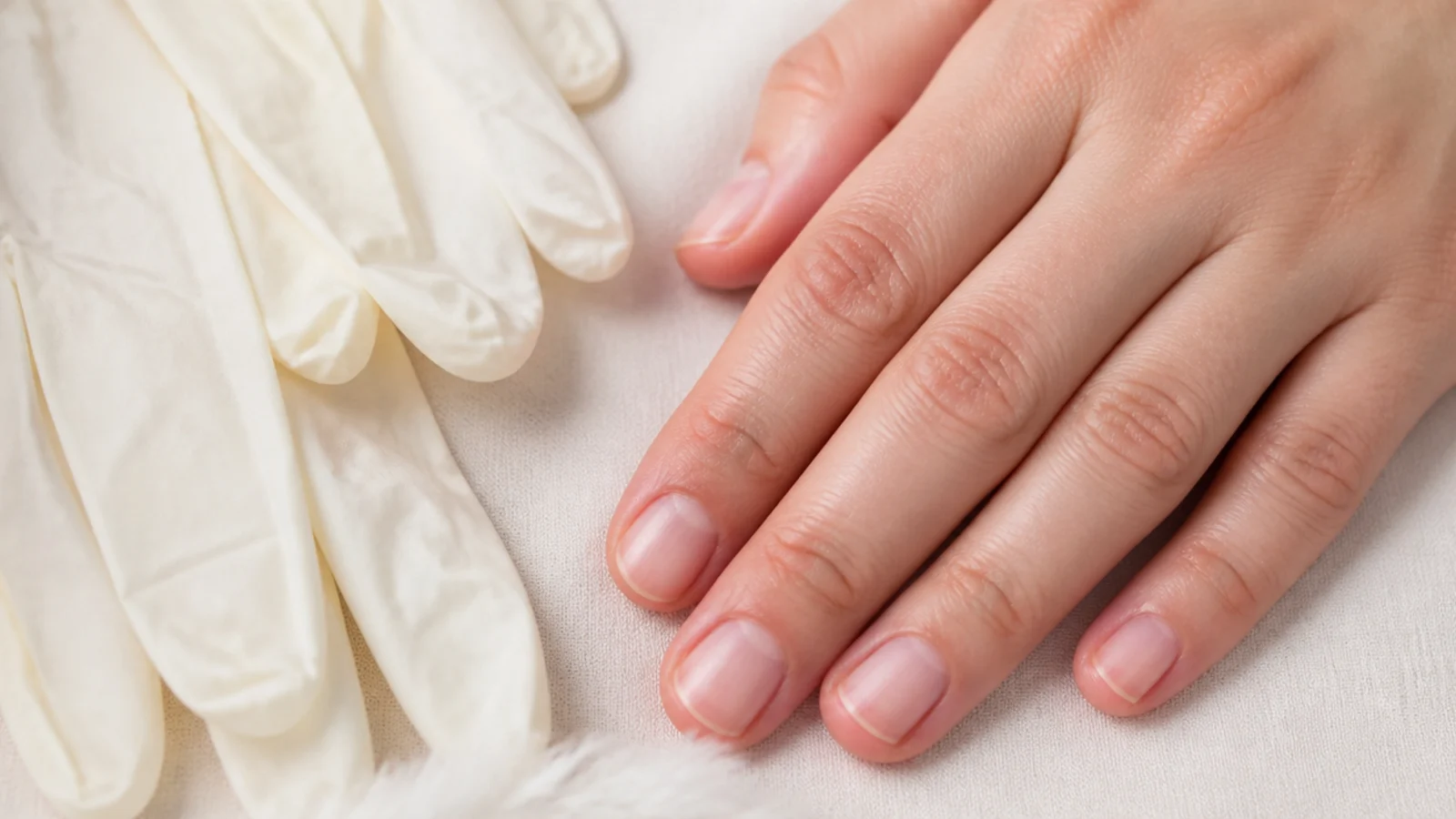
These roles are the reason a general work-nails guide is not enough. Healthcare policies for staff with direct patient contact typically prohibit artificial nails of any kind, including acrylic, hard gel and gel overlays, and many also prohibit polish or restrict it to clear only. The stated reason is that chipped polish and the product-to-nail seam are difficult to clean and can carry organisms under gloves. Food handling rules follow the same logic and add a physical-contamination concern, since a detached nail or a flake of polish in food is a reportable issue. Lab work adds a third problem: acetone, solvents and repeated glove changes destroy enhancements quickly, and long nails puncture nitrile gloves. The workable answer in all three is genuine grooming rather than product. File round at 1 to 2mm, push cuticles back, buff the plate lightly once a week, and use cuticle oil twice daily. Bare nails that are shaped and oiled look deliberate; bare nails that are simply ignored do not, and that difference is entirely a five-minute weekly habit.
Best Nail Shapes for Typing and Desk Work
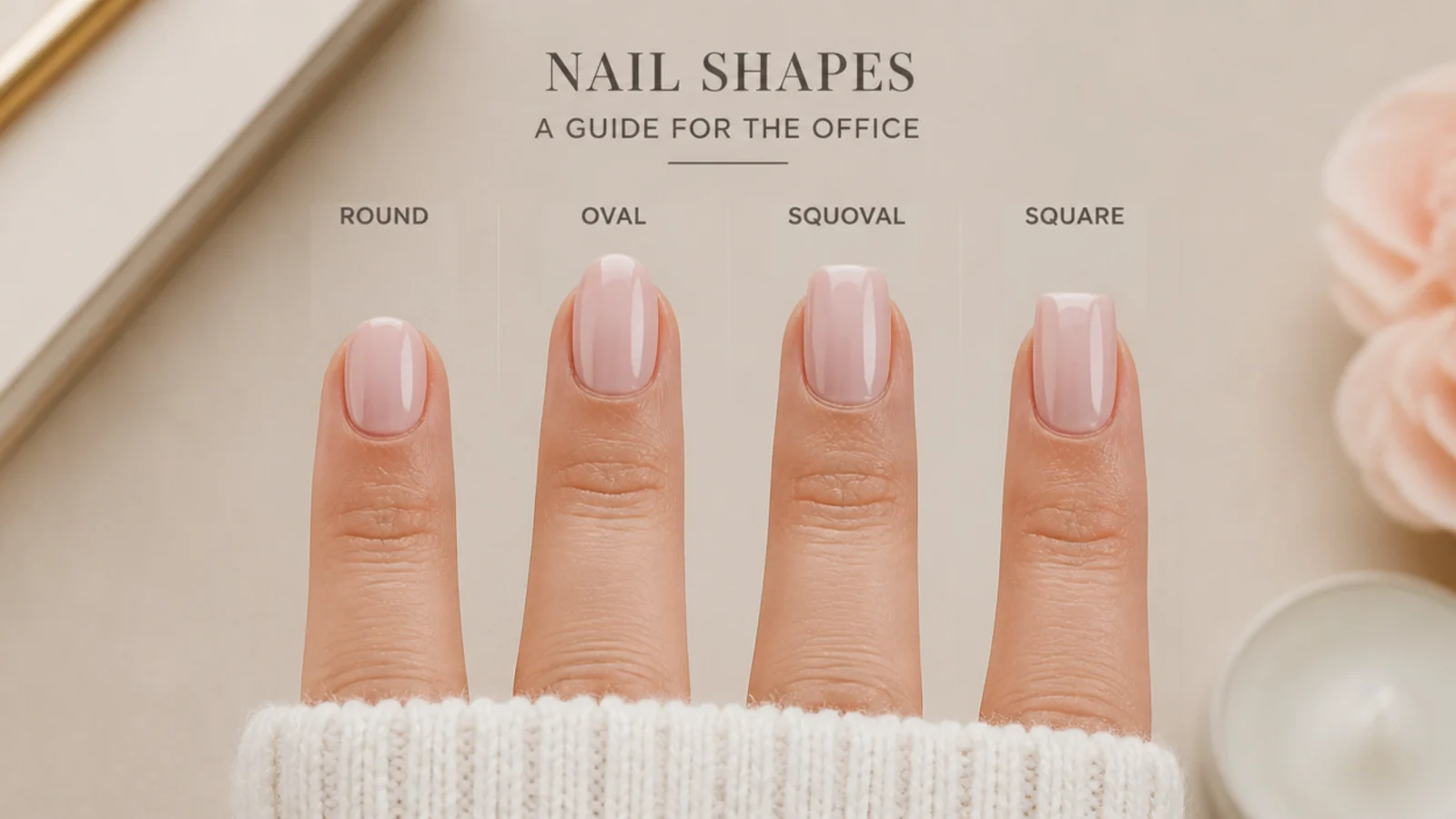
Shape decides whether a manicure survives a working week, and the deciding factor is corners. Square nails have two sharp corners that catch on keyboard edges, document sleeves, fabric and glove cuffs, which is where most breaks and snags start. Squoval keeps the flat modern edge but files those corners down, and it is the best all-round office shape because it looks current and still clears a keyboard cleanly. Oval and round remove the corners entirely and are the most durable at very short length, which is why they dominate in healthcare. Almond elongates the finger on a curve and is fine at short length, but a sharp almond apex chips at the point if you type all day, so ask for a shallow almond rather than a defined one. Coffin and stiletto are the two shapes to skip for desk work, since both concentrate force on a narrow tip. To file at home, the technique in how to shape coffin nails applies to any shape: one direction only, 180 grit to shape and 240 to refine.
Work Nail Troubleshooting: Chips, Snags and Grow-Out
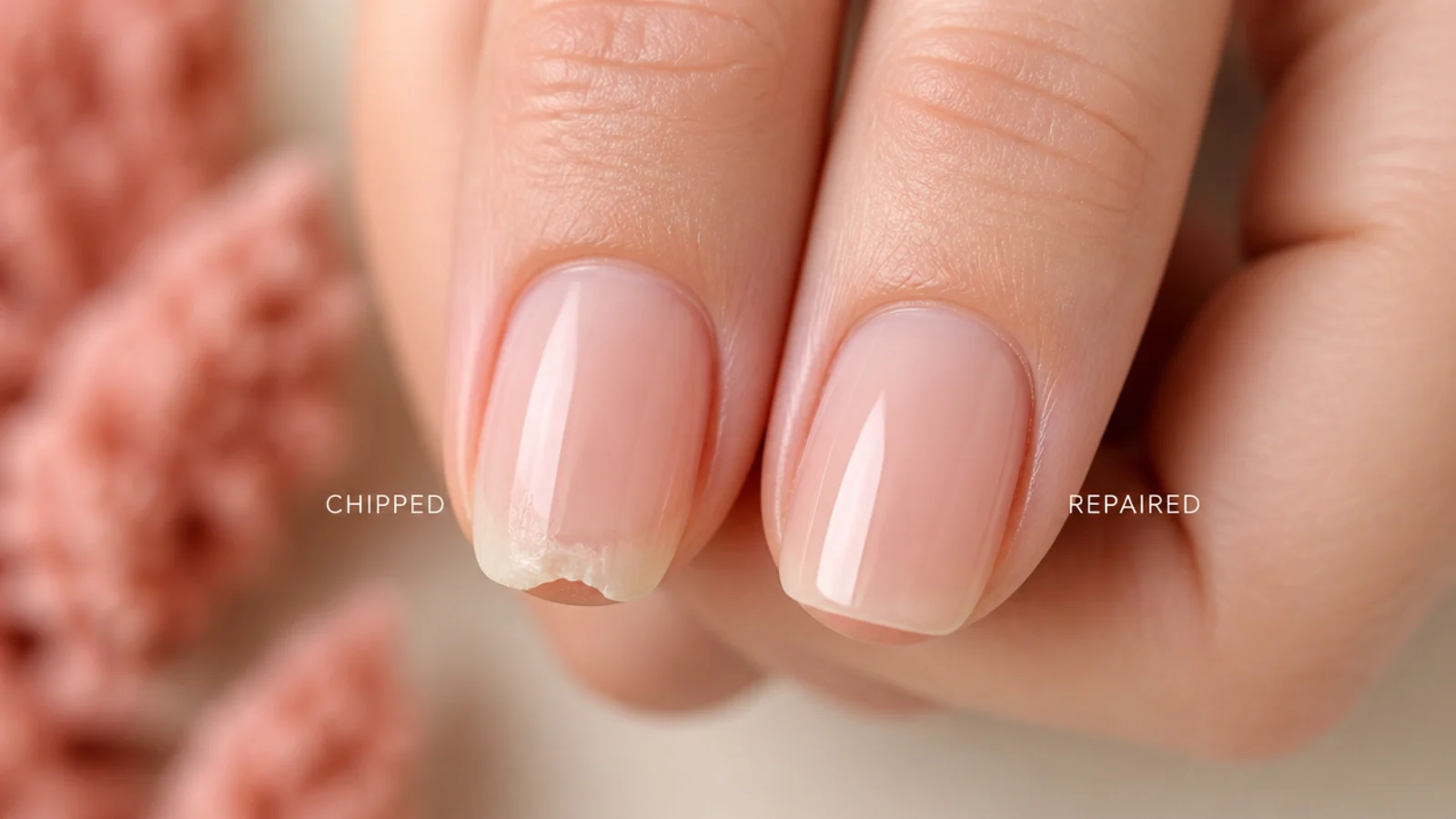
Four failures cover almost everything that goes wrong with office nails. A chip at the free edge within three days usually means the tip was not capped, so ask your tech to run the color and top coat across the edge of the nail rather than stopping at it. Peeling that starts at the cuticle usually means oil on the plate at application; the fix is an alcohol wipe before the base coat plus a hairline gap at the cuticle rather than painting flush to the skin. Visible grow-out at day ten is a shade problem, not a product one: opaque creams show a line and sheer milky shades do not, so on a three-week cycle, wear sheer. Snagging traces back to a square shape or a rough free edge, and filing the corners into a squoval fixes it in two minutes. One rule matters most: chipped polish looks worse in a meeting than bare nails do, so if you cannot repair it, remove it. Low-effort options that hold up are collected in simple classy nails for everyday wear.
Frequently Asked Questions
What nail colors are appropriate for an office?
Sheer milky nude, creamy ivory, soft beige, muted taupe, dove gray and mocha brown clear every office environment including finance and law. Navy, espresso brown and muted burgundy pass in most corporate settings. The reliable test is saturation: a desaturated deep shade reads professional, while a bright version of the same color does not.
How long can nails be for work?
Corporate offices rarely specify a number, and the practical ceiling is about 6mm of free edge. Client-facing roles tend to sit near 4mm. Healthcare, lab and food handling policies commonly cap nails at 3mm or require that no nail is visible past the fingertip when you look at your palm. At 3mm you clear essentially every policy.
Are acrylic nails unprofessional at work?
Not in a normal office. Acrylics are almost never named in a corporate dress code, and a short neutral acrylic set looks the same as gel to anyone who is not a nail tech. What gets noticed is length past 6mm, a visible grow-out gap and bright colors. Healthcare and food handling roles do ban them, on hygiene grounds rather than appearance.
Can nurses and healthcare workers wear gel or acrylic nails?
Usually not for staff with direct patient contact. Most hospital policies prohibit artificial nails of any kind, including acrylic, hard gel and gel overlays, and many restrict polish to clear or ban it entirely. The reasoning is that chipped polish and the seam between product and natural nail are difficult to clean under gloves.
Are dark nails okay for a corporate job?
Muted dark shades generally are. Navy, espresso brown and a dried-wine burgundy pass in most corporate offices, especially at short length in a rounded or squoval shape. Bright or high-shine darks such as cherry red, true black and anything with glitter density read as statement colors and are worth saving for evening work events.
What is the best nail shape for office work?
Squoval is the best all-round office shape. It keeps a flat, modern edge but files off the two sharp corners that catch on keyboards, document sleeves and glove cuffs. Oval and round are more durable at very short length and are the standard in healthcare and food service. Skip coffin and stiletto, which concentrate force on a narrow tip.
How do I make my work nails look expensive without a salon?
Three things do most of the work. File to a squoval at about 3mm so the length reads intentional, push cuticles back and oil them daily so the base of the nail looks clean, and finish with a high-shine top coat over any neutral. The gloss and the cuticle line matter more than the shade you chose.
How often should I redo my work manicure?
Gel holds two to three weeks before the grow-out line becomes visible, and regular polish gives five to seven days before the first tip chip. Book the gel appointment at the two-week mark rather than waiting for a chip. If you are on a three-week cycle, wear sheer milky shades instead of opaque creams so grow-out stays invisible.
What is the difference between nude and neutral nails?
Nude specifically means a shade close to your own skin or nail bed, so the correct nude changes person to person. Neutral is the wider family that includes nudes plus beige, taupe, gray, ivory, greige and brown, none of which needs to match your skin. Every nude is a neutral, but most neutrals are not nudes.
Do chipped nails actually get noticed at work?
More than the color does. A chipped free edge catches light differently from the rest of the nail and is visible across a meeting table, which is why an intact bare nail reads better than a chipped painted one. If you cannot repair it the same day, remove the polish entirely and buff the plate instead.
Which neutral & classy nails look are you saving?
If you take one thing from these 25 work manicures, make it this: cut the length before you change the color. A 3mm squoval in a plain creamy ivory reads more professional than a 7mm almond in the most tasteful taupe on the market, because length is what people notice and shade is what they forget. Start with a milky nude or a soft beige, keep the free edge under 4mm, and file the corners so nothing snags a keyboard or a glove. Book the fill or repaint before the grow-out gap shows. For shade-by-shade help across every occasion, read classy nude nails for any occasion, or browse the rest of the neutral and classy nails hub.