
Quick Comparison
| Growing Hair Out (Length Goal) | Treating Hair Loss (Density Goal) | |
|---|---|---|
| The actual problem | Breakage at the ends outpacing new growth | Follicles miniaturizing or shedding early |
| Who it applies to | Full hairline, stable part, wants more length | Receding temples, widening part, thinning crown |
| First move | Fix washing, conditioning and detangling | Book a board-certified dermatologist |
| Biggest controllable factor | Mechanical damage from heat, ties and towels | How early treatment starts after onset |
| What trims do | Protect length by removing splits every 8-12 weeks | Nothing for density; purely cosmetic shaping |
| Role of supplements | Only useful if bloodwork shows a deficiency | Only useful if bloodwork shows a deficiency |
| Minoxidil and finasteride | Not indicated for simply wanting longer hair | Prescribed and monitored by a doctor |
| Typical monthly cost | About 15 to 30 dollars on shampoo, conditioner, trims | Consultation plus ongoing treatment, varies widely |
| How progress is judged | Monthly photos and a tape measure | Clinical assessment, sometimes scalp imaging |
1. Triage First: Are You Growing It Out or Losing It?
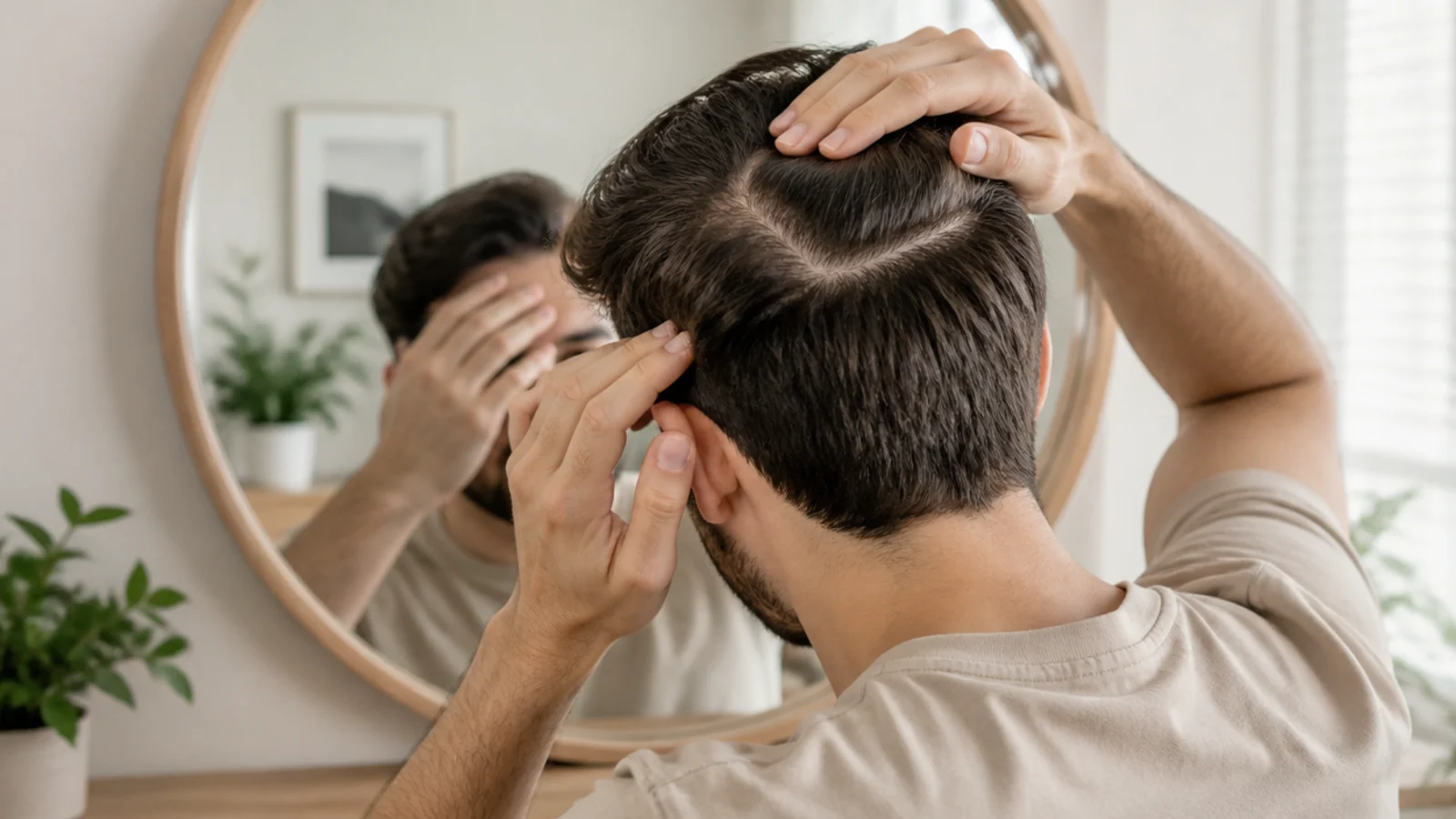
Stand under a bright bathroom light with a hand mirror and check three things. One, the temples: are the corners of your hairline further back than in a photo from three years ago? Two, the part or crown: hold a phone camera above your head and look for scalp showing through where it did not before. Three, the shower drain and pillow: normal shedding is roughly 50 to 100 hairs a day, and a sudden jump that lasts more than eight weeks is worth reporting. If all three look unchanged, you are in a length project and the 15 tips below are your whole plan. If any of them changed, you have a density question too, and that belongs with a board-certified dermatologist before you buy anything. The two problems overlap but they are not the same, and merging them is why most advice fails men.
Common mistake: Assuming a thinning crown is just slow growth and spending a year on shampoos while the window for early treatment narrows.
Pro tip: Take one photo of your hairline, one of your part and one of your crown today, in the same light, and repeat monthly.
2. Set a Baseline You Can Actually Measure

Wet the hair, comb it flat and measure from the hairline to the longest point with a tape measure, then write the number down with the date. Do the same at the nape and at one side. Most men start a grow out from a number two or three on the sides and about two inches on top, and the sides are what dictate the whole timeline because they have the furthest to travel before they lie down. Knowing your start point is what lets you tell real progress from a bad hair day nine weeks in. Expect roughly half an inch a month as your working assumption and adjust once you have three months of your own data, since individual rates run a bit above and below that.
Common mistake: Measuring dry curly or wavy hair, where shrinkage can hide two inches of real length and make you think nothing happened.
Pro tip: Log the numbers in your phone notes with the photo attached, so month five has something honest to compare against.
3. Months One and Two: Fix the Wash Routine, Change Nothing Else

The first two months look like nothing is happening, so use them to rebuild the routine while your hair is still easy to manage. Drop to washing two or three times a week with a sulfate-free shampoo, scrubbing only the scalp with your fingertips. Condition every single wash, concentrating on the bottom four inches where the oldest and most damaged hair lives. Rinse with lukewarm water rather than hot, and squeeze water out with a microfiber towel or an old cotton tee instead of scrubbing with a bath towel. This is unglamorous and it is also the single highest-yield change most men make, because the ends you keep from splitting now are the length you will be showing off in month ten.
Common mistake: Daily washing with a two-in-one drugstore shampoo, which strips the scalp and drives the greasy rebound men then wash away again.
Pro tip: If you train or work outdoors daily, rinse with water and conditioner on the off days rather than adding shampoo.
4. Months Three to Five: Survive the Shelf With One Shaping Trim
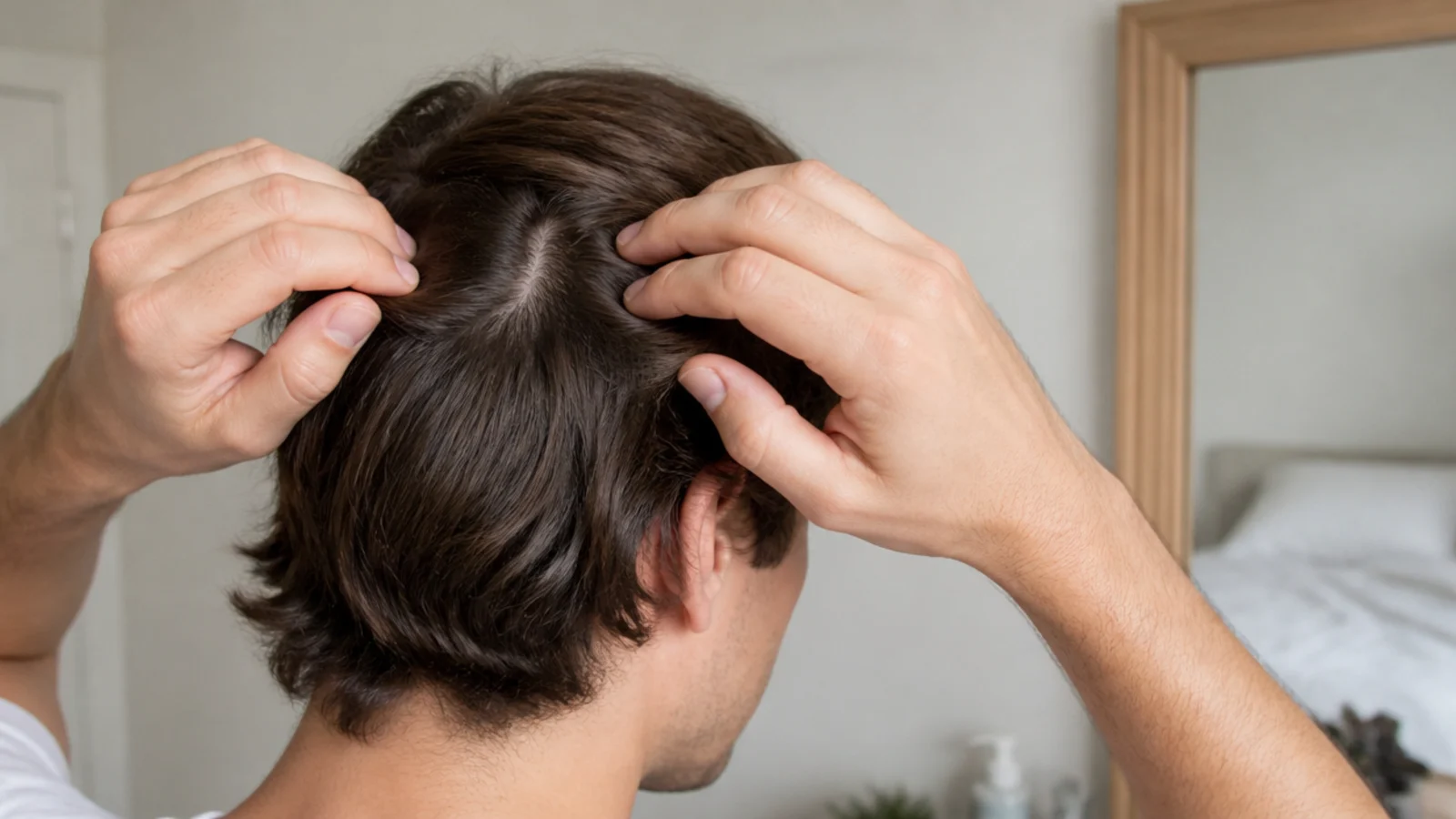
This is where nearly everyone quits. Around three to five months the sides reach about two inches, hit the top of the ear and flick outward into the shelf, while the top is long enough to fall in your eyes but too short to tuck. Do not cut it all off and do not let a barber take length off the top. Ask instead for a shaping trim: the ears cleaned out, the neckline tidied, the weight taken out of the sides with thinning shears or a scissor-over-comb pass, and the top left completely alone. Twenty to forty dollars every ten weeks buys you a haircut that grows through the ugly stage instead of resetting it. Push the top back with a light sea salt spray or a matte paste rather than fighting it flat.
Common mistake: Booking a normal haircut and letting the barber default to a fade, which erases three months in ten minutes.
Pro tip: Say the sentence out loud at the chair: clean the ears and neck, thin the sides, do not touch the length on top.
5. Months Six to Eight: Learn to Style the In-Between Length
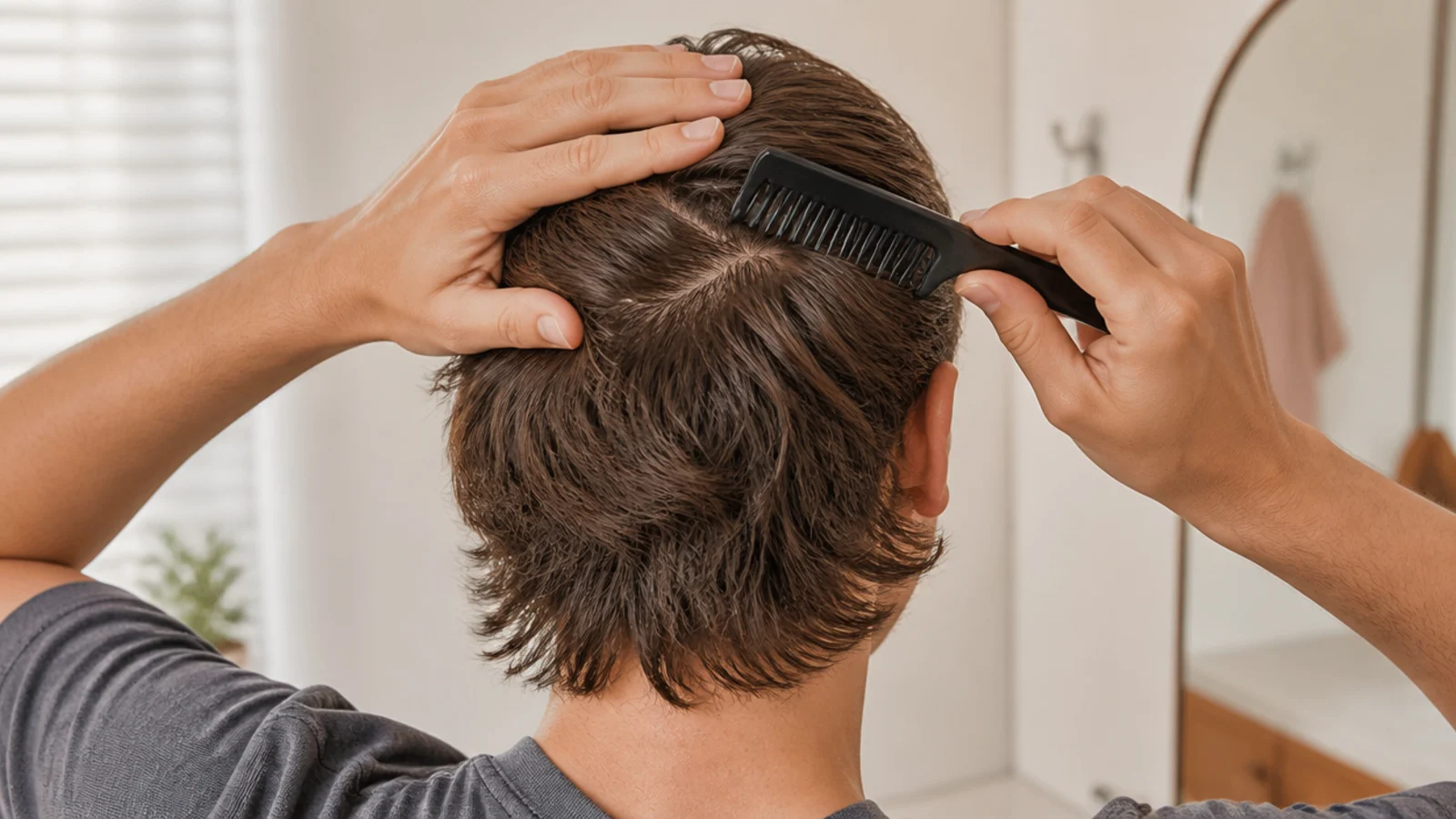
By month six or seven the top usually clears four to six inches and the sides start lying down instead of sticking out, which is the moment the grow out finally starts looking intentional. Learn three fallback styles now: hair pushed straight back with a light cream, a middle or deep side part combed while damp, and a half-up tie using a spiral coil or a fabric scrunchie rather than a rubber band. Blow-dry on cool or low with your fingers pushing the roots back if you need shape, and keep any hot tool to once a week with a heat protectant rated to about 350 degrees. Look at mid length haircut styling for shape ideas that translate directly.
Common mistake: Reaching for high-shine gel, which dries into a crust that snaps hair at the mid-shaft when you comb it out.
Pro tip: Move the tie position every day; the same spot repeated is exactly how traction damage starts.
6. Months Nine to Twelve: Take the First Real Cut
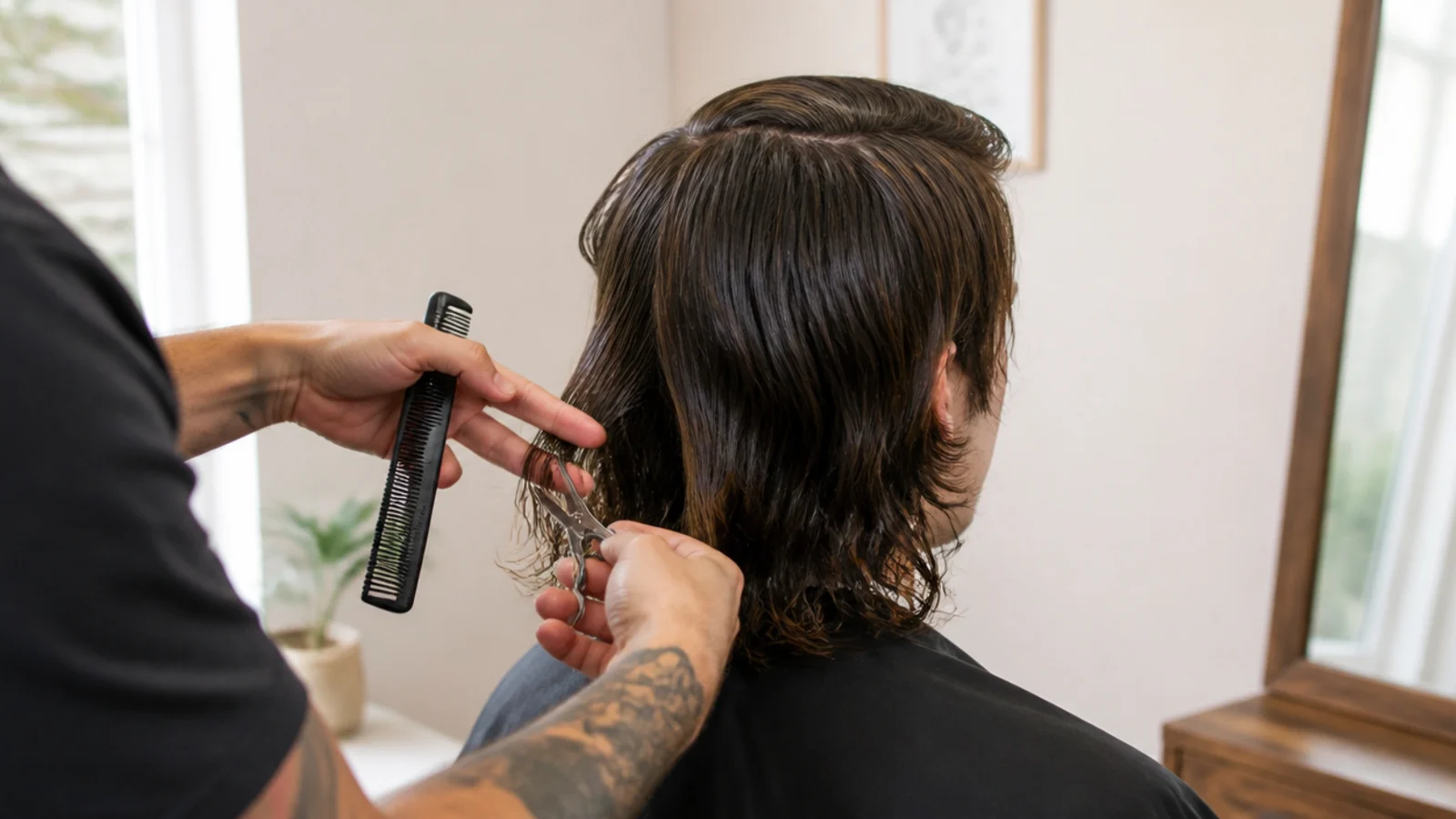
Somewhere between nine and twelve months, most men have collarbone-adjacent length on top and enough weight to actually cut a shape into. This is the appointment where you stop preserving and start designing: long layers to remove bulk, a little face framing if the shape suits you, and half an inch of split ends off the bottom. It will feel counterproductive to cut anything after a year of waiting, and it is not, because a blunt heavy hem full of splits will keep fraying upward. Bring two photos of the finished result you want rather than describing it, and browse textured mid length haircut if you need a reference to point at.
Common mistake: Asking for layers on hair that is still too short, which puts the shortest pieces at eye level and restarts the awkward stage.
Pro tip: Book with a stylist who cuts long hair regularly, not whoever is free at the walk-in shop.
7. Every Month: Track Retention at the Ends, Not Just Length

Once a month, take a small section from the back, twist it and look at the ends against a light background. Split, wispy, see-through ends mean you are losing length at the bottom as fast as you gain it at the top, and no amount of scalp work fixes that. If the ends look rough, tighten the mechanical basics first: satin pillowcase, wide-tooth comb on damp hair only, no elastic bands, less heat. Then retake your measurement and photo. Progress on a grow out is measured in quarters, not weeks, so compare month one to month four rather than Tuesday to Thursday, and let the natural hair growth tips guide fill in the low-cost routine pieces.
Common mistake: Judging progress in the mirror every morning, which reliably reads as no change and talks men into quitting at month four.
Pro tip: Keep a single photo album on your phone called grow out and never delete anything from it.
How Fast Men's Hair Actually Grows and What Sets the Ceiling
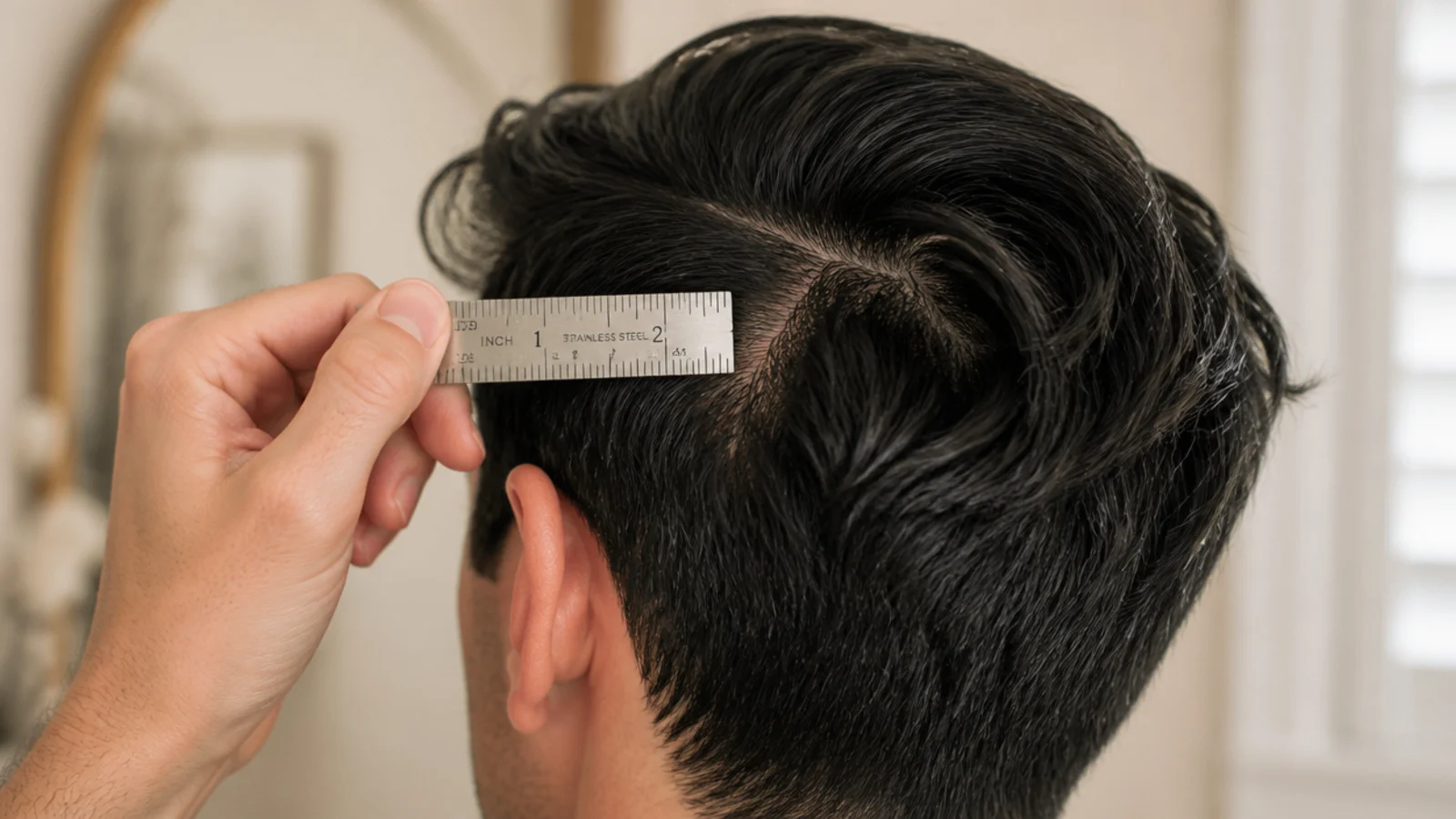
Scalp hair grows at roughly half an inch a month, which works out to about six inches a year, and men do not grow hair meaningfully faster or slower than women at the same age and health. Individual rates vary a little above and below that, and growth tends to slow gradually with age. The number that actually limits you is not speed, it is the length of your anagen phase: each follicle stays in active growth for a genetically set number of years before it rests and sheds. If your anagen phase runs three years, your terminal length is somewhere near eighteen inches no matter what you buy. If it runs six, waist length is possible, and the same ceiling logic is laid out in hair growth tips faster. That ceiling is the single most important thing to accept early, because it explains why one guy grows hair to his elbows and another plateaus at his shoulders on the identical routine. What you control sits underneath that ceiling: how much of each year's six inches survives the year. The hair growth tips hub breaks the same math down for other hair types.
Growing It Out vs Losing It: The Two-Minute Self-Triage
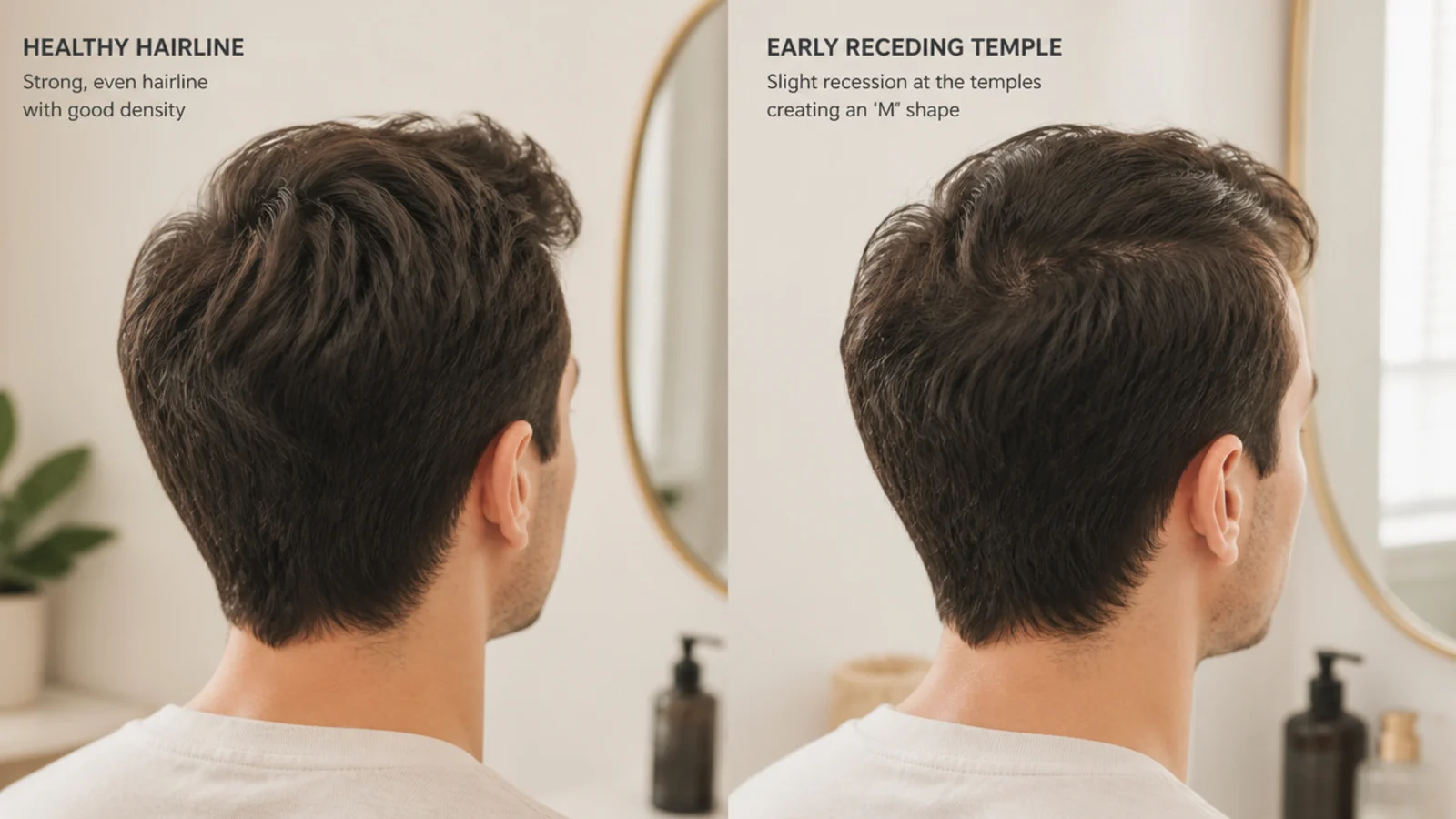
Almost every men's hair growth article merges two completely different readers, and that is why so much of the advice feels off. Reader one has a full head of hair and wants it longer; his entire problem is retention and patience. Reader two is watching density change and needs a diagnosis, because time matters and no shampoo addresses androgenetic patterning. The triage is fast. Compare your temples against a photo from three years ago. Photograph your crown from above under bright light. Count whether heavy shedding has continued past eight weeks. Look for scalp pain, burning, redness or shiny patches, all of which point to something that needs medical attention rather than grooming. Full hairline plus stable part equals length project. Any change at the temples, part or crown equals a dermatology appointment that runs alongside, not instead of, the routine here. Most men fall into both categories eventually, and handling them separately is what keeps either one from being neglected.
The Awkward Phase, Month by Month, and Why Men Quit at Month Four
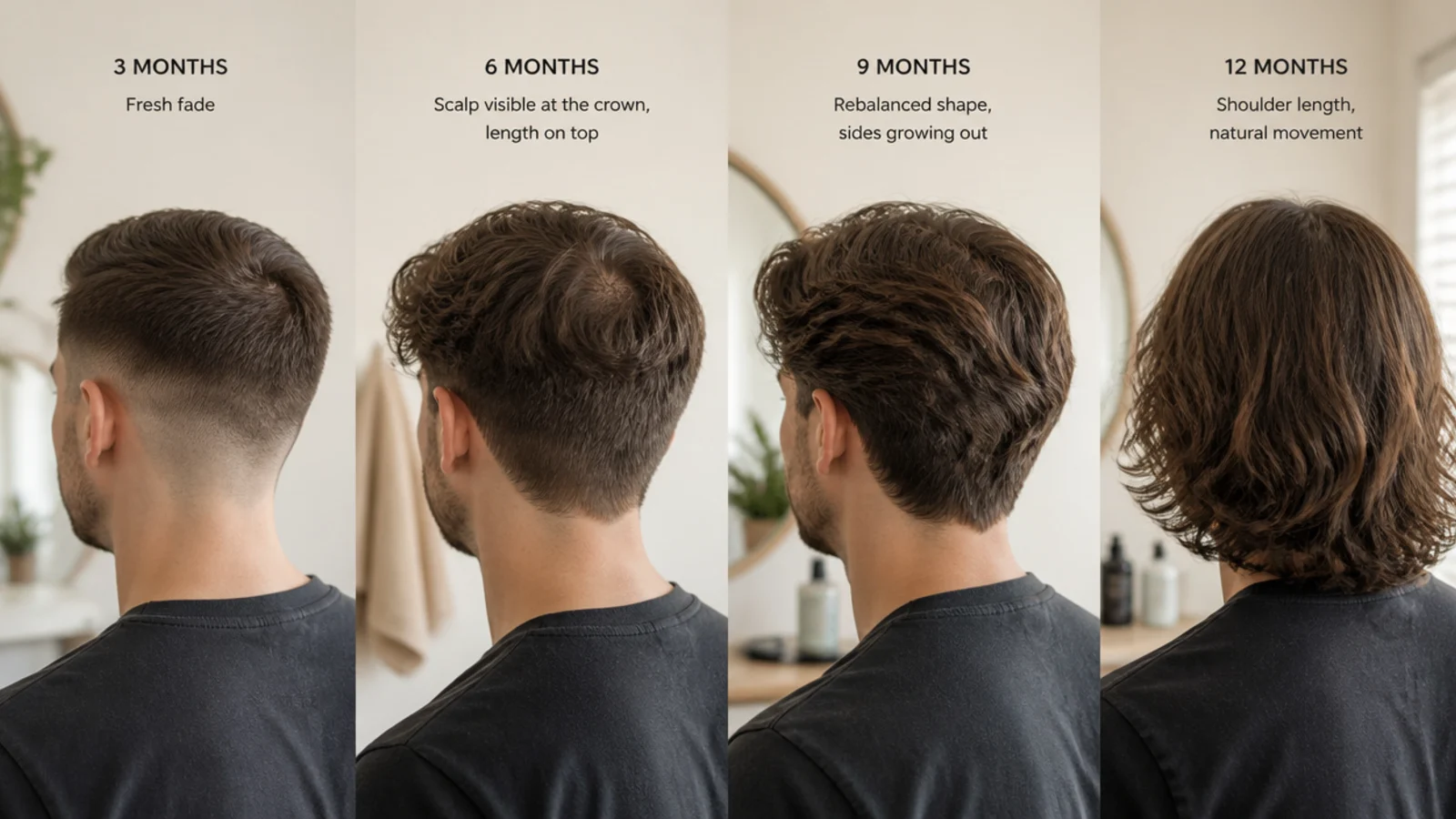
Growing hair out from a short cut is not a smooth curve, it is a series of distinct stages, and knowing the shape of it is most of the battle. Months one and two feel like nothing, because half an inch on a fade is invisible. Months three to five are the shelf: the sides hit roughly two inches, reach the top of the ear and flick outward, while the top falls into your eyes without being long enough to tuck. This is where the overwhelming majority of men give up and go back to the clippers. Months six to eight are the turn, where the sides start lying down under their own weight and the top clears four to six inches, so a push back or a part finally holds. Months nine to twelve give you real shape, enough length for layers and often the first workable tie. Nobody can promise you a date for any of this, since your start length and your rate decide it. Sitting through months three to five with a shaping trim and a matte paste, instead of a fade, is the entire trick, and a mid length haircut is a useful target shape to aim at. Wavy and curly growers should also look at a curly mid length haircut, because curl pattern hides length and makes the shelf stage look worse than it measures.
Scalp Health, Product Buildup and the Daily Cap Question
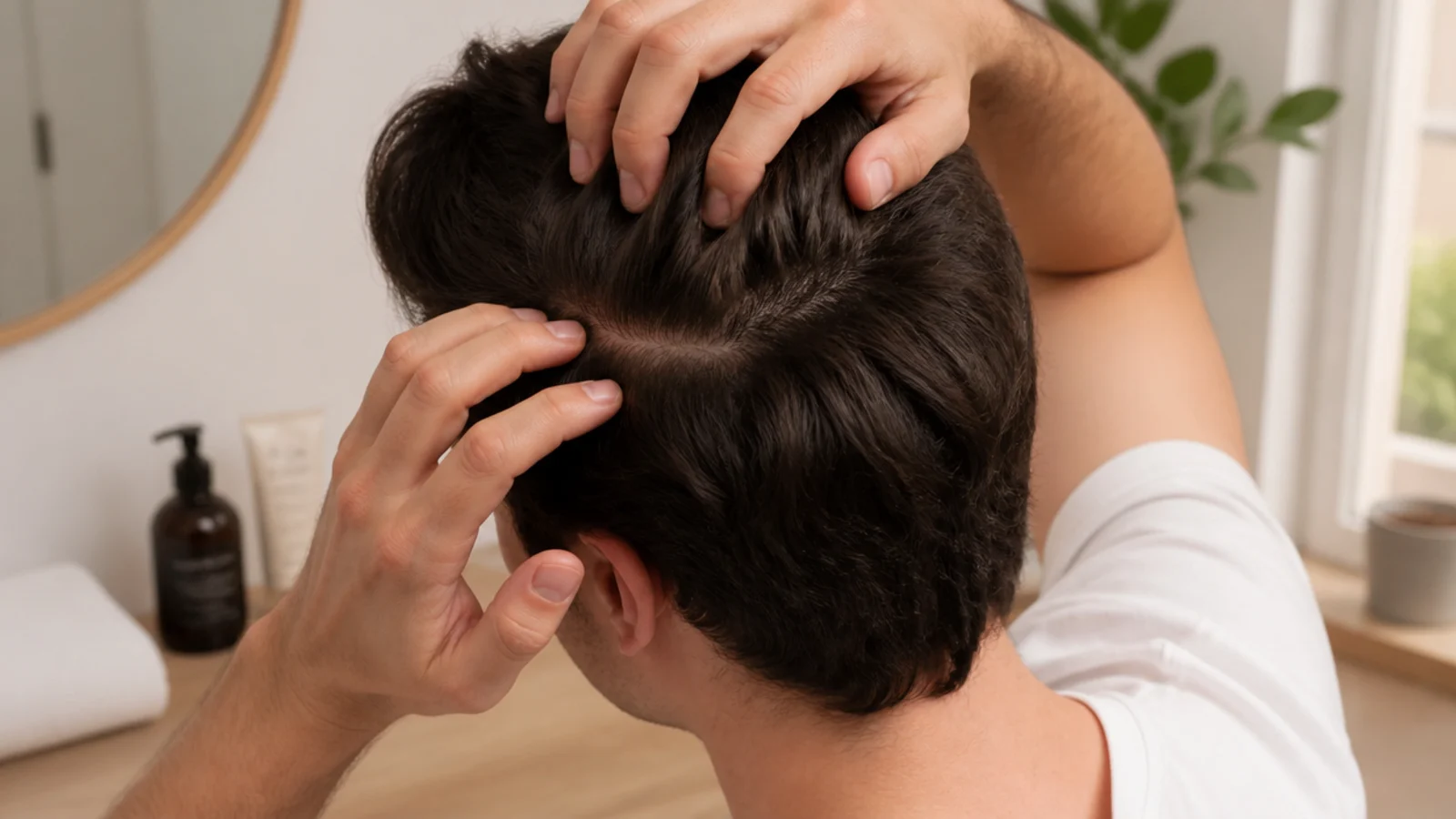
A clean, calm scalp is the environment the follicle works in, and men load it more heavily than most advice accounts for: daily pomade or clay, dry shampoo, sweat from training, sunscreen along the hairline and a hat over all of it, and wavy or coily hair adds the dryness issues covered in the frizzy hair routine. Buildup at the root does not shut a follicle down overnight, but it drives itch, flaking and inflammation, and scratching an itchy scalp mechanically breaks hair at the root. A weekly clarifying or salicylic acid treatment, fingertip scrubbing rather than nails, and a genuine rinse-out at the end of every wash handles almost all of it. On hats specifically: wearing a cap does not cause male pattern baldness, and no serious evidence says otherwise, but a band pulled tight across the same stretch of hairline every day for years is friction you can easily avoid by loosening it. Sunburn on an exposed part is worth avoiding too. If flaking, redness or itch persists through four weeks of good scalp care, that is dermatitis territory and it needs a doctor, not another shampoo.
Diet, Supplements and Minoxidil: What Needs a Doctor and What Does Not

Draw a hard line between the two halves of this topic. On the grooming side, no prescription required: adequate protein at roughly 90 to 130 grams a day for most men, iron-rich and zinc-rich foods, omega-3 sources like salmon or walnuts, and correcting a documented deficiency if bloodwork finds one. That is genuinely the whole evidence-backed nutrition story. Biotin only helps men who are deficient, which is rare, and high doses interfere with common lab tests. A 40 dollar a month gummy that promises thickness to a well-fed man is selling hope. On the medical side, minoxidil, finasteride, prescription-strength topicals, light therapy devices and PRP all exist and some work well for androgenetic loss, but every one of them is a conversation with a board-certified dermatologist who has examined your scalp, checked for other causes and explained the side effects and the commitment involved. Starting them blind off a product page is how men waste a year on the wrong problem. Everything else in this article stays useful either way, and the low-cost end of it is covered in hair growth tips faster at home.
Frequently Asked Questions
How fast does hair grow in men?
About half an inch a month, or roughly six inches a year, which is essentially the same rate as women at a comparable age and state of health. Individual rates run slightly above and below that and tend to slow with age. Your genetically set anagen phase, not your speed, decides the maximum length you can reach.
How can I grow my hair quicker as a man?
You mostly cannot speed the root up, so the win is keeping what grows. Wash two or three times a week with a sulfate-free shampoo, condition the bottom four inches every wash, get a quarter-inch shaping trim every 8 to 12 weeks, sleep on satin, detangle damp hair with a wide-tooth comb and cut hot tools to once a week.
Can you really grow hair faster overnight?
No. Nothing applied overnight changes the rate at which a follicle produces hair, and any product promising it is selling a claim it cannot support. What an overnight routine can genuinely do is reduce damage: an oil treatment, a satin pillowcase and a loose tie all protect the length you already have, which is where visible progress actually comes from.
How long does it take a man to grow shoulder-length hair?
It depends entirely on your starting length and your own rate, so no honest guide gives you a date. Working from roughly half an inch a month, a man starting from a short cut is usually looking at a long project measured in years rather than months, with the hardest stretch between months three and eight when the sides flick out and the top falls in your eyes.
Does cutting your hair make it grow faster?
No. Growth happens at the follicle under the skin and scissors never touch it, so a trim cannot change the rate. Trimming still matters, because removing a quarter inch every 8 to 12 weeks stops split ends traveling up the shaft and forcing a much bigger cut later. Trims protect length rather than create it.
Do hair growth supplements work for men?
They work when they correct a genuine deficiency and not otherwise. Get ferritin, vitamin D, zinc and a thyroid panel checked before spending on a stack. Biotin in particular only helps deficient people and high doses can distort thyroid and cardiac blood tests, so tell your doctor if you take it before any bloodwork.
Does wearing a hat cause hair loss in men?
Wearing a hat does not cause male pattern baldness. What can cause a problem is a band pulled tight across the same part of the hairline every day for years, which is friction and tension rather than genetics. Loosen the fit, vary the style and let your scalp breathe after training, and a cap is harmless.
Should I use minoxidil if I just want longer hair?
Minoxidil is a treatment for hair loss, not a length accelerator for men with a full head of hair, and it requires ongoing use plus a real conversation about side effects. If your hairline and part are stable, spend your effort on retention habits instead. If they are not stable, see a board-certified dermatologist and let them decide what is appropriate.
Why does my hair stop growing at a certain length?
Two reasons. The honest biological one is terminal length: your anagen phase lasts a set number of years, and once every hair reaches that limit it sheds and restarts. The more common one is breakage, where the ends snap off as fast as the roots produce new length. Twist a section and inspect the ends; if they look wispy and split, it is breakage.
This article is general grooming information, not medical advice. Persistent shedding, a receding hairline, patchy bald spots, scalp pain, burning or visible scarring need a board-certified dermatologist or a qualified trichologist, not a new shampoo. Minoxidil, finasteride and prescription treatments should only be started after a professional assessment, and any supplement is worth discussing with your doctor first.
Which hair growth tips look are you saving?
Nothing here promises you a timeline, because no honest guide can. What these 15 habits do is remove the things quietly costing you length, which is where almost all of the visible difference comes from. Wash two or three times a week, condition the bottom four inches every time, get a shaping trim every 8 to 12 weeks, sleep on satin, comb wet hair with a wide-tooth comb, and stop wearing a tight elastic in the same spot daily. Take one photo a month against the same wall so you are judging evidence instead of memory, and give the plan a full year before you decide it failed. If your hairline is retreating at the temples, your part is widening or you are shedding in patches, book a board-certified dermatologist first and treat the routine as support. Then keep browsing hair growth tips for the rest.