Quick Comparison
| Retention Habits (Stop Breakage) | Topical Remedies (Support the Scalp) | |
|---|---|---|
| What it actually changes | How much grown hair survives to be measured | The condition of the scalp the follicle sits in |
| Effect on growth rate | None; growth rate is not the target | None reliably; rosemary oil is the only one with a trial |
| Strength of evidence | Strong and mechanical; friction and tension damage are well established | Mixed; rosemary and massage are decent, castor and onion are thin |
| Typical cost | 0 to 20 dollars once, for a satin case and scrunchies | 10 to 30 dollars per bottle, repeating |
| Time per week | About 10 minutes, mostly folded into things you already do | 30 to 60 minutes for oiling, massage and rinse-out |
| When you notice something | 2 to 6 weeks; fewer short broken hairs, ends look less ragged | 3 to 6 months, if at all |
| Who benefits most | Anyone whose hair stalls at one length year after year | Itchy, flaky, buildup-heavy or neglected scalps |
| Where it fails | Does nothing for genuine hair loss or a thinning part | Cannot outrun genetics, hormones or a nutrient deficiency |
| Honest verdict | Do these first; this is where the visible gains are | Worthwhile add-on once the retention basics are in place |
1. Rosemary Oil Diluted to 2 Percent on the Scalp
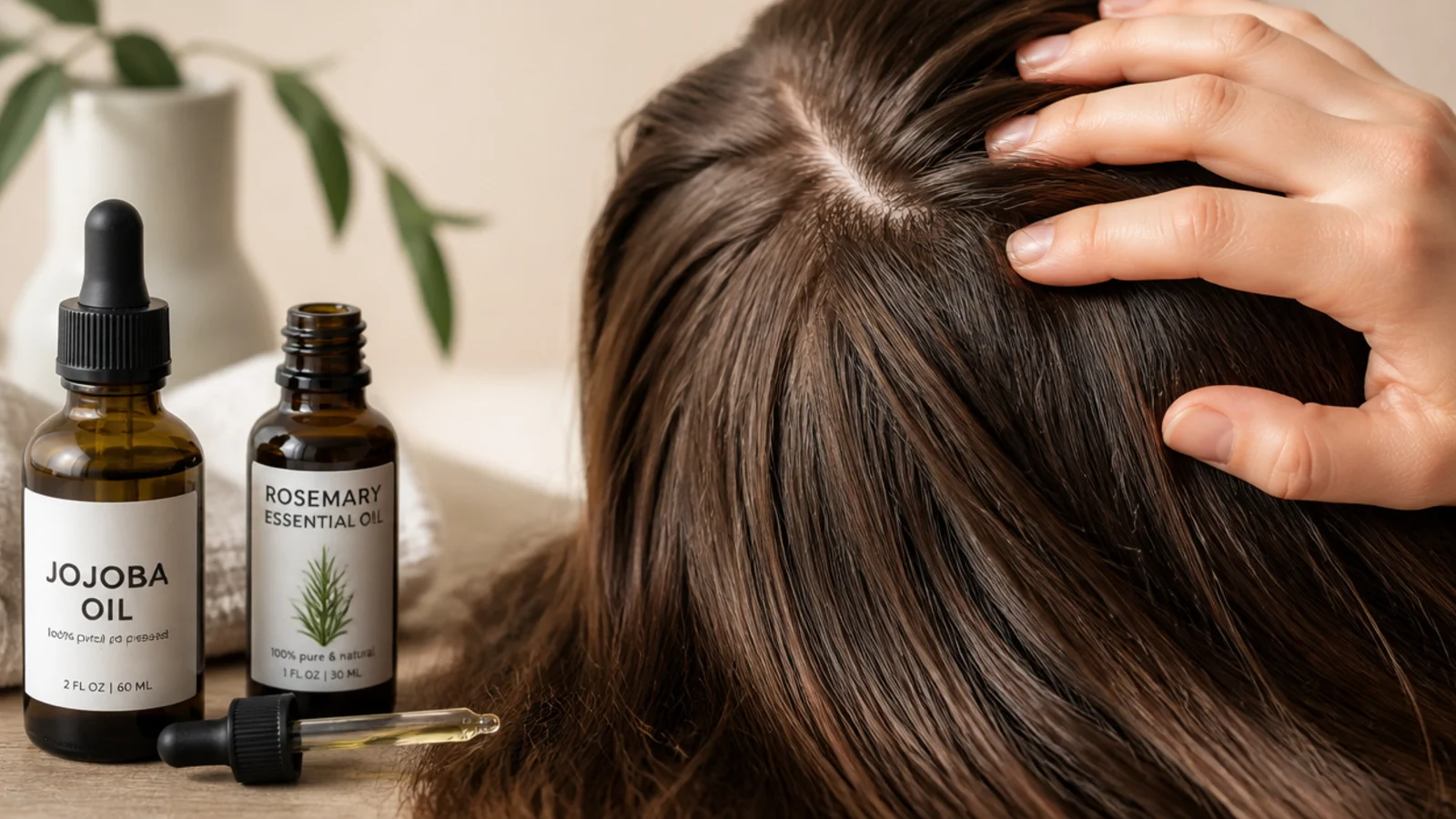
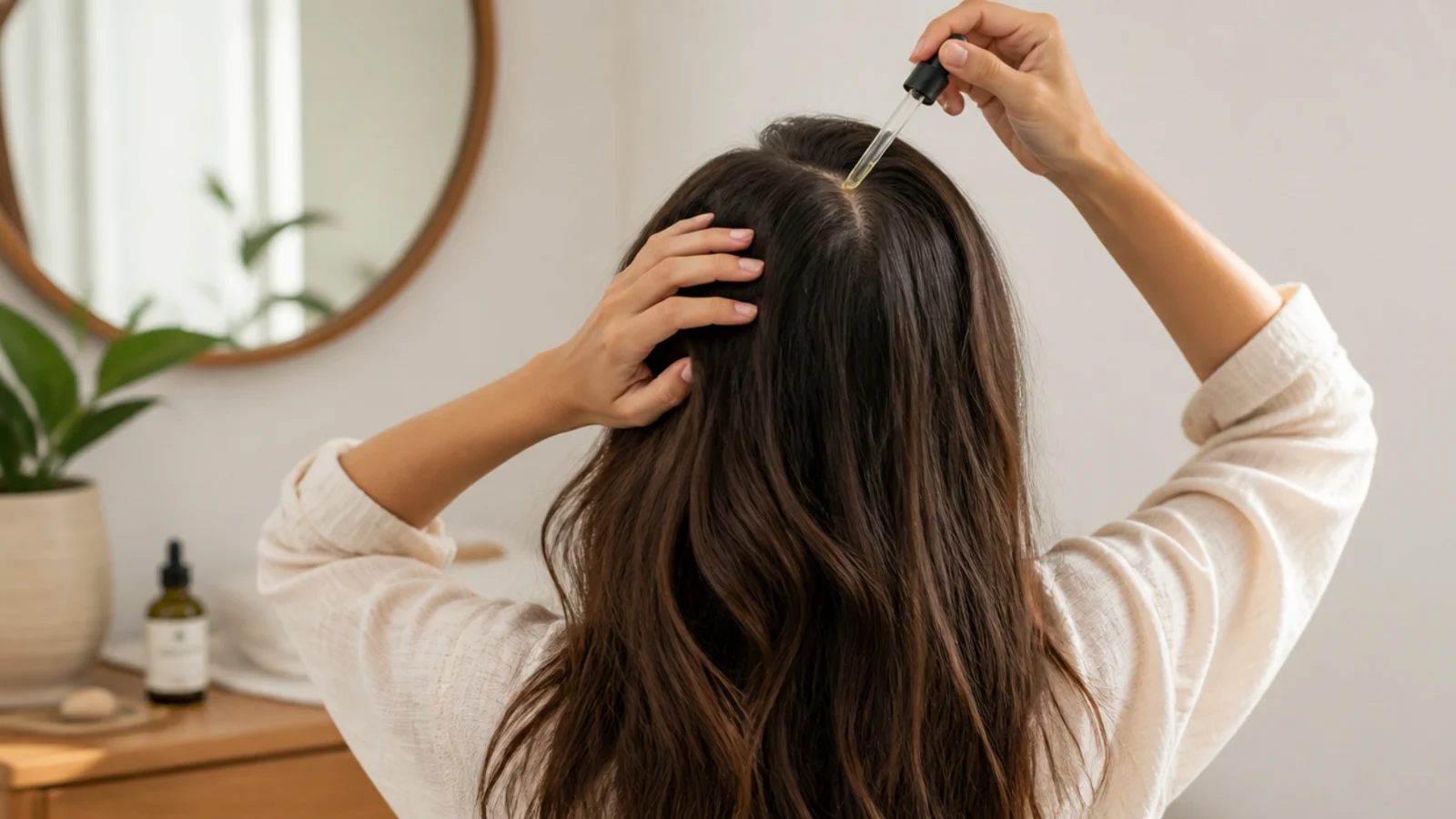
Rosemary oil is the one home remedy on this list with a published trial behind it, and it is still modest and slow rather than dramatic. Dilute it properly: about 12 drops of rosemary essential oil per 1 ounce of jojoba or sweet almond carrier oil gives you roughly 2 percent, which is the standard leave-on strength. Part the hair in rows, apply to the scalp only, massage for a few minutes and leave it on 20 minutes or overnight before washing. Undiluted essential oil on skin causes irritation and contact dermatitis, which sheds more hair rather than less.
Who it suits: Anyone with a healthy scalp who wants the best-evidenced natural option.
Tip: Patch test behind the ear for 24 hours first, and give it a full 3 to 6 months before judging.
2. Five-Minute Fingertip Scalp Massage, Nightly
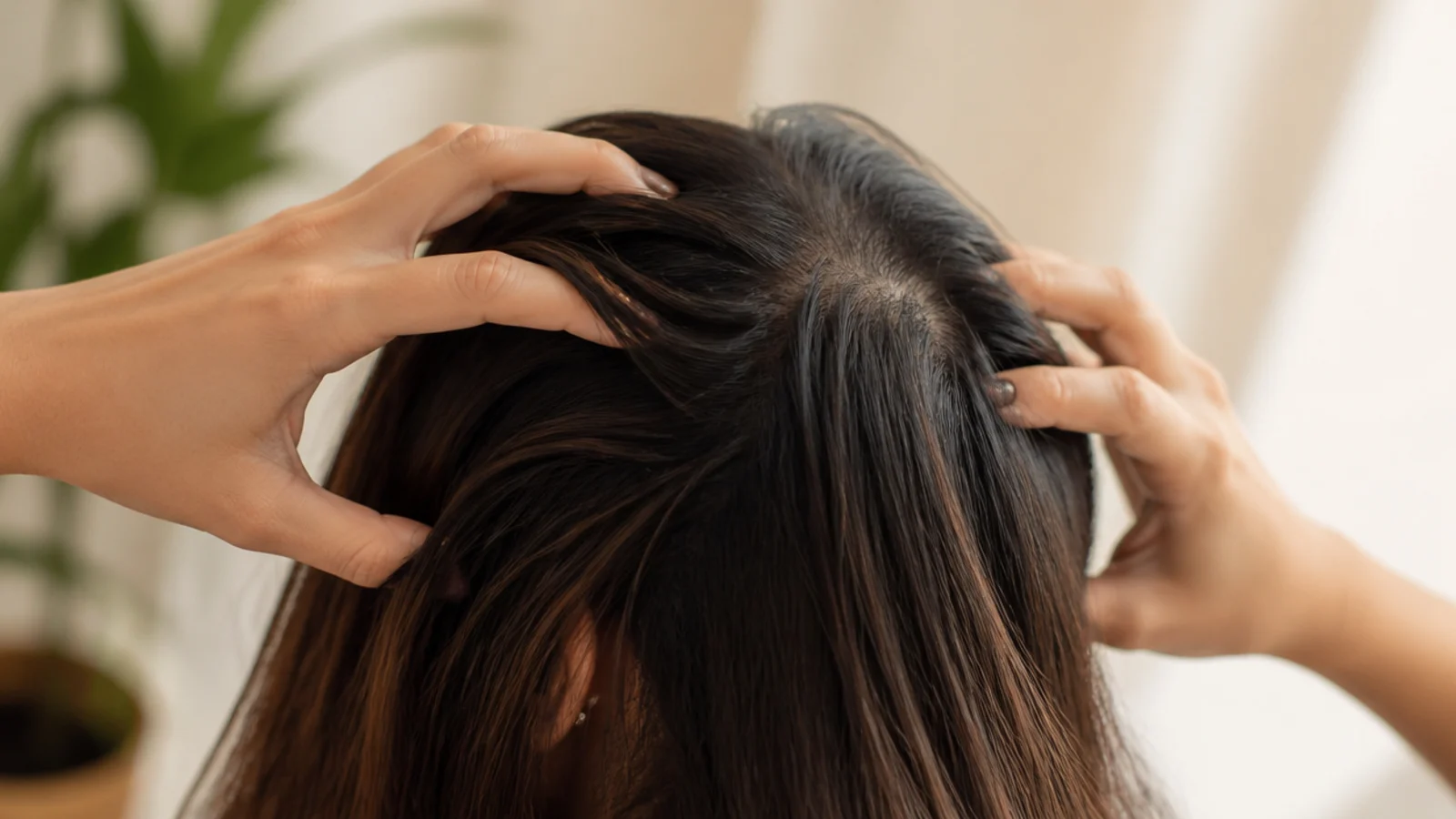
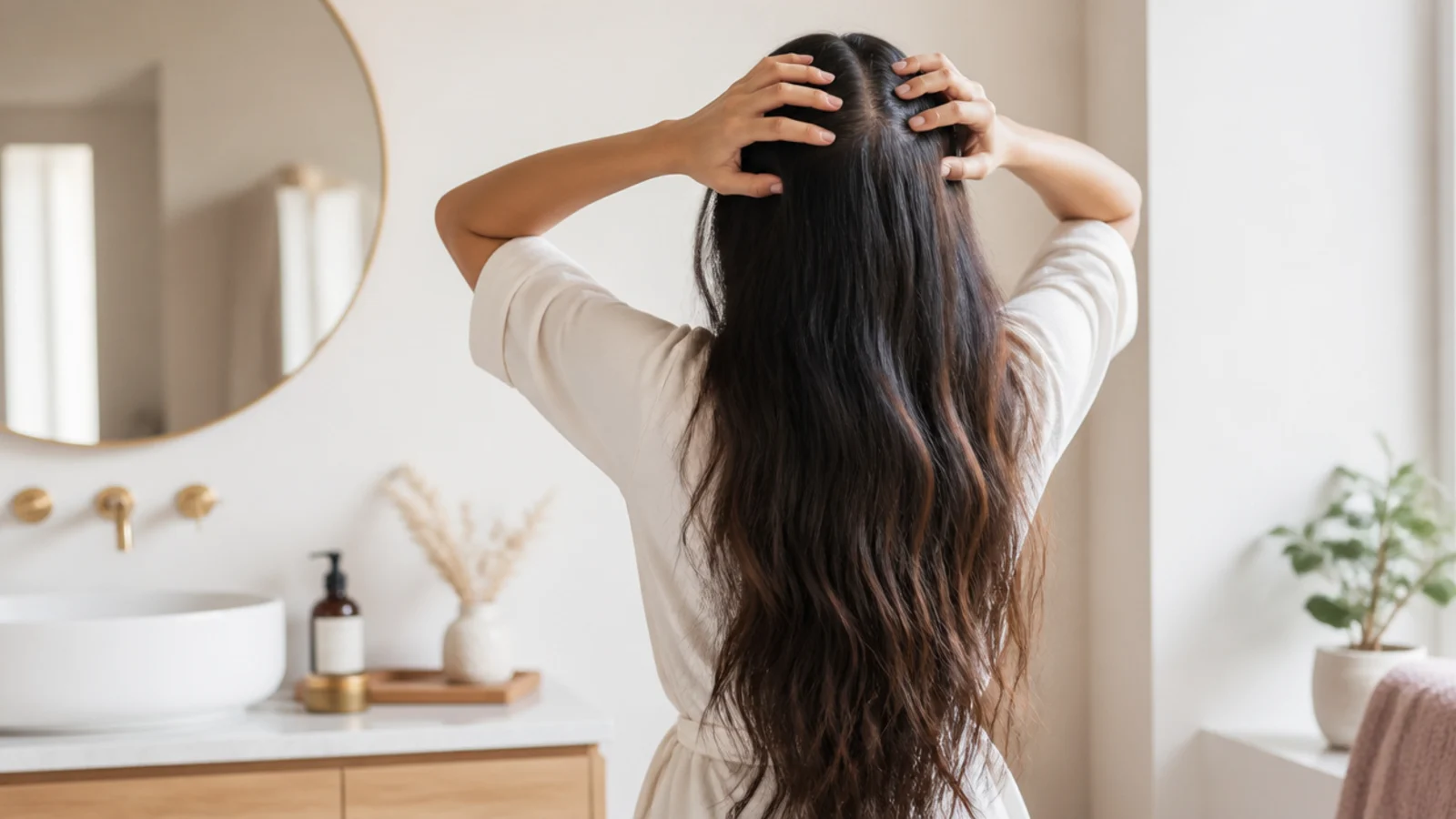
The cheapest tip here and one of the few with any research at all. Use the pads of your fingers, never your nails, and move the scalp itself in small circles rather than sliding your fingers across the hair. Work in a grid: hairline, temples, crown, nape, about a minute per zone for 5 minutes total. Doing it dry before bed avoids the tangling that wet massage causes. The proposed mechanism is mechanical stretching of the follicle plus better local circulation, and the effect size in the small studies is real but small, showing up as slightly thicker strands rather than faster growth.
Who it suits: Everyone, including people who will not buy a single product.
Tip: Pair it with an existing habit, like the last 5 minutes of a show, so it survives past week two.
3. Satin or Silk Pillowcase Instead of Cotton
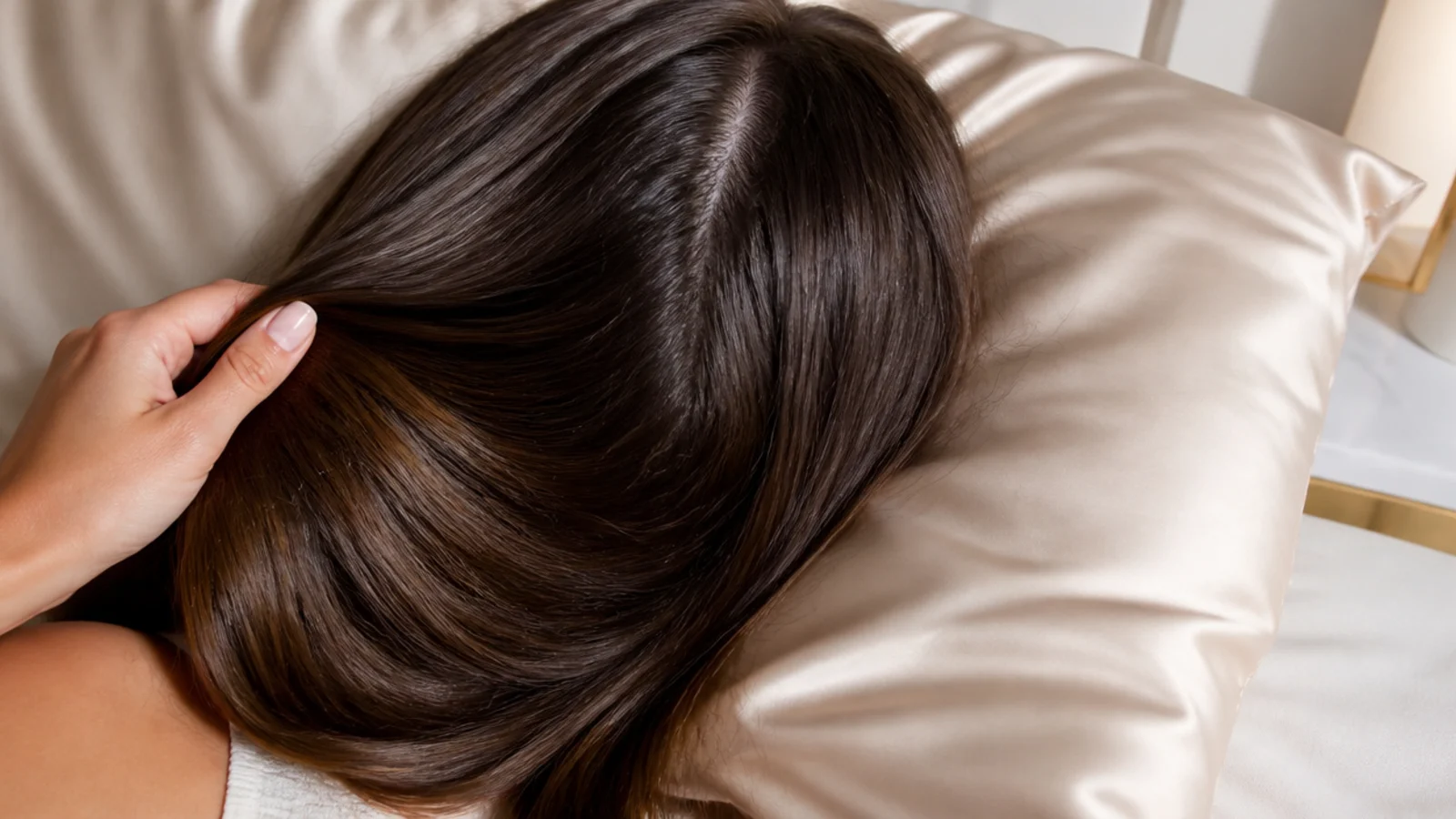
Cotton has a high-friction weave that grabs the cuticle every time you turn over, and eight hours of that, every night, is one of the biggest sources of breakage nobody counts. Satin and silk let hair slide instead. A polyester satin case runs about 10 to 20 dollars and performs nearly as well as mulberry silk at 60 to 100 dollars, so the cheap version is a genuinely good buy. You will notice less morning frizz and fewer short broken hairs on the pillow within a couple of weeks. It does nothing for growth rate and everything for retention.
Who it suits: Curly, coily, fine and color-treated hair especially; honestly, everyone.
Tip: Wash it weekly on a cool cycle so scalp oil and product buildup do not sit against your skin.
4. A Quarter-Inch Dusting Trim Every 8 to 12 Weeks
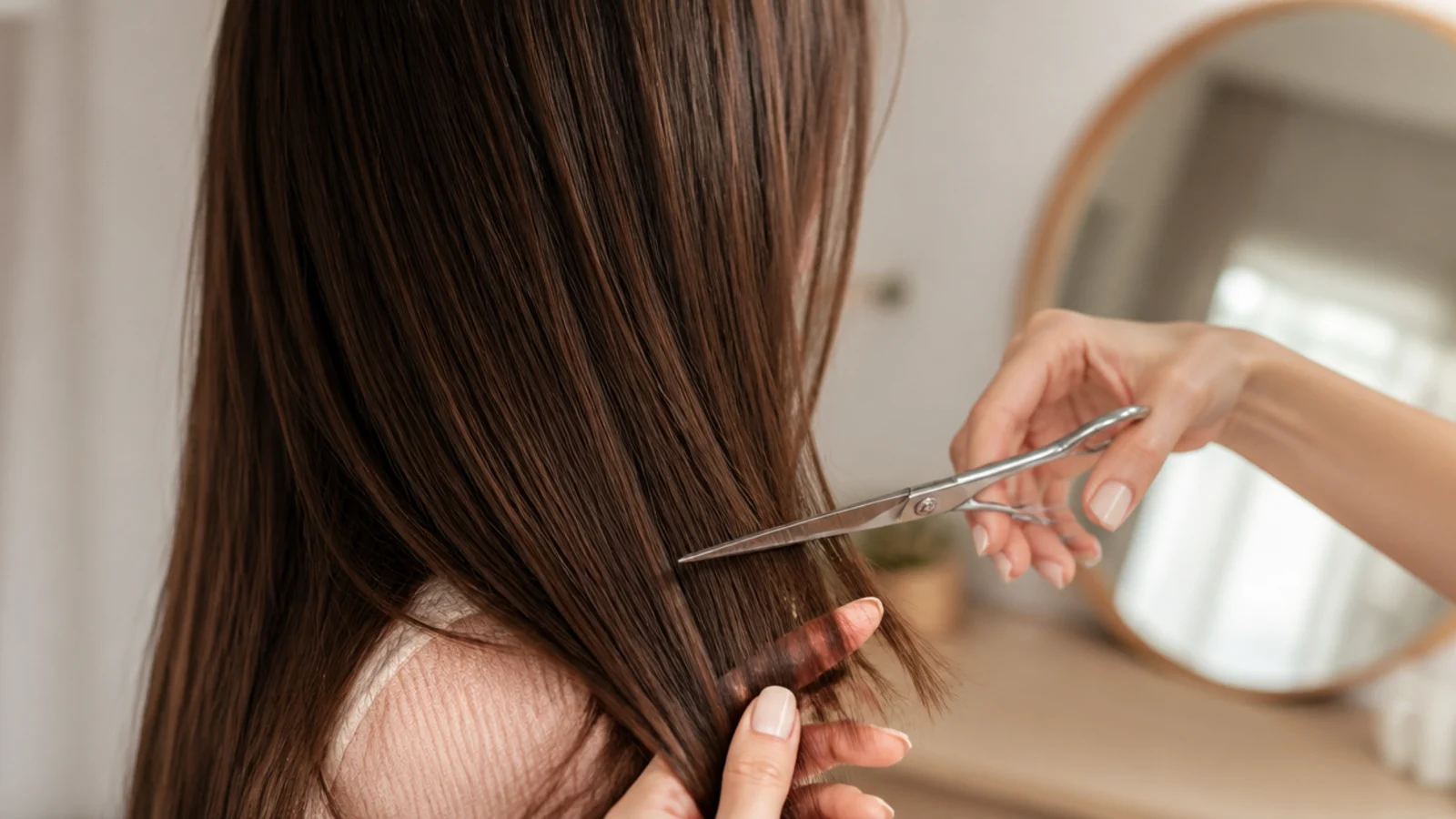
Trimming does not make hair grow, and any page that tells you otherwise is guessing. What it does is stop a split from traveling up the shaft, because once the cuticle splits it keeps unzipping and you eventually lose several inches instead of a quarter. Ask for a dusting: a quarter inch off, ends only, shape unchanged. Every 8 to 12 weeks is the standard window, and since hair grows about half an inch a month you are still net-gaining roughly an inch per cycle. Skipping trims for a year almost always ends in a bigger cut.
Who it suits: Anyone growing length out, particularly past shoulder.
Tip: Say a quarter inch, dusting, no shape change, or you will leave two inches shorter than planned.
5. Coconut Oil Pre-Wash Treatment, 30 Minutes Before Shampoo
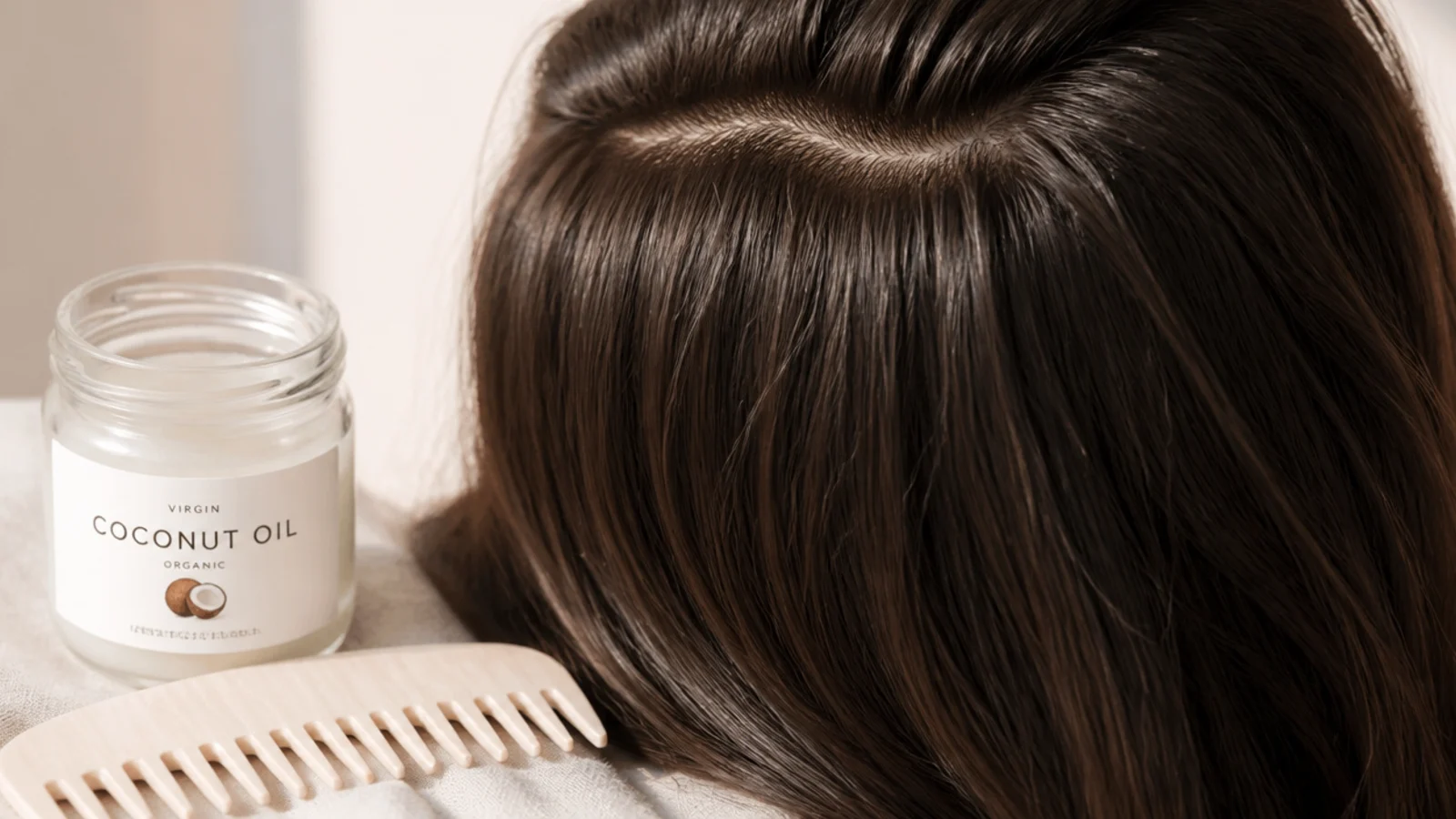
Coconut oil is unusual among oils because its lauric acid molecule is small and straight enough to penetrate the hair shaft rather than just coat it, which reduces the protein loss that happens when hair swells with water during washing. Warm a teaspoon between your palms, work it through the mid lengths and ends, leave it 30 minutes, then shampoo as normal. This is a protection tip, not a growth tip: it will not do a thing at the follicle. Fine hair should keep it strictly off the roots or it goes limp for days.
Who it suits: Coarse, dry, coily and porous hair; use sparingly on fine hair.
Tip: Apply to dry hair, not damp, since water already in the shaft blocks the oil from getting in.
6. Wide-Tooth Comb from Ends Upward on Conditioner-Slick Hair
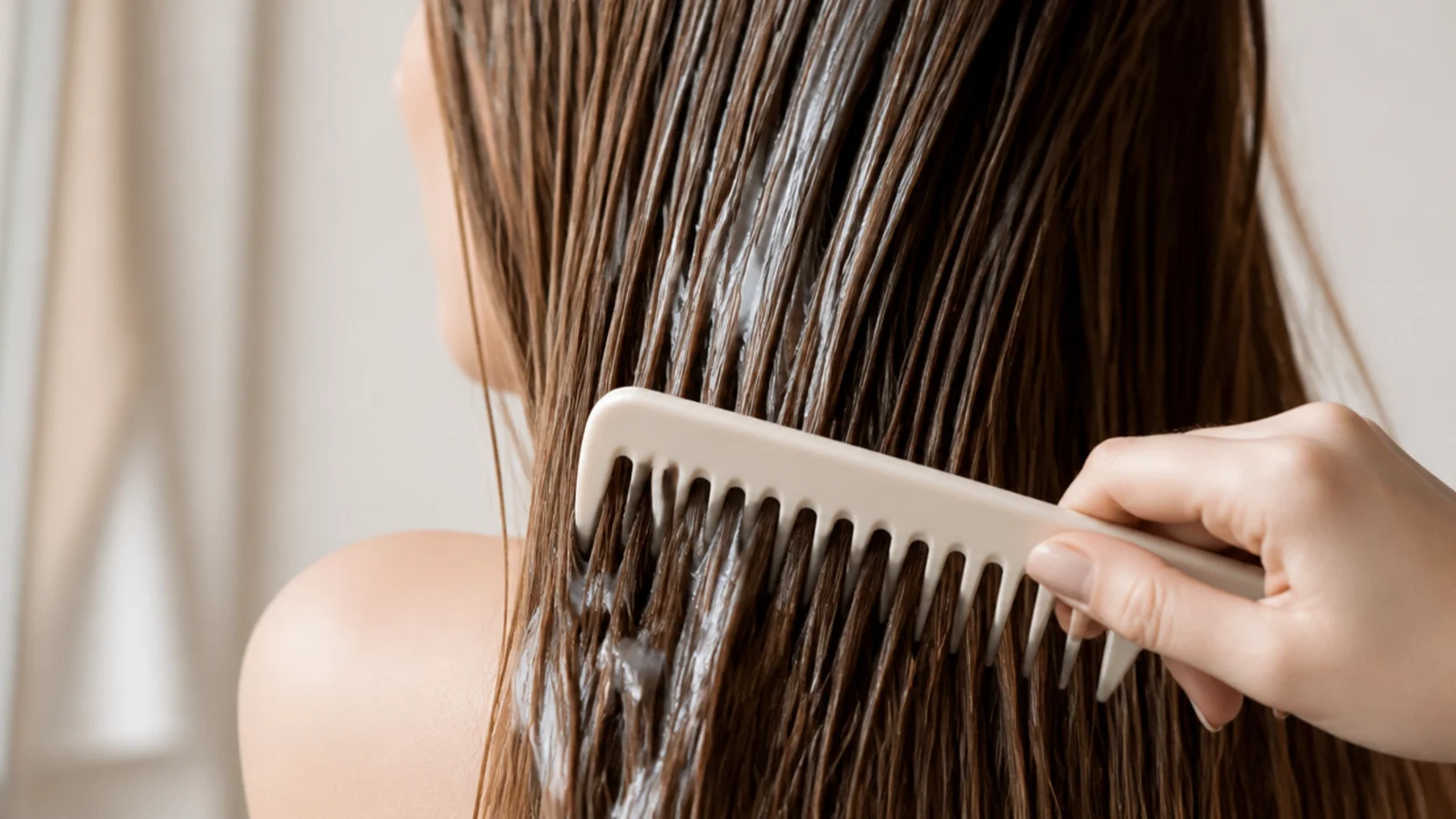
Wet hair is at its weakest, and ripping a brush from root to tip drags every tangle down into one compacted knot at the ends, which is exactly where breakage happens. Detangle only with conditioner or a slippery leave-in on, using a wide-tooth comb or your fingers, and work in sections from the last inch upward in short passes. It takes about 4 minutes instead of 40 seconds and it is probably the single highest-impact change on this list for anyone with texture. The same logic runs through our frizzy hair routine.
Who it suits: Wavy, curly, coily and any hair that tangles at the nape.
Tip: If the comb catches, stop pulling and separate that knot with your fingers instead.
7. Lukewarm Final Rinse Instead of Hot Water
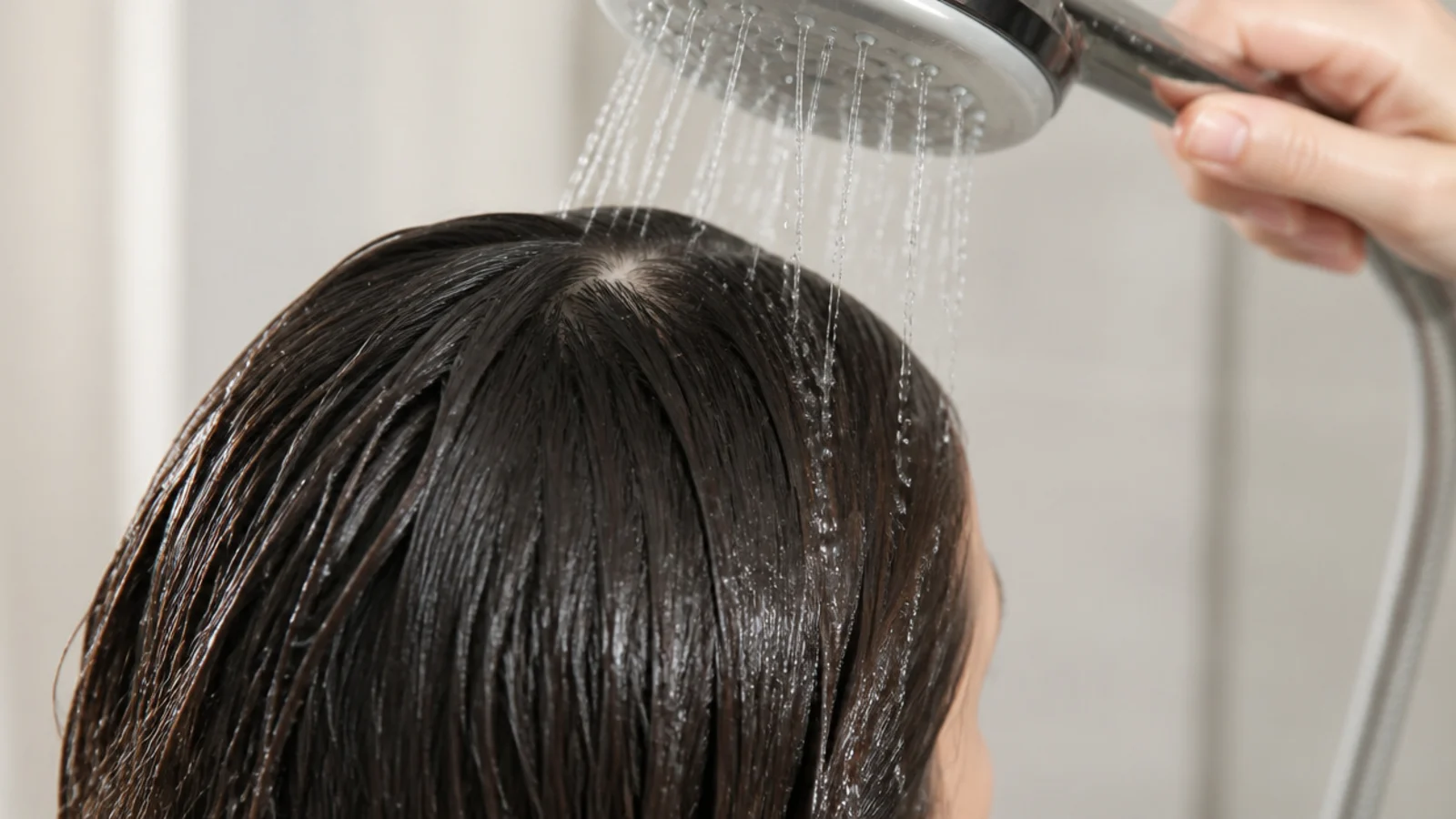
Hot water strips scalp oil aggressively, which triggers a rebound of oil production and leaves the hair shaft rough and porous. Wash with warm, then drop the temperature for the last 20 to 30 seconds. The cool rinse does not seal the cuticle shut the way the internet claims, but it does stop the stripping and it visibly reduces the frizz you fight for the rest of the day. Free, instant, and one of the few tips whose effect you can see the same afternoon. Anyone with a dry, flaky scalp will feel it fastest.
Who it suits: Dry scalps, color-treated hair, and anyone whose hair frizzes straight out of the shower.
Tip: If cold rinses are unbearable in winter, just lower to lukewarm; the point is not shocking, it is not scalding.
8. Weekly Scalp Exfoliation with a Sugar and Oil Scrub
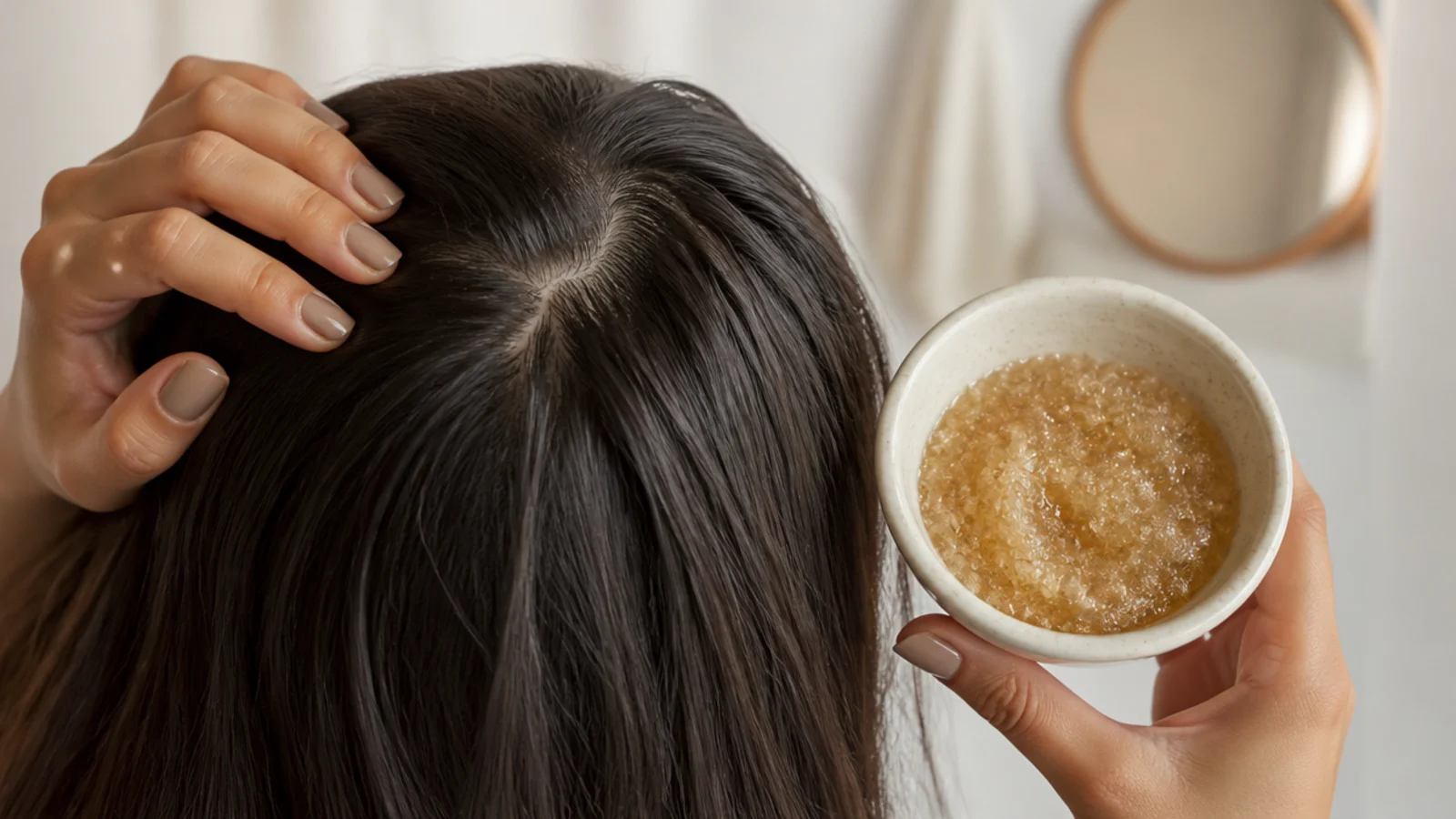
A follicle blocked by silicone, dry shampoo and sebum is not a follicle in good working order. Once a week, mix 2 tablespoons of fine sugar with 1 tablespoon of jojoba or olive oil, apply to a damp scalp in sections, and massage in circles for 2 minutes before shampooing twice. Sugar dissolves as you work, so it will not scratch the way salt can. This is maintenance rather than magic: a clean scalp supports the follicle, it does not accelerate it. Skip it entirely if your scalp is broken, sore or actively inflamed.
Who it suits: Heavy dry-shampoo users, oily scalps and anyone with product buildup.
Tip: Once a week is the ceiling; over-scrubbing causes the irritation you were trying to fix.
9. Loose Satin-Scrunchie Ponytail Instead of a Tight Elastic
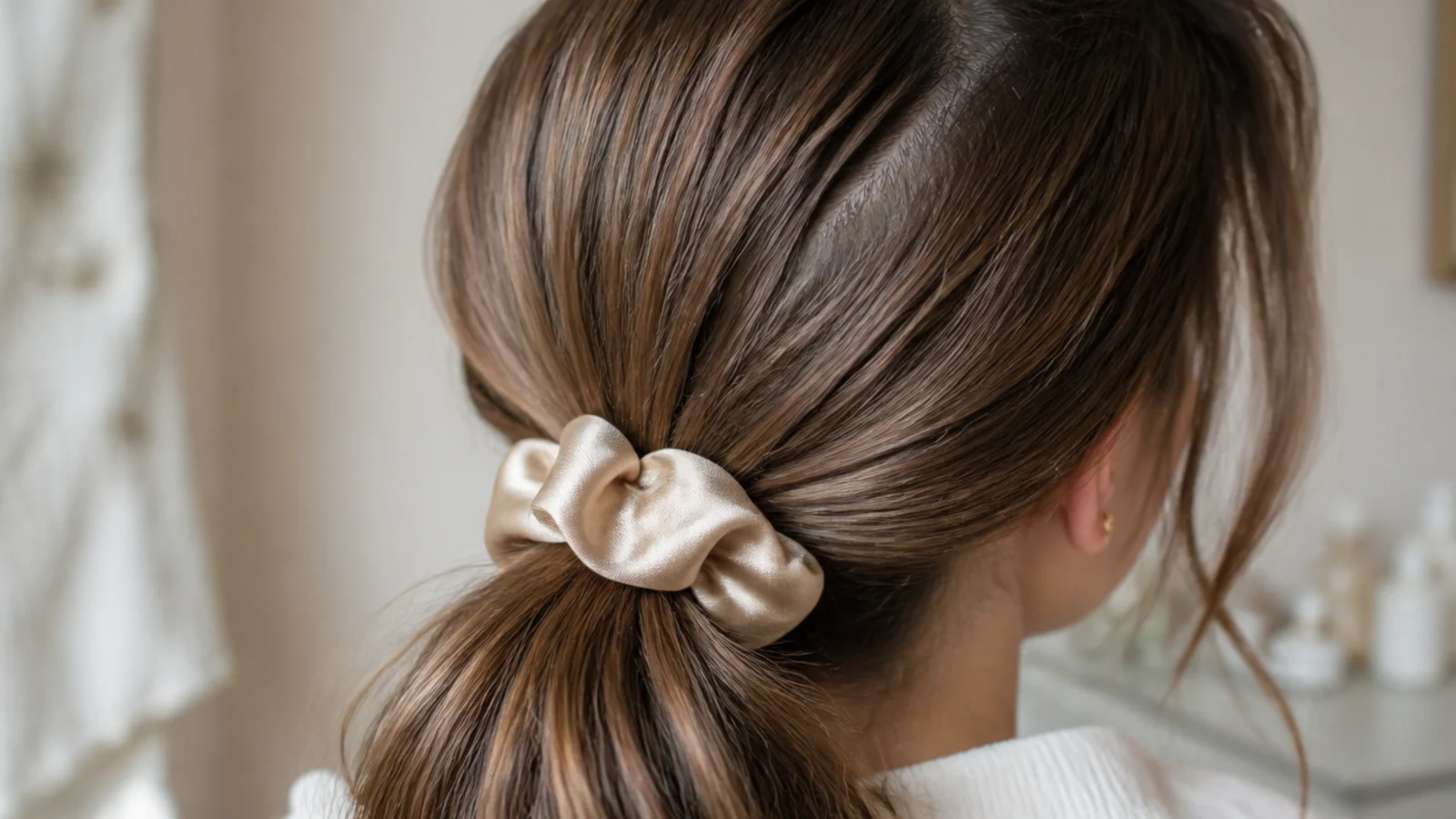
A thin rubber elastic pulled tight creates a single line of tension across the shaft and a permanent dent that snaps within weeks, and worn daily in the same spot it also pulls at the hairline. Swap to a fabric-covered satin scrunchie, keep the ponytail low and loose enough to slide a finger under, and move the placement daily. The rule is simple: if it hurts, or if you feel a pull at your temples, it is too tight and it is doing traction damage. Try a low messy ponytail instead of a sleek high one.
Who it suits: Daily ponytail and bun wearers, and anyone with thinning edges.
Tip: Never sleep in a tight tie; if you tie hair up at night, make it a loose pineapple on top.
10. A Microfiber Towel or Cotton T-Shirt Squeeze, Never a Rub
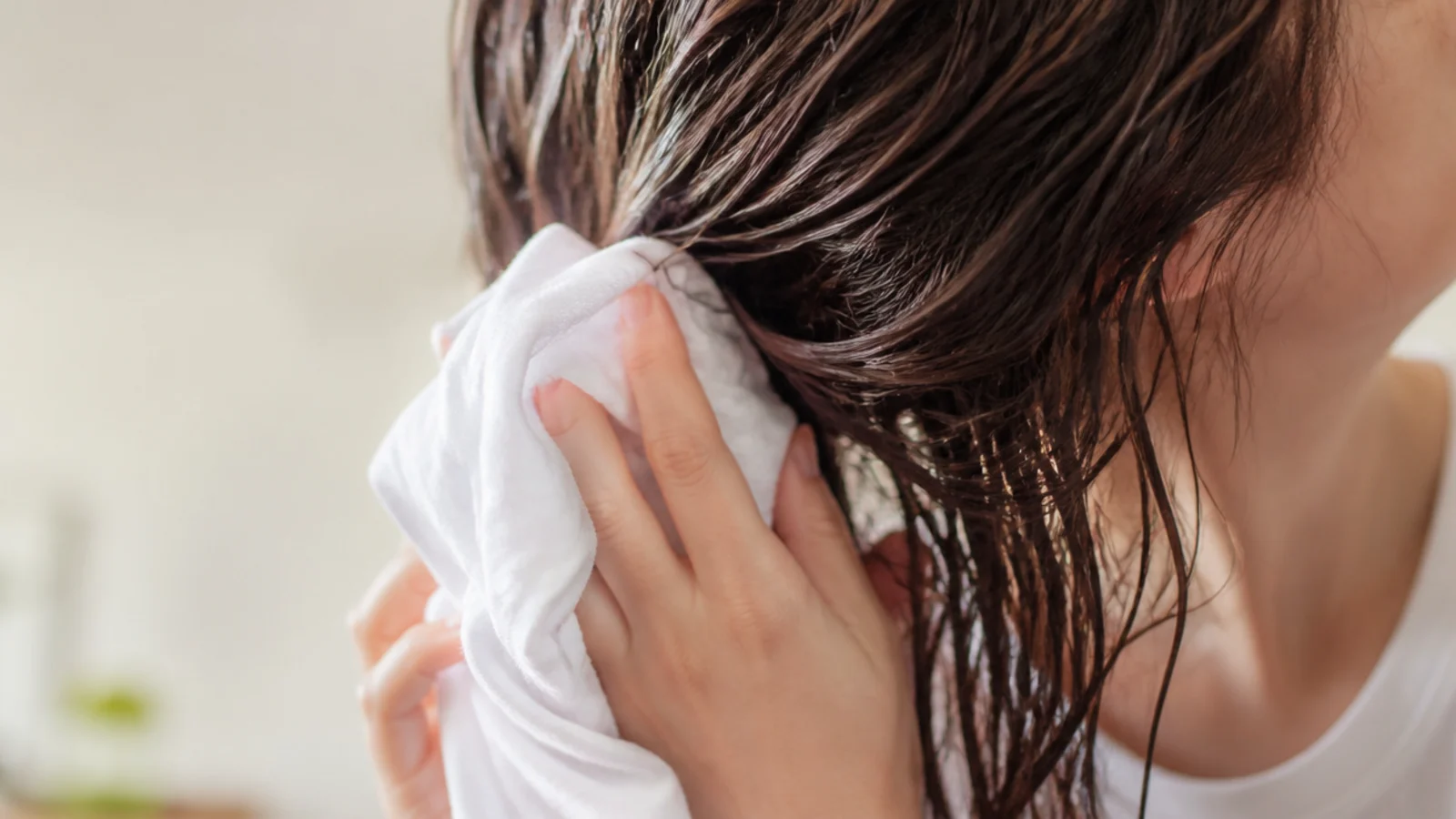
Terry cloth loops are exactly the wrong texture for wet hair: they catch raised cuticle scales and tear them, and the vigorous rubbing motion most people use turns that into frizz and split ends. Use a microfiber towel or an old cotton t-shirt, and squeeze in a downward motion rather than scrubbing. Then let it air dry to at least 70 percent before any heat touches it. This costs nothing, takes the same 30 seconds, and removes a daily source of mechanical damage that quietly caps how long your hair gets. More detail in how to get rid of frizzy hair.
Who it suits: Everyone, and curly hair most of all.
Tip: Do not wrap hair in a tight turban for an hour; the weight pulls at the roots while it sits.
11. 60 to 90 Grams of Protein a Day from Real Food
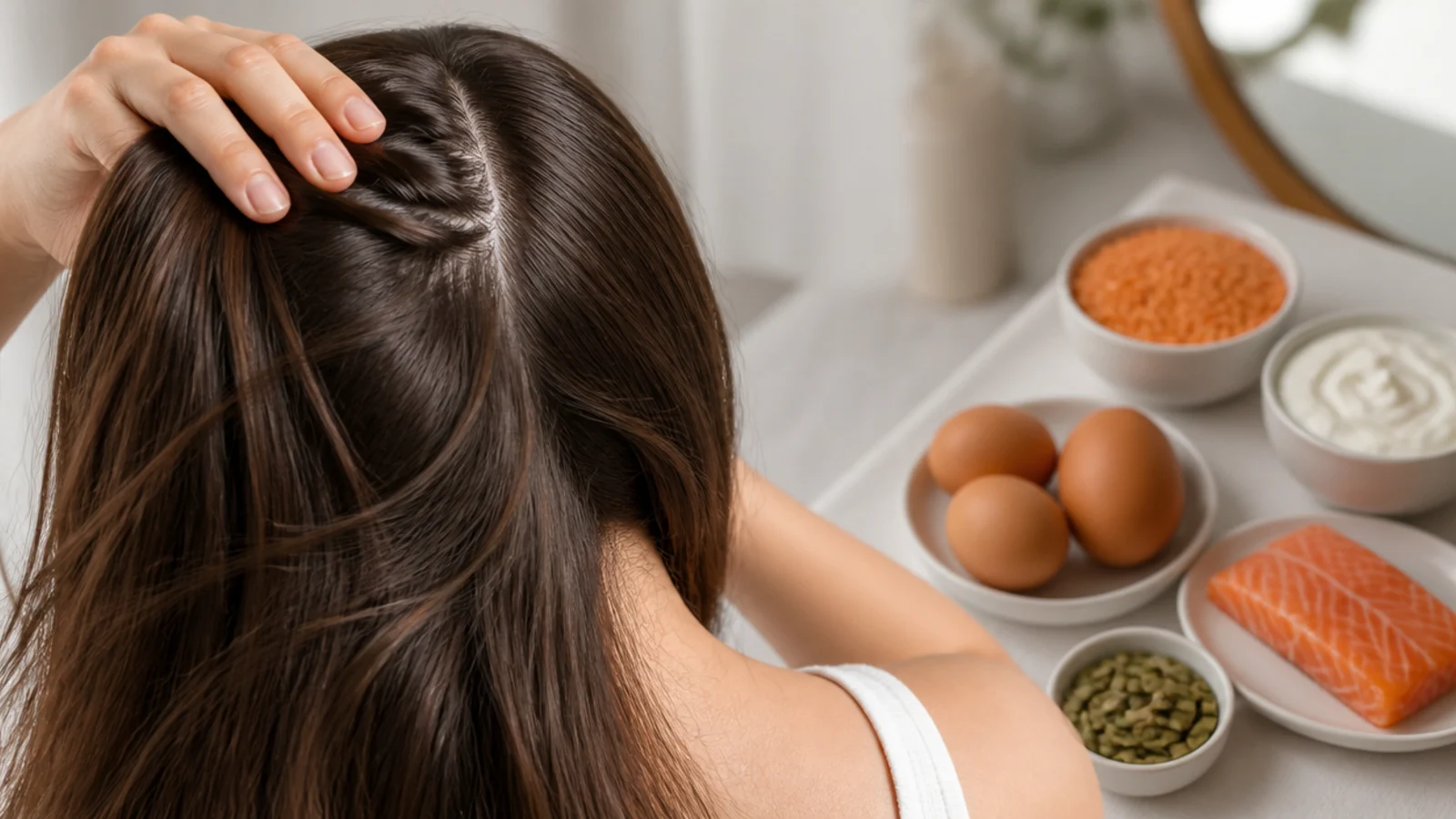
Hair is keratin, which is protein, and the body deprioritizes hair when protein is short because hair is not essential to survival. Chronic undereating and restrictive dieting are two of the most common real causes of diffuse shedding in otherwise healthy people. Aim for roughly 60 to 90 grams a day spread across meals: eggs, Greek yogurt, salmon, lentils, chicken, tofu, pumpkin seeds. The important caveat is that this fixes a deficit, it does not create a surplus benefit. Eating 150 grams instead of 80 will not grow hair faster, it just grows the rest of you.
Who it suits: Anyone dieting, recently ill, vegan without planning, or eating erratically.
Tip: If you have been on a calorie deficit for months, expect shedding to show up about 3 months later.
12. Aloe Vera Gel Straight from the Leaf as a Scalp Soother
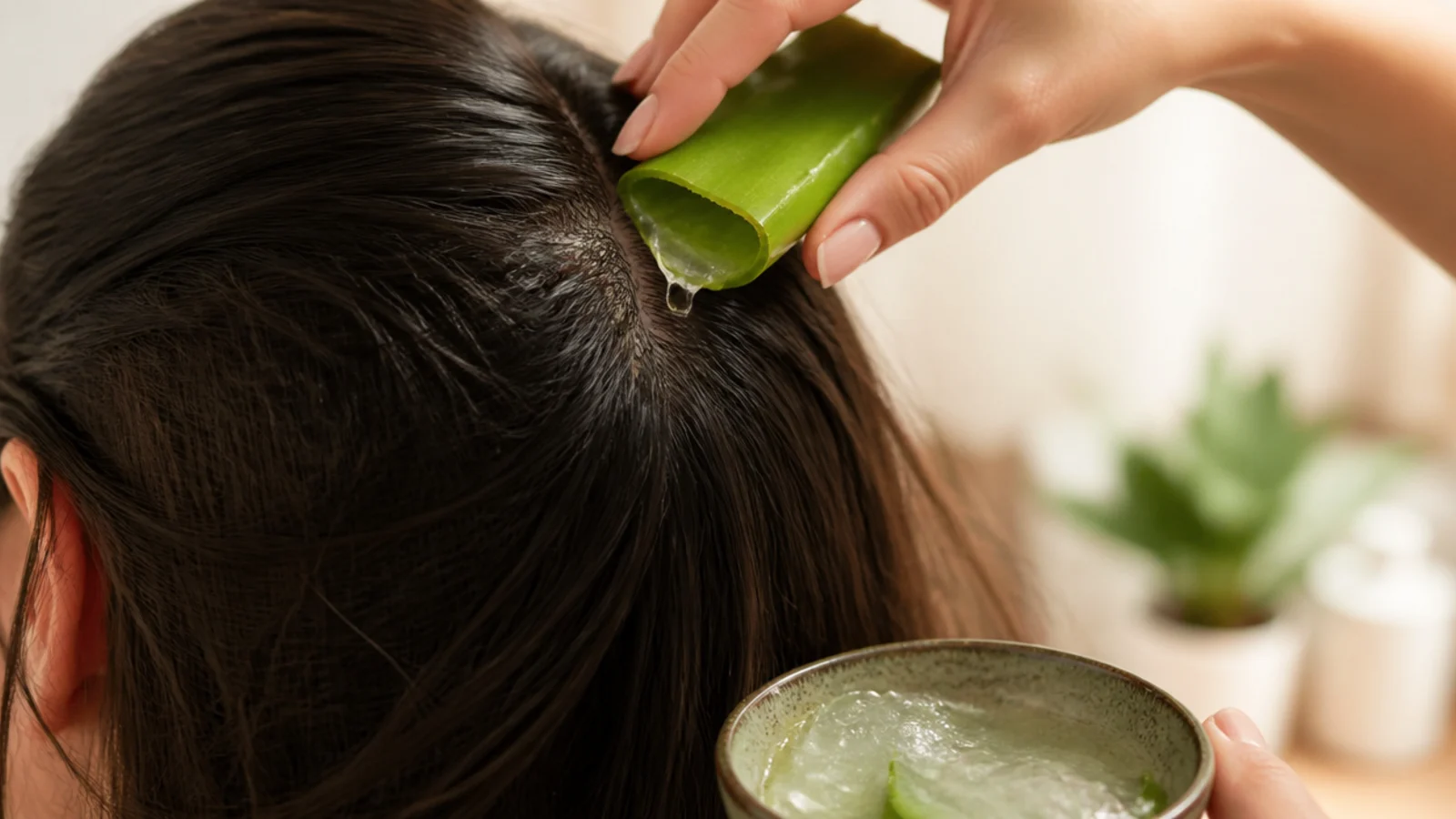
Aloe is a genuinely good scalp soother and a mediocre growth remedy, and it is worth separating those. The clear inner gel calms itch, reduces flaking and hydrates without the greasy weight of an oil, which matters because an itchy, inflamed, scratched scalp sheds more. Scoop the gel, blend it smooth, apply to the scalp for 20 to 30 minutes and rinse. Buy 100 percent aloe if you are not cutting a leaf, and check the label for added alcohol, which undoes the point. Expect comfort and less flaking, not new density.
Who it suits: Itchy, flaky, irritated or sun-exposed scalps.
Tip: Keep blended fresh gel in the fridge and use it within a week; it spoils fast without preservatives.
13. Peppermint Oil at 1 Percent for Scalp Tingle and Circulation
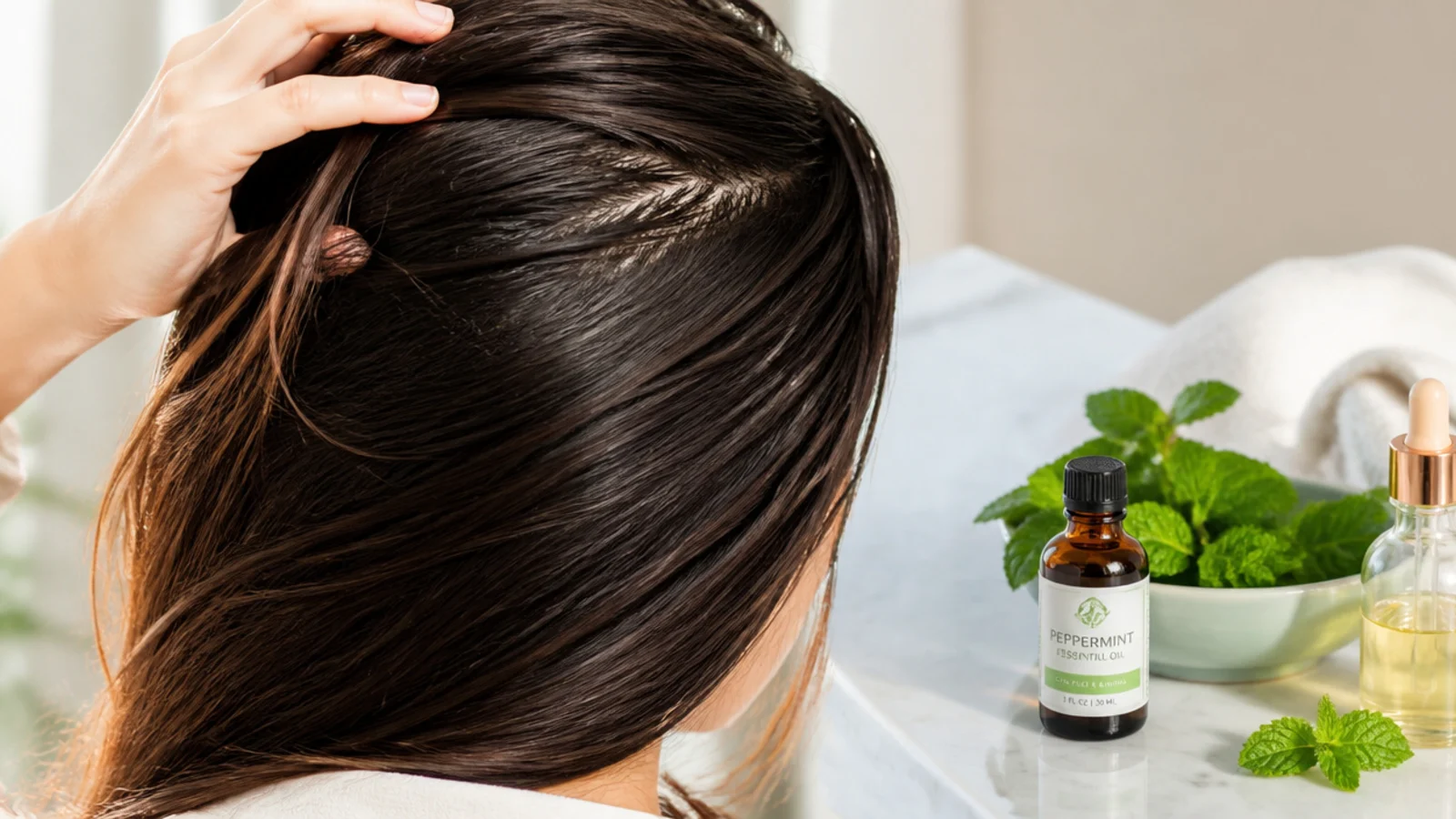
Peppermint has one much-quoted mouse study behind it and nothing convincing in humans, so treat it as pleasant rather than proven. The tingle you feel is menthol acting on cold receptors, not evidence of circulation. If you like it, dilute to about 1 percent, roughly 6 drops per ounce of carrier oil, because peppermint is more irritating than rosemary at the same strength. Keep it well away from the eyes and hairline, and do not use it on children. It layers fine into the same weekly oiling session as rosemary if you want both.
Who it suits: People who enjoy the sensation and have no scalp sensitivity.
Tip: If it burns rather than cools, wash it out immediately; that is irritation, not it working.
14. Deep Conditioning Mask with Heat, 20 Minutes Weekly
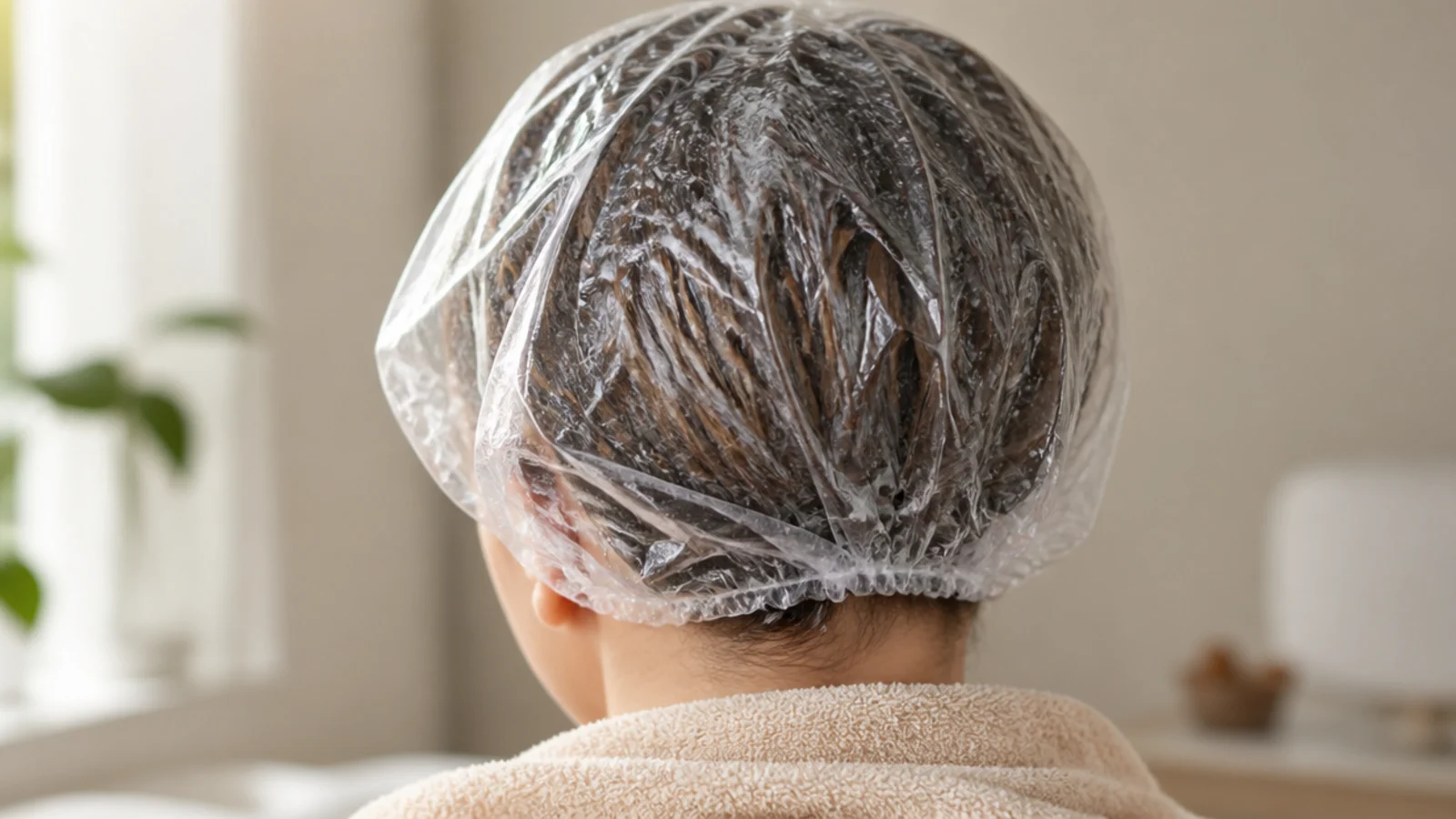
Conditioned hair stretches instead of snapping, and stretchy hair survives combing, ties and sleep. Apply a mask to the mid lengths and ends, focusing on the oldest inch, then cover with a plastic cap and a warm towel for 20 minutes so gentle heat lifts the cuticle enough for the conditioner to get in. Once a week is plenty. Alternate a moisture mask with a protein one every third or fourth wash, since too much protein makes hair stiff and brittle. See our hair mask for frizzy hair guide for formulas.
Who it suits: Color-treated, heat-styled, high-porosity and coily hair.
Tip: If your hair feels straw-like after protein masks, you need moisture, not more protein.
15. Castor Oil on the Ends, Not the Roots
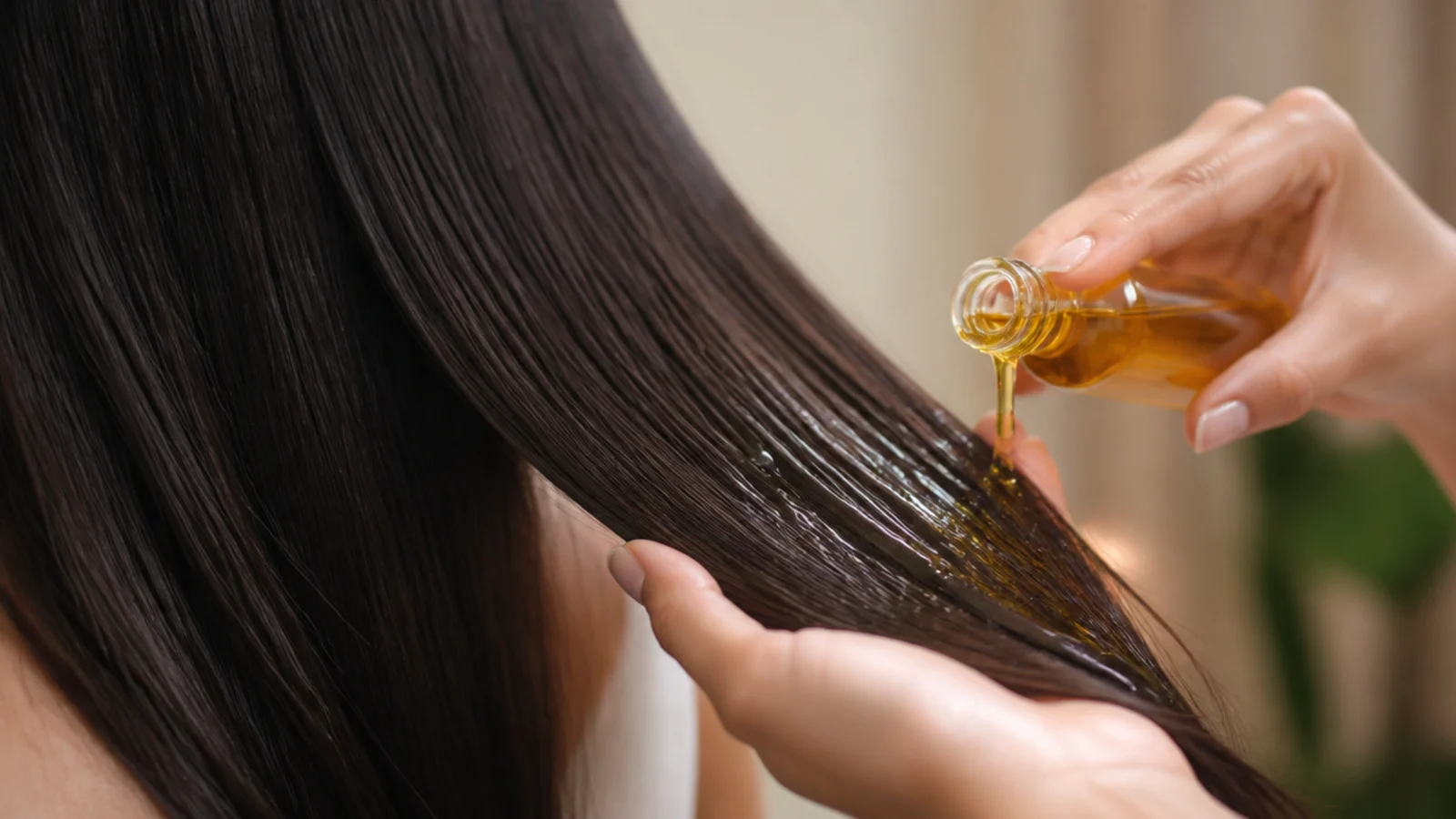
Castor oil is the most over-promised remedy in this whole category. There is no good evidence that it grows hair, and its thickness makes it a poor scalp product for most people, sometimes causing matting and buildup that needs several washes to shift. What it is genuinely good at is sealing the ends: a few drops rubbed between the palms and smoothed over the last two inches keeps them supple and cuts splitting. Use Jamaican black or cold-pressed castor, thin it with jojoba if it drags, and keep it off the roots.
Who it suits: Dry, splitting ends on medium to coarse hair.
Tip: A few drops only; castor at root level is the most common cause of oil-related tangling.
16. Heat Styling Capped at Once a Week with a 350F Ceiling
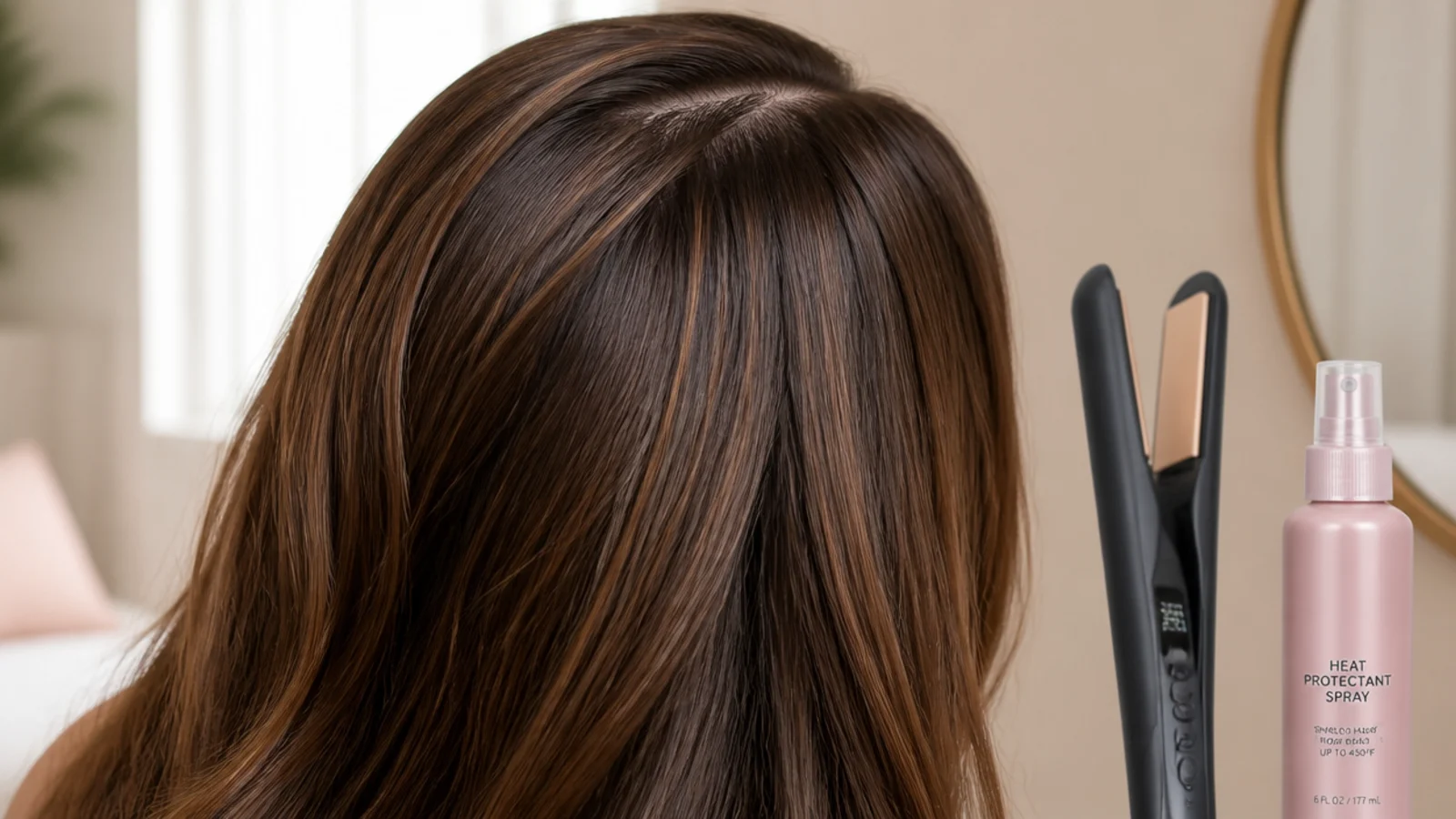
Heat does not slow growth at the root but it destroys the ends, and destroyed ends are why hair sits at the same length for years. Cap hot tools at once a week, never use them on damp hair, and keep the dial at or below 350F for fine and color-treated hair, 380F for coarse. Always mist a heat protectant first and pass the iron once per section, not four times. The genuinely painless swap is going heatless overnight instead: see heatless curls vs heat styling.
Who it suits: Anyone straightening or curling more than twice a week.
Tip: One slow pass at 350F does less damage than four fast passes at 300F.
17. Loose Two-Strand Twists or Braids as an Overnight Protective Style
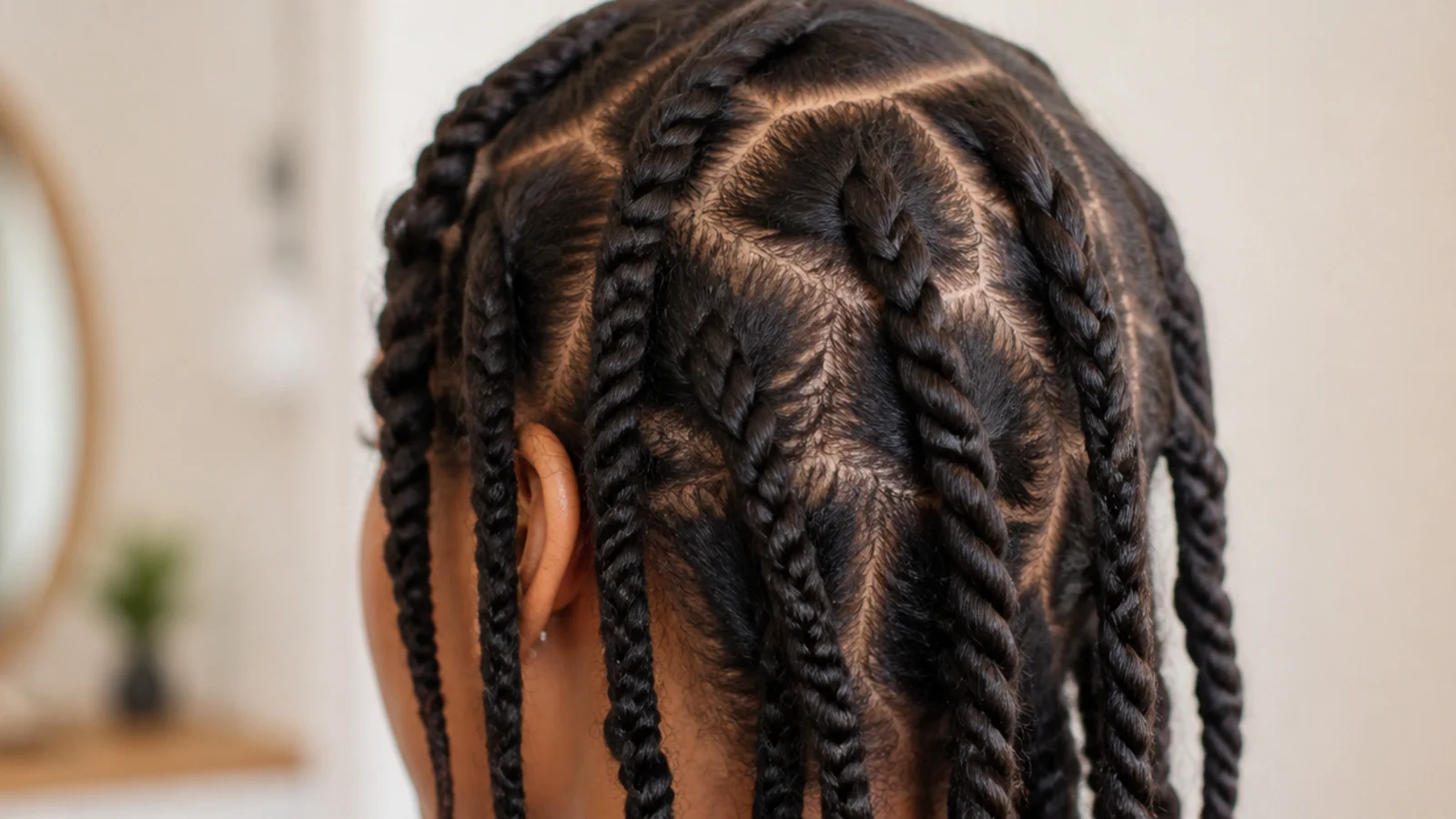
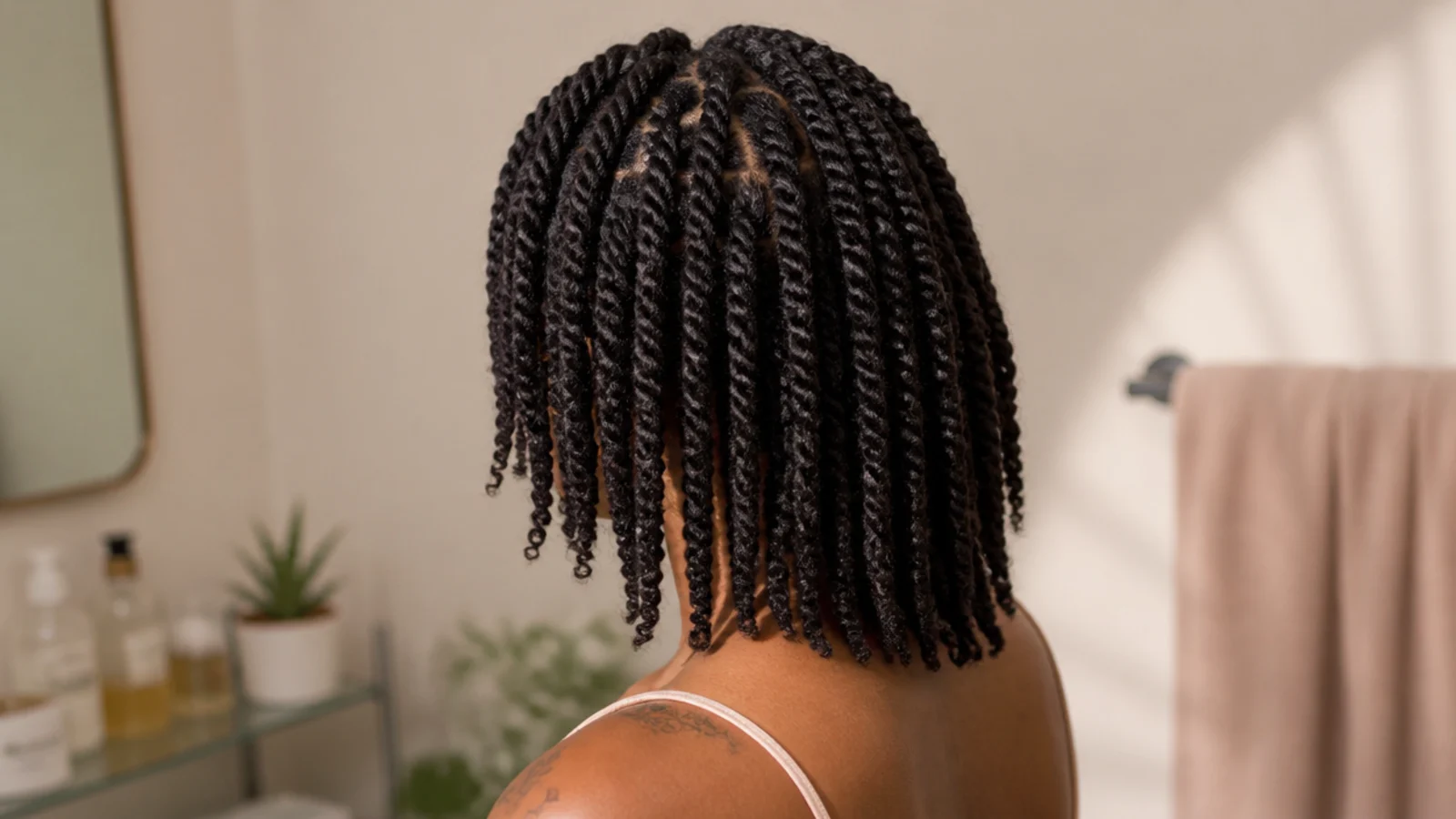
Loose hair moving freely against bedding all night tangles, and tangles get combed out in the morning, which is breakage on a nightly schedule. Four to eight loose two-strand twists or a single loose braid take 3 minutes and cut morning detangling dramatically, with the side benefit of a soft wave pattern. The word doing the work is loose. Any protective style, overnight or long-term, must never pull at the hairline, and if it aches or bumps appear you take it down. Longer-wear options are covered in passion twists ideas.
Who it suits: Curly, coily and long hair that wakes up tangled.
Tip: Twist damp, not soaking, and add a leave-in first so it does not dry into a stiff set.
18. An Iron and Ferritin Blood Test Before Any Supplement
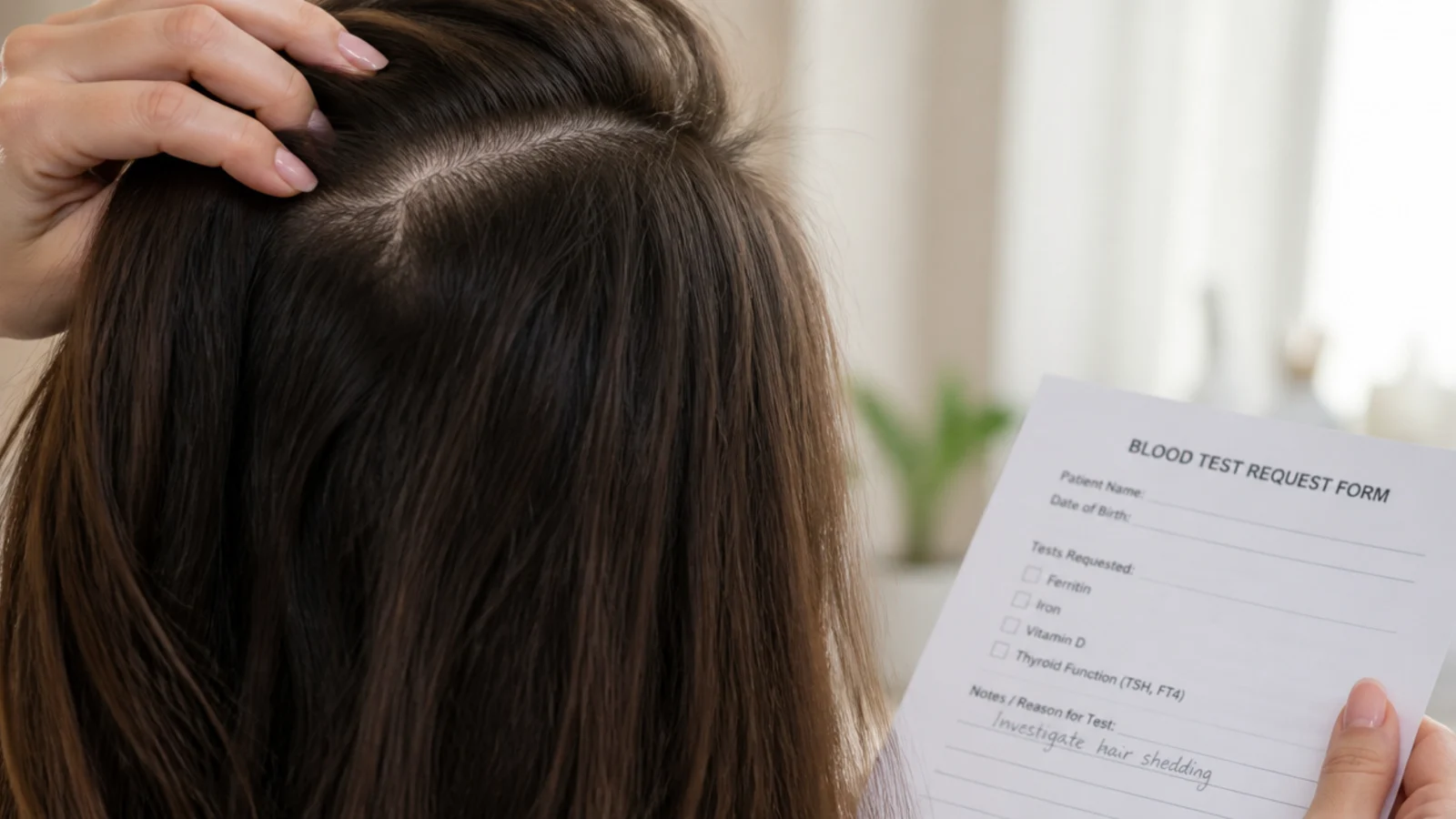
This is the least glamorous and most useful tip here. Supplements work when they correct a deficiency and do essentially nothing when they do not, so guessing wastes money and can delay finding a real cause. Low ferritin, low vitamin D, low zinc and thyroid problems are all common, all treatable, and all show up as diffuse shedding. Ask your doctor for ferritin specifically rather than just hemoglobin, since you can be iron-depleted with normal hemoglobin. Then supplement what is actually low, at a dose a clinician sets rather than a label.
Who it suits: Anyone shedding more than usual, heavy periods, vegetarians, postpartum.
Tip: Never self-dose iron without a test; excess iron is genuinely harmful, not just useless.
19. Onion Juice Scalp Treatment, 15 Minutes, Once a Week
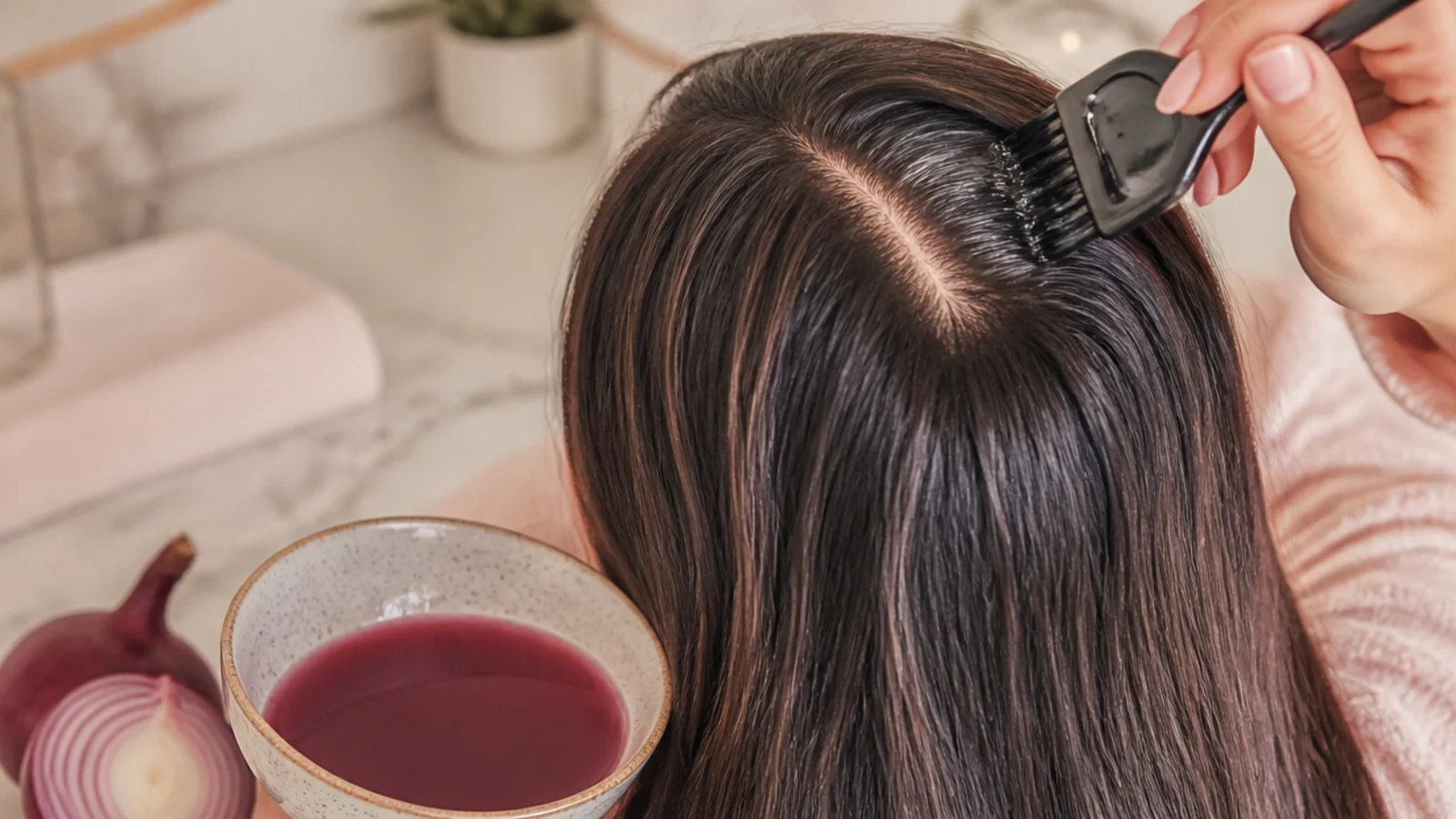
Included because it appears on every list and deserves an honest grade rather than silence. Onion juice has one small, often-cited study in patchy alopecia areata and nothing broader, and the sulfur mechanism people cite is speculative. If you want to try it, blend one red onion, strain it well, apply the liquid to the scalp with a tint brush, leave 15 minutes, then shampoo twice. It smells strongly and lingers for a day. My honest view: the effort-to-evidence ratio is poor next to rosemary oil and a nightly massage.
Who it suits: The curious and the patient; nobody with a sensitive scalp.
Tip: Rinse with diluted apple cider vinegar afterward to cut the smell, then shampoo again.
20. A Silk-Lined Bonnet or Scarf for Sleep
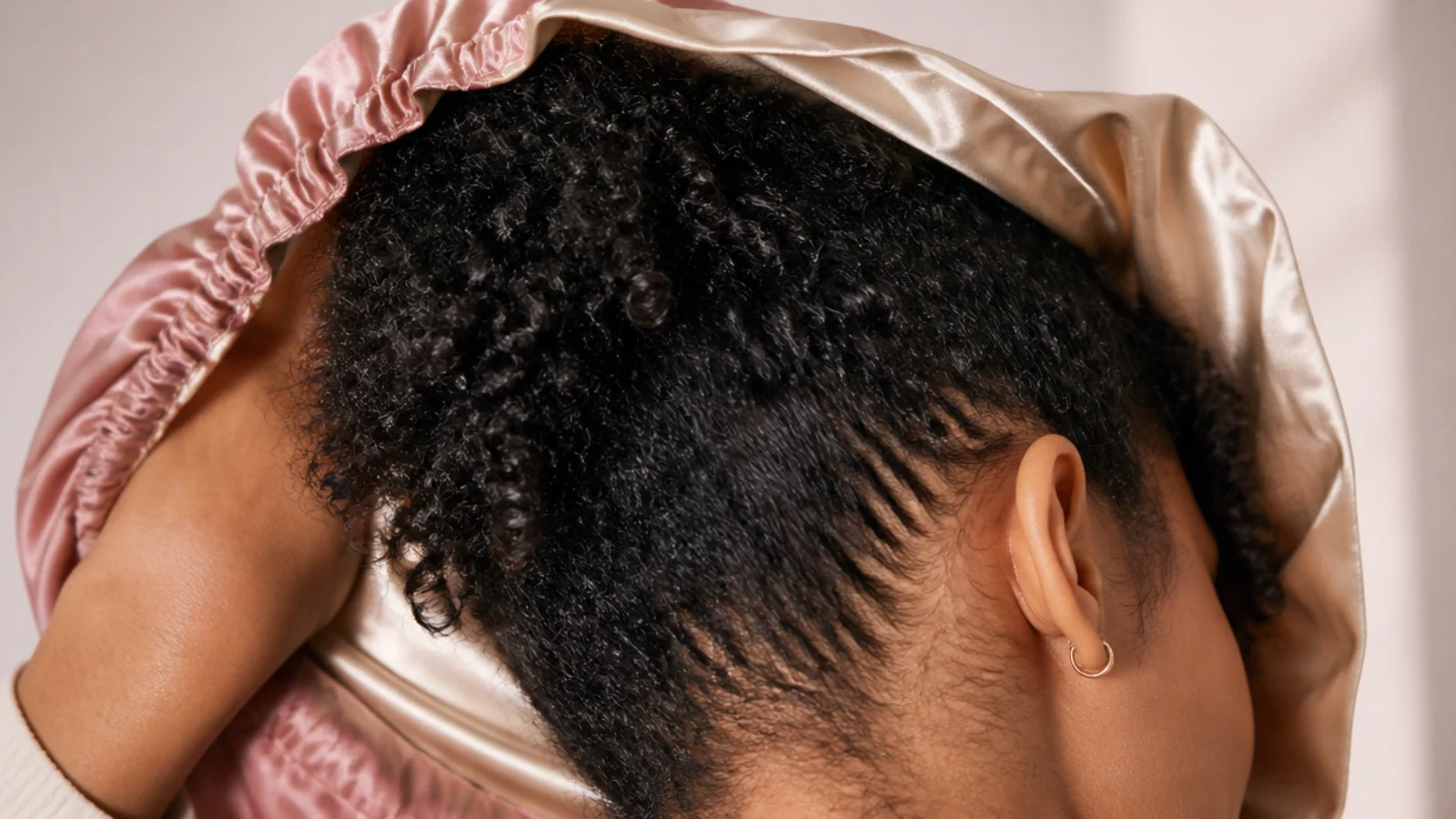
A bonnet does what a satin pillowcase does and then some, because it travels with your head when you move and it holds moisture against the hair instead of letting the bedding drink it. For coily and loc'd hair especially, this is not optional maintenance, it is the difference between retaining length and constantly trimming breakage. Choose one with a wide, soft band rather than tight elastic, since a gripping band across the hairline is its own traction problem. Expect to pay 8 to 25 dollars. More context in hair growth tips for black women.
Who it suits: Type 3 and 4 hair, locs, protective styles and anyone who moves in their sleep.
Tip: If you wake up with it on the floor, tie a satin scarf underneath it as a backup layer.
How Fast Does Hair Actually Grow, and What You Can Control
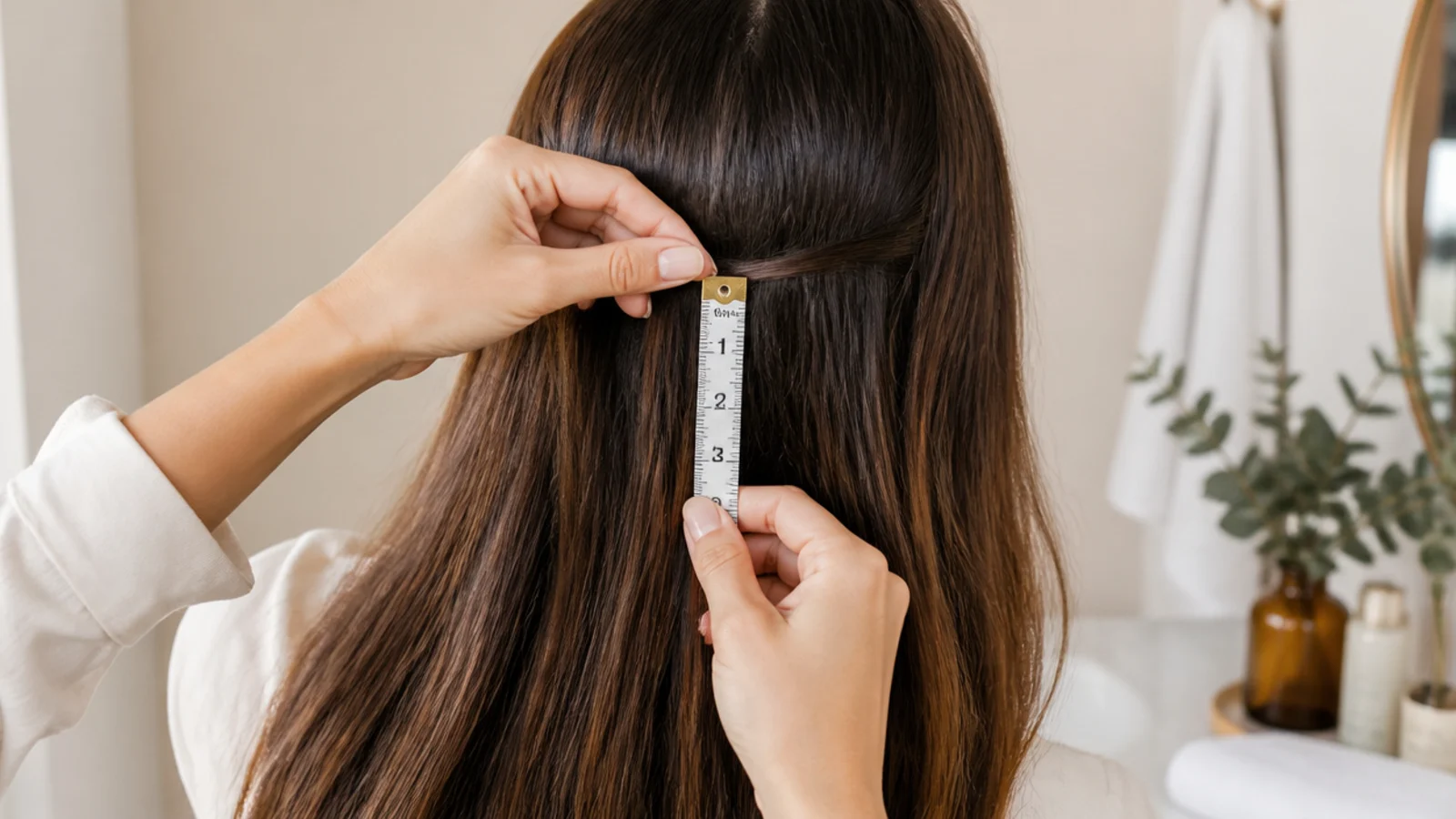
Hair grows about half an inch a month, roughly six inches a year, and that rate is set mostly by genetics, age and general health. It is not a dial you can turn up. Nothing you put on your scalp changes the speed at which the follicle produces keratin, and any product promising inches in a week is selling you something. What genetics also sets is your terminal length: every follicle has a programmed growing phase, and when it ends the hair sheds no matter how well you treat it. That is why some people reach the waist easily and others plateau at the collarbone with identical routines. Inside those fixed limits there is still a lot of room. You control breakage, tension, heat, scalp condition, nutrition and consistency, and together those decide whether you actually reach your ceiling or stall several inches below it. Reframing the goal from faster to fuller is the single most useful thing in this article. The wider version of this argument sits in our hair growth tips pillar.
Breakage vs Growth: Why Your Hair Seems Stuck at Shoulder Length
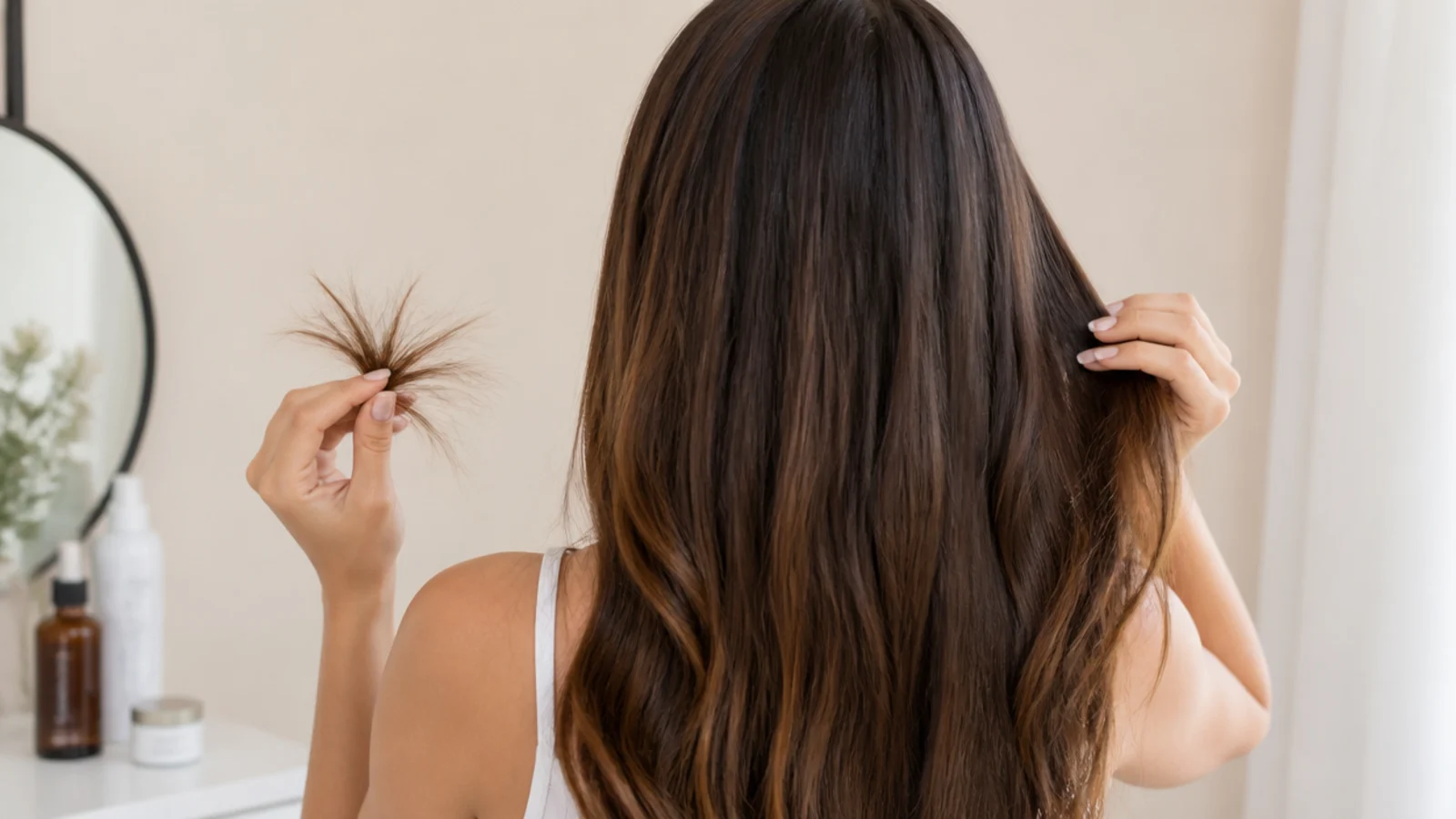
If your hair has sat at the same length for two years, it almost certainly is not growing slowly. It is growing normally at the root and breaking off at the same rate at the ends, so the length cancels out. Here is how to tell which you have. Shedding comes from the root and the strand is full length with a small white bulb on the end, and losing 50 to 100 of those a day is completely normal. Breakage is short, uneven pieces with no bulb, and you find them on the pillow, in the sink and standing up around your part like tiny flyaways. Breakage means mechanical damage: rough detangling, tight ties, hot tools, cotton bedding, chemical processing, or simply ends that are four years old and worn out. That is good news, because every single one of those is something you decide. Fix friction and tension first, and length starts accumulating within a couple of months without changing a thing about growth rate. Practical swaps are listed in tips for hair growth.
Scalp Health: Where Natural Hair Growth Remedies Actually Do Something
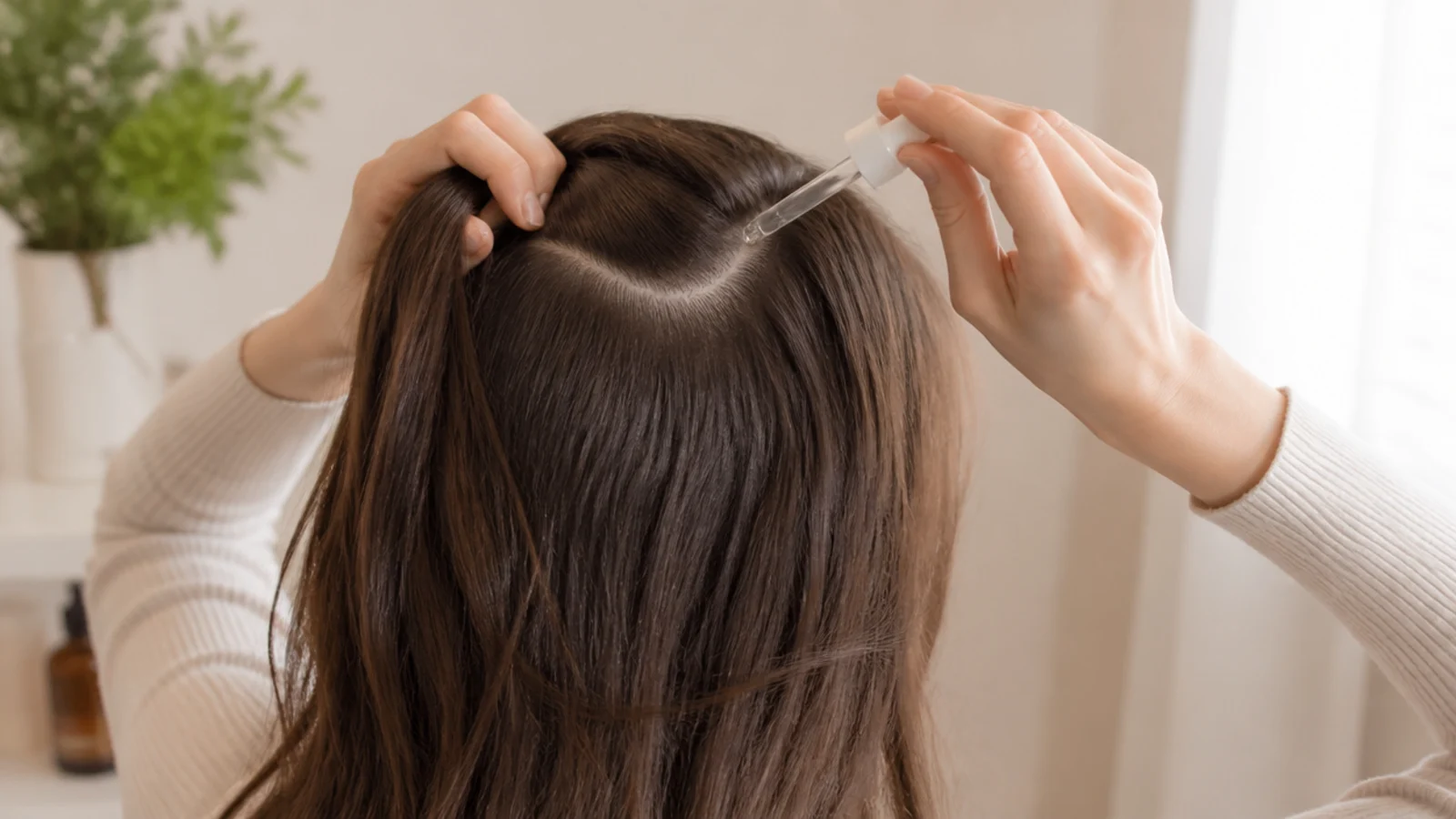
The follicle is skin, and skin responds to its environment. A scalp caked in dry shampoo, silicone and sebum is inflamed and itchy, and an itchy scalp gets scratched, which breaks hairs near the root and makes shedding look worse than it is. So the honest claim for natural remedies is this: they can create better conditions, and better conditions let the follicle do its normal job properly. They do not add follicles or override genetics. In practice a good scalp routine is small. Wash often enough that buildup never accumulates, which for most people is every 2 to 4 days and for coily hair may be weekly. Exfoliate once a week if you use a lot of product. Massage 5 minutes most nights. Use diluted rosemary oil if you like it. Treat itch and flaking rather than ignoring them, since persistent dandruff or seborrheic dermatitis genuinely does increase shedding and needs a medicated shampoo, not an oil. If flaking, soreness or bald patches persist, that is a dermatologist visit, not a recipe.
Diet and Supplements for Hair Growth: The Honest Limits
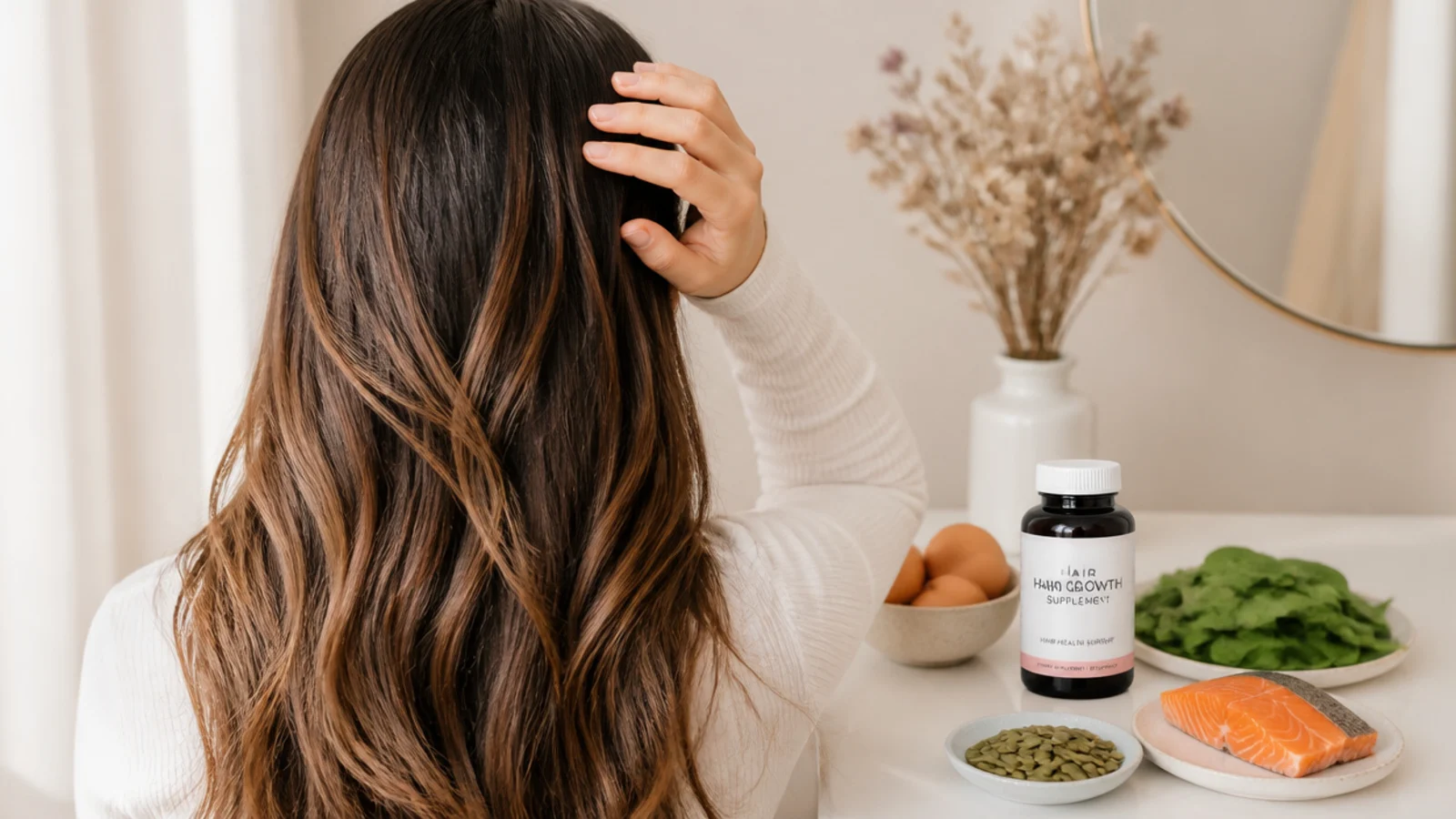
Supplements correct deficiencies. That is the whole mechanism, and it is why the same biotin gummy transforms one person's hair and does nothing at all for another. If your levels are normal, extra biotin is excreted and can also skew thyroid and cardiac blood tests, which is a real clinical nuisance. The nutrients genuinely tied to hair are protein, iron and ferritin, vitamin D, zinc and B12, and the sensible order of operations is test, then treat what is low, rather than buying a ten-ingredient blend and hoping. Food does most of the work: eggs, oily fish, lentils, leafy greens, Greek yogurt, pumpkin seeds and enough calories overall. Undereating is a far more common cause of shedding than any missing micronutrient, and crash dieting reliably produces heavy shedding about three months later. One more limit worth stating plainly: no food, powder or gummy makes hair grow faster than its genetic rate. It only removes the brakes. Zero-cost versions of all of this are in hair growth tips faster at home.
Natural Hair Growth Tips for Edges, Thinning, 4C Hair and Postpartum Shedding
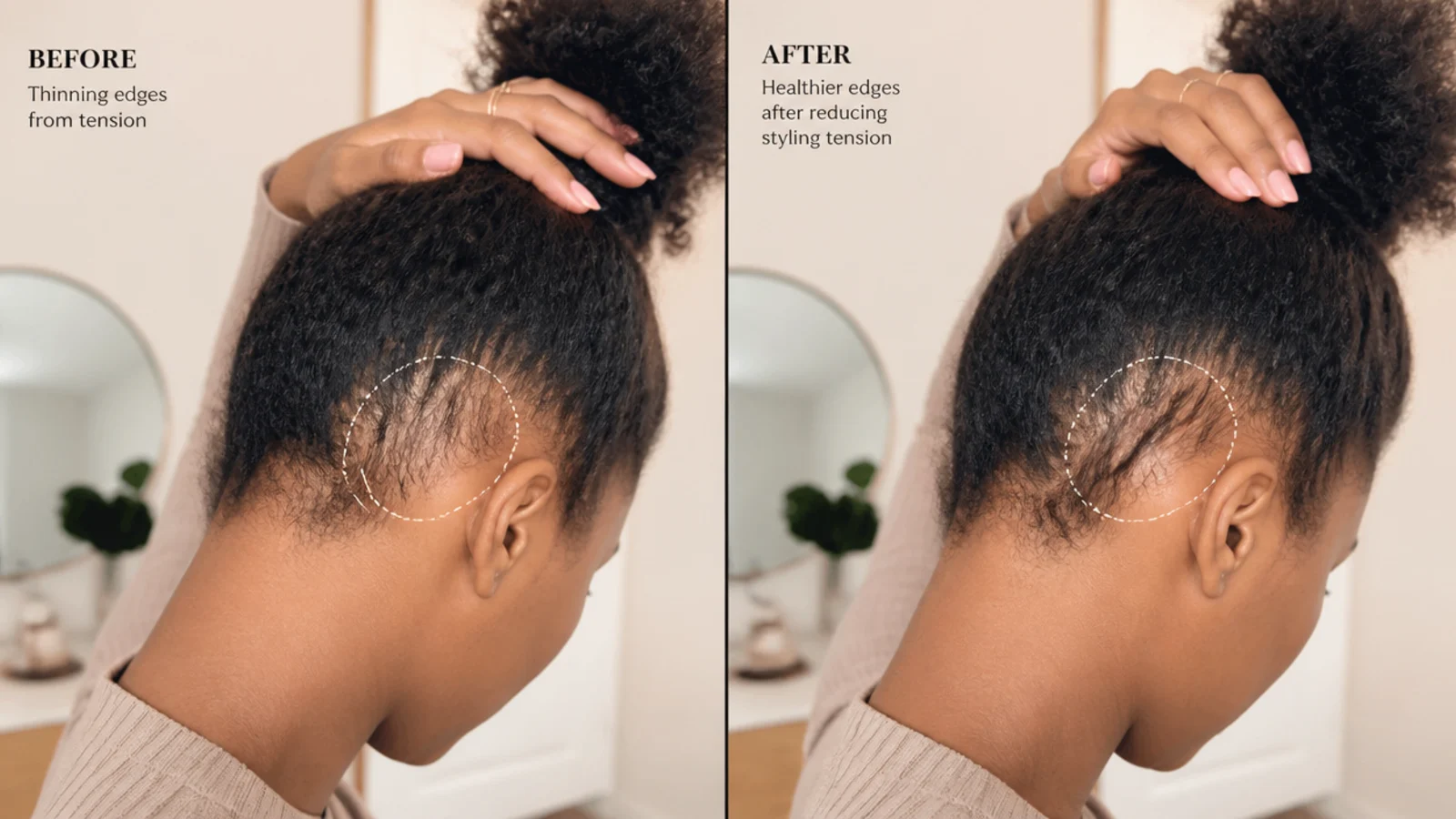
Different problems need different answers, and lumping them together is why generic lists fail. Thinning edges are usually traction: tight braids, weaves, gelled-down baby hairs, daily slick buns. Caught early it regrows once the tension stops, and the rule is that a style should never hurt or bump. Left for years it can scar and become permanent, which is why this one is urgent rather than cosmetic. For 4C hair, shrinkage of up to 70 percent means length is routinely underestimated, so measure a stretched strand before deciding nothing is happening, and prioritize moisture, low manipulation and satin at night. Postpartum shedding is telogen effluvium: hair that stayed put during pregnancy releases at once, typically peaking around month three or four and recovering on its own by month six to twelve. It looks alarming and usually needs patience rather than product. A widening part, a receding hairline, round bald patches or shedding that never settles all need a doctor or trichologist. See hair growth tips for black women and graduation hairstyles for natural hair for low-tension styling.
Building a Weekly Natural Hair Growth Routine You Will Actually Keep
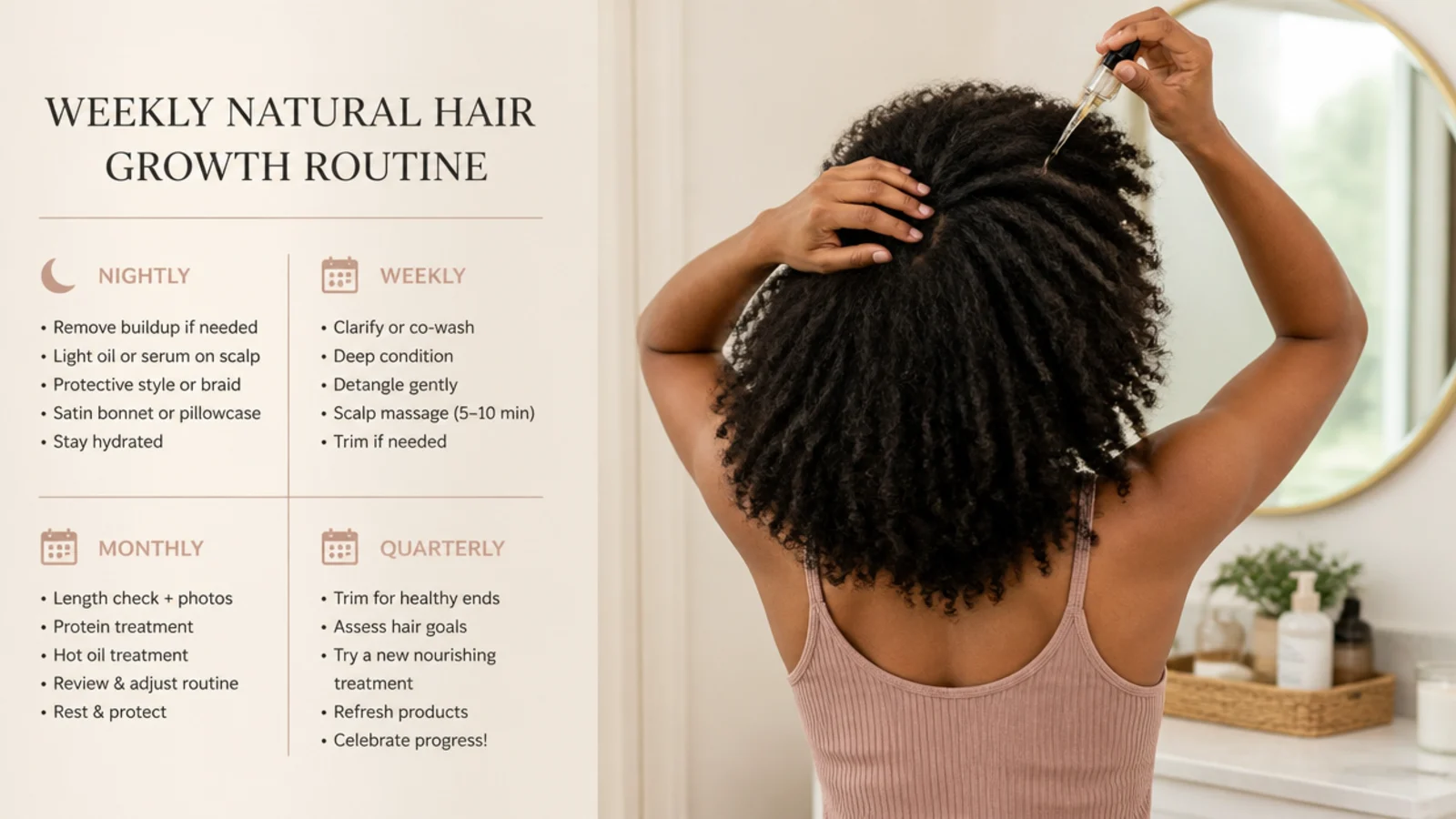
Consistency beats intensity, so build the smallest routine you will not abandon. Nightly, two things: 5 minutes of fingertip scalp massage, and satin, whether that is a pillowcase, a bonnet or a scarf. Loose twists or a soft pineapple if your hair tangles. Weekly, three things: one wash with a proper scalp cleanse, one deep conditioning mask with 20 minutes of gentle heat, and one oiling session with 2 percent rosemary oil left on before you wash. Monthly, check in: look at your ends in good light, note whether the broken bits on your pillow are decreasing, and photograph a stretched strand against a tape measure so you are judging data rather than mood. Quarterly, book the dusting trim, every 8 to 12 weeks, quarter inch, no shape change. That is the entire program, about 40 minutes a week. Give it three to six months before deciding anything works, because you are watching a half inch a month accumulate. Style it gently in between with something like easy mermaid braids or a heatless curls scrunchie set.
Frequently Asked Questions
What stimulates natural hair growth?
Nothing natural reliably speeds up the growth rate itself, which is set by genetics, age and health. What supports normal healthy growth is a clean, non-inflamed scalp, adequate protein, iron and calories, regular fingertip scalp massage, and diluted rosemary oil, which is the only home remedy with a published human trial behind it. Everything else on the usual list protects hair rather than stimulating it.
How can I increase my hair growth naturally?
Focus on retention instead of rate. Sleep on satin, detangle only with conditioner on using a wide-tooth comb from the ends upward, stop using tight elastics, cap heat styling at once a week under 350F, and take a quarter-inch dusting trim every 8 to 12 weeks so splits cannot travel. Those changes let you keep the roughly six inches a year you already grow.
What herbs can promote hair growth?
Rosemary is the best supported, with a small trial suggesting it performed comparably to a low-strength minoxidil over several months. Peppermint has mouse data only. Aloe soothes an itchy scalp genuinely but does not add density. Onion juice has one small study in patchy alopecia areata. Dilute all essential oils to 1 to 2 percent in a carrier and patch test first.
Can you really grow hair faster overnight?
No. Hair grows about half an inch over an entire month, so overnight change is not physically possible, and any product or hack promising it is marketing. What you can achieve overnight is less damage: satin bedding, loose twists and a bonnet mean you wake up with fewer broken hairs and less tangling to comb out in the morning.
What foods make hair grow faster?
None make it grow faster than your genetic rate, but eating too little of the right things does slow it down. Prioritize protein at roughly 60 to 90 grams a day from eggs, salmon, lentils, Greek yogurt, chicken or tofu, plus iron-rich foods, zinc from pumpkin seeds, and enough overall calories. Undereating is a far more common cause of shedding than any single missing nutrient.
Can I use natural hair regrowth methods with other treatments?
Usually yes, but sequence them and tell your doctor. Applying essential oils on the same patch of scalp as a prescribed topical can cause irritation or affect absorption, so leave several hours between them or apply on alternate days. If you are using a medicated dandruff shampoo, keep to its schedule, since a controlled scalp condition matters more than any oil.
How long does it take to speed up hair growth?
Plan on three to six months before you can fairly judge anything, because visible change requires an inch or two of new growth to accumulate. Reduced breakage shows up sooner, often in two to six weeks, as fewer short broken hairs on your pillow and ends that look less see-through. Photograph a stretched strand monthly rather than trusting your memory.
Which hairstyles promote healthy hair growth?
Low-tension ones. Loose low ponytails on satin scrunchies, soft braids, loose two-strand twists, and buns held with a claw clip rather than pins. Rotate the placement daily so the same spot is never stressed, and use protective styles that never pull at the hairline. If a style aches, tingles or creates bumps, it is causing traction damage and should come down.
When should I see a doctor about hair loss?
Book an appointment if your part is visibly widening, your hairline is receding, you have round smooth bald patches, your scalp is sore, scaly or scarring, or heavy shedding lasts beyond about six months or falls outside a postpartum window. A doctor or trichologist can test ferritin, thyroid and vitamin D and identify causes that no natural remedy will address.
Which hair growth tips look are you saving?
If you take one thing from these natural hair growth tips, make it this: you are not trying to grow hair faster, you are trying to keep more of what already grows. That reframe changes your whole routine. Satin at night, looser styles, a gentler detangle, a dusting trim on schedule, and a clean scalp will do more over six months than any bottle. Layer rosemary oil and a nightly massage on top if you enjoy them, eat enough protein and iron, and give it three to six months before you judge anything. If your part is widening, your edges are thinning, or you are shedding heavily beyond a postpartum window, see a doctor or trichologist rather than buying another oil. More on this board at hair growth tips faster at home and across the hair growth tips hub.