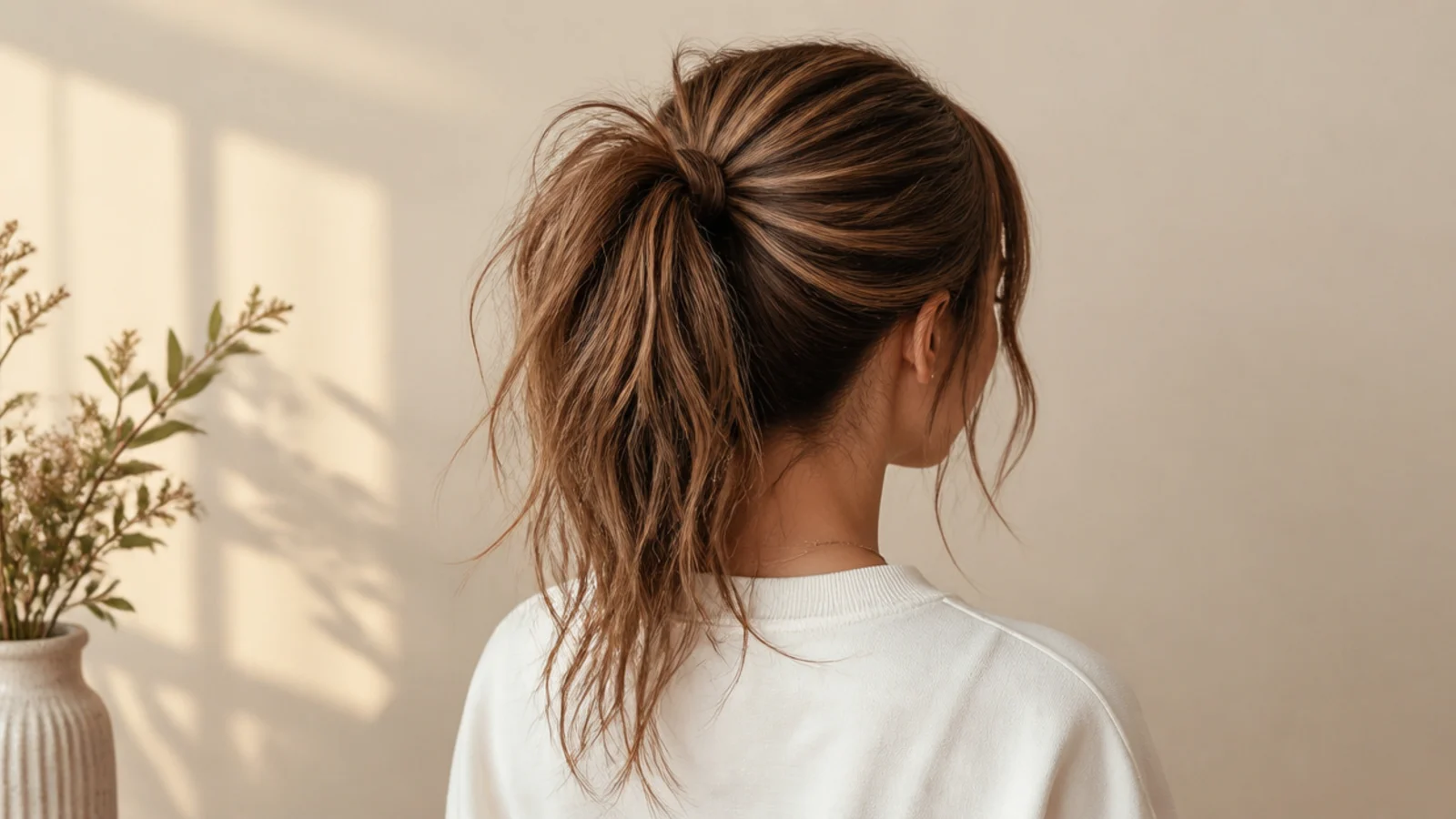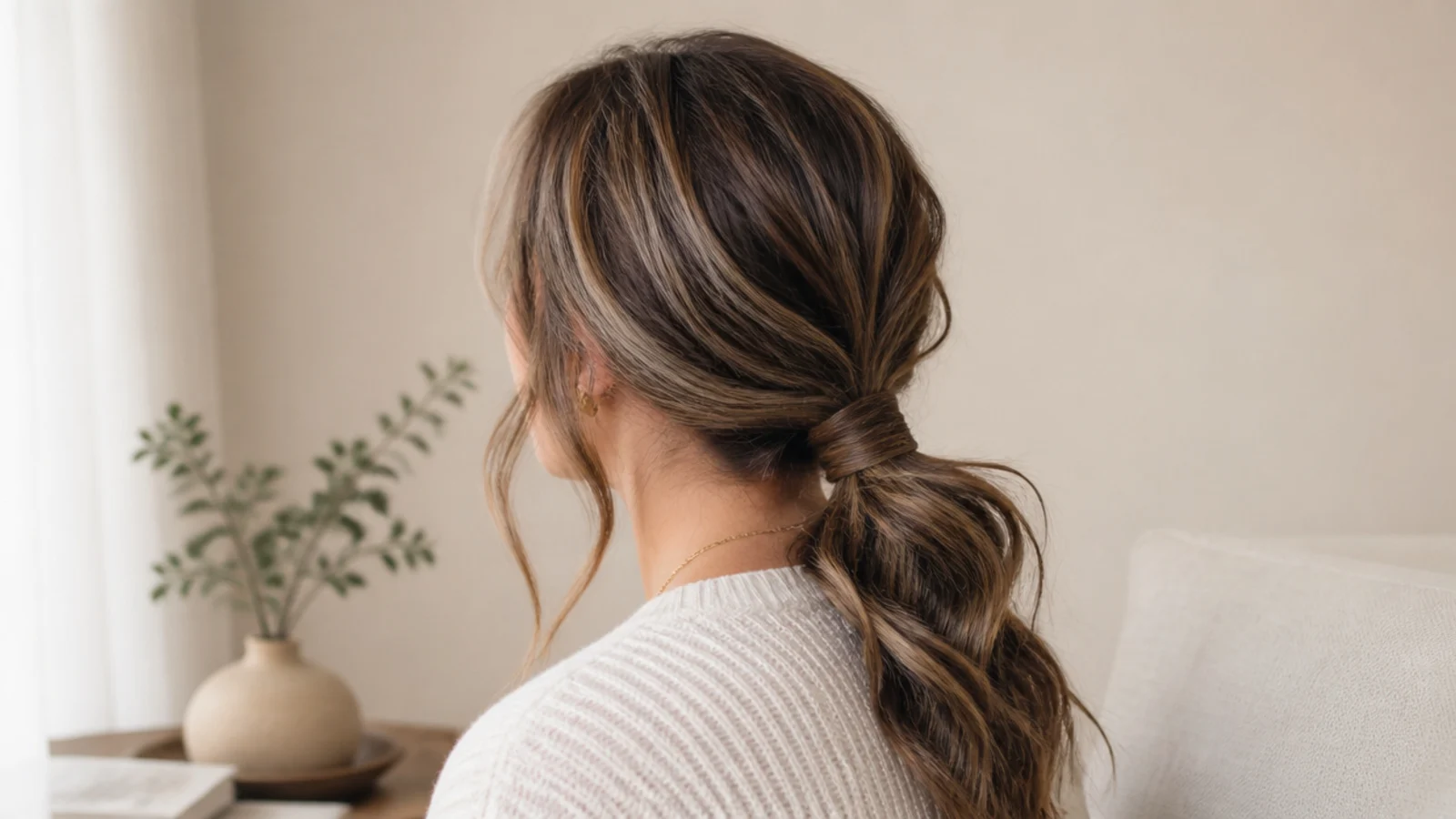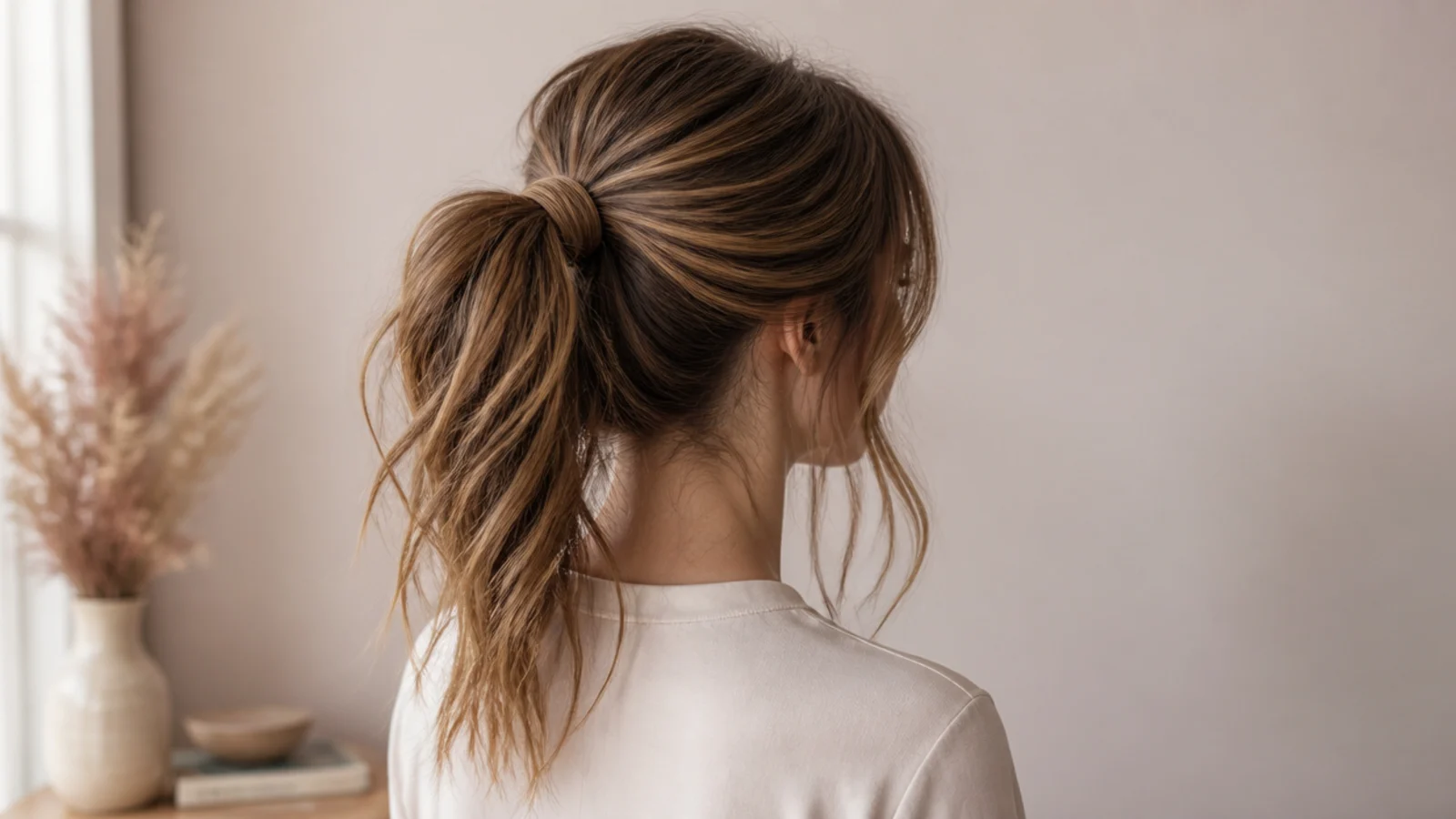
Quick Comparison
| Messy Ponytail | Sleek Ponytail | |
|---|---|---|
| Best hair condition | Day-two hair or dry-shampooed roots that grip | Freshly washed or oiled hair that lies flat |
| Time to build | 3 to 5 minutes, 7 with a braid or wrap | 10 to 15 minutes including brushing and gel |
| Products needed | Dry shampoo, texture spray, flexible hairspray | Smoothing cream, edge gel, boar bristle brush, shine spray |
| Hides greasy roots | Reasonably, texture disguises separation | Very well, slicked roots read as deliberate |
| Humidity performance | Good; frizz blends into the intended texture | Poor; a single halo of frizz ruins the finish |
| Scalp tension | Low, the band sits loose by design | High, the look depends on constant tension |
| Occasion range | Everyday, school, weekend, casual office | Interviews, evening events, formal photography |
| All-day hold | 8 to 10 hours with one midday re-tug | 6 to 8 hours before flyaways break the line |
| Works on fine hair | Yes, teasing adds the density fine hair lacks | Rarely, slicking makes fine hair look sparse |
1. Prep With Day-Two Hair or Dry Shampoo at the Roots
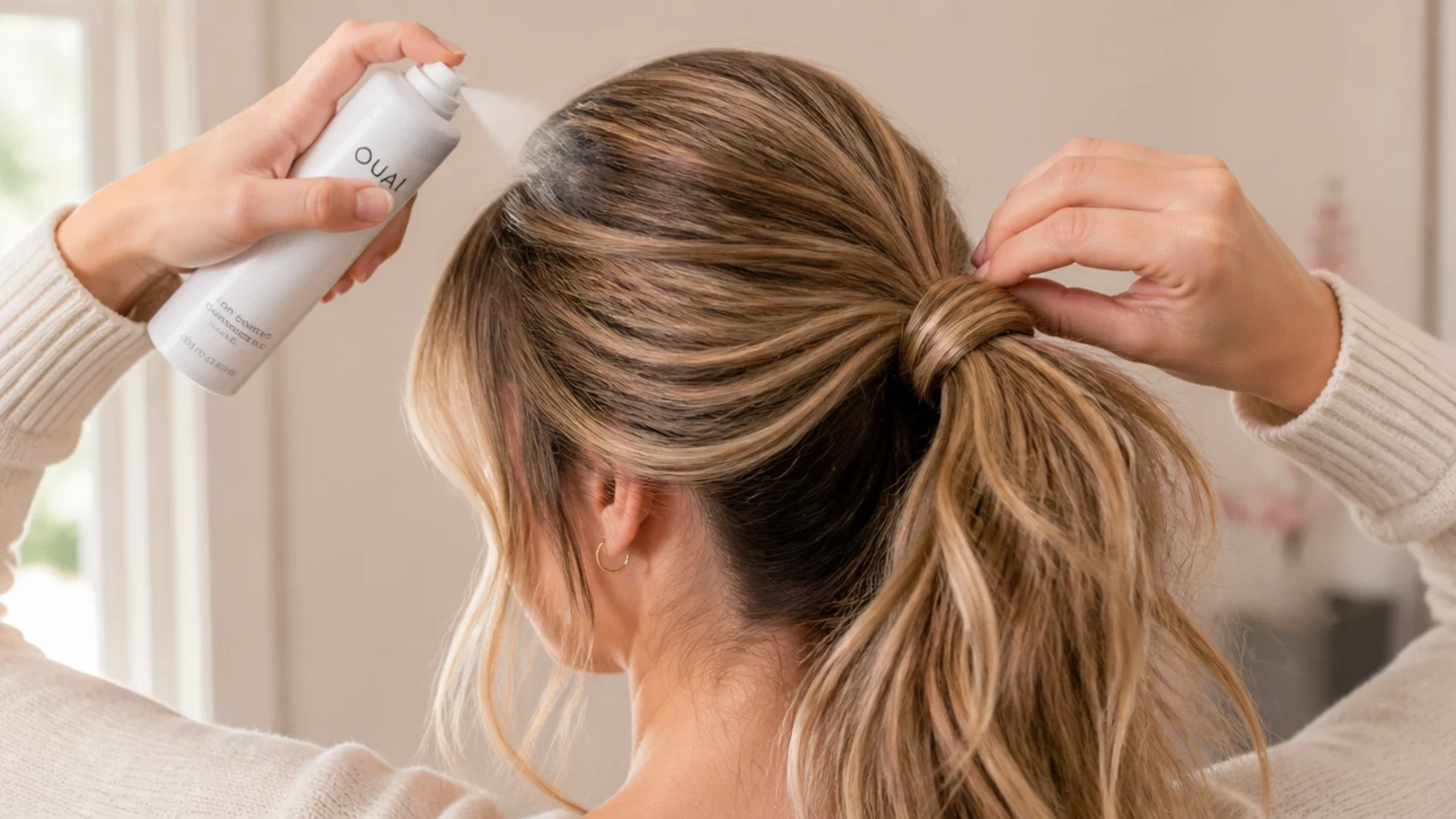
Freshly washed hair is the single most common reason a messy ponytail collapses. Clean cuticles are slippery, so the elastic slides down the tail and every section you tug falls straight back. Day-two hair grips far better. If you did wash today, section the hair and spray dry shampoo along the part lines and around the crown from about 8 inches away, wait 60 seconds, then rub it in at the roots with your fingertips. Mist texture spray through the mid-lengths and ends too, since that is where the tail needs to hold a teased shape.
Common mistake: Spraying dry shampoo onto the surface of the hair instead of the roots, which dulls the color and adds no grip.
Pro tip: No dry shampoo? A light dusting of translucent setting powder at the roots does the same job in a pinch.
2. Pick Your Tie Height: Crown, Mid or Nape
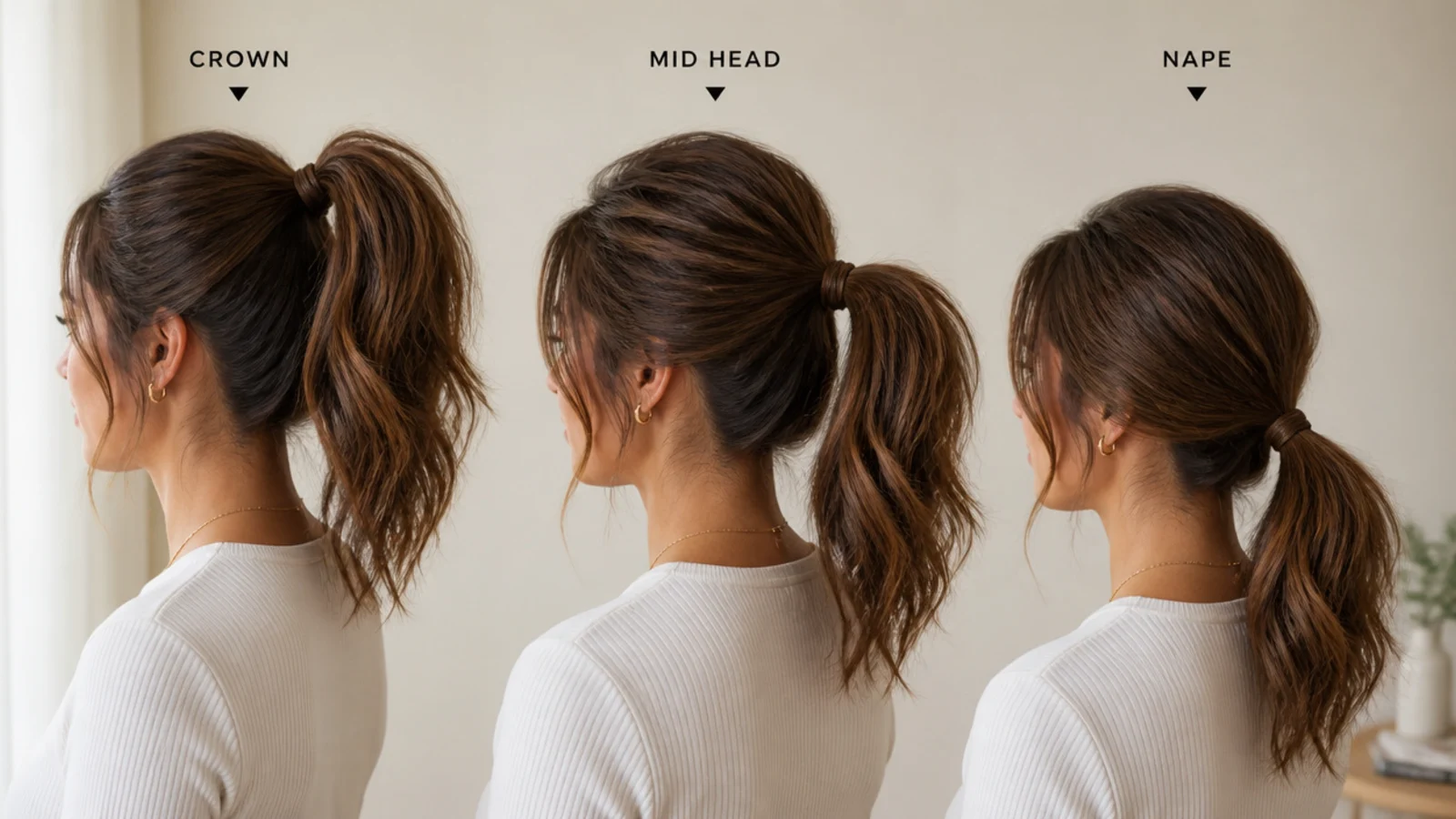
Decide before you gather, because moving the tie later means starting over. A crown tie sits level with the top of your ears or higher and reads lifted, energetic and younger, and it lifts the jawline visibly. A mid tie sits at the occipital bone, roughly level with the middle of the back of your head, and is the safest all-rounder. A nape tie sits at the hairline at the back of your neck and reads soft, romantic and office-appropriate. Full placement guides live at low messy ponytail and high messy ponytail.
Common mistake: Tying halfway between crown and nape by accident, which reads indecisive rather than deliberate.
Pro tip: Tilt your chin up while you gather for a crown tie and down for a nape tie, so the base sits flush when you look straight ahead.
3. Gather With Your Fingers, Never a Brush
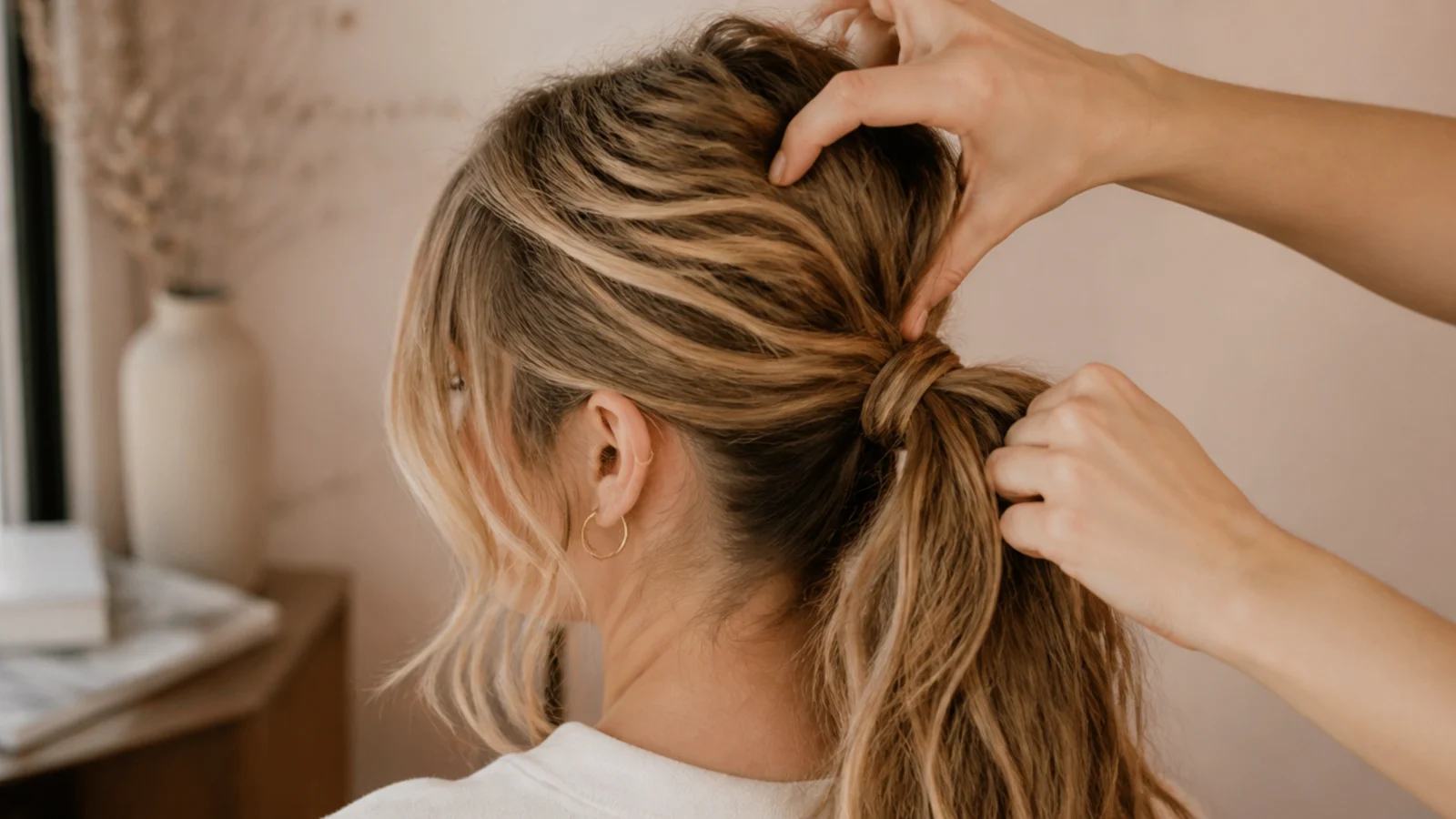
A brush removes exactly the texture you spent step one building. Rake your fingers back from the hairline to the tie point, keeping them spread wide so the surface stays a little uneven, and gather the tail in your non-dominant hand. Leave the front hairline slightly loose rather than pulling it tight, because you cannot add slack back later without loosening the whole base. If you hit a tangle, work it out with your fingertips rather than switching tools. The whole gather should take about 15 seconds.
Common mistake: Smoothing the top with a brush first, which turns the finished result into a sleek ponytail with stray hairs, not a messy one.
Pro tip: Flip your head fully upside down before gathering if you want maximum root lift at a crown tie.
4. Secure With the Right Band for Your Density
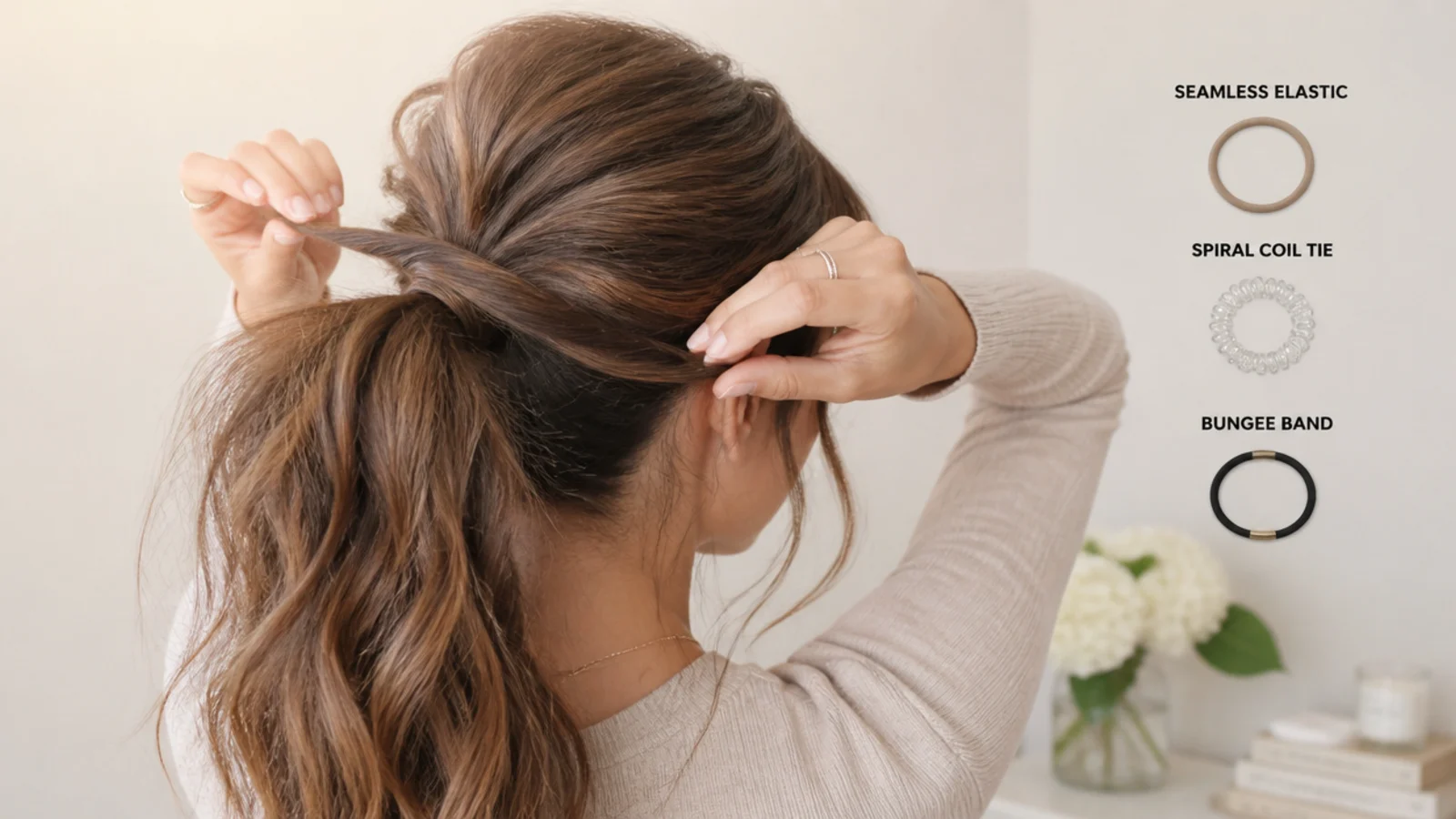
Band choice does more work than people expect. Fine or shoulder-length hair does best with a thin seamless elastic wrapped two or three times, because a thick scrunchie has nothing to bite into. Thick or long hair needs a heavy-duty elastic or a spiral coil tie, which spreads pressure and prevents the dent that a flat elastic leaves in 20 inch hair. Short hair under about 10 inches wants a bungee band, the kind with a hook at each end, because you set the tension yourself instead of forcing loops over a short tail.
Common mistake: Using a snag-prone elastic with a metal join, which breaks hairs right at the tie point over time.
Pro tip: Keep the elastic one notch looser than feels secure, then tighten by pulling the two halves of the tail apart.
5. Tug Small Crown Sections Upward for Volume
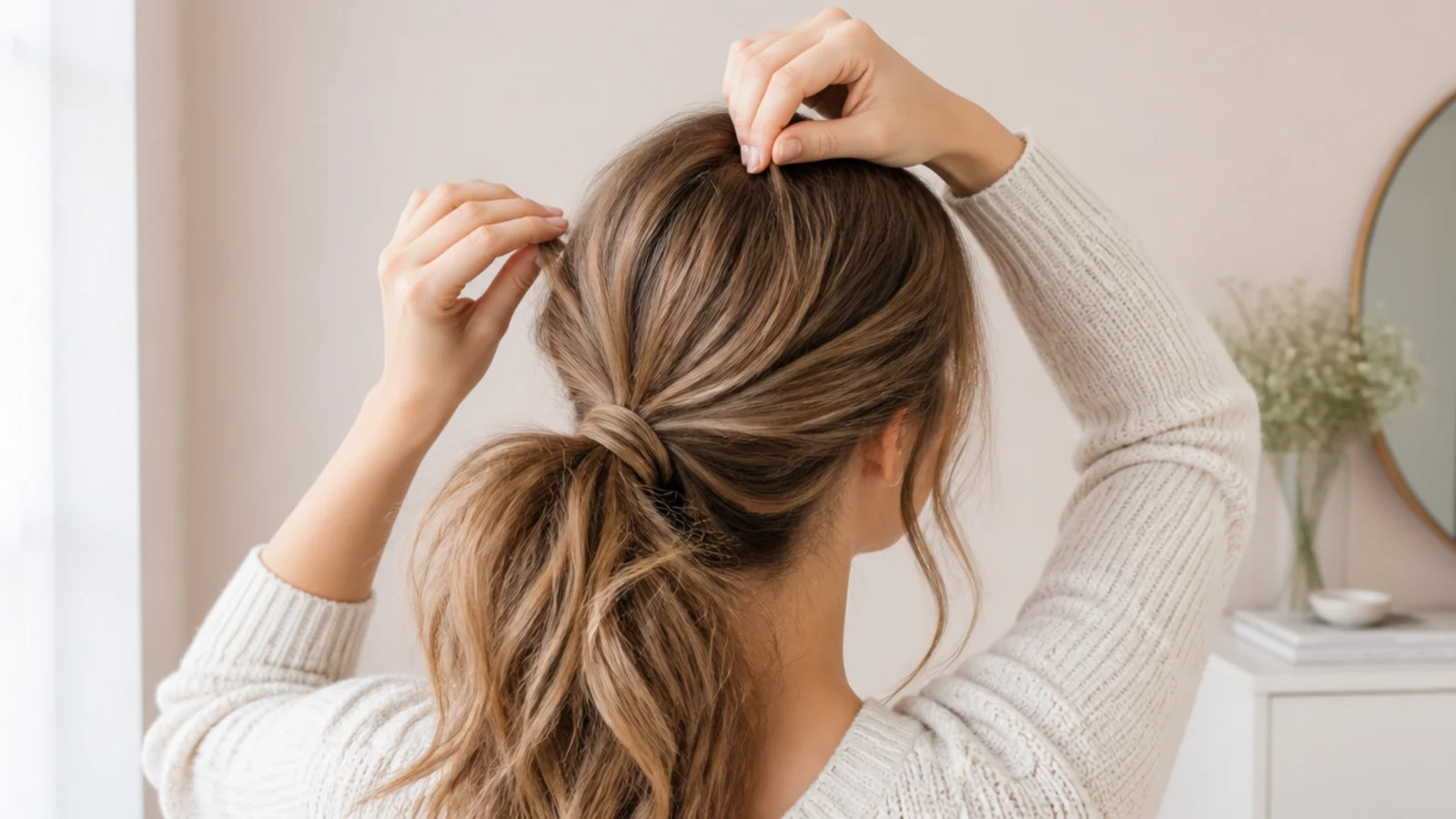
This is the step that creates volume, and it happens after the tie, never before. Pinch a section about the width of a pencil at the crown and pull it straight up, not backward, just enough to lift maybe a quarter inch. Repeat across six or eight small sections from the crown down toward the tie. Small sections are the entire trick: pull one big handful and the base loosens and the whole ponytail sags within an hour. Then place a palm on the crown and press gently to settle the shape.
Common mistake: Tugging in big handfuls, which loosens the elastic instead of building height above it.
Pro tip: Do the same tug again at midday - 20 seconds restores the shape better than re-tying does.
6. Backcomb the Tail in Two or Three Places
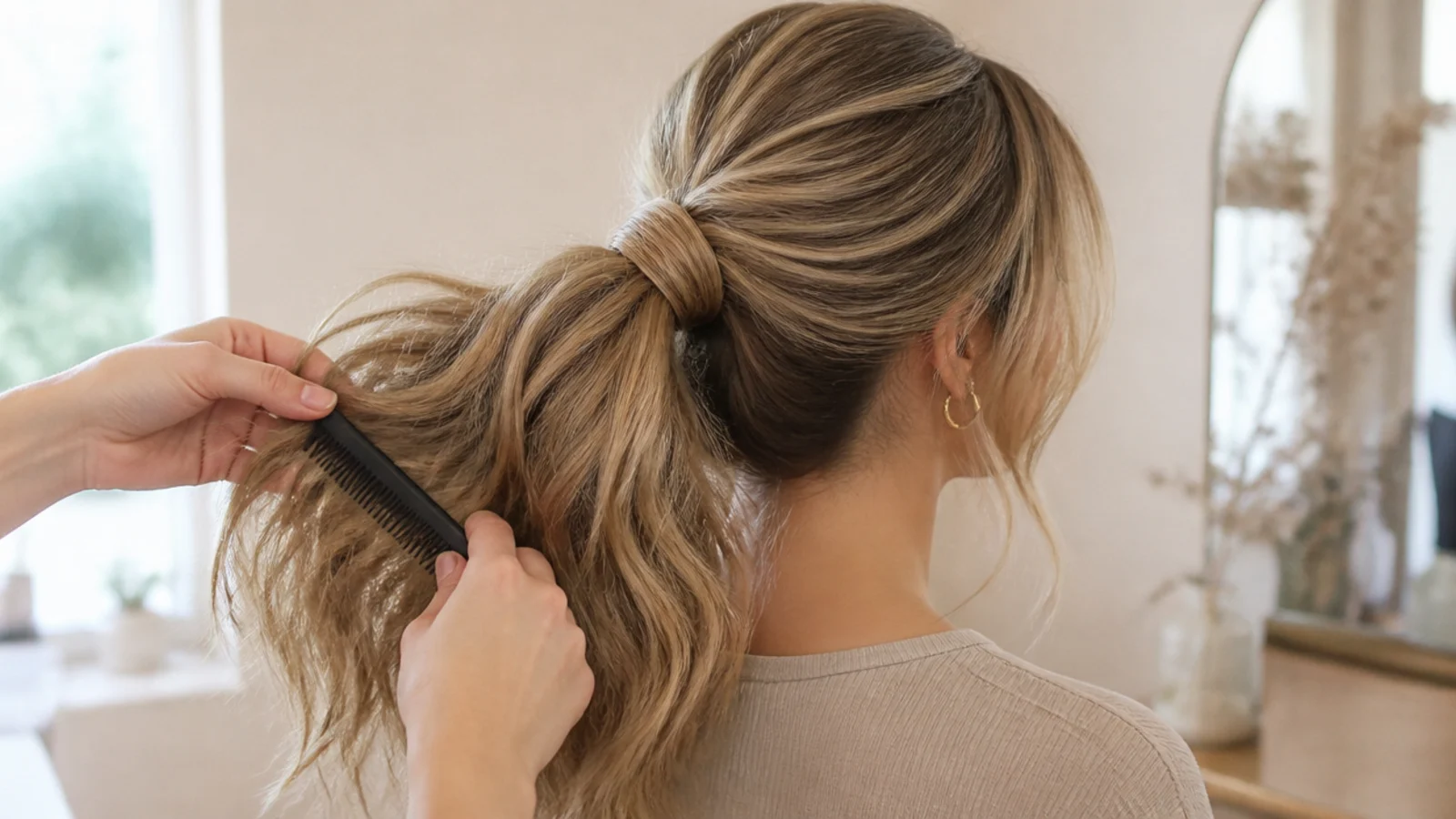
A messy ponytail needs the tail to look full, not stringy. Lift a section of the tail, hold it out from your head, and push a fine tooth comb or teasing brush down toward the base three or four times on the underside only. Do this in two or three places rather than all over, because uneven texture is what reads natural. Then finger-comb the top layer lightly to hide the backcombed section. Curly and coily hair usually skips this entirely, since the texture is already there - see curly messy ponytail instead.
Common mistake: Teasing the top surface, which creates visible frizz rather than hidden volume.
Pro tip: Mist texture spray onto the section before teasing so the backcombing holds through the afternoon.
7. Wrap a Section Around the Elastic and Pin It
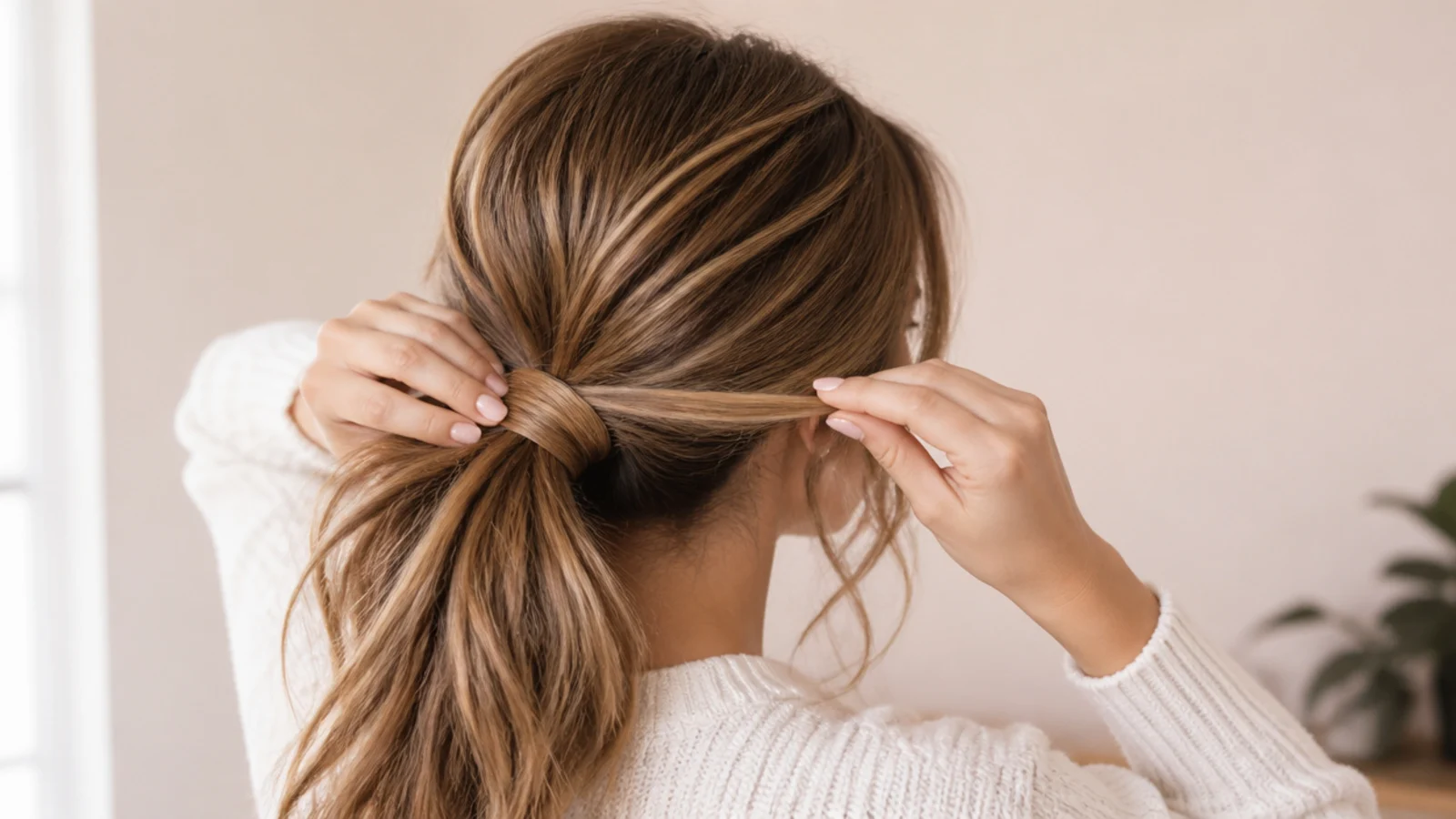
This is the single biggest polish upgrade available, and it costs 30 seconds. Take a half-inch strand from the underside of the tail, twist it loosely once so it does not splay, wrap it around the elastic until the band disappears, and secure the end with a bobby pin pushed up into the base from underneath. Use a matte pin in your hair color, ridged side facing your scalp. One wrap turns a gym ponytail into something that photographs well, which is why every polished version in messy ponytail for long hair uses it.
Common mistake: Wrapping a thick section, which bulks the base and pulls the whole ponytail downward.
Pro tip: Pin upward into the base rather than sideways so the pin cannot slide out as the day goes on.
8. Pull Out Temple and Ear Pieces Last, Then Set
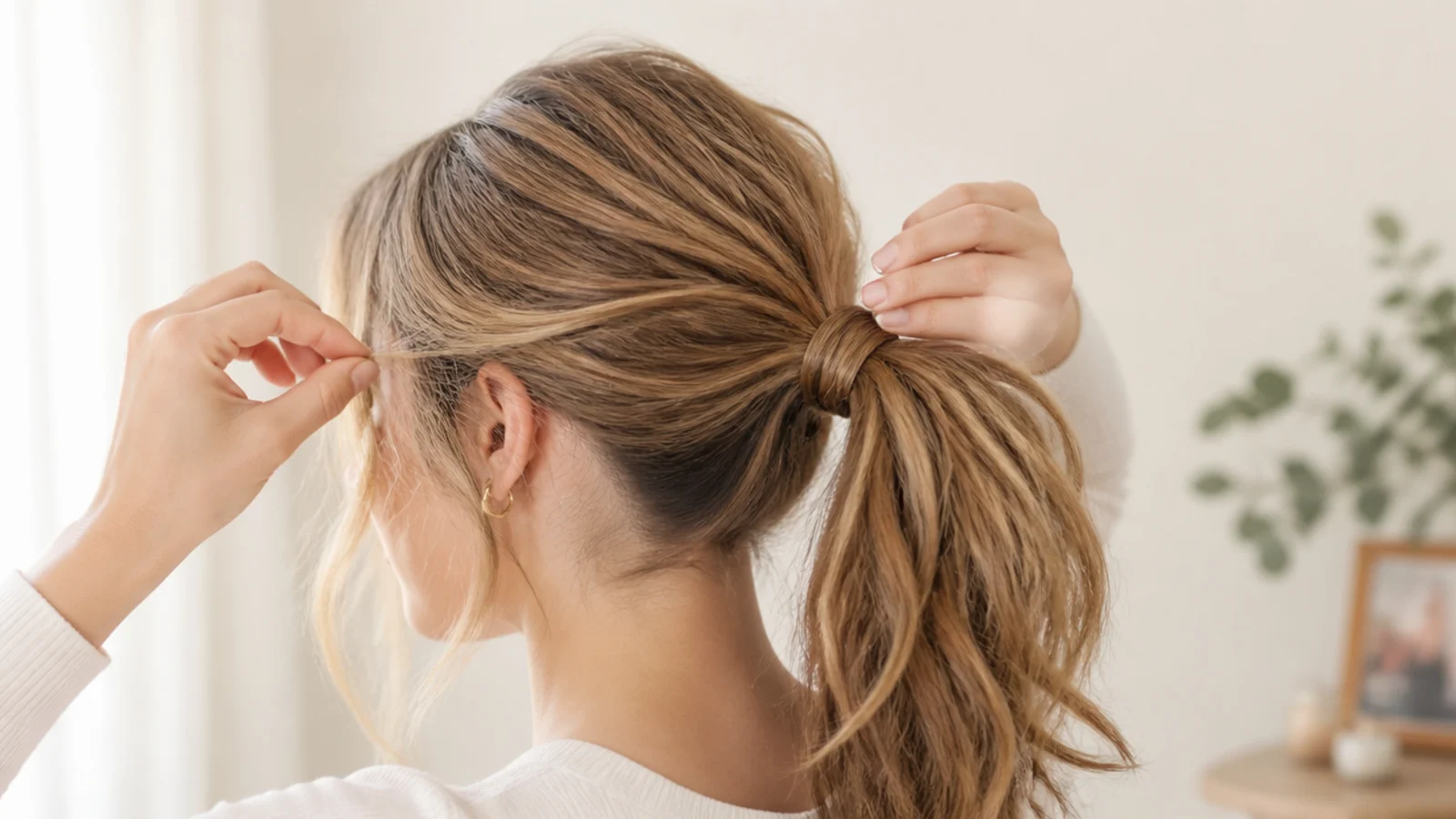
Everything else is done, so now pull out two thin pieces at the temples and one in front of each ear. Doing this last is what makes it read intentional, because you are placing them against a finished shape rather than watching them multiply while you work. Keep them thin, roughly the width of a shoelace, and let them fall to about jaw level. Finish with a flexible-hold hairspray misted from 10 inches away, then break the cast by shaking the tail once. Bend the front pieces with a curling wand for 3 seconds each if you want them to hold a curve.
Common mistake: Pulling face pieces out at the start, so by the end there are six of them and it looks like the style fell apart.
Pro tip: Firm-hold hairspray freezes the pieces flat - use flexible hold so they still move.
What Makes a Ponytail Read Messy, Not Untidy
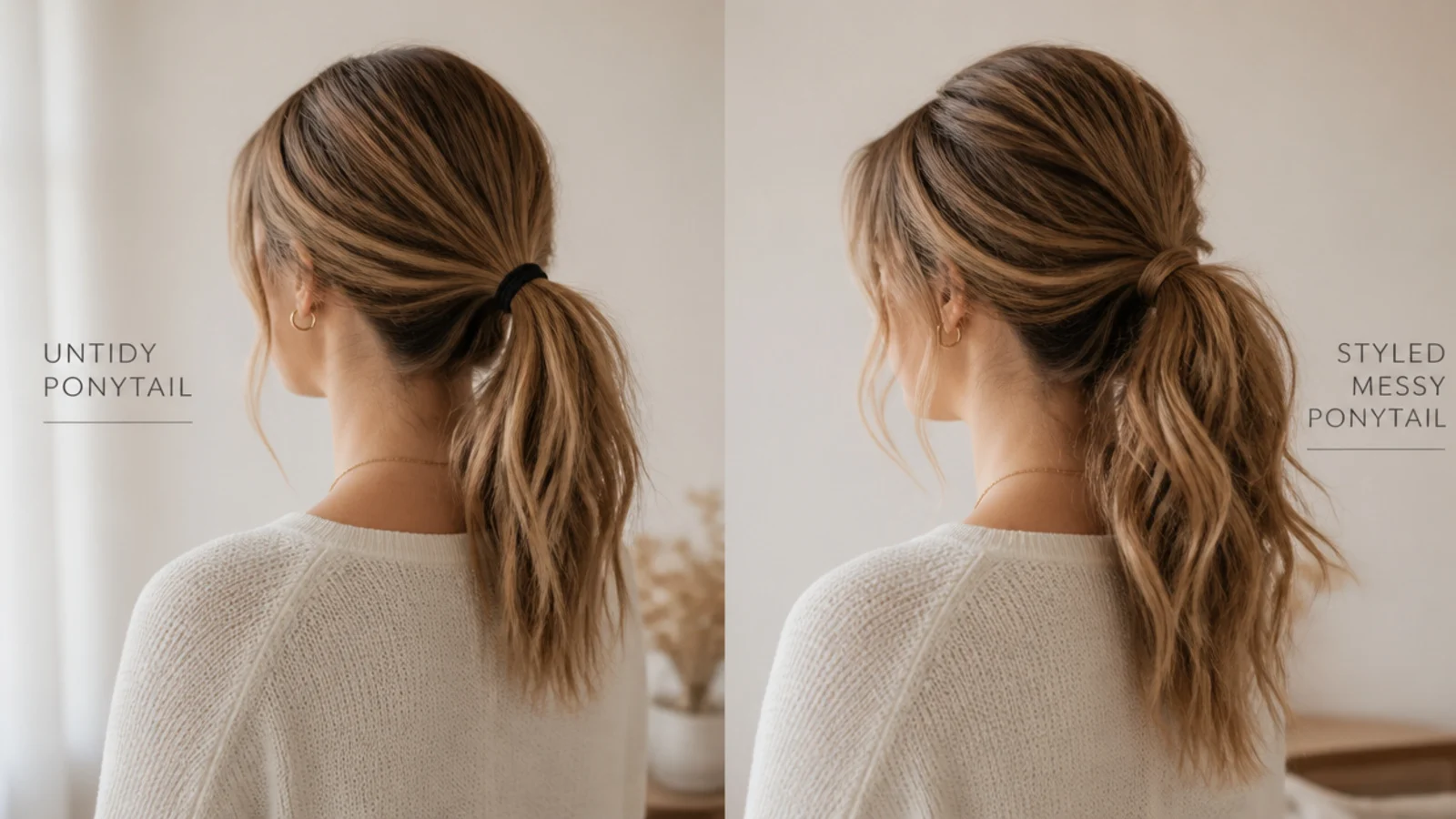
The difference is evidence of decisions. An untidy ponytail has hairs escaping at random along the whole hairline, a visible elastic, and volume that sits nowhere in particular. A messy ponytail has loose pieces only where you put them, a hidden base, and volume concentrated at the crown. Three things do almost all of that work. First, texture that came from a product rather than from three days of not washing, so it looks like styling rather than neglect. Second, a wrapped elastic, because a visible band is the single strongest signal that no styling happened. Third, order of operations: the face-framing pieces come out last, once the rest is finished and sprayed, so there are two or four of them rather than twelve. Get those right and the roughness elsewhere reads as intentional. Get them wrong and no amount of teasing saves it. The same principle governs every look on the messy ponytail hub.
Messy Ponytail Styling by Hair Length
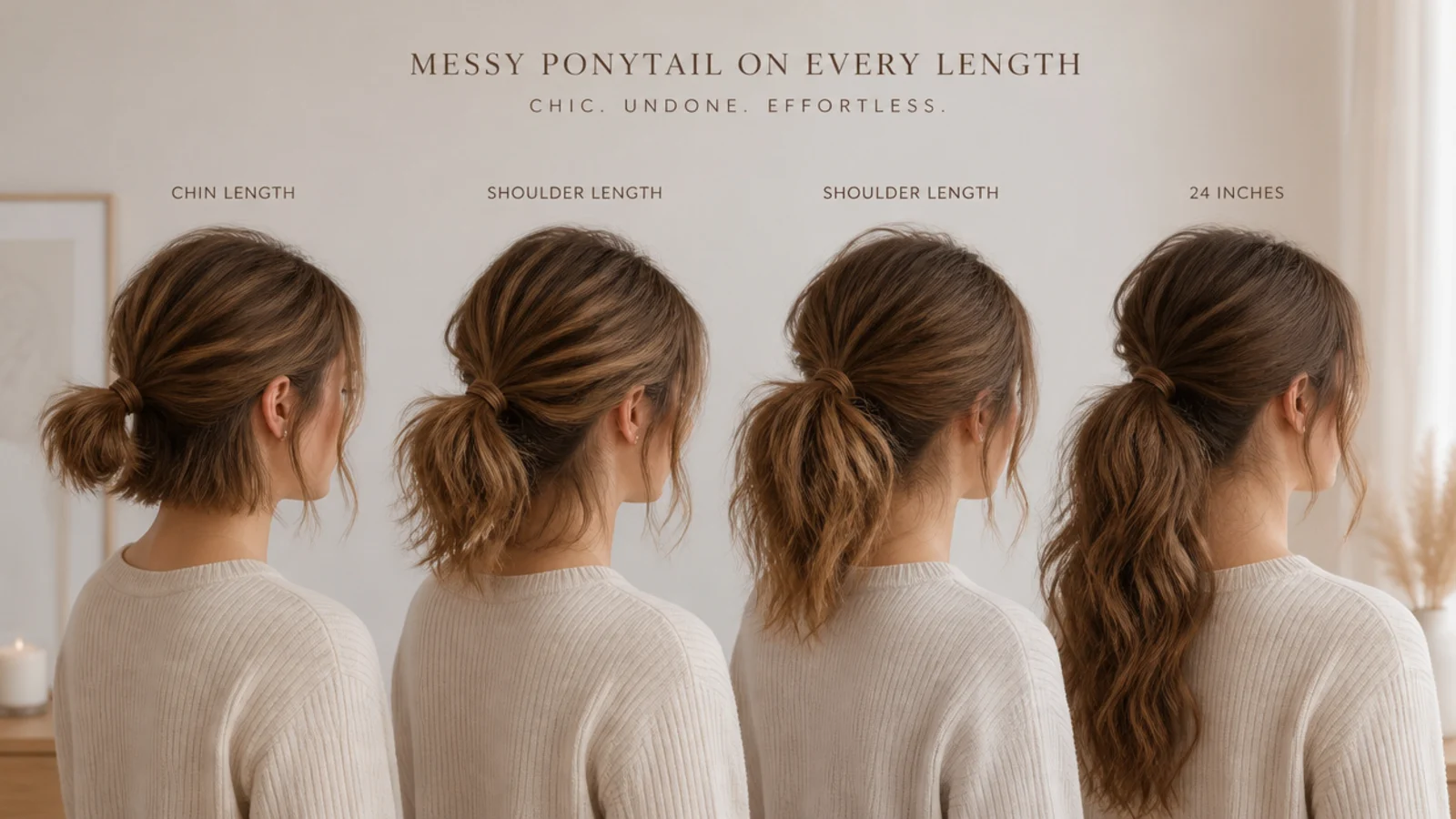
Length changes the mechanics more than the look. Under about 8 inches, a chin-length bob, you need a bungee band and two to four bobby pins pushed up under the base to catch under-layers that will not reach, and a nape tie works where a crown tie fails. From 10 to 16 inches, roughly shoulder to collarbone, every variation here works but the tail can look stubby, so backcomb it in two places and consider the bubble ponytail to add apparent length. From 18 to 26 inches, the problem inverts: weight. Long hair drags the base down within two hours, so use a spiral coil tie rather than a flat elastic to avoid a dent, tie one notch higher than where you want it to end up, and expect to re-tug at midday. Layered cuts of any length benefit from the half-up variation, since layers escape a full gather anyway. Length-specific detail is at messy ponytail for long hair.
Fine Hair vs Thick Hair: Two Different Problems
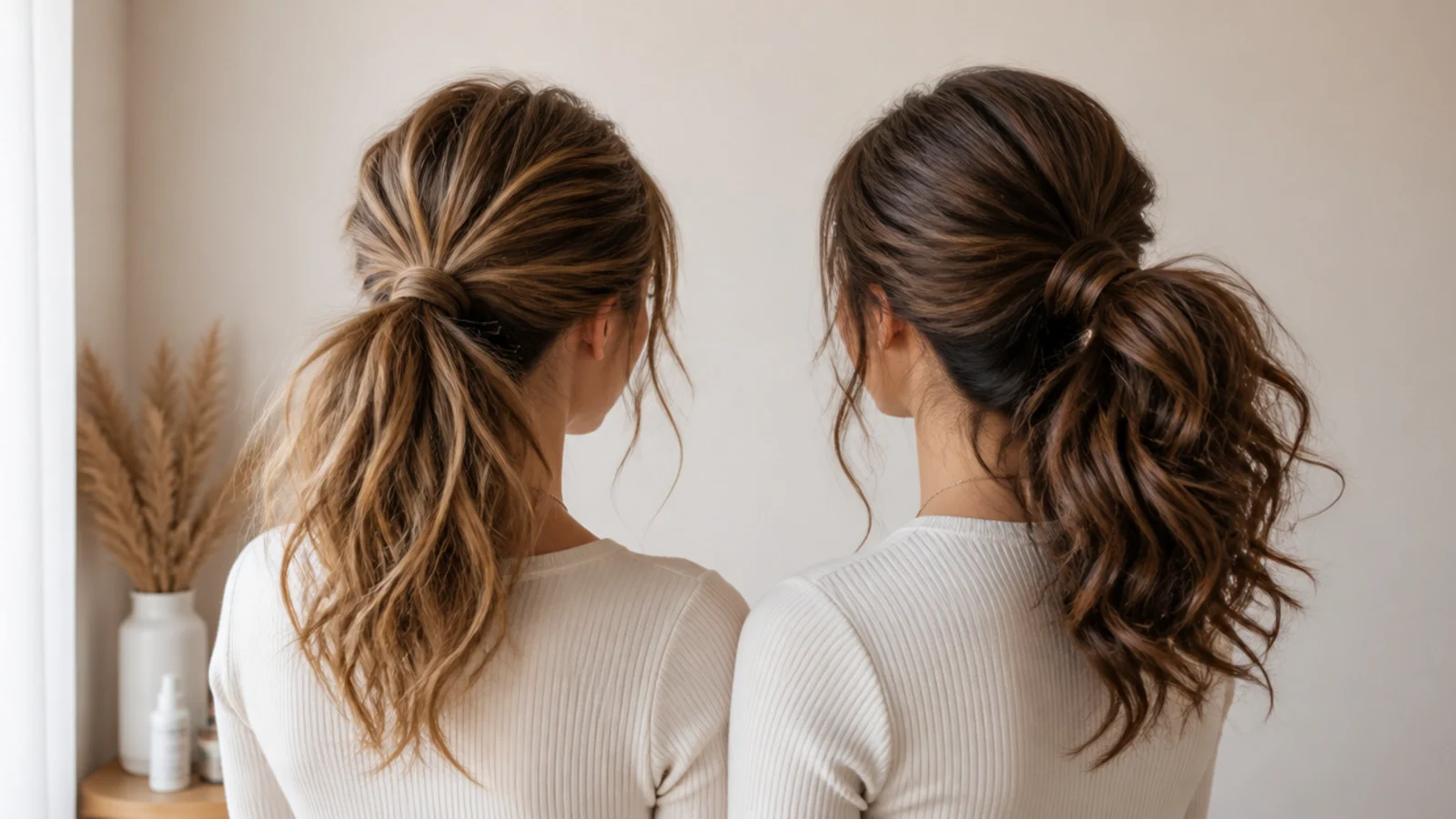
Fine hair has a volume problem and thick hair has a weight problem, and the same advice cannot fix both. Fine hair needs structure that it does not naturally have, so backcomb the crown at the root before gathering, use a thin seamless elastic rather than a scrunchie that has nothing to bite, and use the double-stacked method when a single tail looks thin. Dry shampoo and a volumizing root spray both help, but mousse at the roots before air drying helps more, because the grip is built into the hair rather than sitting on it. Thick hair rarely needs volume at all; it needs the base to stay put. Use a heavy-duty elastic or a coil tie, remove weight by taking the underside section into a second small elastic, and skip the crown teasing entirely. Thick hair also carries a claw clip well, where fine hair slides straight out of one. If frizz is the bigger issue, hairstyles for frizzy hair covers the prep.
Volume and All-Day Hold: Why Ponytails Sag
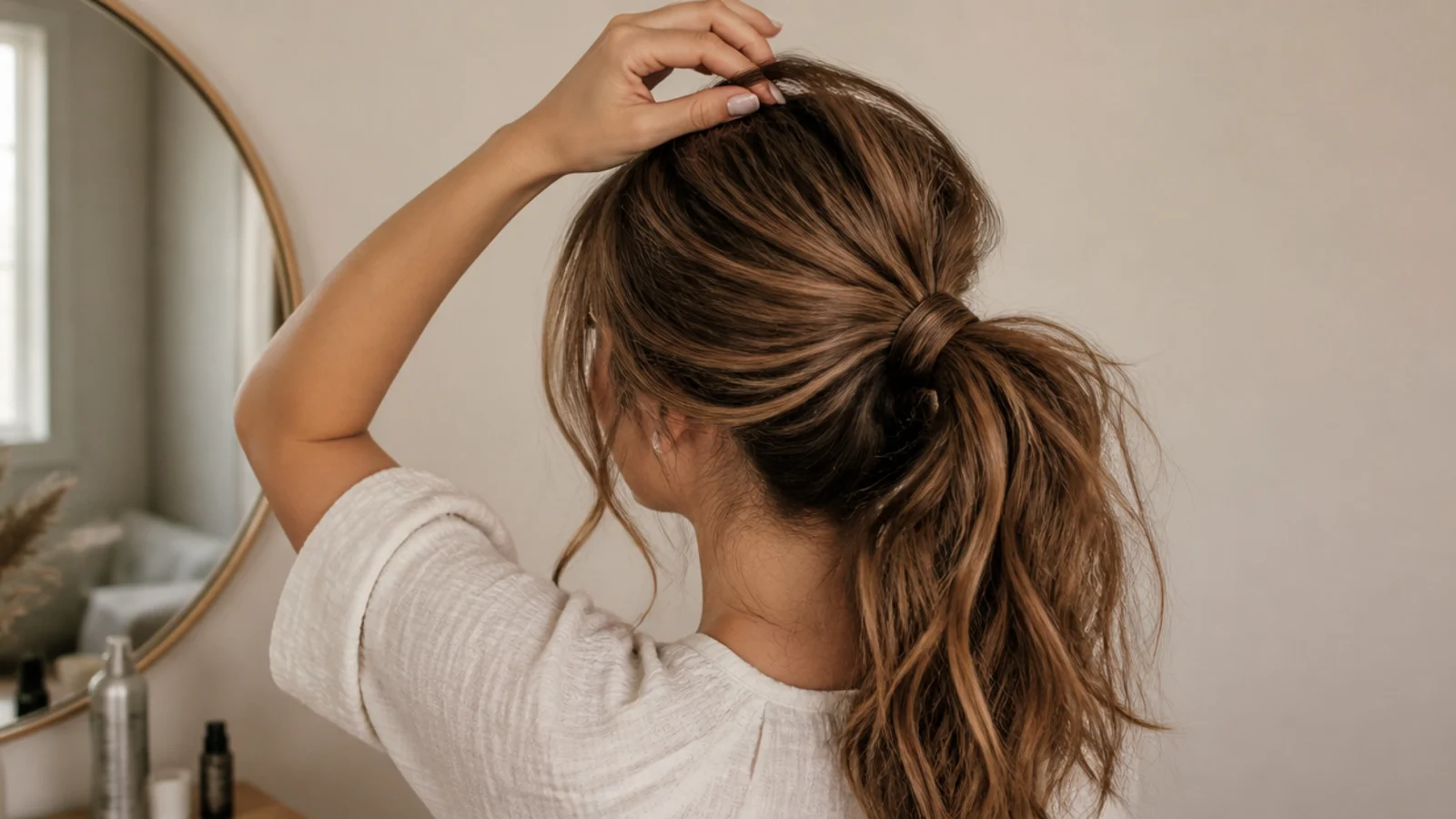
A ponytail sags for three reasons and each has a fix. The elastic is sliding, which happens on clean slippery hair, so prep with dry shampoo or texture spray and wrap the elastic twice more than feels necessary. The crown is collapsing, which happens because you tugged large sections that pulled slack out of the base rather than building height above it, so tug pencil-width sections and press the crown flat with a palm afterward to set it. Or the weight is simply winning, which is a long hair problem: tie half an inch higher than your target and let it settle down into place. Then plan a 20-second midday re-tug rather than a full re-tie, because re-tying doubles the tension your follicles absorb in one day. On the tension point, keep the band loose enough to slide two fingers under it, vary your tie height across the week, and if you feel a tension headache within an hour, the ponytail is too tight and too high. Expect a realistic 8 to 10 hours of desk wear, less through a workout or high humidity.
The Products That Actually Matter
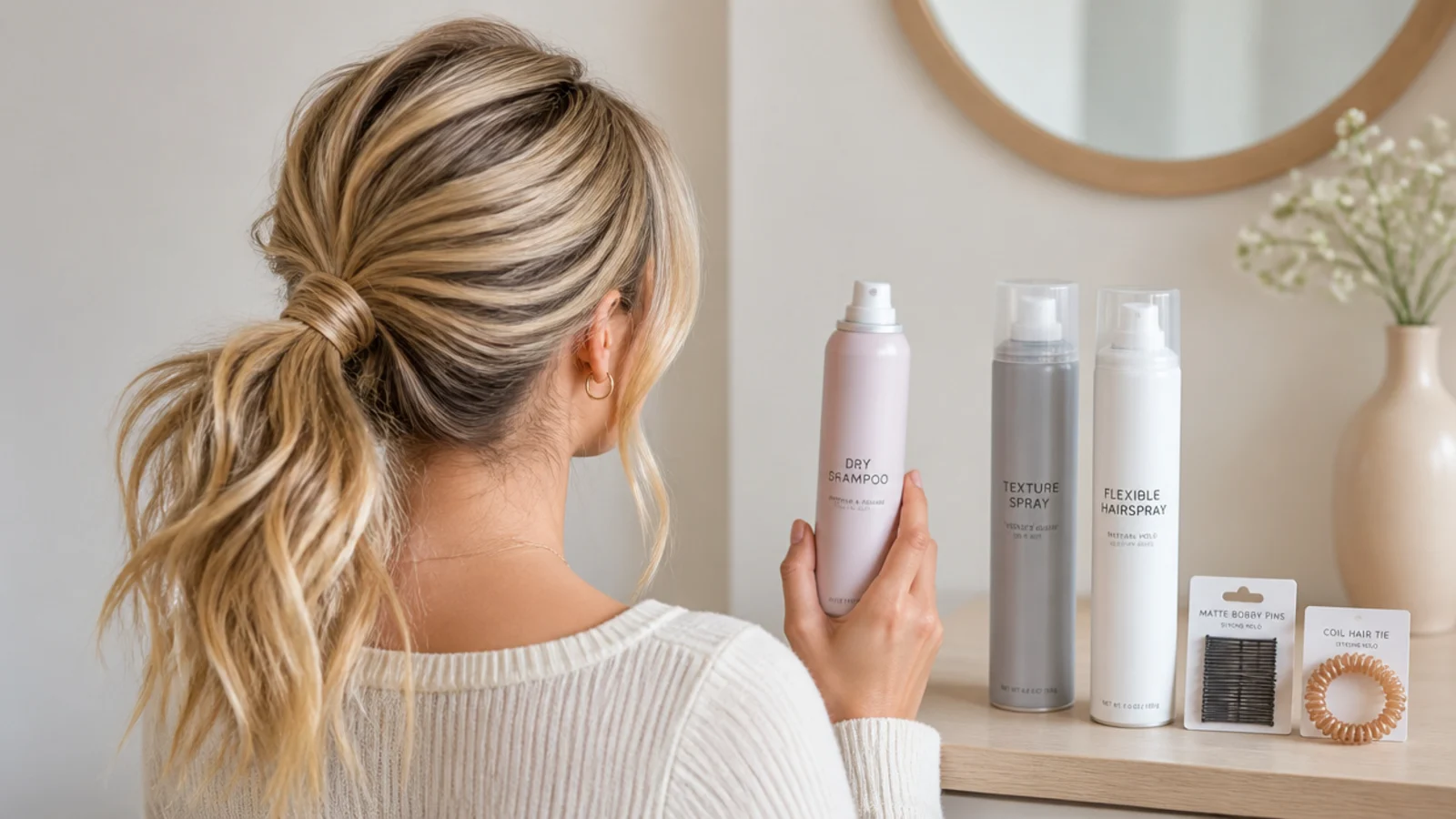
Five products cover every variation here and nothing else is required. Dry shampoo, roughly 8 to 12 dollars at a drugstore, is for grip at the roots on wash day, not for volume. Texture spray or a salt-free texturizing mist, 15 to 30 dollars, is the one to buy if you buy only one, because it gives the tail something to hold a teased shape with. A flexible-hold hairspray, 10 to 20 dollars, sets face-framing pieces without freezing them flat, and firm hold is actively wrong here. Matte bobby pins in your own hair color, a few dollars a pack, are what make a wrapped elastic invisible. And the right band: seamless elastics for fine hair, spiral coil ties for long or thick hair, a bungee band under 10 inches, satin scrunchies for curls. What to skip: heavy serums and oils, which kill grip completely, and shine sprays, which make texture read greasy. If you are styling around a fringe, short curtain bangs styling has the product notes for the front sections.
Frequently Asked Questions
How do you style a messy ponytail step by step?
Prep day-two hair or spray dry shampoo at the roots, choose a crown or nape tie, gather with your fingers instead of a brush, and secure with a band suited to your density. Then tug pencil-width crown sections upward, backcomb the tail in two places, wrap a strand around the elastic and pin it, and pull out temple pieces last.
Should hair be clean or dirty for a messy ponytail?
Day-two hair works far better than freshly washed hair. Clean cuticles are slippery, so the elastic slides and every section you tug drops straight back down. If you washed today, spray dry shampoo along the part lines and at the crown, wait a minute and rub it in, then mist texture spray through the mid-lengths before you gather.
How do you make a messy ponytail look intentional and not sloppy?
Three things. Hide the elastic by wrapping a half-inch strand around it and pinning upward into the base. Keep loose pieces to two or four thin ones, and pull them out at the very end rather than the beginning. And concentrate volume at the crown by tugging small sections, so the fullness sits somewhere specific instead of everywhere.
How many ways can you actually wear a messy ponytail?
More than you would guess, because it is five levers rather than a fixed list: tie height, texture, tension, whether the elastic is hidden, and what you add on top. Changing one lever changes the whole look, so a crown tie with a wrapped base and a scarf is a genuinely different style from a nape tie with face-framing pieces.
How do you make a ponytail look fuller for thin hair?
Backcomb the crown at the root before gathering, then use the double-stacked method: split the hair at ear level, tie the top half at the crown and the bottom half two inches lower, and let the upper tail cover the lower one. Use a thin seamless elastic, not a scrunchie, and add mousse at the roots on wash day.
How do you stop a messy ponytail from sagging by lunchtime?
Tie about half an inch higher than where you want it to sit, tug only pencil-width sections so the base does not loosen, and press the crown flat with your palm to set the shape. Then re-tug for 20 seconds at midday rather than re-tying, since re-tying puts a second round of tension on the same follicles.
How do you hide the hair tie on a ponytail?
Take a half-inch strand from the underside of the tail, twist it once so it does not splay, wrap it around the elastic until the band is covered, then push a matte bobby pin upward into the base to hold the end. Use a pin in your hair color with the ridged side against your scalp so it grips.
Can you do a messy ponytail with short hair?
Yes, from about 8 inches, roughly a chin-length bob. Use a bungee band with a hook at each end rather than an elastic, tie at the nape instead of the crown so the under-layers reach, and pin the shortest pieces upward under the base with two or three bobby pins. Expect a short tail and add volume at the crown instead.
Is a messy ponytail bad for your hair?
It is gentler than a sleek ponytail because the band sits loose by design and there is no daily tension at the hairline. The risks are breakage at the tie point from snag-prone elastics and repeated tension in one spot. Use seamless or coil ties, vary your tie height across the week, and loosen it if you feel a headache.
Messy ponytail or sleek ponytail for a formal event?
Sleek reads more formal and photographs sharper under flash, but it needs low humidity and it looks sparse on fine hair. A messy ponytail works at a formal event if you use the sleek-root version: smooth the front three inches, tie at the nape, wrap the elastic and allow only two face-framing pieces. That reads polished rather than casual.
Which messy ponytail look are you saving?
Learn the base and the variations take care of themselves. Prep with grip, choose crown or nape on purpose, gather with your fingers, tug small sections upward, wrap the elastic, and pull the temple pieces out last. That order is what separates a ponytail that looks styled from one that looks slept in, and it is the reason the same five minutes can produce a nape-level office ponytail on Monday and a teased crown pony on Friday. Pick two variations to learn properly rather than trying all fifteen, and re-tug the crown once at midday so it never has the chance to flatten. When you want more, the messy ponytail hub has the placement guides, and 25 cute messy ponytail ideas has the looks.