Quick Comparison
| Round Brush Blow-Dry | Heatless Overnight Velcro Set | |
|---|---|---|
| Time in the morning | 3 to 5 minutes, every wash day | About 60 seconds to unroll and separate |
| Tools needed | 1.5 to 2 inch round brush, dryer, concentrator nozzle | Two medium velcro rollers, texture spray |
| Heat damage risk | Moderate; needs heat protectant every time | None, which suits fragile or colored fringes |
| How long the shape holds | 6 to 10 hours before dry shampoo is needed | All day, and often into day two |
| Volume at the root | Good, best when you cool shot at the root | Highest of any method on this list |
| Best hair textures | Straight through 3a; the universal option | Fine and medium straight or wavy hair |
| Skill needed | Medium; brush direction and cool shot timing | Beginner; the rollers do the work |
| Humidity resistance | Drops in high humidity without hairspray | Holds better, since the set is fully cooled |
| Cost to start | 20 to 45 dollars for a decent round brush | Under 10 dollars for a roller pack |
1. Wash and Towel-Dry the Fringe Only
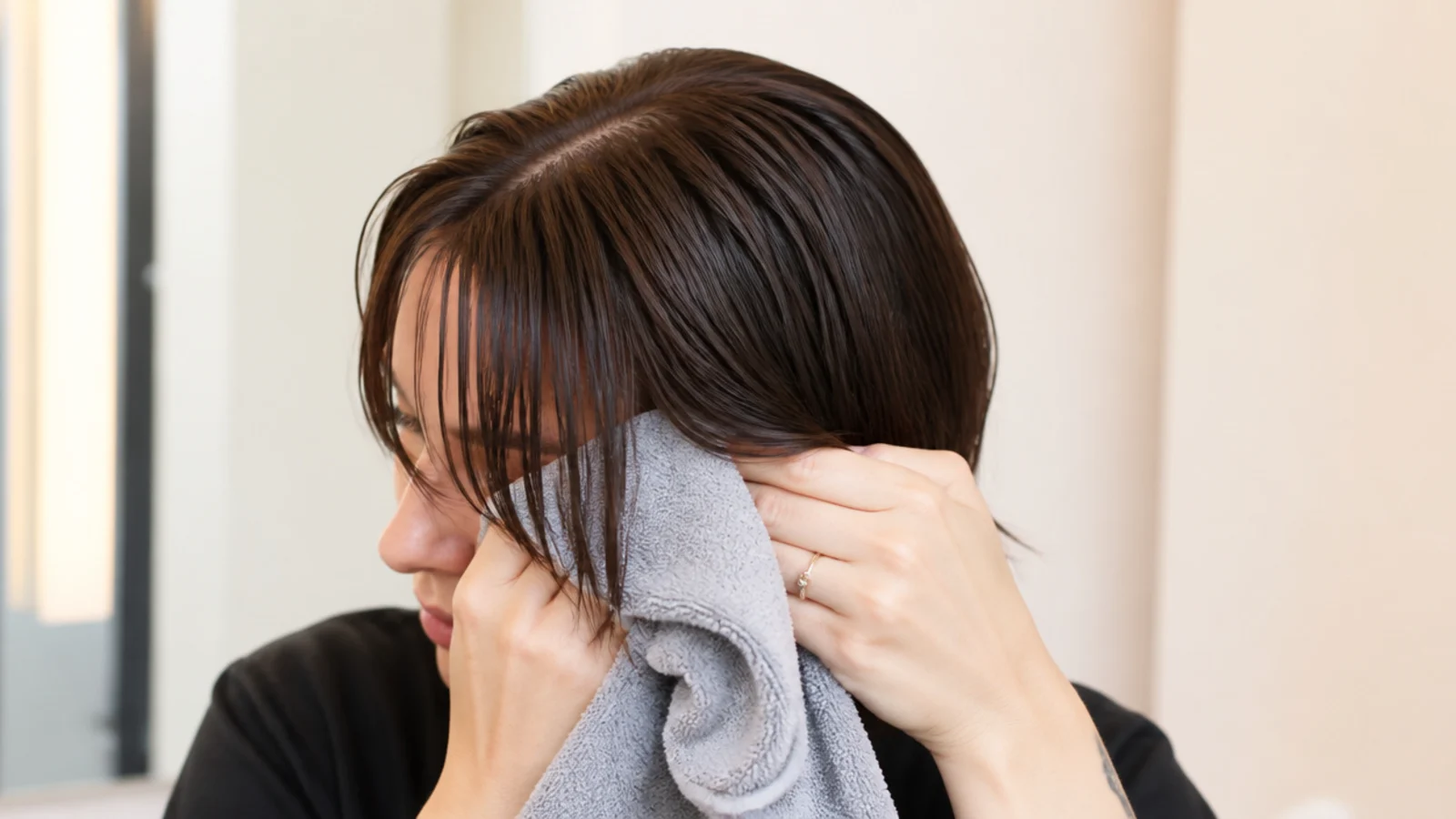
Short curtain bangs need to be genuinely damp, not wet and not dry. Squeeze the fringe with a microfiber towel or an old cotton tee until it stops dripping but still feels cool. If you washed hours ago and the fringe has already set wrong, mist just the bangs with water from a spray bottle and start again. This is non-negotiable on fine and straight hair, where the fringe locks into its dry shape within about 90 seconds and no amount of later brushing will move it.
Common mistake: Styling the fringe last, after the rest of your hair, by which point it has air-dried into a cowlick.
Pro tip: Keep a small spray bottle on the counter; rewetting the fringe alone takes 5 seconds and saves a rewash.
2. Set the Center Part While It Is Still Wet
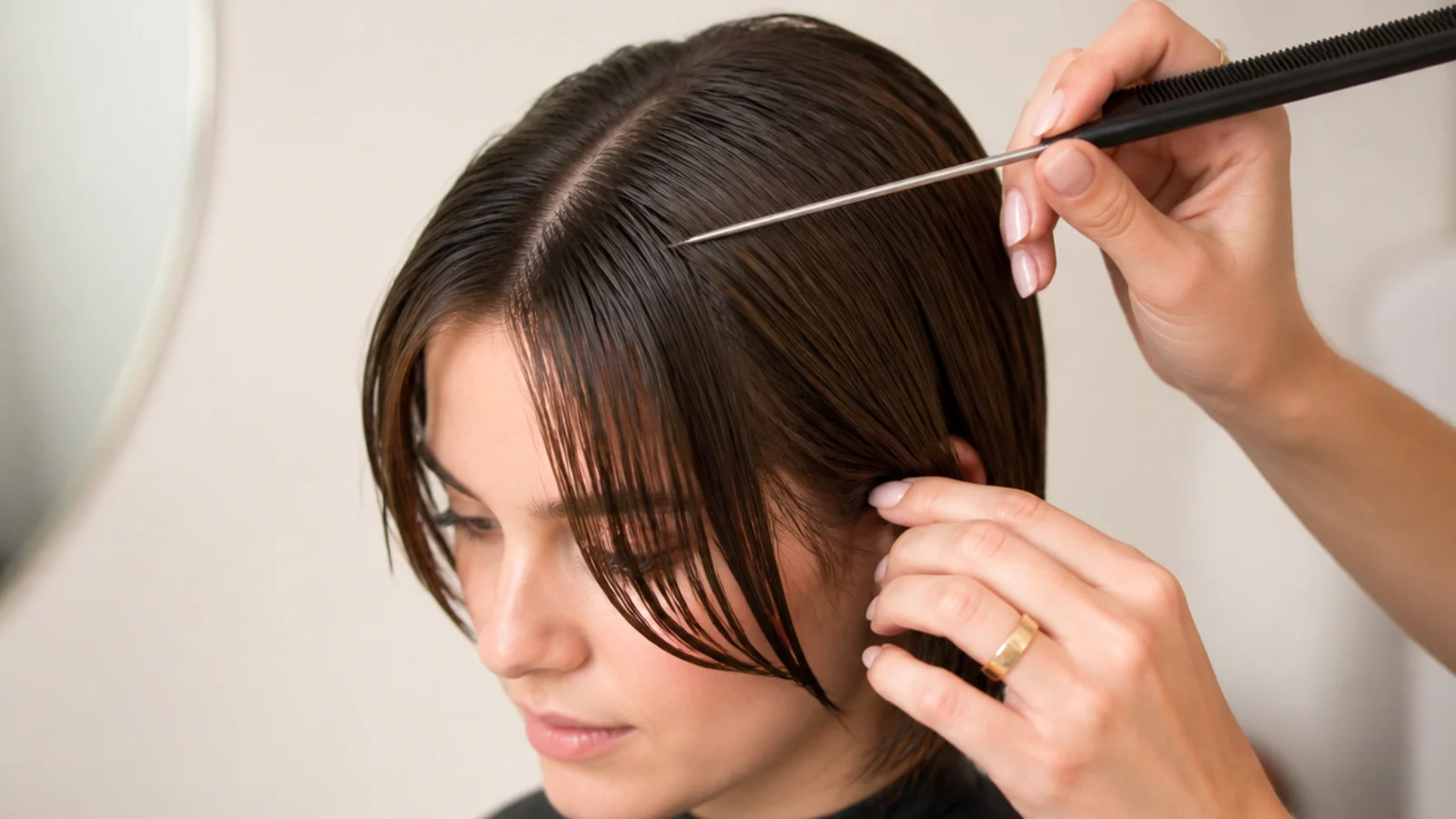
Run a tail comb from the middle of your hairline back about 2 inches to open a clean center part, then push each half toward its own side. The part decides everything that follows, because the whole shape is two panels sweeping in opposite directions. If your natural part sits off-center, comb the fringe forward first, then split it, rather than fighting the existing line. On a stubborn cowlick, set the part a quarter inch to the weaker side and let the growth pattern pull it back to center as it dries.
Common mistake: Parting after drying, which leaves a visible ridge where the hair already set in the old direction.
Pro tip: Clip the two halves apart with duckbill clips for 60 seconds so the part sets before you touch a dryer.
3. Mist Heat Protectant and a Light Root Lifter
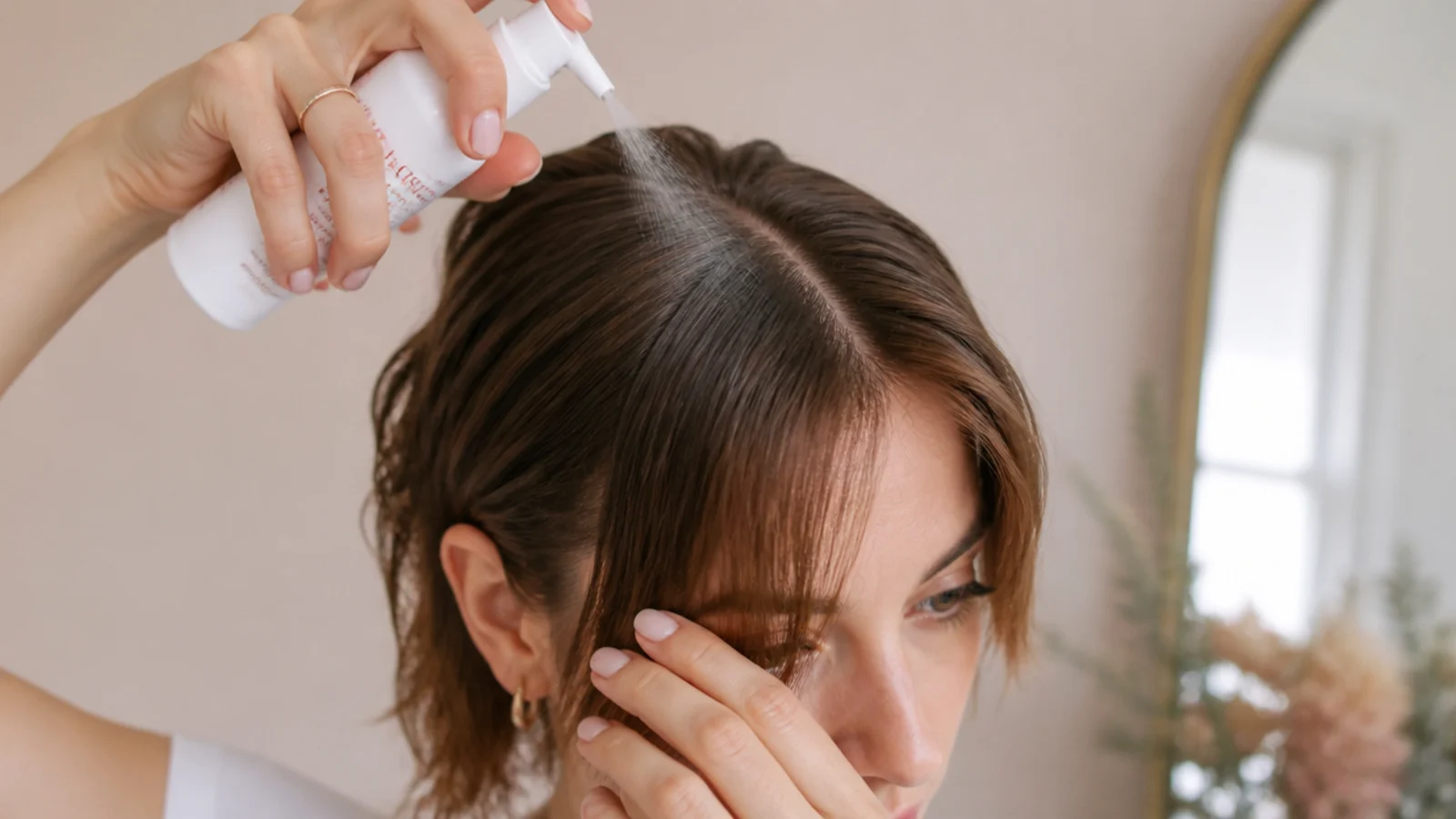
One or two spritzes of a spray heat protectant, held about 8 inches away, is the whole application. Then add a mousse or root-lift spray at the roots only, roughly a pea-sized amount worked in with fingertips. Product on the mid-lengths of a 4 inch fringe is what makes short curtain bangs look stringy and separated. Skip creams, oils and leave-in conditioners entirely on the fringe unless your hair is curly, because the weight flattens the lift that makes the curtain shape read.
Common mistake: Using the same leave-in cream on the bangs that you use on your lengths, which drags them flat within an hour.
Pro tip: Fine hair does better with a mousse at the root than a spray, since the foam stays put instead of running.
4. Pre-Dry the Roots Against the Growth
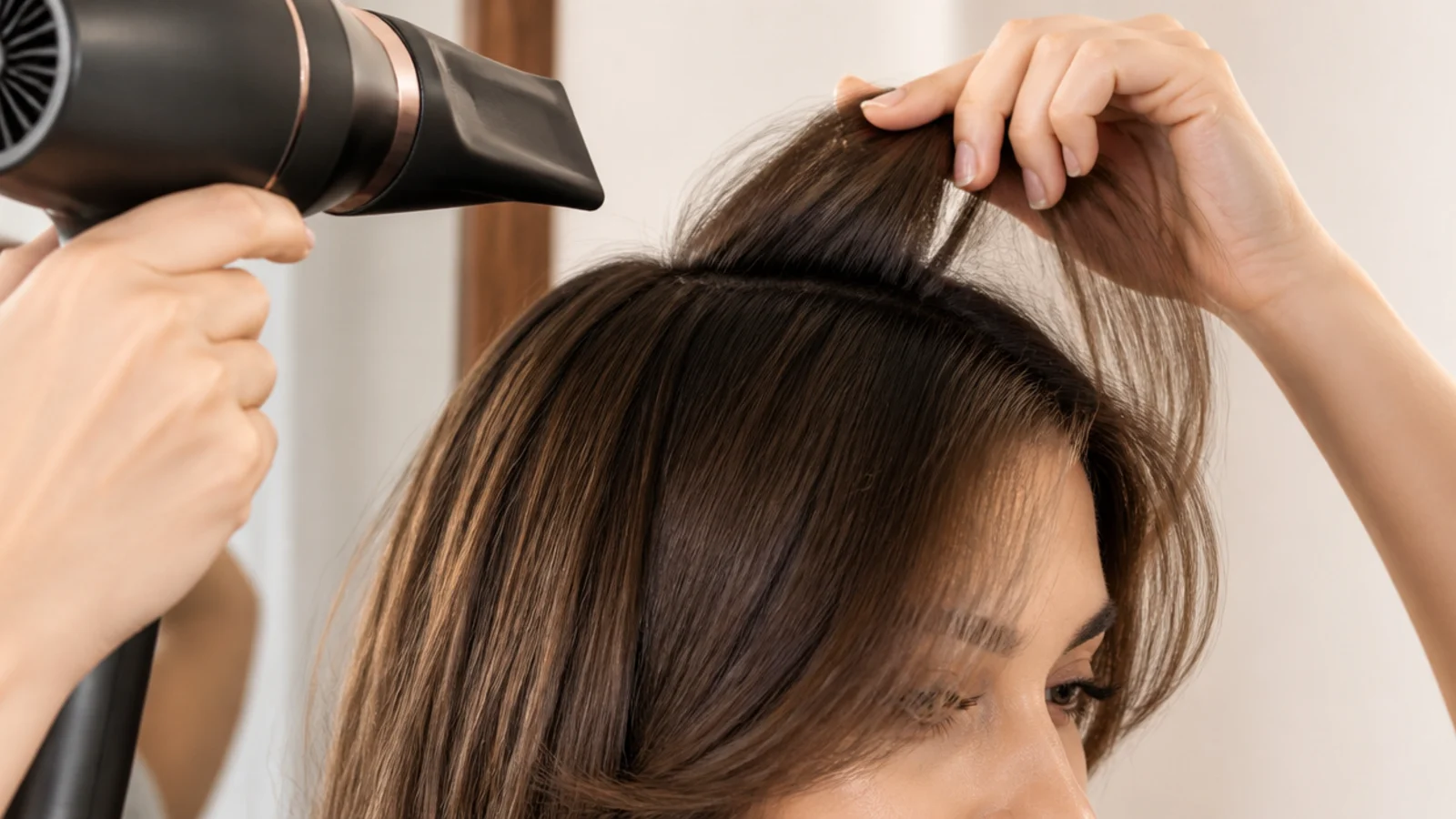
Before any brush touches the fringe, rough-dry the roots for 20 to 30 seconds with the dryer on medium heat and low speed, pushing the hair back and forth across the part with your fingers. Aim the nozzle up at the root, not down the length. This is the step that kills a cowlick, because you are drying the base in every direction at once so it forgets its default. Stop while the fringe is still around 70 percent damp; you need moisture left for the brush to shape anything.
Common mistake: Blasting the fringe on high heat and high speed, which flings the hair into the exact split you are trying to avoid.
Pro tip: Attach the concentrator nozzle now and leave it on; a diffuse airflow on a short fringe just makes frizz.
5. Round Brush Each Side Away From the Face
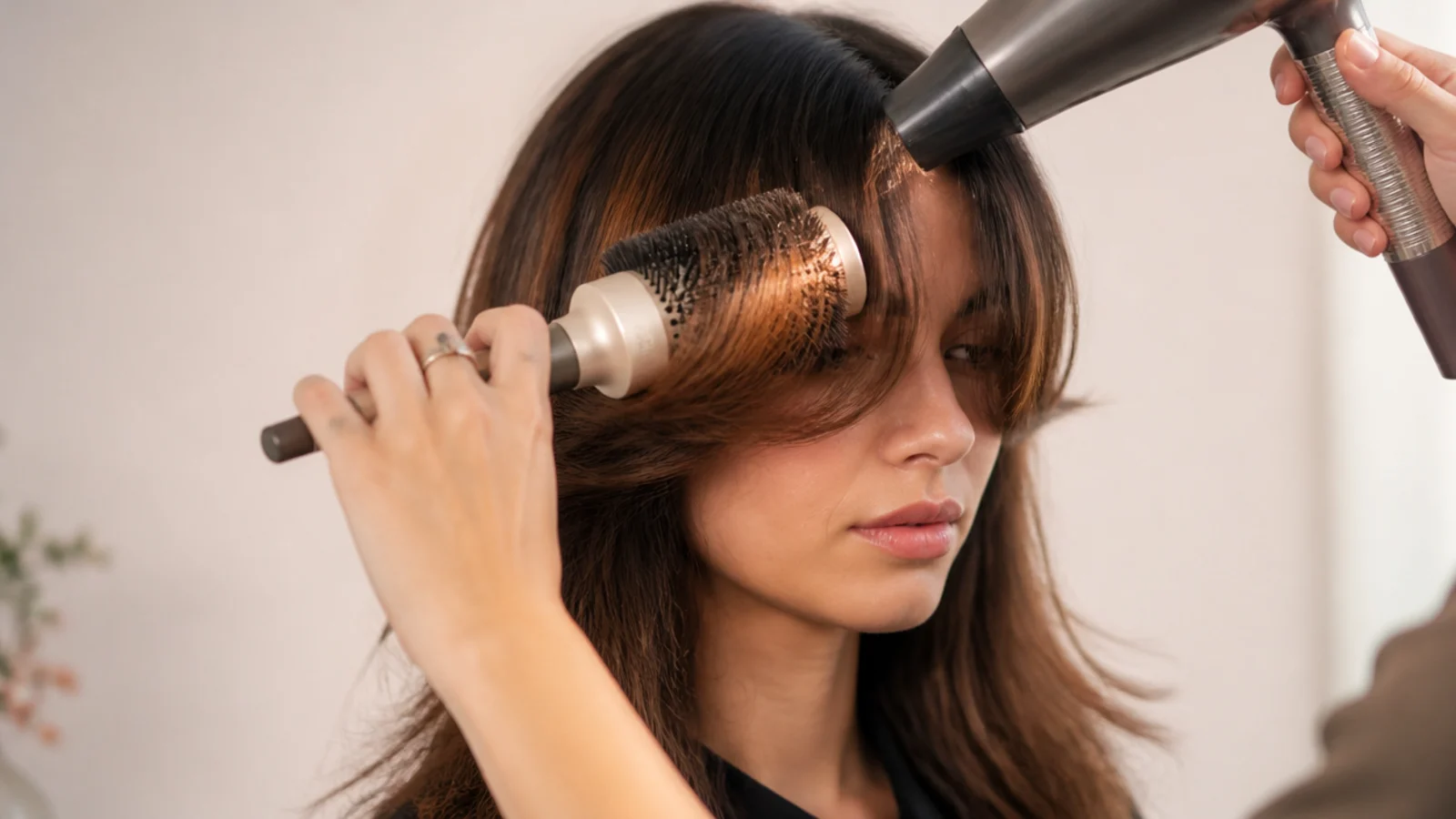
Take a 1.5 to 2 inch round brush, load one half of the fringe onto it at the root, and roll the brush up and back away from your face while the dryer follows the brush from above. Two or three passes per side is enough on hair this short. Larger barrels flatten the bend, and anything under 1 inch will curl the ends under into a bowl shape. Repeat on the other side with the mirror-image motion, then check that both sides sweep out at the same angle before moving on.
Common mistake: Rolling the brush toward the face, which sends short curtain bangs straight into a 90s boy-band flick.
Pro tip: Overdirect slightly past your temple on each pass; the fringe relaxes forward by about half an inch as it cools.
6. Hit It With the Cool Shot for 10 Seconds
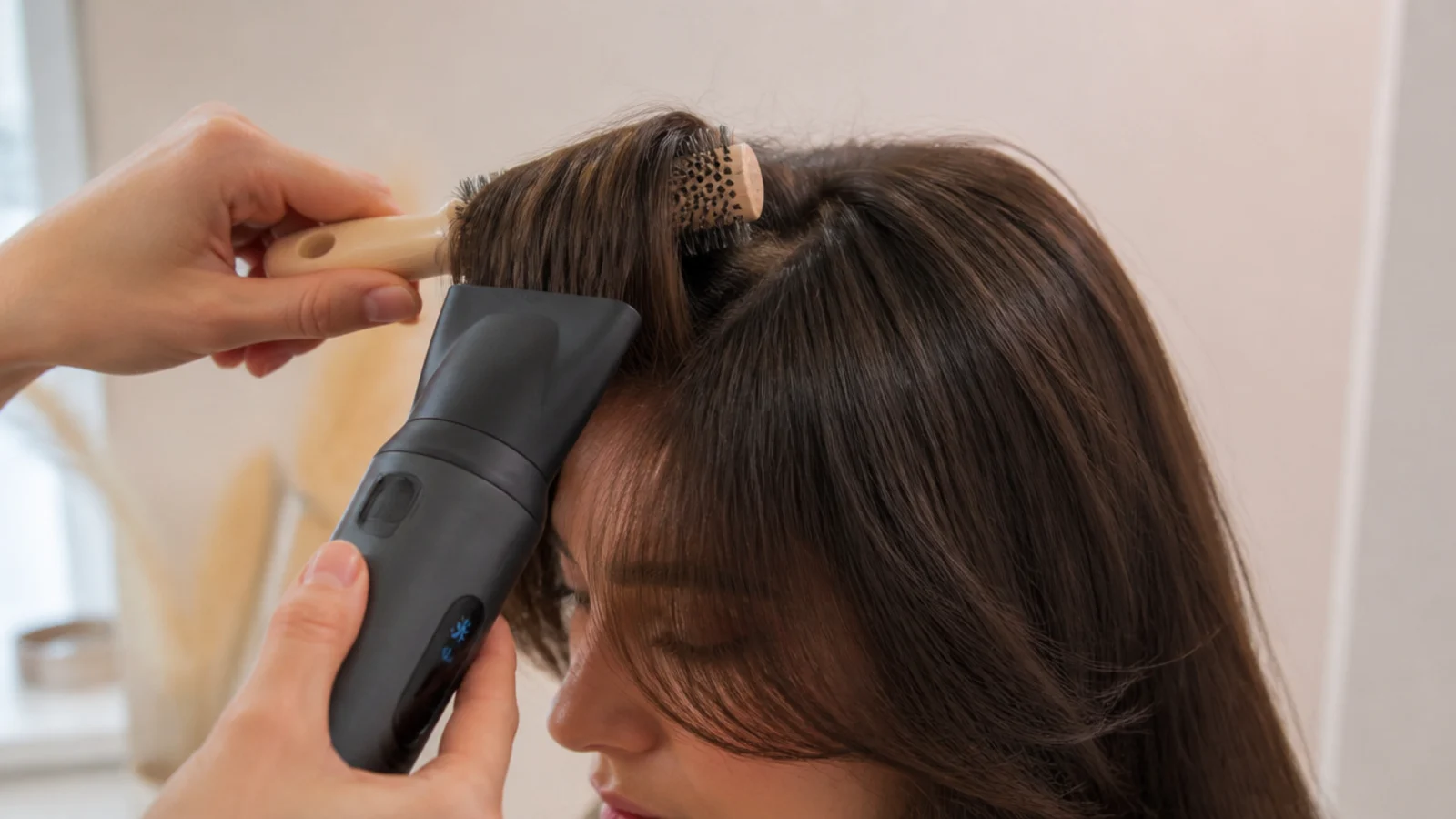
Keep the brush in the hair, hold the cool shot button, and blast each side for about 10 seconds before you unroll. Hair takes its shape as it cools, not as it heats, so this single step is the difference between a bend that holds until dinner and one that drops within an hour. Unwind the brush slowly rather than pulling it out, and do not touch or comb the fringe for another 30 seconds while the cuticle finishes setting.
Common mistake: Sliding the brush out while the hair is still hot, which lets the whole bend relax straight.
Pro tip: On fine hair, hold the cooled section between two fingers for a few more seconds; body heat is warm enough to undo it.
7. Bend the Ends Outward and Check Symmetry
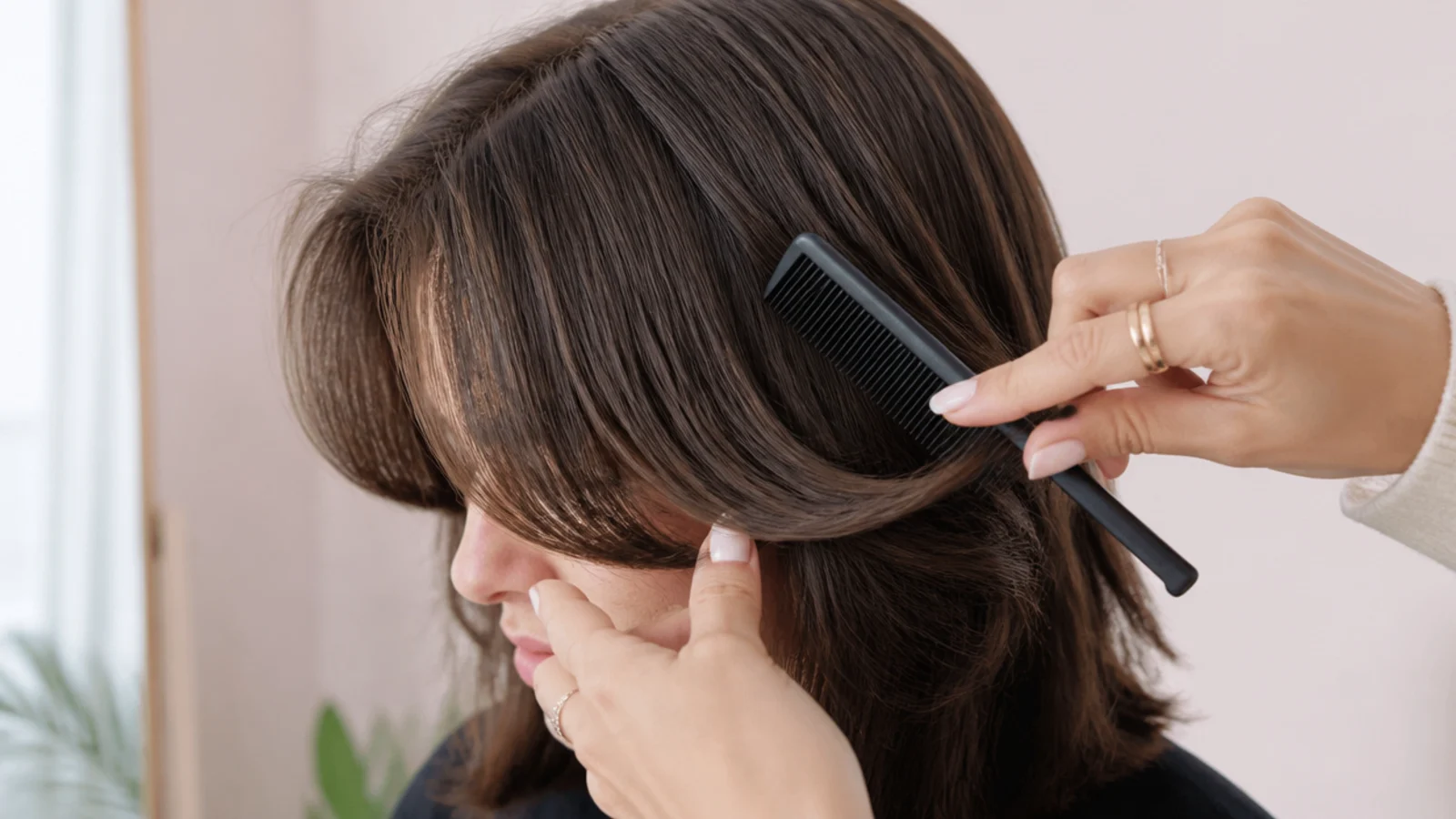
Look in the mirror straight on and compare the two panels. The shortest point should sit at the same height on both sides, and both ends should flare outward toward the temples rather than one flicking out and one tucking in. If one side is stubborn, mist that side alone, redo the brush pass and cool shot rather than reheating both. For a stronger seventies flip, add one extra outward roll with the brush at the very ends and cool it again.
Common mistake: Fixing an asymmetry by restyling the good side too, which usually leaves both sides overworked and flat.
Pro tip: Photograph your fringe on your phone; a camera shows asymmetry your mirror-trained eye edits out.
8. Break the Shape Up With Texture Spray
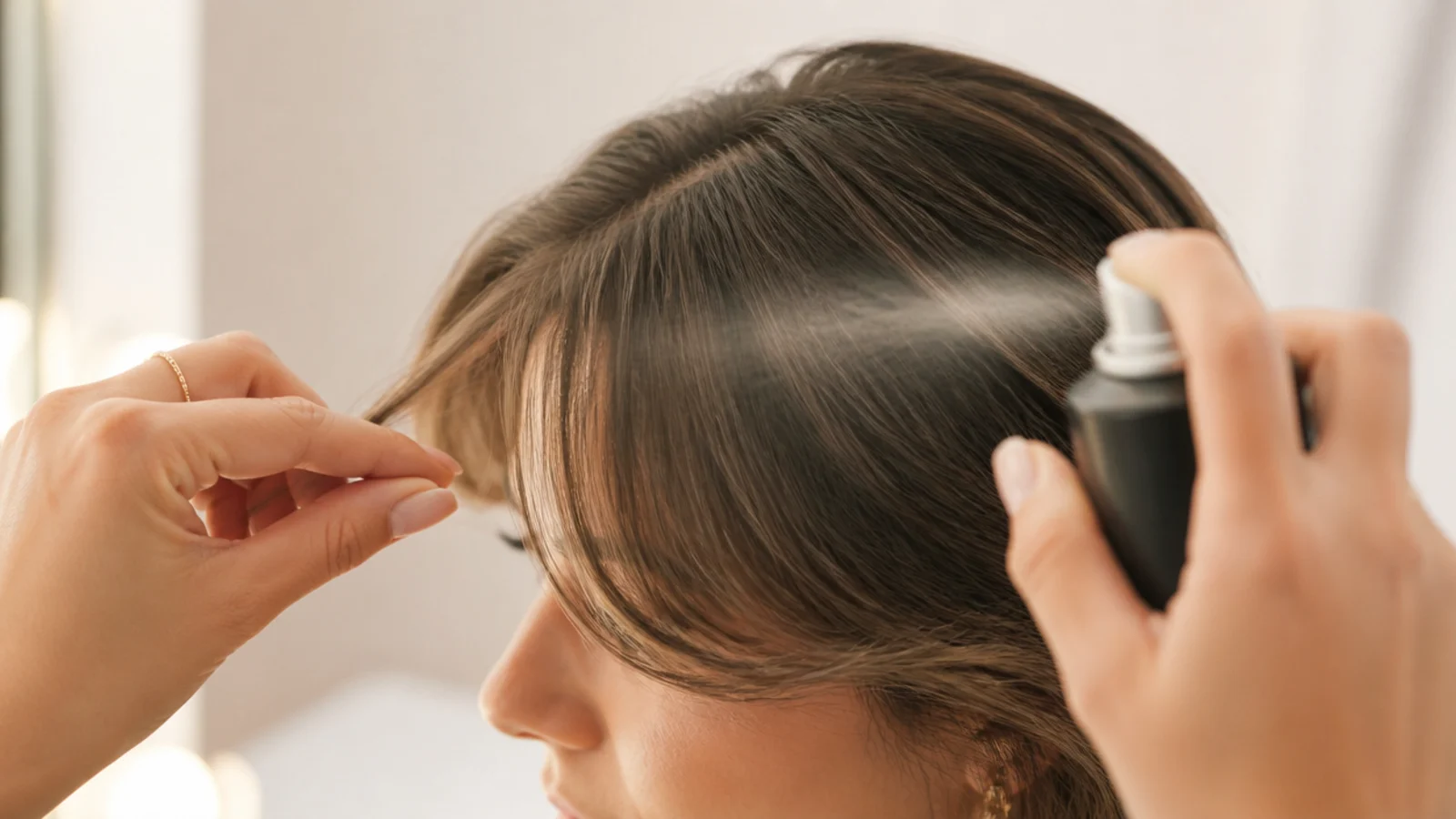
A short curtain bang that is perfectly smooth reads as a helmet. Mist texture spray from about 10 inches away, one pass over the top and one underneath at the roots, then rake your fingers through the ends to separate them into three or four soft pieces. Finish by tapping a fingertip of wax stick or pomade on the very ends if your hair is straight and slippery. Set with a light hairspray only if you need all-day hold, since heavy spray on a short fringe goes crunchy fast.
Common mistake: Spraying texture product at close range, which lands a wet patch that dries into a greasy-looking clump.
Pro tip: Texture spray at the roots doubles as a preemptive dry shampoo and buys you two or three extra hours.
Short Curtain Bangs vs a Full Fringe: What You Are Actually Styling
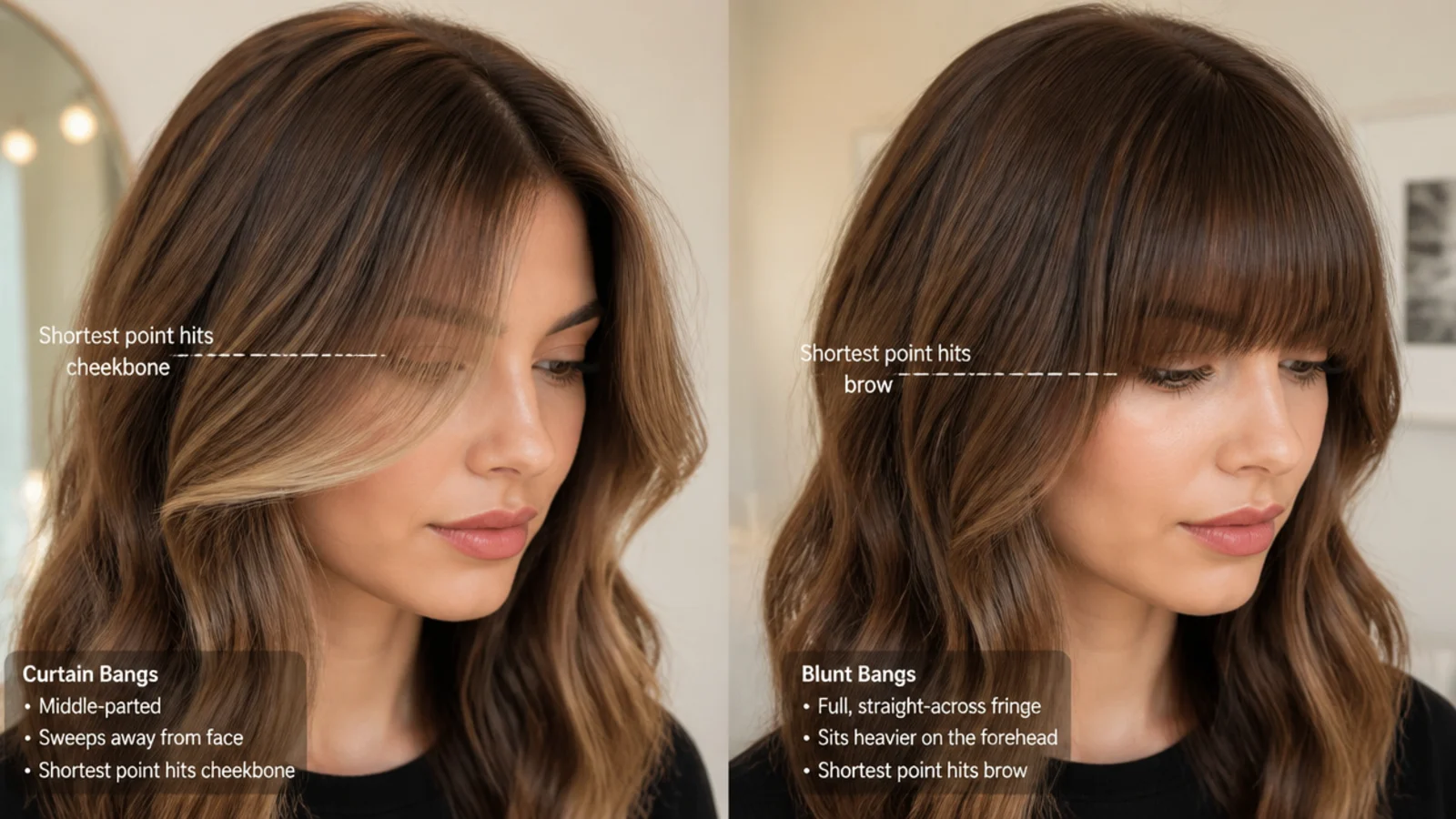
Almost every styling problem people blame on their bangs is really a category error. A full fringe is one solid panel cut straight across, sitting on the forehead, styled downward and forward. Short curtain bangs are two panels split at a center part, cut shorter in the middle and progressively longer toward the temples, styled backward and outward. If you dry short curtain bangs the way you would dry a full fringe, downward and forward with a paddle brush, you get a flat gappy panel that covers nothing and flatters nobody. Direction is the whole game. The second confusion is the word short, which competitors use for both bang length and hair length. Here it means bang length: the shortest point sits between the eyebrow and the cheekbone, roughly 3 to 5 inches from the hairline. That is different from wearing curtain bangs on short hair, which is a cut question covered on the short curtain bangs hub and in our full short curtain bangs ideas gallery.
How Short Is Too Short, and What Each Length Costs You to Style
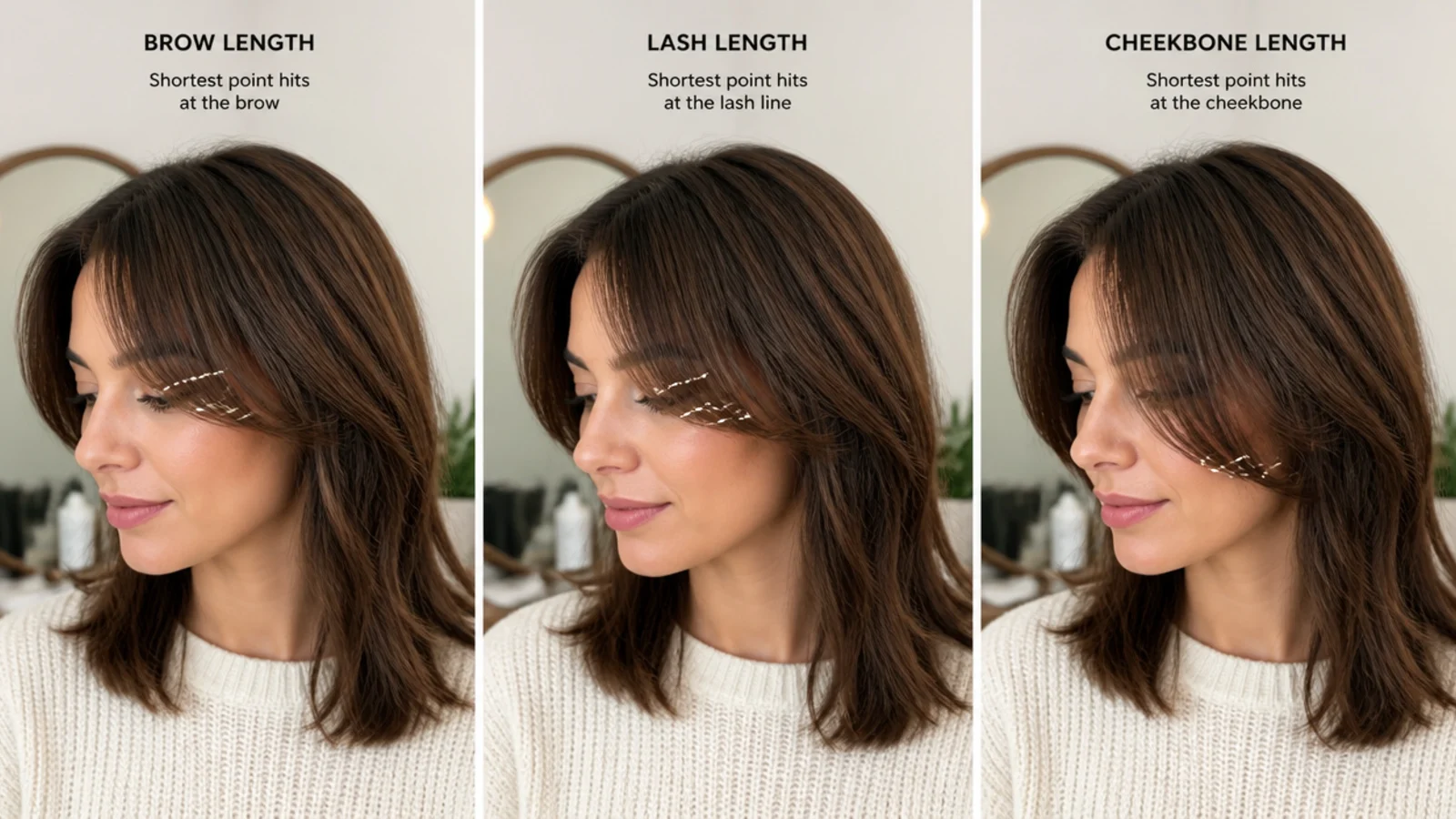
Length dictates styling time, so choose with your mornings in mind. A center point above the brow, about 3 inches from the hairline, is the boldest version and the highest maintenance: it needs a trim every 3 weeks and it shows every cowlick, so budget the full 5-minute round brush routine daily. A brow-grazing center point, roughly 4 inches, is the balance point most people want, and it survives the 60-second no-heat sweep on a good day. A lash-skimming center point is the one that comes with regrets, because it physically tickles your eyes and you will tuck it behind your ear all day, undoing the shape. On round faces, keep the shortest point at or below the cheekbone and keep the density wispy, which preserves the open vertical line from eye to hairline; the failure mode is a blunt heavy fringe cut at cheek level. The detail is worked through in short curtain bangs for a round face. Longer face shapes can take the highest, boldest center point without looking elongated.
Styling Short Curtain Bangs by Hair Texture
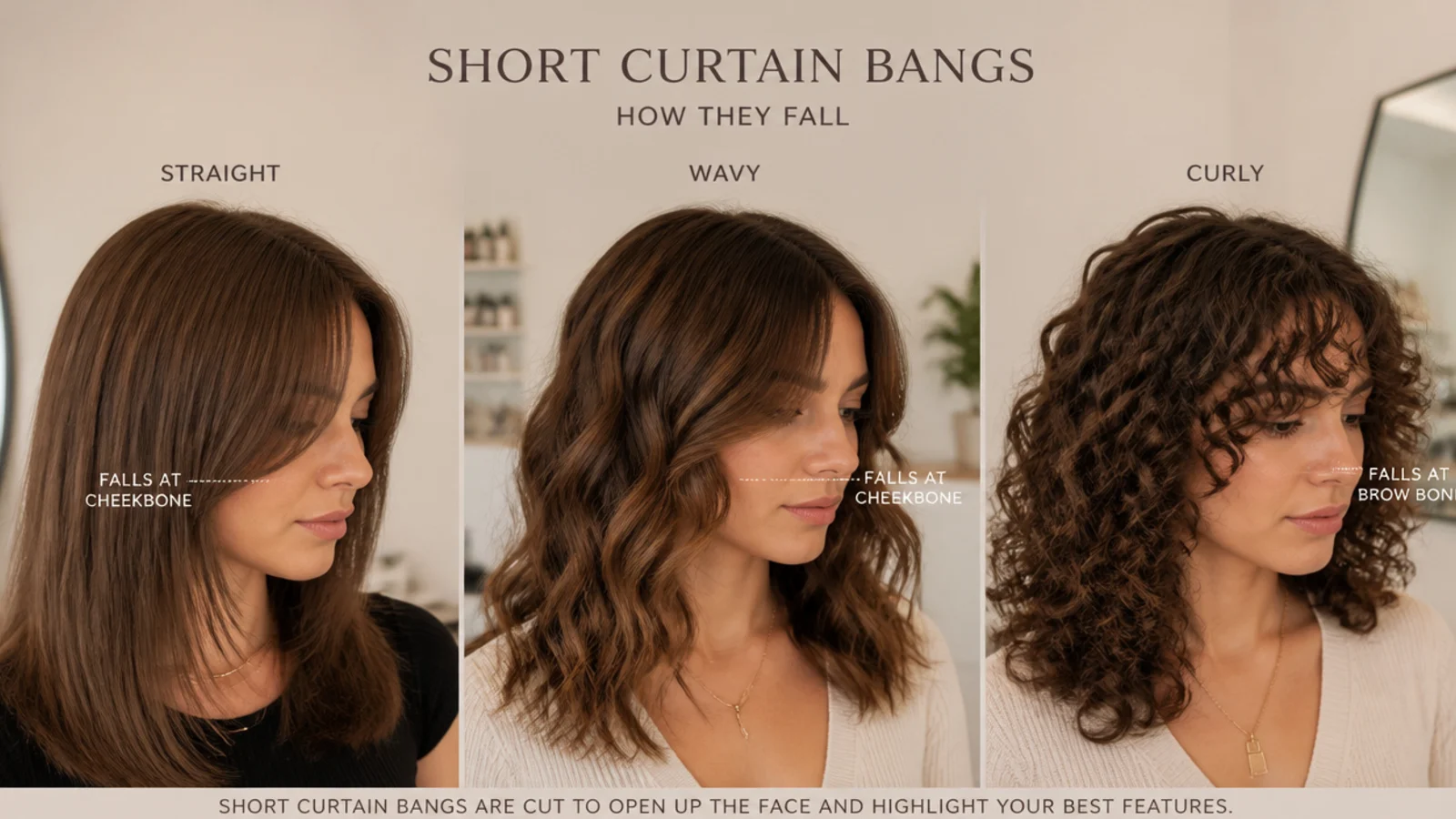
Straight hair is the hardest texture, not the easiest, and no competitor will tell you that. It shows every cut line, splits at the cowlick and goes flat by midday because there is no bend to hold air at the root. Straight fringes need point-cut ends so the perimeter is not blunt, root-directed drying against the growth, and dry shampoo as scheduled maintenance rather than emergency repair. Our full breakdown lives in straight short curtain bangs. Wavy hair at 2a through 2c springs up roughly half an inch as it dries, so the fringe always looks longer wet than it will end up, and a good stylist cuts it dry to account for that. Waves also split into two clumps at the center if they dry untouched, which is the gappy-bang complaint, and the fix is diffusing while cupping the fringe forward. See wavy short curtain bangs for the wave-specific method. Curly hair at 3a and above needs a bigger shrinkage allowance again, no brush at all, and cutting on dry defined curls, as covered in curly short curtain bangs. Fine hair of any pattern follows the damp-set rule above all others.
Fixing Split, Flat and Greasy Short Curtain Bangs
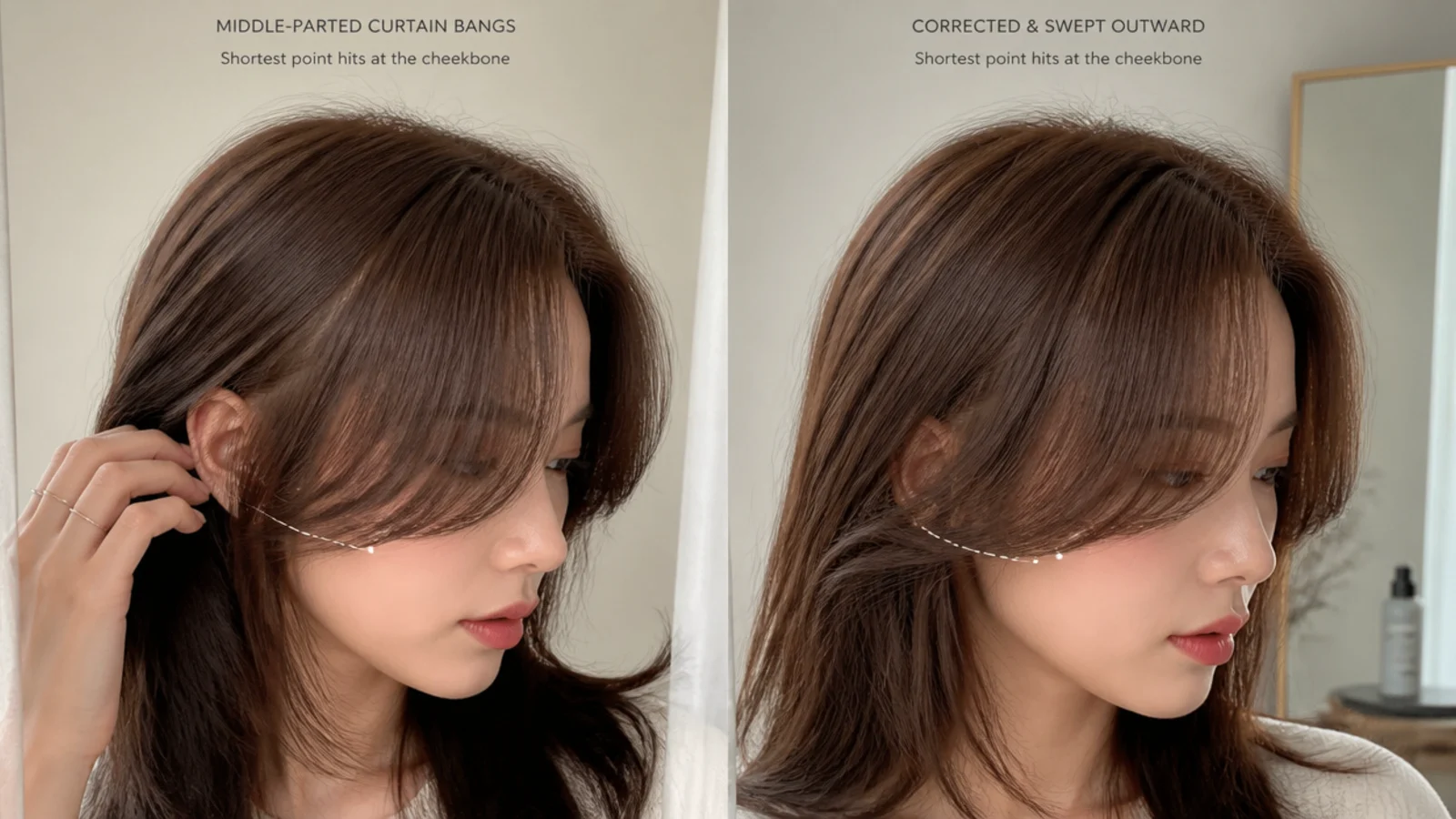
Four failures cover nearly everything. Bangs split into a gap down the middle: your fringe air-dried in its natural growth direction, so rewet it, dry the roots against the growth for 20 seconds and only then round brush outward. Bangs flat by noon: you put product on the mid-lengths instead of the roots, or you skipped the cool shot, so the bend relaxed as soon as it met body heat. Move the mousse to the root and hold that cool shot a full 10 seconds. Bangs look greasy: a short fringe touches forehead skin all day, so it collects oil faster than the rest of your head. Dry shampoo at the root at lunchtime, avoid touching or tucking the fringe, and wash the bangs alone in the sink on off days rather than doing a full wash. Bangs flick the wrong way on one side: that is a cowlick, and the fix is to cut that section slightly longer at your next trim and to dry it against the growth first. If none of it holds, the cut is wrong for your density, not your technique, and a mid-length cut with curtain bangs may sit better.
Trim Cadence, Cost, and Growing Short Curtain Bangs Out
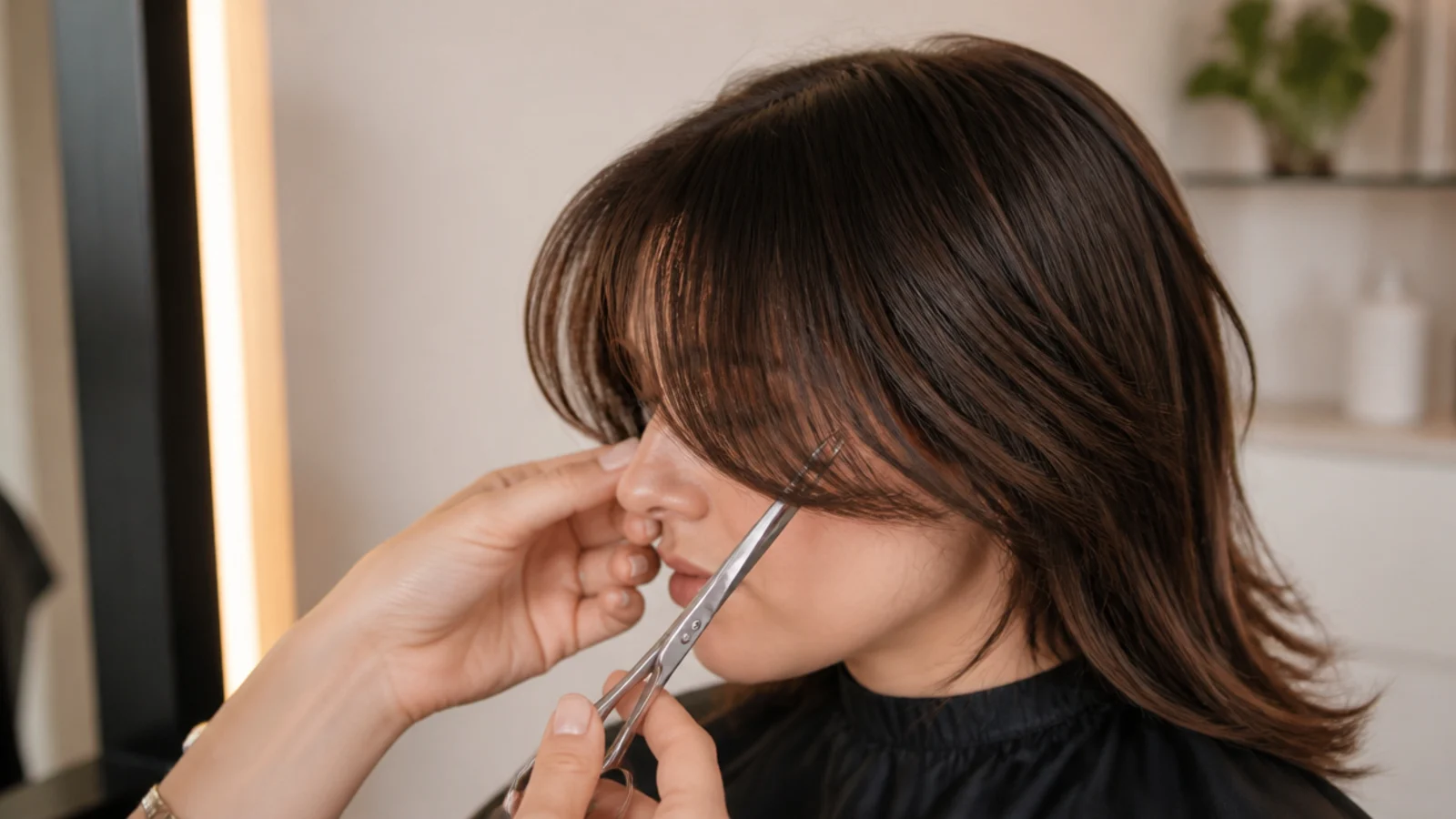
Hair grows about half an inch a month, so a short curtain bang drifts out of its intended shape in roughly 3 to 5 weeks and that is your trim window. Long curtain bangs stretch to 6 to 8 weeks because they have length to spare; short ones do not. The good news is money: most salons give fringe trims free between full cuts if you are a regular client, and where they charge it is usually 10 to 25 dollars and 10 minutes. Ask for it by name when you book, since walk-in fringe trims are often squeezed between appointments. Growing them out is a different discipline. Do not trim at all once you commit, tuck the fringe behind your ears while it is still wet so it dries blended into the next layer, and switch to a deep side part with a paddle brush through the awkward weeks 5 to 12. No-crease clips and headbands carry you through the rest. If you decide the fringe was not the problem but the length was, our mid-length haircut styling guide and face-framing mid-length cuts are the next stop, and the mid-length haircut hub covers the rest.
Frequently Asked Questions
How do you style short curtain bangs?
Style them damp, never dry. Set a center part, mist heat protectant, dry the roots against the growth for 20 seconds, then roll a 1.5 to 2 inch round brush up and back away from your face for two or three passes per side. Finish with a 10-second cool shot and break the ends apart with texture spray. Three to five minutes total.
Can you style curtain bangs without heat?
Yes, and short curtain bangs take to it better than long ones. On damp bangs, hold each half back and away from your face with your fingers for 20 seconds, or set two medium velcro rollers rolled backward and leave them while you get ready. Both work because you are physically holding the shape through the first minute of drying, which is when short bangs set.
Why do my curtain bangs split down the middle?
Because they air-dried in their natural growth direction instead of being redirected. Rewet the fringe, rough-dry the roots back and forth across the part for 20 to 30 seconds so the base forgets its default, then round brush each side outward and cool shot it. If one side always splits, that is a cowlick, and your stylist should cut that section slightly longer.
How often should you trim short curtain bangs?
Every 3 to 5 weeks. Hair grows about half an inch a month, and a short curtain bang has no spare length, so the shape drifts fast. Long curtain bangs stretch to 6 to 8 weeks. Most salons do fringe trims free for regular clients between full cuts, and where they charge it is typically 10 to 25 dollars.
Why do my curtain bangs go flat by lunchtime?
Two usual causes. You put styling cream or leave-in on the mid-lengths of the fringe, which weighs down a section only 4 inches long, so move all product to the root and switch to mousse or root spray. Or you pulled the round brush out while the hair was still warm, which lets the bend relax. Hold the cool shot for a full 10 seconds.
How do I stop my short curtain bangs looking greasy?
A short fringe rests against forehead skin all day and picks up oil hours before the rest of your hair. Spray dry shampoo at the roots from about 6 inches, wait 30 seconds and rub it in. Keep your hands out of the fringe, since tucking and touching transfers oil. On off days you can wash the bangs alone in the sink in two minutes.
What is the best round brush size for short curtain bangs?
A 1.5 to 2 inch barrel. Anything smaller than 1 inch curls short bangs under into a bowl shape, and a 2.5 inch or larger brush leaves them almost dead straight with no visible bend. If you are between sizes, size down, because you can always relax a bend with a warm pass but you cannot add one that never formed.
Do short curtain bangs work on fine hair?
Yes, and they can read as extra density because the shape distributes hair across the hairline instead of massing it. The rule is to dry and shape the fringe first, while the rest of your hair is still damp, since fine hair sets permanently where it air-dries. Ask for point-cut ends so the fringe is not blunt, and use mousse at the root only.
How do you style short curtain bangs on curly hair?
Skip the brush. On soaking-wet bangs, work in a dime of curl cream, shape the center part with a comb tail, then cup the fringe into a diffuser and dry on low heat and low speed without moving the dryer. Curls spring up around half an inch, so wet length is misleading. Do not touch the fringe until it is completely dry.
Are short curtain bangs high maintenance?
They are medium maintenance daily and high maintenance at the salon. Daily styling is 60 seconds no-heat or 3 to 5 minutes with a round brush, plus dry shampoo most afternoons. The salon side is the real cost: a trim every 3 to 5 weeks versus 6 to 8 for long curtain bangs. If that cadence does not fit your life, go longer at the center point.
Heat tools can damage hair. Always use a heat protectant, keep dryers moving, and cap flat irons and curling irons at 300 to 330 degrees Fahrenheit on fine or color-treated hair. If your fringe feels dry, snaps at the ends or refuses to hold a shape, see a licensed stylist before adding more heat.
Which short curtain bangs look are you saving?
If you only take two things from this, take these. Style the fringe first, before the rest of your hair, while it is still damp enough to redirect, because short curtain bangs set permanently in the direction they dry. And finish every method with something that breaks the shape up, whether that is texture spray, a wax stick on your fingertips or ten seconds of scrunching, because a perfectly smooth short fringe reads as helmet rather than curtain. Keep dry shampoo in your bag for the 2pm slump, book a fringe trim every 3 to 5 weeks, and pick one no-heat method for the mornings you have no time. Then browse the whole short curtain bangs hub for your next cut.