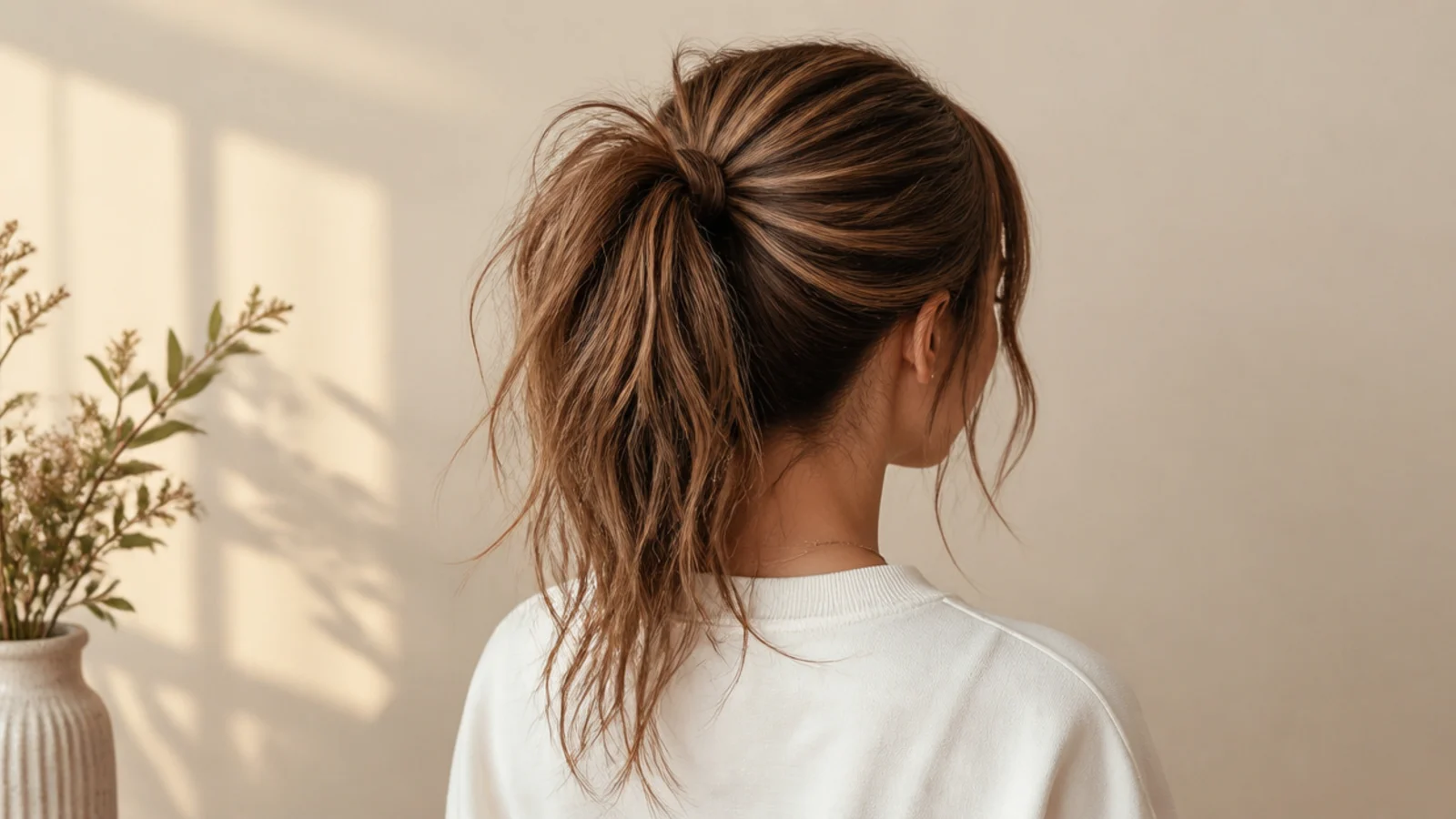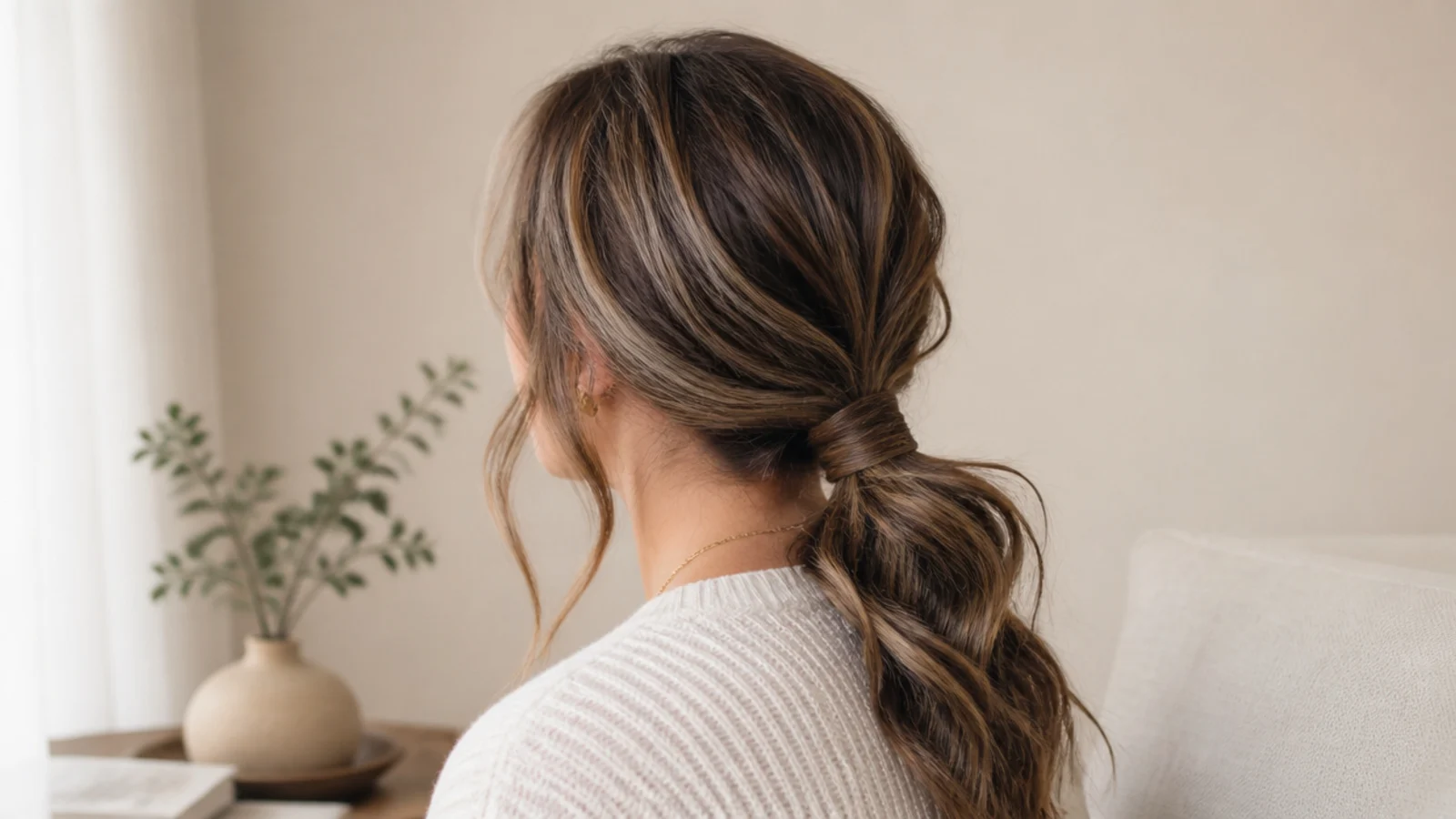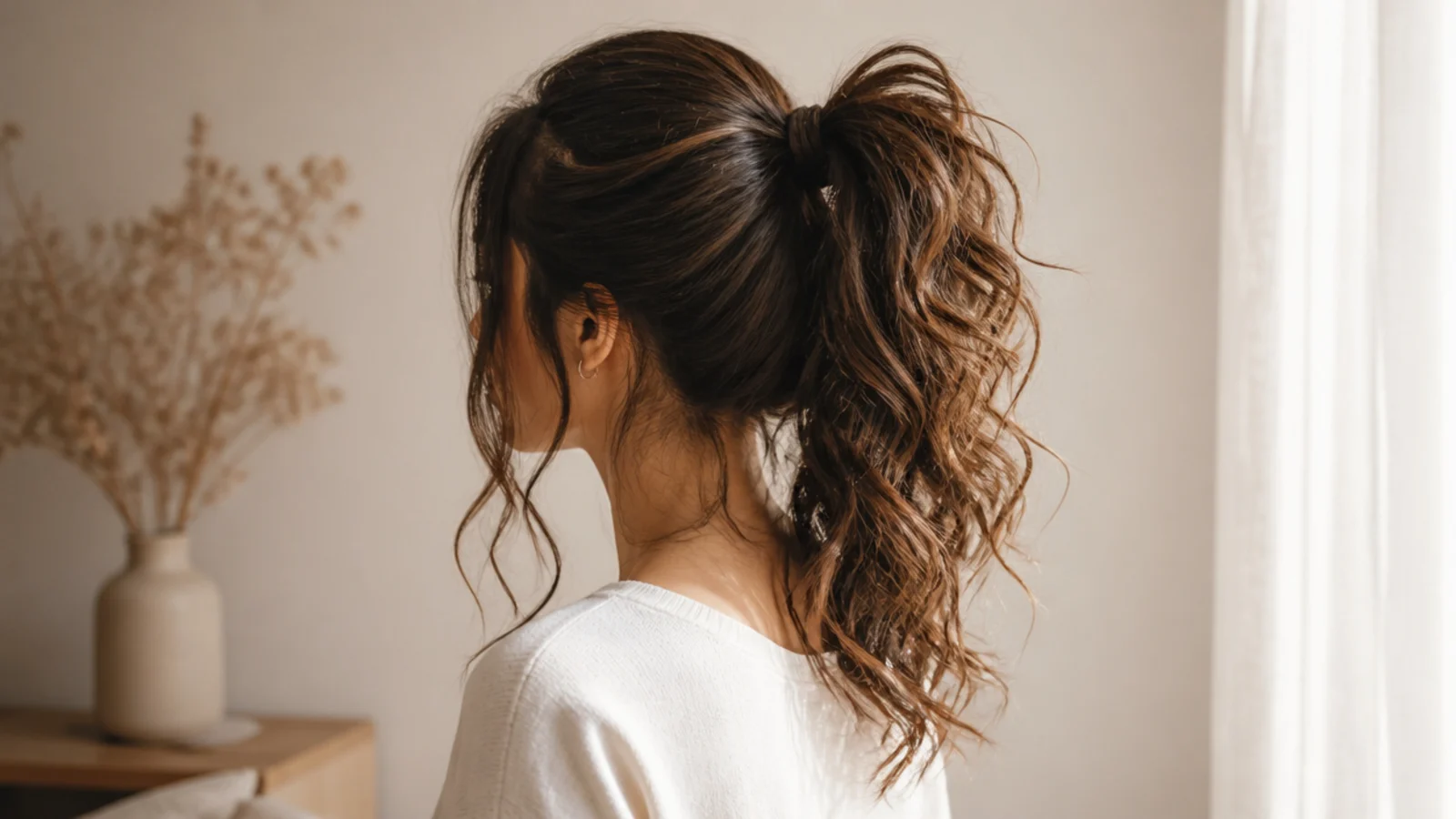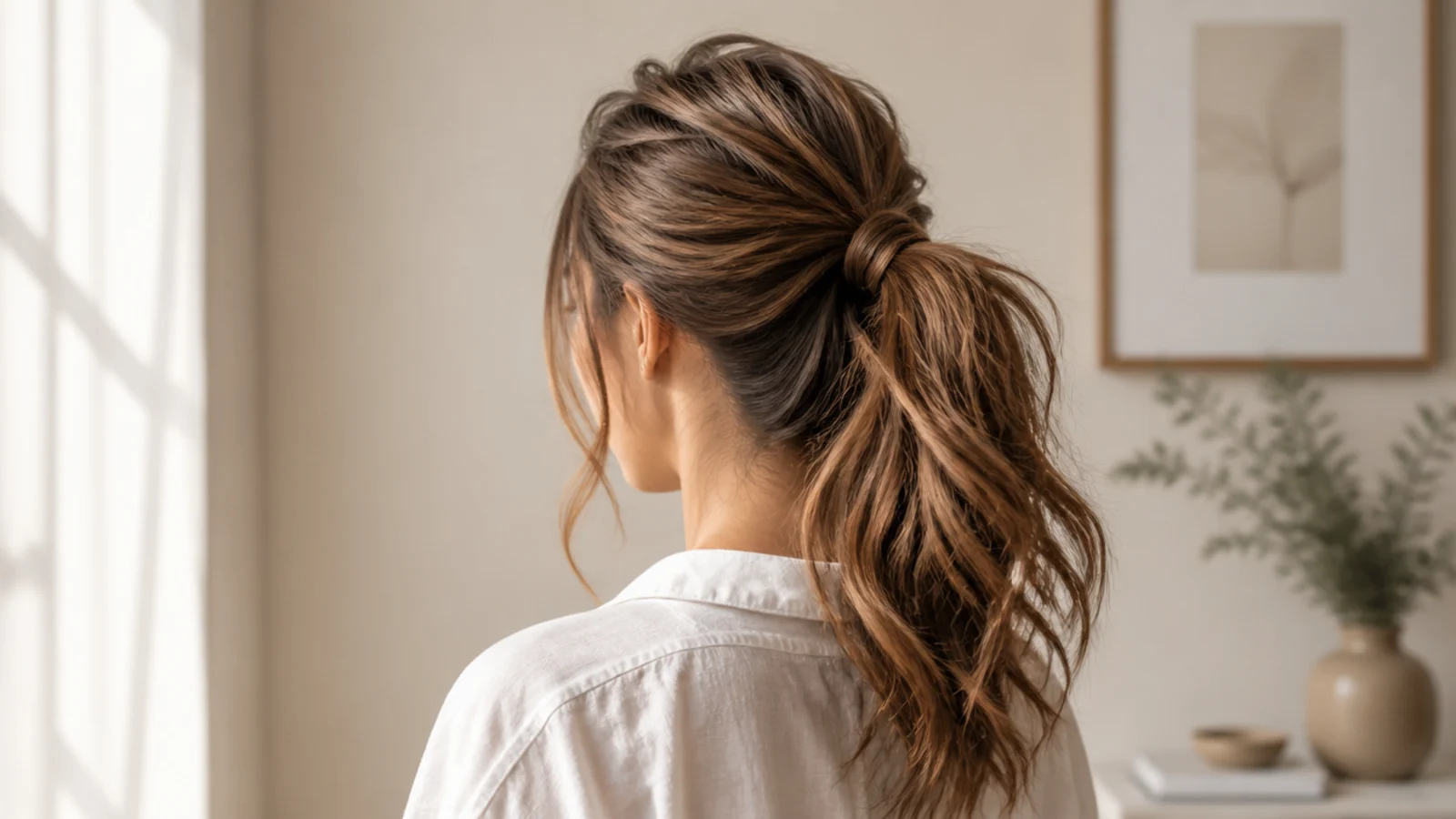
Quick Comparison
| Messy Ponytail | Sleek Ponytail | |
|---|---|---|
| Best hair condition | Day-two hair or dry-shampooed clean hair | Freshly washed and fully smoothed |
| Prep time on long hair | 3 to 8 minutes | 15 to 25 minutes including blow-dry and gel |
| Hides greasy roots | Yes; texture and lift disguise oil well | Yes, but only if the roots are gelled flat |
| Humidity performance | Strong; new frizz just reads as more texture | Poor; a single flyaway breaks the whole look |
| Scalp tension | Low to moderate; the base is deliberately loosened | High; the look depends on constant tension |
| All-day hold on long hair | 6 to 8 hours with pins under the base | 4 to 6 hours before the perimeter fuzzes |
| Breakage risk at the tie point | Lower; looser tie, wider fabric ties work | Higher; tight thin elastics on tension |
| Formality | Weekend to smart-casual, wedding guest with a wrap | Office, black tie, red carpet |
| Repair on the go | Loosen and tug; no mirror needed | Needs a mirror, comb and product to fix |
1. Mid-Height Messy Ponytail for Long Hair
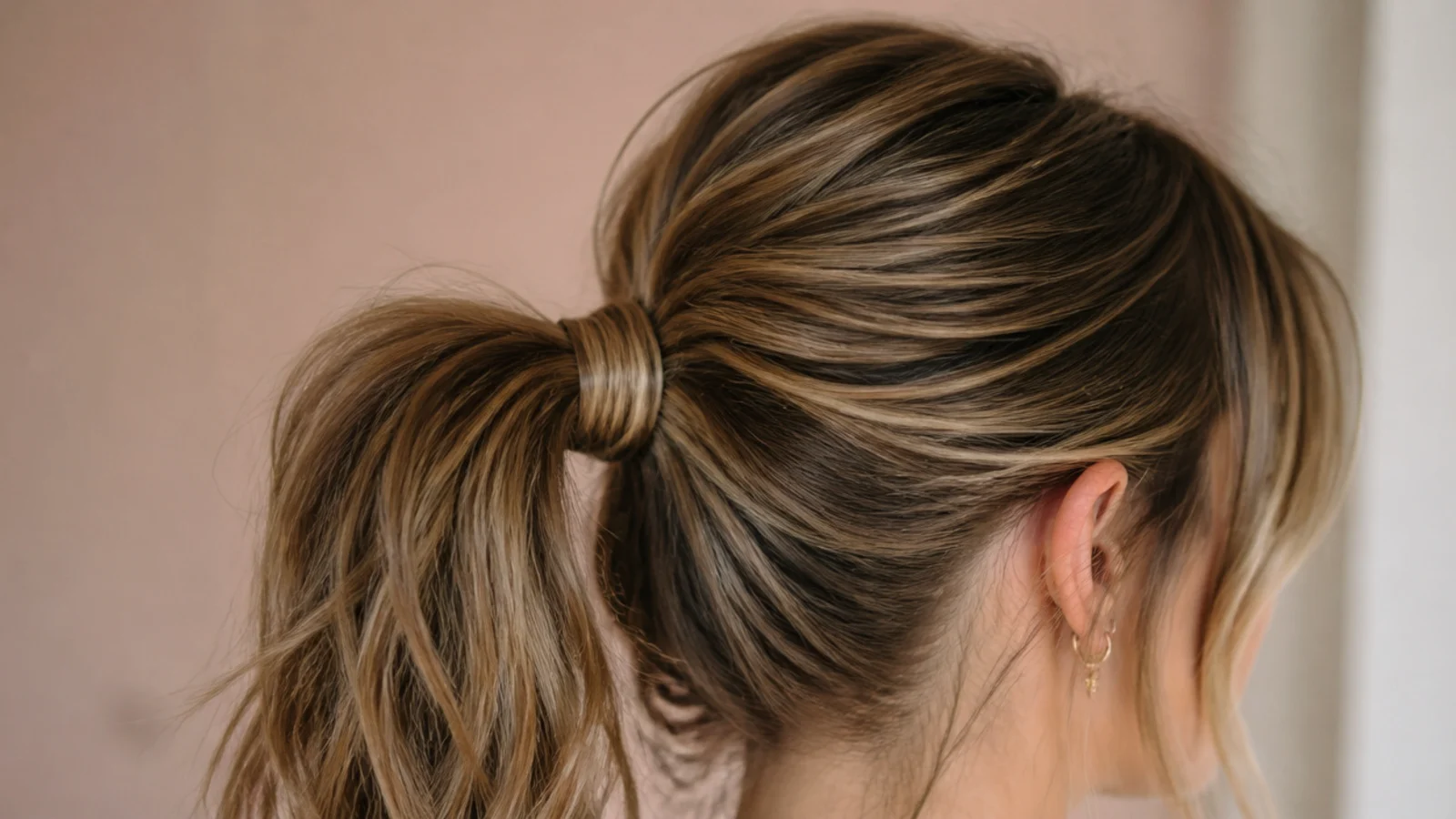
The default placement for anything past 20 inches. Tie level with the top of your ear, not at the crown, so the weight sits over the strongest part of your head instead of hanging off the back. Flip your head halfway forward to gather, secure with a fabric-covered elastic, then tug five small sections upward along the part line. Because the tail is long, you only need a little crown lift for the whole shape to read full rather than flat.
Who it suits: Hair 20 to 26 inches that sags in a true high ponytail.
Tip: Two crisscrossed bobby pins pushed up into the base from underneath will hold this for eight hours.
2. Nape-Low Messy Ponytail with Face-Framing Pieces
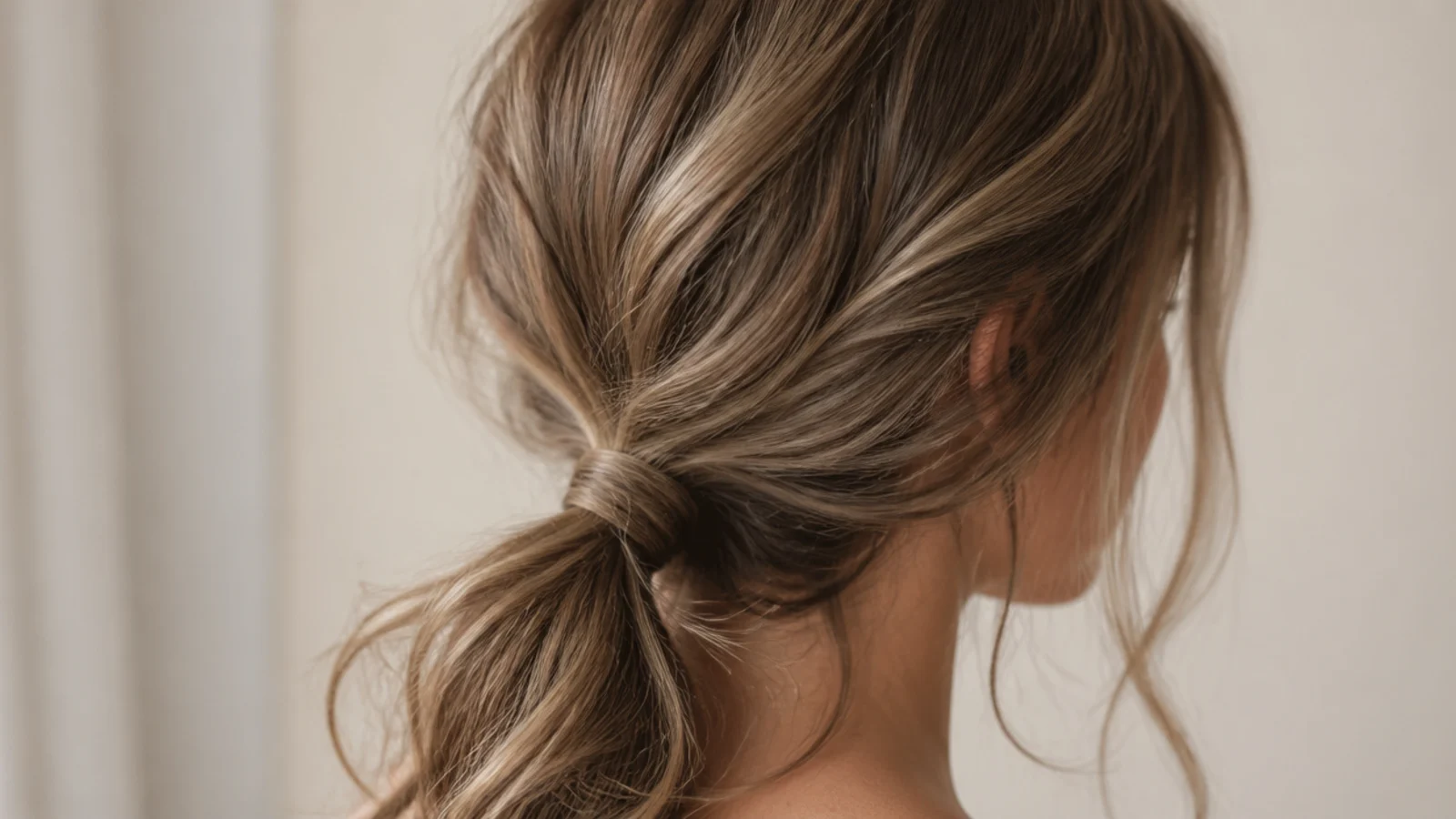
The softest look on the list and the kindest to long hair, because a nape tie carries the weight straight down instead of levering it backward. Leave a one inch section loose on each side of the part before you gather, tie at the hairline at the nape, then pull those two sections down and pinch them so they curve toward the jaw. Finish with a light mist of flexible hold hairspray. It takes about three minutes and survives a commute better than any high placement, and it is the softest option in the low messy ponytail family.
Who it suits: Waist-length hair, headache-prone scalps and office days.
Tip: Angle the elastic slightly downward as you wrap so the tail hangs straight instead of kicking out.
3. Teased-Crown High Messy Ponytail
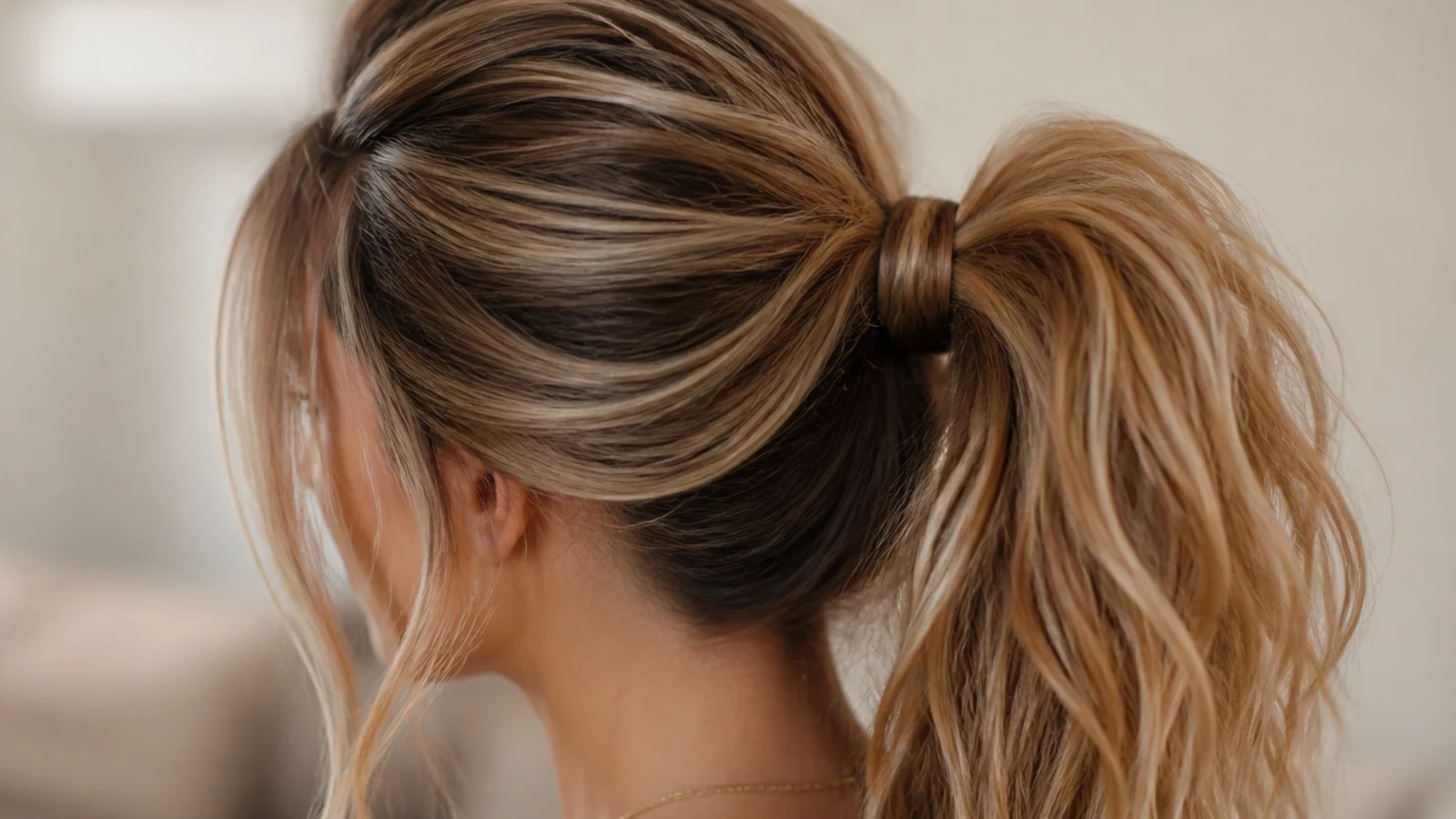
The one that photographs best and the one most likely to slide. Backcomb three sections at the crown with a fine-tooth comb, smooth the surface layer over the tease with your palm, then gather high, level with the outer corner of your eyebrow. Tie tight, then pull the tail upward and forward once to reseat it. On long hair the tease is doing structural work, not just volume, because it gives the elastic something to grip, which is the core idea behind every high messy ponytail. Retighten once around hour five.
Who it suits: Fine to medium long hair that goes flat by noon.
Tip: Spray dry shampoo at the roots before teasing; the tease holds roughly twice as long.
4. Wrapped-Elastic Messy Ponytail for Long Hair
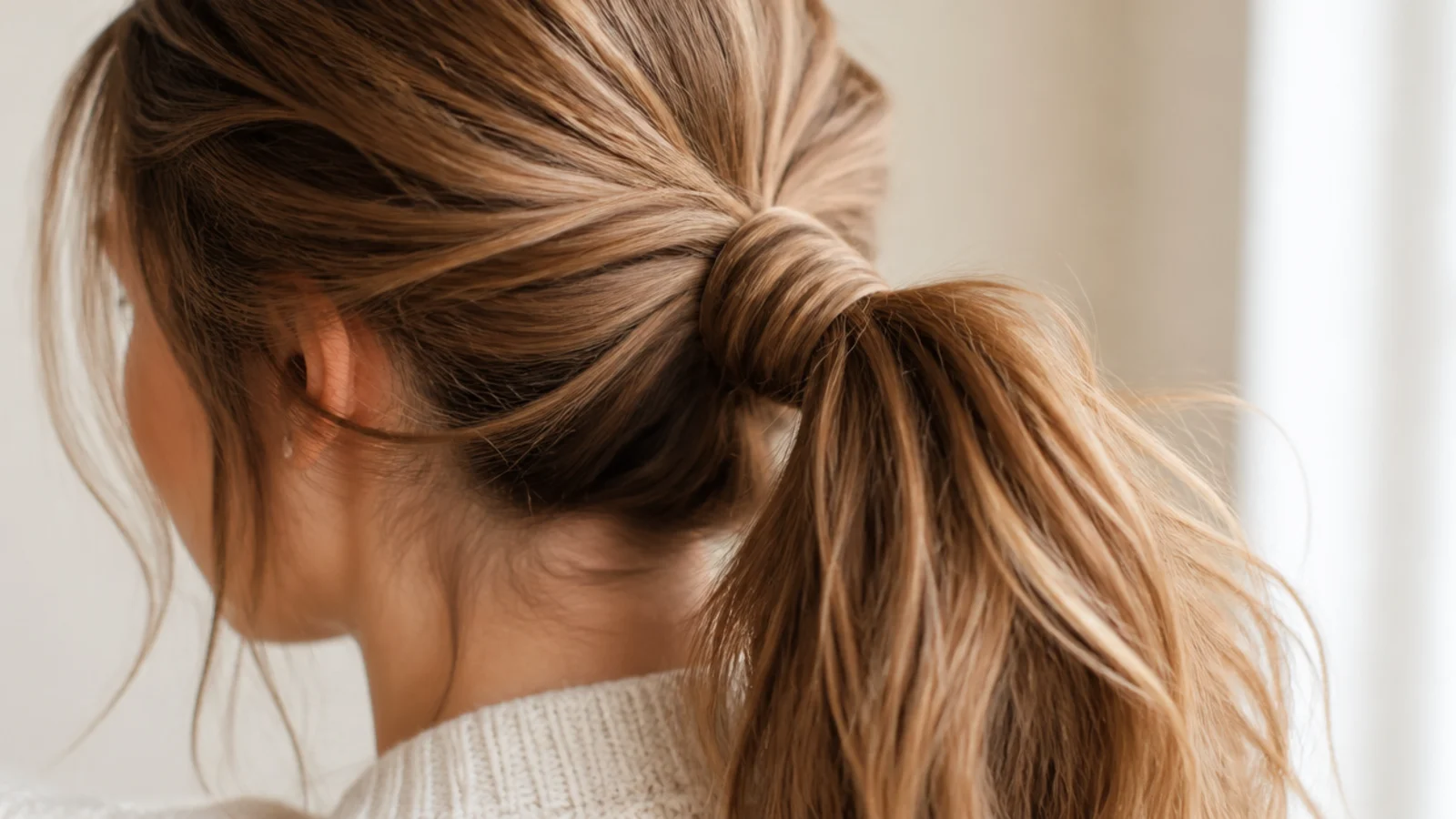
The single biggest polish upgrade available, and it costs thirty seconds. Tie your ponytail wherever you like, then take a half-inch section from underneath the tail, wrap it around the elastic two or three times, and pin the end up into the base with one bobby pin. Long hair makes this easier than any other length, since you have plenty of strand to wrap. It instantly moves the look from gym to going out without adding a single accessory, and it works on every placement in the messy ponytail guide.
Who it suits: Anyone who thinks their ponytail looks unfinished but cannot say why.
Tip: Wrap the section from a strand underneath, never the top, so the wrap sits flat and hidden.
5. Side-Swept Messy Ponytail Over One Shoulder
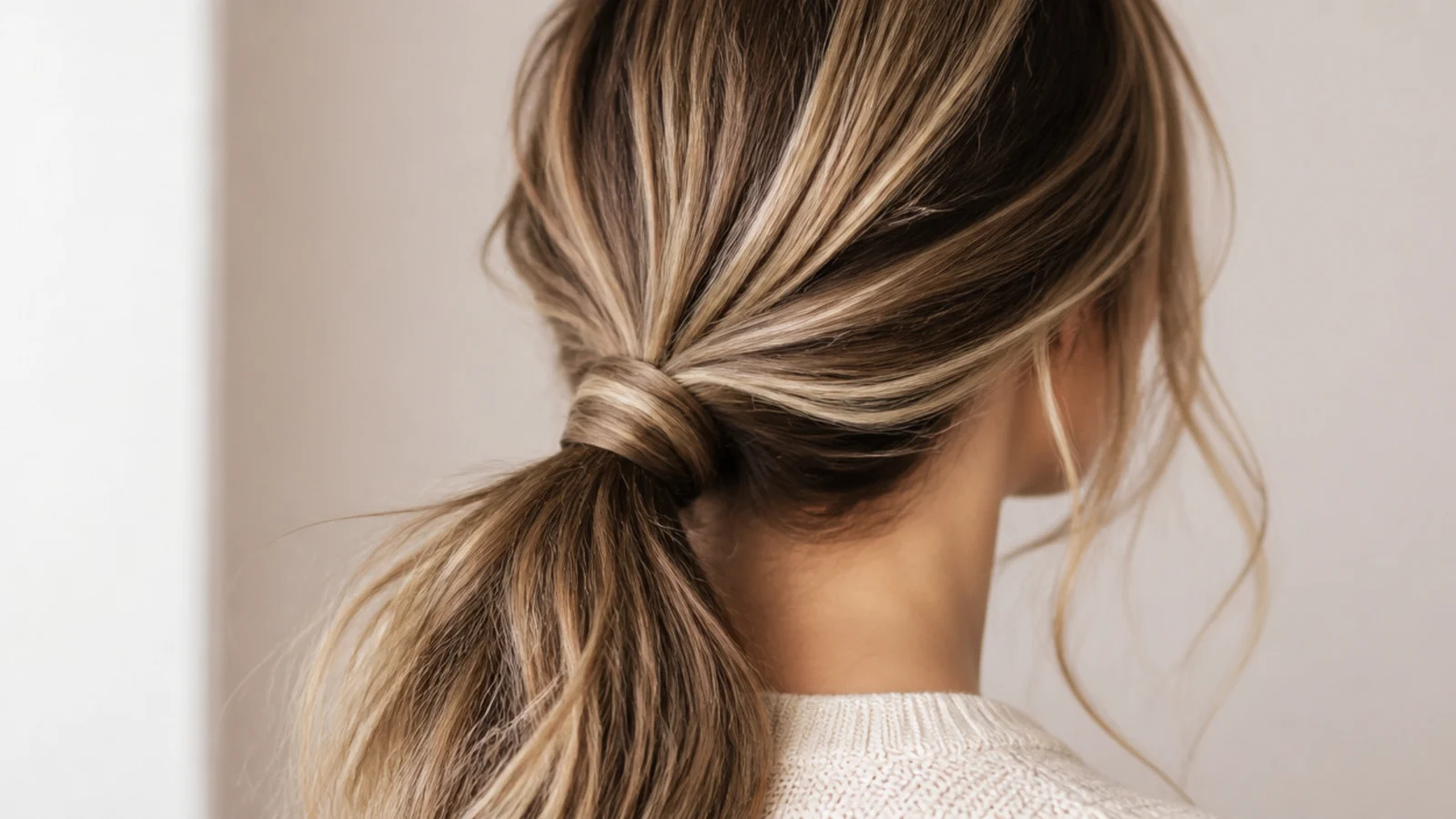
Deep side part, everything swept to the opposite shoulder, tied low just behind the ear. Long hair is the only length where this really works, because the tail needs to be long enough to sit on your collarbone rather than jut out sideways. Gather loosely so the sweep keeps some slack across the crown, then loosen the section over the ear on the heavy side. It reads romantic rather than sporty and works beautifully for dinner or a wedding guest look.
Who it suits: Hair past 22 inches; strong on wavy and curly textures.
Tip: Pin the light side flat behind the ear so the sweep does not collapse into a center gather.
6. Messy Bubble Ponytail for Long Hair
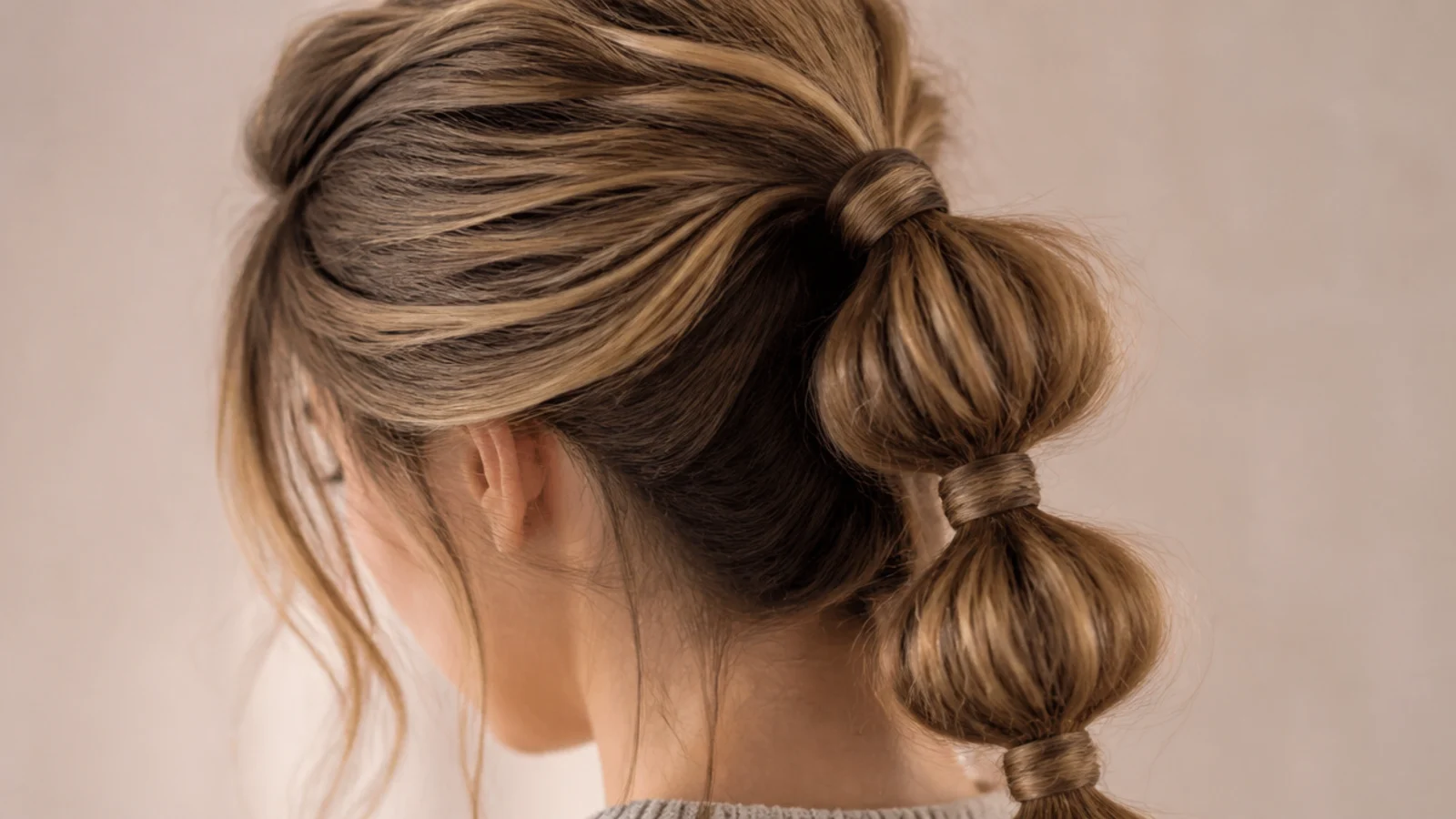
Long hair is the reason this look exists. Tie a base ponytail, then add small clear elastics every four to five inches down the tail. After each one, pinch and pull the sides of that segment outward until the section puffs. Hair past 24 inches gives you four or five bubbles, which is when the style really reads as a bubble pony rather than a mistake. Tug each segment wider than feels right, since they settle and tighten within an hour.
Who it suits: Very long, medium to thick hair; great for festivals and graduations.
Tip: Use clear silicone elastics, not fabric, so the joins disappear between bubbles.
7. Half-Up Messy Ponytail with Long Hair Down
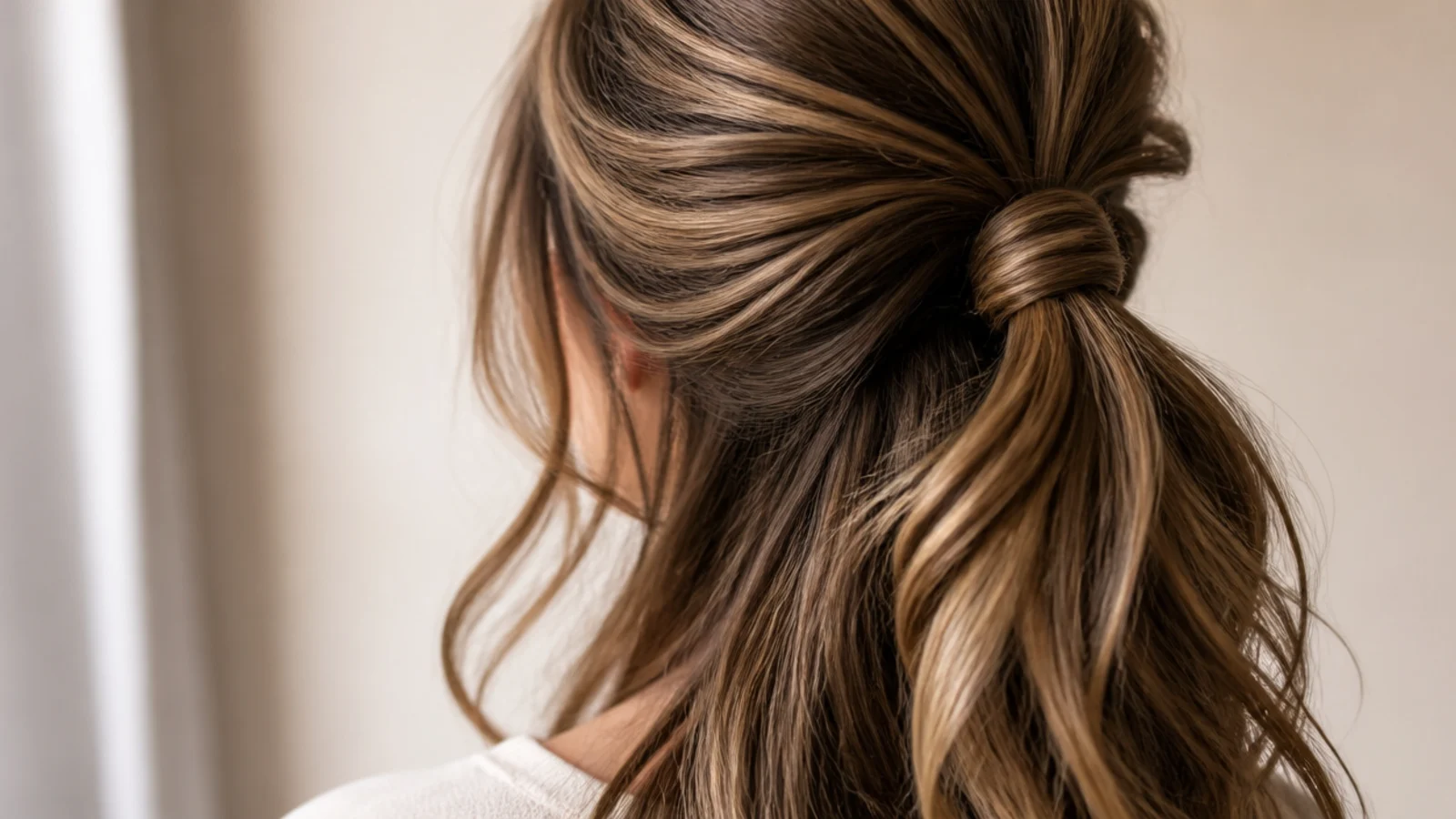
Take everything above the tops of your ears, tie it at the crown, and leave the rest down. This solves the long-hair weight problem entirely, because only a third of your hair is in the tie. Tug the crown section upward for a soft bump, then loosen the sides so it does not look scraped. Best on hair with some wave or a curl in the lengths, since flat straight hair underneath can make the half-up look like an afterthought. The same logic drives half-up mermaid braids.
Who it suits: Anyone with tension headaches or very heavy hair.
Tip: Tie it with a small claw clip instead of an elastic if you want to redo it one-handed all day.
8. Braided-Base Messy Ponytail for Long Hair
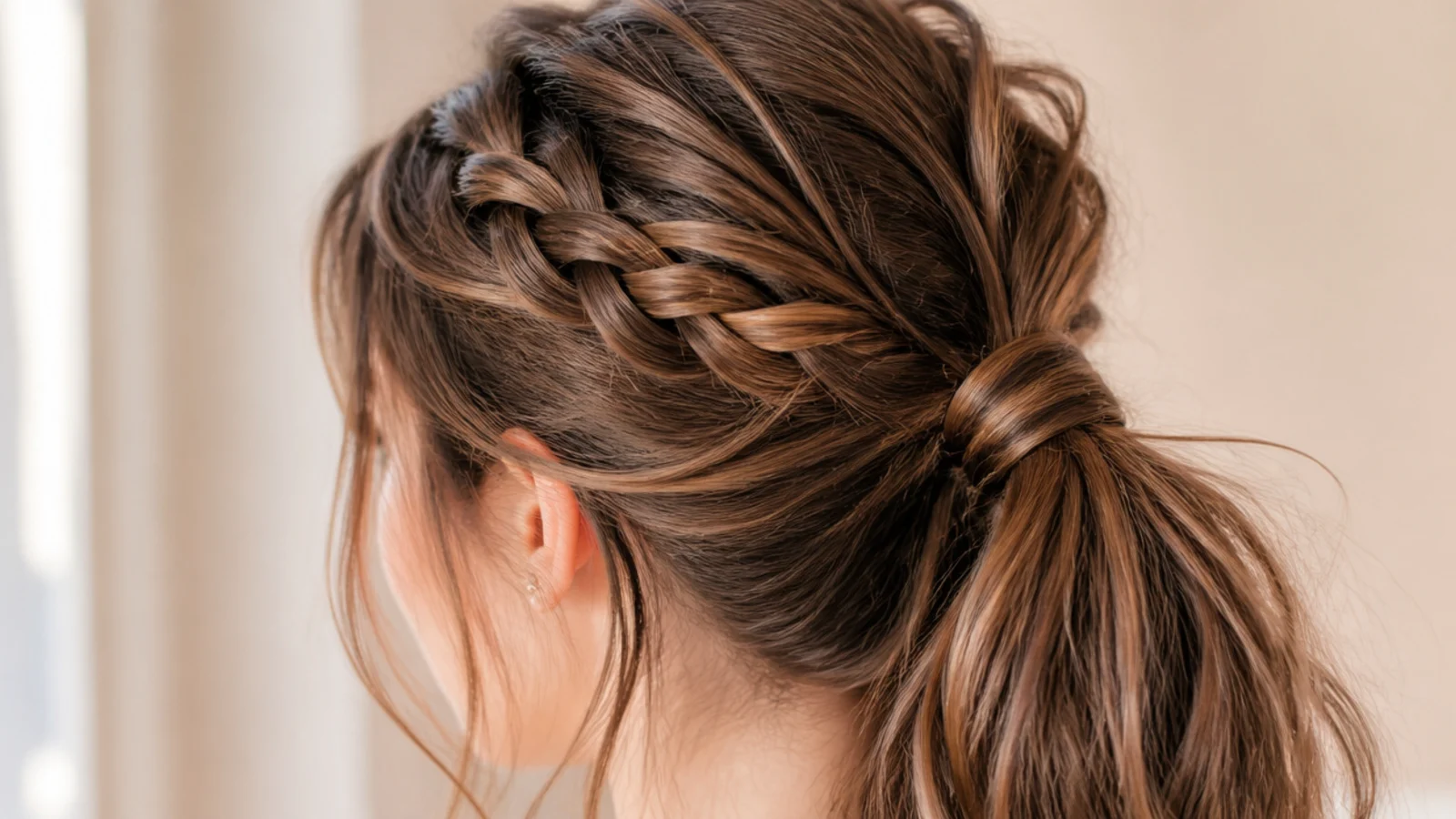
Braid a loose three-strand section from the front hairline back along one side of your part, stopping at the crown, then gather it into a mid-height ponytail with the rest of your hair. Pancake the braid by pulling each loop outward before you tie. On long hair the braid barely registers as effort but it stops the front from collapsing forward, which is the usual failure mode by mid-afternoon. Related shapes live in long mermaid braids.
Who it suits: Hair that slips out at the front and layered cuts.
Tip: Braid on the side you part toward; braiding into the part line makes the crown look thin.
9. Pull-Through Messy Ponytail for Very Long Hair
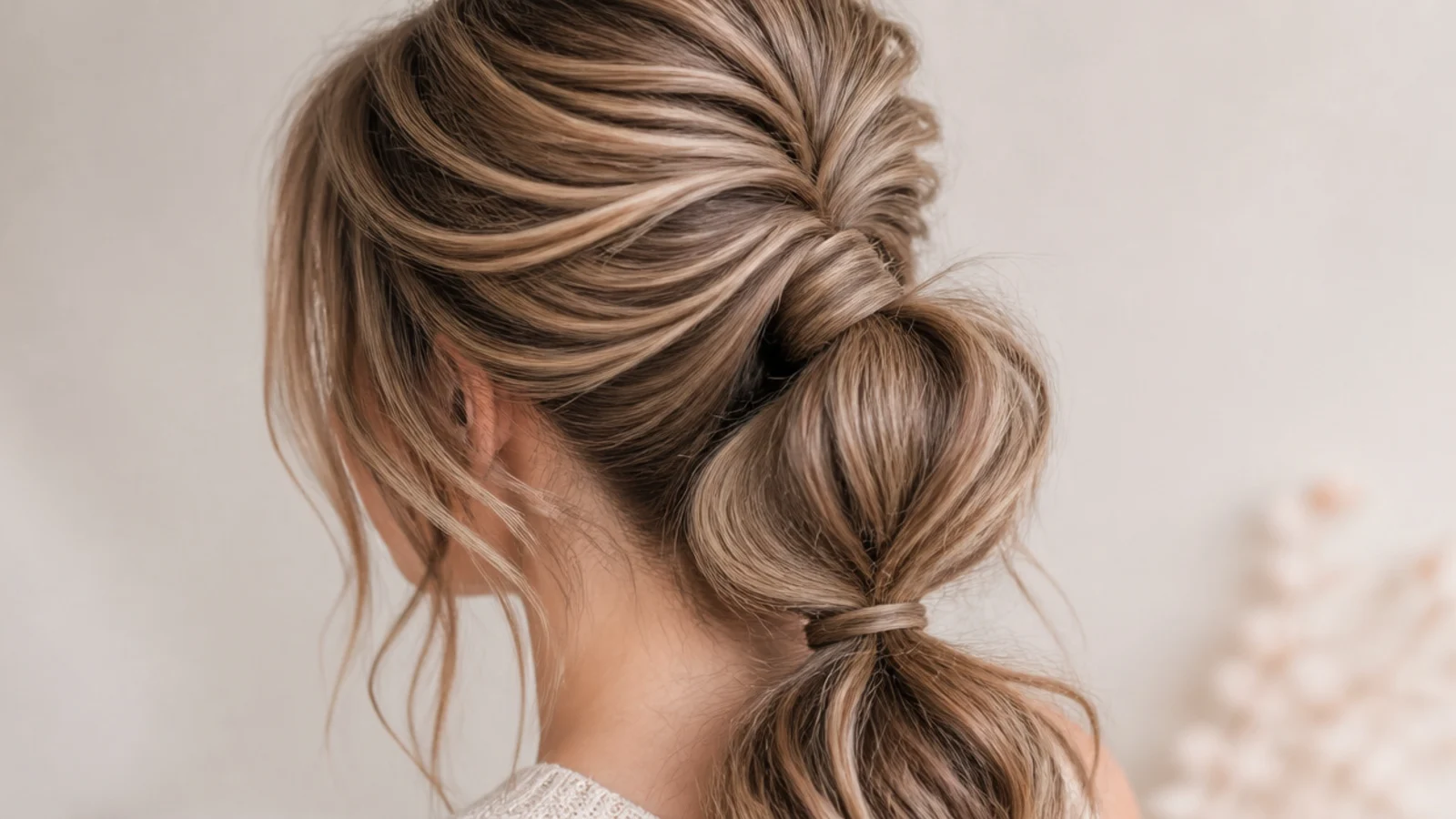
A stack of small ponytails, each split and looped through the one above, producing a thick rope of hair that looks braided but is not. It needs real length, so 24 inches and up is where it shines. Tie four to six mini ponytails down the back, split each one and feed the section above through the gap, then pull the loops loose. Budget ten minutes the first time and about five once you have done it twice; it also holds up under a mortarboard, as covered in graduation hairstyles for long hair.
Who it suits: Waist-length hair, weddings and photo days.
Tip: Loosen every loop before you move to the next tie; going back at the end never works as well.
10. Messy Ponytail with Curtain Bangs on Long Hair
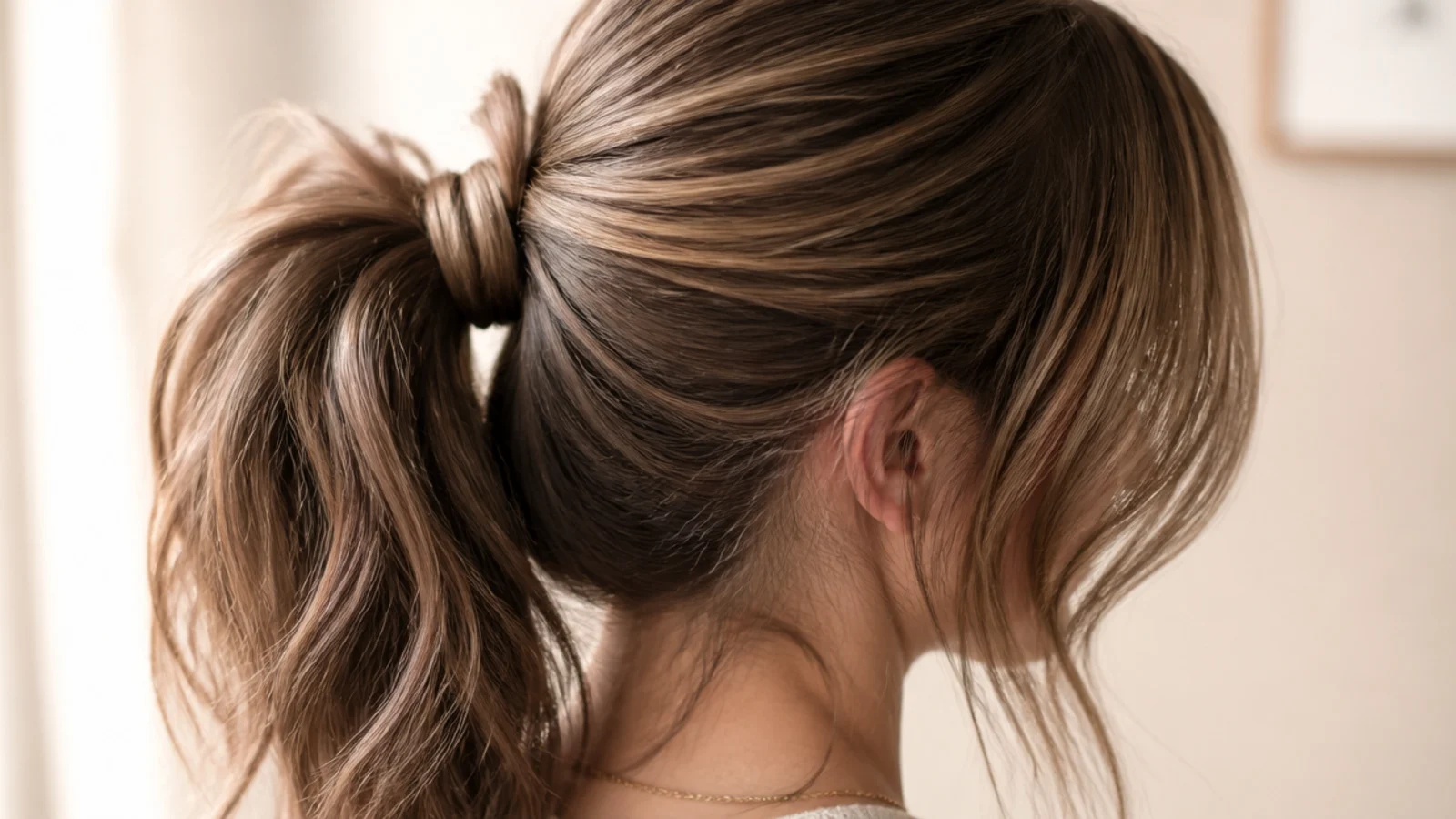
Curtain bangs and long hair are made for each other in a ponytail, because the fringe does the face-framing work and the tail does the rest. Round-brush the bangs away from the center for thirty seconds before you gather, then tie mid-height so the bangs and the pulled-back sides join in a continuous sweep. Do not pull the bangs tight into the elastic. More on the fringe itself in messy ponytails with bangs and short curtain bangs styling.
Who it suits: Anyone growing out a fringe or with existing curtain bangs.
Tip: Dry shampoo the bangs separately at lunchtime; they get greasy about twice as fast as the lengths.
11. Scrunchie Messy Ponytail for Long Thick Hair
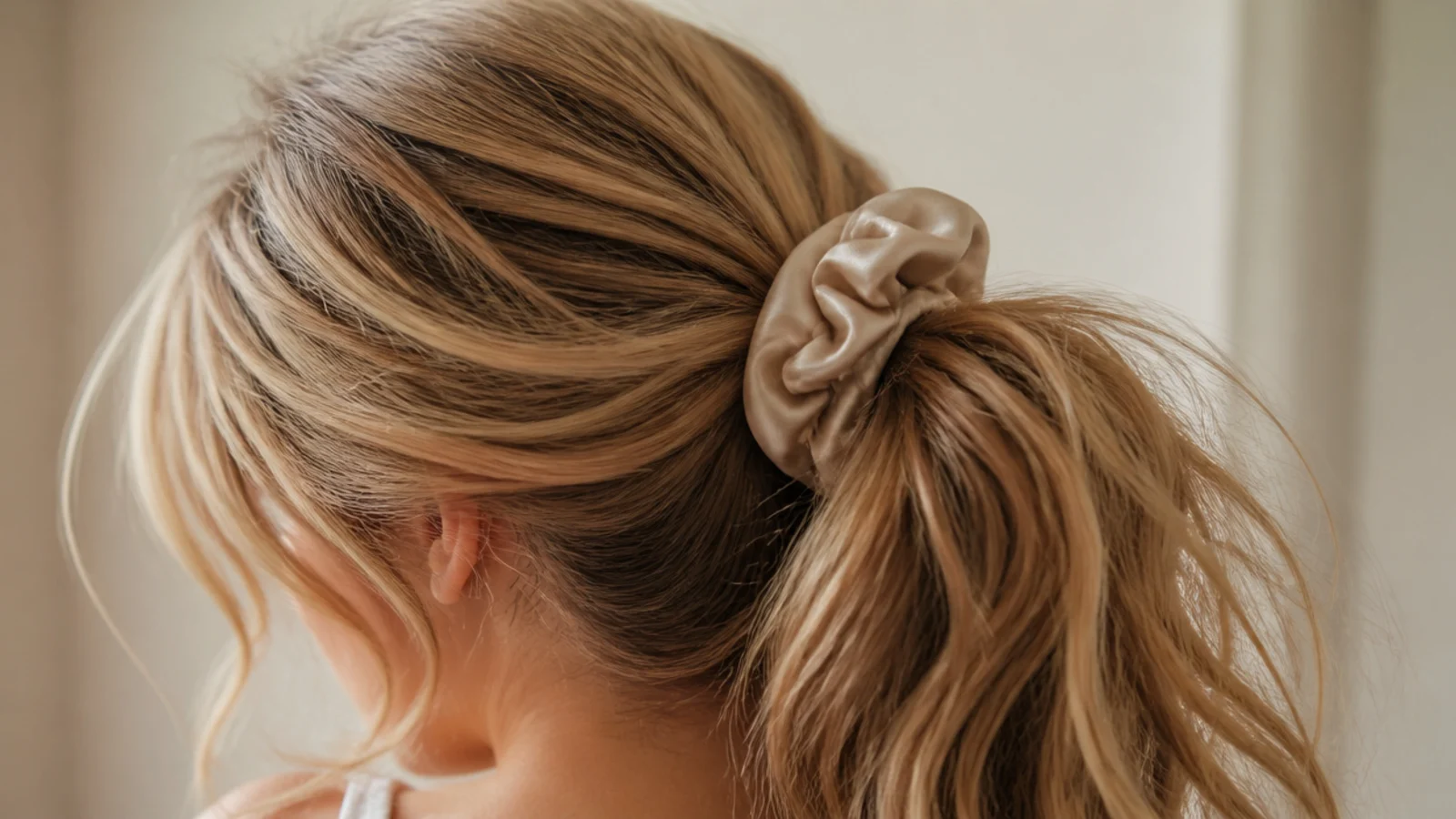
An oversized satin or velvet scrunchie is not just decoration on long thick hair, it is damage control. The wide fabric spreads tension across a broader band of the shaft, so you do not get the single sharp crease and the breakage line that a thin snag-free elastic leaves. Gather at mid-height, wrap the scrunchie three times, then push the whole thing up half an inch to loosen the base. Velvet grips noticeably better than satin on smooth hair.
Who it suits: Thick or long hair that snaps at the tie point.
Tip: Put a thin elastic on first, then the scrunchie over it, so the hold does not depend on the fabric.
12. Knotted Messy Ponytail with No Hair Tie
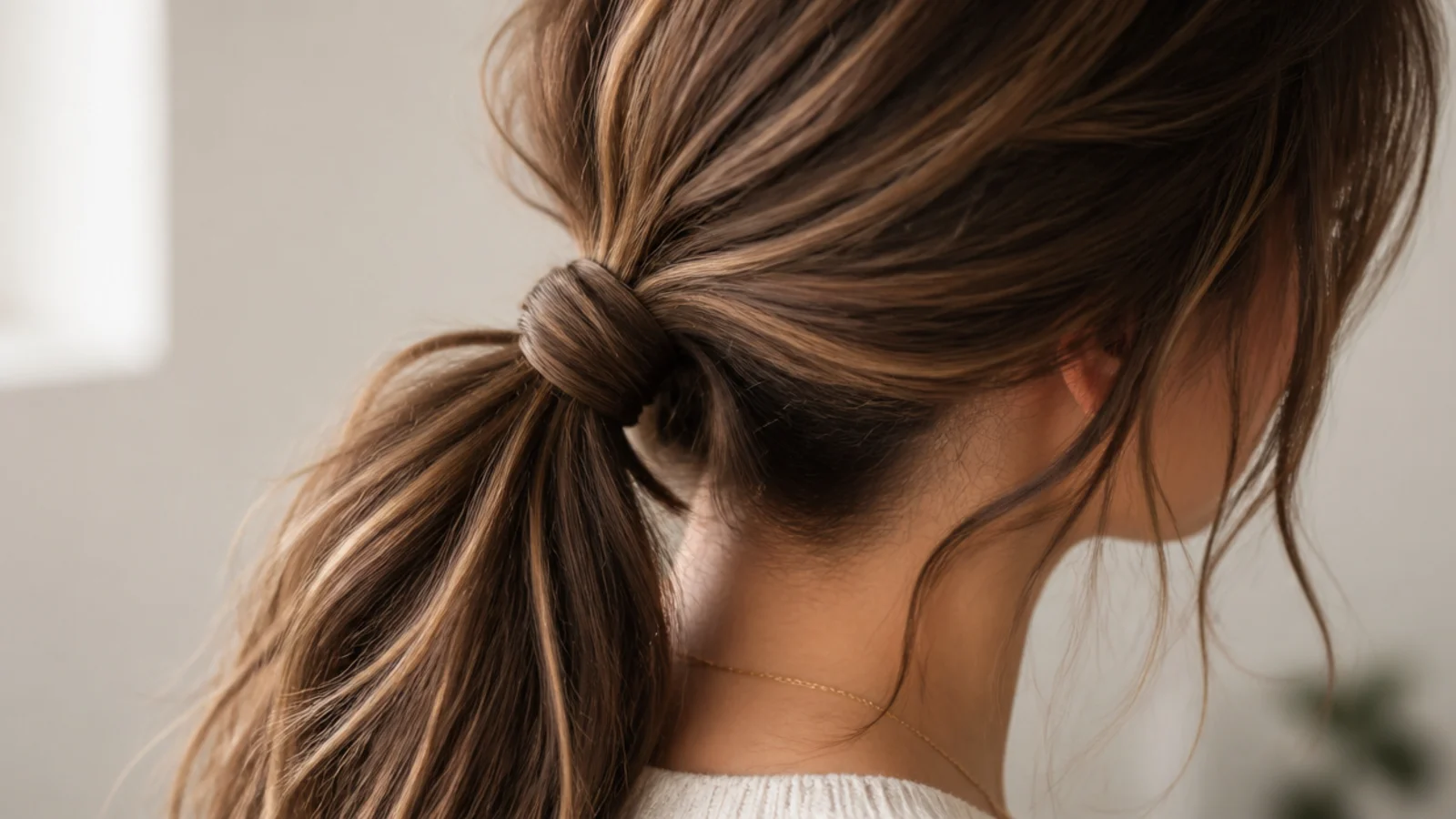
Only long hair can do this. Split the gathered ponytail into two halves, tie them in a single overhand knot, then tuck and pin the two ends into the base. There is no visible elastic at all, which is why it looks expensive in photographs. It holds for two to three hours rather than a full day, so treat it as an event style. It works best on day-two hair, since clean strands slip straight out of the knot.
Who it suits: Hair past 24 inches with some texture; dinners and photos.
Tip: Two bobby pins pushed in from opposite directions at the knot double the hold time.
13. Sleek-Root Messy-Tail Ponytail for Long Hair
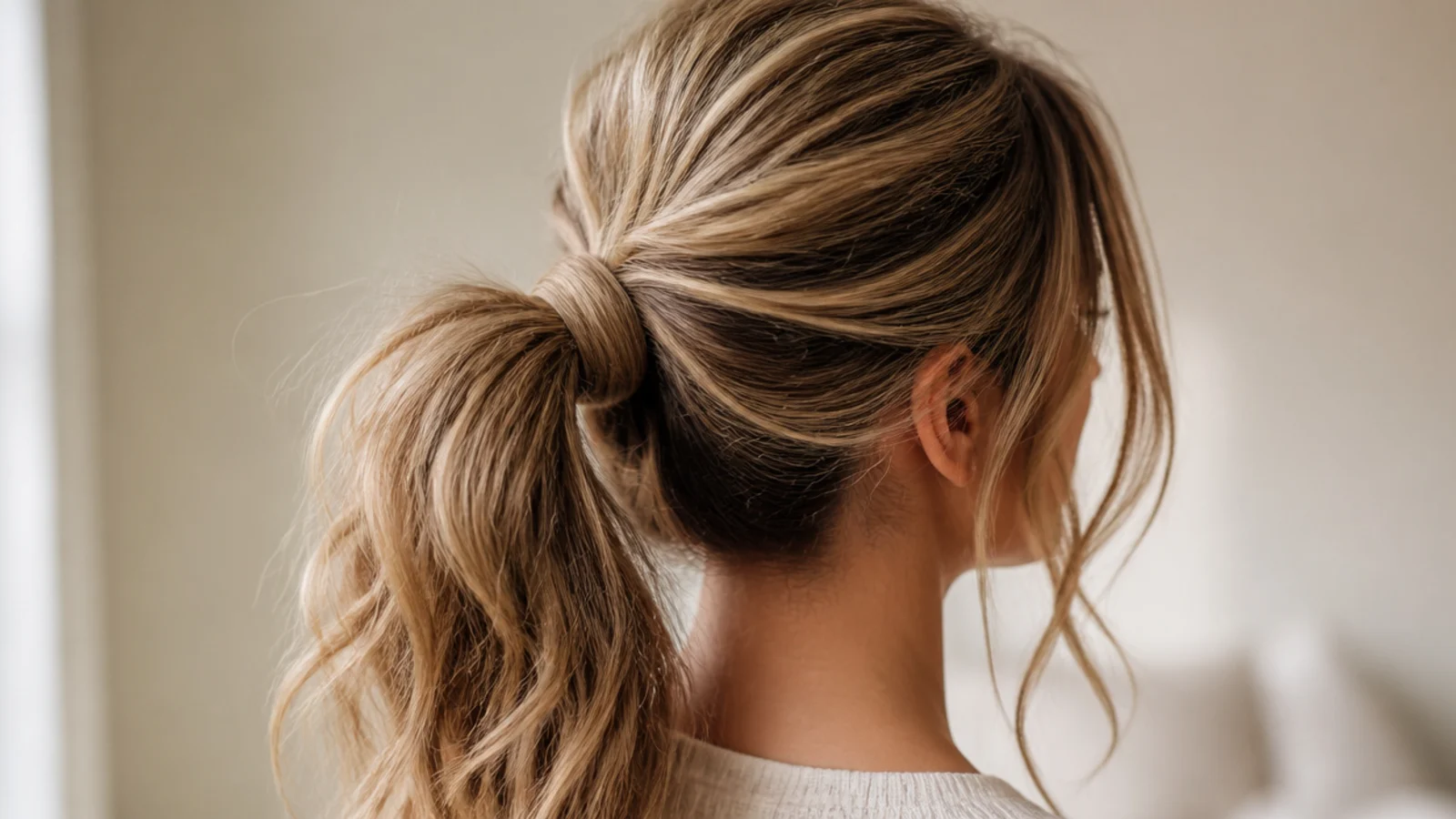
Two textures in one style: smooth the front and top with a boar bristle brush and a pea of smoothing cream, then leave the tail deliberately roughed up with texture spray and a light shake. The contrast is what makes it read as a choice rather than an accident, and it is the most office-appropriate messy ponytail there is. Long hair carries it best because there is enough tail for the texture to actually show, and it is the calmest option if you are prone to flyaways, as in hairstyles for frizzy hair. Under three minutes.
Who it suits: Frizz-prone long hair and workplaces with a polished dress code.
Tip: Use cream on the roots and spray on the tail; swapping them gives you a greasy tail and puffy roots.
14. Messy Ponytail with a Silk Scarf for Long Hair
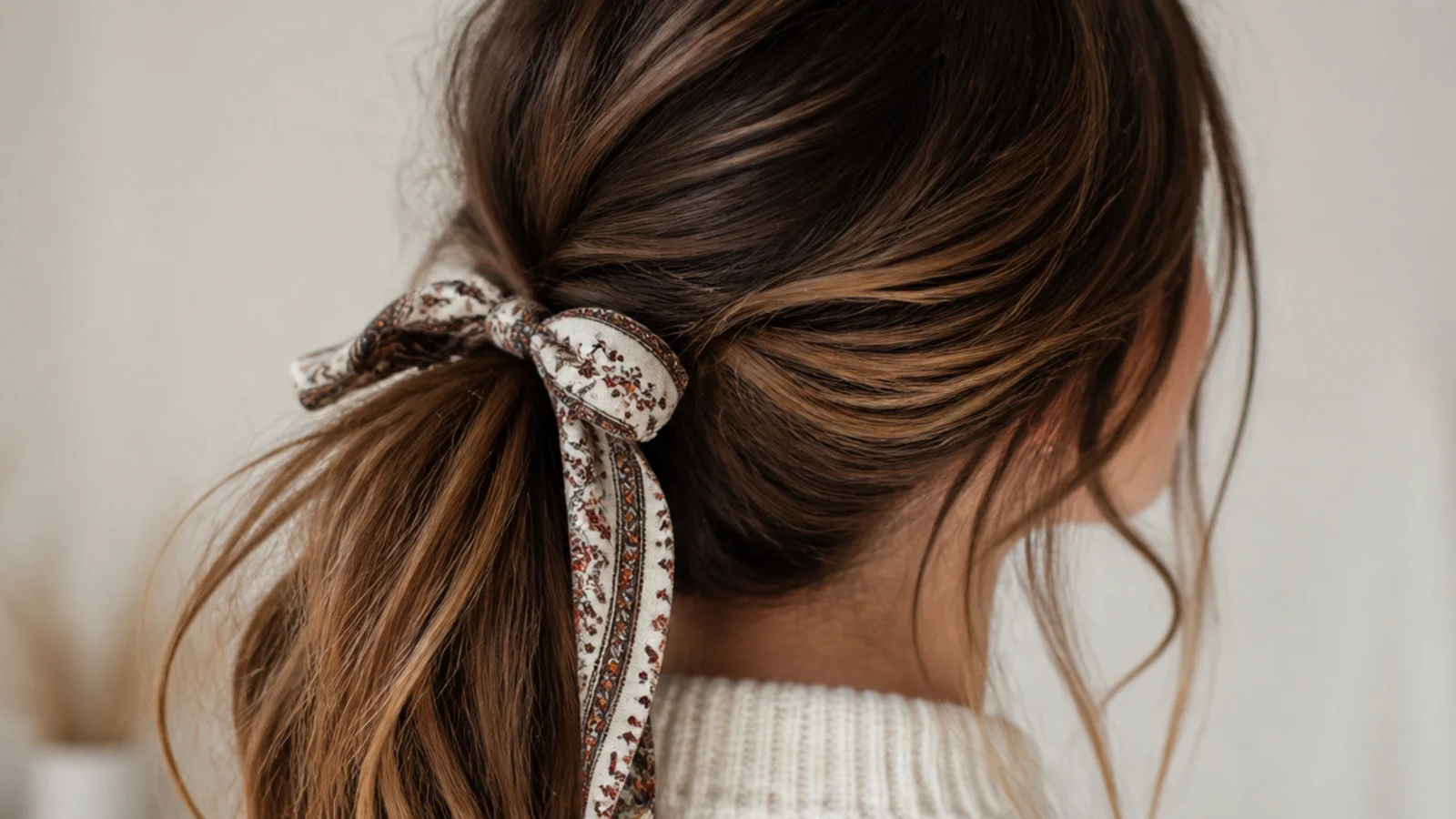
Tie the ponytail with an elastic first, then knot a narrow silk scarf around the base and let the ends trail down the tail. On long hair the trailing ends have somewhere to go, which is exactly why this looks better at 24 inches than at 14. Choose a scarf about two inches wide and 30 inches long. It also quietly hides a tie point that has gone loose, so it doubles as an afternoon rescue.
Who it suits: Anyone bored of plain ponytails; excellent for travel days.
Tip: Knot the scarf slightly above the elastic so it does not slide down the tail as you move.
15. Curly Messy Ponytail for Long Hair
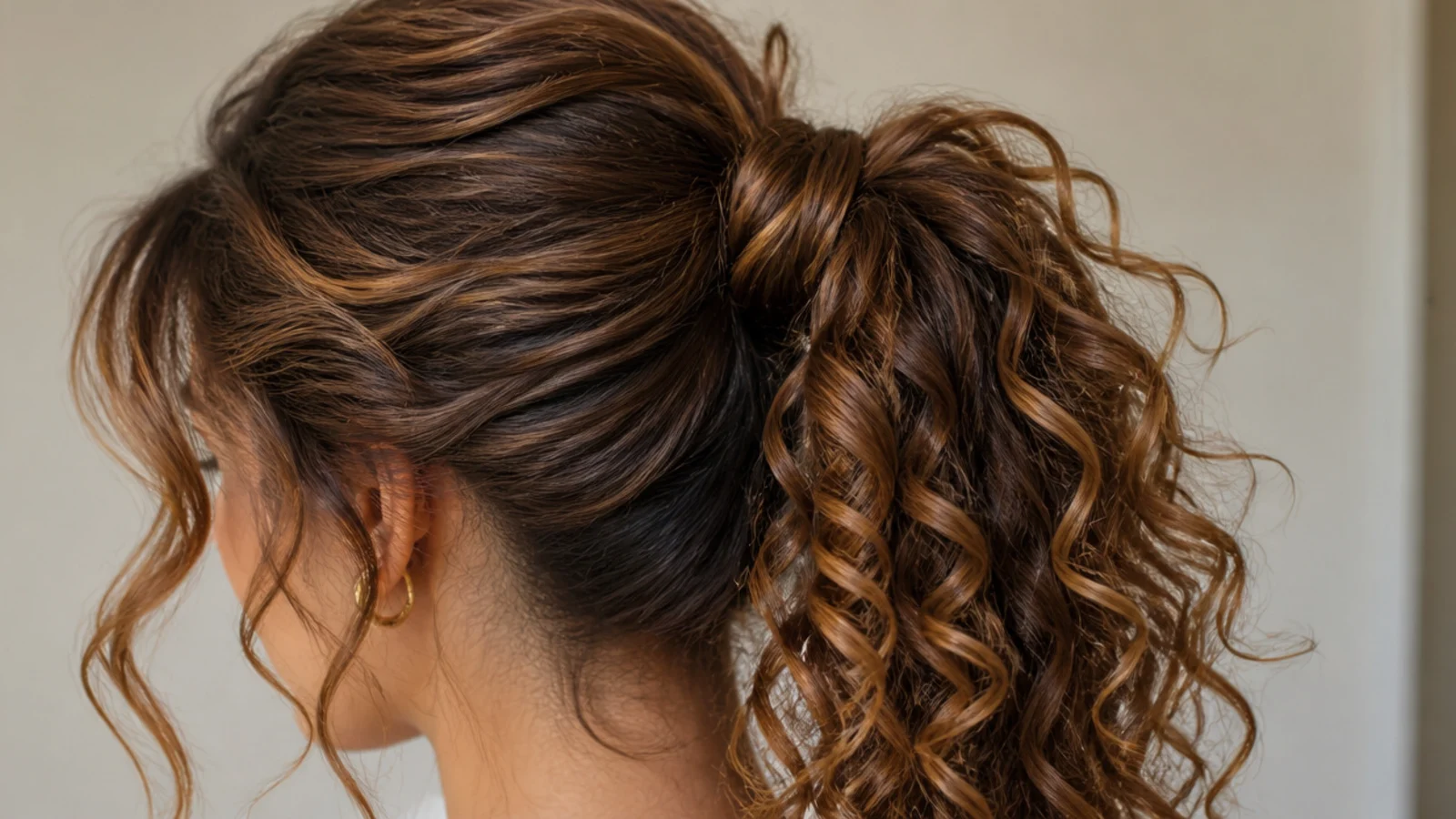
Long curls shrink when gathered, so tie higher than feels right and let the tail fall. Refresh with a water and leave-in mist first, scrunch, then gather with a spiral tie rather than an elastic so you do not flatten the curl pattern at the base. For 2a to 2c waves add a light mousse; for 3a to 3c coils skip the brush entirely and gather with your fingers. Full breakdown in curly messy ponytails.
Who it suits: 2a through 3c textures at collarbone length and longer.
Tip: Never gather dry curls with a brush; finger-gather damp and the frizz halo drops by half.
16. Double-Stacked Messy Ponytail for Extra Length
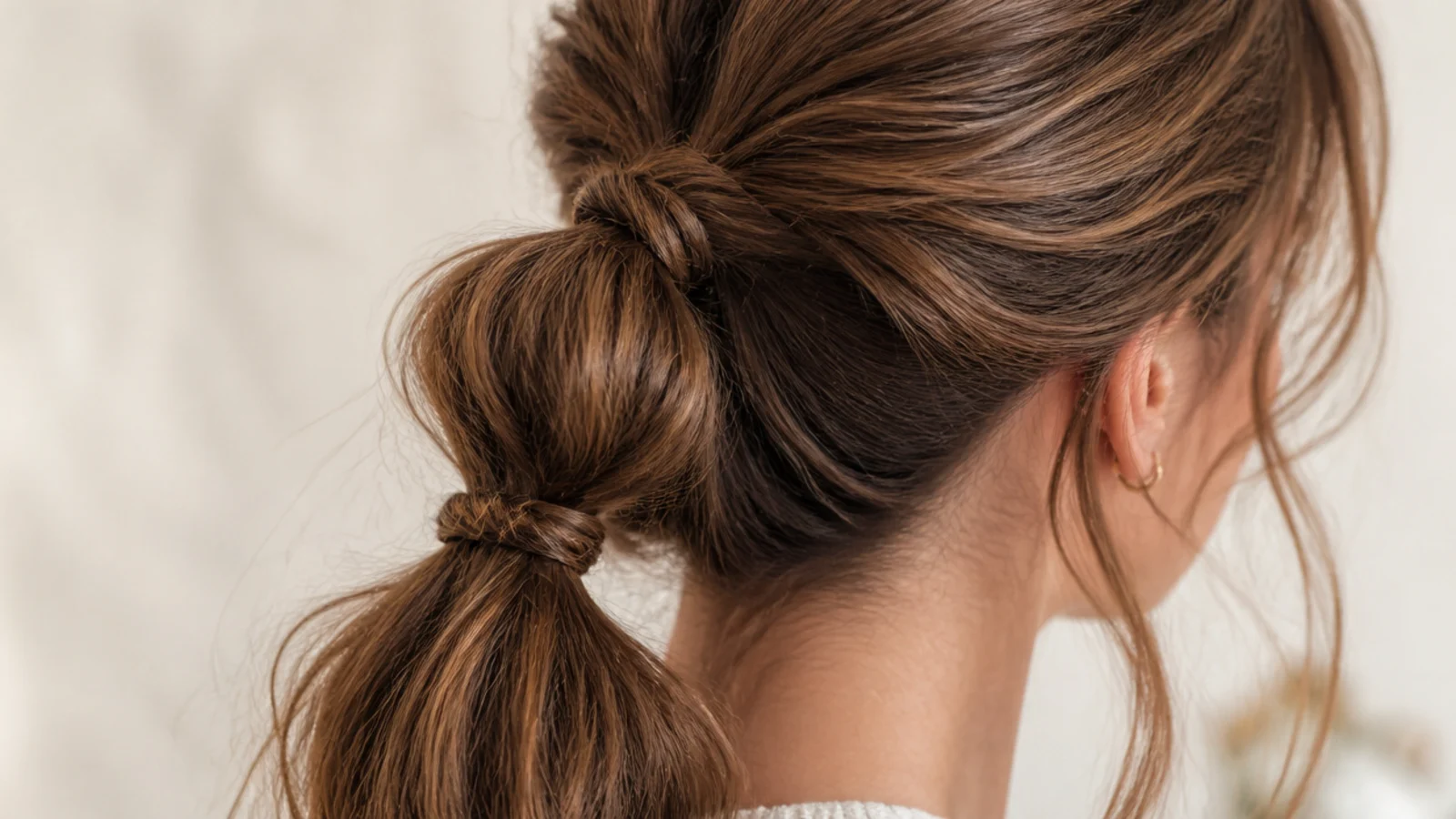
The oldest trick in the runway kit. Tie the top half of your hair into a high ponytail, then tie the bottom half into a second ponytail directly underneath it, and comb the top tail down so it hides the lower tie. The result looks twice as thick and sits higher than a single ponytail ever could on heavy hair, because the weight is split across two anchor points. If your cut is layered, the notes in mid-length haircut layers explain how layers change the tail shape. It takes four minutes and holds all day.
Who it suits: Long hair that is too heavy to stay in a high ponytail.
Tip: Tie the bottom section first if your hair is very heavy; it stops the top tie from sliding while you work.
17. Rope-Twist Messy Ponytail for Long Hair
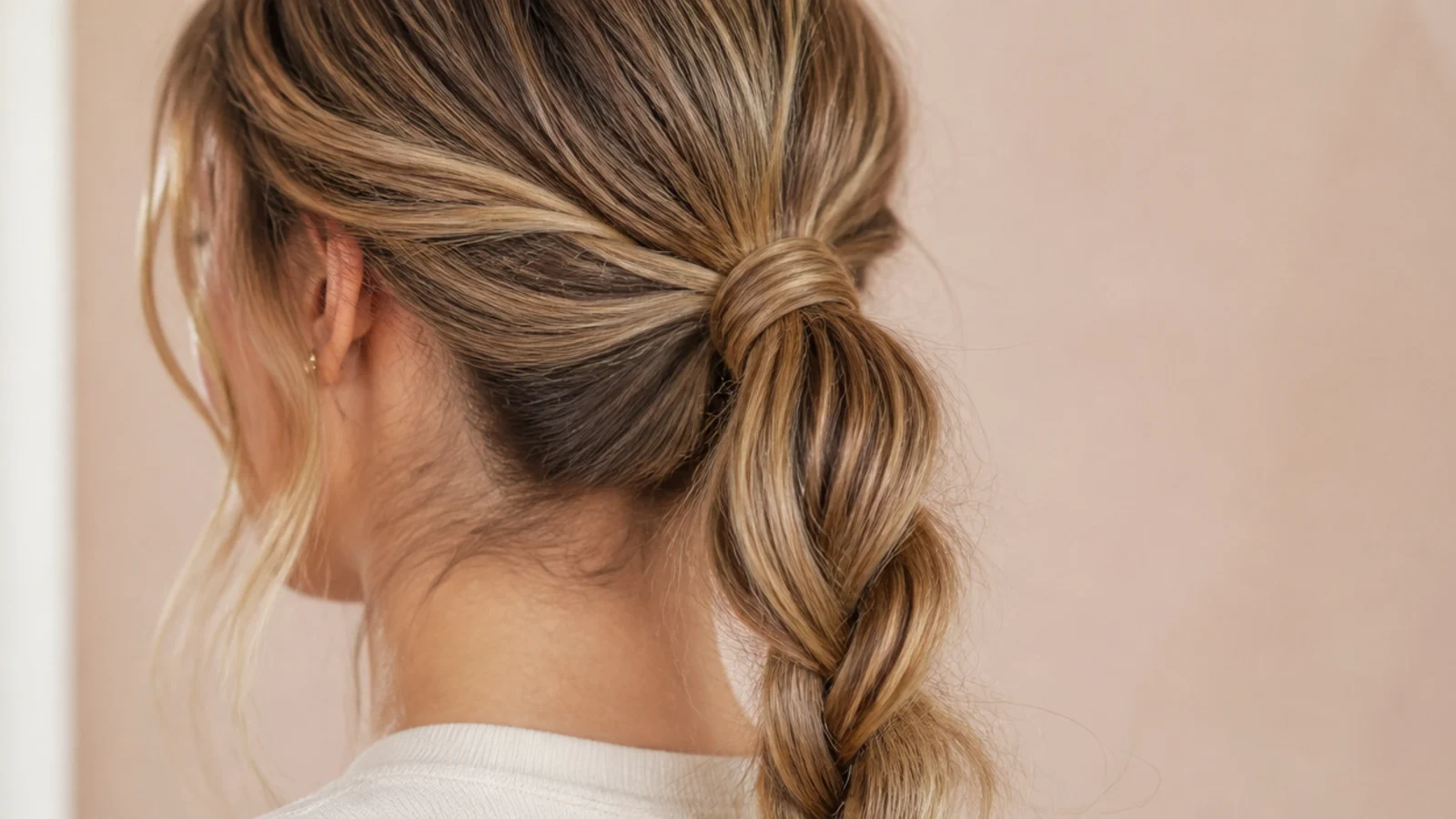
Tie a low ponytail, split the tail into two equal halves, twist each half clockwise, then wind the two around each other counterclockwise and secure the end. Long hair gives you enough tail for four or five full turns, which is what makes the rope read as a rope. Loosen the outer edges of each twist before you tie off. It keeps very long hair contained in wind and stops the ends from tangling on a coat collar.
Who it suits: Waist-length hair, windy days and commutes.
Tip: Twist and wind in opposite directions or the rope unravels within an hour.
18. Messy Ponytail with Claw Clip Support
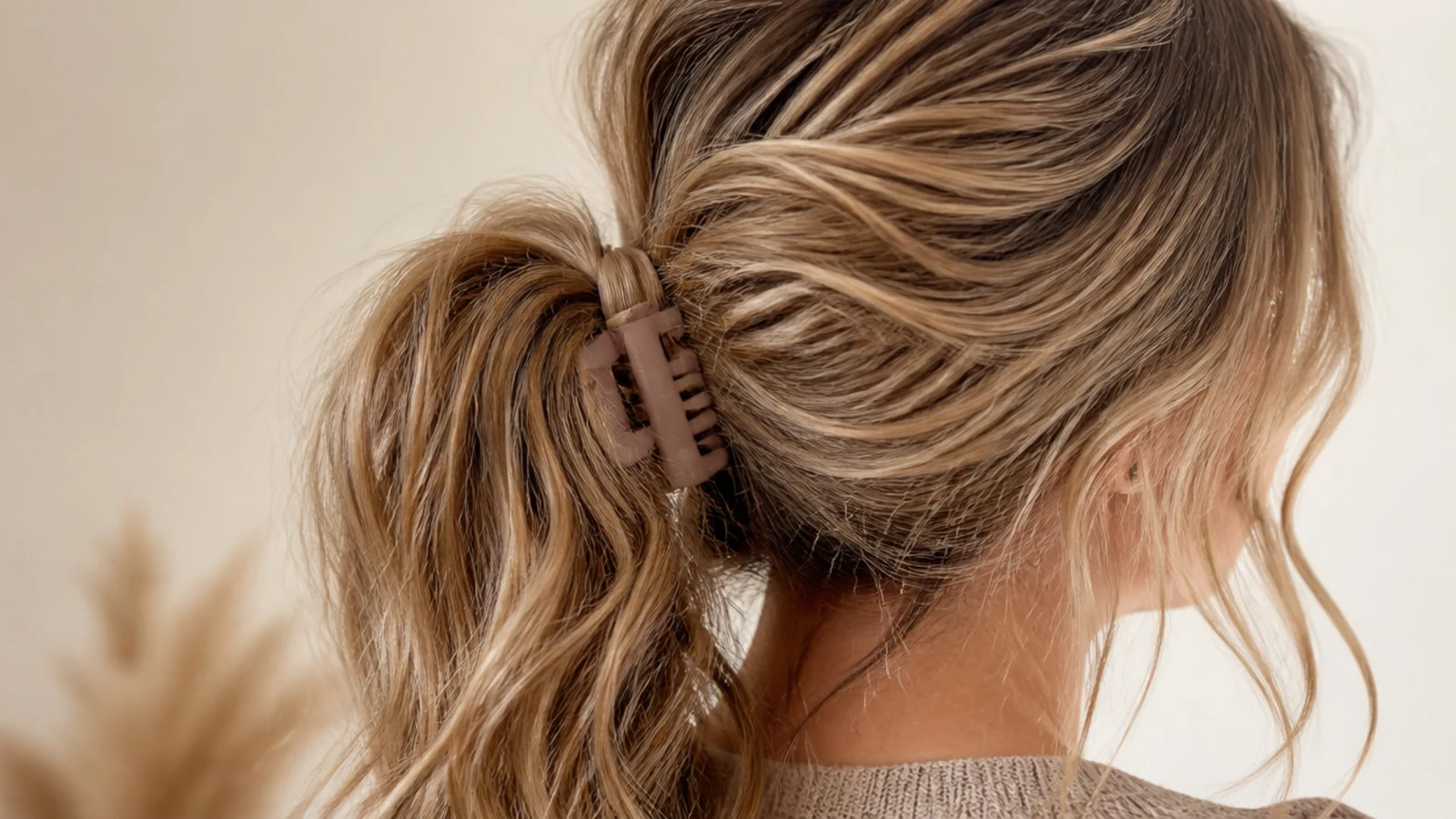
For hair too heavy for an elastic to hold at height, gather into a low ponytail, then clamp a medium claw clip vertically over the base so its teeth bite into the hair above the tie. The clip takes the vertical load off the elastic. It also means you can release and regather in three seconds when your scalp gets sore, which for very long hair is the difference between a style that lasts and one you take out at three o'clock.
Who it suits: Very thick or waist-length hair and long work days.
Tip: Choose a clip at least 3.5 inches long; smaller clips pop open under real long-hair weight.
19. Messy Ponytail on Second-Day Hair
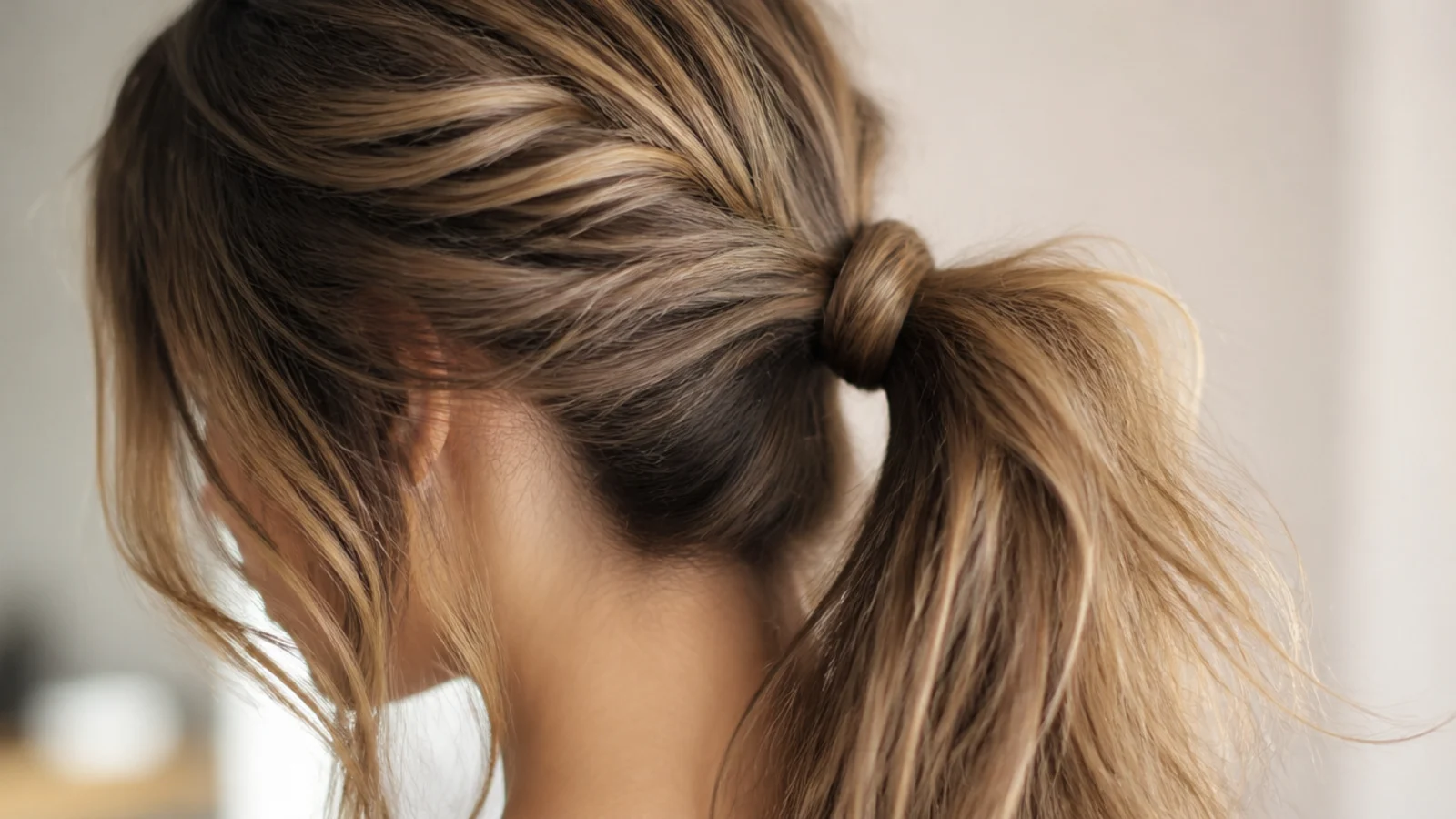
Not really a style so much as the best possible starting condition. Day-two hair has enough natural oil and residual product for strands to hold onto each other, which is precisely what a messy ponytail needs. Freshly washed long hair slips out of every tie and refuses to hold a tease. If you must style clean hair, spray dry shampoo at the roots and texture spray through the mid-lengths and wait two minutes before you gather. See also our frizzy hair routine.
Who it suits: Anyone whose ponytail collapses on wash day.
Tip: Dry shampoo the night before rather than the morning of; it absorbs while you sleep and grips better.
20. Extra-Loose Messy Ponytail for Waist-Length Hair
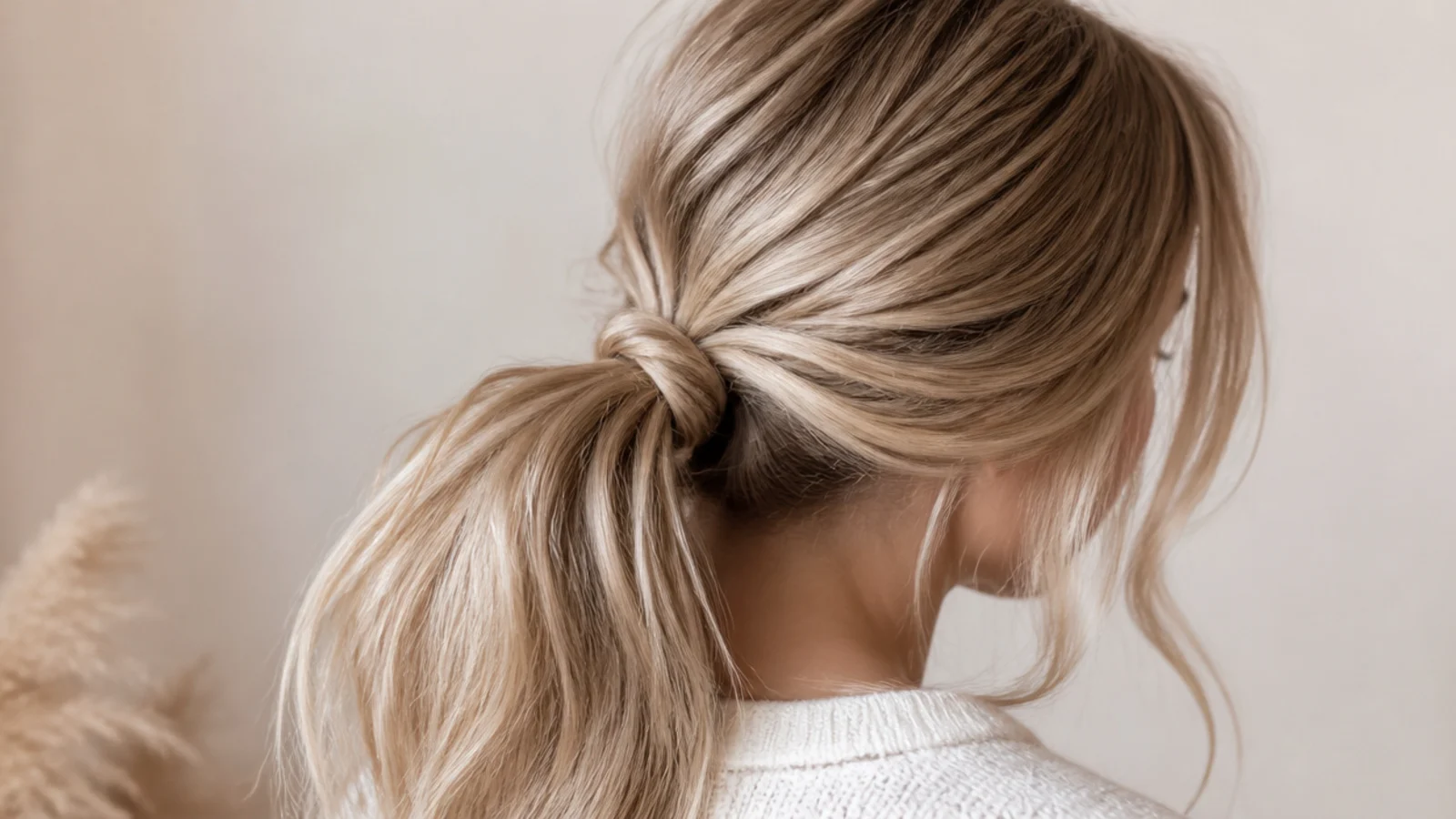
The deliberately undone version: tie low and leave real slack across the crown and around the ears, so the hair looks like it fell that way. It only works past about 26 inches, because shorter hair reads as a ponytail that is simply falling out. Gather with your fingers, tie loosely two inches below the nape, and then pull half an inch of slack out of each side above the ears. Set with a texture spray, never hairspray.
Who it suits: Waist-length hair, weekends and anyone who hates tension.
Tip: If it drops more than an inch in the first hour, your tie is too loose; move it up, do not tighten it.
What Makes a Ponytail Read Messy and Not Untidy
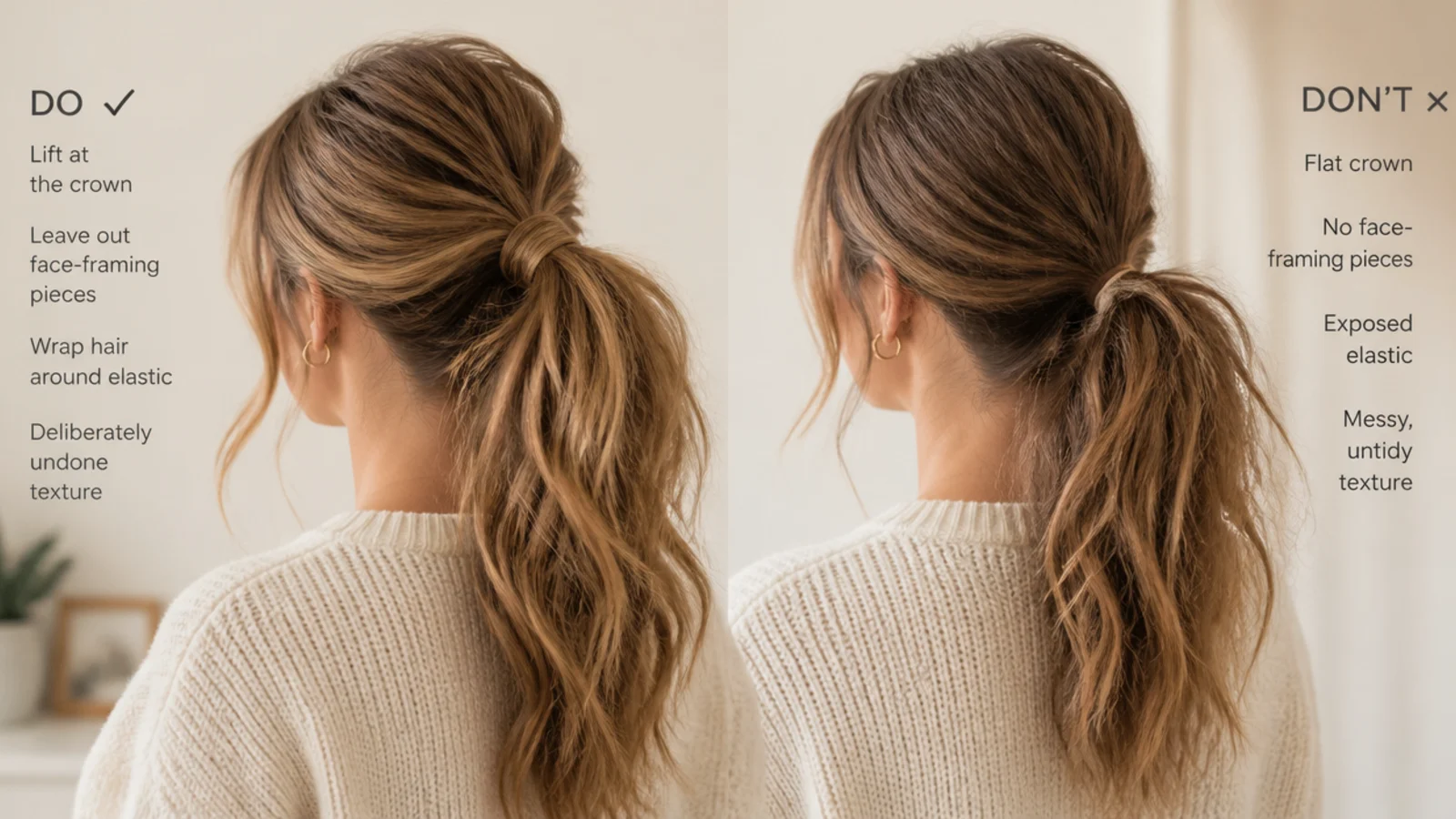
The difference is entirely in the order you do things. An untidy ponytail is one that started tight and then fell apart on its own, so the loose pieces are random and the base has gone slack. A messy ponytail is one that started secure and was loosened on purpose, from the top down, in specific places. Tie firmly first. Then tug small sections upward at the crown for height, loosen a little slack above each ear, and pull out the temple and ear pieces last. That final step is the one that reads as intentional, because those two face-framing strands are the pieces a stylist would choose, not the pieces gravity chooses. On long hair this matters more than at any other length, since the weight of the tail is constantly trying to create its own randomness. Secure, then edit. Never the other way around. The same principle runs through every look in the messy ponytail hub.
Why Long Hair Sags and How to Keep a Ponytail Up All Day
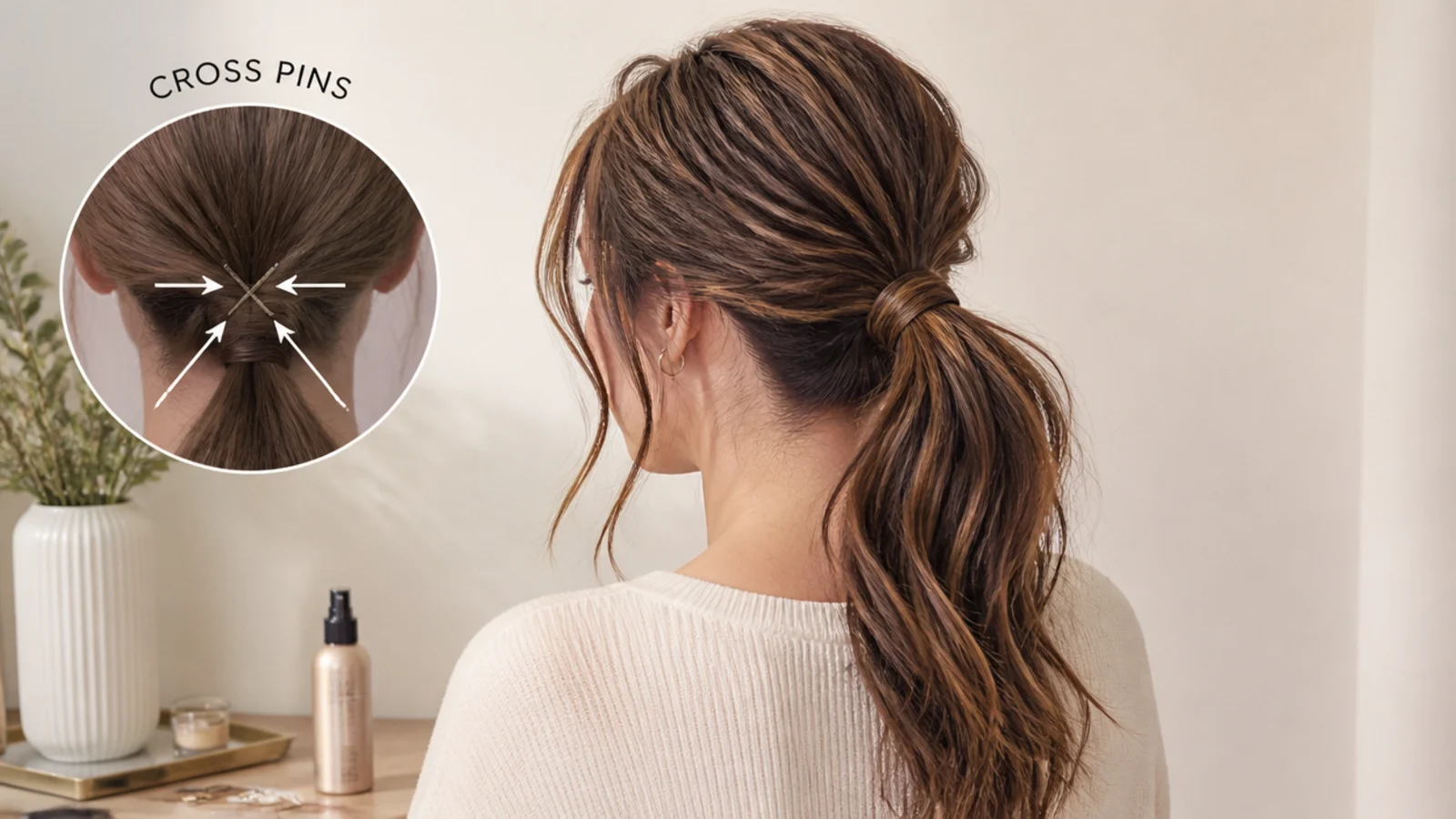
Hair past 20 inches can weigh several ounces once gathered, and that load pulls straight down on a band that is only holding by friction. Three fixes stack well. First, place the tie level with the top of your ear rather than at the very crown, so the anchor sits over bone rather than off the back of your skull. Second, push two bobby pins up into the underside of the base, crossed in an X, with the open ends pointing toward the crown; they take the vertical load off the elastic and cost you fifteen seconds. Third, tease a small pad at the crown before gathering, which gives the elastic texture to grip instead of slick hair to slide on. Expect to retighten once around hour five no matter what you do; a 20 second reseat is normal for long hair and not a sign the style failed. For extra height, our high messy ponytail guide goes further on lift.
Messy Ponytails for Fine Long Hair vs Thick Long Hair

Fine long hair and thick long hair fail in opposite directions, so they need opposite fixes. Fine hair goes flat and the tail looks thin at the ends, so build width: backcomb the crown, use the double-stacked ponytail so the top tail covers the lower one, and choose a mid or high placement, which makes the tail swing forward and look fuller from the front. Volume powder at the roots beats mousse here because it adds grit without weight. Thick long hair has the opposite problem, which is pure mass, so reduce load instead: go low or half-up, split the hair into two anchor points, use a claw clip or a wide scrunchie over a thin elastic, and skip teasing entirely since you do not need it. A thick tail that has been teased just becomes a triangle. If frizz is part of your picture, the styling notes in hairstyles for thick frizzy hair transfer directly.
The Products That Actually Matter for a Long Messy Ponytail
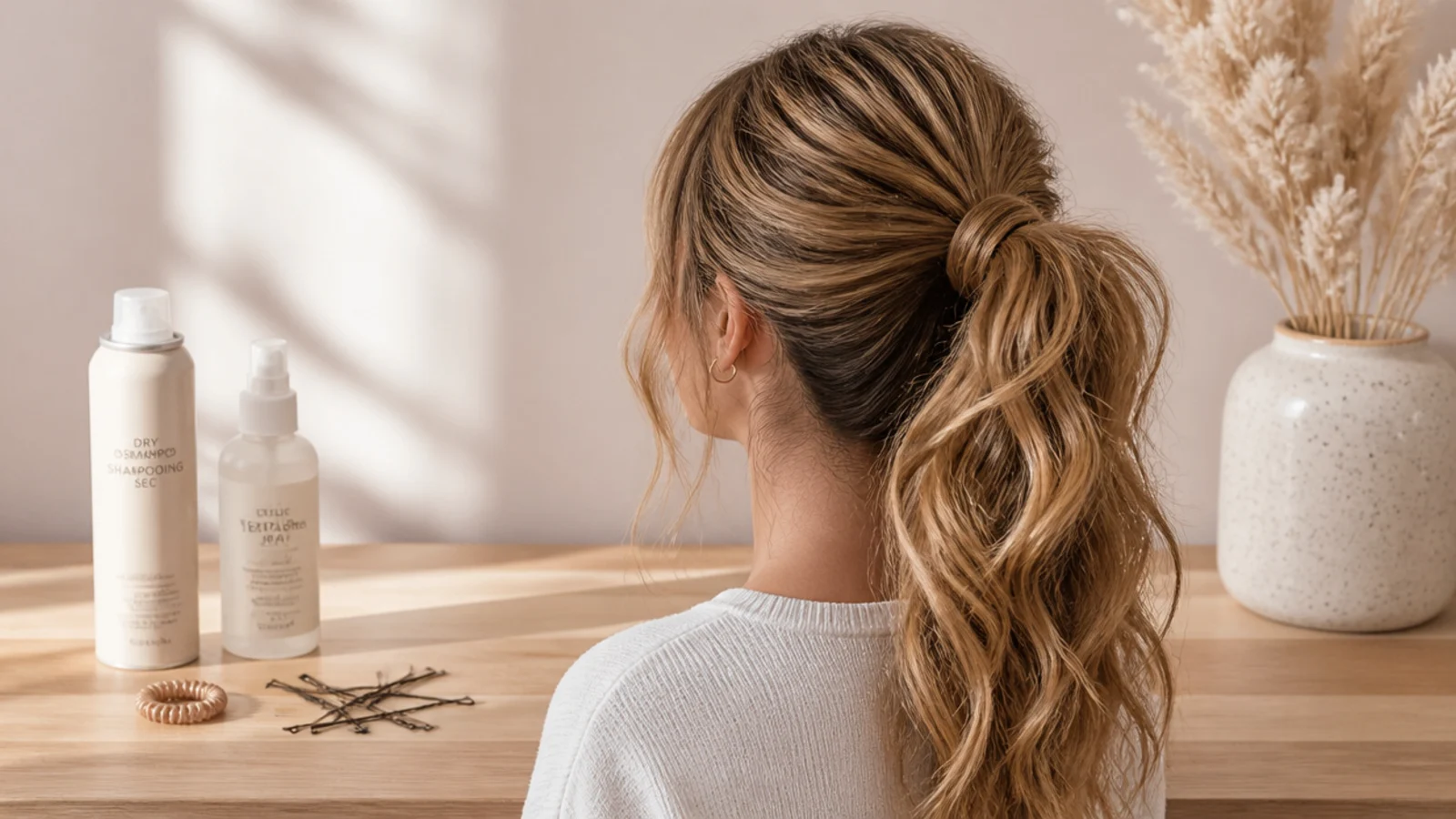
You need four things and none of them are expensive. Dry shampoo, applied at the roots and left two minutes before you touch it, is the grip layer; it is why day-two hair works and clean hair does not. Texture spray through the mid-lengths and ends, roughly six to eight sprays on long hair, makes loose pieces separate into strands instead of hanging in a sheet. A spiral or fabric-covered tie prevents the sharp crease that a thin snag-free elastic leaves in long hair, and it distributes tension across a wider band, which matters because the tie point is where long hair snaps. Bobby pins, matched to your color, do the structural work under the base. That is the whole kit. Skip strong-hold hairspray entirely, since it freezes the texture you spent the last five minutes creating; if you want hold, use a flexible or working spray from at least ten inches away.
Where to Place the Tie: Crown, Mid or Nape on Long Hair
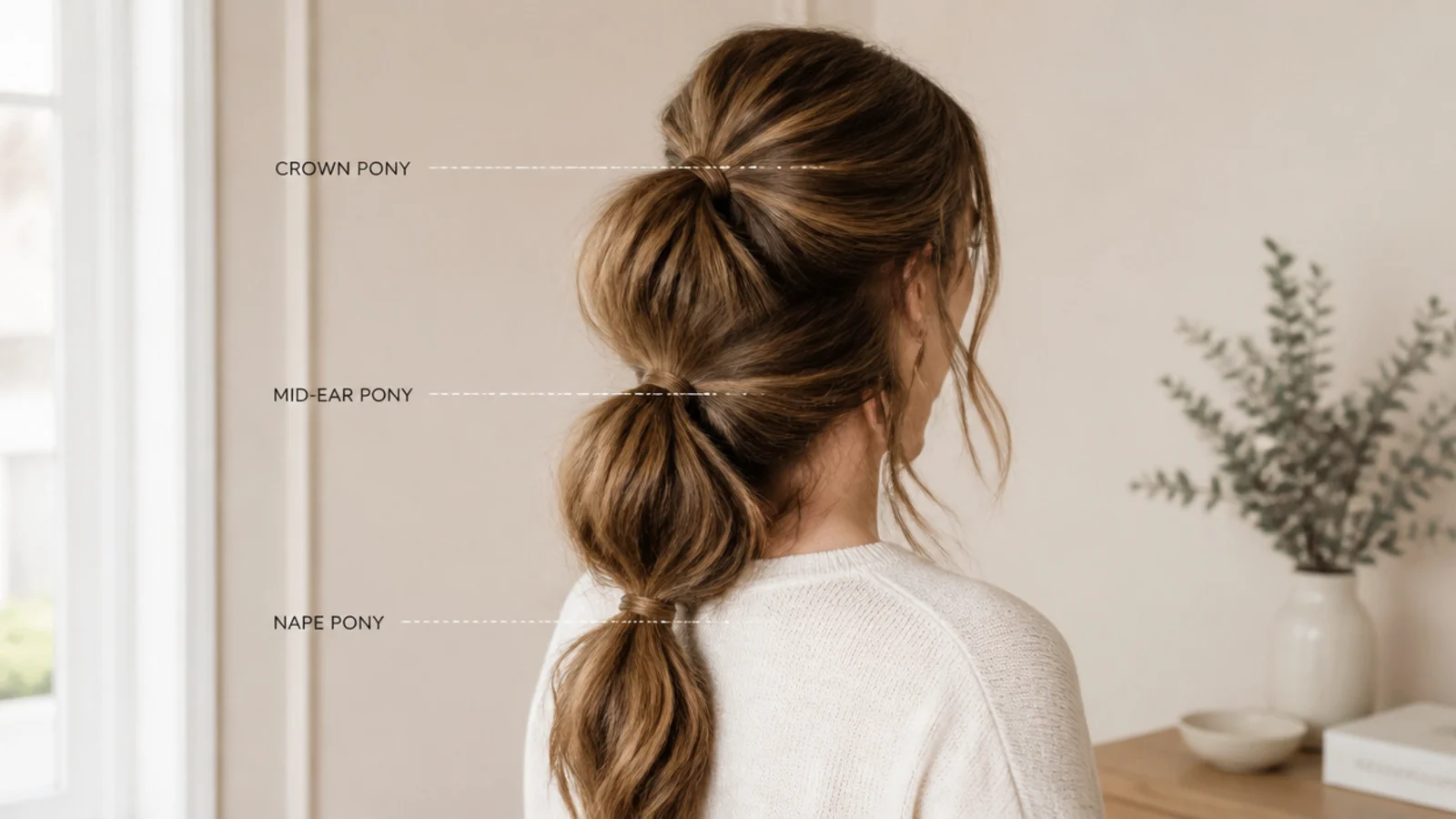
Placement changes the mood more than any other decision, and on long hair it also changes how long the style lasts. A crown tie, level with the outer corner of your eyebrow, reads lifted, young and energetic; it also lifts the cheekbones and jaw slightly, which is why it photographs well. It is the hardest placement for heavy hair to hold, so it needs the tease and the crossed pins. A mid tie, level with the top of the ear, is the reliable middle ground: enough lift to look deliberate, low enough that gravity is not fighting you all day. A nape tie reads soft, romantic and grown-up, works under hats and coat collars, and is the only placement that will not give you a tension headache by afternoon. If you are choosing between the ends of that range, read low messy ponytails and then compare against the main messy ponytail guide.
Frequently Asked Questions
How do you do a messy ponytail with long hair?
Start with day-two hair or spray dry shampoo at the roots and wait two minutes. Finger-comb rather than brush, gather at the top of your ear, and tie firmly. Then tug five small crown sections upward, wrap a strand from underneath around the elastic and pin it, and pull out the temple and ear pieces last. Finish with texture spray, not hairspray.
How do you stop a long ponytail from sagging?
Move the tie down to ear level so the weight sits over bone instead of hanging off the back of the skull, then push two crossed bobby pins up into the underside of the base with the open ends pointing toward the crown. Tease a small pad at the crown before gathering so the elastic has texture to grip. Expect one 20 second retighten around hour five.
Should hair be clean or dirty for a messy ponytail?
Day-two hair grips far better than freshly washed hair, and on long hair the difference is dramatic because clean strands simply slide out of the tie. If you have to style clean hair, dry shampoo at the roots and texture spray through the mid-lengths will fake the grip. Applying dry shampoo the night before works better than the morning of.
Which hair tie will not dent or crease long hair?
A spiral or coil tie leaves the least crease because it spreads pressure around a wider band instead of pinching one line, and a fabric-covered scrunchie is a close second. Thin snag-free elastics are the worst offenders on long hair, since the tie point is exactly where long hair snaps. If you need real hold, use a thin elastic with a scrunchie over it.
How do you hide the hair tie on a ponytail?
Take a half-inch section from underneath the tail, not from the top, wrap it around the elastic two or three times, and pin the end up into the base with one bobby pin pushed toward the crown. Taking the section from underneath is what keeps the wrap flat and hidden. On long hair you have plenty of length to wrap, so two or three full turns is easy.
Is a high or low messy ponytail better for long hair?
Low is better for comfort and longevity, since a nape tie carries the weight straight down and will not cause a tension headache. High is better for lift and photographs, but heavy long hair fights it all day. Mid-height, level with the top of the ear, is the compromise most long-haired people end up living in.
How do you add volume to a ponytail with long, fine hair?
Backcomb three sections at the crown and smooth the top layer over the tease before you gather, then use the double-stacked method: tie the top half high and the bottom half directly underneath, and comb the top tail down to hide the lower tie. Volume powder at the roots beats mousse, because it adds grit without adding weight that fine long hair cannot carry.
Do messy ponytails damage long hair?
They are gentler than sleek ponytails, because the base is deliberately loosened and wider ties work fine. The real risks are wearing the tie in the same spot every day, which concentrates friction at one point on the shaft, and tying long hair while it is wet. Move the placement between crown, mid and nape across the week and use a fabric tie.
How long does a messy ponytail last on long hair?
Six to eight hours with pins under the base and a teased crown, and roughly four hours without them. Low and half-up placements last longest because gravity is doing less work against the tie. A no-elastic knotted ponytail is the shortest at two to three hours, which is why it is better treated as an event style than a workday one.
What messy ponytail works for waist-length hair specifically?
The extra-loose low ponytail and the rope twist both suit 26 inches and up. Extra-loose only works at that length, since shorter hair just looks like it is falling out. The rope twist keeps very long ends from tangling on a coat collar. For anything higher than ear level at that length, the double-stacked ponytail is the one that will actually hold.
Which messy ponytail look are you saving?
If you take one thing from these 20 messy ponytail ideas for long hair, make it the order of operations. Prep with dry shampoo or use day-two hair so the strands have grip, gather and tie at the height you want, anchor with two crisscrossed bobby pins under the base if your hair is past 22 inches, tug small sections upward at the crown for volume, wrap a strand around the elastic to hide it, and only then pull out the temple and ear pieces. That last step is what separates deliberate from disheveled, and it takes about ten seconds. Save the placements you like, then go deeper on low messy ponytails or high messy ponytails.