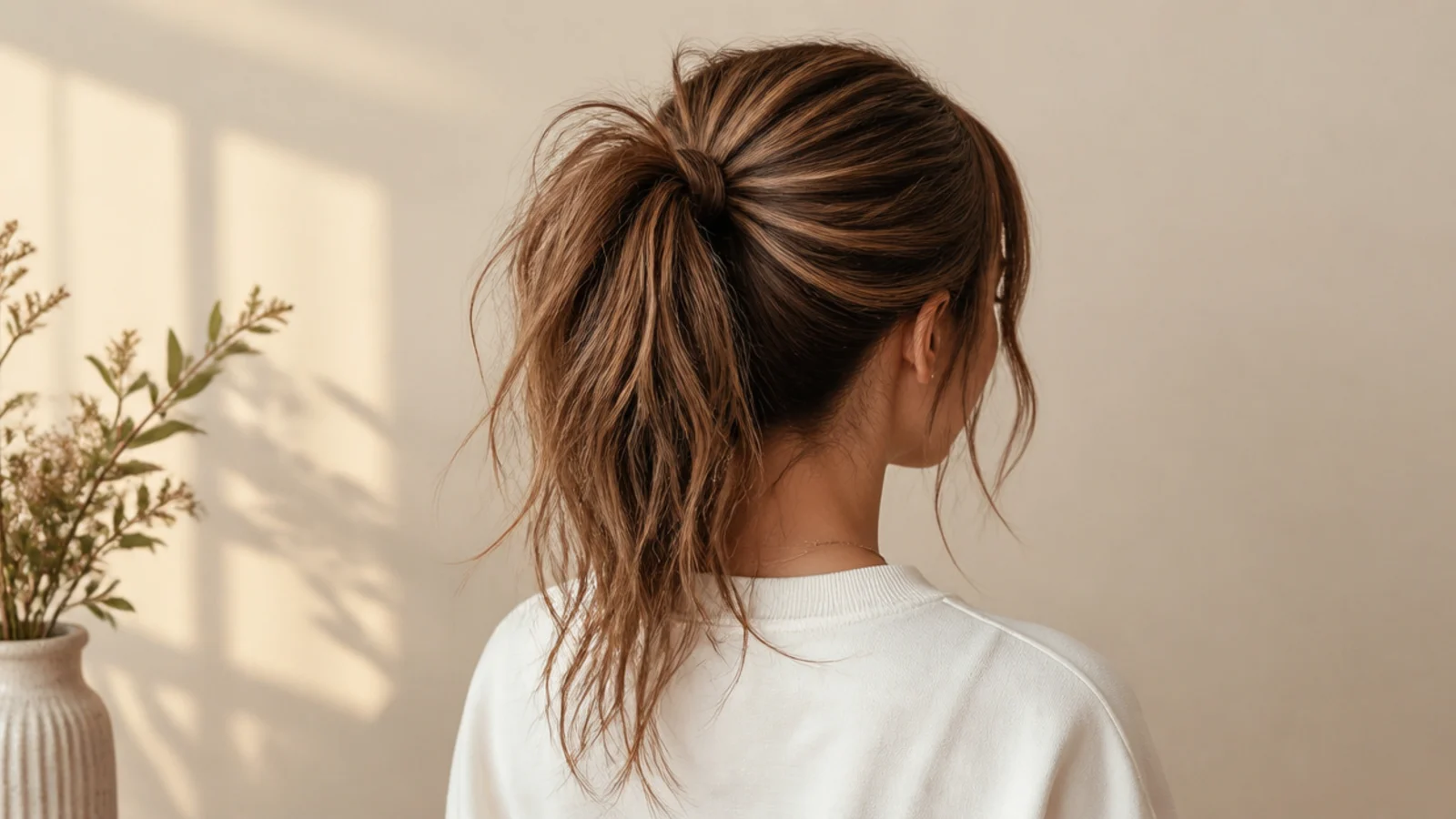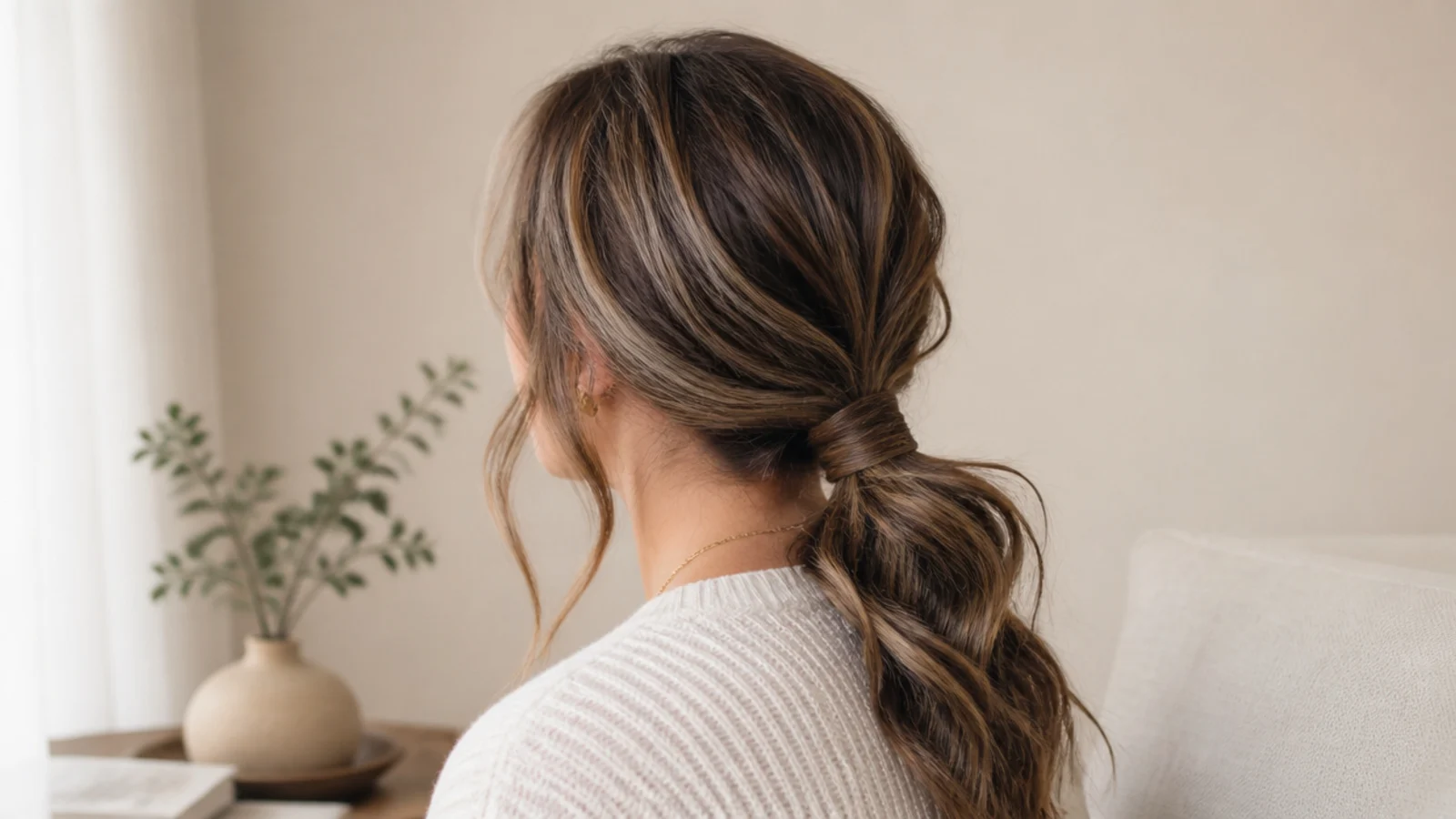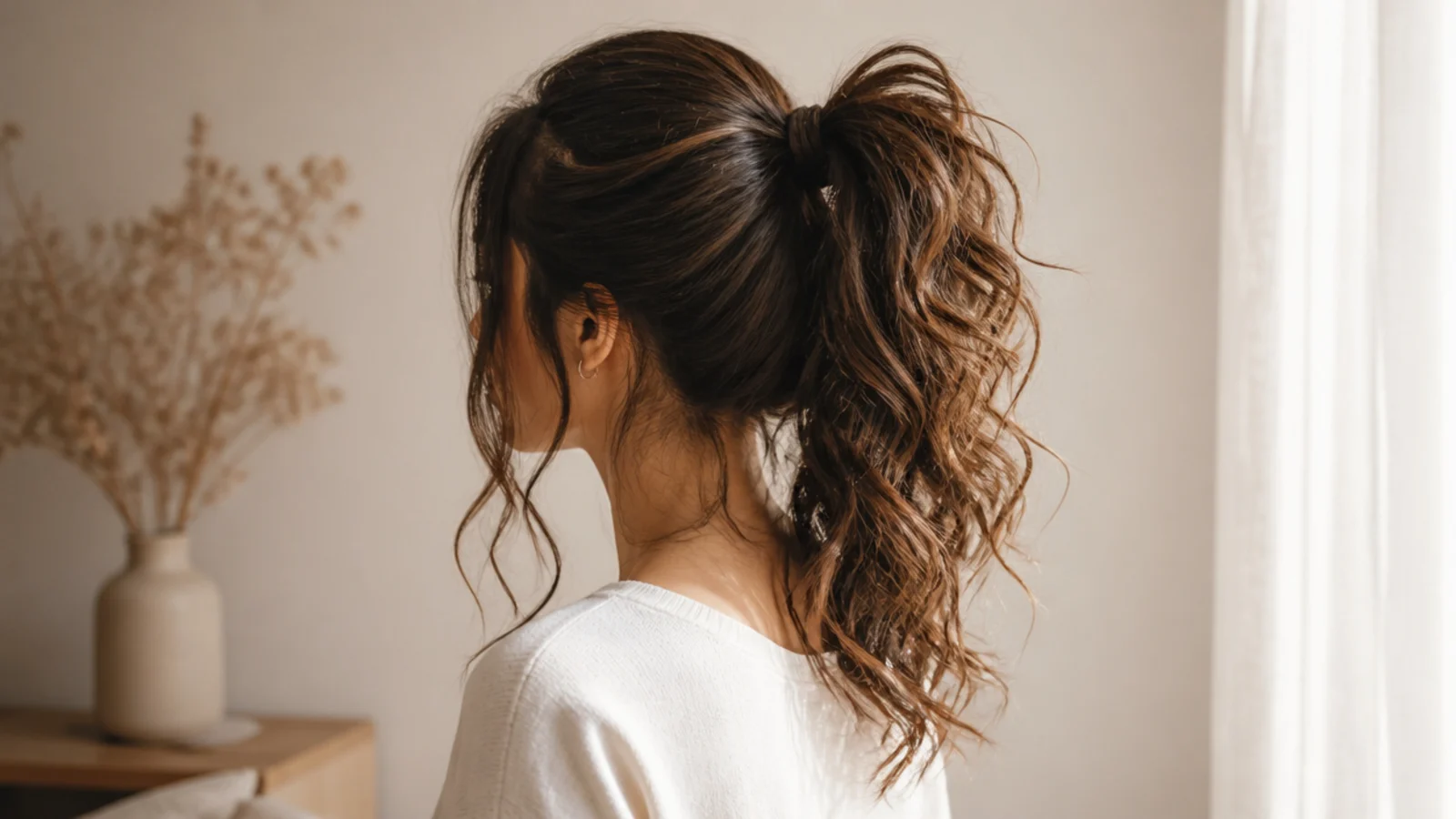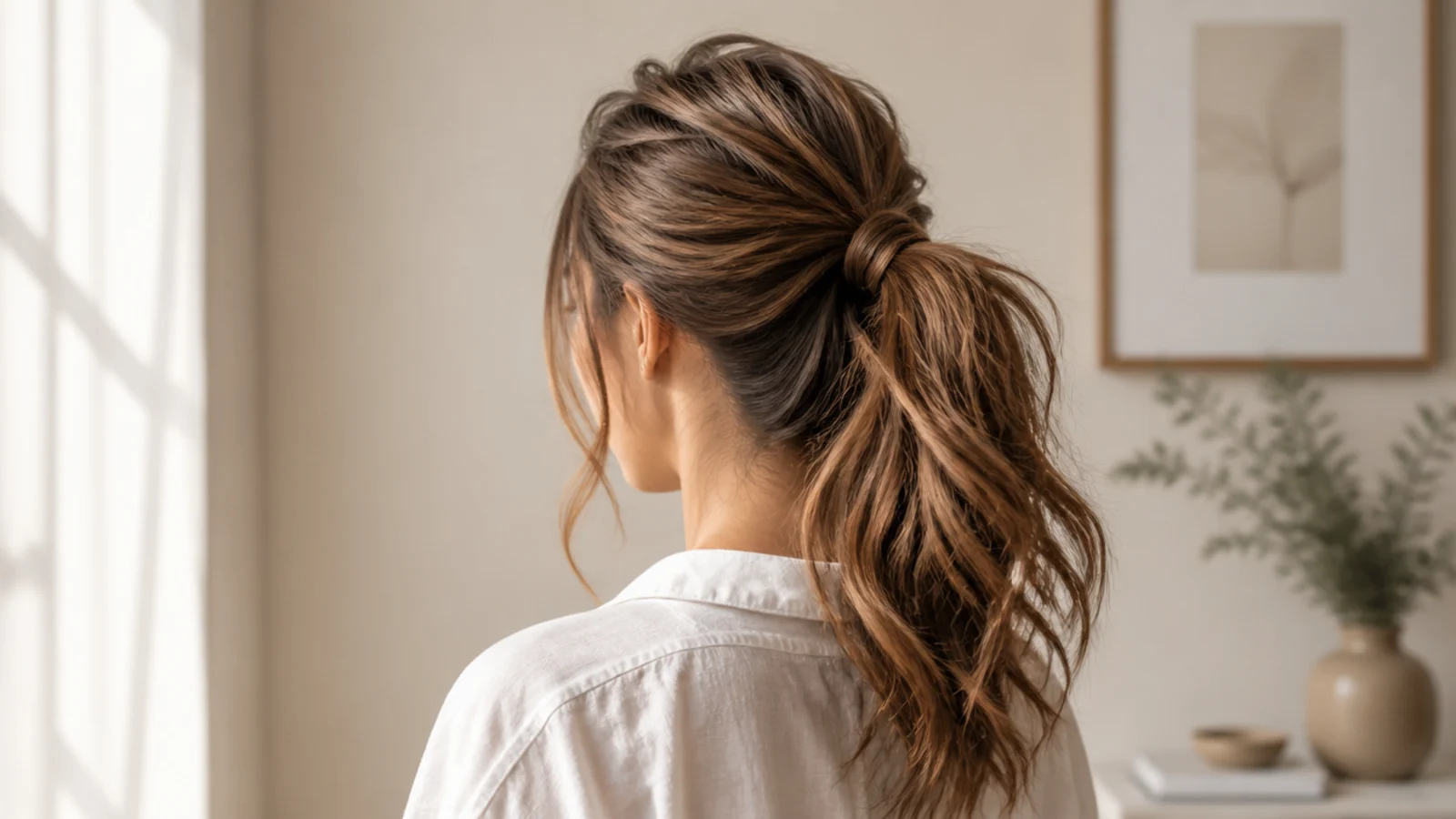
Quick Comparison
| High Messy Ponytail | Low Messy Ponytail | |
|---|---|---|
| Tie placement | At the crown, level with the top of the ears | At the nape, level with or below the earlobes |
| Overall effect | Lifted, energetic, face-lifting | Soft, romantic, understated |
| Volume needed | Essential; teased base or it collapses | Optional; the nape supports it naturally |
| Scalp tension | Higher; the main cause of ponytail headaches | Lower; weight sits against the head |
| All-day hold | Slips without pins or a stacked second elastic | Holds easily with one elastic |
| Best hair length | Shoulder length and longer, or short with a bungee band | Works from a chin-length bob upward |
| Face shapes it flatters | Round, square and heart; adds vertical height | Long and oval; adds width at the jaw |
| Best occasions | Gym, school, casual daytime, festivals | Office, weddings, dinners, evening events |
| Time to build | About 3 to 5 minutes with teasing | About 2 to 3 minutes |
1. Teased Crown High Messy Ponytail
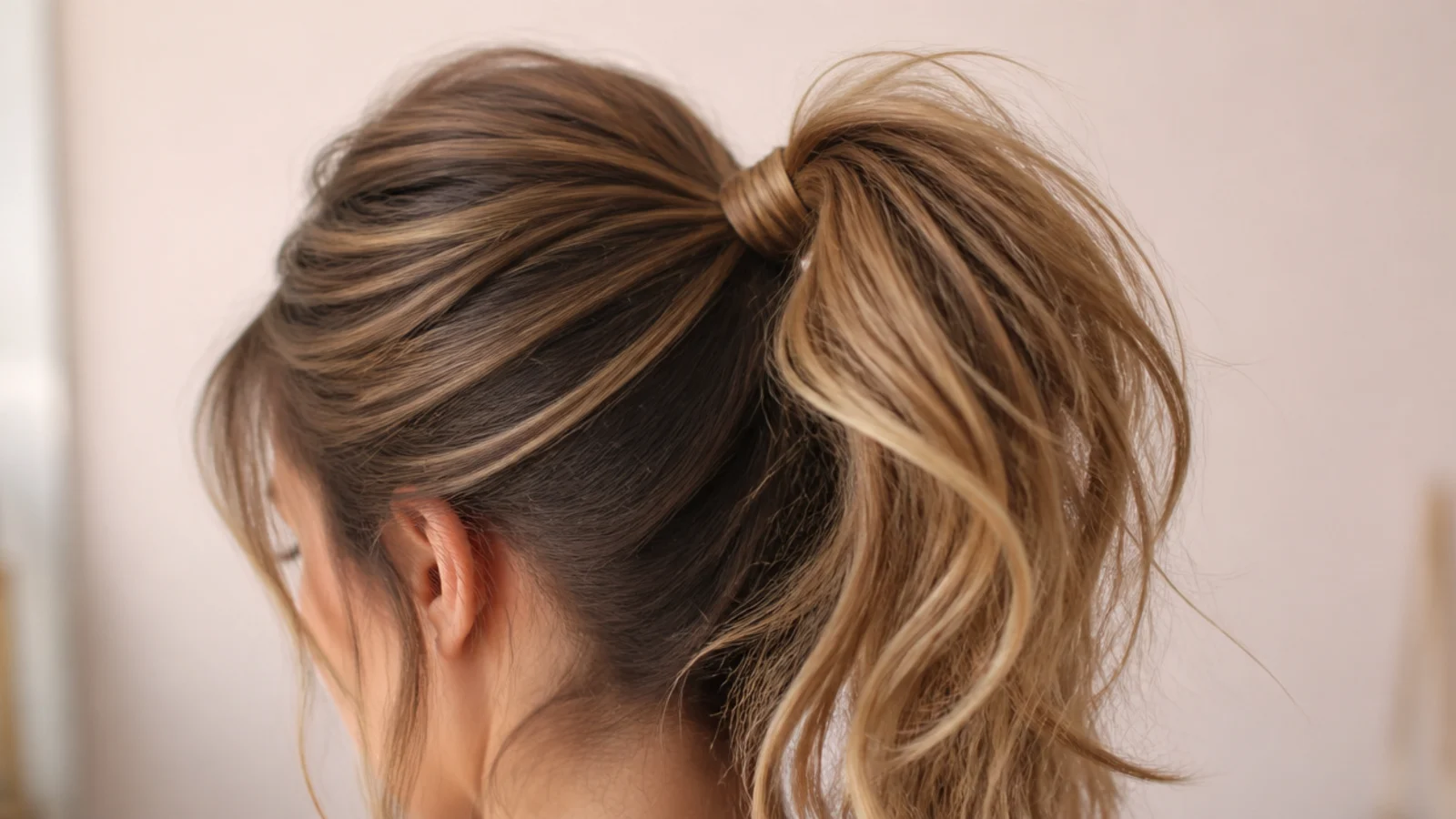
The foundation look and the one every other idea builds on. Section off the top three inches of hair from your hairline back, back-comb the underside in short two-inch strokes with a fine-tooth teasing comb, then smooth the surface layer over the tease with a boar bristle brush so it looks soft, not shredded. Gather everything at the crown and tie. Finish by tugging four or five small sections upward at the crown to rebuild the height the elastic flattened. It reads polished from the front and undone from the side, and it is the base for most looks on the messy ponytail hub.
Who it suits: Every length past the shoulders, and fine to medium density most of all.
Tip: Tease the underside only. Teasing the top layer is what turns volume into visible frizz.
2. Upside-Down Gather High Messy Ponytail
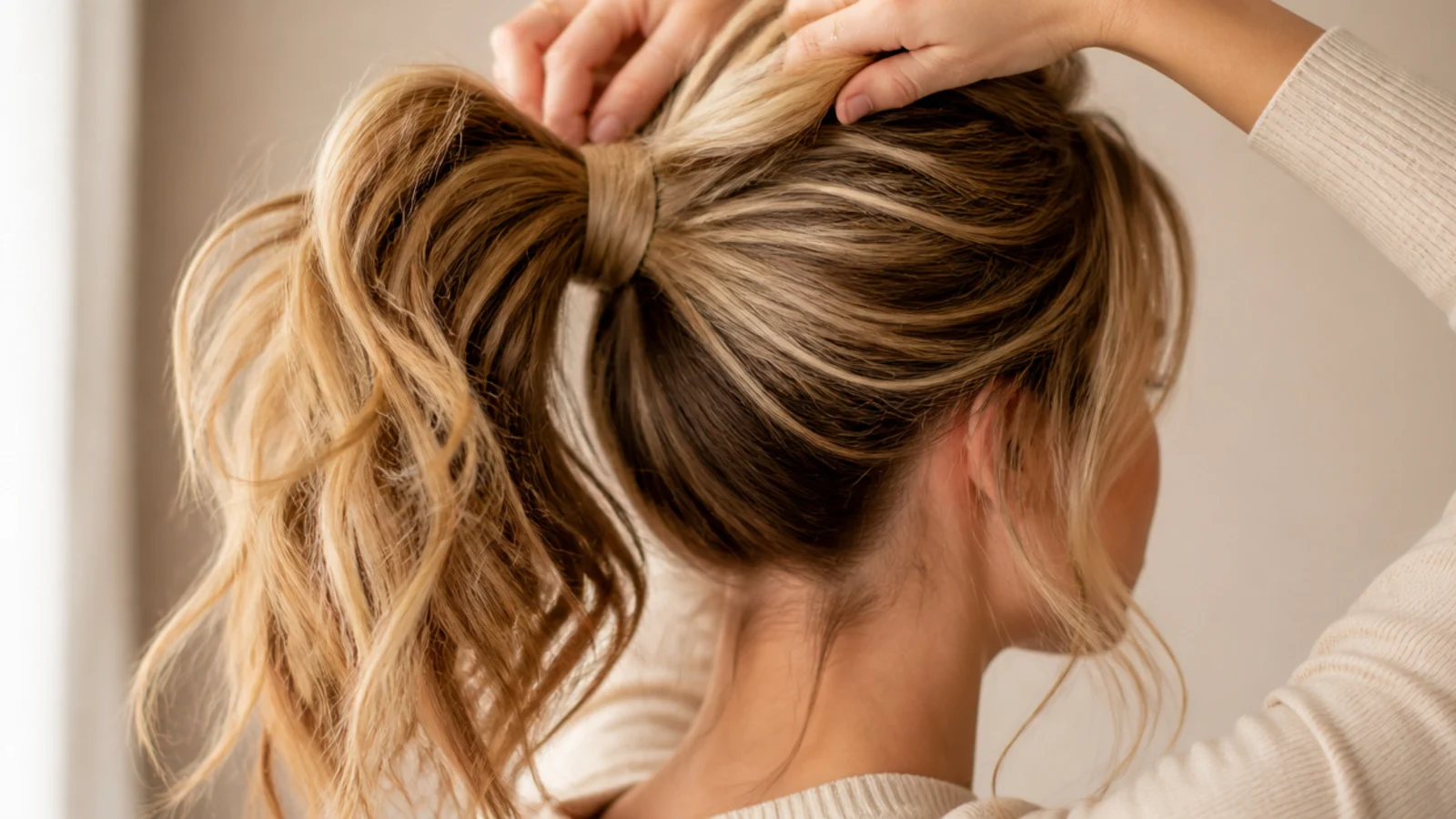
The fastest volume hack there is, and it costs zero product. Flip your head fully forward, brush all the hair toward the floor, gather it at what is now the top of your head, and tie before you stand up. Gravity holds the roots away from the scalp while you secure, so the base sets with lift already built in. Stand up, shake once, then tug the crown. It takes about 40 seconds and gets you most of the way to a teased look without a comb touching your hair.
Who it suits: Fine or limp hair, and anyone in a rush before work or school.
Tip: Tie one inch higher than feels right upside down; it drops when you stand up.
3. Stacked Two-Elastic High Messy Ponytail
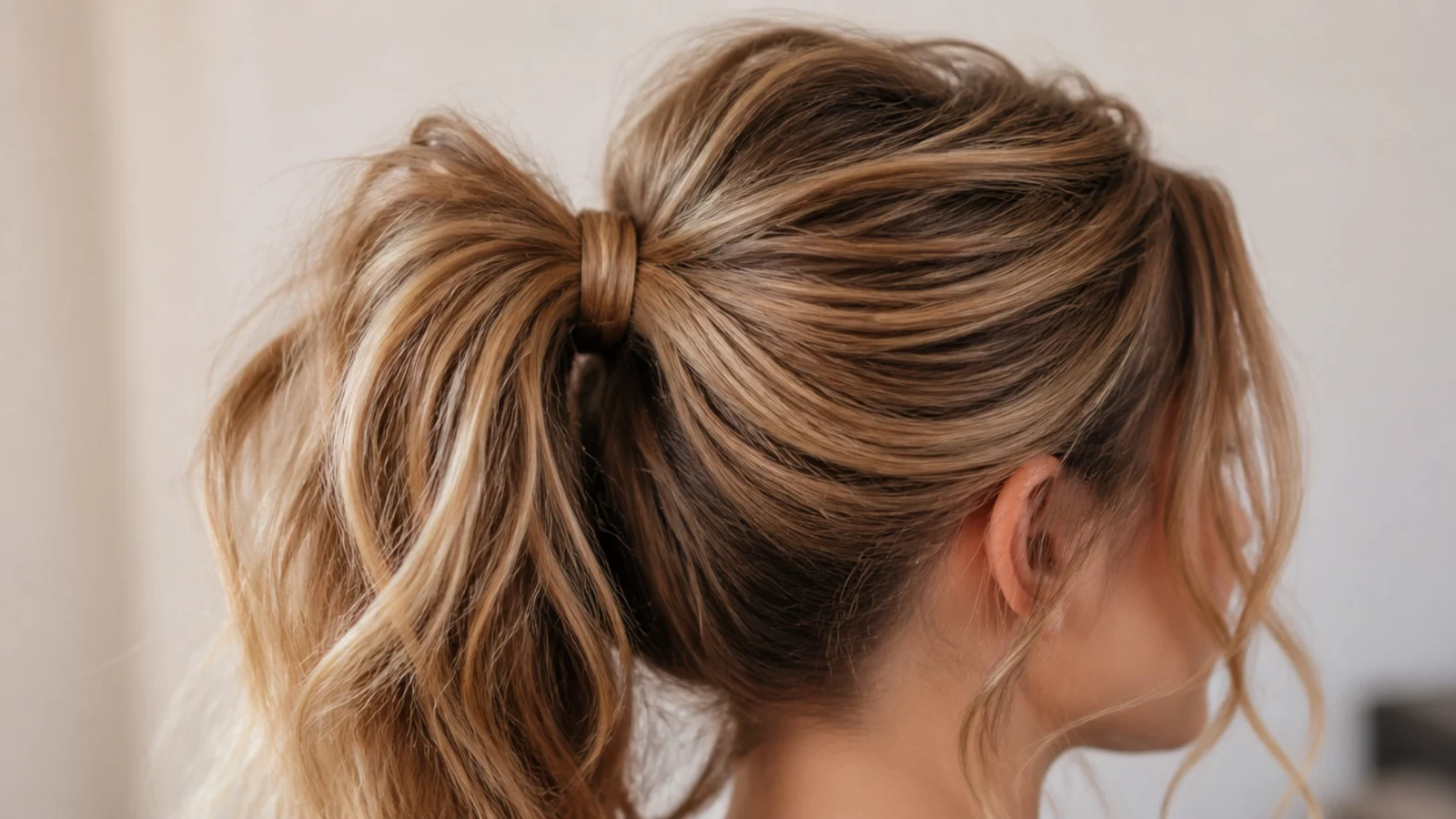
The illusion trick that makes a thin tail look twice as full. Split your hair horizontally into an upper and lower half, tie the top half at the crown, then tie the lower half about an inch and a half below it. Fluff the top tail so it falls over and completely hides the second elastic. You now have one apparently enormous ponytail, and because the weight is split across two ties, it sags far less than a single heavy elastic ever does. It also lasts through a full workday.
Who it suits: Fine hair, thin ponytails, and anyone whose single pony looks stubby.
Tip: Match both elastics to your hair color so a gap in the top tail never gives it away.
4. Wrapped Elastic High Messy Ponytail
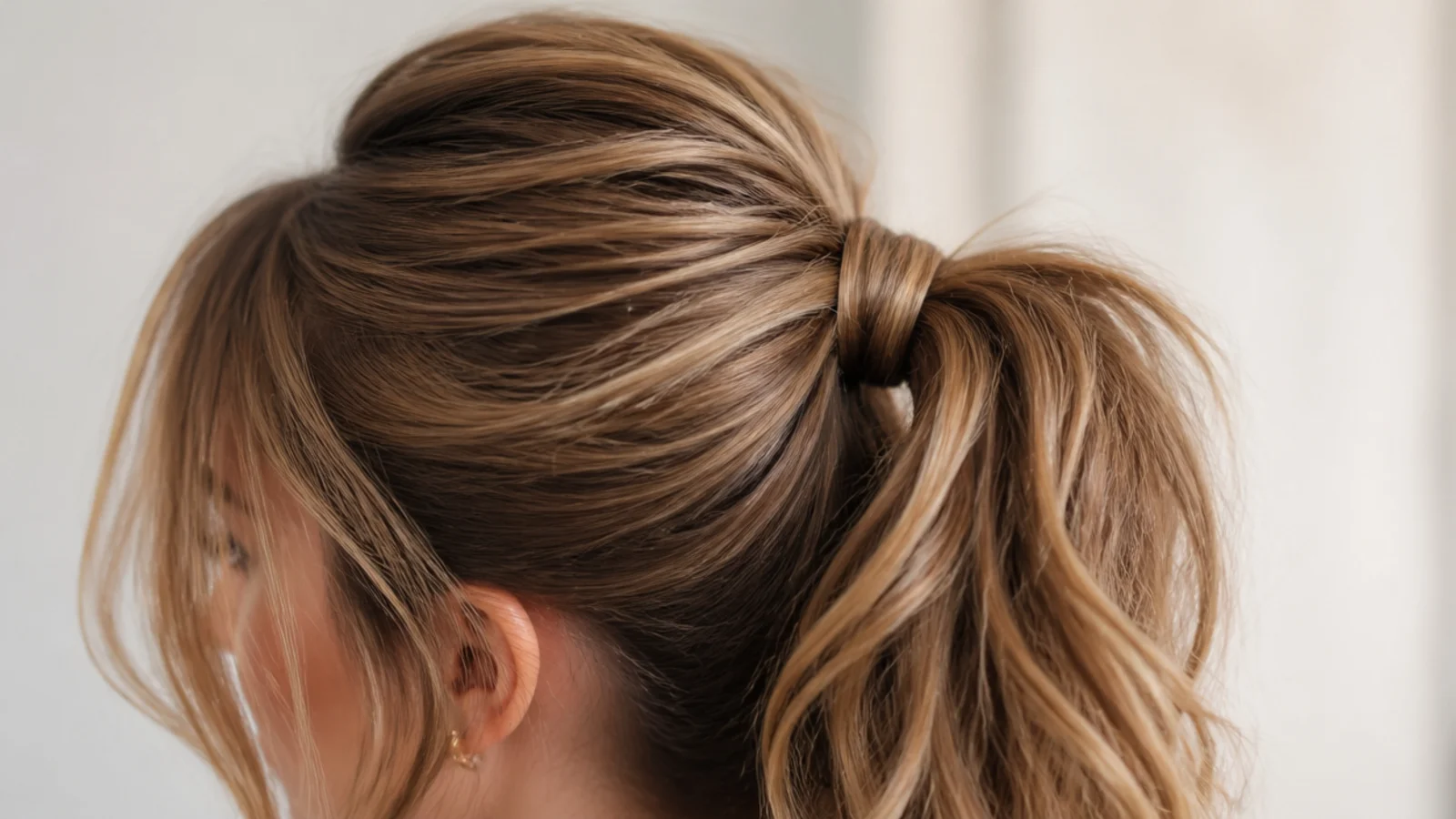
The single biggest polish upgrade you can make in 20 seconds. After tying, pull a half-inch strand from the underside of the tail, wrap it around the elastic two or three times, and secure the end with a bobby pin pushed up into the base of the ponytail, pointing toward your scalp. The elastic disappears and the whole style jumps a category, from thrown-together to deliberate. Works over any of the other 19 ideas here and is the difference between a school pony and an evening one. The same wrap works on every placement in the messy ponytail guide.
Who it suits: Anyone, at any length past chin, and essential for photos or events.
Tip: Wrap with a strand from underneath, never the top, so the pin stays hidden.
5. High Messy Ponytail with Face-Framing Tendrils
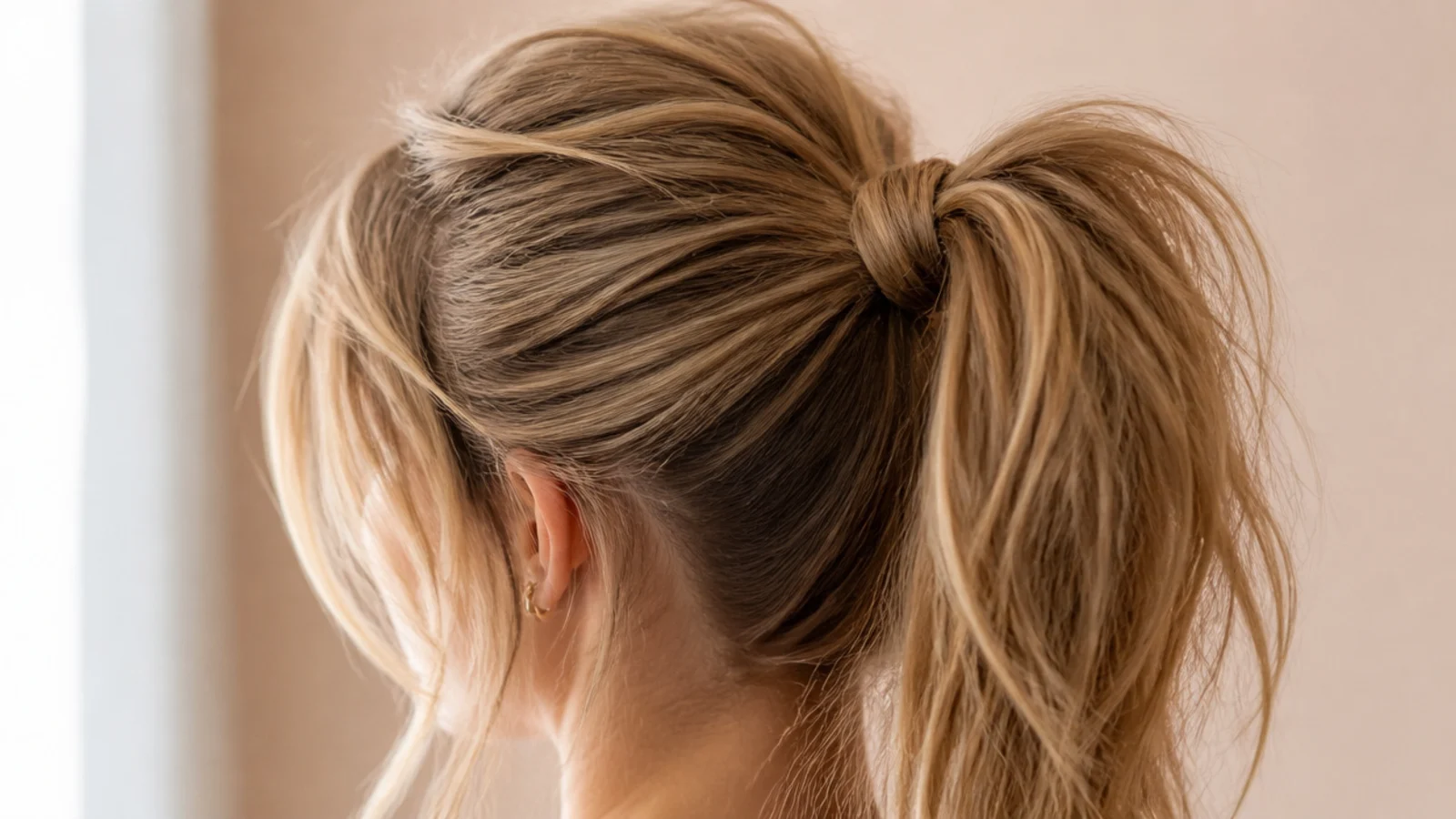
The detail that does the most work for the least effort. Build the ponytail completely first, tug the crown, then and only then pull out two temple pieces and one piece in front of each ear, roughly a quarter inch wide each. Pulling them last is the whole point, because pieces released before the tugging get swept back in or end up uneven. Bend each one with a 1-inch curling wand for two seconds if they are stick straight, or scrunch a pea of curl cream through them. If your front pieces are actually a fringe, see how to style short curtain bangs.
Who it suits: Round and square faces especially, since the vertical pieces soften the jawline.
Tip: Two pieces per side maximum. More than that stops reading as messy and starts reading as falling out.
6. Deep Side Part High Messy Ponytail
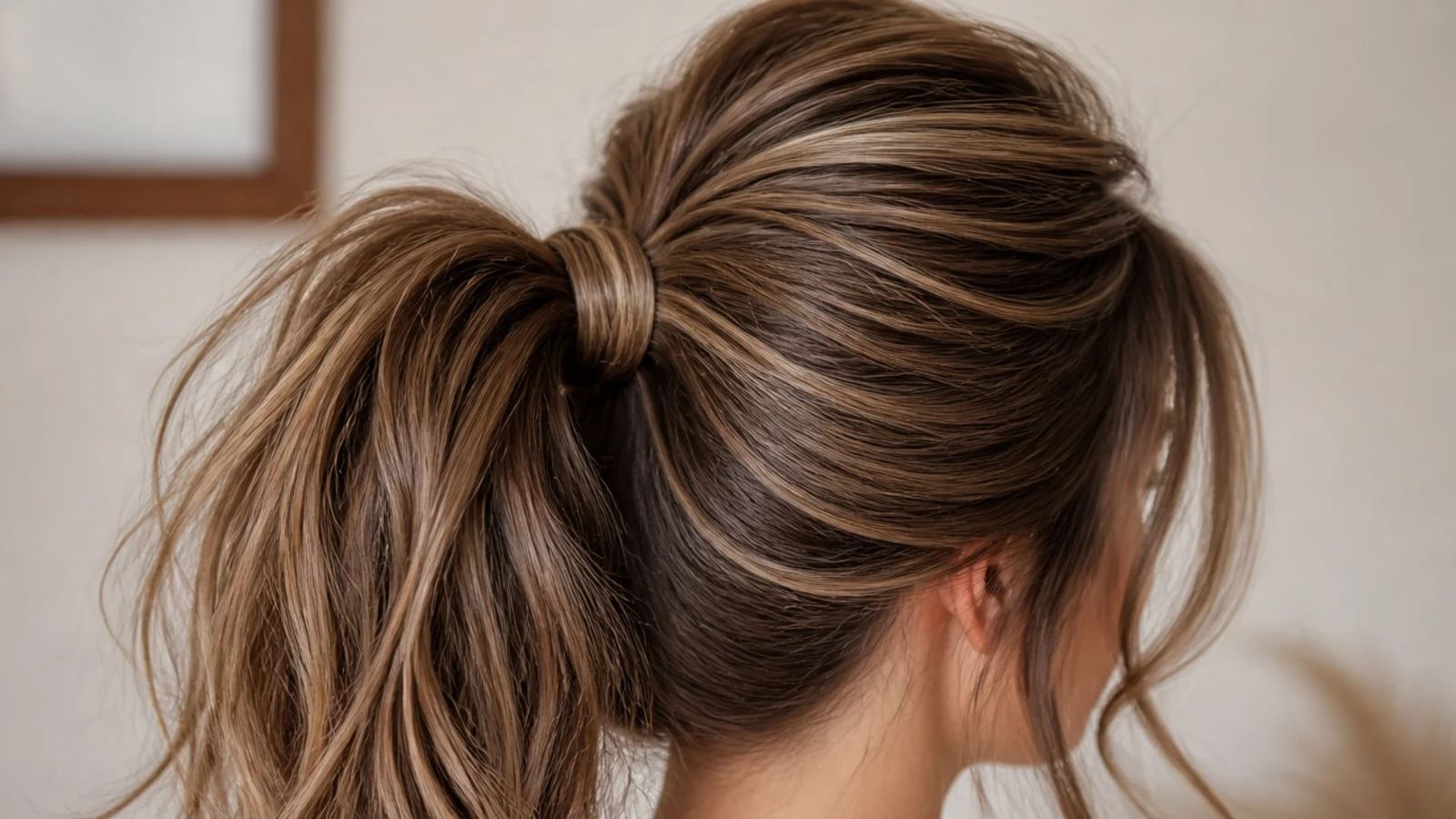
Take your part from center to about an inch above the arch of one eyebrow, then sweep the heavy side back and up into the crown tie. The deep part gives you built-in root lift on the fuller side without any teasing, and the diagonal line across the forehead breaks up a high round forehead better than a center part does. Keep the sweep loose enough to bubble slightly where it crosses the temple. Nothing about it should lie flat against the scalp.
Who it suits: High foreheads, long face shapes, and anyone with a stubborn cowlick to hide.
Tip: Set the deep part with a spritz of texture spray at the roots or it will migrate back to center.
7. High Messy Ponytail with Curtain Bangs
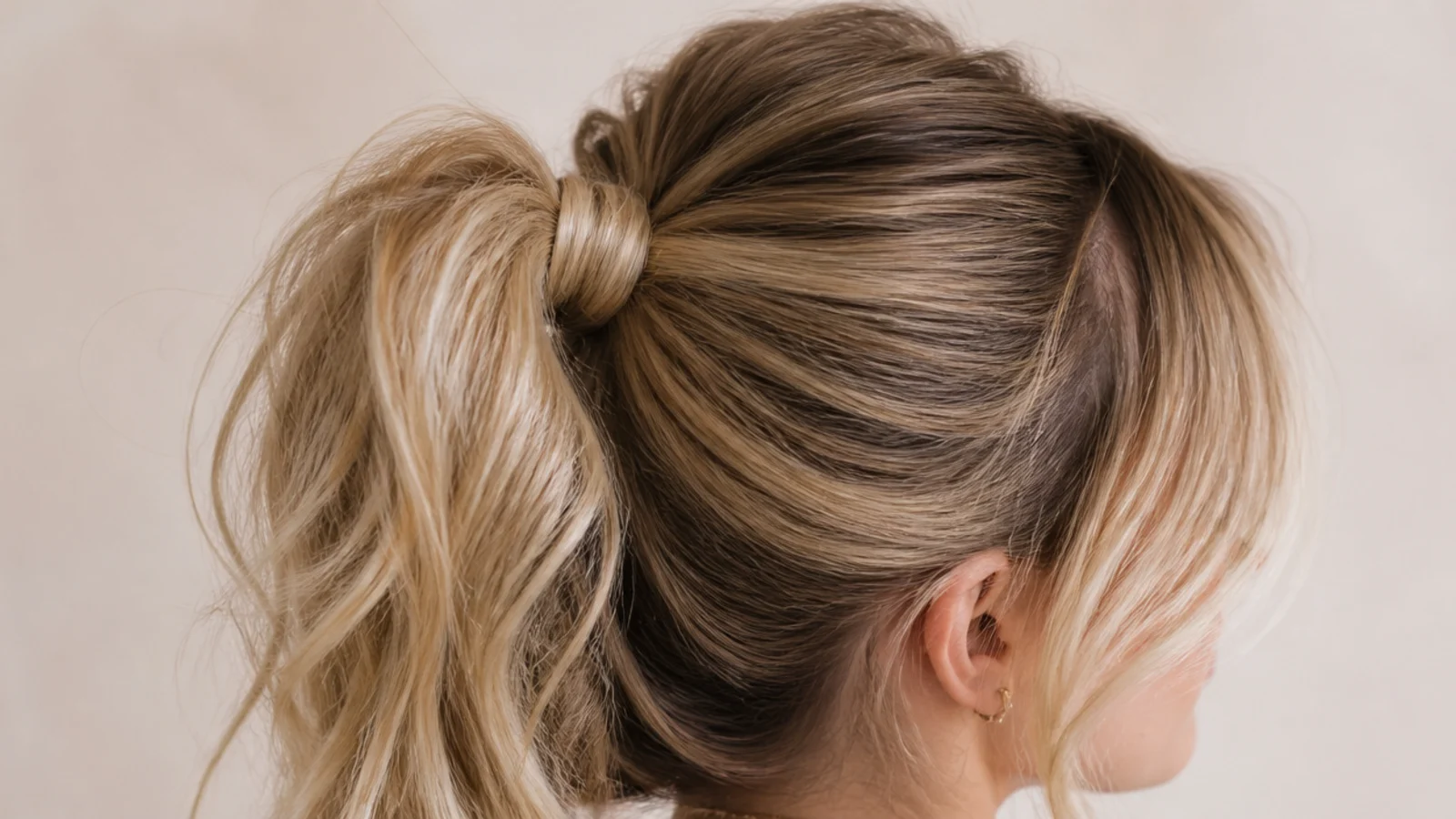
Curtain bangs and a crown ponytail are a natural pair, because the fringe fills the forehead that a high tie otherwise exposes. Clip the bangs forward before you gather so they never get pulled into the elastic, then round-brush them away from the face with a 2-inch brush and a shot of cool air to set the bend. If your bangs are growing out and hitting the cheekbone, they can join the tendril pieces instead. More fringe pairings live in messy ponytail with bangs.
Who it suits: Curtain, wispy and grown-out bangs; less so blunt fringes, which fight the height.
Tip: Dry shampoo the bang roots separately at midday; they get greasy faster than the rest.
8. Bubble High Messy Ponytail
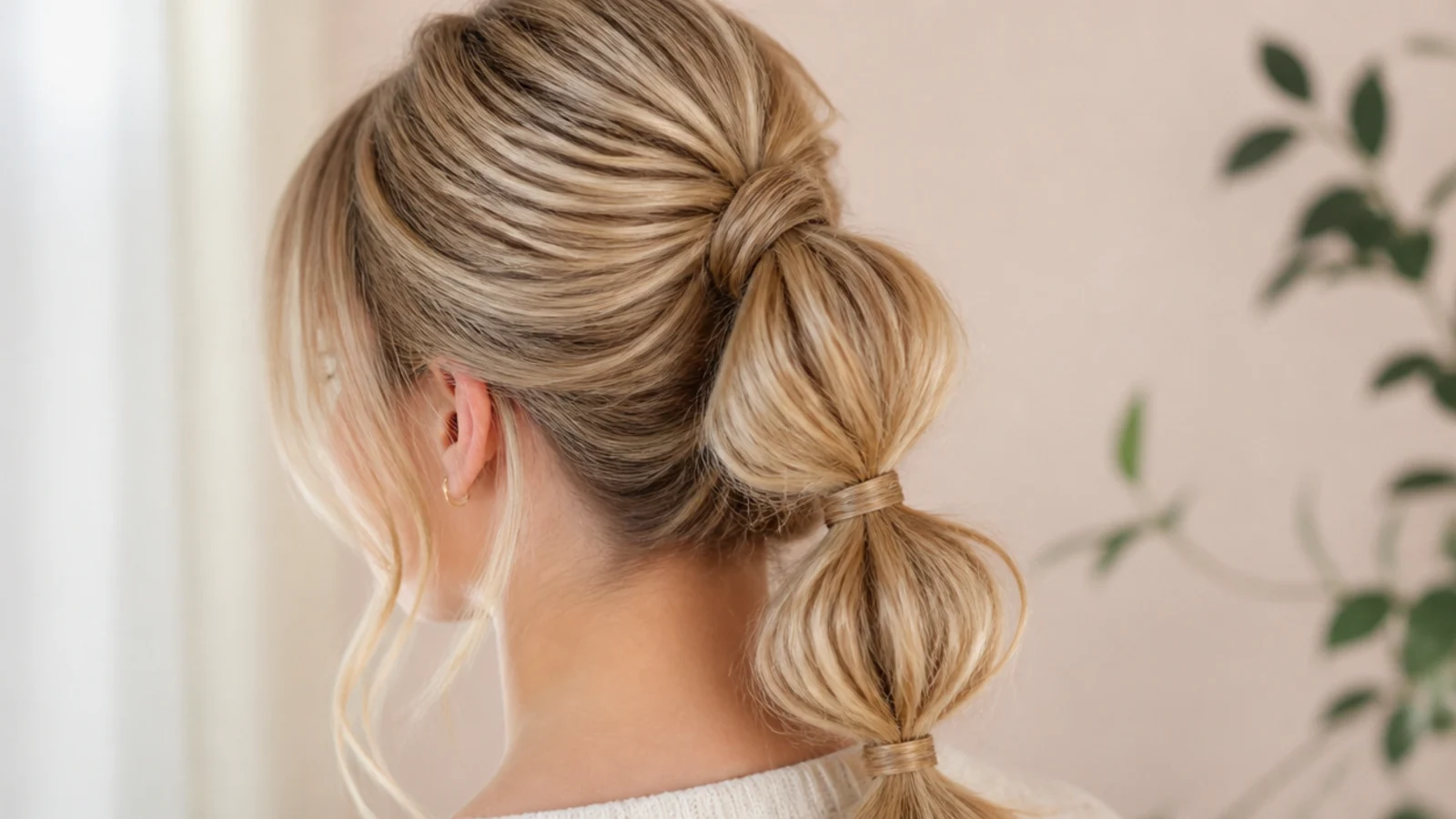
Tie the base at the crown, then add clear elastics every three inches down the length, gently pulling each segment wide at the sides so it puffs into a bubble. Four to six bubbles is the sweet spot on hair past the shoulder blades. The messy version differs from the neat one in that you pull out a few strands from every bubble rather than smoothing them, which keeps the segments soft-edged. It photographs beautifully and holds shape all day because each elastic carries only part of the weight.
Who it suits: Long and medium hair; see messy ponytail long hair for more.
Tip: Pull each bubble wide at the sides, not the front, so it stays round from every angle.
9. Pull-Through Braid High Messy Ponytail
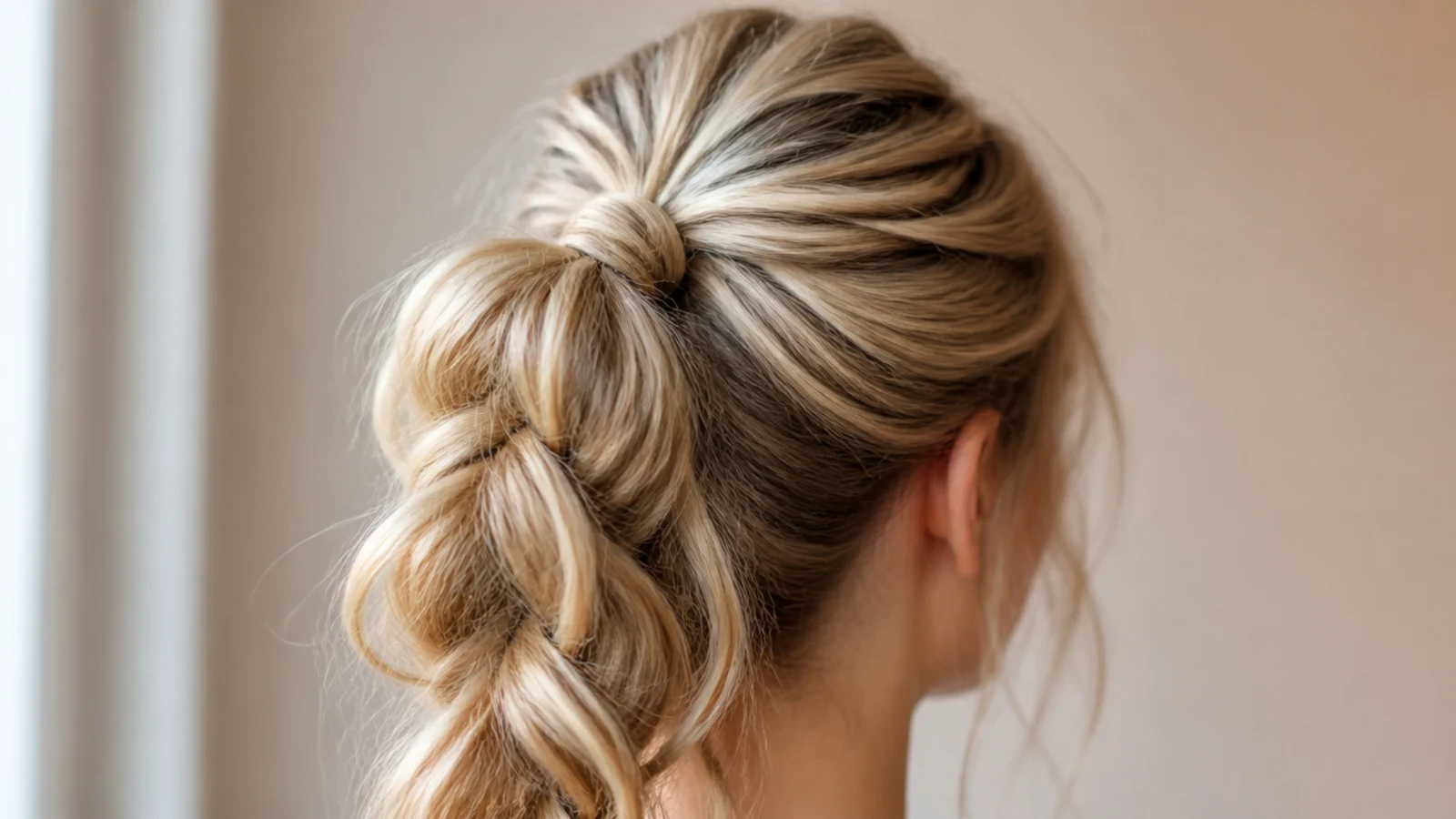
A faux braid that looks far harder than it is. Start with a high pony, split it in two, tie the halves together an inch down, then take the next section of hair up through the gap and re-tie. Repeat down the length. When you are done, pancake it: pinch and pull the outer edge of every loop to make the braid twice as wide. That pancaking is what turns a tidy plait into a messy one, and it also disguises the elastics inside the widened loops.
Who it suits: Shoulder-length and longer hair, and thick density that needs the bulk broken up.
Tip: Pancake from the bottom loop upward so you do not undo lift you already created at the crown.
10. Second-Day Hair High Messy Ponytail
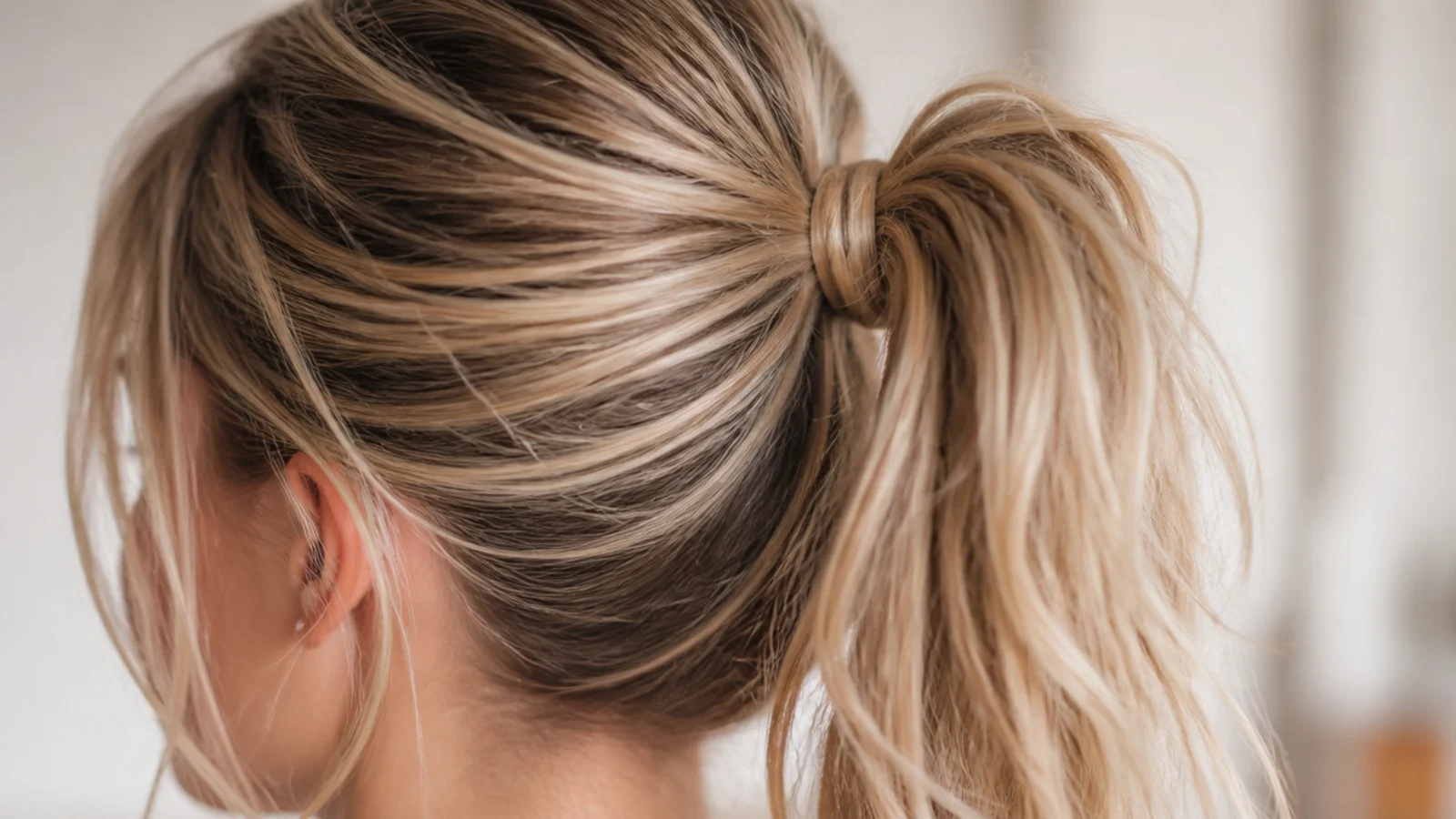
Not really a style so much as the correct starting condition. Day-two hair has enough natural texture and residual product to grip an elastic, which is why the same ponytail that slides down on wash day stays put 24 hours later. On clean hair, fake it: spray dry shampoo in one-inch partings across the crown, wait a full 60 seconds, then massage it in with your fingertips before brushing. A texturizing spray through the mid-lengths adds the same grit further down the tail. If day-two hair means frizz for you, the frizzy hair routine fixes that first.
Who it suits: Anyone whose ponytail sags, and fine, silky or freshly washed hair above all.
Tip: Wait the full minute before rubbing dry shampoo in, or you get white cast instead of grip.
11. Pineapple High Messy Ponytail for Curly Hair
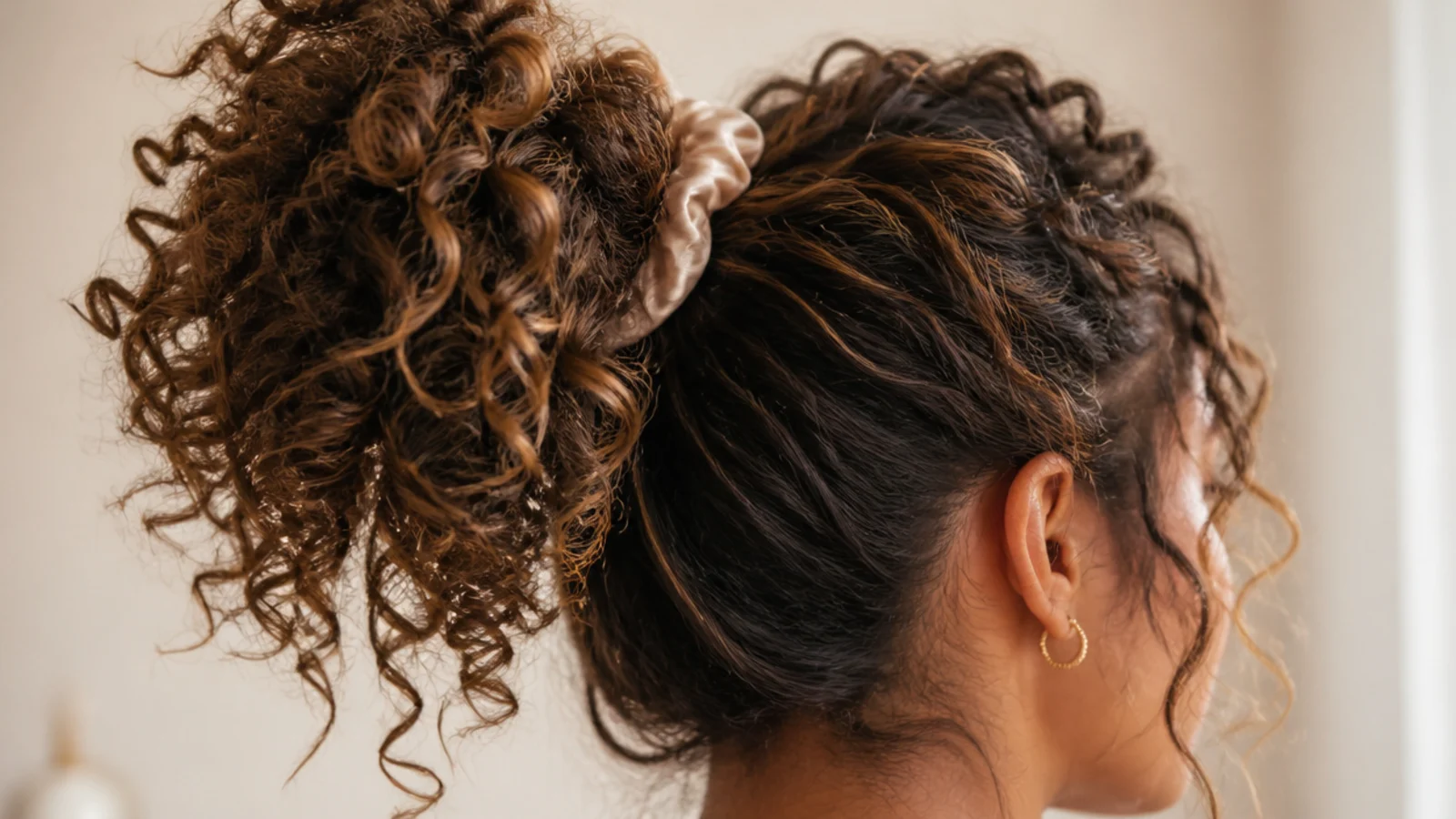
The classic curly-girl high pony: flip forward, gather all the curls at the very top of the head, and secure with a satin scrunchie rather than an elastic so the cuticle does not snag. Keep the tie deliberately loose, because tension is what pulls curl clumps apart and creates frizz. Refresh first with water and a leave-in on 3a to 3c curls, or a curl cream on 4a to 4c coils. Full curl-type guidance is in curly messy ponytail, and dressier curly options in graduation hairstyles for curly hair.
Who it suits: 2c through 4c textures, and anyone protecting curls overnight.
Tip: Never tie curls wet at the crown; the weight stretches the pattern out as it dries.
12. Crimped Root Lift High Messy Ponytail for Fine Hair
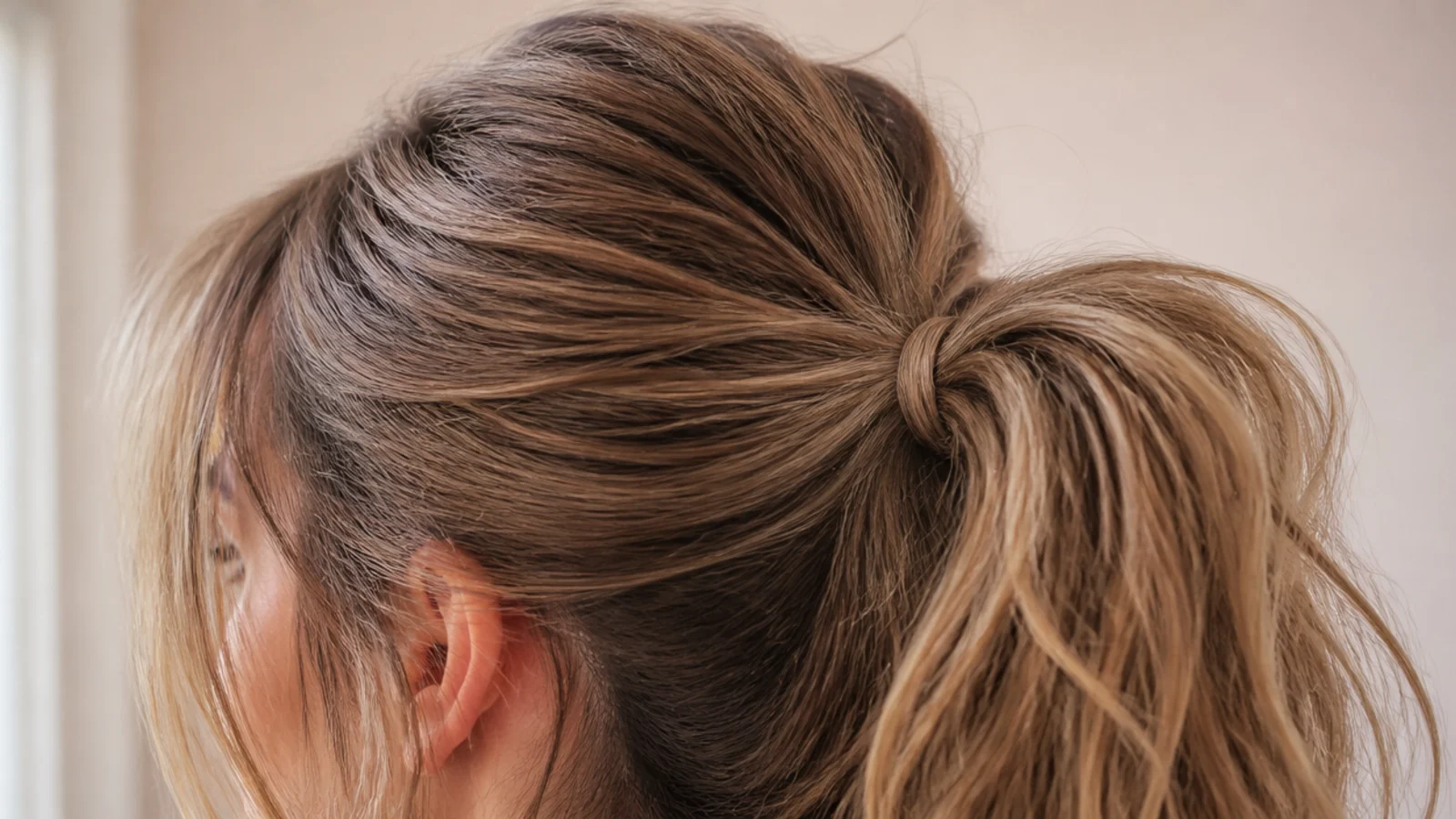
The alternative to teasing when your hair is too fine to survive a comb daily. Take half-inch sections at the crown and clamp a root crimper or a narrow flat iron for three seconds about an inch from the scalp, then smooth the surface layer over the crimped underlayer. You get a structural scaffold rather than backcombed knots, and it survives a full day without needing to be re-teased. Add a volumizing powder at the roots and the crown holds even in humidity. Fine hair also benefits from the right cut, covered in mid length haircut ideas for fine hair.
Who it suits: Fine, straight hair and anyone whose teasing tangles out within an hour.
Tip: Crimp only the under-sections. Any crimped hair on the surface reads as damage, not volume.
13. Bungee Band High Messy Ponytail for Short Hair
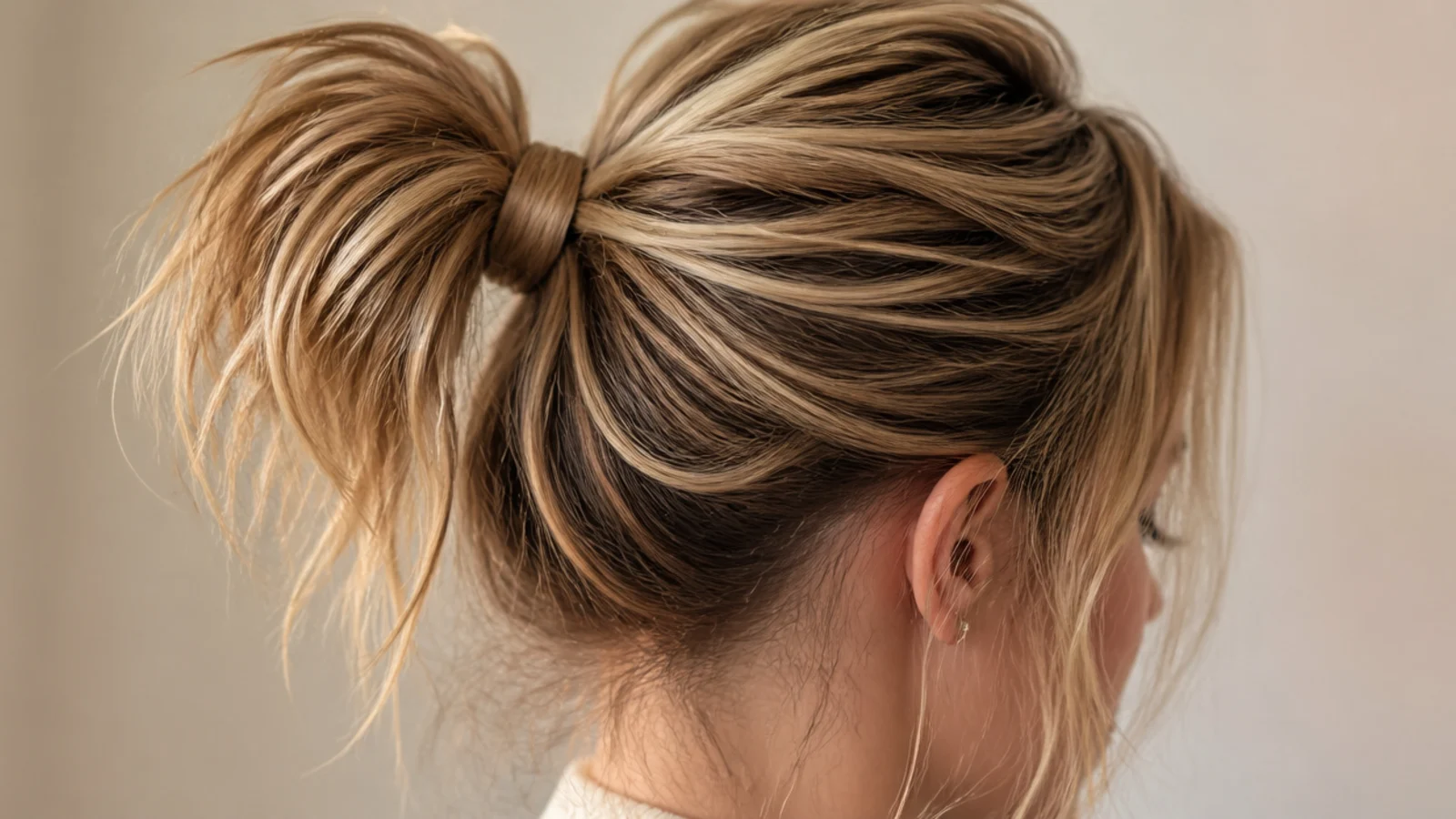
Short hair fails at high ponytails for a mechanical reason: a standard elastic needs to make two full loops and there is not enough length to feed. A bungee band, which is a cord with a hook on each end, only needs one wrap, so a bob from around 6 inches can hold. Hook one end, wrap once, hook the other. Then push three bobby pins upward into the base from underneath to support the escaping under-layers. Full length guidance in messy ponytail short hair.
Who it suits: Bobs and lobs from roughly 6 to 10 inches, and layered shags.
Tip: Pins go in from below pointing up, so the weight of the pony pushes them tighter, not looser.
14. Half-Teased High Messy Ponytail for Thick Hair
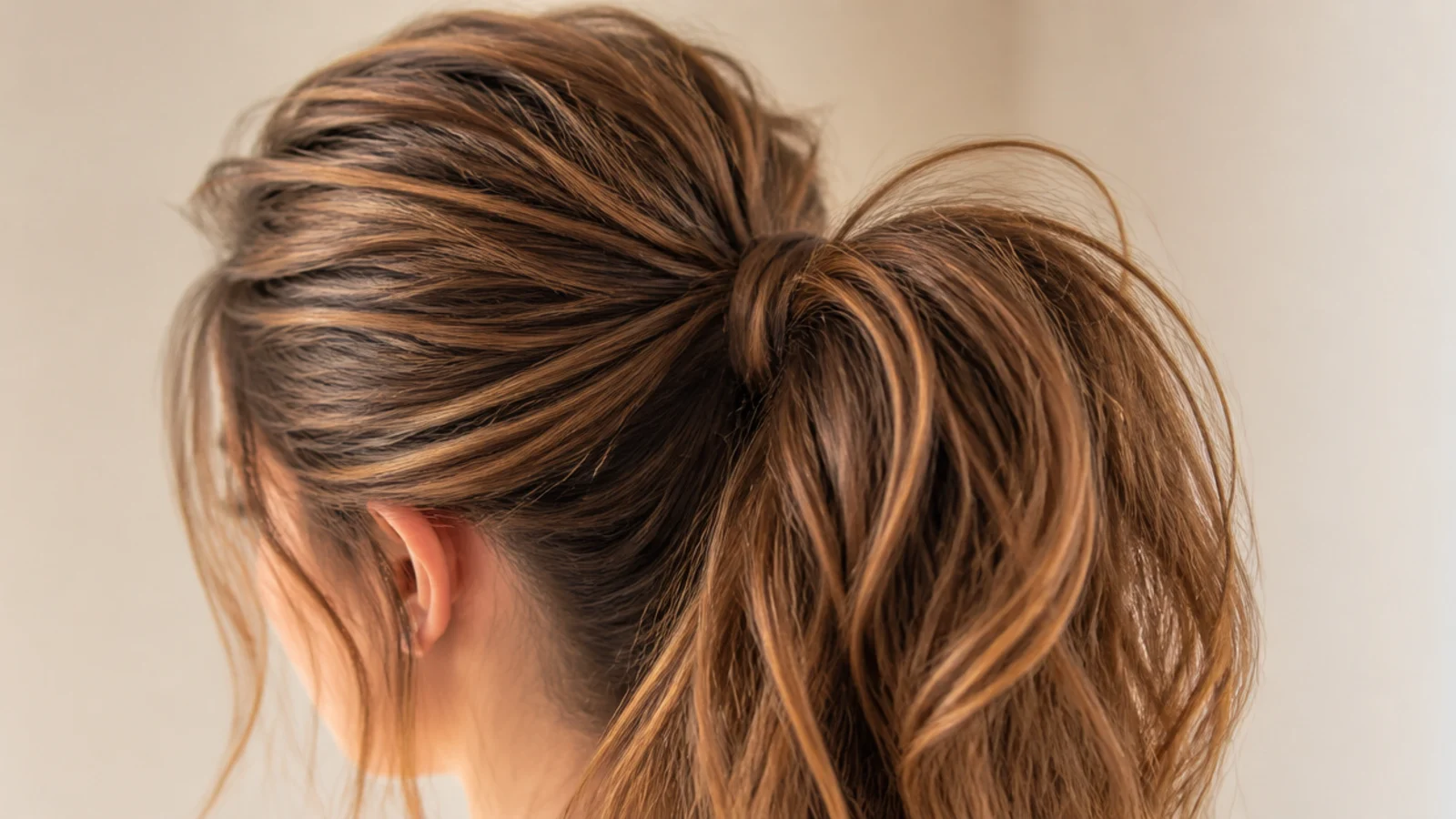
Thick hair does not need volume, it needs the weight managed so the tie does not slide down the back of your head all day. Tease only a two-inch strip at the very crown, then use a thick spiral coil tie or two stacked elastics rather than one thin band. Anchor with two bobby pins crossed in an X directly under the elastic against the scalp. Then break the bulk up by pulling out random half-inch pieces down the length so the tail is not a solid block.
Who it suits: Coarse, dense or extension-wearing hair past the shoulder blades.
Tip: Two thin elastics stacked hold heavy hair better than one thick one, which stretches out fast.
15. Scrunchie High Messy Ponytail
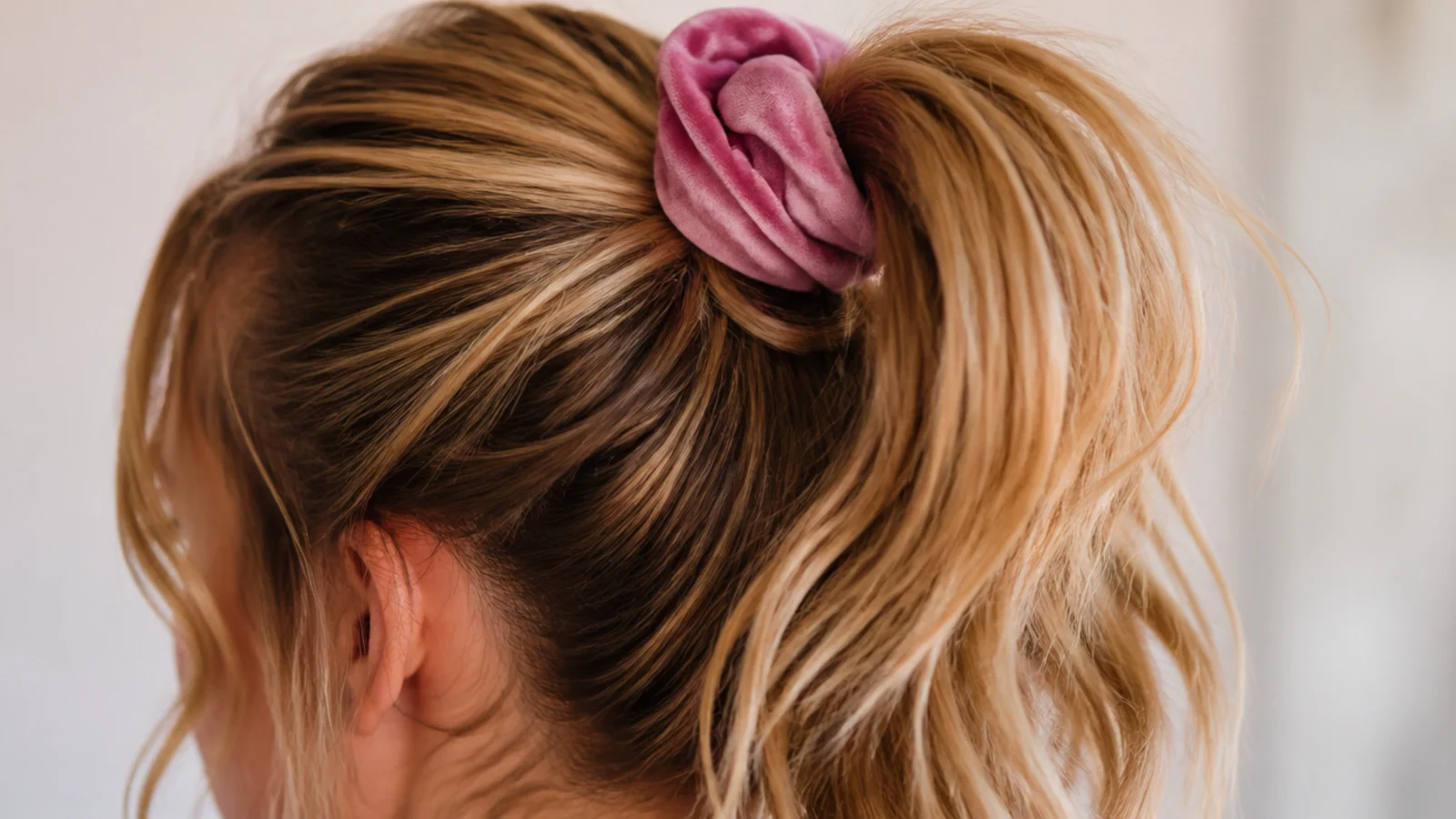
An oversized scrunchie solves the elastic-hiding problem by making the tie the point instead. Velvet grips best and is the least likely to slip on silky hair, satin is gentlest on the cuticle, and cotton sits somewhere in between. Wrap twice at the crown, then push the fabric down slightly toward the scalp so the tail fans out over the top of it. The scale matters: an oversized scrunchie next to a small tail looks unbalanced, so size it to your density.
Who it suits: Medium to thick hair; fine hair should size down to a mini scrunchie.
Tip: Velvet for grip, satin for hair health, and never sleep in a tight one at the crown.
16. Claw Clip High Messy Ponytail
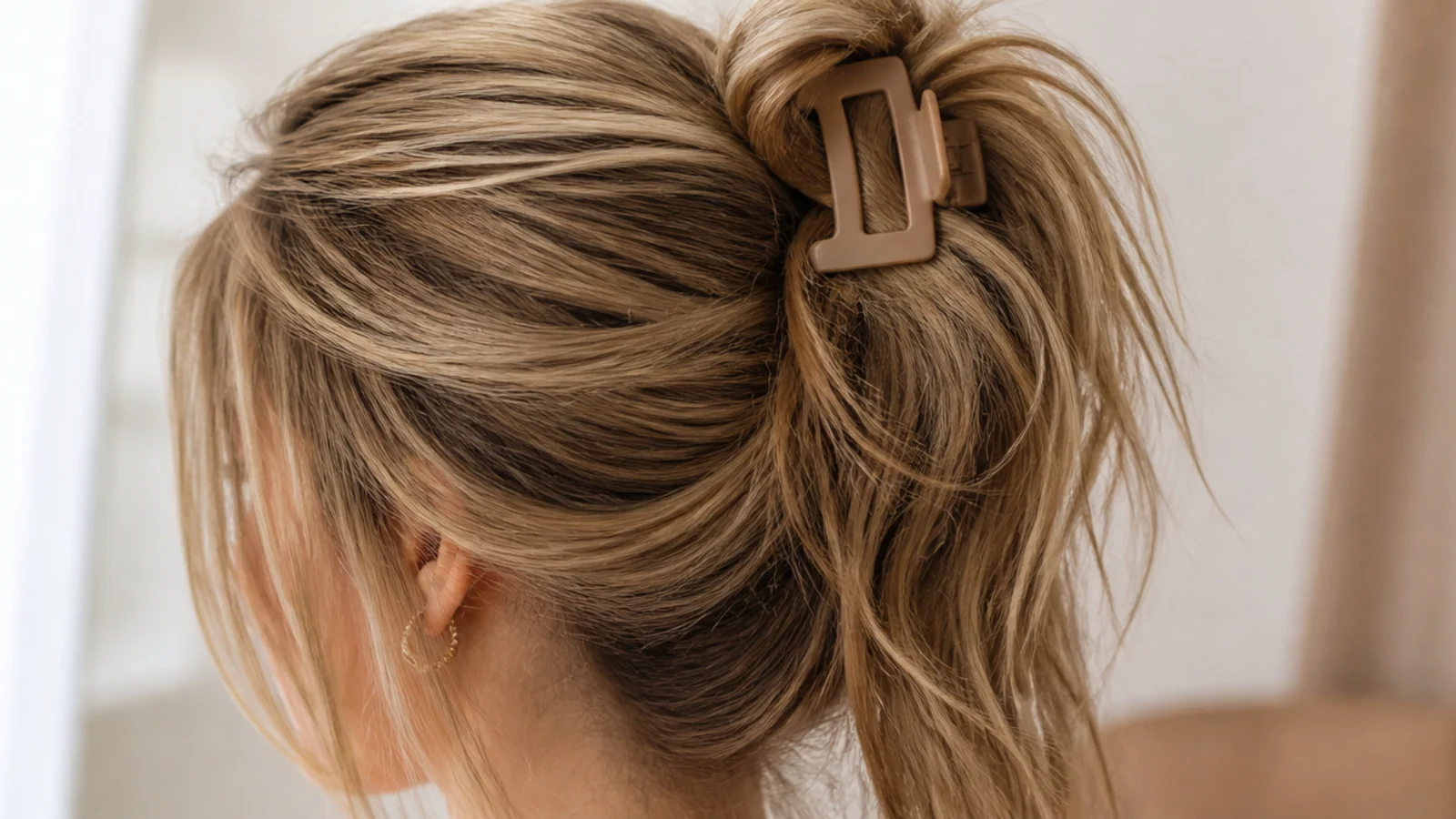
No elastic at all. Gather the hair at the crown as if you were tying it, twist the base a half turn, and clamp a medium rectangular claw clip over the twist with the teeth facing down toward the scalp. The tail falls loose below. It creates zero tension on the scalp, so it is the go-to on days when a tight pony would give you a headache, and it takes about ten seconds. The trade-off is hold, so it is a desk style rather than a workout one.
Who it suits: Medium density and medium length; very thick or very fine hair slips out.
Tip: Twist a half turn before clamping. Without the twist the clip slides straight down the tail.
17. Sleek Roots, Messy Tail High Ponytail
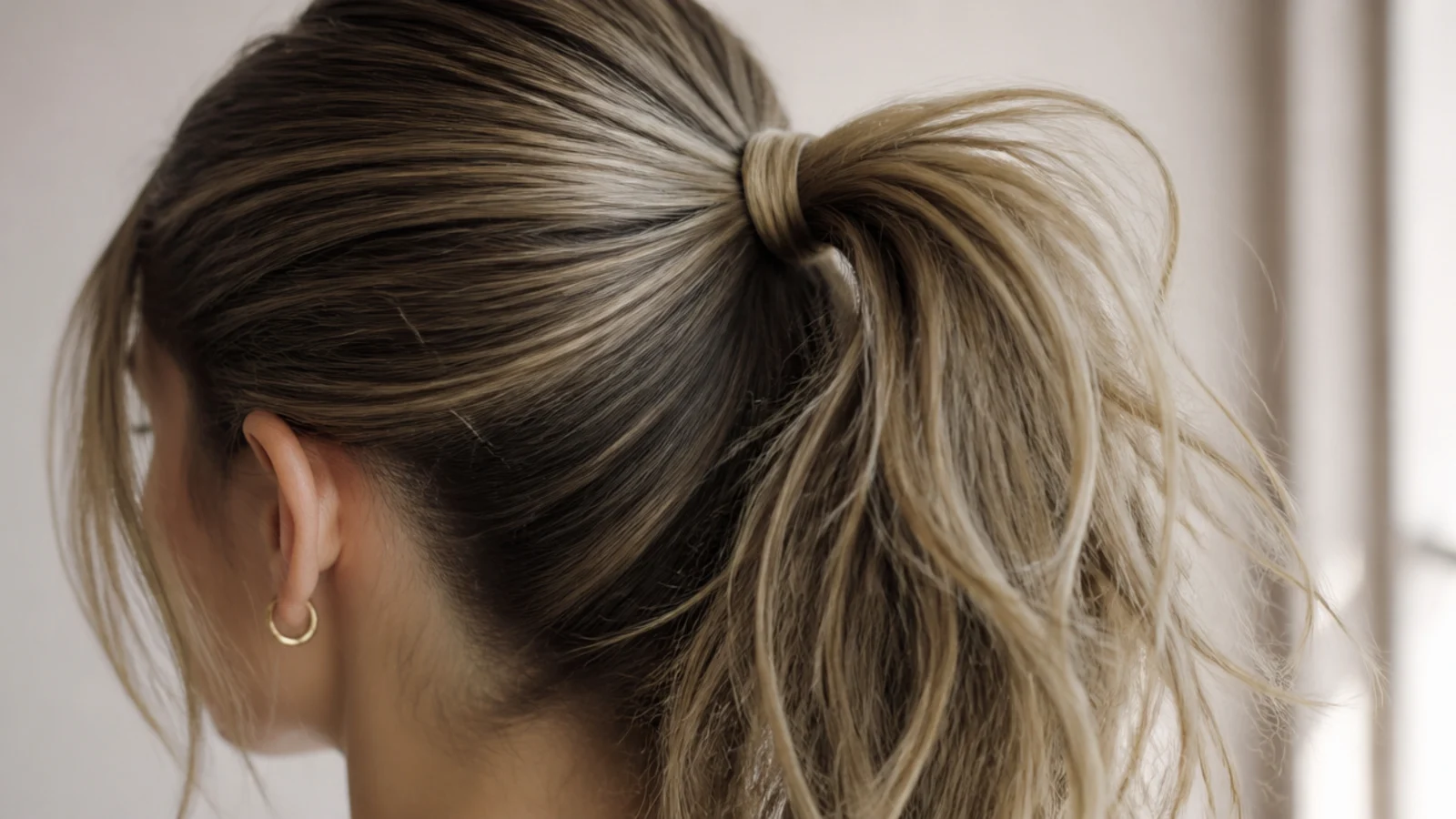
The half-and-half version, and the most office-appropriate on this list. Smooth the roots and sides with a boar bristle brush and a light smoothing cream so the front reads groomed, then leave the tail completely undone: texture spray, finger-scrunched, a few pieces pulled wider than the rest. All the mess lives below the elastic where a meeting camera does not really see it. It is also the easiest messy pony to reset, since only the tail needs re-scrunching.
Who it suits: Work, interviews, and anyone whose office reads full mess as unkempt.
Tip: Use cream on the roots and spray on the tail. One product for both makes the tail flat.
18. Braided Base High Messy Ponytail
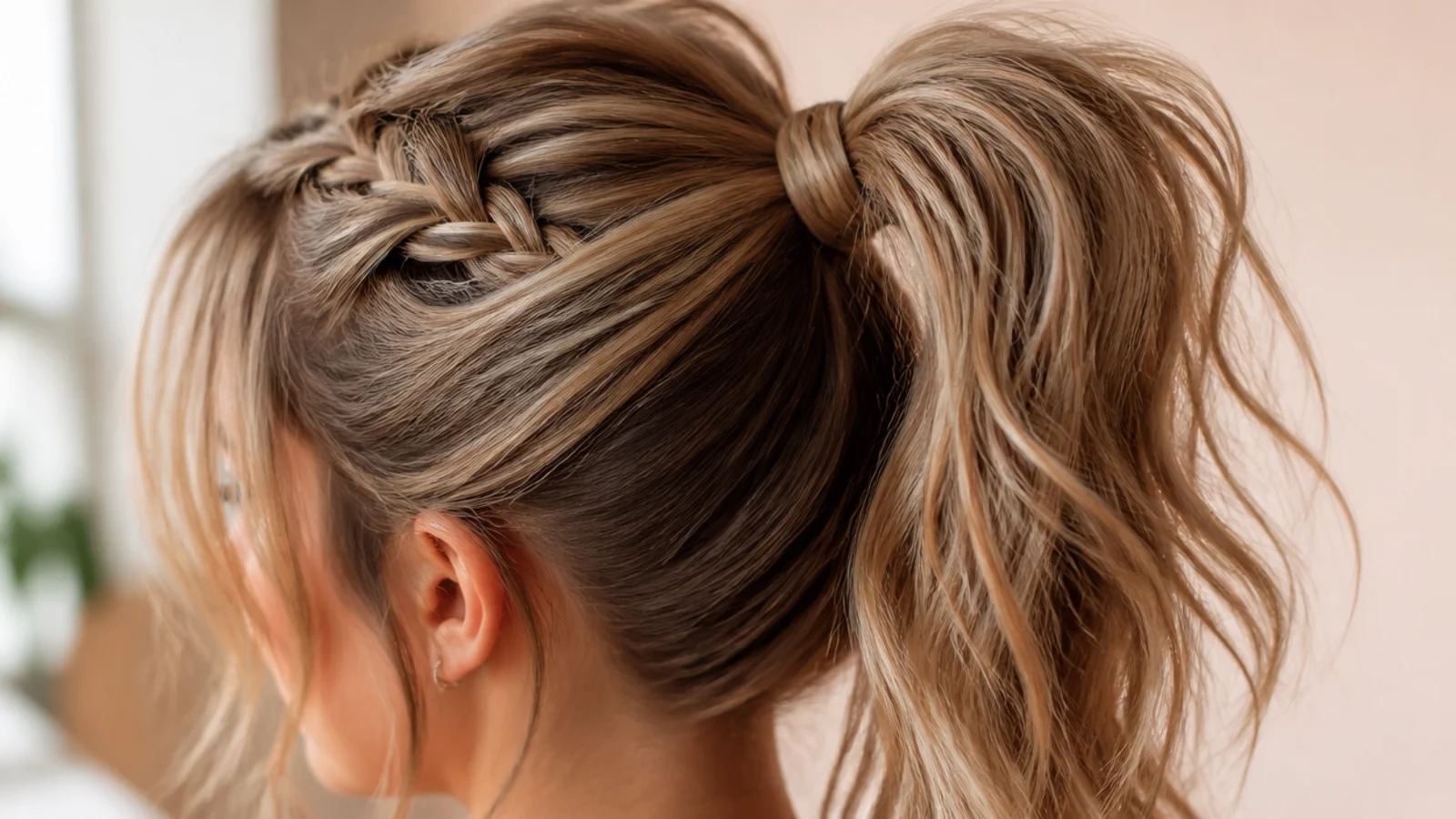
Run one small Dutch braid from the front hairline back to the crown, then gather it into the ponytail with everything else. Because a Dutch braid sits on top of the hair rather than sinking in, it adds a raised line of texture right where a high pony is otherwise flattest. Loosen the braid by pinching each outer edge before you tie, so it reads soft. Two braids, one on each side, is the festival version. One braid is the everyday one. For bigger braided front sections, see half up mermaid braids.
Who it suits: Medium to long hair, and anyone who wants the pony to look styled from the front.
Tip: Braid on dry, textured hair. A Dutch braid on slippery clean hair loosens itself within an hour.
19. Gym-Proof High Messy Ponytail
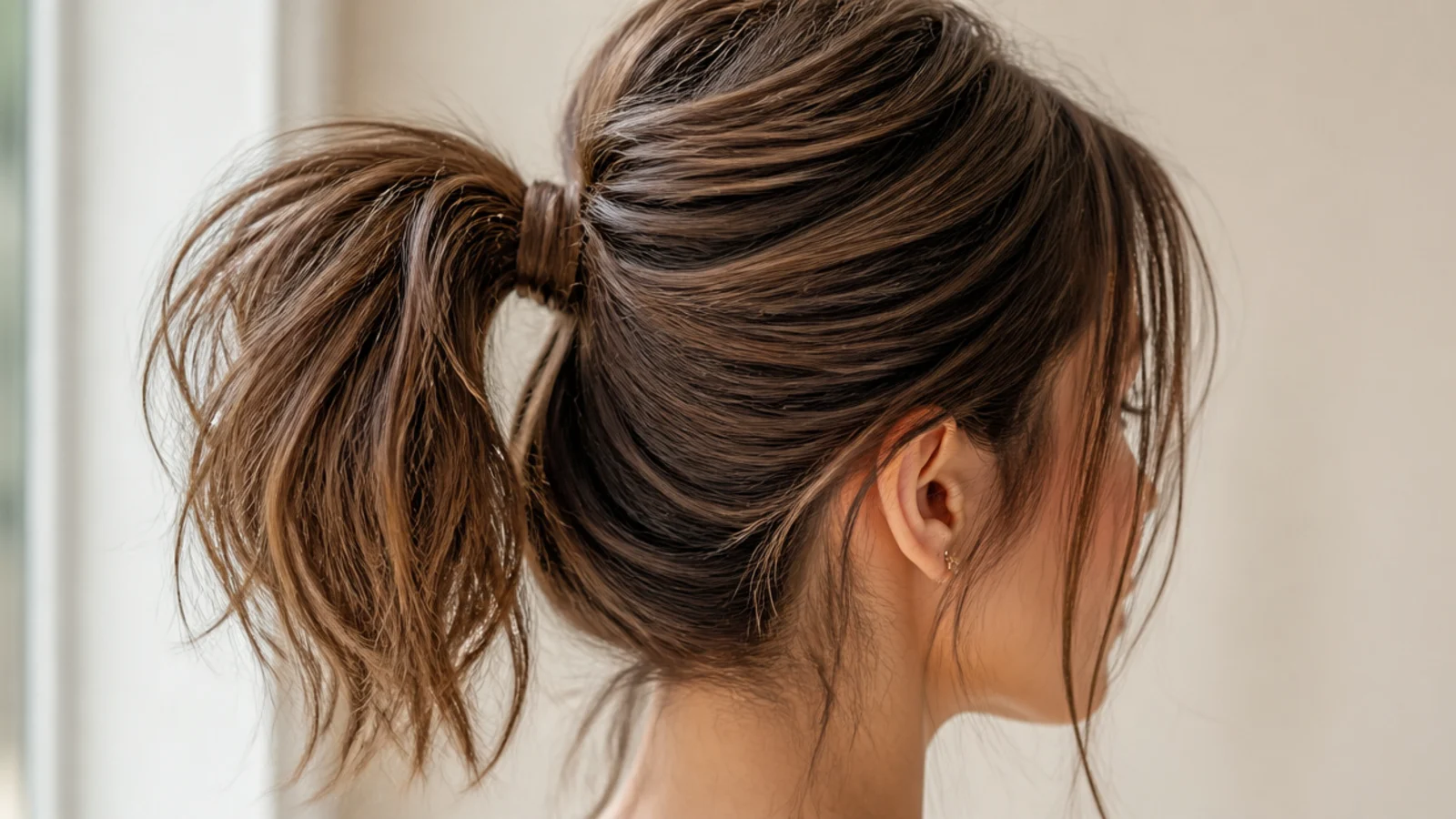
Built to survive movement rather than to be admired. Tie at the crown with a spiral coil tie, add a second elastic two inches down the tail so the length cannot whip, and cross two bobby pins under the base against the scalp. Skip the heavy teasing, which turns into a knot once you sweat, and use a light texture spray instead. A thin no-slip headband holds the front pieces during the workout and comes off afterward, when you pull your tendrils out for the walk home.
Who it suits: Workouts, running, hot commutes, and long shifts on your feet.
Tip: Tie slightly looser than feels secure. Sweat swells hair, and a tight gym pony is where tension headaches start.
20. Silk Ribbon High Messy Ponytail
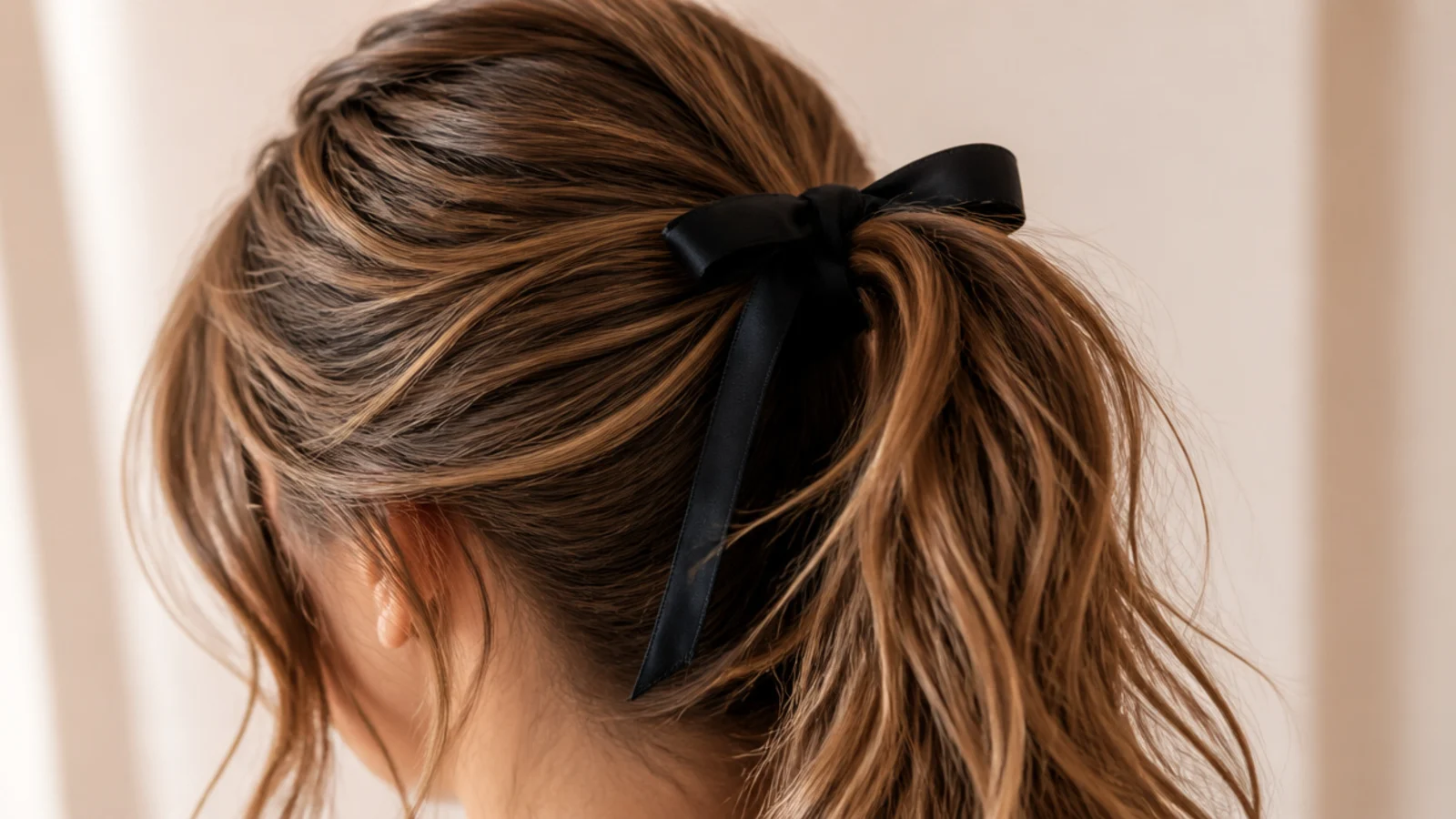
The evening upgrade. Build the ponytail, wrap the elastic with a strand as usual, then tie a half-inch silk or grosgrain ribbon around the base and finish in a soft bow with long tails hanging down. Black reads the most grown-up, ivory the most bridal, and burgundy velvet the most seasonal. Curl the last three inches of the tail with a 1-inch wand so the ends have a shape worth showing under the ribbon. It is a wedding-guest style that takes five minutes, and it doubles as a cap-friendly option alongside these easy graduation hairstyles.
Who it suits: Weddings, holiday parties and date nights, on any length past the shoulders.
Tip: Tie the bow slightly off-center to the side; a dead-center bow reads costume rather than chic.
What Makes a High Messy Ponytail Read Messy, Not Untidy
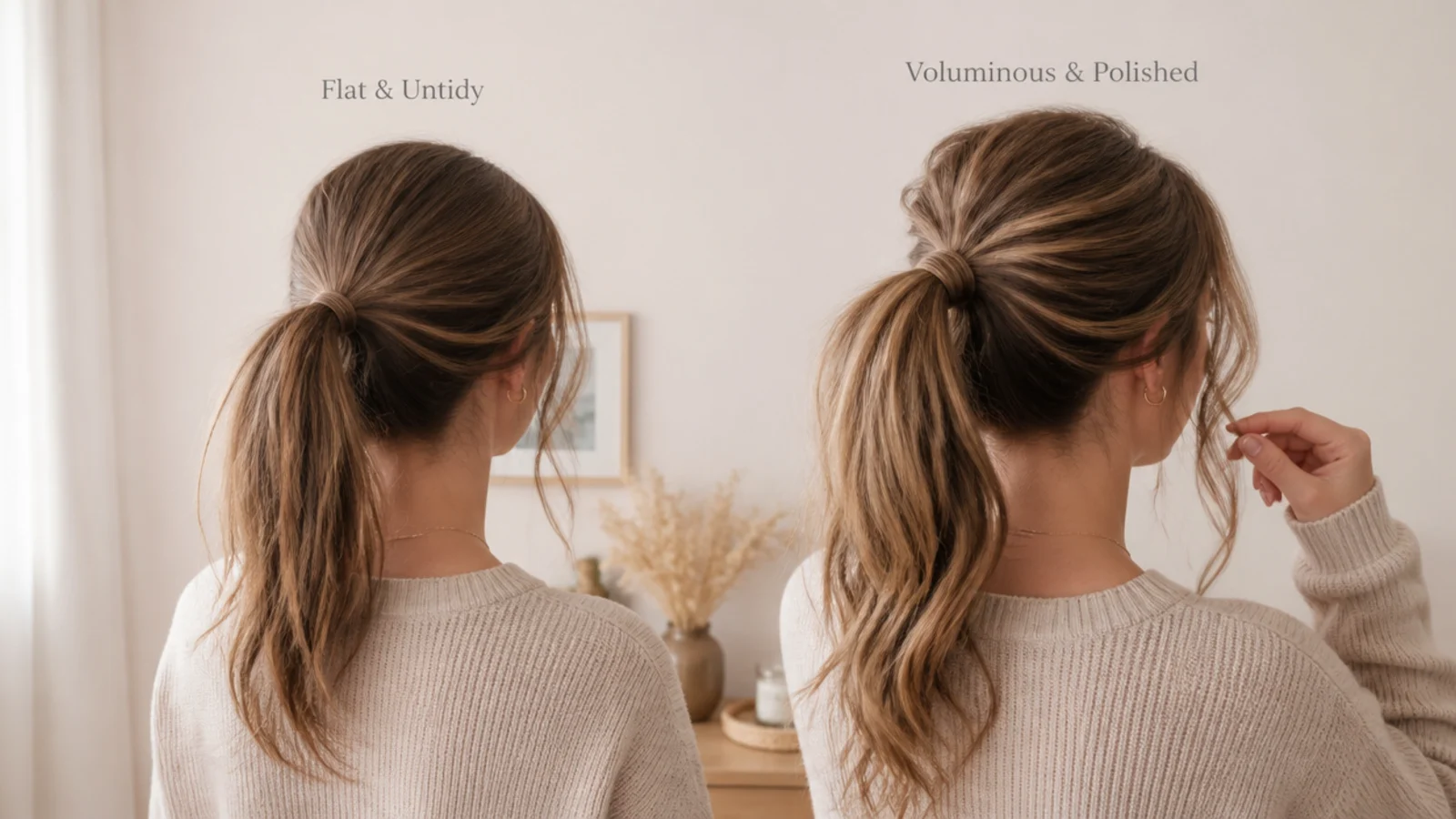
The line between messy and untidy is entirely about sequence. An untidy ponytail is one where pieces fell out on their own, at random widths, in random places. A messy ponytail is one where you put them there. The order that gets it right is always the same: prep, gather, tie, tug, then release. Prep means grip, so dry shampoo or texture spray at the roots. Gather with your fingers rather than a brush, because a brush pulls the surface into a smooth shell that fights the whole look. Tie at the crown, then tug four or five small sections upward across the top of your head to rebuild the height the elastic squashed. Only then pull out the temple and ear pieces. Doing that release step last is the single detail that separates deliberate from disheveled, because pieces released early get dragged back in by the tugging. Keep the released strands even in width, around a quarter inch, and keep them symmetrical. The rest of the board covers the same principle at other placements, starting with the messy ponytail core guide.
How to Get Volume in a High Ponytail
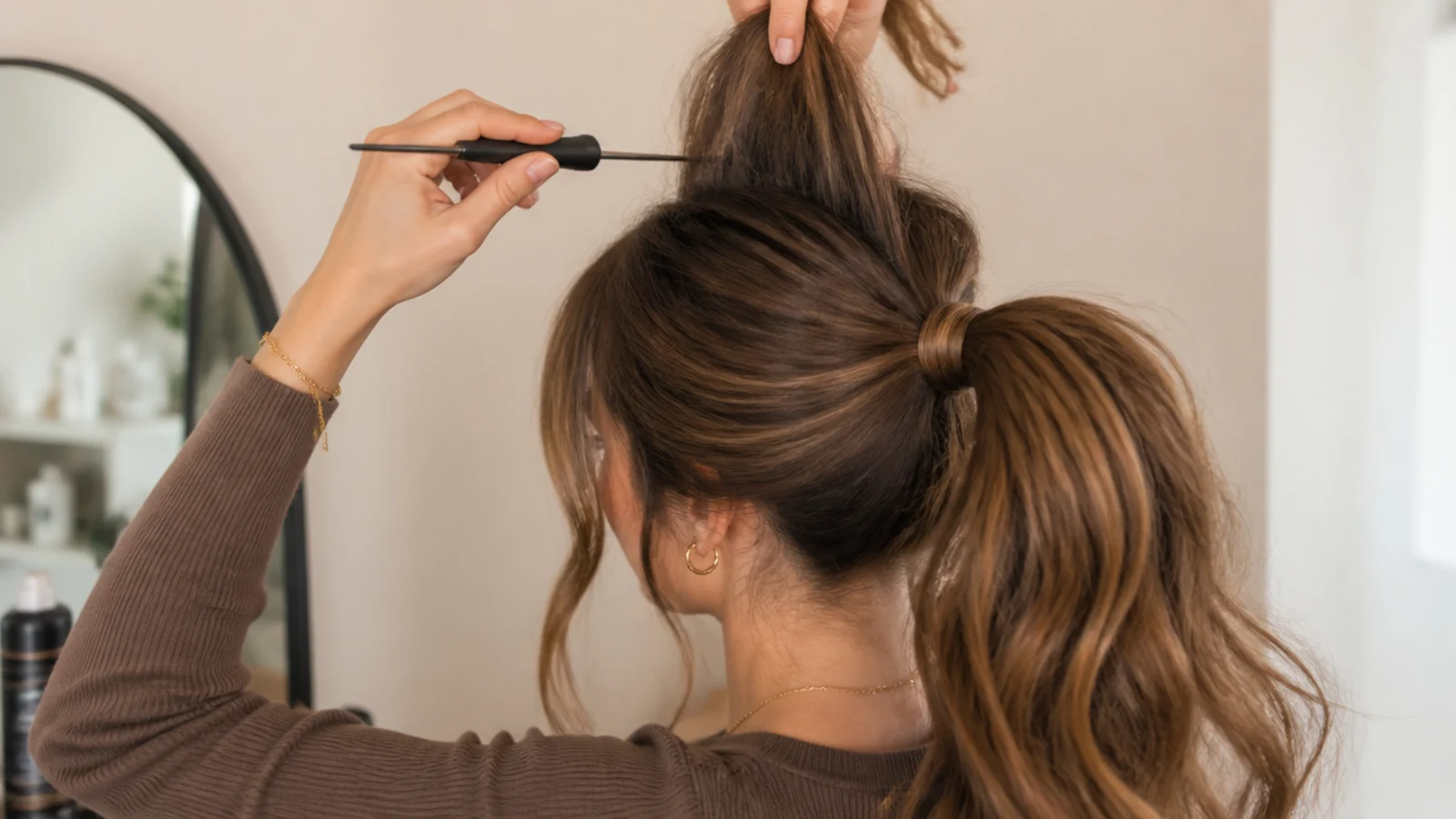
Volume in a high ponytail comes from three separate places, and most people only use one. The first is root lift at the crown, built by teasing the underside of the top section in short strokes, by crimping those under-sections with a narrow iron, or by gathering with your head flipped upside down so gravity sets the roots away from the scalp. The second is base structure, which is what teasing directly around the elastic does; that half inch of backcombed hair is what stops the tail from hanging as a flat curtain. The third is the tail itself, expanded by pulling the tease-and-feed-through trick, splitting the tail and pancaking it, or stacking a second ponytail underneath the first so the top tail covers it. Use two of the three and you will look like you have a different hair density. Fine hair should add a volumizing root powder before any of it, since powder gives the strands friction to hold against, and friction is really what volume is. Nape ties need far less of this, as low messy ponytail ideas shows.
How to Stop a High Messy Ponytail from Sagging All Day
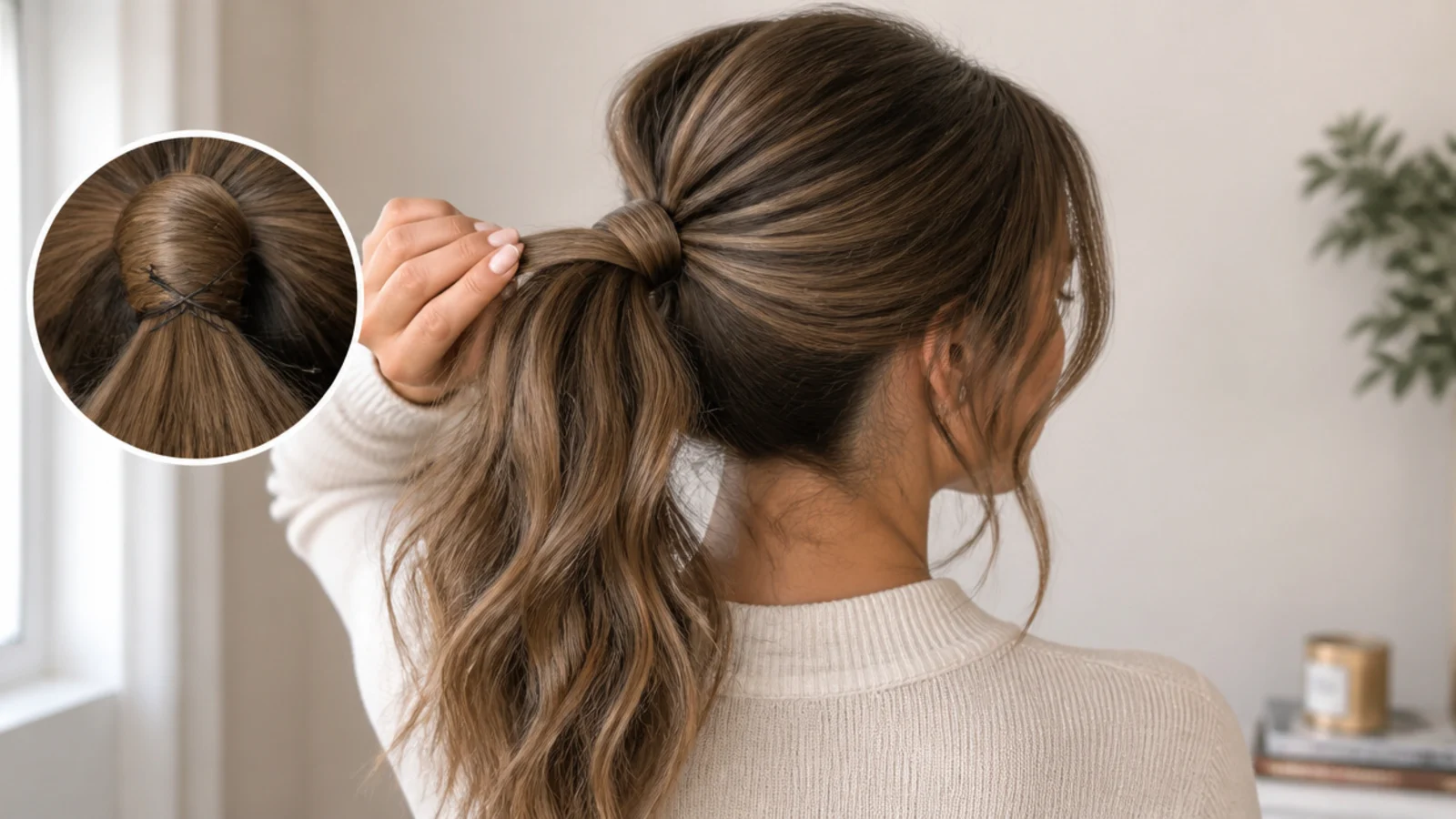
Sagging has three causes and each has a specific fix. The first is slip: clean, conditioner-soft hair has nothing to grip, so the elastic migrates down the back of the head within an hour. Fix it with day-two hair, dry shampoo, or a texturizing spray through the roots and mid-lengths. The second is weight, which is a long-hair and thick-hair problem. Fix it by splitting the load, either with the stacked two-elastic method or with a spiral coil tie that grips more surface than a flat band. The third is anchoring. Cross two bobby pins in an X directly underneath the elastic, sliding them into the hair against the scalp so the weight of the tail presses them tighter rather than working them loose. A shot of flexible-hold hairspray on the brush, then brushed up into the base, seals it. Expect to spend about ten seconds re-tugging the crown at lunchtime; even a well-built high pony settles, and re-lifting it beats rebuilding it. Weight-specific fixes are in messy ponytail long hair.
High Messy Ponytails by Hair Length: Short, Medium and Long
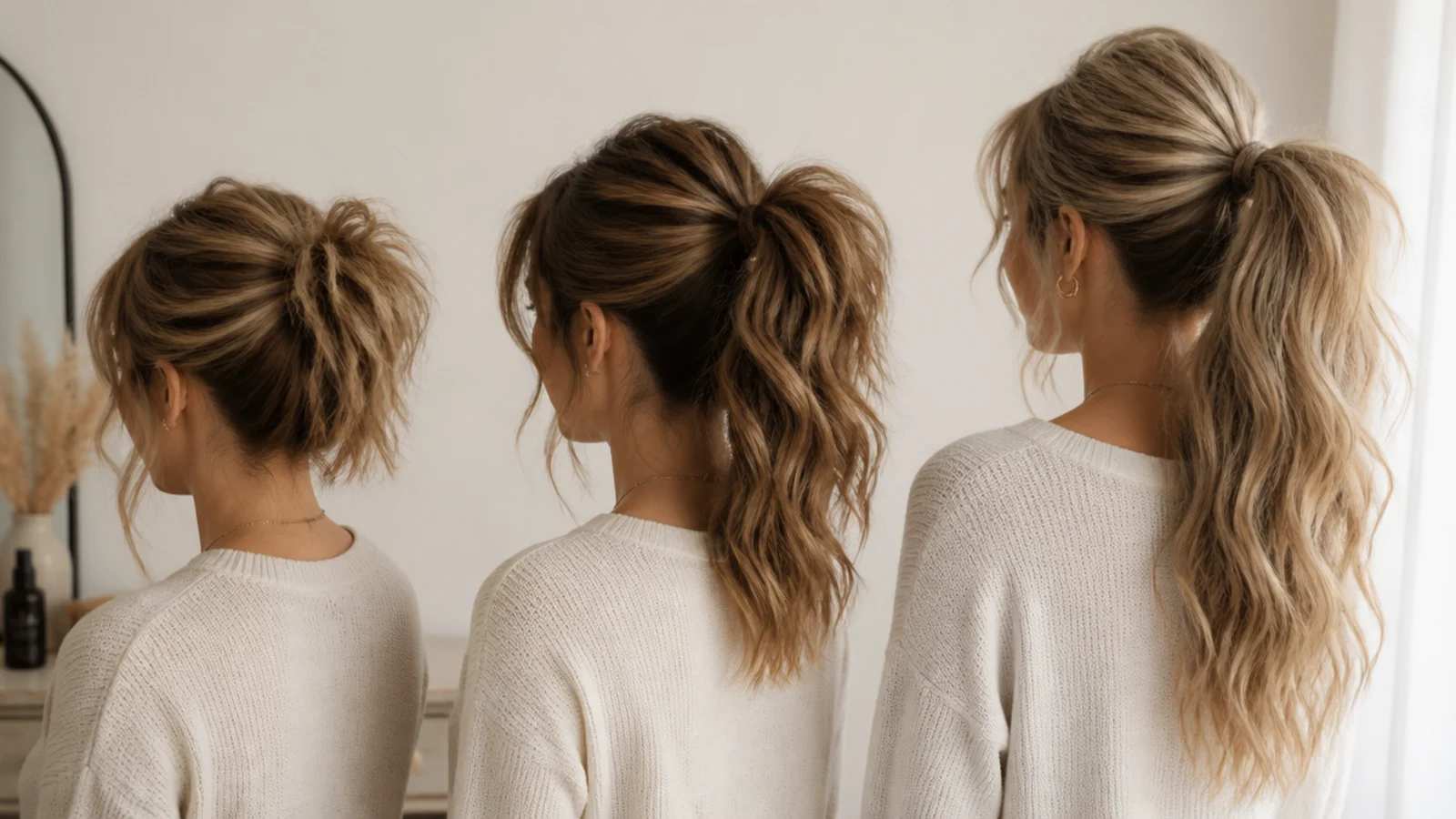
Length changes the mechanics more than the styling. Under about 6 inches, a crown ponytail is not reliable; you are better off with a half-up version or a claw clip. From roughly 6 to 10 inches, a bob or lob can hold a high pony with a bungee band, which needs only one wrap instead of two, plus three bobby pins pushed up into the base to catch the under-layers that will not reach. That mechanical approach is covered in depth in messy ponytail short hair. Medium hair, roughly 12 to 16 inches, is the easiest length of all: enough to tie twice, not enough to drag the tie down, and it takes teasing well. Past about 20 inches, weight becomes the enemy. Split the load across two elastics, choose a coil tie over a flat band, and consider a bubble or pull-through tail so the elastics down the length carry some of the burden. Long-hair-specific versions live in messy ponytail long hair.
Fine Hair vs Thick Hair: What Actually Changes
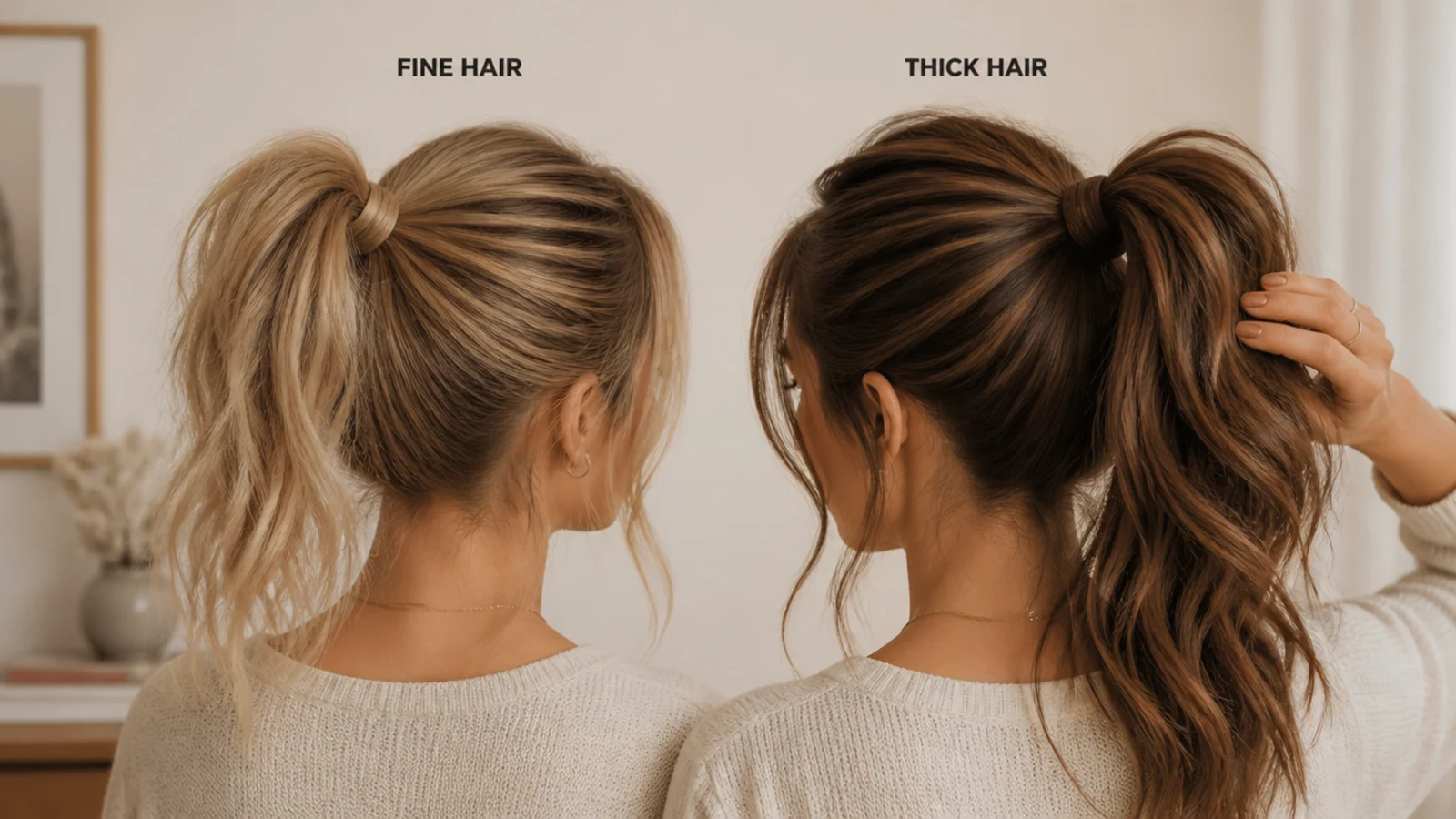
Fine hair and thick hair have opposite problems and need opposite solutions, which is why generic ponytail advice fails half its readers. Fine hair lacks bulk, so the tail looks stubby and the base has nothing to stand on. It needs added structure: root powder, crimped under-sections, teasing at the base, the stacked two-elastic illusion, and a small elastic rather than a chunky scrunchie that would dwarf the tail. Fine hair also holds a style better dirty than clean, so skip conditioner at the roots entirely. Thick hair has all the bulk it needs and none of the anchoring. It needs weight management: minimal teasing, a coil tie or two stacked elastics, crossed pins under the base, and pieces pulled out down the length to break the tail into visible sections instead of one dense block. Coarse thick hair also benefits from a smoothing cream on the front sections only, since the mess should live below the elastic, not around the hairline. On humid days, borrow from these hairstyles for frizzy hair.
The Products That Matter, and a Word on Scalp Tension
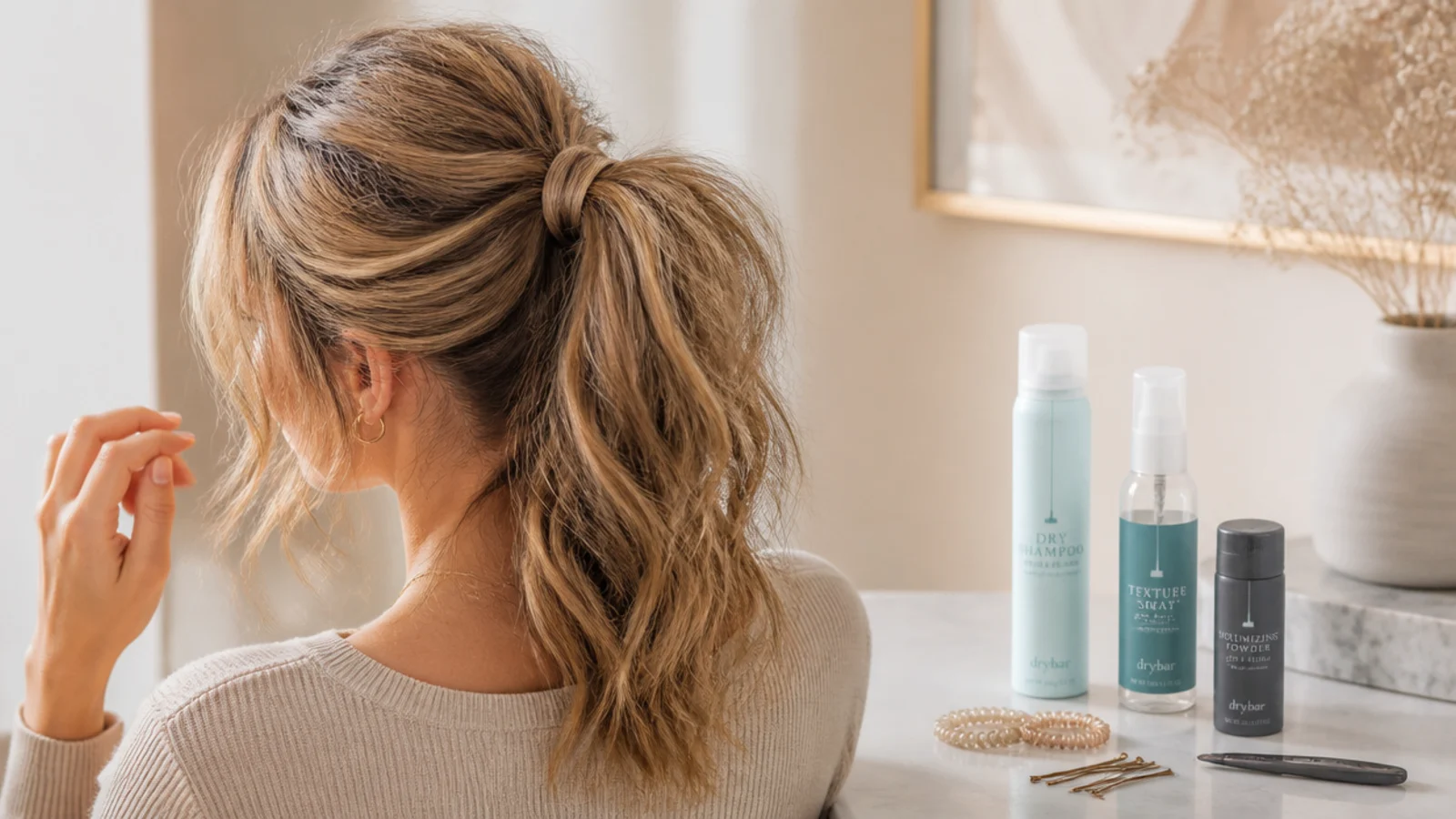
Five product categories cover every idea on this page. Dry shampoo at the roots for grip, applied in partings and left a full minute before rubbing in. A texturizing or sea salt spray through the mid-lengths for grit in the tail. A volumizing root powder for fine hair, which is the fastest lift available and costs about 15 to 25 dollars. A flexible-hold hairspray, not a firm one, since firm hold freezes the softness the style depends on. And the hardware: spiral coil ties, a bungee band, satin scrunchies for curls, and matte bobby pins in your hair color. On tension, take this seriously. A high ponytail pulls at the most vulnerable part of the hairline, and worn tightly every day it contributes to traction breakage at the temples and to tension headaches. Vary your placement between crown and nape across the week, tie looser than feels secure, and never sleep in a tight high pony. The low messy ponytail is the rest-day version.
Frequently Asked Questions
How do you get volume in a high ponytail?
Build it in three places. Tease the underside of the crown section in short strokes, or gather with your head flipped upside down so the roots set away from the scalp. Tease a half inch directly at the base so the tail does not hang flat. Then expand the tail itself by pancaking it or stacking a hidden second ponytail underneath the first.
How do you stop a high ponytail from sagging?
Attack the three causes. Add grip with dry shampoo or texture spray, because clean slippery hair is why most ponytails slide down. Split the weight across two stacked elastics or use a spiral coil tie. Then anchor by crossing two bobby pins in an X directly under the elastic against the scalp, so the tail's own weight tightens them.
Should hair be clean or dirty for a high messy ponytail?
Day-two hair wins by a wide margin. It has the natural oils and residual product that give an elastic something to grip, plus the texture that keeps the tease from falling out. On freshly washed hair, fake it with dry shampoo massaged into the roots and a texturizing spray through the mid-lengths before you gather anything.
Do high ponytails cause hair damage or headaches?
Worn tightly every day, they can. A crown tie pulls on the fine hairs at the temples and hairline, which over time contributes to traction breakage, and the constant scalp tension is a common headache trigger. Tie looser than feels secure, alternate between high and low placements across the week, and never sleep in one.
How high should a ponytail sit for your face shape?
A true high ponytail sits at the crown, roughly level with the top of your ears, and adds vertical height, which suits round, square and heart-shaped faces. Long or oval faces are usually better served by a mid or low placement that adds width at the jaw instead. Face-framing tendrils soften a strong jawline at any height.
Can you do a high messy ponytail with short hair?
From about 6 inches, yes, but not with a standard elastic, which needs two full wraps of length. Use a bungee band, which hooks at each end and needs only one wrap, then push three bobby pins upward into the base from underneath to support the shorter under-layers that will not reach the tie.
How do you hide the hair tie on a high ponytail?
Take a half-inch strand from the underside of the tail, wrap it around the elastic two or three times, and pin the end upward into the base of the ponytail so the pin sits hidden underneath. It takes about 20 seconds and is the biggest single upgrade from a plain ponytail to a styled one.
Is a high messy ponytail or a low one more flattering?
It depends on face shape and occasion, not on which is objectively better. High reads energetic and lifts a round or square face, but needs volume work and creates more scalp tension. Low reads soft and romantic, holds more easily, and suits offices and evening events. Most people look best alternating between the two.
How do you make a high messy ponytail look intentional and not sloppy?
Sequence, symmetry and one polished detail. Pull your face-framing pieces out last, after all the tugging and teasing, so they land where you want them. Keep the released strands even in width and matched on both sides. Then wrap the elastic with a strand of hair, which signals effort and instantly reclassifies the whole style.
Which messy ponytail look are you saving?
If you take three things from these 20 high messy ponytail ideas, make them these. Tie at the crown, not the back of the head, or you get height without lift. Prep with dry shampoo or texture spray so the hair has something to grip, because clean, slippery hair is the actual reason most high ponytails sag. And pull your temple and ear pieces out last, after the tugging and teasing are done, so they frame the face instead of getting swept back in. Save the two or three looks that match your length and density, then start with the wrapped-elastic version, which takes 20 extra seconds and upgrades everything. Browse the rest of the messy ponytail hub, or go softer with low messy ponytail ideas.