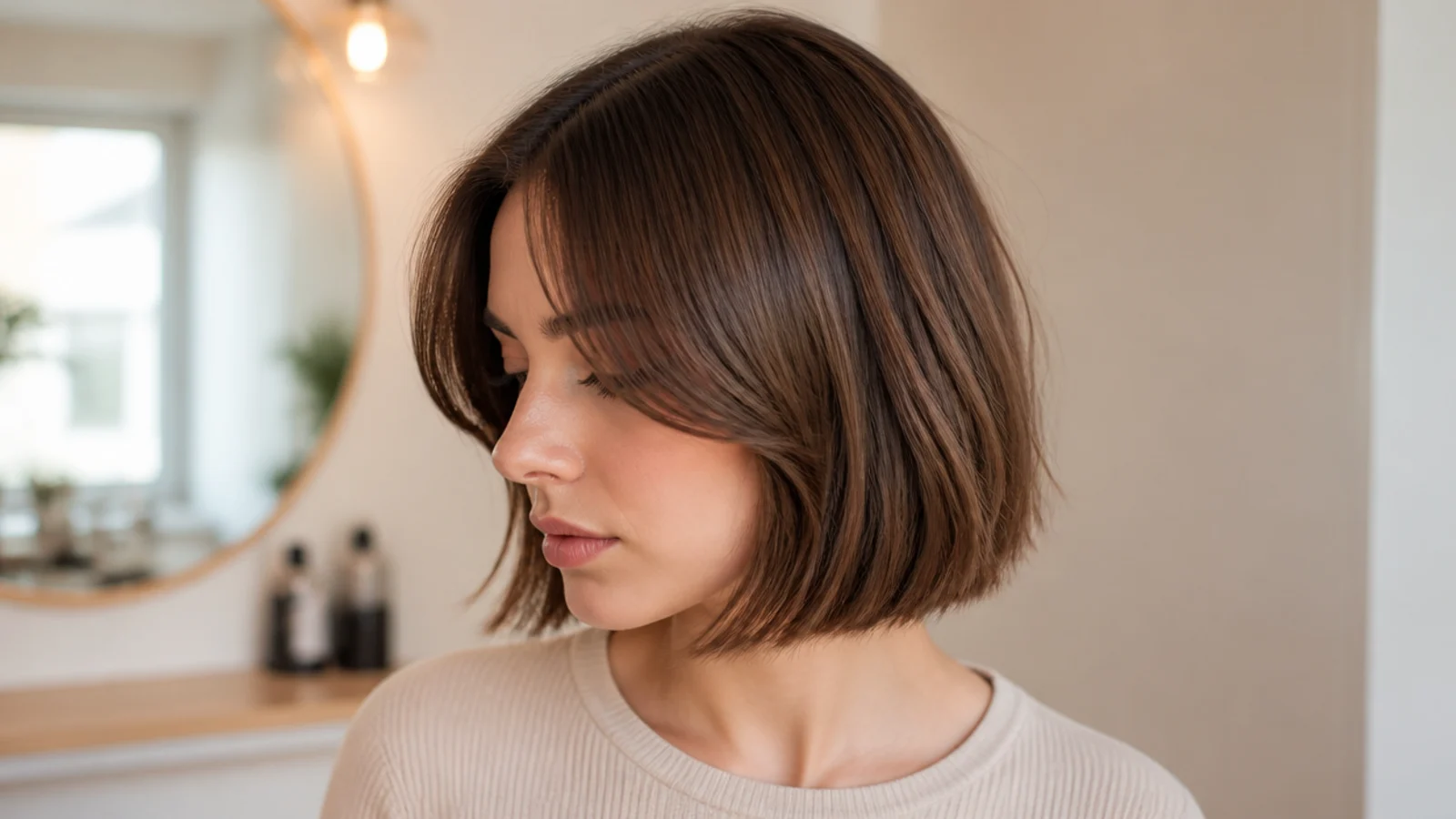
Quick Comparison
| Short Curtain Bangs on a Bob | Long Curtain Bangs on a Bob | |
|---|---|---|
| Shortest point | Between the eyebrow and the top of the cheekbone | At the cheekbone or lower, toward the jaw |
| Length from hairline | About 3.5 to 5 inches on most heads | About 5.5 to 7 inches on most heads |
| Trim cadence | Every 3 to 5 weeks to hold the shape | Every 6 to 8 weeks; drift is less visible |
| Daily styling time | 3 to 5 minutes of round brush blow drying | 1 to 3 minutes, often air dry friendly |
| Best bob length | French bob, chin bob and jaw bob | Lob and collarbone bob |
| Face shapes | Oval, heart, long and angular faces | Round and fuller faces, plus square jawlines |
| Hair texture | Performs best on dense, textured or wavy hair | Performs best on straight to loosely wavy hair |
| Grow-out behavior | Loses its shape fast, blends by about week ten | Blends into face-framing layers almost immediately |
| Yearly trim cost | 10 to 17 fringe trims, often free between cuts | 6 to 8 fringe trims, often free between cuts |
1. Chin-Length Bob With Short Curtain Bangs
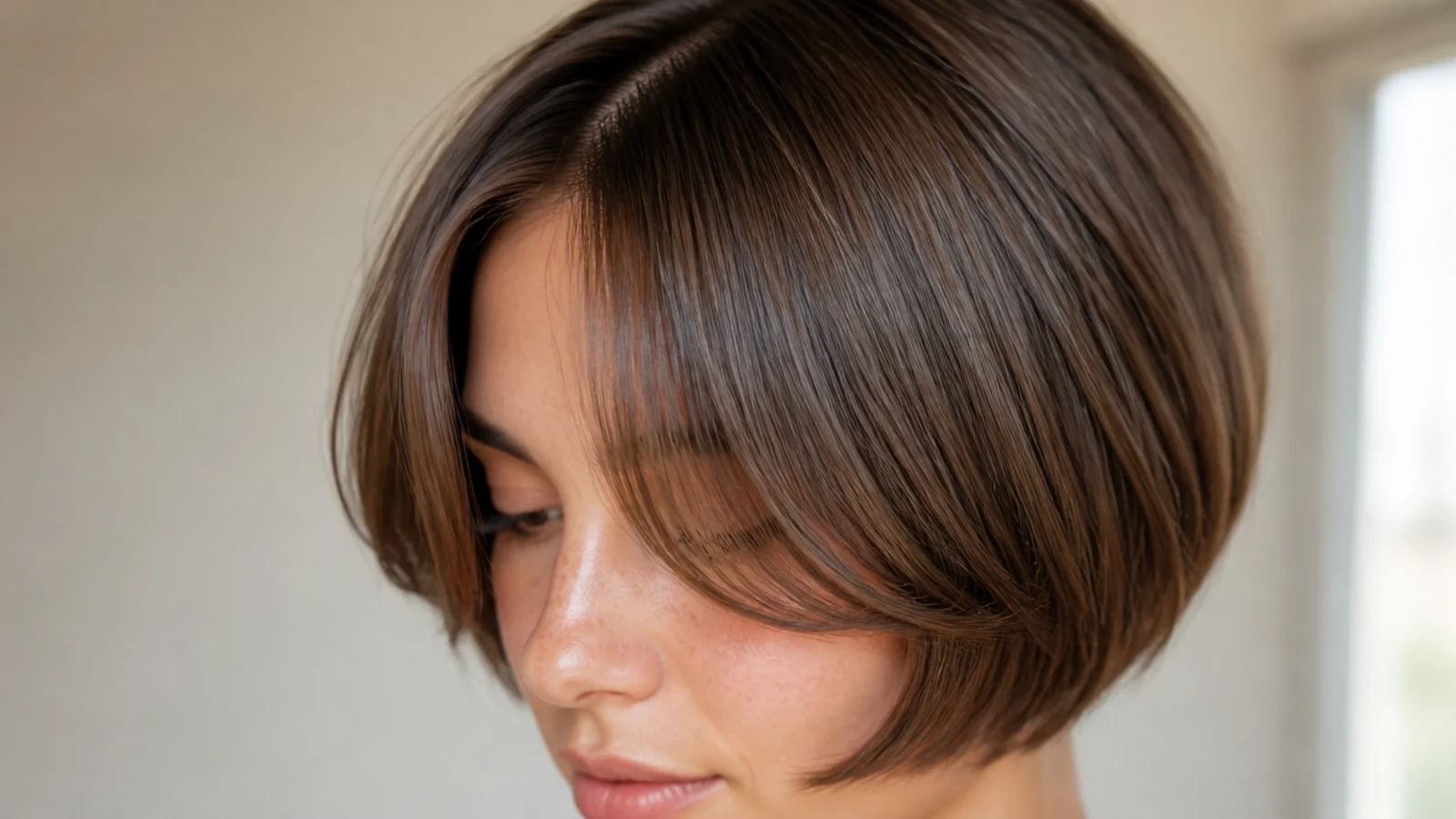
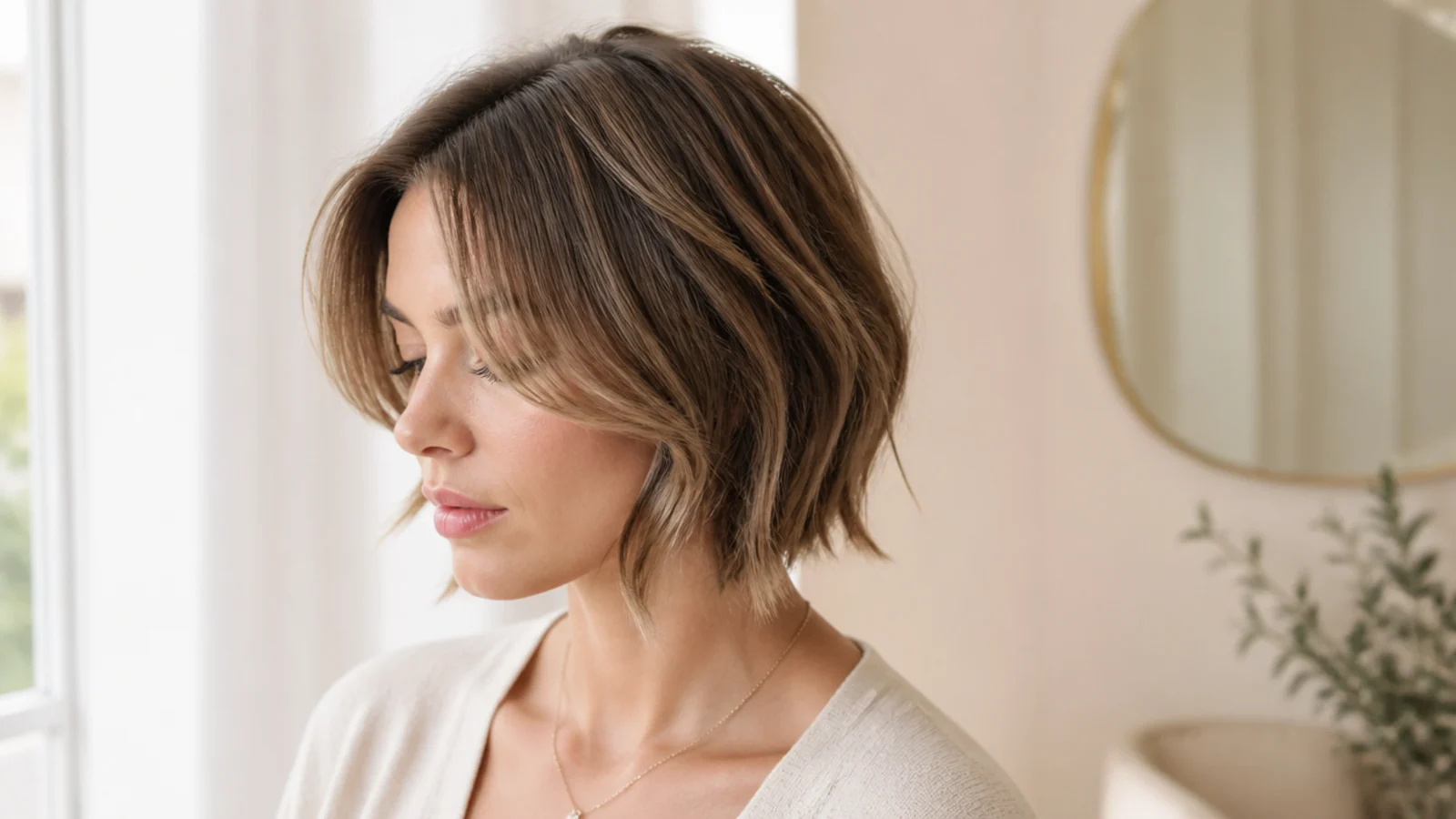
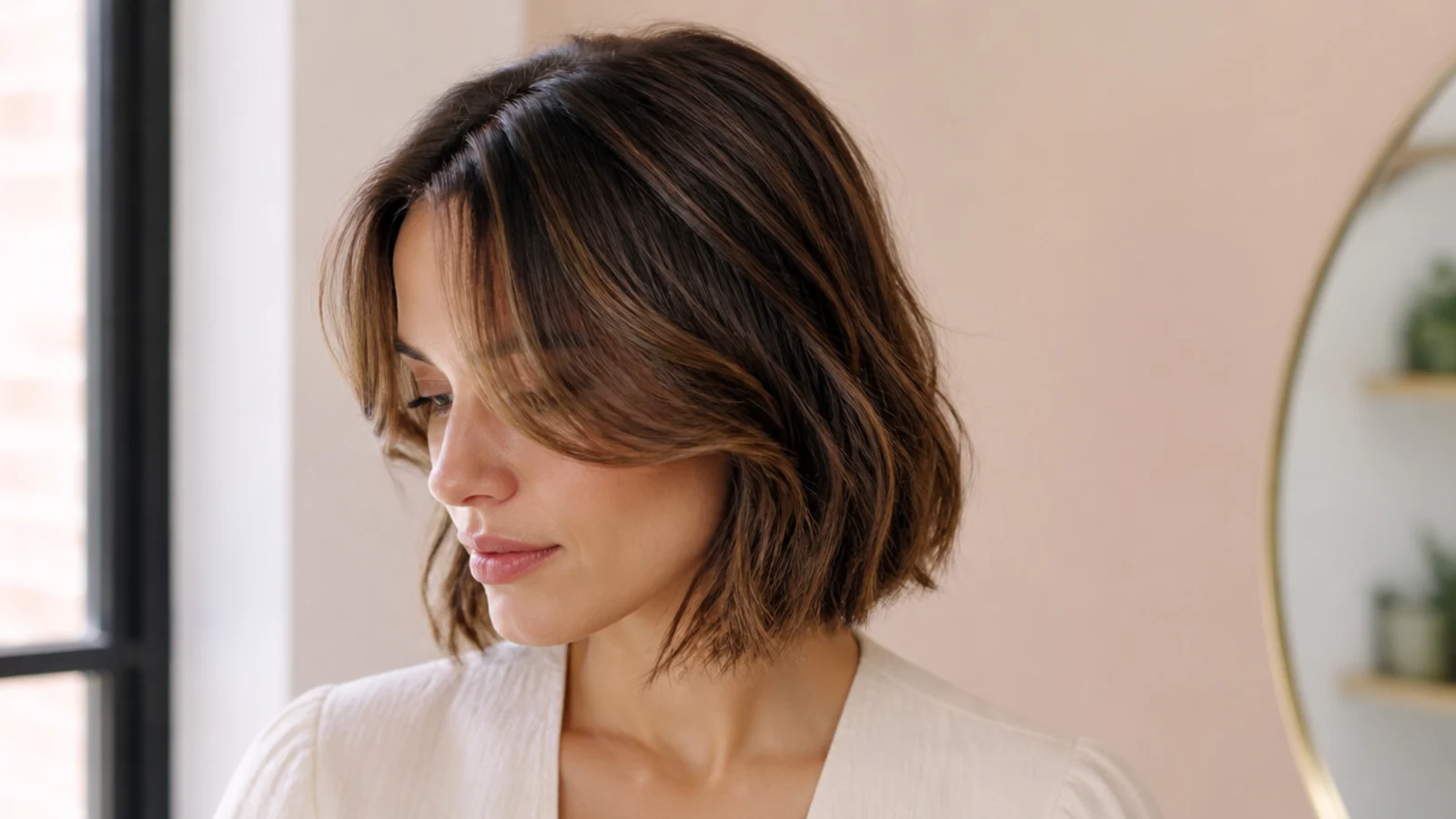
The default version, and the one to ask for if you are new to a fringe. The bob is cut level with the point of the chin, and the curtain bangs start at a middle part with the shortest point right at the top of the eyebrow, roughly 4 to 4.5 inches from the front hairline on most heads. From there the fringe angles down and out, meeting the length of the bob just in front of the ear so there is no visible step. Because the bob is short, this brow-level shortest point keeps the proportion balanced instead of stacking weight at the jaw. See the full bob range in bob haircuts.
Who it suits: Oval and heart face shapes, medium density hair, first time fringe wearers.
Tip: Ask for the fringe cut dry so you can see exactly where the shortest point lands before more comes off.
2. Jaw-Length Blunt Bob With Short Curtain Bangs
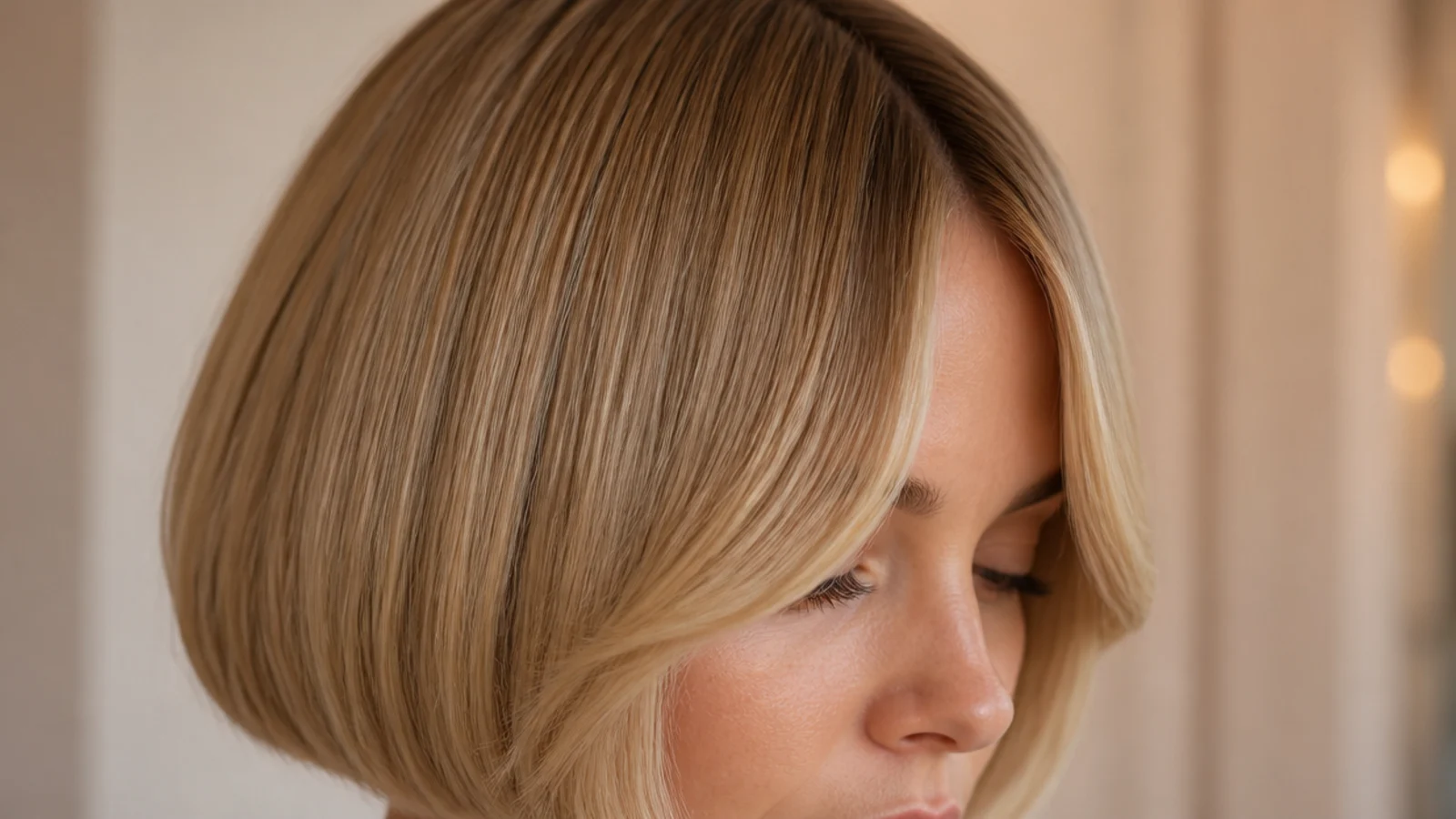
A blunt bob keeps a hard, uninterrupted perimeter at the jaw, and short curtain bangs are what stop it looking severe. The contrast is deliberate: heavy solid line at the bottom, soft tapered fringe at the top. Keep the fringe shortest point at the brow and point-cut the last half inch so the ends break into pieces rather than sitting as a second blunt line. This is the version that photographs best on thick, dense hair, because the density that makes a blunt bob look expensive also gives the fringe enough body to hold its sweep all day without collapsing flat.
Who it suits: Thick, dense, straight to slightly wavy hair; square and oval faces.
Tip: Ask for the fringe to be thinned only at the very ends, never at the root, or you get frizzy regrowth.
3. French Bob With Short Curtain Bangs
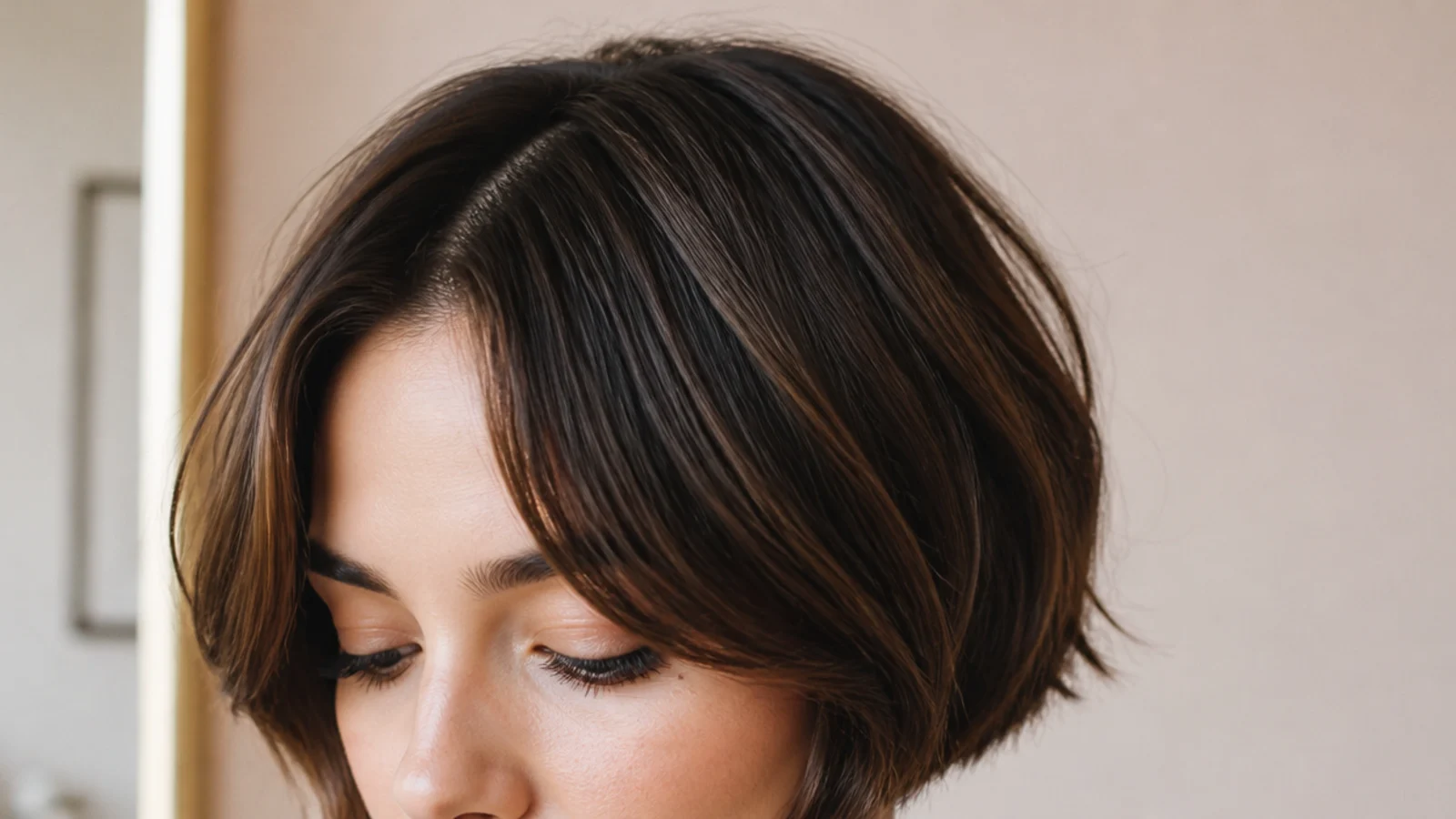
The French bob sits shorter than a classic bob, usually between the earlobe and the top of the jaw, and it is the shape that demands the shortest curtain bangs on this list. At this length a cheekbone fringe drowns the cut, so the shortest point wants to be at or just above the brow, around 3.5 to 4 inches. The whole look depends on texture rather than polish: rough dry the bob, bend the ends with fingers, then round brush only the fringe. Left undone, it is the closest thing to the Parisian cut that everyone screenshots and nobody can name.
Who it suits: Long or oval faces, fine to medium hair, anyone wanting a low blow dry commitment on the length.
Tip: Ask for the perimeter left slightly uneven so the bob reads lived in rather than helmet shaped.
4. The Curtain Call Bob
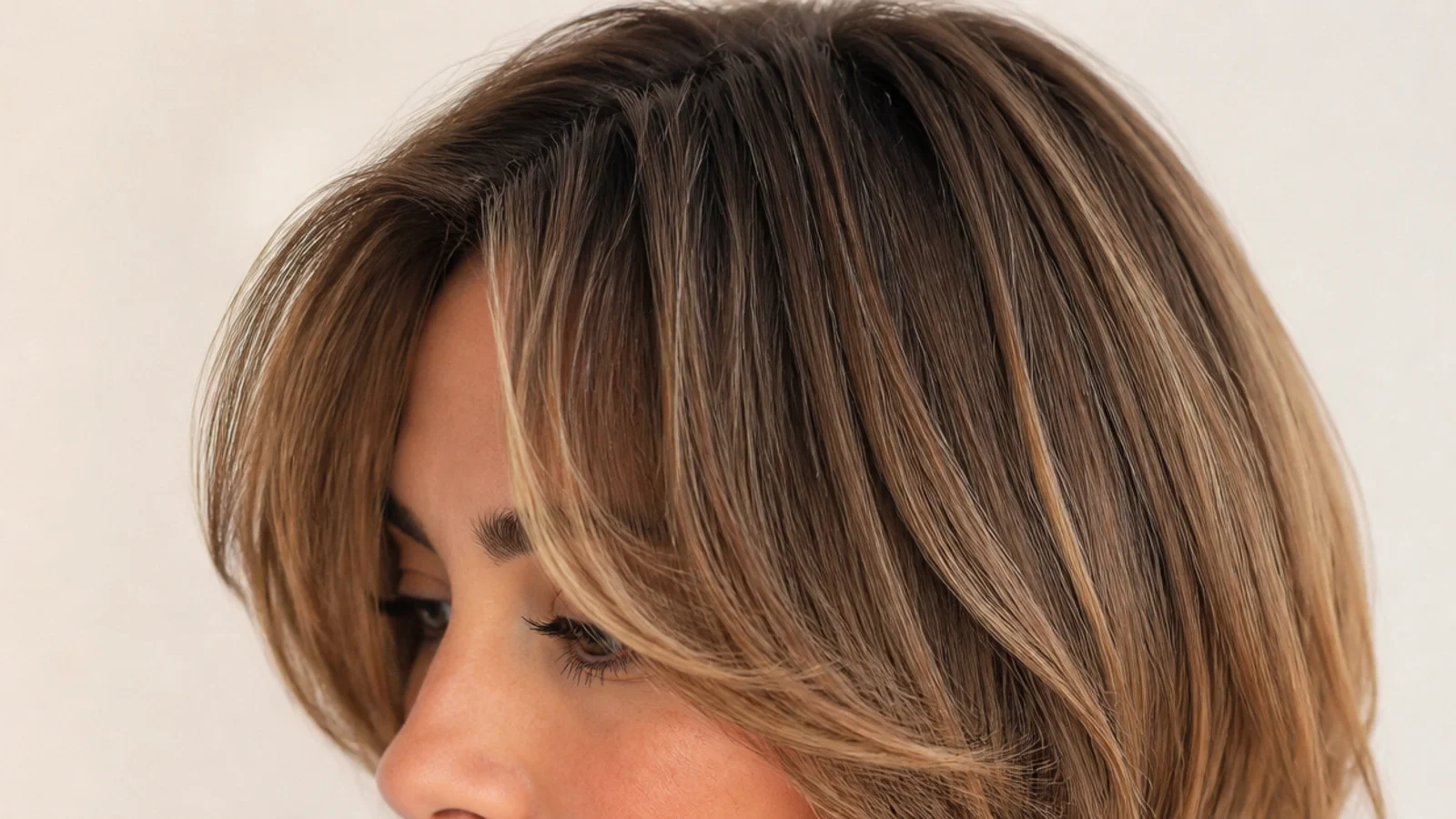
This is the named version of the cut currently circulating in beauty press: a soft, lightly layered bob with middle-parted short curtain bangs, marketed specifically at fine hair. The layering is shallow, sitting mainly through the top two inches, and the fringe is cut into that layering so the two blend rather than stack. The effect is fullness at the front of the head where fine hair usually looks flattest. If you have been told layers will thin out your hair, this is the exception, because the layers are short enough to prop up the section above them rather than remove weight.
Who it suits: Fine and flat hair that goes limp by lunchtime.
Tip: Blow dry the fringe first while it is still damp; fine hair sets in whatever shape it air dries into.
5. Wavy Bob With Short Curtain Bangs
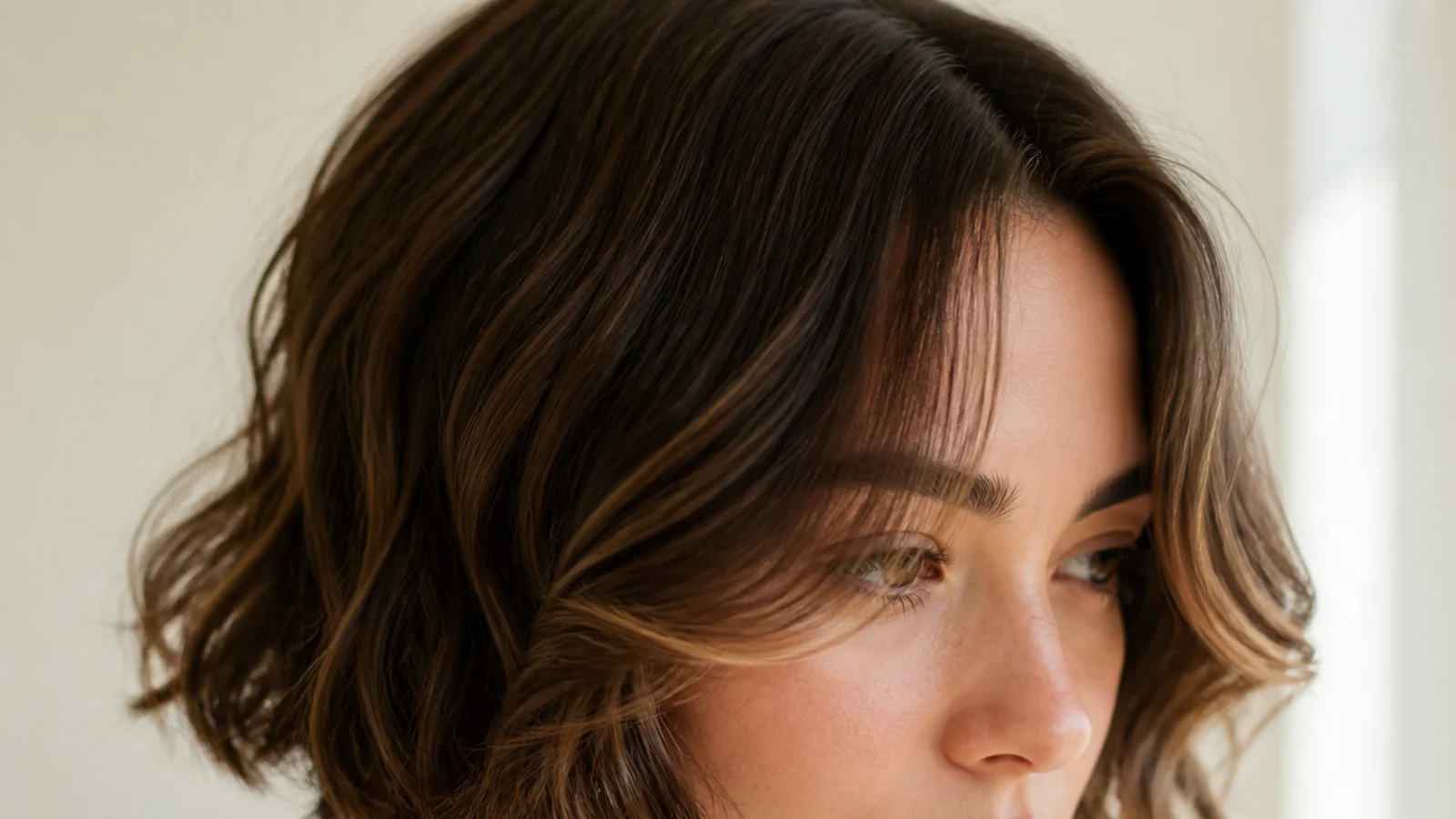
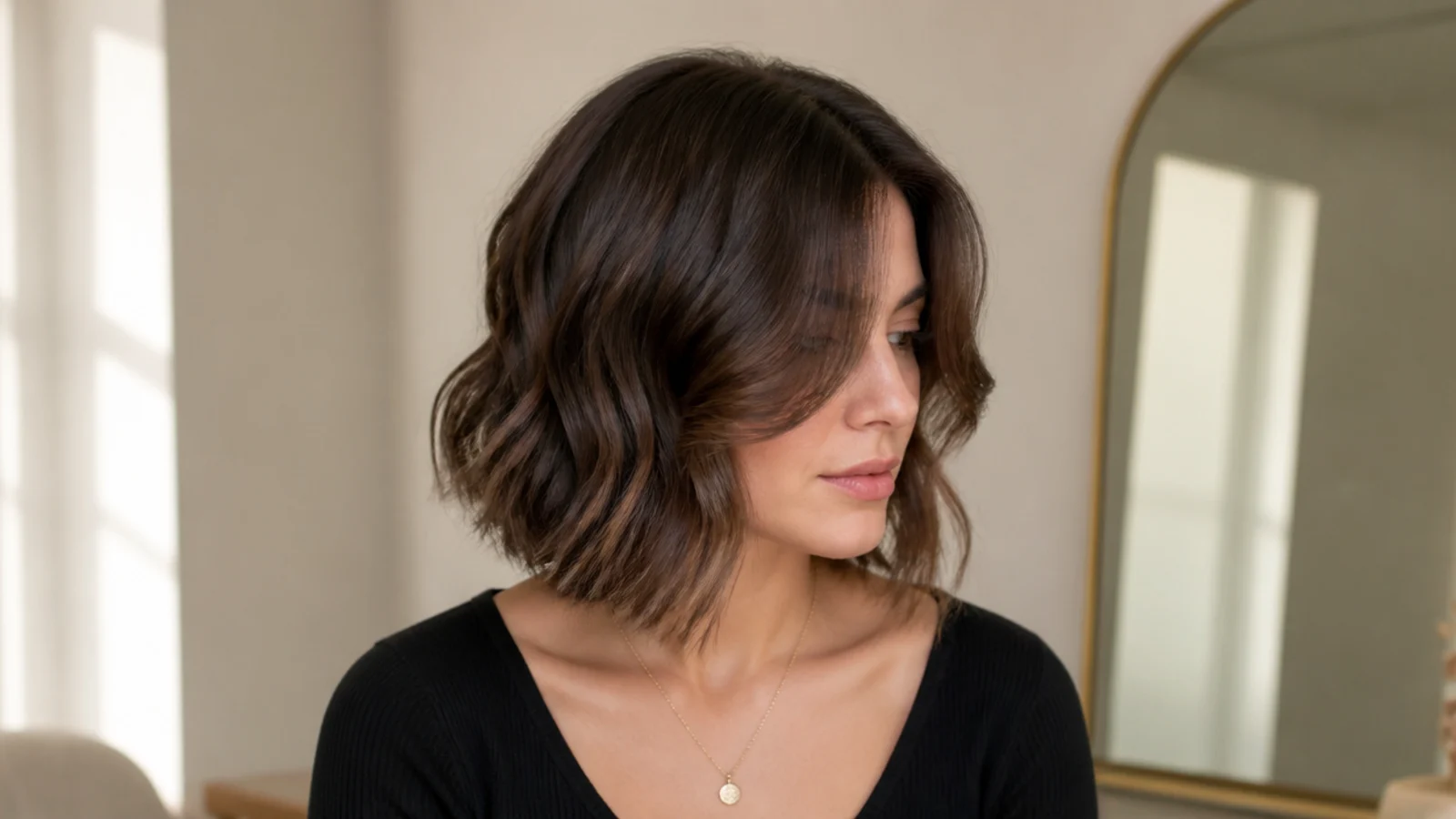
On a 2a to 2c wave, the fringe springs up around half an inch once it dries, so the cut has to allow for it. Ask for the curtain bangs cut dry, in your natural wave pattern, and left half an inch longer than the target so they settle at the brow rather than above it. The bob itself works best at chin length here, where the wave has room to form one full S bend before the ends. Finish with texture spray at the mid lengths only. More wave specific detail sits in wavy short curtain bangs.
Who it suits: Natural 2a to 2c waves that want a low effort, air dry friendly bob.
Tip: Diffuse the fringe on low speed pointing away from the center part so it does not split into two chunks.
6. A-Line Bob With Short Curtain Bangs
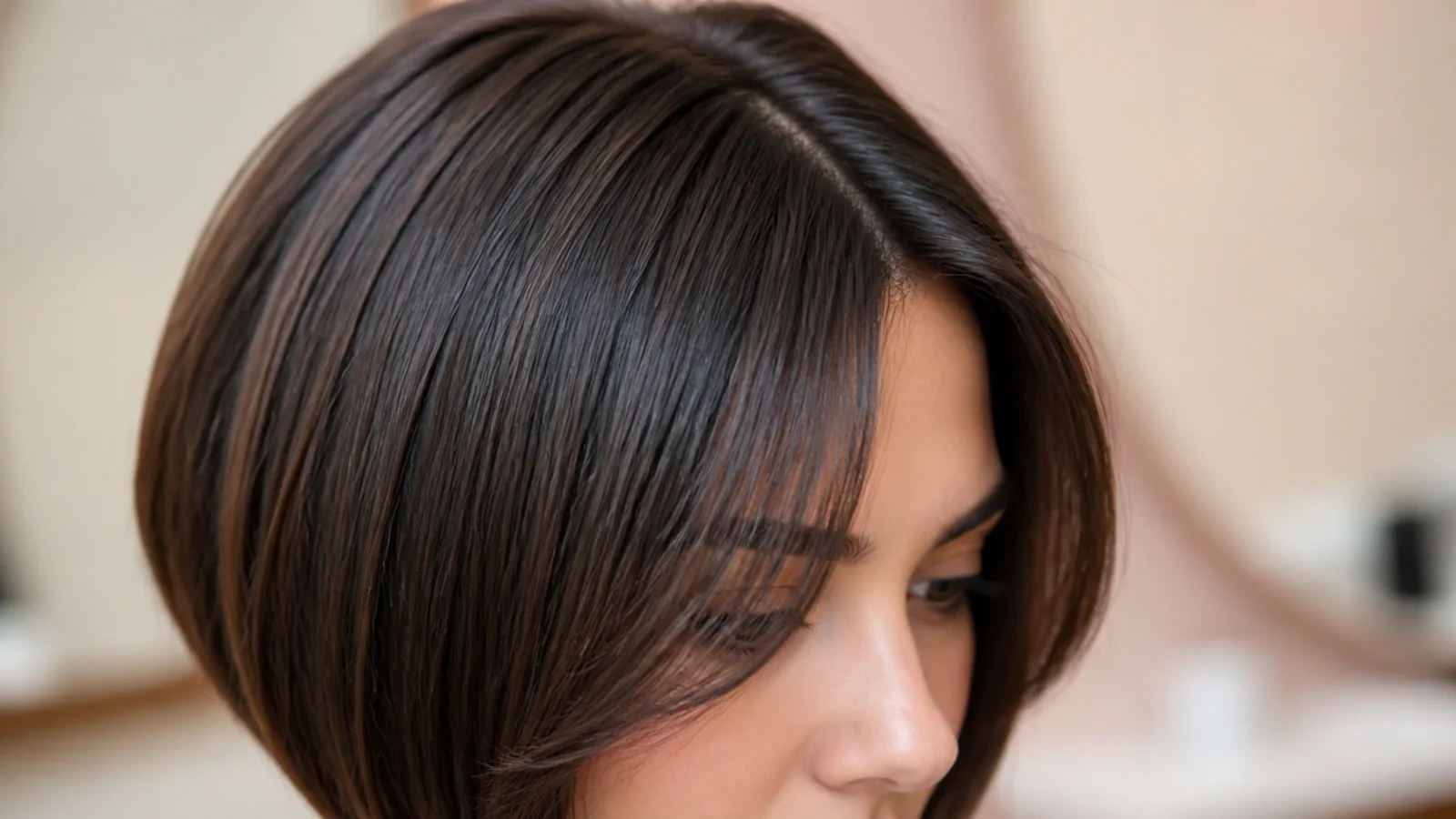
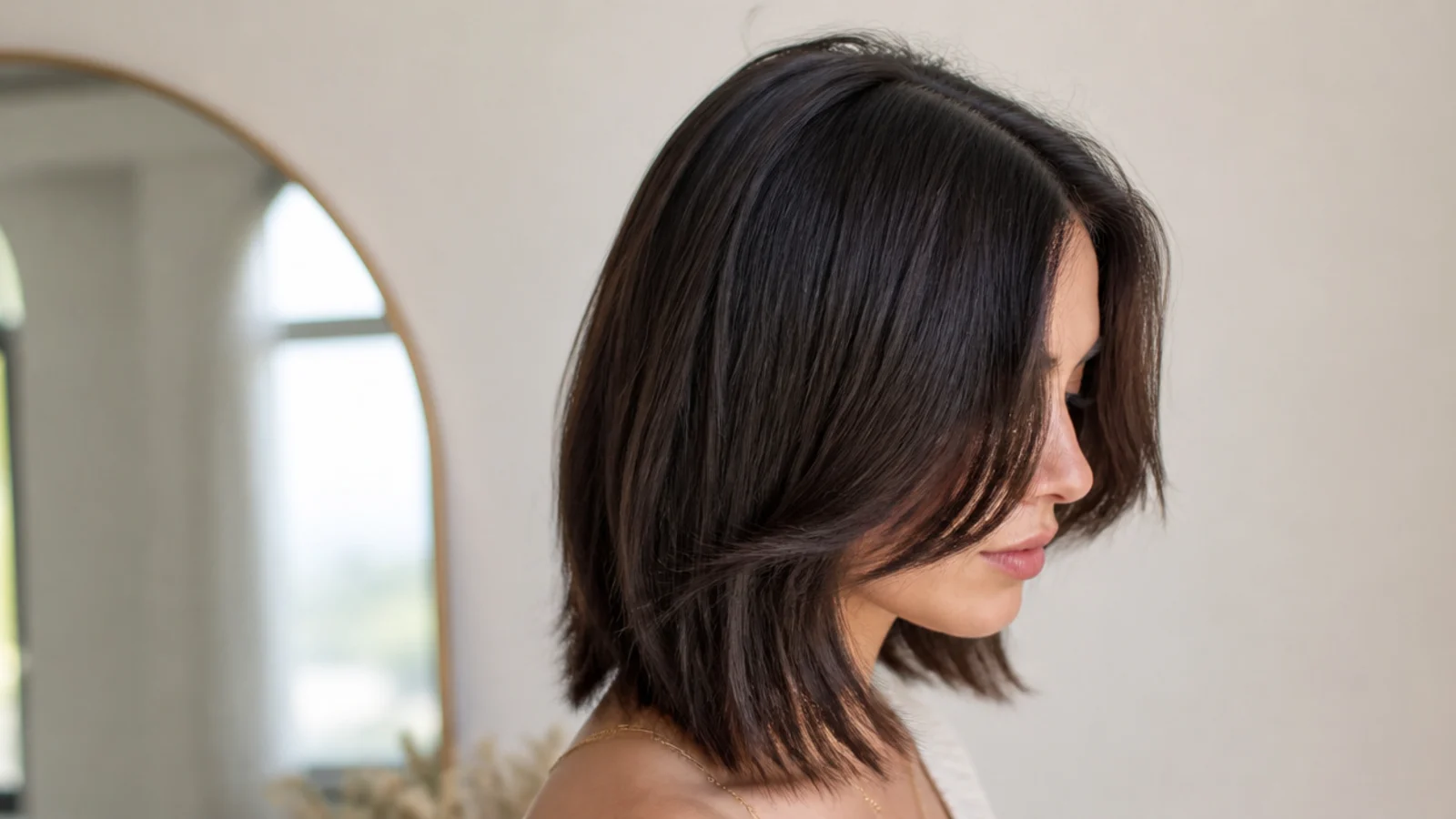
An A-line bob is cut shorter at the back and angles down toward the front, so the longest pieces land near the collarbone. That forward drive already frames the face, and short curtain bangs finish the line at the top. Because the front is the longest part of the cut, you can go slightly shorter on the fringe here than on a blunt bob, right at the brow, without the balance tipping. The angled front sections and the outer edge of the fringe should be blended in a continuous line, not cut as two separate shapes, or the fringe looks stuck on.
Who it suits: Round and square faces that want vertical length at the front.
Tip: Ask for the angle to start behind the ear so the front length is dramatic without the back going too short.
7. Shaggy Bob With Short Curtain Bangs
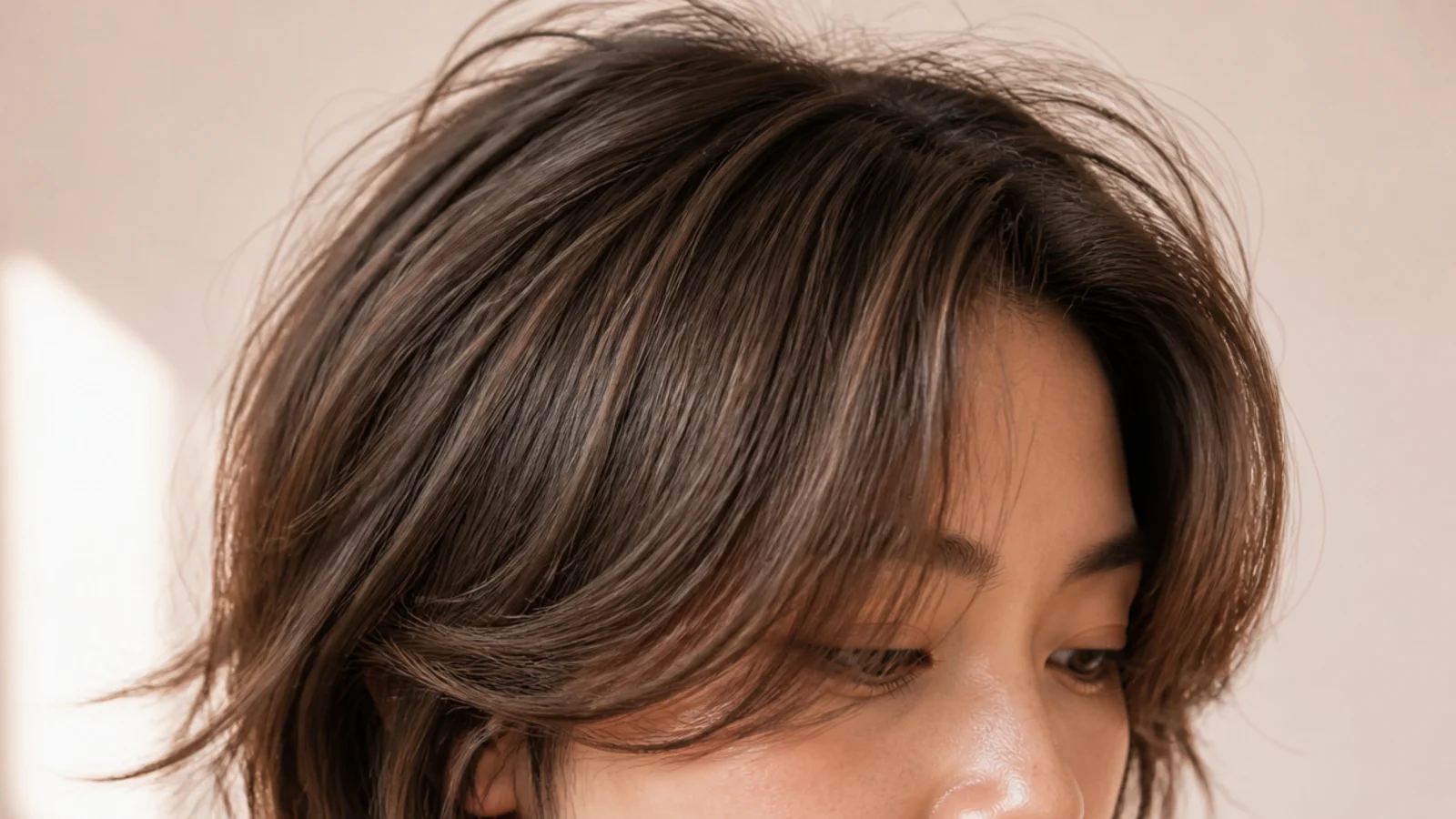
The shag bob runs on visible internal layers, and curtain bangs are effectively the top layer of that structure. Cut short, at brow level, and heavily point-cut so the ends are ragged rather than tapered, they read as part of the shag instead of a separate fringe. This is the most forgiving cut on the list for growing out, because a shag already has multiple lengths, so the fringe never hits an awkward stage on its own. Style with a texture spray at the root and nothing on the ends, and let the layers separate. It is also the easiest bob to keep between salon visits.
Who it suits: Medium to thick hair, wavy textures, anyone who hates blow drying.
Tip: Ask for the layers cut with a razor or slide cut, not blunt, so the shag ends stay soft.
8. Short Curtain Bangs on a Round Face Bob
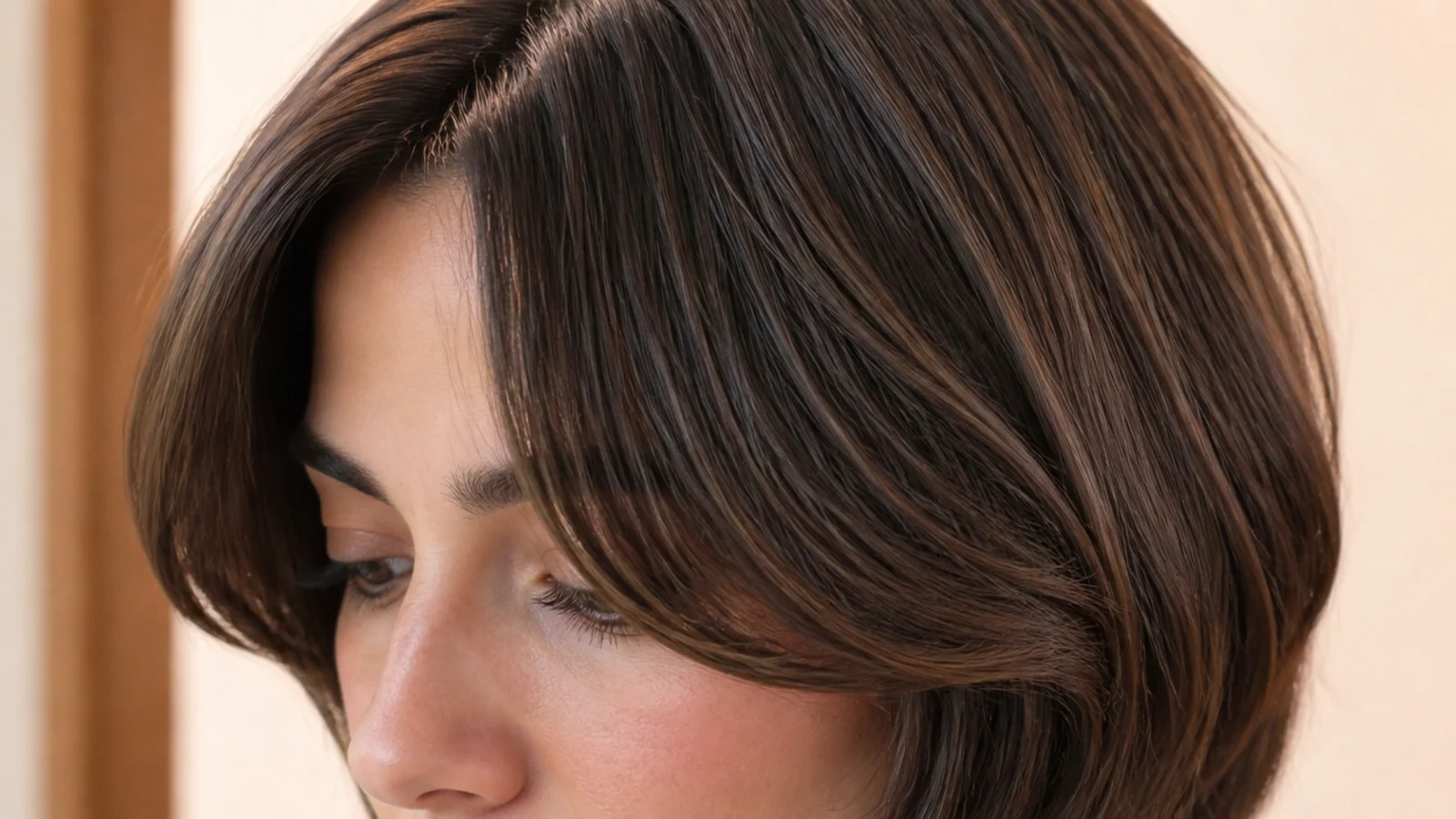
There is a real contradiction in the advice online, so here is the resolution. On a round face, keep the shortest point of the fringe at or below the cheekbone and keep the fringe wispy rather than dense. Short curtain bangs work on round faces when the vertical line from eye to hairline stays visible; they fail when they are cut blunt and heavy at cheek level, which draws a horizontal line right across the widest part of the face. Pair with a bob that ends below the jaw. Full detail lives in short curtain bangs for round faces.
Who it suits: Round and full cheeked faces wanting a fringe without widening the face.
Tip: Ask for a narrow triangle section so the fringe stays see-through and does not sit as a solid block.
9. Curly Bob With Short Curtain Bangs
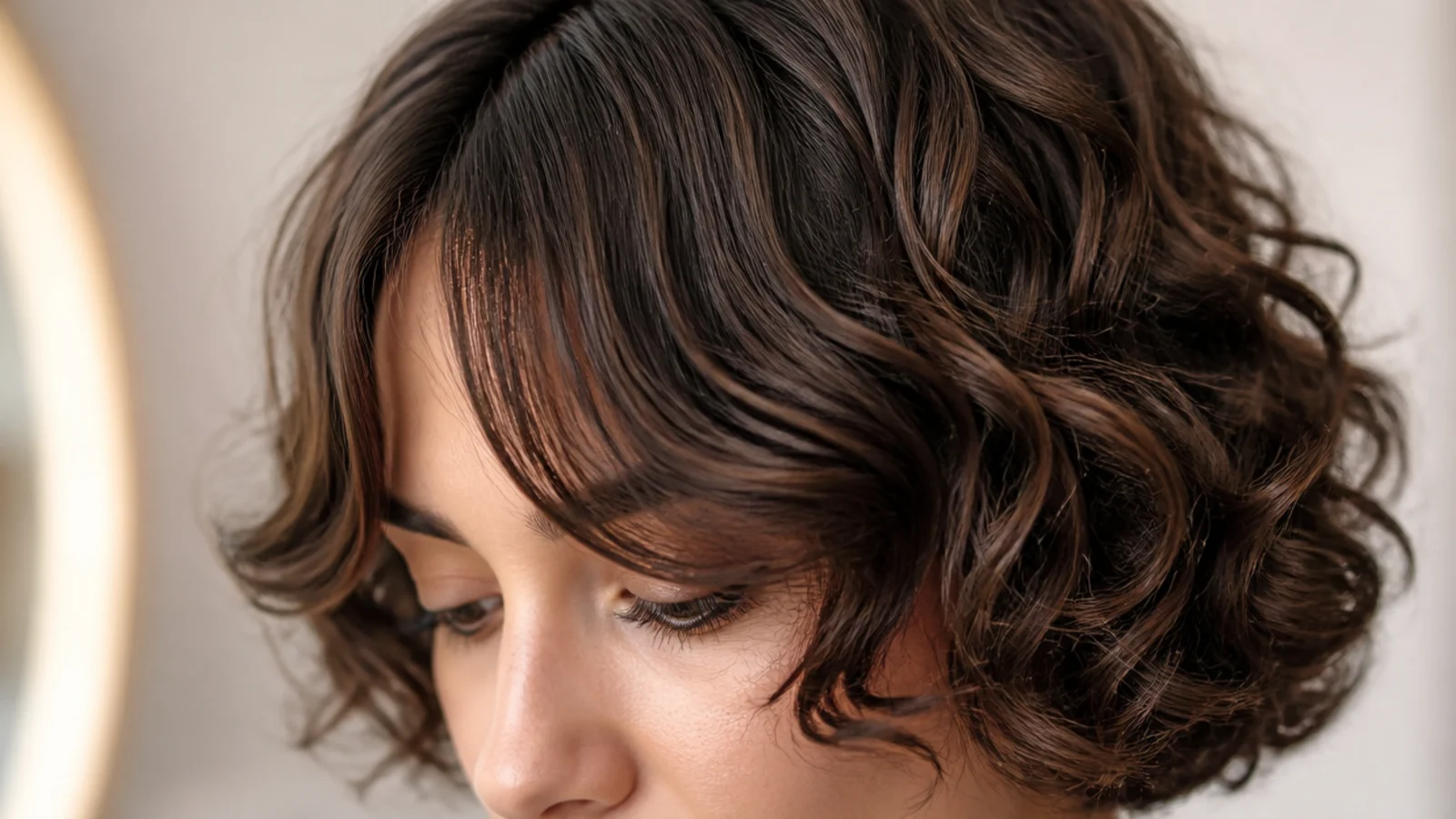
Curly curtain bangs have one non-negotiable rule: cut them dry, on defined curls, curl by curl. Wet cutting on 3a and tighter is how people end up with a fringe two inches shorter than they asked for. On a 3b or 3c curl pattern, ask for the fringe cut one to two inches longer than your target length so shrinkage lands it where you want it. Keep the curly bob at chin to jaw so the shape stays rounded rather than triangular. More on curl patterns in curly short curtain bangs.
Who it suits: 2c through 4a curls that want face framing without straightening.
Tip: Refresh the fringe alone on non-wash days with water and a pea of leave in, not the whole head.
10. Fine-Hair Bob With See-Through Short Curtain Bangs
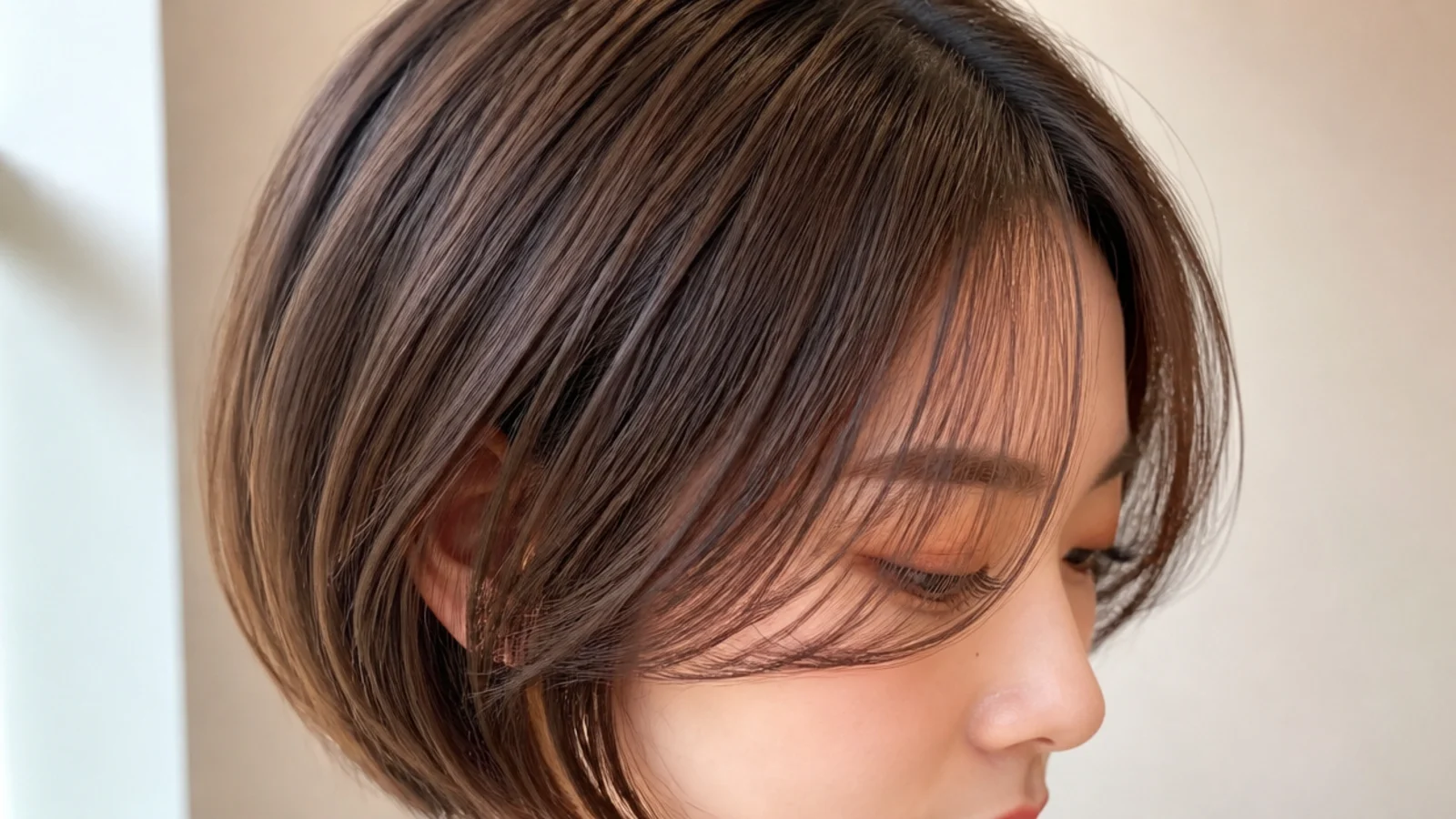
Fine hair does not need less fringe, it needs a smaller section cut better. Take a narrow triangle from the middle part out to roughly the arch of the eyebrow rather than all the way to the temples, then point-cut the last inch so the fringe never ends in a blunt line that shows every gap. Blow dry it while still damp with the dryer aimed up and back at the roots, finish with a cool shot, and use texture spray rather than cream or oil. Styling for fine short cuts is covered in how to style short fine hair.
Who it suits: Fine and thin hair that wants density at the front of the head.
Tip: Skip conditioner on the fringe itself; it is the fastest way to make short curtain bangs go flat.
11. Straight Sleek Bob With Short Curtain Bangs
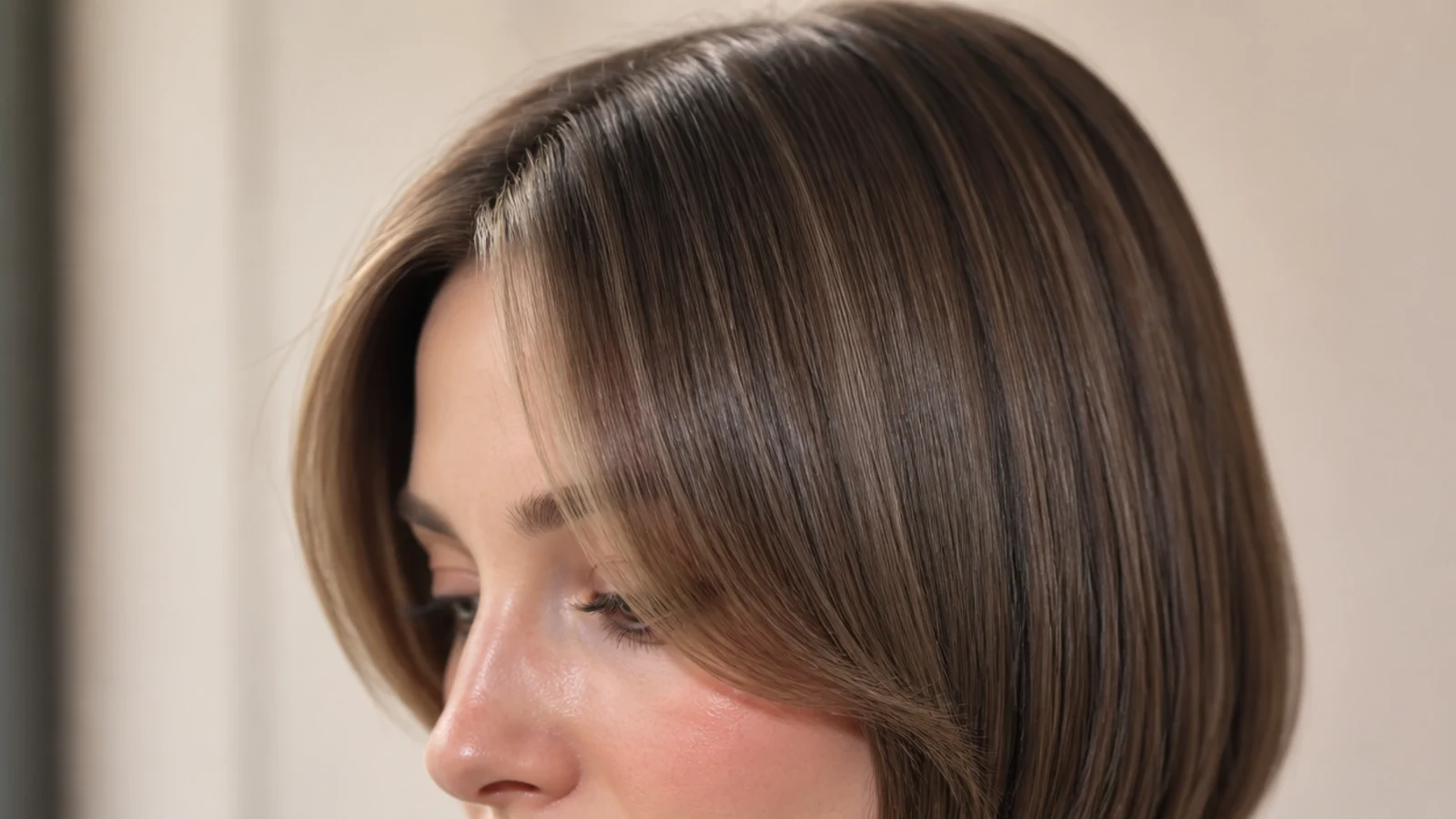
Straight hair is the least forgiving texture for a short fringe because it shows every cut line and splits at cowlicks. Ask the stylist to dry the fringe against its natural growth direction first to find the cowlick, then cut that section slightly longer than the rest. Point-cutting depth matters more here than anywhere: a half inch of point cutting is the difference between a soft curtain and a hard blunt edge. The payoff is the glossiest version of this cut. Straight specific technique is in straight short curtain bangs.
Who it suits: 1a to 1c straight hair, glossy polished finishes, oval and heart faces.
Tip: Keep a dry shampoo at the fringe root only, since a short straight fringe goes greasy before the length does.
12. Lob With Short Curtain Bangs
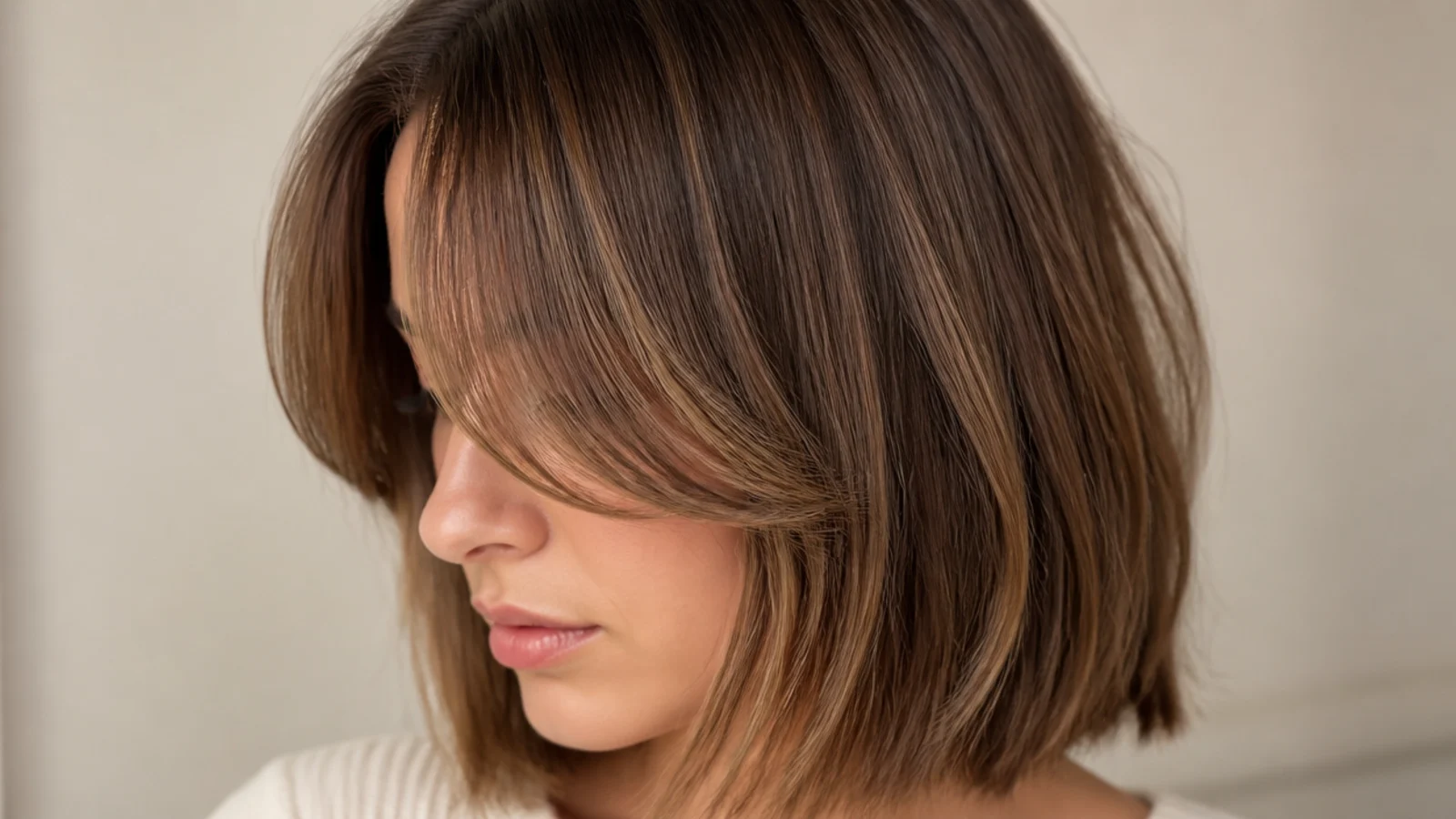
A lob sits at or just past the collarbone, and it is the one length on this list that can carry the full cheekbone sweep without looking top heavy. Here the shortest point can drop to the top of the cheekbone, around 5 to 5.5 inches from the hairline, because there is enough length underneath to balance it. This is the safest starting point if you are unsure how short you want to go, since a lob fringe can be taken shorter at the next trim but a French bob fringe cannot be lengthened. See the mid length version in mid length haircut with curtain bangs.
Who it suits: Anyone easing into both a shorter cut and a fringe at the same time.
Tip: Book a fringe-only trim at week four so you can decide on final length without recutting the lob.
13. Layered Bob With U-Shaped Short Curtain Bangs
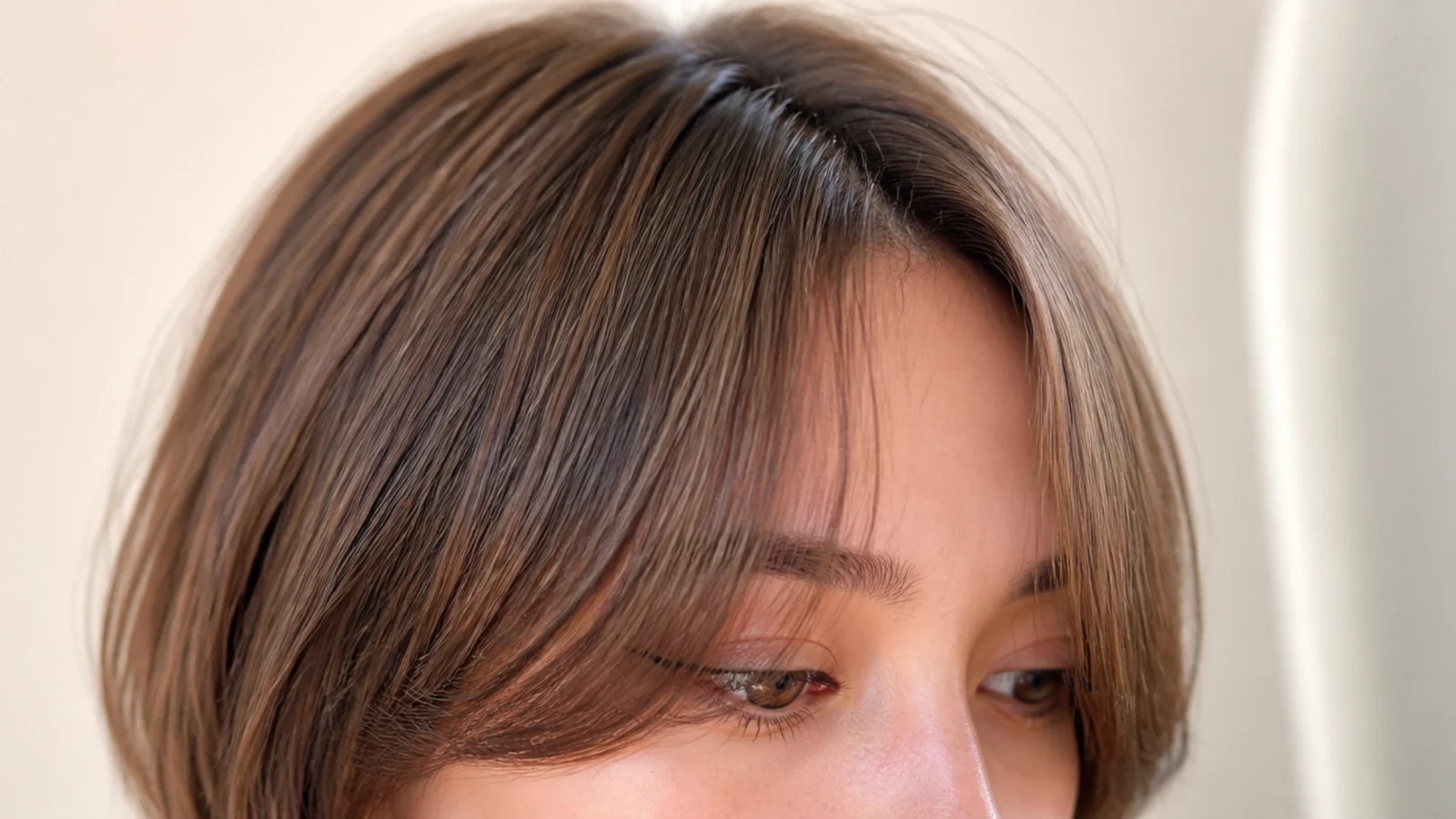
The U-shape is the geometry that makes a curtain bang read as a curtain rather than a straight-across fringe. The shortest point sits at the center of the middle part and the length increases steadily out toward the temples, so the outline draws a soft U across the forehead. On a layered bob the outer arms of that U should land in the same place as the shortest face-framing layer so the two connect. If your fringe has ever looked like two separate chunks, a shallow U is usually the fix, not more length. Every variation of the shape sits on the short curtain bangs hub.
Who it suits: Medium density hair on any bob length; the most universally flattering fringe shape.
Tip: Ask for the U to be checked by combing the whole section straight forward and looking for symmetry.
14. Textured Bob With Short Curtain Bangs and a Money Piece
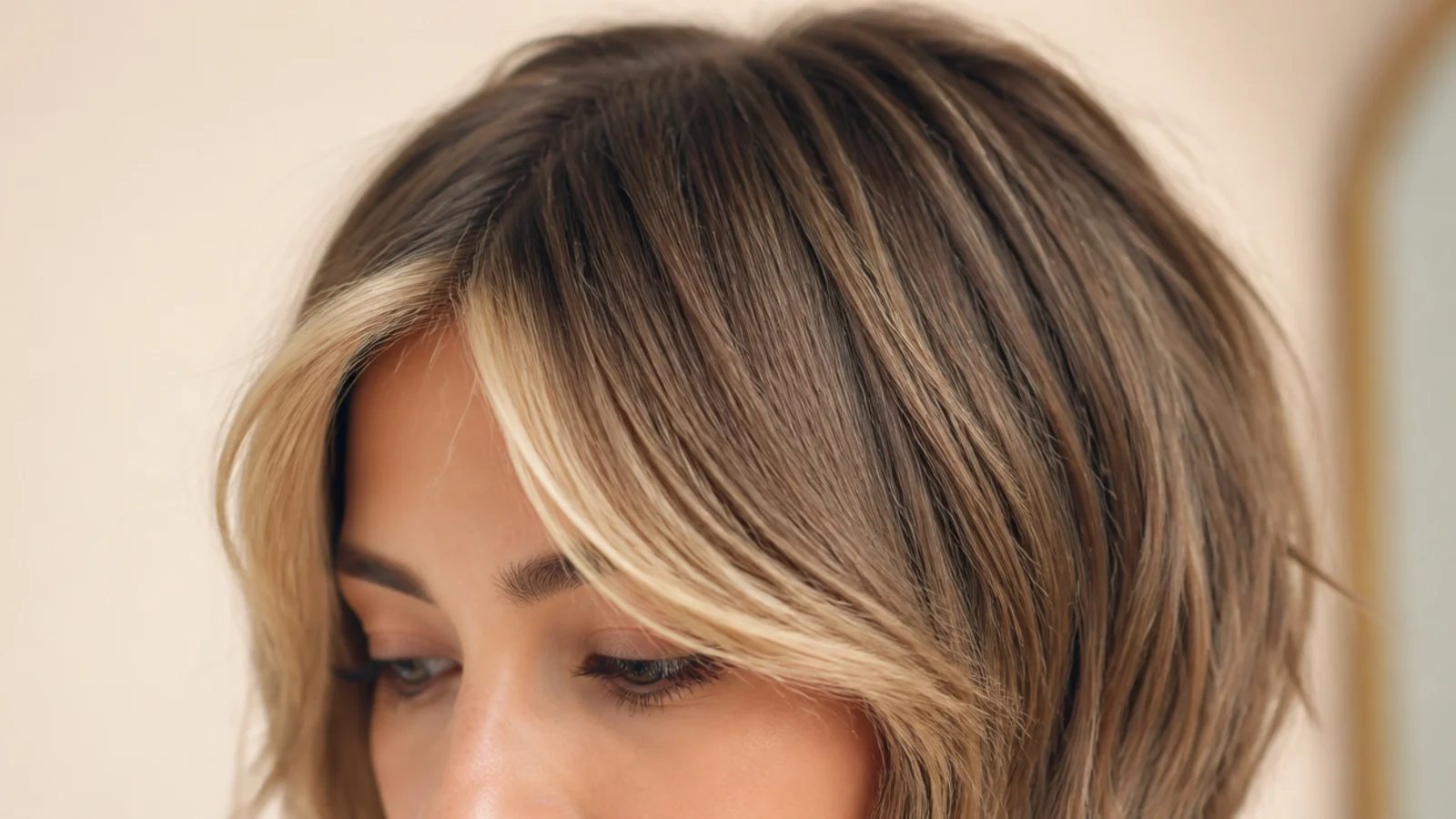
Lightening only the fringe and the first section behind it, two to three shades brighter than base, makes short curtain bangs look twice as thick as they are. The light strands catch the eye at the widest part of the sweep, which reads as density. On a textured bob it also breaks up an otherwise one-tone cut without a full head of highlights, so it is the cheaper coloring route at roughly the price of a partial foil. Keep the brightness at the outer arms of the fringe rather than dead center. Color ideas continue in balayage brunette.
Who it suits: Anyone wanting more visual density from a fine or medium fringe.
Tip: Ask for the lightening to start half an inch below the root so regrowth does not draw a hard line.
15. Grown-Out Short Curtain Bangs on a Bob
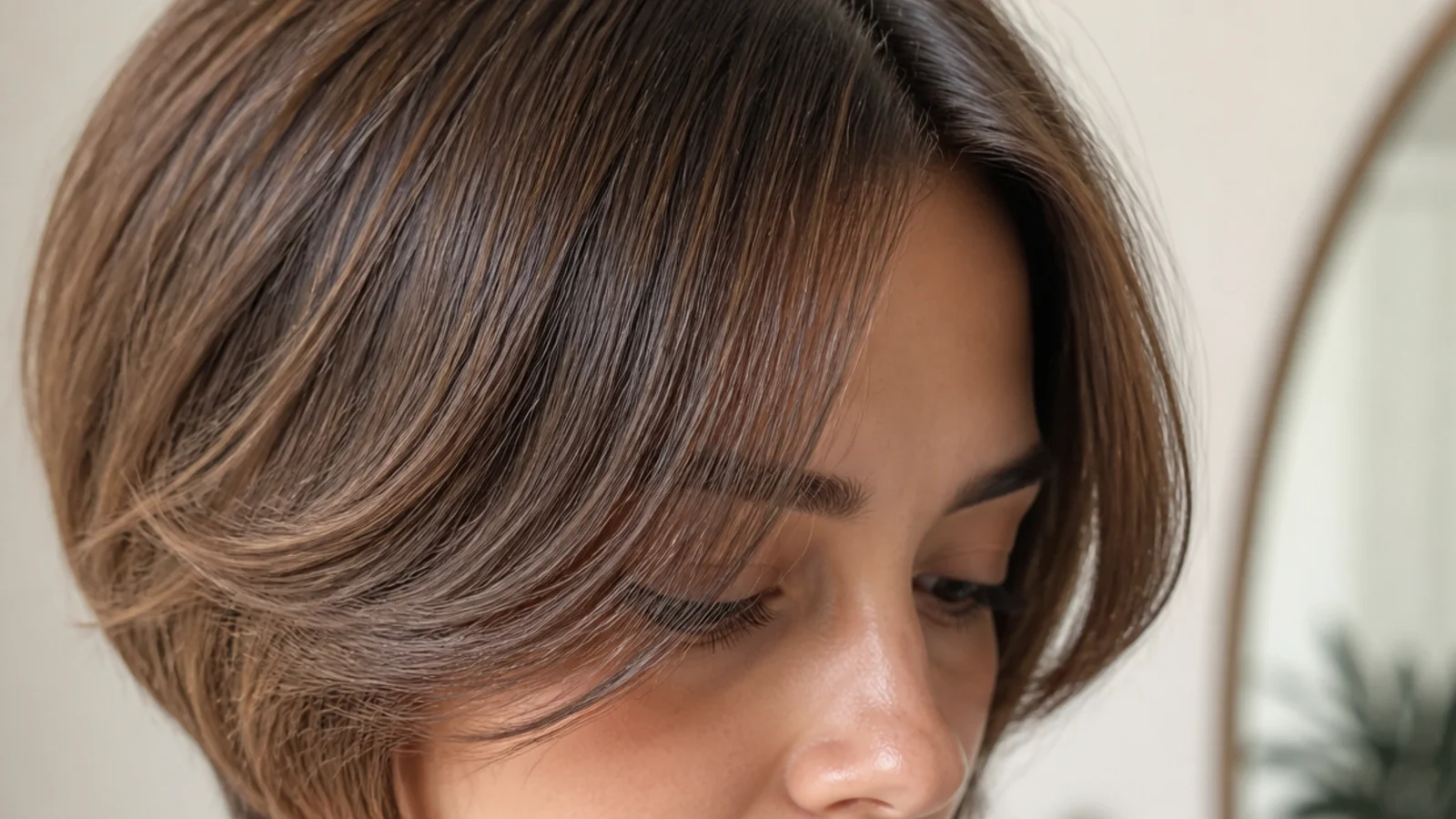
Around week ten, a brow-level fringe reaches the cheekbone and stops being a fringe. On a bob this is a genuinely good stage, not an awkward one, because the grown-out pieces now match the shortest face-framing layer of the cut. Tuck the fringe behind the ears while wet so it dries blended, switch to a slightly off-center part, and round brush the ends outward with the rest of the front section. Resist trimming, since half an inch costs a full month. The whole timeline is mapped in grown out short curtain bangs.
Who it suits: Anyone transitioning out of a fringe without cutting the bob shorter.
Tip: Use no-crease clips rather than bobby pins so the fringe keeps a bend instead of a flat dent.
What Short Curtain Bangs Are vs a Full Fringe
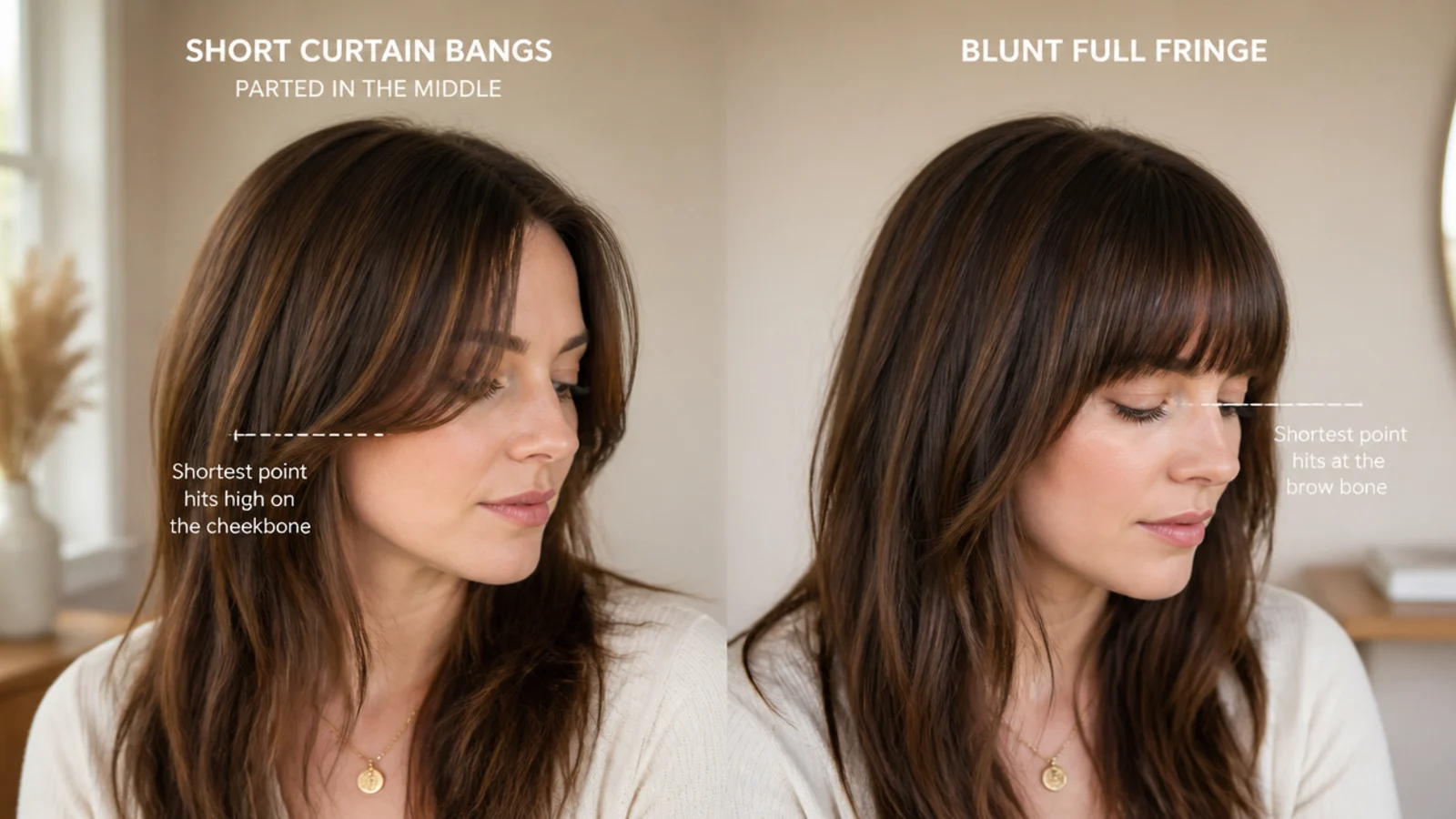
A full fringe is cut as one solid panel that falls straight down across the forehead and covers the eyebrows entirely. Short curtain bangs are the opposite construction. They split at a middle part, the shortest point sits at the center, and the length increases outward so the ends sweep away from the face and land near the temples or cheekbones. The name comes from the shape: two panels drawn back like curtains, with the forehead visible in between. The word short refers to the bang, not the hair. On this page, short means the shortest point of the fringe lands between the eyebrow and the cheekbone, roughly 3.5 to 5 inches measured from the front hairline. Long curtain bangs start at the cheekbone and run down toward the jaw. That distinction matters because almost every article conflates short bangs with short hair, and they are separate decisions. You can wear short curtain bangs with hair to your waist, and you can wear long curtain bangs with a French bob. Start with the short curtain bangs guide if you are still deciding.
The Bob-Length to Bang-Length Ratio Nobody Explains
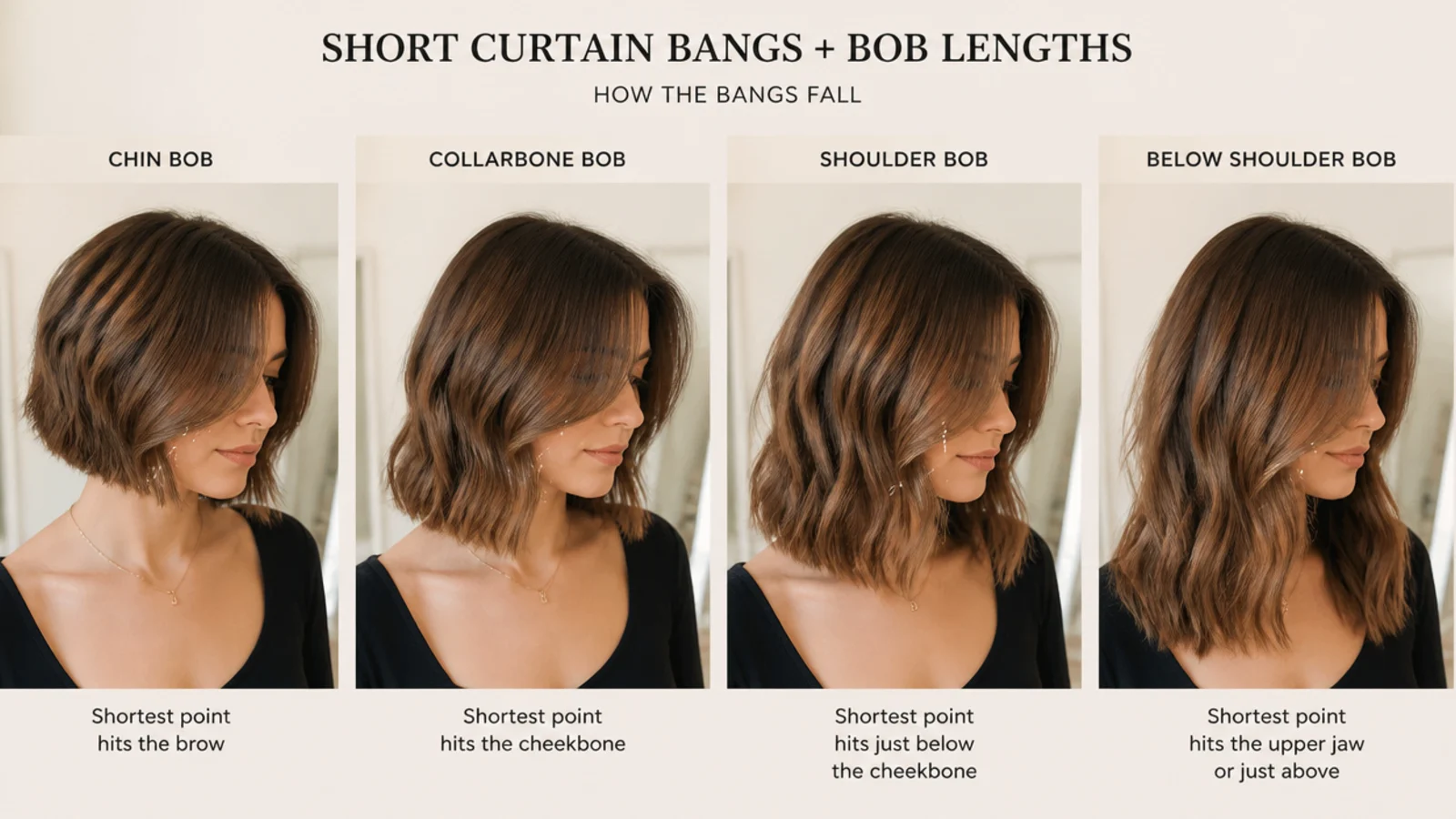
Here is the rule that decides whether this cut works on you: bang length should move in the same direction as bob length. On a French bob that sits between the earlobe and the top of the jaw, keep the shortest point at or just above the brow, around 3.5 to 4 inches. On a chin-length bob, brow level at 4 to 4.5 inches is the sweet spot. On a jaw-length blunt bob you can go slightly lower, to the top of the socket at about 4.5 to 5 inches. On a lob at the collarbone, the fringe can reach the top of the cheekbone at 5 to 5.5 inches without looking top heavy. The reason is visual weight. A fringe that is long relative to the cut stacks density in the top third of the silhouette and makes the whole head read shorter and wider. The same fringe on a longer bob is balanced by the hair below it. If you are choosing bob length first, browse bob haircuts and then set the fringe to match.
Which Face Shapes Short Curtain Bangs With a Bob Flatter
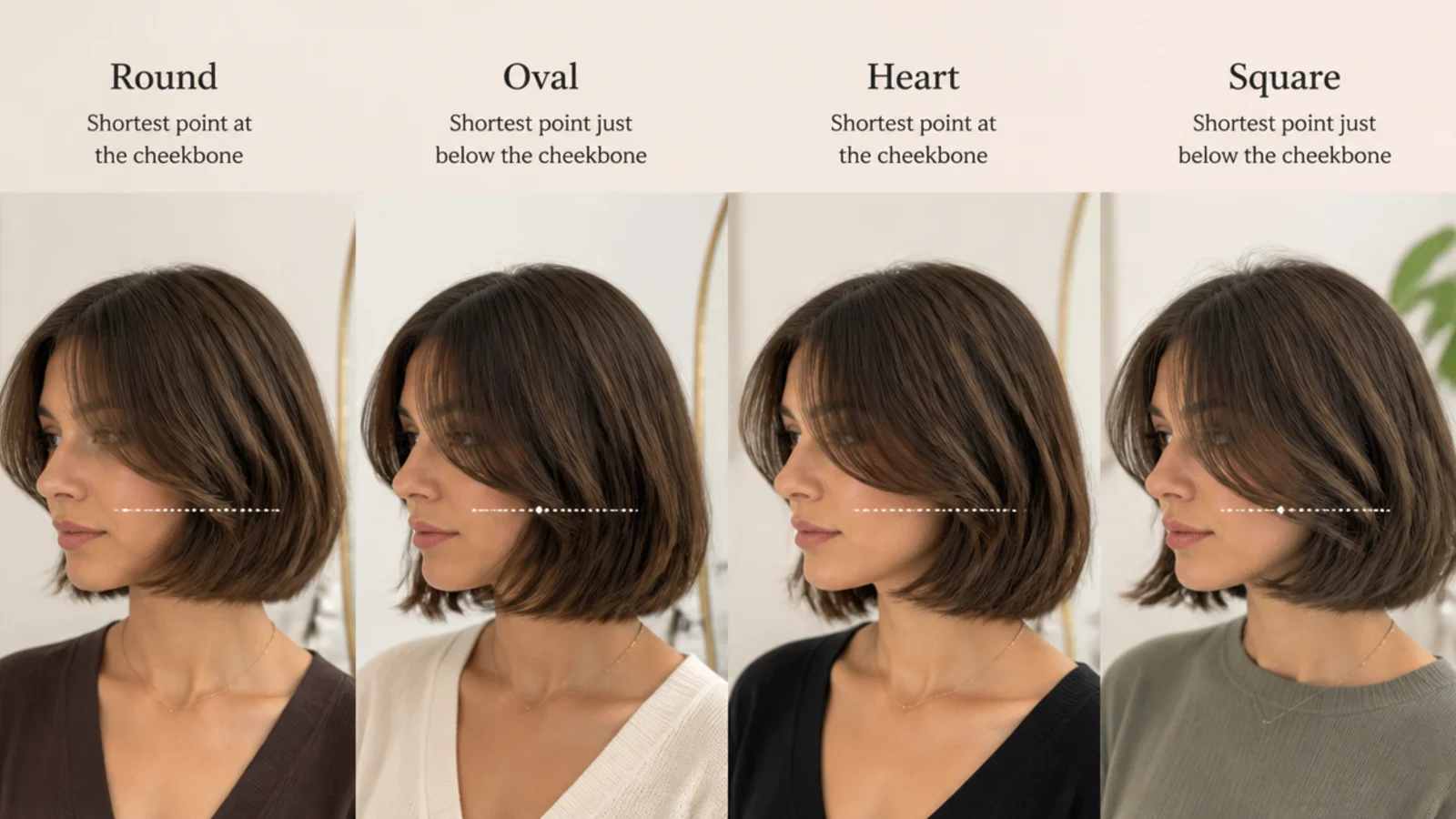
Oval faces take any version, so choose by bob length rather than by face. Heart-shaped faces do best with the fringe starting just above the brow and tapering wider toward the cheekbones, which balances a narrower chin. Long or oblong faces benefit most from a genuinely short fringe, because the horizontal line at the brow visually shortens the forehead. Square jawlines want soft, tapered ends that fall at cheek level to break up the angles, paired with a bob that ends below the jaw rather than on it. Round faces are the case with contradictory advice online, so be specific: keep the shortest point at or below the cheekbone, keep the fringe wispy rather than dense, and never let it sit blunt and heavy across the widest part of the face. Density matters as much as length here. A narrow triangle section keeps the fringe see-through and lets the vertical line from eye to hairline stay open. If you are matching the cut to your texture as well as your face, start with hairstyle for your hair type. Full geometry is in short curtain bangs for round faces.
How to Style Short Curtain Bangs on a Bob at Home
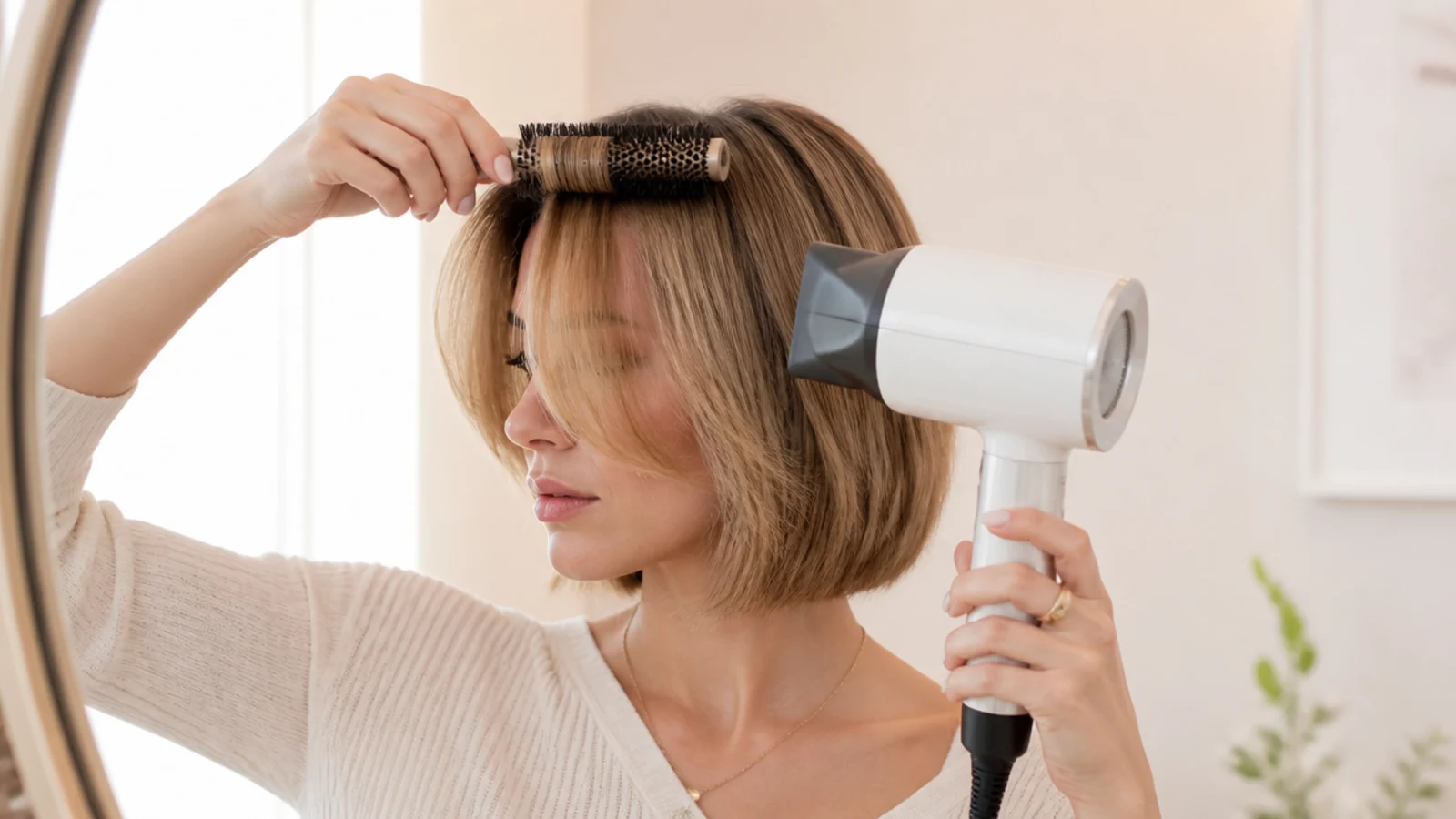
Style the fringe first, while it is still damp, and style it before the rest of the bob. Short curtain bangs set in whatever shape they dry in, and once they are dry you are fighting them. Comb a clean middle part, then take a round brush around 1.5 to 2 inches in barrel diameter, aim the dryer down the hair shaft and sweep each side away from the center part, rolling the brush out at the ends. Finish each side with a two second cool shot to lock the bend. Then dry the length of the bob. Once everything is dry, break the fringe up with a light texture spray at the mid lengths so it separates into pieces instead of sitting as a sheet. Skip conditioner, cream and oil on the fringe entirely, because a short fringe carries almost no length to weigh down and goes flat immediately. Total time is 3 to 5 minutes. Heat-free alternatives are compared in heatless curl tools compared, and lived-in finishes in beach hairstyles.
Trim Cadence, Cost, and Growing Short Curtain Bangs Out
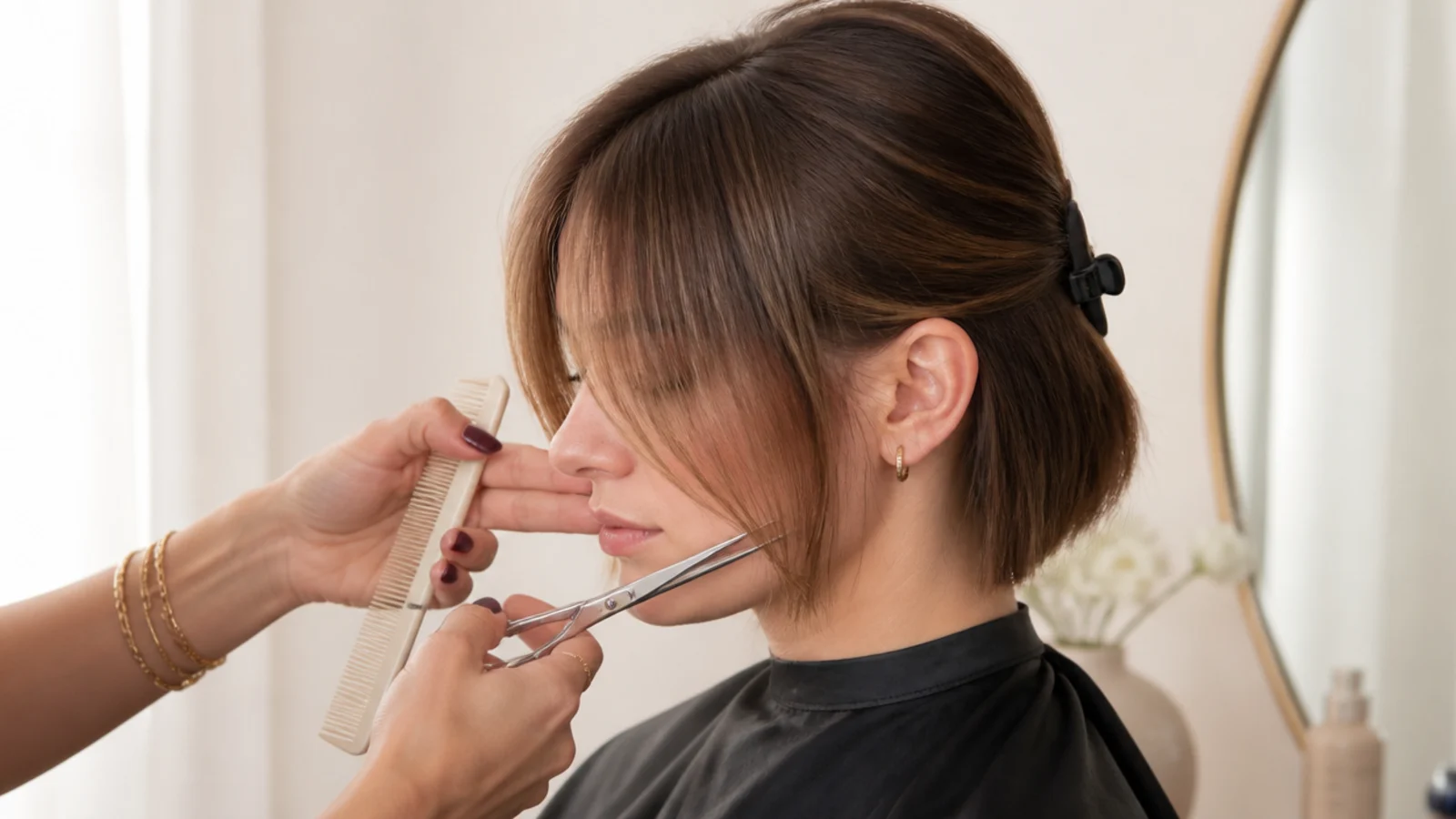
Hair grows about half an inch a month, which means a brow-level fringe drops to the top of the cheekbone in roughly eight to ten weeks. To hold the shape you want a fringe trim every 3 to 5 weeks, against every 6 to 8 weeks for long curtain bangs. The good news is cost: most salons trim a fringe free of charge between full cuts, so the real expense is the trip rather than the service. Ask when you book the original cut, and ask whether the trim is with the same stylist, since fringe shape is personal. If you decide to grow them out, stop trimming completely, because half an inch off costs you a full month of progress. Tuck the fringe behind the ears while wet so it dries blended into the next-shortest layer, switch to a slightly off-center part, and use no-crease clips. The stage-by-stage version is in grown out short curtain bangs.
When Short Curtain Bangs With a Bob Go Wrong
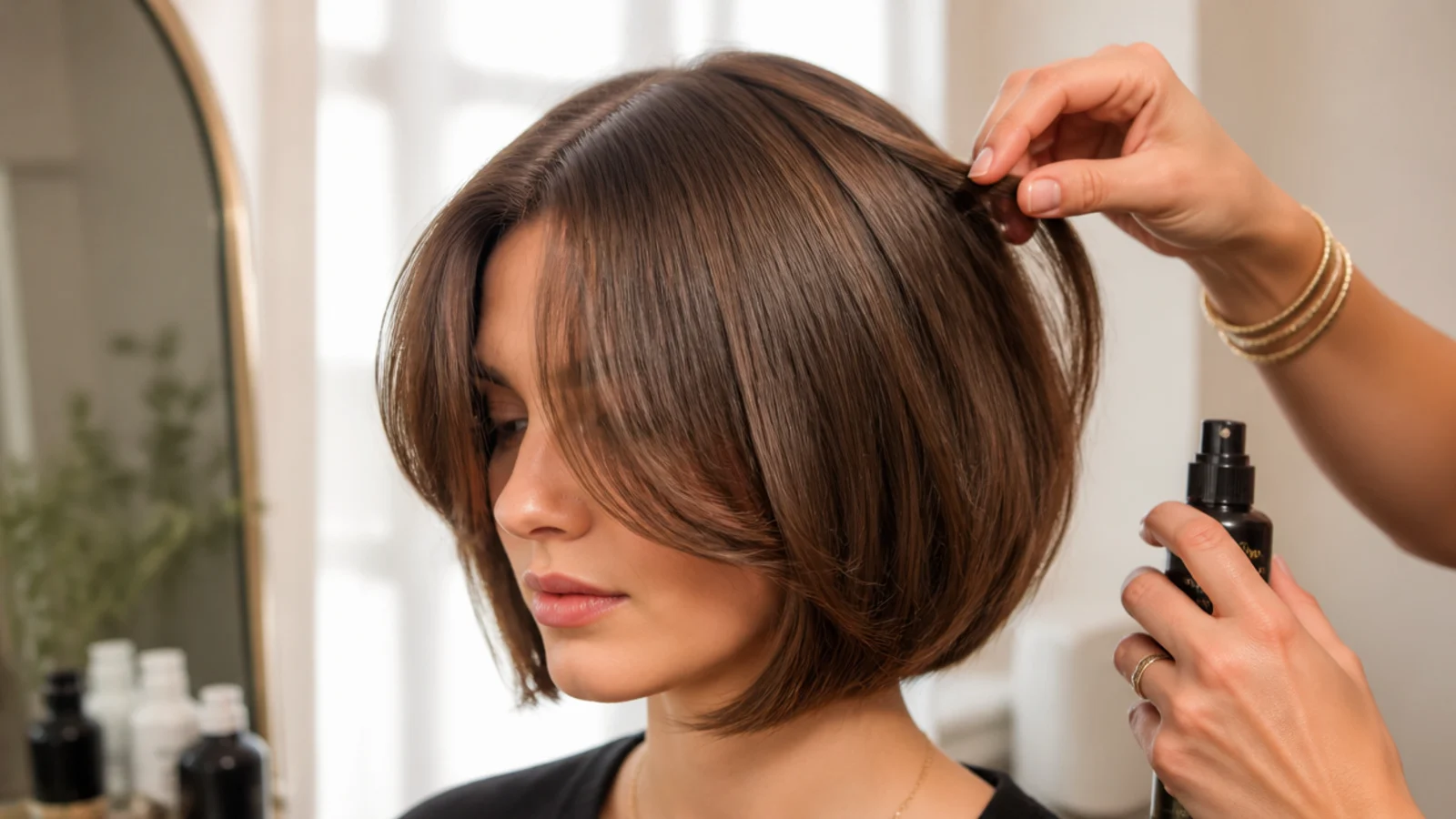
Four things go wrong and each has a fix. The gappy bang, where the fringe splits into two separate chunks with a bare stripe between, is almost always a section problem rather than a length problem: the triangle was taken too far back, so there is too much weight to sit as one curtain. A shallower, narrower section fixes it. The cowlick split happens on straight hair when the fringe is cut without finding the growth direction first; the fix is to dry that section against its growth and leave it slightly longer at the next trim. Flat by noon is a product problem nine times out of ten, caused by conditioner or cream on the fringe, so switch to texture spray at the mid lengths. Greasy fringe is the most common complaint of all, because the forehead sits directly against it. Dry shampoo at the fringe root only, in the morning rather than at night, and touch it as little as possible. Fine-hair specifics are covered in mid length haircut for fine hair.
Frequently Asked Questions
How short is too short for curtain bangs on a bob?
Above the eyebrow is the practical limit. Once the shortest point sits higher than the brow, curtain bangs stop reading as a curtain and start reading as a baby fringe, which is a different look with a much shorter grow-out runway. On a French bob, the top of the brow at around 3.5 to 4 inches from the hairline is as short as it should go.
What face shape suits short curtain bangs with a bob?
Oval, heart and long faces suit them most easily. Round faces should keep the shortest point at or below the cheekbone and the fringe wispy rather than dense, so the vertical line from eye to hairline stays open. Square jawlines do best with tapered ends at cheek level and a bob that finishes below the jaw rather than level with it.
How often do curtain bangs need trimming?
Every 3 to 5 weeks for short curtain bangs, and every 6 to 8 weeks for long ones. Hair grows roughly half an inch a month, so a brow-level fringe reaches the cheekbone in eight to ten weeks. Most salons trim a fringe free between full haircuts, so ask when you book the original cut.
Are curtain bangs hard to maintain on a bob?
They are medium maintenance. The daily cost is 3 to 5 minutes of round brush blow drying the fringe while it is still damp, and the ongoing cost is a trim every 3 to 5 weeks. What you do not need is a full styling routine for the bob itself, since the fringe carries the shape and the length can be rough dried.
Do curtain bangs suit fine hair?
Yes, if the section is narrow and the ends are point-cut. Fine hair needs a smaller triangle taken from the middle part out to about the arch of the brow rather than all the way to the temples, so the fringe stays see-through instead of exposing scalp. Blow dry it while damp with the dryer aimed up and back at the roots.
What is the difference between curtain bangs and wispy bangs?
Curtain bangs describe the shape: a middle part with the shortest point in the center and length increasing outward. Wispy describes the density: low, see-through, tapered ends. The two overlap constantly, since most short curtain bangs are cut wispy, but you can have dense curtain bangs and you can have wispy bangs cut straight across.
Can you cut short curtain bangs on curly hair?
Yes, but they must be cut dry on defined curls, never wet. Curly hair springs up significantly as it dries, so on a 3b or tighter pattern the fringe should be cut one to two inches longer than the target length to allow for shrinkage. Cutting curl by curl rather than in a straight section keeps the curtain shape intact.
Will short curtain bangs work with a blunt bob?
They are one of the best pairings there is. A blunt bob has a hard, unbroken perimeter, and a soft point-cut fringe at the top prevents the whole cut from looking heavy. Keep the fringe at brow level and ask for the last half inch point-cut so the ends break into pieces instead of forming a second blunt line.
Which short curtain bangs look are you saving?
If you take one thing from these 15 short curtain bangs bob ideas, make it the ratio: the shorter the bob, the shorter the fringe needs to be, and the shortest point should never sit below the cheekbone unless you want the fringe reading as face-framing layers instead. Ask for point-cut ends, a middle part, and length checked while your hair is dry and in its natural texture. Book the fringe trim at 3 to 5 weeks and ask whether it is free between cuts, because at most salons it is. Save the photos that match your bob length, then read more on the short curtain bangs hub or start with the short curtain bangs guide.