Quick Comparison
| Growing Out Short Curtain Bangs | Keeping Short Curtain Bangs | |
|---|---|---|
| Time commitment | About 8 months from brow to collarbone at 0.5 inch per month | Ongoing, with a fringe trim every 3 to 5 weeks |
| Salon cost | One blending appointment, roughly 20 to 45 dollars, around week 20 | Fringe trims are often free between paid haircuts |
| Daily styling time | 5 minutes in weeks 4 to 12, under 1 minute after week 20 | 2 to 4 minutes of round-brush work every wash |
| Hardest phase | Weeks 4 to 10, when the fringe sits at the lash line | Week 4 of each trim cycle, when the shape softens |
| Tools needed | No-crease clips, headbands, a paddle brush, dry shampoo | A 1.5 inch round brush, texture spray, dry shampoo |
| Face shape flexibility | Improves steadily; every extra inch suits more face shapes | Best on heart, oblong and square; round faces need cheekbone length |
| Ponytail compatibility | Full from about week 28 | Poor; short front pieces escape within an hour |
| Humidity behavior | Easier each month as weight increases | Frizzes and splits at the center part fastest of any length |
| Best for | Anyone tired of daily fringe styling or heading toward long layers | Anyone who wants a defined frame and does not mind the upkeep |
1. Week 2 Brow-Skimming Short Curtain Bangs
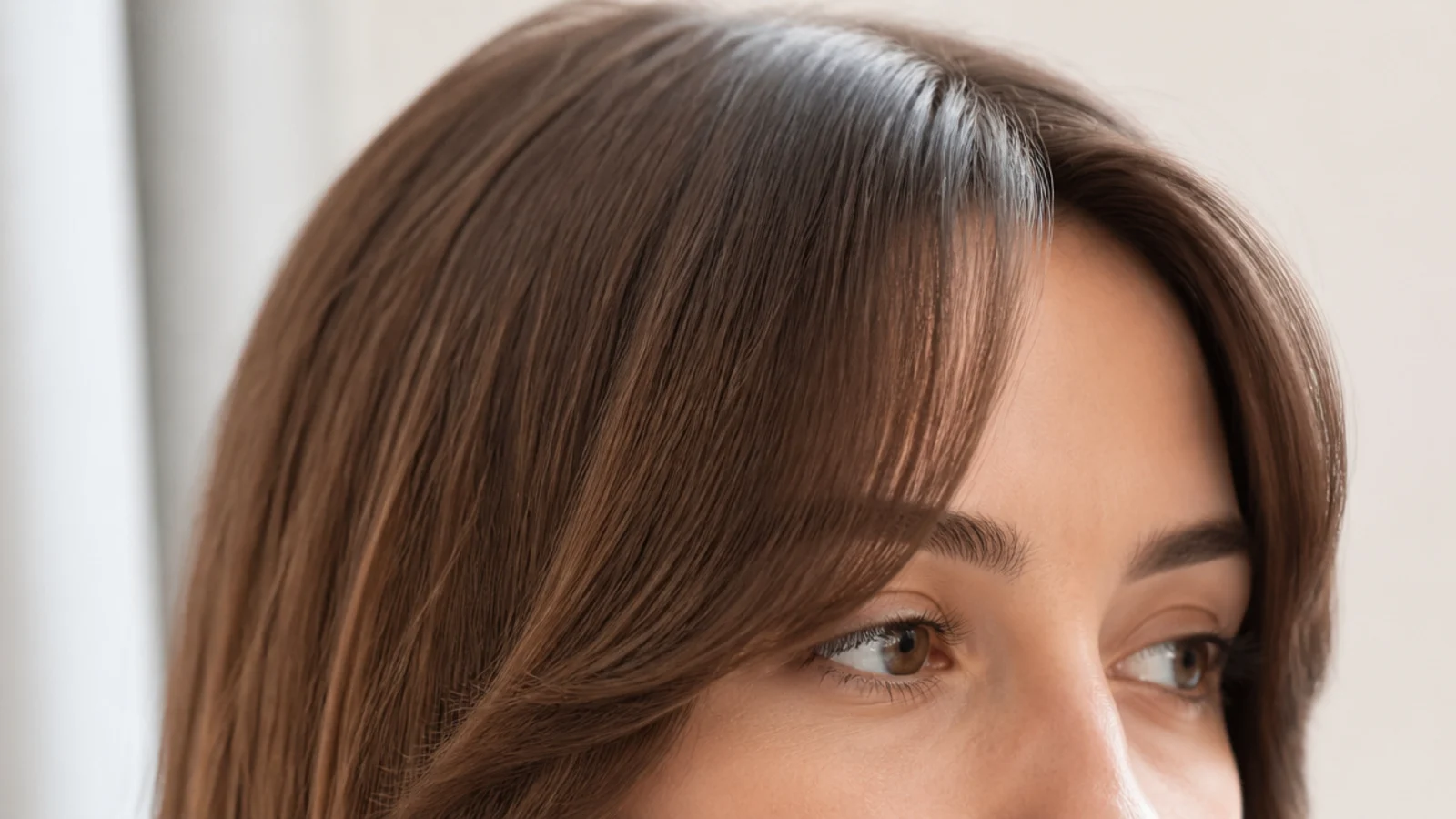
This is the starting line: the shortest point sits right at the eyebrow, roughly 4 inches from the hairline, with the sides angling down to about 5.5 inches at the temple. At two weeks the cut still holds its own shape, so a 30-second round-brush pass is all it needs. Photograph it now, because this is the length you will be measuring every later stage against. Point-cut ends keep it from reading as a blunt shelf, which matters most on fine hair where a hard line shows every scissor mark. Full cut details live in short curtain bangs.
Who it suits: Oblong, heart and square faces, and anyone testing a fringe for the first time.
Tip: Take a straight-on phone photo at week 2 so you can track growth honestly instead of by feel.
2. Week 3 Center-Parted Short Curtain Bangs on a Bob
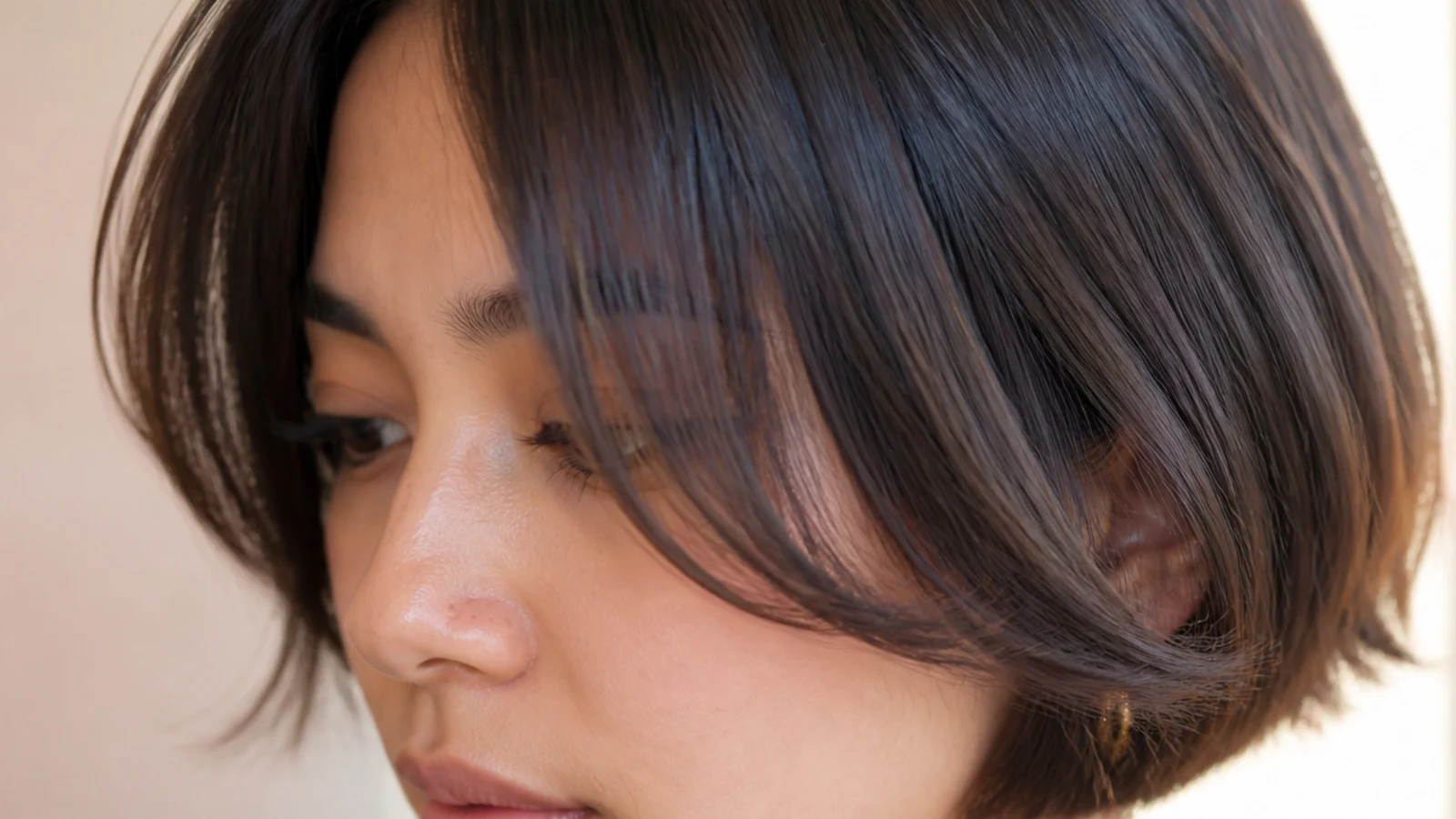
On a chin-length bob the fringe and the cut are close enough in length that growing out reads as intentional almost immediately. At week 3 the center part is still crisp and the ends flick outward with a 1.5 inch round brush. The bob keeps the whole silhouette moving in one direction, so a fringe that gains a quarter inch simply lengthens the curtain rather than exposing a gap. This is the easiest starting shape for anyone who knows they want to grow it out eventually. See the full pairing in short curtain bangs bob.
Who it suits: Chin and jaw length bobs, medium density hair, low-effort mornings.
Tip: Blow-dry the fringe first while it is still damp, since it sets in whatever direction it air-dries.
3. Week 4 Wispy Grown Out Short Curtain Bangs

Four weeks in you have gained about half an inch and the fringe now sits just below the brow. On a wispy cut this is arguably the best it ever looks: light enough to see through, long enough to frame, and still short enough to hold lift at the root. The see-through density is what buys you time here, because a thin fringe blends into the length far earlier than a dense one. If your bangs were cut heavy, this is the week to ask for a texturizing pass rather than a length trim, which removes weight without setting the clock back.
Who it suits: Fine hair, first-time fringe wearers, anyone who wants a soft grow-out.
Tip: Ask for point-cutting into the ends only, never thinning shears, which cause frizzy regrowth.
4. Week 4 Round-Brush Flip on Grown Out Short Curtain Bangs
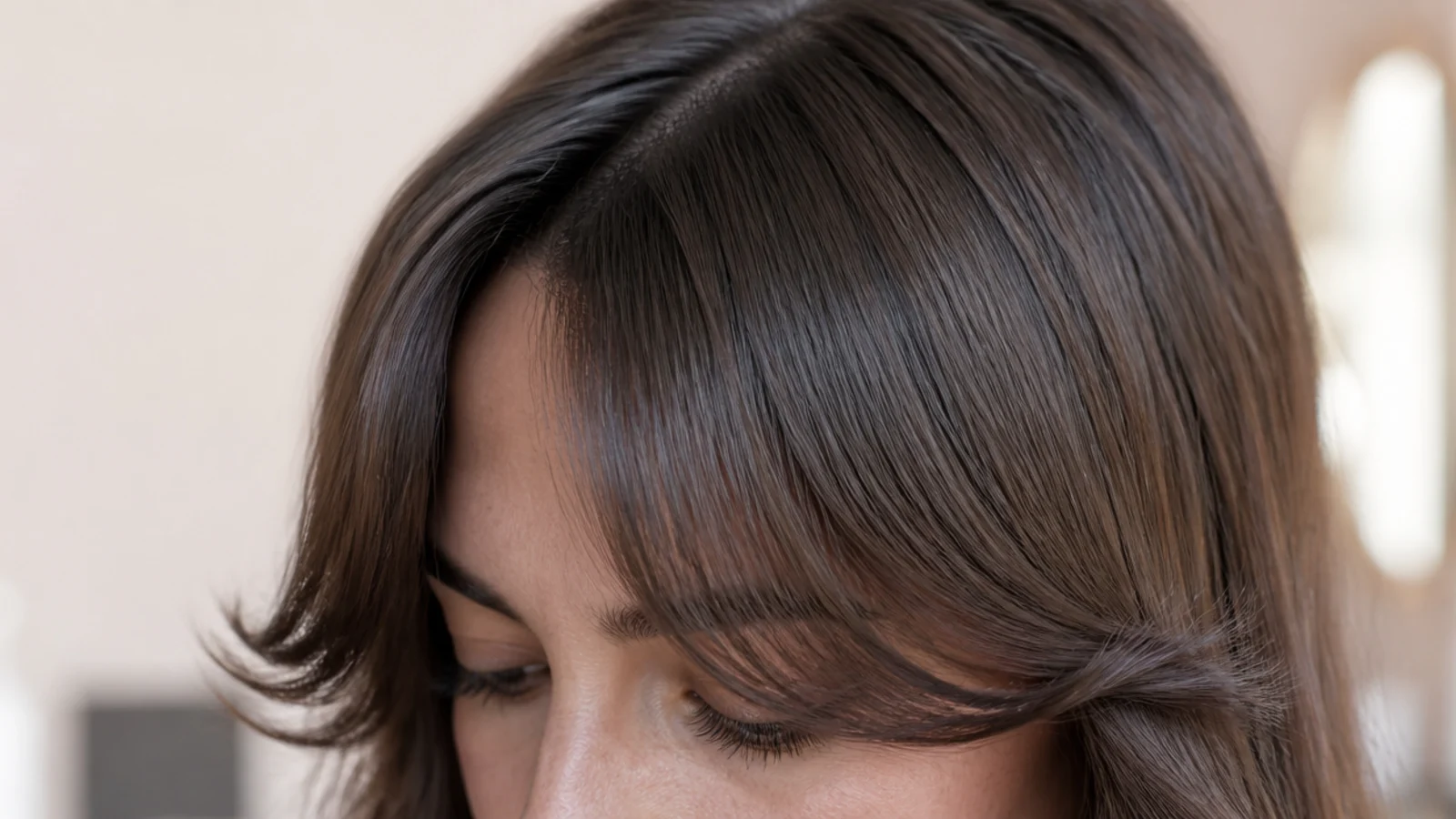
The signature curtain shape comes from a directional blow-dry, not from the cut. Take a 1.5 to 2 inch round brush, aim the dryer down the hair shaft from above, and roll each side away from the center part while pulling slightly back toward the ear. Finish with a cool shot to lock the bend, then break the curtain up with a light mist of texture spray so it does not sit in two solid panels. The whole pass takes about 90 seconds per side and it is the single skill that makes every later stage look styled.
Who it suits: Straight and wavy hair, anyone whose fringe falls flat by lunchtime.
Tip: Overdirect each side back past the ear for three seconds before releasing, which builds root lift.
5. Week 5 Lash-Grazing Grown Out Short Curtain Bangs
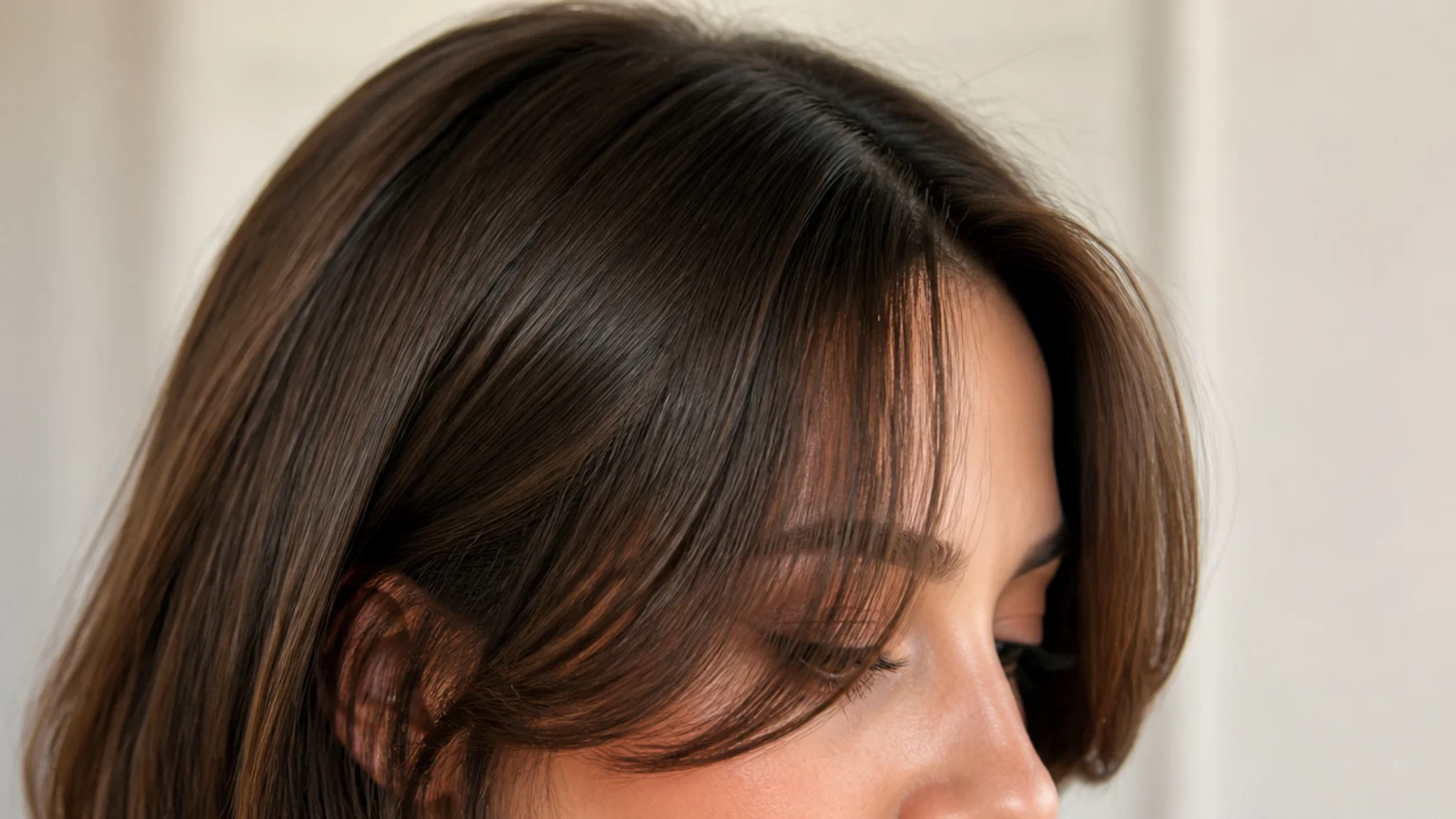
Week 5 is where the awkward phase begins. The fringe now reaches the upper lash line, which is the exact length that tickles, catches on mascara and makes you tuck it a hundred times a day. The fix is not scissors, it is geometry: move the part about half an inch off center so both sides fall past the outer corner of the eye instead of into it. That tiny shift buys you three or four weeks of comfort without losing the curtain shape. Everything about the cut still works, it is just sitting in the worst possible spot.
Who it suits: Anyone hitting week 5 and considering giving up on the grow-out.
Tip: Off-center by half an inch, not a full side part, so the look still reads curtain and not swept.
6. Week 6 Deep Side Part for Grown Out Short Curtain Bangs

When off-center stops being enough, commit to a full deep side part above the arch of one brow. Blow-dry the whole fringe across the forehead with a paddle brush, following the hair with the nozzle so the cuticle lies flat, and the shorter side becomes a long sweeping piece rather than a stubby bang. This is the most reliable single move in the entire grow-out, and it works on any texture. Expect the part to fight you for the first three days if you have worn a center part for months, so pin it while it dries.
Who it suits: Round and square faces, straight hair, weeks 5 through 12.
Tip: Set the new part while the hair is soaking wet, then clip it flat for 10 minutes as it dries.
7. Week 7 No-Crease Clipped Grown Out Short Curtain Bangs
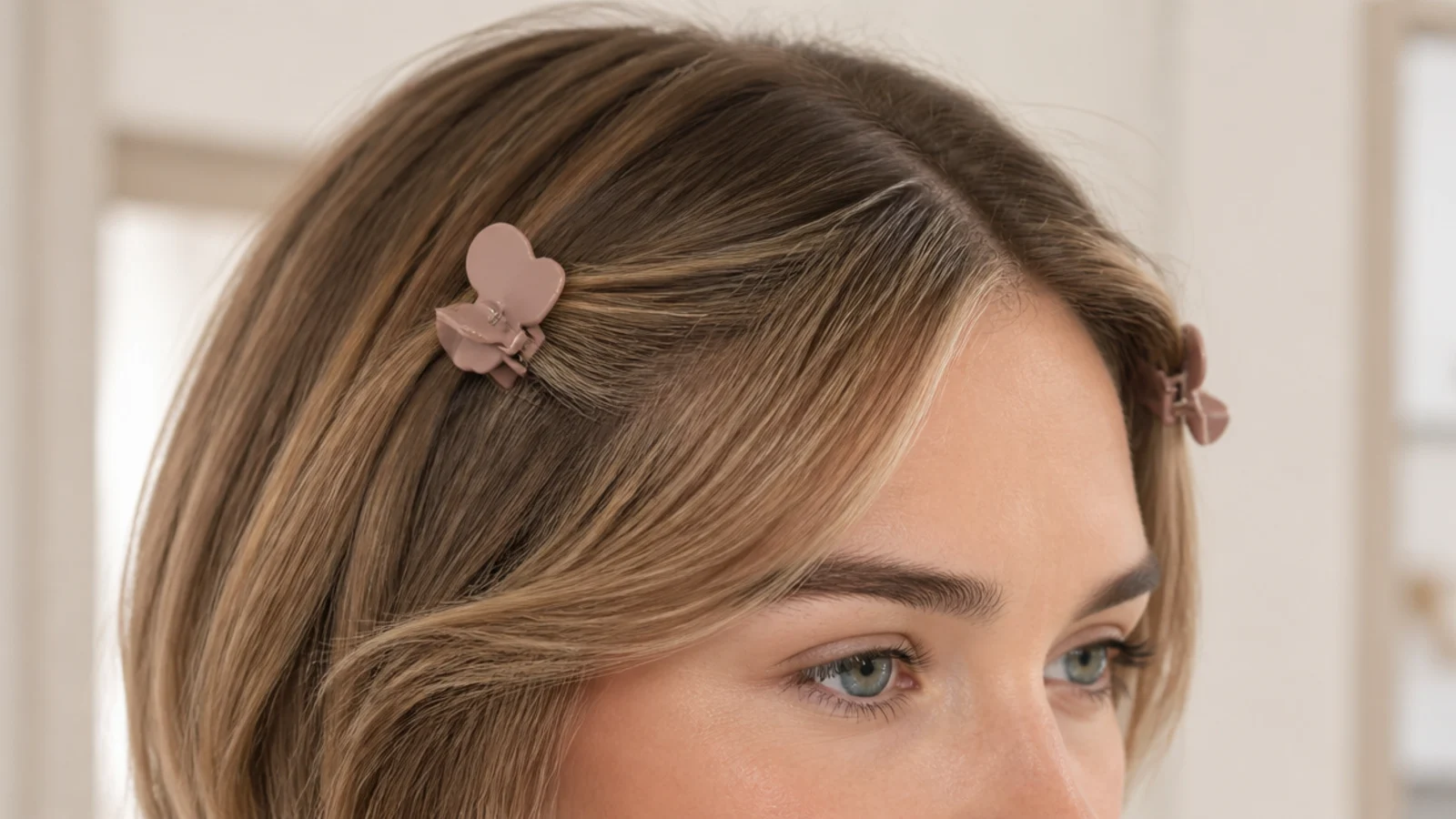
Two matte no-crease clips, set about an inch behind the hairline on each side, turn an in-between fringe into a deliberate style. Because the clips have no teeth ridge, you can pull them out after a few hours and the hair falls in a soft bend rather than a dent, which means the same setting doubles as a heatless wave. Metal snap clips and small claw clips work the same way and are the reason this stage looks fashionable on Pinterest instead of unfinished. Budget clips run under 10 dollars for a pack.
Who it suits: Weeks 6 to 12, fine to medium hair, office and school mornings.
Tip: Clip damp, not dry, so the fringe dries into a bend you can wear once the clips come out.
8. Week 8 Tucked-Behind-the-Ear Grown Out Short Curtain Bangs
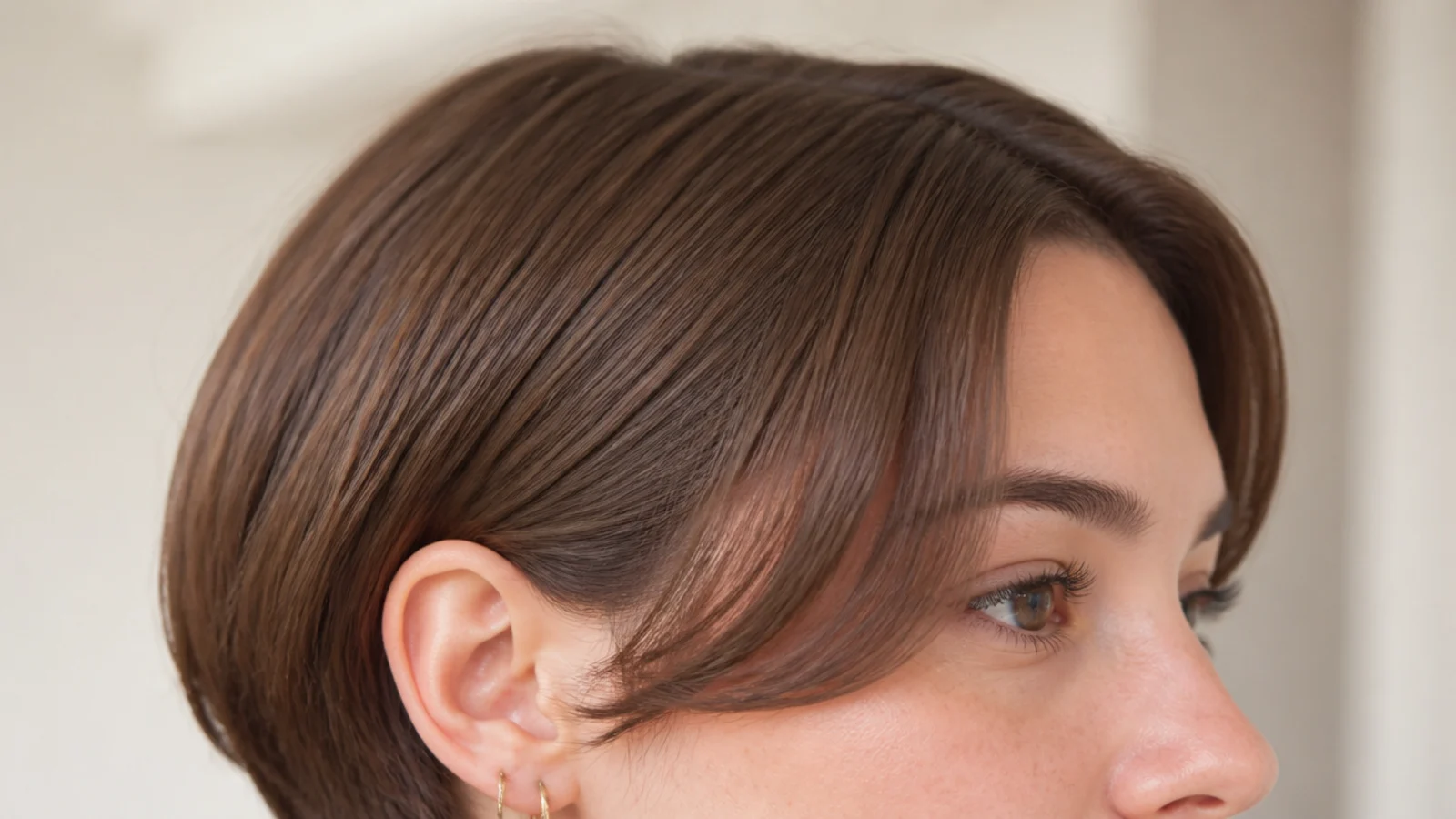
At two months the fringe is roughly an inch longer than it was cut and finally long enough to stay behind an ear. The trick is to tuck it while it is wet and let it dry there, which trains the hair to lie back instead of springing forward at the first head turn. Do it on both sides for a clean look, or one side for the classic asymmetric version. Once dry, a pea of light styling cream through the tucked section keeps flyaways down without weighing the root.
Who it suits: Weeks 8 onward, medium and thick hair, wearers with glasses.
Tip: Tuck it wet and leave it alone; retucking a dry fringe lasts about 20 minutes.
9. Week 9 Headband Cover for Grown Out Short Curtain Bangs
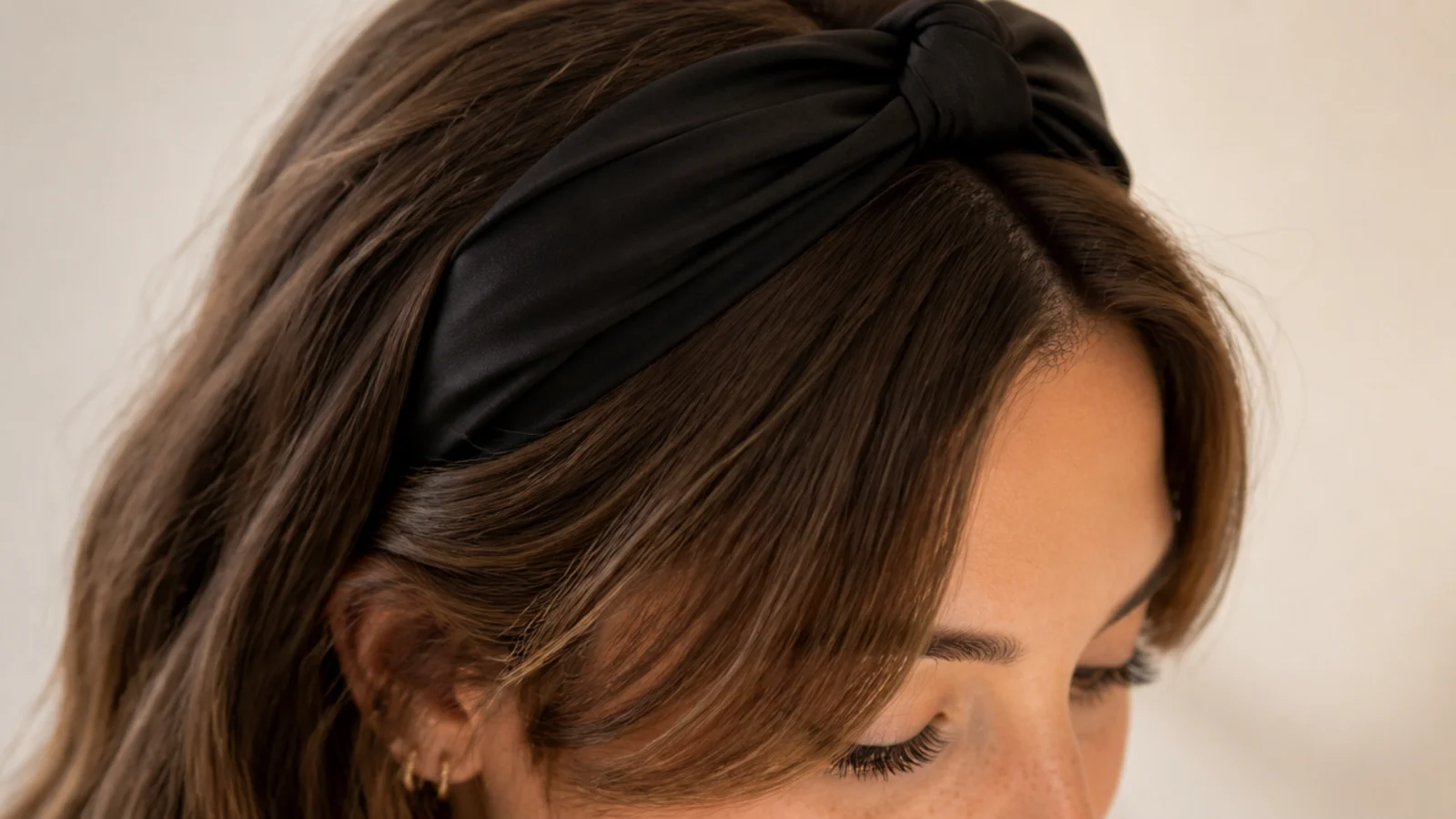
A wide knotted or padded headband set an inch behind the hairline swallows the entire fringe and reads as a styling choice rather than a cover-up. This is the highest-payoff move for the ugliest week, and it also solves a problem nobody mentions: a short grown-out fringe gets greasy faster than the rest of your hair because it sits against your forehead all day. A headband lifts it off the skin. Silk-lined bands avoid the friction dent that elastic ones leave behind.
Who it suits: Weeks 7 to 14, oily skin, workout days, second-day hair.
Tip: Dust dry shampoo at the fringe root before the band goes on so the hair holds lift underneath.
10. Week 10 Half-Up Twist With Grown Out Short Curtain Bangs
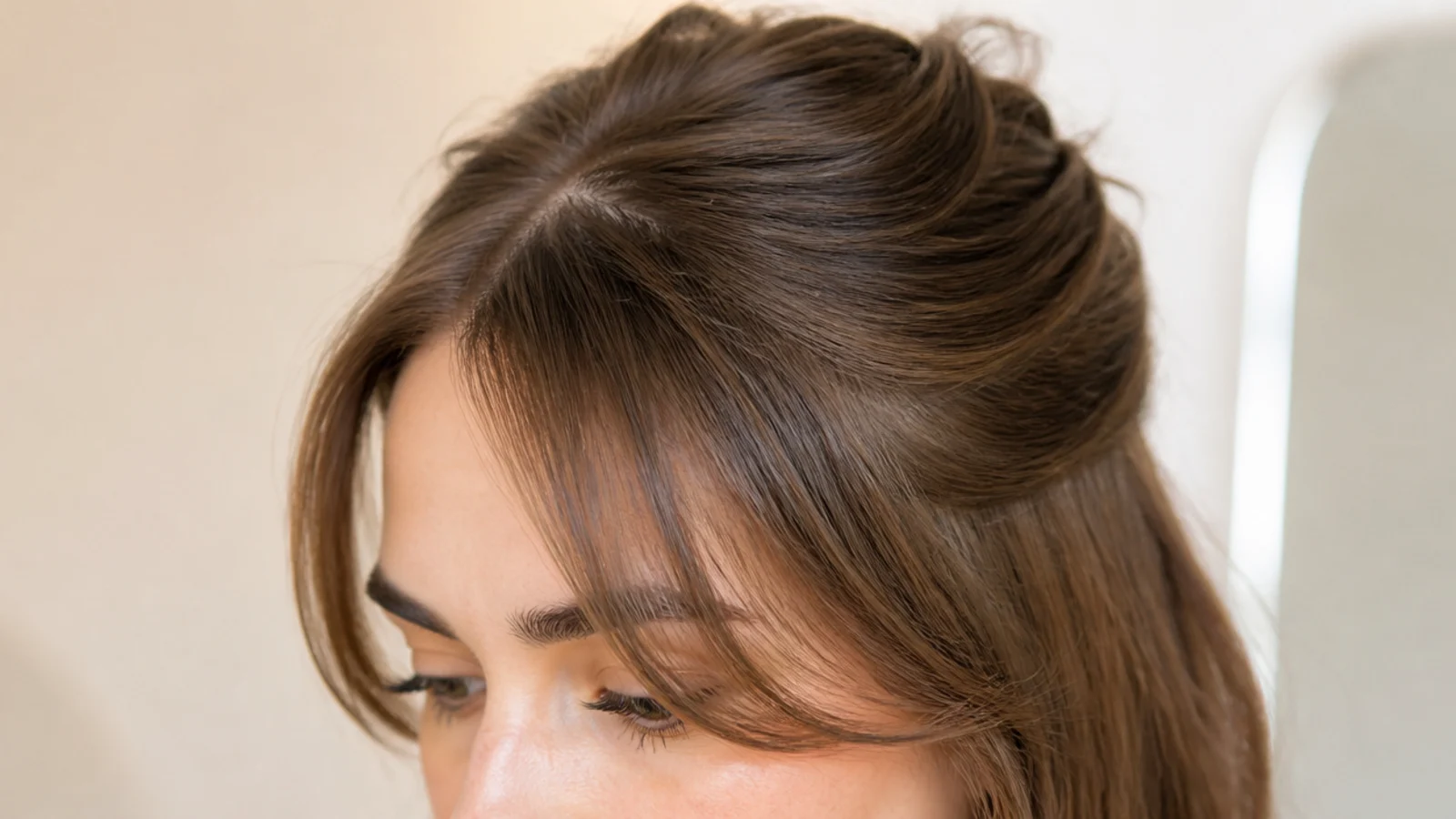
Take each side of the fringe, twist it back toward the crown and pin it into a half-up section. At week 10 the fringe finally has the roughly 1.25 inches of extra length a twist needs to hold, so this is the first grow-out stage where a pinned style stops slipping out by noon. It also blends the fringe into the layer behind it, which is the whole goal of the grow-out. For more half-up shapes that hide an awkward fringe, see half-up graduation hairstyles.
Who it suits: Weeks 10 onward, shoulder length and longer hair, events.
Tip: Twist away from the face, not toward it, so the fringe keeps its curtain direction.
11. Week 12 Cheekbone-Length Grown Out Short Curtain Bangs

Three months in, roughly 1.5 inches of growth, and the shortest point now lands at the cheekbone. This is the length most people had in mind when they searched for curtain bangs in the first place. It hangs in a genuine curtain, it stays out of your eyes, and it needs about 60 seconds of round-brush work instead of a full blow-dry. Many people stop the grow-out right here and simply maintain this length, which is a completely legitimate ending. It also sits at the boundary between short and long curtain bangs.
Who it suits: Round faces especially, plus oval and heart shapes, all textures.
Tip: If you want to freeze this length, book a fringe trim every 5 weeks and ask for shape only.
12. Week 13 Grown Out Short Curtain Bangs on Wavy Hair
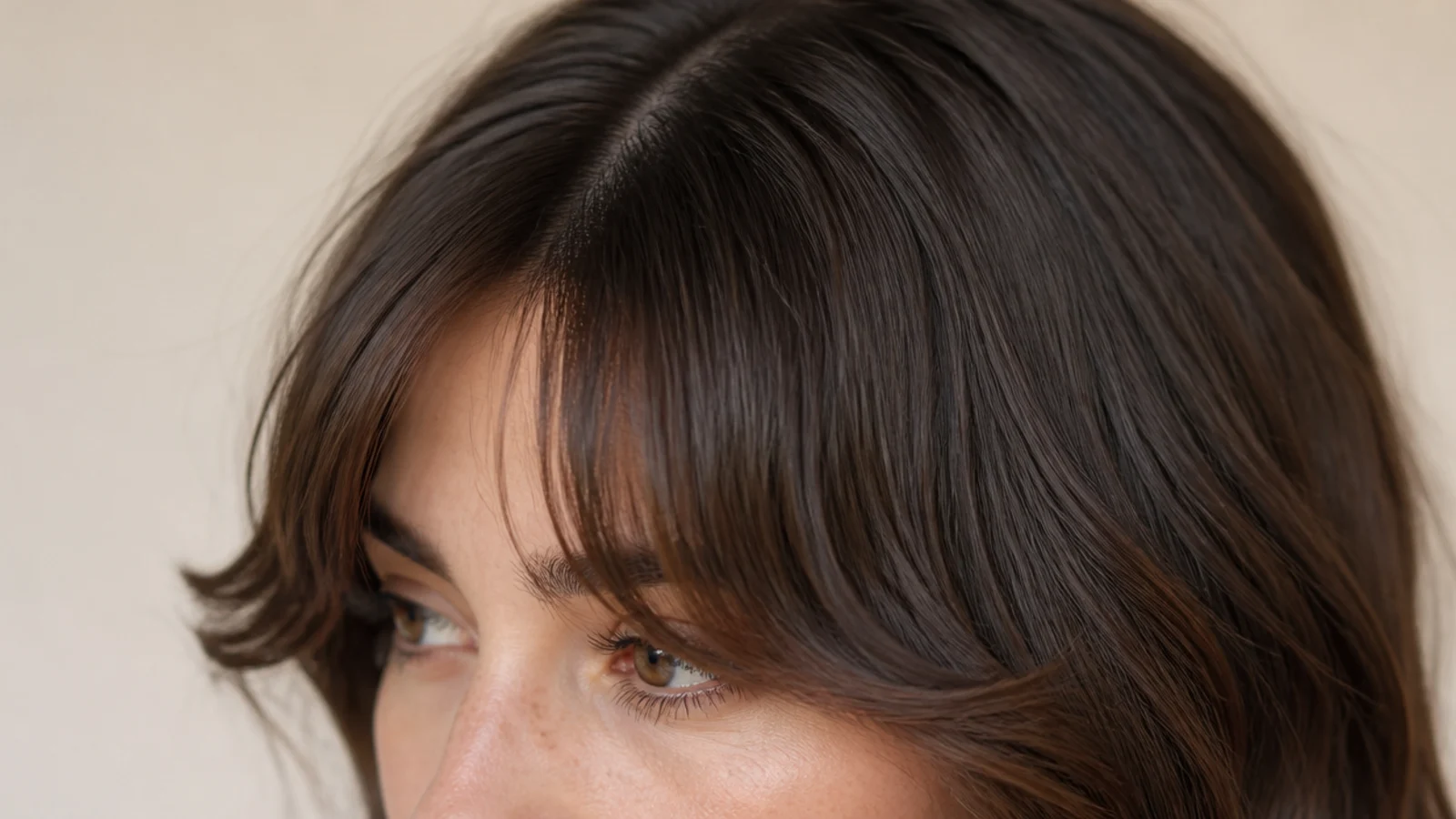
Wavy hair grows out faster in appearance than it does in inches, because a 2a to 2c wave springs the fringe up by roughly half an inch once it dries. That means your week 13 wavy fringe is behaving like a week 9 straight one, and it also means every measurement should be taken dry. Diffuse the fringe on low speed with the dryer aimed up into the root, then scrunch a pea of cream through the ends. Skip the round brush here; it drops the wave and adds two weeks of visual length you did not earn. More in wavy short curtain bangs.
Who it suits: 2a to 2c waves, humid climates, air-dry routines.
Tip: Always assess a wavy fringe dry, never wet, or you will misjudge the stage by half an inch. See also wavy mid length haircut.
13. Week 14 Grown Out Short Curtain Bangs on Curly Hair
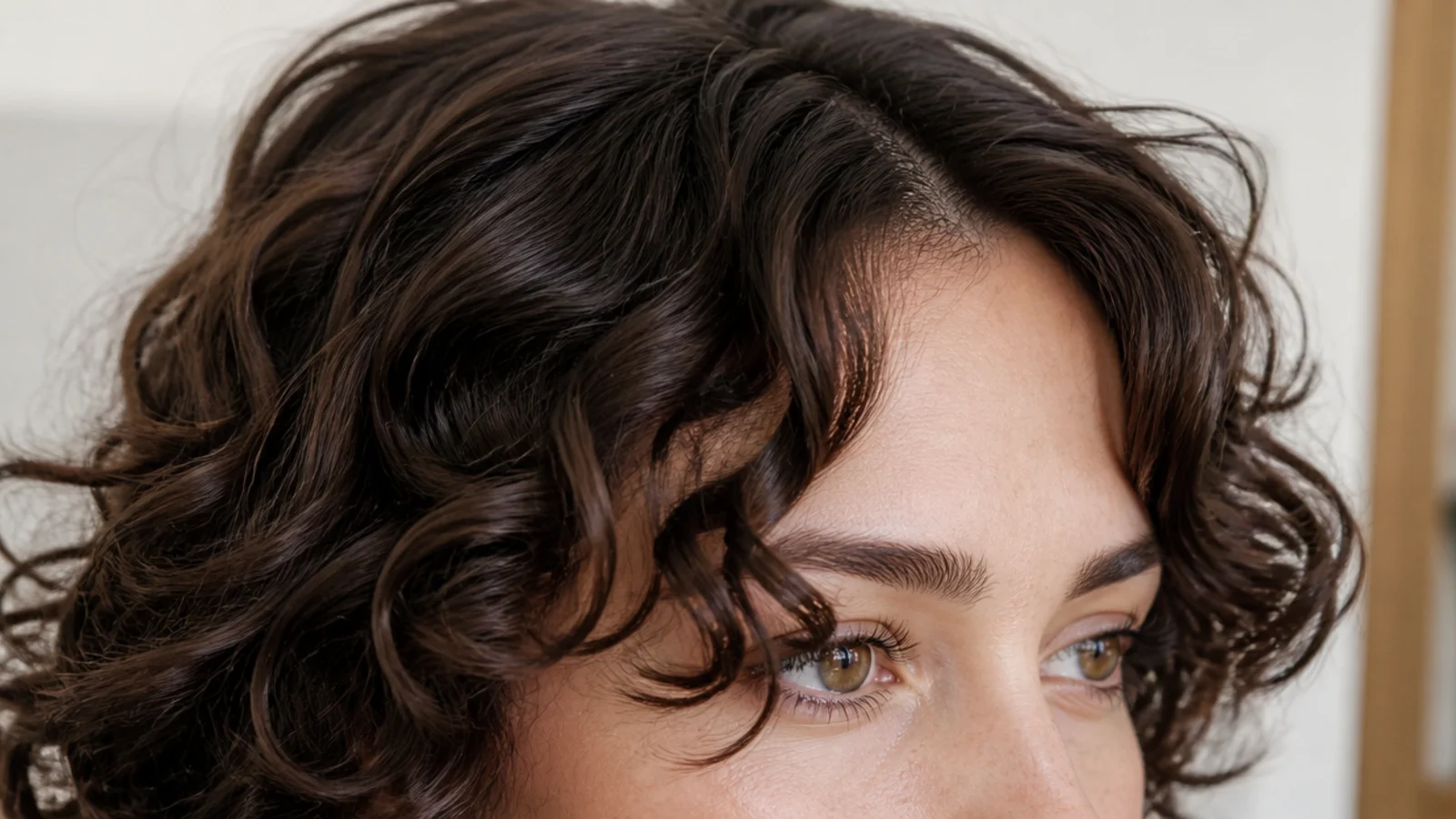
On 3a to 3c curls the grow-out is stealthy, because shrinkage hides most of the added length until the fringe suddenly reaches the cheekbone all at once. Refresh the fringe between wash days by misting water and raking a light gel through it, then clipping the root while it dries for lift. Never assess or cut a curly fringe wet; on 3b and tighter, hair can spring up an inch or more. Curl-by-curl dry cutting is the only way this shape stays even. Full texture guide in curly short curtain bangs.
Who it suits: 3a to 4a curls and coils, wash-and-go routines.
Tip: Clip the fringe root with two duckbill clips while it air-dries so it does not dry flat to the head.
14. Week 15 Grown Out Short Curtain Bangs on Straight Fine Hair
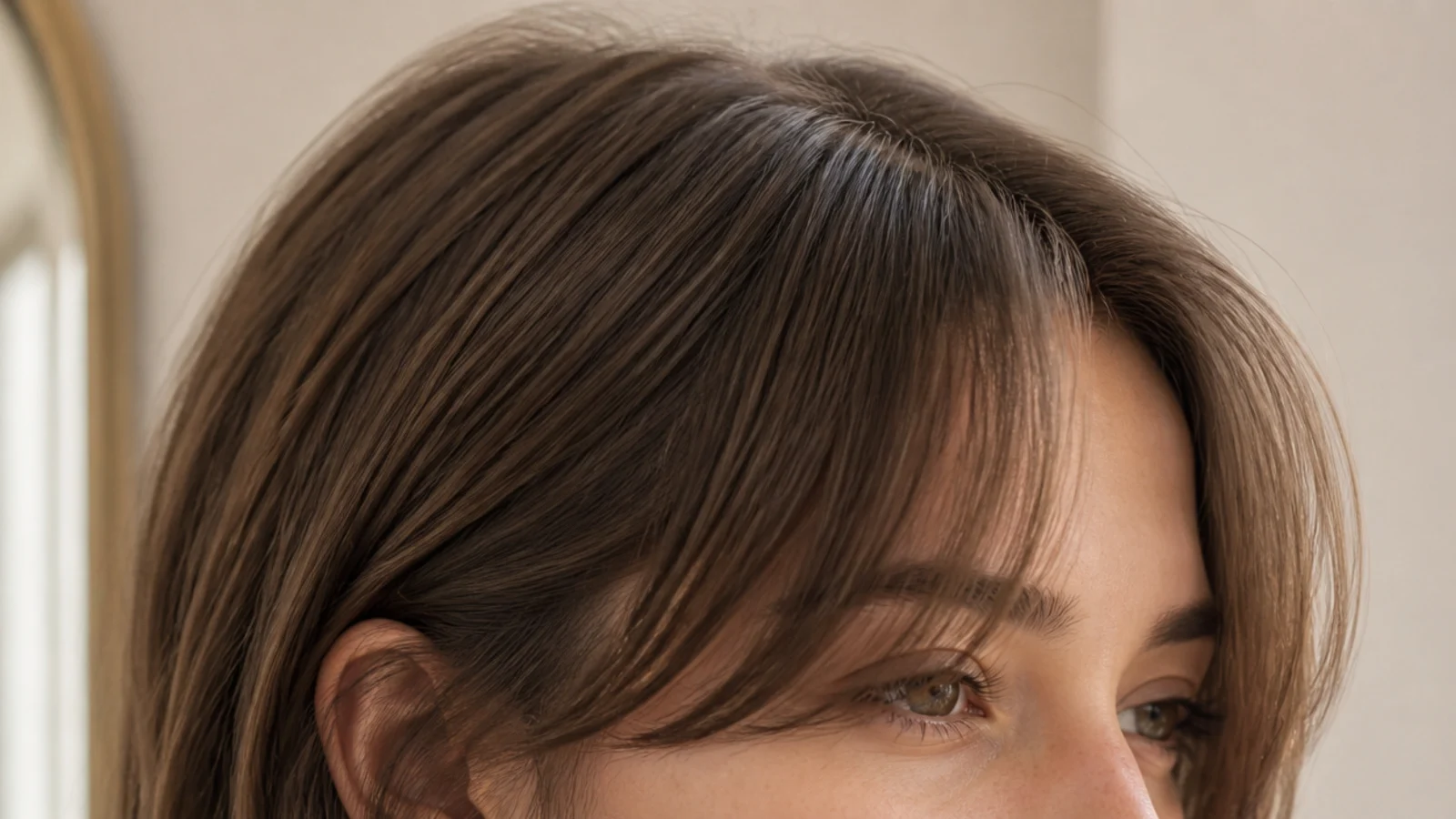
Straight fine hair is the hardest texture to grow a short fringe out of, because it shows every cut line and goes flat against the forehead by mid-afternoon. Two things fix it. First, blow-dry the fringe first, while it is still visibly damp, with the dryer aimed up and back at the root, since fine hair sets permanently wherever it air-dries. Second, use a dry texture spray at the root only, never a cream or oil anywhere near the fringe. Point-cut ends stop the blunt shelf line from showing. See straight short curtain bangs.
Who it suits: Fine, straight and low-density hair, oily skin at the hairline.
Tip: Keep dry shampoo in your bag; a fine fringe reads greasy about a day before the rest of your hair.
15. Week 16 Grown Out Short Curtain Bangs With a Round Face
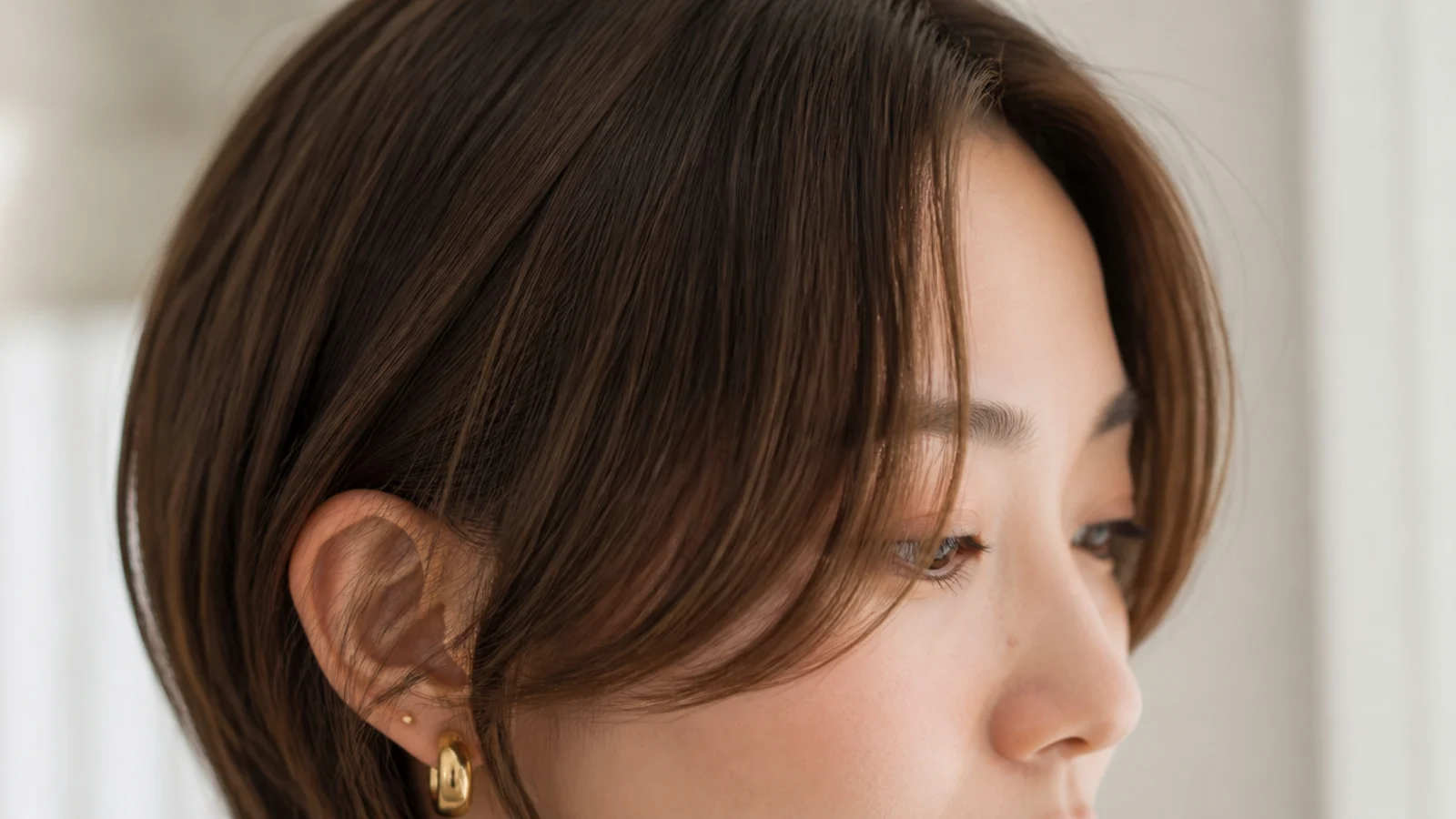
Round faces get the most out of this stage, because the shortest point has now dropped to or just below the cheekbone, which is exactly where it should sit to create a vertical line down the sides of the face. Keep the fringe wispy rather than blunt, and part it dead center so the open triangle of forehead stays visible. What fails on a round face is a heavy fringe cut flat at cheek level, which draws a horizontal line across the widest part. More geometry in short curtain bangs for a round face.
Who it suits: Round and full-cheeked faces, medium to thick density.
Tip: Ask for the shortest point at or below the cheekbone, and say wispy, not blunt, out loud.
16. Week 18 Grown Out Short Curtain Bangs With a Money Piece

A brighter face-framing highlight through the fringe, usually one to two levels lighter than your base, makes a grown-out curtain look designed rather than neglected. Color draws the eye to the sweep instead of to the length mismatch behind it, and it is the single best trick for weeks 16 to 24 when you are bored of waiting. A partial money piece runs roughly 60 to 120 dollars and needs a refresh every 10 to 12 weeks. Ask for it painted from the part outward so regrowth stays soft.
Who it suits: Anyone in the late grow-out who wants a change without cutting.
Tip: Bond builder on the fringe only; lightened bangs snap faster than the rest of your hair.
17. Week 20 Jawline Curtain Bangs Blended Into Layers

At five months you have gained roughly 2.5 inches and the fringe now reaches the jawline, which is the exact point where it starts merging with the shortest layer of your haircut. If your layers were cut around the collarbone, this is where you book a blending appointment: a stylist connects the fringe into the layer with slide cutting so there is no visible step. That single 20-minute service is what ends the grow-out early. The layered pairing is covered in mid length haircut layers.
Who it suits: Weeks 18 to 24, shoulder length and longer hair.
Tip: Ask for blending, not a trim; the words matter, since trim gets heard as shorten.
18. Week 24 Grown Out Short Curtain Bangs as Face-Framing Layers
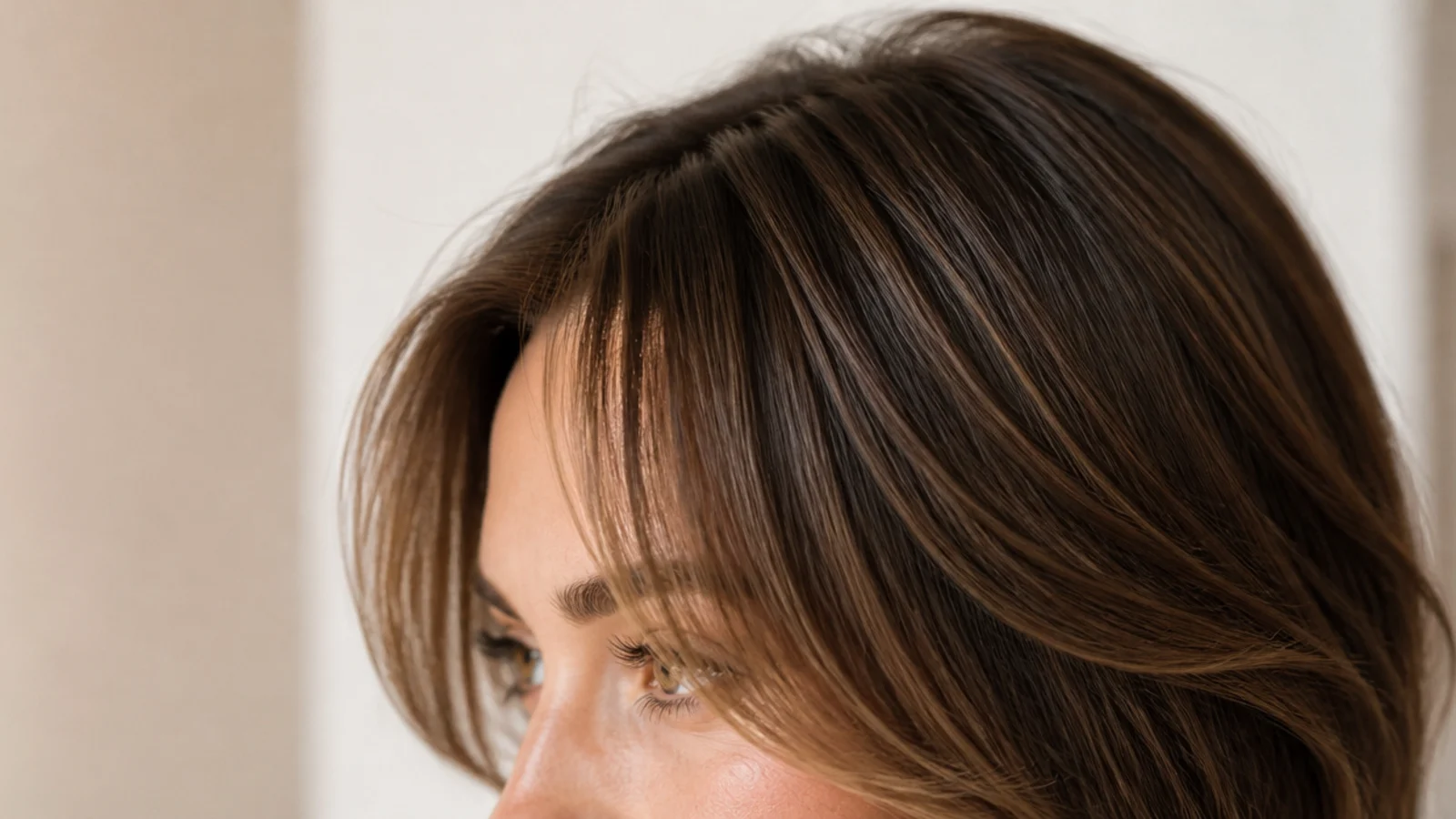
Six months out, about 3 inches of growth, and the fringe has stopped being a fringe. It now behaves like a face-framing layer that starts at the jaw and falls toward the collarbone. Nothing about it requires daily styling anymore; it air-dries in the direction of your part and stays there. This is the stage most people are actually aiming for when they say they want to grow out their bangs. Pair it with the shapes in face framing mid length haircut.
Who it suits: Anyone six months into the grow-out, all face shapes.
Tip: One 10-minute dusting of the ends here keeps the layer from looking stringy at the tips.
19. Week 28 Grown Out Short Curtain Bangs in a Slick Ponytail
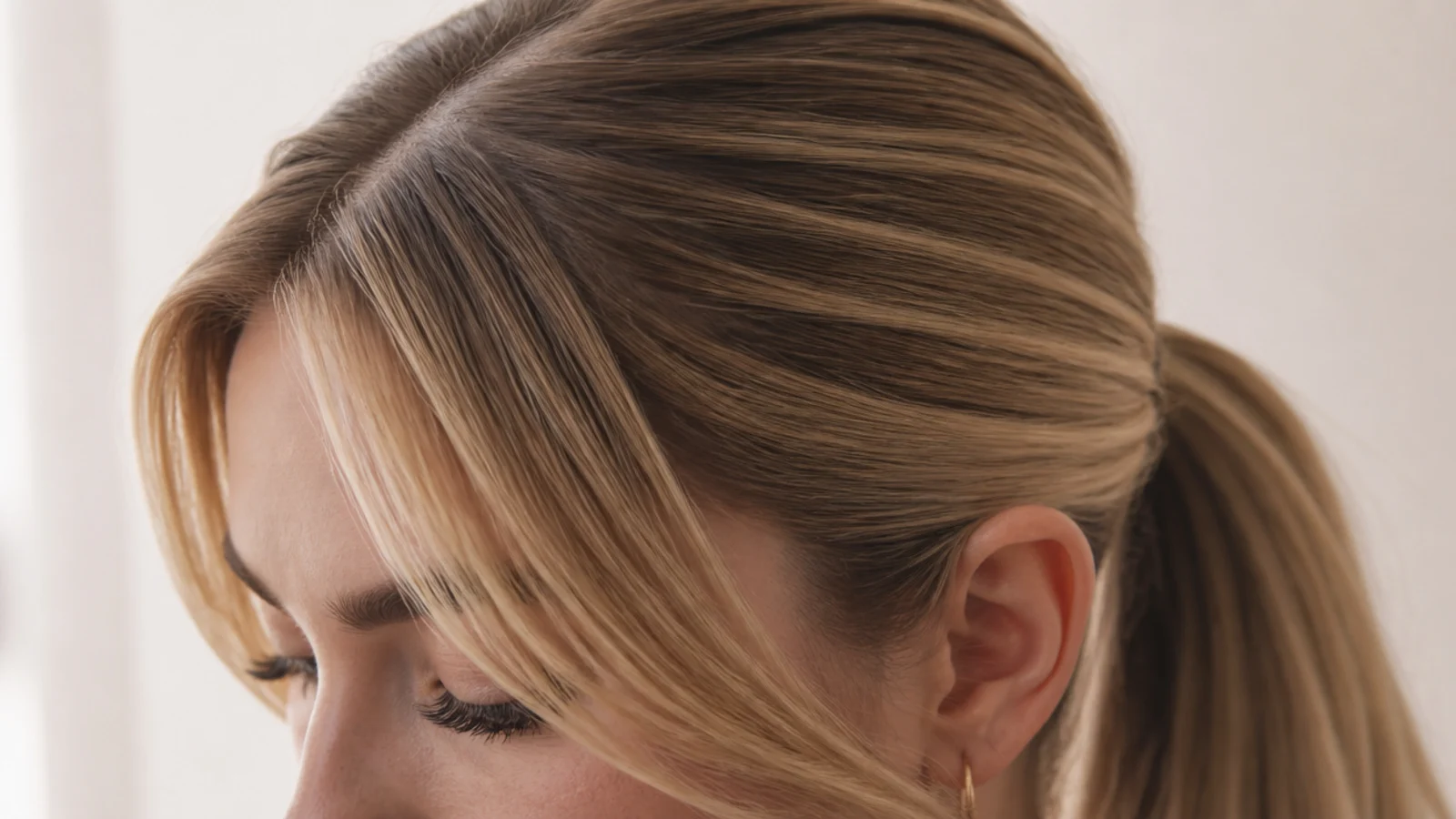
The real test of a grown-out fringe is whether it survives a ponytail, and week 28 is usually when it does. At roughly 3.5 inches of growth the shortest piece finally reaches past the ear and can be gathered without escaping within the hour. Smooth it with a boar bristle brush and a light gel or wax stick at the hairline rather than hairspray, which goes crunchy on short pieces. If a few strands still pop out, leave them; a slick pony with two soft front pieces is a look in itself.
Who it suits: Weeks 26 onward, gym and workday routines, long hair.
Tip: Use a wax stick on the fringe only, applied against the growth direction, then smooth it back.
20. Week 32 Fully Grown Out Short Curtain Bangs
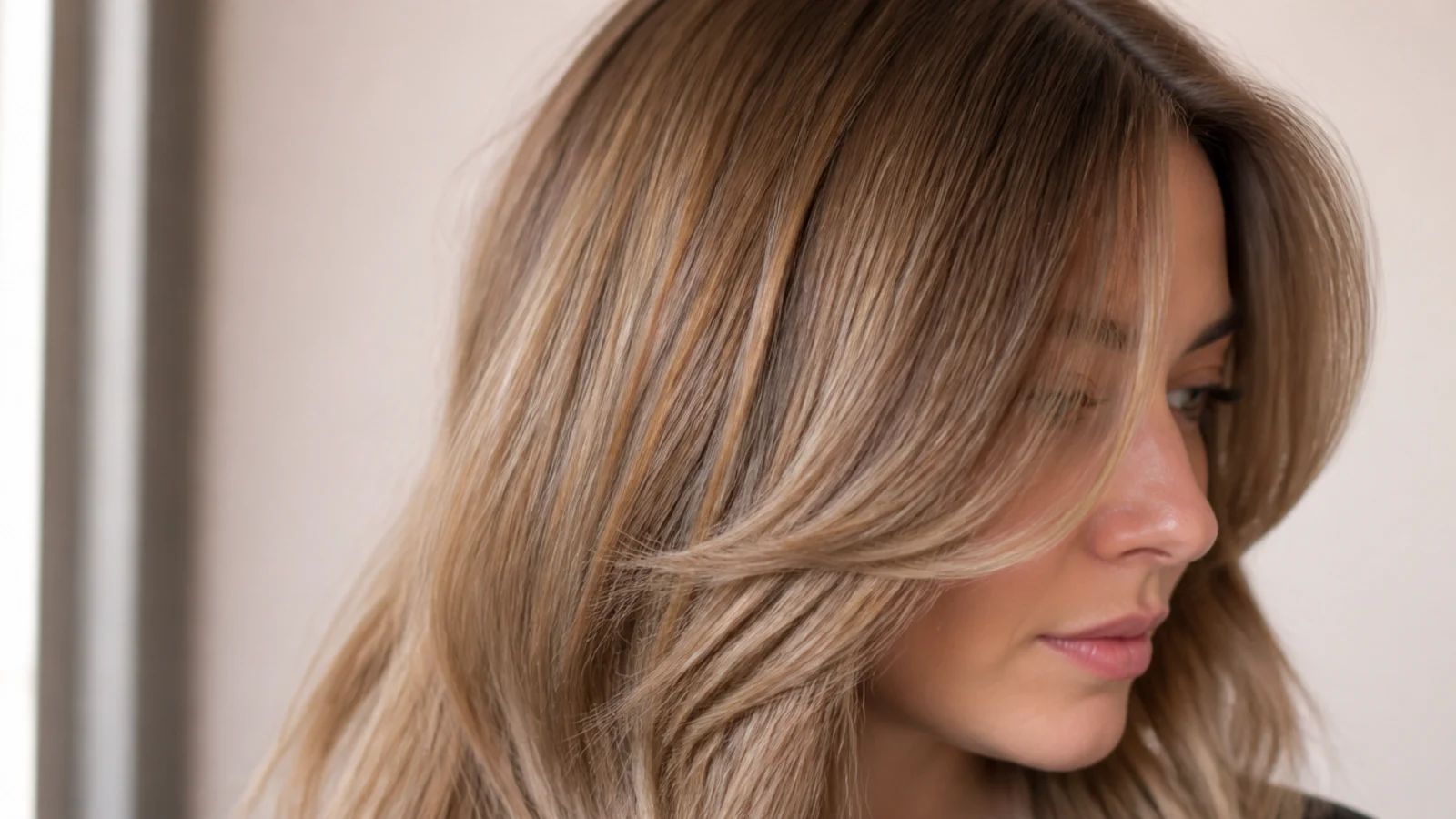
Eight months and roughly 4 inches later, a fringe cut at the eyebrow reaches the collarbone area and disappears completely into your length. There is no step, no shorter piece and no daily styling requirement. Take a photo next to your week 2 shot, because the contrast is the clearest proof of the timeline. Plenty of people arrive here, look at the two photos and immediately book the fringe again, which is the honest ending to most grow-out stories. If that is you, start again from the short curtain bangs hub.
Who it suits: Anyone completing the full grow-out, or deciding whether to recut.
Tip: Book a full haircut at week 32 rather than a fringe trim, so the old bang line gets rebalanced.
What Counts as Grown Out Short Curtain Bangs
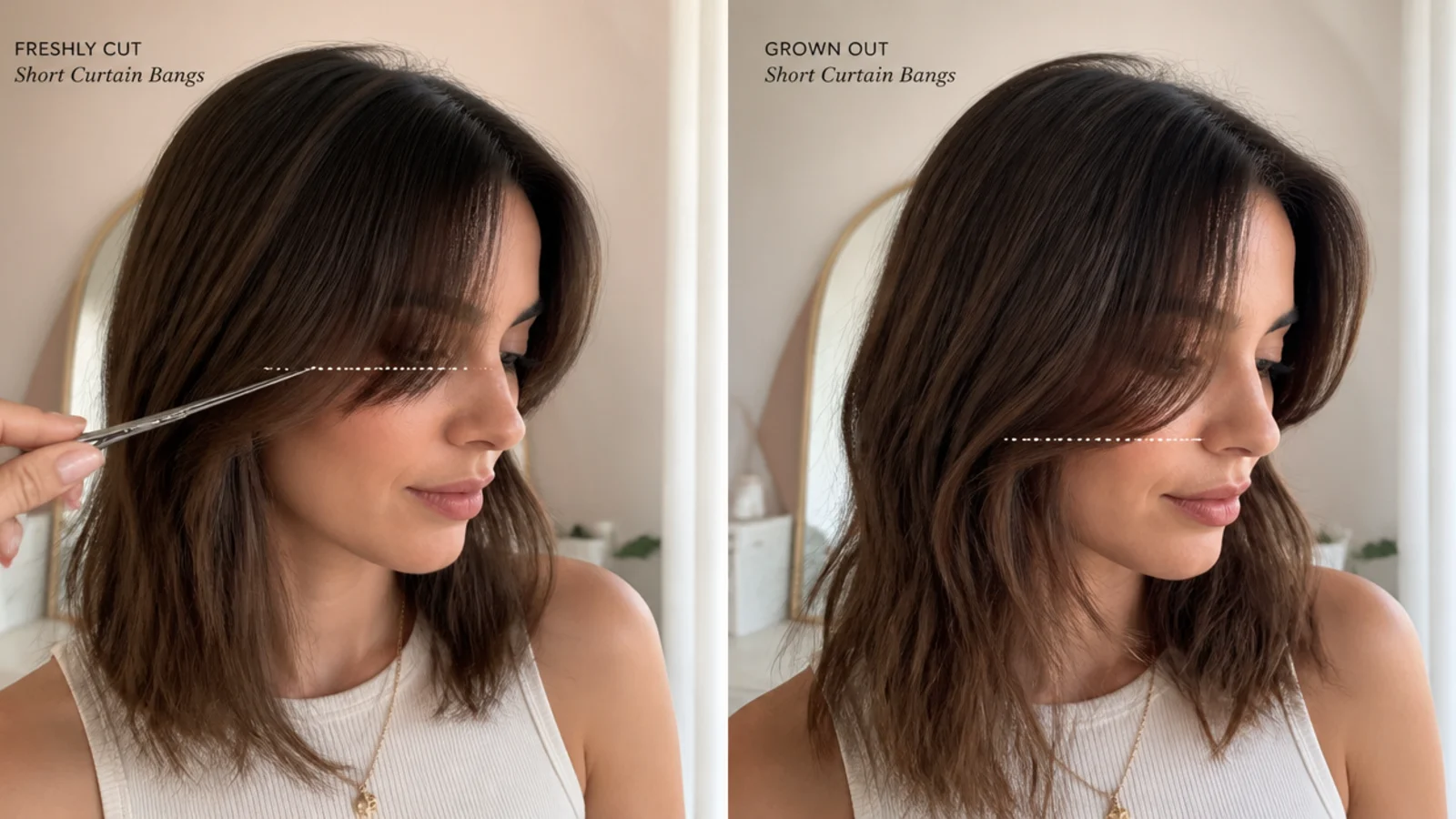
Two different things get called short curtain bangs, and the confusion is why so much advice online misses. The first is bang length: a curtain fringe whose shortest point sits between the eyebrow and the cheekbone, parted in the center and angled longer toward the temples. The second is hair length, meaning curtain bangs worn on a bob or pixie. This article is about the first. Grown out short curtain bangs, then, are that brow-to-cheekbone fringe at any point after it has passed its cut length, from the first half inch of regrowth all the way to a fringe that has merged into your face-framing layers. A full fringe is the useful contrast: it runs straight across the forehead at one length, has a hard perimeter, and grows out badly because there is nowhere for it to go except into your eyes. A curtain fringe is angled and parted from the start, so every extra inch simply lengthens the sweep. That built-in escape route is the whole reason curtain bangs are the lowest-regret fringe you can cut, and it is why they sit so easily on longer shapes like the mid length haircut with curtain bangs.
How Long It Takes to Grow Out Short Curtain Bangs, Week by Week
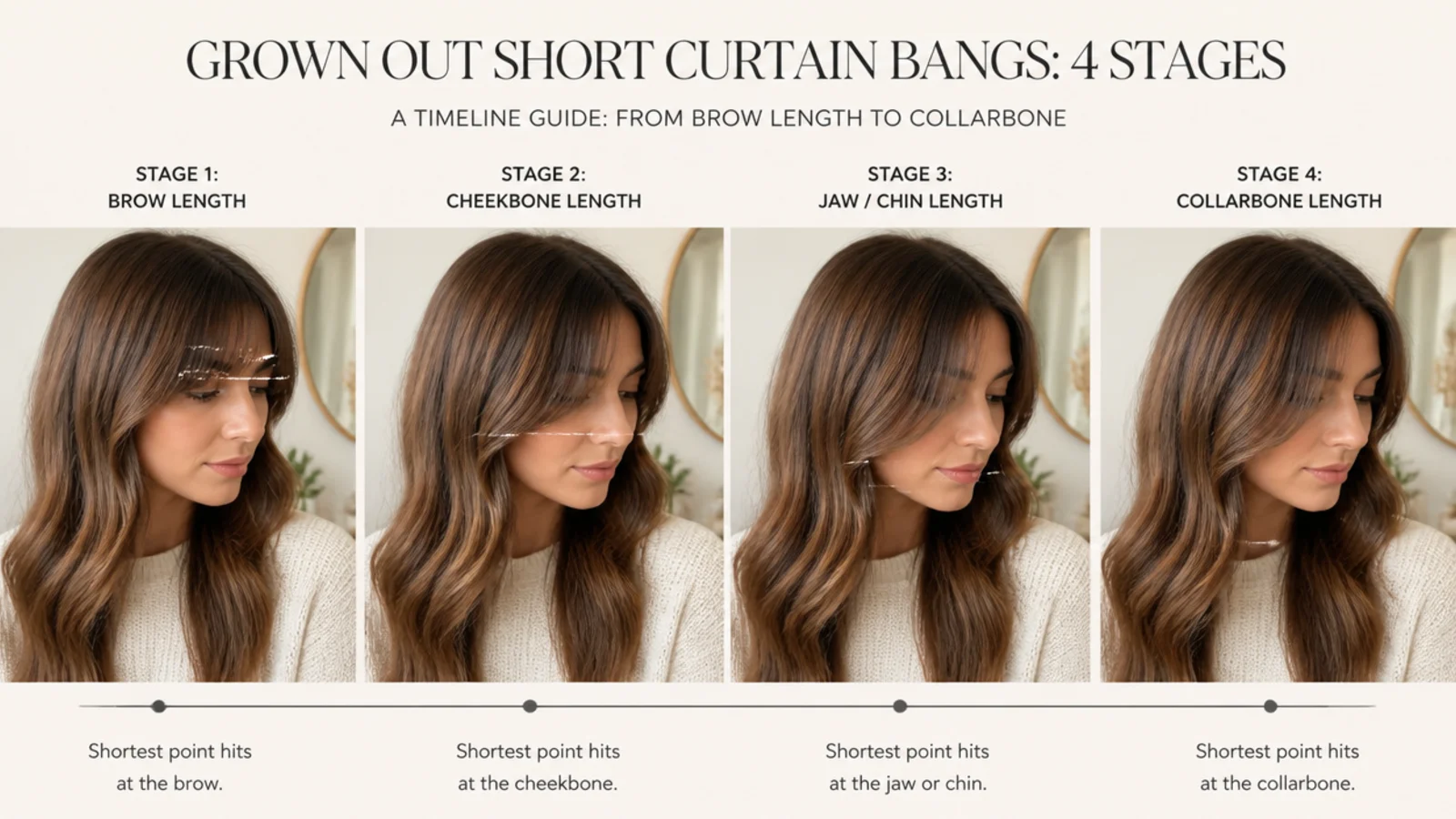
Hair grows roughly half an inch a month, which is the number every realistic timeline is built on. From a fringe cut at the eyebrow, that gives you four stages. Weeks 0 to 4 are the brow-skimming stage, where the cut still holds its shape and needs no intervention. Weeks 4 to 10 are the awkward phase, when the shortest point lands at the upper lash line and gets in your eyes. Weeks 10 to 20 are the cheekbone curtain, the stage most people were picturing when they cut the fringe in the first place, and the point at which many stop growing and start maintaining. Week 20 onward is the blended stage, where the fringe reaches the jaw and merges into your shortest layer. Roughly eight months takes a brow-length fringe to the collarbone. Growth rate does vary between people, and it slows a little with age, so treat these week numbers as a map rather than a schedule. Track it with photos, not with your fingers.
The Curtain Bangs Awkward Phase: Weeks 4 to 10 and How to Get Through It
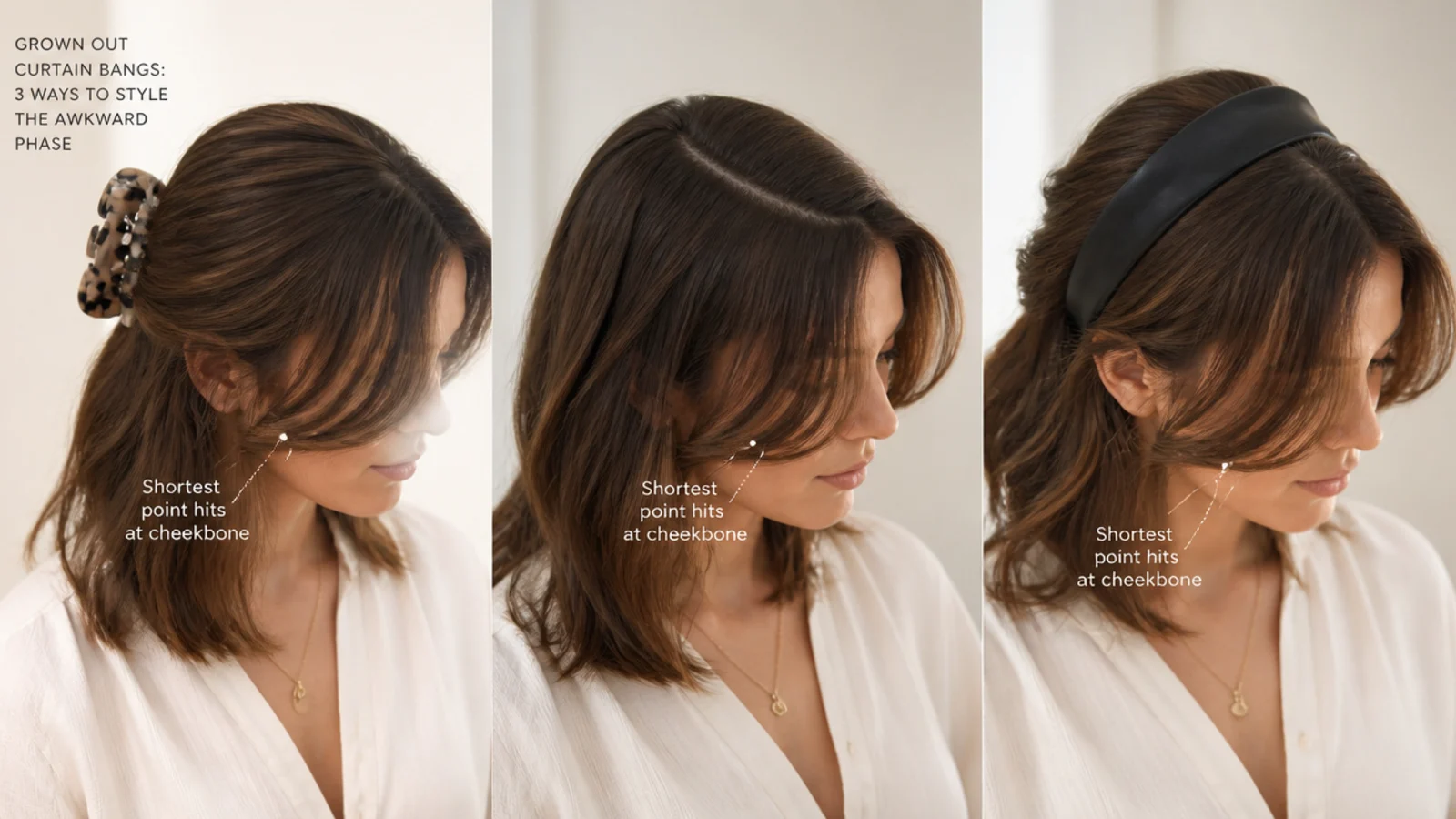
Almost every grow-out fails in the same six-week window, and it fails for one reason: the fringe now ends exactly at the upper lash line. It is too long to sit above your eyes and too short to tuck behind an ear, so it spends the day in your field of vision. There are four fixes, in order of how much they change your look. Move the part half an inch off center so both sides clear the outer corner of the eye. Go to a full deep side part above one brow arch and blow-dry across with a paddle brush. Set two no-crease clips an inch behind the hairline while the fringe is still damp, then remove them for a soft bend. Or cover the whole thing with a wide headband, which also lifts a greasy fringe off your forehead. What you must not do is cut it. A half-inch trim in week 7 costs you a full month, and it is the single most common reason people restart this process twice.
Should You Trim Grown Out Short Curtain Bangs While Growing Them Out?
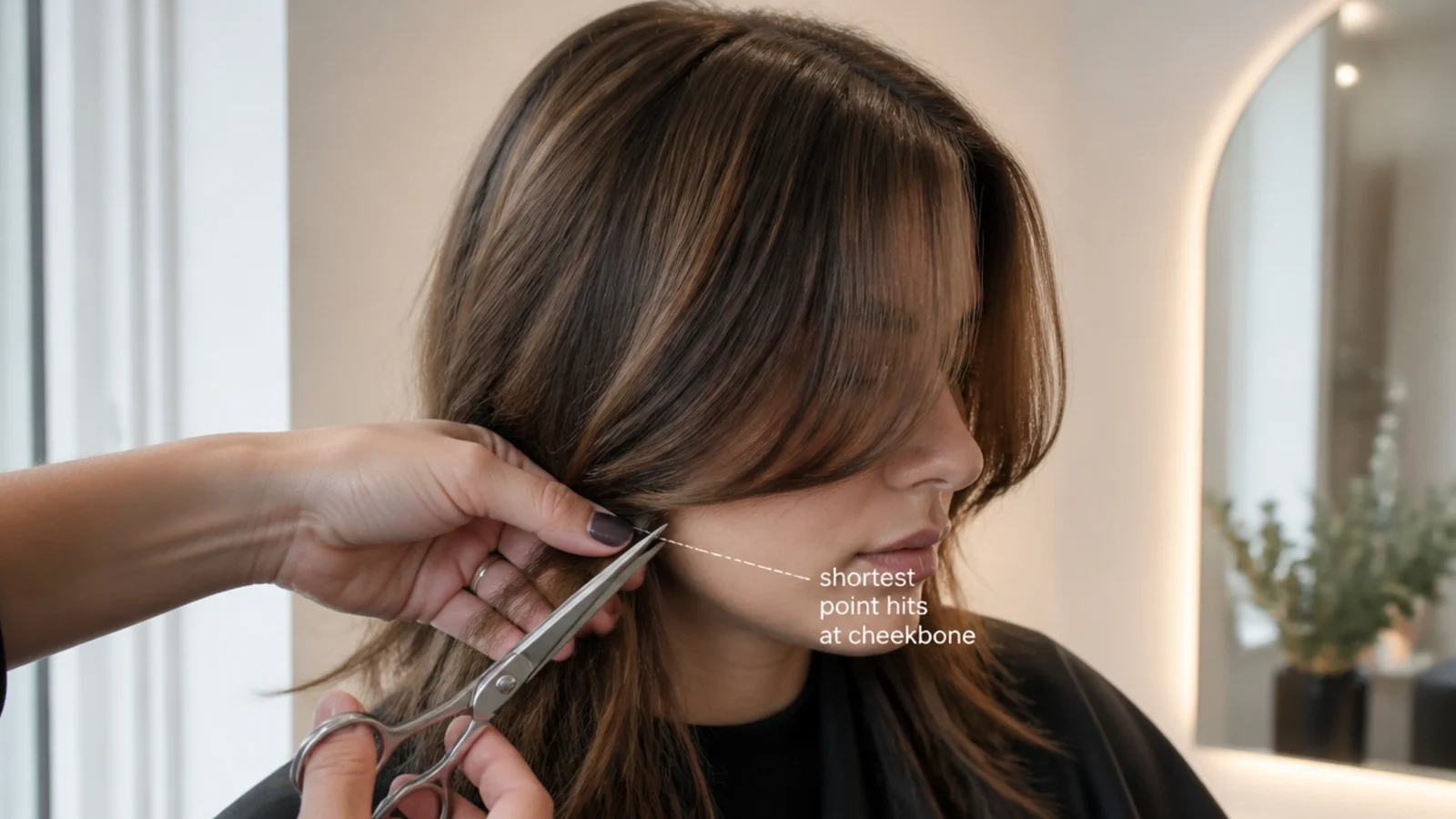
Yes and no, and the distinction matters more than anything else here. If you are maintaining short curtain bangs at a set length, they need a trim every 3 to 5 weeks, because half an inch of growth is enough to lose the shape entirely on a fringe that short. Most salons do fringe trims free between paid haircuts, so ask when you book your cut. If you are actively growing them out, you do not trim the length at all. What you can do is ask for two things that do not cost you time: a texturizing pass, where the stylist point-cuts into the ends to remove weight without shortening, and a blending pass around week 20, where slide cutting connects the fringe into your shortest layer. Both make the grow-out look intentional. Say the word blending rather than trim at the front desk, because trim is routinely heard as shorten and half an inch is a month you will not get back.
Styling Grown Out Short Curtain Bangs at Home in 5 Minutes
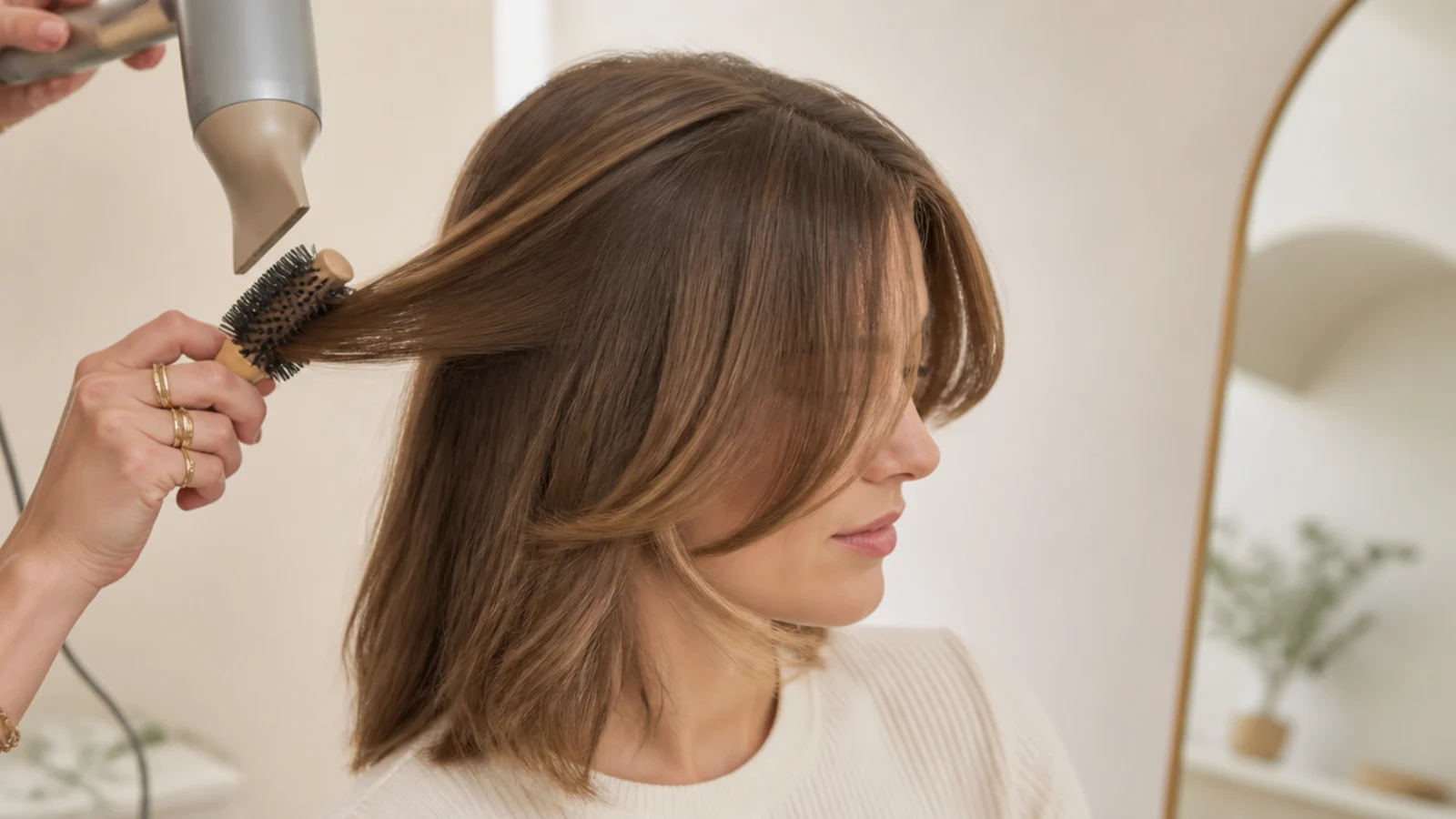
The routine barely changes across all eight months, only the time it takes. Start with the fringe damp, not dry, and style it first, before the rest of your hair, because a fringe sets permanently in whatever direction it air-dries and you cannot undo that later without rewetting. Aim the dryer down the shaft from above so the cuticle lies flat, take a 1.5 to 2 inch round brush, and roll each side away from the center part while overdirecting slightly back toward the ear. Hold three seconds, hit it with a cool shot, and release. Then break the curtain into pieces with a light mist of texture spray at the mid-lengths and a dusting of dry shampoo at the root for lift. Skip creams and oils anywhere near the fringe, especially on fine hair, since they collapse the root within an hour. Total time runs about two minutes per side early on and under a minute once you are past week 20. More technique in mid length haircut styling.
Face Shapes and Textures That Grow Out Short Curtain Bangs Easily

Grow-out difficulty depends less on your face than on your texture, but both matter. Round faces actually get better every week, because the shortest point drops below the cheekbone and stops cutting a horizontal line across the widest part of the face. Heart and square faces are happiest early, when the fringe softens a wide forehead or a strong jaw, and may want to recut around week 16. Oblong faces sit comfortably at any stage. On texture, wavy hair is the easiest grow-out: the bend hides length mismatches, though a 2a to 2c wave springs the fringe up about half an inch, so always judge the stage dry. Curly hair hides the process almost entirely thanks to shrinkage, then reaches cheekbone length seemingly overnight. Straight fine hair is the hardest, since it shows every cut line and flattens by afternoon, which is exactly when root lift and point-cut ends earn their keep. Straight-hair specifics are in straight mid length haircut. Compare textures in curly mid length haircut and mid length haircut for fine hair.
Frequently Asked Questions
How long does it take to grow out short curtain bangs?
Hair grows about half an inch a month, so a fringe cut at the eyebrow takes roughly 3 months to reach the cheekbone, 5 months to reach the jawline and about 8 months to blend fully into collarbone-length hair. The awkward lash-line phase falls between weeks 4 and 10, which is the shortest and most manageable part of the wait.
Should I trim curtain bangs while growing them out?
Not for length. Cutting half an inch in the middle of a grow-out costs you a full month of progress. You can safely ask for a texturizing pass that point-cuts into the ends to remove weight, and around week 20 a blending pass that slide-cuts the fringe into your shortest layer. Use the word blending, not trim, when you book.
How often do curtain bangs need trimming if I am keeping them short?
Every 3 to 5 weeks. A short curtain fringe loses its shape faster than any other length because half an inch of growth moves the shortest point from the brow to the lash line. Most salons include fringe trims free between paid haircuts, so ask when you book your main appointment and put a reminder in your calendar.
What do I do with curtain bangs in the awkward phase?
Move the part half an inch off center so both sides clear your eyes, or commit to a deep side part blow-dried across with a paddle brush. No-crease clips set an inch behind the hairline while the fringe is damp create a soft bend once removed. A wide headband covers the whole thing and lifts a greasy fringe off your forehead.
Do curtain bangs grow out better than regular bangs?
Yes, and it is the main reason people choose them. A full fringe is one length straight across with a hard perimeter, so growth pushes it into your eyes with nowhere to go. A curtain fringe is already parted in the center and angled longer toward the temples, so every extra inch simply lengthens the sweep and moves it toward your layers.
Why do my grown out curtain bangs look flat and greasy?
A fringe sits against your forehead all day, so it picks up oil roughly a day before the rest of your hair, and fine straight hair collapses fastest. Style the fringe first while damp with the dryer aimed up at the root, use dry texture spray or dry shampoo at the root only, and keep creams and oils away from the front section entirely.
Can I put grown out curtain bangs in a ponytail?
Usually from about week 28, when roughly 3.5 inches of growth lets the shortest piece reach past the ear and stay gathered. Before that, expect escapees within the hour. Smooth the front with a wax stick or light gel applied against the growth direction rather than hairspray, which goes crunchy and flakes on short pieces.
How can I make growing out curtain bangs faster?
You cannot speed up the roughly half inch per month that hair grows, so the real lever is protecting what you have. Avoid trimming the length, keep heat use moderate and always use a heat protectant on the fringe, and if you have lightened the front, use a bond builder since bleached bangs snap more easily than the rest of your hair.
What length should I ask for if I want to stop growing them out?
Ask for the shortest point at the cheekbone, angling longer toward the temples, cut with point-cutting rather than a blunt line. That is the length most people picture when they say curtain bangs, it stays out of your eyes, and it flatters round faces because it keeps the vertical line down the sides of the face open instead of drawing a horizontal one.
Which short curtain bangs look are you saving?
Growing out short curtain bangs is mostly a game of making each stage look deliberate rather than accidental. Weeks 0 to 4 need nothing. Weeks 4 to 10 need a deep side part, a no-crease clip or a headband, because that is when the fringe sits at the lash line and fights you. Weeks 10 to 20 are the reward, when the shortest point reaches the cheekbone and the curtain finally hangs the way it does in every photo you saved. After week 20 it stops being a fringe and starts being a face-framing layer, which is when most people either grow it fully out or ask for it to be recut. Save the stage that matches where you are now, and browse the rest of the short curtain bangs board when you are ready for the next cut.