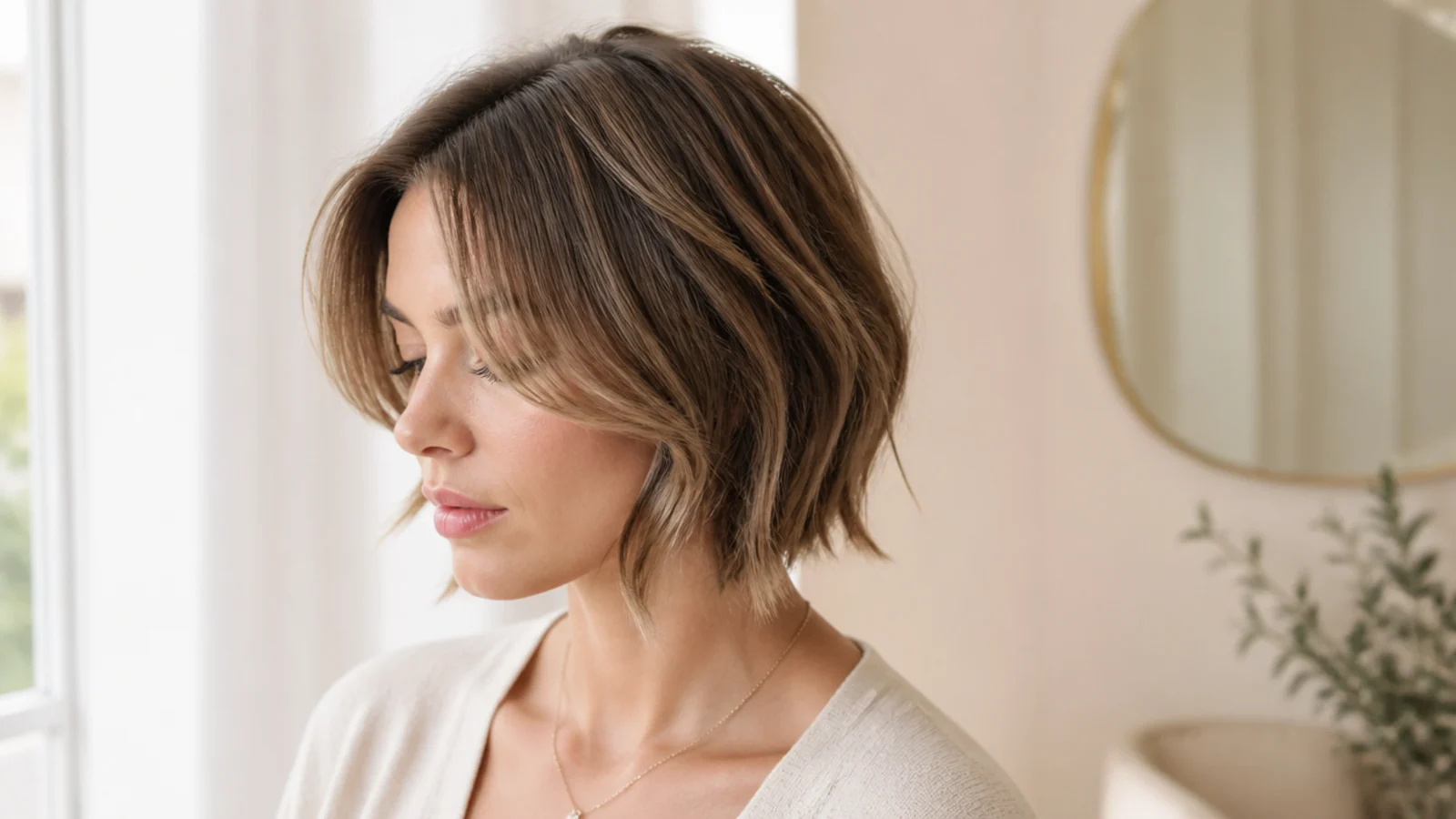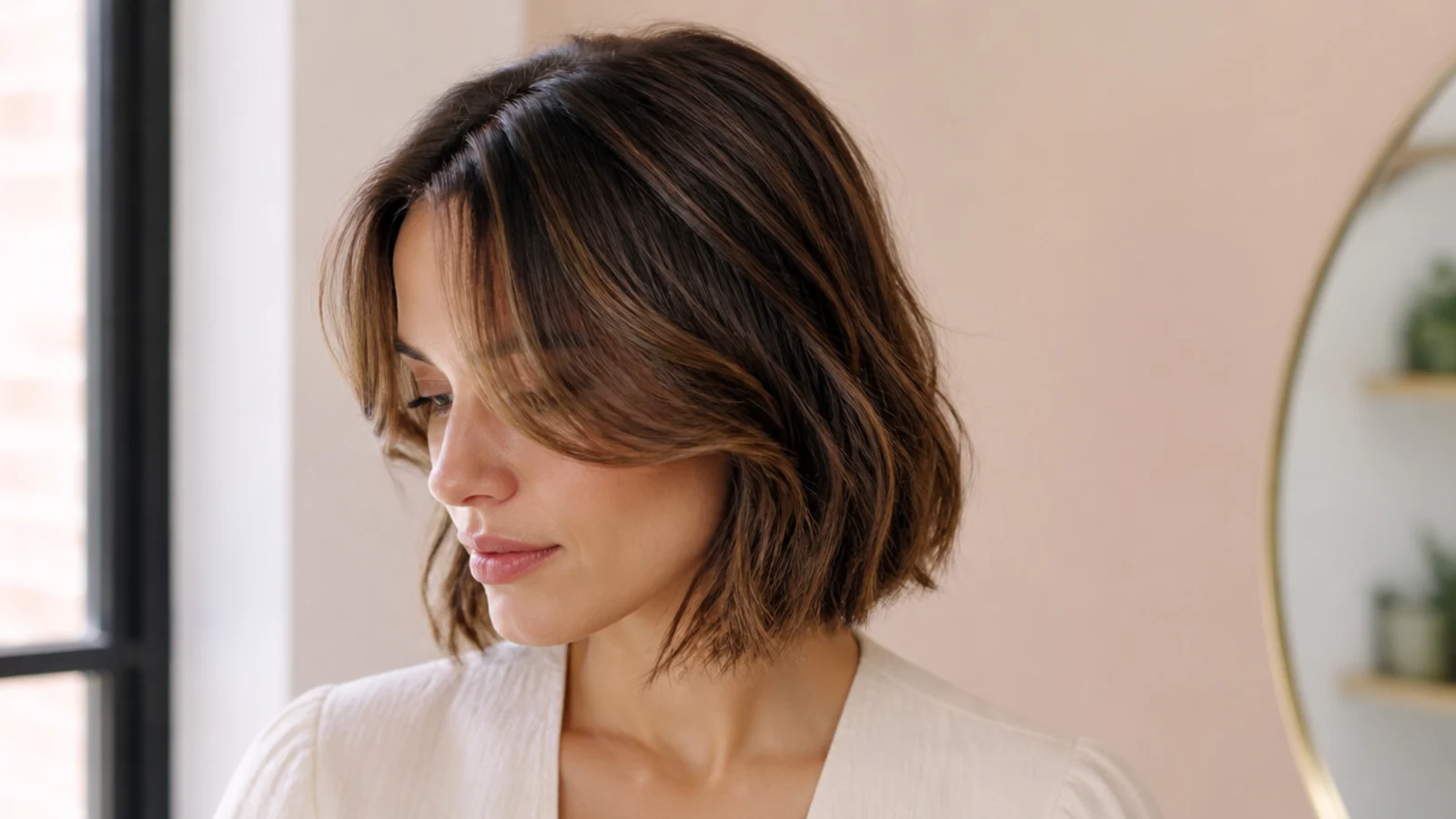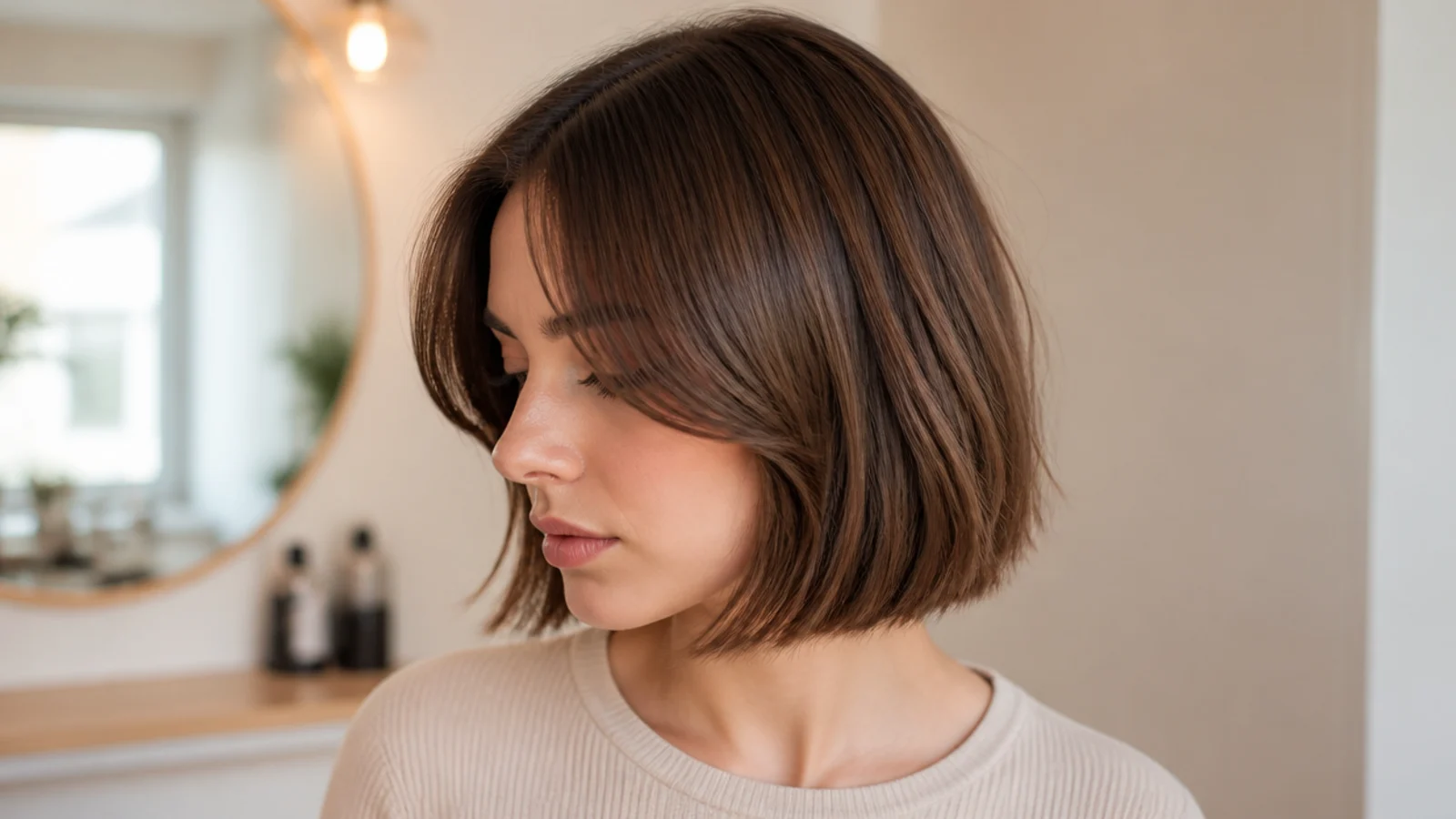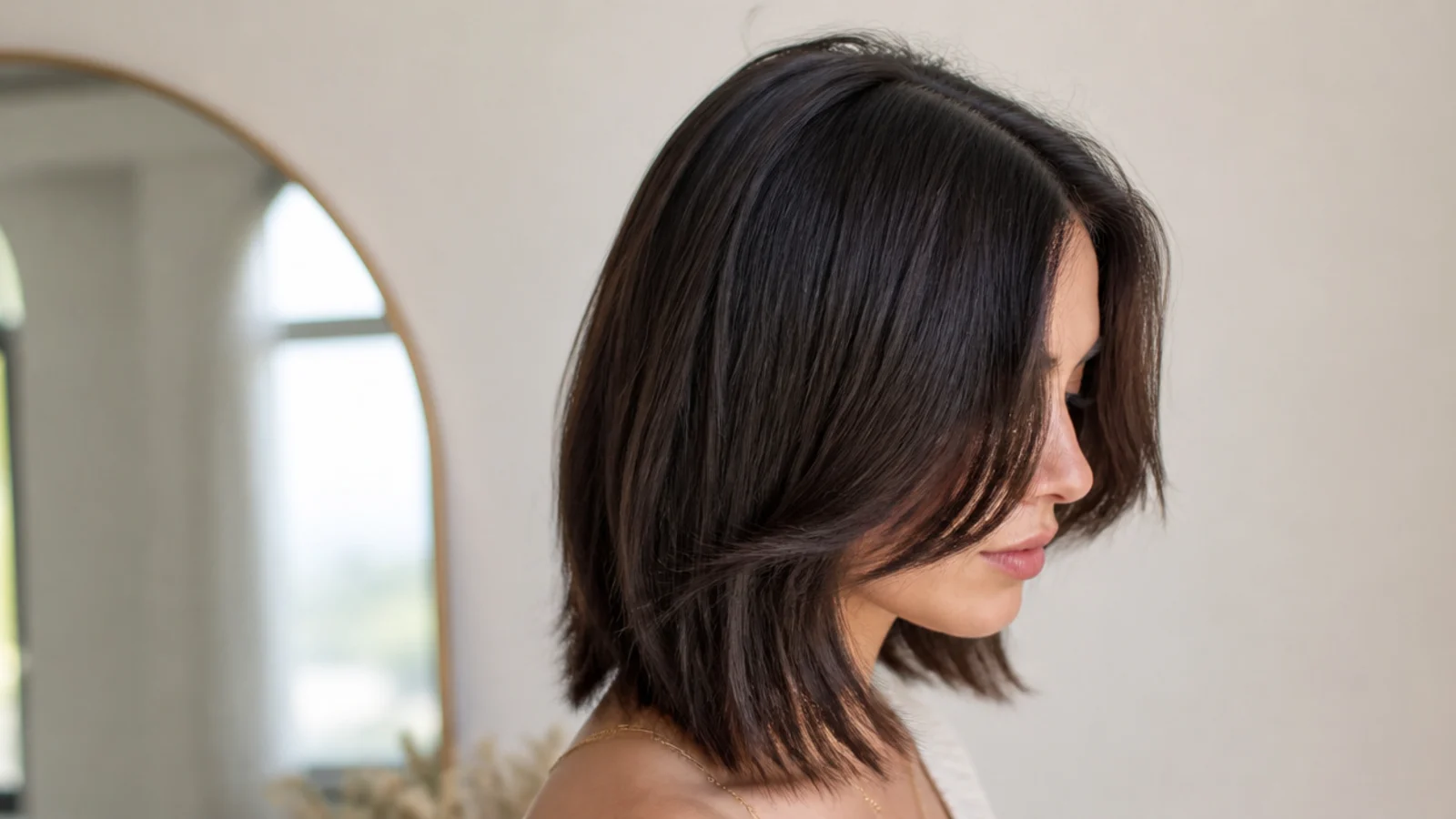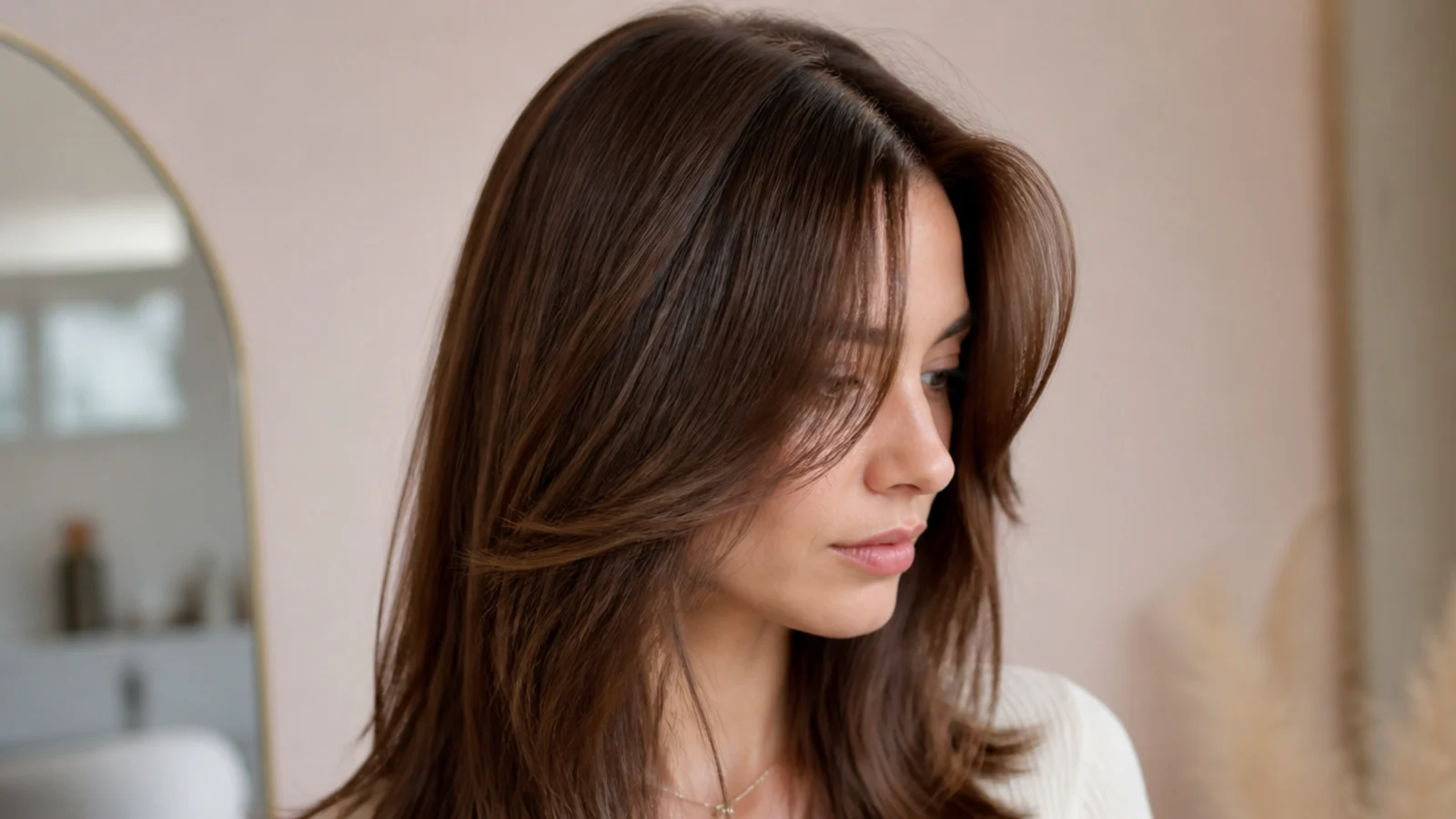
Quick Comparison
| Straight Short Curtain Bangs (brow to cheekbone) | Straight Long Curtain Bangs (cheekbone to jaw) | |
|---|---|---|
| Where the shortest point sits | Between the eyebrow and the top of the cheekbone | At the cheekbone or lower, down to the jawline |
| Trim cadence | Every 3 to 5 weeks before it hits the lashes | Every 6 to 8 weeks; it blends as it grows |
| Daily styling time on straight hair | 3 to 6 minutes; needs root lift and a round brush | 1 to 3 minutes; often air dries acceptably |
| Can you air dry it | Rarely; straight hair dries flat to the forehead | Usually yes, with a tug through the ends |
| Best face shapes | Oval, heart, long and angular faces | Round and fuller faces, and anyone elongating |
| How it grows out | Hits an awkward lash-tickling stage around week six | Blends straight into face-framing layers |
| Ponytail compatibility | Fringe stays down; you wear it, not hide it | Long enough to tuck behind the ears or pin back |
| First-fringe suitability | Higher commitment; the change is immediate and visible | Lower risk; the safest way to test bangs |
| Yearly trim cost | 10 to 17 fringe trims, often free between paid cuts | 6 to 8 fringe trims, usually folded into regular cuts |
1. Brow-Grazing Straight Short Curtain Bangs
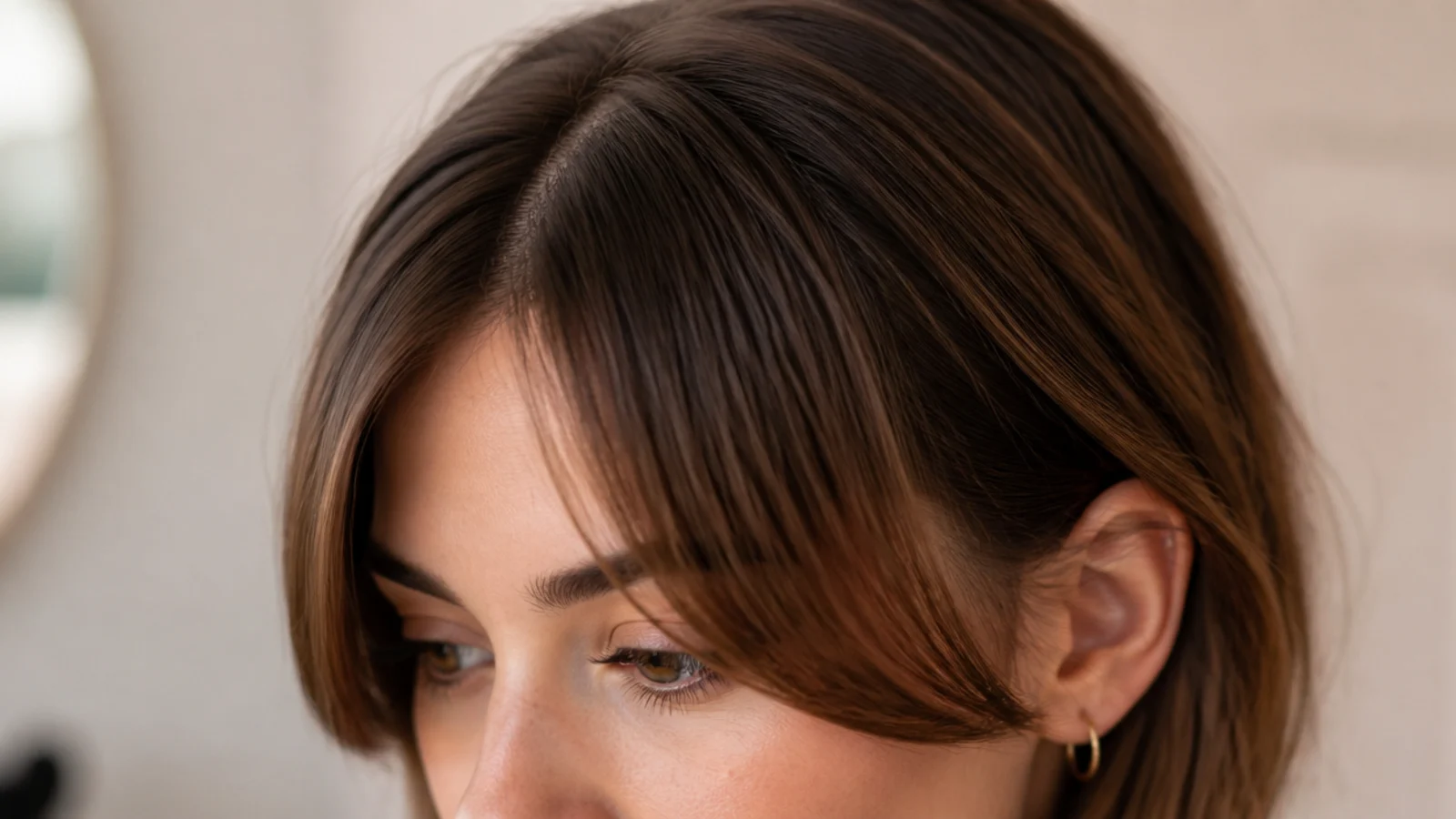
The shortest point lands right on the eyebrow, roughly 4 to 4.5 inches from the front hairline on an average head, then angles down about an inch and a half by the time it reaches the temple. This is the truest reading of short: bold enough to change your face, still long enough to tuck if you hate it by week two. On straight hair the angle has to be cut in a smooth diagonal rather than two blunt steps, or you get a visible corner at the outer edge.
Who it suits: Oval and heart faces with medium density type 1B hair and a clean hairline.
Tip: Ask for the shortest point at the brow bone and the outer edge one and a half inches longer, cut dry.
2. Point-Cut Straight Short Curtain Bangs for Fine Hair
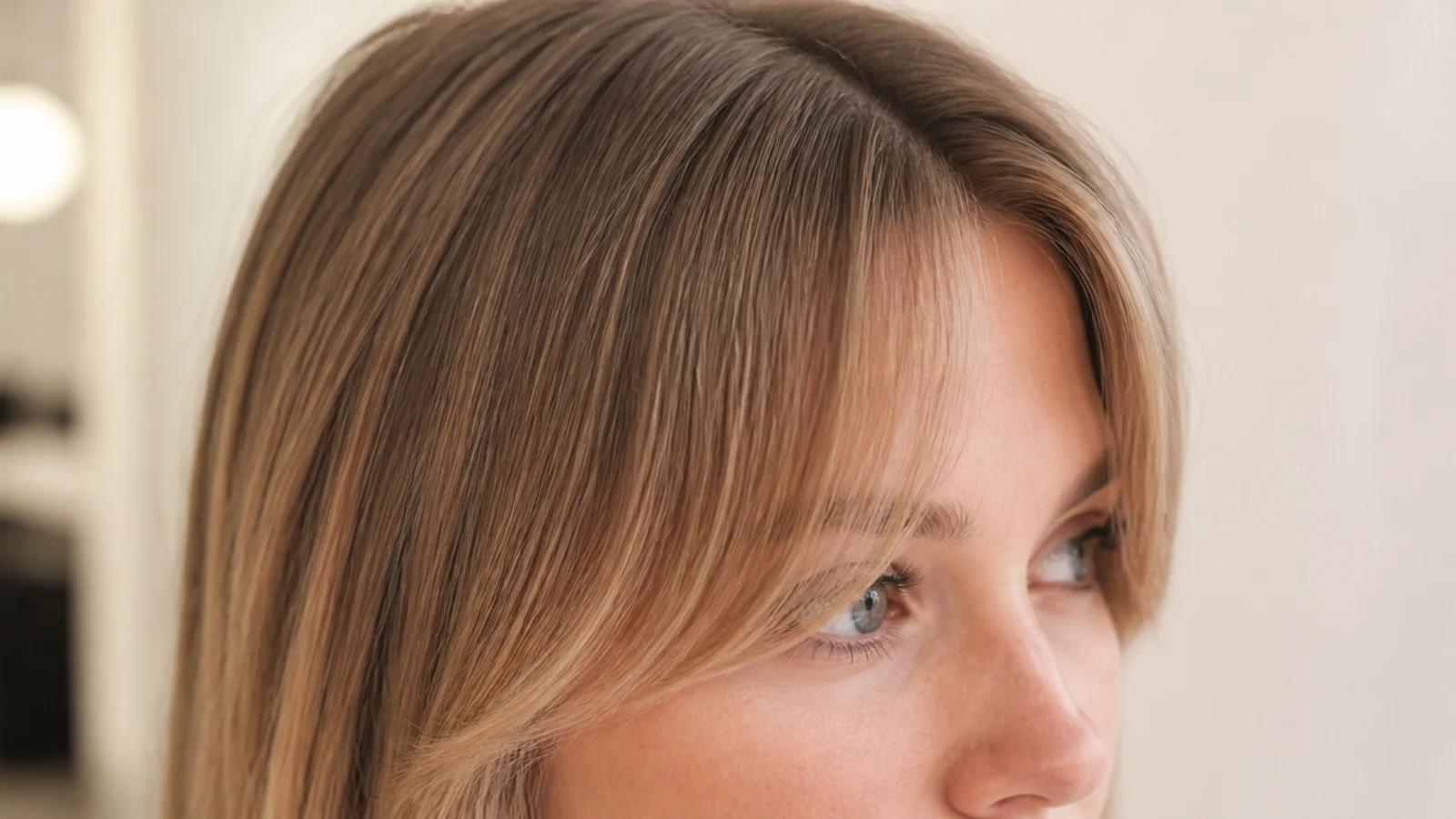
Fine straight hair is where a blunt fringe fails hardest, because with fewer strands per square inch a flat perimeter looks like a chart line rather than hair. Point-cutting means the shears go into the ends vertically, half an inch deep, taking tiny wedges out so the edge breaks up. The result still has full density at the root, so it does not go see-through, but the tips fall in soft spikes that catch light. It is a five-minute difference at the chair that changes how the fringe reads every single day.
Who it suits: Fine type 1A hair that goes flat and shiny-edged with any blunt cut.
Tip: Say no thinning shears, point-cut only, half an inch deep, or you will get frizzy regrowth in six weeks. See the short curtain bangs pillar for the full density rules.
3. Straight Short Curtain Bangs on a Chin-Length Bob
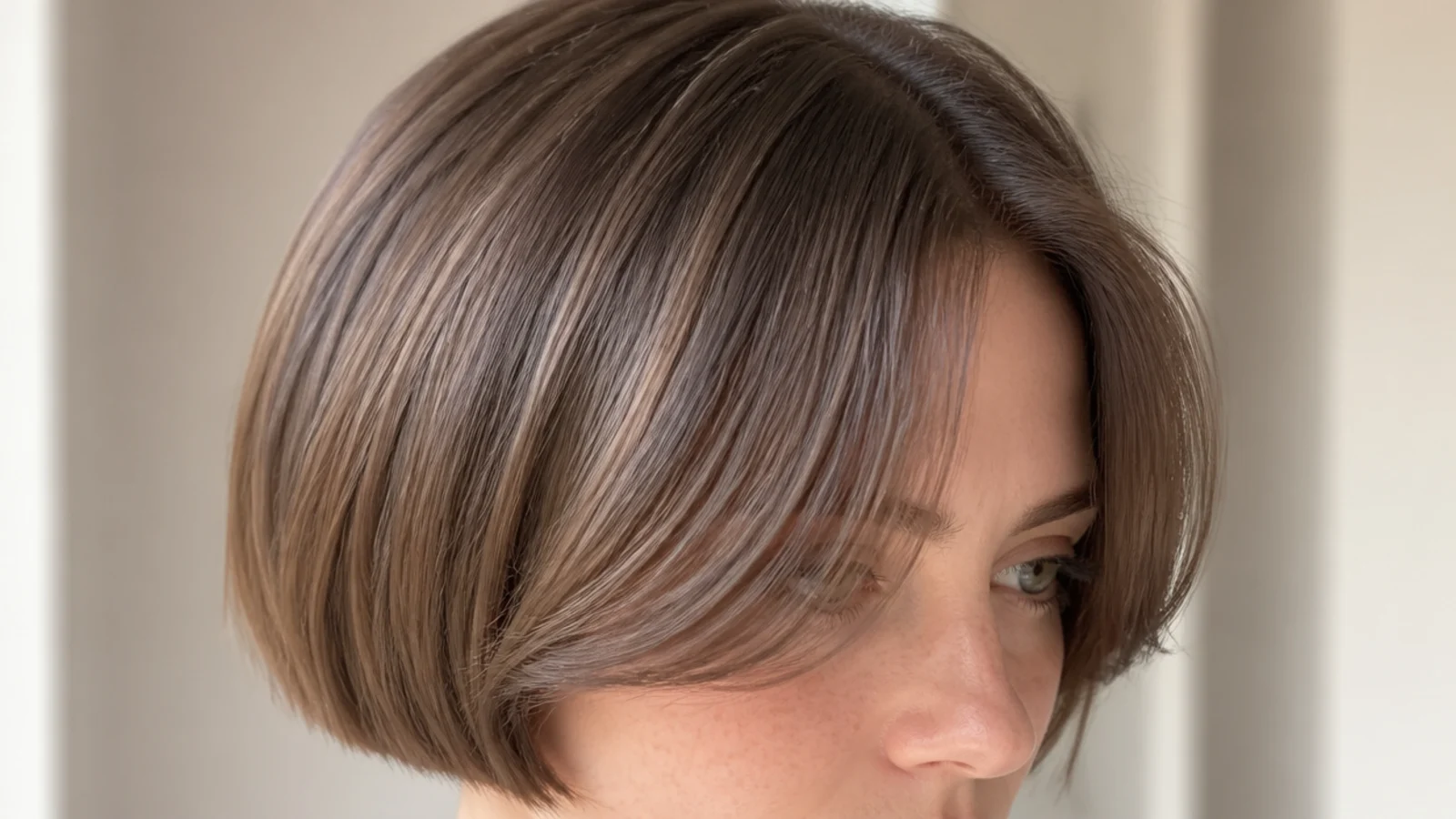
A chin bob and a short fringe are close together in space, so the ratio matters more than either length alone. Keep the shortest point at the brow and let the longest fringe pieces stop about an inch above where the bob perimeter starts, so there is a visible gap between the two lines instead of one continuous helmet. Cut any shorter and the fringe and the bob merge into a bowl. This is the single most photographed pairing on the board and the easiest one to get wrong by half an inch.
Who it suits: Medium density straight hair on oval, heart and long face shapes.
Tip: Read short curtain bangs with a bob before you book, and take both photos in.
4. Straight Short Curtain Bangs for a Round Face
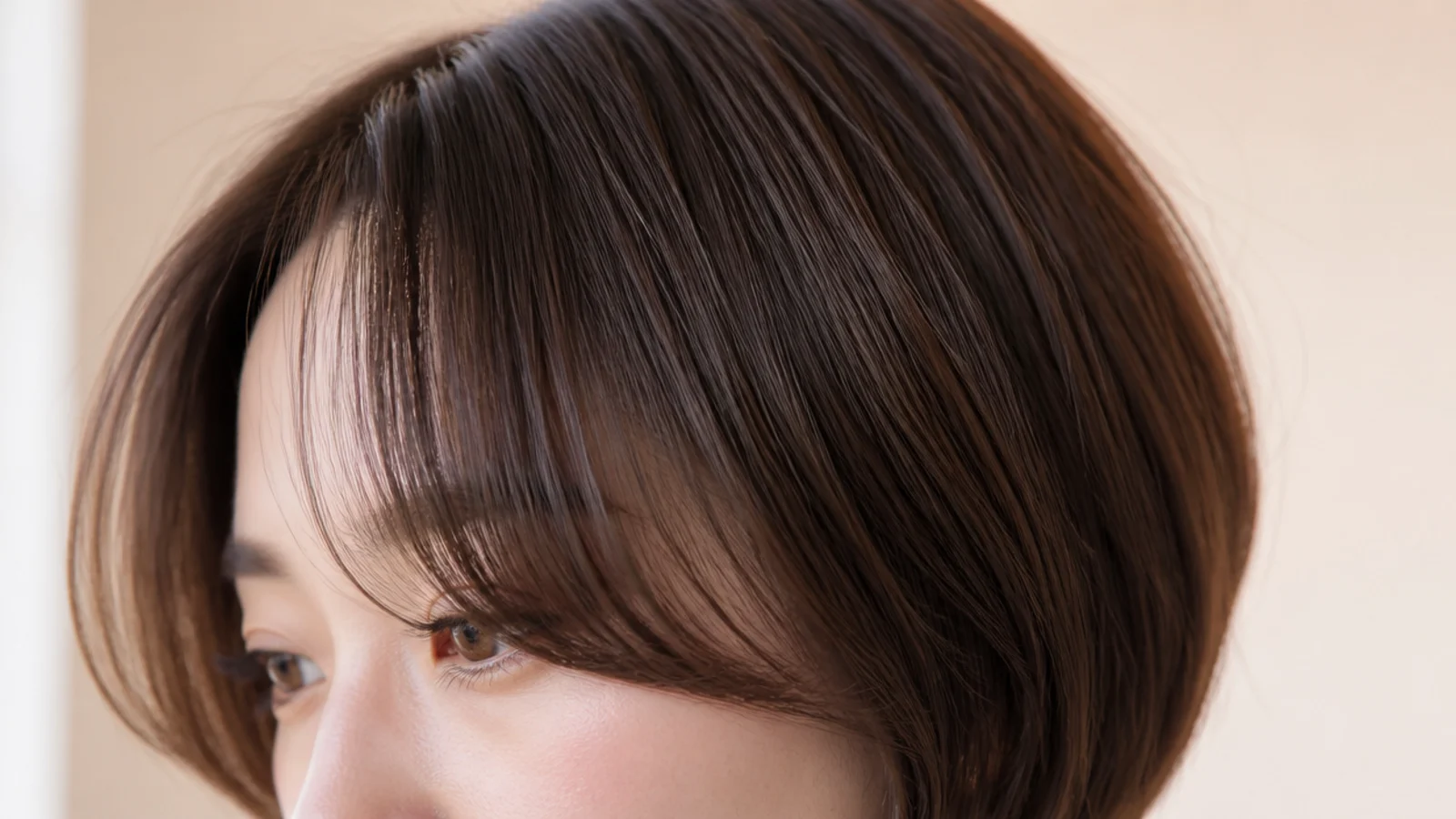
On a round face the fringe should keep the shortest point at or below the cheekbone, so the sweep travels past the widest part of the face instead of stopping on it. Straight hair helps here because the pieces fall in a genuine vertical rather than curling back in. Keep the density light and the ends tapered; a heavy fringe cut level with the apple of the cheek draws a horizontal line right across the roundest part. If you want a higher shortest point, it has to be wispy enough to see through.
Who it suits: Round and full-cheeked faces with straight, medium to thick hair.
Tip: Full geometry in short curtain bangs for a round face.
5. Cowlick-Proof Straight Short Curtain Bangs
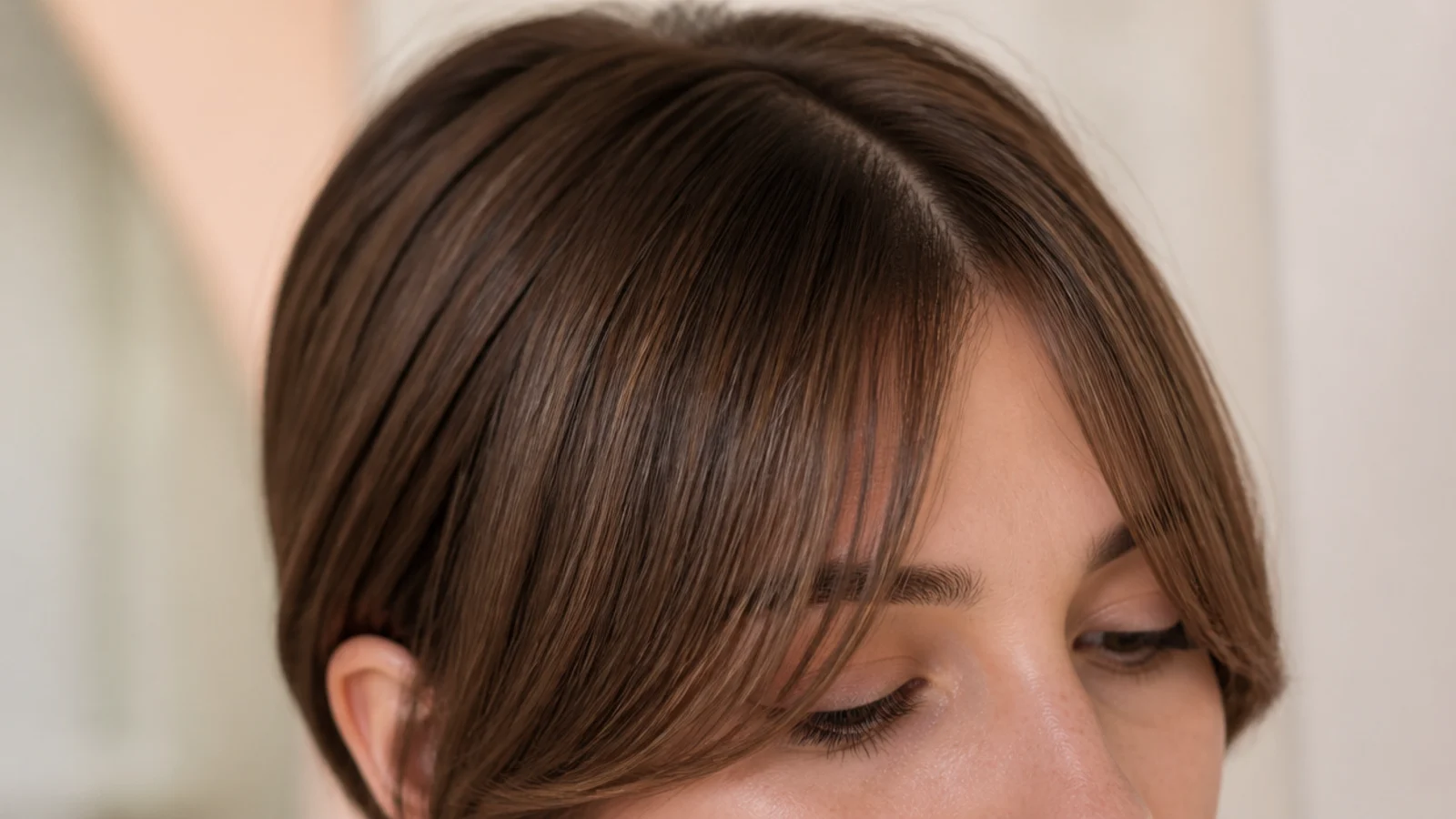
A cowlick at the front hairline is the number one reason a straight fringe splits into a gap the day after the cut. The fix is structural, not a styling trick: the section sitting over the swirl gets cut half an inch longer than the rest, so its natural lift still lands at the same finished length. At home, dry that section first, against the direction of growth, while it is soaking wet, then let it cool before you move on. Wet-setting is what breaks the pattern.
Who it suits: Anyone with a visible front swirl or a strong widow's peak on straight hair.
Tip: Point at the swirl during consultation and ask for that section left half an inch longer.
6. See-Through Straight Short Curtain Bangs
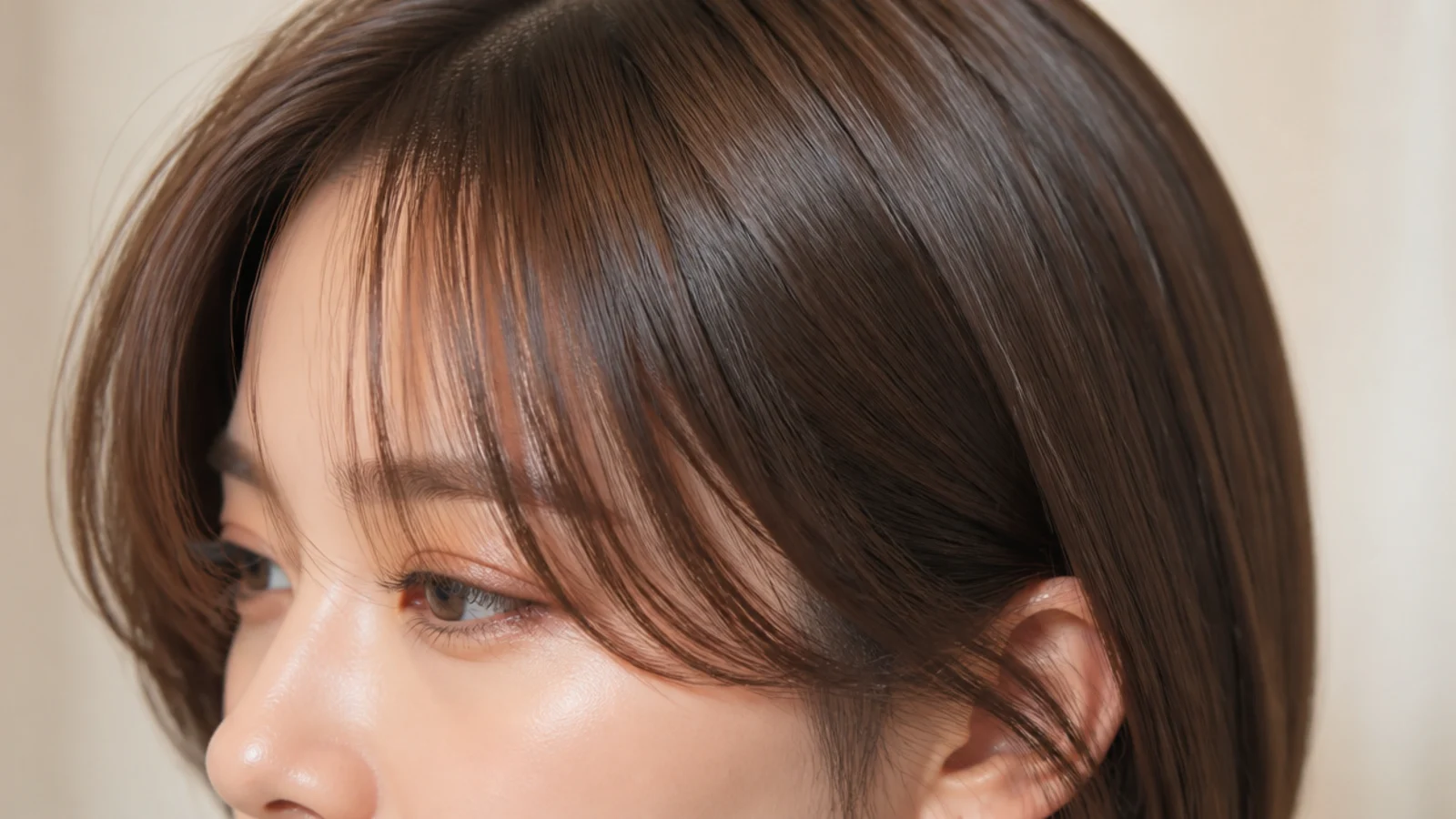
The Korean-influenced see-through fringe takes a deliberately narrow triangle section, roughly from the middle part out to the inner third of each eyebrow rather than all the way to the temples, so less hair is committed to the front. Straight hair suits it best of any texture because the strands separate cleanly instead of clumping. It is the lowest-risk way to test whether you want bangs at all, since the section is small enough that pinning it back is invisible if you change your mind.
Who it suits: Fine to medium straight hair and anyone nervous about a first fringe.
Tip: Ask for a narrow triangle, not a temple-to-temple section; the standard instruction is too wide for this look.
7. Straight Short Curtain Bangs With a French Bob
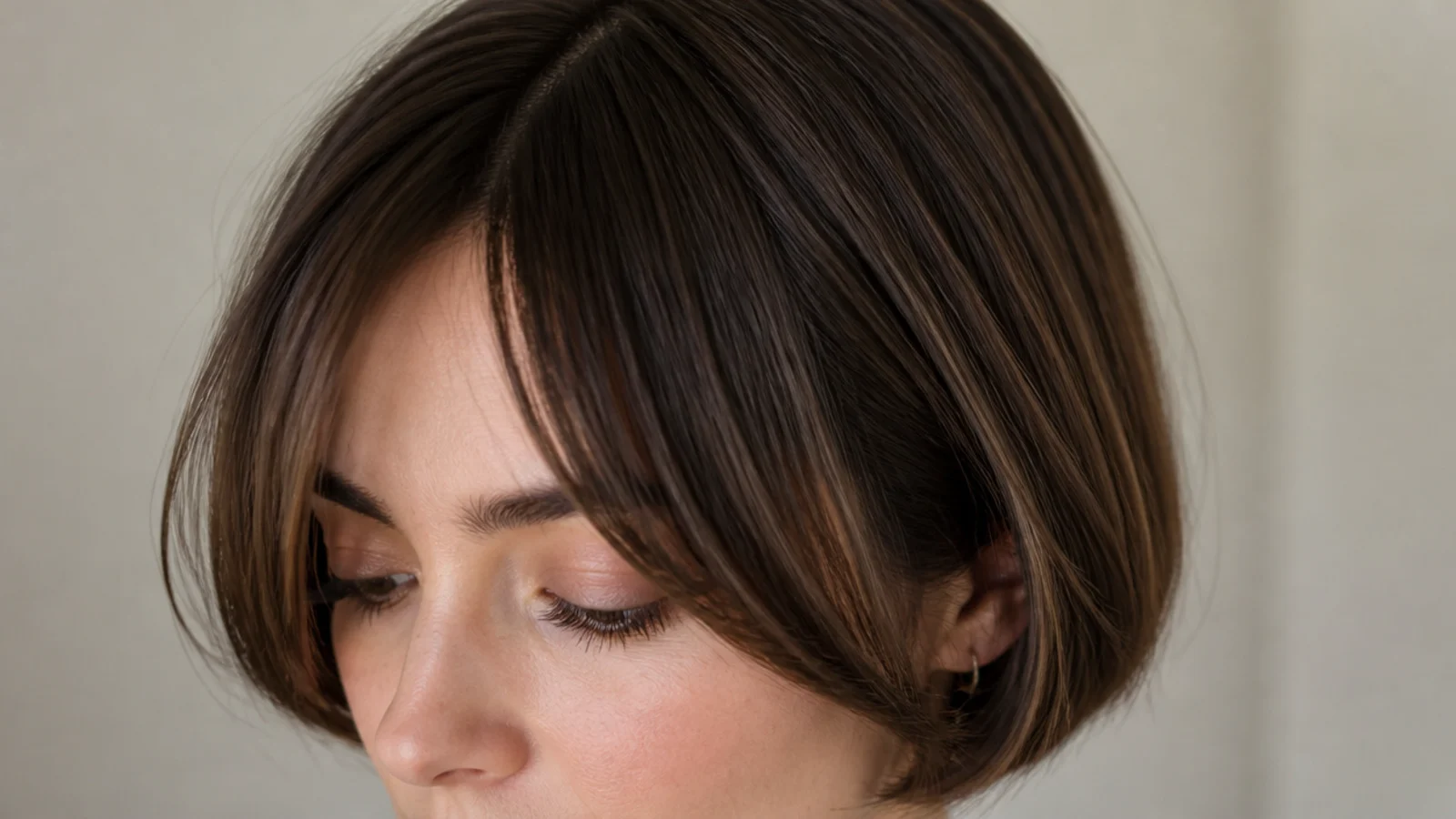
The French bob sits at the jaw with a fairly solid perimeter, and short curtain bangs are what stop it from looking severe on straight hair. Keep the fringe at brow level and let it sweep hard toward the ears so the two lines cross rather than stack. The whole shape lives or dies on the perimeter being clean, so it wants a trim every six to eight weeks on top of the fringe cadence. It is the most polished pairing here and the least forgiving of grown-out ends.
Who it suits: Straight type 1B and 1C hair on oval, heart and square faces.
Tip: Compare perimeters first in the bob haircuts guide so you know which bob you are asking for.
8. Blunt-Edge Straight Short Curtain Bangs for Thick Hair
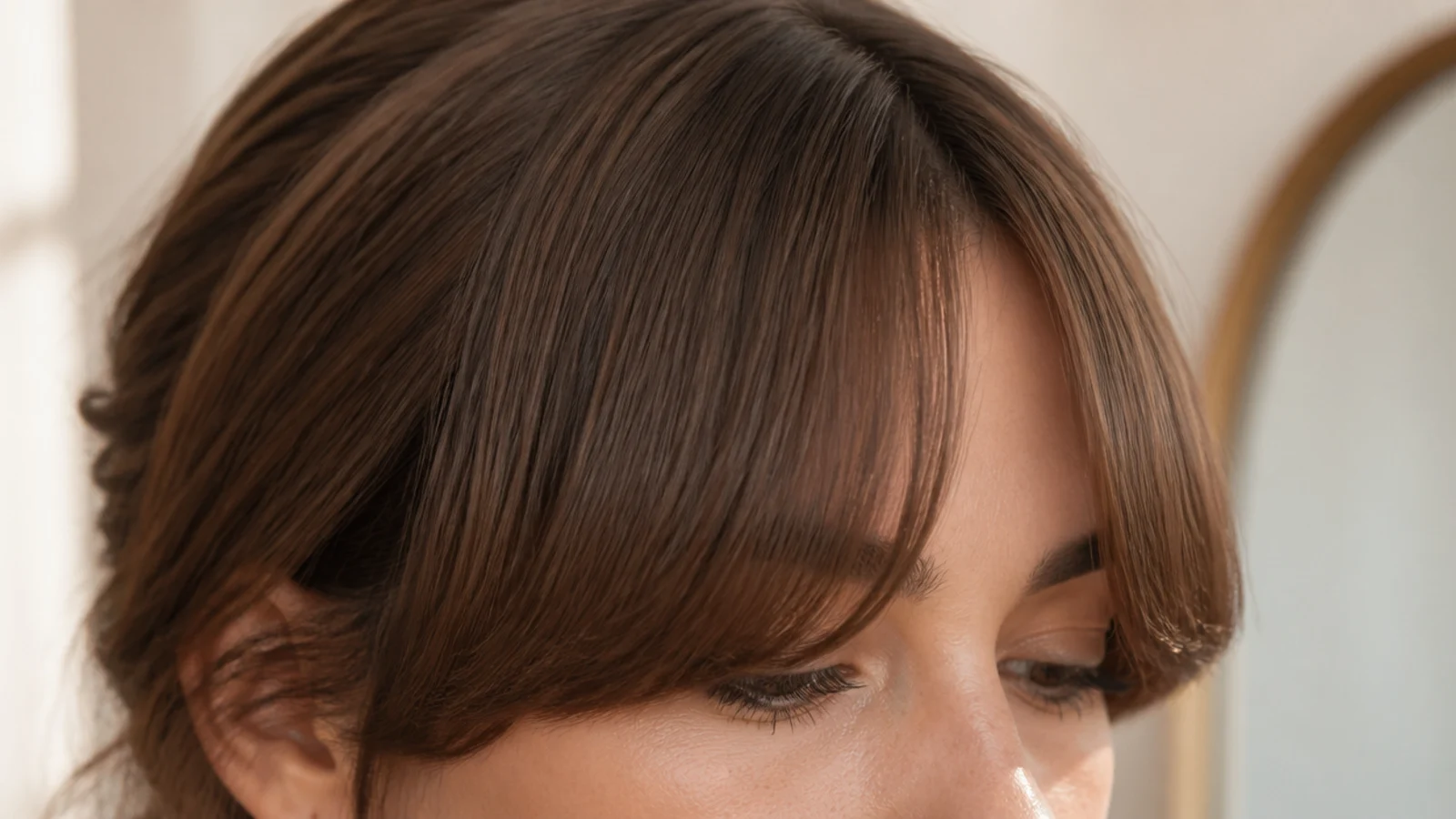
Thick straight hair is the one case where a fringe can carry a near-blunt edge without looking like a costume, because the density supports the weight. Keep the shortest point just below the brow and take the bulk out from underneath with internal slide cutting, never from the surface, so the top layer stays smooth while the fringe still moves. Cut on the surface with thinning shears and you get short frizzy pieces standing up at week five, which on straight hair is impossible to hide.
Who it suits: Dense type 1C hair that overwhelms a wispy fringe within two days.
Tip: Ask for weight removed from underneath with slide cutting, surface left alone.
9. Straight Short Curtain Bangs With a Deep Center Part
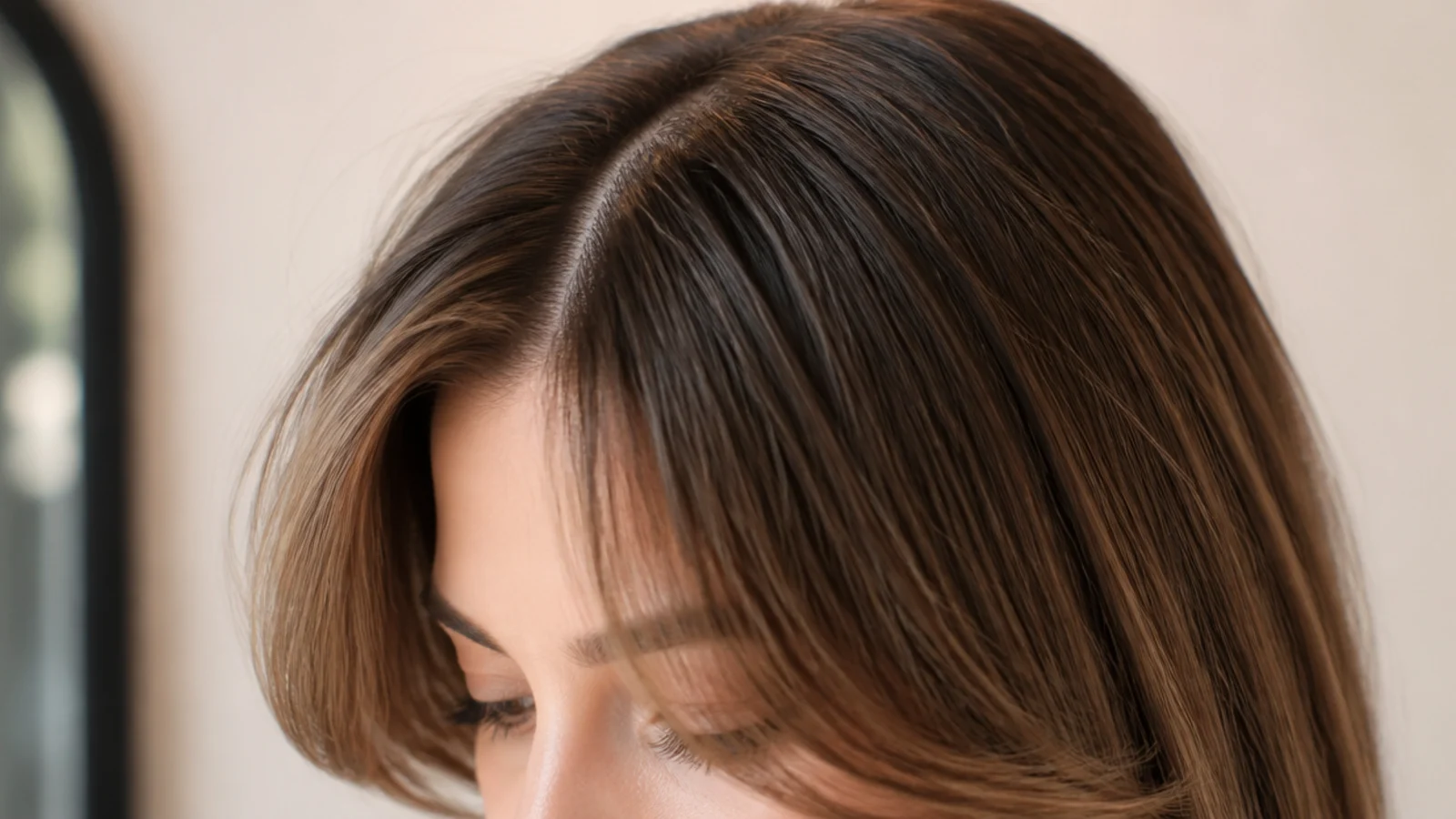
Most people part the fringe an inch back and wonder why it collapses. Taking the part two to three inches back into the crown gives the front sections a longer lever, so they fall into the curtain shape instead of flopping forward. On straight hair the extra length also means the sweep holds through the afternoon without pins. The part line itself becomes a design feature, and it is completely free: no cutting, no product, just a rat-tail comb and a decision.
Who it suits: Straight hair of any density, especially anyone whose fringe keeps falling forward.
Tip: Set the part on damp hair with a tail comb, then dry the first inch flat so it stays put.
10. Cheekbone-Length Straight Short Curtain Bangs
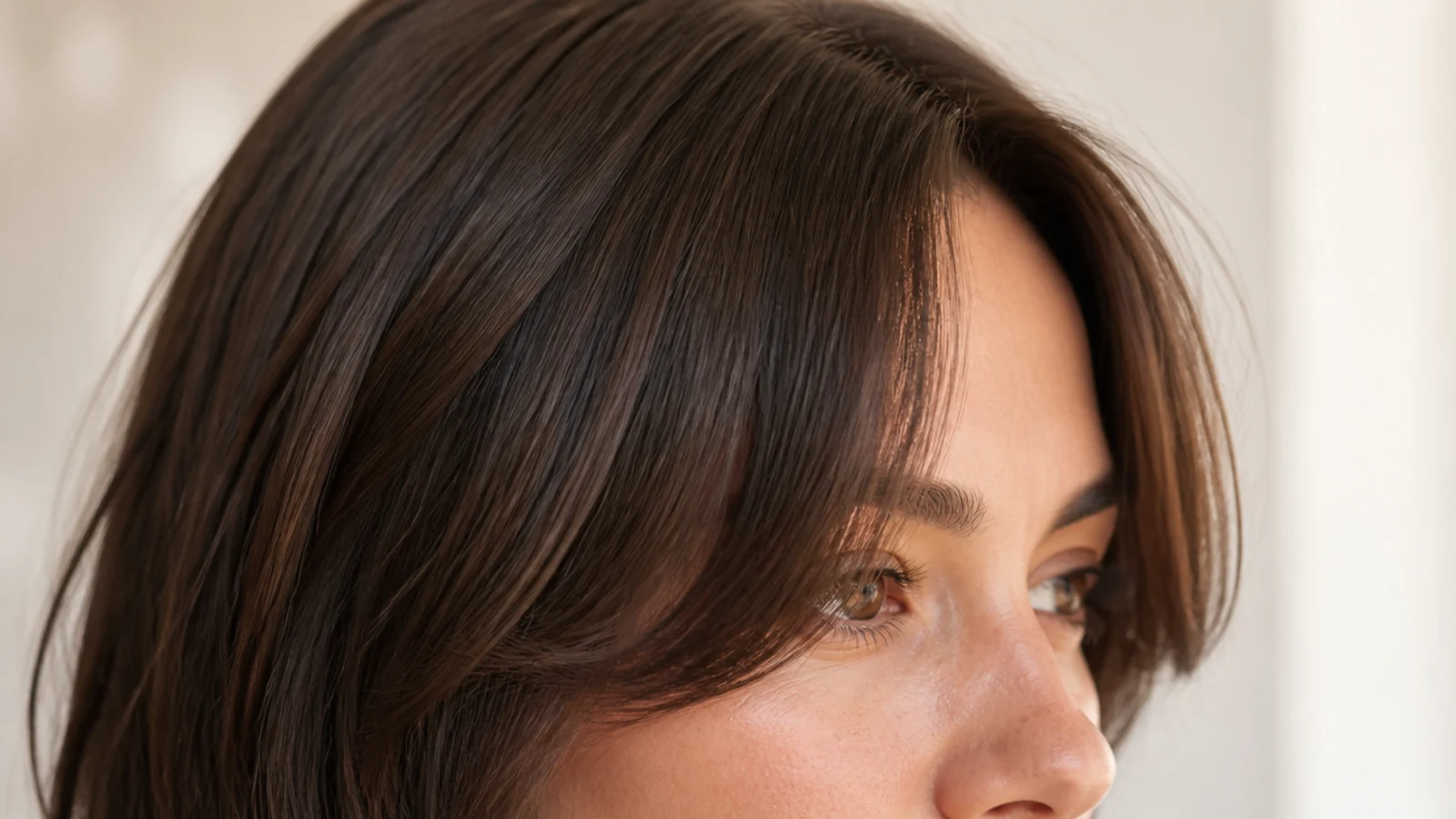
This is the long end of short: the shortest point grazes the top of the cheekbone, about 5.5 to 6 inches from the hairline on most heads. It is the safest entry point on the whole list because it never touches the eyelashes, it tucks behind an ear cleanly, and it grows into a face-framing layer rather than an awkward stage. Straight hair keeps the line crisp, which is exactly what makes this length read intentional rather than like hair you forgot to cut.
Who it suits: First-time fringe wearers and anyone who wants the option to hide it.
Tip: Name the landmark out loud: shortest point at the top of the cheekbone, longest at the jaw.
11. Straight Short Curtain Bangs on a Sleek Pixie
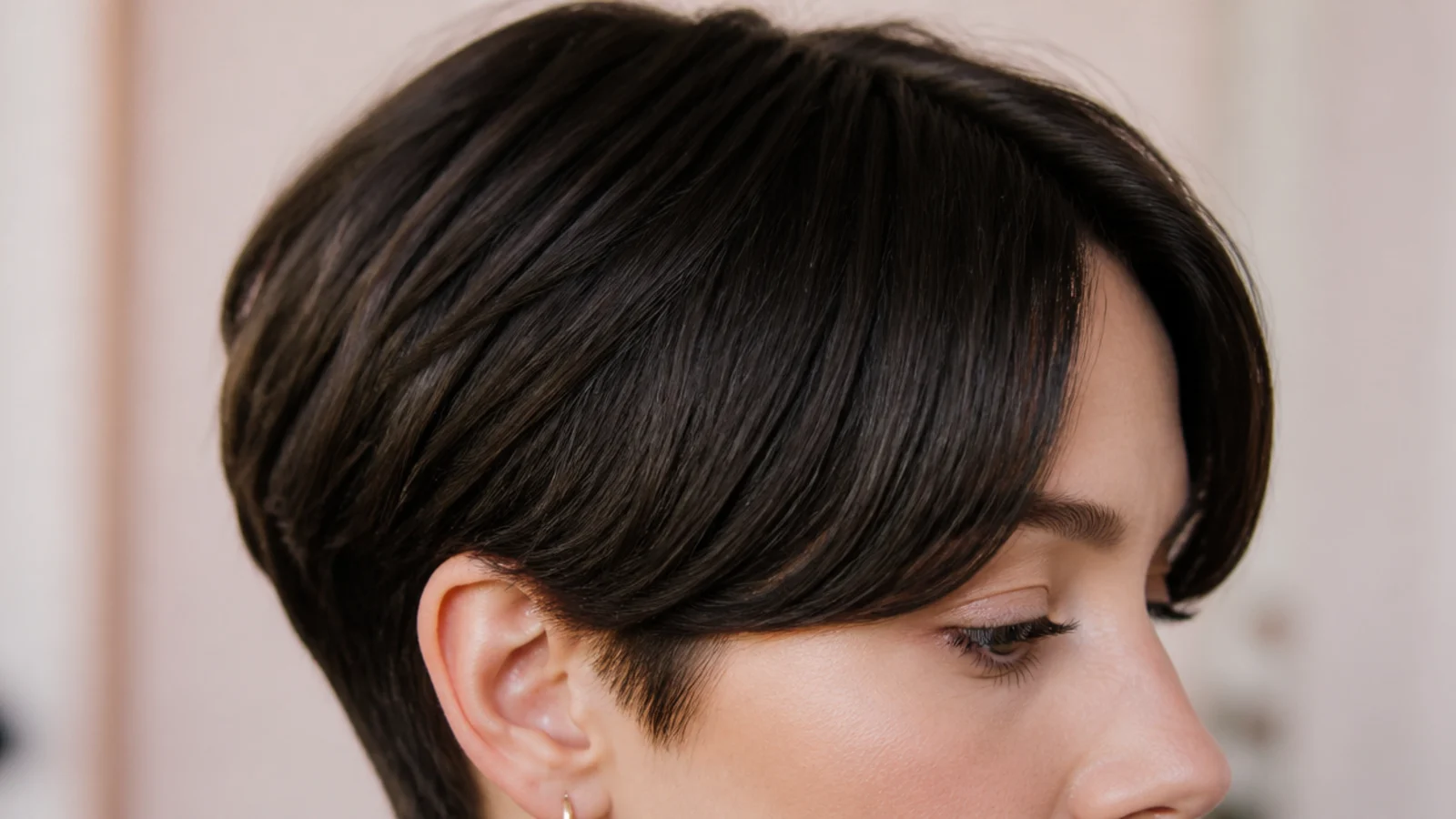
On a pixie there is no length anywhere else, so the fringe carries the entire shape. Keep the center point at the brow and let the sides sweep back into the sideburn area so the silhouette stays rounded rather than spiky. Straight hair makes this a genuinely low-effort cut once it is right, because the fringe dries where you point it. The catch is cadence: with this little hair, three weeks of growth is visible, so budget for a fringe trim on the short end of the range.
Who it suits: Fine to medium straight hair on oval and heart faces with defined bone structure.
Tip: Styling detail for finer textures lives in how to style short fine hair.
12. Flicked-Out Korean Straight Short Curtain Bangs
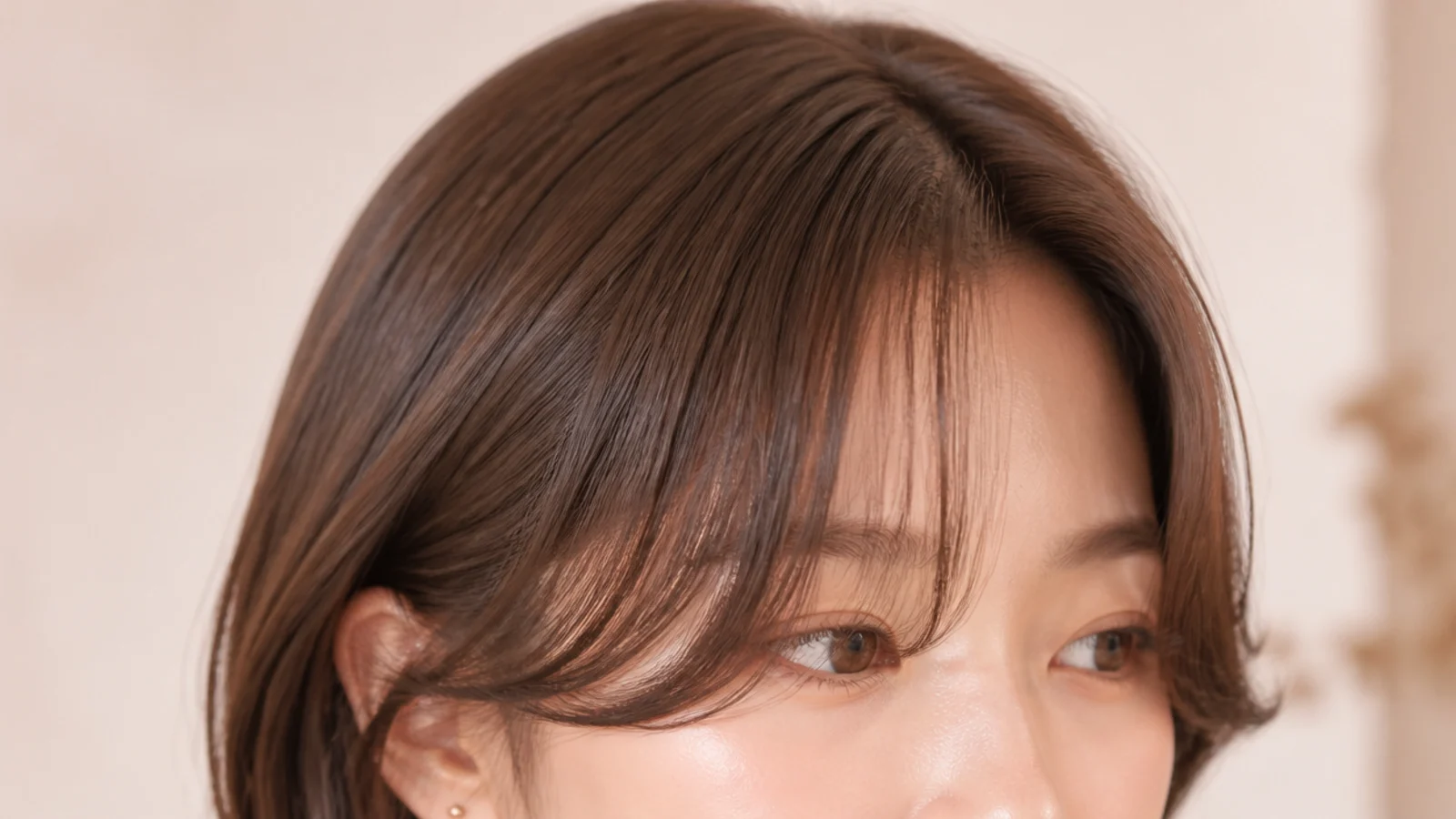
The signature here is the outward flick at the ends of each side, a soft C-shape that opens away from the cheek. On straight hair you build it with a 1.5 inch round brush: dry the fringe forward first, then roll it back and out through the last two inches and hit it with the cool shot. The density stays light and airy rather than solid. It takes about three minutes and it is the reason this look photographs so well and collapses so fast without the cool shot.
Who it suits: Straight type 1A and 1B hair that takes a bend but will not hold a curl.
Tip: Cool shot for ten seconds while the brush is still rolled in, then release.
13. Straight Short Curtain Bangs With Money-Piece Highlights
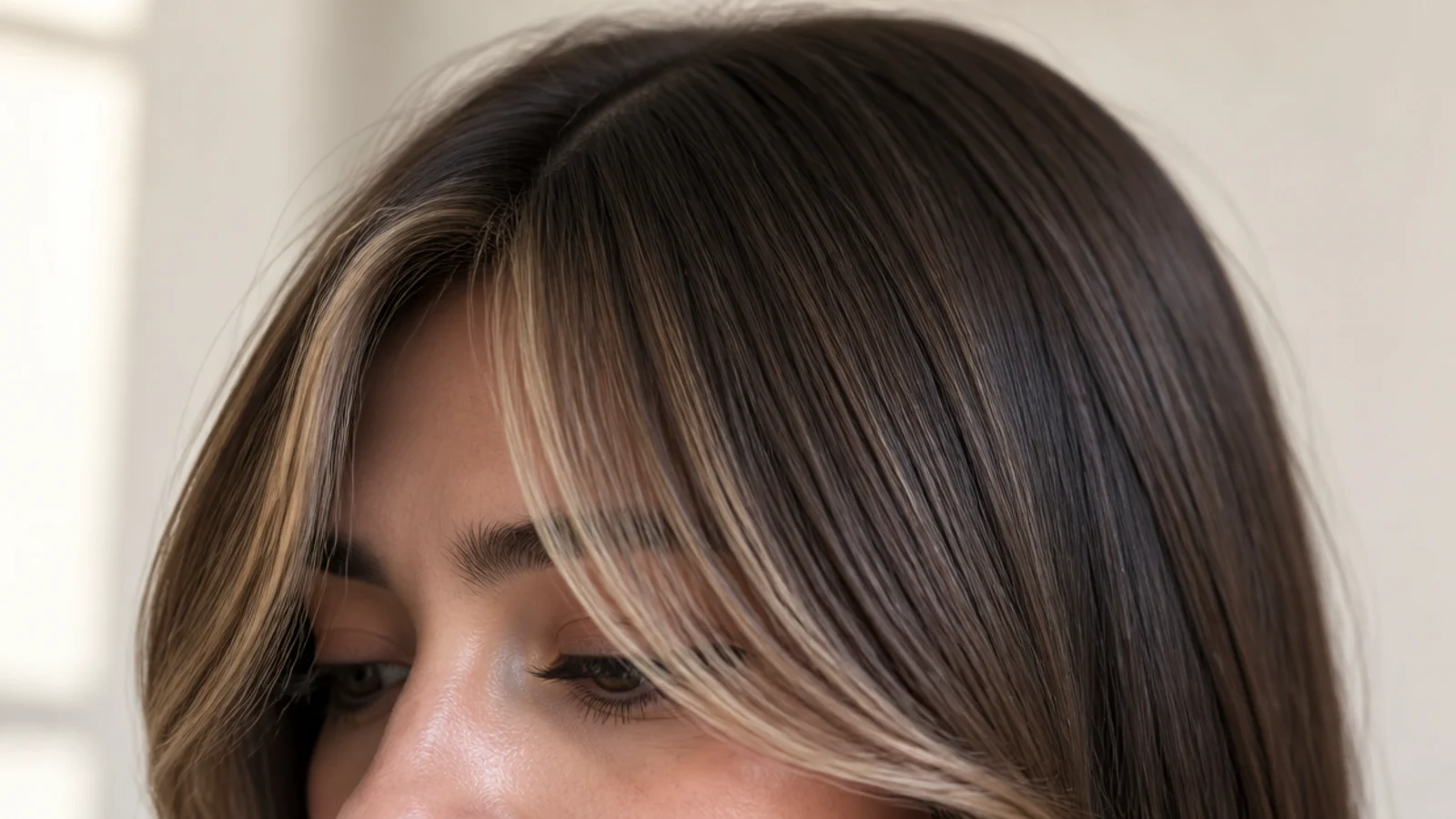
Lightening the two front curtain sections two to three levels brighter than the base makes the sweep read as a deliberate shape rather than hair that fell forward. It also fakes dimension on straight hair, which has no natural shadow to work with. Keep the lift confined to the fringe triangle and the first inch behind it, and use a gloss to kill any brass, because a warm streak next to the face is the fastest way to make a good cut look cheap. Budget 90 to 200 dollars depending on market.
Who it suits: Straight hair in mid to dark brown shades that looks flat under indoor light.
Tip: Ask for a face-frame only, root shadowed, then glossed cool in the same appointment.
14. Straight Short Curtain Bangs on a Shoulder-Length Straight Cut
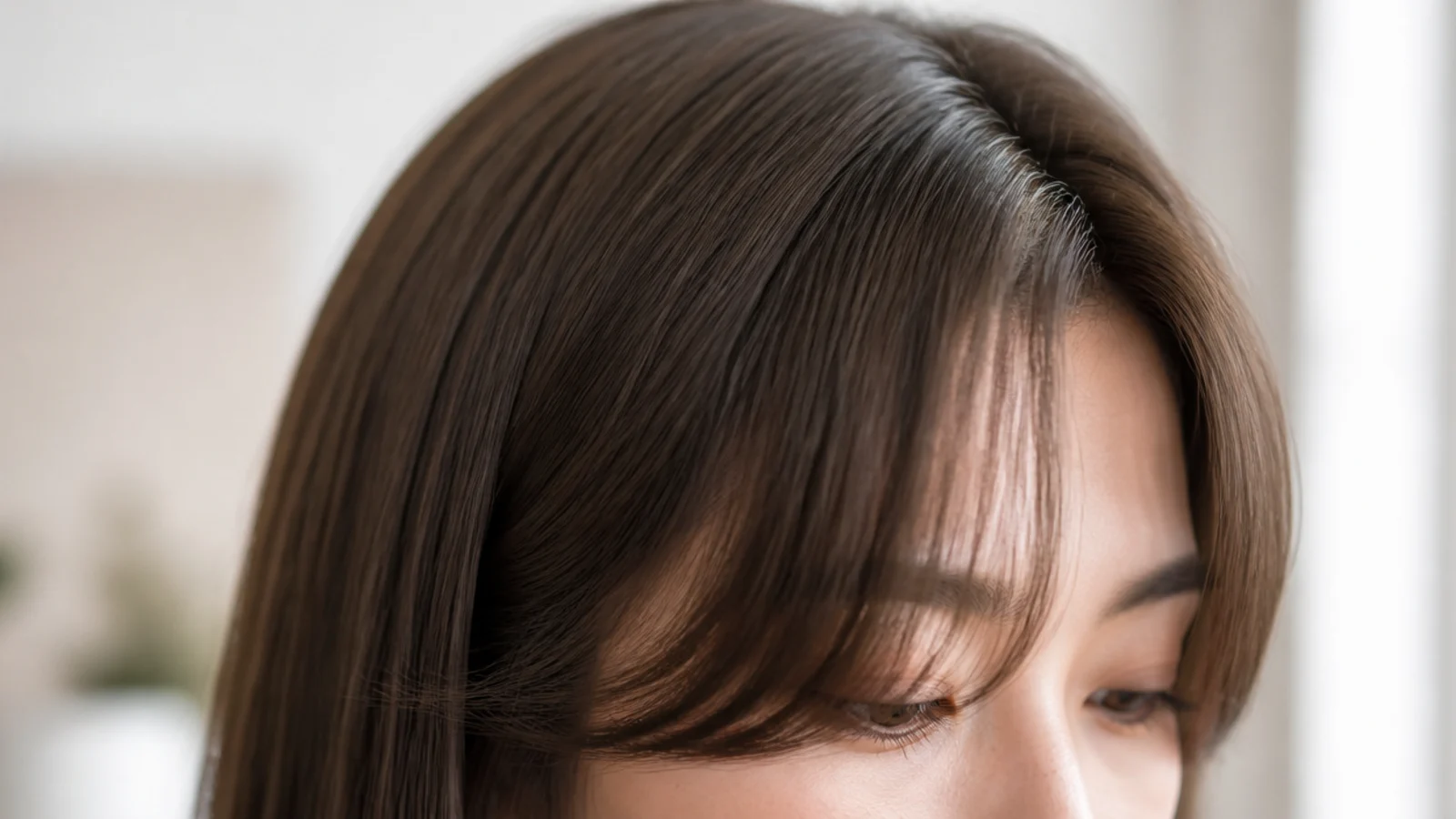
With plenty of length behind it, a short fringe needs a connector or it hovers in space. Ask for two face-framing pieces cut just below the jaw so the eye travels from the brow-length fringe down into the length instead of stopping at a hard edge. This is also the most forgiving version to grow out, because there is somewhere for the fringe to go. On straight hair the connector pieces do most of the visual work, so do not let them get shortened at trims.
Who it suits: Straight hair at or past the shoulders that wants a change without losing length.
Tip: Pair notes are in the straight mid length haircut guide.
15. Grown-Out Straight Short Curtain Bangs at the Cheekbone
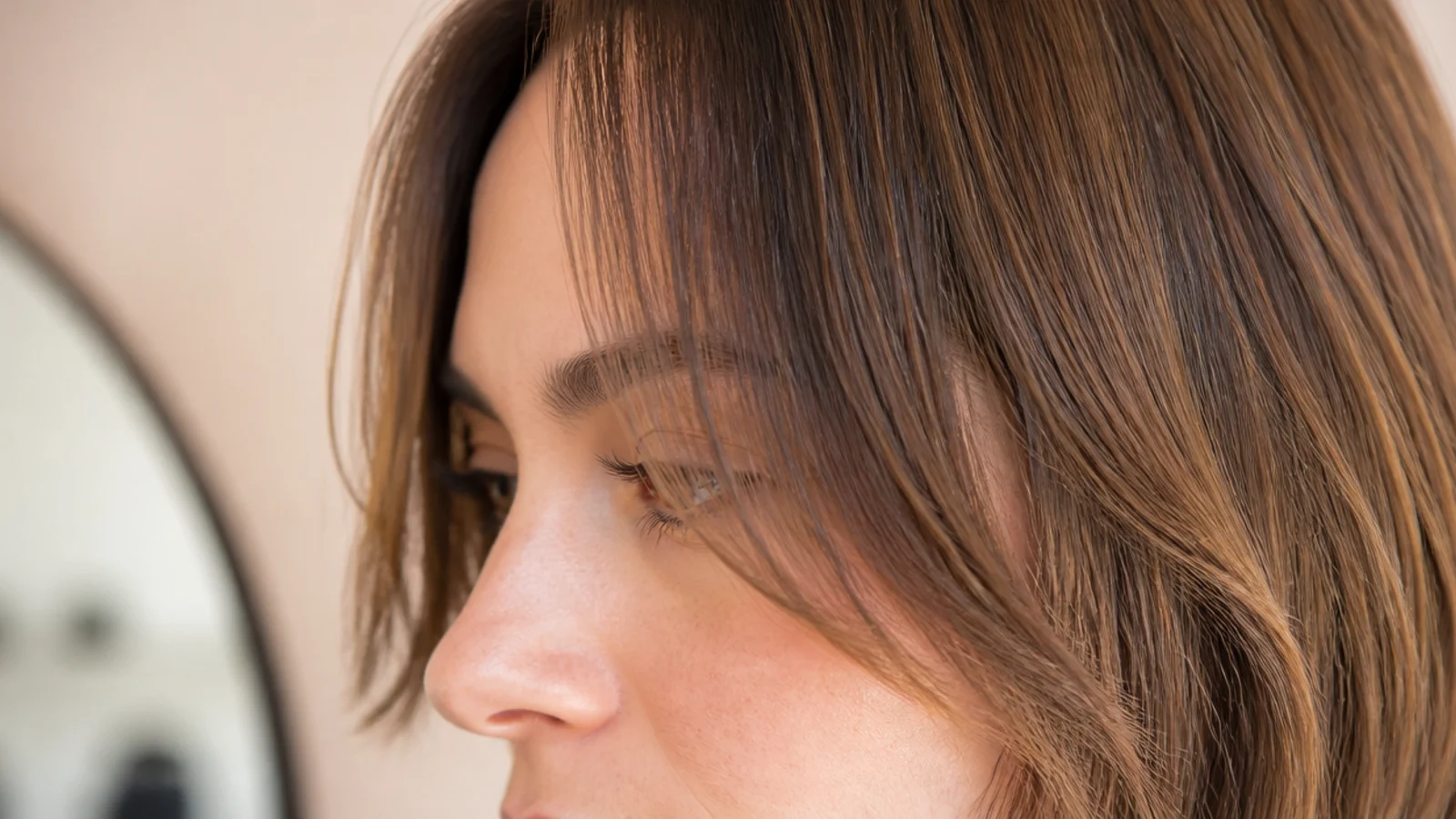
Ten to twenty weeks after the cut, at roughly half an inch of growth a month, a brow-length fringe lands at the cheekbone and stops being a fringe at all. Straight hair makes this the best-looking stage of the whole cycle: the sweep gets heavier, it tucks behind the ear, and it reads as expensive face-framing. Tuck it behind your ears while damp so it dries blended into the next layer down, and resist trimming it back, because each trim costs you about a month.
Who it suits: Anyone at week ten who is deciding whether to recommit or keep going.
Tip: Stage-by-stage styling is in grown out short curtain bangs.
What Straight Short Curtain Bangs Are vs a Full Fringe
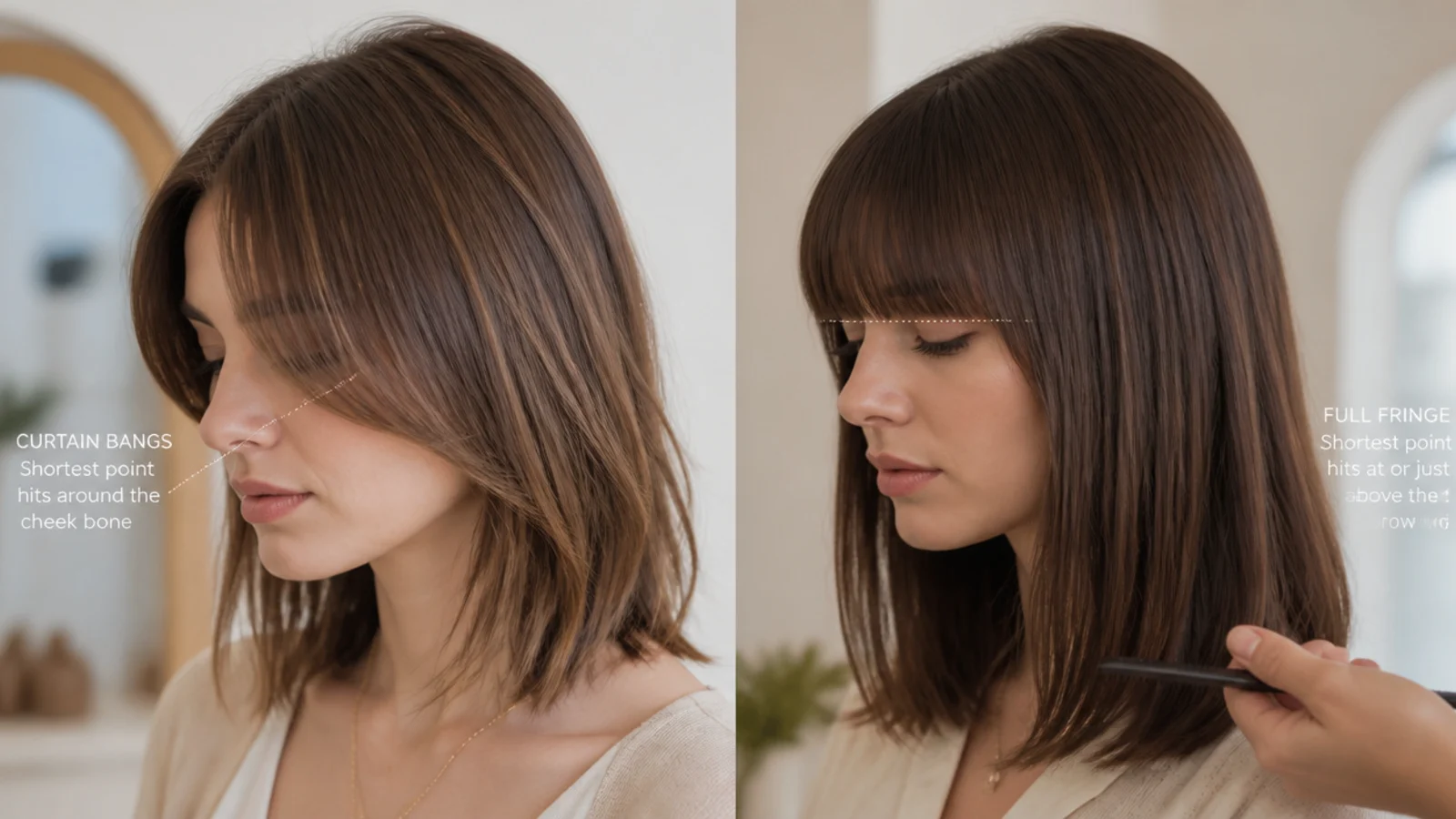
A full fringe is one solid panel cut straight across the forehead with no part in it, and every strand points the same direction. Curtain bangs do the opposite: they part in the middle and sweep away from the face on each side, shorter through the center and progressively longer toward the temples. That one structural difference is why curtain bangs grow out gracefully and a full fringe does not, because a curtain has somewhere to go and a blunt panel just gets long and heavy. There is a second confusion worth clearing up, and almost nobody online does it: short curtain bangs describes the length of the bangs, not the length of your hair. You can wear short curtain bangs with hair down to your waist. The look is defined at the forehead, not at the ends. If you are choosing between styles rather than lengths, the short curtain bangs hub lays the whole board out, and the short curtain bangs pillar covers every texture.
How Short Is Too Short for Straight Curtain Bangs
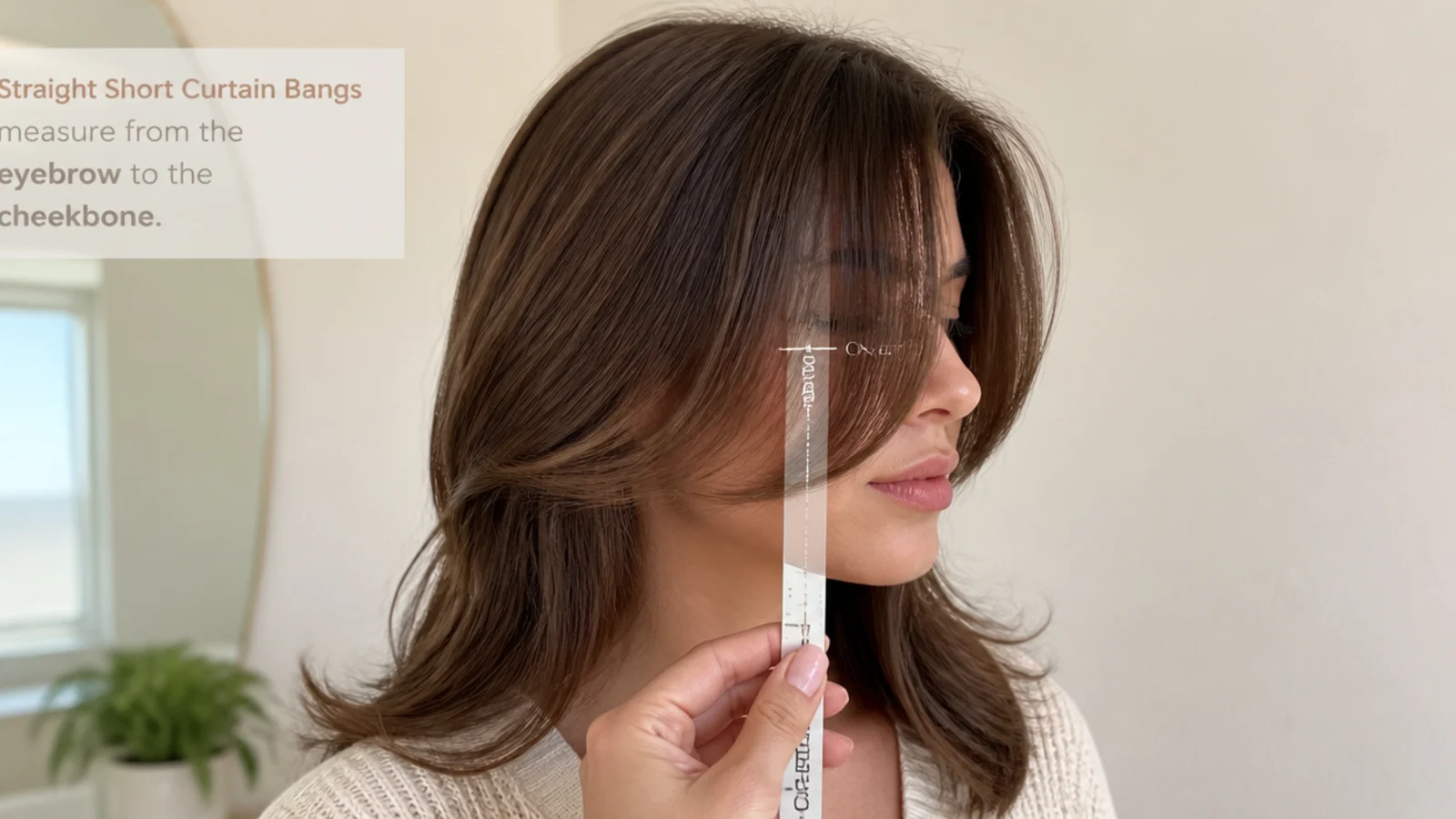
The working range is eyebrow to cheekbone at the shortest point, roughly 4 to 6 inches measured from the front hairline. Above the eyebrow you have crossed out of curtain territory and into baby bangs, which is a different look with a different maintenance bill. The honest ceiling on straight hair is the eyelash line: any fringe that reaches the lashes will tickle, and you will tuck it behind your ear forty times a day, which is the single most common regret people report after getting bangs. Straight hair has one advantage over every other texture here, which is that what you cut is what you get. There is no spring-back to allow for, so a stylist can cut it dry and see the finished length immediately. Wavy and curly hair need a shrinkage allowance instead, which is why wavy short curtain bangs and curly short curtain bangs get cut slightly long on purpose. Ask for your fringe cut dry, in its natural fall, with your usual part already in.
Which Face Shapes Straight Short Curtain Bangs Flatter
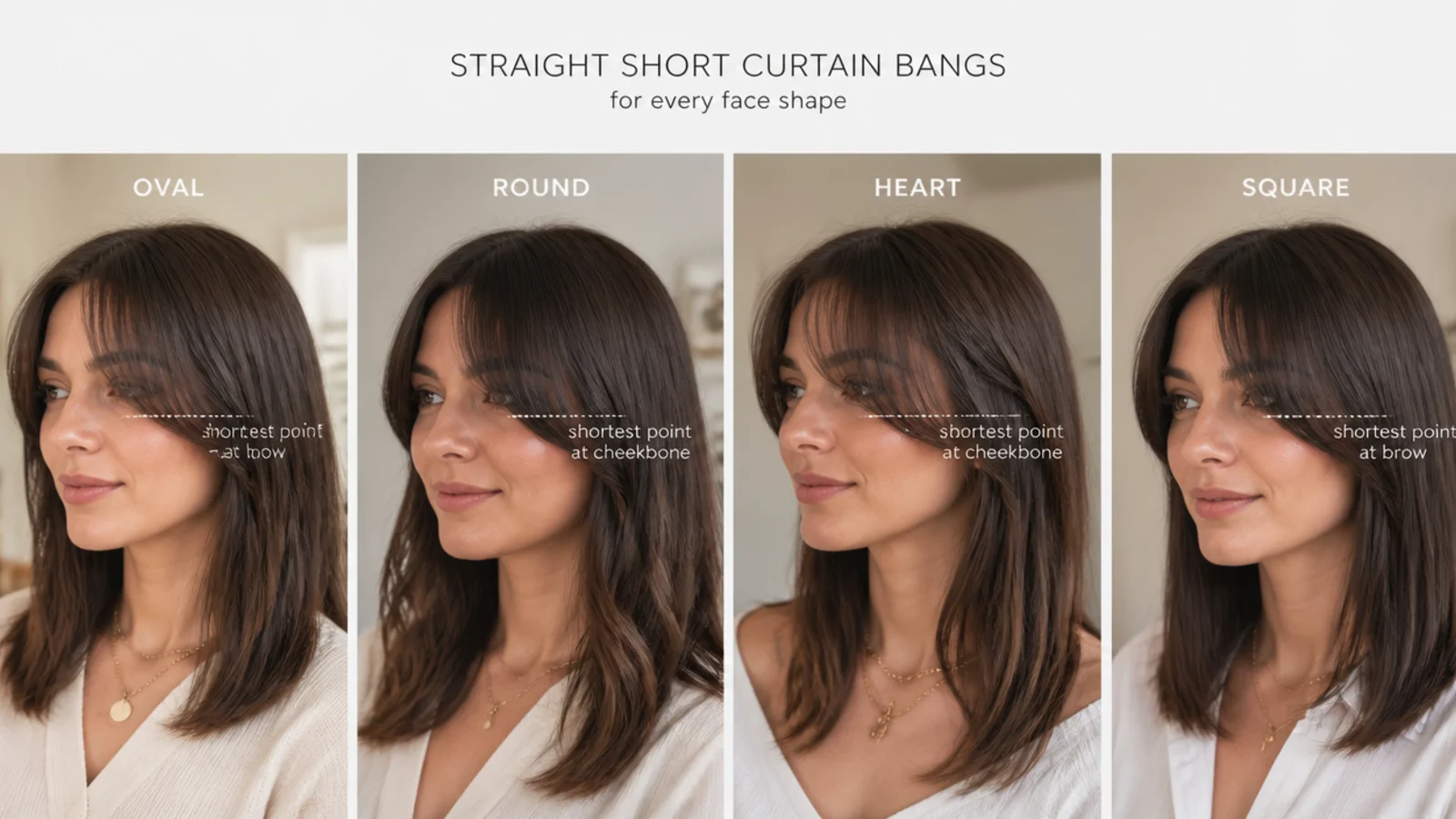
Oval faces take any length in the range, which is not a useful answer, so here is the ranking anyway: brow-length looks most striking and cheekbone-length most classic. Heart-shaped faces do best with the shortest point at or just below the brow and a strong angle outward, because that widens the lower half visually and balances a narrow chin. Long and rectangular faces gain the most from the shortest end of the range, since a fringe at the brow shortens the visible forehead and breaks up vertical length. Round faces are the case that needs care: keep the shortest point at or below the cheekbone so the sweep travels past the widest part of the face rather than cutting across it, and keep the density light. Square jaws want soft, tapered ends and a longer outer edge that reaches past the corner of the jaw. Full mapping is in short curtain bangs for a round face, and if you are unsure of your own type, the hairstyle for your hair type guide is the place to start.
How to Style Straight Short Curtain Bangs at Home
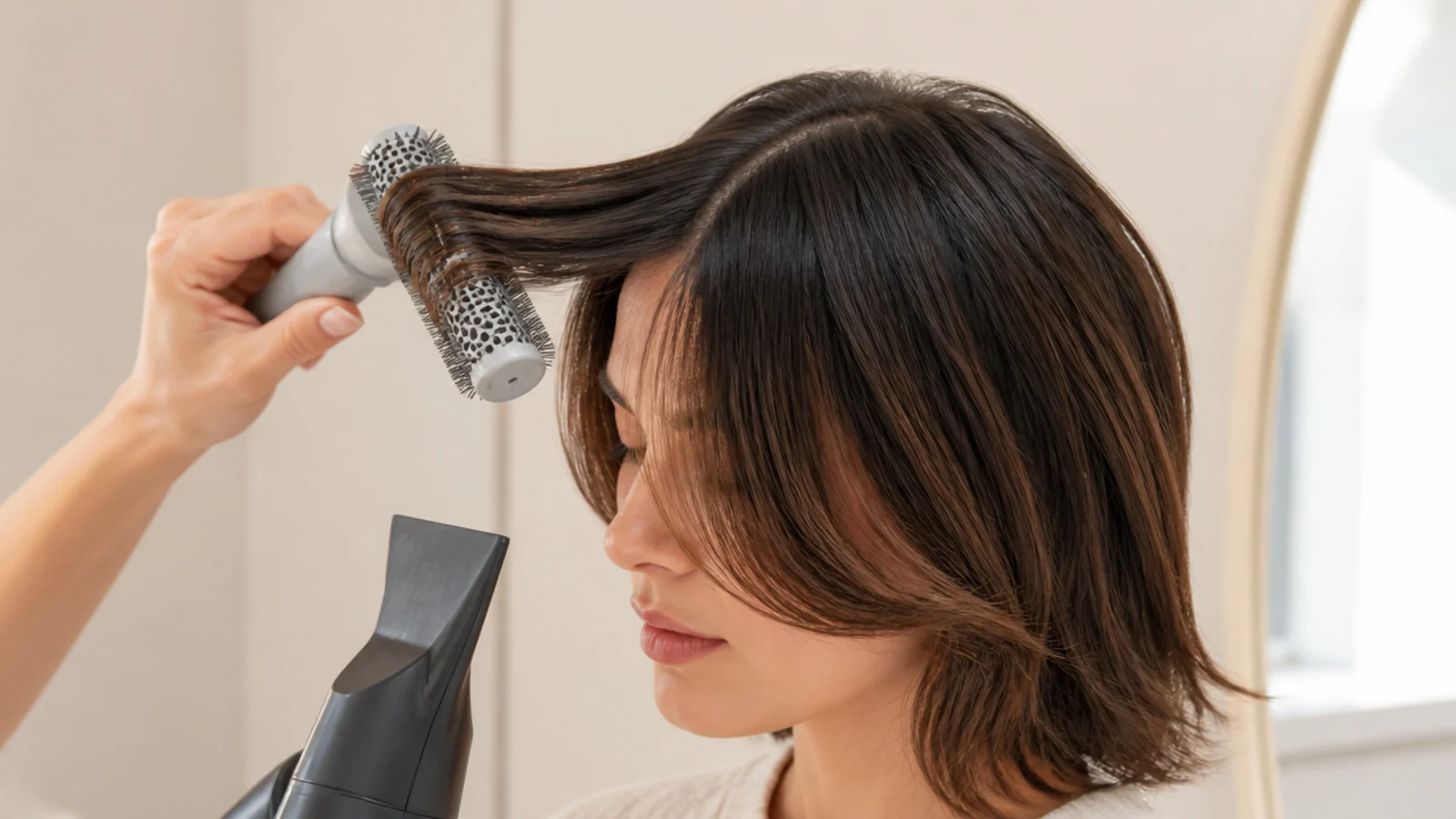
Do the fringe first, while the rest of your hair is still damp, because straight hair sets permanently where it first air dries and a fringe left to its own devices dries flat to the forehead. Mist it back to properly wet if it has already started drying. Take a 1.5 inch round brush, drop the part in, and dry each side with the nozzle pointing down the shaft and away from the center, rolling the brush back and out through the last two inches. Aim the air at the roots first for lift, then smooth. Hit it with the cool shot for ten seconds with the brush still rolled in, because on type 1 hair the cool shot is what actually sets the shape. Finish with a light texture spray at the mid-lengths, never at the roots and never a cream or oil, then break the panel apart with your fingers so it separates into pieces. Three to six minutes, start to finish. More quick routines live in 5 minute everyday hairstyles and the mid length curtain bangs guide.
Why Straight Short Curtain Bangs Go Flat and Greasy by Noon
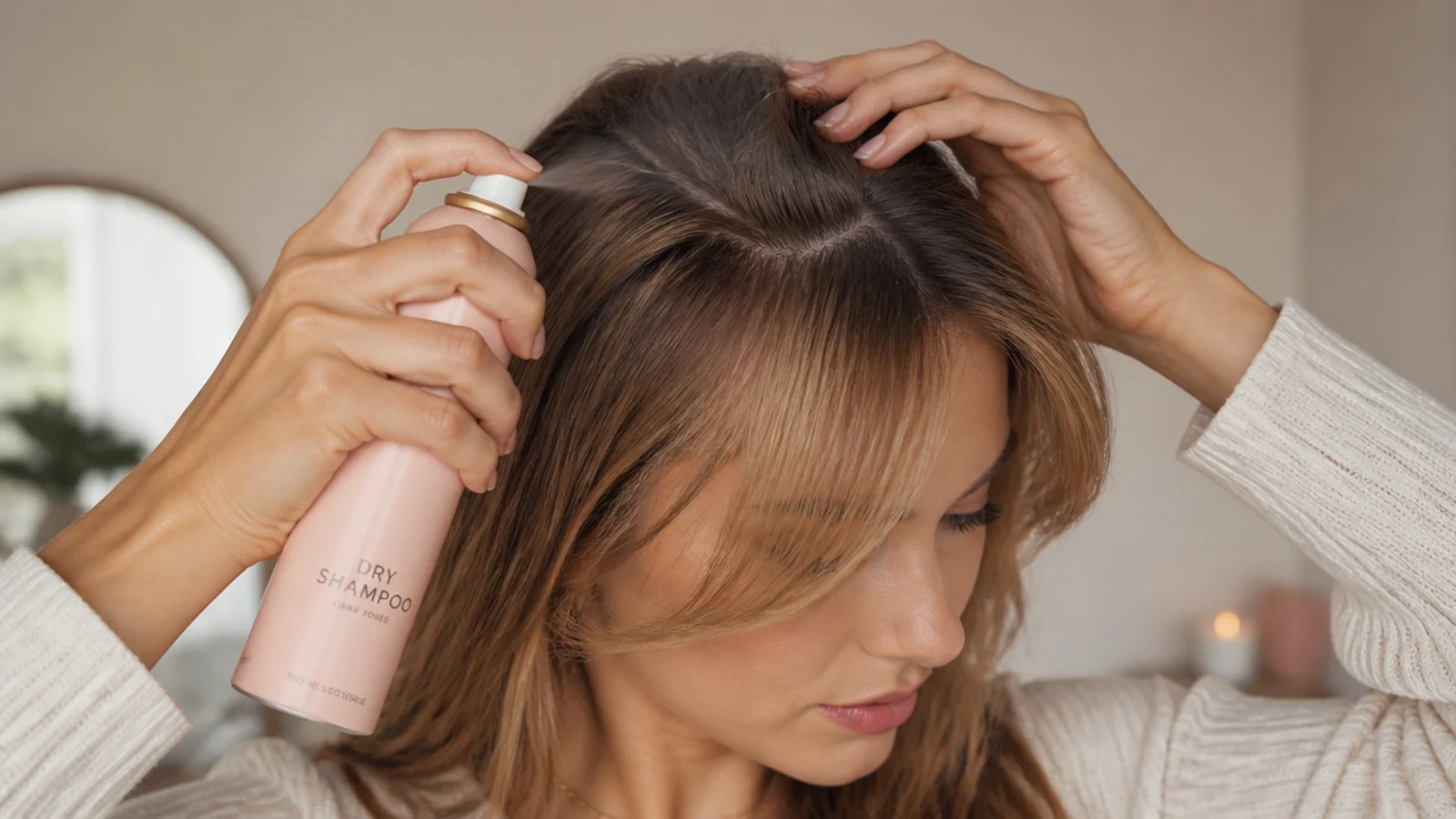
Nobody selling you this haircut mentions it, so here it is. A fringe sits directly on your forehead, which is the oiliest part of your face and the part you touch most, so straight bangs pick up sebum faster than any other section of hair and collapse under it. The fix is a routine, not a product miracle. Shampoo the fringe alone at the sink on non-wash days; it takes ninety seconds and rescues the whole head. Between washes, lift the fringe and spray dry shampoo at the roots only, wait a full minute, then brush it through so it never sits visible. Keep conditioner, oils and leave-in creams off the fringe entirely, since those are what make it string together into panels. Stop touching it, and wash your brush weekly. The other classic straight-hair failure, a fringe splitting into a gap down the middle, is a cowlick problem and is solved at the chair, not with product. More longevity tactics are in cute hairstyles that last all day and how to style short fine hair.
Trim Cadence, Cost and Growing Straight Short Curtain Bangs Out
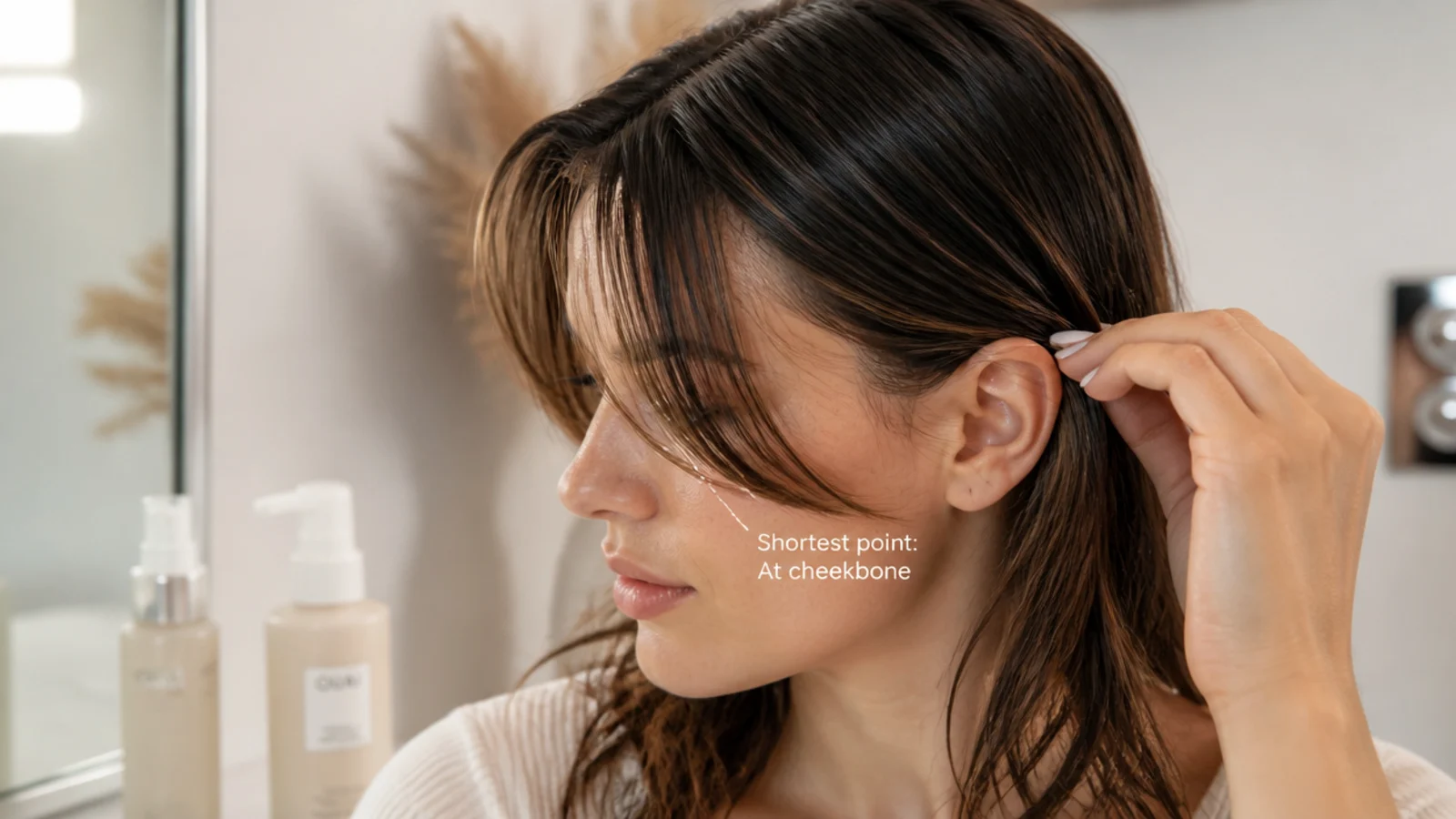
Hair grows about half an inch a month, so a fringe cut at the brow reaches the lash line in roughly six weeks and the cheekbone by week ten to twelve. That is why the cadence for short curtain bangs is every 3 to 5 weeks, against 6 to 8 weeks for a long curtain fringe that blends as it grows. Ask your salon directly whether fringe trims are free between paid cuts, because at a great many salons they are, and that turns the maintenance cost of this haircut from real money into a fifteen-minute errand. If you decide to grow it out instead, stop trimming entirely and tuck the fringe behind your ears while it is damp so it dries blended into the layer below rather than falling forward. No-crease clips and a side part carry you through the awkward middle weeks. Every trim you take during grow-out costs you about a month, so it is a decision to make once. The full timeline is in grown out short curtain bangs, and short curtain bangs with a bob covers the perimeter trims that run alongside it.
Frequently Asked Questions
Will I suit curtain bangs?
Curtain bangs suit more people than any other fringe, because the length is adjustable and the sweep is soft rather than a hard line. On straight hair the deciding factors are your hairline and your patience: a strong cowlick or widow's peak needs the cut adapted for it, and short curtain bangs need three to six minutes of blow-drying most mornings. If neither is a dealbreaker, you will suit them.
What is the difference between curtain bangs and wispy bangs?
Curtain bangs describe the shape: a middle part with the hair sweeping away from the face on both sides. Wispy describes the density: a light, see-through fringe with tapered ends. They are not alternatives, they are two different axes, so a fringe can be curtain-shaped and wispy at the same time. Ask for both by name if that is what you want.
How often should you trim curtain bangs?
Short curtain bangs need a trim every 3 to 5 weeks. Hair grows about half an inch a month, so a brow-length fringe reaches the eyelash line in around six weeks and starts poking your eyes. Long curtain bangs stretch to 6 to 8 weeks because they blend as they grow. Ask whether fringe trims are free between cuts; at many salons they are.
Do curtain bangs work on straight hair?
Yes, and straight hair has one real advantage: no shrinkage, so what the stylist cuts is exactly what you get. The trade-offs are that straight hair shows every cut line, splits at cowlicks, and goes flat by midday. All three are solvable with point-cutting instead of a blunt edge, a cowlick section left half an inch longer, and a round-brush blow-dry finished with a cool shot.
Why do my curtain bangs split down the middle?
Almost always a cowlick or a natural growth swirl at the front hairline pushing that section in its own direction. The permanent fix is at the chair, cutting the affected section slightly longer so its lift lands at the right finished length. At home, soak that section fully wet and blow-dry it against the direction of growth first, before anything else, then let it cool before you style the rest.
Are curtain bangs hard to maintain on straight hair?
They are the most demanding fringe on the least forgiving texture, but the numbers are manageable: three to six minutes of styling most mornings, a ninety-second fringe-only wash on non-wash days, and a trim every 3 to 5 weeks. Compared with a full blunt fringe it is less work, and compared with no bangs at all it is a real daily commitment worth being honest with yourself about.
Can you style curtain bangs without heat?
Partly. On straight hair, set the fringe while it is genuinely wet: comb the part in, sweep each side back and away from the face, and clip it in place with no-crease clips until it is bone dry. That gives you the shape without a dryer. What it will not give you is root lift, which is the thing straight hair needs most, so most people end up using at least thirty seconds of heat at the roots.
Why do my bangs get greasy so fast?
Your forehead produces more oil than your scalp, and your fringe sits on it all day while you push it around with your hands. Wash the fringe on its own at the sink between full washes, keep conditioner and any oil or cream off it entirely, and use dry shampoo at the roots only, waiting a full minute before brushing it through. Fine straight hair shows it fastest.
What face shape do curtain bangs suit?
All of them, with the length adjusted. Oval takes any length in the range. Heart and long faces suit the shortest end, at or just below the brow, because a fringe there balances a narrow chin or shortens a long forehead. Round faces should keep the shortest point at or below the cheekbone with light density, so the sweep passes the widest part of the face instead of crossing it.
Which short curtain bangs look are you saving?
The thread running through all 15 of these straight short curtain bangs is that straight hair rewards technique over inspiration. Bring a photo, but bring the words too: shortest point named against a landmark, point-cut half an inch deep, a narrow triangle section, and no thinning shears near the perimeter. Keep the fringe trim on a 3 to 5 week cadence and ask whether it is free between cuts, because at many salons it is. Blow-dry it damp with a round brush away from the center part, finish with texture spray at the mid-lengths, and keep dry shampoo at the roots for day two. Browse the rest of the short curtain bangs hub, or read short curtain bangs for a round face if geometry is the thing holding you back.