Quick Comparison
| Fast Fix on Dry Hair, No Wash | Full Fix on Wet Hair, Wash Day | |
|---|---|---|
| Time required | 60 seconds to 5 minutes | 15 minutes of active work plus drying |
| How it works | Seals and lays down the visible top layer | Rehydrates the whole shaft, then seals it |
| Products used | Oil, serum, gel stick or nothing at all | Leave-in, then cream, then gel, in that order |
| Water needed | A mist or damp palms on one section | Soaking wet hair, ideally still in the shower |
| How long it holds | 2 to 6 hours, less above a 65 degree dew point | The full 2 to 3 days until the next wash |
| Best frizz type | Halo, surface and ends-only frizz | In-the-curl frizz and whole-head humidity swelling |
| Risk if you overdo it | Greasy roots and a coated, flat top layer | Product buildup that needs clarifying |
| Works without a mirror | Yes, damp palms and a spoolie need no mirror | No, it needs a shower and drying time |
| Effect on tomorrow's frizz | None; the cause is untouched | Compounding, with visible change by wash day three |
1. Diagnose Which Frizz You Have in 20 Seconds
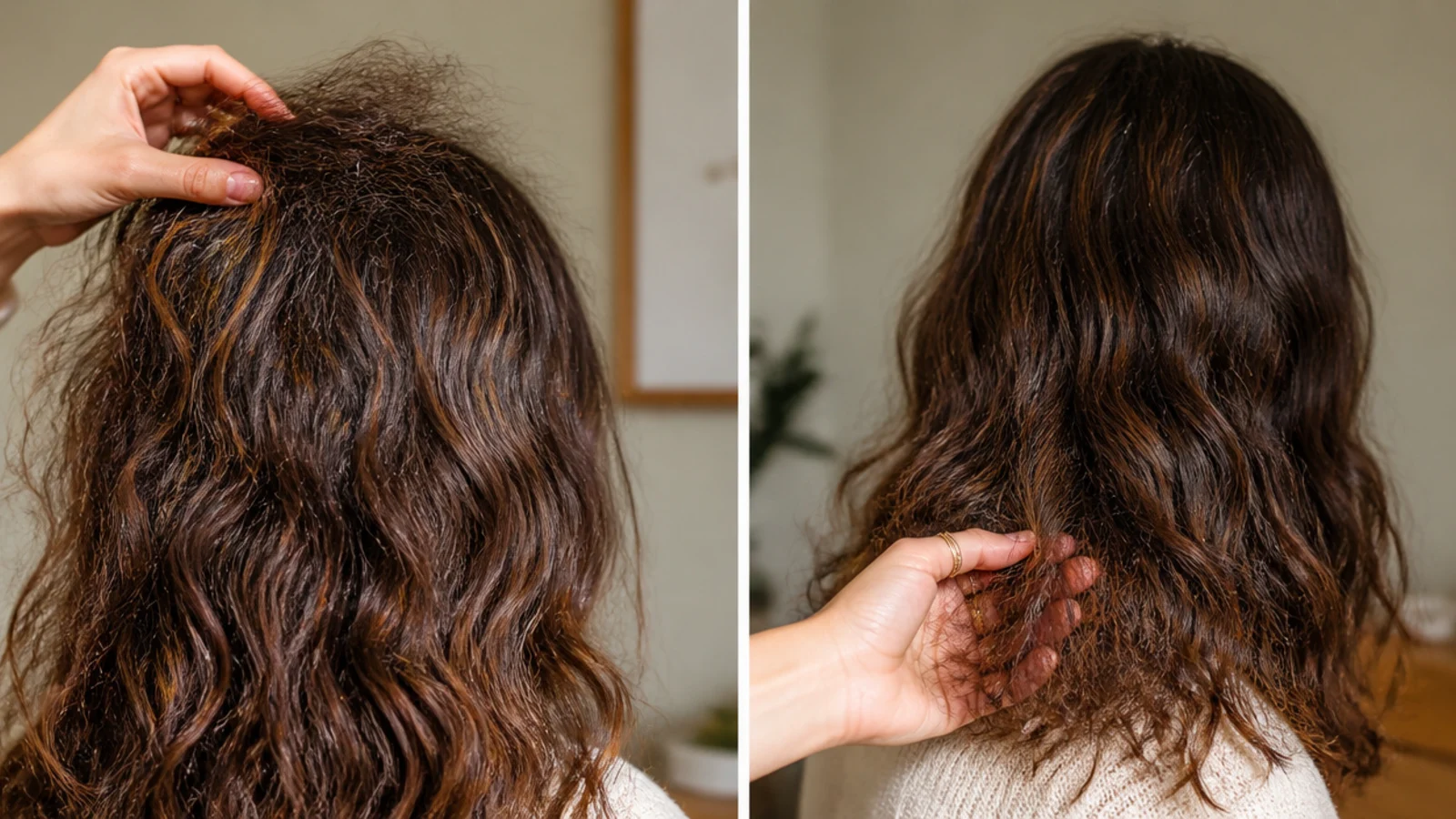
Stand in front of a mirror with a window behind you and find where the frizz actually is. A fine white halo standing up over an otherwise smooth top means surface or crown frizz, and it is a static and friction problem. Fuzz only in the last two or three inches means split or worn ends. Frizz inside the curl pattern, where the wave looks fluffy rather than defined, is a hydration and product distribution problem. Whole-head swelling that started when you walked outside is humidity. The four need four different fixes, and this is the step everyone skips before spending money.
Common mistake: Treating all frizz as dryness, then piling oil onto humidity swelling and getting greasy frizz.
Pro tip: Photograph the frizz on the day it is worst; you will diagnose far better from a photo than a mirror.
2. Decide How Many Minutes You Really Have
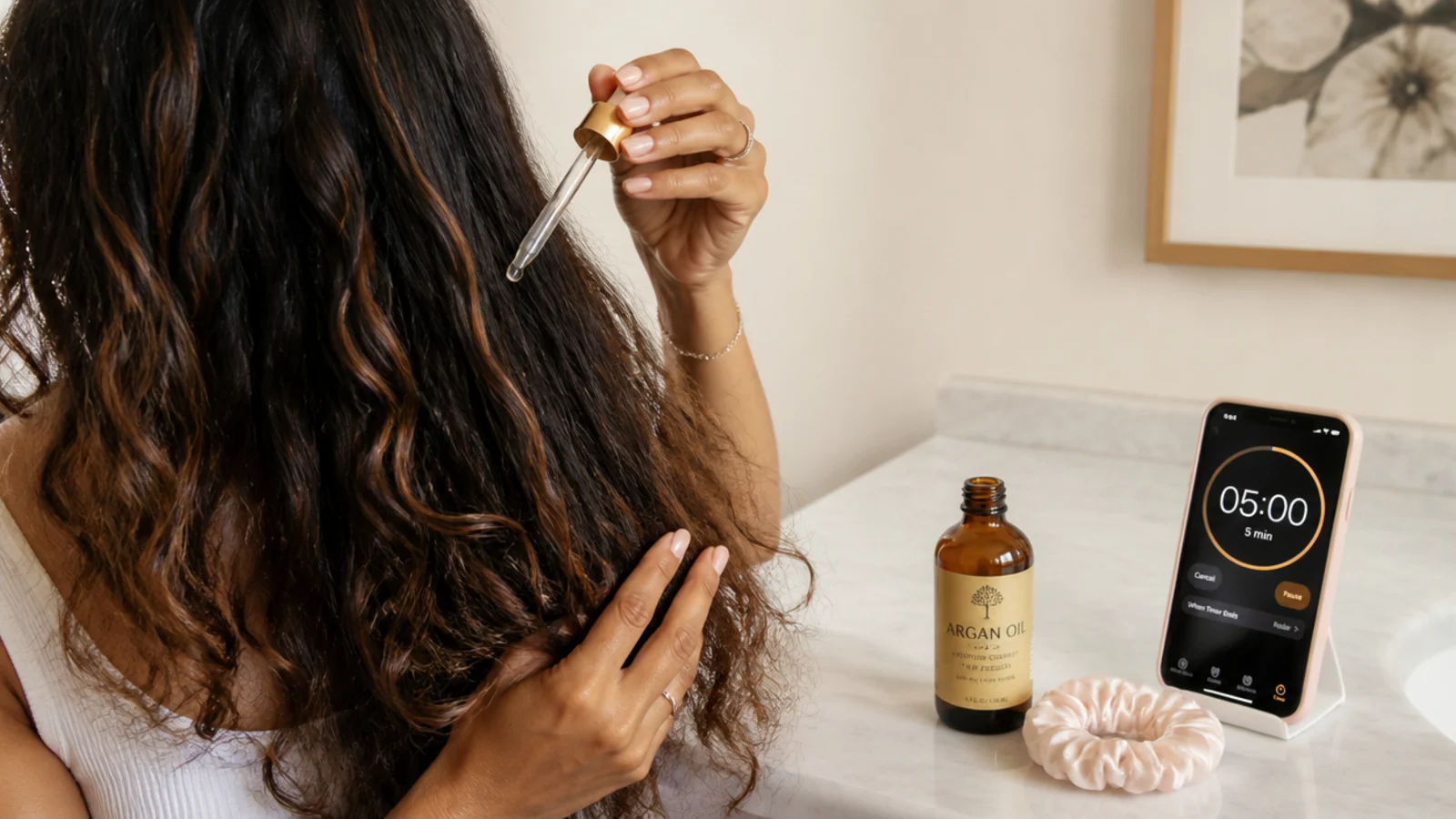
Pick your band before you pick your fix, because the wrong band is what wrecks hair. With 60 seconds you get one targeted pass over the top layer and nothing else. With five minutes you can add product to a rewet section and set it. With fifteen you can rewash a section, layer properly and dry it down. Attempting a 15-minute fix in four minutes leaves you with half-dry, half-product hair that frizzes worse than when you started. If you have three minutes and a meeting, put it up rather than fight it.
Common mistake: Starting a full restyle you cannot finish, then leaving the house with damp roots that puff as they dry.
Pro tip: Set an actual timer. Frizz repair expands to fill the time you give it and you will overwork the hair.
3. Rewet the Frizzy Section With Water, Not Product
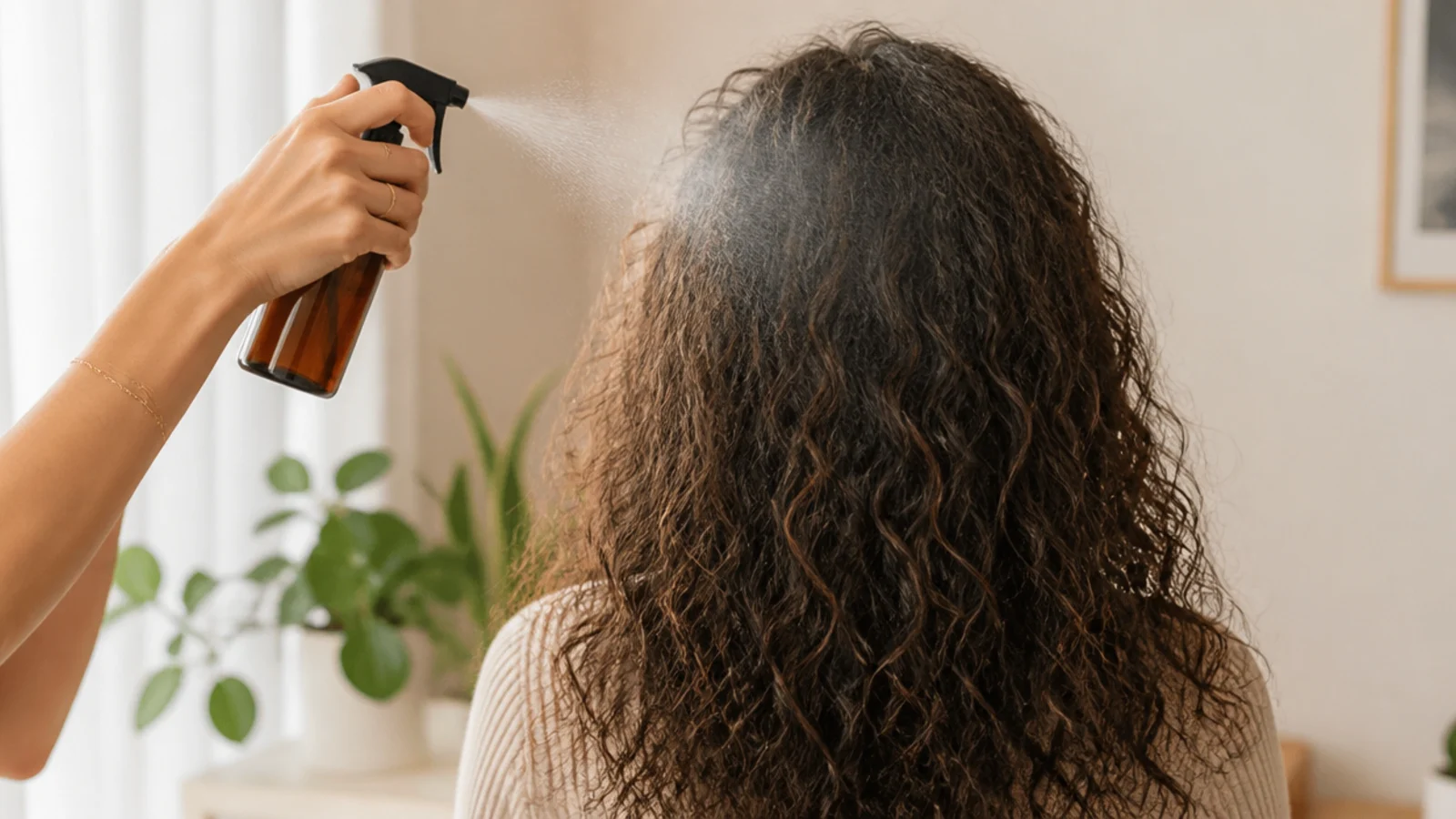
Frizzy hair is dehydrated hair, so adding oil or cream to a dry frizzy patch coats the problem instead of solving it. Mist the affected section with plain water from a fine-mist bottle until it looks visibly wet, not dewy, or wet your palms under a tap and press them over the area. Water is the carrier that lets the next layer spread evenly along the shaft. This is the same principle behind applying stylers to soaking wet hair on wash day, and it works identically on a single crown section at 8:40am.
Common mistake: Misting from six inches away and calling it wet; a light dampness makes frizz swell and stops there.
Pro tip: Add half a teaspoon of leave-in conditioner to your water bottle so every spritz hydrates as well as wets.
4. Apply the Smallest Amount of Product, Mid-Lengths First
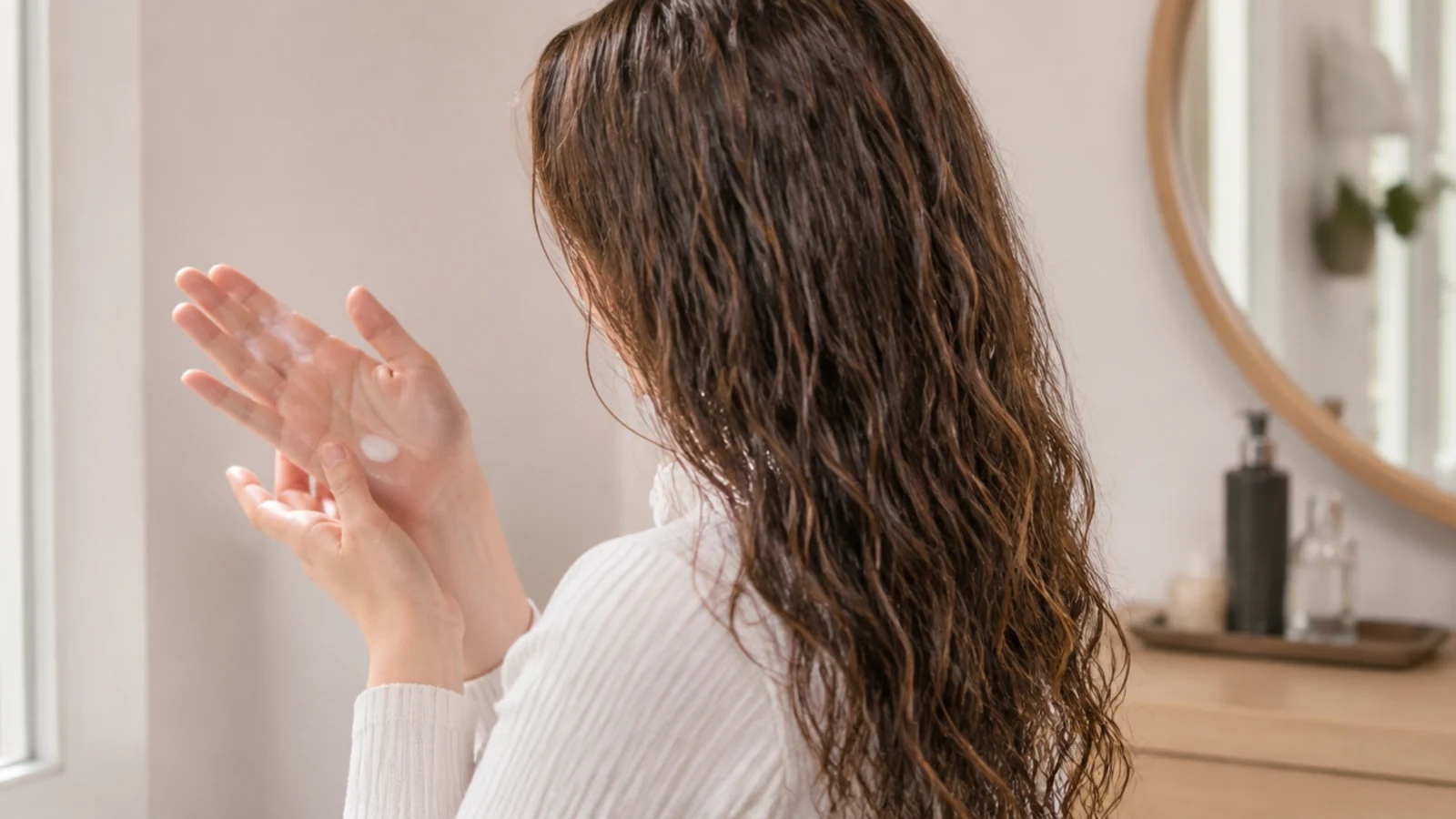
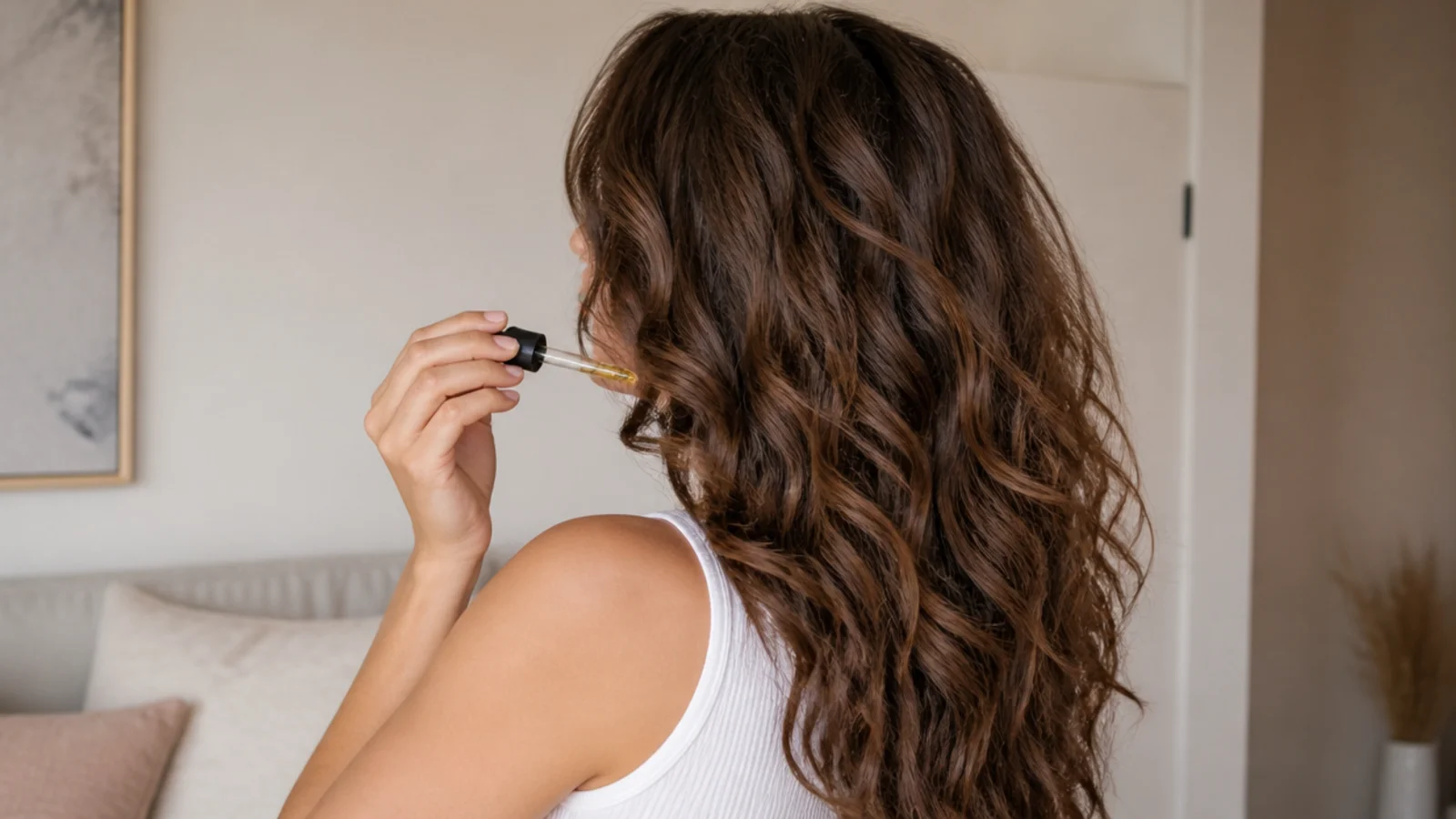
Start with less than you think: two drops of argan oil for fine hair, a pea of cream for medium, a dime for thick or coily. Rub it between your palms until it warms and turns clear, then land your hands on the mid-lengths and ends first, never at the roots. Roots have sebum already, and product there is what makes crown frizz look greasy and still fuzzy an hour later. Whatever is left on your palms is exactly the right amount for the top surface. You can always add a second dose; you cannot take one back without rewashing.
Common mistake: Dispensing into the hair rather than the palms, which leaves one heavy stripe and three untouched inches.
Pro tip: Emulsify for a full ten seconds. Cold product sits on the surface; warm product spreads over five times the area.
5. Seal the Top Layer Only, Working Downward
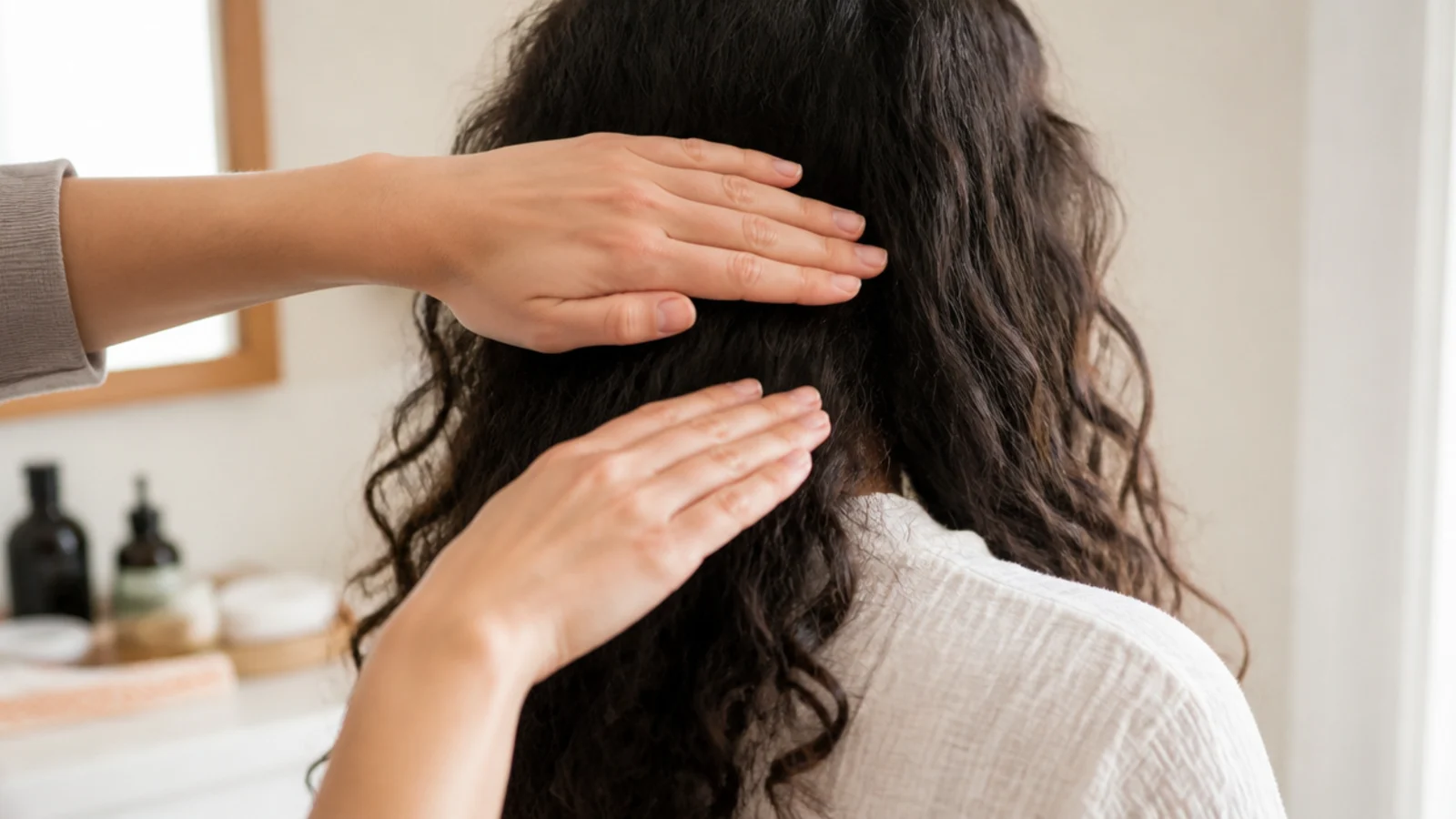
The cuticle points down the shaft like roof tiles, so every stroke has to travel from root to tip. Lay your palms flat, skim once from the crown down the length, and lift off at the ends rather than dragging back up. Two passes maximum. On the halo, press and hold for ten seconds instead of stroking, because heat from your hand sets the hairs better than motion does. If you are wavy or curly, use the praying hands method down the outside of each section so you smooth the surface without disturbing the pattern underneath.
Common mistake: Rubbing back and forth, which lifts the cuticle scales you are trying to close and doubles the frizz.
Pro tip: Skim with the backs of your fingers on very fine hair; palms carry more friction than you need.
6. Set the Shape and Stop Touching It
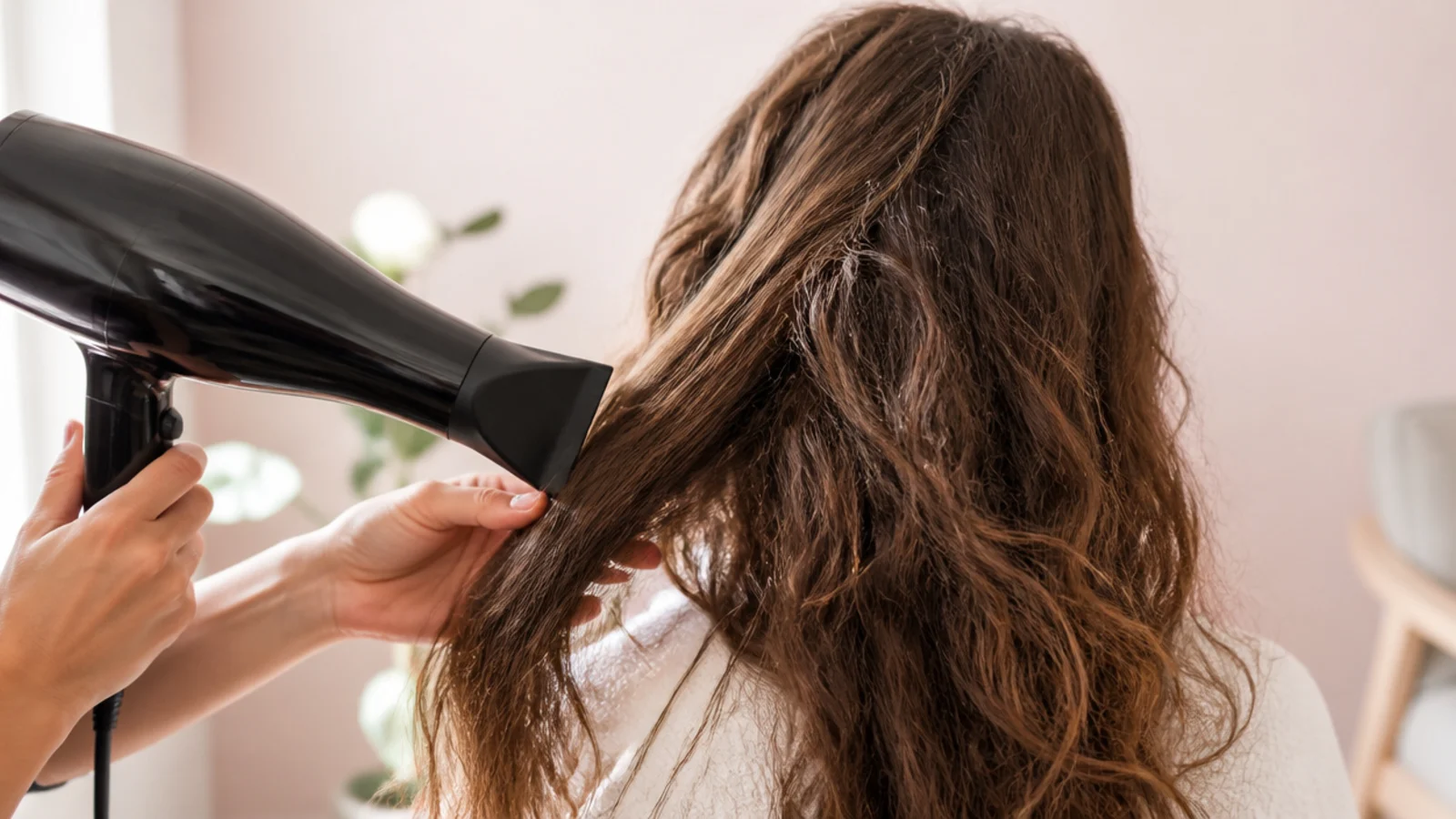
Whatever you just did needs 30 to 60 seconds to hold. Hit the section with the cool shot on a dryer, nozzle attached and airflow pointed down the shaft, or simply let it air-set while you do something else. Cool air contracts the cuticle and locks the shape you set. Then leave it alone. Every touch, tuck and finger-comb from here reintroduces the friction that caused the frizz, and this is why hair looks perfect for six minutes and fuzzy by the time you park. If you must secure it, use a silk scrunchie rather than an elastic.
Common mistake: Running fingers through it to check whether it worked, which undoes the entire pass you just made.
Pro tip: Sit on your hands for one minute. It sounds silly and it is the highest-return instruction in this guide.
7. Carry a Three-Item Midday Kit
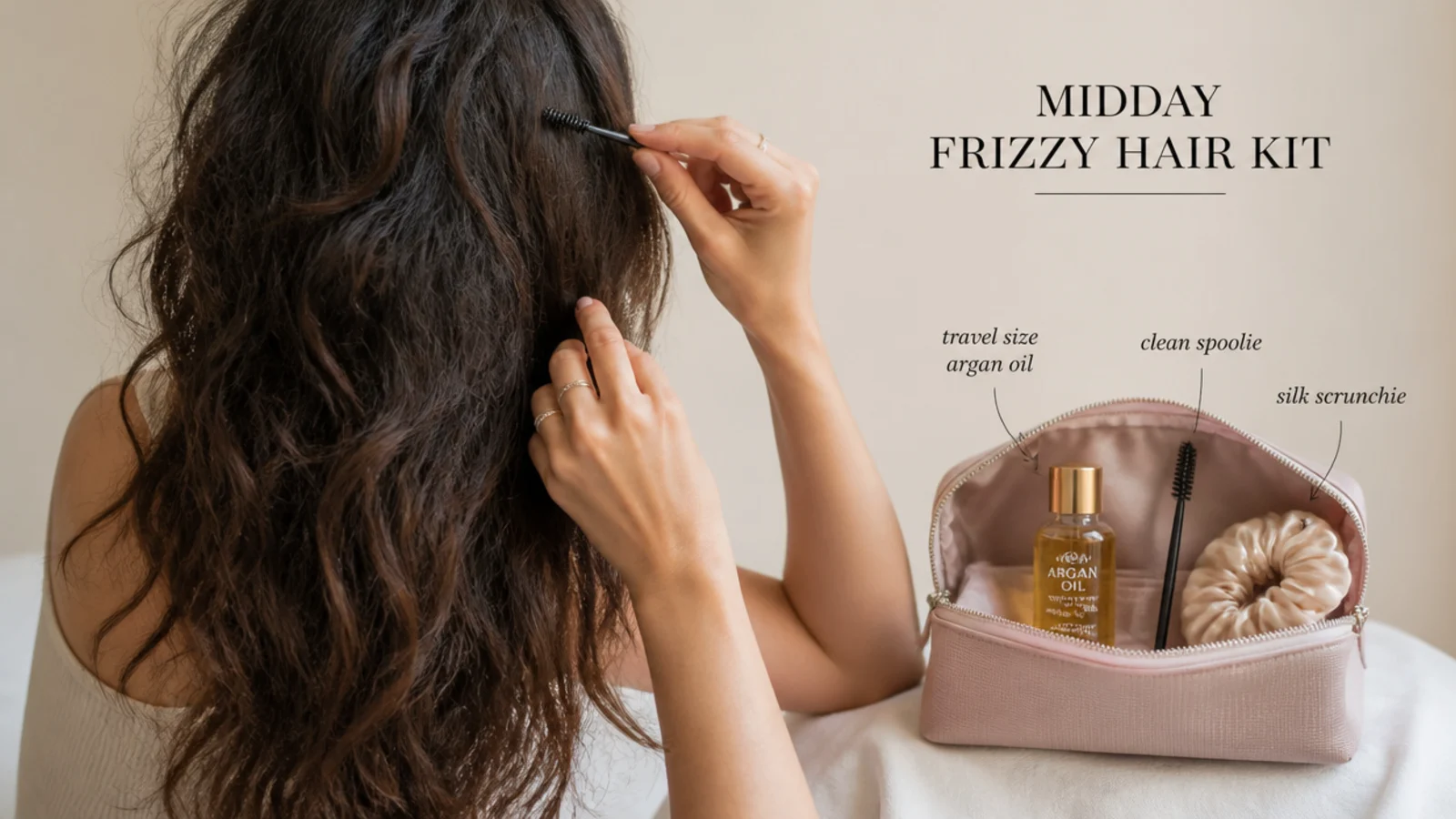
Frizz is a weather event, not a one-time failure, so the fix has to travel. Three items cover almost everything: a 10ml travel oil or serum for the halo, a clean spoolie or old mascara wand for the hairline, and a silk scrunchie for when the weather wins and you put it up. Total cost is under fifteen dollars and it fits in a pocket. Add a folded cotton handkerchief if you commute in the rain, because blotting with cotton is dramatically kinder to a wet cuticle than a paper towel in an office bathroom.
Common mistake: Relying on office hand soap and paper towels, both of which strip and roughen the cuticle further.
Pro tip: Decant serum into a contact lens case if you have no travel bottle; it holds two applications and never leaks.
8. Fix It Upstream on the Next Wash Day
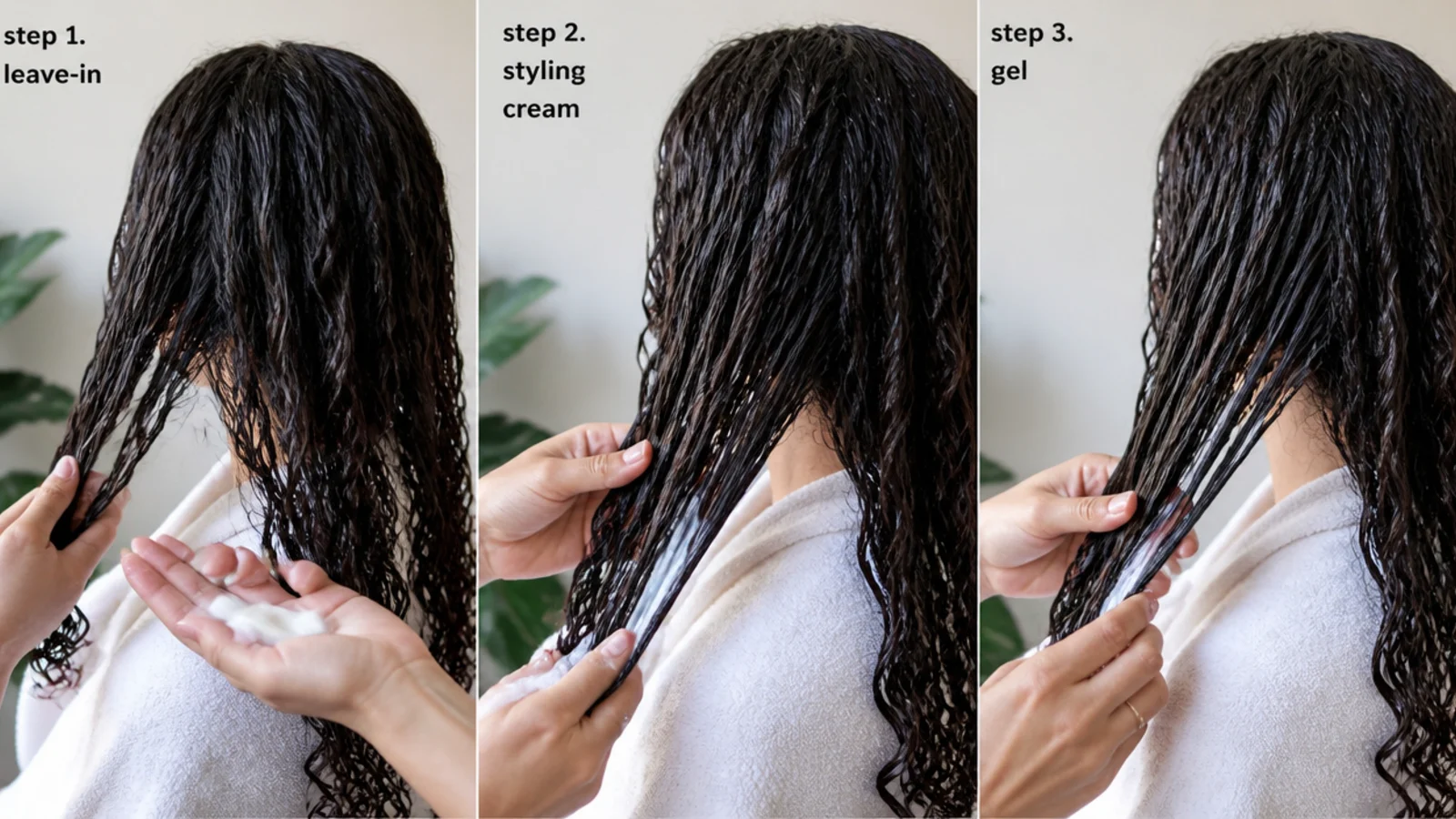
Fast fixes buy you a day. To stop needing them, change three things at the next wash. Apply leave-in, then cream, then gel, in that order, to soaking wet hair, because water distributes each layer and the order matters: leave-in hydrates, cream defines, gel seals. Squeeze water out with a cotton t-shirt or microfiber, never a terry towel, whose loops catch and lift the cuticle. Sleep on silk or satin, or in a loose braid. Expect a visible difference by the third wash day, not the first, and read the full routine on the frizzy hair hub.
Common mistake: Changing all three at once alongside a new shampoo, so you never learn which one was doing the work.
Pro tip: Do the layering with the shower off but still standing in it; hair stays soaking wet for the whole application.
Why Hair Frizzes: The Moisture Mechanism in One Minute
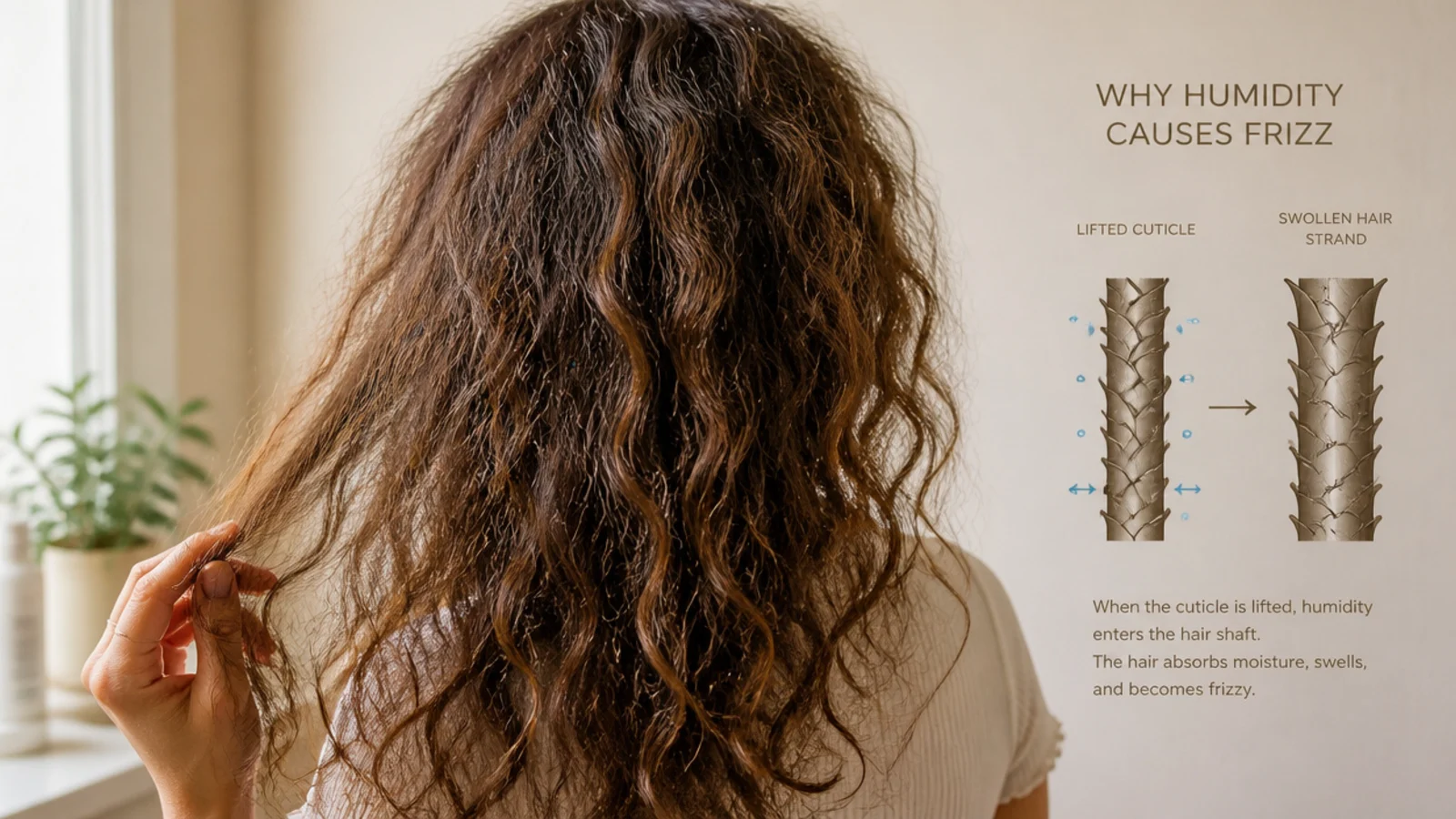
Every strand is wrapped in a cuticle, overlapping scales that lie flat like roof tiles when hair is hydrated and healthy. When hair is dry, damaged or simply born curly, those scales lift. A lifted cuticle does exactly what a dry sponge does near a puddle: it pulls water out of the surrounding air. The inner cortex swells, the strand bends and pushes away from its neighbors, and that is frizz. This single mechanism explains almost every rule in this guide. It is why sealing works, why hydrating works, and why fighting the hair with force, brushes and heat only lifts more scales and makes tomorrow worse. It also explains the contradiction that runs through every article on the subject, where one page tells you to add oil and the next says avoid heavy products. Oil seals moisture in but adds none, so it only helps on hair that is already hydrated. Put oil on dry frizz and you have sealed the dryness in. Get the order right and both pieces of advice become true at once. Start with water, follow with something that holds it there, and the swelling stops. The frizzy hair hub covers the mechanism in full if you want the longer version.
Which Frizz Do You Have? Four Types, Four Different Fixes
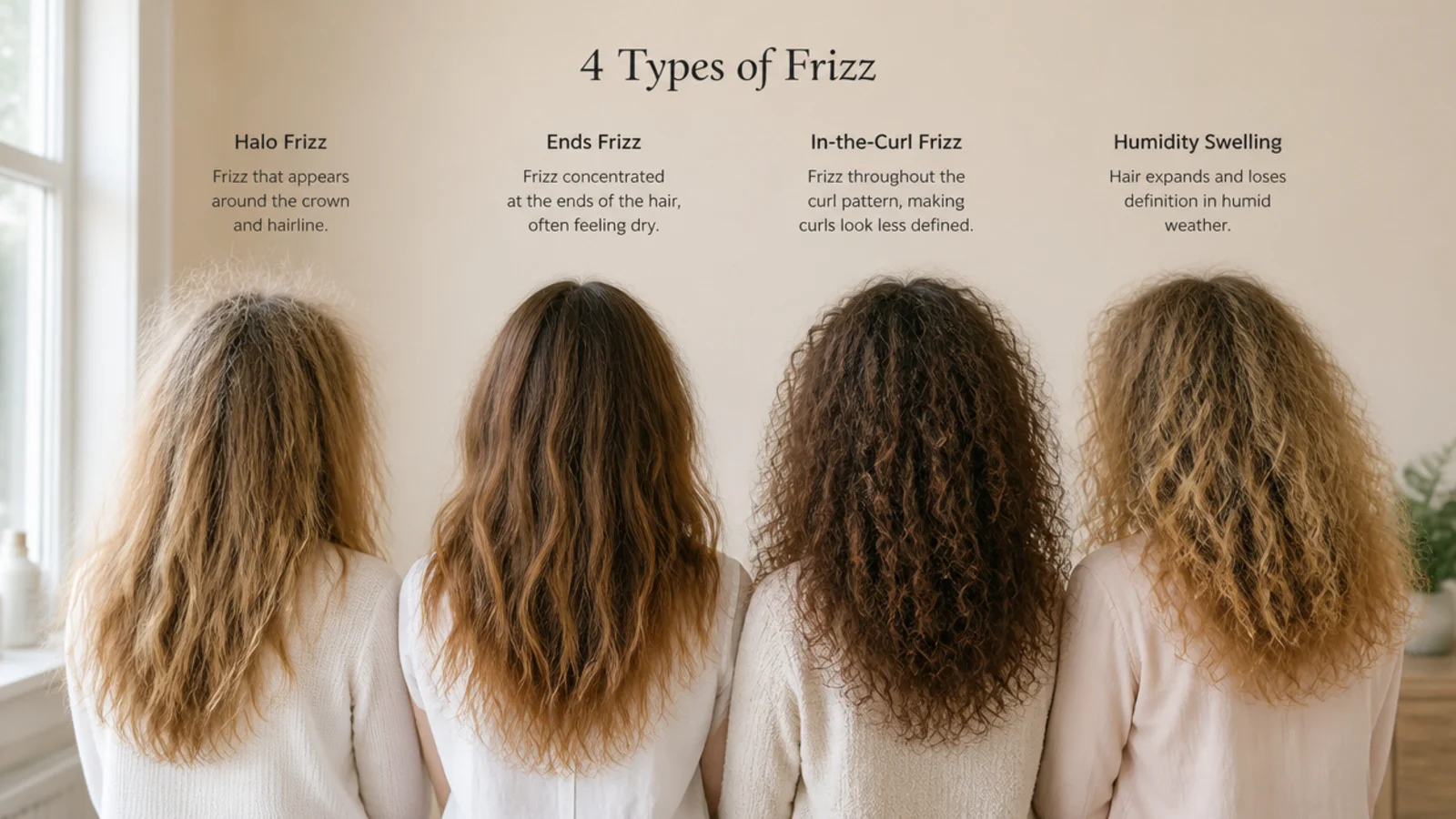
Most frizz advice fails because it treats one word as one condition. Halo or crown frizz is a fine white cloud of short hairs standing over an otherwise smooth surface, and it is usually breakage and regrowth plus static, so it responds to a two-drop oil skim and a silk pillowcase and barely responds to deep conditioning at all. Ends-only frizz is fuzz in the last two or three inches with smooth hair above it, which is worn or split cuticle, and no product fixes it permanently because it needs cutting. In-the-curl frizz means the wave or curl looks fluffy and undefined rather than clumped, which is nearly always dehydration plus product applied to hair that was damp instead of soaking. Humidity swelling is different again: hair that looked fine indoors and expanded within ten minutes outside. That one needs a barrier, typically a silicone serum or a gel cast, not more moisture, because the moisture is the problem. Diagnose before you spend money. Most people who think their products stopped working have simply changed frizz type with the season, and are treating a summer swelling problem with a winter dryness fix.
Frizz by Hair Type: Straight, Wavy, Curly and Coily
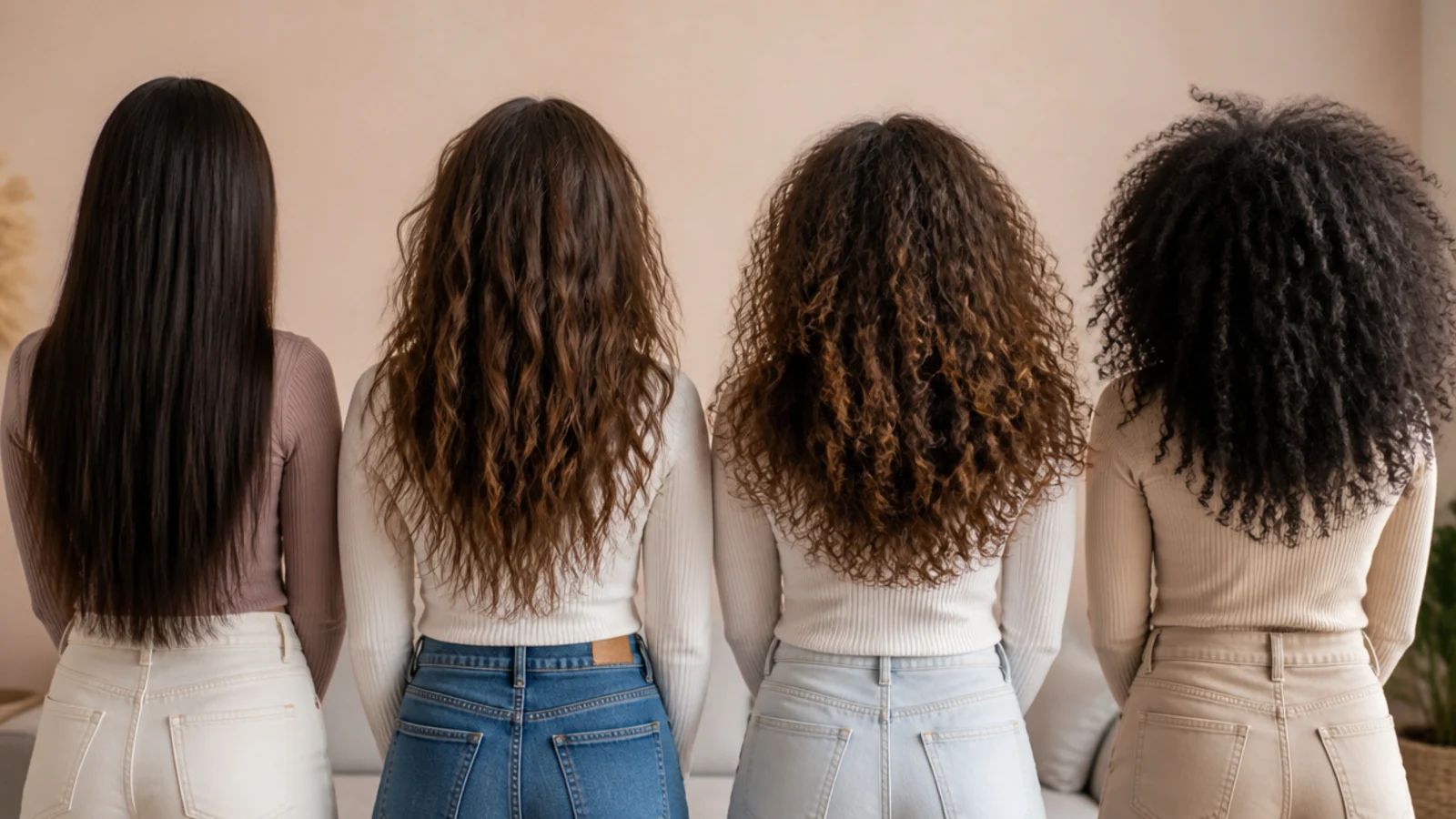
Straight hair frizzes as a surface halo rather than through the length, driven by static, hard water minerals and dry brushing with plastic bristles. It needs the least product of any type: a few drops of serum on damp lengths, a cold final rinse, and no brushing bone-dry. Wavy hair, which is the most frizz-prone type in proportion to how little advice targets it, loses definition first and frizzes second, because waves are too loose to clump on their own without help. Soaking-wet application, a light gel cast and no touching while it dries are the entire game here, covered in more detail in frizzy wavy hair. Curly hair frizzes inside the curl, where sebum cannot travel down a bent shaft, so it needs richer creams and genuine deep conditioning weekly. Coily hair is structurally the driest and the most fragile at the bends, so it wants heavy sealing butters, minimal manipulation, and protective styling rather than daily restyling. If you are unsure which of the four you are, start with choosing a hairstyle for your hair type. The mistake that crosses all four types is using the product weight from a heavier type: cream meant for coils will flatten waves into greasy strings, and gel meant for waves will do nothing at all on coils.
Humidity and Dew Point: What to Do at 40, 55 and 65 Degrees

Everyone blames humidity and almost nobody gives you a number to act on. Use dew point, not relative humidity, because dew point tells you how much water is actually in the air. Below about 40 degrees the air is dry and it is pulling moisture out of your hair, so this is the day for humectants like glycerin and honey, plus a leave-in and a cream. Between roughly 40 and 60 degrees is the comfortable middle where most standard routines work as written. Above about 60, and certainly above 65, humectants reverse on you: glycerin drags atmospheric water into the shaft and your hair swells from the inside. That is the day to skip glycerin entirely, use a silicone-based smoothing serum or an anti-humectant barrier, and build a firmer gel cast than you would normally want. Check the dew point in any weather app before you choose your styler, the same way you check rain before choosing shoes. Two products and one glance at a number handles almost every bad hair day, and it is the reason the same routine can look perfect in October and fail completely in July.
Products and What Each One Actually Does
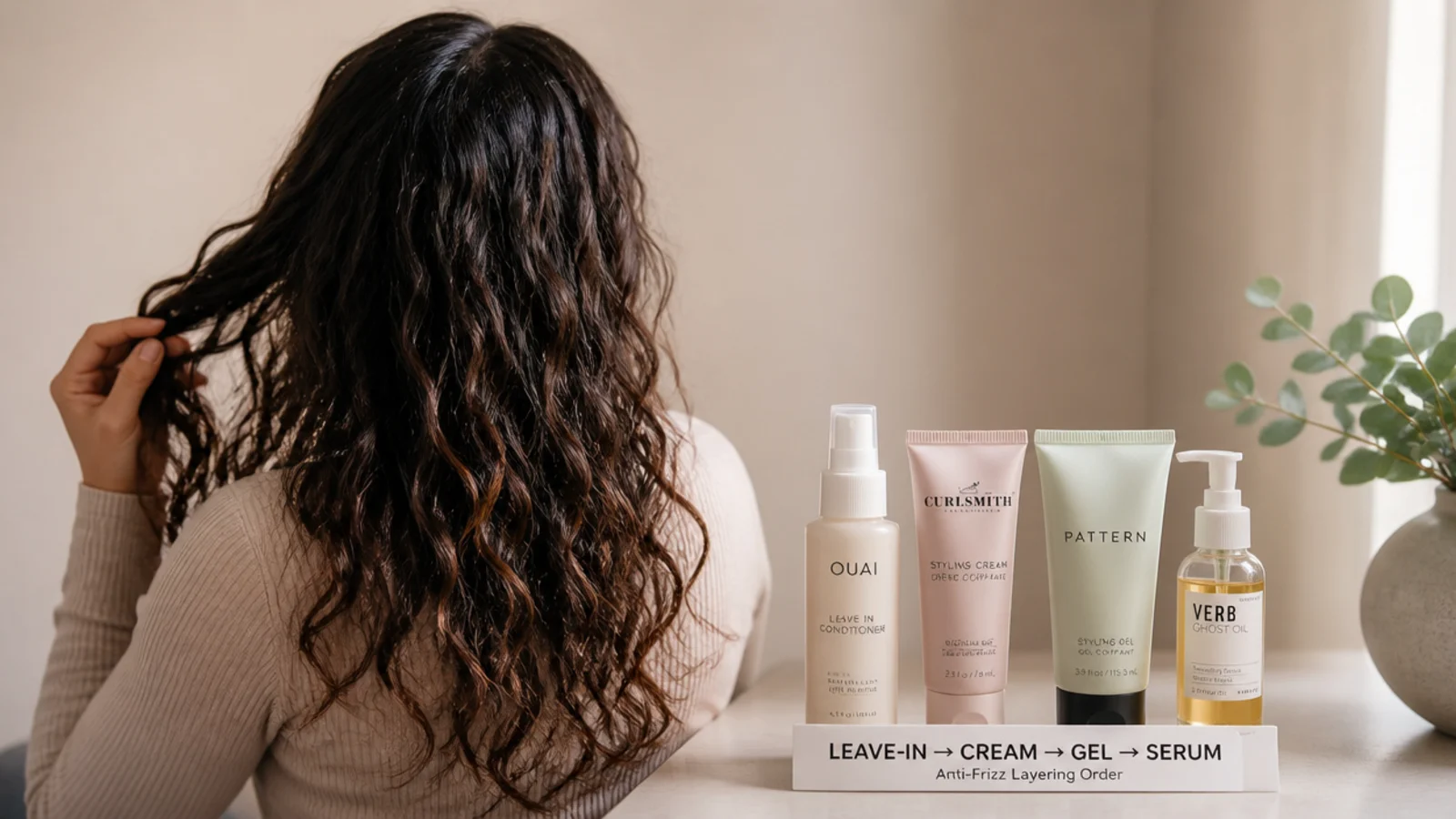
Four categories cover nearly everything, and the order they go on matters more than the brands. Leave-in conditioner hydrates and detangles, so it goes first, on soaking wet hair, from mid-length to ends. Styling cream defines and adds slip and softness without hold, so it goes second and it is the layer to cut if your hair goes limp. Gel seals: it forms the cast that locks the shape and blocks humidity, and it always goes last, scrunched in rather than raked through. Smoothing serum is the odd one out because it is a barrier rather than a hydrator, so it belongs on straight and wavy hair as the final surface layer, and on high dew point days for anyone. Oil is a sealant, not a moisturizer, and belongs on damp hair or on already-conditioned dry ends in tiny amounts. Budget matters less than people fear: a drugstore styling cream around nine dollars and a serum around eleven will outperform a forty-dollar product used in the wrong order. Buy one category at a time and give each three wash days before you judge it, which is the approach used throughout the frizzy hair tips guide.
Cuts, Sleep and Daily Habits That Decide Tomorrow's Frizz
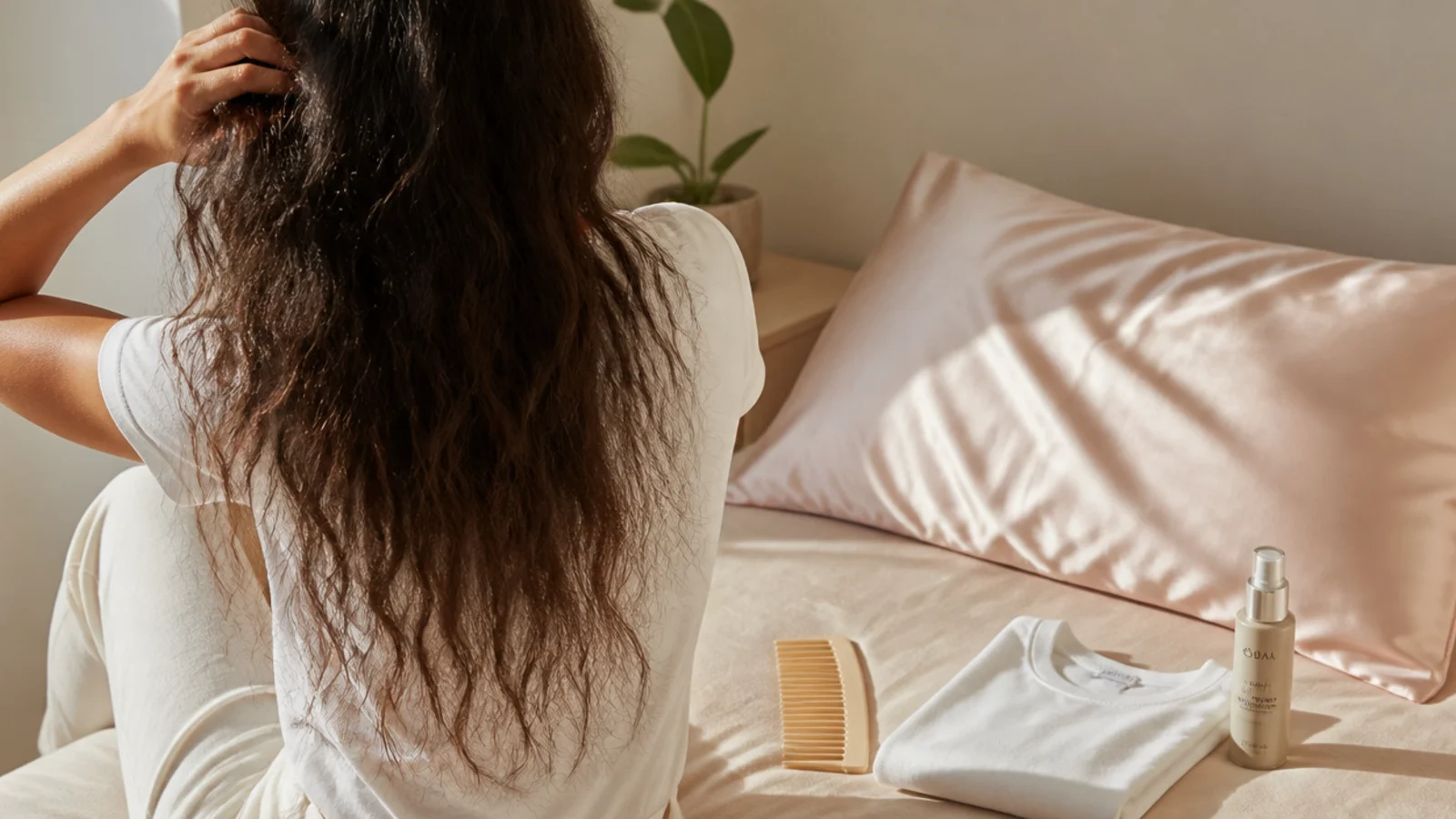
Three habits produce most of the frizz that fast fixes have to clean up. First, the towel: terry loops catch strands and lift the cuticle, so squeeze with a cotton t-shirt or microfiber instead of rubbing, and never twist hair up in a turban of terry. Second, sleep: seven hours of friction against cotton is the longest single stretch of damage your hair takes each day, and silk, satin or a loose braid removes it. Third, brushing: detangle wet, coated with conditioner, with a wide tooth comb from the ends upward, and stop dry-brushing textured hair unless you want the volume. Cut shape sets the ceiling on all of it. Blunt, heavy ends on dense hair build a triangle silhouette that reads as frizz, while internal layers remove weight from underneath and leave the perimeter intact. Ask for internal debulking and refuse thinning shears, which create short pieces that grow out as a fresh halo. Trims every ten to twelve weeks stop split ends fraying into fuzz. On curls, a curly mid-length haircut cut dry is the safest way to lose bulk. Pair the cut with a style that suits it and half the problem disappears on its own, which is what the looks in frizzy hair hairstyles are built around.
Frequently Asked Questions
How do I get rid of frizzy hair in 5 minutes?
Mist the frizzy section with plain water until it is visibly wet, wait thirty seconds, then emulsify a dime of smoothing serum between warm palms and draw it down the mid-lengths and ends in one downward pass. Finish with thirty seconds of cool shot from a dryer with the nozzle on, aimed down the shaft. That sequence holds four to six hours in ordinary indoor air.
How can I fix frizzy hair without washing it?
Rewet only the section that needs it rather than the whole head. Damp palms pressed and held on a halo for ten seconds fixes surface frizz with no product at all, and a rewet plus serum handles mid-lengths. A cold twenty-second rinse of just the front section at a sink gets you wash-day smoothness in four minutes instead of forty.
Why is my hair so frizzy even after I straighten it?
Usually because you ironed hair that was not completely dry, so trapped water boiled and blew the cuticle open, or because you skipped heat protectant and the top layer is now damaged. Humidity is the other cause: straightened hair with a lifted cuticle absorbs ambient water fast and reverts. Add a silicone serum as a barrier and drop the iron temperature to 300 to 330 degrees.
Does frizzy hair mean my hair is damaged?
Not necessarily. Damage lifts the cuticle, but healthy hair frizzes too when it is dehydrated or when the air is humid, and curly hair frizzes structurally because sebum cannot travel down a bent shaft. The damage signal is a combination: rough texture, plus snapping when you stretch a wet strand, plus styles that will not hold at all.
Can straight hair be frizzy?
Yes, and it looks different. Straight frizz shows up as a fine halo of short flyaways over an otherwise smooth surface, caused by static, hard water minerals, dry brushing and breakage rather than by curl pattern. The fixes are lighter than for curly hair: two drops of serum on damp lengths, a cold final rinse, a silk pillowcase, and no bristle brushing on bone-dry hair.
What is the fastest way to stop frizz in humidity?
Build a barrier instead of adding moisture, because the moisture is what is causing the swelling. On a day above a 60 degree dew point, skip glycerin-based products entirely, use a silicone smoothing serum on the surface, and set a firmer gel cast than usual. If the dew point is above 70, containment wins: a low twisted bun or a claw clip half-up will outperform any product.
Should I use oil on frizzy hair?
Oil seals moisture in and adds none, so it only works on hair that is already damp or conditioned. Two or three drops of argan or jojoba on the last few inches is plenty for fine hair. Coarse, high porosity hair takes heavier oils well. On low porosity hair, oil sits on the surface and blocks water from getting in, which makes hair feel coated and still dry.
How often should I wash frizzy hair?
Two to three times a week suits most frizzy hair. Washing more strips the sebum that keeps the cuticle lubricated, while washing much less lets buildup accumulate and dull the surface. Coarse and coily hair often does best on one wash a week, and fine hair with an oily scalp may need every other day. Adjust frequency before you blame your products.
How long does it take for anti-frizz changes to actually work?
Give any routine change three full wash days before judging it. One wash cannot rehydrate hair that has been dry for months, and if you are switching away from heavy silicones the first wash or two can look worse while buildup clears. Cut-related frizz is the exception: split ends and thinning shear damage only improve as they grow out over months.
Do I have to buy a silk pillowcase or is satin fine?
Satin works nearly as well and costs a fraction. The benefit comes from slip, not from the fiber itself: a smooth surface lets hair slide instead of gripping and dragging the cuticle open across seven hours of sleep. A satin bonnet or a loose overnight braid gets you most of the same result for a few dollars if you would rather not replace your bedding.
Which frizzy hair look are you saving?
The fastest frizz fix is almost never the one you reach for. Most people grab product and rub it into dry hair, which smears the cuticle in three directions and adds shine without adding smoothness. Rewet the frizzy section, use the smallest amount of product you can, work downward with the cuticle, and then stop touching it, because friction is what started this. Keep a spoolie and a travel oil in your bag and no humidity day can ambush you again. Then fix it upstream: soaking-wet application, leave-in before cream before gel, a cotton t-shirt instead of terry, and silk at night. Give it three wash days before you judge the change, browse the frizzy hair hub for your texture, and save a look from frizzy hair hairstyles for the days you would rather hide it.