Quick Comparison
| Braided and Contained Styles | Loose and Textured Styles | |
|---|---|---|
| Typical styling time | 6 to 12 minutes; more sections, more handling | 90 seconds to 5 minutes; gather, twist, clip |
| Hold in high humidity | 8 to 10 hours; the structure holds strands together | 4 to 6 hours; expect one mid-day refresh |
| Hair length needed | Shoulder length minimum; bra-strap for fishtail | Chin length upward, including a short bob |
| Best frizz type for it | All-over surface frizz and puffy expansion | Ends-only frizz and in-the-curl frizz |
| Product needed | Leave-in plus cream on soaking wet hair | Leave-in only, or nothing on second-day hair |
| Slip risk | Low; the weave resists loosening for hours | Moderate to high; clips and knots work loose |
| Next-day payoff | High; unbraids into set waves you can wear | Low; usually needs redoing from scratch |
| Risk of tension frizz | Real if braided tight along the part every day | Minimal, except with high tight top knots |
| Works on second-day hair | Yes, and grip improves; add a water mist first | Yes, this is where knots and tucks work best |
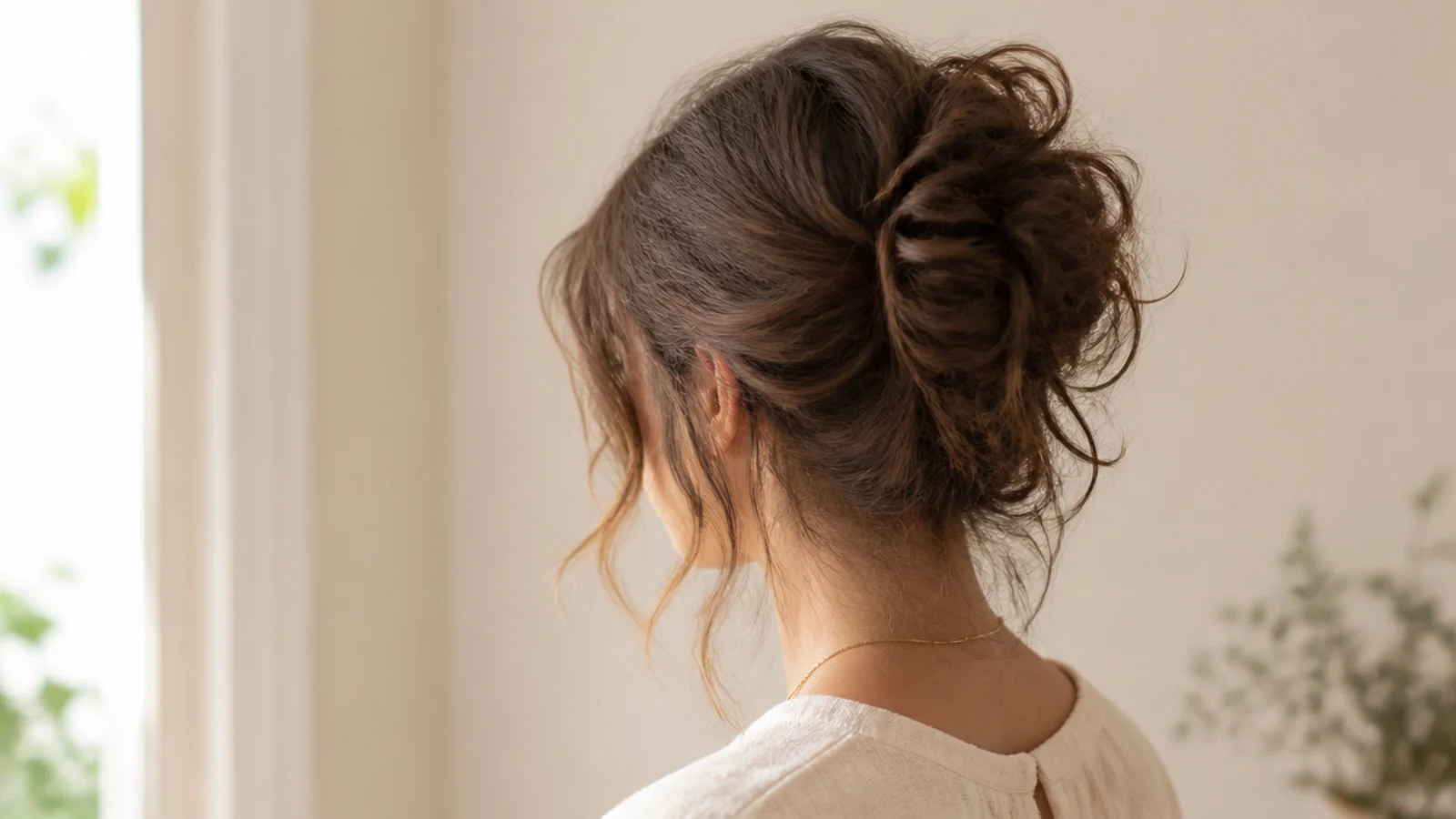
1. Loose Low Bun for Frizzy Hair
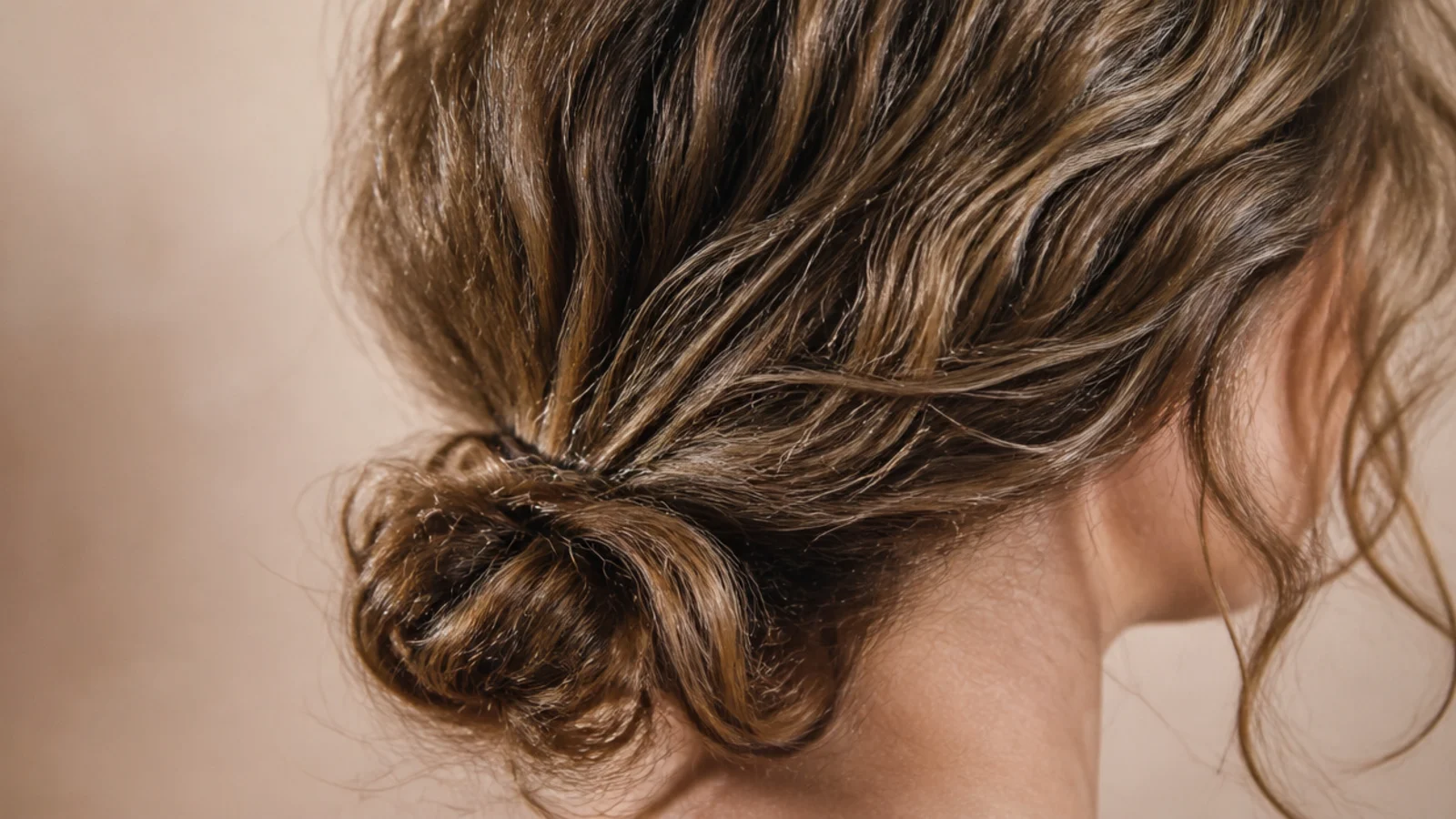
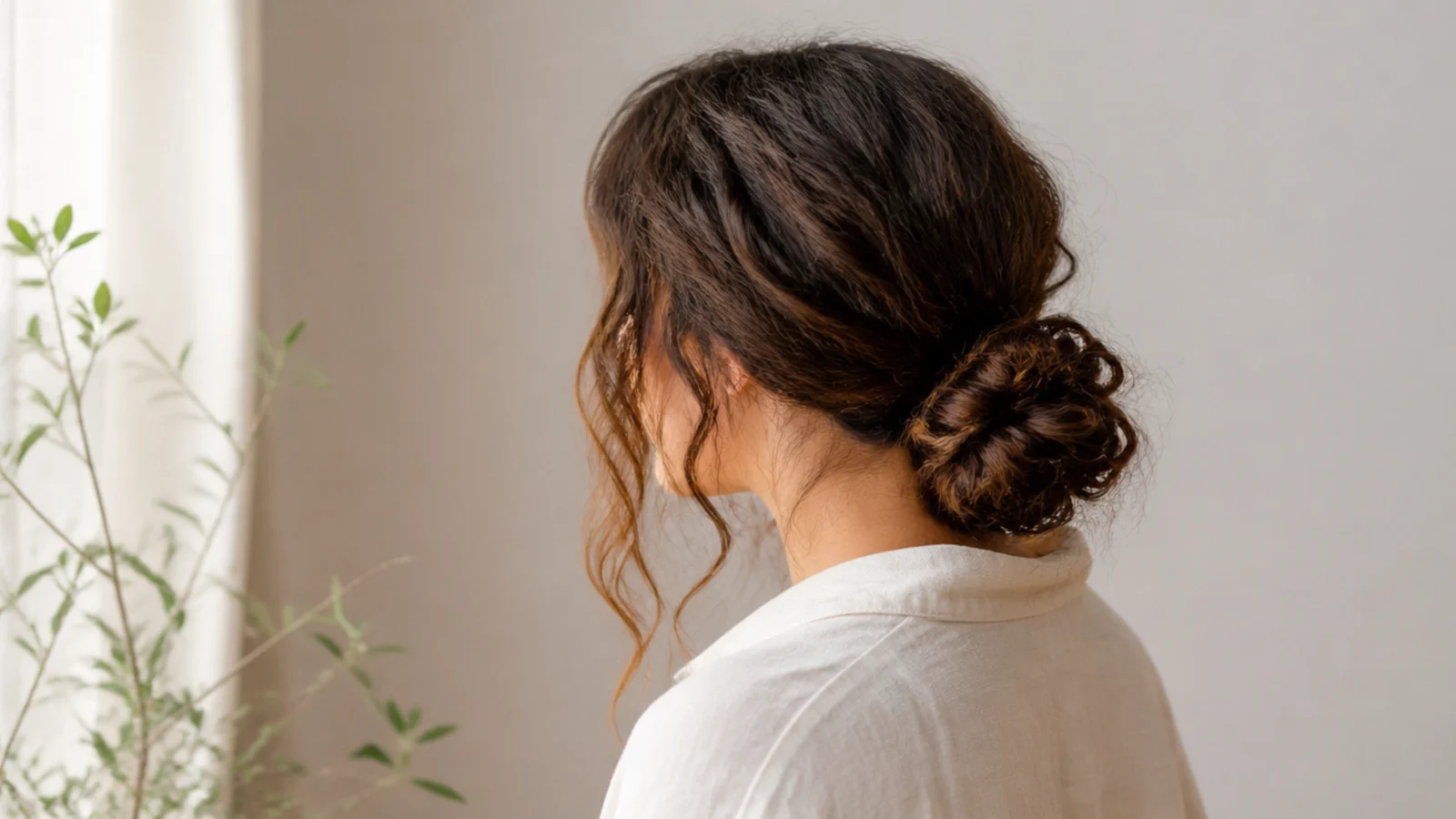
Three minutes, needs shoulder length or longer. Gather at the nape with your fingers rather than a brush, twist the length once, coil it and secure with a spiral hair tie so there is no drag line. Leave two face-framing pieces out on purpose, because a deliberately loose front reads intentional while a stray one reads messy. Hold in high humidity is about six hours, and the failure mode is the coil sagging as strands swell and slip. The fix is one bobby pin crossed into the base, not a tighter tie. More bun and updo shapes are in hairstyles for frizzy hair.
Who it suits: Any texture from wavy 2A to curly 3B, shoulder length and down.
Tip: Smooth a pea of leave-in over your palms first, then gather, so your hands seal instead of ruffle.
2. Messy Top Knot for Day-Two Frizzy Hair
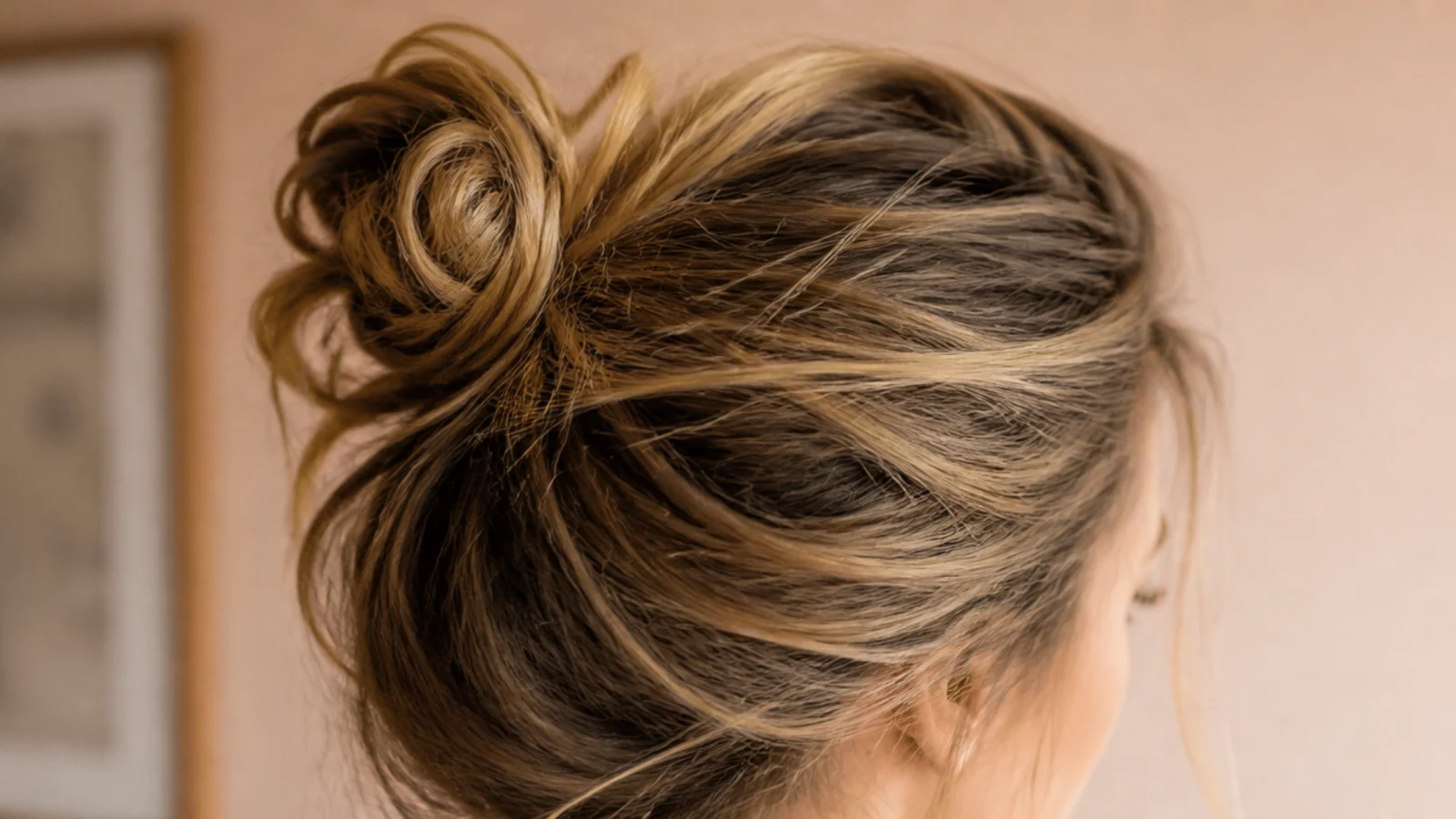
Two minutes, needs collarbone length. This is the style day-two frizz is actually good at, because the extra texture gives the knot grip that clean hair does not have. Flip your head forward, gather high, twist and wrap, and stop before it feels tight. Do not smooth the crown with a brush. Hold is roughly eight hours, and it improves as the day goes on. The one real risk is scalp tension: worn high and tight every single day it worsens crown frizz and breakage along the part, so alternate with a low style.
Who it suits: Second and third day hair, all textures, gym and errand days.
Tip: Spritz water only on the loose ends before twisting, not the roots, or the crown puffs.
3. Slicked-Back Low Ponytail for Frizzy Hair
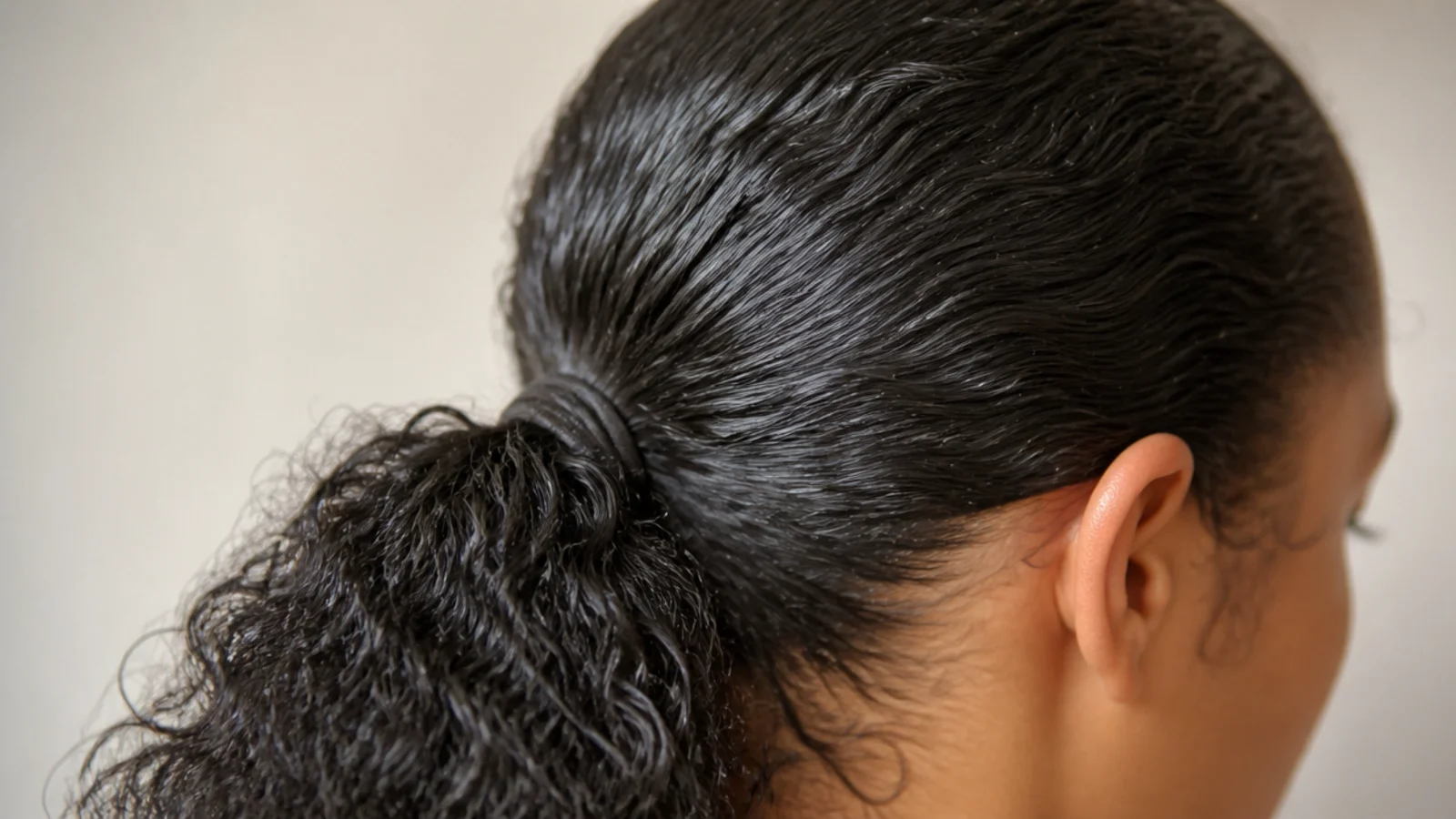
Four minutes, needs chin length or longer. The trick almost nobody states is that this only works on genuinely wet hair, not damp: soak the front and sides with a spray bottle, work a dime of strong-hold gel through with a fine boar bristle brush, then tie low. Gel dries into a cast that physically pins the cuticle down, which is why it holds around ten hours even at high dew points. It fails when you apply gel to dry hair and get white flaking, or when you brush after it dries and shatter the cast.
Who it suits: Coarse straight and wavy hair, office days, high humidity.
Tip: Let the cast dry fully, then scrunch the ponytail length once to soften it without touching the crown.
4. Half-Up Claw Clip Twist for Frizzy Hair
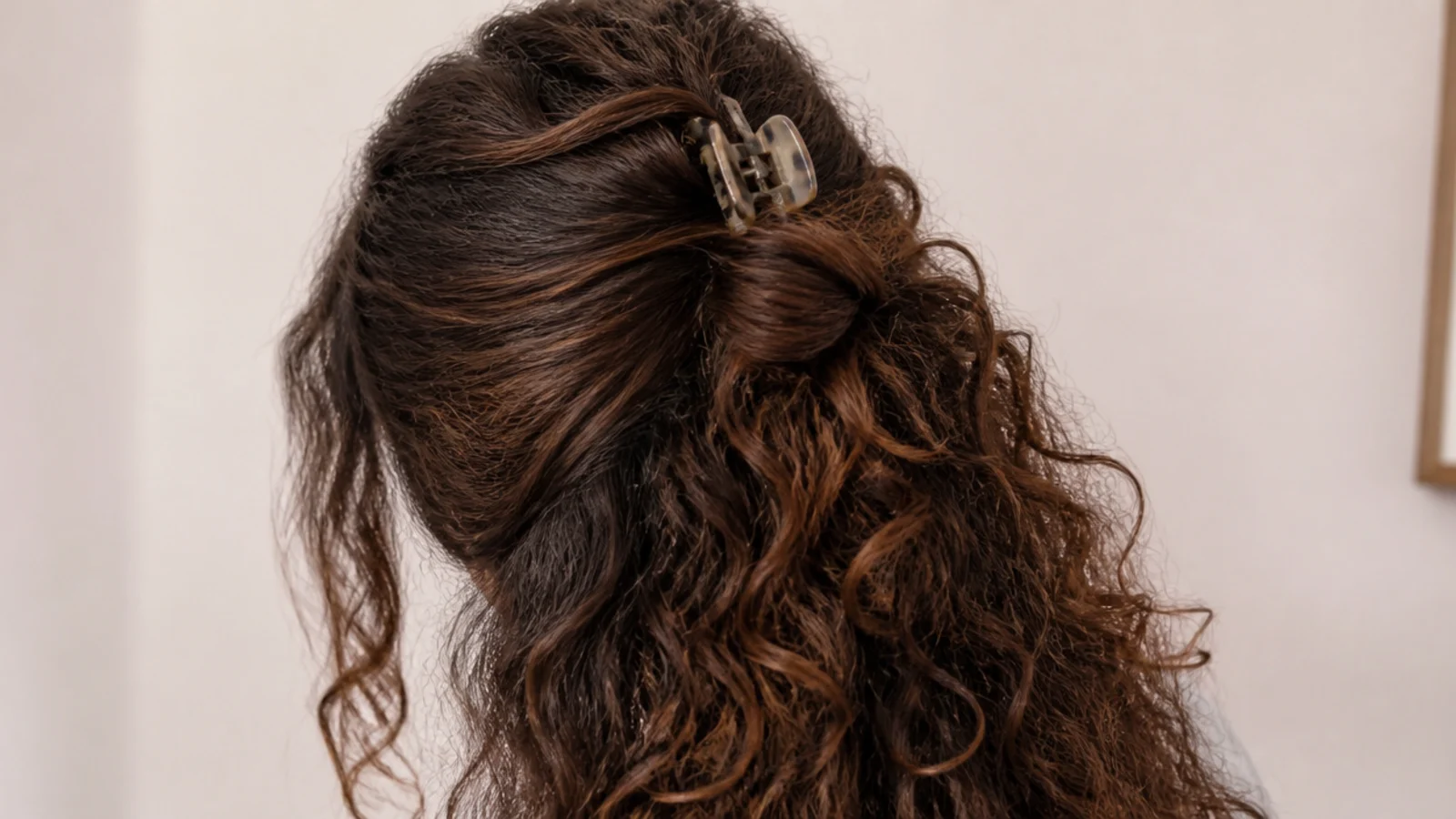
Ninety seconds, needs chin length. Take the top third from temple to temple, twist it once away from your face, fold the twist up and clamp a matte claw clip over the fold. It is the single most useful style on this list because it removes hair from your face without pulling on the hairline, and it converts a failing half-up or a collapsed bun into something deliberate in seconds. Hold is about five hours before the twist loosens. Re-clamp higher rather than tighter, since a tighter clip creases the swollen strands.
Who it suits: Every length from a chin bob up, every texture, desk work.
Tip: Choose a matte or rubberized clip; polished metal slips straight out of swollen frizzy strands.
5. French Braid on Damp Frizzy Hair
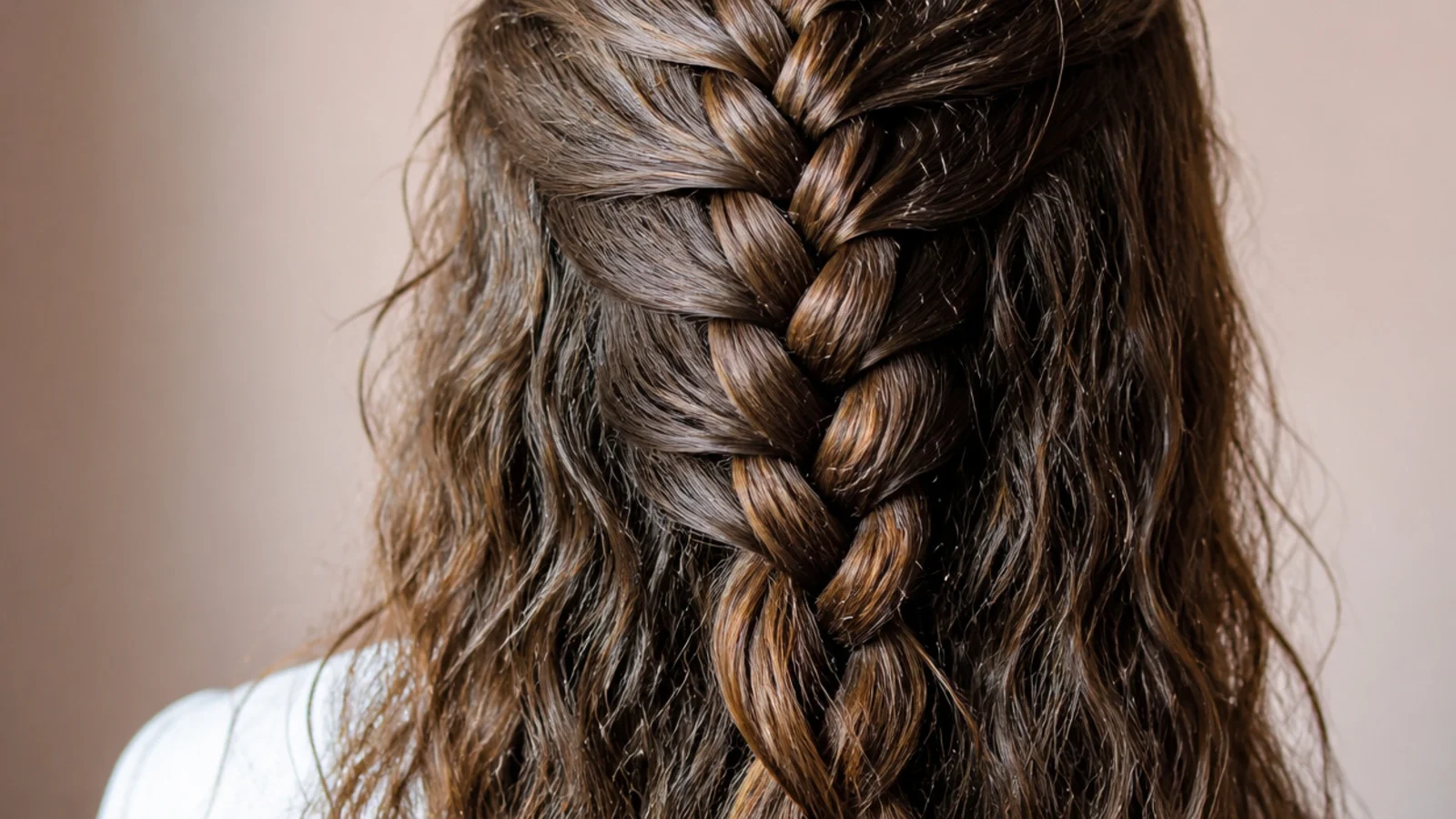
Six minutes, needs shoulder length. Braiding while hair is still wet is the whole point: the braid sets the shape as it dries, so you get containment now and soft waves tomorrow. Start the braid at the crown and add sections that are wider than you think, because thin sections expose more surface area and more surface area means more frizz. Hold is nine to ten hours, the best on this list short of the gel pony. The failure mode is a fuzzy halo above the braid line, caused by short regrowth, not by bad braiding. For a softer, looser version of the same idea, see easy mermaid braids.
Who it suits: Thick wavy and curly hair, long days, travel and humidity.
Tip: Run a wet fingertip along the braid line every two hours to relay the halo hairs flat.
6. Double Dutch Braids for Thick Frizzy Hair
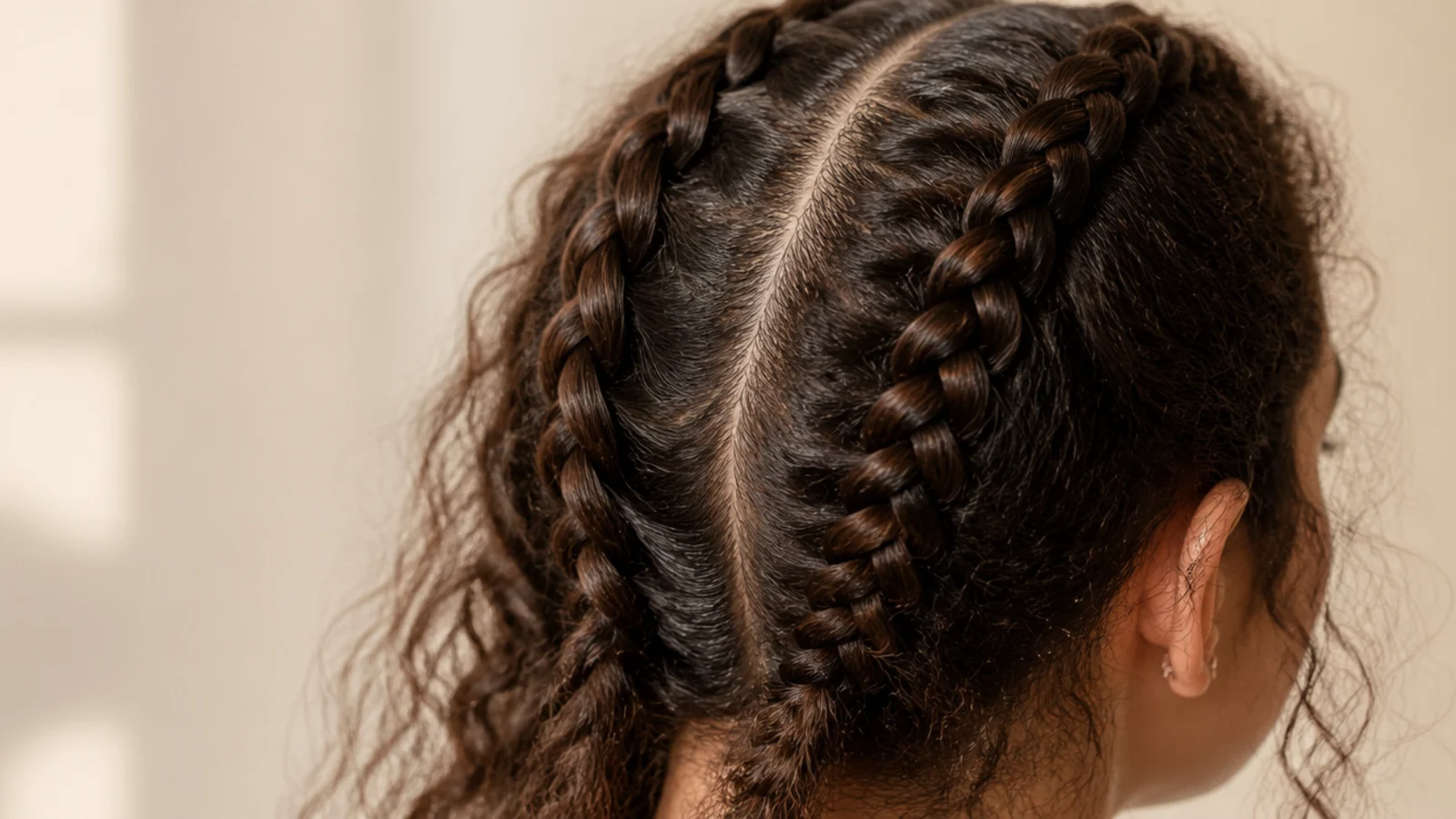
Ten minutes, needs shoulder length and real density. Dutch braiding crosses strands under instead of over, so the braid sits raised on the scalp and each rope holds itself together under tension. On thick frizzy hair this is the most effective containment style there is, and it survives rain, a workout and a plane. Hold is ten hours plus. Two honest downsides: it takes real practice on the second side, and worn very tight along the part it can cause the same tension frizz a slick bun does. Braid firm, not tight.
Who it suits: Thick, dense, coarse frizzy hair; workouts and wet weather.
Tip: Part with the tail of a comb on soaking wet hair so the center line does not fray as it dries.
7. Side Fishtail Braid for Long Frizzy Hair
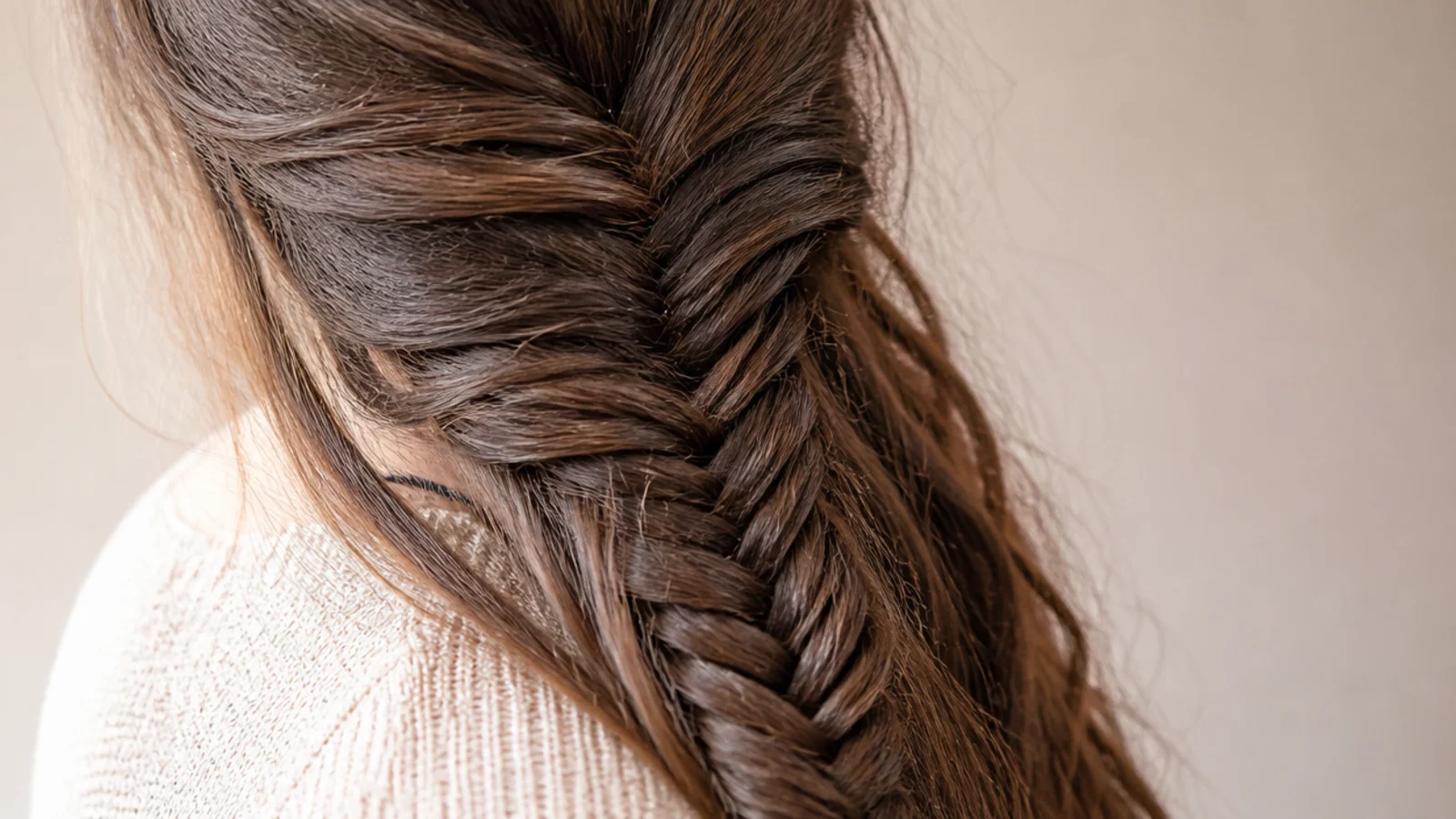
Eight minutes, needs bra-strap length or longer. A fishtail uses very small crossing pieces, which is exactly why it goes fuzzy by lunch on frizzy hair: more crossings means more exposed ends. Fix it by fishtailing over a base of leave-in and cream, taking slightly chunkier pieces than a tutorial suggests, and tying off before the ends thin out. Hold is around seven hours and it looks better slightly undone. This style particularly suits high-porosity hair, whose roughened cuticle grips itself and holds the woven pattern. A dressier take lives in side mermaid braids.
Who it suits: Long, high-porosity, fine to medium frizzy hair; events and photos.
Tip: Pancake the braid by tugging outer loops only, never the center, or the whole weave loosens.
8. Two-Strand Rope Braid for Frizzy Hair
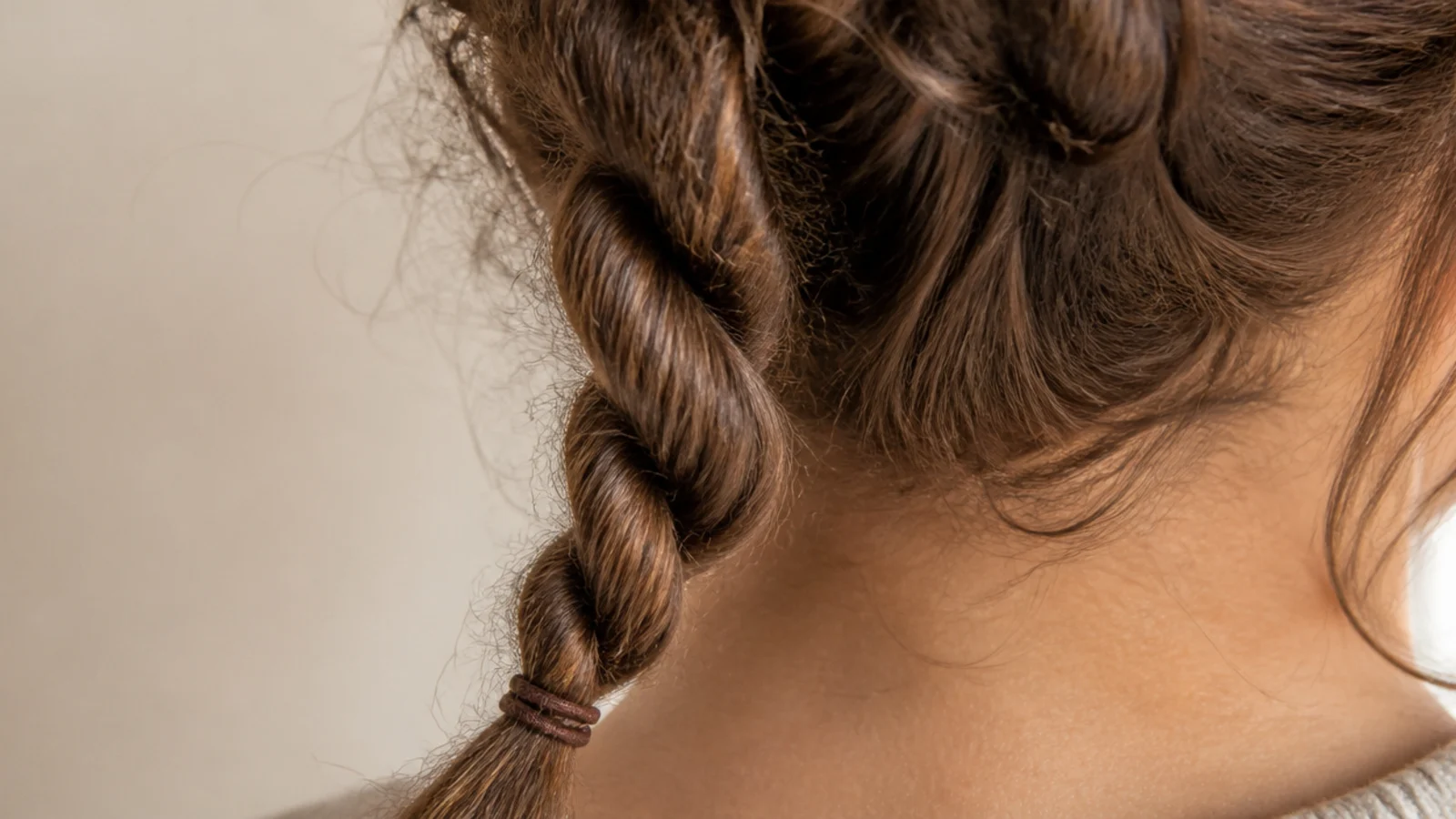
Four minutes, needs shoulder length. Split a ponytail in two, twist each half clockwise until it wants to coil, then wind the two halves counterclockwise around each other. The opposing twists lock, which is why a rope braid holds better than a three-strand on slippery days and takes half the skill of a fishtail. Hold is around eight hours. It fails in one specific way: twist both halves in the same direction and the whole rope unwinds within twenty minutes. Opposite directions is the entire technique.
Who it suits: Beginners, fine frizzy hair, anyone who cannot fishtail.
Tip: Twist each half until it kinks on itself before you wind them together, then it will not slip.
9. Braided Crown for Frizzy Hair
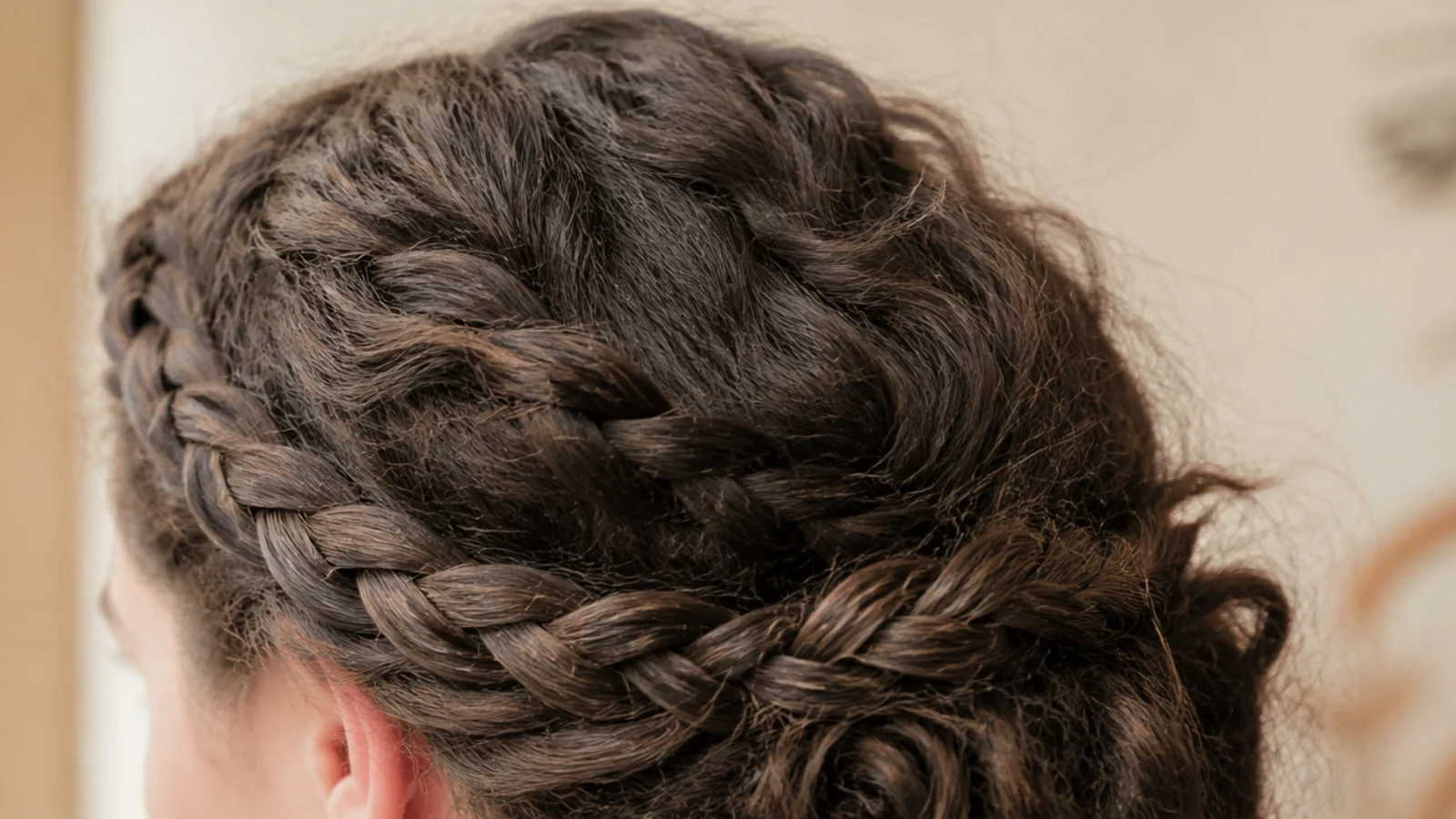
Twelve minutes, needs shoulder length or longer. Two braids started at the temples, taken back over the crown and pinned behind the opposite ear. It is the best answer to crown and halo frizz specifically, because the braids lie directly over the area that puffs and hold it down without any pulling at the hairline. Hold is nine hours. It looks worse in photos than in person if the braids sit too high, so aim them just above the ear and let a few short crown hairs stay soft rather than pinning every one.
Who it suits: Halo and crown frizz, weddings and outdoor summer days.
Tip: Use matte U-shaped pins pushed in against the braid, not straight bobby pins, which slide out.
10. Low Twisted Chignon for Frizzy Hair
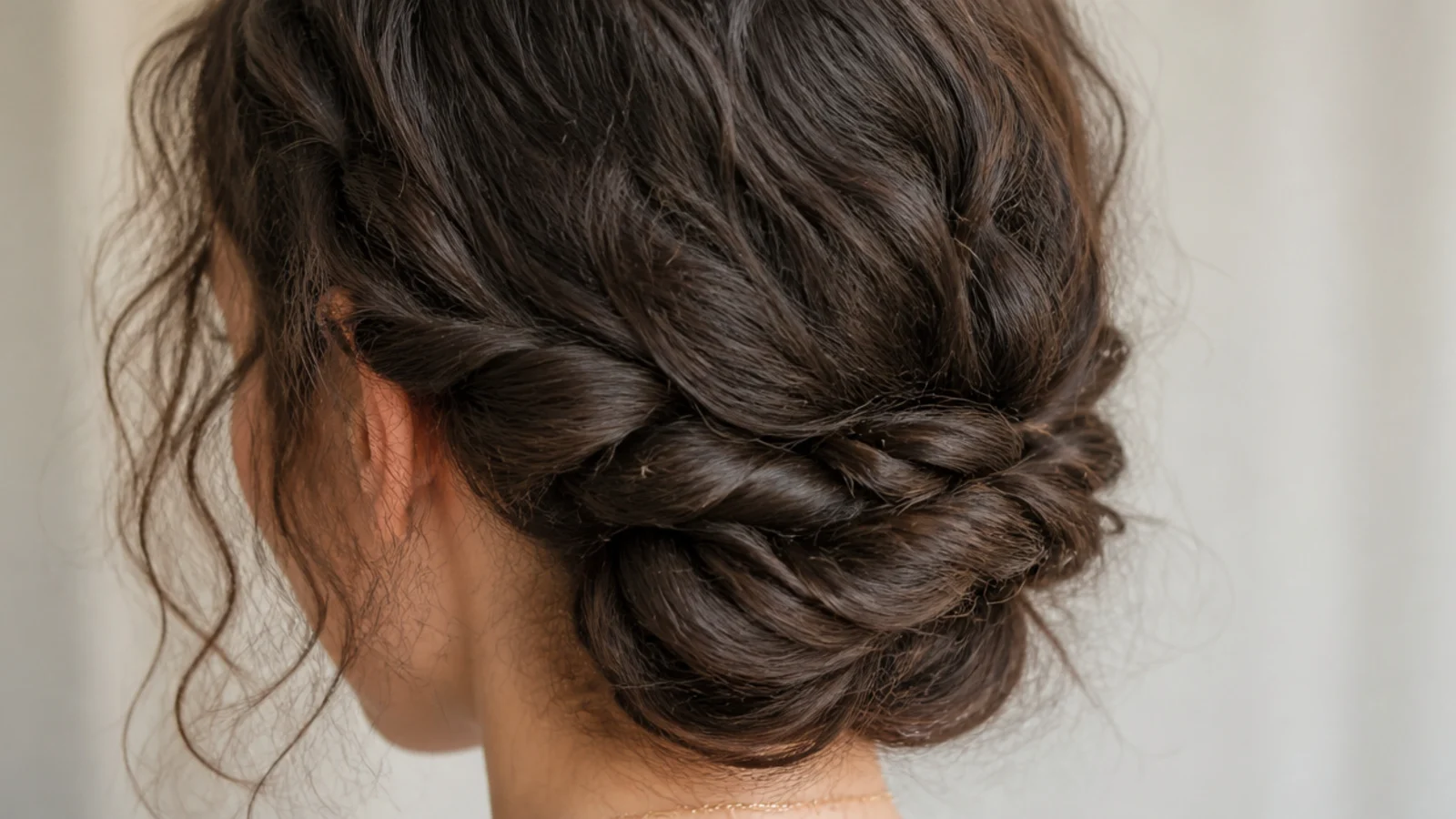
Seven minutes, needs collarbone length. Split hair into two low sections, rope twist each one, then coil both around a single point at the nape and pin. Twisting before coiling is what makes this hold on frizzy hair: a plain gathered bun has nothing but the tie holding it, while a twisted one has friction along its whole length. Hold is around nine hours and it stays presentable through a full evening. If it starts to sag, push a pin up through the base at an angle rather than adding a tie on top. Event-ready versions are in sleek graduation hairstyles.
Who it suits: Weddings, work events, medium to thick frizzy hair.
Tip: Mist the coil lightly with water and press, do not spray hairspray, which stiffens flyaways upright.
11. Bubble Ponytail for Frizzy Hair
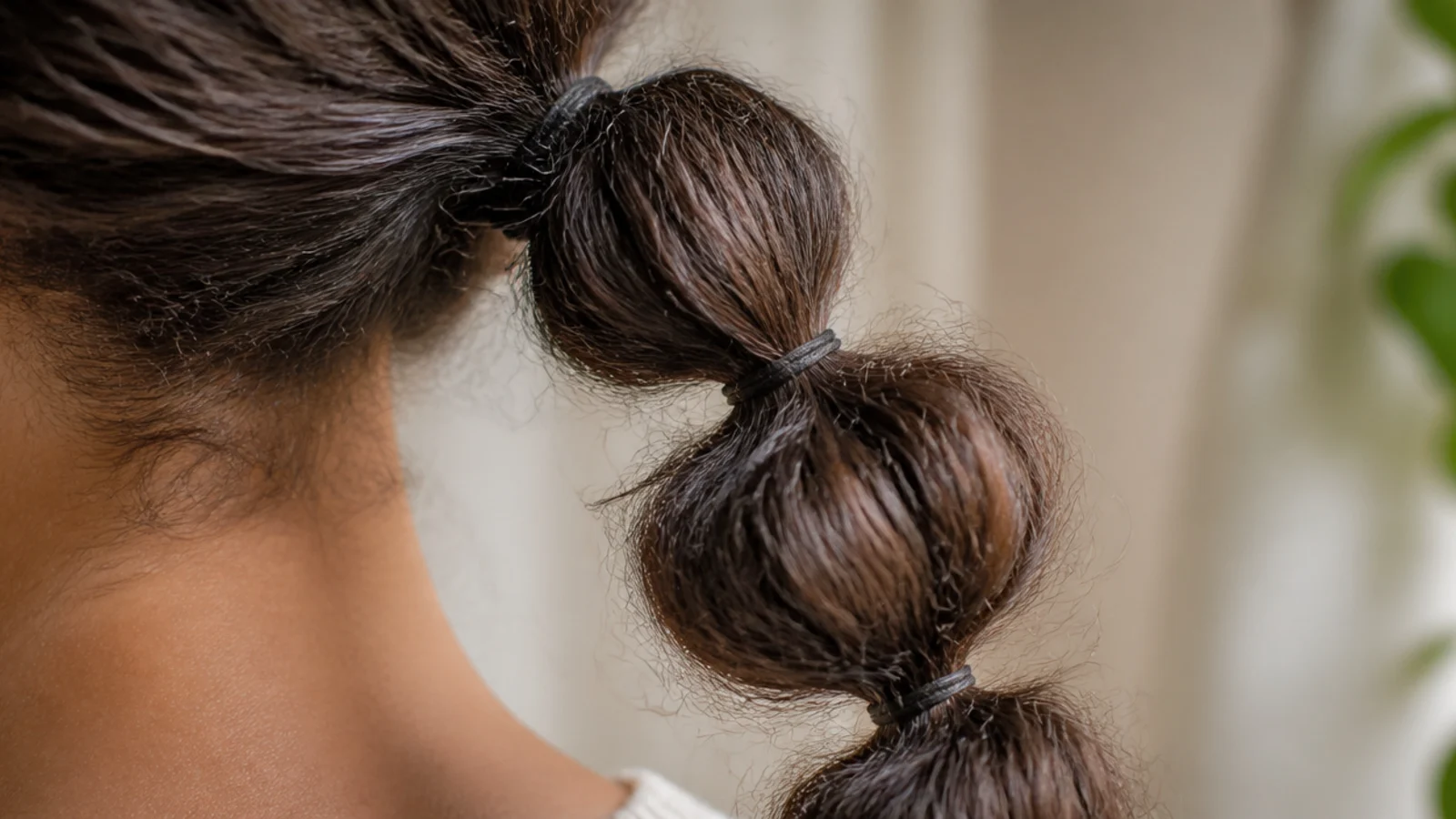
Five minutes, needs bra-strap length. Tie a ponytail, then add a clear elastic every three inches down the length and gently puff each section outward. Frizzy hair is genuinely better at this than sleek hair, because the volume that normally reads as puff fills each bubble evenly instead of collapsing. Hold is about seven hours. The one failure is elastics that snag and snap swollen strands, so use seamless clear elastics or spiral coils, and cut them out rather than pulling them down through the length.
Who it suits: Long thick frizzy hair, teens, summer and festival days.
Tip: Space elastics wider on longer hair, about four inches, so the bubbles read as spheres not lumps.
12. Half-Up Space Buns for Frizzy Hair
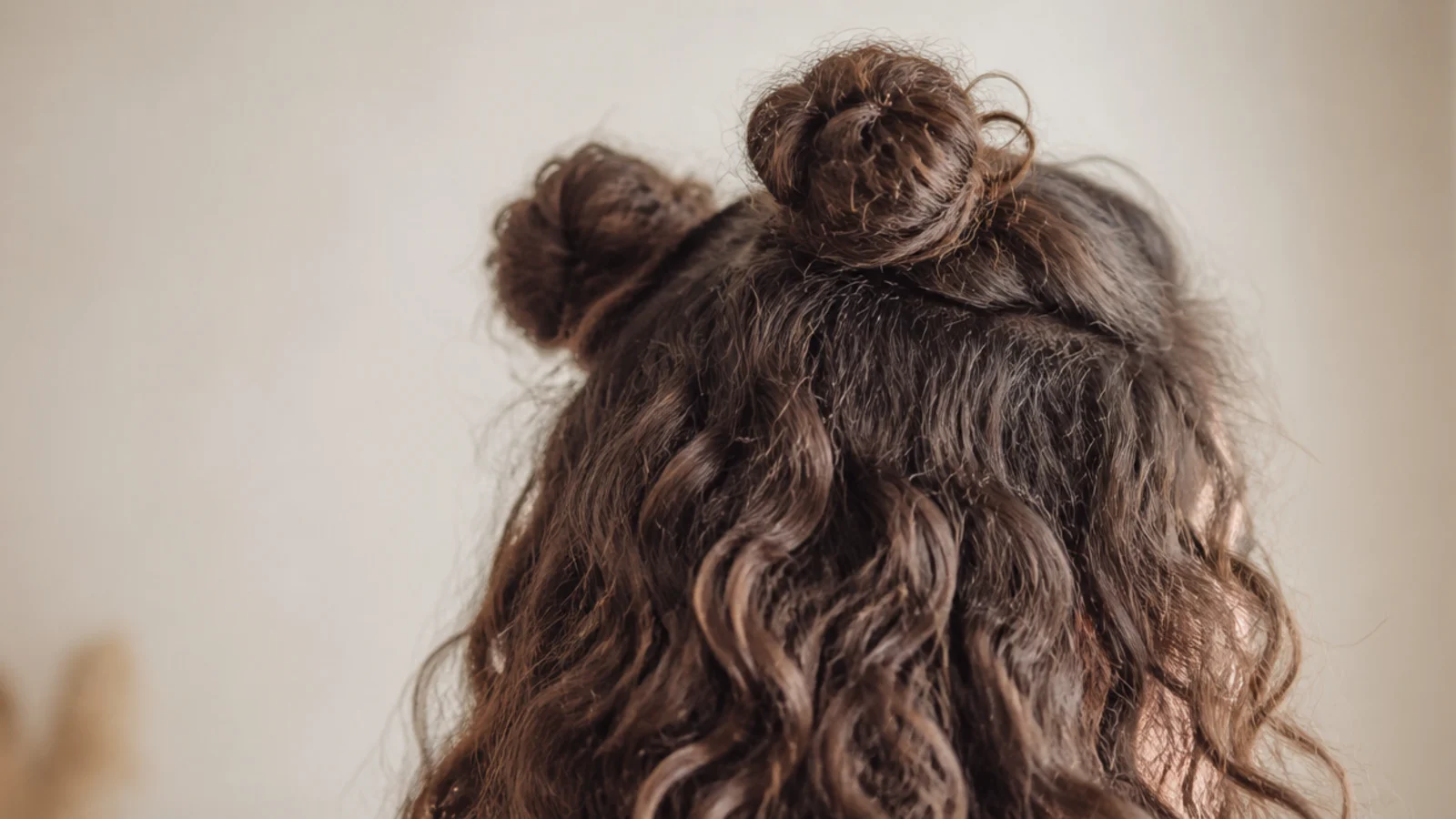
Six minutes, needs shoulder length. Two small buns set high with the rest of your texture left loose underneath, which is a smarter frizz answer than it looks: the buns lift and separate the crown, so the mid-lengths read as intentional volume rather than a triangle. Hold is around six hours. Keep the buns small and set them slightly back from the hairline, because far-forward buns emphasize any halo frizz at the part. The looser version is covered in our space buns guide.
Who it suits: Curly 3A to 3C, festivals, casual weekends.
Tip: Twist each section into a rope before coiling; a rope bun grips frizzy hair, a gathered one slides.
13. Faux Knot Half-Up for Frizzy Hair
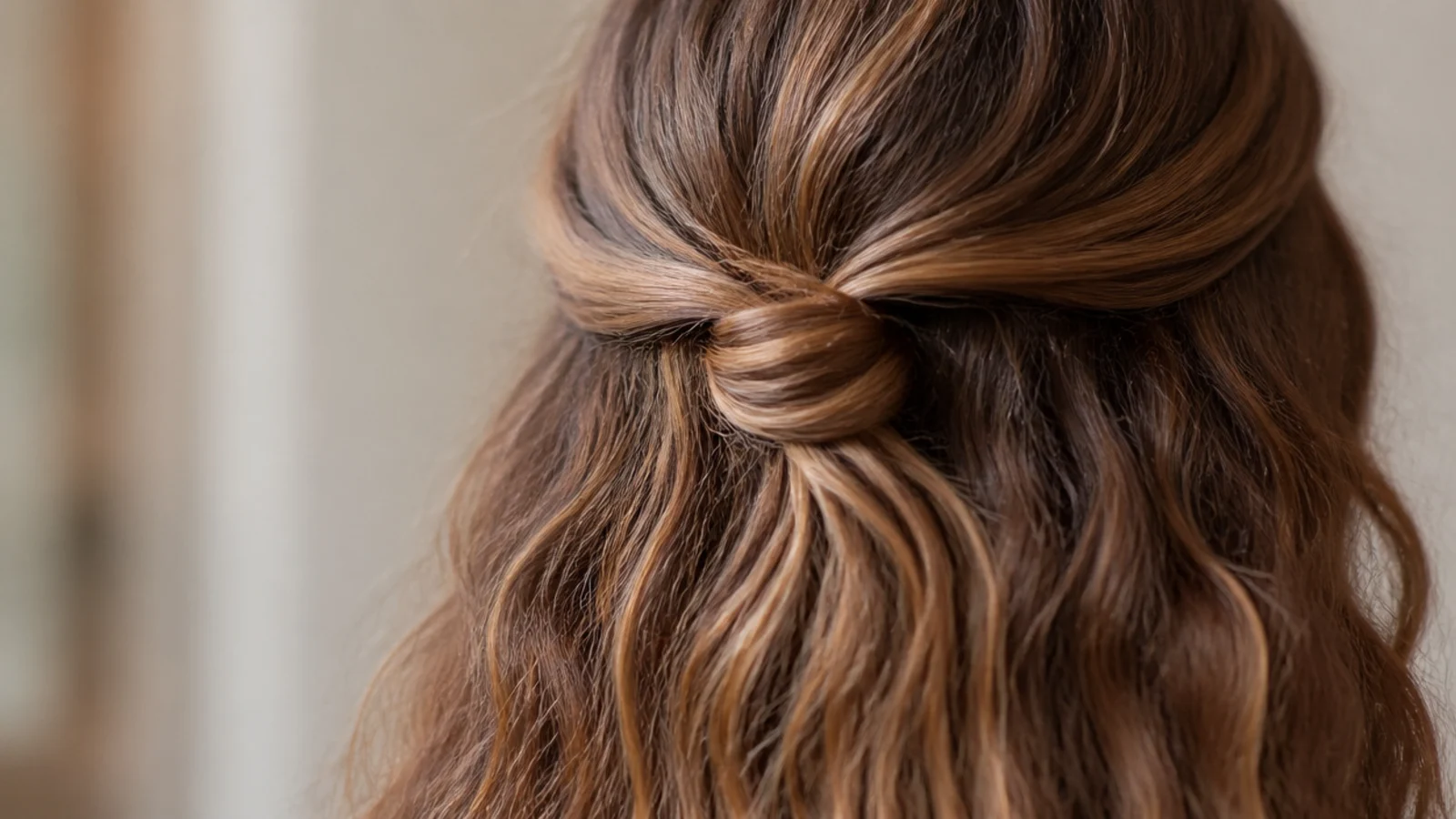
Ninety seconds, needs chin length. Take a section from each temple, tie them in a simple overhand knot at the back, then tie a second knot below it. No elastic, no pins, no skill. It suits frizzy hair specifically because the knot needs grip to stay put and frizzy texture supplies exactly that, while silky hair slips straight out. Hold is four to five hours. When it loosens, retie the same two sections a half inch lower rather than tightening, which only stresses the hairline. More half-up shapes are in half up mermaid braids.
Who it suits: Beginners, short bobs, second-day hair, five minutes before leaving.
Tip: Tie the knots on dry hair; damp hair swells as it dries and turns the knot into a tight tangle.
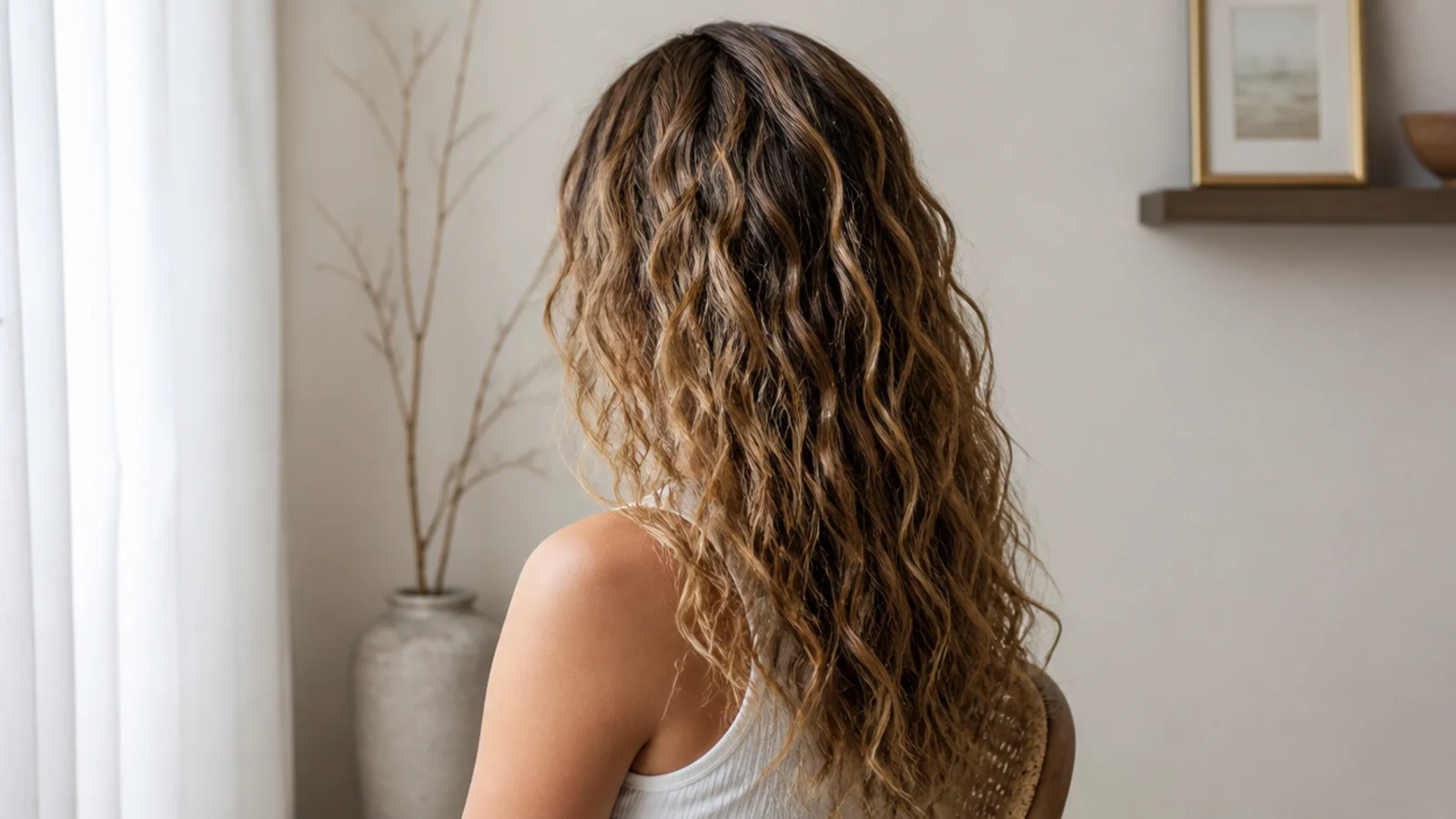
14. Overnight Plopped Waves for Frizzy Hair
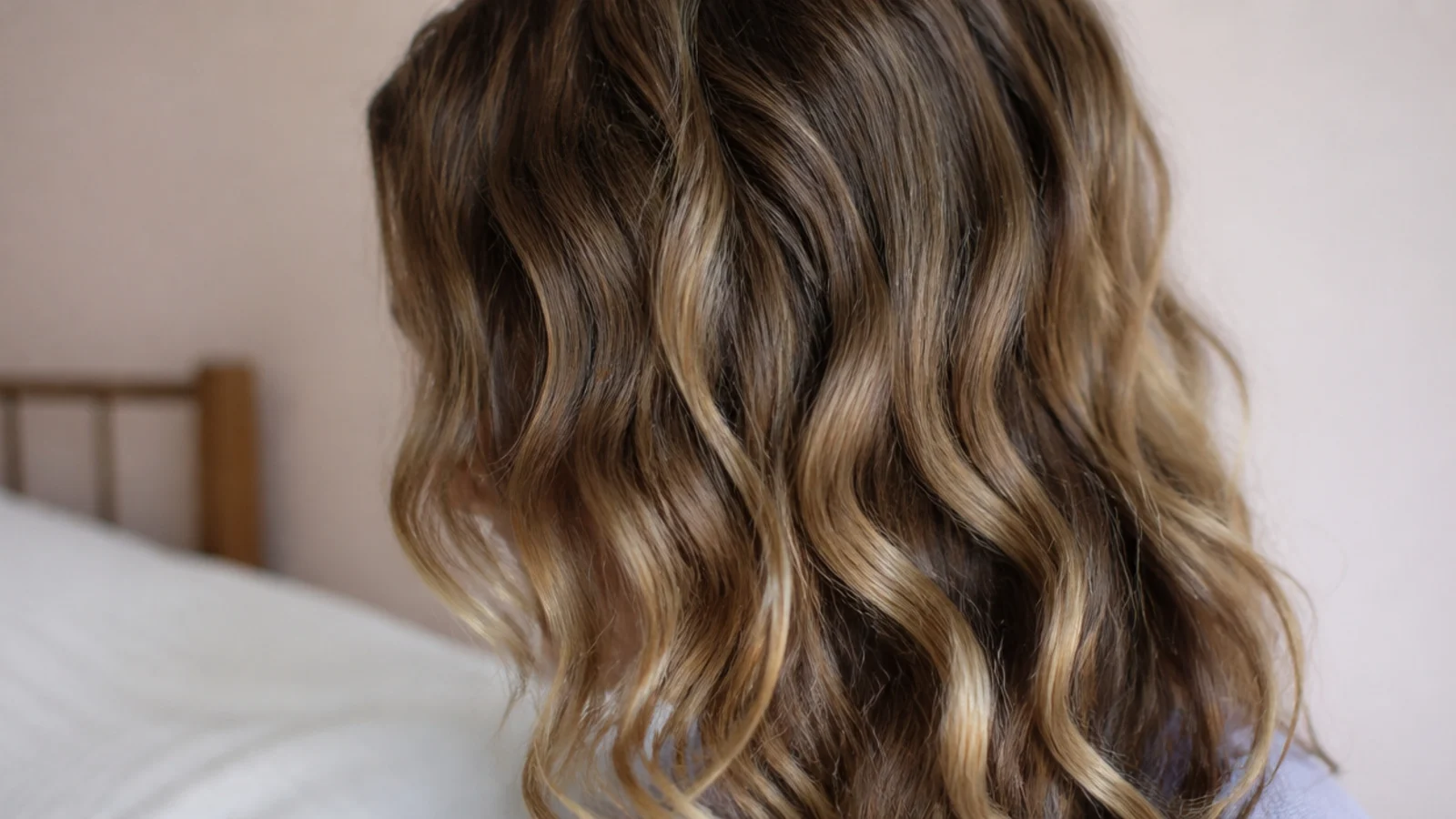
Ten minutes at night, needs shoulder length. Apply leave-in, cream and gel to soaking wet hair, then flip forward onto a flat cotton t-shirt, wrap the sleeves back and tie. Plopping cradles the wave pattern while gravity is off it, so hair dries in its own shape instead of stretching out. Sleep in it or leave it thirty minutes. Next morning the waves are set and hold nine hours. If it comes out flat at the roots, you plopped too long past dry; two hours is the ceiling for overnight.
Who it suits: Wavy 2A to 2C and loose curls; anyone avoiding heat.
Tip: Use a cotton t-shirt or microfiber, never a terry towel, which lifts the cuticle and undoes it.
15. Overnight Braid Waves for Frizzy Hair
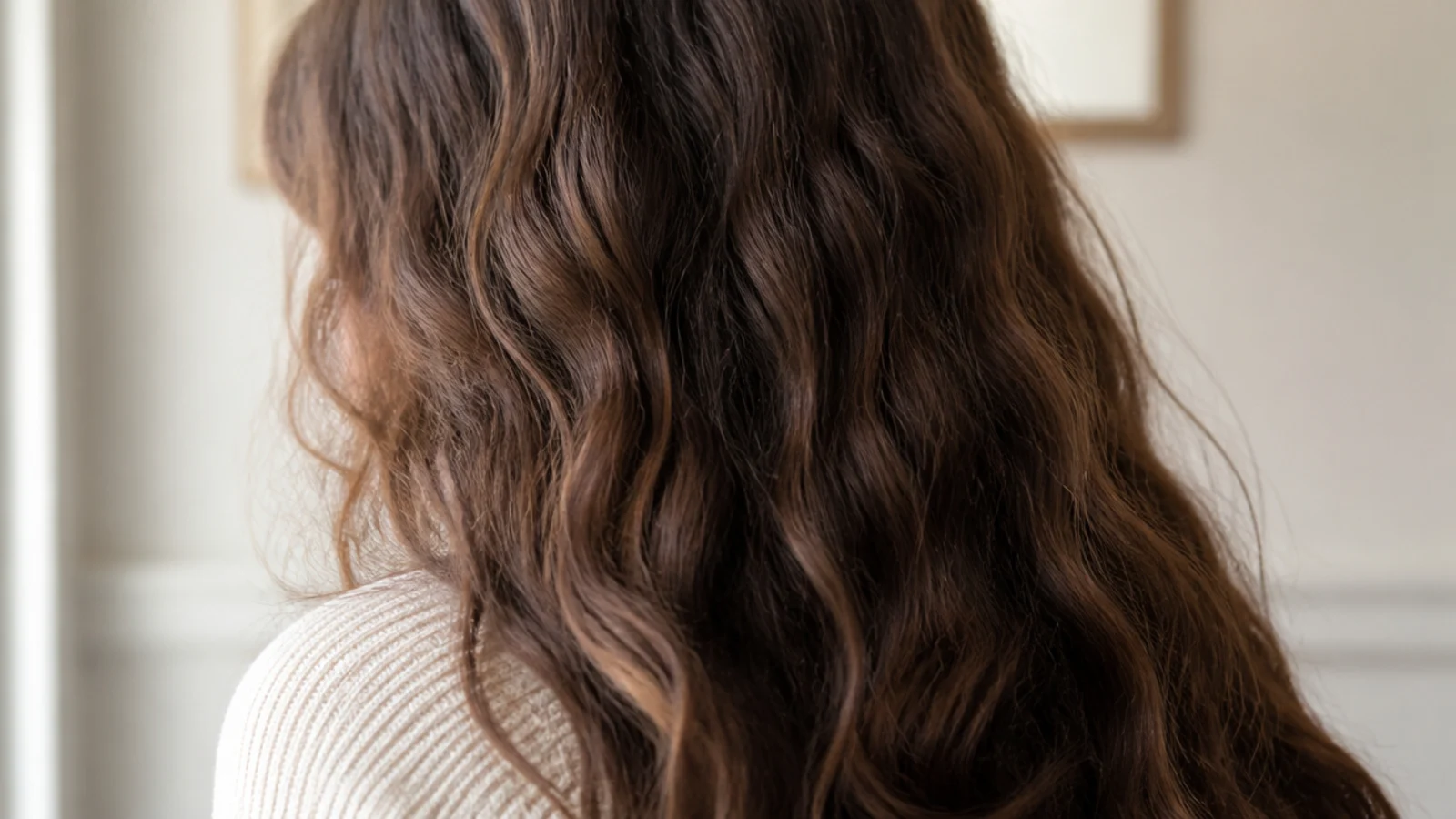
Five minutes at night, needs shoulder length or longer. Two loose braids on damp hair, tied with soft scrunchies, slept in on a silk or satin pillowcase. You wake to an even bend and, more usefully, to hair that has not been rubbed against cotton for eight hours, which is where a great deal of overnight frizz comes from. Hold is eight hours once released. Braid loosely and start the braid below the ear, since braiding tight and high leaves a crimp at the top that no amount of shaking loosens. More overnight options are in heatless curls overnight.
Who it suits: Long wavy and straight coarse hair, anyone with no morning time.
Tip: Undo the braids with your fingers and shake at the roots; a brush turns the wave into a cloud.
16. Silk Scarf Headband on Frizzy Hair
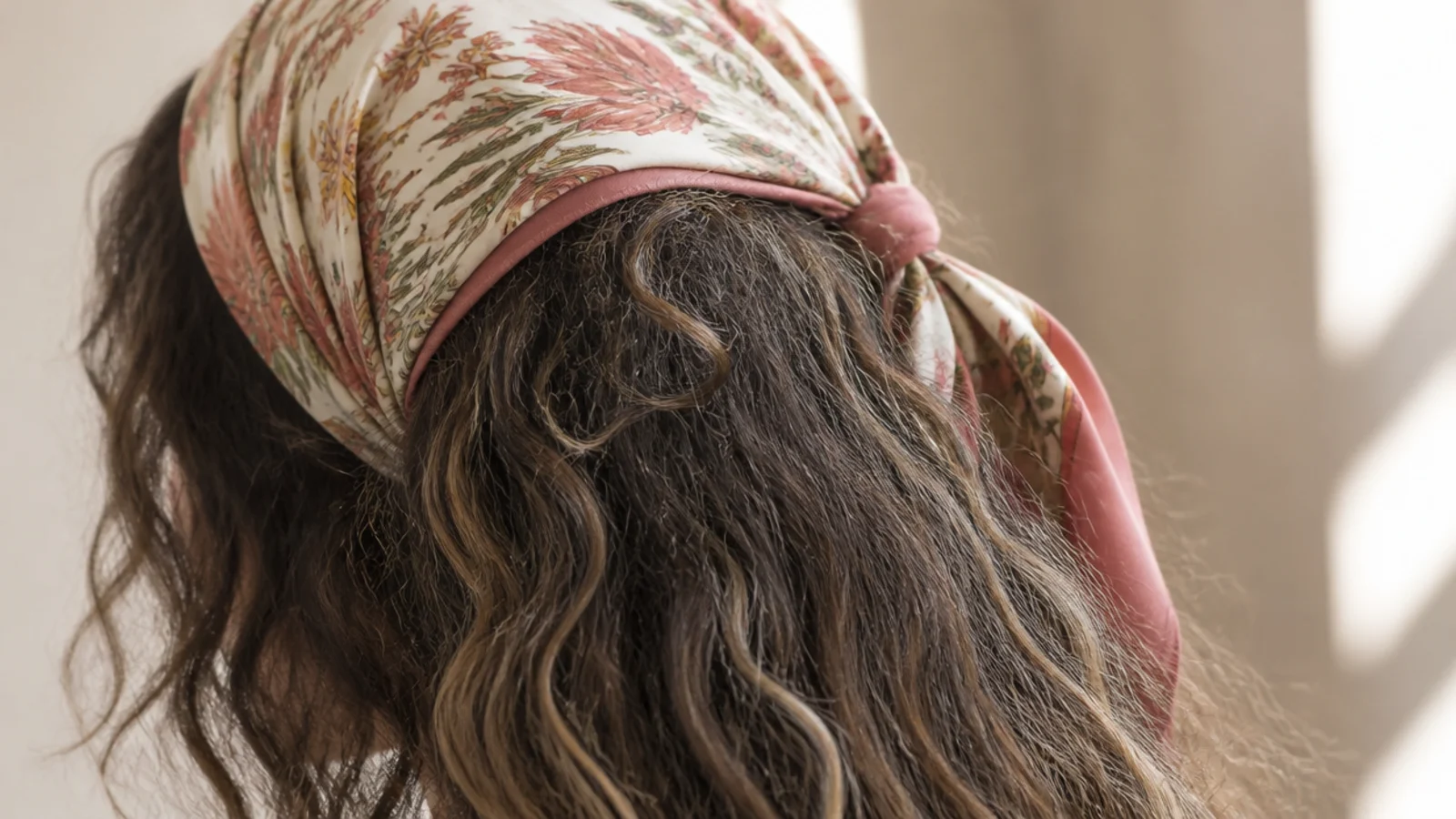
Two minutes, needs any length. Fold a silk or satin scarf into a two-inch band, lay it over the crown and tie underneath at the nape or on top for a knotted look. This is the only style here that solves halo frizz instantly, because it covers the exact zone where short regrowth sticks up. Silk also does not abrade the cuticle the way a cotton or elastic headband does. Hold is all day. The one caution is a tight elastic band, which creases and leaves a dent when you take it off.
Who it suits: Halo frizz, grow-out phases, bad-hair days at any length.
Tip: Tie the ends in a loose square knot, not a double knot, so removing it does not drag strands.
17. Twisted Headband Tuck for Frizzy Hair
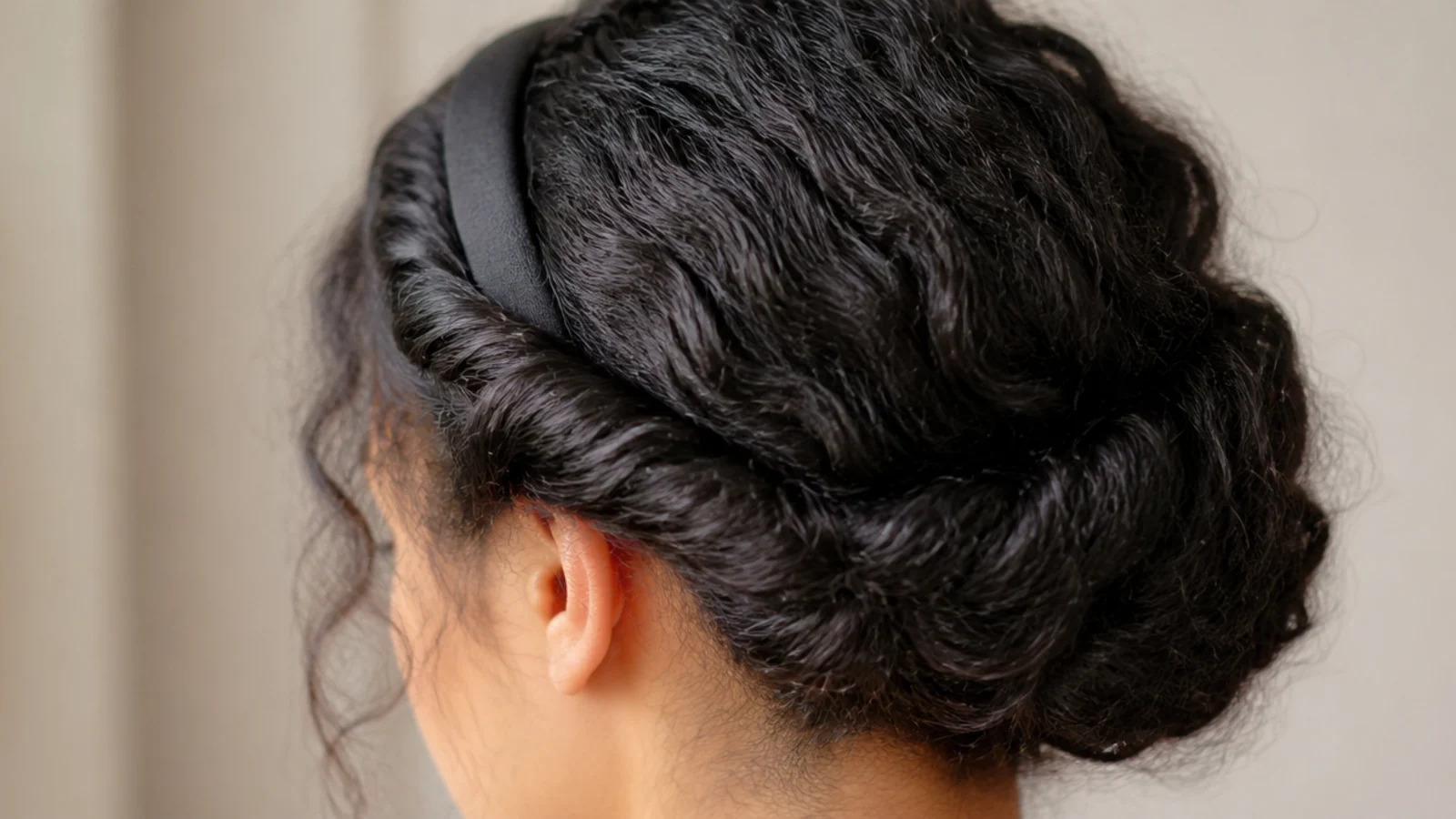
Four minutes, needs collarbone length. Put a soft fabric headband on over dry hair, then roll sections of the length up and tuck them under the band from the nape forward until everything is contained. It reads as a polished faux updo and it needs no pins at all. Hold is around seven hours. It only works on dry or second-day hair with some grip; on freshly washed slippery hair the rolls drop out within the hour. If a roll sags, re-tuck it under the band a second time rather than adding a pin.
Who it suits: Second-day hair, medium length, brunch and office days.
Tip: Start tucking at the nape and work forward, so each roll sits on top of the one below it.
18. Diffused Wash-and-Go for Frizzy Hair
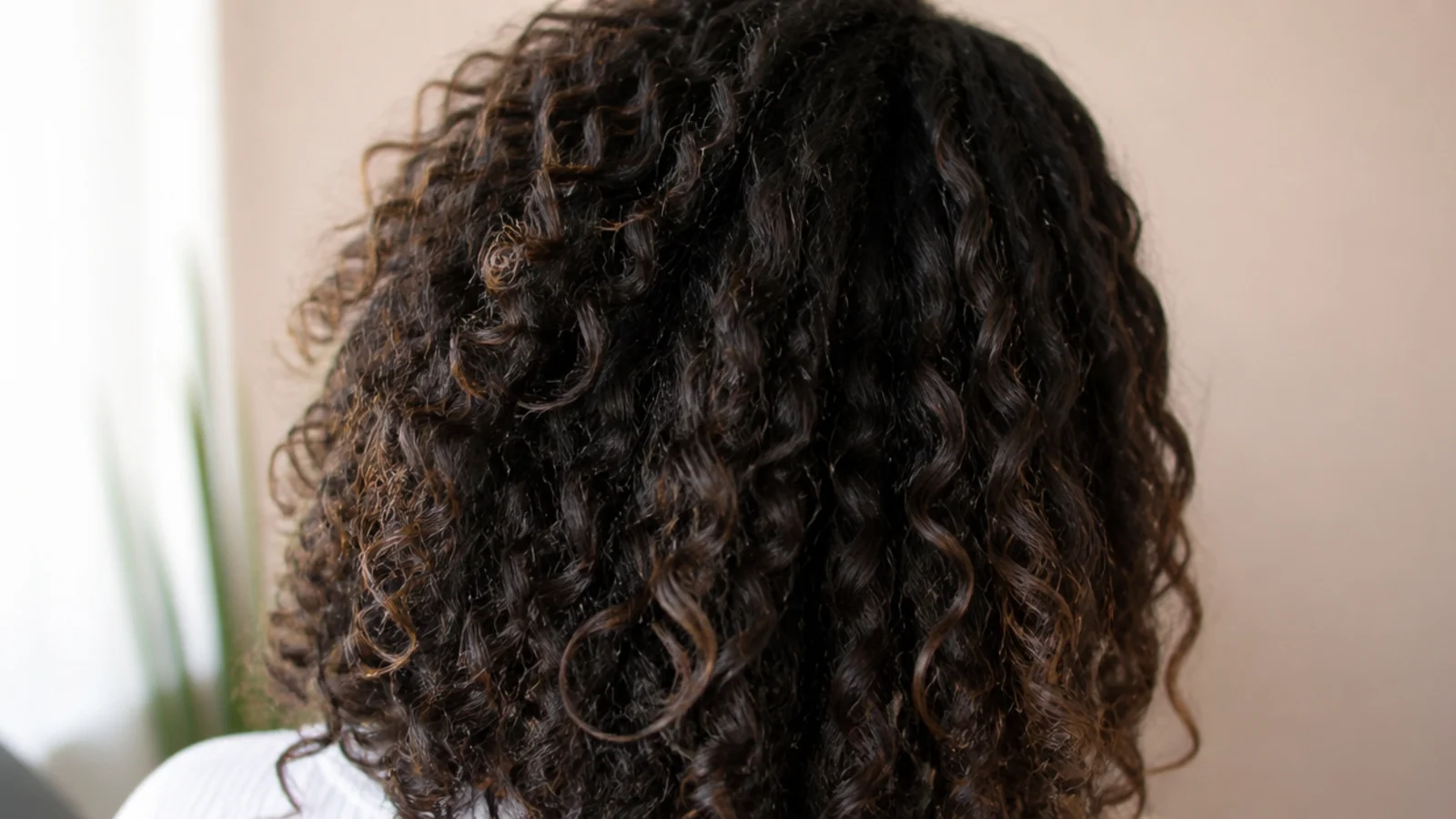
Fifteen minutes, needs any length above the chin. Leave-in first, then cream, then gel, all applied to soaking wet hair in the shower, then diffuse on low heat and low speed with the bowl cupped against the head. Dry to a hard cast, then scrunch it out with a drop of oil. Hold is a full day. Two failure modes matter: high airflow blows curls apart and makes crown frizz worse, and touching hair while it is drying guarantees frizz. Set the dryer to low speed and do not touch. Curl-specific styling is covered in curly mid length haircut.
Who it suits: Curly 3A to 3C and wavy 2C hair; wash days.
Tip: Hover the diffuser rather than moving it around; motion is what separates the clumps.
19. Bouffant High Ponytail for Puffy Frizzy Hair
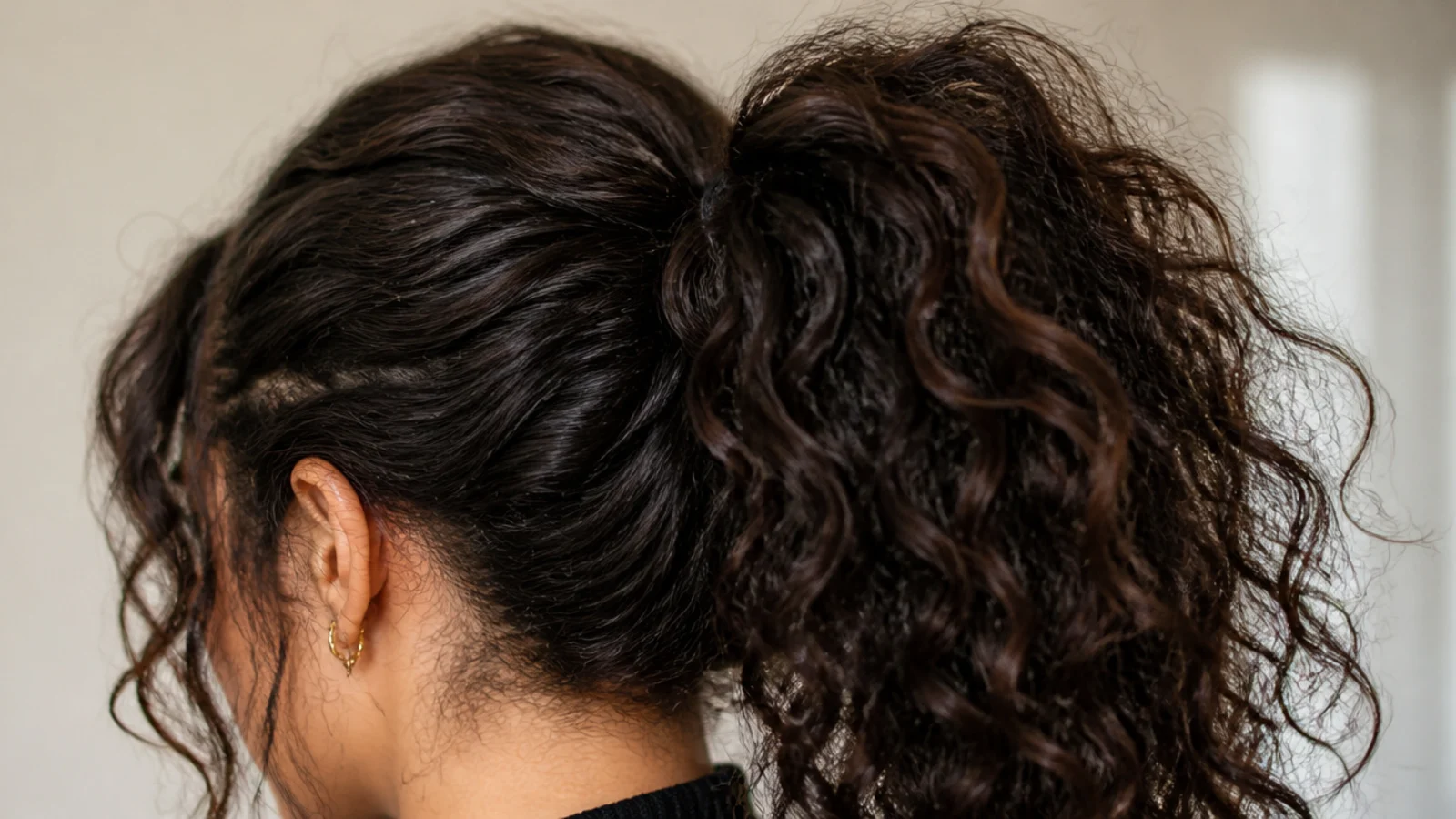
Five minutes, needs shoulder length. Instead of flattening the crown, lift it: loosen the top with your fingers, pin the lift with two crossed pins underneath, then tie the rest high. This is the style for hair that expands into a triangle, because it moves the volume up to the crown where it flatters instead of out at the mid-lengths where it does not. Hold is six hours. It slips when the tie sits over the pinned section, so tie below the pins, never through them. The same volume trick dressed up appears in half up graduation hairstyles.
Who it suits: Puffy, dense, triangle-shaped frizzy hair; evenings out.
Tip: Wrap a half-inch strand of hair around the elastic to hide it; a visible band flattens the effect.
20. Low Side Braid with Face-Framing Pieces
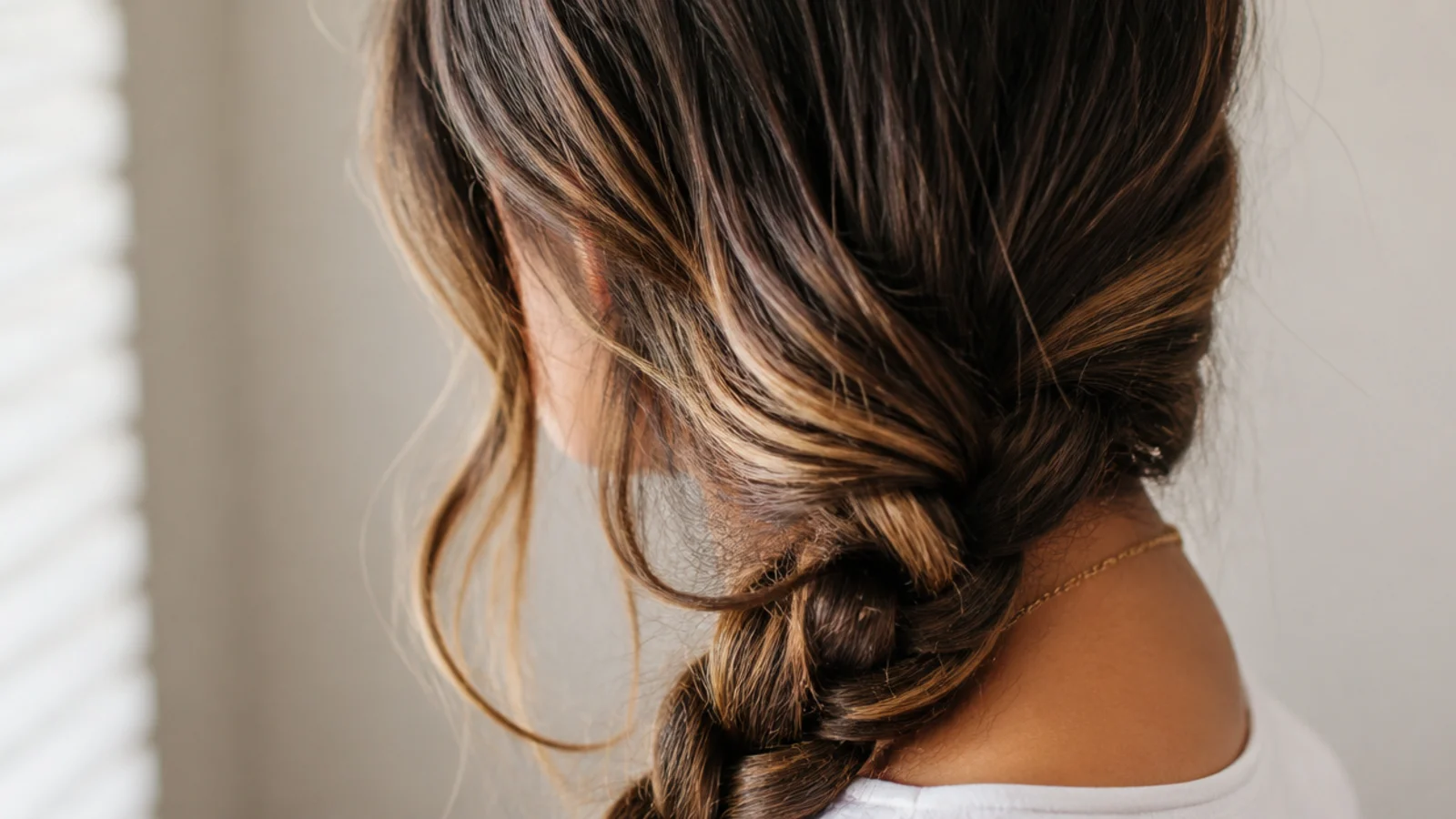
Five minutes, needs collarbone length. A simple three-strand braid starting below the ear on one side, with two curved pieces pulled out at the temples before you start. Pulling those pieces first matters, because pulling them after loosens the braid and makes the front look accidental. Hold is eight hours and it is the most forgiving style here for a long humid day. Tie off with a spiral coil rather than an elastic to avoid a snap line at the end, and let the last inch stay soft. Braid variations are in braided graduation hairstyles.
Who it suits: Wavy and curly frizzy hair, long workdays, hot weather.
Tip: Braid the last three inches loosely so the ends flare, which hides the split-looking dry tips.
Why Hair Frizzes: The Moisture Mechanism
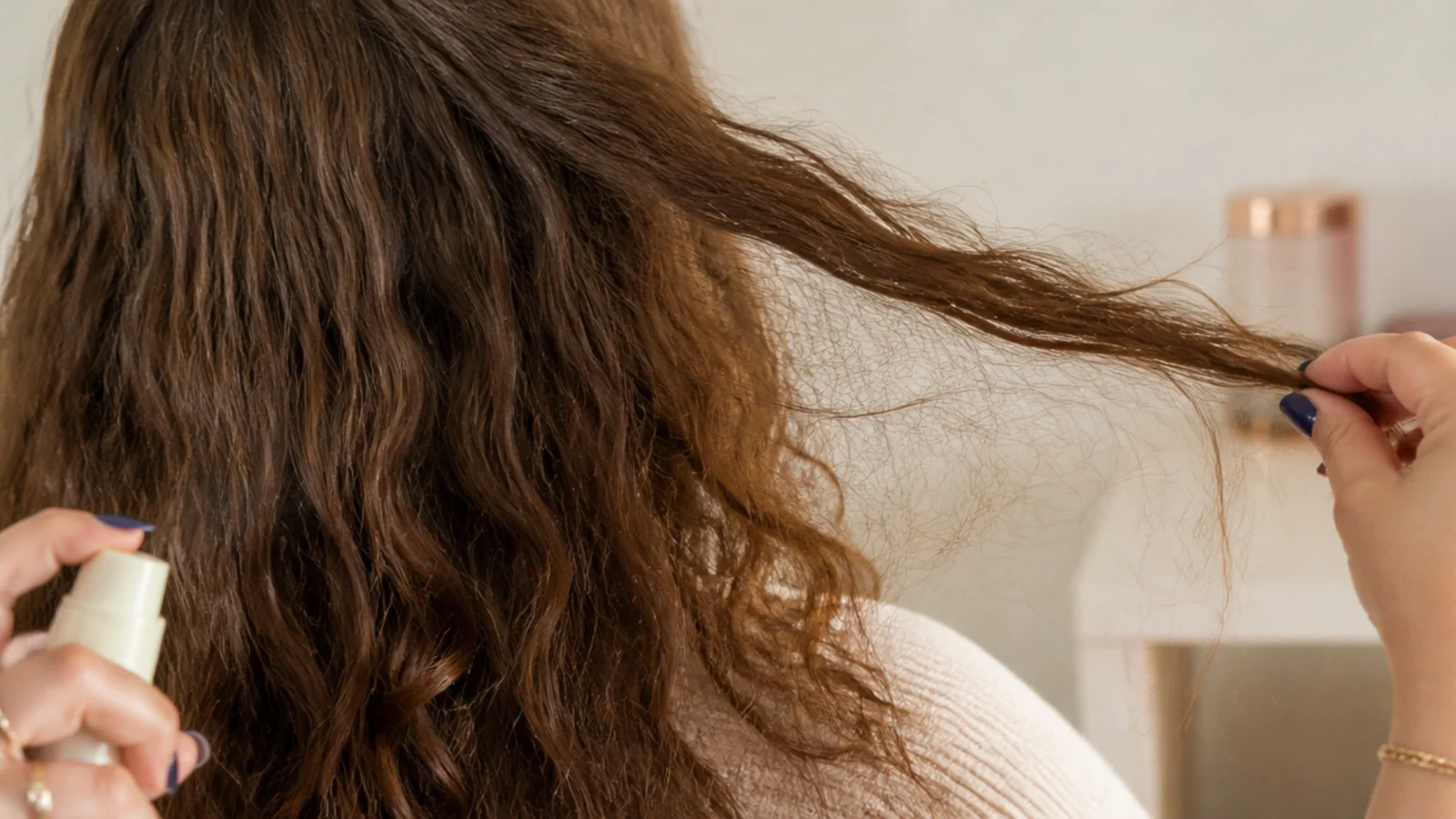
Every strand is wrapped in overlapping cuticle scales, like shingles on a roof. When hair is hydrated and the cuticle lies flat, light reflects evenly and neighboring strands sit against each other. When hair is dry, those scales lift, and a lifted cuticle does something specific: it lets the strand pull moisture out of the surrounding air. The strand swells unevenly along its length, buckles, and pushes itself away from its neighbors. That buckling is frizz. This is why the two instincts most people have both backfire. Pressing hair down with a brush does not reseal anything, it just shears the raised scales and makes them rougher, and adding heat without moisture underneath dries the strand further so it drinks even more from the air later. The working principle for every style on this page is the opposite: hydrate the strand first, then seal the surface so the air has nothing to give it. Full background is in the frizzy hair guide.
Which Frizz Do You Have? Surface, Halo, In-the-Curl and Ends-Only
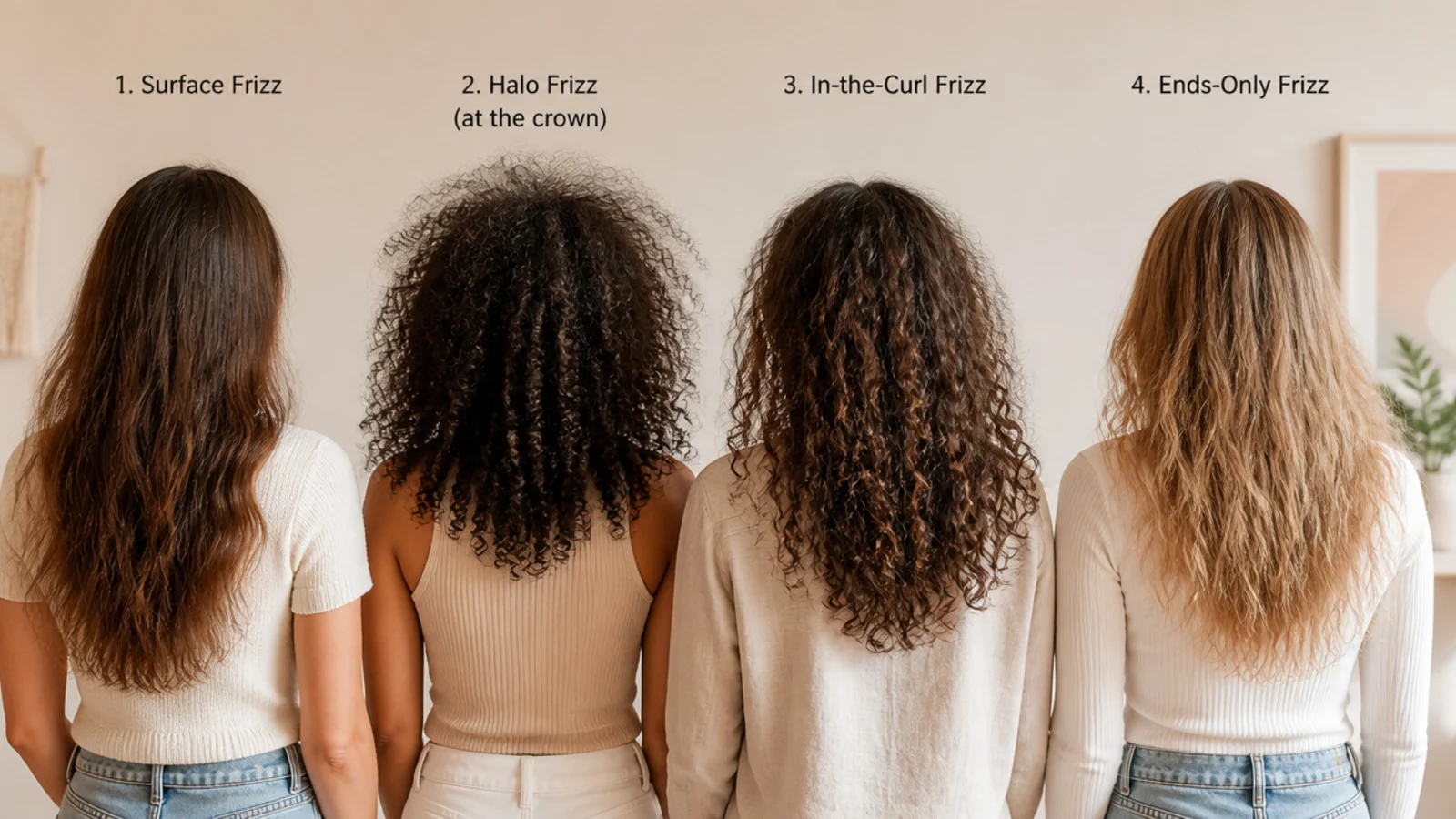
Almost every article treats frizzy hair as one condition, which is why the advice contradicts itself. There are four patterns and each wants a different style. Surface frizz is a fine haze over otherwise intact lengths, usually dehydration, and it responds to sealing plus any contained style. Halo frizz is a ring of short hairs standing up at the crown and part, and it is regrowth or breakage rather than damage, so cover it with a scarf, a braided crown or a claw clip twist instead of trying to smooth it. In-the-curl frizz means the curl pattern itself has broken into fuzz, which is a moisture and handling problem: it wants plopping and diffusing, not braiding. Ends-only frizz means split, worn ends, and no styling fixes it, only a trim does, although a loose braid hides it well. Match the style to the pattern and the hold ratings above become far more reliable. The mood-board version of leaning into it is frizzy curly hair aesthetic. Texture-specific styling lives in frizzy wavy hair and frizzy curly hair.
The Wash-Day Routine That Makes Every Style Hold
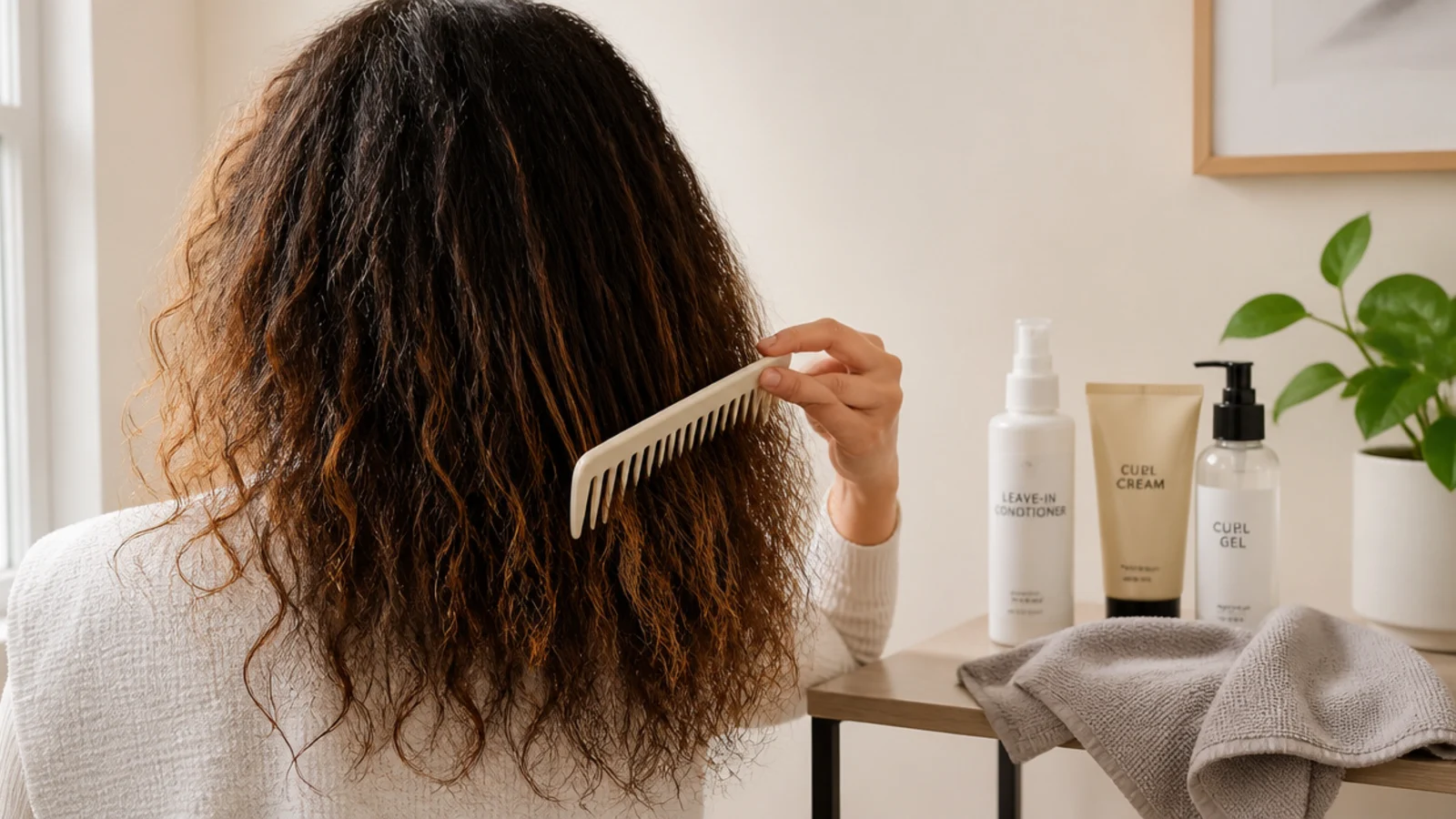
Every hold rating on this page assumes the style went onto hair that was prepared. Wash two or three times a week in lukewarm water, not hot, since hot water lifts the cuticle before you have done anything else. Condition the mid-lengths and ends, then detangle in the shower with a wide-tooth comb while the conditioner is still in, because that is the only moment hair is slippery enough to comb without tearing. Rinse cool. Then the step that changes everything: apply stylers to soaking wet hair, not damp. Water is the distribution vehicle, and on damp hair a leave-in lands in patches and leaves dry stretches that frizz first. Squeeze, do not rub, with a microfiber towel or a cotton t-shirt, never a terry towel, whose loops physically catch and lift cuticle scales. A weekly deep treatment helps the whole week hold better; options are in hair mask for frizzy hair.
Leave-In, Cream, Gel: What Each Product Actually Does
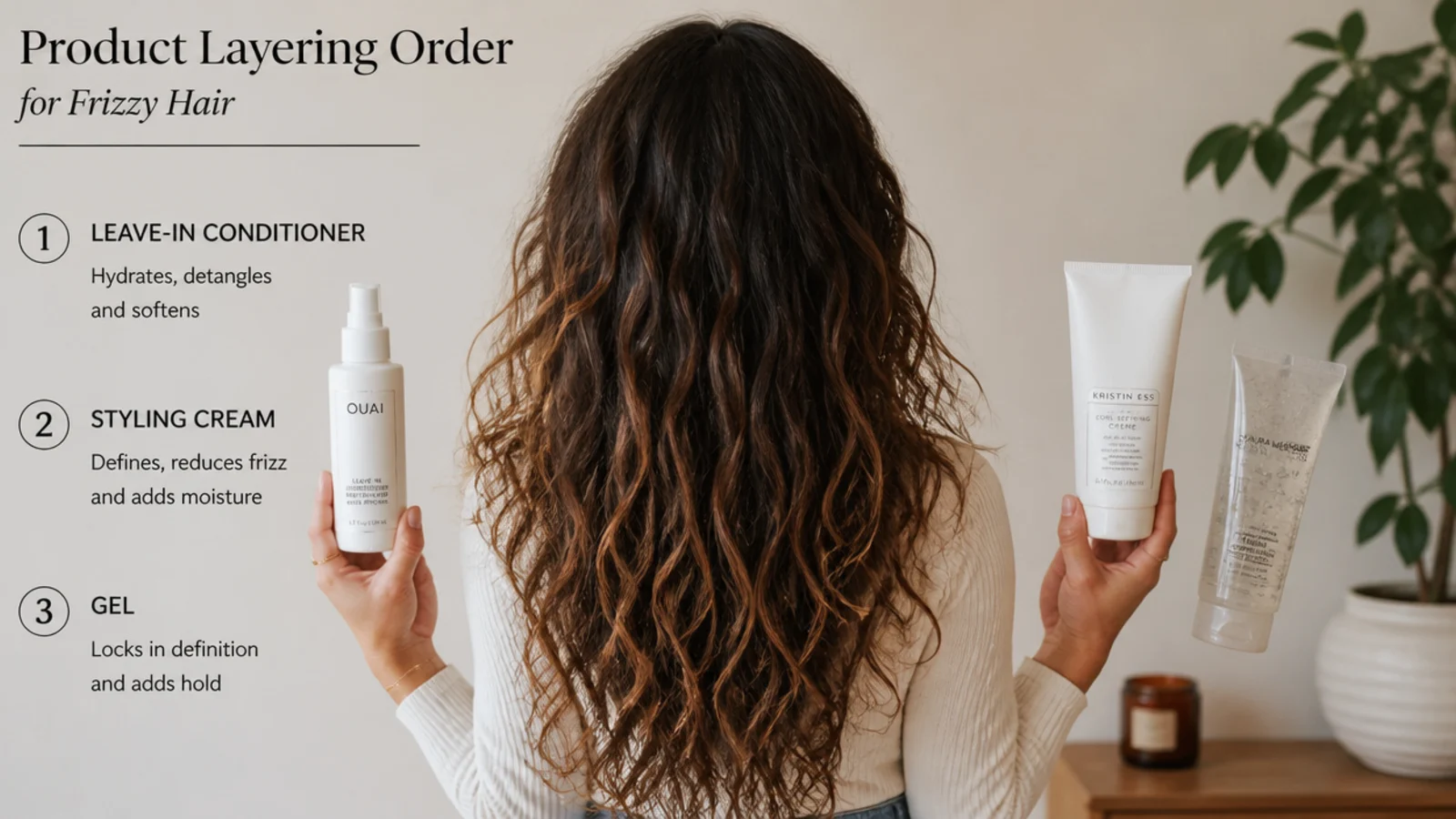
Three products, three jobs, one order. Leave-in conditioner hydrates: it puts water and humectants into the strand and it goes on first, on soaking wet hair, roughly a quarter-sized amount for shoulder-length hair and a half-dollar for waist length. Styling cream defines and softens: it adds slip and weight so strands clump together instead of separating into a haze, and it goes on second while the leave-in is still wet. Gel seals: it forms a cast over everything underneath, and that cast is what makes a style hold for ten hours instead of four. It goes on last and it must go on wet, or it flakes. Once dry, scrunch the cast out with a single drop of lightweight oil and the hold stays while the crunch disappears. Skipping the gel is the most common reason a style that looked good at 8am has collapsed by lunch.
Cuts and Layers That Hide Frizz vs Cuts That Cause It
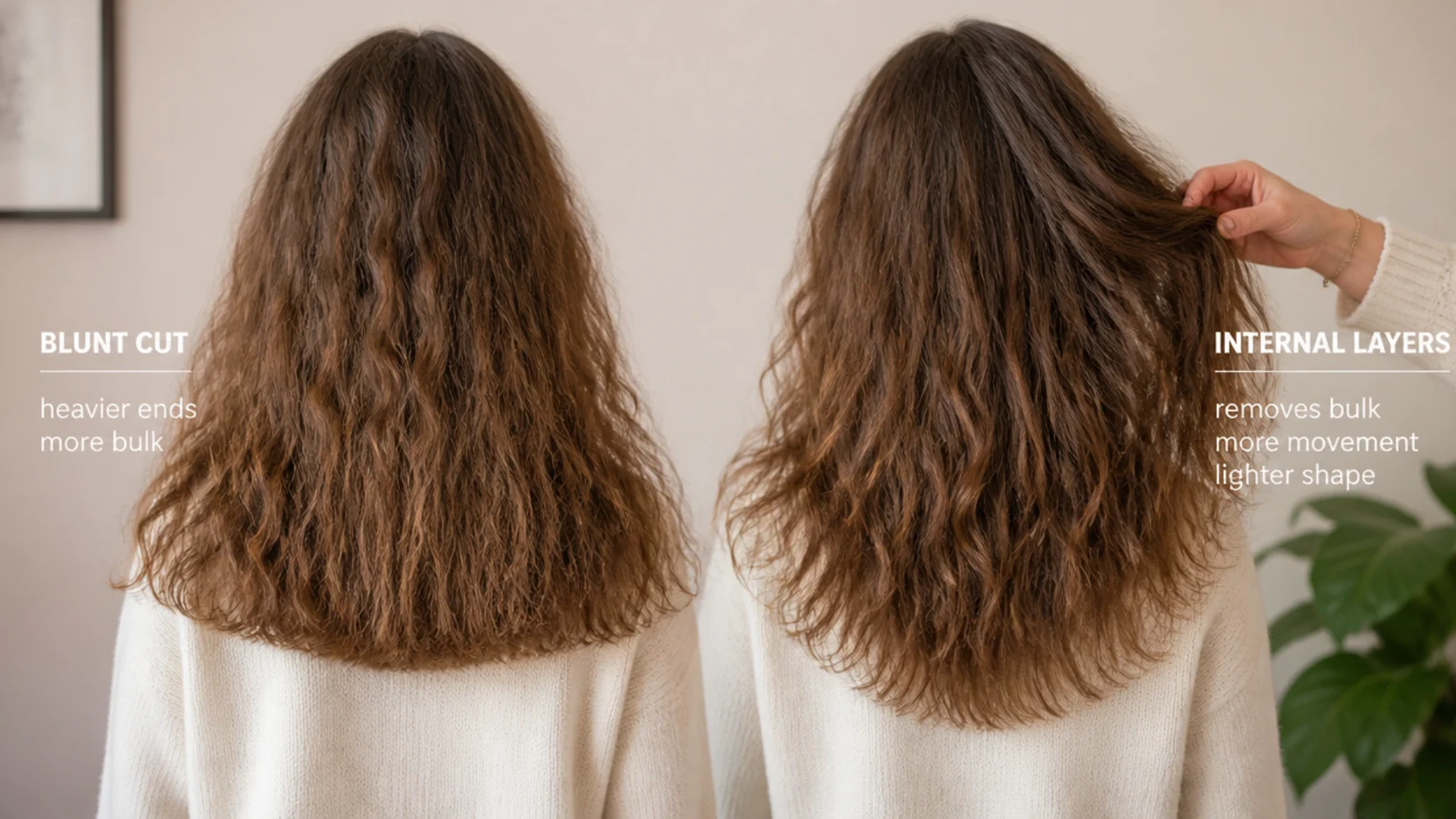
The cut underneath decides how easy all twenty of these styles are. Blunt, heavy ends look sleek in a salon chair and then read frizzier in real life, because a hard line makes every hair that escapes it obvious, and the weight below drags the mid-lengths into a triangle. Internal layers do the opposite: they remove bulk from inside the shape without shortening the outline, so volume redistributes instead of stacking. Ask for internal debulking or invisible layering, and specifically ask your stylist not to use thinning shears near the crown, because the blunt short pieces they leave behind become halo frizz within weeks. Long face-framing layers give braids and half-ups something soft to fall against. A mid-length shape with soft internal layers is the most style-friendly cut for frizzy hair, and mid length haircut styling covers the day-to-day work; see wavy mid length haircut and shaggy mid length haircut for shapes that work.
Humidity, Sleep and the Daily Habits That Decide Your Hold
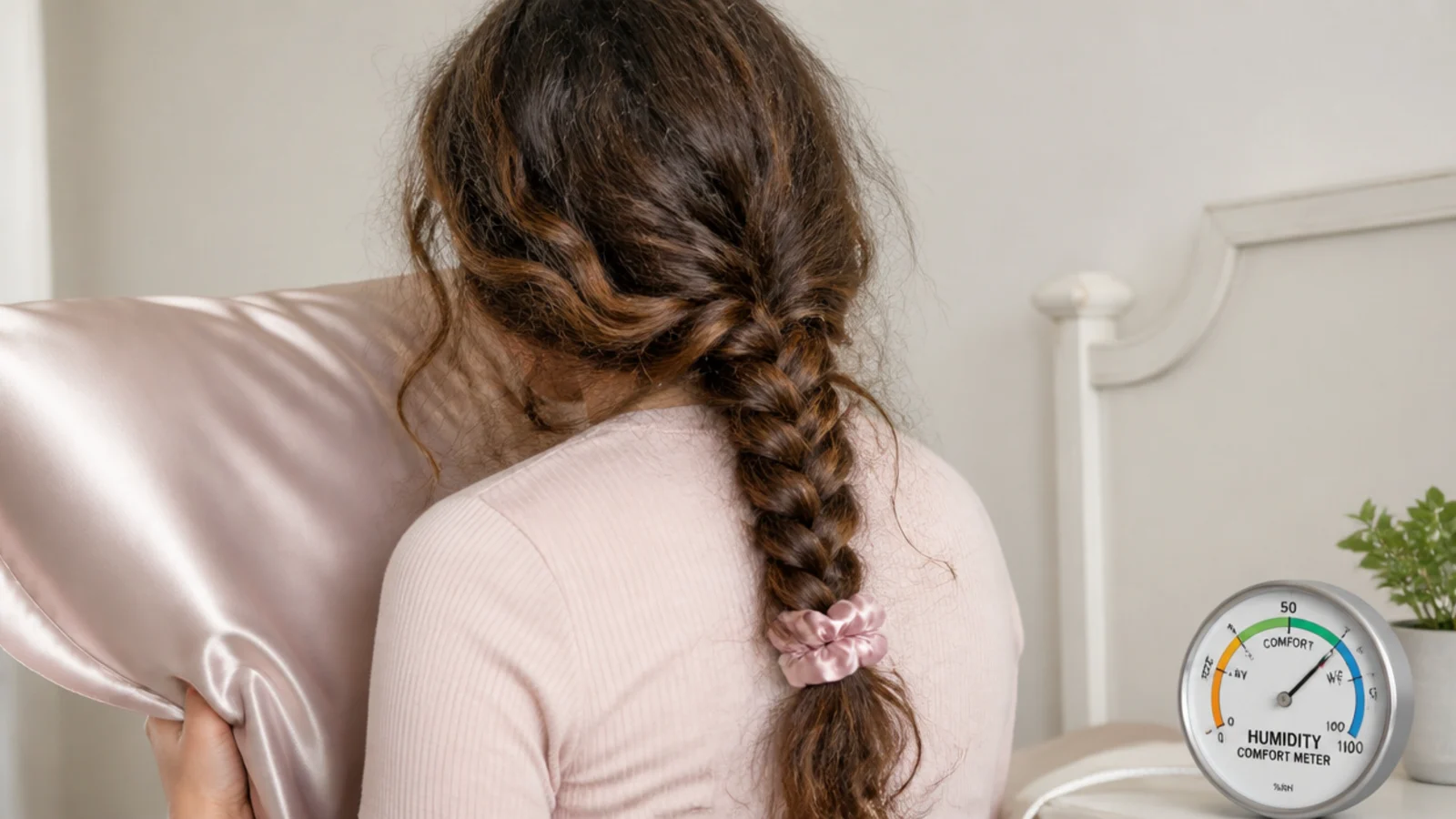
Humidity is not just heat. What matters is dew point, the temperature at which air is saturated, and it is the number that predicts your hair day better than the percentage on your weather app. Below about 40 degrees Fahrenheit the air is dry and pulling water out of your hair, so lead with cream and oil and go lighter on humectants. Between 40 and 60 is the comfortable middle where most routines behave. Above 60 the air is pushing water into the strand, so cut back on glycerin-heavy leave-ins, seal harder with gel, and pick a braided style from the comparison table above. At night, sleep on silk or satin, or in a loose braid, because cotton is abrasive and eight hours of friction against it is a full styling session undone. Two more habits: never brush dry, always finger-rake or brush wet with conditioner in, and touch your hair as little as possible while it dries.
Frequently Asked Questions
What hairstyle is best for frizzy hair?
For all-day hold, a braided style wins: a French braid, double Dutch braids or a rope braid physically holds strands against each other so a lifting cuticle cannot escape, and those hold eight to ten hours even at high dew points. For speed, the half-up claw clip twist takes ninety seconds and works from a chin bob upward. For a wash-and-go look, plopped and diffused waves are the frizz-friendly choice.
How do you style frizzy hair without heat?
Apply leave-in, cream and gel to soaking wet hair, then either plop into a cotton t-shirt for up to two hours or sleep in two loose braids on a silk pillowcase. Both set the shape while hair dries in place, which is where definition comes from. In the morning, finger-rake at the roots and scrunch the cast out with one drop of oil. Never brush the result.
Why does my hair get frizzy as soon as I go outside?
Because the cuticle is lifted and the outside air has more moisture than your hair does. The strand absorbs that water, swells unevenly and buckles away from its neighbors, which is what you see as frizz. It happens within minutes at dew points above 60 degrees Fahrenheit. Sealing with a gel cast before you leave, rather than smoothing with a brush, is what actually prevents it.
Should I brush frizzy hair before or after styling?
Neither, if it is dry. Brush only in the shower with conditioner still in, using a wide-tooth comb, because that is the one moment the strands are slippery enough to separate without tearing. Once hair is out of the shower, use fingers only. Brushing dry frizzy hair shears the raised cuticle scales, breaks curl clumps into individual strands and roughly triples the visible halo.
How do I stop my bun or ponytail from going frizzy by lunchtime?
Two changes. First, style onto hair that carries a gel cast rather than bare hair, since the cast is what holds the cuticle down for the afternoon. Second, stop tightening it. A style slips because swelling strands are pushing outward, and pulling tighter only stresses the hairline and worsens crown frizz. Instead, re-pin higher, or convert it into a claw clip twist.
Does frizzy hair mean my hair is damaged?
Not necessarily. Frizz is a moisture and cuticle-position issue, and perfectly healthy curly or coarse hair frizzes simply because it is dry or because the air is humid. Damage is a separate diagnosis: split ends, mushy stretchiness when wet and breakage mid-shaft. If your frizz is only at the ends, that is usually wear and a trim fixes it. All-over surface frizz is usually dehydration.
Can straight hair be frizzy?
Yes, and it is common on coarse, thick straight hair. Straight strands with a raised cuticle absorb ambient moisture exactly the same way wavy hair does, they just show it as a fine standing halo rather than as broken curl clumps. The fix is identical: hydrate with a leave-in on soaking wet hair, seal with a light cream or serum, and skip the dry brushing.
How often should I wash frizzy hair?
Two to three times a week is the usual sweet spot. Washing daily strips the natural oils that keep the cuticle lying flat, and washing far less can leave buildup that stops product absorbing. Use lukewarm water rather than hot, condition mid-lengths and ends every wash, and finish with a cool rinse. Between washes, refresh with a water mist and a little leave-in rather than a full wash.
What hairstyles hide frizz at the crown?
Crown or halo frizz is short regrowth standing up, so cover it rather than smoothing it. A braided crown, a folded silk scarf headband and a half-up claw clip twist all sit directly over that zone. Avoid tight slick buns and high tight ponytails worn daily, because the scalp tension gradually breaks more short hairs at the part and makes the halo worse over months.
Which frizzy hair look are you saving?
If you remember one thing from these 20 frizzy hair hairstyles, make it this: the styles that survive a humid afternoon are the ones with structure built into them. A rope braid, a Dutch braid or a twisted chignon physically holds strands against each other, so a lifting cuticle has nowhere to escape to. Loose styles look beautiful and photograph better, but plan on a refresh, and carry a claw clip so you can convert a failing half-up into a twist without a mirror. Start with the loose low bun and the half-up claw clip twist, since both work at almost any length. For the care that makes all of them hold longer, read the frizzy hair guide or browse the rest of the frizzy hair hub.