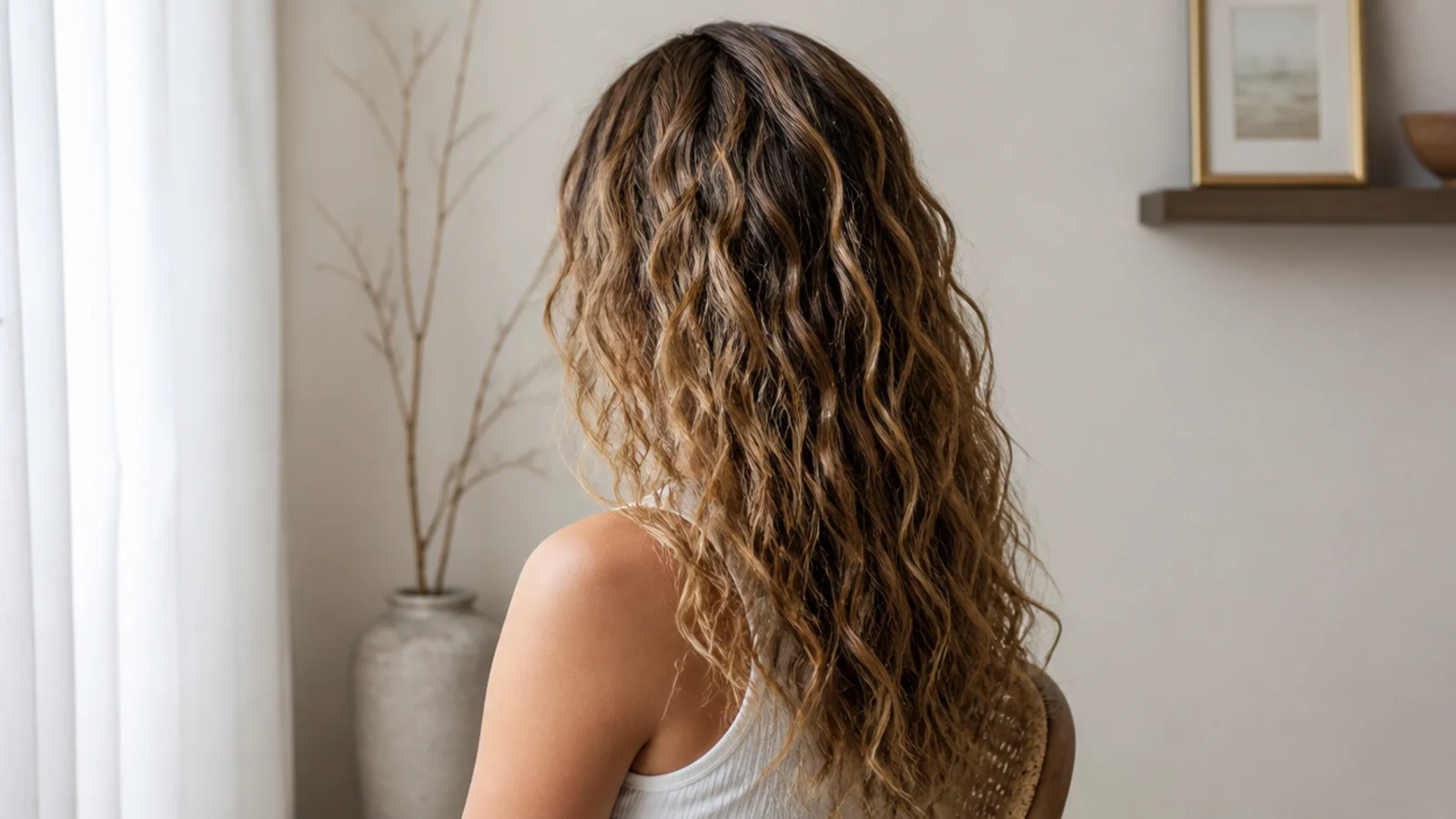
Quick Comparison
| Internal Debulking Layers | Blunt One-Length Cut | |
|---|---|---|
| Where weight is removed | Inside the hair, invisible from the surface | Nowhere; all weight kept at the perimeter |
| Frizz type it suits | Surface frizz, in-the-curl frizz, all-over expansion | Humidity swelling on fine or medium density hair |
| Best hair density | Medium to very thick, coarse strands | Fine to medium only; thick hair turns triangular |
| Silhouette on a humid day | Narrows toward the jaw, holds a column shape | Widens at the ears, flares along the cut line |
| Daily styling time | 4 to 8 minutes with leave-in, cream and gel | 2 to 5 minutes, but needs a smoothing serum |
| Air dry friendly | Yes; built to dry into shape with no heat | Only with a point-cut edge to soften the line |
| How it looks at week 10 | Softens gradually, no line appears | Ends split visibly and the edge looks broom-like |
| Salon wording to use | Remove weight from the inside, no thinning shears | Keep one length but point cut a quarter inch in |
| Typical trim cycle | Dusting at 8 weeks, reshape at 12 to 16 weeks | Every 6 to 8 weeks to keep the line clean |
1. Chin-Length French Bob with Wispy Ends
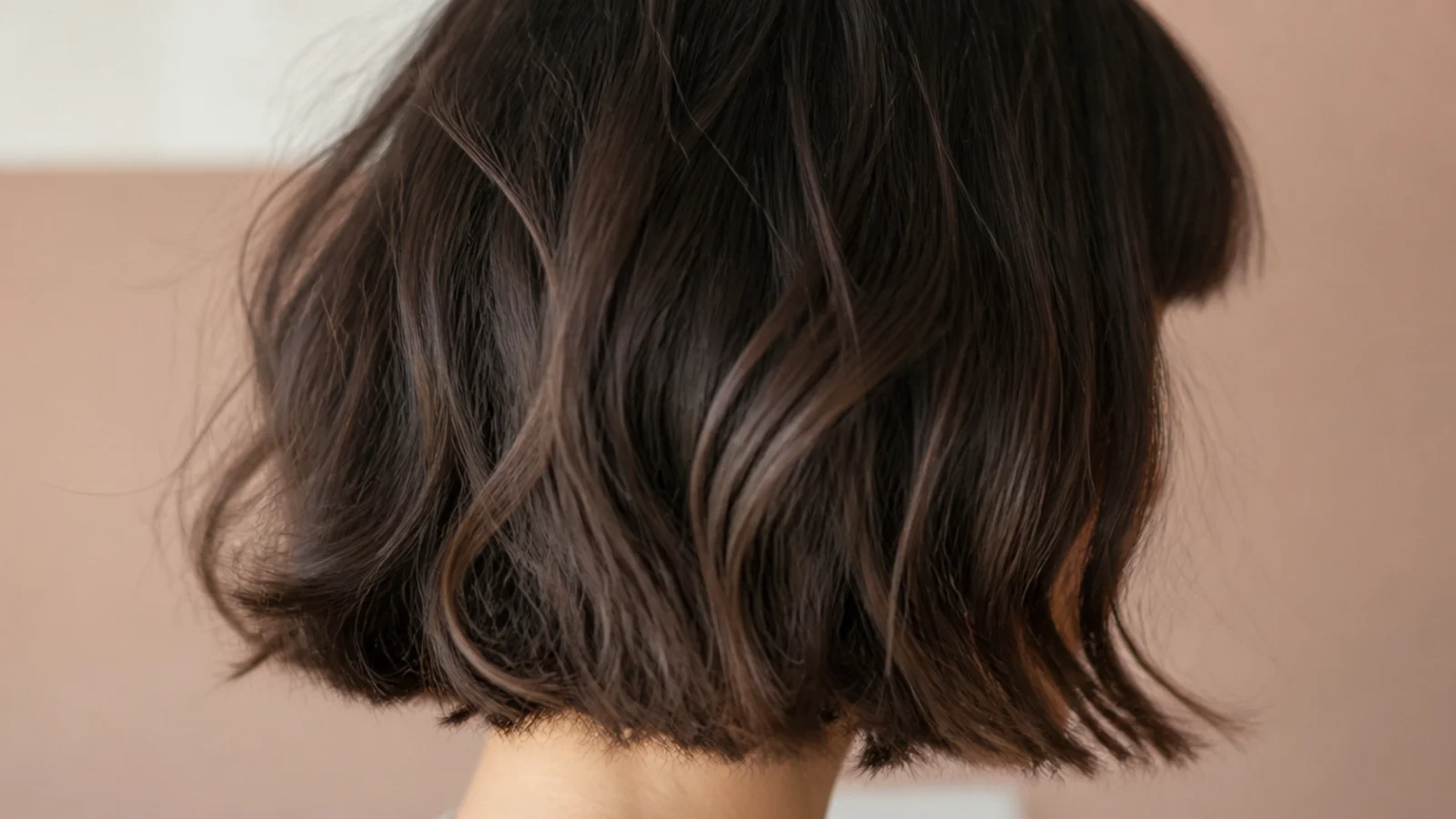
A French bob sits at the jaw, roughly 10 to 11 inches from the crown, with the last half inch point cut so the ends break into pieces instead of forming a solid shelf. That wispy edge is what stops a short bob from reading as a puffy bell on 2B and 2C waves. Ask for a soft micro fringe only if your hairline is not doubled, since frizzy baby hairs at the front will fight a blunt bang. Air dry with a nickel of gel and it holds a shape by itself.
Who it suits: Oval and heart face shapes with fine to medium density waves.
Tip: Ask for the ends point cut at a 45 degree angle, not chipped straight up, so the wisps stay soft.
2. Jaw-Length Bob with Interior Debulking Layers
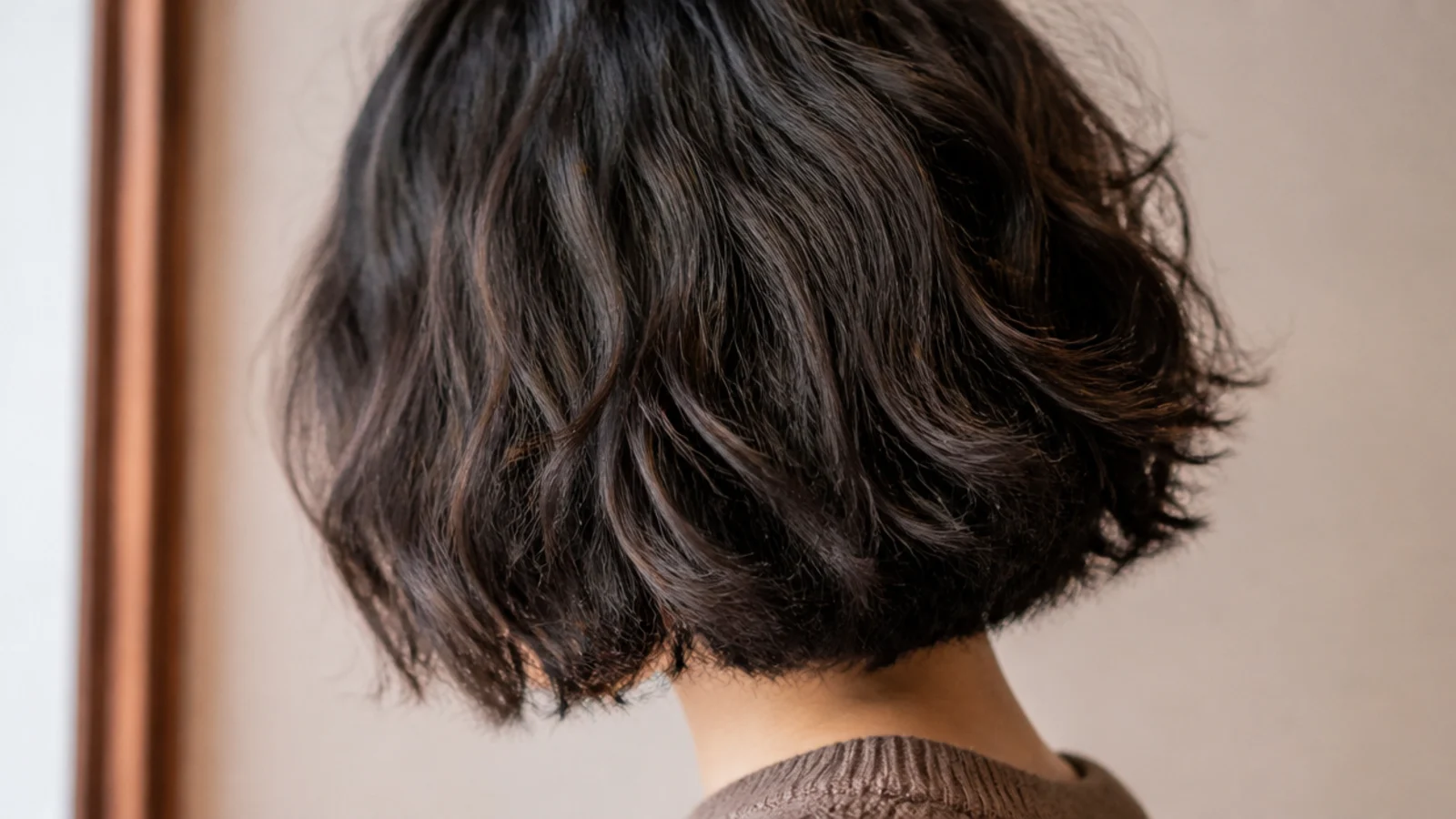
The same jaw-length outline, but with weight carved out of the middle section under the surface so the top layer lies flat over a lighter interior. On thick coarse hair a one-length bob at the jaw is the classic pyramid disaster; debulking underneath fixes it without a single visible layer line. The stylist takes out roughly 20 percent of the interior weight in vertical slices, never with thinning shears. Styling is 5 minutes: leave-in on soaking wet hair, cream, then air dry.
Who it suits: Thick, dense, coarse hair with all-over expansion frizz.
Tip: Say remove weight from the inside only, keep my perimeter blunt, and no thinning shears.
3. Curly Pixie with an Elongated Crown
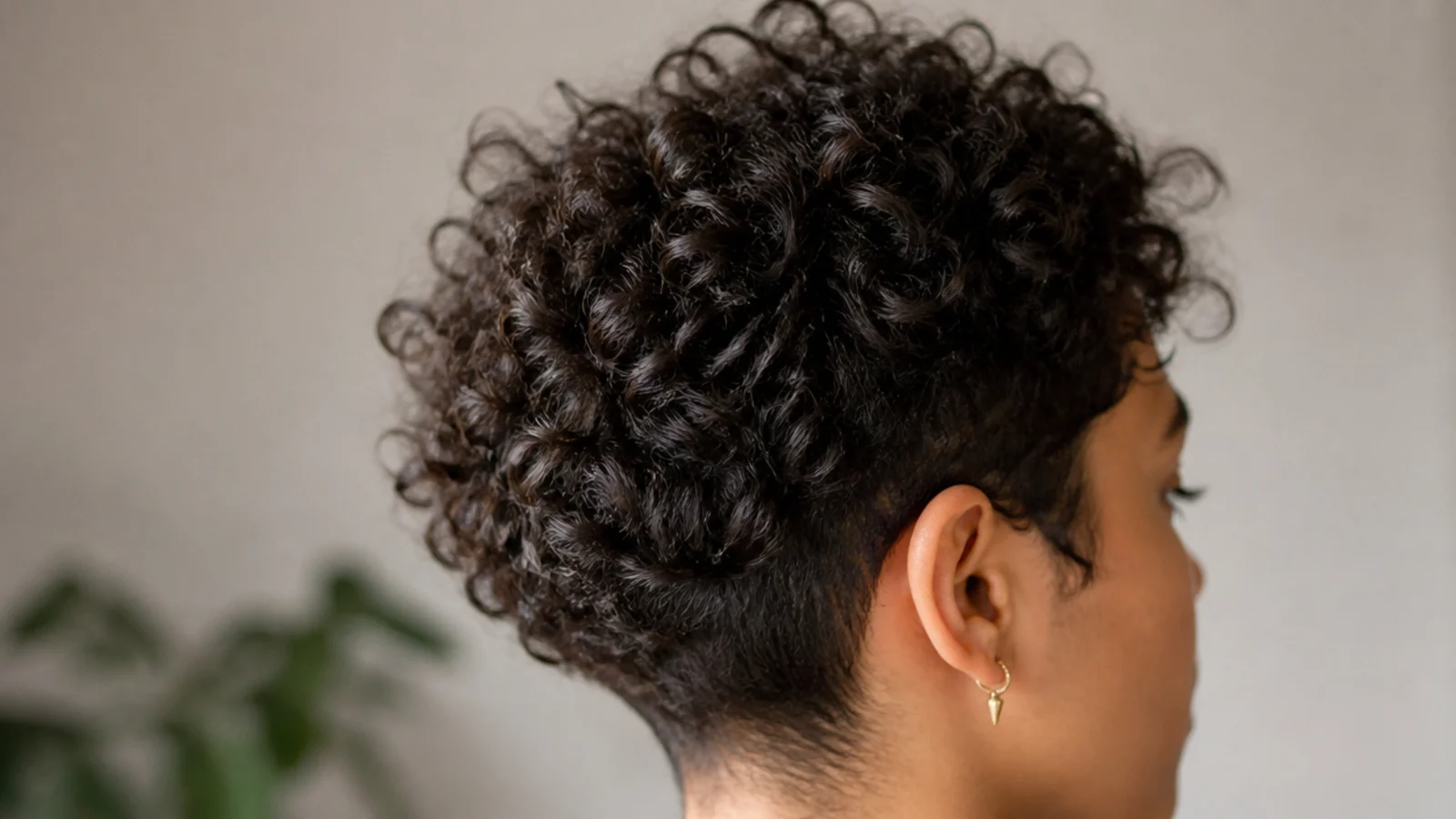
Sides and nape taken to about 1.5 inches with the crown left at 4 to 5 inches so the curls stack upward instead of ballooning sideways. On 3A to 3C hair this is the cut that turns crown frizz into deliberate volume, because the shortest hair is exactly where the puff used to sit. It must be cut dry, curl by curl, so each spiral is shaped where it actually falls. Daily styling is under 3 minutes with a pea of gel scrunched into wet curls.
Who it suits: Round and square faces with tight, dense curls and halo frizz.
Tip: Book a dry curl-by-curl cut and refresh the nape every 6 weeks so the shape stays elongated.
4. Short Textured Shag with a Soft Fringe
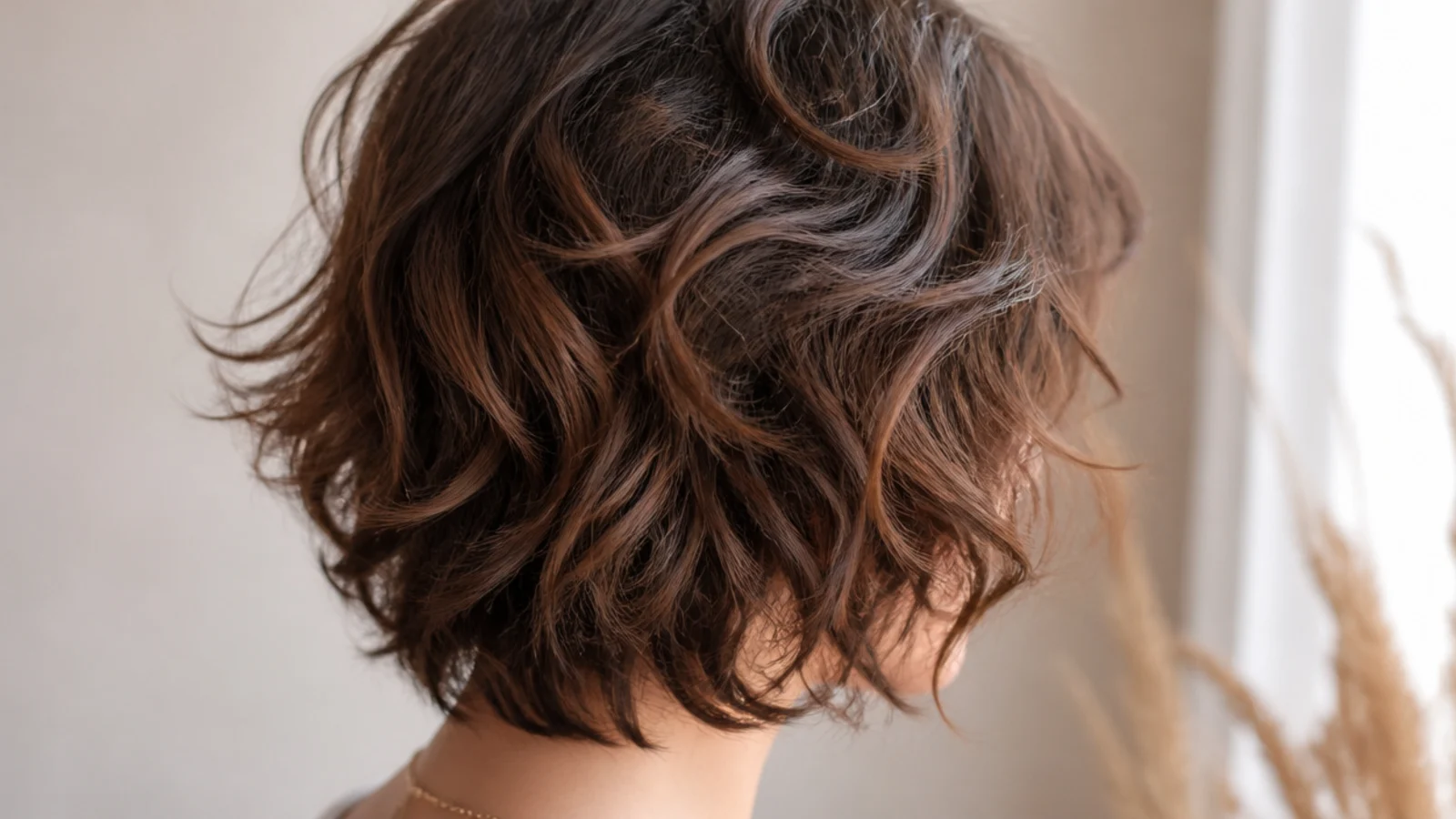
A collar-grazing shag around 12 inches long with layers stacked from the cheekbone down and a soft fringe that sits at the brow. The shag distributes volume down the whole length instead of letting it pile at the ears, which is the single most useful thing a cut can do for puffy frizz. It is deliberately imperfect, so flyaways read as texture rather than damage. Works air dried with mousse, no diffuser needed, in about 4 minutes.
Who it suits: Oval and long faces with medium density 2B to 3A texture.
Tip: Pair it with the styling method in our shaggy mid length haircut guide.
5. Ear-Length Layered Pixie for Fine Frizzy Hair
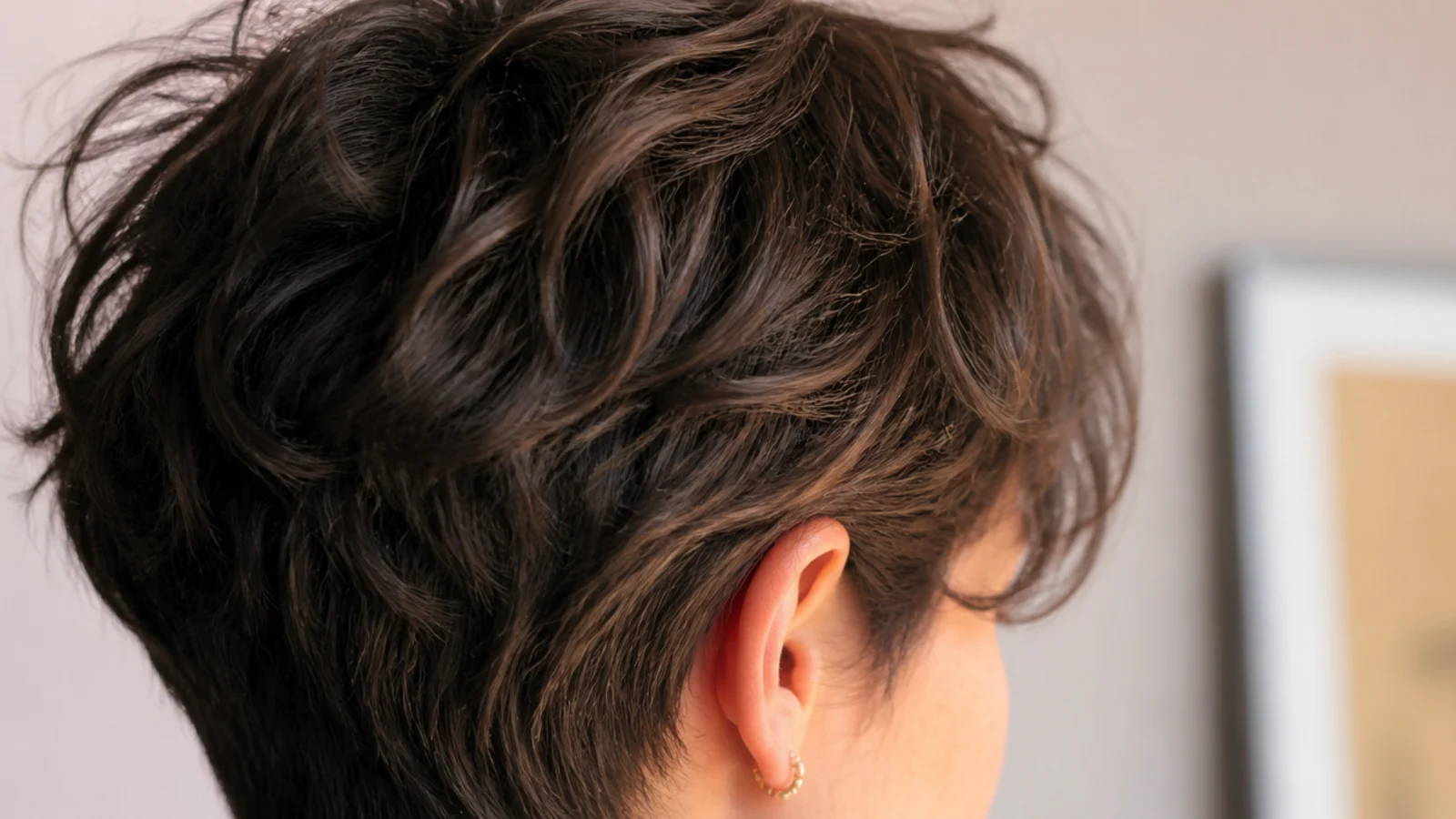
Fine hair frizzes at the surface and the crown while the lengths stay limp, which is the worst combination for a long cut. An ear-length pixie with graduated 2 to 3 inch layers puts the shortest hair where the halo frizz lives, so the flyaways become the shape. Keep a longer side-swept front section of about 4 inches to avoid a helmet outline. Two minutes of styling: a pea of cream on damp hair, then hands off.
Who it suits: Fine density hair with halo and crown frizz, any face shape except very round.
Tip: More styling ideas in how to style short fine hair.
6. Collarbone Cut with Curtain Bangs
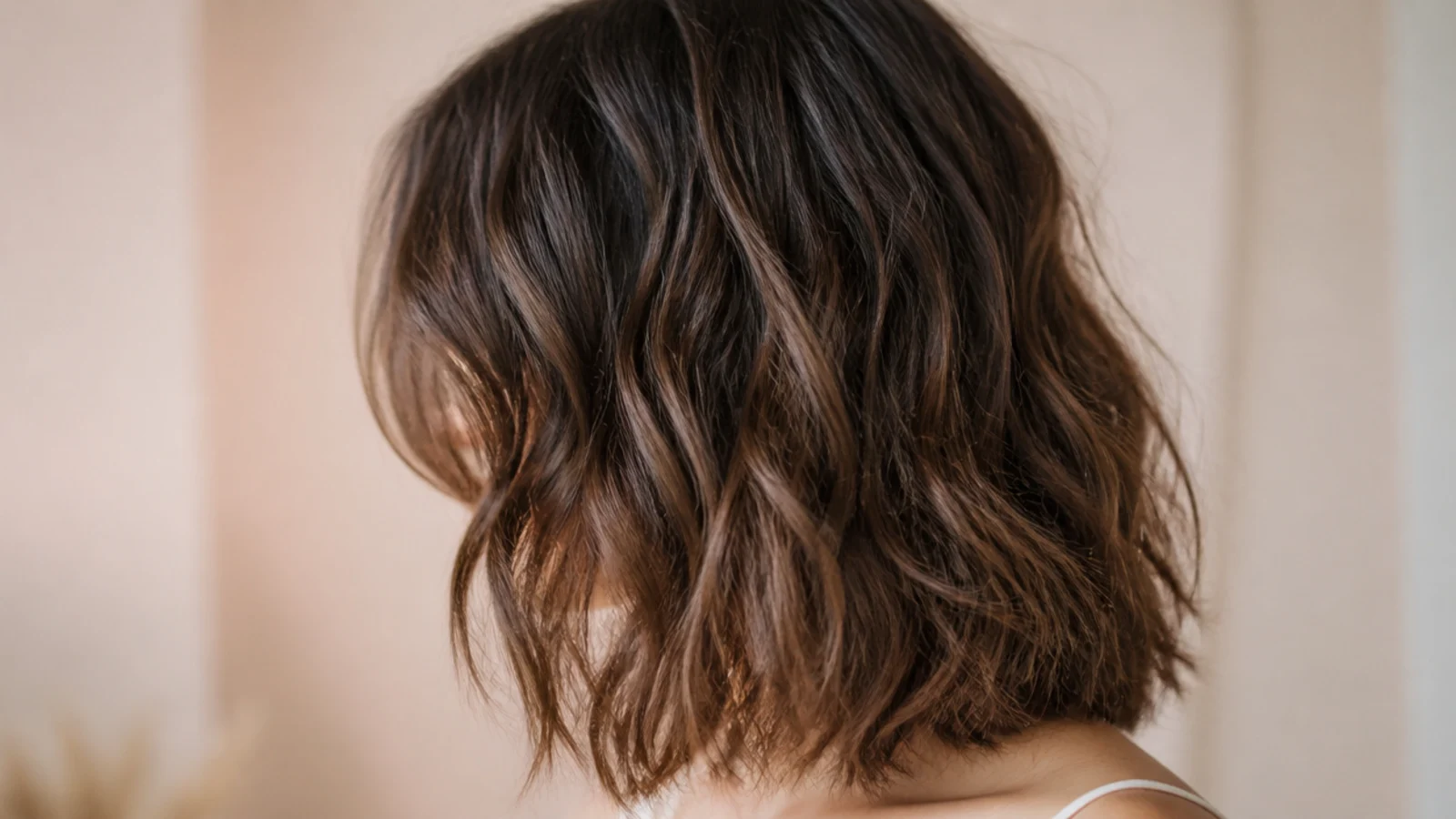
The most requested haircut for frizzy hair for good reason. Length sits at the collarbone, roughly 14 inches, with curtain bangs cut to the cheekbone at the shortest point and blending into the lengths by the jaw. The bangs give the front the smoothing attention it needs while the rest air dries, so you only style 10 percent of your head. Collarbone is also the length where waves are long enough to weigh themselves down but short enough to keep body.
Who it suits: Round, square and heart faces with 2A to 2C waves.
Tip: Read mid length haircut with curtain bangs before you book.
7. Wavy Shag Cut for Air-Dried Frizzy Hair
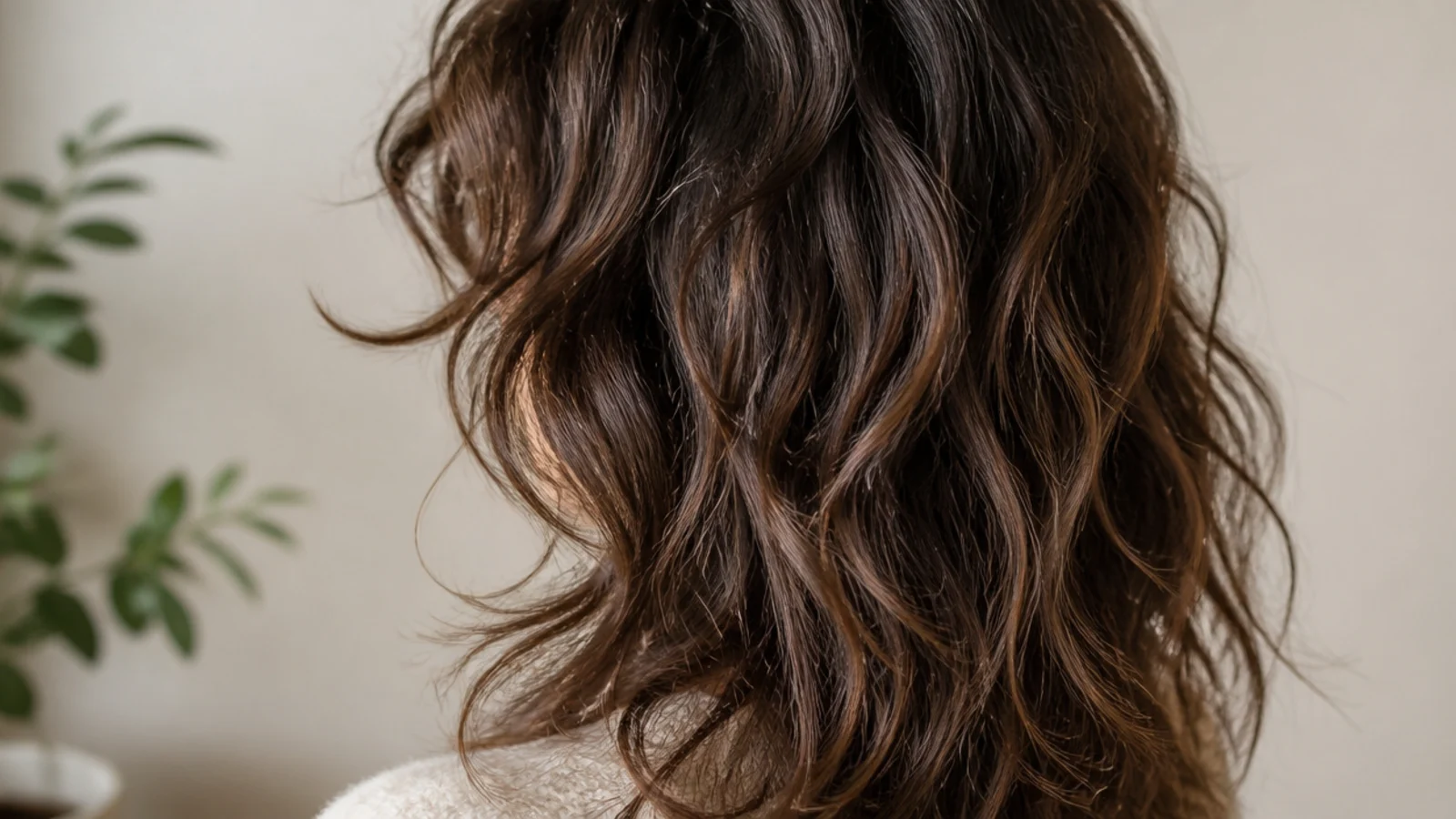
A modern shag at 15 to 16 inches with layers starting at the cheekbone and continuing in short increments the whole way down. Because every section has a slightly different length, waves interlock rather than sitting parallel, and interlocking waves hide surface frizz almost completely. This is the cut to ask for if you never want to own a blow dryer. Apply gel to soaking wet hair, scrunch, and leave it; total time is about 4 minutes.
Who it suits: 2B and 2C waves with medium to thick density and surface frizz.
Tip: See how the same shape reads on defined waves in frizzy wavy hair.
8. Mid-Length Round Layers on Thick Frizzy Hair
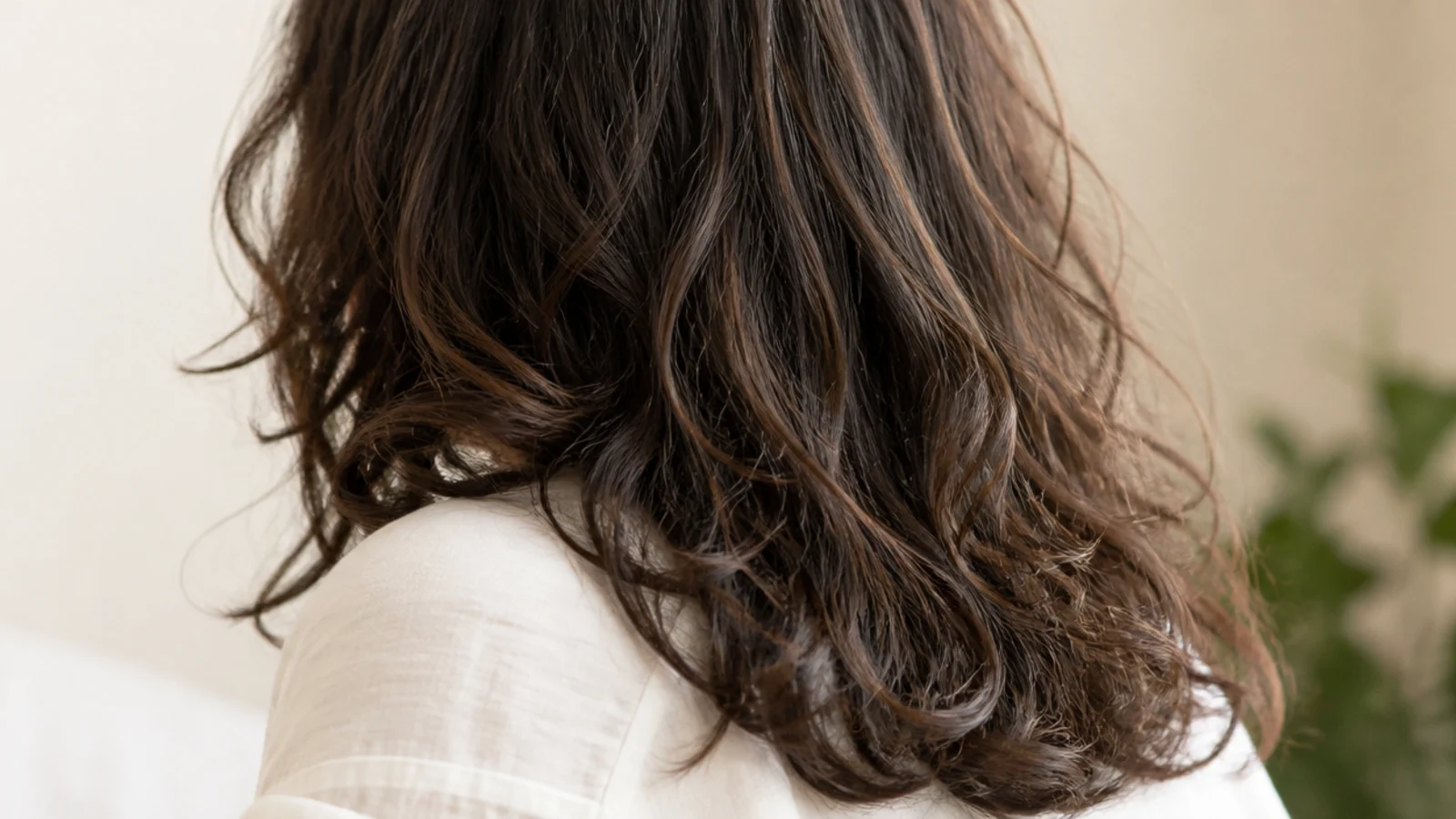
Soft rounded layers cut in a curved line from a 12 inch front piece to a 16 inch back, so the perimeter stays full while the interior loses bulk. Round layers suit density because they redistribute weight in a curve instead of stacking it at one horizontal line, which is what creates the shelf look on thick hair. Expect 6 to 8 minutes of styling with cream plus gel, or 15 with a diffuser held still at the roots.
Who it suits: Thick, dense hair on oval and long faces.
Tip: Compare layer depth in our mid length haircut layers breakdown.
9. Blunt Lob with Point-Cut Ends for Puffy Hair
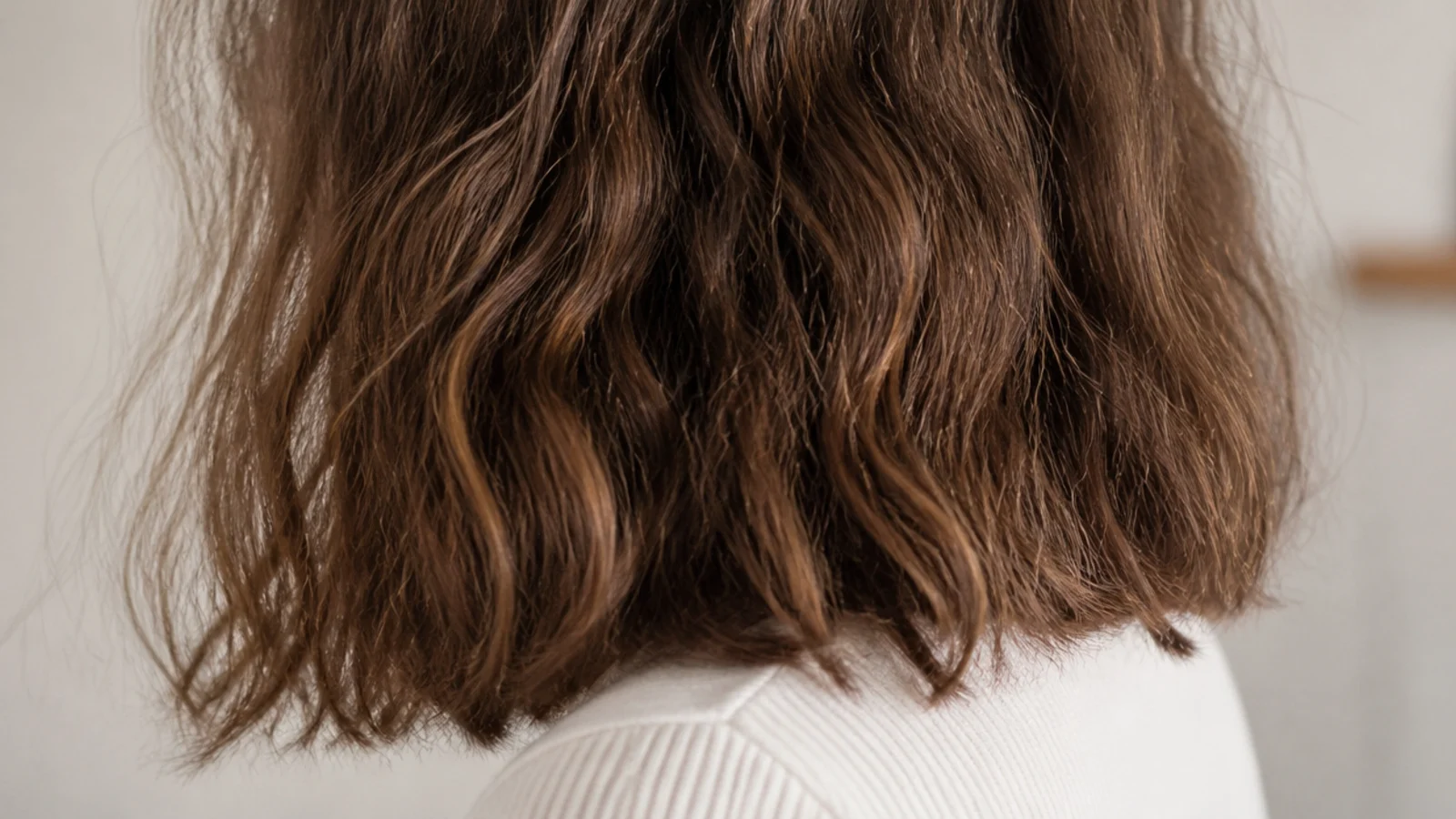
Counterintuitive but true: puffy frizz sometimes needs more weight, not less. A lob just below the shoulder at about 13 inches, cut blunt for weight and then point cut a quarter inch into the edge to soften it, gives the hair enough mass to pull down against its own expansion. The point cutting is non-negotiable, since a fully blunt edge on frizzy hair looks like a broom by day two. Best on coarse strands that are frizzy but not curly.
Who it suits: Coarse, straight to 2A hair with all-over puffiness; square and heart faces.
Tip: More at this length in bob haircuts.
10. Modified Wolf Cut with Density Control
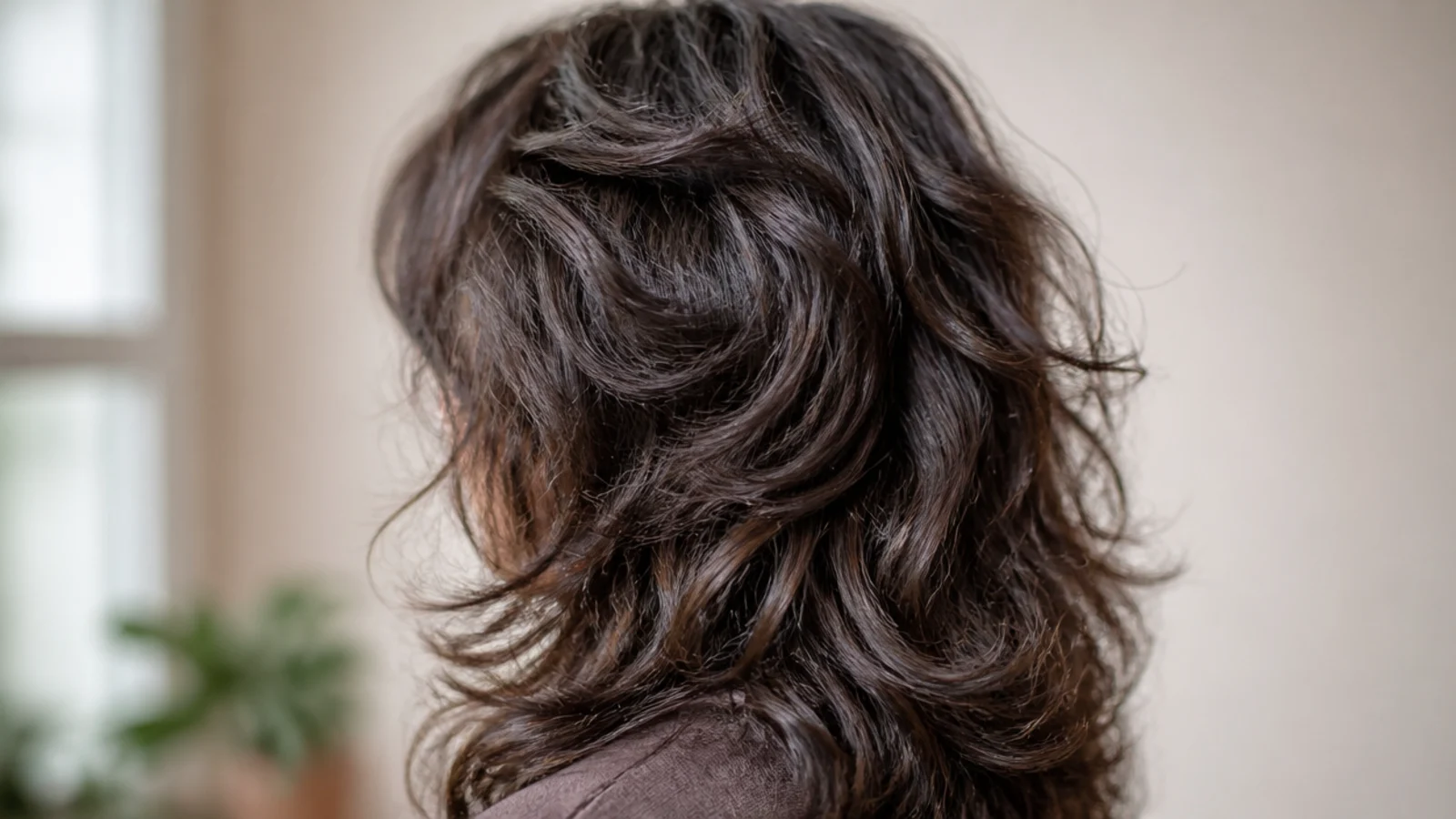
A standard wolf cut piles short feathered layers on the crown, which is a disaster if your frizz is crown-based. The modified version starts the shortest layer at the jaw rather than the ear, keeps the perimeter at 16 inches and dense, and feathers only the mid-lengths. You get the shape without the mullet-and-halo effect. Ask for internal debulking through the back so the density stays but the bulk goes. Styling runs 7 minutes with cream and gel.
Who it suits: Thick 2C to 3A hair, oval and diamond faces, in-the-curl frizz.
Tip: Say start my shortest layer at the jaw, not the ear, and keep the perimeter dense.
11. Face-Framing Layers Starting Below the Chin

The safest layer on frizzy hair. Two front sections cut on a long diagonal from just below the chin, around 12 inches, down into the length, with nothing shorter anywhere else. Because the shortest piece sits below the widest part of the face, it cannot create the ear-level flare that ruins most layered cuts on frizz. It also gives you a small, smoothable front section for days you want polish without straightening everything.
Who it suits: Any density, any texture; especially round faces that need vertical lines.
Tip: See the shape in detail in face framing mid length haircut.
12. Long Blended Layers with No Hard Ends
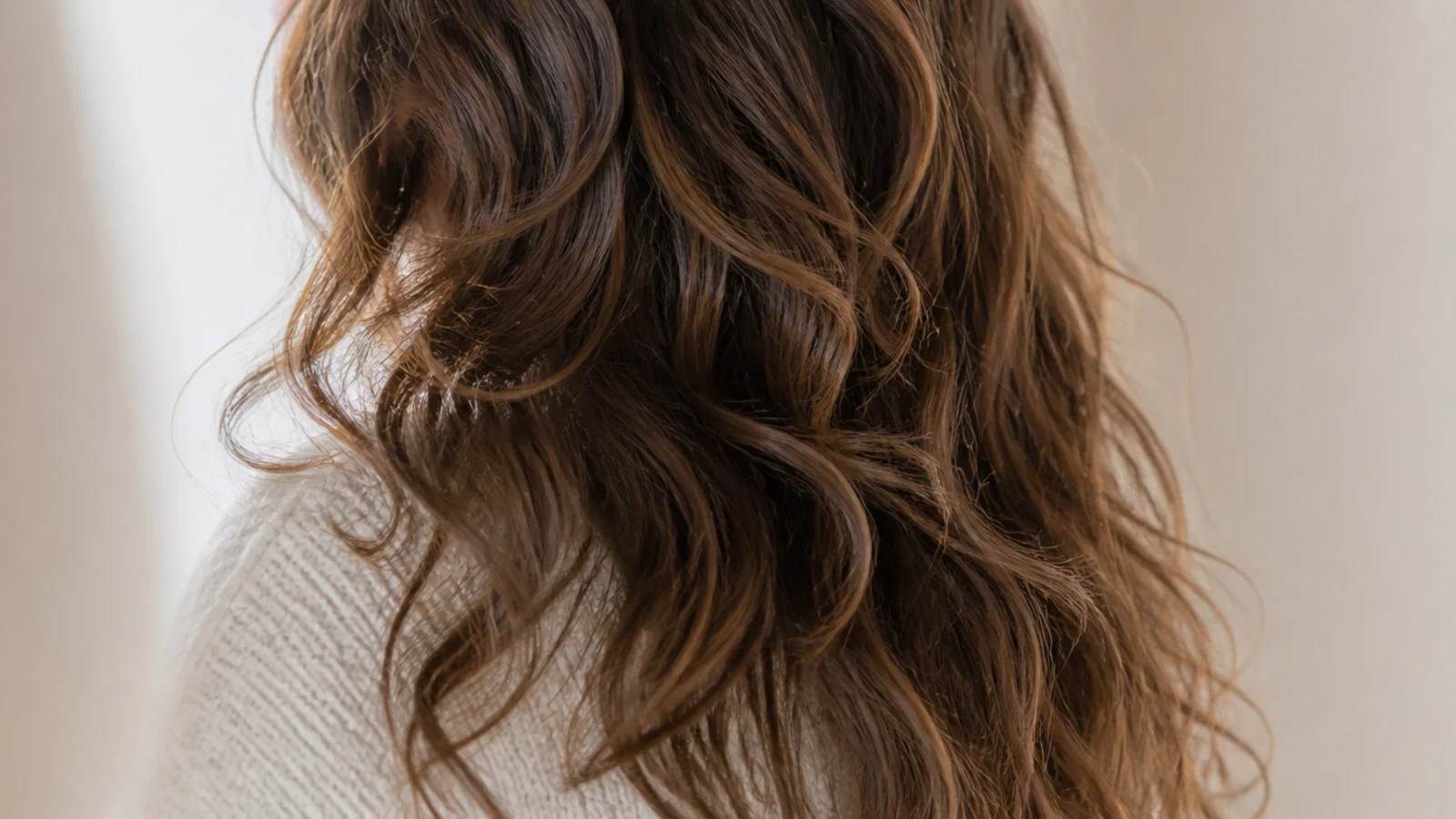
Length kept at 20 inches or more with layers so gradual that no single line is visible, and every end tapered rather than cut square. Long hair is genuinely good for frizz because its own weight holds the cuticle down, and this cut keeps that advantage while stopping the bottom third from looking like a solid block. Ask for invisible layers, which means slide cutting through the interior at a shallow angle. Styling is optional, which is the point.
Who it suits: Long, dense hair of any texture; long and oval faces.
Tip: Ask for slide cutting rather than a graduated layer, so no line ever grows out.
13. Butterfly Cut for Long Frizzy Hair
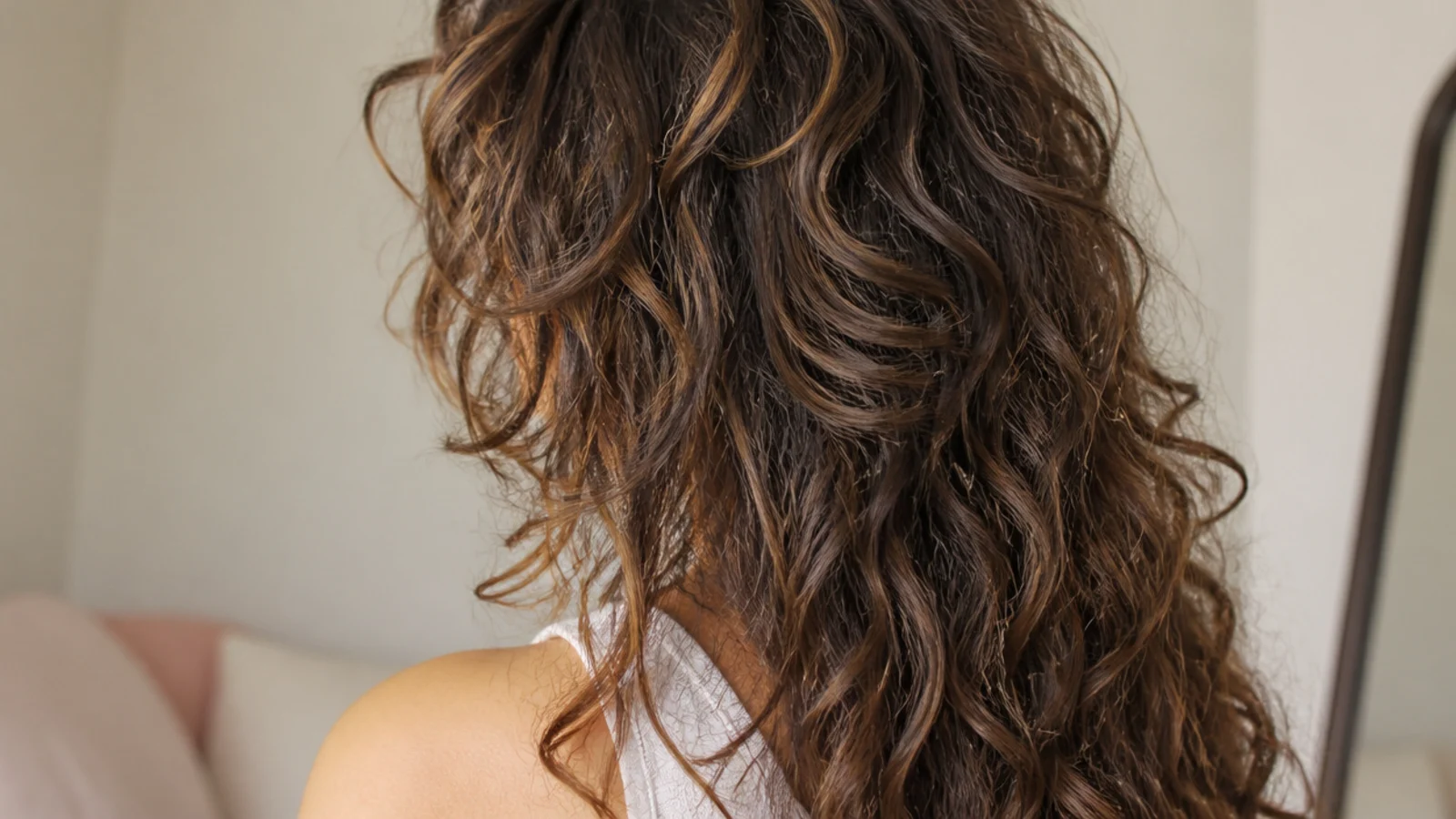
Two lengths in one cut: a shorter top layer around 12 inches that ends at the collarbone, sitting over a base kept at 20 inches or longer. On frizzy hair the shorter top acts like built-in volume so you never need a round brush, while the long base carries enough weight to stay smooth. The blend point is everything; ask for the two layers connected with a soft diagonal, not a shelf. About 8 minutes of styling with a diffuser.
Who it suits: Long, thick 2B to 3A hair; heart and oval faces.
Tip: Have the top layer cut dry so you can see exactly where it lands on your curl pattern.
14. Long Layers with Tapered Ends on Frizzy Curls
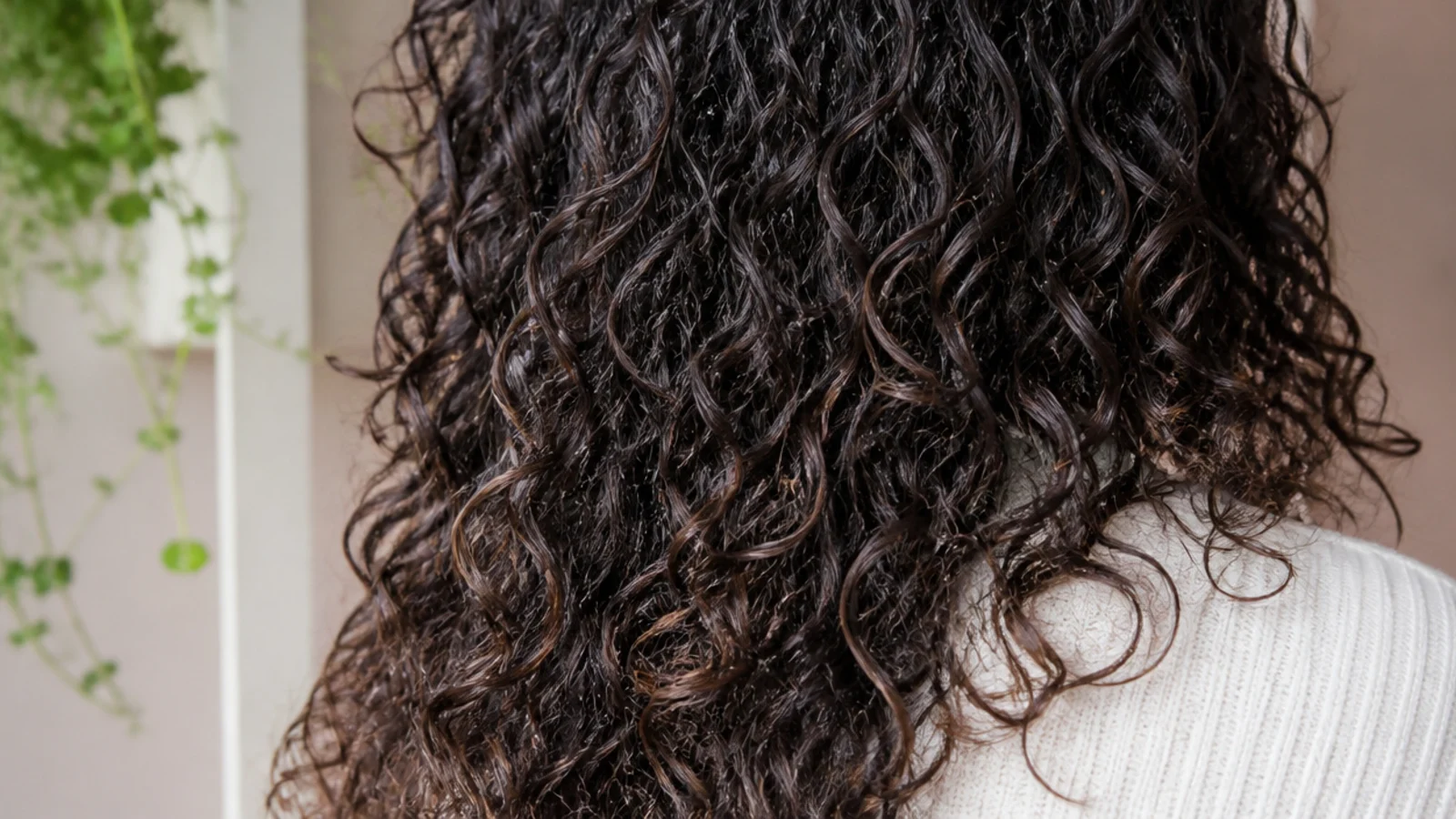
For 3A to 3C curls kept at 18 inches or longer, each curl clump is trimmed individually at its natural fall so the ends taper into the spiral instead of ending in a chopped blunt point. A blunt end on a curl unravels and reads as frizz within a week; a tapered end keeps spiraling. This is dry cutting only, and it takes 90 minutes in the chair, which is why it costs more. Refresh with water and a curl cream on day two.
Who it suits: 3A to 3C curls with in-the-curl frizz and ends-only frizz.
Tip: Pair it with the definition method in frizzy curly hair.
15. Grown-Out Curtain Bangs for Frizzy Hair
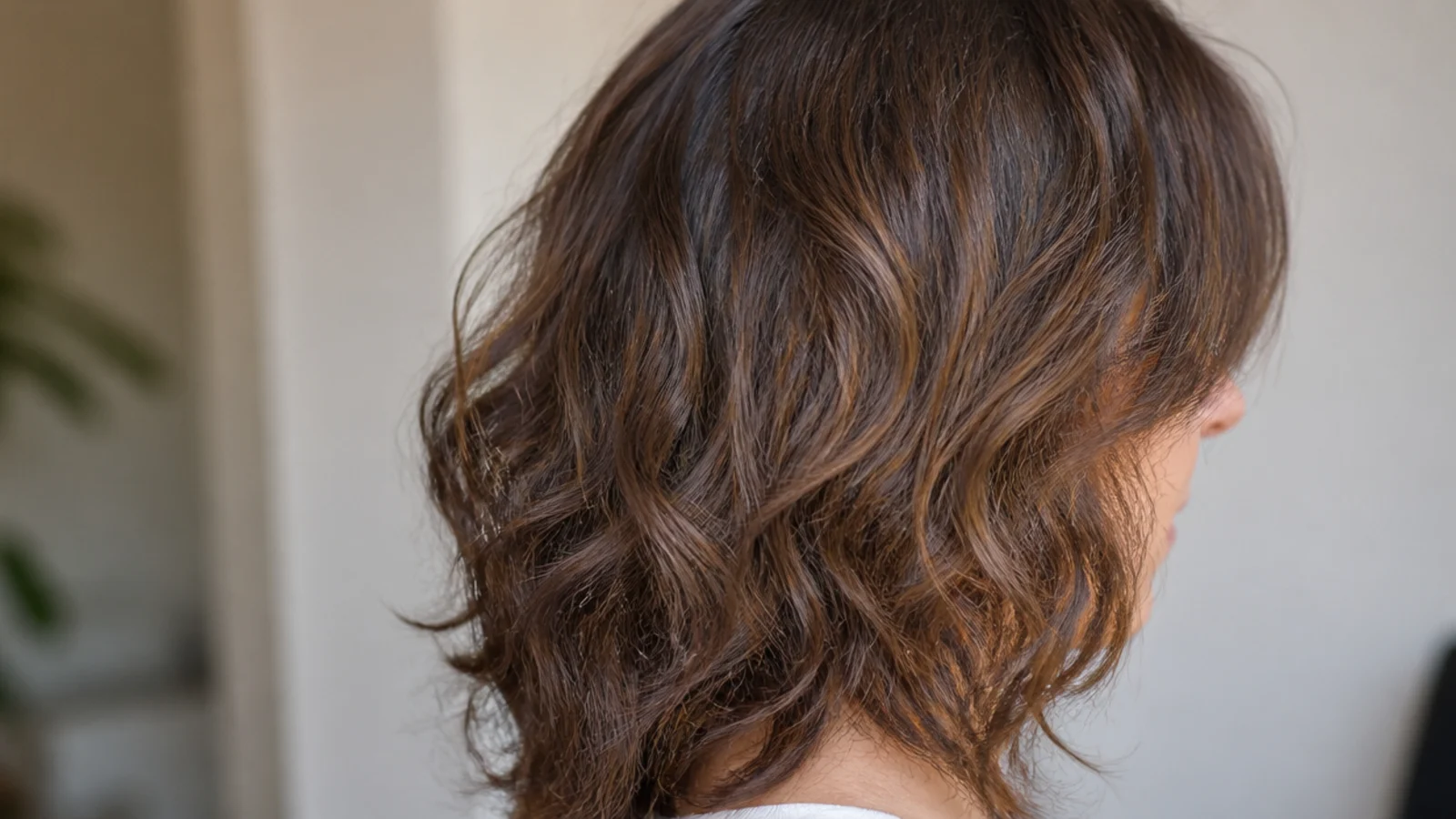
Curtain bangs allowed to reach the jaw at about 8 inches, so they read as a long front layer rather than a fringe. This is the lowest-commitment entry point to a haircut for frizzy hair, because there is no length to lose and nothing to regret. The longer front pieces sit heavily enough to stay smooth in humidity, unlike a short fringe that lifts and puffs the moment the dew point climbs. Two minutes with a flat brush and a drop of serum.
Who it suits: Anyone testing bangs on frizz-prone hair; round and square faces.
Tip: See the full grow-out sequence in grown out short curtain bangs.
Why Frizzy Hair Frizzes: The Cuticle and Moisture Mechanism
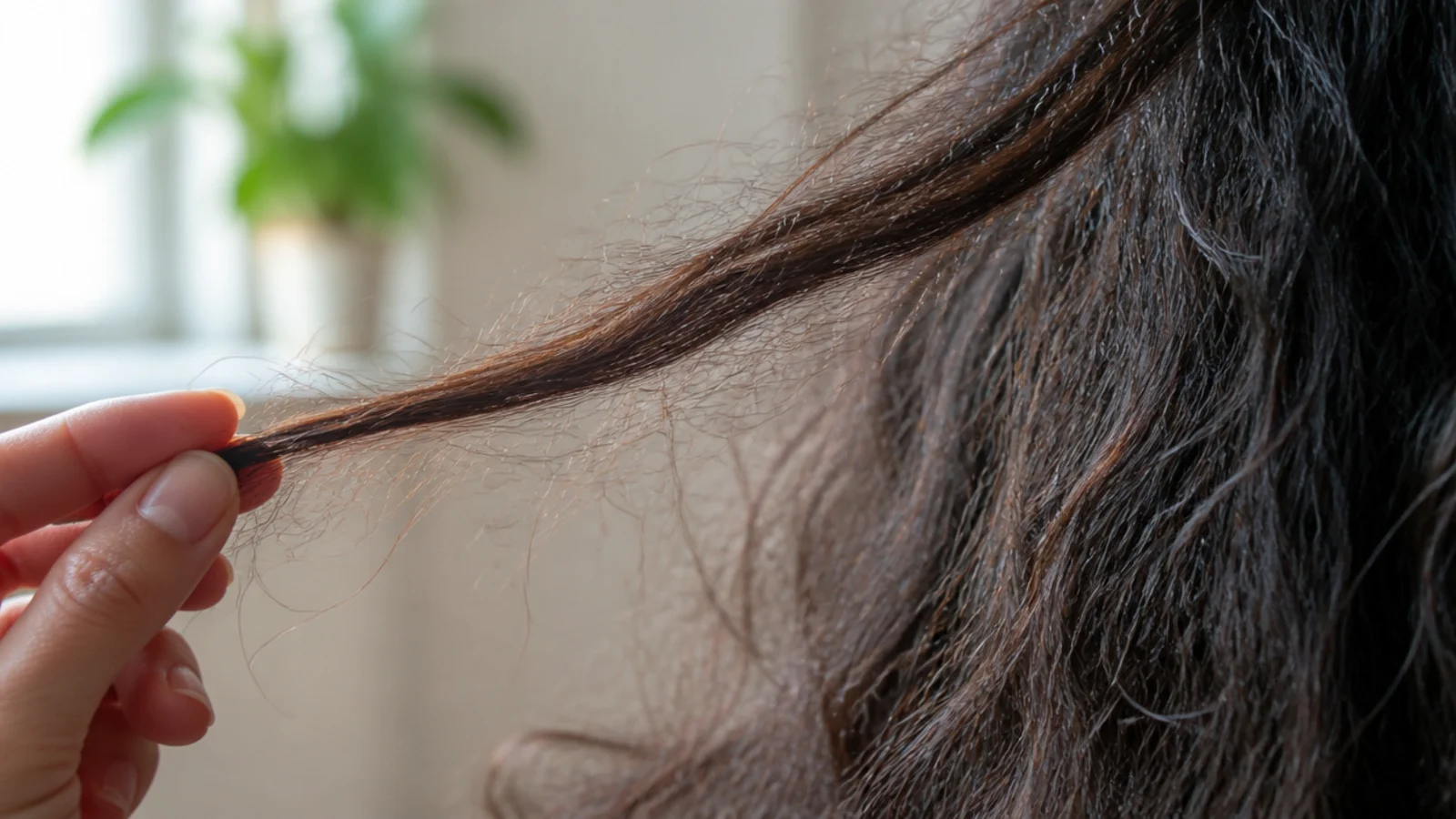
Every strand is wrapped in overlapping cuticle scales. When hair is hydrated and the scales lie flat, light reflects evenly and neighboring strands slide against each other. When hair is dry, those scales lift, and lifted cuticle does exactly what a sponge does: it pulls moisture out of the surrounding air. The strand swells unevenly along its length, buckles, and stops lying against its neighbors. That is frizz. It is a moisture problem, not a discipline problem, which is why brushing harder or spraying more hairspray never solves it. The practical rule is to seal and hydrate rather than fight, and the practical trigger is the dew point rather than the humidity percentage. Above roughly 60 degrees Fahrenheit dew point, dry hair will absorb ambient moisture no matter what you put on it, so lean on heavier sealants and protective styles. Below about 35, the air pulls moisture out instead, and you need cream and oil rather than gel. A haircut cannot change any of this, but the right shape decides where the swollen hair goes. The full care routine sits in our frizzy hair tips guide.
Which Frizz Type Do You Have Before You Book the Cut
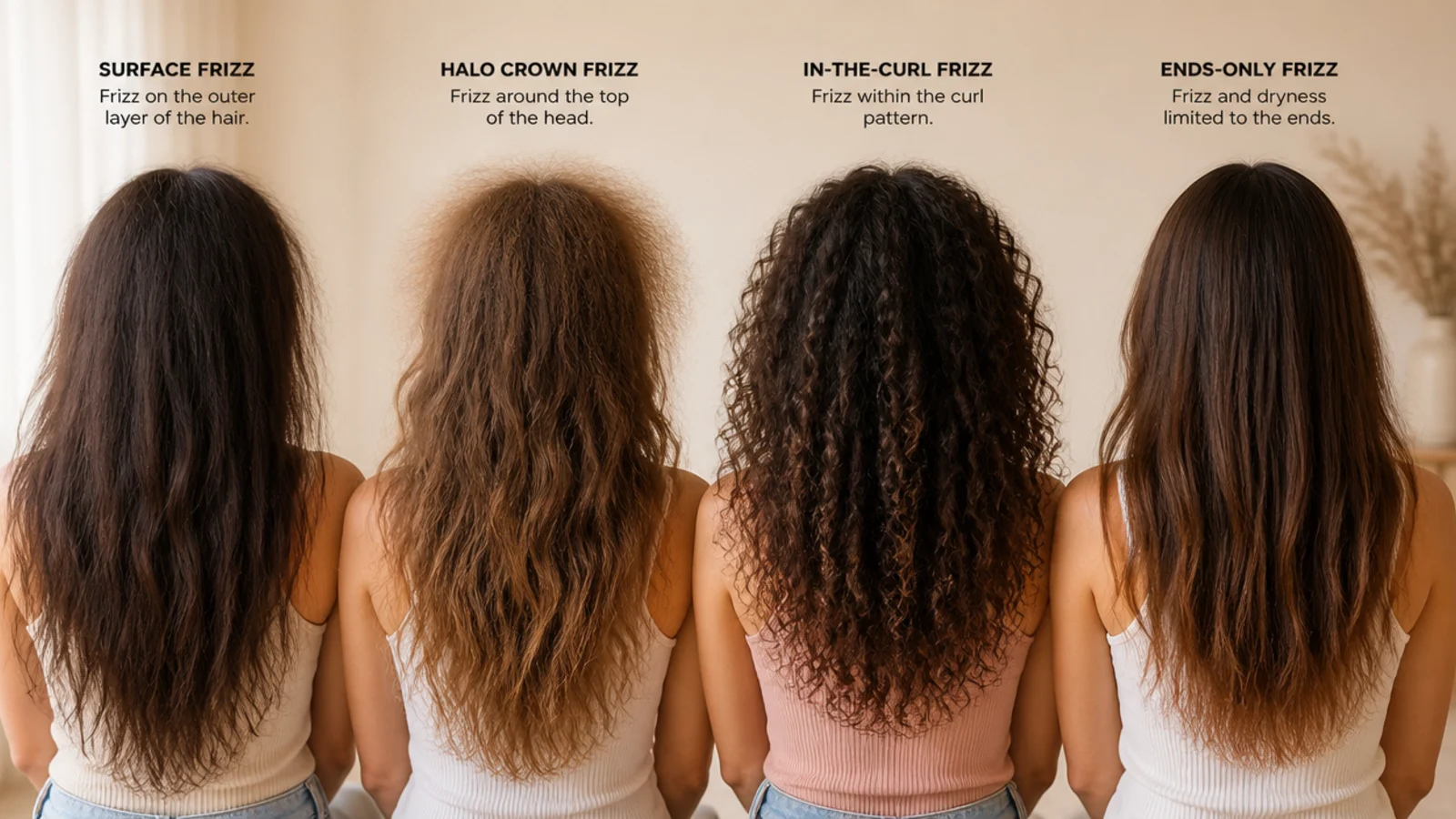
Frizzy hair is not one condition, and the cut that fixes one type makes another worse. Look at a photo of yourself in daylight and find your pattern. Surface frizz is a fine fuzz sitting over otherwise smooth lengths, and it is best hidden by interlocking layers such as a shag. Halo or crown frizz is a ring of short broken hairs standing up at the part, usually breakage or new growth, and it responds to a shorter crown that lets those hairs be part of the shape. In-the-curl frizz is a curl clump that has separated into individual fuzzy strands, which needs tapered ends and dry cutting rather than any change in length. Ends-only frizz means split, dehydrated ends flaring below a smooth mid-length, and the cut is simply the fix: take off half an inch more than you think. Humidity-triggered swelling is the whole head expanding on damp days, and that one is answered by weight, meaning length and a blunt but point-cut perimeter. Tell your stylist which of the five you have, in those words, before anyone picks up scissors. Styling by type is covered across the frizzy hair board.
Face Shape and Haircut for Frizzy Hair: What Matches What
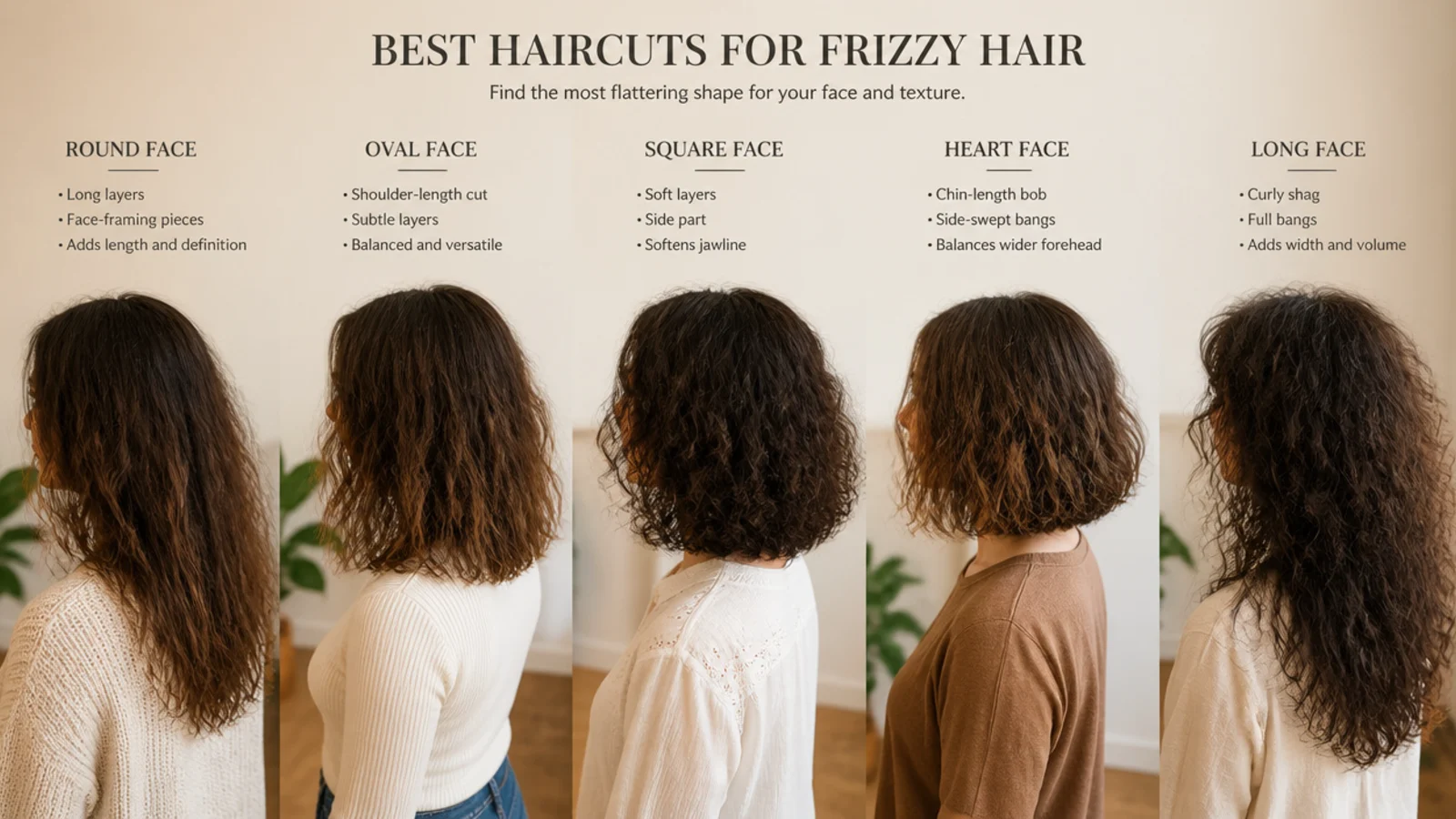
Frizz adds width, which means face shape matters more here than it does on straight hair. A round face needs vertical lines, so choose face-framing layers starting below the chin, a collarbone cut, or long blended layers, and avoid anything that puts volume at the cheekbone. A square jaw softens under wispy point-cut ends and curtain bangs; a blunt chin-length bob will echo the jawline and read heavy. Heart shapes carry width at the temples already, so keep volume below the jaw, which is what a butterfly cut and a shoulder-grazing lob both do. Long or oblong faces are the one group that genuinely benefits from frizz volume at the sides, so a short shag, a mid-length with round layers, or a chin-length French bob all work. Oval faces can wear any of the 15 cuts here. The one universal rule is to keep the widest part of your hair below the widest part of your face, because frizz naturally wants to do the opposite. For more shape matching by texture, see hairstyle for your hair type.
Layers That Hide Frizz vs Blunt Ends That Cause It
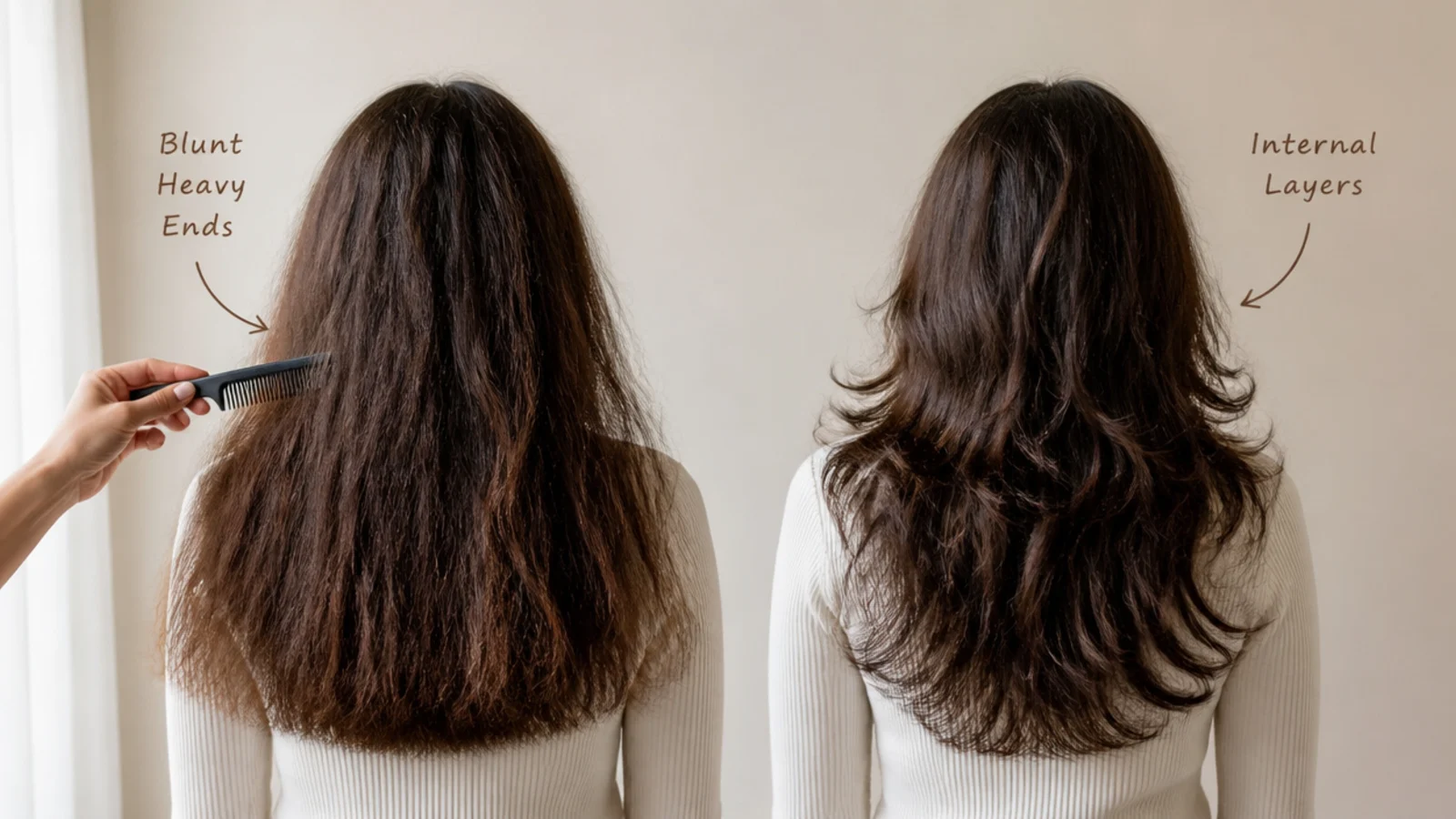
The layer question is where most frizzy haircuts go wrong, and the answer is not simply yes or no. Internal layers, cut inside the hair with vertical slices or slide cutting, remove bulk without creating any visible short piece, so the surface stays smooth and the silhouette narrows. Those are almost always a good idea on dense frizzy hair. Surface layers, cut short and stacked on top, expose hundreds of new ends to the air and each one can flare, which is exactly how a layered cut turns into a halo. Blunt heavy ends are the opposite failure: a solid perimeter looks broom-like on frizz because every strand terminates on the same line, and any strand that swells sticks straight out of it. The fix is point cutting, which staggers the ends over a quarter to half an inch so swelling has somewhere to hide. Then there are thinning shears, which are the single worst tool for frizzy hair. They cut random strands mid-shaft, and those short pieces grow out as a permanent fuzz layer. Say no to them out loud. Layer depth is broken down further in mid length haircut layers.
How to Ask Your Stylist for a Haircut for Frizzy Hair
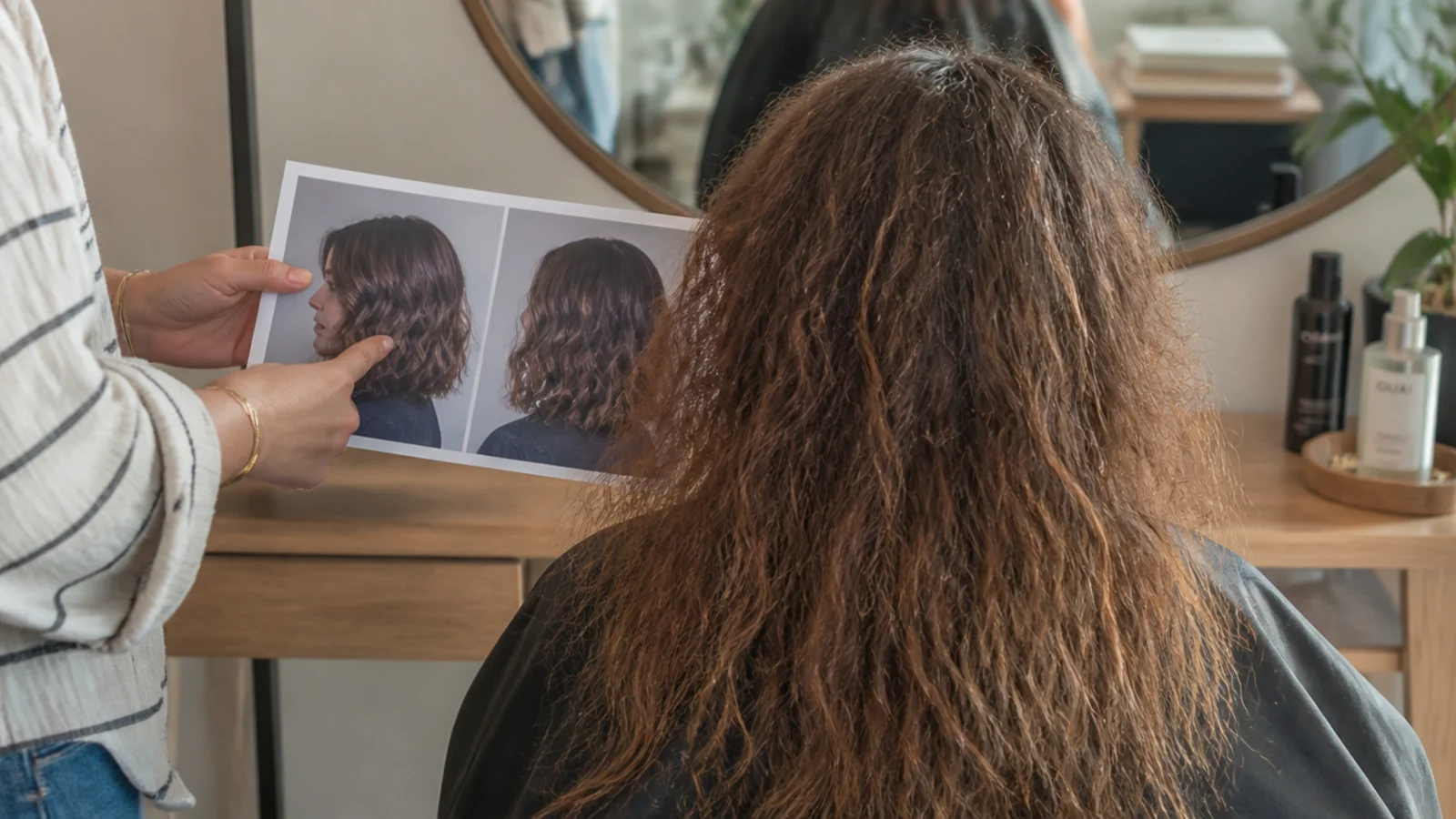
Arrive with your hair styled the way you normally wear it, not freshly straightened, because a stylist who has never seen your real texture will cut for hair you do not have. Ask for the cut dry, or at minimum for the shape to be checked dry before you leave, since frizzy hair springs up between half an inch and two inches as it dries. Then use these five sentences. One: my frizz type is surface, halo, in-the-curl, ends-only or humidity swelling. Two: remove weight from the inside, keep my perimeter soft. Three: no thinning shears anywhere. Four: point cut my ends rather than leaving them blunt. Five: I want to air dry this, so build the shape to work without heat. Ask what the cut will look like at week 10 before you commit, and ask for a dusting appointment rather than a full cut at week 8. Booking a curl specialist costs more, typically 40 to 60 percent above a standard cut, and is worth it for 3A and tighter textures where dry cutting is the whole technique. Everyday styling for the result is in frizzy hair hairstyles.
Styling a Haircut for Frizzy Hair: Wash Day, Products and Sleep
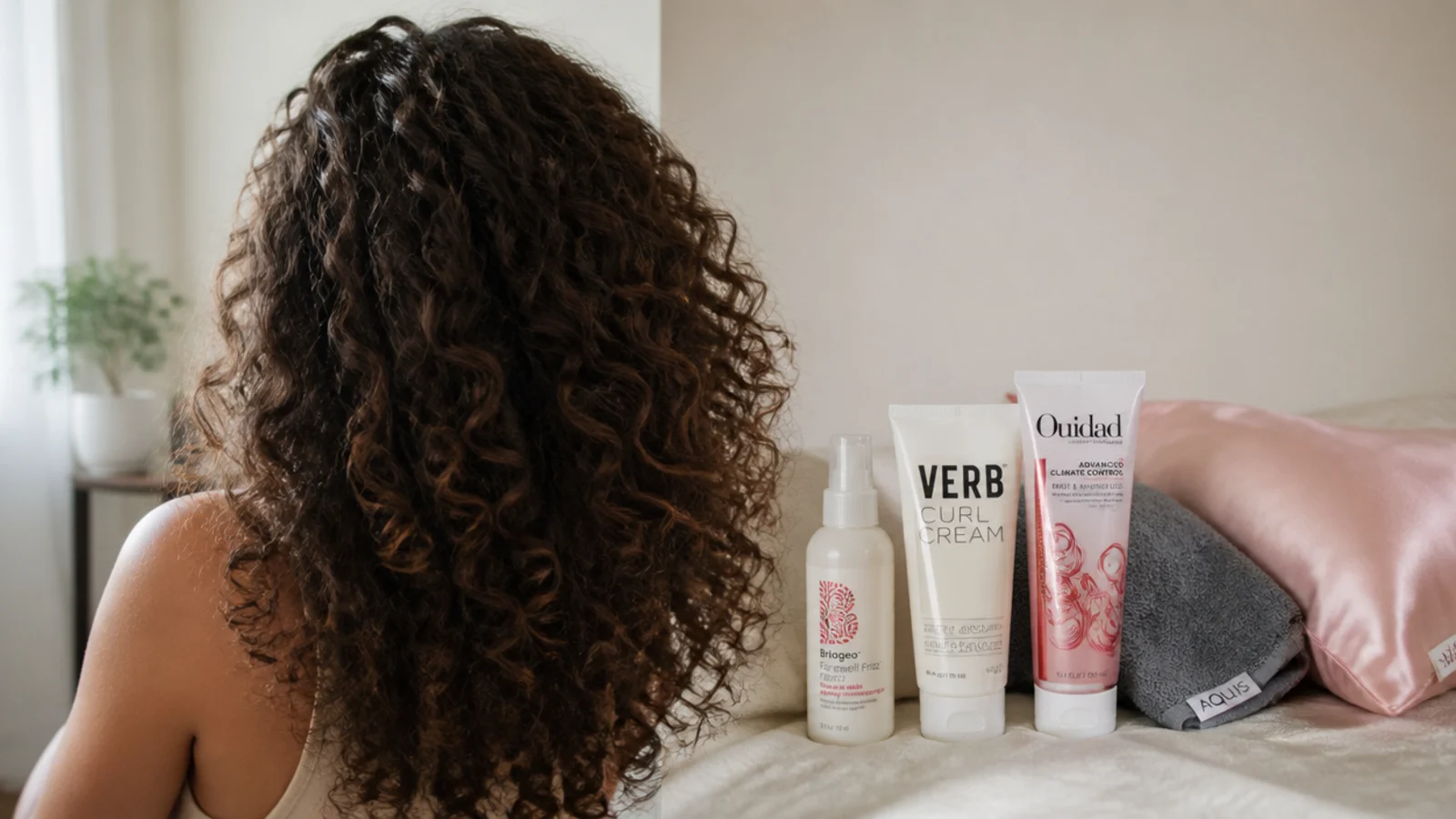
A good cut only holds if the wash day supports it. Apply stylers to soaking wet hair, not damp, because the water is what carries product evenly down every strand; on damp hair you get patches and the dry patches frizz. Layer in a fixed order: leave-in hydrates, cream defines, gel seals. Skipping the gel is the most common reason a beautiful salon result falls apart by hour three, since nothing is holding the cuticle closed. Dry with a microfiber towel or a cotton t-shirt, never a terry towel, whose loops lift the cuticle mechanically. Scrunch, do not rub, and stop touching it once it is 80 percent dry. At night use silk or satin, either a pillowcase or a loose braid, and never a tight elastic at the crown, since scalp tension worsens halo frizz over months. Trim on an 8 week dusting cycle and reshape at 12 to 16 weeks. If you want the whole system laid out step by step, read hairstyles for frizzy hair and the mood board in frizzy curly hair aesthetic.
Frequently Asked Questions
What is the best haircut for dry, frizzy hair?
A collarbone-length cut with internal layers and curtain bangs suits the widest range of dry, frizzy hair. It is long enough that the hair's own weight holds the cuticle down, short enough to keep body, and the bangs give you one small section to style while everything else air dries. Ask for point-cut ends so dehydrated ends do not flare in a straight line.
Should I get layers if I have frizz?
Yes, but only internal ones. Layers cut inside the hair with vertical slices or slide cutting remove bulk and narrow the silhouette without exposing short surface pieces. Short stacked surface layers expose hundreds of new ends that each flare, which is how a layered cut turns into a halo. Never allow thinning shears, which leave permanent mid-shaft fuzz.
Will a shorter haircut make my frizz worse?
It can. Removing length removes the weight that was holding your cuticle flat, so a chin-length cut on thick frizzy hair often expands into a pyramid. Short works when the shape is built for it, meaning interior debulking under a jaw-length bob, or a pixie with the crown left long. If you are unsure, stop at the collarbone first.
Can a haircut actually reduce frizz?
A cut cannot flatten a cuticle, so it cannot reduce frizz at the strand level. What it does is remove the split, dehydrated ends that are the most visible frizz, and control where swollen hair sits so the silhouette stays flattering. If your frizz is ends-only, a good trim genuinely removes most of what you see. If it is humidity-driven, the cut manages the shape.
What haircut works for frizzy hair with no time to style?
A wavy shag or long blended layers. Both are built so the hair dries into a shape by itself: apply gel to soaking wet hair, scrunch once, and leave it. Total hands-on time is about four minutes. Avoid anything requiring a round brush, blunt perimeters that need smoothing, and short blunt bobs, all of which look wrong unless styled daily.
Does frizzy hair mean damaged hair?
Not necessarily. Frizz is a moisture and cuticle issue, and healthy curly or coarse hair frizzes simply because its cuticle sits less flat than straight hair does. Damage makes frizz worse and adds specific signals: ends-only flare, halo breakage at the part, and hair that feels rough wet. Frizz across the whole length on a curly head is usually just texture.
Can straight hair be frizzy?
Yes, and it is common on coarse straight hair. The cuticle scales on a thick straight strand still lift when hair is dehydrated, and the swollen strands stand away from the smooth ones instead of blending into a curl pattern. It typically shows as surface fuzz and halo frizz. A blunt lob with point-cut ends adds the weight this hair type needs.
Should frizzy hair be cut wet or dry?
Dry, or at minimum checked dry before you leave the salon. Frizzy and curly hair springs up between half an inch and two inches as it dries, so anything cut wet lands shorter and often uneven once the texture returns. Dry cutting also lets the stylist shape each curl clump where it actually falls, which is essential from 3A upward.
How often should I trim a haircut for frizzy hair?
Book a dusting every 8 weeks, which is a light removal of split ends only, and a full reshape every 12 to 16 weeks. Frizzy hair splits sooner than straight hair because the raised cuticle wears faster, and a split end travels up the shaft, so waiting six months means losing more length than trimming regularly would have cost.
Which frizzy hair look are you saving?
If you take one thing to the salon from these 15 haircuts for frizzy hair, make it this sentence: remove bulk from the inside, leave the perimeter soft, and do not touch my hair with thinning shears. That single instruction is the difference between a cut that air dries into a shape and a cut that grows a halo of broken ends by week six. Chin-length bobs with interior layers, collarbone cuts with curtain bangs and long blended layers are the three most forgiving starting points, and all three survive a grow-out without a hard line. Book the cut dry, bring two photos, and pair it with the routine in our frizzy hair tips guide or browse the whole frizzy hair board.