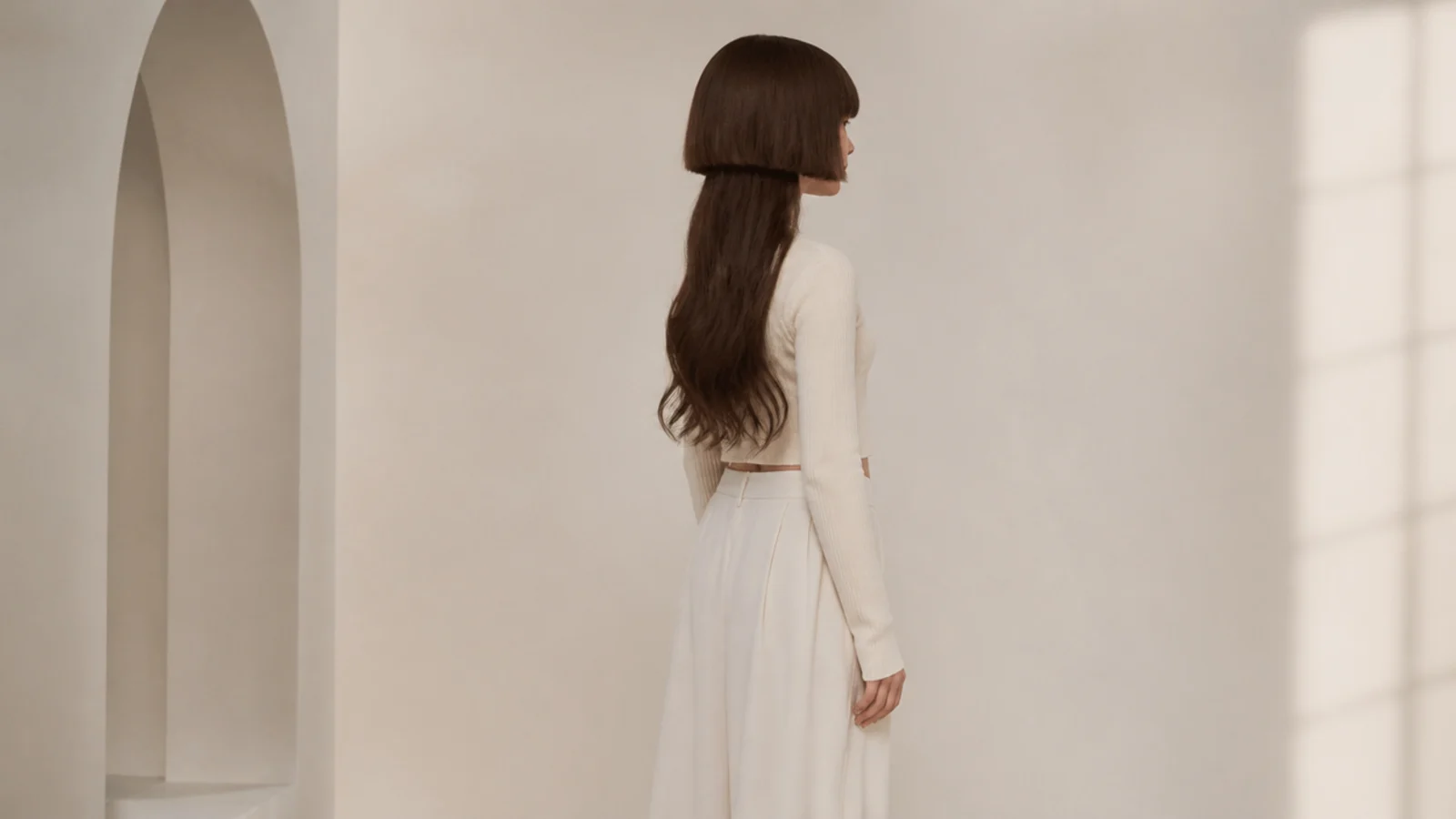
Quick Comparison
| Curly Jellyfish Haircut | Curly Wolf Cut | |
|---|---|---|
| Layer relationship | Two tiers, deliberately disconnected, no transition | Continuous graduated layers, fully blended |
| Where the short layer sits | A bowl-shaped bell all the way around the head | Concentrated at the crown and face frame |
| Silhouette from the side | A visible step between the bell and the lengths | One tapering shape with no break |
| Best curl patterns | 2b through 3b; blurs at 3c and 4a | Anything from 2a to 4c |
| Cutting method | Dry, curl by curl, with a shrinkage allowance | Dry or wet; forgiving either way |
| Trim cadence | Bell every 8 to 10 weeks, lengths every 4 to 5 months | Every 10 to 12 weeks all over |
| Styling effort | Two sections diffused separately, root clips at the crown | One diffuse-and-go pass |
| Grow-out behavior | About 3 months of soft awkwardness, then a curly shag | Layers simply lengthen and blend further |
| Best for | Wanting a graphic, high-contrast shape you can point at | Wanting volume and movement with no commitment |
1. 2C Wavy Jellyfish Haircut with a Chin-Length Bell
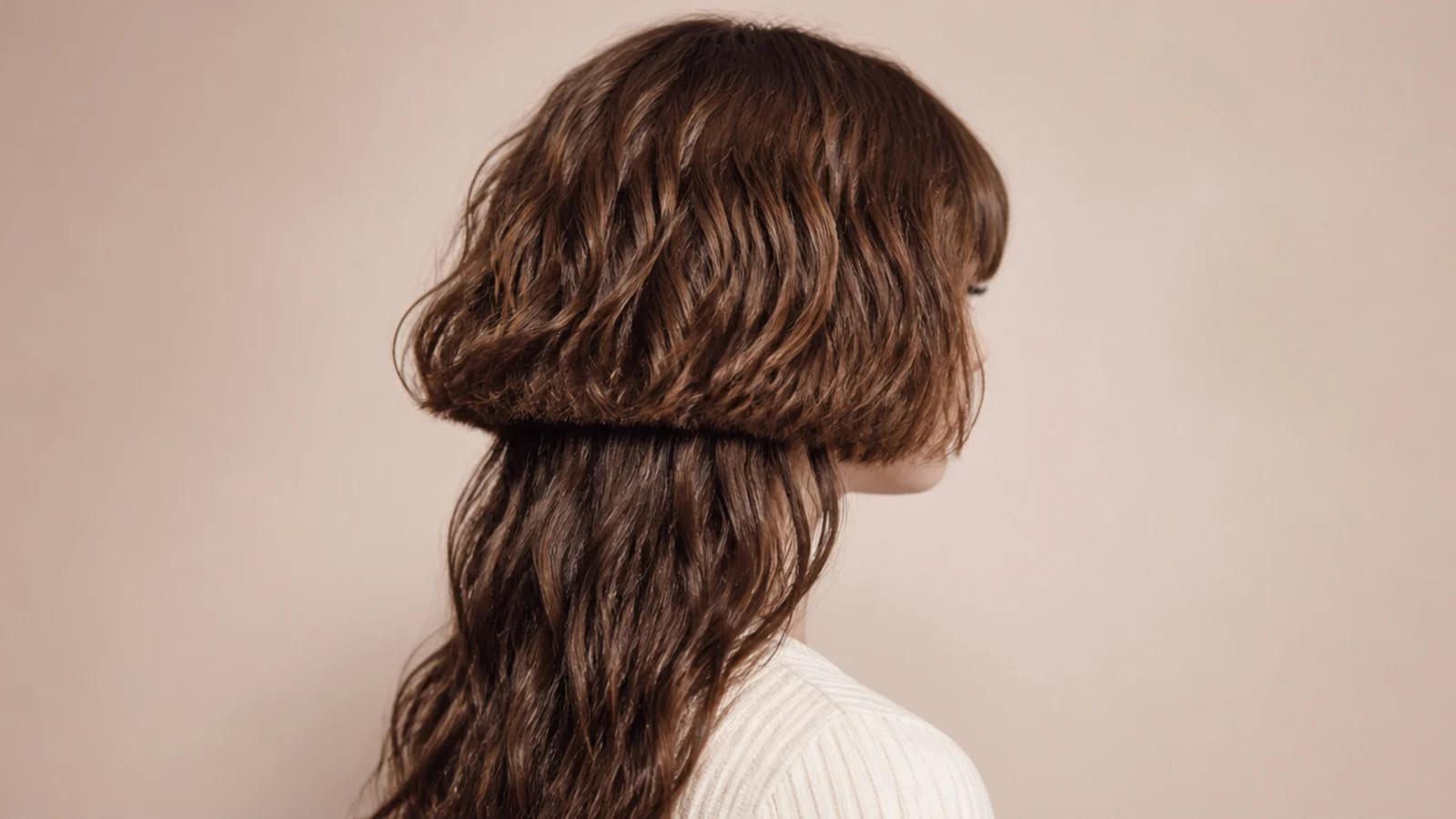
The easiest entry point on the whole curl spectrum. 2c hair shrinks only about half an inch when it dries, so a bell cut to finish at the chin actually finishes at the chin. The waves are loose enough that the disconnection line stays visible from the side, which is the thing that makes the cut read as jellyfish rather than as long layers. Leave the lower lengths blunt at mid-back for maximum contrast. If your waves sit closer to 2b, the same bell works half an inch lower. More wave-specific versions in wavy jellyfish haircut.
Who it suits: 2b to 2c waves, oval and long face shapes.
Tip: Ask for the bell cut dry with a 0.5in shrinkage allowance so it lands at the chin, not the jaw.
2. 3A Spiral Jellyfish Haircut with a Cheekbone Bell
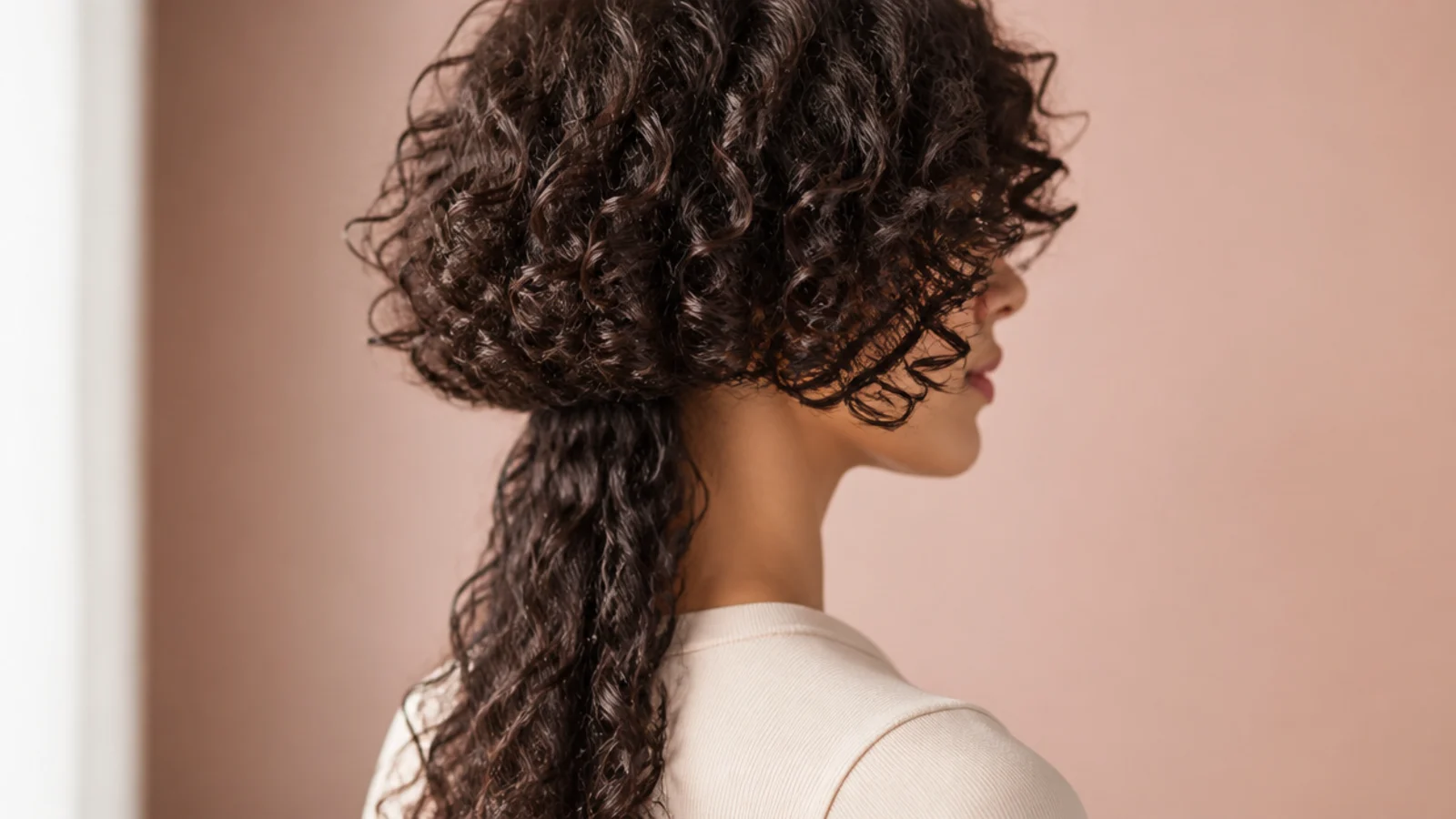
3a spirals are the sweet spot for this cut: enough curl to give the bell natural roundness, not so much that the perimeter disappears. The bell is cut to finish at the cheekbone once dry, which means the stylist takes it around an inch longer while damp. That cheekbone landing is what lifts the eye and stops the top from reading as a bowl cut. Underneath, leave everything from the occipital bone down completely uncut so the length looks deliberate rather than grown out. Pairs well with a middle part.
Who it suits: 3a curls, heart and oval faces, anyone with strong cheekbones.
Tip: Say cheekbone when dry, and let the stylist do the math on how much length to leave wet.
3. 3B Curly Jellyfish Haircut with a Rounded Bowl Top
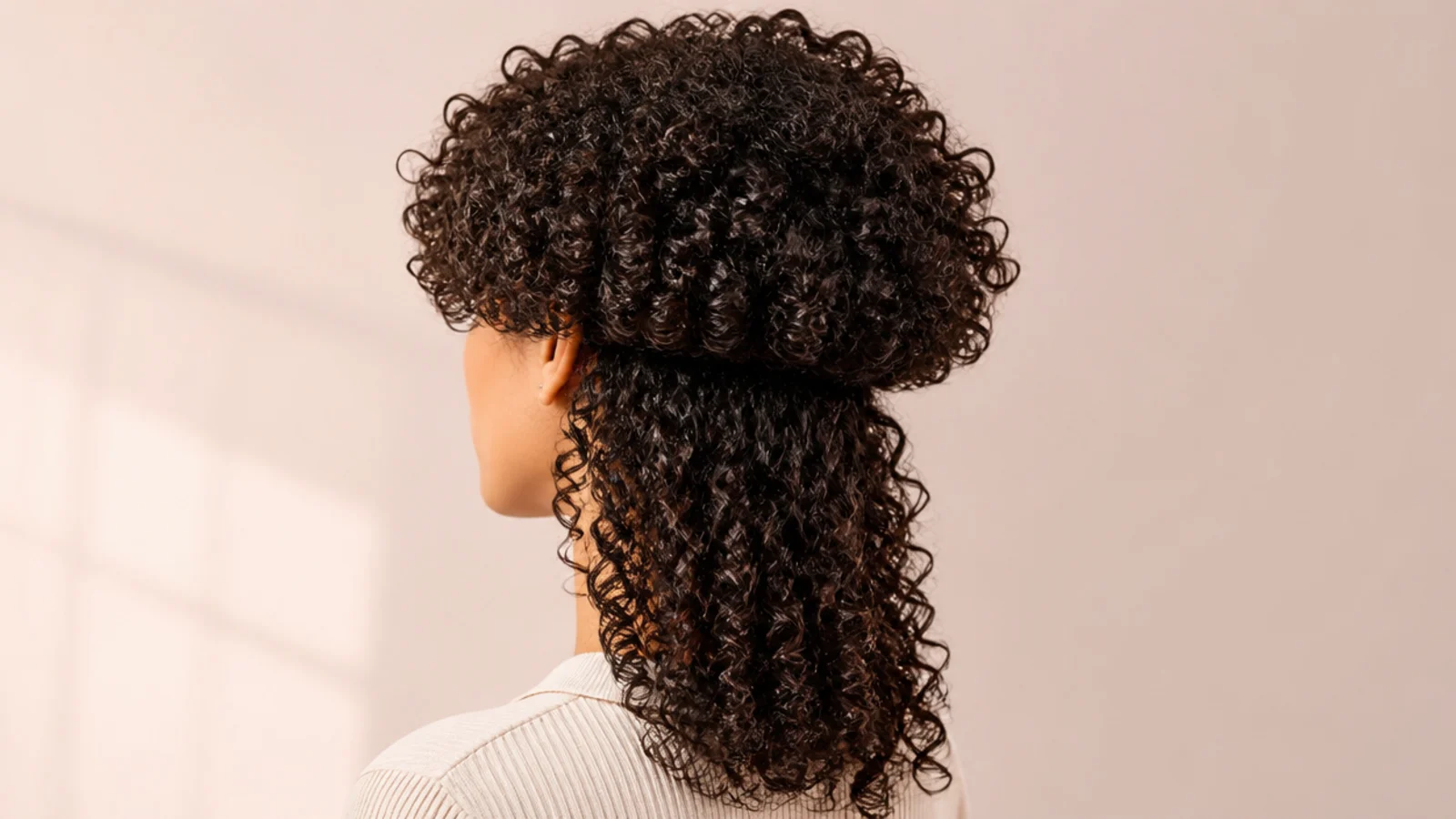
At 3b the bell becomes genuinely three-dimensional, closer to a sphere than a disc, and that is the look people save. The technical challenge is width: 3b hair expands sideways, so a bell cut in a flat horizontal line will bloom into a triangle by day two. The fix is a rounded perimeter that curves up slightly at the sides, roughly half an inch shorter at the temples than at the front. Expect around 1.5in of shrinkage. Keep the lower lengths waist-long for the strongest contrast against all that volume.
Who it suits: 3b corkscrews with medium to high density.
Tip: Ask for internal weight removal inside the bell, never at the perimeter, or the edge frizzes.
4. 3C Coily Jellyfish Haircut with a Deep Side Part
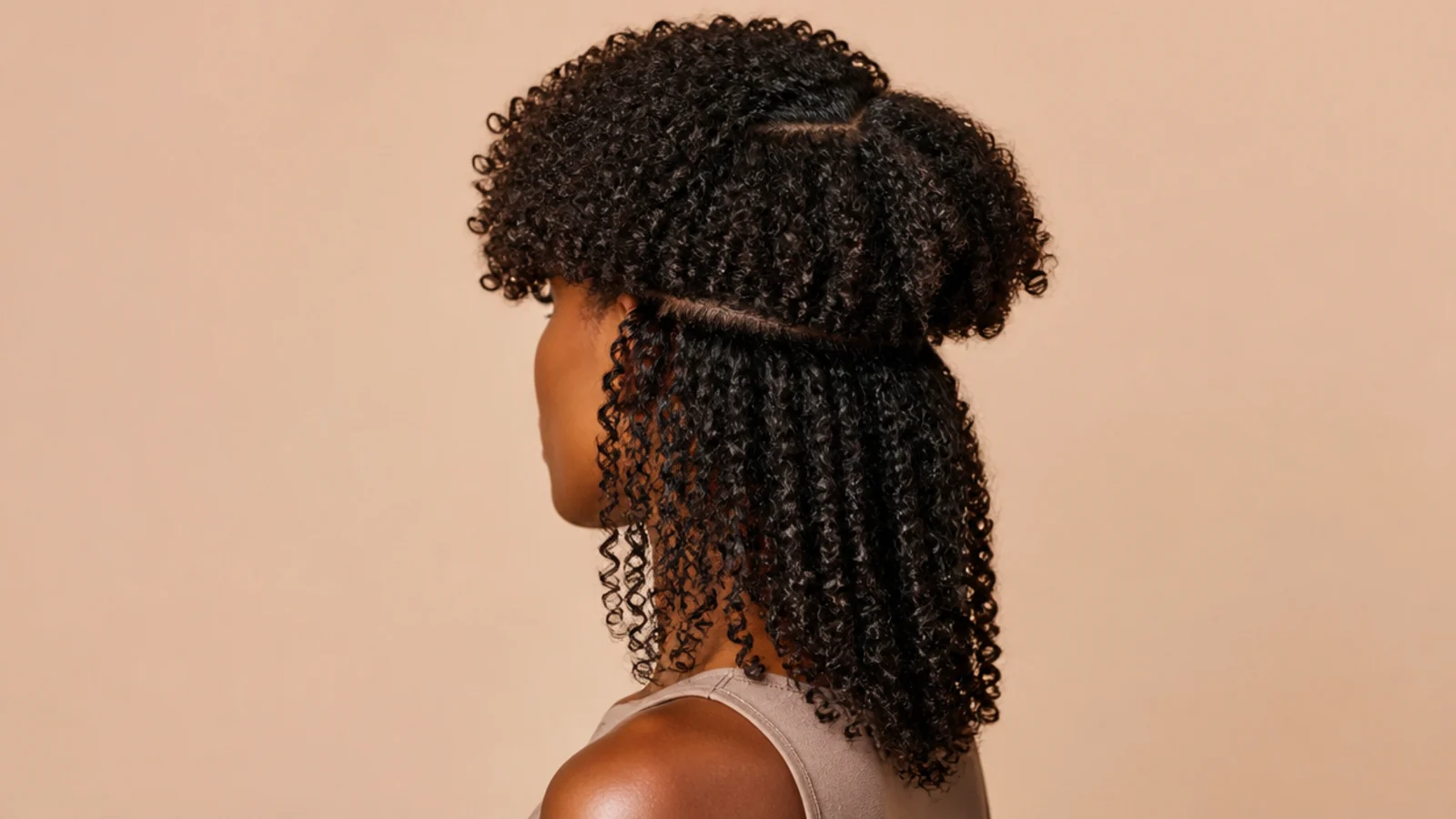
On 3c the horizontal disconnection line mostly vanishes into the coil pattern, so you rebuild the contrast a different way: with a deep side part that drops one panel of the bell over the eye and exposes the long section on the opposite side. The shape now reads through asymmetry instead of through a visible edge. Cut dry, coil by coil, with a 2in shrinkage allowance. This is the point on the curl spectrum where the cut stops being obvious and starts being a subtle silhouette, which some people prefer.
Who it suits: 3c coils, round and square faces that want asymmetry.
Tip: Ask for the part set on the dry hair first, then cut the bell to that part, not the other way around.
5. 4A Coil Jellyfish Haircut with a Tapered Bell
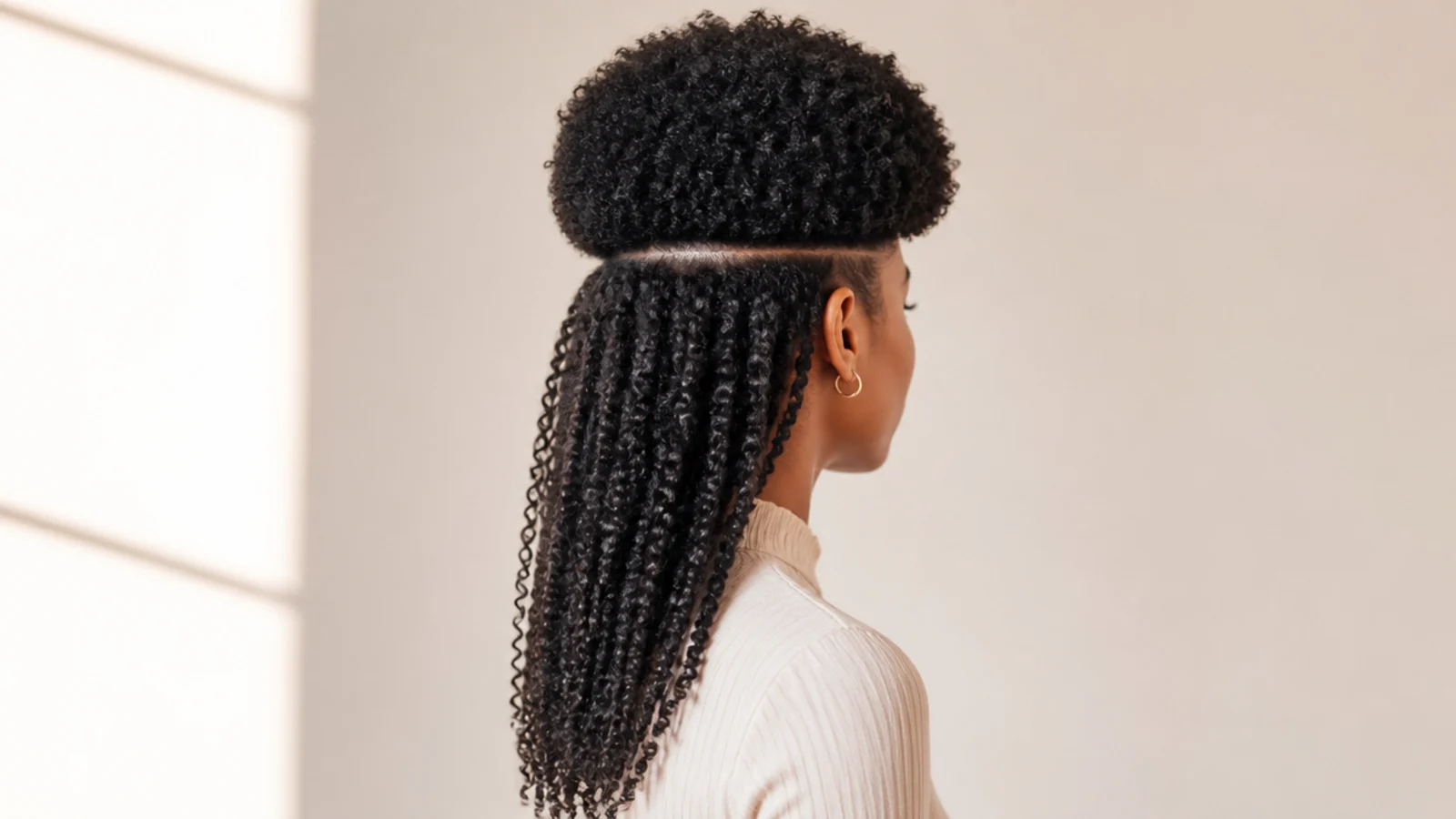
Be honest with yourself here: on 4a the bell and the lengths blur into one shape unless you stretch the hair. If you wear your coils in their natural shrunken state most days, the cut will read as a rounded afro with long pieces at the back, not as a jellyfish. It works beautifully when you blow-dry, band or twist-out the lower section, because stretching reveals the disconnection instantly. A tapered rather than blunt bell keeps the crown from mushrooming. Allow a full 2in to 3in of shrinkage.
Who it suits: 4a coils that are regularly stretched, banded or twisted out.
Tip: Ask the stylist to cut on stretched hair and warn you how it will look unstretched before starting.
6. Short Curly Jellyfish Haircut on a Round Face
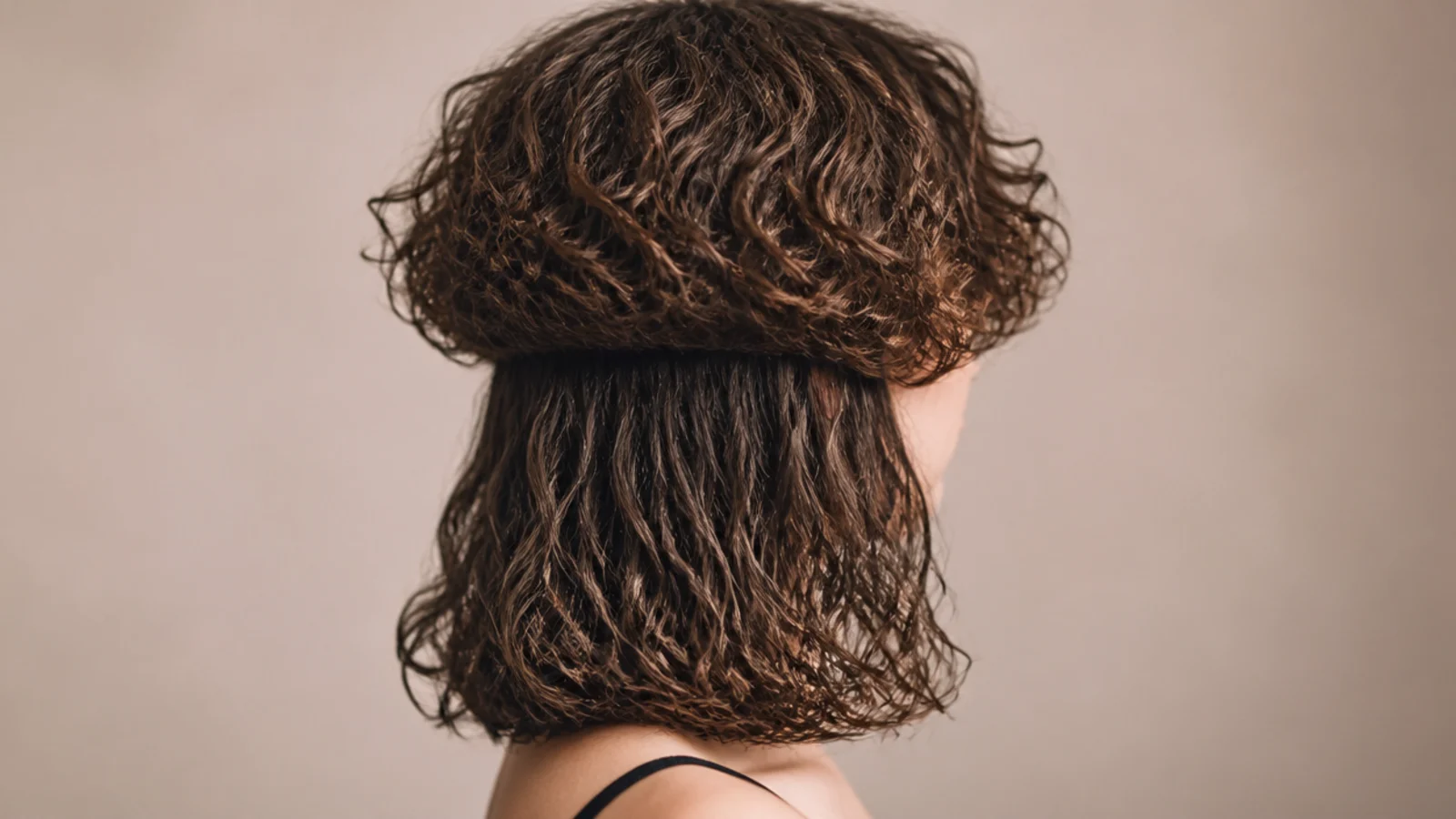
The short version keeps the lower lengths at the collarbone rather than mid-back, so the whole cut lives in about eight inches of hair. On a round face the risk is a bell that widens the cheeks, and the answer is length placement: take the bell to just below the jaw, never at the cheekbone, so the eye travels down instead of across. The lower section stays blunt to add a second vertical line. This is the most workplace-viable curly jellyfish. Full length breakdown in short jellyfish haircut.
Who it suits: Round and full faces, 2c to 3b curls, shorter overall length.
Tip: Say below the jawline when dry, and ask for no width at the temples.
7. Long Curly Jellyfish Haircut Down to Mid-Back
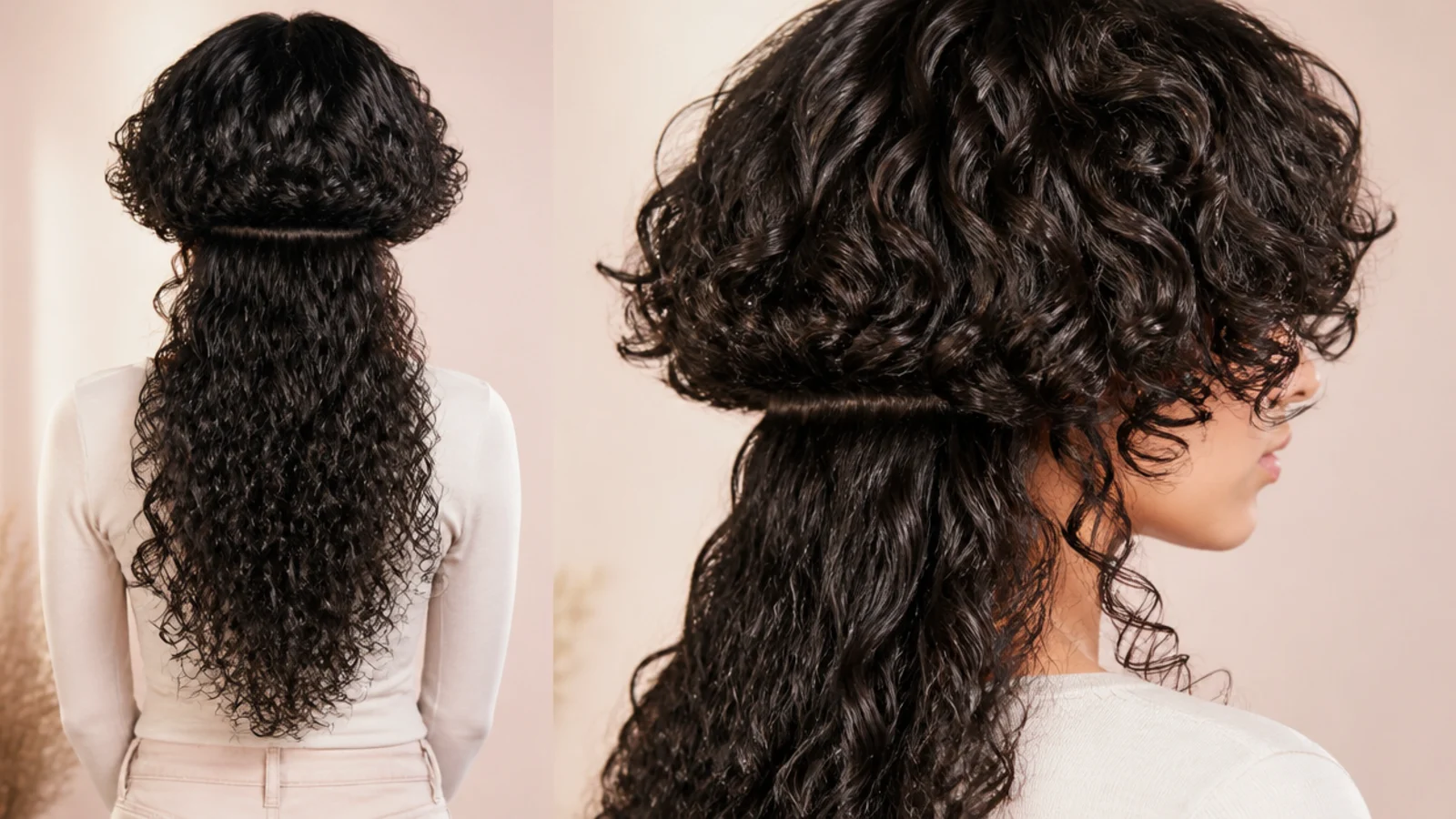
The maximum-contrast version: a cheekbone or chin bell over curls that reach mid-back or lower. Length does two useful things on curly hair. It adds weight, which stretches the lower section and makes the disconnection line read more clearly, and it gives you enough hair to tie the bottom half back while the bell stays down. The cost is drying time and the fact that a low ponytail leaves the bell hanging loose around your face. Dust the ends every four to five months only. See long jellyfish haircut.
Who it suits: Anyone unwilling to lose length who still wants the shape.
Tip: Ask for the lengths left blunt, not layered, so the weight keeps the curl stretched.
8. Curly Jellyfish Haircut with Curtain Bangs
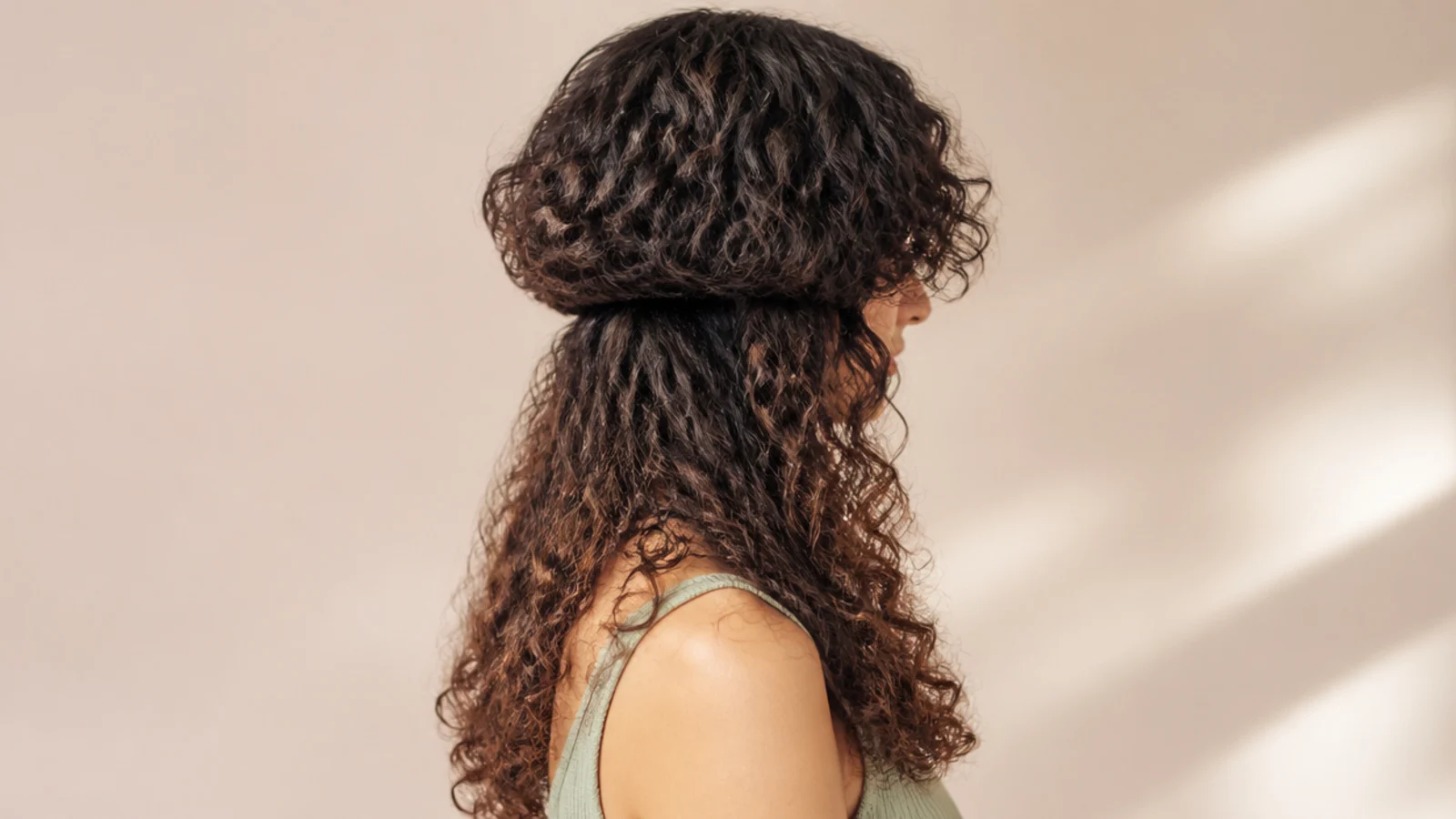
Curtain bangs are the softest possible front edge for a curly bell, because they break the bowl line right where it would otherwise sit hardest across the forehead. The bangs are cut into the front of the bell itself, shortest at the brow and sweeping back into the cheekbone length, so nothing is disconnected twice. On curls, cut them dry in two passes with at least an inch of shrinkage allowance. More bang variations sit in jellyfish haircut bangs and curly short curtain bangs.
Who it suits: High foreheads, 2c to 3b curls, anyone easing into the cut.
Tip: Ask for two passes: cut long, let it spring, then refine over the eyebrow.
9. Curly Jellyfish Haircut with Hime Side Panels
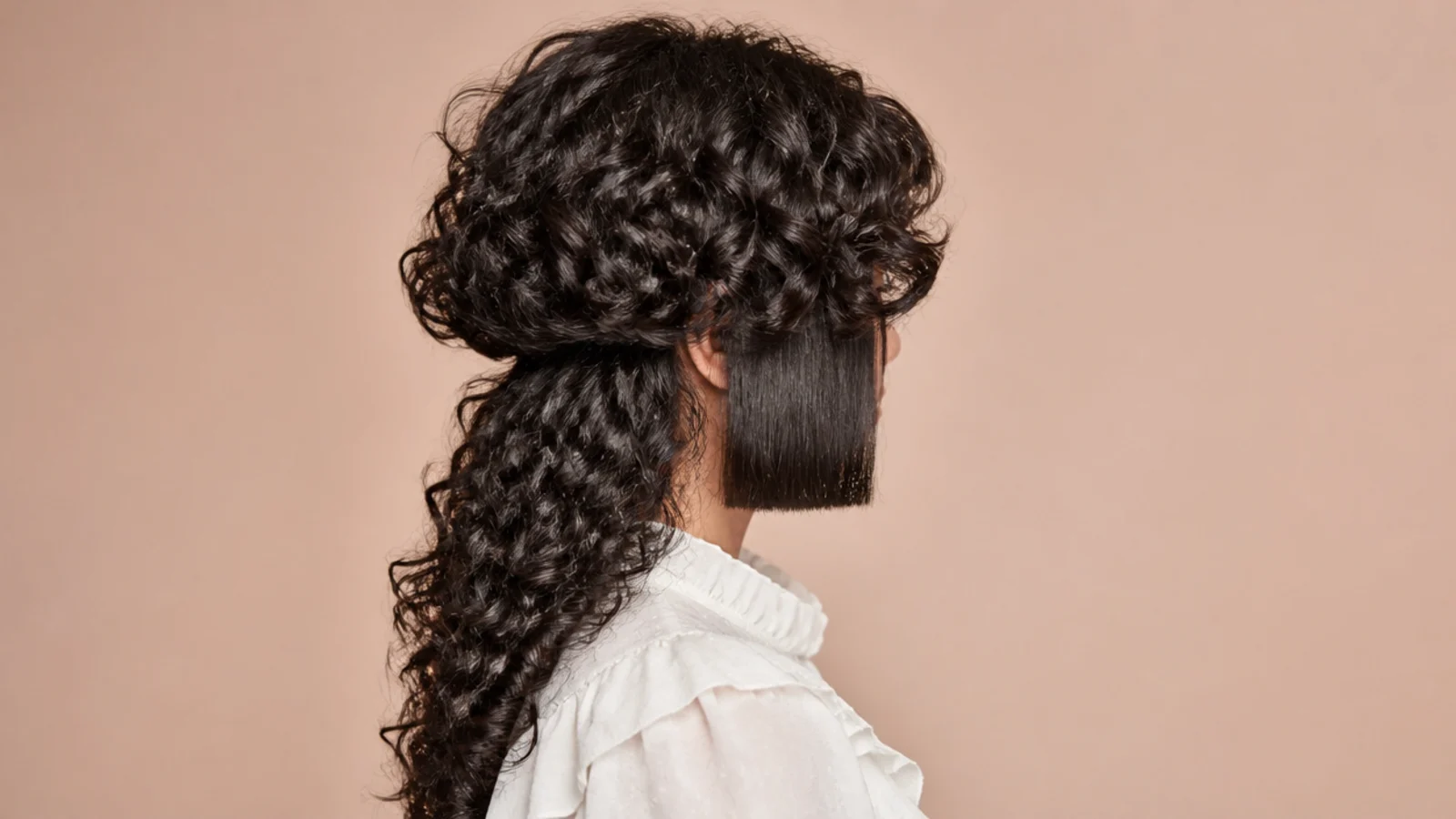
The jellyfish cut descends from the Japanese hime cut, and putting the hime panels back in makes the ancestry visible. Two blunt sections are cut at the jaw on either side of the face, sitting in front of the long lengths as a third tier. On curly hair the panels need to be taken from a narrow section, about an inch wide at the part, or they puff out and lose the graphic line. It is the most editorial idea on this list and the least forgiving if your curl pattern is uneven.
Who it suits: Defined 2c to 3a curls, oval faces, high-fashion leanings.
Tip: Ask for the hime panels cut blunt from a one-inch section and left completely unlayered.
10. Curly Jellyfish Haircut with a Hidden Undercut
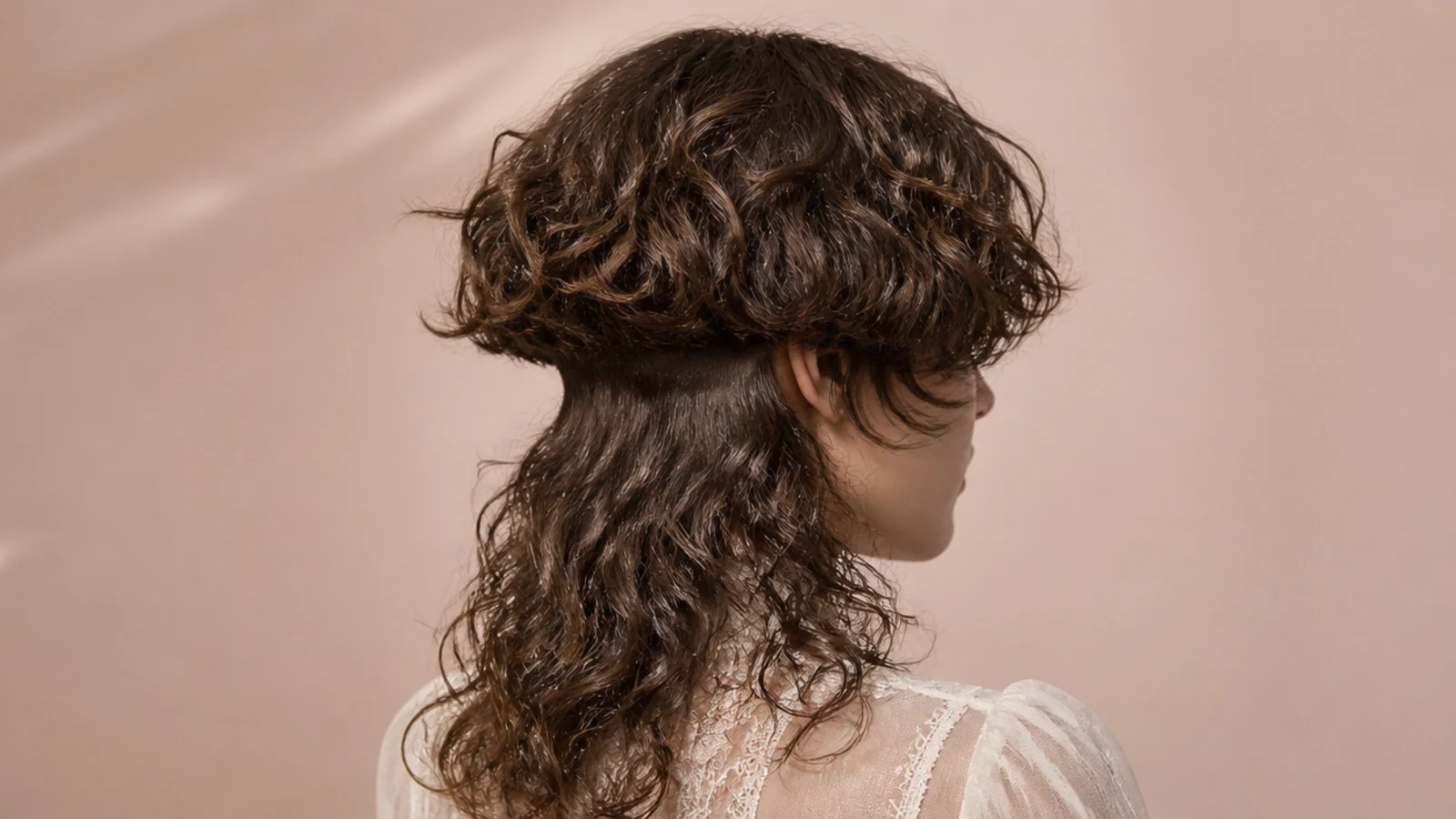
Very dense 3b and 3c hair often carries too much bulk at the nape for the lower section to hang straight, which flattens the whole silhouette. A hidden undercut, taken with a number two or three guard across the nape only and covered completely by the length, removes that bulk and lets the tentacle section drop cleanly. It also cuts drying time noticeably. The trade-off is commitment: an undercut takes six to nine months to grow back into blendable length, so treat it as a two-year decision.
Who it suits: High-density 3b to 4a hair, anyone fighting nape bulk.
Tip: Ask for the undercut kept below the occipital bone so no part of it shows in a ponytail.
11. Two-Tone Curly Jellyfish Haircut with a Platinum Bell
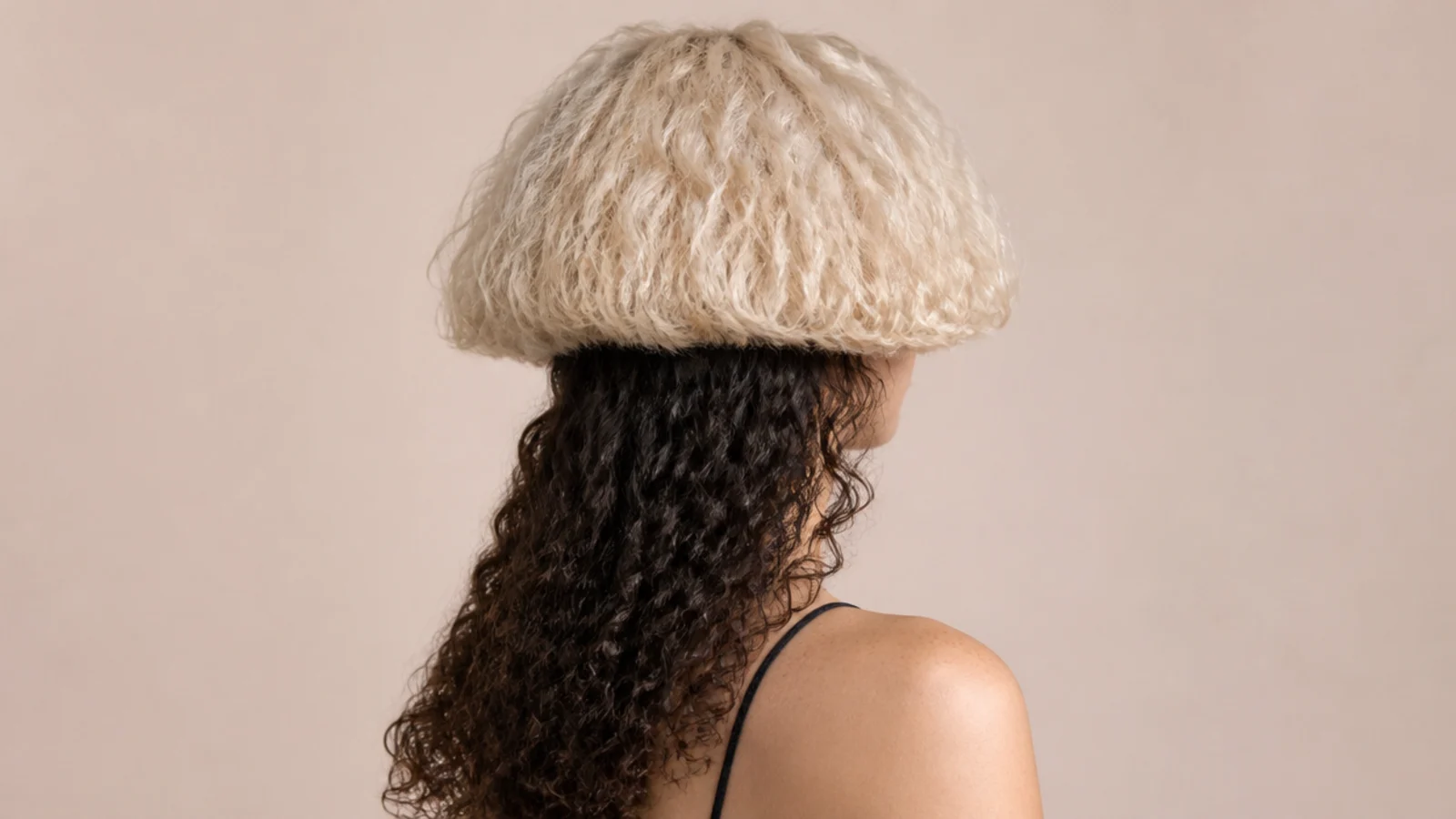
Color is the most reliable way to force the disconnection to read on curly hair. Lightening only the bell to platinum over a natural dark base turns a soft edge into a hard one, and because the two layers are already separated by the cut, the color line follows the haircut line exactly. Budget four to six hours and 250 to 400 dollars for the initial session at a color specialist. The bell also takes more heat styling than the lengths, so it will need a bond builder every wash.
Who it suits: Anyone whose curl pattern hides the cut and who wants it obvious.
Tip: Ask for the lift kept strictly to the bell section so regrowth follows the disconnection line.
12. Copper Curly Jellyfish Haircut for Olive Skin
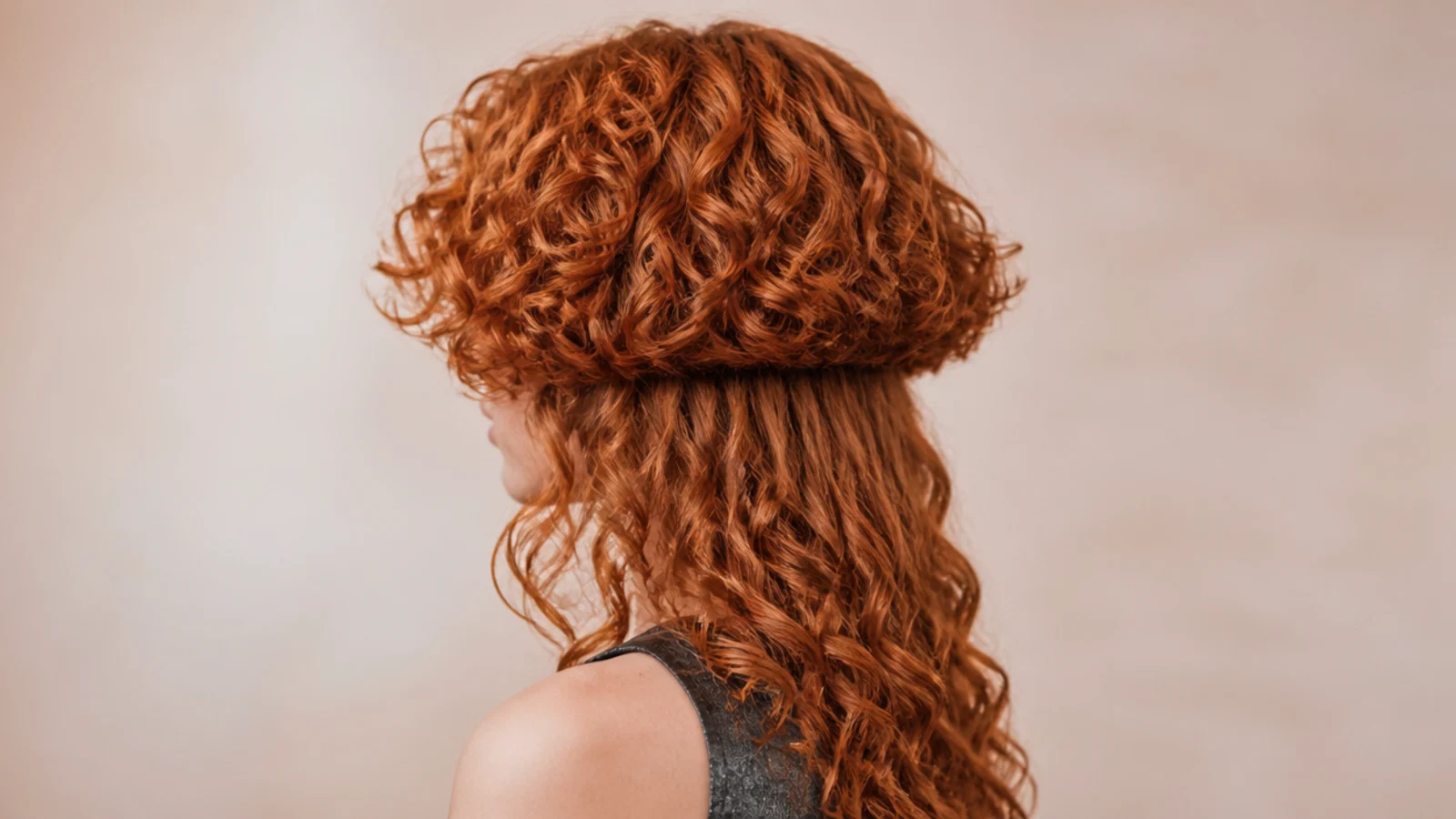
An all-over copper is the low-commitment color route: instead of splitting the layers into two shades, a single warm ginger makes every curl catch light differently, and the shine variation alone sketches the shape. Copper flatters olive and warm undertones better than ash blonde ever will, and it is far less damaging on textured hair because it lifts only two to three levels. Expect to refresh with a copper gloss every six to eight weeks, since warm pigment fades fastest from the sun-exposed bell.
Who it suits: Olive, golden and warm undertones on any curl pattern.
Tip: Ask for a demi-permanent gloss rather than permanent color to keep curl definition intact.
13. Curly Jellyfish Haircut on Fine Wavy Hair
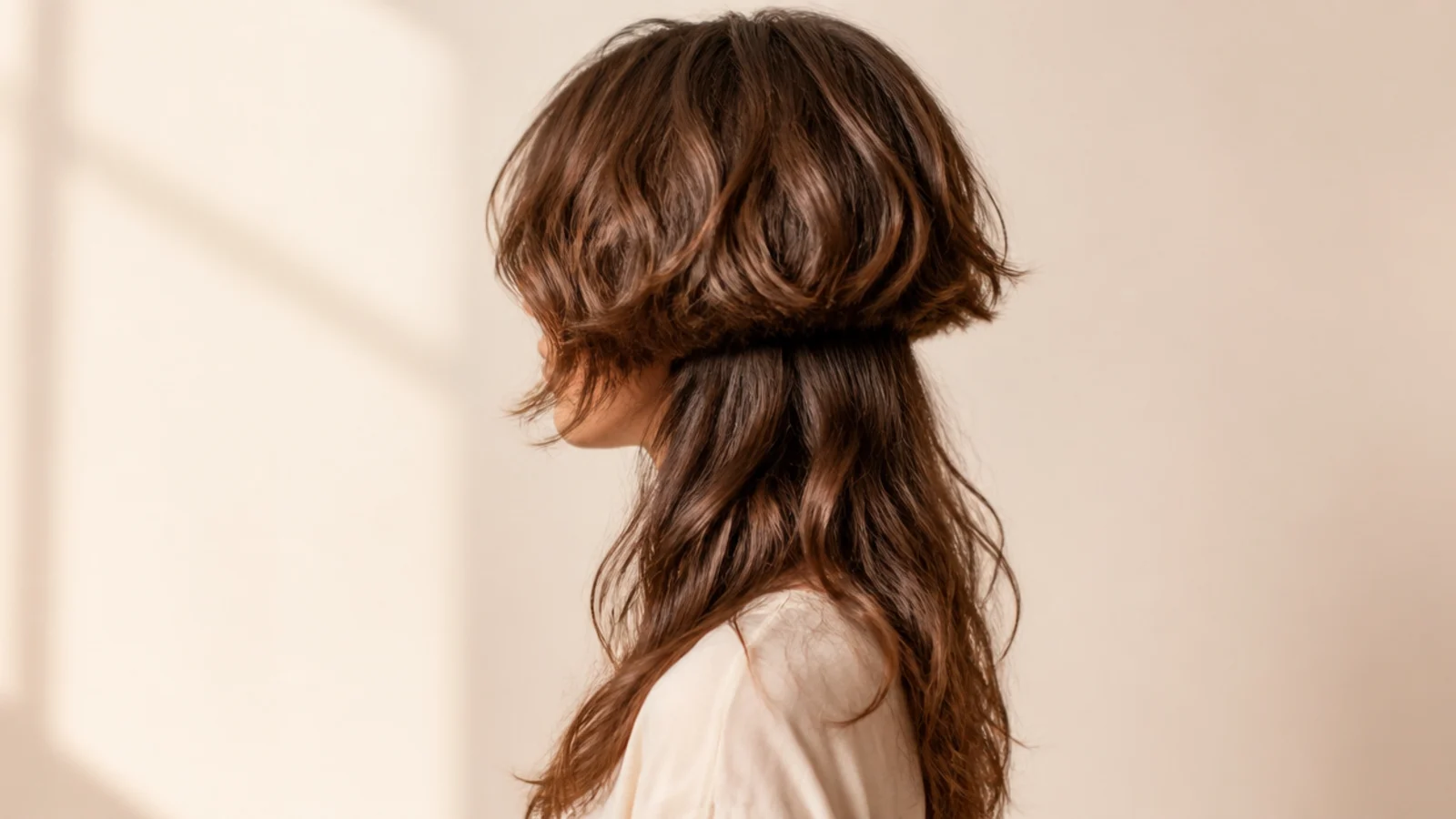
Fine curly hair is the one texture where a jellyfish cut can actively help, because taking the top section out as a separate layer removes weight from the crown and lets it lift. The rule for fine hair is no thinning shears anywhere, ever, and a blunt perimeter on both the bell and the lengths so what hair you have looks dense at the ends. Keep the bell short, around chin length, since a long bell on fine hair goes limp by lunchtime. A root-lifting mousse at the crown does the rest.
Who it suits: Fine 2b to 3a hair with low to medium density.
Tip: Say blunt perimeter, no texturizing shears, so the ends keep the little weight they have.
14. Curly Jellyfish Haircut on Thick Coarse Hair
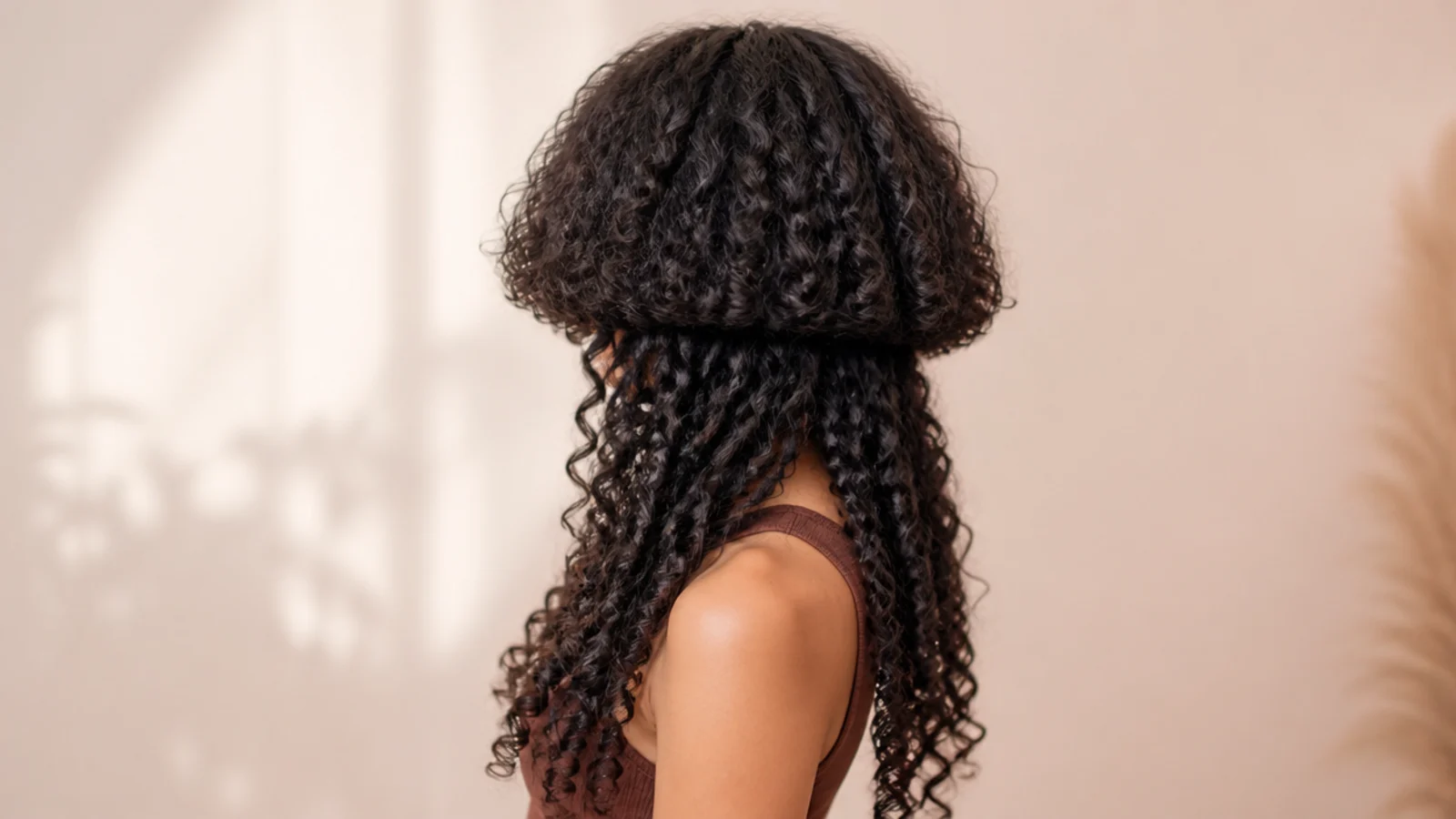
Thick coarse curls carry the opposite problem: the bell wants to become a helmet. The solution is internal debulking, where the stylist removes weight from inside the bell with slide cutting or curl-by-curl carving while leaving the outer perimeter blunt and intact. Done right, the bell keeps its round outline and loses the mass that pushes it outward. Add a couple of inches of extra length to the lower section too, because heavy hair needs weight to hang straight and reveal the disconnection. See also haircut for frizzy hair.
Who it suits: High-density coarse 3a to 3c curls.
Tip: Ask for internal debulking only, perimeter untouched, and no razor on coarse curl.
15. Blunt Bell Curly Jellyfish Haircut for Square Faces
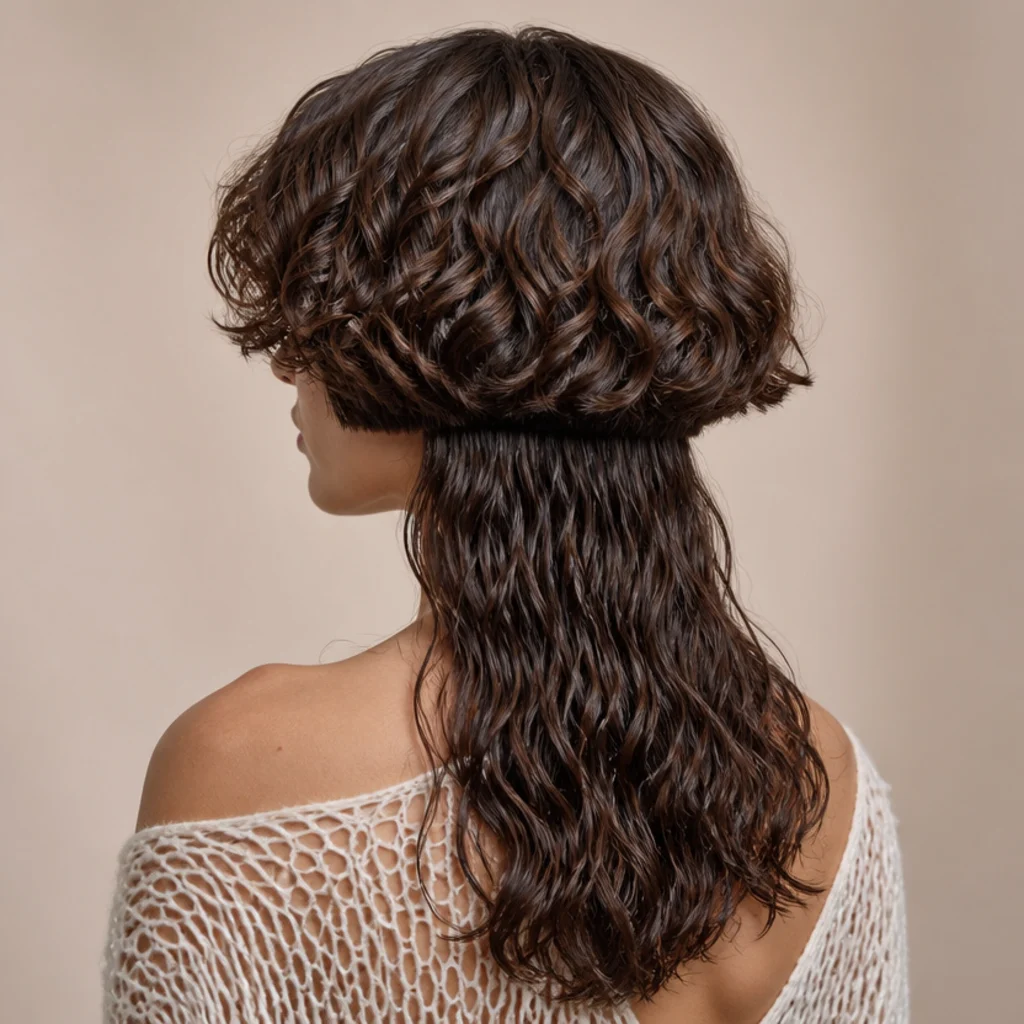
A square jaw wants roundness above it and length beside it, and this cut delivers both at once. The bell is kept genuinely round rather than squared off at the sides, finishing at the cheekbone, while the long curly lengths fall past the jaw and soften the corners of the face. The contrast between a curved top and vertical sides is what balances a strong jawline. Avoid a chin-length bell here, because it ends exactly at the widest point and doubles the squareness instead of breaking it.
Who it suits: Square and rectangular faces, 2c to 3b curls.
Tip: Say rounded bell finishing above the jaw, and ask them to check the outline from the front and side.
What Is a Curly Jellyfish Haircut? The Two-Layer Structure Explained
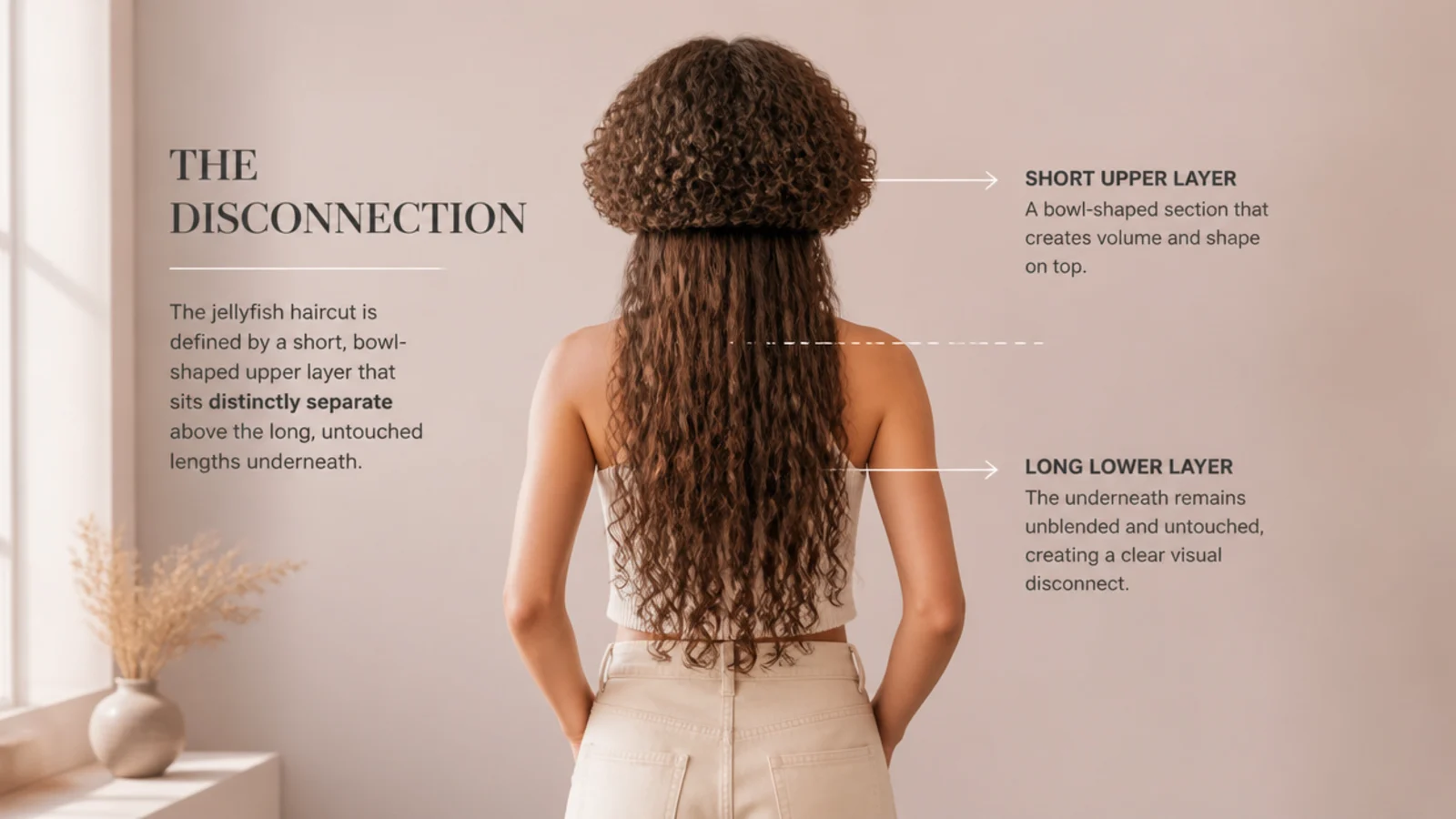
A jellyfish haircut is a disconnected bowl-shaped short upper layer sitting over long lower lengths that are left essentially untouched. Picture a bell and its tentacles, which is where the name comes from. The upper section is taken from a horseshoe parting that runs from the temples around the back of the crown, cut to a rounded perimeter somewhere between the jaw and the cheekbone. Everything below that parting stays long. The crucial detail is what does not happen: the two sections are never blended into each other. That is the whole difference between a jellyfish and a shag, where every layer flows into the next. On curly hair, the disconnection still exists but reads more softly, because curl volume fills the visual gap between the two tiers. The cut descends from the Japanese hime cut, and the modern version was popularized on social media. Start with the overview in the jellyfish haircut guide.
Who a Curly Jellyfish Haircut Suits: Curl Pattern, Density and Face Shape
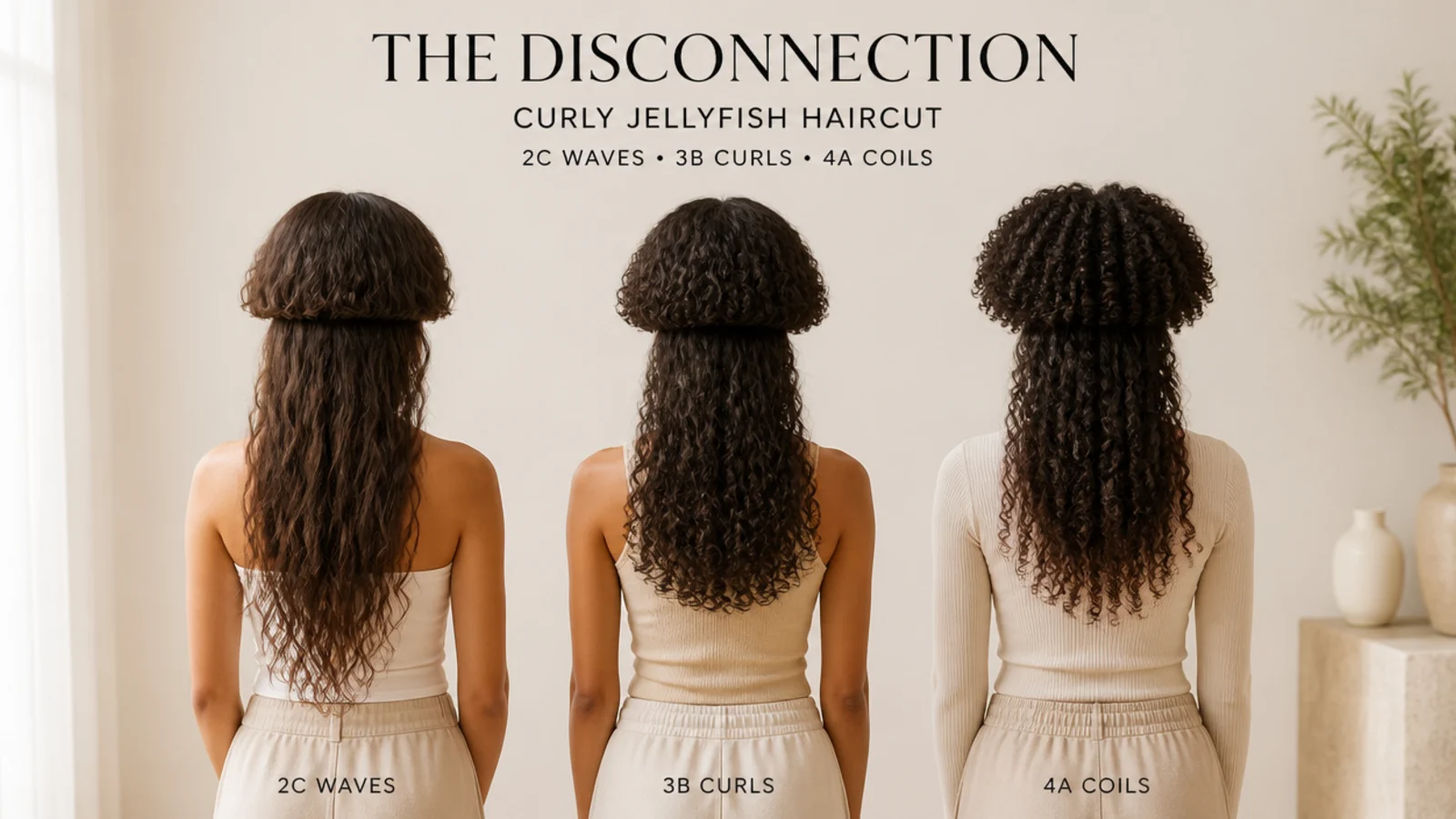
Curl pattern decides how obvious the cut will be. Wavy and loose curly hair, roughly 2b through 3a, shows the shape most clearly because the perimeter of the bell stays legible as a line. At 3b and 3c the shape survives but reads as volume rather than as an edge, so people usually add a deep part or a two-tone color to rebuild the contrast. At 4a and tighter, shrinkage blurs the disconnection almost entirely unless you stretch the lower section, so the cut only pays off if banding, blowouts or twist-outs are part of your routine. Density matters just as much: high density needs internal debulking inside the bell or the top becomes a helmet, while fine curls benefit from the weight removal the cut naturally provides. On faces, oval and heart shapes take a cheekbone bell easily, round faces do better with a bell below the jaw, and square jaws want a rounded bell that stops above the jawline. Routine notes in frizzy curly hair.
Curly Jellyfish Haircut vs Wolf Cut vs Mullet vs Curly Shag
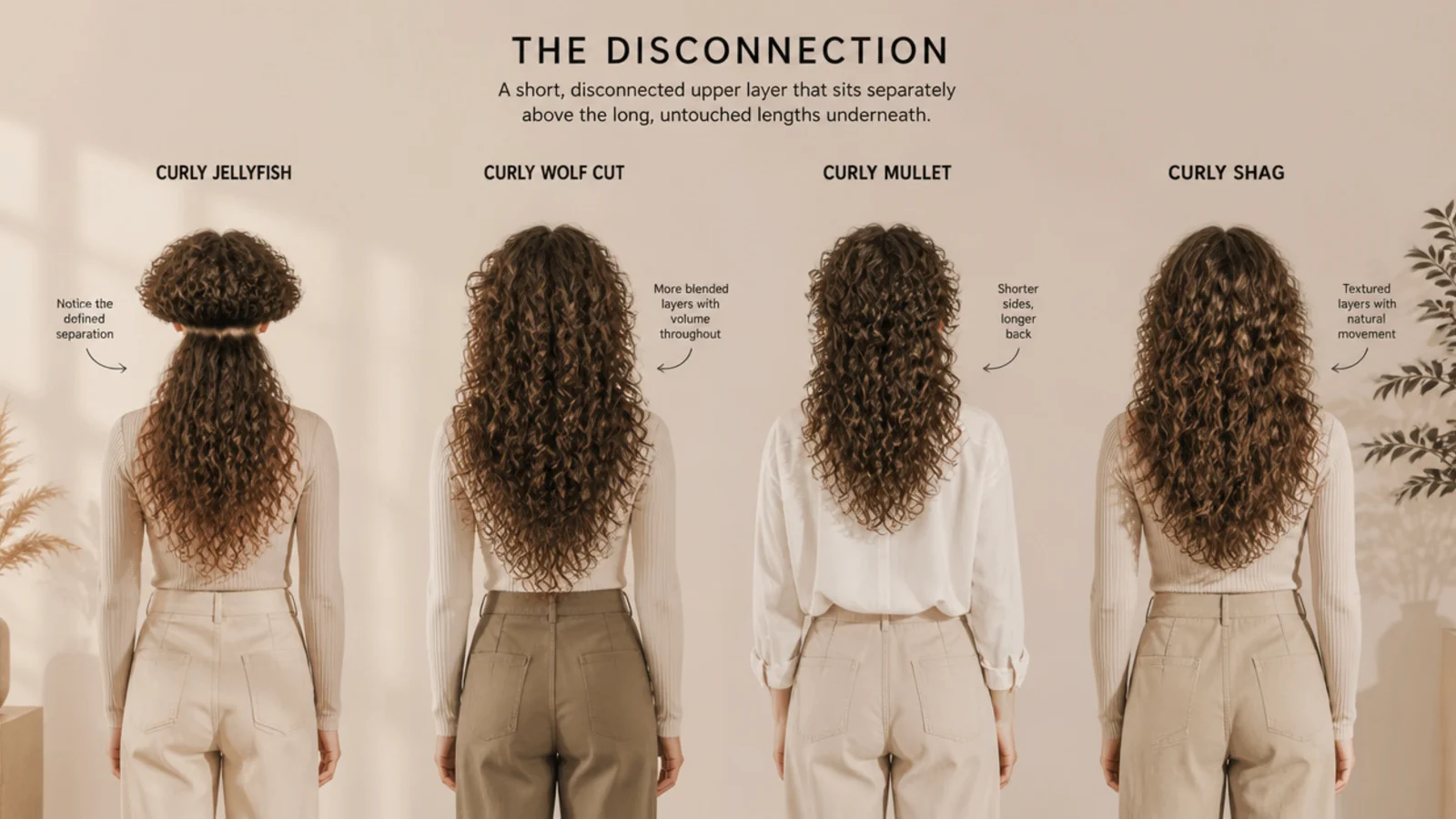
These four cuts get confused constantly, and the distinguishing feature is always the same one: how much blending happens between layers. A jellyfish cut has a hard, deliberate break between two tiers and no transition at all. A wolf cut is choppy and heavily layered from crown to ends, but every layer flows into the next, so there is no visible line anywhere. A mullet is short at the front and sides and long only at the back, which is a front-to-back contrast rather than a top-to-bottom one; a jellyfish keeps its short layer all the way around the head, including the front. A curly shag is the softest of the four, with graduated layers throughout and no disconnection whatsoever. There is one more relative worth knowing: the hime cut, which keeps two blunt cheek panels and long length behind but has no bowl-shaped crown. If someone tells you a jellyfish cut is just a mullet, the answer is that a mullet has no bell. See medium jellyfish haircut and shaggy mid-length haircut for the neighbors.
How to Style the Short Bell and the Long Curly Lengths
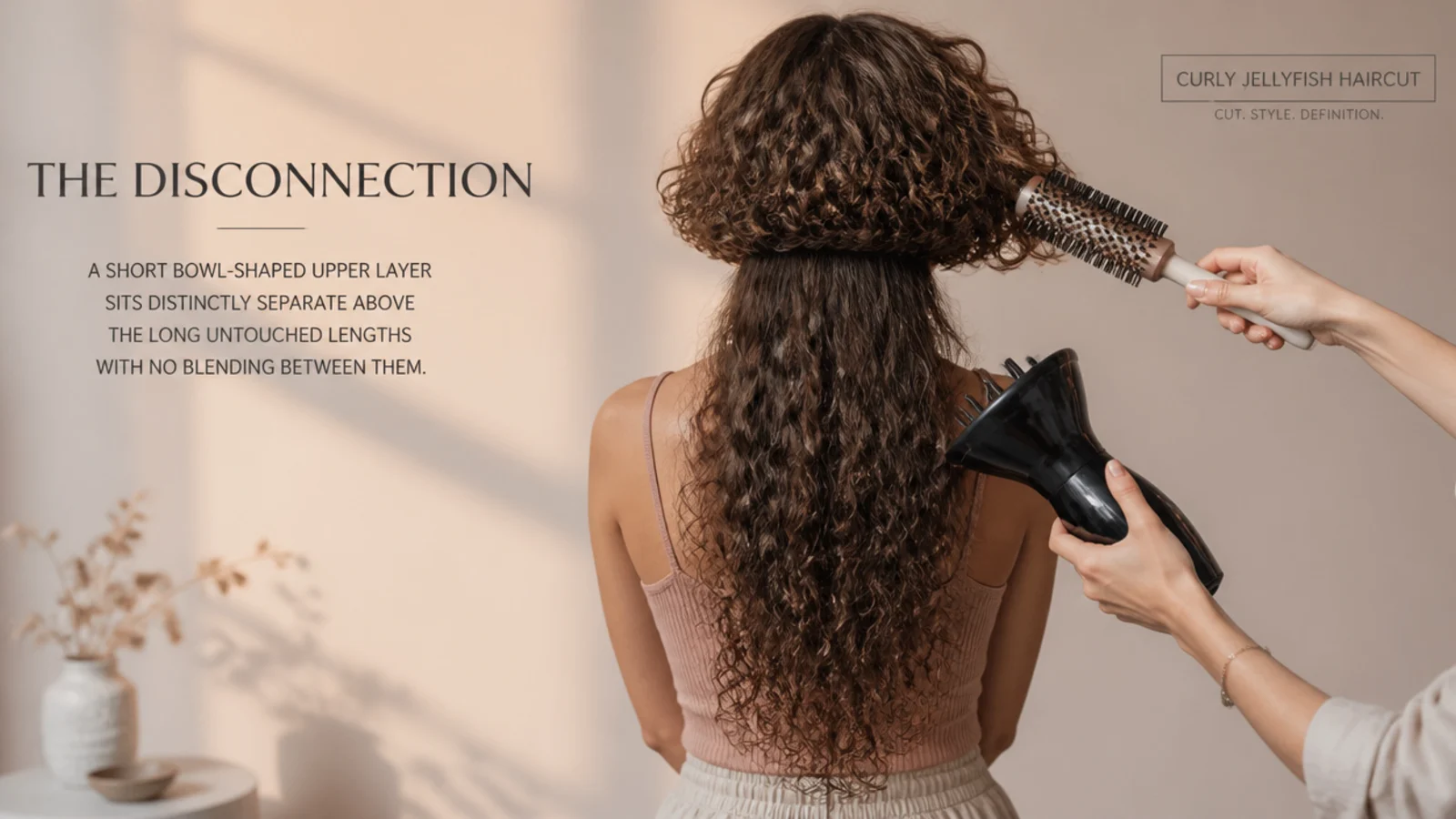
Style the two sections separately, because they want opposite things. On straight hair the short layer usually gets a 1.25in round brush or a flat-iron flick to give it a smooth inward curve. On curly hair you can do the same, but most people prefer to keep the bell curly and simply control its shape. Clip the bell up and out of the way first, apply a curl cream and a gel to the long section, then diffuse it on low heat and high speed with your head tipped forward. Once the lengths are eighty percent dry, drop the bell, scrunch a lighter product through it, and diffuse it hovering rather than cupping, so the curls dry round instead of flattened against your scalp. Root clips at the crown for the last five minutes stop the bell from collapsing. Scrunch out the gel cast only after everything is fully dry, and never brush the bell dry unless you want the triangle. Wash-day framework in frizzy hair routine and hair mask for frizzy hair.
Growing Out a Curly Jellyfish Haircut Month by Month
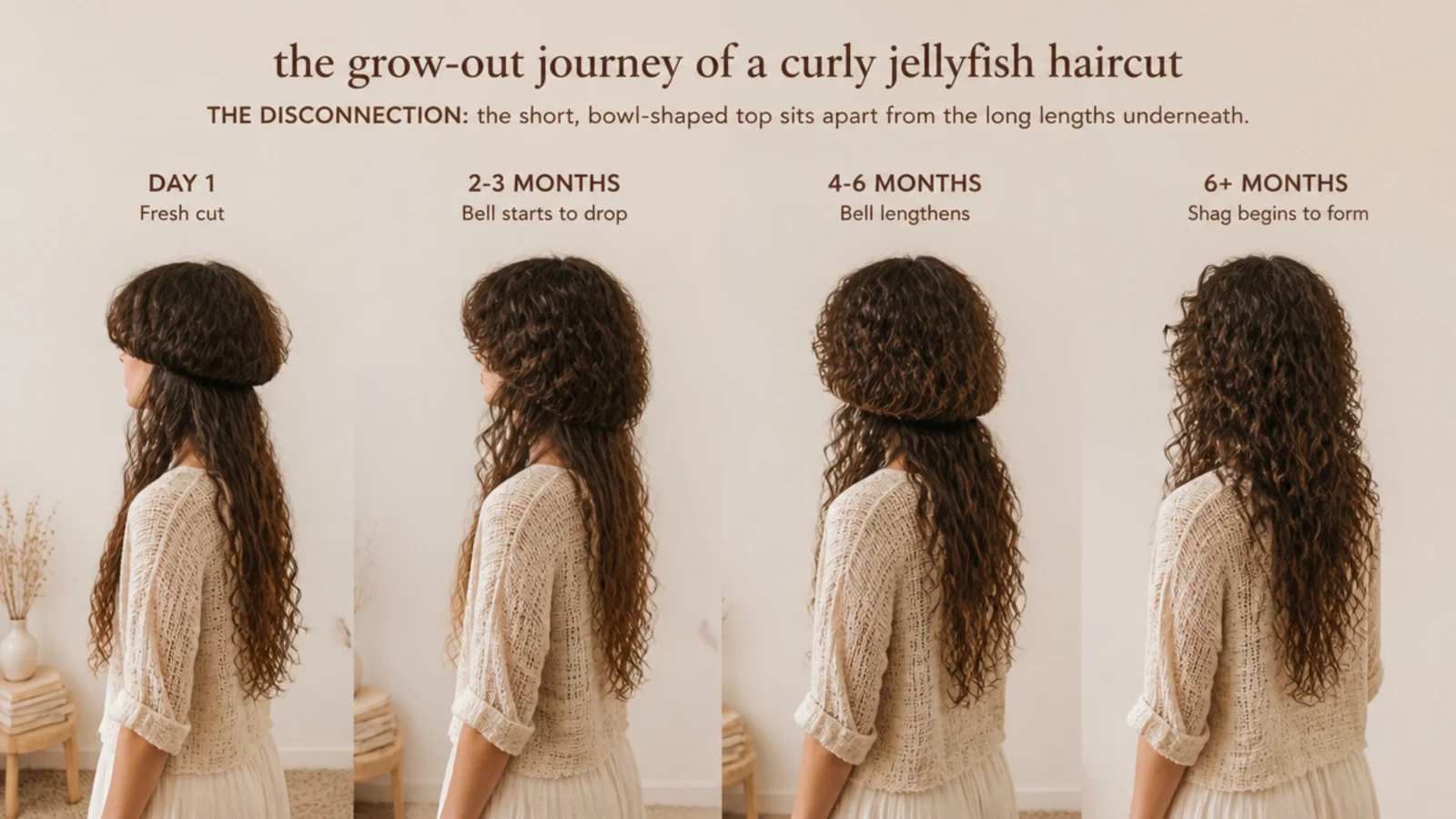
Hair grows about half an inch a month, and curl hides roughly half of that, so a chin-length bell takes four to six months to reach the shoulders. The good news for curly hair is that the awkward phase is shorter than it is for straight hair. Around month two the bell drops below the jaw and the hard disconnection starts to soften on its own, and by month three most curly jellyfish cuts have quietly become a curly shag, which is a shape nobody questions. If you want out faster, ask a stylist to point cut the bottom edge of the bell so it fragments into the lengths instead of sitting on top of them. The one thing not to do is cut the long section shorter to meet the bell, which costs you years of length to fix a three-month problem. If you decide to keep the cut instead, the bell needs reshaping every eight to ten weeks, while the lengths only need dusting every four to five months. Grow-out strategy also applies to curly mid-length haircut.
How to Ask for a Curly Jellyfish Haircut Without a Disaster
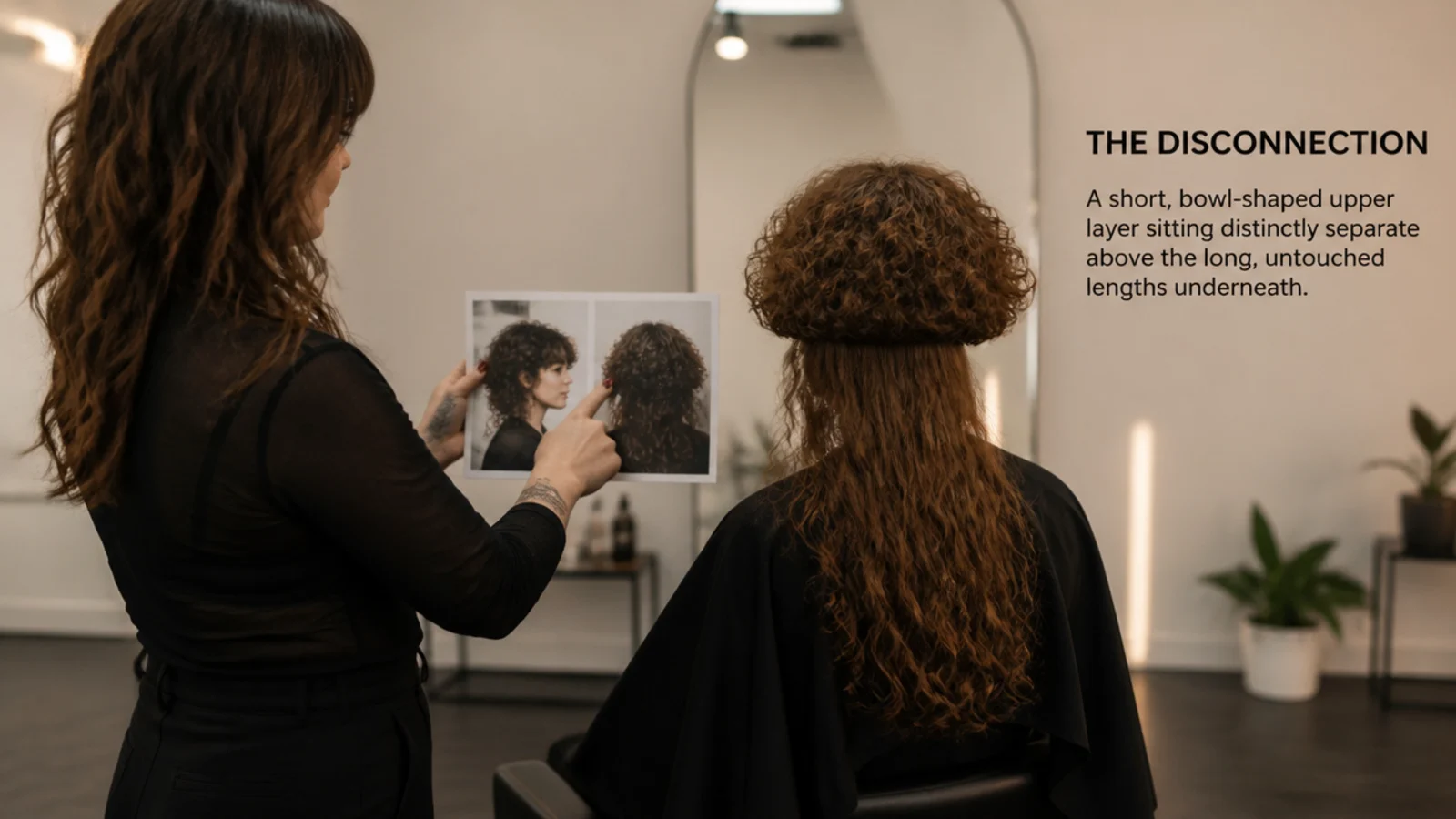
Use these words, in this order: disconnected bowl-shaped upper layer, length left long underneath, cut dry, do not blend. Never say bowl cut, because that is what you will get. Then add the four numbers that stop most disasters. One, where the bell finishes when dry, in inches or by landmark, so cheekbone or just below the jaw rather than short. Two, your curl pattern and shrinkage, roughly half an inch on 2c, one inch on 3a, one and a half on 3b, two or more on 3c and 4a. Three, whether you want the perimeter blunt or point cut. Four, how much of the lower section is untouched, which for a true jellyfish is all of it. Book a curl specialist and a dry cut specifically, since a wet-cut jellyfish shrinks into a genuine bowl. Bring three photos of hair your texture, not straight-hair references, and ask to see the back in a hand mirror before the cape comes off. If bangs are part of the plan, read jellyfish haircut bangs first.
Frequently Asked Questions
Can I get a jellyfish haircut with curly hair?
Yes, and it looks good on most curl patterns, but the results depend on how tight your curls are. Wavy through 3b hair shows the disconnected bell clearly. At 3c and 4a the shrinkage and volume soften the line so the cut reads as a silhouette rather than a hard edge. Ask for a dry cut with a shrinkage allowance and the shape will land where you expect.
Does the jellyfish haircut work on any hair texture?
It works on every texture, but it shows most clearly on straight and wavy hair, where the disconnection between the short bowl-shaped top and the long lengths reads as a drawn line. Tight curls and coils blur that line because volume fills the gap. On coily hair, a deep side part or a two-tone color is what restores the contrast the cut is famous for.
How much shrinkage should I allow for a curly jellyfish haircut?
Roughly half an inch on 2c waves, one inch on 3a spirals, an inch and a half on 3b corkscrews, and two inches or more on 3c and 4a coils. Tell your stylist the number before the first cut, and ask for the bell taken longer than the target so it springs up to the landing point you actually want when dry.
Should the jellyfish haircut be cut wet or dry on curly hair?
Dry, always, and curl by curl. Wet cutting stretches curls to their full length, so the bell that looked chin-grazing in the chair springs an inch or two higher once it dries, which turns a jellyfish cut into a literal bowl cut. Dry cutting also lets the stylist see where each curl clumps and cut the perimeter to the pattern rather than through it.
Is the curly jellyfish haircut high maintenance?
Moderately. The bell needs reshaping every eight to ten weeks to keep its rounded outline, while the long lower section only needs dusting every four to five months. Day to day, the two layers are styled separately, which adds about ten minutes to a diffusing routine. It is more upkeep than a curly shag and less than any cut with blunt bangs.
Will a jellyfish haircut make my curly hair look like a triangle?
It can, if the bell is cut with a flat horizontal perimeter, because curly hair expands sideways as it dries. The fix is a rounded perimeter that sits about half an inch shorter at the temples than at the front, plus internal debulking inside the bell on dense hair. Never remove weight from the outer edge itself, as that causes frizz instead of shape.
What does a jellyfish haircut grow out into?
A shag or a curtain-bang shape, depending on the length of the bell. On curly hair the transition is faster than on straight hair, because curl softens the disconnection as it drops. Expect about two months before the bell clears the jaw and roughly three months before the whole cut reads as a normal curly shag with face-framing layers.
Is the jellyfish haircut the same as a mullet?
No. A mullet is short at the front and sides with length only at the back, so the contrast runs front to back. A jellyfish keeps its short bowl-shaped layer all the way around the head, including the front, and the long section hangs underneath it everywhere. A mullet has no bell, and that bell is what makes a jellyfish a jellyfish.
How do I style the short top layer of a curly jellyfish haircut?
Diffuse it separately from the lengths. Clip the bell up while you product and diffuse the long section, then drop it, scrunch a light cream through it, and diffuse hovering rather than cupping so it dries round. Root clips at the crown for the last five minutes keep it lifted. On straight or stretched hair, a 1.25in round brush or a flat-iron flick gives the smooth inward curve instead.
Which jellyfish haircut look are you saving?
If you take one thing from these 15 curly jellyfish haircut ideas, make it the sentence you say in the chair: disconnected bowl-shaped upper layer, cut dry, length left long underneath, do not blend. Add your curl pattern and a shrinkage number, ask for the bell to finish below your cheekbone rather than at it, and check the back view in a hand mirror before you leave, because the back is where curly jellyfish cuts go wrong. Start with a chin-length bell if you are nervous; it is the version that grows into a curly shag in about three months instead of an awkward phase. Browse the rest of the jellyfish haircut hub, or compare lengths in medium jellyfish haircut.