
Quick Comparison
| Short Jellyfish Haircut | Wolf Cut | |
|---|---|---|
| Layer connection | Fully disconnected; the two sections never meet | Fully blended; layers melt from crown to ends |
| Shape of the upper section | Rounded, blunt, bowl-shaped bell | Shaggy, choppy, heavily texturized crown |
| Where the eye lands | On the horizontal break between the layers | On the overall movement, no single line |
| Best textures | Straight 1A to 2C; tight curls blur the shape | Wavy and curly 2A to 3C; thrives on texture |
| Trim cadence | Bell every 6 to 8 weeks or the shape collapses | Every 10 to 12 weeks; shagginess hides regrowth |
| Daily styling | 5 to 10 minutes; round brush or flat iron on the bell | 2 to 5 minutes; texture spray and air-dry |
| Grow-out behavior | An awkward in-between phase of about 2 to 3 months | Softens gradually with no awkward stage |
| Wearing it up | The bell falls out of a ponytail and stays down | Ties up easily; face-framing pieces fall free |
| Salon risk | High; many stylists blend it by reflex | Low; most stylists cut wolf cuts weekly |
1. Chin-Length Bell Over Collarbone Tentacles
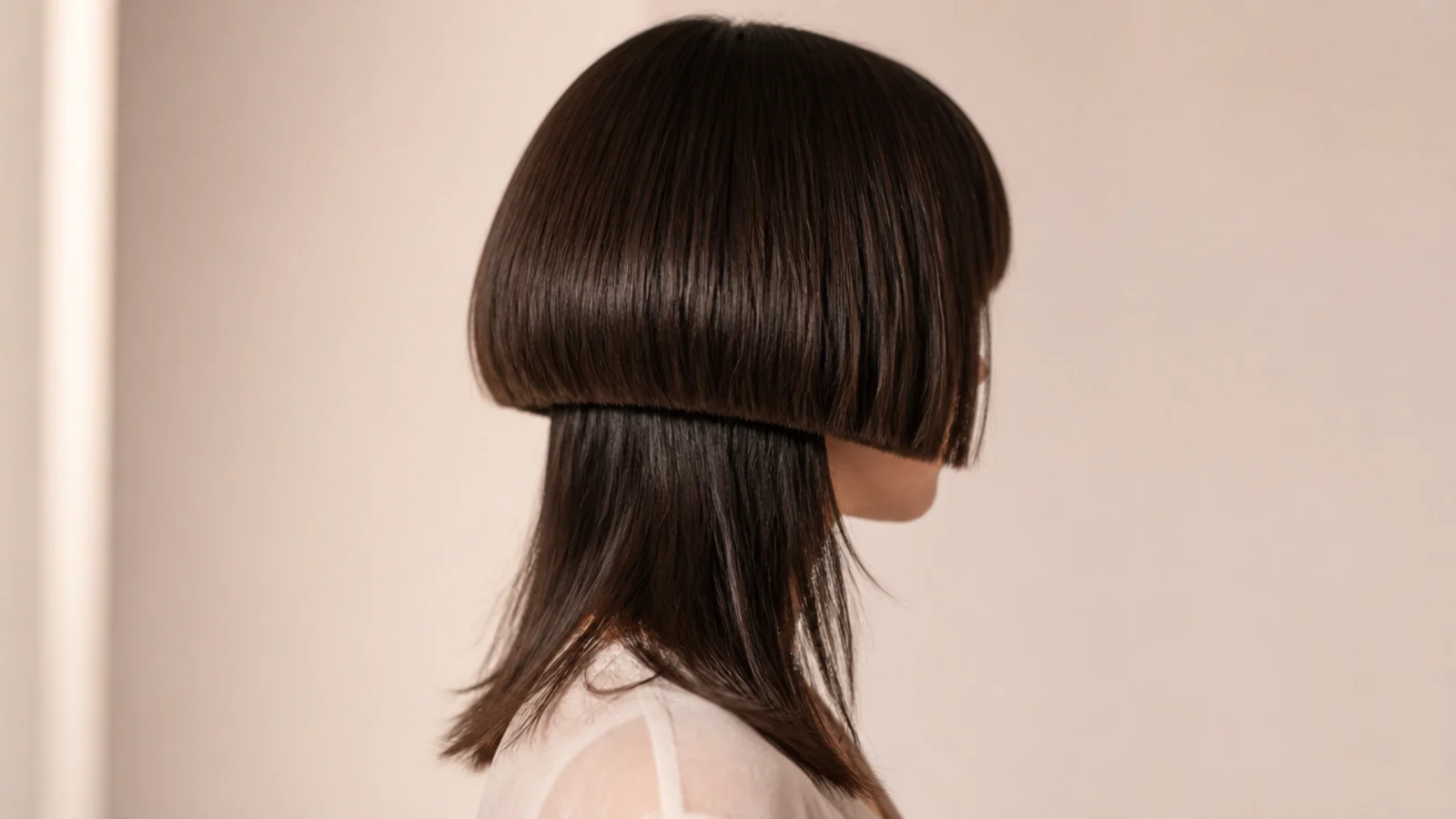
The most wearable short jellyfish there is. The bell is cut blunt at the chin, roughly 6 inches from the crown, and the lower layer stops at the collarbone around 10 inches, which gives you about 4 inches of visible disconnection. That gap is the minimum most stylists will tell you works: any closer and the two layers read as one grown-out bob. Keep both edges blunt and skip internal layering entirely so the horizontal break stays crisp. If you want the same shape with more length below, see the long jellyfish haircut.
Who it suits: First-timers, oval and heart faces, straight to slightly wavy hair.
Tip: Ask for both edges cut blunt with no point cutting, or the disconnection softens within three weeks.
2. Short Jellyfish Haircut on a Round Face
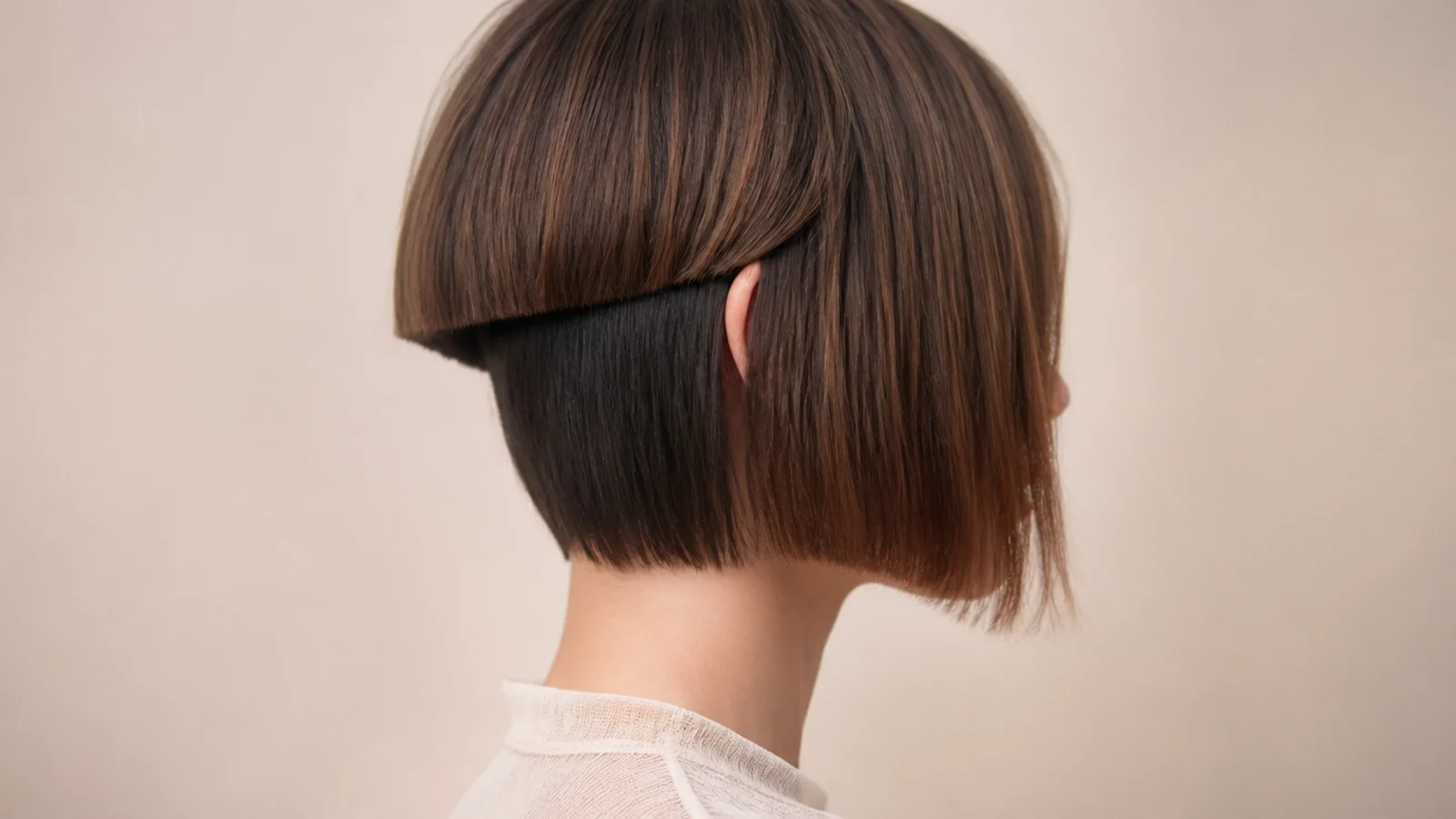
A round face and a bowl-shaped bell are natural enemies, because a bell cut at cheekbone level draws a horizontal line straight across the widest part of the face. The fix is length and split. Drop the bell to jaw level, about 7 inches, and ask for the front two sections left half an inch longer so they hang in vertical panels beside the cheeks instead of curving in. The long lower layer then carries the eye downward. Avoid a rounded bowl edge here; a slightly angled one that dips forward is far more flattering.
Who it suits: Round and full-cheeked faces wanting the trend without widening.
Tip: Ask for the bell dipped forward by half an inch at the front so it cuts a diagonal, not a circle.
3. Pixie Jellyfish Haircut With a Nape Tail
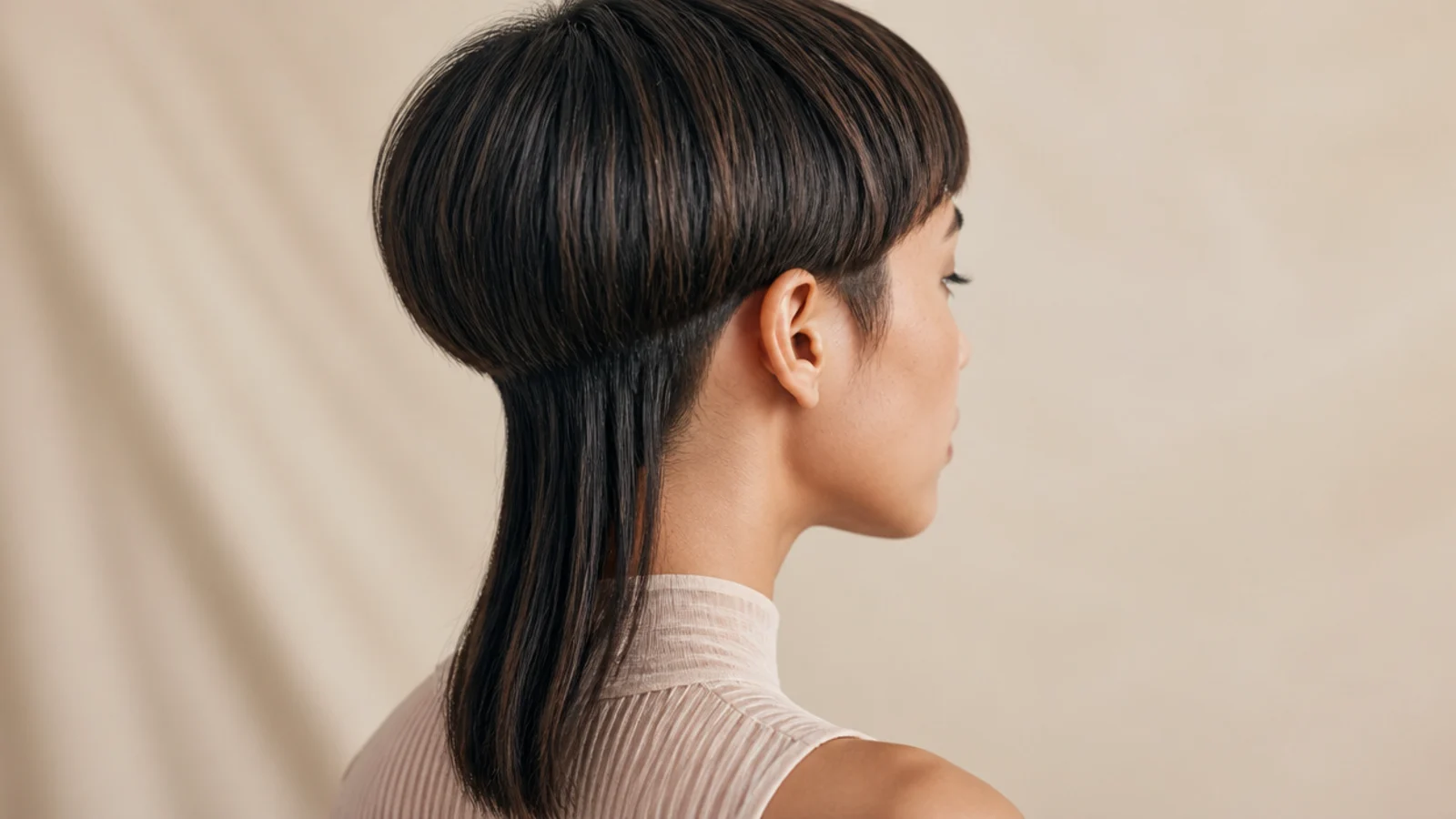
The most extreme short version, and the one closest to a mullet. The bell is cropped to 3 or 4 inches, sitting above the ears like a rounded pixie, while a narrow panel at the nape is left at shoulder length or longer. Because the top is so short, the tentacle section is usually narrowed to the width of the nape rather than running ear to ear, otherwise the weight looks bottom-heavy. Expect a 4 to 6 week trim cycle on the bell. This is the version people mean when they call the cut a bowl cut mullet.
Who it suits: Bold wearers, oval faces, fine to medium straight hair.
Tip: Ask for the nape panel kept narrow, about 3 inches wide, so it reads as a tail not a curtain.
4. Blunt Bob Bell With a Shoulder-Length Underlayer
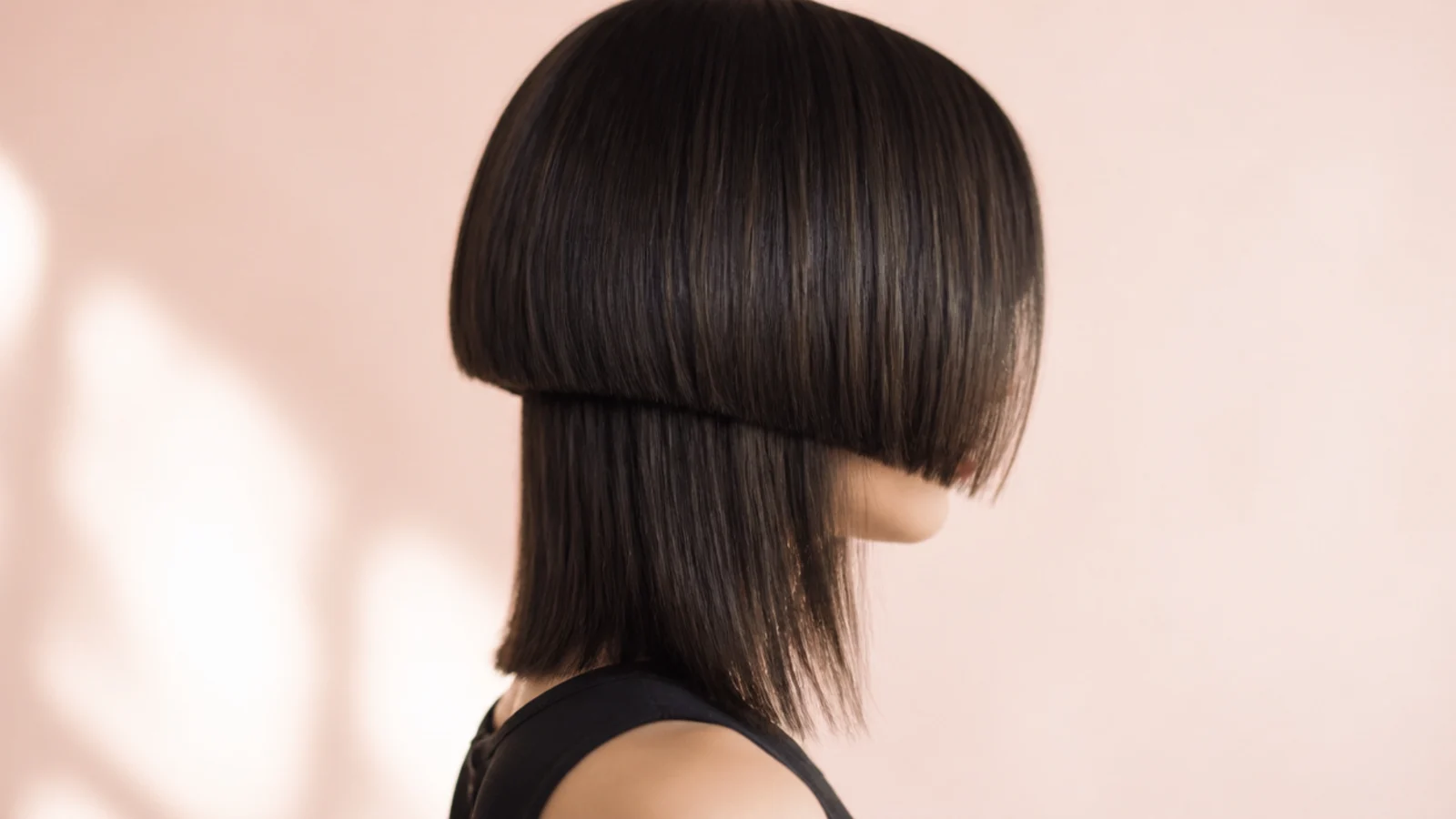
Take a blunt French bob, cut it as its own complete shape at 6 to 7 inches, then leave everything below the parietal ridge at shoulder length. The result reads as a bob worn over long hair, which is exactly the illusion the jellyfish trades on. It is the easiest short version to reverse, because if you tire of it you simply grow the bell into the length instead of cutting anything off. Blunt weight in the bell is what sells it, so avoid thinning shears entirely. Related shapes live in bob haircuts.
Who it suits: Anyone testing the trend who wants a clean exit route.
Tip: Ask your stylist to cut the bell as a finished bob first, then release the length underneath.
5. Short Jellyfish Haircut With Curtain Bangs
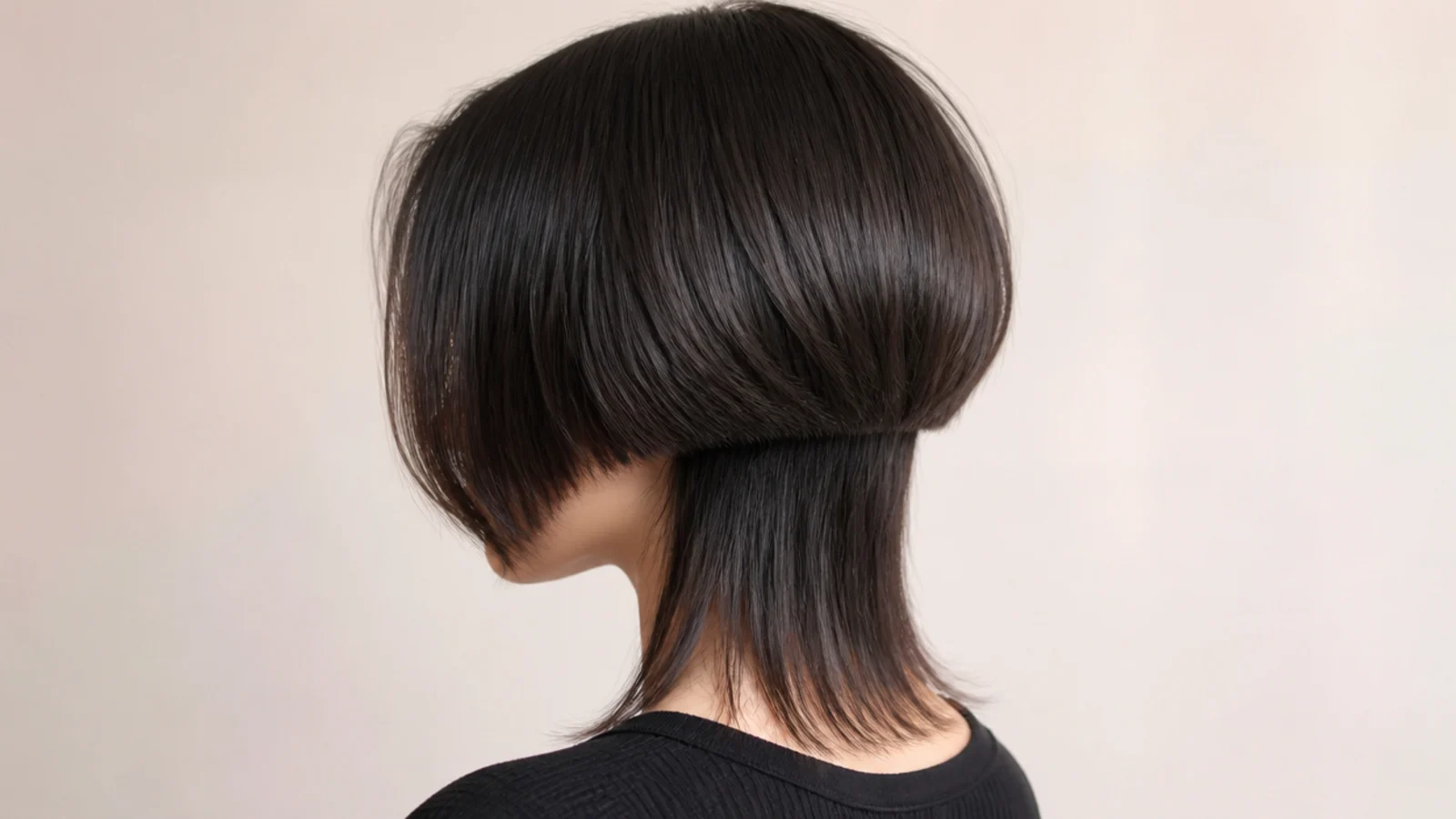
Curtain bangs soften the hardest thing about a short jellyfish, which is the bowl edge sitting flat across the forehead. Cut the fringe to cheekbone level, roughly 4.5 to 5 inches from the hairline, part it down the middle and sweep both sides outward so it merges into the front of the bell. This is the only place in the cut where blending is allowed. It suits square and diamond faces particularly well, since the diagonal sweep breaks a strong brow line. More fringe options in jellyfish haircut bangs and short curtain bangs.
Who it suits: Square, diamond and long faces; anyone easing into the shape.
Tip: Say blend only the fringe into the bell, keep everything below the bell disconnected.
6. Cheekbone-Length Bell for a Long Face
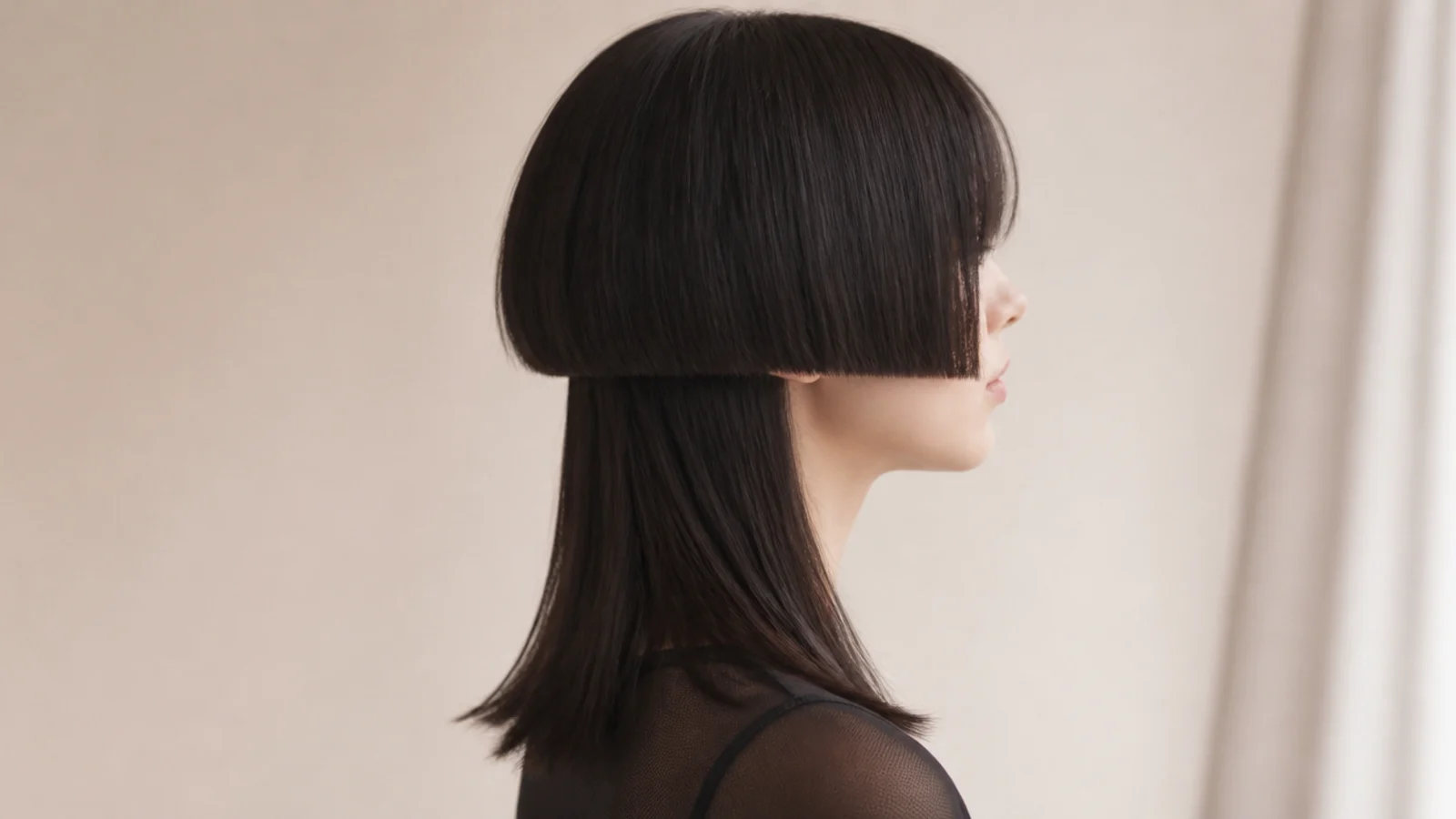
A long or oblong face is the one shape that actively benefits from a high bell. Cut at cheekbone level, about 5 inches, the bowl adds horizontal width exactly where a long face needs it, and the disconnection line breaks the vertical run of the hair into two shorter blocks. Keep the lower layer at bra-strap length or longer so the proportion does not tip top-heavy. This is also the most photogenic short version from the front, because the bell frames the eyes rather than the jaw.
Who it suits: Long, oblong and narrow faces with straight or wavy hair.
Tip: Ask for the bell blow-dried under with a round brush so it curves in and adds width at the ends.
7. Short Jellyfish Haircut on Fine Straight Hair
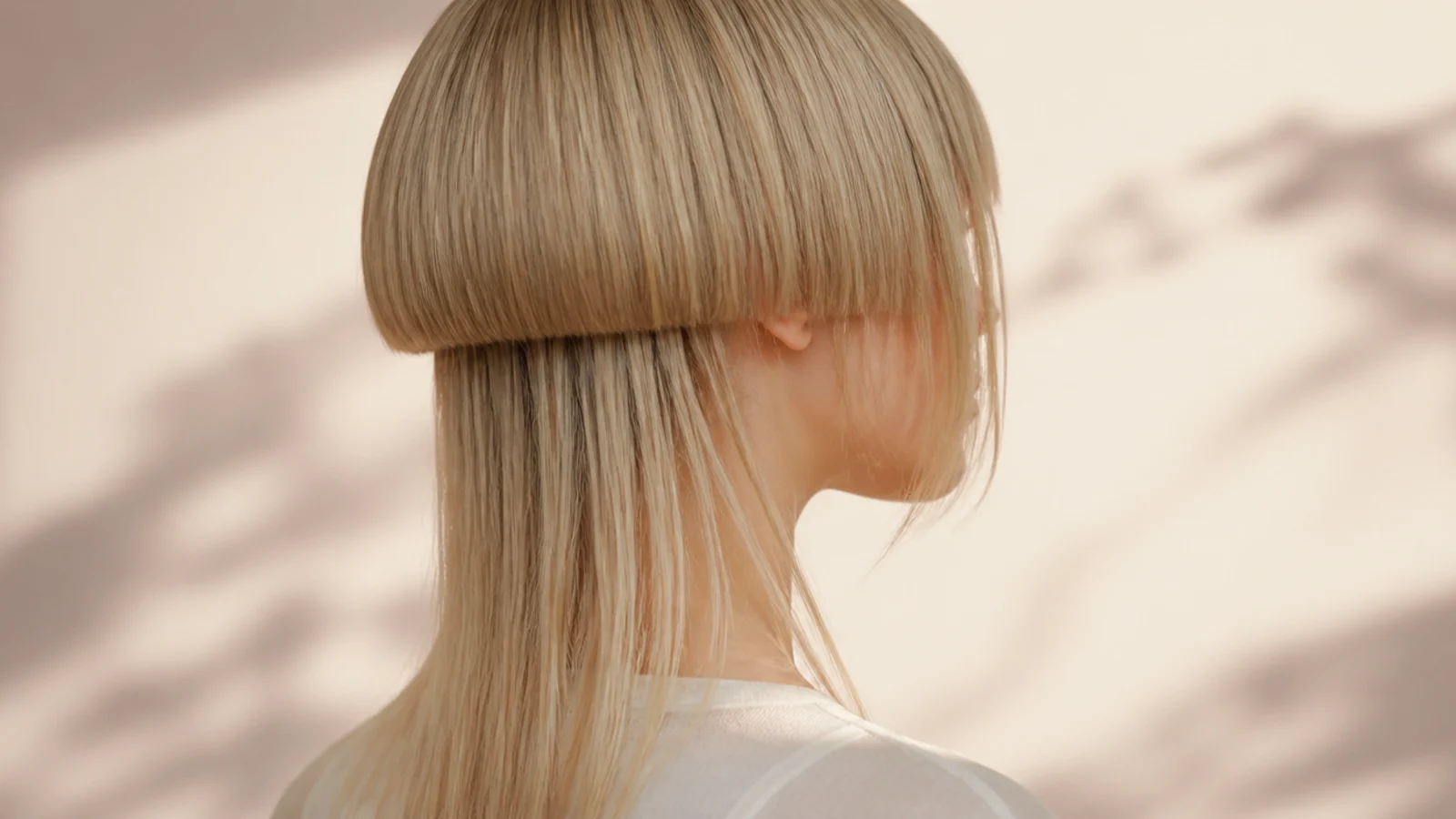
Fine hair is better at this cut than people expect, because a blunt bell concentrates all the density in one solid block and makes the top look thicker than it is. The risk is the lower layer, which on fine hair can end up sparse and stringy once the upper section is removed from it. Ask your stylist to take the split line lower than usual, around the occipital bone rather than the parietal ridge, so more hair stays underneath. A root-lift mousse under the bell is non-negotiable. See also how to style short fine hair.
Who it suits: Fine 1A to 1C hair wanting visible structure.
Tip: Ask for a lower split line so the tentacle section keeps enough weight to hang properly.
8. Short Jellyfish Haircut on Thick Hair
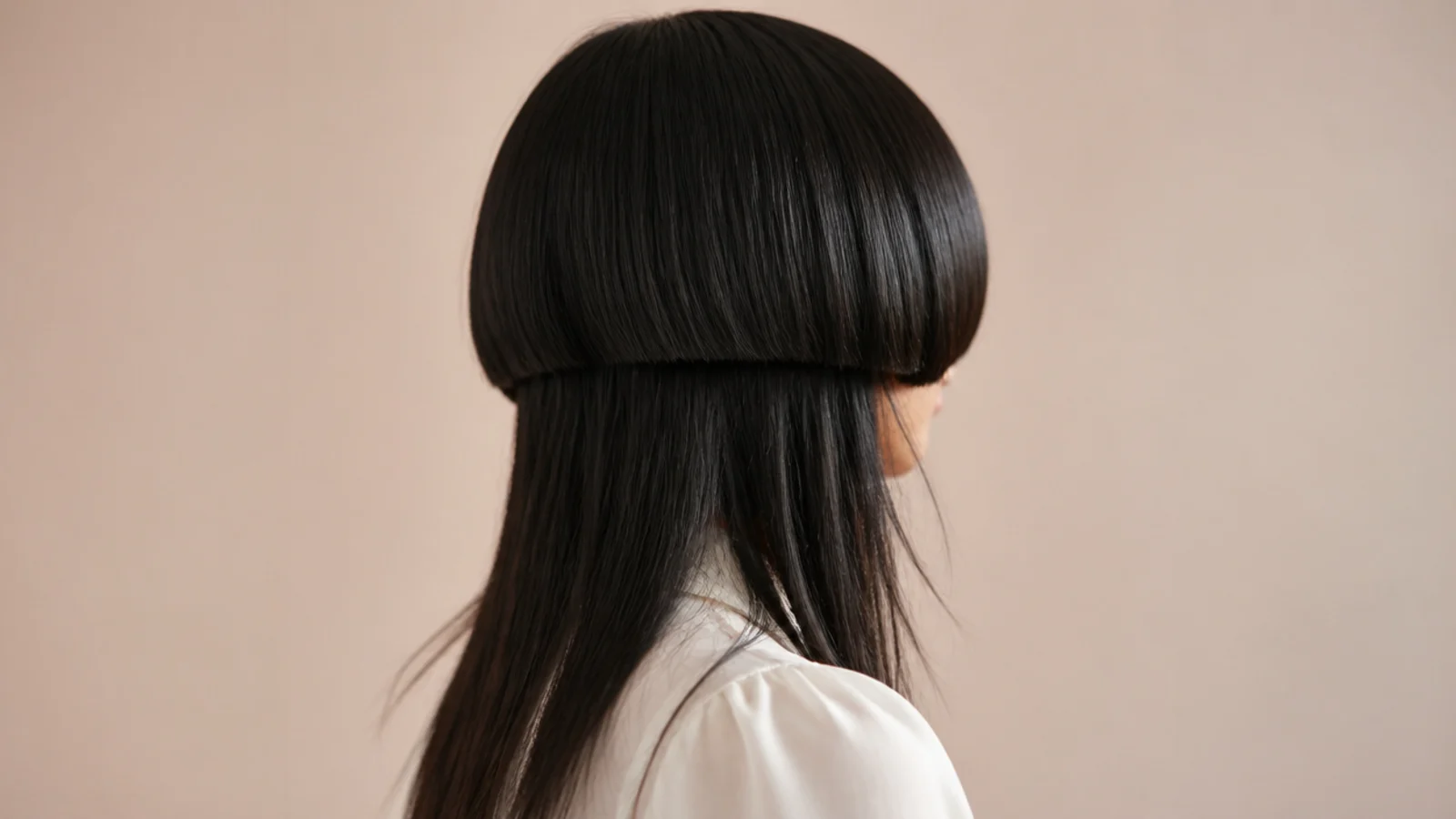
Thick hair gives you the cleanest bell in the room and the heaviest problem underneath. A dense bowl at chin length will flick outward at the ends by day two unless weight is removed from the interior, so ask for internal weight removal in the bell only, never at the perimeter. The lower layer usually needs the same treatment, with long invisible layers starting below the disconnection line so the tentacles stay airy. Budget 8 to 10 minutes with a flat iron on the bell each morning. Density notes for other lengths sit in the jellyfish haircut guide.
Who it suits: Thick, coarse, straight to wavy hair.
Tip: Say remove weight from inside the bell, keep the perimeter blunt, so the edge stays sharp.
9. Platinum Bell Over Dark Brown Tentacles
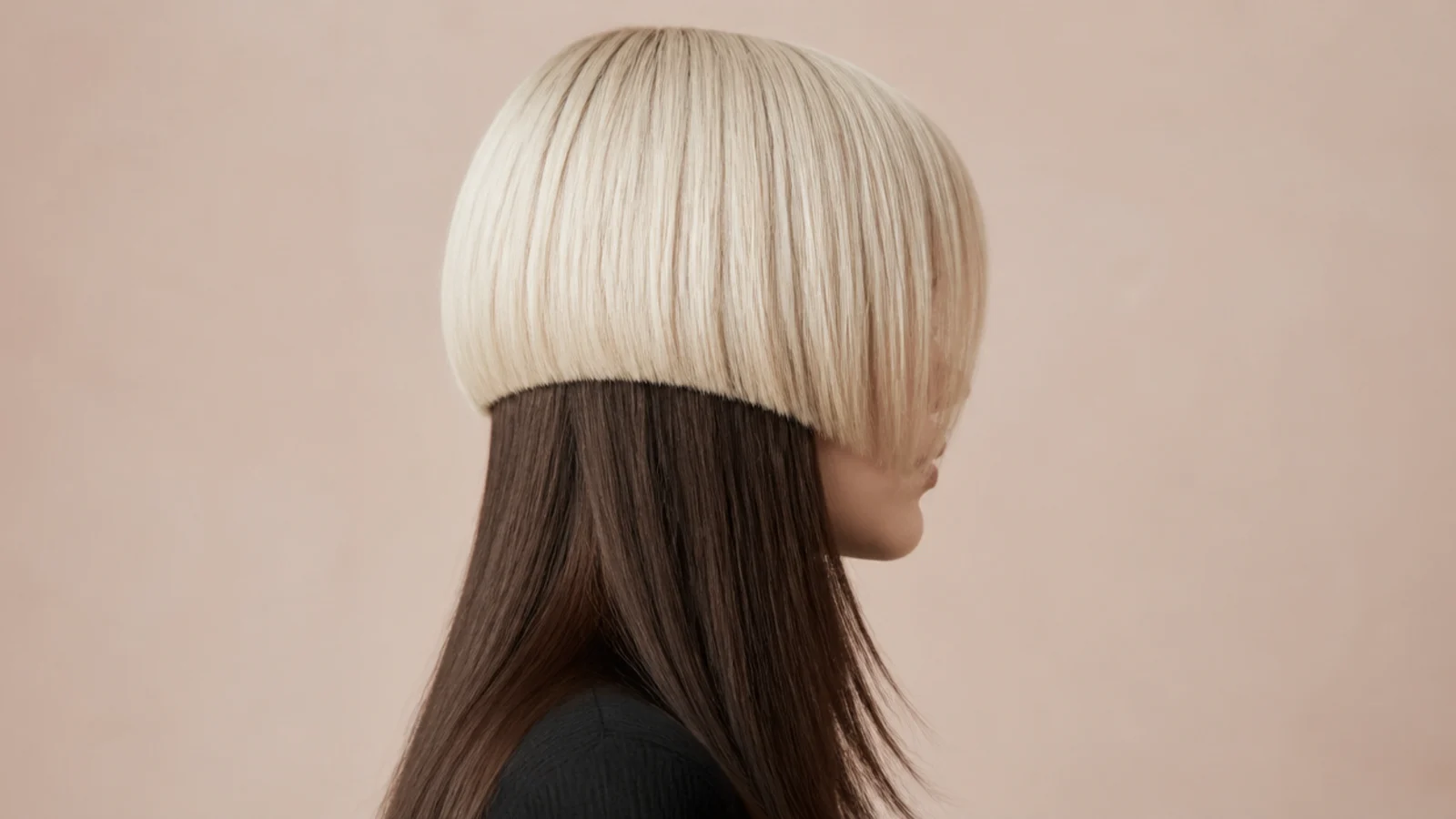
Color the two sections differently and the disconnection stops being subtle. A platinum or icy blonde bell over an untouched dark brown lower layer is the single most saved version of this cut, because the color line and the cut line fall in exactly the same place. It is also the highest-maintenance option here: the bell needs a root touch-up every 5 to 7 weeks and toning every third wash, while the natural lower layer needs nothing. Ask for the lightening done after the cut so the colorist can follow the actual disconnection line.
Who it suits: Anyone wanting maximum contrast; cool undertones especially.
Tip: Have the cut done first, then colored, so the bleach line matches the bell edge exactly.
10. Short Jellyfish Haircut With Micro Bangs
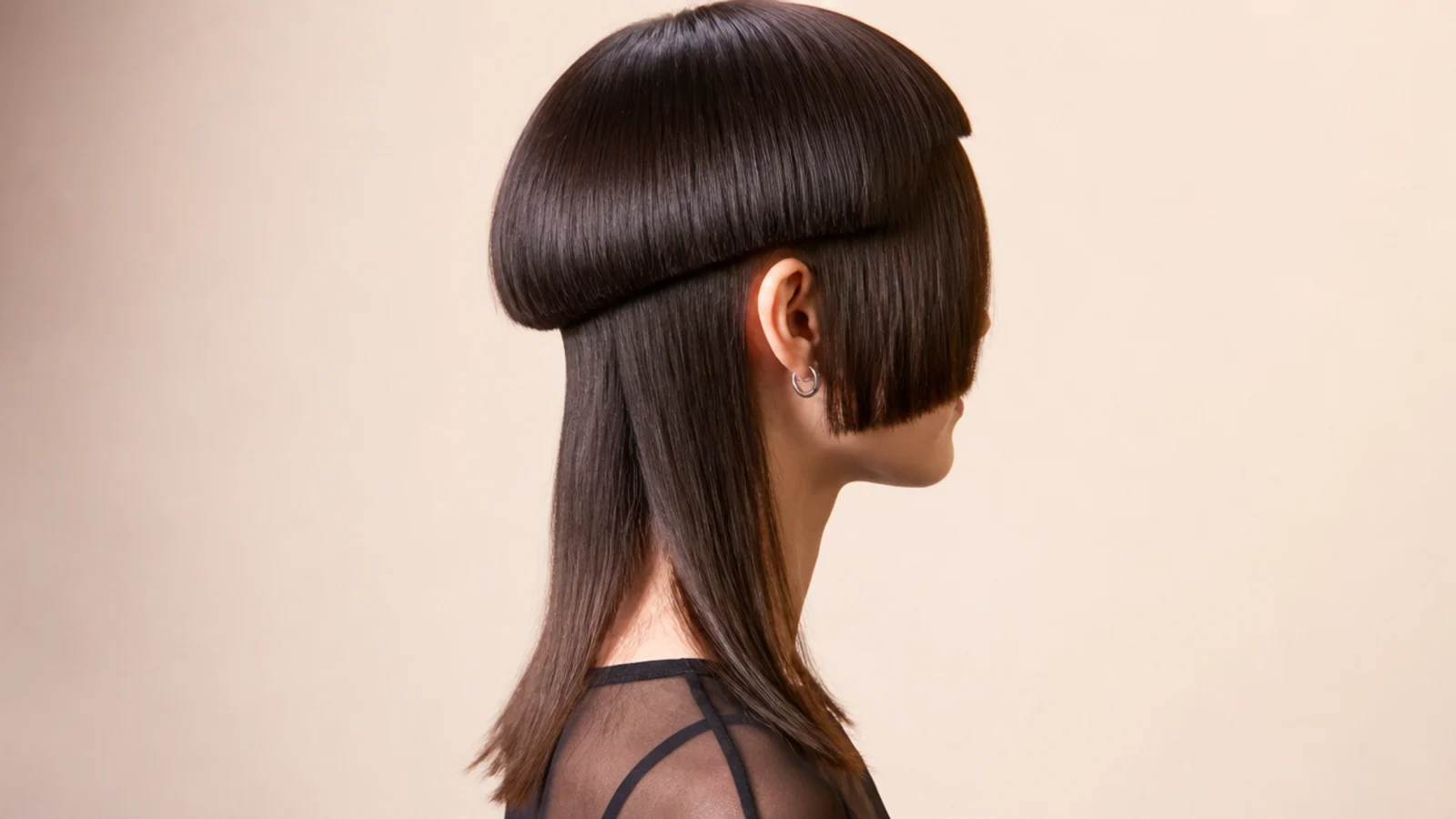
A blunt micro fringe cut 1.5 to 2 inches from the hairline, sitting well above the brows, turns a short jellyfish into an editorial shape. It works because the cut already trades in hard horizontal lines, so a third one at the forehead reads as deliberate geometry rather than a mistake. Micro bangs need a trim every 2 to 3 weeks, which is the real cost. They flatter oval faces and high foreheads, and they need straight or lightly wavy hair to sit flat. More fringe variations in jellyfish haircut bangs.
Who it suits: Oval faces, high foreheads, straight 1A to 2A hair.
Tip: Cut micro bangs dry, never wet, because they spring up half an inch as they dry.
11. Hidden Undercut Under a Short Jellyfish Bell
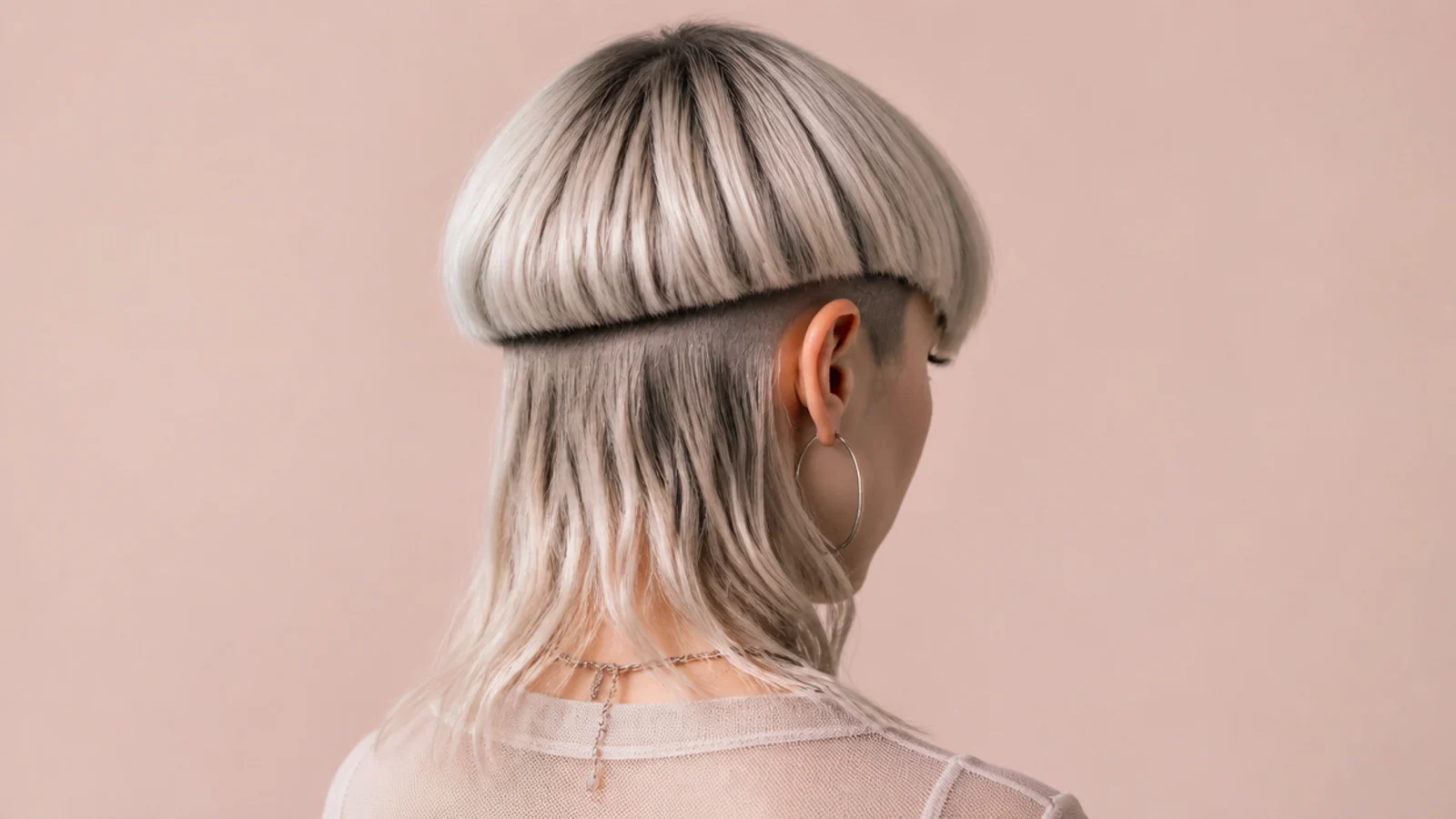
Take a clipper section out of the middle band, between the bell and the tentacle layer, and the bell floats over the length with an inch of visible gap when you move. It solves a genuine problem on thick hair, which is that the middle band adds bulk without adding shape, and it makes the disconnection unmistakable. The trade-off is commitment: an undercut takes 6 to 9 months to grow back into the tentacle section, and it needs clipper maintenance every 4 weeks.
Who it suits: Thick hair, bold wearers, anyone already comfortable with clippers.
Tip: Ask for a number 2 guard, not shorter, so the regrowth phase never looks patchy.
12. Short Wavy Jellyfish Haircut on 2B Hair
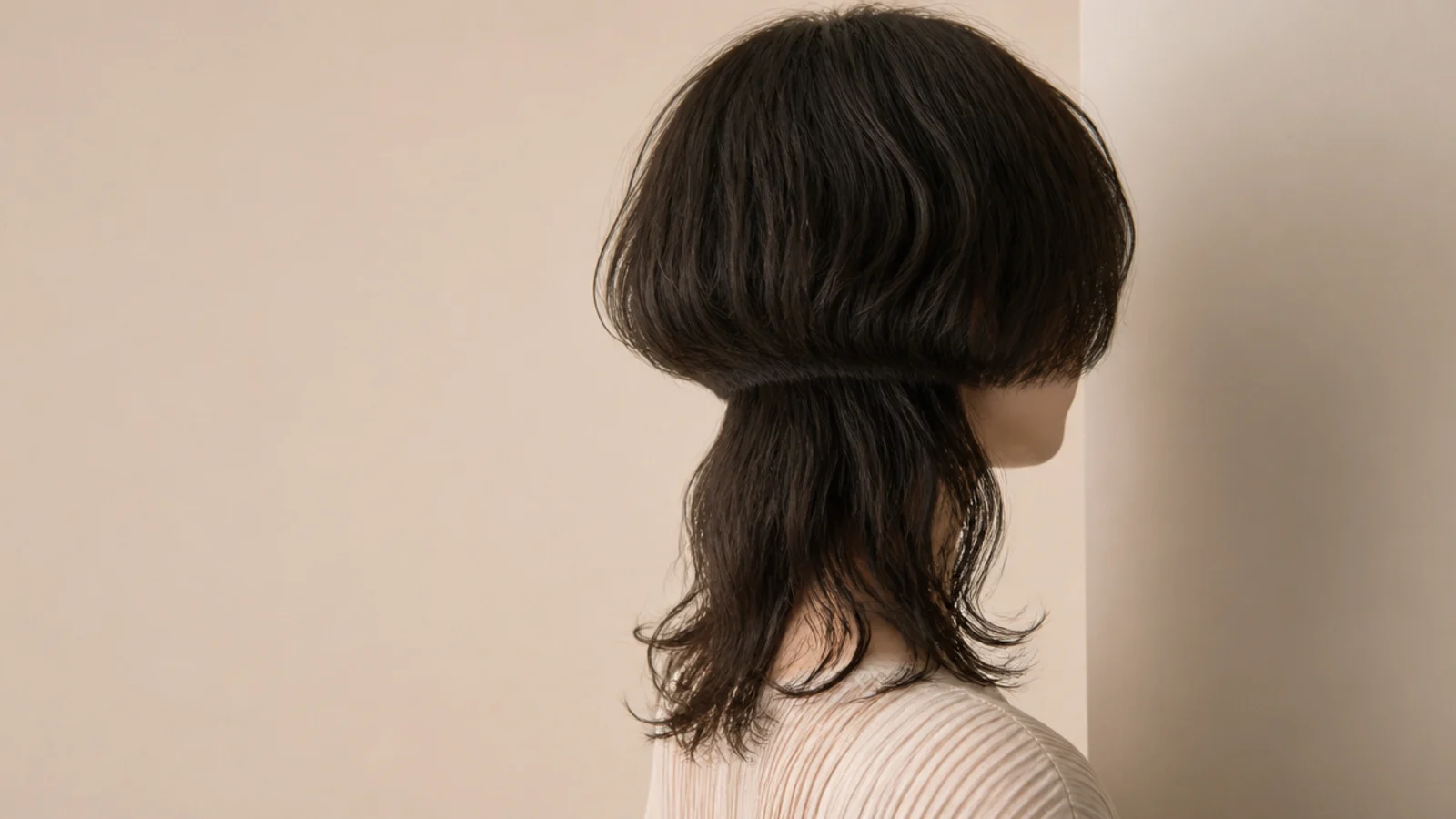
Waves are arguably the best texture for this cut, because they show the bowl shape without the plastic flatness straight hair can get. On 2B hair the bell springs up roughly half an inch as it dries, so ask for it cut half an inch longer than your target, and cut on dry hair where possible. The lower layer needs almost nothing: scrunch a light mousse in and let the S bend do the work. Full texture breakdown in the wavy jellyfish haircut guide.
Who it suits: 2A to 2C waves at any density.
Tip: Ask for the bell cut dry, and add half an inch of springback allowance before the first snip.
13. Short Curly Jellyfish Haircut on 3A Hair
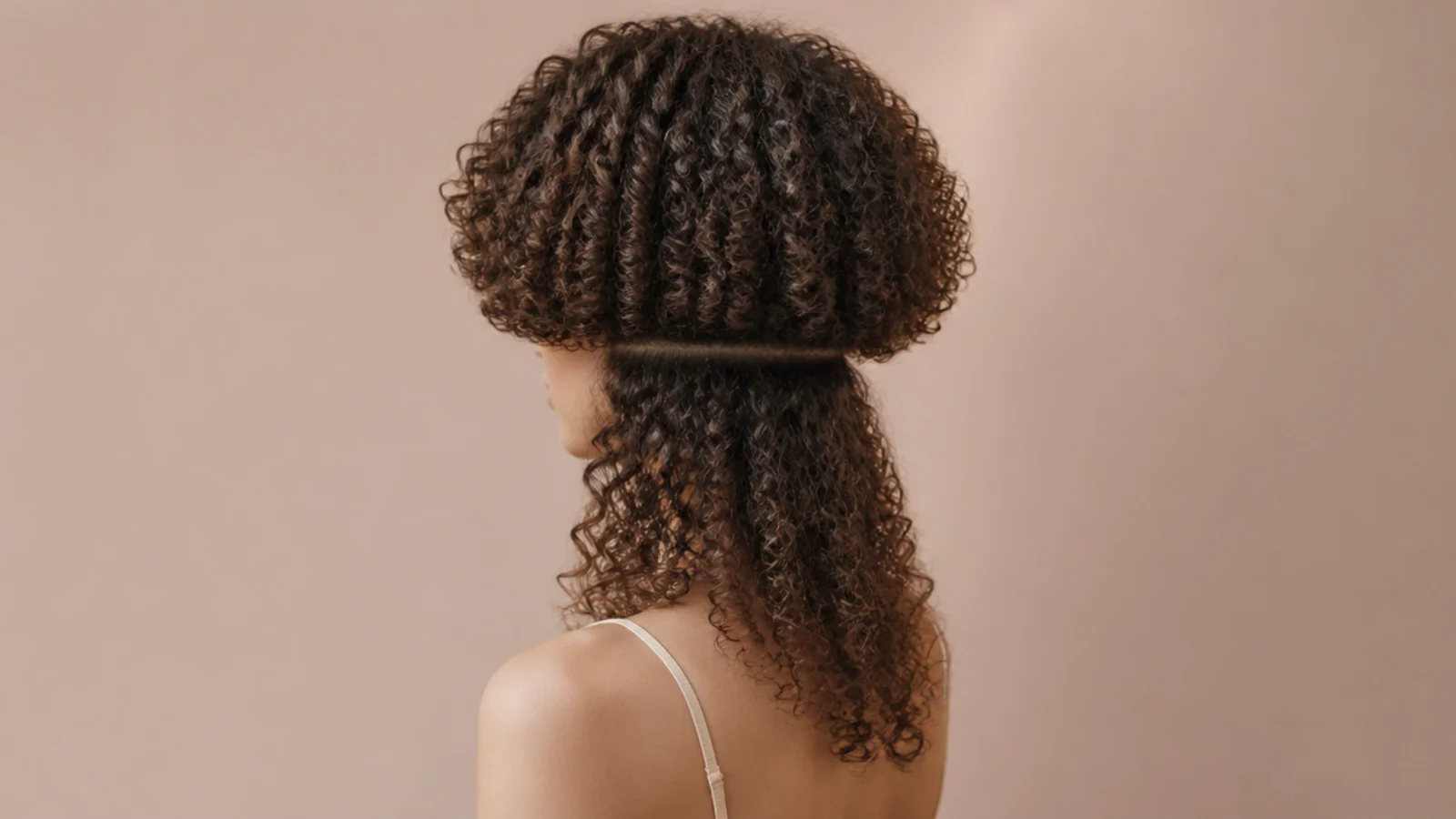
Curls blur the disconnection, so the shorter the bell the harder this gets. At 3A the bell should be cut curl by curl on dry hair and left at least at chin length, since anything above the ear turns into a triangle as the curls expand outward. Shrinkage of 1 to 2 inches means a wet-cut bell can finish far shorter than planned. If your pattern is 3C or tighter, the bell and the tentacles simply merge into one cloud and the cut stops reading. Curl-specific advice sits in the curly jellyfish haircut guide.
Who it suits: 2C to 3A curls; anything tighter loses the shape.
Tip: Diffuse the bell upside down for 60 seconds, then flip up, so it does not flatten to the skull.
14. Flipped-Out Bell on a Short Jellyfish Haircut
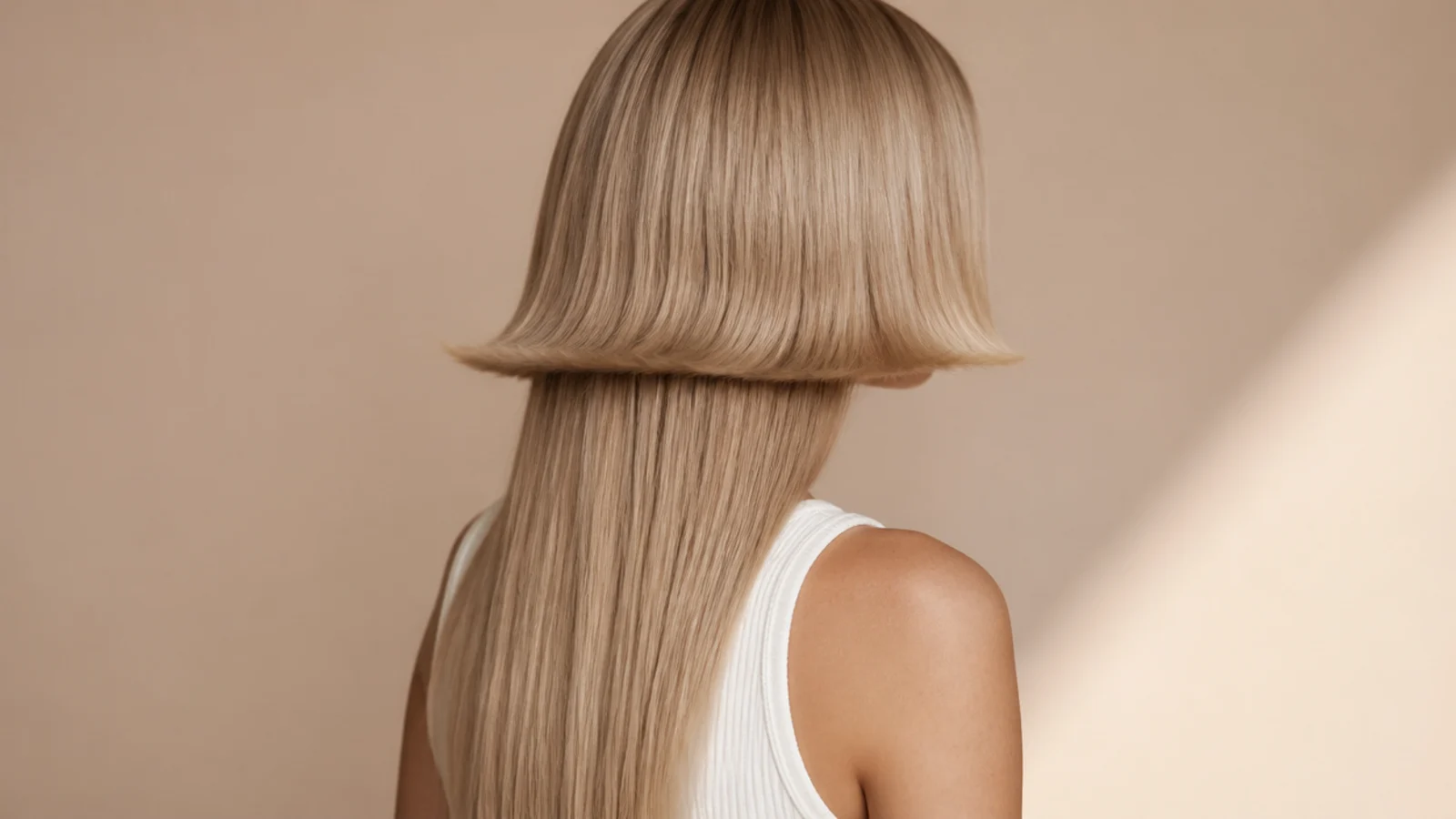
Instead of curving the bell under, flick the ends outward with a flat iron for a 70s finish that makes the shape look intentional rather than severe. Clamp the iron 1 inch from the ends, rotate the wrist away from the face, and glide off. It takes about 4 minutes on a chin-length bell. The outward flick also widens the shape at the jaw, which balances a narrow chin and a heart-shaped face. Finish with a dry texture spray so the flip holds through the day without stiffness.
Who it suits: Heart faces, narrow chins, straight to 2A hair.
Tip: Flick only the front two sections outward and leave the back curving under, or it reads costume.
15. Ear-Length Bell Over Bra-Strap Length
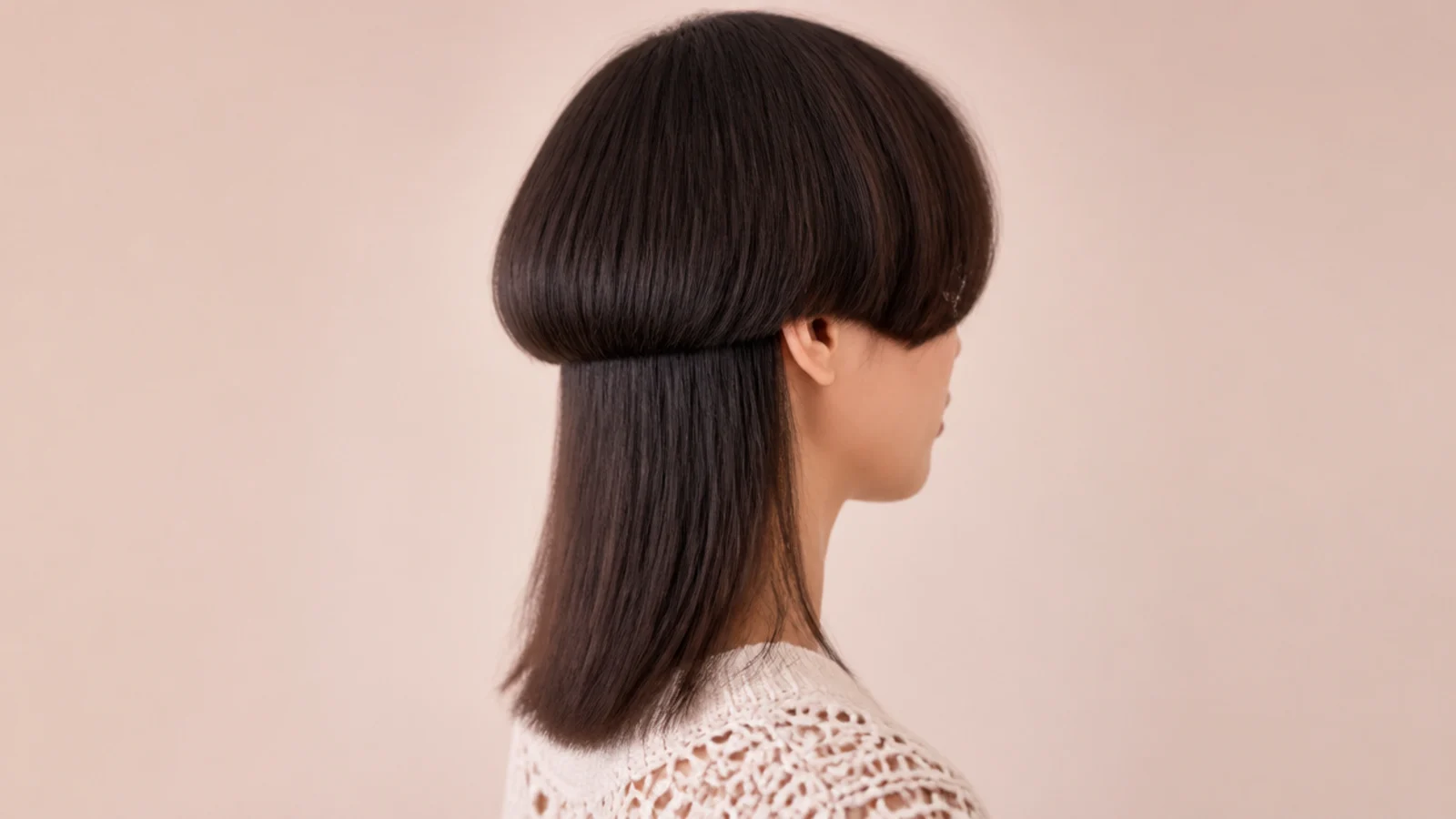
The maximum-contrast version that still counts as a haircut rather than a costume. The bell sits at ear level, around 4 inches, and the lower layer runs to bra-strap length at 16 inches or more, giving roughly 12 inches of gap. Everything about this version depends on the back view, because from the front it reads as a very short bob and the reveal happens when you turn. Have your stylist show you the back with two mirrors before you leave. Trim the bell every 5 to 6 weeks or the whole silhouette softens.
Who it suits: Long hair owners wanting drama without losing length.
Tip: Ask for a back-view photo at the salon; this cut lives or dies from behind.
16. Short Jellyfish Haircut With Hime Side Panels
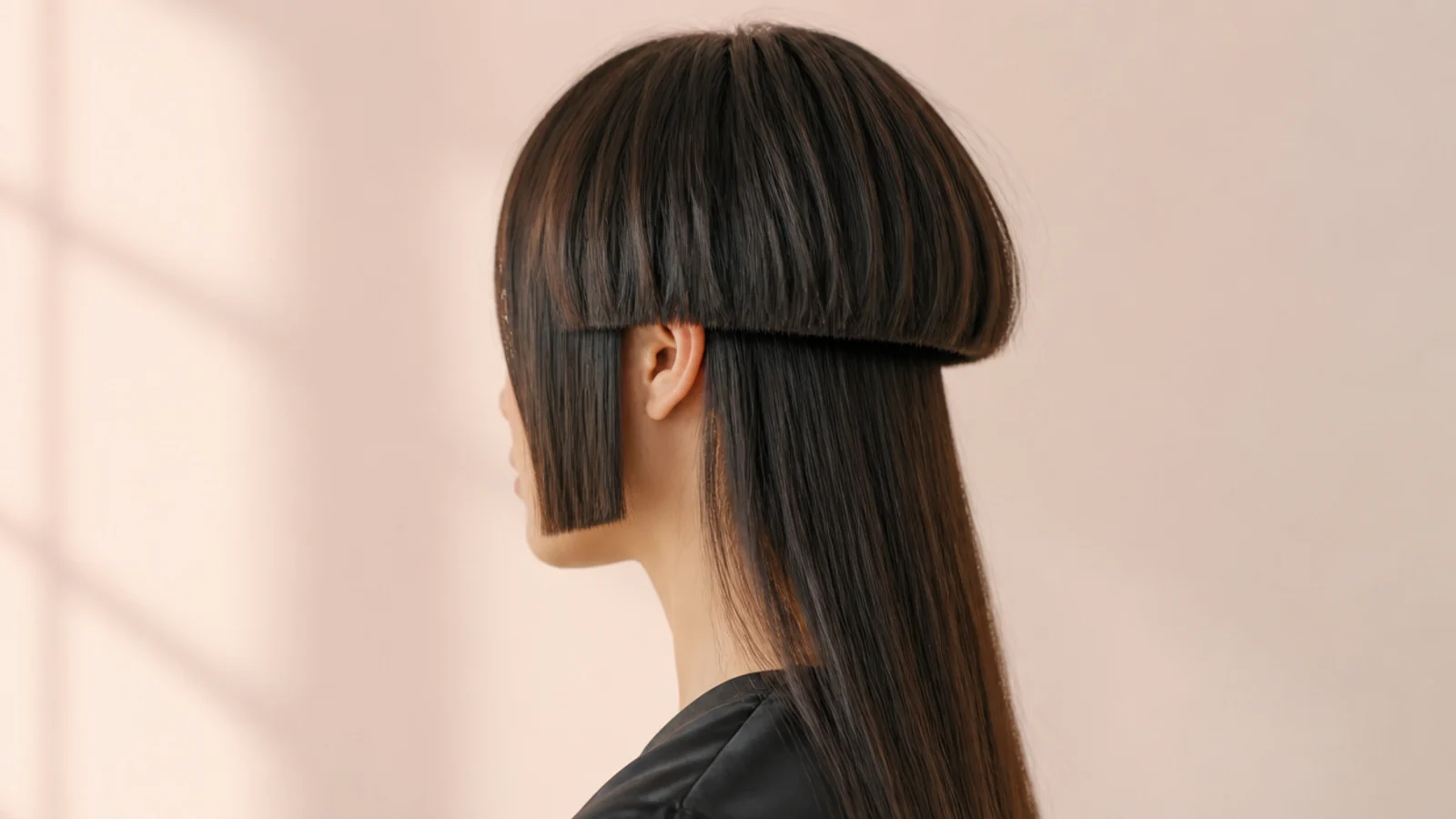
The jellyfish descends from the Japanese hime cut, and adding true hime panels puts the heritage back in. Two straight-cut sections in front of the ears are chopped at jaw level, about 7 inches, with a hard vertical edge, while the bell sits behind them and the length runs underneath. You end up with three tiers instead of two, which suits people who find a plain bowl edge too severe. It needs straight or lightly wavy hair to hold the vertical line, and a trim on the panels every 6 weeks.
Who it suits: Straight hair, oval and heart faces, fans of the hime cut.
Tip: Say straight vertical hime panels at the jaw, cut with no taper, so the edge stays hard.
17. Jaw-Length Bell for a Square Jaw
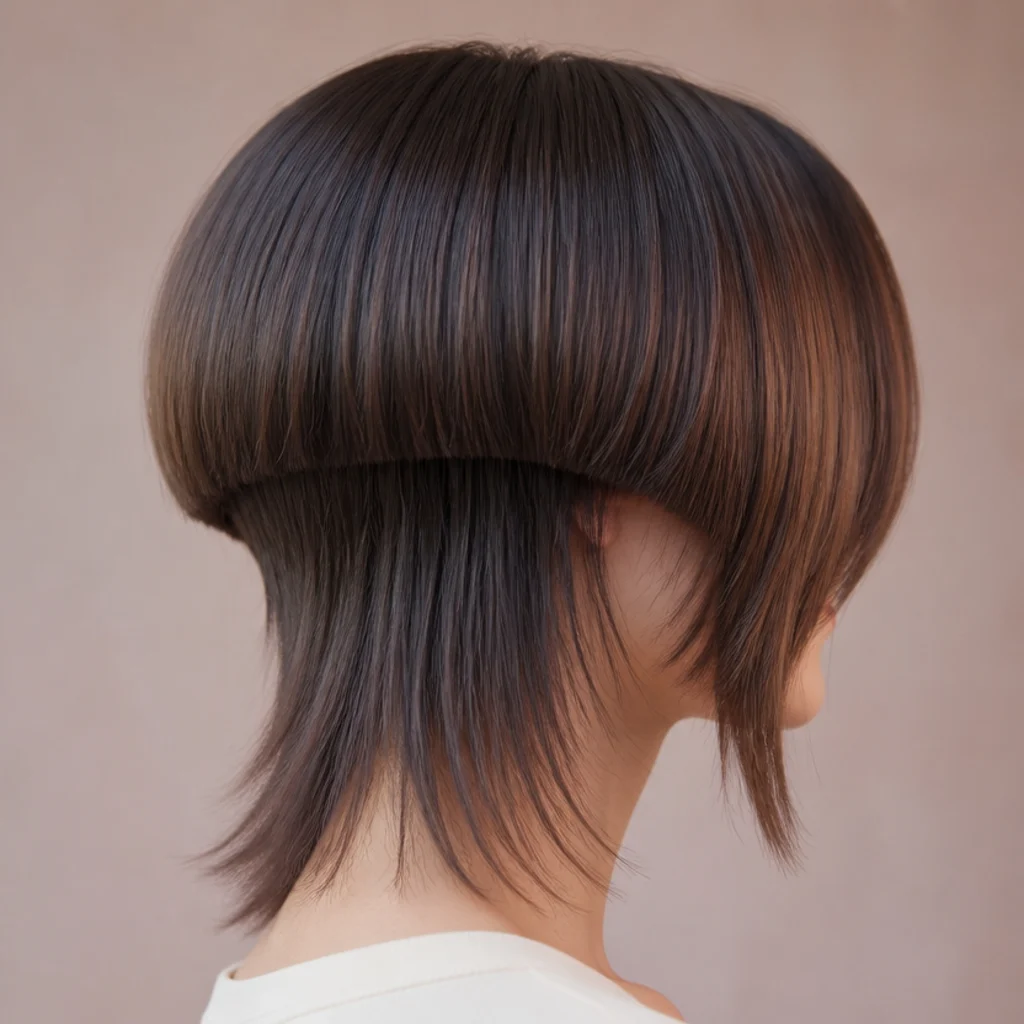
A strong square jaw and a blunt horizontal edge cut at exactly jaw level will double each other, which is the single most common short jellyfish mistake. Move the bell half an inch past the jaw corner, to around 7.5 inches, so the ends fall below the widest point and hang in a soft vertical rather than a hard horizontal. Ask for the very front section left slightly longer than the back of the bell so the perimeter angles forward. The long lower layer then softens the whole line further.
Who it suits: Square and rectangular faces with defined jawlines.
Tip: Never cut the bell level with the jaw corner; go half an inch below it or an inch above.
18. Copper Bell Over Black Tentacles
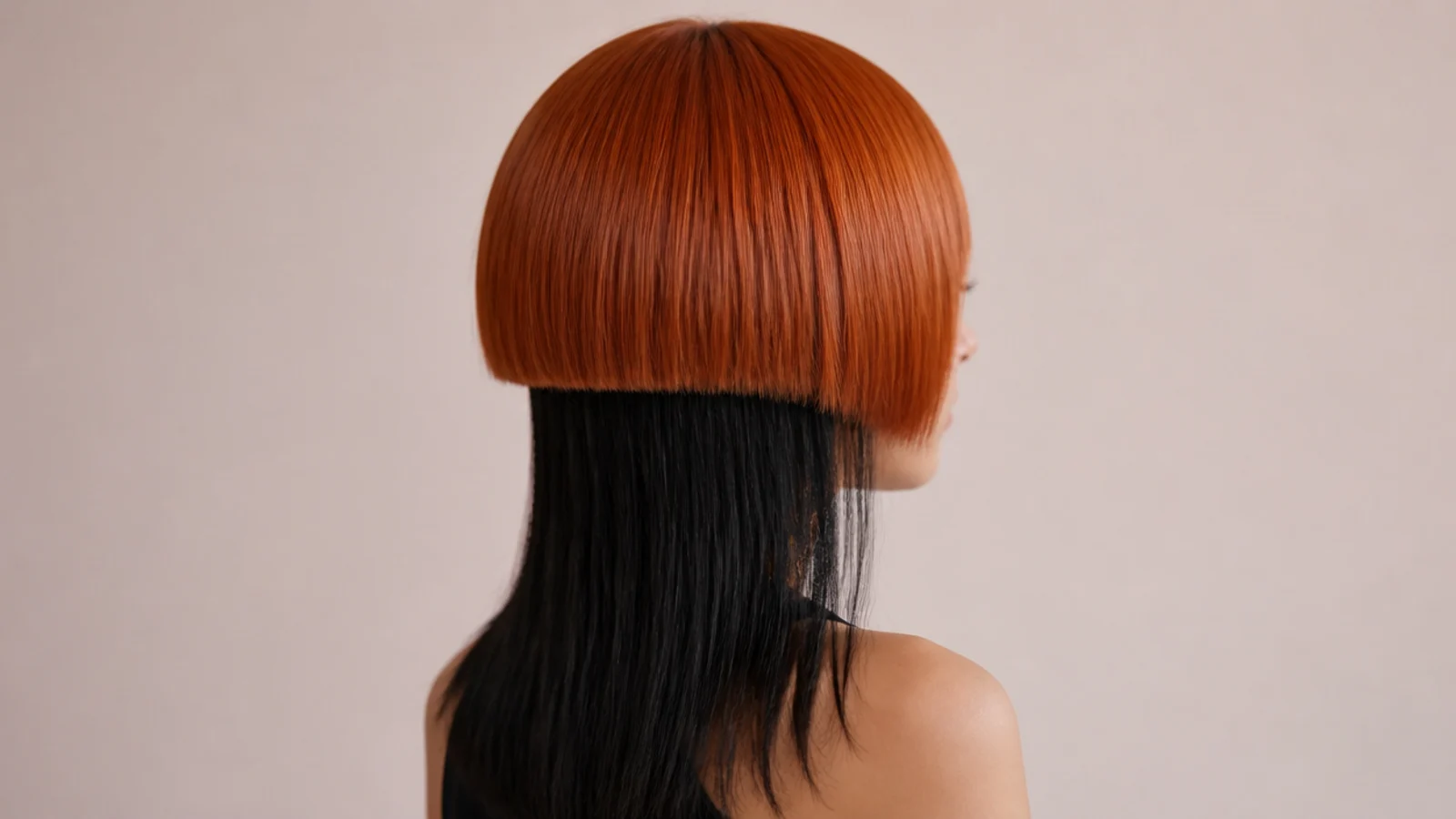
Ginger over black is the color pairing that went viral with this cut, and it works on short versions better than long ones because the copper block stays compact and saturated instead of spreading thin. Copper is a large molecule that fades fast, so expect a gloss refresh every 4 to 6 weeks and a color-depositing conditioner weekly. The bell also gets more heat styling than the lower layer, which fades it faster still. On warm and olive undertones this reads richer than platinum does.
Who it suits: Warm and olive undertones wanting high contrast color.
Tip: Use a copper-depositing conditioner once a week; the bell fades faster than the tentacles.
19. Short Jellyfish Haircut With a Shaved Nape
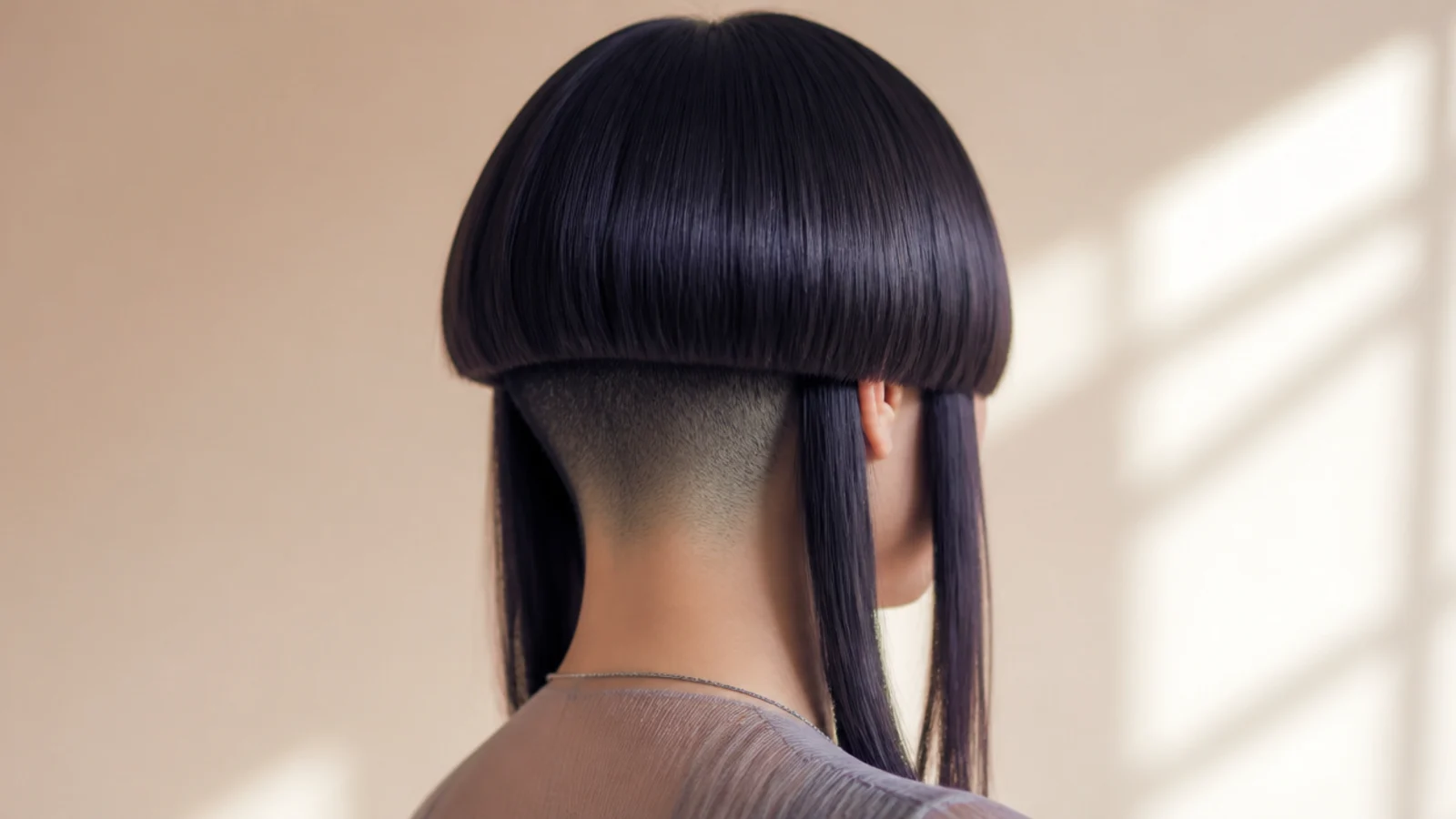
Shave the nape and leave only two long side panels hanging from the disconnection line, and the tentacles read as deliberate ribbons rather than as leftover length. It is the most editorial idea here, and the most practical in summer, since it removes the hot weight at the neck that short jellyfish cuts otherwise trap. The catch is that you cannot wear it up: a ponytail exposes the shaved area completely. Clipper maintenance runs every 3 to 4 weeks at a number 1 or 2 guard.
Who it suits: Editorial and alternative wearers; thick hair in hot climates.
Tip: Ask the stylist to leave a half inch curtain over the shaved edge so it is hidden when you want it.
20. Grown-Out Short Jellyfish Haircut at Twelve Weeks

Twelve weeks after the cut the bell has gained about 1.5 inches and now sits closer to the top of the lower layer, and the hard line has softened into something much closer to a shag. Plenty of people prefer it at this stage. If you do, stop trimming the bell, ask for a few soft layers cut into the lower section to bridge the gap, and the whole thing converts into a layered shape without ever growing out awkwardly. If you want the line back, one 20-minute trim resets it. Compare with shaggy mid-length haircut.
Who it suits: Anyone unsure about committing long term.
Tip: Ask for two soft layers in the lower section to bridge the gap instead of cutting the bell again.
What a Short Jellyfish Haircut Is: The Two-Layer Structure
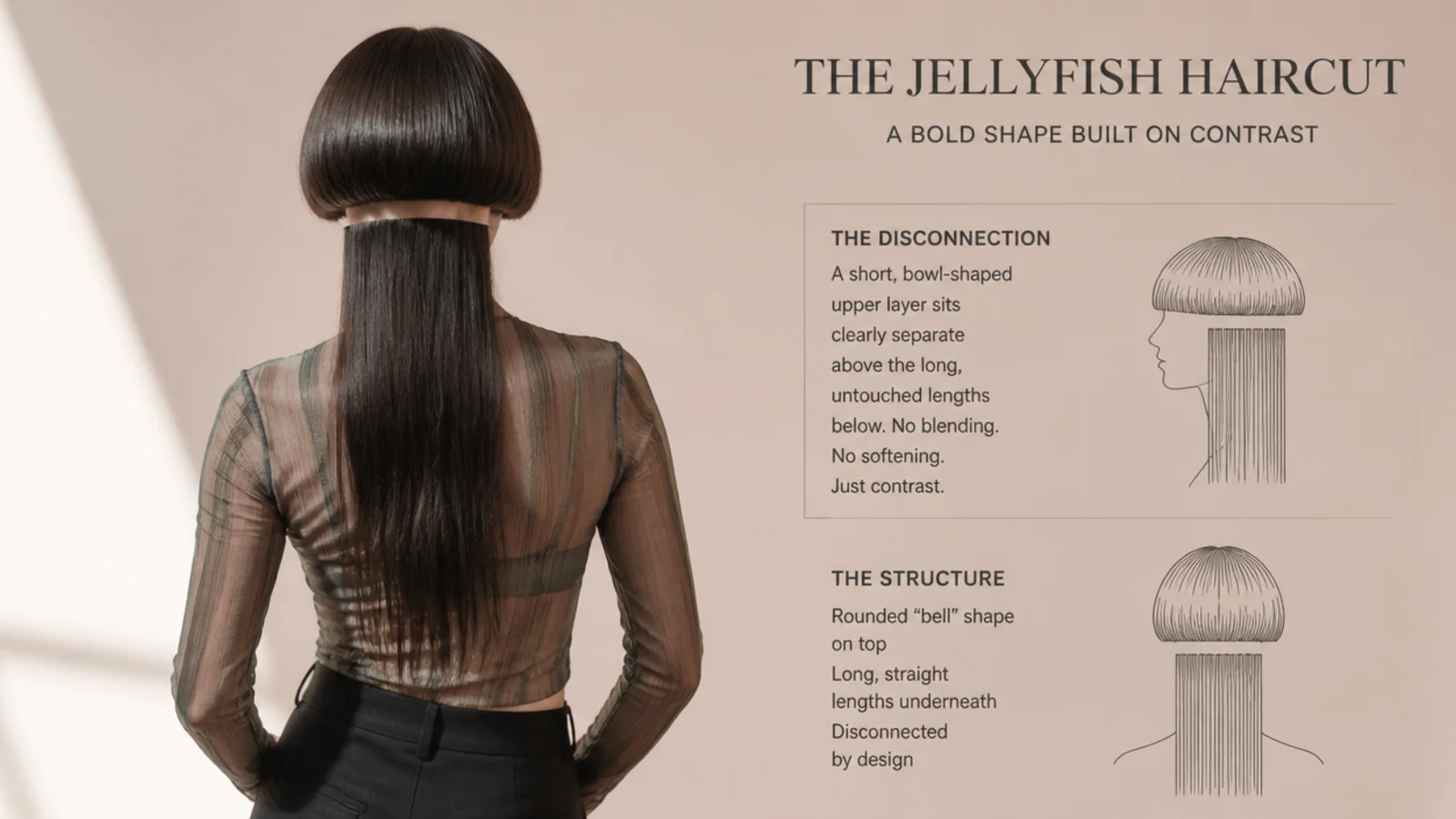
A short jellyfish haircut is built from two completely separate sections. The upper section, sitting above a horizontal parting that usually runs around the parietal ridge, is cut into a short, rounded, bowl-shaped layer that stylists and search results both call the bell. Everything below that parting is left long and largely untouched, and those lengths are the tentacles. The two sections are cut independently and are never blended into one another, which is the difference that matters. In a shag or a wolf cut, layers are cut at an angle so each one falls into the next and the eye reads a continuous gradient. In a jellyfish, the eye reads a hard horizontal break. That break is the shape. The silhouette borrows directly from the Japanese hime cut and from the classic bowl cut, and it went from niche to everywhere once short video made the back view shareable. The short version simply moves the bell higher, usually between ear and chin level, which increases the contrast and increases the styling required to keep the bell sitting the way it should. The full structural explainer lives in the jellyfish haircut guide, and the whole family sits in the jellyfish haircut hub.
How Short It Can Go Before the Disconnection Stops Reading
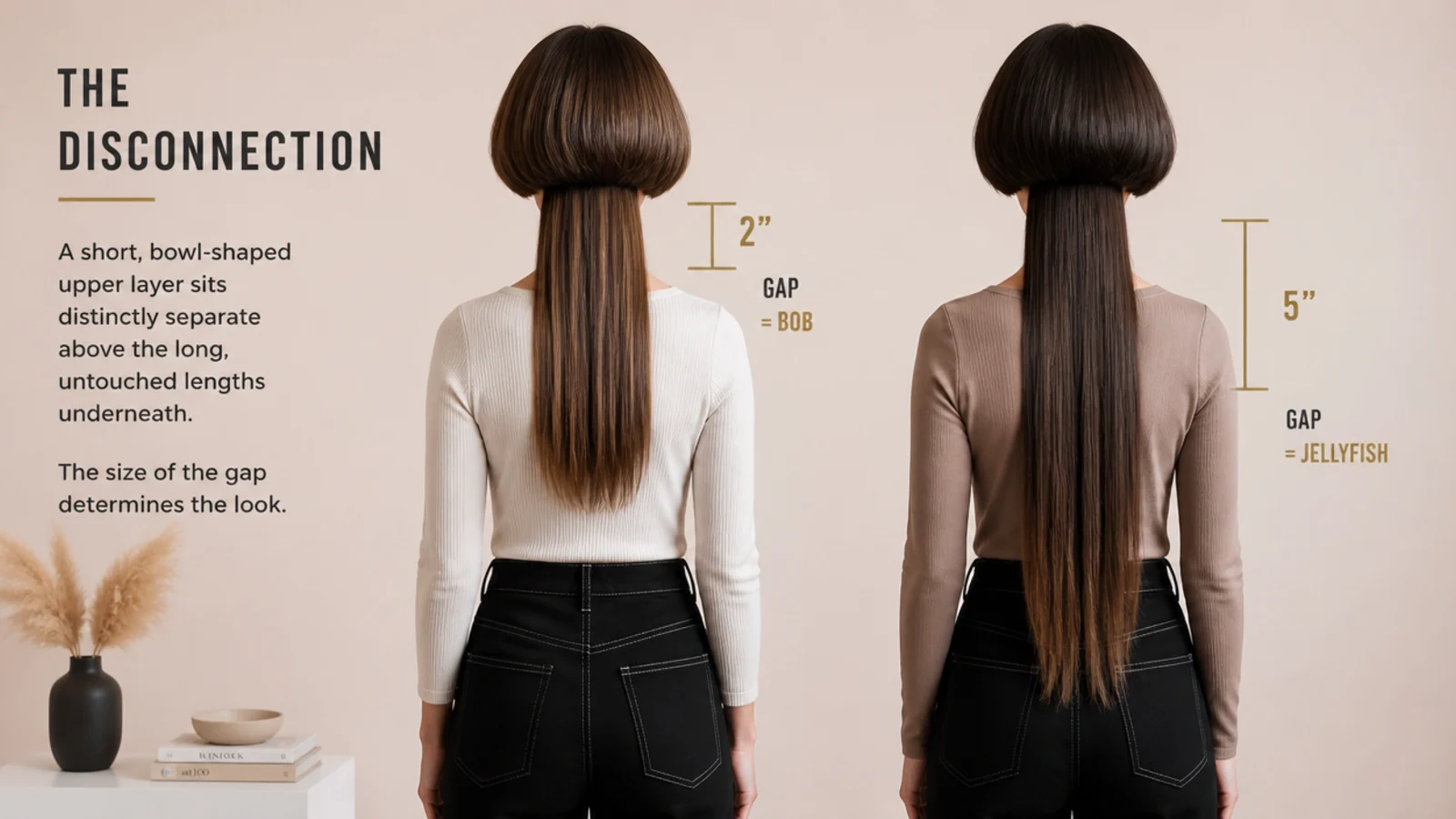
This is the question nobody on the first page of search results answers, and it is the only one that decides whether a short jellyfish works. The shape needs contrast, and contrast is measured in the gap between where the bell ends and where the lower layer ends. Below about 3 inches of gap, the two sections read as one slightly layered bob that looks like it is growing out. At 4 inches the shape begins to register. At 6 inches and beyond it is unmistakable. Work backwards from that. If your total length is 10 inches, sitting at the collarbone, a chin-length bell at 6 inches gives you the 4-inch minimum and nothing more. If your hair is at bra-strap length around 16 inches, an ear-length bell at 4 inches gives you 12 inches of contrast and the most dramatic version of the cut. The floor for the whole thing is roughly 9 to 10 inches of total length, because below that you cannot carve a short bell out and still leave enough underneath. Hair grows about half an inch a month, so if you are 2 inches short of that floor, waiting four months is a better plan than accepting a soft version. Longer proportions are covered in the long jellyfish haircut guide.
Who a Short Jellyfish Haircut Suits: Face Shape and Hair Texture
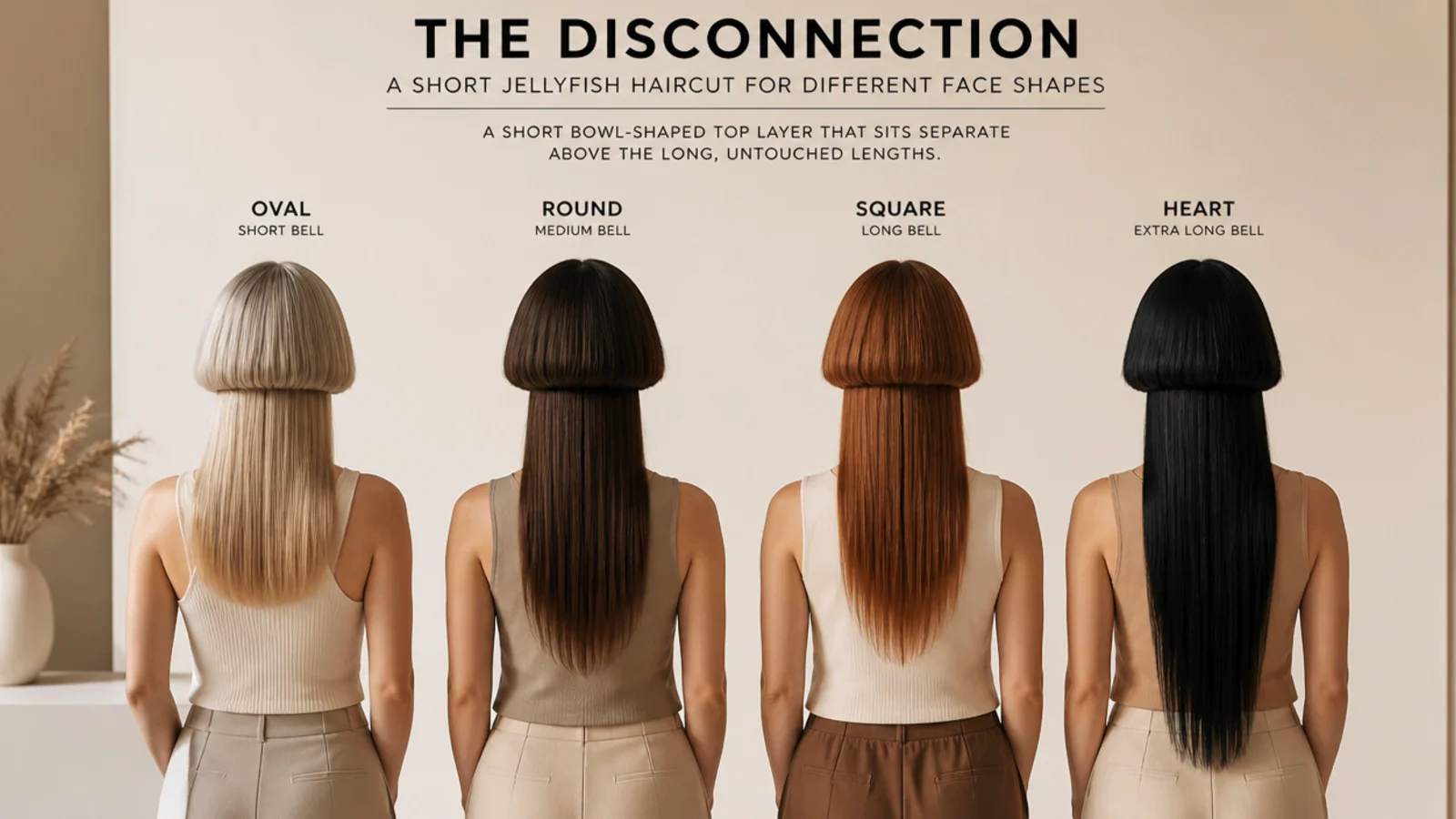
Texture decides more than face shape here. Straight hair from 1A to 1C shows the bowl edge with total clarity and is the easiest to style, though it can look severe without a flick or a fringe. Waves from 2A to 2C are the sweet spot, because the bend gives the bell body while the S pattern still lets the horizontal line show. Curls from 3A up start to blur the disconnection, and by 3C or 4A the two sections expand into each other and the shape stops reading at all, which is covered honestly in the curly jellyfish haircut guide. Density matters too: thick hair gives the cleanest bell but needs interior weight removed, while fine hair needs the split line dropped lower so the tentacle section keeps enough weight to hang. On face shape, oval and heart take almost any bell length. Long and oblong faces gain from a high bell at cheekbone level, because the added width shortens the face. Round faces need the bell at jaw level or below, angled forward. Square jaws need the bell half an inch past the jaw corner, never level with it. Texture specifics for waves sit in wavy jellyfish haircut, and if you have frizz to manage first, read haircut for frizzy hair.
Short Jellyfish Haircut vs Wolf Cut vs Mullet vs Hime Cut
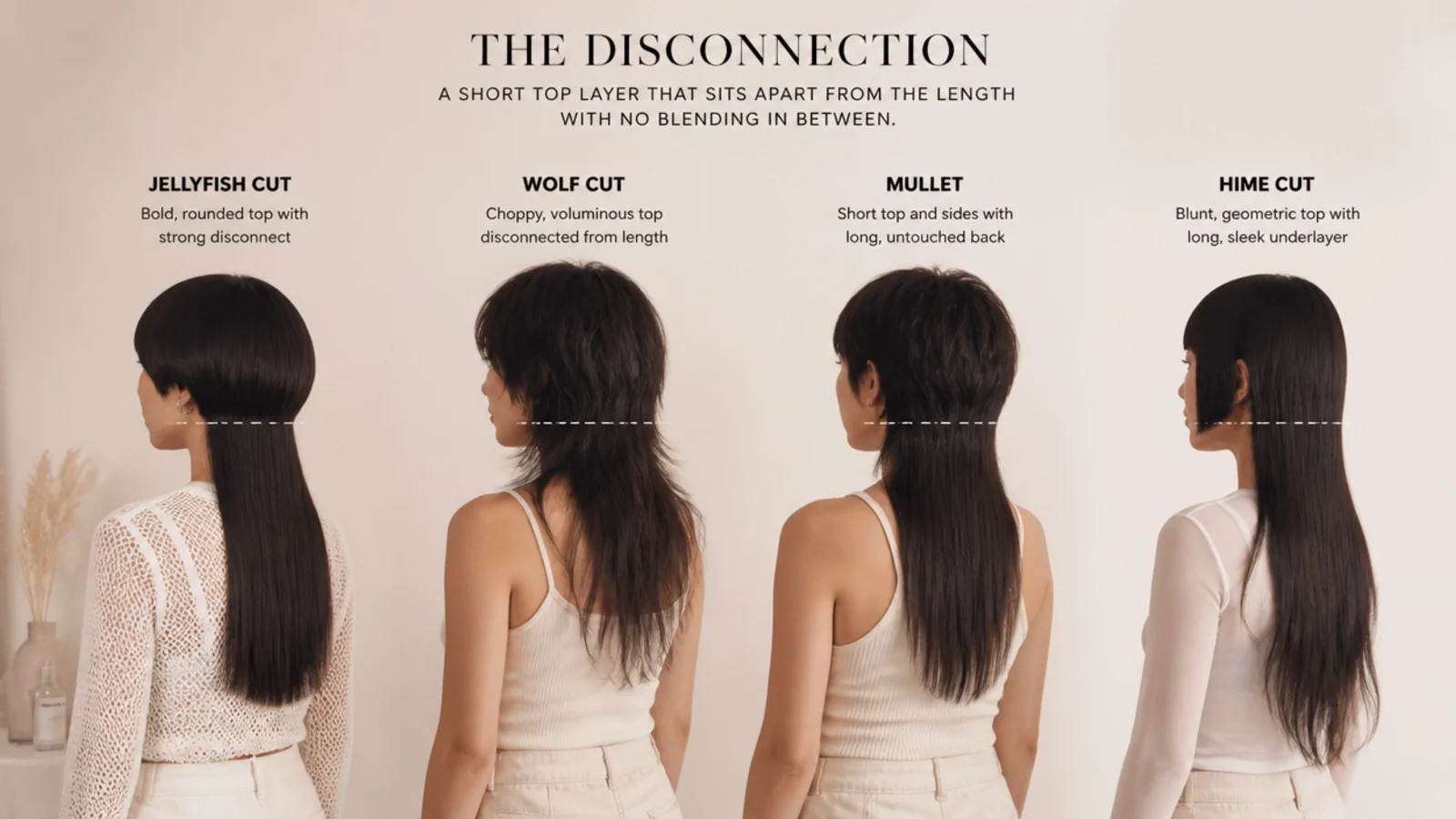
All four cuts put short hair over long hair, and the difference is entirely in how the two meet. A wolf cut blends: the crown is short and shaggy, the layers melt downward, and there is no single line anywhere. A mullet keeps length only at the back, with the sides cut short and blended into it, so the contrast runs front to back rather than top to bottom. A hime cut leaves two straight vertical panels at the sides of the face, cut hard at the jaw, with the rest of the hair long and one length behind them. A jellyfish takes the hime idea and rotates it, running the short section all the way around the head as a bowl and disconnecting it from everything underneath. So the test is simple. If the short section wraps the whole head and does not blend, it is a jellyfish. If it blends, it is a wolf cut. If the short parts are only at the sides and front, it is a mullet. If the short parts are two vertical face-framing panels, it is a hime cut. The table above compares the short jellyfish against the wolf cut in detail, since that is the comparison most people are actually weighing. For a softer, lower-commitment version of the same structure, look at the medium jellyfish haircut, which reads as a structured shag rather than a hard disconnect.
How to Style the Short Bell and the Longer Bottom Layer
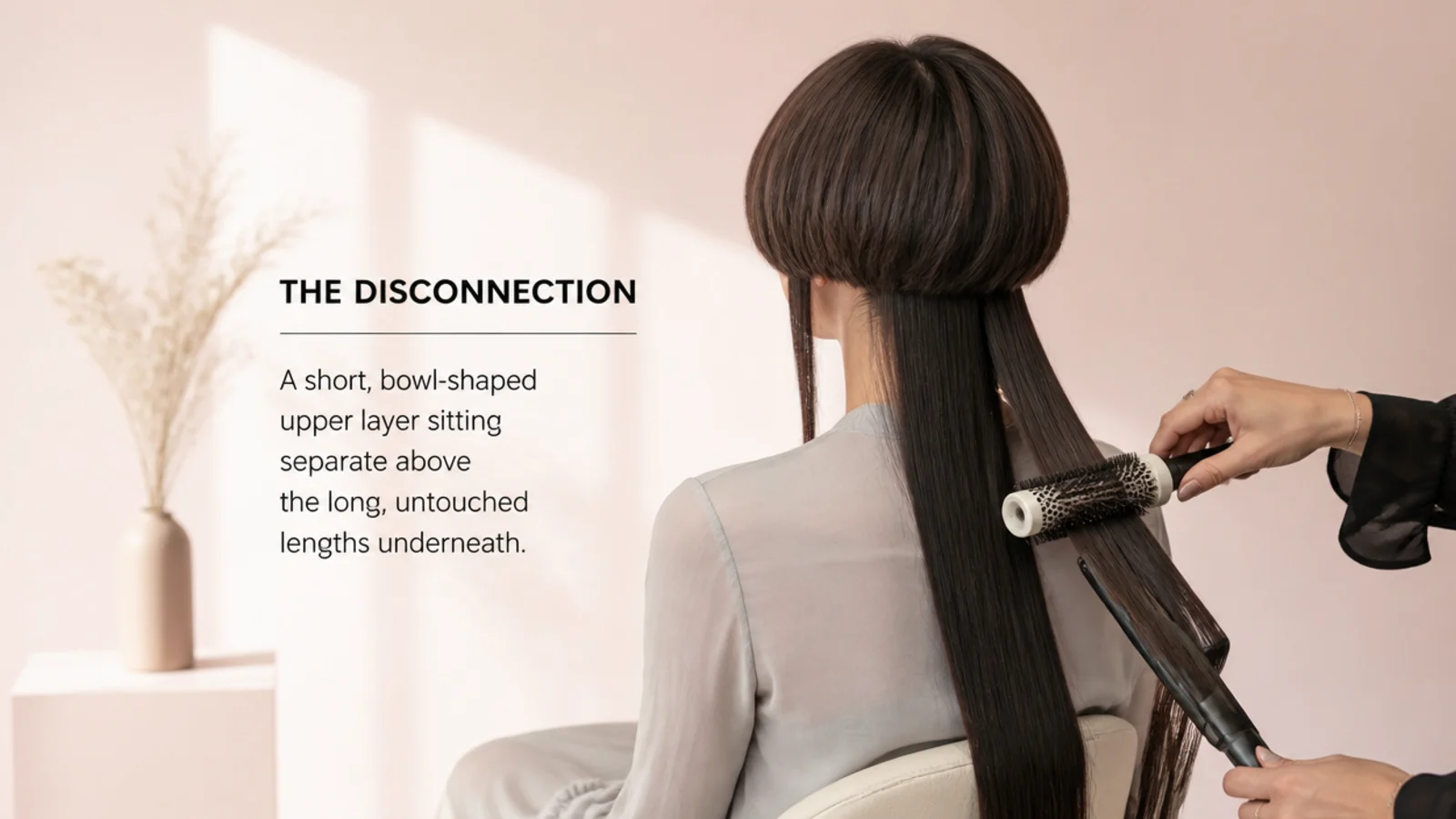
The two sections need two different routines, and the bell needs almost all of the effort. Left to dry on its own, a short blunt bell will either stick straight out at the ends or flatten to the skull, and neither reads as the haircut you asked for. Blow-dry it with a 2-inch round brush, rolling the ends under and holding the heat for three seconds at the end of each pass, then hit the brush with a shot of cool air before you release. That takes about 5 minutes at chin length. If you prefer the flick, clamp a flat iron an inch from the ends and rotate the wrist outward instead. Heat protectant goes on first every time, because the bell gets styled daily while the lower layer barely does. The tentacles need almost nothing: a light mousse scrunched in on wavy hair, or a single smoothing pass with a flat iron on straight hair to keep the ends from meeting the bell in a confusing tangle. Skip mousse and salt spray in the bell, since texture there fights the blunt edge. Finish with a dry texture spray on the bell roots only for lift. A heatless option exists for the lower layer, braiding it damp overnight, and the tools are compared in heatless curl tools compared. For updos, accept that the bell always stays down; a low messy ponytail with the bell out is the practical version, and messy ponytail short hair covers the technique.
Growing It Out and How to Ask Without a Disaster
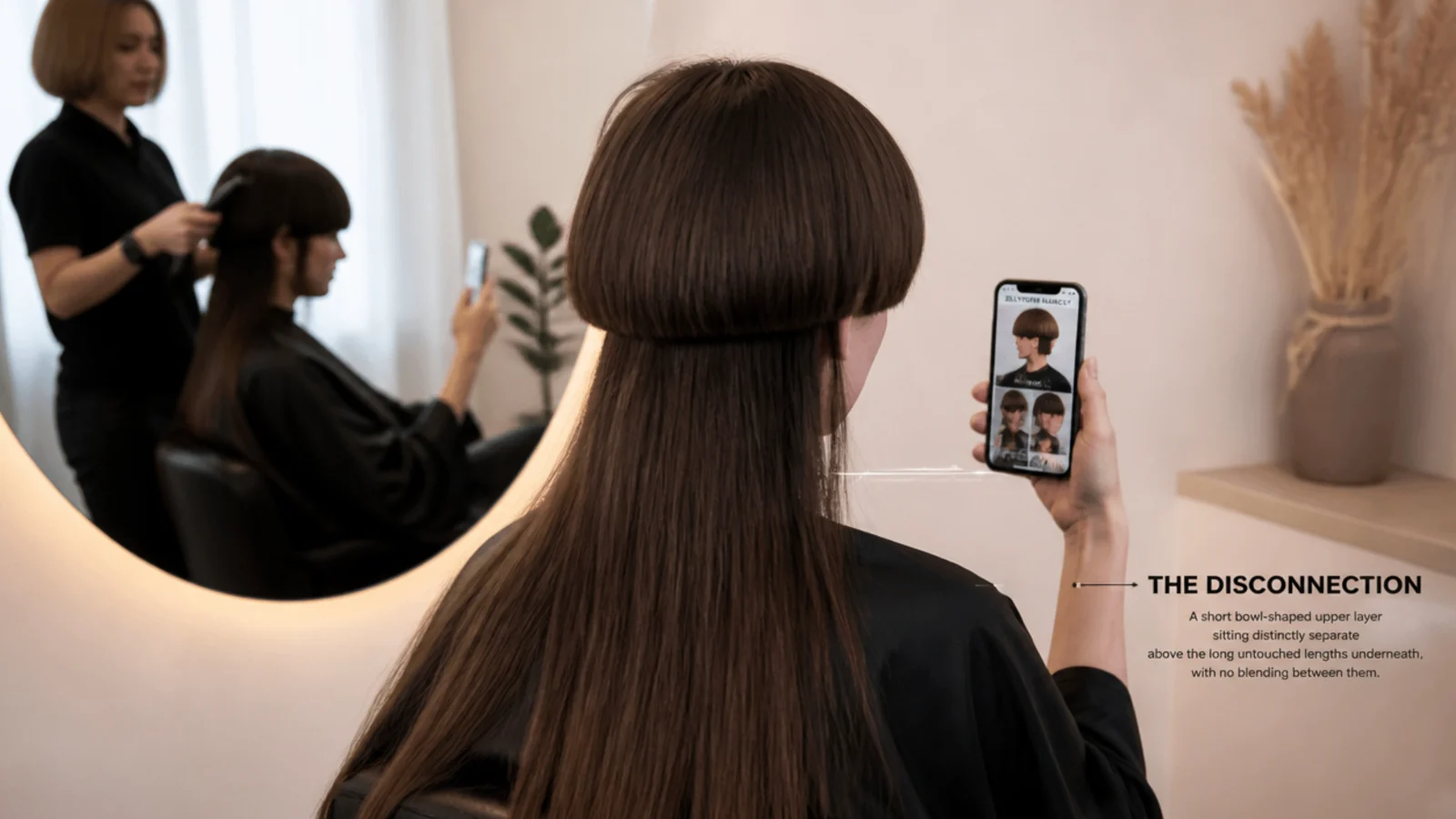
Most short jellyfish regret comes from the consultation, not the cut. The failure is predictable: you ask for a jellyfish, the stylist hears layers, and a reflex softening of the line turns the whole thing into a shag by the time you are in the chair. Use these exact words instead. Disconnected bowl shaped upper layer, length left long underneath, no blending between the two sections. Then give three numbers: where the bell ends in inches from the hairline, where the lower layer ends, and where you want the split line to sit. Bring two photos, and make one of them a back view, because the back is where the cut actually reveals itself and where surprises happen. Do not say bowl cut on its own. On grow-out, be honest with yourself about the middle. Around months two and three the bell reaches an in-between length where it is too long to hold the bowl shape and too short to join the lower layer, and that phase lasts roughly 8 to 12 weeks. You can ride it out, pin the front back, or convert early by adding two soft layers to the lower section so the bell blends in. From there it becomes a shag or a curtain-bang shape on its own, which is the gentlest exit any trend cut offers. Fringe wording, if you want bangs cut at the same appointment, is in jellyfish haircut bangs, and the layered destination shape is in choppy mid-length haircut.
Frequently Asked Questions
What is a short jellyfish haircut?
A short jellyfish haircut is a two-layer cut with a short, blunt, bowl-shaped upper section, called the bell, sitting over a much longer lower section left almost untouched. The two are cut separately and deliberately not blended, so a hard horizontal line shows between them. On short versions the bell usually lands between ear and chin level.
How short can a jellyfish haircut be?
The bell can go as short as 3 to 4 inches, roughly ear level, but the lower layer sets the real limit. You need about 4 inches of difference between the two before the disconnection reads, and about 9 to 10 inches of total length overall. Below that, the cut just looks like a bob growing out rather than a deliberate shape.
Is a jellyfish haircut a mullet?
No. A mullet keeps length only at the back with short, blended sides, so the contrast runs front to back. A jellyfish runs its short bell all the way around the head and disconnects it from everything underneath, so the contrast runs top to bottom. The jellyfish also refuses to blend, while a mullet is usually softened where the sections meet.
Is a short jellyfish haircut high maintenance?
Yes, more than most cuts. The bell needs a trim every 6 to 8 weeks or the bowl shape collapses into layers, and it needs 5 to 10 minutes of round brush or flat iron work most mornings to sit correctly. The lower layer is the easy part and can go 12 weeks or longer between trims, since it is barely cut in the first place.
Does a short jellyfish haircut work on curly hair?
Up to about 3A, yes, if the bell is cut curl by curl on dry hair and kept no shorter than chin length. Beyond 3A the curls expand outward and the two sections blur into one another, so the disconnection that defines the cut stops reading. Tight curls and coils usually get a better result from a shaped shag or a curly wolf cut instead.
How do I style a short jellyfish haircut?
Blow-dry the bell with a 2-inch round brush, rolling the ends under and finishing each pass with cool air, or flick the ends outward with a flat iron for a 70s finish. Use heat protectant first. The lower layer needs almost nothing, just a light mousse scrunched in on waves or one smoothing pass on straight hair. Keep texture spray out of the bell.
How do you ask for a short jellyfish haircut?
Say disconnected bowl shaped upper layer, length left long underneath, no blending between the two sections. Then give three numbers: where the bell should end, where the lower layer should end, and where the split line sits. Bring two reference photos and make sure one shows the back view, since that is where the shape reveals itself.
What does a short jellyfish haircut look like grown out?
Around months two and three the bell reaches an in-between length that is too long to hold the bowl and too short to join the lengths, and that awkward phase lasts roughly 8 to 12 weeks. After that it settles into a shag or a curtain-bang shape on its own. Adding two soft layers to the lower section speeds the transition considerably.
Can you put a short jellyfish haircut in a ponytail?
Only partly. The bell is too short to reach a ponytail and will fall out around the face and neck no matter how you tie it, so the practical version is a low ponytail or bun with the bell left down. Some people pin the front sections back with small clips. If wearing your hair up daily matters, a medium jellyfish is the better choice.
Is a short jellyfish haircut good for fine hair?
It can be very good, because a blunt bell concentrates density into one solid block and makes the top look thicker. The risk is the lower layer looking sparse once the upper section is removed from it. Ask the stylist to set the split line lower, near the occipital bone, so more hair stays underneath, and use a root-lift mousse in the bell.
Which jellyfish haircut look are you saving?
If you remember one thing from these 20 short jellyfish haircut ideas, make it the gap. The bell and the lower layer need roughly 4 inches between them before the disconnection reads as deliberate rather than as a growing-out accident, and on short hair that math is the whole decision. Book a stylist who has cut one before, bring two photos including a back view, and use the words disconnected bowl shaped upper layer, length left long underneath. Keep the bell trimmed every 6 to 8 weeks while you love it, and stop trimming the day you do not, because it grows into a shag on its own. Browse the rest of the jellyfish haircut hub, or compare against the softer medium jellyfish haircut before you book.