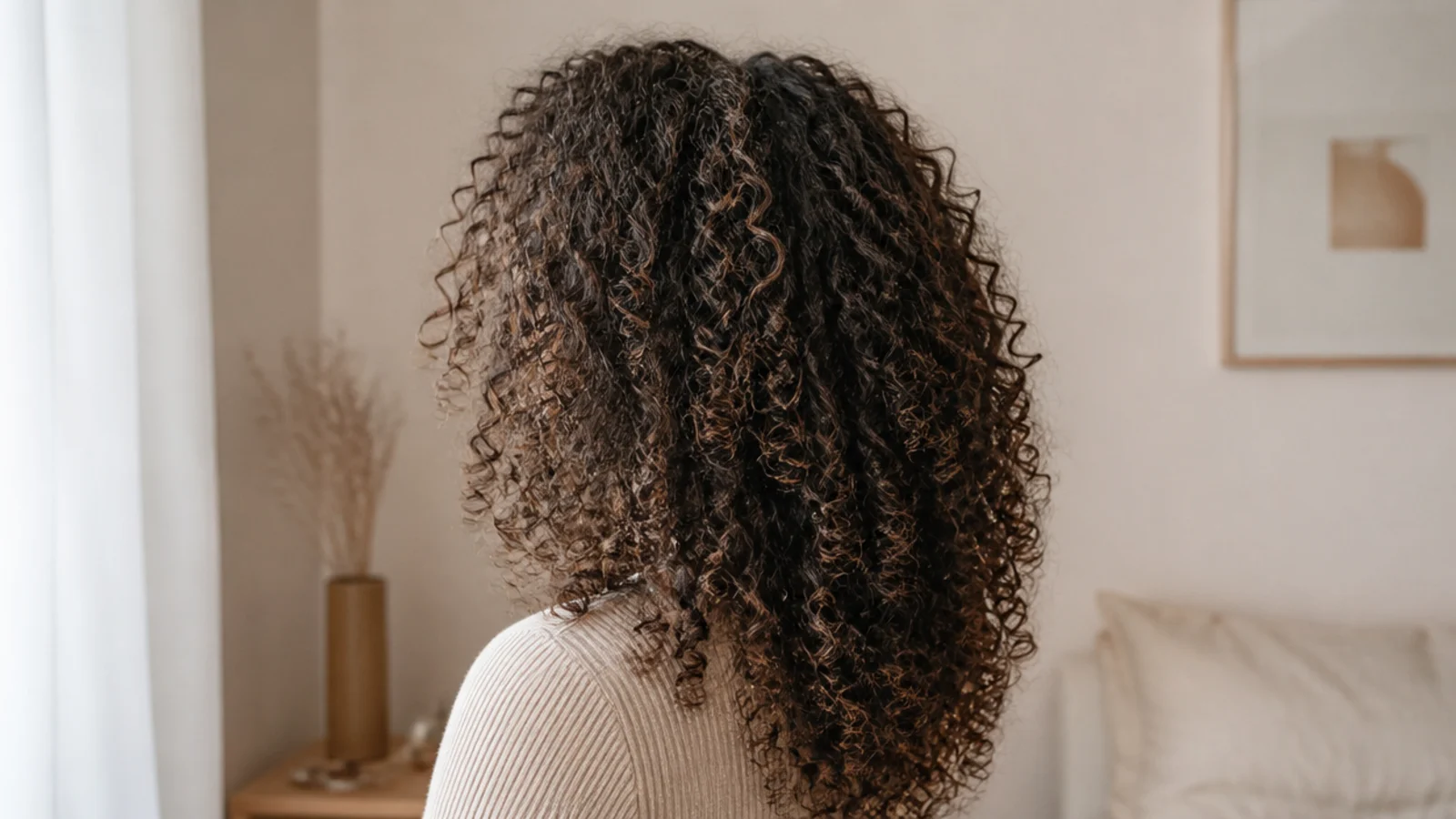
Quick Comparison
| Curl Cream | Curl Gel | |
|---|---|---|
| What it actually does | Softens and defines by adding slip and moisture | Forms a hard cast that seals the cuticle against humidity |
| Where it sits in the layering order | Second, after leave-in | Third and last, over cream |
| Hair wetness at application | Soaking wet, straight out of the shower | Soaking wet, immediately after the cream |
| Frizz type it fixes | In-the-curl frizz and dryness frizz | Surface frizz and humidity swelling |
| Humidity hold | Fades above roughly a 60F dew point | Holds to a 70F dew point with a strong-hold formula |
| Best hair type | Coarse, high-porosity, thick 3B to 4A | Fine to medium, low-porosity, 2C to 3B |
| How it fails | Weighs fine curls flat and looks greasy at the roots | Flakes white if layered over a silicone product |
| Finish before scrunching | Soft and touchable straight away | Crunchy cast that must be scrunched out when bone dry |
| Typical price band | 10 to 28 dollars for 8 to 12 ounces | 8 to 30 dollars for 8 to 16 ounces |
1. Wash-and-Go Defined Curls on 3B Hair
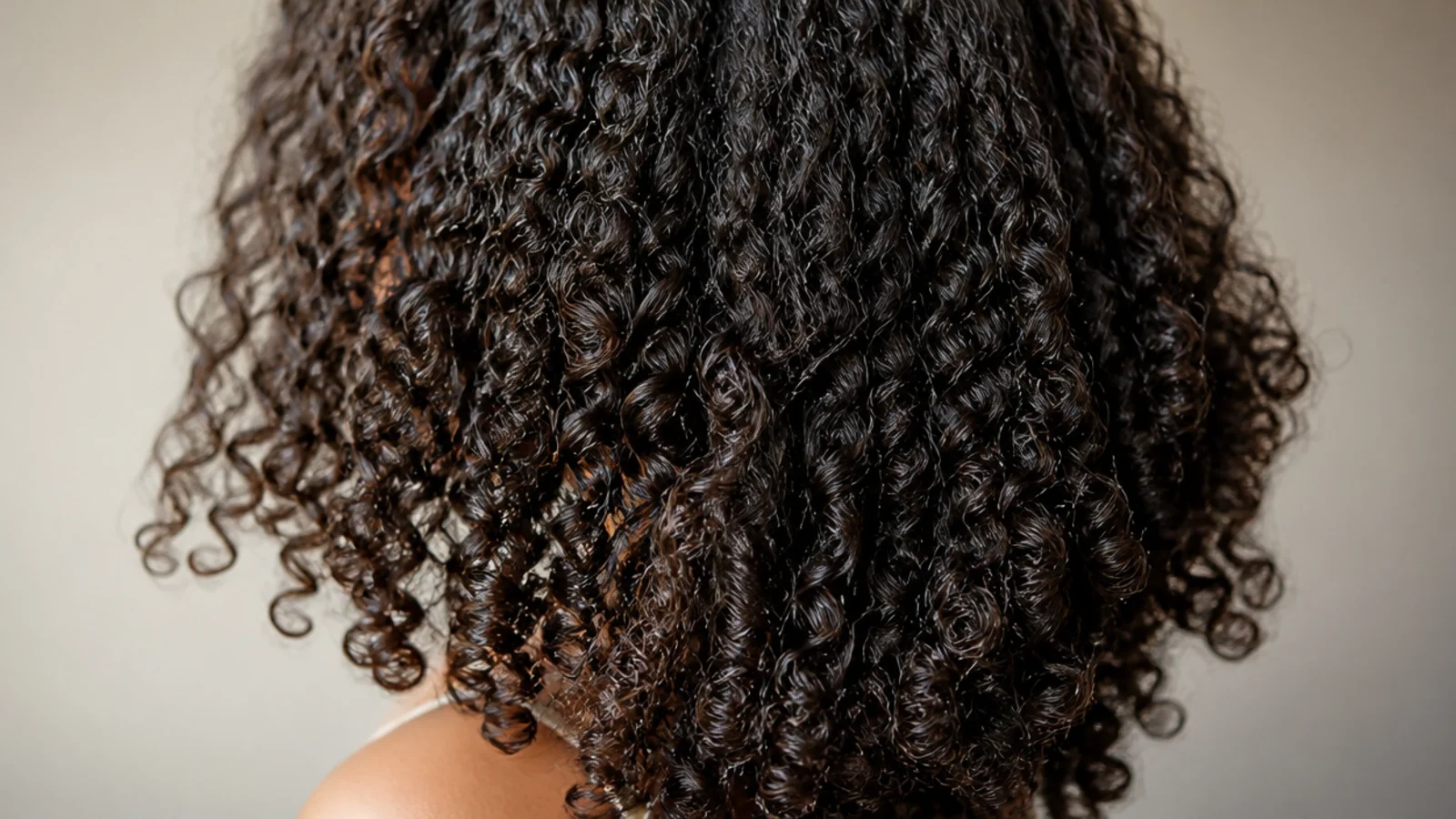
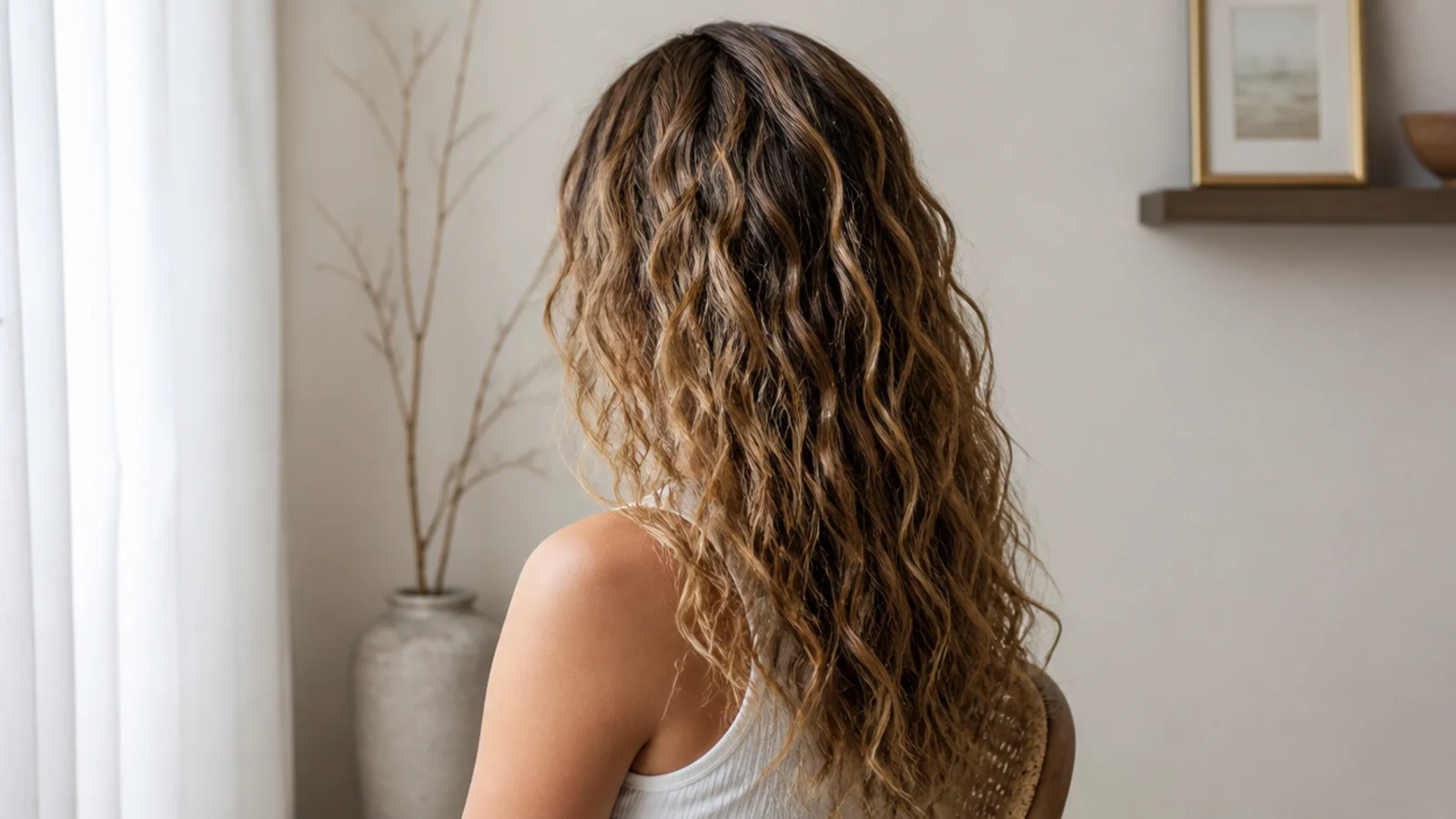
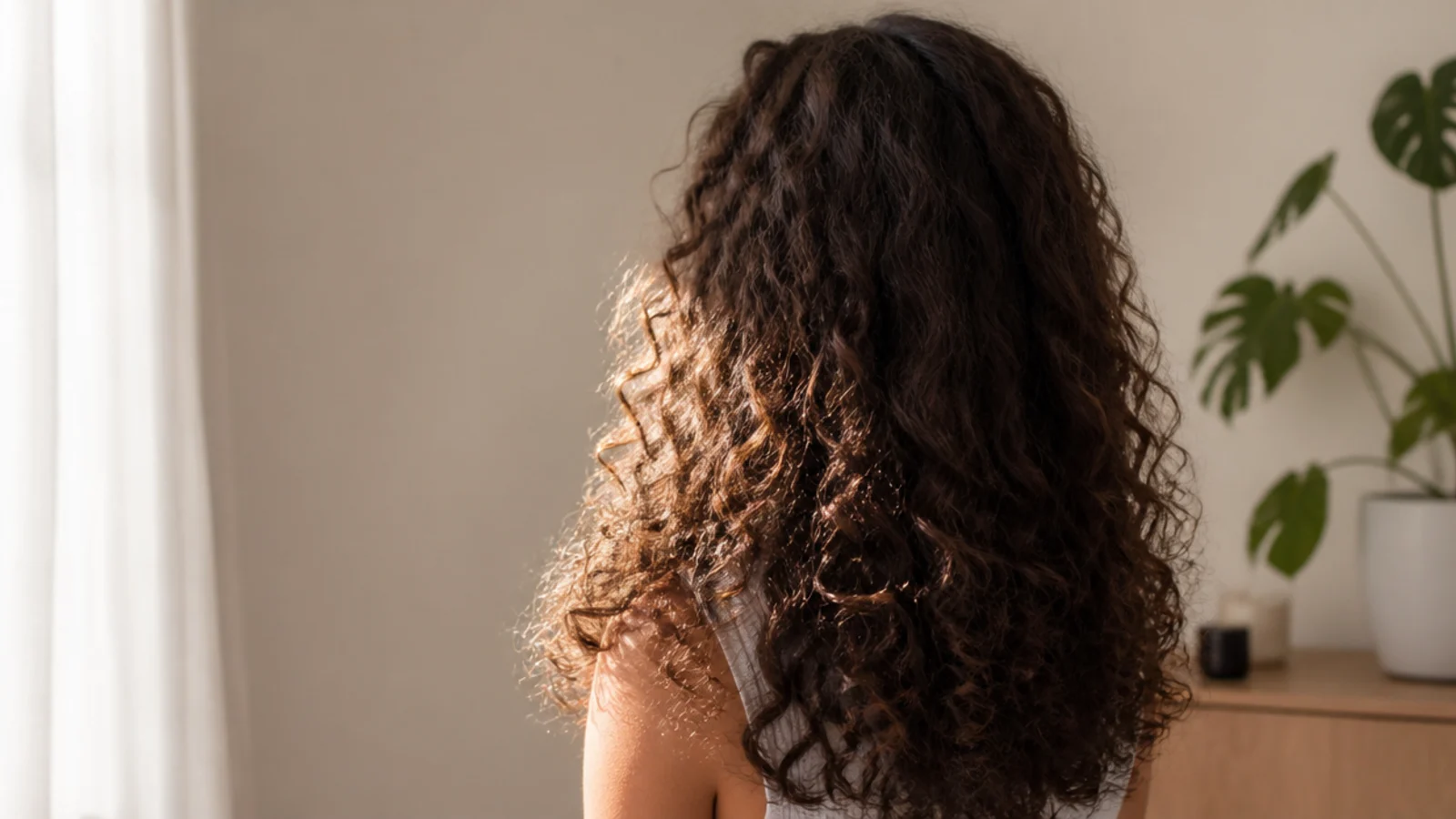
The baseline look every other one on this list builds from. In the shower, with conditioner still in, rake hair into sections and let the clumps form, then rinse with cool water. On soaking wet hair apply a leave-in, then a curl cream, then a medium-hold gel, praying each layer in section by section. Do not touch it again until it is fully dry. Takes about 15 minutes of styling plus 40 minutes of air-drying. Holds through a 55F dew point comfortably, softens above 65F.
Who it suits: 3A to 3B curls with in-the-curl frizz and decent length past the shoulder.
Tip: Rinse the last 30 seconds in cool water; it lays the cuticle flat before any product goes on.
2. Diffused Volume Curls with Root Clips
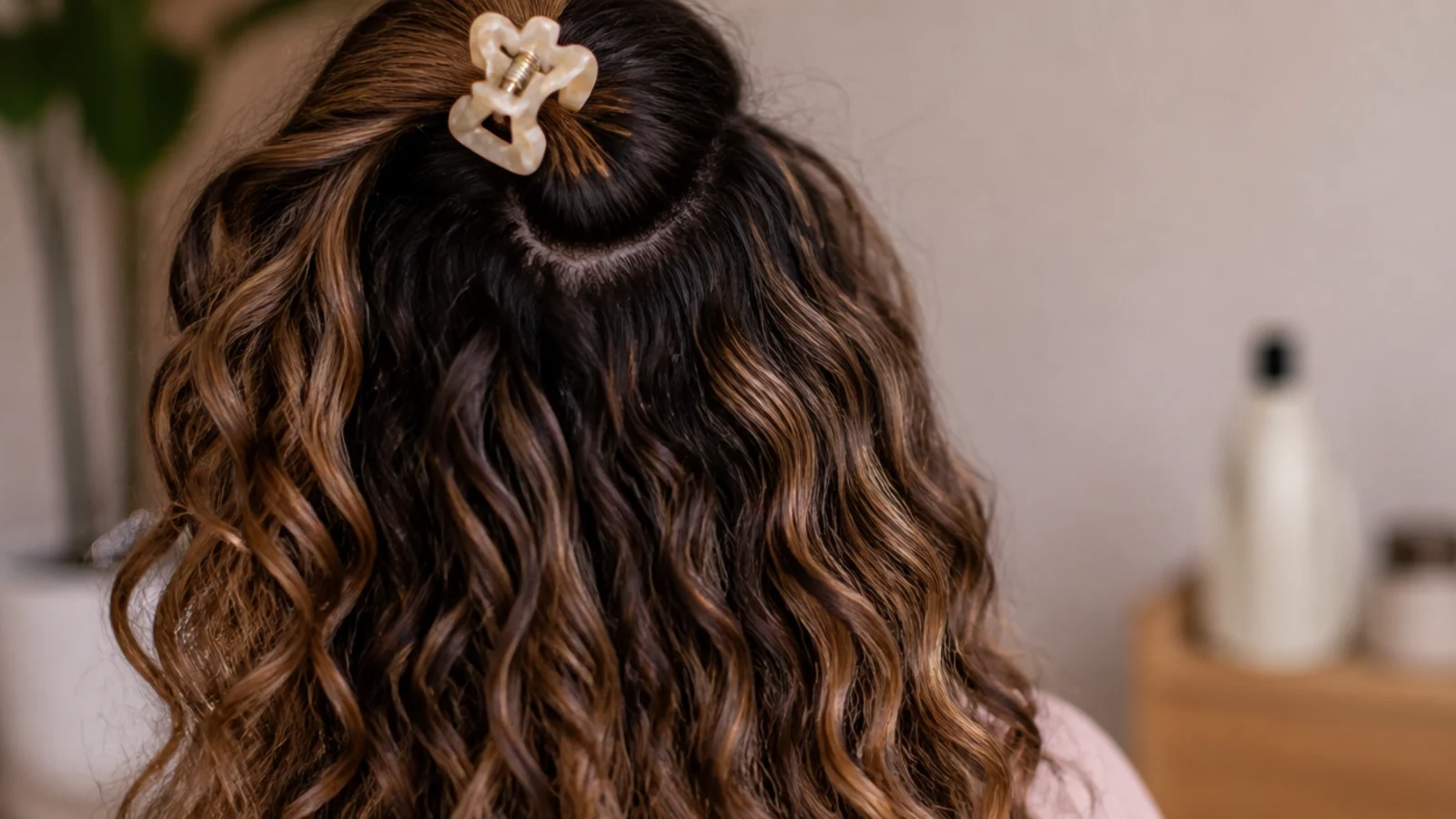
Gel-cast curls dried on low heat and medium airflow with the diffuser bowl cupped against the scalp, holding each section for about 20 seconds before moving. Once the hair is roughly 70 percent dry, set six to eight small metal root clips at the part line and finish drying. The clips hold volume in place while the cast hardens, which is the difference between round volume and a flat crown with puffy sides. Budget 20 minutes. Do not shake the diffuser, movement is what creates halo frizz.
Who it suits: Fine or flat-crowned 2C to 3A curls that go wide instead of tall.
Tip: Diffuse on low heat only; high heat evaporates water faster than the gel can set the cast.
3. Pineapple Ponytail for Second-Day Curls
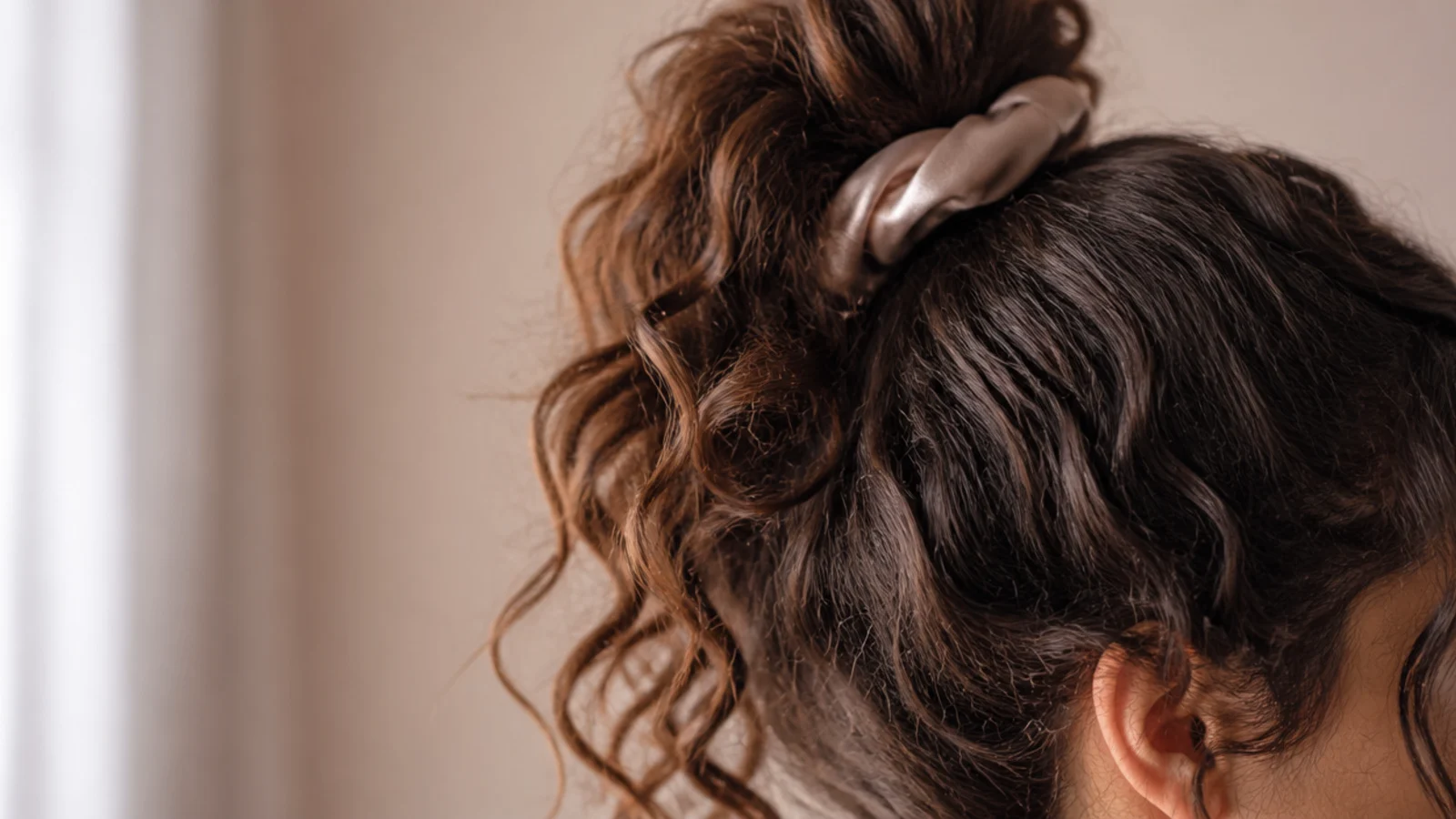
Flip your head forward, gather everything loosely at the very top of the head, and secure with one wrap of a satin scrunchie so the curls spill forward rather than being pulled tight. It is the standard overnight protection method and it doubles as a real daytime look. Two minutes. The point is zero tension: a tight elastic at the crown will crease the hair and, over months, worsen the exact halo frizz you are trying to hide.
Who it suits: Any curl type from 3A to 4A with at least chin-length hair.
Tip: Wrap the scrunchie once, not twice, and never use an elastic with a metal crimp.
4. Half-Up Curly Bun with Face-Framing Pieces
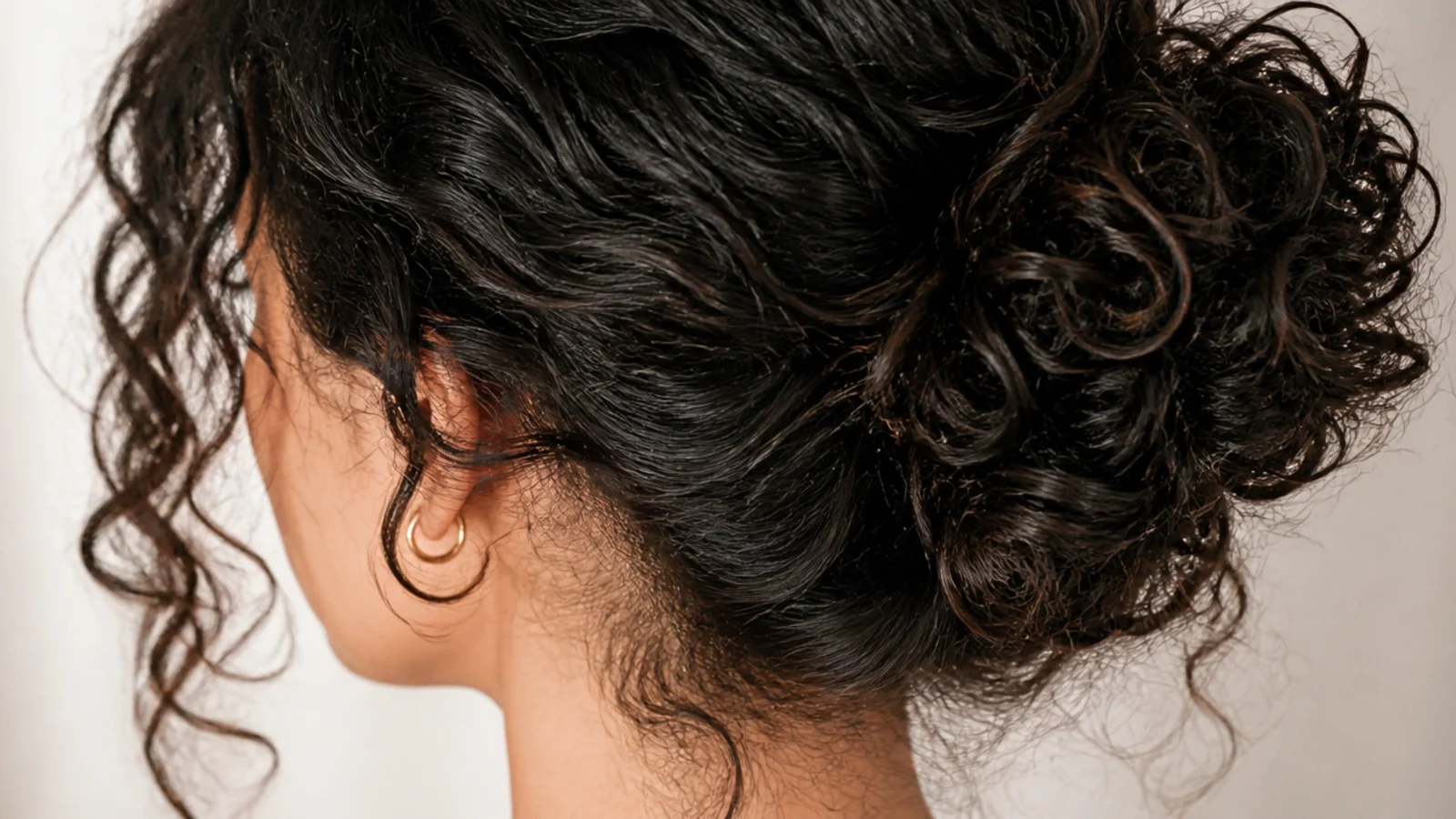
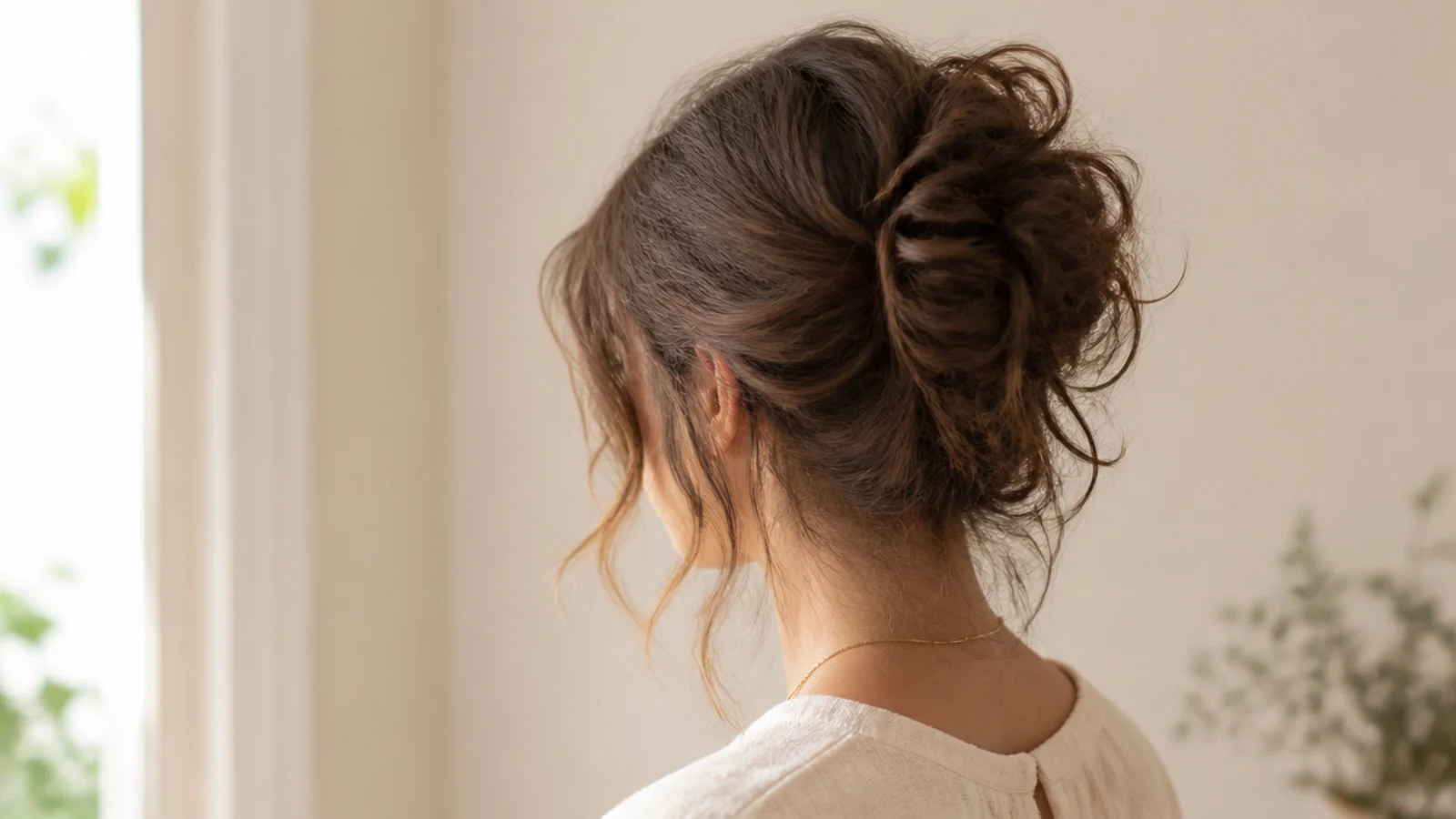
Take the top third of the hair from temple to temple, twist it once and loop it into a soft bun, leaving two spiral pieces down at the front. It removes bulk from the crown while showing your curl pattern through the lengths, and it deliberately leaves the baby hairs alone instead of gluing them down. Five minutes. This is the single most forgiving look for the awkward middle stage between wash days, when roots are defined but ends have gone fuzzy.
Who it suits: Shoulder length and longer, especially crown or halo frizz.
Tip: Pull the bun loop only two thirds through so the ends fan out and read as texture, not a stub.
5. Plopped Overnight Curls in a Cotton T-Shirt
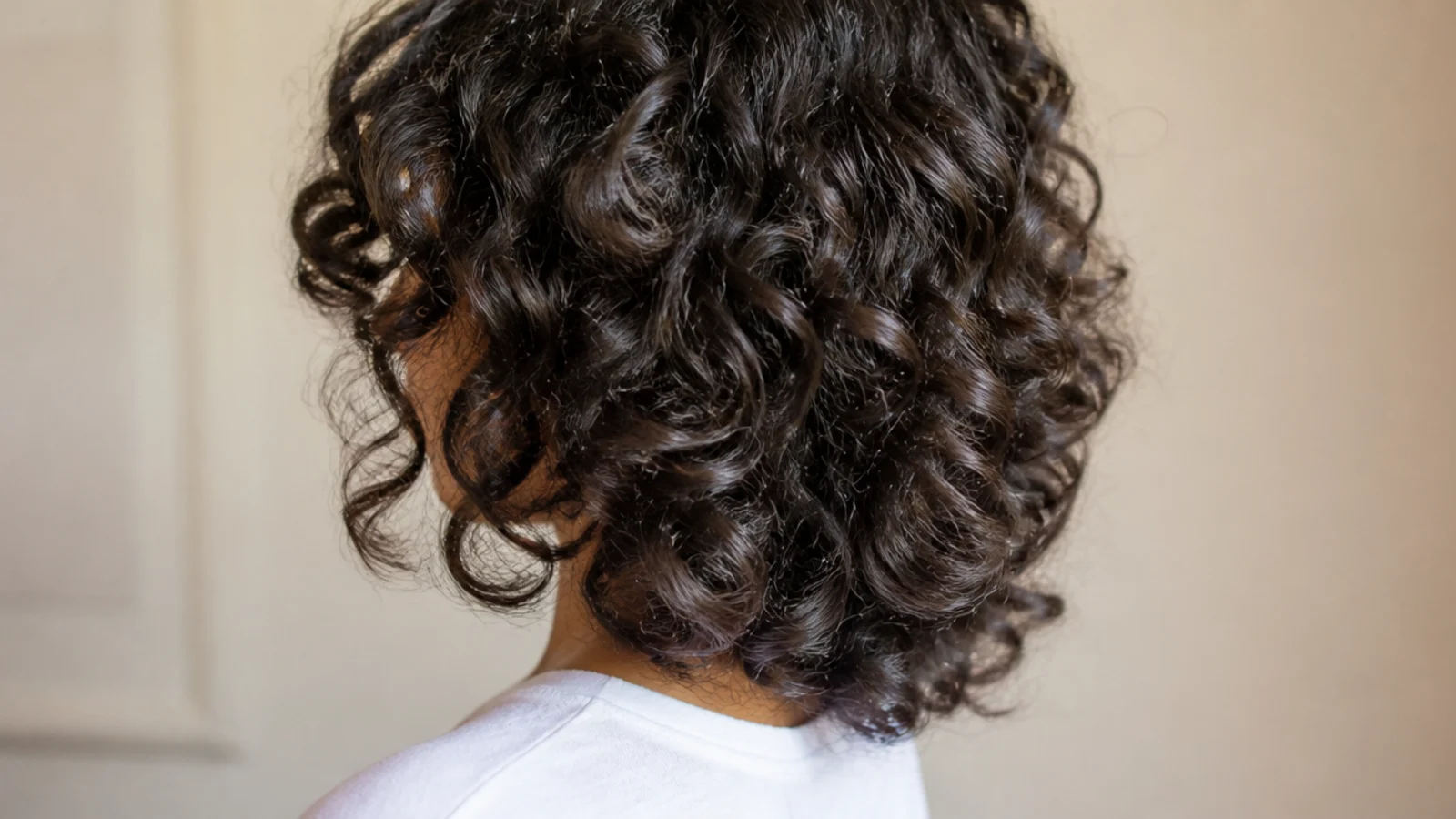
Lay a short-sleeve cotton t-shirt flat, flip damp product-loaded hair into the center, fold the hem over the back of the head and tie the sleeves at the nape. Plopping stacks the curls on themselves so they dry in a coiled position instead of hanging and stretching out. Leave it 20 minutes for a wash-day setup, or sleep in it for a stretched overnight version. The t-shirt matters: terry towel loops catch the cuticle and create surface frizz in seconds.
Who it suits: 2C to 3B curls that lose their spring at the roots by mid-length.
Tip: Plop for 20 minutes, not an hour; over-plopping leaves hair too wet to hold a cast.
6. Finger-Coiled Curls on Short 3C Hair
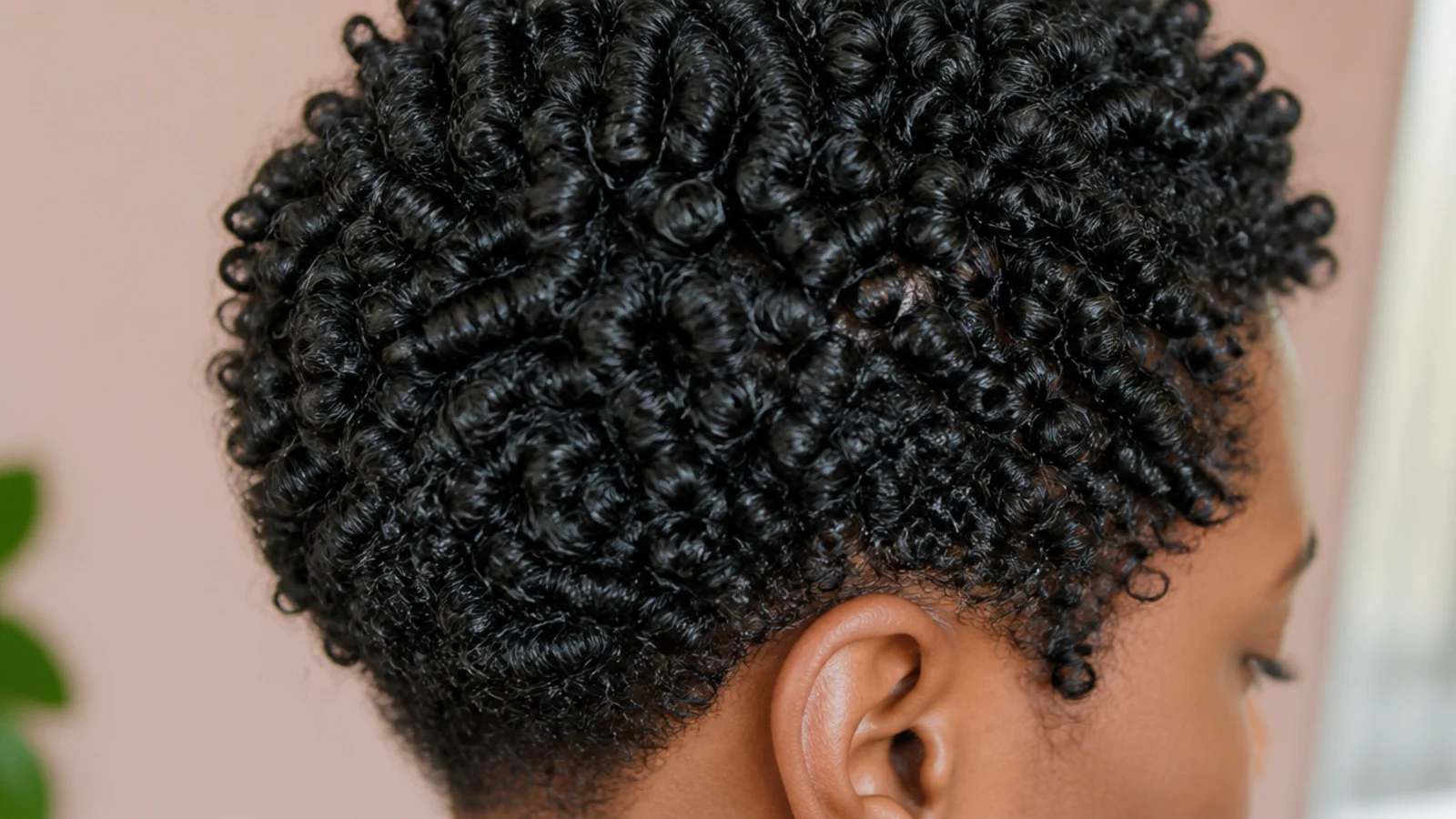
Section soaking wet hair into small squares about half an inch across, apply cream and gel to each, then wind the section around one finger until it holds its own coil. Every coil is defined by hand, which is why this beats every other method on short hair where there is not enough length for clumping to happen naturally. Set aside 45 to 60 minutes on a tapered cut or curly pixie. The definition lasts three to four days and refreshes with water and leave-in.
Who it suits: 3B to 4A curls under about six inches, including grown-out pixies.
Tip: Work with hair genuinely soaking; if a section dries mid-coil, spray it wet again before winding.
7. Curly Shag with Curtain Bangs at Collarbone Length
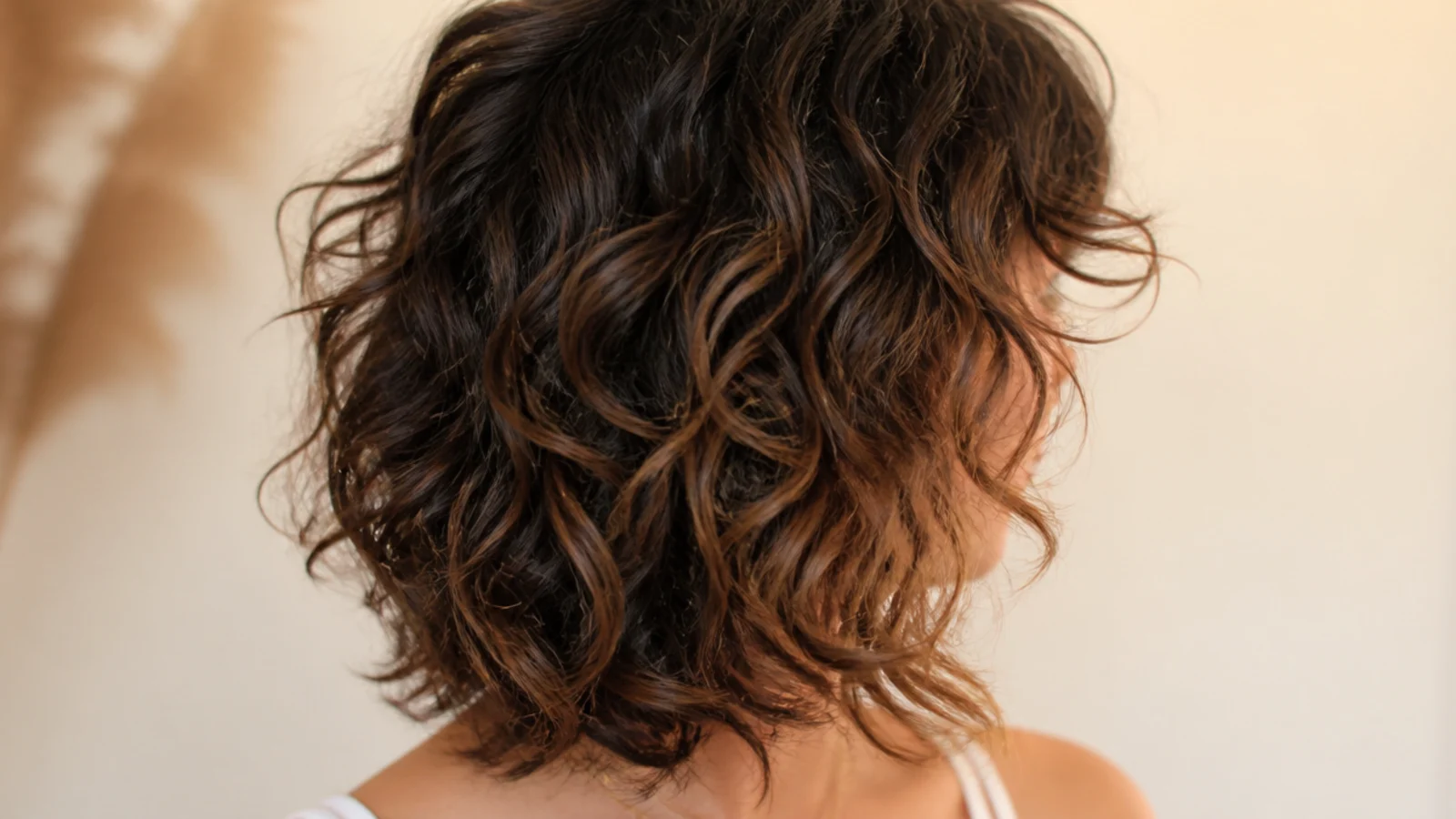
A layered shag cut dry, curl by curl, with the shortest internal layers around the crown and curtain bangs that split at the middle and sweep to the cheekbones. The layering removes interior bulk so the triangle silhouette collapses, while blunt heavy ends are what makes frizzy curly hair read pyramid-shaped. Ask for internal debulking and no thinning shears. Styling is a wash-and-go plus five minutes shaping the fringe. See the curly mid-length haircut for the full cut brief.
Who it suits: Thick 3A to 3C hair that widens at the jaw instead of hanging.
Tip: Ask for the bangs cut curly and dry, about an inch longer than you want, since they spring up.
8. Low Curly Bun with a Silk Scarf Headband
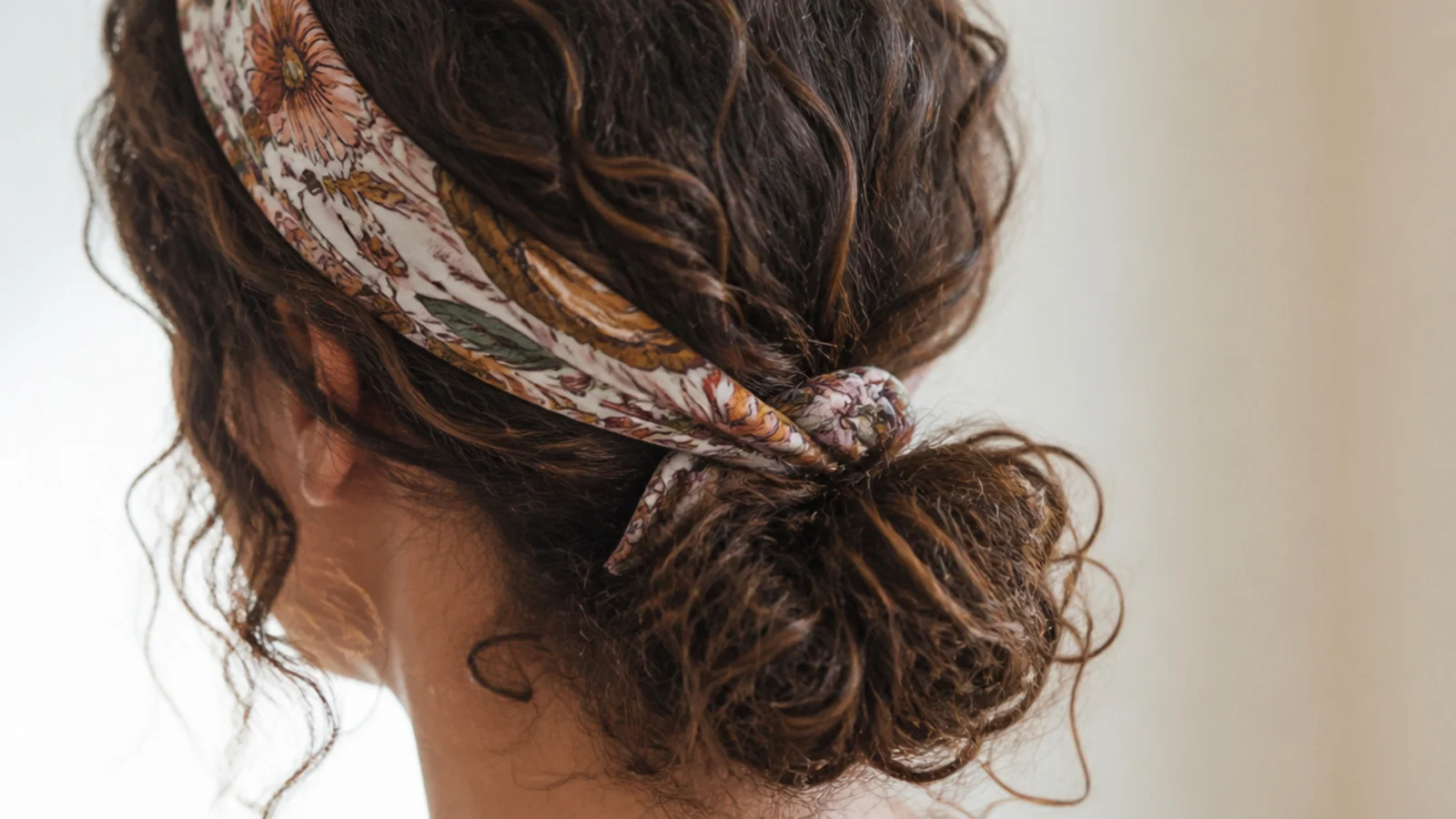
Gather curls into a loose bun at the nape, leave the ends free, and tie a silk scarf about two inches wide across the hairline with the knot underneath at the nape. The scarf physically covers the crown, which is where halo frizz lives, and silk does not roughen the cuticle the way a cotton headband does. Four minutes and it works on day three or four hair that has lost all definition. Genuinely the highest polish-per-minute look on this list, and it dresses up for events as easily as curly graduation hairstyles.
Who it suits: Any curl type, especially crown and halo frizz on day 3 hair.
Tip: Tie the scarf over the hairline rather than behind it so it hides the frizz instead of framing it.
9. Twist-Out on Damp 4A Coils
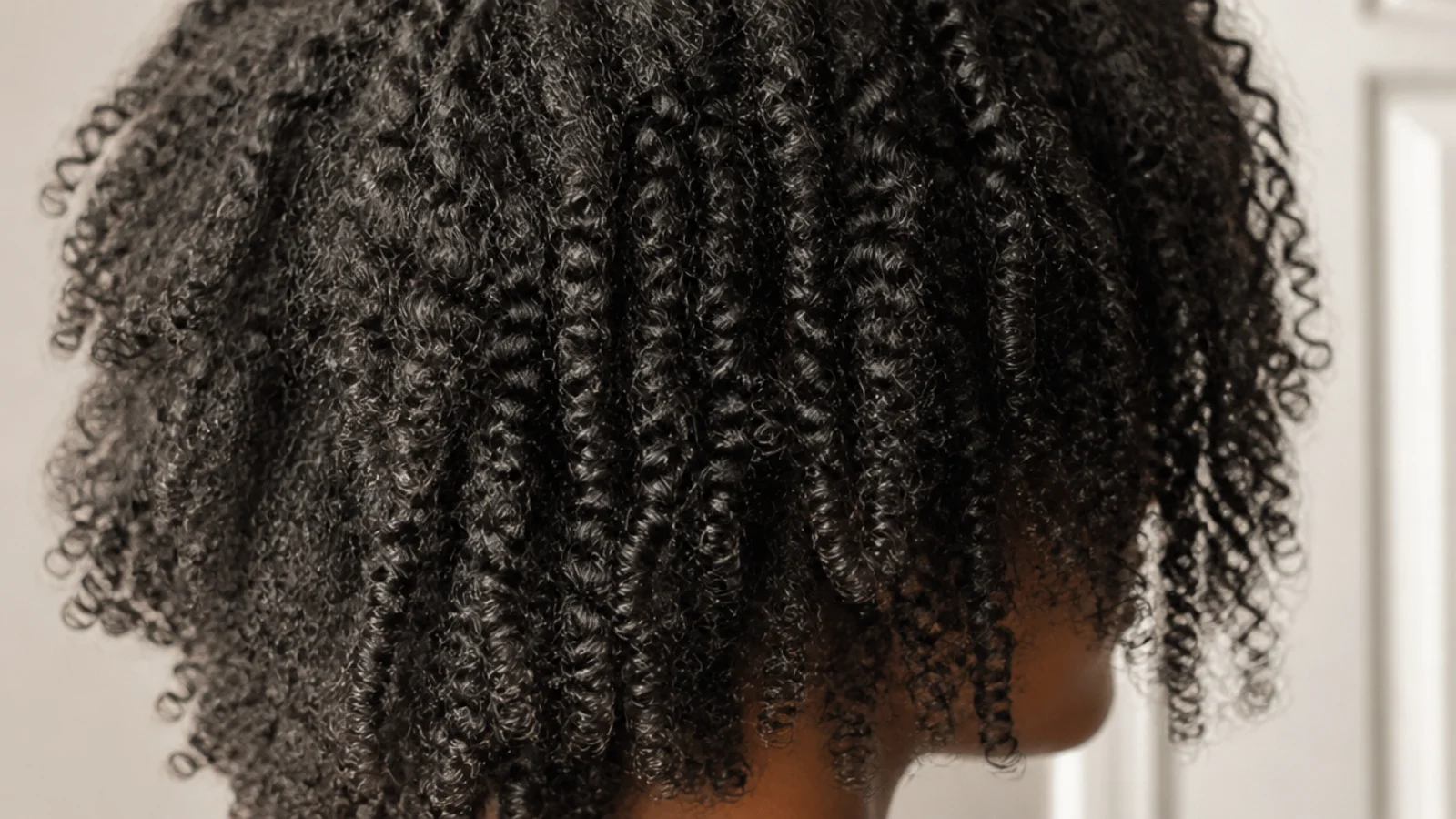
On damp, leave-in-loaded hair, part into 10 to 16 sections and two-strand twist each one from root to tip, sealing the ends with a little cream. Sleep in it under a satin bonnet and unravel in the morning with oiled fingers so the twists do not fuzz as they separate. The result is a stretched, uniform curl pattern with far less shrinkage than a wash-and-go. Around 40 minutes to twist, and the result lasts four to five days if you re-twist a few front sections at night. More set styles in natural hair graduation hairstyles.
Who it suits: 3C and 4A textures that shrink more than half their length.
Tip: Unravel with oil on your fingertips, never dry hands, and separate each twist only once.
10. Braid-Out Waves for Stretched Frizzy Curls
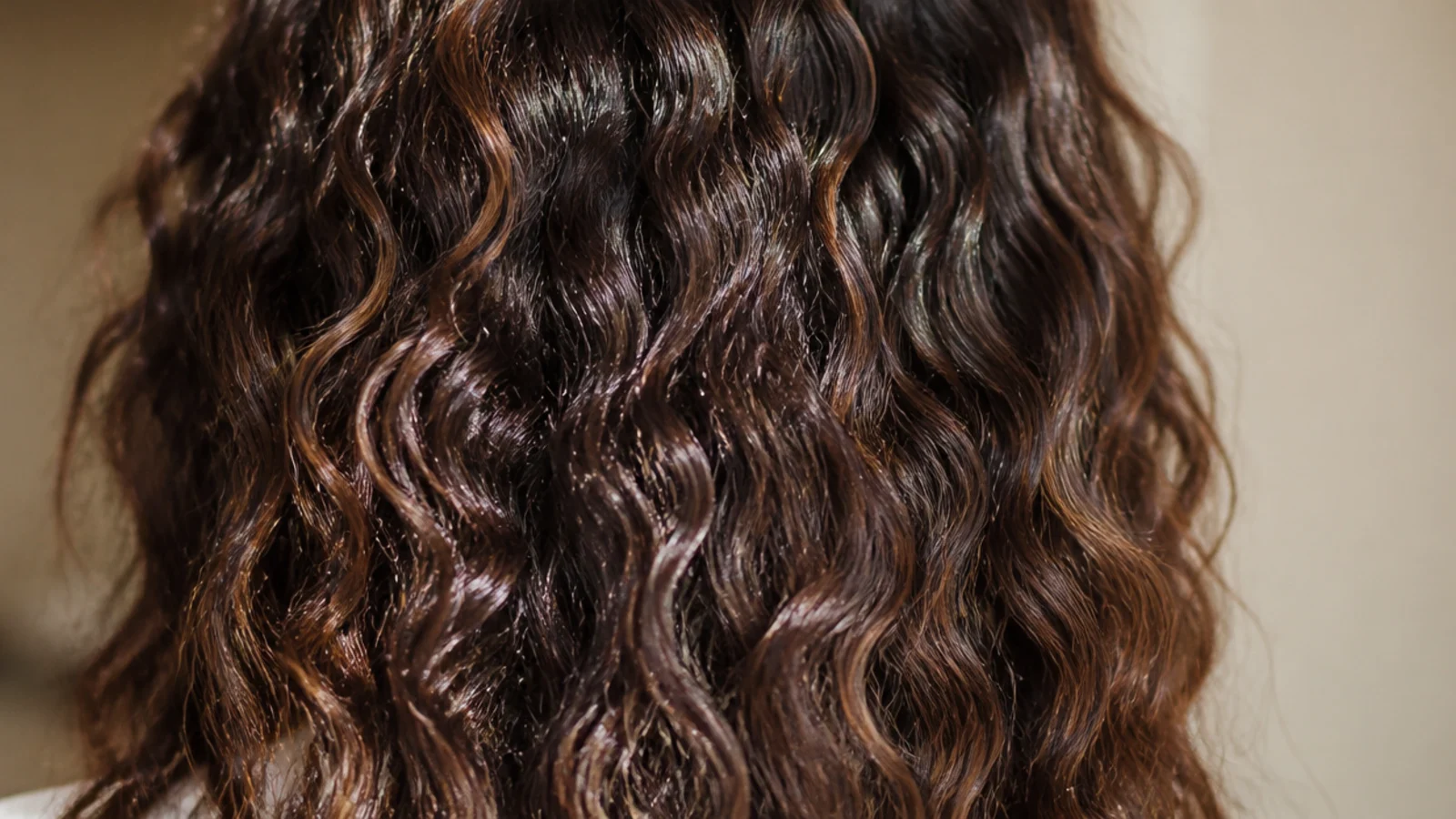
Six to eight three-strand braids on damp hair, dried overnight and taken down in the morning. A braid-out gives a looser, more uniform S wave than a twist-out, which is exactly what you want if your natural pattern is inconsistent and frizzes because half your head is 2C and half is 3B. Roughly 20 minutes to braid. Bigger braids give beach waves, smaller braids give crimped definition, and the looser end of that spectrum overlaps with frizzy wavy hair. If the wave reads too flat, the braids were too loose or the hair too wet.
Who it suits: Mixed 2C to 3B patterns where different sections curl differently.
Tip: Braid to about an inch from the ends and roll the tail on a small clip so the tips do not stay straight.
11. Side-Parted Curly Lob at Chin Length
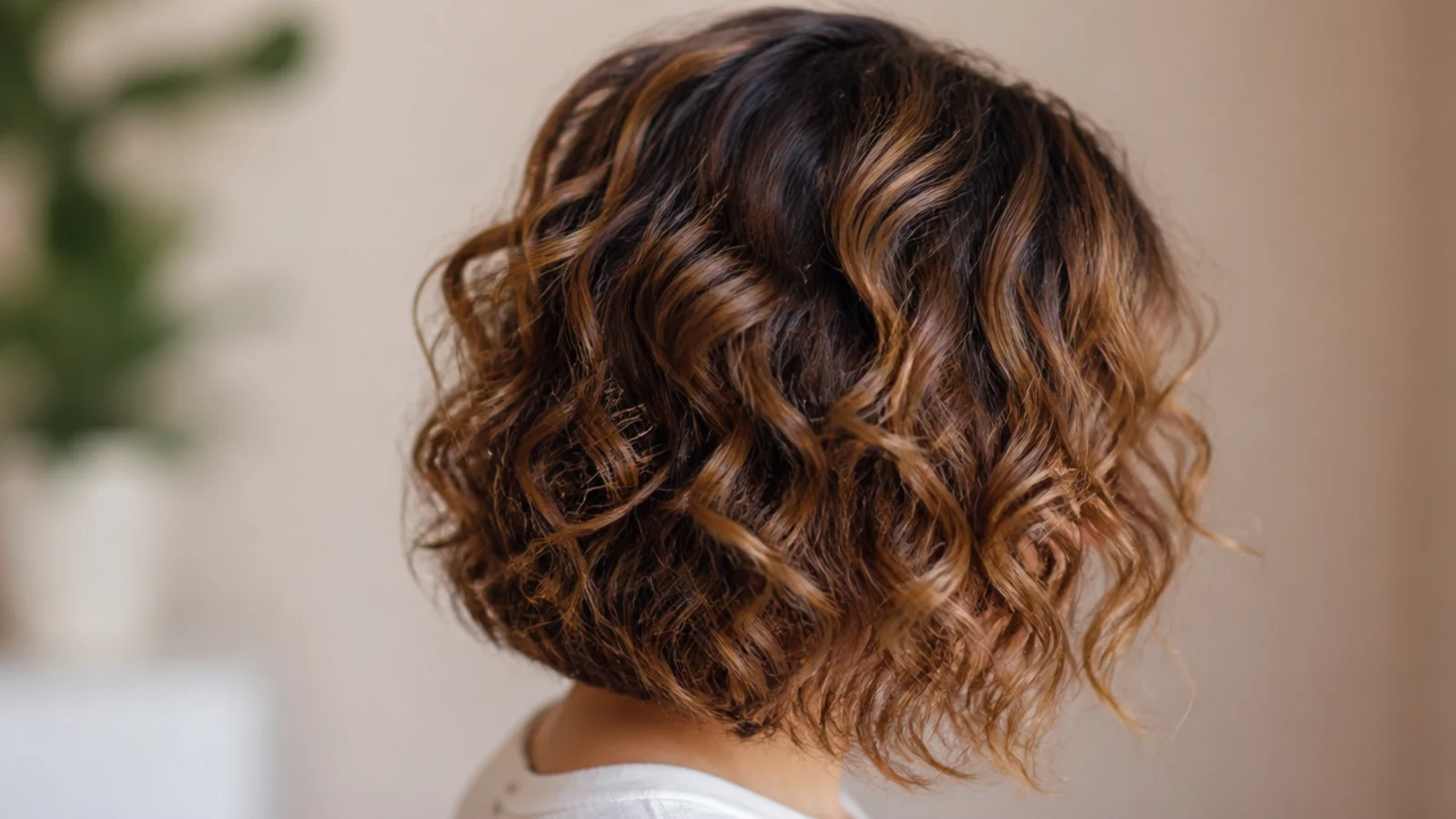
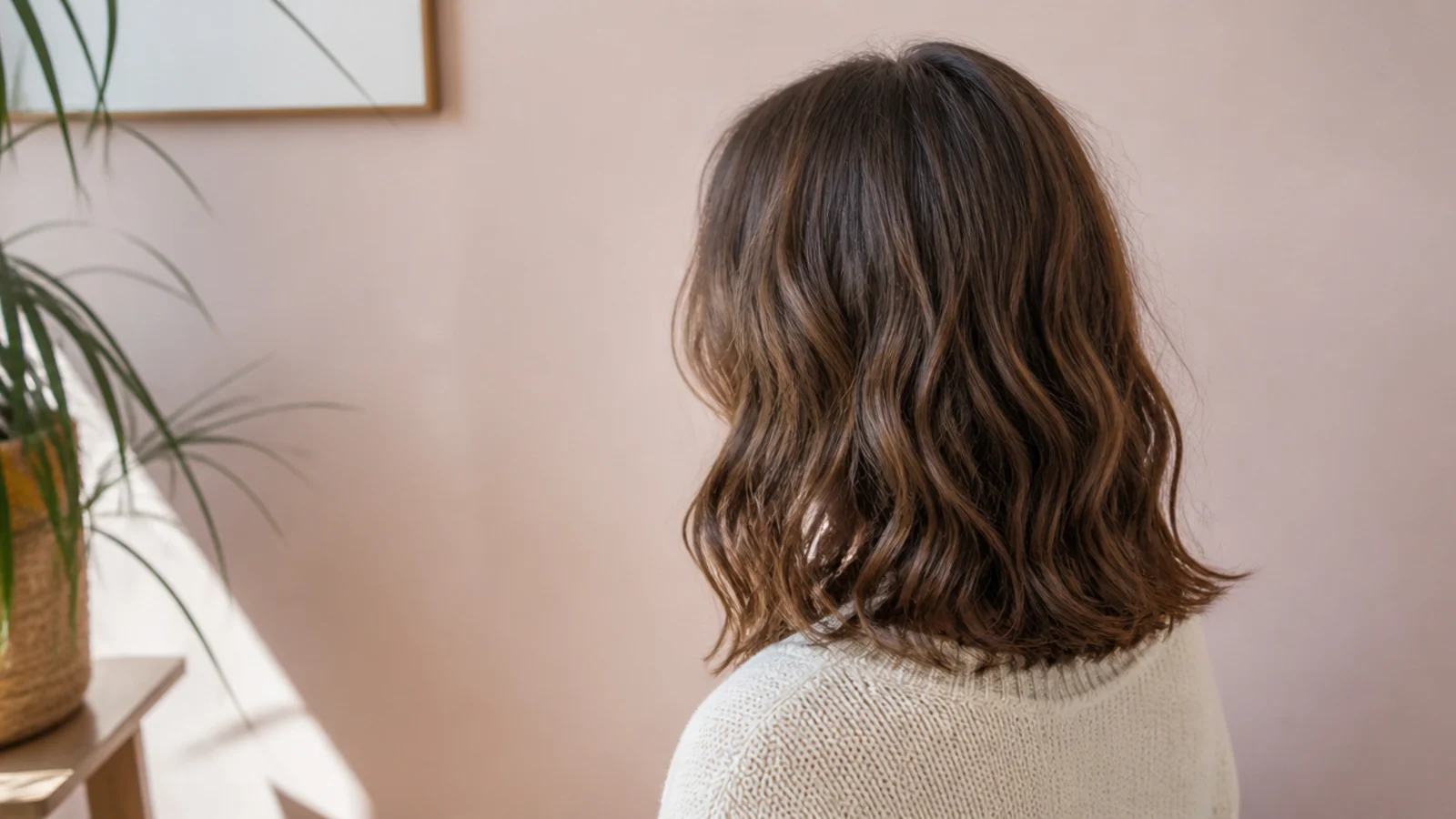
A jaw-to-collarbone lob with a deep side part that pushes the bulk of the curl to one side, giving asymmetry instead of a symmetrical triangle. The part alone is the styling: switching from center to deep side instantly lifts the roots on the heavy side because the hair is trained the other way. Short curly hair frizzes fast because there is less weight pulling the cuticle down, so this length needs gel, not just cream. Ten minutes with a diffuser.
Who it suits: 3A to 3B curls at chin to collarbone length wanting shape without a big cut.
Tip: Set the part while soaking wet and clip it for the first 10 minutes of drying so it stays.
12. Loose Curly French Braid for Humid Days
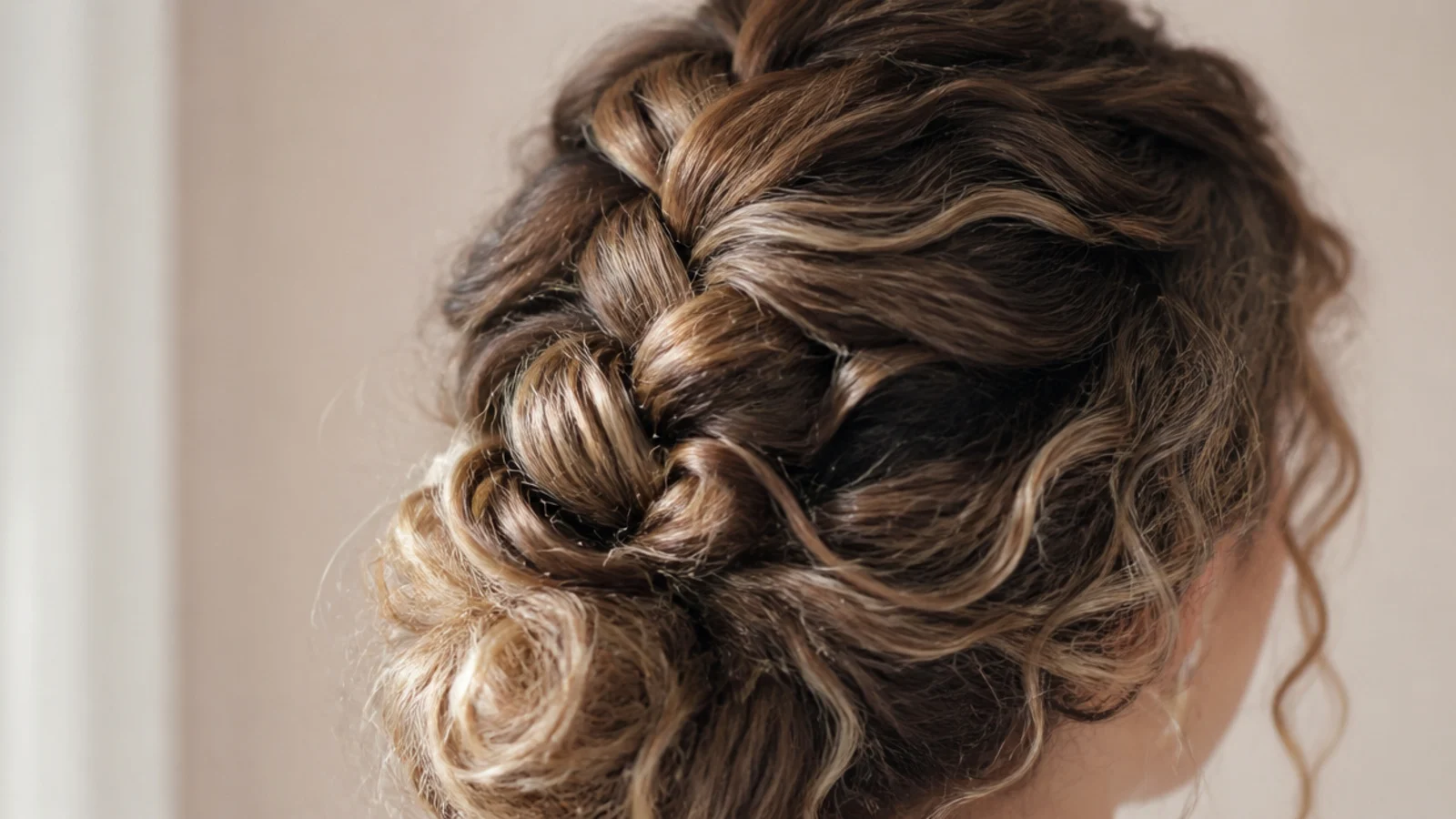
A single French braid down the back, braided loosely with damp hands and finished with a satin tie. Containment styles are the honest answer on a 70F dew point day when no product will hold a cast, because a braid physically removes the surface area that can swell. Eight minutes. It holds all day and, unlike a slick bun, it does not put tension on the hairline. Pull the outer edges gently once it is tied so it reads soft instead of severe.
Who it suits: Shoulder length and longer, any curl type, on high-humidity days.
Tip: Braid on day 2 hair, not freshly washed; a little grip makes the braid hold without gel.
13. Curly High Ponytail with a Satin Scrunchie
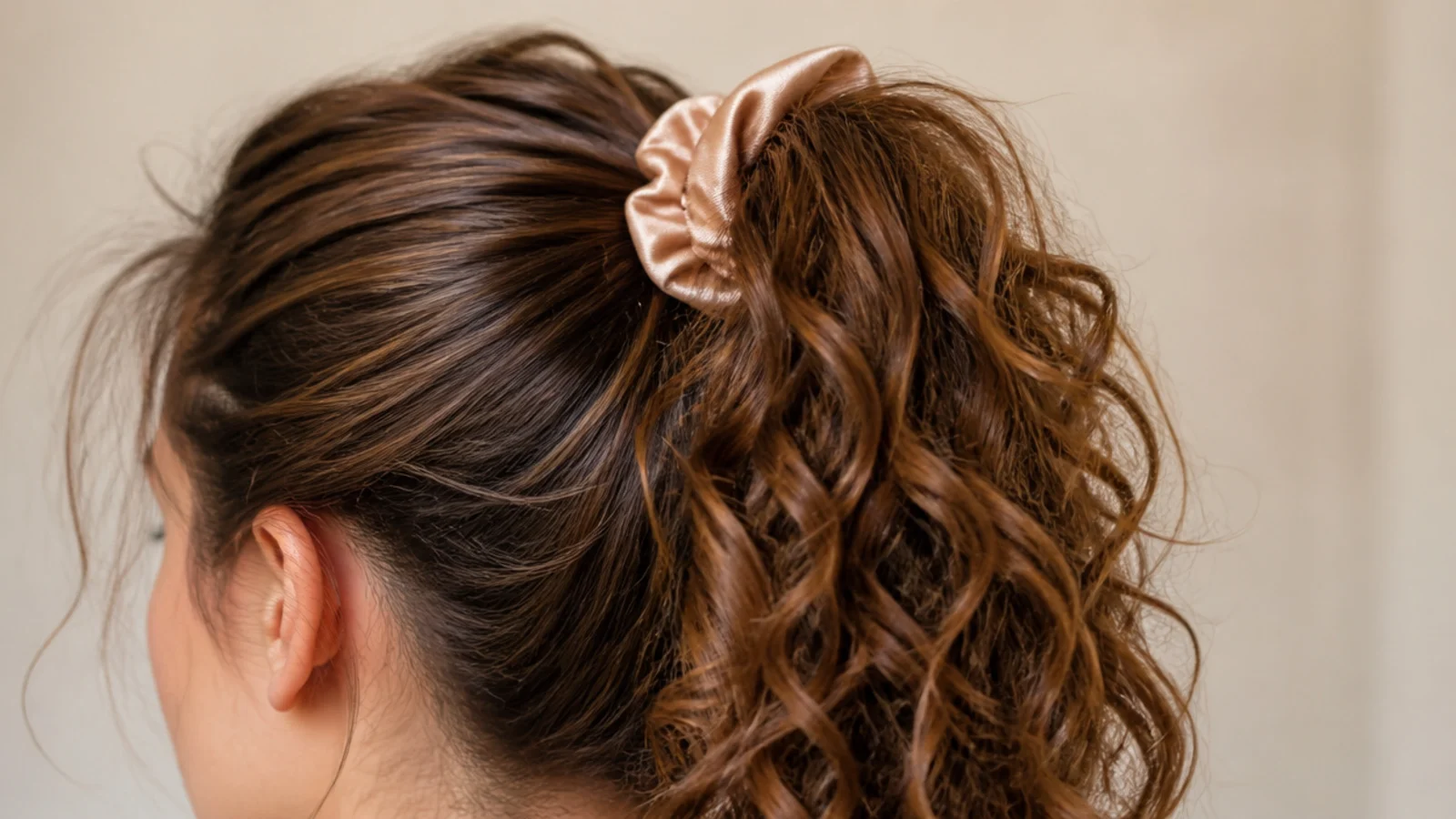
Everything gathered high at the crown, smoothed with damp hands and a pea of leave-in rather than a brush, and tied with a wide satin scrunchie that spreads tension across the hair instead of cutting into it. Three minutes. Do not chase a glass-smooth top: the pull needed to get there is the same tension that causes breakage frizz at the hairline over time. Leave a soft halo and it reads intentional. Wrap a small curl section around the tie to hide it.
Who it suits: Any curl type with enough length to gather, ideally past the shoulders.
Tip: Wet your palms rather than adding more product; water alone lays the surface without buildup.
14. Bantu Knot-Out with Defined Spirals
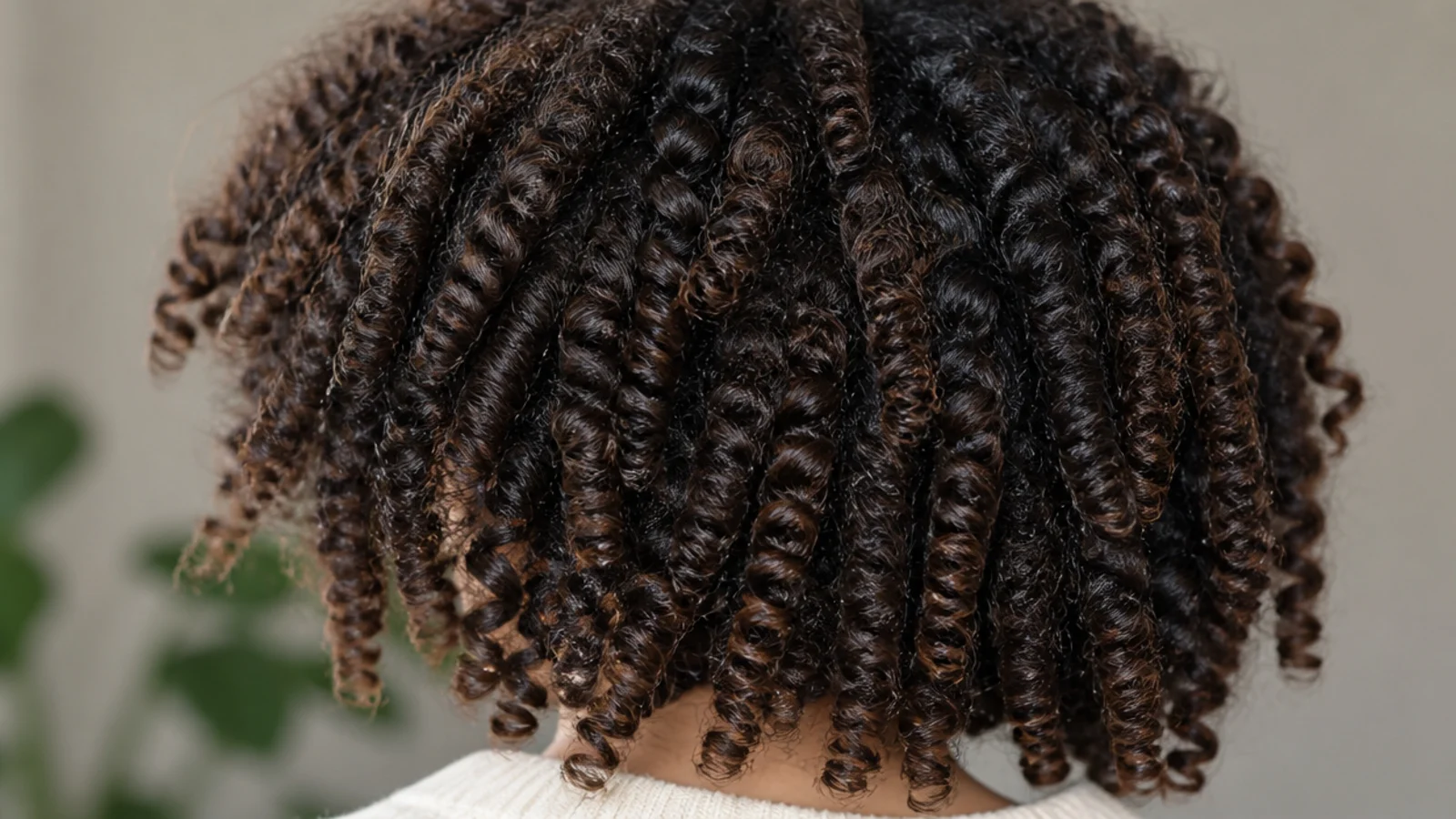
Divide damp, cream-loaded hair into 10 to 14 sections, twist each into a rope and wind it around its own base into a small knot, pinning if needed. Dry fully, then unravel. It produces the tightest, most uniform spiral of any no-heat set and it is the best option when your curl pattern has been loosened by heat or color. Around 30 minutes to set and it must be completely dry before takedown or it will frizz instantly.
Who it suits: 3B to 4A hair, and anyone with a heat-damaged inconsistent pattern.
Tip: Sit under a hooded dryer for 30 minutes if you are impatient; damp knots always unravel frizzy.
15. Deep Side-Part Curly Blowout with a Diffuser
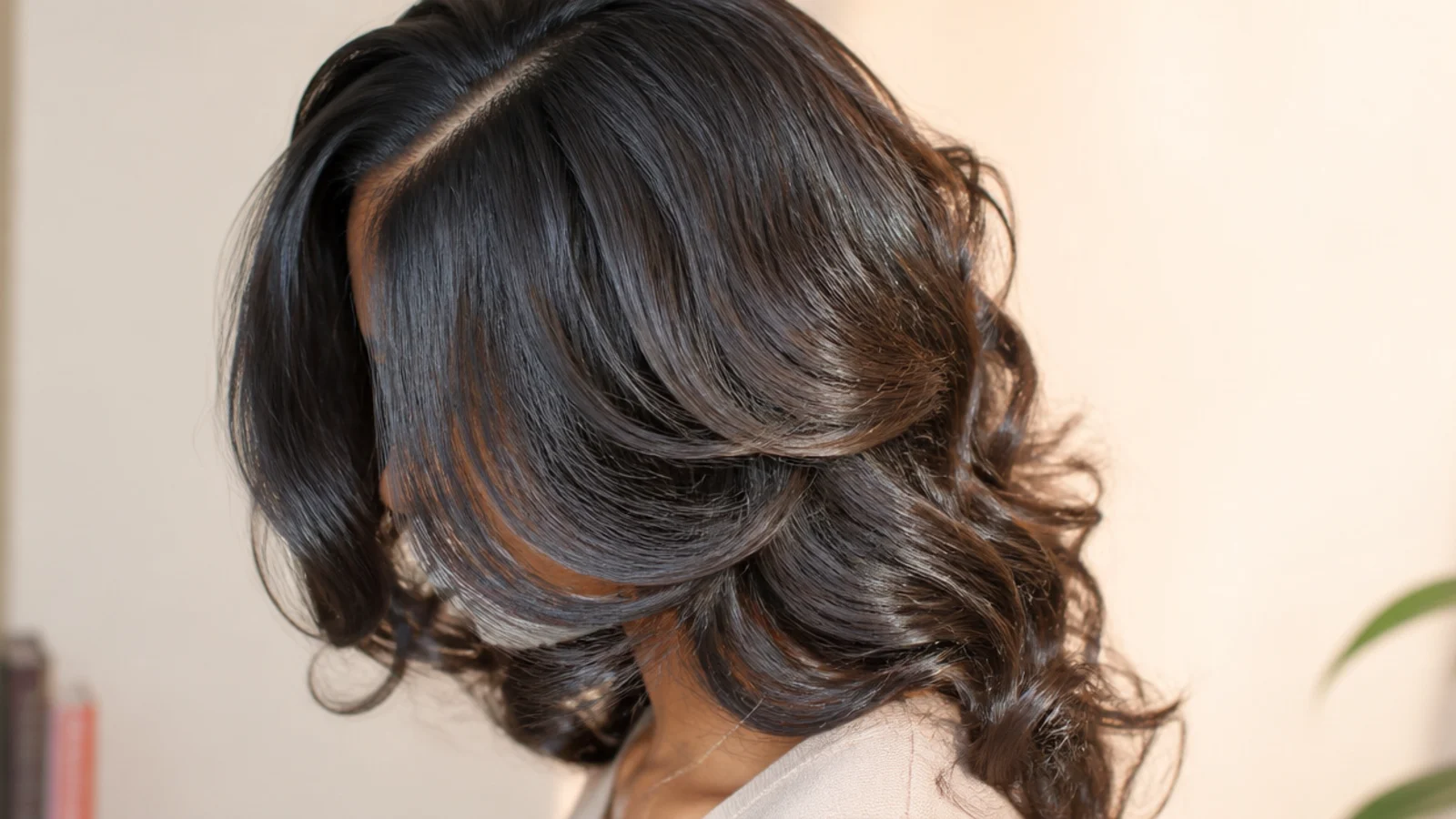
A stretched, voluminous version of your curl rather than straight hair: heat protectant, a mousse for hold, then diffuse upside down until 80 percent dry, then flip and diffuse the top with the bowl held away from the scalp. The lift comes from drying upside down, and the smoothness comes from never running fingers through it while it dries. About 25 minutes. Expect one heat-styled look a week at most if you want to keep your pattern intact. Heat-light alternatives are covered in mid-length haircut styling.
Who it suits: 2C to 3A curls wanting an event look without a flat iron.
Tip: Always use a heat protectant, even on the diffuser; low heat over 25 minutes still adds up.
16. Curly Space Buns for Festival Frizz
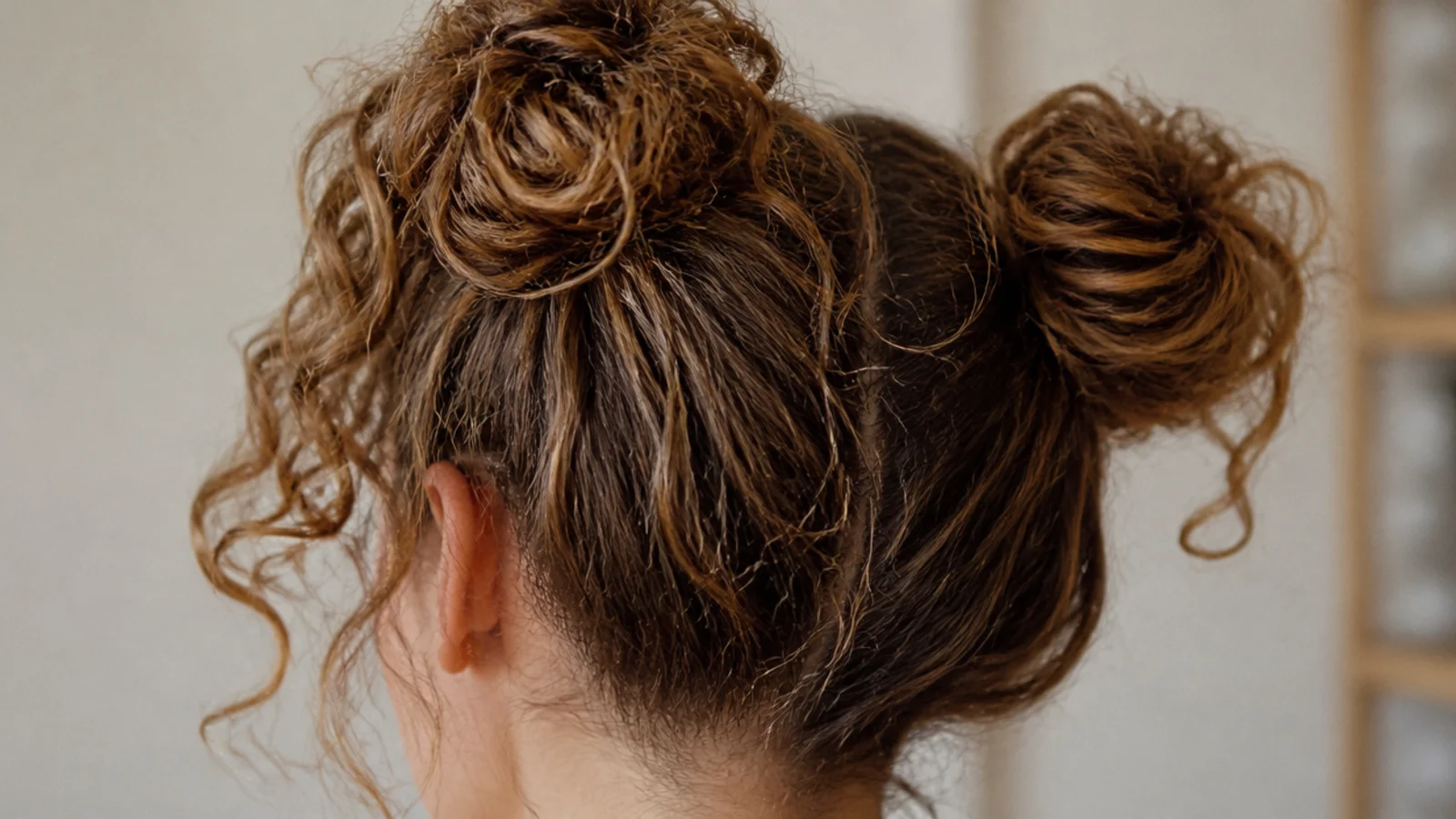
Split down the middle, twist each half into a loose bun above the ear and leave the ends free and fuzzy. This is the look where frizz is the styling, not the problem, and it is built for the day-three hair that will not behave. Six minutes, no product needed. It also holds through heat and crowds better than anything down, and it sits squarely in the frizzy curly hair aesthetic lane. Pair with two thin face-framing spirals pulled out at the temples so the front does not read scraped back.
Who it suits: Any curl type from mid-length up; best on day 2 or day 3 hair with grip.
Tip: Set the buns above your ears, not behind them, or they slide down within an hour.
17. Gel-Cast Curls with Scrunch-Out-the-Crunch
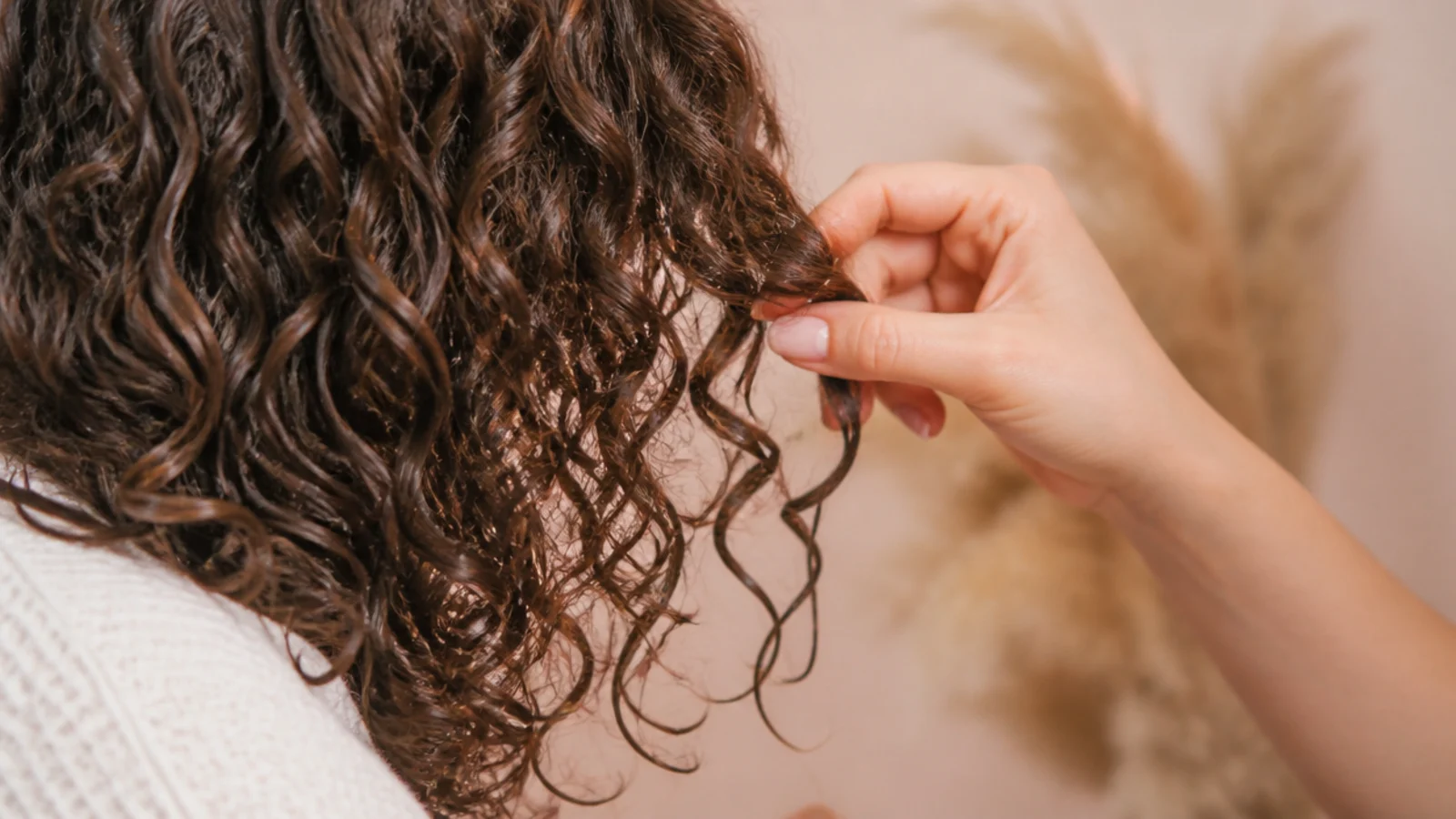
The finishing move most people skip. After a strong-hold gel dries hard, the cast feels crunchy, which is correct: that shell is what kept humidity out while the hair dried. Once it is bone dry, put a drop of oil on your palms and scrunch upward from the ends until the shell cracks and the curl inside is soft, shiny and still defined. Two minutes. Scrunch while the hair is even slightly damp and you undo the whole wash day.
Who it suits: Anyone using gel, all curl types, especially in humid climates.
Tip: Test with a squeeze at the nape; if it flexes without cracking, it is not dry yet.
18. Long Layered Curls with Internal Debulking
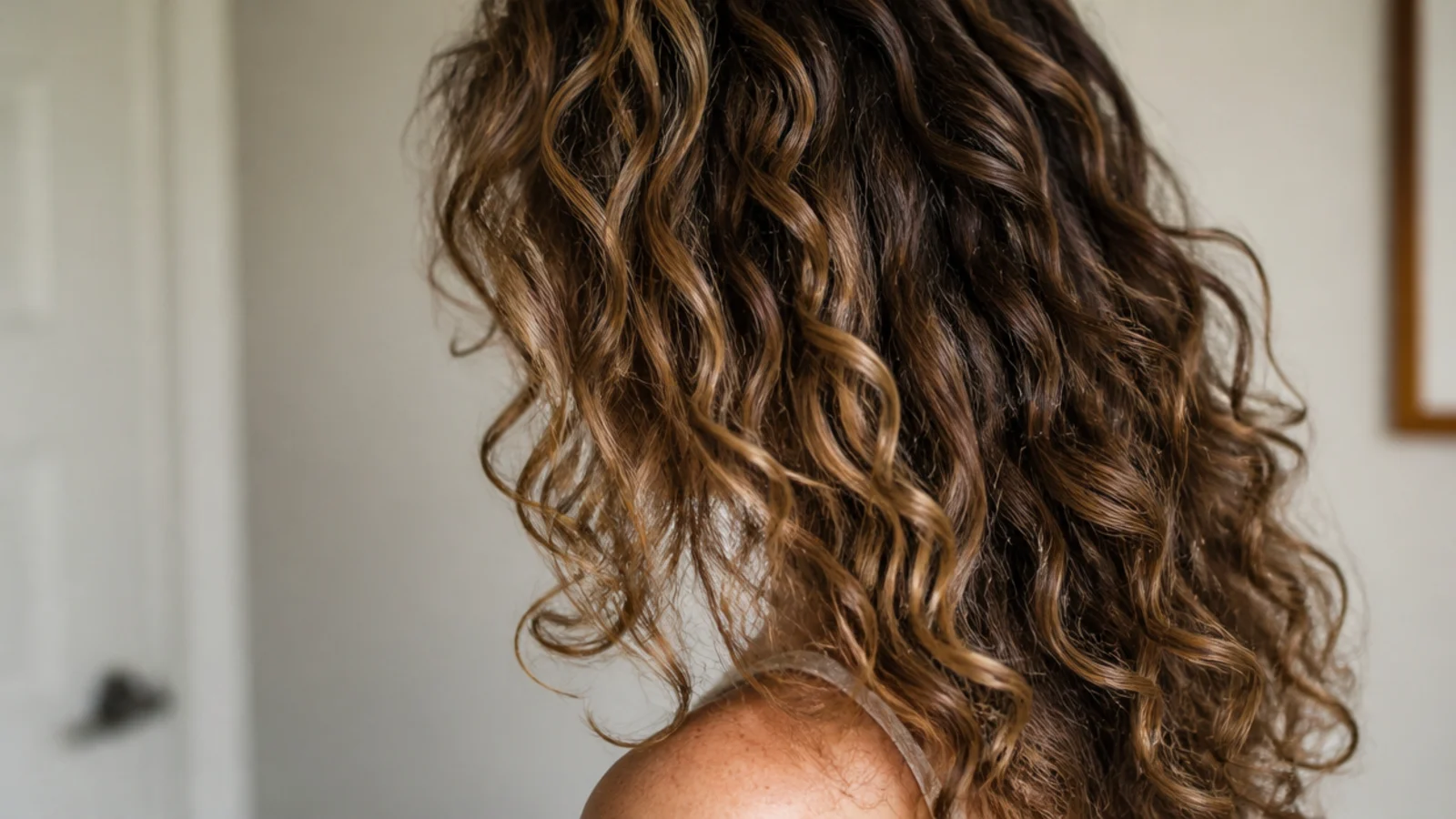
Long curls cut with layers taken inside the hair rather than on the surface, so bulk comes out of the middle while the outline stays intact. Surface layers on frizzy curly hair create hundreds of short ends that stick out of the canopy; internal debulking removes weight without adding flyaways. Ask for it by name and explicitly decline thinning shears, which shatter curly ends. Styling is a standard wash-and-go. The mid-length haircut layers guide explains the same principle shorter.
Who it suits: Dense, coarse 3A to 3C hair that feels heavy but still puffs.
Tip: Book a dry curly cut so the stylist can see where each curl actually falls.
19. Halo Braid on Frizzy Curly Hair
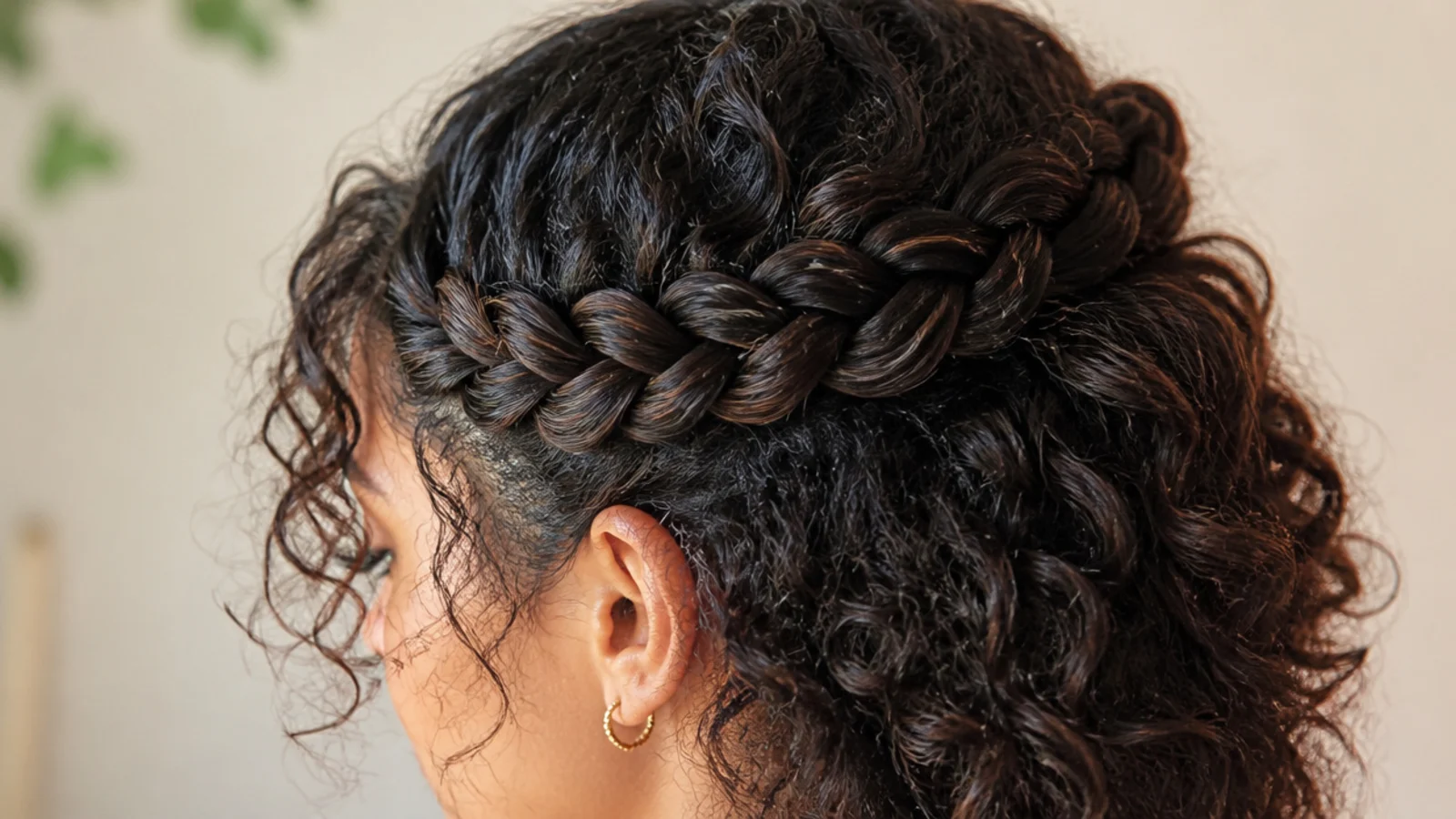
One braid taken around the head like a crown and pinned, with a deliberate soft haze of curl left at the hairline instead of pinned flat. It works on frizzy curly hair specifically because braided curls hold their own shape without gel, and the frizz softens the braid into something romantic. Twelve to fifteen minutes and about eight bobby pins. Best on day 2 or 3 hair. See more braid variants in mermaid braids with curls.
Who it suits: Collarbone length and longer, 2C to 3C, weddings and events.
Tip: Pin into the braid itself, not the scalp, so tension never lands on the hairline.
20. Air-Dried Curls with a Leave-In Only Routine
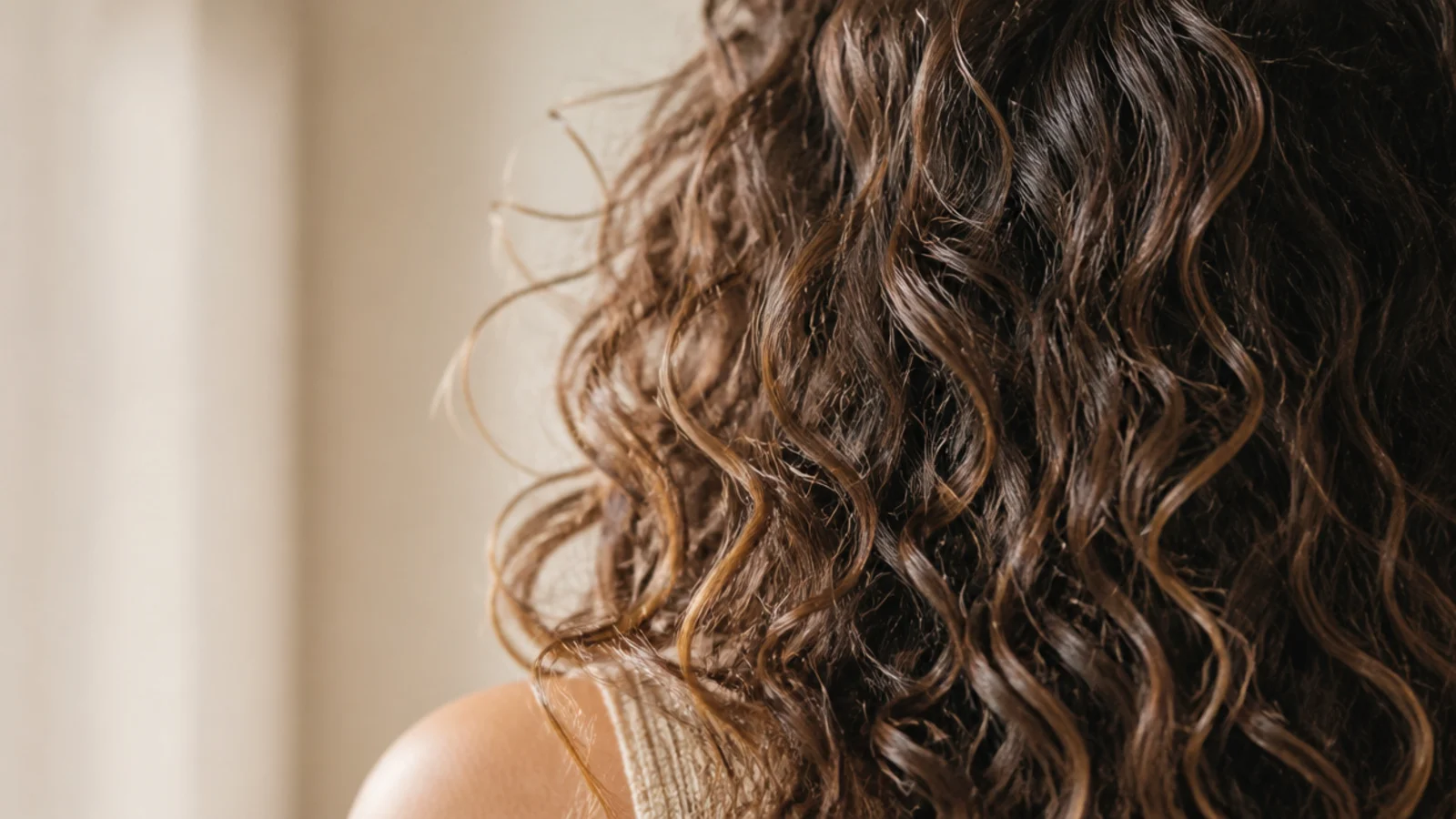
The minimalist routine for people whose frizz is caused by product buildup rather than dryness. One generous leave-in on soaking wet hair, squeeze upward five times with cupped hands, then do not touch it again for 90 minutes. Fine and low-porosity curls frequently frizz because cream and gel are sitting on the surface instead of absorbing, and stripping the routine back is the diagnostic. Zero cost, three minutes of work. Expect softer definition and much more movement.
Who it suits: Fine, low-porosity 2C to 3A curls that go limp and fuzzy under heavy products.
Tip: Try it for two consecutive wash days before deciding; one is not enough to clear buildup.
Why Curly Hair Frizzes: The Moisture Mechanism
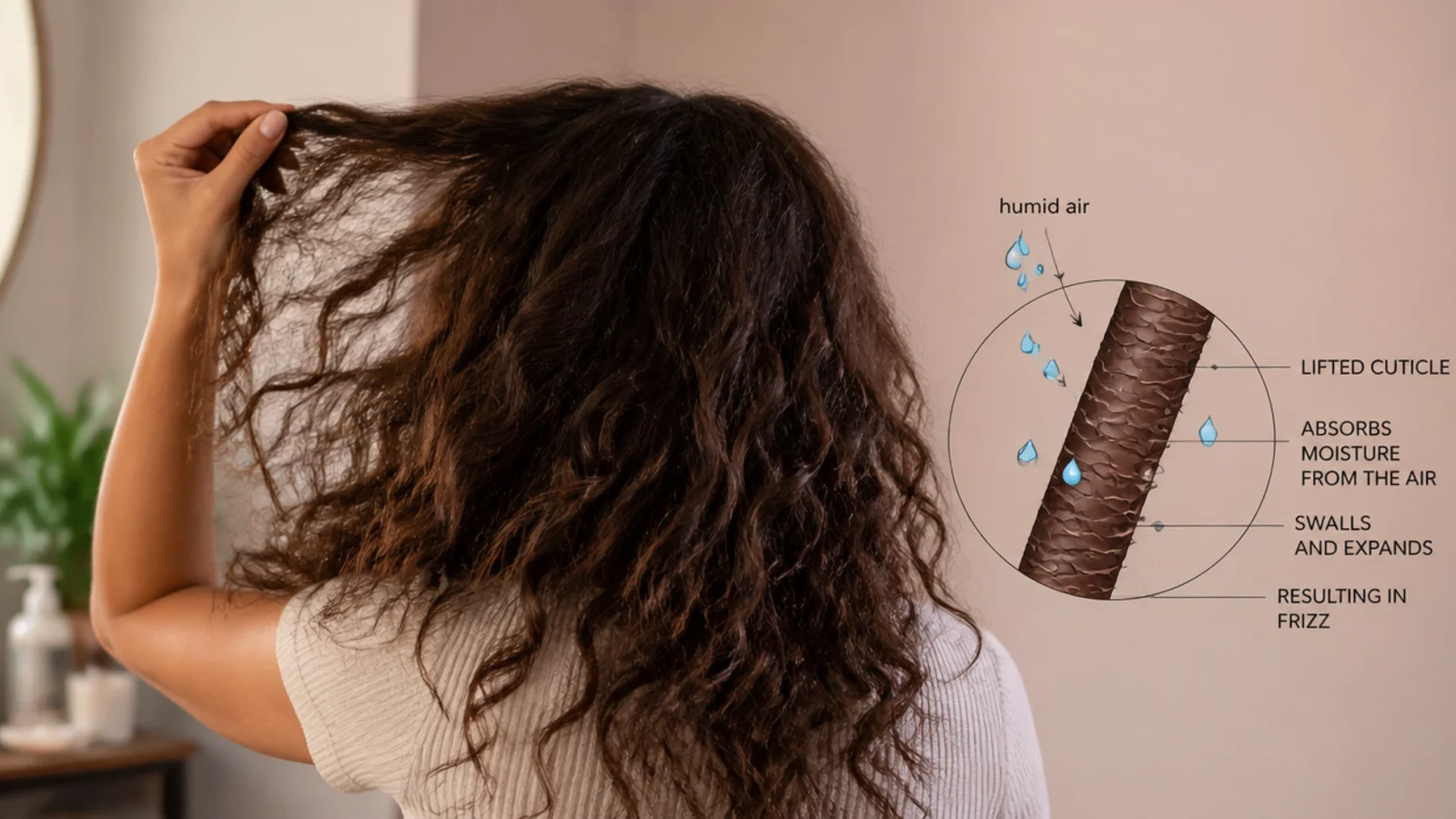
Frizz is a moisture transaction, not a personality trait of your hair. Each strand is wrapped in overlapping cuticle scales. When the strand is well hydrated and the scales lie flat, the surface is smooth and light reflects off it. When the strand is dry and the scales lift, the hair does what any dry porous material does: it pulls water out of the surrounding air, swells unevenly, and pushes individual strands out of their curl clump. That puff is the frizz you see. This is why fighting frizz by adding more hold to dry hair rarely works, and why the two-part fix is always hydrate then seal. Curly hair is more prone to it than straight hair for a structural reason too: the scalp's natural oils travel easily down a straight shaft, but they stall at every bend of a curl, leaving mid-lengths and ends chronically drier than the roots. Read the full mechanism in the frizzy hair guide, and see how it changes on looser textures in frizzy wavy hair.
Which Frizz Do You Have? Frizz by Curl Type and Porosity
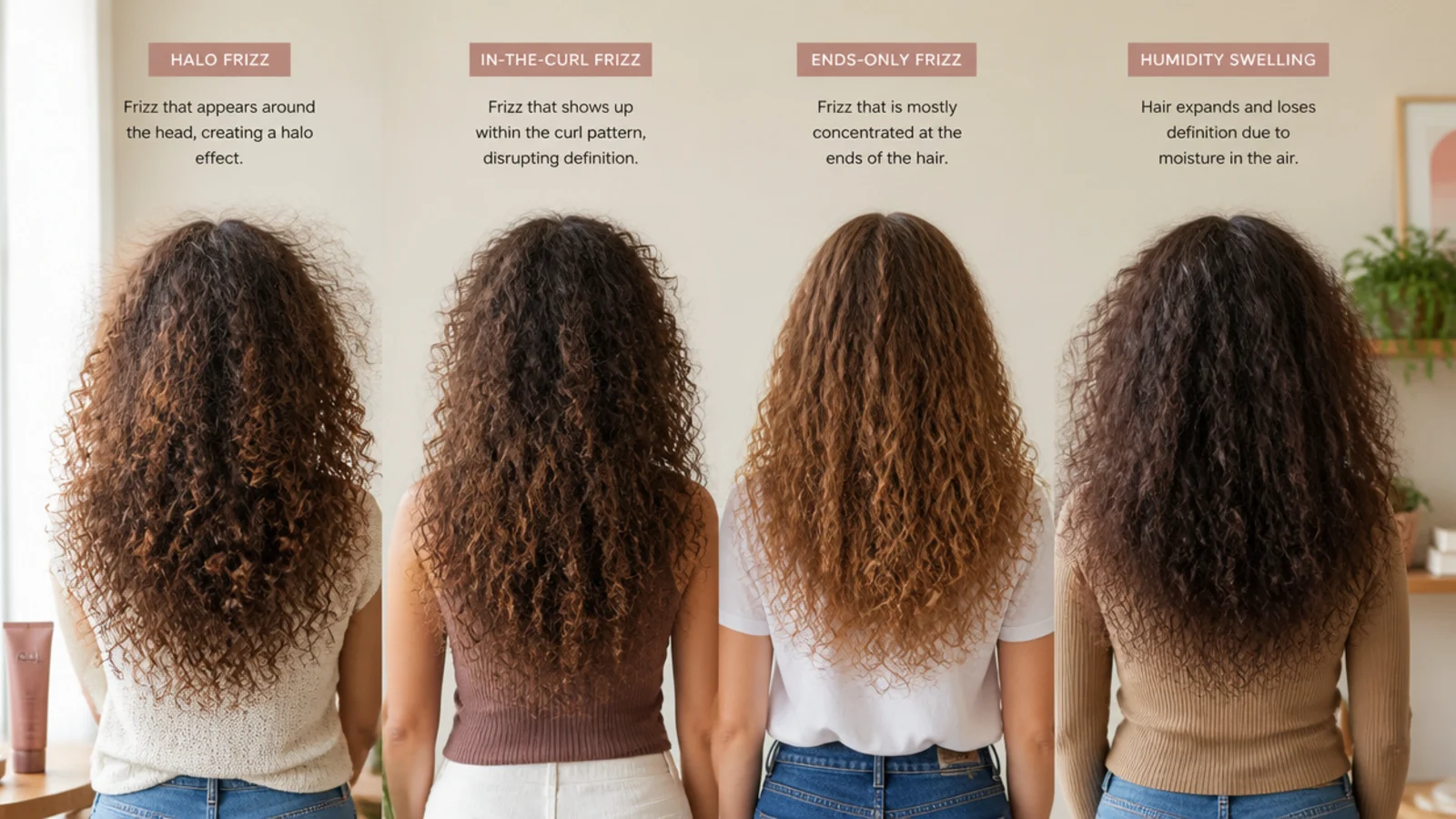
Almost every article treats frizzy curly hair as one condition, which is why the advice contradicts itself. There are four common presentations and they need different fixes. Halo frizz sits in a fuzzy ring around the crown and is usually breakage from tension, friction or a rough sleep surface, not dryness; the fix is satin, looser ties and time. In-the-curl frizz means individual strands escaping the clump along the length, which is a hydration and application problem, fixed by praying product into soaking wet hair. Ends-only frizz is mechanical damage and only a trim resolves it. Humidity swelling is whole-head expansion on damp days and needs a gel cast, not more cream. Porosity decides which products work: low-porosity hair has tightly bound cuticles that resist absorption, so it needs lightweight liquids and warmth to open up, while high-porosity hair absorbs quickly and loses it just as fast, so it needs heavier creams and a sealing layer.
The Wash-Day Routine for Frizzy Curly Hair, Step by Step
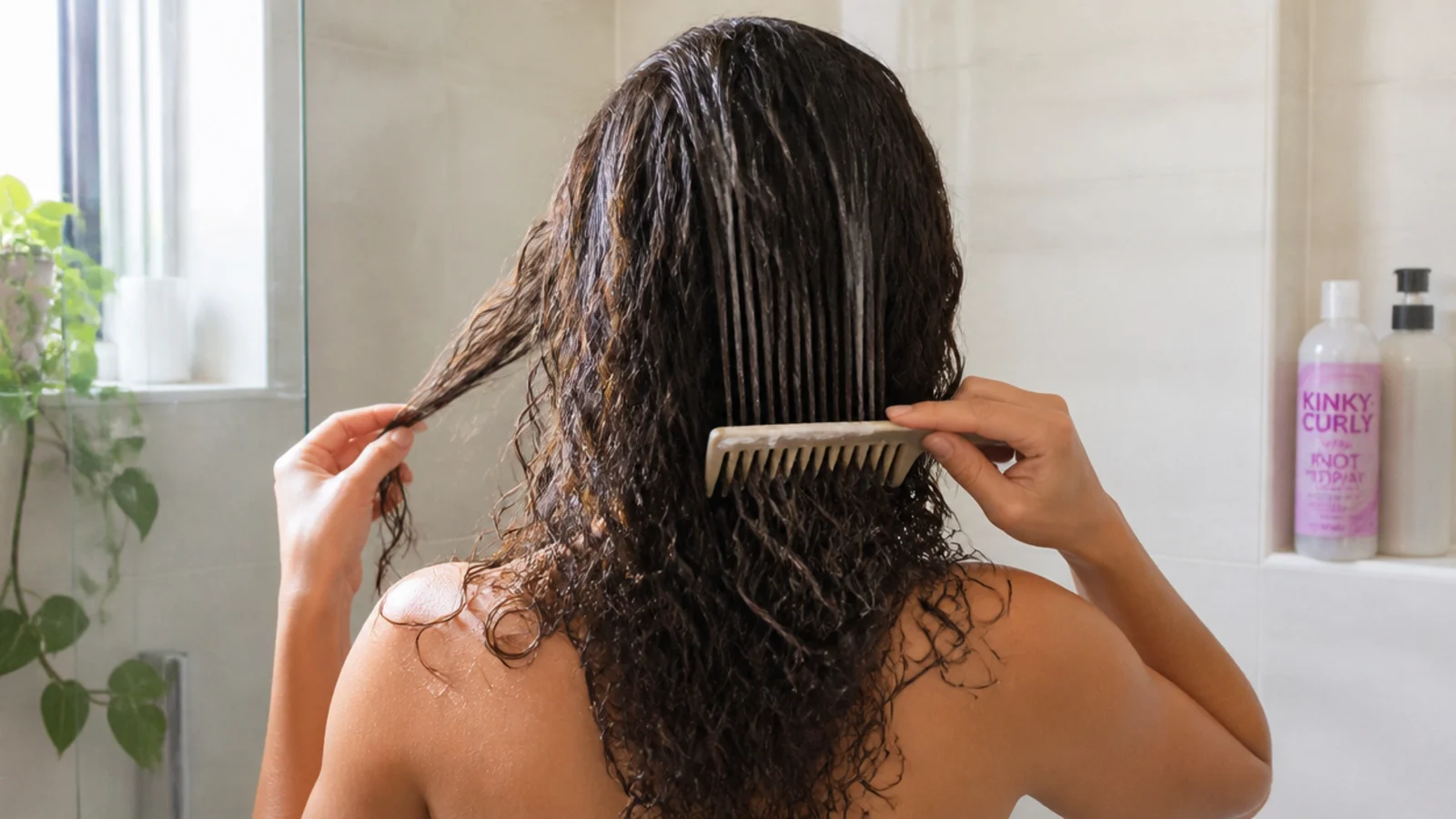
Wash once or twice a week with a sulfate-free cleanser applied to the scalp only, and let the runoff clean the lengths. Follow with a conditioner heavy enough to give real slip, and detangle only in the shower with a wide-tooth comb or your fingers while that conditioner is still in. Detangling dry curly hair is the fastest way to manufacture frizz. Rinse the last 30 seconds in cool water to help lay the cuticle. Now the step that matters most: apply your stylers to soaking wet hair, not damp. Water is the delivery system, and it distributes the product evenly through every curl in a way that hands on damp hair never will. Layer leave-in, then cream, then gel, praying and scrunching each one. Dry with a microfiber towel or a cotton t-shirt, never terry cloth, whose looped pile catches the cuticle. Then leave it alone until it is completely dry. Deep condition once a week with a hair mask for frizzy hair.
Leave-In, Cream and Gel: What Each Product Actually Does
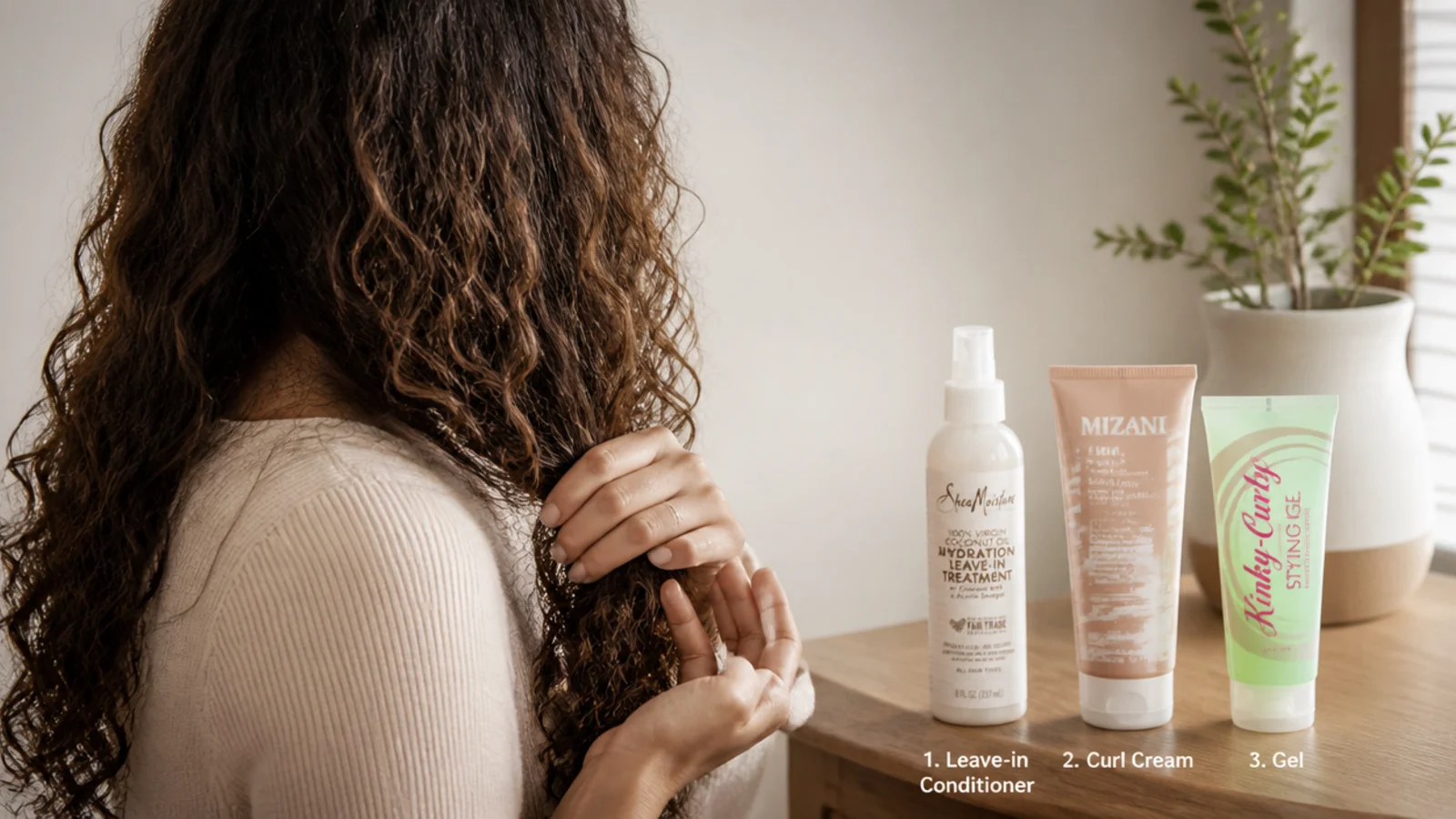
Three products, three different jobs, and the order is not interchangeable. Leave-in conditioner hydrates: it is water-based, it goes on first, and its job is to get moisture into the strand so there is less demand for atmospheric water later. Curl cream defines: it has enough emollient weight to help strands stick together into clumps, which is what turns fluff into a visible curl pattern. Gel seals: it forms a film over the outside that hardens into a cast, physically blocking humidity while the hair dries. Layered in that order, each one does something the next cannot. Reversed, the gel sits under the cream and never forms a cast. Two practical notes. First, use more than feels reasonable on soaking wet hair; most under-application looks like frizz. Second, if you are getting white flakes, you are almost certainly layering a water-based gel over a silicone-heavy cream, and the fix is matching the two rather than dropping the gel.
Cuts and Layers That Hide Frizz vs Cuts That Cause It
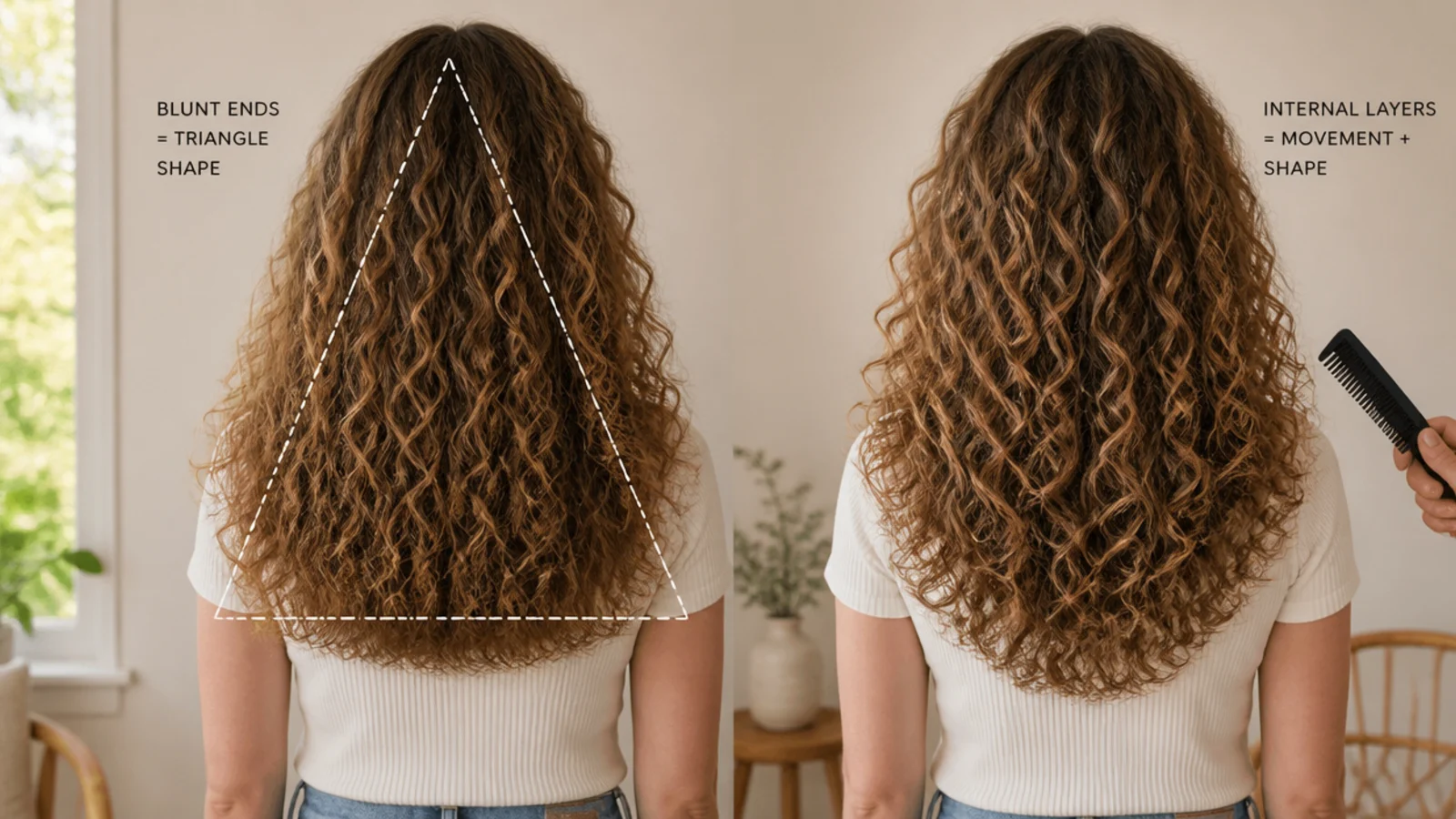
A haircut cannot stop the cuticle lifting, but it decides whether the frizz you have reads as volume or as a mess. Blunt, heavy ends are the classic mistake on frizzy curly hair: all the weight sits at the perimeter, the top stays compressed, and the silhouette widens into a triangle at the jaw. Internal layers, cut inside the hair rather than on the surface, remove that bulk without creating a canopy of short ends poking through. Ask for internal debulking or invisible layering, and specifically decline thinning shears, which shatter curly ends into hundreds of frizz-prone points. Length also matters: curls under the chin have less weight holding the cuticle down and typically need a firmer gel than the same hair at collarbone length. Get it cut dry and curl by curl so your stylist can see where each spiral actually lands. A collarbone shag or a textured mid-length haircut is the safest brief to walk in with, and curly short curtain bangs handle the front.
Humidity, Dew Point and Sleep Habits That Decide Your Curl Day
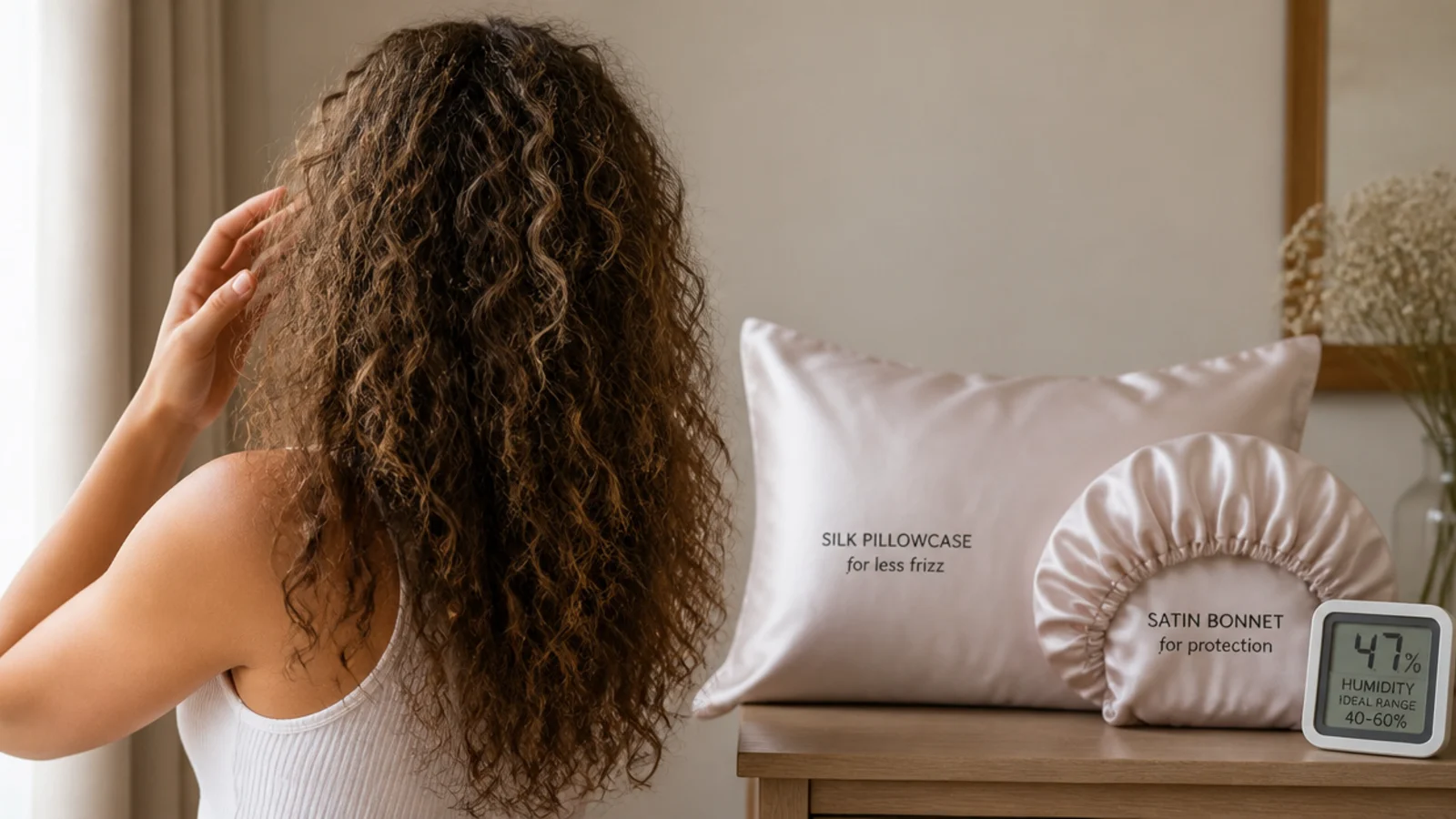
Check the dew point rather than the humidity percentage; it is the number that actually predicts your hair day. Below about 40F the air is dry and will pull moisture out of the strand, so you want a richer cream and less hold. Between roughly 45F and 60F is the comfortable zone where a normal leave-in, cream and gel routine performs as designed. Above about 65F the air holds enough water to swell any strand that is not sealed, so switch to a strong-hold gel, use less cream, and accept that a containment style like a braid or a bun may simply win that day. Overnight matters just as much. Cotton pillowcases are absorbent and high friction, so they wick moisture out and roughen the cuticle at the same time. Sleep on silk or satin, or wear a satin bonnet, or put the hair in a loose pineapple or a loose braid. Any one of the three protects two extra days of definition. More containment options in frizzy hair hairstyles.
Frequently Asked Questions
Why is my curly hair so frizzy?
Because the cuticle is lifted and the strand is pulling moisture out of the air, then swelling out of its curl clump. Curly hair is prone to it because scalp oils stall at every bend instead of traveling down the shaft, leaving the mid-lengths and ends drier than the roots. The fix is hydration first, then a sealing layer such as gel.
How do I get rid of frizz without losing my curls?
Do not smooth the hair, seal it. Apply a leave-in and a curl cream to soaking wet hair, then a medium or strong-hold gel over the top, and leave it completely alone until dry. The gel cast blocks humidity while the curl sets, then you scrunch it out when bone dry for softness. Brushing or touching mid-dry is what kills definition.
Should I apply products to wet or damp curly hair?
Soaking wet, not damp. Water is the distribution system: it carries leave-in, cream and gel evenly through every curl and helps the strands clump. On damp hair the product coats the outside of a section and never reaches the middle, which is why the same routine can look defined one day and fuzzy the next.
Does brushing curly hair cause frizz?
Brushing dry curly hair does, because it separates every clump into individual strands. Detangle only while soaking wet with conditioner in, using fingers or a wide-tooth comb, working from the ends upward. If you want the stretched brushed-out look, brush it and then re-set the shape with a braid-out or twist-out rather than leaving it loose.
Does frizzy curly hair mean my hair is damaged?
Not necessarily. Frizz is mostly a hydration and cuticle issue, and perfectly healthy curly hair frizzes on a humid day. Damage is the likely cause when the frizz is confined to the ends, when strands snap easily when stretched wet, or when a fuzzy halo appears at the crown from tight ties and friction. Those need trimming and gentler handling.
How often should I wash frizzy curly hair?
Once or twice a week for most curl types, using a sulfate-free cleanser on the scalp only. Washing more often strips the oils that curls already struggle to distribute. Between washes, refresh with a spray of water and a little leave-in scrunched through, rather than re-washing, and deep condition with a mask once a week.
Why does my curly hair frizz after diffusing?
Usually heat that is too high, airflow that is too strong, or movement. High heat evaporates water faster than the gel can set a cast, and shaking the diffuser physically knocks strands out of their clumps. Use low heat with medium airflow, cup the bowl against a section and hold still for around 20 seconds before moving on.
What is the best way to sleep with frizzy curly hair?
Silk or satin, every night. Use a silk or satin pillowcase or a bonnet, and put the hair in a loose high pineapple secured with one wrap of a satin scrunchie, or a single loose braid on longer hair. Cotton both absorbs moisture and roughens the cuticle by friction, which is what produces the flattened fuzzy crown by morning.
Can low-porosity curly hair be frizzy?
Yes, and it often frizzes for the opposite reason to high-porosity hair. Low-porosity cuticles are tightly bound and resist absorbing anything, so heavy creams sit on the surface, build up, and leave the inside of the strand dry. Use lightweight water-based products, apply them to soaking wet hair, and add warmth, like a shower cap over a mask, to help them absorb.
Which frizzy hair look are you saving?
If you take one thing from these 20 frizzy curly hair looks, make it the sequence: soaking wet hair, leave-in, cream, gel, hands off until dry. Almost every frizz problem people blame on humidity is actually a product applied to hair that was already half dry, or curls touched while the cast was still setting. Pick two looks from this list, a wash-day one and a five-minute day-three one, and run them for three weeks before changing anything else. When you are ready to go deeper, the hairstyles for frizzy hair roundup covers containment styles, hair mask for frizzy hair covers weekly treatment, and the frizzy hair hub links the rest.