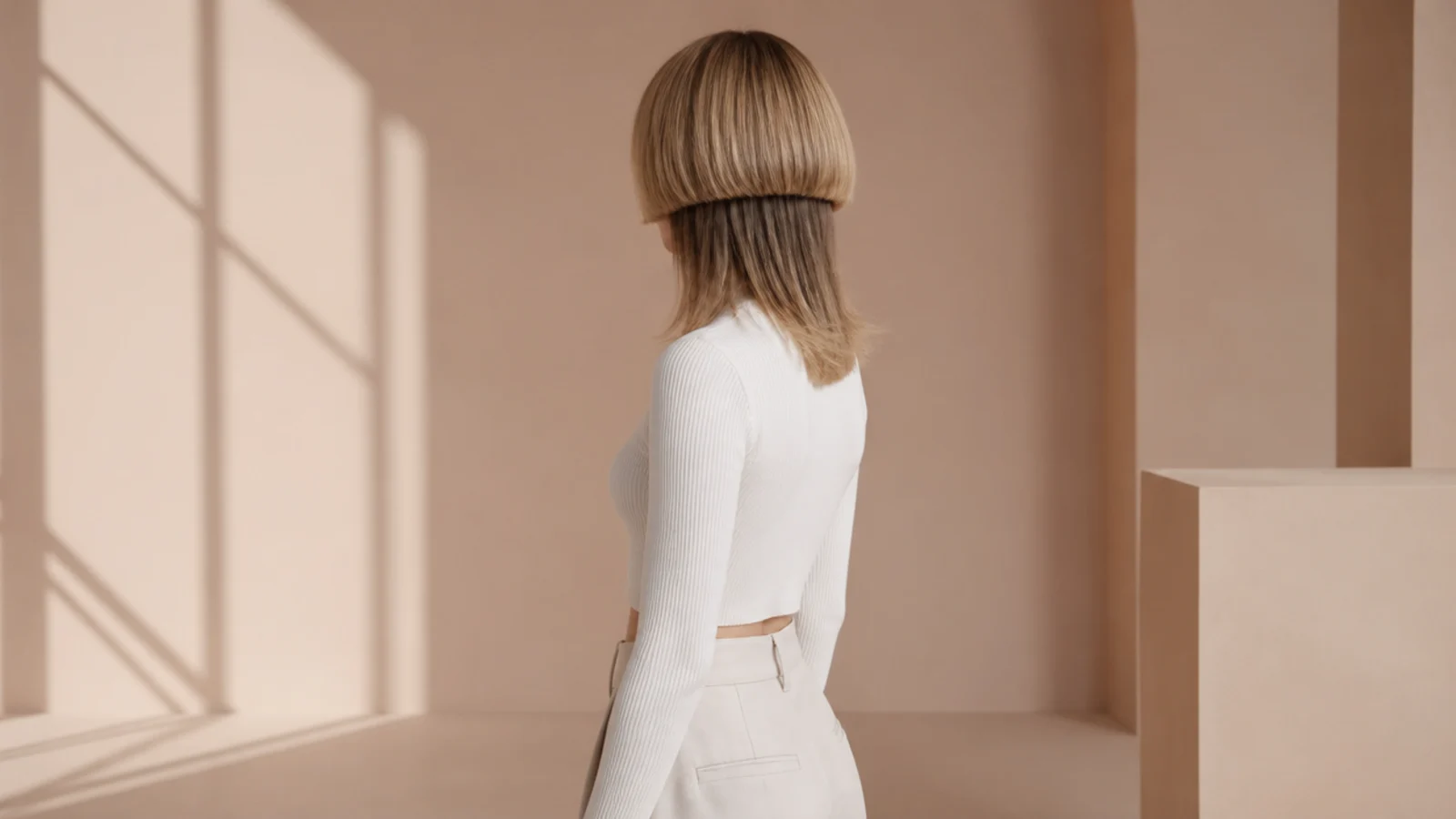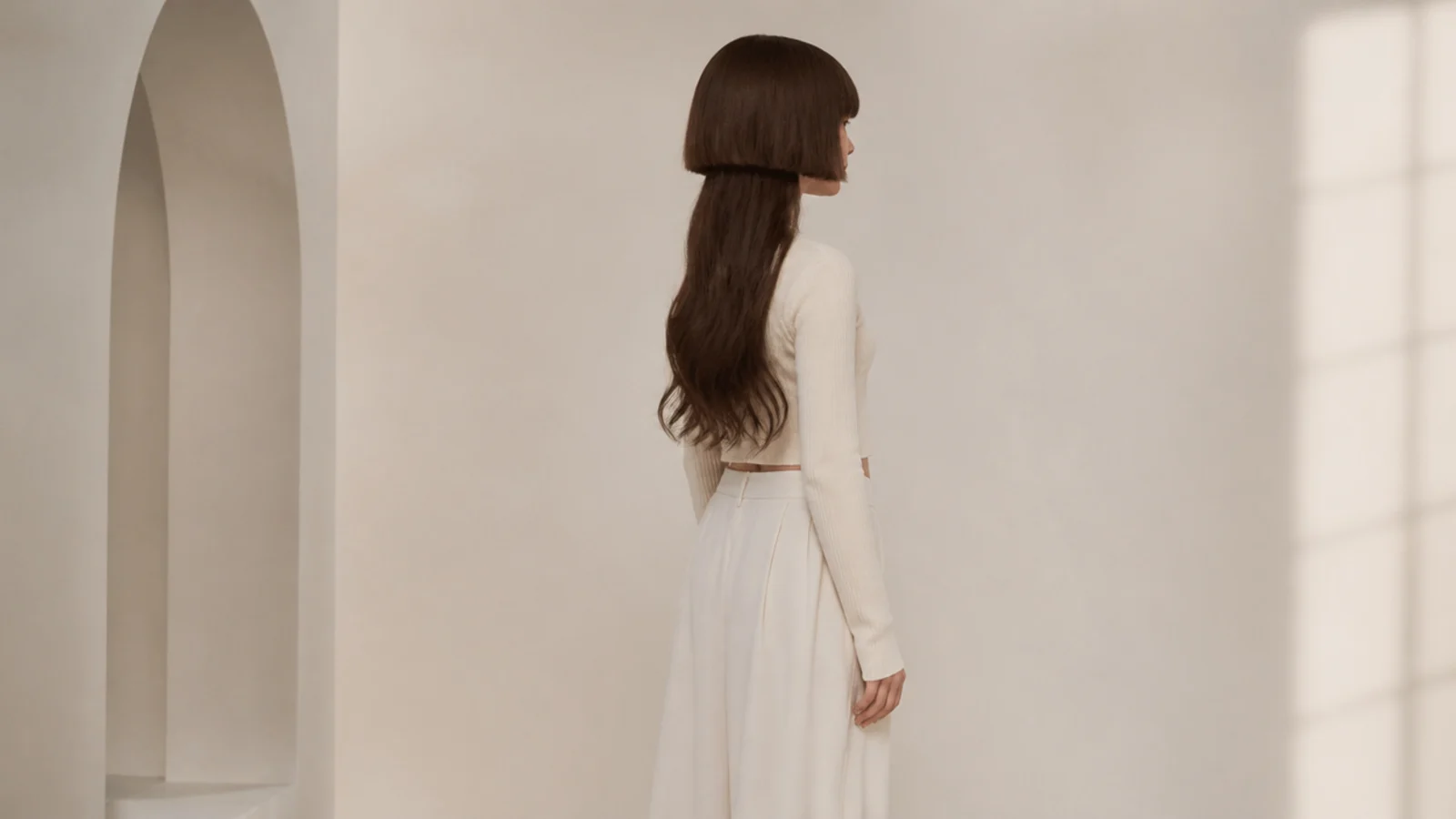
Quick Comparison
| Long Jellyfish Haircut | Long Wolf Cut | |
|---|---|---|
| Layer structure | Two tiers with a visible break between them | Many layers blended continuously from crown to ends |
| Disconnection | Deliberate and total; the layers never meet | None; every layer melts into the next |
| Top layer shape | Rounded bowl or bell at cheekbone to jaw | Choppy short crown layers with no fixed outline |
| Hem | Usually blunt or a soft V, kept heavy | Wispy and tapered, often razored |
| Best textures | Straight and wavy; tight coils blur the shape | Wavy and curly; straight hair can look flat |
| Trim cadence | Bell every 6 to 8 weeks, lengths twice a year | Every 10 to 12 weeks all over |
| Grow-out | A 2 to 3 month awkward phase, then a shag | Blends as it grows; no awkward stage |
| Ponytail friendliness | Poor unless the bell reaches collarbone | Good; short layers sit as face-framing pieces |
| Overall vibe | Structured, graphic, high-contrast | Undone, tousled, rock-and-roll |
1. Waist-Length Jellyfish Haircut With a Cheekbone Bell

The maximum-contrast version: lengths left at waist, roughly 26 to 30 inches from the root, with a rounded bell cut at the cheekbone around 8 to 9 inches. The gap between the two is so wide that the bell reads as a separate haircut sitting on top, which is exactly what the trend is selling. It only works if the lengths are heavy enough to hang flat, so fine hair below 26 inches usually looks sparse here. Ask for zero blending between the sections and a blunt hem at the bottom.
Who it suits: Thick straight hair at waist length and oval or heart faces.
Tip: Ask your stylist to cut the bell with you sitting upright, not head tipped forward, or it lands short.
2. Mid-Back Jellyfish Haircut With Curtain Bangs

Lengths at mid-back, about 22 to 24 inches, with the bell at jaw level and curtain bangs split from the front of that top section. The bangs do the softening work: without them a hard bowl line across the forehead can read severe, and curtain bangs break it into two sweeping halves. This is the most requested long jellyfish variation on Pinterest for a reason, since it keeps the shape legible while looking like a haircut rather than a costume. Blow-dry the bangs away from the face first, before anything else dries.
Who it suits: Round and square faces that want vertical length back.
Tip: Borrow the styling method in short curtain bangs styling.
3. Long Straight Jellyfish Haircut With a Blunt Bowl Top
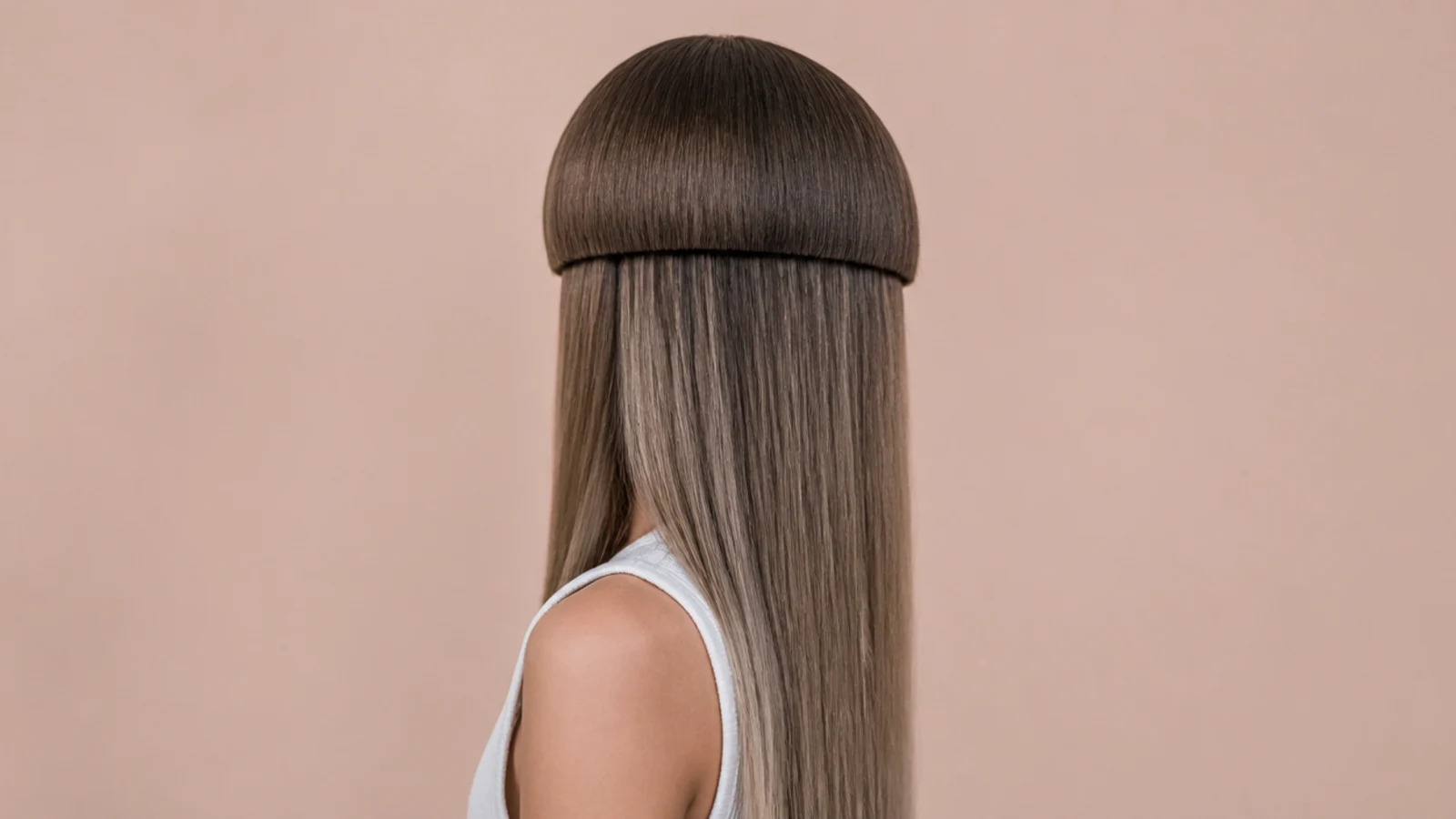
Straight hair is where this cut is at its sharpest, because every millimeter of the disconnection line is visible. Here the bell is cut blunt with no point-cutting at all, a hard rounded edge at chin level, over poker-straight lengths at 24 inches. It looks like graphic design. The trade-off is upkeep: a blunt bell shows growth within four weeks and needs a trim every six, while a texturized bell can stretch to ten. If you own a flat iron and use it, this is the version that pays you back.
Who it suits: Naturally straight, medium to thick hair and anyone wanting maximum precision.
Tip: Ask for the bell cut dry so the blunt line is exactly where you see it in the mirror.
4. Long Wavy Jellyfish Haircut With Beachy Tentacles
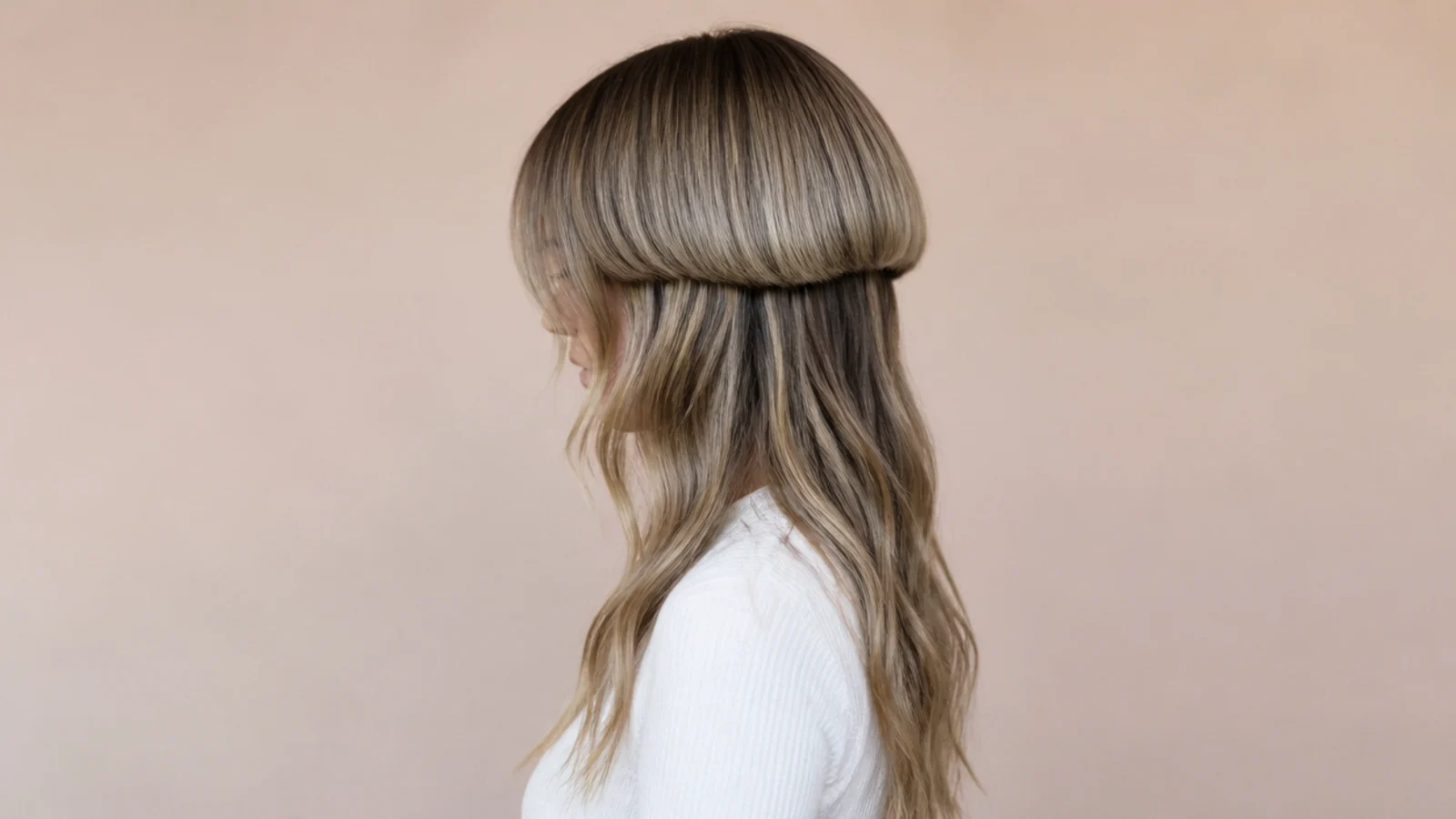
Natural 2A to 2B waves left loose through the lengths, with the bell blown smooth so the contrast is texture as well as length. This is the most forgiving long jellyfish because waves hide a slightly imperfect disconnection line and add the volume that stops the lengths looking flat. Sea salt spray on the lower section only, scrunched at mid-length, keeps the tentacles separate and airy. Do not put salt spray in the bell; it will make the rounded shape frizz outward instead of curving under.
Who it suits: 2A to 2C waves at mid-back length who air-dry most days.
Tip: See the full texture breakdown in wavy jellyfish haircut ideas.
5. Long Jellyfish Haircut With Hime Side Panels
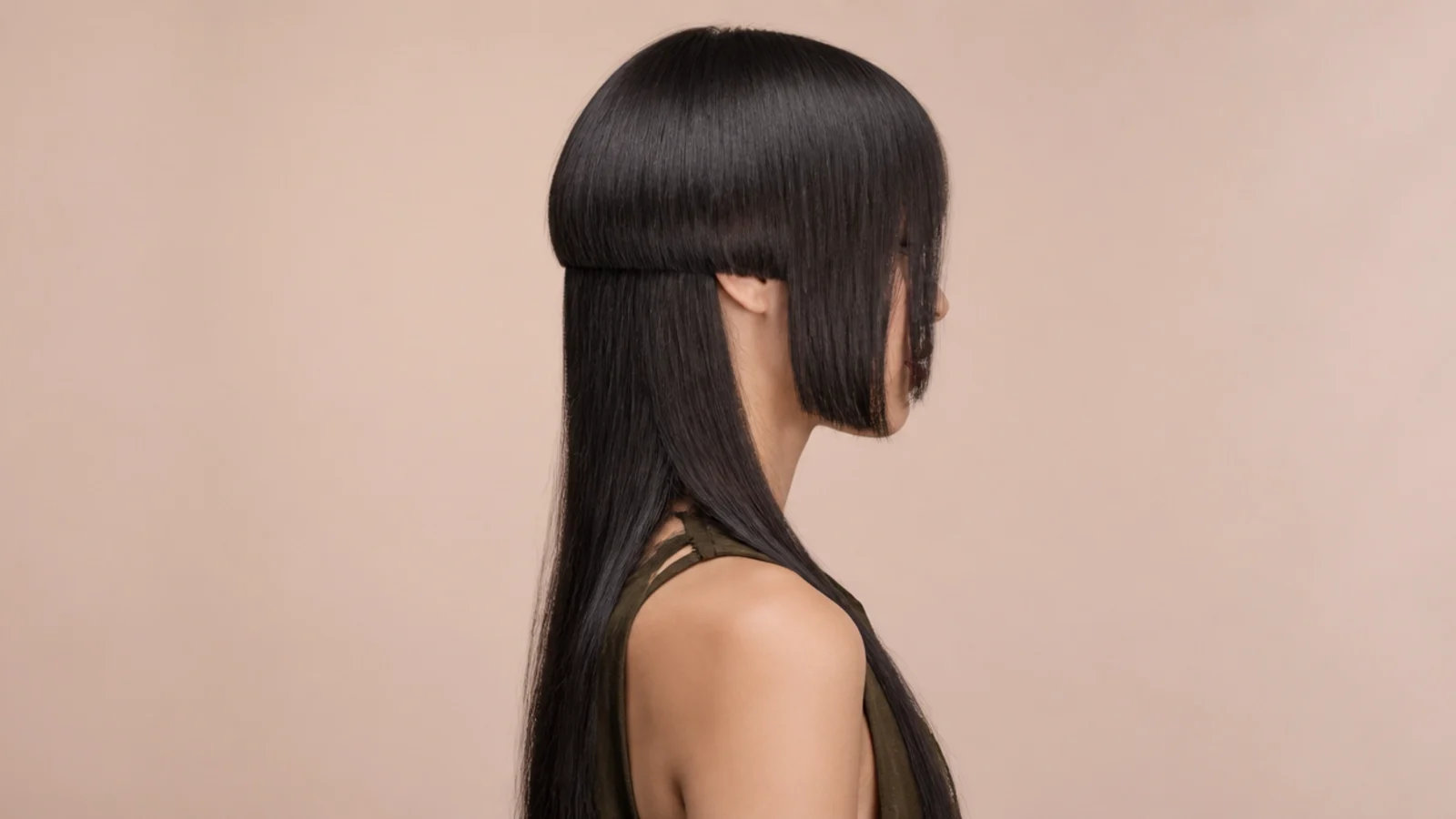
The jellyfish cut descends from the Japanese hime cut, and this idea puts the lineage back in. Instead of a full rounded bell, two straight vertical panels are cut at the jaw on either side of the face, squared off rather than curved, with the back left long and untouched at 24 to 26 inches. It reads more architectural and less bowl-like, which is useful if you love the shape but not the bowl association. Ask specifically for hime panels with a squared edge, not face-framing layers.
Who it suits: Long straight dark hair and anyone drawn to the hime cut.
Tip: Bring a photo of the back view; hime panels are easy to describe wrong and hard to undo.
6. Long Jellyfish Haircut With a Money Piece Bell
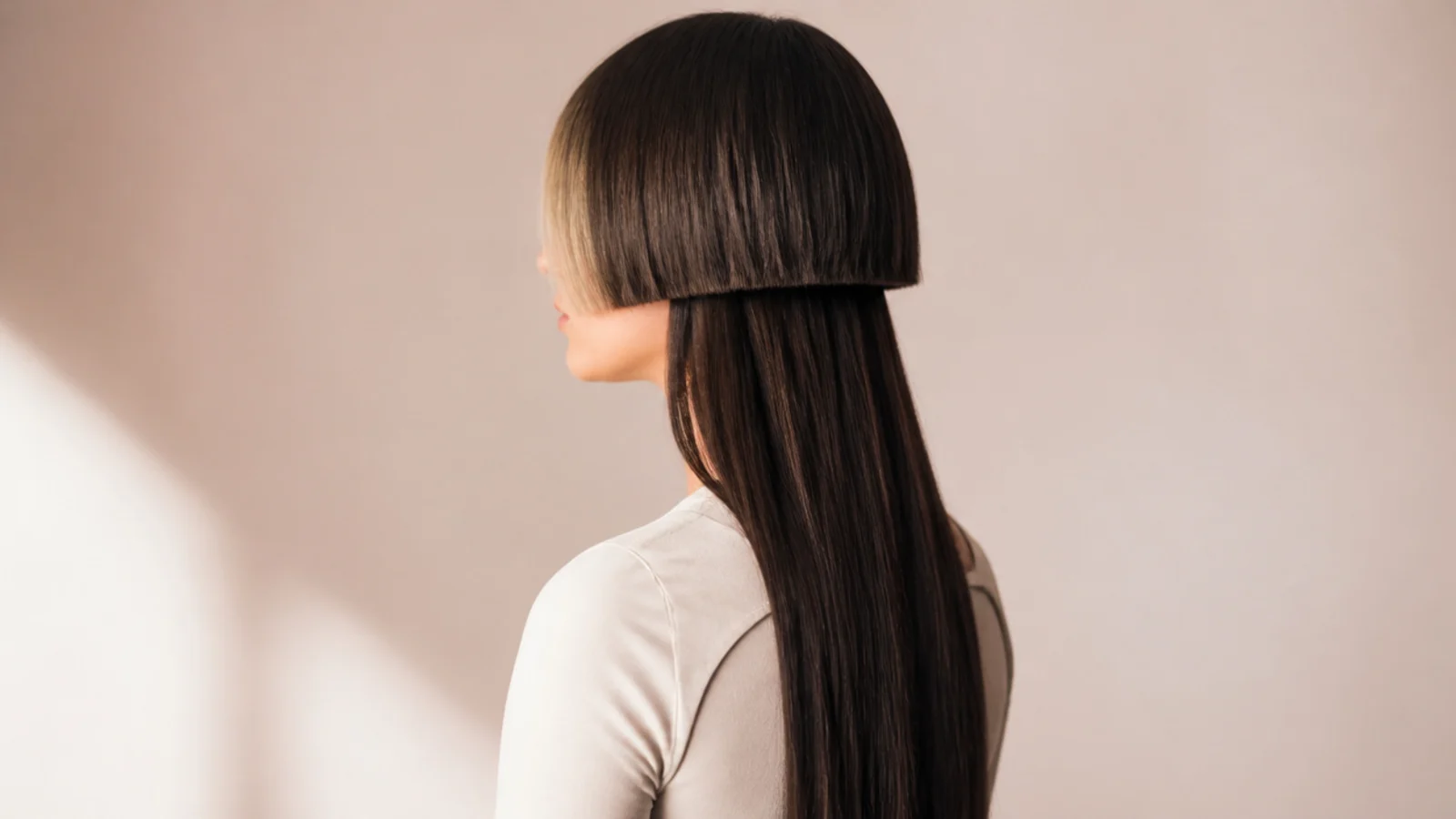
Color placed only on the front two sections of the bell, lightened two to three levels above your base, over lengths left natural. It is the lowest-commitment way to make the disconnection obvious, since the lighter pieces mark exactly where the top layer ends every time you move. Because the money piece lives entirely in the bell, it grows out into a normal face-frame instead of a stripe down your back. Budget roughly 120 to 200 dollars for a partial foil at most salons.
Who it suits: Anyone testing color on the trend before committing to a full two-tone.
Tip: Ask for the lightening to stop at the bell's ends so no color lands on the long lengths.
7. Razor-Cut Long Jellyfish Haircut for Thick Hair
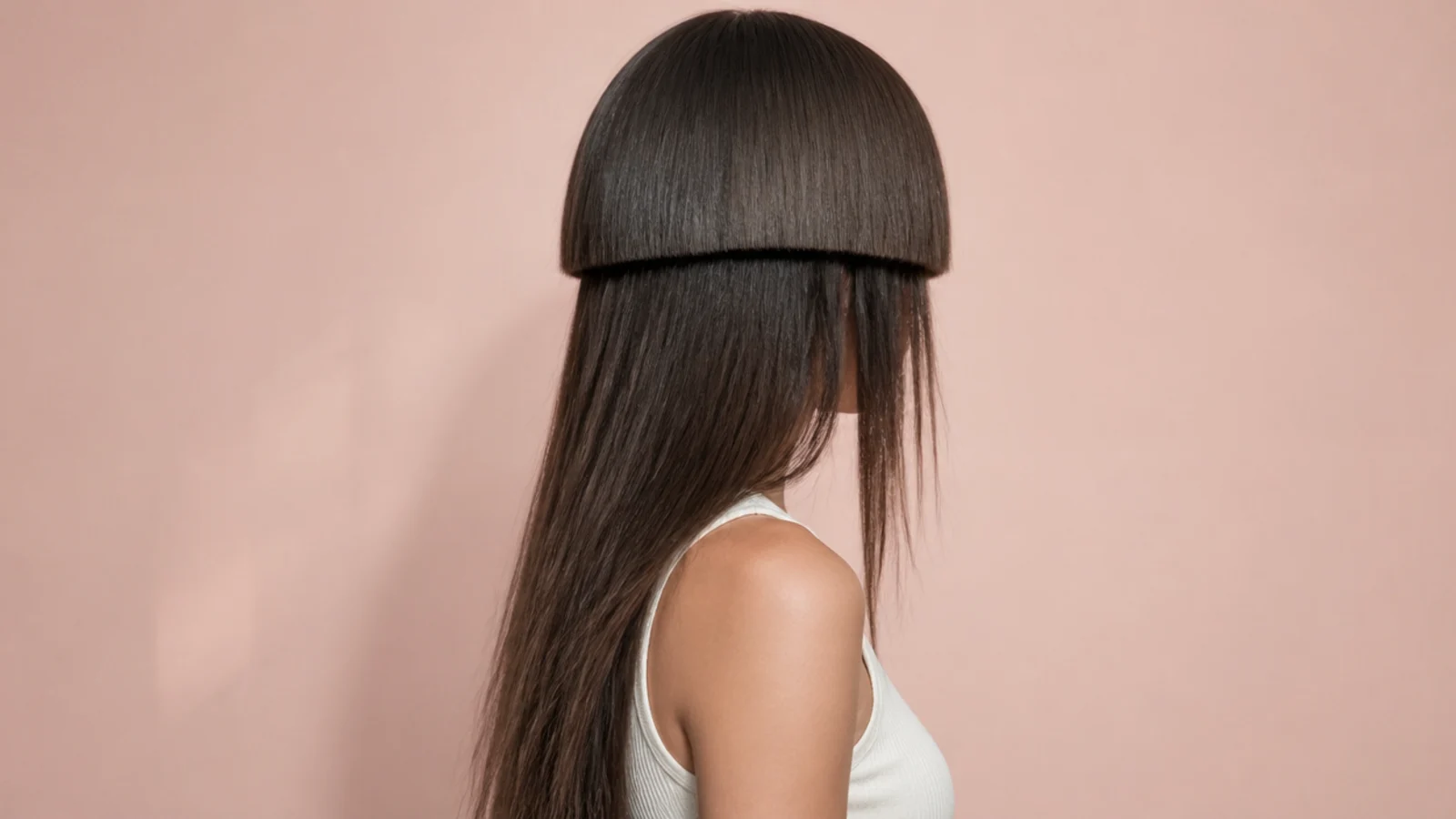
Very thick, coarse hair at 24 inches or more carries so much weight that a jellyfish bell can sit on top like a pyramid. The fix is a razor through the ends of the bell and internal weight removal in the lengths beneath it, so the top section can curve under and the bottom hangs rather than flares. Ask for weight removed from the interior, not the perimeter, so your hem stays blunt. Expect the cut to take an extra 20 to 30 minutes and cost more than a standard trim.
Who it suits: Coarse, dense hair that grows outward instead of down.
Tip: If your hair is also frizz-prone, read hairstyles for thick frizzy hair first.
8. Long Jellyfish Haircut With a Hidden Nape Undercut
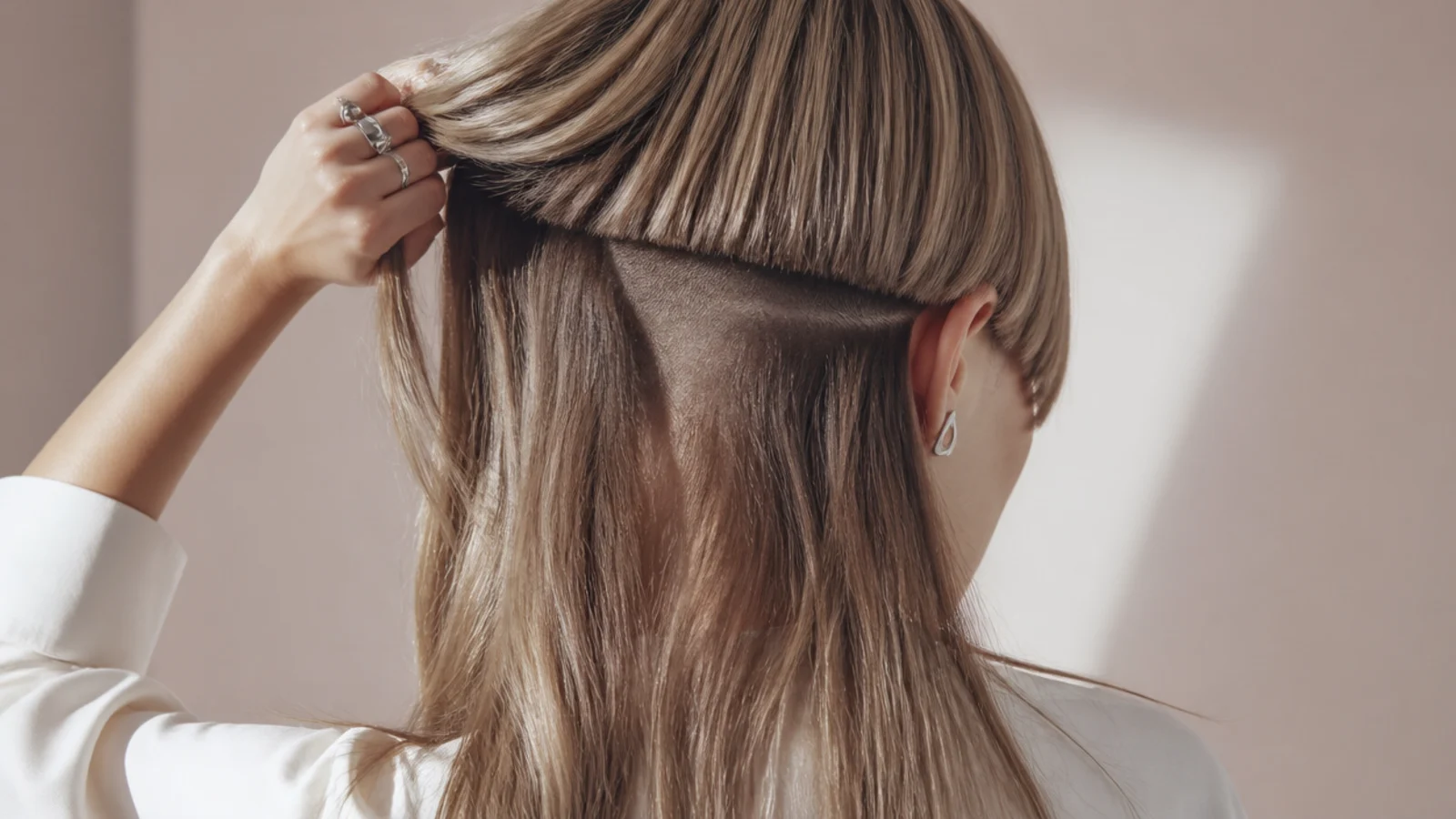
A shaved or closely clipped panel at the nape underneath the long lengths, invisible when your hair is down and revealed when it moves or lifts. On long jellyfish cuts it does real work beyond the reveal: removing bulk at the nape stops the lengths pushing the bell outward and makes hot summer days survivable. Keep the panel narrow, about 3 to 4 inches wide and starting an inch above the hairline, so it stays covered. It needs clipper maintenance every three to four weeks.
Who it suits: Thick-haired women wanting an edge that a workplace will never see.
Tip: Ask for a number 2 guard, not a bare skin fade, so grow-in stubble is less obvious.
9. Long Jellyfish Haircut With Flipped C-Curve Ends
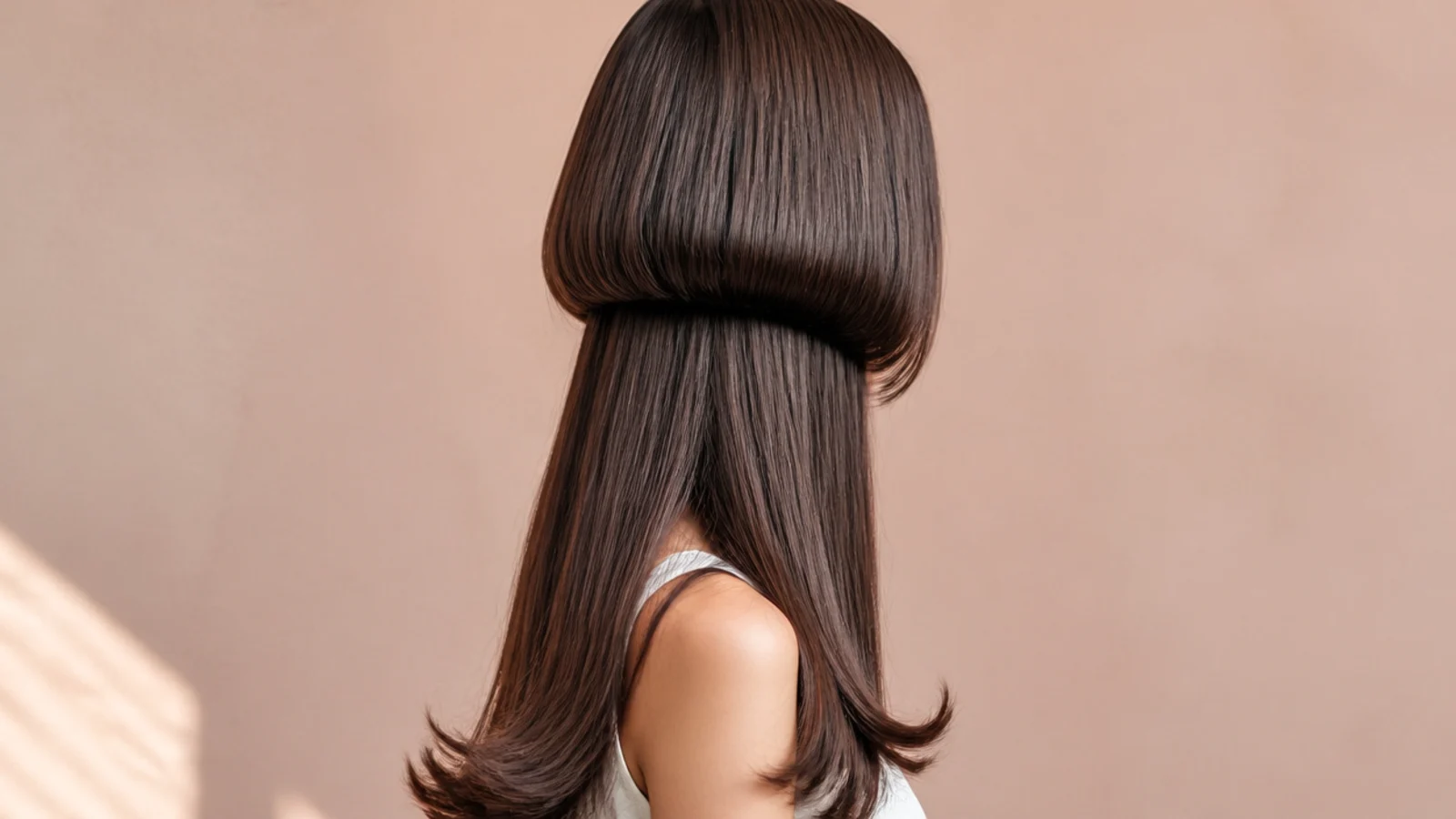
The styling idea that defines the look: the bell curved under toward the jaw in a soft C, and the long tentacle ends flicked outward in the opposite direction. The two curves moving away from each other is what makes the disconnection read as intentional rather than accidental. Use a one-inch flat iron, hold it horizontally, and rotate your wrist as you glide down through the last three inches. Takes about eight minutes total on shoulder-to-waist hair.
Who it suits: Straight and slightly wavy hair, and anyone who already owns a flat iron.
Tip: Do the bell first while the lengths are clipped away, so you are not fighting your own hair.
10. Platinum Bell Over Long Dark Tentacles

The two-tone version everyone screenshots: the entire top bell lifted to platinum, the long lengths underneath left dark. Because the layers are disconnected rather than blended, the color change lands exactly on the cut line, which no other haircut lets you do that cleanly. It is a real commitment, roughly 250 to 450 dollars for the initial lift and a toner every four to six weeks. The bell also gets more heat styling than the lengths, so it fades and stresses faster.
Who it suits: Healthy virgin hair on the top section, and confident wearers.
Tip: Ask your colorist to lift only the bell, never the first inch of the lengths, or the line blurs.
11. Long Jellyfish Haircut With Wispy Micro Bangs
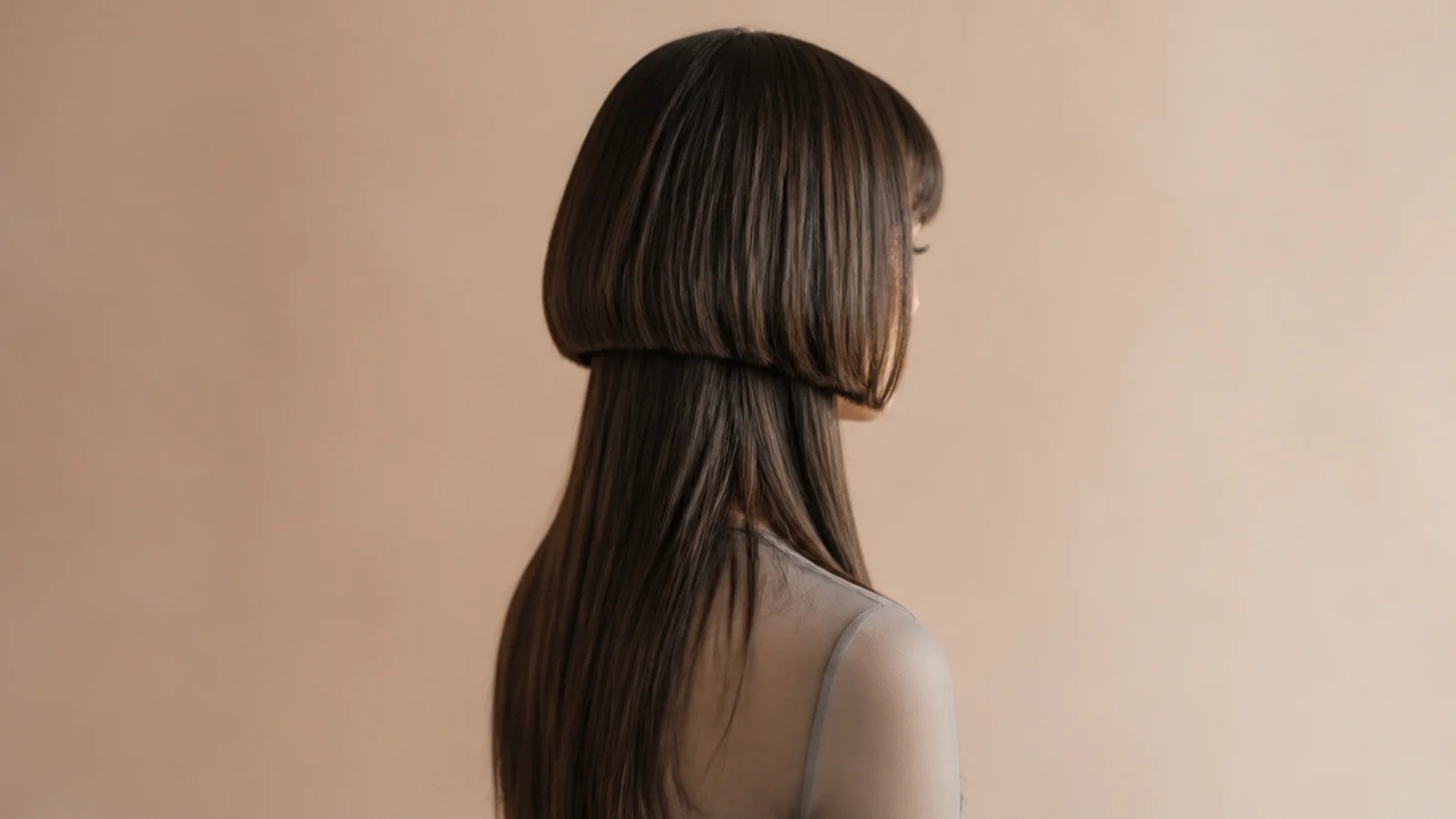
Micro bangs cut two to three inches above the brow, deliberately wispy rather than blunt, sitting in front of a chin-length bell and waist-length lengths. Three tiers instead of two. It pushes the look toward the editorial end of the trend and works best on foreheads of average height, since very short bangs shorten the face further. Point-cut, never straight across, so the fringe stays see-through. Expect a trim every two to three weeks; micro bangs outgrow their length fast.
Who it suits: Oval and long faces, straight to slightly wavy hair.
Tip: More fringe options are in jellyfish haircut with bangs.
12. Soft-Disconnect Long Jellyfish Haircut for Fine Hair

Fine hair struggles with a hard disconnection because the bell has too little weight to hold a rounded shape and the lengths look thin beneath it. The workaround is a softer break: the bell cut slightly longer at jaw level, point-cut at the ends, with lengths kept to 22 inches rather than 28 so density at the hem stays visible. You still get the two-tier read, just at lower contrast. Add a root-lift mousse under the bell before blow-drying.
Who it suits: Fine or low-density hair that will not hold a blunt bowl.
Tip: Ask for the bell no shorter than jaw length; higher bells collapse flat on fine hair.
13. Long Jellyfish Haircut With Internal Layers for Weight Removal
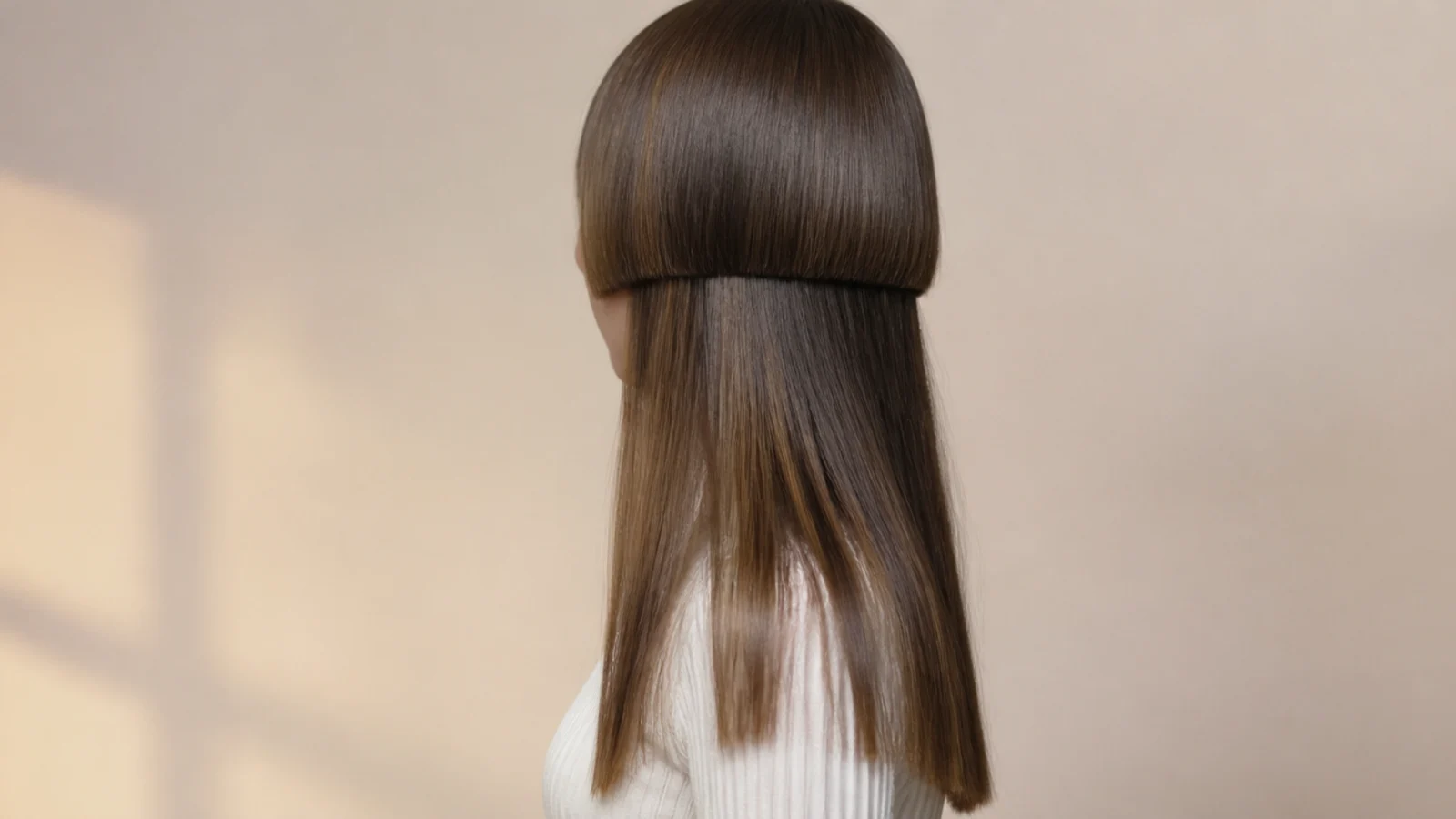
Layering on a long jellyfish should happen inside the tentacle section, never across the disconnection line. Internal or invisible layers remove weight from the middle of the hair while leaving the outer hem blunt, so the lengths swing and the perimeter stays sharp. This is the single most useful technical request for anyone with hair past 24 inches, because untouched long hair under a short bell tends to hang like a curtain. Ask for internal layers with a blunt perimeter, not long layers.
Who it suits: Dense, heavy hair at mid-back to waist that hangs flat.
Tip: Compare the technique in mid-length haircut with layers.
14. Jaw-Length Bell Over Hip-Length Tentacles
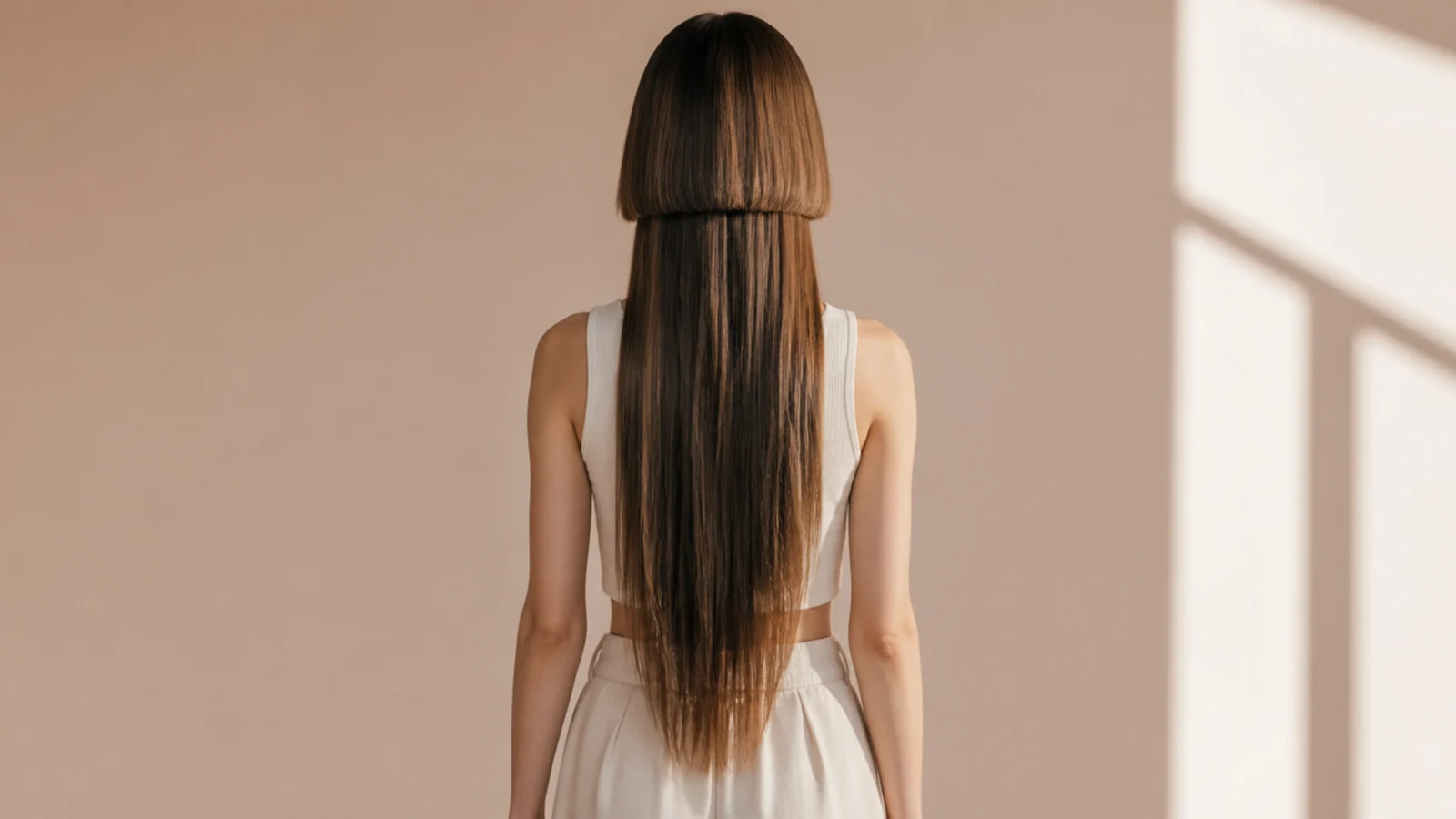
For hair past 30 inches, a cheekbone bell creates a gap so wide it stops reading as one haircut. Dropping the bell to jaw level restores proportion: still clearly disconnected, still short by comparison, but the eye can connect the two sections. This is the proportion rule almost nobody explains, and it is why some very long jellyfish cuts look wrong in photos. The back view is the real test, so ask for a hand mirror before you leave the chair.
Who it suits: Hip-length and classic-length hair, straight or gently waved.
Tip: Ask for the bell at jaw or one inch below if your hair is past 30 inches.
15. Long Curly Jellyfish Haircut With a Diffused Bell
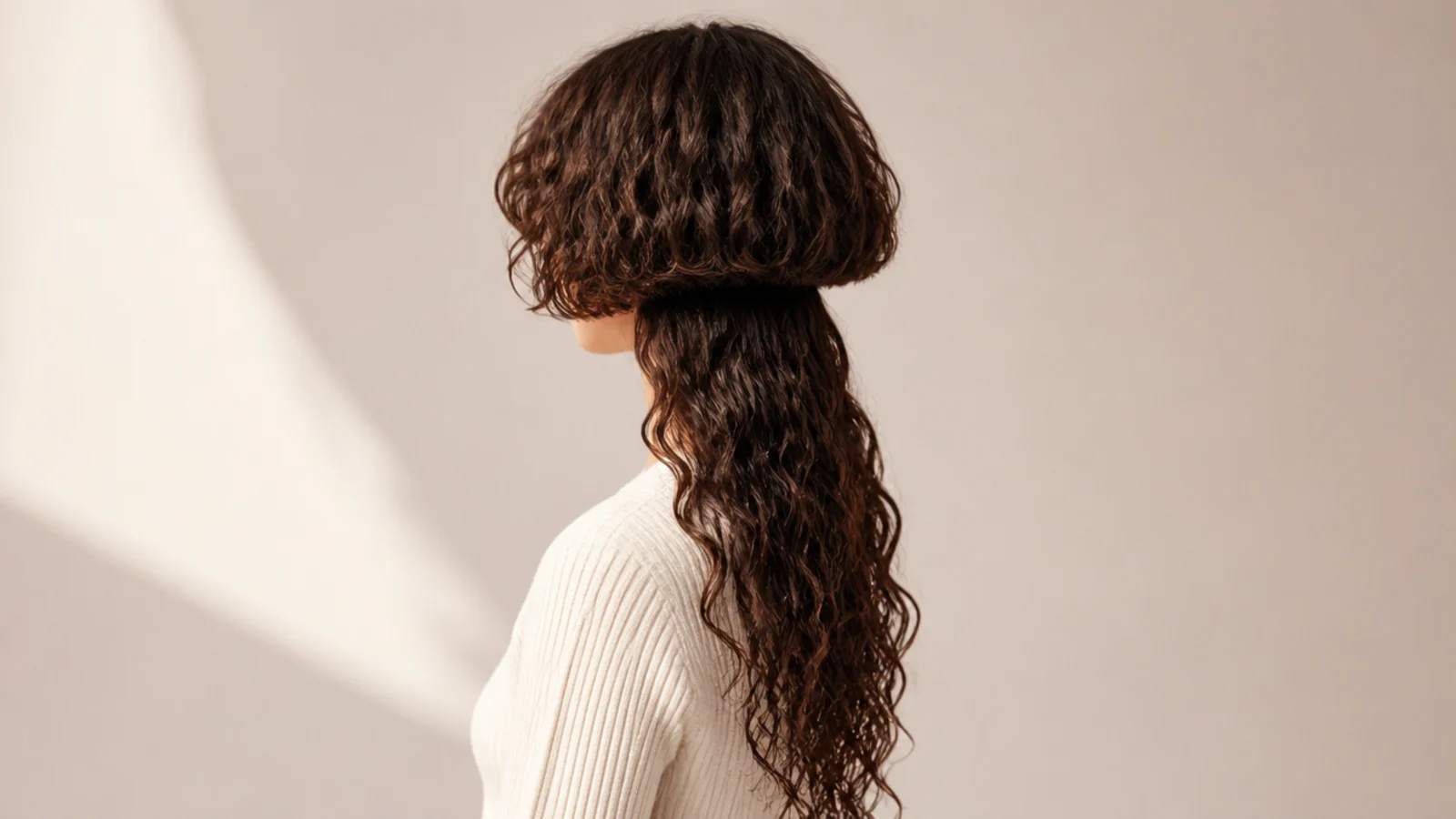
Curls shrink, so a bell cut to the jaw when wet can spring to the cheekbone dry, and on tight coils the rounded shape blurs into general volume. Loose 2C to 3A curls are the sweet spot: enough pattern for texture, enough weight for the shape to hold. Ask for the bell cut dry, curl by curl, and keep the lengths at 24 inches or more so shrinkage still leaves visible length. Diffuse the bell on low speed, cupping upward, then leave it alone.
Who it suits: 2C to 3A curls with even density; tighter coils blur the disconnection.
Tip: The full curl guide is in curly jellyfish haircut ideas.
16. Long Jellyfish Haircut With a V-Shaped Hem
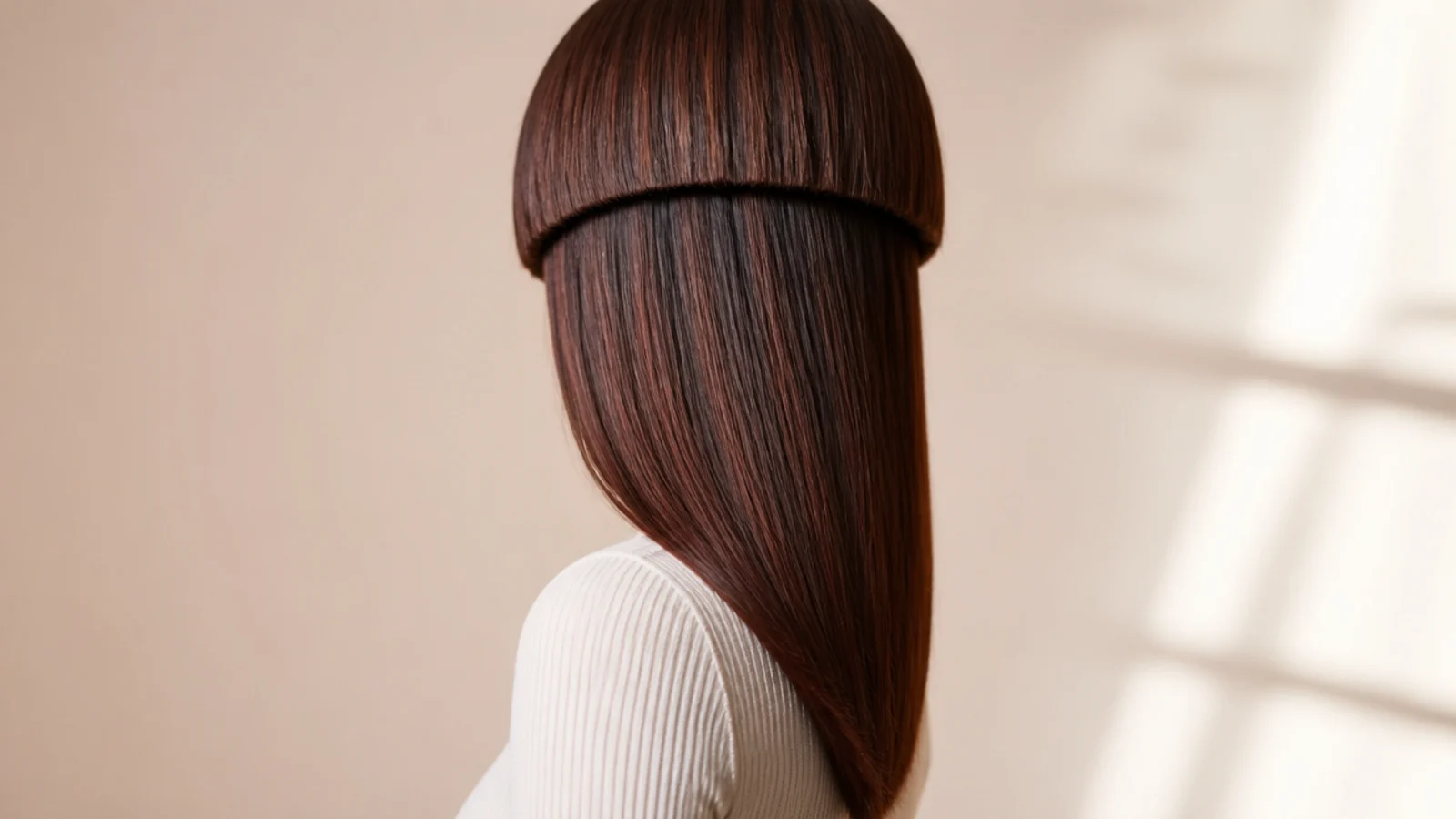
The lengths cut into a deep V rather than straight across, so the center back reaches waist while the sides sit two to three inches shorter. The V echoes the curve of the bell above it and makes the whole silhouette read as one designed shape rather than a short cut sitting on long hair. It also removes bulk at the sides, which helps thick hair enormously. The straight-across alternative is heavier and more graphic; the V is softer and more flattering on most bodies.
Who it suits: Thick hair and anyone who finds a blunt hem too severe.
Tip: Ask for a soft V, roughly 2 to 3 inches deep, not a sharp point.
17. Long Jellyfish Haircut With Pink Face-Framing Panels
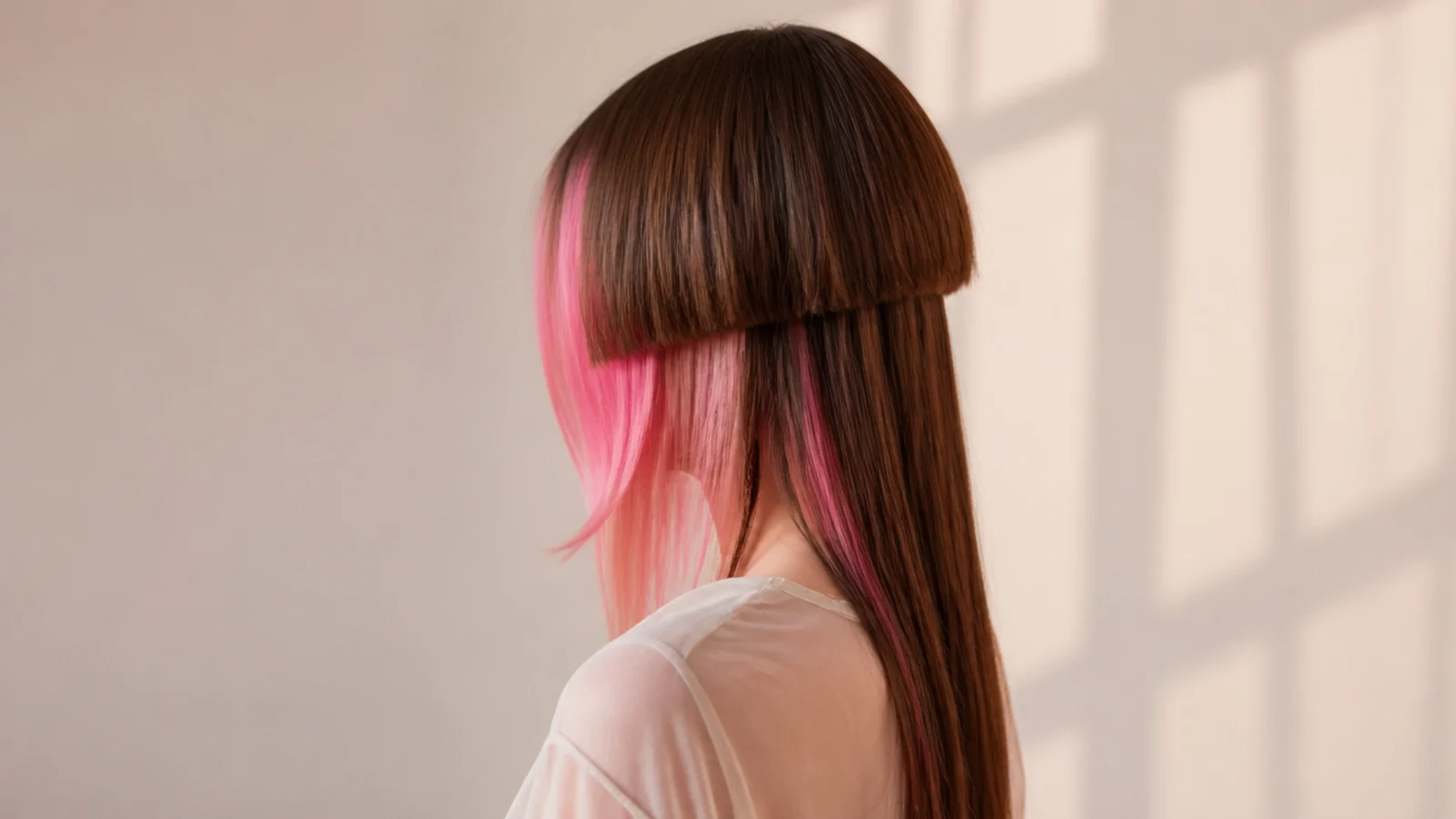
Two vivid pink sections at the front of the bell, roughly an inch wide each, over natural lengths. Vivid color on a long jellyfish should live in the bell rather than the lengths, because the bell gets replaced by growth and trims every couple of months, while a bad vivid on waist-length hair lives with you for years. Pink is the fastest-fading vivid family, so plan on refreshing every three to four washes with a color-depositing conditioner.
Who it suits: Anyone wanting vivid color with a short escape route.
Tip: Wash the pink sections in cool water only; hot water strips direct dye within two washes.
18. Long Jellyfish Haircut for Round Faces With a Below-Cheekbone Bell
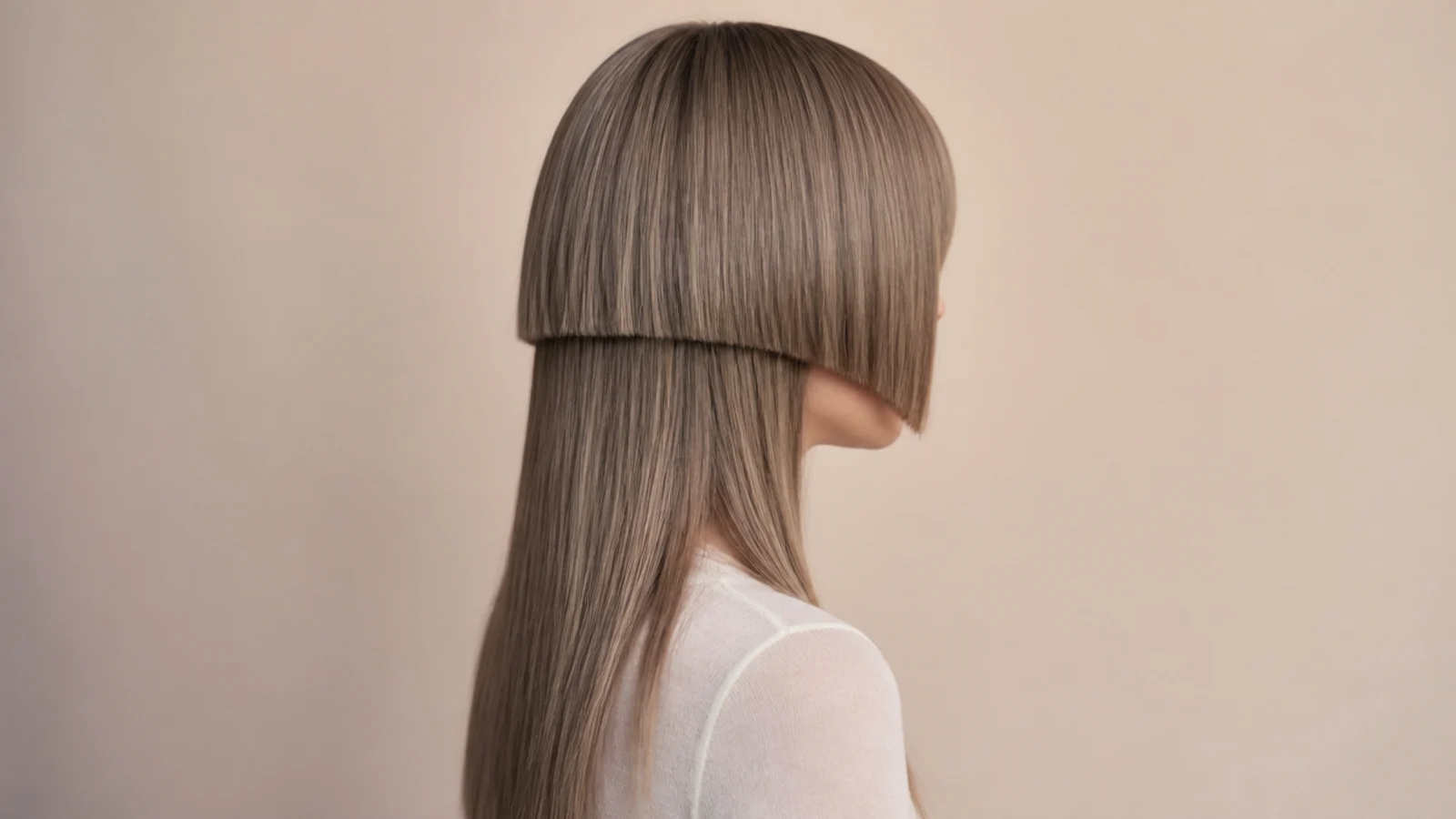
A bell that ends exactly at the widest point of a round face adds width where you least want it. Dropping it to an inch below the cheekbone, or straight to the jaw, sends the line downward instead. Pair it with a center part and face-framing pieces left slightly longer at the front of the bell, and keep the lengths long, since the vertical run of hair beneath does the lengthening work. Avoid a blunt straight-across fringe here; it stacks horizontal lines.
Who it suits: Round and heart faces that want the trend without added width.
Tip: The same face-shape logic is explained in short curtain bangs for a round face.
19. Office-Safe Long Jellyfish Haircut With a Ponytail-Friendly Bell
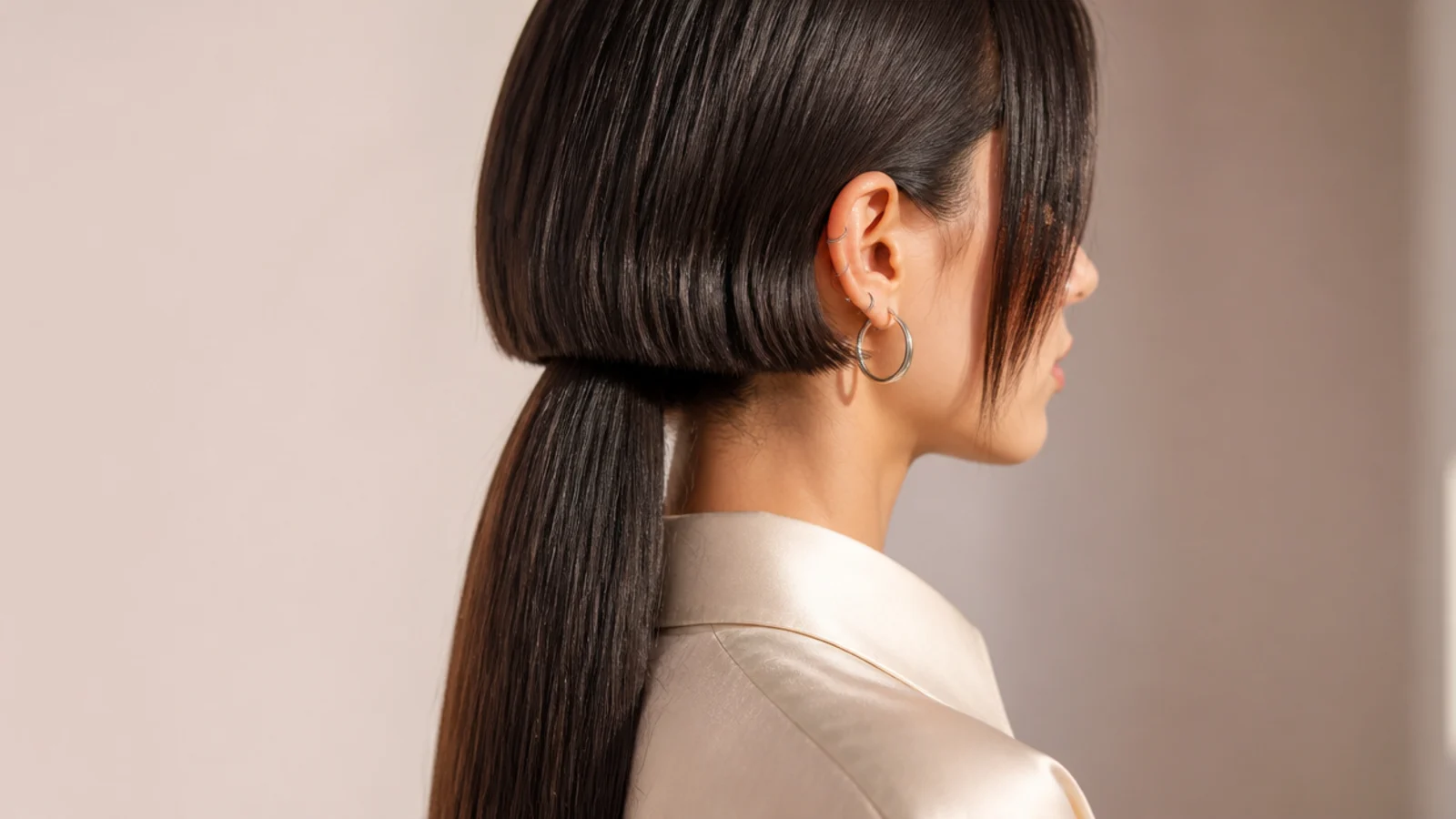
The practical compromise: the bell cut long enough to reach a low ponytail, roughly collarbone level rather than cheekbone, so it can be gathered in with the rest instead of falling out in short spikes. You lose some contrast, but you gain the ability to tie your hair back for work, the gym and every hot afternoon. This is the version to choose if you wear your hair up more than three days a week. A low ponytail hides the shorter section far better than a high one.
Who it suits: Anyone who ties their hair back regularly and cannot commit to wearing it down.
Tip: Try the shaping in low messy ponytail to disguise the shorter layer.
20. Grow-Out-Ready Long Jellyfish Haircut With a Shag-Blending Bell

Built from the start to age well. The bell is cut at jaw length with heavy point-cutting through the ends, so instead of a hard bowl line it has a broken edge that softens as it grows. Four months later it reads as a long shag with curtain bangs rather than an awkward in-between. This is the honest answer to the biggest fear about the cut, and it costs nothing extra to ask for. The trade-off is less contrast on day one.
Who it suits: First-timers and anyone nervous about the two to three month awkward phase.
Tip: Ask for the bell point-cut and slightly longer than the photo, since you can always take more off.
What a Long Jellyfish Haircut Actually Is: The Two-Layer Structure
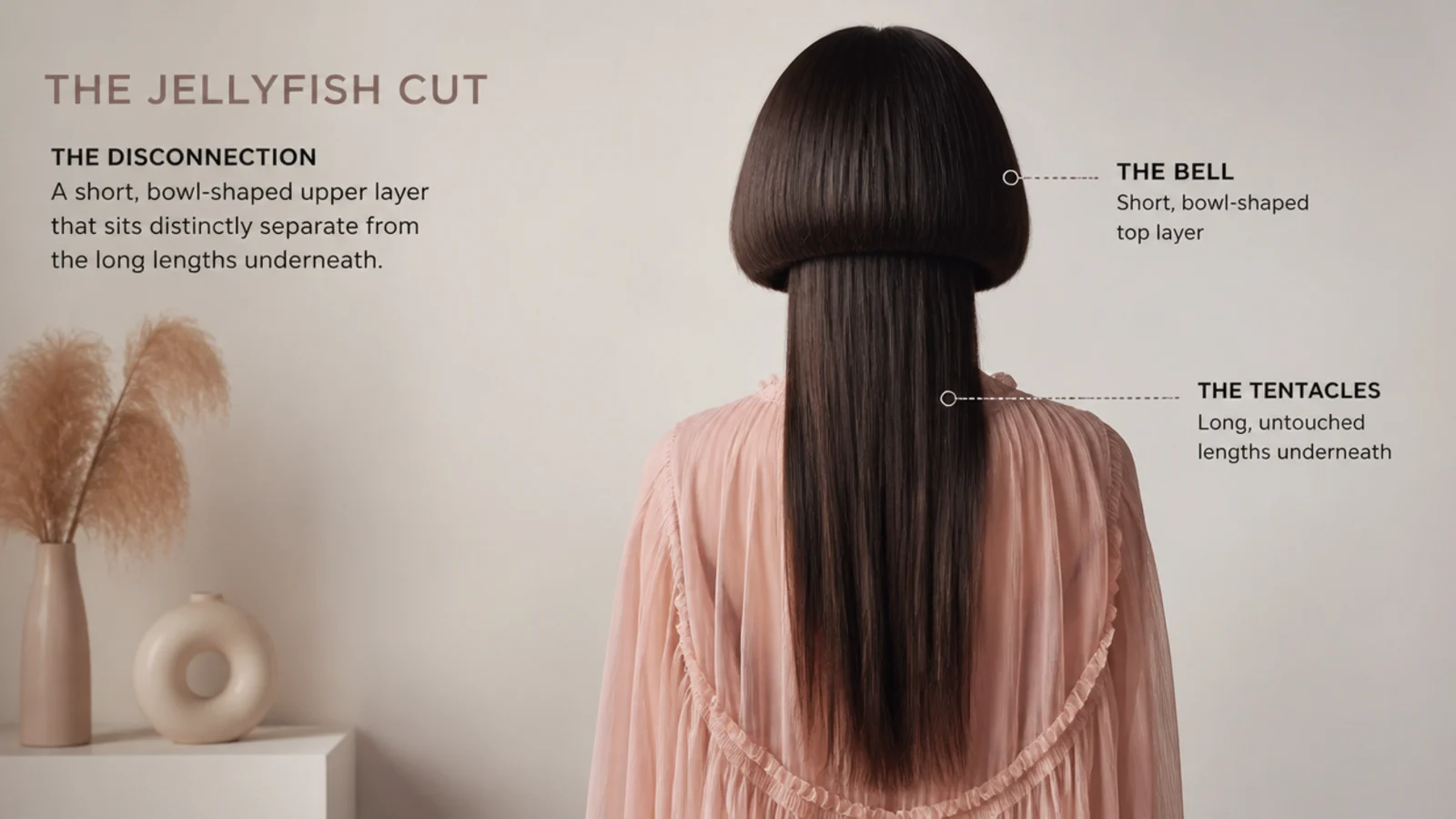
A long jellyfish haircut is two haircuts stacked on one head. The upper section is cut into a short, rounded, bowl-shaped layer, the bell, which usually falls somewhere between the cheekbone and the jaw. The lower section, the tentacles, is left long and essentially untouched, anywhere from mid-back at 22 inches to waist at 28 inches or more. Between them sits a hard horizontal break where the bell simply stops. That break is not a mistake and it is not something a good stylist blends away. It is the defining feature of the cut and the reason a jellyfish is not a shag. A shag connects every layer so the eye travels smoothly from crown to hem, while a jellyfish interrupts that journey on purpose. On long hair the interruption is at its loudest, because there is more untouched length below the break for the contrast to play against. Everything else about the cut, color, bangs, texture, is decoration on top of that single structural idea. See the full range of lengths in the jellyfish haircut hub.
Who a Long Jellyfish Haircut Suits: Face Shape, Texture and Density
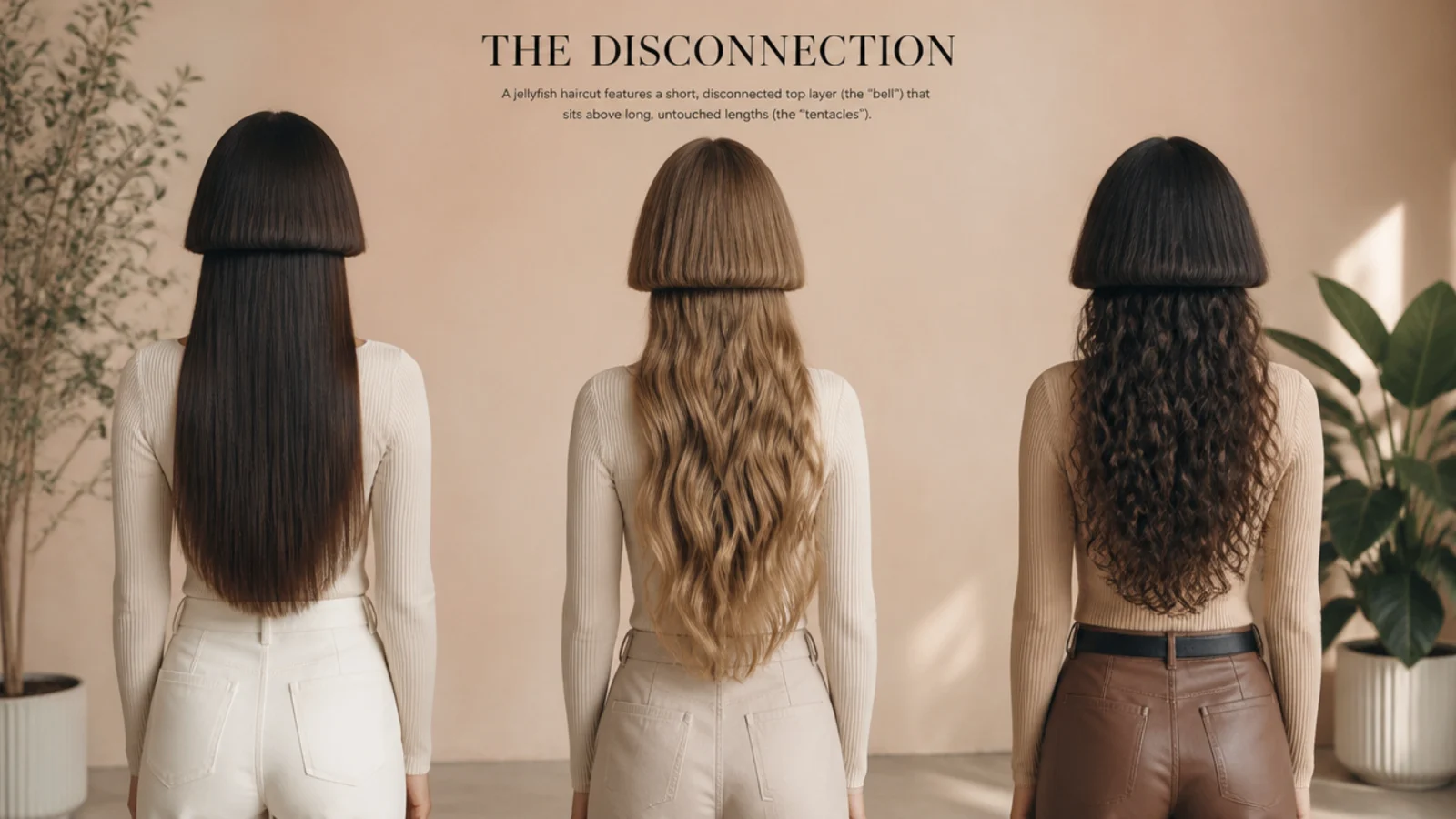
Texture decides more than face shape here. Straight hair shows the disconnection with total clarity, wavy hair softens it while keeping it legible, loose curls blur it slightly but gain volume in the bell, and tight coils blur it so much that the two tiers merge into one round silhouette. If your curl pattern is 3C or tighter, a jellyfish will read as a big rounded shape rather than a two-layer cut, and a shag will probably serve you better. Density matters next. Heavy, dense hair holds a blunt bell beautifully but needs internal weight removal so the lengths hang instead of flaring. Fine hair needs a longer, softer bell or the top section collapses flat. On face shape, oval and heart take almost any bell height. Round and square faces should keep the bell below the cheekbone so it does not add width at the widest point. Long faces can go higher, since a horizontal line at the cheekbone shortens the face usefully. Curl-specific guidance lives in curly jellyfish haircut ideas.
Long Jellyfish Haircut vs Wolf Cut, Mullet and Hime Cut
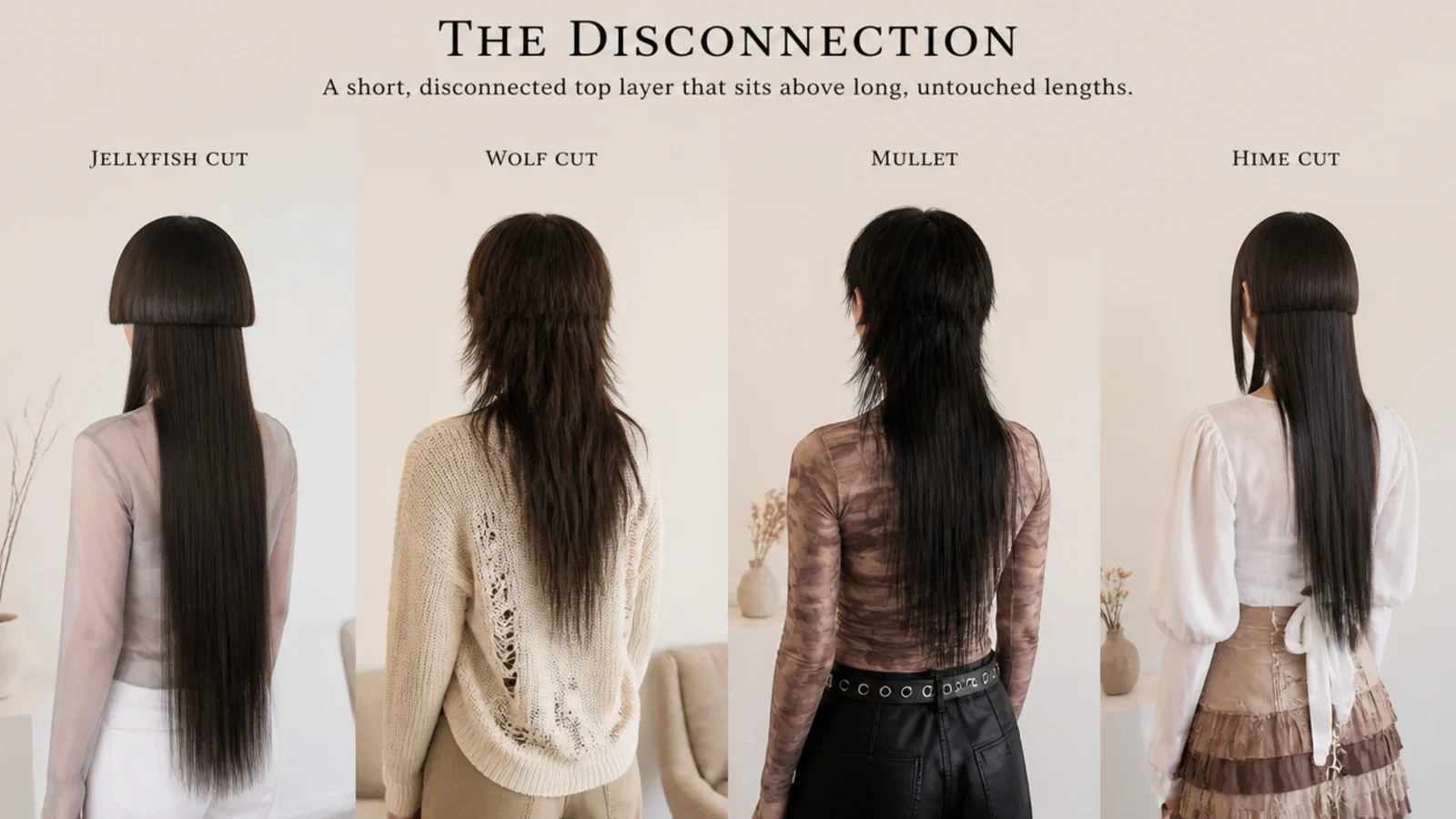
Four cuts get confused with each other, and one question separates them all: is there a visible break between the layers, and where does it sit? A wolf cut has no break at all, just continuous choppy layers from crown to ends, which is why it grows out invisibly and why it reads undone rather than structured. A mullet keeps its short section at the front and top and its length at the back only, so the contrast runs front to back. A jellyfish runs the contrast top to bottom, with the short bell circling the whole head and the length hanging beneath it all the way around. A hime cut is the closest relative and the direct ancestor: straight vertical side panels cut at the jaw, squared rather than rounded, with the back left long. If you want the heritage look, ask for hime panels. If you want the full circle of short hair over long, ask for a jellyfish. The comparison table above breaks the jellyfish and wolf cut down row by row. A gentler middle ground is the medium jellyfish haircut.
How to Style the Short Bell and the Long Tentacles
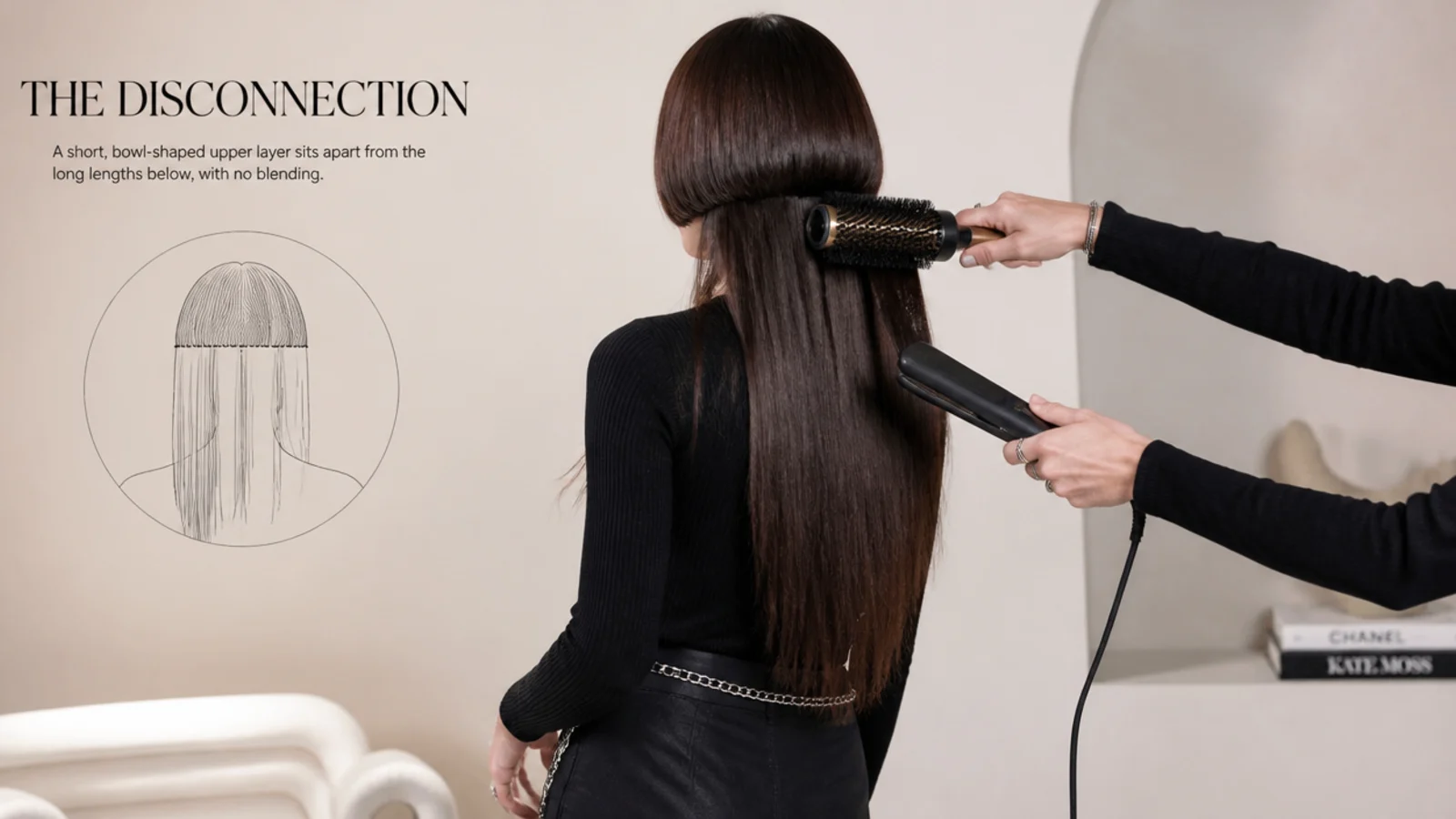
Style the two sections separately, because they want opposite things. Clip the long lengths out of the way, then work on the bell first while it is still damp. A two-inch round brush with a blow-dryer, or a flat iron held horizontally and rotated through the last two inches, gives the bell the inward flick that makes it look like a deliberate shape rather than short hair. Without that flick the bell tends to sit straight and flat, which is the single most common reason people say the cut looks wrong on them. Then drop the lengths and leave them alone, or add a loose C-curve or an outward flick to the final three inches so the two sections curve away from each other. Products divide the same way: a light smoothing cream in the bell, a texturizing or sea salt spray only in the lengths. Heatless options work well on the lower section, since overnight braids or foam rollers set the tentacles without touching the bell. Total time is about eight to ten minutes. Wavy jellyfish haircut ideas covers the heatless routine in detail.
Can You Wear a Long Jellyfish Haircut Up? The Ponytail Problem
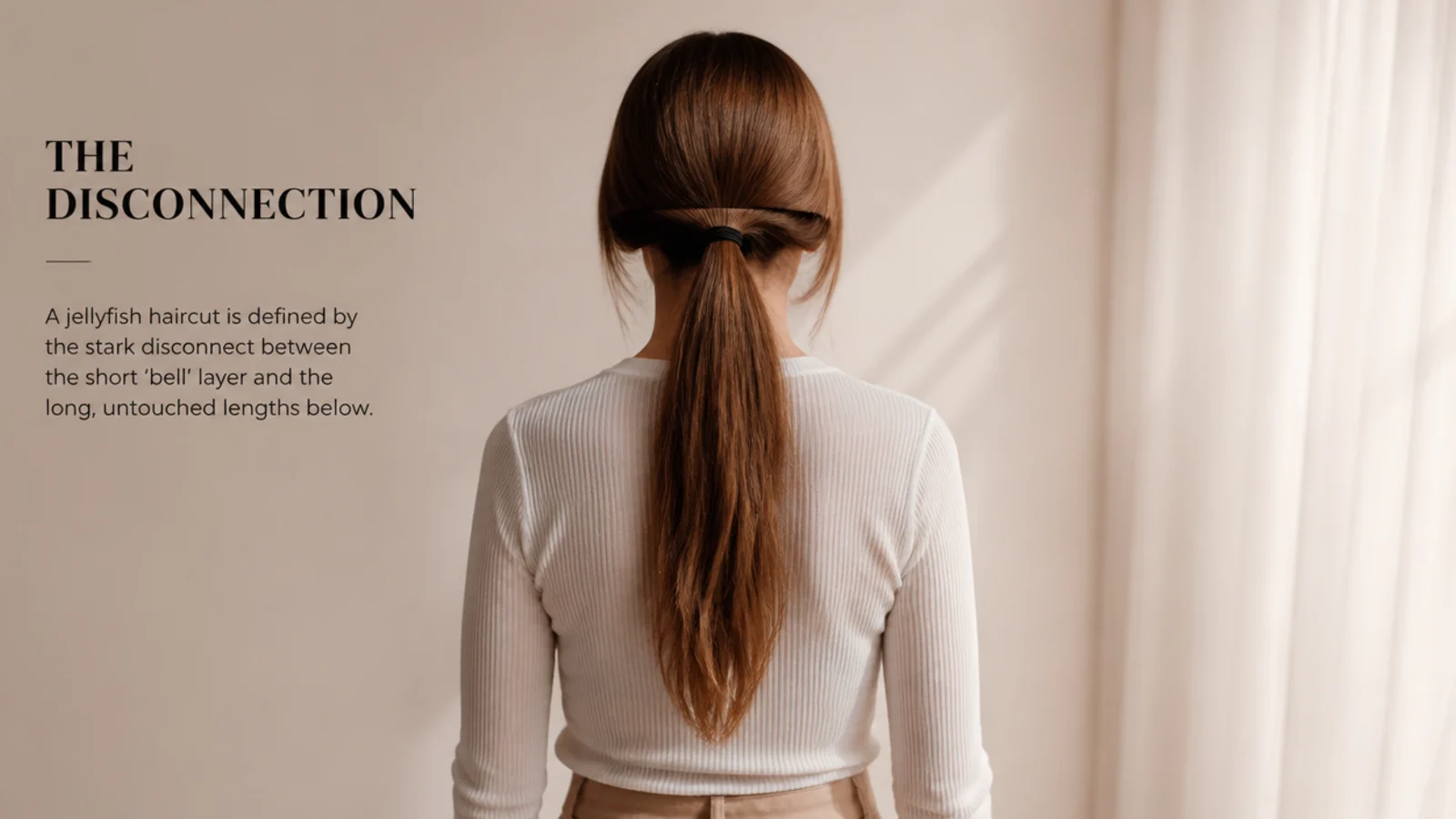
This is the question nobody answers before you sit in the chair, and it is the one that causes the most regret. When you pull a long jellyfish into a ponytail, the bell is too short to reach the elastic, so it falls loose all the way around your head. If the bell is at cheekbone level, that means a full ring of short hair sticking out. There are four honest fixes. First, choose a longer bell, collarbone rather than cheekbone, so it can be gathered in. Second, wear a low ponytail or low bun instead of a high one, since gravity keeps more of the bell contained. Third, embrace it and pin the bell back with two flat clips at the temples, which turns the loose section into a deliberate half-back shape. Fourth, use a half-up style, where the bell stays down by design and only the lengths are tied. If you tie your hair back most days for work or the gym, be honest with yourself about that before booking. Low styles are covered in low messy ponytail and messy ponytail for long hair.
How to Ask for a Long Jellyfish Haircut, and How It Grows Out

Use these exact words: a disconnected bowl-shaped upper layer, with the length left long underneath. Say disconnected out loud, because a stylist who has not cut one before will instinctively blend, and a blended jellyfish is just a shag. Then give three numbers: where the bell falls in inches or by landmark, cheekbone, jaw or collarbone; how long the lengths stay; and whether the hem is blunt or a soft V. Add whether you want weight removed internally. Bring two photos, one front and one back, because the back view is where this cut succeeds or fails and it is the part you cannot see in the mirror. Do not say bowl cut on its own. On grow-out, expect the bell to reach an in-between length around month two or three, which is the awkward phase people post about. It passes, and it passes faster if the bell was point-cut rather than cut blunt, because a broken edge softens into curtain bangs and then into a long shag. Compare grow-out behavior with grown out short curtain bangs.
Frequently Asked Questions
What is a long jellyfish haircut?
It is a two-tier cut where a short, rounded, bowl-shaped upper layer sits over long lower lengths that are left untouched, usually mid-back to waist. The two layers are deliberately disconnected, meaning there is a visible break between them rather than a blend. That disconnection is what separates a jellyfish from a shag or a wolf cut.
Can you get a jellyfish haircut with long hair?
Yes, and long hair is arguably the best canvas for it, because the distance between the short bell and the long hem creates the strongest contrast. Your length is not cut at all; only the top section is shortened. If your hair is past 30 inches, drop the bell to jaw level rather than cheekbone so the two sections stay visually related.
How much length do you lose with a long jellyfish haircut?
None from the lengths themselves. The lower section is left exactly where it is, apart from an optional dusting of the ends. What you do lose is the top layer, which gets cut to somewhere between the cheekbone and the collarbone. That top section is the part that has to grow back if you change your mind, which takes roughly a year and a half from cheekbone to waist.
Does a long jellyfish haircut work on curly hair?
Loose curls, 2C to 3A, work well and gain volume in the bell. Tighter patterns from 3C onward blur the disconnection so the cut reads as one rounded shape rather than two layers. If you have tight curls and still want it, ask for the bell to be cut dry, curl by curl, and keep the lengths long so shrinkage still leaves visible contrast.
Is a long jellyfish haircut high maintenance?
The lengths are low maintenance and need trimming only twice a year. The bell is the demanding part. A blunt bell shows growth within about four weeks and needs a trim every six to eight, while a point-cut, texturized bell can stretch to ten. Daily styling adds five minutes, since the bell needs a round brush or flat iron flick to hold its shape.
How do you style the short layer of a jellyfish haircut?
Clip the long lengths away and style the bell on its own while it is damp. Use a two-inch round brush with a dryer, or a flat iron held horizontally and rotated through the last two inches, to curve the ends inward toward the jaw. Skip texturizing spray in the bell; it makes the rounded shape frizz outward instead of curving under.
Can you put a jellyfish haircut in a ponytail?
Only partly. The bell is usually too short to reach the elastic, so it falls loose around your head. A low ponytail or low bun contains more of it than a high one, and two flat clips at the temples turn the loose section into a deliberate half-back look. If you wear your hair up most days, ask for a collarbone-length bell instead of a cheekbone one.
What is the difference between a jellyfish cut and a wolf cut?
A jellyfish has a hard, visible break between a short bowl-shaped top and long lengths, while a wolf cut blends many choppy layers continuously from crown to ends with no break anywhere. Jellyfish reads structured and graphic; wolf reads tousled and undone. Wolf cuts also grow out invisibly, while a jellyfish passes through a two to three month in-between phase.
How does a long jellyfish haircut grow out?
The lengths keep growing normally and the bell slowly catches up. Around month two or three the bell reaches an in-between length that neither sits as a bell nor blends into the lengths, which is the awkward phase people warn about. After that it softens into a curtain-bang and long-shag shape. Asking for the bell to be point-cut rather than blunt makes that transition noticeably easier.
Should I get a long jellyfish haircut?
Get it if you have straight or wavy hair, wear your hair down most days, and want a change that does not cost you your length. Think twice if you tie your hair back daily, have tight coils that will blur the shape, or have fine hair that cannot hold a rounded bell. A medium-length version is the lower-risk way to test the look first.
Which jellyfish haircut look are you saving?
If you take one thing from these 20 long jellyfish haircut ideas, make it this: on long hair the cut is almost entirely a decision about the top layer, because the lengths underneath stay untouched. Pick where the bell falls first, cheekbone for maximum drama or jaw for something you can tuck and hide, then decide how hard you want the disconnection line to read. Ask for a disconnected bowl-shaped upper layer with the length left long underneath, bring two photos including a back view, and book a bell trim for six to eight weeks out before you leave. Save the looks you like, then compare lengths in the jellyfish haircut hub or read medium jellyfish haircut ideas if you want a softer first step.