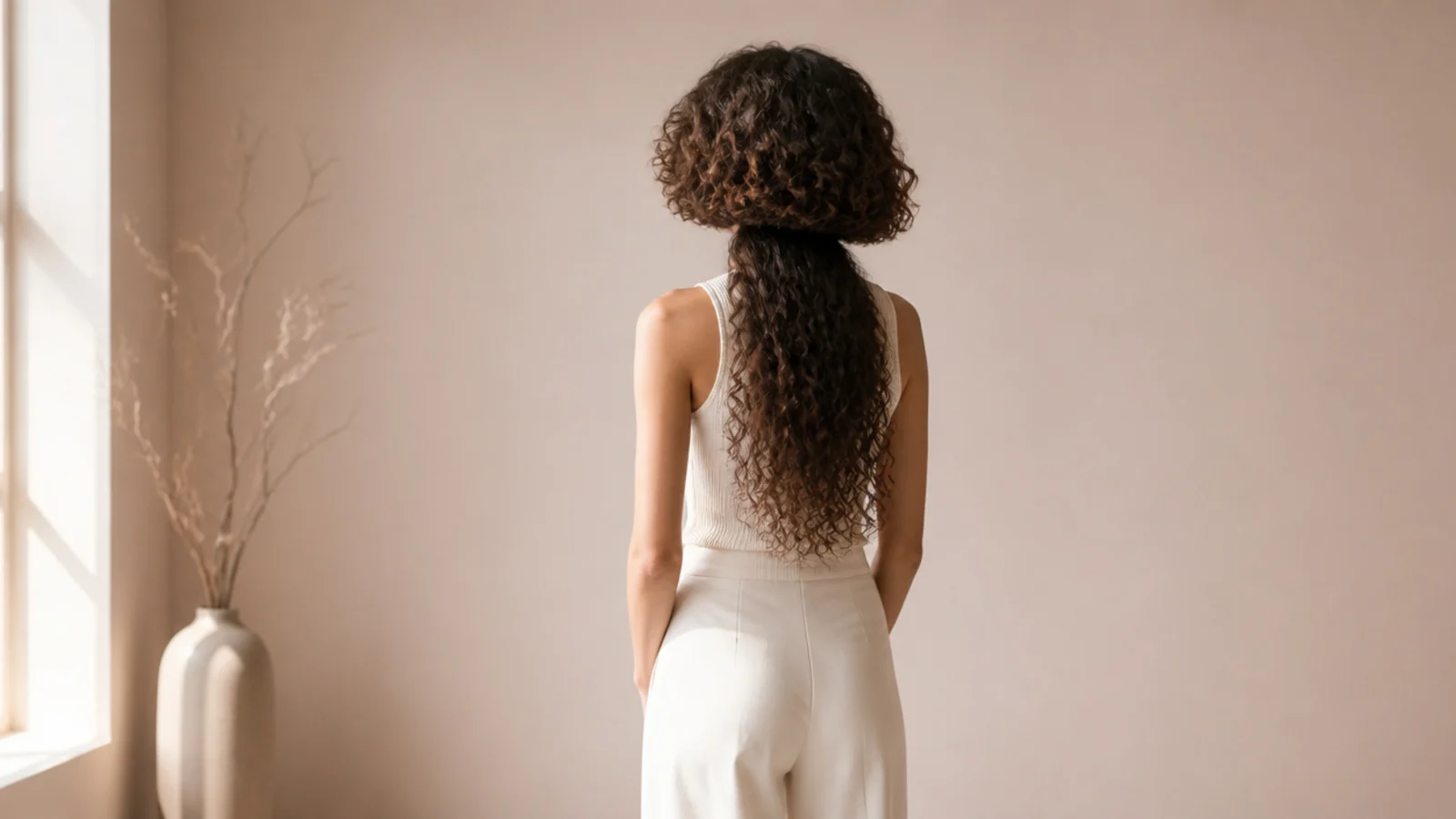
Quick Comparison
| Jellyfish Haircut With Bangs | Wolf Cut With Bangs | |
|---|---|---|
| Layer structure | Two distinct tiers with a hard, unblended break | Continuous choppy layers blended top to bottom |
| Disconnection | Deliberate; the visible cut line is the point | None; every layer feeds into the next |
| Top shape | Rounded bowl or bell sitting over the lengths | Shaggy crown with feathered ends |
| Bang pairing | Curtain, hime, micro, V, blunt, wispy all work | Curtain and choppy bangs mainly |
| Best textures | Straight and wavy; tight curls blur the shape | Wavy and curly; straight hair can look flat |
| Trim cadence | 3 to 4 weeks for bangs, 6 to 8 weeks for a blunt bell | 10 to 12 weeks; it grows out softly |
| Grow-out behavior | An awkward in-between phase of roughly 2 to 3 months | Softens gradually with no awkward stage |
| Styling effort | Round brush or flat-iron flick on the top layer daily | Texture spray and air-dry |
| Overall vibe | Sharp, graphic, anime and editorial | Undone, tousled, rock and roll |
1. Wispy Curtain Bangs With a Jaw-Length Jellyfish Bell
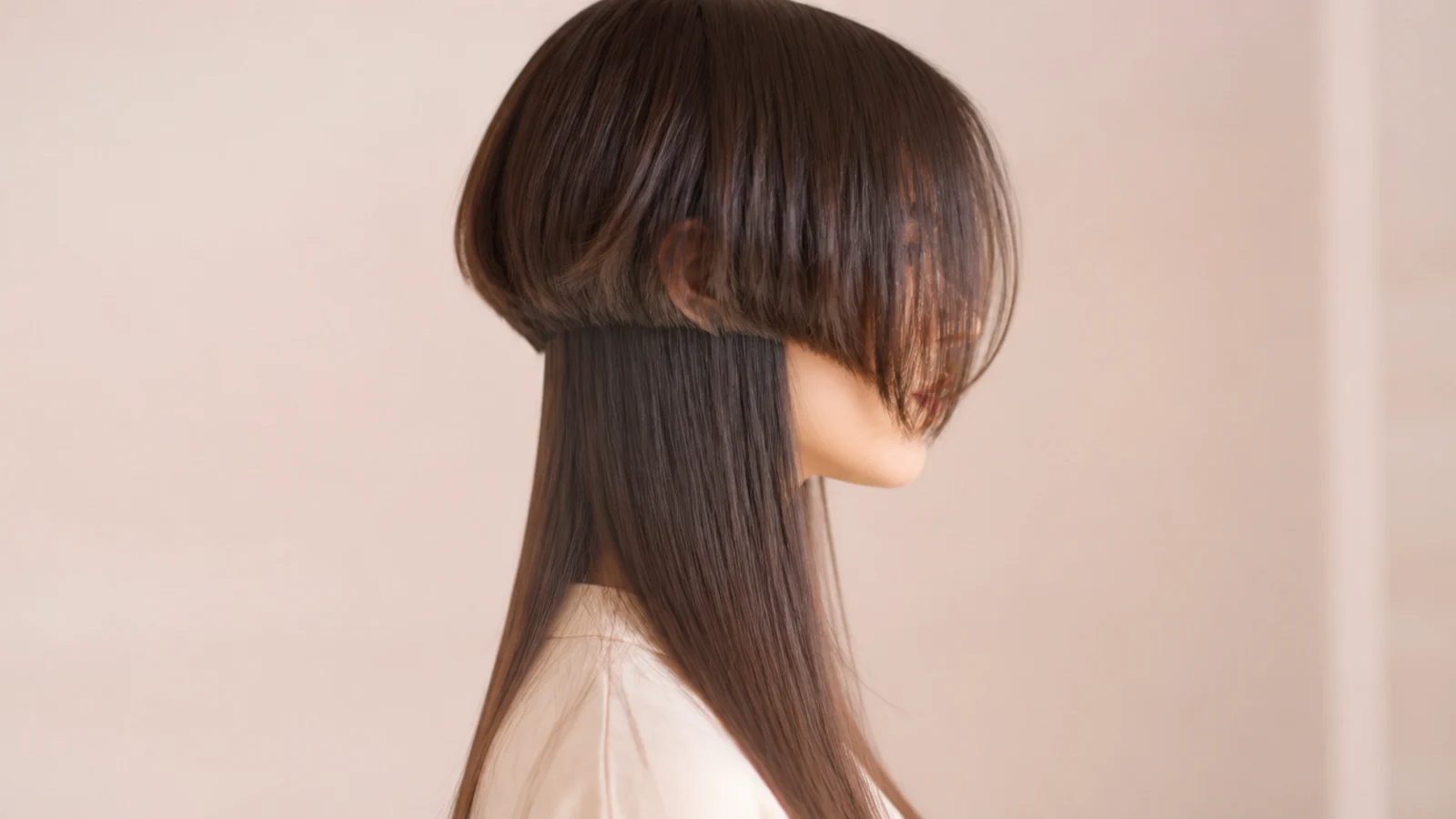
The most wearable entry point to this cut. The bell stops at the jaw, roughly 10 to 11 inches from the part, and the front of it is point-cut into a center-parted curtain that falls just past the cheekbone. Because the curtain sweeps outward, it softens the hard bowl edge without erasing it, so the disconnection still reads from the side. This is the version most people mean when they say they want the cut but not the drama. Compare the fringe shape itself in short curtain bangs.
Who it suits: Round and heart faces, straight to loosely wavy hair.
Tip: Ask for the curtain point-cut, not blunt, so it blends into the bell instead of stacking on top of it.
2. Hime Bangs With a Blunt Jellyfish Top Layer
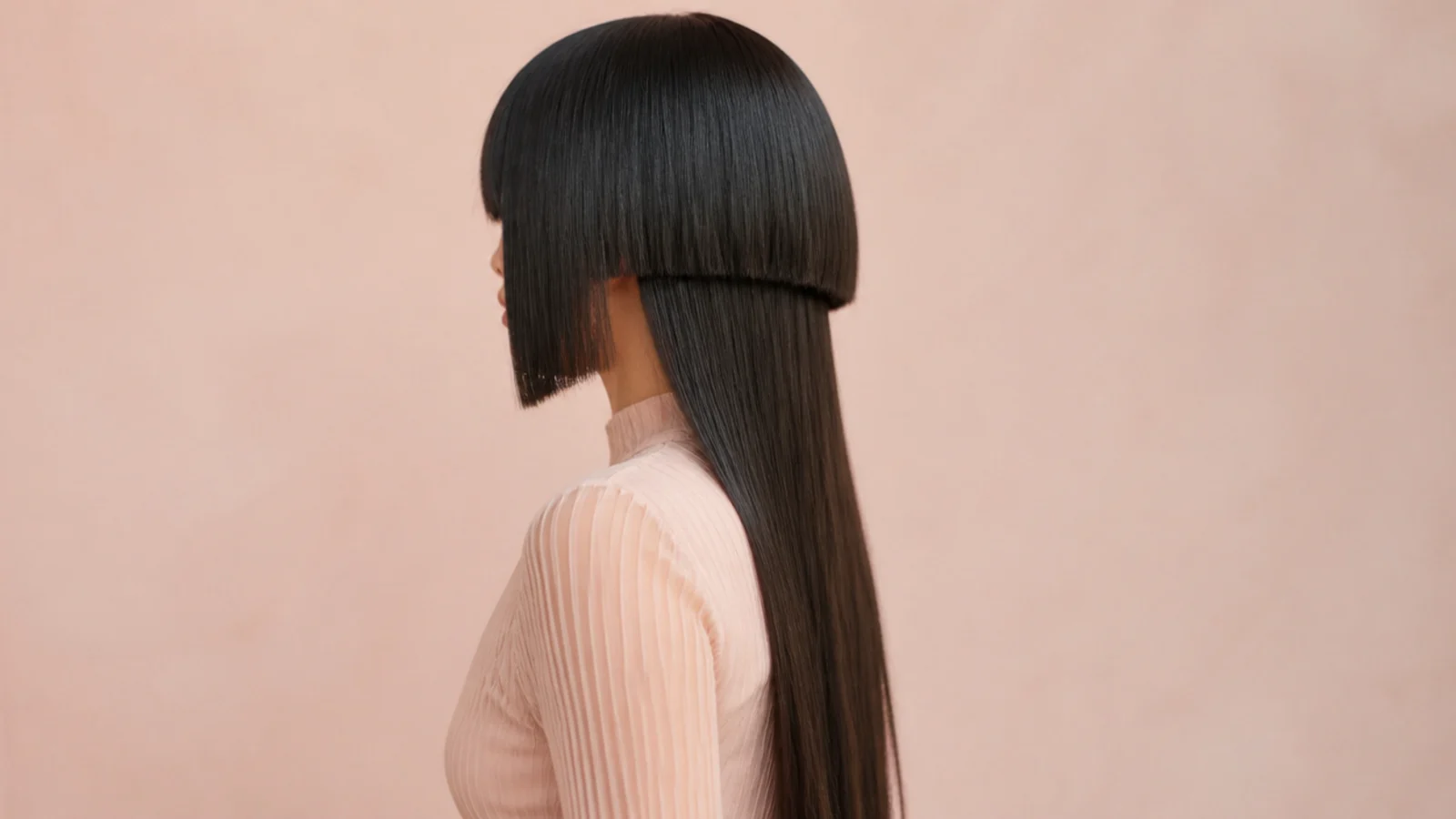
The historically correct version, since the jellyfish cut descends from the Japanese hime shape. A straight blunt fringe at the eyebrow, then two blunt side panels cut at the cheekbone or jaw, then the long lengths behind. Three hard horizontal lines stacked down the face. It is the sharpest look on this list and the most photogenic on poker-straight hair, because every cut line stays visible. Keep the panels at 6 to 7 inches so they clear the collarbone gap.
Who it suits: Straight dark hair, oval and long faces, editorial taste.
Tip: Say hime side panels, blunt, cut vertically down from the temple, so the stylist does not round them off.
3. Micro Bangs on a Short Jellyfish Haircut
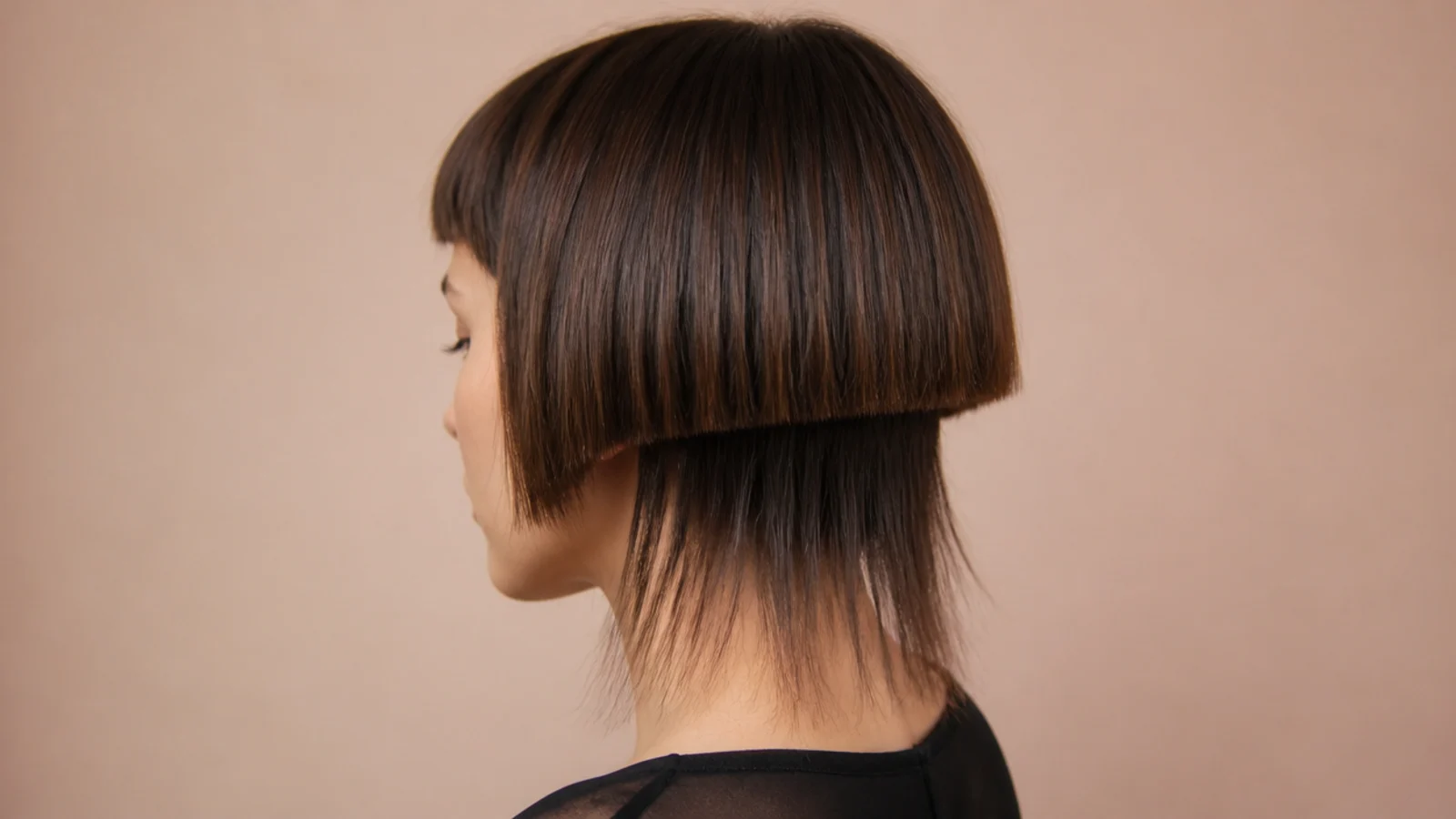
A fringe cut about an inch above the brow, sitting over a chin-length bell and shoulder-blade lengths underneath. Micro bangs work here because the bowl already has a strong horizontal line, and the tiny fringe repeats it in miniature at the top of the face. The effect is punk rather than sweet. It needs a high, clean forehead and a willingness to trim every two to three weeks, since a quarter inch of growth changes the whole proportion. More short versions live in short jellyfish haircut.
Who it suits: Oval faces, high foreheads, straight fine to medium hair.
Tip: Cut them dry. Wet micro bangs spring up half an inch shorter once they dry.
4. Wispy Baby Bangs With Long Jellyfish Tentacles
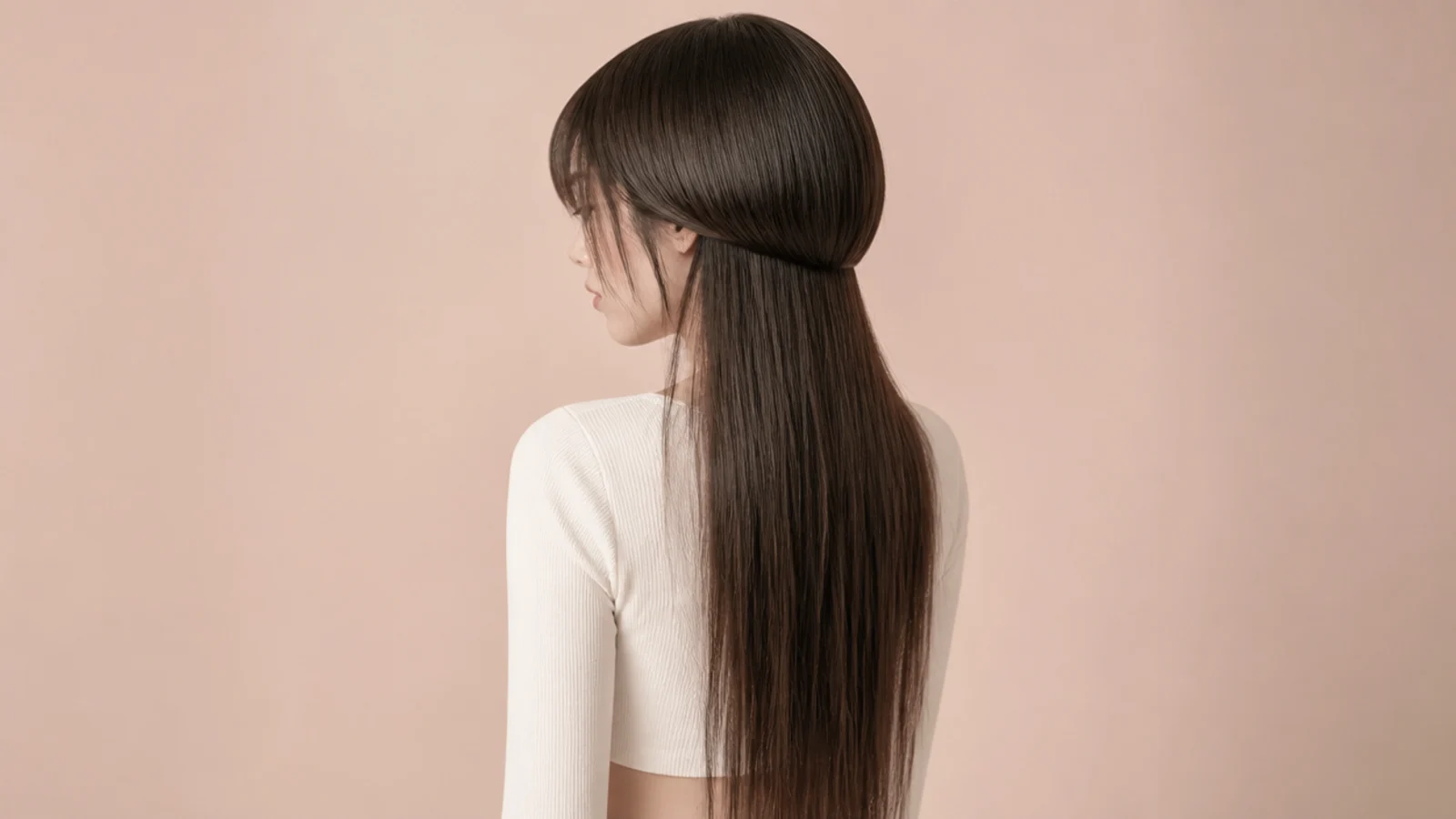
Softer than a true micro fringe: the baby bangs are cut at mid-forehead but thinned with point-cutting so light shows through them, which stops them looking severe. Underneath, the lengths stay at waist level, around 26 to 28 inches, so the contrast between two inches of fringe and two feet of hair is extreme. This is the pairing that made the cut go viral, and it photographs better than it wears, so try it only if you like a daily flat-iron pass.
Who it suits: Very long straight hair, small features, high-contrast lovers.
Tip: Ask for the baby bangs thinned at the ends only, never at the root, or you get frizzy stumps.
5. V Bangs Cut Into a Jellyfish Haircut
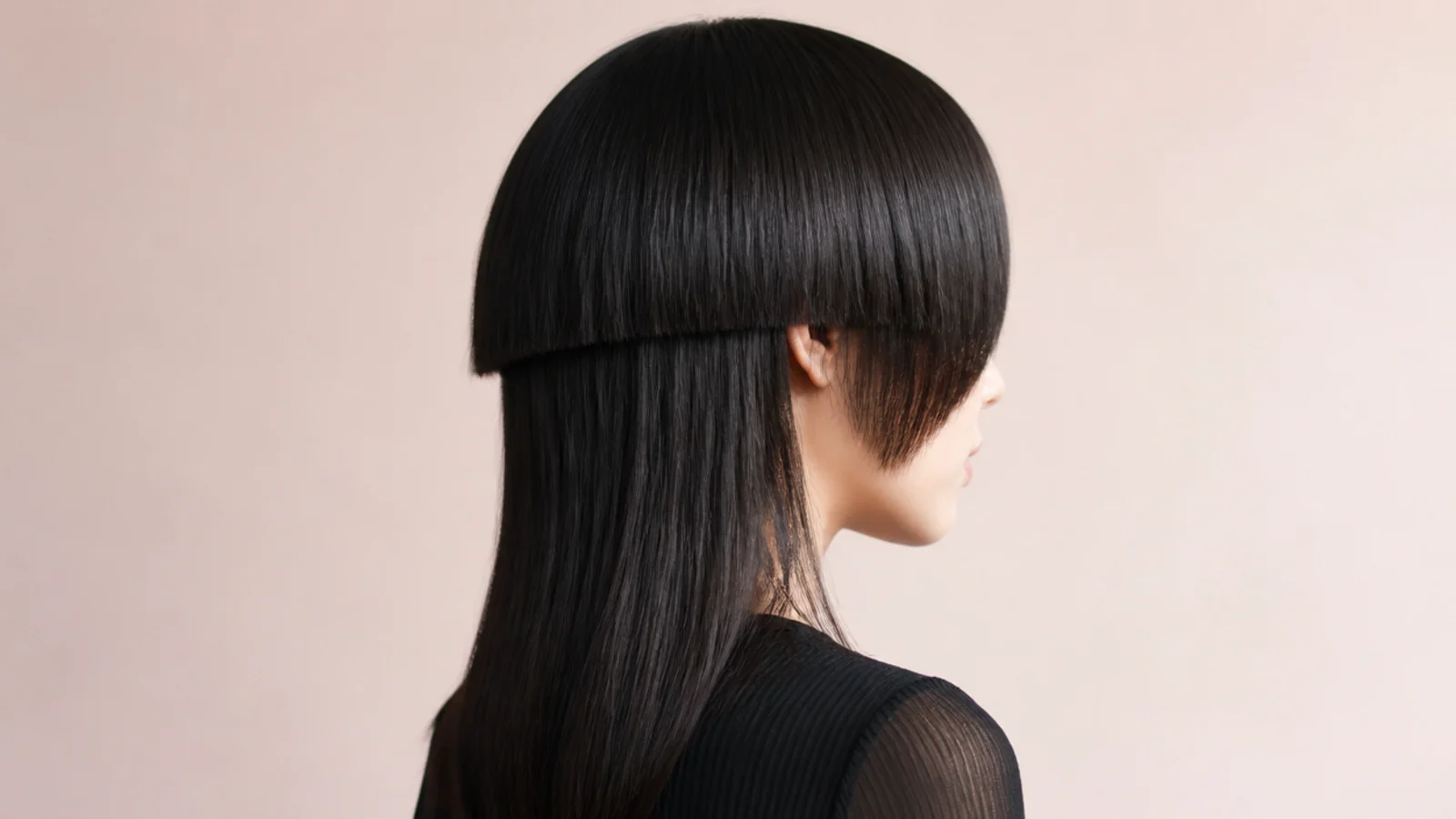
The fringe is cut longer at the sides and dips to a point in the middle of the forehead, forming a soft V. It is the anime-influenced shape searchers ask for by name, and it solves a real problem: the V draws a vertical line through a cut that is otherwise all horizontals, which slims a round or wide face. The point should sit about half an inch above the brow, with the outer corners hitting the cheekbone so they merge into the bell.
Who it suits: Round and square faces, straight hair, anyone bored of blunt fringes.
Tip: Bring a photo. Say V-shaped fringe, longest at the outer corners, and specify where the point lands.
6. Side-Swept Bangs for a Round Face Jellyfish Cut
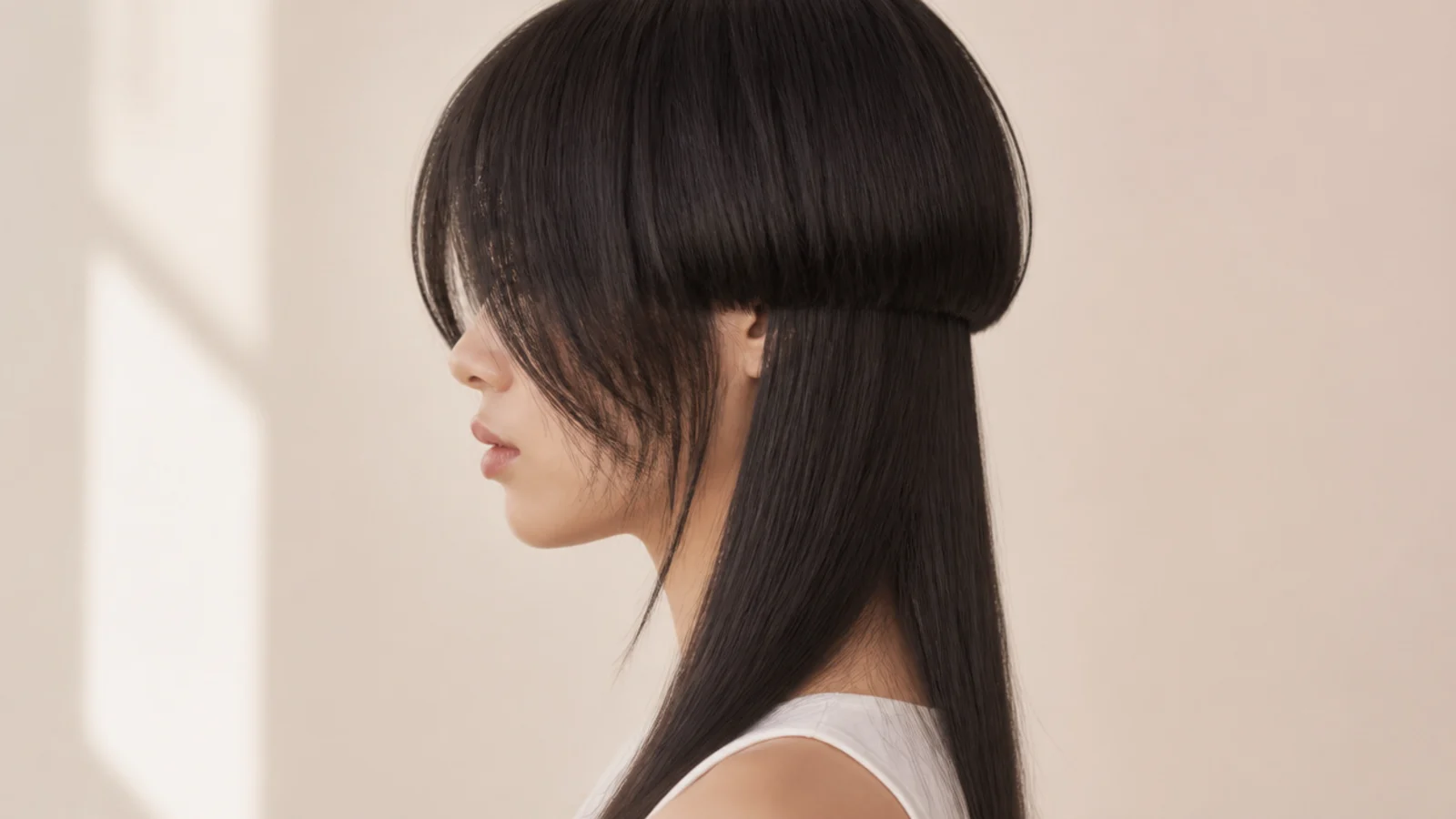
A deep side part sends the fringe on a diagonal from the temple to the opposite cheekbone, breaking the bowl symmetry that can widen a round face. The bell still sits at the jaw and the lengths still run long, but the asymmetry does the flattering work. It is also the most forgiving option if you are unsure about bangs at all, since side-swept pieces tuck behind an ear and disappear. Similar logic to short curtain bangs on a round face.
Who it suits: Round and full cheeks, medium density, wavy or straight hair.
Tip: Ask for the fringe cut at least an inch longer than your brow so it can sweep instead of sticking out.
7. Full Blunt Bangs With a Cheekbone Jellyfish Bell
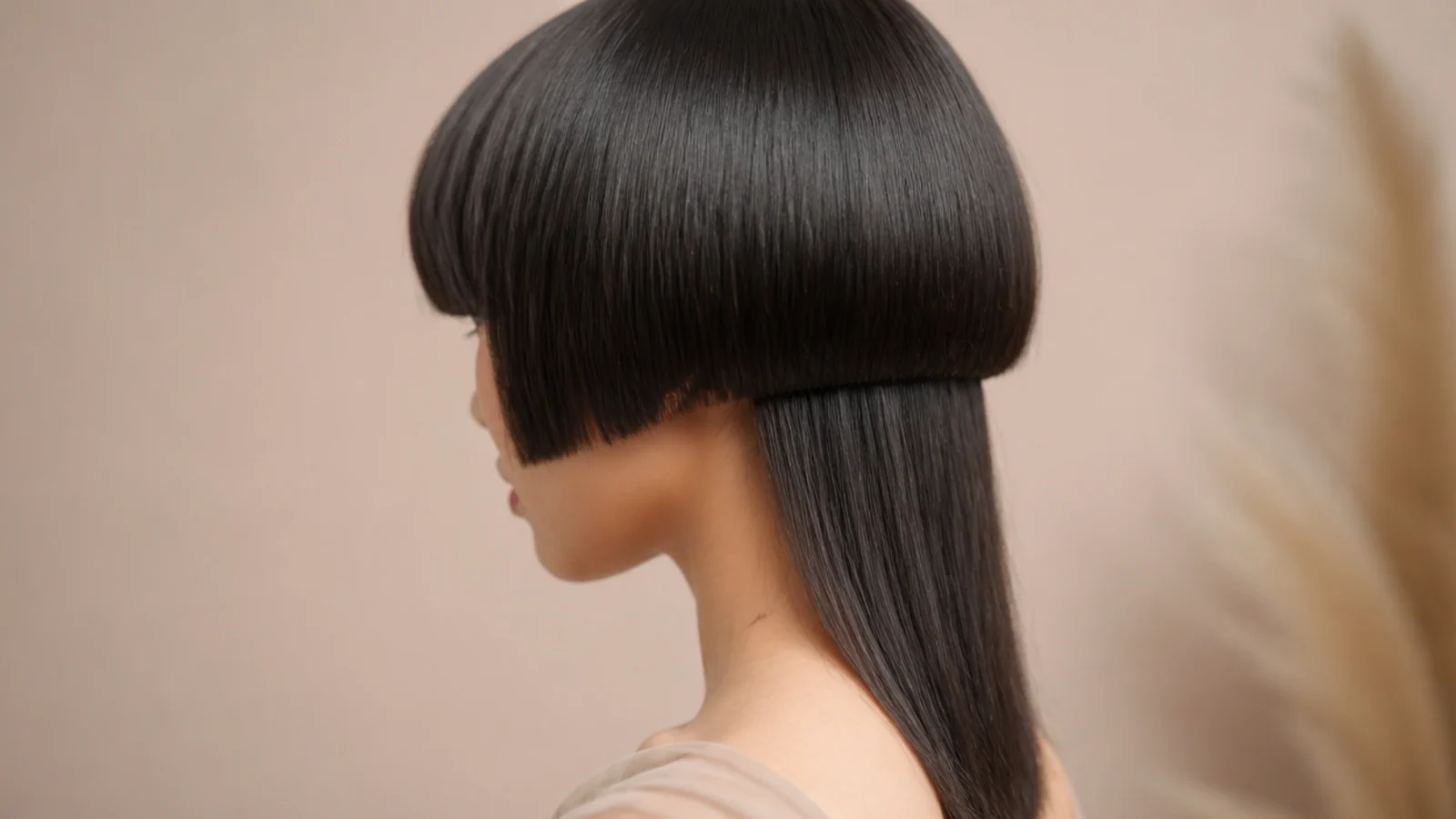
The highest-contrast version on the list. A heavy, ruler-straight fringe that skims the eyebrows, worn under a bell that stops high at the cheekbone, around 7 to 8 inches. Because the bell is so short, the fringe and the bowl read as one continuous helmet of hair, and the long lengths beneath look almost like a separate wig. It needs thick, straight, healthy hair; on fine hair the fringe eats your whole top section and the bell goes transparent.
Who it suits: Thick straight hair, oval and heart faces, bold dressers.
Tip: Ask the stylist to take the fringe section no deeper than two inches back from the hairline.
8. Curtain Bangs on a Wavy Jellyfish Haircut
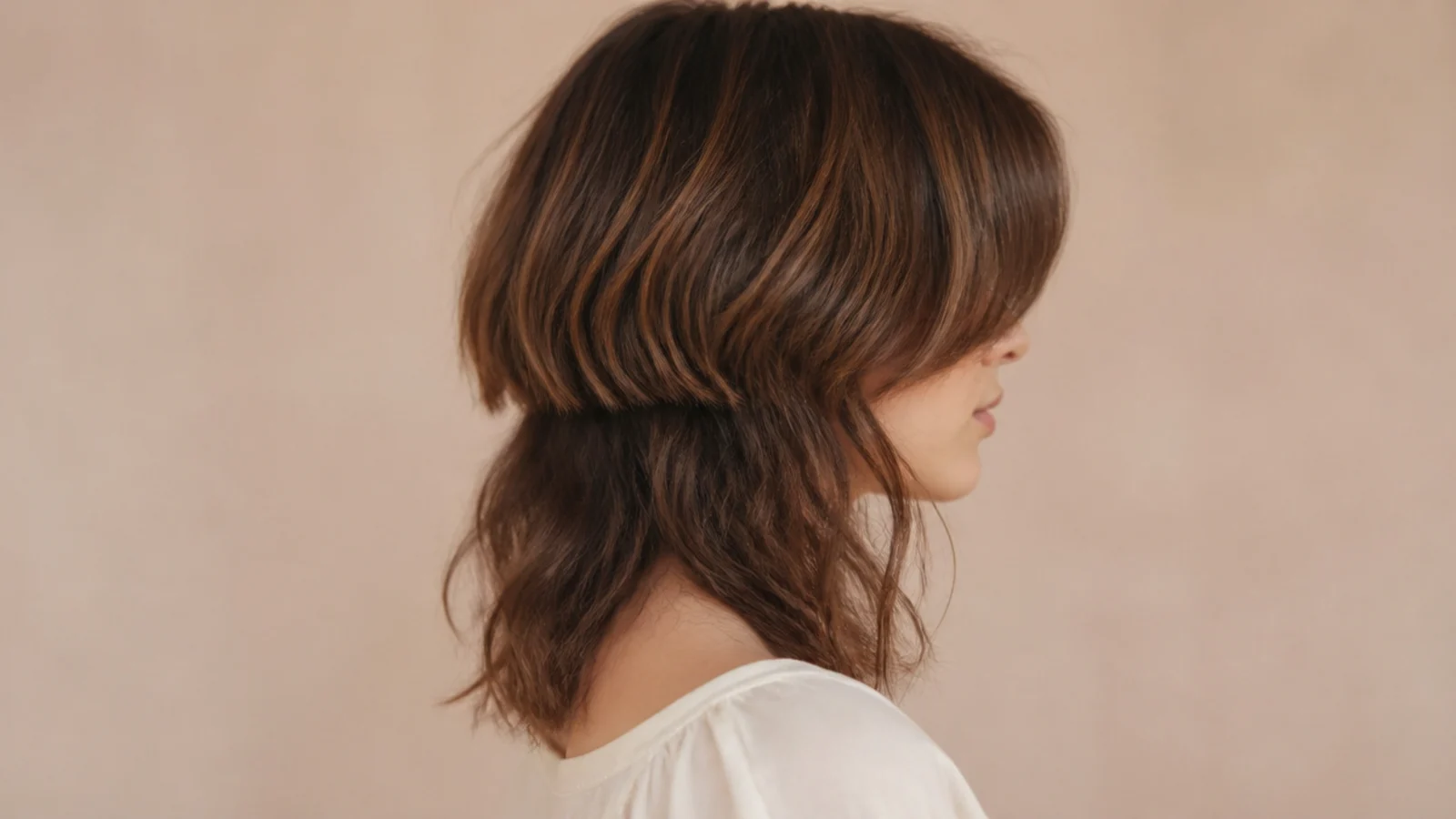
On 2A to 2B waves the bell naturally bends outward at the ends, and a curtain fringe follows that same bend, which makes the whole cut look intentional rather than grown-out. Keep the bell at collarbone length, around 12 inches, so the wave has room to form one full S. Air-dry with a light mousse and the fringe separates on its own. The full texture breakdown is in wavy jellyfish haircut.
Who it suits: Natural 2A to 2C waves, medium density, low-effort routines.
Tip: Diffuse the fringe forward first, then flip it back, so it dries with lift instead of clinging.
9. Choppy Bangs With Waist-Length Jellyfish Tentacles
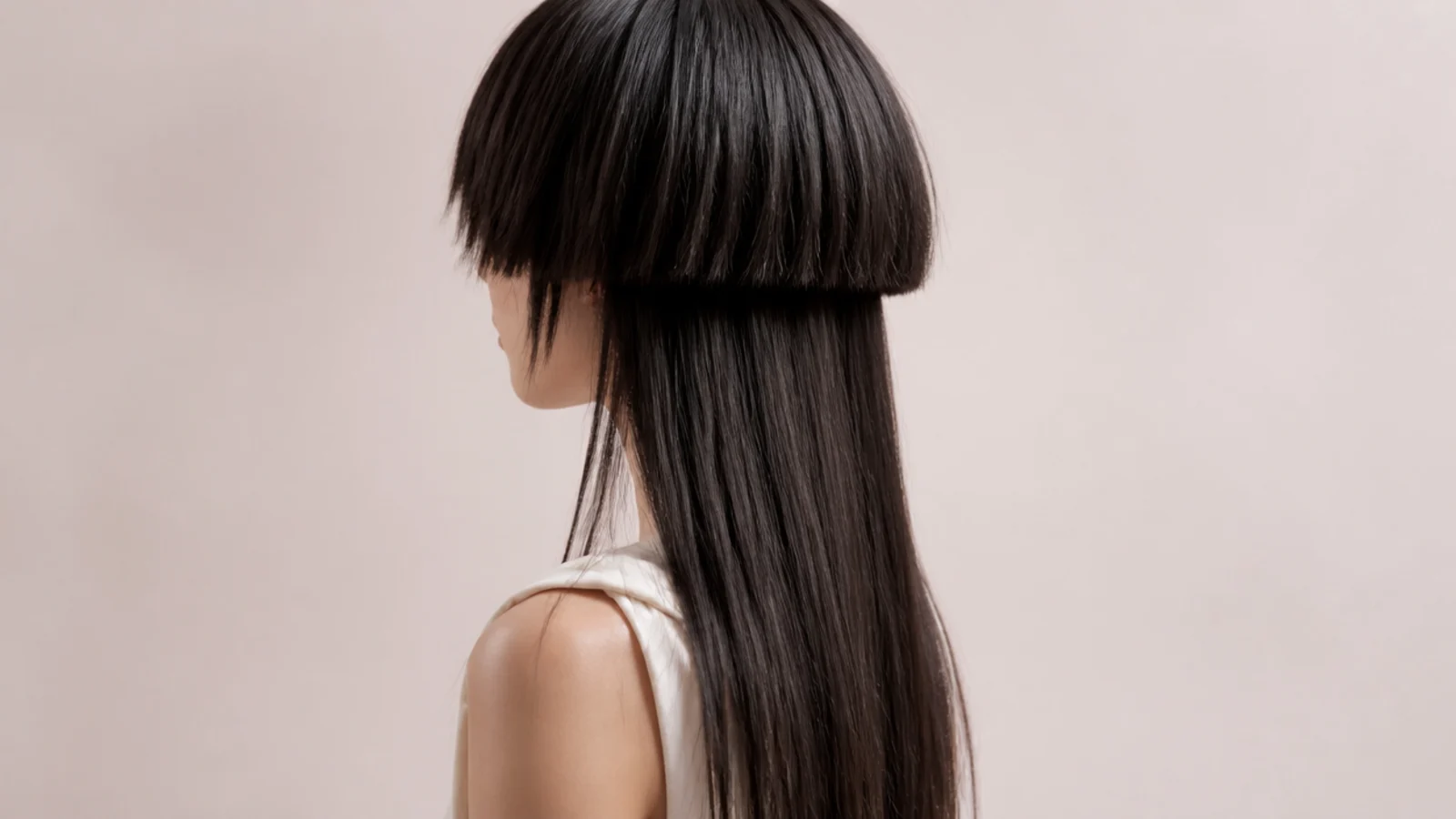
The fringe is cut with deep vertical notches so the ends land at uneven lengths between the brow and the lash line, a shape borrowed from seventies rock hair. Paired with waist-length lower lengths and a chin-level bell, the roughness of the fringe stops the bowl from looking too neat. It is the best bang choice if your hair has a cowlick, because the notching lets pieces fall where they want instead of fighting the growth pattern.
Who it suits: Cowlicks, medium to thick hair, grunge and rock leanings.
Tip: Ask for the notches cut into the fringe dry, so you can see where each piece falls before more is removed.
10. Curly Jellyfish Haircut With Cropped Curly Bangs
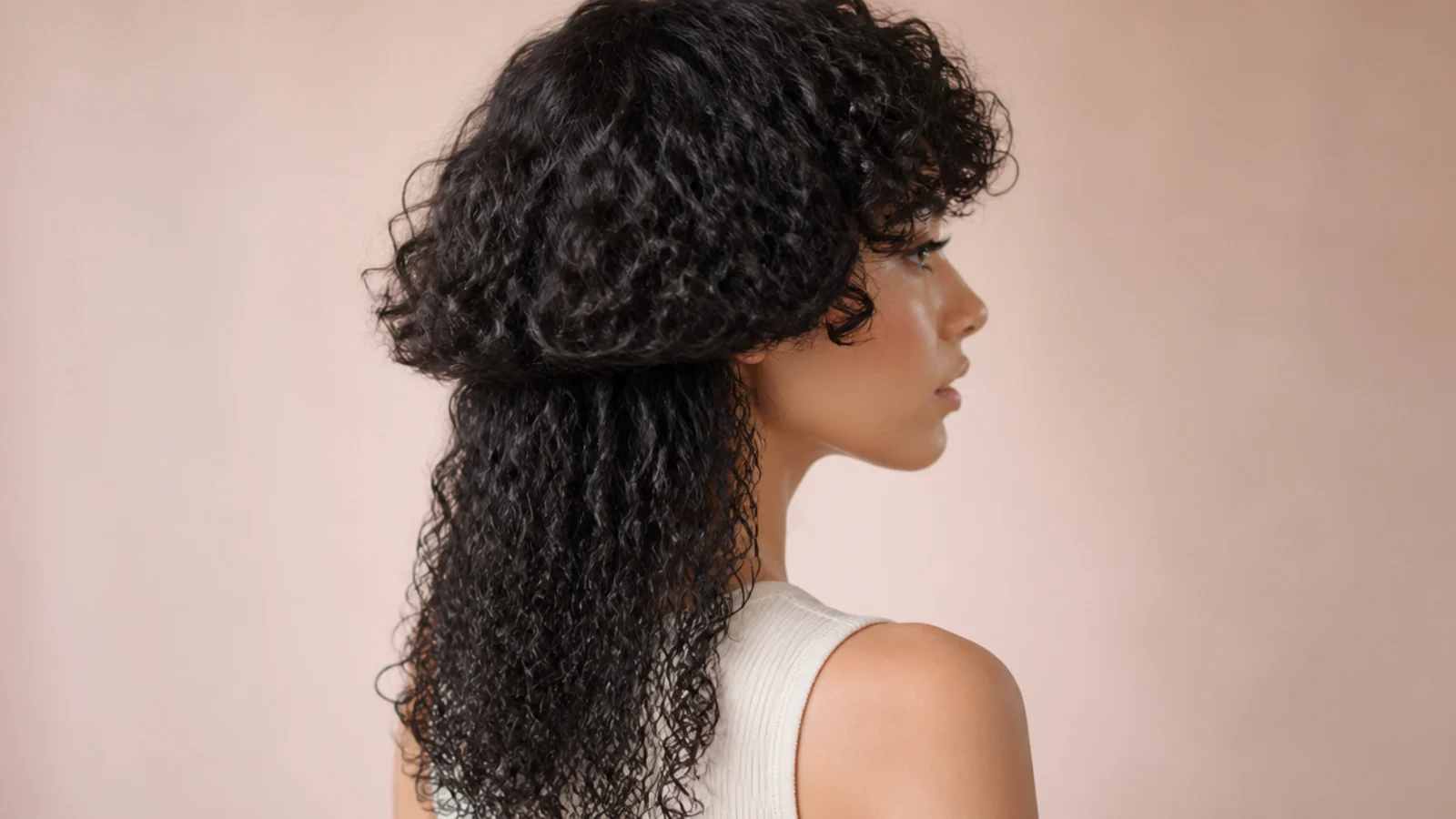
Curls blur the disconnection, so this version leans into softness instead of fighting for a sharp line. The bell is cut short enough that curl shrinkage still leaves it above the shoulder, and the fringe is cropped at brow level so it does not spring up into a fluff ball. Cut dry, curl by curl. On 3B and tighter, expect the bowl to read as a round shape rather than a bell. Full guidance in curly jellyfish haircut.
Who it suits: 2C to 3B curls with enough density to hold a round top shape.
Tip: Add one to one and a half inches to every measurement to allow for shrinkage before the scissors move.
11. Bleached Bangs on a Two-Tone Jellyfish Haircut
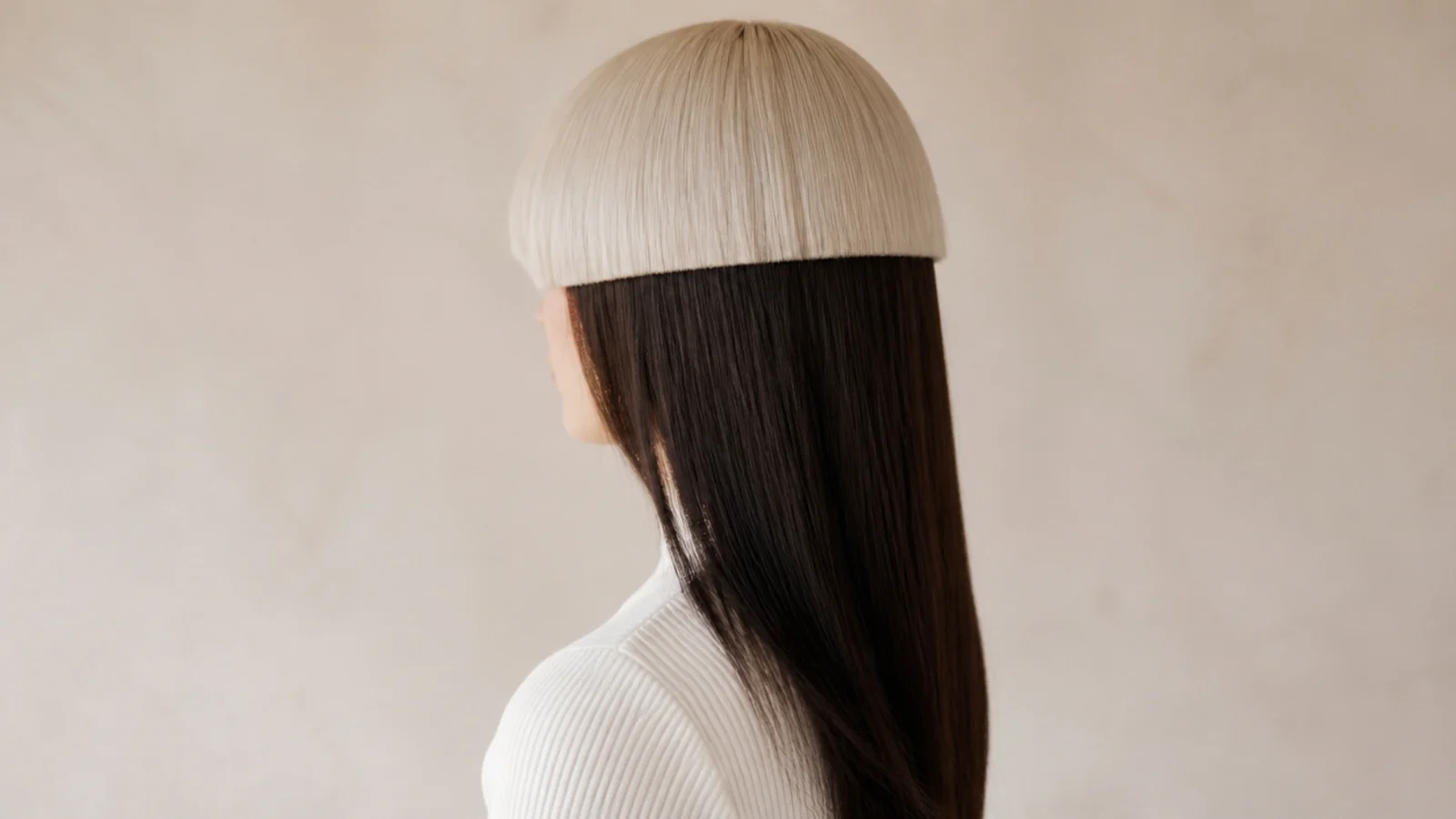
Color the entire top layer including the fringe platinum, and leave the lower lengths your natural dark base. Because the layers are disconnected, the color change lands exactly on the cut line, which is the one place two-tone hair looks deliberate instead of like a bad grow-out. Budget three to five hours in the chair and a purple shampoo every third wash. The bleached bell fades faster than the lengths because it takes all the heat styling.
Who it suits: Dark natural bases, healthy hair, high-maintenance tolerance.
Tip: Ask the colorist to bleach after the cut, so the line follows the finished bell exactly.
12. Long Wispy Bangs for a Square Face Jellyfish Cut
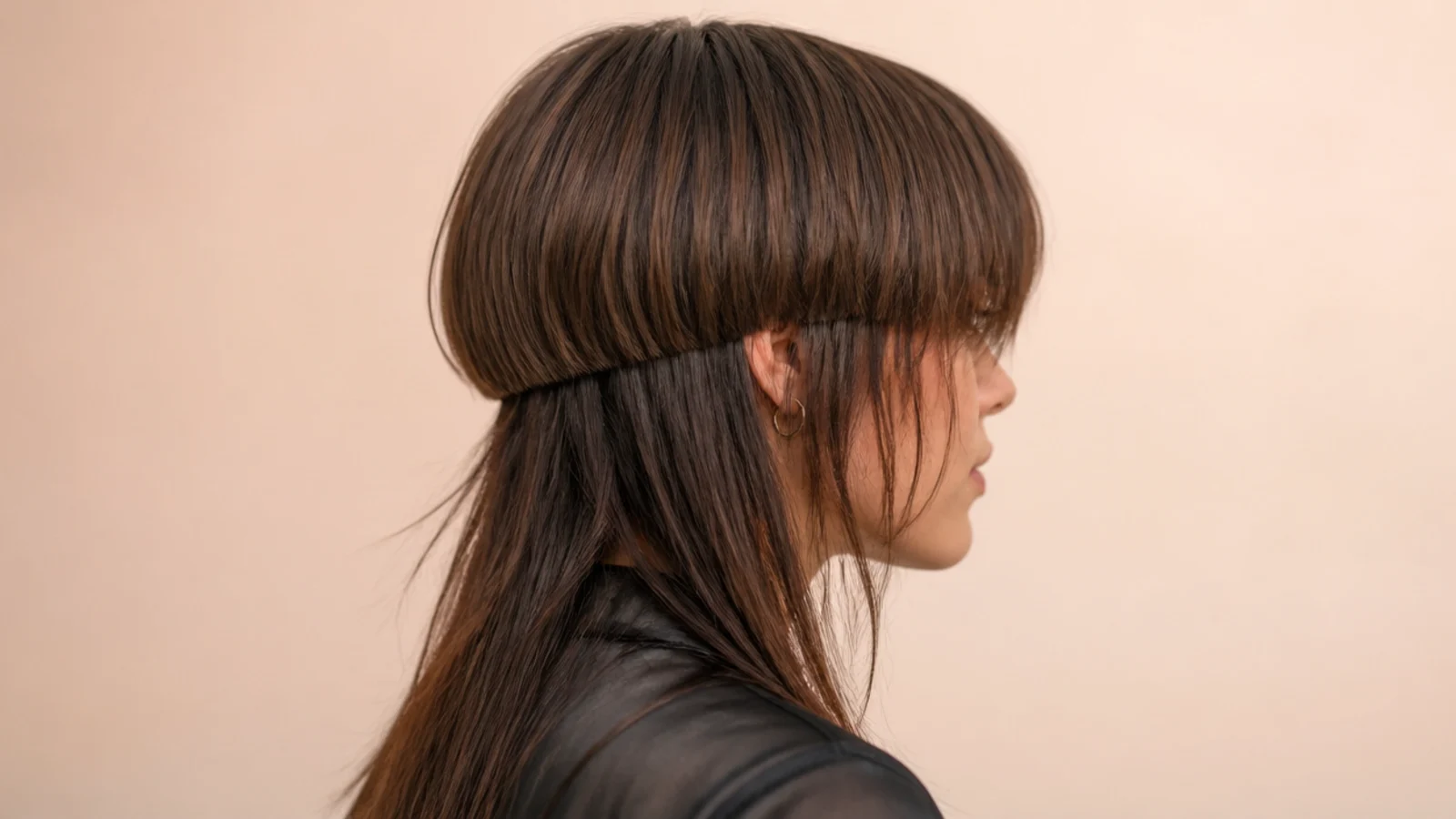
A see-through fringe cut long enough to skim the lashes, then heavily thinned so the forehead shows through. On a square face the softness matters more than the shape, because the bowl edge already draws a hard horizontal at the jaw, which doubles the angularity you are trying to soften. Wispy bangs plus a bell dropped an inch lower, to just past the jaw, quietly rounds the whole outline. Related thinking in wispy short curtain bangs.
Who it suits: Square and rectangular faces, fine to medium straight hair.
Tip: Say see-through fringe, lash-length, thinned with a razor or point cut, never with thinning shears at the root.
13. Medium Jellyfish Haircut With Soft French Bangs
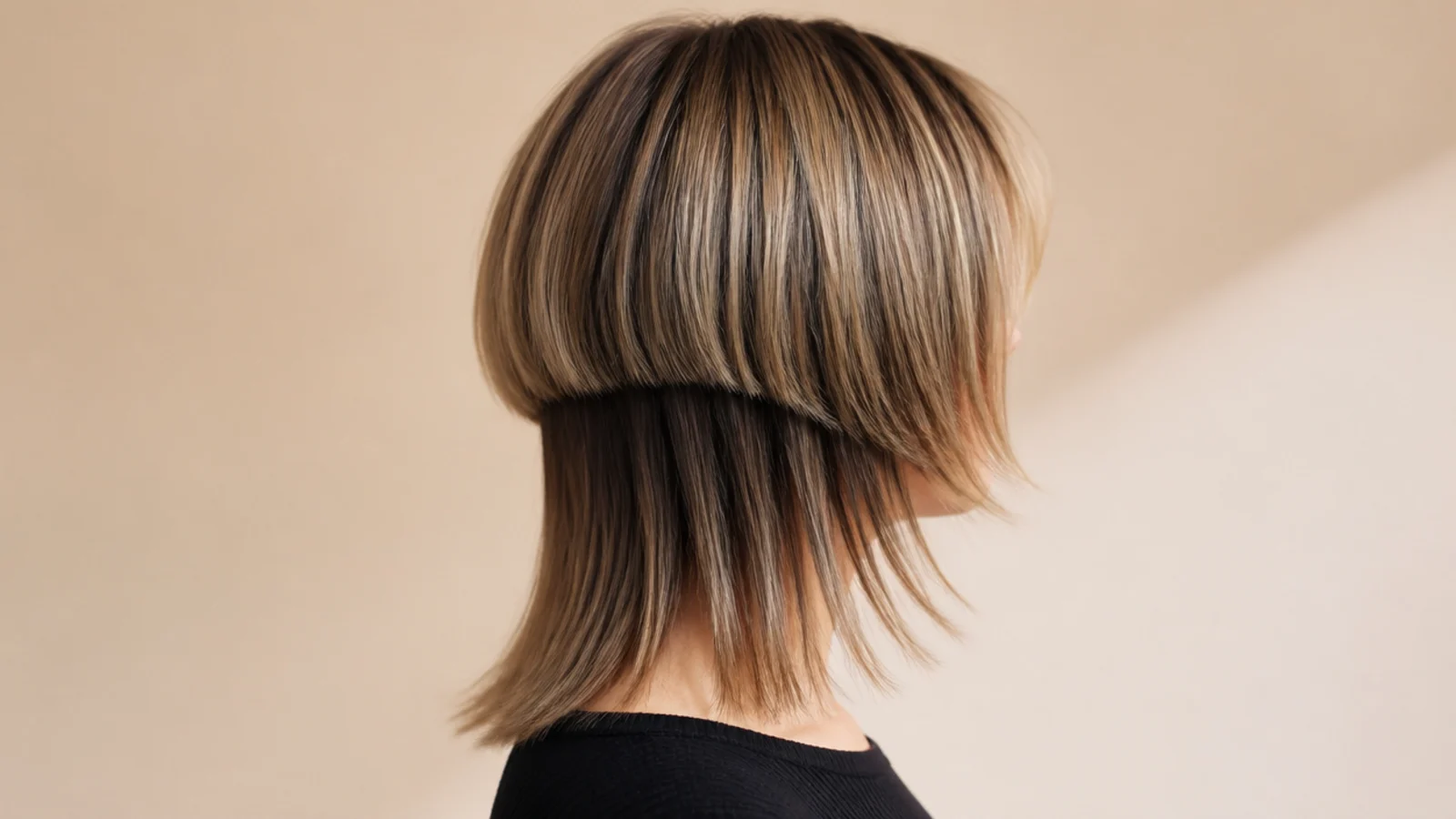
French bangs are wider at the sides than a classic fringe and slightly arched in the middle, so they frame rather than cover. Paired with a shoulder-length bell and mid-back lengths, this is the office-viable jellyfish: the contrast is visible but no single line is shocking, and you can still pull the lower half into a low ponytail. It is the version most likely to survive a conservative workplace. See the length logic in medium jellyfish haircut.
Who it suits: Anyone testing the trend, medium density, office dress codes.
Tip: Ask for the arch to start at the outer corner of each eye so the fringe widens the face slightly.
14. Jellyfish Haircut With a Hidden Undercut and Micro Bangs
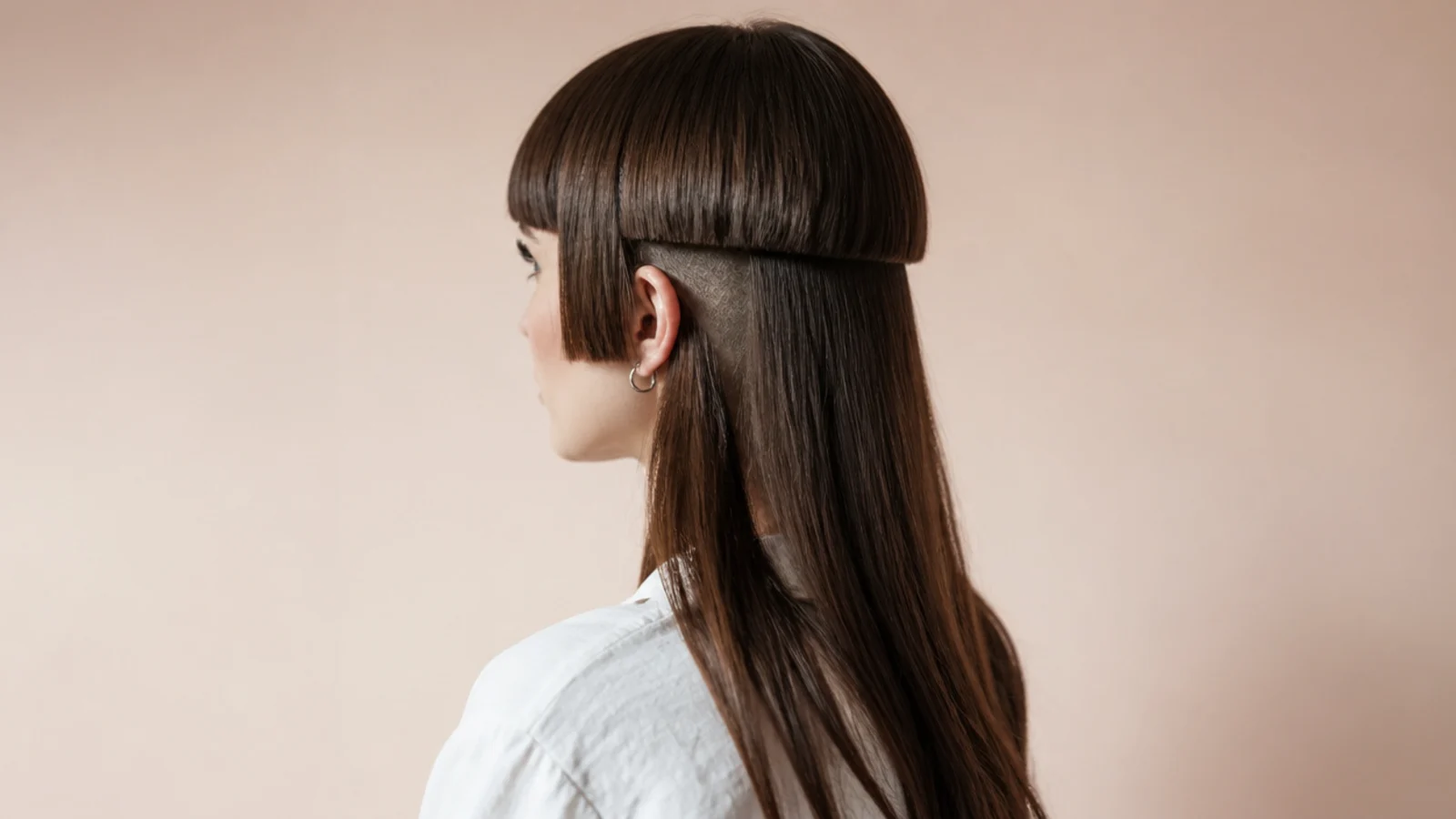
A shaved or clipper-cut nape hides under the long lengths and flashes when your hair moves, while a micro fringe signals the same attitude at the front. The undercut also removes bulk, which is the practical reason thick-haired clients ask for it: the bell can sit smooth instead of being pushed outward by the weight of the section beneath. Expect a clipper touch-up every three weeks alongside the fringe trim.
Who it suits: Thick heavy hair, alternative style, tolerance for regrowth stubble.
Tip: Ask for a number two guard at the nape only, kept two inches below your natural part line so it stays hidden.
15. Fine Hair Jellyfish Haircut With Feathered Bangs
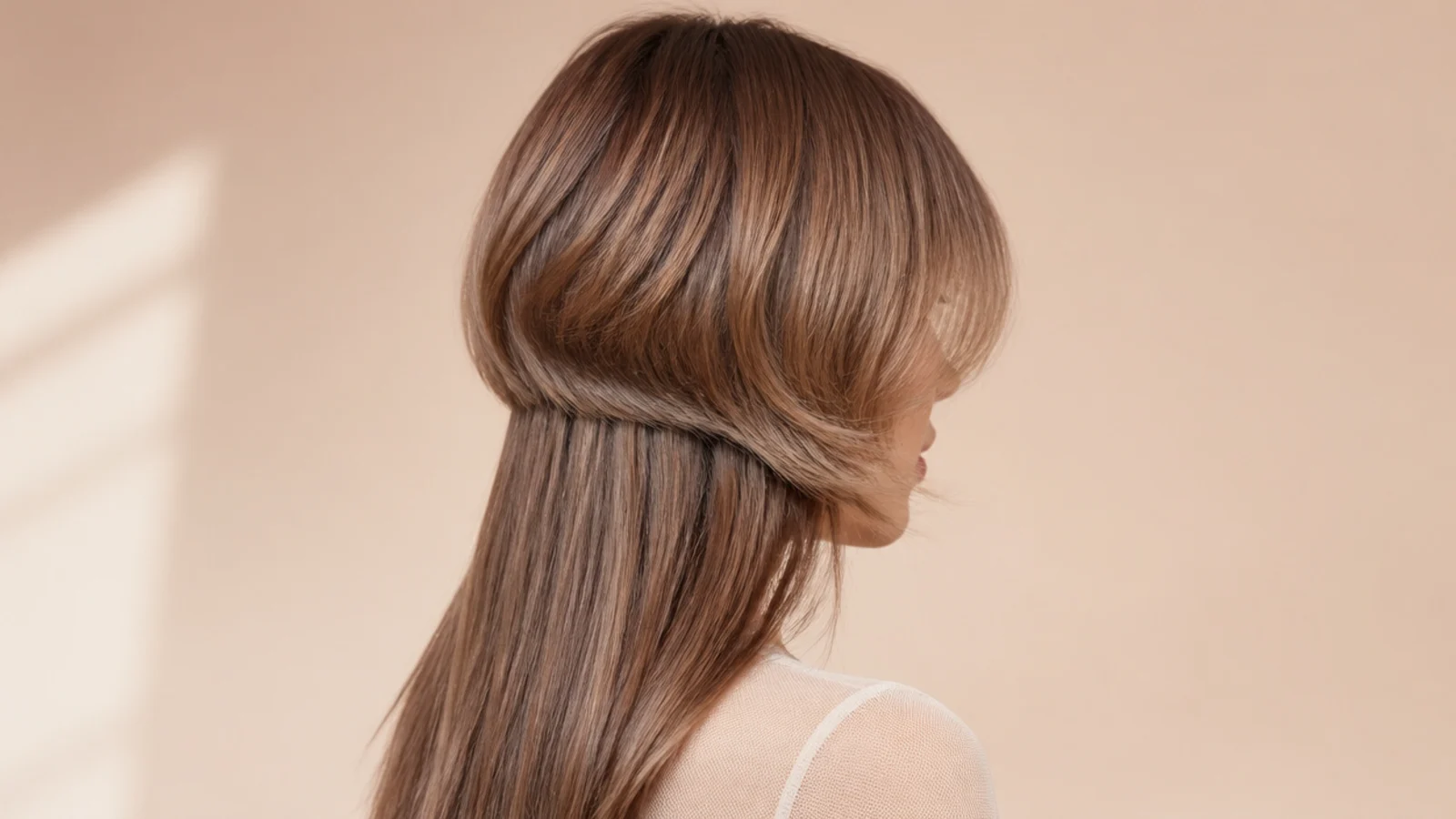
Fine hair struggles with this cut because a thin top section makes a transparent bell. The fix is a shallow fringe section and feathered ends, so the little hair you have up top looks fuller by being layered rather than blunt. Keep the bell at chin length, around 9 inches, where fine hair still holds a round shape, and use a mousse at the root before a round brush. Skip the blunt options entirely; they show scalp.
Who it suits: Fine density, straight hair, anyone whose ponytail is thinner than an inch.
Tip: Ask for the fringe taken from only one and a half inches of hairline depth so the bell keeps its weight.
16. Straight Jellyfish Haircut With Ruler-Blunt Bangs
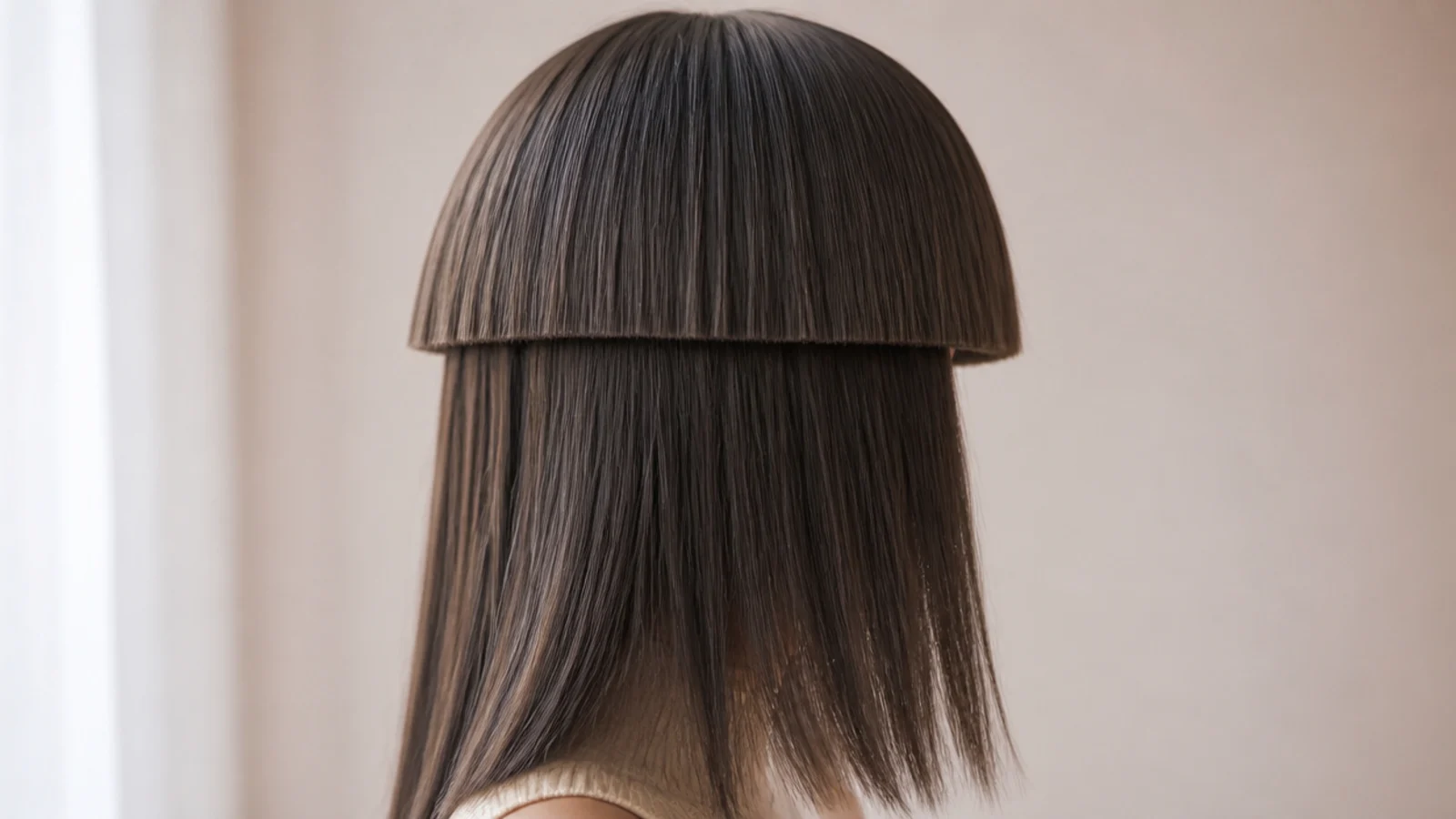
Poker-straight hair is the only texture that shows every line of this cut at full sharpness, and a ruler-blunt fringe is how you prove it. The fringe, the bell edge and the blunt hem of the long lengths make three parallel lines, which is the graphic look the trend is built on. It demands a flat iron and a silicone serum daily, plus a trim every three weeks, because a blunt line looks wrong the moment it grows uneven.
Who it suits: Naturally straight type 1 hair, oval faces, precision lovers.
Tip: Ask for the fringe cut with the hair combed flat and dry, using scissors held horizontally, not vertically.
17. Pink Bell and Bangs Over Dark Jellyfish Lengths
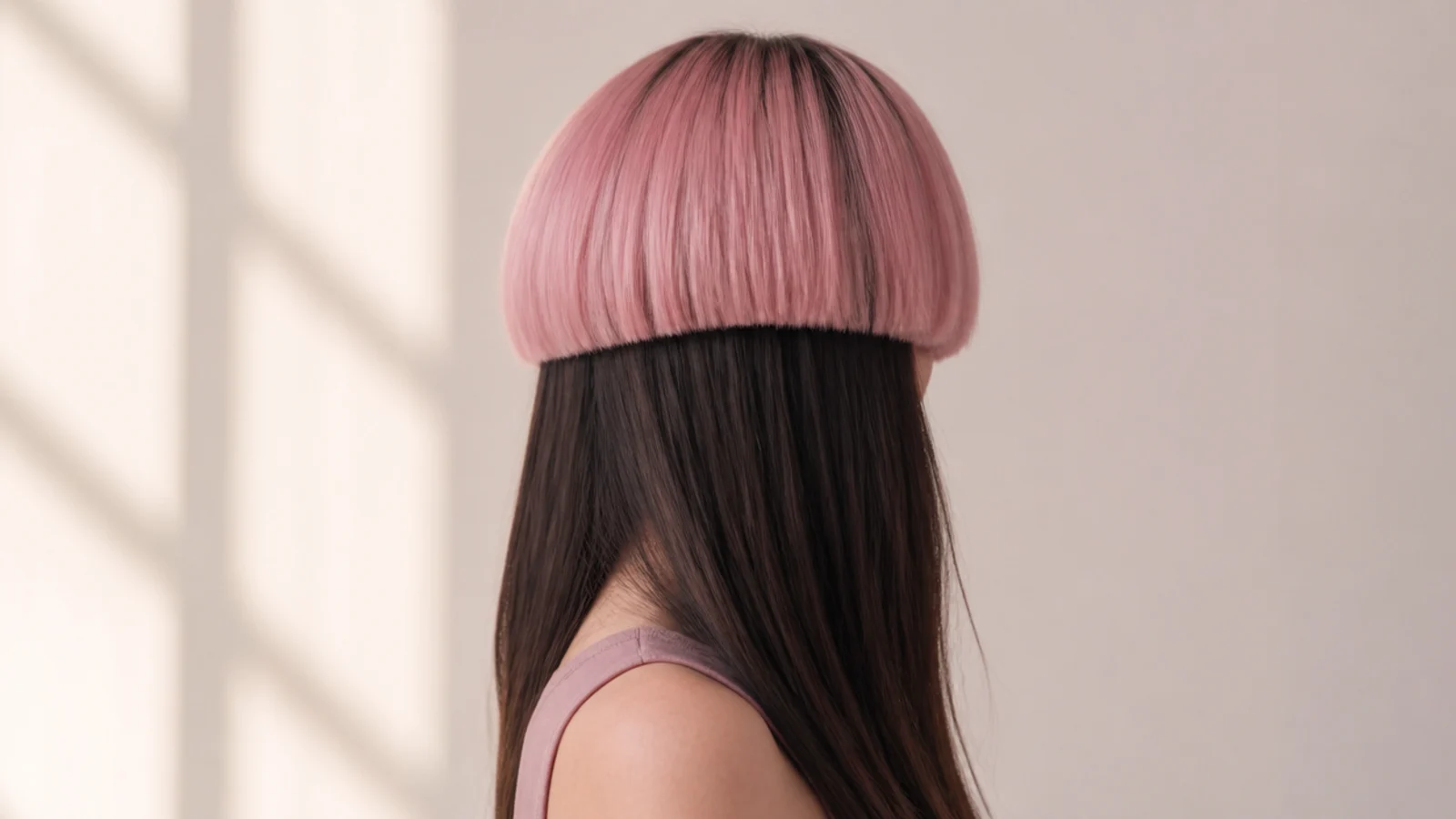
Same principle as the platinum version but in a vivid: the fringe and bell go pastel pink while the lengths stay dark, so you get a color pop that sits entirely in the visible top layer. Vivids fade fastest where heat lands, and on this cut all the heat lands on the bell, so expect to refresh with a color-depositing conditioner every second wash. A semi-permanent pink over pre-lightened hair holds roughly four to six weeks.
Who it suits: Pre-lightened hair, e-girl and pastel aesthetics, cool skin tones.
Tip: Wash the bell in cool water only, and dry-shampoo the fringe between washes to slow the fade.
18. Bottleneck Bangs for a Heart Face Jellyfish Cut
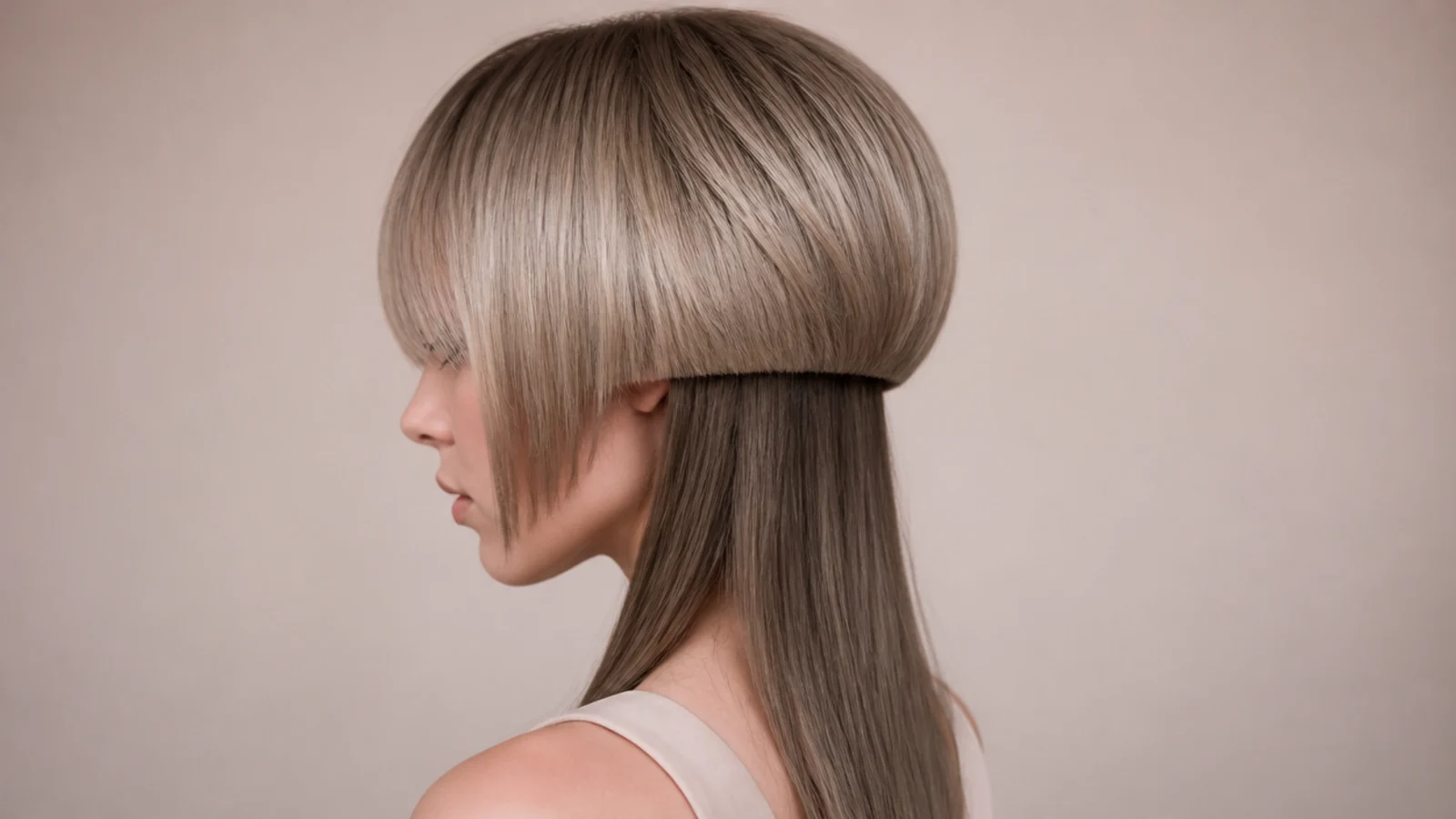
Bottleneck bangs are short and narrow in the center, then flare out sharply at the temples, tracing the shape of a bottle neck. On a heart face they add width at the jaw end of the fringe, which balances a wide forehead and a narrow chin, and they merge into the bell so cleanly that the bowl edge looks softer than it is. Keep the center at brow level and the flared pieces at the cheekbone.
Who it suits: Heart and inverted-triangle faces, straight to wavy medium hair.
Tip: Say bottleneck fringe, narrow at the center, flaring from the pupil outward, then let it dry before more is taken.
19. Shoulder-Length Jellyfish With Grown-Out Curtain Bangs
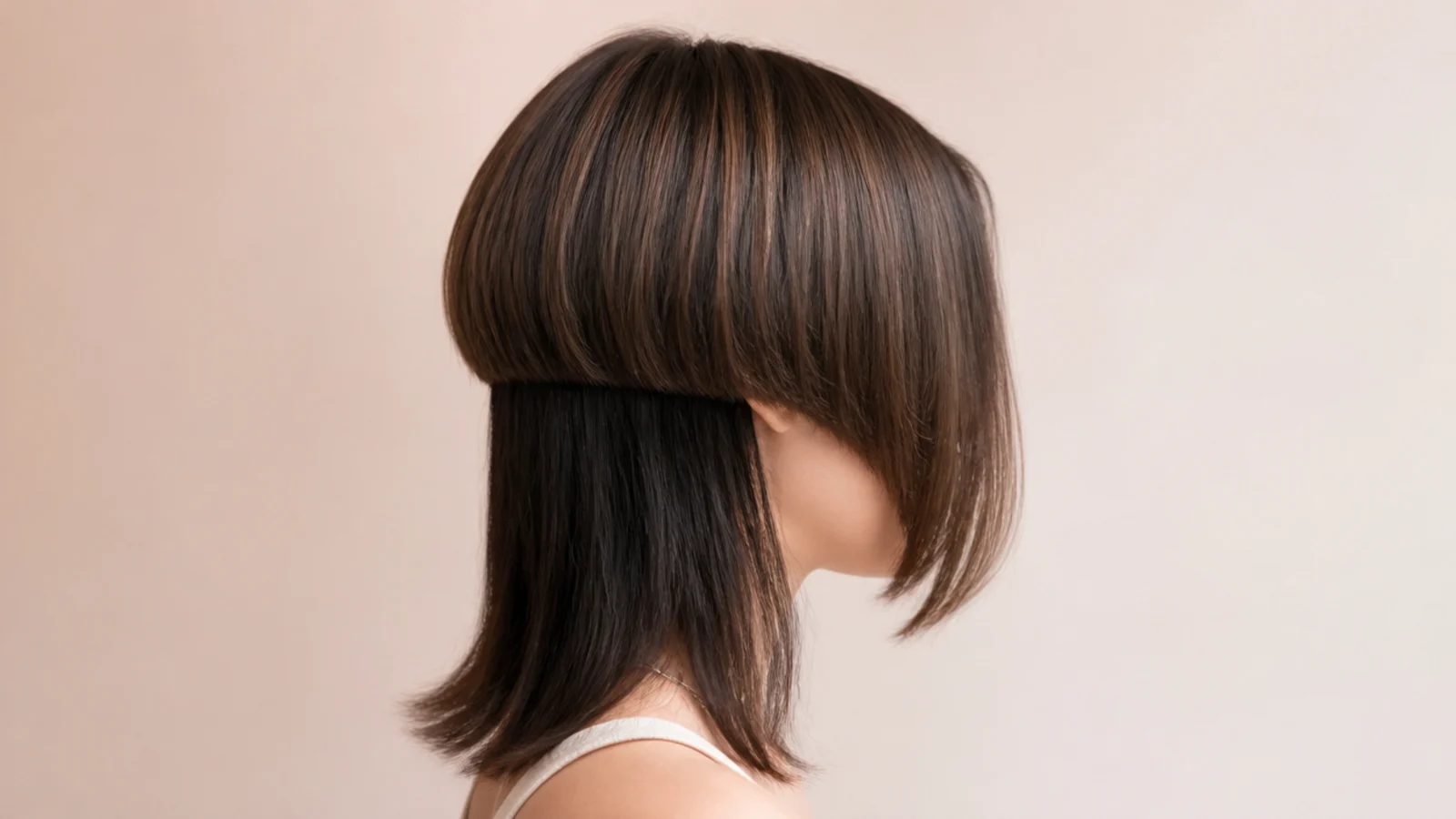
This is what a jellyfish cut with bangs looks like at month four, and it is worth asking for on purpose. The fringe has reached chin length, the bell has softened to a shoulder-grazing layer, and the whole shape reads as a structured shag with strong face framing. If you like this stage, ask a stylist for it directly rather than waiting for it. It also tells you exactly where the cut is headed if you stop maintaining it. See grown-out short curtain bangs.
Who it suits: Anyone unsure about commitment, all textures except tight coils.
Tip: Ask for the grown-out curtain shape, chin-length, with just enough disconnection to keep the top layer visible.
20. No-Bangs Jellyfish Haircut With Hime Side Pieces
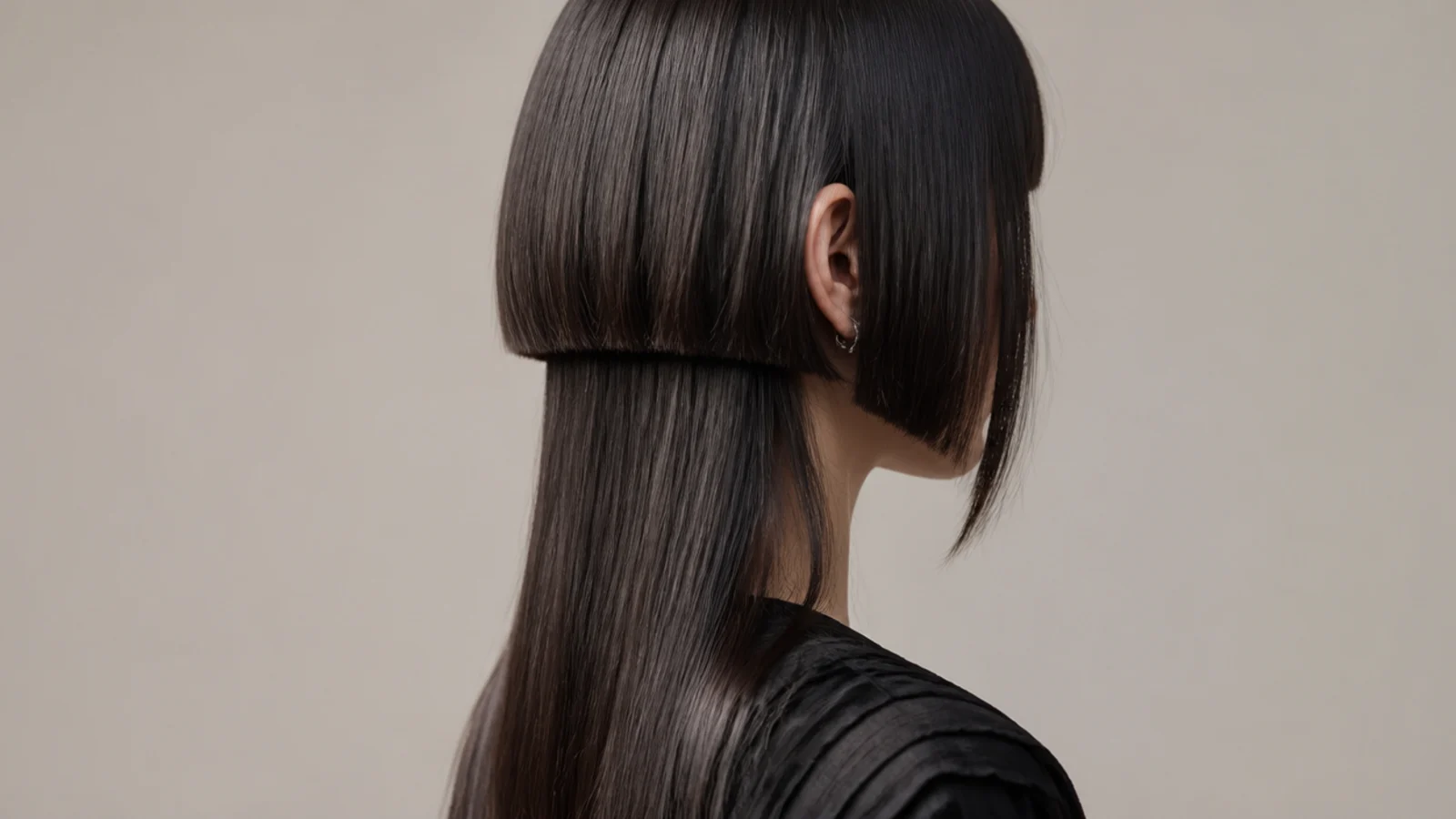
The alternative for anyone who wants face framing without touching the forehead. There is no fringe at all; instead, two blunt panels are cut at the cheekbone on either side of a center part, and the bell continues around the back as usual. You get the graphic front framing of hime bangs, and if you hate it, it grows into face-framing layers in about eight weeks rather than the four months a real fringe takes.
Who it suits: Bang-averse, high foreheads, anyone with a cowlick at the hairline.
Tip: Say no forehead fringe, blunt cheekbone-length side panels only, center parted, so nothing is cut above the eyes.
What a Jellyfish Haircut With Bangs Actually Is
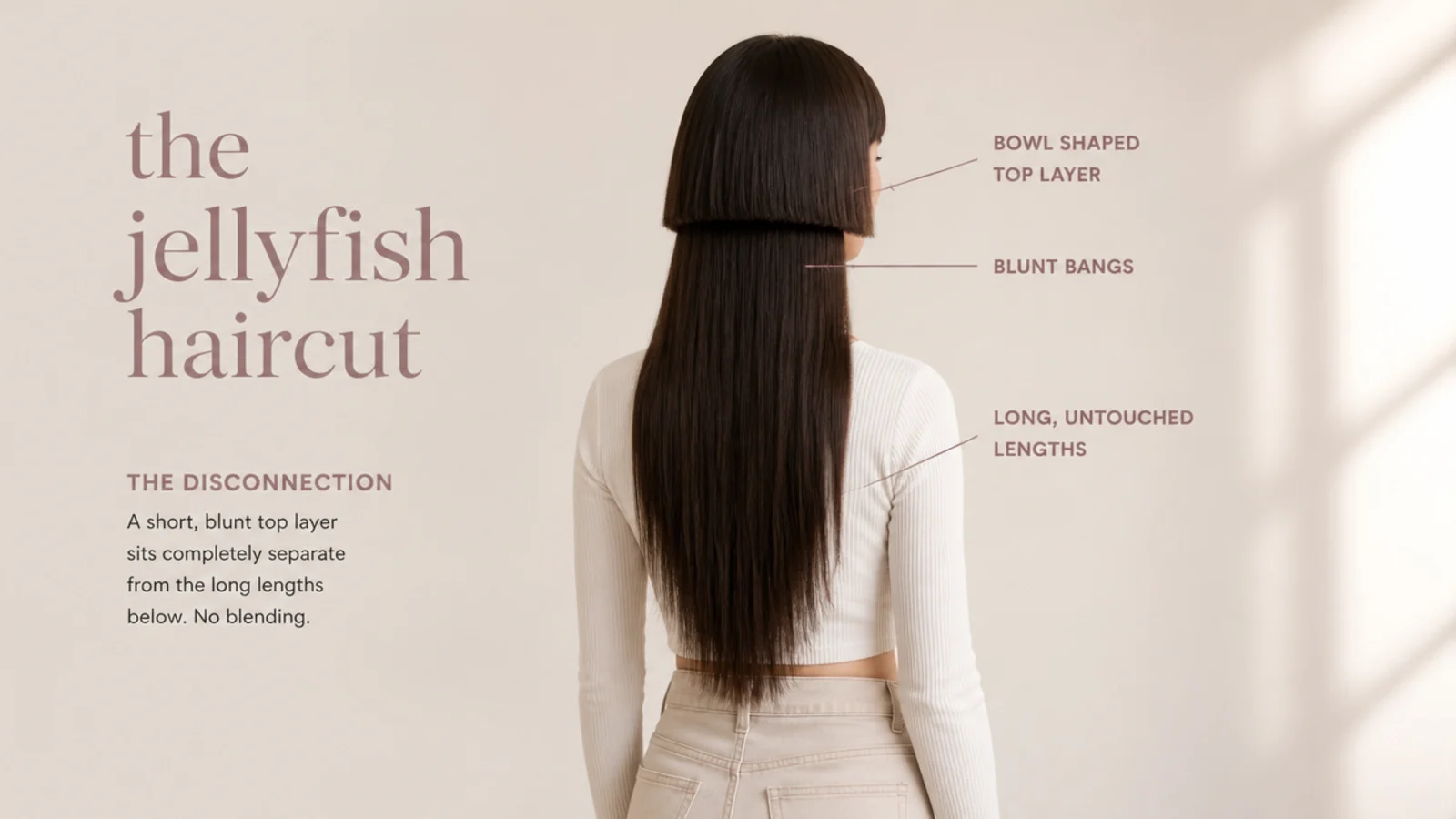
A jellyfish haircut is one short, rounded, bowl-shaped upper layer sitting over long lower lengths that are left essentially untouched. The two sections are cut independently and are never blended into each other, and that hard disconnection is what separates this cut from a shag, where every layer melts into the next. The upper layer is the bell; the long lengths hanging below it are the tentacles. When you add bangs, they come out of the same top section, so the fringe and the bell are physically one piece of hair cut at two lengths. That matters practically. Cut a fringe too deep and you steal weight from the bell, leaving it thin and see-through. Cut it too shallow and it separates into a strip that sits on top of the bell rather than flowing into it. Two inches of hairline depth is the usual working range, less on fine hair. The rest of the family is in the jellyfish haircut hub.
Which Bang Type Suits Your Face Shape and Hair Texture
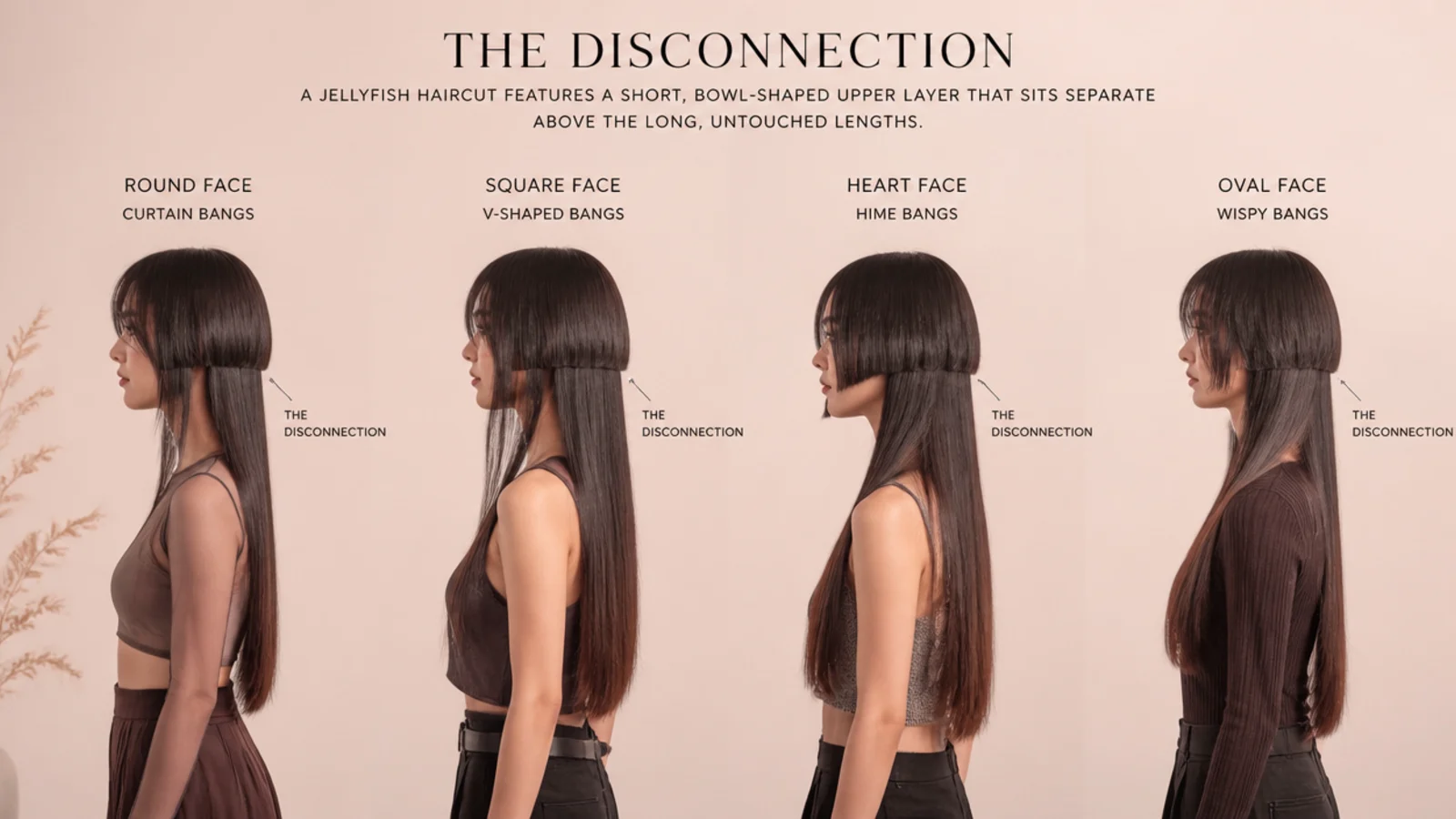
The bowl edge already draws a strong horizontal line across your face, so the fringe should add whatever that line does not. Round faces need a vertical break: V bangs, side-swept bangs, or a center-parted curtain that opens up the middle of the face. Square and rectangular faces need softness, so wispy see-through bangs and a bell dropped just past the jaw work better than anything blunt. Heart and inverted-triangle faces need width low down, which is exactly what bottleneck bangs deliver. Oval and long faces can take the graphic options nobody else can: micro bangs, blunt fringes and full hime panels. Texture is the second filter. Straight hair shows every line, so blunt shapes look intentional. Waves bend the fringe outward, which suits curtain and French bangs. Tight curls blur the disconnection entirely, so cropped curly bangs and a shorter bell are the realistic version. Fine hair should avoid blunt fringes, since they expose scalp through the bell. See short curtain bangs for fine hair.
Jellyfish Bangs vs Hime Cut vs Wolf Cut vs Mullet
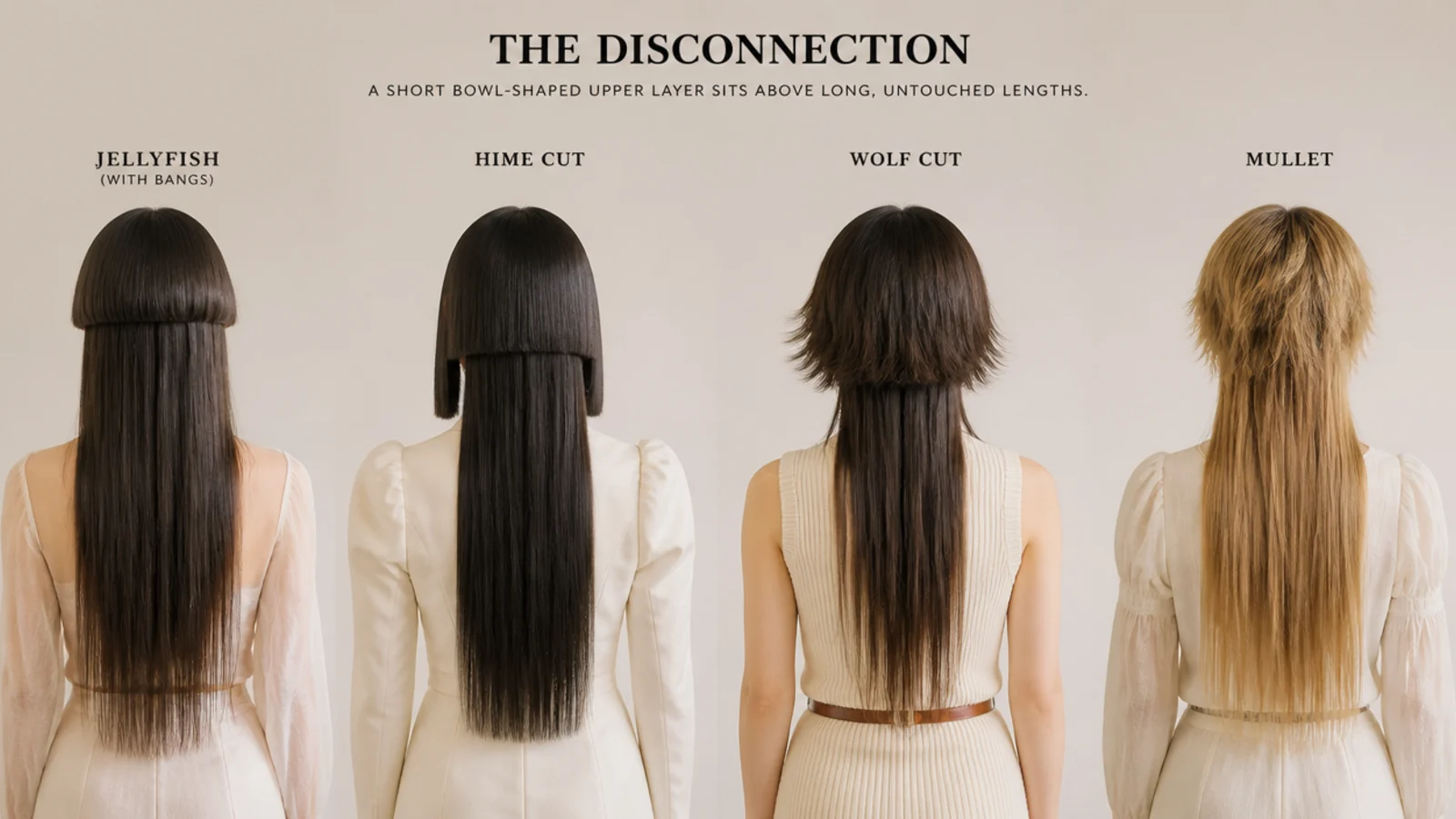
These four get confused constantly, and one detail separates them all: where the length sits and whether the layers connect. A jellyfish cut has a short rounded layer over long length all the way around, and the tiers do not blend. A hime cut keeps the length long everywhere and adds two blunt cheekbone panels plus a straight fringe at the front only, with nothing bowl-shaped happening at the back, which is why hime bangs on a jellyfish cut is a hybrid rather than the same thing. A wolf cut blends choppy layers from crown to ends with no break at all, so it reads soft where jellyfish reads graphic. A mullet keeps the front and sides short and the back long, so its contrast runs front to back rather than top to bottom. If you like the layered movement more than the hard line, a shaggy mid-length haircut is the calmer relative of the wolf cut and much easier to grow out.
How to Style the Short Top Layer and Your Bangs Together
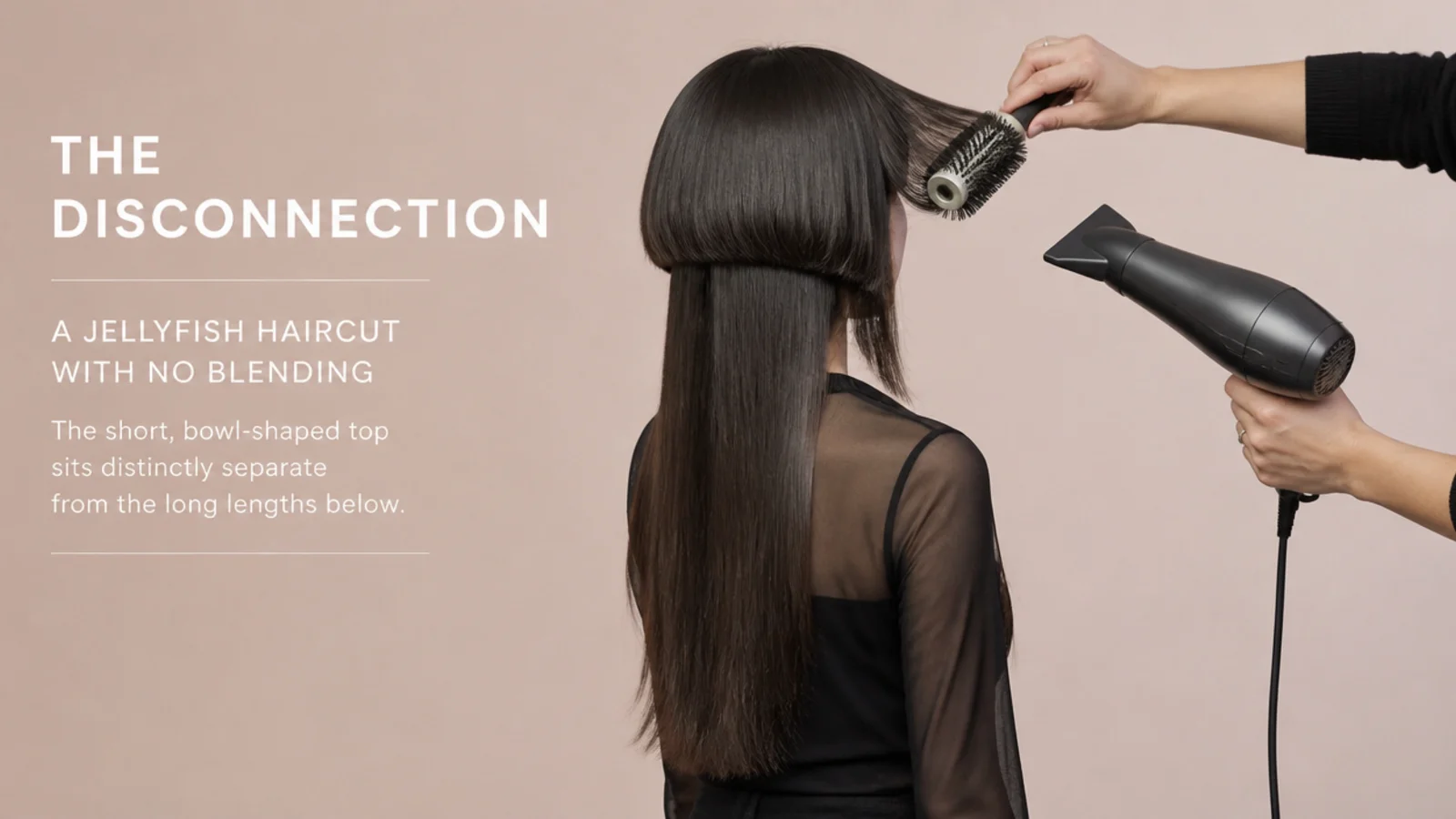
The bell almost never air-dries into the shape it was cut in, and this is the part people underestimate. Blow-dry the fringe first, while it is still damp, moving the dryer side to side across the hairline so it dries flat instead of splitting. Then take the top layer in two-inch sections over a round brush, roughly a two-inch barrel, and roll the ends under so the bowl keeps its curve. A flat iron works too: hold it horizontally, glide down and rotate the wrist at the last inch to flick the ends inward. The long lengths need almost nothing by comparison, which is the hidden efficiency of this cut. A heat protectant spray before either tool, and a pea of lightweight serum through the bell only, keeps the top layer from looking fluffy against the smoother lengths. Skip oil on the fringe entirely; it collapses within an hour. For a heatless morning, mist the bell with water and brush it into shape while damp.
Growing Out a Jellyfish Haircut With Bangs
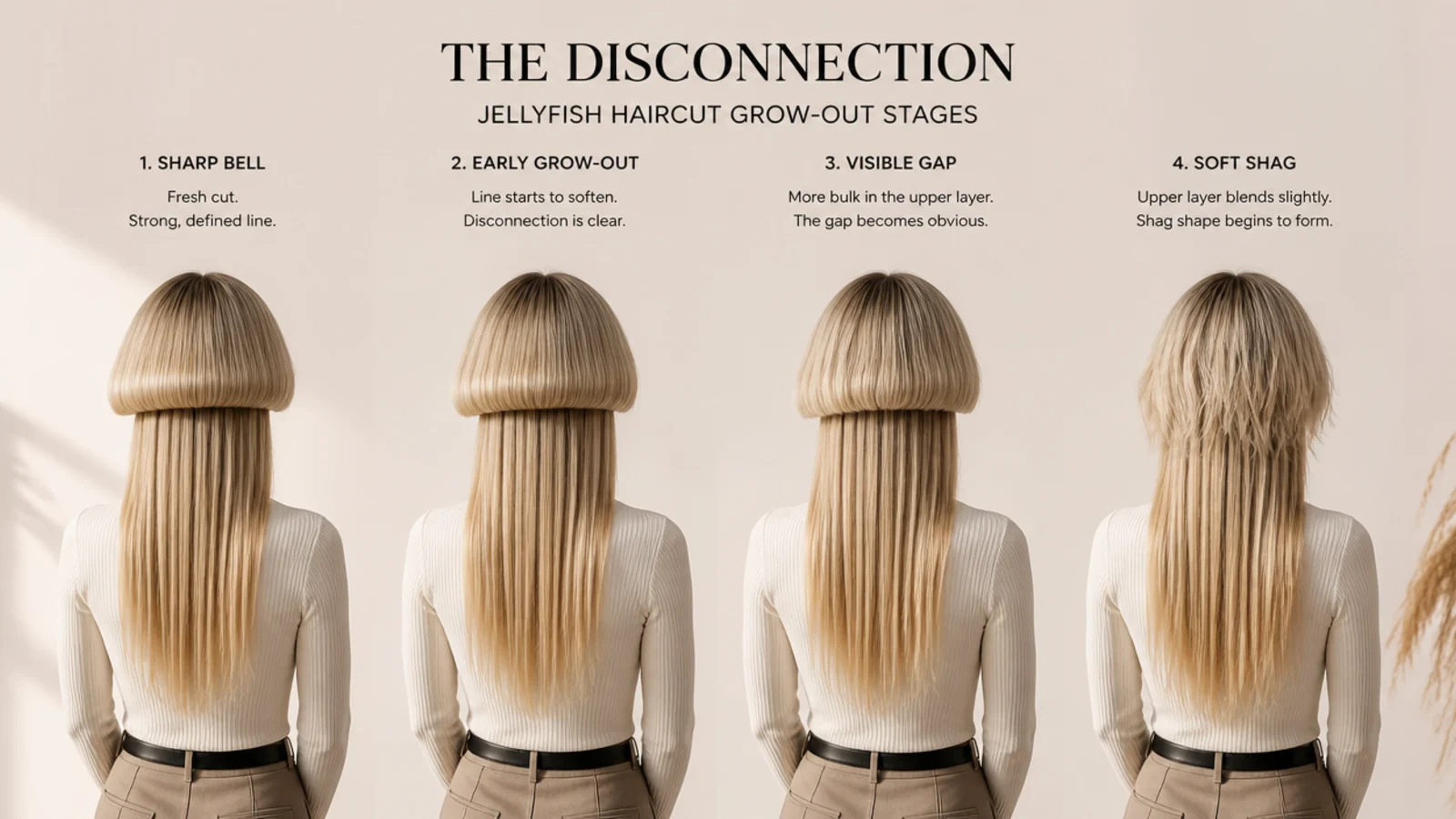
Be honest with yourself before the first cut: this shape has an in-between phase, and it lasts roughly two to three months. Around week six the bell reaches the length where it no longer curves under but is not yet long enough to blend, so it sits out at the sides. That is the stage most regret happens. Two things get you through it. First, ask a stylist to add texture to the ends of the top layer so it starts merging into the lengths instead of sitting on them. Second, wear the fringe pushed to one side or pinned back on the days the bell misbehaves. The good news is the destination: a jellyfish cut grows out into a shag or a curtain-bang shape, both of which are perfectly wearable haircuts in their own right. Bangs grow about half an inch a month, so a brow-level fringe reaches the chin in about eight months. Length options are compared in long jellyfish haircut.
How to Ask for a Jellyfish Haircut With Bangs Without a Disaster
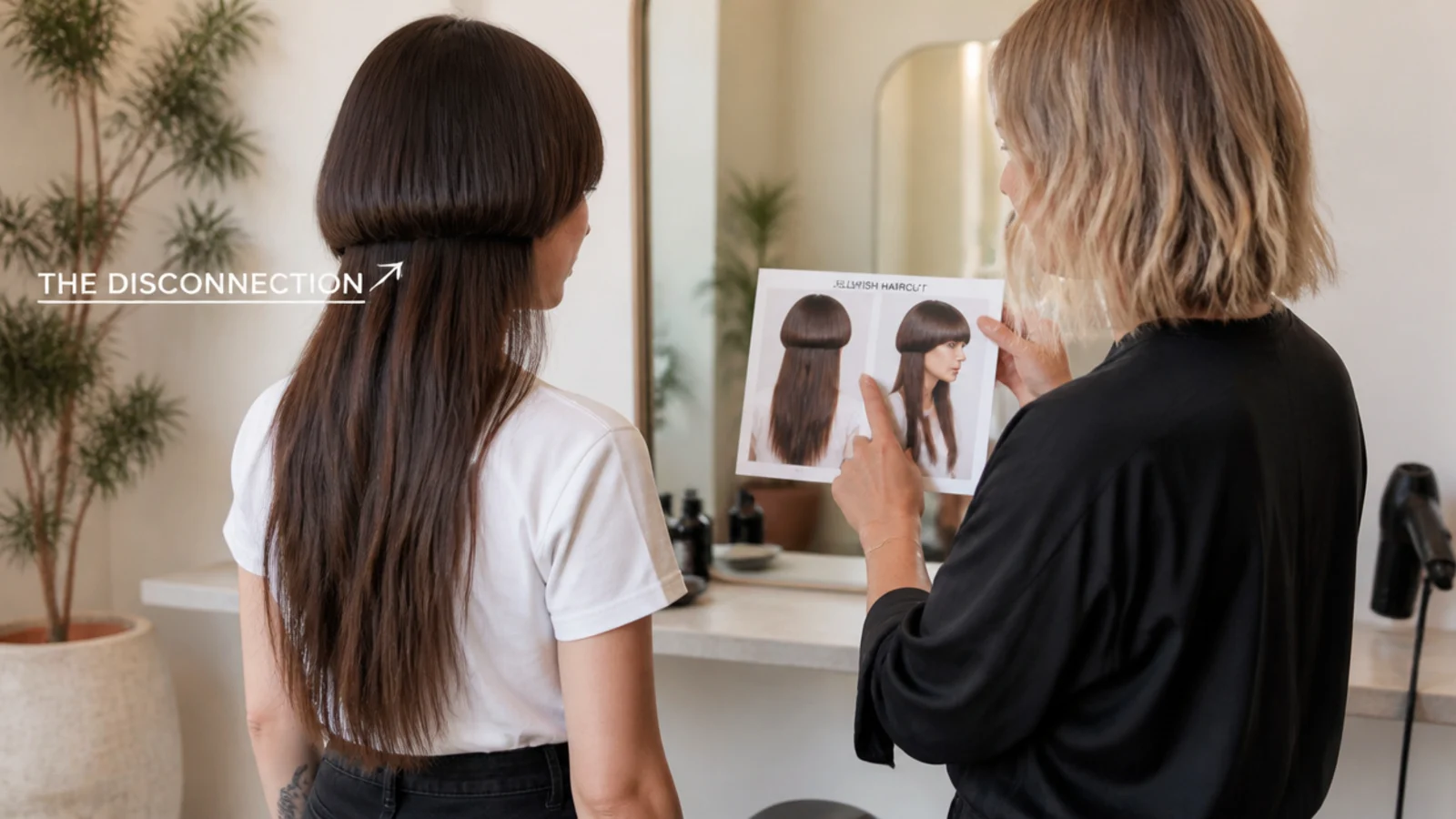
Never say bowl cut, and never say mullet. Use this instead: a disconnected bowl-shaped upper layer, with the length left long underneath. Then give three numbers. Where the bell stops, named against your own face, so cheekbone, jaw, chin or collarbone. Where the fringe stops, so brow, lash line or cheekbone. And how much of the lower lengths you want removed, which for most people is nothing beyond a dusting. Say the word disconnected out loud at least twice, because a stylist trained on shags will instinctively blend, and blending kills the whole cut. Bring two photos: one front view for the fringe and one back view for the bell, since the back is where the surprise usually lands. Finally, ask them to cut the fringe dry and last. Expect 90 minutes and a higher price than a standard trim. If you want the same face framing with far less risk, look at face-framing mid-length haircut first.
Frequently Asked Questions
What is a jellyfish haircut with bangs?
It is a jellyfish cut, meaning a short disconnected bowl-shaped top layer over long untouched lengths, with a fringe cut from that same top section. The bangs and the bell are one continuous piece of hair cut at two lengths, which is why the fringe type you choose changes how sharp or soft the whole cut reads.
Which bangs look best with a jellyfish haircut?
Curtain bangs are the safest and most flattering across face shapes because they soften the bowl edge without hiding it. Hime, micro and blunt fringes give the sharpest, most graphic version. V bangs and side-swept bangs suit round faces by adding a vertical or diagonal line, and wispy see-through bangs soften a square jaw.
Is a jellyfish haircut with bangs high maintenance?
Yes, more than the version without bangs. A blunt or micro fringe needs trimming every two to three weeks, curtain and wispy bangs every four to six. The bell itself needs a re-cut every six to eight weeks if it is blunt, or ten to twelve if it is textured, plus a round brush or flat iron most mornings.
Is the jellyfish haircut the same as a hime cut?
No. A hime cut keeps all the length and adds two blunt cheekbone side panels plus a straight fringe at the front, with nothing shortened at the back. A jellyfish cut has a rounded short layer running all the way around the head over long lengths. Hime bangs on a jellyfish cut is a popular hybrid of the two.
Can you get a jellyfish haircut with bangs on curly hair?
You can, but the disconnection blurs as curls get tighter. Loose 2C and 3A curls still show the bell shape. From 3B down the top layer reads as a rounded halo rather than a hard line. Cut dry, curl by curl, and add at least an inch to every length to allow for shrinkage before anything is removed.
How short is the top layer on a jellyfish haircut?
It depends on how much contrast you want. Cheekbone level, roughly seven to eight inches from the part, is the most dramatic. Jaw level at ten to eleven inches is the common middle ground. Collarbone or shoulder level is the softest and easiest to wear, and still shows the disconnection on straight or wavy hair.
What does a jellyfish haircut with bangs grow out into?
A shag or a curtain-bang shape, depending on how much texture your stylist puts into the ends of the top layer. The in-between phase, when the bell is too long to curve under and too short to blend, lasts about two to three months. Adding texture at week six shortens that stage considerably.
Does a jellyfish haircut with bangs suit thin hair?
Only in the feathered versions. A fringe takes hair out of the top section, and on fine density that leaves the bell transparent enough to show scalp. Keep the fringe section under an inch and a half deep, choose feathered rather than blunt ends, and hold the bell at chin length where fine hair still holds a rounded shape.
Can you tie up a jellyfish haircut with bangs?
The long lengths go up fine into a low ponytail or bun, but the bell is too short to be caught, so it stays down as a curtain of hair around your face. Many people like that look; if you do not, a claw clip that grabs the lengths at the nape hides the transition better than a high ponytail does.
Which jellyfish haircut look are you saving?
If you take one thing from these 20 jellyfish haircut bangs ideas, make it this: the fringe and the bell are one piece, so choose them together rather than adding bangs as an afterthought. Curtain and wispy bangs blur the disconnection and give you the easiest grow-out. Micro, hime and blunt bangs commit hard to the shape and need a trim every three weeks. Bring two photos, ask for a disconnected bowl-shaped upper layer with length left long underneath, and name where you want the bell to stop. If you are still choosing a length, compare short jellyfish haircut against long jellyfish haircut, or browse the whole jellyfish haircut hub.