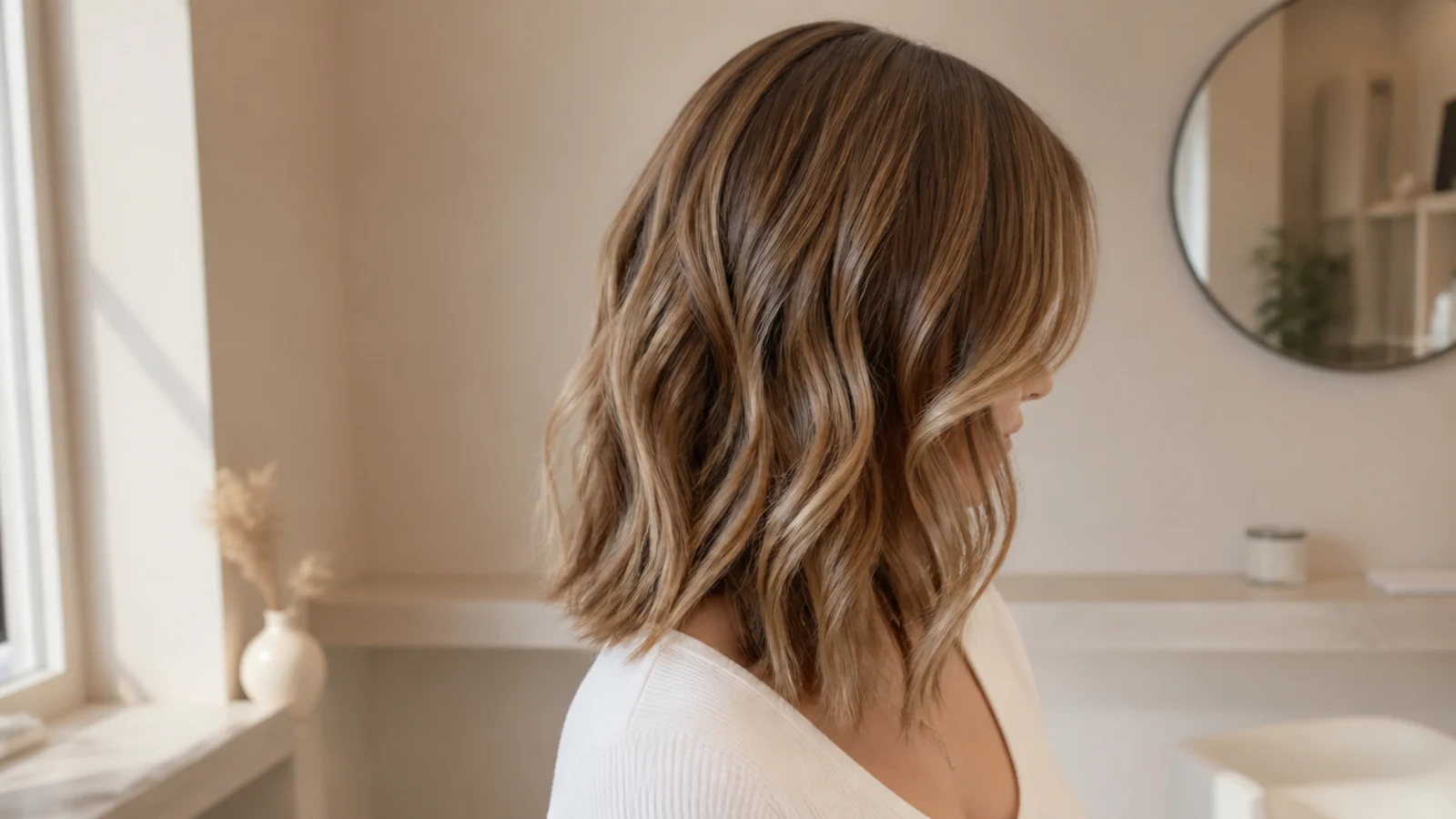
Quick Comparison
| Cutting Wavy Mid Length Hair Dry | Cutting Wavy Mid Length Hair Wet | |
|---|---|---|
| How length is judged | Where each wave actually falls, in its dry pattern | Stretched wet length, then it springs up after |
| Springback risk | Almost none; what you see is the finished length | High; 2C can dry two to three inches shorter |
| Best for wave type | 2B and 2C, and anyone with uneven wave patterns | 2A and loose waves with under an inch of springback |
| Layer placement | Cut curl family by curl family, so nothing sticks out | Cut in even sections, which can leave stray short pieces |
| Triangle prevention | Stylist sees the width build and removes it live | Width only shows up once you get home |
| Appointment length | 60 to 90 minutes | 30 to 45 minutes |
| Typical cost | 90 to 200 dollars | 60 to 120 dollars |
| Availability | Specialist stylists only; check the service menu | Any salon |
| Best use case | A shape change, a first cut with a new stylist, or fixing a triangle | A maintenance dusting on a shape that already works |
1. 2A Wavy Mid Length Haircut With Long Invisible Layers
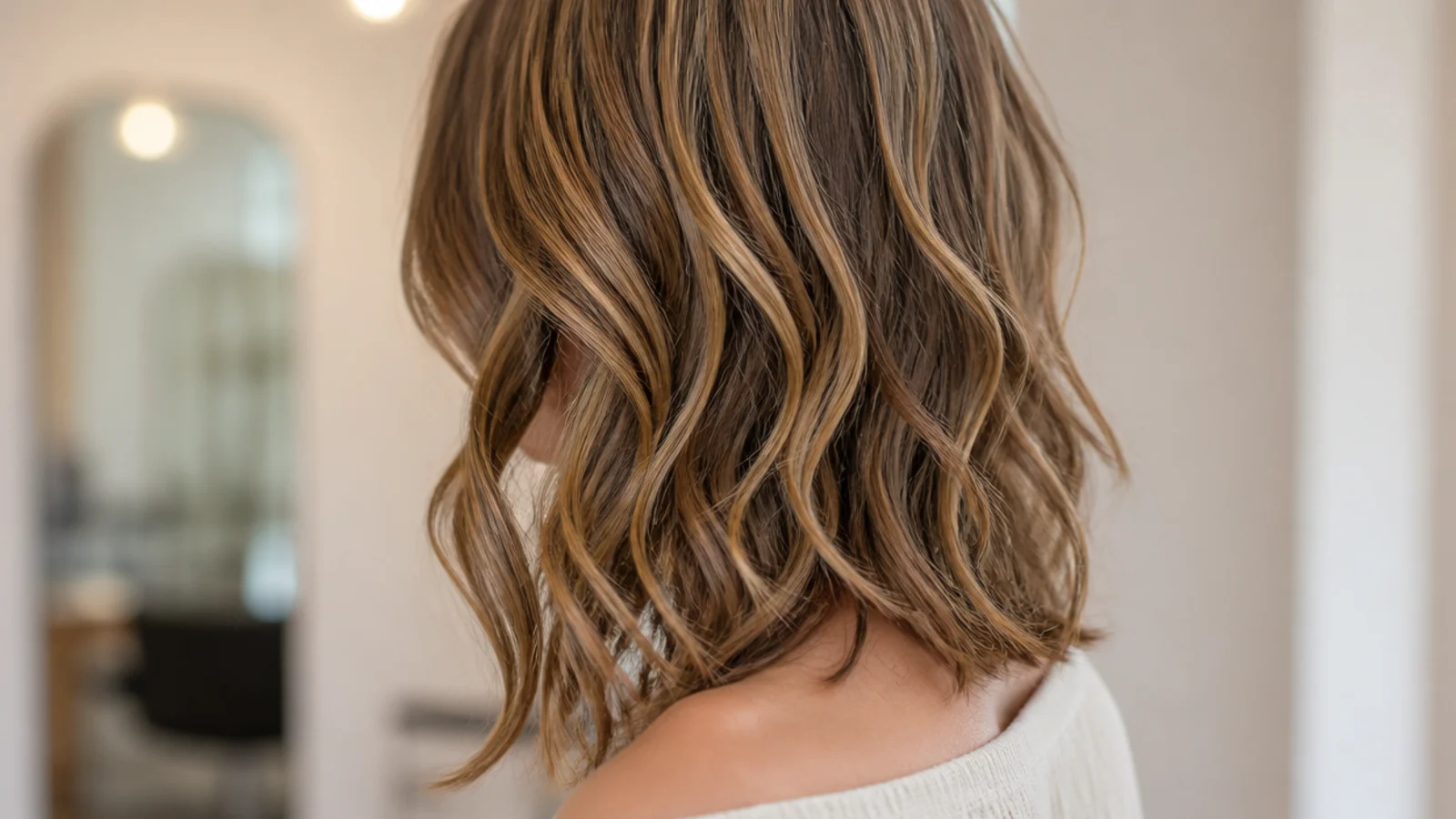
A 2A pattern is a loose S bend that lives mostly from the mid-shaft down, and it collapses under heavy layering. The fix is three or four long invisible layers cut inside the hair, the shortest of them landing no higher than the collarbone, so the surface line stays intact and the bend gets somewhere to sit. Length goes right at the collarbone, which on a 2A means cutting about half an inch below your target because that is roughly what it springs. It reads polished rather than beachy, and it survives a rough air-dry. More layer options in mid length haircut with layers.
Who it suits: Loose 2A waves that fall flat when heavily layered.
Tip: Ask for internal layers only, nothing visible on the outer perimeter, so the wave keeps a solid baseline.
2. 2B Wavy Collarbone Lob With Curved Face-Framing
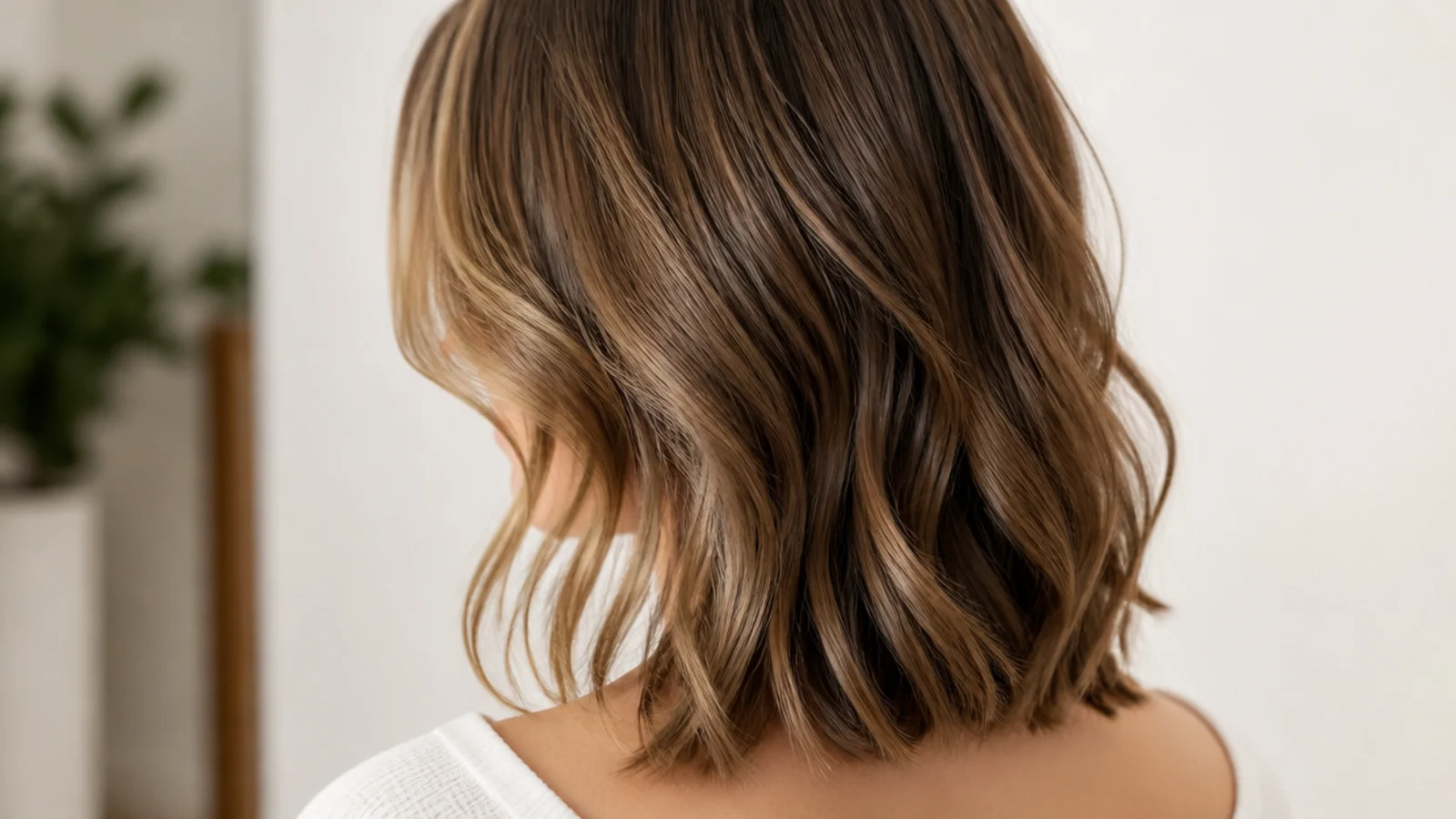
2B is the defined S wave that starts around eye level and holds a shape on its own. It suits a true collarbone lob with face-framing cut on a curve from the jaw down to the length, so the front pieces fall into the wave instead of sticking out of it. Blunt face-framing on a 2B creates a hard shelf; a curved, softly graduated line does not. Expect a good inch to an inch and a half of springback, so wet length should sit at the top of the chest. Budget 60 to 120 dollars at a mid-tier salon.
Who it suits: Defined 2B waves wanting shape without losing length.
Tip: Say curved face-framing from the jaw, blended into the length, not a step.
3. 2C Wavy Mid Length Cut Shaped Dry, Curl by Curl
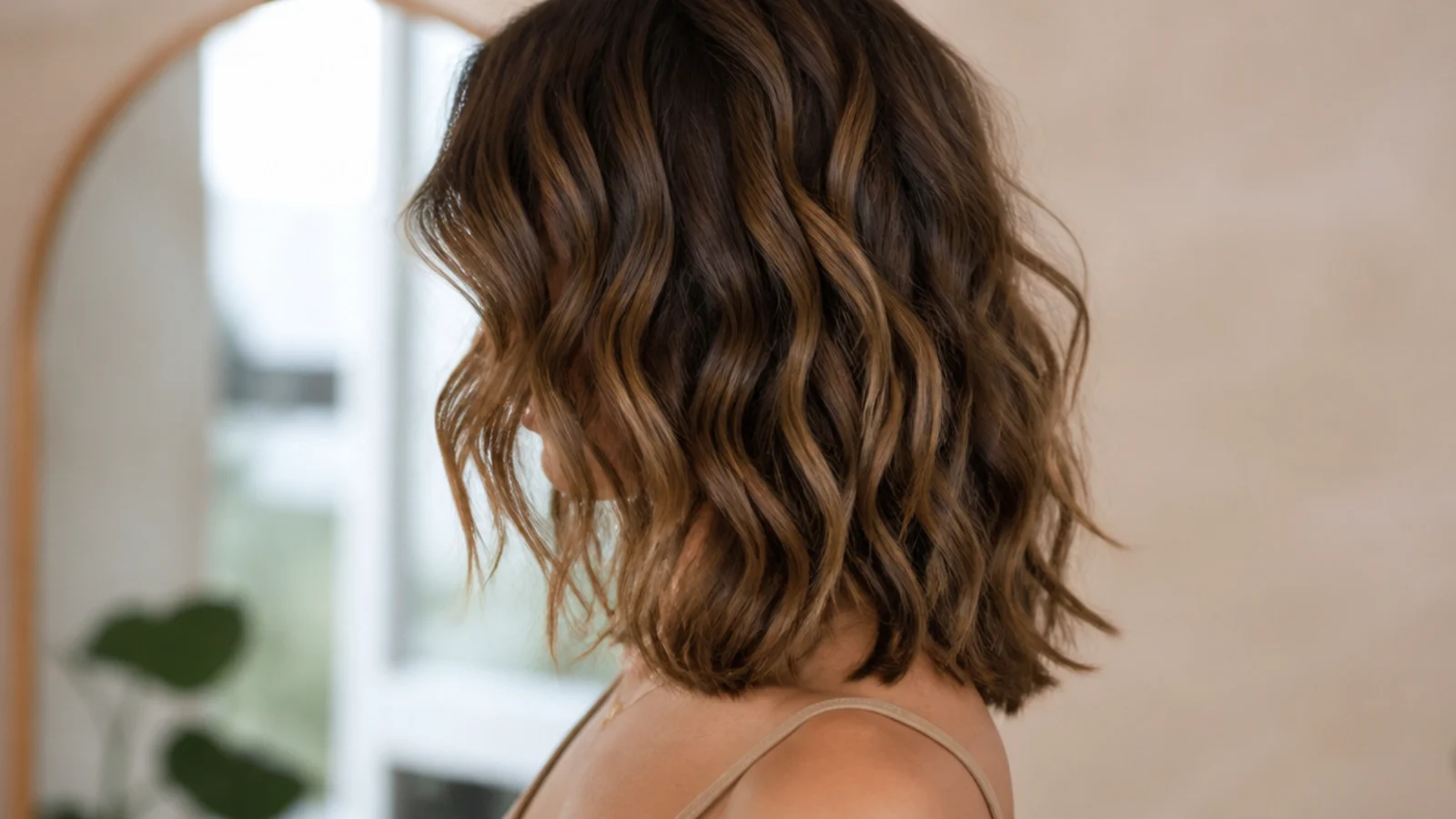
2C waves are nearly curls: tight S bends with real volume at the root and two to three inches of springback. Cut wet, the length lands short and the ends flare. Cut dry, in its natural pattern, each wave family is trimmed where it actually sits, and the result falls just below the shoulder as intended. Expect a dry cut to cost 90 to 200 dollars and take 60 to 90 minutes because it is slower work. It is the single biggest upgrade a 2C can make. The same logic drives curly mid length haircut ideas.
Who it suits: 2C waves and anyone whose cuts always end up shorter than expected.
Tip: Book a stylist who lists dry cutting or curl-by-curl cutting on their service menu, not just any salon.
4. Wavy Mid Length Shag With Choppy Crown Layers
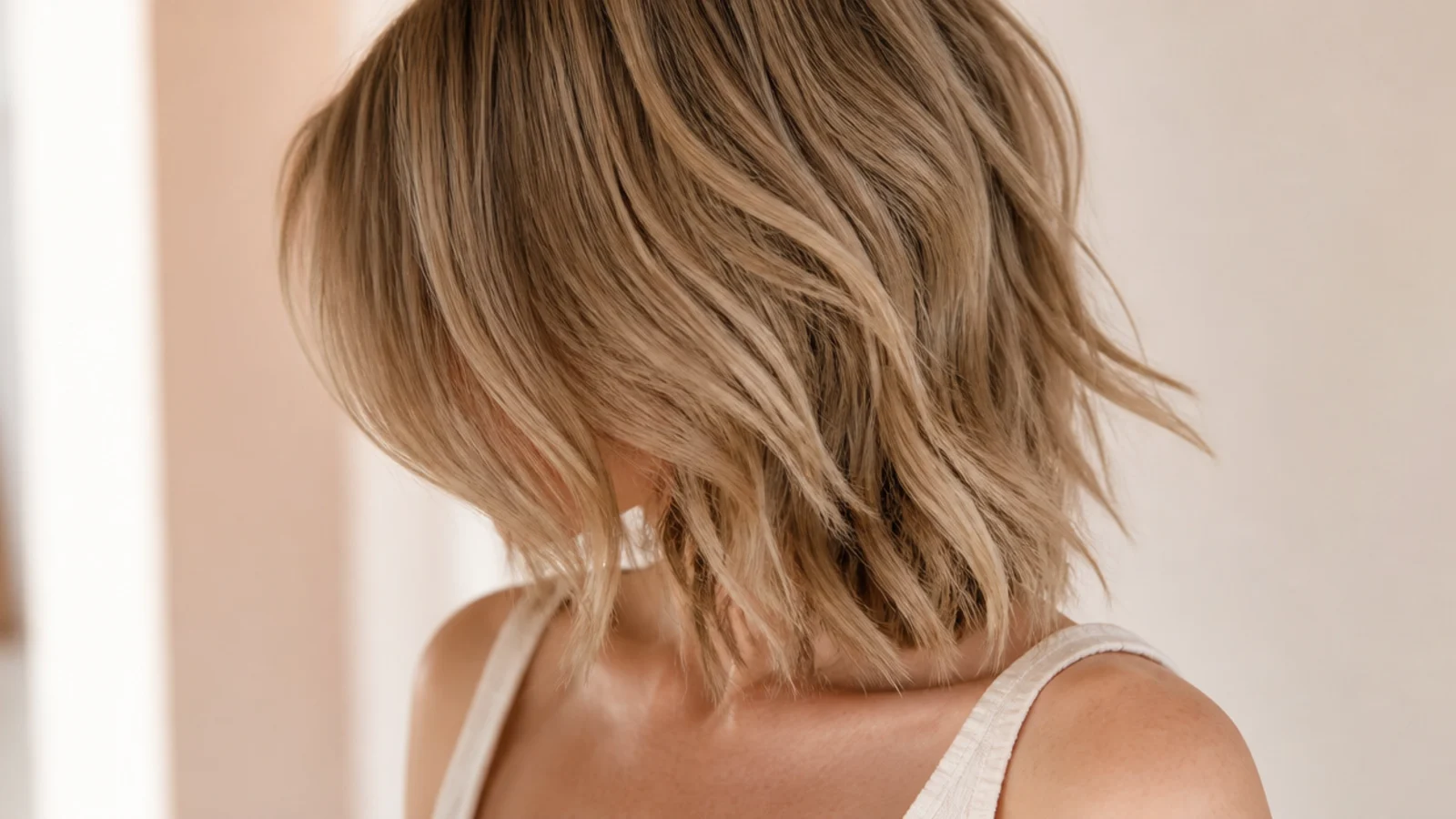
The shag puts its shortest layers high, around the crown and cheekbone, and leaves the perimeter mid length. On waves that trade works because the top layers get lift while the length keeps its bend. Ask for choppy crown layers with point-cut ends and keep the perimeter at the collarbone. The honest catch is product dependency: a wavy shag needs mousse or a sea salt spray at the root or it goes mushroom-shaped by week six. Cut cost runs 70 to 140 dollars, and it needs a trim closer to every 8 weeks than 12. Compare it against the classic shape in mid length haircut.
Who it suits: 2B and 2C waves that want visible volume and a rock-leaning edge.
Tip: Ask for the shortest crown layer no higher than your cheekbone so the top does not puff.
5. Wavy Mid Length Haircut With Curtain Bangs
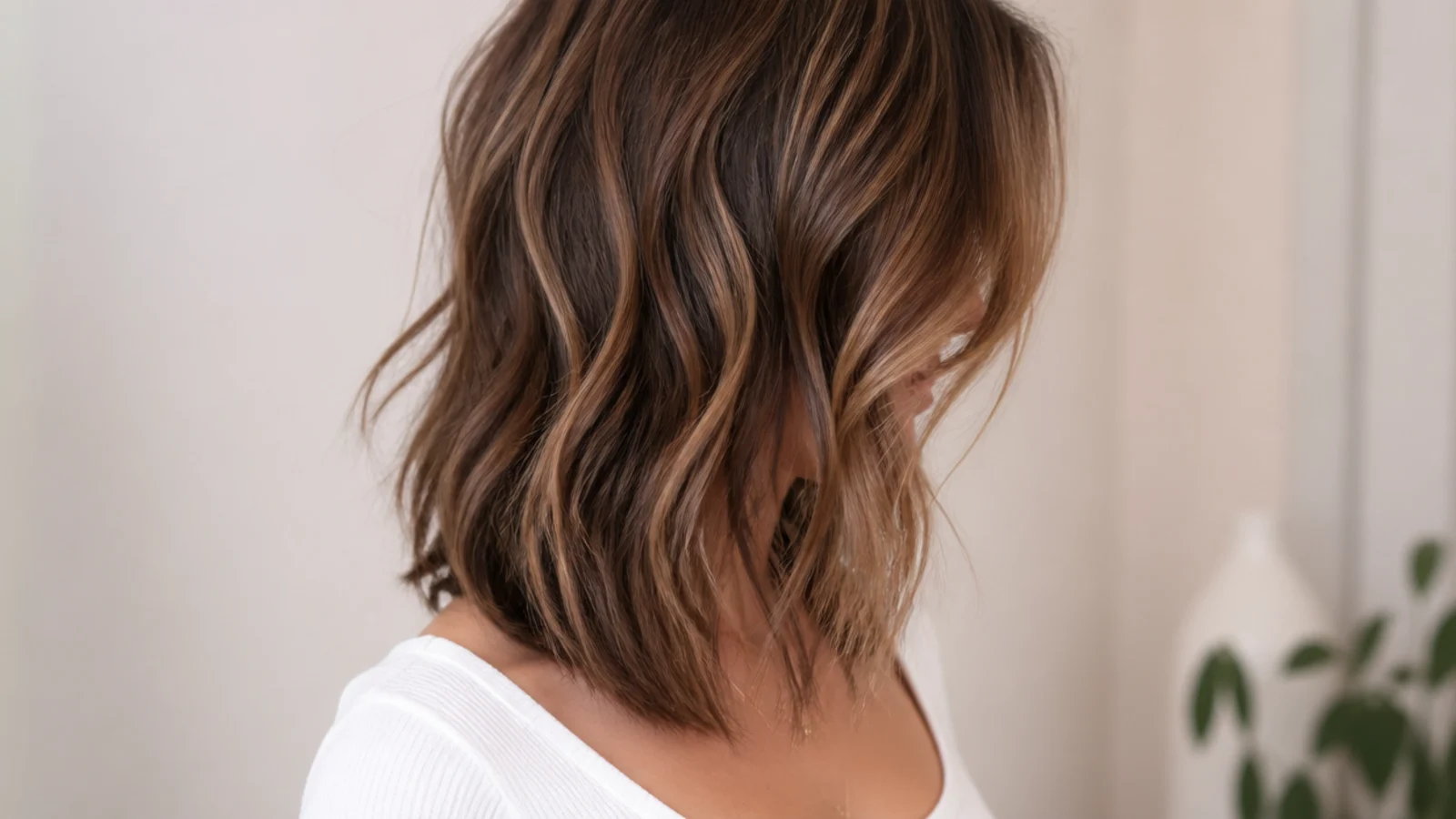
Curtain bangs on wavy hair have to be cut longer than they look, because the fringe springs up more than the length does. On a 2B, a curtain bang meant to hit the cheekbone gets cut at the corner of the mouth wet. The parting splits at the center and sweeps out, and the outer edge should be cut long enough to blend into the face-framing rather than stop abruptly. This is the most forgiving fringe on waves because it grows out into face-framing instead of an awkward stage. Full detail in mid length haircut with curtain bangs.
Who it suits: Anyone testing bangs who wants a reversible option.
Tip: Ask for the fringe cut dry so the springback is visible before the second pass.
6. Angled Wavy Lob That Sits Longer at the Front
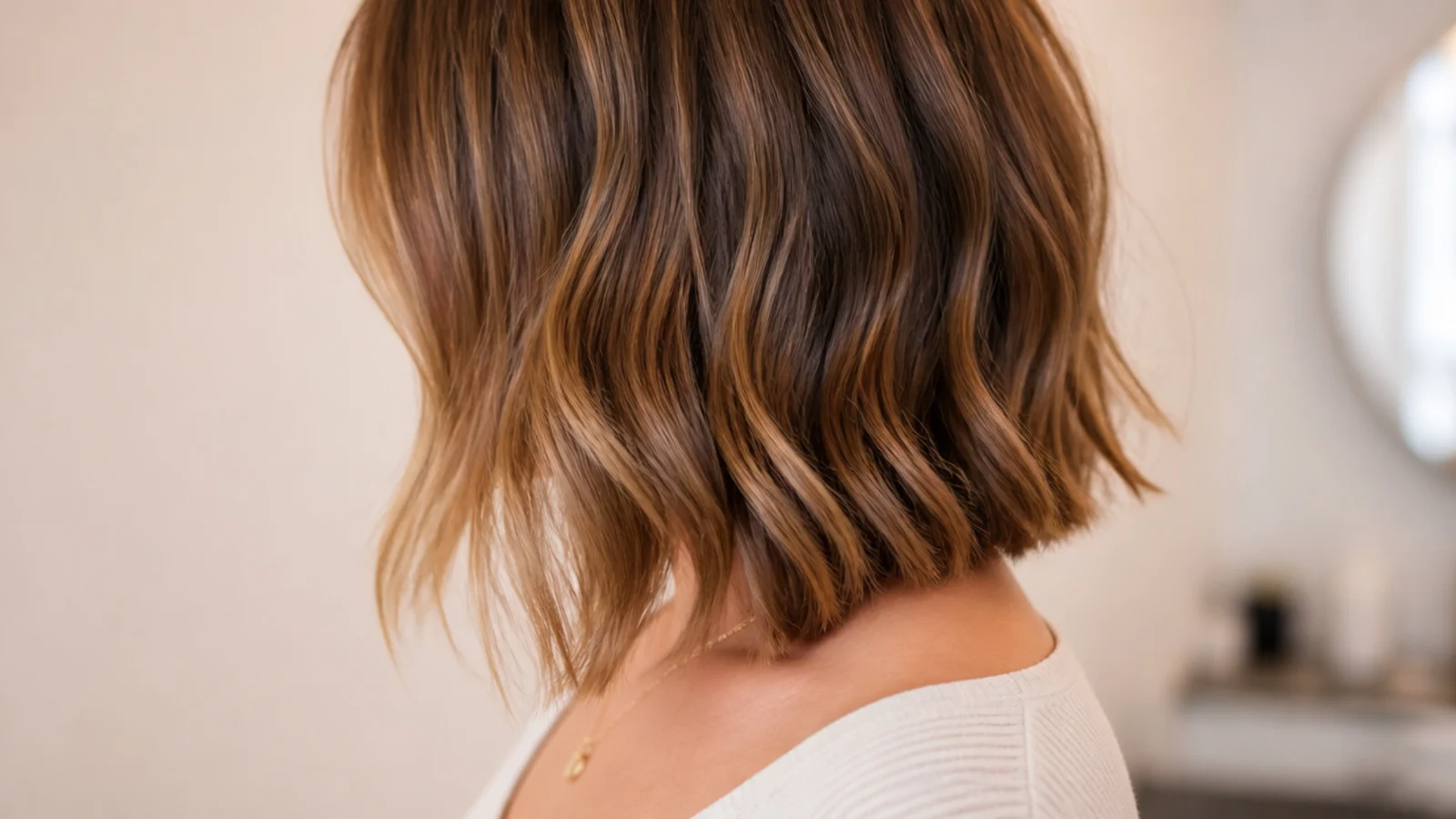
A slight forward angle, roughly one to one and a half inches longer at the front than the back, pulls the eye down the face and keeps the front pieces from swinging backward as the wave dries. On wavy hair the angle needs to be gentle; anything steeper reads as an A-line bob and the corners flip out. Back length sits at the nape-to-collarbone line, front at the top of the chest. It is the most flattering shape for round and square face shapes because the longest point falls past the jaw.
Who it suits: Round and square faces wanting length at the front.
Tip: Say a soft forward graduation of about one inch, not an A-line.
7. Wavy Mid Length Butterfly Cut for Faked Length
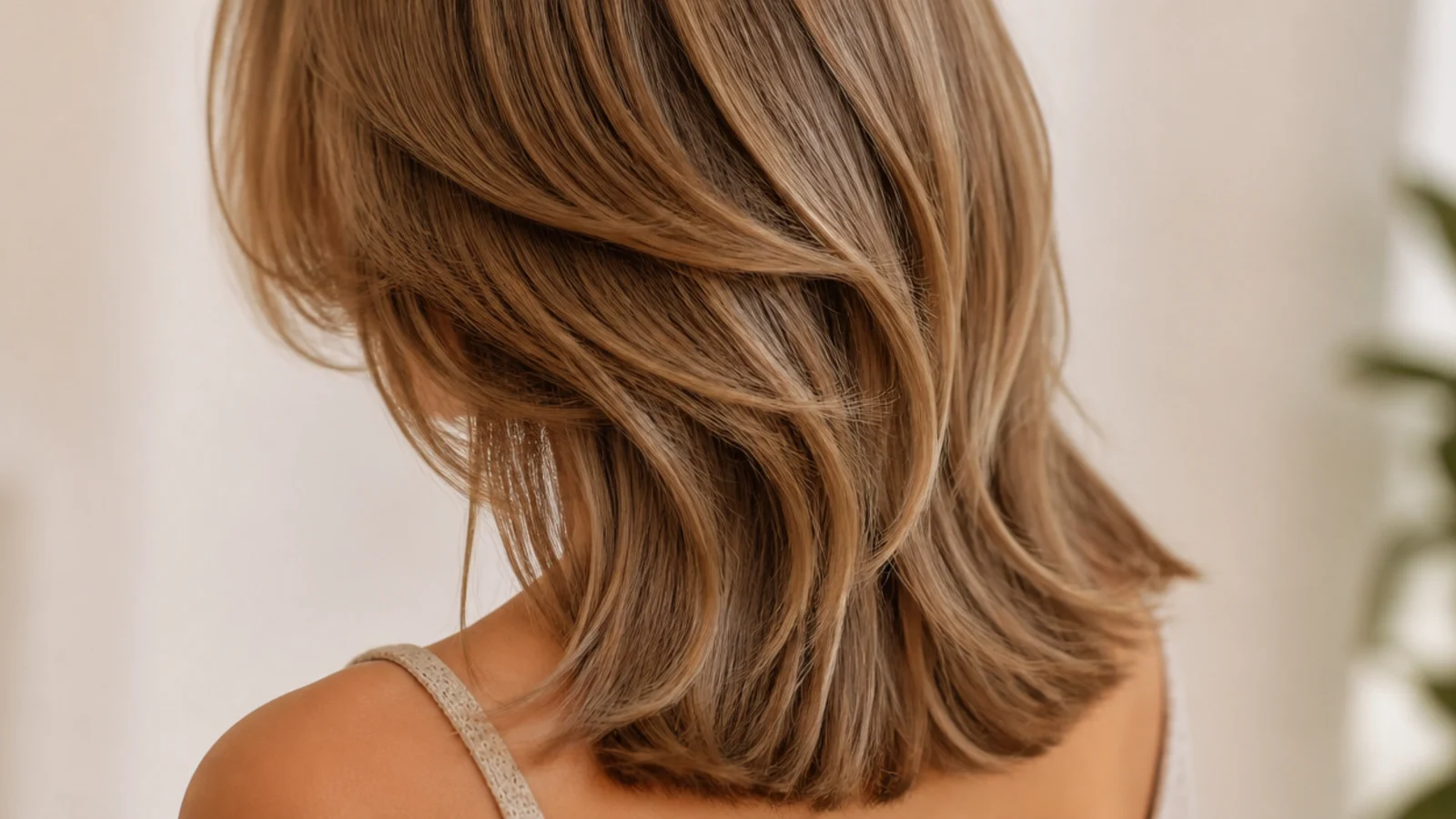
The butterfly cut stacks a short internal layer set around the chin and cheekbone over a long perimeter, so when the top layers are curled you appear to have short shaggy hair, and when they are smoothed you appear to have long hair. On waves it does two useful things at once: the short layers get the crown volume waves usually lack, and the untouched perimeter keeps the length that makes mid length work. The risk is a visible ledge where the two lengths meet, which is why the connecting layer has to be blended, not stacked.
Who it suits: Thick 2B and 2C hair that wants volume without losing length.
Tip: Ask for the short layer blended into the long one with a soft diagonal, no disconnection.
8. Blunt Wavy Collarbone Cut With Hidden Interior Layers
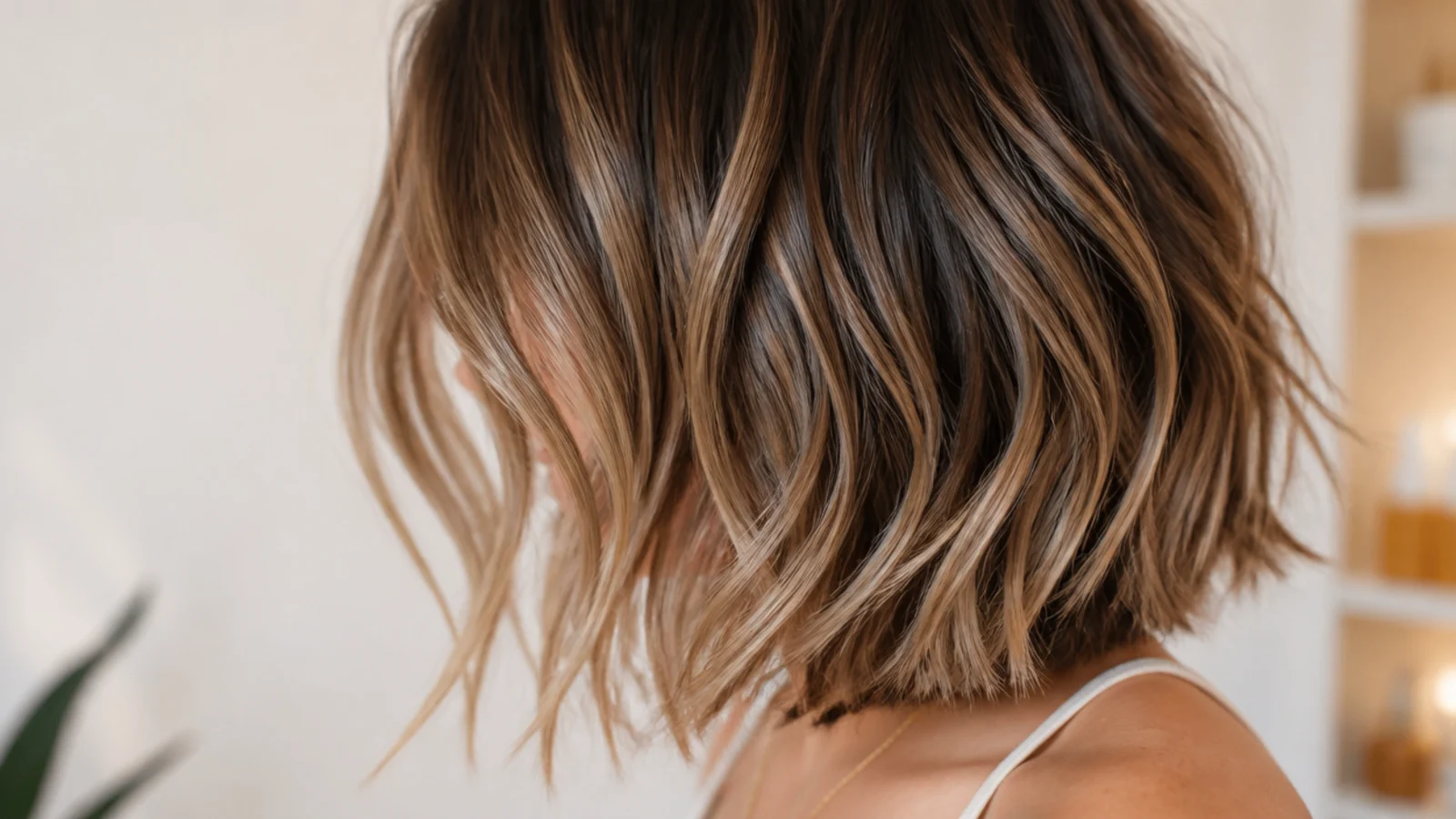
A blunt perimeter at the collarbone with all the layering hidden inside gives waves the one thing they usually lack: a strong bottom line. Without it, wavy ends taper into wisps and the whole shape reads unfinished. The interior layers, cut two to four inches up from the ends and never visible on the surface, remove just enough bulk that the blunt line does not sit like a helmet. This is the most expensive-looking wavy mid length option and it photographs well. It needs a trim every 8 weeks to stay blunt.
Who it suits: Fine to medium 2A and 2B waves that look thin at the ends.
Tip: Ask for a blunt perimeter with internal weight removal only, kept off the outside.
9. Wavy Mid Length Haircut for Fine Hair With Fewer, Longer Layers
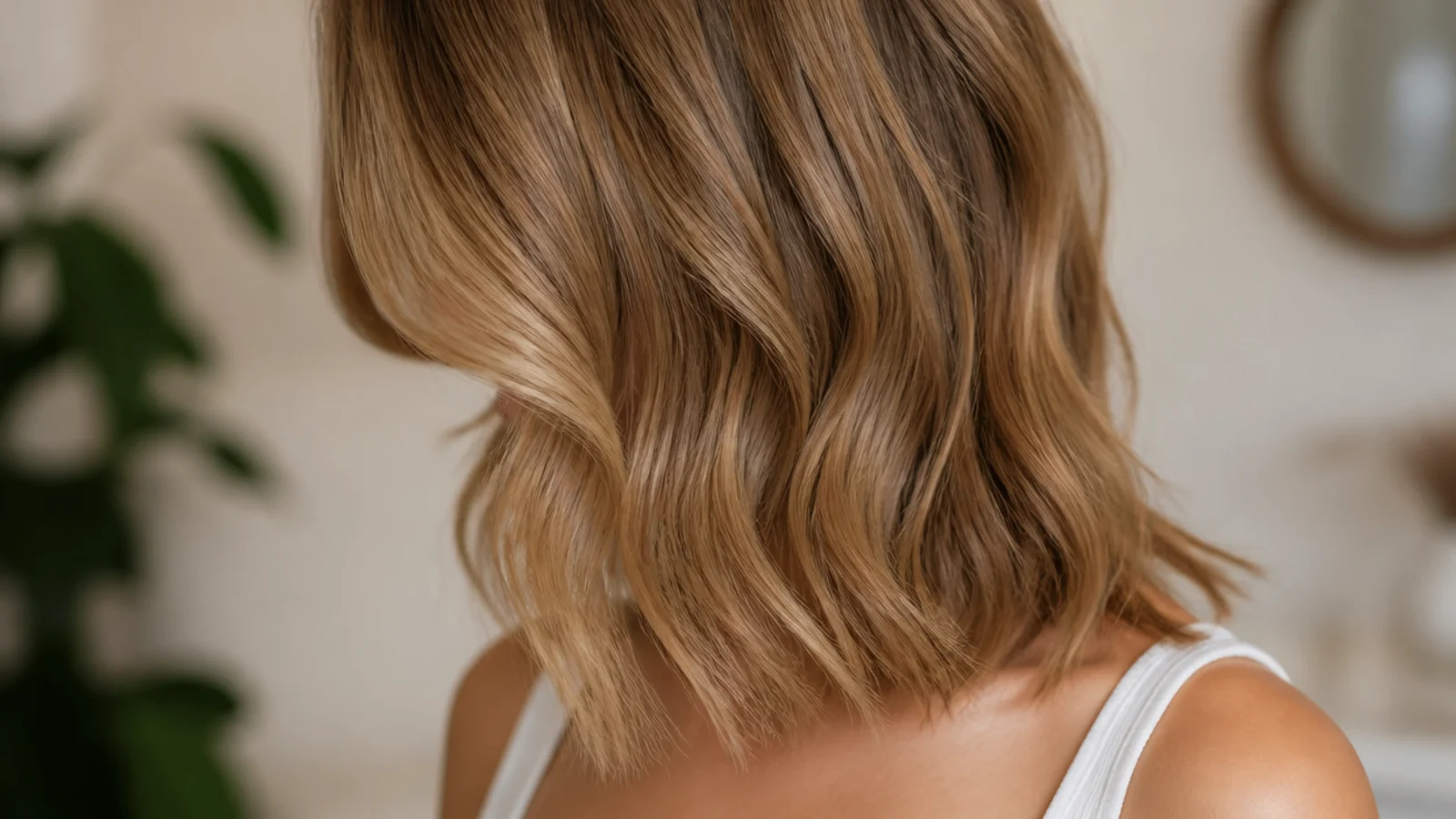
Fine wavy hair gets over-layered constantly, because layers are the default advice for volume. On fine strands they mostly remove the density that made the ends look full, and the result is a wavy top over a see-through bottom. Two long layers, both starting below the chin, plus a solid perimeter at the collarbone, is the right amount. Keep the length above the shoulder-blade line so weight does not pull the wave out. Thinning shears should not touch it. More on this in mid length haircut for fine hair.
Who it suits: Fine-stranded 2A and 2B waves with sparse-looking ends.
Tip: Say no thinning shears and no more than two layers, please, out loud at the consultation.
10. Wavy Mid Length Haircut for Thick Hair With Internal Weight Removal
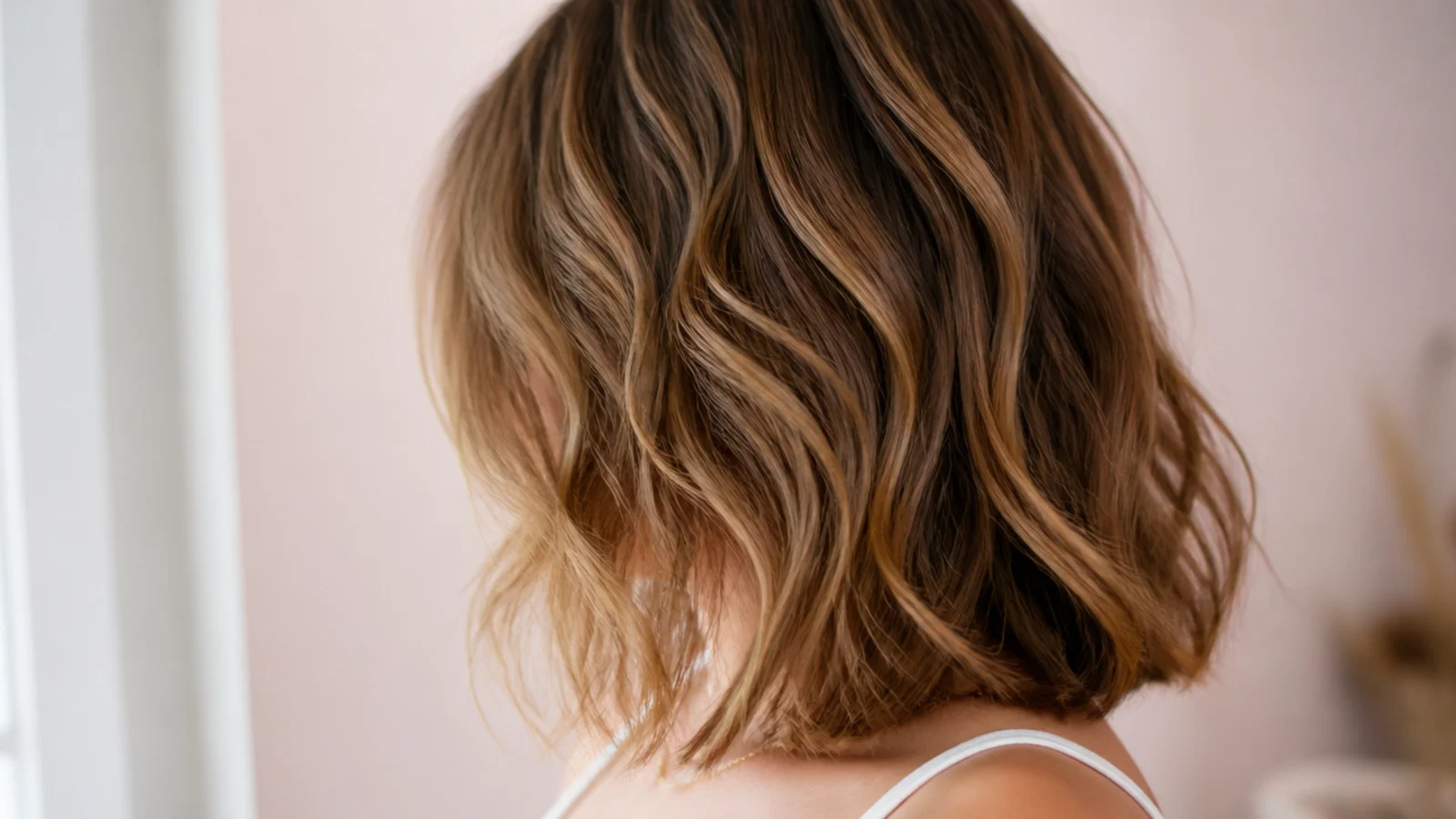
Thick wavy hair at mid length has one enemy, which is width. Left solid, the hair builds outward at the ends because there is simply too much of it. The fix is not surface layers, which just create frizz-prone short pieces, but internal weight removal: the stylist slides out bulk from underneath and through the mid-lengths, leaving the outline intact. Ask for it by name. The visible shape stays a clean collarbone line while the interior gets a third lighter, and the wave finally has room to bend instead of pushing sideways.
Who it suits: Dense 2B and 2C hair that goes triangular by lunchtime.
Tip: Ask for internal debulking with a slide cut, taken from underneath, not from the top surface.
11. Wavy Mid Length Wolf Cut With Disconnected Face-Framing
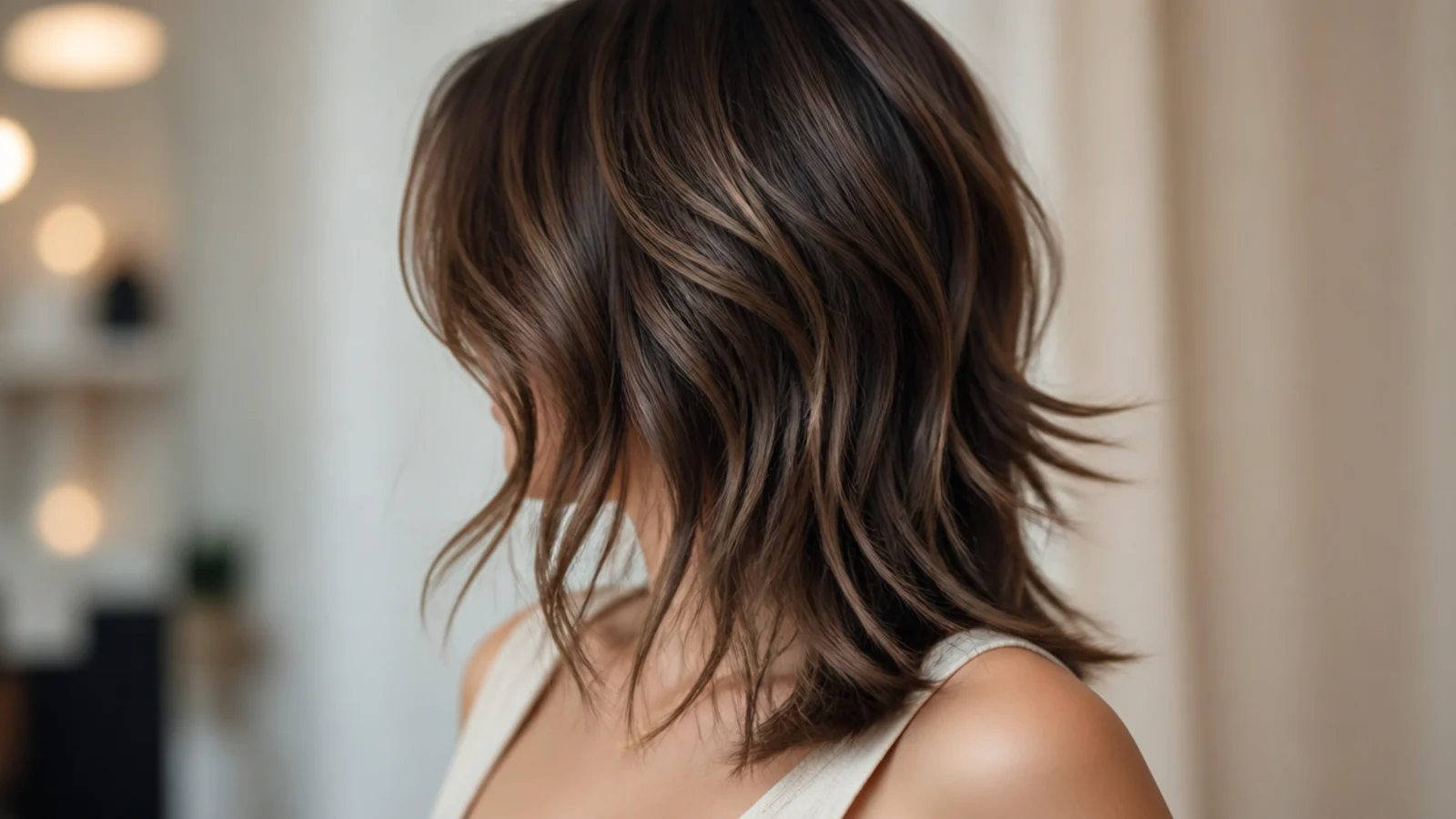
A wolf cut is a shag pushed further: heavier crown layering, more disconnection, and shorter face-framing pieces that deliberately do not blend. On waves it delivers the most volume of anything on this list, and it is the highest risk. The disconnection means the shape depends entirely on your wave pattern being strong enough to hold it, so it works on 2C and struggles on 2A. Keep the perimeter at the collarbone so the layering has length to sit against. Expect the shortest crown pieces to reach only the chin.
Who it suits: Strong 2C waves that want maximum volume and are happy styling daily.
Tip: Ask for a wolf cut with a mid length perimeter, and cap the front pieces at chin length.
12. Wavy Mid Length Haircut With a Deep Side Part
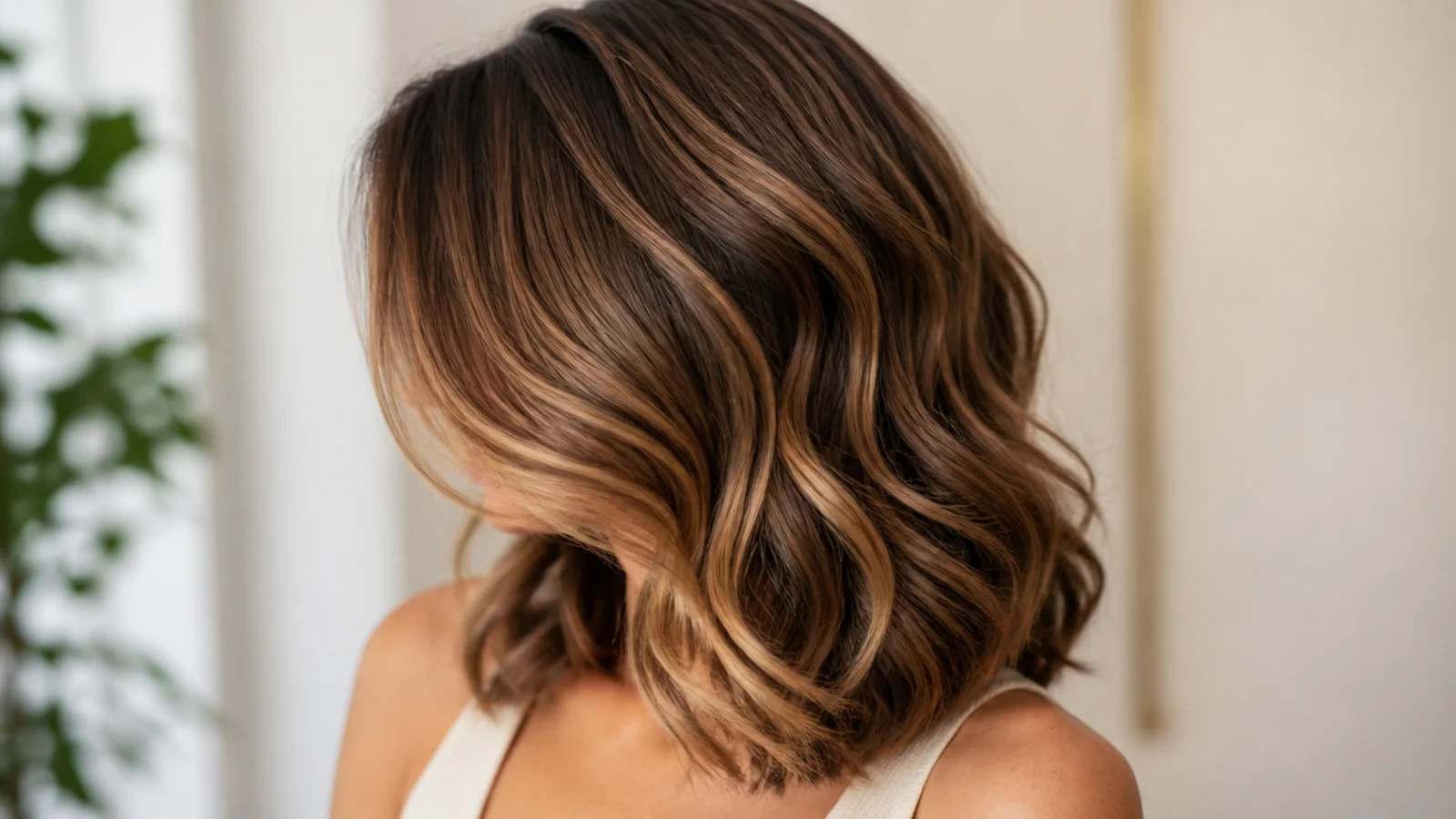
A deep side part, moved about two inches off center toward the outer edge of the eyebrow, is a cut decision more than a styling one: the stylist should cut with the part in place so the two sides carry different weight. Waves lose root volume before anything else, and a deep part forces the heavier side up and over, buying visible lift with no product. It also breaks up a round or full face better than a center part does. On very fine waves it is the cheapest volume trick available, and the same principle runs through how to style short fine hair.
Who it suits: Flat-rooted waves and round or heart-shaped faces.
Tip: Ask the stylist to cut with your everyday part in place, not the salon default center part.
13. U-Shape Wavy Mid Length Cut That Avoids the Triangle
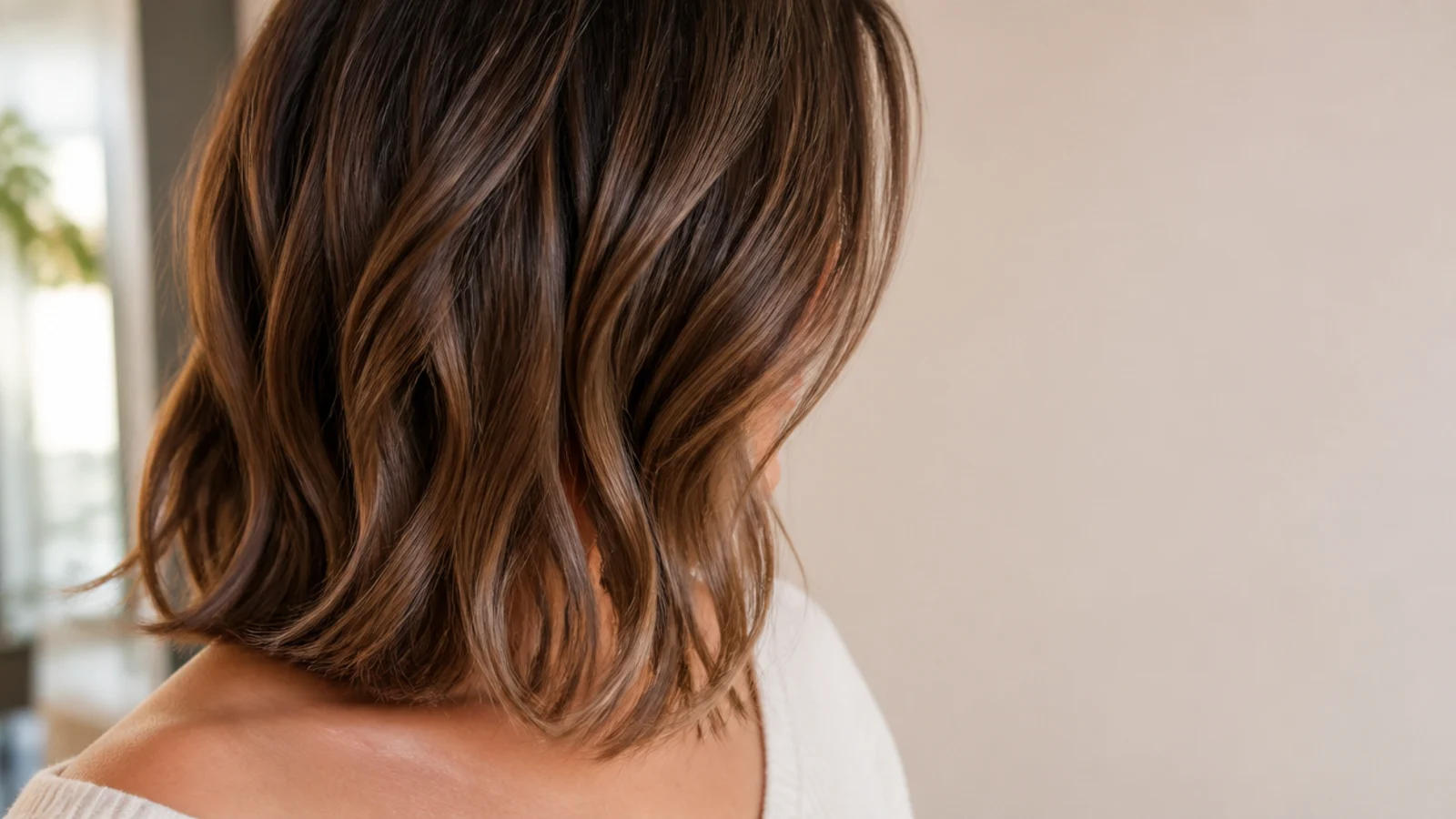
The triangle, or pyramid, is the classic wavy hair failure: narrow at the top, wide at the bottom. A U-shaped perimeter, where the back curves gently down and the sides rise slightly, counteracts it by taking length out of the widest point. Combined with internal weight removal it is the most reliable anti-triangle combination. The U should be shallow, no more than an inch and a half of curve, or the sides start to look short. Volume through the crown, achieved with layers, finishes the balance from the other end.
Who it suits: Anyone whose wavy hair widens at the ends by the end of the day.
Tip: Say a shallow U-shaped perimeter with the widest point removed, plus crown lift.
14. Wavy Mid Length Haircut With a Money Piece
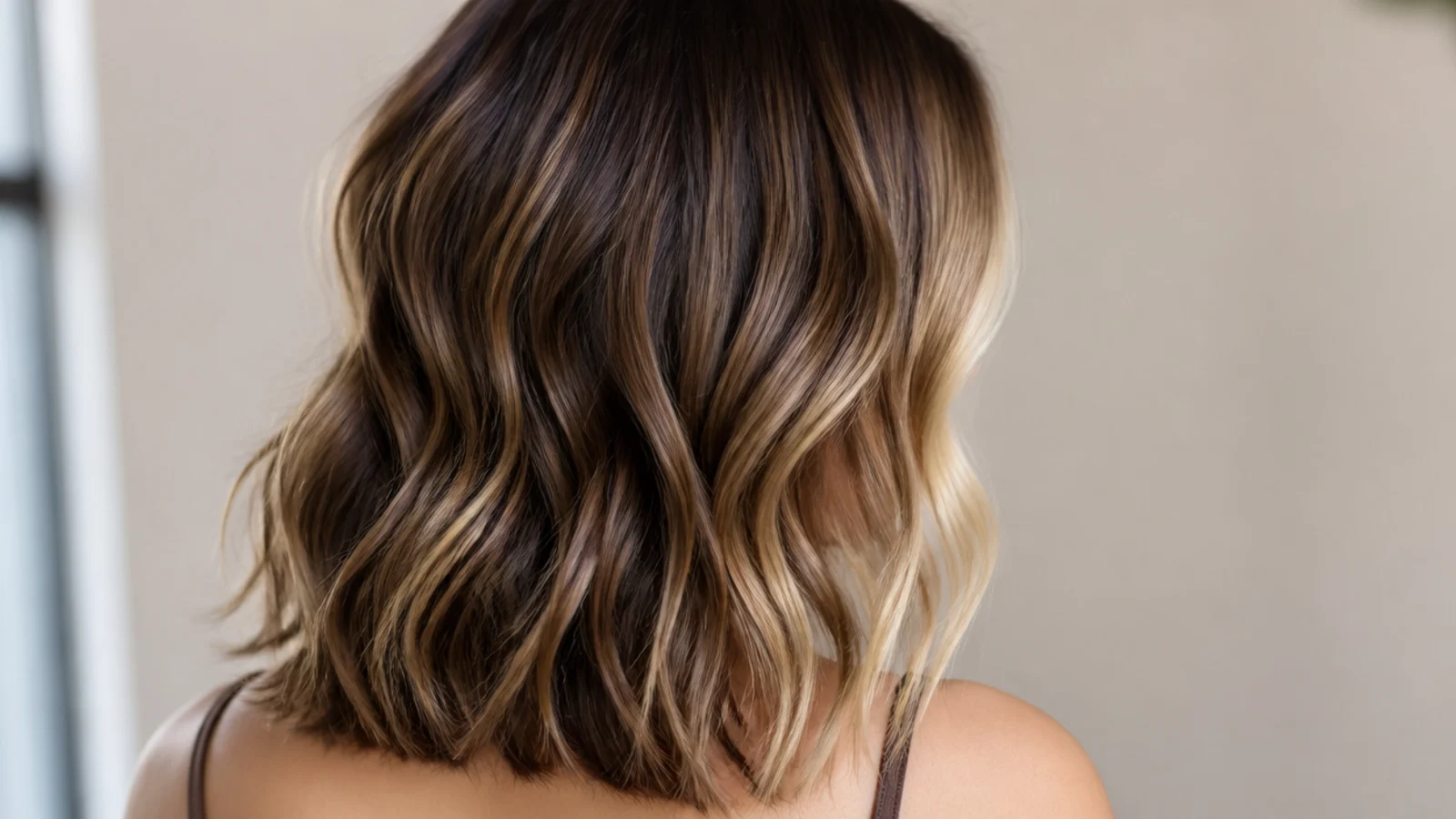
A money piece is color, not a cut: the two front sections either side of the part are lifted two to three shades brighter than the rest. On wavy hair it works better than all-over highlights because the wave pattern already breaks light up, and a concentrated bright section at the front reads as intentional rather than grown-out. Pair it with face-framing that starts at the jaw so the color and the cut mark the same line. Expect 120 to 250 dollars and a toner refresh roughly every 10 weeks. See also balayage brunette.
Who it suits: Brunette and dark blonde waves wanting brightness near the face.
Tip: Ask for the money piece to start at the same point as your face-framing layer so both lines agree.
15. Beachy Wavy Lob With Point-Cut Ends for Day-Three Hair
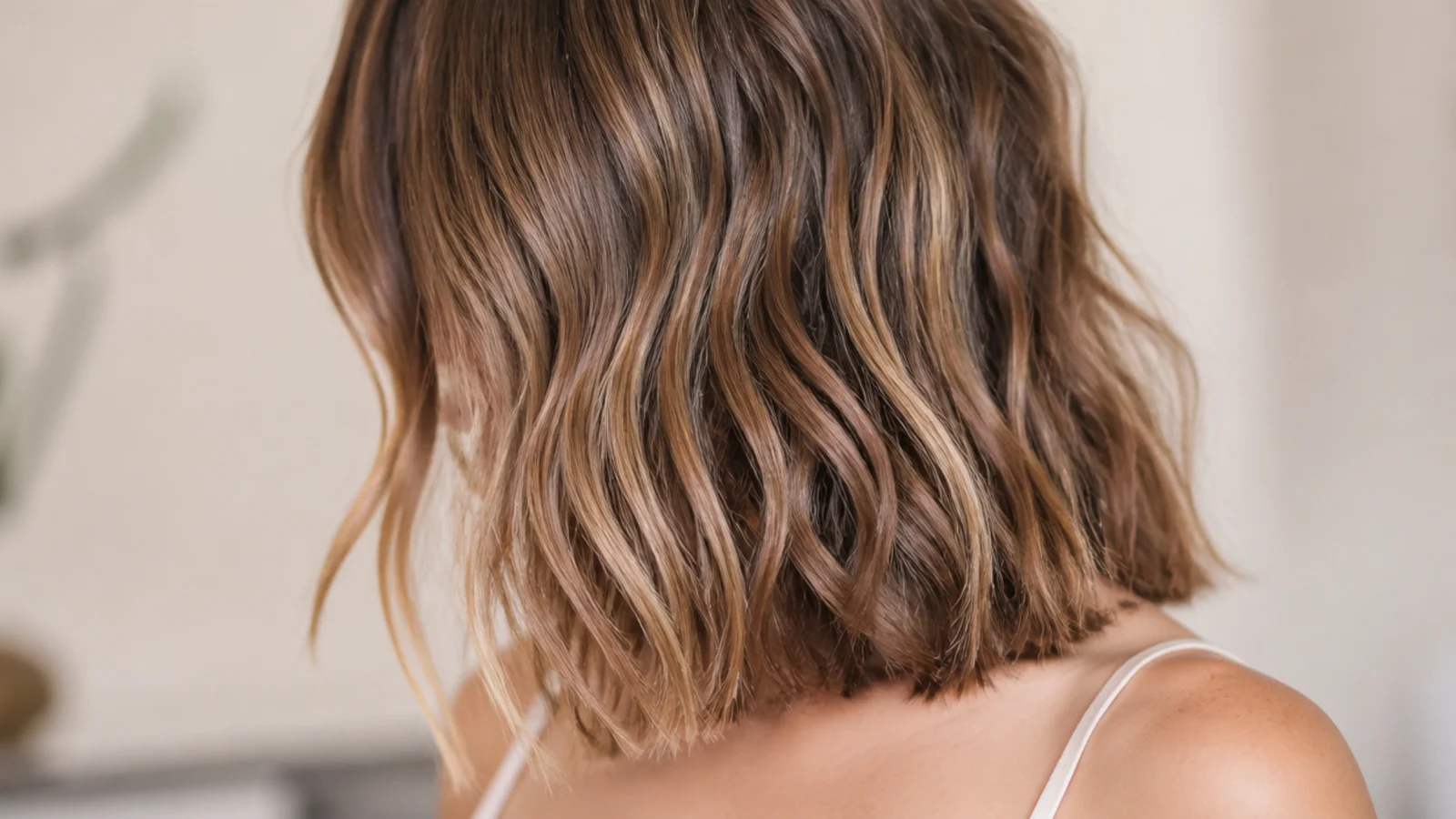
Point cutting means the scissors go into the ends vertically instead of straight across, breaking the line into soft irregular points. On waves that removes the one thing that makes a cut look flat, which is a blunt end sitting against a curve. The result holds its shape on unwashed hair, which is the actual test for most people. Perimeter at the collarbone, long invisible layers, point-cut ends, and a sea salt spray on day two. Pair it with beach hairstyles and cute hairstyles that last all day for the styling side.
Who it suits: Low-effort wearers who wash hair twice a week.
Tip: Ask for the ends point-cut about half an inch deep, never blunt-cut across.
What Counts as a Wavy Mid Length Haircut: Collarbone to Just Below the Shoulder
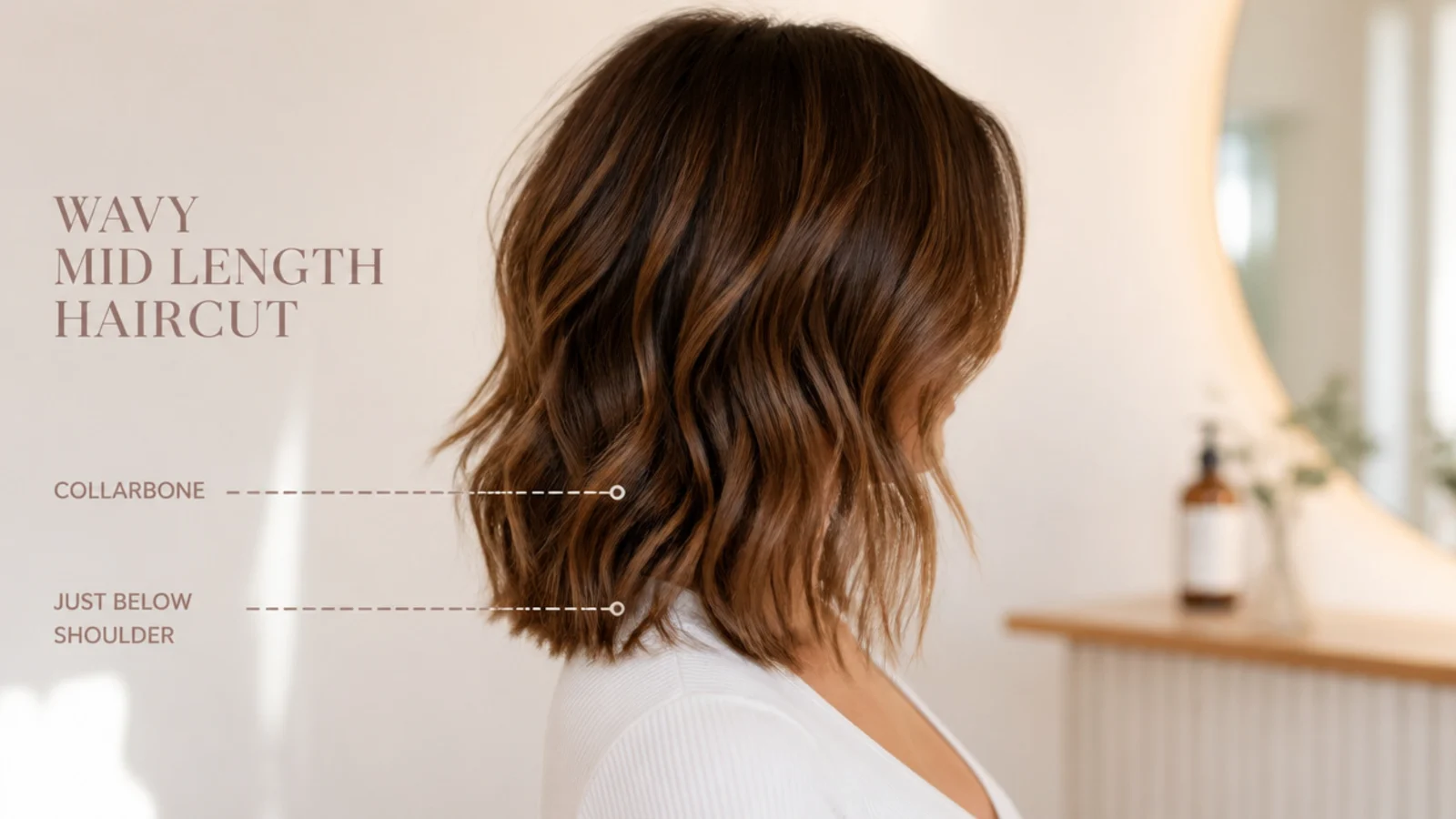
Mid length is not a vague middle setting. It is a defined window: the hair falls somewhere between the collarbone and roughly two inches below the shoulder line. Name the landmark, not the word medium, because medium means different things on a 5 foot 2 frame and a 5 foot 9 one while a collarbone is a collarbone. On wavy hair that window is functional rather than fashionable. Cut above the collarbone and a 2B or 2C wave has nothing to weigh the ends down, so it widens outward into the triangle shape. Cut past the shoulder blade and the accumulated weight of the length pulls the S bends open until the hair reads limp rather than wavy. The sweet spot for most wave patterns is a perimeter that grazes the collarbone, which is also the length that still fits into a low ponytail. Measure yours dry, not wet, and use the mid length haircut hub if you want the full length definition.
2A vs 2B vs 2C: How Your Wave Type Changes the Cut
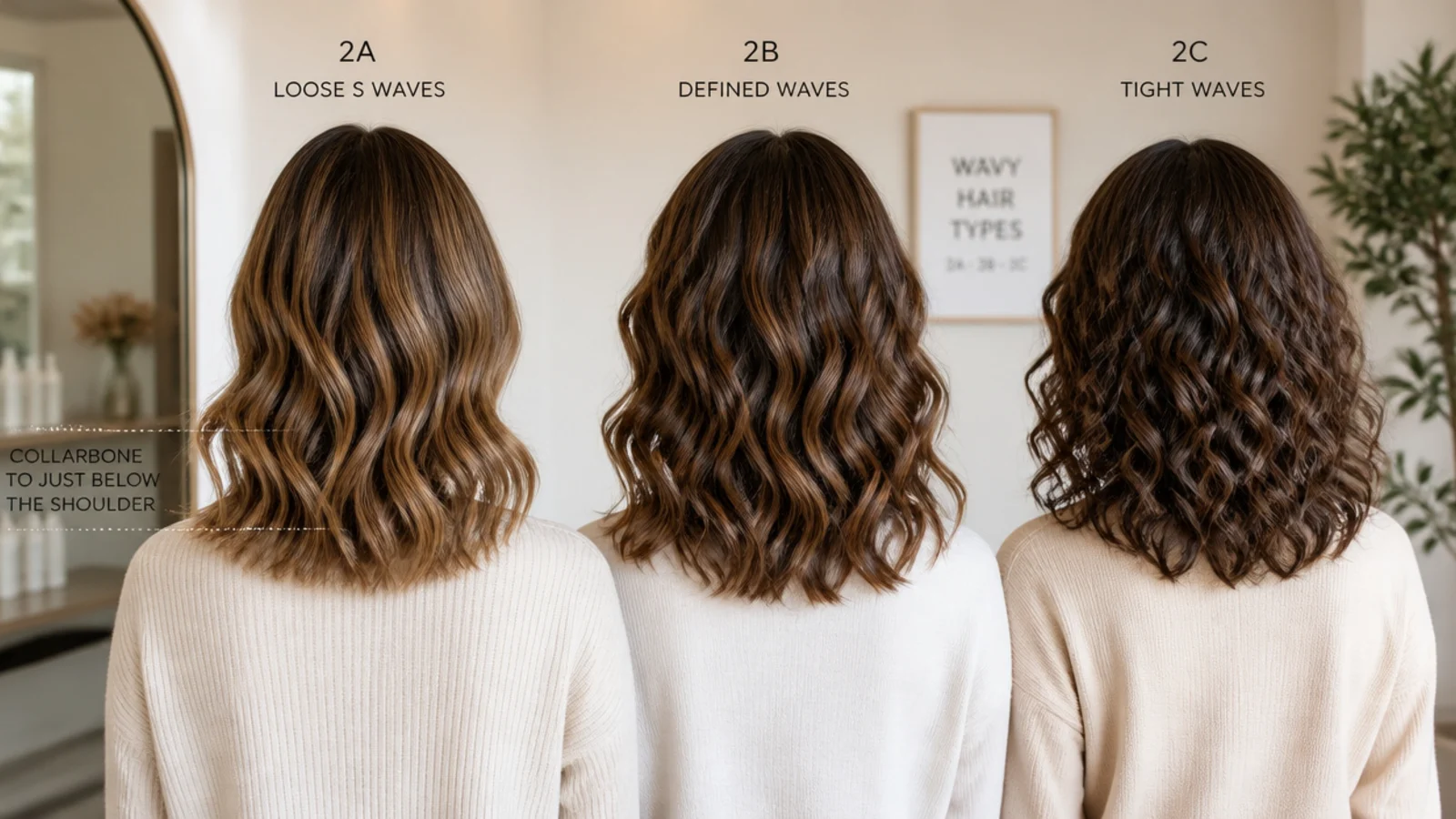
Almost nobody in this space separates the wave types, and it is the single most useful thing you can know before booking. A 2A is a loose S that starts around the mid-shaft, has barely half an inch of springback, and goes flat if it is layered hard. It wants few layers, all long and internal, and a solid perimeter. A 2B has a defined S starting near eye level, springs up about an inch to an inch and a half, and holds shape well enough for face-framing and curtain bangs. A 2C is a tight wave with real root volume, two to three inches of springback, and a genuine tendency to widen; it needs internal weight removal, a U-shaped perimeter, and ideally a dry cut. Find your pattern by air-drying with no product and looking at where the first bend forms. The hairstyle for your hair type guide walks through the same test in more detail.
How to Ask for a Wavy Mid Length Haircut: Exact Wording
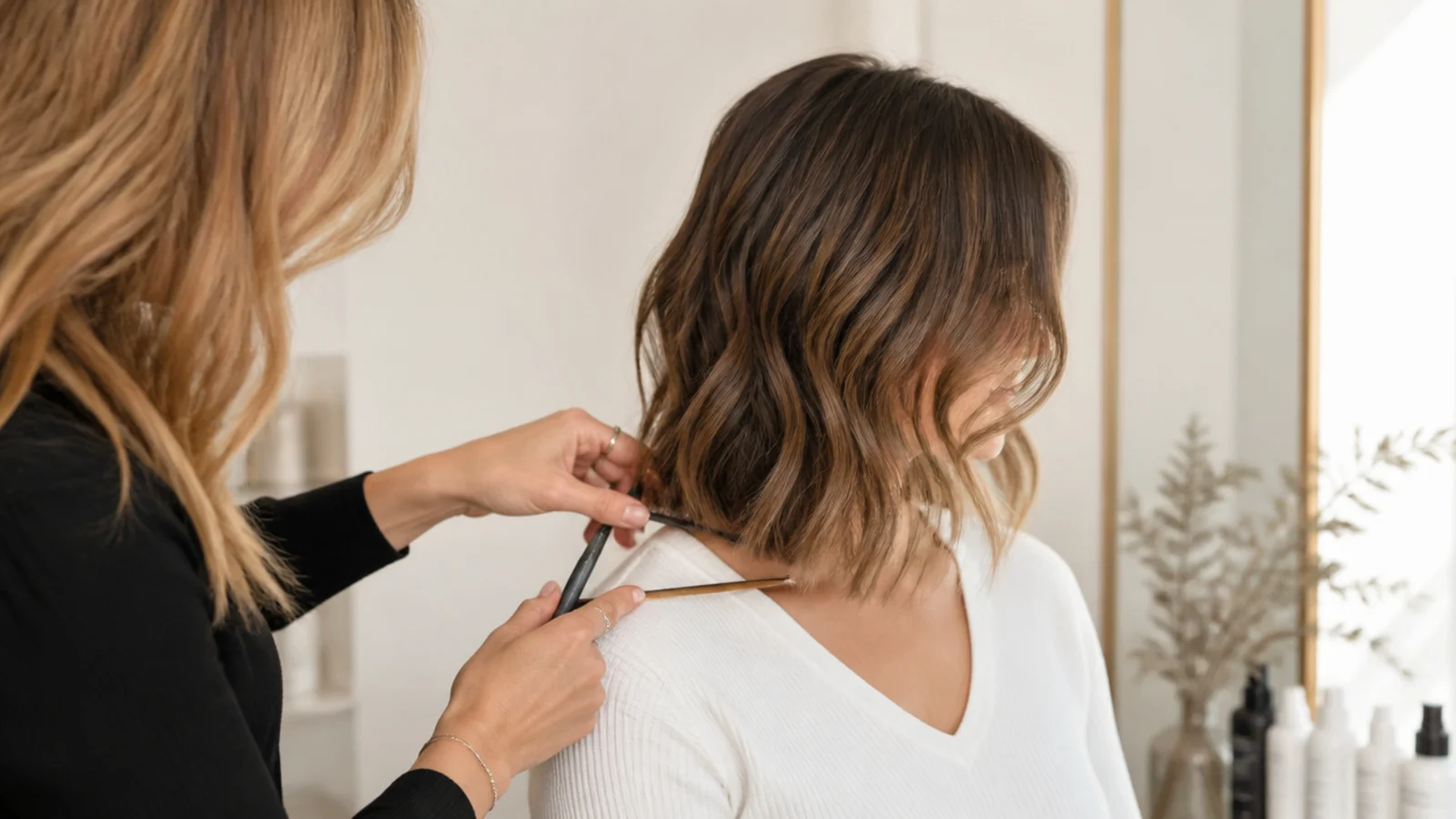
The sentence that gets you the cut in these photos is short and specific: collarbone length, long invisible layers, face-framing starting at the jaw. Say it, then add the three qualifiers that matter for waves. First, please cut for my springback, my hair dries about an inch and a half shorter, or better, please cut it dry. Second, point-cut the ends rather than cutting them blunt across. Third, no thinning shears at the surface, take any weight out from underneath. If you have a wave pattern that widens, add please keep the perimeter slightly U-shaped and remove the widest point. Bring two photos of hair with your own texture, not a photo of straight hair styled into waves, because the two require completely different cuts. And say out loud what you will actually do at home: air-dry with mousse is a different cut brief from blow-dry with a round brush. Compare notes with straight mid length haircut if you switch between the two.
Face Shape: Where Face-Framing Should Start on a Wavy Mid Length Cut
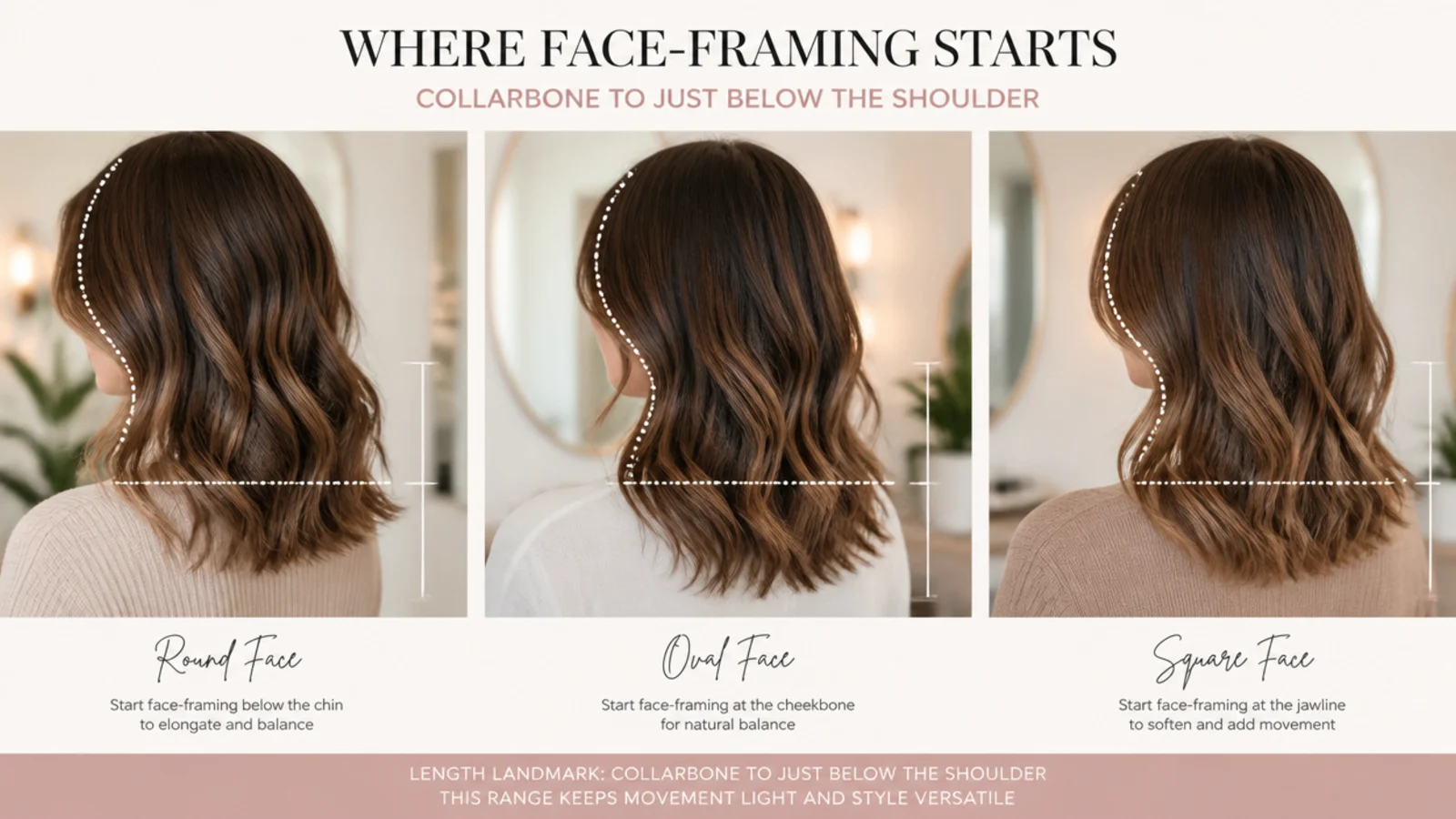
Face-framing from the chin or jaw opens the face without costing you any real length, which is why it is the safest change on a mid length cut. The start point does the work. A round face wants the frame starting at or just below the jaw, so the longest visible line falls past the widest part of the face and lengthens it. A square or strong-jawed face wants a curved frame beginning at the chin, softening the corner rather than drawing a line along it. An oval face can take a higher start at the cheekbone without the shape collapsing. A long or oblong face should avoid a high start altogether and keep the frame at collarbone level, adding width instead. On waves, remember that framing pieces spring more than the length does, so a chin-start on a 2C ends up at the cheekbone once dry. Ask for the frame curved and blended, never blunt, or it will sit as a shelf against the wave.
Day-to-Day Styling for a Wavy Mid Length Haircut
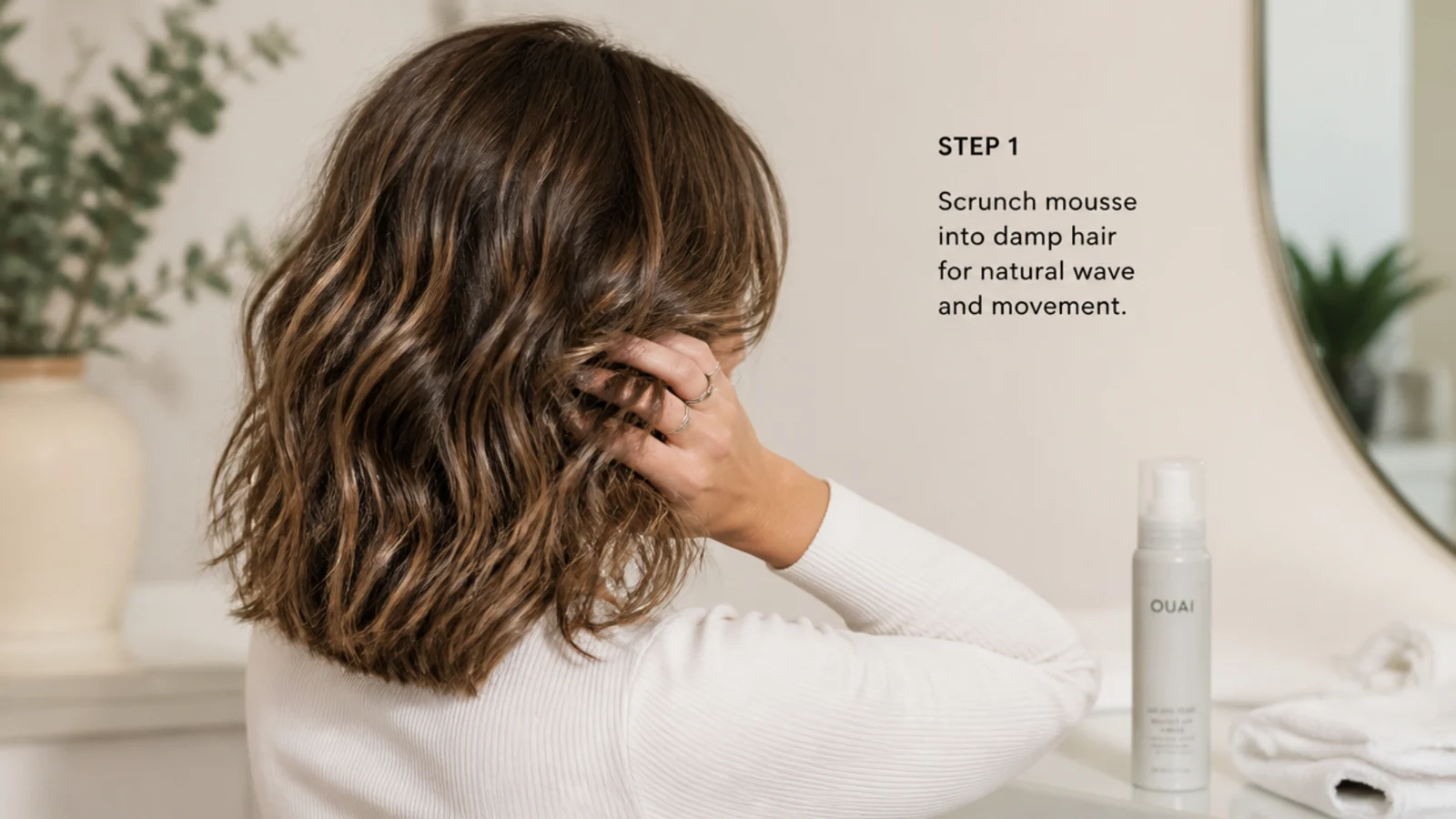
A correctly cut wavy mid length haircut should take five to ten minutes on wash day and nothing at all on the days after. The routine that works on most wave patterns: apply a leave-in and a mousse or wave cream to soaking wet hair, scrunch upward toward the scalp, squeeze out water with a cotton t-shirt rather than a towel, then leave the hair alone until it is at least 80 percent dry. Touching it while it dries is what creates frizz. Once dry, scrunch out the crunchy cast with a drop of oil in your palms. On day two, refresh with water in a spray bottle rather than more product. On day three, a light sea salt spray at the mid-lengths brings the pattern back, and a deep side part covers flat roots. If you use heat, a diffuser on low speed and medium heat protects the pattern in a way a nozzle never will. For heat-free options, see heatless curl tools compared, and for fast mornings the 5 minute everyday hairstyle works on this length.
Growing Into or Out of a Wavy Mid Length Haircut
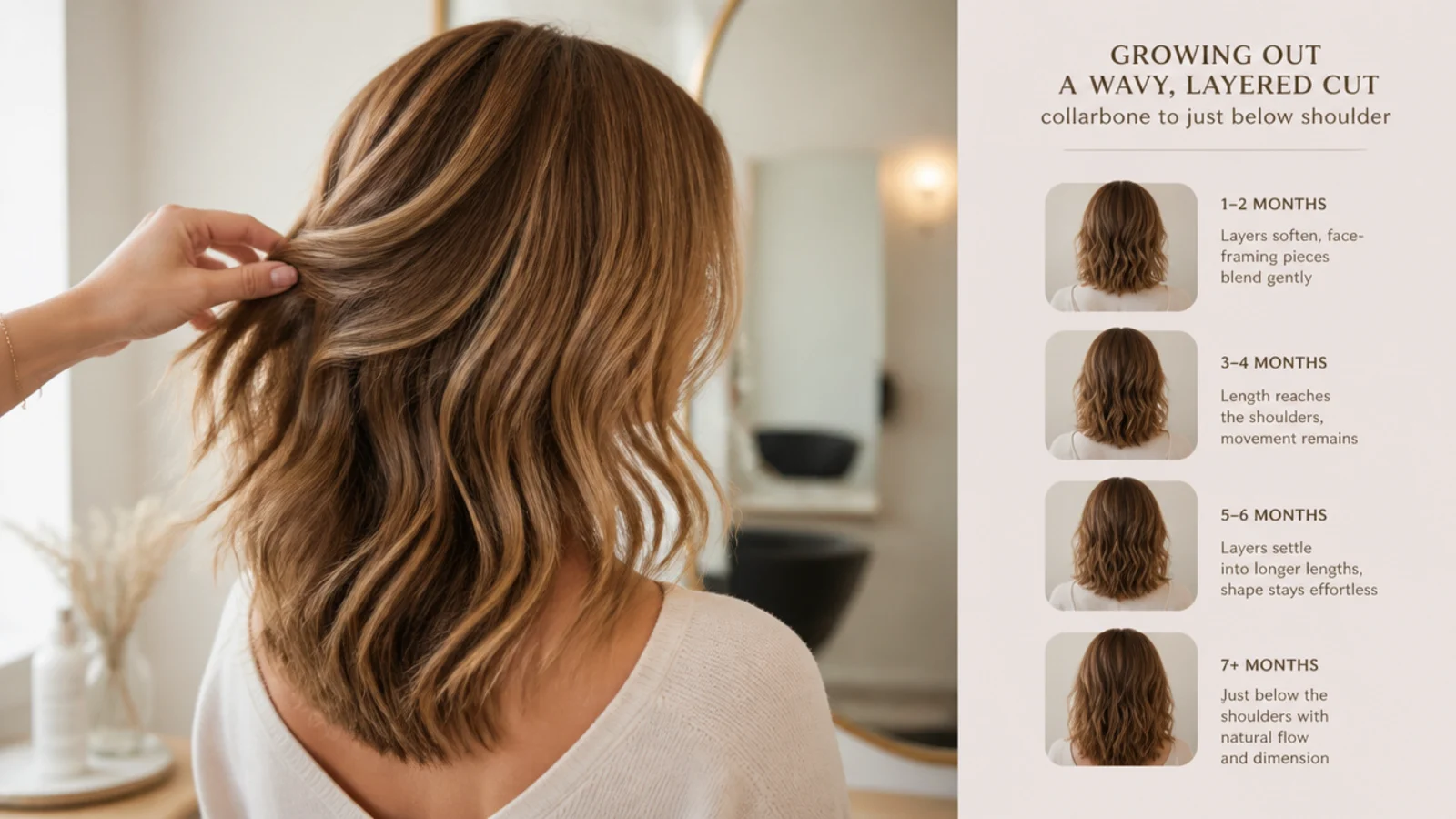
Hair grows roughly half an inch a month, so going from a chin-length bob to a collarbone wavy cut is about a six to eight month project, and going from mid length back to long takes 12 to 18 months. The mistake in both directions is refusing to get trims. Wavy ends split and taper, and split ends stop the wave from forming, so the hair looks worse and worse while it gets longer. Trim a quarter inch every 10 to 12 weeks while growing and the length still accumulates. Growing out of mid length is easier than growing into it: the layers blend down as everything lengthens, and face-framing turns into ordinary long layers within about four months. Going shorter, the awkward stage is the point where the length sits exactly on the shoulders and flicks outward; a small amount of internal weight removal gets you through it. If you decide to go shorter still, look at bob haircuts.
Frequently Asked Questions
What is considered a mid length haircut on wavy hair?
Mid length means the perimeter falls between your collarbone and about two inches below the shoulder. On wavy hair, judge that measurement dry rather than wet, because waves spring up as they dry. A 2C pattern cut at the collarbone while wet can end up sitting at the top of the chest, which is a different look entirely.
Should wavy hair be cut wet or dry?
Dry, if your hair springs up more than about an inch. A dry cut lets the stylist see where each wave actually falls and trim it in its natural pattern, which is why 2B and 2C hair almost always ends up better shaped this way. Loose 2A waves with minimal springback do fine cut wet. Expect a dry cut to cost more and take longer.
How do I stop my wavy mid length hair going triangular?
The triangle comes from too much bulk at the ends and not enough volume at the crown. Ask for internal weight removal taken from underneath, a shallow U-shaped perimeter that takes length out of the widest point, and long layers that create lift through the crown. Surface thinning shears make it worse by creating short frizzy pieces on the outside.
Do layers help or hurt wavy hair?
Long layers help, short layers usually hurt. Long invisible layers cut inside the hair give waves room to bend without breaking the outline. Lots of short surface layers remove the weight that holds the wave in an S shape, and on fine hair they leave the ends sparse. Ask for the fewest layers that achieve the shape rather than the most.
How often should I trim a wavy mid length haircut?
Every 8 to 12 weeks. Wavy ends taper and split faster than straight ends because the bends catch on clothing and brushes, and split ends physically stop the wave from forming a clean S. A quarter to half an inch every 10 weeks holds the shape without losing length. Shags and heavily layered cuts want the shorter end of that range.
What is the best mid length haircut for fine wavy hair?
A blunt or near-blunt collarbone perimeter with only two long internal layers, both starting below the chin. Fine wavy hair is over-layered constantly, and each extra layer removes density from the ends until they look see-through. Keep the length above the shoulder blades, skip thinning shears entirely, and ask for a deep side part for root volume.
Can I get curtain bangs with wavy mid length hair?
Yes, and curtain bangs are the most forgiving fringe on waves because they grow out into face-framing rather than into an awkward stage. The key is cutting them longer than the target, since a fringe springs up more than the length does. Cut them dry if possible, and ask for the outer edges long enough to blend into your face-framing layer.
How much does a wavy mid length haircut cost?
A standard wet cut at a mid-tier salon runs about 60 to 120 dollars. A specialist dry cut or curl-by-curl cut runs 90 to 200 dollars and takes 60 to 90 minutes. Adding a money piece or face-framing color puts you in the 120 to 250 dollar range with a toner refresh roughly every 10 weeks.
What is the difference between face-framing layers and curtain bangs?
Face-framing layers start at the jaw or chin and run down into the length, so they never sit on your forehead. Curtain bangs start much shorter, usually at the cheekbone or brow, and part in the center to sweep outward. Curtain bangs are the bigger commitment; face-framing is the version you can do without changing your part.
Which mid length haircut look are you saving?
If you take one thing from these 15 wavy mid length haircut ideas, make it this: the cut is decided by your wave pattern and your springback, not by the photo. Measure where the length lands dry, ask for long invisible layers rather than lots of short ones, put your face-framing at the jaw, and get the ends point-cut so they never sit blunt against a wave. A trim every 8 to 12 weeks keeps the whole thing light enough to bounce. Save the photos that match your own pattern, take two of them to your appointment, and browse the rest of the mid length haircut hub or compare against mid length haircut with layers before you book.