Quick Comparison
| Embracing the Frizz Aesthetic | Smoothing the Frizz Away | |
|---|---|---|
| Goal | Defined curls with a deliberate soft halo at the crown | One uniform surface with no strands out of line |
| Product load | Leave-in, curl cream, then gel; three light layers | Smoothing serum plus silicone barrier plus heat protectant |
| Drying method | Air dry or diffuse on low heat and low speed, hands off | Blow dry with a nozzle aimed down the shaft, then flat iron |
| Time per wash day | About 10 minutes of styling plus 2 to 4 hours of drying | 35 to 60 minutes of active blow drying and ironing |
| Heat damage risk | Very low; a diffuser on low is the only heat involved | High over months; repeated ironing weakens the cuticle |
| Humidity behavior | Holds; a gel cast and a sealed cuticle absorb the swelling | Reverts within an hour above roughly a 60F dew point |
| How it photographs | Beautifully backlit; the halo glows against a light source | Best in flat front light; backlight exposes stray strands |
| Day 2 and day 3 | Refresh with water and leave-in, gets better with age | Falls flat, usually needs a full restyle or dry shampoo |
| Monthly cost | About 30 to 45 dollars in leave-in, cream and gel | About 40 to 70 dollars plus tool replacement and trims |
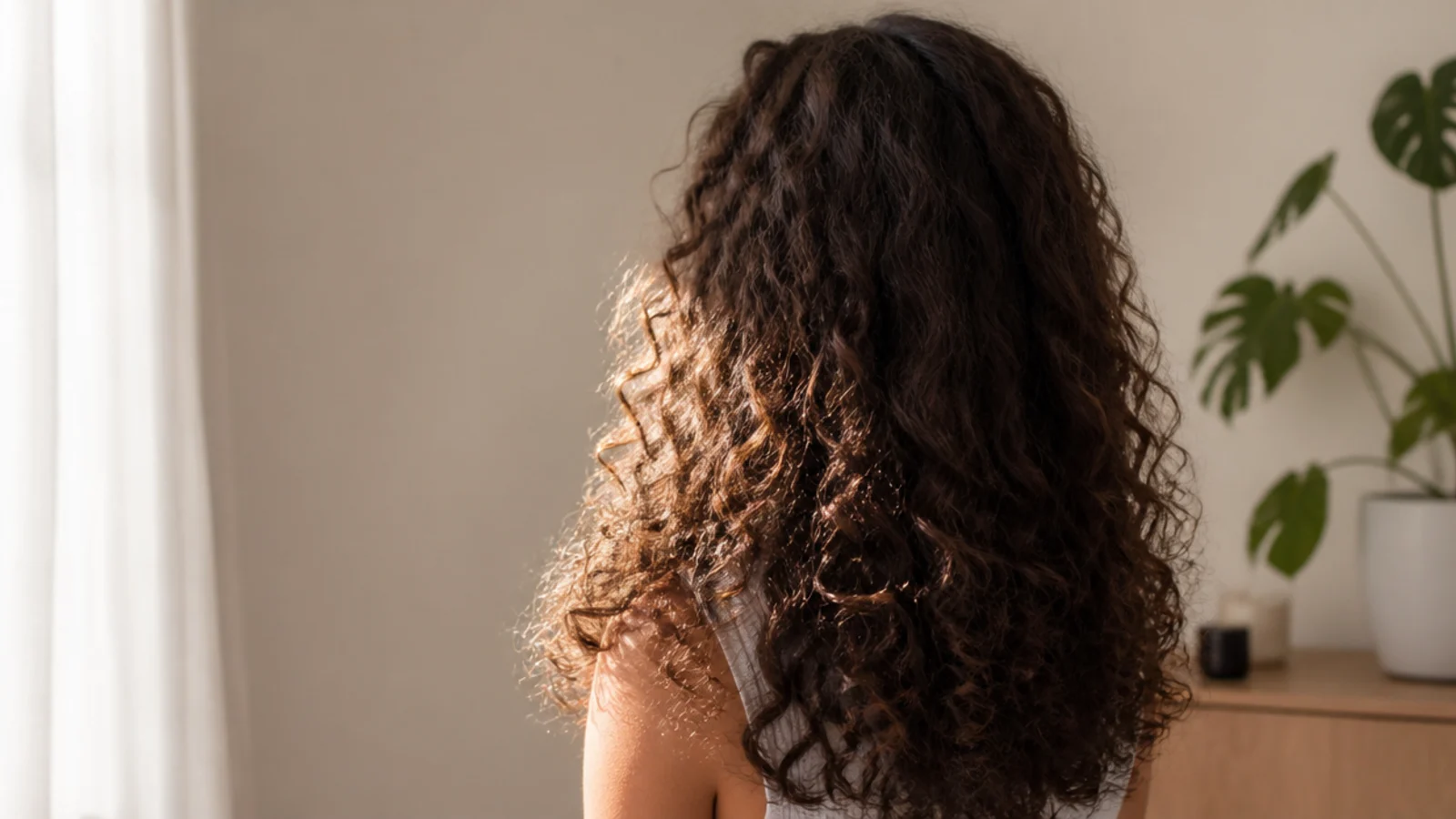
1. Soft Halo Frizz on Loose 2C Curls

The entry point to the whole aesthetic. Collarbone-length 2C hair with defined S-waves in the mid-lengths and a visible halo of short crown strands lifting about half an inch off the head. Style it with a quarter-size leave-in and a dime of curl cream on soaking wet hair, then a firm gel scrunched in and left alone. The trick is that the halo only reads dreamy when the length below it is clumped, so the eye sees structure and softness at once. More wave-specific technique lives in frizzy wavy hair.
Who it suits: 2B to 2C waves at shoulder or collarbone length.
Tip: Do not scrunch out the gel cast until the hair is bone dry, or the halo turns into all-over fuzz.
2. Golden Hour Backlit Curl Halo
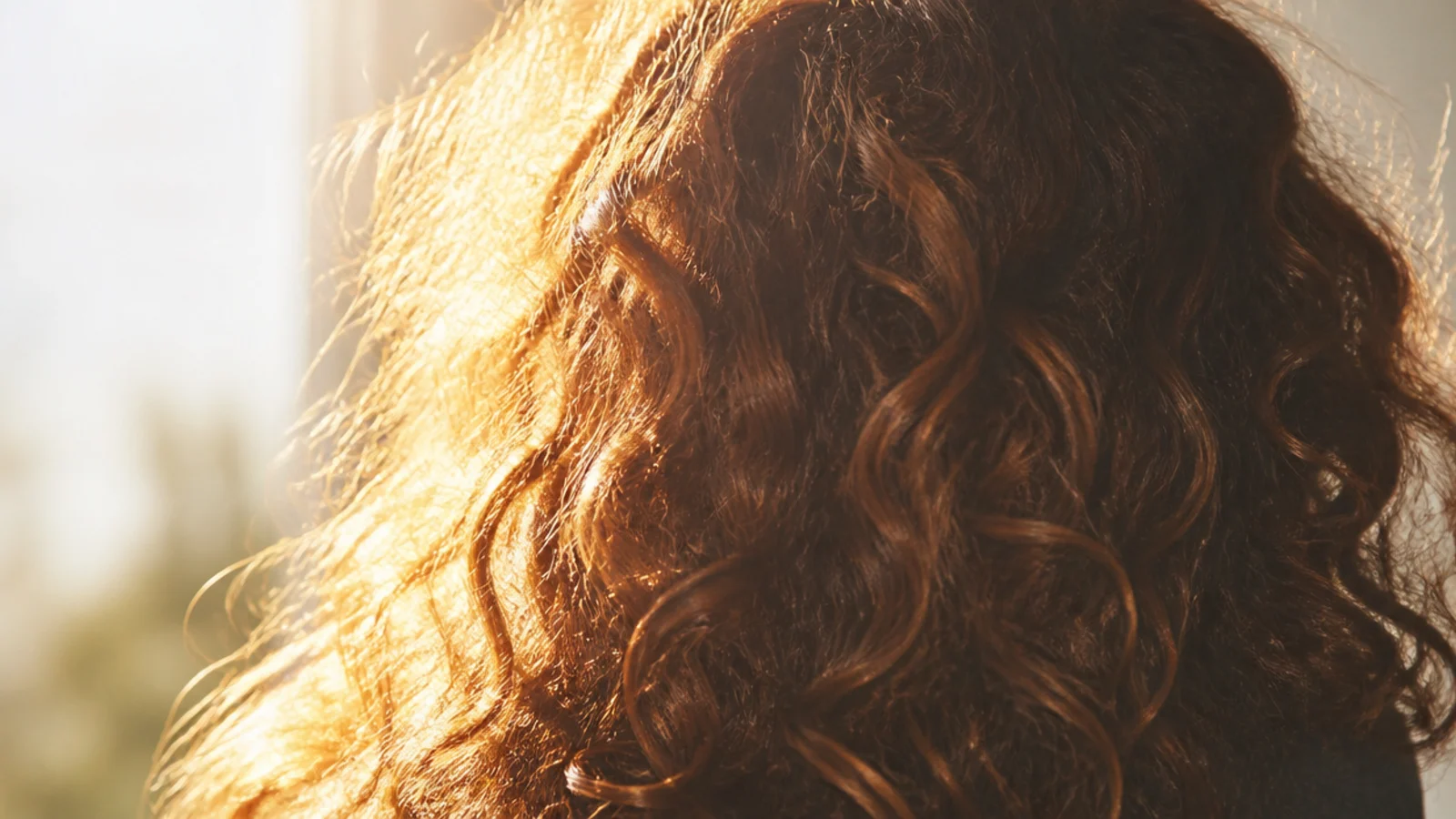
This is the single most saved version of the frizzy curly hair aesthetic and it is a lighting decision, not a styling one. Stand with the sun behind you in the hour before sunset, camera slightly below eye level, and the halo lights up like fiber optics while the curls underneath stay in soft shadow. Any curl pattern works. What matters is that the light source is behind the hair, roughly 30 to 45 degrees off center, and that the background is darker than the halo so the glow separates.
Who it suits: Any curl type; anyone photographing their hair outdoors.
Tip: Shoot into the sun at f-stop 2.8 or your phone portrait mode so the background falls away and the halo glows.
3. Wet-Look Defined Curls With a Frizz Halo
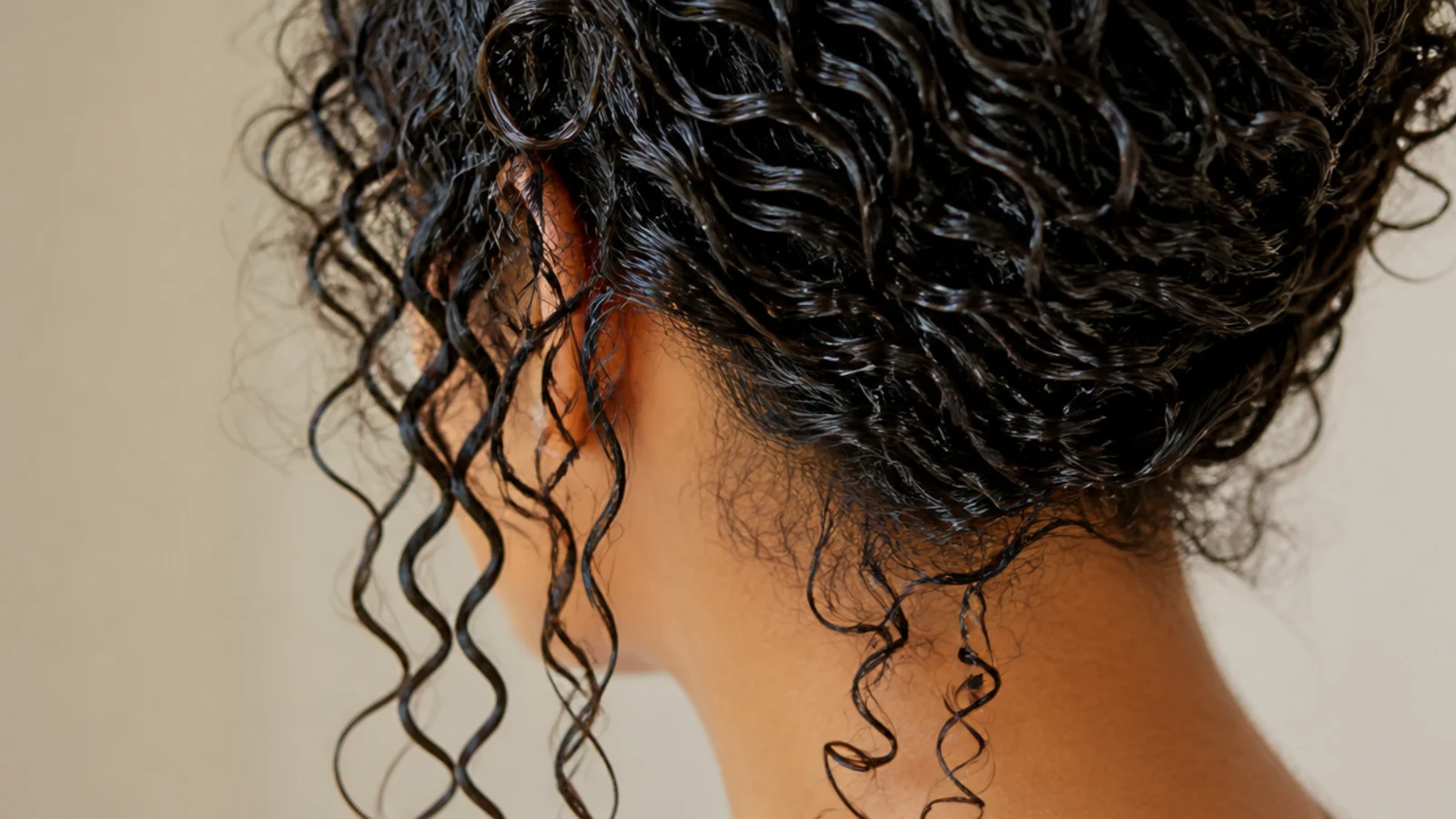
Heavy gel over curl cream, left in its cast so the curls stay glossy and separated like they just came out of the water, with only the shortest crown strands escaping. This is the highest-contrast look here: extremely defined below, soft above. Use a strong-hold gel with the cast left fully intact, no scrunching out at all. It holds through a full humid day because the cast physically resists swelling. Expect it to feel crunchy to the touch, which is the point.
Who it suits: 3A to 3C curls, humid climates, and event days.
Tip: Apply gel in sections with your hair flipped upside down so the roots get coated and the crown halo stays even.
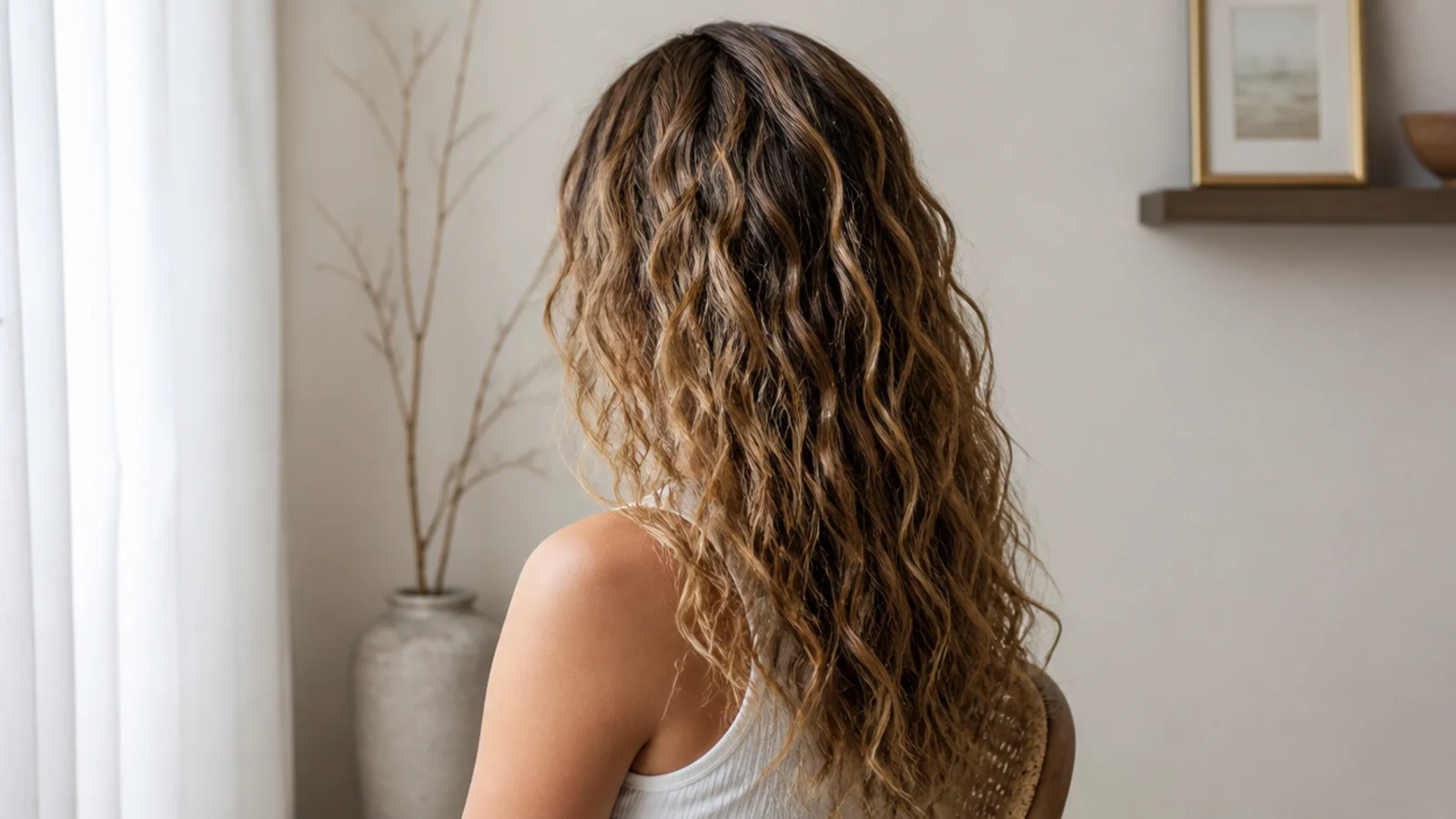
4. Air-Dried Beach Frizz on Shoulder-Length 3A Curls
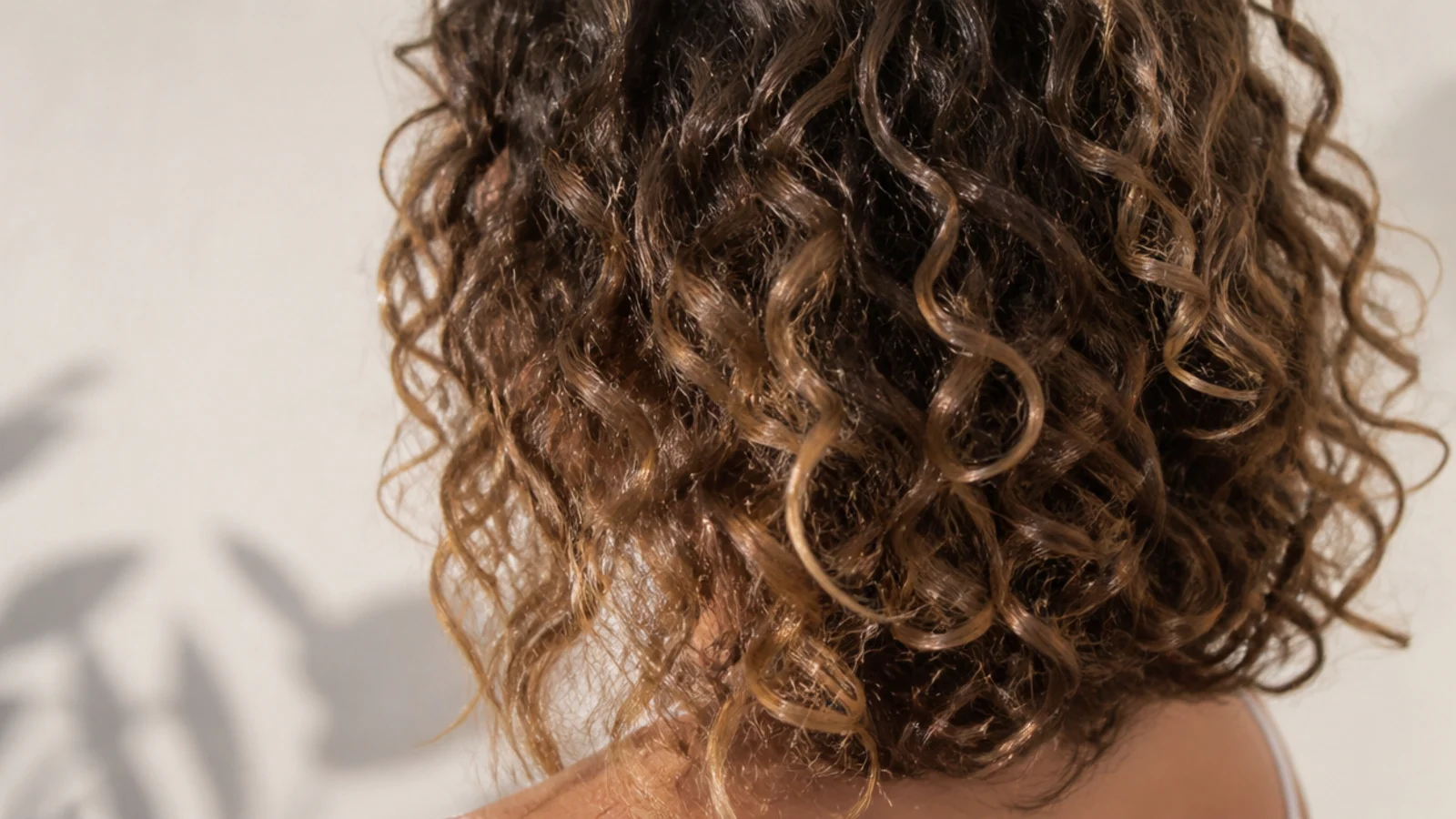
Salt-air texture: looser, wider curls with more separation than a gel wash-and-go, a matte finish and plenty of halo. Get it with a leave-in and a light sea-salt mist, skipping cream entirely, then air drying without touching. It takes two to three hours and needs a warm day, because air drying in cold air keeps the cuticle open longer and adds frizz. The matte finish is what makes it read beachy rather than styled, so avoid anything with heavy shine. The same air-dry rules apply across the frizzy hair hub.
Who it suits: 3A curls, summer, and low-effort wash days.
Tip: Salt is drying, so double the leave-in and cap this look at once or twice a week.
5. Big Volume Frizzy Curls With a Center Part
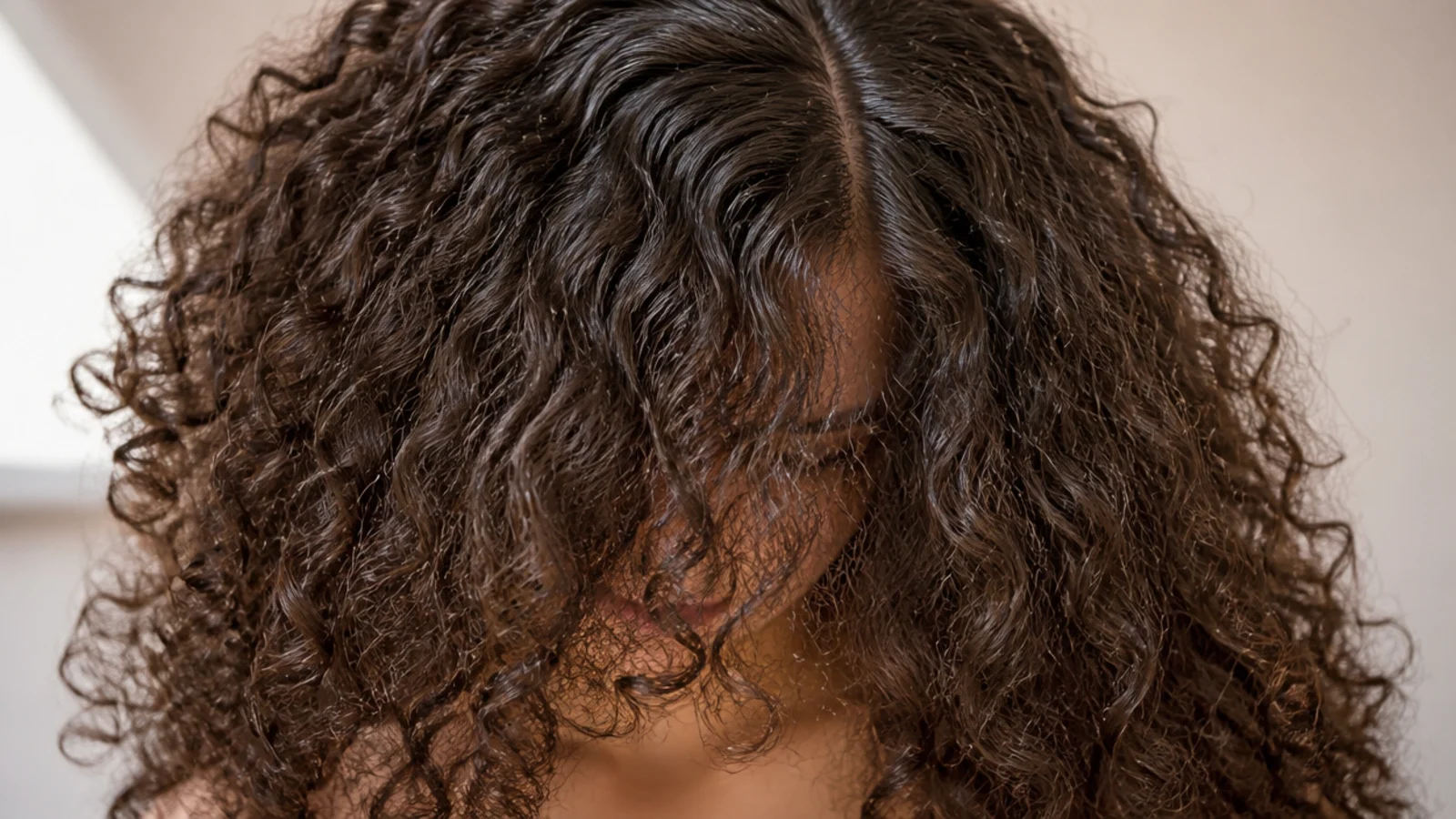
Maximum width. A clean center part, curls allowed to expand outward from the temples, and a halo that reads as one continuous cloud rather than stray strands. Build it by clipping the roots at the crown with small metal clips while the hair dries, then diffusing on low. Volume-friendly shapes are covered in shaggy mid length haircut. The center part is load-bearing here: it gives the volume a symmetrical axis, so the width looks composed instead of accidental. Works best on medium to thick density hair.
Who it suits: Thick 3B to 3C curls and long face shapes.
Tip: Use four root clips, two per side about an inch back from the part, and remove them only when fully dry.
6. Coily 4A Wash-and-Go With a Visible Halo
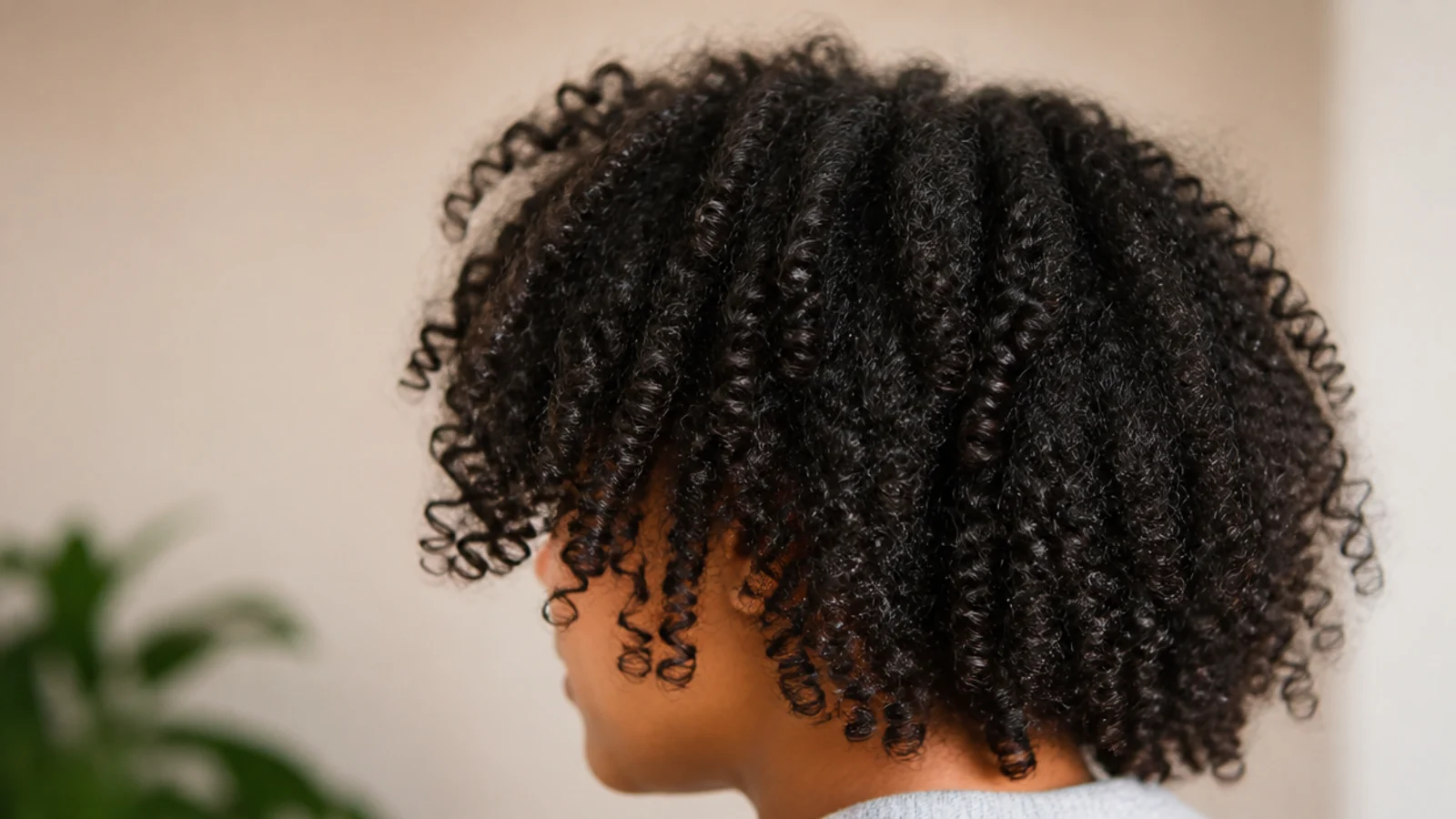
Tight 4A coils defined by raking gel through soaking wet, conditioner-slick sections, with the halo left entirely alone. Coily hair frizzes more visibly because the cuticle has more curve to lift along, so the halo is essentially unavoidable and looks best when the coils below it are crisply clumped. Rake with fingers section by section in one-inch pieces, then leave it. Refresh on day 3 with water and a light oil rather than more gel. Protective options are in natural hair styles.
Who it suits: 4A coils and anyone wearing a wash-and-go.
Tip: Rake gel with your hair still dripping; if it stops dripping, re-wet the section before you continue.
7. Frizzy Curly Bangs Cut Curtain Style
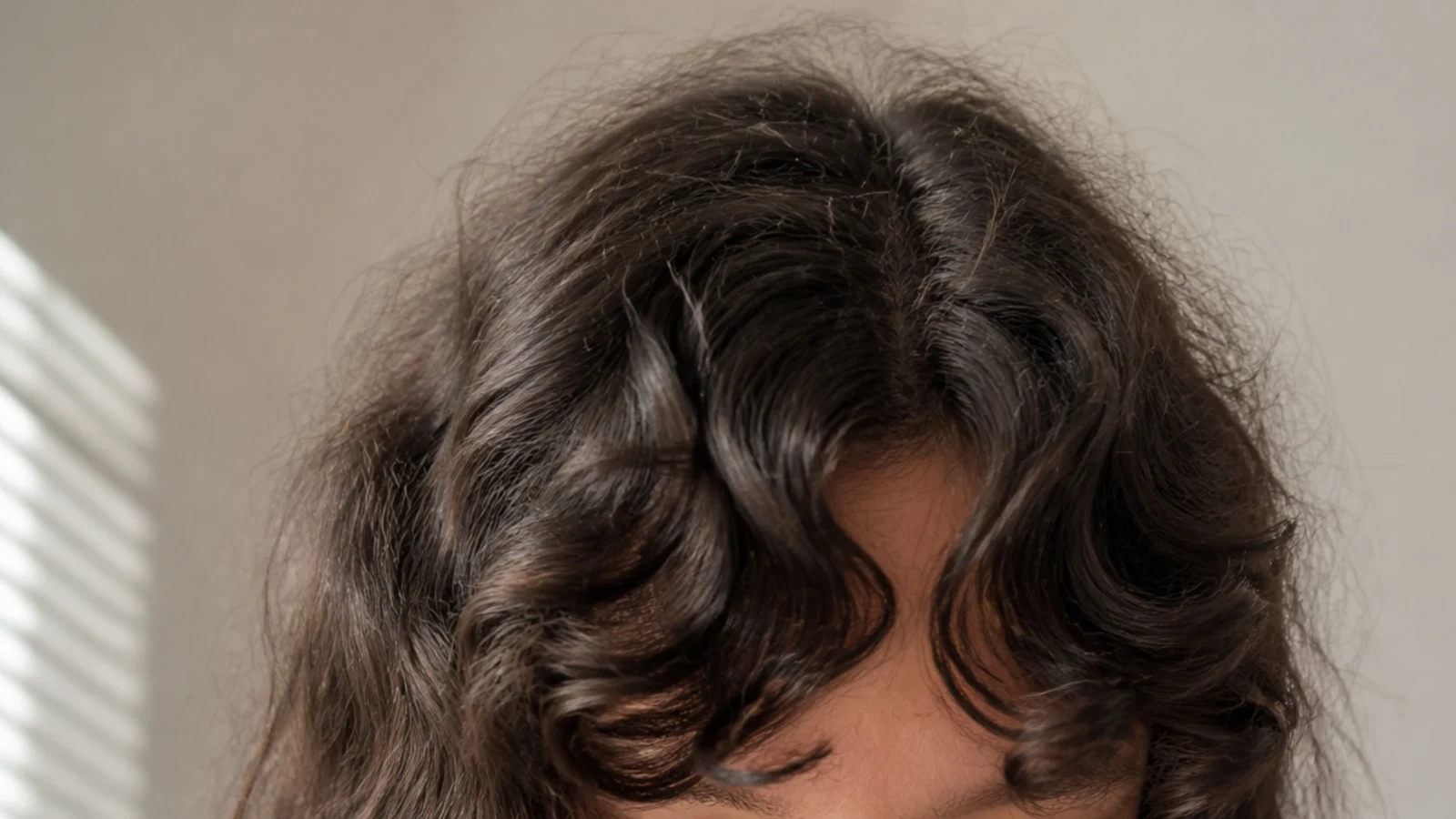
Curtain bangs cut on curly hair sit at cheekbone length when dry and split open from a center point, which turns the front halo into deliberate face framing instead of stray hairline frizz. Ask for them cut dry, curl by curl, with the shortest piece no higher than the top of the eyebrow, since curly hair shrinks 30 to 50 percent as it dries. On frizzy hair specifically they solve the worst problem area, the hairline. Cut and styling detail in curly short curtain bangs.
Who it suits: 2C to 3B curls, round and heart face shapes.
Tip: Style the bangs first with a pea of gel before the rest of the head, then never touch them again.
8. Second-Day Pillow Frizz in a Half-Up
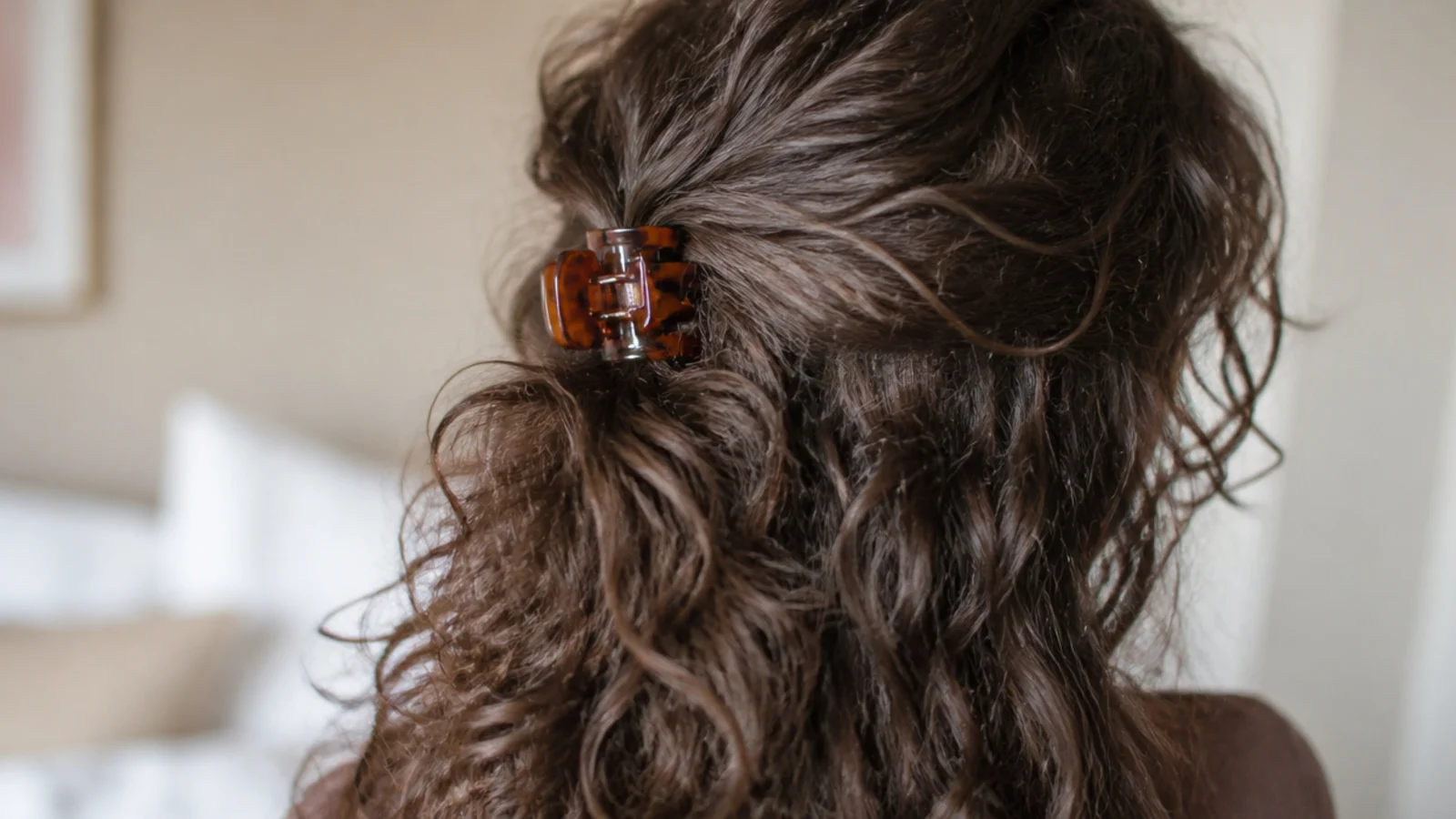
Day 2 hair, deliberately. Sleep flattens one side and puffs the crown, and rather than fixing it you gather the top third into a claw clip or a small elastic and let the bottom two thirds keep the slept-in texture. Refresh only the front with a spray bottle and a pea of leave-in. It takes about 90 seconds and it is the most photographed real-life version of this aesthetic, because the asymmetry looks lived in.
Who it suits: All curl types on day 2 or day 3.
Tip: Refresh with water first, product second; product on dry hair without water is what creates white flaking.
9. Frizzy Curls With Collarbone Face-Framing Layers
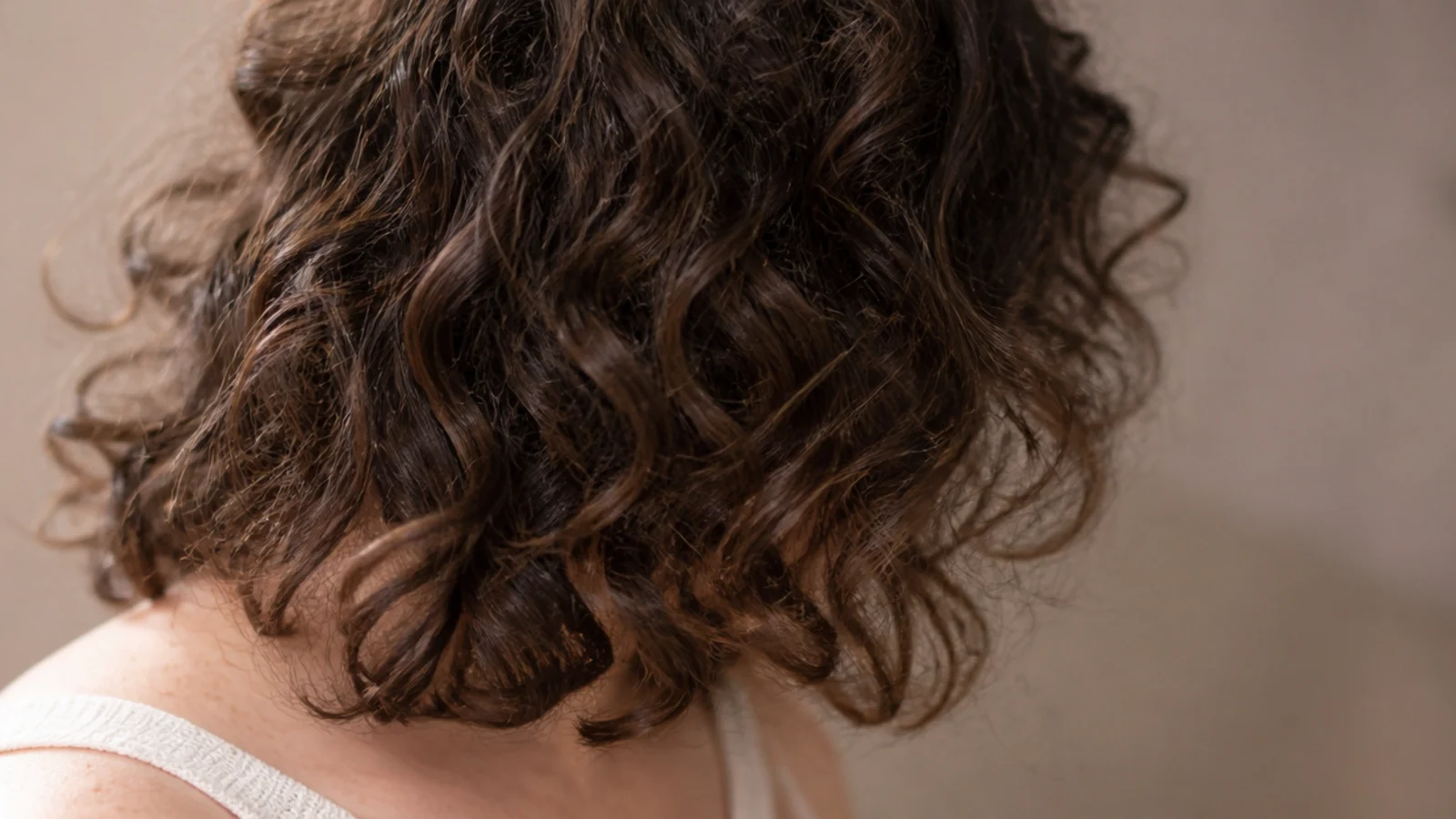
A cut, not a styling trick. Collarbone-length curls with the shortest face-framing pieces hitting the jaw and internal layers removing bulk from inside the shape. Blunt heavy ends make frizzy curls look wider and fuzzier at the perimeter, while internal layers let the curls stack instead of pushing outward. Ask for internal debulking and no thinning shears anywhere near the surface. The same logic at mid length is covered in curly mid length haircut.
Who it suits: Thick 2C to 3B curls carrying too much bulk at the ends.
Tip: Book a dry curly cut; wet cutting on frizzy curls almost always comes out two inches shorter than planned.
10. Silk Scarf Headband Over Frizzy Curls
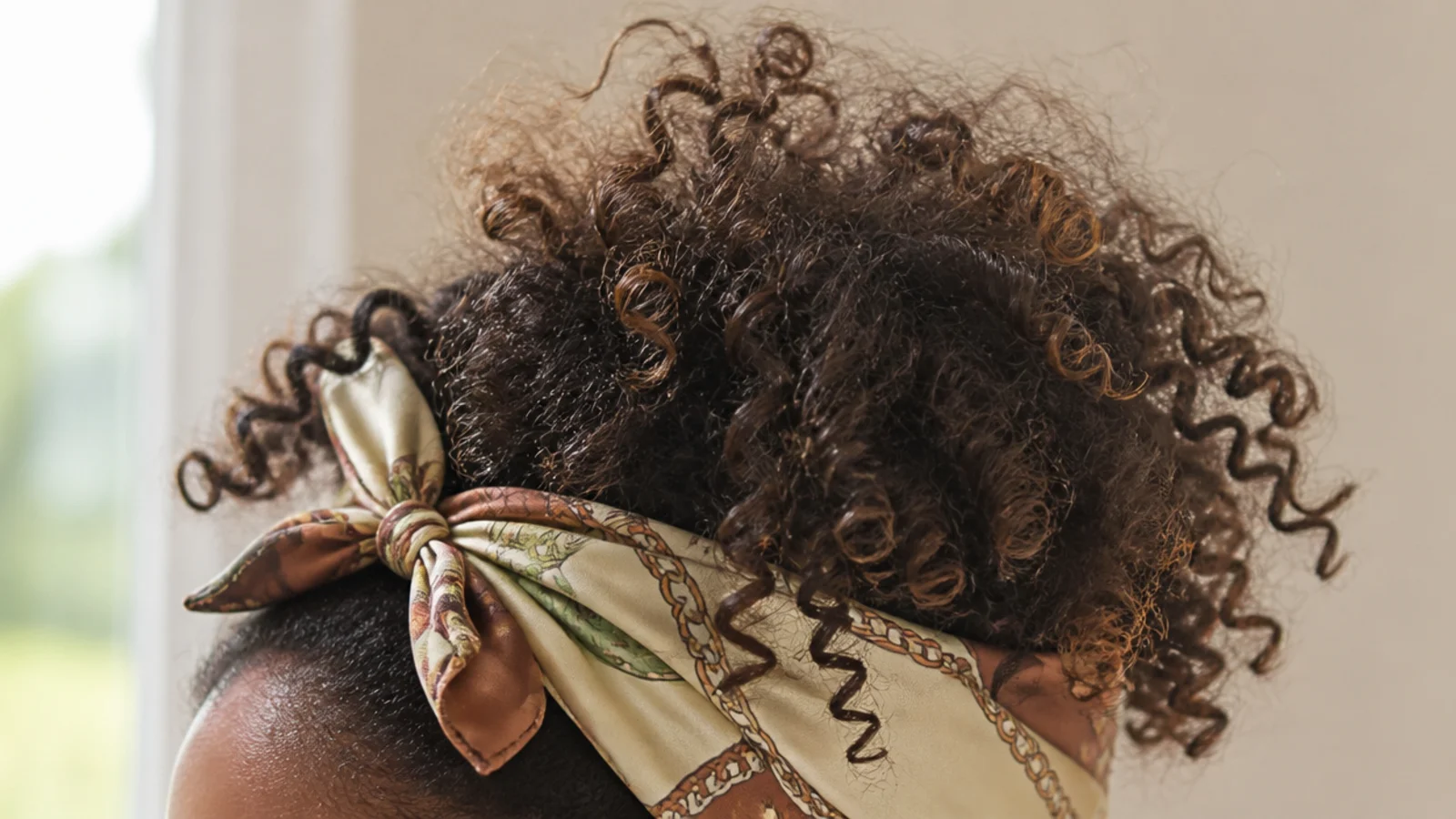
A silk or satin scarf folded to about two inches wide, tied behind the ears with the knot tucked under, so it flattens the hairline frizz and lets the crown halo rise above it. Silk is doing double duty here: it holds the front without the friction a cotton or elastic headband creates, so you are not trading hairline frizz for breakage. Choose a color one or two shades off your hair for contrast. Costs about 12 to 25 dollars for a real mulberry silk square.
Who it suits: Day 3 hair, grow-out phases, and humid days.
Tip: Tie the knot at the nape rather than on top; a top knot creates a new crease line by lunchtime.
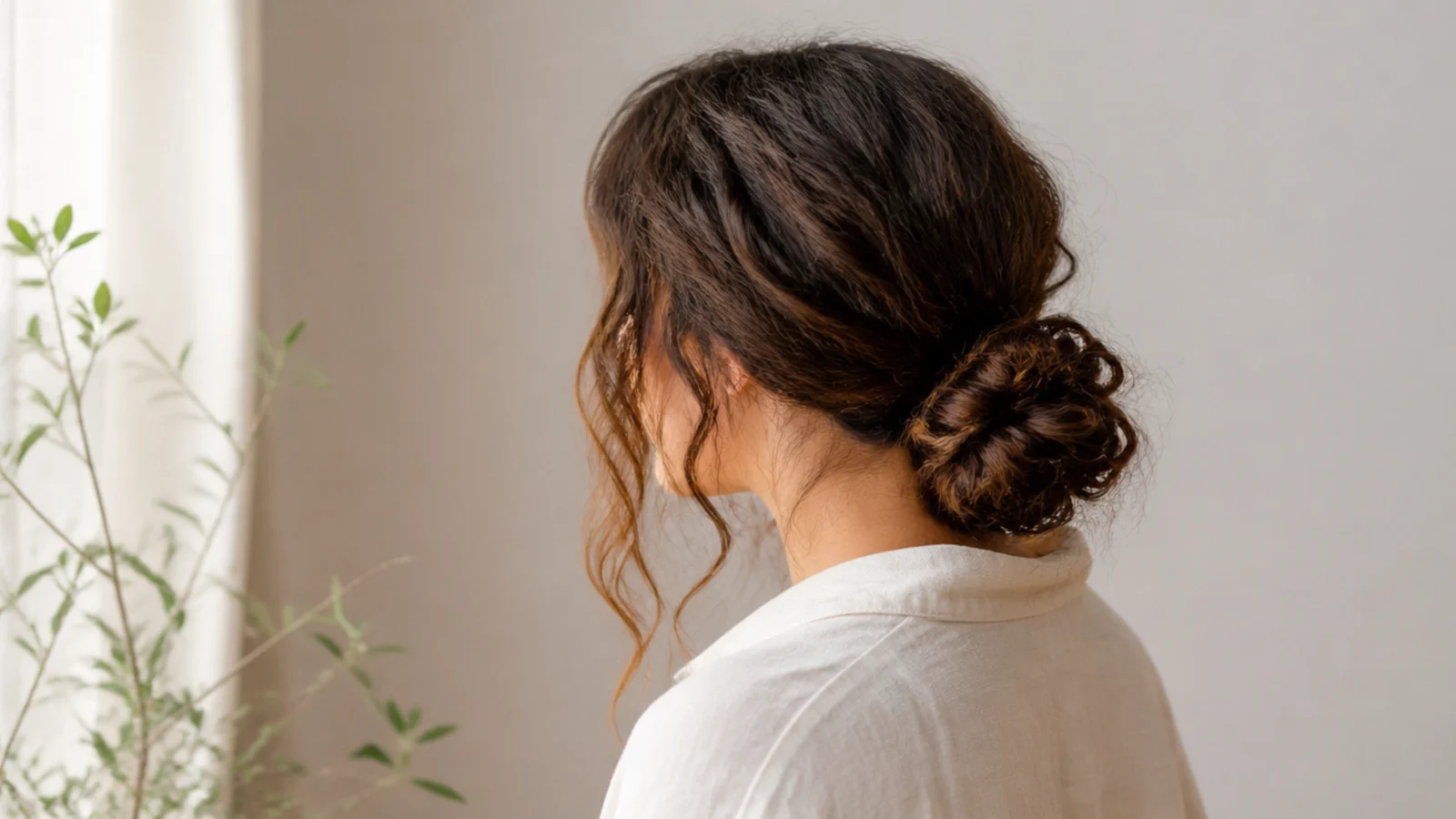
11. Frizzy Curly High Bun With Escaped Wisps
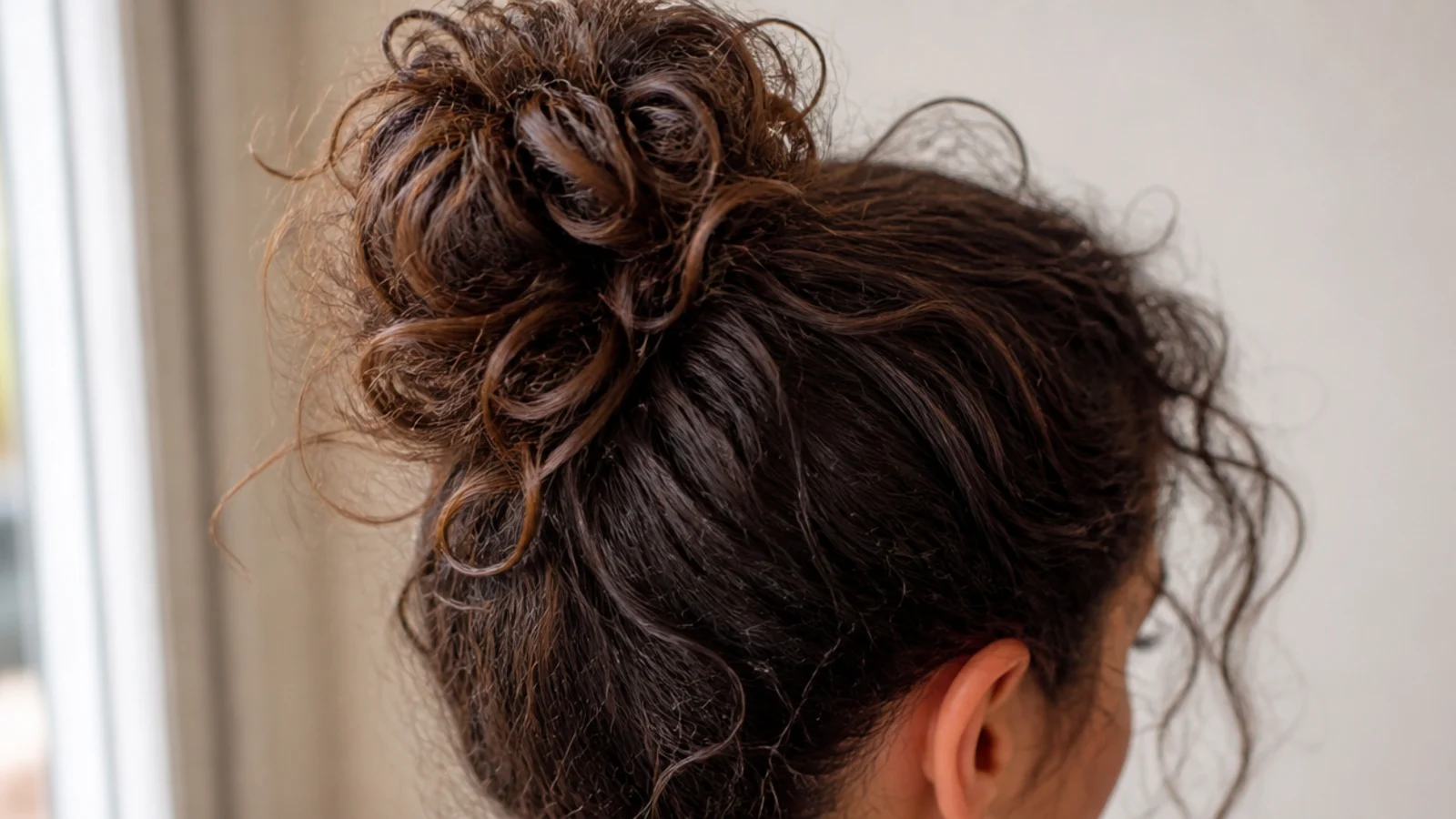
Hair gathered high with a spiral or silk scrunchie, curls left loose inside the bun rather than smoothed, and short pieces deliberately pulled out at the temples, in front of the ears and at the nape. Takes about three minutes. The reason it works on frizzy curly hair is that a bun contains the bulk while the escaped wisps preserve the halo, so you get shape and softness in one style. Keep the elastic loose enough to slide a finger under. More containment styles sit in hairstyles for frizzy hair.
Who it suits: Medium to long curls on hot or busy days.
Tip: Use a spiral coil or silk scrunchie, not a rubber elastic, or you will get a permanent dent and snapped strands.
12. Rain-Day Frizzy Curls Under a Beanie
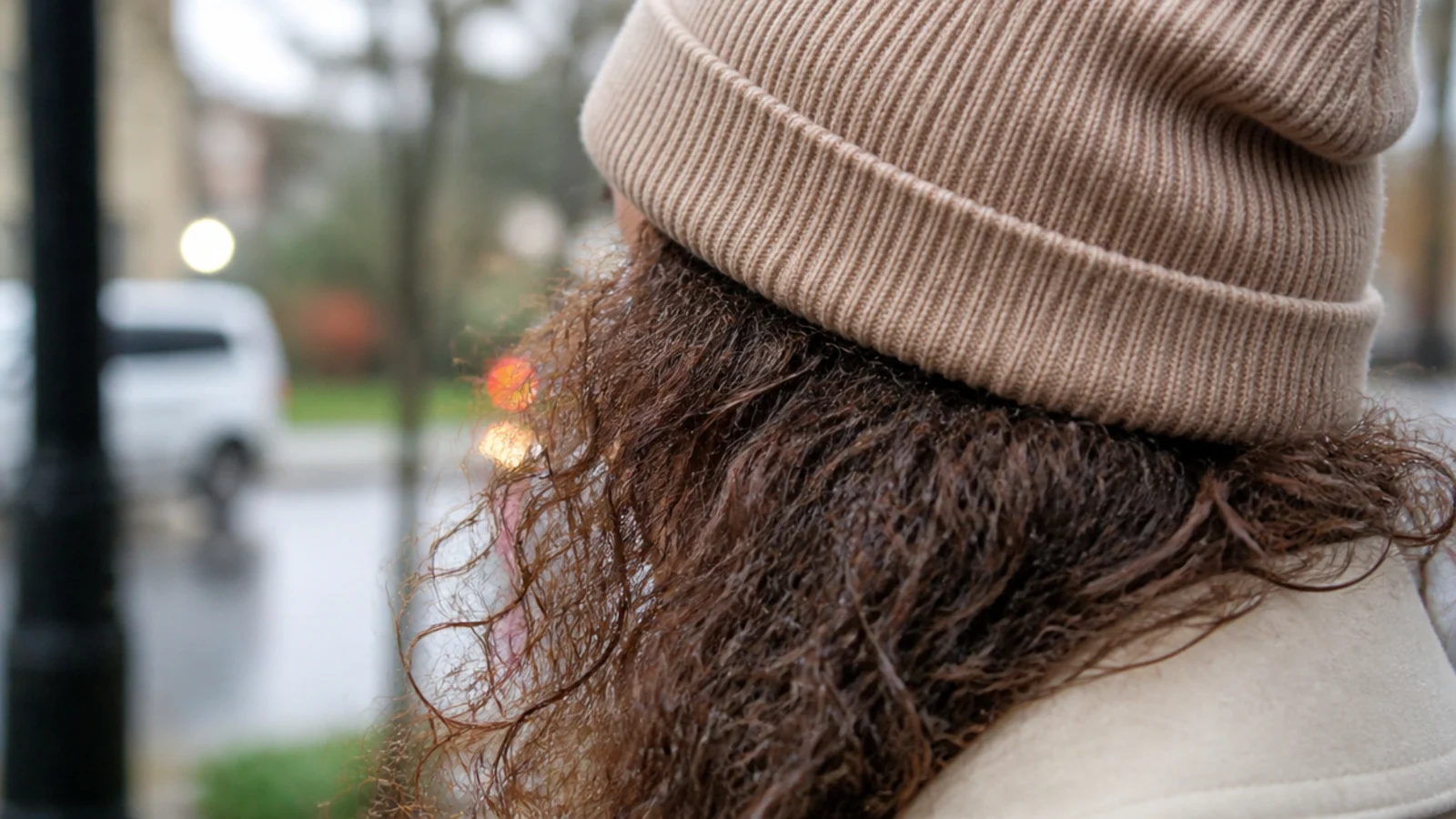
A ribbed beanie pulled to just above the eyebrows with the length spilling out below, which turns the worst weather for curls into the easiest look. Rain and high dew points make hair swell, and a beanie both hides the crown and keeps the ends from taking on more water. Choose a satin-lined beanie if you can find one, roughly 20 to 30 dollars, because plain wool ribbing generates exactly the friction that creates new frizz at the hairline.
Who it suits: Fall and winter, rainy commutes, and grow-out weeks.
Tip: Put the beanie on when hair is fully dry, never damp, or you will set a flat crown you cannot fix without rewetting.
13. Copper-Toned Frizzy Curls in Warm Light
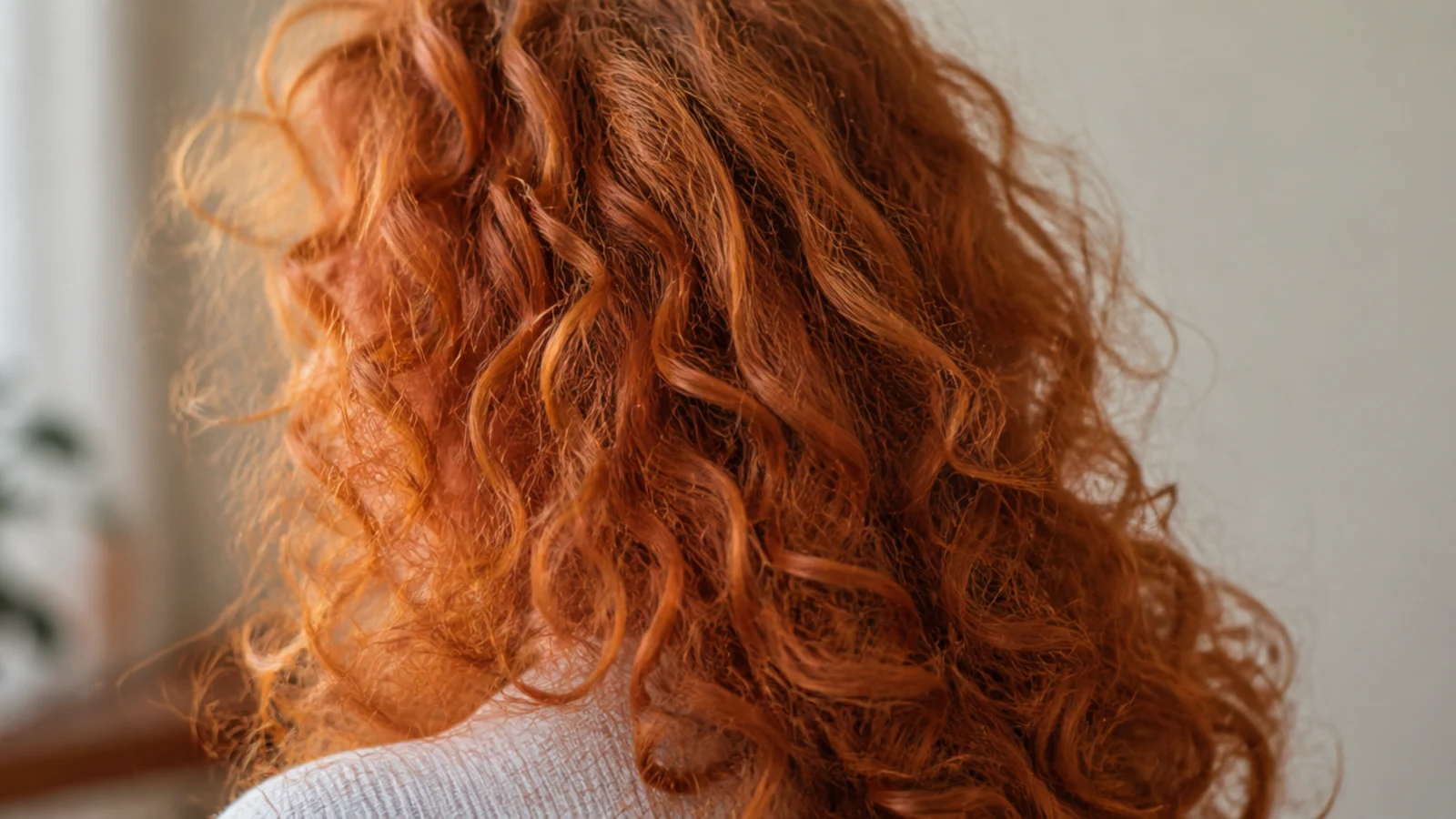
Color choice as an aesthetic decision. Copper, auburn and warm honey tones catch backlight far more visibly than cool ash shades, so the halo glows amber instead of reading gray. If you already color your hair, moving one or two tones warmer makes the same frizz photograph better. Color-treated curls need more moisture, so add a weekly deep mask and expect to rewash a shade or two lighter over six to eight weeks. Mask picks are in hair mask for frizzy hair.
Who it suits: Warm undertones and anyone already coloring their curls.
Tip: Ask for a gloss rather than a full lift; bleach on frizzy curls raises the cuticle and multiplies the halo.
14. Frizzy Curly Ponytail With a Cloud Crown
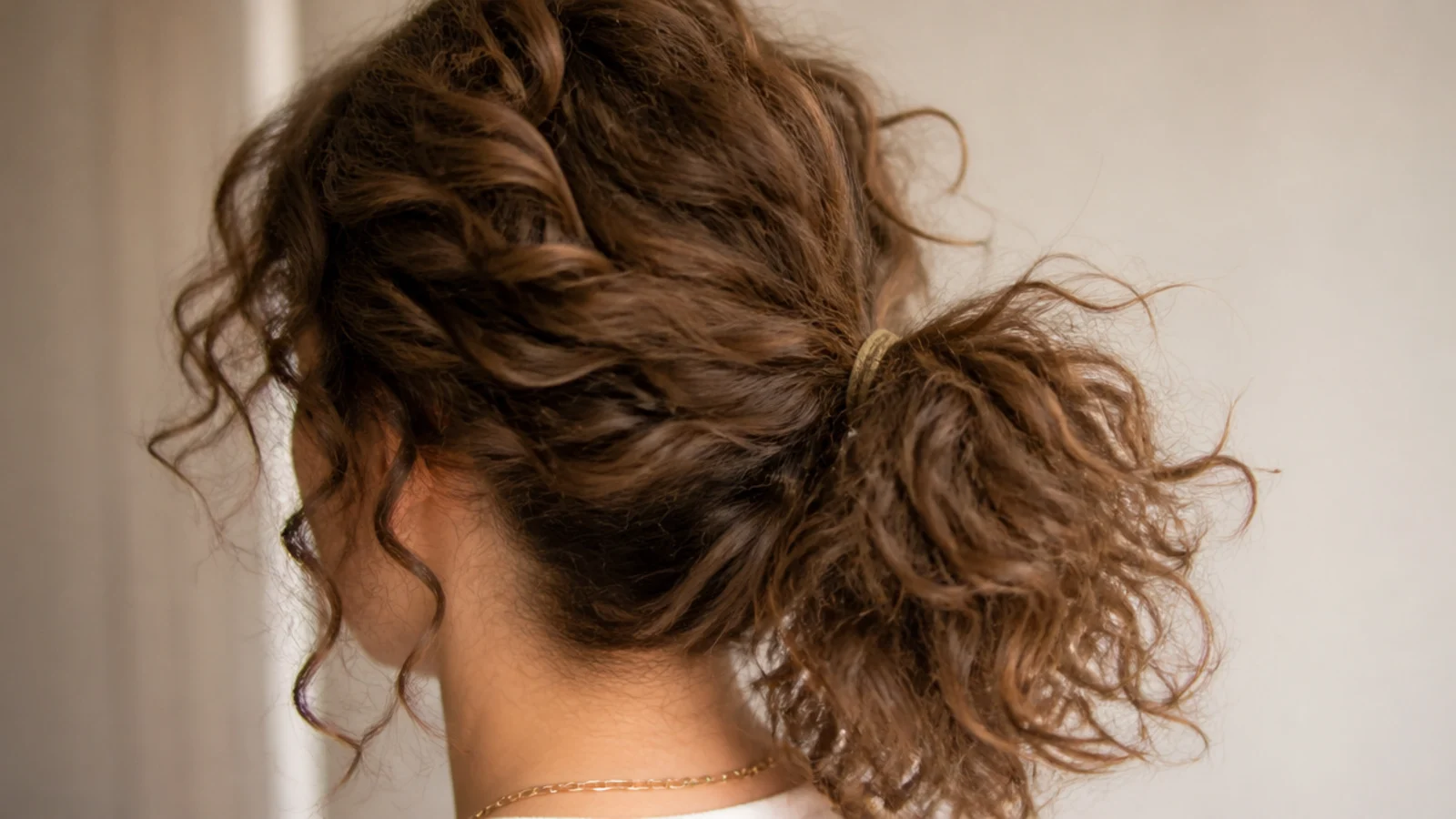
A mid-height ponytail tied loosely enough that the crown keeps its volume, so the silhouette reads as a soft cloud on top with a burst of curls below. The mistake most people make is pulling it tight, which flattens the crown and, over months, causes real traction damage along the hairline. Gather with your fingers, never a brush, and set it at the level of the top of your ear. Takes two minutes and holds all day.
Who it suits: 3A to 4A curls, workdays, and workouts.
Tip: Tie it loose enough to gently lift the elastic away from your scalp; scalp tension makes crown frizz worse over time.
15. Loose Braid With Frizzy Curl Texture Pulled Out
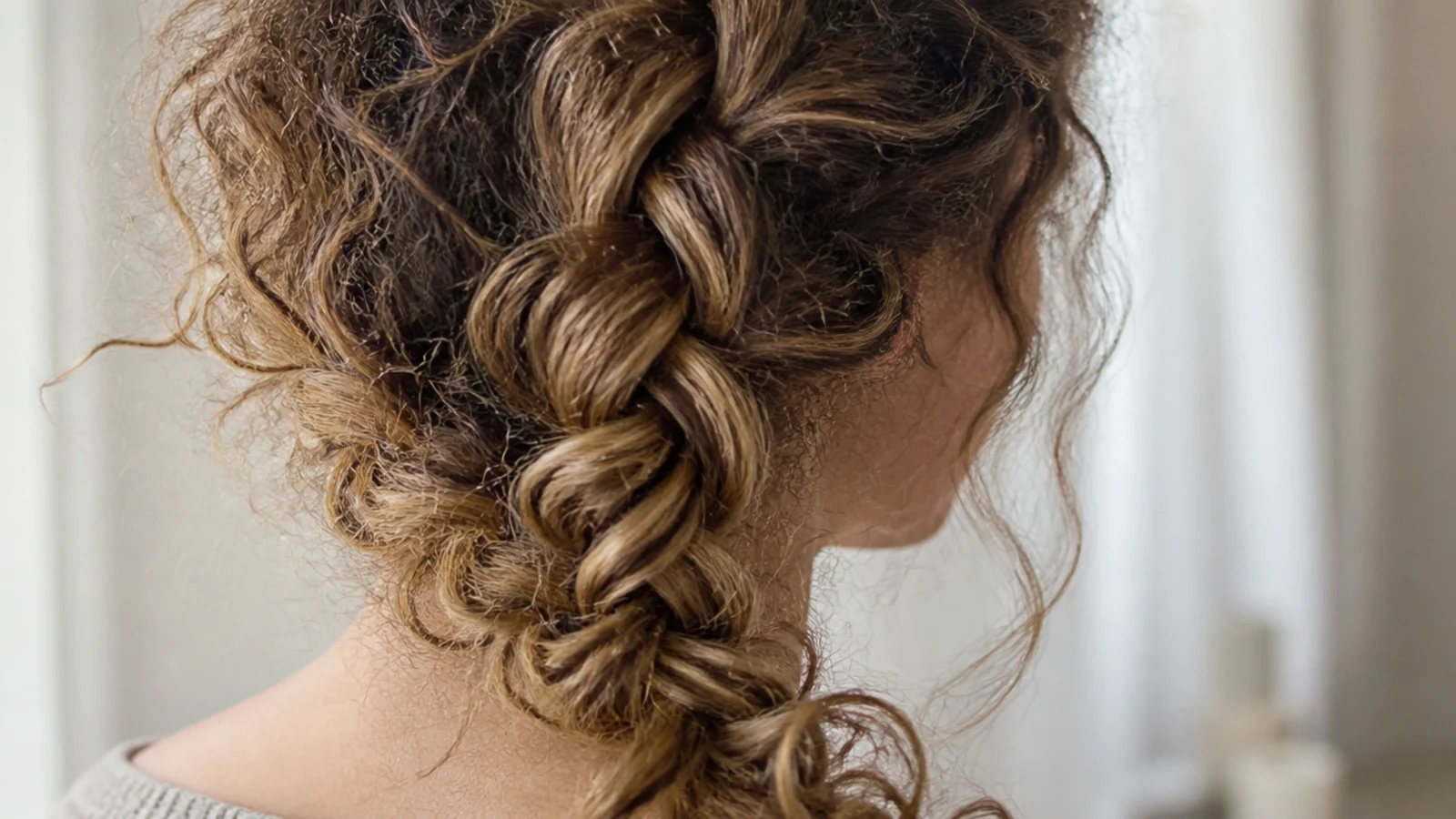
One loose three-strand braid, worn to the side, with each plait gently pulled wider so the braid looks soft and full instead of tight. On frizzy curly hair this is the most useful style here, because it doubles as the overnight protective style: braid it loosely before bed and you wake with the curl pattern intact and less pillow frizz. It takes about four minutes and holds through humidity. Braid variations sit in frizzy hair hairstyles and mermaid braids on curls.
Who it suits: Medium to long curls, sleep protection, and humid days.
Tip: Pancake the plaits from the bottom up, one edge at a time, so the braid widens without unraveling at the top.
Why Curly Hair Frizzes: The Cuticle and the Moisture Mechanism
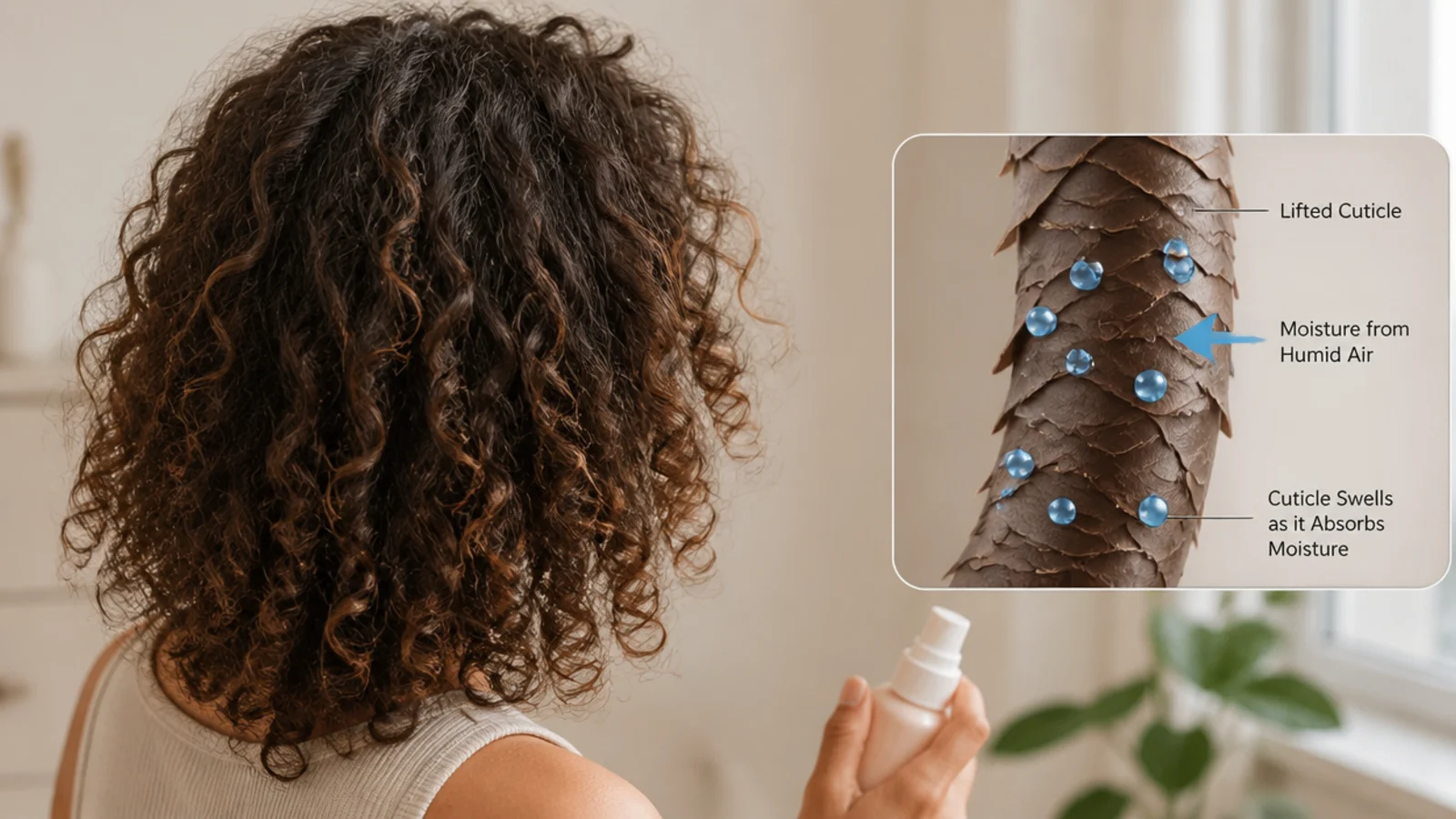
Every strand of hair is wrapped in a cuticle, a layer of overlapping scales that lie flat like roof shingles when hair is hydrated and healthy. When hair is dry, those scales lift. A lifted cuticle does two things: it lets water escape from inside the strand, and it lets ambient moisture in from the air. The strand swells unevenly, the curl loses its shape at that point, and the hair pushes out of the clump it was sitting in. That is frizz. It is why the same head of hair can look glassy on a dry January day and enormous in August. Curly and coily hair frizzes more than straight hair for a structural reason: the cuticle has to bend around every curve of the curl, so the scales sit less flat to begin with, and natural scalp oils cannot slide down a spiral the way they slide down a straight shaft. The practical conclusion is the one almost no product ad states plainly. You cannot win by fighting the moisture exchange. You win by hydrating the inside of the strand so it stops being thirsty, then sealing the outside so the exchange slows down. Everything in the routine below is one of those two jobs.
Frizz by Curl Type: 2C Waves, 3A to 3C Curls and 4A Coils
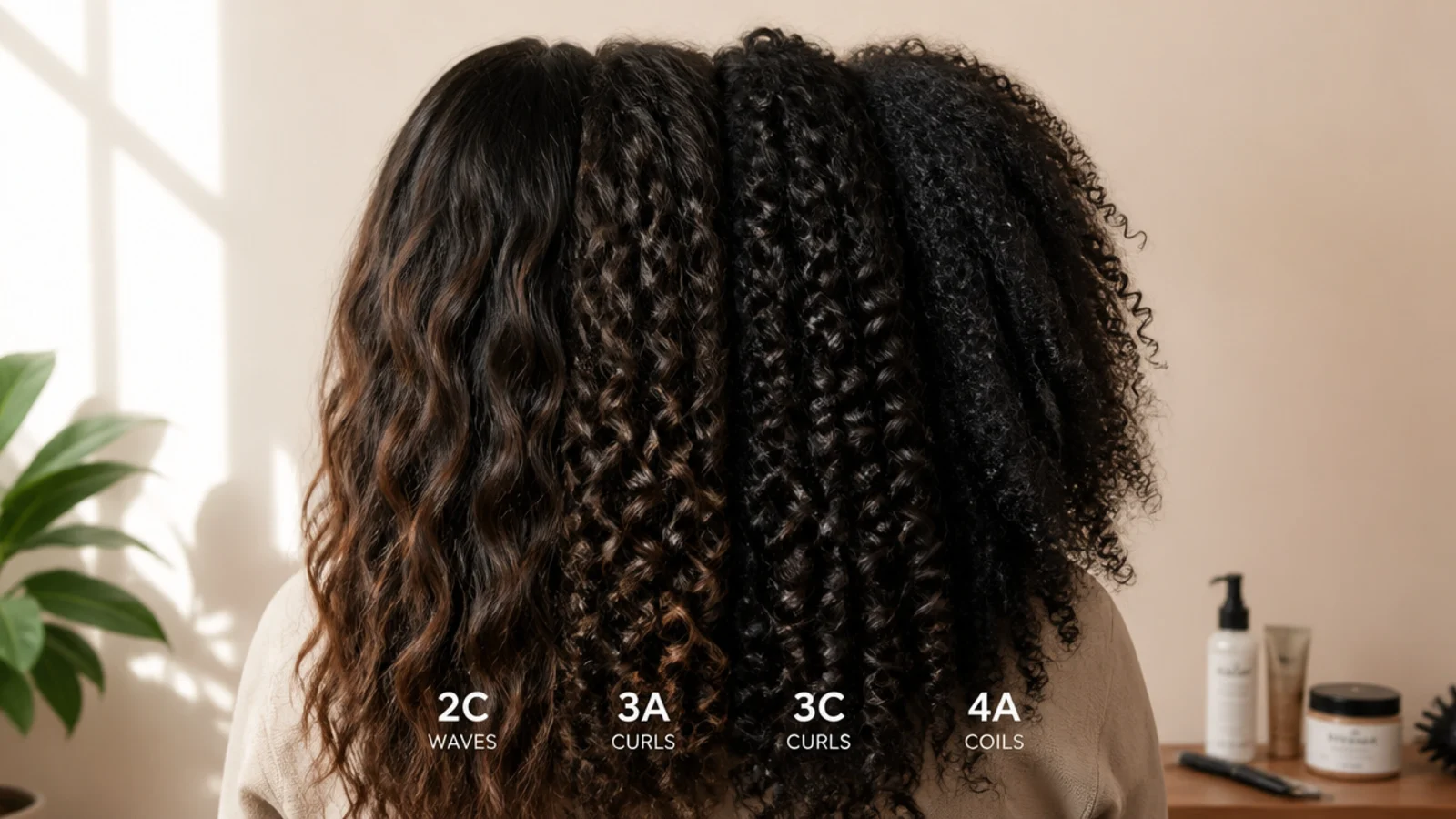
Frizz does not look the same on every curl pattern, and the same advice given to all of them is why the internet contradicts itself. On 2C waves, frizz shows up as surface fuzz sitting on top of otherwise intact S-waves, and the fix is a lighter product load, usually leave-in plus gel with no cream at all, since cream weighs waves into limpness. On 3A to 3C curls, frizz is mostly halo frizz at the crown plus in-the-curl frizz where clumps separate mid-shaft, and this pattern responds best to the full three-layer routine on soaking wet hair. On 4A coils, frizz is nearly always the crown halo plus dryness at the ends, because scalp oil never reaches the length, so the answer is heavier sealing with an oil or butter after the gel. Porosity matters as much as pattern. Low-porosity hair resists absorbing anything, so warm water and a shower cap during a deep conditioner make the difference. High-porosity hair absorbs instantly and loses it just as fast, so it needs a sealing step every single time. Wave-specific detail sits in frizzy wavy hair.
The Wash-Day Routine That Makes Frizz Look Intentional
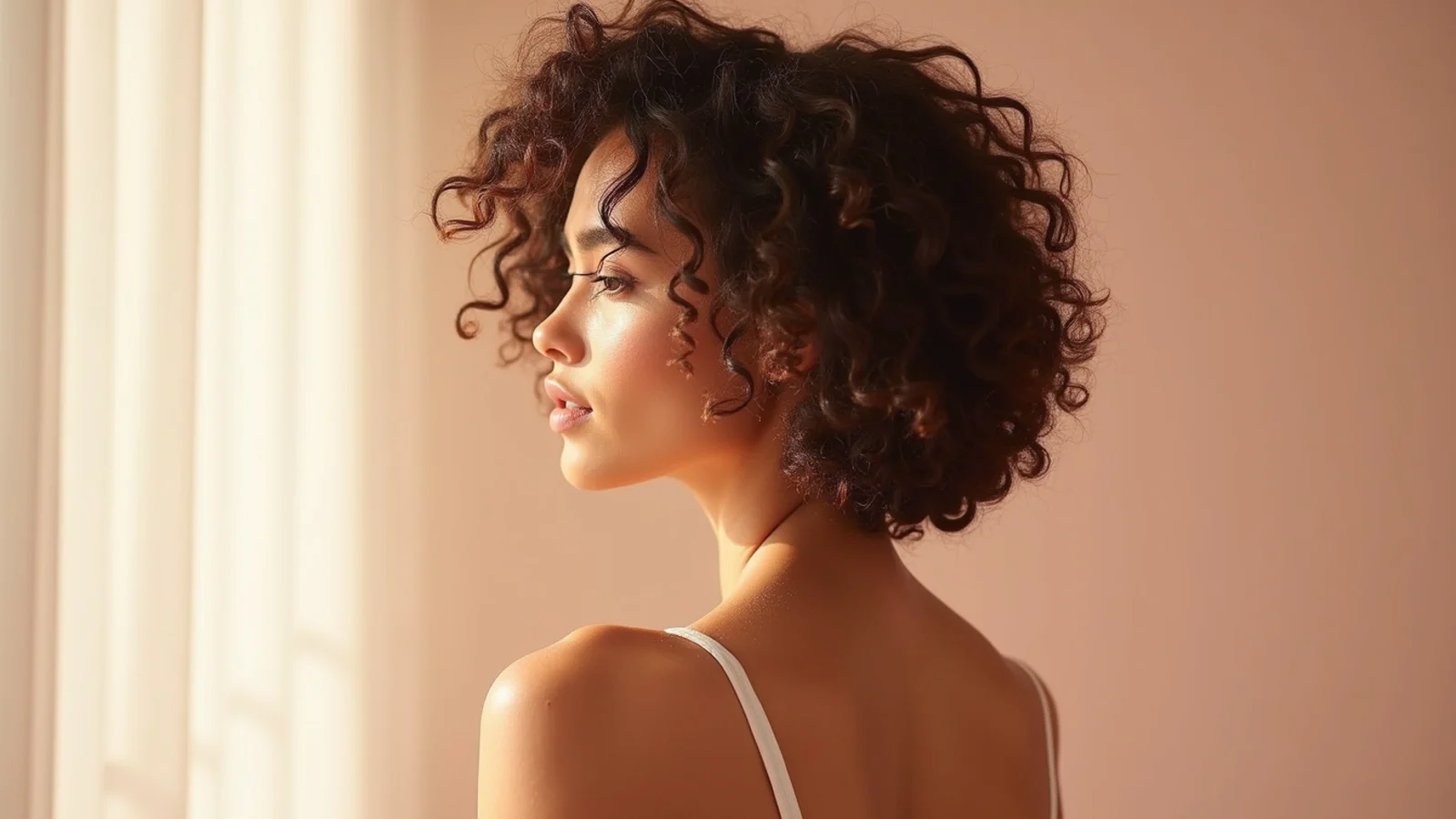
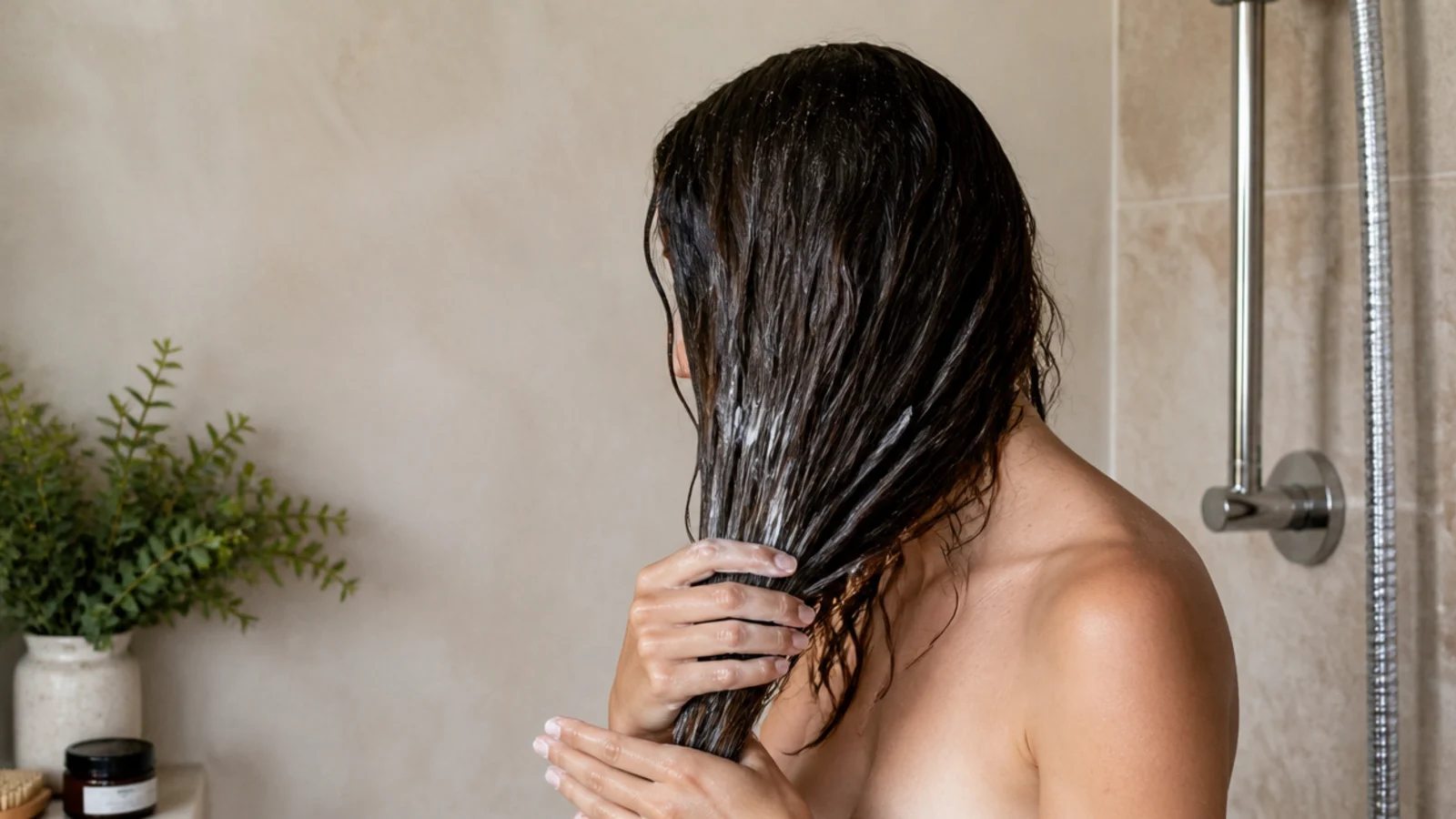
Cleanse with a sulfate-free shampoo or a co-wash, working it into the scalp with fingertips and letting the runoff clean the lengths. Condition generously, then detangle with a wide-tooth comb or your fingers while the conditioner is still in and the hair is fully saturated, never dry and never after rinsing. Rinse most of it out with cool water, which helps the cuticle lie flatter, and leave a light film behind if your hair is coarse or high porosity. Now the step that changes everything: apply your stylers to soaking wet hair, not damp. Water is the delivery system that distributes product across every strand and pulls curls into clumps as they set. Rake each product through in sections, then scrunch upward toward the scalp until you hear a faint squelch. Remove water with a microfiber towel or an old cotton t-shirt, scrunching upward, never rubbing, and never a terry towel, whose loops catch strands and lift the cuticle on contact. Then air dry or diffuse on low heat and low speed, holding each section still in the bowl for 30 to 60 seconds. From the moment the gel goes on until the hair is completely dry, do not touch it.
Leave-In, Cream, Gel: What Each Product Actually Does
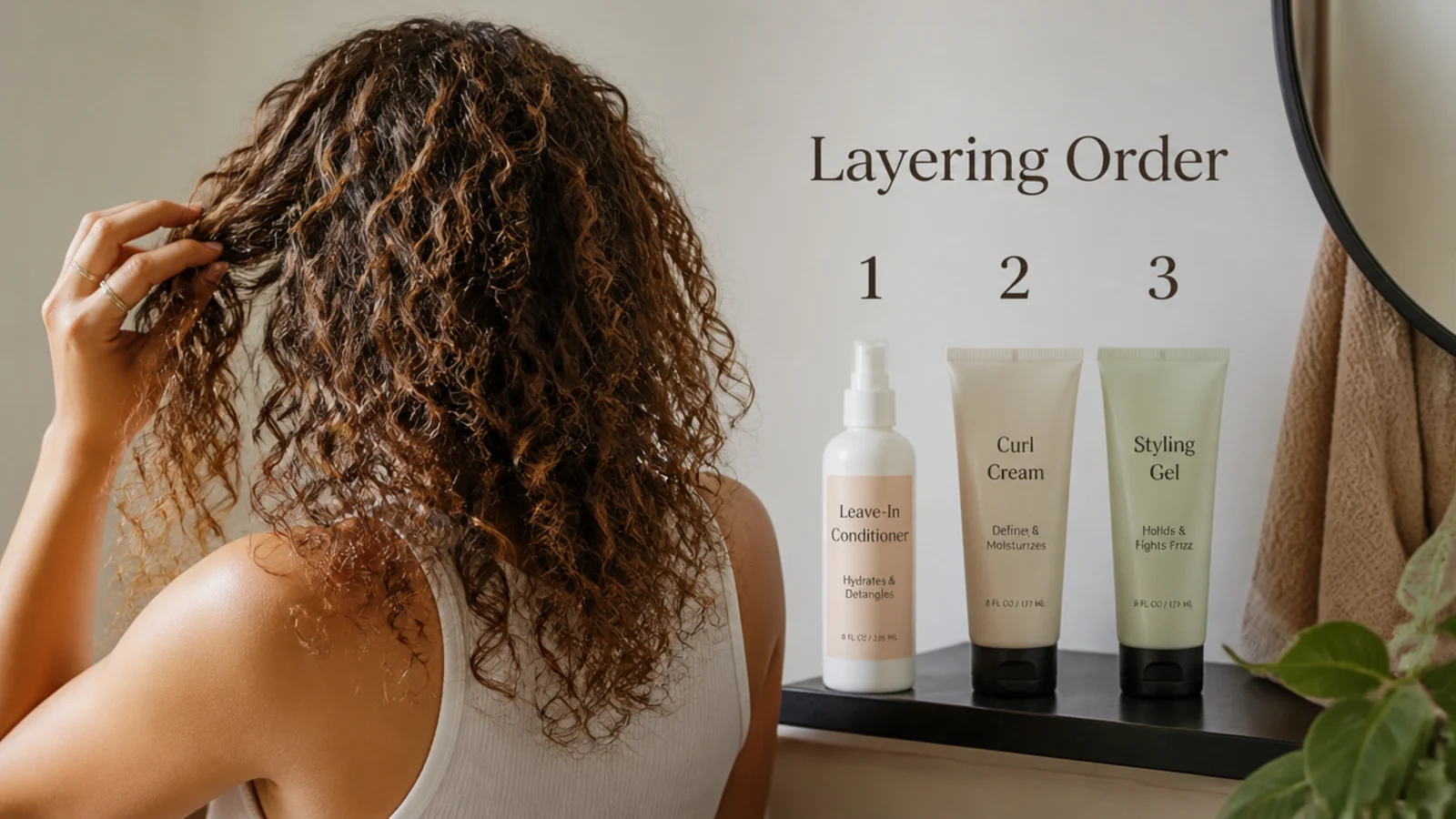
Three products, three different jobs, one non-negotiable order. Leave-in conditioner hydrates: it is a water-based lotion that keeps moisture inside the strand so the cuticle has less reason to drink from the air. It goes on first, on soaking wet hair, roughly a quarter-size amount for shoulder-length hair and a half-dollar for waist-length. Curl cream defines: it has more emollients and light hold, and its job is to glue neighboring strands into clumps so the curl pattern reads clearly. It goes second, about the same amount, raked through in sections. Gel seals: it forms a cast around each clump that physically holds the shape while the hair dries and resists humidity swelling afterward. It goes last, scrunched rather than raked, and it should feel crunchy when dry. That crunch is not a failure, it is proof the cast set. Once the hair is completely dry you can scrunch the cast out with oiled palms for softness, or leave it in for a wet-look finish. Reversing the order is the single most common mistake: gel under cream cannot seal anything, and cream over wet gel breaks the cast before it forms. Weekly, add a deep mask from hair mask for frizzy hair.
Cuts and Layers That Flatter Frizzy Curls, and the Ones That Cause Bulk
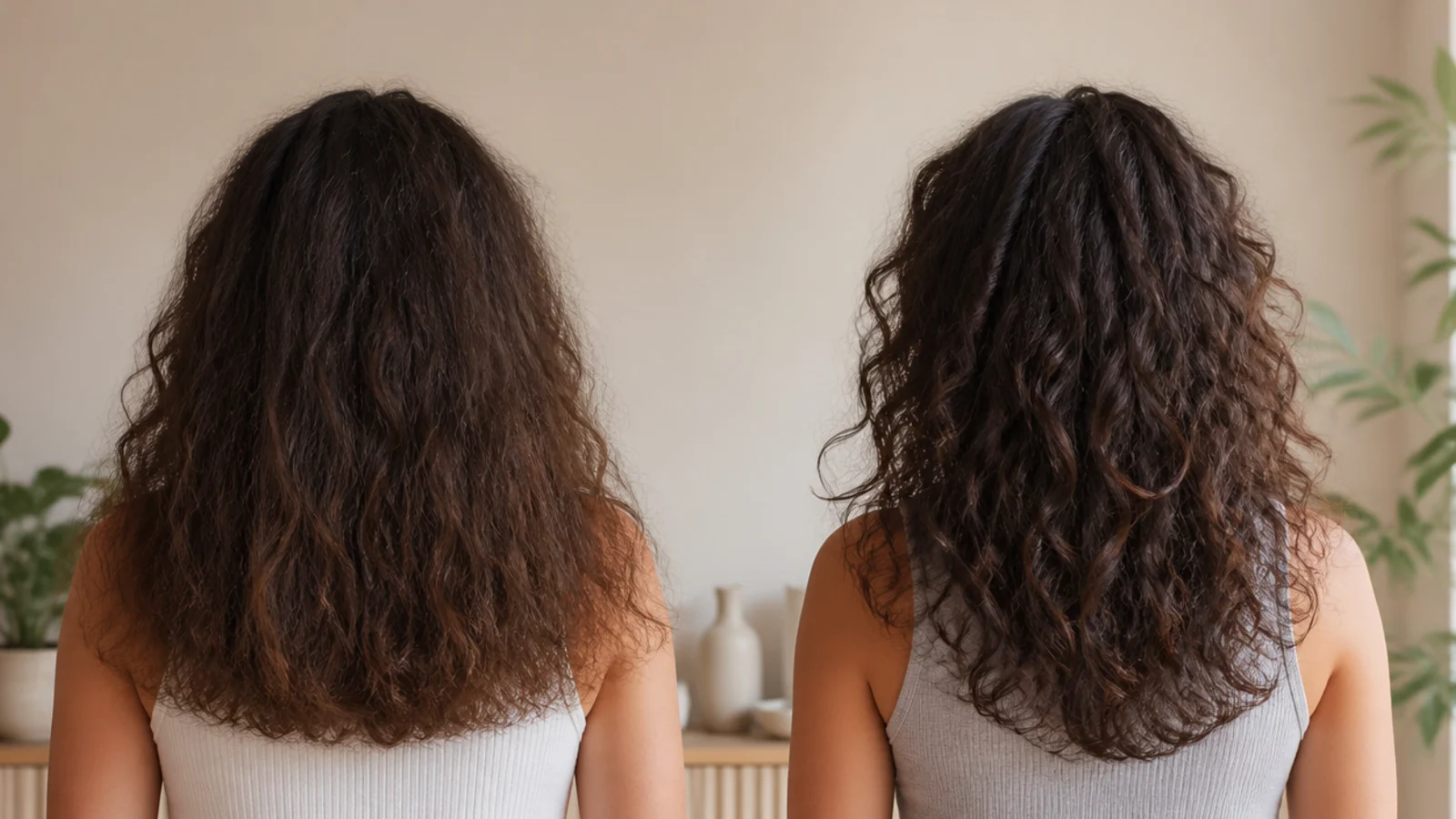
A haircut cannot stop the cuticle from lifting, but it decides how the frizz reads. Blunt heavy ends are the main culprit behind curls that look wide and fuzzy at the perimeter: all that weight at the bottom stretches the curl pattern out, builds a triangle silhouette, and gives the halo a solid line to sit against, which makes it look like a mistake. Internal layers do the opposite. Cut inside the shape rather than on the surface, they remove bulk so curls can stack into each other instead of pushing outward, and because the cut ends stay buried, they do not create new short flyaways near the top. What to ask for: internal debulking, long face-framing pieces starting at the jaw, and a dry curly cut so the stylist can see where each curl actually falls. What to avoid: thinning shears run through the surface, which shatter ends into hundreds of short pieces that frizz within a week, and any layer so short at the crown that it cannot reach down to join a clump. Length matters too. Collarbone to mid-back is the most forgiving band, since there is enough weight to calm the crown without dragging the curl flat. See textured mid length haircut and face framing layers for shape references.
Humidity, Sleep and the Daily Habits That Keep the Aesthetic Alive
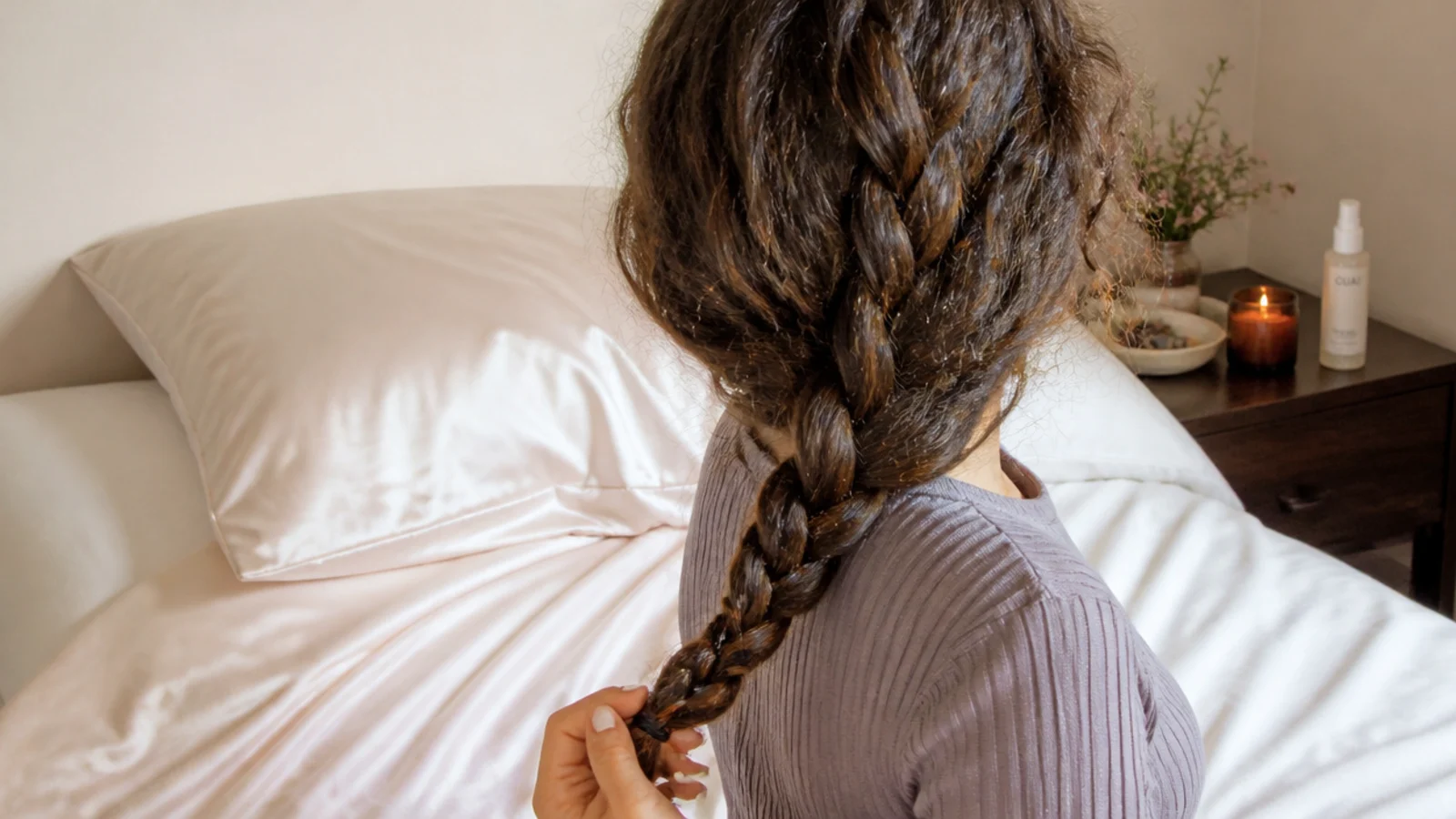
Wash day is maybe two hours of the week. The other 166 decide whether the look survives. Sleep first: cotton pillowcases are absorbent and high friction, so they pull moisture out of hair and rough the cuticle all night. Swap to silk or satin, roughly 20 to 40 dollars for a decent pillowcase, or put the hair in a loose braid, a pineapple on top of the head with a silk scrunchie, or a bonnet. Any one of the three cuts overnight frizz dramatically, and doing both is better. Humidity next: when the dew point climbs above about 60F, expect swelling regardless of what you do, so plan around it. Use a firmer-hold gel, choose the braid or the low bun instead of loose curls, and skip glycerin-heavy stylers on those days, since glycerin actively pulls water out of humid air and into your hair. On very dry winter days the same glycerin products help, which is why one product can seem brilliant in April and useless in August. Daily habits: hands out of your hair, no brushing when dry, refresh with a spray bottle of water before any product, and keep a silk scarf in your bag. Style options for the bad days are in hairstyles for frizzy hair and wavy curtain bangs.
Frequently Asked Questions
Why is my curly hair so frizzy?
Because the cuticle is lifted and your hair is dry, so it pulls moisture from the air and swells, pushing strands out of their curl clumps. The three usual causes are not enough water-based hydration, friction from terry towels, brushes or cotton pillowcases, and product applied to damp hair instead of soaking wet hair. Fix hydration and friction first, before buying any anti-frizz serum.
Can frizzy curly hair actually look good on purpose?
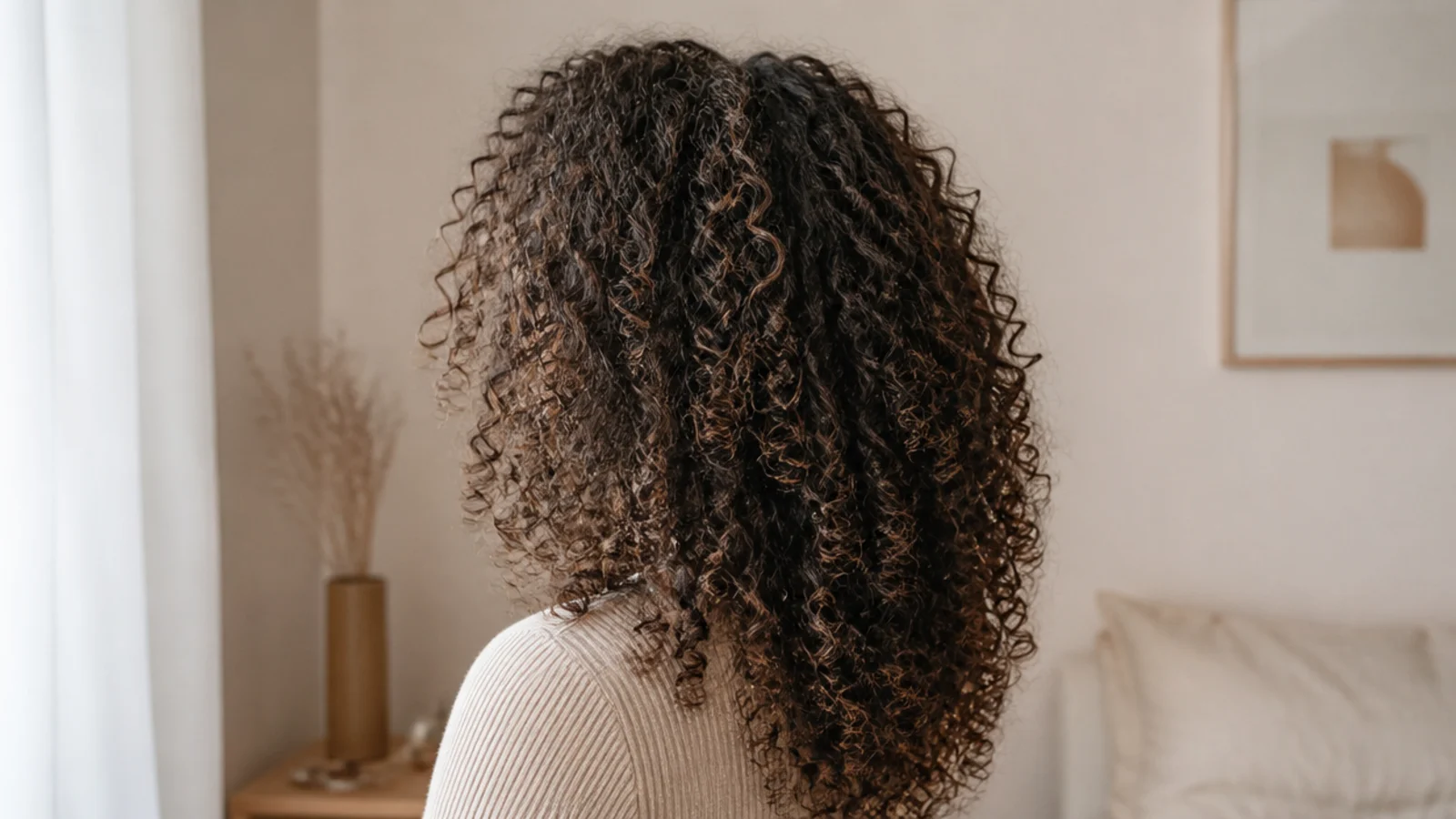
Yes, and it is a distinct look rather than a compromise. The frizzy curly hair aesthetic keeps the mid-lengths and ends clumped and defined while letting shorter crown strands form a soft halo. It reads intentional when the curls underneath are clearly shaped and hydrated. It reads messy when the whole head is uniformly fuzzy with no visible curl pattern anywhere.
Should I apply curl products to damp or soaking wet hair?
Soaking wet, every time. Water is the delivery system: it spreads leave-in and cream evenly across every strand and helps curls clump together as the product sets. On damp hair the same amount of product lands in patches, leaving some sections coated and others bare, which is exactly how halo frizz turns into all-over fuzz. Style in the shower or right after.
What order do I layer leave-in, curl cream and gel?
Leave-in first because it hydrates, curl cream second because it defines and clumps, gel last because it seals everything under a cast. Skipping the order matters more than skipping a product. Gel under cream cannot seal anything, and cream over gel breaks the cast while it is still wet. Rake each layer through, then scrunch upward toward the scalp.
Does a diffuser reduce frizz or make it worse?
It reduces frizz when used on low heat and low speed with the hair cupped and lifted into the bowl, and it makes crown frizz worse when the airflow is high or the diffuser is moved around constantly. Moving air blows curl clumps apart before they set. Hold each section for 30 to 60 seconds without motion, then move to the next.
How do I keep frizzy curls from swelling in humidity?
Seal rather than fight. Finish with a firm-hold gel to lay down a cast, and pick styles that contain the ends, such as a loose braid or a low bun, when the dew point runs above about 60F. Skip glycerin-heavy products on very humid days, since glycerin pulls water from the air into the hair and is a common cause of sudden midday puffing.
What should I dry frizzy curly hair with instead of a towel?
A microfiber towel or an old 100 percent cotton t-shirt. Terry loops catch individual strands, lift the cuticle and separate curl clumps, which is friction damage you can see within minutes. Scrunch upward gently, never rub, and stop while the hair is still visibly wet. Anything that removes too much water also removes the water your stylers need.
Do layers help or hurt frizzy curly hair?
Internal layers help and blunt heavy ends hurt. Weight lines at the bottom make curls stretch out and the perimeter look wider and fuzzier, while internal layers remove bulk from inside the shape without creating new short flyaway ends near the surface. Ask a stylist for internal debulking and long face-framing pieces, not thinning shears through the surface.
How often should I wash frizzy curly hair?
Most curly and coily hair does best on every three to five days, using a sulfate-free cleanser or a co-wash. Washing daily strips the natural oils that keep the cuticle flat, and washing less than weekly lets product build up and flatten the curl pattern. Between washes, refresh with a spray bottle of water and a pea of leave-in rather than a full wash.
Which frizzy hair look are you saving?
If you take one thing from these 15 frizzy curly hair aesthetic ideas, make it the sequence: soaking wet hair, leave-in, cream, gel, then hands off until the hair is bone dry. Almost every fuzzy result traces back to product on damp hair, or to touching the cast before it set. Add a silk pillowcase or a loose braid at night, a microfiber towel instead of terry, and internal layers instead of blunt heavy ends, and the halo stops reading as damage and starts reading as texture. Save the two or three looks closest to your curl type, then go deeper with frizzy curly hair styling or browse the whole frizzy hair hub.