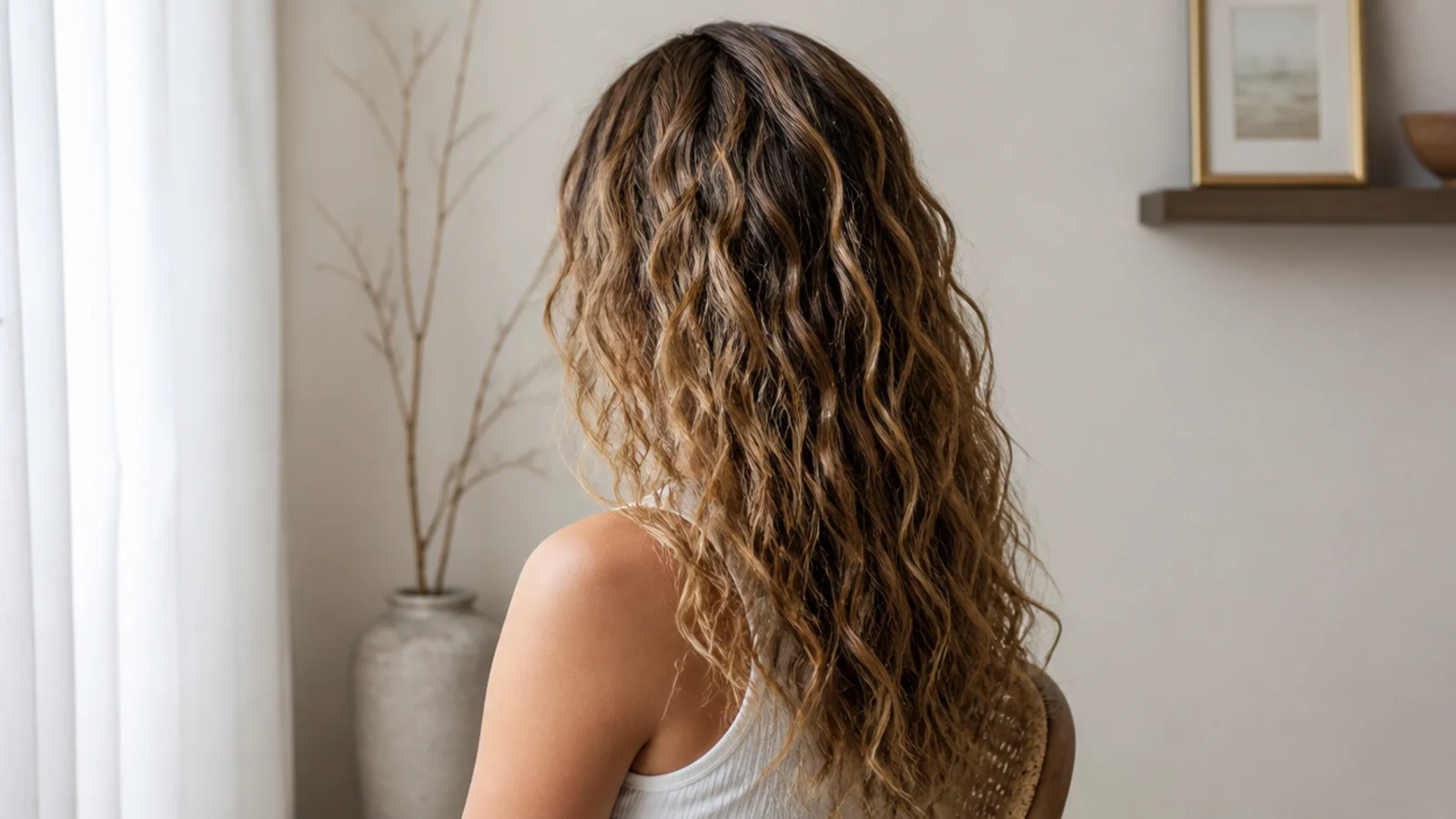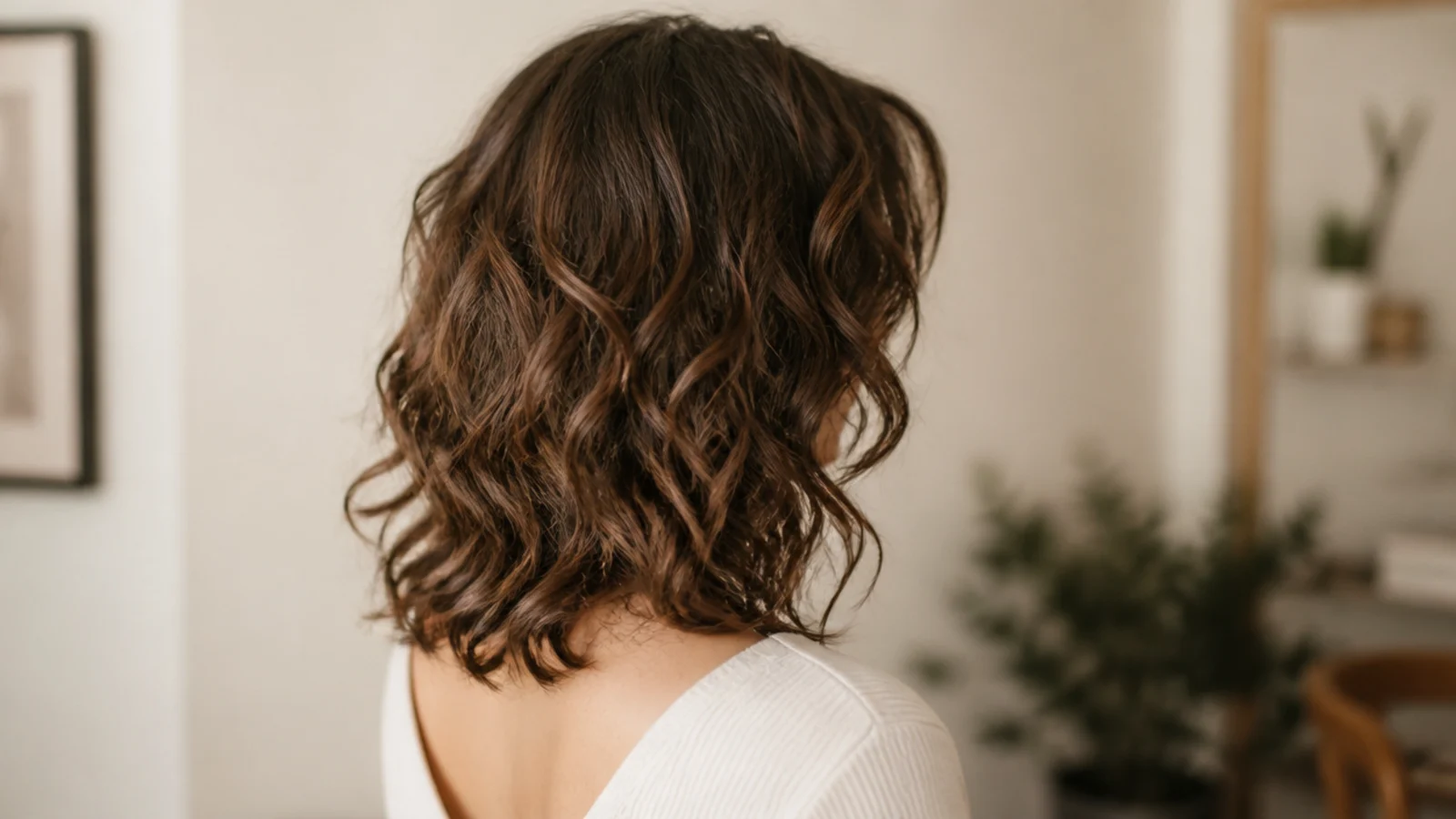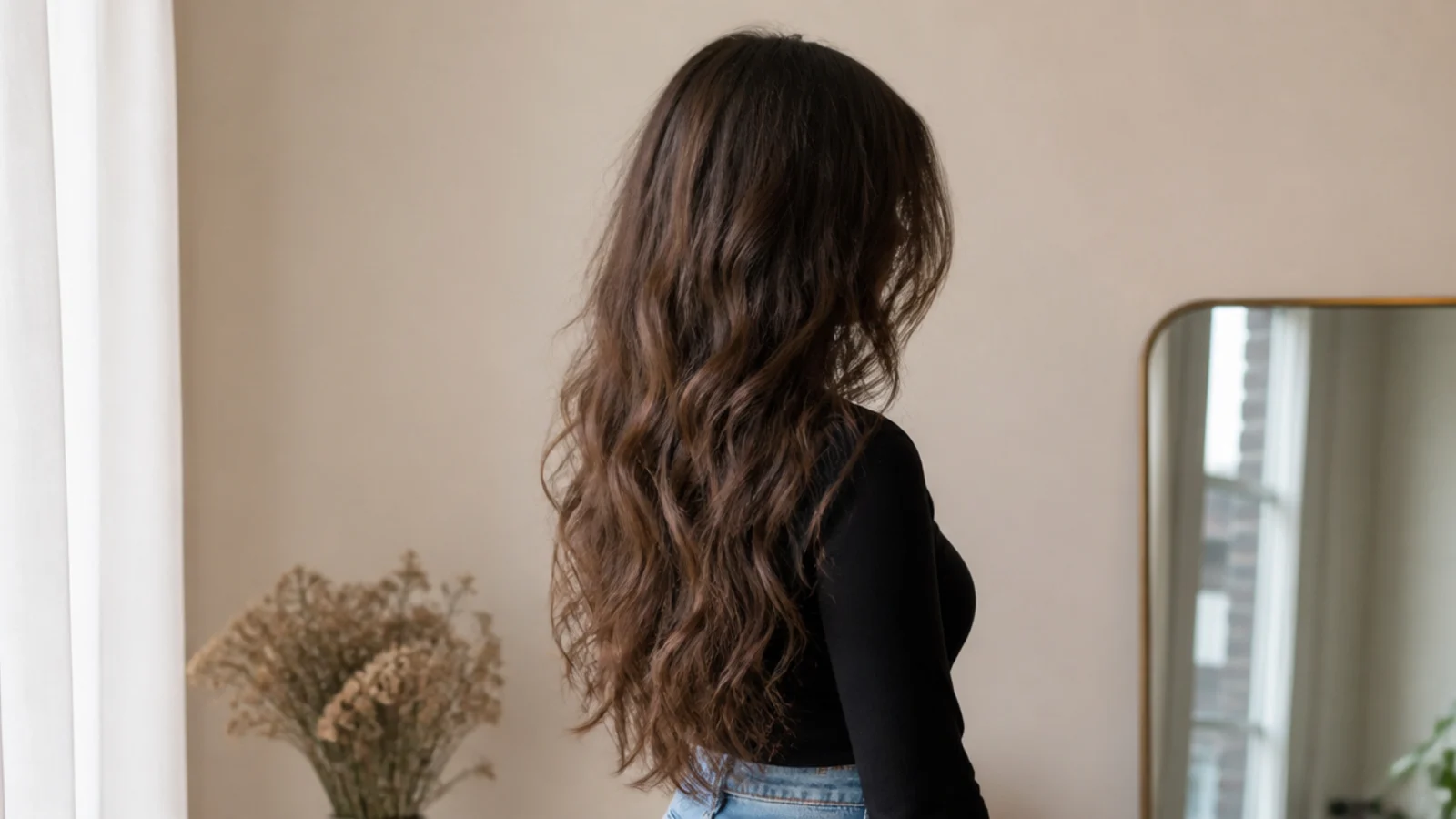
Quick Comparison
| Internal Debulking (Slide Cut or Razor) | Thinning Shears (Notched Blade Thinning) | |
|---|---|---|
| What it actually removes | Weight from the interior layer, outline untouched | Random strands at random lengths through the section |
| Effect on thick frizzy hair | Volume redistributes downward, triangle collapses | Short blunt stubs push outward as new flyaways |
| Where it should be used | Under the top section, at the occipital bone | Ends and perimeter only, never the crown or part |
| How soon you see the result | Same day, and it improves as the cut settles | Looks fine wet, frizz appears in 2 to 4 weeks |
| Grow-out behavior | Blends softly; recut needed at 10 to 12 weeks | Stubs reach halo length and stand up at week 6 |
| Best for coarse strands | Yes, removes bulk without cutting strand width | Poor; blunt-cut coarse ends are the frizziest of all |
| Best for dense but fine strands | Yes, with a light hand and less removed | Very poor; fine hair loses the weight holding it down |
| What to say in the chair | Internal debulking, soft outline, no hard ends | Please do not use thinning shears above my ears |
| Cost and appointment length | Adds 15 to 25 minutes to a standard cut | Faster, which is exactly why it gets used |
1. Long Layers with Internal Debulking for Thick Frizzy Hair
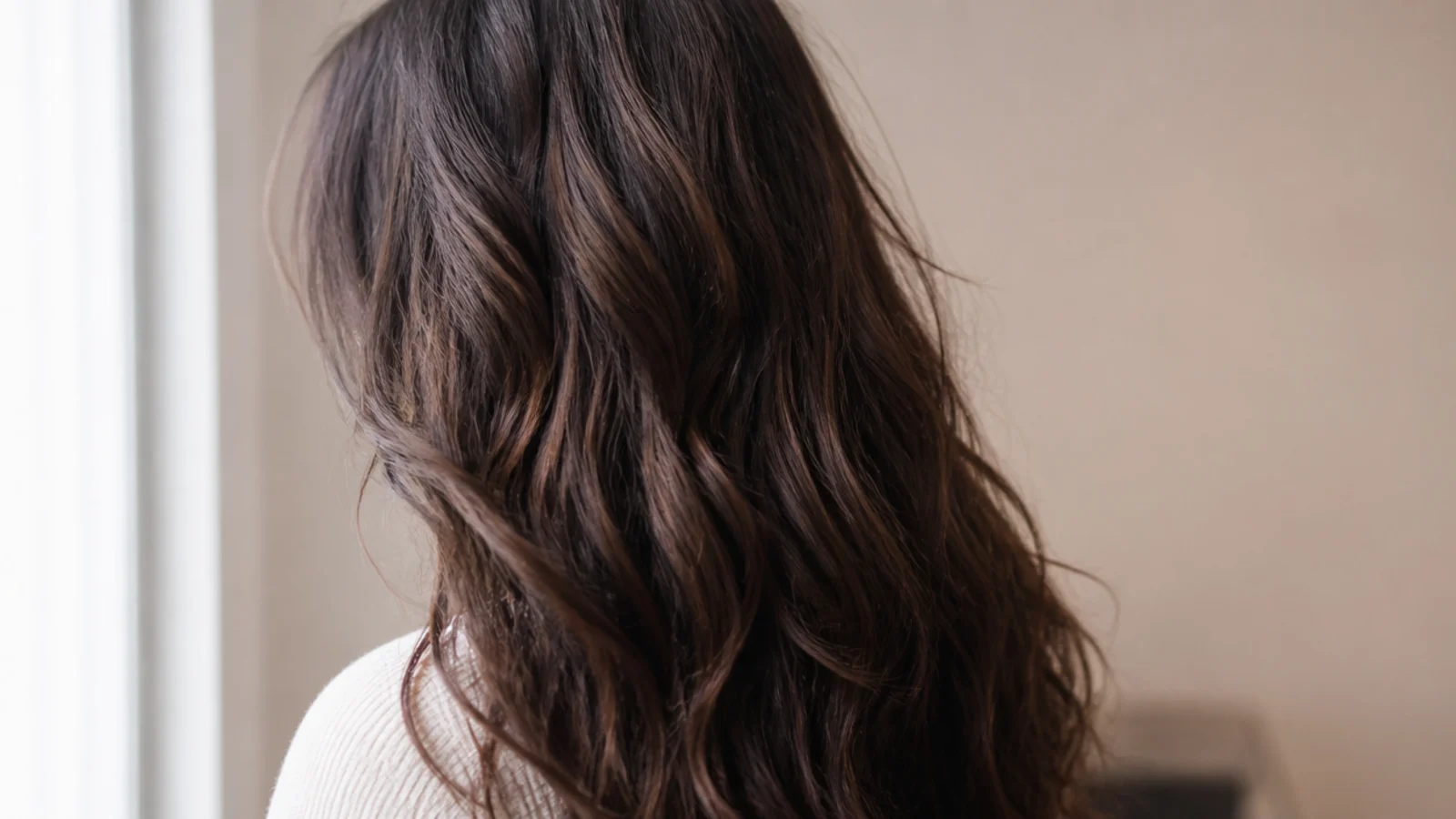
The default cut for dense hair below bra-strap length. The outline stays long, and the stylist takes weight out from inside the shape with slide cutting or a razor, mostly in the layer sitting under the top section. Nothing gets shortened at the perimeter, so you keep length while the mid-lengths stop stacking into a triangle. Ask for internal debulking, soft outline, no hard line at the ends. Expect 10 to 15 percent of the bulk to come out on a first visit and to go back for more rather than overshooting. Styling runs about 5 minutes on wash day, and more detail lives in mid-length haircut layers.
Who it suits: Waist and bra-strap length, wavy 2B to 3A, anyone unwilling to lose length.
Tip: Say take weight from underneath, not off the ends, or you will leave with the same triangle two inches shorter.
2. Collarbone U-Shaped Cut for Thick Frizzy Hair
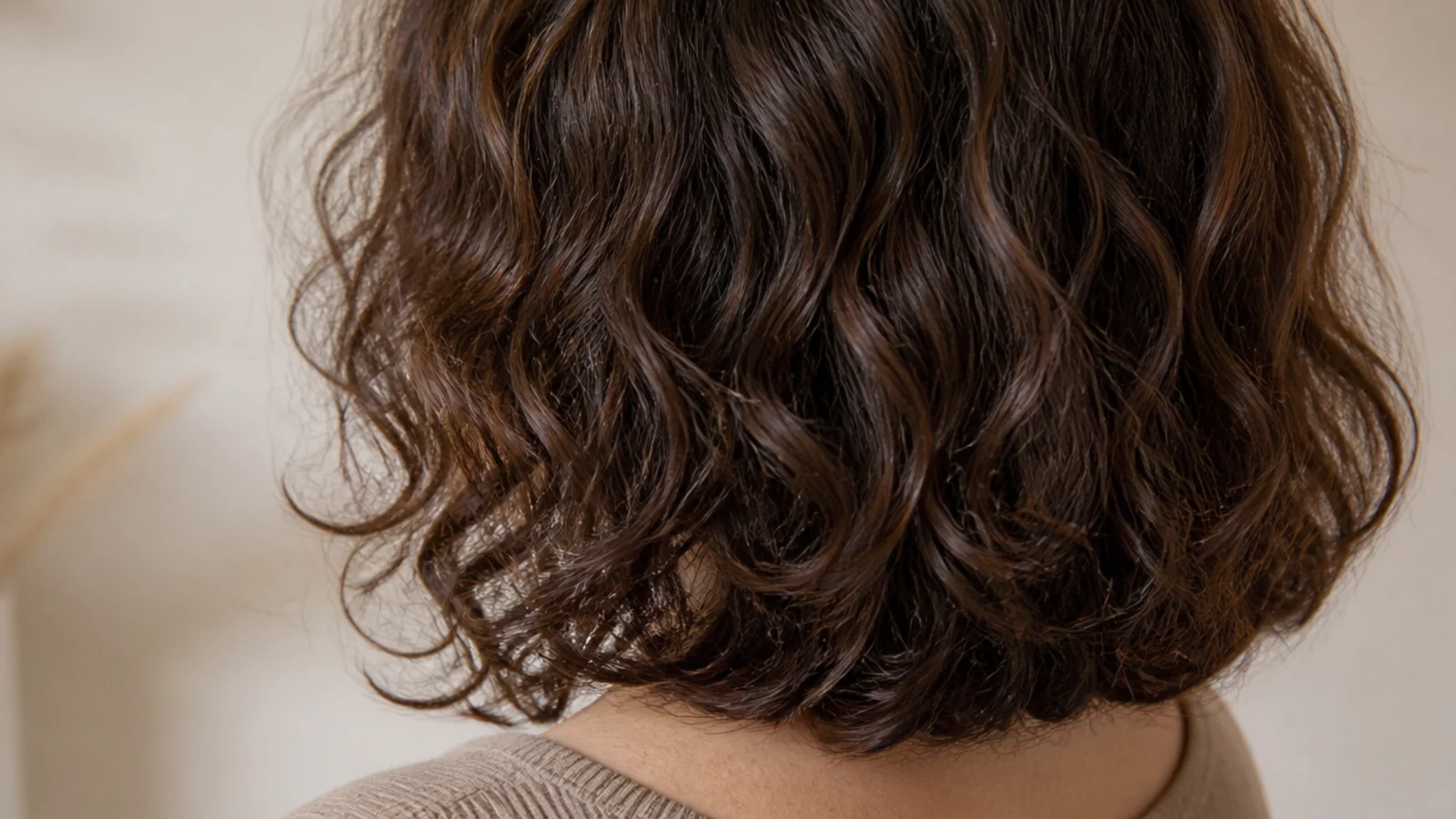
A soft U at the back with sides a half inch to an inch longer than the center, which pulls the eye down the vertical line and stops dense hair reading as a wide block. It is the most forgiving length for thick frizzy hair, because collarbone keeps enough weight to hold the mid-lengths down without the drag that makes waist-length hair go flat at the root and wide at the ends. Ask for a U-shape, not a V, since a sharp V leaves a thin point that frizzes first. Styling is 6 minutes with cream and a diffuser. Related shapes are in mid-length haircut.
Who it suits: Round and square face shapes, medium density to very dense, 2B to 3B texture.
Tip: Have the U checked while your hair is dry, since dense hair springs up an inch and the curve shifts.
3. Wolf Cut with Feathered Layers on Thick Frizzy Hair
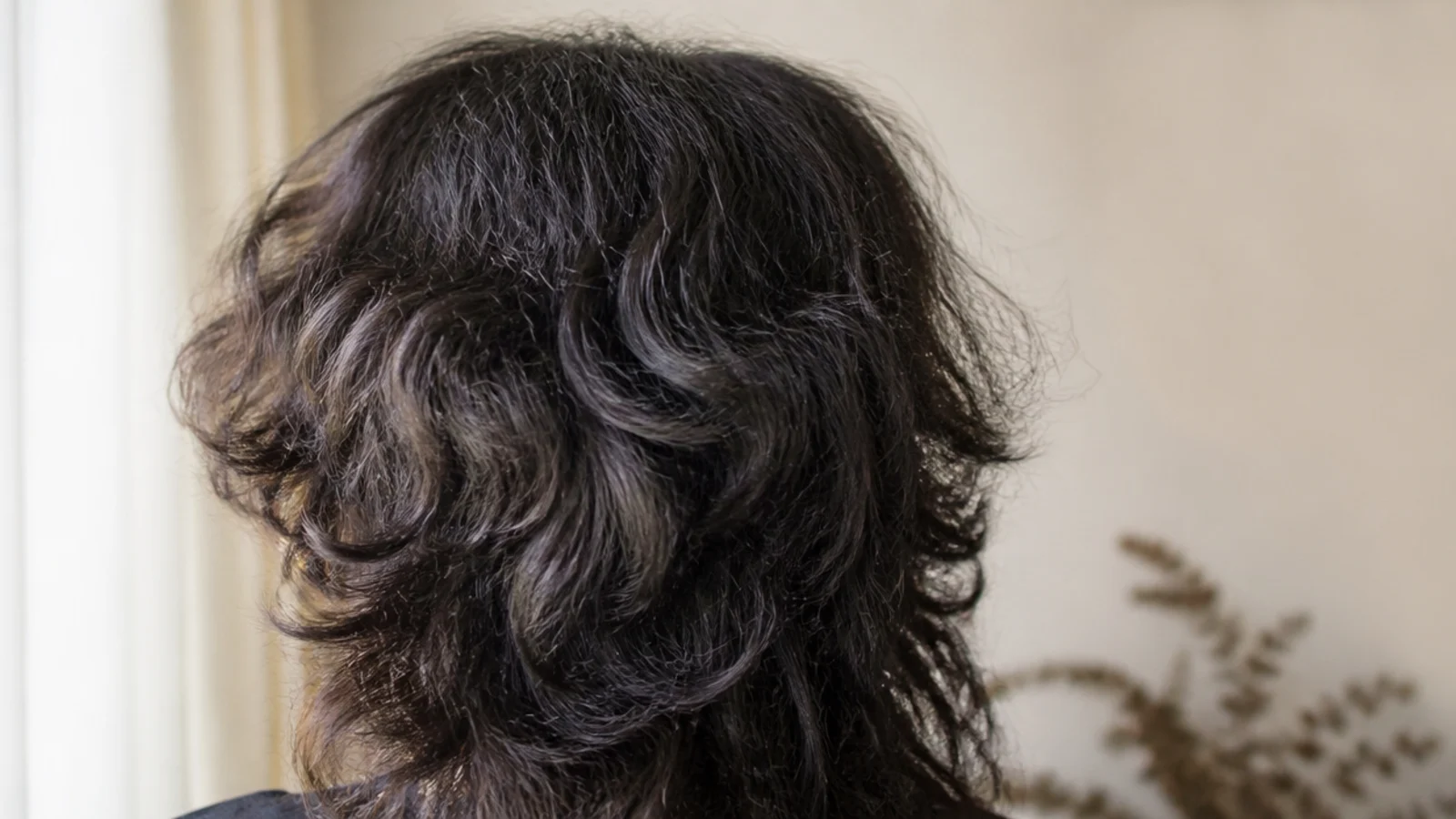
Short feathered layers through the crown that lengthen fast into a shaggy perimeter. On dense hair the wolf cut does something no other shape does: it moves volume upward and forward instead of letting it collect at the widest point around the ears. The feathering has to be cut point-to-point rather than blunt, or the short crown pieces stick out as halo frizz. Best at shoulder length or longer, since you need the length underneath to balance the short crown. Styling is 8 minutes with mousse plus a diffuser. See the softer version in shaggy mid length haircut.
Who it suits: Very dense 2C to 3B hair, oval and long faces, people who air dry.
Tip: Ask for the shortest crown layer no higher than your cheekbone so it can still be tucked behind an ear.
4. Angled Bob Shorter at the Back for Thick Frizzy Hair
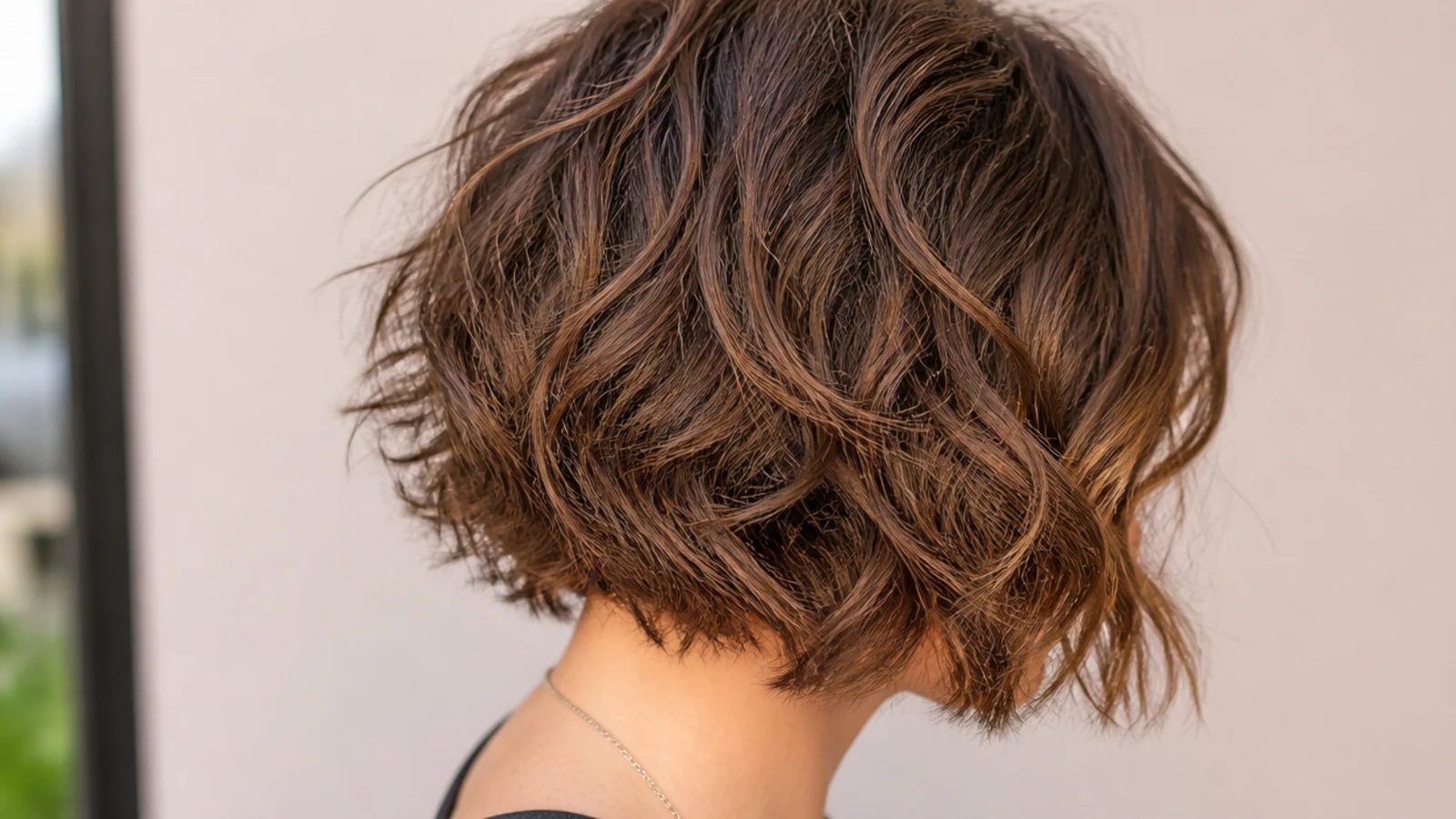
Chin to jaw at the front, an inch or so shorter at the nape, with interior layers taking bulk out of the heavy back section. The angle is the whole trick, because a straight blunt bob on thick frizzy hair puffs out at exactly ear level and creates the classic mushroom. Removing weight at the nape lets the back lie down and the longer front frames the jaw. This is a cut that needs a trim every 8 weeks to stay in shape. Styling is 7 minutes with cream and a round brush on a low setting, or 4 minutes air dried with gel.
Who it suits: Chin to jaw length, 2A to 2C waves, heart and oval faces.
Tip: Ask for interior debulking at the occipital bone, the round bump at the back of the skull, where dense hair pushes out most.
5. Tousled Pixie with Choppy Layers for Thick Frizzy Hair
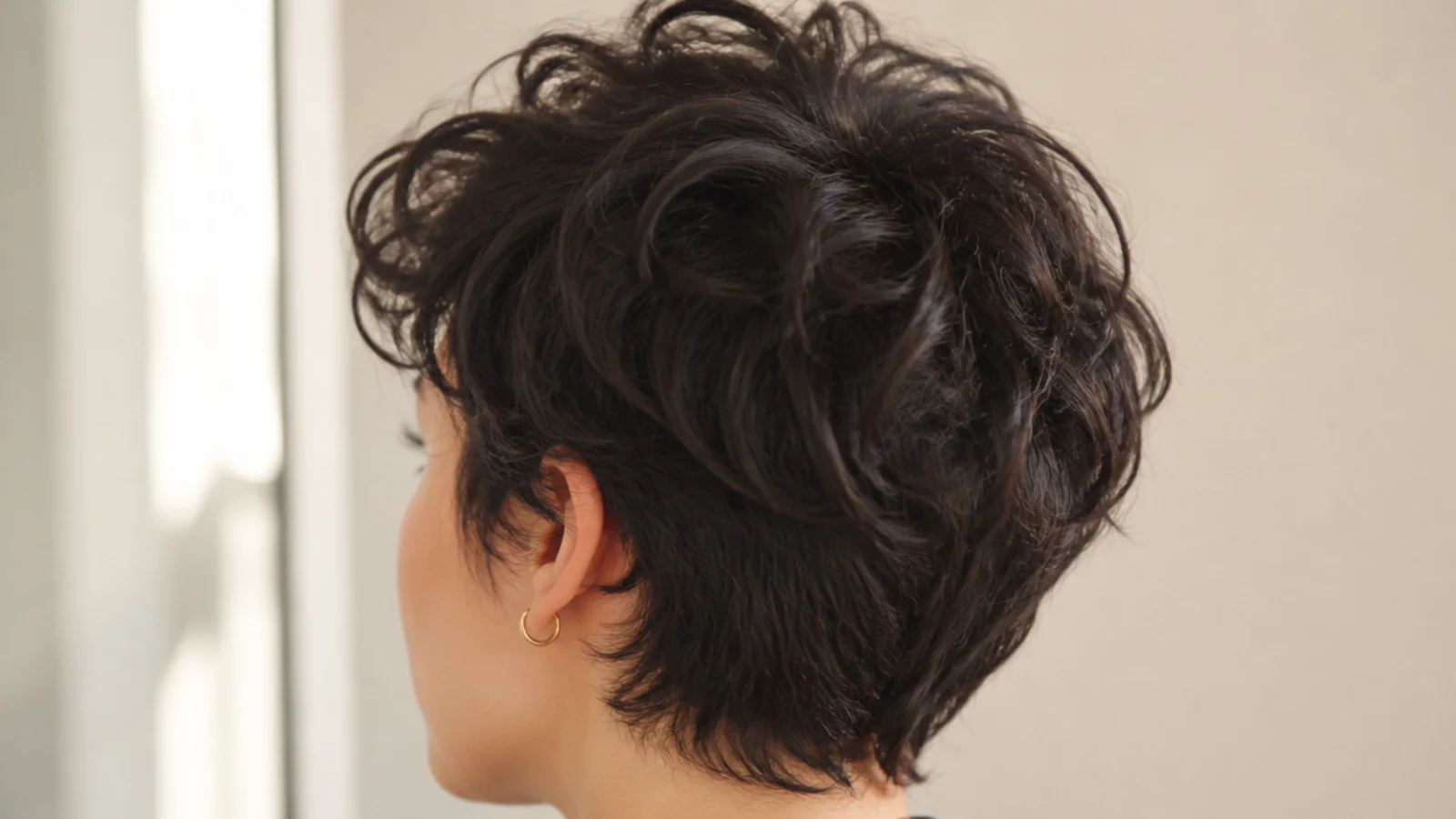
Short at the sides and nape with a crown left 2 to 3 inches long and cut choppy so the pieces separate instead of forming a helmet. Contrary to the fear most people bring to this cut, going short does not make thick frizzy hair worse, it removes the weight that was causing the expansion in the first place. What does make it worse is a uniformly short, blunt, one-length crop, which stands straight up. Keep the crown long enough to fall forward. Styling is 3 minutes with a pea-sized amount of paste, the fastest look here. Fringe options are in short curtain bangs.
Who it suits: Oval, heart and long faces, coarse dense hair, anyone tired of daily styling.
Tip: Ask for the sides tapered rather than clipped, so regrowth blends instead of forming a shelf at week six.
6. Curtain Bangs with Piece-y Long Layers on Thick Frizzy Hair
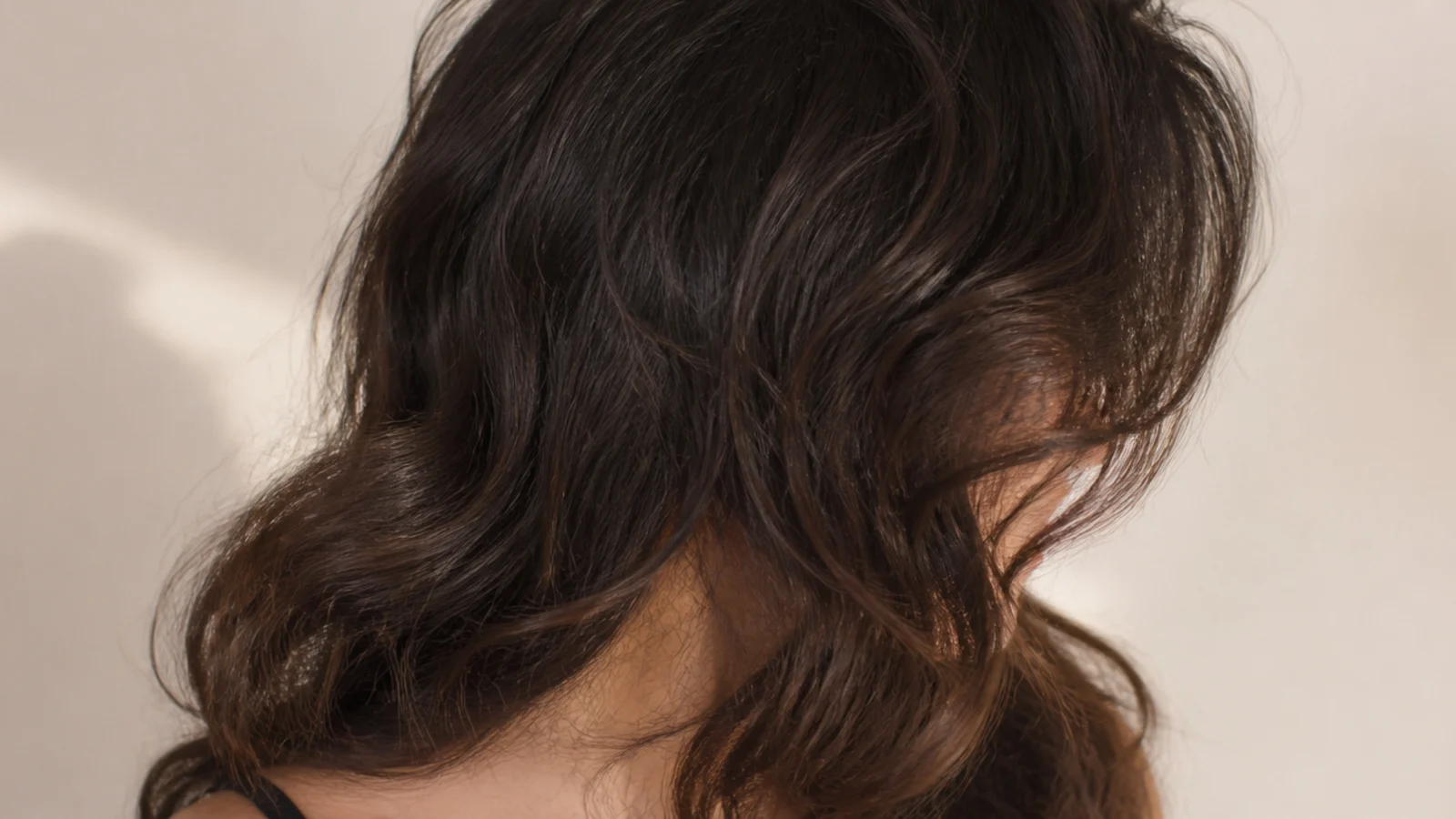
A center-split fringe that starts around the eyebrow and sweeps out to cheekbone length, connected into face-framing layers so there is no hard step between fringe and lengths. On dense hair the fringe has to be taken from a narrow triangle only, roughly the width of the eyebrow arches, because a wide section pulls too much hair forward and creates a heavy curtain that frizzes across the forehead. Styling is 6 minutes, and the fringe alone needs 90 seconds most mornings. Styling detail lives in short curtain bangs styling and wavy short curtain bangs.
Who it suits: Round and square faces, 2A to 2C texture, mid-length and long hair.
Tip: Ask for a narrow triangle section, not a wide rectangle, or your fringe will be twice the hair you can style.
7. Butterfly Cut for Long Thick Frizzy Hair
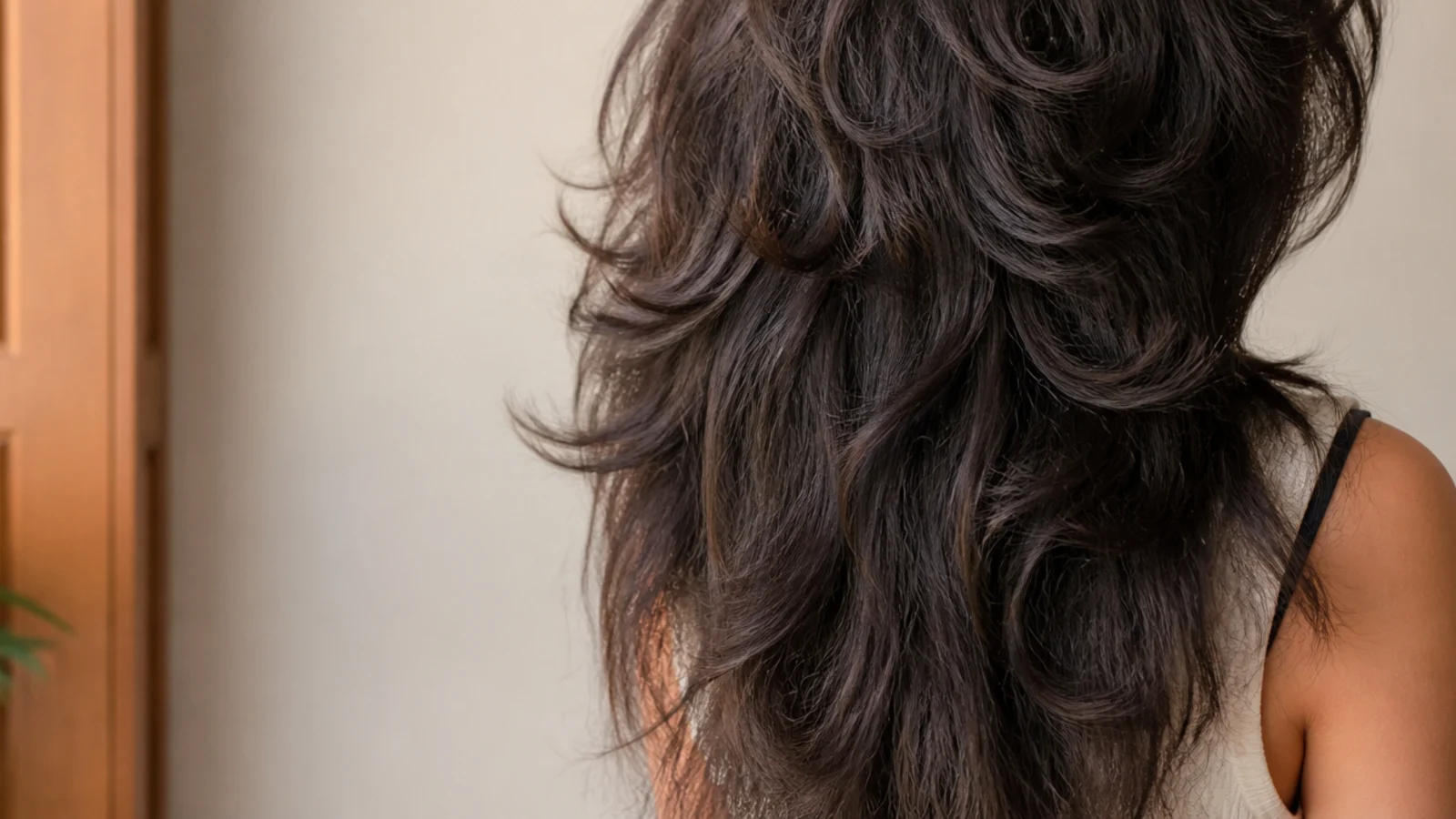
Two lengths in one cut: a top layer cut to about collarbone and the rest left long, blended so it looks like a blowout even when it is air dried. It suits thick hair specifically because the short top layer carries the volume while the long underneath layer stays heavy enough to hang straight down, which is the opposite of what a uniform layered cut does on dense hair. Needs mid-back length minimum or the two tiers merge into a shag. Styling is 10 minutes if you smooth the top layer, 5 if you diffuse it all. See face framing mid length haircut.
Who it suits: Mid-back to waist length, 2B to 3A, anyone who wants volume at the top and length below.
Tip: Ask for the shortest top layer at collarbone, never at the chin, or the top tier reads as a separate bob.
8. Shoulder-Length Shag for Thick Frizzy Hair Over 50
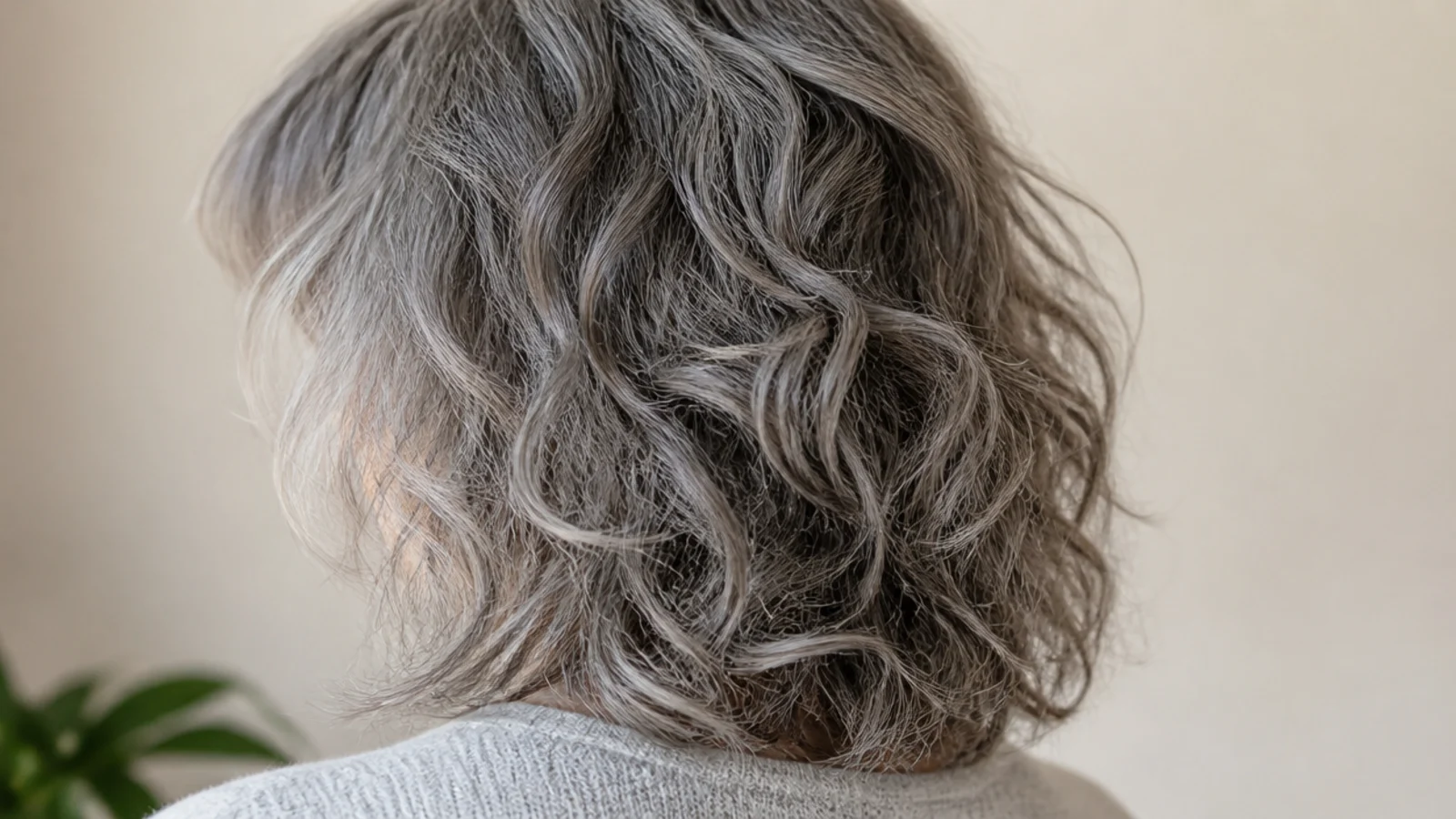
A soft shag ending just past the shoulder with layers that begin at the jaw and a light fringe. Two things change with thick frizzy hair after 50: gray strands are usually coarser and more wiry than pigmented ones so surface frizz reads brighter, and density often drops at the temples while staying high at the back. A shag answers both, distributing volume down the length instead of stacking it on top and giving the softer front something to blend into. Styling is 7 minutes with a leave-in and light mousse. Compare shapes in textured mid length haircut.
Who it suits: Gray and salt-and-pepper coarse hair, softening density at the front, all face shapes.
Tip: Ask for a slightly heavier perimeter than a younger shag, since weight at the ends counteracts wiry gray lift.
9. Half-Up Claw Clip Twist for Thick Frizzy Hair
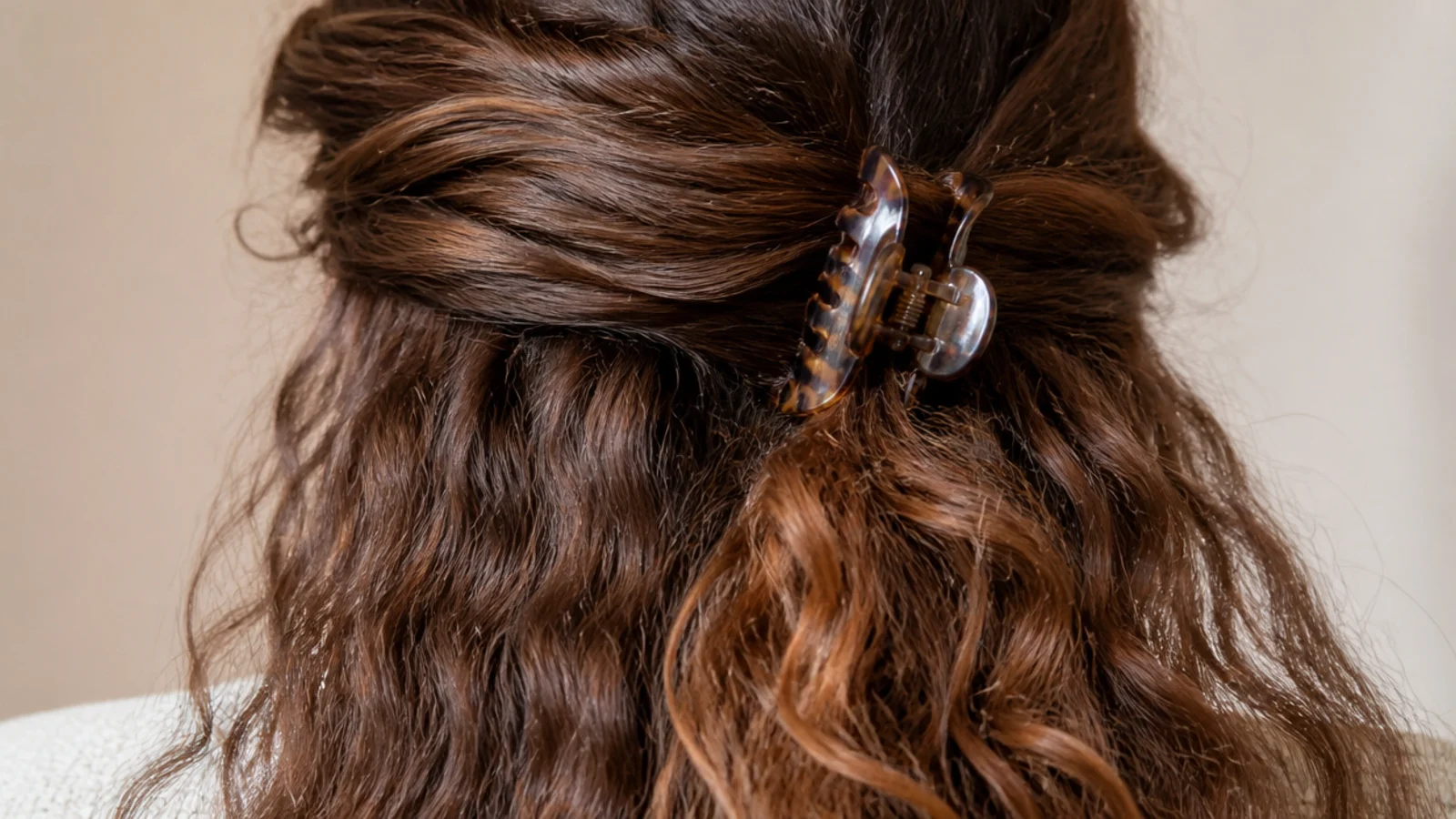
Two minutes, needs shoulder length. Take the top third from temple to temple, twist it once away from your face, fold the twist up on itself and clamp with a claw clip sized for dense hair, meaning a jaw at least 4 inches wide with deep teeth. A standard clip will slide out of thick hair within an hour, which is why most people think claw clips do not work for them. Hold is about 6 hours and it covers halo frizz at the crown while leaving the length visible. More quick options in frizzy hair hairstyles.
Who it suits: Every density, every texture, second-day and third-day hair.
Tip: Fold the twist upward before clipping rather than clamping it flat, which is what stops the clip sliding down.
10. Low Chignon at the Nape for Thick Frizzy Hair
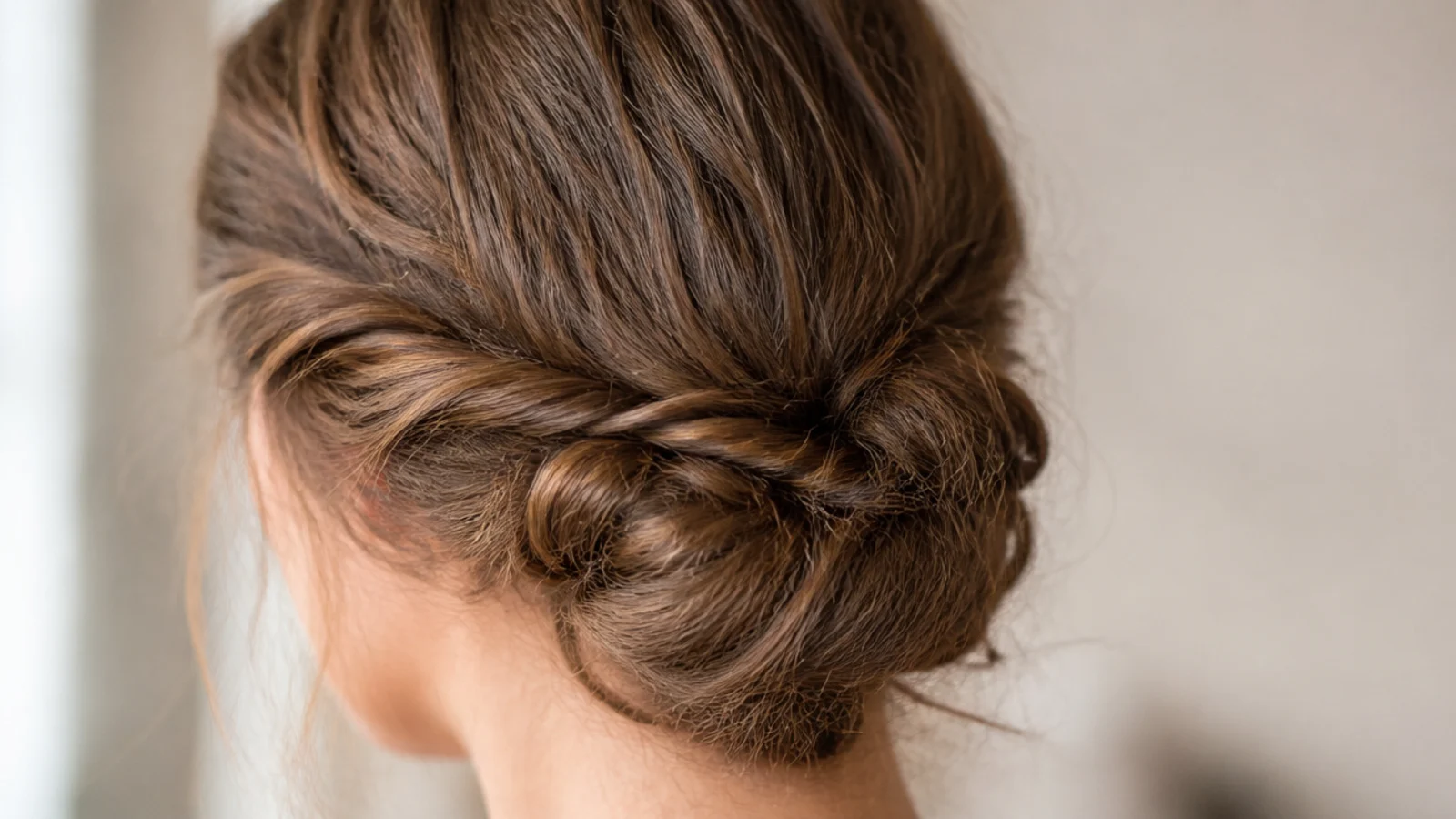
Eight minutes, needs collarbone length. Split into two low sections, rope twist each one, then wind both around a single point at the nape and pin with U-pins rather than bobby pins, because bobby pins bend open under dense hair. Twisting first is what makes it hold: a gathered bun on thick hair relies on the tie alone, while a twisted one has friction along its whole length. Hold is around 9 hours through an evening. Sitting low at the nape also avoids the scalp tension that causes crown breakage. Formal versions are in graduation updo.
Who it suits: Long dense hair, work and events, anyone whose buns usually sag by noon.
Tip: Use 6 to 8 U-pins pushed up through the base at an angle, not straight in, or the weight pulls them out.
11. Two Dutch Braids for Thick Frizzy Hair
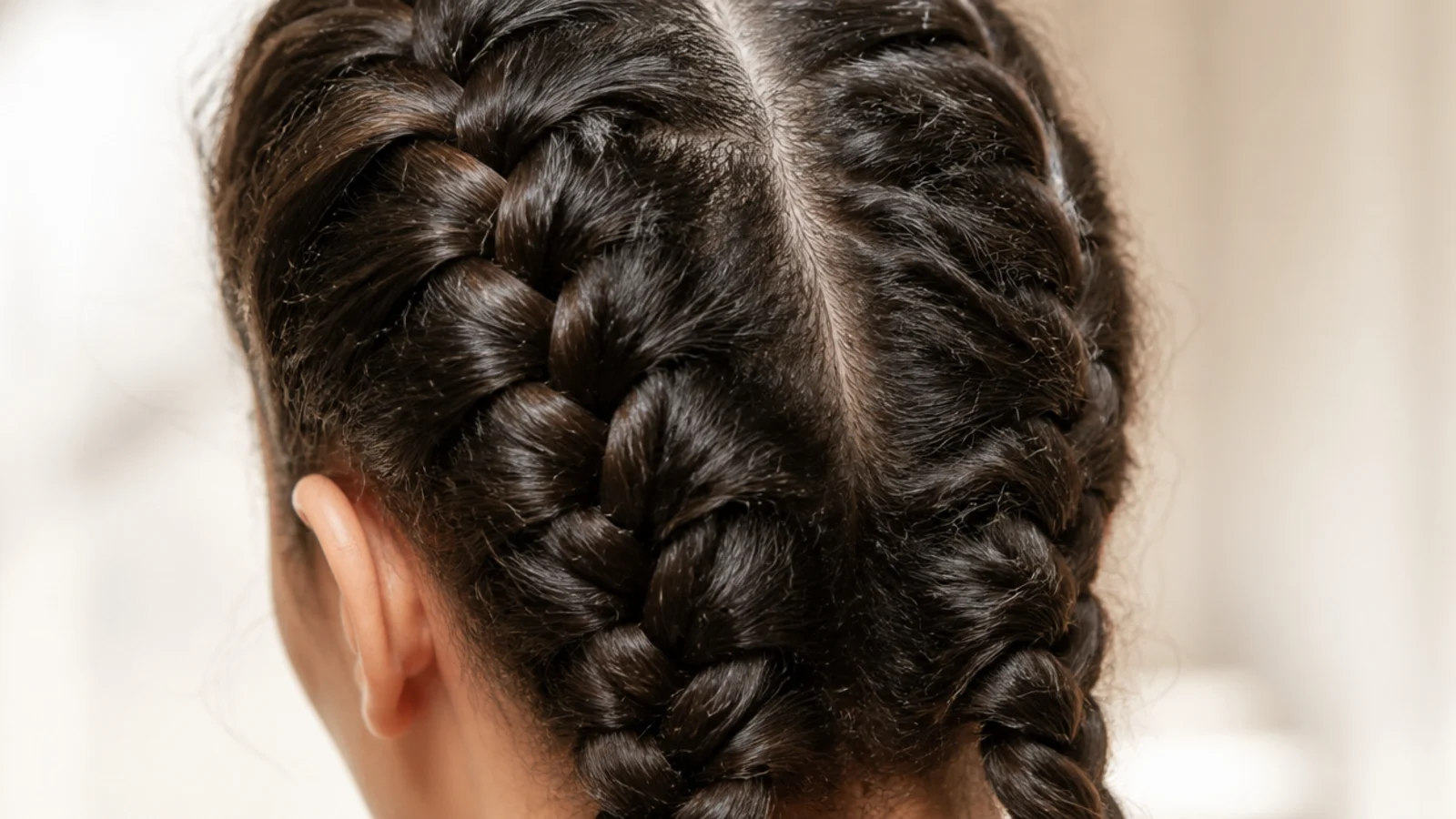
Twelve minutes, needs shoulder length. A center part and two braids worked under rather than over, so the plait sits proud of the scalp. This is the highest-hold style here for dense hair, roughly 10 hours, and it is the only one that reliably survives rain. Dense hair is actually easier to Dutch braid than fine hair because the sections do not slip. Braid on damp hair with cream through it, not dry, and leave the last two inches loose so the ends flare instead of ending in a hard point. Technique cousins live in easy mermaid braids.
Who it suits: Very dense 2C to 3C hair, humid days, workouts and travel.
Tip: Braid firm but not tight along the part; daily tension there is what creates permanent halo frizz.
12. Loose Side Braid for Long Thick Frizzy Hair
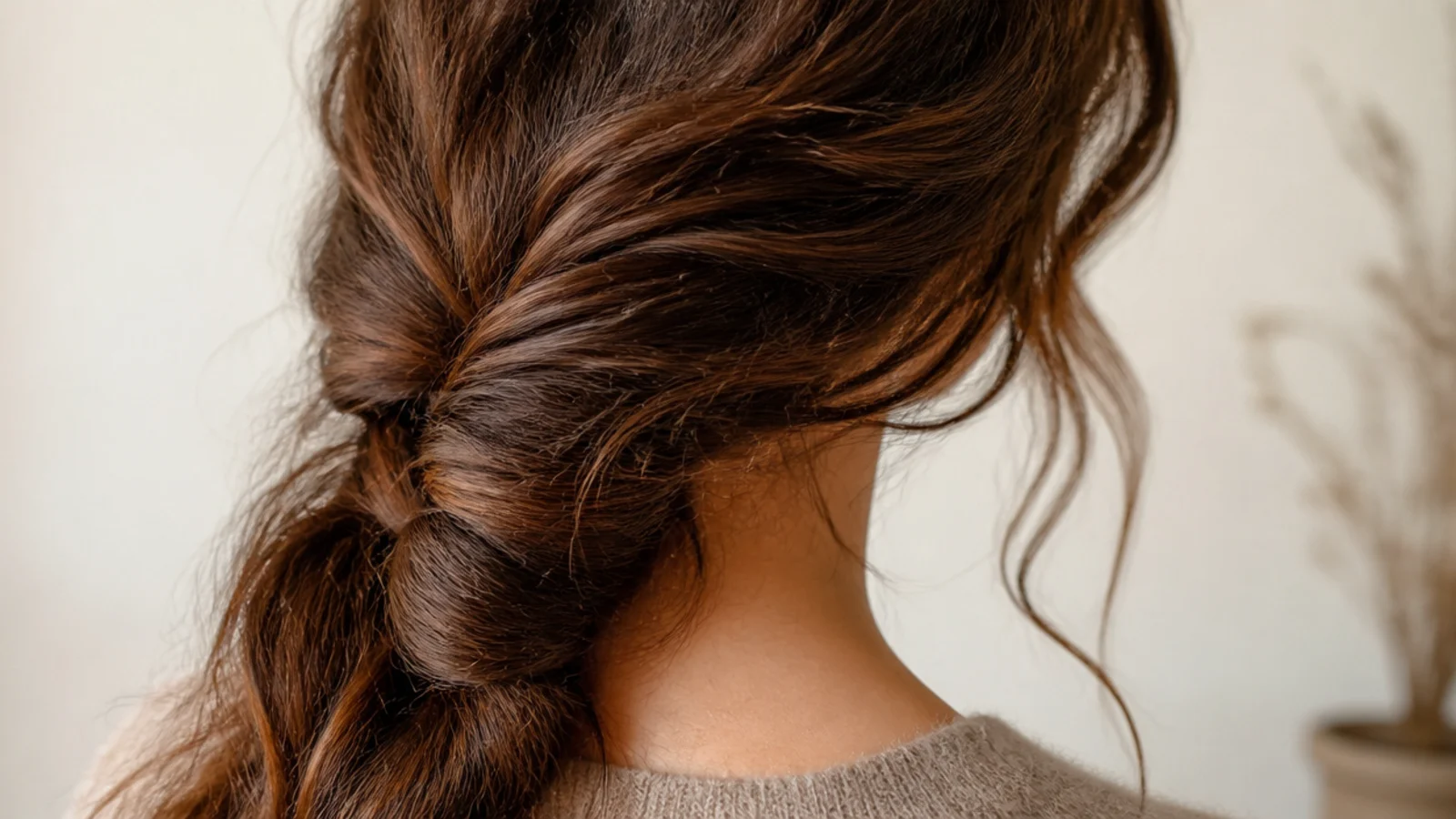
Five minutes, needs bra-strap length. A three-strand braid starting below one ear, pancaked by pulling gently on the outer edges of each section so the braid widens instead of reading as a tight rope. On thick hair pancaking matters more than on any other type, because an unpancaked braid on dense hair looks like a solid cable. Pull the two face-framing pieces out before you start, not after. Hold is 8 hours and it hides ends-only frizz completely. Longer variations are in long mermaid braids.
Who it suits: Bra-strap to waist length, wavy and curly, long humid workdays.
Tip: Finish with a spiral coil tie instead of an elastic so you do not get a kinked snap line at the end.
13. High Bouffant Ponytail for Thick Frizzy Hair
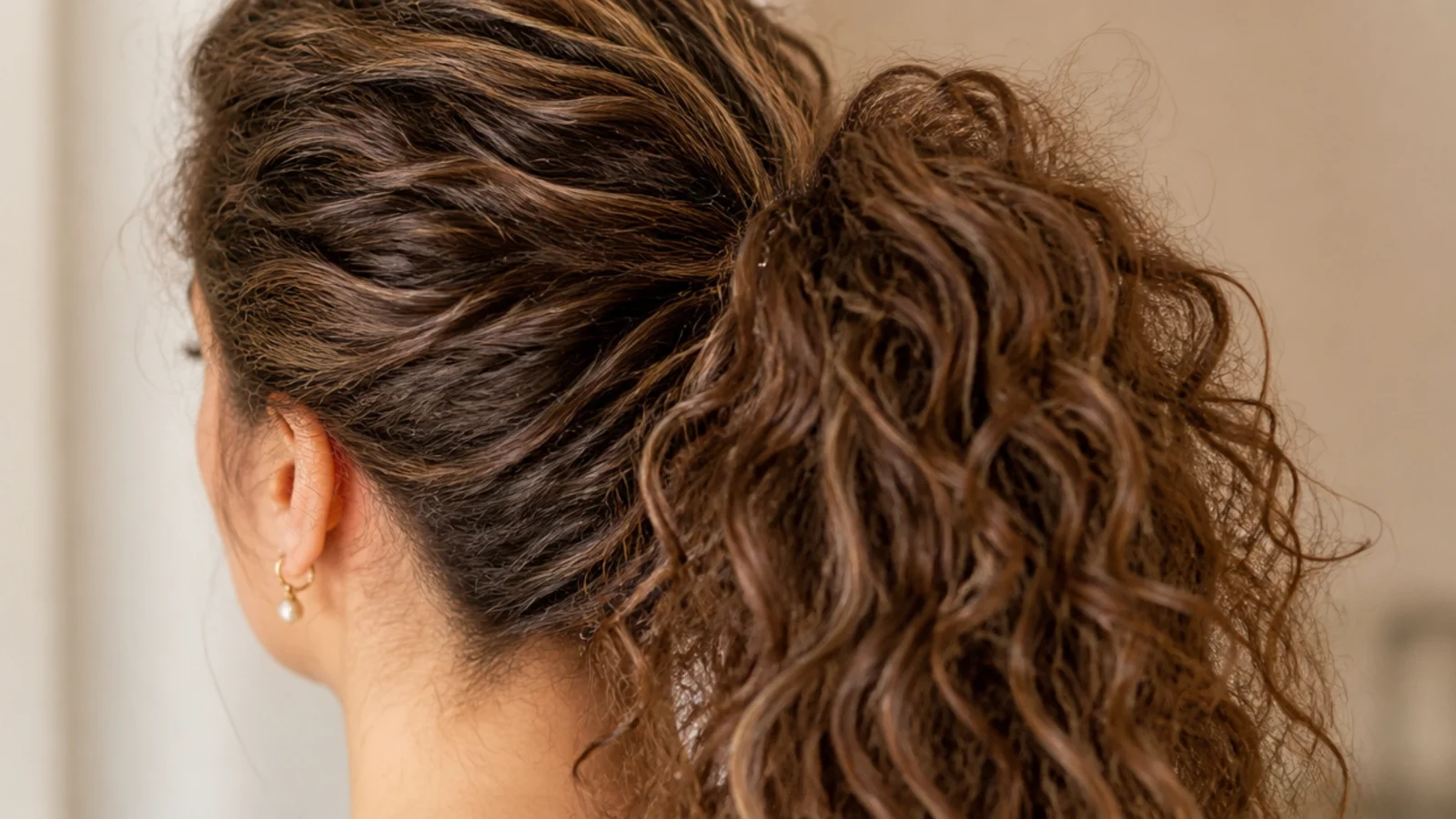
Four minutes, needs shoulder length. Gather high, but leave the crown deliberately loose and push it forward an inch before tightening the tie, which builds a soft bouffant instead of a slicked dome. This style leans into the volume rather than compressing it, which is why it works on hair that fights every sleek pony. Use a spiral coil or a fabric scrunchie, never a thin elastic, since thin bands cut into dense hair and snap it at the tie point. Hold is 6 hours. Sleeker takes are in sleek graduation hairstyles.
Who it suits: Dense 2B to 3B hair, round faces, anyone who wants height.
Tip: Support the tail with two bobby pins crossed under the base, or the weight drags the whole pony down by lunch.
14. Diffused Air-Dried Waves on Thick Frizzy Hair
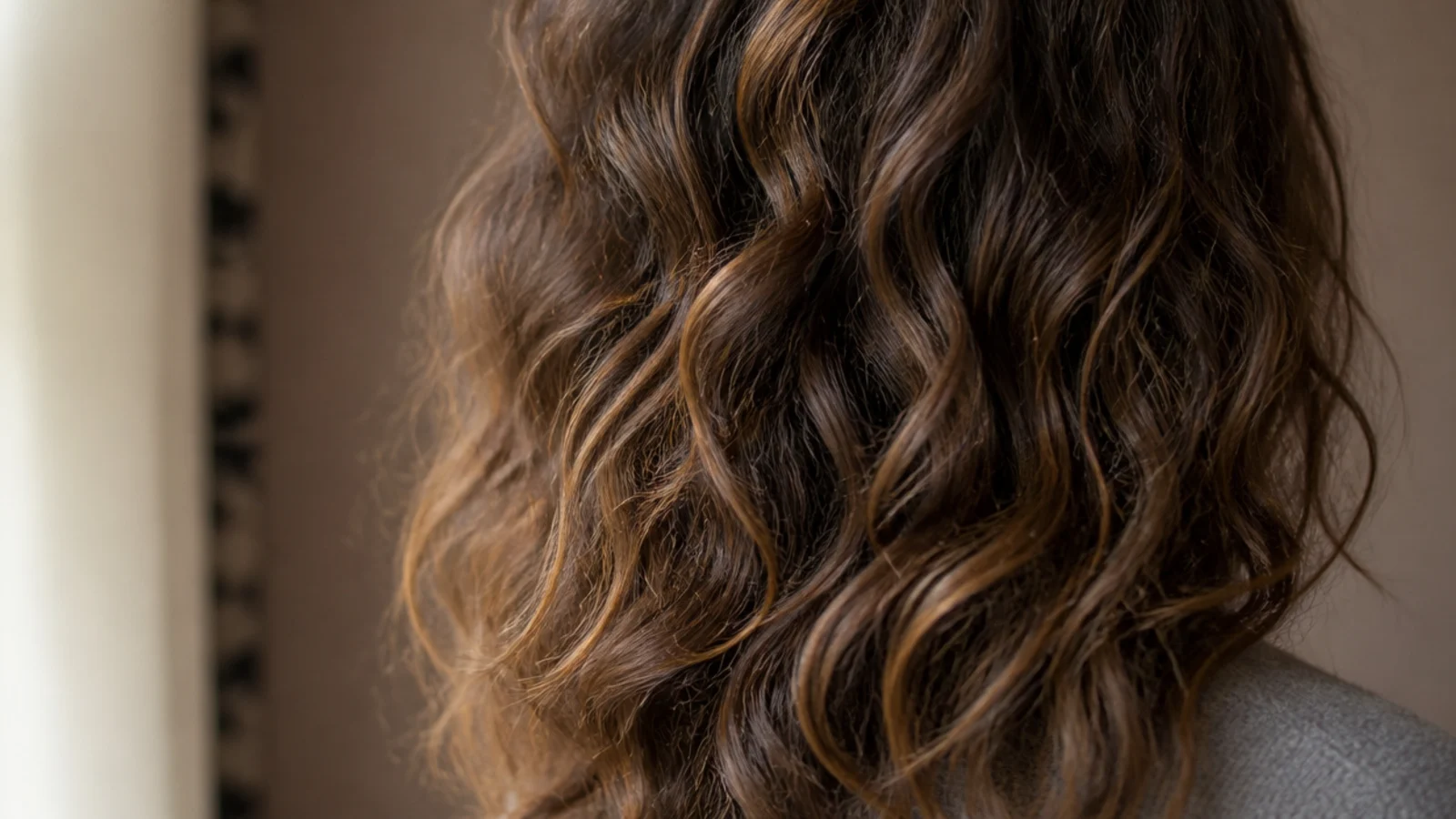
Fifteen minutes, works at any length past the chin. Apply leave-in, then cream, then gel to soaking wet hair, cup sections into a diffuser and hover on low heat and low speed until about 80 percent dry, then let the rest air dry before scrunching the gel cast out with a single drop of oil. On dense hair the mistake is pressing the diffuser against the scalp, which forces the crown flat and then rebounds into halo frizz. Hover, do not press. Hold is 8 hours. Texture-specific detail is in frizzy wavy hair and curly mid length haircut.
Who it suits: 2B to 3C texture, wash days, anyone wanting definition rather than containment.
Tip: Do not touch the hair between the 80 percent mark and fully dry; every touch in that window creates frizz.
15. Overnight Braid Waves for Thick Frizzy Hair
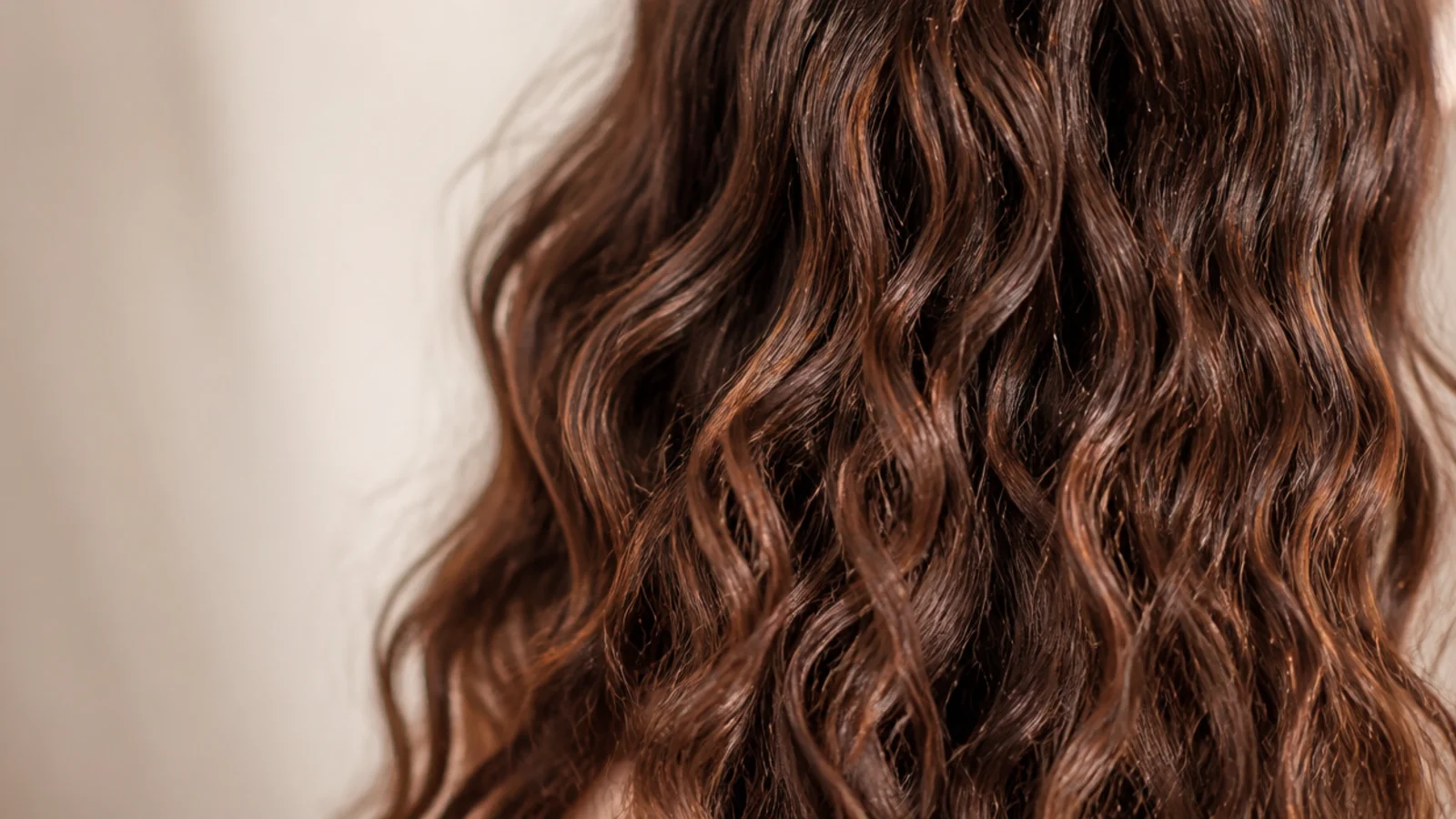
Ten minutes at night, zero in the morning, needs shoulder length. Damp-not-wet hair, cream through the mid-lengths, then four to six loose braids depending on density, slept on a satin or silk pillowcase. Dense hair needs more braids than you think, since two fat braids will still be damp at the core by morning and drop out within an hour. Undo them, separate with fingers only, and you have uniform waves that hold about 10 hours. This is the highest-value habit on this page for anyone short on morning time. Pair it with the routine in frizzy hair.
Who it suits: Every density past shoulder length, busy mornings, heat-free styling.
Tip: Braid damp, never soaking; wet dense hair will not dry overnight and unbraids into a wave that collapses.
Why Thick Hair Frizzes: The Moisture Mechanism
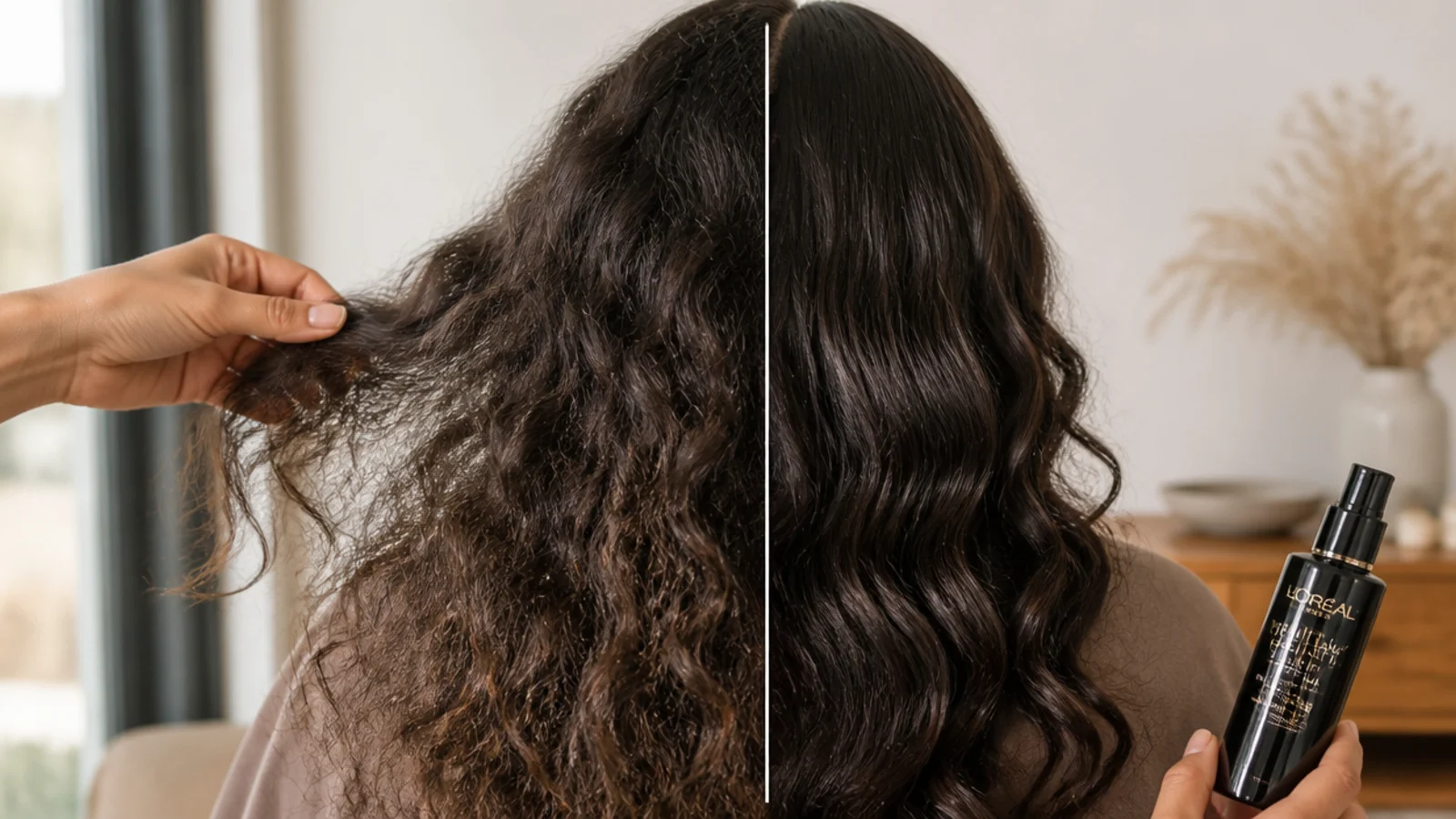
Every strand is wrapped in overlapping cuticle scales, like shingles on a roof. When hair is hydrated and those scales lie flat, light reflects evenly and neighboring strands sit against one another. When hair is dry, the scales lift, and a lifted cuticle does something specific: it pulls moisture out of the surrounding air. The strand swells unevenly along its length, buckles, and pushes away from its neighbors. That buckling is frizz, and it is why the answer is to seal and hydrate rather than to fight it. Density is what turns a haze into a triangle. On fine hair a few buckled strands sit on the surface as flyaways, but on thick hair there are hundreds of them per square inch, each shoving the next outward, so the whole shape expands sideways. Both instincts most people have make it worse. Brushing dry hair shears the raised scales and roughens them further, and heat without moisture underneath dries the strand so it drinks even more from the air an hour later. The full mechanism is covered in the frizzy hair guide.
Thick vs Coarse: Density and Strand Diameter Are Different Problems
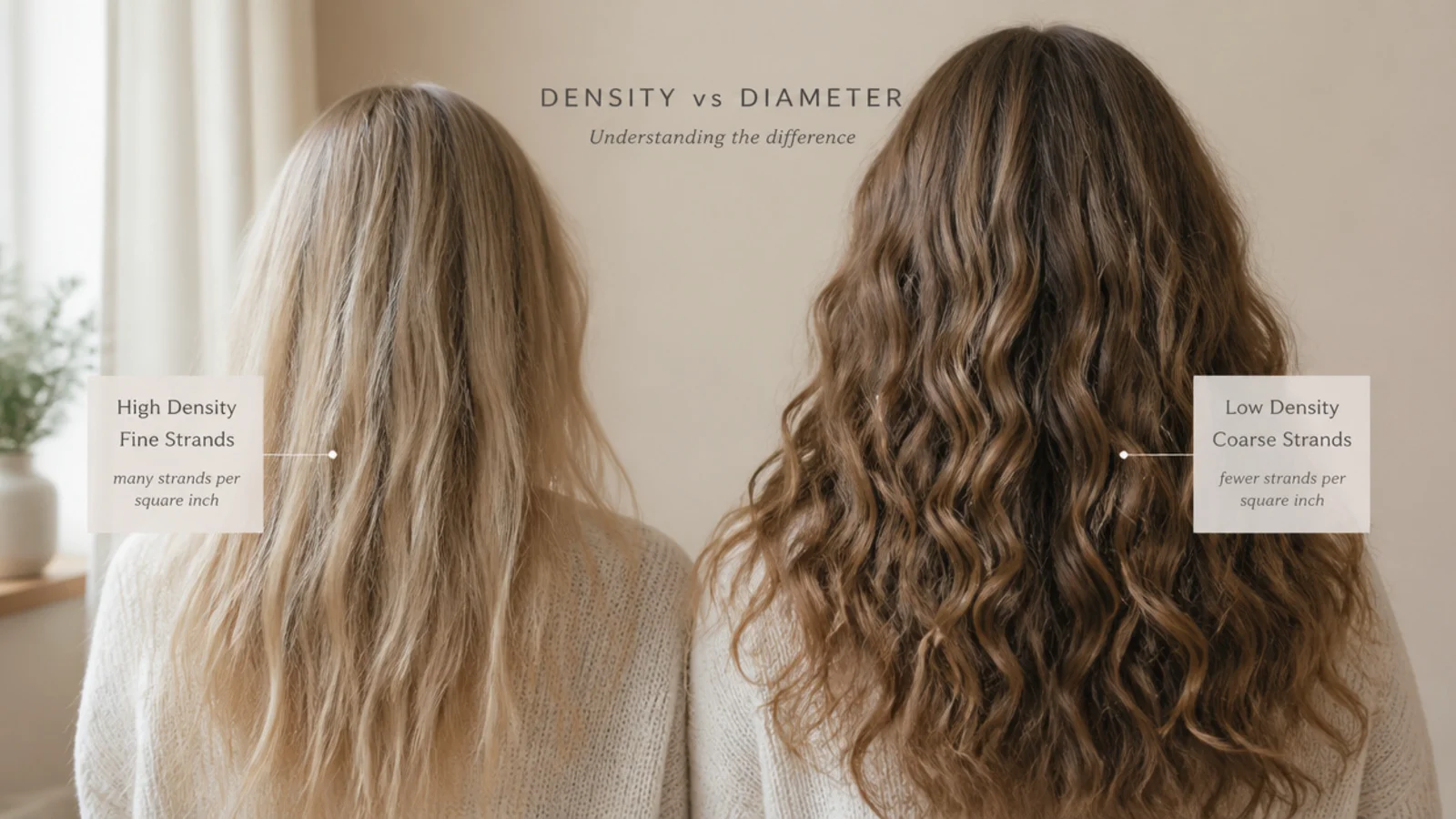
Almost every article about thick frizzy hair treats thick and coarse as the same word, and they are not. Thick means density, the number of strands growing per square inch of scalp. Coarse means diameter, how wide each individual strand is. You can have dense fine hair, sparse coarse hair, or both at once, and the correct fix flips depending on which you have. Test it by holding one shed strand against a sewing thread: thinner than the thread is fine, similar is medium, clearly thicker is coarse. Then check density by parting your hair and looking at how much scalp shows, since very little visible scalp means high density. Dense but fine hair needs volume control without weight, so lightweight leave-ins, mousse rather than heavy butter, and only light internal debulking, because taking too much removes the weight that was keeping it flat. Coarse hair needs weight, so heavier creams, oil sealing on the ends, and a slightly blunter perimeter to hold the shape down. Giving one instruction to both readers is the single most common mistake on this topic, and it is why advice on thick hair so often contradicts itself.
The Wash-Day Routine for Thick Frizzy Hair
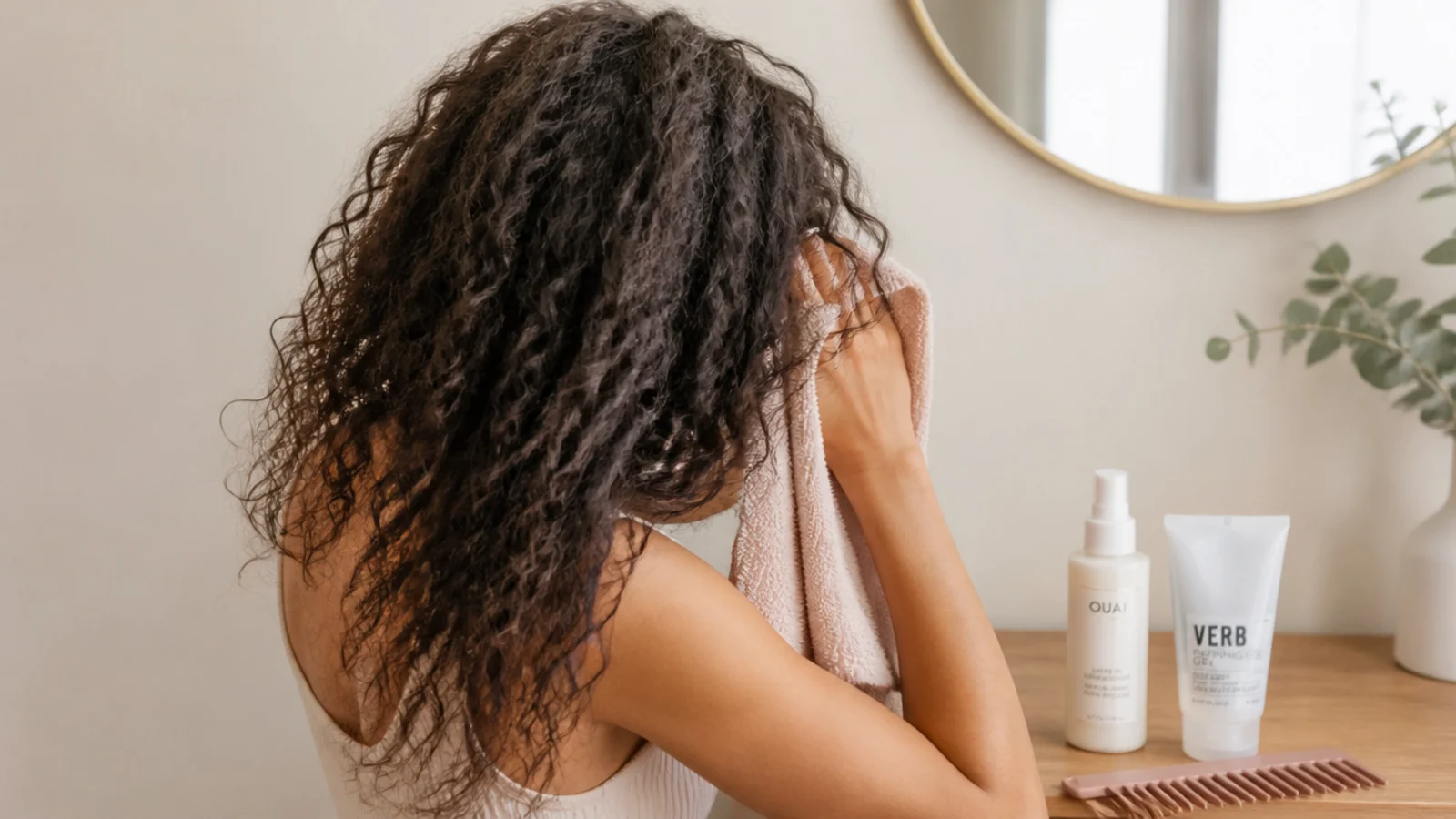
Every hold rating on this page assumes the style went onto hair that was prepared properly. Wash two or three times a week in lukewarm water, since hot water lifts the cuticle before you have done anything else. On dense hair, shampoo in four parts, working the product into the scalp in sections, because one distracted scrub over the top of thick hair leaves the underside of the scalp uncleaned and the lengths tangled. Condition the mid-lengths and ends only, then detangle in the shower with a wide-tooth comb while the conditioner is still in, since that is the only moment dense hair is slippery enough to comb without tearing. Rinse cool. Then the step that changes everything: apply stylers to soaking wet hair, not damp. Water is the distribution vehicle, and on thick hair the penalty for skipping this is severe, because a leave-in applied to damp dense hair coats the outer layer and never reaches the middle, leaving a dry core that frizzes first. Squeeze with a microfiber towel or a cotton t-shirt, never a terry towel, whose loops catch and lift cuticle scales.
Leave-In, Cream, Gel: How Much Thick Hair Actually Needs
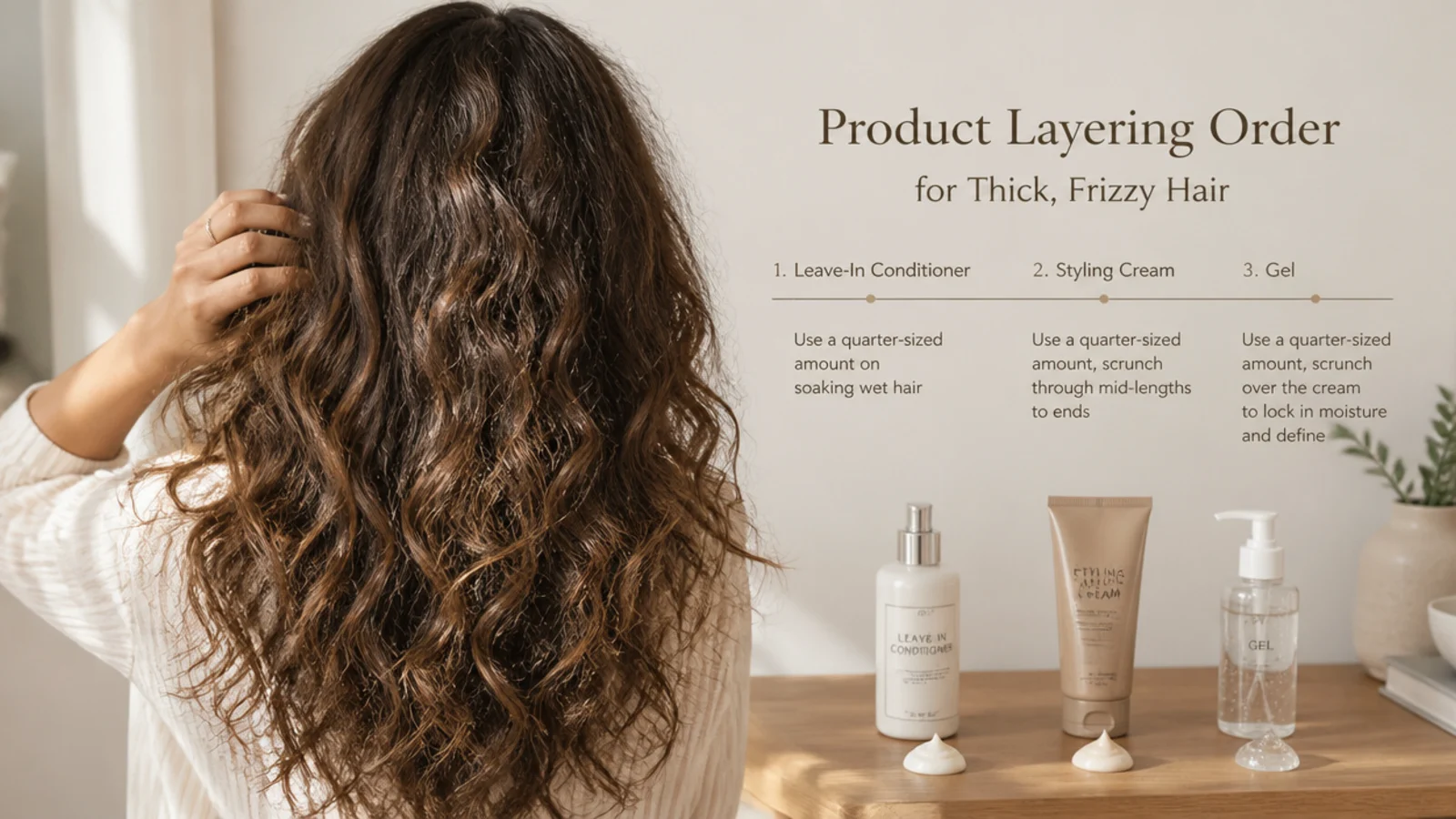
Three products, three jobs, one order, and on dense hair the amounts are much larger than any bottle suggests. Leave-in conditioner hydrates and goes on first, on soaking wet hair. For thick shoulder length use roughly a half-dollar coin of product, for thick bra-strap length a small palmful, and for waist length two palmfuls applied in four sections rather than raked over the top. Styling cream defines and adds the slip and weight that make strands clump instead of separating into a haze, and it goes on second while the leave-in is still wet, at about two thirds the amount of the leave-in. Gel seals last, forming a cast over everything underneath, and that cast is what turns a four-hour style into a ten-hour one. It must go onto wet hair or it flakes. Once dry, scrunch the cast out with one drop of lightweight oil and the hold stays while the crunch disappears. Section the hair for every layer, because product raked over the surface of thick hair simply does not reach the interior. More styling detail sits in mid length haircut styling.
Cuts and Layers That Hide Frizz vs Cuts That Cause It
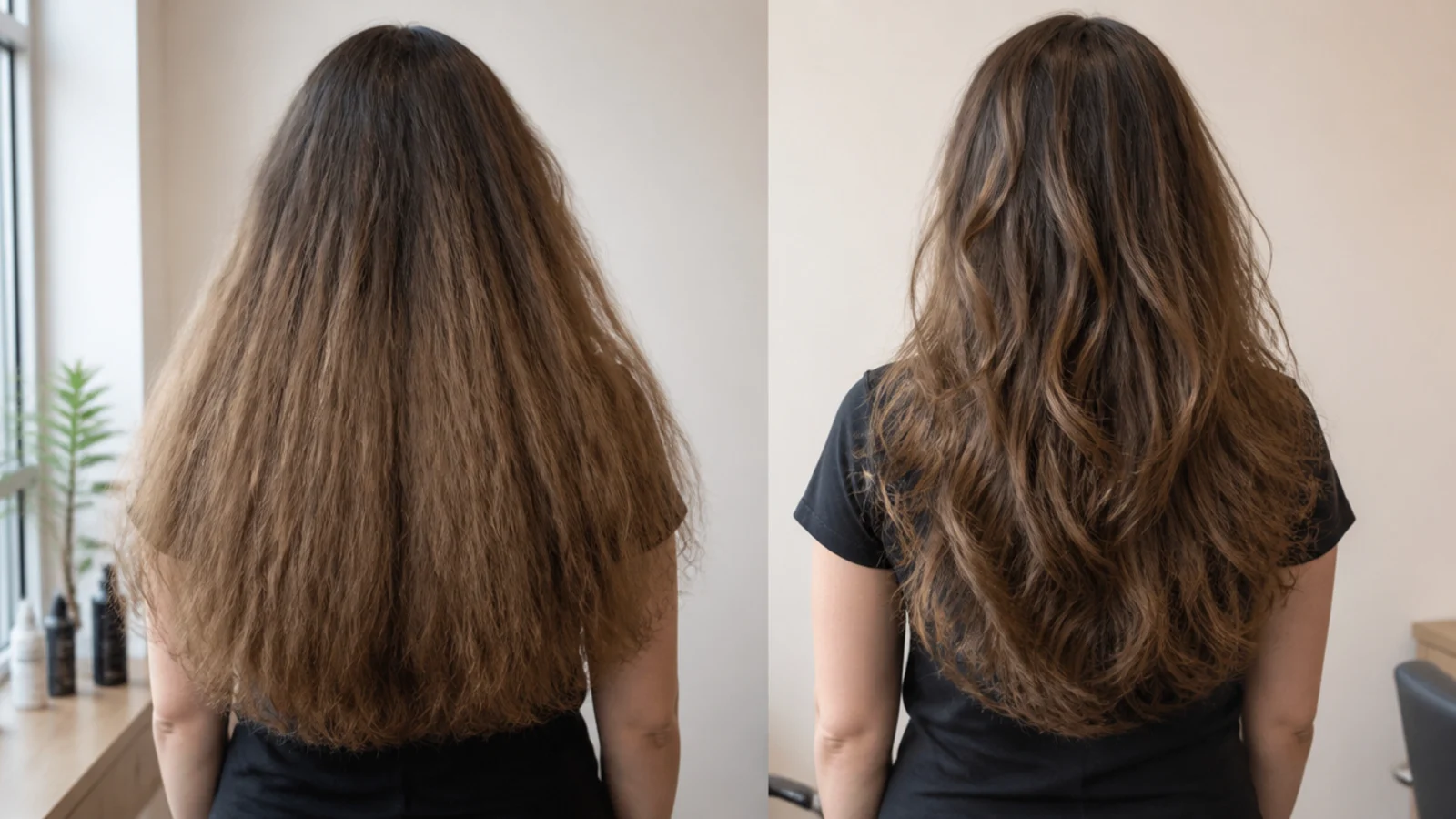
The cut underneath decides how easy all 15 of these looks are. Blunt, heavy ends look sleek in the salon chair and read frizzier in real life, because a hard line makes every hair escaping it obvious, and the weight below drags the mid-lengths outward into the triangle. Internal layers do the opposite, removing bulk from inside the shape without shortening the outline, so volume redistributes instead of stacking. The wording matters more than the technique name. Ask for internal debulking or invisible layering, ask for a soft outline rather than a blunt one, and specifically ask your stylist not to use thinning shears anywhere near the crown or part, since the short blunt stubs they leave behind become halo frizz around week six. Expect to remove less than you think on the first visit, roughly 10 to 15 percent of the bulk, and to come back rather than overshoot, because there is no way to put weight back. Book every 8 to 12 weeks. Layered shapes to bring as reference are in choppy mid length haircut and wavy mid length haircut.
Humidity, Sleep and Daily Habits with Thick Frizzy Hair
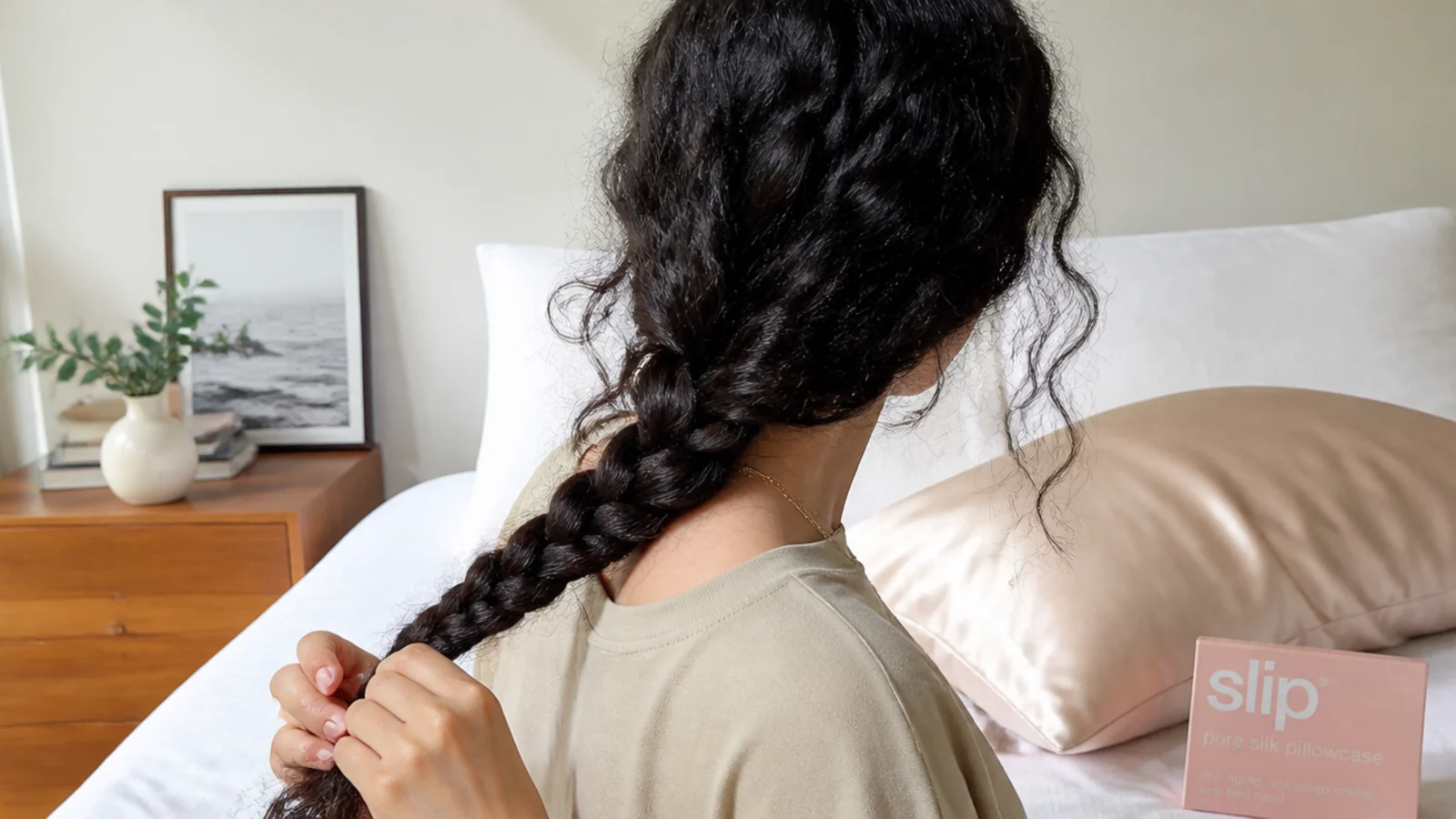
Check the dew point rather than the humidity percentage, because dew point is the number that tells you how much water is actually in the air. Below about 40 degrees Fahrenheit the air is dry and it pulls moisture out of hair, so lean on cream and oil and go light on humectants like glycerin. Between 40 and 60 is the comfortable middle where a normal routine behaves. Above 60, hair drinks from the air, so seal harder with gel and pick a braided or twisted style from the list above rather than anything loose. At night, sleep on satin or silk, or wrap the hair, or wear a loose braid, since cotton pillowcases both absorb moisture and drag against the cuticle for eight hours. Thick hair suffers more here than any other type because there is simply more surface in contact with the fabric. In the day, do not touch dry hair, do not brush it dry, and detangle only when it is wet and coated. Refresh second-day hair with a water mist plus a pea of cream rather than a fresh coat of product, which on dense hair just builds up. More looks to rotate through sit in hairstyles for frizzy hair.
Frequently Asked Questions
Will a shorter haircut make my frizz worse?
Usually the opposite, as long as the shorter cut is layered rather than blunt. Length adds weight that drags dense hair into a triangle, and removing it lets the shape sit closer to the head. What does make frizz worse is a uniformly short blunt crop, or short layers cut with thinning shears near the crown, both of which leave stubs that stand up.
What is the best haircut for thick frizzy hair?
A collarbone U-shaped cut with internal debulking suits the widest range of people, because it keeps enough weight to hold the mid-lengths down while removing bulk from inside. Below bra-strap length, long internal layers work better. If you air dry and want minimal styling, a shoulder-length shag or a modified wolf cut distributes volume instead of stacking it.
Should I get layers if I have thick frizzy hair?
Yes, but internal ones. Layers cut into the outline shorten the perimeter and can expose more ends, which is where frizz shows first. Internal layering removes weight from the section underneath the top layer while leaving the outline intact, so you get movement without a visible step. Ask for slide cutting or a razor rather than notched thinning shears.
Are thinning shears bad for frizzy hair?
Near the crown and the part, yes. Thinning shears cut random strands at random lengths, and on frizzy hair those short blunt pieces do not lie flat, they push outward and become halo frizz around week six. Used lightly on the last inch of the ends they are harmless, but internal debulking with a slide cut removes far more bulk with none of the regrowth problem.
How do I style thick frizzy hair without heat?
Apply leave-in, cream and gel in that order to soaking wet hair, section by section, then either air dry untouched or braid it while damp overnight and undo it in the morning. Four to six loose braids on dense hair gives uniform waves that hold about ten hours. The rule that matters most is not touching the hair between about 80 percent dry and fully dry.
What hairstyles suit thick frizzy hair over 50?
A shoulder-length shag with a soft fringe is the most reliable, since it distributes volume down the length and gives softening density at the temples something to blend into. Gray strands tend to be coarser and wirier, so a slightly heavier perimeter helps hold them down, and a half-up claw clip twist covers crown regrowth on days you do not want to style.
Does thick hair mean coarse hair?
No. Thick describes density, the number of strands per square inch, while coarse describes the width of each individual strand. Dense fine hair needs lightweight products and only light debulking, because weight is what keeps it lying down. Coarse hair needs heavier creams and sealing oil. Checking a shed strand against a sewing thread tells you which you have.
Why does my thick hair go triangular?
Because weight collects at the perimeter while the crown stays flat. Long blunt ends hang heavy at the widest point around the ears, and dense frizzy mid-lengths expand outward beneath them. The fix is removing bulk from inside the shape rather than shortening the outline, plus a soft rather than blunt end line so nothing forms a hard horizontal edge.
How often should I wash thick frizzy hair?
Two or three times a week for most people, in lukewarm water, shampooing the scalp in four sections rather than scrubbing over the top. Washing daily strips the oils that keep the cuticle flat, but going much beyond three or four days on dense hair tends to mean product buildup at the roots, which shows up as limp roots with a frizzy halo above them.
Which frizzy hair look are you saving?
If you take one thing from these 15 hairstyles for thick frizzy hair, make it the difference between removing weight and removing length. Dense hair almost never needs to be shorter, it needs to be lighter from the inside, and the phrase that gets you there is internal debulking with a razor or slide cut, no thinning shears anywhere near the crown. After that it is layering order on soaking wet hair, a satin pillowcase, and choosing a braided or twisted style on days when the dew point sits above 60. Start with the collarbone U-shape or long internal layers if you are cutting, and the claw clip twist if you just need something today. Browse the rest of the frizzy hair hub or compare more looks in hairstyles for frizzy hair.